Tag Archives: Tesla motors

The Monetizers: Cook versus Musk

Apple is clashing with Elon Musk in its push to eliminate cellphone dead spots with satellite technology. The iPhone maker is investing heavily in satellite-based communications that keep users connected in places where traditional wireless signals aren’t available. Musk’s SpaceX, meanwhile, has launched more than 550 satellites that provide cellphone connectivity via its Starlink service. To build capacity, the companies are competing for valuable spectrum rights—airwaves to carry their signals—which are in limited supply. Apple’s outer-space investments have drawn Musk’s ire, people familiar with the matter said. SpaceX has pushed federal regulators to stall an Apple-funded satellite expansion effort. SpaceX recently asked the Federal Communications Commission to dismiss a Globalstar application seeking permission to use certain spectrum for the new network of Apple-financed satellites.. It called the airwaves it uses to carry Apple users’ emergency signals an underused resource.

Excerpts from Drew FitzGerald, Apple and Musk Clash Over Satellite Expansion Plans, WSJ, Mar. 30, 2025

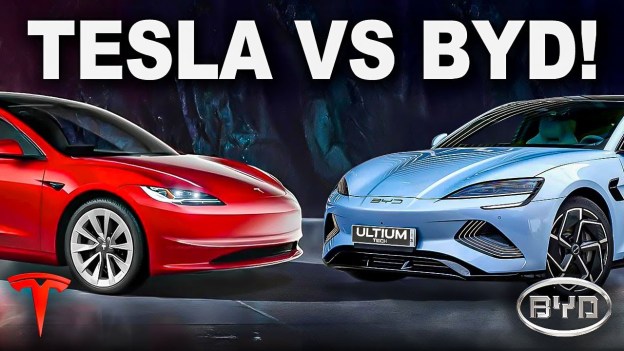
Cars as a National Security Risk: Tesla v. BYD

In February 2024, President Biden ordered the Commerce Department to open an investigation into foreign-made software in cars, citing Chinese technology as a potential national-security risk. Chinese efforts to dominate the global auto industry posed clear security risks to the U.S. “Connected vehicles from China could collect sensitive data about our citizens and our infrastructure and send this data back to the People’s Republic of China,” Biden said in a statement. “These vehicles could be remotely accessed or disabled.”

The Biden administration has been trying to reduce the U.S. auto industry’s reliance on China, including using tax credits to boost electric-vehicle sales and pushing automakers away from Chinese suppliers. China became the world’s biggest auto exporter, shipping an estimated 5.26 million domestically made vehicles overseas, according to the China Passenger Car Association. Part of that growth came in the electric-vehicle market, where the country sold more than one million China-made EVs overseas.

Tesla Chief Executive Elon Musk has said Chinese car companies have already had much success outside of China and that they are now the “most competitive” globally.  “If there are not trade barriers established, they will pretty much demolish most other car companies in the world,” Musk said during Tesla’s earnings call in January 2024.

The Chinese government has also raised national-security concerns about Western-designed cars sold to its own citizens, saying they could be used for gathering data and information. In 2021, China restricted the use of Tesla vehicles by military staff and employees of key state-owned companies, saying the car’s cameras record images constantly and obtain data, including when, how and where the vehicles are used.

Excerpts from Gareth Vipers, Chinese Automakers Pose U.S. National-Security Threat, Biden Says, WSJ, Feb. 29, 2024

Living in the World of Tesla: Cobalt, Congo and China

 A 20% rise in the price of cobalt since the beginning of 2021 shows how the rush to build more electric vehicles is stressing global supply chains. 

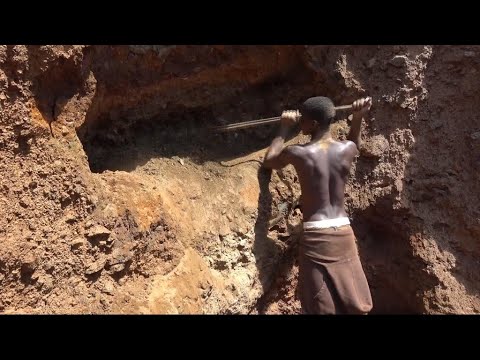
A majority of the world’s cobalt is mined in the Democratic Republic of the Congo in central Africa. It typically is carried overland to South Africa, shipped out from the port of Durban, South Africa, and processed in China before the material goes to battery makers—meaning the supply chain has several choke points that make it vulnerable to disruption…

Car and battery makers have been looking for more control over their cobalt supply and ways to avoid the metal altogether. Honda Motor Co. last year formed an alliance with a leading Chinese car-battery maker, Contemporary Amperex Technology Ltd. , hoping that CATL’s supply-chain clout would help stabilize Honda’s battery supply..

Meanwhile, China plays a critical role even though it doesn’t have significant reserves of cobalt itself. Chinese companies control more than 40% of Congo’s cobalt-mining capacity, according to an estimate by Roskill, the London research firm…China’s ambassador to Congo was quoted in state media last year as saying more than 80 Chinese enterprises have invested in Congo and created nearly 50,000 local jobs…

To break China’s stronghold, auto makers and suppliers are trying to recycle more cobalt from old batteries and exploring other nations for alternative supplies of the material.  Another reason to look for alternatives is instability in Congo and continuing ethical concerns about miners working in sometimes-harsh conditions with rudimentary tools and no safety equipment.

Excerpt from Yang Jie, EV Surge Sends Cobalt Prices Soaring, WSJ, Jan. 23, 2021

The Scramble for Lithium

SQM, Chile’s biggest lithium producer [has]Its headquarters in the military district of Santiago bears no name. The man who for years ran the business, Julio Ponce, is the former son-in-law of the late dictator, Augusto Pinochet. He quit as chairman in 2015, during an investigation into SQM for alleged tax evasion. (The company is co-operating with the inquiry.) Last month it emerged that CITIC, a Chinese state-controlled firm, may bid for part of Mr Ponce’s controlling stake in SQM, as part of China’s bid to secure supplies of a vital raw material…

SQM is part of a global scramble to secure supplies of lithium by the world’s largest battery producers, and by end-users such as carmakers. That has made it the world’s hottest commodity. The price of 99%-pure lithium carbonate imported to China more than doubled in the two months to the end of December, to $13,000 a tonne…

The industry is fairly concentrated, which adds to the worry. Last year Albermarle, the world’s biggest lithium producer, bought Rockwood, owner of Chile’s second-biggest lithium deposit. It and three other companies—SQM, FMC of America and Tianqi—account for most of the world supply of lithium salts, according to Citigroup, a bank. What is more, a big lithium-brine project in Argentina, run by a joint venture of Orocobre, an Australian miner, and Toyota, Japan’s largest carmaker, is behind schedule. Though the Earth contains plenty of lithium, extracting it can be costly and time-consuming, so higher prices may not automatically stimulate a surge in supply.

Demand is also on the up. At the moment, the main lithium-ion battery-makers are Samsung and LG of South Korea, Panasonic and Sony of Japan, and ATL of Hong Kong. But China also has many battery-makers…Tesla Motors, an American maker of electric cars founded by Elon Musk, a tech tycoon, is also on the prowl. It is preparing this year to start production at its “Gigafactory” in Nevada, which it hopes will supply lithium-ion batteries for 500,000 cars a year within five years….[I]n August Bacanora, a Canadian firm, said it had signed a conditional agreement to supply Tesla with lithium hydroxide from a mine that it plans to develop in northern Mexico. Bacanora’s shares jumped on the news—though analysts noted that shipping fine white powder across the United States border would need careful handling.Bigger carmakers also have a growing appetite for lithium…

Another big source of demand may be for electricity storage. The holy grail of renewable electricity is batteries cheap and capacious enough to overcome the intermittency of solar and wind power—for example, to store enough power from solar panels to keep the lights on all night.

Excerpts from  An increasingly precious metal, Economist, January 16, 2016