Tag Archives: trade war

The New Opium War: How the World Got Addicted to China

 A fundamental axiom of economics is that when two individuals or countries trade, both are better off. In the decades after World War II, the U.S. was the world’s largest exporter and economy and as it grew, it imported more, helping its partners. As they grew, they bought more of what the U.S. made. Expanding trade helped everyone specialize, leading to more competition, innovation and choice, and lower costs.

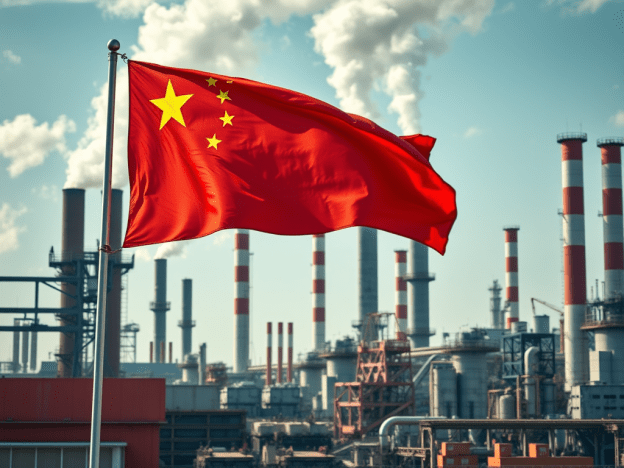
China is now the world’s second-largest economy and its largest exporter, but its philosophy is quite different. It has never believed in balanced trade nor comparative advantage. Even as it imported critical technology from the West, its long-term goal was always self-sufficiency. In 2020, Chinese leader Xi Jinping codified this approach as “dual circulation.” This would, he said, “tighten the international industrial chain’s dependence” on China while ensuring China’s production was “independent” and “self-sustaining.”

And as China expands into high-end manufacturing such as aircraft and semiconductors, Xi has decreed it must not relinquish low-end production such as toys and clothes. Beijing has discouraged Chinese companies that invest abroad from transferring key know-how, such as in the production of iPhones and batteries. Xi has rejected fiscal reforms that would tilt its economy away from investment, exports and saving and toward household consumption and imports.

Excerpt from Greg Ip, World Pays a Price for China’s Growth, WSJ, Dec. 6, 2025
How Does it Feel to Beg China? Netherlands Knows

Dutch chipmaker Nexperia has publicly called on its China unit to help restore supply chain operations, warning in an open letter published on its website  on November 28, 2025 that customers across industries are reporting “imminent production outages.” Nexperia’s Dutch unit said that is open letter followed “repeated attempts to establish direct communication through conventional channels” but did not have “any meaningful response.” The letter marks the latest twist in a long-running saga that has threatened global automotive supply chains and stoked a bitter battle between Amsterdam and Beijing over technology transfer.

In a statement, Wingtech Technology, Nexperia’s Chinese parent stated that Nexperia’s true intent is to buy time ” to construct a ‘de-China-ized’ supply chain and permanently strip Wingtech of its shareholder rights.”

The situation began in September 2025, when the Dutch government invoked a Cold War-era law to effectively take control of Nexperia. The highly unusual move was reportedly made after the U.S. raised security concerns.

Beijing responded by moving to block its products from leaving China, which, in turn, raised the alarm among global automakers as they faced shortages of the chipmaker’s components.

In an apparent reprieve on November 19, 2025, however, the Dutch government said it had suspended its state intervention at Nexperia following talks with Chinese authorities…But while the measures to seize the Dutch Nexperia subsidiary have been lifted, the restoration of the corporate structure and relation with parent company Wingtech has yet to be accomplished.

Excerpt from Sam Meredith, What’s going on at Nexperia? China’s Wingtech escalates war of words with Dutch chipmaker, CNBC, Nov. 28, 2028

While United States Hibernated, China Salivated

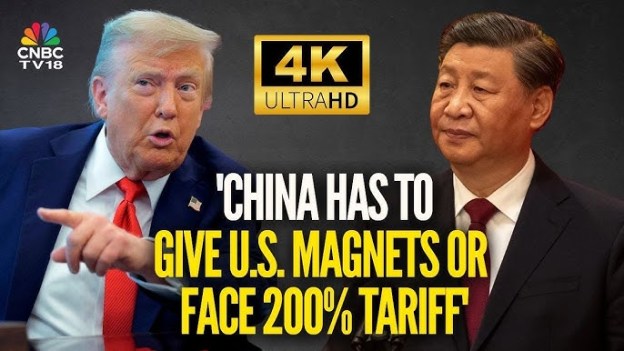
When China tightened restrictions on rare-earth exports in October 2025, stunning the United States, it was the latest reminder of Beijing’s control over an industry vital to the world economy. China’s dominance was decades in the making. Since the 1990s, China has used aggressive tactics to build up and maintain its lock over rare-earth minerals, which are essential to making magnets needed for cars, wind turbines, jet fighters and other products. Beijing provided financial support to the country’s leading companies, encouraged them to snap up rare-earth assets abroad, and passed laws preventing foreign companies from buying rare-earth mines in China. It eventually consolidated its domestic industry from hundreds of businesses into a few giant players, giving it further leverage over prices…

In 1995, Chinese state-linked companies received U.S. government approval to buy the rare-earth materials and magnet business started by General Motors, called Magnequench. In the following years, the Chinese ownership shut down all its rare-earth plants in the U.S. and shipped the equipment to China. Top American engineers were offered opportunities to go to China and set up new plants there.  “There were some colleagues that were dead set against it, saying they would never help China learn our technology,” said one magnet expert who ultimately agreed to go to China. “When I arrived, I could not believe what I was seeing. The number of new factories being built, and the rate at which they were being built, was mind-blowing,” he said….  By the mid-2000s, the U.S. rare-earth industry had been all but wiped out. Mountain Pass, America’s major rare-earth mine, had been shut down, as had virtually all American facilities that processed rare earths and turned them into magnets. China produced around 97% of the world’s rare earths, giving it what was effectively a global monopoly…

By 2021, the U.S. government was growing more worried about China’s ability to weaponize rare earths, causing prices to jump. Washington began offering large-scale funding for new rare-earth plants, including a refinery in Texas to be built by Lynas, an Australian rare-earth company. But in 2021, the Association of China Rare Earth Industry issued a warning: to China’s leadership If Beijing wanted to maintain “China’s absolute dominant position,” the country needed to relax state production quotas. Beijing responded in 2022 by pushing up output by 25%, the most in years, with another large increase the following year. Prices tanked, hitting the bottom lines of Western producers and leading some to unload assets…Beijing also introduced new measures preventing the transfer of its rare-earth processing technology abroad.

Excerpt from Jon Emont, How China Took Over the World’s Rare-Earths Industry, WSJ. Oct. 19, 2025

Climate Change Can Wait: China’s Greed for Oil

China’s thirst for oil drove global demand for decades…Chinese officials have long worried that the U.S. and its allies could hamstring the nation’s economy by choking off its supply of foreign oil. So China has poured hundreds of billions of dollars into weaning itself off the imported stuff by reviving domestic production and swiftly building the world’s leading electric-vehicle industry. “The energy rice bowl must be held in our own hands,” Chinese leader Xi Jinping has said.

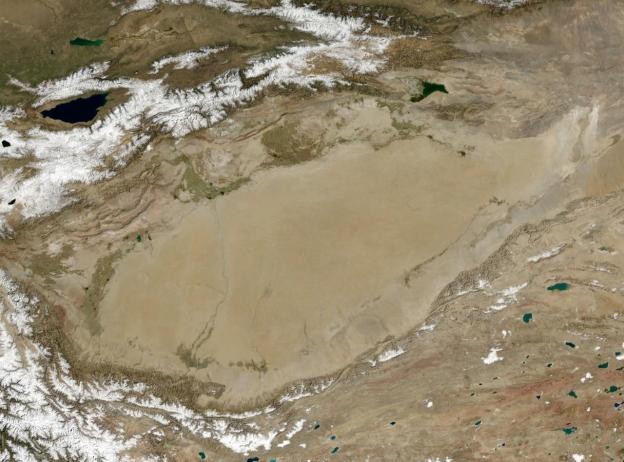
In a remote corner of China. the Tarim Basin, called the “sea of death” for its harsh conditions, oil workers are trying to coax more crude out of the ground by drilling holes as deep as Mt. Everest is high. State-owned PetroChina reported $38 billion of capital expenditures in 2024, nearly as much as Exxon Mobil’s and Chevron’s combined. China’s desire for energy independence dates all the way back to former leader Mao Zedong, who once dispatched tens of thousands of workers to search for oil in China’s northeast to ensure China wouldn’t be dependent on imports…

In July 2018, Xi personally ordered state-owned companies to revive domestic oil production to safeguard national security. Three state-owned oil majors invested an additional $10 billion the following year in exploration and production. They zeroed in on offshore areas such as the South China Sea and the Bohai Sea off the country’s northeast coast, as well as remote reserves near China’s western border with Kyrgyzstan, in a region called the Tarim Basin

In the deserts of the Tarim Basin crews are exploring some of the nation’s deepest reserves. Summer temperatures can top 120 degrees, and in the winter they can hit minus 20. Such ultradeep exploration is expensive, with some wells costing three times as much as shallower traditional wells, a Chinese oil executive told state media.  In 2023, Xi held a video call with Tarim Basin oil workers, praising their “indispensable contributions” to the nation. About 5% of China’s total oil and gas output in 2024 came from the basin’s deep reservoirs, a number Chinese oil executives intend to increase.

As of May 2024, PetroChina’s parent company, China National Petroleum, said it had drilled 193 wells in the Tarim Oilfield at least 5 miles deep. In the U.S., many wells are a mile or two deep.

Excerpt from Brian Spegele, How China Curbed Its Oil Addiction—and Blunted a U.S. Pressure Point, WSJ, July 21,2025

Nvidia CEO Has a Magic Needle

Nvidia’s market share in China fell to 50% from 95% over the past four years under U.S. restrictions, Huang, Nvidia’s CEO,  said in May 2025.  He visited China at least three times in 2025 to reassure Chinese tech executives and government officials that Nvidia was committed to the market…. Huang has met with top executives of Chinese cloud-computing leader Alibaba, smartphone and automaker Xiaomi and OpenAI challenger MiniMax.People in China’s tech industry said they appreciated Huang’s efforts to modify his chips so they could be sold in China. Engineers there nicknamed him “Magic Tailor” for his skill in designing chips to thread the needle of U.S. regulations.

Knowing the importance of the Chinese market to Nvidia, Beijing increased pressure on the company: China’s cybersecurity regulator recently summoned Nvidia representatives to discuss alleged security risks of the H20 chips, citing comments by U.S. lawmakers about the need for a bill to require tracking capabilities for advanced chips sold abroad….

Excerpt from Lingling Wei et al, With Billions at Risk, Nvidia CEO Buys His Way Out of the Trade Battle, WSJ, Aug. 11, 2025


Delete America: China’s Document 79

A 2022 Chinese government directive aims to get US technology out of China—an effort some refer to as “Delete A,” for Delete America.  Document 79 was so sensitive that high-ranking officials and executives were only shown the order and weren’t allowed to make copies… It requires state-owned companies in finance, energy and other sectors to replace foreign software in their IT systems by 2027. 

American tech giants had long thrived in China as they hot-wired the country’s meteoric industrial rise with computers, operating systems and software. Chinese leaders want to sever that relationship, driven by a push for self-sufficiency and concerns over the country’s long-term security…Document 79, named for the numbering on the paper, targets companies that provide software—enabling daily business operations from basic office tools to supply-chain management. The likes of  Microsoft  and Oracle are losing ground in China

Excerpts from Liza Lin, China Intensifies Push to ‘Delete America’ From Its Technology, Mar. 7, 2024

Made in China, Always? COVID-19, the Survival of Resilience

As they walk through the valley of the shadow of death brought by COVID-19 chief executives and corporate strategists are beginning to look to the post-covid world to come. What they think they see, for good or ill, is an acceleration. Three existing trends—the deglobalisation unpicking the business world that grew up in the 2000s; the infusion of data-enabled services into ever more aspects of life; a consolidation of economic power into the hands of giant corporations—look likely to proceed at a faster rate than before, and perhaps to go further, too…

China’s government may encourage its state-owned firms to go global by buying distressed car companies in Europe. The share price of Daimler is less than half what it was when Geely, a Chinese carmaker, bought a 10% stake in 2018. Car companies may also see offers from technology giants keen to improve co-operation between metal bashers and the engineers of autonomy—currently wary at best. The healthier airlines, such as Qantas and IAG, owner of British Airways, will snap up airport slots from their bankrupt rivals and may try to acquire others only just staying aloft. Private-equity firms, which have mountains of committed investor cash, may start buying up fundamentally sound but impecunious suppliers in various industries, aware that when demand returns such companies will see its first fruits…

In 2019 many global firms sought to reduce their dependency on China. One of their favoured strategies was to put more business into factories elsewhere in Asia.  But the acute stage of China’s covid-19 crisis made it clear how essential China remains as a provider of inputs to such factories elsewhere in Asia and around the world. “What people thought was a global supply chain was a Chinese supply chain,”…

Joerg Wuttke, president of the EU Chamber of Commerce in China, says that if there is one lesson people are drawing from the pandemic in this regard it is that “single source is out and diversification is in.” In other words, companies do not just need suppliers outside China. They need to build out their choice of suppliers, even if doing so raises costs and reduces efficiency

Excerpts from Sinking, Swimming and Surfing, Economist,  Apr. 11, 2020, at 13

Taxing Carbon Emissions: EU

The European Union wants to slash greenhouse-gas emissions to 80% below 1990 levels by 2050. It is on course to cut just half that amount. To get back on track, on February 15th, 2017 the European Parliament voted for a plan to raise the cost for firms to produce carbon. It has prompted growing calls for the bloc to tax the carbon emissions embodied in the EU’s imports. At best, such a levy will barely curb emissions. At worst, it could cause a trade war.

The EU’s latest reforms try to put up the price of carbon by cutting the emissions allowances firms are granted. They include the EU’s first border tax on carbon, levied on cement imports.

Under the EU’s reforms, steelmakers in Europe would pay up to €30 ($32) to emit a tonne of carbon, but foreign producers selling in the EU would not have to pay a cent. Putting an equivalent tax on these imports is a neat solution to this problem. “It’s wonderful in theory,” says Jean Chateau, an economist at the OECD, a club of rich countries. But “in reality it’s very problematic.”

One big problem is how to calculate the carbon in imports. This is not easy even for simple steel sheets; for items made of several bits of metal from different sources, it is hellishly complex. Some countries might even refuse to provide the information. And any method brought in for foreign firms, if not applied to local ones, could fall foul of WTO rules,..

A global carbon price would produce far greater economic benefits than border taxes, but would require closer international co-operation. A trade war is not the way to get there.

Excerpts from Steely defences: Carbon tariffs and the EU’s steel industry, Economist,  Feb. 18, at 62