Monthly Archives: October 2017

Who is Afraid of North Korea

President Trump agreed in September 2017 to send more of the Pentagon’s “strategic assets” to South Korea on a rotational basis to deter North Korean provocations, but what exactly that means remains something of a mystery.

The U.S. assets — typically defined as submarines, aircraft carriers, nuclear weapons or bombers — have long been involved in the standoff that began with the 1953 Korean Armistice Agreement after open warfare subsided between the two Koreas.

The U.S. Navy typically keeps the movements of its submarines secret, but it also has periodically sent them to port in South Korea. The USS Michigan, an Ohio-class nuclear-powered submarine, has appeared at Busan Naval Base in South Korea at least twice in 2017. It is capable of carrying cruise missiles and elite Navy SEALs, although not ballistic missiles.

More recently, the Navy announced last week it has plans for a massive exercise involving three aircraft carriers — the USS Nimitz, the USS Theodore Roosevelt and the USS Ronald Reagan — and their associated strike groups, each of which include dozens of aircraft and thousands of sailors and Marines.

Excerpts from  Dan Lamothe, In standoff with North Korea, the U.S. keeps deployment of ‘strategic assets’ mysterious, Washington Post, Oct. 29, 2017

Fixing the Earth: De-Extinction

Is extinction forever? Efforts are under way to use gene editing and other tools of biotechnology to “recreate” extinct species such as the woolly mammoth and the passenger pigeon. Could such “de-extinction” initiatives aid conservation by reviving species lost to habitat destruction and climate change?…. These are some of the questions addressed in Recreating the Wild: De-extinction, Technology, and the Ethics of Conservation, a new special report of the Hastings Center Report.

Advances in biology have revealed the ways the environment influences species’ genomes. Even if scientists could produce creatures with DNA identical to that of extinct species, different environmental pressures would alter their genomes in novel ways, raising the possibility that those creatures would differ from the extinct species…

Many scientists believe that although the maintenance of biodiversity benefits ecosystems, changes to the environment could make the reintroduction of extinct species difficult—possibly even ecologically disruptive. …Several commentators in the report raise the concern that the notion that extinct species might be “brought back” could weaken efforts to prevent extinctions. “By proposing that we can revive species through modern technology, we give the impression that species are ‘throwaway’ items,” write Robert DeSalle, a curator at the American Museum of Natural History’s Sackler Institute for Comparative Genomics, and George Amato, director of the conservation genomics program at the institute.

Excerpt from Recreating the wild: De-extinction, technology, and the ethics of conservation, https://phys.org/news/, Aug. 2017

Earthquake-Tested Nuclear Power Plants

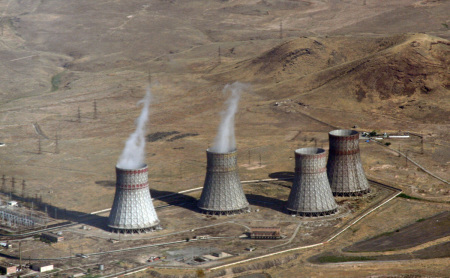
The fate of the 41-year-old Armenian Nuclear Power Plant (ANPP), commonly known as Metsamor, is up for debate yet again as reports have emerged questioning whether the Armenian government will abandon plans for renewal or replacement altogether.  Metsamor, which is the only nuclear energy plant in the South Caucasus and one of the five remaining Soviet nuclear reactors of its kind, provides energy to 40% of Armenian consumers. Despite its critical role in Armenia’s modern energy economy, its aging design and proximity to earthquake-prone areas make it among the most dangerous nuclear plants in the world.

Built in 1976, the plant was shut down in 1989 by Soviet officials, following the devastating Spitak Earthquake. However, the economic difficulty and energy scarcity in Armenia after the collapse of the USSR in 1991, motivated the new Armenian government to relaunch the second of the plant’s two units.  Since then, the reactor’s operations have been a contentious issue both domestically and internationally. The issue was even addressed in an impending EU-Armenia trade agreement, where a 350-page, publicly-released draft text stipulated the reactor should be closed and replaced (though practical measures in enforcing this were notably vague).

For years, Armenian officials have pledged to build a new nuclear plant, which was originally scheduled to expire in 2016, but in 2015, an extension was granted by the International Atomic Energy Agency (IAEA) allowing the site to continue operating until 2027…

Replacing the plant will require serious investment—around five billion dollars—which would fund a medium capacity plant (600 megawatts). Closing the plant would deprive millions of people of electricity, without a viable alternative, and would deal a blow to the security of the country.

Excerpts from The Uncertain Fate of Armenia’s Nuclear Power Plant, The Armenian Weekly, Oct. 20, 2017

The Flourishing Jihadists and their Support Systems

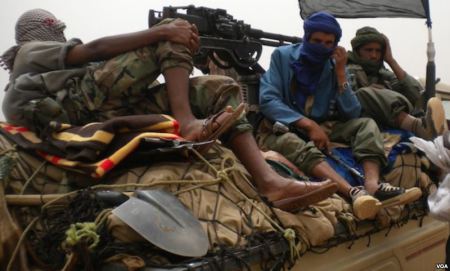
U.S. special forces who accompanied Niger’s military at a meeting of village leaders in Tongo Tongo on Oct. 4, 2017were working in the country’s treacherous western borderlands, a region of shifting tribal allegiances, opaque motives and ethnic grudges going back decades, all feeding into a growing jihadi problem.  Four Americans and five Nigerien troops died after leaving Tongo Tongo and being ambushed and heavily outgunned by fighters armed with automatic weapons and rocket-propelled grenades. The militants are believed to be from a Malian-led militia, Islamic State in the Greater Sahel, which declared allegiance to the overall militant organization in 2015.

One error appears to have been downplaying the danger. The Tillaberi and Tahoua regions in western Niger have been under a state of emergency since March 2017, as Niger has confronted the Islamic State offshoot, led by Malian extremist Abu Walid Sahrawi. U.S. forces have been present in the region to advise and assist Nigerien forces.

The United Nations has cataloged 46 attacks by extremists in western Niger since February 2016, including a February 2017 attack that killed 15 Nigerien soldiers and one a year ago that killed 22 Nigerien forces at a refugee camp.,,

Niger’s interior minister, Mohamed Bazoum, said intelligence failures were to blame for the nine deaths. He said Islamic State in the Greater Sahel is more entrenched in local communities than are government forces.

Adam Sandor, an analyst on violent extremism in the Sahel at the University of Ottawa, said….“Essentially, the attackers are believed to have been scoping out and planning the attack and must have a knowledge of local communities in the area. Local communities most likely shared with them the information regarding the Nigerien Armed Forces operating with foreigners or military advisors in this space,” he said.  Leaders of Tongo Tongo village have been arrested, amid suspicions they were delaying the departure of the Nigerien and U.S. forces to pave the way for the attackers.

America has 6,000 troops in 50 countries across the continent, according to the Department of Defense, although many of the missions are charged with guarding U.S. embassies. The counter-terrorism deployments include an estimated 1,000 special operations forces, many posted in high-risk locations such as Somalia, Mali and Nigeria. An estimated 800 troops are in Niger.  The U.S. also operates a string of drone bases throughout Africa, including one in Niger.

The Shabab is the deadliest of Africa’s terrorist groups and is believed to be responsible for the country’s worst terrorist attack: At least 358 people were killed Oct. 14, 2017 and 56 are still missing. The attack came weeks after a U.S. drone strike killed 10 civilians, including three children, in Bariire, west of Mogadishu.  The U.S. has carried out at least 60 drone strikes in Somalia since January 2017, according to the Bureau of Investigative Journalism, killing up to 510 people, including at least 38 civilians. The Shabab has killed 2,745 people in 2017, carrying out 987 of the continent’s 1,827 incidents of violent extremism in the first nine months of the year, according to the analytical group African Center for Strategic Studies.

The Shabab also has a presence in Kenya, where it launches regular attacks, including the 2013 Westgate shopping mall massacre that killed at least 67 people, and the 2015 Garissa University College attack, where 147 people — mainly university students — were killed. The terrorist group is believed to have a presence across East Africa.

Boko Haram, operating in Nigeria, Cameroon, Chad and southeastern Niger, was responsible for 2,232 deaths in the first nine months of the year, according to the Bureau of Investigative Journalism.

In Mali, myriad armed extremists operate, including Islamic State in the Greater Sahel and its rival the Group for the Support of Islam and Muslims, formed in March 2017 from several Al Qaeda-linked extremist groups, including Al Qaeda in the Islamic Maghreb. In 2012, Islamist militias took over half of the country before the French military drove them out of major cities.

The militias range freely across rural areas, crossing borders at will, launching operations in Mauritania, Ivory Coast and Burkina Faso, including attacks on hotels and resorts popular with foreigners.   In the Democratic Republic of Congo, where myriad rebel groups vie for control over mineral resources, a new organization emerged recently declaring fealty to Islamic State.  By comparison, Niger is one of the more stable countries in the region, making it the U.S. choice for a drone base being built outside Agadez, in central Niger, that will launch strikes across the region.

The Tongo Tongo attack has focused attention on Sahel leader Sahrawi…. He has a history of swapping sides and financing his operations through kidnappings.  He has recruited fighters from among the Fulani nomads in western Niger, exploiting ethnic rivalries with the Daoussahak people in the region, some of whom have formed a militia called the National Movement for the Liberation of Azawad. Both Niger and France have used the group as a proxy force to fight Islamic State in the Great Sahel, deepening ethnic animosities.

Excerpts from After Niger attack, a look at clandestine jihadis posing a growing danger to U.S. forces in Africa, L.A. Times, Oct. 21, 2017

Staying in Svalbard

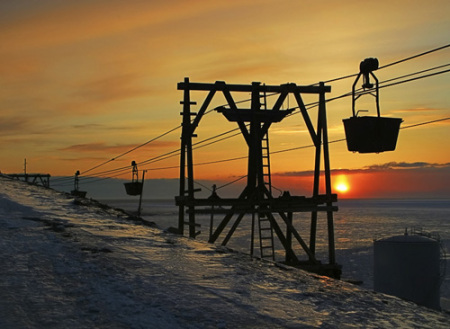
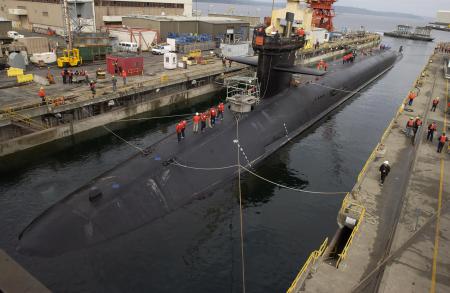
Svalbard has an unusual status that makes it a flashpoint of an escalating face-off in the Arctic between Russia and the West.  Norway, a member of the North Atlantic Treaty Organization, and Russia subsidize unprofitable mines to keep a strategic footprint on an icy group of islands where Oslo and Moscow have been the main players since a 1920 treaty among multiple nations recognized Norwegian sovereignty but allowed other nations to develop some commercial interests. (pdf).

NATO has described its lack of maritime resources in the region as a weakness.  “Svalbard is part of Norway and therefore it’s part of NATO,” Secretary-General Jens Stoltenberg. “So, of course, all the NATO security guarantees apply to Svalbard. When it comes to the question of coal mining, that’s for the Norwegian authorities to decide.”…

Oslo is planning to buy new submarines and has increased the number of troops on its border with Russia.  But Norway, one of the world’s richest countries on a per capita basis, is debating whether to keep financing coal mining on Svalbard. A renewed commitment to mining would be controversial, not just for the cost but also because of Norwegians’ vision of themselves as champions of environmental causes…

“It’s a question of how much are we going to spend doing something irrational versus how great do we feel the need to counter Russian Arctic activity,” said Indra Overland, head of energy at the Norwegian Institute of International Affairs, a think tank that is partially funded by the state…

Some 800 miles from the North Pole, the islands are barren, with temperatures that dip to minus-20 degrees Celsius (minus-4 degrees Fahrenheit) in winter months when the sun doesn’t rise.  Miners on both sides are attracted by relatively high salaries. Barentsburg’s 400 inhabitants are also provided with health care, a school and low-cost housing.Russia, which started mining here in the 1930s, focused on Barentsburg and another settlement called Pyramiden. The towns housed swimming pools, 24-hour canteens and food products that were then largely unavailable elsewhere in the Soviet Union…

Russia’s government has ordered coal production to slow to stretch reserves out until 2032, and will then face a decision similar to Norway’s on whether to invest in a new mine…

Both countries are turning to tourism.  In Russia’s settlements, visitor numbers have doubled in the past four years, and income from tourism stood at $2.4 million last year, more than from mining. Arktikugol received $8 million in government subsidies in 2016….Norway has opened a university, and one closed coal mine has become a museum and film archive. Old miners’ cabins have been renovated for holiday accommodation and a warehouse is now a restaurant.

But Norwegian politicians and academics admit that without a coal mine, their country’s presence will diminish, in part because tourism is so seasonal.  “To put it bluntly, the purpose of the Norwegian settlements is to assert Norwegian sovereignty over Svalbard,” said Torbjørn Pedersen, a political scientist at Nord University in Bodø, Norway

Excerpts from A New Cold War Grip Arctic Enclave, Wall Street Journal, Oct. 11, 2017

Nuclear States in the Making: Argentina

When we say Argentina is a nuclear power we are not referring to the club of those armed with bombs but rather the similarly small group of countries that generate electricity from nuclear power. Moreover unlike many of those in retreat from an activity they hate to need, Argentina without any fanfare has added a third reactor to its existing two reactors.

Argentina has also been active in nuclear power generation & research and uranium mining since the middle of last century. Some 10% of current electricity needs are met from nuclear power stations in the country. The Comisión Nacional de Energía Atómica (CNEA – Atomic Energy Commission) was set up in 1950 to oversee nuclear R&D, including construction of several research reactors. Currently, five research reactors are operated by CNEA and others.

Another is planned, similar to the Opal reactor built in Australia by Argentina’s INVAP. An example of the country’s membership of the front ranks of nuclear technology nations is that Argentina’s CAREM small modular reactor design is under consideration for massive desalination projects in Saudi Arabia.

The goal of Argentina’s government…is for nuclear power to be part of an expansion in generating capacity to meet rising demand. The government signed co-operation agreements with China and UAE and Argentina received a $240m loan from the development bank of Latin America to extend the life of an existing reactor.

Excerpts from Nuclear Energy and Uranium in Argentina, BNamericas.com, Oct. 13, 2017

The Class Actions of Fukushima Fefugees

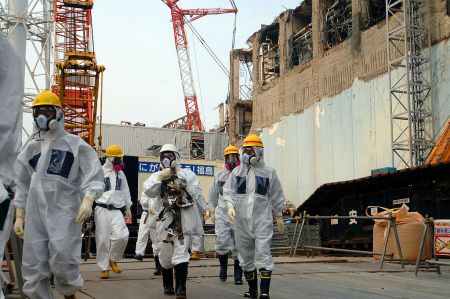
Negligence by the Japanese government and Tokyo Electric Power Co. caused the triple meltdowns at the Fukushima Daiichi nuclear power plant, a court ruled on October 10, 2017 in the biggest class-action suit related to the March 2011 accident.

The Fukushima District Court ordered the government and Tepco to pay a total of Yen 498 million ($4.4 million) plus delinquency charges to 2,907 people who fled the radiation that was released into the air and water after a tsunami flooded the power plant, knocking out the power to the vital cooling system. It was the second time a court found the government responsible for failing to prepare adequately for the likelihood of a large tsunami wave hitting the plant.

If Japan’s government had ordered Tepco to make sure the plant was ready to withstand a tsunami wave of 15.7 meters (51.5 feet), Tepco would have made sure critical instruments were waterproof, Tuesday’s ruling said.”The accident, triggered by total loss of power, could have been avoided, ” Judge Hideki Kanazawa said.

The compensation represents a small fraction of the damages the residents had sought. They also wanted compensation for every month that radiation levels stay above normal, but the court rejected that claim. Still, with some 30 class-action lawsuits so far brought by more than 10,000 affected residents. The October 11, 2017 ruling is a sign additional compensation costs could weigh on both the government and Tepco for years to come.  Tepco has so far paid more than Yen7.6 trillion ($67 billion) in compensation to residents affected by the accident, and has been struggling to clean up the reactors — a daunting technological task that could take decades.

As of September 2017, nearly 55,000 Fukushima residents are registered as evacuees, meaning they can’t return home and haven’t settled permanently elsewhere.

The plaintiffs argued the government and Tepco failed to give adequate attention to studies that said a major tsunami could occur in the area of the plant. One 2002 study by the government’s Earthquake Research Promotion Unit said there was a 20% chance of a magnitude 8 tsunami-triggering earthquake in the area off Fukushima within 30 years. Another study by Tepco’s senior safety engineer in 2007 found there was about a 10% chance that a tsunami could breach Fukushima Daiichi’s defenses within 50 years.

The defendants said the scientific basis for such predictions was unclear, and even if the calculations were correct, the chance was too low to require immediate steps in response. The government said it wasn’t until after the accident that it gained the ability to force Tepco to take anti-flooding measures. Both argued the compensation already being paid to displaced people was adequate.

On March 11, 2011, a tsunami triggered by an earthquake flooded the Fukushima Daiichi plant, knocking out auxiliary power sources that were supposed to keep the reactors’ cooling systems running. Three reactors melted down.

Excerpts from Redress Ordered In Fukushima Case, Wall Street Journal, Oct. 11, 2017

Saving Iconic Rivers: Ganges

The Ganges, arguably the lifeline of India, has its origin in the Himalayas. Once it crosses Gangotri, it flows through Haridwar collecting industrial, agricultural and human waste on its way. Before it culminates in the Bay of Bengal, it passes through various towns and villages lacking sanitation. The Government of India is rolling up its sleeves to clean the 2525 KM long-Ganga and facilitate its flow as it is the source of water for more than 40 per cent of India’s population.

The Institution of Engineering and Technology (IET) is non-profit engineering organisation founded 145 years ago, the IET is one of the world’s leading professional societies for the engineering and technology community. The IET has more than 167,000 members across 150 countries. In India, the IET has over 13,000 members, eight Local Networks and focuses on Energy, Transport, Information & Communications, IoT and Education sectors.

In March 2017, a panel formed by the Institution of Engineering and Technology (IET) on IoT (Internet of Things) were invited to consult the Government of India’s National Mission for Clean Ganga (NMCG) to discuss the ways to clean the river. According to IET, the leaders discussed and tried to identify ways to improve the water flow in Ganga, better treatment of pollutants via sewage and effluent treatment plants, need for controlling unregulated sewage, open defecation,  and handling chemical runoff from agricultural lands (fertilisers and pesticides).

The IoT technology could be used in providing real-time information of pollution status and enabling the industries and societies to find alternate means of disposal of waste.   Other technologies being used to clean up the river Unmanned robotic water surface vehicle with drones: The vehicle can be programmed to collect all the pollutant waste through its arms and offload the same. It works 24X7 and under all weather conditions. More, it can actually submerge to clean up pollutants on even the riverbed. A set of drones is used with it to collect videos of the pollutants.

Gumps- Detectors for pipeline leaks: The Guided Ultrasonic Monitoring of Pipe Systems (GUMPS) can detect oil leakages from oil pipelines that are laid across the river bed of the Ganga River. They continuously monitor pipelines and alert any impending leaks, thus preventing loss of marine life and pollution due to oil leakages.

Excerpts, Alekhya Hanumanthu ,Using technology for clean Ganga, Telangana Today, Oct. 10, 2017

Jumping off the Edge into Ocean: Hydrazine

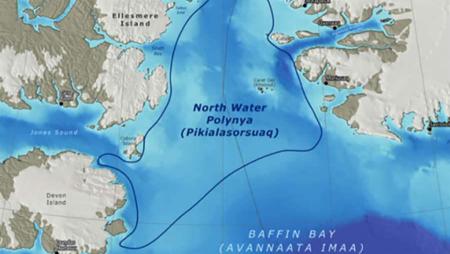
Europe’s space agency is defending plans to launch two satellites that would drop a rocket stage likely to contain highly toxic fuel in some of the most ecologically sensitive waters of the Canadian Arctic… North Water Polynya between Baffin Island and Greenland Inuit have said those plans treat seas…as a garbage dump.
On October 13, 2017, the European Space Agency plans to launch the Sentinel 5P satellite, an environmental probe designed to monitor trace gases in the atmosphere. A second launch of a similar satellite is planned for 2018.  The second stage of both rockets are expected to splash down in water that is part of Canada’s exclusive economic zone.  Both will use Soviet-era rockets fuelled by hydrazine. The fuel is a carcinogen and causes convulsions, nervous system damage, kidney and liver failure in humans.

Hvistendahl, representative of European Space Agency, said unused fuel will be destroyed before it reaches the ocean. Re-entry temperatures are much higher than hydrazine’s boiling point, he said.  “The structural parts lose their integrity and, by melting, the destruction of the stage occurs. Six kilometres above ground the propellant components have completely burnt up.”

Michael Byers, a Canadian academic who has just published research on the launch in a top Arctic journal, questioned those assurances.  “The ESA is making lots of assumptions about what happens to the residual (fuel) in these returning rocket stages,” he said Friday in an email. “Unless they have real science that proves their assumptions, they should not be taking chances with Inuit lives and the Arctic environment.”  In his paper, published in Polar Record from Cambridge University, Byers cites extensive evidence suggesting that instead of burning, hydrazine forms fine droplets that settle on the Earth below.  Byers quotes a UN report that found “the products of combustion and non-combusted remains of fuel and oxidants falling from the height of 20–100 kilometre spread and land over thousands of square kilometres.”The rocket stage could be carrying up to a tonne of unused hydrazine as it falls, the paper says.  It will drop into the North Water Polynya, an 85,000-square-kilometre ocean that is free of ice year-round. It shelters most of the world’s narwhal, as well as about 14,000 beluga whales and 1,500 walrus, bowhead whales, polar bears, seals and tens of millions of seabirds…

In his paper, Byers points out there have been 10 such launches dropping rocket stages into the North Water Polynya over the last 15 years.  Nearly every country in the world, including Russia, has stopped using hydrazine. He said Europe launched a very similar satellite earlier this year with a rocket using a much safer fuel.

Excerpts from European satellite splashdown in Canadian Arctic probably toxic, Canadian Press, Oct. 6, 2017.

Radioactive Beaches: Fukushima at 2017

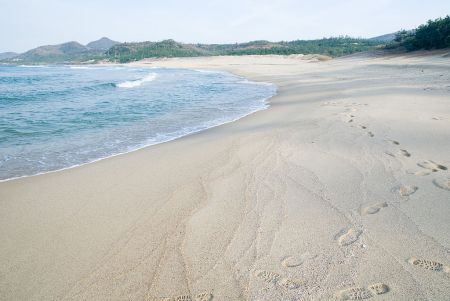
Six years after the Fukushima nuclear reactor disaster in Japan, radioactive material is leaching into the Pacific Ocean from an unexpected place. Some of the highest levels of radioactive cesium-137, a major by-product of nuclear power generation, are now found in the somewhat salty groundwater beneath sand beaches tens of kilometers away, a new study shows.

Scientists tested for radioactivity at eight different beaches within 100 kilometers of the plant, which experienced three reactor meltdowns when an earthquake and tsunami on March 11, 2011, knocked out its power. Oceans, rivers and fresh groundwater sources are typically monitored for radioactivity following a nuclear accident, but several years following the disaster, those weren’t the most contaminated water sources. Instead, brackish groundwater underneath the beaches has accumulated the second highest levels of the radioactive element (surpassed only by the groundwater directly beneath the reactor).

In the wake of the 2011 accident, seawater tainted with high levels of cesium-137 probably traveled along the coast and lapped against these beaches, proposes study coauthor Virginie Sanial, who did the work while at Woods Hole Oceanographic Institution in Massachusetts. Some cesium stuck to the sand and, over time, percolated down to the brackish groundwater beneath. Now, the radioactive material is steadily making its way back into the ocean. The groundwater is releasing the cesium into the coastal ocean at a rate that’s on par with the leakage of cesium into the ocean from the reactor site itself, Sanial’s team estimates.

Excerpts from Radioactive material from Fukushima disaster turns up in a surprising place, Science News, Oct. 2, 2017

See also Unexpected source of Fukushima-derived radiocesium to the coastal ocean of Japan

Trapped to Death

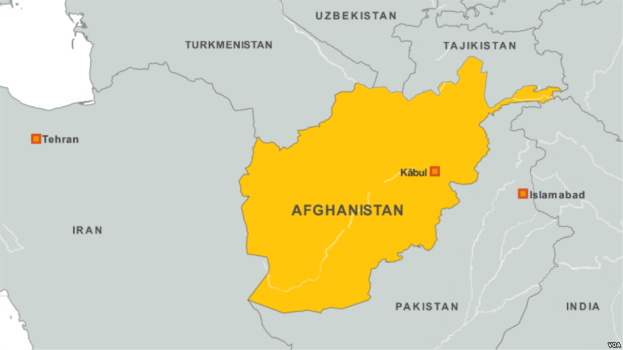
By the start of 2017 the Taliban was pushing hard to take Sangin city’s district centre, Afghanistan, a fortified compound which housed the local security and administrative officials, just a few miles from Hamid Gul’s family home. The compound was the only thing stopping the Taliban from claiming the whole district as their own. The US, which had lost at least 70 of its own troops keeping Sangin out of insurgent hands over the years, scrambled to respond with scores of airstrikes.  Hamid was convinced that his family were still safer behind Taliban lines than in Laskhar Gah, one of the Taliban’s prime targets. But on the morning of February 10 2017, he got an unexpected phone call from a neighbour in Sangin: the family’s house had been flattened.  In that one night Hamid Gul lost his 50 year-old mother, Bibi Bakhtawara, six brothers and a sister. All seven children were under 16 years of age. Bibi Rahmania, his niece, also died. She was just two years old.

By the end of those three days, five women and 19 children were dead
Hamid was not the only person given devastating news on that day. On the same night, a few hours later, a second civilian house, just a few miles away from his own, was also hit. The following night a third one was struck.

To this day, there is no consensus about what happened to those three houses and why. What is clear, however, is that by the end of those three days in early February five women and 19 children were dead, among a full toll of 26 civilians, a Bureau investigation has established.

Three local officials interviewed by Bureau reporters on the ground claimed US airstrikes had destroyed the houses and killed their inhabitants. The United Nations (UN) said the same, in its biannual accounting of Afghan civilians killed in the war, released in July 2017, adding that there appeared to have been no fighting in the area at the time, meaning the attacks may have been pre-planned.

A spokesperson for Resolute Support, the US-led Nato mission in Afghanistan, told the Bureau that after four investigations the organisation could not confirm or deny responsibility for killing the civilians, though he pushed back strongly against the UN’s claims that there was no fighting in the villages at the time. Resolute Support has officially concluded the case as “disputed”, one of four categories for recording allegations of civilian casualties. It was used in this case because Resolute Support cannot decide if insurgents or the Afghan National Security Forces (ANSF) were responsible for the casualties, the spokesperson told the Bureau.

The fact that no-one has taken responsibility for the deaths of 24 women and children offers an insight into the lack of accountability of America’s longest-running conflict, which it now fights largely from the air under opaque rules of engagement against 20-odd armed groups.

Excerpts from  Caught in the crossfire
Civilians are bearing the brunt of conflict in Afghanistan, Bureau of Investigative Journalism, Sept. 30, 2017

Don’t Cut that Tree!

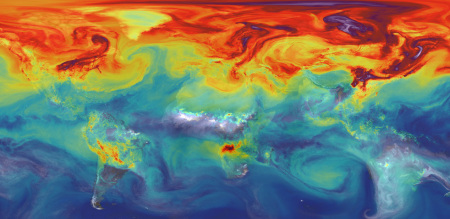
A revolutionary new approach to measuring changes in forest carbon density has helped scientists determine that the tropics now emit more carbon than they capture, countering their role as a net carbon “sink.”*

“These findings provide the world with a wakeup call on forests,” said scientist Alessandro Baccini, the report’s lead author….Forests are the only carbon capture and storage ‘technology’ we have in our grasp that is safe, proven, inexpensive, immediately available at scale, and capable of providing beneficial ripple effects—from regulating rainfall patterns to providing livelihoods to indigenous communities.”

Using 12 years (2003-2014) of satellite imagery, laser remote sensing technology and field measurements, Baccini and his team were able to capture losses in forest carbon from wholesale deforestation as well as from more difficult-to-measure fine-scale degradation and disturbance …from smallholder farmers removing individual trees for fuel wood. These losses can be relatively small in any one place, but added up across large areas they become considerable.

[T] he researchers discovered that tropics represent a net source of carbon to the atmosphere — about 425 teragrams of carbon annually – which is more than the annual emissions from all cars and trucks in the United States.

Excerpts from New approach to measuring forest carbon density shows tropics now emit more carbon than they capture, Woods Hole Research Institute Press Release, Sept. 28, 2017

*Tropical forests are a net carbon source based on aboveground measurements of gain and loss by A. Baccini et al., Science, Sept. 28, 2017