Monthly Archives: May 2022

Everybody and their Watch Box: State Surveillance

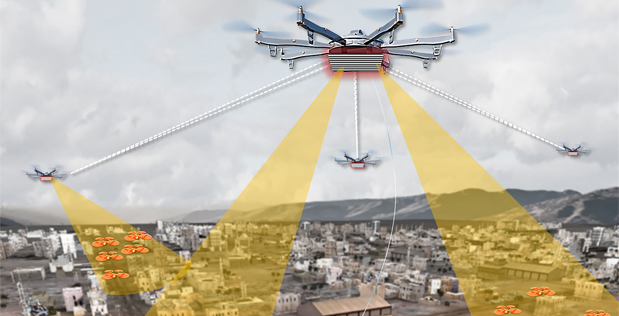
Aerial surveillance can reach backwards in time, by the expedient of indiscriminately recording everything that is going on in a particular neighborhood, and then looking for useful patterns in the resulting footage. This technique, called wide-area motion imagery (Wami), has been around since 2006. But improvements in both the recording equipment used and the means by which the images are analysed are making it more and more valuable.

Wami was first employed by American forces in Iraq to track down those placing roadside bombs. When such a bomb went off, it was possible to run the relevant footage in reverse and trace the events that led up to the explosion. That often allowed the bombers to be identified and dealt with…Wami began with an aircraft-borne system called Constant Hawk, which was developed by Lawrence Livermore National Laboratory, in California. Constant Hawk’s success in Iraq begat more powerful versions. Gorgon Stare, carried by drone, was designed by the armed forces themselves…

But there is a problem. Explosions are easy to see. For many tasks, however, an awful lot of staring at screens looking for things that are out-of-the-ordinary is involved. People are bad at this…So AI is here to help…. Chips called graphic-processing units, borrowed from the video-game industry, are helping. So is machine learning, the basis of much modern artificial intelligence. .

l3Harris, a company in Florida, sells Wami sensors for use as automatic sentries. Their software monitors the coming and going of vehicles and pedestrians into and out of so-called watch boxes. These are protected areas surrounded by virtual trip wires, the triggering of which will cause a vehicle or individual of interest to be tracked…This approach can detect immediate threats. It can also, working over a longer period, carry out “pattern of life” analysis by building up a picture of what normal daily traffic looks like in an area. That permits the identification of anomalies which might signal hostile agents whose movements would otherwise be masked by the hurly-burly around them.

The sensors themselves are getting better, too….The latest version includes a so-called hyperspectral sensor, which sees simultaneously across many different wavelengths, including infrared and ultraviolet. It is thus able to distinguish things which the naked eye cannot, such as the difference between camouflage and vegetation. This approach’s real power, however, lies in software which automatically passes data between sensors…Future multi-sensor pods may include other instruments, such as signals-intelligence receivers. These are bits of equipment which can detect radio-frequency communicators like mobile phones and walkie-talkies, enabling particular devices to be identified and located. That would permit the individual carrying the phone, and also those he or she came into contact with, to be tracked and photographed. 

So far, the costs and complexity of Wami have kept it as a predominantly military technology. But that is starting to change. Smaller and more affordable versions are now within the reach of police, fire services and other non-military users…The most famous examples were in Baltimore, where the local cops experimented with the idea twice—first in 2016 and then in 2020. The second time around they made the mistake of monitoring a political protest as well as looking for crimes such as vehicle theft. 

Excerpts from Aerial Surveillance: The Spies in the Sky that See Backwards in Time, Economist, May 7, 2022

Why China Fears Elon Musk More than the U.S.

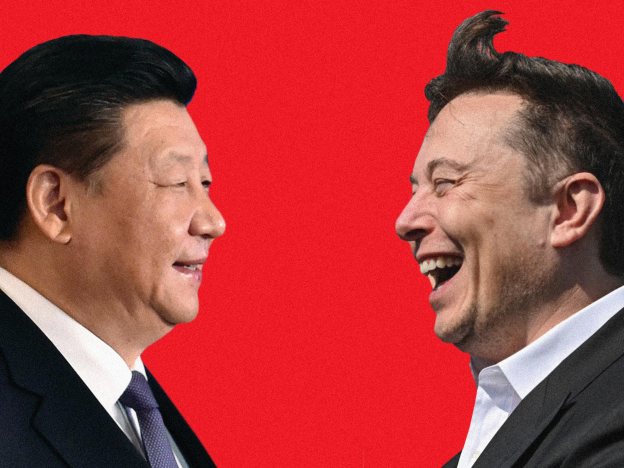
Chinese military observers have been increasingly concerned about the potential of SpaceX’s Starlink satellite network in helping the US military dominate space, especially so, in the wake of the Ukraine war, where Elon Musk activated Starlink satellites to restore communications that had stopped because of shelling by the Russian troops…. 

“SpaceX has decided to increase the number of Starlink satellites from 12,000 to 42,000 – the program’s unchecked expansion and the company’s ambition to use it for military purposes should put the international community on high alert,” said the article on China Military Online, the official news website affiliated with the Central Military Commission (CMC), China’s highest national defense organization headed by President Xi Jinping himself.

The article notes the SpaceX Starlink’s role during the Russia-Ukraine war, where Elon Musk provided Starlink terminals to restore communications…However, there have also been reports of Starlink aiding the Ukrainian armed forces in precision strikes against Russian tanks and positions, which has not been unnoticed by Chinese military observers.

“In addition to supporting communication, Starlink, as experts estimated, could also interact with UAVs [Unmanned Aerial Vehicles] and, using big data and facial recognition technology, might have already played a part in Ukraine’s military operations against Russia,” said the China Military Online article…..Another remarkable event was SpaceX’s swift response to a Russian jamming effort targeting its Starlink Satellite service which was appreciated by the Pentagon’s Director for Electromagnetic Warfare. Elon Musk had claimed that Russia had jammed Starlink terminals in Ukraine for hours at a time, following which he also said that after a software update, Starlink was operating normally….“And suddenly that [Russian jamming attack] was not effective anymore. From [the] EW technologist’s perspective, that is fantastic … and how they did that was eye-watering to me,” said Dave Tremper, the Director of electronic warfare  (EW)for the Office of the Secretary of Defense.

The China Military Online commentary listed the numerous instances since 2019 when Starlink has cooperated with the US military, which also included the successful data transmission test conducted by the US Air Force (USAF) on March 3, 2022…It also raised a possibility that Starlink could form a second and independent internet that threatened states’ cyberspace sovereignty.

Another concern for Chinese military analysts has been the scarcity of frequency bands and orbital slots for satellites to operate, which they believe are being quickly acquired by other countries. “Orbital position and frequency are rare strategic resources in space,” said the article, while noting, “The LEO can accommodate about 50,000 satellites, over 80% of which would be taken by Starlink if the program were to launch 42,000 satellites as it has planned.” “SpaceX is undertaking an enclosure movement in space to take a vantage position and monopolize strategic resources,” the article further added.

Excerpts from Tanmay Kadam, China ‘Deeply Alarmed’ By SpaceX’s Starlink Capabilities That Is Helping US Military Achieve Total Space Dominance, EurAsian Times, May 9, 2022

The Lies Around Plastics

California’s attorney general is investigating Exxon Mobil C and other fossil-fuel and petrochemical companies, accusing them of misleading the public about the impact of plastic pollution. He said his office has issued a subpoena to Exxon seeking information about what he called an “an aggressive campaign to deceive the public, perpetuating a myth that recycling can solve the plastics crisis.” 

“The truth is: The vast majority of plastic cannot be recycled,” Mr. Bonta said. “This first-of-its-kind investigation will examine the fossil fuel industry’s role in creating and exacerbating the plastics pollution crisis—and what laws, if any, have been broken in the process.”

Plastics and other petrochemical products are ubiquitous features of modern life, used to fashion everything from car fenders and shampoo bottles to smartphones. The United Nations estimates that the world generates more than 400 million metric tons of plastic waste every year and that vast amounts of that end up in oceans and other waterways. Plastics take hundreds of years to decompose and first break down into tiny particles. Scientists have found these particles in drinking water and food, and some estimate many human beings will consume dozens of pounds of plastic in their lifetimes.

Driven by the shale drilling revolution, which unleashed massive volumes of oil and gas, the petrochemical industry has invested more than $200 billion in U.S. plastics-and-chemical-manufacturing plants over the past decade. Exxon has invested billions of dollars on such facilities and is one of the world’s largest producers of virgin plastic.

Petrochemical companies have recently promised to invest billions of dollars in recycling. Exxon said last year that it would build its first large recycling facility in Texas, which it said would initially have the capacity to recycle 30,000 metric tons of plastic waste a year. The Minderoo Foundation, an Australian philanthropic group, estimates that Exxon produced 5.9 million metric tons of single-use plastic in 2019. The Environmental Protection Agency estimates the U.S. typically recycles only about 9% of produced plastic.

Excerpts from Christopher M. Matthew, Exxon Subpoenaed in California’s Probe of Plastics Makers, Apr. 29, 2022

See also Inside the long war to protect plastic

Should We Boil Lobsters Alive?

If the UK joins a handful of other nations to recognize the sentience of invertebrates, such as cephalopod mollusks and decapod crustaceans, by, for example, prohibiting the boiling of live lobsters, this will be based on evidence that emotions and felt experiences (i.e., sentience) are not limited to animals close to humans, such as the mammals.

Over a decade ago, the same debate revolved around fish. Do fish feel pain? …This debate was settled when fish were found to learn from encounters with negative stimuli by avoiding dangerous locations. The best explanation is that fish remember these locations because they felt and neuronally processed aversive experiences. The same logic has been followed for arthropods, such as crabs, which in experiments learn to avoid locations where they have been shocked…

For example, the face—the proverbial window on human emotions—expresses emotions through similar muscular contractions…indistinguishable between humans and chimpanzees. Obviously, increasingly distant species have increasingly different expressions of the emotions, but research has found that, for example, physiological changes, lowered temperature of the extremities, and activation of the amygdala during fear are notably similar in fearful rats and fearful humans…. 

Bees subjected to vigorous physical agitation (shaking) to simulate a predatory attack proved less willing to explore new tastes, and hence were negatively biased by their experience. They also showed reduced amounts of hemolymph dopamine, octopamine, and serotonin. Changes in these neurotransmitters mark anxiety or depression in humans.

 It is not hard to see that the denial of animal emotions, and by extension animal feelings, has been morally convenient during human’s history of animal exploitation. Conversely, their recognition is bound to shake up our moral decision-making…If crabs experience emotional states, then they have an interest in these states being positively valenced. Current research indicates that a wide range of animals have interests in avoiding felt pain, and that they would not consent to painful procedures if given the opportunity….

When the medical community recognized infant pain in the 1980s, it was because the evidence was so overwhelming that physicians could no longer act as if infants are immune to pain.

Excerpts from Frans BM de Waal and Kristin Andrews, The question of Animal Emotions, Science, Mar. 25, 2022