Monthly Archives: May 2025

Are Banks Responsible for Climate Change? the Lawsuit Against ING

Friends of the Earth Netherlands, together with 30,000 co-plaintiffs, have started a lawsuit against ING to bring the bank’s climate goals in line with the Paris Agreement…Milieudefensie is demanding that ING halves its emissions in 2030 and ceases financing companies that still develop new oil and gas projects…Milieudefensie has gathered almost 10,000 pages of evidence that substantiate the harmful effects of ING’s policy. ..Nicky van Dijk, research coordinator, adds: “ING’s own annual report states that ING is currently financing fossil fuel energy with 30 billion euro… 

Excerpt from Milieudefensie and more than 30,000 co-plaintiffs take ING to court, Milieudefensie Press Release, Mar. 28, 2025

To Pollute is to Own: U.S. and Greenland

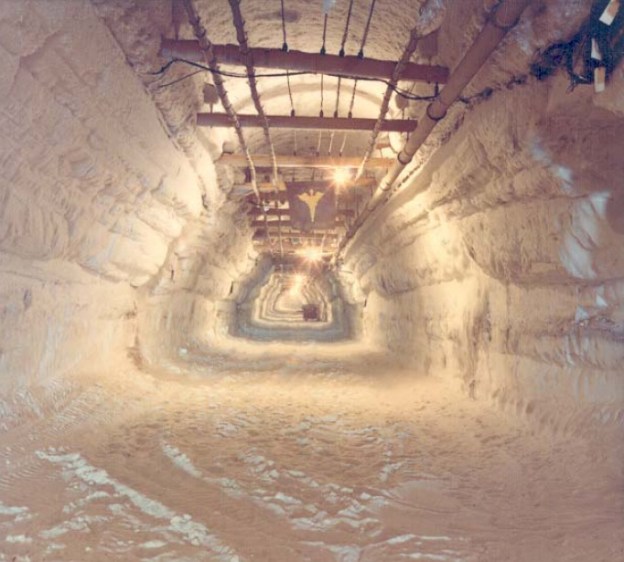
 NASA scientists discovered in 2024 remnants of Camp Century, a Cold War-era U.S. military base, under Greenland’s ice sheet. Project Iceworm, a clandestine Pentagon plan, aimed to build nuclear-missile launch sites beneath the Arctic ice. The underground site, which was designed to store 600 medium-range ballistic missiles, reveals the extent of U.S. involvement in Greenland going back over half a century. 

Camp Century, as the outpost was called, was partially constructed in 1959, and abandoned in 1967 after the ice sheet was deemed too unstable to support the proposed missile-launch network. Over the years, ice accumulated and the facility is now buried under at least 100 feet of ice…

The presence of U.S. nuclear weapons has historically been a source of friction with Denmark. The U.S. military at the time didn’t disclose Camp Century’s nuclear-related purpose to Copenhagen, a self-declared nuclear-free zone…In 1968, a nuclear-armed B-52 bomber crashed near the Thule Air Base, causing the payload to rupture and disperse, leading to radioactive contamination of the sea ice. The incident led to public controversy in Denmark, as did the revelation that the U.S. stored nuclear weapons at the Thule Air Base without informing Copenhagen or Greenland.

Excerpt from Sune Engel, The U.S. Nuclear Base Hidden Under Greenland’s Ice, WSJ, May 14, 2025

New Climate Lawsuit Against Shell, 2025

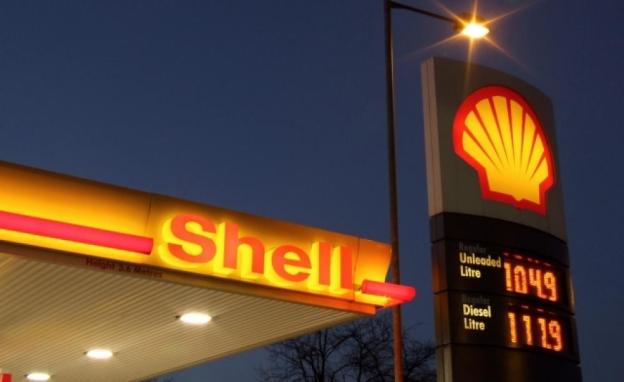
Shell is under intensifying legal scrutiny as environmental organization Milieudefensie, the Dutch branch of Friends of the Earth, announces fresh legal action. The NGO, based in Netherlands, claims that by investing in new oil and gas projects despite a previous court decision requiring emissions reductions, the oil and gas company violated its duty of care under Dutch law. This case could escalate tensions between fossil fuel corporations and climate activists pressing for stricter adherence to international climate goals.

The foundation of this new lawsuit lies in a historic 2021 court decision, upheld in part during a 2023 appeal, which found Shell partially liable for climate change. The appeal acknowledged Shell’s obligation to reduce CO2 emissions, citing its substantial role in contributing to the climate crisis. However, it stopped short of specifying a target percentage for reductions. Milieudefensie now argues that Shell’s ongoing fossil fuel investments clearly violate the legal duties affirmed by that judgment. “Companies like Shell have it within their power to combat the climate problem and therefore have a legal obligation to reduce emissions,” stated the Dutch Court of Appeal.

Shell has stated  that it plans to expand fossil fuel operations, particularly in the sectors of liquefied natural gas and oil production through 2040. This strategy directly conflicts with climate science, which indicates that new fossil fuel development must be halted to limit global warming to 1.5°C.  More than 700 new oil and gas fields are presently under development by Shell, per a thorough report by Milieudefensie and Global Witness. Since May 2021, Shell has finalized investment decisions for 32 new projects, potentially resulting in 972 million tons of CO2 emissions, an amount nearly equivalent to the annual emissions of the entire European Union.

Excerpt from Shell Faces Renewed Legal Pressure on Fossil Fuel Expansion, Zacks, May 14, 2025


Mines and the Meaning of Eternity

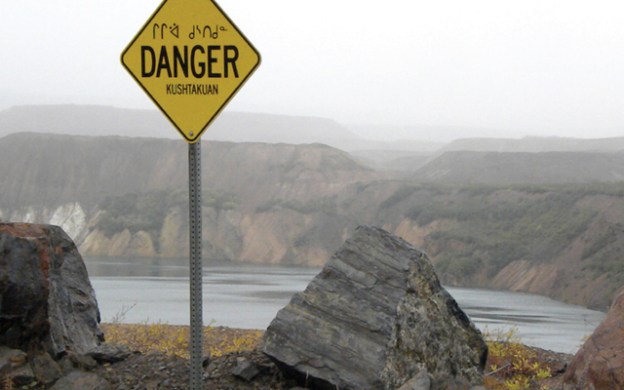
There are 237,000 metric tons of arsenic trioxide locked in the subterranean caverns of Giant Mine on the edge of Yellowknife, an unwanted byproduct from what was once one of the largest gold mines in Canada’s Northwest Territories. Consider that it only takes 140 milligrams of arsenic trioxide to kill a person; there’s enough of the poison here to kill 1.7 trillion people. The local indigenous people refer to the arsenic as a sleeping monster. Company and government officials hoped the arsenic would remain frozen underground forever. But mining operations and climate change caused the permafrost to melt, raising fears in the city of 20,000 people that toxic material could mix with the runoff and slither into the nearby waters of Great Slave Lake, the world’s 10th-largest freshwater body. From there, it could snake 1,000 miles along the Mackenzie River to the Beaufort Sea in the Arctic Ocean, poisoning the wildlife, the land and the water along its path.

The gold mine was one of the largest in Canada’s Northwest Territories, producing 7.6 million ounces of gold between 1948 and 2004—and leaving behind a toxic legacy.
But extracting minerals from the North carries high, and enduring, risks and costs. Current estimates put the cost of cleaning up Giant Mine at $3.2 billion, making it the most expensive mine remediation in Canadian history. The last owner, Royal Oak Mines, went bankrupt and left the bill to the government…

Canada’s government estimates there are roughly 24,000 contaminated sites across the country, which will cost 10 billion Canadian dollars—or $7.25 billion—to clean up. “Mining is a necessary evil. Fundamentally, it’s a license to pollute,” said David Livingstone, former chairman of the Giant Mine Oversight Board, an independent advisory body that monitors the Giant Mine cleanup. 

The arsenic at Giant Mine is the legacy of five decades of gold mining. Between 1948 and 2004, the mine produced 7.6 million ounces of gold, worth roughly $20 billion at today’s prices. There was so much gold that local indigenous people named Yellowknife “Somba K’e,” which means Money Place…But the precious metal was embedded in arsenopyrite, a mineral containing iron, sulfur and arsenic. To get to the gold, miners had to roast the rock, a process that also transformed the once-stable arsenic into toxic gas.

In the early years, miners ejected the arsenic out of a smokestack, believing the poison would be diluted in the air. Instead, the smoke condensed and fell to earth as a fine dust. It collected in the water and on the land. Cows and other livestock sickened and died. In 1951, an indigenous toddler died after eating arsenic-laden snow. After that, miners collected the dust and pumped it back underground, theorizing the arsenic would remain frozen in permafrost. For decades, the system worked. But the Canadian North is warming at a rate four times faster than the rest of the world, and the once-frozen ground is thawing.  Water is trickling into Giant Mine, a potentially catastrophic situation because the highly soluble arsenic trioxide could get carried into Baker Creek.
The creek runs through the mine site, and then into Yellowknife Bay in Great Slave Lake.
The headwaters for the Mackenzie River originate at Great Slave Lake. The river travels more than 1,000 miles to the Beaufort Sea in the Arctic Ocean…

Today, maintenance of the mine is an ongoing task. Waste materials, called tailings, are kept in large reservoirs around the mine. To stop dust contaminated with arsenic and cyanide from flying downwind, workers spray the tailings with a chemical mix called Rhino Snot, a blue-green dust suppressant developed by the U.S. military. But there are still times when wind carries dust southeast toward Ndilǫ, an indigenous community located on the west side of Great Slave Lake’s Yellowknife Bay, less than 2 miles from the mine as the crow flies. When the clouds of dust descend, the Yellowknives Dene council calls residents to warn them to shut their windows and stay indoors, said Ndilǫ Chief Fred Sangris, one of two chiefs of the Yellowknives Dene. “We tell them the mine is coming,” he said.

Sangris is so angry about what Giant Mine has done to the Dene’s traditional hunting grounds that he can’t even look at it. “It’s a poison place,” he said. “It’s a place to avoid.”…“They say forever, and they mean 100 years,” he said. “They don’t know what forever is.” 

Excerpt from Vipal Monga et al., Deep in an Abandoned Gold Mine, a Toxic Legacy Lurks, WSJ, May 5, 2025

The Nasty Fight over Satellite Spectrum

Telecom mogul Charlie Ergen’s war chest is at risk after a U.S. regulator questioned his company’s use of cellular and satellite spectrum licenses—including a chunk of airwaves long sought by Elon Musk’s SpaceX. The Federal Communications Commission told Ergen, the chairman and co-founder of network operator EchoStar that the agency’s staff would investigate the company’s compliance with federal requirements to build a nationwide 5G network. EchoStar owns both the Dish Network pay-TV brand and Boost Mobile’s wireless service. 

The U.S. government in 2019 set several construction milestones for Dish to maintain cellular licenses worth billions of dollars. The company has spent years wiring thousands of cellphone towers to help Boost become a wireless operator that could rival AT&T, Verizon and T-Mobile, but the project has been slow-going. Boost’s subscriber base has shrunk in the five years since Ergen bought the brand from Sprint.

“The terms of the deal were clear,” FCC Chairman Brendan Carr wrote to Ergen in a letter viewed by The Wall Street Journal. “The FCC structured the buildout obligations to prevent spectrum warehousing and to ensure that Americans would gain broader access to high-speed wireless services, including in underserved and rural areas.”…

Ergen and Musk have been sparring for years in regulatory filings over spectrum rights. The battle has intensified as Apple and other big technology companies press for an edge in orbit….SpaceX said in an April 2025 letter that EchoStar’s spectrum in the 2 gigahertz band “remains ripe for sharing among next-generation satellite systems.” EchoStar accused SpaceX of seeking to “cloak another land grab for even more free spectrum.”

Excerpts from Drew FitzGerald, FCC Threatens Charlie Ergen’s Hold on Satellite, 5G Spectrum Licenses, May 14, 2025

Indigenous Peoples against Netflix and Meta: Northern Kenya Rangelands Carbon Project

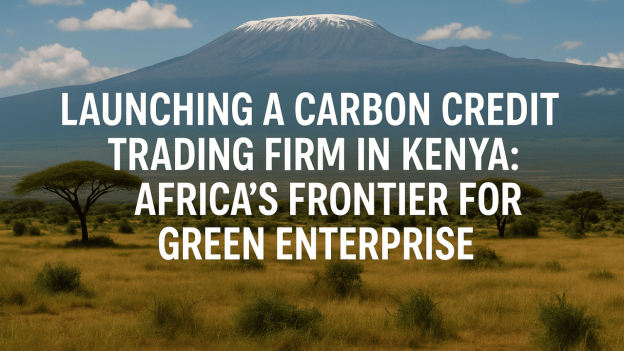
The Northern Kenya Rangelands Carbon Project managed by the Northern Rangelands Trust, a Kenyan nonprofit, is the world’s largest soil-carbon plan, its boosters say. Launched in 2012, it was designed to preserve some 4.7 million acres of grasslands to lock in carbon on land communally owned by the Maasai, Borana and other pastoralist groups, which is part of a network of protected areas hosting threatened species such as cheetahs, black rhinos and… giraffes.

On May 13, 2025, an international nonprofit , Verra, that certifies carbon credits suspended approval for the project, adding to the questions about the credibility of similar carbon-capture projects and whether they actually benefit the people who live off the land….A spokesperson for the group, Verra, said credits are now on hold as it reviews the program after a long-running dispute between the conservationists who created the rangelands project and local herders, who say the project disrupts grazing patterns built over the course of centuries…

The dispute reached a flashpoint in 2021, when 165 pastoralists from two conservation areas sued the Northern Rangelands Trust in Kenyan court for allegedly using their land without consent. The plaintiffs accused the trust of creating the conservancies—which acted as the herders’ representatives in the carbon deal—through pressure and intimidation rather than informed consent. The court ruled in their favor in January 2025.

Lawyers and rights groups representing pastoralists say the ruling, which applies to one of the biggest conservancies, invalidates around 20% of the entire project’s credits. They say credits in around half of the project’s 14 wildlife conservancies could be vulnerable to similar lawsuits. That could leave big corporations holding invalid offsets and open to charges from rights groups that they overstate their commitment to environmentally friendly practices.

The trust has sold over six million carbon credits, worth between $42 million and $90 million depending on market prices, to buyers including Netflix and Facebook parent Meta. Tech companies use credits to offset emissions from their energy-intensive operations, such as producing movies, running data centers to stream video, powering social media and training cutting-edge artificial-intelligence models, as well as from employee travel. Meta became carbon neutral—that is, it purchased enough credits to compensate for all of its emissions—in 2020, and Netflix followed suit two years later.

Excerpts from Caroline Kimeu, Netflix and Meta’s Carbon Credits Snared in Dispute With Maasai Herders, WSJ, May 13, 2025

See also Kenya: Landmark court ruling delivers devastating blow to flagship carbon offset project

Musk’s Own Town–Starbase Texas

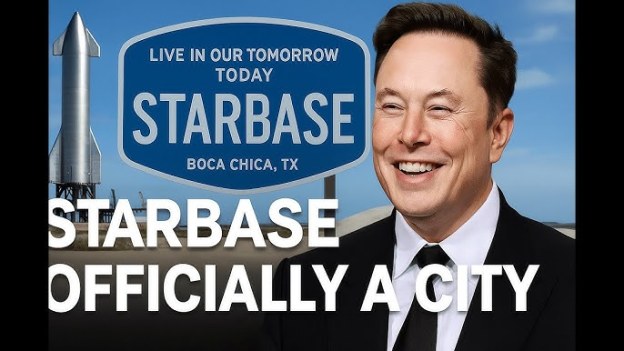
On May 3, 2025, Elon Musk’s SpaceX prevailed in an election over the weekend to turn Starbase, his launch site in Texas, into a city. Starbase was victorious in becoming a type C city, which in Texas applies to a previously unincorporated city, town or village of between 201 and 4,999 inhabitants. The city includes the SpaceX launch facility and company-owned land covering a 1.6 square-mile area.

What is a Company Town from Wikipedia

The mayor is 36-year-old Bobby Peden, who has spent more than 12 years working for SpaceX and is currently vice president for Texas test and launch operations. Starbase has two commissioners, both from the SpaceX employee ranks….Musk, who has assumed a central role in President Donald Trump’s administration responsible for slashing the size of the federal government, began acquiring land for SpaceX in Boca Chica, Texas, about a decade ago. The first integrated Starship vehicle launched from the site, known as Starbase, in April 2023, and exploded in mid-flight. The U.S. Fish and Wildlife Service soon disclosed details about the aftermath of the explosion, including that a “3.5-acre fire started south of the pad site on Boca Chica State Park land,” following the test flight.

State and federal regulators have fined SpaceX for violations of the Clean Water Act, and said the company had repeatedly polluted waters in the Boca Chica area. Environmental advocates and indigenous groups have also sued both the Federal Aviation Administration and SpaceX over the company’s flight tests and launch activity in the area.

Those groups said in legal filings that SpaceX caused harm to local habitat and endangered species due to vehicle traffic, noise, heat, explosions and fragmentation caused by the company’s construction, rocket testing and launch practices.

Excerpts from Lora Kolodny, Here are the SpaceX employees who were elected to run Musk’s new company town of Starbase, CNBC, May 5, 2025

What is the Real Trump Card of China

Chinese officials acknowledged in a secret December 2024 meeting that Beijing was behind a widespread series of alarming cyberattacks on U.S. infrastructure, according to people familiar with the matter, underscoring how hostilities between the two superpowers are continuing to escalate. The Chinese delegation linked years of intrusions into computer networks at U.S. ports, water utilities, airports and other targets, to increasing U.S. policy support for Taiwan, the people, who declined to be named, said.  …The Chinese official’s remarks at the December meeting were indirect and somewhat ambiguous, but most of the American delegation in the room interpreted it as a tacit admission and a warning to the U.S. about Taiwan, a former U.S. official familiar with the meeting said.

Excerpts from Dustin Volz, In Secret Meeting, China Acknowledged Role in U.S. Infrastructure Hacks, WSJ, Apr. 10, 2025

How Microplastics Enter Plants

Plastic production is increasing sharply. This has raised concerns about the effects of microplastics (typically defined as plastic particles smaller than 5 millimetres in diameter) and nanoplastics (smaller plastic particles that are less than 1,000 nanometres in diameter) on human health. These concerns are partly influenced by alarming findings of the presence of microplastics in various human tissues, including the brain and placenta.

Most attention is focused on soil and water as common sources of plastics that enter the food chain. However, writing in Nature, Li et al. provide strong evidence supporting the air as being a major route for plastics to enter plants. Plants can absorb plastic particles directly from the air. Particles in the air can enter leaves through various pathways, such as through structures on the leaf surface called the stomata and through the cuticle. Stomata are small openings made of cells, and the cuticle is a membrane, covered in insoluble wax, that is well suited for absorbing microplastics…

Microplastics can also travel to and enter the plant’s water- and nutrient-transporting system (called the vascular bundle) and from there reach other tissues… Given that leaves are a key part of the food chain, microplastic particles that accumulate here can easily pass to herbivores and crop leaves, both of which can be directly consumed by humans.

Excerpt from Willie Peijnenburg, Plant Leaves Absorb Microplastics—And They End Up in Our Food, Scientific American, Apr. 18, 2025

Illegal Trafficking of Endangered Ants: Ants as Pets

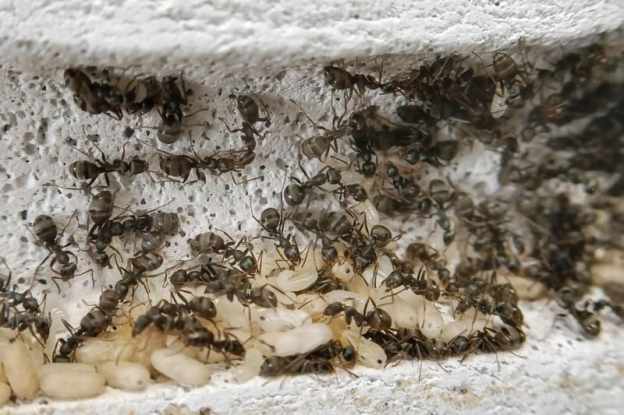
Four suspects – two Belgians, a Vietnamese and a Kenyan – were arrested in April 2025 in Kenya  with live ants suspected to have been destined for collectors in Europe and Asia…Delivering the sentence on May 7, 2025, the judge said the particular species of ants collected was valuable and they had thousands of them — not just a few.

“While collecting a few ants might be considered a hobby, being found with 5,000 queen ants is beyond a hobby,” said Magistrate Njeri Thuku….The ants were packed in more than 2,000 test tubes filled with cotton wool to help them survive for months, authorities said.

Nguyen, 23, was described by the court as a “mule or courier” as he was just sent to pick up the ants and the person who sent him paid for his ticket. The court said Ng’ang’a, 26, acted as a “broker” due to his knowledge of the ants that are found in his rural home. David, an ant enthusiast with 10 colonies of ants at home in Belgium, belongs to a Facebook group called “Ant Gang”, the court heard.

Excerpts Akisa Wandera & Wycliffe Muia, Gang who smuggled thousands of queen ants sentenced in Kenya, BBC, May 7, 2025