Monthly Archives: August 2025

Unbelievable! The Astonishing Underworld of Seafloor

A scientific expedition into a region of the Pacific Ocean named for Hades, Greek god of the underworld, has uncovered an other-worldly ecosystem 30,000 feet deep. “It’s a totally new thing that has not been seen before,” said Dominic Papineau, an exobiologist at China’s State Key Laboratory of Deep-sea Science and Intelligence Technology in Sanya.

Papineau is co-author of a groundbreaking research paper published in the journal Nature, describing the astonishing array of creatures who live in this daunting and dark environment, sustained by chemicals that leach from the ocean floor. Researcher Mengran Du told The Washington Post she wasn’t sure what expect when she descended in a three-person submersible into one of the deepest trenches in the Pacific. What she and others from China’s Institute of Deep-sea Science and Engineering saw when they got there was, she said, “unbelievable.”

Like skyscrapers, thick clusters of tubeworms with red-tinged tentacles jutted from the ocean floor, phosphorescent snails scaling them like window washers, she said. In between, white bristly creatures wriggled and writhed…

Scientists have long studied organisms that thrive around hydrothermal vents. But those native to areas known as cold seeps — where gases like methane and hydrogen sulfite leach from the seafloor at near-freezing temperatures — have been little studied. 

“Flourishing chemosynthetic communities had long been postulated to exist in the trenches, but this is the first paper that documents their existence below 9 kilometers and at multiple locations,” she said.  The adaptability of organizations in those trenches is a shot in the arm for scientists searching for evidence of life in oceans on other celestial bodies, including Europa, a moon of Jupiter.

Excerpt from Scientists Find New Ecosystem in Deepest Trenches of Pacific Ocean, US News and World Report, Aug. 4, 2025
 

Who Trusts Microsoft? The Locked-In

In 2024, the Department of Homeland Security released a scathing report detailing Microsoft’s mistakes during a 2023 hack in which China stole thousands of emails from top government officials. Two years before that, China-linked cyberattackers compromised more than 250,000 Microsoft Exchange servers. In response to the 2024 report, Nadella, the CEO of Microsoft, promised to rededicate Microsoft to protecting its products and its customers from bad actors…

Shortly after Nadella took the reins, Microsoft eliminated the group that had companywide responsibility for Microsoft’s security work, pushing security decisions to the individual business units. Around the same time, Microsoft changed the way it developed software, laying off many of the test engineers charged with uncovering bugs before products ship to customers…

With regard to the July 2025 Microsoft hack, researchers said more than 400 SharePoint servers had been hacked—many of them belonging to government entities—and Microsoft had linked some of the attacks to the Chinese government

In previous episodes, such as the massive 2021 hack of the Microsoft Exchange email system, China pulled off impressive technical feats before being caught…

Regarding the 2025 SharePoint cyberattack, Eye Security researchers discovered, on July 18, 2025 an unauthorized script on a SharePoint server belonging to one of their customers. As the Eye team dug in, they started finding the same script on about 150 other SharePoint servers all over the internet…The script opened a back door to the SharePoint servers, creating an encryption key that could be used later to run commands on the machine. “It was just like a door key left on the street,” said Kerkhofs. “It was accessible for everybody. We just started scanning and we grabbed all the keys.”…Microsoft, learning that hackers were exploiting the bugs, called in its security team.

Eventually the Eye team discovered 80 infected organizations. European government agencies were compromised, as were U.S. federal agencies, municipalities and universities…

On July 20, 2025, the Energy Department confirmed that it was a victim… News of the compromise was reported by Bloomberg, which said that the National Nuclear Security Administration was specifically victimized.

Excerpt from Robert McMillan, A Failed Microsoft Security Patch Is the Latest Win for Chinese Hackers, WSJ, July 25, 2025

How to Kill Scientists and Get Away with It

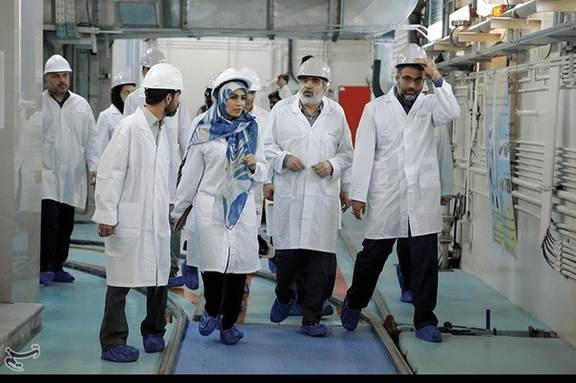
When Israel’s attacks on Iran began before dawn on June 13, 2025 explosions shattered the homes of some of Iran’s top scientists… All nine were killed in near-simultaneous attacks to prevent them from going into hiding…The attack on the scientists was considered so fantastical by even its planners that it was called “Operation Narnia,” after the fictional C.S. Lewis series…A week after the June 13 attacks, Israel used a drone to kill another scientist who was being kept in what was supposed to be a safe house in Tehran. The person hasn’t been named…The deadly airstrikes were the first to target Iran’s nuclear scientists since 2020, when Mohsen Fakhrizadeh was gunned down with a remote-controlled weapon. Israel has never denied or confirmed its role in the deaths of five Iranian scientists between 2010 and 2020.

Among the most important targets was Fereydoon Abbasi-Devani, the former head of the Atomic Agency of Iran and one of the founders of Iran’s nuclear weapons-related work…Another killed scientist was Mohammad Mehdi Teranchi, who led a unit under Fakhrizadeh focusing on high explosives, which are needed to detonate a nuclear weapon…

Iran has used universities like Shahid Beheshti, the Sharif University of Technology and Malek Ashtar University to keep alive its nuclear-weapons expertise over the past two decades….At these universities, Iran often matches up its nuclear scientists on experiments and other studies with younger students. Two of the scientists killed on June 13, Ahmadreza Zolfaghari and Abdulhamid Minouchehr, published an article in the Annals of Nuclear Energy in June 2024 that used advanced computer modeling to show how neutron sources behave in a chain reaction. That information can be used for civilian purposes, like building a nuclear reactor, or to help trigger a chain reaction in a nuclear weapon. 

Excerpt from Laurence Norman, How Israel Killed Iran’s Top Nuclear Scientists, WSJ, June 29, 2025

Nvidia CEO Has a Magic Needle

Nvidia’s market share in China fell to 50% from 95% over the past four years under U.S. restrictions, Huang, Nvidia’s CEO,  said in May 2025.  He visited China at least three times in 2025 to reassure Chinese tech executives and government officials that Nvidia was committed to the market…. Huang has met with top executives of Chinese cloud-computing leader Alibaba, smartphone and automaker Xiaomi and OpenAI challenger MiniMax.People in China’s tech industry said they appreciated Huang’s efforts to modify his chips so they could be sold in China. Engineers there nicknamed him “Magic Tailor” for his skill in designing chips to thread the needle of U.S. regulations.

Knowing the importance of the Chinese market to Nvidia, Beijing increased pressure on the company: China’s cybersecurity regulator recently summoned Nvidia representatives to discuss alleged security risks of the H20 chips, citing comments by U.S. lawmakers about the need for a bill to require tracking capabilities for advanced chips sold abroad….

Excerpt from Lingling Wei et al, With Billions at Risk, Nvidia CEO Buys His Way Out of the Trade Battle, WSJ, Aug. 11, 2025


McKinsey Loves its Bots and Proud of It

Companies have paid dearly for McKinsey’s human expertise for nearly a century, relying on the firm’s armies of consultants to synthesize complex information, crunch huge amounts of data and map out solutions to thorny business challenges. But what happens now that AI can do much of that analysis in a matter of minutes—and deliver a slick PowerPoint deck to boot?… McKinsey has reduced its head count…and rolled out roughly 12,000 AI agents. These bots now assist consultants in building PowerPoint decks, taking notes and summing up interviews and research documents for clients.

Traditionally, a strategy project might have required a project leader, four consultants and a partner. Today, it might need a leader and two or three consultants—alongside a few AI agents and access to “deep research” capabilities. Bob Sternfels, head of McKinsey, said he sees a day in the not-too-distant future when McKinsey has one AI agent for every human it employs. “We’re going to continue to hire, but we’re also going to continue to build AI agents,” he said. 

Excerpt from Conor Grant, AI Comes for Consulting, McKinsey Faces an “Existential” Shift, WSJ, Aug. 8, 2025

Getting Raped as a Way of Life

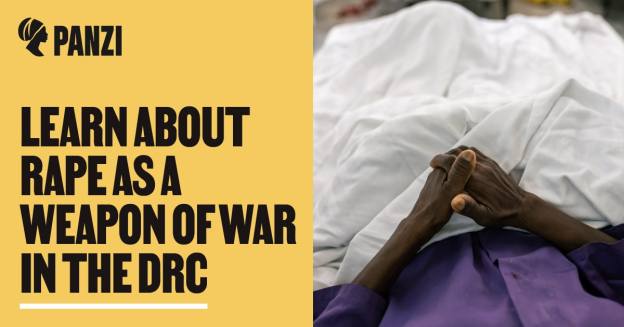
Kanzira Kihanga, a woman who lives in Congo, says she wasn’t surprised to learn in May 2025 that she was infected by the virus that causes AIDS. The 21-year-old believes she contracted the virus after back-to-back rapes by armed men. After the first attack, she went to a clinic but was only given half a dose of the PEP medication.* Two weeks later, she was raped again as she walked to the clinic to pick up the remainder of the dosage.

*Post-exposure prophylaxis (PEP) refers to HIV medicines that are taken after a possible exposure to prevent HIV infection.

Excerpt from Nicholas Bariyo, Congo Braces for HIV Surge After U.S. Funding Stops, WSJ, July 4, 2025

If There is Hell, it Must Be Like This

On 6 August 1945, the United States dropped an atomic bomb on the Japanese city of Hiroshima, killing 80,000 people in a single day, and tens of thousands more in the subsequent months. “If there is a hell,” survivor Ōiwa Kōhei recalled thinking of the aftermath, “it must be just like this.” Kōhei, 13-years-old at the time, was plagued for months by radiation poisoning, and forever by the psychological trauma. The hibakusha — the Japanese term for atomic-bomb survivors — “will not be with us for much longer, so it is essential that their irreplaceable living testimony should continue to be diligently and accurately recorded while it is still available”, writes historian Mordecai Sheftall. Their testimony must be preserved not for historical record, but so that current and future generations will take the lessons of their experiences to heart, says Sheftall.

Excerpt from Mordecai Sheftall, The Sun had fallen to Earth’ — a survivor’s recollection of the Hiroshima bombing, Nature, August 5, 2025

Malaysia Says No to Plastics from U.S.

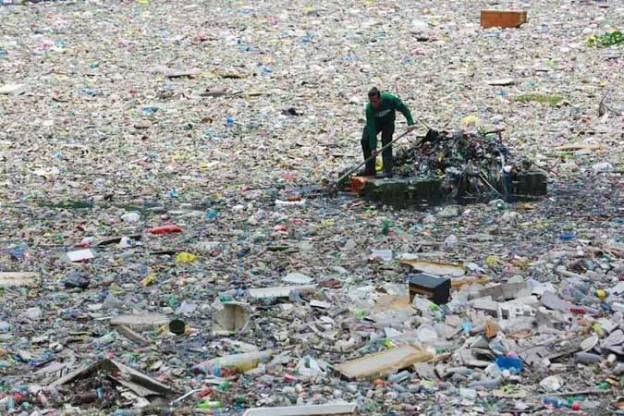
Malaysia emerged as a major destination for U.S. waste after China banned American waste imports in 2018. California shipped 864 shipping containers, or more than 10 million pounds of plastic waste, to Malaysia in 2024, according to the Basel Action Network, an advocacy group…

Under Malaysian waste guidelines announced recently, the country is no longer accepting plastic waste and hazardous waste from nations that didn’t ratify the Basel Convention, the international treaty designed to reduce the international movement of hazardous and other waste. The U.S. is one of just a handful of countries, including Fiji and Haiti, that hasn’t signed the pact….The coming ban has already disrupted trash export routes significantly, particularly for the plastics used in grocery bags, trash can liners and food wrap.

According to California’s waste agency, CalRecycle, the state exported 11.3 million tons of recyclable materials overseas to places such as Malaysia, Thailand, Vietnam, China, Taiwan, South Korea, Mexico and Canada — in 2022. That number includes 100 million pounds of scrap plastic…

Excerpt from Susanne Rust, Malaysia no longer takes U.S. plastic waste, creating a dilemma for California, Los Angeles Times, July 3, 2025

When a State Collapses, Who Survives: the case of Iran

In mid-June 2025, Iran flew at least four civilian aircraft to the Omani capital of Muscat for safekeeping. One of the planes included Iran’s presidential Airbus A340, which landed in Muscat on June 18, 2025 according to flight trackers. 

Arab officials were surprised to learn the planes were empty of passengers. Instead, they said, they carried cash and assets, which Iranians weren’t allowed to offload because of sanctions. The planes themselves were also valuable as emergency exits for top officials. The precautions show the level of pressure on Iran’s rulers during the war (Israel-Iran war of 2025). They had to find a way forward with no control of their own airspace and no help from their militias

Excerpt from S. Raghavan et al., Life in Iran After the Strikes: Executions, Arrests and Paranoia, WSJ, June 28, 2025

Can AI Do That? Knowledge Impossible to Copy

Zuckerberg hasn’t had much success in his efforts to hire the field’s biggest stars, including OpenAI’s co-founder Ilya Sutskever and its chief research officer, Mark Chen. Many candidates are happy to take a meeting at Zuckerberg’s homes in Palo Alto and Lake Tahoe. In private, they are comparing gossip and calculating Meta’s chances of winning the AI race.

The handful of researchers who are smartest about AI have built up what one described as “tribal knowledge” that is almost impossible to replicate. Rival researchers have lived in the same group houses in San Francisco, where they discuss papers that might provide clues for achieving the next great breakthrough. 

Excerpt from Ben Coen et al, It’s Known as ‘The List’—and It’s a Secret File of AI Geniuses, WSJ, June 27, 2025