Tag Archives: Amazon deforestation

Environmental Victories of 2024

End of Fossil Fuels? The year 2024 r saw some extraordinary breakthroughs for climate and nature. The UK closed its last coal-fired power plant in 2024….As countries aim to rapidly decarbonise their economies, many former fossil fuel power plants are proving to be promising sites for industrial-scale batteries.…Renewable energy sources are growing rapidly around the world. In the US, wind energy generation hit a record in April 2024, exceeding coal-fired generation….By the end of this decade, renewable energy sources are set to meet almost half of all electricity.  The lion’s share of this growth comes from just one country:

The rivers, mountains, waves and whales given legal personhood
Back in 2021, the Ecuadorian government issued a landmark ruling stating that mining in its Los Cedros cloud forest violated the rights of nature. Another ruling in Ecuador stated that pollution had violated the rights of the Machángara River that runs through the capital, Quito. Beyond Ecuador, a growing number of natural features and spaces were granted legal personhood in 2024. In New Zealand, the peaks of Egmont National Park – renamed Te Papakura o Taranaki – were recognised as ancestral mountains and jointly became a legal person, known as Te Kāhui Tupua.] In Brazil, part of the ocean was given legal personhood – with the coastal city of Linhares recognising its waves as living beings, granting them the right to existence, regeneration and restoration. Meanwhile, a new treaty formed by Pacific Indigenous leaders saw whales and dolphins officially recognised as “legal persons”.

New ocean protections for the Azores
The North Atlantic saw a new marine protected area (MPA) announced by the Azores. When established, it will be the largest in the region, spanning 30% of the sea around the Portuguese archipelago. Half of the 111,000 sq miles (287,000 sq km) protected area will be “fully protected”, with no fishing or other natural resource extraction, according to the initiative behind the MPA. The other half will be “highly protected”.
The area contains nine hydrothermal vents, 28 species of marine mammals and 560 species of fish, among many others. 

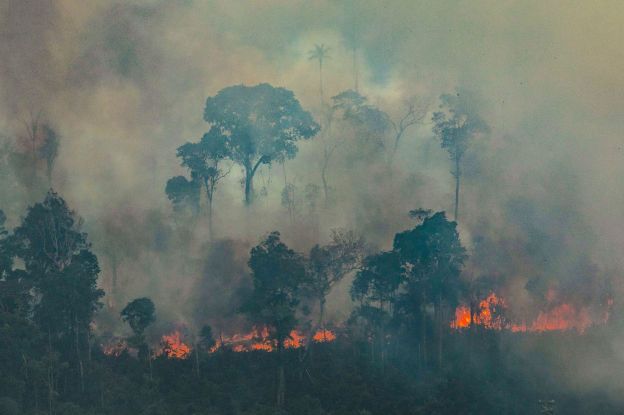
Deforestation in the Brazilian Amazon
dropped to a nine-year low in 2024, falling by more than 30% in the 12 months to July, 2024 according to data released by Brazil’s national space research institute, INPE. nt

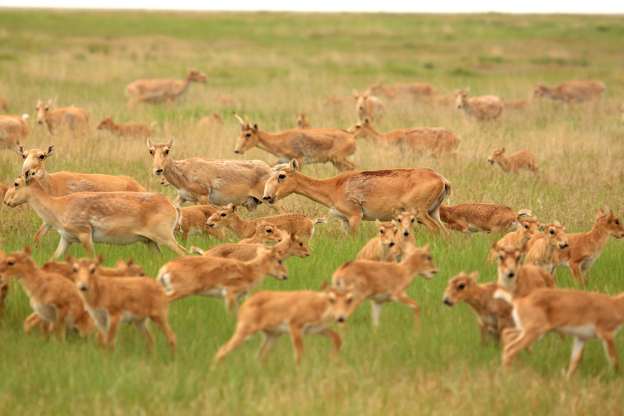
The Altyn Dala Conservation Initiative saved the critically endangered in the Golden Steppe grassland from extinction. The project used careful, science-based monitoring, tagging and habitat protection and restoration to ensure the best recovery for the Saiga Antelope, which numbered just 20,000 in 2003. Today, 2.86 million of the antelope roam the Golden Steppe, and it has been moved from “critically endangered” to “near threatened” status on the International Union for Conservation of Nature’s Red List.

After a 100-year hiatus, salmon were spotted in Oregon’s Klamath River basin, following an historic dam removal further downstream in the California stretch of the Klamath. In August 2024, the final of four dams were removed – in what was America’s biggest dam removal project – following pressure from environmentalists and tribes.

Excerpts from Isabelle Gerretsen et al., Seven quiet breakthroughs for climate and nature in 2024 you might have missed, BBC, Dec. 16, 2024

The Chemical Fingerprints of Trees and the Fight against Deforestation

Scientists are embarking on an effort to keep sanctioned Russian timber out of Europe by mapping the unique chemical fingerprints of trees, a process that could be used to vet corporate supply chains for other banned commodities. The project aims to bring science to bear in a fight by companies and governments to stop illegal wood from seeping into timber supply chains—complex, difficult-to-police networks of logging companies, sawmills, wood manufacturers and traders.

To start, a team led by the Washington-based nonprofit World Forest ID set its sights on sanctions the European Union placed on Russian and Belarusian timber following the invasion of Ukraine. The team analyzed thousands of wood samples of trees, then layered in advanced statistical models and artificial intelligence.  The result was a database allowing customs officials and corporate auditors to verify the origin of timber with a simple, lab-based test. 

Although work on the database is ongoing, furniture giant IKEA has already used it to vet suppliers for sanctioned timber after the war forced it to revamp its supply chain. Belgian authorities have also employed it to seize more than 260 tons of illegally shipped Russian timber.  If scaled up, the project could have broad implications for how companies source a range of other agricultural commodities, such as cotton and cacao, which have been linked to environmental and human rights abuses…

World Forest ID currently uses two tests to identify the chemical composition of wood samples. One measures the ratios of stable isotopes, which vary based on factors such as rainfall or temperature. The other test measures trace elements such as magnesium and copper, which vary based on the soils in which trees grow…The group interpolates results spatially using advanced statistical methods and machine learning. Those innovations on traditional forensic testing methods allow World Forest ID to predict the chemical signatures of trees harvested in areas where the group didn’t take samples.

Excerpts from Dylan Tokar, Keeping Sanctioned Russian Timber Out of the EU Is Tricky. This Nonprofit Has a Solution, WSJ, June 10, 2024

Re-Growing Our Lost Tropical Forests

Scientists have concluded that tropical forests demonstrate high resilience, even after they are cut down, due to agriculture or pasture use, if they are left alone for 20 years.  According to the study published in December 2021. 

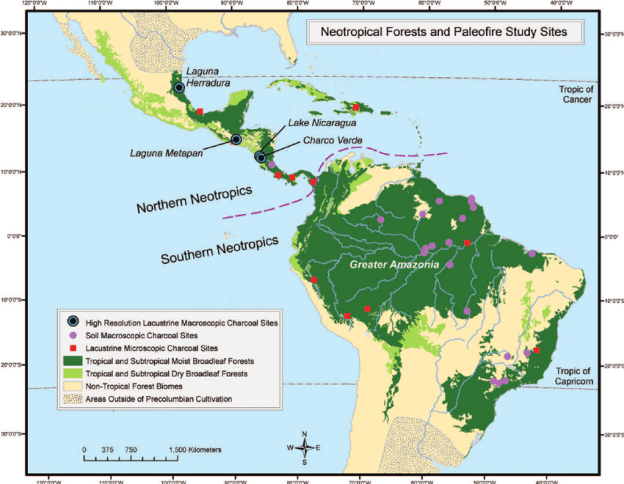
“Tropical forests are converted at alarming rates to other land uses yet they also have the potential to regrow naturally on abandoned agricultural fields and pastures. Widespread land abandonment because of fertility loss, migration, or alternative livelihood options has led to a rapid increase in the extent of regrowing forests. Currently, regrowth covers as much as 28% (2.4 million km2) of the neotropics alone. Regrowing secondary forests form a large and important component of human-modified tropical landscapes and have the potential to play a key role in biodiversity conservation, climate change mitigation, and landscape restoration. 

See Multidimensional tropical forest recovery, SCIENCE VOL. 374, NO. 6573, Dec. 9, 2021

The Limits of Green Energy: Wind Blades of Wood and Plastic

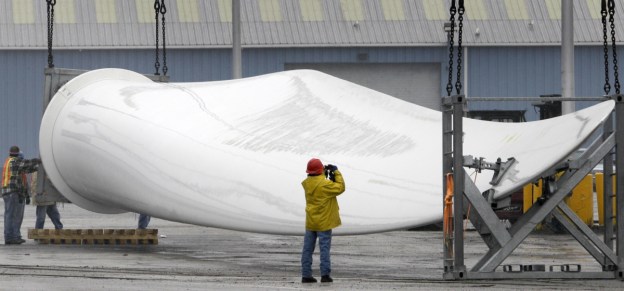
What does the deforestation of balsa wood in Ecuador’s Amazon region have to do with wind power generation in Europe? There is a perverse link between the two: a drive for renewable energy has boosted global demand for a prized species of wood that grows in the world’s largest rainforest. As Europe and China increase the construction of blades for wind turbines, balsa trees are being felled to accelerate an energy transition driven by the need to decarbonize the global economy.

In the indigenous territories of the Ecuadorian Amazon, people began to notice an uptick in international demand for balsa wood from 2018 onwards. Balsa is very flexible but tough at the same time, and offers a light yet durable option for long-term wind power production. The typical blades of a wind turbine are currently around 80 meters long, and the new generation of blades can extend up to 100 meters. That means about 150 cubic meters of wood are required to build a single unit, according to calculations by the United States National Renewable Energy Laboratory.

Ecuador is the world’s main exporter of balsa wood, holding 75% of the global market. Major players include Plantabal S.A. in Guayaquil, which has around 10,000 hectares dedicated to the cultivation of balsa wood destined for export. With the boom in demand starting in 2018, this company and many others struggled to cope with the quantity of international orders. This increase has led directly to the deforestation of the Amazon. Irregular and illegal logging has proliferated by those who have reacted to the scarcity of wood grown for timber by chopping down the virgin balsa that grows on the islands and riverbanks of the Amazon

The impact on the indigenous people who live in the area has been as devastating as mining, oil and rubber were in their day…The Amazon’s defenders are calling for the wind turbine industry to implement strict measures to determine the origin of the wood used in turbine blades, and to prevent market pressure leading to deforestation. Ultimately, they say, balsa wood should be replaced by other materials…

In 2019, Ecuador’s balsa exports were worth almost €195 million, 30% more than the previous record from 2015. In the first 11 months of 2020, this jumped to €696 million.

Wind turbine blades are mainly made from polymethacrylamide (PMI) foam, balsa wood and polyethylene terephthalate (PET) foam…But The Spanish-German company Siemens-Gamesa..has  introduced blade designs using PET only, other competitors soon followed. Wood Mackenzie, a consultancy firm, forecasts that this “will increase from 20% in 2018 to more than 55% in 2023, while demand for balsa will remain stable…”

Today’s blades also present a problem for recycling. The first generation of wind turbines are reaching the end of their lives, and thousands will need to be dismantled… “But the blades represent a challenge due to their composite materials, as their recycling requires very specific processes…

Excerpts from How the wind power boom is driving deforestation in the Amazon, ElPais, Nov. 26, 2021

Can We Change Path? Saving Forests and Cutting Carbon

No ecosystem is more important in mitigating the effects of climate change than tropical rainforest. And South-East Asia is home to the world’s third-biggest patch of it, behind the Amazon and Congo basins. Even though humans release carbon from these forests through logging, clear-felling for agriculture and other disruptions, some are so vast and fecund that the growth of the plants within them absorbs even more from the atmosphere. The Congo basin, for instance, locks up 600m tonnes of carbon a year more than it releases, according to the World Resources Institute (WRI), an international NGO that is equivalent to about a third of emissions from all American transport.

In contrast, such is the extent of clearing for plantations in South-East Asia’s rainforests, which run from Myanmar to Indonesia, that over the past 20 years they have turned from a growing carbon sink to a significant source of emissions—nearly 500m tonnes a year. Indonesia and Malaysia, home to the biggest expanses of pristine forest, have lost more than a third of it this century. Cambodia, Laos and Myanmar, relative newcomers to deforestation, are making up for lost time.

The Global Forest Watch, which uses satellite data to track tree cover, loss of virgin forest in Indonesia and Malaysia has slowed for the fourth year in row—a contrast with other parts of the world…The Leaf Coalition, backed by America, Britain and Norway, along with such corporate giants as Amazon, Airbnb, and Unilever, aims to create an international marketplace in which carbon credits can be sold for deforestation avoided. An initial $1bn has been pledged to reward countries for protecting forests. South-East Asia could be a big beneficiary,

Admittedly, curbing deforestation has been a cherished but elusive goal of climate campaigners for ages. A big un initiative to that end, called REDD+, was launched a decade ago, with Indonesia notably due for help. It never achieved its potential. Projects for conservation must jump through many hoops before approval. The risk is often that a patch of forest here may be preserved at the expense of another patch there. Projects are hard to monitor. The price set for carbon under the scheme, $5 a tonne, has been too low to overcome these hurdles.

The Leaf Initiative would double the price of carbon, making conservation more attractive. Whereas buyers of carbon credits under REDD+ pocketed profits from a rise in carbon prices, windfalls will now go to the country that sold the credits. Standards of monitoring are much improved. Crucially, the scheme will involve bigger units of land than previous efforts, the so-called jurisdictional approach. That reduces the risk of deforestation simply being displaced from a protected patch to an unprotected one.

Excerpts from Banyan: There is hope for South-East Asia’s beleaguered tropical forests, Economist, May 1, 2021

Climate Change Unlikely to Kill Amazon Rainforest

The current Earth system models used for climate predictions show that the Amazon rainforest is very sensitive to water stress. Since the air in the future is predicted to get warmer and drier with climate change, translating to increased water stress, this could have large implications not just for the forest’s survival, but also for its storage of CO2. If the forest is not able to survive in its current capacity, climate change could greatly accelerate.

Columbia Engineering researchers decided to investigate whether this was true, whether these forests are really as sensitive to water stress as what the models have been showing. In a study published in Science Advances, they report their discovery that these models have been largely over-estimating water stress in tropical forests.

The team found that, while models show that increases in air dryness greatly diminish photosynthesis rates in certain regions of the Amazon rainforest, the observational data results show the opposite: in certain very wet regions, the forests instead even increase photosynthesis rates in response to drier air…[In fact] As the trees become stressed, they generate more efficient leaves that can more than compensate for water stress.”…

“So much of the scientific research coming out these days is that with climate change, our current ecosystems might not be able to survive, potentially leading to the acceleration of global warming due to feedbacks,” Gentine added. “It was nice to see that maybe some of our estimates of approaching mortality in the Amazon rainforest may not be quite as dire as we previously thought.”

Excerpts from Some Amazon Rainforest Regions More Resistant to Climate Change than Previously Thought, Columbia Engineering, Nov. 20, 2020

The $4 Trillion Blackmail: The Amazon is Ours not Brazil’s

More than two dozen financial institutions around the world are demanding the Brazilian government rein in surging deforestation, which they said has created “widespread uncertainty about the conditions for investing in or providing financial services to Brazil”. The call for action, delivered in a letter to the Brazilian government on June 23, 2020, comes as concerns grow that investors may begin to divest from Latin America’s largest economy if Jair Bolsonaro’s administration fails to curb environmental destruction. “As financial institutions, who have a fiduciary duty to act in the best long-term interests of our beneficiaries, we recognise the crucial role that tropical forests play in tackling climate change, protecting biodiversity and ensuring ecosystem services,” said the letter, signed by 29 financial institutions managing more than $3.7tn in total assets.

“Considering increasing deforestation rates in Brazil, we are concerned that companies exposed to potential deforestation in their Brazilian operations and supply chains will face increasing difficulty accessing international markets. Brazilian sovereign bonds are also likely to be deemed high risk if deforestation continues.” Deforestation in the Amazon rainforest has surged in Brazil since the election of Mr Bolsonaro, a rightwing former army captain, who supports opening the protected lands to commercial activity. In the first four months of 2020, an area twice the size of New York City was razed as illegal loggers and wildcat gold miners

Investors said they are particularly concerned about Brazil’s meatpacking industry, which risks being shut out of international markets over its alleged role in deforestation. Brazil’s JBS has been repeatedly accused by environmentalists of buying cows from deforested lands in the Amazon. In May 2020 more than 40 European companies, including Tesco and Marks and Spencer, warned they would boycott Brazilian products if the government did not act on deforestation. 

Excerpts from Investors warn Brazil to stop Amazon destruction, FT, June 23, 2020