Tag Archives: China Congo

Shut Up and Give Up: How to Deal with Environmental Disasters

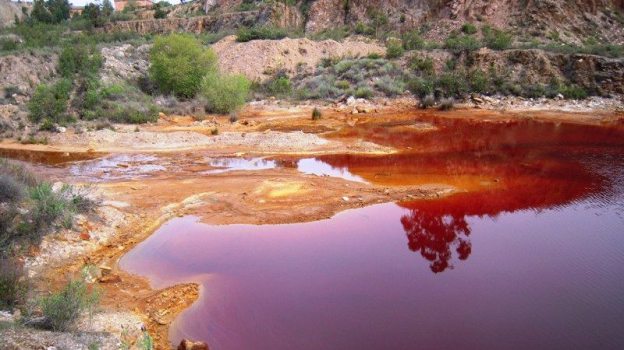
The worst day of Bathsheba Musole’s life was February 18, 2025. It started with a deafening crash when the 30-foot wall around a toxic-waste pool collapsed at the Chinese copper mine above her village. A poisonous river of a stinking yellow liquid rushed downhill, inundating homes and fields, including the one where she grew corn to feed her eight children. The floodwater, laden with cyanide and arsenic, rose chest-high. “I thought I would drown,” said Musole, 48 years old, in a recent interview.

In August 2025, months after the Feb. 18, 2025 disaster, officials from Sino Metals, a unit of the state-owned China Nonferrous Mining Corp., showed up at Musole’s half-acre farm, which the Zambian government says is too toxic to sustain crops for at least three years. They were there to make things right, she recalled them saying. Their offer was $150, but it came with a catch. To get the money, she would have to agree never to talk about the spill, take legal action against Sino Metals or even reveal the contents of the nondisclosure agreement itself…

Zambia’s government and economy.. have grown reliant on China. Zambia collects about $2 billion a year in mining taxes, mostly from Chinese mining companies. Half of the copper mined in Zambia, much of it by Chinese companies, is exported to China. In 2024, the Zambian government announced that Chinese miners would invest $5 billion in the country by 2031…

After months of investigation, Drizit Environmental, a South African firm contracted by Sino Metals, concluded that 1.5 million tons of toxic waste had overflowed into the Kafue valley, 30 times what the company had said. Sino Metals terminated the firm’s contract a day before the final report was due…

Excerpt from Nicholas Bariyo, China Pushes to Silence Victims of African Mining Disaster, WSJ, Oct. 27, 2025
The Scramble for Congo 21st Century Style

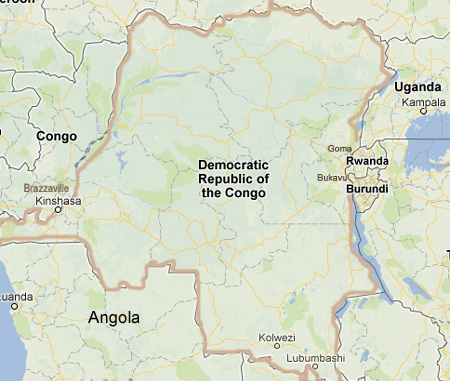
During the 19th century’s Scramble for Africa, European countries raced to secure territory and wealth across the continent. Now, African powers are grabbing resources from a neighbor crippled by infighting and ill-equipped to defend itself. Caught in the middle is the Democratic Republic of Congo, a country the size of Western Europe whose forests conceal a wealth of gold, diamonds and coltan, a key component in smartphones and computers. These mineral riches are turning what was already a region plagued by militia violence into a battleground, as Rwanda and its local allies seize coltan supplies while Uganda and its proxies move to take over gold mines to the northeast, according to United Nations and Ugandan officials…Ugandan President Yoweri Museveni and Rwandan President Paul Kagame are pouring troops and weapons into Congo, while their Congolese allies, who control strategic border crossings, secure smuggling routes to move more minerals to the global markets.

In 2024, Rwanda-backed M23 rebels seized the coltan-mining town of Rubaya, where fighters bring in around $800,000 each month by taxing traders. Rebel fighters have doubled diggers’ wages to encourage them to keep working, and they rely on forced labor to widen roads to accommodate trucks transporting coltan into Rwanda along with gold. According to the U.N., some 4,000 Rwandan soldiers are fighting inside Congo, a report that Rwandan authorities have denied.

Excerpt from While War Rages, Congo’s Neighbors Smuggle Out Its Gold and Mineral Wealth, WSJ, Apr. 7, 2025

Get Down and (Very) Dirty: How to Break Free from China’s Grip on Rare Earths and Minerals

The Biden administration held talks with three firms in the fall of 2024 about purchasing one of the world’s largest non-Chinese cobalt producers…The talks over Chemaf, a mining company based in the Democratic Republic of Congo, are part of a push by the administration to secure global supplies of a metal used in everything from jet fighters and drones to electric-vehicle batteries. For more than a decade, Chinese companies have spent billions of dollars buying out U.S. and European miners in Congo, which produces nearly 75% of the world’s cobalt supply. That has put China in a dominant position in both the production and processing of the mineral.

It has been difficult for the U.S. government to interest American investors in any sector in Congo because of the country’s poor infrastructure, limited skilled labor, resource nationalism and reputation for government corruption. U.S. government officials have spoken with mining and artificial-intelligence company KoBold Metals, copper miner First Quantum Minerals and investment firm Orion Resource Partners about participating in a deal to acquire Chemaf, either separately or jointly…

Chemaf, which says its mines could produce 20,000 tons of cobalt annually—making it one of the world’s largest cobalt producers—was put up for sale in 2023 by its founder, Shiraz Virji…When The Wall Street Journal visited Chemaf’s Mutoshi mine in 2018, freelance Congolese miners could be seen descending underground without helmets, shoes or safety equipment. Miners were using picks, shovels and bare hands to unearth rocks rich with the metal. Water sometimes rushed into holes and drowned people, and an earth mover buried one alive, said local workers and mine officials…

In June 2024, Chemaf agreed to sell itself to Chinese state-backed Norin Mining. Shortly after, U.S. pressure helped block the sale

Excerpts from  Alexandra Wexler and Julie Steinberg, How the U.S. Is Trying to Challenge China’s Cobalt Chokehold, WSJ, Oct. 15, 2024

How Murder, Torture and Rape Fuel the Technological Revolution

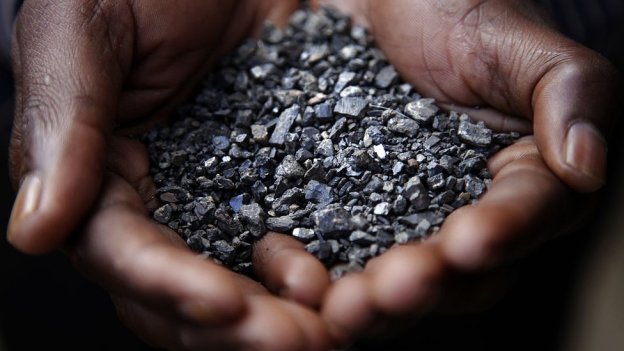
Congo is the world’s leading producer of coltan, from which tantalum is extracted. Tantalum is in hot demand because of its growing use in consumer products, from smartphones to laptops and it is critical for the defense industry (e.g., Apple iPhones, SpaceX rockets, IBM computers).

Coltan is mined in the country’s restive east, a region that has been engulfed in a decadeslong war between rebel groups and the Congolese army…A powerful militia backed by neighboring Rwanda has taken over swaths of eastern Congo, driving some two million people from their homes as fighters kill, torture and rape civilians. The militia, known as M23, has also seized control of Congo’s coltan production and transport, according to United Nations investigators, supply-chain experts, researchers and local traders. 

Now, a network of smuggling routes is increasingly being used to move ore illegally from militia-controlled mines in eastern Congo to neighboring Rwanda. From there, it is sold as Rwandan, and hence “conflict-free,” to smelters around the world, but primarily in China. 

M23 fighters levy taxes on informal coltan miners, who dig the ore from the ground, mostly by hand. The fighters also tax the movement of coltan, providing the militia with revenue to purchase weapons and other supplies. Overall, the trade generates around $300,000 a month for the fighters, according to Bintou Keita, the head of the U.N. mission in Congo….U.S. lawmakers have sought to prevent minerals commonly mined in eastern Congo—tin, tungsten, tantalum and gold—from financing conflict in the region. Legislation embedded in the 2010 Dodd-Frank Act requires U.S.-listed companies to disclose their use of the minerals, known as the 3TGs, as well as steps they are taking to prevent inadvertently financing armed groups. It doesn’t, however, oblige companies to remove potentially tainted materials from their supply chains…

Other armed groups are also profiting from the illegal coltan trade, including an alliance of militias that is helping the Congolese military fight M23, according to rights groups and U.N. researchers. The alliance, known as the Wazalendo, which U.N. investigators say is armed by Congo’s military, includes groups that are under international sanctions for war crimes. M23 and the Wazalendo are both recruiting child soldiers, raping women and girls, looting, murdering civilians and committing other atrocities, according to rights groups and U.N. investigators. Like M23, the Wazalendo are collecting illegal taxes on coltan at roadblocks along transportation routes, as well as from some mining sites. 

Excerpt from Alexandra Wexler, How This Conflict Mineral Gets Smuggled Into Everyday Tech,  WSJ, Oct. 6, 2024

At Gunpoint in Congo: Is Coltan Worse than Oil?

Tantalum, a metal used in smartphone and laptop batteries, is extracted from coltan ore. In 2019 40% of the world’s coltan was produced in the Democratic Republic of Congo, according to official data. More was sneaked into Rwanda and exported from there. Locals dig for the ore by hand in Congo’s eastern provinces, where more than 100 armed groups hide in the bush. Some mines are run by warlords who work with rogue members of the Congolese army to smuggle the coltan out.

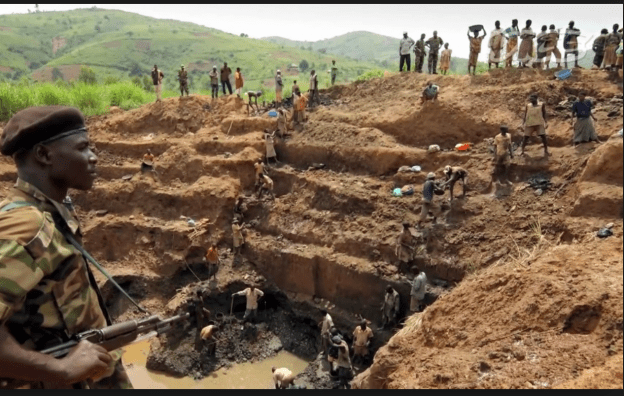
When demand for electronics soared in the early 2000s, coltan went from being an obscure, semi-valuable ore to one of the world’s most sought-after minerals. Rebels fought over mines and hunted for new deposits. Soldiers forced locals to dig for it at gunpoint. Foreign money poured into Congo. Armed groups multiplied, eager for a share.

Then, in 2010, a clause in America’s Dodd-Frank Act forced American firms to audit their supply chains. The aim was to ensure they were not using minerals such as coltan, gold and tin that were funding Congo’s protracted war. For six months mines in eastern Congo were closed, as the authorities grappled with the new rules. Even when they reopened, big companies, such as Intel and Apple, shied away from Congo’s coltan, fearing a bad press.

The “Obama law”, as the Congolese nickname Dodd-Frank, did reduce cash flows to armed groups. But it also put thousands of innocent people out of work. A scheme to trace supply chains known as ITSCI run by the International Tin Association based in London and an American charity, Pact, helped bring tentative buyers back to Congo.  ITSCI staff turn up at mining sites to see if armed men are hanging about, pocketing profits. They check that no children are working in the pits. If a mine is considered safe and conflict-free, government agents at the sites put tags onto the sacks of minerals. However, some unscrupulous agents sell tags on the black market, to stick on coltan from other mines. “The agents are our brothers,” Martin says. It is hard to police such a violent, hilly region with so few roads. Mines are reached by foot or motorbike along winding, muddy paths.

For a long time those who preferred to export their coltan legally had to work with itsci, which held the only key to the international market. Miners groaned that itsci charged too much: roughly 5% of the value of tagged coltan. When another scheme called “Better Sourcing” emerged, Congo’s biggest coltan exporter, Société Minière de Bisunzu, signed up to it instead.

Excerpts from Smugglers’ paradise: Congo, Economist, Jan. 23, 2021

The Plight of Electric Cars: Cobalt Batteries and Mining

About 60% of the world’s cobalt is found in Congo, scattered across the copperbelt that stretches east into Zambia. The people of Kawama, Gongo grumble that too much land has been sold to mining firms. “We used to dig freely,” says Gerard Kaumba, a miner. “But now the government has sold all the hills.” There are still some sites where miners can turn up and dig, but they have to sell to whoever owns the concession. A sweltering day’s work might earn you $7. Many people have found they can make more at night, pilfering cobalt from industrial mines.

Glencore, a commodities giant with two mines in Congo, reckons that some 2,000 people sneak into its pits every day. Other companies have even more robbers to contend with. In 2019 Congolese soldiers chased thieves out of a mine owned by China Molybdenum where, it was reckoned, 10,000-odd people were then illegally digging. Sneaking into Glencore’s mines is hardest, says a Kawaman, as its guards do not collude with thieves—and often chase them away with dogs.

Congo’s industrial miners are not all angels.  Gécamines, the state-owned company, has enriched crooked politicians for half a century. Global Witness, a watchdog based in London, says Congo’s treasury lost $750m of mining revenues to graft between 2013 and 2015. ENRC, which has mines in Congo, has faced allegations of corruption and an investigation by Britain’s Serious Fraud Office (it denies wrongdoing). So has Glencore, which has worked with Dan Gertler, an Israeli billionaire. Mr Gertler, a close friend of a former Congolese president, Joseph Kabila, is under American sanctions… 

While big firms rake in millions, many of the little guys languish in jail. The prison in Kolwezi, the largest city in the mining region, is crammed with men caught stealing copper and cobalt. More than a hundred inmates occupy one stinking room, sitting in rows on the ground, each wedged between another’s legs. Prissoners are allowed to use the toilet only once a day, so they often urinate in their clothes

Excerpt from Cobalt blues: In Congo the little guys are jailed for stealing minerals. Economist, Oct. 17, 2020

Mining Companies Love Least Developed Countries

An expert panel led by Kofi Annan, a former UN secretary-general, looked at five deals struck between 2010 and 2012, and compared the sums for which government-owned mines were sold with independent assessments of their value. It found a gap of $1.36 billion, double the state’s annual budget for health and education. And these deals are just a small subset of all the bargains struck, says the report, which Mr Annan presented in Cape Town, South Africa, on May 10th.

The report highlights some puzzling details. For instance ENRC, a London-listed Kazakh mining firm, waived its rights to buy out a stake in a mining enterprise owned by Gécamines, Congo’s state miner, only to acquire it for $75m from a company owned by Dan Gertler, an Israeli businessman, which had paid $15m for it just months earlier. Mr Gertler is close to Joseph Kabila, Congo’s president. ENRC, which is being investigated by the Serious Fraud Office in Britain, was Congo’s third-largest copper producer last year. Both ENRC and Mr Gertler deny wrongdoing.

African countries often fail to collect reasonable taxes on mining, says Mr Annan’s panel. For example, Zambia’s copper exports were worth $10 billion in 2011, but its tax receipts from mining were a meagre $240m. The widespread use by mining firms of offshore investment vehicles as conduits for profits creates scope for tax avoidance. Their use is not restricted to rich-world companies. Much of the oil that Angola ships to China is via a company called the China International Fund. Its trading prices are not made public…

Congo’s prime minister, Matata Ponyo Mapon, promises change. In January 2013… Mr Ponyo said he would rein in the state-owned mining companies and increase transparency in the industry. “We must avoid situations where we’re not publishing our mining contracts, where our state assets are undervalued, and where the government doesn’t know what its state mining companies are doing,” he told miners and officials at a conference in January….

Last year miners in Congo, which include Freeport-McMoRan and Glencore Xstrata, shipped $6.7 billion-worth of copper and cobalt from the country.

Business in the Democratic Republic of Congo: Murky minerals, Economist, May 18, 2013, at 74