Monthly Archives: August 2016

Rocket Greed

Missiles excite, for unlike other weapons, demand for them is growing strongly. Global defence spending grew by just 1% in 2015—after five years of severe budget cuts in many countries—but the global market for missiles and missile-defence systems is racing ahead at around 5% a year. The capabilities of such weapons are increasing, and with that their price and profitability. Missiles are no longer just flying bombs; they now often contain more computer than explosive to help find their target autonomously…

Executives [of weapon companies] are putting missiles at the forefront of their efforts to expand abroad and to reduce their reliance on home governments.… The most go-ahead so far has been MBDA, a European joint venture, which last year won more missile orders outside Europe than within its home continent. Others are now catching up on foreign sales. Raytheon hopes soon to sign a $5.6 billion deal with Poland to upgrade its Patriot missile-defence shield, while Lockheed and MBDA plan to ink a deal with Germany for their air-defence systems.

[M]issile divisions at Western firms are facing more competition from Chinese, Israeli and Russian firms in some export markets….

Excerpts from Defence Firms: Rocketing Around the World, Economist, July 16, 2016, at 56

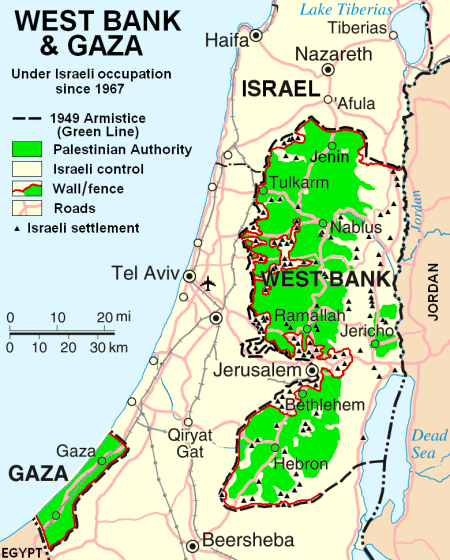
Water Scarcity in West Bank and Gaza

[M]ost of Israel’s water is artificially produced. About a third comes from desalination plants that are among the world’s most advanced. Farmers rely on reclaimed water for irrigation. Israel recycles 86% of its wastewater, the highest level anywhere; Spain, the next best, reuses around 20%.

West Bank: None of these high-tech solutions helps the Palestinians [in the West Bank,] though, because they are not connected to Israel’s water grid. They rely on the so-called “mountain aquifer”, which lies beneath land Israel occupied in 1967. The 1995 Oslo Accords stipulated that 80% of the water from the aquifer would go to Israel, with the rest allocated to the Palestinians. The agreement, meant to be a five-year interim measure, will soon celebrate its 21st birthday. During that time the Palestinian population in the West Bank has nearly doubled, to almost 3m. The allocation has not kept pace.

The settler population has doubled too, and they face their own shortages. In Ariel, a city of 19,000 adjacent to Salfit, residents experienced several brief outages this month. Smaller settlements in the area, which are not hooked up to the national grid, have dealt with longer droughts. Palestinians have suffered far more, however. On average they get 73 litres per day, less than the 100-litre minimum recommended by the World Health Organisation.

The situation is even worse in Gaza, which relies almost entirely on a fast-shrinking coastal aquifer; what remains is polluted from years of untreated sewage and agricultural run-off. The stuff that comes out of Gazan taps is already brackish and salty. UN experts think that aquifer will be irreversibly damaged by 2020.

Israel’s water authority sells the Palestinians 64m cubic metres of water each year. It says they cause their own shortages, because up to a third of the West Bank’s water supply leaks out of rusting Palestinian pipes. A joint water committee is supposed to resolve these issues, but it has not met for five years…

Water in the West Bank: Nor yet a drop to drink, Economist, July 30, 2016, at 38

Stop the Dirty Bomb

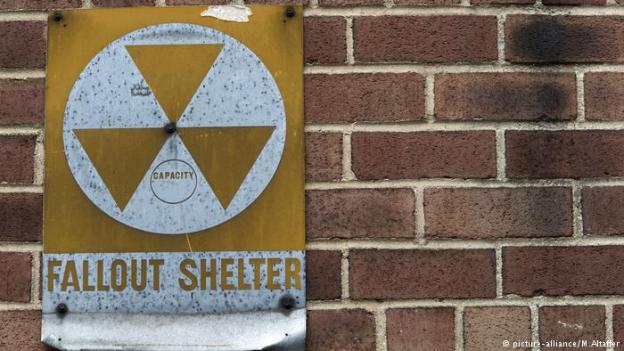
A DARPA program aimed at preventing attacks involving radiological “dirty bombs” and other nuclear threats has successfully developed and demonstrated a network of smartphone-sized mobile devices that can detect the tiniest traces of radioactive materials. Combined with larger detectors along major roadways, bridges, other fixed infrastructure, and in vehicles, the new networked devices promise significantly enhanced awareness of radiation sources and greater advance warning of possible threats.

The demonstration of efficacy earlier this year was part of DARPA’s SIGMA program, launched in 2014 with the goal of creating a cost-effective, continuous radiation-monitoring network able to cover a large city or region. The demonstration was conducted at one of the Port Authority of New York and New Jersey’s major transportation hubs where DARPA tested more than 100 networked SIGMA sensors…

The pocket-sized radiation “pager” sensors developed by DARPA and used in the exercise can be easily worn on a person’s belt, are one-tenth the cost of conventional sensors, and are up to 10 times faster in detecting gamma and neutron radiation. Moreover, the program achieved its price goal of 10,000 pocket-sized detectors for $400 per unit….A large-scale test deployment of more than 1,000 detectors is being planned for Washington, D.C., later this year.

Excerpt from Ushering in a New Generation of Low-Cost, Networked, Nuclear-Radiation Detectors, OUTREACH@DARPA.MIL, Aug. 23, 2016

Forest Fires and Haze

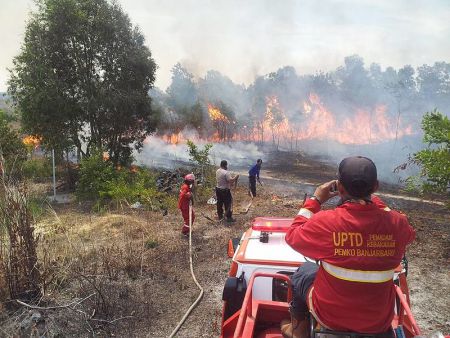
In 2015 a dry spell caused by the El Niño weather pattern made Indonesia’s forest fires especially severe. Smoke settled over Singapore for months and even reached Cambodia, Vietnam and the Philippines. At least 2m hectares of forest were burned. Dozens of people were killed and hundreds of thousands sickened. For much of October 2015 greenhouse gases released by those fires exceeded the emissions of the entire American economy. The losses over five months of fires amounted to around 2% of the country’s GDP…[The event has labeled  the 2015 Southeast Asian haze]

Between 2001 and 2014, Indonesia lost 18.5m hectares of tree cover—an area more than twice the size of Ireland. In 2014 Indonesia overtook Brazil to become the world’s biggest deforester.

One of the reasons for those forest fires is economic. The country produces well over half the world’s palm oil, a commodity used in cooking and cosmetics, as a food additive and as a biofuel. It accounts for around 4.5% of Indonesia’s GDP, and demand is still rising. To meet it, Indonesian farmers set fires to clear forest and make way for new plantations. Often these forests grow on peatlands, which store carbon from decayed organic matter; in tropical regions these hold up to ten times as much carbon as surface soil. Draining peatlands releases all of that carbon. The peat also becomes a fuel, so it is not just felled trees that are burning but the ground itself.

But politics also plays a part. … The president declared a moratorium on peatland-development licences and called for peat forests to be restored, even as his agriculture minister pointed out that burned peatland can be used for corn and soyabean planting….

Civil-society groups have had some success. At least 188 Indonesian palm-oil companies have made some sort of sustainability pledge, including five large multinational firms that in 2014 signed the Indonesian Palm Oil Pledge (IPOP), which commits them to avoiding deforestation and planting oil palms on peatland. Together those five firms account for 80% of Indonesia’s palm-oil exports.All the same, deforestation continues. Perversely, it may even have increased temporarily, as companies cleared as much land as they could before the agreement took effect. Besides, opaque supply chains allow companies to buy palm oil from suppliers not bound by IPOP.

Forests: A world on fire, Economist Special Report on Indonesia, Feb. 27, 2016

Ban Nuclear Weapons: genie back into bottle?

Australia*** has attempted to derail a ban on nuclear weapons at a UN meeting on disarmament, by single-handedly forcing a vote on a report that had been expected to pass unanimously.The report, which recommended negotiations begin in 2017 to ban nuclear weapons, was eventually passed by 68 votes to 22.

Moves towards a ban have been pursued because many saw little progress under the existing non-proliferation treaty, which obliges the five declared nuclear states to “pursue negotiations in good faith” towards “cessation of the nuclear arms race … and nuclear disarmament”.

The proposal recommended a conference be held next year to negotiate “a legally binding instrument to prohibit nuclear weapons, leading towards their total elimination”.,…Anti-nuclear campaigners involved in the process expected the report would pass without objection. But Australia surprised observers by objecting and forcing a vote…

in 2015, documents obtained under Freedom of Information revealed Australia opposed the ban on nuclear weapons, since it believed it relied on US nuclear weapons as a deterrent.  “As long as the threat of nuclear attack or coercion exists, and countries like the DPRK [North Korea] seek these weapons and threaten others, Australia and many other countries will continue to rely on US extended nuclear deterrence,” said one of the briefing notes for government ministers.

The documents revealed however that Australia and the US were worried about the momentum gathering behind the Austrian-led push for a ban nuclear weapons, which diplomats said was “fast becoming a galvanising focus for those pushing the ban treaty option”.

Excerpts from Australia attempts to derail UN plan to ban nuclear weapons, Guardian, Aug. 20, 2017

***The following countries agreed with Australia: Belgium, Bulgaria, Canada, Croatia, Estonia, Finland, Germany, Greece, Hungary, Italy, Japan, Latvia, Lithuania, Netherlands, Norway, Poland, Portugal, Republic of Korea, Romania, Slovakia, Slovenia, Spain and Turkey

These countries want a legal instrument to ban nuclear weapons ASAP: Afghanistan, Algeria, Andorra, Angola, Antigua and Barbuda, Argentina, Austria, Bahamas, Bahrain, Barbados, Belize, Benin, Bolivia, Botswana, Brazil, Brunei, Burkina Faso, Burundi, Cabo Verde, Cambodia, Central African Republic, Chad, Chile, Colombia, Comoros, Congo, Cook Islands, Costa Rica, Côte d’Ivoire, Cuba, Cyprus, Democratic Republic of the Congo, Djibouti, Dominica, Dominican Republic, Ecuador, Egypt, El Salvador, Eritrea, Ethiopia, Fiji, Gambia, Ghana, Grenada, Guatemala, Guinea, Guinea-Bissau, Guyana, Haiti, Honduras, Indonesia, Iraq, Ireland, Islamic Republic of Iran, Jamaica, Jordan, Kazakhstan, Kenya, Kiribati, Kuwait, Kyrgyzstan, Lebanon, Lesotho, Liberia, Libya, Liechtenstein,Madagascar, Malawi, Malaysia, Mali, Malta, Marshall Islands, Mauritania, Mauritius, Mexico, Mongolia, Namibia, Nauru, Nicaragua, Niger, Nigeria, Oman, Niue, Palau, Panama, Papua New Guinea, Paraguay, Peru, Philippines, Qatar, Saint Kitts and Nevis, Saint Lucia. Saint Vincent and the Grenadines, Samoa, San Marino, Sao Tome and Principe, Saudi Arabia, Senegal, Serbia, Seychelles, Sierra Leone, Singapore, Somalia, South Africa, Sri Lanka, State of Palestine, Sudan, Suriname, Swaziland, Tajikistan, The former Yugoslav Republic of Macedonia, Timor Leste, Togo, Trinidad and Tobago, Tunisia, Tuvalu, Uganda, United Arab Emirates, United Republic of Tanzania, Uruguay, Vanuatu, Venezuela, Viet Nam, Yemen, Zambia, Zimbabwe

See the Legal Gap
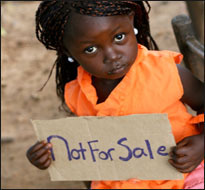
For Sale: 46 Million Slaves

The 2016 Global Slavery Index estimates that 45.8 million people are subject to some form ofmodern slavery in the world today. The Index presents a ranking of 167 countries based on the proportion of the population that is estimated to be in modern slavery. 58%
Of those living in slavery are in 5 countries India* China Pakistan* Bangladesh*
Uzbekistan (* Based on nationally representative Gallup survey data)

The countries with the highest estimated prevalence of modern slavery by the proportion of their population are North Korea, Uzbekistan, Cambodia, India, and Qatar. In North Korea, there is pervasive evidence that government-sanctioned forced labour occurs in an extensive system of prison labour camps while North Korean women are subjected to forced marriage and commercial sexual exploitation in China and other neighbouring states. In Uzbekistan, the government continues to subject its citizens to forced labour in the annual cotton harvest.

Those countries with the highest absolute numbers of people in modern slavery are India, China, Pakistan, Bangladesh, and Uzbekistan. Several of these countries provide the low-cost labour that produces consumer goods for markets in Western Europe, Japan, North America and Australia.

Data from the Global Slavery Index

Land Scarcity: Nigeria

Muslim herdsmen fleeing Boko Haram jihadists and fast-spreading desertification in the north of Nigeria are clashing with Christian farmers in the south, adding a dangerous new dimension to the sectarian tensions and militancy plaguing the country.

Thousands of people from Muslim Fulani tribes have moved southwards this year, leading to a series of clashes over land that have killed more than 350 people, most of them Christian crop farmers, according to residents and rights activists.

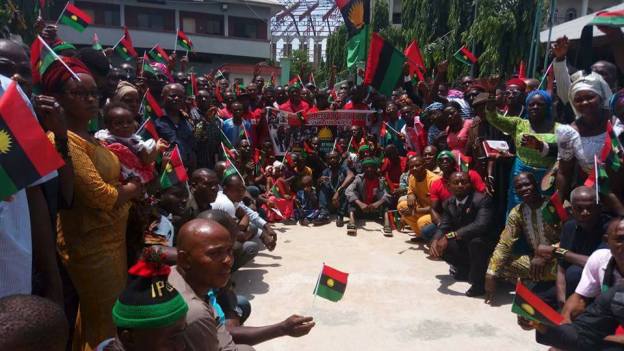
The fighting threatens to fracture the country further by bolstering support for a Christian secessionist movement in the south-east, which has been lingering for decades but gained fresh momentum late last year when resentment over poverty and the arrest of one of its leaders spilled over into street protests… [The Christian South] is campaigning  for an independent Biafra. They say they want to stop the Muslim north from dominating the Christian south…..The population of poverty-stricken Nigeria is expected to more than double to almost 400 million by 2050, according to the United Nations.y.

In one of the deadliest clashes, about 50 people were killed in April when Fulanis attacked the village of Nimbo in the south-eastern state of Biafra, according to residents, rights groups and lawmakers who visited Nimbo after the violence.

Excerpts from, Nigeria riven by new battles over scarce fertile land, Reuters, August 12, 2016

Illegal Waste Gangs: the case of ENI

Italian prosecutors on August 12, 2016, agreed to release energy giant ENI’s Centro Oli oil treatment plant from court-ordered seizure. The plant near the town of Viggiano in the Agri Valley in the southern Basilicata region was seized on March 31. 2016  in a probe that resulted in ex industry minister Federica Gudi resigning amid conflict-of-interest claims. It treated some 75,000 barrels of oil a day, before two tanks and a reinjection well were seized.

State-controlled ENI, nine other companies, and 60 individuals have been investigated for illegal waste trafficking in the southern Basilicata region,..The 70 subjects were notified that the investigation has ended, in Italy usually a prelude to indictment.

Prosecutors say ENI reaped millions in “unjust profits” from illegally dumping waste from its Viggiano plant. As well, the probe found irregularities in the construction of Total’s Tempa Rossa oil centre between Corleto Perticara near Potenza and Gorgoglione near Matera.

Former Total chiefs as well as various businessmen and officials were sentenced to terms ranging from two to seven years in prison on April 4, 2016.  The current suspects include former Corleto Perticara mayor Rosaria Vicino from Premier Matteo Renzi’s Democratic Party (PD), former Basilicata environmental department chief Donato Viggiano, former ENI southern region exec Ruggero Gheller, his current replacement Enrico Trovato, and five ENI staffers who have been under house arrest since March 31.
ENI earlier defended its Viggiano plant operations….

Excerpts from : Prosecutors OK freeing of ENI oil plant (2), Basilicata plant seized in waste trafficking probe,  ANSA, Aug. 5, 2016

Bio-Materials: DARPA

Consider the benefits to be gained from a chimney that heals after damage, a roof that breathes to control airflow, surfaces that don’t flake or fade, and a driveway that eats oil to clean up after spills.–From the DARPA website

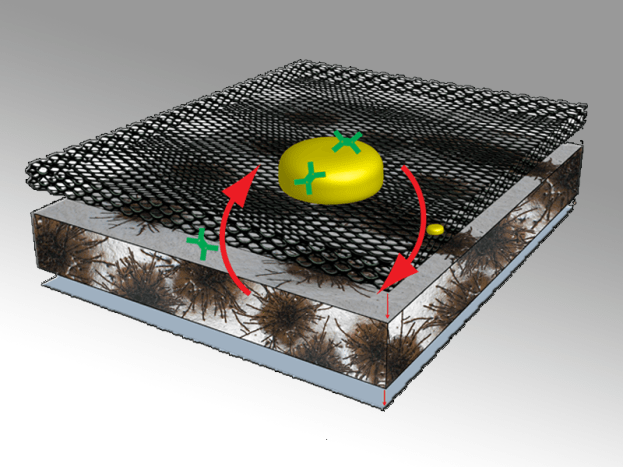
The structural materials that are currently used to construct homes, buildings, and infrastructure are expensive to produce and transport, wear out due to age and damage, and have limited ability to respond to changes in their immediate surroundings. Living biological materials—bone, skin, bark, and coral, for example—have attributes that provide advantages over the non-living materials people build with, in that they can be grown where needed, self-repair when damaged, and respond to changes in their surroundings. The inclusion of living materials in human-built environments could offer significant benefits; however, today scientists and engineers are unable to easily control the size and shape of living materials in ways that would make them useful for construction.

DARPA is launching the Engineered Living Materials (ELM) program with a goal of creating a new class of materials that combines the structural properties of traditional building materials with attributes of living systems. Living materials represent a new opportunity to leverage engineered biology to solve existing problems associated with the construction and maintenance of built environments, and to create new capabilities to craft smart infrastructure that dynamically responds to its surroundings.

“The vision of the ELM program is to grow materials on demand where they are needed,” said ELM program manager Justin Gallivan. “Imagine that instead of shipping finished materials, we can ship precursors and rapidly grow them on site using local resources. And, since the materials will be alive, they will be able to respond to changes in their environment and heal themselves in response to damage.”…

Scientists are making progress with three-dimensional printing of living tissues and organs, using scaffolding materials that sustain the long-term viability of the living cells. These cells are derived from existing natural tissues, however, and are not engineered to perform synthetic functions. And current cell-printing methods are too expensive to produce building materials at necessary scales.

ELM looks to merge the best features of these existing technologies and build on them to create hybrid materials composed of non-living scaffolds that give structure to and support the long-term viability of engineered living cells. DARPA intends to develop platform technologies that are scalable and generalizable to facilitate a quick transition from laboratory to commercial applications.

The long-term objective of the ELM program is to develop an ability to engineer structural properties directly into the genomes of biological systems so that neither scaffolds nor external development cues are needed for an organism to realize the desired shape and properties. ….

Work on ELM will be fundamental research carried out in controlled laboratory settings. DARPA does not anticipate environmental release during the program.

Excerpts from Living Structural Materials  Could Open New Horizons for Engineers and Architects, DARPA seeks to develop design tools and methods for creating programmable, self-healing, living building materials, OUTREACH@DARPA.MIL, Aug. 5, 2016

See also FBO.org

Nuclear Power Plants as Trojan Horses

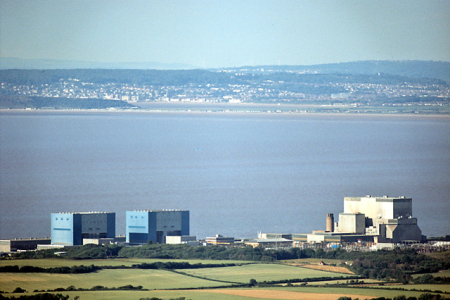
The British government in July 2016 cast doubt on the future of a controversial 18-billion pound ($24 billion) project led by Electricite de France SA to build Britain’s first nuclear power plant in more than 20 years… Concern about China General Nuclear Power Corp.’s minority stake in the project may have been among reasons for the delay….
The Chinese company’s main involvement will be in the supply chain, providing some components for Hinkley, said Malcolm Grimston, senior research fellow at Imperial College London’s center for environmental policy. Operation of the facility would be in the hands of EDF, which has been in U.K. for years, he said. “The Chinese see Hinkley C as first step towards their goal of building a nuclear station using Chinese technology in the U.K. and as a stepping stone to starting a plant export business to rival the Russians, the Japanese and the French,” said Grimston. “I’m not sure what their motivation would be” to halt an operational power plant “given their interest in being seen as a trustworthy partner.”

The strategic investment agreement reached by EDF and state-owned CGN in October 2016 was to build three new nuclear power stations in the U.K., including a 1 gigawatt plant at Bradwell that the Chinese company would build using its own technology and take a 66.5 percent stake. Chinese reactor designs haven’t yet been approved by the British nuclear regulator, a process which could take at least three years.

Bernard Jenkin, the Conservative member of parliament for Harwich and North Essex, near the proposed Bradwell plant, last year urged the government to assess the security implications of a Chinese designed, owned and operated technology. It could be a “Trojan horse” used to threaten the U.K at a time of critical disagreement or conflict, he said. …
The U.K. government agreed to pay 92.50 pounds for every megawatt-hour of electricity produced from Hinkley Point for 35 years, about twice the current market rate. That contract has been widely criticized after data published on a government website last month showed this subsidy could cost more than 30 billion pounds.

Excerpts from Is China’s Role in Hinkley Point Really a Security Threat?, Bloomberg, Aug. 5, 2016

The Carbon Bubble

Regulators around the globe are researching potential risks to financial stability from a failure to contain climate change or a sudden collapse in the value of fossil-fuel assets.  Institutions such as the Bank of England, the Financial Stability Board and the European Systemic Risk Board are examining how banks, insurers and pension funds would cope if policies designed to reduce carbon-dioxide emissions led to a sharp drop in the share price of oil, gas and coal companies.They are looking at new rules to disclose exposures to both stocks and bonds in such companies, conducting stress tests based on different climate scenarios or even requiring additional capital buffers.

The regulators’ concerns rest on scientific assessments that much of the world’s known fossil-fuel reserves would have to stay underground if governments want to limit global warming to 2 degrees Celsius above preindustrial levels. If they aim to contain average temperature increases to 1.5 degrees, as set out in an international climate deal sealed in Paris in December 2015, the so-called carbon budget would shrink even more.

That…cause selloffs of fossil-fuel companies and broader economic problems caused by energy shortages. In 2015, the Group of 20 major economies asked the FSB to scope out potential vulnerabilities in the financial system linked to climate change.

Not everyone agrees with the regulators’ new focus….Spencer Dale, chief economist of BP PLC and a former executive director for financial stability at the Bank of England says only around 2% to 3% of proven fossil-fuel reserves are actually featured on energy majors’ balance sheets, limiting the danger of a sudden drop in the companies’ value due to climate-change policies. “The idea that somehow that we have a carbon bubble—in the sense that the assets that are currently on oil companies’ balance sheets are overpriced, because they won’t be able to use them—I don’t think makes any economic sense,” he says.

Instead, energy companies should provide more information on how climate change and climate-change policies will affect their businesses and allow investors to make their own assessment, says Mr. Dale. BP and Royal Dutch Shell PLC both backed shareholder resolutions to that effect last year.

Excerpts from  Climate Financial Risks Examined, Wall Street Journal, Apr. 1, 2016

Carbon budget

Weapons for the Underdogs

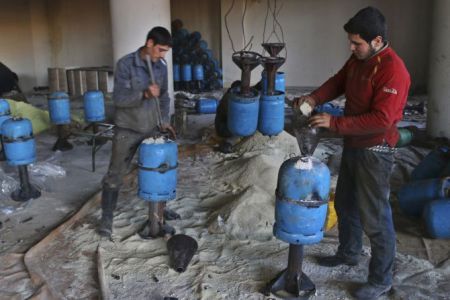
The modern equivalents  of  [improvised weapons] are more high-tech and, like Aleppo’s hell cannons, far deadlier...Any side that begins with a technological advantage will see it erode quickly as the underdogs improve their improvisation capabilities… [H]ell cannons are being mounted on vehicles and fitted with recoil springs to absorb the launch explosion. This improves stability, which in turn enables greater accuracy with follow-up shots. Some designs are no longer fired by lighting a fuse, but at a safe distance with a car battery wired to the propellant charge. Bigger cannons heave oxygen cylinders and, astonishingly, even large household water-heaters packed with enough explosives to destroy a cluster of buildings.

The ominous consequences have led America’s Defence Advanced Research Projects Agency (DARPA), an arm of the Pentagon, to try to keep up with developments by soliciting worldwide for new ways to make weapons using commercially available materials and technologies. More than 20 experts are now reviewing hundreds of submissions. To better assess the risks, some of the most promising designs will be built as prototypes and tested…[DARPA Improv]

Improvised weaponry typically is not as fearsome as that made by defence companies. But it is a lot cheaper and often effective enough… Despite receiving arms shipments from Iran and Russia, Syria’s regime still uses its own improvised “barrel bombs”—devastating devices made by filling oil drums with explosives and scrap metal….

Even defence firms are turning to more commercially available equipment to make weapons. Lasers used to cut and weld materials in industry, for example, are now so powerful that Boeing bought a 10kW model to put into its High Energy Laser Mobile Demonstrator (HEL MD), a system it has assembled for the American army to shoot down drones and incoming mortar shells by firing a laser beam at them. Just think of HEL MD as “a welding torch” with a reach of kilometres, says David DeYoung, head of the Boeing unit that built it. While the off-the-shelf laser is powerful enough for its role, IPG Photonics of Massachusetts is now selling a 20kW laser.

Smartphones are useful in making weapons. They contain GPS navigation and frequency-hopping technology, which transmits signals that are hard to intercept or jam (both were military developments). Other useful things inside include accelerometers, compasses, gyroscopes, motion detectors and sensors for orientation, measuring magnetic fields and capturing reflected infra-red light (to turn off the screen when it detects the phone is close to the ear, saving battery power and preventing inadvertent touches). All of that can be used for missile guidance and communications, adds Mr Shapir. The guidance and remote-control systems sold with consumer drones offer additional capabilities…

Part of the problem is that anyone can buy not just sophisticated hardware but also a 3D printer to make basic weapon components, says Rear-Admiral Brian Brakke, deputy director of operations at the Pentagon’s Joint Improvised-Threat Defeat Agency. In Iraq and Syria, Islamic State has been working on dropping improvised bombs from remotely controlled model aircraft. These might carry bigger payloads than the small quadcopters widely sold as drones to hobbyists and commercial operators. The jihadist group has also begun developing remote-control systems for driverless vehicles to deliver huge improvised explosive devices without suicide-volunteers, Mr Brakke believes….

Recent developments in biotechnology have moved the boundaries as well. So-called “biohacking” groups have begun experimenting with homespun processes, much as early computer hackers did with information technology. The biohackers see DNA as a form of software that can be manipulated to design new biological processes and devices. Some of the amateur labs are still relatively crude, but nevertheless there is concern that they could be used to create killer bugs or provide training for bioterrorists. America’s FBI has been watching developments and even organising some biohacker gatherings. That may seem reckless, but the idea is to encourage responsible behaviour and self-policing rather than risk a crackdown that drives the movement underground.

Excerpts from  Improvised Weapons, Hell’s Kitchen, Economist,  May 21, at 2016

Water Shortage Mekong Basin

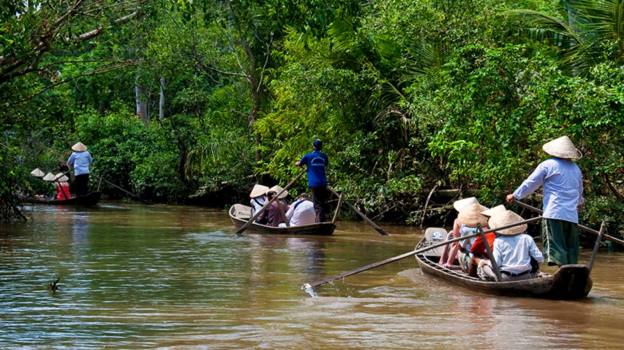
2016: Drought is plaguing much of mainland South-East Asia, including Myanmar, Laos and Cambodia. Thailand’s shortages are the worst for two decades,  Vietnam has been hit as hard as any. The Mekong basin is home to one-fifth of the population. It produces about half of the country’s rice. The government says the amount available for export in the three months to June will be 11% less than originally forecast. Drought in the country’s Central Highlands has affected a third of coffee plantations there and now endangers the region’s supply of drinking water. These woes are weighing on the economy. Growth in the first quarter slowed by half a percent year-on-year to 5.5%.

The immediate cause is El Niño…People living near the Mekong say there is another problem: hydroelectric dams built in China near the head of the river that are holding up its flow. Since March China has loosened some of the dam gates, ostensibly as a favour to its neighbours. But locals say the effect on water levels has been measly. The episode has only heightened fears that China (with which Vietnam has an enormous trade deficit and an intense territorial dispute) can use water flow to hold the country to ransom.

The dams are certainly stripping the Mekong of essential sediment. But many of Vietnam’s water woes are self-inflicted. In the delta, for example, a booming population has built more than 1m wells since the 1960s. These have made saline contamination worse, and are also causing subsidence. In 2014 an American study found that the delta, which mostly lies less than two metres above sea level, could be nearly a metre lower by 2050.

A related problem is the ruling Communist Party’s obsession with maximising rice production. Straining to hit absurd targets—inspired by memories of post-war food shortages—the government has pushed delta farmers to produce three rice crops per year.

This policy has caused the poisoning of paddies with pesticides and has discouraged farming of more profitable, less thirsty crops. It has also prompted the building of a massive network of dykes, canals and sluice gates, which spread pollution from fertilisers and pesticides and restrict the flow of sediment. Koos Neefjes, a climate-change expert in Hanoi, the capital, reckons all this infrastructure has done more to harm the delta than China’s dams.

Fixing this will mean taking on powerful state-owned rice traders and exporters, who benefit from intensive production.

Excerpts Vietnam’s drying delta: Salt of the earth, Economist, Apr. 30, 2016, at 37