Monthly Archives: September 2016

Electronic Warfare: Algorithm Dominance

US Army Secretary Eric Fanning announced [in August 2016] a new Rapid Capabilities Office to accelerate the development of cyber, electronic warfare…That rapid technological progression is on full display, for example, in eastern Ukraine, where Ukrainian soldiers have been battling Russian-backed forces since 2014. For example, Russian-backed separatists have used EW and GPS-spoofing to jam and misdirect the drones that Ukrainian troops use to scope out enemy positions. “Over the past several years we’ve learned from what we’ve seen from Russia and Ukraine, and later in Syria, and from the different capabilities they’ve brought to the battlefield. We’ve seen the combination of unmanned aerial systems and offensive cyber and advanced electronic warfare capabilities and how they provided Russian forces a new degree of sophistication,” said Fanning…

“My guess is … that after 15 years of doing largely counter-insurgency operations in the Middle East, the Army is now taking a look at how it would do large force-on-force conflict in a place like Europe. ”

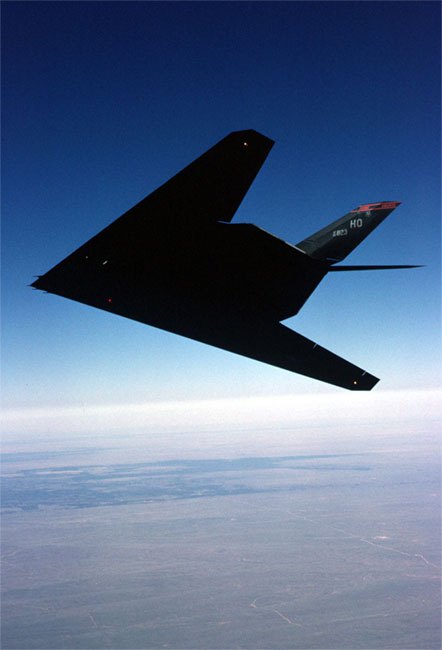
The pace of innovation in EW — in the form of novel new waveforms that can disrupt an adversary’s electronics, paint enemy stealth aircraft* etc. — has surprised many in the military. That’s because EW innovation has become less and less a hardware challenge and more of a software challenge. You can make a new weapon as quickly as your algorithm can pull together a new waveform from the spectrum. But the military, too often, still procures EW assets the same way it buys jets and boats. Slowly.

Excerpts from To Counter Russia’s Cyber Prowess, US Army Launches Rapid-Tech Office, DefenseOne, Aug. 31, 2016

*Radar-absorbent material (RAM), often paints used on aircraft,: absorb radiated energy from a ground or air based radar station into the coating and convert it to heat rather than reflect it back thus avoiding detection by the radar.
Exotic Pets-Illicit Markets

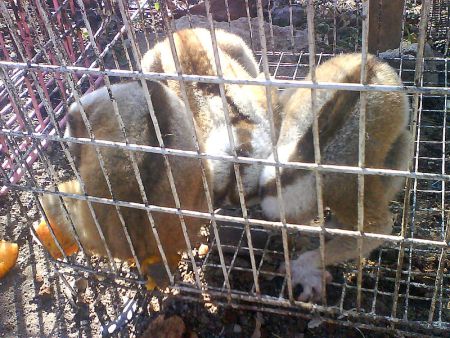
It’s easy to catch grey parrots, say researchers from Birdlife, a global grouping of conservation groups. A team of hunters will use decoys or go to the birds’ water and mineral licks in the forests where flocks gather. They then throw nets over them and take dozens at a time.

Once caught they will be smuggled over borders, stuffed in tiny cages and flown illegally to Europe, South Africa, the Middle East and China, where they may fetch up to £1,000 each. All this makes the African grey probably the most highly traded bird in the world, causing their numbers to plummet… Some conservationists estimate only 1% of their historical numbers remain…

“Africa’s overall elephant population has seen the worst declines in 25 years, mainly due to poaching over the past 10 years,” the IUCN’s director-general, Inger Andersen, will say. “Their plight is truly alarming. Poaching has been the main driver of the decline, while habitat loss poses an increasingly serious, long-term threat to the species.”..

Laos has pledged to phase out its controversial tiger farms, which supply neighbouring China with bones and other parts for traditional medicine. But international animal trade inspectors will report in Johannesburg that rhinoceros horn, elephant ivory and many other wildlife specimens are being regularly smuggled through the country both to China and other south-east Asian countries. “Laos is being targeted by organised crime groups as a transit point,” says wildlife trade monitoring network Traffic.

South Africa.. has lost nearly 6,000 rhinos to poachers since 2007, including more than 700 this year. Vietnam needs to crack down on its rampant illegal rhino horn trade and China has been identified as the world’s primary destination for precious woods…..The street value of ivory is now more than £1,500 a kilogram in Beijing, and rhino horn can sell for £50,000 per kilo – far more than the price of gold or platinum – on the Chinese black market. Meanwhile rosewood can sell for many thousands of pounds a cubic metre.

Excerpt from The grey parrot and the race against Africa’s wildlife extinction, Guardian, Sept. 24, 2016

Industrial-Scale Hunting

Starting September 25, 2016,  thousands of conservationists and top government officials will be thrashing out international trade regulations aimed at protecting different species.A booming illegal wildlife trade has put huge pressure on an existing treaty signed by more than 180 countries — the Convention on International Trade in Endangered Species (CITES)….

[T]he plight of Africa’s elephants, targeted for their tusks, generated fierce debate as the talks kicked off.Zimbabwe, Zambia, South Africa and Namibia castigated Western-based animal charities, saying they “dictated” on how African resources should be managed.”Please leave us alone, don’t just come and dictate what we should be doing,” Zambian Tourism Minister Stephen Mwansa said.Fortune Charumbira, head of Zimbabwe’s traditional chiefs, blasted “elitist NGOs who are coming from countries where there are no animals”, describing them as “domineering”.

A coalition of 29 African countries is pressing for a total halt to the ivory trade to curb poaching of elephants, but other delegates believe it would only fuel illegal trading…CITES forbids trade in elephant ivory, but Namibia and Zimbabwe have made a proposal asking for permission to sell off stockpiles to raise funds for local communities that co-exist with the animals….

CITES’ secretary general John Scanlon… warned illegal wildlife trafficking was “occurring on an industrial scale, driven by transnational organised criminal groups”.

African countries lash out at Western charities at international wildlife conservation meeting, ABC News, Sept. 24, 2016

Killing Civilians in Theory and Practice

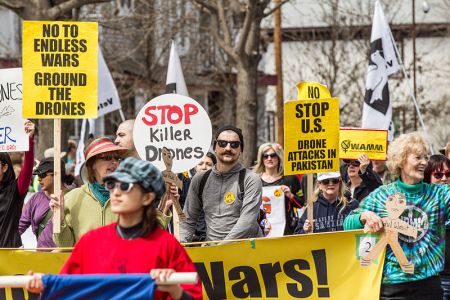
[T]he long list of errant airstrikes carried out by American warplanes: Weddings, funerals, hospitals and friendly forces have been mistakenly attacked, with each strike prompting fresh outrage.

While most of those killed have been civilians — in Afghanistan alone, the United Nations recorded 1,243 civilians killed in airstrikes between 2009 and 2015 — American-led forces have repeatedly struck friendly forces. It is a pattern that was repeated last weekend with a pair of separate airstrikes in Syria and Afghanistan that have again cast a harsh spotlight on the seeming inability of the United States to avoid hitting the wrong targets in its air campaigns.

[A]lmost all the mistaken strikes over the years have come down to two main reasons: Faulty intelligence, and what military strategists call “the fog of war,” referring to the confusion of the battlefield.

WRONG TARGETS

Many of the deadliest American airstrikes to hit civilians in the last 15 years have taken place in Afghanistan.

·         JULY 1, 2002

An American AC-130 gunship struck an engagement party in the village of Kakrak in Uruzgan Province, killing 48 people.

·         MAY 4, 2009

American airstrikes in the village of Granai in Farah Province killed 147 civilians, the Afghan government said. The United States estimated that 20 to 30 civilians and as many as 65 Taliban fighters had been killed.

·         SEPT. 4, 2009

An American F-15E fighter jet, acting on orders from a German commander, dropped a 500-pound bomb on a tanker truck outside the village of Haji Sakhi Dedby in Kunduz Province, killing at least 70 people, and possibly dozens more.

·         OCT. 3, 2015

An American AC-130 gunship, called in by American Special Forces, struck a hospital run by Doctors Without Borders in Kunduz, killing 42 people…

No matter what the intent, killing civilians by mistake can amount to a war crime, though the military almost never brings criminal charges against those involved. That was the case with the strike on a hospital run by Doctors Without Borders in Kunduz, in northern Afghanistan, in 2015, that killed 42 people. The military’s own investigation found that those who took part in the attack “failed to comply with the” laws of armed conflict, and though 12 service members were disciplined, none faced criminal charges…

One of the issues, experts say, is the culture of the Air Force itself….“One of the core aspects of air power theory is this idea that with enough reconnaissance, with enough data with enough data crunching, we can paint an extremely hyper-accurate picture of the battlefield that is going to not only eliminate accidental strikes, but it’s going to make it so we can strike directly and precisely,” Mr. Farley said.“So in some sense, that kind of extreme optimism about air-power targeting is baked into Air Force culture, is baked into the Air Force cake,” he added.

But bad information leads to bad outcomes. Faulty readings of surveillance from drones and other sources appear to have been involved in the strike in Syria, which infuriated the Syrian government and its Russian backers, further undermining an already shaky cease-fire there.

The attack occurred on September 17, 2016  when fighter jets from the American-led coalition struck what the military believed was an Islamic State position. The attack was methodical and merciless — the jets took run after run over the camp in an effort destroy it, cutting down men as they fled.But about 20 minutes into the strike, Russia notified the United States that the jets were hitting troops loyal to the Syrian government, not the Islamic State. Russia and Syria have since said that more than 60 Syrian troops were killed.

Excerpts from  MATTHEW ROSENBERG,It’s Not Like Hollywood: Why U.S. Airstrikes Go Awry 20, NY Times Sept. 20, 2016

Water Scarcity: the case of Tasmania

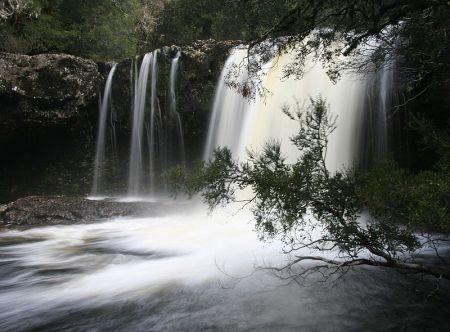
Australia is the world’s driest continent. Climate change is expected to make its droughts even more frequent. The country is still paying for years of overexploitation of its biggest river system, the Murray-Darling basin. The federal government in Canberra is spending A$3.2 billion ($2.2 billion) buying up and cancelling farmers’ water entitlements in a bid to reduce salinity and repair other environmental damage stretching back a century.

While mainland farmers are being paid to give up water, those in wetter Tasmania are being enticed to buy more. The island state accounts for just 1% of Australia’s land mass and 2% of its population. Yet it receives 13% of the country’s rainfall. Tasmania may be blessed with water, but most of it falls in the mountains of the west, making it useless to farmers elsewhere.

So the island has embarked on a project to capture more water for its drier east and north, shifting it through pipes to these regions’ farms. Almost 800 farmers have already bought into ten irrigation schemes that are up and running. They will allow farmers to do more than graze sheep and cattle; they will be able to grow fruit and vegetables, including more of Tasmania’s exotic stuff: cherries, grapes for the island’s increasingly fashionable wines and even poppies (the island is a big opium supplier for legitimate pharmaceuticals).

If another five planned schemes involving 200 farmers go ahead, Tasmania’s investment in shifting its water around the island will be almost A$1 billion. The federal and Tasmanian governments are putting up some of the money. But that comes with conditions. Farmers and other investors must first agree to meet at least two-thirds of the costs of each irrigation project before governments commit the rest….

Tasmania’s new water market has already been kind to one of its biggest investors. David Williams, a Melbourne banker, owns no Tasmanian farms. But he put A$10m into two central Tasmania irrigation schemes after local farmers had bought in. Mr Williams likens the arrival of reliable water in such regions to technological change: “I punted that it would change the way land is used.” He calculates that trading his water entitlement with farmers in both schemes could turn his investment into A$16m….

Among the foreign tourists coming to sample Tasmanian Riesling, oysters and marbled beef are plenty of Chinese. When China’s president, Xi Jinping, visited Hobart in late 2014, he sent signals that China wanted more seafood, beef and other costlier food exports from Tasmania.

Excerpts from Tasmania charts a new course: Water into wine, Economist, Feb. 11, 2016

Tin, Tantalum and Tungsten: Congo

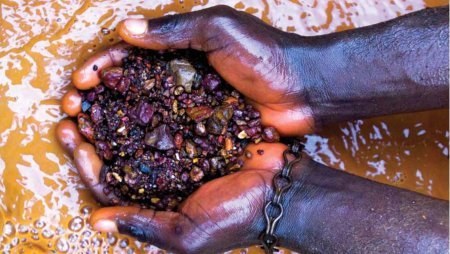
Congo’s tin, tantalum and tungsten are used in electronics around the world. Although some of these minerals come from big industrial copper mines in Katanga, Congo’s south, and a gold mine in South Kivu, there is not yet a single modern mine in North Kivu.

Until now the province’s metal has been dug out almost entirely by hand. Yet Alphamin hopes to show that it can run a modern industrial mine in a part of the world that scares other modern miners away.

Alphamin says that the investment is attractive—even at a time of low commodity prices—because the ore that it plans to extract is richer than that found anywhere else in the world. Behind the company’s camp on the hill are stacks of carefully ordered cylinders of rock drilled out to map the riches beneath the mountain. (Like almost everything else in the camp, the drill rig had to be lifted in by helicopter.) The ore they contain is 4.5% grade. That means that for every 100 tonnes of ore extracted, the firm will be able to sell 3.25 tonnes of tin (not all the tin can be extracted from the rock). Most other mines would be happy to produce 0.7 tonnes…..

If the gamble pays off Alphamin’s investors will make juicy returns. But to do so they may have to convince locals that the project is in their interest. If not, they risk protests and sabotage  .In 2007 some 18,000 people lived at Bisie, working the site with pickaxes and shovels. They produced some 14,000 tonnes of tin that year—or perhaps 5% of world production. To get it to market people carried concentrated ore on their heads through the jungle to an airstrip where small planes could land to carry it out. It was back-breaking work but lucrative for many Congolese. That era began to come to an end in 2011, thanks in part to an American law.

Under the Dodd-Frank act, a law aimed mainly at tightening bank regulation, firms operating in the United States must be able to show where the minerals used in their products came from. The idea was to stop rebels in poor countries from selling gold and diamonds to fund wars. The law all but shut down artisanal mining in much of eastern Congo.

Elsewhere in eastern Congo artisanal mines have gradually reopened thanks to a verification scheme under which the UN and the government check mines and allow certified ones to “tag and bag” minerals. The site at Bisie has, however, never been certified. And although Alphamin will provide some well-paid jobs to locals, as well as pay taxes to the central government, its mechanised operations will never employ anything like the thousands of people who once toiled there with pick and shovel. Alphamin has promised to fund local projects, such as a new school, that are intended to benefit 44 villages.

Excerpts from Mining in the Democratic Republic of Congo: The richest, riskiest tin mine on Earth, Economist, Aug. 27, 2016

Animal Slaves: Militarization of conservation

The Bambuti people were the original inhabitants of Virunga National Park in the Democratic Republic of Congo, the oldest national park in Africa whose boundaries date back to 1925 when it was first carved out by King Albert of Belgium. But forbidden from living or hunting inside, the Bambuti now face repression from both park rangers and armed groups.

Other communities in the park accuse the DRC’s National Park Authority IICCN) of expropriating land without their consent and without providing compensation, but park authorities say that rangers must undertake “legitimate defense” and take action when people in the park “recruit armed groups to secure the land.”

Virunga National Park is considered a sensitive zone for the government because of potential oil exploration, mining and rebel groups.Compounding the difficult relationship between communities and conservationists is the park’s location. According to researchers, it lies at the epicenter of an ongoing conflict and is affected by cross-border dynamics between Rwanda and Uganda.

Patrick Kipalu, of the NGO Forest People’s Program, believes that the park and government’s exclusion of the Bambuti from conservation efforts is a waste of the immense amount of knowledge indigenous communities have about forest ecosystems. One solution, he said, would be to recruit them as rangers in protecting the park.

The ICCN’s Jean Claude Kyungu said that there are “specific criteria” for recruiting rangers, which the Bambuti do not fulfill, including having a diploma from the state.Norbert Mushenzi, the ICCN’s deputy director of the Virunga National Park, said that the Bambuti have an “intellectual deficiency” and one way for them to benefit from the park is to “sell their cultural products and dances to tourists.”

His view is not unusual; many people, including those directly involved in advocating for the Bambuti, believe that they are inferior to Bantu communities...Doufina Tabu, president of a human rights organization, the Association of Volunteers of Congo (ASVOCO), works with Bambuti communities living outside the park whose land has been stolen….While Tabu advocates for the Bambuti to secure land, he also believes that they must integrate into society, “so they can live like others.”“There are things in their culture that we must change. They can’t continue to stay in the forest like animals,” he said.

A report by Survival International states that forcing “development” on indigenous people has “disastrous” impacts and that the most important factor to their well being is whether or not their land rights are respected.According to Kipalu, the living conditions of the Bambuti are far worse now than when they were in the forest. “Being landless and living on the lands of other people means that they end up being treated almost as slaves,” he said…

Around Kahuzi-Biega National Park, which like Virunga, is classified as a World Heritage Site, the organization Environment, Natural Resources and Development, ERND, together with the Rainforest Foundation Norway, filed a legal complaint in 2010 for the Batwa, another indigenous group, to receive compensation for the loss of their lands inside the park.

The case landed at the Supreme Court in Kinshasa in 2013 where it has remained. In May 2016, the organizations submitted their complaint to the African Commission of Human and People’s Rights, but have yet to receive a response from the Congolese government…Although the DRC voted to adopt the UN Declaration on the Rights of Indigenous People in 2007, the country’s constitution, 1973 land law and the 2002 Forestry Code make no reference to the rights of indigenous people. The proposed law includes the protection of their traditional medicine and culture, as well as access to land and natural resources. Article 42 specifically states that indigenous people have the right to return to their ancestral lands and be fairly and adequately compensated if they have to relocate.

Excerpts from Zahra Moloo Militarised Conservation Threatens DRC’s Indigenous People – Part 2, IPS, Sept. 15, 2016

Lethal Trash

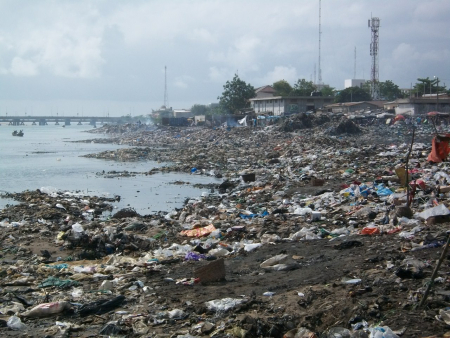
An explosion at a waste dump in Benin killed eight people, local mayor Robert Tolegbon said on on September 11, 2016. The blast occurred late onat a giant trash heap in Tori, a town about 40 km north-west of the capital Cotonou, as locals were sifting for food. Previously, the health ministry said two people had died.  Safety standards for waste management are poor in much of West Africa and debris is rarely filtered to eliminate toxic or flammable materials.

Eight killed in Benin waste blast, Reuters, Sept. 12, 2016

Sixth Domain of War: electromagnetic spectrum

The electromagnetic spectrum is the sixth domain of modern warfare. The effectiveness of combat operations in the land, sea, air, space, and cyber domains depends on our ability to control and exploit the spectrum, because it is critical to our capabilities in navigation. While the spectrum is at the heart of current and  future warfare, it remains highly contested and congested, and future info-centric warfare will require more access than ever before. DARPA/’s Microsystems Technology Office is developing components to effectively operate in a dynamic, contentious spectrum, which includes research in hardware components for maximal flexibility, machine learning for spectral reasoning, and fast development cycles for fielding complex electromagnetic systems.

Excerpt from DARPA-SN-16-59, MTO Office-wide Proposers Day, September 20, 2016

South Sudan as a State

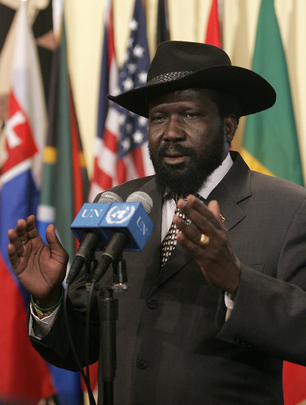
“There is no evidence to suggest that more weapons are required in South Sudan for the government to achieve a stable security environment,” the UN monitors said. “Rather, the continued influx of weapons … contributes to spreading instability and the continuation of the conflict.”

They said while Sudan had provided small arms, bullets and logistical support to opposition troops, they “found no evidence to date that Sudan – or any other neighbouring country – has provided heavy weapons … which has limited the opposition’s ability to mount large-scale operations.”

Two truckloads of ammunition were transferred to the capital Juba from Uganda in June 2016, while in 2015 South Sudanese army chief Paul Malong asked a Lebanese company to begin developing a small ‘arms ammunition manufacturing facility in Juba, the monitors said.

A UN peacekeeping mission (UNMISS) has been in South Sudan since the country gained independence from Sudan in 2011.The UN monitors said that in rhetoric and action, government-affiliated forces “have actively threatened the operations and personnel of UNMISS and other UN agencies, and both parties have continued to target humanitarian workers.”

During the violence in July 2016, between 80 and 100 uniformed soldiers overran Juba’s Hotel Terrain compound, home to the staff of international organizations, and in four hours killed an ethnic Nuer journalist and raped at least five foreign aid workers and other staff working at the compound, the monitors said.The monitors said given the number of soldiers involved, the number of items stolen and the systematic damage inflicted, “this attack was well co-ordinated and cannot be considered as an opportunistic act of violence and robbery.”,,,

A political rivalry between President Salva Kiir, an ethnic Dinka, and opposition leader Riek Machar, a Nuer, sparked the civil war. The pair signed a shaky peace deal a year ago, but fighting has continued. Machar fled the country after the violence between their troops erupted in July 2016

Excerpts South Sudan buying arms as economy collapses – UN panel, Reuters, Sept, 9 2016

The Nuts and Bolts of Oil Spills

US regulators warned subsea oil drillers and equipment makers that bolt failures in the Gulf of Mexico could result in an oil spill on the scale of the Deepwater Horizon disaster.

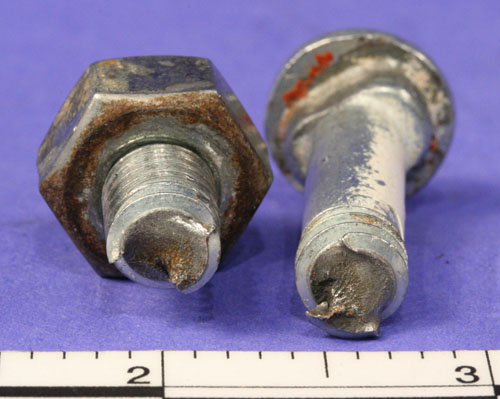
“Fortunately, as of today we’ve had no major catastrophes from bolt failures,” said Brian Salerno, director of the Bureau of Safety and Environmental Enforcement  (BSEE) at the Department of the Interior, which oversees the offshore oil industry. “We believe it may only be a matter of time before our luck runs out….. The agency’s working group and a parallel task force set up by an oil industry trade group are trying to determine why critical metal fasteners have corroded and failed in recent years.

Regulators and makers of oil production equipment, including General Electric Co., Schlumberger Ltd. and National Oilwell Varco Inc., are trying to determine what is causing the failures, which have included premature corroding, stripping of threads or snapping outright. The problems have been found over the past four years on safety equipment in underwater oil production, including on blowout preventers, which are designed as a last defense against a major oil spill like the Deepwater Horizon incident in the Gulf of Mexico….

In 2013, GE recalled more than 10,000 bolts after a failure on one of its components, a blowout preventer connector, which led to a spill of more than 400 barrels of drilling fluid in the Gulf of Mexico…. Troy Trosclair, a BSEE supervisor for the Gulf of Mexico region, said Brazilian officials reported that 56 rigs working for Petróleo Brasileiro SA, or Petrobras, that country’s biggest oil producer, were affected by the 2013 GE recall

Excerpts from Ted Mann,U.S. Regulators Warn Drillers to Find Solution to Subsea Bolt Failures, Wall Street Journal,  Aug. 30, 2016

Libya’s Chemical Weapons

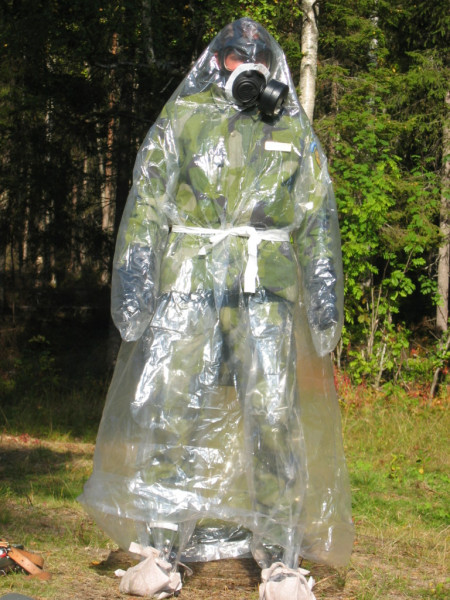
Announcing a major milestone in the international operation to verifiably eliminate Libya’s remaining chemical weapons stocks, the Director-General of the Organisation for the Prohibition of Chemical Weapons (OPCW), Ambassador Ahmet Üzümcü, confirmed that the chemicals have been successfully removed from Libya on 27 August 2016.

The operation — facilitated and coordinated by the OPCW — responds to Libya’s request for assistance in meeting its obligations under the Chemical Weapons Convention. The request was approved by the OPCW Executive Council and endorsed by the United Nations Security Council in July 2016. Removal of these chemicals is the first stage of an ongoing operation to verifiably eliminate the remnants of Libya’s now-defunct chemical weapon programme….

Canada, Denmark, Finland, France, Germany, Italy, Malta, Spain, United Kingdom and the United States have so far responded to the call for assistance by contributing personnel, technical expertise, equipment, financial and other resources. Notably, Denmark has provided maritime assets to transport the chemicals

Excerpts from Libya’s Remaining Chemical Weapon Precursors Successfully Removed, Press Release of OPCW, Aug. 31,  2016

Fishing to Death

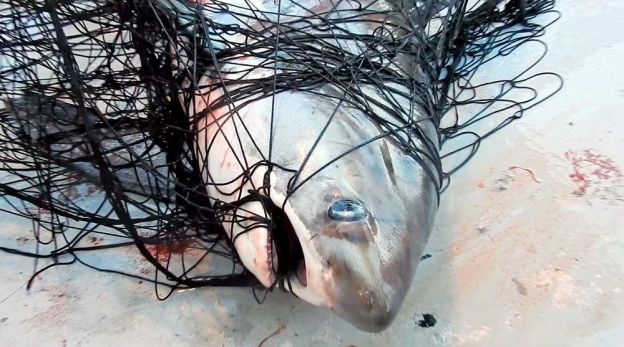
Under international law the high seas, which span 64% of the surface of the ocean, are defined as “the common heritage of mankind”. This definition might have provided enough protection if the high seas were still beyond mankind’s reach. But the arrival of better trawlers and whizzier mapping capabilities over the past six decades has ushered in a fishing free-for-all. Hauls from the high seas are worth $16 billion annually. Deprived of a chance to replenish themselves, stocks everywhere pay the price: almost 90% are fished either to sustainable limits or beyond. And high-seas fishing greatly disturbs the sea bed: the nets of bottom trawlers can shift boulders weighing as much as 25 tonnes….

A fresh approach is needed. Slashing fishing subsidies is the most urgent step. In total these come to $30 billion a year, 70% of which are doled out by richer countries. By reducing fuel costs, subsidies bring the high seas within reach for a few lucky trawlers, largely from the developed world. Just ten countries, including America, France and Spain, received the bulk of the bounty from high-seas catches between 2000 and 2010, even though Africa has more fishermen than Europe and the Americas combined. That is unfair and short-sighted.

The next step is to close off more areas to fishing. As of 2014 less than 1% of the high seas enjoyed a degree of legal protection. A review of 144 studies published since 1994 suggests that to preserve and restore ecosystems, 30% of the oceans should be designated as “marine protected areas” (MPAs). Individual countries can play their part, by creating reserves within territorial waters: last year Britain created the world’s largest MPA, an area bigger than California off the Pitcairn Islands in the South Pacific. But to get anywhere near that 30% share, mechanisms must be found to close off bits of the high seas, too. The UN’s members have rightly agreed to work out how to do so…

So in parallel with efforts to protect wild stocks, another push is needed: to encourage the development of aquaculture, the controlled farming of fish. In 2014, for the first time, more fish were farmed for human consumption than were caught in the wild; farmed-fish output now outstrips global beef production. Unfortunately, feedstocks are often poor and storage facilities inadequate. …Eventually, efficient fish-farming will be the best guardian of stocks on the high seas.

Marine Management: Net Positive,  Economist, July  16, 2016, at 13