Monthly Archives: March 2018

It’s the Democracy, Stupid

Cambridge Analytica, the UK political consultancy at the centre of Facebook’s election manipulation scandal, ran the campaigns of President Uhuru Kenyatta in the 2013 and 2017 Kenyan elections, according to video secretly recorded and broadcast by Britain’s Channel 4 News.

The news channel said it mounted a “sting operation” in which it said had secretly recorded top Cambridge Analytica executives saying they could use bribes, former spies and Ukrainian sex workers to entrap politicians around the world.  The New York Times and the British Observer newspaper reported on Saturday that Cambridge Analytica had acquired private data harvested from more than 50 million Facebook users to support Donald Trump’s 2016 presidential election campaign. Cambridge Analytica and sister company SCL Elections, told Channel 4’s undercover investigative reporting team that his firm secretly stage-managed Kenyatta’s hotly contested campaigns to run the East African nation…

Turnbull of Cambridge Analytica said: “We have rebranded the entire party twice, written the manifesto, done research, analysis, messaging. I think we wrote all the speeches and we staged the whole thing – so just about every element of this candidate,” Turnbull said of his firm’s work for Kenyatta’s political party, known as the National Alliance until 2016, and subsequently as the Jubilee Party…

At a prior meeting, Turnbull of Cambridge Analytica told the reporters: “Our job is to really drop the bucket further down the well than anybody else to understand what are these really deep-seated fears, concerns. “It is no good fighting an election campaign on the facts, because actually it is all about emotion.”  Cambridge Analytica officials were recorded saying they have used a web of shell companies to disguise their activities in elections in Mexico, Malaysia and Brazil, among various countries where they have worked to sway election outcomes.

Excerpts from Cambridge Analytica stage-managed Kenyan president’s campaigns – UK TV, Reuters, Mar. 19, 2018

Trash Islands

According to a three-year study published in Scientific Reports on March 23, 2018, the mass known as the Great Pacific Garbage Patch is about 1.6 million square kilometers in size — up to 16 times bigger than previous estimates. That makes it more than double the size of Texas.  Ghost nets, or discarded fishing nets, make up almost half the 80,000 metric tons of garbage floating at sea, and researchers believe that around 20% of the total volume of trash is debris from the 2011 Japanese tsunami.

The study — conducted by an international team of scientists with The Ocean Cleanup Foundation, six universities and an aerial sensor company — utilized two aircraft surveys and 30 vessels to cross the debris field.

Along with nets to survey and collect trash, researchers used two six-meter-wide devices to measure medium to large-sized objects. An aircraft was also fitted with advanced sensors to collect 3D scans of the ocean garbage. They ended up collecting a total of 1.2 million plastic samples and scanned more than 300 square kilometers of ocean surface.  The bulk of the pile is made up of larger objects while only 8% of the mass is microplastics, or pieces smaller than 5 millimeters in size.

The patch is so big that last fall environmentalists called on the United Nations to declare the Great Pacific Garbage Patch a country, called “The Trash Isles,” complete with its own passport and currency, called debris…Research scientist Britta Denise Hardesty, who wasn’t involved in this study, said while discarded nets may make up almost half of the findings, the problem may be more nuanced.  It’s estimated 640,000 tons of fishing gear is lost to the marine environment each year.

Excerpts from A massive garbage patch in the middle of the Pacific Ocean is now three times the size of France, CNN, Mar. 24, 2018

Well blowouts and Pipeline breakdowns: Who Profits?

The global oil spill management market size is projected to grow beyond USD 125.62 billion by 2024. Growing incidents of oil spilling in the past along with severe safety and environmental policies are likely to propel the market over the forecast phase (2016-2024). Also, escalating pipeline and seaborne shipping of crude oil and chemicals could positively impact the market further.  The market is fragmented by technologies, techniques, applications, and regions. Technologies are Pre-oil spill and Post-oil spill. Pre-oil spill segment is divided into double-hull, pipeline, leak detection, blow-out preventers, and others. Double-hulling was the dominant segment in 2015 with highest shares.

Marine trade registers for a majority of petroleum products and natural gas transportation. Mounting demand for crude and petroleum products oil in Europe and Asia Pacific will boost the maritime trade growth further. Post-oil spill segments are mechanical, chemical, biological, and physical. Chemical and mechanical containment and recovery are the techniques used in the industry….In 2015, onshore post-oil spill sector was valued close to 60% of the total market demand. Regions such as Norway, U.S, Mexico, Canada, U.S., China, and Nigeria have observed well blowouts and occurrences of pipeline breakdowns. This could be accredited to huge market diffusion in past

Main regions in the market encompass North America, Europe, Asia Pacific, the Middle East and Africa (MEA), and Central & South America. North America was the leading market for pre-oil spill management. It was estimated at 40.1% of total demand in 2015. This region will potentially face lucrative demand due to production activities and increasing oil & gas discovery. Pre-oil spill management shares in Asia Pacific will gain over USD 21,540 million by 2024…  Top companies in the global oil spill management market include OMI Environmental Solutions, Skim Oil Inc., American Green Ventures Inc., and Spill Response Services.

Excerpts from Global Oil Spill Management Market Size is Projected to Grow Beyond USD 125.62 Billion by 2024, Hexa Research Press Release, Mar. 17, 2018

Target Practice on Orangutans

Estimating the number of orangutans is difficult. Researchers have to extrapolate from the number of nests observed. (The apes build new ones to sleep in each night.) A new study published in Current Biology finds that the number of orangutans on Borneo, an island divided between Indonesia and Malaysia, declined by some 148,000 between 1999 and 2015, leaving fewer than 100,000. Within the next 30 years, another 45,000 could disappear. The decline has been steepest, naturally, in areas where the jungle has been razed to plant palm-oil trees. But it is areas that are still forested that account for most of the fall in the orangutan population. This suggests that hunting and crueller activities—carcasses have been found maimed and riddled with airgun pellets—are also taking a bloody toll, says one of the study’s authors, Maria Voigt of the Max Planck Institute, a research organisation in Germany…

Local officials still push for more palm-oil plantations, mines and roads. But tourism in Sumatra’s Gunung-Leuser National Park shows the value of leaving the jungle, and its inhabitants, alone. A night and two days of climbing and crawling in search of orangutans can cost a visitor around $100…Eco-tourism can benefit orangutans, too, if controlled. But tourists often get too close to the animals, risking the transmission of disease, or leave rubbish in the forest…

Excerpts from Orangutans: Money Swinging from Trees, Economost, Feb. 24, at 2018, at 30

The Balding Forests of Australia

Most deforestation takes place in poor countries. In richer places, trees tend to multiply. Australia is an unhappy exception. Land clearance is rampant along its eastern coast, as farmers take advantage of lax laws to make room for cattle to feed Asia. WWF, a charity, now ranks Australia alongside Borneo and the Congo Basin as one of the world’s 11 worst “fronts” for deforestation.

The worst damage occurs in the north-eastern state of Queensland, which has more trees left to fell than places to the south, where agriculture is more established… Its bulldozers are at present busier than they have been for a decade. They erased 395,000 hectares of forest, including huge tracts of ancient vegetation, between 2015 and 2016—the equivalent of 1,000 rugby pitches a day. As a share of its forested area, Queensland is mowing down trees twice as fast as Brazil.

Australia has lost almost half its native forest since British colonialists arrived, and much of what remains is degraded. For a time, it seemed that the clear-cutting might come to an end: in the early 2000s several state governments passed bills to reduce deforestation. But in the past decade these have been wound back in every state. Queensland’s land clearance has more than doubled since conservatives loosened its forestry law in 2013, allowing farmers to “thin” trees by up to 75% without a permit. Neighbouring New South Wales recently enacted a similar rule.

Conservationists blame powerful agricultural lobbies. These retort that controls on land clearance push up food prices and cost jobs. Family farmers lament that trees obstruct the big machinery needed to keep their land productive. … In 2014 a landowner in New South Wales murdered an environment officer who was investigating illegal bulldozing. (Authorities in the state are examining at least 300 cases of illegal tree-clearing.)

Yet clearing land eventually hurts farmers too because, without trees, soil erodes and grows saltier. Deforestation releases carbon dioxide into the atmosphere, spurring global warming, and reduces regional rainfall…. Loss of habitat has brought many species, including the koala, to the brink of extinction.

Chainsaw massacre: Deforestation in Australia, Economist, Feb. 24, 2018

The Prefect Crystal Ball for Gray War

The activity, hostile action that falls short of–but often precedes–violence, is sometimes referred to as gray zone warfare, the ‘zone’ being a sort of liminal state in between peace and war. The actors that work in it are difficult to identify and their aims hard to predict, by design…
Dubbed COMPASS, the new program will “leverage advanced artificial intelligence technologies, game theory, and modeling and estimation to both identify stimuli that yield the most information about an adversary’s intentions, and provide decision makers high-fidelity intelligence on how to respond–-with positive and negative tradeoffs for each course of action,” according to a DARPA notice posted on March 14, 2018.

Teaching software to understand and interpret human intention — a task sometimes called “plan recognition” …has advanced as quickly as the spread of computers and the internet, because all three are intimately linked.

From Amazon to Google to Facebook, the world’s top tech companies are pouring money into probabilistic modeling of user behavior, as part of a constant race to keep from losing users to sites that can better predict what they want. A user’s every click, “like,” and even period of inactivity adds to the companies’ almost unimaginably large sets, and new  machine learning and statistical techniques make it easier than ever to use the information to predict what a given user will do next on a given site.

But inferring a user’s next Amazon purchase (based on data that user has volunteered about previous choices, likes, etc.) is altogether different from predicting how an adversary intends to engage in political or unconventional warfare. So the COMPASS program seeks to use video, text, and other pieces of intelligence that are a lot harder to get than shopping-cart data…

Unlike shopping, the analytical tricks that apply to one gray-zone adversary won’t work on another. “History has shown that no two [unconventional warfare] situations or solutions are identical, thus rendering cookie-cutter responses not only meaningless but also often counterproductive,” wrote Gen. Joseph Votel, who leads U.S. Central Command, in his seminal 2016 treatise on gray zone warfare.

Exceprts from The Pentagon Wants AI To Reveal Adversaries’ True Intention, www.govexec.com, Mar. 17, 2018

The Scramble for Maldives: US/India v. China

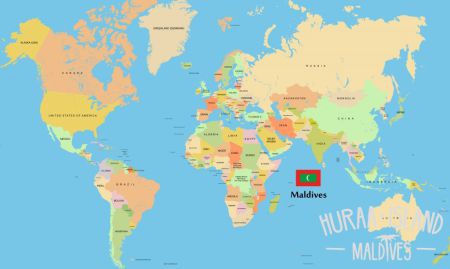
The Maldives archipelago, popular among luxury honeymooners, has become a playing field for geostrategic rivalry as China expands its influence in the Indian Ocean and the U.S. and India push back.
Maldives President Abdulla Yameen Abdul Gayoom, who has steadily swung his country toward Beijing and away from traditional partner New Delhi, has imposed a state of emergency, jailed opponents and clamped down on protests to weaken his opposition, which is led by pro-India ex-President Mohamed Nasheed.

India and the U.S. don’t want Beijing, already dominant in the South China Sea, to entrench itself in these waters. The island nation sits astride shipping lanes that connect China to the oil-supplying countries of the Middle East, via the Strait of Malacca. The location also makes the Maldives vital to Beijing’s Belt and Road plan to develop land and sea trading routes linking China to Europe.

Chinese President Xi Jinping won Mr. Gayoom’s support for the project’s maritime corridor on a visit to the Maldives in 2014, and China began investing in island infrastructure. A Chinese bridge now under construction will connect the capital city, Malé, to a nearby island where its airport is located. A Chinese company is expanding the airport; another has leased an island close by for development. Chinese contractors are building roads and housing units for locals.

Many in the Maldives opposition have raised concerns that Chinese infrastructure loans will turn into “debt traps,” particularly after a major Chinese-financed port in neighboring Sri Lanka passed into Chinese control last year when Colombo couldn’t repay.

U.S. Secretary of State Rex Tillerson…called China’s infrastructure-financing deals an example of “predatory economics” that saddle developing countries with unsustainable debt and could undercut their sovereignty.  Mr. Gayoom steered a constitutional amendment through parliament in 2015 allowing foreigners to own land, a change the government said was meant to attract investment and critics in the country said could help Beijing establish a military foothold.

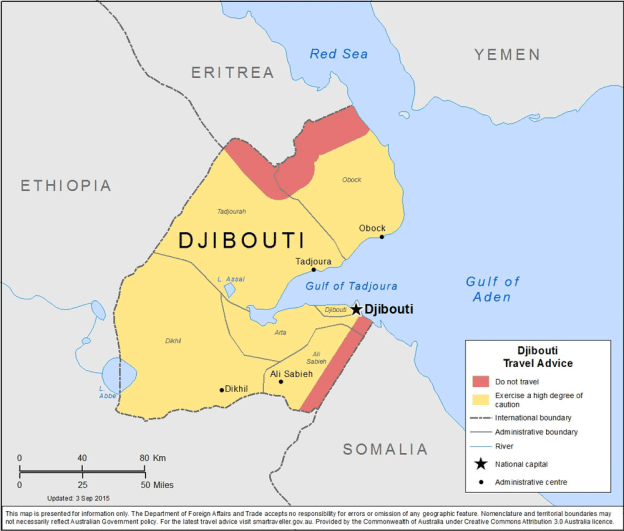
In recent years, China has built a naval base in Djibouti in East Africa; in addition to the port in Sri Lanka, it operates one in Pakistan. A senior Indian navy officer said Chinese submarines and research vessels are visiting the Indian Ocean more frequently.

The Indian military deploys aircraft specialized in anti-submarine warfare to patrol the ocean, and its government is negotiating the purchase of U.S. drones with advanced surveillance features. India also plans to build new attack submarines, and a military upgrade is afoot in its Andaman and Nicobar Islands, whose capital is around 1,200 nautical miles from Malé.

Excerpts from China-India Rivarly Plays out in Maldives, Wall Street Journal, Mar. 6, 2019

How to Profit from Chaos: the case for Libyan oil

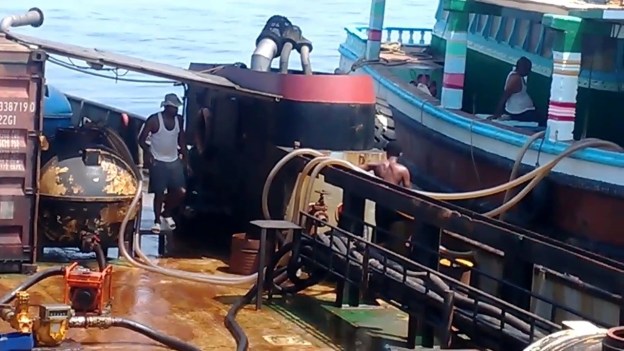
On February 26, 2018, the U.S. Department of the Treasury’s Office of Foreign Assets Control (OFAC) today sanctioned six individuals, 24 entities, and seven vessels pursuant to Executive Order (E.O.) 13726 for threatening the peace, security, or stability of Libya through the illicit production, refining, brokering, sale, purchase, or export of Libyan oil or for being owned or controlled by designated persons.  Oil smuggling undermines Libya’s sovereignty, fuels the black market and contributes to further instability in the region while robbing the population of resources that are rightly theirs.  Illicit exploitation of Libyan oil is condemned by United Nations Security Council Resolutions (UNSCRs) 2146 (2014) as modified by 2362 (2017).  As a result of today’s actions, any property or interest in property of those designated by OFAC within U.S. jurisdiction is blocked.  Additionally, U.S. persons are generally prohibited from engaging in transactions with blocked persons, including entities owned or controlled by designated persons.

OFAC designated Darren Debono, Gordon Debono, Rodrick Grech, Fahmi Ben Khalifa, Ahmed Ibrahim Hassan Ahmed Arafa, and Terence Micallef pursuant to E.O. 13726 for their involvement in the smuggling of petroleum products from Libya to Europe.  In 2016, Maltese nationals Darren and Gordon Debono formed an unofficial consortium for illicit fuel smuggling from Zuwarah, Libya, to Malta and Italy in an operation that reportedly earned the group over 30 million eurosLibyan national Fahmi Ben Khalifa managed the Libya side of the fuel smuggling operation, and Maltese national Rodrick Grech transported the Libya-originated fuel to European ports where it was sold using falsified fuel certificates, reportedly forged by Egyptian-Maltese citizen Ahmed Ibrahim Hassan Arafa, to obfuscate the fuel’s origin.  Additionally, Maltese national Terence Micallef operated a Malta-based shell company to sell the smuggled petroleum products in Europe.

The February 26, 2018 Treasury action also targeted 21 companies for being owned or controlled by Darren and Gordon Debono and three additional companies for being involved in the illicit exploitation of crude oil or any other natural resources in Libya, including the illicit production, refining, brokering, sale, purchase, or export of Libyan oil.  [These included]….the Malta-based Scoglitti Restaurant, Marie De Lourdes Company Limited, World Water Fisheries Limited, and Andrea Martina Limited for being owned or controlled by Darren Debono.

Excerpts from Press Release, Treasury Sanctions International Network Smuggling Oil from Libya to Europe, Feb. 26, 2018

Who’s Fighting over Djibouti?

The top US general for Africa told lawmakers the American military could face “significant” consequences should China take a key port in Djibouti….  In Febuary 2018, Djibouti ended its contract with Dubai’s DP World, one of the world’s biggest port operators, to run the Doraleh Container Terminal, citing failure to resolve a dispute that began in 2012.  DP World called the move an illegal seizure of the terminal and said it had begun new arbitration proceedings before the London Court of International Arbitration.
During a congressional hearing on March 7, 2018, dominated by concerns about China’s role in Africa, lawmakers said they had seen reports that Djibouti seized control of the port to give it to China as a gift. China has already built a military base in Djibouti, just miles from a critical US military base.

Djibouti is strategically located at the southern entrance to the Red Sea on the route to the Suez Canal.  Marine General Thomas Waldhauser, the top US military commander overseeing troops in Africa, said if China placed restrictions on the port’s use, it could affect resupplying the US base in Djibouti and the ability of Navy ships to refuel there.  Djibouti hosts a vital US military base home to about 4,000 personnel,[Camp Lemonnier] including special operations forces, and is a launchpad for operations in Yemen and Somalia.

China has sought to be visible in Africa, including through high-profile investment in public infrastructure projects, as it deepens trade ties.  Waldhauser said the United States would be unable to match the scale of Chinese investment throughout Africa, noting Beijing’s construction of shopping malls, government buildings and even soccer stadiums.  “We’ll never outspend the Chinese in Africa,” Waldhauser said, noting some Chinese investments in Djibouti.

In 2018, the US military put countering China, along with Russia, at the centre of a new national defence strategy.  The Pentagon said China was a part of “revisionist powers” that “seek to create a world consistent with authoritarian models.”

Excerpts from  Significant consequences if China takes port in Djibouti, Reuters, Mar. 7, 2018

Up, Close and Personal: How to Destroy the Enemy

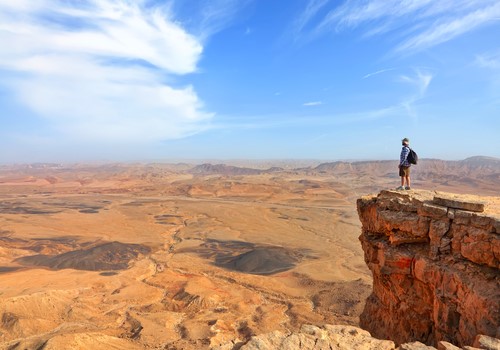
Deep southern Negev desert, Israel, there is a small town called Baladia, with a main square, five mosques, cafés, a hospital, multi-storey blocks of flats, a kasbah and a cemetery. Oddly, it also has a number of well-constructed tunnels. The only people milling around in its streets are Israeli Defence Force (IDF) soldiers. Baladia, the Arab word for city, is part of the Tze’elim army base**. It has been built to provide a realistic training ground for the next time the IDF is required to go into Gaza to destroy Hamas missile launchers…Acceptance among Western armies that future fights are most likely to take place in cities. Megacities with populations of more than 10m are springing up across Africa and Asia. They are often ringed by closely packed slums controlled by neighbourhood gangs. Poor governance, high unemployment and criminality make them fertile territory for violent extremism.

It is hardly surprising that non-state adversaries of the West and its allies should seek asymmetric advantage by taking the fight into cities. Air power and precision-guided munitions lose some of their effectiveness in urban warfare because their targets can hide easily and have no scruples about using a densely packed civilian population as a shield.

Valuable lessons have been learned from the battle for Sadr City, a large suburb of Baghdad, in 2008, Israel going into Gaza in 2014 and the defeat of Islamic State (IS) in Mosul 2017….As General Mark Milley, the head of the US Army, puts it, “it took the infantry and the armour and the special operations commandos to go into that city, house by house, block by block, room by room…and it’s taken quite a while to do it, and at high cost.” He thinks that his force should now focus less on fighting in traditional environments such as woodland and desert and more on urban warfare.

To that end, he advocates smaller but well-armoured tanks that can negotiate city streets, and helicopters with a narrower rotor span that can fly between buildings. At the organisational level, that means operating with smaller, more compartmentalised fighting units with far more devolved decision-making powers…

Western military forces should still enjoy a significant technological edge. They will have a huge range of kit, including tiny bird- or insect-like unmanned aerial vehicles that can hover outside buildings or find their way in. Unmanned ground vehicles can reduce the risk of resupplying troops in contested areas and provide medical evacuation for injured soldiers, and some of them will carry weapons….

For all the advances that new technologies can offer, General Milley says it is a fantasy to think that wars can now be won without blood and sacrifice: “After the shock and awe comes the march and fight…to impose your political will on the enemy requires you…to destroy that enemy up close with ground forces.”

Excerpt from House to House in the The New Battlegrounds, Economist Special Report, the Future of War, Jan. 27, 2018

***In 2005, the Israeli Defense Forces, with assistance from the United States, built the Urban Warfare Training Center at the Tze’elim Army Base, at a cost of $45 million. Nicknamed “Baladia” it is a 7.4 square mile training center used to instruct soldiers in urban warfare techniques, and consists of an imitation Middle Eastern style city with multiple multistory buildings. It has been used to train various military organizations, including the US Army and UN peacekeepers.  Wikipedia

The Perfect Spies: Animals as Mobile Sensors of US Enemies

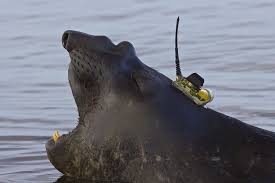
The world’s vast oceans and seas offer seemingly endless spaces in which adversaries of the United States can maneuver undetected. The U.S. military deploys networks of manned and unmanned platforms and sensors to monitor adversary activity, but the scale of the task is daunting and hardware alone cannot meet every need in the dynamic marine environment. Sea life, however, offers a potential new advantage. Marine organisms are highly attuned to their surroundings—their survival depends on it—and a new program out of DARPA’s Biological Technologies Office aims to tap into [marine animals] natural sensing capabilities to detect and signal when activities of interest occur in strategic waters such as straits and littoral regions.

The Persistent Aquatic Living Sensors (PALS) program, led by program manager Lori Adornato, will study natural and modified organisms to determine which ones could best support sensor systems that detect the movement of manned and unmanned underwater vehicles. PALS will investigate marine organisms’ responses to the presence of such vehicles, and characterize the resulting signals or behaviors so they can be captured, interpreted, and relayed by a network of hardware devices.

Beyond sheer ubiquity, sensor systems built around living organisms would offer a number of advantages over hardware alone. Sea life adapts and responds to its environment, and it self-replicates and self-sustains. Evolution has given marine organisms the ability to sense stimuli across domains—tactile, electrical, acoustic, magnetic, chemical, and optical. Even extreme low light is not an obstacle to organisms that have evolved to hunt and evade in the dark.

However, evaluating the sensing capabilities of sea life is only one of the challenges for PALS researchers. Performer teams supporting DARPA will also have to develop hardware, software, and algorithms to translate organism behavior into actionable information and then communicate it to end users…. The complete sensing systems must also discriminate between target vehicles and other sources of stimuli, such as debris and other marine organisms, to limit the number of false positives.

Adornato is aiming to demonstrate the approach and its advantages in realistic environments to convey military utility. “Our ideal scenario for PALS is to leverage a wide range of native marine organisms, with no need to train, house, or modify them in any way, which would open up this type of sensing to many locations,” Adornato said.

Excerpt from PALS Turns to Marine Organisms to Help Monitor Strategic Waters: Highly adapted sea life could help U.S. military detect adversary activity over large areas, Feb. 2, 2018