Monthly Archives: August 2023

Your Car Leaks Information about You: Who Benefits?

The California Privacy Protection Agency—created under a ballot initiative in 2020 and the only regulator in the nation solely dedicated to privacy issues—will examine the growing amalgamation of data collected by smart vehicles and whether the business practices of the companies collecting that data comply with state law. “Modern vehicles are effectively connected computers on wheels. They’re able to collect a wealth of information via built in apps, sensors, and cameras, which can monitor people both inside and near the vehicle,” Ashkan Soltani, the agency’s executive director, said in a statement in July 2023.

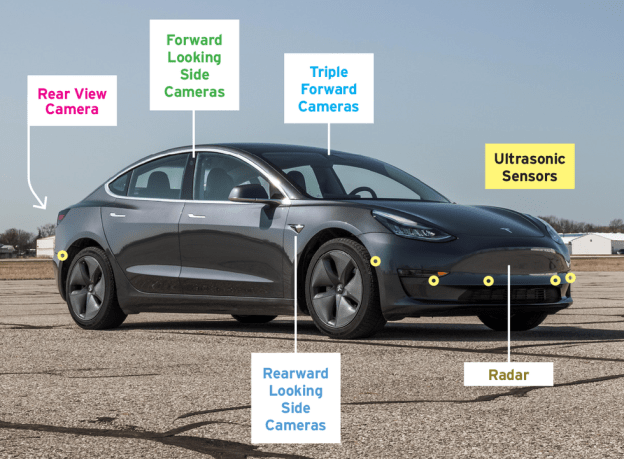
Regulators in Europe also have opened investigations into how the auto industry uses personal information from cars such as location data. In February 2023, Tesla agreed to offer a software update in Europe to change camera settings in cars after the Dutch privacy regulator investigated the company. Tesla disabled vehicles’ external security cameras by default until a driver turns on the function to record activity outside a car and changed the camera settings so they only save the last 10 minutes of footage recorded from outside the cars, compared with one hour of footage they previously had saved.  The Dutch regulator also said it was a privacy violation for the cameras to extensively record people outside of cars without their knowledge. The Tesla update also included features to warn people inside and outside of cars that the external cameras are recording. Headlights blink if the cameras are recording and a message is displayed on a touch screen inside the cars.

Automobiles represent the latest frontier for regulators, raising fresh questions about who will control the data generated by vehicles as they move through the world. Numerous companies are in a position to access the data—including the automakers themselves, companies that make or run in-car navigation or infotainment systems, satellite radio companies and in-vehicle security and emergency services providers. Insurance companies have also been encouraging consumers to share information about their driving behavior, sometimes in exchange for a discount.  

All the data has commercial potential. In some cases, it can be used by insurers in determining how to set rates, evaluate risk and gauge safe driving behavior…In some cases, data brokers make vehicle data available for sale—stripping it of personal information such as names. People’s movement patterns are often unique, however, and their real-world identities can be inferred in large-scale location data sets even when the data is stripped of personal information.

Law-enforcement agencies also can now obtain the historical location of suspects, usually with a warrant. The sensors on modern cars have raised national-security concerns as well. China in 2021 banned certain officials from owning or driving Tesla vehicles citing concerns that data the cars gather could be a source of national-security leaks.

Byron Tau, California Opens Privacy Probe Into Who Controls, Shares the Data Your Car Is Collecting, WSJ, July 31, 2023


Unstoppable: How the FBI Mines Personal Information

The Federal Bureau of Investigation’s access to a controversial intelligence trove of intercepted emails, texts, and other electronic data should be curtailed following serial missteps that have damaged public and congressional trust in the surveillance tool, a White House panel of intelligence advisers has concluded. in July 2023. The recommendation and others made by the panel come as a challenge to the Biden administration, which has spent months aggressively lobbying lawmakers to preserve the spying program, which is set to expire at the end of 2023. At issue is the FBI’s access to a cache of data collected under what is known as Section 702 of the Foreign Intelligence Surveillance Act.(FISA)..Top Biden administration officials have said the program—classified details of which were revealed 10 years ago by former intelligence contractor Edward Snowden—is among the most vital national security tools in their possession, critical to preventing terrorism, thwarting cyberattacks and understanding the aims of adversaries such as China and Russia. It allows the National Security Agency to siphon streams of electronic data from U.S. technology providers such as Meta and Apple. The data, collected in intelligence repositories, can then be searched without a warrant by spy agencies including the FBI, which has a robust counterintelligence mission.

The board was critical of the FBI’s history of wrongfully plumbing American data in the Section 702 trove, which have included improper searches of George Floyd protesters and sitting lawmakers, and said reforms needed to be adopted and codified in law.

Excerpts from Dustin Volz, FBI Access to Spying Tool Should Be Restricted, Panel Advises, WSJ, July 31, 2023
See also pdf

Great Fear and Uphill Struggle: US, Japan and China

In Japan’s glory days of the the late 1980s, the country accounted for about half of the global semiconductor industry, and the U.S. was left to beg, plead and threaten as it tried to get a small slice of the Japanese market. A bestselling book in Japan during the Cold War’s waning days called “The Japan That Can Say No” suggested that Tokyo could leverage its dominance in semiconductors to control the world’s military balance—and perhaps help the Soviet Union instead of the U.S.

Today, the great fear driving chip investments in both U.S. and Japan is China. The U.S. policy calls for helping allies such as Japan build a supply chain that is less exposed to risks posed by a hostile Beijing. While the U.S. is expanding its own chip production through the Chips and Science Act, which includes some $53 billion of spending, people involved in the Rapidus project (between U.S. and Japan) said the U.S. needed further global diversification. ..The Rapidus project aims to get Japan back into the heart of the business of chip making by building facilities on the northern island of Hokkaido, known for its ski resorts. Rapidus says it wants to begin pilot production in 2025 and full-scale production in 2027. Some 6,000 workers are being drafted to put up the factory.

Japan’s Ministry of Economy, Trade and Industry has said that it intends to help Rapidus achieve its goals, and that it wants the Japanese semiconductor industry to have revenue of some $100 billion in 2030, triple the 2020 figure. The ministry is pitching in billions of dollars for additional projects in Japan. TSMC is building an $8.6 billion factory on the southern island of Kyushu and is in talks about a second. Assuming it gets the money, Rapidus still has to master a level of manufacturing technology attained so far by only two companies, TSMC and South Korea’s Samsung Electronics. Both are projected to have the ability to mass-produce 2-nanometer chips by 2025.

Excerpts from Peter Landers and  Yang Jie, Japan’s Plan to Become a Chipmaking Champ Hinges on This Football-Loving Engineer, WSJ, July 6, 2023

Food Security: The Silicon Valley of Seeds

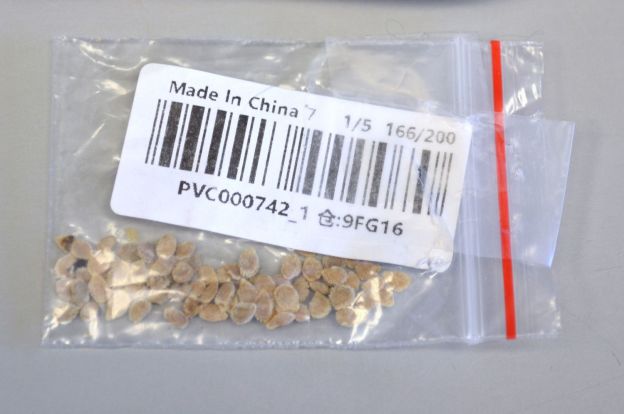
The Communist Party’s top disciplinary body—after punishing graft in the military, domestic security organs and the financial sector—is now hunting officials, merchants and farmers it suspects of harvesting illicit profits from trade in grains and seeds. Tasked with being more forceful in safeguarding the nation’s “seed security,” authorities have investigated dozens of cases involving seed-related misconduct and, in several instances, imprisoned grain-sector officials on corruption charges…Officials say the goal is to stop the proliferation of fake and substandard seeds that could jeopardize food production and safety, while punishing officials, merchants and farmers who siphon agricultural subsidies and peddle low-grade seeds.

Xi has often highlighted food security as a national interest, calling on officials to ensure that China can fully nourish its 1.4 billion people. His demands have taken on greater urgency in recent years as he pushed to prepare his country for a potential confrontation with the U.S.—a major source of Chinese grain imports, including soybeans and corn—and forestall disruptions to food supplies for one of the world’s most populous nations…Today, Beijing sees the seed sector as one of several strategic industries where Western powers could flex their technological superiority to strangle a lagging China. Demonstrating his personal interest in this field, Xi has twice visited a seed-breeding base in the island province of Hainan that officials call the “Silicon Valley” of China’s seed industry.

China is the world’s largest grain producer, growing one-quarter of global supply on less than 10% of the world’s arable land. But its ability to feed its own people has slipped over recent decades by some estimates. ..Officials and state media have taken to comparing seeds to advanced semiconductor chips, a technology that China has pledged to master in its quest for a national renaissance…While China’s seed industry is strong enough to survive foreign strangulation, the country still falls behind in seed quality, according to the Farmers’ Daily, which recommended measures including “resolutely cracking down” on the trading of fake and mislabeled seeds, whereby officials and merchants defraud farmers with counterfeit or lower-grade goods marked as top-quality seeds….

Excerpts from China’s Corruption Hunters Target Produce Aisle in Push for Seed Security, WSJ, July 25, 2023

China, the U.S. and the Fentanyl Deaths

Stopping the flow of fentanyl into the U.S. is a Biden administration priority, with the opioid scourge unleashing a wave of deaths across America. U.S. officials see China as having a critical role in that effort. Chinese companies produce chemicals, known as precursors, that are shipped to cartels in Mexico, which use them to produce fentanyl and smuggle it into the U.S…

Chinese officials have been firm with the U.S. for months that removing the police institute from the export blacklist is a precondition for restarting joint work to combat drugs, the people said. ..China maintains the U.S. is seeking to deflect blame for the crisis and that Washington hasn’t done enough to control prescription drugs, choke off domestic demand for illegal ones and raise public awareness of the issue. More than 100,000 people died of drug overdoses in the U.S. in 2022, according to a federal estimate released in May, roughly in line with 2021 levels but significantly above those just a few years earlier.

Excerpts from Brian Spegele and Charles Hutzler, U.S. Weighs Potential Deal With China on Fentanyl, WSJ, July 25, 2023

Mining and Child Prostitution

Years ago, education officials in the remote mining town, Mahdia Guyana, installed metal bars on the windows of the high school’s dormitory partly to keep girls and boys from being preyed upon in a town known for parties, nightclubs and brothels frequented by local gold miners.

But the grates and padlocked doors meant to protect students instead helped seal their fate as fire tore through the girls facility one night in late May 2023, killing 20, mostly indigenous girls from far-flung hamlets served by the school. Their bodies were so badly incinerated that authorities in this impoverished South American nation had to send DNA samples to New York to identify the victims. The tragedy rocked the small, South American country where poverty and child sexual exploitation remain entrenched in its lawless mining regions…

For decades, the gold deposits around Mahdia have drawn members of indigenous communities, young men from Guyana’s Atlantic coast, as well as Brazilian and Venezuelan wildcat miners who pay indigenous councils a 10% cut of their haul, according to Cornel Edwards, a 70-year-old toshao, or local chieftain. Some of those men have long flocked to Mahdia for booze and sex after toiling in mud pits hunting for gold, local government and residents say…

Children being lured into dangerous mining work and child prostitution in lawless mining regions are common in other countries in South America, including Ecuador and Colombia, according to a U.S. Labor Department report from 2021. In 2017, Unicef published a tool kit for industrial mining firms, offering guidelines on how to train workers at large-scale as well as smaller companies that buy gold from individual miners on the risks of children forced into sex work in mining areas.

Excerpts from Kejal Vya, Deadly School Fire Casts Light on Sexual Exploitation in Guyana Mining Town, WSJ, July 23, 2023

Whoever Controls Space Controls Everything

The U.S. military wants allies to train and plan together for space operations, in the same way that they already do in ground, air and naval combat, Gen. Chance Saltzman, chief of space operations, said in an interview in July 2023. The move comes amid concerns about China and Russia’s ability to disrupt the West’s satellites and new technology the two countries have developed, including satellites that can grab others

Russia, for instance, has conducted operations to disrupt Ukraine’s space-enabled communications. Saltzman said that Russia has been sending satellites “irresponsibly close” to those of other nations to shadow them. Moscow has “nesting doll” satellites, which can release an object that can be used to attack other objects in space, while China has tested robotic arms that can be used to grab other satellites. Both countries have demonstrated missiles that can destroy orbiting satellites…

“Quantity is a quality in itself,” he said, using an expression often employed in the military. For example, the satellites of a large coalition would be harder to target than those of one nation, he added.

Excerpt from Alistair MacDonald, U.S. Pushes Military Cooperation in Space, WSJ, July 18, 2023

Mass-Market Brain Manipulation and Human Rights

Scientific advances are rapidly making science-fiction concepts such as mind-reading a reality — and raising thorny questions for ethicists, who are considering how to regulate brain-reading techniques to protect human rights such as privacy.

On 13 July, 2023 neuroscientists, ethicists and government ministers discussed the topic at a Paris meeting organized by UNESCO, the United Nations scientific and cultural agency. Delegates plotted the next steps in governing such ‘neurotechnologies’ — techniques and devices that directly interact with the brain to monitor or change its activity. The technologies often use electrical or imaging techniques, and run the gamut from medically approved devices, such as brain implants for treating Parkinson’s disease, to commercial products such as wearables used in virtual reality (VR) to gather brain data or to allow users to control software… Neurotechnology is now a US$33 billion industry.
One area in need of regulation is the potential for neurotechnologies to be used for profiling individuals and the Orwellian idea of manipulating people’s thoughts and behaviour. Mass-market brain-monitoring devices would be a powerful addition to a digital world in which corporate and political actors already use personal data for political or commercial gain.

Commercial devices are of more pressing concern to ethicists. Companies from start-ups to tech giants are developing wearable devices for widespread use that include headsets, earbuds and wristbands that record different forms of neural activity — and will give manufacturers access to that information.

The privacy of this data is a key issue. Rafael Yuste, a neuroscientist at Columbia University in New York City, told the meeting that an unpublished analysis by the Neurorights Foundation, which he co-founded, found that 18 companies offering consumer neurotechnologies have terms and conditions that require users to give the company ownership of their brain data. All but one of those firms reserve the right to share that data with third parties. “I would describe this as predatory,” Yuste says. “It reflects the lack of regulation.”…Another theme at the meeting was how the ability to record and manipulate neural activity challenges existing human rights. Some speakers argued that existing human rights — such as the right to privacy — cover this innovation, whereas others think changes are needed.

Yuste and his colleagues propose five main neurorights: the right to mental privacy; protection against personality-changing manipulations; protected free will and decision-making; fair access to mental augmentation; and protection from biases in the algorithms that are central to neurotechnology.

Excerpt from Liam Drew, Mind-reading machines are coming — how can we keep them in check?, Nature, July 24, 2023

Fraud and Manipulation in Voluntary Carbon Markets

The $2 billion voluntary carbon-offsets market has suffered allegations that many credits don’t deliver the emissions cuts they promise, but multiple efforts to rebuild credibility face an uphill battle. In 2023 the US Commodity Futures Trading Commission said it would make policing carbon offsets a priority. Nestlé decided to leave the market and standard setters published guidelines that few existing buyers would meet…“The offset industry’s inability to self-regulate has produced a slow-moving crisis,” said Danny Cullenward, research fellow at the Institute for Carbon Removal Law and Policy at American University. “Companies are asking whether the marketing benefits are worth the legal risks.”

Morgan Stanley estimated in February 2023 that that carbon offsets could be a $100 billion market by 2030. However, over the past year the market’s credibility has suffered after a series of allegations that credits aren’t delivering on their emissions-reduction promises. It has left many companies with cold feet.

Each carbon credit is supposed to equal one metric ton of carbon dioxide avoided or removed from the atmosphere. Removal credits usually fund restoration projects such as tree planting, while the most common offset or avoidance credits fund energy-efficiency projects, renewable energy or protect forests. These so-called voluntary credits are separate and usually cheaper than government-regulated carbon trading that polluters pay for in the European Union and elsewhere. There are also some voluntary credits for mechanically removing CO2 directly from the air, which are currently much more expensive.

0In June 2023, the CFTC— the US federal regulator of derivatives—created an environmental task force focused on rooting out fraud in carbon markets. Earlier that month, the agency called for whistleblowers to expose misconduct. “As carbon credit markets continue to grow, we will act to foster the integrity of these markets by fighting fraud and manipulation,” CFTC Enforcement Director Ian McGinley said.

Excerpts from Dieter Holger, Rebuilding Trust in Carbon Offsets Faces Uphill Battle, WSJ, July 12, 2023

Essence of Fear: Fukushima Radioactive Water Dump in Pacific Ocean

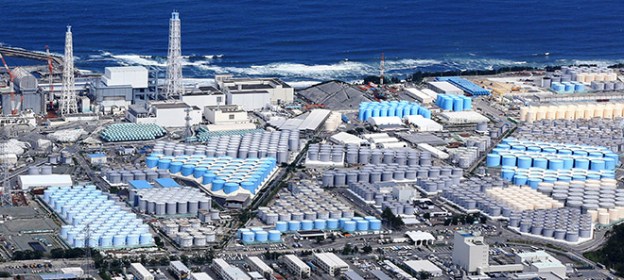
Nearly three-fourths of South Koreans say they will eat less seafood after Japan starts releasing Fukushima radioactive wastewater into the Pacific Ocean. The price of sea salt in the country skyrocketed and government reserves were released, as panic buying ahead of the nuclear-water dump emptied out the shelves…Japan’s plan to release the water into the sea after diluting the radioactive elements to what it says are safe levels has been affirmed by the International Atomic Energy Agency (IAEA), a United Nations body. The agency’s chief, Rafael Grossi, personally delivered the final IAEA report to Japanese Prime Minister Fumio Kishida this week. The report said radionuclides would be released at a lower level than those produced by natural processes and would have a negligible impact on the environment.

But….“The field of nuclear power is contaminated with fear,” said Michael Edwards, a clinical psychiatrist in Sydney who interviewed Fukushima residents following the nuclear accident. “Psychologically, people do not really understand and trust science, and know science can be an instrument of government.”…Beijing’s Foreign Ministry has slammed the Fukushima wastewater plan, accusing Japan of treating the surrounding ocean as the country’s own “private sewer.” China has expanded restrictions on food imports from Japan, which include a ban on food products from Fukushima and nine other prefectures.

Excerpts from Dasl Yoon and Miho Inada ‘How Could I Feel Safe?’ Japan’s Dumping of Radioactive Fukushima Water Stirs Fear, Anger, WSJ, July 7, 2023