Monthly Archives: October 2024

Colossal Efforts to Bring Back Species on the Brink of Extinction

Colossal Biosciences, the world’s first de-extinction company, announced on October 1, 2024 the formation of The Colossal Foundation…The Foundation is launching with three core programmatic focuses.

Saving today’s at-risk species: Colossal Foundation plans to build a model for integrating cutting-edge biotechnology with conservation efforts to bring back species that have been driven to the brink of extinction. The long term goal is to create a toolkit approach to simplify genetic rescue for conservationists. Initial projects include efforts focused on the Vaquita, Northern White and Sumatran Rhinos, Red Wolf, Northern Quoll, Ivory Billed Woodpecker, and Pink Pigeon.

R&D for Conservation: Colossal will partner to fund and deploy technologies that leverage artificial intelligence…Current projects include the Colossal drone-based anomaly detection system used by Save the Elephants, a vaquita acoustic monitoring program, and an AI-enabled orphaned elephant monitoring system leveraged by Elephant Havens in Botswana.

Ensuring Tomorrow’s Biodiversity: Developing a distributed genetic repository of species (a biobank) which can act as an insurance policy against unforeseen threats to biodiversity and provide a safety net for species facing extinction. The focus will be on those species closest to extinction to ensure their genetic diversity is not lost and the potential to bring them back, should the worst happen, remains. 

Vaquitas, a porpoise endemic to the Sea of Cortez/Gulf of California in Baja California, Mexico and the smallest of all living cetaceans, is on the brink of extinction. As of May 2023, only between 10 and 13 vaquitas remain. The loss of the vaquita could be a harbinger of further declines in the Gulf’s marine ecosystems, and the extinction of the vaquita would represent a cultural and symbolic loss. Colossal, in partnership with the Vaquita Monitoring Group and in support of the Mexican government’s La Comisión Nacional de Áreas Naturales Protegidas (CONANP) believes that there are low-impact technical solutions that can be used to safely biobank the existing animals while also helping to grow the vaquita population. …

Fewer than 80 Sumatran rhinos survive in tiny fragmented populations across the Indonesian islands of Sumatra and Borneo…Colossal Foundation will  supporting the Indonesian government’s work to breed Sumatran rhinos under their national conservation breeding program…in collaboration with Global Experts on the advance Assisted Reproductive Technology (a-ART) and Biobank program for the species…

The Colossal BioVault is an initiative, in partnership with Re:wild and others, to collect the primary materials needed to prevent extinction. By collecting tissue samples of the world’s most imperiled species in the Colossal BioVault, the Foundation intends to preserve and store biodiversity. 

Excerpts from Colossal Launches The Colossal Foundation, Business Wire, Oct. 1, 2024
How Not To Get Raped: Lessons from India

When Ajita Topo, a cook in an affluent neighborhood in Delhi, leaves work in the evening, she holds her bag like a shield against her chest, keeps her fists clenched and carries a black umbrella with a very sharp end to ward off a possible attack. She makes sure to wear lots of layers—no matter how hot it is—to deter someone from trying to grope her chest, and secures her bun with a sharp metal stick as an additional weapon.  Topo isn’t being paranoid. Last year, she was followed by two men when she left work after 10 p.m. She managed to scare them away by shouting as she passed homes with guards outside. “Workplace, public transport, public places, we feel safe nowhere,” said Topo, the sole breadwinner for her two children. “The only solution is to stay alert at all times.” For many women in India, taking steps to ward off a violent attack—and reassuring their families they are safe while at work and on their commutes—is an invisible form of labor that is a central element of their work life. 

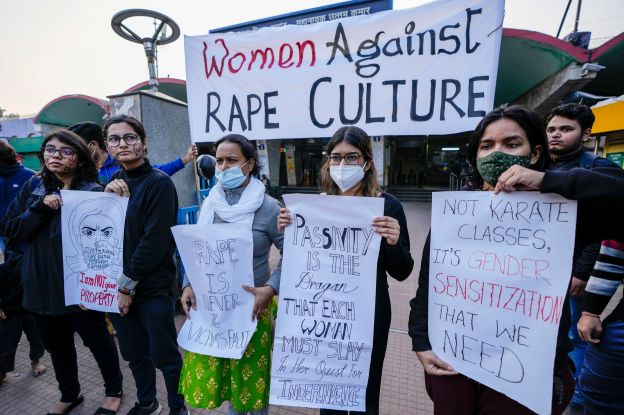
The killing and rape of a trainee doctor in the city of Kolkata in August  2024 was a fresh reminder for Indian women who work of the dangers lurking in public spaces where women are far less visible than men, from the deserted corners of a hospital or corporate park, in public transport or on city streets. The 31-year-old was found dead in a seminar hall of the state-run hospital after she went on break during a night shift. A volunteer at the hospital has been arrested as a suspect. The killing prompted protests by women across the country. 

A decade ago, Indian laws dealing with crimes against women were overhauled in the wake of the gang-rape of a 23-year-old woman on a moving bus. But women’s rights advocates say that entrenched patriarchal attitudes haven’t budged significantly, and are at the root of frequent violence against women, both in the home and outside it. In other widely publicized incidents, female call-center workers have been assaulted and killed as they commuted to or from night shifts. Last year, a receptionist disappeared from the hotel where she worked and was found dead days later. Each time such a crime takes place, women experience another jolt of fear for their own safety

Vidhi Pandey, a digital-marketing professional, has an almost 90-minute commute between her home in Gurgaon and her office in the Indian capital, and frequently attends evening events. If an international client is involved, her day can end at 2 a.m. When she books a cab, she makes sure to look at the driver’s performance rating and reads riders’ feedback regarding his behavior. If she is wearing a skirt, she changes into something more covered up before getting into a taxi for her ride home. On her phone, she keeps the Delhi Police panic button app open throughout the ride. The app, developed after the 2012 bus attack and called “Himmat” or “courage,” allows the user to quickly send an alert to the Delhi Police, with a link to the user’s location on Google Maps, as well as notifications to family and friends. She makes sure to share her live location and trip status with her husband and at least one friend. Sometimes she keeps a phone call going with her mother or a friend throughout the car ride. “I keep thinking about how to escape if something goes wrong,” said Pandey. “I dream of a day when our society is safe enough for me to travel alone anytime, anywhere without any fear or worry.”

Excerpts from  Vibhuti Agarwal and Tripti Lahiri, For Working Women in India Staying Safe Can Feel Like a Full Time Job, WSJ, Oct. 16, 2024

Get Down and (Very) Dirty: How to Break Free from China’s Grip on Rare Earths and Minerals

The Biden administration held talks with three firms in the fall of 2024 about purchasing one of the world’s largest non-Chinese cobalt producers…The talks over Chemaf, a mining company based in the Democratic Republic of Congo, are part of a push by the administration to secure global supplies of a metal used in everything from jet fighters and drones to electric-vehicle batteries. For more than a decade, Chinese companies have spent billions of dollars buying out U.S. and European miners in Congo, which produces nearly 75% of the world’s cobalt supply. That has put China in a dominant position in both the production and processing of the mineral.

It has been difficult for the U.S. government to interest American investors in any sector in Congo because of the country’s poor infrastructure, limited skilled labor, resource nationalism and reputation for government corruption. U.S. government officials have spoken with mining and artificial-intelligence company KoBold Metals, copper miner First Quantum Minerals and investment firm Orion Resource Partners about participating in a deal to acquire Chemaf, either separately or jointly…

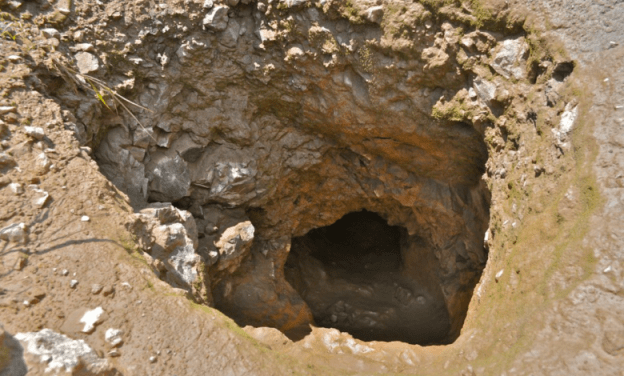
Chemaf, which says its mines could produce 20,000 tons of cobalt annually—making it one of the world’s largest cobalt producers—was put up for sale in 2023 by its founder, Shiraz Virji…When The Wall Street Journal visited Chemaf’s Mutoshi mine in 2018, freelance Congolese miners could be seen descending underground without helmets, shoes or safety equipment. Miners were using picks, shovels and bare hands to unearth rocks rich with the metal. Water sometimes rushed into holes and drowned people, and an earth mover buried one alive, said local workers and mine officials…

In June 2024, Chemaf agreed to sell itself to Chinese state-backed Norin Mining. Shortly after, U.S. pressure helped block the sale

Excerpts from  Alexandra Wexler and Julie Steinberg, How the U.S. Is Trying to Challenge China’s Cobalt Chokehold, WSJ, Oct. 15, 2024

Who is Ready for Q-Day?

It isn’t certain when quantum computers will be able to break the encryption used to protect the world’s most sensitive data, but corporate technology leaders need to assess the risks of this scenario now…Even the most powerful traditional computers use binary digits, or bits, which can either be 0s or 1s. Quantum computers use quantum bits, or qubits, which represent and store information in both 0s and 1s simultaneously, known as superposition. Such machines have the potential to sort through a vast number of possible solutions to a problem within a fraction of a second to come up with a likely answer…

A fault tolerant quantum computer will be able to hammer away at problems indefinitely, giving them wherewithal to break encryption algorithms that companies and governments use to protect their most price-sensitive and important information… That moment might reasonably occur by around 2035

Why worry about a scenario that’s looming perhaps a decade or more in the future? Because of a scenario some call “harvest now, decrypt later.” It envisions hackers stealing encrypted data today and sitting on it for years, hoping to realize its value at some point in the future when quantum computers are able to decrypt the information…Quantum computing has already progressed enough that companies can begin strategizing now for Q Day, the point at which quantum computers can break classic encryption…In August 2024, the National Institute of Standards and Technology (NIST), an agency of the Commerce Department, published three new algorithms for post-quantum encryption. Some companies are already moving ahead, including IBM and Apple….

Excerpts from Steven Rosenbush, Q Day’ Is Coming. It’s Time to Worry About Quantum Security, WSJ, Oct. 9, 2024

Who Gets By and Who Throws and Thrives?

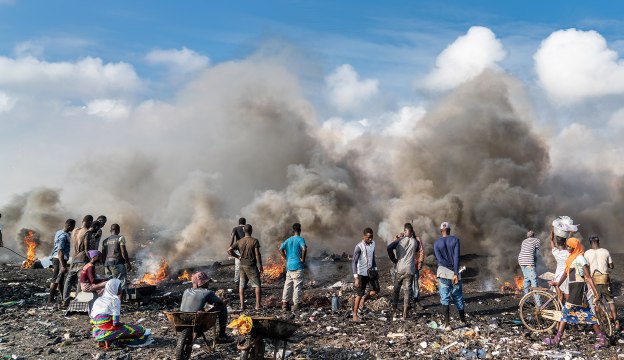
For years, a site called Agbogbloshie in Accra, Ghana was one of the largest e-waste processing sites in Africa, getting 15,000 tons of discarded phones, computers and other used electronics each year. Many Western media outlets depicted the site as a public health and environmental tragedy, rife with toxic chemicals that leach into the water and poison the air. While that’s undoubtedly true, it’s not the full story, according to a new collaborative photojournalism project. The project, called E-Waste in Ghana: Tracing Transboundary Flows, which won this year’s Fondation Carmignac photojournalism award, aims to capture both the positive and negative aspects of e-waste.

“The world cannot throw all its garbage here, it has truly negative consequences on the people,” says Anas Aremeyaw Anas, an investigative journalist in Ghana who co-led the project. “But there are positive aspects of sending us e-waste,” he says, as it’s sparked a dynamic, informal recycling economy in the country that, while often dangerous, can also help lift people out of poverty.

Globally, e-waste is an enormous problem. In 2022, humans discarded about 62 million tons of used electronics, enough to fill a line of trucks that spans the equator. But there’s opportunity too, as those trucks contain over $91 billion of valuable metals, the U.N. estimates….E-waste falls into two broad buckets: functional and non-functional. The line between them can be fuzzy, as what’s still usable or repairable to one person may not be to another, but the distinction is important. International laws prohibit trafficking of non-functional e-waste containing toxic substances, but the United Nations sees trading functional e-waste as beneficial, as it can lengthen the lifespan of a product…The project found that exporters often fail to separate functional from non-functional e-waste. “If you have a container full of TV screens, how on earth are you going to verify each and every one of them to make sure that they are functioning,” says photojournalist Bénédicte Kurzen, a co-author of the project. As a result, both kinds of e-waste get stuffed into container ships that make their way to low- and middle-income countries like Ghana.


Formally, Ghana prohibits the import of many forms of hazardous e-waste material. But the team found that a well-placed bribe can get port officials to look the other way. As a result, informal e-waste sites are growing across Ghana’s coast. There, both functional and non-functional e-waste get dumped into vast piles that are encroaching on residential areas. Thousands of “pickers” come to these sites, picking through the rubbish to separate items that might be repaired from waste that could contain valuable minerals.

It’s fraught, precarious work. To separate valuable minerals, like copper wire or iron, from useless plastic, pickers often burn the trash, producing noxious fumes. Burns, cuts and other injuries are common. E-waste workers — many of whom are children, the team found — are at risk of exposure to over 1,000 harmful chemicals, according to the World Health Organization, including lead, mercury and brominated flame retardants, which are linked to higher rates of diseases like cancer and diabetes.

A burgeoning recycling and repair industry has risen up alongside those harms. The team documented informal marketplaces, where vendors sell scores of busted cell phones to buyers looking to repair circuit boards or extract their precious metals. On Zongo Lane in Accra, the reporters say, hundreds of small, independent shops sell used or repaired equipment, ranging from televisions to computers….The most valuable minerals extracted from Ghana’s e-waste often don’t stay in Ghana. Many of the most valuable items get cherry picked and sent to more advanced smelters in Europe or Asia, the team found. “People are dismantling these items in toxic environments, and then the few piles that contain incredibly valuable minerals are going to be re-exported,” says Kurzen.

Excerpts from Jonathan Lambert, Stunning photos of a vast e-waste dumping ground — and those who make a living off it, NPR, Oct. 5, 2024

The Quick and Dirty AI Boom

Nowhere else on Earth has been physically reshaped by artificial intelligence as quickly as the Malaysian state of Johor. Three years ago, this region next to Singapore was a tech-industry backwater. Palm-oil plantations dotted the wetlands. Now rising next to those tropical trees 100 miles from the equator are cavernous rectangular buildings that, all together, make up one of the world’s biggest AI construction projects…

TikTok’s Chinese parent company, ByteDance, is spending $350 million on data centers in Johor. Microsoft just bought a 123-acre plot not far away for $95 million. Asset manager Blackstone recently paid $16 billion to buy AirTrunk, a data-center operator with Asia-wide locations including a Johor facility spanning an area the size of 19 football fields. Oracle last week announced a $6.5 billion investment in Malaysia’s data-center sector, though it didn’t specify where. In all, investments in data centers in Johor, which can be used for both AI and more conventional cloud computing, will reach $3.8 billion this year, estimates regional bank Maybank.

To understand how one of the first boomtowns of the AI era sprouted at the southern tip of the Malay Peninsula, consider the infrastructure behind AI. Tech giants want to train chatbots, driverless cars and other AI technology as quickly as possible. They do so in data centers with thousands of computer chips, which require a lot of power, as well as water for cooling…Northern Virginia became the world’s biggest data-center market because of available power, water and land. But supply is running low. Tech companies can’t build data centers fast enough in the U.S. alone. Enter Johor. It has plentiful land and power—largely from coal—and enough water. Malaysia enjoys generally friendly relations with the U.S. and China, reducing political risk for companies from the rival nations. The other important factor: location. Across the border is Singapore, which has one of the world’s densest intersections of undersea internet cables. Those are modern-age highways, enabling tech companies to sling mountains of data around the world.

Excerpt from Stu Woo, One of the Biggest AI Boomtowns Is Rising in a Tech-Industry Backwater, WSJ, Oct.  8, 2024

How Murder, Torture and Rape Fuel the Technological Revolution

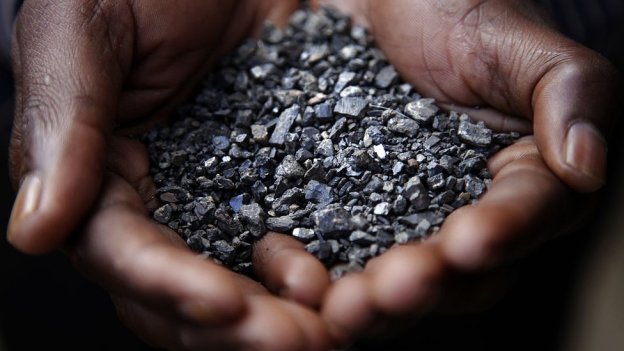
Congo is the world’s leading producer of coltan, from which tantalum is extracted. Tantalum is in hot demand because of its growing use in consumer products, from smartphones to laptops and it is critical for the defense industry (e.g., Apple iPhones, SpaceX rockets, IBM computers).

Coltan is mined in the country’s restive east, a region that has been engulfed in a decadeslong war between rebel groups and the Congolese army…A powerful militia backed by neighboring Rwanda has taken over swaths of eastern Congo, driving some two million people from their homes as fighters kill, torture and rape civilians. The militia, known as M23, has also seized control of Congo’s coltan production and transport, according to United Nations investigators, supply-chain experts, researchers and local traders. 

Now, a network of smuggling routes is increasingly being used to move ore illegally from militia-controlled mines in eastern Congo to neighboring Rwanda. From there, it is sold as Rwandan, and hence “conflict-free,” to smelters around the world, but primarily in China. 

M23 fighters levy taxes on informal coltan miners, who dig the ore from the ground, mostly by hand. The fighters also tax the movement of coltan, providing the militia with revenue to purchase weapons and other supplies. Overall, the trade generates around $300,000 a month for the fighters, according to Bintou Keita, the head of the U.N. mission in Congo….U.S. lawmakers have sought to prevent minerals commonly mined in eastern Congo—tin, tungsten, tantalum and gold—from financing conflict in the region. Legislation embedded in the 2010 Dodd-Frank Act requires U.S.-listed companies to disclose their use of the minerals, known as the 3TGs, as well as steps they are taking to prevent inadvertently financing armed groups. It doesn’t, however, oblige companies to remove potentially tainted materials from their supply chains…

Other armed groups are also profiting from the illegal coltan trade, including an alliance of militias that is helping the Congolese military fight M23, according to rights groups and U.N. researchers. The alliance, known as the Wazalendo, which U.N. investigators say is armed by Congo’s military, includes groups that are under international sanctions for war crimes. M23 and the Wazalendo are both recruiting child soldiers, raping women and girls, looting, murdering civilians and committing other atrocities, according to rights groups and U.N. investigators. Like M23, the Wazalendo are collecting illegal taxes on coltan at roadblocks along transportation routes, as well as from some mining sites. 

Excerpt from Alexandra Wexler, How This Conflict Mineral Gets Smuggled Into Everyday Tech,  WSJ, Oct. 6, 2024

How to Become Biosecure

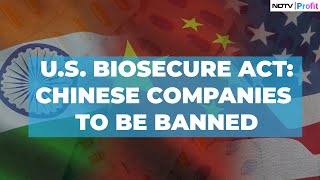
A bill approved by the House of Representatives in September 2024 would make it difficult for U.S. drug companies to contract with five major Chinese biotechnology companies. Academic researchers say they, too, would be hampered. The new rules could threaten projects that rely on sequencing in China or involve Chinese scientists who use services or machines from the companies. It would also cut off one source of genome sequencers used in U.S. labs. The Senate is considering a similar measure, raising the odds the rule could become law. “It could have a chilling effect on science,” says Gene Robinson, director of the Carl R. Woese Institute for Genomic Biology at the University of Illinois Urbana-Champaign.

Known as the Biosecure Act, the legislation would prevent federal funds from going to biotech companies linked to five “foreign adversaries”: China, Russia, Iran, North Korea, and Cuba. It bans purchases from five specific Chinese companies—BGI, MGI, WuXi Biologics, Wu Xi AppTec, and Complete Genomics—beginning in 2032. It would also prevent federal funds from going to other organizations that use services and equipment from the companies. The White House Office of Management and Budget would update the list of companies of concern at least once a year.

The act’s proponents argue that the named biotech companies are stealing intellectual property from U.S. biotech equipment makers or are directing health and genetic data to centers affiliated with the Chinese Communist Party (CCP) and other adversaries. “This bill is a necessary step towards protecting Americans’ sensitive health care data from the CCP before these companies become more embedded in the U.S. economy, university systems, and federal contracting base,” said Representative James Comer (R–KY) on the House floor before the bill passed 306 to 81 with broad bipartisan support.

The biggest impact, says Aaron Cummings, a lobbyist with Crowell & Moring, is likely to be felt by U.S. biotech and pharmaceutical companies. Beyond genome sequencing, Chinese firms such as WuXi AppTec provide services that support clinical research, such as manufacturing pharmaceutical ingredients and cell therapies, as well as providing research cell lines. According to a survey released in May by BIO, a biotech industry trade group, 79% of 124 biopharma companies surveyed have at least one Chinese biotech contractor. Academic scientists, for their part, worry they will be forced to sever valuable research collaborations with Chinese scientists at the companies of concern or with academic groups that use their equipment or services.

Excerpts Robert F. Service from Bill Targeting Chinese Firms Worries US Researchers, Science, Sept. 13, 2024


What Happens When 48 Women are Raped Every Hour?

Congo is considered the rape capital of the world. On average, 48 women are raped every hour. Gang rapes, genital mutilation, and sexual violence are committed by armed groups, gangs, and government and police forces. Many of the victims are children and babies. Rape victims and children born of rape are often rejected by their families. HIV is rampant, and cases often go untested and untreated. Rapists almost always go unpunished.

Who Knew? Weed Killer Roundup Found in GM Foods

A highly influential organization of pediatricians is facing blowback over advice it published earlier this year urging parents to avoid foods with ingredients from genetically modified organisms (GMOs). Guidelines from the American Academy of Pediatrics (AAP) are a go-to source for practicing pediatricians and for some parents. But critics say the advice ignores a wide body of evidence supporting GMOs’ safety. They add that AAP is raising unfounded fears that will drive parents to assume they must buy only organic products, which by definition are not genetically engineered—an option that’s financially out of reach for many families…

The guidelines, published in Pediatrics in January in 2024, were accompanied by a parent newsletter that included “tips for limiting GMOs on your family plate” and referred to “news stories [that] may shrug off the dangers of GMOs.” The Pediatrics paper, whose senior author is Boston College pediatrician and epidemiologist Philip Landrigan, cautioned about potential health harms, especially to infants and children, of residues in food from the weed killer glyphosate, which is widely used on genetically engineered crops.

The AAP guidelines had an impact almost immediately; by March 2024, Mexico was citing them in a trade dispute with the United States, which is challenging Mexico’s ban on imports of genetically modified corn grown in the U.S. But the Pediatrics paper did not mention that regulators in the U.S. and Europe have judged glyphosate at the levels currently found in food to be safe….

The AAP report authors focus on glyphosate, sold commercially by Bayer as Roundup, because its use has exploded in recent decades: Ninety percent of the corn and 96% of the soybeans planted in the U.S. this year were genetically modified, much of it to be resistant to destruction by glyphosate, which instead kills all the weeds around the crops. The herbicide is often sprayed on genetically modified canola and sugar beets as well. As a result, glyphosate residues are in foods made with ingredients such as high fructose corn syrup, sugar, and canola oil, among them children’s favorites from hot dogs and chicken nuggets to sweetened cereal and potato chips.

The AAP report notes a 2015 finding from an arm of the World Health Organization that glyphosate is “probably carcinogenic to humans.” It also cites one meta-analysis that found an elevated risk of non-Hodgkin lymphoma in people with high exposure to glyphosate from years of applying it to crops.

But the U.S. National Academies of Sciences, Engineering, and Medicine found no evidence of adverse health effects in humans from genetically engineered foods or from glyphosate residues in them. The U.S. Food and Drug Administration tests foods for glyphosate residues and has rarely found levels exceeding those determined safe for consumption by the U.S. Environmental Protection Agency (EPA). Numerous other agencies worldwide have similar positions.

Excerpts from Meredith Wadman, Pediatrics academy accused of ‘fearmongering’ over GMO ingredients in kids’ diets, Science, Sept. 17, 2024

Why OpenAI Flirts with UAE and What Happened to Women’s Rights

In February 2024, OpenAI CEO Sam Altman said the UAE could serve as the world’s “regulatory sandbox” to test artificial intelligence. Emirati President Sheikh Mohammed bin Zayed Al Nahyan’s first official trip to the United States in September 2024 aimed to push the United Arab Emirates-U.S. relationship to a new “geo-economic phase” centered on economic growth and innovation..,

Microsoft has invested  $1.5 billion investment in the UAE’s top artificial intelligence firm, G42, in April.   BlackRock, Global Infrastructure Partners, Microsoft and the Mubadala-backed MGX investment company also recently announced the Global AI Infrastructure Investment Partnership, underscoring the UAE’s strategic focus on U.S. technology and AI to drive future economic growth…The United States and the UAE have a trade and investment partnership that spans more than five decades. In 2023, bilateral trade between the UAE and the U.S. was worth around $31.4 billion, with U.S. exports to the UAE exceeding $24.8 billion, according to the UAE Embassy in Washington, D.C. The UAE, which produces nearly 4% of the world’s oil supply, also has investments in the United States that total $1 trillion. The UAE sovereign wealth funds including the Abu Dhabi Investment Authority and Mubadala are major investors in American real estate, infrastructure and technology sectors.

The UAE has remained a key strategic defense and security partner to Washington, playing host to the American air base in Al Dhafra, while working as a key partner alongside the U.S. in Afghanistan and Iraq….

On the systemic discrimination against women at the UAE, see letter of Human Rights Watch. Human Rights Watch has documented numerous incidents of enforced disappearances by the UAE in recent years, including the case of three Emirati sisters who were forcibly disappeared in 2015 after posting comments critical of the government on social media. Human Rights Watch has also documented cases of denial of adequate medical care to women who have since died or attempted suicide

Excerpt from Emma Graham and Dan Murphy, UAE hoping to expand $1 trillion partnership with U.S. through AI, Investment, CNBC, Sept. 20, 2024

The Communist Chinese Party and the Protection of the Ocean Seabed

A disagreement between deep-sea miner The Metals Company (TMC) and researchers over a new scientific study is threatening efforts to mine the ocean bed for metals critical to supporting the green-energy transition. A study in the journal Nature Geoscience suggested that deep-sea nodules, which contain metals such as nickel critical for electric-vehicle batteries, produce oxygen despite the absence of light at the bottom of the ocean. The researchers making the claim called for further studies into how oxygen is produced on the ocean floor while environmental groups called for a halt to disrupting the seafloor and mining of nodules. TMC and some scientists are questioning the claim and accusing the lead authors of the study of plagiarism… The study comes at a time of troubled waters for the deep-sea mining industry, with political uncertainty and TMC struggling for new sources of investment.

In the U.S., the outlook for the industry has improved recently. On the corporate side, both Tesla and General Motors shareholders have said they wouldn’t back a moratorium on deep-sea mining. Ocean-floor minerals are seen as key to making electric-vehicle batteries because of the presence of cobalt, nickel and manganese in nodules. In Washington in September 2024, a House hearing was held on the subject of deep-sea and critical minerals, as many see the metals found on the ocean floor as important for defense purposes. In a meeting co-chaired by Democrat Kathy Castor of Florida and Republican Robert Wittman of Virginia as part of the Select Committee on the Chinese Communist Party, Barron made the case for deep-sea nodules to become part of the U.S.’s critical mineral supply chain.

Meanwhile, industry leaders have gathered in the Cook Islands in September 2024 where a conference on deep-sea mining is taking place. The Pacific nation is home to thousands of tons of nodules, which are also rich in copper.

Excerpts from Yusuf Khan, Deep-Sea Mining Hits Crunch Point Amid Academic Battle Over Ocean-Floor Resources, WSJ, Sept 24, 2024

How to Create Panic? China’s Typhoons

Hackers linked to the Chinese government have broken into a handful of U.S. internet-service providers in 2024 in pursuit of sensitive information…The hacking campaign, called Salt Typhoon by investigators, hasn’t previously been publicly disclosed and is the latest in a series of incursions that U.S. investigators have linked to China in recent years. The intrusion is a sign of the stealthy success Beijing’s massive digital army of cyberspies has had breaking into valuable computer networks in the U.S. and around the globe.

In Salt Typhoon, the actors linked to China burrowed into America’s broadband networks. In this type of intrusion, bad actors aim to establish a foothold within the infrastructure of cable and broadband providers that would allow them to access data stored by telecommunications companies or launch a damaging cyberattack…Investigators are exploring whether the intruders gained access to Cisco Systems routers, core network components that route much of the traffic on the internet, according to people familiar with the matter. Microsoft is investigating the intrusion and what sensitive information may have been accessed, people familiar with the matter said.

China has made a practice of gaining access to internet-service providers around the world. But if hackers gained access to service providers’ core routers, it would leave them in a powerful position to steal information, redirect internet traffic, install malicious software or pivot to new attacks.

In September 2024, U.S. officials said they had disrupted a network of more than 200,000 routers, cameras and other internet-connected consumer devices that served as an entry point into U.S. networks for a China-based hacking group called Flax Typhoon. And in January 2024, federal officials disrupted Volt Typhoon, yet another China-linked campaign that has sought to quietly infiltrate a swath of U.S. critical infrastructure. “The cyber threat posed by the Chinese government is massive,” said Christopher Wray, the Federal Bureau of Investigation’s director, speaking earlier this year at a security conference in Germany. “China’s hacking program is larger than that of every other major nation, combined.”

U.S. security officials allege that Beijing has tried and at times succeeded in burrowing deep into U.S. critical infrastructure networks ranging from water-treatment systems to airports and oil and gas pipelines. Top Biden administration officials have issued public warnings over the past year that China’s actions could threaten American lives and are intended to cause societal panic. The hackers could also disrupt the U.S.’s ability to mobilize support for Taiwan in the event that Chinese leader Xi Jinping orders his military to invade the island….

Excerpts from Sarah Krouse et al., China-Linked Hackers Breach U.S. Internet Providers in New ‘Salt Typhoon’ Cyberattack, WSJ, Sept. 26, 2024