Tag Archives: artisanal mining DR Congo

The Scramble for Congo 21st Century Style

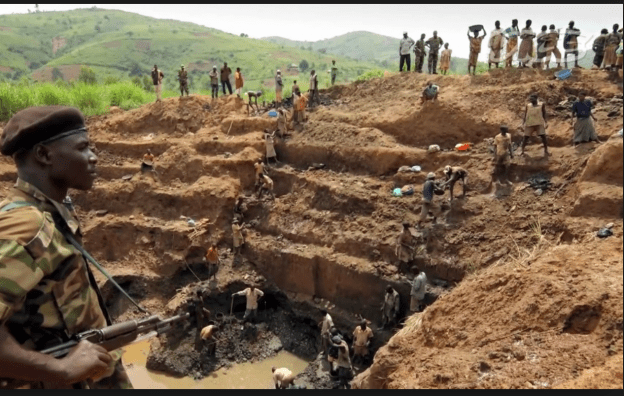
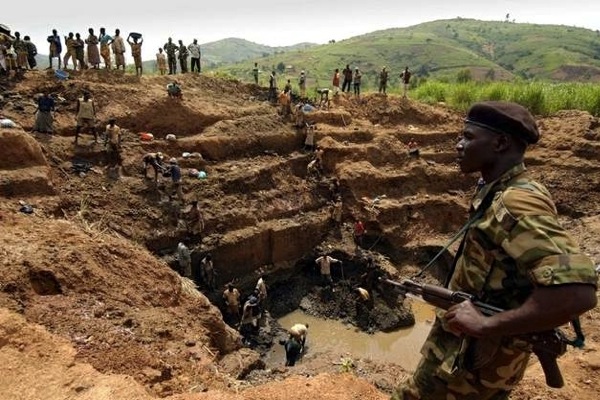
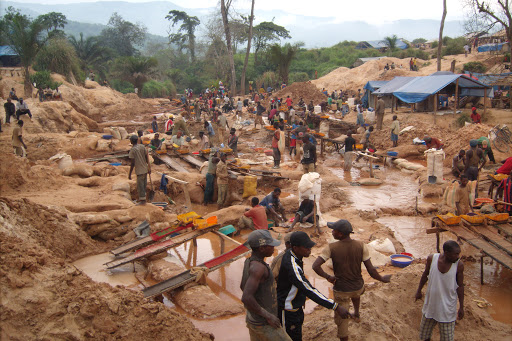
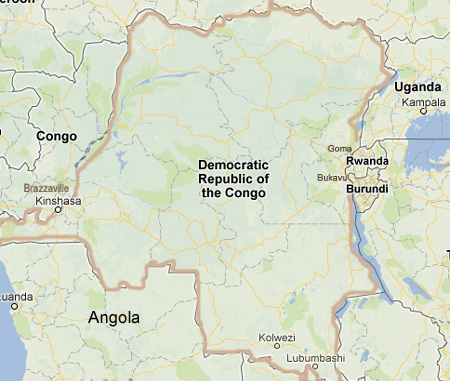
During the 19th century’s Scramble for Africa, European countries raced to secure territory and wealth across the continent. Now, African powers are grabbing resources from a neighbor crippled by infighting and ill-equipped to defend itself. Caught in the middle is the Democratic Republic of Congo, a country the size of Western Europe whose forests conceal a wealth of gold, diamonds and coltan, a key component in smartphones and computers. These mineral riches are turning what was already a region plagued by militia violence into a battleground, as Rwanda and its local allies seize coltan supplies while Uganda and its proxies move to take over gold mines to the northeast, according to United Nations and Ugandan officials…Ugandan President Yoweri Museveni and Rwandan President Paul Kagame are pouring troops and weapons into Congo, while their Congolese allies, who control strategic border crossings, secure smuggling routes to move more minerals to the global markets.

In 2024, Rwanda-backed M23 rebels seized the coltan-mining town of Rubaya, where fighters bring in around $800,000 each month by taxing traders. Rebel fighters have doubled diggers’ wages to encourage them to keep working, and they rely on forced labor to widen roads to accommodate trucks transporting coltan into Rwanda along with gold. According to the U.N., some 4,000 Rwandan soldiers are fighting inside Congo, a report that Rwandan authorities have denied.

Excerpt from While War Rages, Congo’s Neighbors Smuggle Out Its Gold and Mineral Wealth, WSJ, Apr. 7, 2025

Appalling Human Rights Violations in South Africa Mining Sector

With hundreds of miners trapped below ground without food or water, two men from down the road volunteered to venture where no police, government officials or professional rescuers were willing to go.

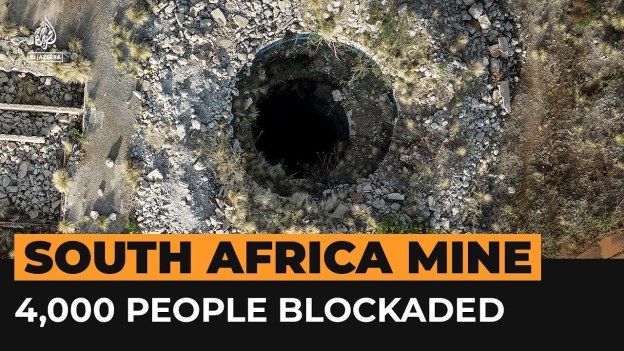
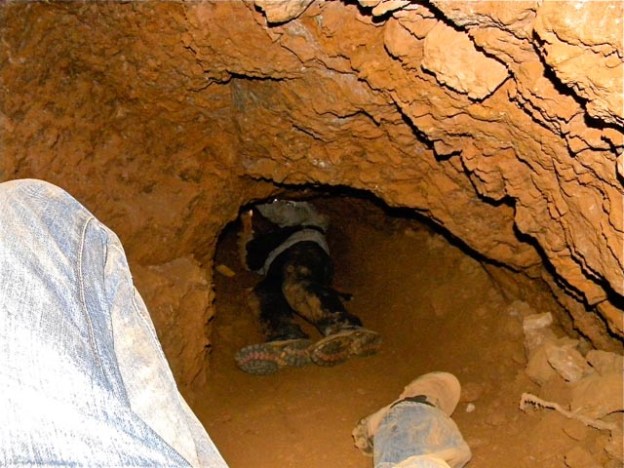
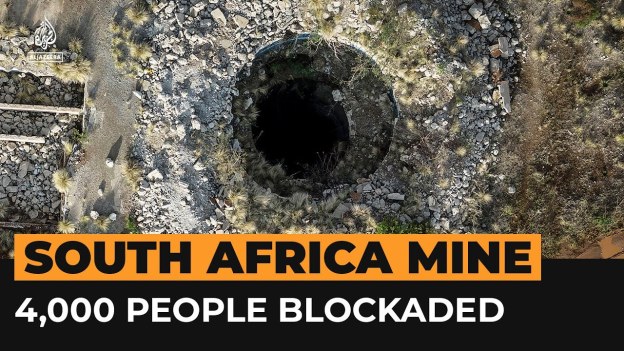
On their first descent into the shaft this week, Mandla Charles and Mzwandile Mkwayi, wearing white hardhats, headlamps and T-shirts, stepped out of a red cage dangling on a cable from a crane on the surface 4,200 feet above them. Their lights illuminated a sea of emaciated faces, men crowded into a chamber who were crying and pleading to be saved from the pitch black of the abandoned Buffelsfontein gold mine. The miners’ lights had burned out weeks or months earlier. The volunteers made more than 30 round trips underground over the next three days, bringing up 246 living prospectors and the remains of 78 more. The cage, designed to hold six people in close confinement, lifted as many as 13 men to the surface on some trips.

“I can’t explain the smell down there,” Charles, 38, told The Wall Street Journal at the mine entrance in Stilfontein, 100 miles southwest of Johannesburg. “They told us they were eating human flesh and cockroaches. They had lost hope.” The rescue mission, which concluded January 16,2025 when no more survivors could be found, ended a monthslong standoff between miners who had been illegally digging for gold and a government determined to force them to the surface. The miners had been holed up since the police cut off their supplies of food and water in August 2024. 

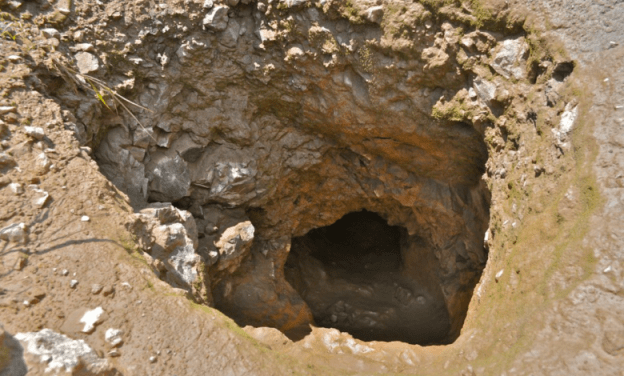
For about five months, the informal workers were trapped underground as police tried to “smoke them out,” in the words of Khumbudzo Ntshavheni, minister in the South African presidency. The operation was part of the police’s “Close the Hole” plan to combat illegal mining, which has reached crisis levels here. A staggering 42% unemployment rate in South Africa has led to high levels of chronic poverty, leaving many men with little choice but to clamber down gold shafts closed by some of the world’s biggest mining companies, in order to feed their families. The zama zamas are often the lowest-level workers for larger criminal gangs that ultimately sell the gold abroad.

Excerpts from Alexandra Wexler, Hundreds of Miners Were Trapped for Months—Until an Extraordinary Two-Man Rescue Mission, WSJ, Jan. 17, 2025

How to Kill People 8 000 Feet Below Ground

The South Africa’ government has been trying to starve out 1,000 informal prospectors so as to force them out of the Buffelsfontein mine, which extends some 8,000 feet below ground. For months in 2024, police have been sealing most entrances to the tunnels, blocking food and water deliveries and stationing guards at remaining exits to arrest any miners who make their way to the surface. In recent days, nearly 1,200 have surrendered. Police estimate that hundreds of men remain below, but it isn’t clear if they are unwilling or unable to reach the surface.

The operation is part of what police call their “Close the Hole” plan to combat illegal mining, an acute problem in what was once the gold-mining capital of the world. The South African government estimates that illegal gold mining costs the country the equivalent of over $3.8 billion a year in lost revenue, and is often associated with a jump in violent crime in nearby communities and an influx of migrants from neighboring countries… Facing a 42% unemployment rate, impoverished South Africans and migrants from nearby countries pry open sealed entrances and venture thousands of feet underground to try their luck. Locals call the men zama zamas, a Zulu phrase meaning “take a chance.”

Whole ecosystems exist below ground, with entrepreneurs selling miners everything from soda to toothpaste to sex.  The miners in Stilfontein, 100 miles southwest of Johannesburg, are suffering from hunger and dehydration, according to police. Industry experts say the zama zamas are often the lowest-level workers for larger criminal gangs that ultimately sell the gold abroad. Those who have migrated from elsewhere are sometimes victims of abuse, forced to work underground to pay off debts. Police said most miners who emerge will be charged with crimes and imprisoned or deported. 

Excerpt from Alexandra Wexler, The Standoff Deep Inside an Abandoned South African Gold Mine, WSJ, Nov. 15, 2024

Get Down and (Very) Dirty: How to Break Free from China’s Grip on Rare Earths and Minerals

The Biden administration held talks with three firms in the fall of 2024 about purchasing one of the world’s largest non-Chinese cobalt producers…The talks over Chemaf, a mining company based in the Democratic Republic of Congo, are part of a push by the administration to secure global supplies of a metal used in everything from jet fighters and drones to electric-vehicle batteries. For more than a decade, Chinese companies have spent billions of dollars buying out U.S. and European miners in Congo, which produces nearly 75% of the world’s cobalt supply. That has put China in a dominant position in both the production and processing of the mineral.

It has been difficult for the U.S. government to interest American investors in any sector in Congo because of the country’s poor infrastructure, limited skilled labor, resource nationalism and reputation for government corruption. U.S. government officials have spoken with mining and artificial-intelligence company KoBold Metals, copper miner First Quantum Minerals and investment firm Orion Resource Partners about participating in a deal to acquire Chemaf, either separately or jointly…

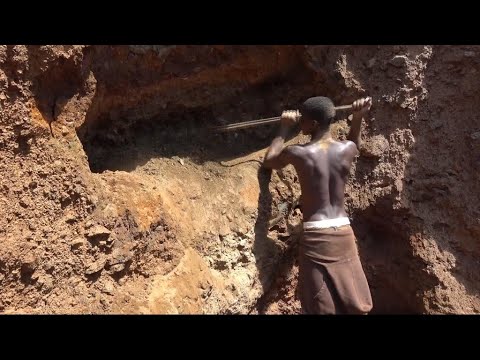
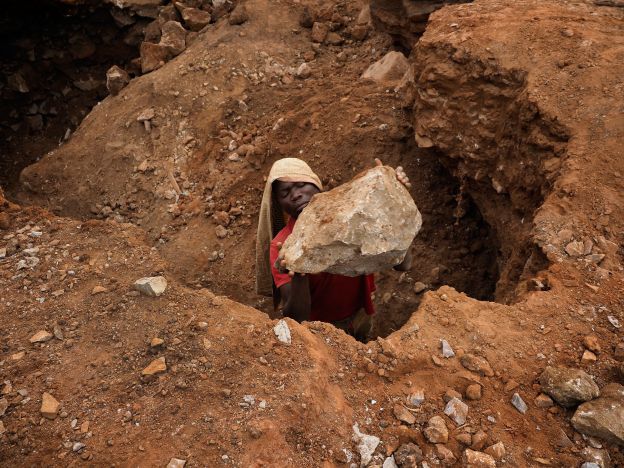
Chemaf, which says its mines could produce 20,000 tons of cobalt annually—making it one of the world’s largest cobalt producers—was put up for sale in 2023 by its founder, Shiraz Virji…When The Wall Street Journal visited Chemaf’s Mutoshi mine in 2018, freelance Congolese miners could be seen descending underground without helmets, shoes or safety equipment. Miners were using picks, shovels and bare hands to unearth rocks rich with the metal. Water sometimes rushed into holes and drowned people, and an earth mover buried one alive, said local workers and mine officials…

In June 2024, Chemaf agreed to sell itself to Chinese state-backed Norin Mining. Shortly after, U.S. pressure helped block the sale

Excerpts from  Alexandra Wexler and Julie Steinberg, How the U.S. Is Trying to Challenge China’s Cobalt Chokehold, WSJ, Oct. 15, 2024

How Murder, Torture and Rape Fuel the Technological Revolution

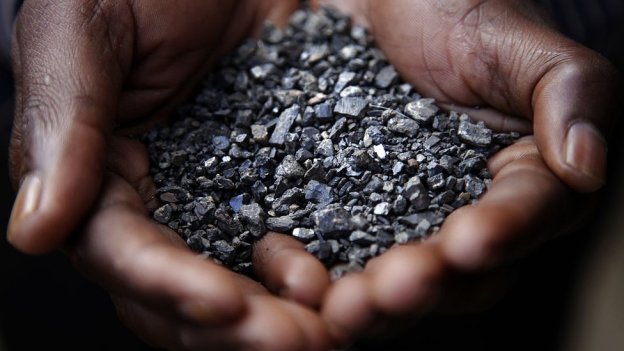
Congo is the world’s leading producer of coltan, from which tantalum is extracted. Tantalum is in hot demand because of its growing use in consumer products, from smartphones to laptops and it is critical for the defense industry (e.g., Apple iPhones, SpaceX rockets, IBM computers).

Coltan is mined in the country’s restive east, a region that has been engulfed in a decadeslong war between rebel groups and the Congolese army…A powerful militia backed by neighboring Rwanda has taken over swaths of eastern Congo, driving some two million people from their homes as fighters kill, torture and rape civilians. The militia, known as M23, has also seized control of Congo’s coltan production and transport, according to United Nations investigators, supply-chain experts, researchers and local traders. 

Now, a network of smuggling routes is increasingly being used to move ore illegally from militia-controlled mines in eastern Congo to neighboring Rwanda. From there, it is sold as Rwandan, and hence “conflict-free,” to smelters around the world, but primarily in China. 

M23 fighters levy taxes on informal coltan miners, who dig the ore from the ground, mostly by hand. The fighters also tax the movement of coltan, providing the militia with revenue to purchase weapons and other supplies. Overall, the trade generates around $300,000 a month for the fighters, according to Bintou Keita, the head of the U.N. mission in Congo….U.S. lawmakers have sought to prevent minerals commonly mined in eastern Congo—tin, tungsten, tantalum and gold—from financing conflict in the region. Legislation embedded in the 2010 Dodd-Frank Act requires U.S.-listed companies to disclose their use of the minerals, known as the 3TGs, as well as steps they are taking to prevent inadvertently financing armed groups. It doesn’t, however, oblige companies to remove potentially tainted materials from their supply chains…

Other armed groups are also profiting from the illegal coltan trade, including an alliance of militias that is helping the Congolese military fight M23, according to rights groups and U.N. researchers. The alliance, known as the Wazalendo, which U.N. investigators say is armed by Congo’s military, includes groups that are under international sanctions for war crimes. M23 and the Wazalendo are both recruiting child soldiers, raping women and girls, looting, murdering civilians and committing other atrocities, according to rights groups and U.N. investigators. Like M23, the Wazalendo are collecting illegal taxes on coltan at roadblocks along transportation routes, as well as from some mining sites. 

Excerpt from Alexandra Wexler, How This Conflict Mineral Gets Smuggled Into Everyday Tech,  WSJ, Oct. 6, 2024

Ecological Impacts of Mining Rivers for Gold

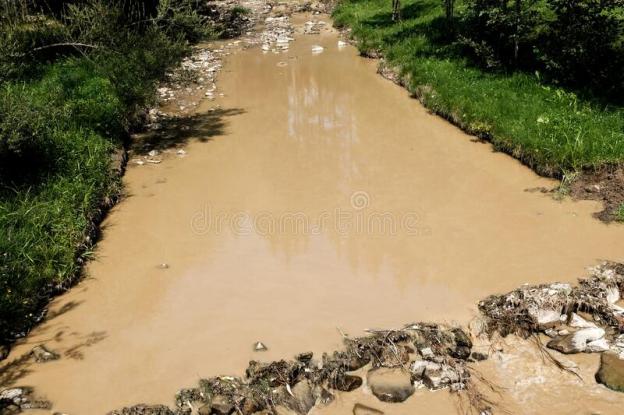
Mining in river channels provides a living for millions of people across the globe, particularly in the tropics. However, because this mining involves deforestation, excavating, dredging, and other work directly in or next to river channels, ecosystems are intensively degraded. Soils and river sediments excavated during mining are processed to extract the precious mineral of interest, usually gold, then discarded. Often the excess sand, silt, and clay is washed downstream by rivers, muddying river water for as much as 1,000 km downstream of mining sites. 

During the past 20 years, mining in rivers has increased dramatically, particularly during the Global Financial Crisis in 2008–09 when the price of gold increased significantly. Despite the human and ecological importance of mining-related environmental degradation, no global documentation of its environmental footprint exists. For the first time these environmental impacts were quantified through the use of satellite imagery and on-the-ground measurements, documenting more than 400 mining areas in 49 countries, mostly in the tropics. We show that the effects of mining have altered 173 rivers, which collectively represent 5–7% of large river length globally. In the tropical countries with river mining, on average nearly one-quarter of large river length is altered by river mining. 

Abstract Available online The recent rise of mining in rivers is a global crisis (Evan Dethier et al, 2022)

At Gunpoint in Congo: Is Coltan Worse than Oil?

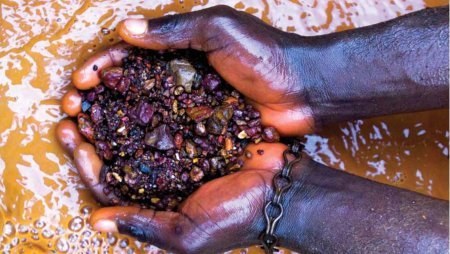
Tantalum, a metal used in smartphone and laptop batteries, is extracted from coltan ore. In 2019 40% of the world’s coltan was produced in the Democratic Republic of Congo, according to official data. More was sneaked into Rwanda and exported from there. Locals dig for the ore by hand in Congo’s eastern provinces, where more than 100 armed groups hide in the bush. Some mines are run by warlords who work with rogue members of the Congolese army to smuggle the coltan out.

When demand for electronics soared in the early 2000s, coltan went from being an obscure, semi-valuable ore to one of the world’s most sought-after minerals. Rebels fought over mines and hunted for new deposits. Soldiers forced locals to dig for it at gunpoint. Foreign money poured into Congo. Armed groups multiplied, eager for a share.

Then, in 2010, a clause in America’s Dodd-Frank Act forced American firms to audit their supply chains. The aim was to ensure they were not using minerals such as coltan, gold and tin that were funding Congo’s protracted war. For six months mines in eastern Congo were closed, as the authorities grappled with the new rules. Even when they reopened, big companies, such as Intel and Apple, shied away from Congo’s coltan, fearing a bad press.

The “Obama law”, as the Congolese nickname Dodd-Frank, did reduce cash flows to armed groups. But it also put thousands of innocent people out of work. A scheme to trace supply chains known as ITSCI run by the International Tin Association based in London and an American charity, Pact, helped bring tentative buyers back to Congo.  ITSCI staff turn up at mining sites to see if armed men are hanging about, pocketing profits. They check that no children are working in the pits. If a mine is considered safe and conflict-free, government agents at the sites put tags onto the sacks of minerals. However, some unscrupulous agents sell tags on the black market, to stick on coltan from other mines. “The agents are our brothers,” Martin says. It is hard to police such a violent, hilly region with so few roads. Mines are reached by foot or motorbike along winding, muddy paths.

For a long time those who preferred to export their coltan legally had to work with itsci, which held the only key to the international market. Miners groaned that itsci charged too much: roughly 5% of the value of tagged coltan. When another scheme called “Better Sourcing” emerged, Congo’s biggest coltan exporter, Société Minière de Bisunzu, signed up to it instead.

Excerpts from Smugglers’ paradise: Congo, Economist, Jan. 23, 2021

Living in the World of Tesla: Cobalt, Congo and China

 A 20% rise in the price of cobalt since the beginning of 2021 shows how the rush to build more electric vehicles is stressing global supply chains. 

A majority of the world’s cobalt is mined in the Democratic Republic of the Congo in central Africa. It typically is carried overland to South Africa, shipped out from the port of Durban, South Africa, and processed in China before the material goes to battery makers—meaning the supply chain has several choke points that make it vulnerable to disruption…

Car and battery makers have been looking for more control over their cobalt supply and ways to avoid the metal altogether. Honda Motor Co. last year formed an alliance with a leading Chinese car-battery maker, Contemporary Amperex Technology Ltd. , hoping that CATL’s supply-chain clout would help stabilize Honda’s battery supply..

Meanwhile, China plays a critical role even though it doesn’t have significant reserves of cobalt itself. Chinese companies control more than 40% of Congo’s cobalt-mining capacity, according to an estimate by Roskill, the London research firm…China’s ambassador to Congo was quoted in state media last year as saying more than 80 Chinese enterprises have invested in Congo and created nearly 50,000 local jobs…

To break China’s stronghold, auto makers and suppliers are trying to recycle more cobalt from old batteries and exploring other nations for alternative supplies of the material.  Another reason to look for alternatives is instability in Congo and continuing ethical concerns about miners working in sometimes-harsh conditions with rudimentary tools and no safety equipment.

Excerpt from Yang Jie, EV Surge Sends Cobalt Prices Soaring, WSJ, Jan. 23, 2021

The Perils of Inhaling Lead Dust: Zambia

Kabwe,  in Zambia,  sprung up around a mine founded in 1904 by the Rhodesian Broken Hill Development Company, a British colonial firm. For decades miners crushed and burnt ore to extract lead. That metal made Kabwe but it also devastated it. To this day lead particles blow across town, making their way into houses and bloodstreams.

Scientists generally consider soil hazardous if it has more than 400mg of lead per kilogram. In three townships near the old mine the soil contains six, eight and 15 times that amount, according to analysis in 2014 by Pure Earth, an environmental ngo. “Kabwe is the most toxic place I’ve ever been to,” says Richard Fuller, its president…

The pollution in Kabwe is a scandal. Yet responsibility for it has long been contested, and that is set to continue. In October 2020, Mbuyisa Moleele Attorneys, a South African law firm, with help from Leigh Day, a British one, announced a class-action lawsuit against a subsidiary of Anglo American on behalf of potentially more than 100,000 children and women of reproductive age in Kabwe. It is targeting Anglo because it was affiliated to the mine from the 1920s until shortly after Zambia’s mines were nationalised in 1970. The suit claims that most of the pollution stems from the period when the mine was under the de facto control of Anglo, which allegedly did not do enough to stop the harm. Anglo rejects the claims, arguing that its involvement ended five decades ago and that, before then, it was neither the operator nor a majority shareholder in the mine and thus not responsible.

The case may take years. The lawyers for the plaintiffs must first convince a South African court to take it on. Only then may it proceed to a trial. Meanwhile children in Kabwe will keep on playing in the dust.

The World Bank included Kabwe in a broader project it funded to clean up Zambian mines. The scheme, which ran from 2003-2011, had some successes. It dredged a toxic canal and buried some contaminated soil. But it did not treat the main source of the dust—the former mine and dumps—and it left roads unpaved and most houses untreated…Another clean-up funded by the bank was started in December 2016. But it, too, is struggling. Some children have been tested and have received therapy to reduce blood lead levels. But since little has been done about the lead in the environment there is a risk their levels will rise again. 

Excerpt from Mining’s Toxic Legacy: Lead Astray, Economist,  Dec. 12, 2020

Saving Lives (if you can): Conflict Minerals and Covid-19

The Dodd-Frank Section 1502 forces manufacturers to disclose if any of their products contain “conflict minerals” mined in the Democratic Republic of the Congo and nine adjoining countries in Africa. Under the law, companies listed on U.S. stock exchanges must audit their supply chains and disclose if their products contain even traces of the designated minerals—gold, tantalum, tin and tungsten—that might have been mined in areas controlled by warlords.

The provision was sold as protecting Congolese citizens from warlords who profited from the mining and sale of these minerals…Manufacturers spent about $709 million and more than six million man-hours attempting to trace their supply chains for conflict minerals in 2014. And 90% of those companies still couldn’t confirm their products were conflict-free. Many decided to avoid the Congo region altogether and source materials from other countries and continents

When mining dropped off due to Dodd-Frank’s effects, Congolese villages were hit by reductions in education, health care and food supply. In 2014, 70 activists, academics and government officials signed a letter blasting initiatives like the Dodd-Frank provision for “contributing to, rather than alleviating, the very conflicts they set out to address”…

Then there is the race for Covid-19 vaccines and related medical supplies. including ventilators, x-ray machines and oxygen concentrators that are manufactured by using “conflict minerals.” The minerals restricted by the Dodd-Frank Act are frequently used in the composition and production of needles, syringes and vials necessary to transport and administer billions of doses of vaccines. The compressors used to refrigerate vaccines also use these minerals to function…Countries, such as China, which are not bound by Dodd-Frank, have access to Congolese tantalum that the U.S. lacks.

Excerpts from John Berlau and Seth Carter,  Dodd-Frank Undermines the Fight Against Covid, WSJ, Oct 28, 2020

The Global Gold Rush and Plunder of Congo

Since March 2020, record amounts of gold dug from artisanal mines in the conflict zones of Eastern Congo have been smuggled across the porous border with Uganda, where it is being stamped with fake certifications before being shipped to international markets in Dubai, Mumbai and Antwerp, according to Ugandan security officials, smugglers and traders. Much of the gold is reaching these overseas markets using cargo planes returning from Uganda after delivering Covid-19 aid and other essential supplies, according to plane manifests seen by The Wall Street Journal.

The trade in conflict gold isn’t new, but it has perhaps never been more lucrative: Gold prices at illegal and unregulated Congolese mines, where supply chains have been disrupted by coronavirus shutdowns and renewed violence between militant groups, have dropped over 40% since April 2020, according to local traders, while on global markets, prices are up by almost a third…Activists and U.N. investigators have long accused Uganda and several of Congo’s neighbors of being complicit in the plunder of Congolese gold…The calls to end the illicit trade grew louder last year after Uganda’s gold exports overtook coffee to become the leading export commodity for the first time—despite the country producing very little bullion.

U.N. investigators estimate that each month between 2 tons and 3 tons of Congo’s conflict gold—with a market value of over $100 million—is crossing the Ugandan frontier, passing border crossings patrolled by heavily armed guards, with metal fencing and razor wire erected to reduce the flow of people due to coronavirus fears…

Smugglers and police say the gold is secreted in trucks that are allowed to bypass coronavirus restrictions to deliver “essential goods” from fuel to food supplies. The yellow bars, weighing between 5 to 20 kilograms, are stuffed underneath truck cabins, inside battery compartments and emptied gasoline tankers. Once inside Uganda, the truckers sell the bars to traders who purchase forged documents in Kampala that disguise the gold’s origin.

The scramble is fueling violence in the eastern Congolese province of Ituri…Fresh spasms of violence have left more than 1,300 civilians dead since March 2020, in what the U.N. says may amount to war crimes. Some six million people are displaced. Armed groups are carrying out predatory raids on mines in search of gold.

In the meantime on Wall Street, on July 24, 2020, gold futures were priced at $1,897.50 a troy ounce eclipsing their August 2011 peak of $1,891.90. The coronavirus has ignited a global gold rush, with physical traders around the world trying to get their hands on more metal and individuals around the world ordering bars and coins.

Excerpts from Nicholas Bariyo and Joe Parkinson, Under Cover of Coronavirus Lockdown, a Booming Trade in Conflict Gold, WSJ, July 9, 2020, Gold Climbs to a High, Topping Its 2011 Record, WSJ, July 24, 2020

Human and Environmental Costs of Low-Carbon Technologies

Substantial amounts of raw materials will be required to build new low-carbon energy devices and infrastructure.  Such materials include cobalt, copper, lithium, cadmium, and rare earth elements (REEs)—needed for technologies such as solar photovoltaics, batteries, electric vehicle (EV) motors, wind turbines, fuel cells, and nuclear reactors…  A majority of the world’s cobalt is mined in the Democratic Republic of Congo (DRC), a country struggling to recover from years of armed conflict…Owing to a lack of preventative strategies and measures such as drilling with water and proper exhaust ventilation, many cobalt miners have extremely high levels of toxic metals in their body and are at risk of developing respiratory illness, heart disease, or cancer.

In addition, mining frequently results in severe environmental impacts and community dislocation. Moreover, metal production itself is energy intensive and difficult to decarbonize. Mining for copper,and mining for lithium has been criticized in Chile for depleting local groundwater resources across the Atacama Desert, destroying fragile ecosystems, and converting meadows and lagoons into salt flats. The extraction, crushing, refining, and processing of cadmium can pose risks such as groundwater or food contamination or worker exposure to hazardous chemicals. REE extraction in China has resulted  threatens rural groundwater aquifers as well as rivers and streams.

Although large-scale mining is often economically efficient, it has limited employment potential, only set to worsen with the recent arrival of fully automated mines. Even where there is relative political stability and stricter regulatory regimes in place, there can still be serious environmental failures, as exemplified by the recent global rise in dam failures at settling ponds for mine tailings. The level of distrust of extractive industries has even led to countrywide moratoria on all new mining projects, such as in El Salvador and the Philippines.

Traditional labor-intensive mechanisms of mining that involve less mechanization are called artisanal and small-scale mining (ASM). Although ASM is not immune from poor governance or environmental harm, it provides livelihood potential for at least 40 million people worldwide…. It is also usually more strongly embedded in local and national economies than foreign-owned, large-scale mining, with a greater level of value retained and distributed within the country. Diversifying mineral supply chains to allow for greater coexistence of small- and large-scale operations is needed. Yet, efforts to incorporate artisanal miners into the formal economy have often resulted in a scarcity of permits awarded, exorbitant costs for miners to legalize their operations, and extremely lengthy and bureaucratic processes for registration….There needs to be a focus on policies that recognize ASM’s livelihood potential in areas of extreme poverty. The recent decision of the London Metals Exchange to have a policy of “nondiscrimination” toward ASM is a positive sign in this regard.

A great deal of attention has focused on fostering transparency and accountability of mineral mining by means of voluntary traceability or even “ethical minerals” schemes. International groups, including Amnesty International, the United Nations, and the Organisation for Economic Co-operation and Development, have all called on mining companies to ensure that supply chains are not sourced from mines that involve illegal labor and/or child labor.

Traceability schemes, however, may be impossible to fully enforce in practice and could, in the extreme, merely become an exercise in public relations rather than improved governance and outcomes for miners…. Paramount among these is an acknowledgment that traceability schemes offer a largely technical solution to profoundly political problems and that these political issues cannot be circumvented or ignored if meaningful solutions for workers are to be found. Traceability schemes ultimately will have value if the market and consumers trust their authenticity and there are few potential opportunities for leakage in the system…

Extended producer responsibility (EPR) is a framework that stipulates that producers are responsible for the entire lifespan of a product, including at the end of its usefulness. EPR would, in particular, shift responsibility for collecting the valuable resource streams and materials inside used electronics from users or waste managers to the companies that produce the devices. EPR holds producers responsible for their products at the end of their useful life and encourages durability, extended product lifetimes, and designs that are easy to reuse, repair, or recover materials from. A successful EPR program known as PV Cycle has been in place in Europe for photovoltaics for about a decade and has helped drive a new market in used photovoltaics that has seen 30,000 metric tons of material recycled.

Benjamin K. Sovacool et al., Sustainable minerals and metals for a low-carbon future, Science, Jan. 3, 2020
The Game-Changers: oil, gas and geothermal

The Democratic Republic of the Congo (DRC) has decided to degazette parts of two UNESCO World Heritage Sites to allow for oil drilling. Environmentalists have reacted sharply to the decision to open up Virunga and Salonga national parks – a move that is likely to jeopardise a regional treaty on the protection of Africa’s most biodiverse wildlife habitat and the endangered mountain gorilla…The two national parks are home to mountain gorillas, bonobos and other rare species. Salonga covers 33 350 km2 (3,350,000 ha)of the Congo Basin, the world’s second largest rainforest, and contains bonobos, forest elephants, dwarf chimpanzees and Congo peacocks….

On 7 April, 2018, a council of ministers from the DRC, Rwanda and Uganda agreed to ratify the Treaty on the Greater Virunga Transboundary Collaboration (GVTC) on Wildlife Conservation and Tourism Development. The inaugural ministerial meeting set the deadline for September 2018 to finalise the national processes needed to ratify the treaty.

The Virunga National Park (790,000 ha, 7 900 km2)is part of the 13 800 km2 (1 3800 00 ha) Greater Virunga Landscape, which straddles the eastern DRC, north-western Rwanda and south-western Uganda.  The area boasts three UNESCO World Heritage Sites – Virunga, Rwenzori Mountains National Park and Bwindi Impenetrable National Park. It also boasts a Ramsar Site (Lake George and Lake Edward) and a Man and Biosphere Reserve (in Queen Elizabeth National Park). It is the most species-rich landscape in the Albertine Rift – home to more vertebrate species and more endemic and endangered species than any other region in Africa.

According to the Greater Virunga Landscape 2016 annual report, the number of elephant carcasses recorded in 2016 was half the yearly average for the preceding five years. The report also mentions a high rate of prosecution and seizures. It cites a case study on Uganda’s Queen Elizabeth National Park where 282 suspects involved in poaching were prosecuted, with over 230 sentenced….The GVTC has also helped to ease tensions between the countries by providing a platform where their military forces can collaborate in a transparent way. ..

Armed groups have reportedly killed more than 130 rangers in the park since 1996. Militias often kill animals such as elephants, hippos and buffaloes in the park for both meat and ivory. Wildlife products are then trafficked from the DRC through Uganda or Rwanda. The profits fund the armed groups’ operations.

Over 80% of the Greater Virunga Landscape is covered by oil concessions and this makes it a target for state resource exploitation purely for economic gain.


2015: Until recently, in GVL, extraction of highly valued minerals such as gold and coltan, were largely artisanal. The recent discovery of oil, gas and geothermal potential, however, is a game-changer. Countries are now moving ahead in the exploration and production of oil and gas, which if not properly managed, is likely to result in major negative environmental (and social) changes. Extractive industries are managed under each GVL partner state policy guidelines and legislation. Concessions for these industries cover the whole of the GVL, including the World Heritage Sites as well as national protected areas . Since 2006, Uganda discovered commercial quantities of oil in the Albertine Graben and production in Murchison will begin within the next few years. The effect of the extractive industries, similar to and contributing to that of the increase in urbanization is the increased demand for bush meat, timber and fuel wood from the GVL.

Excertps from Duncan E Omondi Gumba, DRC prioritises oil over conservation, ISS Africa,  July 11, 2018//GREATER VIRUNGA LANDSCAPE
ANNUAL CONSERVATION STATUS REPORT 2015


Tin, Tantalum and Tungsten: Congo

Congo’s tin, tantalum and tungsten are used in electronics around the world. Although some of these minerals come from big industrial copper mines in Katanga, Congo’s south, and a gold mine in South Kivu, there is not yet a single modern mine in North Kivu.

Until now the province’s metal has been dug out almost entirely by hand. Yet Alphamin hopes to show that it can run a modern industrial mine in a part of the world that scares other modern miners away.

Alphamin says that the investment is attractive—even at a time of low commodity prices—because the ore that it plans to extract is richer than that found anywhere else in the world. Behind the company’s camp on the hill are stacks of carefully ordered cylinders of rock drilled out to map the riches beneath the mountain. (Like almost everything else in the camp, the drill rig had to be lifted in by helicopter.) The ore they contain is 4.5% grade. That means that for every 100 tonnes of ore extracted, the firm will be able to sell 3.25 tonnes of tin (not all the tin can be extracted from the rock). Most other mines would be happy to produce 0.7 tonnes…..

If the gamble pays off Alphamin’s investors will make juicy returns. But to do so they may have to convince locals that the project is in their interest. If not, they risk protests and sabotage  .In 2007 some 18,000 people lived at Bisie, working the site with pickaxes and shovels. They produced some 14,000 tonnes of tin that year—or perhaps 5% of world production. To get it to market people carried concentrated ore on their heads through the jungle to an airstrip where small planes could land to carry it out. It was back-breaking work but lucrative for many Congolese. That era began to come to an end in 2011, thanks in part to an American law.

Under the Dodd-Frank act, a law aimed mainly at tightening bank regulation, firms operating in the United States must be able to show where the minerals used in their products came from. The idea was to stop rebels in poor countries from selling gold and diamonds to fund wars. The law all but shut down artisanal mining in much of eastern Congo.

Elsewhere in eastern Congo artisanal mines have gradually reopened thanks to a verification scheme under which the UN and the government check mines and allow certified ones to “tag and bag” minerals. The site at Bisie has, however, never been certified. And although Alphamin will provide some well-paid jobs to locals, as well as pay taxes to the central government, its mechanised operations will never employ anything like the thousands of people who once toiled there with pick and shovel. Alphamin has promised to fund local projects, such as a new school, that are intended to benefit 44 villages.

Excerpts from Mining in the Democratic Republic of Congo: The richest, riskiest tin mine on Earth, Economist, Aug. 27, 2016