Second Edition (2025) will be out in October 2025
Check my blog on the Cambridge website
Fifty Years of International Environmental Law: Looking Back and Looking Ahead

Second Edition (2025) will be out in October 2025
Check my blog on the Cambridge website
Fifty Years of International Environmental Law: Looking Back and Looking Ahead
Plastic production is increasing sharply. This has raised concerns about the effects of microplastics (typically defined as plastic particles smaller than 5 millimetres in diameter) and nanoplastics (smaller plastic particles that are less than 1,000 nanometres in diameter) on human health. These concerns are partly influenced by alarming findings of the presence of microplastics in various human tissues, including the brain and placenta.
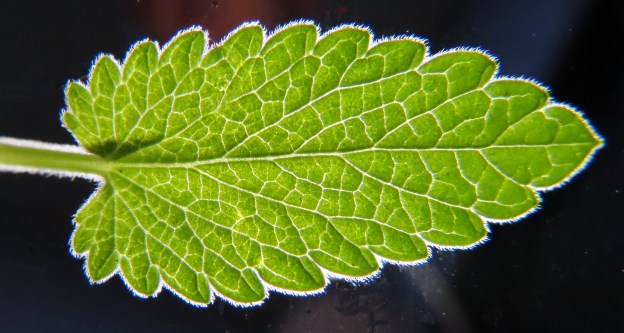
Most attention is focused on soil and water as common sources of plastics that enter the food chain. However, writing in Nature, Li et al. provide strong evidence supporting the air as being a major route for plastics to enter plants. Plants can absorb plastic particles directly from the air. Particles in the air can enter leaves through various pathways, such as through structures on the leaf surface called the stomata and through the cuticle. Stomata are small openings made of cells, and the cuticle is a membrane, covered in insoluble wax, that is well suited for absorbing microplastics…
Microplastics can also travel to and enter the plant’s water- and nutrient-transporting system (called the vascular bundle) and from there reach other tissues… Given that leaves are a key part of the food chain, microplastic particles that accumulate here can easily pass to herbivores and crop leaves, both of which can be directly consumed by humans.
Excerpt from Willie Peijnenburg, Plant Leaves Absorb Microplastics—And They End Up in Our Food, Scientific American, Apr. 18, 2025
The damage caused by plastic pollution goes far beyond the digestive system.
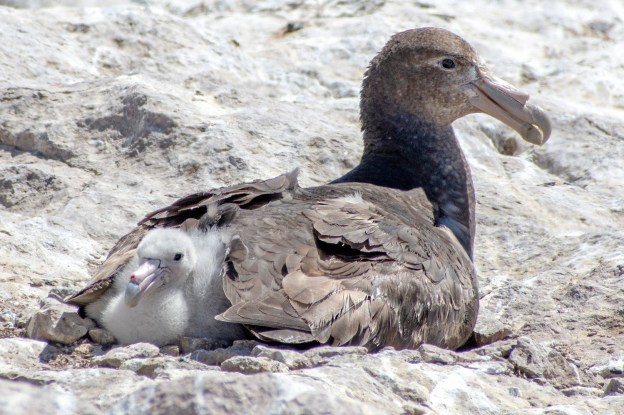
Beneath the skin of seemingly healthy seabirds, new research has revealed the widespread effect of plastics on crucial proteins made by the liver, kidneys and even the brain. Samples taken on Lord Howe Island, which lies between Australia and New Zealand, showed that young birds which appeared healthy were suffering from severe damage to multiple organs. Seabirds which had only eaten less than a gram of plastic were already suffering serious consequences. These impacts extended to the brain, where declines in a crucial protein known as brain-derived neurotrophic factor (BDNF) were similar to levels associated with conditions like Alzheimer’s disease, Parkinson’s disease and dementia in other animals…Sable shearwaters, a type of seabird, feed this plastic to their chicks, where it clogs their digestive system so there’s less space left for food. The team even named a specific disease, plasticosis, to describe the scarring that plastic causes inside the stomachs of these seabirds.
Beyond these more obvious impacts, plastic also sheds minute fragments that can travel even deeper into the body. These are known as microplastics if they’re less than five millimetres in size, or nanoplastics if they’re less than a micron….
These tiny plastics have been found in every environment, even inside our own bodies. Recent research suggests that our brains contain around a spoon’s worth of micro- and nanoplastics, but the health impacts of this are still not entirely understood.
Excerpt James Ashworth, Natural History Museum (UK) Plastic pollution causing dementia-like signs in seabird chicks, Mar. 12, 2025
As people switch to electric cars, or at least buy more fuel-efficient versions of traditional vehicles, energy companies will have too much oil on their hands. ..Energy companies hope consumers will soak up the glut through their clothing, food and electronic goods. Exxon Mobil expects demand for products that have fossil fuel-derived components and shells like “cellphones and medical supplies, as well as products necessary to preserve food and improve hygiene” to increase.
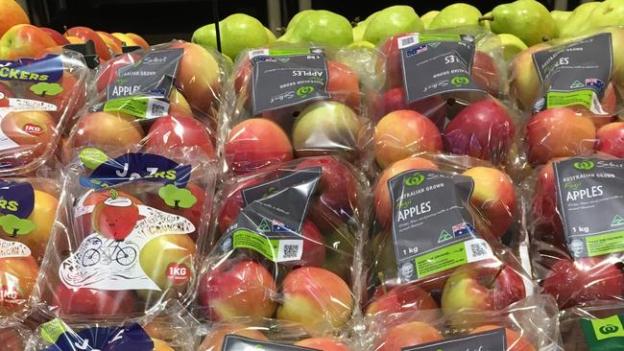
Crude oil and natural gas are turned into petrochemical feedstocks such as naphtha or natural gas liquids in a gas-processing plant or at an oil refinery. They are then “cracked” into the building blocks of common plastics. Ethylene is processed into polyethylene, which winds up in plastic bags, shampoo bottles and children’s toys. Polypropylene is used for everything from car bumpers to carpets. ..Today, 15.4% of global oil demand is driven by petrochemicals, according to data from Wood Mackenzie. The share is expected to rise to 19.1% by 2035 as emerging markets become wealthier and swelling middle classes spend more on synthetic clothing and do their grocery shopping at big supermarket chains, where food is more likely to be wrapped in plastic to prolong its shelf life. Advanced economies like the U.S. use up to 20 times more plastic than developing nations on a per capita basis, according to the IEA. Big Oil’s bet is that shoppers in emerging markets will close at least part of that gap.
Energy companies are pouring billions of dollars into petrochemical facilities, notably in China where ethylene capacity has almost doubled since 2019. Capacity is also rising in the U.S. and Middle East. Saudi Arabia wants to invest $600 billion into petrochemicals by the end of the decade to secure nonfuel uses of its crude oil.
But the global petrochemical industry is already saturated and capacity is expected to outstrip demand until at least 2030. This points to weak profit margins and less-than-ideal utilization rates at petrochemical facilities. Plants in high-cost regions are shutting down. Exxon Mobil sold refineries in Italy last year and plans to close an ethylene cracker in Normandy, France…Pumping money into petrochemicals as governments are trying to solve the problem of plastic waste feels risky…. A worldwide ban on single-use plastic would wipe out a third of global plastic demand that comes from things like mini hotel toiletries, fast-food packaging and disposable cutlery, although there would probably be exemptions for categories like medical intravenous bags that are hard to substitute.
Excerpts from Carol Ryan, Driving an EV? Big Oil Hopes You Don’t Cut Down on Plastic Too, WSJ, Dec. 24, 2024
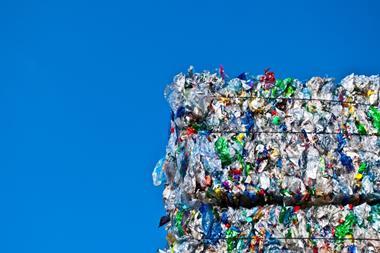
Chemical companies, oil-and-gas incumbents and startups around the world are touting plans for new recycling facilities, promising to turn old bottles and bags into usable material. But policymakers are questioning whether some of these methods, broadly termed chemical or advanced recycling, should be considered recycling at all.
In 2024, Eastman Chemical began processing plastic at a new plant in Kingsport, Tenn., that it calls the largest material-to-material molecular recycling facility in the world. The company uses a chemical procedure called methanolysis to break down hard-to-recycle plastics and turn them into “virgin quality” polyesters. When operating at capacity, the facility will process 110,000 tons of plastic waste a year, the equivalent of 11 billion water bottles a year, said Mark Costa, Eastman’s chief executive.
In July 2024, Australian company Samsara Eco announced a $65 million funding round that attracted investment from Singapore’s state-investment company Temasek and apparel company Lululemon, among others. Using a process it calls enzymatic recycling, it aims to recycle 1.5 million tons of plastic a year by 2030.
Yet in June 2024, during last-minute negotiations on a New York state packaging bill that would have forced companies to meet ambitious recycling standards and reduce their packaging waste by 30%, state legislators agreed that technologies like Eastman’s or Samsara Eco’s would not initially be considered “recycling.” “We had a serious concern about the pseudo solution pushed by the industry called chemical recycling,” said Judith Enck, a former Environmental Protection Agency official and founder of Beyond Plastics, an advocacy group that supported the bill. In a report published last October, Beyond Plastics raised doubts about advanced recycling plants’ yield, emissions, byproducts and energy use. The group has argued that advanced recycling amounts to little more than a marketing tactic deployed to distract decision makers from proven waste-reduction methods, like using less packaging…
A recent ProPublica investigation found that the dominant advanced recycling technique, pyrolysis, yields 15% to 20% usable plastic materials. The rest turns into fuel and other chemicals. Traditional mechanical recycling yields 55% to 85% new plastic…
Excerpts from Claire Brown, A Fight Over the Future of Recycling Brews as Plastics Legislation Gains Traction, WSJ, July 2, 2024
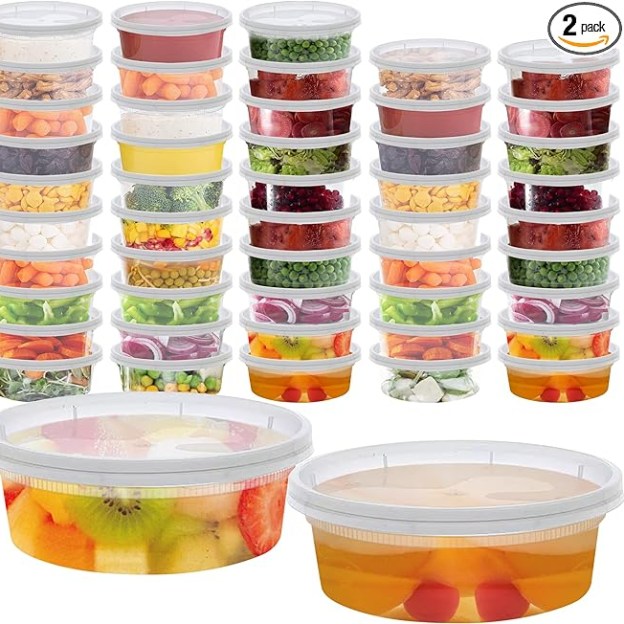
Countries are currently negotiating a global plastics treaty to end plastic pollution. It is essential that the treaty addresses plastic chemicals because all plastics, from food packaging to car tires, contain thousands of chemicals that can leach into foodstuffs, homes, and the environment. Since many of these chemicals are hazardous, they can damage human health and the environment.
Plastic chemicals comprise all chemicals in plastics, including additives, processing aids, and impurities. A previous report by the United Nations Environment Program (UNEP) and other international institutions identified 13,000 plastic chemicals. The new PlastChem Report shows that there are more plastic chemicals than previously known, with over 16,000 chemicals included in the new PlastChem database that accompanies the report.
Further key findings of the report include:
• At least 4,200 plastic chemicals (or 26%) are of concern because of their high hazards to human health and the environment,
• More than 400 chemicals of concern can be present in each major plastic type, including in food packaging, and all tested plastics leached hazardous chemicals,
The report recommends : Increased transparency on the chemical composition of plastics is essential for closing data gaps, promoting a comprehensive management of plastic chemicals, and creating accountability across plastic value chains. A unified reporting, disclosure of the chemical composition of plastic materials and products as well as a “no data, no market” approach are recommended to ensure that essential
information about plastic chemicals becomes publicly available.
Excerpts from New Report Identifies Plastic Chemicals of Concern and Highlights
Approaches Towards Safer Plastics, Press Release of PlastChem, Mar. 14, 2024
A flurry of recent studies has found that microplastics are present in virtually everything we consume, from bottled water to meat and plant-based food. Now, University of New Mexico Health Sciences researchers have used a new analytical tool to measure the microplastics present in human placentas. In a study published February 17 in the journal Toxicological Sciences, a team led by Matthew Campen, reported finding microplastics in all 62 of the placenta samples tested, with concentrations ranging from 6.5 to 790 micrograms per gram of tissue.
Although those numbers may seem small (a microgram is a millionth of a gram), Campen is worried about the health effects of a steadily rising volume of microplastics in the environment. For toxicologists, “dose makes the poison,” he said. “If the dose keeps going up, we start to worry. If we’re seeing effects on placentas, then all mammalian life on this planet could be impacted. That’s not good.”…The researchers found the most prevalent polymer in placental tissue was polyethylene, which is used to make plastic bags and bottles. It accounted for 54% of the total plastics. Polyvinyl chloride (better known as PVC) and nylon each represented about 10% of the total, with the remainder consisting of nine other polymers…
Plastic use worldwide has grown exponentially since the early 1950s, producing a metric ton of plastic waste for every person on the planet. About a third of the plastic that has been produced is still in use, but most of the rest has been discarded or sent to landfills, where it starts to break down from exposure to ultraviolet radiation present in sunlight. “That ends up in groundwater, and sometimes it aerosolizes and ends up in our environment,” Garcia said. “We’re not only getting it from ingestion but also through inhalation as well. It not only affects us as humans, but all off our animals – chickens, livestock – and all of our plants. We’re seeing it in everything.”…The concentration of microplastics in placentas is particularly troubling, he said, because the tissue has only been growing for eight months (it starts to form about a month into a pregnancy). “Other organs of your body are accumulating over much longer periods of time.”
Excepts from Michael Haederle, Microplastics in Every Human Placenta, Feb. 20, 2024
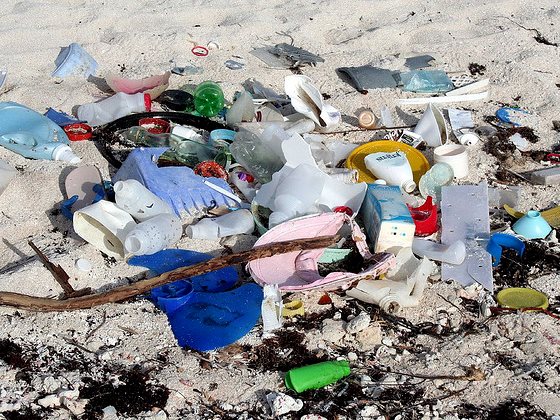
Plastic pollution has become one of the major global environmental challenges of the century; projections show that by 2050 the oceans may have more plastic than fish. Nuclear technology has emerged as one innovative solution to this growing problem. The International Atomic Energy Agency (IAEA) has been working on an initiative called Nuclear Technology for Controlling Plastic Pollution – NUTEC Plastics.
Nuclear technology can be used to innovate plastic waste recycling and support development of biodegradable, green alternatives to single use petroleum-based plastic products – an approach aimed at reducing the volume of plastic waste world-wide and prevent the plastics from reaching earth’s marine environments. Nuclear techniques can also be used to quantify and characterize marine microplastic pollution and to assess their impact on coastal and marine ecosystems. A global plastics monitoring network of marine laboratories can also help tackle marine pollution. Presently, there are 55 laboratories in the global NUTEC Plastics Monitoring Network. ..
The Philippines has a significant plastic pollution problem and a great interest in recycling. The Department of Science and Technology (DOST) in the Philippines has undertaken a pre-feasibility study for a pilot plant employing electron beam radiation to combine two waste streams – plastics and palm tree fibers – into a new consumer product, construction material…
The IAEA is unique within the United Nations system in having laboratories in Austria and Monaco that apply nuclear science to help states address some of the world’s biggest issues, including plastic pollution… The Monaco laboratories serve as the central hub to the global NUTEC Plastics Monitoring Network.
Excerpts from Sinead Harvey, More Plastic Than Fish by 2050 – IAEA Event Gathers Experts Working Together to Save Marine Environments from Plastic Pollution, IAEA Newsletter, Sept. 28, 2022
There are an estimated 350,000 different types of manufactured chemicals on the global market. These include plastics, pesticides, industrial chemicals, chemicals in consumer products, antibiotics and other pharmaceuticals….The rate at which these pollutants are appearing in the environment far exceeds the capacity of governments to assess global and regional risks, let alone control any potential problems..
In 2009, an international team of researchers identified nine planetary boundaries that demarcate the remarkably stable state Earth has remained within for 10,000 years – since the dawn of civilization. These boundaries include greenhouse gas emissions, the ozone layer, forests, freshwater and biodiversity. The researchers quantified the boundaries that influence Earth’s stability, and concluded in 2015 that four boundaries have been breached. But the boundary for chemicals was one of two boundaries that remained unquantified.
This new research takes this a step further. The researchers say there are many ways that chemicals and plastics have negative effects on planetary health, from mining, fracking and drilling to extract raw materials to production and waste management.
Some of these pollutants can be found globally, from the Arctic to Antarctica, and can be extremely persistent…Global production and consumption of novel entities is set to continue to grow. The total mass of plastics on the planet is now over twice the mass of all living mammals, and roughly 80% of all plastics ever produced remain in the environment. Plastics contain over 10,000 other chemicals, so their environmental degradation creates new combinations of materials – and unprecedented environmental hazards. Production of plastics is set to increase and predictions indicate that the release of plastic pollution to the environment will rise too, despite huge efforts in many countries to reduce waste.
Excerpt from Safe planetary boundary for pollutants, including plastics, exceeded, say researchers, Stockholm Resilience Center Press Release, Jan. 18, 2022
For an alternative view on planetary boundaries see NY Times Article, 2015
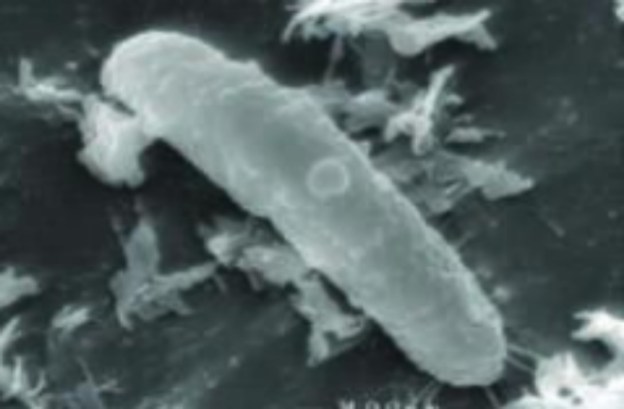
The number of microbial enzymes with the ability to degrade plastic is growing, in correlation with local levels of plastic pollution. That is the finding of a study from Chalmers University of Technology, Sweden, that measured samples of environmental DNA from around the globe. The results illustrate the impact plastic pollution is having on the environment, and hint at potential new solutions for managing the problem.
The study analyzed samples of environmental DNA from hundreds of locations around the world. The researchers used computer modelling to search for microbial enzymes with plastic-degrading potential, which was then cross-referenced with the official numbers for plastic waste pollution across countries and oceans. “Using our models, we found multiple lines of evidence supporting the fact that the global microbiome’s plastic-degrading potential correlates strongly with measurements of environmental plastic pollution – a significant demonstration of how the environment is responding to the pressures we are placing on it,” says Aleksej Zelezniak, Associate Professor in Systems Biology at Chalmers University of Technology.
More enzymes in the most polluted areas: In other words, the quantity and diversity of plastic-degrading enzymes is increasing, in direct response to local levels of plastic pollution. In total, over 30,000 enzyme ‘homologues’ were found with the potential to degrade 10 different types of commonly used plastic. Homologues are members of protein sequences sharing similar properties. Some of the locations that contained the highest amounts were notoriously highly polluted areas, for example samples from the Mediterranean Sea and South Pacific Ocean…
The researchers believe that their results could potentially be used to discover and adapt enzymes for novel recycling processes…“The next step would be to test the most promising enzyme candidates in the lab to closely investigate their properties and the rate of plastic degradation they can achieve. From there you could engineer microbial communities with targeted degrading functions for specific polymer types,” explains Aleksej Zelezniak.
Plastic-degrading enzymes increasing in correlation with pollution, Chalmers University of Technology Press Release, Dec. 14, 2021
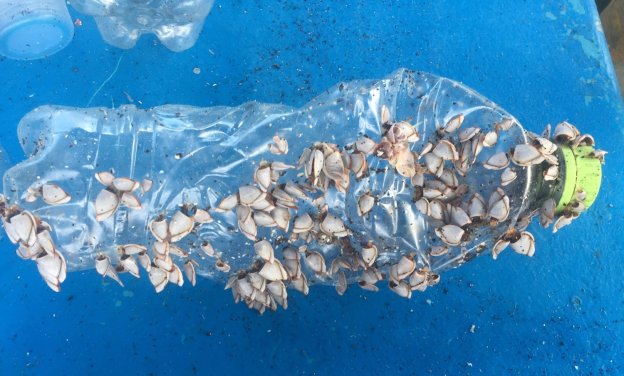
The “Great Pacific Garbage Patch,” is considered the world’s largest accumulation of ocean plastic. It’s so massive, in fact, that researchers found it has been colonized by species — hundreds of miles away from their natural home. The research, published in the journal Nature, found that species usually confined to coastal areas — including crabs, mussels and barnacles — have latched onto, and unexpectedly survived on, massive patches of ocean plastic. As suitable habitat made of plastics now exists in the open ocean, coastal organisms can both survive at sea for years and reproduce, leading to self-sustaining coastal communities on the high seas!
But the mingling of the neuston and coastal species is “likely recent,” researchers said, and was caused largely because of the accumulation of “long-lived plastic rafts” that have been growing since the middle of the 20th century. Just by itself, the Great Pacific Garbage Patch, located between California and Hawai’i, is estimated to have at least 79,000 tons of plastic within a 1.6 million-square-kilometer area. There are at least four other similar patches throughout the world’s oceans. Researchers expect that plastic waste is going to “exponentially increase,” and by 2050, there will be 25,000 million metric tons of plastic waste.
For lead author Linsey Haram, the research shows that physical harm to larger marine species should not be the only concern when it comes to pollution and plastic waste. “The issues of plastic go beyond just ingestion and entanglement,” Haram said in a statement. “It’s creating opportunities for coastal species’ biogeography to greatly expand beyond what we previously thought was possible.”
But that expansion could come at a cost. “Coastal species are directly competing with these oceanic rafters,” Haram said. “They’re competing for space. They’re competing for resources. And those interactions are very poorly understood.” There is also a possibility that expansions of these plastic communities could cause problems with invasive species. A lot of plastic found in the Great Pacific Garbage Patch, for example, is debris from the 2011 Tohoku tsunami in Japan, which carried organisms from Japan to North America. Over time, researchers believe, these communities could act as reservoirs that will provide opportunities for coastal species to invade new ecosystems.
There are still many questions researchers say need to be answered about these new plastic-living communities — like how common they are and if they can exist outside the Great Pacific Garbage Patch — but the discovery could change ocean ecosystems on a global scale, especially as climate change exacerbates the situation.
Excerpts from LI COHEN, There’s so much plastic floating on the ocean surface, it’s spawning new marine communities, CBS News, Dec. 2, 2021
BY LI COHEN
 Law-In-Action