Monthly Archives: March 2016

Nothing Outlasts the Fukushima Disaster

As Prime Minister Shinzo Abe moves to reopen Japanese nuclear plants that were all shut after the disaster on March 11, 2011, a distrustful public is pushing back. A court on March 9, 2016ordered Kansai Electric Power Co. to halt two of the four reactors that have been restarted, saying the utility had failed to show the public they were safe. The utility called the ruling “unacceptable” and said it would appeal….However, near the ruined Fukushima reactors……Growing swaths of land are covered with black bags full of slightly radioactive soil.

The hardest parts of the cleanup haven’t even begun. Tepco, as Tokyo Electric is known, has yet to draw up plans for removing highly radioactive nuclear fuel that melted through steel containment vessels and now sits at the bottom of three Fukushima reactors.The company estimates that the nearly $20 billion job of decommissioning the plant could take another three or four decades. That is not counting damages and cleanup costs expected to reach some $100 billion or more, including about $50 billion paid to evacuees. Legal wrangling over the disaster continues. In February 2016, three former Tepco executives were charged with professional negligence.

Tepco also is working to reduce a total 400 tons of rain and groundwater that breach the plant’s defenses daily, becoming contaminated and requiring treatment and storage. But a wall of frozen earth meant to reduce the flow has run into resistance from regulators.On large parts of the site, workers can now walk around without full-face shields or hazmat suits, using simple surgical masks for protection.Fukushima was once a prized post for elite engineers and technicians in Japan’s nuclear heyday. Now, unskilled laborers make up the bulk of a workforce of about 6,000 workers, down from a peak of 7,450 in 2014. “There’s a constant stream of people who can’t find work elsewhere,” said Hiroyuki Watanabe, a Communist city councilman in Iwaki, about 30 miles away. “They drift and collect in Fukushima.”…

Looking ahead, the biggest issue remains the reactors. No one knows exactly where the molten nuclear debris sits or how to clean it. Humans couldn’t survive a journey inside the containment vessels, so Tepco hopes to use robots guided by computer simulations and video images. But two attempts had to be abandoned after the robots got tripped up on rubble.“The nature of debris may depend on when the nuclear fuel and concrete reacted,” said Pascal Piluso, an official of France’s Alternative Energies and Atomic Energy Commission. “We are talking about extremely varied and complex debris.”….A government panel recently questioned Tepco’s ability to tackle the daunting task of decommissioning while seeking profit for its shareholders. The disaster nearly pushed the company to bankruptcy, prompting the government to buoy it with ¥1 trillion ($9 billion  (really????) in public money and pledge government grants and guarantees to help Tepco compensate victims.”…

Excerpts  from Fukushima Still Rattles Japan, Five Years After Nuclear Disaster, Wall Street Journal, Mar. 8, 2016

Virgin Digital Land to Invade: Google

Google’s Project Loon is an effort to develop high-altitude balloons that can bring Internet connectivity to remote areas. The technology has been tested over the past couple of years, but not at scale. Rama, a quasi–public company controlled by venture capitalist Chamath Palihapitiya [who runs Silicon Valley venture firm Social Capital] and the Sri Lankan government, aims to do just that. Google sent the first Loon balloon above Sri Lanka in February 2016, and the government says it’s working with the company to blanket the country with coverage from another dozen. …Under a deal Palihapitiya negotiated, Google is leading the Loon launches, development, and maintenance, and Rama will run the software to control access to the balloons’ Internet connections and handle billing. People will still pay local operators for data, and carriers will pay Rama an as-yet-undisclosed fee to help ferry traffic.

The Loon fleet could offer a cheaper alternative to undersea Internet cables, which pass through the regional choke points of Singapore and Hong Kong. Carriers in developing Asian and South American nations pay more than 10 times the bandwidth prices their European and U.S. counterparts do, researcher TeleGeography estimates. (The median wholesale price for a monthly 10-gigabit-per-second connection in Los Angeles or Frankfurt is $1; in Mumbai, it’s $15.) Sri Lanka’s data use is growing 45 percent a year and will likely do so for the next decade, the United Nations estimates.

Excerpts from  A Would Be Wi-Fi Paradise, Bloomberg Business Week, Mar. 27, 2016

The Illusion of Transparent Markets

Investors worry that, in many cases, competition has brought down the visible price of trading by adding hidden costs. Two anxieties stand out. One is the worry that the current set-up of the markets allows high-speed traders to anticipate big orders and “front-run” them, moving prices in an unfavourable direction before an order can be executed. The other is the question of how robust the system is, with regulators still unable fully to explain events like the “flash crash” of 2010, when the Dow Jones Industrial Average plunged by 9% in minutes before rebounding.

Start with fears of front-running. Many institutional investors complain that ultra-fast traders spot big orders entering the market, and race ahead of them to adjust their prices accordingly. Attempts to hide from the speedsters can go awry. In January Credit Suisse and Barclays, two big banks, agreed to pay $154m in fines for misleading clients about the workings of their “dark pools”, where offers to sell and bids to buy are not published. In theory, that protects investors from front-running; in practice, several of the firms running such venues had concealed the central role that high-frequency traders played on them. (Credit Suisse didn’t admit or deny wrongdoing in the settlement.)

There is another, less-often-told side to the story. Speed is necessary to knit together a dispersed set of exchanges, so that investors are immediately routed towards the best price available and so that their orders are the first to get filled. And plenty of high-frequency traders are market-makers; it is their job to adjust prices in response to new information. Nonetheless, the idea that markets are rigged is widespread, not least thanks to the publication of “Flash Boys”, a book by Michael Lewis on the evils of high-speed trading.

One proferred solution is to level the field by slowing things down deliberately. IEX, whose founder is the hero of Mr Lewis’s book, is a trading platform that has applied to the SEC to become an exchange. It uses miles of coiled cable to create a “speed bump” that delays trades to the advantage of institutional investors. The SEC has received more than 400 letters in support of its application, but there is a vigorous debate about whether IEX’s system complies with the requirements of Regulation National Market System (Reg NMS). Some think that the better solution would be to get rid of Rule 611, which in effect requires orders to be sent to the exchange showing the best price, even though such quotes can sometimes be unobtainable in practice. The SEC will vote on IEX’s application by March 21st.

Share Trading, Complicate, then Prevaricate, Economist, Feb. 27, 2016

Logging Wars: Tasmania

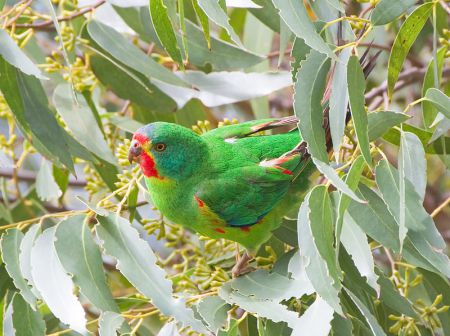
Bruny island, off south-eastern Tasmania, is a home to the swift parrot. Small and green, with patches of red and blue, it breeds only in Tasmania, feeding on nectar from the blue gum tree, a eucalypt, and migrating to south-eastern Australia for the winter. But the logging of Tasmanian forests has destroyed its habitat…Only 2,000 individuals may survive.  In November 2015  the state government stopped logging on Bruny Island after an outcry over the parrot’s plight. An earlier study by Dejan Stojanovic, of the Australian National University, and colleagues had revealed how logging and land-clearing for farms in Tasmania had left swifts, which breed in the trunks of old gum trees, vulnerable to predation by sugar gliders, an introduced possum…. UNESCO-listed world heritage wilderness area was expanded to embrace the Styx valley west of Hobart, thick with eucalyptus trees thought to be 600 years old. The listed region now covers almost a quarter of Tasmania.

But…On becoming premier two years ago, Will Hodgman of the conservative Liberal party said he was tearing up the deal, concerned that his state’s growth lagged the rest of Australia. He now proposes opening up some protected areas for logging.  UNESCO wants commercial logging in the listed forests banned.

Tasmania’s forests: Saving the swift parrot, Economist,  Feb. 13, 2016

Coral Reefs Preservation: Aichi Targets

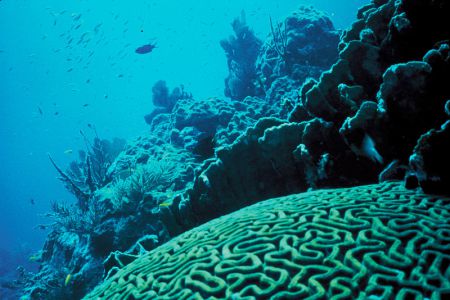
In the past half-century, though, these beautiful, biodiverse structures have been put under pressure by human activity. About a quarter of all coral cover has died. The reefs that are in worst shape are those off the most crowded beaches. “People don’t leave enough time for their sun cream to soak in, so it gets in the water,” says one deckhand with Eo Wai’anae Tours, which organises boat trips off Oahu. More damage is caused by fertiliser-rich run-off from farms, leading to algal blooms which block light the corals need. Fishing near reefs cuts the number of herbivorous fish, allowing vegetation to grow out of control. Some fishing methods are particularly harmful: for example, blast fishermen in Colombia, Tanzania and elsewhere use dynamite to stun and kill fish without regard to the harm done to nearby reefs…In the South China Seaisland-building and fishing for giant clams are crushing some reefs beyond the possibility of recovery (seearticle)….

Tourism generated by the Great Barrier Reef is worth about $4.6 billion annually to nearby Queensland alone. Australian bigwigs bent over backwards last year to keep the UN from listing the reef, a World Heritage Site, as “in danger”. Estimates suggest that the economic value of Martinique and Saint Lucia’s corals comes to $50,000 per square km each year, thanks largely to tourism. But overdevelopment threatens the reefs the visitors come to gawp at. Sediment from construction clouds waters, burying corals and blocking the light they need. Hotels close to the shore may be convenient for tourists, but the process of building them can kill the reefs that snorkellers like to swim over…The three countries with the largest numbers of people who fish on reefs are all in the coral-triangle region: Indonesia, Papua New Guinea and the Philippines. In Indonesia and in the Philippines, up to 1m people’s livelihoods depend on reefs.

Averting a tragedy of the commons means agreeing which activities should be restricted and enforcing the rules. For coral reefs—and other biodiverse marine environments—the usual approach is to give ecologically sensitive areas special status under local or regional laws. In such “marine protected areas” (MPAs), activities that are deemed harmful, such as fishing, drilling and mining, can then be restricted or banned, with penalties for rule-breakers.

The Aichi targets, agreed in 2010 under the UN Convention on Biological Diversity, seek to reduce “anthropogenic pressures” on coral reefs to “maintain their integrity and function”. The aim is to have at least 17% of inland water and 10% of coastal and marine areas under conservation by 2020. Most countries have signed up. But the targets are far from being met. Less than 3% of the ocean’s surface is within an MPA.

The most urgent action is needed close to shore. The nearer humans are to reefs, the worse their effect on the fragile ecosystems. A global register of fishing vessels, long under discussion, would also help identify wrongdoers. And beefing up the UN law of the sea could inspire further action. Decades old, it has little to say about biodiversity.

But simply declaring an area protected does not make it so. In 2009 George Bush junior, then president of America, established three national marine monuments in the Pacific, including nearly 518,000 square km of coral islands and surrounding areas. Their remoteness makes it hard to stop vessels entering illegally; Hawaii’s coastguard is already stretched.

Satellites are sometimes used to police MPAs, but they pass over infrequently. In the future, sailing robots could play a larger role. America’s National Oceanic and Atmospheric Administration (NOAA) has been working with a private firm, Saildrone, on hardy models equipped with carbon-fibre fins. They cost less than $500,000 each and can roam remote ocean regions for months, making them far cheaper than manned boats.

Such drones could photograph rogue fishing vessels, obtaining hard-to-gather evidence for any criminal proceedings. And they could carry out other useful work at the same time, such as monitoring ocean temperature and acidity or tracking tagged members of endangered species. Saildrone plans to provide its robots as a service, so that universities and other cash-strapped organisations do not have to buy one outright…

Even if the right policies are adopted to keep corals healthy in the immediate future, longer-term threats loom. Neither oceanic warming nor acidification can be kept out by an MPA. And both may be happening too fast for corals to adapt, especially as recent global climate deals will not slow them much. Back slaps and handshakes accompanied the inclusion of an aim to limit global warming to just 1.5°C above pre-industrial levels in the Paris Agreement last year. But only an incorrigible optimist would bet on that aim being achieved.

So researchers are turning their attention to ways to help corals cope. Their global diversity, scientists hope, may hold the key. The same coral will grow differently under different conditions: corals of the western Pacific near Indonesia, for example, can withstand higher temperatures than the same species in the eastern Pacific near Hawaii….The characteristics that help some reefs survive unusual conditions could allow others to endure climate change. But tough corals from one place cannot simply be transplanted to another. So a team at the Hawaii Institute of Marine Biology is in the early stages of engineering reef ecosystems, with $4m from the Paul G. Allen Foundation, a charity set up by Bill Gates’s former business partner.

Organisms respond to environmental changes through both genetic processes (adaptation) and non-genetic ones (acclimatisation). With corals, the nature of their symbiotic relationships can also alter. So selectively breeding and conditioning them, and investigating whether certain types of algae confer resistance to heat or acidity, could create hardier varieties faster than they would develop naturally.

These could then be used to repopulate ravaged reefs—once more is known about how and where to transplant them. “We’re assisting evolution,” explains Ruth Gates, who leads the research.

Marine conservation: Rejuvenating reefs, Economist, Feb. 13, 2016, at 57
The Most Dangerous Dam

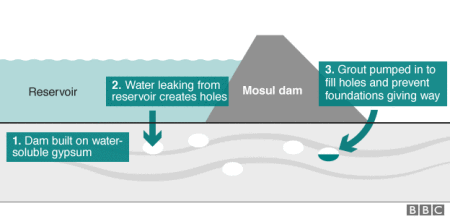
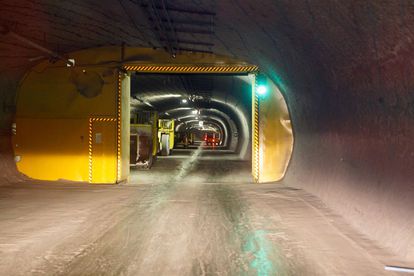
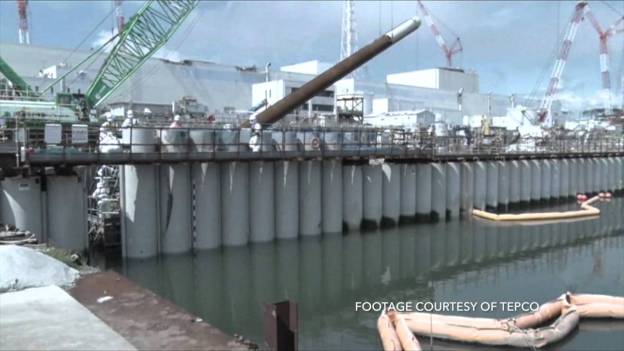
Sensors installed by American army engineers in December 2015 show widening fissures in the fragile gypsum base underneath the Mosul dam,  though no one can predict when a breach might occur….The Iraqi government has now contracted with the Trevi Group, an Italian firm, which it hopes will offer a more advanced and permanent method of plugging cavities in the stone base than the constant maintenance it has required for the past 30 years. That maintenance came to an abrupt halt after IS seized the dam in August 2014, and has continued only intermittently after it was seized back three weeks later. Essential equipment went missing then, and half its staff decided not to return to work.

One study says that if the dam collapses, Mosul would be submerged within hours. Another warns that half a million Iraqis could be killed by floodwaters, and more than a million forced from their homes. Disease and looting as the floodwaters raced through Baiji, Tikrit, Samarra and even parts of Baghdad would complete that dreadful scenario.

The dam was built by an Italian-German consortium and started operating in 1986. Because of the high proportion of gypsum in the area, the construction included a grouting tunnel to allow almost constant injection of cement and drilling mud into crevices in the base that are widened by the water flowing through them. America’s Army Corps of Engineers warned in 2005 that the “extraordinary engineering measures” needed to maintain its structural integrity made the structure potentially the most dangerous in the world.*** But taking the dam out of commission is not an attractive option. Emptying the reservoir would leave Iraqis seriously short of drinking and unpolluted irrigation water in the summer.

Excerpts from The Mosul dam: A watery time-bomb, Economist, Feb. 13, 2016, at 42

***  The dam was constructed on a foundation of water soluble gypsum!!! More than 50,000 tonnes  of material have been injected into the dam since leaks began forming shortly after the reservoir was filled in 1986, and 24 machines currently continuously pump grout into the dam base. Between 1992 and 1998 four sinkholes formed downstream of the dam and a fifth sinkhole developed east of the dam in February 2003 which was filled several times. In August 2005 another sinkhole developed to the east (Wikipedia).

Trees Worth More Than Gold

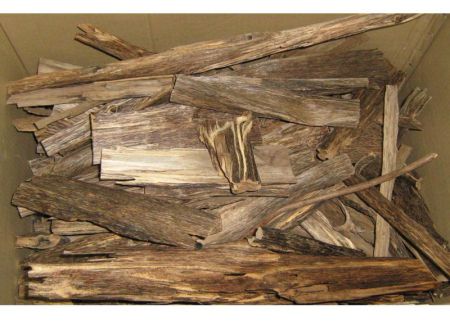
To protect incense trees, the Convention on International Trade in Endangered Species of Wild Fauna and Flora restricts trading in agarwood. But Hong Kong does not single out those who destroy or damage the trees for harsh treatment. If an incense tree is on government-managed land, the maximum sentence for cutting it down is the same as it is for felling any other kind of tree on such property: a fine of HK$25,000 ($3,210) and a year in prison.  Such penalties do little to deter thieves from mainland China, who are encouraged by growing demand for exotic medicines among members of the mainland’s fast-growing middle class. Professor C.Y. Jim of the University of Hong Kong reckons that in 2013 high-grade agarwood was worth $1,600 a gram on the black market. That is more than gold. According to Mr Jim, Hong Kong may be the “last refuge” of the tree, so it has become a “honeypot” for tree-snatchers.

Most of the thieves work for criminal gangs based across the border in mainland China. In recent years a relaxation of restrictions on travel from the mainland to Hong Kong has made their work easier. They often pretend to be hikers, sometimes camping out for weeks while gathering the timber. A local NGO has produced a map showing about 200 sites from which it says around 500 trees were stolen in the past year.

Very few incense trees form agarwood, so they are often destroyed indiscriminately. On Lamma, a plaque marks a spot where three young trees were uprooted. A short scramble up a steep slope reveals a gorier scene: splintered woodchips are all that remain of an aged tree. Mr Yeung, the beekeeper, says “hunters” felled and butchered it in situ. As supplies diminish, the gangs are becoming more desperate. Thieves are raiding private gardens; some residents have begun organising patrols to frighten the thieves away. Alarms and monitoring cameras are being installed.

Excerpts from Trees in Hong Kong: Fragrant Arbour, Economist, Feb. 22, 2016, at 37

Nuclear Waste: Ukraine

A consortium of four German companies has been awarded a contract to improve infrastructure for managing radioactive waste, the rehabilitation of contaminated areas and the decommissioning of nuclear power plants in Ukraine.  The consortium – comprising Brenk Systemplanung, DMT, Plejades and TÜV Nord EnSys – was awarded the contract for the project, which is within the framework of the European Union-funded Instrument for Nuclear Safety Cooperation (INSC). The INSC is designed to support non-EU countries in improving nuclear safety. The contract will run for an initial two-year period and have a maximum budget of €1.5 million ($1.6 million).

According to the tender notice, the main objectives of the contract are to support the Ukrainian State Corporation ‘Radon’ in establishing an emergency response system for “radiation incidents involving unauthorized radioactive materials that are not related to nuclear power plant operation”. It also calls for the establishment of integrated, automated monitoring systems for radiation and environmental protection at Radon facilities, as well as the remediation of radioactive waste storage sites resulting from the Chernobyl nuclear power plant accident and situated outside the exclusion zone.

In a statement yesterday, DMT said it will jointly lead with TÜV Nord EnSys Hannover the assessment of some 50 radioactive waste storage sites.

Excerpts from German consortium awarded Ukrainian waste contract, World Nuclear News, Mar. 2, 2016

Fishermen + Farmers Against Shell

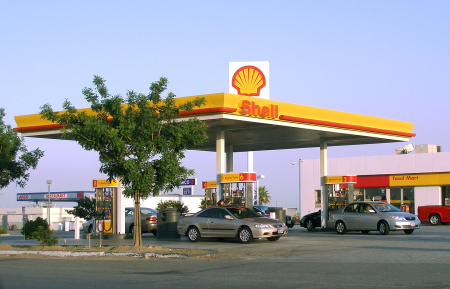
Tens of thousands of Nigerian fishermen and farmers are suing multinational oil giant Shell in two new lawsuits filed on March 2, 2016 in a British High Court, alleging that decades of uncleaned oil spills have destroyed their lives.  London law firm Leigh Day & Co. is representing them after winning an unprecedented $83.5 million in damages from Shell in a landmark ruling by the same court last year. Shell originally offered villagers $50,000.

In a statement on March 2, 2016 before the trial opened, Shell blamed sabotage and oil theft for the ongoing pollution and noted it had halted oil production in 1993 in Ogoniland, the area where the two communities are located in Nigeria’s oil-rich southern Niger Delta.  Shell said it will challenge the jurisdiction of the British court.

The Ogoni are among the most traumatized of millions of Nigerians suffering oil pollution since the late 1950s….

Excerpts from  MICHELLE FAUL, Nigerians sue Shell in UK court for oil spills contamination, Associated Press, Mar. 2, 2016

Nuclear Power to Relish: China

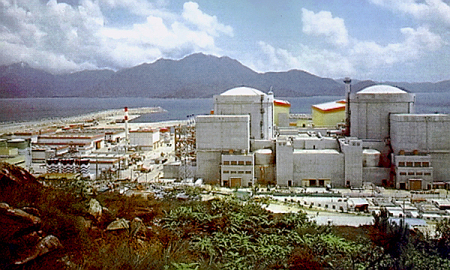
On February 23, 2016, China General Nuclear Power Group, hosted dozens of business executives from Kenya, Russia, Indonesia and elsewhere, as well as diplomats and journalists, at its Daya Bay nuclear-power station to promote the Hualong One for export.  Asked how much of the global market share for new nuclear reactors CGN wants Hualong One to win, Zheng Dongshan, CGN’s deputy general manager in charge of international business, said: “The more the better.”

The move marks a turnaround for China and the nuclear-power industry. For three decades, China served as a big market for nuclear giants including U.S.-based, Japanese-owned Westinghouse Electric Co. and France’s Areva SA. More than 30 reactors have been built across China since the 1990s with reliance on foreign design and technology.

China’s push into nuclear power comes as many nations have been re-examining the risks of nuclear energy and its costs compared with natural gas and other fuels. Two dozen reactors are under construction across China today, representing more than one-third of all reactors being built globally, according to the International Atomic Energy Agency.

The scale and pace of building has given CGN and other Chinese companies opportunities to bulk up on experience in the home market and gain skills in developing reactor parts, technologies and systems. That experience, combined with China’s lower costs of labor and capital, makes the new Chinese reactor potentially attractive to international customers, industry experts said…

[T]he first of Hualong One model reactor won’t enter service in China for several more years.  But the Hualong One reactor marks a big leap by China’s national nuclear champions to move up the export value chain. Jointly designed by CGN and China National Nuclear Corp., the reactor, also known as the HPR1000, has similar specifications to other so-called Generation 3 reactors such as Westinghouse’s AP1000, like advanced so-called passive safety systems.

China Inc’s Nuclear Power Push, Wall Street Journal, Feb. 24, 2016

Airstrikes on Money Vaults: Monsul

More than a year of U.S.-led airstrikes and financial sanctions haven’t stopped Islamic State from ordering supplies for its fighters, importing food for its subjects or making quick profits in currency arbitrage.  This is because of men such as Abu Omar, one of the militant group’s de facto bankers. The Iraqi businessman is part of a network of financiers stretching across northern and central Iraq who for decades have provided money transfers and trade finance for the many local merchants who shun conventional banks….

U.S. Assistant Secretary for Terrorist Financing Daniel Glaser said these businesses—there are more than 1,600 in Iraq alone—serve as a worrisome portal for Islamic State, also known as ISIS or ISIL, to connect with the world outside its declared caliphate…..People pay cash in one office and a recipient draws the equivalent funds at a distant locale, a Middle Eastern practice known as hawala that predates the modern banking system.  Three Iraqi money-exchange operators say they pay Shiite militias, who are at war with Islamic State, to guard cash shipments that travel the road from Baghdad across their front lines to militant-controlled territory in Anbar province. Iraqi Kurdish fighters, also at war with Islamic State, are bribed to grant passage of cash shipments across their front lines into militant-held areas around Mosul. Both Shiite and Kurdish commanders negotiate flat fees from $1,000 to $10,000, the money changers said.

Islamic State imposes a 2% tax on cash shipments entering its territory, which buys the smuggler protection on the final leg to the exchange houses….

The Cash Routes:  One begins in the narrow streets behind Istanbul’s Grand Bazaar and, via Iraqi Kurdish towns, reaches Mosul, the largest city under Islamic State control. Another connects Jordan’s capital of Amman with Baghdad and Islamic State-controlled parts of Iraq’s Anbar province. A third links the city of Gaziantep in southern Turkey with Syrian regions around Raqqa, the administrative capital of Islamic State…

The US financial containment effort is one element of a campaign that includes U.S. airstrikes against Islamic State oil wells. There have also been strikes on vaults in downtown Mosul, which U.S. officials suspect store cash to pay fighters….The Central Bank of Iraq named 142 currency-exchange houses in December that the U.S. suspected of moving funds for Islamic State. The central bank banned them from its twice-monthly dollar auctions, hoping to keep U.S. bank notes from the terror group, which, like much of Iraq, operates as a cash economy….

Before Islamic State seized Mosul, the city of nearly two million people had 40 banks and around 120 licensed money changers and remittance facilities, according to Iraq’s central bank and money changers.Only banks and remittance facilities are licensed to transfer money domestically or abroad. But money changers have long flouted these rules and provided such services in Mosul, the economic powerhouse of northern Iraq.  Islamic State’s takeover of Mosul in June 2014, followed by other cities in Iraq and eastern Syria, swiftly shut down local banks. The terror group looted bank vaults of hundreds of millions of dollars, according to U.S. estimates.  The U.S. and regional governments took immediate steps to sever bank branches in Islamic State territory from the international banking network, declaring off-limits transactions with the identification code of seized branches.That left money changers as the sole providers for a region covering several million people. A currency office owner from Anbar province said in late summer of 2014 his offices were handling $500,000 a week in money transfers in and out of Islamic State. Fees for such services were 10%, he said. Before the Islamic State takeover, fees were between 3% and 5%….

ISIS  in 2015 banned exchange houses from approving the transfer of funds outside of Islamic State without a receipt showing the client had paid a 10% religious tax, known as “zakat.”..

For years, participants in the twice-monthly dollar auction by the central bank included money-exchange houses that would buy dollars at the official rate and sell them for a profit on the street. The rate difference in the past year was as much as 7 percentage points….

The Central Bank of Iraq has an account at the Fed, funded largely by oil reserves, and regularly withdraws large shipments of new $100 bills from a Fed facility in Rutherford, N.J. They travel by chartered plane to Baghdad.The Fed last summer (2015) temporarily shut off deliveries over concerns the notes were going to Islamic State through the exchange houses. A cash crisis loomed until shipments resumed in August, 2015 when Iraq agreed to turn over more records.

Many exchange companies based in Islamic State territory—or their correspondent offices elsewhere in Iraq—participated in the auctions until mid-December 2015, when the U.S. pressured Iraq to ban dozens of companies believed to be working with the terror group.Money changers who still participate in the currency auction doubt the effectiveness of the black list. Iraq has no mechanism to ensure that the owners of banned companies don’t get around the restrictions by simply opening new firms or by hidden ownership stakes in other exchange firms.“Iraq doesn’t have investigators or auditors,” said Abu Omar, the money-exchange owner. “Iraq has officials who expect bribes.”

Excerpts from Local Cash Network Fuels Islamic State Finances, Wall Street Journal , Feb. 25, 2016

The Biggest Flaw of Africa

Investors are yanking their cash from African assets, until recently a popular play for the adventurous, as a toxic confluence of factors overhangs the continent.Crashing commodity prices, a Chinese slowdown and a string of policy failures are forcing investors to reassess the risk of investing in Africa after years of optimism about its growth prospects.Stock markets and currencies have been selling off across the continent, especially in commodity-dependent economies. Nigeria, the continent’s largest economy and longtime investor darling, has one of the world’s worst-performing stock indexes this year, down by 14% since the start of 2016. The S&P Zambia Index has fared even worse over the past year, plunging 45% as the country’s copper exports tumbled on softening Chinese demand. President Edgar Lungu last September called for a day of national prayer to petition God to shore up Zambia’s currency, the kwacha. At the time, the kwacha had lost 45% of its value against the dollar in 2015.  The declines mean African equities are performing worse than any other frontier markets. The MSCI Africa index tumbled 19% last year, significantly more than the overall MSCI Frontier Markets index….The upshot is that frontier investors are moving their money from Africa to Asian countries like Pakistan, Bangladesh and Vietnam; net energy and commodity importers which have shown more commitment to industrialization….

The shift has also pushed up the costs of sovereign borrowing, even as African countries slow down their issuance of bonds in international capital markets. In 2014, African sovereigns issued $12 billion worth of bonds in international capital markets; last year it was half that, according to Deutsche Bank.Ghana, mired in an economic crisis, issued the most expensive African Eurobond in history late last year, paying a whopping 10.75% for $1 billion; far higher than the single-digit interest rates the government had become accustomed to paying for international bonds in recent years….

[T]here are important exceptions to the rule: Kenya, which has a more diversified economy, and Ivory Coast, the world’s top producer of cocoa, are still attracting frontier investors…..

“One of the biggest flaws when investors look at Africa is that they think of it as a country and not a continent composed of very unique countries and companies,” says Laura Geritz, who runs U.S.-based Wasatch Frontier Emerging Small Countries with $1.1 billion under management.

Excerpts from  Africa Bruised by Investor Exodus, Wall Street Journal, Feb. 26, 2016

Eating Plastics

The importance of multi-million dollar industries to Australia’s economy is hampering efforts to protect threatened species of marine life from plastics, a problem that has been described as on par with global warming, a government inquiry has heard.  An Australian federal parliament inquiry, sitting in Sydney on is investigating the threat of marine plastic pollution on animals and ecosystems, fisheries, small business and human health in Australia and its waters.…The inquiry heard evidence from scientists and ecologists that micro-plastics, or micro-beads such as those commonly found in common scrubs, face washes, soaps and toothpastes, can affect human health and health of marine animals.  Dr Jennifer Lavers from the University of Tasmania said the scale of marine pollution is on par with major environmental challenges such as global warming and sea level rise, however research was chronically underfunded.  “This is a very, very significant, ubiquitous threat that is rapidly increasing in pace, showing absolutely no signs of stopping,” Lavers told the public inquiry.  “Our understanding of the complex issues, including things like chemical pollution, is so incredibly poor, we’re really just starting at the basic level,” she added….Lavers suspected efforts to protect the threatened species will be continually hampered if they come up against industries worth millions of dollars to the Australian economy….”(Plastic) is a fantastic product … but it is a horrific waste material,” Clean Up Australia executive chairman Ian Kiernan told the inquiry.  “It is so durable, it is so cumulative. We have got to change our behaviour to address these problems.”

However until then, the conservative estimate of 56,000 tons of plastic entering Australia’s environment annually will continue.  And with 30 percent of marine fish in the world’s oceans considered to have plastic in their gut, Lavers said there is “no doubt we are eating residual plastic contamination.”

Excerpts from Industry interests hampering efforts to reduce marine plastics: Australian inquiry, Xinhua, Feb. 18, 2016