Monthly Archives: December 2016

Eviction and Property Rights in Africa

Evictions are almost routine for the Ogiek,  a group of around 80,000 indigenous hunter-gatherers who have suffered repeated expulsions since being moved by the British colonial government in the 1930s. Yet this one still came as a surprise: the community is in the middle of negotiating a settlement with the local government that should see formal recognition of its right to live, graze livestock and forage on land it has inhabited for centuries.

In all rich countries, property rights are secure. Formal, legal title makes it easier to buy, sell and develop land. Buyers can be confident that the seller really has the right to sell what he is selling. Owners can use their property as collateral, perhaps borrowing money to buy fertiliser and better seeds. Legally recognising land ownership has boosted farmers’ income and productivity in Latin America and Asia.

But not yet in Africa. More than two-thirds of Africa’s land is still under customary tenure, with rights to land rooted in communities and typically neither written down nor legally recognised. In 31 of Africa’s 54 countries, less than 5% of rural land is privately owned. So giving peasants title to their land seems like an obvious first step towards easing African rural poverty.

However, it has proven extremely hard. Rwanda, for example, rolled out a programme over three years, whereby local surveyors worked with land owners and their neighbours to demarcate and register 10.3m parcels of land…But even a relatively well-organised place like Rwanda has had problems keeping records up to date when land is sold or inherited.

In Kenya a large-scale titling programme was carried out in colonial times and carried over to independence. The first president, Jomo Kenyatta, and his cronies bought the huge estates of white settlers who left. But the system is costly and ill-run. Most Kenyans cannot afford to update titles, and the government has not maintained the registry. Recognising land rights, whether customary or titled, needs to be done as cheaply and simply as possible, says Ruth Meinzen-Dick of the International Food Policy Research Institute (IFPRI). “The more you increase the cost, the more likely it is that urban elites and men with more ed

Being able to prove you own your land may be a necessary condition for using it as collateral, but a title deed does not guarantee that anyone will lend you money. As Abhijit Banerjee and Esther Duflo, two economists, observe in their book “Poor Economics” (2011), banks need a lot more information to judge borrowers’ creditworthiness and be sure of repayment. And the administrative costs of offering very small loans to very small farmers, even those with collateral, are often prohibitive.

And legal property rights offer less protection in countries where big men can flout the law with impunity—a particular problem in Africa.  In recent years land grabs have sometimes made a mockery of customary ownership.

Excerpt from Land ownership: Title to come, Economist, July 16, 2016
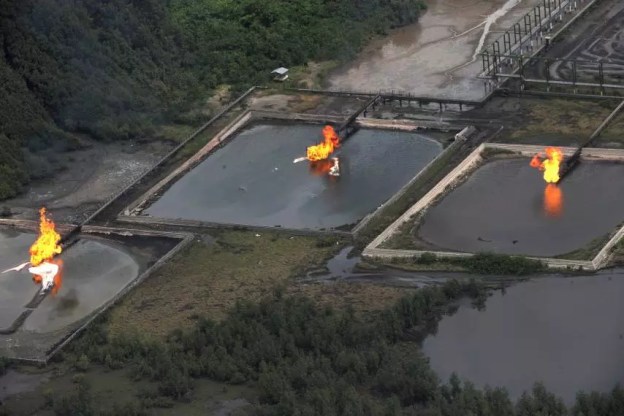
 

9 oil spills per month: Niger Delta

The oil-rich Niger Delta has generated billions of dollars for Shell over the past 60 years, but the company’s operations have been plagued by sabotage, theft and oil spills that ravaged the local environment.  Though Nigeria was one of its most prolific regions for crude production in 2015, Shell has sold off tracts of onshore oil fields. Its new focus—sealed with the mammoth $50 billion acquisition of BG Group PLC this year—is deep-water wells off the coasts of the U.S. and Brazil and a historic shift toward natural gas that puts it at the forefront of oil companies offering a more climate-friendly image to investors.

The hearings in London’s High Court on November 2016 represented an early test for cases brought by the community of Ogale and a group from the Bille Kingdom. The communities are hoping to hold Shell accountable for environmental damage they claim has been caused by spills from infrastructure operated by Shell’s Nigerian subsidiary, Shell Petroleum Development Co. of Nigeria Ltd., or SPDC.  Shell is expected to argue that only the subsidiary should be held liable and that the cases should be heard in Nigeria, SPDC’s base and where the incidents took place…

But the communities and their lawyers say seeking justice in Nigeria won’t hold Shell responsible for the actions of its subsidiary and is extraordinarily difficult...“You cannot fight Shell in Nigeria,” the king of Ogale, Emere Godwin Bebe Okpabi, said in a phone interview. “Shell is Nigeria, Nigeria is Shell.

It is a point Shell has already contested in The Hague, where four Nigerian farmers and Friends of the Earth successfully appealed a ruling that was largely in Shell’s favor in 2015, allowing them to pursue a case against the company in the Netherlands.

In 2015, the company said it experienced on average nine oil spills a month caused by sabotage or theft, with a handful of additional spills caused by operational issues. An uptick in violence this year has knocked important export terminals out of action for months at a time, though divestments onshore have helped reduce the overall number of spills Shell has recorded…

The company has already paid out £55 million, or roughly $80 million, to compensate another Niger Delta-based community in a settlement reached last year after they brought a separate lawsuit in London. In that instance, Shell admitted the spills were caused by operational failures.

Excerpts from Shell Fights Lawsuits Over Environmental Record in Nigeria, Wall Street Journal, Nov. 19, 2016

Smart War: find and kill

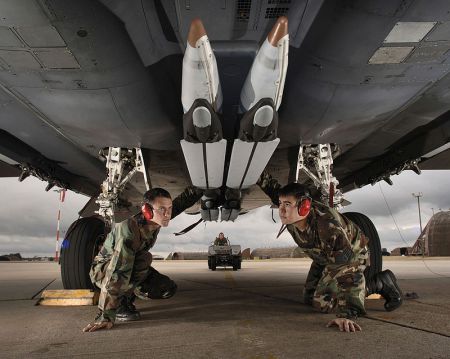
[T] he Global Positioning System (GPS) of orbiting satellites on which they rely was originally—and, indeed, remains—a military technology. The system is, for instance, relied upon by the JDAM (joint direct-attack munition) kits that America’s air force attaches to its free-fall bombs to turn them into smart weapons that can be guided with precision to their targets.

But JDAM and similar systems work only when they can receive signals from GPS satellites. And such signals are weak—approximately as powerful as a standard television transmission would be if the transmitter were five times as far away as the Moon is. They are thus easily jammed. For obvious reasons, details of the capabilities of jammers are hard to come by, but a Russian system called Pole-21, for instance, may be able to suppress GPS signals as much as 80km (50 miles) away.

One way to get around this—and to guide weapons automatically to their targets without relying on satellites—is to give weapons a map…. Israel is in the forefront, with a system which it calls Spice. Like JDAM, Spice is an add-on kit that turns unguided bombs into smart ones. It is designed and built by Rafael Advanced Defense Systems, an Israeli weapons company, and comes into service this month.

Spice contains an “electro-optical scene matching system” … [I]ts memory is loaded with pictures of the target area, taken beforehand by aircraft (piloted or unpiloted) or by satellite. …Spice can operate in darkness, and can penetrate smoke and fog. Moreover..Spice stores enough data to cover the entire route to a target.

Spice’s claimed performance is impressive. Rafael says it can guide a bomb released 100km from a target to a strike point within two metres of that target. The firm says, too, that its device is not confused by minor changes in the scenery around a target, which it can find even if some nearby areas have been obscured—say, by camouflage. Spice also has the advantage over GPS-guided weapons of working when a target’s exact position is unknown, or if the co-ordinates have been misreported. All you need is a picture of what is to be hit, and an approximate location, for Spice to find and hit it.

Other countries, in particular America, are following Israel’s lead. In January of this year, America’s air force signed a contract with Scientific Systems, a firm in Woburn, Massachusetts, to develop what that company calls its Image-Based Navigation and Precision Targeting (ImageNav) system….The initial plan is to fit ImageNav to the air force’s Small Diameter Bomb, a free-fall weapon at present guided by GPS. If this is successful, deployment on cruise missiles and drones will follow.

Meanwhile Lockheed Martin, the world’s biggest aerospace firm, is working on an optical-navigation system called Northstar.

Fitting bombs and missiles with vision in this way thus looks like the future. That does not mean GPS will not be used as well—a belt-and-braces approach is often wise in war. But bombs that can see their targets, rather than blindly following their noses to a set of co-ordinates, are always likely to have the edge.

Excerpts Bombs that can recognise their targets are back in fashion, Economist, Dec. 3, 2016

Owning and Trading Water

Rights regimes that are well designed and implemented are among the most effective tools for distributing water fairly and sustainably. Under one such system, Australian states began reforming water management in 1994. Few others have followed, though attempts at reform in Chile and Yemen have met with varying degrees of success.

To create tradable water rights, Australia first drew up a baseline for water use, taking into consideration past commercial, social and environmental needs. Next, old water rights were replaced with shares that granted holders (usually landowners) a proportion of any annual allocations. Clever formulae take account of the seniority of pre-existing rights. Different classes of shares determine who gets what and when to balance the competing claims of upstream farmers and downstream urbanites. After that a regulatory board makes sure that all users get as much as they are entitled to.

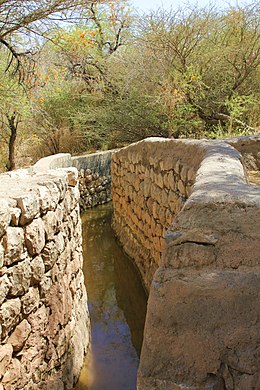
Allocations made to shareholders are tradable, but those receiving them can also store them for the future. This prevents any sudden wasting of water at the end of each year and encourages thrift during a drought. Issuing shares in perpetuity ensures that a holder can have more water only if someone else is prepared to have less. A centralised register holds everything together. Two markets for trading have been created: one in which shares are exchanged, and another for allocations of water in a given year. The idea is not a new one. In places such as Oman, aflaj systems involve villages trading in shares and in minutes of water flow.

Such regime change originally met strong resistance from farmers and other big users in Australia. But trading allocations reaped enormous rewards for shareholders. During the first decade of reform the annual internal rate of return from owning a water right was over 15%; those who held water shares saw the value of their rights double every five or so years. But following this example elsewhere will be tough. Even rich countries will struggle to unbundle rights that have accumulated over decades.

Excerpt from Liquidity Crisis, Economist, Nov. 5, 2016, at 17

Nuclear Self-Sufficiency: Monju Reactor, Japan

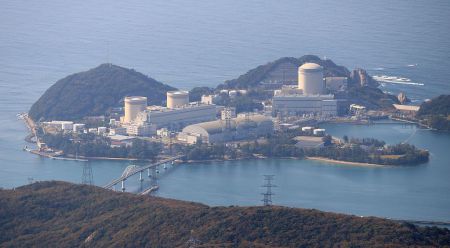
Japan on December 21, 2016 formally pulled the plug on an $8.5 billion nuclear power project designed to realize a long-term aim for energy self-sufficiency after decades of development that yielded little electricity but plenty of controversy.  The move to shut the Monju prototype fast breeder reactor in Fukui prefecture west of Tokyo adds to a list of failed attempts around the world to make the technology commercially viable and potentially cut stockpiles of dangerous nuclear waste.

“We do not accept this,” Fukui Governor Issei Nishikawa told ministers involved in the decision.”…Nishikawa strongly backed the project because of the jobs and revenue it brought to a prefecture that relies heavily on nuclear installations. He said decommissioning work for Monju would not start without local government approval.  Four conventional commercial nuclear stations lie in close proximity to Monju, earning Fukui the nickname “nuclear alley.”

The Fukushima crisis sparked strong anti-nuclear sentiment in Japan, making it harder to pursue projects like the Monju facility which has faced accidents, cover-ups and regulatory breaches since construction began in 1985.  The plant was built to burn plutonium derived from the waste of reactors at Japan’s conventional nuclear plants and create more fuel than it used, closing the so-called nuclear fuel cycle and giving a country that relies on overseas supplies for most of its energy needs a home-grown electricity source.

Excerpts from  Japan pulls plug on Monju, ending $8.5 bln nuclear self-sufficiency push, Reuters, Dec. 21, 2016

Saudi Arabia Uses Cluster Bombs in Yemen

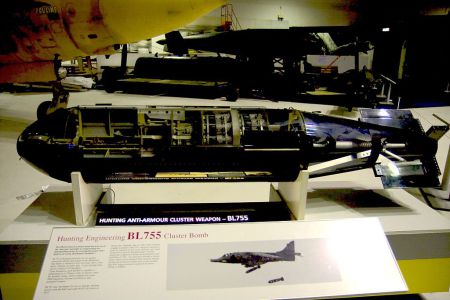
A Saudi-led Arab coalition will halt its use of British-made cluster munitions in Yemen, the Saudi government said on on December 19, 2016, after 20 months of war in which thousands of civilians have been killed and injured in airstrikes.  In London, Britain’s defense minister, Michael Fallon, confirmed in Parliament that the coalition had dropped “a limited number” of British-supplied cluster munitions in Yemen.   Britain, a signatory to an international convention that prohibits use of the munitions, has been investigating whether the coalition dropped the munitions, BL-755 bombs, in Yemen after a report in May 2016 by the rights group Amnesty International…Mr. Fallon stressed that Britain had sold the munitions to Riyadh in the 1980s, long before the convention in 2008.

They pose a particular risk to children, who can be attracted by their toylike appearance and bright colors.  Amnesty International said in May 2016 that civilians returning home in northern Yemen risked injury and death from “minefields” of deadly cluster bombs.

Excerpt from Saudi Arabia Says It Will Stop Using British-Made Cluster Bombs in Yemen, Reuters, Dec. 19, 2016

Nationalizing the Internet

Seeking to cut dependence on companies such as Google, Microsoft, and LinkedIn, Putin in recent years has urged the creation of domestic versions of everything from operating systems and e-mail to microchips and payment processing. Putin’s government says Russia needs protection from U.S. sanctions, bugs, and any backdoors built into hardware or software. “It’s a matter of national security,” says Andrey Chernogorov, executive secretary of the State Duma’s commission on strategic information systems. “Not replacing foreign IT would be equivalent to dismissing the army.”

Since last year, Russia has required foreign internet companies to store Russian clients’ data on servers in the country. In January 2016 the Kremlin ordered government agencies to use programs for office applications, database management, and cloud storage from an approved list of Russian suppliers or explain why they can’t—a blow to Microsoft, IBM, and Oracle. Google last year was ordered to allow Android phone makers to offer a Russian search engine. All four U.S. companies declined to comment.

And a state-backed group called the Institute of Internet Development is holding a public contest for a messenger service to compete with text and voice apps like WhatsApp and Viber. Russia’s Security Council has criticized the use of those services by state employees over concerns that U.S. spies could monitor the encrypted communications while Russian agencies can’t,,

On Nov. 10, 2016, Russia’s communications watchdog said LinkedIn would be blocked for not following the data-storage rules….. That same day, the Communications Ministry published draft legislation that would create a state-controlled body to monitor .ru domains and associated IP addresses. The proposal would also mandate that Russian internet infrastructure be owned by local companies and that cross-border communication lines be operated only by carriers subject to Russian regulation…

The biggest effect of the Kremlin’s internet campaign can be seen in the Moscow city administration, which is testing Russian-made e-mail and calendar software MyOffice Mail on 6,000 machines at City Hall. The city aims to replace Microsoft Outlook with the homegrown alternative, from Moscow-based New Cloud Technologies, on as many as 600,000 computers in schools, hospitals, and local agencies….“Money from Russian taxpayers and state-controlled companies should be spent primarily on domestic software,” Communications Minister Nikolay Nikiforov told reporters in September. “It’s a matter of jobs, of information security, and of our strategic leadership in IT.”

Excerpts from Microsoft Isn’t Feeling Any Russian Thaw, Bloomberg, Nov. 17, 2016

Nuclear Waste Management in Russia

Russia opened it first ever repository for low and medium level nuclear waste last week in a major benchmark for the country’s radioactive waste …Alexander Nikitin, chairman of the Environmental Rights Center Bellona… called the opening of the repository “the first important step” of Russia’s National Operator for Radioactive waste management.

The 48,000 cubic meter facility in the Sverdlovsk Region’s close nuclear city of Novouralsk lies at shallow depth and operates as a repository for what state nuclear corporation Rosatom classifies as type 3 and 4 wastes.The new facility will be able to store solid waste in isolation from the outside environment for 300 years, ten times longer than any other current storage schemes in Russia….

The Novouralsk site…. is the first of several that will open in Russia in the coming years….Rosatom plans to build a repository for type 3 and 4 waste at the closed nuclear city of Ozersk, where the notorious Mayak Chemical Combine is located. Another is planned for the closed city of Seversk in the Tomsk Region.

A site for Rosatom types 1 and 2 waste, representing high level nuclear waste, is currently being sited at the Nizhnekansky Rock Mass in the Krasnoyarsk Region.If the rock mass proves suitable for deep geological storage of intermediate and high level waste, construction of the repository could begin in 2024. How much waste the site would hold has yet to be determined.

Excerpts from Charles Digges, Russia’s first nuclear waste repository starts operation, Bellona, December 14, 2016

Nuclear Power Companies in Germany

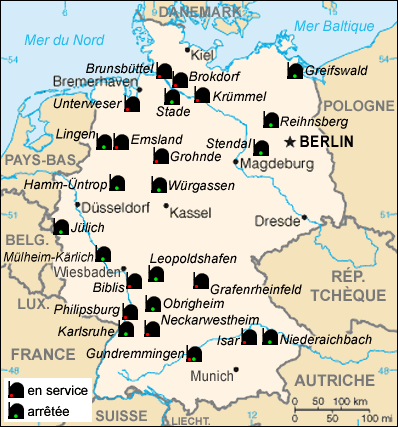
Germany aims to phase out its nine remaining reactors by 2022, faster than almost any country

On  December 12, 2016 , it cut a deal with the nuclear power companies operating in the country that would guarantee them a ceiling on costs related to radioactive waste, lawmakers said  on December 12, 2016  Germany’s E.ON SE, RWE AG, EnBW AG and Sweden’s Vattenfall AB already set aside about €17 billion ($18 billion) to finance the disposal of radioactive waste after the government moved to ban nuclear power five years ago. Now  they would pay an additional €6 billion into a public fund but be off the hook for any further payments if the cost of processing the radioactive material were to balloon out of control in the decades to come, as many experts fear.  The companies have also agreed to drop some of the lawsuits they filed against the government after the nuclear ban….

The government and the power companies are moving toward “legal certainty,” said Oliver Krischer, a lawmaker with the Greens on Monday. But “to bring a lasting peace to the topic, the nuclear power plant companies should drop their remaining disputes at the national level and in international tribunals,” he said. Vattenfall is suing Germany for around €5 billion in arbitration at Washington’s International Centre for Settlement of Investment Disputes.

Excerpt Germany Cuts Deal With Nuclear Power Companies Over Waste Costs, Wall Street Journal, Dec. 12, 2016

Drone Strikes: the body count

The U.S. assaults… have been far more deadly than is generally recognized. Military sources say that drone strikes have killed between 20,000 and 25,000 Islamic State operatives in Iraq and Syria. U.S. conventional attacks have killed about 30,000 more, for a total “body count” of over 50,000….The CIA and JSOC both conduct roughly the same number of drone flights every day. But the sources said the military’s drones conducted more than 20,000 strikes over the last year, in Afghanistan, Yemen and Syria, while the CIA is said to have struck less than a dozen targets over that same period.

The CIA oversaw much of America’s drone warfare during the first half of Obama’s presidency, when it was targeting al-Qaida operatives in Pakistan. But the agency’s focus on such counterterrorism “direct action” appears to have diminished over the past several years.

Obama’s  preference for special operations forces and their “small-footprint” tactics, as opposed to big conventional assaults….One unlikely legacy of Obama’s presidency is that he made the secret, once-impermissible tactic of targeted killing the preferred tool of U.S. counterterrorism policy.

Excerpt from David Ignatius, Pentagon and CIA in a terror turf war,  Washington Post. Dec 12, 2016

Loss of Giraffes

Over 700 newly recognised bird species have been assessed for the latest update of The IUCN Red List of Threatened Species, and 11% of them are threatened with extinction. The update also reveals a devastating decline for the giraffe, driven by habitat loss, civil unrest and illegal hunting. The global giraffe population has plummeted by up to 40% over the last 30 years, and the species has been listed as Vulnerable on the IUCN Red List.

Today’s IUCN Red List update also includes the first assessments of wild oats, barley, mango and other crop wild relative plants. These species are increasingly critical to food security, as their genetic diversity can help improve crop resistance to disease, drought and salinity…Almost every species of plant that humans have domesticated and now cultivate has one or more crop wild relatives. However, these species have received little systematic conservation attention until now.

The update was released today at the 13th Conference of the Parties to the Convention on Biological Diversity (CBD COP13) in Cancun, Mexico. The IUCN Red List now includes 85,604 species of which 24,307 are threatened with extinction. “Many species are slipping away before we can even describe them,” says IUCN Director General Inger Andersen.

Excerpts from New bird species and giraffe under threat – IUCN Red List, News Release, Dec. 8, 2016 

Nuclear Ships Go to Die

A $1.65 billion facility will be built at a nuclear site in eastern Idaho to handle fuel waste from the nation’s fleet of nuclear-powered warships, the Navy and U.S. Department of Energy announced Tuesday.Officials said the new facility is needed to keep nuclear-powered aircraft carriers and submarines deployed.

The new construction will be at the Naval Reactors facility on the Energy Department’s southeastern Idaho site that covers about 890-square-miles of high-desert sagebrush steppe. The area also includes the Idaho National Laboratory, considered the nation’s primary lab for nuclear research.  Officials said site preparation is expected to begin in 2017 with construction of the facility likely to start in 2019, creating 360 on-site jobs. The facility is expected to start operating in late 2024…

Officials say the new facility will operate through at least 2060 and can handle a new type of spent-fuel shipping container, which is not possible at the current facility. The Gerald R. Ford aircraft carrier will use the new container when the carrier becomes operational. So will nuclear-powered submarines under construction, officials said.  The facility will have storage spaces to submerge the fuel waste in water so it cools before being transferred into dry storage areas, said Don Dahl, a spokesman for the Naval Reactors facility.

The places where the waste will be submerged will meet seismic standards aimed at preventing them from being affected by earthquakes, unlike existing storage spaces at the site that don’t meet those standards.

The Naval Nuclear Propulsion Program, a joint Navy and Energy Department organization, has been sending spent Navy fuel to the Idaho site since 1957. It’s transported by rail from shipyards. Dahl declined to describe security at Navy site….

Nuclear waste coming into Idaho prompted lawsuits when state leaders in the late 1980s and early 1990s thought the site was becoming a permanent nuclear waste repository. The lawsuits culminated in a 1995 agreement, then a 2008 addendum, limiting such shipments and requiring most nuclear waste to be removed from the federal site by 2035. The deal applies to the Navy’s spent nuclear fuel.  Under the agreement, fuel waste coming to the new facility after 2035 will only remain for the six years it takes to cool in pools. After that, it’s required to be put in dry storage and taken out of Idaho. However, the nation has no repository for spent nuclear fuel at this time, so where it will go is not clear.

US to build $1.6B Idaho facility for warships’ nuclear waste, Associated Press, Dec. 6, 2016

Disputes between States and Foreign Investors

Investor-state dispute settlement (ISDS)cases*are decided by extrajudicial tribunals composed of three corporate lawyers. Although ISDS has existed for decades, its scope and impact has grown sharply in the last decade. As ISDS has been written into over 3,000 Bilateral Investment Treaties (BITs) and numerous Free Trade Agreements (FTAs), the opportunities for ISDS claims are huge and growing.

Originally justified as necessary to protect foreign corporate investments abroad from nationalization or expropriation by governments controlling national judiciaries, [it is claimed that] foreign corporations have used ISDS to change sovereign laws and undermine national regulations...Already, India, Indonesia and Ecuador have advised their treaty partners that they are considering ending their BITs because of ISDS. To reduce abuses, investors could be required to first prove discrimination in national courts before being allowed to proceed to ISDS arbitration. Alternatively, national courts could exercise judicial review over ISDS awards. Also, arbitrators could be required to be independent of the ISDS process, with set salaries, security of tenure and no financial ties to litigants while investor status for ISDS claims could be defined more strictly.

Excerpts from Jomo Kwame Sundaram ISDS Corporate Rule of Law, IPS, Dec. 1, 2016

*While ISDS is often associated with international arbitration under the rules of ICSID (the International Centre for Settlement of Investment Disputes of the World Bank), it often takes place under the auspices of international arbitral tribunals governed by different rules or institutions, such as the London Court of International Arbitration, the International Chamber of Commerce, the Hong Kong International Arbitration Centre or the UNCITRAL Arbitration Rules. ISDS has been criticized because the United States has never lost any of its ISDS cases. Some say the system is biased to favor American companies and American trade over other Western countries, and Western countries over the rest of the world (wikipedia)

Kidnapper Satellites: war in space

It was May 2014 when a small team of American airmen monitoring a Russian satellite launch saw something they had never seen before. An object the team thought was a piece of debris from the launch suddenly came to life.  “The one object that we assumed was a piece of debris started to maneuver in close proximity to the (rocket) booster,” recalled Lt. Gen. David Buck …at Vandenberg Air Force Base in California. Buck… said the deliberate maneuvers the mystery object made close to the rocket’s booster were a red flag. Getting that close to another object in space is a complex feat, as objects can move as fast as 17,500 miles per hour….[W]hat the US military was witnessing was not debris at all, but instead a satellite with a dangerous capability, one that could allow it to cozy up next to another satellite and potentially destroy it….

The Russian satellite is officially known as Kosmos 2499 but it has been given a more daunting nickname: “kamikaze,” a spacecraft expressly designed to maneuver up close to another satellite to disable or destroy it. In other words, it’s a satellite that could go on the attack.Retired Gen. William Shelton, the former commander of Air Force space command, likened the satellite to a space Trojan horse. “You could have something on orbit that, for all intents and purposes, looks like a communications satellite, when in actuality, it is also a weapon,” said Shelton.

Kosmos 2499 is far from the only threat. In September 2014, just a few months after Kosmos was placed in orbit, Russia launched an additional satellite named Luch with both maneuvering and spying capabilities.  “This satellite has been maneuvering through geosynchronous space … cozying up close to various communications satellites, listening to what traffic is flowing over those,” said Paul Graziani, CEO of civilian satellite tracker Analytical Graphics, Inc. (AGI).

Over the course of a year, Graziani’s team has watched as Luch parked itself next to three US commercial satellites and one European satellite. The Russians flew the satellite close enough to collect both civilian and, possibly, sensitive military information.  Graziani was charged with delivering the bad news to US-owned commercial satellite company Intelsat…

“If the operators of this spacecraft so chose, they could direct it to actually hit another spacecraft,” said Graziani.  Like Kosmos, Luch’s ability to maneuver has the potential to make it into a satellite killer.

 Launched in 2013, the Shiyan, meaning “experiment” in Chinese, was “experimenting” shadowing the smaller satellite, according to AGI. But then something unexpected happened: The smaller satellite repeatedly disappeared and then reappeared on their screens.“We saw the approach, we saw the larger spacecraft come close to the smaller spacecraft, and then we no longer saw the smaller spacecraft,” said Graziani.

The only reasonable explanation, experts say, is that the Shiyan has a robotic arm that was repeatedly grabbing and then releasing its smaller partner.  The Chinese government acknowledged the satellite’s robotic arm, saying the satellite is “mainly used in space debris observation,” according to the state-run Xinhua News Agency.

But space watchers like Graziani see a more sinister application.  “You could grab and hold of a satellite and maneuver it out of its mission,” said Graziani  If true, it would be a new threatening capability, allowing the Shiyan to essentially kidnap another satellite….

Lasers:  “You can aim a laser at a satellite’s sensor and try to make it hard to see,” said Laura Grego, a scientist with the Union of Concerned Scientists. “Like someone shining a flashlight in your eyes.”With power dialed up high that same laser could permanently fry the satellite’s sensor. But “very expensive and important satellites should have shutters” to block this kind of threat, said Grego, who considers these types of activities more of a nuisance than a space attack.

Space drone: Moving further into the realm of science fiction, the US military has developed the first space drone, the X-37B. Bearing a striking resemblance to the space shuttle, the drone is officially a reusable spacecraft for carrying payloads into space…Its other missions are classified, but the drone’s maneuverability, payload space and ability to stay in orbit for hundreds of days have space watchers and countries like Russia and China wondering whether the X-37B would one day be used as a space fighter jet,

Excerpts from Jim Sciutto and Jennifer Rizzo War in space: Kamikazes, kidnapper satellites and lasers, CNN, Nov. 29, 2016