Monthly Archives: May 2024

Is Russia Developing Nuclear Anti-Satellite Weapons?

Russia launched a satellite, Cosmos-2553, into space in February 2022 . The satellite is designed to test components for a potential antisatellite weapon that would carry a nuclear device, U.S. officials said, according to the WSJ. The satellite that was launched doesn’t carry a nuclear weapon…The eventual weapon, if and when deployed in orbit, could wipe out satellites in a part of space dominated by American government and commercial assets, they said, including SpaceX’s Starlink constellation, which has proved critical for Ukraine’s war effort.

Excerpt from Warren P. Strobel, Russia Launched Research Spacecraft for Antisatellite Nuclear Weapon Two Years Ago, U.S. Officials Say, WSJ, May 16, 2024

A Spy in Plain Sight: Internet Cables

U.S. officials are privately delivering an unusual warning to telecommunications companies: Undersea cables that ferry internet traffic across the Pacific Ocean could be vulnerable to tampering by Chinese repair ships. State Department officials said a state-controlled Chinese company that helps repair international cables, S.B. Submarine Systems (SSB), appeared to be hiding its vessels’ locations from radio and satellite tracking services, which the officials and others said defied easy explanation.

The warnings highlight an overlooked security risk to undersea fiber-optic cables, according to these officials: Silicon Valley giants, such as Google and Meta Platforms, partially own many cables and are investing in more. But they rely on specialized construction and repair companies, including some with foreign ownership that U.S. officials fear could endanger the security of commercial and military data.

Hundreds of thousands of miles of underwater fiber-optic cables carry almost all the world’s international internet traffic. Dozens of lines lace the Pacific Ocean floor, shuttling data between the Americas, Asia and many island chains. SBSS is part of a regional consortium of companies that provides ships to fix undersea cables, including some belonging to major U.S. companies, by winching them to the surface, resplicing broken fibers that carry internet data and returning the lines to the sea floor… Underwater cables are vulnerable to tampering when they are brought to the surface for repairs, U.S. officials say. Tapping global data flows is still far easier on land, industry experts say. But at-sea repair could still offer an opportunity to install a device to remotely disable a cable or to study the technology in advanced signal repeaters installed by other companies.

SBSS was formed in 1995 as a Chinese-British joint venture. State-owned China Telecom has long held 51% of the business and is in the process of buying the remainder from U.K.-based Global Marine Systems, according to people familiar with the matter. A member of the Chinese Communist Party serves on the SBSS management team, according to the company’s website.

Safeguarding underwater cables has been a focus of U.S. national-security officials since the Cold War, when fears of Soviet espionage were paramount. In the 1970s, the U.S. secretly placed wiretaps on underwater Soviet lines in an intelligence coup known as Operation Ivy Bells….

SubCom, a U.S. cable ship company owned by private-equity giant Cerberus Capital Management, receives $10 million in annual U.S. government payments for participating in the Cable Security Fleet, a program partly overseen by the Pentagon…

Overall, cable owners have few choices with regard to repairing damaged undersea cables, as most repairing is done by an aging fleet of roughly 50 ships around the world…


Excerpts from U.S. Fears Undersea Cables Are Vulnerable to Espionage From Chinese Repair Ships, WSJ, May 19, 2024


Why Zuckerberg is Always Winning? the Magic of Free

Mark Zuckerberg has an unusual plan for winning the artificial-intelligence race: giving away his company’s technology free betting that providing the hottest new technology free will drive down competitors’ prices and spread Meta’s version of AI more broadly, giving Zuckerberg more control over the way people interact with machines in the future… Meta felt the cost of not controlling its own destiny when Apple decided in 2021 to cut off its ability to gather data on their users without asking for permission—something Meta had relied on to target ads. The company said it took a hit of more than $10 billion in revenue in 2022 as a direct result. The company’s stock swooned 26%.

For the AI-giveaway strategy to work, Meta must get its billions of users to look to those free AI services in the same way they flocked to Facebook, Instagram and WhatsApp. It wagers that advertising can come later, as it did in the past. Meta’s ability to turn eyeballs into ad dollars is well established

Meta in April 2024 released its most recent generative AI tool—dubbed Llama 3—free for any company to use and repurpose so long as they have fewer than 700 million users. And it integrated chatbots based on Llama 3 into Instagram, WhatsApp, Facebook, Messenger and on the web.  “All of our properties are free, we help people connect with each other, and we want to help connect people with AIs that can help them get things done,” Ahmad Al-Dahle, Meta’s vice president of generative AI, told The Wall Street Journal. “That’s always been our playbook. That’s what the company ethos is about…

Excerpts from Excepts from Salvador Rodriguez, Facebook Parent’s Plan to Win AI Race: Give Its Tech Away Free, WSJ May 19, 2024

Making Nuclear Energy Sustainable Means Getting Rid of Nuclear Waste: Is this Possible?

“When using fast reactors in a closed fuel cycle, one kilogram of nuclear waste can be recycled multiple times until all the uranium is used and the actinides — which remain radioactive for thousands of years — are burned up. What then remains is about 30 grams of waste that will be radioactive for 200 to 300 years,” said Mikhail Chudakov, IAEA Deputy Director General and Head of the Department of Nuclear Energy.

Fast reactors were among the first technologies deployed during the early days of nuclear power, when uranium resources were perceived to be scarce. However, as technical and material challenges hampered development and new uranium deposits were identified, light water reactors became the industry standard. However, efforts are underway in several countries to advance fast reactor technology, including in the form of small modular reactors (SMRs) and microreactors (MRs). 

Five fast reactors are now in operation: two operating reactors (BN-600 and BN-800) and one test reactor (BOR-60) in the Russian Federation, the Fast Breeder Test Reactor in India and the China Experimental Fast Reactor. The European Union, Japan, the United States of America, the United Kingdom and others have fast reactor projects tailored to a variety of aims and functions underway, including SMRs and MRs. Russia’s Pilot Demonstration Energy Complex, which is under construction in Seversk, brings together a lead-cooled BREST-OD-300 fast reactor, a fuel fabrication and refabrication plant, and a plant for reprocessing mixed nitride uranium–plutonium spent fuel. A deep geological waste repository will also be built. The importance of this pilot project is not only to demonstrate the making of new fuel, irradiate it, and then recycle it, but to do so all on one site.

“Having the whole closed fuel cycle process on one site is good for nuclear safety, security and safeguards,” said Amparo Gonzalez Espartero, Technical Lead for the Nuclear Fuel Cycle at the IAEA. “It should also make more sense economically as the nuclear waste and materials do not need to be moved between locations — as they are currently in some countries — thereby minimizing transportation and logistical challenges.”

Projects are advancing in other countries. China is constructing two sodium cooled fast reactors (CFR-600) in Xiapu County, Fujian province. The first unit is under commissioning and is expected to be connected to the grid in 2024. In the USA, a fast reactor project backed by Microsoft co-founder Bill Gates is under development; it will not operate in a closed fuel cycle, although the country is renewing efforts to work on closed nuclear fuel cycles and use its existing nuclear waste to develop its own supply of fuel. In Europe, the MYRRHA project in Belgium is aimed towards building a lead-bismuth cooled accelerator driven system by 2036 to test its ability to break down minor actinides as part of a future fully closed fuel cycle.

Excerpts from Lucy Ashton, When Nuclear Waste is an Asset, not a Burden, IAEA, Sept., 2023

How They Sold Us Out: Mobile Companies and Data Privacy

On April 29, 2024, the US Federal Communications Commission (FCC) fined the
nation’s largest wireless carriers for illegally sharing access to customers’ location information without consent and without taking reasonable measures to protect that information against unauthorized disclosure. Sprint and T-Mobile – which have merged since the investigation began – face fines of more than $12 million and $80 million, respectively. AT&T is fined more than $57 million, and Verizon is fined almost $47 million.

The FCC Enforcement Bureau investigations of the four carriers found that each carrier sold access to its customers’ location information to “aggregators,” who then resold access to such information to third-party location-based service providers. In doing so, each carrier attempted to offload its obligations to obtain customer consent onto downstream recipients of location information, which in many instances meant that no valid customer consent was obtained.

This initial failure was compounded when, after becoming aware that their safeguards were ineffective, the carriers continued to sell access to location information without taking reasonable measures to protect it from unauthorized access. Under the law, including section 222 of the Communications Act, carriers are required to take reasonable measures to protect certain customer information, including location information. Carriers are also required to maintain the confidentiality of such customer information and to obtain affirmative, express customer consent before using, disclosing, or allowing access to such information. These obligations apply equally when carriers share customer information with third parties.

“The protection and use of sensitive personal data such as location information is sacrosanct,” said Loyaan A. Egal, Chief of the FCC Enforcement Bureau and Chair of its Privacy and Data Protection Task Force. “

Excerpts from FCC Fines, ATT&T, Sprint, T-Mobile, and Verizon Nearly $200 billion for Illegally Sharing Access to Customers’ Location Data, FCC Press Release, Apr. 29, 2024

The Dangers of Manic Oil Production

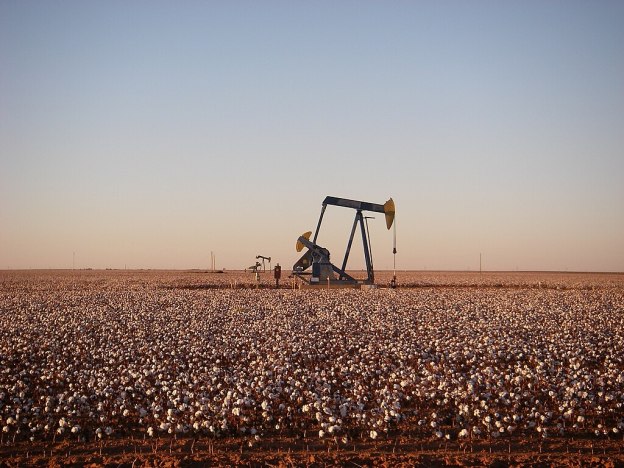
In a desolate stretch of desert spanning West Texas and New Mexico, drillers are pumping more crude than Kuwait. The oil production is so frenzied that huge swaths of land are literally sinking and heaving. The land has subsided by as much as 11 inches since 2015 in a prime portion of the Permian Basin, as drillers extract huge amounts of oil and water, according to a Wall Street Journal analysis of satellite data. In other areas where drillers dispose of wastewater in underground wells, the land has lifted by as much as 5 inches over the same period. Alongside crude, oil-and-gas companies are extracting gargantuan amounts of subterranean water—in the Delaware, between five and six barrels of water are produced, on average, for every barrel of oil. To dispose of it, they inject billions of barrels of putrid wastewater into underground disposal wells.

The constant extraction and injection of liquids has wrought complex geologic changes, which are raising concerns among local communities long supportive of oil and gas. Earthquakes linked to water disposal have rattled residents and prompted state regulators to step in. Some researchers worry that wastewater might end up contaminating scarce drinking-water supplies

Excerpts from Benoit Morenne and Andrew Mollica, Permian Oil Extraction Lifts and Sinks Land, WSJ, Apr. 29, 2024

Plastics, Nanoplastics and Heart Attacks

A Landmark treaty on plastic pollution scheduled to be adopted by the end of 2024  must put scientific evidence front and center. In the run-up to the final negotiations, researchers have been publishing more reports, data sets and models about plastics than ever before….Researchers have also organized groups, such as the Scientists’ Coalition for an Effective Plastics Treaty


The treaty was originally conceived as a mechanism to end plastic pollution, which is sometimes taken to mean driving the amount of ‘mismanaged waste’ to zero by 2040. Mismanaged waste is plastic that isn’t recycled or disposed of in a well-managed landfill or incinerator, but rather ends up loose in the environment or burned in an open pit. Annual production of plastics has grown exponentially, from about 2 million tonnes in 1950 to 460 million tonnes in 2019 (current levels are on track to triple by 2060). Mismanaged waste is hard to measure–estimates put it at 74 million tonnes each year., expect to reach, by 2050, 122 million tonnes per year, under business-as-usual projections. Unless policies change, the peak of mismanaged plastic waste “is nowhere yet in sight”, he says.

A new report from environmental-policy researcher Nihan Karali and her colleagues at Lawrence Berkeley National Laboratory in California concludes that plastic production generated the equivalent of 2.24 gigatonnes of carbon dioxide in 2019, mainly from the energy-intensive process of extracting and refining the fossil fuels used to generate the petrochemicals that make up most virgin plastic.


An individual plastic typically contains hundreds of chemicals — many of which are toxic and can leach out — that make the material more flexible, water repellent, flame retardant or resistant to ultraviolet light. Last month, researchers released a report listing 16,000 chemicals associated with plastics, of which they found at least to be 4,200 hazardous… A study published in February 2024 of some 250 people undergoing surgery showed that nano- and microplastics in carotid-artery blockages were linked to increased risk of heart attacks, strokes and death.

Excerpt from Nicola Jones, Plastic pollution: three numbers that support a crackdown,  Nature, April 2024

Stealing Land from the Ocean: An Engineered Way to Address Climate Change

The Maldives is an 820-kilometre-long chain of nearly 1,200 islands dotting the Indian Ocean. The nation has become one of the most popular luxury tourism destinations in the world because of its Instagrammable beaches and its advertising slogan: “the sunny side of life”. But the Maldives is also one of the countries most vulnerable to sea-level rise. With 80% of its land less than one meter  above sea level, some scientists predict that the islands could be completely submerged by 2100. In an effort to keep the country above water and thriving, the government is adopting a strategy used by many nations around the globe: land reclamation...


Dutch planners are often considered the founders of land reclamation, with a history of water engineering going back some 800 years. Over the centuries, land-forming projects have shaped some of the world’s major cities, including Singapore, London, New York and Miami. In recent decades, most of the reclaimed land has been in East Asia. In China, Shanghai has reclaimed 350 square kilometres  — more than three times the size of Paris — over the past few decades. Colombo has added 100 km2 in just 4 years, and 65 km2 of Mumbai is reclaimed. A study on twenty-first-century coastal-land reclamation found that of 135 large coastal cities with populations of more than one million people, 75% had reclaimed land.

With projects stretching back to 1997, the Maldives is a veteran of large-scale land reclamation…Although the nation’s territory covers 90,000 km2, more than 99% of it is ocean. The Maldives’ 1,200 islands are all atolls — rings of coral reef that surround lagoons. When the government decides to reclaim land, it takes sand from the lagoons using boats outfitted with suction pipes, which collect sand and coral debris from the ocean floor like giant vacuum cleaners. The boat then deposits the material in a different spot, either inside or outside the atoll, to form new land. Sometimes reclamation projects fill in the entire lagoon…. [However, these projects] destroy coral reefs and seagrass meadows and harm the fishing and tourism industries…’

“Islands can’t occur anywhere,” says Virginie Duvat, a coastal geographer at La Rochelle University in France, who has studied the effects of land reclamation in the Maldives. “If you put an island where there was naturally no island, you create vulnerable land and you will necessarily have to build strong engineered structures, breakwaters and sea walls,” she says…In a 2019 study4, Duvat and Alexandre Magnan, a geographer at the Institute for Sustainable Development and International Relations — Sciences Po in Paris, assessed the scale of coastal changes that humans had made to 107 inhabited islands in the Maldives between 2004–06 and 2014–16. On almost half the islands, the researchers found significant degradation in the reefs’ abilities to weaken waves and provide natural sources of sediments. One-fifth of the islands had almost entirely or entirely “lost their natural capacity to respond and adjust to ocean climate-related pressures”, the researchers say. “It means that a decision you have taken one day to rely on reclaimed land will necessarily cause you to invest more money,” says Duvat. “You are locked into the engineered path for decades and decades and potentially the rest of the century.”=

Excerpts from Jesse Chase-Lubitz, The Maldives is racing to create new land. Why are so many people concerned?, Nature, Apr. 24, 2024