Monthly Archives: June 2025

Israel’s Killing Machine and the Enemies Within

Israel stunned and hobbled Iran starting on June 13, 2025 when it pulled off an intelligence and military operation years in the making that struck high-level targets with precision. Guided by spies and artificial intelligence, the Israeli military unleashed a nighttime fusillade of warplanes and armed drones smuggled into Iran to quickly incapacitate many of its air defenses and missile systems. With greater freedom to fly over Iran, Israel bombarded key nuclear sites and killed top generals and scientists. By the time Iran mustered a response hours later, its ability to retaliate — already weakened by past Israeli strikes — was greatly diminished.

The Mossad and the military worked together for at least three years to lay the operational groundwork…To further diminish Iranian air defenses and missile systems, Mossad agents had smuggled precision weapons into Iran that were prepositioned to strike from close range…Those weapons included small, armed drones, which agents snuck into the country in vehicles…Mossad agents stationed weapons close to Iranian surface-to-air missile sites…To analyze information gathered from various sources, Israel used the latest artificial-intelligence…AI was used to help Israelis quickly sift through troves of data they had obtained….An investigation by The Associated Press conducted in early 2025 uncovered that the Israeli military uses U.S.-made AI models in war to sift through intelligence and intercept communications to learn the movements of its enemies. It’s been used in the wars with Hamas in Gaza and with Hezbollah in Lebanon.

In addition to AI, the Mossad relied on spies to identify top nuclear scientists and members of Iran’s Revolutionary Guard… At least eight members of the Guard, including the head of its missile program, were killed in a single Israeli strike on an underground bunker.

Another facet of the attack was to strike Iranian vehicles used to transport and launch missiles. The strategy was similar to a Ukrainian operation earlier this month in Russia. In that operation, nearly a third of Moscow’s strategic bomber fleet was destroyed or damaged with cheaply made drones snuck into Russian territory…In an interview with Iranian state-run television, the country’s police chief, Gen. Ahmadreza Radan, said “several vehicles carrying mini-drones and some tactical drones have been discovered.” ….

In the 2000s, Iranian centrifuges used for enriching uranium were destroyed by the so-called Stuxnet computer virus, believed to be an Israeli and American creation….In 2018, Israel stole an archive of Iranian nuclear research that included tens of thousands of pages of records…In July 2024, Israel killed a senior leader of Hamas, Ismail Haniyeh, with a bomb in a bedroom of a government guesthouse in Tehran.

Excerpts from JULIA FRANKEL and SAM MEDNICK, How Israel used spies, smuggled drones and AI to stun and hobble Iran, AP, June 17, 2025


Why U.S. Government Invented the UFOs

Evidence is emerging in June 2025 that US  government efforts to propagate UFO disinformation date back all the way to the 1950s. The WSJ account is based on interviews with two dozen current and former U.S. officials, scientists and military contractors involved in the inquiry, as well as thousands of pages of documents, recordings, emails and text messages.  At times, military officers spread false documents to create a smokescreen [of flying extraterrestrial saucers] for real secret-weapons programs. In other cases, officials allowed UFO myths to take root in the interest of national security—for instance, to prevent the Soviet Union from detecting vulnerabilities in the systems protecting nuclear installations…

Investigators are still trying to determine whether the spread of disinformation was the act of local commanders and officers or a more centralized, institutional program. The Pentagon omitted key facts in the public version of the 2024 report it released about UFOS that could have helped put some UFO rumors to rest, both to protect classified secrets and to avoid embarrassment… The Air Force in particular pushed to omit some details it believed could jeopardize secret programs and damage careers…

As Sean Kirkpatrick head of the All-domain Anomaly Resolution Office (AARO) pursued his investigation between 2022 and 2023, he started to uncover a hall of mirrors within the Pentagon, cloaked in official and nonofficial cover. On one level, the secrecy was understandable. The U.S., after all, had been locked in an existential battle with the Soviet Union for decades, each side determined to win the upper hand in the race for ever-more-exotic weapons….But Kirkpatrick soon discovered that some of the obsession with secrecy verged on the farcical. A former Air Force officer was visibly terrified when he told Kirkpatrick’s investigators that he had been briefed on a secret alien project decades earlier, and was warned that if he ever repeated the secret he could be jailed or executed. The claim would be repeated to investigators by other men who had never spoken of the matter, even with their spouses. It turned out the witnesses had been victims of a bizarre hazing ritual.  For decades, certain new commanders of the Air Force’s most classified programs, as part of their induction briefings, would be handed a piece of paper with a photo of what looked like a flying saucer. The craft was described as an antigravity maneuvering vehicle. …Many never learned it was fake.

Kirkpatrick found the practice had begun decades before, and appeared to continue still. The defense secretary’s office sent a memo out across the service in the spring of 2023 ordering the practice to stop immediately, but the damage was done. 

Excerpt from Joel Schectman et al., The Pentagon Disinformation That Fueled America’s UFO Mythology, WSJ, June 6, 2025

Green Frenzy Is Not Environmental Protection

Since 1960, Singapore has reclaimed around 150 square kilometres of land from the sea. In part, this is to meet demand for homes: around 80% of Singaporeans live in government-provided housing, nicknamed HDBs, after the Housing and Development Board, and many of those are in high-density skyscrapers. Singapore is the third most densely populated territory in the world, after Macau and the city-state of Monaco. Alongside this, the country’s economic success is buttressed by being the world’s busiest port outside China, hosting more than 3.11 billion tonnes in traffic in 2024.

This urban development and economic success has come at a cost for the natural environment: where once there was jungle, there is now city. Singapore has lost almost all of its primary rainforest, except for a small tract of land in the Central Catchment Nature Reserve, which sits in the middle of the island and is part of one of the two main water catchment areas. Although some of the country’s remaining non-primary rainforests, including in the Central Catchment, are protected from development, their long-term fate is a concern for environmentalists…

In a bid to achieve its sustainability goals, the government has pledged to plant one million trees by 2030 and transplant 100,000 corals into its marine waters, which NParks said in 2024 would take at least 10 years to complete. Neither project is without controversy. “Nobody is tracking how many trees we are cutting down while we are planting a million trees,”…“How about those century-old trees that are being cut down for development?”… Academics and civil-society groups say that they cannot access the same data that are available to government agencies…

Excerpts from Jack Leeming, Singapore’s fight to save its green spaces from development, Nature, May 28, 2025

De-Chinafication of Rare Earths: an Uphill Battle

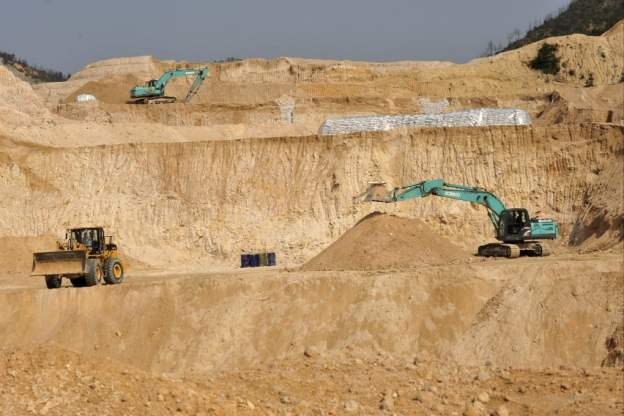
China mines some 70% of the world’s rare earths, the 17 metallic elements primarily used in magnets needed for civilian and military technologies. But its 90% share of processing for rare earths mined around the world is what really concerns officials from other countries working to secure their supply.

“China is a formidable competitor,” said Ramón Barúa, chief executive of Canada’s Aclara Resources, which is opening a rare-earths mine in Brazil to supply a processing plant it plans to build in the U.S. Aclara said it plans by August to decide where in the U.S. to build its plant for separating rare-earths deposits into individual elements. Aclara signed an agreement in 2024 to supply rare earths to VAC, a German company that is building a factory in South Carolina with $94 million in Pentagon funding to make magnets for clients including General Motors…

Brazil has the world’s second-largest rare-earth reserves after China, some 21 million tons, according to the U.S. Geological Survey. That represents more than a fifth of known global reserves—and more than 10 times those in the U.S…Despite its huge reserves, Brazil has been a small player in rare earths because of its complex mining regulations and the difficulty of attracting financing from companies willing to confront entrenched Chinese competitors. Costs to mine and process Brazilian rare earths are estimated to be around three times China’s, meaning Western buyers would likely pay a substantial premium for Brazilian minerals. Only a few companies outside China have mastered rare-earth processing, and the learning curve is steep

Brazil’s first big rare-earths mine opened in 2024 by a US private equity company some 90 miles west of the town of Nova Roma…but the mine is contracted to ship most of its production to China !…Aclara plans to invest some $600 million to complete work on a larger plant next to the mine in Nova Roma to start full production in 2028.

Excerpt from Samantha Pearson, Rare-Earths Plants Are Popping Up Outside China, WSJ, May 18, 2025

Nvidia Geopolitical Games

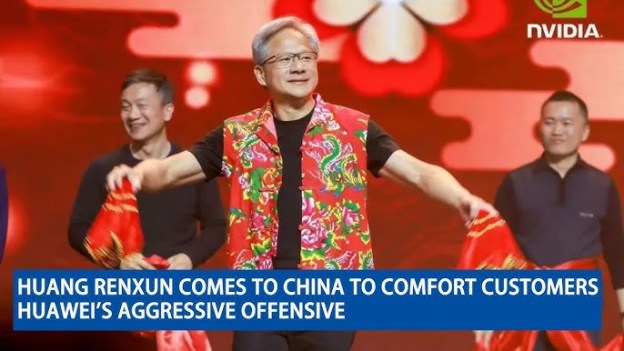
Nvidia plans (in 2025) to open a research and development center in Shanghai to maintain its presence in China. The facility will help Nvidia understand Chinese customer demands and design products that are compliant with US export controls and sanctions. Chief Executive Jensen Huang visited China in April 2025 and discussed the plan with Shanghai’s mayor, who welcomed it and offered to provide support…Since 2022, Washington has required licenses for exports of Nvidia’s most advanced AI chips to China. That has reduced China sales, which accounted for 13% of revenue in its last fiscal year, down from 26% before the export restrictions.

The company is seeking to lease an office space in Shanghai for the new facility to accommodate existing employees and potential new hires, the people said. Officials in the city, where Tesla’s China plant is located, have told the company that it would offer tax breaks and reduce red tape for its new project, the people said. 

The company has repeatedly created downgraded variants of chips after Washington tightened its rules so that it could keep selling to China. The practice has angered some U.S. officials, who were upset the company wasn’t being more helpful in curbing China’s AI advances. Nvidia has said it follows U.S. export rules and has advocated for selling to Chinese customers rather than ceding the market to domestic companies such as Huawei Technologies, which are filling in the gap left by Nvidia and its American peers.

Excerpt from Raffaele Huang, Nvidia to Set Up Research Center in Shanghai, Maintaining Foothold in China, WSJ, May 16, 2025

The New Trump Doctrine: Kiss the Hand you Cannot Bite

Four US major automakers are racing to find workarounds to China’s stranglehold on rare-earth magnets, which they fear could force them to shut down some car production within weeks. Several traditional and electric-vehicle makers—and their suppliers—are considering shifting some auto-parts manufacturing to China to avoid looming factory shutdowns, people familiar with the situation said.

Ideas under review include producing electric motors in Chinese factories or shipping made-in-America motors to China to have magnets installed. Moving production to China as a way to get around the export controls on rare-earth magnets could work because the restrictions only cover magnets, not finished parts, the people said.

If automakers end up shifting some production to China, it would amount to a remarkable outcome from a trade war initiated by President Trump with the intention of bringing manufacturing back to the U.S.  “If you want to export a magnet [from China] they won’t let you do that. If you can demonstrate that the magnet is in a motor in China, you can do that,” said a supply-chain manager at one of the carmakers.

China in April 2025 began requiring companies to apply for permission to export magnets made with rare-earth metals, including dysprosium and terbium. The country controls roughly 90% of the world’s supply of these elements, which help magnets to operate at high temperatures. Much of the world’s modern technology, from smartphones to F-35 jet fighters, rely on these magnets….In May 2025, industry groups representing most major automakers and parts suppliers told the Trump administration that vehicle production could be reduced or shut down imminently without more rare-earth components from China.

Excerpt from Sean McLain et al., Automakers Race to Find Workaround to China’s Stranglehold on Rare-Earth Magnets, WSJ, June 4, 2025

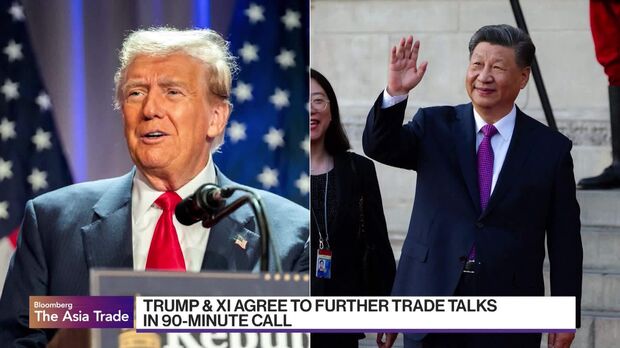
Two days after the publication of this WSJ article, Trump announced, on June 6, 2024, that Xi agreed to let rare earth minerals flow to US (in exchange of? not revoking Chinese student visas? what else?)

The Elite of the Elite: Musk, Thiel, Andreessen, Luckey

Since January 2025, more than three dozen employees and associates of Musk and fellow tech titans Peter ThielMarc Andreessen and Palmer Luckey have been tapped for roles at federal agencies critical to their businesses, a Wall Street Journal analysis found. The roles put them in departments that oversee, regulate and award business to the four men’s companies, according to personnel appointments, lawsuits, ethics disclosures and contract data, creating a web of potential conflicts that ethics experts call unprecedented.

The group includes current and former employees as well as lawyers, investors and financial advisers of the tech executives. They make up most of the identified people working for the Department of Government Efficiency, the powerful cost-cutting task force created to streamline federal bureaucracy… Others have been appointed to key roles across the government.

Companies founded, owned or invested in by Musk, Thiel, Andreessen and Luckey have won more than a dozen federal contracts totaling about $6 billion since President Trump’s inauguration, and are pursuing billions more… Their business interests are often intertwined: Musk’s SpaceX was backed by Thiel’s Founders Fund and Andreessen’s a16z; both venture funds also backed Anduril Industries, a defense-tech startup co-founded by Luckey.

Excerpt from Shane Shifflett et al., Silicon Valley’s New Hold on Washington, WSJ, May, 16, 2025

The Road to Success is Paved with Dirty Secrets

Amazon.com is the latest to face possible sanctions over allegations it improperly withheld tens of thousands of business records—including some unflattering to founder Jeff Bezos—in defending against an action by the Federal Trade Commission. At Google, a federal judge in San Francisco has ruled the company didn’t properly save evidence in a case brought by Epic Games, and its behavior has become a yoke as the Justice Department seeks to break up the search giant after winning two landmark antitrust cases. A different federal judge recently referred the behavior of Apple to the Justice Department, in part because of alleged efforts to hide documents from legal scrutiny…

Each company is accused of being overly aggressive in holding back internal documents under special legal standing—known as privilege—that should have, in fact, been turned over to the government or lawyers…Maybe it isn’t surprising the companies can’t help themselves in pushing the limits. It is, after all, what has made them so successful as disrupters turned conquerors. In their minds, they are the underdogs, whether they are facing the rise of AI, China or the next Big Thing lurking beyond the horizon. 

Excerpt from Tim Higgins, What Is Big Tech Trying to Hide?, WSJ, May 17, 2025

The Essence of Capitalism: Shelters

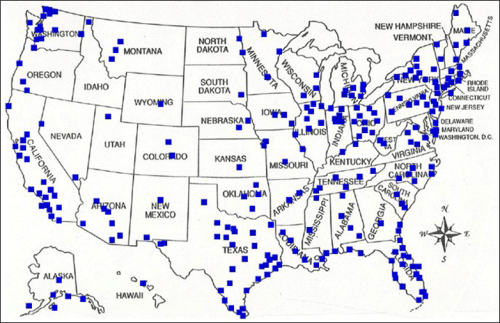
SKU Distribution in Mesa, Arizona., is experiencing rapid growth as companies seek to access foreign-trade zones and navigate rising U.S. tariffs. Companies can use foreign-trade zones to defer tariff payments until products are sold, which operators say helps them manage supply chains and avoid bottlenecks. The foreign-trade zone program dates back to the 1930s, with roughly 260 such facilities now in the U.S. In some, inquiries from companies have recently quadrupled.

SKU Distribution had just one customer in 2024 at its Mesa, Arizona, warehouse. In 2025, it is teeming with new business from companies storing items such as aluminum poles, ice picks, carabiners and firearm safes. That is because the warehouse is the ultimate U.S.-based tariff refuge

Arizona is the foreign-trade zone capital of America, its facilities employing more workers than those of any other state, Commerce Department data shows. Apple, Intel, Honeywell Aerospace, Sub-Zero and Ball Corp. all manufacture within the Arizona facilities, together processing more than $7.5 billion in merchandise in 2023. The program has helped turn this strip of the Phoenix-area desert into a chip-making hot spot. Now, Trump’s tariffs are drawing a clientele of smaller companies looking for refuge from the trade war.

Excerpt from Owen Tucker-Smith, Inside the Arizona Warehouse That Has Become Shelter in Tariff Storm, WSJ, May 12, 2025

See also United States as a Tax Haven