Category Archives: agriculture

Lawsuits Against Shell, Nigeria

A Dutch appeals court ruled on December 18, 2015 that Royal Dutch Shell can be held liable for oil spills at its subsidiary in Nigeria, potentially opening the way for other compensation claims against the multinational. Judges in The Hague ordered Shell to make available to the court documents that might shed light on the cause of the oil spills and whether leading managers were aware of them.  This ruling overturned a 2013 finding by a lower Dutch court that Shell’s Dutch-based parent company could not be held liable for spills at its Nigerian subsidiary.

The legal dispute dates back to 2008, when four Nigerian farmers and the campaign group Friends of the Earth filed a suit against the oil company in the Netherlands, where its global headquarters is based.  “Shell can be taken to court in the Netherlands for the effects of the oil spills,” the court ruling stated on Friday. “Shell is also ordered to provide access to documents that could shed more light on the cause of the leaks.”  The case will continue to be heard in March 2016.  Judge Hans van der Klooster said the court had found that it “has jurisdiction in the case against Shell and its subsidiary in Nigeria”….

“There are 6,000km of Shell pipelines and thousands of people living along them in the Niger Delta,” he said. “Other people in Nigeria can bring cases and that could be tens of billions of euros in damages.”  In a separate case, Shell agreed in January to pay out £55m ($82 million) in out-of-court compensation for two oil spills in Nigeria in 2008, after agreeing a settlement with the affected community in the Delta.

Excerpt from Dutch appeals court says Shell may be held liable for oil spills in Nigeria, Guardian, Dec. 18, 2015.


Gene Banks: saving world’s crops

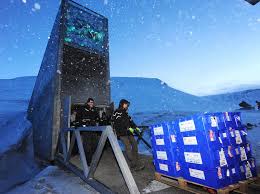
Syria’s civil war has forced scientists to request the first-ever withdrawal of seeds from a Doomsday vault built in the Arctic to safeguard the world’s food supplies…The International Center for Agricultural Research in the Dry Areas (ICARDA) said it has made a request to take back some of its samples from the Svalbard Global Seed Vault. The vault was created by the Norwegian government in 2008 to protect vital crops such as wheat against global disasters, war or disease.

It will be the first time seeds have been withdrawn from the facility, which lies more than 800 miles inside Arctic Circle — midway between Norway and the North Pole — and is the largest vault of its kind in the world. Built into the mountainside on the Svalbard archipelago, it relies on permafrost and thick rock to ensure that the seed samples will remain frozen even without power..,ICARDA has requested approximately 16,500 of its seed samples — one seventh of the total it has stored in Svalbard — and hopes to reproduce them at its other facilities in Morocco and the American University in Beirut, Lebanon. Eventually it will send new samples back to Norway…

He said some scientists were still present at the Aleppo facility but that its one-time headquarters had been occupied by armed groups.  “Fortunately it is not ISIS, they are some fundamentalist groups,” he said. “They seem to co-exist. They are using the land for their own benefit, for example to grow legumes, but we have no control of it…..The Svalbard seed bank has exactly 865,871 samples from every country in the world, Asdal said.  “In fact, we have seeds from more countries than now exist,” he explained, since some of the older seeds are from now-defunct nations such as Czechoslovakia. Syria’s civil war has killed a quarter of a million people since 2011, according to United Nations estimates, and driven 11 million more from their homes.

Excerpts from ALASTAIR JAMIESON, Syria War Forces First Withdrawal from Svalbard Global Seed Vault,NBC News, Sept. 25, 2015

Weather Engineering and Climate Change

Maharashtra is one of the largest and wealthiest of India’s 30 states, with 110 million residents. It encompasses Mumbai and other large cities, plus vast swaths of farmland. Like other agricultural regions of India, it’s in its third consecutive year of drought. More than 80 percent of its farms depend on rain for irrigation, and agriculture production has dropped by almost a third since 2013. The human impact has been severe—1,300 debt-trapped farmers have committed suicide in Maharashtra in just the past six months.In July, 2015 the state’s minister of revenue, Eknath Khadse, took a gamble: He hired Koliwad to carry out a $4.5 million cloud-seeding program over three months and across 100 square miles in the middle of the state, the largest campaign of this kind ever attempted in India.

So Koliwad called Weather Modification Inc., the world’s largest private aerial cloud-seeding company, based in Fargo, N.D. WMI’s chief executive, Patrick Sweeney, developed a five-year technology transfer program with Koliwad that’s now in its first year. Pederson and other WMI staff are training Indian pilots, meteorologists, and Doppler radar technicians to seed clouds.

Sweeney has seeded clouds all over the world for more than 20 years, but the Maharashtra project is unique in that the circumstances are so dire. “The hardest part is managing expectations,” he says. “People in Maharashtra are hoping for a cure-all to drought. They come out and dance in the streets when it rains, they hug our pilots and say, ‘Do it again.’ But we can’t guarantee that the clouds will be there—and willing to cooperate.”..

Despite the uncertainty, the industry is on the rise. According to the World Meteorological Organization, more than 52 countries have active cloud-seeding operations—up from 42 four years ago. In the U.S. last year, 55 cloud-seeding projects were reported to NOAA. There’s even a luxury cloud-seeding market emerging—one European company, for instance, charges a minimum of $150,000 to guarantee good wedding weather by forcing clouds to rain in the days before the event….

Sweeney also built ICE (Ice Crystal Engineering), a company that makes cloud-seeding chemicals and supplies flares to 25 countries. ICE adds a decent sidestream of income for Sweeney, with revenue of about $3 million a year. But the bigger advantage is that it helped WMI become the only aerial seeding company that “does a full turnkey,” says Neil Brackin, WMI’s president—meaning it customizes and operates the planes and radars, manufactures the flares, and flies the missions.

They do have competitors. There are 34 private companies worldwide that do weather modification, but there’s no bigger rival in aerial cloud seeding than the Chinese government, which spends hundreds of millions a year seeding clouds in 22 of its 23 provinces, both to clear pollution above cities and to enhance rainfall for farming. China has yet to allow private companies to enter its market, but Sweeney is making inroads; he sold his first cloud-seeding plane to Beijing last year.

Thailand’s government has a Bureau of Royal Rainmaking, with hundreds of employees that WMI helped train, though the program’s still using old technology—releasing mounds of table salt from trap doors in the bellies of its planes. And when the Argentine government took over the cloud-seeding program WMI built for the country, it cut costs. Soon after, two pilots died seeding clouds above a mountain, and the project was suspended…

Brackin adds that while scientists want to achieve a 99.99 percent probability that a technology consistently works, the industry doesn’t need that kind of certainty or consistency to succeed. He likens cloud seeding to a cutting-edge medication that’s still in development: “If you’re dealing with a serious ailment and you were offered a medicine that had a 60 percent chance of working, or even 20 percent, would you take it? You probably would.”

Excerpts from  Amanda Little, Weather on Demand: Making It Rain Is Now a Global Business, Bloomberg, Oct. 28, 2015

Climate Change 2015


Global carbon emissions were 58% higher in 2012 than they were in 1990. The atmospheric concentration of carbon dioxide has risen from just under 340 parts per million in 1980 to 400 in 2015.  To stand a fair chance of keeping warming to just 2°C by the end of the century—the goal of global climate policy—cumulative carbon emissions caused by humans must be kept under 1 trillion tonnes. Estimates vary but, according to the Intergovernmental Panel on Climate Change, the total had hit 515 billion tonnes by 2011. Climate Interactive, a research outfit, reckons that if emissions continue on their present course around 140 billion tonnes of greenhouse gases will be released each year and temperatures could rise by 4.5°C by 2100. And even if countries fully honour their recent pledges, temperatures may still increase by 3.5°C by then.

The world is already 0.75°C warmer than before the Industrial Revolution….

Melting glacier ice, and the fact that warmer water has a larger volume, mean higher sea levels: they have already risen by roughly 20cm since 1880 and could rise another metre by 2100. That is perilous for low-lying islands and flat countries: the government of Kiribati, a cluster of tropical islands, has bought land in Fiji to move residents to in case of flooding. Giza Gaspar Martins, a diplomat from Angola who leads the world’s poorest countries in the climate talks, points out that they are particularly vulnerable to the effects of a warming planet. Money alone, he argues, will not fix their problems. Without steps to reduce emissions, he predicts, “there will be nothing left to adapt for.”…

For every 0.6°C rise in temperature, the atmosphere’s capacity to hold water grows by 4%, meaning storms will pour forth with greater abandon. The rains of the Indian monsoon could therefore intensify, cutting yields of cereals and pulses.

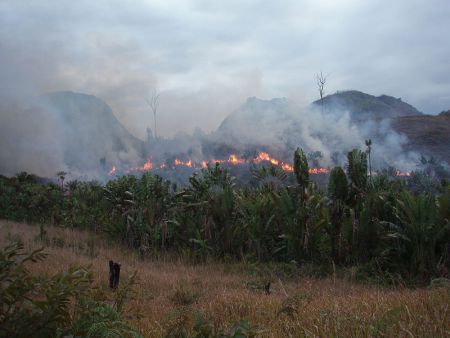
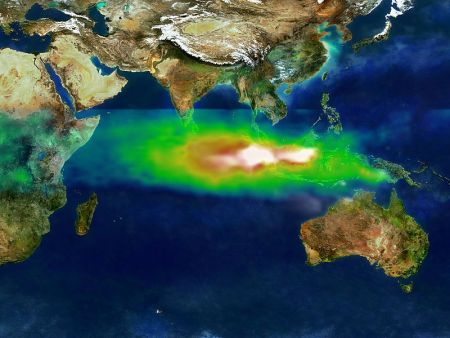
Climate change seems also to be making dry places drier, killing crops and turning forests into kindling. Forest fires in Indonesia, more likely thanks to the current El Niño weather phenomenon, could release 2 billion tonnes of carbon dioxide, about 5% of annual emissions due to human activity, says Simon Lewis of University College London. In recent months fires have swallowed more than 2.4m hectares of American forests. Alaska suffered 80% of the damage—a particular problem because the soot released in these blazes darkens the ice, making it less able to reflect solar radiation away from the Earth.

Developments in the Arctic are worrying for other reasons, too. The region is warming twice as fast as the rest of the world, a trend that could start a vicious cycle. Around 1,700 gigatonnes of carbon are held in permafrost soils as frozen organic matter. If they thaw, vast amounts of methane, which is 25 times more powerful as a global-warming gas than carbon dioxide when measured over a century, will be released. One hypothesis suggests that self-reinforcing feedback between permafrost emissions and Arctic warming caused disaster before: 55m years ago temperatures jumped by 5°C in a few thousand years…

And on September 29th Mark Carney, the governor of the Bank of England, warned that though measures to avoid catastrophic climate change are essential, not least for long-term financial stability, in the shorter term they could cause investors huge losses by making reserves of oil, coal and gas “literally unburnable”.

Excerpts from Climate Change: It’s Getting Hotter, Economst, Oct. 3, 2015, at 63


The Costs of Stopping Biopiracy

Botanists think there are up to 80,000 wild species of flowering plant left to discover. But a scarcity of funds hampers efforts to collect them. The UN Convention on Biological Diversity of 1992, ratified by 195 states and the European Union, made things more complicated. It recognised plants as part of countries’ national heritage and outlawed “biopiracy”—profiting from plants without compensating the countries in which they were found.

That made exploiting plants fairer but collecting them harder. Some officials saw a chance to get rich. “Suddenly everyone thought these plants were incredibly valuable,” says Mr Hawtin. Getting permission to go on a collecting trip became nearly impossible. “Anybody could say no to a collecting expedition and very few people could say yes.”

Permits became sine qua non, but in poorer countries the environment ministries that were expected to issue them did not always exist. Collectors might see their applications bounced from one department to another, each unwilling to wield its rubber stamp. “No one wanted to be accused in their local paper of helping the biopirates,” says Mr Hawtin.

Persistent botanists have since earned some governments’ trust. It is now much easier to get approval for expeditions than it was in the 1990s, though often with restrictions on what may be collected. “Things are much better now than they were ten years ago,” says Sandy Knapp, head of the plants division at the Natural History Museum in London. A three-year permit from the Peruvian government allows her to collect specimens of Solanaceae, the family that includes tomatoes, potatoes and aubergines…The Millennium Seed Bank now holds workshops in many countries on collection and conservation techniques. It collaborates on expeditions and produces guidebooks to help locals locate and collect seeds for themselves. Yet some countries persist in imposing self-defeating restrictions. India’s biodiversity law, passed in 2002, makes exporting seeds very difficult and sits poorly with its international obligations. If governments fail to understand the urgency of preserving—and sharing—their biodiversity, there may soon be precious little left to collect.

Excerpts from Botany and bureaucracy: A dying breed, Economist,  Sept. 12, 2015, at 55

Making Money in the Peruvian Amazon

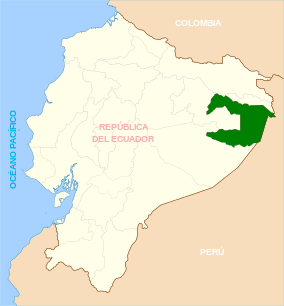
The Sierra del Divisor region in the Peruvian Amazon was identified as a biodiversity conservation priority back in the early 1990s. More than 20 years later and Peruvians are still waiting – some more desperately than others given all the narco-traffickers, illegal loggers and gold-miners in or near the region.

What’s so special about the Sierra del Divisor? It’s the “only mountainous region” anywhere in the lowland rainforest, according to Peruvian NGO Instituto del Bien Comun (IBC), while The Field Museum, in the US, describes it as “a mountain range” rising up “dramatically from the lowlands of central Amazonian Peru” and boasting “rare and diverse geological formations that occur nowhere else in Amazonia.” Its most iconic topographical feature is “El Cono”, an extraordinary peak visible from the Andes on a clear day.

Sierra del Divisor is home to numerous river headwaters feeding into key Amazon tributaries, eco-systems, and a tremendous range of flora and fauna, some of which are endemic, some endangered or threatened – and some with the most wonderful names. Giant armadillos, jaguars, cougars, Acre antshrikes, curl-crested aracaris, blue-throated piping guans and various kinds of monkeys, including the bald – but very red-faced – uakari, all populate the region. Effectively, it forms part of a vast “ecological corridor” running all the way from the Madidi National Park in Bolivia in a north-westerly direction along much of the Peru-Brazil border.

21 indigenous communities and 42 other settlements would benefit from the Sierra del Divisor being properly protected, states the Environment Ministry, while ultimately over 230,000 people in Peru depend on the region for food and water, according to the IBC. In addition, in the absolute remotest parts, it is home to various groups of indigenous peoples living in what Peruvian law calls “isolation.”

In 2006 Peru’s government established a 1.4 million hectare temporary “protected natural area” in this region called the Sierra del Divisor Reserved Zone. Six years later a government commission agreed it would be converted into a national park, and, all that remains now, after a painful administrative process, several key advances made this year and indigenous leaders lobbying various ministries, is for Peru’s Cabinet to approve it and the president, Ollanta Humala, to sign off on it. That is how it has stood since early May 2015 – and still nothing….

Why such a delay indeed, this year or in the past? Might it have something to do with the infrastructure integration plans for the region, such as the proposed – and effectively already underway – road between Pucallpa, the Peruvian Amazon’s current boom city, and Cruzeiro do Sul across the border in Brazil? Or the proposed railway between the same two cities ultimately connecting to Peru’s northern Pacific coast, declared in the “national interest” some years ago? Or the proposed railway running all the way across South America from Peru’s Pacific coast to Brazil’s Atlantic coast, a long-mooted project which has received so much media coverage recently because of Chinese interest in financing it and the visit by China’s premier, Li Keqiang, to Brazil and Peru in May?

Or might the delay be explained by oil and gas industry interests? Perupetro, the state company promoting oil and gas operations, tried to open up what would be the entire southern part of the park for exploration before backtracking in 2008, while the London Stock Exchange-Alternative Investment Market-listed company Maple Energy has been pumping oil for years in a concession just overlapping the west of the proposed park. More significantly, Canadian-headquartered company Pacific Rubiales Energy runs a one million hectare oil concession that would overlap the entire northern part of the park if it was established, and conducted its first phase of exploratory drilling and seismic tests in late 2012 and 2013 in what would be the park’s far north. Clearly, it wouldn’t be good PR for either Pacific or Peru to explore for oil in, or exploit oil from, a national park, although it wouldn’t be the first time a concession and park have overlapped. Indeed, according to the IBC, it has been agreed that Pacific’s “rights” to operate will be respected if the park is created.

Excerpts from David Hill Peru stalling new national park for unique Amazon mountain range, Guardian, July 29, 2015


Biofuels Revolution? not really

B]iofuel schemes—ranging from fermenting starch, to recycling cooking oil, to turning algae into jet fuel—have drawn more than $126 billion in investment since 2003, according to Bloomberg New Energy Finance (BNEF), a research outfit… [But]Those biofuels that can best compete commercially are not, in fact, green. Those that are green cannot compete commercially.

The biggest cause of ungreenness is that biofuels made from food crops—or from plants grown on land that might otherwise produce such crops—hurt food supplies. A committee of the European Parliament agreed this week to cap the use of “first-generation” biofuels of this sort. The current European target is for renewables to make up 10% of the energy used in transport by 2020. The new proposal says only seven-tenths of this can come from first-generation fuels. The difference must be made up by more advanced ones based on waste products and other feedstocks that do not impinge on food production. That could mean European demand for advanced biofuels of 14 billion litres by 2020, reckons Claire Curry of BNEF.
Only two such advanced fuels, she thinks, are capable of large-scale production. One is turning waste cooking oil and other fats into diesel—a process for which Europe already has 2 billion litres of capacity. The other involves making ethanol from cellulose by enzymatic hydrolysis. Everything elseis at least four years from commercial production. That includes the much-touted idea of renewable jet fuel.  This is promising on a small scale. South African Airways (SAA), in conjunction with Boeing and other partners, is developing fuel based on the seeds of the tobacco plant—once a big crop in the country, but now fallen on hard times.

Biofuels: Thin harvest, Economist, Apr. 18, 2015, at 72

Right to Water and Indigenous People: New Zealand

The Maori claim a special relationship with New Zealand’s fresh water, based on their historical use of its rivers for drinking water, spiritual beliefs, fishing and shellfish harvest, transport and trade, among other things. Their case goes back to 1840, when the British Crown and most of the Maori tribes signed the Waitangi treaty, which first formalised the colonists’ settling of the islands. Maori rights were enshrined in the treaty. An interim ruling by the Waitangi tribunal, set up in 1975 to deal with Maori grievances about land and related issues, says that the Maori have freshwater rights “for which full ownership was the closest cultural equivalent in 1840.”

Although the government has been willing to discuss water rights with some Maori groups, John Key, the prime minister, says that “full ownership” will not be ceded. In 2012 the government sought to part-privatise Mighty River Power, an electricity company with dams on the longest river, the Waikato, which has particular spiritual value for the Tainui tribe. The Maori Council, with representatives from each Maori district, tried to have the sale stopped or postponed. But in 2013 the high court ruled in the government’s favour….

One proposal is that the Maori get a specified water allocation from regional councils, just as farms do. But Federated Farmers, a lobby group, argues that all available water has already been allocated and that specifying a share for the Maori would mean others losing out. New Zealand’s farms rely heavily on water—especially in the dairy sector, which is now the country’s biggest export earner, worth $10 billion a year.

Growing Chinese demand for milk powder means farmers are increasingly switching from meat production to dairy, thereby increasing their water use. Dairy farming is also polluting freshwater supplies, as phosphates and nitrates seep into groundwater. This has become a political issue, not just for the Maori: many of the rivers and lakes loved by all Kiwis are no longer safe to swim in. The most likely outcome is a fudge that avoids saying anyone owns New Zealand’s fresh water. But the Maori may get more influence over some water, or even an allocation.

Excerpts from Maori rights in New Zealand Water, water everywhere, Economist, May 9, 2015 at 34.

Building Climate Resilience in Ecosystems

Some ecosystems show little response [to climate change] until a threshold or tipping point is reached where even a small perturbation may trigger collapse into a state from which  recovery is difficult .  ….[S}uch collapse may be altered by conditions that can be managed locally…. [This] provides  potential opportunities for pro-active management.…[C]rises in iconic UNESCO World Heritage sites illustrate that such stewardship is at risk of failing. The term “safe operating space” frames the  problem of managing our planet in terms of staying within acceptable levels or “boundaries” for global stressors [Such as climate change]….

Obviously, local interventions are no panacea for the threats of climatic change. For example, melting of arctic sea ice with its far-reaching ecological consequences cannot be arrested by local management. However, ways of building climate resilience are emerging for a variety of ecosystems, ranging from control of local sources of ocean acidification  to management of grazing pressure on dry ecosystems,World Heritage Areas.

The Doñana wetlands in southern Spain provide the most important wintering site for waterfowl in Europe. They contain the largest temporary pond complex in Europe, with a diversity of amphibians and invertebrates. Despite the site’s protected status, the marshes are threatened by eutrophication due to pollution and reduced flow of incoming streams, promoting toxic cyanobacterial blooms and dominance by invasive floating plants that create anoxic conditions in the water. In addition, groundwater extraction for strawberry culture and beach tourism also has major impacts.  Little has been done to control these local stressors, leaving Doñana unnecessarily vulnerable to climate change. UNESCO has just rated this World Heritage Site as under ‘very high threat’.

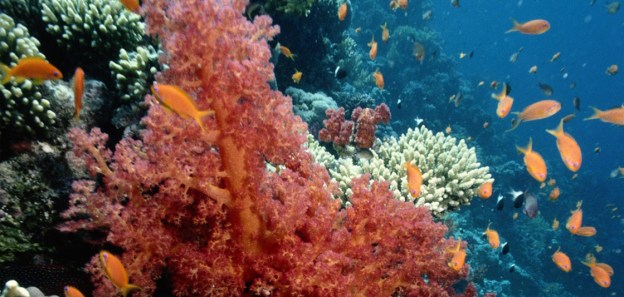
The Great Barrier Reef is the largest coral system in the world. In response to multiple threats, fishing has been prohibited since 2004 over 33% of the Great Barrier Reef Marine Park, and efforts have begun to reduce runoff of nutrients, pesticides, herbicides and sediments from land. However, these interventions may be too little, too late. Approximately half of the coral cover has been lost in recent decades, and the outlook is “poor, and declining” with climate change, coastal development and dredging as major future threats. The World Heritage Committee has warned that in the absence of a solid long-term plan, it would consider listing the reef as “in danger” in 2015.

More available online Creating a Safe Operating Space for Iconic Ecosystems By M. Scheffer et al, 2015

Green Dams that Kill

A planned mega-dam in Guatemala, whose carbon credits will be tradable under the EU’s emissions trading system, has been linked to grave human rights abuses, including the killing of six indigenous people, two of them children.  Several European development banks and the World Bank’s International Finance Corporation (IFC) have provided funds for the $250m (£170m) Santa Rita dam.

But human rights groups back claims from the Mayan community that they were never consulted about the hydro project, which will forcibly displace thousands of people to generate 25MW of energy, mostly for export to neighbouring countries.  The issue has become a focus of indigenous protest in Guatemala – which has led to a march on the capital and severe political repression.

“At the moment our community is living under the same conditions as they did during the war,” Maximo Ba Tiul, a spokesman for the Peoples’ Council of Tezulutlán told the Guardian. “Our civilian population is once again being terrorised by armed thugs.”  Around 200,000 Mayans died or were “disappeared” during the civil war of the early 1980s, leading to the conviction of the country’s former president, Efraín Ríos Montt, in 2013 on genocide charges.

Augusto Sandino Ponce, the son of a local landowner who community leaders allege worked as a contractor to Montt’s junta during the civil war, is at the centre of new accusations of human rights violations. Last April Ponce and his bodyguards allegedly opened fire on a Mayan community ceremony in which families asked the Earth for permission to plant their crops. One local man, Victor Juc, was killed and several were injured. Ponce reportedly claims he was acting in self defence…

In a letter to the United Nations Framework Convention on Climate Change’s (UNFCCC) clean development mechanism (CDM) executive board,  the People’s Council of Tezulutlán outlined a litany of human rights abuses in the region, including kidnappings, evictions, house burnings, attacks by men wielding machetes and guns, and the arrest of community leaders.  The council also says that an environmental impact assessment for the dam suggests that it would create a 40ft-high wall, flooding local communities and depriving them of access to water, food, transport and recreation.  In approving projects, the CDM board pursues a narrow remit focused on emissions reductions. The reign of terror in the Alta Verapaz region, falls outside it – as did similar events in Honduras….

Perhaps the most shocking incident took place on 23 August 2013, when two children were killed by an allegedly drunken Santa Rita hydroelectricity company worker looking for David Chen, a community leader in the Monte Olivo region.   Chen was meeting with the rapporteur of the Inter American Commission on Human Rights at the time. When the worker could not find him, he is said to have lined up two of Chen’s nephews, David Stuart Pacay Maaz, 11 and Haggai Isaac Guitz Maaz, 13, and killed them with a single bullet to one child’s head that continued through the throat of the other. The killer has since been killed himself.  The annual report of the UN’s High Commissioner for Human Rights implicitly blamed the approval of the dam project for the killings….

Eva Filzmoser, the director of Carbon Market Watch said: “We want the CDM board to take responsibility and establish a grievance and redress mechanism for local communities to appeal, ask for problematic decisions to be rescinded and gain redress. We will be pushing for this at the Paris climate summit to apply to all forms of climate finance in the future.”Efforts to reform the CDM were boosted last month, when 18 countries signed a “Geneva declaration” calling for human rights norms to be integrated into UNFCCC climate decisions….Signatory countries to the declaration include France, Sweden, Ireland, Mexico, Uruguay and Peru.

Excerpts Green’ dam linked to killings of six indigenous people in Guatemala, Guardian, Mar. 26, 2015

Costs of Dams: Vietnam

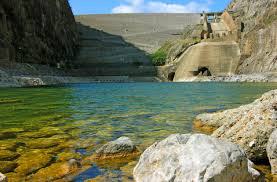
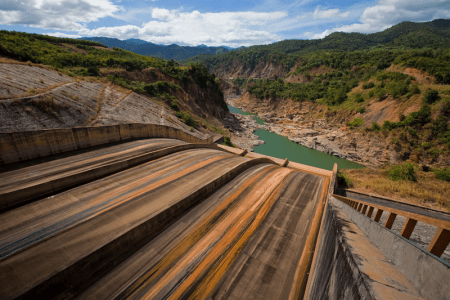
Hydropower has boomed in Vietnam over the past decade and now generates more than a third of the country’s electricity. In 2013 the National Assembly reported that 268 hydropower projects were up and running, with a further 205 projects expected to be generating by 2017. They are helping to meet a national demand for energy that the authorities forecast will treble between 2010 and 2020. Other power sources are less promising, at least in the short run. A plan to build several nuclear reactors by 2030 is behind schedule, for example. And Vietnam’s coal reserves, mostly in the north, are not easy to get at.

Yet the hydropower boom comes at a price. Rivers and old-growth forests have been ravaged, and tens of thousands of villagers, often from ethnic minorities, displaced. Many have been resettled on poor ground. Those who have stayed are at risk of flash floods caused by faulty dam technology and inadequate oversight. Green Innovation and Development Centre, an environmental group in the capital, Hanoi, says shoddy dam construction is the norm, and developers ignore the question of whether their projects could trigger earthquakes…

Many hydro-electric companies are owned by or affiliated with Electricity Vietnam (EVN), the loss-making state power monopoly. Because hydropower is Vietnam’s cheapest source of electricity, EVN resists investing in measures such as dam-safety assessments that would further erode its financial position. As it is, even though environmental-impact assessments for hydropower projects are required, they are never published, according to the United Nations Development Programme….. Hydropower companies want to keep their mountain reservoirs as full as possible in order to generate as much electricity as Vietnam’s rivers allow. But that narrow focus can deprive farmers of irrigation in the dry season. And when heavy rains come in the summer and autumn, floodwaters cascade over the dam walls with little or no warning.

Hydropower in Vietnam: Full to bursting, Economist, Jan.10, 2015, at 35

Deforestation: mixed picture

In a new study of the Centre for Global Development (CGD), a Washington think-tank, Jonah Busch and Kalifi Ferretti-Gallon look at 117 cases of deforestation round the world. They find that two of the influences most closely correlated with the loss of forests are population and proximity to cities (the third is proximity to roads). Dramatic falls in fertility in Brazil, China and other well-forested nations therefore help explain why (after a lag) deforestation is slowing, too. Demography even helps account for what is happening in Congo, where fertility is high. Its people are flocking to cities, notably Kinshasa, with the result that the population in more distant, forested areas is thinning out.

Two of the countries that have done most to slow forest decline also have impressive agricultural records: Brazil, which became the biggest food exporter of all tropical countries over the past 20 years; and India, home of the green revolution. Brazil’s agricultural boom took place in the cerrado, the savannah-like region south and east of the Amazon (there is farming in the Amazon, too, but little by comparison). The green revolution took place mostly in India’s north-west and south, whereas its biggest forests are in the east and north.

But if population and agricultural prowess were the whole story, Indonesia, where fertility has fallen and farm output risen, would not be one of the worst failures. Figures published inNature Climate Change in June show that in the past decade it destroyed around 60,000 sq km of primary forests; its deforestation rate overtook Brazil’s in 2011. Policies matter, too—and the political will to implement them.

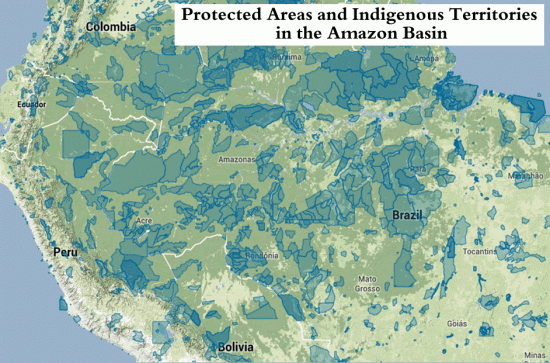
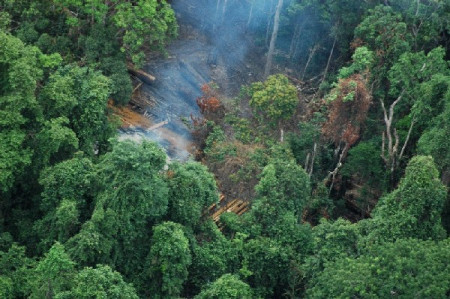
The central problem facing policymakers is that trees are usually worth more dead than alive; that is, land is worth more as pasture or cropland than as virgin forest. The benefits from forests, such as capturing carbon emissions, cleaning up water supplies and embodying biodiversity, are hard to price….The most successful policies therefore tend to be top-down bans, rather than incentives (though these have been tried, too). India’s national forest policy of 1988 explicitly rejects the idea of trying to make money from stewardship. “The derivation of direct economic benefit”, it says, “must be subordinated to this principal aim” (maintaining the health of the forest). In Brazil 44% of the Amazon is now national park, wildlife reserve or indigenous reserve, where farming is banned; much of that area was added recently. In Costa Rica half the forests are similarly protected. In India a third are managed jointly by local groups and state governments.

Top-down bans require more than just writing a law. Brazil’s regime developed over 15 years and involved tightening up its code on economic activity in forested areas, moratoriums on sales of food grown on cleared land, a new land registry, withholding government-subsidised credit from areas with the worst deforestation and strengthening law enforcement through the public prosecutor’s office. (The most draconian restriction, requiring 80% of any farm in the Amazon to be set aside as a wildlife reserve, is rarely enforced.)

Two developments make bans easier to impose. Cheaper, more detailed satellite imagery shows in real time where the violations are and who may be responsible. Brazil put the data from its system online, enabling green activists to help police the frontier between forest and farmland. Its moratoriums on soyabeans and beef from the Amazon, which require tracing where food is coming from, would not have worked without satellites…

The Forestry Ministry of Indonesia, [on the other hand] is rated the most corrupt among 20 government institutions by Indonesia’s Corruption Eradication Commission in 2012. Some within government are hostile to anti-deforestation schemes, which they see as “foreign”, says Ade Wahyudi of Katadata, an Indonesian firm of analysts. Perhaps the biggest problem is the lack of a single, unified map including all information on land tenure and forest licensing: efforts to create one have been slowed by unco-operative government ministries and difficulties created by overlapping land claims.

Excerpts from Tropical Forests: A Clearing in the Trees, Economist,  Aug. 23, 2014, at 56

Weather Modification in India

State governments, tea estate owners, politicians and even some insurance companies are exploring cloud-seeding options. The process involves seeding clouds with chemicals that will lead them to promote precipitation or rain. (The process is also used to boost snowfall and curb hailstones and fog.)  [Indian] companies involved in cloud seeding such as Myavani, Kyathi Climate Modification Consultants [affiliated  with US based Weather Modification Inc.]and Agni Aero Sports expect business to grow as much as a fourth this year over 2012, when the country last saw weak rains.

Bangalore-based Agni Aero Academy, which has been involved in cloud seeding in India since 2003 and undertook cloud-seeding projects for MCGM [Municipal Corporation of Greater Mumbai]  in 2009 and the Karnataka government in 2012, expects a pickup in business.

Girish Odugoudar, 33, of Myavani, which has jointly bid for the Mumbai project along with US National Centre for Atmospheric Research, is aiming to establish his business. “We have the infrastructure and capability and success in one project should open many doors,” he said.

Excerpts, Madhvi Sally, Artificial rainfall: Cloud seeding companies may play rainmakers
Madhvi Sally, the Economic Times of India, July 23, 2014,

On-Demand Germs: Bioengineering for the Military

From the DARPA website:

The development of increasingly sophisticated techniques and tools to sequence, synthesize and manipulate genetic material has led to the rapidly maturing discipline of synthetic biology. …[But] The costs of maintaining required environmental controls and detecting and compensating for genetic alterations are substantial and severely limit the widespread application of synthetic biology to U.S. national security missions.

To help address these challenges, DARPA has created the Biological Robustness in Complex Settings (BRICS)  BRICS seeks to develop the fundamental understanding and component technologies needed to increase the biological robustness and stability of engineered organisms while maintaining or enhancing the safe application of those organisms in complex biological environments. The goal is to create the technical foundation for future engineered biological systems to achieve greater biomedical, industrial and strategic potential.

“By making these systems more robust, stable and safe, BRICS seeks to harness the full range of capabilities at the intersection of engineering and biology,” said Justin Gallivan, DARPA program manager. “These capabilities could include efficient on-demand bio-production of novel drugs, fuels, sensors and coatings; or engineered microbes able to optimize human health by treating or preventing disease.”

Excerpt from BUILDING THE FOUNDATION FOR FUTURE SYNTHETIC BIOLOGY APPLICATIONS WITH BRICS, July 29, 2014

Amazon Protected Areas: 215 Million Fund

Brazil’s government, the World Wildlife Fund and various partners are expected to unveil an agreement that would establish a $215 million fund for conservation of protected jungle in the Amazon rainforest.  The fund, which seeks to ensure conservation of over 90 protected areas in the Amazon, comes as renewed developmental pressures mount in the region, resulting last year in an uptick in deforestation figures after years of record lows.

Under the terms of the agreement, partners in the fund will make annual contributions to help Brazil meet financing needs for the protected lands, whose combined area totals more than 60 million hectares, or an area 20 percent larger than Spain.  Contributions, partners said, will be contingent upon conditions required of Brazil, including audits of the government body that will administer the fund and continued staffing and financing of government offices required to administer the rainforest areas.

Money from the fund would be used for a range of basic conservation measures, including fences and signs to delineate protected areas and to pay for vehicles used to patrol them…

Brazil’s government through 2012 made large inroads against deforestation, largely through strict environmental enforcement and financial measures that blocked credit for companies and individuals caught doing business with loggers, ranchers, farmers or others known to exploit illegally cleared land.

In recent years, however, the government has made changes to environmental agencies and regulations that critics say make it easier for would-be developers to target protected areas. The government has also altered borders of some parkland to make way for infrastructure projects, including hydroelectric dams on various Amazon tributaries.

Financing for the new fund, expected to pay out over 25 years, was secured from private and public sources including the German government, the Inter-American Development Bank, the World Bank, philanthropists and the Amazon Fund, an existing facility financed mostly by the Norwegian government and administered by Brazil’s national development bank.

Together, the forest zones targeted by the fund are known as the Amazon Region Protected Areas, or ARPA, a program established in 2002 to coordinate financing and conservation strategy in the region.

Whereas previous financing for the effort relied on cumulative fundraising efforts, partners this time agreed to an all-or-nothing approach, borrowed from private-sector financing practices, to build momentum toward a target total. The $215 million is the amount calculated as necessary to help the Brazilian government, over the 25 years, become self-sufficient in terms of financing the rainforest areas.

Excerpts from  PAULO PRADA, Donors commit $215 million for Amazon conservation in Brazil, Reuters, May 21, 2014

Loans-for-Oil: China and Latin America

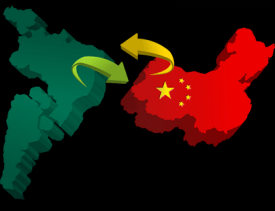
China’s demand for commodities has entrenched Latin America’s position as a supplier of raw materials. The country guzzles oil from Venezuela and Ecuador, copper from Chile, soyabeans from Argentina, and iron ore from Brazil—with which it signed a corn-import deal on April 8th.   Chinese lending to the region also has a strong flavour of natural resources. Data are patchy, but according to new figures from the China-Latin America Finance Database, a joint effort between the Inter-American Dialogue, a think-tank, and Boston University, China committed almost $100 billion to Latin America between 2005 and 2013 (see chart). The biggest dollops by far have come from the China Development Bank (CDB). These sums are meaningful. Chinese lenders committed some $15 billion last year; the World Bank $5.2 billion in fiscal year 2013; foreign commercial banks lent an estimated $17 billion.

More than half of China’s lending to Latin America has been swallowed by Venezuela, which pays much of the loan back from the proceeds of long-term oil sales to China. Ecuador has struck similar deals, as has Petrobras, Brazil’s state-controlled oil firm, which negotiated a $10 billion credit line from CDB in 2009.

Such loan-for-oil arrangements suit the Chinese, and not simply because they help secure long-term energy supplies. They also reduce the risk of lending to less creditworthy countries like Venezuela and Argentina. Money from oil sales is deposited in the oil firm’s Chinese account, from where payments can be directly siphoned.  It is no surprise that Chinese money is welcome in places where financial markets are wary. Ecuador, which defaulted on its debts in 2008, has used Chinese loans both to fill in holes in its budget and to re-establish a record of repayment in advance of trying to tap bond markets again.

But Chinese credit has its attractions in other economies, too. It often makes sense for countries to diversify sources of lending. Loans can open the door to direct investment. And as Kevin Gallagher of Boston University points out, the Chinese banks operate in largely different sectors to the multilaterals. Of the money China has lent in the region since 2005, 85% has gone to infrastructure, energy and mining. Borrowers may have to spend a proportion of their loan on Chinese goods in return; some observers worry about the laxer environmental standards of Chinese banks. But the main thing is that money is available. Expect the loan figures to rise.

Chinese lending to Latin America: Flexible friends, Economist,  Apr. 12, 2014, at 27

Human – Machine Interfaces

From the DARPA website

The mission of the Biological Technologies Office (BTO) is to foster, demonstrate, and transition breakthrough fundamental research, discoveries, and applications that integrate biology, engineering, and computer science for national security. BTO seeks to establish and invest in new communities of scientific interest at the intersection of traditional and emerging disciplines. Its investment portfolio goes far beyond life sciences applications in medicine to include areas of research such as human-machine interfaces, microbes as production platforms, and deep exploration of the impact of evolving ecologies and environments on U.S. readiness and capabilities. BTO’s programs operate across a wide range of scales, from individual cells to complex biological systems including mammalian and non-mammalian organisms and the macro- and micro-environments in which they operate.

BTO Focus Areas

Restore and Maintain Warfighter Abilities Military readiness depends on the health and wellbeing of military service members. A critical part of BTO’s mission is to cultivate new discoveries that help maintain peak warfighter abilities and restore those abilities as quickly and fully as possible when they are degraded or lost. This focus area is grounded in the development of new techniques and therapeutic strategies for addressing current and emerging threats, but extends beyond medical applications to include exploration of complex biological issues that can impact an individual’s ability to operate and interact in the biological and physical world. The research portfolio includes neuroscience to drive a deeper understanding of the human brain, how it interfaces with the body and the external world, and how it directs and coordinates behavior, including decision-making in demanding environs. BTO will extend work involving human participants and apply insights from physiology, biochemistry, psychology, sociology, and related sciences to such emerging-science domains as bioengineering, bioinformatics, and microbiomics.

Harness Biological Systems The highly evolved functional and synthetic capabilities of biological systems can be harnessed to develop new products and systems in support of national security with advantages over what even the most advanced conventional chemistry and manufacturing technologies can achieve. This space and its opportunities are just becoming tangible due to the rapid, simultaneous development of genome-scale engineering tools, enormous genomic datasets, new analytical capabilities, and the convergence of several engineering and scientific disciplines with biology. BTO seeks to establish a fundamental understanding of natural processes and the underlying design rules that govern the behavior of biological systems, and apply that knowledge to forward-engineer new systems and products with novel functionality. To support this work, BTO develops techniques at the intersection of automation, computer science, and biology to explore biological data at massive scales.

Apply Biological Complexity at Scale Biological systems operate over an enormous range of spatial, physical, and temporal scales. Some organisms thrive as individual cells, while many others, including humans, are colonized by communities of foreign cells that greatly outnumber their own and have potentially significant but still largely mysterious impacts on metabolism, psychological state, performance, and health. Disease vectors migrate around the globe slowly and stealthily at times, and at other times in devastating waves of breathtaking speed—poorly understood dynamics that can threaten national security. And because they are so difficult to parse from larger biological and ecological phenomena, population-level effects of relevance to agriculture and food security remain largely unplumbed. BTO is looking into pursuing new insights derived from biological complexity and living-system dynamics with the goal of developing applications to enhance global-scale stability and human wellbeing.

See DARPA Pushes for Industrial Revolution in Genetic Engineering

Water Sharing Agreement – Middle East

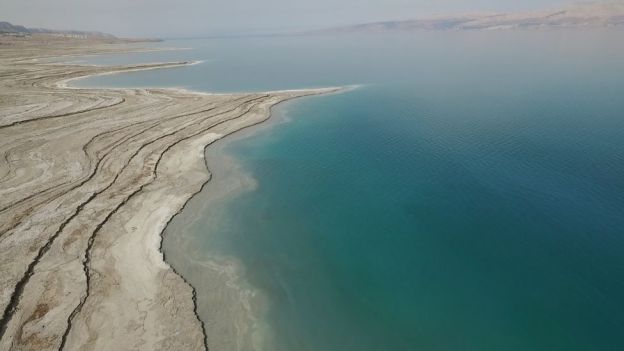
Drained by farms along its banks, the River Jordan is barely a trickle by the time it dribbles into the Dead Sea, and most of that is sewage coming out of Jerusalem and West Bank settlements. Israeli and Jordanian factories also use the water to recover potash.So fast are the Dead Sea’s briny waters shrinking that it has already shed its southern half. Much of the seabed is now as crusty as the pillar of salt that Lot’s wife turned into after fleeing Gomorrah. Hotels built on the shores in the 1980s have a cliff-top view today. Arthritic pensioners keen on the sea’s therapeutic powers are reduced to swimming in saline hotel pools. By 2050, say Friends of the Earth, a conservation group, the sea will be little more than a pond the size of two football fields.

After years of regional squabbling, Israeli, Jordanian and Palestinian ministers signed a deal ( a Memorandum of Understanding)* on December 9th, 2013 to slow desiccation. Backed by the World Bank, they plan to build a desalination plant on the Red Sea and pipe the run-off 180km (112 miles) north to the Dead Sea.  Some see advantages in diluting the Dead Sea’s nose-twitchingly sulphurous tides with ocean water. But there are drawbacks. Mucky algae might spread, turning the sea red. “It’s playing with an entire ecosystem,” says Mira Edelstein of Friends of the Earth.

The Dead Sea: Emptying out, Economist, Dec. 14, 2013, at 58

*The MoU outlines in broad language three major regional water sharing initiatives that will be pursued over the coming months by the cooperating parties. These initiatives include the development of a desalination plant in Aqaba at the head of the Red Sea, where the water produced will be shared between Israel and Jordan; increased releases of water by Israel from Lake Tiberias for use in Jordan; and the sale of about 20-30 million m3/year of desalinated water from Mekorot (the Israeli water utility) to the Palestinian Water Authority for use in the West Bank. In addition, a pipeline from the desalination plant at Aqaba would convey brine to the Dead Sea to study the effects of mixing the brine with Dead Sea water. In order to proceed with these actions, especially the desalination plant at Aqaba, technical work and studies will need to be undertaken.  See World Bank

Genetically Modified Food – China v. US

Public unease about genetic modification is common around the world. In China, alongside rising concerns about food safety, it has taken on a strongly political hue. Chinese anti-GM activists often describe their cause as patriotic, aimed not just at avoiding what they regard as the potential harm of tinkering with nature, but at resisting control of China’s food supply by America through American-owned biotech companies and their superior technology. Conspiracy theories about supposed American plots to use dodgy GM food to weaken China

They are even believed by some in the government. In October an official video made for army officers was leaked on the internet and widely watched until censors scrubbed it. “America is mobilising its strategic resources to promote GM food vigorously,” its narrator grimly intoned. “This is a means of controlling the world by controlling the world’s food production.”  Peng Guangqian, a retired major-general and prominent think-tanker, echoed these sentiments in an article published by official media in August. He said America might be setting a “trap”. The result, he said, could be “far worse than the Opium War” between Britain and China in the 1840s that Chinese historians regard as the beginning of a “century of humiliation” at the hands of foreign powers.

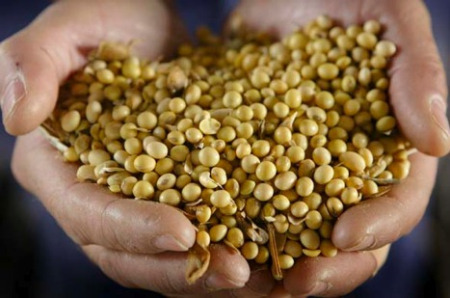
China already uses plenty of GM products. More than 70% of its cotton is genetically modified. Most of the soyabeans consumed in China are imported, and most of those imports are GM (often from America). The technology is widely used for growing papayas. The government wants to develop home-grown GM varieties and has spent heavily on research, eager to maintain self-sufficiency in food. Officials see GM crops as a way of boosting yields on scarce farmland.

In 2009 China granted safety certificates for two GM varieties of rice and one of maize. This raised expectations that it might become the first country in the world to use GM technology in the production of a main staple. But further approvals needed for commercial growing have yet to be granted. To the consternation of GM supporters, the safety certificates for the rice are due to expire next August.

Public opinion is a big reason for the delay. Environmental groups in China have rarely succeeded in changing government policy. Officials have long treated such NGOs with suspicion and made it hard for them to register or set up offices in more than one place. The only NGO in China that devotes much time to the GM issue is an international one: Greenpeace. But the anti-GM lobby has thrived, thanks not least to the adoption of the cause by conservatives in the establishment as well as by informal groups of diehard Maoists who see America as a threat.

To the Maoists, opposing GM food is an urgent priority. Hardly a speech is made by one of them without mentioning it. “I support Mao Zedong thought,” shouted one of the protesters outside the agriculture ministry. The police usually treat them with kid gloves; unlike others who protest in public, they are ardent supporters of Communist Party rule. And on this issue, at least, the Maoists enjoy much sympathy; public anxiety about food safety has soared in recent years thanks to a series of scares. Of 100,000 respondents to an online poll in November, nearly 80% said they opposed GM technology.

Since a change of China’s leadership a year ago, however, supporters of GM food inside the government and among the public have begun fighting back. In October Chinese media reported that 61 senior academics, in a rare concerted effort, had petitioned the government to speed up the commercialisation of GM crops. The Ministry of Agriculture was also said to be preparing a new public-education campaign on the merits of GM food…One of the recent petitioners, Li Ning of China Agricultural University, laments that the issue remains ensnared by nationalist sentiment.

Excerpts, Genetically Modified Crops, Food Fight, Ecomomist,  Dec. 14, 2013, at 53

The China-Laos Train: Debt and Collateral

On the ground in the northern province of Oudomxay (Laos), most jeeps roaming the deforested valley bear Chinese and Vietnamese number plates…Investment is flowing into agriculture, typically rubber plantations, market gardening and other cash crops, much of it destined for the huge Chinese population to the north. The side-effects include a loss of forests and biodiversity, serious soil erosion and growing numbers of people in this multi-ethnic province being pushed off their land.

Chinese firms have secured rubber concessions in the province covering 30,000 hectares (74,000 acres). The idea is that tens of thousands of Chinese workers will eventually be needed to tap the rubber. In the past decade the government has granted land concessions across the country for up to 100 years, often at knock-down prices, to Chinese, Vietnamese and, to a lesser extent, Thai operators. More land is now in the hands of foreigners than is used to grow rice. The fear of one expert in Laos is the emergence of a landless poor.

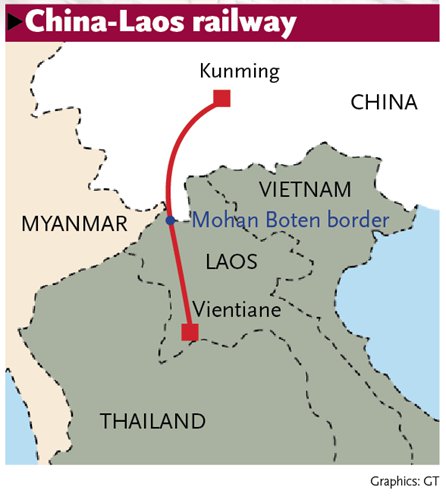
Not all Chinese influence is welcomed by the government. Recently a deputy prime minister, Somsavat Lengsavad, announced the closure of a Chinese-run casino near the border that had attracted drugs and prostitutes along with gamblers. Yet Mr Lengsavad, ethnically Chinese himself, has his own patronage network built on granting concessions for Chinese-run special economic zones. And he is the point man for one of Asia’s most ambitious projects: a proposed 262-mile (421-km) passenger and freight railway connecting Kunming, in the south-western Chinese province of Yunnan, with Vientiane, the Laotian capital. The $7.2 billion price tag (including interest) is nearly as big as Laos’s entire formal economy. It will take 50,000 workers five years just to lay the tracks. Two-thirds of the route will run through 76 planned tunnels or over bridges.

The collateral for such a huge project lies in the mines of Laos. In other words, the extraction of natural resources in this undeveloped country is about to accelerate. Economic rents already accrue to an oligarchy, for which the railway, one way or another, will prove a bonanza… The capital of Laos is on the mighty Mekong river, which forms the border with Thailand. Though it still has a torpid air, Vientiane is growing fast in the hands of a Communist kleptocracy whose members queue up on Saturdays in their big cars to cross the Mekong for a dose of shopping across the border. For many of the remaining 6.6m Laotians, unease and sometimes fear are the predominant emotions.

Last December a well-known democratic activist and advocate of sustainable development, Sombath Somphone, disappeared. At the same time, the government clamped down on foreign NGOs, especially those advocating land rights. Two months ago the American embassy hung a banner from its water tower calling for the return of Mr Somphone. In September the head of the American-based Asia Foundation in Laos was told to pack her bags….The trauma of its long civil war and of American carpet-bombing during the Vietnam war is never far away. One-third of the country is still contaminated by unexploded American ordnance. Hundreds of people lose limbs every year to cluster bombs.In few countries do development agencies have to operate in thinner air than in Laos. In e-mails, foreign residents drop syllables from the names of Politburo members in attempts to outsmart new Chinese surveillance technology. The regime is constantly on guard against foreigners who might be seeking to “change our country through peaceful means”.

The future of Laos: A bleak landscape, Economist, Oct. 26, 2013, at 50

Buying their Way out of Water Crisis: Gulf States

Scientists are now warning of “Peak Salt” – the point at which the Gulf becomes so salty that relying on it for fresh water stops being economically feasible.  “The average Arab citizen has eight times less access to renewable water than the average global citizen, and more than two thirds of surface water resources originate from outside the region,” says the U.N.Development Programme (UNDP) in a new study released this week.  Titled “Water Governance in the Arab Region: Managing Scarcity and Securing the Future,” the report warns that water scarcity in the region is fast reaching “alarming levels, with dire consequences to human development”….

A recent satellite study by the U.S. National Aeronautics and Space Administration (NASA) found the region has lost, since 2003 alone, far more groundwater than previously thought – an amount the size of the Dead Sea…Threatened by future scarcities, several Arab countries, including the UAE, have expanded their use of non-conventional water resources including desalination; treated wastewater; rainwater harvesting; cloud seeding; and irrigation drainage water.

Currently, the Arab region leads the world in desalination, with more than half of global capacity.  Desalinated water is expected to expand from 1.8 percent of the region’s water supply to an estimated 8.5 percent by 2025.  Most of the increase is expected to concentrate in high-income, energy-exporting countries, particularly the Gulf countries, because desalination is energy- and capital-intensive…According to the UNDP study.Arab region’s oil wealth has allowed some states to mask their water poverty, giving them the false impression they can buy their way of out of the coming crisis…

Excerpt, By Thalif Deen, Arab World Sinks Deeper into Water Crisis, Warns UNDP, IPS, Nov. 29, 2013

The Struggle for Water: Tanzania

As farmers and herders fight over dwindling water levels in the Pangani River Basin in northeastern Tanzania, a new dispute is emerging between farmers and the state-run power utility firm over this precious resource. The Tanzania Electric Supply Company or TANESCO manages three hydropower plants located on the Pangani River near Muheza district, which are meant to provide 17 percent of the country’s electricity…For the last four years Tanzania has been experiencing a drought that locals say is the worst to have ever hit the region. Thousands of farmers and herders who earn a living here have been affected.  Jumanne Mujuni, a councilor from Mombo town, which is located a few kilometres from the Hale hydropower station in Muheza district, told IPS that the drought has pushed many to the brink as they compete with TANESCO for dwindling water supplies. He added that many locals are now embroiled in disputes with the state-run utility.“All these problems that we face are rooted in the drought. There were hardly any [problems] when there was enough water in the river,” he said.

Excerpt from Kizito Makoye,Power Struggle Rises Over Tanzania’s Pangani River, IPS, Oct. 24, 2013

The Toxic Herbicides Case: Ecuador v. Colombia

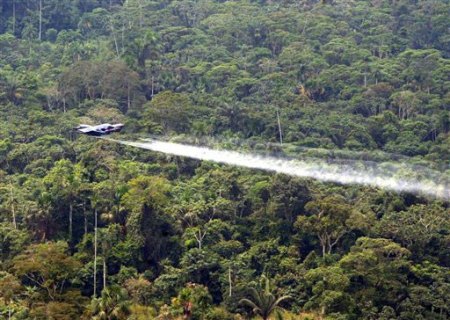
The case brought by the Republic of Ecuador against the Republic of Colombia on 31 March 2008 before the International Court of Justice (ICJ) in respect of a dispute concerning “Colombia’s aerial spraying of toxic herbicides at locations near, at and across its border with Ecuador” was removed from the Court’s List on 13 September 2013 at the request of Ecuador…

According to the letters received from the Parties, the Agreement of 9 September 2013 [between Colombia and Ecuador] establishes, inter alia, an exclusion zone, in which Colombia will not conduct aerial spraying operations, creates a Joint Commission to ensure that spraying operations outside that zone have not caused herbicides to drift into Ecuador and, so long as they have not, provides a mechanism for the gradual reduction in the width of the said zone; according to the letters, the Agreement sets out operational parameters for Colombia’s spraying programme, records the agreement of the two Governments to ongoing exchanges of information in that regard, and establishes a dispute settlement mechanism.  In consequence, the President of the Court, on 13 September 2013, made an Order recording the discontinuance by Ecuador of the proceedings and directing the removal of the case from the Court’s List.

Aerial Herbicide Spraying (Ecuador v. Colombia), Case removed from the Court’s List at the request of the Republic of Ecuador, Press Release International Court of Justice,  Sept. 17, 2013


Mining Gold and Cyanide Pollution

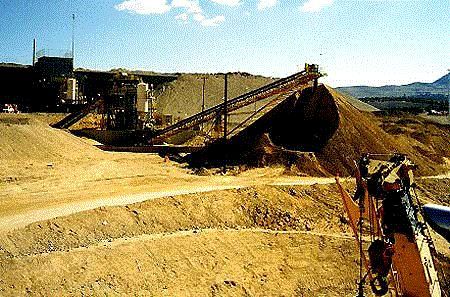
The $4 billion that two Canadian companies, Barrick Gold and Goldcorp, have poured into developing Pueblo Viejo, a gold mine, since 2009 amounts to the largest single foreign investment in the history of the Dominican Republic. The companies say that the money has turned the polluted ruins of what was the state-owned Rosario mine, abandoned in 1999, into a “truly world-class” operation that should provide the country’s government with $10 billion over its 25-year life.

But the project has been controversial. Just weeks after the mining started in January 2013, President Danilo Medina, who was elected last year, declared: “For every $100 of gold exports, Barrick will receive $97 and the Dominican people $3. That is simply unacceptable.” (In fact, Pueblo Viejo Dominicana Corporation, or PVDC, the company operating the mine, is 60% owned by Barrick and 40% by Goldcorp.) Mr Medina demanded that the contract be renegotiated; otherwise, he said, he would raise taxes on the mine’s profits.

This month the two sides agreed to changes that have front-loaded tax payments and could see the government get an extra $1.3 billion in 2013-16 provided that the gold price rises and stays above $1,600 an ounce (it is now around $1,350). Gustavo Montalvo, Mr Medina’s chief of staff, tweeted: “Together we ensured that words like ‘national sovereignty’, ‘justice’ or ‘transparency’ were transformed into something more concrete.”

Yet that may not calm local unrest over the mine, sited about 100 kilometres (60 miles) north of Santo Domingo, the capital. The investment was presented by both the government and company as including a clean-up of Rosario’s toxic mess and the installation of systems to keep local watercourses clean. But residents are suing PVDC, claiming that the new mine is poisoning rivers, causing illnesses and the death of farm animals. They want the government to release the environmental-impact assessment for Pueblo Viejo, which it has so far refused to do.

One farmer, María de la Cruz Mariano, said that she began to suffer skin allergies and other ailments in 2010, after PVDC began work. Tests on her blood conducted by a private laboratory showed high levels of lead, sulphur, cyanide and zinc. Some of her cattle have died from bovine anaemia, which can be caused by ingesting cyanide. Other residents report that previously clean local rivers have become polluted since PVDC built a dam to collect water containing cyanide, which is used to leach gold from crushed rock.

PVDC has signed the international code of practice for the handling of cyanide. It says it is “in the process of capturing all the surface flows” from the old and the new mines, sending the water to storage ponds where it is treated. PVDC says that, together with local people, it conducts regular, public tests on water and air.

But community leaders say they have no knowledge of such tests. The company has not answered requests to provide the dates on which they were conducted. Tests by the environment ministry, released only after a freedom of information request, found the water in the Margajita river downstream from the mine to be highly acidic, as well as containing sulphides and copper above legal limits. The ministry has made little effort to act on these results.

The old Rosario mine left some streams red with acid. PVDC’s clean-up obligations extend only within the mine perimeter; the rest was for the government. The firm points out that it has paid $75m ($37.5m of it a loan) to finance the government’s share of the work. It has also removed around 130,000 cubic metres (4.6m cubic feet) of contaminated soil. But Demóstenes Martínez, a congressman from the ruling party, argues that PVDC is violating both the constitution and the mining law.

It is not clear whether the pollution is being caused by PVDC’s operations, or is a legacy of the past. The government claims to have lost records of past tests on the rivers. But on its own the new agreement may not be enough to ensure that the mine regains the consent of the community. That will require greater candour.

Mining in the Dominican Republic:  Sickness and wealth, Economist, Sept. 21, 2013

Rivers as Fiefs: Dams in China

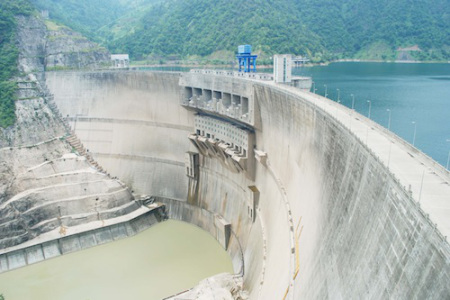
Though the Chinese authorities have made much progress in evaluating the social and environmental impact of dams, the emphasis is still on building them, even when mitigating the damage would be hard. Critics have called it the “hydro-industrial complex”: China has armies of water engineers (including Hu Jintao, the former president) and at least 300 gigawatts of untapped hydroelectric potential. China’s total generating capacity in 2012 was 1,145GW, of which 758GW came from coal-burning plants.

An important motive for China to pursue hydropower is, ironically, the environment. China desperately needs to expand its energy supply while reducing its dependence on carbon-based fuels, especially coal. The government wants 15% of power consumption to come from clean or renewable sources by 2020, up from 9% now. Hydropower is essential for achieving that goal, as is nuclear power. “Hydro, including large hydro in China, is seen as green,” says Darrin Magee, an expert on Chinese dams at Hobart and William Smith Colleges in New York state.

There is also a political reason why large hydro schemes continue to go ahead. Dambuilders and local governments have almost unlimited power to plan and approve projects, whereas environmental officials have almost no power to stop them.

The problems begin with the planning for China’s rivers, which are divided into fiefs by the state-owned power companies that build dams in much the same way as the Corps of Engineers and the Bureau of Reclamation divided up American rivers in the early 20th century. Though the staff of the water-resources ministry in Beijing know a lot about the environment, they have no say. “Big hydro projects are designed and approved by everybody but the ministry of water resources,” says Mr Magee.

Local governments, meanwhile, view dams as enticing economic development projects. The dambuilders, which have special privileges to borrow, put up the financing. The extra electricity supports industrial expansion and brings in revenues. Local officials are promoted for meeting economic performance targets and some collude for personal gain with the dambuilders. Because of the decentralised nature of the industry, local officials try to include dams in their plans. Once they have done so, they can expect the environmental impact assessments that follow to be a formality—if only because the consultants who undertake them are paid by the hydropower companies.

Environmental officials who have not been financially captured by the dambuilding economy find themselves as scarce as some of the fish they are charged to protect. Environmental activists, meanwhile, can request access to public records and demand public hearings, both required by law. But they say that these avenues are barred when they are most needed—on controversial projects that face vocal opposition. For example, the authorities have rejected requests for public records on Xiaonanhai and they have not granted a public hearing.

If environmental regulators and activists want any hope of halting a project, they must go outside normal bureaucratic channels to lobby powerful Politburo members or the national media. Although that may not always work, it did in 2004, when Wen Jiabao, then prime minister, halted construction of a cascade of 13 dams on the Nu River in south-west China in order to protect the environment. Even then some work on the projects still proceeded. Meanwhile, smaller schemes race ahead unchecked. Promoted by dambuilders and local governments, nearly 100 smaller hydroelectric projects in the Nu river region went forward without needing permission from higher up. Some began before they had even received the final approval.

China’s new leaders in recent months have signalled that they want yet more dams, approving several ambitious new projects, including what would be the highest dam in the world, on the Dadu river. After Mr Wen stepped down from his posts in the party and the government, the dams on the Nu river that he blocked received the go-ahead again.

Chinese leaders have for millennia sought to tame the country’s great rivers, which have sustained and destroyed countless lives with cycles of abundance, famine and floods. Indeed their legitimacy as rulers has long been linked to their ability to do so. The Communist Party has built thousands of large dams since 1949. China is also the world’s leading builder of big dams abroad; International Rivers, a pressure group, says that Chinese companies and financiers are involved in about 300 dam projects in 66 countries.

The politics of dam-building: Opening the floodgates, Economist, Sept. 21, 2013, at 47

The Curse of Displacement

Dhinkia, in the eastern Indian state of Odisha (formerly Orissa) (India)  is a hub of protest. The women, one from every village family, are staging… a sit-in. Sisir Mohapatra, a former sarpanch or village head, makes a rousing speech. He seems respected, though his police record would suggest he is a mafia don: he says he faces 35 criminal charges, and of his 60-strong extended family in Dhinkia, 40 are also wanted by the law. They claim that the charges are all trumped up. Their real crime is to oppose the biggest single foreign-investment project India has ever attracted.

Estimated to cost $12 billion, the project, promoted by POSCO, a South Korean firm, is eventually to produce 12m tonnes of steel a year for export. It will have its own power plant, port and, 200 kilometres (125 miles) inland, its own iron-ore mine. Since an agreement on the project was signed in 2005, it has been mired in controversy—a case study in why

Environmentalists worry about air pollution, coastal erosion, the endangered olive ridley turtle and much else. Many, including the Communist Party of India (CPI), which holds the local parliamentary seat, complain that the ore will be sold too cheaply, at a royalty to the government of just 27 rupees (currently about 40 cents) a tonne. Meanwhile, residents of Dhinkia and nearby villages fear for their livelihoods.

So the project has been delayed, probed by countless committees and subjected to repeated litigation. Just this week it faced hearings in Delhi at the National Green Tribunal, an environmental court. But as so often in India, one of the biggest delays has been acquiring the land. In theory, this should be easier for POSCO than for many other investors, since most of the 1,600 hectares (4,000 acres) it needs are designated as forest (even the scrubby sand dunes) and thus government land.

The residents of Dhinkia, however, claim legal rights as people whose families have been making their living from the forest for at least 75 years (which the government disputes). Some, indeed, make a very good living. Devendra Swain, like many villages, maintains betel vines, from which he earns 50,000 rupees a month selling the leaves. Mr Swain also grows rice, mangoes, cashew nuts, bananas and papaya. He claims not to be against industrialisation—except in his fecund backyard.

The villagers’ resistance to the project has seen ugly violence. In 2010 police fired rubber bullets to clear one dharna. In February there was another clash as police entered a neighbouring village, Govindpur, and started dismantling betel vines. In March three people died in a bomb explosion—victims of pro-project goons, say the villagers. The police allege the victims were blown up while making bombs themselves. Involvement in this incident is one of 61 charges facing the CPI’s Abhay Sahoo, the protesters’ leader, who is now in jail for the third time and trying to secure his release on bail. Fearing arrest or an attack by thugs, the 1,400 others in Dhinkia facing criminal charges dare not leave the village.

Of India’s million mutinies, many involve the emotive issue of land. That is one impulse behind a new law covering land acquisition and the resettlement and rehabilitation of those affected. This week it passed through Parliament’s upper house. Few disagree that some new legislation is needed to replace a much-abused British-era law from 1894.

The new bill, however, has drawn fierce criticism. Business is predictably aghast at what it sees as a populist law timed ahead of looming elections.. Some businessmen think it is simply “unworkable”.

Even some who support the principles behind the bill think their implementation has been botched. N.C. Saxena, a former senior civil servant who sits on a National Advisory Council [claims]  that it does not even cover government land. In other words, it would have no relevance for projects such as POSCO’s. Even if it did, legislation would not solve the fundamental difficulty, a total distrust of government.

“After 66 years of independence,” says Mr Mohapatra, the former sarpanch, “no one has ever been compensated properly. Whoever gave his land and his home later became a beggar.” He points to what he says is the unhappy lot of those displaced by two other projects in Odisha. One is the Hirakud dam across the Mahanadi river. It is India’s longest dam, for which Jawaharlal Nehru poured the first concrete in 1948. As many as 180,000 people had to move. Another is just down the road from Dhinkia, where a big oil refinery has been under construction since 2000. An empty field outside Dhinkia has drains and electricity, put in when plots were offered as compensation to those forced to shift. People found it so unappealing that the field is still empty. Moreover, 52 families who supported the POSCO project, many forced out of Govindpur in 2008, are still in reportedly miserable conditions in a transit camp. Add in heavy-handed police, and those agitating against the project have plenty of ammunition. Even the best-drafted law would find the going tough

This Land is Whose Land? A new law may do little to break India’s land-acquisition logjam, Economist, Sept 7, 2013, at 44

Why the US Loves GM Food

Because America was a new country, argues Greg Ibach, head of agriculture in Nebraska’s state government, a primary concern was feeding a growing population and moving food large distances. Europeans fussed about appellations and where food came from. Americans “treated food as commodities”.  Such differences of history and culture have lingering consequences. Almost all the corn and soyabeans grown in America are genetically modified. GM crops are barely tolerated in the European Union. Both America and Europe offer farmers indefensible subsidies, but with different motives. EU taxpayers often pay to keep market forces at bay, preserving practices which may be quaint, green or kindly to animals but which do not turn a profit. American subsidies give farmers an edge in commodity markets, via cheap loans and federally backed crop insurance.

Lexington: Farming as rocket science, Economist, Sept. 7, 2013, at 34

Biofuels from Agricultural Waste

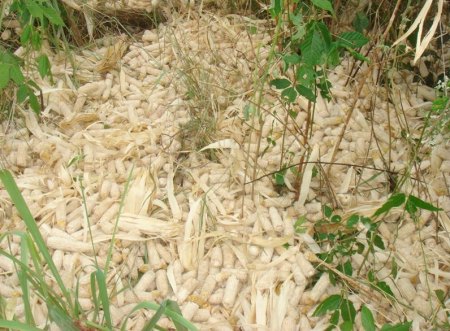
Ethanol, for instance, is an alcoholic biofuel easily distilled from sugary or starchy plants. It has been used to power cars since Ford’s Model T and, blended into conventional petrol, constitutes about 10% of the fuel burned by America’s vehicles today. Biodiesel made from vegetable fats is similarly mixed (at a lower proportion of 5%) into conventional diesel in Europe. But these “first generation” biofuels have drawbacks. They are made from plants rich in sugar, starch or oil that might otherwise be eaten by people or livestock. Ethanol production already consumes 40% of America’s maize (corn) harvest and a single new ethanol plant in Hull is about to become Britain’s largest buyer of wheat, using 1.1m tonnes a year. Ethanol and biodiesel also have limitations as vehicle fuels, performing poorly in cold weather and capable of damaging unmodified engines.

In an effort to overcome these limitations, dozens of start-up companies emerged over the past decade with the aim of developing second-generation biofuels. They hoped to avoid the “food versus fuel” debate by making fuel from biomass feedstocks with no nutritional value, such as agricultural waste or fast-growing trees and grasses grown on otherwise unproductive land. Other firms planned to make “drop in” biofuels that could replace conventional fossil fuels directly, rather than having to be blended in…..

Even if second-generation processes can be economically scaled up, however, that might in turn highlight a further problem. To make a significant dent in the 2,500m litres of conventional oil that American refineries churn through each day, biofuel factories would have to be able to get hold of a staggering quantity of feedstock. Mr Ghisolfi of Beta Renewables points out that a factory with an annual output of 140m litres needs 350,000 tonnes of biomass a year to operate. “There are only certain areas, in Brazil and some parts of the US and Asia, where you can locate this much biomass within a close radius,” says Mr Ghisolfi. “I am sceptical of scaling to ten times that size, because getting 3.5m tonnes of biomass to a single collection point is going to be a very big undertaking.”

Billions of tonnes of agricultural waste are produced worldwide each year, but such material is thinly spread, making it expensive to collect and transport. Moreover, farms use such waste to condition the soil, feed animals or burn for power. Diverting existing sources of wood to make biofuels will annoy builders and paper-makers, and planting fuel crops on undeveloped land is hardly without controversy: one man’s wasteland is another’s pristine ecosystem. Dozens of environmental groups have protested against the EPA’s recent decision to permit plantations of fast-growing giant reed for biofuels, calling it a noxious and highly invasive weed. Just as the food-versus-fuel argument has proved controversial for today’s biofuels, flora-versus-fuel could be an equally tough struggle for tomorrow’s.

Biofuels: What happened to biofuels?, Economist Technology Quarterly, Sept. 7, 2013

Yasuni National Park Oil Drilling: Ecuador, Amazon

Ecuador’s parliament on Thursday (Oct. 3, 2012) authorized drilling of the nation’s largest oil fields in part of the Amazon rainforest after the failure of President Rafael Correa’s plan to have rich nations pay to avoid its exploitation.  The socialist leader launched the initiative in 2007 to protect the Yasuni jungle area, which boasts some of the planet’s most diverse wildlife, but scrapped it after attracting only a small fraction of the $3.6 billion sought.

The government-dominated National Assembly authorized drilling in blocks 43 and 31, but attached conditions to minimize the impact on both the environment and local tribes. Though Correa says the estimated $22 billion earnings potential will be used to combat poverty in the South American nation, there have been protests from indigenous groups and green campaigners.  About 680,000 people have signed a petition calling for a referendum.  “We want them to respect our territory,” Alicia Cauilla, a representative of the Waorani people who live around the Yasuni area, said in an appeal to the assembly. “Let us live how we want.”  Correa has played down the potential impact of oil drilling in the area, saying it would affect only 0.01 percent of the entire Yasuni basin…

Oil output in OPEC’s smallest member has stagnated since 2010 when the government asked oil investors to sign less-profitable service contracts or leave the country. Since then, oil companies have not invested in exploration.  State oil company Petroamazonas will be in charge of extraction in blocks 43 and 31, which are estimated to hold 800 million barrels of crude and projected to yield 225,000 barrels per day eventually. Ecuador currently produces 540,000 bpd

Excerpt, By Alexandra Valencia, Ecuador congress approves Yasuni basin oil drilling in Amazon, Reuters, Oct. 4, 2013


Water Conflicts: Tajikistan versus Uzbekistan

Rogun is both a town [in Tajikistan], some 100km (60 miles) from the capital, Dushanbe, and a long-stalled dream: to build the world’s tallest hydropower dam.  Dirt-poor but water-rich, Tajikistan hopes to sell electricity to Afghanistan and South Asia. In theory, the dam, 335 metres high, could save the country from poverty and isolation, doubling Tajikistan’s power-generating capacity. But the project seems quixotic, if not outright delusional: it would cost up to $6 billion (GDP in 2012 was about $7.6 billion); Uzbekistan, a big neighbour, is fiercely opposed; and the investment climate is clouded by corruption.

Plans for the dam were drawn up long before the collapse of the Soviet Union, but were revived in the early 2000s as Tajikistan recovered from civil war. Each winter energy shortages shave an estimated 3% off GDP. Rogun will solve all problems, state propaganda and many Tajiks say.

But international donors struggle to trust Mr Rakhmon [Tajikistan’s president]. Two-fifths of Tajikistan’s electricity is diverted to a state-run aluminium smelter, TALCO. Each year, TALCO produces hundreds of millions of dollars in profits that are routed to a shell company in the British Virgin Islands. Mr Rakhmon personally oversees TALCO. Why does he not use that cash for his dam?

Central Asia’s energy and water resources were once run from Moscow. In summer upstream republics such as Tajikistan and neighbouring Kyrgyzstan released water from their dams to generate electricity and help irrigate downstream republics, such as Uzbekistan. So Tajikistan already boasts the world’s highest dam, the 300-metre Nurek, built in the 1970s. In winter Uzbekistan delivered gas. That deal broke down after independence. Mr Rakhmon and Uzbekistan’s Islam Karimov do not get along. It is the custom among autocrats in these parts.

Uzbekistan thinks Rogun would parch its cotton crop and give Tajikistan political leverage. In protest, Uzbekistan has halted gas sales to Tajikistan and blocked shipments of construction materials for Rogun. Mr Karimov has warned the dispute could lead to war.

Into this morass has waded the World Bank, sponsoring two three-year assessments of the project on condition that construction is suspended. When completed, probably later this year, the studies are expected to judge the project itself feasible, but to present nine other options—of differing heights and turbine capacities—that may offer better value.  But questioning the dam’s height does not go down well with Mr Rakhmon. In 2004 Russia offered to get RusAL, an aluminium giant, to build Rogun. But after RusAL said the dam should be 50 metres lower (and perhaps tried to muscle into TALCO), the president told them to leave…

Tajikistan cannot build Rogun alone. A brain drain has left it woefully ill-equipped to handle such a project. One of Rogun’s chief engineers, asked to confirm a few statistics, consults Wikipedia. The only realistic patrons for the project are outsiders who might be able to stomach the corruption, such as Russia or China. But neither wants to anger Uzbekistan, Central Asia’s most populous country, with its largest army.

Hydropower in Tajikistan: Folie de grandeur, Economist, July 27, 2013, at 36

Air Pollution: the Palm Oil Conglomerates


Since the mid-1980s, when Indonesia first began to clear its bountiful forests on an industrial scale in favour of lucrative palm-oil plantations, “haze” has become an almost annual occurrence in South-East Asia. The cheapest way to clear logged woodland is to burn it, producing an acrid cloud of foul white smoke that, carried by the wind, can cover hundreds, or even thousands, of square miles.

The intervening decades have seen the passage of numerous national and international regulations to stop the fires, but all, it seems, to no avail. The past two weeks have seen some of the worst smog ever, taking a severe toll not only on peoples’ lungs, throats and tempers, but also on diplomatic relations and Indonesia’s attempts to improve its environmental image. Worse still, despite the outcry, it is hard to see how matters are going to improve over the next few years.

Most of the burning, which starts every dry season, is concentrated this year in Riau province on the east coast of Sumatra. Indonesia is the world’s biggest palm-oil producer and Riau its most productive province. Sadly for Singapore and Malaysia, it lies just across the Strait of Malacca from them. From June 16th Singapore and large parts of Malaysia were smothered in smog from this year’s fires.

In Singapore the pollution was the worst ever, pummelling the previous records set in 1997, when the haze affected six countries and perhaps 70m people. Then, the Pollutants Standard Index (PSI) in Singapore, a measure of air quality, hit a panic-inducing 226, defined as “very unhealthy”. On June 19th, by contrast (the day of the satellite picture above), the PSI climbed to over 300, defined as “hazardous”, before peaking at 401 on June 21st. The government issued face masks and almost everyone took its advice to stay indoors. Malaysia declared a state of emergency in parts of its southern state of Johor when the Air Pollution Index, only slightly different from Singapore’s PSI, exceeded 500; it reached 750 on June 23rd. Kuala Lumpur, the capital, and coastal cities were also badly affected, as was Riau province itself, where hundreds were evacuated.

Fraternal relations within the Association of South-East Asian Nations (ASEAN), the regional political grouping, quickly dissolved into acrimonious finger-pointing. Agung Laksono, the minister in charge of Indonesia’s response to the crisis, said that Singaporeans were behaving “like children, in such a tizzy”. Singaporeans and Malaysians pointed out that Indonesia was the only ASEAN member not to have ratified a 2002 Agreement on Transboundary Haze Pollution. It was only on June 24th, when the damage was done, that its president, Susilo Bambang Yudhoyono, apologised to his irate neighbours.

At least three laws in Indonesia prohibit the burning and clearance of forests, and in particular Sumatra’s extensive peat wetlands. But environmental campaigners argue that the government has never seriously enforced these laws. Despite the arrest in Sumatra this week of eight farmers, supposedly caught red-handed, hardly anyone has been successfully prosecuted over the years for lighting fires. Palm oil’s economic importance to Indonesia seems to afford the industry protection. Last year exports totalled $17.9 billion, second only to coal. Some 5m people live off the industry. These are big numbers in a relatively poor country.

About half of the vast amount of land on which the fires are burning in Sumatra belongs to big palm-oil conglomerates, many of them Malaysian-owned. They have been accused of setting illegal fires in the past, in order to clear more of their concessions for palm oil. Satellite imagery clearly shows fires burning on the land of some of them, and the Indonesian government has named eight companies that it wants to investigate. Even so, it is going to be very difficult to apportion blame. One company, Singapore-based Asia Pacific Resources International Limited, acknowledges that there have been three fires on its land, but claims these had “originally started outside of its concession area”.

Another perennial problem is corruption. This year’s disaster was preceded on June 14th by the arrest of Rusli Zainal, the governor of Riau since 2003. He was charged, among other crimes, with dishing out illegal logging permits to finance a forthcoming re-election campaign. Under the country’s political decentralisation in 2001, generally considered to be good for democracy, the power to regulate land use passed from Jakarta to regional and often district-level politicians. They have often abused this authority to raise money.

Much of the area now burning in Riau is peat wetland, almost all that’s left after years of rampant deforestation. Peat, which can go down to a depth of 30m in Sumatra, is highly combustible, even many metres down. A fire doused on the surface might smoulder underground long after. It is illegal to burn peat for commercial development. But as the past few weeks have proved, the law is not enough. And, ominously for those hoping for clear skies and clean air, a lot of peat is left.

South-East Asia’s smog: Unspontaneous combustion, Economist, June 29, 2013, at 39

Deforestation: Rubber Barons and their Bankers

Along Route 7 in Cambodia’s remote north, dozens of small tractors known as “iron buffaloes” are plying a dilapidated piece of highway. Under cover of darkness, they transport freshly cut timber into nearby sawmills. The drivers wear masks, their tractors fitted with just one dim lamp at the front. Each carries between three and six logs which locals say were felled illegally on or near the Dong Nai rubber plantation, owned by Vietnam Rubber Group (VRG).

Illegal logging and land-grabbing have long been problems in Cambodia. A new report entitled “Rubber Barons” by Global Witness, a London-based environmental watchdog, has highlighted the issue once again. Dong Nai features prominently in the report, which claims that luxury timbers like rosewood, much in demand for furniture in China and guitars in the West, were culled as a 3,000-hectare (7,400-acre) section of forest was illegally cleared.

Global Witness says that local and foreign companies have amassed more than 3.7m hectares of land in Cambodia and Laos since 2000, as governments have handed out huge land concessions, many in opaque circumstances. Two-fifths of this was for rubber plantations, dominated by state companies from Vietnam, the world’s third-largest rubber producer.

The report claims that VRG and another Vietnamese company, HAGL, are among the biggest land-grabbers, and have been logging illegally in both Cambodia and Laos. It says that, through Vietnam-based funds, the two companies have received money from Deutsche Bank, while HAGL also has investment from the IFC, the private-sector arm of the World Bank. The two Vietnamese companies have denied any wrongdoing. Deutsche Bank and the IFC say they are studying the findings.

The report says that the two companies have failed to consult local communities or pay them compensation for land they formerly used. The companies routinely use armed security forces to guard plantations. Large areas of supposedly protected intact forest have been cleared, in violation of forest-protection laws and “apparently in collusion with Cambodia’s corrupt elite”.

Global Witness is urging authorities in Cambodia and Laos to revoke the two companies’ land concessions, which cover 200,000 hectares and are held through a network of subsidiaries. It thinks both companies should be prosecuted.

Logging in South-East Asia: Rubber barons, Economist, May 18, 2013

See also Bankers with Chainsaws


Dams in Brazil

Some 20,000 labourers are working around the clock at Belo Monte on the Xingu river, the biggest hydropower plant under construction anywhere. When complete, its installed capacity, or theoretical maximum output, of 11,233MW will make it the world’s third-largest, behind China’s Three Gorges and Itaipu, on the border between Brazil and Paraguay.  Everything about Belo Monte is outsized, from the budget (28.9 billion reais, or $14.4 billion), to the earthworks—a Panama Canal-worth of soil and rock is being excavated—to the controversy surrounding it. In 2008 a public hearing in Altamira, the nearest town, saw a government engineer cut with a machete. In 2010 court orders threatened to stop the auction for the project. The private-sector bidders pulled out a week before. When officials from Norte Energia, the winning consortium of state-controlled firms and pension funds, left the auction room, they were greeted by protesters—and three tonnes of pig muck.

Since then construction has twice been halted briefly by legal challenges. Greens and Amerindians often stage protests. Xingu Vivo (“Living Xingu”), an anti-Belo Monte campaign group, displays notes from supporters all over the world in its Altamira office… But visit the site and Belo Monte now looks both unstoppable and much less damaging to the environment than some of its foes claim…

Brazil already generates 80% of its electricity from hydro plants—far more than other countries. But two-thirds of its hydro potential is untapped. The snag is that most of it lies in untouched rivers in the Amazon basin. Of 48 planned dams, 30 are in the rainforest. They include the almost completed Jirau and Santo Antônio on the Madeira river, which will add 6,600MW to installed capacity. But it is Belo Monte, the giant among them, that has become the prime target of anti-dams campaigners.Opponents say that dams only look cheap because the impact on locals is downplayed and the value of other uses of rivers—for fishing, transport and biodiversity—is not counted. They acknowledge that hydropower is low-carbon, but worry that reservoirs in tropical regions can release large amounts of methane, a much more powerful greenhouse gas.

In the 20th century thousands of dams were built around the world. Some were disasters: Brazil’s Balbina dam near Manaus, put up in the 1980s, flooded 2,400 square km (930 square miles) of rainforest for a piffling capacity of 250MW. Its vast, stagnant reservoir makes it a “methane factory”, says Philip Fearnside of the National Institute for Amazonian Research, a government body in Manaus. Proportionate to output, it emits far more greenhouse gases than even the most inefficient coal plant.

But many dams were worth it (though the losers rarely received fair compensation). Itaipu, built in the 1970s by Brazil’s military government, destroyed some of the world’s loveliest waterfalls, flooded 1,350 square km and displaced 10,000 families. But it now supplies 17% of Brazil’s electricity and 73% of Paraguay’s. It is highly efficient, producing more energy than the Three Gorges, despite being smaller.

Of Brazil’s total untapped hydropower potential of around 180,000MW, about 80,000MW lies in protected regions, mostly indigenous territories, for which there are no development plans. The government expects to use most of the remaining 100,000MW by 2030, says Mr Ventura. But it will minimise the social and environmental costs, he insists. The new dams will use “run of river” designs, eschewing large reservoirs and relying on the water’s natural flow to power the turbines. And they will not flood any Indian reserves.,,,

The protesters’ legal challenge to Belo Monte is based on the claim that they have not been properly consulted, something the government denies. The constitution says that before exploiting any resource on Amerindian lands, the government must consult the inhabitants. But it is silent on how this should be done. The International Labour Organisation (ILO) has a similar clause in its Convention 169 on indigenous rights, to which Brazil is a signatory.  The government says that since no demarcated territories will be flooded, such formal protections do not apply. “We hold consultations about the projects we’re doing not because we have to, but because it is right,” says Mr Ventura. Between 2007 and 2010 there were four public hearings and 12 public consultations about Belo Monte, as well as explanatory workshops and 30 visits to Indian villages.

In 2011, in response to a complaint filed by Indian groups, the Inter-American Commission on Human Rights called for a halt to construction pending further consultation. That was “precipitate and unjustified”, said the government, refusing the request. The ILO has asked Brazil’s government for more information on how it intends to fulfil its legal obligations.

The legal uncertainty surrounding Belo Monte is bad for both the Indians and contractors, says Mr Sales—not to mention Brazil as a whole. A draft law detailing how to consult indigenous people is expected by the end of the year. But before Congress legislates, ground is likely to have been broken on most of the new dams….

Belo Monte was given an initial budget of 16 billion reais, which had risen to 19 billion reais by the time of the auction. Norte Energia’s winning bid for Belo Monte offered a price of 77.97 reais/MWh. Since then, its budget has risen by a third.  Officials insist that the costs are Norte Energia’s problem. That looks disingenuous. The group is almost wholly state-owned. In November, the national development bank gave Norte Energia a loan of 22.5 billion reais—its largest-ever credit. If Belo Monte turns out to be a white elephant, the bill will fall on the taxpayer.

Dams in the Amazon: the Rights and Wrongs of Belo Monte, Economist, May 4, 2013, at 37

US Government Lobbying for Biotechnology Industry

American diplomats lobbied aggressively overseas to promote genetically modified (GM) food crops such as soy beans, an analysis of official cable traffic revealed on Tuesday.  The review of more than 900 diplomatic cables by the campaign group Food and Water Watch showed a carefully crafted campaign to break down resistance to GM products in Europe and other countries, and so help promote the bottom line of big American agricultural businesses.

The cables, which first surfaced with the Wikileaks disclosures two years ago, described a series of separate public relations strategies, unrolled at dozens of press junkets and biotech conferences, aimed at convincing scientists, media, industry, farmers, elected officials and others of the safety and benefits of GM producs…The public relations effort unrolled by the State Department also ventured into legal terrain, accotrding to the report. US officials stationed overseas opposed GM food labelling laws as well as rules blocking the import of GM foods. The report notes that some of the lobbying effort had direct benefits. About 7% of the cables mentioned specific companies, and 6% mentioned Monsanto. “This corporate diplomacy was nearly twice as common as diplomatic efforts on food aid,” the report said….

In some instances, there was little pretence at hiding that resort to pressure – at least within US government circles. In a 2007 cable, released during the earlier Wikileaks disclosures, Craig Stapleton, a friend and former business partner of George Bush, advised Washington to draw up a target list in Europe in response to a move by France to ban a variety of GM Monsanto corn.  “Country team Paris recommends that we calibrate a target retaliation list that causes some pain across the EU since this is a collective responsibility, but that also focuses in part on the worst culprits,” Stapleton wrote at the time.”The list should be measured rather than vicious and must be sustainable over the long term, since we should not expect an early victory. Moving to retaliation will make clear that the current path has real costs to EU interests and could help strengthen European pro-biotech voices,” he wrote.

Excerpts, Suzanne Goldenberg,Diplomatic cables reveal aggressive GM lobbying by US officials, Guardian, May 15, 2013

Water Shortages in the MIddle East: Tigris and Euphrates

According to a study in Water Resources Research, an American scientific journal, between 2003 and 2009 the region that stretches from eastern Turkey to western Iran lost 144 cubic kilometres of fresh water.  That figure is vast. It is equivalent in volume to the Dead Sea and, according to the study’s senior author, Jay Famiglietti of the University of California, Irvine, implies that the region is suffering the world’s second-fastest rate of water depletion after northern India. The water table sank by 0.3 metres (one foot) a year in 2006-09. At the point where the Euphrates crosses from Syria into Iraq, it now flows at only 70% of the rate it once did. All this in an area that already faces severe water shortages.

The study provides the first accurate estimate of all the water in the basin. National statistics are flawed and incomplete; some figures are even state secrets. But the study uses satellite data from America’s NASA which is not subject to these restrictions. These satellites not only measure surface water by photographs but, thanks to precise measurements of the effect of bodies of water on the atmosphere, can even calculate the amount of water in the aquifer below them.

The main reason for the depletion turns out to be that more water is being taken out of the underground aquifer, mainly by farmers. The rate of loss accelerated after drought hit the region in 2007. Between 2007 and 2009, in response to reduced flows of water in the rivers, Iraq’s government dug 1,000 new wells and abstracted four-fifths of all its groundwater reserves. The aquifer is not being replenished at anything like that rate, so this cannot continue for long.

The rapid depletion has implications for managing the basin, which is shared by Turkey, Syria, Iraq and Iran. All the countries have extensive dams, reservoirs and other sorts of infrastructure on both rivers which control the water’s flow. But they have no international treaty governing when and by how much they can shut the flow down.

Over the years, this has not mattered much. The countries have rubbed along, sometimes amicably, sometimes not, with downstream ones (notably Syria and Iraq) assuming there would always be enough water in the upstream reservoirs of Turkey for them all. But if the new study is any guide, that assumption may not hold for much longer.

The Tigris and Euphrates: Less fertile crescent, Economist, Mar. 9, 2013, at 42

Water in the Middle East: investment

Amidst a growing water crisis in the predominantly arid Middle East and North Africa (MENA), some of the world’s most influential water experts will meet Jan. 15-17 at the International Water Summit (IWS) in Abu Dhabi, United Arab Emirates (UAE) to look for sustainable solutions.The World Bank has already warned that MENA is the world’s “most water-scarce region, home to 6.3 percent of the world’s population but with just 1.4 percent of renewable fresh water.”

The six countries that comprise the Gulf Cooperation Council – Bahrain, Kuwait, Oman, Qatar, Saudi Arabia and UAE – are expected to spend a staggering 725 billion dollars over the next two decades on new water projects, desalination plants, infrastructure-building and high-tech innovations…

At the Abu Dhabi summit, Project Stream will offer a major opportunity for developers and investors to “connect and accelerate the building of sustainable water solutions”.  The summit, which is is part of the Abu Dhabi Sustainability Week being hosted by Masdar, described as “a sustainable green energy city of the future”, will also bring together financiers and some of the world’s leading engineering, technology and service providers.

Peter McConnell, show director for IWS, says that GCC countries have been investing heavily in water sustainability over the last few years.  “And Project Stream will in essence become a networking platform that will connect solution providers from around the world to project developers from the region,” he added.  These projects, McConnell, said range from multi-billion-dollar government infrastructure ventures to high-tech innovations in areas such as low-energy desalination, water leakage prevention and water efficiency.  “These will contribute in a significant way to address the worldwide challenges surrounding clear water supply,” he added…

The industry think-tank Global Water Intelligence (GWI), which is collaborating with Project Stream in Abu Dhabi, has reported major planned investments by Gulf countries, amounting as much as 725 billion dollars over the next two decades.  Between 2013 and 2017, Qatar is planning to invest some 1.1 billion dollars in desalination capacity through independent water and power projects (IWPPs).  Kuwait has a combined municipal water/wastewater capital expenditure budget of 4.4 billion dollars from 2013 to 2016, while the UAE’s budget reaches 13.0 billion dollars.  Saudi Arabia is expected to spend about 53.9 billion dollars over the next two decades to build, operate and maintain water projects to meet the growing demand in the Kingdom, according to GWI estimates

Excerpts,  Thalif Deen, Water Summit to Focus on Resolving Scarcities in Mideast, IPS, Jan. 11, 2012

Reversing Deforestation in the Amazon

Brazilian policymakers can take some of the credit for a dramatic slowdown in the deforestation rate in the Brazilian Amazon, say experts – but that’s not the whole story.  In November Brazil (2012) announced deforestation rates in the Amazon declined 27 percent from August 2011 to July 2012, reaching the lowest rates ever recorded for the fourth consecutive year.  According to Brazil’s National Institute for Space Research (INPE), 4656 square kilometres of Amazon rainforest were cleared over the twelve months, compared with 27,772 square kilometres in 2004.

Brazil’s government says this represents a 76 percent reduction since 2004 – coming close to the country’s commitment to reduce deforestation in the Amazon region 80 percent by 2020.  It has attributed the dramatic results to a package of policies known as PPCDAm (The Action Plan for Prevention and Control of Legal Amazon Deforestation) that were first implemented in 2004.

PPCDAm comprises more than 200 initiatives across 14 ministries that together aim to reduce deforestation in the Amazon…Over the last decade, the country has established new protected areas, indigenous lands and sustainable use areas covering 709,000 square kilometres.  This has decreased both deforestation and the incidence of fires – and crucially, more of them than previously are located near particularly threatened areas, making them more effective.We know every day where deforestation is going on in the Amazon…from detection to having people in the field stopping illegal loggers takes just five days….Brazil’s space agency, remote sensing centre, and law enforcement agencies collaborate to detect and precisely locate deforestation and forest degradation, and to apprehend perpetrators.  From detection to having people in the field stopping illegal loggers takes just five days….  Last year [Brazil]  confiscated 110 chainsaws, nine bulldozers, and 329 trucks…

Jorge Hargrave – who  worked with Wunder on the UNEP report (pdf) – and colleagues assessed the effectiveness of the PPPDAm policies.  They found that these policies were responsible for curbing deforestation – and that the command-and-control policies, particularly the issuance of environmental fines, had the most impact.  The government’s decision to focus on 36 specific municipalities where deforestation was most intense was also very effective, they found, as was the cross sector coordination and high-level political support for the program.

However, Hargrave also cautioned against over-confidence about the recent encouraging results. “It’s not clear that if the government changes or the policy changes, deforestation can’t go up again,” he said.  “In addition, the lack of land tenure security in the region was consistently identified as a key problem and the biggest bottleneck to further progress.”

In another recent study, Clarissa Costalonga e Gandour and colleagues from the Climate Policy Initiative showed that environmental policies are important – but are only part of the deforestation-reduction story.  The study found that agricultural prices – particularly meat and soybeans – had a significant impact on deforestation as well…The study makes special mention of a 2008 policy that made rural credit for agricultural activities in the Amazon conditional on proof of compliance with environmental regulations – with exceptions for smallholders.

Excerpts, KATE EVANS, How much credit can Brazil take for slowing Amazon deforestation – and how low can it go?, CIFOR, Jan. 15, 2013

Coerced Transparency: Leaked Climate Change Report

The fifth assessment report (AR5) by the Intergovernmental Panel on Climate Change, which is not due to be published in full until September 2013, was uploaded onto a website called Stop Green Suicide on Thursday and has since been mirrored elsewhere on the internet.  The IPCC, which confirmed the draft is genuine, said in a statement: “The IPCC regrets this unauthorized posting which interferes with the process of assessment and review. We will continue not to comment on the contents of draft reports, as they are works in progress.”

A little-known US-based climate sceptic called Alex Rawls, who had been accepted by the IPCC to be one of the report’s 800 expert reviewers, admitted to leaking the document. In a statement posted online, he sought to justify the leak: “The addition of one single sentence [discussing the influence of cosmic rays on the earth’s climate] demands the release of the whole. That sentence is an astounding bit of honesty, a killing admission that completely undercuts the main premise and the main conclusion of the full report, revealing the fundamental dishonesty of the whole.”  Climate sceptics have heralded the sentence – which they interpret as meaning that cosmic rays could have a greater warming influence on the planet than mankind’s emissions – as “game-changing”.

The isolation by climate sceptics of one sentence in the 14-chapter draft report was described as “completely ridiculous” by one of the report’s lead authors. Prof Steve Sherwood, a director of the Climate Change Research Centre at the University of New South Wales, told ABC Radio in Australia: “You could go and read those paragraphs yourself and the summary of it and see that we conclude exactly the opposite, that this cosmic ray effect that the paragraph is discussing appears to be negligible … It’s a pretty severe case of [cherry-picking], because even the sentence doesn’t say what [climate sceptics] say and certainly if you look at the context, we’re really saying the opposite.”  The leaked draft “summary for policymakers” contains a statement that appears to contradict the climate sceptics’ interpretation.  It says: “There is consistent evidence from observations of a net energy uptake of the earth system due to an imbalance in the energy budget. It is virtually certain that this is caused by human activities, primarily by the increase in CO2 concentrations. There is very high confidence that natural forcing contributes only a small fraction to this imbalance.”  By “virtually certain”, the scientists say they mean they are now 99% sure that man’s emissions are responsible. By comparison, in the IPCC’s last report, published in 2007, the scientists said they had a “very high confidence” – 90% sure – humans were principally responsible for causing the planet to warm.

Richard Betts, a climate scientist at the Met Office Hadley Centre and an AR5 lead author, tweeted that the report is still a draft and could well change: “Worth pointing out that the wording in the leaked IPCC WG1 [working group 1, which examines the “physical science basis” of climate change] draft chapters may still change in the final versions, following review comments.”  Bob Ward, policy and communications director at the Grantham Research Institute on Climate Change and the Environment at London School of Economics and Political Science, said that Rawls appeared to have broken the confidentiality agreement signed by reviewers: “As a registered reviewer of the IPCC report, I condemn the decision by a climate change sceptic to violate the confidentiality of the review process. The review of the IPCC report is being carried out in line with the principles of peer review which operate throughout academic science, including an expectation of high standards of ethical behaviour by reviewers. It is disappointing, if not surprising, that climate change sceptics have been unable to meet these high standards of ethical behaviour.”

The IPCC, which publishes a detailed synthesis of the latest climate science every seven years to help guide policy makers, has experienced leaks before. In 2000, the third assessment report was leaked to the New York Times, while the fourth assessment report was published in 2006 by the US government a year ahead of its official publication.

Prof Bill McGuire, Professor of Geophysical & Climate Hazards at University College London and contributing author on the recent IPCC report on climate change and extreme events, said that sceptics’ reading of the draft was incorrect: “Alex Rawls’ interpretation of what IPCC5 says is quite simply wrong. In fact, while temperatures have been ramping up in recent decades, solar activity has been pretty subdued, so any interaction with cosmic rays is clearly having minimal – if any – effects. IPCC AR5 reiterates what we can be absolutely certain of: that contemporary climate change is not a natural process, but the consequence of human activities.”

Prof Piers Forster, Professor of Climate Change at the University of Leeds, said: “Although this may seem like a ‘leak’, the draft IPCC reports are not kept secret and the review process is open. The rationale in not disseminating the findings until the final version is complete, is to try and iron out all the errors and inconsistencies which might be inadvertently included. Personally, I would be happy if the whole IPCC process were even more open and public, and I think we as scientists need to explore how we can best match the development of measured critical arguments with those of the Twitter generation.”

Landmark climate change report leaked online, Guardian, Dec. 14,2012

Bankers with Chainsaws – logging companies and their banks

Some big banks do little more than pay lip service to environmental issues. HSBC likes to think of itself as different. It has signed up to many initiatives, including the Equator Principles, a set of social and environmental standards launched in 2003 for project financiers….

Sarawak (Malaysia) has lost more than 90% of its “primary” forests to logging and has the fastest rate of deforestation in Asia. Sarawak has only 0.5% of the world’s tropical forest but accounted for 25% of tropical-log exports in 2010. As timber stocks have become depleted, the loggers have moved into the palm-oil business, clearing peat-swamp forests to make way for plantations. The deforestation has been accompanied by abuses against indigenous groups, including harassment and illegal evictions. Allegations of corruption and abuse of public office dog Abdul Taib Mahmud, Sarawak’s chief minister, finance minister and planning-and-resources minister, who is believed to have firm control over the granting of logging licences. Mr Taib has long denied being corrupt.

Global Witness, a campaigning group, has analysed the publicly available financial records of seven of Sarawak’s largest logging and plantation companies.  It identified loans and other financial services from HSBC that it estimates have generated at least $116m in interest payments and $13.6m in fees for the bank since 1977. Although lending has declined over the past decade, HSBC continues to list Sarawak loggers among its clients, in apparent violation of its own Forest Land and Forest Products Sector Policy.

On paper HSBC’s forest policy gets high marks, including from BankTrack, a network of NGOs that monitors lenders. When it was drawn up in 2004, the policy required clients to have 70% of their activities certified by the Forest Stewardship Council (FSC), or equivalent, by 2009, with evidence that the remainder was legal. (The FSC is a global non-profit body that sets standards and does independent certification for logging and forest products.)

Not only did the seven firms analysed fail to meet that deadline, but none has any FSC-certified operations today. Ta Ann Holdings, for example, listed HSBC as a “principal banker” in its 2011 annual report. Ta Ann does not have FSC certification, and has failed to obtain full verification of the legality of its Sarawak concession under the independent “Verified Legal Origin” scheme. The firm has been accused of clear-felling rainforest that is home to endangered orangutan and of cutting down conservation forest for plantations. Ta Ann told Global Witness it is “collaborating closely with HSBC towards achieving full compliance” with its forest policy.

Another forestry conglomerate that is still banking with HSBC, according to its annual report, is WTK Holdings, whose intensive logging is widely believed by pressure groups to have caused landslides that ended up blocking a 50km (31-mile) stretch of river in 2010. None of WTK’s operations is FSC-certified.

In all, Global Witness identified six loans, totalling $25m, made by HSBC to non-compliant Sarawak loggers since the bank introduced its forest policy. HSBC said in 2004 that it would stop doing business with clients that failed to make a reasonable effort to comply by 2009.  The Economist asked HSBC to comment. The bank declined to discuss its clients because of confidentiality, but said it is “not accurate” to state that its clients are in violation of its forestland and forest-products policy. It said current data show that 99% of its forest-sector clients worldwide (by size of lending) are “compliant” or “near-compliant” with its policy. What precisely it means by “near-compliant” is unclear…..HSBC’s  continued involvement, however modest, allows logging firms to claim credentials they don’t deserve. Ta Ann, for instance, has run adverts saying it holds forest-policy certification from HSBC. That looks like a figleaf.

Deforestation in Sarawak: Log tale, Economist, Nov. 3, 2012, at 75

Palm Oil Industry: environmental and human impacts

Indonesia’s largest palm oil company, Sinar Mas, ran into trouble recently when communities in Liberia complained about a 33,000 ha. operation being developed on their lands by its indirectly-owned subsidiary, Golden Veroleum in Butaw District, Sinoe County. Alfred Brownell, the lawyer from Green Advocates representing the Kru tribes impacted by the project who is attending the 10th Roundtable on Sustainable Palm Oil (RSPO) being held in Singapore this week noted:

Golden Veroleum is in clear violation of the RSPO’s New Planting Procedure as it has not advertised its plans to clear and plant oil palms and carry out and publicise a High Conservation Value Assessment in advance of expanding its operations. Under the RSPO procedure, the company should now cease clearance until due process is followed. The villagers are concerned that their lands are being taken without their fully informed or free consent.

This is the second palm oil development involving a prominent RSPO member to run into controversy in Liberia. Last year, a subsidiary of Malaysia’s largest palm oil consortium, Sime Darby, was criticised for expanding its operations without respecting local peoples’ rights. The company was in the early stages of developing a 220,000 ha. operation but was halted in its tracks by complaints, which, to its credit, the company has responded to by entering into dialogue with the communities.

The spotlight is now on two large palm oil operations in Cameroon. One is planned by a company called BioPalm, a subsidiary of India-based corporation Siva Group which is marking out its planned operations without consultation on the lands of the Bagyeli “Pygmies” in Océan Département in western Cameroon. The company claims to be an RSPO member but does not show up on the RSPO’s membership lists. Messe Venant, Project Coordinator of the community-based indigenous NGO Okani says:  As the affected Bagyeli communities have told us, the forest is their memory. If they lose it, they lose their past, their present and their future. They will no longer be Bagyeli. To destroy the forest is to reduce them to nothingness.

Another palm oil developer is SG Sustainable Oils Cameroon PLC (SGSOC), owned by Herakles Farms from the USA and an affiliate of Herakles Capital, which is also involved in the telecommunications, energy, infrastructure, mining and agro-industrial sectors in Africa. SGSOC is developing an oil palm plantation further north in Cameroon, but has also run into sustained opposition from local communities and concerned NGOs and has announced it will pull out of the RSPO.

Other cases are highlighted in a searching review of 15 companies’ operations carried out by the Forest Peoples Programme and SawitWatch with a consortium of other NGOs and community organisations in Liberia, Cameroon, the Democratic Republic of Congo, the Philippines, Malaysia and Indonesia.

One case examined is the operation being developed by Genting Plantations, a client of HSBC, and a subsidiary of the vast Genting group which runs a casino, hotel and property empire in Malaysia. Both companies are prominent RSPO members. Genting is now in a protracted land dispute with the Dusun and Sungai peoples in Tongod District in Sabah over the imposition of the oil palm plantation. Leonard Alaza representing the Indigenous Peoples Network of Malaysia or Jaringan Orang Asal SeMalaysia (JOAS) at the 10th Roundtable of the RSPO underway in Singapore, says:  The communities have been objecting to this plantation since 2000 and filed a court case 10 years ago asking the court to recognise their rights and freeze the company’s expansion. But instead of recognising our rights, as the RSPO standard requires, the company has been contesting even the admissibility of our case and meanwhile has taken over and planted all the disputed lands.

Excerpt from Press Release of Forest Peoples Programme, New oil palm land grabs exposed: Asian palm oil companies run into trouble in Africa, Nov. 1, 2012

Water/Oil/Gas Wars: the Stans of Central Asia

Tajikistan’s president, Emomali Rakhmon, likes things big. He has built the world’s tallest flagpole. Last year he opened the region’s largest library (with few books in it so far). But one gigantic project is proving contentious with the neighbours: building the world’s tallest hydroelectric dam.

Islam Karimov, the strongman who rules downstream Uzbekistan, says the proposed 335-metre Rogun dam, on a tributary of the Amu Darya, will give Tajikistan unfair control over water resources and endanger millions in the event of an earthquake. On September 7th, he said such projects could lead to “not just serious confrontation, but even wars”.  Mr Karimov wasn’t talking only about Tajikistan. Upstream from Uzbekistan on a tributary of the region’s other major river, the Syr Darya, Kyrgyzstan is seeking investment for a project of its own, called Kambarata. The two proposed dams (Rogun at 3.6 gigawatts and Kambarata at 1.9) would theoretically end their respective countries’ frequent power shortages and provide badly needed export earnings.

Both were conceived in the twilight of the communist era and stalled when subsidies from Moscow evaporated at independence. Soviet leaders envisioned managing the region’s water flows, energy trades and competing interests, and their Russian successors still maintain an interest. During a visit to Bishkek on September 20th, Russia’s president, Vladimir Putin, promised help with Kambarata in exchange for, among other things, an extension of military-basing rights in Kyrgyzstan. Tajikistan has sought Russian help for Rogun, too. Mr Putin promised $2 billion for the dam in 2004. But that deal fell apart three years later, when the two countries could not agree about the dam’s height.

Spurring on both projects is Uzbekistan’s bad behaviour, egregious even in a tetchy region. Unlike Uzbekistan, neither Tajikistan nor Kyrgyzstan, the two poorest former Soviet republics, has reliable access to oil or gas. Uzbekistan’s Mr Karimov has a habit of changing gas prices and cutting deliveries during the coldest months. He has prevented electricity supplies to his indigent neighbours from transiting his country’s Soviet-era grid. Uzbekistan has also unilaterally closed most border checkpoints with both upstream countries, set mines along parts of the boundary with Tajikistan, and often holds up commercial traffic. When a rail bridge in southern Uzbekistan mysteriously exploded last autumn, depriving southern Tajikistan of its rail connections, few believed Uzbek claims of a terrorist attack. Indeed, rather than fix the track, the Uzbeks dismantled it. Tajikistan calls the actions a blockade.

Though it seems unlikely Mr Karimov will drive his tanks over the border just yet, shoot-outs on the disputed borders are not uncommon. All of this worries NATO officials. All three countries help supply the war in Afghanistan and will be crucial for NATO’s withdrawal.

Excerpt, Water wars in Central Asia: Dammed if they do, Economist, Sept. 29, 2012, at 44

One the international agreements between states on water and electricity exchanges, see Elli Louka International Environmental Law

WTO and the Level Playing Field: Europe v. Russia

Europe’s trade chief threatened to take Russia to the World Trade Organization over a string of restrictive practices saying Moscow needed to play by the rules now it was a member of the global body.  Trade Commissioner Karel De Gucht singled out Russia’s ban on European live animal imports, plans to levy fees on imported vehicles, two anti-dumping cases and another trade defense case launched by Moscow against Europe in recent months.  In the same week that the European Commission opened an investigation into Russia’s Gazprom and China’s solar panel exports, De Gucht said the measures sent “the wrong signal”, Reuters reports.

“Membership of the WTO means a country is subject to the dispute settlement mechanism of that organization,” he told an EU-Russia seminar in Helsinki. “Russia should understand that Europe takes that mechanism very seriously and that we will not hesitate to enforce our rights where they are violated,” he added.

Russia joined the WTO last month after an 18-year wait. President Vladimir Putin said on Wednesday the country would use its membership to try to develop freer trade across the world, but he’ll also be hoping it will further boost the energy-driven $1.9 trillion economy.  De Gucht said Russia was violating WTO rules by keeping its markets closed to competitors.  “What these and other measures … have in common is that they affect products where significant market opening is due to take place under Russia’s WTO commitments,” De Gucht said.  “This is the wrong signal to send at a time when liberalization is supposed to be moving forward.”

Russia and the EU are deeply intertwined, with Europe relying heavily on Russian energy exports and Russians hungry for EU products and access to its 500 million consumers.  But the two sides argue over issues ranging from energy supplies, trade and market access to human rights. While relations are at times frosty, both refer to each other as “strategic partners” and meet for twice-yearly summits.  Negotiations between Russia and the EU towards closer economic and political ties have also stalled, and Brussels is concerned by Putin’s plan to develop a “Eurasian union” of ex-Soviet states, including Kazakhstan and Belarus.

EU warns Russia to play by WTO rules or face action, Reuters, Sept. 7, 2012

Russian President Vladimir Putin signed a decree giving the government the right to protect its natural gas-export monopoly, OAO Gazprom (GAZP), from an anti-trust inquiry by the European Union.  Putin’s measure bans strategic companies from disclosing information, disposing of assets or amending contracts without government approval in case claims are made by foreign states or entities, the president’s office said in an e-mailed statement from Moscow today. The Russian leader on Sept. 9 warned the EU, which relies on Russia for a quarter of its gas needs, that there would be “losses on both sides” if the issue isn’t resolved. He accused the 27-nation bloc of trying to shift responsibility for subsidizing former communist EU members onto Russia by forcing Gazprom to cut prices for customers in eastern and central Europe.

Excerpt, By Henry Meyer, Putin Moves to Protect Gazprom From EU Pricing Dispute, Bloomberg, Sept. 11, 2012