Category Archives: Nuclear Energy

Nuclear Protesters and the Establishment: Japan

Eight million people signed an Internet petition demanding an end to nuclear power and hundreds of thousands joined public protests. Yet Japan handed an election landslide to the most pro-atomic option on offer.  Anti-nuclear activists have been left licking their wounds after the first national poll since the tsunami-sparked disaster at Fukushima saw an apparent melting away of public anger as the country welcomed back the establishment…

The Liberal Democratic Party bagged 294 of the 480 seats in the lower house, crushing their opponents, the biggest of which won only 57 seats.  Where smaller parties offered an end to nuclear power — immediately, over ten years, or within three decades — the LDP pledged only to “decide” on reactor restarts within three years.

Commentators say the pro-business party is likely to give the green light to power companies. Markets agree, with shares in Fukushima operator Tokyo Electric Power (TECPO) surging around 50 percent in two days after the win.  The problem, said the left-leaning Asahi Shimbun newspaper, was that other issues trumped nuclear; voters were frustrated with Japan’s economic malaise, huge public debts, fragile employment and diplomatic friction with China.  The public were looking for a way to punish the ruling Democratic Party of Japan for its policy failures…In fact, says the Asahi, the anti-nuclear vote was almost completely neutralised because of the fragmentation caused by this mushrooming of parties.

Excerpts from Hiroshi Hiyama, Japan anti-nuclear vote melts away, Agence France Presse, Dec. 23, 2012

Turning Turkey into an Illegal Nuclear Dump: the evidence

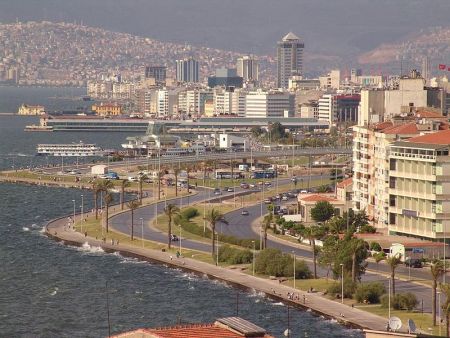
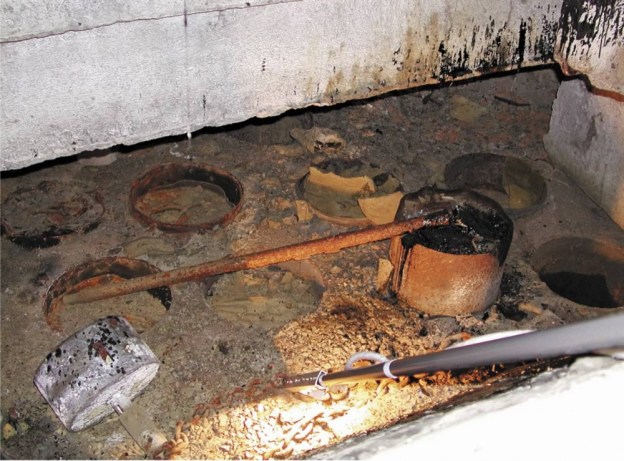
Amid growing public concern about the discovery of radioactive waste buried at an abandoned factory in Izmir (Turkey), experts have pointed out to the possibility that there could be other sites with nuclear waste imported illegally into Turkey from foreign companies that operate nuclear plants.Public concerns about radioactive and other toxic waste began after a news report appeared in the Radikal daily last week about the discovery of highly radioactive waste buried at a defunct factory on Akçay Street, the main thoroughfare running through Izmir’s Gaziemir district. The Turkish Atomic Energy Agency (TAEK), which was assigned to test the plant on Tuesday, stated that the radioactive level at the site did not constitute a dangerous situation, but they didn’t address concerns about a radioactive material that might have been brought into Turkey illegally.   The factory, situated on more than 70 acres, used old batteries and scrap lead to produce cast lead until just a few years ago.

In relation to the inspection, a former senior manager of the Izmir factory, speaking on condition of anonymity to Radikal on Thursday, confirmed the fact that the toxic waste of the factory was buried on the site in an effort to save money by not sending the waste for proper disposal. However, he didn’t comment on the possibility of nuclear materials being brought in illegally.  It was also reported that locals, particularly children playing in the vicinity, had access to the plant as the wire fencing around the factory had corroded over time.

Radikal reported that TAEK had examined the site of the factory in 2007. A radioactive substance called europium, an illegally imported element used in nuclear reactor control rods, found on the site is thought to be the source of the radioactivity, a report from TAEK showed.  A nuclear engineer at Okan University, Tolga Yarman said the radioactive element could have entered the country along with other nuclear waste, as it was illegal to keep this substance in Turkey. In fact, other sites where nuclear waste was buried have been discovered. A similar case was reported in 1987 by Professor Ahmet Yüksel Özemre, a former general director of TAEK and Turkey’s first nuclear engineer….”The ministry should have ideal staffing levels to work more closely on the detection of nuclear waste cases by complying with European Union standards, and a control mechanism should be part of this improvement,” said Ministry of Environment and Urban Planning Deputy Undersecretary Mustafa Öztürk.  Professor Öztürk warned about tons of toxic waste which is illegally buried at many other plants in different provinces around Turkey.  “Toxic waste can only be kept on site at a plant for six months provided that plant authorities take the necessary environmental precautions, and the waste should be moved to disposal centers at the end of the period stated by law. However, plants keep running while their waste is buried in the soil without taking any precautions. This is the case for many provinces, including Istanbul, Samsun, Hatay, Kayseri and Mersin,” answered Öztürk to a question about the legal regulations regarding the conservation and disposal of toxic waste.

A similar case was reported in 1987 by Professor Özemre, who received an anonymous tip that 1,150 tons of radioactive waste, which were imported from Germany, had been buried on the site of the Göltas cement factory in Isparta, a province in southwest Turkey. Özemre had also asserted, in a written document and on several television news programs, that a flour factory in Konya had burned 800 tons of toxic waste on its site in order to generate energy.  He further noted that he would not have given credit to this anonymous tip about the nuclear waste cases in Isparta and Konya if he himself had not received a similar proposal from a German firm who offered him 40 million Deutsche Mark in return for burying 4,000 tons of radioactive waste while he served as the director of TAEK. Özemre asserted that when he did not accept the German firm’s proposal, stating that he “would not let Turkey turn into a nuclear landfill,” the firm told him that the toxic waste would be buried in Turkey one way or another.

A research commission was assigned by the Turkish Parliament to check into the claim that illegal nuclear waste was buried around Isparta and had been burned in Konya. The conclusion of the commission, published in the form of general meeting minutes in 1997, showed that the factory sites did not include radioactive elements.

Excerpt, Izmir Factory Scandal Causes Concern Over Nuclear Waste Elsewhere, http://www.haberler.com, Dec. 9, 2012

Fradulent Quality Certificates for Nuclear Reactors: South Korea

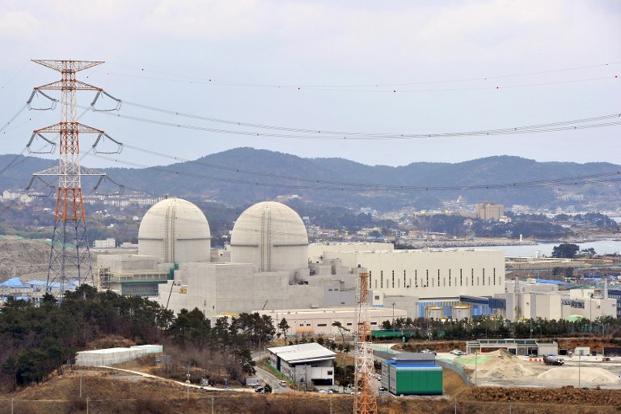
South Korea’s ambitious nuclear energy program is under intensive scrutiny and criticism after the discovery of microscopic cracks in the structure of a nuclear power plant and forgery of quality certificates vouching for thousands of components in at least two reactors.  Officials in all three major agencies responsible for monitoring the program said Friday there’s no danger to nuclear safety, but the government ordered the shutdown of the two reactors with the uncertified parts. At the same time, the head of the state company overseeing the program, Korea Electric Power Corp. has resigned for what he said were personal reasons.

A sequence of problems at a nuclear power plant on the southwestern coast fueled rising doubts about a program that’s been a centerpiece of the government’s energy policy since the first reactors went on line more than 30 years ago. Korea counts on nuclear energy for 30 percent of its electrical power, but critics are now demanding the government shut down some of the older plants and pull back from plans to build enough reactors to fulfill half the country’s power needs.  “I am worried about safety standards,” says Lee Chang-choon, who served as South Korea’s ambassador to the International Atomic Energy Agency during his long diplomatic career. “I do not have confidence and trust in the care of sensitive machinery operations.”

The trouble seemed to begin at the nuclear power plant at Yeonggwang where inspectors this week reported thousands of  “noncore components” were installed on the basis of fraudulent quality certificates. The Korea Hydro and Nuclear Power Corporation, which operates Korea’s four nuclear power plants, including 23 reactors, promised to replace all the parts by the end of the year while asking prosecutors to investigate alleged bribery.

Compounding the difficulties at the Yeonggwang plant, the ministry also reported the discovery of microscopic cracks in passages linking control rods to one of the reactors. An official at the Korea Hydro and Nuclear Power Corporation said the cracks affected warning signals on control panels but not operation of the reactors…

The underlying problem, however, is that South Korea has virtually no oil or natural gas deposits and is running out of coal. Nuclear power has long been seen as the only way to meet the demands of a growing industrial economy. Hong Suk-woon, Korea’s knowledge and economy minister, warned of severe power cuts that might affect industry and individual consumers as a result of shutdown of the two Yeonggwang reactors….

Others are still more critical. Yun Sun-jin, a professor who teaches courses on energy policy at Seoul National University, accuses the Korea Hydro Nuclear Power Corporation of placing higher priority on output with reduced emphasis on safety.  “They are decreasing the time for periodic overhaul of reactors,” she says. “They think a high operation rate means a more competitive strategy.”  She agrees with the view of the nongovernmental Korea Federation for the Environment that the government should shut down older plants and cancel plans to build new ones.  “We cannot believe nuclear power plants are safe,” says Yang-yi Won-young, in charge of the organization’s “nuclear phase-out” campaign. “The government says nuclear energy is the cheapest and cleanest, but they don’t take account of the cost of getting rid of nuclear waste.”…An official at the ministry of knowledge and economy listed 60 forged quality certificates since 2003 including more than 7,600 components, 98.4 percent of which, he says, were for the Yeonggwang plant. “These are noncore parts,” he says, including fuses, switches, and resistors that cannot be used for the core safety-related facility” and therefore “posing no threat of radiation leakage.”  The government, he adds, “will prepare and implement a comprehensive package of measures as soon as possible starting later this month to cope with the possible power shortages during this winte

Excerpts, By Donald Kirk, Cracks at South Korean nuclear plant raise safety concerns, Reuters, Nov. 9, 2012

Nuclear Waste in Egypt – illegally dumped?

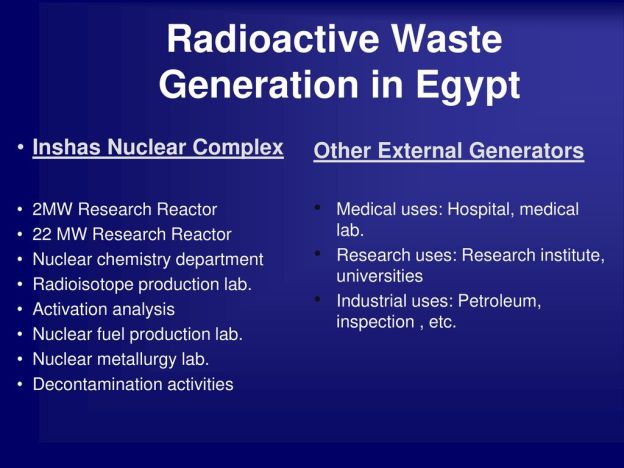
Egypt’s prosecution begins reviewing charges against ousted president Hosni Mubarak and his former prime ministers, Ahmed Nazif and Atef Ebeid, of negligently burying nuclear waste in Egypt, endangering citizens.  The lawsuit was filed by attorneys Hamed Mohamed, Nasser El-Askalani and Tarek Ibrahim, who are members of the Protection of Freedoms Committee of the Lawyers’ Syndicate.

The three lawyers accused Mubarak and his former regime of allowing Egyptian and European businessmen to bury nuclear waste in Egypt, particularily in desert areas close to the Mediterranean known as Al-Alamein and Al-Hamam. These areas are 71km and 106km, respectively, from Egypt’s second-largest city, Alexandria.  Hosni Mubarak is currently serving a life sentence for failing to prevent the killing of protesters during the 18-day uprising that led to his ouster on 11 February 2011.  In September, Nazif, who served as prime minister between 2004 – 2011, was founded guilty of abusing his political position for personal gain and was given a three-year prison sentence.

Prosecution reviews charges against Mubarak of burying nuclear waste, Ahram Online,Nov. 10, 2012

Japan and the Polluted Radioactive Water

Japan’s crippled nuclear power plant is struggling to find space to store tens of thousands of tonnes of highly contaminated water used to cool the broken reactors, the manager of the water treatment team has said.About 200,000 tonnes of radioactive water, enough to fill more than 50 Olympic-sized swimming pools, are being stored in hundreds of gigantic tanks built around the Fukushima Daiichi plant.

Operator Tokyo Electric Power Company (TEPCO) has already chopped down trees to make room for more tanks and predicts the volume of water will be more than tripled within three years.  “It’s a time-pressing issue because the storage of contaminated water has its limits, there is only limited storage space,” the water-treatment manager, Yuichi Okamura, told the AP news agency in an exclusive interview this week.  The Yotukura fishing village was one of the areas devastated by the Mar. 11, 2011 tsunami that caused the nuclear plant meltdown.

Dumping massive amounts of water into the melting reactors was the only way to avoid an even bigger catastrophe after the meltdown at TEPCO’s Fukushima Daiichi nuclear power reactor, caused by the Mar. 11, 2011 tsunami.  Okamura remembers frantically trying to find a way to get water to spent fuel pools located on the highest floor of the 50m high reactor buildings.  Without water, the spent fuel likely would have overheated and melted, sending radioactive smoke for miles and affecting possibly millions of people.

But the measures to keep the plant under control created another huge headache for the utility: What to do with all the radioactive water that leaked out of the damaged reactors and collected in the basements of reactor buildings and nearby facilities.  “At that time, we never expected high-level contaminated water to turn up in the turbine building,” Okamura said.  He was tasked with setting up a treatment system that would make the water clean enough for reuse as a coolant, and was also aimed at reducing health risks for workers and at curbing environmental damage.  At first, the utility shunted the tainted water into existing storage tanks near the reactors.

Meanwhile, Okamura’s 55-member team scrambled to get a treatment unit up and running within three months of the accident, a project that would normally take about two years, he said.  Using that equipment, TEPCO was able to circulate reprocessed water back into the reactor cores.  But even though the reactors now are being cooled exclusively with recycled water, the volume of contaminated water is still increasing, mostly because groundwater is seeping through cracks into the reactor and turbine basements….

Masashi Goto, a nuclear engineer and university lecturer, said the contaminated water build-up posed a major long-term threat to health and the environment.  He said he was worried that the radioactive water in the basements may already be getting into the underground water system, where it could reach far beyond the plant via underground water channels, possibly reaching the ocean or public water supplies.  “There are pools of some 10,000 or 20,000 tonnes of contaminated water in each plant, and there are many of these, and to bring all of these to one place would mean you would have to treat hundreds of thousands of tonnes of contaminated water which is mind-blowing in itself,” Goto said.  “It’s an outrageous amount, truly outrageous,” Goto added.

The plant will have to deal with contaminated water until all the melted fuel and other debris is removed from the reactor, a process that will easily take more than a decade.

Japan Struggling to Store Nuclear Water, Inter Press Service, Oct. 25, 2012

Nuclear Waste Island, Orchid, Taiwan

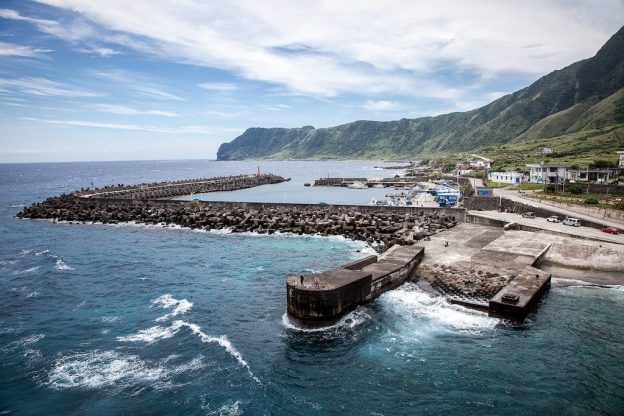
Most people on the windswept outpost, 62 kilometres east of Taiwan’s mainland, would love to see the 100,277 barrels of nuclear waste gone. But many admit they are concerned about their livelihoods if that day comes.  Orchid Island has been a flashpoint for Taiwan’s environmental movement since nuclear waste was first shipped there in 1982. Local residents, mostly members of the Tao aboriginal group, say the waste was put on the island without their consent. Periodic protests have claimed negative health and environmental effects.

In response, Taiwan Power Co has showered the community with cash handouts, subsidies, and other benefits.  Orchid Island received subsidies worth 110 million Taiwan dollars in 2011, according to company data. That doubled local government spending, according to township secretary Huang Cheng-de.  “The current situation, basically, is that Taipower gives us quite a bit of money, and our people are becoming pretty reliant,” Huang said.  Most of the funds are divided into government-managed accounts for each of the island’s 4,700 residents, who can apply for it if they have a business or career-oriented need. Residents also receive free electricity, health-related emergency evacuations, scholarships for higher education and a 50-per-cent discount on all transportation costs to Taiwan’s mainland.  Statistics indicate local residents are taking advantage of the benefits. In 2011, they used nearly twice as much electricity per household as the national average, according to company data.

Protests have weakened and for many residents, including Chou the restaurant owner, the existence of nuclear waste has become more acceptable.  “Most people here are against the nuclear waste, but since its already here, they should pay us for using our land,” Chou said. “For now, I’m okay with it as long as they don’t add any more barrels.”  The utility plans to move the waste off the island by 2021, but only if another township in Taiwan agrees by referendum to take it, according to Huang Tian-Huang, a company deputy director.  If it goes to plan, “so goes the compensation,” Huang said, although he acknowledged that gaining consent from another community will be difficult.  Questions remain on what would support Orchid Island’s economy if those subsidies end.

For Taiwan aborigines, nuclear waste is blessing and curse, http://www.timeslive.co.za, Sept. 16, 2012

Nuclear Waste Russia: Andreyeva Bay

Andreyeva Bay, the former naval technical base come solid radioactive waste storage facility has undergone many improvements, but problems also remain. Andreyeva Bay is one of the hottest radioactive spots in Northwest Russia and work deadlines are hard to meet.  Founded in between 1960 and 1964, Andreyeva Bay’s task was to remove, store and ship for reprocessing at the Ural Mountains Mayak Chemical Combine spent nuclear fuel from nuclear submarines. After a 1982 accident in the spent nuclear fuel storage, Russia Ministery of Defense decided to reconstruct the facility. But the turbulent political and economic conditions of the 1980s and 1990s scuttled the plans. Andreyeva Bay was assigned to Minatom, Rosatom’s precursor, in 2000.  The beleaguered facility, which is nearby the Norwegian border is of special concern to Oslo. Norway’s Deputy Ambassador in Moscow, Bård Svendsen, noted that the two countries had cooperated on solving the Andreyeva bay issue for many years.  “Over these years, much has been done and much remains to be done,” said Svendsen. “Norwegian authorities will continue this work, which costs some €10 million euro a year.”  According to Rosatom’s deputy head of Department for Project Implementation and Nuclear and Radiaiton Safety, Anatoly Grigorieyev, the last 10 years have seen the installation of constant radiation monitoring and significant improvements in the conditions in which radioactive waste and spent nuclear fuel is stored.  A new installation for working with spent nuclear fuel is expected to be installed at Andreyeva Bay in 2014, and by 2015 the fuel is slated for removal – the same year a facility for handling radioactive waste should be installed, he said in remarks reported by Regnum news agency.  “The work we have planned will allow for the territory to be brought up to suitable conditions within 10-15 years,” said Grigorieyev.

Vladimir Romanov, deputy director of the Federal Medical and Biological Agency, said that studies conducted by his institute confirm that the radiological conditions at Andreyeva Bay and at Gremikha – the second onshore storage site at the Kola Peninsula for spent nuclear fuel from submarines – are indeed on the mend…. According to Valery Panteleyev, head of SevRAO, the Northwest Russian firm responsible for dealing with radioactive waste Some 846 spent fuel assemblies have been taken from storage at the former naval based to the Mayak Chemical Combine for reprocessing thanks to infrastructure built for fuel unloading purposes.  Panteleyev said Gremikha still currently is home to used removable parts from liquid metal cooled reactors submarine reactors, spent fuel assemblies, a reactor from an Alpha class submarine and more than 1000 cubic meters of solid radioactive waste.  Panteleyev said that by the end of 2012, all standard and non-standard fuel will have been sent to Mayak from Gremikha. He said that between 2012 and 2020 the removable parts of the liquid metal cooled reactors would also be gone, and that during the period between 2012 and 2014, 4000 cubic meters of solid radioactive waste would also be removed to long term storage at Saida Bay.  If all goes according to schedule, the Gremikha site will be rehabilitated by 2025.

Rosatom also presented detailed reports on an international project to build long-term storage for reactor compartments at the Saida Bay storage site for aged submarine reactors.  Panteleyev said none of the achievements at either Saida Bay or Gremikha would have been possible without international help.  The projects are being completed with funding from Germany, Italy, France, Norway, Sweden, Great Britain and the EBRD.  “These countries are investing in the creation of infrastructure for handling radioactive waste and spent nuclear fuel, dismantlement of nuclear vessels of the atomic fleet and in the infrastructure for the safe storage or reactor compartments,” said Panteleyev….

Another item of special concern at the Bellona/Rosatom seminar was the disposition of the floating spent nuclear fuel vessel, the Lepse. A former technical support vessel, taken out of service in 1988 the Lepse presents the biggest nuclear and radiation risk of all retired nuclear service ships in Russia. The Lepse’s spent nuclear fuel storage holds – in casks and caissons – 639 spent fuel assemblies, a significant portion of which are severely damaged.  Extraction of these spent fuel assemblies presents special radiological risks and technical innovation. The vessel is currently moored at Atomflot in Murmansk, the base of Russia’s nuclear icebreaker fleet.  Mikhail Repin, group director for the Russian Federal State Unitary Enterprise the Federal Center for Nuclear and Radiation Safety, said work on the Lepse is divided into three categories: transfer of the vessel to the ship repair yard Nerpa in the Murmansk Region, fixing it to an assembly based, removing the spent fuel and dividing into blocks. The work is expected to be complete by 2012.  But the barriers to enacting this project, however, remain largely bureaucratic.  “One gets the impression that international and Russian bureaucrats are capable of muddling any project, as shown by the experience with the Lepse,” said Bellona’s Niktin. The project of dismantling the Lepse have remained on paper since 1995.  The Lepse was built in 1930, and the vessel has been afloat for 75 years, said Repin… The equipment necessary for removing the spent fuel assemblies must be fabricated for specifically this project. The equipment must first ensure the safety of the workers, meaning the work will have to be done essentially remotely to ensure minimum exposure.

Safety of Nuclear Fuel at Pools: From Fukushima to Yucca Mountain

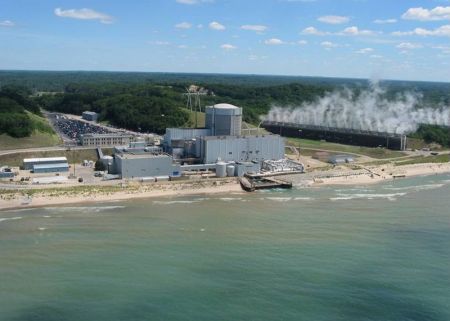
An Entergy Corp.  unit sued the U.S. for $100 million alleging the government breached a contract for disposal of nuclear waste at two plants in Michigan.  Entergy Nuclear Palisades LLC, owner of the Palisades Nuclear Plant and the Big Rock Point plant, alleged yesterday that the Energy Department collected fees under a 1983 contract without ever starting to dispose of the radioactive material. The suit is in the U.S. Court of Federal Claims in Washington.  Entergy and a previous owner of the shuttered Big Rock Point plant “have fully complied with all their fee payment obligations under the contract,” according to the complaint. “The government, however, has failed to perform its reciprocal obligation to dispose of spent nuclear fuel, and currently has no plan to meet these obligations.”

Entergy’s lawsuit is the latest legal challenge stemming from the federal government’s failure to create a central, long- term facility to store nuclear waste.  Most nuclear-plant owners continue to store spent nuclear fuel onsite despite contributing for decades into a fund meant to finance a central waste depository.

The U.S. Nuclear Regulatory Commission is freezing U.S. operating licenses for at least two years as it reassesses waste-storage risks and strategies in response to a June 8 order by the U.S. Court of Appeals in Washington.  See US Court of Appeals

Entergy Corp., based in New Orleans, is the second-largest owner of nuclear plants in the U.S.  Through June 30, Entergy and Consumers Energy Co., the former owner of Big Rock Point, have paid about $274 million into the fund under the contract, the company said. Charles Miller, a Justice Department spokesman, declined to comment on the lawsuit.

The case is Entergy Nuclear Palisades LLC v. U.S., 12-cv- 1641, U.S. Court of Federal Claims (Washington).

By Tom Schoenberg and Julie Johnsson, Entergy Sues U.S. for Failure to Dispose of Nuclear Waste, Bloomberg, Sep 27, 2012

The Hundred Defects in Nuclear Plants: Europe

Hundreds of defects have been found throughout Europe’s nuclear reactors and mostly in France, according to a EU stress test report leaked to the German and French media.  A leaked EU stress test report says it it will cost €25 billion to bring Europe’s nuclear reactors up to international saftey standards   The stress tests assess whether any of Europe’s 143 licensed nuclear power plants can withstand extreme events such as earthquakes and terrorists attacks.  The tests were introduced after the nuclear accident in Japan’s Fukushima some 18 months ago. EU energy commissioner Gunther Oettinger is to present the final report and recommendations in the upcoming EU summit on 18 and 19 October…

The European Nuclear Safety Regulators Group (Ensreg), a group of senior officials from the national nuclear regulatory authorities from all 27 member states, said on Monday (October 1, 2012) in a statement said they have yet to be informed of the content of the report.  “The commission had not made available to Ensreg any draft of the communication. However, the content of a draft was known by some Ensreg members and this draft raised major problems and concerns in Ensreg,” said the group’s chairperson Tero Varjoranta.

Meanwhile, a preview into the content by French daily Le Figaro and German daily Die Welt suggests none of France’s 58 nuclear power plants meet, to varying degrees, the international security standards outlined by the International Atomic Energy Agency (IAEA).  “For the very first time in history, we know for all the nuclear power plants in Europe whether these very high standards are actually used or not used,” said Holzner.

Nineteen French reactors have no seismic measuring instruments, says Le Figaro. The paper also notes that safety and rescue equipment in case of disaster is not adequately protected unlike at German, British and Swedish reactors.  The report does not recommend shutting down any one EU nuclear power plant, say the papers, but notes that getting them up to standard would cost some €25 billion.

National regulators carry out the initial stress tests inspections. Teams of safety experts from the EU member states and the commission then scrutinize their conclusions followed by on-site spot checks.  For its part, Belgium’s national regulator, the federal agency for nuclear control (FANC), decided to shut down two of its seven reactors in August after having discovered thousands of cracks.  The discovery of the cracks came two months after having submitted their peer-reviewed EU stress tests in April.  “Results of the stress tests are still perfectly valid. In any case they had an altogether different purpose,” said FANC at the time.

Leaked EU nuclear stress tests reveal hundreds of defects, EUobserver.com, Oct. 2, 2012

The US Campaigns of Attrition: Iran, Iraq

There is another…theory, that Iran will persist in its drive to achieve a bomb—or at least a break-out capacity to get one quickly if it so desired. The Iranians say they never trusted Mr Obama’s offer of detente early in his presidency because of the heavier sanctions and the campaigns of sabotage and assassination that accompanied the offer. In the same vein,they deplore the American administration’s recent decision to drop its longstanding classification of the exiled People’s Mujahedeen of Iran as a terrorist organisation.

So Iran’s rulers will not easily trust future pledges to lift sanctions in return for nuclear concessions. In any event, Iran’s leaders may now believe that such concessions would destroy the Islamic Republic’s credibility and open it to a recurrence of the unrest that followed Mr Ahmadinejad’s disputed re-election in 2009. So it is possible that an American policy of containment, even an undeclared one, might lead to a long campaign of attrition of the kind that impoverished Iraq in the 1990s, while leaving its leader in power.

Anticipating trouble, Iran’s hardliners have been stifling the remaining repositories of dissent as fiercely as ever. The most notable of these is Akbar Hashemi Rafsanjani, an establishment heavyweight and former president who became an opposition figurehead after the contentious poll of 2009. The two most controversial of his five children—his daughter Faezeh and his son Mehdi—have recently been arrested, undoubtedly with the approval of Iran’s supreme leader, Ali Khamenei. Mr Rafsanjani had been expected to put up a fight when Mr Khamenei tries, as he probably will, to install his own nominee as president in elections that are due next spring. But with his children behind bars, the former president may favour circumspection over principle.

Excerpt, Iran: Behind the rants, uncertainty grows, Economist, Sept. 29,2012, at 54

Nuclear Protests in India and Foreign-Funded NGOs

This week police in Kudankulam, in southern Tamil Nadu, fired at thousands of anti-nuclear protesters on the beach, killing a fisherman. The locals were opposing a new, Russian-designed, 2,000MW nuclear plant, India’s biggest, which is now being filled with fuel. The 2004 Indian Ocean tsunami killed over 10,000 Indians. Now fears grow of another big wave that could bring a Fukushima-style disaster.  Protesters also claim harassment, saying officials have slapped sedition notices against 8,000 who have dared speak out. Opposition has flared before. The state’s chief minister, Jayaram Jayalalitha, once backed the protests but has now swung in favour of the plant—perhaps betting that anger over power shortages trumps anti-nuclear outbursts.

The reaction of the national government, under the prime minister, Manmohan Singh, has been mixed. Committees of investigation called the plant safe. The High Court in Chennai heard, and ruled against, a petition by locals over safety. The Supreme Court will hear an appeal.  The government’s argument that politicians not protesters should decide the country’s energy mix is reasonable. But, twitchy at criticism, it veered off in suggesting opponents merely did the bidding of a foreign hand. Mr Singh, in an interview with a science magazine in February, blamed protests on NGOs, “mostly I think based in the United States”. A tough new law is in force, severely restricting foreign money going to local NGOs.  Mr Singh’s frostiness is best understood in the context of America’s moans that a civil-nuclear deal signed with India has not led to American investors getting energy contracts. Strict liability laws scare its private investors, whereas government-backed ones, such as Russians, feel more secure. Could Mr Singh be implying that American activists are stirring the trouble in Kudankulam because the plant is Russian-built?

Nuclear Power in India: The Kudankulam conundrum, Economist, Sept. 15,2012, at 39

The Swiss Nuke Smugglers, CIA and Libya

Three Swiss engineers are set to escape jail for nuclear smuggling, in part because they helped the CIA bust a global ring that was supplying Libya’s atomic weapons program.  Urs Tinner, his brother Marco, and their father Friedrich are accused of aiding the smuggling network of Pakistani nuclear scientist Abdul Qadeer Khan.  But according to Swiss prosecution documents released Tuesday setting out a plea bargain deal, the three also cooperated with U.S. authorities who were able to seize a shipment of nuclear equipment destined for Libya in 2003.  The CIA operation ultimately destroyed the Khan network and Libya gave up its efforts to acquire nuclear weapons.

Prosecutors say their work was hampered by the Swiss government’s decision to destroy key evidence in the case.  The plea bargain will be put before a Swiss court for approval next week.

Swiss nuke smugglers who helped CIA to escape jail, Associated Press, Sept. 18, 2012

The Nuclear Proliferation Potential of Laser Enrichment

The following is being released by Physicians for Social Responsibility:  The U.S. Nuclear Regulatory Commission (NRC) is putting U.S. nuclear non-proliferation policy at risk if it decides not to require a formal nuclear proliferation assessment as part of the licensing process for a uranium laser enrichment facility in Wilmington, N.C.  That’s the message from 19 nuclear non-proliferation experts in a letter sent today asking the NRC to fulfill its statutory responsibility to assess proliferation threats related to the technologies it regulates. The letter is available online at http://www.psr.org/nrcassessment.

Global Laser Enrichment, LLC, a joint venture of General Electric (USA), Hitachi (Japan) and Cameco (Canada), has applied for a license to operate a laser enrichment facility in Wilmington, North Carolina, based on Australian SILEX technology. The NRC licensing review schedule sets September 30, 2012 as the date of license issuance.  One of the authors of the letter, Catherine Thomasson, MD, executive director, Physicians for Social Responsibility, said:“It is a widely shared view that laser enrichment could be an undetectable stepping-stone to a clandestine nuclear weapons program. To strengthen U.S. policy and protect the U.S. and the world from nuclear proliferation, the NRC should systematically and thoroughly assess the proliferation risks of any new uranium enrichment technology BEFORE issuing a license allowing their development.”  Dr. Ira Helfand, co-president of International Physicians for the Prevention of Nuclear War, said: “If the U.S. is going to have moral authority in dealing with proliferation threats in other nations, such as Iran, it must do a better job of taking responsible steps in relation to proliferation threats in our own backyard. In fact, a persuasive case can be made that laser enrichment technology requires even more immediate action, since this is a known danger that can be addressed directly by the NRC under its existing regulatory authority.”

In the letter, the experts note that the NRC has no rules or requirements for a nuclear proliferation assessment as part of this licensing process. The experts are concerned that the Commission is falling short in its duties since a 2008 NRC manual on enrichment technology clearly states that laser enrichment presents “extra proliferation concerns due to the small size and high separation factors.”

Previous letters to the NRC asking for a proliferation assessment, signed by many of today’s signatories, have been rebuffed. NRC is on record stating that the National Environmental Policy Act does not require preparation of a proliferation assessment. However, a March 27, 2012 memorandum from the Congressional Research Service clearly concludes that the NRC has legal authority “to promulgate a regulation” requiring a proliferation assessment as part of the licensing process.  Both the Nuclear Non-Proliferation Act of 1978 and the Atomic Energy Act are cited by the experts as statutory basis of the NRC’s responsibility to assess proliferation risks.

Excerpt, 19 Experts: Nuclear Proliferation Risks Of Laser Enrichment Require Fuller NRC Review, PRNewswire, Sept 5, 2012

Canada and its Nuclear Waste

Since the 1960s,  Canada’s nuclear power plants have generated more than two million bundles of highly radioactive used fuel. And they’re all still stored on the sites of the plants that produced them.But the pace of finding a site to store Canada’s most potent radioactive waste permanently is about to pick up.  Twenty Canadian communities have said they’ll consider volunteering to host the storage site.  That list is about to close. The Nuclear Waste Management Organization, whose job it is to find and build the site, will stop taking new names on Sept. 30, 2012.  The impending cut-off is ratcheting up the pressure on the technocrats charged with selecting a site; on the boosters who want to snare the multi-billion-dollar repository for their community; on the activists who harbour deep suspicions about safety; and on the aboriginal leaders who say they’ve been cut out of the process….

A fuel bundle for a Candu nuclear power reactor is about the size of a fireplace log. As of June 30, 2011, Canada had 2,273,873 used fuel bundles stored at its nuclear plants in Ontario, Quebec and New Brunswick.  Another 85,000 or so have been added since then.  In total, they’d fill about six NHL hockey rinks, stacked up as high as the boards.

The Nuclear Waste Management Organization, formed by the three electric utilities that run nuclear reactors, wants to bury the waste deep underground in caverns excavated from stable rock, where it can lie undisturbed forever.  The depth will probably depend on the site’s geology. A facility proposed to hold less-potent radioactive waste at the Bruce nuclear site near Kincardine will be 680 metres deep. By comparison, the CN Tower is 553 metres tall.  The NWMO is looking for a “willing” community to agree to take the $16-to-$24-billion project. The host community itself will decide how to define “willing.” Candidate communities will have multiple opportunities to withdraw if they get cold feet, the NWMO says.  As it moves through a nine-stage selection process, the NWMO hopes to have narrowed the field to one or two communities by 2015, then spend until about 2020 deciding on a specific site within the chosen community.  After that, it will take three to five years to do an extensive environmental assessment of the site. The proponents will also have to satisfy the Canadian Nuclear Safety Commission that their plan makes sense, and obtain a license to construct and operate the facility.  Then, it will take six to 10 years to build. The NWMO doesn’t expect the first bundles to be stored until 2035.  The plan is to seal the waste in sturdy, radiation-proof containers and store it deep in a stable rock formation where — even if the containers were to crack and leak — there’s be no danger of contaminating groundwater used by humans. (Although that’s the current strategy, the NWMO says it would consider a different plan if compelling evidence emerged that another technique is superior.)

Current designs call for surface buildings and facilities to cover about 100 hectares (250 acres), says the NWMO’s Michael Krizanc.  “As well, there may be a need to limit activities in the immediate area surrounding the surface facilities in order to meet regulatory or other requirements.”  Underground, the excavated caverns will cover an area of about 2.5 kilometres by 1.5 kilometres. That’s 375 hectares, or 930 acres.  “The NWMO would need to have rights to the land above the repository,” says Krizanc, but “alternative uses could be considered, with the community, for portions of the land.”….

Meanwhile in Saugeen Shores, a lively battle is under way as members of a citizens group dubbed save Save Our Saugeen Shores, or SOS, fights what they see as an attempt to impose the waste site on their community on the shore of the Great Lakes….SOS also worries that U.S. power plants might be able to force Canada to take U.S. nuclear waste in a Canadian waste site, through terms of the free trade agreement between the countries…..Up in Elliot Lake, contractors Stephen Martin and Marc Brunet can’t wait for the project to start….Elliot Lake has been identified with uranium since its founding, he shrugs: “We’re the uranium capital of the world…. This thing will be a tourist attraction. I think it’s the best thing that could happen.”

John Spears, Nuclear waste seeks a home, Toronto Star, Sept. 1, 2012

For the Fear of Iran: The Nuclear Power in the Gulf

Saudi Arabia is pressing ahead with its ambitious plans to develop nuclear power to meet rising electricity demand and save oil for export.  But the outlook for other Arab states is less promising because of political turmoil and a lack of financial resources.  The Saudis have built a foreign assets cushion of around $500 billion from oil exports. It has used this immense wealth to buy its way out of trouble; for instance, heading off pro-democracy protests with massive social spending in recent years.  But, the Middle East Economic Digest observed, “a more serious set of challenges now faces the kingdom that threaten to be even more destabilizing.  “Inefficient and wasteful energy consumption, coupled with a rising population, is leading the kingdom to burn even more of its natural resources at home rather than selling them abroad and adding to the proceeds of the half-trillion-dollar cash pile.  “Unless action is taken, the kingdom could find it needs the oil price to be $320 a barrel by 2030 just to balance the budget,” the weekly, published in the United Arab Emirates, warned.  Nuclear power is seen as the solution. But, as MEED stressed, “time is of the essence.”

For one thing, Saudi Arabia and other Arab states, including the United Arab Emirates, Kuwait, Qatar and Egypt, have no wish to lag any further behind Iran and Israel in developing nuclear technologies.  In 2010, the King Abdallah Center for Atomic and Renewable Energy, known as KAcare, was established to oversee the gulf state’s nuclear program under its president, Hashim bin Abdullah Yamani, who was accorded ministerial powers.  KAcare consultant Ibrahim Babelli said in 2010 it took 3.4 million barrels of oil equivalent a day — known as boe/d — to power electricity generation. This is expected to more than double by 2028 to 8.3 million boe/d.

The aim of the Saudis’ $100 billion nuclear program is to achieve an electricity output of 110 gigawatts by 2032.  The Financial Times reports that in 2009, the latest data available, Saudi electricity capacity was 52GW from 79 power stations.  At least 16 nuclear reactors, each costing around $7 billion, are planned, with the first producing by 2019.  Some estimates state the kingdom, the world’s largest oil exporter, will burn as much as 1.2 million barrels of oil daily on electricity production, almost double the 2010 total, to meet domestic and industrial demand.  This is crucial, as the Saudis are driving to build an industrial infrastructure to sustain the economy when the oil fields run down. Some have already begun to decline.  For total reliance on nuclear power, Babelli says, 40-60 reactors would be needed by 2030. That’s four-six reactors per year from 2020.  “That’s stretching it,” he said. “The answer is an energy mix.”

That means fossil fuels will still be needed, probably as the primary energy source, while wind, solar and nuclear power capabilities are developed. KAcare is developing solar power projects that MEES estimates should produce 41GW within 20 years with geothermal and waste-to-energy systems providing 4GW.  The Emirates, which launched its nuclear energy program in 2009, is the most advanced in the Arab world, with Saudi Arab running second.  The United Arab Emirates’ $30 billion program — $10 billion more than originally planned — is smaller in scale than that in Saudi Arabia.  Both states benefit from political stability and vast financial reserves. Other regional states are less fortunate.

Bahrain, Qatar, Kuwait, Egypt and Jordan all have announced plans to invest in nuclear energy to crank up electricity generation but all have lagged behind or scrapped their programs because of lack of funds or foreign investment.  “Kuwait has the cash,” MEED reported, “but it’s been through eight governments in the past six years.”  Sunni-ruled Bahrain, an island state neighboring Saudi Arabia, “continues to face destabilizing protests by its majority Shiite population and its budget is already in deficit.”  Egypt remains convulsed by the political turmoil that ensued following the February 2011 overthrow of President Hosni Mubarak, its economy sagging dangerously.  In Jordan, heavily reliant on foreign aid, parliament recently scrapped nuclear plans as “hazardous and costly.”  Failure to start boosting electricity generation for burgeoning populations in the coming decades almost certainly will mean more political upheavals.

Saudis, Emirates push nuclear power plans, UPI,July 26, 2012
How to Falsify Radiation Levels: Japan

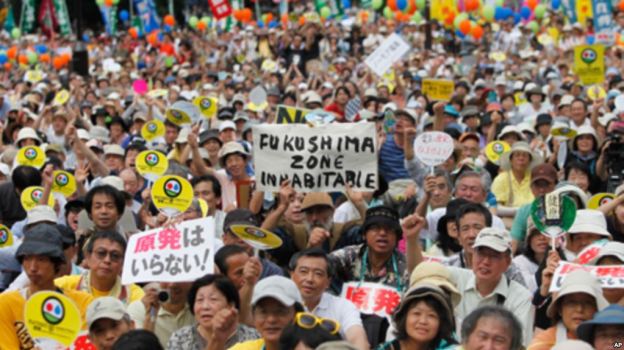
Japan’s Ministry of Health, Labor and Welfare is investigating a report that workers at the damaged Fukushima Daiichi nuclear power plant were told to use lead covers in order to hide unsafe radiation levels, an official said.The alleged incident happened December 1, nine months after a major earthquake and tsunami ravaged northern Japan and damaged the plant.”We’ll firmly deal with the matter once the practice is confirmed to constitute a violation of any law,” said the ministry official, who could not be named in line with policy.  An official with the plant’s operator, TEPCO, said the company received a report of the alleged incident Thursday from subcontractor Tokyo Energy & Systems. The report said a second subcontractor, Build-Up, created the lead covers and ordered workers to use them over their dosimeters, pocket-size devices used to detect high radiation levels.The TEPCO official could also not be named in line with policy.  okyo Energy & Systems said in its report that the workers never used the covers, the TEPCO official said. Japan’s Asahi Shimbun newspaper, however, reported Saturday that while some workers refused the orders to use the lead covers, nine others did use them for several hours.

The newspaper’s report cited plant workers, who described the lead covers as fitting snugly over the dosimeters inside the breast pockets of the workers’ protection suits.

TEPCO told CNN it ordered Tokyo Energy & Systems Inc. to conduct an investigation and is awaiting a reply.

Report: Japan nuclear workers told to hide radiation levels, CNN, July 21, 2012