Tag Archives: China and Congo

Shut Up and Give Up: How to Deal with Environmental Disasters

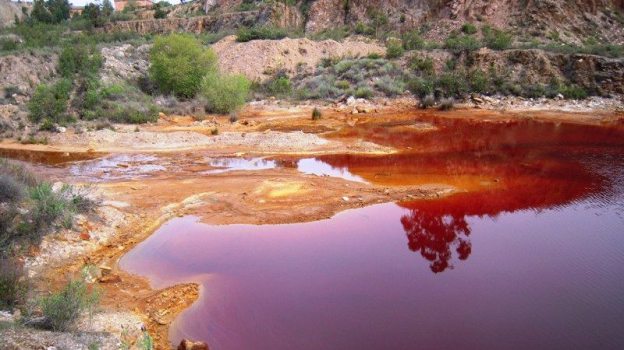
The worst day of Bathsheba Musole’s life was February 18, 2025. It started with a deafening crash when the 30-foot wall around a toxic-waste pool collapsed at the Chinese copper mine above her village. A poisonous river of a stinking yellow liquid rushed downhill, inundating homes and fields, including the one where she grew corn to feed her eight children. The floodwater, laden with cyanide and arsenic, rose chest-high. “I thought I would drown,” said Musole, 48 years old, in a recent interview.

In August 2025, months after the Feb. 18, 2025 disaster, officials from Sino Metals, a unit of the state-owned China Nonferrous Mining Corp., showed up at Musole’s half-acre farm, which the Zambian government says is too toxic to sustain crops for at least three years. They were there to make things right, she recalled them saying. Their offer was $150, but it came with a catch. To get the money, she would have to agree never to talk about the spill, take legal action against Sino Metals or even reveal the contents of the nondisclosure agreement itself…

Zambia’s government and economy.. have grown reliant on China. Zambia collects about $2 billion a year in mining taxes, mostly from Chinese mining companies. Half of the copper mined in Zambia, much of it by Chinese companies, is exported to China. In 2024, the Zambian government announced that Chinese miners would invest $5 billion in the country by 2031…

After months of investigation, Drizit Environmental, a South African firm contracted by Sino Metals, concluded that 1.5 million tons of toxic waste had overflowed into the Kafue valley, 30 times what the company had said. Sino Metals terminated the firm’s contract a day before the final report was due…

Excerpt from Nicholas Bariyo, China Pushes to Silence Victims of African Mining Disaster, WSJ, Oct. 27, 2025

Get Down and (Very) Dirty: How to Break Free from China’s Grip on Rare Earths and Minerals

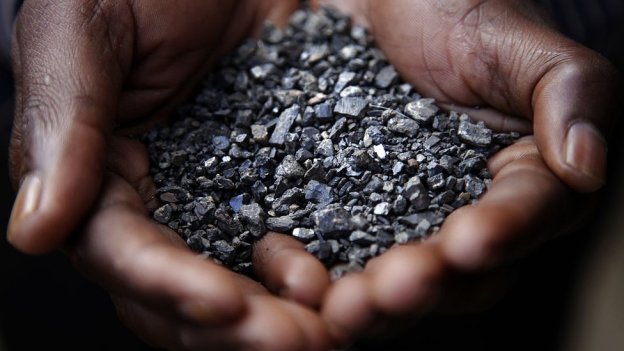
The Biden administration held talks with three firms in the fall of 2024 about purchasing one of the world’s largest non-Chinese cobalt producers…The talks over Chemaf, a mining company based in the Democratic Republic of Congo, are part of a push by the administration to secure global supplies of a metal used in everything from jet fighters and drones to electric-vehicle batteries. For more than a decade, Chinese companies have spent billions of dollars buying out U.S. and European miners in Congo, which produces nearly 75% of the world’s cobalt supply. That has put China in a dominant position in both the production and processing of the mineral.

It has been difficult for the U.S. government to interest American investors in any sector in Congo because of the country’s poor infrastructure, limited skilled labor, resource nationalism and reputation for government corruption. U.S. government officials have spoken with mining and artificial-intelligence company KoBold Metals, copper miner First Quantum Minerals and investment firm Orion Resource Partners about participating in a deal to acquire Chemaf, either separately or jointly…

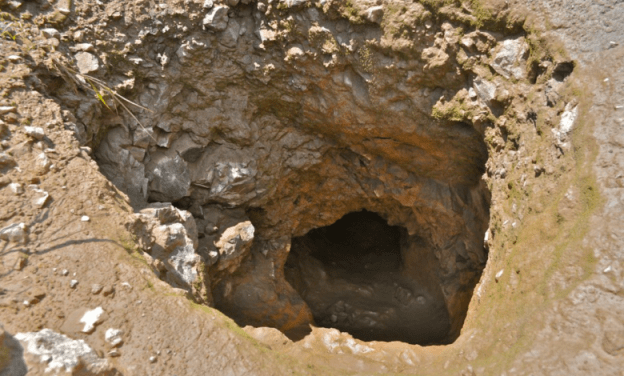
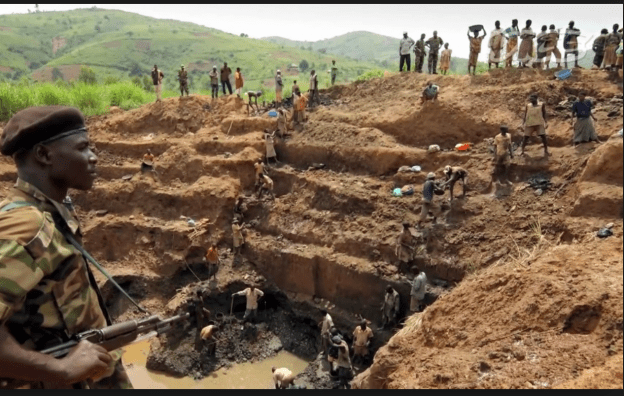
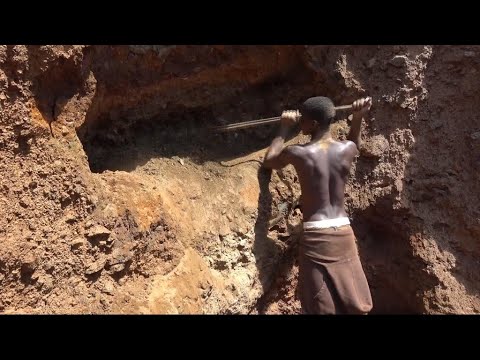
Chemaf, which says its mines could produce 20,000 tons of cobalt annually—making it one of the world’s largest cobalt producers—was put up for sale in 2023 by its founder, Shiraz Virji…When The Wall Street Journal visited Chemaf’s Mutoshi mine in 2018, freelance Congolese miners could be seen descending underground without helmets, shoes or safety equipment. Miners were using picks, shovels and bare hands to unearth rocks rich with the metal. Water sometimes rushed into holes and drowned people, and an earth mover buried one alive, said local workers and mine officials…

In June 2024, Chemaf agreed to sell itself to Chinese state-backed Norin Mining. Shortly after, U.S. pressure helped block the sale

Excerpts from  Alexandra Wexler and Julie Steinberg, How the U.S. Is Trying to Challenge China’s Cobalt Chokehold, WSJ, Oct. 15, 2024

How Murder, Torture and Rape Fuel the Technological Revolution

Congo is the world’s leading producer of coltan, from which tantalum is extracted. Tantalum is in hot demand because of its growing use in consumer products, from smartphones to laptops and it is critical for the defense industry (e.g., Apple iPhones, SpaceX rockets, IBM computers).

Coltan is mined in the country’s restive east, a region that has been engulfed in a decadeslong war between rebel groups and the Congolese army…A powerful militia backed by neighboring Rwanda has taken over swaths of eastern Congo, driving some two million people from their homes as fighters kill, torture and rape civilians. The militia, known as M23, has also seized control of Congo’s coltan production and transport, according to United Nations investigators, supply-chain experts, researchers and local traders. 

Now, a network of smuggling routes is increasingly being used to move ore illegally from militia-controlled mines in eastern Congo to neighboring Rwanda. From there, it is sold as Rwandan, and hence “conflict-free,” to smelters around the world, but primarily in China. 

M23 fighters levy taxes on informal coltan miners, who dig the ore from the ground, mostly by hand. The fighters also tax the movement of coltan, providing the militia with revenue to purchase weapons and other supplies. Overall, the trade generates around $300,000 a month for the fighters, according to Bintou Keita, the head of the U.N. mission in Congo….U.S. lawmakers have sought to prevent minerals commonly mined in eastern Congo—tin, tungsten, tantalum and gold—from financing conflict in the region. Legislation embedded in the 2010 Dodd-Frank Act requires U.S.-listed companies to disclose their use of the minerals, known as the 3TGs, as well as steps they are taking to prevent inadvertently financing armed groups. It doesn’t, however, oblige companies to remove potentially tainted materials from their supply chains…

Other armed groups are also profiting from the illegal coltan trade, including an alliance of militias that is helping the Congolese military fight M23, according to rights groups and U.N. researchers. The alliance, known as the Wazalendo, which U.N. investigators say is armed by Congo’s military, includes groups that are under international sanctions for war crimes. M23 and the Wazalendo are both recruiting child soldiers, raping women and girls, looting, murdering civilians and committing other atrocities, according to rights groups and U.N. investigators. Like M23, the Wazalendo are collecting illegal taxes on coltan at roadblocks along transportation routes, as well as from some mining sites. 

Excerpt from Alexandra Wexler, How This Conflict Mineral Gets Smuggled Into Everyday Tech,  WSJ, Oct. 6, 2024

What Ails the West: the Forgotten Art of Industrialization

For the past few years, the West has been trying to break China’s grip on minerals that are critical for defense and green technologies. Despite their efforts, Chinese companies are becoming more dominant, not less. They are expanding operations, supercharging supply and causing prices to drop. Their challengers can’t compete. Take nickel, which is needed for electric-vehicle batteries. Chinese processing plants that dot the Indonesian archipelago are pumping out vast quantities of the mineral from new and expanding facilities, jolting the market. Meanwhile, Switzerland-based mining giant Glencore is suspending operations at its nickel plant in New Caledonia, a French territory, concluding it can’t survive despite offers of financial help from Paris. The U.K.’s Horizonte Minerals, whose new Brazilian mine was expected to become a major Western source, said last month that investors had bailed, citing oversupply in the market. Lithium projects in the U.S. and Australia have been postponed or suspended after a surge in Chinese production at home and in sub-Saharan Africa. 

The only dedicated cobalt mine in the U.S. also suspended operations last year, five months after local dignitaries attended its opening ceremony. Its owners say they are struggling against a flood of Chinese-produced cobalt from Indonesia and the Democratic Republic of Congo.

Last year, non-Chinese production of refined cobalt declined to its lowest level in 15 years… The share of lithium mining done within China or by Chinese companies abroad has grown from 14% in 2018 to 35% this year… Over the same time, lithium processing done within China has risen from 63% in 2018 to 70%…China has many advantages in the race to lock up minerals. Its miners are deep-pocketed and aggressive, making bets in resource-rich countries that Western companies have long viewed as corrupt or unstable, such as Indonesia, Mali, Bolivia and Zimbabwe. State banks provide financing for power plants and industrial parks abroad, paving the way for further private Chinese investment.

China’s rapid industrial development also means its companies have spent decades fine-tuning the art of turning raw ore into metals. They can set up new facilities quickly and cheaply. A paper published in February by the Oxford Institute for Energy Studies pegs the costs of building a lithium refinery outside China as three to four times higher than building one within the country. In eastern Indonesia, Chinese companies have built a fleet of highly efficient nickel and cobalt plants over the past few years after mastering a technology Western miners long considered glitchy and expensive. The plants run on coal power, some of it new, at a time when the world is looking to phase out dirty energy. “It’s just a simple, straightforward engineering capability that the Chinese have that has been lost in the rest of the world,” said Jim Lennon, managing director for commodities strategy at Macquarie, an Australian bank. “The Chinese have this overwhelming competitive advantage now that can’t really be addressed.”….

Excerpts from Jon Emont, China Is Winning the Minerals War, WSJ, June 19, 2024

At Gunpoint in Congo: Is Coltan Worse than Oil?

Tantalum, a metal used in smartphone and laptop batteries, is extracted from coltan ore. In 2019 40% of the world’s coltan was produced in the Democratic Republic of Congo, according to official data. More was sneaked into Rwanda and exported from there. Locals dig for the ore by hand in Congo’s eastern provinces, where more than 100 armed groups hide in the bush. Some mines are run by warlords who work with rogue members of the Congolese army to smuggle the coltan out.

When demand for electronics soared in the early 2000s, coltan went from being an obscure, semi-valuable ore to one of the world’s most sought-after minerals. Rebels fought over mines and hunted for new deposits. Soldiers forced locals to dig for it at gunpoint. Foreign money poured into Congo. Armed groups multiplied, eager for a share.

Then, in 2010, a clause in America’s Dodd-Frank Act forced American firms to audit their supply chains. The aim was to ensure they were not using minerals such as coltan, gold and tin that were funding Congo’s protracted war. For six months mines in eastern Congo were closed, as the authorities grappled with the new rules. Even when they reopened, big companies, such as Intel and Apple, shied away from Congo’s coltan, fearing a bad press.

The “Obama law”, as the Congolese nickname Dodd-Frank, did reduce cash flows to armed groups. But it also put thousands of innocent people out of work. A scheme to trace supply chains known as ITSCI run by the International Tin Association based in London and an American charity, Pact, helped bring tentative buyers back to Congo.  ITSCI staff turn up at mining sites to see if armed men are hanging about, pocketing profits. They check that no children are working in the pits. If a mine is considered safe and conflict-free, government agents at the sites put tags onto the sacks of minerals. However, some unscrupulous agents sell tags on the black market, to stick on coltan from other mines. “The agents are our brothers,” Martin says. It is hard to police such a violent, hilly region with so few roads. Mines are reached by foot or motorbike along winding, muddy paths.

For a long time those who preferred to export their coltan legally had to work with itsci, which held the only key to the international market. Miners groaned that itsci charged too much: roughly 5% of the value of tagged coltan. When another scheme called “Better Sourcing” emerged, Congo’s biggest coltan exporter, Société Minière de Bisunzu, signed up to it instead.

Excerpts from Smugglers’ paradise: Congo, Economist, Jan. 23, 2021

Living in the World of Tesla: Cobalt, Congo and China

 A 20% rise in the price of cobalt since the beginning of 2021 shows how the rush to build more electric vehicles is stressing global supply chains. 

A majority of the world’s cobalt is mined in the Democratic Republic of the Congo in central Africa. It typically is carried overland to South Africa, shipped out from the port of Durban, South Africa, and processed in China before the material goes to battery makers—meaning the supply chain has several choke points that make it vulnerable to disruption…

Car and battery makers have been looking for more control over their cobalt supply and ways to avoid the metal altogether. Honda Motor Co. last year formed an alliance with a leading Chinese car-battery maker, Contemporary Amperex Technology Ltd. , hoping that CATL’s supply-chain clout would help stabilize Honda’s battery supply..

Meanwhile, China plays a critical role even though it doesn’t have significant reserves of cobalt itself. Chinese companies control more than 40% of Congo’s cobalt-mining capacity, according to an estimate by Roskill, the London research firm…China’s ambassador to Congo was quoted in state media last year as saying more than 80 Chinese enterprises have invested in Congo and created nearly 50,000 local jobs…

To break China’s stronghold, auto makers and suppliers are trying to recycle more cobalt from old batteries and exploring other nations for alternative supplies of the material.  Another reason to look for alternatives is instability in Congo and continuing ethical concerns about miners working in sometimes-harsh conditions with rudimentary tools and no safety equipment.

Excerpt from Yang Jie, EV Surge Sends Cobalt Prices Soaring, WSJ, Jan. 23, 2021

The Plight of Electric Cars: Cobalt Batteries and Mining

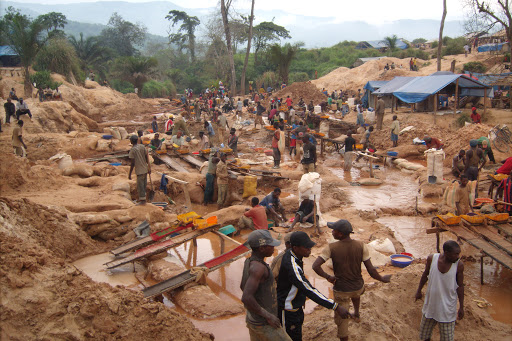
About 60% of the world’s cobalt is found in Congo, scattered across the copperbelt that stretches east into Zambia. The people of Kawama, Gongo grumble that too much land has been sold to mining firms. “We used to dig freely,” says Gerard Kaumba, a miner. “But now the government has sold all the hills.” There are still some sites where miners can turn up and dig, but they have to sell to whoever owns the concession. A sweltering day’s work might earn you $7. Many people have found they can make more at night, pilfering cobalt from industrial mines.

Glencore, a commodities giant with two mines in Congo, reckons that some 2,000 people sneak into its pits every day. Other companies have even more robbers to contend with. In 2019 Congolese soldiers chased thieves out of a mine owned by China Molybdenum where, it was reckoned, 10,000-odd people were then illegally digging. Sneaking into Glencore’s mines is hardest, says a Kawaman, as its guards do not collude with thieves—and often chase them away with dogs.

Congo’s industrial miners are not all angels.  Gécamines, the state-owned company, has enriched crooked politicians for half a century. Global Witness, a watchdog based in London, says Congo’s treasury lost $750m of mining revenues to graft between 2013 and 2015. ENRC, which has mines in Congo, has faced allegations of corruption and an investigation by Britain’s Serious Fraud Office (it denies wrongdoing). So has Glencore, which has worked with Dan Gertler, an Israeli billionaire. Mr Gertler, a close friend of a former Congolese president, Joseph Kabila, is under American sanctions… 

While big firms rake in millions, many of the little guys languish in jail. The prison in Kolwezi, the largest city in the mining region, is crammed with men caught stealing copper and cobalt. More than a hundred inmates occupy one stinking room, sitting in rows on the ground, each wedged between another’s legs. Prissoners are allowed to use the toilet only once a day, so they often urinate in their clothes

Excerpt from Cobalt blues: In Congo the little guys are jailed for stealing minerals. Economist, Oct. 17, 2020

The Global Gold Rush and Plunder of Congo

Since March 2020, record amounts of gold dug from artisanal mines in the conflict zones of Eastern Congo have been smuggled across the porous border with Uganda, where it is being stamped with fake certifications before being shipped to international markets in Dubai, Mumbai and Antwerp, according to Ugandan security officials, smugglers and traders. Much of the gold is reaching these overseas markets using cargo planes returning from Uganda after delivering Covid-19 aid and other essential supplies, according to plane manifests seen by The Wall Street Journal.

The trade in conflict gold isn’t new, but it has perhaps never been more lucrative: Gold prices at illegal and unregulated Congolese mines, where supply chains have been disrupted by coronavirus shutdowns and renewed violence between militant groups, have dropped over 40% since April 2020, according to local traders, while on global markets, prices are up by almost a third…Activists and U.N. investigators have long accused Uganda and several of Congo’s neighbors of being complicit in the plunder of Congolese gold…The calls to end the illicit trade grew louder last year after Uganda’s gold exports overtook coffee to become the leading export commodity for the first time—despite the country producing very little bullion.

U.N. investigators estimate that each month between 2 tons and 3 tons of Congo’s conflict gold—with a market value of over $100 million—is crossing the Ugandan frontier, passing border crossings patrolled by heavily armed guards, with metal fencing and razor wire erected to reduce the flow of people due to coronavirus fears…

Smugglers and police say the gold is secreted in trucks that are allowed to bypass coronavirus restrictions to deliver “essential goods” from fuel to food supplies. The yellow bars, weighing between 5 to 20 kilograms, are stuffed underneath truck cabins, inside battery compartments and emptied gasoline tankers. Once inside Uganda, the truckers sell the bars to traders who purchase forged documents in Kampala that disguise the gold’s origin.

The scramble is fueling violence in the eastern Congolese province of Ituri…Fresh spasms of violence have left more than 1,300 civilians dead since March 2020, in what the U.N. says may amount to war crimes. Some six million people are displaced. Armed groups are carrying out predatory raids on mines in search of gold.

In the meantime on Wall Street, on July 24, 2020, gold futures were priced at $1,897.50 a troy ounce eclipsing their August 2011 peak of $1,891.90. The coronavirus has ignited a global gold rush, with physical traders around the world trying to get their hands on more metal and individuals around the world ordering bars and coins.

Excerpts from Nicholas Bariyo and Joe Parkinson, Under Cover of Coronavirus Lockdown, a Booming Trade in Conflict Gold, WSJ, July 9, 2020, Gold Climbs to a High, Topping Its 2011 Record, WSJ, July 24, 2020

Congo, China and Battery Minerals

The demand of cobalt is bound to increase because of the batteries needed to power  electric vehicles (EVs).  Each battery uses about 10kg of cobalt. It is widely known that more than half of the world’s cobalt reserves and production are in one dangerously unstable country, the Democratic Republic of Congo. What is less well known is that four-fifths of the cobalt sulphates and oxides used to make the all-important cathodes for lithium-ion batteries are refined in China. (Much of the other 20% is processed in Finland, but its raw material, too, comes from a mine in Congo, majority-owned by a Chinese firm, China Molybdenum.)

On March 14t, 2018 concerns about China’s grip on Congo’s cobalt production deepened when GEM, a Chinese battery maker, said it would acquire a third of the cobalt shipped by Glencore, the world’s biggest producer of the metal, between 2018 and 2020—equivalent to almost half of the world’s 110,000-tonne production in 2017. This is likely to add momentum to a rally that has pushed the price of cobalt up from an average of $26,500 a tonne in 2016 to above $90,000 a tonne

South Korean and Japanese tech firms and it’s a big concern of theirs that so much of the world’s cobalt sulphate comes from China. Memories are still fresh of a maritime squabble in 2010, during which China restricted exports of rare-earth metals vital to Japanese tech firms. China produces about 85% of the world’s rare earths.

Few analysts expect the cobalt market to soften soon. Production in Congo is likely to increase in the next few years, but some investment may be deterred by a recent five-fold leap in royalties on cobalt. Investment elsewhere is limited because cobalt is almost always mined alongside copper or nickel. Even at current prices, the quantities needed are not enough to justify production for cobalt alone.

But demand could explode if EVs surge in popularity… the use of cobalt for EVs could jump from 9,000 tonnes in 2017 to 107,000 tonnes in 2026.  The resulting higher prices would eventually unlock new sources of supply. But already non-Chinese battery manufacturers are looking for ways to protect themselves from potential shortages. Their best answer to date is nickel.

The materials most commonly used for cathodes in EV batteries are a combination of nickel, manganese and cobalt known as NMC, and one of nickel, cobalt and aluminium known as NCA. As cobalt has become pricier and scarcer, some battery makers have produced cobalt-lite cathodes by raising the nickel content—to as much as eight times the amount of cobalt. This allows the battery to run longer on a single charge, but makes it harder to manufacture and more prone to burst into flames. The trick is to get the balance right.

Strangely, nickel has not had anything like cobalt’s price rise. Nor do the Chinese appear to covet it… Nickel prices plummeted from $29,000 a tonne in 2011 to below $10,000 a tonne 2017…. But by 2025 McKinsey expects EV-related nickel demand to rise 16-fold to 550,000 tonnes.

In theory, the best way to ensure sufficient supplies of both nickel and cobalt would be for prices to rise enough to make mining them together more profitable. But that would mean more expensive batteries, and thus electric vehicles.

Excerpts from The Scramble for Battery Minerals, Economist, Mar. 24, 2018

Fleas in the Barn: a Joseph Kabila et al. story

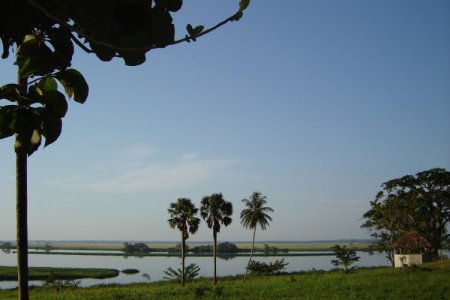
Inongo is the provincial capital of the Mai-Ndombe Province, a 13-million-hectare area located some 650 km northeast of Kinshasa, Demoractic Republic of Conglo, DRC.

The forests of Mai-Ndombe… are rich in rare and precious woods (red wood, black wood, blue wood, tola, kambala, lifake, among others). It is also home to about 7,500 bonobos, an endangered primate…The forests constitute a vital platform providing livelihoods for some 73,000 indigenous individuals, mostly Batwa (Pygmies), who live here alongside the province’s 1.8 million population, many of whom with no secure land rights.  Recent studies also have revealed that the province – and indeed the forests – boasts significant reserves of diamond of precious metals nickel, copper, oil and coal, and vast quantities of uranium lying deep inside the Lake Mai-Ndombe.

In an effort to save these precious forests, the World Bank in 2016 approved DRC’s REDD+ programmes aimed at reducing greenhouse gas emissions and fight forest’s deforestation and degradation, which it would fund to the tune of 90 million dollars annually.  The projects, which are currently estimated at 20, have since transformed the Mai-Ndombe Province into a testing ground for international climate schemes. And as part of the projects, indigenous and other local people caring for the forests and depending on them for their livelihoods were supposed to be rewarded for their efforts.

However, Marine Gauthier, a Paris-based expert who authored a report on the sorry state of the Mai-Ndombe forest, seems to have found serious flaws in these ambitious programmes.  The report, released a few days before the International Day of Forests on March 21, 2018 by the Rights and Resources’ Initiative (RRI), cited weak recognition of communities’ land rights, and recommended that key prerequisites should be addressed before any other REDD+ funds are invested.  In the interim, it said, REDD+ investments should be put on hold…..

Under the DRC’s 2014 Forest Code, indigenous people and local communities have the legal right to own forest covering an area of up to 50,000 hectares.Thirteen communities in the territories of Mushie and Bolobo in the Mai-Ndombe province have since asked for formal title of a total of 65,308 hectares of land, reports said, adding that only 300 hectares have been legally recognised for each community – a total of only 3,900 hectares.

Pretoria-based Donnenfeld added: “My guess is that the government is more interested in selling these resources to multinationals than it in seeing it benefit the community….Gauthier pointed out that…“REDD+ opens the door to more land-grabbing by external stakeholders appealed…. Local communities’ land rights should be recognised through existing legal possibilities such as local community forest concessions so that they can keep protecting the forest, hence achieving REDD+ objectives.”

Excerpts from DR Congo’s Mai-Ndombe Forest ‘Savaged’ As Landless Communities Struggle,  IPS, Apr. 17, 2018

China and its Collaborators in Africa

Congolese critics accuse Sassou-Nguesso [President of Congo] of using the Chinese-backed building boom to move from his ‘authoritarian-authoritarian’ model to something nearer the ‘developmental authoritarian’ style of Rwanda’s President Paul Kagame. However, Sassou-Nguesso was in triumphant mode as he inaugurated a spate of Chinese construction projects in the country’s hinterland on 14-18 May. These projects are intended to bring the benefits of oil-backed growth to regions previously isolated from the bustling cities of Brazzaville and Pointe-Noire.  Now known locally as ‘The Cutter of Ribbons’, Sassou-Nguesso is using oil money and plans to develop Congo-Brazzaville’s mineral resources to shape a new relationship with China. Once a key commercial and diplomatic ally of France, Sassou-Nguesso’s headlong rush to Beijing coincides with the election of President François Hollande. Hollande’s African policy team promises to break with the old Françafrique networks. Among their advisors is the activist lawyer William Bourdon, who has been pursuing a case against Sassou-Nguesso in France for stealing Congolese state assets…..

From fibre-optic installation and new dams to more than 1,000 kilometres of paved roads, companies like China Road and Bridge Corporation and China State Construction Engineering Corporation have quietly landed most of the major contracts issued by the Brazzaville government.  That means large profits and more deals to come.

Congo-Brazzaville, for so long the preserve of European companies, is drawing serious attention from China. The two countries have signed deals to develop special economic zones, build a new oil port and revamp an ageing refinery. For the Chinese investors, the lure is Congo-Brazzaville’s rich but under-exploited resource base. Having relied for decades on offshore oil riches and forestry, the country has until recently made little effort to exploit its mineral deposits, develop its more remote regions or diversify the economy into commerce and services. That could change if the new Asian relationships live up to their billing. For Sassou-Nguesso, the big attraction is an engagement based purely on economic and financial criteria, with a partner who does not impose awkward governance or human rights conditions.

This is not Congo’s first encounter with Asian investment. South Korean and Malaysian companies, via the Consortium Congo Malaisie Corée, had proposed a huge resources-for-infrastructure deal that would build new rail lines in exchange for access to forestry and mining permits in 2008. That deal didn’t work out but the Chemin de Fer Congo Océan received part of its order of engines and cars from Korail in August 2011. Malaysian investors have looked at opportunities in the hydrocarbons sector and – building on their experience of rural Congo in the timber business – palm oil production. In 2010 Atama Plantation agreed to invest $300 million in new oil palm plantations and processing capacity.

The most recent interest from Chinese entities takes the engagement a step further. Alain Akouala Atipault, a Minister in the Presidency, was China’s guest at an international infrastructure and investment forum in Macau where, on 24 April, he signed an agreement with the China Friendship Development International Engineering Design and Consult Corporation (FDDC) – an offshoot of the Trade Ministry in Beijing.  FDDC will seek out Chinese investors interested in setting up operations in four special economic zones, which Congo plans to establish in Brazzaville, Pointe- Noire, Ouesso and the Oyo-Ollombo area. FDDC will also help to mobilise financing for the zones, build their infrastructure and carry out feasibility studies……

China’s engagement in Congo is typical of its strategy elsewhere in Africa. Beijing often takes a long-term view of whether projects will generate an economic return. Viability is seen in broad terms, encompassing not just the specific project’s concerns but also the wider trade and political benefits of partnership and the political goodwill that could open up access to valuable natural resources. Congo has both major reserves of high-value timber – a sector where Congo Dejia Wood Industry, Jua Ikié, Million Well Congo Bois, Sino-Congo Forêt and Société d’Exploitation Forestière Yuan Dong are already active – and reserves of minerals such as iron ore and potash, which are largely untouched.

China National Complete Plant Import & Export Corporation is developing the potash reserves at Mengo with Canada’s MagIndustries; Australia’s Sundance Resources relies on finance and expertise from Hanlong Mining and other Chinese infrastructure companies to make its designs on iron-ore projects in Cameroon (Mbarga) and Congo-Brazzaville (Nabeba) viable. Sundance is waiting for final approvals from Yaoundé and Brazzaville and expects all the paperwork to be signed before the end of 2012.

Beijing’s policy of ignoring questions of democracy and human rights is certainly helpful to Sassou-Nguesso’s regime – which has a poor human rights record, is marred by widespread corruption and remains fundamentally authoritarian despite the trappings of a multiparty system.

Excerpt, Congo-Brazzaville: Sassou Draws in Beijing,AllAfrica.com, June 2, 2012