Monthly Archives: October 2016

Nuclear-Free Taiwan?

Taiwan has taken a step toward phasing out nuclear power generation in nine years.Like Japan, Taiwan is poor in natural resources. It introduced nuclear power generation in the 1970s amid an increasingly tense standoff with China and growing pressure from being isolated internationally. Currently, three nuclear power plants are in operation in Taiwan.  Also like Japan, Taiwan is prone to earthquakes and other natural disasters.

The Fukushima nuclear disaster triggered a massive wave of action by citizens calling for the termination of nuclear power generation.The trend has also been fueled by a series of problems that plagued the island’s fourth nuclear reactor, which was under construction, intensifying public distrust of the safety of nuclear power. In response to the public concerns about atomic energy, Tsai Ing-wen of the Democratic Progressive Party was elected Taiwanese president in January on a platform that included a vow to build a nuclear-free society as a key plank.

The three nuclear plants account for 14 percent of Taiwan’s power generation capacity. Bringing the production of electricity at these plants down to zero in just nine years may be a tough challenge for the island. Many Taiwanese consumers are voicing concerns about a possible power shortage and spikes in electricity bills.  Taiwan operates a facility to store low-level radioactive waste from the nuclear power plants in a remote island. But local residents have been opposing the operation of the facility.

Excerpt from Taiwan bows to public opinion in pulling plug on nuclear power,The Asahi Shimbun, Oct. 31, 2016

Mega Data to Uncover Terrorists

DARPA is soliciting research proposals in the area of modeling adversarial activity for the purpose of producing high-confidence indications and warnings of efforts to acquire, fabricate, proliferate, and/or deploy weapons of mass terrorism (WMT)….

The goal of the Modeling Adversarial Activity (MAA) program is  to develop mathematical and computational techniques for the integration and analysis of multiple sources of transaction data … Currently, transaction data is used as a means to validate leads developed from traditional sources such as Signals Intelligence (SIGINT). MAA assumes that an adversary’s WMT activities will result in observable transactions. …

MAA may draw on related domains, including human trafficking, smuggling of drugs, antiquities or rare wildlife species, and illegal arms dealing, during the creation of synthetic data sets to meet the need for a large amount and diverse types of synthetic data….

Excerpt from Broad Agency Announcement Modeling Adversarial Activity (MAA) DARPA-BAA-16-61, September 30, 2016

Conspiracy as Government

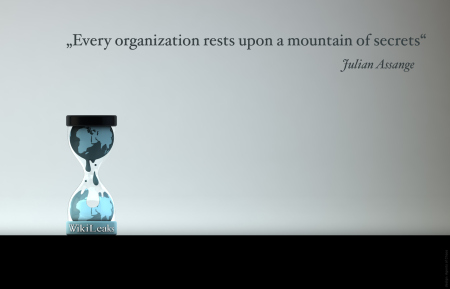
WikiLeaks founder Julian Assange first outlined the hypothesis nearly a decade ago: Can total transparency defeat an entrenched group of insiders?“Consider what would happen,” Assange wrote in 2006, if one of America’s two major parties had their emails, faxes, campaign briefings, internal polls and donor data all exposed to public scrutiny.”They would immediately fall into an organizational stupor,” he predicted, “and lose to the other.”

A decade later, various organs of the Democratic Party have been hacked; several staffers have resigned and Democratic presidential candidate Hillary Clinton has seen the inner workings of her campaign exposed to the public, including disclosures calling into question her positions on trade and Wall Street and her relationship with the party’s left . Many of these emails have been released into the public domain by WikiLeaks.

Some see the leaks as a sign that Assange has thrown his lot in with Republican rival Donald Trump or even with Russia. But others who’ve followed Assange over the years say he’s less interested in who wins high office than in exposing — and wearing down — the gears of political power that grind away behind the scenes.  “He tends not to think about people, he thinks about systems,” said Finn Brunton, an assistant professor at New York University who has tracked WikiLeaks for years. “What he wants to do is interfere with the machinery of government regardless of who is in charge.”WikiLeaks’ mission was foreshadowed 10 years ago in “Conspiracy as Governance,” a six-page essay Assange posted to his now-defunct blog.

In the essay, Assange described authoritarian governments, corporations, terrorist organizations and political parties as “conspiracies” — groups that hoard secret information to win a competitive advantage over the general public. Leaks cut these groups open like a double-edged knife, empowering the public with privileged information while spreading confusion among the conspirators themselves, he said. If leaking were made easy, Assange argued, conspiratorial organizations would be gripped by paranoia, leaving transparent groups to flourish…

It’s possible that malicious sources are using WikiLeaks for their own ends, said Lisa Lynch, an associate professor at Drew University who has also followed Assange’s career. But she noted that a lifetime far from public service and an aversion to email make Trump a more difficult target.”If Trump had a political career, he’d be more available for Wikileaking,” she said…

He has targeted Republican politicians in the past; in the run-up to the 2008 election his group published the contents of vice presidential candidate Sarah Palin’s inbox. Her reaction at the time anticipated the Democrats’ outrage today. “What kind of a creep would break into a person’s files, steal them, read them, then give them to the press to broadcast all over the world to influence a presidential campaign?” Palin wrote in her autobiography, “Going Rogue.”

Excerpt fro RAPHAEL SATTER,With email dumps, WikiLeaks tests power of full transparency, Associated Press, Oct. 24, 2016

China as a Space Achiever

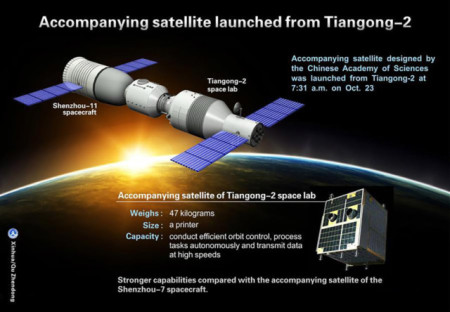
China’s experimental space lab Tiangong-2 orbiting the Earth with two astronauts on board has successfully launched a micro-satellite, roughly the size of a desktop printer. Weighing 47 kilogrammes, the micro satellite has a series of visible light cameras, including a 25 megapixel camera and wide-angle imagers. Its mission is to take photographs of Tiangong II and the Shenzhou 11 spacecraft, which docked with the lab on Wednesday.

The Tiangong II space laboratory released its companion satellite, Banxing-2, at 7:31 am local time on October 23, 2016. The satellite, which the media has nicknamed “Selfie Stick”, also has an infrared camera that is temperature-sensitive…“Like a private nurse for Tiangong II and Shenzhou XI, the companion satellite monitors their conditions all the time, which is helpful in detecting failures”

China’s space lab launches micro-satellite, Indian Express, Oct. 24, 2016

Space Surveillance Telescope: military use

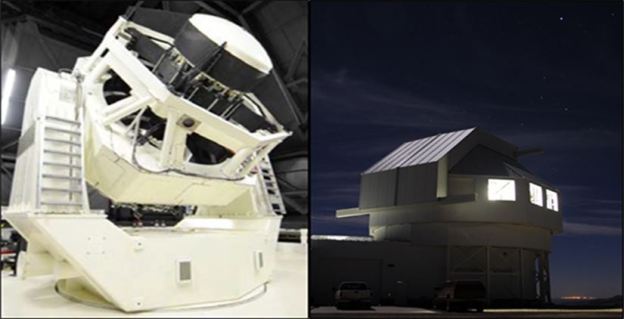
The most sophisticated space surveillance telescope ever developed is ready to begin tracking thousands of space objects as small as a softball. It’s a boon to space surveillance and science and a new military capability important to the nation and the globe, an Air Force general says.

Developed by the Defense Advanced Research Projects Agency, the Space Surveillance Telescope  (SST) is the most sophisticated instrument of its kind ever developed. It was transferred to the Air Force on Oct. 18, 2016, which has plans to operate it jointly with the Royal Australian Air Force….The Air Force will move the SST to Harold E. Holt Naval Communication Station in Western Australia, operating and maintaining the telescope jointly with the Royal Australian Air Force.The SST also will be a dedicated sensor in the U.S. Space Surveillance Network, operated by the Air Force Space Command.

SST has increased space situational awareness from a narrow view of a few large objects at a time to a widescreen view of 10,000 objects as small as softballs, DARPA says. The telescope also can search an area larger than the continental United States in seconds and survey the entire geosynchronous belt in its field of view –– a quarter of the sky –– multiple times in a night.

Excerpt Advanced Space Surveillance Telescope Has Critical Military Applications, US Department of Defense News, Oct. 22, 2016

Ogoni versus Royal Dutch Shell

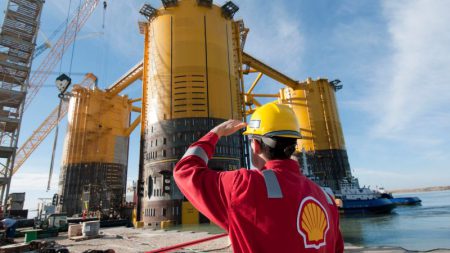
The widow of a Nigerian activist is planning to sue Royal Dutch Shell in the Dutch courts alleging the oil company was complicit in the execution of her husband by the Nigerian military in 1995, court documents filed in the United States/Esther Kiobel has filed an application in New York to secure documents from Shell’s US lawyers, which she could use in the Dutch action.

The filings with the US District Court for the Southern District Court of New York said she planned to begin the action before the end of the year.“Ms. Kiobel will demonstrate that Shell encouraged, facilitated, and conspired with the Nigerian government to commit human rights violations against the Ogoni people,” a memorandum in the application filed last week said.
Kiobel previously took her lawsuit to the United States but the US Supreme Court ruled in 2013 the case could not be heard because the alleged activities took place outside the country.

In 2009 prior to that ruling Shell had agreed in the United States to pay $15.5 million to settle lawsuits related to other activists executed at the same time as Barinem Kiobel, including author and environmental activist Ken Saro-Wiwa.    [three separate lawsuits were brought by the family of Ken Saro-Wiwa].

The Nigerian military cracked down heavily on local opposition to oil production by a Shell joint venture in the Niger Delta in the early 1990s. Kiobel alleges that Shell provided support to the military in its crackdown.  A Dutch court ruled in December that Shell may be sued in the Netherlands for oil spills at its subsidiary in Nigeria, although it did not say Shell was responsible..

Excerpts from Shell faces possible Dutch lawsuit over Nigerian activist’s execution, Reuters, Oct. 18, 2016

Ozone Layer at 2016

In 1974 scientists discovered that chlorofluorocarbons (CFCs), chemicals used in refrigeration and as propellants in products such as hairsprays, release chlorine into the stratosphere as they decompose. This depletes the ozone that protects Earth from ultraviolet radiation. CFCs are also powerful greenhouse gases, which absorb solar radiation reflected back from the planet’s surface and so trap heat in the atmosphere.

Initially, the consequences for the ozone layer caused most concern. In 1985 a gaping hole in it was found above Antarctica. Two years later, leaders from around the world acted decisively. They signed a deal, the Montreal protocol, to phase out CFCs. Now ratified by 197 countries, it has prevented the equivalent of more than 135 billion tonnes of carbon-dioxide emissions, and averted complete collapse of the ozone layer by the middle of the century. Instead, by that point the ozone hole may even have closed up….

In order to manage without CFCs, firms replaced them in applications such as refrigeration, air-conditioning and insulation with man-made hydrofluorocarbons (HFCs). These substances do not deplete ozone and last in the atmosphere for just a short time. However, they still contribute hugely to global warming.  The average atmospheric lifetime for most commercially used HFCs is 15 years or less; carbon dioxide can stay in the atmosphere for more than 500 years. But, like CFCs, HFCs cause a greenhouse effect between hundreds and thousands of times as powerful as carbon dioxide while they linger. Total emissions are still relatively low, but are rising by 7-15% a year. Controlling HFC emissions has been under discussion for the past decade; America and China, the world’s two biggest polluters, made a deal on the issue in 2013, which paved the way for co-operation on limiting carbon emissions ahead of UN-sponsored climate talks in Paris last year. There leaders agreed to keep warming “well below” levels expected to be catastrophic.

Average global temperatures are already 1°C higher than in pre-industrial times….America wants action on HFCs speedy enough that emissions will peak in 2021 and then start to fall; after recent talks in Hangzhou between Mr Obama and Mr Xi China may be ready to commit to reaching that point by 2023. Brazil, Indonesia and Malaysia lean towards 2025, and India has lobbied for a later date, closer to 2030.

Some sectors firms are already preparing to move away from HFCs: in 2015 the Consumer Goods Forum, an international industry group whose members include Walmart and Tesco, began enacting a plan to phase out the substances.

A big question is what to use instead….Some HFCs commonly used in refrigeration could be replaced by others that would have an impact more than 1,000 times smaller. Honeywell, an electronics giant, already makes these less-damaging alternatives. But patents covering such substances have been a sticking point in past discussions, says Achim Steiner, until recently the head of the UN Environment Programme….Other possible replacements include isobutane, propane and propylene, all of which occur naturally. These hydrocarbons are cheap and non-toxic, and can be used as coolants without the same harm to the ozone layer….

Excerpts from The Montreal protocol, Economist, Sept. 24, 2016,at 58

Survival of Bluefin Tuna

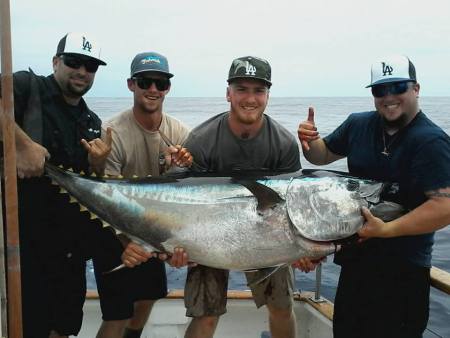
Japanese call bluefin tuna “the king of fish”. They eat about 40,000 tonnes of it a year—80% of the global catch. Demand is also growing rapidly elsewhere. Yet Pacific bluefin stocks are down by 97% from their peak in the early 1960s, according to a recent report from the International Scientific Committee, an intergovernmental panel of experts. (Japan disputes its findings.) In some places, fishing is three times the sustainable level, the committee says.

Aquaculture might seem to offer a way out of this impasse. But the bluefin is hard to breed in captivity. In the open sea, it can roam for thousands of miles and grow to over 400kg. It is highly sensitive to light, temperature and noise. Early attempts to farm it fizzled, but Kindai University persisted long after an initial research grant from the government ran out in the early 1970s. In 2002, funding itself from sales of other fish, it managed to rear adult tuna from eggs for the first time, rather than simply fattening up juveniles caught at sea. Now the chefs in Ginza can have a tuna zapped with an electric prod and yanked out of the university’s tanks on demand.

However, just 1% of the bluefin the university rears survive to adulthood. “We expect this to improve but it will take time,” predicts Shukei Masuma, the director of its Aquaculture Research Institute. Worse, the tuna gobble up lots of wild mackerel and squid. Scientists have experimented with soy-based meal and other alternatives. A company in south-western Japan said this month that it had managed to raise tuna using feed made of fishmeal, but it is costly and the fish are slow to thrive. Using wild fish for feed makes bluefin farming unsustainable, says Atsushi Ishii of Tohoku University. He sees aquaculture as a distraction from the thorny task of managing fisheries properly.

This debate is slowly seeping into the public consciousness. In 2014 the media made much of the decision of the International Union for Conservation of Nature, a conservation body, to put bluefin tuna on its “red list” of species threatened with extinction.

Excerpts from The Japanese Addiction to Tuna: Breeding Bluefin, Economist, Sept 24, 2016

Panda: Edge of Extinction

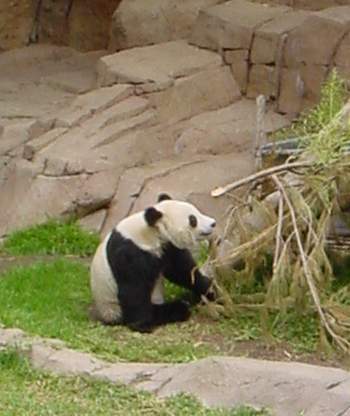
China has made huge efforts to promote panda-breeding over the past 30 years. But those efforts have nothing to do with the animal’s reclassification. They take place in captivity. The conservationists’ decision was based on the health of panda populations in the wild. The numbers there, according to government surveys, have increased from 1,114 in 1988 to 1,864 in the most recent panda census in 2013. This is five times as many as the number of captive pandas….Their increase in the wild reflects improvements in the pandas’ habitat, the dense bamboo forests of China’s south-west. After a period of chopping down everything in sight, the country now has 67 protected panda reserves, covering about half the animals’ range. Two-thirds of wild pandas live in them. The opportunity cost of such reservations is doubtless made lighter by the pandas’ earning power (foreign zoos pay $1m a year to rent a pair). But the government deserves credit for decades of conservation efforts…

The point of the captive breeding programme is to repopulate the wild. Pandas born in captivity undergo a two-year training process from teachers dressed in urine-soaked panda costumes, who teach them how to gather food and to be wary of people. But after years of effort only five captive-born pandas have been released. Two of those died. Two more are due to be introduced into the wild this winter.

Excerpts Giant pandas: Survival of the cutest, Economist, Sept. 10, 2016

Cargo Boxes for Torture, CIA

A warehouse in a tiny Lithuanian village.. not far from the Lithuanian capital city of Vilnius, is thought to be where the alleged 9/11 mastermind Khaled Sheikh Mohamed was held, as well as other prisoners who were subjected to secret confinement by the CIA. It was established in 2004 at the height of the US-led “rendition, detention, interrogation” programme, which saw terror suspects clandestinely captured and transported around the world.

The documents obtained by the Bureau of Investigative Journalism (pdf)  disclose inside details of assistance provided by the Lithuanian State Security Department (SSD) to the CIA.

They take the form of dozens of pages of interview summaries gathered during a 2010 investigation by the Lithuanian state prosecutor which looked at allegations state officials had helped US agents set up a secret prison. The cache, which has been secret up until now, forms part of several hundred pages of material disclosed by the Lithuanian government to the European Court of Human Rights (ECHR) in 2015…

On several occasions, SSD officers describe helping the CIA transfer boxes – which they described as “cargo” – in and out of the facility. The dates of these transfers match those on which lawyers believe that al Qaeda suspects were brought in and out of Lithuania. The boxes were each more than a metre long and needed two people to carry them, the documents say.  Lithuanian officials told prosecutors they did not know what was in the boxes they helped transport, and that although they had access to the building, they did not see all of it.

In shutting down their investigation, Lithuanian prosecutors stated that they had “no data” concerning the “precise purpose of the cargo”. It “could have been communications equipment,” the office concluded.  The country has long denied that CIA prisoners were held on its territory,…But details in the interview summaries correspond closely with findings in a 2014 Senate Intelligence Committee report on CIA secret prisons, which describes how two facilities were set up in the same country. One of them, known as “site Violet”, was used to hold prisoners in 2005 and 2006…

Abu Zubaydah is believed to have been held in Lithuania during 2005-6, and is suing the country for its alleged role in his detention at the ECHR.

Documents declassified by the CIA in June this year suggeLithuania cooperated with the CIA to secretly transfer prisoners and detain them on Lithuanian territory…

Excerpts from Crofton Black, “Site Violet”: How Lithuania helped run a secret CIA prison, Bureau of Investigative Journalism, Oct. 10, 2016

The Hornet’s Nest in Syria

Tensions between Russia and the United States are coming to a head over the civil war in Syria. Washington has suspended bilateral talks with Russia to end the five-year old war. Moscow has suspended an agreement to destroy 34 tons of weapons-grade plutonium that was reached during the year 2000, using especially harsh rhetoric. Meanwhile, Syrian regime forces—with the backing of Russian airpower—are continuing to mount a fierce attack on the partially rebel-held city of Aleppo with Washington seemingly powerless to influence events on the ground….Among the four options that may be under consideration [in the United States] are a no-fly-zone, safe zones, attacking the Syrian air force and arming the Syrian rebels with additional weaponry. But each option carries with it significant risk of escalation or blowback.
While the United States has the capability to defeat Russian and Syrian regime air forces and air defenses, which is necessary to establish a no-fly zone or safe-zone, or to destroy the regime’s airpower, there are several risks from a legal and military standpoint. The legal problem comes from the fact that the United States is not technically at war with the Syria, nor is there a UN resolution authorizing American forces to operate inside that nation… [On the contrary] Russia is invited in by the legitimate regime.

A no-fly zone or safe zone would require U.S. combat aircraft to intercept and possibly shoot down Russian and Syrian warplanes entering into the area designated by Washington and its allies…. [But] It is highly unlikely that any U.S. President would be willing to risk war against a nuclear-armed power with only four months left in office in a conflict with few—if any—vital American interests at stake. The Russians know that and might not be willing to back down in the event of an air-to-air confrontation with American forces because too much national prestige—and even Mr. Putin’s personal prestige—would be on the line. Thus, such an encounter could escalate in unpredictable ways…

A worse option still would be for the U.S. military to attack the Syrian air force and its bases directly since it would an overt act of war against Syria—even more so than a no-fly or safe zone. As Secretary Kerry pointed out, without a U.N. Security Council resolution, the United States does not have legal grounds to go to war. But moreover, the military difficulties with directly attacking Syrian forces are more problematic.

The United States Air Force, Navy and Marine Corps could easily annihilate Syrian and even Russian air defenses—and airpower—inside Syria. Moscow—even with the fearsome capabilities of its S-400 air and missile defense system—is not able to defeat the U.S. Air Force’s fleet of stealthy Lockheed Martin F-22 Raptors, which are able to fly inside zones protected by those system and defeat them. In fact, defeating advanced air defenses is one of the Raptor’s primary missions. Nor would Russian Su-30SM or Su-35S Flankers survive long against the Raptor, which was specifically designed to counter advanced next-generation Soviet fighters that ultimately never materialized….

[But] Russia might not limit its retaliation to just American and NATO forces in Syria. Given Moscow’s arsenal of Kaliber-NK cruise missiles and long-range bombers and submarines, the Kremlin has options to strike back across a huge geographic range. It is not outside realm of the possible that Russia would hit back at U.S. bases in Qatar, United Arab Emirates or Turkey using long-range precision-guided cruise missiles. The Russian Black Sea fleet and the Caspian Sea flotilla can easily hit such targets. Then there is Moscow’s formidable bomber fleet which can target the continental United States itself….

It might be prudent to exercise restraint before launching a new war—against a nuclear-armed power—that the American people don’t necessarily want to fight. That’s especially true in a conflict where the lines are blurry and there are no clear-cut good guys—where even so-called “moderate” rebels backed by the U.S. government are beheading children.  Under such circumstances, the best policy for the United States might simply be to leave well enough alone—there is simply no need to stick our fingers into yet another hornet’s nest.

Excerpts from Dave Majumdar, Why the United States Should Exercise Restraint Before Launching A New War in Syria, National Interest, Oct. 3, 2016

Endangered Species Protection in 2016

The triennial  summit of the Convention on International Trade in Endangered Species of Wild Fauna and Flora (CITES) closed on October 4, 2016 ….

The Johannesburg conference was marked by agreement on measures to improve sustainable trade in a number of species, including the queen conch, humphead wrasse, sharks, snakes and African wild dog as well as a large range of timber species, such as bubinga and rosewoods, and the African cherry and agarwood.

Parties also recognized several conservation success stories, including that of the Cape mountain zebra, several species of crocodiles and the wood bison, which were all by consensus downlisted from Appendix I under CITES to Appendix II in recognition of their improved conservation status.

There was fresh impetus to further safeguard threatened wild animals and plants with added protection for the African grey parrot, Barbary Macaque, Blaine’s fishhook cactus, elephant, pangolin and saiga antelope; and well-targeted enforcement measures agreed to combat illegal trade for specific species. These included the African grey parrot, African lion, cheetah, helmeted hornbill, pangolin, rhino and totoaba.

CoP17 saw a number of firsts, including, the first ever:

Resolution on corruption and wildlife crime;
Decisions on cybercrime and wildlife crime;
Resolution on strategies to reduce the demand for illegally traded wildlife,
Resolutions affecting the helmeted hornbill and snakes;
Decisions on targeting the illegal fishing of and trade in totoaba, and the related illegal killing of the vaquita;

Some other notable outcomes include:

The rejection of a Decision-Making Mechanism (DMM) for a future trade in ivory;
An agreement to close domestic markets in ivory where they contribute to poaching or illegal trade;
The rejection of all proposals to change the protection of Southern African elephant populations;
Stricter monitoring and regulation of hunting trophies to bring them under trade control measures, including recommending conservation benefits and incentives for people to conserve wildlife;
A decision to conduct a study to improve knowledge on regulation of trade in the European eel, and to look more broadly at all Anguilla eels;
An agreement to undertake specific work on marine turtles to understand the impact of international trade on their conservation status;
The introduction of a captive breeding compliance process to check the authenticity of specimens described as captive bred;
Acceptance of the National Ivory Action Plans as a tool for those Parties mostly affected by illegal trade in ivory, including source, transit and destination countries, to build their capacity in addressing illegal trade and ensuring compliance with the commitments they make under the plans;
A decision to undertake studies in legal and illegal trade in lion bones and other parts and derivatives;
A request to review all species listed on Appendix I to identify what measures are needed to improve their conservation status;
Improvements to processes to ensure that wildlife trade is sustainable, legal and traceable; and
Agreements on process to improve traceability and identification of CITES-listed species.

Excerpts from PRESS RELEASE, Largest ever World Wildlife Conference hailed as a ‘game changer, CITES, Oct. 4, 2016
 

50 Million Gallons Nuclear Waste: Hanford

A federal court hearing set for October 2016 could reshape safety rules at the federal government’s Hanford nuclear-weapons-production complex in south central Washington state, where critics contend noxious vapors from underground tanks have harmed workers.At the hearing in Spokane, Wash., Judge Thomas O. Rice plans to consider motions filed by the Washington attorney general and private parties for a preliminary injunction requiring that certain safety measures be taken, including greater use of portable breathing apparatuses.

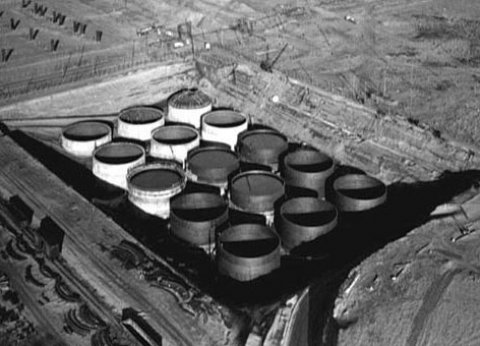
The parties say workers were exposed to vapors from the underground tanks, which hold more than 50 million gallons of radioactive and chemical waste. The waste was created when Hanford, which closed in the late 1980s, produced plutonium for the atomic-weapons program.

The injunction requests are part of litigation filed last year over the vapor issue against the Energy Department and one of its major Hanford contractors by the state, as well as an environmental and workers-advocacy group and a local labor union.

Earlier in 2016 “over 50 Hanford tank farm workers were sickened by toxic vapors spewed into the air,” said a court filing by the attorney general’s office. Over the years, hundreds or more workers have suffered problems ranging from nosebleeds and headaches to long-term lung and brain damage, the plaintiffs contend….

The Energy Department, which oversees the cleanup, in a court filing called the injunction motions “an unwarranted intrusion into DOE’s ongoing cleanup operations, including the world-class worker-safety and industrial-hygiene measures” the agency has put in place….Granting the preliminary injunction could also delay by up to five years efforts to comply with a separate court-mandated schedule for emptying tanks as part of a long-term plan to treat and dispose of the waste, the filing said. Among other things, workers using supplied-air packs “generally move more slowly,” it added.

Excerpts from At Hanford Nuclear Site, Hearing on Tap After Workers Complain of Noxious Vapors, WSJ, Oct. 1, 2016

Nigeria Sex Slavery in Italy

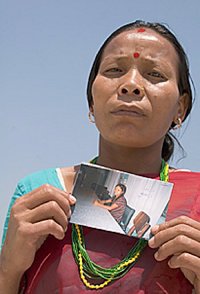
[Italy, Sicily, September 2016] Young, exhausted and vulnerable, many victims report being told prostitution is the only way to repay hefty debts ranging from 25,000 to 100,000 euros ($28,000-$112,000) to their traffickers, Italian charities say. Fear plays a large part in the juju rituals, with pubic hair, fingernails and blood collected from the victim as she is made to swear never to report her situation to the authorities, rights groups say. In some cases, fearing the juju “spell” may be turned on them and they may die, Nigerian parents insist their daughters obey their traffickers, testimony from Italian court documents shows…With numbers of Nigerians rising in Sicily, prostitution is a thriving business, campaigners say – though nobody knows exactly how many women end up plying their trade on the streets…

The new arrivals are also stretching the workload of the International Organization for Migration [IOM}, the UN refugee agency (UNHCR) and local charities, aid workers say. “It is reaching a stage where it is out of control,” said Margherita Limoni, a legal advisor with the IOM in Catania.  The number of Nigerian women arriving in Italy has almost doubled in the past year, surpassing 6,300 in the first eight months of 2016, up from 3,400 for the same period last year, according to the IOM.

Excerpts Rise in Nigerian sex slavery in Italy fuelled by violence and juju magic, Reuters, Sept. 29, 2016


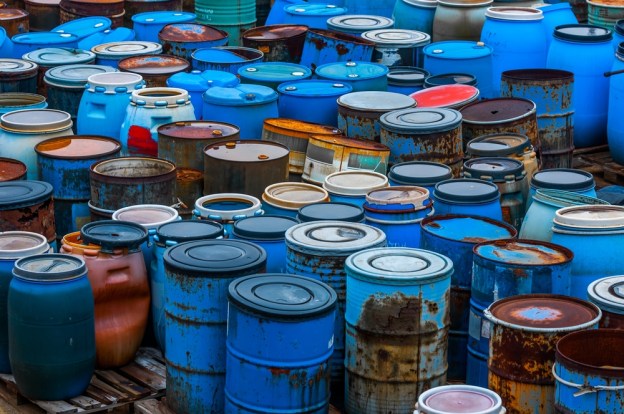
Oil Barrels Spilled in Amazon: Peru

It’s been a bad year for Peru’s Amazon – 2016 has seen seven oil spills there so far. And it’s only September. Most of these occurred across the Northern Peruvian Pipeline, in operation since 1977, which transports crude from the Peruvian Amazon to the Pacific Coast along 854 kilometers (530 miles) and is under the control of state-owned Petroperu. After the first two spills leaked around 3,000 barrels, in January and February 2016, the pipeline was shuttered for repairs. However, five additional oil spills have happened since then.According to Peru’s environment regulator OEFA, at least five oil spills were due to poor pipeline conditions, and illegal use of it after the closure. However, the oil company is blaming the latest two spills on vandalism by locals.,,

[M]ore than 190 oil spills have been recorded in Peru since 1997, according to Peru’s energy and mining agency. But the situation appears to have worsened since the beginning of 2016. After the two oil spills leaked 3,000 barrels – polluting nearby rivers and destroying the livelihood of locals – protests against pipeline’s poor conditions in February 2016 forced its shutdown.

When a third oil spill occurred in June 2016 – of 600 barrels – then-Minister of Environment, Manuel Pulgar Vidal, accused Petroperu of pumping crude illegally through the pipeline. The president of Petroperu was ousted, and a $3.5-million (around 3-million-euro) fine was levied.

But the disaster continued: During August and September 2016, four additional oil spills were recorded in the area. The last two occurred while thousands of indigenous people were demonstrating for withdrawal of the oil companies. According to the Peruvian government, Petroperu is responsible for at least five of the seven oil spills – the company has already been penalized more than $7 million. Petroperu continues to insist, however, that the oil spills were a result of extreme weather or vandalism by the locals.

The amount of oil spilled 2016 in the Peruvian Amazon – less than 10,000 barrels in seven spills – is a relatively small amount, compared for instance to the 650,000 barrels of oil that have fouls parts of the Amazon of Ecuador since the 1960s.

Repeated oil spills threaten Peru’s Amazon, DW.com, Oct. 2, 2016