Monthly Archives: November 2016

Best Practices to Capture or Kill

The creation of a new  Joint Special Operations Command (JSOC ) entity,  the “Counter-External Operations Task Force,” this late [November 2016]  in the Obama’s tenure is the “codification” of best practices in targeting terrorists outside of conventional conflict zones, according to the officials who spoke on the condition of anonymity …[These practices]include guidelines for counterterrorism operations such as approval by several agencies before a drone strike and “near certainty” that no civilians will be killed. This series of presidential orders is known as the “playbook.”

The new JSOC task force could also offer intelligence, strike recommendations and advice to the militaries and security forces of traditional Western allies, or conduct joint operations, officials said. In other parts of the world, with weak or no governments, JSOC could act unilaterally…

The new JSOC task force will report to the Pentagon through the U.S. Special Operations Command, or SOCOM, according to U.S. military officials, creating a hybrid command system that can sidestep regional commanders for the sake of speed….But [the problem is that] regional commanders, all four star generals, guard their turf carefully.

Officials hope the task force, known throughout the Pentagon as “Ex-Ops,” will be a clearinghouse for intelligence coordinating and targeting against groups or individuals attempting to plot attacks in places like the United States and Europe.  According to officials familiar with plans for the task force, it will initially draw on an existing multinational intelligence operation in the Middle East that tracks foreign fighters, called Gallant Phoenix, and one of JSOC’s intelligence centers in Northern Virginia.

While in the past the smaller task forces, such as Gallant Phoenix, were staffed by representatives from different intelligence agencies, the new task force aims to have decision-makers present, ensuring that the targeting process happens in one place and quickly…. “There has never been an ex-ops command team that works trans-regionally to stop attacks.”

Excerpts from  Thomas Gibbons-Neff and Dan Lamothe, Obama administration expands elite, Washington Post, Nov.25, 2016



The Yemen Files

On November 25, 2016,  WikiLeaks released the Yemen Files.The Yemen Files are a collection of more than 500 documents from the United States embassy in Sana’a, Yemen. Comprising more than 200 emails and 300 PDFs, the collection details official documents and correspondence pertaining to the Office for Military Cooperation (OMC) located at the US embassy. The collection spans the period from 2009 until just before the war in Yemen broke out in earnest during March 2015.

Julian Assange said: “The war in Yemen has produced 3.15 million internally displaced persons. Although the United States… is deeply involved in the conduct of the war itself reportage on the war in English is conspicuously rare.”

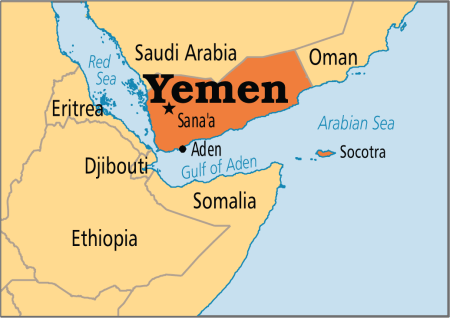
Yemen is of significant strategic interest as Yemen controls a narrow choke-point to the Red Sea and the Suez Canal through which 11% of the world’s petroleum passes each day. In addition, Yemen borders Saudi Arabia (to the north) and Oman (to the east) and has access to the Arabian Sea, through which another 20% of the world’s petroleum passes from the Strait of Hormuz (including the oil of Saudi Arabia and Iran). Saudi Arabia seeks to control a port in Yemen to avoid the potential constriction of its oil shipments byIran along the Strait of Hormuz or by countries which can control its other oil shipment path along the Red Sea.The Yemen Files offer documentary evidence of the US arming, training and funding of Yemeni forces in the years building up to the war. The documents reveal, among other things, procurement of many different weapon types: aircraft, vessels, vehicles, proposals for maritime border security control and Yemeni procurement of US biometric systems.

See also Yemen File


The Quiet Revolution in Space

National security critically depends on space, and the Defense Advanced Research Projects Agency (DARPA) is focused today on creating the capabilities needed to help make that environment a real-time operational domain, DARPA Director Dr. Arati Prabhakar…

“The questions we ask ourselves at DARPA about the space domain … is what would it take to make the space domain robust for everything that we need militarily and for intelligence, and what would it take to make space a real-time operational domain, which it’s not at all today,” the director said, noting that many other nation-states now are active in orbit and space is a domain where conflict is becoming a real possibility.

Through a national security lens, she added, nothing needed from an intelligence or military perspective can be done effectively without access to space. Something as simple as navigation completely depends on GPS in nearly every part of the world and in every operating regime.

In an era of declining budgets and adversaries’ evolving capabilities, quick, affordable and routine access to space is increasingly critical for national and economic security. Today’s satellite launch systems require scheduling years in advance for a limited inventory of available slots and launches often cost hundreds of millions of dollars each. The Defense Advanced Research Projects Agency created its Experimental Spaceplane, or XS-1, program to help overcome these challenges and reduce the time to get capabilities to space. DARPA artist-concept graphics  “Because of the demands on launch, from the day you know you have to put an asset on orbit to the time you can plan on a launch today is still unacceptably long,” Prabhakar said.

Commercial capabilities will help, she added, “but if in a time of war we imagine if we could go to space not in a month or next week but tomorrow, think about how that would completely change the calculus for an adversary that’s thinking about [using an antisatellite] weapon to take out one of our satellites

”With that ambition in mind, DARPA is now starting Phase 2 of its Experimental Spaceplane, or XS-1.“It’s a reusable first stage that’s designed to be able to put 3,000 or 5,000 pounds into low earth orbit … at a very low cost point — a few million dollars — but very significantly the objective on the DARPA program is by the end of the program to fly that spacecraft 10 times in 10 days,” Prabhakar said, “something that’s inconceivable with any of the spacecraft we have today.”

A second piece of the puzzle is what can be done in orbit, she added, referring to low earth orbit, or LEO, an orbit around Earth whose altitude is between 99 and 1,200 miles.

“We’re doing some amazing work with geo[synchronous]-robotics and rethinking [geostationary Earth orbit]-architectures once you have an asset that would allow you to extend the life or do inspection or simple repairs at GEO, which is something you can’t do today.  GEO [geostationary orbit]is a stable region of space 22,370 miles from Earth.  And because GEO is a stable environment for machines — but hostile for people because of high radiation levels — DARPA thinks the key technology there is space robotics.  DARPA’s Phoenix program seeks to enable GEO robotics servicing and asset life extension while developing new satellite architectures to reduce the cost of space-based systems.

The program’s goal is to develop and demonstrate technologies that make it possible to inspect and robotically service cooperative space systems in GEO and to validate new satellite assembly architectures. Phoenix has validated the concept that new satellites could be built on orbit by physically aggregating “satlets” in space, according to DARPA.

Satlets are small independent modules that can attach together to create a new low-cost, modular satellite architecture, DARPA says. Satlets incorporate essential satellite functionality — power supplies, movement controls, sensors and others — and share data, power and thermal management capabilities. DARPA now is working to validate the technical concept of satlets in LEO [Low earth orbit an orbit around Earth whose altitude is between 99 and 1,200 miles.]

Excerpts from  Cheryl Pellerin Director: DARPA Space Projects Critical to Shifting Trajectories , US DOD News, Nov. 22, 2016


Trapping and Killing Drones

The rapid evolution of small unmanned air systems (sUAS) technologies fueled by the exponential growth of the commercial drone sector, has created new asymmetric threats for [conventional armies]…[There is is a need to] identify, track, and neutralize these sUASs while mitigating collateral damage.

DARPA is soliciting proposals for award for the Mobile Force Protection (MFP) program … The MFP program [seeks to develop a system] capable of defeating a raid of self-guided, small Unmanned Aircraft Systems attacking a high value asset on the move. The program …seeks to develop an integrated system capable of providing protection to ground or naval convoys against self-guided sUAS and, to the extent possible, other asymmetric threats… By focusing on protecting mobile assets, the program plans to emphasize low-footprint solutions in terms of size, weight, power (SWaP),and manning….The Mobile Force Protection program has selected the U.S. Army Maneuver Aviation and Fires Integration Application (MAFIA) as the software architecture…(www.fbo.org)

Note that In 2016 the Islamic State tried to use small commercial drones to launch attacks, prompting American commanders in Iraq to issue a warning to forces fighting the group to treat any type of small flying aircraft as a potential explosive device.  (NY Times).

Mining Rights on the Ocean Floor: phosphate

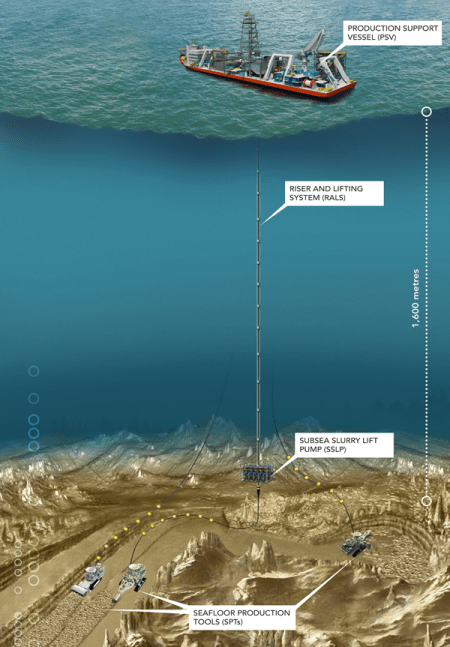
A persistent fear of diminishing phosphorus reserves has pushed mining companies to search far and wide for new sources. Companies identified phosphate deposits on the ocean floor and are fighting for mining rights around the world….

From April 2007 to August 2008, the price of phosphate, a necessary ingredient in fertilizer, increased nearly 950 percent, in part due to the idea that phosphate production had peaked and would begin diminishing. Before prices came back down, prospectors had already begun looking for deep sea phosphate reserves around the world.

Since then, the fledgling seabed phosphate industry has found minimal success. While several operations are proposed in the Pacific islands, New Zealand and Mexico rejected attempts at offshore phosphate mining in their territory.  This means southern African reserves – created in part by currents carrying phosphate-rich water from Antarctica – are the new center of debate.

Namibia owns identified seabed phosphate deposits, and the country has recently flip-flopped about whether to allow mining. A moratorium was in place since 2013, but in September 2016 the environmental minister made the controversial decision to grant the necessary licenses. Since then, public outcry forced him to set those aside…

Three companies, Green Flash Trading 251 (Pty) Ltd, Green Flash 257 (Pty) Ltd and Diamond Fields International Ltd., hold prospecting rights covering about 150,000 square kilometers, roughly 10 percent, of  South Africa’s marine exclusive economic zone…[G]reen Flash companies received drill samples, which showed current prices could not sustain seabed phosphate mining.

This leaves Diamond Fields as the only remaining player in South African waters. The company announced in a January 2014 press release that it received a 47,468 square kilometer prospecting right to search for phosphate.  According to information the company published summarising its environmental management plan, prospecting would use seismic testing to determine the benthic, or seafloor, geology. If mining commenced, it would take place on the seafloor between 180 and 500 meters below the surface.  “A vital and indisputable link exists between phosphate rock and world food supply,” the company stated, citing dwindling phosphate reserves…

Environmentalists argue that not only would phosphate mining destroy marine ecosystems, but it would also lead to continued overuse of fertilizers and associated pollution. They call for increased research into phosphate recapture technology instead of mining.“We could actually be solving the problem of too much phosphates in our water and recapturing it. Instead we’re going to destroy our ocean ecosystems,” John Duncan of WWF-SA said.

The act of offshore mining requires a vessel called a trailing suction hopper dredger, which takes up seafloor sediment and sends waste back into the water column.  “It amounts to a kind of bulldozer that operates on the seabed and excavates sediment down to a depth of two or three meters. Where it operates, it’s like opencast mining on land. It removes the entire substrate. That substrate become unavailable to fisheries for many years, if not forever,” Johann Augustyn, secretary of the South African Deep-Sea Trawling Industry Association, said….

Mining opponents also worry offshore mining would negatively impact food production and economic growth. Several thousand subsistence farmers live along South Africa’s coast, and the country’s large-scale fishing industry produces around 600,000 metric tonnes of catch per year.

“[Mining] may lead to large areas becoming deserts for the fish populations that were there. If they don’t die off, they won’t find food there, and they’ll probably migrate out of those areas,” Augustyn said.

South Africa is one of only three African nations – along with Namibia and Seychelles – implementing marine spatial planning. This growing movement toward organised marine economies balances competing uses such as oil exploration, marine protected areas and fisheries….[and mining.]

Excerpts from Mark Olalde, Phosphate Mining Firms Set Sights on Southern Africa’s Sea Floor, IPS, Nov. 17, 2016

Swiss Nuclear Waste Disposal

On November 27, 2016 Swiss voters will decide whether to turn off the country’s nuclear power stations after 45 years of activity. But what does dismantling a nuclear power plant involve? ….

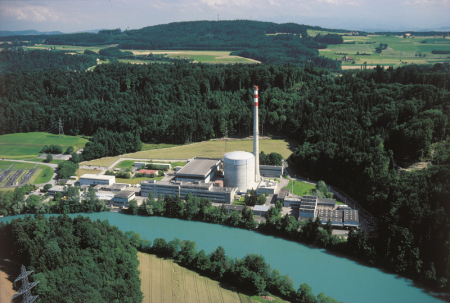
On December 20, 2019, the Mühleberg nuclear power plant in canton Bern will definitely be disconnected from the grid. A new chapter in the history of Swiss nuclear energy will thus begin: the complete dismantling of a power plant…Situated around 15 kilometres from the Swiss capital Bern, the reactor has been in service since 1972 and provides 5% of the electricity used in Switzerland….

Once the fuel is extracted from the reactor core, it will be submerged in the so-called deactivation pool, where it will stay for several years.  Around 2024, the cooled uranium will be transported by lorry to the interim storage facility at Würelingen, canton Aargau.

It will then be possible to begin the real disassembly of the cement and steel structure, starting with the reactor core. This is the most complex phase…“Fifty years ago, when a power station was built, no one thought about dismantling it. The old plants were made in an extremely compact manner for reasons of cost and safety. Therefore there isn’t much space for the dismantling and decontamination,” …[D]eveloping robots.. [is one way] of improving efficiency and staff safety.

At Mühleberg, unlike what has been done in the United States for example, the so-called “fast” version will be used.“Dismantling this [boiling water] type of reactor is well-known and therefore we’ll be able to begin directly,” said Stefan Klute. “In other places the preference is to seal the plant for 40-50 years and wait for some of the residual radioactivity to decay naturally.”

In his opinion, there are many advantages to the more rapid option. “We don’t have to second-guess what the political situation will be in half a century – an impossible prediction in any case.

Dismantling the Mühleberg nuclear power station will generate around 200,000 tonnes of waste. Most of the material will be decontaminated directly in situ and recycled or disposed of in appropriate landfills.The whole operation should finish around 2034.

Excerpts from  Luigi Jorio The end of a Swiss nuclear power plant, Swissinfo.ch,  Nov. 17, 2016

India and the Nuclear Suppliers Group

Six years after they began negotiating, India and Japan finally signed on November 2016 a landmark nuclear agreement opening the doors for India to commission nuclear reactors by global entities and possibly boosting India’s claim for membership of the Nuclear Suppliers Group (NSG).  The deal is significant in view of the reservations of Japan, the only country to have been attacked by nuclear weapons, and for India’s efforts to diversify the sources of equipment and technology it will need to boost nuclear power generation.

The completion of the nuclear deal comes as the NSG is meeting in Vienna to discuss, among other issues, if non-NPT (nuclear non-proliferation Treaty) countries like India can enter this exclusive grouping. ..

[T]he Japan nuclear deal had a number of similarities with the US deal.  However, while the US deal was done in four stages, the Japan pact compressed all four stages – a 123 agreement, reprocessing, administrative arrangements and NSG – into one. In addition, Jaishankar said, Japan’s own concerns meant that nuclear safety and security received bigger space in this deal.
Japan, like the US, has built in a clause that it would cease cooperation if India conducted nuclear tests… India had taken on certain non-proliferation commitments in September 2008 while applying for the NSG waiver. India stood by these, and these have been the basis for its application to membership of the NSG….
Although India signed a nuclear deal with the US, it needed a similar deal with Japan to actually realise the deal. India commissioned six EPR reactors from Areva and another four from Toshiba-Westinghouse. Both companies use Japanese components which would not be forthcoming in the absence of a nuclear deal with Japan. In particular, Japan Steel Works is the global leader for manufacture of the reactor vessel, which is a core component.

Excerpts from India, Japan sign landmark civil nuclear deal, Times of India, Nov. 12, 2016

Survival of Tropical Forests: bird predators

[T]he Amazon rainforest contains more than 1,500 bird species. Around a quarter of them are found nowhere else on Earth. Many of these birds have evolved to fill a specific role – whether that means eating particular types of insects, or scattering a certain size of seed….A new paper published in Proceedings of the Royal Society explores  the link between deforestation in the Amazon and local bird diversity…[B]ird data was collected in 330 different sites in the Brazilian state of Pará, including arable and pastoral farmland and both primary and secondary forests. Primary forests are the original native vegetation, now increasingly degraded by logging and wild fires. Secondary forests are those which grow back in areas, often farmland, which have been abandoned by people…

The study focused on seed dispersal and insect predation, two ecosystem processes where birds play important roles. Fruit-eating (or frugivorous) birds spread the seeds of forest trees. Insect-eating (insectivorous) birds ensure that any germinating saplings have a fighting chance at survival. ..[S]witching from primary tropical forests to farmland dramatically reduced the “services” birds were able to provide.

This may seem fairly intuitive so far, given that there is a world of difference between a forest and cattle pasture. However, more significantly it was found that the traits were only partially restored in regenerating secondary forests. These areas have been branded as the “forests of the future” but we found them coming up short. These “forests of the future” cannot conserve all the biological interactions realised in primary forests, undisturbed or otherwise, which are essential for biodiversity conservation.  Once large seed-dispersing birds such as guans or cotingas are lost in an area, trees species with large seeds find it harder to recover. Regeneration becomes unlikely or impossible. Research from Brazil’s coastal Atlantic Forest has shown that the loss of such key species is driving the evolution of palm trees with smaller seeds. Some of these links may have been lost before we even knew them….The sorts of generalist insect-eaters that come to dominate farmland aren’t generally able to capture the well-disguised insects found in adjacent patches of forest.

Excerpt from Without birds, tropical forests won’t bounce back from deforestation, the conversation.com, Nov. 8, 2016

The Manipulation of Insects: DARPA

DARPA’s Biological Technologies Office is working on new Insect Allies program. Insect Allies will seek to develop vector[insect]-mediated modification technologies for mature plants to rapidly counter environmental and biological threats to crops. Threats might include pathogens, pests, drought, and salinity, among others. DARPA believes that the high specificity of genetic modification coupled with quick plant gene uptake could allow crops to be protected from threats within a single growing season.The Proposers Day will be held on November 18, 2016

Excerpt from  DARPA Press Release Insect Allies Proposers Day, Nov. 2016

Isolating Nuclear Waste for 15 Billion Years

Professor Ashutosh Goel at Rutgers University is the primary inventor of a new method to immobilize radioactive iodine in ceramics at room temperature and six glass-related research projects …Developing ways to immobilize iodine-129 found in nuclear waste,...is crucial for its safe storage and disposal in underground geological formations. The half-life of iodine-129 is 15.7 million years, and it can disperse rapidly in air and water, according to the U.S. Environmental Protection Agency. If it’s released into the environment, iodine will linger for millions of years. Iodine targets the thyroid gland and can increase the chances of getting cancer.

Among Goel’s major funders is the U.S. Department of Energy (DOE), which oversees one of the world’s largest nuclear cleanups following 45 years of producing nuclear weapons. The national weapons complex once had 16 major facilities that covered vast swaths of Idaho, Nevada, South Carolina, Tennessee and Washington state, according to the DOE.

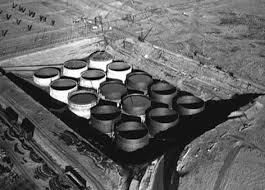
The agency says the Hanford site in southeastern Washington, which manufactured more than 20 million pieces of uranium metal fuel for nine nuclear reactors near the Columbia River, is its biggest cleanup challenge.  Hanford plants processed 110,000 tons of fuel from the reactors. Some 56 million gallons of radioactive waste – enough to fill more than 1 million bathtubs – went to 177 large underground tanks. As many as 67 tanks – more than one third – are thought to have leaked, the DOE says. The liquids have been pumped out of the 67 tanks, leaving mostly dried solids…

“What we’re talking about here is highly complex, multicomponent radioactive waste which contains almost everything in the periodic table,” Goel said. “What we’re focusing on is underground and has to be immobilized.”

One of his inventions involves mass producing chemically durable apatite minerals, or glasses, to immobilize iodine without using high temperatures. A second innovation deploys synthesizing apatite minerals from silver iodide particles. He’s also studying how to immobilize sodium and alumina in high-level radioactive waste in borosilicate glasses that resist crystallization.

Excerpt from Professor Ashutosh Goel Invents Method to Contain Radioactive Iodine, Rutgers School of Engineering Press Release, Nov. 2016

Drugs, Snakes and Skins: illegal wildlife trafficking

One of the most serious environmental crimes, wildlife trafficking encompasses all stages in the supply chain, from taking wild fauna from its habitat, to trading, importing, exporting, processing, possessing, obtaining and consuming of these species.  Driven by an extraordinary low-risk/high-profit ratio, the trafficking of endangered species is estimated to generate over EUR 4.4 billion in profits globally per year (2011).

Because the global demand for such commodities is high, whether as luxury items or for use in traditional medicine, this illicit trade attracts transnational organised crime networks.

While in its character and its scale this trade resembles other types of global criminal activities, such as trafficking in drugs, human beings, firearms and counterfeit goods, it benefits nonetheless from lower levels of awareness, lower risks of detection and lower sanction levels.
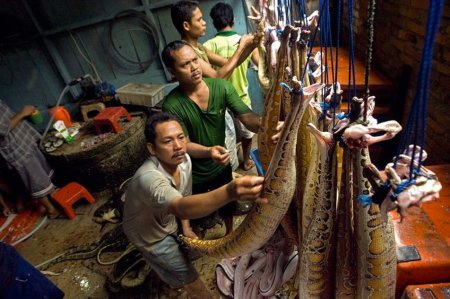
The EU is a major transit point for the illegal trade in wildlife, in particular between Africa and Asia. In 2013, 1468 seizures (more than half with an international dimension) were reported by 15 EU countries. The main types of commodities seized were medicines (derived from both plants and animals), ivory, corals and live reptiles. The European fashion industry accounts for 96% of the trade in python skins…

In 2015 Europol supported Operation COBRA III, the largest-ever coordinated international law-enforcement operation targeting the illegal trade in endangered species. The operation recovered a huge amount of wildlife contraband, including over 12 tonnes of elephant ivory and at least 119 rhino horns.

Excerpt from ILLICIT TRAFFICKING IN ENDANGERED ANIMAL SPECIES, Europol Press Release, Nov. 2016

Keep Forests Standing: the forests bond

Launched on November 1, 2016, the Forests Bond will provide investors the opportunity to invest in a traditional financial product that offers the unique option of receiving interest payments in the form of environmental impact — in this case, verified carbon credits generated through REDD, an initiative that rewards landholders for protecting forests, thereby reducing carbon emissions that worsen climate change. The development of the bond is a collaboration of the International Finance Corporation (IFC), a member of the World Bank Group, and BHP Billiton with technical support from Baker & McKenzie and Conservation International (CI).

REDD (short for Reducing Emissions from Deforestation and forest Degradation), which offers financial incentives to landholders in tropical countries to keep their forests standing, has met with mixed success since its launch in 2005, in part because the lack of a carbon market left it dependent on voluntary action and bereft of the certainty needed to attract private funding.

“If you look at the scale of the problem, roughly US$ 100 billion to 300 billion needed to cut deforestation by half over the next decade, it’s clear that we need to mobilize private institutional investors, who control vastly greater amounts than public or philanthropic aid can deliver,” said Agustin Silvani, Conservation International’s vice president of conservation finance. “The REDD mechanism has mostly excluded them because it required specific carbon expertise or a specific interest in forests to engage with it.”

The Forests Bond supports a REDD project in Kenya, and investors can choose between a cash or carbon credit coupon (the interest received from the bond), or a combination of both. This unique element of the bond is made possible by the price support that BHP Billiton**is providing, which means that investors can either 1) elect to take the carbon credits to offset corporate greenhouse gas emissions or 2) sell them on the carbon market, or 3) take a traditional financial return instead. This provides the certainty needed to attract institutional investors while still generating verified reductions in deforestation, in the form of REDD credits…

The REDD project that the Forests Bond will support takes place in the Kasigau Corridor in eastern Kenya….Forest protection activities include forest and biodiversity monitoring, funding for community wildlife scouts, forest patrols, social monitoring and carbon inventory monitoring. Community development activities include reforestation of Mount Kasigau; establishment of an eco-charcoal production facility; support to community-based organizations; and expanding an organic clothing facility.

The bond is listed on the London Stock Exchange and has raised US$152 million from institutional investors.

**BHP Billiton is providing a price support mechanism of US$12 million that ensures that the project can sell a pre-defined minimum quantity of carbon credits every year until the Bond matures, whether or not investors in the Bond elect to receive carbon credit coupons.

Excerpt from Bruno Vander Velde  New bond aims to unlock private investment to protect forest, Reuters, Nov. 1, 2016 and BHP Billiton and IFC collaborate on new Forests Bond, Press Release of BHP Billiton, Nov. 1, 2016

The Niger Delta Avengers

Leaders from Nigeria’s Niger Delta called on President Muhammadu Buhari to pull the army out from the oil hub, order oil firms to move headquarters there and spend more on development to end militancy in the region.  Buhari met leaders from the southern swampland for the first time since militants started a wave of attacks on oil pipelines in January 2016 to push for a greater share of oil revenues.

At the meeting in the presidential villa in Abuja, Niger Delta leaders, joined by representatives of militant groups, gave Buhari a list of 16 demands to pacify the impoverished region where many say they do not benefit from the oil wealth…

The delegation leader said oil firms should move headquarters to the region so unemployed youths – who often work for militants – could get more jobs. Foreign firms active in Nigeria are often based in the commercial capital Lagos.  The Niger Delta leaders also asked for more funds for the development and an amnesty plan for former fighters which Buhari had planned to cut.

The attacks, which put four key export streams under force majeure, had led production to plunge to 1.37 million barrels per day in May, the lowest level since July 1988, according to the International Energy Agency (IEA), from 2.2 million barrels in January 2016.

Nigeria agreed on a ceasefire with major militant groups in 2009 to end an earlier insurgency. But previously unknown groups have since taken up arms after authorities tried to arrest a former militant leader on corruption charges.  Under a 2009 amnesty, fighters who lay down arms receive training and employment. However, of the $300 million annual funding set aside for this, much ends up in the pockets of “generals” or officials, analysts say – an endemic problem in a country famous for graft.

Any ceasefire would be difficult to enforce as militants are splintered into small groups of angry, young unemployed men even their leaders struggle to control.

A major group, the Niger Delta Avengers, had initially declared a ceasefire in August 2016 but then claimed another attack in October 2016 .

Excerpts from Niger Delta leaders want army out, Reuters, Nov. 2, 2016

Nuclear Waste at Hinkley Point: worst case scenario

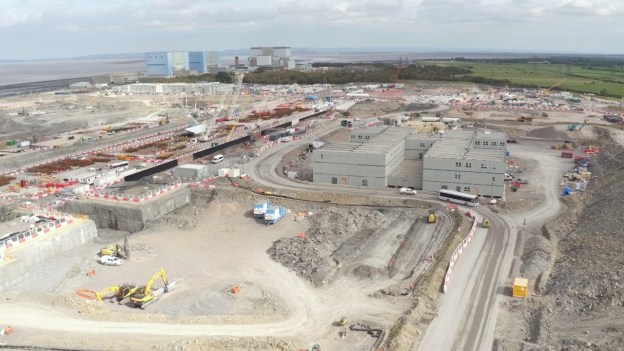
Taxpayers will pick up the bill should the cost of storing radioactive waste produced by Britain’s newest nuclear power station soar, according to confidential documents which the government has battled to keep secret for more than a year.The papers confirm the steps the government took to reassure French energy firm EDF and Chinese investors behind the £24bn Hinkley Point C plant that the amount they would have to pay for the storage would be capped…

[The government]  released a “Nuclear Waste Transfer Pricing Methodology Notification Paper”. Marked “commercial in confidence”, it states that “unlimited exposure to risks relating to the costs of disposing of their waste in a GDF [geological disposal facility], could not be accepted by the operator as they would prevent the operator from securing the finance necessary to undertake the project”.

Instead the document explains that there will be a “cap on the liability of the operator of the nuclear power station which would apply in a worst-case scenario”. It adds: “The UK government accepts that, in setting a cap, the residual risk, of the very worst-case scenarios where actual cost might exceed the cap, is being borne by the government.”Separate documents confirm that the cap also applies should the cost of decommissioning the reactor at the end of its life balloo….Hinkley Point C developers face £7.2bn cleanup bill at end of nuclear plant’s life

Excerpt from Secret government papers show taxpayers will pick up costs of Hinkley nuclear waste storage, The Guardian, Oct. 30, 2016