
Pangolins are a smuggler’s dream. For defence, and when asleep, they roll themselves up into spheres, scales on the outside, to thwart any predator. That makes them easy to handle and pack. And handled and packed they have been, in enormous numbers. The International Union for Conservation of Nature, a worldwide wildlife-preservation organisation, reckons that more than 1m pangolins were traded illegally from their African and Asian homelands over the decade to 2014. That may be a conservative estimate. A paper published in 2017 in Conservation Letters calculates the number of pangolins hunted in central Africa alone as between 400,000 and 2.7m a year. Based on statistics such as these it seems likely that pangolins, of which there are eight species, four African and four Asian, are the most trafficked type of animal in the world.
Some are consumed locally. That is not necessarily illegal, for laws vary from place to place. International trade, though, is a different matter. Early in 2017 CITES, the Convention on International Trade in Endangered Species, listed all eight pangolins as part of what is known as Appendix 1. This means signatories to the convention (which most countries are) cannot permit them to be imported or exported.
Most of those that are, nevertheless, exported illegally from their homelands end up in China and Vietnam. In these countries pangolins’ meat is a treat and their scales are used in folk medicine, even though those scales are made of keratin, the same substance as hair and fingernails, and thus have no medicinal value. Pangolin scales fetch as much as $750 a kilogram in China. A 12-tonne stash of them, the world’s biggest seizure, was found last summer by the authorities in Shenzhen….
Cracking down on poachers and traders is difficult, particularly in poor places…Part of the blame lies with ignorance. Awareness of pangolins is patchy. They are nocturnal and shy, and thus rarely feature on tourists’ tick-lists. That makes them a low priority, even to game-management authorities who know they are there. …The Hywood Foundation’s initiative is part of a larger effort in Uganda, sponsored by the Uganda Wildlife Authority (UWA), the government’s conservation agency. Now that pangolins are on the UWA’s radar, it has stepped up intelligence and investigative work on poachers and traffickers…At the consumption end of the trafficking routes, too, things are starting to happen…. In theory, eating pangolin meat (along with that of many other wild species) is already illegal in China—not for conservation reasons, but as a reaction to the outbreak of SARS, a fatal respiratory disease…Persuading people to stop using the animals’ scales may be harder.
Excerpts from Conserving Pagolins: A Problem of Scale, Economist, Feb 3, 2018


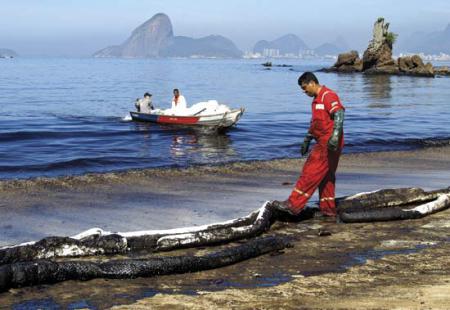
 The oil spill that hit the Fujairah coast on January 25, 2018 was the result of tankers illegally cleaning out their holds. That is according to the general manager of Fujairah port (UAE), Capt Mousa Murad, who has called for 24-hour monitoring of ships to tackle the issue. “The recent oil spills have been caused by tank cleaning by passing ships,” Capt Murad told The National on Tuesday. “Especially when tankers change from [carrying] one product to another,” he said, implying that the spills are made up of residue cleaned from within the tanks. He said the oil “comes from international waters and could hit Dibba, Fujairah or Khor Fakkan.”…
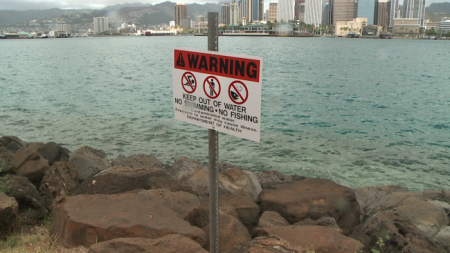
 Cesspools—holes in the ground where untreated human waste is deposited—have become a crisis in Hawaii, threatening the state’s drinking water, its coral reefs and the famous beaches that are the lifeblood of its tourist economy. Sewage from cesspools is seeping into some of Hawaii’s ocean waters, where it has been blamed for infections suffered by surfers and snorkelers. It is also entering the drinking water in part of the state, pushing nitrate levels close to the legal limit.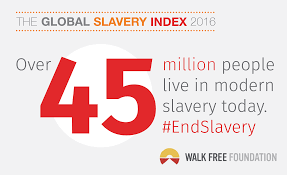
 The African Union on Friday urged Mauritania to make a greater effort to eliminate slavery after the country handed out lenient sentences to a family of slave owners in a landmark conviction….In a statement published online, the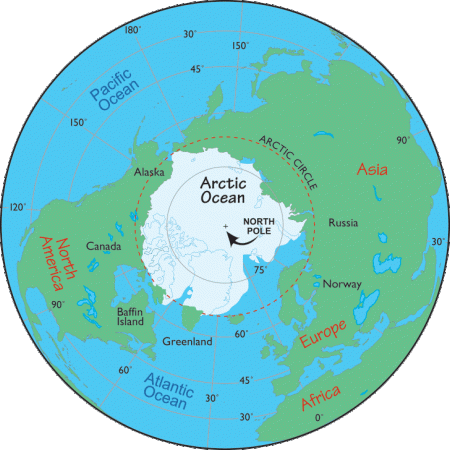
 China on January 25, 2018 outlined its ambitions to extend President Xi Jinping’s signature Belt and Road Initiative to the Arctic by developing shipping lanes opened up by global warming. Releasing its first official Arctic policy white paper, China said it would encourage enterprises to build infrastructure and conduct commercial trial voyages, paving the way for Arctic shipping routes that would form a “Polar Silk Road”…China, despite being a non-Arctic state, is increasingly active in the polar region and became an observer member of the Arctic Council in 2013.

 Law-In-Action