Monthly Archives: February 2023

Mining the Earth to Save it

The rush to secure green-energy metals is bringing new life to one of the world’s oldest mining hubs. Like the United States, Europe is worried that it is too reliant on China for supplies of once-obscure natural resources, such as lithium and rare-earth metals, that are seen as climate-friendly successors to oil and gas…. 

On both sides of the Atlantic, one of the best answers to long-simmering worries about green-energy security is to look north…, for example, to the “Canadian Shield,” a vast band of rock encircling Hudson Bay. The “Baltic Shield” that stretches across Scandinavia to western Russia is similarly mineral-rich. It helps explain why Sweden in particular has such a long mining heritage. In the mid-17th century, the country’s “Great Copper Mountain” near Falun provided two-thirds of the world’s copper. Even today, 80% of iron ore mined in the EU comes from a site near the Arctic town of Kiruna that Swedish state operator LKAB has exploited for well over a century.

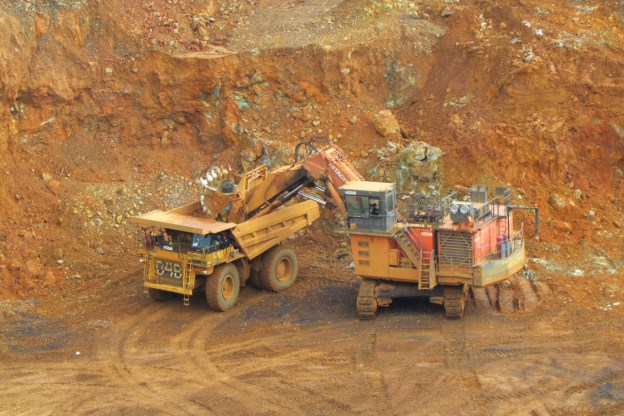
The energy transition is an opportunity for Sweden’s mining complex. LKAB said in January 2023 that it had identified Europe’s largest body of rare-earth metals close to its existing Kiruna operation…Digging up the planet to save it is an awkward pitch. The only way for miners to counter accusations that they are adding to the problem they want to solve is by decarbonizing operations. Here Sweden is again helped by the geology of the Baltic Shield, whose river valleys are favorable for green-energy production. Roughly 45% of the country’s electricity comes from hydroelectric power, with much of the remainder provided by nuclear and wind. It is also cheap, particularly in the Arctic, where many mines are located. Against a favorable geopolitical backdrop, the biggest risk for investors is political. Mines, which can bring a lot of noise and relatively few jobs to an area, don’t tend to be popular locally.

There is a reason the West relies on autocracies for a lot of its oil.

Excerpts from Stephen Wilmot, For Mining EV Metals, the Arctic Is Hot, WSJ, Feb. 14, 2023
How Countries Dissolve: the Conquest of Africa

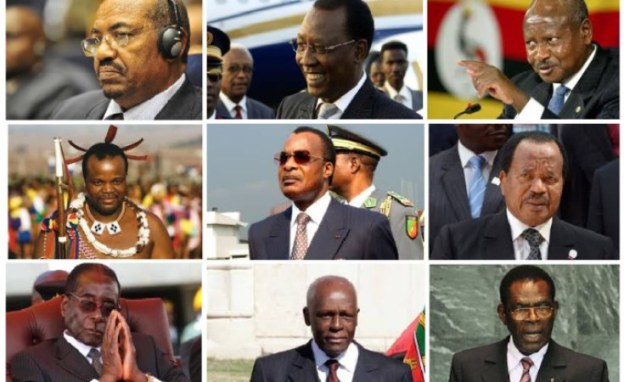
As Wagner fighters, a Russian mercenary group, play a central role in Russia’s war in Ukraine, the group is quietly expanding its alliances in Africa, penetrating new mineral-rich areas, exploiting the exit of Western powers and creating alliances with local fighters. Wagner fighters and instructors are working with the government of the Central African Republic in a bid to seize areas rich with precious minerals that could be exported through Sudan, say Western security officials. Wagner is also looking to expand its influence in Burkina Faso and Ivory Coast, while consolidating its relationship with the military junta in Mali

With an estimated 5,000 men stationed across Africa, Wagner’s footprint is now almost as large as the U.S.’s 6,000 troops and support personnel on the continent. ..The push aims to create a corridor from Wagner-controlled mines in the Central African Republic through Sudan, where the group works closely with a local strongman, and onto the mineral trading hub of Dubai.

In January 2023,  Mr. Prigozhin, head of Wagner, stressed that sending fighters to Africa was “absolutely necessary.” “There are presidents to whom I gave my word that I would defend them,” he said on his Telegram channel. “If I now withdraw one hundred, two hundred or five hundred fighters from there, then this country will simply cease to exist.”  

Excerpts from Benoit Faucon & Joe Parkinson, Wagner Group Aims to Bolster Putin’s Influence in Africa, WSJ, Feb. 14, 2023

Sanctions Busters for Russia

In the year since the war in Ukraine began, once-dominant Western firms have pulled back from trading, shipping and insuring Russian oil. In their place, mysterious newcomers have helped sell the country’s crude. They are based not in Geneva, but in Hong Kong or Dubai. Many have never dealt in the stuff before. The global energy system is becoming more dispersed, divided—and dangerous.

Russia’s need for this alternative supply chain, present since the war started, became more pressing after December 5th, 2022 when a package of Western sanctions came into effect. The measures ban European imports of seaborne crude, and allow Russian ships to make use of the West’s logistics and insurance firms only if their cargo is priced below $60 a barrel. More sanctions on diesel and other refined products will come into force on February 5th, 2023 making the new back channels more vital still.

The Economist has spoken to a range of intermediaries in the oil market, and studied evidence from across the supply chain, to assess the effect of the sanctions and get a sense of what will happen next. We find, to the West’s chagrin and Russia’s relief, that the new “shadow” shipping and financing infrastructure is robust and extensive. Rather than fade away, the grey market stands ready to expand when the next set of sanctions is enforced.

As expected, China and India are picking up most of Russian embargoed oil barrels. Yet there is a surprise: the volume of cargo with unknown destinations has jumped. Russian oil, once easy to track, is now being moved through more shadowy channels….Battered tankers as much as half a century old sail to clandestine customers with their transponders off. They are renamed and repainted, sometimes several times a journey. They often transit via busy terminals where their crude is blended with others, making it harder to detect. Recently, several huge tankers formerly anchored in the Gulf were spotted taking cargo from smaller Russian ships off Gibraltar. Oman and the United Arab Emirates (UAE), which imported more Russian oil in the first ten months of 2022 than in the previous three years combined, seem to have blended and re-sold some to Europe. Malaysia is exporting twice as much crude to China as it can produce. Much of it is probably Iranian, but ship-watchers suspect a few Russian barrels have snuck in, too.

Most of Russia’s crude runs through grey networks which do not recognize the price cap but are not illegal, because they use non-Western logistics and deliver to countries that are not part of the blockade. friendlier locations…More than 30 Russian trading outfits have set up shop in Dubai—some under new names—since the war started. As Western traders have withdrawn, newcomers have emerged to sell to India, Sri Lanka, Turkey and others. Most have no history of trading Russian oil, or indeed any oil; insiders suspect the majority to be fronts for Russian state firms….

For Russia, growth in the grey trade has advantages. It puts more of its export machine outside the control of Western intermediaries. And it makes pricing less transparent.  Meanwhile, Russia’s sanctions-dodging will have nasty side-effects for the rest of the world. A growing portion of the world’s petroleum is being ferried by firms with no reputation, on ageing ships that make longer and dicer journeys than they have ever done before. Were they to cause an accident, the insurers may be unwilling or unable to cover the damage. Ukraine’s allies have good reasons for wanting to wash their hands of Russian oil. But that will not prevent debris from nearby wreckages floating to their shores. 

Excerpts from the The Economic War: Ships in the Night, Economist, Feb. 4, 2023

The Chinese Balloon and the American Psyche

The U.S. blacklisted six Chinese companies on February 10, 2023  that it said were involved in Beijing’s surveillance-balloon program, in a move taken in retaliation for the suspected spy balloon that traversed the U.S. The companies blacklisted are Beijing Nanjiang Aerospace Technology; China Electronics Technology Group Corporation 48th Research Institute; Dongguan Lingkong Remote Sensing Technology; Eagles Men Aviation Science & Technology Group; Guangzhou Tian-Hai-Xiang Aviation Technology; and Shanxi Eagles Men Aviation Science & Technology Group.

The Commerce Department’s Bureau of Industry and Security said the Chinese entities were added over their support for the People’s Liberation Army’s aerospace programs, including airships and balloons and related materials and components.  “The PLA is utilizing High Altitude Balloons (HAB) for intelligence and reconnaissance activities,” it said….  While many national-security analysts have been sounding the alarm about China’s surveillance practices in recent years, the balloon offered the American public a visible picture of the Chinese threat as it crossed much of the nation.

The newly formed House Select Committee on the Strategic Competition Between the U.S. and the Chinese Communist Party is likely to press for tougher U.S. measures to slow China’s advance, said Emily Benson, a senior fellow at the Center for Strategic and International Studies. “This is a really concrete example of an issue that Washington has so far not succeeded in penetrating the American public’s mind,” Ms. Benson said. “This could be kind of a pivotal moment for the American psyche to really start to realize that China is important and that this is a policy area they should be tuning in to.”

Excerpts from Ian Talley and Vivian Salama, U.S. Blacklists Chinese Companies It Links to Balloon Program, WSJ, Feb. 11, 2023

Money and Power: First Spaceport in Africa Built by China in Djibouti

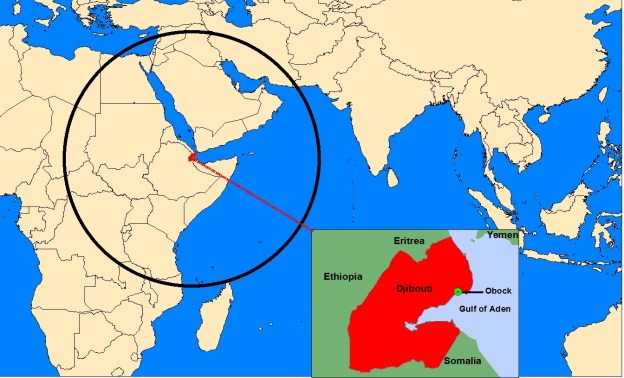
When China began building its first overseas military outpost—a naval base in Djibouti—America and its allies were alarmed. The facility, which opened in 2017, sits just 13km (eight miles) from America’s largest base in Africa. France, Japan and Italy have bases there, too. Before long the Americans accused China’s forces of shining lasers at their pilots. China complained that Western aircraft were overflying its outpost to photograph it.

That friction has since lapsed into grudging coexistence in the former French colony, which is not much bigger than New Jersey. But a new threat to this uneasy balance has emerged with the announcement on January 9, 2023 that a Hong Kong-based company with links to Huawei, a Chinese telecoms giant, will build and operate a spaceport covering at least ten square kilometers (four square miles) in Djibouti.

The facility will include seven launch-pads and three rocket-testing pads, says Hong Kong Aerospace Technology Group Ltd (HKATG), which signed a memorandum of understanding on the project with Djibouti’s government and a Chinese company that operates a special economic zone there. In March they will sign a contract for the deal, which allows construction of power stations, water plants, roads and seaports.

Ismail Omar Guelleh, Djibouti’s president, said on Twitter that the $1bn spaceport will take five years to build and be transferred to the government after 30 years. If completed, the spaceport offers Djibouti a chance to claim a piece of the multi-billion-dollar global space industry. There are about two dozen active spaceports worldwide. Africa has none…Djibouti has much to offer. It is not far from the equator, where the Earth rotates fastest, giving rockets a boost. Access to the sea would enable clients to import rockets and other bulky equipment by ship. They could also launch eastwards over the ocean, minimizing risks for people in surrounding areas while taking advantage of the Earth’s rotation.

For China, which hopes to develop a private space industry to rival America’s, Djibouti could provide an alternative to the four launch sites on its own soil. These are operating at capacity…

Excerpts from China, Africa and Space: Preparing for Launch, Economist, Jan. 21, 2023

After the Oil Shock, the Metals Shock: fueling the green economy

Indonesia banned exports of nickel ore in 2020 in a bid to capture more of the metal’s value. As a result, exports of Indonesian nickel products were worth $30bn in 2022, more than ten times what they were in 2013. Nickel smelters have sprouted around the country, and makers of batteries, in which the metal is a key component, are building factories. On January 17, 2023 a cabinet official said the government was close to sealing deals with the world’s two largest makers of electric vehicles (EVS), Tesla and BYD, to build cars in Indonesia. Flushed with progress, the government is now thinking beyond nickel.

“This success will be continued for other commodities,” said Joko Widodo, Indonesia’s president, in December 2022. He confirmed that an export ban on bauxite, the ore used to make aluminum, was coming in June 2023. The bauxite industry is scrambling to prepare itself for the shock….The government has suggested that a ban on copper exports could be implemented next, with bans on tin and gold exports to follow.

The country’s pulling power in the global nickel market will be hard to replicate, though. Indonesia produces 37% of the world’s nickel. But its bauxite, gold and copper production is less than 5% of the global total…Bauxite smelters are also expensive and harder to build than nickel smelters. Local firms are struggling to raise the capital needed for them, often around 18trn rupiah ($1.2bn)…All the eight bauxite smelters are under construction are Chinese investments. . 

Indonesia’s resource nationalism also risks falling foul of global trade rules but Jokowi, Indonesia’s president  remains  undeterred. “This is what we want to do: be independent, independent, independent,” he said.

Excerpts from Indonesia’s Industrial Policy: Full Metal Jacket, Economist,  Jan. 28, 2023

The Pitfalls of Green Energy Revolution

Video footage from a deep-sea mining test, showing sediment discharging into the ocean, has raised fresh questions about the largely untested nature of the industry, and the possible harms it could do to ecosystems as companies push to begin full-scale exploration of the ocean floor as early as this year. The Metals Company (TMC), a Canadian mining firm that is one of the leading industry players, spent September to November of 2022 testing its underwater extraction vehicle in the Clarion Clipperton Fracture Zone, a section of the Pacific Ocean between Mexico and Hawaii.

But a group of scientists hired by the company to monitor its operations, concerned by what they saw, posted a video of what they said was a flawed process that accidentally released sediment into the ocean. The scientists also said the company fell short in its environmental monitoring strategy, according to documents viewed by the Guardian newspaper.

As the push for deep-sea mining intensifies, experts are increasingly concerned that companies will kick up clouds of sediment, which could be laden with toxic heavy metals that may harm marine life. At least 700 scientists – along with France, Germany and Chile – are calling for a moratorium on deep-sea mining.

In a post to its website, TMC acknowledged the incident, but framed the discharge from its cyclone separator as a “minor event” in which “a small amount” of sediment and nodule fragments spilled into the ocean. The company said it fixed the issue in its equipment to prevent further overflows and concluded that the incident “did not have the potential to cause serious harm”.

Experts and critics caution that the incident highlights the relative uncertainties surrounding deep-sea mining. Companies are scrambling to scavenge the ocean floor for valuable metals, used in electric vehicle batteries and a host of other technologies such as green energy production, amid a global fight for stable supply.

Excerpts from Leaked video footage of ocean pollution shines light on deep-sea mining, Guardian, Feb. 6, 2022

Ecological Impacts of Mining Rivers for Gold

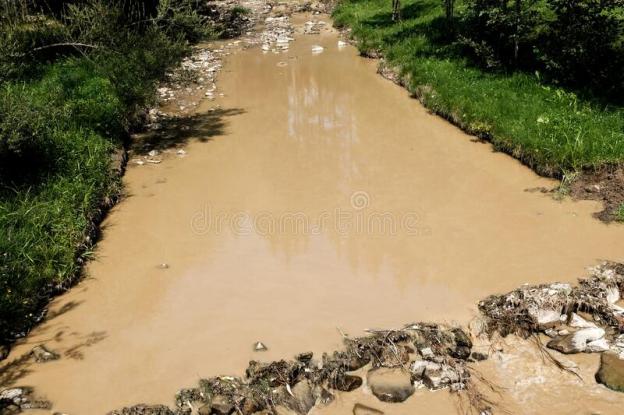
Mining in river channels provides a living for millions of people across the globe, particularly in the tropics. However, because this mining involves deforestation, excavating, dredging, and other work directly in or next to river channels, ecosystems are intensively degraded. Soils and river sediments excavated during mining are processed to extract the precious mineral of interest, usually gold, then discarded. Often the excess sand, silt, and clay is washed downstream by rivers, muddying river water for as much as 1,000 km downstream of mining sites. 

During the past 20 years, mining in rivers has increased dramatically, particularly during the Global Financial Crisis in 2008–09 when the price of gold increased significantly. Despite the human and ecological importance of mining-related environmental degradation, no global documentation of its environmental footprint exists. For the first time these environmental impacts were quantified through the use of satellite imagery and on-the-ground measurements, documenting more than 400 mining areas in 49 countries, mostly in the tropics. We show that the effects of mining have altered 173 rivers, which collectively represent 5–7% of large river length globally. In the tropical countries with river mining, on average nearly one-quarter of large river length is altered by river mining. 

Abstract Available online The recent rise of mining in rivers is a global crisis (Evan Dethier et al, 2022)

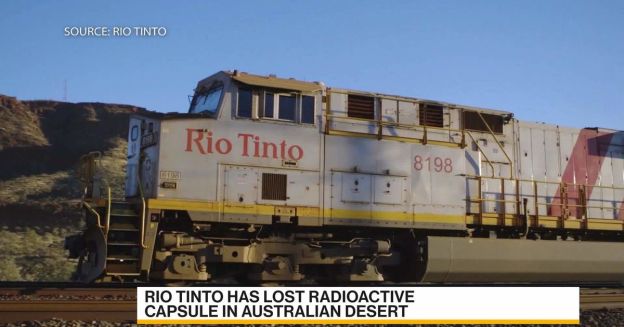
Playing Fast and Loose with Nuclear Substances: a missing radioactive capsule

In the Australian Outback, authorities are engaged in an unusual search-and-recovery effort. Gone missing is a capsule less than an inch long of radioactive material that can burn or sicken anyone who touches it. Their problem is that it could be anywhere along a 900-mile stretch of highway connecting a Rio Tinto PLC mine to Perth, Western Australia’s state capital…The capsule, which is 8-millimeters (about 5/16s of an inch) long and contains a small quantity of radioactive Cesium-137, worked its way loose from a piece of equipment that Rio Tinto had sent to Perth by truck for repair.

The tiny capsule fell along a route that is almost the distance between New York and St. Louis. Complicating the search effort is a gap of nearly two weeks between when the equipment left Rio Tinto’s Gudai-Darri mine on Jan. 12, 2023 and when the capsule was discovered to be missing on Jan. 25… Authorities worry the capsule could have become lodged in a tire of any of the vehicles that use the highway, potentially exposing their occupants to radiation levels that they compare to receiving around 10 X-rays in an hour. Exposure could cause radiation burns or severe illness, said Andrew Robertson, Western Australia’s chief health officer. 

Excerpts from Rhiannon Hoyle, Missing Radioactive Capsule Prompts Search and Concern in Australia, WSJ, Jan. 30, 2023