Monthly Archives: September 2025

Individual Companies Can be Held Liable for Gross Contribution to Heatwaves

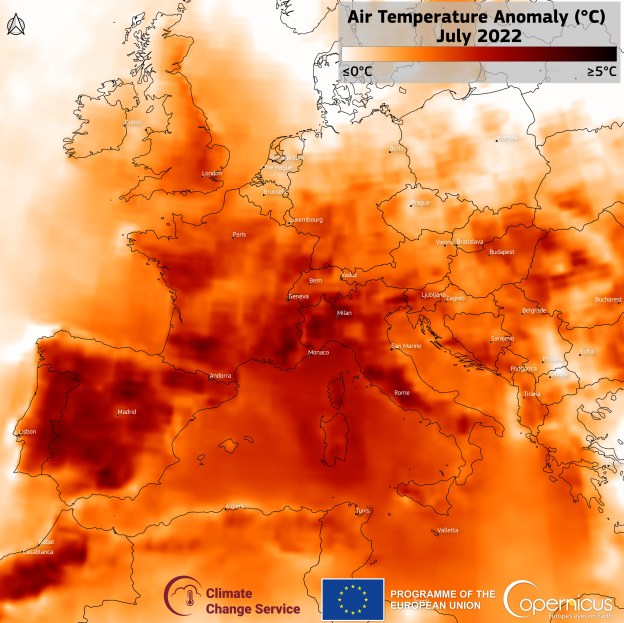
Climate scientists have been attributing storms, droughts and heatwaves to global warming for two decades. Now, they are tracing the chain of responsibility all the way back to the producers of fossil fuels. A study published in Nature in September 2025 shows that around one-quarter of the heatwaves recorded over 2000–23 can be directly linked to greenhouse-gas emissions from individual energy giants…some of whom include (the former Soviet Union, China (coal), Gazprom, Exxon Mobile, Chevron, National Iranian Oil Company, Saudi Aramco, BP, Shell, India (Coal)) The findings could provide fresh evidence to support lawsuits seeking to hold companies accountable for their impacts on the climate.

More than one-quarter of the 213 events recorded would have been “virtually impossible” without human-induced global warming, the study found. The emissions linked to energy companies and other major carbon emitters increased the likelihood of some 53 heatwaves by a factor of more than 10,000.

This is not the first time that climate impacts have been attributed to fossil-fuel producers, but this study go one step further than its predecessors and link individual companies directly to specific heatwaves. Legal experts say it’s a line of evidence that could feed into climate litigation that focuses on specific events, such as the 2021 heatwave that hammered the US Pacific Northwest in 2021. Already, a county government in Oregon has filed a US$52-billion civil lawsuit against fossil-fuel companies for contributing to that event.

Excerpts from Jeff Tollefson, Heatwaves linked to carbon emissions from specific companies, Nature, Sept. 10, 2025

AI Eats Up Crazy Amounts of Electricity

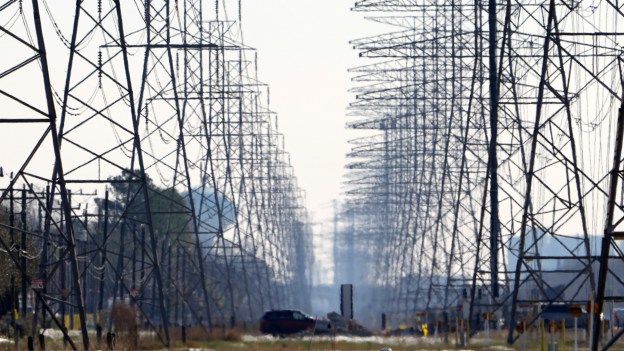
Global demand for AI is ramping up rapidly. Electricity demand from data centers worldwide is set to more than double by 2030 to about 945 terawatt-hours, which is more than Japan’s total electricity consumption, according to the International Energy Agency. “A single AI-focused data center can use as much electricity as a small city and as much water as a large neighborhood,” according to the Union of Concerned Scientists….A data center that fuels AI can consume as much electricity as 100,000 households, but the largest ones that haven’t been completed yet could consume 20 times as much. It’s a particular problem in the U.S., with data centers making up nearly half of its electricity demand growth over the next five years, according to the IEA.

There’s also been heightened concern recently about the amount of water that is required to cool electrical equipment in data centers. Just a few weeks ago, French company Mistral AI released a report detailing the environmental footprint of training its language model Mistral Large 2, including the amount of water it consumes. The water consumption from generating one page of text is 0.05 liter, enough to grow a small radish, the report says…

Excerpt from Clara Hudson, Google Wants You to Know the Environmental Cost of Quizzing Its AI. WSJ, Aug. 21, 2025

While United States Sleeping, China Made Ships

A $16 billion merger of two state-controlled shipbuilders in China was set for completion the week of August 11, 2025 creating the world’s biggest shipbuilder while the U.S. searches for a path back into the business.  American shipbuilders are playing catch-up after decades of maritime-industry decline…but Trump’s threat to impose higher fees on ships made in China is giving South Korean and Japanese rivals an opening to win back market share.

The Chinese champion is called China State Shipbuilding, or CSSC. In August 2025, it is scheduled to absorb its merger partner, China Shipbuilding Industry, and take the sole listing on the Shanghai Stock Exchange… Beijing is currently looking to consolidate state-led companies in sensitive industries, particularly those connected with the military. CSSC’s main business is commercial, but it is also an important contractor for the Chinese navy. China Shipbuilding Industry designed and built China’s first homegrown aircraft carrier, the Shandong.

Beijing set its sights on dominating the shipbuilding industry decades ago, and now Chinese shipbuilders make up more than half of the global market. China-built ships accounted for about 55% of global tonnage in 2024, compared with less than 0.05% for the U.S. China possesses 232 times the shipbuilding capacity of the U.S., according to the U.S. Navy…


Meanwhile, smaller rivals in Japan are looking to reclaim market share after decades of being pushed into a corner by lower-cost Chinese and South Korean rivals. A proposal in June in 2025 from Japan’s ruling Liberal Democratic Party calls for extensive subsidies for local shipyards to protect national security, including a $6.7 billion public-private fund. “If we fail to act now, Japan risks losing its shipbuilding industry entirely, as Europe and the United States did,” the party said.

Excerpt from China Creates World’s No. 1 Shipbuilder, Driven by Rivalry With U.S., WSJ, Aug. 11, 2025

Secrecy in Space

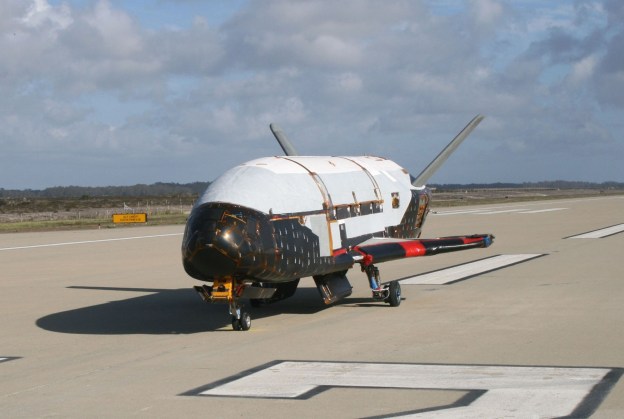
A Pentagon spaceplane called X-37B zoomed into orbit this week for its eighth mission. When it will come back is a secret. The uncrewed vehicle can spend months or years in space before it re-enters the atmosphere.. That combination of flexibility and endurance has made it a favorite tool for military officials looking to quickly deploy new technologies on the final frontier. A SpaceX rocket launched X-37B on August 21, 2025 from Florida’s Kennedy Space Center. Government and commercial engineers have spent years experimenting with lasers that allow satellites to share large amounts of data in space. The Pentagon is also testing tools like the inertial sensor, which could help improve navigation in situations where Global Positioning System signals aren’t available.

The spacecraft has spent the last five months on Earth after a 434-day mission that included tests of orbital maneuvers known as “aerobraking.” The move helps the vehicle use the drag from the planet’s atmosphere to change its orbit without using much fuel.  Military officials haven’t disclosed many details about the payloads that X-37B carries, but past missions included testing different materials in orbit and an experiment that transmitted solar energy to the ground. Its fifth flight released three small satellites that government officials didn’t acknowledge until they had fallen back to Earth. There’s a global strategic interest in saying what you’re putting in space,” said Jonathan McDowell, a researcher at the Harvard-Smithsonian Center for Astrophysics. If the U.S. hides its satellites, “then the Chinese are going to start doing it too, and that’s not in our interest.”

China now fields more than 1,000 satellites and has developed a range of radio jammers, antisatellite missiles and other weapons capable of targeting Pentagon assets, according to a U.S. Air Force document released in May 2025. It also operates a competing spaceplane, called Shenlong, that has flown several missions.]

Excerpt from Drew FitzGerald, The Pentagon’s Mysterious X-37B Space Plane Embarks on New Mission, WSJ, Aug. 22, 205

Out-of-Date: Academic Cooperation

Mr. Trump noted in the summer of 2025  that “the United States is in a race to achieve global dominance in artificial intelligence,” which Joe Biden called “a defining technology of our era.” Universities help drive that race. Meta’s chief AI officer, Alexandr Wang, has argued that the rate of AI progress may be such that “you need to prevent all of our secrets from going over to our adversaries and you need to lock down the labs.”

Thousands of Chinese citizens are working and studying in such labs….In AI specifically, nearly 40% of top-tier researchers at U.S. institutions are of Chinese origin. Beijing is aggressively cultivating American-educated and American-employed researchers via the Thousand Talents program.

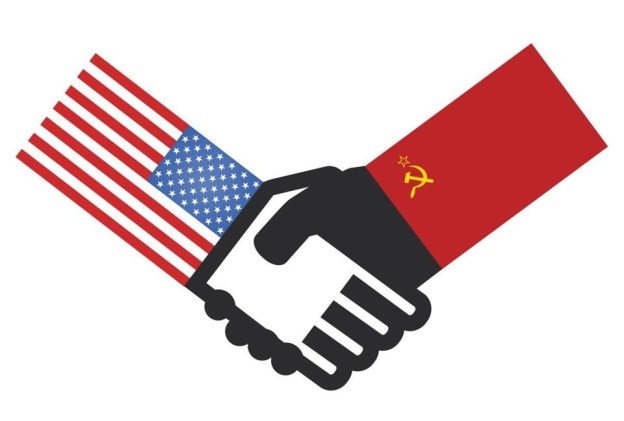
Blindly embracing academic cooperation with a geopolitical rival is absurd. Nobody suggests we should train Iranian nuclear physicists or Russian ballistics engineers. The U.S. wouldn’t have been better off collaborating more with Nazi Germany in the 1930s or with the Soviet Union during the Cold War. Why make an exception for a nation dedicated to surpassing the U.S. in emerging technologies?

Excerpt from  Mike Gallagher, Send Harvard’s Chinese Students Home, WSJ, Aug. 19, 2025

The End of Taiwan? The End of U.S. and Europe Combined

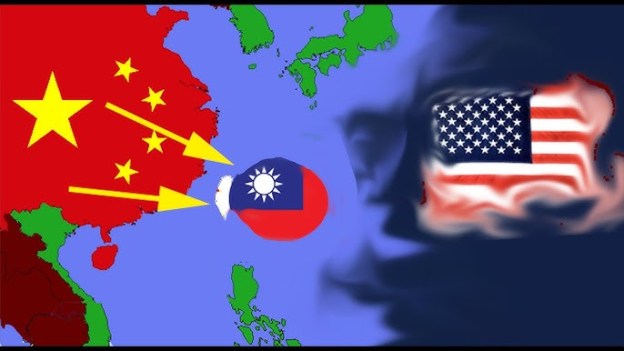
Prosecutors in Taiwan indicted  in August 2025 three people in a case about sensitive chip technology, alleging they stole information from Taiwan Semiconductor Manufacturing (TSMC) to help one of TSMC’s top equipment suppliers, Tokyo Electron, win more orders…Taiwanese officials say the theft of trade secrets has grown over the past decade and point most of the blame at China. Over the past couple of years, Taiwan’s investigation bureau has probed more than 120 cases involving trade-secret theft. “If Taiwan’s technology hub falls or its technologies are lost, the impact will extend beyond Taiwan to the U.S., Europe and the rest of the world,” Sun Chen-yi, deputy director general of the investigation bureau at Taiwan’s Ministry of Justice, said in an interview before his retirement in July 2025.

Excerpt from Yang Jie et al., Three Accused of Stealing TSMC Chip Secrets to Aid Japanese Supplier, WSJ, Aug. 28, 2025

Laughingstock: The Net-Zero Banking Alliance

The Net-Zero Banking Alliance (NZBA) said in August 2025 that it was pausing operations and initiating a vote to decide on whether to continue working as a membership-based alliance or operate as a framework initiative…The move by the NZBA to suspend activities comes after numerous banks from the U.S. and Europe left the alliance. Those banks said that being part of such an organization was no longer necessary and that their business practices now incorporated the ESG principles learned over the past five years…Shortly after President Trump’s electoral win, major banks including JPMorgan, Citi and Morgan Stanley exited the alliance that they had proudly been a member of for years. The departure of the banks came as many faced strong pressure from the Trump administration and Republican attorneys generals to oppose climate groups and ESG investing more generally…

A sister organization, the Net Zero Asset Managers initiative was also set up, with a similar remit but instead focused on the activities of asset managers. It suspended activities in January 2025 after a wave of departures from the likes of BlackRock and Vanguard…. BlackRock, State Street and Vanguard were sued in November2024 by Texas Attorney General Ken Paxton, who alleged that the asset managers were violating antitrust law by being part of alliances like the NZAM initiative, which worked to move investments away from fossil fuels, especially coal. Paxton said this raised energy costs for consumers by not providing the full remit of energy sources.

In August 2025, a federal-district court judge denied the asset manager’s motion to dismiss the case, allowing litigation to continue under Texas and federal antitrust laws. “Today’s victory represents a major step in holding them accountable. I will continue fighting to protect Texas and defend America’s energy independence from this unlawful conspiracy,” Paxton said…

Excerpt from Yusuf Khan,, Net-Zero Banking Alliance Suspends Activities Amid Wave of Departures, WSJ, Aug. 27, 2025

Silicon Valley Has Best Genes for Embryos

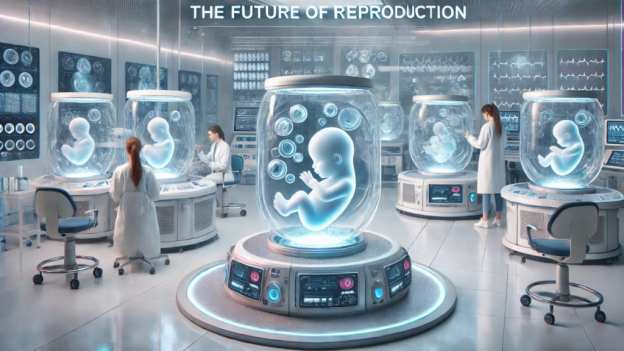
In 2025, parents here are paying up to $50,000 for new genetic-testing services that include promises to screen embryos for IQ. The fascination with what some call “genetic optimization” reflects deeper Silicon Valley beliefs about merit and success. “I think they have a perception that they are smart and they are accomplished, and they deserve to be where they are because they have ‘good genes,’” said Sasha Gusev, a statistical geneticist at Harvard Medical School. “Now they have a tool where they think that they can do the same thing in their kids as well, right?”…

The growing IQ fetish is sparking debate, with bioethicists raising alarms about the new genetic-screening services. “Is it fair? This is something a lot of people worry about,” said Hank Greely, director of the Center for Law and the Biosciences at Stanford University. “It is a great science fiction plot: The rich people create a genetically super caste that takes over and the rest of us are proles.” Yet in Silicon Valley, where top preschools require IQ tests and openness to novelty runs high, parents aren’t burdened by moral quandaries of using technology to select for their children’s intelligence before birth…

The most unusual motive for making smarter babies is emerging from a brainy group of computer scientists in Berkeley. Known as the rationalists, they fear that AI poses an existential risk to humanity. “They think one of the ways that possibly we could make safe AI is if we had smarter humans building them,” said Hsu, the Genomic Prediction co-founder. “Some of these guys are committed to a long-term eugenics program where they create smarter humans, and the smarter humans are the ones that make AI safe.”  

Excerpt from Zusha Elinson, Inside Silicon Valley’s Growing Obsession With Having Smarter Babies

Paranoia: What Happens When the Enemy Can See You Naked

During the 2025 Israel/U.S. war against Iran, Israeli authorities, and a pro-Israeli hacking group called Predatory Sparrow, targeted financial organizations that Iranians use to move money and sidestep the U.S.-led economic blockade…Predatory Sparrow…crippled Iran’s state-owned Bank Sepah, which services Iran’s armed forces and helps them pay suppliers abroad, knocking out its online banking services and cash machines…The group also breached Nobitex, Iran’s largest cryptocurrency exchange, popular with locals for transferring money overseas. The hackers extracted about $100 million in funds and forced the platform to shut down, according to the exchange.

Iran’s government pulled the plug on much of the country’s online activities to prevent further attacks… Non-Iranian websites were blocked. Citizens were warned against using foreign phones or messaging platforms that it claimed could collect audio and location data for Israeli spies. Government officials were banned from using laptops and smartwatches.

Paranoia swept through the Iranian population as the attacks, both physical and cyber, mounted. “It’s better to cut [the internet] off. Israel can see everything,” said Mohammad Ghorbaniyan, a Tehran-based money changer whom the U.S. sanctioned several years ago for allegedly aiding Iranian hackers…Predatory Sparrow has been wreaking havoc on Iran since at least 2021. In earlier hacks, the group disabled gas-station payment systems across the country and triggered a fire at an Iranian steel plant. 

For their operation against Nobitex, the hackers managed to obtain the keys for the exchange’s cryptocurrency wallets, which were held by key personnel within the company…Predatory Sparrow then “burned” the stolen $100 million by sending the tokens to other digital wallets the group itself couldn’t access. These wallets’ addresses, which are made up of long strings of numbers and letters, contained profane phrases like “F—IRGCterrorists.”

Excerpt from Angus Berwick, How Israel-Aligned Hackers Hobbled Iran’s Financial System, WSJ, June 29, 2025

Password Prevents Spilling out Private Thoughts

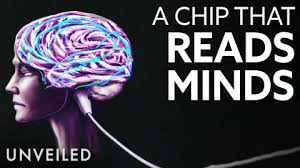
A brain–computer interface (BCI) can decipher the imagined sentences of people who have conditions that interfere with speech — and it comes with password protection to avoid revealing private thoughts. The system begins decoding users’ internal speech only after they think of a specific keyword. This internally spoken “keyword” can enable a user to “lock” and “unlock” the BCI to prevent the broadcasting of their private thoughts or spontaneous ‘self-talk’.

Excerpt from Gemma Conroy, A mind-reading brain implant that comes with password protection, Nature, Aug. 14, 2025

International Environmental Law: Fairness, Effectiveness and World Order

Second Edition (2025) will be out in October 2025

Check my blog on the Cambridge website

Fifty Years of International Environmental Law: Looking Back and Looking Ahead

Climate Change Can Wait: China’s Greed for Oil

China’s thirst for oil drove global demand for decades…Chinese officials have long worried that the U.S. and its allies could hamstring the nation’s economy by choking off its supply of foreign oil. So China has poured hundreds of billions of dollars into weaning itself off the imported stuff by reviving domestic production and swiftly building the world’s leading electric-vehicle industry. “The energy rice bowl must be held in our own hands,” Chinese leader Xi Jinping has said.

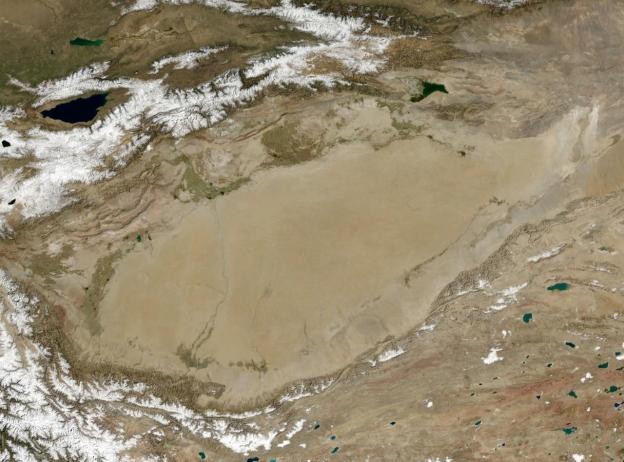
In a remote corner of China. the Tarim Basin, called the “sea of death” for its harsh conditions, oil workers are trying to coax more crude out of the ground by drilling holes as deep as Mt. Everest is high. State-owned PetroChina reported $38 billion of capital expenditures in 2024, nearly as much as Exxon Mobil’s and Chevron’s combined. China’s desire for energy independence dates all the way back to former leader Mao Zedong, who once dispatched tens of thousands of workers to search for oil in China’s northeast to ensure China wouldn’t be dependent on imports…

In July 2018, Xi personally ordered state-owned companies to revive domestic oil production to safeguard national security. Three state-owned oil majors invested an additional $10 billion the following year in exploration and production. They zeroed in on offshore areas such as the South China Sea and the Bohai Sea off the country’s northeast coast, as well as remote reserves near China’s western border with Kyrgyzstan, in a region called the Tarim Basin

In the deserts of the Tarim Basin crews are exploring some of the nation’s deepest reserves. Summer temperatures can top 120 degrees, and in the winter they can hit minus 20. Such ultradeep exploration is expensive, with some wells costing three times as much as shallower traditional wells, a Chinese oil executive told state media.  In 2023, Xi held a video call with Tarim Basin oil workers, praising their “indispensable contributions” to the nation. About 5% of China’s total oil and gas output in 2024 came from the basin’s deep reservoirs, a number Chinese oil executives intend to increase.

As of May 2024, PetroChina’s parent company, China National Petroleum, said it had drilled 193 wells in the Tarim Oilfield at least 5 miles deep. In the U.S., many wells are a mile or two deep.

Excerpt from Brian Spegele, How China Curbed Its Oil Addiction—and Blunted a U.S. Pressure Point, WSJ, July 21,2025

The Trump-China Hidden Romance: the companies behind USD1

The Trump family’s crypto venture has generated more wealth since the election—some $4.5 billion—than any other part of the president’s business empire.

A major reason for the success is a partnership with an under-the-radar trading platform quietly administered by Binance, the world’s largest crypto exchange, whose founder is seeking a pardon from President Trump…The online trading platform, PancakeSwap, serves as an incubator of sorts, drumming up interest among traders to use coins issued by the Trump family’s main crypto company, World Liberty Financial.  The more World Liberty’s flagship coin, USD1, is used, the greater demand to increase its circulation, and the greater the profit for World Liberty and its owners, including the Trump family. 

Crypto trading platforms, like PancakeSwap, often offer rewards or prizes to drum up interest in new coins, similar to the way brokerages offer free trades or casinos give first-time customers free chips…

Binance’s majority owner and founder, Changpeng Zhao, spent four months in jail in the U.S. last year after Binance agreed to pay a $4.3 billion fine for becoming a global money-laundering hub for criminals, terrorists and sanctions evaders. His company has deepened its relationship with World Liberty at the same time Zhao has ramped up efforts to secure a pardon from Trump…Zhao—considered the richest person in the crypto industry and worth over $70 billion.

USD1 got its first big break when Binance accepted a $2 billion investment from an outside investor paid in the World Liberty coin. The deal caused the amount of the cryptocurrency in circulation to erupt 15-fold and overnight become one of the world’s largest.  USD1 is what is known as a stablecoin, a privately invented digital currency that is backed 1:1 with U.S. dollars. World Liberty invests the money backing the coin in government bonds and money-market funds, without paying interest to users of the coin. With more than $2 billion of USD1 in circulation, it can earn around $80 million a year based on current interest rates. Binance has been holding the $2 billion in USD1 on its platform…By not cashing in the stablecoin, this ensures that World Liberty continues to earn money from investing the dollars that back them.

World Liberty’s relationship with PancakeSwap, whose website was registered in Shanghai, and Binance is one of several in which entities and individuals with strong ties to China have supported the Trump family crypto business. One of World Liberty’s largest investors is Justin Sun, the Hong Kong-based billionaire…This comes even as the White House pushes a trade war against China and seeks to curtail U.S. corporations’ ties to the country over national-security fears…

China is Binance’s largest market by trading volume. It has been a main base for its software developers, with hundreds of coders…Binance has long maintained that it isn’t a Chinese company, saying it left Shanghai shortly after its 2017 launch. Zhao… has said he is no longer a Chinese citizen, and holds Canadian and United Arab Emirates citizenship. The company, which has employees around the world, doesn’t have an official headquarters…

PancakeSwap doesn’t disclose its ownership…According to former Binance employees, Binance staff created PancakeSwap in-house in 2020 because the exchange wanted to establish a foothold in crypto’s so-called decentralized finance craze. The platform has remained under Binance’s supervision…

Excerpt from Angus Berwick et al., The Recipe Behind the Trump Family’s Crypto Riches: PancakeSwap, WSJ, Aug. 12, 2025
ChatGPT as a Confessor

ChatGPT users are unloading personal thoughts and feelings to the chatbot in detailed terms. So much so that Altman, OpenAI’s chief executive, has been warning that they shouldn’t expect the same sorts of privacy protections that come with intimate conversations with psychologists or lawyers. 

“People talk about the most personal s— in their lives to ChatGPT,” Altman said during a podcast appearance in July 2025. “If you go talk to ChatGPT about your most sensitive stuff and then there’s like a lawsuit or whatever, like we could be required to produce that and I think that’s very screwed up. I think we should have like the same concept of privacy for your conversations with AI that we do with a therapist or whatever.”

Excerpt from Tim Higgins, Why Apple’s Tim Cook Is the Odd Man Out in the AI Race, WSJ, Aug. 2025