Monthly Archives: October 2025

While United States Hibernated, China Salivated

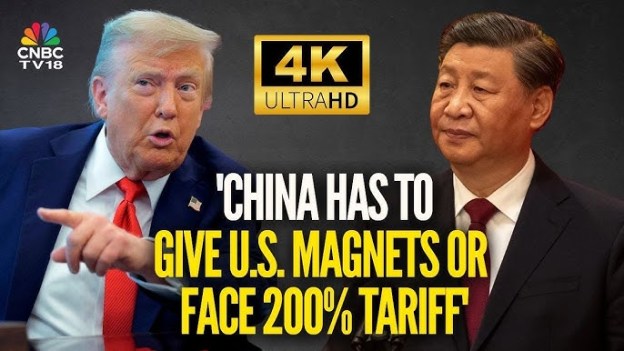
When China tightened restrictions on rare-earth exports in October 2025, stunning the United States, it was the latest reminder of Beijing’s control over an industry vital to the world economy. China’s dominance was decades in the making. Since the 1990s, China has used aggressive tactics to build up and maintain its lock over rare-earth minerals, which are essential to making magnets needed for cars, wind turbines, jet fighters and other products. Beijing provided financial support to the country’s leading companies, encouraged them to snap up rare-earth assets abroad, and passed laws preventing foreign companies from buying rare-earth mines in China. It eventually consolidated its domestic industry from hundreds of businesses into a few giant players, giving it further leverage over prices…

In 1995, Chinese state-linked companies received U.S. government approval to buy the rare-earth materials and magnet business started by General Motors, called Magnequench. In the following years, the Chinese ownership shut down all its rare-earth plants in the U.S. and shipped the equipment to China. Top American engineers were offered opportunities to go to China and set up new plants there.  “There were some colleagues that were dead set against it, saying they would never help China learn our technology,” said one magnet expert who ultimately agreed to go to China. “When I arrived, I could not believe what I was seeing. The number of new factories being built, and the rate at which they were being built, was mind-blowing,” he said….  By the mid-2000s, the U.S. rare-earth industry had been all but wiped out. Mountain Pass, America’s major rare-earth mine, had been shut down, as had virtually all American facilities that processed rare earths and turned them into magnets. China produced around 97% of the world’s rare earths, giving it what was effectively a global monopoly…

By 2021, the U.S. government was growing more worried about China’s ability to weaponize rare earths, causing prices to jump. Washington began offering large-scale funding for new rare-earth plants, including a refinery in Texas to be built by Lynas, an Australian rare-earth company. But in 2021, the Association of China Rare Earth Industry issued a warning: to China’s leadership If Beijing wanted to maintain “China’s absolute dominant position,” the country needed to relax state production quotas. Beijing responded in 2022 by pushing up output by 25%, the most in years, with another large increase the following year. Prices tanked, hitting the bottom lines of Western producers and leading some to unload assets…Beijing also introduced new measures preventing the transfer of its rare-earth processing technology abroad.

Excerpt from Jon Emont, How China Took Over the World’s Rare-Earths Industry, WSJ. Oct. 19, 2025
Why AI Industry is Like the Nuclear Industry

According to the Anthropic’s CEO  Jack Clark, governments ” should think of AI systems as kind of like countries that are arriving into the world, and misaligned AI systems as like rogue states.” He isn’t advocating for the end of AI but rather pushing for openness so these potential monsters aren’t created in the dark. He’s worried about a crisis—like what happened with the nuclear industry—that sparks drastic policy changes that derails development.

Excerpt from Tim Higgins, The Fight Over Whose AI Monster Is Scariest, WSJ, Oct. 18, 2025

Nationalizing a Crown Jewel: the case of Nexperia

U.S. officials’ warning to their Dutch counterparts was stark: If they wanted a Netherlands-based chip maker to avoid being put on a trade blacklist, it would almost certainly have to remove its Chinese owner as CEO. “The fact that the company’s CEO is still that same Chinese owner is problematic,” American officials said in a June 2025 meeting on the topic. The Americans soon got their wish. In September 25, 2025, the Dutch economy ministry seized control of Nexperia from China’s Wingtech Technology. The next day, a Dutch court granted an emergency petition to suspend Wingtech founder Zhang Xuezheng as Nexperia’s CEO and put all but one of the semiconductor company’s shares under external management.

China quickly fired back at the seizure, ordering Wingtech in early October to suspend exports of Nexperia of chips that the company has long sent for packaging and testing in China…The Dutch economy minister said in a letter to parliament that he moved to seize control of Nexperia based on evidence that the CEO was moving quickly to shift production capacity, financial resources and intellectual property to China, not because of pressure from any other country… The Dutch government and Dutch and German executives of the company had tried for months to ringfence the company’s business from Chinese control to accommodate domestic concerns—and avoid being hit by the U.S. blacklist… Dutch officials told Nexperia that the coming expansion of U.S. trade restrictions could lead to restrictions on the business, unless measures were taken to limit the transfer of knowledge and capabilities to China.

In the past, Nexperia relied on its European factories and contract manufacturers in Taiwan to make chips for China. In 2020, Zhang set up a wafer factory in Shanghai. The business, called Wingskysemi, started production in 2023 and has become one of Nexperia’s key suppliers….

Excerpt from Sam Schechner et al, , How U.S. Pressured Netherlands to Oust CEO of Chinese-Owned Chip Maker, WSJ, Oct. 14, 2025

Overlords of the Internet: Botnet Warfare

U.S. Federal authorities disrupted in August 2025 a network of hacked devices used by criminals in some of the largest online attacks yet seen… Law-enforcement agencies and technology companies are waging a war against increasingly powerful networks of hacked devices, called botnets, that can knock websites offline for a fee. They are used for extortion and by disreputable companies to knock rivals offline… These botnets are leveraging new types of internet-connected devices with faster processors and more network bandwidth, offering them immense power. The criminals controlling the botnets now have the capabilities to move beyond website takedowns to target internet connectivity and disrupt very large swaths of the internet.“Before the concern was websites; now the concern is countries,” said Craig Labovitz, head of technology with Nokia’s Deepfield division. 

Apprehending botnet criminals in August 2025 appeared to have an unwanted consequence: freeing up as many as 95,000 devices to be taken over by new botnet overlords. That led to a free-for-all to take over the machines “as fast as possible,” said Damian Menscher, a Google engineer. The operators of a rival botnet, called Aisuru, seized control of more than one-fourth of them and immediately started launching attacks that are “breaking records,” he said.

On Sept. 1, 2025 the network services company Cloudflare said it had measured an attack that clogged up computer networks with 11.5 trillion bits of junk information per second. That is enough to consume the download bandwidth of more than 50,000 consumer internet connections. Cloudflare declared this attack, known as a distributed denial of service, or DDoS, a “world record” in terms of intensity. Some analysts see it almost as an advertisement of the botnet’s capabilities…

Botnets such as Aisuru are made up of a range of internet-connected devices—routers or security cameras, for example—rather than PCs, and often these machines can only join one botnet at a time. Their attacks can typically be fended off by the largest cloud-computing providers. One massive network that Google disrupted in 2025 had mushroomed from at least 74,000 Android devices in 2023 to more than 10 million devices in two years. That made it the “largest known botnet of internet-connected TV devices,” according to a July 2025 Google court filing.

Excerpts from Robert McMillan, The Feds Destroyed an Internet Weapon, but Criminals Picked Up the Pieces, WSJ, Sept. 15, 2025

Which Tech Companies Work for the Military? All

Companies including Nokia, Dell, and Oracle are eager to apply decades of experience in civilian technology to the rapidly evolving battlefield. Drones, bodycams and digital sensors now stream real-time intelligence in volumes no human can digest. Military headquarters are crunching through that using artificial intelligence and pumping back to troops situational updates, tactical guidance and battle plans, constantly updated on computer screens and hand-held devices.  “We understand that the future weapon is data,” said Giorgi Tskhakaia, an adviser to Ukraine’s minister of digital transformation 

The first step is connectivity….Nokia is packaging 5G technology for ultra-secure use on battlefields and in national-security applications. It has developed backpacks with small 5G nodes and vehicle-based systems that can handle up to 1,000 users for a sort of tactical communications bubble. In 2025, it announced partnerships with military-equipment giants Lockheed Martin and Rheinmetall to integrate 5G communications into their systems.

Ericsson, the West’s only other maker of 5G networks and a producer of military radios going back to World War II, is also pushing into digital defense applications.

NATO is now working to adopt 5G as a military-communications standard across its 32 members. Alliance experts say the volume of military data is so great that 5G is best for transmission because the standard has at least 10 times the data capacity of earlier systems. It is also much more resilient against jamming

The second step is the extraction of data….Ukraine has spent three years developing AI systems to churn through all it collects… The Pentagon in 2017 launched a significant effort to adopt AI, Project Maven, tapping machine learning to digest mountains of data. Google’s role in the work sparked employee protests at the time…

Oracle, like many of its rivals, is no stranger to working with governments and militaries. The company began in 1977 out of a Central Intelligence Agency program—Project Oracle. But for decades it focused on corporate customers. Now, it and other cloud providers including Google, Amazon.com and IBM are applying to government and national-security work many lessons from their fierce commercial competition to move and process data fastest.

The final step in exploiting battlefield data is delivering it to fighters via gear that can handle combat conditions. Screens are proliferating on the battlefield, just as they did in offices and homes several decades ago, but warfare puts demands on equipment unlike any other environment…One Dell laptop is built to Pentagon standards for resistance to shocks, dust, sand, water and “explosive atmosphere,” meaning it won’t ignite flammable vapor. It can handle temperatures between minus 20 degrees and 145 degrees Fahrenheit.

Excerpt from Daniel Michaels, That 1990s Tech Brand? Its New Gig Is in Battlefield Data, WSJ, Sept. 9, 2025

Big Tech and Military: Microsoft – Israel Force

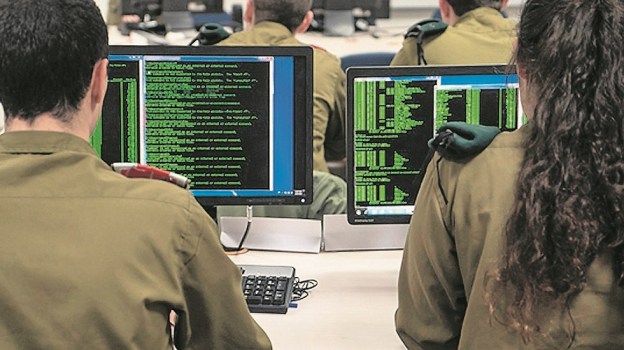
Microsoft terminated in September 2025 the Israeli military’s access to technology it used to operate a powerful surveillance system that collected millions of Palestinian civilian phone calls made each day in Gaza and the West Bank, according to Guardian. Microsoft told Israeli officials that Unit 8200, the military’s elite spy agency, had violated the company’s terms of service by storing the vast trove of surveillance data in its Azure cloud platform.

Equipped with Azure’s near-limitless storage capacity and computing power, Unit 8200 had built an indiscriminate new system allowing its intelligence officers to collect, play back and analyze the content of cellular calls of an entire population.

The project was so expansive that, according to sources from Unit 8200 – which is equivalent in its remit to the US National Security Agency – a mantra emerged internally that captured its scale and ambition: “A million calls an hour.

The enormous repository of intercepted calls – which amounted to as much as 8,000 terabytes of data – was held in a Microsoft data center in the Netherlands. Within days of the Guardian publishing, Unit 8200 appears to have swiftly moved the surveillance data out of the country.

Excerpt from Harry Davies and Yuval Abraham, Microsoft blocks Israel’s use of its technology in mass surveillance of Palestinians, Guardian, Sept. 25, 2025

The New Underworld Order: Invincible Cartels

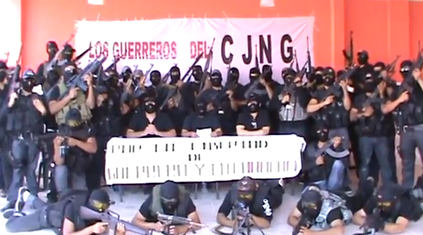
Nemesio “Mencho” Oseguera spent decades building his Jalisco New Generation Cartel into a transnational criminal organization fierce enough to forge a new underworld order in Mexico, displacing the Sinaloa cartel, torn by warring factions, as the world’s biggest drug pusher. The Sinaloans, Mexico’s top fentanyl traffickers, got caught in the crosshairs of the Trump administration, which promised to eradicate the synthetic opioid. The crackdown has left an open field for Jalisco and its lucrative cocaine trade, elevating Oseguera to No. 1.

The Jalisco cartel transports the cocaine by the ton from Colombia to Ecuador and then north to Mexico’s Pacific coast via speedboats and so-called narco subs…The U.S. has a $15 million bounty on Oseguera, but he rarely leaves his mountain compound, according to authorities. Few photos of him circulate. The cadre of men protecting Oseguera, known as the Special Force of the High Command, carry RPG 7 heat-seeking, shoulder-fired rocket launchers capable of piercing a tank, people familiar with cartel operations said. Visitors to the drug lord’s stronghold are hooded before they embark on the six-hour car trip through terrain sown with land mines, those people said. Locations of the pressure-activated explosives are known only by members of Oseguera’s inner circle.

The Jalisco cartel, which controls ports on Mexico’s Pacific coast, now uses routes and tunnels into the U.S. that are controlled by the sons of imprisoned drug kingpin Joaquín “El Chapo” Guzmán….
 
The cartel acts as a parallel government in the southwestern state of Jalisco and other parts of Mexico, taxing such goods as tortillas, chicken, cigarettes and beer, security experts said. It controls construction companies that build roads, schools and sewers for the municipal governments under cartel control.  A booming black market for fuel is another cash cow. Gasoline and diesel stolen from Mexican refineries and pipelines—or smuggled into Mexico from the U.S. without paying taxes—is sold at below market prices to small and large businesses.. The head of the Jalisco cartel’s fuel division is nicknamed “Tank” for his prowess at stealing and storing millions of gallons of fuel. 

Excerpst from Steve Fisher et al., America Loves Cocaine Again—Mexico’s New Drug King Cashes In, WSJ, Sept. 16, 2025

Building on the Moon: the Environmental Impact

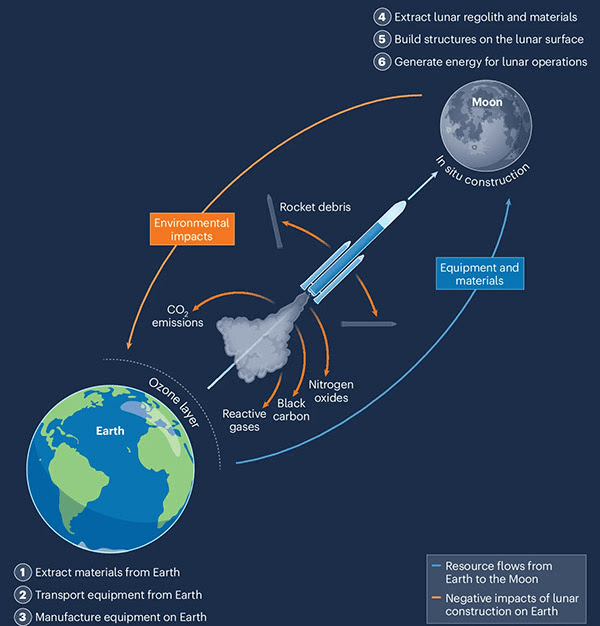
The Environmental Burden of Building on the Moon

Is Violence Necessary for the Protection of Environment?

Six million antelope swarm across an area the size of Illinois,in Sough Sudan, a mass movement of mammals…African Parks, the Johannesburg-based conservation group that manages natural areas on behalf of South Sudan’s government, allowed The Wall Street Journal access to the 58,000-square-mile wilderness on the eastern bank of the White Nile….Although scientists and, of course, locals have known about the migration for years, only recently have researchers understood its staggering dimensions. In 2023, African Parks conducted an aerial survey revealing the movement included some 5.1 million white-eared kob, which generally move in a U shape in and around Boma National Park, sometimes crossing into Ethiopia’s Gambella National Park…

The interethnic violence that plagues South Sudan has, to a degree, helped protect the animal migration…South Sudanese rebels fought for decades to break away from Sudan. The South, mostly animist and Christian, finally won independence from the largely Muslim North in 2011, but quickly descended into civil war along ethnic lines. The war ended in 2020, but fighting in 2025 suggests stability remains a distant hope.

Among the region’s ethnic groups, the heavily armed Murle people in and around Boma National Park are known for stealing cattle and children from the Dinka and Anuak. Fighting is a way of life for Murle men, who divide themselves into age sets. Younger men gain status by taking on the men above them, with sticks and AK-47s, sometimes with lethal effect. Their torsos sometimes bear decorative scars resembling assault rifles…The Murle are so intimidating that other ethnic groups keep their distance to the extent possible. That has created a sort of no-man’s-land both in the parks and the places in between. “You’ve got this massive space that has allowed the migration to flourish,” says John Vogel, manager of Badingilo park.

With war, however, have come guns, and the temptation to poach is strong. Increasingly, hunters armed with military-grade weapons have been mowing down entire herds of antelope and just taking what they can carry to market on motorcycles. In a single month this year, African Parks counted 14,000 antelope carcasses passing through the town of Bor, where each animal sells for about $50, a vast amount to a poor rural family…

Excerpt from Michael M. Phillips, Researchers Track World’s Biggest Animal Migration, WSJ, Sept. 6, 2025

How China Plans to Destroy the U.S. AI Industry

China’s restrictions on rare-earth materials announced on October 9, 2025 would mark a nearly unprecedented export control*** that stands to disrupt the global economy, giving Beijing more leverage in trade negotiations and ratcheting up pressure on the Trump administration to respond.

The rule, put out by China’s Commerce Ministry, is viewed as an escalation in the U.S.-China trade fight because it threatens the supply chain for semiconductors. Chips are the lifeblood of the economy, powering phones, computers and data centers needed to train artificial-intelligence models. The rule also would affect cars, solar panels and the equipment for making chips and other products, limiting the ability of other countries to support their own industries. China produces roughly 90% of the world’s rare-earth materials.

Global companies that sell goods with certain rare-earth materials sourced from China accounting for 0.1% or more of the product’s value would need permission from Beijing, under the new rule. Tech companies will probably find it extremely difficult to show that their chips, the equipment needed to make them and other components fall below the 0.1% threshold, industry experts said. The rules could cause a U.S. recession if implemented aggressively because of how important AI capital spending is to the economy… “It’s an economic equivalent of nuclear war—an intent to destroy the American AI industry,” said Dmitri Alperovitch, co-founder of the Silverado Policy Accelerator think tank.

Excerpt from Amrith Ramkumar,et al., China’s Rare-Earth Escalation Threatens Trade Talks—and the Global Economy, WSJ, Oct. 9, 2025

***The new export controls mark the first time China has applied the foreign direct product rule (FDPR)—a mechanism introduced in 1959 by the United States and long used United States to restrict semiconductor exports to China. The FDPR enables the United States to regulate the sale of foreign-made products if they incorporate U.S. technology, software, or equipment, even when produced by non-U.S. companies abroad. In effect, if U.S. technology appears anywhere in the supply chain, the United States can assert jurisdiction. See CSIS

Blackmail and Espionage: rogue AI

Today I am reading on how AI models can blackmail and spy.

See How LLMs could be insider threats

DECEPTION IN LLMS: SELF-PRESERVATION AND AUTONOMOUS GOALS IN LARGE LANGUAGE MODELS

Chilling…

A Pipe Dream: Carbon Capture and Storage

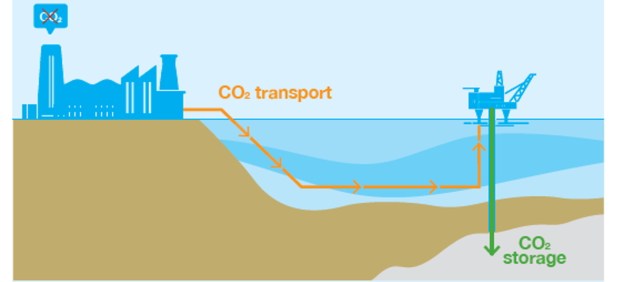
Drawing down carbon from the air and stashing it in underground rock formations has been framed as an essential way to slow and reverse global warming. But new research published in the journal Nature finds there are far fewer suitable places to do this than previously thought.

After screening out “risky” areas, like those that are vulnerable to earthquakes, a team of researchers from Europe and the U.S. found that the Earth can only safely store about 1,460 gigatons of injected carbon in its sedimentary basins. This is an order of magnitude less than previous estimates… 

Carbon storage “can no longer be considered an unlimited solution to bring our climate back to a safe level,” one of the study’s co-authors, Joeri Rogelj, said in a statement. “Geological storage space needs to be thought of as a scarce resource that should be managed responsibly to allow a safe climate future for humanity.” Rogelj is director of research at the Grantham Institute on climate change and the environment at Imperial College London.

Carbon storage refers to the injection of carbon dioxide into underground reservoirs where it theoretically can’t contribute to climate change.

According to the study’s authors, no previous global or regional estimate of the Earth’s technical carbon storage potential has taken into account key risk factors that would make some areas undesirable for storage. Starting from an estimate of all potentially available storage sites, their analysis cuts out areas that are too shallow, too deep, and too prone to earthquakes, as well as environmentally protected areas and areas near where people live. This reduces the total available capacity for carbon storage from 11,780 gigatons to just 1,460 gigatons of CO2, 70 percent of it on land and 30 percent on the seafloor.

They also noted some geographical disparities in the potential for carbon storage: While some historical climate polluters such as the U.S. and Canada have lots of space to safely stash carbon, others in Europe don’t. If those countries intend to make carbon storage a significant piece of their climate mitigation plans, they will likely have to look for locations in countries that have done little to contribute to climate change, potentially in Africa.

Except  from Joseph Winters, How much carbon can we safely store underground? Much less than previously thought, Yale Climate Connections, Sept. 10, 2025

How to Save Rhinos? Make them Radioactive

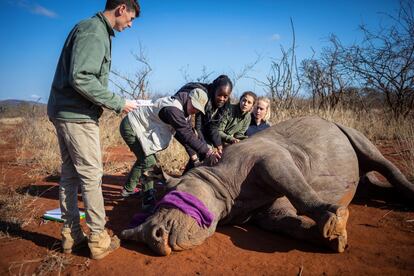
In a pioneering effort to combat wildlife trafficking of the threatened rhinoceros, a South African University began implementing a project supported by the International Atomic Energy Agency (IAEA). The project combines the safe insertion of radioactive isotopes into rhino horns… to deter and detect illegal poaching.

With over 10,000 rhinos lost to poaching in the past decade, South Africa – home to the world’s largest population of rhinos – remains a target for criminals driven by the illegal trade of rhino horn. In the first quarter of 2025 alone, the South African Ministry of Forestry, Fisheries and the Environment reported 103 rhinos poached. In response, this project run by the University of the Witwatersrand is using radiation to support conservation and enforcement efforts.

The Rhisotope Project was created in 2021 with the idea to tag rhino horns with radioactive material. This makes the horns detectable by radiation portal monitors (RPMs) already deployed at borders, ports and airports worldwide. These RPMs, commonly used to detect nuclear and other radioactive material, can now be harnessed against wildlife crime.

Excerpt from Nuclear Science and Nuclear Security Infrastructure to Protect Rare Rhinos: IAEA-Supported Project Marks a Milestone, IAEA News, July 2025

What is Mosquito Factory?

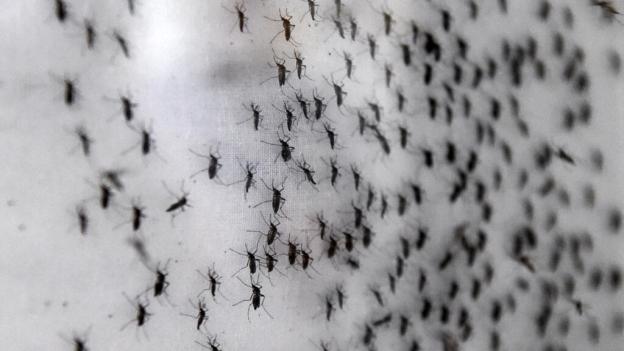
Launched in July 2025, a Brazilian mosquito factory is expected to produce 100 million eggs a week from the mosquito Aedes aegypti. However, unlike wild A. aegypti, the main transmitter of dengue virus, those churned out by the factory carry a harmless Wolbachia bacterium that curbs the insects’ ability to spread viruses including dengue and Zika. The idea is to release the modified mosquitoes, which researchers call wolbitos, into cities in Brazil, where they will mate with their wild counterparts and the females will pass the bacterium on to their offspring, gradually converting the local population.

The wolbito strategy, which is being spearheaded by the non-profit World Mosquito Program (WMP), has already shown success in Colombia, Indonesia and at home: in the Brazilian city of Niterói in the southeast, dengue cases dropped by 69% in areas where Wolbachia-carrying mosquitoes were released, compared with areas where they weren’t. Brazil’s federal government has adopted the approach to fight dengue infections — which surged to a record 6.5 million confirmed cases in the country in 2024 — alongside other preventive measures such as vaccines.

Excerpt from Mariana Lenharo, This is the world’s largest ‘mosquito factory’: its goal is to stop dengue, Nature, Sept. 3, 2025

Clouds! and Climate Change

Clouds are not just poetic. They’re pivotal in helping to regulate Earth’s temperature. And their influence on the climate is evolving in ways we’re only beginning to understand.

How exactly cloud cover will shift in a warming world is anyone’s guess; it’s one of the largest sources of uncertainty in climate science. But it should also be everyone’s concern. What happens to our clouds as the planet warms is so important that we need a renaissance in the study of clouds.

Excerpt from Gavin Pretor-Pinney, We Take Clouds for Granted, NYT, Sept. 10, 2025

Read here his beautiful essay!

For more, see Cloud Appreciation Society

Another Laughingstock: Carbon Offsets

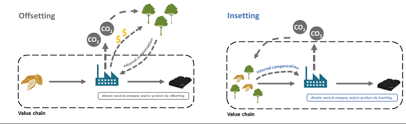
Carbon credits feature prominently in corporate climate strategies and have sparked public debate about their potential to delay companies’ internal decarbonisation. While industry reports claim that credit purchasers decarbonize faster, rigorous evidence is missing. This study (see below) provides an in-depth analysis of 89 multinational companies’ historical emission reductions and climate target ambitions. Based on self-reported environmental data and more than 400 sustainability reports, we find no significant difference between the climate strategies of companies that purchased credits and those that did not. Voluntary offsetting is not a central part of most companies’ climate strategies, and many pass credit costs directly onto their customers. While the companies within our sample retired one-fourth of all carbon credits in 2022, the top five offsetters’ expenditures on voluntary emission offsetting are, on average, only 1 percent relative to their capital expenditures.

Abstract from Niklas Stolz &  Benedict S. Probst, The negligible role of carbon offsetting in corporate climate strategies, Nature Communications,  Sept. 10, 2025