The Essence of Imperialism: Australia in the Pacific

Nor is it the first time Vanuatu has clashed with the Australian Federal Police (AFP). In 2004 its government closed down the AFP offices in the capital, Port Vila, and expelled officers, after allegations that they were spying and interfering with domestic politics. The AFP’s main concerns in Vanuatu have been over the country marketing itself vigorously as an international tax haven, and over the risk posed by the volatile Vanuatu Mobile Force, the paramilitary wing of the local police force. Protecting Australia’s national interests under the guise of so-called capacity-building can quickly lead to tensions.

The AFP’s activities in Vanuatu have been part of a broader expansion over the past decade of Australian policing across the Pacific. Peacekeeping missions to Timor-Leste since 1999 and to the Solomon Islands, beginning in 2003, boosted police numbers. In the past decade, the AFP has trebled in size and increased its budget fivefold. The AFP commissioner now has an influential role on the Australian cabinet’s national-security committee. In Australia most domestic policing is carried out by state police forces, leaving the federal force largely free, outside aboriginal communities in the Northern Territory, to focus on international deployments.

Their efforts have often led to accusations of heavy-handedness. In 2005 a mission to Papua New Guinea was abandoned after that country’s Supreme Court ruled that legal immunities granted to AFP officers were unconstitutional. In 2006 the Solomon Islands’ police chief, Shane Castles, an Australian, was sacked and declared an “undesirable immigrant” after a raid by his police officers on the office of the prime minister. That raid was connected with the AFP’s long-standing pursuit of the Solomon Islands’ then attorney-general, Julian Moti, on charges of sex with an underage girl. Mr Moti was deported to Australia in 2007, arrested and brought before the courts. In December 2011 the High Court threw the case out, finding that Australian officials had colluded in Mr Moti’s illegal deportation.

The Australian Federal Police in the Pacific: Booting out big brother, Economist, May 19, 2012, at 49

Resuscitating Collapsed Fisheries: catch shares

For American fish, this is a good time to be alive. On May 14th, 2012 the National Oceanic and Atmospheric Administration (NOAA) reported that a record six federal fisheries returned to health last year. After a decade of similar progress, 86% of America’s roughly 250 federally monitored commercial fish stocks were not subject to overfishing; 79% were considered healthy…

In the late 1980s cod fisheries in the Gulf of Maine and Georges Bank collapsed. This led to efforts to improve the fishery act, in 1996 and 2006, which forced the eight regional bodies that manage federal fisheries to introduce science-based quotas and ten-year recovery programmes for depleted fisheries. The recent recovery of species, including New England scallops, mid-Atlantic bluefish and summer flounder and Pacific lingcod, is the result. This signals another truth: given a break, the marine environment can often replenish itself spectacularly.

America’s fisheries are probably now managed almost as well as the world’s best, in Norway, Iceland, New Zealand and Australia. Yet there is plenty of room for improvement. State-run fisheries, which tend to be close to shore and dominated by small-scale and inefficient fishermen, are less well funded and well managed and much poorer for it. New England groundfish stocks, including cod, have also not recovered: they account for 13 of the remaining depleted populations. This appears to be partly the result of environmental change, climatic or cyclical.

And the politicians are still interfering. On May 9th the House passed legislation forbidding NOAA from developing an innovative means of apportioning fishing quotas, known as catch shares. These are long-term, aiming to give fishermen a stake in the future of their fisheries; market-based, since they can be traded; and, in practice, good for fish. Sadly, the two Republican congressmen behind the ban consider they have been designed “to destroy every aspect of American freedom under the guise of conservation”.

Fish stocks: Plenty more fish in the sea, Economist, May 26, 2012, at 32

Military Robots and Automated Killing

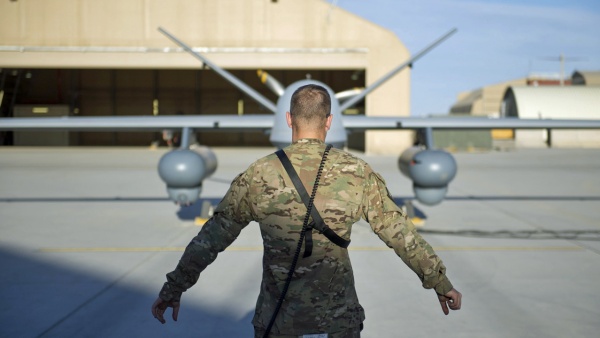
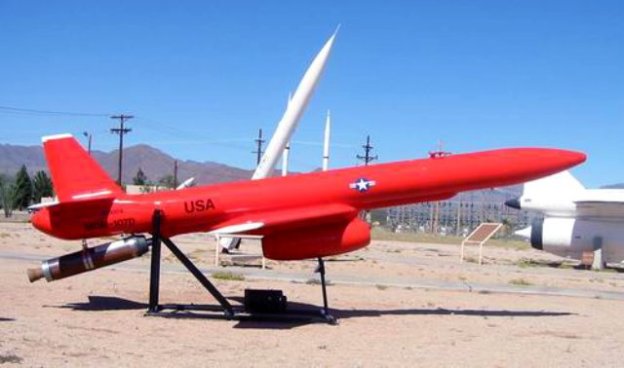
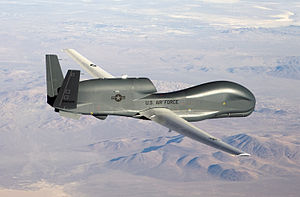
Military robots come in an astonishing range of shapes and sizes. DelFly, a dragonfly-shaped surveillance drone built at the Delft University of Technology in the Netherlands, weighs less than a gold wedding ring, camera included. At the other end of the scale is America’s biggest and fastest drone, the $15m Avenger, the first of which recently began testing in Afghanistan. It uses a jet engine to carry up to 2.7 tonnes of bombs, sensors and other types of payload at more than 740kph (460mph).

On the ground, robots range from truck-sized to tiny. TerraMax, a robotics kit made by Oshkosh Defense, based in Wisconsin, turns military lorries or armoured vehicles into remotely controlled or autonomous machines. And smaller robotic beasties are hopping, crawling and running into action, as three models built by Boston Dynamics, a spin-out from the Massachusetts Institute of Technology (MIT), illustrate.  By jabbing the ground with a gas-powered piston, the Sand Flea can leap through a window, or onto a roof nine metres up. Gyro-stabilisers provide smooth in-air filming and landings. The 5kg robot then rolls along on wheels until another hop is needed—to jump up some stairs, perhaps, or to a rooftop across the street. Another robot, RiSE, resembles a giant cockroach and uses six legs, tipped with short, Velcro-like spikes, to climb coarse walls. Biggest of all is the LS3, a four-legged dog-like robot that uses computer vision to trot behind a human over rough terrain carrying more than 180kg of supplies. The firm says it could be deployed within three years.

Demand for land robots, also known as unmanned ground vehicles (UGVs), began to pick up a decade ago after American-led forces knocked the Taliban from power in Afghanistan. Soldiers hunting Osama bin Laden and his al-Qaeda fighters in the Hindu Kush were keen to send robot scouts into caves first. Remote-controlled ground robots then proved enormously helpful in the discovery and removal of makeshift roadside bombs in Afghanistan, Iraq, and elsewhere. Visiongain, a research firm, reckons a total of $689m will be spent on ground robots this year. The ten biggest buyers in descending order are America, followed by Israel, a distant second, and Britain, Germany, China, South Korea, Singapore, Australia, France and Canada.

Robots’ capabilities have steadily improved. Upload a mugshot into an SUGV, a briefcase-sized robot than runs on caterpillar tracks, and it can identify a man walking in a crowd and follow him. Its maker, iRobot, another MIT spin-out, is best known for its robot vacuum cleaners. Its latest military robot, FirstLook, is a smaller device that also runs on tracks. Equipped with four cameras, it is designed to be thrown through windows or over walls.

Another throwable reconnaissance robot, the Scout XT Throwbot made by Recon Robotics, based in Edina, Minnesota, was one of the stars of the Ground Robotics Capabilities conference held in San Diego in March. Shaped like a two-headed hammer with wheels on each head, the Scout XT has the heft of a grenade and can be thrown through glass windows. Wheel spikes provide traction on steep or rocky surfaces. In February the US Army ordered 1,100 Scout XTs for $13.9m. Another version, being developed with the US Navy, can be taken to a ship inside a small aquatic robot, and will use magnetic wheels to climb up the hull and onto the deck, says Alan Bignall, Recon’s boss.

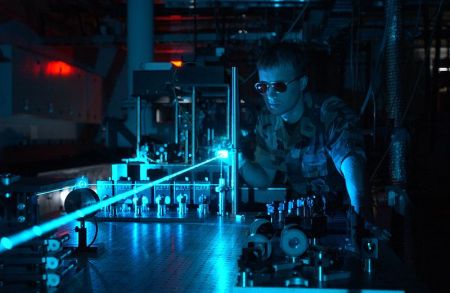
Even more exotic designs are in development. DARPA, the research arm of America’s Department of Defence, is funding the development of small, soft robots that move like jerky slithering blobs. EATR, another DARPA project, is a foraging robot that gathers leaves and wood for fuel and then burns it to generate electricity. Researchers at Italy’s Sant’Anna School of Advanced Studies, in Pisa, have designed a snakelike aquatic robot. And a small helicopter drone called the Pelican, designed by German and American companies, could remain aloft for weeks, powered by energy from a ground-based laser….

A larger worry is that countries with high-performance military robots may be more inclined to launch attacks. Robots protect soldiers and improve their odds of success. Using drones sidesteps the tricky politics of putting boots on foreign soil. In the past eight years drone strikes by America’s Central Intelligence Agency (CIA) have killed more than 2,400 people in Pakistan, including 479 civilians, according to the Bureau for Investigative Journalism in London. Technological progress appears to have contributed to an increase in the frequency of strikes. In 2005 CIA drones struck targets in Pakistan three times; last year there were 76 strikes there. Do armed robots make killing too easy?

Not necessarily….. Today’s drones, blimps, unmanned boats and reconnaissance robots collect and transmit so much data, she says, that Western countries now practise “warfare by committee”. Government lawyers and others in operation rooms monitor video feeds from robots to call off strikes that are illegal or would “look bad on CNN”, says Ms Cummings, who is now a robotics researcher at MIT. And unlike pilots at the scene, these remote observers are unaffected by the physical toil of flying a jet or the adrenalin rush of combat.

In March Britain’s Royal Artillery began buying robotic missiles designed by MBDA, a French company. The Fire Shadow is a “loitering munition” capable of travelling 100km, more than twice the maximum range of a traditional artillery shell. It can circle in the sky for hours, using sensors to track even a moving target. A human operator, viewing a video feed, then issues an instruction to attack, fly elsewhere to find a better target, or abort the mission by destroying itself. But bypassing the human operator to automate attacks would be, technologically, in the “realm of feasibility”, an MBDA spokesman says……

Traditional rules of engagement stipulate that a human must decide if a weapon is to be fired. But this restriction is starting to come under pressure. Already, defence planners are considering whether a drone aircraft should be able to fire a weapon based on its own analysis. In 2009 the authors of a US Air Force report suggested that humans will increasingly operate not “in the loop” but “on the loop”, monitoring armed robots rather than fully controlling them. Better artificial intelligence will eventually allow robots to “make lethal combat decisions”, they wrote, provided legal and ethical issues can be resolved…..

Pressure will grow for armies to automate their robots if only so machines can shoot before being shot, says Jürgen Altmann of the Technical University of Dortmund, in Germany, and a founder of the International Committee for Robot Arms Control, an advocacy group. Some robot weapons already operate without human operators to save precious seconds. An incoming anti-ship missile detected even a dozen miles away can be safely shot down only by a robot, says Frank Biemans, head of sensing technologies for the Goalkeeper automatic ship-defence cannons made by Thales Nederland.  Admittedly, that involves a machine destroying another machine. But as human operators struggle to assimilate the information collected by robotic sensors, decision-making by robots seems likely to increase. This might be a good thing, says Ronald Arkin, a roboticist at the Georgia Institute of Technology, who is developing “ethics software” for armed robots. By crunching data from drone sensors and military databases, it might be possible to predict, for example, that a strike from a missile could damage a nearby religious building. Clever software might be used to call off attacks as well as initiate them.

In the air, on land and at sea, military robots are proliferating. But the revolution in military robotics does have an Achilles heel, notes Emmanuel Goffi of the French air-force academy in Salon-de-Provence. As robots become more autonomous, identifying a human to hold accountable for a bloody blunder will become very difficult, he says. Should it be the robot’s programmer, designer, manufacturer, human overseer or his superiors? It is hard to say. The backlash from a deadly and well-publicised mistake may be the only thing that can halt the rapid march of the robots.

Robots go to war: March of the robots, Economist Technology Quarterly, June 2, 2012

Beyond GPS: All Source Positioning and Navigation

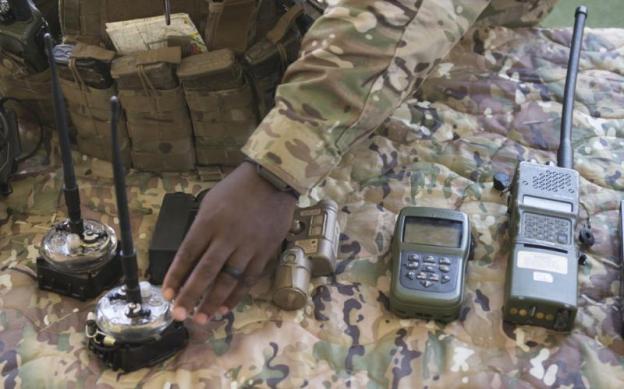
DARPA’s All Source Positioning and Navigation (ASPN) program seeks to enable low cost, robust, and seamless navigation solutions for military users on any operational platform and in any environment, with or without GPS. In particular, ASPN will develop the architectures,  abstraction methods, and navigation filtering algorithms needed for rapid integration and reconfiguration of any combination of sensors. This will enable rapid adaptation to evolving missions as well as reduction of the system integration costs and time-to-market for navigation solutions in general.

The goal of Phase 2 of ASPEN is to address the issues of optimization and real-time operation, showing capabilities beyond basic plug-and-play flexibility. Solutions must be capable of adapting to a diverse set of sensor and IMU inputs and selectively choosing the subset of measurements that produces the best possible solution, ideally mirroring the result from a tuned filter solution for that same scenario….Phase 2 solutions will need to demonstrate real-time operation in representative field (non-laboratory) environments. Although adaptability is the main goal of the ASPN program, the possibility of ASPN accuracy being substantially better than current state of art should be considered, given accommodation by ASPN of larger and more diverse sensor suites, ease of optimizing ASPN to immediate applications, and potential synergistic benefits of an open architecture.

What is In-Q-Tel? Technology Branch of CIA

Throughout its lifetime, the CIA has operated at the cutting edge of science and technology. From the U-2 spy plane to the CORONA satellite, CIA’s “wizards of Langley” earned a reputation for bold innovation and risk taking, working in advance of the private sector and other branches of government. Much of CIA’s technology success was a result of identifying gaps and opportunities.  By the late 1990s, the pace of commercial innovation had overtaken the ability of government agencies to develop and incorporate new technologies. Private industry represented technical insights and innovation far too important to ignore. Driven by private sector R&D investment, these commercial technologies addressed many of the same information technology, biotechnology, communications, and energy challenges that faced the Intelligence Community.

In 1998, CIA identified technology as a top strategic priority, and set out a radical plan to create a new venture that would help increase the CIA’s access to private sector innovation. In-Q-Tel was chartered in February 1999 by a group of private citizens at the request of the Director of Central Intelligence and with the support of the U.S. Congress. IQT was tasked with building a bridge between the Agency and a new set of technology innovators.

From the website IQT (2012)

Industrial Revolution in Genetic Engineering: Military

From DARPA’s Website: Living Foundries

Current approaches to engineering biology rely on an ad hoc, laborious, trial-and-error process, wherein one successful project often does not translate to enabling subsequent new designs. As a result, the state of the art development cycle for engineering a new biologically manufactured product often takes 7+ years and tens to hundreds of millions of dollars (e.g. microbial production of artemisinic acid for the treatment of malaria and the non-petroleum-based production 1,3-propanediol).

[DARPA Goal]

Transforming biology into an engineering practice would enable on-demand production of new and high-value materials, devices and capabilities for the Department of Defense (DoD) and address complex challenges that today have no or few solutions.

The Living Foundries Program seeks to create the engineering framework for biology, speeding the biological design-build-test cycle and expanding the complexity of systems that can be engineered. The Program aims to develop new tools, technologies and methodologies to decouple biological design from fabrication, yield design rules and tools, and manage biological complexity through abstraction and standardization. These foundational tools would enable the rapid development of previously unattainable technologies and products, leveraging biology to solve challenges associated with production of new materials, novel capabilities, fuel and medicines. For example, one motivating, widespread and currently intractable problem is that of corrosion/materials degradation. The DoD must operate in all environments, including some of the most corrosively aggressive on Earth, and do so with increasingly complex heterogeneous materials systems. This multifaceted and ubiquitous problem costs the DoD approximately $23 Billion per year. The ability to truly program and engineer biology, would enable the capability to design and engineer systems to rapidly and dynamically prevent, seek out, identify and repair corrosion/materials degradation.

Accomplishing this vision requires an approach that is more than multidisciplinary – it requires a new engineering discipline built upon the integration of new ideas, approaches and tools from fields spanning computer science and electrical engineering to chemistry and the biological sciences. The best innovations will introduce new architectures and tools into an open technology platform to rapidly move new designs from conception to execution.  Performers must ensure and demonstrate throughout the program that all methods and demonstrations of capability comply with national guidance for manipulation of genes and organisms and follow all guidance for biological safety and Biosecurity.

A Broad Agency Announcement (BAA) solicitation for phase one, Advanced Tools and Capabilities for Generalizable Platforms (ATCG), closed in November, 2011. The BAA called for the development of the advanced, translatable tools and capabilities that will make up an end-to-end technology platform for rapidly, safely and predictably engineering biological production systems. The goals of these advanced tools and capabilities are to compress the biological design-build-test cycle by at least 10x in both time and cost while increasing the complexity of the systems that can be designed and executed by orders of magnitude. These advancements should enable the ability to rapidly design and build new systems to create novel capabilities and to address complex challenges.

Kamikaze Drones: Shortening the Kill Chain

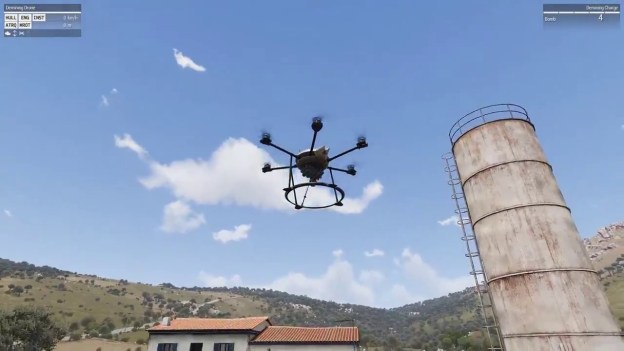
The 2-foot-long Switchblade drone [unmanned aerial vehicle (UAV)] is so named because its wings fold into the fuselage for transport and spring out after launch. It is designed to fit into a soldier’s rucksack and is fired from a mortar-like tube. Once airborne, it begins sending back live video and GPS coordinates to a hand-held control set clutched by the soldier who launched it.  When soldiers identify and lock on a target, they send a command for the drone to nose-dive into it and detonate on impact. Because of the way it operates, the Switchblade has been dubbed the “kamikaze drone.”

The Obama administration, notably the CIA, has long been lambasted by critics for its use of combat drones and carelessly killing civilians in targeted strikes in Pakistan, Afghanistan, Iraq, Yemen and Somalia. In 2010, a United Nations official said the CIA in Pakistan had made the United States “the most prolific user of targeted killings” in the world.

The Switchblade drone appears to be an improvement as an alternative to traditional drone strikes, in terms of minimizing civilian harm, but it also raises new concerns, said Naureen Shah, associate director of the Counterterrorism and Human Rights Project at Columbia Law School.  She pointed out that when a drone strike is being considered there are teams of lawyers, analysts and military personnel looking at the data to determine whether lethal force is necessary. But the Switchblade could shorten that “kill chain.”  “It delegates full responsibility to a lower-level soldier on the ground,” she said. “That delegation is worrisome. It’s a situation that could end up in more mistakes being made.”  Arms-control advocates also have concerns. As these small robotic weapons proliferate, they worry about what could happen if the drones end up in the hands of terrorists or other hostile forces.

The Switchblade “is symptomatic of a larger problem that U.S. military and aerospace companies are generating, which is producing various more exotic designs,” said Daryl Kimball, executive director of the Arms Control Assn. “This technology is not always going to be in the sole possession of the U.S. and its allies. We need to think about the rules of the road for when and how these should be used so we can mitigate against unintended consequences.”

The Switchblade is assembled in Simi Valley by AeroVironment Inc., the Pentagon’s top supplier of small drones, which include the Raven, Wasp and Puma. More than 50 Switchblades will be sent to the war zone in Afghanistan this summer under a $10.1-million contract, which also includes the cost of repairs, spare parts, training and other expenses. Officials would not provide details about where the weapons would be used, how many were ordered and precisely when they would be deployed.  AeroVironment, based in Monrovia, developed the weapon on its own, thinking the military could use a lethal drone that could be made cheaply and deployed quickly by soldiers in the field, said company spokesman Steven Gitlin.

“It’s not inexpensive to task an Apache helicopter or F-16 fighter jet from a base to take out an [improvised explosive device] team when you consider fuel, people, logistics support, etc.,” he said.

About a dozen Switchblades were tested last year by special operations units in Afghanistan, according to Army officials, who said the drone proved effective.  The Army is considering buying $100 million worth of the drones in a few years under a program called the Lethal Miniature Aerial Munition System, Nichols said. The Air Force and the Marine Corps have also expressed interest in the technology.

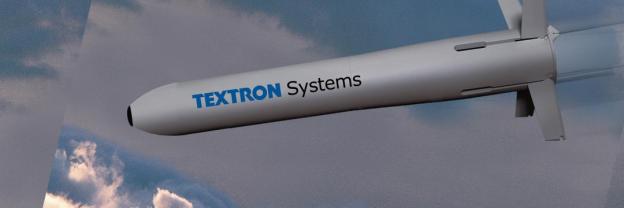
AeroVironment is not the only company pursuing small, lethal drones. Textron Defense Systems is also working on a small kamikaze-style drone. Named the BattleHawk Squad-Level Loitering Munition, the drone is being tested at an Army facility in New Mexico.

Excerpts, W.J. Hennigan, Pentagon to soon deploy pint-sized but lethal Switchblade drones, LA Times, June 11, 2012

Drug Markets, Patents and the Developing World

Sales of antiretroviral drugs in America and the five biggest European markets reached $13.3 billion in 2011, according to Datamonitor, a research outfit…. Publicly funded research has played a larger role in developing drugs for HIV than for other diseases. A study published last year in Health Affairs found that HIV drugs were three times as likely to involve a patent from the public sector. HIV also has special status among regulators. America’s Food and Drug Administration (FDA) created a faster way to review HIV drugs, allowing them on the market before the most expensive stage of clinical trials.

In total, public and private investment has yielded more than two dozen HIV drugs. In 1987 Burroughs-Wellcome (now part of GlaxoSmithKline) introduced the first one, tackling an enzyme that helps the virus progress inside human cells. In 1995 Hoffmann-La Roche, a Swiss drug firm, launched the first protease inhibitor, which interrupts the virus at a later stage of replication….One company stands out: Gilead, of California. A late entrant to the HIV race, Gilead quickly took the lead. Its strategy was simple: the more convenient the treatment, the better. In 2004 Gilead launched Truvada, a once-a-day, one-pill combination of two drugs. In 2006 it introduced Atripla, a once-a-day, one-pill combination of Truvada and another treatment. Atripla’s average wholesale price in America is nearly $25,000 per patient, per year. In 2011 its global sales reached $3.2 billion.  More good news for Gilead has come in recent weeks. An FDA panel recommended Truvada for preventive use: ie, to protect healthy people from contracting the virus. Another FDA panel endorsed Gilead’s new Quad pill, which is the simplest, most effective combination drug to date.

If the process for developing HIV drugs has been unusual, selling them has been even more so. America is the rich world’s biggest market, with 841,000 patients diagnosed—ten times as many as in Britain. More than 60% of HIV drugs in America are bought with public money. Insurers give HIV special treatment: patients are rarely pressed to buy the cheapest pills, as they might be if they had another disease.

Distributing drugs in poor countries is harder. A decade ago, hardly any poor people could afford them. At first, drugs firms handled this badly. In 1998, 39 big Western firms sued South Africa to protect their HIV patents. Global uproar ensued; the firms backed down in 2001.  Then two things changed. First, rich countries started donating vast sums to fight AIDS in poor ones. In 2000 there was less than $2 billion for HIV programmes each year; by 2010 there was $15 billion, thanks to the Global Fund to Fight AIDS, Tuberculosis and Malaria and George Bush junior’s President’s Emergency Plan for AIDS Relief (PEPFAR).

Second, the price of AIDS drugs plunged. In May 2000 a year’s “triple cocktail” therapy cost $10,000 or so. By 2011 the same pills sold for $62 in poor countries. PEPFAR cash buys generic versions of patented drugs, which may be supplied only to poor countries. Last year two drugmakers won most of PEPFAR’s contracts: Aurobindo, an Indian firm, and Matrix, an Indian firm acquired in 2007 by Mylan, an American one. PEPFAR’s bidding system keeps margins slim even by the standards of the generics industry, says Rajiv Malik, the president of Mylan. But volumes are huge.

Can treatment expand further? Despite the subsidies and the plunge in prices, less than half of those infected with HIV take HIV drugs. Those who do, however, live a long time, and they have to keep taking the pills. What’s more, new studies show that it helps to start treating patients early, so demand is sure to rise.  Alas, aid dipped in 2009 and 2010, thanks to the financial crisis. To make matters more complicated, there is a trade-off between more drugs and better ones. Most patients in poor countries get outdated pills, according to Médecins Sans Frontières. Allowing generics firms to copy yet more patented drugs might help. Since 2006 Gilead has licensed drugs to generics firms for 5% royalties. Last year it went further, agreeing to license drugs to a “patent pool” to centralise royalty deals for a range of firms. So far, however, Gilead is the only Western company to join….

There are two distinct HIV markets. In rich countries, many good treatments jostle for market share. The best will generate fat profits, since patients have to take their pills every day. But Datamonitor predicts that growth will slow after 2017, as many drugs lose patent protection and prices crash. In poor countries, by contrast, Big Pharma makes very little money but the most efficient copycats thrive. Meanwhile, the world still waits for a cure.

The business of HIV: Battling the virus, Economist, June 2, 2012,at 80

International Law-Making by Tacit Consent: Drone Killings

When Thomas de Maizière, the German defense minister, told a gathering of army reservists last month that he considered the U.S. strategy of using drones for targeted killings a “strategic mistake,” his remarks received almost no coverage.  Only the online news edition of the German public television broadcaster ARD carried the story.  According to their reporter, Mr. de Maizière said he thought it was unwise to have U.S. commanders direct such attacks from their base in the United States.  Repeated requests to the reservists’ association for a full transcript of the speech went unanswered. Nor did the Defense Ministry publish the remarks.  Mr. de Maizière is not the only politician in Europe to feel uneasy with the United States’ frequent use of unmanned drones to target what it says are terrorism suspects in Afghanistan, Pakistan and Yemen. But many are reluctant to speak out about their doubts.

The German chancellor, Angela Merkel; the E.U. foreign policy chief, Catherine Ashton; and the new French president, François Hollande, are among the many officials unwilling to publicly criticize the practice of remote control, targeted killings….Even when several German nationals — accused of being militants who had undergone training in terrorist camps in Pakistan — were killed in a U.S. drone attack in Pakistan in 2010, the German government played down the incident.  In an official reply to queries by opposition parties in the German Parliament, the government said on nearly every count that either it had no reliable information or that the information it did have was confidential.

In contrast, the Obama administration has had to start explaining the issue of drone attacks as human rights organizations, security experts and the military have begun asking the White House to justify their legality. John O. Brennan, the president’s counterterrorism chief, gave a major speech on the issue in April. He said that the targeted attacks did not breach international law because the United States has been acting in self-defense since the terrorist attacks in New York and Washington on Sept. 11, 2001.  Mr. Brennan added that the White House was doing everything possible to balance security and transparency.

Legal experts say, however, that most of the targeted killings are carried out by the C.I.A. The agency is not subject to the same transparency or accountability as the military would be.  “The laws of war do not prohibit intelligence agencies from taking part in combat operations,” said James Ross, legal adviser to Human Rights Watch. “But states are obligated to investigate credible allegations of war crimes and actually provide redress for victims of unlawful attacks, and that is difficult in the case of intelligence agencies.”

Apart from the legal issues, the Obama administration has also been accused of leaking details from secret drone attacks to reap political mileage during the presidential election campaign.  Republicans sharply criticized the White House’s announcement last week that Al Qaeda’s deputy leader, Abu Yahya al-Libi, had been killed during a drone attack in Pakistan.

Analysts suggest that European governments prefer to turn a blind eye to the drone attacks because they see the Islamist militants targeted by the United States as a danger to Europe, too. Having this threat eliminated outweighs what qualms they may have about the method employed.  “E.U. countries have their own interests in tacitly condoning these tactics,” said Nathalie Van Raemdonck, a guest researcher at the Istituto Affari Internazionali, an independent research center in Rome. “Since they are not involved in any such operations, they cannot be accused of playing any role in targeted killings. The Europeans are content with letting the U.S. do their dirty work.”

European governments, however, are not united on this issue. Britain has armed drones in Afghanistan, and other European countries also employ them for surveillance purposes so the issue of targeted killings does not directly concern them. Government officials point to this to explain their silence.  Analysts say this approach is short-sighted. The United States intends to arm Italian surveillance drones in Afghanistan beginning next year. France has plans for military drones for reconnaissance and attack missions. NATO is trying to get member states to finance surveillance drones that eventually may also be armed.  Even more importantly, China, Russia and other non-Western countries are also working on developing armed drones.  This could lead to a free-for-all situation unless standards for the use of these weapons are agreed upon, legal experts say. It is time, said Mr. Bütikofer, the European Parliament lawmaker, for Europe to break its silence.

Excerpts, JUDY DEMPSEY, Europe Stays Quiet Despite Unease About Drones, NY Times,June 11, 2012

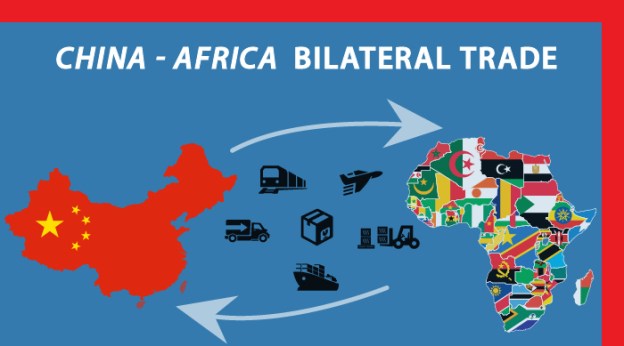
China and its Collaborators in Africa

Congolese critics accuse Sassou-Nguesso [President of Congo] of using the Chinese-backed building boom to move from his ‘authoritarian-authoritarian’ model to something nearer the ‘developmental authoritarian’ style of Rwanda’s President Paul Kagame. However, Sassou-Nguesso was in triumphant mode as he inaugurated a spate of Chinese construction projects in the country’s hinterland on 14-18 May. These projects are intended to bring the benefits of oil-backed growth to regions previously isolated from the bustling cities of Brazzaville and Pointe-Noire.  Now known locally as ‘The Cutter of Ribbons’, Sassou-Nguesso is using oil money and plans to develop Congo-Brazzaville’s mineral resources to shape a new relationship with China. Once a key commercial and diplomatic ally of France, Sassou-Nguesso’s headlong rush to Beijing coincides with the election of President François Hollande. Hollande’s African policy team promises to break with the old Françafrique networks. Among their advisors is the activist lawyer William Bourdon, who has been pursuing a case against Sassou-Nguesso in France for stealing Congolese state assets…..

From fibre-optic installation and new dams to more than 1,000 kilometres of paved roads, companies like China Road and Bridge Corporation and China State Construction Engineering Corporation have quietly landed most of the major contracts issued by the Brazzaville government.  That means large profits and more deals to come.

Congo-Brazzaville, for so long the preserve of European companies, is drawing serious attention from China. The two countries have signed deals to develop special economic zones, build a new oil port and revamp an ageing refinery. For the Chinese investors, the lure is Congo-Brazzaville’s rich but under-exploited resource base. Having relied for decades on offshore oil riches and forestry, the country has until recently made little effort to exploit its mineral deposits, develop its more remote regions or diversify the economy into commerce and services. That could change if the new Asian relationships live up to their billing. For Sassou-Nguesso, the big attraction is an engagement based purely on economic and financial criteria, with a partner who does not impose awkward governance or human rights conditions.

This is not Congo’s first encounter with Asian investment. South Korean and Malaysian companies, via the Consortium Congo Malaisie Corée, had proposed a huge resources-for-infrastructure deal that would build new rail lines in exchange for access to forestry and mining permits in 2008. That deal didn’t work out but the Chemin de Fer Congo Océan received part of its order of engines and cars from Korail in August 2011. Malaysian investors have looked at opportunities in the hydrocarbons sector and – building on their experience of rural Congo in the timber business – palm oil production. In 2010 Atama Plantation agreed to invest $300 million in new oil palm plantations and processing capacity.

The most recent interest from Chinese entities takes the engagement a step further. Alain Akouala Atipault, a Minister in the Presidency, was China’s guest at an international infrastructure and investment forum in Macau where, on 24 April, he signed an agreement with the China Friendship Development International Engineering Design and Consult Corporation (FDDC) – an offshoot of the Trade Ministry in Beijing.  FDDC will seek out Chinese investors interested in setting up operations in four special economic zones, which Congo plans to establish in Brazzaville, Pointe- Noire, Ouesso and the Oyo-Ollombo area. FDDC will also help to mobilise financing for the zones, build their infrastructure and carry out feasibility studies……

China’s engagement in Congo is typical of its strategy elsewhere in Africa. Beijing often takes a long-term view of whether projects will generate an economic return. Viability is seen in broad terms, encompassing not just the specific project’s concerns but also the wider trade and political benefits of partnership and the political goodwill that could open up access to valuable natural resources. Congo has both major reserves of high-value timber – a sector where Congo Dejia Wood Industry, Jua Ikié, Million Well Congo Bois, Sino-Congo Forêt and Société d’Exploitation Forestière Yuan Dong are already active – and reserves of minerals such as iron ore and potash, which are largely untouched.

China National Complete Plant Import & Export Corporation is developing the potash reserves at Mengo with Canada’s MagIndustries; Australia’s Sundance Resources relies on finance and expertise from Hanlong Mining and other Chinese infrastructure companies to make its designs on iron-ore projects in Cameroon (Mbarga) and Congo-Brazzaville (Nabeba) viable. Sundance is waiting for final approvals from Yaoundé and Brazzaville and expects all the paperwork to be signed before the end of 2012.

Beijing’s policy of ignoring questions of democracy and human rights is certainly helpful to Sassou-Nguesso’s regime – which has a poor human rights record, is marred by widespread corruption and remains fundamentally authoritarian despite the trappings of a multiparty system.

Excerpt, Congo-Brazzaville: Sassou Draws in Beijing,AllAfrica.com, June 2, 2012

Chevron and Amazon: the $18 billion Ecuador Liability

The D.C. Circuit Court of Appeals  on June 12, 2012  (pdf) dealt another setback to Chevron over its $18 billion Ecuador liability, reversing a lower court decision that allowed the oil giant access to documents from a prominent consulting group for the Amazon rainforest communities that sued the company.

SOCOM: United States Special Operations Command

Admiral McRaven’s [head of the SOCOM] broad goal is to obtain new authority from the Defense Department to move his elite forces faster and outside normal Pentagon deployment channels. That would give him more autonomy to position his personnel and their fighting equipment where intelligence and world events indicate they are most needed. It would also allow the Special Operations forces to expand their presence in regions where they have not operated in large numbers for the past decade, especially in Asia, Africa and Latin America.

At a time of declining Pentagon budgets and a waning public appetite for large wars of occupation, the Obama administration hopes to rely more on foreign troops and security forces to tackle extremist threats abroad. These new realities have led to a larger debate within the military about its future priorities, and not all senior officers welcome Admiral McRaven’s ambitious proposals, suspecting a power grab that might weaken the authority of regional commanders.  “I was trying to figure out how to stand in front of this juggernaut that is the Special Operations Command, particularly in today’s world,” Adm. Timothy J. Keating, a former head of the military’s Northern and Pacific commands, said at a Special Operations conference in April in Washington. “I don’t fundamentally understand what needs fixing.”

While it is not unusual for branches of the armed services or combatant commands to lobby Congress for troop benefits or weaponry, like new fighter jets or artillery systems, the Special Operations Command’s hurried pitch because of the pending legislation did not go down well.  In its request in April 2012, the command sought a new $25 million fund to buy uniforms, build barracks and ferry foreign troops rather than using existing Pentagon and State Department aid programs that could have added months to the process. That required changes in the law, so the command asked to tuck them into a Pentagon budget bill the House was poised to pass.

In a three-page, confidential draft legislative proposal, the command argued that by coupling the proposed changes with its existing special fast-track acquisition authorities, it could provide “a fast turnaround resource for dealing with breaking issues.” Special Operations officers would work closely with American ambassadors in each country and the State Department to support foreign policy goals.  The legislative draft filled in some details of a plan sketched out for Congress on March 27 by the Pentagon’s top civilian Special Operations policy official, Michael A. Sheehan. Citing Africa as a prime example, Mr. Sheehan, a West Point graduate who is assistant secretary of defense for Special Operations and low-intensity conflict, told the Senate Armed Services Committee, “We will need different authorities, we will need different types of programs in order for us to engage with the range of countries, from Libya down through Mali, which is obviously in the middle of chaos right now, to Mauritania, all the way — and, quite frankly, all the way over to Nigeria.”

But lawmakers and State Department officials were puzzled. Only last year, Mr. Gates and Mrs. Clinton, backed by Congress, agreed to pool resources from their two departments in a new fund to respond more quickly to counter emerging threats from Al Qaeda and other militants in places like Yemen and the Horn of Africa.  The program, the Global Security Contingency Fund (pdf), is small as government programs go — $250 million a year, mostly from the Pentagon — but it is meant to address many of the needs the command’s proposal outlined.

A report accompanying the military budget bill that the House approved last month summed up the objections of not only lawmakers in the House and Senate, but also high-ranking administration officials who met on May 7 at the White House to work out the dispute. “The committee is concerned that the proliferation of similar, overlapping and/or competing building partner capacity authorities creates unnecessary confusion and friction,” the House report said.

Excerpt, ERIC SCHMITT, Elite Military Forces Are Denied in Bid for Expansion, New York Times, June 4, 2012

The Kill List and Body Count: Drones

Just days after taking office, the president [Obamaa] got word that the first strike under his administration had killed a number of innocent Pakistanis. “The president was very sharp on the thing, and said, ‘I want to know how this happened,’ “ a top White House adviser recounted.  In response to his concern, the C.I.A. downsized its munitions for more pinpoint strikes. In addition, the president tightened standards, aides say: If the agency did not have a “near certainty” that a strike would result in zero civilian deaths, Mr. Obama wanted to decide personally whether to go ahead.

The president’s directive reinforced the need for caution, counterterrorism officials said, but did not significantly change the program. In part, that is because “the protection of innocent life was always a critical consideration,” said Michael V. Hayden, the last C.I.A. director under President George W. Bush.  It is also because Mr. Obama embraced a disputed method for counting civilian casualties that did little to box him in. It in effect counts all military-age males in a strike zone as combatants, according to several administration officials, unless there is explicit intelligence posthumously proving them innocent.  Counterterrorism officials insist this approach is one of simple logic: people in an area of known terrorist activity, or found with a top Qaeda operative, are probably up to no good. “Al Qaeda is an insular, paranoid organization — innocent neighbors don’t hitchhike rides in the back of trucks headed for the border with guns and bombs,” said one official, who requested anonymity to speak about what is still a classified program.

This counting method may partly explain the official claims of extraordinarily low collateral deaths. In a speech last year Mr. Brennan, Mr. Obama’s trusted adviser, said that not a single noncombatant had been killed in a year of strikes. And in a recent interview, a senior administration official said that the number of civilians killed in drone strikes in Pakistan under Mr. Obama was in the “single digits” — and that independent counts of scores or hundreds of civilian deaths unwittingly draw on false propaganda claims by militants.

But in interviews, three former senior intelligence officials expressed disbelief that the number could be so low. The C.I.A. accounting has so troubled some administration officials outside the agency that they have brought their concerns to the White House. One called it “guilt by association” that has led to “deceptive” estimates of civilian casualties.  “It bothers me when they say there were seven guys, so they must all be militants,” the official said. “They count the corpses and they’re not really sure who they are.”

Excerpt, JO BECKER and SCOTT SHANE, Secret ‘Kill List’ Proves a Test of Obama’s Principles and Will, NY Times, May 29, 2012

United States, Iran and the Stuxnet Worm

From his first months in office, President Obama secretly ordered increasingly sophisticated attacks on the computer systems that run Iran’s main nuclear enrichment facilities, significantly expanding America’s first sustained use of cyberweapons, according to participants in the program.  Mr. Obama decided to accelerate the attacks — begun in the Bush administration and code-named Olympic Games — even after an element of the program accidentally became public in the summer of 2010 because of a programming error that allowed it to escape Iran’s Natanz plant and sent it around the world on the Internet. Computer security experts who began studying the worm, which had been developed by the United States and Israel, gave it a name: Stuxnet.  At a tense meeting in the White House Situation Room within days of the worm’s “escape,” Mr. Obama, Vice President Joseph R. Biden Jr. and the director of the Central Intelligence Agency at the time, Leon E. Panetta, considered whether America’s most ambitious attempt to slow the progress of Iran’s nuclear efforts had been fatally compromised.  “Should we shut this thing down?” Mr. Obama asked, according to members of the president’s national security team who were in the room.  Told it was unclear how much the Iranians knew about the code, and offered evidence that it was still causing havoc, Mr. Obama decided that the cyberattacks should proceed. In the following weeks, the Natanz plant was hit by a newer version of the computer worm, and then another after that. The last of that series of attacks, a few weeks after Stuxnet was detected around the world, temporarily took out nearly 1,000 of the 5,000 centrifuges Iran had spinning at the time to purify uranium.

This account of the American and Israeli effort to undermine the Iranian nuclear program is based on interviews over the past 18 months with current and former American, European and Israeli officials involved in the program, as well as a range of outside experts. None would allow their names to be used because the effort remains highly classified, and parts of it continue to this day.  These officials gave differing assessments of how successful the sabotage program was in slowing Iran’s progress toward developing the ability to build nuclear weapons. Internal Obama administration estimates say the effort was set back by 18 months to two years, but some experts inside and outside the government are more skeptical, noting that Iran’s enrichment levels have steadily recovered, giving the country enough fuel today for five or more weapons, with additional enrichment.

Whether Iran is still trying to design and build a weapon is in dispute. The most recent United States intelligence estimate concludes that Iran suspended major parts of its weaponization effort after 2003, though there is evidence that some remnants of it continue.

Iran initially denied that its enrichment facilities had been hit by Stuxnet, then said it had found the worm and contained it. Last year, the nation announced that it had begun its own military cyberunit, and Brig. Gen. Gholamreza Jalali, the head of Iran’s Passive Defense Organization, said that the Iranian military was prepared “to fight our enemies” in “cyberspace and Internet warfare.” But there has been scant evidence that it has begun to strike back.

The United States government only recently acknowledged developing cyberweapons, and it has never admitted using them. There have been reports of one-time attacks against personal computers used by members of Al Qaeda, and of contemplated attacks against the computers that run air defense systems, including during the NATO-led air attack on Libya last year. But Olympic Games was of an entirely different type and sophistication.

It appears to be the first time the United States has repeatedly used cyberweapons to cripple another country’s infrastructure, achieving, with computer code, what until then could be accomplished only by bombing a country or sending in agents to plant explosives. The code itself is 50 times as big as the typical computer worm, Carey Nachenberg, a vice president of Symantec, one of the many groups that have dissected the code, said at a symposium at Stanford University in April. Those forensic investigations into the inner workings of the code, while picking apart how it worked, came to no conclusions about who was responsible.

A similar process is now under way to figure out the origins of another cyberweapon called Flame that was recently discovered to have attacked the computers of Iranian officials, sweeping up information from those machines. But the computer code appears to be at least five years old, and American officials say that it was not part of Olympic Games. They have declined to say whether the United States was responsible for the Flame attack.

Mr. Obama, according to participants in the many Situation Room meetings on Olympic Games, was acutely aware that with every attack he was pushing the United States into new territory, much as his predecessors had with the first use of atomic weapons in the 1940s, of intercontinental missiles in the 1950s and of drones in the past decade. He repeatedly expressed concerns that any American acknowledgment that it was using cyberweapons — even under the most careful and limited circumstances — could enable other countries, terrorists or hackers to justify their own attacks.

“We discussed the irony, more than once,” one of his aides said. Another said that the administration was resistant to developing a “grand theory for a weapon whose possibilities they were still discovering.” Yet Mr. Obama concluded that when it came to stopping Iran, the United States had no other choice.If Olympic Games failed, he told aides, there would be no time for sanctions and diplomacy with Iran to work. Israel could carry out a conventional military attack, prompting a conflict that could spread throughout the region.

The impetus for Olympic Games dates from 2006, when President George W. Bush saw few good options in dealing with Iran. At the time, America’s European allies were divided about the cost that imposing sanctions on Iran would have on their own economies. Having falsely accused Saddam Hussein of reconstituting his nuclear program in Iraq, Mr. Bush had little credibility in publicly discussing another nation’s nuclear ambitions. The Iranians seemed to sense his vulnerability, and, frustrated by negotiations, they resumed enriching uranium at an underground site at Natanz, one whose existence had been exposed just three years before.

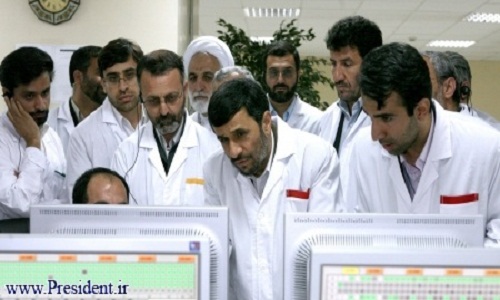
Iran’s president, Mahmoud Ahmadinejad, took reporters on a tour of the plant and described grand ambitions to install upward of 50,000 centrifuges. For a country with only one nuclear power reactor — whose fuel comes from Russia — to say that it needed fuel for its civilian nuclear program seemed dubious to Bush administration officials. They feared that the fuel could be used in another way besides providing power: to create a stockpile that could later be enriched to bomb-grade material if the Iranians made a political decision to do so.  Hawks in the Bush administration like Vice President Dick Cheney urged Mr. Bush to consider a military strike against the Iranian nuclear facilities before they could produce fuel suitable for a weapon. Several times, the administration reviewed military options and concluded that they would only further inflame a region already at war, and would have uncertain results.

For years the C.I.A. had introduced faulty parts and designs into Iran’s systems — even tinkering with imported power supplies so that they would blow up — but the sabotage had had relatively little effect. General James E. Cartwright, who had established a small cyberoperation inside the United States Strategic Command, which is responsible for many of America’s nuclear forces, joined intelligence officials in presenting a radical new idea to Mr. Bush and his national security team. It involved a far more sophisticated cyberweapon than the United States had designed before.

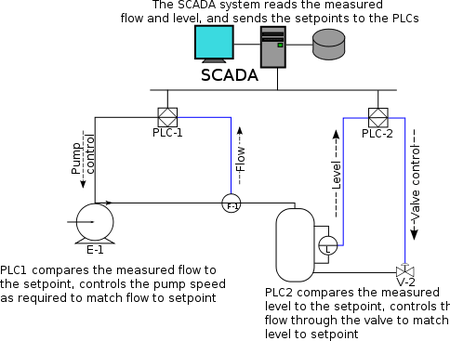
The goal was to gain access to the Natanz plant’s industrial computer controls. That required leaping the electronic moat that cut the Natanz plant off from the Internet — called the air gap, because it physically separates the facility from the outside world. The computer code would invade the specialized computers that command the centrifuges.  The first stage in the effort was to develop a bit of computer code called a beacon that could be inserted into the computers, which were made by the German company Siemens and an Iranian manufacturer, to map their operations. The idea was to draw the equivalent of an electrical blueprint of the Natanz plant, to understand how the computers control the giant silvery centrifuges that spin at tremendous speeds. The connections were complex, and unless every circuit was understood, efforts to seize control of the centrifuges could fail.

Eventually the beacon would have to “phone home” — literally send a message back to the headquarters of the National Security Agency that would describe the structure and daily rhythms of the enrichment plant. Expectations for the plan were low; one participant said the goal was simply to “throw a little sand in the gears” and buy some time. Mr. Bush was skeptical, but lacking other options, he authorized the effort.  It took months for the beacons to do their work and report home, complete with maps of the electronic directories of the controllers and what amounted to blueprints of how they were connected to the centrifuges deep underground.  Then the N.S.A. and a secret Israeli unit respected by American intelligence officials for its cyberskills set to work developing the enormously complex computer worm that would become the attacker from within.  The unusually tight collaboration with Israel was driven by two imperatives. Israel’s Unit 8200, a part of its military, had technical expertise that rivaled the N.S.A.’s, and the Israelis had deep intelligence about operations at Natanz that would be vital to making the cyberattack a success. But American officials had another interest, to dissuade the Israelis from carrying out their own pre-emptive strike against the Iranian nuclear facilities. To do that, the Israelis would have to be convinced that the new line of attack was working. The only way to convince them, several officials said in interviews, was to have them deeply involved in every aspect of the program.

Soon the two countries had developed a complex worm that the Americans called “the bug.” But the bug needed to be tested. So, under enormous secrecy, the United States began building replicas of Iran’s P-1 centrifuges, an aging, unreliable design that Iran purchased from Abdul Qadeer Khan, the Pakistani nuclear chief who had begun selling fuel-making technology on the black market. Fortunately for the United States, it already owned some P-1s, thanks to the Libyan dictator, Col. Muammar el-Qaddafi.  When Colonel Qaddafi gave up his nuclear weapons program in 2003, he turned over the centrifuges he had bought from the Pakistani nuclear ring, and they were placed in storage at a weapons laboratory in Tennessee. The military and intelligence officials overseeing Olympic Games borrowed some for what they termed “destructive testing,” essentially building a virtual replica of Natanz, but spreading the test over several of the Energy Department’s national laboratories to keep even the most trusted nuclear workers from figuring out what was afoot.

Those first small-scale tests were surprisingly successful: the bug invaded the computers, lurking for days or weeks, before sending instructions to speed them up or slow them down so suddenly that their delicate parts, spinning at supersonic speeds, self-destructed. After several false starts, it worked. One day, toward the end of Mr. Bush’s term, the rubble of a centrifuge was spread out on the conference table in the Situation Room, proof of the potential power of a cyberweapon. The worm was declared ready to test against the real target: Iran’s underground enrichment plant.

“Previous cyberattacks had effects limited to other computers,” Michael V. Hayden, the former chief of the C.I.A., said, declining to describe what he knew of these attacks when he was in office. “This is the first attack of a major nature in which a cyberattack was used to effect physical destruction,” rather than just slow another computer, or hack into it to steal data…  Getting the worm into Natanz, however, was no easy trick. The United States and Israel would have to rely on engineers, maintenance workers and others — both spies and unwitting accomplices — with physical access to the plant. “That was our holy grail,” one of the architects of the plan said. “It turns out there is always an idiot around who doesn’t think much about the thumb drive in their hand.”

In fact, thumb drives turned out to be critical in spreading the first variants of the computer worm; later, more sophisticated methods were developed to deliver the malicious code.  The first attacks were small, and when the centrifuges began spinning out of control in 2008, the Iranians were mystified about the cause, according to intercepts that the United States later picked up. “The thinking was that the Iranians would blame bad parts, or bad engineering, or just incompetence,” one of the architects of the early attack said.  The Iranians were confused partly because no two attacks were exactly alike. Moreover, the code would lurk inside the plant for weeks, recording normal operations; when it attacked, it sent signals to the Natanz control room indicating that everything downstairs was operating normally. “This may have been the most brilliant part of the code,” one American official said.

Later, word circulated through the International Atomic Energy Agency, the Vienna-based nuclear watchdog, that the Iranians had grown so distrustful of their own instruments that they had assigned people to sit in the plant and radio back what they saw.  “The intent was that the failures should make them feel they were stupid, which is what happened,” the participant in the attacks said. When a few centrifuges failed, the Iranians would close down whole “stands” that linked 164 machines, looking for signs of sabotage in all of them. “They overreacted,” one official said. “We soon discovered they fired people.”

Imagery recovered by nuclear inspectors from cameras at Natanz — which the nuclear agency uses to keep track of what happens between visits — showed the results. There was some evidence of wreckage, but it was clear that the Iranians had also carted away centrifuges that had previously appeared to be working well.  But by the time Mr. Bush left office, no wholesale destruction had been accomplished. Meeting with Mr. Obama in the White House days before his inauguration, Mr. Bush urged him to preserve two classified programs, Olympic Games and the drone program in Pakistan. Mr. Obama took Mr. Bush’s advice….

But the good luck did not last. In the summer of 2010, shortly after a new variant of the worm had been sent into Natanz, it became clear that the worm, which was never supposed to leave the Natanz machines, had broken free, like a zoo animal that found the keys to the cage. It fell to Mr. Panetta and two other crucial players in Olympic Games — General Cartwright, the vice chairman of the Joint Chiefs of Staff, and Michael J. Morell, the deputy director of the C.I.A. — to break the news to Mr. Obama and Mr. Biden.

“I don’t think we have enough information,” Mr. Obama told the group that day, according to the officials. But in the meantime, he ordered that the cyberattacks continue. They were his best hope of disrupting the Iranian nuclear program unless economic sanctions began to bite harder and reduced Iran’s oil revenues.

American cyberattacks are not limited to Iran, but the focus of attention, as one administration official put it, “has been overwhelmingly on one country.” There is no reason to believe that will remain the case for long. Some officials question why the same techniques have not been used more aggressively against North Korea. Others see chances to disrupt Chinese military plans, forces in Syria on the way to suppress the uprising there, and Qaeda operations around the world. “We’ve considered a lot more attacks than we have gone ahead with,” one former intelligence official said….

Mr. Obama has repeatedly told his aides that there are risks to using — and particularly to overusing — the weapon. In fact, no country’s infrastructure is more dependent on computer systems, and thus more vulnerable to attack, than that of the United States. It is only a matter of time, most experts believe, before it becomes the target of the same kind of weapon that the Americans have used, secretly, against Iran.

DAVID E. SANGER,Obama Order Sped Up Wave of Cyberattacks Against Iran, New York Times, June 1, 2012