Monthly Archives: August 2015

How to Wipe Out Space Junk

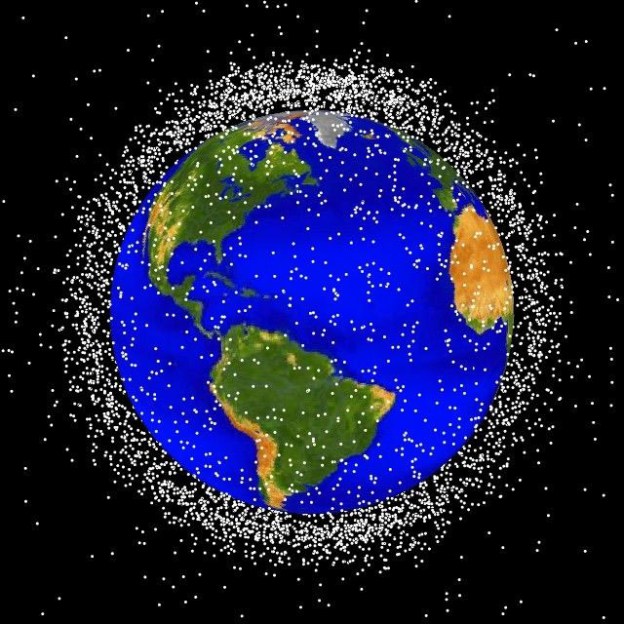
Half a century of rocket launches has turned the space into a junkyard. Around 3,000 tonnes of empty rocket stages, defunct satellites, astronauts’ toothbrushes and flecks of paint are thought to be in orbit.

Besides being messy, such debris can be dangerous. Anything circling Earth is moving pretty quickly, so collisions between space junk and satellites can happen at closing velocities of 10km a second or more. Large bits of junk are routinely tracked by radar. The International Space Station (ISS), for instance, regularly tweaks its orbit to avoid a particularly menacing piece of litter. But at such high speeds, even a small, hard-to-follow object can do tremendous damage.

Rocket scientists have been pondering how to deal with this problem for years. But a paper just published in Acta Astronautica by Toshikazu Ebisuzaki and his colleagues at RIKEN, a big Japanese research institute, has gone further and proposed actually building a test device.

Dr Ebisuzaki’s plan involves zapping things with lasers. He proposes to point these lasers in the right direction using a telescope intended for a different job entirely. This is the Extreme Universe Space Observatory (EUSO). It is designed to be bolted on to the ISS. From that vantage point it will monitor Earth’s atmosphere, looking for showers of radiation caused by cosmic rays hitting air molecules. Dr Ebisuzaki, however, realised that the characteristics of a telescope designed for this job—namely a wide field of view and the ability to register even fleeting flashes of light—would also be well-suited for spotting small bits of debris as they whizz past the ISS.

Having identified something, the next step is to get it out of orbit—and that is where the zapping comes in… Fire a laser head-on at a piece of space debris for long enough, then, and you can slow it down to the point where its orbit will decay and it will burn up in Earth’s atmosphere.  This idea is not new. But putting lasers into orbit is tricky. Those powerful enough to do the job need lots of electricity and this is hard to deliver with the solar panels from which satellites typically draw their power. Dr Ebisuzaki proposes instead to employ a new, more efficient laser called a coherent-amplification network device, which was developed for use in high-energy physics.

He and his colleagues suggest a three-stage test. The first, with a smaller version of the EUSO and a fairly weedy laser, would serve as a proof of concept. The second would use the actual EUSO telescope and a much more potent laser. Finally, he says, the equipment could be mounted on a purpose-built satellite, from which it would be able to shoot down tens of thousands of bits of space junk every year, thus gradually sweeping the skies clean .

Orbiting debris: Char wars, Economist Apr. 25, 2015, at 75

United States Military Strategy: 2015 and beyond

The United States [is developing]  a “third offset strategy”… It is the third time since the second world war that America has sought technological breakthroughs to offset the advantages of potential foes and reassure its friends. The first offset strategy occurred in the early 1950s, when the Soviet Union was fielding far larger conventional forces in Europe than America and its allies could hope to repel. The answer was to extend America’s lead in nuclear weapons to counter the Soviet numerical advantage—a strategy known as the “New Look”.

A second offset strategy was conceived in the mid-1970s. American military planners, reeling from the psychological defeat of the Vietnam war, recognised that the Soviet Union had managed to build an equally terrifying nuclear arsenal. They had to find another way to restore credible deterrence in Europe. Daringly, America responded by investing in a family of untried technologies aimed at destroying enemy forces well behind the front line. Precision-guided missiles, the networked battlefield, reconnaissance satellites, the Global Positioning System (GPS) and radar-beating “stealth” aircraft were among the fruits of that research…The second offset strategy,  the so-called “revolution in military affairs” was hammered home in 1991 during the first Gulf war. Iraqi military bunkers were reduced to rubble and Soviet-style armoured formations became sitting ducks. Watchful Chinese strategists, who were as shocked as their Soviet counterparts had been, were determined to learn from it.

The large lead that America enjoyed then has dwindled. Although the Pentagon has greatly refined and improved the technologies that were used in the first Gulf war, these technologies have also proliferated and become far cheaper. Colossal computational power, rapid data processing, sophisticated sensors and bandwidth—some of the components of the second offset—are all now widely available.

And America has been distracted. During 13 years of counter-insurgency and stabilisation missions in Afghanistan and Iraq, the Pentagon was more focused on churning out mine-resistant armoured cars and surveillance drones than on the kind of game-changing innovation needed to keep well ahead of military competitors. America’s combat aircraft are 28 years old, on average. Only now is the fleet being recapitalised with the expensive and only semi-stealthy F-35 Joint Strike Fighter.  China, in particular, has seized the opportunity to catch up. With a defence budget that tends to grow by more than 10% a year, it has invested in an arsenal of precision short- to medium-range ballistic and cruise missiles, submarines equipped with wake-homing torpedoes and long-range anti-ship missiles, electronic warfare, anti-satellite weapons, modern fighter jets, integrated air defences and sophisticated command, control and communications systems.

The Chinese call their objective “winning a local war in high-tech conditions”. In effect, China aims to make it too dangerous for American aircraft-carriers to operate within the so-called first island chain (thus pushing them out beyond the combat range of their tactical aircraft) and to threaten American bases in Okinawa and South Korea. American strategists call it “anti-access/area denial”, or A2/AD.  The concern for America’s allies in the region is that, as China’s military clout grows, the risks entailed in defending them from bullying or a sudden aggressive act—a grab of disputed islands to claim mineral rights, say, or a threat to Taiwan’s sovereignty—will become greater than an American president could bear. Some countries might then decide to throw in their lot with the regional hegemon.

Although China is moving exceptionally quickly, Russia too is modernising its forces after more than a decade of neglect. Increasingly, it can deploy similar systems. Iran and North Korea are building A2/AD capabilities too, albeit on a smaller scale than China. Even non-state actors such as Hizbullah in Lebanon and Islamic State in Syria and Iraq are acquiring some of the capabilities that until recently were the preserve of military powers.

Hence the need to come up with a third offset strategy.….America needs to develop new military technologies that will impose large costs on its adversaries

The programme needs to overcome at least five critical vulnerabilities.

  • The first is that carriers and other surface vessels can now be tracked and hit by missiles at ranges from the enemy’s shore which could prevent the use of their cruise missiles or their tactical aircraft without in-flight refuelling by lumbering tankers that can be picked off by hostile fighters.
  • The second is that defending close-in regional air bases from a surprise attack in the opening stages of a conflict is increasingly hard.
  • Third, aircraft operating at the limits of their combat range would struggle to identify and target mobile missile launchers.
  • Fourth, modern air defences can shoot down non-stealthy aircraft at long distances.
  • Finally, the satellites America requires for surveillance and intelligence are no longer safe from attack.

It is an alarming list. Yet America has considerable advantages…. Those advantages include unmanned systems, stealthy aircraft, undersea warfare and the complex systems engineering that is required to make everything work together.

Over the next decade or so, America will aim to field unmanned combat aircraft that are stealthy enough to penetrate the best air defences and have the range and endurance to pursue mobile targets. Because they have no human pilots, fewer are needed for training. Since they do not need to rest, they can fly more missions back to back. And small, cheaper American drones might be used to swarm enemy air defences.

Drones are widespread these days, but America has nearly two decades of experience operating them. And the new ones will be nothing like the vulnerable Predators and Reapers that have been used to kill terrorists in Yemen and Waziristan. Evolving from prototypes like the navy’s “flying wing” X-47B and the air force’s RQ-180, they will be designed to survive in the most hostile environments. The more autonomous they are, the less they will have to rely on the control systems that enemies will try to disrupt—though autonomy also raises knotty ethical and legal issues.

Some of the same technologies could be introduced to unmanned underwater vehicles. These could be used to clear mines, hunt enemy submarines in shallow waters, for spying and for resupplying manned submarines, for example, with additional missiles. They can stay dormant for long periods before being activated for reconnaissance or strike missions. Big technical challenges will have to be overcome:.. [T]he vehicles will require high-density energy packs and deep undersea communications.

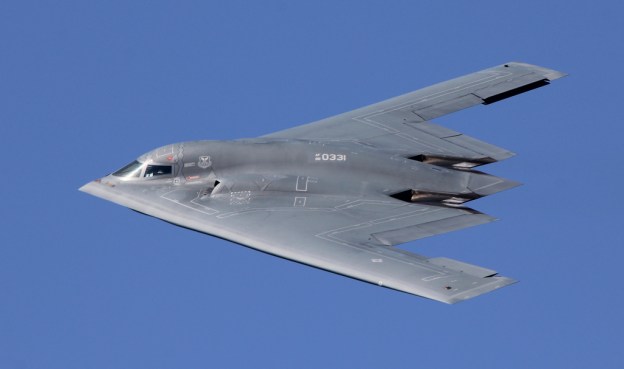
Contracts will be awarded this summer for a long-range strike bomber, the first new bomber since the exotic and expensive B-2 began service two decades ago. The B-3, of which about 100 are likely to be ordered, will also have a stealthy, flying-wing design…

If surface vessels, particularly aircraft-carriers, are to remain relevant, they will need to be able to defend themselves against sustained attack from precision-guided missiles. The navy’s Aegis anti-ballistic missile-defence system is capable but expensive: each one costs $20m or so. If several of them were fired to destroy an incoming Chinese DF-21D anti-ship ballistic missile, the cost for the defenders might be ten times as much as for the attackers.

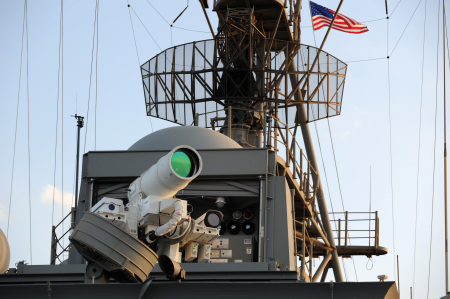
If carriers are to stay in the game, the navy will have to reverse that ratio. Hopes are being placed in two technologies: electromagnetic rail guns, which fire projectiles using electricity instead of chemical propellants at 4,500mph to the edge of space, and so-called directed-energy weapons, most likely powerful lasers. The rail guns are being developed to counter ballistic missile warheads; the lasers could protect against hypersonic cruise missiles. In trials, shots from the lasers cost only a few cents. The navy has told defence contractors that it wants to have operational rail guns within ten years.

Defending against salvoes of incoming missiles will remain tricky and depend on other technological improvements, such as compact long-range radars that can track multiple targets. Finding ways to protect communications networks, including space-based ones, against attack is another priority. Satellites can be blinded by lasers or disabled by exploding missiles. One option would be to use more robust technologies to transmit data—such as chains of high-altitude, long-endurance drones operating in relays….

As Elbridge Colby of the Centre for a New American Security argues: “The more successful the offset strategy is in extending US conventional advantages, the more attractive US adversaries will find strategies of nuclear escalation.” The enemy always gets a vote.

Weapons Technology: Who’s Afraid of America, Economist, June 13, 2015, at 57.
The B-3 Nuclear Capable Bomber

The US Air Force wants to to build a new long-range strike bomber. The B-3, as it is likely to be named, will be a nuclear-capable aircraft designed to penetrate the most sophisticated air defences. The contract [that would be signed by the  US Air Force and  a weapons company] itself will be worth $50 billion-plus in revenues to the successful bidder, and there will be many billions of dollars more for work on design, support and upgrades. The plan is to build at least 80-100 of the planes at a cost of more than $550m each.

The stakes could not be higher for at least two of the three industrial heavyweights… On one side is a team of Boeing and Lockheed Martin; on the other, Northrop Grumman. The result could lead to a shake-out in the defence industry, with one of the competitors having to give up making combat aircraft for good.  After the B-3 contract is awarded, the next big deal for combat planes—for a sixth-generation “air-dominance fighter” to replace the F-22 and F-18 Super Hornet—will be more than a decade away. So Richard Aboulafia of the Teal Group, an aviation-consulting firm, believes it will be hard for the loser to stay in the combat-aircraft business. ..

Usually in a contest of this kind, particularly this close to its end, a clear favourite emerges. Industry-watchers rate this one as still too close to call. That is partly because the degree of secrecy surrounding what is still classified as a “black programme” has remained high. Only the rough outlines of the aircraft’s specification have been revealed. It will be stealthy, subsonic, have a range of around 6,000 miles (9,650km) and be able to carry a big enough payload to destroy many targets during a single sortie. …

The target for the plane to come into operation is the mid-2020s—if possible, even earlier. In part this is because of fast-emerging new threats and in part because the average age of America’s current bomber fleet, consisting of 76 geriatric B-52s, 63 B-1s and 20 B-2s, is 38 years. Keeping such ancient aircraft flying in the face of metal fatigue and corrosion is a constant struggle: just 120 are deemed mission-ready. None of these, except the B-2s, can penetrate first-rate air defences without carrying cruise missiles—and the missiles are of little use against mobile targets.

In the kind of one-sided wars that America and its allies fought in the years after the September 11th 2001 attacks, such deficiencies were not a problem. But during that period China, in particular, has invested heavily in “anti-access/area-denial” (A2/AD) capabilities. These include thousands of precision-guided missiles of increasing range that could threaten America’s bases in the Western Pacific, and any carriers sailing close enough to shore to launch their short-range tactical aircraft….A new long-range bomber that can penetrate the most advanced air defences is thus seen as vital in preserving America’s unique ability to project power anywhere in the world.

Excerpts from Military aircraft: Battle joined, Economist, May 2, 2015, at 55.

China in Latin America

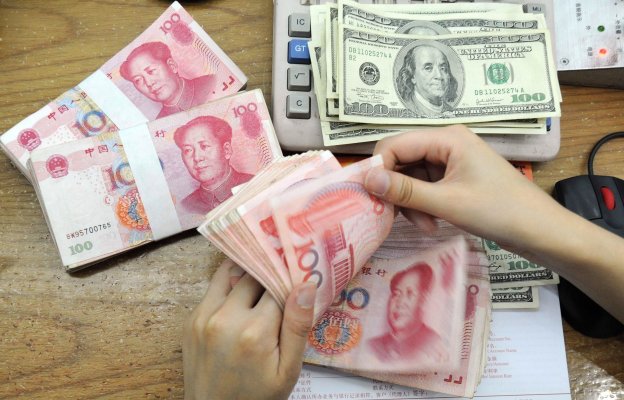
A plan for a…railway across the Amazon, from Brazil’s Atlantic coast to Peru, is among a sheaf of infrastructure projects that China is offering to finance in Latin America. Li Keqiang, China’s prime minister, signed an agreement for a feasibility study for the railway during an eight-day trip through South America that began on May 18th, 2015 in Brazil and took him to Colombia, Peru and Chile…

The same goes for Chinese loans. The $22 billion lent last year outstripped credits from traditional multilateral development banks, according to China-Latin America Economic Bulletin, published by Boston University. Apart from Brazil, the money has mainly gone to Venezuela, Ecuador and Argentina, where it has helped to sustain left-wing governments. Mr Li’s trip suggests a new interest in the business-minded countries of the Pacific Alliance.

Many governments in Latin America have embraced the Chinese dragon as a welcome alternative to the United States and the conditions imposed by the IMF and the World Bank. For a region with huge shortcomings in infrastructure, China’s investment, like its trade, is potentially a boon. But both have pitfalls.  An obvious one is sweetheart deals. In 2014 Cristina Fernández de Kirchner, Argentina’s president, negotiated a currency swap with China, as an alternative to settling her dispute with foreign bondholders. The price is high: the money is tied to 15 infrastructure deals in which Chinese firms face no competition.

Excerpts, The Chinese Chequebook, Economist,  May 23, 2015, at 29

Nuclear and Toxic Waste-Iraq

Most of the Iraq’s vast deposits of radioactive materials are a legacy of the turbulent regime of former leader Saddam Hussein, and have built up over the last four decades. Other toxic materials can be found in the country’s graveyards of contaminated industrial equipment“The parliament has decided to study the situation again after other provinces [including Dhi Qar] rejected such decision,” said Yahya al-Nasiri, governor of the southern Dhi Qar province.

“The proposals suggest burying the waste outside the country or in the desert…Asked if there are other ways to dispose of the waste, he said “it could possibly be buried in the sea using special containers or be sent to countries willing to take it, in exchange for money.”

While Nasiri said other provinces have rejected a similar request, Dhi Qar’s provincial council voted against the Iraqi parliament’s proposal in early July 2015 to use some of the southern province’s land as a burial site for the radioactive pollutants coming from all other provinces of the country.  Dhi Qar’s health and environment committee head Abdulamir Salim at the time slammed the proposal and said it posed a “real threat to the health and security of the province’s citizens.”..

An official Iraqi study in 2010 found more than 40 sites across the country that were contaminated with high levels or radiation and dioxins.  Iraq “without doubt” suffers from these radioactive pollutants inherited from “continuous wars” starting in the 1980s Iraqi-Iran war to the Gulf War in 1990s till 2003, when the United States used highly advanced weapons – including depleted uranium – in its efforts to topple Hussein’s regime, the governor lamented….However, it is not only war-produced pollutants that harm people’s health in Iraq – in addition, there is a lack of quality controls imposed on imported goods.  Radioactive material is also “the result of imports of car parts from Japan to the province,” he added….Areas around Iraqi cities such as Najaf, Basra and Fallujah accounted for more than 25 percent of the contaminated sites, with the southern city of Basra – the frontline during Iran-Iraq war and the Gulf War – having 11 sites, according to the 2010 study.

The study, carried out by the environment, health and science ministries found that scrap metal yards in and around the capital Baghdad and Basra contain high levels of ionizing radiation, which is thought to come from depleted uranium used in munitions during the first Gulf war and since the 2003 invasion.  “The U.S. army unfortunately caused an increase in these radioactive material by using uranium and its advanced arms that use a lot of harmful radioactive material,” Nasiri said. “But the U.S. army did not help nor support our projects to get rid of these pollutants.”

Excerpts from Dina al-Shibeeb, Iraq studying new plan on where to bury radioactive waste, says official, Al Arabiya News, July 18, 2015

Nuclear Industry: France, Russia and China

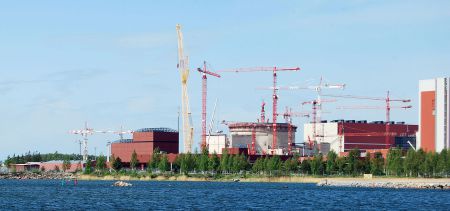
[Regarding the French nuclear company Areva] its newest product, the expensive European Pressurised Reactor (EPR), has encountered more than the teething problems common to all big industrial projects. A plant in Finland is almost ten years behind schedule and almost three times over budget: Areva has had to write off billions as a result….Two reactors in China and the only new-build in France, at Flamanville, are also running late. EDF played an important role in managing the Chinese and French projects.

Besides criticism for slack project management, Areva and EDF (Electricite de France) have been questioned over technical standards. The steel in the main reactor vessel at Flamanville is faulty, the Nuclear Safety Authority said in April 2015. EDF disputes the finding and, with Areva, has started new tests. The news added to growing disenchantment in Britain with an agreement, not yet firm, that expensively entrusts the construction of a power station incorporating two Areva EPRs to a consortium led by EDF.  It seems unlikely that Areva will find many more foreign takers for its existing reactor…

[S]ome of Areva’s rivals are racing ahead. Rosatom, a Russian nuclear firm, has built up a fat order-book. Keen pricing, generous financing and relaxed technology transfer help, though Western sanctions do not. China’s two reactor-builders, CNNC and CGN, are peddling their own new design, Hualong One; in February CNNC signed a preliminary agreement to supply a reactor to Argentina.

Areva has little reason to hope for a surge of new orders at home. France’s 58 reactors are elderly but EDF, which operates them, plans to revamp rather than replace them…A new law set to come into force this summer, pledging somehow to cut France’s dependence on nuclear power from 75% to 50% of its electricity needs by 2025, will make Areva’s prospects even bleaker.

Excerpts from France’s nuclear industry: Arevaderci, Economist, May 23, 2015, at 53.

Water Transfers: Submarine Pipelines

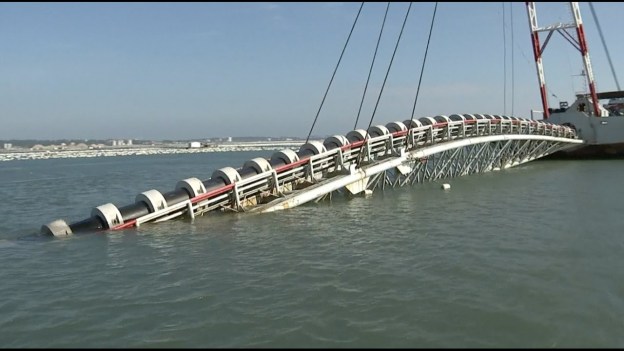
Taiwan’s Kinmen, a cluster of tiny islands two kilometres (just over a mile) off the coast of China’s Fujian Province…is facing a new threat: a water shortage. Officials say that groundwater on its largest island is being depleted. Tourism from the mainland China, which has grown rapidly since 2008…, is putting pressure on its reservoirs…. Kinmen’s water authorities are ready to sign a 30-year agreement with their counterparts in Fujian to buy water from Longhu Lake in Jinjiang city.  Taiwan is to build a submarine pipeline 17km long from Fujian’s coast to Kinmen at a budgeted cost of 1.35 billion Taiwanese dollars ($44m). After 2017, when it is scheduled to be finished, China will eventually provide up to 40% of Kinmen’s water. The signing is expected soon after a meeting on Kinmen on May 23rd between ministers from China and Taiwan, the first such encounter on the islands since the time of Mao.

When Taiwan’s parliament approved the budget for the pipeline in January 2015, the opposition Democratic Progressive Party (DPP), which supports independence, made surprisingly few objections. Only the small, hardline Taiwan Solidarity Union voiced concerns about having such a large share of Kinmen’s water supplied by China. Pragmatists see the deal as the best way to boost Kinmen’s economy: piping water from China is much cheaper than using desalination plants. Taiwanese officials would be allowed to carry out inspections in China, such as testing water in the lake.

The Politics of Water: Peace Pipe, Economist, May 23, 2015, at 32.

Detecting Plutonium: the Watchman

The Water Cherenkov Monitor for Antineutrinos, or WATCHMAN, brainchild of the energy department and the National Nuclear Security Administration, should be able to spot a suspicious nuclear reactor up to 1,000km away. A network of such devices, set up within range of someone who might be producing plutonium, should indeed verify whether he can be trusted.

The WATCHMAN is a neutrino detector—or, to be precise, an antineutrino detector….No amount of shielding can stop them [neutrinos] escaping from a nuclear reactor. If it were possible to tell both where the particles were coming from, and whether that source was natural or artificial, then it would be impossible to hide a nuclear reactor. The WATCHMAN’s designers think they can do that…

A prototype WATCHMAN is under construction in an old salt mine (to shield it from cosmic rays and other sources of interference) in Painesville, Ohio. This is 13km from a nuclear power station at North Perry, on Lake Erie. Though the Perry reactor is built for electricity generation rather than plutonium production, all reactors create some plutonium as a by-product, so its proximity will be a good test for the WATCHMAN system.

If that system works, and the decision is taken to deploy it, then there will still be the question of where and how. The predicted 1,000km range means quite a bit of diplomatic arm-wrestling may be involved, for the detectors would be of little use if built on American soil. But if, say, a country like Turkey could be persuaded to house one, the nuclear activities of a neighbour such as Iran might thus be monitored without inspectors having to set foot on the soil of the country in question. If that can be done, the WATCHMAN may help make the world a safer place.

Nuclear proliferation:The watcher in the water, Economist, May 16, 2015, at 73

Biofuels Revolution? not really

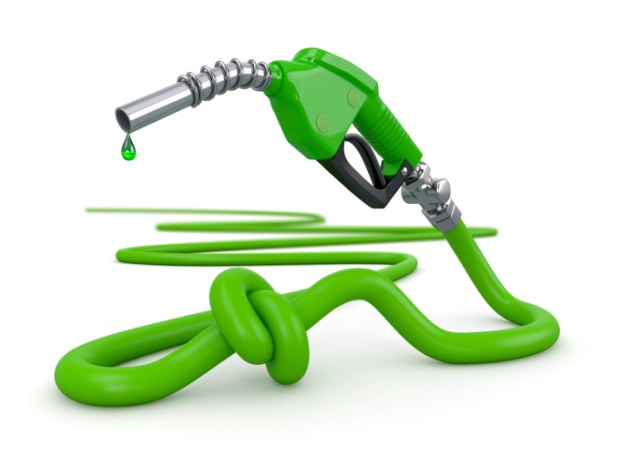
B]iofuel schemes—ranging from fermenting starch, to recycling cooking oil, to turning algae into jet fuel—have drawn more than $126 billion in investment since 2003, according to Bloomberg New Energy Finance (BNEF), a research outfit… [But]Those biofuels that can best compete commercially are not, in fact, green. Those that are green cannot compete commercially.

The biggest cause of ungreenness is that biofuels made from food crops—or from plants grown on land that might otherwise produce such crops—hurt food supplies. A committee of the European Parliament agreed this week to cap the use of “first-generation” biofuels of this sort. The current European target is for renewables to make up 10% of the energy used in transport by 2020. The new proposal says only seven-tenths of this can come from first-generation fuels. The difference must be made up by more advanced ones based on waste products and other feedstocks that do not impinge on food production. That could mean European demand for advanced biofuels of 14 billion litres by 2020, reckons Claire Curry of BNEF.
Only two such advanced fuels, she thinks, are capable of large-scale production. One is turning waste cooking oil and other fats into diesel—a process for which Europe already has 2 billion litres of capacity. The other involves making ethanol from cellulose by enzymatic hydrolysis. Everything elseis at least four years from commercial production. That includes the much-touted idea of renewable jet fuel.  This is promising on a small scale. South African Airways (SAA), in conjunction with Boeing and other partners, is developing fuel based on the seeds of the tobacco plant—once a big crop in the country, but now fallen on hard times.

Biofuels: Thin harvest, Economist, Apr. 18, 2015, at 72

Plutonium and Space Travel

In places where the sun’s rays do not penetrate…a different power source is required for space travel. One of the favourites used in space missions is a radioisotope thermoelectric generator (RTG).  RTGs were developed by America in the 1950s and work by converting heat produced by the decay of a radioactive material into electricity directly. This is not the same as nuclear fission, a more complex process used in power plants to split radioactive material and release a much larger amount of energy. The former Soviet Union also used RTGs to run hundreds of lighthouses and navigation beacons in remote areas… While the isotopes used are not much use in bombs, they can still make people ill, even when partially depleted.

America’s RTGs use plutonium-238 (238Pu). The American plant that produced it closed in 1988 and the isotope was then imported from Russia. That stopped in 2009, leaving NASA with 35kg in stock, although only about 17kg of that is estimated to be still suitable for RTGs. After years of hand-wringing about being cut off from space without the material to make an RTG, a deal was reached in 2013 for NASA to pay the Department of Energy to resume production…

America has used RTGs in 27 space missions since 1961. Despite continuing improvements in collecting solar energy, NASA says it still needs RTGs—and not just to reach destinations beyond Saturn. The space agency’s planetary-science division has a list of places where solar power cannot be relied upon, including the dark side of Mercury, craters on the Moon and the poles of Mars, which are partly obscured from the sun.  NASA has been working on a system called the Advanced Stirling Radioisotope Generator, which offers four times the efficiency of a current RTG.

Excerpts from Powering space travel: NASA’s dark materials, Economist, Apr. 4, 2015, at  75

Right to Water and Indigenous People: New Zealand

The Maori claim a special relationship with New Zealand’s fresh water, based on their historical use of its rivers for drinking water, spiritual beliefs, fishing and shellfish harvest, transport and trade, among other things. Their case goes back to 1840, when the British Crown and most of the Maori tribes signed the Waitangi treaty, which first formalised the colonists’ settling of the islands. Maori rights were enshrined in the treaty. An interim ruling by the Waitangi tribunal, set up in 1975 to deal with Maori grievances about land and related issues, says that the Maori have freshwater rights “for which full ownership was the closest cultural equivalent in 1840.”

Although the government has been willing to discuss water rights with some Maori groups, John Key, the prime minister, says that “full ownership” will not be ceded. In 2012 the government sought to part-privatise Mighty River Power, an electricity company with dams on the longest river, the Waikato, which has particular spiritual value for the Tainui tribe. The Maori Council, with representatives from each Maori district, tried to have the sale stopped or postponed. But in 2013 the high court ruled in the government’s favour….

One proposal is that the Maori get a specified water allocation from regional councils, just as farms do. But Federated Farmers, a lobby group, argues that all available water has already been allocated and that specifying a share for the Maori would mean others losing out. New Zealand’s farms rely heavily on water—especially in the dairy sector, which is now the country’s biggest export earner, worth $10 billion a year.

Growing Chinese demand for milk powder means farmers are increasingly switching from meat production to dairy, thereby increasing their water use. Dairy farming is also polluting freshwater supplies, as phosphates and nitrates seep into groundwater. This has become a political issue, not just for the Maori: many of the rivers and lakes loved by all Kiwis are no longer safe to swim in. The most likely outcome is a fudge that avoids saying anyone owns New Zealand’s fresh water. But the Maori may get more influence over some water, or even an allocation.

Excerpts from Maori rights in New Zealand Water, water everywhere, Economist, May 9, 2015 at 34.