Monthly Archives: June 2016

Endangered Fish as Delicacy

The most recent estimate puts the remaining numbers of vaquita, a porpoise found only in the waters of the Sea of Cortés, Mexico, at just 60, down from 100 two years ago…. The vaquita has been a victim of the shrimp and totoaba fisheries, showing up as bycatch in gillnets.

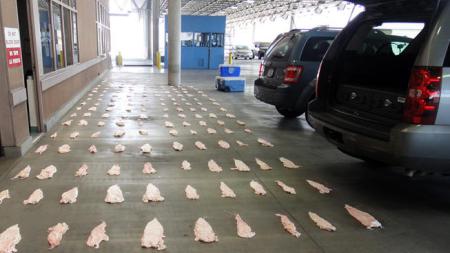
The totoaba is also an endangered species but its swim bladder is a delicacy in China, selling for as much as US $5,000 per kilogram in the U.S. and a great deal more in China. The matter has been taken up by Agriculture Secretary José Calzada Rovirosa with Chinese officials in an effort to stop the illegal consumption of the bladders.  Vaquitas are not only being killed by totoaba fishing. When illegal fishermen are pursued by the Mexican Navy, they often cut their nets and set them adrift, becoming an additional threat to the porpoise.

Removing these “ghost nets” will be one of the steps taken before the implementation of an assisted breeding program, said marine mammal expert Lorenzo Rojas Bracho from the National Institute of Ecology and Climate Change.

There are doubts about the feasibility of a breeding program as well as concerns about the risk. “We have no idea whether it is feasible to find, capture and maintain vaquitas in captivity much less whether they will reproduce,” said vaquita expert Barbara Taylor of the U.S. National Oceanic and Atmospheric Administration.

Excerpt from Assisted breeding for endangered vaquita?, Mexico News Daily, June 28, 2016

How to Make Space Friendly for Military Use

From the DARPA website

The volume of Earth’s operational space domain is hundreds of thousands times larger than the Earth’s oceans. It contains thousands of objects hurtling at tens of thousands of miles per hour. The scales and speeds in this extreme environment are difficult enough to grasp conceptually, let alone operationally, as is required for commanders overseeing the nation’s increasingly critical space assets.

Current [US] space domain awareness tools and technologies were developed when there were many fewer objects in space. Only a few nations could even place satellites in orbit, and those orbits were easily predictable without advanced software tools. That situation has changed dramatically in the past decade with a developing space industry flooding once lonely orbits with volleys of satellite constellations. Despite this much more complex and chaotic environment, commanders with responsibility for space domain awareness often rely on outdated tools and processes—and thus incomplete information—as they plan, assess, and execute U.S. military operations in space.

To help address these technical and strategic challenges, DARPA is launching the first of two planned efforts under the Agency’s new Hallmark program, which has the overarching goal to provide breakthrough capabilities in U.S. space command and control. This first effort, the Hallmark Software Testbed (Hallmark-ST), has as its primary goal the creation of an advanced enterprise software architecture for a testbed for tools that will integrate a full spectrum of real-time space-domain systems and capabilities. The testbed would be used to expedite the creation and assessment of a comprehensive set of new and improved tools and technologies that could be spun off into near-term operational use for the Defense Department’s Joint Space Operations Center (JSpOC) and Joint Interagency Combined Space Operations Center (JICSpOC).

“For example, an intuitive user interface incorporating 3-D visualization technology would present complex information in novel ways and provide commanders with unprecedented awareness and comprehension. An advanced testbed featuring playback and simulation capabilities would significantly facilitate research and development activities, experiments, and exercises to evaluate new technologies for their impact on space command and control capabilities.”

The enterprise architecture would be the backbone of a long-term testbed, the Hallmark Space Evaluation and Analysis Capability (SEAC), anticipated to be located in Northern Virginia.

Excerpts from Hallmark Envisions Real-Time Space Command and Control,  www. darpa. mil, June 17, 2016

See also Hallmark Software Testbed (Hallmark-ST)/Solicitation Number: DARPA-BAA-16-40, June 17, 2016 Federal Business Opportunities

An Army of Virtual Data Scientists

Popular search engines are great at finding answers for point-of-fact questions like the elevation of Mount Everest or current movies running at local theaters. They are not, however, very good at answering what-if or predictive questions—questions that depend on multiple variables, such as “What influences the stock market?” or “What are the major drivers of environmental stability?” In many cases that shortcoming is not for lack of relevant data. Rather, what’s missing are empirical models of complex processes that influence the behavior and impact of those data elements. In a world in which scientists, policymakers and others are awash in data, the inability to construct reliable models that can deliver insights from that raw information has become an acute limitation for planners.

To free researchers from the tedium and limits of having to design their own empirical models, DARPA today launched its Data-Driven Discovery of Models (D3M) program. The goal of D3M is to help overcome the data-science expertise gap by enabling non-experts to construct complex empirical models through automation of large parts of the model-creation process. If successful, researchers using D3M tools will effectively have access to an army of “virtual data scientists.”..

“We have an urgent need to develop machine-based modeling for users with no data-science background. We believe it’s possible to automate certain aspects of data science, and specifically to have machines learn from prior example how to construct new models.”..

Some experts project deficits of 140,000 to 190,000 data scientists worldwide in 2016 alone, and increasing shortfalls in coming years. Also, because the process to build empirical models is so manual, their relative sophistication and value is often limited.

Excerpts from DARPA Goes “Meta” with Machine Learning for Machine Learning Data-Driven Discovery of Models (D3M) seeks to increase pace of scientific discovery and improve military planning, logistics and intelligence outcomes,  DARPA Website, June 17, 2016

Rhino Parks and the US Military

A group of American military veterans plans to train rangers at private wildlife farms and reserves in South Africa where rhino poachers have been active.The US military publication, Stars and Stripes, reports that the “small conservation group Vetpaw had previously operated in Tanzania but was ordered to leave, partly because of a video in which a member spoke about killing poachers”.Former US Marine and head of Vetpaw, Ryan Tate, said the member did not speak for the organisation and since the incident he has sought to rebrand Vetpaw.

The name is an acronym of “Veterans Empowered to Protect African Wildlife” and the organisation has as its aim employment for skilled post 9/11 US military veterans….The majority of Vetpaw members have been deployed in Afghanistan and Iraq...They plan to offer training including marksmanship, field medicine and manoeuvring at night. “People are desperate and want to try any and everything they can,” Peaton told the publication in reference of owners and operators of “private wildlife parks” that lack the resources State-run parks receive.

Earlier this month Environmental Affairs Minister Edna Molewa met with the Private Rhino owners Association (PROA) to discuss rhino conservation in South Africa.PROA said rhino poaching had had “a detrimental effect” on private reserves which held more than a third of South Africa’s total rhino population.

Last week suspected poachers shot and killed a ranger at a private reserve in Bel-Bela before killing a rhino for its horn.Earlier this week two Kruger National Park field rangers were arrested on suspicion of involvement in rhino poaching activities.

US military veterans coming to help in the fight against rhino poaching,  defenceWeb, June  22, 2016

Electronic Waste: reincarnation

In the electronics recycling business, the benchmark is to try to collect and recycle 70 percent, by weight, of the devices produced seven years earlier…. Apple exceeds that, typically reaching 85 percent, including recycling some non-Apple products that customers bring in.

That means Apple will have to get hold of and destroy the equivalent of more than 9 million of 2009’s iPhone 3GS models this year around the world. With iPhone sales climbing to 155 million units in 2015, grinding up Apple products is a growth business.  Apple said it collected more than 40,000 tons of e-waste in 2014 from recycled devices, including enough steel to build 100 miles of railway track.

Brightstar Corp., based in Miami, Florida, TES-AMM in Singapore, Hong-Kong’s Li Tong and Foxconn Technology Group, the most famous manufacturer of iPhones, are part of a global network of recyclers that agreed to more than 50 rules, ranging from security, to insurance, to auditing, in the destruction of the phones.

The process starts at hundreds of Apple stores globally, or online, where the company offers gift certificates to lure iPhone owners to sell back their devices….Once Apple’s partners decide a phone must be scrapped, a deconstruction process begins that is remarkably similar to Apple’s production model, only in reverse.
Apple pays for the service and owns every gram, from the used phone at the start to the pile of dust at the end, said Linda Li, chief strategy officer for Li Tong. The journey, consisting of about 10 steps, is controlled, measured and scripted through vacuum-sealed rooms that are designed to capture 100 percent of the chemicals and gasses released during the process, she said…

While some brands salvage components such as chips that can be used to repair faulty phones, Apple has a full-destruction policy.“Shredding components takes more energy than repurposing,” Li said. Li Tong works with other customers to advise on how to design products that are easier to deconstruct, taking cameras from smartphones for reuse in toy drones, and adapting screens from Microsoft Surface tablets to use in New York taxis, she said.  Apple shreds its devices to avoid having fake Apple products appearing on the secondary market.
And once it’s ground into shreds, what becomes of your old iPhone? Hazardous waste is stored at a licensed facility and the recycling partners can take a commission on other extracted materials such as gold and copper. The rest is reincarnated as aluminum window frames and furniture, or glass tiles.

Where iPhones Go To Die ( and Be Reborn), Bloomberg,  Mar. 13, 2016

Drones Talk Like Wolves

From the DARPA website:

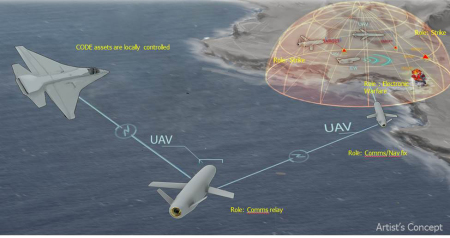
CODE intends to focus on developing and demonstrating improvements in collaborative autonomy—the capability of groups of UAS to work together under a single person’s supervisory control. The unmanned vehicles would continuously evaluate their own states and environments and present recommendations for coordinated UAS actions to a mission supervisor, who would approve or disapprove such team actions and direct any mission changes. Using collaborative autonomy,

CODE’s envisioned improvements to collaborative autonomy would help transform UAS operations from requiring multiple operators for each UAS to having one mission commander simultaneously directing all of the unmanned vehicles required for the mission. …

CODE’s prototype human-system interface (HSI) is designed to allow a single person to visualize, supervise, and command a team of unmanned systems in an intuitive manner. Mission commanders can know their team’s status and tactical situation, see pre-planned and alternative courses of action, and alter the UASs’ activities in real time.  For example, the mission commander could pick certain individual UASs from a team, circle them on the command station display, say “This is Group 1,” circle another part of the map, and say “Group 1 search this area.”

Companies involved Lockheed Martin Corporation (Orlando, Fla.) and the Raytheon Company (Tucson, Ariz.).  Also:

  • Daniel H. Wagner Associates (Hampton, Va.)
  • Smart Information Flow Technologies, LLC (Minneapolis, Minn.)
  • Soar Technology, Inc. (Ann Arbor, Mich.)
  • SRI International (Menlo Park, Calif.)
  • Vencore Labs dba Applied Communication Sciences (Basking Ridge, N.J.)


Excerpts from CODE Takes Next Steps toward More Sophisticated, Resilient, and Collaborative Unmanned Air Systems

A Schoolyard at Fukushima

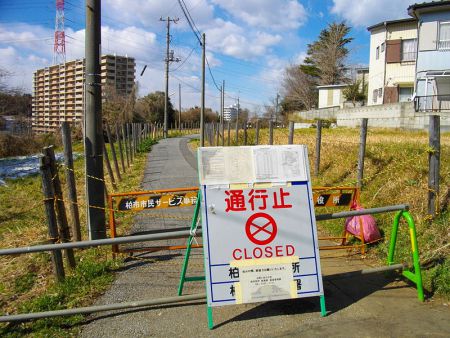
Highly radioactive soil that should by law be removed by the central government has been left dumped in the corner of a schoolyard here because the construction of a local storage site for waste has been stalled.  Students at the school were not given an official warning that the radioactive soil was potentially hazardous to their health.

When a teacher scooped up soil samples at the site and had their radiation levels measured by two nonprofit monitoring entities–one in Fukushima and another in Tokyo–the results showed 27,000-33,000 becquerels of radioactive cesium per kilogram. The law stipulates that the central government is responsible for disposing of waste measuring more than 8,000 becquerels per kilogram. But as a central government project to build an interim storage site for highly radioactive waste near the nuclear power plant has been stalled, the school appears to have no alternative to indefinitely keeping it in the schoolyard…

Radioactive soil turns up at Fukushima high school,The Asahi Shimbun, June 15, 2016

Illegal Genetically Modified Crops: China

In 2013 President Xi Jinping of China…recounted his own experience of hunger during China’s great famine in the early 1960s…..He said that guaranteeing China’s “food security” was still a serious worry. Hinting at what he saw as a possible remedy, he said China must “occupy the commanding heights of transgenic technology” and not yield that ground to “big foreign firms”….

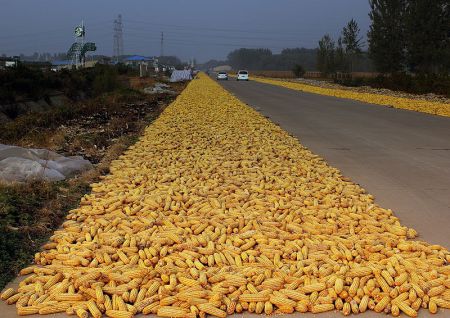
Since then, however, Chinese policy had grown much more conservative, for two main reasons. The first is anxiety among some members of the public about the safety of GM foods. The other is a worry that China’s food market might become reliant on foreign GM technology. True, a large share of the soyabeans imported by China are genetically modified. So is the vast majority of the cotton it grows. In 2015 there were more than 6.6m farmers growing GM cotton, and a total of 3.7m hectares of GM crops under cultivation, including cotton and papaya, according to Randy Hautea of the International Service for the Acquisition of Agri-biotech Applications, an industry group. But the government has been reluctant to approve the growing of GM staples such as maize (corn) and rice.   …

Worries about foreign domination of GM technology may ease if a $43 billion deal reached in February 2016 goes ahead for the takeover of Syngenta, a Swiss agricultural firm, by a Chinese company, ChemChina. The acquisition must still be approved by regulators in several countries, but it could give China control of Syngenta’s valuable GM-seed patents.

China’s policymakers may be trying to bring belated order to what is already thought to be the widespread, illegal, growing of GM crops. Greenpeace, an NGO, reported in January 2016 that 93% of samples taken from maize fields in Liaoning province in the north-east tested positive for genetic modification, as did nearly all the seed samples and maize-based foods it gathered at supermarkets in the area.

Excerpts from Genetically Modified Crops: Gene-Policy Transfer, Economist,  Apr. 23, 2016


Killing Spree of Endangered Species

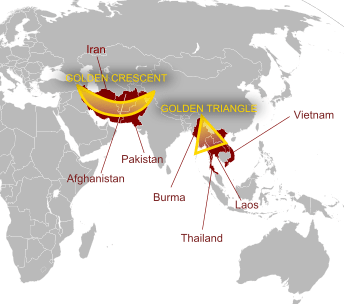
Laos’s biggest breeding facility, near Thakhek, reportedly holds around 400 tigers. Many are bred solely for their parts. The skins are prized as decorations. Farmed-tiger parts mostly move to China through the unruly Golden Triangle where Myanmar, Thailand and Laos converge. The region is a hotspot for trade in protected species: the Environmental Investigation Agency (EIA), an NGO based in UK  visited the Golden Triangle Special Economic Zone in Laos, popular with Chinese tourists. [It] found tiger-bone wine, bear-bile pills, pangolin scales and carvings from the beaks of helmeted hornbills openly on sale. Outside the God of Fortune restaurant was a caged bear-cub that could be killed and cooked to order.

Laos also offers a link to the most lucrative of all illegal wildlife enterprises: the trade in rhinoceros horn, which the UN Office on Drugs and Crime (UNODC) estimated six years ago was worth $8m a year. Since then the number of rhinos slaughtered annually by poachers in Africa has more than tripled (the poaching of Asia’s depleted stock of rhinos is modest). Poachers are sometimes caught; those higher up the chain rarely are. The only high-level trafficker in jail is a Thai, Chumlong Lemtongthai, who is serving a 13-year sentence in South Africa. He was charged in 2011 with bringing Thai prostitutes to South Africa so they could claim they had shot rhinos on legal hunts and were thus entitled under South African law to export horns as trophies. It was the most bizarre of several methods used to get hold of a substance that can fetch up to $70,000 a kilo—almost twice the price of gold.

Mr Chumlong has been linked to a man who has been described as the Pablo Escobar of wildlife-trafficking, Vixay Keosavang, a former soldier in the Lao People’s Army who operates from a walled compound far off the beaten track in the central province of Bolikhamxay. In 2013 the American government offered $1m for information that would help dismantle the network it believes that Mr Vixay heads, which it suspects of trading wild-animal parts across several countries. Mr Vixay has denied wrongdoing.

Some experts believe that the surge in rhino-poaching, which has cut the world’s population by a fifth since 2008, has been driven by a surge in demand in Vietnam. There, rhino-horn shavings are a supposed cure for hangovers; entire horns are given as gifts and displayed as ornaments. Others believe that much of the rhino-horn taken to Vietnam ends up in China.

As their country opened up in recent decades, “some enterprising Vietnamese citizens got residential status in South Africa and very quietly began trading,” says Tom Milliken of Traffic, an NGO. In at least two cases, professional South African hunters have been caught shooting rhino for Vietnamese clients and, in two others, Vietnamese nationals have been arrested trying to smuggle rhino-horns out of South Africa by air. Hunts have been arranged for citizens of the Czech Republic, which has had a large Vietnamese community since the cold war. Since that ruse was discovered, Slovaks, Poles, Ukrainians and Russians have been enlisted as bogus trophy-hunters. “Some Vietnamese residents have bought their own game ranches, so they are now able to buy rhinos at auction and organise sports hunts,” says Mr Milliken.

The international nature of the trade poses big problems for law-enforcement. Documents that would prove decisive in a prosecution for rhino-horn trafficking can sit in a South African office for months awaiting translation, says Mr Milliken; the situation is no better for other animal parts. “None of what we do for drugs do we do for wildlife trafficking,” an international official involved in the fight against organised crime laments. “Extraditions are rare. There are no controlled deliveries. Sophisticated investigative techniques are seldom deployed. We’re not doing any of the things we could be doing to stop it.”

Excerpts from The Trade in Wild Animals: Last Chance to See?, Economist, Apr. 18, 2016, at 49
How to Catch Illegal Fishers: port state measures

The Agreement on Port State Measures to Prevent, Deter and Eliminate Illegal, Unreported and Unregulated Fishing (the Agreement)  entered into force on June 5, 2016.  The main purpose of the Agreement is to prevent, deter and eliminate illegal, unreported and unregulated (IUU) fishing through the implementation of robust port State measures. The Agreement envisages that parties, in their capacities as port States, will apply the Agreement in an effective manner to foreign vessels when seeking entry to ports or while they are in port. …

The Agreement provides an opportunity for port States to check and verify that vessels not flying their flags and that seek permission to enter their ports, or that are already in their ports, have not engaged in IUU fishing.  The Agreement also enhances flag States control over vessels as the Agreement requires the flag State to take certain actions, at the request of the port State, or when vessels flying their flag are determined to have been involved in IUU fishing….

Furthermore, the Agreement’s seeks to prevent the occurrence of so-called ports of non-compliance (formerly known as ports of convenience). Countries operating ports of non compliance do not regulate effectively the fishing and fishing-related activities that take place in the ports, including determining whether IUU-caught fish are landed, transshipped, processed and sold in the ports. Ratifying and acceding to the Agreement and implementing its measures robustly will reduce the number of ports of non compliance and opportunities for vessels to dispose of IUU-caught fish with relative ease. Port state measures are a cost-effective tool in ensuring compliance with national law and regional conservation and management measures adopted by RFMOs. This is because port States do not have to expend time, effort and resources in monitoring, pursuing and inspecting vessels at sea. Port inspections and controls are very much cheaper and safer than alternative, more conventional air and surface compliance tools. Port State measures, if used in conjunction with catch documentation schemes, have the potential to be one of the most cost-effective and efficient means of combating IUU fishing.

The Agreement’s most potent effect in terms of its potential to curb IUU fishing is that through the implementation of its provisions, including those relating to denial of access to ports, port inspections, prohibition of landing, and detention and sanction, can prevent fish caught from IUU fishing activities from reaching national and international markets. By making it more difficult to market fish through the application of port State measures, the economic incentive to engage in IUU fishing is reduced. In addition, many countries have also decided to prohibit trade with countries that do not have port state measures in place.

Excerpt from Food and Agriculture Organization  FAO Website.

How to Make a Buck like Goldman Sachs

Three years ago, your can of Coke suddenly cost a few pennies more. The culprits? The clever bankers at Goldman Sachs. According to a Senate panel, they gamed the global aluminum market, warehousing tens of thousands of tons of the metal in Detroit and delaying delivery to customers like Coca-Cola. The bank was able to ratchet up the price on its supply, netting several billion dollars in the process. The best part: Goldman didn’t do it as a hedge against other investments. The bank did it to make money for itself, at the expense of everyone else.Maneuvers like this are legal, but they’ve become more distasteful in the wake of the 2008 collapse, giving birth to the coinage of a term financialization…

Excerpts from David Sax  How Finance Ruined Business, Makers and Takers adds up the ill effects of Wall Street’s zero-sum game, Bloomberg BusinessWeek, May 19, 2016

Data Security: Real Fear

On its website, ProfitBricks touts what it calls “100 percent German data protection,” underneath the black, red, and gold colors of the German flag. “Having a German cloud helps tremendously,” says Markus Schaffrin, an IT security expert at Eco, a lobbying group for Internet companies. “Germany has some of the most stringent data-protection laws, and cloud-service providers with domestic data centers are of course highlighting that.”

The companies known as the Mittelstand—the small and midsize enterprises that form the backbone of the German economy—are rapidly embracing the idea of the networked factory. Yet they remain wary of entrusting intellectual property to a cloud controlled by global technology behemoths and possibly subject to government snooping. “Small and medium enterprises are afraid that those monsters we sometimes call Internet companies will suck out the brain of innovation,” says Joe Kaeser, chief executive officer of Siemens, which in March began offering cloud services using a network managed by German software powerhouse SAP.

In a case being closely watched in Germany, the U.S. Department of Justice has demanded that Microsoft hand over e-mails stored on a data server in Ireland. The software maker argues that the U.S. has no jurisdiction there; the U.S. government says it does, because Microsoft is an American company. …

U.S. companies aren’t ceding the market. Microsoft will offer its Azure public cloud infrastructure in German data centers, with T-Systems acting as a trustee of customer data. The companies say the arrangement will keep information away from non-German authorities. And IBM in December opened a research and sales hub for Watson, its cloud-based cognitive computing platform, in Munich—a move intended to reassure Mittelstand buyers about the security of their data. “If a customer wants data never to leave Bavaria, then it won’t,” says Harriet Green, IBM’s general manager for Watson. “I’m being invited in by many, many customers in Germany, because fear about security is very, very real.”

Excerpts from Building a National Fortress in the Cloud, Bloomberg, May 19, 2016

3000 Trash Banks: Indonesia

Customers, in a poor corner of eastern Indonesia, borrow cash — and pay back trash.
“The program originated from the people, it is managed by the people, and the rewards are for the people,” said bank manager Suryana, who wears a black jilbab headscarf and lives with her family above the Mutiara Trash Bank in the fast-growing city of Makassar on the island of Sulawesi. “From an economic point of view, this gets results.”… Not just neighborhoods in Indonesia, but elsewhere across emerging Asia and Africa, locales are embracing “trash banking” as a way of reducing pressure on ever-growing landfill sites and allowing some of their poorest citizens access to savings and credit.
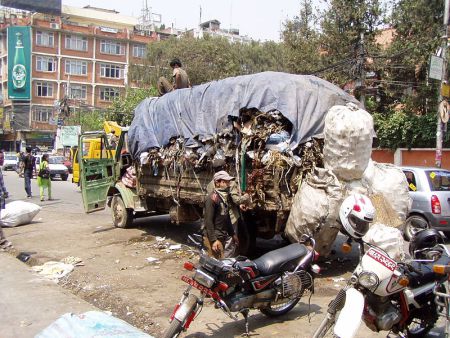
The scale of the problem facing Makassar and other Asian cities is clear from a trip to the landfill on the edge of town. Each day the city of 2.5 million people produces 800 tons of rubbish, most of which ends up at the five-story high tip, which sprawls over the area the size of two soccer pitches. Scavengers, many of them children, work alongside cows foraging for food.

Against this backdrop, trash banking is taking off. Residents bring recyclable trash such as plastic bottles, paper and packaging to the collection points, known as banks, where the rubbish is weighed and given a monetary value. Like a regular bank, customers are able to open accounts, make deposits — of trash, converted to its rupiah value — and periodically withdraw funds.

The city government commits to purchasing the rubbish at set prices displayed at the bank, ensuring price stability for those bringing trash in. It then sells it on to waste merchants who ship it to plastic and paper mills on the main island of Java….The city administration sends trucks to collect the waste from the Mutiara Trash Bank several times a week and brings it to a Central Trash Bank, where it is sorted for sale…

Indonesia produces 64 million tons of trash a year, of which 70 percent is dumped in open …Indonesia as a whole last year had 2,800 trash banks operating in 129 cities, with 175,000 account holders, according to the environment ministry….[IO]ther similar practices are carried out in African countries including Ghana and South Africa, in India’s cities of Pune and Bengaluru, and in Manila, Bogota and Brazil.

Excerpts from This Asian Bank Lets You Borrow Cash and Pay in Trash, Bloomberg News
May 15, 2016