Monthly Archives: November 2021

The Limits of Green Energy: Wind Blades of Wood and Plastic

What does the deforestation of balsa wood in Ecuador’s Amazon region have to do with wind power generation in Europe? There is a perverse link between the two: a drive for renewable energy has boosted global demand for a prized species of wood that grows in the world’s largest rainforest. As Europe and China increase the construction of blades for wind turbines, balsa trees are being felled to accelerate an energy transition driven by the need to decarbonize the global economy.

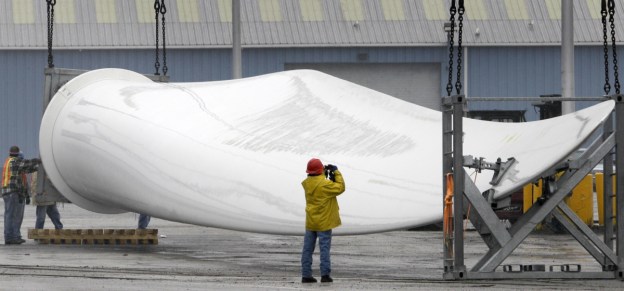
In the indigenous territories of the Ecuadorian Amazon, people began to notice an uptick in international demand for balsa wood from 2018 onwards. Balsa is very flexible but tough at the same time, and offers a light yet durable option for long-term wind power production. The typical blades of a wind turbine are currently around 80 meters long, and the new generation of blades can extend up to 100 meters. That means about 150 cubic meters of wood are required to build a single unit, according to calculations by the United States National Renewable Energy Laboratory.

Ecuador is the world’s main exporter of balsa wood, holding 75% of the global market. Major players include Plantabal S.A. in Guayaquil, which has around 10,000 hectares dedicated to the cultivation of balsa wood destined for export. With the boom in demand starting in 2018, this company and many others struggled to cope with the quantity of international orders. This increase has led directly to the deforestation of the Amazon. Irregular and illegal logging has proliferated by those who have reacted to the scarcity of wood grown for timber by chopping down the virgin balsa that grows on the islands and riverbanks of the Amazon

The impact on the indigenous people who live in the area has been as devastating as mining, oil and rubber were in their day…The Amazon’s defenders are calling for the wind turbine industry to implement strict measures to determine the origin of the wood used in turbine blades, and to prevent market pressure leading to deforestation. Ultimately, they say, balsa wood should be replaced by other materials…

In 2019, Ecuador’s balsa exports were worth almost €195 million, 30% more than the previous record from 2015. In the first 11 months of 2020, this jumped to €696 million.

Wind turbine blades are mainly made from polymethacrylamide (PMI) foam, balsa wood and polyethylene terephthalate (PET) foam…But The Spanish-German company Siemens-Gamesa..has  introduced blade designs using PET only, other competitors soon followed. Wood Mackenzie, a consultancy firm, forecasts that this “will increase from 20% in 2018 to more than 55% in 2023, while demand for balsa will remain stable…”

Today’s blades also present a problem for recycling. The first generation of wind turbines are reaching the end of their lives, and thousands will need to be dismantled… “But the blades represent a challenge due to their composite materials, as their recycling requires very specific processes…

Excerpts from How the wind power boom is driving deforestation in the Amazon, ElPais, Nov. 26, 2021

How to Lift Nuclear Submarines from Arctic Seabed

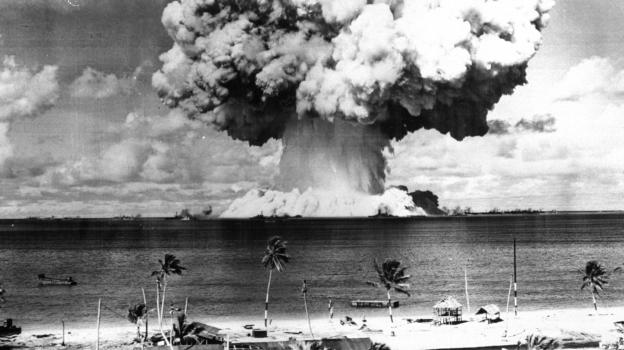
Projects aimed to improve nuclear safety are some of the few successful arenas for cooperation still going strong between the European Union and Russia…especially wiht regard to the two old Soviet submarines K-159 and K-27, both rusting on the Arctic seabed with highly radioactive spent nuclear fuel elements in their reactors…

“The sunken submarines K-27 and K-159 are the potential source of contamination of the Arctic, the riskiest ones,” Ambassador Jari Vilén of Filand explains. “Assessments made by the European Union together with Rosatom show that in 20-30 years’ time the metals will start corroding and there is a genuine risk of leakage. Therefore, lifting them in the coming decade is extremely important.”

“I’m very happy we are making progress and that a decision to make a technical review has been decided by the European Bank for Reconstruction and Development (EBRD) through the Northern Dimension Environmental Partnership. Hopefully, when these technical reviews are done, we will come to a phase where we can make decisions on a lifting operation,” Vilén says with enthusiasm.

Lifting a nuclear submarine from the seabed is nothing new. It is difficult, but doable. In 2002, the Dutch salvage company Mammoet managed to raise the ill-fated “Kursk” submarine from the Barents Sea. A special barge was built with wires attached underneath. The wreak of “Kursk” was safely brought in and placed in a dry-dock where the decommissioning took place.

K-159 is a November-class that sank in late August 2003 while being towed in bad weather from the closed naval base of Gremikha on the eastern shores of the Kola Peninsula towards the Nerpa shipyard north of Murmansk. The two onboard reactors contain about 800 kilograms of spent nuclear fuel, with an estimated 5,3 GBq of radionuclides. A modeling study by the Norwegian Institute of Marine Research said that a pulse discharge of the entire Cesium-137 inventory from the two reactors could increase concentrations in cod in the eastern part of the Barents Sea up to 100 times current levels for a two-year period after the discharge. While a Cs-137 increase of 100 times in cod sounds dramatic, the levels would still be below international guidelines. But that increase could still make it difficult to market the affected fish.

K-27, the other submarine in urgency to lift, was on purpose dumped in the Kara Sea in 1982….

Lifting the dumped reactors from the Kara Sea, a price tag of nearly €300 million has been mentioned. The sum includes K-27 and K-159, but also the other dumped reactors from K-11, K-19 and K-140, as well as spent nuclear fuel from an older reactor serving icebreaker “Lenin”. “The value of the fishing stocks in the area is ruffly €1.4 billion annually,” he says.

Excerpts from Thomas Nilsen, EU willing to co-fund lifting of sunken nuclear subs from Arctic seabed, The Barents Observer, Nov. 22, 2021

Exchanging Nature for Crushing Debt

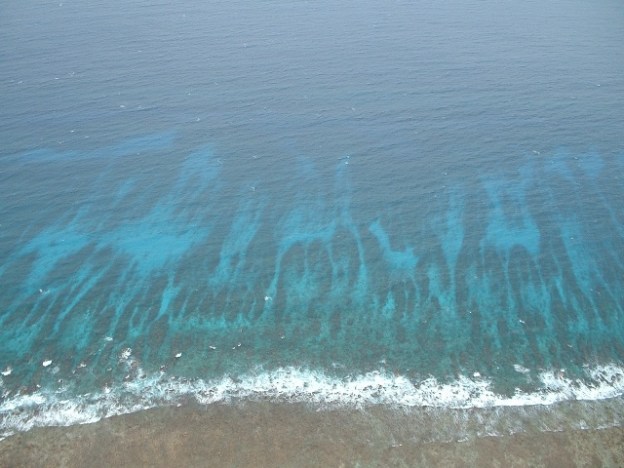
In 2020 tourism in Belized dried up, growth contracted sharply and public debt jumped from just under 100% GDO in 2019 to over 125%. That forced Belize,  into a debt restructuring…As part of the deal, concluded on November 5th, 2021 Belize bought back its only international bond, a $553m, at 55 cents on the dollar. It funded that with $364m of fresh money, arranged by The Nature Conservancy, an NGO, which is insured by the International Development Finance Corp, an American agency. The transaction is backed by the proceeds of a “blue bond” arranged by Credit Suisse, a bank. The payback is due over 19 years. It is called a blue bond because Belize has pledged to invest a large chunk of the savings into looking after the ocean. That includes funding a $23m endowment to support future marine-conservation projects and promising to protect 30% of its waters by 2026…

Debt-for-nature swaps are nothing new. Lenders have been offering highly indebted countries concessions in return for environmental commitments for decades. But these transactions have historically involved debt owed to rich countries, not commercial bondholders. As Lee Buchheit, a lawyer who specialises in sovereign-debt restructurings, points out, they were “negligible in size”. In total, the value of debt-for-climate and nature-swap agreements between 1985 and 2015 came to just $2.6bn, according to the United Nations Development Programme. Of the 39 debtor nations that benefited from the swaps, only 12 negotiated debts of over $30m. “It was really an exercise in public relations,” Mr Buchheit says….

Other poor countries are trying to move in the same direction. At the COP26 climate summit in Glasgow Ecuador’s president Guillermo Lasso proposed enlarging the country’s Galapagos nature reserve through a debt-for-nature swap…Yet no amount of creative dealmaking can distract from the grim truth: many emerging markets still suffer from crushing debts.

Excerpts from Debt-for Nature Swaps: Reef relief, Economist, Nov. 13, 2021

No Matter What they Say-Nobody Likes Nuclear Waste

The first stage of the process has been under way since November 2020 for the town of Suttsu and the village of Kamoenai assessing two municipalities in Hokkaido for their suitability to host a final disposal facility for high-level radioactive waste from nuclear power plants.  Under the government’s plan, the first-stage surveys take two years and will be followed by the second phase… which will include geophysical exploration, geological reconnaissance surveys and drilling surveys. Already stories about divisions and conflict over the surveys are emerging from the local communities.

The mayoral election of Suttsu in October 2021, for example, turned into a bitter and divisive political battle over the issue between the incumbent who decided to apply for the first-phase survey and a challenger who ran on opposition to the project. Some of the neighboring municipalities have enacted an ordinance to ban the entry of radioactive materials. Both the Hokkaido prefectural government and most of the local administrations around the two municipalities have declined to accept state subsidies related to the surveys. These actions have been driven by the fear that accepting the surveys will set in motion an unstoppable process leading to a permanent repository for nuclear waste.

The NUMO (Nuclear Waste Management Organization of Japan) and the METI (Ministry of Economy, Trade and Industry)  have jointly held more than 100 meetings to explain the plan to local communities across the nation. Even though they have continued calling for localities to volunteer, no local governments except for the two in Hokkaido have responded.

Excerpts from Entire nation should share in disposal of spent nuke fuel, Asahi Shimbun, Nov. 22, 2021

Nobody Can Escape the Nuclear Rat Race

When America and the Soviet Union raced each other to build ever-larger nuclear arsenals during the cold war, China ambled disdainfully. It did not detonate its first nuclear weapon until 1964, kept only a few hundred warheads compared with the tens of thousands piled up by the superpowers, and to this day maintains it will never be the first to use nukes in a war. Now China is sprinting to catch up.

In its 2021 annual assessment, the Pentagon says China’s stockpile of nuclear warheads, which last year it reckoned to be in the “low-200s”, could triple to about 700 by 2027 and will probably quintuple to about 1,000 or more by 2030… Even so, it would still be smaller than America’s or Russia’s. Those countries each have about 4,000 warheads. The Pentagon believes China is building fast-breeder reactors to make the necessary plutonium; may already have created a full “triad”, ie, the ability to launch nuclear weapons from the land, sea and air; and is expanding its early-warning systems, with help from Russia.

All told, China is shifting to a “launch on warning” doctrine. Rather than rely on a minimal nuclear deterrent to retaliate after an initial nuclear attack, China would henceforth fire at the first sign of an incoming nuclear strike, even before the enemy warheads have landed. This posture is akin to that of America and Russia… Why is China building up its nukes at a time when America and Russia have extended the New START treaty, which limits their arsenals…? One reason is China’s worry that its arsenal is too small to survive an American first strike…

Excerpt from Military Strategy: An Unpacific Contest, Economist, Nov. 6, 2021

The Mining Curse

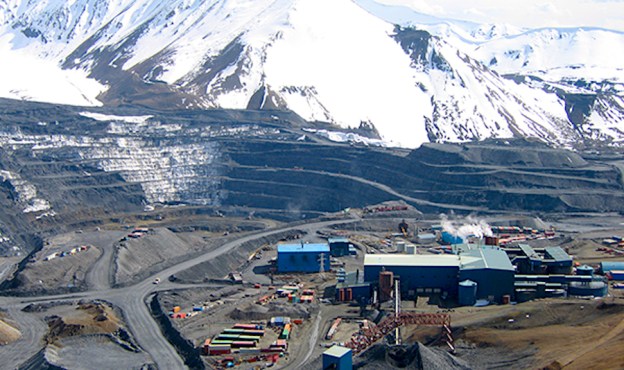
Two poor, fragile, post-Soviet democracies, two spectacular holes in the ground. Mongolia’s Oyu Tolgoi, or “Turquoise Hill”, is a vast mine in the southern Gobi desert, just 80km from the Chinese border. Kumtor in the Tian Shan mountains of Kyrgyzstan, operating since 1997, is if anything even more remote. Located beside a series of glaciers at 13,000 feet above sea level, it is the world’s second-highest gold mine.

It is hard to exaggerate the importance of these two mines to their respective economies. Once completed, Oyu Tolgoi will be the world’s fourth-biggest copper mine. When the contract with Rio Tinto, an Anglo-Australian mining giant, was first signed in 2009, Oyu Tolgoi was predicted to add five percentage points to Mongolia’s annual economic growth, which, for a while, it did. The mine has created 15,000 jobs directly and another 45,000 indirectly, for a Mongolian population of 3.3m. As for Kumtor, its owner, Centerra, a Canadian exploration company, is the country’s largest private investor. In a good year the mine generates a tenth of Kyrgyzstan’s GDP and is the biggest contributor to the state budget.

Both mines loom large in national life. Both foreign operators won sweet, initial deals when naïve young states opened their doors to foreign investment. Controversy surrounding the mines was thus inevitable. Oyu Tolgoi has long been controversial. Politicians often accuse Rio Tinto of fleecing the country…In Kyrgyzstan the goverment accuses Centerra of corruption, enriching politicians instead of the national budget. 

Accusations of being cheated are common in poor, resource-rich countries. With Oyu Tolgoi, the stand-off is more easily resolved….A recent independent review makes it hard for Rio to deny it bears some blame for delays and cost overruns in developing the mine…. In Kyrgyzstan the situation is bleaker. There, bribery and corruption are not incidental to business but central to it….Foreign investors too often blame “resource nationalism” for their woes in host countries. That is self-serving. After all, the resources usually belong to the state. It is reasonable for citizens to ask how best to benefit from them…. 

Excerpts from Banyan: Mine for the Taking, Economist, Nov. 6, 2021

A Humane Bombing Campaign? the Baghuz Strike

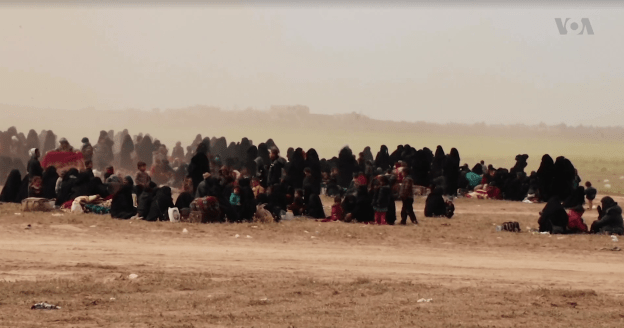
In the last days of the battle against the Islamic State in Syria, when members of the once-fierce caliphate were cornered in a dirt field next to a town called Baghuz, a U.S. military drone circled high overhead, hunting for military targets. But it saw only a large crowd of women and children huddled against a river bank. Without warning, an American F-15E attack jet streaked across the drone’s high-definition field of vision and dropped a 500-pound bomb on the crowd, swallowing it in a shuddering blast. As the smoke cleared, a few people stumbled away in search of cover. Then a jet tracking them dropped one 2,000-pound bomb, then another, killing most of the survivors.

It was March 18, 2019. At the U.S. military’s busy Combined Air Operations Center at Al Udeid Air Base in Qatar, uniformed personnel watching the live drone footage looked on in stunned disbelief, according to one officer who was there. “Who dropped that?” a confused analyst typed on a secure chat system being used by those monitoring the drone, two people who reviewed the chat log recalled. Another responded, “We just dropped on 50 women and children.”

The Baghuz strike was one of the largest civilian casualty incidents of the war against the Islamic State, but it has never been publicly acknowledged by the U.S. military. The details, reported by the New York Times on November 13, 2021, show that the death toll was almost immediately apparent to military officials. A legal officer flagged the strike as a possible war crime that required an investigation. But at nearly every step, the military made moves that concealed the catastrophic strike. The death toll was downplayed. Reports were delayed, sanitized and classified. United States-led coalition forces bulldozed the blast site. And top leaders were not notified.

The Defense Department’s independent inspector general began an inquiry, but the report containing its findings was stalled and stripped of any mention of the strike. “Leadership just seemed so set on burying this. No one wanted anything to do with it,” said Gene Tate,  a former Navy officer who had worked for years as a civilian analyst with the Defense Intelligence Agency and the National Counterterrorism Center before moving to the inspector general’s office….

The details of the strikes were pieced together by The New York Times over months from confidential documents and descriptions of classified reports, as well as interviews with personnel directly involved, and officials with top secret security clearances who discussed the incident on the condition that they not be named. The Times investigation found that the bombing had been called in by a classified American special operations unit, Task Force 9, which was in charge of ground operations in Syria. The task force operated in such secrecy that at times it did not inform even its own military partners of its actions. In the case of the Baghuz bombing, the American Air Force command in Qatar had no idea the strike was coming, an officer who served at the command center said.

The only assessment done immediately after the strike was performed by the same ground unit that ordered the strike. It determined that the bombing was lawful because it killed only a small number of civilians while targeting Islamic State fighters in an attempt to protect coalition forces, the command said. Therefore no formal war crime notification, criminal investigation or disciplinary action was warranted, it said, adding that the other deaths were accidental.

But the Air Force lawyer, Lt. Col. Dean W. Korsak, believed he had witnessed possible war crimes and repeatedly pressed his leadership and Air Force criminal investigators to act. When they did not, he alerted the Defense Department’s independent inspector general. Two years after the strike, seeing no evidence that the watchdog agency was taking action, Colonel Korsak emailed the Senate Armed Services Committee, telling its staff that he had top secret material to discuss and adding, “I’m putting myself at great risk of military retaliation for sending this.”..

The United States portrayed the air war against the Islamic State as the most precise and humane bombing campaign in its history. The military said every report of civilian casualties was investigated and the findings reported publicly, creating what the military called a model of accountability. The details suggest that while the military put strict rules in place to protect civilians, the Special Operations task force 9 repeatedly used other rules to skirt them. The military teams counting casualties rarely had the time, resources or incentive to do accurate work. And troops rarely faced repercussions when they caused civilian deaths.

On the ground, Task Force 9 coordinated offensives and airstrikes. The unit included soldiers from the 5th Special Forces Group and the Army’s elite commando team Delta Force, several officials said. Over time, some officials overseeing the air campaign began to believe that the task force was systematically circumventing the safeguards created to limit civilian deaths. The process was supposed to run through several checks and balances. Drones with high-definition cameras studied potential targets, sometimes for days or weeks. Analysts pored over intelligence data to differentiate combatants from civilians. And military lawyers were embedded with strike teams to ensure that targeting complied with the law of armed conflict.  But there was a quick and easy way to skip much of that oversight: claiming imminent danger….By late 2018, about 80 percent of all airstrikes Task Force 9 was calling in claimed self-defense, according to an Air Force officer who reviewed the strikes. The rules allowed U.S. troops and local allies to invoke it when facing not just direct enemy fire, but anyone displaying “hostile intent,”… Under that definition, something as mundane as a car driving miles from friendly forces could in some cases be targeted…..

The aftermath of that approach was plain to see. A number of Syrian towns, including the regional capital, Raqqa, were reduced to little more than rubble. Human rights organizations reported that the coalition caused thousands of civilian deaths during the war. Hundreds of military assessment reports examined by The Times show the task force was implicated in nearly one in five coalition civilian casualty incidents in the region…Publicly, the coalition insisted the numbers were much lower. Privately, it became overwhelmed by the volume of civilian casualty claims reported by locals, humanitarian groups and the news media, and a backlog of civilian casualty assessment reports sat unexamined for months, two people who compiled the reports said…..

Excerpts from How the U.S. Hid an Airstrike That Killed Dozens of Civilians in Syria, NY Times, Nov. 13, 2021

The Right to Know from Space

Rebuilding an entire planet’s energy system is a big job…The most basic problem is knowing what, exactly, you are trying to rebuild. Academic-research groups, think-tanks, charities and other concerned organizations try to keep track of the world’s wind turbines, solar-power plants, fossil-fueled power stations, cement factories and so on. To this end, they rely heavily on data from national governments and big companies, but these are often incomplete. The most comprehensive database covering American solar-power installations, for instance, is thought to miss around a fifth of the photovoltaic panels actually installed on the ground.

In a paper published in Nature, a team of researchers demonstrate another way to keep tabs on the green-energy revolution. Dr Kruitwagen and his colleagues have put together an inventory of almost 69,000 big solar-power stations (defined as those with a rated capacity of 10kw of electricity or more) all over the world—more than four times as many as were previously listed in public databases. This new inventory includes their locations, the date they entered service and a rough estimate of their generating capacity…

Pictures came from two sets of satellites, Sentinel-2 and SPOT, run by the European Space Agency and Airbus respectively. These peer down on the world, recording visible light and also the infrared and ultraviolet parts of the spectrum. The images amounted to around 550 terabytes of data, spanning the period between 2016 and 2018. That is enough to fill more than a hundred desktop hard drives. Sifting through this many pictures by eye would have been impractical. That is where the second technological trend comes in. Dr Kruitwagen and his colleagues trained a machine-learning system to spot the solar panels for them.

More generally, Dr Kruitwagen hopes that his eye-in-the-sky approach—which, despite the planetary scale of the project, cost only around $15,000 in cloud-computing time—could presage more accurate estimates of other bits of climate-related infrastructure, such as fossil-fuel power stations, cement plants and terminals for ships carrying liquefied natural gas. The eventual result could be the assembly of a publicly available, computer-generated inventory of every significant bit of energy infrastructure on Earth. Quite apart from such a model’s commercial and academic value, he says, an informed public would be one better able to hold politicians’ feet to the fire. 

Excerpt from Solar-cell census: An accurate tally of the world’s solar-power stations, Economist, Oct. 30, 2021

Animal Rights March On

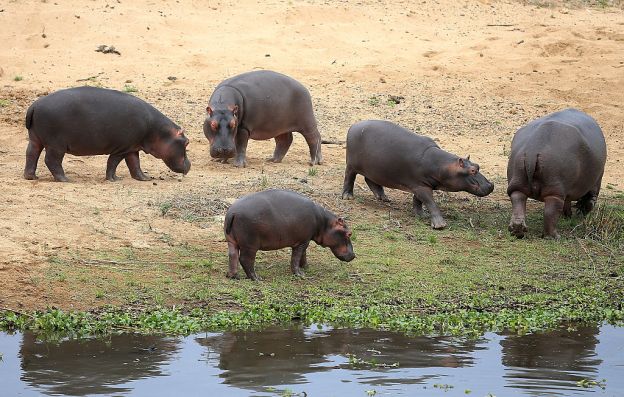
A dispute over the fate of hippos in Colombia has given rise to a federal court ruling in Ohio, United States that, for the first time in American law, recognizes animals as people. This should come as welcome news to the 100-plus hippos of Colombia’s Magdalena river. They are the offspring of four hippos smuggled into the country by Pablo Escobar, a drug lord. 

The surfeit of hippos has coated lakes with algae and could displace otters, manatees and endangered turtles. Hippos have begun wandering into villages, too—a potential peril for human persons. In 2020, Colombia’s government considered a cull, prompting a Colombian lawyer to take up the cause. The hippos, his lawsuit says, enjoy protection under Colombian law and must not be killed….

Judge Karen Litkovitz, the federal judge in Ohio (USA), does not get to decide the hippos’ fate. But on October 15, 2021 she agreed with the Animal Legal Defense Fund that the hippos are “interested persons” under a law permitting foreign litigants to gather evidence in America that may buttress their claims. Experts in non-surgical sterilization will be deposed for their insights on PZP, a contraceptive that could spare the hippos while dampening their growth.

America is not the first country to regard animals as legal persons. An Indian court cited the constitution in banning a bullfighting festival in 2014. A judge in Argentina ruled that Sandra, an orangutan, was a non-human person eligible for better environs than her concrete enclosure in a Buenos Aires zoo; she now luxuriates in a sanctuary in Florida. In 2020 a court in Islamabad, faced with cases involving stray dogs, an elephant and a bear, recognized the “right of each animal…to live in an environment that meets the latter’s behavioral, social and physiological needs”.

Judge Litkovitz’s decision is not couched in such sweeping terms. It remains to be seen whether other American courts take her cue in cases such as that of Happy, an elephant at the Bronx Zoo who has shown signs of self-awareness and misery. In 2022 New York’s highest court will consider whether the writ of habeas corpus—protection from unjust imprisonment—applies to Happy.

Excerpt from Animal rights: Pablo Escobar’s hippos lead a charge for animal rights, Economist, Oct. 30, 2021

A Shameless Love Affair with Nuclear Energy

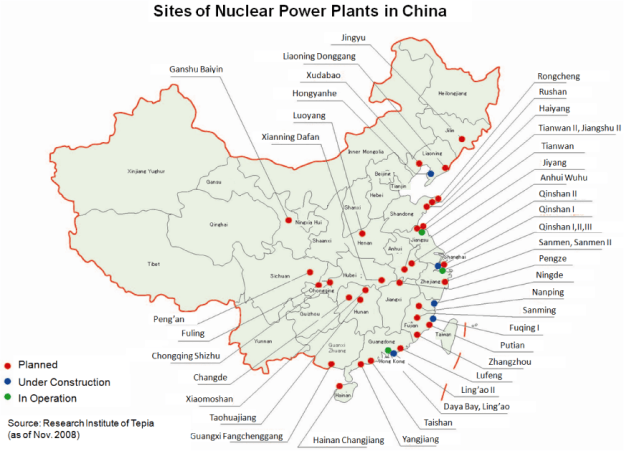
Nuclear power once seemed like the world’s best hope for a carbon-neutral future. After decades of cost-overruns, public protests and disasters elsewhere, China has emerged as the world’s last great believer, with plans to generate an eye-popping amount of nuclear energy, quickly and at relatively low cost. 

The world’s biggest emitter, China’s planning at least 150 new nuclear reactors in the next 15 years, more than the rest of the world has built in the past 35. The effort could cost as much as $440 billion; as early as the middle of this decade, the country will surpass the U.S. as the world’s largest generator of nuclear power… It could also support China’s goal to export its technology to the developing world and beyond, buoyed by an energy crunch that’s highlighted the fragility of other kinds of power sources. Slower winds and low rainfall have led to lower-than-expected supply from Europe’s dams and wind farms, worsening the crisis, and expensive coal and natural gas have led to power curbs at factories in China and India. Yet nuclear power plants have remained stalwart…

And yet, even if China can develop the world’s most cost-effective, safe, flexible nuclear reactors, the U.S., India and Europe are unlikely to welcome their biggest global adversary into their power supplies. CGN has been on a U.S. government blacklist since 2019 for allegedly stealing military technology. In July, the U.K. began looking for ways to exclude CGN from its Sizewell reactor development. Iain Duncan Smith, Tory Member of Parliament, put it bluntly: “Nuclear is critical to our electric power, and we just can’t trust the Chinese.”

China’s ultimate plan is to replace nearly all of its 2,990 coal-fired generators with clean energy by 2060. To make that a reality, wind and solar will become dominant in the nation’s energy mix. Nuclear power, which is more expensive but also more reliable, will be a close third…Other countries would have to stretch to afford even a fraction of China’s investments. But about 70% of the cost of Chinese reactors are covered by loans from state-backed banks, at far lower rates than other nations can secure…

The most eager customer of China is Pakistan which, like China, shares a sometimes violently contested border with India. China’s built five nuclear reactors there since 1993, including one that came online this year and another expected to be completed in 2022. Other countries have been more hesitant. Romania last year canceled a deal for two reactors with CGN and opted to work with the U.S. instead.

Still, versions of China’s first homegrown reactor design, known as Hualong One, continue to operate safely in Karachi and Fujian province. And in September, China announced a successful test of a new, modular reactor that could be enticing overseas. China Huaneng Group Co. said it had achieved sustained nuclear reactions in a domestically designed, 200-megawatt reactor that heats helium, not water. By making the cooling process independent of external power sources, it should prevent the potential for the kind of massive meltdown that required the evacuation of more than 150,000 people in Fukushima.  China’s modular reactors, if successful, wouldn’t require new power plant construction. In theory, they could replace coal-fired generators in existing thermal power plants…

Excerpts from Dan Murtaugh and Krystal Chia, China’s Climate Goals Hinge on a $440 Billion Nuclear Buildout, Bloomberg, Nov. 2, 2021

Mining to Death for Uranium: the Navajo

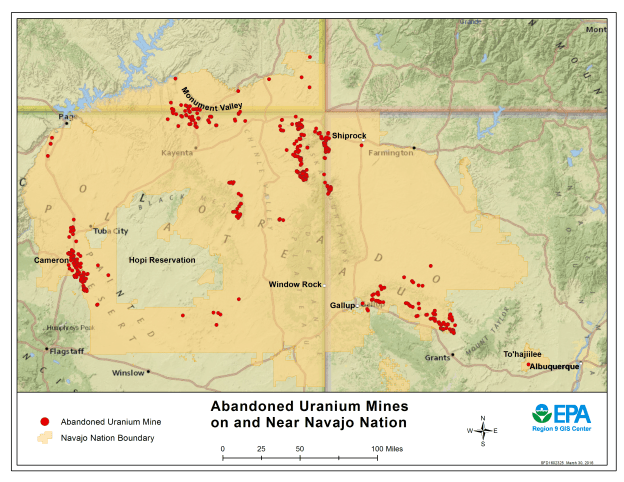
The Navajo people have petitioned the Inter-American Commission on Human Rights arguing that the U.S. government failed to protect the human rights of Indigenous communities when the Nuclear Regulatory Commission (NRC) licensed uranium mining on their territories.

The Eastern Navajo Diné Against Uranium Mining (ENDAUM)  petition states that when the NRC licensed Hydro Resources, Inc. (HRI) (now known as NuFuels) to operate uranium mining in the two Diné (Navajo) communities of Crownpoint and Churchrock it violated human rights guaranteed in the American Declaration of the Rights and Duties of Man, including the rights to life, health, benefits of culture, fair trial, and property.
According to the Navajo, the NRC licensed uranium mining  it knew would contaminate the groundwater that is an important resource of drinking water and cultural identity to communities that suffer increased risk of death and disease from historic uranium mining and milling the United States government not only tolerated but promoted.

The Inter-American Commission on Human Rights declared ENDAUM’s petition “admissible” in March 2021 and provided until October 21, 2021 for additional observations to be submitted. These additional observations were submitted in October, 2021. 

New Mexico Environmental Law Center, Press Release, Oct. 20, 2021

Case with annexes

A Breach Too Far: 413 PPM

The abundance of heat-trapping greenhouse gases in the atmosphere once again reached a new record in 2021, with the annual rate of increase above the 2011-2020 average. That trend has continued in 2021, according to the World Meteorological Organization (WMO) Greenhouse Gas Bulletin.

Concentration of carbon dioxide (CO2), the most important greenhouse gas, reached 413.2 parts per million in 2020 and is 149% of the pre-industrial level. Methane (CH4) is 262% and nitrous oxide (N2O)  is 123% of the levels in 1750 when human activities started disrupting Earth’s natural equilibrium.

Roughly half of the CO2 emitted by human activities today remains in the atmosphere. The other half is taken up by oceans and land ecosystems. The Bulletin flagged concern that the ability of land ecosystems and oceans to act as “sinks” may become less effective in future, thus reducing their ability to absorb carbon dioxide and act as a buffer against larger temperature increase…Such changes are already happening, for example, transition of the part of Amazonia from a carbon sink to a carbon source

The Bulletin shows that from 1990 to 2020, radiative forcing – the warming effect on our climate – by long-lived greenhouse gases increased by 47%, with CO2 accounting for about 80% of this increase…The amount of CO2 in the atmosphere breached the milestone of 400 parts per million in 2015. And just five years later, it exceeded 413 ppm. 

“Carbon dioxide remains in the atmosphere for centuries and in the ocean for even longer. The last time the Earth experienced a comparable concentration of CO2 was 3-5 million years ago, when the temperature was 2-3°C warmer and sea level was 10-20 meters higher than now. But there weren’t 7.8 billion people then,” said Prof. Taalas.

Excerpt from Greenhouse Gas Bulletin: Another Year Another Record, WMO, Oct. 25, 2021

How to Buy the Global Yes-Men

China will finance the construction of an outpost for a special forces unit of Tajikistan’s police near the Tajik-Afghan border. The post will be located in Tajikistan’s eastern Gorno-Badakhshan Autonomous Province in the Pamir mountains, which border China’s Xinjiang province as well as the northeastern Afghan province of Badakhshan. No Chinese troops will be stationed at the facility.

The plan to build the post comes amid tension between the Dushanbe government and Afghanistan’s new Taliban rulers. Tajik President Emomali Rakhmon has refused to recognise the Taliban government, calling for a broader representation of Afghanistan’s ethnic groups – of which Tajiks are the second-biggest. Kabul, in turn, has warned Dushanbe against meddling in its domestic affairs. According to Russian media, the Taliban have struck an alliance with an ethnic Tajik militant group based in northern Afghanistan which seeks to overthrow Tajikistan’s current government.

China is a major investor in Tajikistan and Beijing has also acted as a donor on several occasions, handing over, for example, a new parliament building free of charge.

Excerpts from China to build outpost for Tajikistan special forces near Afghan border, Reuters, Oct. 28, 2021