Monthly Archives: March 2026

Porn and Ads: How ChatGPT Plans for the Future

Sam Altman of OpenAI has expressed conflicted feelings about AI erotica (i.e., porn). When asked on a podcast in August 2025 if there were decisions he had made that were “best for the world, but not best for winning,” Altman replied: “We haven’t put a sex bot avatar in ChatGPT yet.” Altman indicated erotica would boost growth and revenue, but said it wouldn’t align with his company’s long-term incentive of serving users. “I’m proud of the company and how little we get distracted by that,” Altman said. “But sometimes we do get tempted.” But later in 2025, Altman posted that “We [OpenAI] “aren’t the elected moral police of the world,” “In the same way that society differentiates other appropriate boundaries (R-rated movies, for example) we want to do a similar thing here.”

Excerpt from Sam Schechner et al., OpenAI’s Bid to Allow X-Rated Talk Is Freaking Out Its Own Advisers, WSJ,  Mar. 15, 2026

On March 23, 205, it was announced that OpenAI has hired Meta Platform’s  advertising executive Dave Dugan to lead its global ad sales efforts, marking a further step in the company’s push to build out new revenue streams around its artificial intelligence products. Dugan brings experience working with large global brands at Meta, which generated nearly $200 billion in advertising revenue in 2025. (Yahoo Finance).

AI or Just Bots: the Truth about Artificial Intelligence

Americans are becoming increasingly convinced that artificial intelligence is actually thinking like humans do…This fuels narratives about a future in which AI takes over the economy, leading to heightened insecurity for all of us while providing cover for companies that might be laying off workers for other reasons. It leads us to accept as true answers that are frequently made up or incorrect, even when we are repeatedly told that chatbots can’t stop delivering this kind of misinformation…Our cognitive biases developed to help us survive in complex social environments… We have evolved to view linguistic fluency as a proxy for intelligence, and engagement and helpfulness as indicators of trustworthiness. Builders of AI tools lean in to this deliberately. The humanlike qualities of chatbots are a calculated effort by designers and engineers to make AI more useful, but also more compelling and stickier [i.e. addictive]—just like social media.

Microsoft AI chief Mustafa Suleyman… warned that today’s seemingly conscious AIs [consists of a bunch of] highly accelerated information processors. “These systems are not waking up,” he wrote. “They are retracing and mirroring the contours of human drama and debate, as documented in their vast training data.” He recommends a solution: “Developers must actively engineer the illusion of consciousness out of the products.”…

Humans have a tendency to anthropomorphize animals and even inanimate objects, says Ayanna Howard, dean of Ohio State University’s College of Engineering and a robotics….Humans’ trusting nature makes sense for social creatures who must cooperate with members of their own tribe to survive. With AI and robots, however, this same tendency leads us to trust any system that appears to listen, understand and want to help, a phenomenon Howard calls “over-trust.” Today’s AIs are engineered to actively induce us to over-trust them, she adds. They do this by behaving in ways that are friendly and helpful, mimicking us through memory and personalization.

Excerpt from Christopher Mims, Why Even Smart People Believe AI Is Really Thinking, WSJ, Mar. 20, 2026

Why the Iran War Feels Like Opening a Can of Worms

Iran has attacked dozens of vessels in the strait, often with small, unmanned boats carrying explosive charges or airborne drones. Other ships have been hit by projectiles, in the strait and in the Gulf of Oman and the Persian Gulf. Iran has began laying plans to allow select ships through, with Tehran’s Parliament considering a law to charge tolls. It raised the prospect that Iran could leverage its position and make deals with nations that need oil, gas and other commodities produced in the Persian Gulf region. “In practice, this creates a form of coerced interdependence: states that seek access to gulf energy may find themselves needing to accommodate Iran, whether directly or indirectly,” said Danny Citrinowicz, a national-security fellow at the Atlantic Council…

The extent to which Iran has seeded naval mines in the strait couldn’t be determined. It has a large array of different mines, including versions that can be anchored to the sea floor and detonated by remote control when a ship passes… Only 24 miles wide at its narrowest point, the Strait of Hormuz is such a confined space that cruise missiles can be fired from hundreds of miles away and still hit ships moving through it…

Houthi militants in Yemen, who are aligned with Iran, waged a two-month campaign in 2025 with missiles, drones and unmanned boats against international shipping that parallels Iran’s closure of the strait. The U.S. struck more than 1,000 targets in Yemen, but never succeeded in halting Houthi attacks fully until the two sides declared a truce in May 2025.

Excerpt from  David S. Cloud et al.,, U.S. War Planes and Helicopters Kick Off Battle to Reopen Hormuz, WSJ, Mar. 19, 2026


,

Oilmen. Is There Anything They Can’t Do?

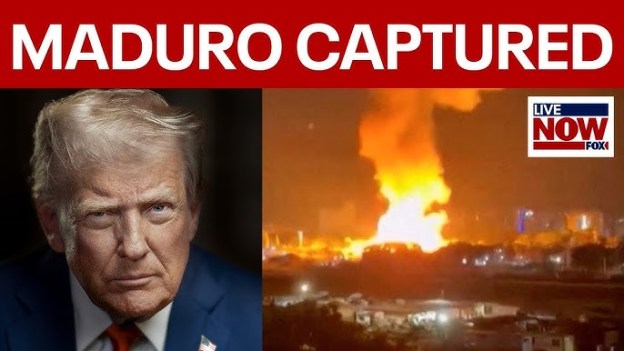
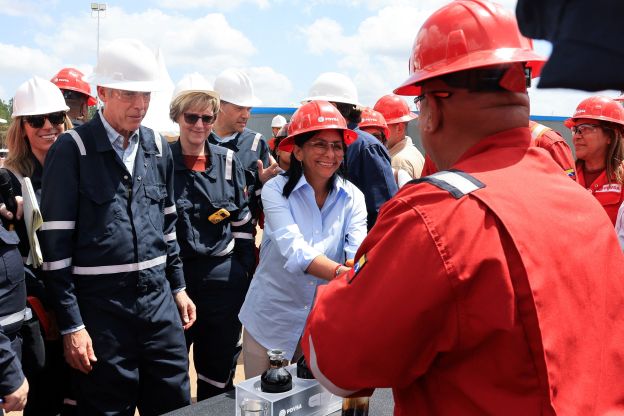
In the months before President Trump moved to capture Venezuelan President Nicolás Maduro in January 2026, the Central Intelligence Agency (CIA) turned to an old friend for advice on who should replace the autocratic leftist.  Former Chevron executive Ali Moshiri told the agency that if the U.S. government tried to oust the entire Maduro regime and install the democratic opposition led by María Corina Machado it would have another quagmire like Iraq on its hands, according to people familiar with the matter. She didn’t have the support of the country’s security services or control of its oil infrastructure, Moshiri argued. His recommendation: Stick for now with another autocratic leftist, Maduro’s longtime deputy and economic manager Delcy Rodríguez. The option was later presented to Trump in a secret CIA assessment.  Moshiri’s hidden hand in Washington spycraft, by the WSJ in March 2026, offers a window into how Trump embraced the energy industry’s unsentimental playbook for dealing with autocratic regimes. And it marks a dramatic turnaround for Chevron’s prospects in Venezuela, where the company’s decision to stay invested during decades of political upheaval now leaves it with a strategic advantage as the oil begins to gush again

Excerpt from Joel Schectman et al., He Was Chevron’s Man in Venezuela—and a CIA Informant, WSJ, Mar. 15, 2026

The Price of Political Obedience: the Yes Men are not Revolting Yet

Co-founder Dario Amodei has made safety and social responsibility central to Anthropic’s approach to AI. Usage restrictions governing its contract with the Pentagon stipulate that its AI cannot be used for domestic mass surveillance or fully autonomous weapons. The Pentagon, which objects to outside limits on what its troops can do, wants unrestricted access for all lawful purposes… If Anthropic was too inflexible, the Pentagon could have simply terminated the contract. But Defense Secretary Pete Hegseth went further, declaring on X that “no contractor, supplier, or partner that does business with the United States military may conduct any commercial activity with Anthropic.” Such declaration, according to commentators, amounted to “corporate murder”, The “message sent to every investor and corporation in America: do business on our terms, or we will end your business.”

Excerpt from Greg Ip, Anthropic’s Pentagon Battle Matters to Every Business, WSJ, Mar. 13, 2026

Impossible to Eliminate: Frogmen, Mines and Dinghies in the 2026 Iran War

U.S. officials said on March 11, 2026 that Iran had laid mines in the Strait of Hormuz, the narrow waterway that carries 20% of the world’s oil exports from the Persian Gulf to the rest of the world… A U.S. military website describes one class of Iranian mine, the Maham 1, as a circular piece of 1980s-era equipment designed to float in water as shallow as one meter that is equipped with five horns that when struck can detonate up to 120 kilograms—equivalent to 264 pounds—of explosives. The mines are moored on a chain or anchored to the seabed.

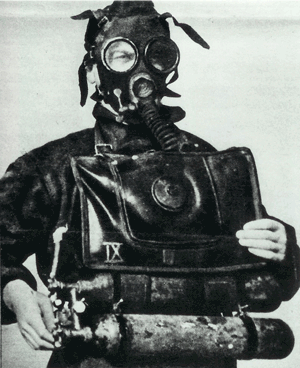
The U.S. military said it has destroyed Iranian naval vessels designed for setting mines…Yet Iran primarily sets mines using frogmen on small boats that resemble ordinary fishing vessels, an informal maritime militia of dinghies that is virtually impossible to identify and eliminate.  Iran also has an arsenal of limpet mines that divers can attach to the hulls of ships magnetically or with a nail gun.

Excerpt from James T. Areddy et al., Iran’s Sea Mines Are One of Its Most Powerful Weapons, WSJ, Mar. 11, 2026


The Mystique of Mexican Drug Cartels

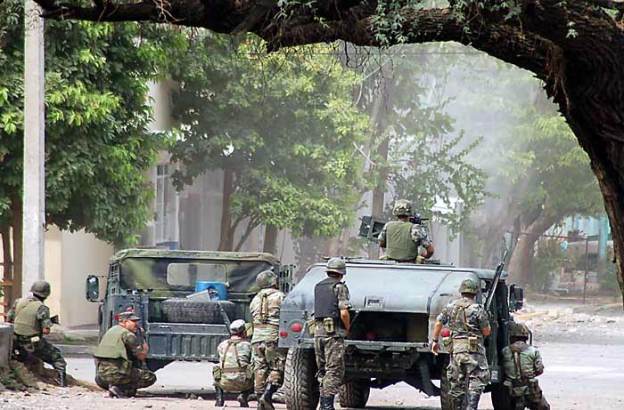
Homicides in Latin America are driven by violent cartels. The impact of Mexican cartels is especially far reaching because they prey upon undocumented migrants along the US-Mexico border, violate human rights, and weaken political and economic institutions. However, cartels remain mysterious despite being a major employer. Because understanding how Mexican cartels function is essential to attenuating their power, Prieto-Curiel et al. conducted a sophisticated analysis that estimated their population size and examined factors driving cartel growth and shrinkage. Factors included “recruitment” (new cartel members join), “incapacitation” (police incarcerate or arrest members), “conflict” (cartels fight other cartels), and “saturation” (members leave). Findings suggest that reducing “recruitment” instead of increasing “incapacitation” is a much more effective policy to decrease violence. This is because cartels are one of the biggest employers in Mexico. Recruiting between 350 and 370 people per week is essential to avoid their collapse because of aggregate losses. 

Summary of Rafael Prieto-Curiel  et al., Reducing cartel recruitment is the only way to lower violence in Mexico, Science, Sept. 21, 2023

Free Trade is Dead: Protect, Protect, Protect…

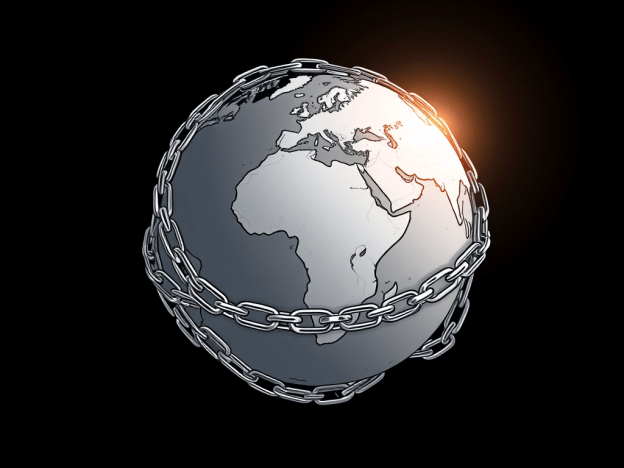
There were three times the number of discriminatory trade policies—including tariffs, export controls and sanctions—introduced from 2020 through 2025 than in the preceding five years. The world’s shift to protectionism likely stems “from a succession of shocks,” starting with the pandemic-related disruptions of 2020, followed by China’s power-market shortage in 2021* and then the food and energy market crises in 2022 after Russia invaded Ukraine.

As a result, countries have become much more focused on resource security. India, for example, stocked up on rice inventories after the 2022-23 global food crisis. China, which typically consumes about 14 million tons of copper a year, has been buying 1 million to 2 million tons more than its economy needs…The country has also been building up its oil reserves. Earlier this month, the U.S. unveiled a $12 billion critical-minerals stockpile.

Excerpt from Jinjoo Lee, Global Markets No More: Trade Barriers Mess With Commodities From Metals to Oil, WSJ, Feb. 21, 2026

  • In late 2021, China experienced a severe electricity supply crisis that affected 20 provinces. Industrial activity was curtailed, and even households suffered prolonged outages in some areas.

Can it Be An Earthquake? Covering Up Nuclear Weapon Testing

In the afternoon on 22 June 2020, a seismic station in eastern Kazakhstan registered two small earthquakes 12 seconds 
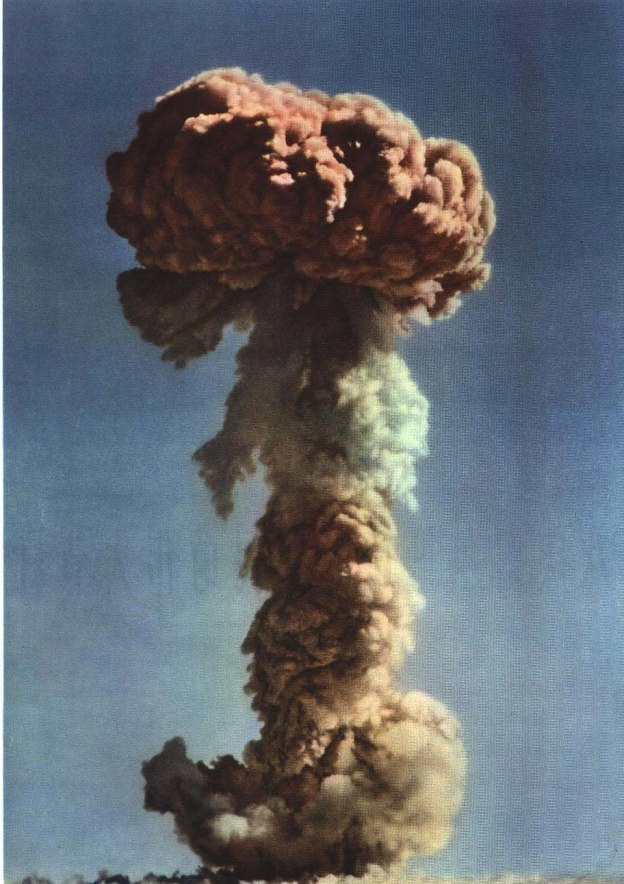
apart near China’s Lop Nur nuclear test site. Closely spaced jolts can arise from underground explosions followed by a cavity collapse, or simply from earthquakes. U.S. officials in February 2026 asserted the shaking was from a clandestine nuclear detonation—an accusation that could sound the starting gun for a new global arms race…. Low-yield tests would help China refine weapons designs and probe plutonium properties as it expands from a stockpile of about 600 nuclear weapons to what the Pentagon projects will be roughly 1000 by 2030.

Such tests contravene the Comprehensive Nuclear-Test-Ban Treaty (CTBT), which has not entered into force since the major nuclear powers, such as China and the United States, have not ratified it and Russia rescinded ratification in 2023. Renewed testing would also underscore the limitations of the CTBT and its International Monitoring System (IMS), a global network of instruments that can spot blatant treaty violations but is not equipped to distinguish low-yield tests from earthquakes or nonnuclear blasts.

Incentives for nuclear testing are strong. The U.S. is developing a new submarine-launched warhead, Russia is deploying hypersonic missiles nearly impossible to intercept, and China is ramping up its arsenal. All three powers need to ensure the reliability of new or existing warheads, and they may calculate that insights gleaned from low-yield tests outweigh the risks of adversaries following suit. Heightening concerns is the lapse this month of the New Strategic Arms Reduction Treaty (New START), which capped U.S. and Russian deployed nuclear warheads at 1550 each.

In 2025, satellite images circulated of what appears to be a new laser fusion complex in Sichuan province akin to the U.S. National Ignition Facility, which weapons scientists use to simulate the intense temperatures and pressures of a thermonuclear explosion. Other imagery has spotted the excavation of three tunnels and 30-meter-tall rigs for drilling shafts at Lop Nur. Renny Babiarz, a geospatial analyst with AllSource Analysis, believes two shafts dug in the past few years are “most likely” for yield-producing nuclear tests.

Excerpt from Richard Stone, Allegations of a Chinese nuclear blast may reignite weapons testing, Science, Feb. 24, 20

How the Houthis Blindsided the U.S. Forces

Even less-sophisticated adversaries can pose a serious threat to U.S. forces. And fatigue among overworked soldiers, sailors, aircrews and Marines can lead to costly mistakes. Trump launched Operation Rough Rider in March 2025 threatening the Houthis would be “annihilated” if they didn’t halt attacks on shipping in the vital Red Sea trade route. He poured forces into the region including two aircraft carriers, half a dozen B-2 bombers, a squadron of advanced F-35 fighters, and destroyers armed with guided missiles.

The Houthis proved resilient. In addition to nearly shooting down the two F-16s, they knocked more than a half-dozen Reaper drones out of the sky. A missile attack on the USS Harry S. Truman in April 2025 forced the carrier to make a hard turn that sent an F/A-18 rolling into the Red Sea. Another plane slid off the deck in May 2025 when its landing cable snapped, because sailors exhausted by weeks of combat likely left off a washer that held it in place.

The U.S. force had a huge edge over the Houthis. Part of that was the “Wild Weasels,” the name for F-16 units…charged with suppressing enemy air defenses. They were equipped with HARM missiles that lock on to the signal from enemy radars to knock them out…But the Houthis had developed a network to track American warplanes with observers, optics and infrared sensors whose intricacy U.S. officials didn’t entirely understand. That enabled them to flick on their air-defense radars at the last moment, so U.S. pilots would have little time to react—a tactic pilots came to call a “SAMbush.”…

The Pentagon touted the accomplishments of its 53-day fight against the Houthis. The U.S. had hit more than 1,000 targets…but never decapitated the top Houthi leadership. The US operation didn’t defeat the Houthis or degrade them to the point where they are unable to carry out future attacks in the Red Sea.

Excerpt from Michael Gordon et al., F-16 Pilot’s Narrow Escape in Missile Attack Shows Risks of a New Mideast War, WSJ, Feb. 26, 2026

If You Play with Fire, You ‘Il Get Burnt: Lessons from Anthropic

Anthropic’s artificial-intelligence tool Claude was used in the U.S. military’s operation to capture former Venezuelan President Nicolás Maduro on January 3, 2026, highlighting how AI models are gaining traction in the Pentagon. The mission to capture Maduro and his wife included bombing several sites in Caracas in January 2026. Anthropic’s usage guidelines prohibit Claude from being used to facilitate violence, develop weapons or conduct surveillance. The deployment of Claude occurred through Anthropic’s partnership with data company Palantir, whose tools are commonly used by the Defense Department and federal law enforcement

Excerpt from Pentagon Used Anthropic’s Claude in Maduro Venezuela Raid, WSJ, Feb. 15, 2025

See also Trump orders government to stop using Anthropic in battle over AI use, WSJ Feb. 27, 2026