Monthly Archives: January 2022

The Secret Nuclear Weapons Capabilities of States

South Korea, like the United States, has long relied on nuclear power as a major source of electric power. As a result, it has amassed large stores of spent nuclear fuel and, as in the United States, has experienced political pushback from populations around proposed central sites for the spent fuel.

South Korea also has a history of interest in nuclear weapons to deter North Korean attack. South Korea’s interest in spent fuel disposal and in a nuclear-weapon option account for the Korea Atomic Energy Research Institute’s dogged interest in the separation of plutonium from its spent fuel. Plutonium separated from spent fuel can be used to make nuclear weapons.

Two US Energy Department nuclear laboratories, Argonne National Laboratory  and the Idaho National Laboratory have encouraged South Korea’s interest in plutonium separation because of their own interests in the process. Now, a secret, leaked, joint South Korean-US report shows deliberate blindness to the economic and proliferation concerns associated with plutonium separation and lays the basis for policies that would put South Korea on the threshold of being a nuclear-weapon state. 

Japan is the only non-nuclear-armed state that separates plutonium. The Korea Atomic Energy Research Institute has domestic political support, however, for its demand that South Korea have the same right to separate plutonium as Japan. 

In 2001 Argonne and Idaho National Laboratories (INL) persuaded an energy-policy task force led by then-Vice President Dick Cheney that pyroprocessing is “proliferation resistant” because the extracted plutonium is impure and unsuitable for nuclear weapons. On that basis, Argonne and INL were allowed to launch a collaboration on pyroprocessing research and development with Korea. The Korea Atomic Energy Research Institute was enthusiastic. It had been blocked from pursuing reprocessing R&D since it had been discovered in 1974 that the institute was part of a nuclear-weapon program.

At the end of the Bush administration, however, nonproliferation experts from six US national laboratories, including Argonne and INL, concluded that pyroprocessing is not significantly more proliferation resistant than conventional reprocessing because it would be relatively easy to remove the weakly radioactive impurities from the plutonium separated by pyroprocessing. The finding that pyroprocessing is not proliferation resistant precipitated a struggle between the Obama administration and South Korea’s government during their negotiations for a new US-Republic of Korea Agreement of Cooperation on the Peaceful Uses of Nuclear Energy. The new agreement was required to replace the existing agreement, which was due to expire in 2014. But the negotiations stalemated when South Korea demanded the same right to reprocess the Reagan administration had granted Japan in 1987. 

At the beginning of September 2021, INL and the Korea Atomic Energy Research Institute submitted a 10-year report on their joint fuel cycle study. Instead of making a policy recommendation on the future of pyroprocessing, however, the Korea-US Joint Nuclear Fuel Cycle Research Steering Committee decided to continue the joint research. A senior US official with knowledge of the situation, told that “at least three or four more years will be necessary for the two governments to be in a position to draw any actual conclusions related to the technical and economic feasibility and nonproliferation acceptability of pyroprocessing on the Korean Peninsula.”

Excerpts from  Frank N. von Hippel, Jungmin Kang, Why joint US-South Korean research on plutonium separation raises nuclear proliferation danger, January 13, 2022

Are We Transgressing the Planetary Boundaries?

There are an estimated 350,000 different types of manufactured chemicals on the global market. These include plastics, pesticides, industrial chemicals, chemicals in consumer products, antibiotics and other pharmaceuticals….The rate at which these pollutants are appearing in the environment far exceeds the capacity of governments to assess global and regional risks, let alone control any potential problems..

In 2009, an international team of researchers identified nine planetary boundaries that demarcate the remarkably stable state Earth has remained within for 10,000 years – since the dawn of civilization. These boundaries include greenhouse gas emissions, the ozone layer, forests, freshwater and biodiversity. The researchers quantified the boundaries that influence Earth’s stability, and concluded in 2015 that four boundaries have been breached. But the boundary for chemicals was one of two boundaries that remained unquantified.

This new research takes this a step further. The researchers say there are many ways that chemicals and plastics have negative effects on planetary health, from mining, fracking and drilling to extract raw materials to production and waste management.

Some of these pollutants can be found globally, from the Arctic to Antarctica, and can be extremely persistent…Global production and consumption of novel entities is set to continue to grow. The total mass of plastics on the planet is now over twice the mass of all living mammals, and roughly 80% of all plastics ever produced remain in the environment. Plastics contain over 10,000 other chemicals, so their environmental degradation creates new combinations of materials – and unprecedented environmental hazards. Production of plastics is set to increase and predictions indicate that the release of plastic pollution to the environment will rise too, despite huge efforts in many countries to reduce waste.

Excerpt from Safe planetary boundary for pollutants, including plastics, exceeded, say researchers, Stockholm Resilience Center Press Release, Jan. 18, 2022

For an alternative view on planetary boundaries see NY Times Article, 2015

Who Owns the Real Information System

In January 2022, the head of the UK’s armed forces has warned that Russia submarine activity is threatening underwater cables that are crucial to communication systems around the world. Admiral Sir Tony Radakin said undersea cables that transmit internet data are ‘the world’s real information system,’ and added that any attempt to damage then could be considered an act of war.

The internet seems like a post- physical environment where things like viral posts, virtual goods and metaverse concerts just sort of happen. But creating that illusion requires a truly gargantuan—and quickly-growing—web of physical connections. Fiber-optic cable, which carries 95% of the world’s international internet traffic, links up pretty much all of the world’s data centers…

Where those fiber-optic connections link up countries across the oceans, they consist almost entirely of cables running underwater—some 1.3 million kilometers (or more than 800,000 miles) of bundled glass threads that make up the actual, physical international internet. And until recently, the overwhelming majority of the undersea fiber-optic cable being installed was controlled and used by telecommunications companies and governments. Today, that’s no longer the case.

In less than a decade, four tech giants— Microsoft, Google parent Alphabet, Meta (formerly Facebook ) and Amazon —have become by far the dominant users of undersea-cable capacity. Before 2012, the share of the world’s undersea fiber-optic capacity being used by those companies was less than 10%. Today, that figure is about 66%.  In the next three years, they are on track to become primary financiers and owners of the web of undersea internet cables connecting the richest and most bandwidth-hungry countries on the shores of both the Atlantic and the Pacific.

By 2024, the four are projected to collectively have an ownership stake in more than 30 long-distance undersea cables, each up to thousands of miles long, connecting every continent on the globe save Antarctica. In 2010, these companies had an ownership stake in only one such cable—the Unity cable partly owned by Google, connecting Japan and the U.S. Traditional telecom companies have responded with suspicion and even hostility to tech companies’ increasingly rapacious demand for the world’s bandwidth. Industry analysts have raised concerns about whether we want the world’s most powerful providers of internet services and marketplaces to also own the infrastructure on which they are all delivered. This concern is understandable. Imagine if Amazon owned the roads on which it delivers packages.

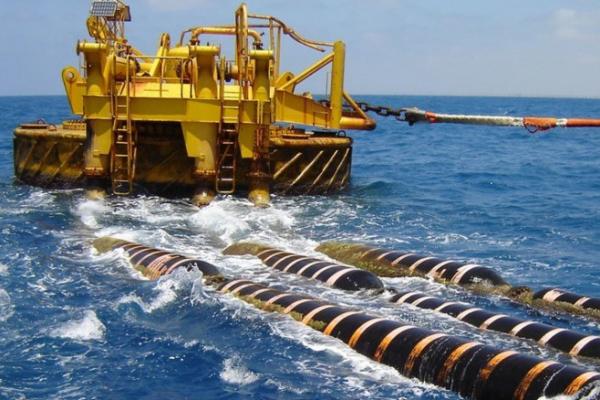
But the involvement of these companies in the cable-laying industry also has driven down the cost of transmitting data across oceans for everyone, even their competitors….Undersea cables can cost hundreds of millions of dollars each. Installing and maintaining them requires a small fleet of ships, from surveying vessels to specialized cable-laying ships that deploy all manner of rugged undersea technology to bury cables beneath the seabed. At times they must lay the relatively fragile cable—at some points as thin as a garden hose—at depths of up to 4 miles.

All of this must be done while maintaining the right amount of tension in the cables, and avoiding hazards as varied as undersea mountains, oil-and-gas pipelines, high-voltage transmission lines for offshore wind farms, and even shipwrecks and unexploded bombs…In the past, trans-oceanic cable-laying often required the resources of governments and their national telecom companies. That’s all but pocket change to today’s tech titans. Combined, Microsoft, Alphabet, Meta and Amazon poured more than $90 billion into capital expenditures in 2020 alone…

Most of these Big Tech-funded cables are collaborations among rivals. The Marea cable, for example, which stretches approximately 4,100 miles between Virginia Beach in the U.S. and Bilbao, Spain, was completed in 2017 and is partly owned by Microsoft, Meta and Telxius, a subsidiary of Telefónica, the Spanish telecom.  Sharing bandwidth among competitors helps ensure that each company has capacity on more cables, redundancy that is essential for keeping the world’s internet humming when a cable is severed or damaged. That happens around 200 times a year, according to the International Cable Protection Committee, a nonprofit group. 

There is an exception to big tech companies collaborating with rivals on the underwater infrastructure of the internet. Google, alone among big tech companies, is already the sole owner of three different undersea cables

Excerpts from Christopher Mims, Google, Amazon, Meta and Microsoft Weave a Fiber-Optic Web of Power, WSJ, Jan. 15, 2022

The Curious Case of Larry Fink, BlackRock: He Stays, They Go

Few private citizens wield more power in America today than Larry Fink, the chief executive of BlackRock in pushing companies to embrace climate-friendly policies, that has made him a lightning rod. The firm he runs manages some $10 trillion for pension funds, endowments, governments, companies and individuals, equal to more than 10% of the world’s gross domestic product in 2020. As steward for millions of investors, BlackRock wields vast shareholder voting power, which it uses either to back managements or to prod them in new directions.

Today, Mr. Fink is telling CEOs that companies must prepare for a scale back of fossil fuels, and that the private sector should work with governments to do so. He warns of the disruption climate change could cause both the economy and financial markets, but sees historic investment opportunity in the energy shift. It’s a point he has made to conferences in Davos, Venice, Riyadh and Glasgow over the past year. Mr. Fink’s power, combined with his advocacy on a hot-button issue, has made him a flashpoint for activists, politicians and unions, both those who think BlackRock isn’t doing enough and others who say it’s doing too much…

U.S. government officials have called on Mr. Fink to help them cope with crises—the pandemic-rattled financial markets in March 2020, and, during the 2008 financial meltdown. “Treasury Secretaries and finance ministers come and go,” said David Rubenstein, the co-founder of the private-equity firm Carlyle Group Inc. “They work for someone else who can fire them tomorrow and have to build what others want them to. When you are the CEO of the biggest asset manager, you don’t have to do that.”

Excerpts from Dawn Lim Follow, Larry Fink Wants to Save the World (and Make Money Doing It), Jan. 6, 2022

After We Vacuum the Earth, We Vacuum the Moon

Chinese nuclear scientists are studying samples carried back by China’s mission to the the moon in 2019. One of those under the microscope at the Beijing Research Institute of Uranium Geology is a 50-milligram rock—approximately the size of a lentil—believed to contain an isotope called helium-3. The isotope… is thought by scientists to have the potential to one day provide safer nuclear energy in a fusion reactor, as it isn’t radioactive. Rare on earth, helium-3 is thought to be abundant on the moon.

While researchers in the U.S. and other nations have studied the isotope, China’s renewed pursuit is part of a decadeslong plan to establish itself as a leading space power, mirroring the country’s rising economic and strategic influence on Earth. Since being shut out of working with the U.S. space agency by law a decade ago, the country has invested heavily in its own program. China is still playing catch-up technologically but is seeking to gain an edge through its moon missions…

China now building the Silk Road to space,” said James Head, a professor of geological sciences at Brown University who has lectured at universities across China in the past few years. 

The theory that the moon might have abundant reserves of helium-3 goes back several decades. In 1986, scientists at the University of Wisconsin estimated that lunar soil could contain a million tons of the isotope, also known as He3. A byproduct of the sun’s intense heat, it is carried through the solar system by solar winds…

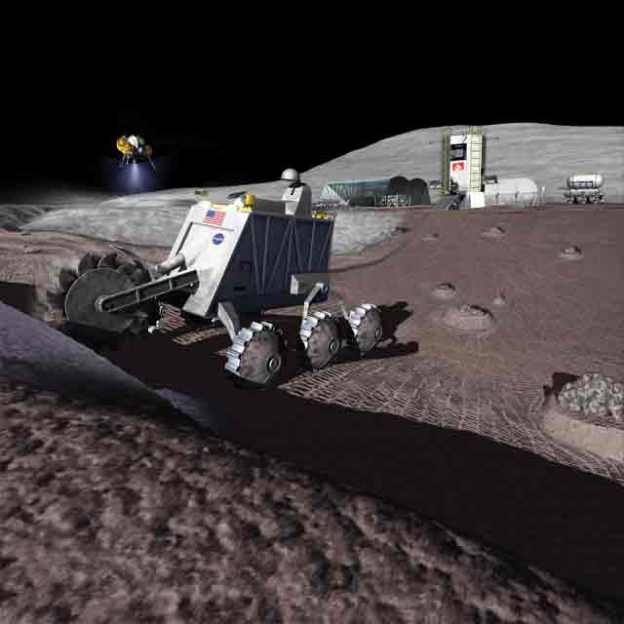
In the future, there could be machines that vacuum up the top layer of the moon’s surface, which could then be used to address Earth’s energy needs or to power moon bases for future missions…

Excerpts from Natasha Khan, Moon Dust Fuels China’s Pursuit of Space Power, WSJ, Dec. 14, 2021

How to Microwave People

An international studies professor in Beijing has claimed China used microwave weapons against Indian soldiers during a standoff along the disputed Himalayan border. Jin Canrong, professor of international relations at Renmin University, told his students Chinese forces forced the Indian soldiers to retreat by turning “the mountain tops into a microwave oven”, according to The Times. Microwave weapons work much the same as regular microwaves. The device heats the water in the human target’s skin, causing immense pain and nausea. The weapon is meant to incapacitate enemies through severe pain but isn’t meant to cause lasting damage. Professor Jin claimed the weapon worked “beautifully” on the Indian soldiers, without violating the “no gunfire” agreement between the parties.

“In 15 minutes, those occupying the hilltops all began to vomit,”reportedly told his students during a lecture. “They couldn’t stand up, so they fled. This was how we retook the ground.” Professor Jin said the reason China didn’t publicize the event was because it was so successful, adding that India also kept the incident under wraps because “they lost so miserably”..

Similar microwave technology aimed at incapacitating but not killing targets have been developed by other militaries. The US used the same technology to develop the Active Denial System, which was designed to be used for area denial, perimeter security and crowd control…Recently, Russia was accused of using its own secret microwave weapon to attack two CIA agents in Australia. It comes after American officials in Cuba fell in with what was dubbed “Havana Syndrome”, with victims often hearing strange sounds, before becoming dizzy, suffering headaches, experiencing memory loss and hearing loss.

Excerpts from Ally Foster,  China allegedly used a secret ‘microwave weapon’ on enemy troops, news.com.au, Nov. 19, 2021

Another Wave of Colonization? Africa

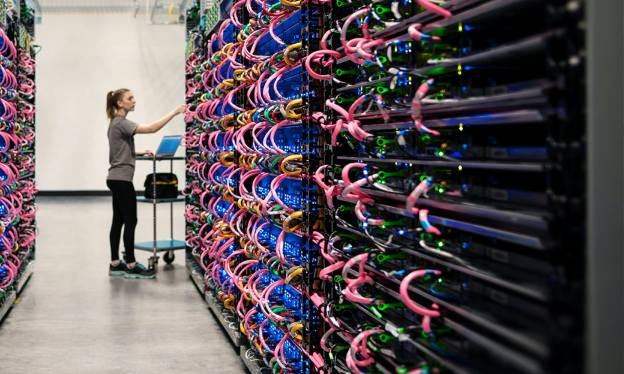
Most of Africa’s data are currently stored elsewhere, zipping down undersea cables that often make landfall in the French city of Marseille….An upheaval is overdue. Africa has more internet users than America, but only as much data-center space as Switzerland.  The boom is partly driven by regulation. Two dozen African countries have passed data-protection laws, or are planning to do so. They often require certain data, such as personal information, to be kept in the country. Another boost comes from competition, says Jan Hnizdo of Teraco, a leading data center in South Africa, where liberalization of the telecoms industry created space for such firms to flourish.

Capital is pouring in. Teraco is building Africa’s largest stand-alone data center in Johannesburg, with backing from foreign funds. Actis, a private-equity firm, is putting $250m into the industry, starting with a majority stake in a Nigerian company, Rack Centre. American investors founded Raxio with an eye on less fashionable markets, from Uganda to Mozambique.

Data centers need power, and lots of it. Keeping their equipment cool consumes almost as much energy as running it, which is why centers are usually in chilly places such as Scandinavia or America’s Pacific north-west. Most of Africa is hot and has a lot of power cuts…To keep servers running, many centers use polluting and expensive diesel generators. Yet the potential gains from offering better connectivity and faster internet services in Africa outweigh the difficulties. Microsoft and Amazon are bringing their cloud services to the region, and have opened data centres of their own in South Africa. Huawei has helped build one for the government of Senegal. Google and Facebook are both involved in projects to lay new cables around Africa’s coasts

Excerpts from Seeding the cloud: Data centers are Taking root in Africa, Economist, Dec. 4, 2021

Lunatics or Climate Fixers?

The ocean has already absorbed nearly one-third of the carbon emissions from human activities, and scientists hope it can shoulder even more of the burden. Ocean Iron fertilization is among the cheapest options. Ocean fertilization is a form of geoengineering  that involves adding iron to the upper layers of the ocean to stimulate phytoplankton activity  in an attempt to remove carbon from the atmosphere and, thus, abate global warming.

Photosynthetic plankton act like tropical rainforests, sucking CO2 from the atmosphere. Their populations are often limited by a scarcity of iron, which sifts into the ocean in windblown dust from deserts, in volcanic ash, and even from underwater hydrothermal vents. Extra iron would stimulate a bloom, the thinking goes, causing plankton to take up extra carbon. The carbon would sink into the depths in the form of dead plankton, or the feces or bodies of organisms that eat them. In theory, the carbon would be entombed for centuries.

Ocean scientists contended in 2021 that ocean fertilization  experiments were a priority and called for the United States to spend up to $290 million on even larger ones that would spread 100 tons of iron across 1000 square kilometers of ocean. Already, researchers next year plan to pour iron across a patch of the Arabian Sea (Center for Climate Repair at the University of Cambridge.)

But skeptics note that a recent survey of 13 past fertilization experiments found only one that increased carbon levels deep in the ocean. That track record is one reason why making iron fertilization a research priority is “barking mad,” says Wil Burns, an ocean law expert at Northwestern University. Stephanie Henson, a marine biogeochemist at the United Kingdom’s National Oceanography Centre, also worries about surprise consequences of the approach, likening it to the catastrophic introduction of rabbits to Australia ecology. “You could just imagine something like that happening in the oceans completely by accident.”

Excerpts from Warren Cornwall, To Draw Carbon, Ocean Fertilization Gets Another Look, Science, Dec. 17, 2021

The Other Middle East Crisis: Rivers are Drying

Protests in the Iranian city of Isfahan erupted in November 2021 due to a severe shortage of water, as the region continues to suffer from a year of low rainfall and drought. Thousands of farmers and others who supported them took to the streets in Isfahan in central Iran, expressing their dissatisfaction at the water shortages and urging the government to solve the crisis. They shouted “let Isfahan breathe again, revive Zayandeh Rud,” referring to the dried river which supplies their crops with water.

The drying up of the Zayandeh Rud river has not only been caused by drought, however, but also by the government’s diversion of water from the river to supply other areas and with a pipeline supplying water to Yazd province also having been damaged. Those incidences have contributed to the farms being left dry and the famers’ livelihoods being threatened.

The water shortages and the drying of the river come at a time when the region is suffering from a similar shortage, as rainfall has been low and temperatures have increased to make it one of the hottest and driest years recorded. ..Neighboring Iraq and Syria have also been expressed concern over the shortage of water this year… In November 201, a major reservoir in Syria also dried up completely, and was similarly due to a combination of climatic and structural causes.

Excerpts from Protests over water shortages erupt in Iran, as river dries up, Middle East Monitor, Nov. 21, 2021

The Space Internet: Space Bacon-DARPA

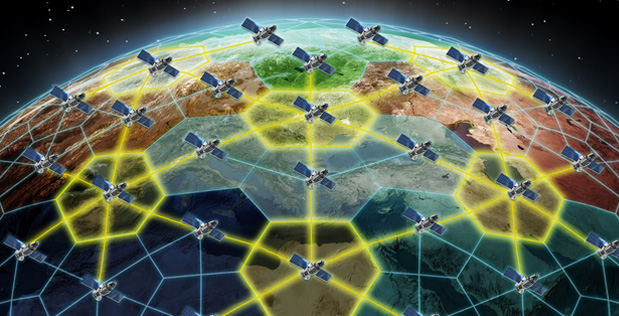
DARPA’s  Space-Based Adaptive Communications Node (Space-BACN) would allow seamless communication between various constellations of satellites that currently cannot talk to each other.

“There could be tens of thousands of small satellites launched into Low Earth Orbit over the next decade as the demand around the world for affordable space-based capabilities grows,” said Greg Kuperman, Space-BACN program manager in DARPA’s Strategic Technology Office. “The problem with this growth is that optical communications links are currently engineered to only connect satellites within a given constellation – they can’t dynamically adapt waveforms to communicate with satellites in other constellations. This lack of standardization results in a fragmented, stove-piped ‘Wild West’ space domain with new satellite constellations that can’t interoperate, government satellites that can’t communicate between one another, and government satellites unable to take advantage of emerging commercial communications capabilities.”

Space-BACN envisions an adaptable communications terminal that could be reconfigured on-orbit to talk across different standards, presenting a leap in technology from the current state of the art. Space-BACN will involve inter alia a novel cross-constellation command and control approach to automate interactions between government and commercial satellites

Space-BACN has significant military and civilian uses.

Excerpts from Adaptable Optical Communications to Facilitate Future Low-Earth Orbit Networks

See also DARPA solicitation Nov. 2021a

Companies and institutions that are working on this are: Analog Photonics, Arizona State University; CACI; II-VI Aerospace & Defense; Intel Federal; L3 Harris and Northrop Grumman.

Genocide in the Empire of Mark Zuckerberg

Facebook failed to quickly stop the spread of hate speech and misinformation against the Rohingya people, in turn contributing to the persecution and alleged genocide of the minority community in Myanmar, according to a lawsuit filed in December 2021 in a California court that asks for more than $150 billion in compensation.
 
The class-action lawsuit against Meta, Facebook’s parent company, was brought by a Rohingya woman in Illinois on behalf of the 10,000-plus Rohingya refugees who have resettled in the United States since 2012. It alleges that Facebook’s algorithm amplified hate speech and that the company neglected to remove inflammatory content despite repeated warnings that such posts could foment ethnic violence.
A similar complaint against the tech giant is expected to be filed in a British court.

Myanmar’s military launched a “scorched-earth campaign” in 2017 to push Rohingya residents, who are mostly Muslim, out of Rakhine state. Some 750,000 Muslim men, women and children were driven out in a campaign of rape, murder and razed villages that a top United Nations official called a “textbook example of ethnic cleansing.” That year, Doctors Without Borders estimated that at least 6,700 Rohingya people had been killed as a result of the attacks. Around the same time, influential figures such as nationalist monks and top government officials posted or recirculated slurs against the Rohingya, while spreading falsehoods and doctored images that suggested some Rohingya burned their own villages and then blamed it on Myanmar security forces. Myanmar has denied the genocide accusations and has justified some actions on counterterrorism grounds.
 
In 2018, a U.N. report connected Facebook to the atrocities against the Rohingya people. According to the report:

“Facebook has been a useful instrument for those seeking to spread hate, in a context where, for most users, Facebook is the Internet. Although improved in recent months, the response of Facebook has been slow and ineffective. The extent to which Facebook posts and messages have led to real-world discrimination and violence must be independently and thoroughly examined.” 

After the publication of the UN Report, the region became a priority for the company, which began flooding it with resources in 2018… The platform said that it removed some 64,000 pieces of content in Myanmar that violated its policies against hate speech…“Not until 2018 — after the damage had been done — did Facebook executives … meekly admit that Facebook should and could have done more,” the lawsuit alleges. “Facebook is like a robot programed with a singular mission: to grow. And the undeniable reality is that Facebook’s growth, fueled by hate, division, and misinformation, has left hundreds of thousands of devastated Rohingya lives in its wake.”….

Backed by the Organization of Islamic Cooperation, Gambia asked a U.S. court to force Facebook to turn over data related to accounts it deleted in 2018 that fueled atrocities in Myanmar. After some legal wrangling, a federal judge in D.C. shot down the request  on December 3, 2021.

Excerpt from Amy Cheng, Rohingya refugees sue Facebook for $150 billion, alleging it helped perpetuate genocide in Myanmar, Washington Post, Dec. 7, 2021

The New Alliance: SaudiChina

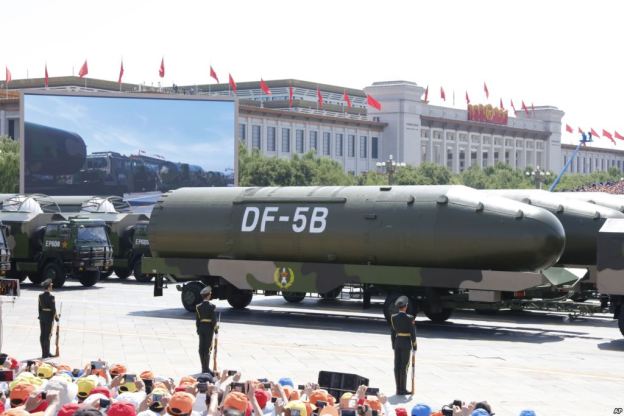
Saudi Arabia has imported sensitive missile technology from the Chinese military and is manufacturing its own ballistic missiles…The Saudi government has sought help from the missile branch of the Chinese military, the People’s Liberation Army Rocket Force…Ballistic missiles are powered by rockets that propel them in an arch-shaped trajectory upward before descending toward their target on the surface of the earth. They can be used to deploy both conventional and nuclear weapons.

The U.S. has long refused to sell ballistic missiles to Riyadh over proliferation concerns. The kingdom obtained Dong Feng-3 missiles in the 1980s from China and displayed them publicly in 2014. The Chinese military has also transferred multiple batches of finished Dong Feng-series missiles since around 2018 up to as recently as the spring of 2021….China also has helped Saudi Arabia construct a facility to fabricate uranium yellowcake, an early step along the path to a civil nuclear energy program or a nuclear arms capability, the Journal reported last year.

Excerpt from Jared Malsin et al, Saudis Begin Making Ballistic Missiles With Chinese Help, WSJ, Dec. 24, 2021

The Stealth Burial of Nuclear Waste

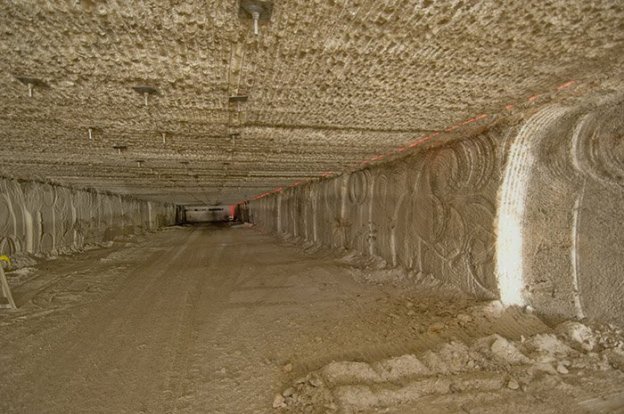
The U.S. government’s underground nuclear waste repository received more than 200 shipments from federal laboratories and other sites around the nation in 2021.
Officials with the U.S. Energy Department announced the number in December 2021, noting that total shipments to the Waste Isolation Pilot Plant have topped 13 000 since opening in 1999. Over more than 20 years, tons of Cold War-era waste have been stashed deep in the salt caverns that make up the repository. The shipments have included special boxes and barrels packed with lab coats, rubber gloves, tools and debris contaminated with plutonium and other radioactive elements.

The majority of shipments come from the decommissioning of legacy nuclear waste sites at the Idaho National Laboratory. More nuclear waste will be heading to the WIPP as the Biden Administration has approved a Trump rule that has redefined high-level nuclear waste. According to the new rule, what constitutes high-level radioactive waste  will be based on the waste’s radioactivity rather than how it was produced.

U.S. nuclear repository marks more than 200 shipments of waste in 2021, Associated Press, Dec. 30, 2021