Category Archives: corruption/Illegal markets

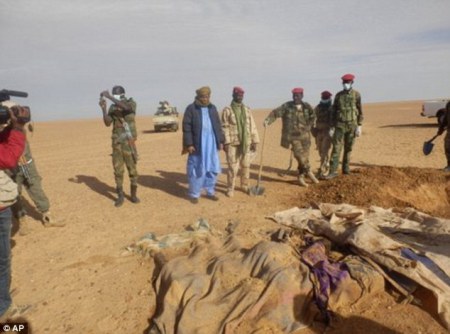
Mass Graves in the Libyan Desert

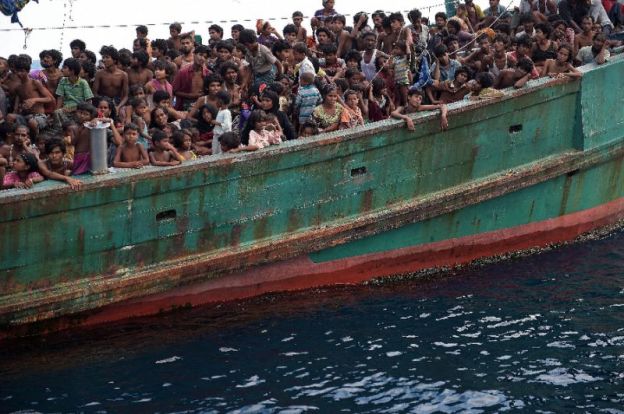
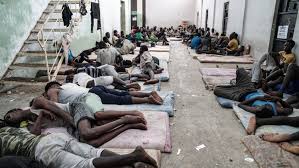
Growing numbers of African migrants passing through Libya are traded in what they call slave markets before being held for ransom, forced labour or sexual exploitation, according to the UN migration agency.

West African migrants interviewed by the International Organisation for Migration (IOM) recounted being bought and sold in garages and car parks in the southern city of Sabha, one of Libya’s main migrant smuggling hubs. Migrants are traded for between $200 and $500 and are held on average for two or three months, Othman Belbeisi, head of the IOM Libya mission, told journalists in Geneva.

The IOM said it spoke to a Senegalese migrant who was held in a Libyan’s private house in Sabha with about 100 others. They were beaten as they called their families to ask for money for their captors. He was then bought by another Libyan, who set a new price for his release. Some migrants who cannot pay their captors are reportedly killed or left to starve to death and when migrants die or are released, others are purchased to replace them, the IOM said. Migrants are buried without identification, with families back home uncertain of their fate.

“What we know is migrants who fall into the hands of smugglers face systematic malnutrition, sexual abuse and even murder,” Mohammed Abdiker, IOM’s Director of Operations and Emergencies, said in a statement. “We are hearing about mass graves in the desert.”  Libya is the main gateway for migrants attempting to reach Europe by sea, with more than 150,000 people making the crossing in each of the past three years.

So far this year an estimated 26,886 migrants have crossed to Italy, over 7,000 more than during the same period in 2016. More than 600 are known to have died at sea, while an unknown number perish during their journey north through the desert.

Excerpts from: Migrants traded in Libyan “slave markets”, Reuters, Apr. 12, 2017

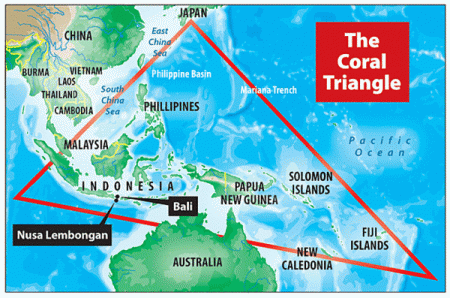
Ecological Hooliganism: smashing the coral triangle

Giant clams are one of Buddhism’s “seven treasures”, along with gold and lapis lazuli. China’s new rich prize their shells as showy ornaments. Each can fetch as much as $3,000, so each haul was worth a fortune to the fishermen of Tanmen, a little fishing port on the island province of Hainan in Southern China.  But Chinese government banned the clam fishing…
The ban is surely welcome. [S]ome of the most biodiverse coral reefs on Earth have been destroyed in the South China Sea thanks to giant-clam poachers. In the shallow waters of the reefs, crews use the propellers of small boats launched from each mother-ship to smash the surrounding coral and thus free the clams anchored fast to the reef. Though the practice has received little attention, it is ecological hooliganism, and most of it has been perpetrated by boats from Tanmen.

The fishermen have not been the reefs’ only adversaries. China’s huge and (to its neighbours) controversial programme since late 2013 of building artificial islands around disputed rocks and reefs in the South China Sea has paved over another 22 square miles of coral. When the two activities are taken together, Mr McManus says, about 10% of the reefs in the vast Spratly archipelago to the south of Hainan, and 8% of those in the Paracel islands, between Hainan and Vietnam, have been destroyed. Given that Asia’s Coral Triangle, of which the South China Sea forms the apex, is a single, interconnected ecosystem, the repercussions of these activities, environmentalists say, will be huge…

But still..A few streets back from the waterfront in Tanmen, elegant boutiques sell jewellery and curios fashioned from the giant clams—and clam shells are still stacked outside. And the provincial money that is so clearly being lavished on Tanmen sits oddly with the illegality of its townsfolk’s way of life. .. [I] n 2013 President Xi Jinping himself showed up in Tanmen. Boarding one of the trawlers he declared to the crew, according to state media, “You guys do a great job!” The media did not report that a year earlier the trawler in question had been caught in the territorial waters of Palau, and in the confrontation with local police that followed one of the crew members had been shot dead. In Chinese propaganda, Tanmen’s fishermen are patriots and model workers.

Over the years Tanmen’s fishermen have become part of China’s power projection in the South China Sea, an unofficial but vital adjunct to the Chinese navy and coastguard. The biggest trawlers are organised into a maritime militia ready to fight a “people’s war” at sea. Though generally unarmed, they undergo training and take orders from the navy.

They are facts on the water, and have been involved in China’s growing aggression in the South China Sea. In 2012 boats from Tanmen were part of a navy-led operation to wrest control of Scarborough Shoal from the Philippines, chasing Philippine fishing vessels away. In 2014 they escorted a Chinese oil rig that was being towed provocatively into Vietnamese waters. On land, Vietnamese expressed their rage by ransacking factories they thought were Chinese-owned. At sea, boats from Tanmen rammed and sank one of the rickety Vietnamese vessels coming out to protest.

Mysteriously, though, the giant trawlers of the Tanmen militia are now rafted up, their crews sent home. Perhaps China is keen to lower tensions in the region….A policy introduced in January aims to cut the catch from China’s fishing fleet, the world’s largest, by a sixth, in the name of sustainability. That will hit Tanmen’s fishermen hard, making them less willing to defend China’s claims. Francis Drake would have understood: pirates are patriotic, but usually only when it pays.

Excerpts from Clamshell Phoneys, Economist, Mar. 25, 2017

The Love for Plastic Bags

Since their invention in the 1960s, disposable plastic bags have made lives easier for lazy shoppers the world over. But once used, they become a blight. This is particularly true in poor countries without good systems for disposing of them. They are not only unsightly. Filled with rainwater, they are a boon for malaria-carrying mosquitoes. Dumped in the ocean, they kill fish. They may take hundreds of years to degrade. On March 15th Kenya announced that it will become the second country in Africa to ban them. It follows Rwanda, a country with a dictatorial obsession with cleanliness, which outlawed them in 2008…

As Kenyans get richer and move to cities, the amount of plastic they use is growing. By one estimate, Kenya gets through 24m bags a month, or two per person. (Americans, by comparison, use roughly three per person.) Between 2010 and 2014 annual plastic production in Kenya expanded by a third, to 400,000 tonnes. Bags made up a large part of the growth.

Kenya has tried to ban polythene bags twice before, in 2007 and 2011, without much success. This latest measure is broader, but few are ready for it. The Kenyan Association of Manufacturers says it will cost thousands of jobs. Some worry that supermarkets will simply switch to paper bags, which could add to deforestation. And then there is the question of whether Kenyan consumers will accept it. In Rwanda, since its ban was imposed, a thriving underground industry has emerged smuggling the bags from neighbouring Congo.

Excerpts African Rubbish: Plastic Bantastic, Economist, Mar. 25, 2016

Elephant Skin 4 dollars per square inch

“Elephant’s skin can cure skin diseases like eczema,” said one shop owner, who requested anonymity, alongside a counter brimming with porcupine quills and snake skins. “You burn pieces of skin by putting them in a clay pot. Then you get the ash and mix it with coconut oil to apply on the eczema.”  He broke off to talk to a potential buyer, who balked at the price tag of 5,000 kyat (US$3.65) per square inch (6.5 square centimetres) of elephant skin.

Elephant poaching in Myanmar has jumped tenfold in recent years, the government said this week, driven by growing demand for ivory, hide and body parts.Increasingly carcasses are being found stripped of their skin, the hide used for traditional medicine or reportedly turned into beads for jewellery. Some of it is sold in local markets but the vast majority goes to feed neighbouring China’s inexhaustible taste for exotic animals.  Myanmar’s wild elephant population is thought to have almost halved over the past decade to around 2,000-3,000. The animals are killed or smuggled alive to be used in the tourist industry in neighbouring Thailand.

“”Elephants are one of dozens of endangered species being trafficked through Myanmar, which has become a key hub in the US$20 billion a year global wildlife trade.  Watchdog TRAFFIC claims the country has “the largest unregulated open markets for tiger parts” in Southeast Asia, which experts say also sell everything from African rhino horn and clouded leopard skins to pangolins.  Much of the trade runs through the country’s lawless eastern periphery, controlled by a sophisticated network of criminals who are thought to be armed and funded by powerful “kingpins” in China.  It is lucrative business: in Mong La, on Myanmar’s eastern border, sales of ivory alone are thought to rake in tens of millions of dollars a year.

Excerpts from Skin care fad threatens Myanmar’s endangered elephants as demand from China drives trade in animal products, South China Morning Post, Jan. 21, 2016


Shooting to Death Poachers: conservation

A South African, 31 Zambians and seven Mozambicans were among 443 people arrested in Zimbabwe in 2016 for poaching, the national parks authority has said. [According to] the Zimbabwe Parks and Wildlife Management Authority (ZimParks) spokesperson Caroline Washaya-Moyo said there was an increase on arrests last year compared to 2015 when 317 were arrested.

Washaya-Moyo said locals, who constitute a majority of those arrested for poaching, are working mainly with colleagues from Zambia as well as Mozambique, targeting wildlife sanctuaries in the north-west and south-east of the country.  “Mozambican poaching groups target Gonarezhou National Park and Save Valley Conservancy, where they poach elephants. It has now emerged that most of the poaching taking place inland is being perpetrated by syndicate members of different groups, who are hired to form one larger organised gang,” Washaya-Moyo said.

However, the introduction of modern anti-poaching strategies, such as sniffer and tracker dogs as well as unmanned aerial vehicles (UAVs) she said, is likely to help boost anti-poaching activities. In September 2016 South Africa’s UAV and Drone Solutions (UDS) provided UAVs to Zimbabwe. The technology was deployed to Hwange National Park, Zimbabwe’s largest game park, to fight elephant and other wildlife poaching. Between 2013 and last year, poaching syndicates killed at least 300 elephants through cyanide poisoning in the park. “This silent poaching method has serious effects to the eco-system and is a potential threat to human life,” she said.

ZimParks released the 2016 report in a week it also announced the shooting to death of three suspected poachers in Hwange National Park and Hurungwe near Lake Kariba. Two were killed on 10 January in Hwange while one, believed to be a Zambian, was shot dead in Hurungwe on 11 January….

A Zimbabwean safari operator, Langton Masunda, blamed recurrent droughts, a difficult local economy and global restrictions in lion and elephant hunting for the high poaching cases in the country.  “Without money coming from hunting, communities derive little value from wildlife and when that happens they are tempted to poach. The economic conditions are pushing some to poach as well. So poaching at those low levels then escalate into wider scale and more organised poaching activities,” he said

Excerpts from Ian Nyathi,  Increase in number of poachers arrested in Zimbabwe as slaughter continues, http://www.defenceweb.co.za/, Jan. 16, 2017

Eviction and Property Rights in Africa

Evictions are almost routine for the Ogiek,  a group of around 80,000 indigenous hunter-gatherers who have suffered repeated expulsions since being moved by the British colonial government in the 1930s. Yet this one still came as a surprise: the community is in the middle of negotiating a settlement with the local government that should see formal recognition of its right to live, graze livestock and forage on land it has inhabited for centuries.

In all rich countries, property rights are secure. Formal, legal title makes it easier to buy, sell and develop land. Buyers can be confident that the seller really has the right to sell what he is selling. Owners can use their property as collateral, perhaps borrowing money to buy fertiliser and better seeds. Legally recognising land ownership has boosted farmers’ income and productivity in Latin America and Asia.

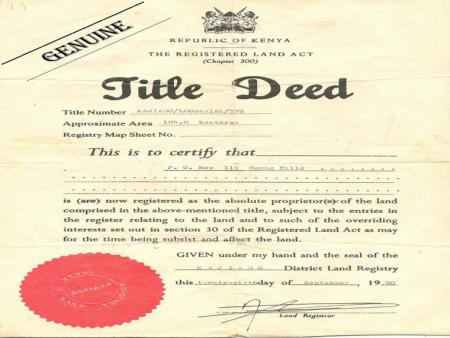
But not yet in Africa. More than two-thirds of Africa’s land is still under customary tenure, with rights to land rooted in communities and typically neither written down nor legally recognised. In 31 of Africa’s 54 countries, less than 5% of rural land is privately owned. So giving peasants title to their land seems like an obvious first step towards easing African rural poverty.

However, it has proven extremely hard. Rwanda, for example, rolled out a programme over three years, whereby local surveyors worked with land owners and their neighbours to demarcate and register 10.3m parcels of land…But even a relatively well-organised place like Rwanda has had problems keeping records up to date when land is sold or inherited.

In Kenya a large-scale titling programme was carried out in colonial times and carried over to independence. The first president, Jomo Kenyatta, and his cronies bought the huge estates of white settlers who left. But the system is costly and ill-run. Most Kenyans cannot afford to update titles, and the government has not maintained the registry. Recognising land rights, whether customary or titled, needs to be done as cheaply and simply as possible, says Ruth Meinzen-Dick of the International Food Policy Research Institute (IFPRI). “The more you increase the cost, the more likely it is that urban elites and men with more ed

Being able to prove you own your land may be a necessary condition for using it as collateral, but a title deed does not guarantee that anyone will lend you money. As Abhijit Banerjee and Esther Duflo, two economists, observe in their book “Poor Economics” (2011), banks need a lot more information to judge borrowers’ creditworthiness and be sure of repayment. And the administrative costs of offering very small loans to very small farmers, even those with collateral, are often prohibitive.

And legal property rights offer less protection in countries where big men can flout the law with impunity—a particular problem in Africa.  In recent years land grabs have sometimes made a mockery of customary ownership.

Excerpt from Land ownership: Title to come, Economist, July 16, 2016


Loss of Giraffes

Over 700 newly recognised bird species have been assessed for the latest update of The IUCN Red List of Threatened Species, and 11% of them are threatened with extinction. The update also reveals a devastating decline for the giraffe, driven by habitat loss, civil unrest and illegal hunting. The global giraffe population has plummeted by up to 40% over the last 30 years, and the species has been listed as Vulnerable on the IUCN Red List.

Today’s IUCN Red List update also includes the first assessments of wild oats, barley, mango and other crop wild relative plants. These species are increasingly critical to food security, as their genetic diversity can help improve crop resistance to disease, drought and salinity…Almost every species of plant that humans have domesticated and now cultivate has one or more crop wild relatives. However, these species have received little systematic conservation attention until now.

The update was released today at the 13th Conference of the Parties to the Convention on Biological Diversity (CBD COP13) in Cancun, Mexico. The IUCN Red List now includes 85,604 species of which 24,307 are threatened with extinction. “Many species are slipping away before we can even describe them,” says IUCN Director General Inger Andersen.

Excerpts from New bird species and giraffe under threat – IUCN Red List, News Release, Dec. 8, 2016 

Drugs, Snakes and Skins: illegal wildlife trafficking

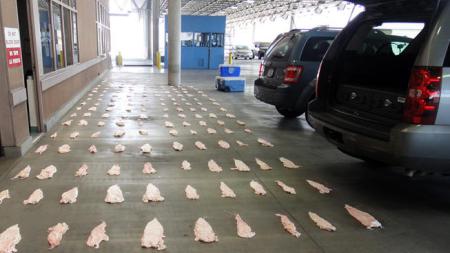
One of the most serious environmental crimes, wildlife trafficking encompasses all stages in the supply chain, from taking wild fauna from its habitat, to trading, importing, exporting, processing, possessing, obtaining and consuming of these species.  Driven by an extraordinary low-risk/high-profit ratio, the trafficking of endangered species is estimated to generate over EUR 4.4 billion in profits globally per year (2011).

Because the global demand for such commodities is high, whether as luxury items or for use in traditional medicine, this illicit trade attracts transnational organised crime networks.

While in its character and its scale this trade resembles other types of global criminal activities, such as trafficking in drugs, human beings, firearms and counterfeit goods, it benefits nonetheless from lower levels of awareness, lower risks of detection and lower sanction levels.
The EU is a major transit point for the illegal trade in wildlife, in particular between Africa and Asia. In 2013, 1468 seizures (more than half with an international dimension) were reported by 15 EU countries. The main types of commodities seized were medicines (derived from both plants and animals), ivory, corals and live reptiles. The European fashion industry accounts for 96% of the trade in python skins…

In 2015 Europol supported Operation COBRA III, the largest-ever coordinated international law-enforcement operation targeting the illegal trade in endangered species. The operation recovered a huge amount of wildlife contraband, including over 12 tonnes of elephant ivory and at least 119 rhino horns.

Excerpt from ILLICIT TRAFFICKING IN ENDANGERED ANIMAL SPECIES, Europol Press Release, Nov. 2016

Mega Data to Uncover Terrorists

DARPA is soliciting research proposals in the area of modeling adversarial activity for the purpose of producing high-confidence indications and warnings of efforts to acquire, fabricate, proliferate, and/or deploy weapons of mass terrorism (WMT)….

The goal of the Modeling Adversarial Activity (MAA) program is  to develop mathematical and computational techniques for the integration and analysis of multiple sources of transaction data … Currently, transaction data is used as a means to validate leads developed from traditional sources such as Signals Intelligence (SIGINT). MAA assumes that an adversary’s WMT activities will result in observable transactions. …

MAA may draw on related domains, including human trafficking, smuggling of drugs, antiquities or rare wildlife species, and illegal arms dealing, during the creation of synthetic data sets to meet the need for a large amount and diverse types of synthetic data….

Excerpt from Broad Agency Announcement Modeling Adversarial Activity (MAA) DARPA-BAA-16-61, September 30, 2016

Conspiracy as Government

WikiLeaks founder Julian Assange first outlined the hypothesis nearly a decade ago: Can total transparency defeat an entrenched group of insiders?“Consider what would happen,” Assange wrote in 2006, if one of America’s two major parties had their emails, faxes, campaign briefings, internal polls and donor data all exposed to public scrutiny.”They would immediately fall into an organizational stupor,” he predicted, “and lose to the other.”

A decade later, various organs of the Democratic Party have been hacked; several staffers have resigned and Democratic presidential candidate Hillary Clinton has seen the inner workings of her campaign exposed to the public, including disclosures calling into question her positions on trade and Wall Street and her relationship with the party’s left . Many of these emails have been released into the public domain by WikiLeaks.

Some see the leaks as a sign that Assange has thrown his lot in with Republican rival Donald Trump or even with Russia. But others who’ve followed Assange over the years say he’s less interested in who wins high office than in exposing — and wearing down — the gears of political power that grind away behind the scenes.  “He tends not to think about people, he thinks about systems,” said Finn Brunton, an assistant professor at New York University who has tracked WikiLeaks for years. “What he wants to do is interfere with the machinery of government regardless of who is in charge.”WikiLeaks’ mission was foreshadowed 10 years ago in “Conspiracy as Governance,” a six-page essay Assange posted to his now-defunct blog.

In the essay, Assange described authoritarian governments, corporations, terrorist organizations and political parties as “conspiracies” — groups that hoard secret information to win a competitive advantage over the general public. Leaks cut these groups open like a double-edged knife, empowering the public with privileged information while spreading confusion among the conspirators themselves, he said. If leaking were made easy, Assange argued, conspiratorial organizations would be gripped by paranoia, leaving transparent groups to flourish…

It’s possible that malicious sources are using WikiLeaks for their own ends, said Lisa Lynch, an associate professor at Drew University who has also followed Assange’s career. But she noted that a lifetime far from public service and an aversion to email make Trump a more difficult target.”If Trump had a political career, he’d be more available for Wikileaking,” she said…

He has targeted Republican politicians in the past; in the run-up to the 2008 election his group published the contents of vice presidential candidate Sarah Palin’s inbox. Her reaction at the time anticipated the Democrats’ outrage today. “What kind of a creep would break into a person’s files, steal them, read them, then give them to the press to broadcast all over the world to influence a presidential campaign?” Palin wrote in her autobiography, “Going Rogue.”

Excerpt fro RAPHAEL SATTER,With email dumps, WikiLeaks tests power of full transparency, Associated Press, Oct. 24, 2016

Survival of Bluefin Tuna

Japanese call bluefin tuna “the king of fish”. They eat about 40,000 tonnes of it a year—80% of the global catch. Demand is also growing rapidly elsewhere. Yet Pacific bluefin stocks are down by 97% from their peak in the early 1960s, according to a recent report from the International Scientific Committee, an intergovernmental panel of experts. (Japan disputes its findings.) In some places, fishing is three times the sustainable level, the committee says.

Aquaculture might seem to offer a way out of this impasse. But the bluefin is hard to breed in captivity. In the open sea, it can roam for thousands of miles and grow to over 400kg. It is highly sensitive to light, temperature and noise. Early attempts to farm it fizzled, but Kindai University persisted long after an initial research grant from the government ran out in the early 1970s. In 2002, funding itself from sales of other fish, it managed to rear adult tuna from eggs for the first time, rather than simply fattening up juveniles caught at sea. Now the chefs in Ginza can have a tuna zapped with an electric prod and yanked out of the university’s tanks on demand.

However, just 1% of the bluefin the university rears survive to adulthood. “We expect this to improve but it will take time,” predicts Shukei Masuma, the director of its Aquaculture Research Institute. Worse, the tuna gobble up lots of wild mackerel and squid. Scientists have experimented with soy-based meal and other alternatives. A company in south-western Japan said this month that it had managed to raise tuna using feed made of fishmeal, but it is costly and the fish are slow to thrive. Using wild fish for feed makes bluefin farming unsustainable, says Atsushi Ishii of Tohoku University. He sees aquaculture as a distraction from the thorny task of managing fisheries properly.

This debate is slowly seeping into the public consciousness. In 2014 the media made much of the decision of the International Union for Conservation of Nature, a conservation body, to put bluefin tuna on its “red list” of species threatened with extinction.

Excerpts from The Japanese Addiction to Tuna: Breeding Bluefin, Economist, Sept 24, 2016

Exotic Pets-Illicit Markets

It’s easy to catch grey parrots, say researchers from Birdlife, a global grouping of conservation groups. A team of hunters will use decoys or go to the birds’ water and mineral licks in the forests where flocks gather. They then throw nets over them and take dozens at a time.

Once caught they will be smuggled over borders, stuffed in tiny cages and flown illegally to Europe, South Africa, the Middle East and China, where they may fetch up to £1,000 each. All this makes the African grey probably the most highly traded bird in the world, causing their numbers to plummet… Some conservationists estimate only 1% of their historical numbers remain…

“Africa’s overall elephant population has seen the worst declines in 25 years, mainly due to poaching over the past 10 years,” the IUCN’s director-general, Inger Andersen, will say. “Their plight is truly alarming. Poaching has been the main driver of the decline, while habitat loss poses an increasingly serious, long-term threat to the species.”..

Laos has pledged to phase out its controversial tiger farms, which supply neighbouring China with bones and other parts for traditional medicine. But international animal trade inspectors will report in Johannesburg that rhinoceros horn, elephant ivory and many other wildlife specimens are being regularly smuggled through the country both to China and other south-east Asian countries. “Laos is being targeted by organised crime groups as a transit point,” says wildlife trade monitoring network Traffic.

South Africa.. has lost nearly 6,000 rhinos to poachers since 2007, including more than 700 this year. Vietnam needs to crack down on its rampant illegal rhino horn trade and China has been identified as the world’s primary destination for precious woods…..The street value of ivory is now more than £1,500 a kilogram in Beijing, and rhino horn can sell for £50,000 per kilo – far more than the price of gold or platinum – on the Chinese black market. Meanwhile rosewood can sell for many thousands of pounds a cubic metre.

Excerpt from The grey parrot and the race against Africa’s wildlife extinction, Guardian, Sept. 24, 2016

Industrial-Scale Hunting

Starting September 25, 2016,  thousands of conservationists and top government officials will be thrashing out international trade regulations aimed at protecting different species.A booming illegal wildlife trade has put huge pressure on an existing treaty signed by more than 180 countries — the Convention on International Trade in Endangered Species (CITES)….

[T]he plight of Africa’s elephants, targeted for their tusks, generated fierce debate as the talks kicked off.Zimbabwe, Zambia, South Africa and Namibia castigated Western-based animal charities, saying they “dictated” on how African resources should be managed.”Please leave us alone, don’t just come and dictate what we should be doing,” Zambian Tourism Minister Stephen Mwansa said.Fortune Charumbira, head of Zimbabwe’s traditional chiefs, blasted “elitist NGOs who are coming from countries where there are no animals”, describing them as “domineering”.

A coalition of 29 African countries is pressing for a total halt to the ivory trade to curb poaching of elephants, but other delegates believe it would only fuel illegal trading…CITES forbids trade in elephant ivory, but Namibia and Zimbabwe have made a proposal asking for permission to sell off stockpiles to raise funds for local communities that co-exist with the animals….

CITES’ secretary general John Scanlon… warned illegal wildlife trafficking was “occurring on an industrial scale, driven by transnational organised criminal groups”.

African countries lash out at Western charities at international wildlife conservation meeting, ABC News, Sept. 24, 2016

Tin, Tantalum and Tungsten: Congo

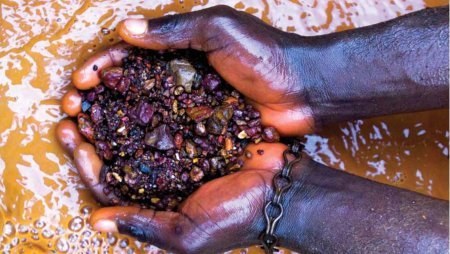
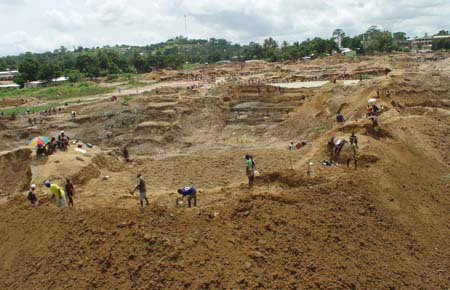
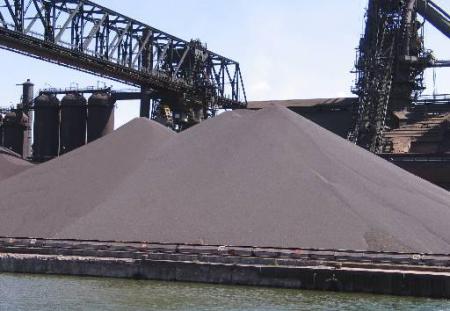
Congo’s tin, tantalum and tungsten are used in electronics around the world. Although some of these minerals come from big industrial copper mines in Katanga, Congo’s south, and a gold mine in South Kivu, there is not yet a single modern mine in North Kivu.

Until now the province’s metal has been dug out almost entirely by hand. Yet Alphamin hopes to show that it can run a modern industrial mine in a part of the world that scares other modern miners away.

Alphamin says that the investment is attractive—even at a time of low commodity prices—because the ore that it plans to extract is richer than that found anywhere else in the world. Behind the company’s camp on the hill are stacks of carefully ordered cylinders of rock drilled out to map the riches beneath the mountain. (Like almost everything else in the camp, the drill rig had to be lifted in by helicopter.) The ore they contain is 4.5% grade. That means that for every 100 tonnes of ore extracted, the firm will be able to sell 3.25 tonnes of tin (not all the tin can be extracted from the rock). Most other mines would be happy to produce 0.7 tonnes…..

If the gamble pays off Alphamin’s investors will make juicy returns. But to do so they may have to convince locals that the project is in their interest. If not, they risk protests and sabotage  .In 2007 some 18,000 people lived at Bisie, working the site with pickaxes and shovels. They produced some 14,000 tonnes of tin that year—or perhaps 5% of world production. To get it to market people carried concentrated ore on their heads through the jungle to an airstrip where small planes could land to carry it out. It was back-breaking work but lucrative for many Congolese. That era began to come to an end in 2011, thanks in part to an American law.

Under the Dodd-Frank act, a law aimed mainly at tightening bank regulation, firms operating in the United States must be able to show where the minerals used in their products came from. The idea was to stop rebels in poor countries from selling gold and diamonds to fund wars. The law all but shut down artisanal mining in much of eastern Congo.

Elsewhere in eastern Congo artisanal mines have gradually reopened thanks to a verification scheme under which the UN and the government check mines and allow certified ones to “tag and bag” minerals. The site at Bisie has, however, never been certified. And although Alphamin will provide some well-paid jobs to locals, as well as pay taxes to the central government, its mechanised operations will never employ anything like the thousands of people who once toiled there with pick and shovel. Alphamin has promised to fund local projects, such as a new school, that are intended to benefit 44 villages.

Excerpts from Mining in the Democratic Republic of Congo: The richest, riskiest tin mine on Earth, Economist, Aug. 27, 2016

Forest Fires and Haze

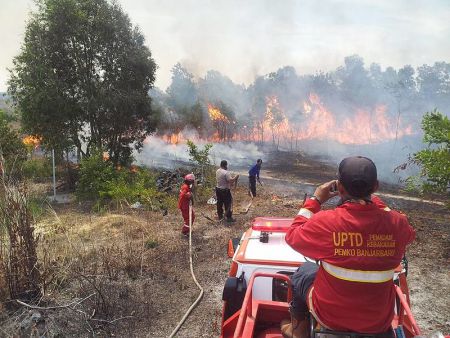
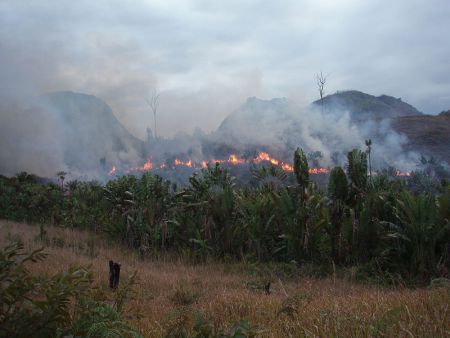
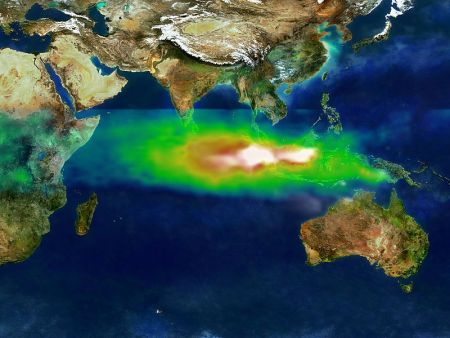
In 2015 a dry spell caused by the El Niño weather pattern made Indonesia’s forest fires especially severe. Smoke settled over Singapore for months and even reached Cambodia, Vietnam and the Philippines. At least 2m hectares of forest were burned. Dozens of people were killed and hundreds of thousands sickened. For much of October 2015 greenhouse gases released by those fires exceeded the emissions of the entire American economy. The losses over five months of fires amounted to around 2% of the country’s GDP…[The event has labeled  the 2015 Southeast Asian haze]

Between 2001 and 2014, Indonesia lost 18.5m hectares of tree cover—an area more than twice the size of Ireland. In 2014 Indonesia overtook Brazil to become the world’s biggest deforester.

One of the reasons for those forest fires is economic. The country produces well over half the world’s palm oil, a commodity used in cooking and cosmetics, as a food additive and as a biofuel. It accounts for around 4.5% of Indonesia’s GDP, and demand is still rising. To meet it, Indonesian farmers set fires to clear forest and make way for new plantations. Often these forests grow on peatlands, which store carbon from decayed organic matter; in tropical regions these hold up to ten times as much carbon as surface soil. Draining peatlands releases all of that carbon. The peat also becomes a fuel, so it is not just felled trees that are burning but the ground itself.

But politics also plays a part. … The president declared a moratorium on peatland-development licences and called for peat forests to be restored, even as his agriculture minister pointed out that burned peatland can be used for corn and soyabean planting….

Civil-society groups have had some success. At least 188 Indonesian palm-oil companies have made some sort of sustainability pledge, including five large multinational firms that in 2014 signed the Indonesian Palm Oil Pledge (IPOP), which commits them to avoiding deforestation and planting oil palms on peatland. Together those five firms account for 80% of Indonesia’s palm-oil exports.All the same, deforestation continues. Perversely, it may even have increased temporarily, as companies cleared as much land as they could before the agreement took effect. Besides, opaque supply chains allow companies to buy palm oil from suppliers not bound by IPOP.

Forests: A world on fire, Economist Special Report on Indonesia, Feb. 27, 2016

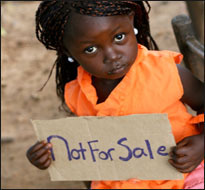
For Sale: 46 Million Slaves

The 2016 Global Slavery Index estimates that 45.8 million people are subject to some form ofmodern slavery in the world today. The Index presents a ranking of 167 countries based on the proportion of the population that is estimated to be in modern slavery. 58%
Of those living in slavery are in 5 countries India* China Pakistan* Bangladesh*
Uzbekistan (* Based on nationally representative Gallup survey data)

The countries with the highest estimated prevalence of modern slavery by the proportion of their population are North Korea, Uzbekistan, Cambodia, India, and Qatar. In North Korea, there is pervasive evidence that government-sanctioned forced labour occurs in an extensive system of prison labour camps while North Korean women are subjected to forced marriage and commercial sexual exploitation in China and other neighbouring states. In Uzbekistan, the government continues to subject its citizens to forced labour in the annual cotton harvest.

Those countries with the highest absolute numbers of people in modern slavery are India, China, Pakistan, Bangladesh, and Uzbekistan. Several of these countries provide the low-cost labour that produces consumer goods for markets in Western Europe, Japan, North America and Australia.

Data from the Global Slavery Index

The Eradication of Rosewood: deforestation

On May 13th, 2016 hoping to save his country’s dwindling forests, Thongloun Sisoulith, the new prime minister of Laos, banned all timber exports. A government representative says environmental protection is among its top priorities. But a report to be published on June 24th, 2016  by the Environmental Investigation Agency (EIA), an NGO, suggests the clampdown will not be implemented by local officials—and even if it is, may come too late to save Siamese rosewood from being eradicated in Laos and Cambodia.

Much like the trade in rhino horn and tiger skins, trade in rosewood is driven by demand from China’s burgeoning middle classes for goods once reserved for the rich: in this case, hongmu, or “redwood”, furniture made in the ornate Qing-dynasty style. Siamese rosewood is among the most highly prized of the 33 types of tree used to make hongmu.

Five years ago Thailand had roughly 90,000 Siamese rosewood trees—more than anywhere else in the world. But the EIA says “significant volumes, if not most” of those trees were illegally chopped down before trade in Siamese rosewood became regulated under the Convention on International Trade in Endangered Species (CITES), a treaty.

That grim history seems to be repeating itself in Laos and Cambodia. Between June 2013 and December 2014 Vietnam and China (including Hong Kong) imported more than 76,000 cubic metres of Siamese rosewood—more than the total amount growing in Thailand in 2011. Jago Wadley of the EIA says that Vietnam is a conduit through which the wood enters China. Of the total amount imported, 83% came from Laos and 16% from Cambodia.

Documentation accompanying the imported wood showed that 85% was harvested in the wild. Corrupt local officials have failed to enforce the restrictions imposed by the central Lao and Cambodian governments. Middlemen pay villagers to cut down the trees; they then sell the timber to Chinese or Vietnamese businessmen.

Excerpts Endangered species: No rosewood of such virtue, Economist, June 25, 2016

Predators: Tax Avoidance in Luxembourg

Antoine Deltour and Raphaël Halet, two ex-employees of PwC, an accounting firm, and Edouard Perrin, a French journalist, had been tried in Luxembourg for their role in leaking documents that revealed sweetheart tax deals the Grand Duchy had offered to dozens of multinationals. ..The whistle-blowers faced up to ten years behind bars. However, the prosecutor—perhaps sensitive to the strong public and, in some places, political support for them abroad—called for suspended sentences of 18 months. In the end the judge handed Messrs Deltour and Halet suspended sentences of 12 months and nine months, respectively. But a conviction is a conviction; Transparency International, an anti-corruption group, called it “appalling”. Mr Perrin, who had published an article that drew on the leaked documents, was acquitted.

The “LuxLeaks” affair has highlighted the role played by certain European Union countries, including Ireland and the Netherlands as well as Luxembourg, in facilitating tax avoidance. Luxembourg is not a typical tax haven levying no or minimal income tax; its statutory rate is 29%. Instead, it is a haven “by administrative practice”, argues Omri Marian of the University of California, Irvine, who has studied LuxLeaks in detail. Luxembourg’s tax authority in effect sold tax-avoidance services to large firms by rubber-stamping opaque arrangements that helped them to cut their tax bills dramatically in both their countries of residence and their countries of operation.]

Excerpt from Tax avoidance: Grand dodgy, Economist, July 2, 2016

Banking in Afghanistan

One bank with 114 branches in war-torn country; defrauded out of almost all its money; occasional target of terrorists. Ready to bid? That’s what Ashraf Ghani, president of Afghanistan, is hoping. He’s seeking a buyer for Kabul Bank, once the country’s largest. The government took it over in 2010 after its owners were accused of embezzling $825 million using fake loans and spending it on, among other things, 11 villas in Dubai and an airline they used to smuggle cash there. The privatization is a test for Ghani, who wants to show the foreign donors who provide most of his budget that he’s committed to fighting corruption.

New Kabul Bank, as it’s now called, isn’t exactly thriving. The bank has been barred from making loans since the scandal. .. On a recent morning, a branch in Kabul’s Baharistan neighborhood was guarded by five men in military uniforms armed with AK-47 assault rifles. Some of the dust-covered computers weren’t working. A customer trying to make a withdrawal waited for an hour and then was turned away.  “I keep hearing about their system failures,” said the customer, Atiqullah Wali. “It’s better to keep our cash inside our pillows like before.”

When the Taliban was driven out of Kabul in 2001, they left the financial system in disarray, fleeing with all but $30,000 of the central bank’s cash. Into the void stepped Sherkhan Farnood, who was wanted by Russian authorities for allegedly running an illegal money-transfer business. He founded Kabul Bank in 2004 and hired Khalil Ferozi as chief executive officer.

The banking industry boomed as foreign aid poured into Afghanistan, with assets expanding by more than 50 percent a year….Farnood amassed property in Dubai and competed in high-stakes poker tournaments in Europe.

The scheme unraveled in 2010, when the central bank learned of the fraud, ordered Farnood and Ferozi to resign and guaranteed the bank’s deposits to stop a run. An investigation by an independent anti-corruption committee commissioned by the Afghan government found that the executives had stolen an amount equivalent to about one-twelfth of the country’s GDP, mainly by giving loans to themselves and their friends that didn’t have to be repaid. One of the alleged beneficiaries was Mahmood Karzai, brother of then-President Hamid Karzai, who wasn’t charged and said he did nothing wrong.

Excerpt from Looted Lender for Sale as Afghanistan Seeks Buyer for Kabul Bank, Bloomberg BusinessWeek, Mar. 4, 2016

Endangered Fish as Delicacy

The most recent estimate puts the remaining numbers of vaquita, a porpoise found only in the waters of the Sea of Cortés, Mexico, at just 60, down from 100 two years ago…. The vaquita has been a victim of the shrimp and totoaba fisheries, showing up as bycatch in gillnets.

The totoaba is also an endangered species but its swim bladder is a delicacy in China, selling for as much as US $5,000 per kilogram in the U.S. and a great deal more in China. The matter has been taken up by Agriculture Secretary José Calzada Rovirosa with Chinese officials in an effort to stop the illegal consumption of the bladders.  Vaquitas are not only being killed by totoaba fishing. When illegal fishermen are pursued by the Mexican Navy, they often cut their nets and set them adrift, becoming an additional threat to the porpoise.

Removing these “ghost nets” will be one of the steps taken before the implementation of an assisted breeding program, said marine mammal expert Lorenzo Rojas Bracho from the National Institute of Ecology and Climate Change.

There are doubts about the feasibility of a breeding program as well as concerns about the risk. “We have no idea whether it is feasible to find, capture and maintain vaquitas in captivity much less whether they will reproduce,” said vaquita expert Barbara Taylor of the U.S. National Oceanic and Atmospheric Administration.

Excerpt from Assisted breeding for endangered vaquita?, Mexico News Daily, June 28, 2016

Rhino Parks and the US Military

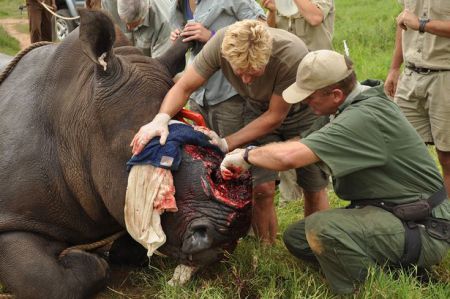
A group of American military veterans plans to train rangers at private wildlife farms and reserves in South Africa where rhino poachers have been active.The US military publication, Stars and Stripes, reports that the “small conservation group Vetpaw had previously operated in Tanzania but was ordered to leave, partly because of a video in which a member spoke about killing poachers”.Former US Marine and head of Vetpaw, Ryan Tate, said the member did not speak for the organisation and since the incident he has sought to rebrand Vetpaw.

The name is an acronym of “Veterans Empowered to Protect African Wildlife” and the organisation has as its aim employment for skilled post 9/11 US military veterans….The majority of Vetpaw members have been deployed in Afghanistan and Iraq...They plan to offer training including marksmanship, field medicine and manoeuvring at night. “People are desperate and want to try any and everything they can,” Peaton told the publication in reference of owners and operators of “private wildlife parks” that lack the resources State-run parks receive.

Earlier this month Environmental Affairs Minister Edna Molewa met with the Private Rhino owners Association (PROA) to discuss rhino conservation in South Africa.PROA said rhino poaching had had “a detrimental effect” on private reserves which held more than a third of South Africa’s total rhino population.

Last week suspected poachers shot and killed a ranger at a private reserve in Bel-Bela before killing a rhino for its horn.Earlier this week two Kruger National Park field rangers were arrested on suspicion of involvement in rhino poaching activities.

US military veterans coming to help in the fight against rhino poaching,  defenceWeb, June  22, 2016

Killing Spree of Endangered Species

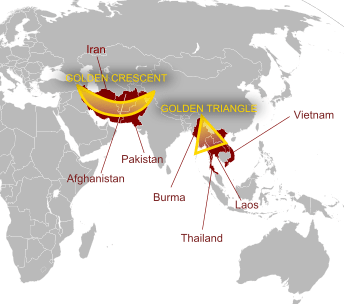
Laos’s biggest breeding facility, near Thakhek, reportedly holds around 400 tigers. Many are bred solely for their parts. The skins are prized as decorations. Farmed-tiger parts mostly move to China through the unruly Golden Triangle where Myanmar, Thailand and Laos converge. The region is a hotspot for trade in protected species: the Environmental Investigation Agency (EIA), an NGO based in UK  visited the Golden Triangle Special Economic Zone in Laos, popular with Chinese tourists. [It] found tiger-bone wine, bear-bile pills, pangolin scales and carvings from the beaks of helmeted hornbills openly on sale. Outside the God of Fortune restaurant was a caged bear-cub that could be killed and cooked to order.

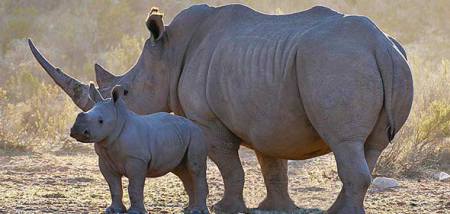
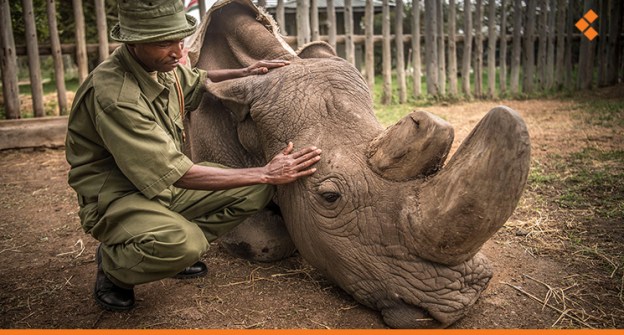
Laos also offers a link to the most lucrative of all illegal wildlife enterprises: the trade in rhinoceros horn, which the UN Office on Drugs and Crime (UNODC) estimated six years ago was worth $8m a year. Since then the number of rhinos slaughtered annually by poachers in Africa has more than tripled (the poaching of Asia’s depleted stock of rhinos is modest). Poachers are sometimes caught; those higher up the chain rarely are. The only high-level trafficker in jail is a Thai, Chumlong Lemtongthai, who is serving a 13-year sentence in South Africa. He was charged in 2011 with bringing Thai prostitutes to South Africa so they could claim they had shot rhinos on legal hunts and were thus entitled under South African law to export horns as trophies. It was the most bizarre of several methods used to get hold of a substance that can fetch up to $70,000 a kilo—almost twice the price of gold.

Mr Chumlong has been linked to a man who has been described as the Pablo Escobar of wildlife-trafficking, Vixay Keosavang, a former soldier in the Lao People’s Army who operates from a walled compound far off the beaten track in the central province of Bolikhamxay. In 2013 the American government offered $1m for information that would help dismantle the network it believes that Mr Vixay heads, which it suspects of trading wild-animal parts across several countries. Mr Vixay has denied wrongdoing.

Some experts believe that the surge in rhino-poaching, which has cut the world’s population by a fifth since 2008, has been driven by a surge in demand in Vietnam. There, rhino-horn shavings are a supposed cure for hangovers; entire horns are given as gifts and displayed as ornaments. Others believe that much of the rhino-horn taken to Vietnam ends up in China.

As their country opened up in recent decades, “some enterprising Vietnamese citizens got residential status in South Africa and very quietly began trading,” says Tom Milliken of Traffic, an NGO. In at least two cases, professional South African hunters have been caught shooting rhino for Vietnamese clients and, in two others, Vietnamese nationals have been arrested trying to smuggle rhino-horns out of South Africa by air. Hunts have been arranged for citizens of the Czech Republic, which has had a large Vietnamese community since the cold war. Since that ruse was discovered, Slovaks, Poles, Ukrainians and Russians have been enlisted as bogus trophy-hunters. “Some Vietnamese residents have bought their own game ranches, so they are now able to buy rhinos at auction and organise sports hunts,” says Mr Milliken.

The international nature of the trade poses big problems for law-enforcement. Documents that would prove decisive in a prosecution for rhino-horn trafficking can sit in a South African office for months awaiting translation, says Mr Milliken; the situation is no better for other animal parts. “None of what we do for drugs do we do for wildlife trafficking,” an international official involved in the fight against organised crime laments. “Extraditions are rare. There are no controlled deliveries. Sophisticated investigative techniques are seldom deployed. We’re not doing any of the things we could be doing to stop it.”

Excerpts from The Trade in Wild Animals: Last Chance to See?, Economist, Apr. 18, 2016, at 49

How to Catch Illegal Fishers: port state measures

The Agreement on Port State Measures to Prevent, Deter and Eliminate Illegal, Unreported and Unregulated Fishing (the Agreement)  entered into force on June 5, 2016.  The main purpose of the Agreement is to prevent, deter and eliminate illegal, unreported and unregulated (IUU) fishing through the implementation of robust port State measures. The Agreement envisages that parties, in their capacities as port States, will apply the Agreement in an effective manner to foreign vessels when seeking entry to ports or while they are in port. …

The Agreement provides an opportunity for port States to check and verify that vessels not flying their flags and that seek permission to enter their ports, or that are already in their ports, have not engaged in IUU fishing.  The Agreement also enhances flag States control over vessels as the Agreement requires the flag State to take certain actions, at the request of the port State, or when vessels flying their flag are determined to have been involved in IUU fishing….

Furthermore, the Agreement’s seeks to prevent the occurrence of so-called ports of non-compliance (formerly known as ports of convenience). Countries operating ports of non compliance do not regulate effectively the fishing and fishing-related activities that take place in the ports, including determining whether IUU-caught fish are landed, transshipped, processed and sold in the ports. Ratifying and acceding to the Agreement and implementing its measures robustly will reduce the number of ports of non compliance and opportunities for vessels to dispose of IUU-caught fish with relative ease. Port state measures are a cost-effective tool in ensuring compliance with national law and regional conservation and management measures adopted by RFMOs. This is because port States do not have to expend time, effort and resources in monitoring, pursuing and inspecting vessels at sea. Port inspections and controls are very much cheaper and safer than alternative, more conventional air and surface compliance tools. Port State measures, if used in conjunction with catch documentation schemes, have the potential to be one of the most cost-effective and efficient means of combating IUU fishing.

The Agreement’s most potent effect in terms of its potential to curb IUU fishing is that through the implementation of its provisions, including those relating to denial of access to ports, port inspections, prohibition of landing, and detention and sanction, can prevent fish caught from IUU fishing activities from reaching national and international markets. By making it more difficult to market fish through the application of port State measures, the economic incentive to engage in IUU fishing is reduced. In addition, many countries have also decided to prohibit trade with countries that do not have port state measures in place.

Excerpt from Food and Agriculture Organization  FAO Website.

Tuna Boats in Mozambique

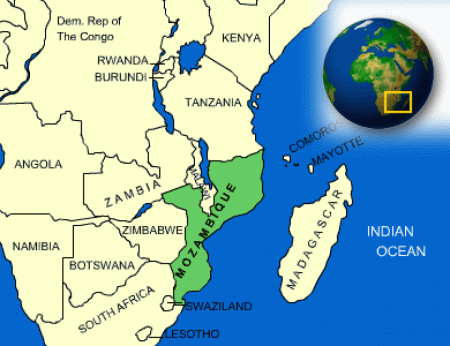
Mozambique’s tuna fishing fleet needs to be refitted to meet European Union standards, Finance Minister Adriano Maleiane said on May 23, 2016 piling more costs onto a project at the centre of a debt crisis.

The boats were paid for out of an $850 million loan arranged in 2013 by Credit Suisse and Russia’s VTB to finance “fishing infrastructure”. The cash came in the form of a government-backed bond to state tuna-fishing company Ematum.

Nearly three years later, the fishing project, initially touted as self-sustaining, has severely underperformed and added to a sovereign foreign debt mountain equal to 80 percent of GDP that could bankrupt the [country]….Not only did Ematum fall short of its targets but $500 million of the “tuna bond” was subsequently designated for “maritime security” and reallocated to the defence budget.The 24 boats, which were built in France, will now be modified in South Africa so they can export tuna to Europe…Mozambique’s government cannot afford to have them all upgraded at once. “The costs involved in refitting the boats are high, hence the work is being done in phases,” Maleiane was quoted by the state news agency as saying.

Deepening the mire, a further $1.35 billion of previously undisclosed government-backed debt emerged last month, prompting the International Monetary Fund and Western governments to suspend budgetary aid support.  The loans included $622 million for Proindicus, a state-owned company tasked with providing maritime security, and a $535 million for Mozambique Asset Management (MAM) to build a shipyard for gas projects…The hidden loans have exposed widespread government mismanagement that risks pushing a promising African economy, one that emerged from a ruinous 1976-92 civil war, into crisis.

Excerpts from Mozambique to refit tuna fleet, compounding debt crisis, Reuters, May 24, 2016

Stealing from Central Banks: hacking attacks

A little-noticed lawsuit details a hacking attack similar to one that stole $81 million from Bangladesh’s central bank, saying cybercriminals stole about $9 million in 2015 from a bank in Ecuador…..…A third attack, from December 2015 at a commercial bank in Vietnam, was detailed last week by the Society for Worldwide Interbank Financial Telecommunication, or Swift. That bank detected the fraudulent requests and stopped the movement of funds, the central bank in Vietnam said.  In the January 2015 Ecuador hack, as with the Bangladesh case, hackers managed to get the bank’s codes for using Swift, the global bank messaging service, to procure funds from another bank, according to court papers.

The Ecuadorean bank, Banco del Austro, filed a lawsuit in New York federal court in 2016 accusing Wells Fargo & Co. of failing to notice “red flags’’ in a dozen January 2015 transactions and to stop them before the thieves transferred about $12 million, most of it to banks in Hong Kong.  Lawyers for the two banks didn’t immediately return phone calls asking to comment about the case and Swift’s complaints that they had failed to notify the messaging network….

There are similarities in method, including thieves accessing the bank’s system to log on to the Swift network through customer sites, and doing so after bankers’ hours, apparently to reduce the likelihood someone would ask questions about specific transactions…

According to that filing on behalf of Banco del Austro, or BDA, “For each of the unauthorized transfers, an unauthorized user, using the Internet, hacked into BDA’s computer system after hours using malware that allowed remote access, logged onto the Swift network purporting to be BDA, and redirected transactions to new beneficiaries with new amounts.” Using that method, just before midnight on Jan. 14, 2015, a payment order made to a Miami company for less than $3,000 was altered to send $1.4 million to an account in Hong Kong, according to the court filing. There were 12 suspect transfers carried out over a 10-day period in January 2015, according to the lawsuit.  BDA’s lawsuit argues Wells Fargo should have noticed several anomalies in the transfers and, at a minimum, asked questions about them.  “The unauthorized transfers were made in unusual times of the day, in unusual amounts, to unusual beneficiaries in unusual geographic locations,’’ the bank’s lawyers argued in the filing. “Despite the numerous anomalies in the unauthorized transfers, [Wells Fargo] inexplicably failed to block them and/or alert BDA of the suspicious activity.’’

Excerpts from DEVLIN BARRETT and KATY BURNE, Now It’s Three: Ecuador Bank Hacked via Swift, Wall Street Journal, May 19, 2016

Re-Creating the Rhino

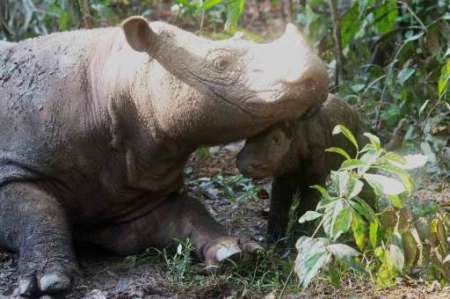
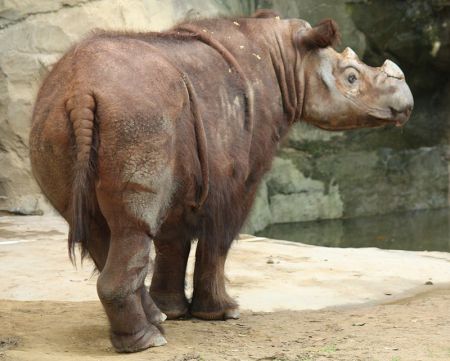
A Sumatran rhinoceros born in Indonesia has given renewed hope to environmentalists looking to save the critically endangered species.  A rhino named Ratu gave birth to the female calf on May 12, 2015, at a rhino sanctuary in the Way Kambas National Park on the island of Sumatra.

The new arrival for 15-year-old Ratu, and her mate Andalas*, follows the couple’s first baby Andatu, who made history in 2012 as the first rhino born in captivity in Indonesia in more than a century.

* Andalas, was born at the Cincinnati Zoo in 2001…. In 2001 he was the first captive Sumatran rhino born in 112 years  He moved to the sanctuary in Indonesia in 2007.

Excerpts from Rare Sumatran rhino born in Indonesia, Reuters,  May 13, 2016

Trees Worth More Than Gold

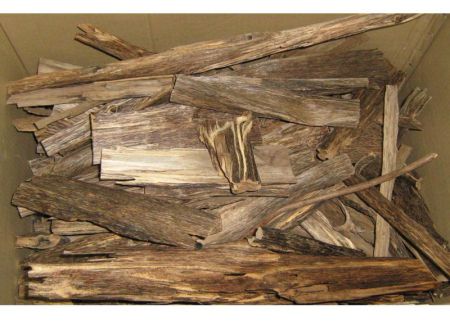
To protect incense trees, the Convention on International Trade in Endangered Species of Wild Fauna and Flora restricts trading in agarwood. But Hong Kong does not single out those who destroy or damage the trees for harsh treatment. If an incense tree is on government-managed land, the maximum sentence for cutting it down is the same as it is for felling any other kind of tree on such property: a fine of HK$25,000 ($3,210) and a year in prison.  Such penalties do little to deter thieves from mainland China, who are encouraged by growing demand for exotic medicines among members of the mainland’s fast-growing middle class. Professor C.Y. Jim of the University of Hong Kong reckons that in 2013 high-grade agarwood was worth $1,600 a gram on the black market. That is more than gold. According to Mr Jim, Hong Kong may be the “last refuge” of the tree, so it has become a “honeypot” for tree-snatchers.

Most of the thieves work for criminal gangs based across the border in mainland China. In recent years a relaxation of restrictions on travel from the mainland to Hong Kong has made their work easier. They often pretend to be hikers, sometimes camping out for weeks while gathering the timber. A local NGO has produced a map showing about 200 sites from which it says around 500 trees were stolen in the past year.

Very few incense trees form agarwood, so they are often destroyed indiscriminately. On Lamma, a plaque marks a spot where three young trees were uprooted. A short scramble up a steep slope reveals a gorier scene: splintered woodchips are all that remain of an aged tree. Mr Yeung, the beekeeper, says “hunters” felled and butchered it in situ. As supplies diminish, the gangs are becoming more desperate. Thieves are raiding private gardens; some residents have begun organising patrols to frighten the thieves away. Alarms and monitoring cameras are being installed.

Excerpts from Trees in Hong Kong: Fragrant Arbour, Economist, Feb. 22, 2016, at 37

Why Illegal Logging Persists

The European Union (EU) adopted in 2010 Regulation (EU) No 995/2010 laying down the obligations of operators who place timber and timber products on the market (the Timber Regulation,, as part of the implementation of the Action Plan on Forest Law Enforcement, Governance and Trade……[The EU adopted the Regulation because] llegal logging is a pervasive problem of major international concern. It has a devastating impact on some of the world’s most valuable remaining forests as well as on the people who live in them and who rely on the resources that forests provide. It contributes to tropical deforestation and forest degradation, which may be responsible for 7 to 14%3 of total CO2 emissions from human activities; it threatens biodiversity and undermines sustainable forest management and has a negative impact on poverty reduction…..

The following major challenges to the effective application of the Timber Regulation have been identified in the evaluation process: insufficient human and financial resources allocated to the [authorities dealing with implementation], varying types and level of sanctions across EU states and a lack of uniform understanding and application of the Regulation throughout the EU. Those challenges have translated into uneven enforcement, which creates a non-level playing field for economic operators….

In order to address the shortcomings identified, EU states should significantly step up their implementation and enforcement efforts. The current level of technical capacity and resources (both human and financial) allocated to the [authorities dealing with implementation] does not match with the needs and must be reinforced in most of the Member States with the aim to increase the number and quality of compliance checks.

Excerpts from REPORT FROM THE COMMISSION TO THE EUROPEAN PARLIAMENT AND THE COUNCIL Regulation EU/995/2010 of the European Parliament and of the Council of 20 October 2010 laying down the obligations of operators who place timber and timber products on the market (the EU Timber Regulation, Feb. 18, 2016,  COM(2016) 74 final


Stolen Nuclear Materials: Iraq

Iraq is searching for “highly dangerous” radioactive material stolen in 2015, according to an environment ministry document and seven security, environmental and provincial officials who fear it could be used as a weapon if acquired by Islamic State.

The material, stored in a protective case the size of a laptop computer, went missing in November 2015 from a storage facility near the southern city of Basra belonging to U.S. oilfield services company Weatherford WFT.N, the document seen by Reuters showed and officials confirmed…

The material, which uses gamma rays to test flaws in materials used for oil and gas pipelines in a process called industrial gamma radiography, is owned by Istanbul-based SGS Turkey, according to the document and officials.  A U.S. official said separately that Iraq had reported a missing specialized camera containing highly radioactive Iridium-192 to the International Atomic Energy Agency (IAEA), the Vienna-based U.N. nuclear watchdog, in November 2015….The environment ministry document, dated Nov. 30 and addressed to the ministry’s Centre for Prevention of Radiation, describes “the theft of a highly dangerous radioactive source of Ir-192 with highly radioactive activity belonging to SGS from a depot belonging to Weatherford in the Rafidhia area of Basra province”…

A senior environment ministry official based in Basra, who declined to be named as he is not authorised to speak publicly, told Reuters the device contained up to 10 grams (0.35 ounces) of Ir-192 “capsules”, a radioactive isotope of iridium also used to treat cancer.

The material is classed as a Category 2 radioactive source by the IAEA, meaning that if not managed properly it could cause permanent injury to a person in close proximity to it for minutes or hours, and could be fatal to someone exposed for a period of hours to days….

Large quantities of Ir-192 have gone missing before in the United States, Britain and other countries, stoking fears among security officials that it could be used to make a dirty bomb…..“They could simply attach it to explosives to make a dirty bomb,” said the official, who works at the interior ministry…But the official said the initial inquiry suggested the perpetrators had specific knowledge of the material and the facility. “No broken locks, no smashed doors and no evidence of forced entry,” he said….

Besides the risk of a dirty bomb, the radioactive material could cause harm simply by being left exposed in a public place for several days, said David Albright, a physicist and president of the Washington-based Institute for Science and International Security…The senior environmental official said authorities were worried that whoever stole the material would mishandle it, leading to radioactive pollution of “catastrophic proportions”.

Excerpts from Exclusive: Radioactive material stolen in Iraq raises security fears, Reuters, Feb. 17, 2016


Tax Havens in the USA

After years of lambasting other countries for helping rich Americans hide their money offshore, the U.S. is emerging as a leading tax and secrecy haven for rich foreigners. By resisting new global disclosure standards, the U.S. is creating a hot new market, becoming the go-to place to stash foreign wealth. Everyone from London lawyers to Swiss trust companies is getting in on the act, helping the world’s rich move accounts from places like the Bahamas and the British Virgin Islands to Nevada, Wyoming, and South Dakota.

Rothschild, the centuries-old European financial institution, has opened a trust company in Reno, Nevada a few blocks from the Harrah’s and Eldorado casinos. It is now moving the fortunes of wealthy foreign clients out of offshore havens such as Bermuda, subject to the new international disclosure requirements, and into Rothschild-run trusts in Nevada, which are exempt.  Others are also jumping in: Geneva-based Cisa Trust Co. SA, which advises wealthy Latin Americans, is applying to open in Pierre, S.D., to “serve the needs of our foreign clients,” said John J. Ryan Jr., Cisa’s president.  Trident Trust Co., one of the world’s biggest providers of offshore trusts, moved dozens of accounts out of Switzerland, Grand Cayman, and other locales and into Sioux Falls, S.D., in December, ahead of a Jan. 1 disclosure deadline….

No one expects offshore havens to disappear anytime soon. Swiss banks still hold about $1.9 trillion in assets not reported by account holders in their home countries, … Still, the U.S. is one of the few places left where advisers are actively promoting accounts that will remain secret from overseas authorities….The offices of Rothschild Trust North America LLC aren’t easy to find. They’re on the 12th floor of Porsche’s former North American headquarters building, a few blocks from the casinos. (The U.S. attorney’s office is on the sixth floor.) Yet the lobby directory does not list Rothschild. Instead, visitors must go to the 10th floor, the offices of McDonald Carano Wilson LLP, a politically connected law firm. Several former high-ranking Nevada state officials work there, as well as the owner of some of Reno’s biggest casinos and numerous registered lobbyists. One of the firm’s tax lobbyists is Robert Armstrong, viewed as the state’s top trusts and estates attorney, and a manager of Rothschild Trust North America.

“There’s a lot of people that are going to do it,” said Cripps. “This added layer of privacy is kicking them over the hurdle” to move their assets into the U.S. For wealthy overseas clients, “privacy is huge, especially in countries where there is corruption.”….

Rothschild’s Penney wrote that the U.S. “is effectively the biggest tax haven in the world.” The U.S., he added in language later excised from his prepared remarks, lacks “the resources to enforce foreign tax laws and has little appetite to do so.”….The U.S. failure to sign onto the OECD information-sharing standard is “proving to be a strong driver of growth for our business” …

In a section originally titled “U.S. Trusts to Preserve Privacy,” he included the hypothetical example of an Internet investor named “Wang, a Hong Kong resident,” originally from the People’s Republic of China, concerned that information about his wealth could be shared with Chinese authorities.  Putting his assets into a Nevada LLC, in turn owned by a Nevada trust, would generate no U.S. tax returns, Penney wrote. Any forms the IRS would receive would result in “no meaningful information to exchange under” agreements between Hong Kong and the U.S., according to Penney’s PowerPoint presentation reviewed by Bloomberg.  Penney offered a disclaimer: At least one government, the U.K., intends to make it a criminal offense for any U.K. firm to facilitate tax evasion.

Excerpt from Jesse Drucker, The World’s Favorite New Tax Haven Is the United States, Bloombert, Jan. 27, 2016

Rhino Poachers Hide in Villages

Lieutenant General Berning Ntlemeza, head of the Directorate for Priority Crime Investigation (better known as the Hawks), of South Africa wants community involvement with poachers stopped.He told the Police Parliamentary Portfolio Committee that impoverished communities on the borders of the Kruger National Park were  “Heavily armed, wealthy poachers avoid hotels and hide in villages, waiting for night to fall before they sneak into the park to kill rhino and harvest horn,…. If communities don’t own or benefit from the park we are not going to win the fight against poaching,” he said.

Excerpts Communities supporting poachers must be targeted – Hawks boss, defenceWeb.com, Feb. 1, 2016

Stealing Patent-Protected Seeds

A Chinese man pleaded guilty in a US court on January 27, 2016 to stealing patent-protected corn seed from agribusiness giants Monsanto and DuPont to take back to China for commercial use.  Mo Hailong, 46, participated in a plot to steal inbred corn seeds from the two US companies so that his then employer, Beijing Dabeinong Technology Group, could use them in its own seed business, the US Department of Justice said.Mo “admitted to participating in the theft of inbred – or parent – corn seeds from fields in the southern district of Iowa for the purpose of transporting those seeds to China,” the department said in a statement.“The stolen inbred seeds constitute the valuable intellectual property of DuPont Pioneer and Monsanto.”..

Man admits stealing patented corn seeds from US fields to take to China, Guardian, Jan. 27, 2016

Tax Havens Europe Love Stolen Cash

Authorities in Switzerland are in talks to arrange the return to Nigeria of $300 million confiscated from the family of its former military ruler, Sani Abacha, Nigeria’s foreign minister said.  The corruption watchdog Transparency International has accused Abacha of stealing up to $5 billion of public money during his five years running the oil-rich nation, from 1993 until his death in 1998.  Foreign Minister Geoffrey Onyeama said $700 million had already been repatriated from Switzerland, adding that he met Swiss representatives last week for further talks.  “They have also now recovered, in the same context, another $300 million of which there is ongoing discussion to have that repatriated as well,” he told journalists on Monday.

In 2014, Nigeria and the Abacha family reached an agreement for the West African country to get back the funds, which had been frozen, in return for dropping a complaint against Abba Abacha, the son of the former military ruler.  He was charged by a Swiss court with money-laundering, fraud and forgery in April 2005, after being extradited from Germany, and subsequently spent 561 days in custody. In 2006, Luxembourg ordered that funds held by the younger Abacha be frozen….He has asked the Britain and the United States for help recovering money stolen from Africa’s biggest economy by some of the country’s elite over several years.

Switzerland and Nigeria discuss return of $300 million stolen by Abacha, Reuters, Jan. 13, 2016

ISIS Money

So while Islamic State probably maintains some refining capacity, the majority of the oil in IS territory is refined by locals who operate thousands of rudimentary, roadside furnaces that dot the Syrian desert.  Pentagon officials also acknowledge that for more than a year they avoided striking tanker trucks to limit civilian casualties. “None of these guys are ISIS. We don’t feel right vaporizing them, so we have been watching ISIS oil flowing around for a year,” says Knights. That changed on Nov. 16, 2015 when four U.S. attack planes and two gunships destroyed 116 oil trucks. A Pentagon spokesman says the U.S. first dropped leaflets warning drivers to scatter.

Beyond oil, the caliphate is believed by U.S. officials to have assets including $500 million to $1 billion that it seized from Iraqi bank branches last year, untold “hundreds of millions” of dollars that U.S. officials say are extorted and taxed out of populations under the group’s control, and tens of millions of dollars more earned from looted antiquities and ransoms paid to free kidnap victims….

Arguably the least appreciated resource for Islamic State is its fertile farms. Before even starting the engine of a single tractor, the group is believed to have grabbed as much as $200 million in wheat from Iraqi silos alone.  paid on black markets. And how do you conduct airstrikes on farm fields?  For his part, Bahney contends that the group’s real financial strength is its fanatical spending discipline. Rand estimates the biggest and most important drain on Islamic State’s budget is the salary line for up to 100,000 fighters. But the oil revenue alone could likely pay those salaries almost two times over, Bahney says.

Excerpts from Cam Simpson, Why U.S. Efforts to Cut Off Islamic State’s Funds Have Failed: It’s more than just oil, WSJ, Nov. 19, 2015

Organized Corruption: Moldova

During the country’s previous general-election campaign November 2014, Moldova was hit by a bombshell. A leaked report revealed that up to $1 billion, equivalent to more than one-eighth of the country’s GDP, had been stolen from three banks. It named the 28-year-old Mr Shor, an Israeli-born financier who is one of Moldova’s richest men, as being at the centre of a web of companies connected to the heist. Mr Shor denies any involvement. The government, trying and failing to stave off the banks’ collapse, pumped in money, leaving Moldovans, whose average salary is $200 a month, to foot the bill. According to the Organised Crime and Corruption Reporting Project, a watchdog, the banks were part of a scheme which, in the seven years up to 2014, laundered $20 billion of Russian money using a British shell company and a Latvian bank account.

Although nobody has been convicted of any crime, Moldovans are seething with rage that their political leaders did not see fit to police the banking system better….Under the leadership of the purportedly pro-European parties, Moldova has inched forward on some fronts. It secured visa-free entry to Europe’s passportless Schengen zone and signed a key integration deal with the European Union in 2013. Now the banking scandal has discredited both the politicians and their cause. Igor Botan, an analyst, says they are “blackmailing” Moldovans. “They say, ‘We are pro-European thieves, but if you don’t like us the pro-Russians will come’.”

Excerpt from Moldova on the edge: Small enough to fail, Economist,  Nov. 21, 2015, at 50

When the Buying Stops the Killing Can too: Endangered Species

[O]n October 15th, 2015 China announced a one-year ban on the import of ivory hunting trophies from Africa, closing a big loophole. Wildlife activists are delighted….The world’s elephant population has dived from 1.2m in 1980 to under 500,000 today. In 1989 the sale of ivory was banned worldwide. But in 1999 and again in 2008, the Convention on International Trade in Endangered Species (CITES), a conservation pact, allowed the sale of stockpiles of ivory from southern Africa to China. The countries vowed to use the proceeds for conservation; China claimed it had a robust registration system that would keep illegal ivory out. But conservationists rightly predicted the concession would fuel more smuggling and so more killing.  Permitted sales became a cover for illegal ones. In 2010-12 about 100,000 elephants were slain for their tusks. In the past five years, Mozambique and Tanzania have lost half their elephants to poaching…

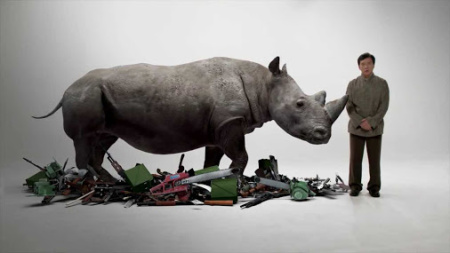
Despite strong demand for ivory among China’s rising middle class, attitudes may gradually be changing. As of 2012, nearly half of Chinese people saw elephant poaching as a problem, according to a survey by WildAid. The figure has been boosted by the support of celebrities. Yao Ming, a basketball player, and Jackie Chan, an actor, appear on posters everywhere with the message: “When the buying stops, the killing can too.” The government has donated $200m worth of media space every year since 2008.

Opinion on ivory has shifted fast, says Mr Knights, partly because of the success of another campaign, to protect sharks. In the markets of Guangzhou, the global centre for the trade, dried shark fins have fallen from 3,000 yuan ($470) per kilo five years ago to 1,000 yuan today, as Chinese people abjure shark-fin soup, a delicacy.  WildAid raised its voice over that issue, too, but more important was the Communist Party’s ban in 2013 of shark-fin soup at official banquets, part of a drive against corruption and excess. The Hong Kong government followed, as did airlines and hotels. A survey in 2013 found 85% of people said they had stopped eating shark-fin soup in the past three years.

One scourge is untouched by all this: the illegal trade in rhinoceros horn. More than 1,200 rhinos were killed for their horns in 2014 in South Africa alone, up from just 13 killed in 2007. This partly reflects a huge rise in demand in Vietnam, but China is also a consumer. Ground rhino horn is believed to cure fever and improve sexual performance. One kilo can cost up to $70,000.

Ominously, some African nations now want a one-off sale of rhino-horn stocks, as happened twice with ivory. To secure this, South Africa must win two-thirds of the member states at the next CITES conference…

Excerpts from Animal conservation: The elephants fight back, Economist, Nov. 21, 2015, at 44

Slavery Markets for Kids

Crowdsourcing project Tomnod (part of the DigitalGlobe company) is working with the public-private partnership The Global Fund to End Slavery to produce accurate and public data on slavery.More than 20,000 children are forced into slavery on Lake Volta, Ghana, the International Labour Organization estimates.They work 19-hour days and carry out dangerous tasks which leave many disabled, disfigured or even dead, campaigners say. Yet the size of the lake, 8,500  square kilometres (3,280 sq miles), makes it difficult to map from the ground and provide an exact figure of the number of child slaves, said Caitlyn Milton at Tomnod, part of the satellite company DigitalGlobe..  More than 10,000 volunteers have contributed to the campaign since it launched in mid-October 2015.

Although child labour is illegal in Ghana, thousands of children are sent away by parents who believe traffickers’ promises of an education and a better life.  In reality, children as young as four years old risk their lives diving into the lake’s murky waters to untangle nets, and end up working in such horrendous conditions that many die.  For other parents, selling some of their children into slavery is the only way to feed the rest of their family.  The average couple in the Lake Volta region earns little over $2,000 a year, meaning that a family with eight children will have only $2 a week – the price of a loaf of bread – to feed each child, according to The Global Fund to End Slavery….

“Unfortunately you don’t have to look hard to find children working on the lake, but it takes a lot to mount rescue operations that are backed up by the long-term support necessary to ensure children are not retrafficked,” Kofi Annan said.  Yet hard data could increase the government’s efforts to end slavery, by prosecuting traffickers and providing social support so that there is somewhere for children to escape to, he added.

Tomnod has run other projects including monitoring illegal fishing in Costa Rica and locating elephant poachers in the Democratic Republic of Congo…

Excerpts from Eyes in the sky: online “mappers” track child slavery in Ghana, Reuters, Oct. 28, 2015

Sumatran Rhinos

The last Sumatran rhino in the Western Hemisphere began a journey on October 30, 2015 from Ohio, United States to its ancestral southeast Asian homeland on a mission to help preserve the critically endangered species. …Conservationists hope Harapan can mate with one or more of the three females in the Sumatran Rhino Sanctuary in Way Kambas National Park….Numbers of the two-horned “hairy rhinos,” descendants of Ice Age wooly rhinos, have fallen by some 90 percent since the mid-1980s as development of their forest habitat and poachers seeking their horns took their toll. Including three Sumatran rhinos in a sanctuary in Malaysia, only nine are in captivity globally.

Harapan’s departure ends the Cincinnati Zoo’s captive breeding program for the species that produced three rhinos….Indonesian officials are anxious to get Harapan to their sanctuary. They have said they don’t want to be dependent on other countries in conservation efforts by sending rhinos to be bred abroad, but welcome technological or scientific assistance for their breeding program.Conservationists and government officials met in Singapore in 2013 for a Sumatran Rhino Crisis Summit to discuss ways to save the species.

Excerpts from DAN SEWELL, Sumatran Rhino Begins US-Asia Trip to Ancestral Home, Associated Press, Oct. 30, 2015


Privatization of Army: Nigeria

Private security is big business in Nigeria. The country suffers bombings in the north, sectarian violence in the centre and simmering insecurity in the oil-producing south-east. Red24, a Scottish security firm, says more than 600 people are kidnapped in the country every year, putting it among the five worst for that sort of crime…  [There are] 1,500 and 2,000 private security companies in Nigeria. Because they cannot legally carry weapons, armed units must be hired from national forces….Private companies pay the security forces handsomely. But that also encourages commanders to hire out their men. The result is a privatisation of public security, reckons Rita Abrahamsen, a professor at the University of Ottawa. In 2011 a retired deputy inspector-general estimated that up to 100,000 police officers (about a third of the country’s total) were working for “a few fortunate individuals”, and questioned what that meant for regular Nigerians. Martin Ewence, a British naval commander turned consultant, reckons that the navy in effect has “given over its maritime security responsibilities”.

In the worst cases, the private-security culture fuels conflict. Oil companies in the Niger delta have been criticised for arming Nigeria’s Joint Task Force in a bid to secure their assets. The task-force’s combination of police, army and naval personnel, whose houseboats are moored in the delta’s greasy creeks to “tax” passing barges, are accused of human-rights abuses and involvement in the theft of oil.

Private security in Nigeria: Rent-a-cop, Economist, Oct. 17, 2015, at 54

The Rule of Law in Afghanistan?

Office of the Special Inspector General for Afghanistan Reconstruction, known as SIGAR: Rule of Law in Afghanistan: U.S. Agencies Lack a Strategy and Cannot Fully Determine the Effectiveness of Programs Costing More Than $1 Billion

U.S. efforts to develop the rule of law in Afghanistan have been impaired by four significant factors. First, U.S agencies lack a comprehensive rule of law strategy to help plan and  guide their efforts. Second, DOD [US Department of Defense] is unable to account for the total amount of funds it spent to support rule of law development. Third, DOD, DOJ [US Department of Justice], State Department, and USAID all have had problems measuring the performance of their respective rule of law programs.

Fourth, U.S. efforts are undermined by significant challenges from pervasive corruption in Afghanistan’s justice sector and the uncertainty regarding whether the Afghan government can or will sustain U.S. program activities and reforms.

U.S. agencies—led by DOD, DOJ, State, and USAID—lack a current, comprehensive interagency rule of law strategy to help plan and guide U.S. rule of law development efforts in Afghanistan….SIGAR determined that DOD, DOJ, State, and USAID have spent more than $1 billion on at least 66 programs since 2003 to develop the rule of law in Afghanistan.

Illegal Waste from Canada to Philippines

Fifty containers of Canadian garbage, including used adult diapers, have been languishing in the port of Manila in the Philippines for almost two years and setting off recent protests by environmental and public health activists.The activists, among them a Catholic priest, say the containers hold toxic and hazardous waste, although a recent study by Philippines officials suggests they’re simply stuffed with household garbage.

Late last year (2014), the Philippines government recommended the containers be returned to Canada under the provisions of the Basel Convention, which prohibits developed countries from shipping waste to developing nations.“The Basel Convention says, as a developed country, (Canada) cannot export waste,” Filipino environment secretary Ramon Paje said in a televised interview. “That would be considered as dumping.”…

A spokeswoman for Foreign Affairs (Canada) reiterated the government’s long-stated opinion that the case is a private commercial matter involving a Canadian company and its Philippines partner.….Chronic Inc., a plastics exporter based in Whitby, Ontario , shipped the containers — supposedly filled with recyclable Vancouver plastics — to the Philippines in the spring and summer of 2013. But upon inspection, the country’s Bureau of Customs found the containers were filled with stinking household garbage, including used adult diapers and kitchen waste.

The bureau said the material could “pose biohazard risks” and impounded the shipment.
Jim Makris, head of the Lee-Anne Goodmandenied last year that he shipped garbage to the Philippines….The Philippine Daily Inquirer reported in 2014 that the Bureau of Customs is investigating the 150-worker plant in Valenzuela City started by Makris to sort and sell the plastic he ships.

Excerpts from Lee-Anne Goodman, 50 containers of Canadian garbage rots in Manila for two years, Canadian Press, Mar. 20, 2015

Corruption Begets Corruption: Nigeria Oil

Dead fish wash up on the once-fertile shores of creeks around Bodo, a town in the Niger delta, that are covered with crude oil more than six years after two massive spills. Locals have only now received compensation from Shell, the oil firm responsible for the leaks. For the first time in half a decade, fishermen have cash to start businesses, repair their houses and send children to school… “Look,” says the chief of a tiny town called B-Dere, just a few miles from Bodo. He gestures to the deathly-black banks still bearing the marks of the slicks. “There is nothing to drink, nowhere to fish. What good has come from it?”

The cash that the oil industry provides has greased Nigerian politics for decades. Gross mismanagement and corruption in the industry are the causes of much of the inequality and discontent with the ruling party in an economy that is not just Africa’s largest but that ought to also be one of its wealthiest…

Nigeria pumps something like 2m barrels of oil a day. These account for most of its exports and about 70% of government revenues. But official figures are as murky as its polluted creeks. Volumes are recorded only at export terminals rather than at the wellhead, says Celestine AkpoBari of the Port Harcourt-based advocacy group, Social Action. Were a proper tally kept, he says, corruption would be exposed on a scale that would shock even the most cynical Nigerian.

It seems likely that more than 100,000 barrels of crude are stolen (or “bunkered” in the local parlance) every day, at a cost to the state and investors of billions of dollars a year. Politicians, oil workers and security forces are said to be behind the complex cartels that steal, illegally refine and sell crude oil. They have amassed almost unimaginable wealth in a country where poverty is still rife.

Oil’s taint has seeped into almost all levels of government and business. Yet the central problem is found in the petroleum ministry, which wields vast unaccountable power. The Nigerian National Petroleum Corporation (NNPC), a state-owned behemoth, is responsible for all aspects of the industry, from exploration to production and regulation. It is among the most secretive oil groups in the world, and is “accountable to no one”, says Inemo Samiama, country head of the Stakeholder Democracy Network, a non-profit group.

In 2013 the former governor of the central bank, Lamido Sanusi, alleged that $20 billion in oil revenues was missing from state coffers. He was fired for his troubles soon after. …

Even where cash has not been nicked, it has often been squandered. Take the Excess Crude Account (ECA), a sovereign-wealth fund intended to cushion Nigeria’s budget against falling oil prices. Most of it was spent over the past two years, despite oil prices being relatively high for most of that period.

The industry itself is in as sorry a state as the government’s finances. Although oil practically gushes from the ground in parts of the delta, oil output has been stagnant for years and billions of dollars of investment are stalled because of uncertainty over a new law for the industry.  This is holding back Nigeria’s economy almost across the board. Because the industry has failed to build the infrastructure to pipe gas to domestic consumers such as power plants, much of it is simply flared and burned: Britain reckons that some $800m worth of Nigeria’s gas a year goes up in smoke. The country is also chronically short of fuel even though it has four state-owned oil refineries. Because of poor maintenance and ageing equipment they operate at well below capacity, forcing Nigeria to import about 70% of the fuel it needs. There is little incentive for reform since the government pays hefty subsidies to NNPC to keep on importing…

But a starting point should be to halt subsidies for fuel imports. At a stroke that would undercut a major source of corruption and crime (both on land and at sea) that spills into neighbouring countries, the destination for smuggled consignments of cheap Nigerian fuel. It should also take a close look at NNPC, which should not be allowed both to participate in the market and regulate it. Some of its assets could be privatised. The ruling party and opposition are considering both….

For communities in Ogoniland, the most pressing problem is cleaning up. Shell has promised to mop up the mess around Bodo, though the process has yet to start. Compensation is one thing, Bodo residents say, but what they really want is their livelihood back.

Nigeria’s oil: Crude politics, Economist,  Mar. 28, 2015, at 54

Slavery and the Fishing Industry

Maung Toe, an immigrant from Myanmar, laboured unpaid for six months on a Thai ship fishing illegally in Indonesian waters…naval patrols came close, but the crew would evade them. He had been forced aboard at gunpoint and sold by a broker to the captain for $900. It was the first time he had ever seen the sea.

Mr Maung’s story is told by the Environmental Justice Foundation (EJF), a charity, in a recent study of trafficking and piracy in Thailand’s seafood industry. The country hosts tens of thousands of trafficking victims, by conservative estimates, many from Myanmar, as well as from Cambodia and Bangladesh. Many of them sweat on trawlers or in vast fish-processing plants. Some were duped by recruitment agents; a few were kidnapped. Others are migrants who were waylaid by traffickers while travelling through Thailand.

Overfishing is partly to blame. Average catches in Thai waters have fallen by 86% since the industry’s large expansion in the 1960s. Such meagre pickings have driven local workers out of the industry and encouraged captains to seek ultra-cheap alternatives. Boats now fish farther afield and stay at sea for months at a time, making slavery harder to spot.

International pressure is mounting. The American government ranks Thailand among the least effective of all countries in fighting trafficking, along with Iran, North Korea and Syria. Food firms in Europe and North America—who together purchase about a third of Thailand’s fish exports—seem concerned. Last year the prime minister, Prayuth Chan-ocha, promised tougher enforcement. At a press conference this month, the authorities said they had identified nearly 600 trafficking victims in 2014.

But cynics worry that the military government in power since a coup last May will turn a blind eye again once the immediate threat to exports fades. Frank discussion of the business seems to be discouraged. Two journalists in Phuket—an Australian and a Thai—may face a defamation trial for republishing sentences from a Reuters article alleging that navy personnel had helped traffickers. In January  2015 campaigners forced the government to drop a plan to put convicts to work on fishing boats—a policy probably intended to dampen demand for bonded labour. A broader shift towards respecting human rights seems some way off.

Excerpts, Slavery and seafood: Here be monsters, Economist, Mar. 14, 2015, at 62

From Switzerland: Stolen Money Trickles Back to Nigeria

Geneva’s public prosecutor will send $380 million confiscated from the family of Nigeria’s former military ruler Sani Abacha to Nigeria and closed a 16-year investigation into his funds, the prosecutor’s office said.   Abacha stole as much as $5 billion of public money during his five years running Africa’s top oil producing country from 1993 until his death in 1998, according to the corruption watchdog Transparency International.

The return of the $380 million follows an agreement between Nigeria and the Abacha family in July 2014, the prosecutor’s statement said. The agreement provides for Nigeria to receive the frozen funds in return for dropping a complaint against Abba Abacha, Sani’s son.He was charged by a Swiss court with money-laundering, fraud and forgery in April 2005, after being extradited from Germany, and subsequently spent 561 days in custody. In 2006 Switzerland ordered funds held by him in Luxembourg to be confiscated.  The return of the funds is conditional on effective monitoring by the World Bank of how the funds are used.

Switzerland to return $380 million of Abacha’s loot to Nigeria, Reuters, Mar. 19, 2015

Illegal Nuclear Imports – Lebanon

Parliament Speaker Nabih Berri has filed a lawsuit against merchants responsible for importing radioactive products into Lebanon, a judicial source told The Daily Star Thursday.  Berri filed the case with the State Prosecution on March 11, 2015, on behalf of himself as both a citizen of Lebanon and the speaker of Parliament, the source added.

The case targets those who participated “in the crime of importing radioactive products to Lebanon, which has negative effects on public health and the environment.”Berri requested that the locations of radioactive products be determined, the suspects detained and the material sent back to the source. State Prosecutor Judge Samir Hammoud tasked criminal investigators with carrying out the probe…

The move came after the local newspaper As-Safir reported that Defense Minister Samir Moqbel had made a decision to transform a  into a landfill for radioactive waste.  After Berri voiced his rejection to the plan, Army Commander Gen.Jean Kahwagi assured him that it would not go through.  The Secretary General of the National Council for Scientific Research Mouin Hamzeh also told As-Safir that the plan violated environmental laws, because the landfill would be close to touristic and residential areas….

As-Safir’s report also stated that “gangs and mafias” had been smuggling radioactive products from Syria and Iraq through illegal crossings on the Lebanese borders.

Excerpt, Lebanon speaker sues over radioactive imports, Daily Star, Mar. 12, 2015


Parliament Speaker Nabih Berri has filed a lawsuit against merchants responsible for importing radioactive products into Lebanon, a judicial source told The Daily Star Thursday.  Berri filed the case with the State Prosecution on March 11, 2015, on behalf of himself as both a citizen of Lebanon and the speaker of Parliament, the source added.

The case targets those who participated “in the crime of importing radioactive products to Lebanon, which has negative effects on public health and the environment.”Berri requested that the locations of radioactive products be determined, the suspects detained and the material sent back to the source. State Prosecutor Judge Samir Hammoud tasked criminal investigators with carrying out the probe…

The move came after the local newspaper As-Safir reported that Defense Minister Samir Moqbel had made a decision to transform a  into a landfill for radioactive waste.  After Berri voiced his rejection to the plan, Army Commander Gen.Jean Kahwagi assured him that it would not go through.  The Secretary General of the National Council for Scientific Research Mouin Hamzeh also told As-Safir that the plan violated environmental laws, because the landfill would be close to touristic and residential areas….

As-Safir’s report also stated that “gangs and mafias” had been smuggling radioactive products from Syria and Iraq through illegal crossings on the Lebanese borders.

Excerpt, Lebanon speaker sues over radioactive imports, Daily Star, Mar. 12, 2015

Scramble for Africa II – Secret Cables

Africa emerges as the 21st century theatre of espionage, with South Africa as its gateway, in the cache of secret intelligence documents and cables seen by the Guardian. “Africa is now the El Dorado of espionage,” said one serving foreign intelligence officer.

The continent has increasingly become the focus of international spying as the battle for its resources has intensified, China’s economic role has grown dramatically, and the US and other western states have rapidly expanded their military presence and operations in a new international struggle for Africa…. The leaked documents obtained by al-Jazeera and shared with the Guardian contain the names of 78 foreign spies working in Pretoria, along with their photographs, addresses and mobile phone numbers – as well as 65 foreign intelligence agents identified by the South Africans as working undercover. Among the countries sending spies are the US, India, Britain and Senegal.

The United States, along with its French and British allies, is the major military and diplomatic power on the continent. South Africa spends a disproportionate amount of time focused on Iran and jihadi groups, in spite of internal documents showing its intelligence service does not regard either as a major threat to South Africa. “The Americans get what they want,” an intelligence source said…

Chinese intelligence is identified in one secret South African cable as the suspect in a nuclear break-in. A file dating from December 2009 on South Africa’s counter-intelligence effort says that foreign agencies had been “working frantically to influence” the country’s nuclear energy expansion programme, identifying US and French intelligence as the main players. But due to the “sophistication of their covert operations”, it had not been possible to “neutralise” their activities.

However, a 2007 break-in at the Pelindaba nuclear research centre – where apartheid South Africa developed nuclear weapons in the 1970s – by four armed and “technologically sophisticated criminals” was attributed by South African intelligence to an act of state espionage. At the time officials publicly dismissed the break-in as a burglary.

Several espionage agencies were reported to have shown interest in the progress of South Africa’s Pebble Bed Modular Reactor. According to the file, thefts and break-ins at the PBMR site were suspected to have been carried out to “advance China’s rival project”. It added that China was “now one year ahead … though they started several years after PBMR launch”.

In an October 2009 report by South Africa’s intelligence service, the National Intelligence Agency (NIA), on operations in Africa, Israel is said to be “working assiduously to encircle and isolate Sudan from the outside, and to fuel insurrection inside Sudan”. Israel “has long been keen to capitalise on Africa’s mineral wealth”, the South African spying agency says, and “plans to appropriate African diamonds and process them in Israel, which is already the world’s second largest processor of diamonds”.  The document reports that members of a delegation led by then foreign minister Avigdor Lieberman had been “facilitating contracts for Israelis to train various militias” in Africa…

[According to leaked documents]: “Foreign governments and their intelligence services strive to weaken the state and undermine South Africa’s sovereignty. Continuing lack of an acceptable standard of security … increases the risk.” It lists theft of laptop computers, insufficient lock-up facilities, limited vetting of senior officials in sensitive institutions, no approved encryption on landlines or mobiles, total disregard by foreign diplomats for existing regulations, ease of access to government departments allowed to foreign diplomats, and the lack of proper screening for foreigners applying for sensitive jobs.  According to one intelligence officer with extensive experience in South Africa, the NIA is politically factionalised and “totally penetrated” by foreign agencies: “Everyone is working for someone else.” The former head of the South African secret service, Mo Shaik, a close ally of the president, Jacob Zuma, was described as a US confidant and key source of information on “the Zuma camp” in a leaked 2008 Wikileaks cable from the American embassy in Pretoria.

Excerpts Seumas Milne and Ewen MacAskill Africa is new ‘El Dorado of espionage’, leaked intelligence files , Guardian, Feb. 23, 2015

Catching Illegal Fishers

From INTERPOL: Between 6 and 13 January, 2005 a Royal New Zealand Naval Patrol spotted the vessels – the Yongding, the Kunlun and the Songhua – hauling gill nets laden with toothfish in an area regulated by the Convention on the Conservation of Antarctic Marine Living Resources (CCAMLR) where such fishing methods are prohibited.

——

The Pew Charitable Trusts, an American research group… reckons that around one fish in five sold in restaurants or shops has been caught outside the law. That may amount to 26m tonnes of them every year, worth more than $23 billion. This illegal trade, though not the only cause of overfishing, is an important one…

The new monitoring system has been developed by the Satellite Applications Catapult, a British government-backed innovation centre based at Harwell, near Oxford, in collaboration with Pew. In essence, it is a big-data project, pulling together and cross-checking information on tens of thousands of fishing boats operating around the world. At its heart is what its developers call a virtual watch room, which resembles the control centre for a space mission. A giant video wall displays a map of the world, showing clusters of lighted dots, each representing a fishing boat.

The data used to draw this map come from various sources, the most important of which are ships’ automatic identification systems (AIS). These are like the transponders carried by aircraft. They broadcast a vessel’s identity, position and other information to nearby ships and coastal stations, and also to satellites. An AIS is mandatory for all commercial vessels, fishing boats included, with a gross tonnage of more than 300. Such boats are also required, in many cases, to carry a second device, known as a VMS (vessel monitoring system). This transmits similar data directly to the authorities who control the waters in which the vessel is fishing, and carrying it is a condition of a boat’s licence to fish there. Enforcement of the AIS regime is patchy, and captains do sometimes have what they feel is a legitimate reason for turning it off, in order not to alert other boats in the area to profitable shoals. But the VMS transmits only to officialdom, so there can be no excuse for disabling it. Switching off either system will alert the watch room to potential shenanigans.

The watch room first filters vessels it believes are fishing from others that are not. It does this by looking at, for example, which boats are in areas where fish congregate. It then tracks these boats using a series of algorithms that trigger an alert if, say, a vessel enters a marine conservation area and slows to fishing speed, or goes “dark” by turning off its identification systems. Operators can then zoom in on the vessel and request further information to find out what is going on. Satellites armed with synthetic-aperture radar can detect a vessel’s position regardless of weather conditions. This means that even if a ship has gone dark, its fishing pattern can be logged. Zigzagging, for example, suggests it is long-lining for tuna. When the weather is set fair, this radar information can be supplemented by high-resolution satellite photographs. Such images mean, for instance, that what purports to be a merchant ship can be fingered as a transshipment vessel by watching fishing boats transfer their illicit catch to it.

As powerful as the watch room is, though, its success will depend on governments, fishing authorities and industry adopting the technology and working together, says Commander Tony Long, a 27-year veteran of the Royal Navy who is the director of Pew’s illegal-fishing project. Those authorities need to make sure AIS and VMS systems are not just fitted, but are used correctly and not tampered with. This should get easier as the cost of the technology falls.

Enforcing the use of an identification number that stays with a ship throughout its life, even if it changes hands or country of registration, is also necessary. An exemption for fishing boats ended in 2013, but the numbering is still not universally applied. Signatories to a treaty agreed in 2009, to make ports exert stricter controls on foreign-flagged fishing vessels, also need to act. Fishermen seek out ports with lax regulations to land illegal catches….

The watch room will also allow the effective monitoring of marine reserves around small island states that do not have the resources to do it for themselves. The first test of this approach could be to regulate a reserve of 836,000 square kilometres around the Pitcairn Islands group, a British territory in the middle of the South Pacific with only a few dozen inhabitants.

The watch-room system is, moreover, capable of enlargement as new information sources are developed. One such may be nanosats. These are satellites, a few centimetres across, that can be launched in swarms to increase the number of electronic eyes in the sky while simultaneously reducing costs. Closer to the surface, unmanned drones can do the same.

Combating illegal fishing: Dragnet, Economist, Jan 24, 2015, at 70

Only One Protester was Killed: Kenya

One person was killed and several injured in January 26, 2015 when Kenyan police clashed with Maasais protesting against a local governor they accuse of misappropriating tourism funds from the Maasai Mara game reserve, an official said.  Police fired shots and teargas as thousands of people from the Maasai ethnic group, clad in traditional red cloaks, marched to the governor’s office in Narok town, the administrative centre of the sprawling Maasai Mara park, witnesses said.

Narok County Commissioner Kassim Farah, an official appointed by the president, said: “Only one protestor was killed by a bullet.  “We regret it but the organisers of the demonstration should be held responsible, not the police.” Kenya Red Cross said seven people injured in the clashes were taken to a nearby hospital.

Demonstrators marched to the gates of Governor Samuel Tunai’s office, shouting: “Tunai must go.” Some hurled rocks. The dispute began when Tunai’s administration contracted a company to collect Maasai Mara park entry fees, a deal the locals say was suspect.

Visitors to the Maasai Mara, one of Africa’s biggest tourist draws, pay $80 per day to roam an area full of wildlife such as lions, rhinos and giraffes. Upmarket lodges and luxury tented camps can charge hundreds of dollars per person per day for the experience, although a spate of militant attacks in Kenya as well as the Ebola epidemic on the other side of Africa have scared off many tourists….

Local government finance has come under increased scrutiny from Kenyans since a newly devolved system was introduced in 2013 under which local governments receive about 43 percent of the national budget directly and are responsible for raising their own additional revenues.  Devolution was designed to spread wealth and help local communities benefit from revenue earned in their areas but analysts say corruption and other issues that have blighted national politics have now also spread to local bodies

Corruption protest in Kenya’s Maasai Mara region turns deadly, Reuters, Jan. 27, 2015

Feudal System of Piracy in Africa

Just a few years ago the most dangerous waters in the world were off the coast of Somalia. But piracy there has fallen dramatically. It is more than two years since Somali pirates last successfully boarded a ship. At their peak in 2011, attacks were taking place almost daily. The number of attempts has fallen to a handful every month. Now it is the Gulf of Guinea that is the worst piracy hotspot, accounting for 19% of attacks worldwide, as recorded by the International Maritime Bureau. It registers an attack nearly every week  The numbers are probably underestimates. America’s Office of Naval Intelligence reckons the real figure is more than twice as large—and growing.

The nature of piracy is quite different on the two sides of the continent. Around the Horn of Africa in the east, Somali pirates seek to seize ships and crews for ransom, and have ventured deep into the Indian Ocean. In the Gulf of Guinea in the west, attackers are more intent on stealing cash and cargoes of fuel, such as diesel, from ships coming in to port. Crews are sometimes kidnapped.

It is a quicker hit than the Somali hostage-taking. It also tends to be more violent because the attackers have little incentive to keep the crews safe. Armed resistance is often met with heavy machine guns and military tactics, says Haakon Svane, of the Norwegian shipowners’ association. Ships are seized for a few days, anchored quietly and cargoes are siphoned off into smaller vessels. The gangs also appear to have good intelligence, security sources say: they often know which ships to attack and they recruit the skilled crewmen needed to operate the equipment.

Frequently the targets are themselves involved in regional smuggling, so they switch off transponders or assume false identities, making it hard for rudimentary anti-piracy forces to keep track of them. Moreover, they do not report attacks.

Incidents have stretched all the way from the Ivory Coast to Angola, but the root of the problem lies in Nigeria. Most acts of piracy are committed in Nigerian seas, by Nigerian criminals. The trouble at sea is ultimately tied to the country’s dysfunctional oil industry and the violent politics of the Niger Delta, where most of the oil is produced. Nigeria is the world’s eighth-largest oil producer; nevertheless, it suffers from shortages of refined fuels.

Widespread “bunkering” (the term Nigerians use for the theft of oil) and a violent insurgency created the conditions for piracy to flourish. Analysts say there tend to be spikes in both bunkering and maritime criminality before elections, which may mean that politicians are using illicit means to finance themselves. If so, expect pilfering to rise as Nigeria’s presidential vote nears in February. “The ransoms are used for the elections,” says Hans Tino Hansen, managing director of the Risk Intelligence consultancy. He points to a “feudal system” in which politicians protect pirates in return for a cut of their profits. An added problem is that elections may divert the attention of the security agencies…Te worry is that piracy, itself, is becoming enmeshed with drugs- and arms-smuggling networks linked to violent jihadist groups in the Sahel.

Piracy in Africa: The ungoverned seas, Economist, Nov 29, 2014, at 44

Who Slaughters the Elephants?

Across Africa the illegal slaughter of elephants is accelerating at such a pace—recent estimates put the number killed at 100,000 in just three years—that it threatens to exterminate whole populations. The worst of this butchery takes place in Tanzania, the biggest source of illegal ivory.

Every third poached elephant in Africa dies on the watch of Tanzania’s president, Jakaya Kikwete…One contributing factor may be the government’s failure to investigate and if necessary prosecute high-level offenders. Some of these are said to be closely connected to the ruling Party of the Revolution (CCM), which has dominated the politics of Tanzania since the country’s mainland became independent.  State corruption runs through Tanzania’s illegal ivory trade from savannah to sea. At the bottom of the poaching networks are hired helpers who are often recruited from the armed forces. If caught, officers are transferred to new posts rather than fired. Some allege that soldiers rent out guns to poachers….

Police have even been known to escort convoys of illicit ivory….Other armed forces and governments are also said to be involved. A report by the Environmental Investigation Agency, a non-profit group in London, documents involvement in the illegal ivory trade by Chinese government and military officials. Yet it is allegations of corruption closer to the top of the Tanzanian ruling party that are of the greatest concern

Tanzania’s dwindling elephants: Big game poachers, Economist, Nov. 8, 2014, at 53

States Captured by their Energy Companies – Canada

Few governments have aligned their interests so closely to those of their country’s energy and mining firms as Canada’s Conservative administration. The prime minister, Stephen Harper, has boasted of Canada as an “emerging energy superpower”. Under the banner of “responsible resource development”, his government has done its best to ease the way for minerals firms, at home and abroad, including directing some foreign aid to countries where Canadian firms wanted to drill. Ministers point with pride to the C$174 billion ($169 billion) in export revenues from sales of minerals, oil and gas in 2013 and to the fact that Canada is home to more than half of the world’s publicly listed exploration and mining companies.

But the downside of seeming so cosy with extractive firms is that whenever one of them gets in trouble—an inevitable occurrence with 1,500 firms active in more than 100 countries—the country’s image is tarnished too. So the government has recently begun to reduce that vulnerability by taking a stricter line on corporate social responsibility (CSR) and bribery by Canadian firms operating abroad. Protecting the national brand is “a huge part of it,” says Andrew Bauer of the Natural Resource Governance Institute, a group that monitors the industry and lobbies for openness.

Ed Fast, the international trade minister, admitted as much on November 14th, as he introduced new rules that require Canadian resources firms involved in disputes with local communities to take part in a resolution process. If any firms refuse, the government will withdraw its economic diplomacy on their behalf…[In the meantime there are ] protests against Canadian firms’ projects, from Romania where environmentalists are objecting to plans for an opencast gold mine, to Guatemala, where guards at a nickel mine have been accused of gang rape…

A new Canadian law  was introduced in October 2014 to curb bribery by mining and energy firms by demanding more transparency from them. The law, which still must be fleshed out in detailed regulations, requires them to disclose all payments made to domestic and foreign governments…It helped that the law was backed by an unusual coalition of non-government organisations and mining companies themselves. T  It seems that the miners’ experience in dealing with local communities is making them more sensitive to their concerns about corruption and other ills. In contrast, the oil and gas firms are lobbying for the transparency law to be weakened. They want to be given exemptions in countries whose local laws conveniently prohibit the disclosure of such payments. They also want to avoid having to give a project-by-project breakdown of their payments, without which the information would be of little use.

Excerpt Canada’s natural-resources companies: Reputation management, Economist, Nov. 22, 2014

The Division of Libya

Libya’s self-proclaimed prime minister [Omar al-Hassi] has warned that attempts by a rival government in the east to assert control over the oil industry could escalate the political conflict dividing the OPEC member state and force it to break in two.  Libya has had two governments competing for power since August 2014 when a group called Operation Libya Dawn, which opponents say is backed by Islamists, seized Tripoli and forced the elected Prime Minister Abdullah al-Thinni to flee 1,000 km to a small city near the border with Egypt.

The warning by Omar al-Hassi, prime minister of the rival government, came after Thinni’s government claimed air strikes on Tripoli’s Mitigate airport this week, escalating a confrontation that started with an attack by Libya Dawn on a rival force in Tripoli in July.  The new rulers in the capital are not recognised by the United Nations and world powers but have taken over ministries, oil facilities, airports and much of western and central Libya.

In a step to assert control over the oil industry, Thinni’s government said it had appointed a new chairman of the National Oil Corp. Thinni had initially retained the state oil firm’s previous head, Mustafa Sanallah, but he remains in Tripoli.  The conflict gripping Libya three years after the overthrow of Muammar Gaddafi poses a legal dilemma for oil traders, who are left wondering who owns Libya’s oil exports, worth more that $10 billion a year. The country sits on Africa’s largest oil reserves…

“There are attempts (by Thinni) to set up an eastern Supreme Court, there are attempts to launch a central bank in the east, there are attempts to establish a separate oil ministry in the east,” said Hassi, who said he was against partition.

Thinni’s government has sought to move heads of state-run institutions to the east as he is recognised by the international community, but he too denies any plans for secession.

But Hassi said Thinni’s government had shown it intended to control oil facilities in the eastern rump state by picking al-Mabrook Bou Seif as new NOC Chairman, since he was from the same tribe as Ibrahim Jathran, a former rebel leader who seized eastern ports for a year to press for regional autonomy.

Struggle over Libya’s oil risks breaking up country -rival PM, Reuters,  Nov. 28, 2014

Drones and the Anti-Poaching War: Tanzania

The Tanzania National Parks Authority (TANAPA) says it is looking to deploy the French-made Delair Tech DT-18 unmanned aerial vehicle (UAV) to carry out surveillance operations over key national reserves to protect critically endangered elephant and rhinos from poachers.

This follows successful test-flights of the DT-18 UAV over the Tarangire National Park last week by private Tanzanian company Bathawk Recon…Bathawk Recon is a private company which was set up to develop and deploy UAV surveillance systems for national parks and game reserves.  Its representative Mike Chambers said the UAV had performed to their satisfaction in both day and night surveillance operations. He said the DT 18 can fly multiple day and night missions thanks to an infrared camera….

TheDT-18 trials were conducted under the auspices of the (Tanzanian) Private Sector Anti Poaching Initiative which seeks to bring the private sector to participate in war against poaching.The UAV systems will be operated by the Wildlife Crime Unit (WCU) of the national parks authority. Tanzania is battling a serious rhino and elephant poaching crisis and the populations of both species have continued to decline in the last few years. The most affected are Selous Game Reserve, Tarangire National Park and Ruaha Game Reserve.  Some 30 elephants are killed every day in Tanzania by poachers.

Excerpts from Oscar Nkala, Tanzania seeking to deploy DT-18 UAVs in anti-poaching war, DefenceWeb.com, Nov. 12, 2104

Why Rhino Poaching Goes on Forever

Mistrust in police ranks, a shortage of proper intelligence structures and an easy exit through South Africa’s more than nine harbours are all stumbling blocks specialised police experience in the ongoing battle against rhino poaching.

This was how Colonel Johan Jooste, operational commander of the Hawks endangered species unit in South Africa outlined some issues facing his unit. He was addressing the 35th international conference of crime fighters in Cape Town this week, Netwerk24 reports.“…We find instances where police are involved in rhino poaching syndicates,” he said, adding police detailed to anti- and counter-poaching should receive specialist training….

Knowledgeable hunters in South Africa are recruited by buyers of rhino horn. They are also responsible for removing the horn and taking it to the next person in the chain, usually someone responsible for transport.  “It can be someone who knows the area well and can also be either a policeman or a traffic officer,” he said, adding the horn was stored or taken to places such as harbours for illegal export.  The Kruger National Park has this year lost 503 rhinos to poachers out of a national total of 787.

Excerpts, Rhino poachers present different challenges to the Hawks, defenceWeb, Tuesday, Oct. 14 2014

Electronic Waste: 100 million tonnes 2020

Exports of electronic waste or e-waste are banned in Europe, but remain legal in America. The United States is the only developed country that has refused to ratify the 1989 Basel Convention, an international treaty controlling the export of hazardous waste from wealthy countries to poorer ones. America has also refused, along with Canada and Japan, to accept the Basel Convention’s 1995 amendment that imposes an outright ban on such trade.

There have been repeated attempts in Congress to pass legislation that would make it illegal to send toxic waste to other countries. The Responsible Electronics Recycling Act of 2013 failed to gain a consensus. A similar act, introduced in March 2014, remains stuck in the Senate.

Not that the Europeans behave all that ethically. Inspections of 18 European seaports in 2005 found nearly half the e-waste destined for export was actually illegal. Shippers use various tricks to circumvent the Basel ban. For instance, waste labelled as goods for refurbishing or reuse can pass muster, even if it gets incinerated or dumped in landfills on arrival.

Chinese authorities tried, unsuccessfully, to put a stop to such false labeling back in 2000, by banning all imports of e-waste, whatever their intended use. Today, Guiyu, a city in Guangdong province, is the e-waste capital of the world. There, glass-to-glass recycling of computer monitors and television sets costs a tenth of what it does in America. Cathode-ray tubes, with their high concentrations of lead and chemically hazardous phosphors, are the most difficult of all e-waste to process. With an abundance of recycled glass from CRTs, China has become a leading exporter of bottles and jars.

The e-waste industry in Guiyu is said to employ 150,000 people, including large numbers of children, disassembling old computers, phones and other devices by hand to recover whatever metals and parts that can be resold. Circuit boards are soaked in acid to dissolve out the lead, cadmium and other metals. Plastic cases are ground into pellets, and copper wiring is stripped of its plastic coating. Anything not salvageable is burned.

The air pollution and contamination of the local water supply in Guiyu are said to be horrendous. A medical researcher from nearby Shantou University found concentrations of lead in the blood of local children to be on average 49% over the maximum safe level. The highest concentrations were in children living in homes with workshops for recycling circuit boards on the premises.

India is fast becoming another big dumping ground for Western e-waste. Greenpeace reckons there are 25,000 workers employed in recycling computers, phones and other hardware in Delhi alone, where up to 20,000 tonnes of e-waste are processed a year. The preferred method for recycling circuit boards is to toss them into an open fire—to melt the plastics and burn away everything but the gold and copper. Similar recycling dumps have been found in Mumbai, Bangalore and several other cities.

With the global mountain of e-waste growing bigger by 8% a year, the 20m-50m tonnes the EPA reckoned was produced globally in 2009 could easily reach 100m tonnes by 2020.

Excerpts from Where Gadgets Go to Die, Economist, Sept. 6, 2014, at 9

Deforestation: mixed picture

In a new study of the Centre for Global Development (CGD), a Washington think-tank, Jonah Busch and Kalifi Ferretti-Gallon look at 117 cases of deforestation round the world. They find that two of the influences most closely correlated with the loss of forests are population and proximity to cities (the third is proximity to roads). Dramatic falls in fertility in Brazil, China and other well-forested nations therefore help explain why (after a lag) deforestation is slowing, too. Demography even helps account for what is happening in Congo, where fertility is high. Its people are flocking to cities, notably Kinshasa, with the result that the population in more distant, forested areas is thinning out.

Two of the countries that have done most to slow forest decline also have impressive agricultural records: Brazil, which became the biggest food exporter of all tropical countries over the past 20 years; and India, home of the green revolution. Brazil’s agricultural boom took place in the cerrado, the savannah-like region south and east of the Amazon (there is farming in the Amazon, too, but little by comparison). The green revolution took place mostly in India’s north-west and south, whereas its biggest forests are in the east and north.

But if population and agricultural prowess were the whole story, Indonesia, where fertility has fallen and farm output risen, would not be one of the worst failures. Figures published inNature Climate Change in June show that in the past decade it destroyed around 60,000 sq km of primary forests; its deforestation rate overtook Brazil’s in 2011. Policies matter, too—and the political will to implement them.

The central problem facing policymakers is that trees are usually worth more dead than alive; that is, land is worth more as pasture or cropland than as virgin forest. The benefits from forests, such as capturing carbon emissions, cleaning up water supplies and embodying biodiversity, are hard to price….The most successful policies therefore tend to be top-down bans, rather than incentives (though these have been tried, too). India’s national forest policy of 1988 explicitly rejects the idea of trying to make money from stewardship. “The derivation of direct economic benefit”, it says, “must be subordinated to this principal aim” (maintaining the health of the forest). In Brazil 44% of the Amazon is now national park, wildlife reserve or indigenous reserve, where farming is banned; much of that area was added recently. In Costa Rica half the forests are similarly protected. In India a third are managed jointly by local groups and state governments.

Top-down bans require more than just writing a law. Brazil’s regime developed over 15 years and involved tightening up its code on economic activity in forested areas, moratoriums on sales of food grown on cleared land, a new land registry, withholding government-subsidised credit from areas with the worst deforestation and strengthening law enforcement through the public prosecutor’s office. (The most draconian restriction, requiring 80% of any farm in the Amazon to be set aside as a wildlife reserve, is rarely enforced.)

Two developments make bans easier to impose. Cheaper, more detailed satellite imagery shows in real time where the violations are and who may be responsible. Brazil put the data from its system online, enabling green activists to help police the frontier between forest and farmland. Its moratoriums on soyabeans and beef from the Amazon, which require tracing where food is coming from, would not have worked without satellites…

The Forestry Ministry of Indonesia, [on the other hand] is rated the most corrupt among 20 government institutions by Indonesia’s Corruption Eradication Commission in 2012. Some within government are hostile to anti-deforestation schemes, which they see as “foreign”, says Ade Wahyudi of Katadata, an Indonesian firm of analysts. Perhaps the biggest problem is the lack of a single, unified map including all information on land tenure and forest licensing: efforts to create one have been slowed by unco-operative government ministries and difficulties created by overlapping land claims.

Excerpts from Tropical Forests: A Clearing in the Trees, Economist,  Aug. 23, 2014, at 56

Deaths of Rhinos in National Parks

In cold statistics the number of rhinos poached a day in South Africa has now reached three with 769 of these Big Five animals killed to… (Sept 2014).  That equates to 3.027 animals a day and the country’s (South Africa’s) internationally renowned Kruger National Park remains the preferred hunting ground for rhino poachers. Bordering on both Mozambique and Zimbabwe, the park, increased security and patrol activities notwithstanding, offers poachers fairly easy access and egress with their bounty. So far this year Kruger’s rhino population has been decimated by 489 – well over half the national loss.

Statistics released by the Department of Environmental Affairs this week show all nine of South Africa’s provinces, including mostly urban Gauteng, have now been hit by rhino poachers.  The latest kill figures come ahead of next week’s United States-South Africa: Border Surveillance Technology Co-operation Symposium at the CSIR International Convention Centre.  All eyes will be on retired SA Army general Johan Jooste, now Commanding Officer: Special Projects for SANParks based in Kruger. The title of his keynote address is “Turning the tide – borders, poaching, technology”…

US Ambassador to South Africa, Patrick Gaspard, is also carded as a speaker alongside senior representatives (unnamed at the time of publication) from Armscor; the CSIR’s Defence, Peace, Safety and Security section; SA Aerospace, Maritime and Defence Industries Association (AMD); the US Army Research Office and the US Corps of Engineers.

Excerpts from Kim Helfrich, Three rhinos shot every day in South Africa, Defence Web, Sept. 12, 2014

$10 Billion Illegal Market for Wildlife

At $10 billion a year, illegal wildlife makes up the world’s fifth-largest illicit market behind drugs, counterfeit products, trafficked people and smuggled oil. An intergovernmental conference in Geneva from July 7th-11th, 2014 revealed the special worries about ivory smuggling in Thailand, rhino-horn trafficking through Mozambique and trade in tiger parts across South and South-East Asia.

According to TRAFFIC, a lobby group, the street value of rhino horn is $60,000 per kilo—more than the price of gold. Gram for gram, bear-bile flakes or powder sell in Japan [slightly less] than cocaine in Asia. Booming demand from Asia’s growing middle classes is pushing some species close to extinction. As supply dwindles, prices rocket, which tempts criminal gangs to sink their claws in even further.

Elephant ivory is valued for aesthetic reasons. Demand for rhinoceros horns, the paws and bile of Asiatic black bears and sun bears, tiger bones and penises, and deer musk, is stimulated by the healing powers ascribed to them in traditional Chinese medicine. Rhino-horn shavings boiled in water are said to cool and to cure headaches; the brew is akin to fingernail clippings in water (both are mainly keratin, an indigestible protein). Bear bile does help with gallbladder and liver problems—but no more than the synthetic version of ursodeoxycholic acid, its main component.

In February 42 countries, including China and Japan, and the European Union signed a declaration against trade in illegal wildlife products. Chinese law punishes the purchase or consumption of endangered species with up to ten years in jail. But in May, when Philippine forces seized a Chinese vessel carrying sea turtles, giant clamshells and live sharks off the disputed Half Moon Shoal, China expressed outrage at the “provocative action”—not the illegal cargo.

The illegal trade in wild-animal products: Bitter pills, Economist, July 19, 2014, at 54

Pirates and Free Trade

Ships navigating the lawless seas of the Gulf of Aden must keep a constant lookout for Somali pirates. The roots of Somalia’s maritime banditry lie in its desperately poor coastal villages, where the choice between fishing and piracy is an easy one for many.

Anja Shortland and Federico Varese mapped the locations of hijacked ships between 2005 and 2012. They found that hijacked vessels were always anchored far away from regional trading routes, and that big ports were not prone to piracy. There is a reason for that. Somali clans control local trade by issuing licences and charging informal taxes. The researchers reckon that communities which can tax imports and exports refuse to protect pirates because trade is a safer and more lucrative source of revenue than pirate earnings. Only clans that have no other income offer the pirates protection, in return for a share of their loot…..A… solution [to piracy] would be to build new roads and ports, which would allow remote areas to start trading. With alternative sources of income, fewer communities would be willing to harbour pirates….

A former president of Puntland repeatedly requested a road be built to Eyl, a rough-and-ready coastal town, as a quid pro quo for giving up piracy. His request was turned down, and piracy continued. Time for donors to rethink where they spend their pieces of eight.

Crime in Somalia: Pirates v economist, Economist, July 12, 2014, at 42

The Oil Curse – South Sudan

South Sudan’s oil fields have become a battleground in the struggle for power in Africa’s newest nation, encouraging Western nations and regional mediators to consider international monitoring of crude revenues as a way to remove a major bone of contention from such conflicts.  South Sudan sits on Sub-Saharan Africa’s third-biggest crude reserves, and its oil fields were early targets in fighting that erupted in December 2013 and has rumbled on despite two ceasefire deals and U.N. warnings that a man-made famine looms.

It marks an alarming slide into dysfunction by a nation whose creation three years ago the United States hailed as a foreign policy success. Instead of lifting the nation out of grinding poverty, oil is blamed for stoking a war…Diplomats and regional mediators said monitoring revenues was gaining traction as an idea for discussion, though the mechanics of such a system and how the warring sides would be pushed towards a deal have not been determined….

South Sudan’s oil output has tumbled by about a third to 160,000 barrels a day since the fighting began in December 2013, but it remains the main source of cash for President Salva Kiir’s government both by selling crude and by borrowing against future earnings, digging the nation deeper into debt.  As of June 25, 2013 South Sudan owed $256 million to China’s National Petroleum Corp, which has 40 percent of a venture developing South Sudan’s oil fields, and a further $78 million to oil trader Trafigura. [a Dutch multinational commodity trading company] It plans to borrow about $1 billion from oil firms in fiscal year 2014/15, equal to about a quarter of forecast revenues.

Rebel leader Machar, who was fired as deputy president last year, said oil sites would be a “legitimate target” unless funds were put into a neutral escrow account pending any deal.

But President Salva Kiir’s government says such outside intervention would violate its sovereignty and insists it has not bought arms since fighting began.  “We are not the protectorate of anyone,” presidential spokesman Ateny Wek Ateny said. “We have the right to buy arms, but we haven’t bought anything since December,” he said, despite rebel claims of weapon shipments arriving in recent months.  Kiir and Machar come from rival ethnic groups, and the conflict has re-opened deep ethnic divisions in the country.

Monitoring revenues is on the table for talks sponsored by the regional African grouping IGAD, though diplomats acknowledge it can only be part of a broader deal on how to share wealth and power in the divided nation…South Sudan has already lost billions of petrodollars in its young life. Kiir wrote to 75 former and serving officials in 2012 seeking the return of $4 billion that disappeared since 2005. No significant amounts were repaid, diplomats said.  Though the country – the size of France – has almost no roads and only a third of its 11 million people can read, South Sudanese now watch more wealth frittered away on fighting than on building roads or paying for schools….Fighting has killed at least 10,000 people, displaced 1.5 million and left a third of the population facing the prospect of famine as they have not planted crops…

But Western diplomats say pressure for a deal on oil monitoring needs to come from the region, led by heavyweight neighbours such as Kenya and Ethiopia.China, with its oil interests, would need to support the move, though diplomats said it had worked with the West during the crisis. Alongside China, other oil investors are India’s ONGC Videsh and Malaysia’s Petronas.”  If they can get the oil sector right, share the oil revenues in a much more inclusive manner, then that will dictate the country’s future,” said Luke Patey, author of a book on Sudan and South Sudan’s oil industry.

Excerpts from South Sudan conflict drives idea of oil wealth monitoring, Reuters, Aug. 1, 2014]

The Flow of Dirty Money through Trade

A few years ago American customs investigators uncovered a scheme in which a Colombian cartel used proceeds from drug sales to buy stuffed animals in Los Angeles. By exporting them to Colombia, it was able to bring its ill-gotten gains home, convert them to pesos and get them into the banking system.This is an example of “trade-based money laundering”, the misuse of commerce to get money across borders. Sometimes the aim is to evade taxes, duties or capital controls; often it is to get dirty money into the banking system. International efforts to stamp out money laundering have targeted banks and money-transmitters, and the smuggling of bulk cash.

But as the front door closes, the back door has been left open. Trade is “the next frontier in international money-laundering enforcement,” says John Cassara, who used to work for America’s Treasury department. Adepts include traffickers, terrorists and the tax-evading rich. Some “transfer pricing”—multinationals’ shuffling of revenues to cut their tax bills—probably counts, too. Firms insist that tax arbitrage is legal, and that the fault, if any, lies with disjointed international tax rules. Campaigners counter that many ruses would be banned if governments were less afraid of scaring off mobile capital. Trade is “a ready-made vehicle” for dirty money, says Balesh Kumar of the Enforcement Directorate, an Indian agency that fights economic crime. A 2012 report he helped write for the Asia/Pacific Group on Money Laundering, a regional crime-fighting body, is packed with examples of criminals combining the mispricing of goods with the misuse of trade-finance techniques. Using trade data, Global Financial Integrity (GFI), an NGO, estimates that $950 billion flowed illicitly out of poor countries in 2011, excluding trade in services and fraudulent transfer pricing. Four-fifths was trade-based laundering linked to arms smuggling, drug trafficking, terrorism or public corruption.

The basic technique is misinvoicing. To slip money into a country, undervalue imports or overvalue exports; do the reverse to get it out. A front company for a Mexican cartel might sell $1m-worth of oranges to an American importer while creating paperwork for $3m-worth, giving it cover to send a dirty $2m back home. One group of launderers was reportedly caught exporting plastic buckets that cost $970 each from the Czech Republic to America. To lessen the risk of discovery the deal may be sent via a shell company in a tax haven with strict secrecy rules. This may mean using a specialist “re-invoicing” firm to “buy” the oranges at an inflated price with an invoice to match and charge the importer the true price. The point is to get paperwork to justify an inflated transfer to the seller. Re-invoicers are used by multinationals to shift profits around, which gives them a veneer of respectability, says Brian LeBlanc of GFI—but they also “feed a giant black market in the offshore manipulation of paperwork”…

American authorities have ratcheted up penalties for banks that assist money-launderers, knowingly or not. In 2012 they reached a $1.9 billion settlement with HSBC after concluding that Latin American drug gangs had taken advantage of lax controls at its Mexican subsidiary. And last year they imposed a $102m forfeiture order on a Lebanese bank implicated in a complex scheme involving the export of used cars to West Africa with the proceeds funnelled to Hizbullah, an Islamist group. Alternative remittance systems and currency exchanges, such as the trust-based hawala networks in Asia and the Middle East, and Latin America’s Black Market Peso Exchange (BMPE), offer another route to launder money through trade. ..A recently leaked Turkish prosecutor’s report describes an alleged conspiracy involving Turkish front companies and banks, an Iranian bank and money-exchangers in Dubai. By marking up invoices for food and medicine allowed into Iran—to as much as $240 for a pound of sugar—the scheme gave Iranian banks access to hard currency from Iran’s oil sales that was locked in escrow accounts overseas, to be transferred only for approved transactions…

In the meantime, launderers who curb their greed and invoice goods worth $10 for $9, or $11, will probably continue to get away with it. A dodgy deal is almost impossible to spot if the pricing is only slightly out and you see just one end, says one American investigator. “You can study the slips all day long, and all you see is stuff being imported and exported.”

Excerpts from Trade and money laundering: Uncontained, Economist, May 3, 2014, at 54

Corruption in Somalia

A United Nations panel that monitors compliance with U.N. sanctions on Somalia has accused Somalia’s  president, a former minister, and a U.S. law firm of conspiring to divert Somali assets recovered abroad, according to a new report.  The Somalia and Eritrea Monitoring Group, an 8-person committee, disclosed the findings in a confidential report to the U.N. Security Council’s Somalia/Eritrea sanctions committee. Reuters reviewed a copy of the 37-page document.  The U.N. Monitoring Group said the information it has gathered so far “reflects exploitation of public authority for private interests and indicates at the minimum a conspiracy to divert the recovery of overseas assets in an irregular manner.”

Most of the overseas assets were frozen at the outset of the civil war in 1991 and include cash and gold held in banks during two decades of chaos and conflict in Somalia, as well as government properties on foreign soil.  What the monitors describe as a conspiracy involved the U.S.-based law firm Shulman Rogers, President Hassan Sheikh Mohamud and his office, former foreign minister Fawzia Yusuf H. Adam, as well as two other individuals whom the monitors said acted as liaisons between Shulman Rogers and Somalia…

All those accused of involvement in the plan to divert assets have denied any wrongdoing. Several accused the chairman of the Monitoring Group, Jarat Chopra, of dubious investigative methods and making baseless assertions….

A 2013 U.N. Monitoring Group report said individuals in Mohamud’s government used the Somali central bank as a personal “slush fund”, with an average 80 percent of withdrawals made for private purposes. The presidency and the then-central bank governor Abdusalam Omer have strongly denied that accusation..  In its latest report, the Monitoring Group said that “a complex architecture of multiple secret contracts, which defied a separation of powers between the Presidency and the Central Bank, created the opportunity and rationalization for the misappropriation of public resources.”  “‘Pie-cutting’ of overseas assets by those involved in the project entailed retention of excessive percentages and direct payments from recovered assets as well as attempts to circumvent deposits in the Central Bank of Somalia,” it added.

Abrar, the former central bank governor who was also a former Citigroup vice president, quit last October after seven weeks on the job, alleging she had been pressured to sign a contract with Shulman Rogers that she feared could invite corruption at the central bank.According to the new report, she sent her resignation from Dubai after fleeing from Mogadishu out of fear for her safety.The Monitoring Group said it had followed up on a number of Abrar’s allegations and her concerns about the contract and the planned scheme for the recovery of Somalia’s overseas assets. One of her main worries, the monitors said, was a clause in a July 2013 contract with Shulman Rogers that gave the law firm a bonus of 5 percent of recovered assets in addition to its fees and for Shulman Rogers to retain a further 6 percent of recovered assets for undefined costs and expenses.

“Ms. Abrar considered this clause for undefined costs and expenses to be for hidden fees and ultimately understood that it was meant as a side payment to be divided two percent each between Foreign Minister Adam, Musa Haji Mohamed Ganjab and Abdiaziz Hassan Giyaajo Amalo,” the report said…

After consulting with the World Bank, the Somali president’s office said in a statement to Reuters that it revoked a power of attorney it had granted to Shulman Rogers in May and was renegotiating its contract with the law firm.

Excerpts from LOUIS CHARBONNEAU AND DRAZEN JORGIC, Exclusive: U.N. monitors allege ‘conspiracy’ to divert Somali assets, Reuters, July 15, 2014

Barclays Toxic Landfill

The lawsuit filed by New York’s top securities regulator against Barclays, alleges that it favoured high-speed traders using its “dark pool” trading venue, while misleading other investors.The 30-page complaint gives examples of what Eric Schneiderman, the state attorney-general, claims were the bank’s practices.

The lawsuit claims that Barclays took advantage of its institutional investor clients, known as “the buy side.”  The complaint quotes a former director as saying: “[T]he way the deal would work is [Barclays] would invite the high frequency firms in. They would trade with the buy side. The buy side would pay the commissions. The high frequency firms would pay basically nothing. They would make their money off of manipulating the price.“Barclays would make their money off the buy side. And the buy side would totally be taken advantage of because they got stuck with the bad trade . . . this happened over and over again.”

It also quotes a former Barclays director as saying: “There was a lot going on in the dark pool that was not in the best interests of clients. The practice of almost ensuring that every counterparty would be a high frequency firm, it seems to me that that wouldn’t be in the best interest of their clients . . . It’s almost like they are building a car and saying it has an airbag and there is no airbag or brakes.”…

The same day Barclays’ then-head of equities sales noted in reference to the analysis that some in the industry viewed Barclays’ dark pool as a “toxic landfill” and so “[i]f we can help ourselves we should[;] it’s in our control”.

The attorney-general alleges the bank’s “Liquidity Profiling” surveillance system failed to protect clients from predatory high-speed trading tactics…“Barclays has never prohibited a single firm from participating in its dark pool, no matter how toxic or predatory its activity was determined to be.”

Excerpts from John Aglionby, Lawsuit alleges Barclays misled dark pool clients, Financial Times, June 26, 2014

Cheap Wild Meat: Nigeria

Just as the bush meat delicacy is gaining acceptance in all parts of the country [Nigeria] and fast becoming a source of living for many Nigerians, infrastructural development, including roads construction, have also contributed greatly in threatening plant species with most plants going into extinction.  It is a common site when travelling across the country to see hunters, women and children displaying bush meat on the highway for sale.

The bush meat business, according to Mrs Janet Efe, a bush meat merchant a long Okpela-Benin road, has come to stay. “There is no job for our husbands and children and rather than going into robbery and other dubious trades it is better they hunt in the forest where the animals roam about.”  She said that so long as human beings exist, animals will always be available for people to eat.

Bush meat is a recognised trade at rural and urban centres. Wild animals’ meat is the main source of cheap protein for the majority of rural communities in Nigeria. Over 80 per cent of the population are rural dwellers who depend on bush meat, compared with urban dwellers that depend on abattoir supplies of cow and other ruminant meat…

According to the Food and Agriculture Organization (FAO), the present level of information on the status of non-fish aquatic animal resources in Nigeria is still scanty and limited to a few inventories of wild stocks in the National Parks. A holistic approach to their management and conservation is required and recognition that the conservation of aquatic animals, including fish, is important because of their genetic resources, biological, and food values and the socio-economic implications of their extinction.

Excerpts from ALEX ABUTU, Nigeria: Biodiversity – Nigeria’s Wasting Goldmine, AllAfrica, May 21, 2014

Amazon Protected Areas: 215 Million Fund

Brazil’s government, the World Wildlife Fund and various partners are expected to unveil an agreement that would establish a $215 million fund for conservation of protected jungle in the Amazon rainforest.  The fund, which seeks to ensure conservation of over 90 protected areas in the Amazon, comes as renewed developmental pressures mount in the region, resulting last year in an uptick in deforestation figures after years of record lows.

Under the terms of the agreement, partners in the fund will make annual contributions to help Brazil meet financing needs for the protected lands, whose combined area totals more than 60 million hectares, or an area 20 percent larger than Spain.  Contributions, partners said, will be contingent upon conditions required of Brazil, including audits of the government body that will administer the fund and continued staffing and financing of government offices required to administer the rainforest areas.

Money from the fund would be used for a range of basic conservation measures, including fences and signs to delineate protected areas and to pay for vehicles used to patrol them…

Brazil’s government through 2012 made large inroads against deforestation, largely through strict environmental enforcement and financial measures that blocked credit for companies and individuals caught doing business with loggers, ranchers, farmers or others known to exploit illegally cleared land.

In recent years, however, the government has made changes to environmental agencies and regulations that critics say make it easier for would-be developers to target protected areas. The government has also altered borders of some parkland to make way for infrastructure projects, including hydroelectric dams on various Amazon tributaries.

Financing for the new fund, expected to pay out over 25 years, was secured from private and public sources including the German government, the Inter-American Development Bank, the World Bank, philanthropists and the Amazon Fund, an existing facility financed mostly by the Norwegian government and administered by Brazil’s national development bank.

Together, the forest zones targeted by the fund are known as the Amazon Region Protected Areas, or ARPA, a program established in 2002 to coordinate financing and conservation strategy in the region.

Whereas previous financing for the effort relied on cumulative fundraising efforts, partners this time agreed to an all-or-nothing approach, borrowed from private-sector financing practices, to build momentum toward a target total. The $215 million is the amount calculated as necessary to help the Brazilian government, over the 25 years, become self-sufficient in terms of financing the rainforest areas.

Excerpts from  PAULO PRADA, Donors commit $215 million for Amazon conservation in Brazil, Reuters, May 21, 2014

Marine Protected Areas: PIPA, Kiribati

After years of claiming untruthfully that the world’s most fished marine protected area was “off limits to fishing and other extractive uses,” President Anote Tong of the Pacific island state of Kiribati and his cabinet have voted to close it to all commercial fishing by the end of the year.  The action, if implemented, would allow populations of tuna and other fish depleted by excessive fishing to return to natural levels in the Phoenix Islands Protected Area (PIPA), a patch of ocean the size of California studded with pristine, uninhabited atolls.

The move comes at a time global fish populations are steadily declining as increasingly efficient vessels are able to extract them wholesale from ever-more-remote and deep waters around the globe.  While no-take zones of comparative size exist in Hawaii, the Chagos Islands and the Coral Sea, none are as rich in marine life, making this potentially the most effective marine reserve in the world.,,,

In a speech still he gave at the Delhi Sustainable Development Summit two years ago still visible on Youtube, Tong mentions “the initiative of my country in closing off 400,000 square kilometres of our [waters] from commercial fishing activities,” calling it “our contribution to global ocean conservation efforts.”

In fact, when PIPA was created, only in the three percent of the reserve that’s around the islands, where virtually no fishing was going on, fishing was banned. In the rest of the reserve, the catch increased, reaching 50,000 tonnes in 2012 – an unheard-of amount in any protected area.

Christopher Pala, Kiribati Bans Fishing in Crucial Marine Sanctuary, IPS, May 15, 2014

Poaching Endangered Species – Namibia

he rising tide of elephant and rhino poaching in Africa is spreading to the sparsely-populated vastness of Namibia in the southeast of the continent, latest official figures show. Between 2005 and 2011 just two elephant were killed, while 121 have been killed in the past two and a half years, according to figures presented by the environment ministry.  And while no rhino were poached between 2005 and 2010, a total of 11 have been killed since then — rising from one in 2011 to four already this year.

Deputy Environment Minister Pohamba Shifeta told AFP that the government is worried by the trend and is working with law enforcement agencies to tackle the problem. “We don’t want the numbers to escalate further,” Shifeta said.  “There is a high probability that attention will shift to Namibia as we have recently experienced.”

Across the border in South Africa, rhino poaching has reached crisis levels, with more than 290 killed already this year.  Most of the poaching in Namibia has taken place in protected areas, such as the Bwabwata National Park in the northeast, where 13 elephant were killed in 2012, the environment ministry report said.

“The immediate requirement is to control the emerging commercial ivory poaching in the northeast part of the country and to prevent the westwards spread of rhino and elephant poaching into the Etosha National Park and beyond,” Shifeta told a meeting of police officers and rangers.  Namibia has 79 conservation areas covering more than 100,000 square kilometres and inhabited by some 300,000 people.

Several poachers have been arrested in recent years, with the latest suspects being two Asian men who were held in March this year allegedly in possession of rhino horn worth around $230,000 (167,000 euros). Asia is a major market for rhino horn, where it is believed to have medicinal value, and for elephant ivory.

Namibia caught in net of elephant, rhino poaching, Agence France Presse, May 13, 2014.

Organized Crime: the Invisibles

From modest beginnings as the local mafia of Calabria, at the toe of the Italian boot, the ’Ndrangheta has spread far and wide. It has penetrated Italy’s financial and industrial heartlands, Lombardy and Piedmont, more than any other organised-crime group. It has a dominant position in the transatlantic cocaine trade, building on alliances with Colombian and then Mexican mobsters. One study put its turnover in 2013 at over €50 billion ($69 billion).

But who controls the ’Ndrangheta? The question is central to one of Italy’s longest-running mafia trials, which is expected to end shortly after almost three years. The trial arose from an investigation code-named “Operation Goal” that led in 2010 to more than 40 arrests. Among the accused are members of the most notorious families in Reggio di Calabria. One, Pasquale Condello, is known as Il supremo.

The prosecutor, Giuseppe Lombardo, argues that neither Mr Condello nor any other known or alleged mobster is truly supreme; they take their cues from an “invisible” ’Ndrangheta from the outwardly respectable middle class. In February Mr Lombardo altered the charges to reflect this, inviting the judges to express their view of his case in their written judgment.

The earliest hint of a hidden ’Ndrangheta emerged in 2007, during an investigation overseen by Mr Lombardo into how the group tried to profit from the construction of a new motorway. Eavesdropping on a trade unionist, Sebastiano Altomonte, police heard him describe his contacts with ’Ndrangheta leaders and explain to his wife that they were split between “the visible and the invisible, which was born a couple of years ago”. He was among the “invisibles”, he said. It was previously believed that a co-ordinating body, the Provincia, was the ’Ndrangheta’s high command; it also has an assembly called the Crimine (“Crime”), believed to meet once a year during the pilgrimage to a sanctuary in the Aspromonte uplands.

He argues that in recent years the police in Calabria have had excellent results against the ’Ndrangheta. “But the organisation does not get any weaker. So we know that we are hitting it at a level below that which really counts

Organised crime in Italy: From toe to top, Economist, Apr. 26, 2014, at 52

Oil Spills Everyday – the Impact

Silent oil spills” occur daily when oil is released into the environment during use or illegally dumping. Silent oil spills generate around 10 billion gallons of contamination in a single year. According to the Environmental Protection Agency’s “Developing a used oil recycling program” fact sheet, 40 percent of the pollutants in the water come from motor oil.

California’s bill, SB 916, attempts to address this by encouraging the use of bio-based motor oil. Most bio-based motor oils are made from the organic fatty acids found in various plants. The oil is non-toxic and is biodegradable….Very few are aware that 200 million gallons of used motor oil is illegally dumped in the United States every single year…More than twice as much motor oil enters the near shore waters off Los Angeles every year from urban runoff.

According to the EPA, petroleum based lubricants biodegrade slowly, they bioaccumulate in the tissues of marine organisms and they have high levels of aquatic toxicity. They also have much higher GHG [greenhouse gas] emissions relative to bio based alternatives, and of course, they are not renewable…

The fight to bring bio-based motor oil into the mainstream is an uphill battle for those seeking to unseat the deeply entrenched and deep pocketed gas and oil industry. Last year alone, the industry spent $144 million lobbying on legislators at the federal level.

Excerpt from Justin King, California attempts to battle ‘silent oil spills’ SPECIAL, Digital Journal, April 11, 2014

Governing the Oceans Dysfunction

About 3 billion people live within 100 miles (160km) of the sea, a number that could double in the next decade as humans flock to coastal cities like gulls. The oceans produce $3 trillion of goods and services each year and untold value for the Earth’s ecology. Life could not exist without these vast water reserves—and, if anything, they are becoming even more important to humans than before.

Mining is about to begin under the seabed in the high seas—the regions outside the exclusive economic zones administered by coastal and island nations, which stretch 200 nautical miles (370km) offshore. Nineteen exploratory licences have been issued. New summer shipping lanes are opening across the Arctic Ocean. The genetic resources of marine life promise a pharmaceutical bonanza: the number of patents has been rising at 12% a year. One study found that genetic material from the seas is a hundred times more likely to have anti-cancer properties than that from terrestrial life.

But these developments are minor compared with vaster forces reshaping the Earth, both on land and at sea. It has long been clear that people are damaging the oceans—witness the melting of the Arctic ice in summer, the spread of oxygen-starved dead zones and the death of coral reefs. Now, the consequences of that damage are starting to be felt onshore…

More serious is the global mismanagement of fish stocks. About 3 billion people get a fifth of their protein from fish, making it a more important protein source than beef. But a vicious cycle has developed as fish stocks decline and fishermen race to grab what they can of the remainder. According to the Food and Agriculture Organisation (FAO), a third of fish stocks in the oceans are over-exploited; some estimates say the proportion is more than half. One study suggested that stocks of big predatory species—such as tuna, swordfish and marlin—may have fallen by as much as 90% since the 1950s. People could be eating much better, were fishing stocks properly managed.

The forests are often called the lungs of the Earth, but the description better fits the oceans. They produce half the world’s supply of oxygen, mostly through photosynthesis by aquatic algae and other organisms. But according to a forthcoming report by the Intergovernmental Panel on Climate Change (IPCC; the group of scientists who advise governments on global warming), concentrations of chlorophyll (which helps makes oxygen) have fallen by 9-12% in 1998-2010 in the North Pacific, Indian and North Atlantic Oceans.

Climate change may be the reason. At the moment, the oceans are moderating the impact of global warming—though that may not last.,,Changes in the oceans, therefore, may mean less oxygen will be produced. This cannot be good news, though scientists are still debating the likely consequences. The world is not about to suffocate. But the result could be lower oxygen concentrations in the oceans and changes to the climate because the counterpart of less oxygen is more carbon—adding to the build-up of greenhouse gases. In short, the decades of damage wreaked on the oceans are now damaging the terrestrial environment.

Three-quarters of the fish stocks in European waters are over-exploited and some are close to collapse… Farmers dump excess fertiliser into rivers, which finds its way to the sea; there cyanobacteria (blue-green algae) feed on the nutrients, proliferate madly and reduce oxygen levels, asphyxiating all sea creatures. In 2008, there were over 400 “dead zones” in the oceans. Polluters pump out carbon dioxide, which dissolves in seawater, producing carbonic acid. That in turn has increased ocean acidity by over a quarter since the start of the Industrial Revolution. In 2012, scientists found pteropods (a kind of sea snail) in the Southern Ocean with partially dissolved shells…

The high seas are not ungoverned. Almost every country has ratified the UN Convention on the Law of the Sea (UNCLOS), which, in the words of Tommy Koh, president of UNCLOS in the 1980s, is “a constitution for the oceans”. It sets rules for everything from military activities and territorial disputes (like those in the South China Sea) to shipping, deep-sea mining and fishing. Although it came into force only in 1994, it embodies centuries-old customary laws, including the freedom of the seas, which says the high seas are open to all. UNCLOS took decades to negotiate and is sacrosanct. Even America, which refuses to sign it, abides by its provisions.

But UNCLOS has significant faults. It is weak on conservation and the environment, since most of it was negotiated in the 1970s when these topics were barely considered. It has no powers to enforce or punish. America’s refusal to sign makes the problem worse: although it behaves in accordance with UNCLOS, it is reluctant to push others to do likewise.

Specialised bodies have been set up to oversee a few parts of the treaty, such as the International Seabed Authority, which regulates mining beneath the high seas. But for the most part UNCLOS relies on member countries and existing organisations for monitoring and enforcement. The result is a baffling tangle of overlapping authorities that is described by the Global Ocean Commission, a new high-level lobby group, as a “co-ordinated catastrophe”.

Individually, some of the institutions work well enough. The International Maritime Organisation, which regulates global shipping, keeps a register of merchant and passenger vessels, which must carry identification numbers. The result is a reasonably law-abiding global industry. It is also responsible for one of the rare success stories of recent decades, the standards applying to routine and accidental discharges of pollution from ships. But even it is flawed. The Institute for Advanced Sustainability Studies, a German think-tank, rates it as the least transparent international organisation. And it is dominated by insiders: contributions, and therefore influence, are weighted by tonnage.

Other institutions look good on paper but are untested. This is the case with the seabed authority, which has drawn up a global regime for deep-sea mining that is more up-to-date than most national mining codes… The problem here is political rather than regulatory: how should mining revenues be distributed? Deep-sea minerals are supposed to be “the common heritage of mankind”. Does that mean everyone is entitled to a part? And how to share it out?

The biggest failure, though, is in the regulation of fishing. Overfishing does more damage to the oceans than all other human activities there put together. In theory, high-seas fishing is overseen by an array of regional bodies. Some cover individual species, such as the International Commission for the Conservation of Atlantic Tunas (ICCAT, also known as the International Conspiracy to Catch All Tuna). Others cover fishing in a particular area, such as the north-east Atlantic or the South Pacific Oceans. They decide what sort of fishing gear may be used, set limits on the quantity of fish that can be caught and how many ships are allowed in an area, and so on.

Here, too, there have been successes. Stocks of north-east Arctic cod are now the highest of any cod species and the highest they have been since 1945—even though the permitted catch is also at record levels. This proves it is possible to have healthy stocks and a healthy fishing industry. But it is a bilateral, not an international, achievement: only Norway and Russia capture these fish and they jointly follow scientists’ advice about how much to take.  There has also been some progress in controlling the sort of fishing gear that does the most damage. In 1991 the UN banned drift nets longer than 2.5km (these are nets that hang down from the surface; some were 50km long). A series of national and regional restrictions in the 2000s placed limits on “bottom trawling” (hoovering up everything on the seabed)—which most people at the time thought unachievable.

But the overall record is disastrous. Two-thirds of fish stocks on the high seas are over-exploited—twice as much as in parts of oceans under national jurisdiction. Illegal and unreported fishing is worth $10 billion-24 billion a year—about a quarter of the total catch. According to the World Bank, the mismanagement of fisheries costs $50 billion or more a year, meaning that the fishing industry would reap at least that much in efficiency gains if it were properly managed.

Most regional fishery bodies have too little money to combat illegal fishermen. They do not know how many vessels are in their waters because there is no global register of fishing boats. Their rules only bind their members; outsiders can break them with impunity. An expert review of ICCAT, the tuna commission, ordered by the organisation itself concluded that it was “an international disgrace”. A survey by the FAO found that over half the countries reporting on surveillance and enforcement on the high seas said they could not control vessels sailing under their flags. Even if they wanted to, then, it is not clear that regional fishery bodies or individual countries could make much difference.

But it is far from clear that many really want to. Almost all are dominated by fishing interests. The exceptions are the organisation for Antarctica, where scientific researchers are influential, and the International Whaling Commission, which admitted environmentalists early on. Not by coincidence, these are the two that have taken conservation most seriously.

Countries could do more to stop vessels suspected of illegal fishing from docking in their harbours—but they don’t. The FAO’s attempt to set up a voluntary register of high-seas fishing boats has been becalmed for years. The UN has a fish-stocks agreement that imposes stricter demands than regional fishery bodies. It requires signatories to impose tough sanctions on ships that break the rules. But only 80 countries have ratified it, compared with the 165 parties to UNCLOS. One study found that 28 nations, which together account for 40% of the world’s catch, are failing to meet most of the requirements of an FAO code of conduct which they have signed up to.

It is not merely that particular institutions are weak. The system itself is dysfunctional. There are organisations for fishing, mining and shipping, but none for the oceans as a whole. Regional seas organisations, whose main responsibility is to cut pollution, generally do not cover the same areas as regional fishery bodies, and the two rarely work well together. (In the north-east Atlantic, the one case where the boundaries coincide, they have done a lot.) Dozens of organisations play some role in the oceans (including 16 in the UN alone) but the outfit that is supposed to co-ordinate them, called UN-Oceans, is an ad-hoc body without oversight authority. There are no proper arrangements for monitoring, assessing or reporting on how the various organisations are doing—and no one to tell them if they are failing.

Governing the high seas: In deep water, Economist, Feb. 22, 2014, at 51

Conservation: a Military Operation

Mander, founder and chief executive officer of the International Anti-Poaching Foundation (IAPF) – registered in Houston, headquartered in Zimbabwe, and training rangers across Southern Africa [states]…”while we’re trying to win people [over], tens of thousands of animals are being killed every year. We need to do something now, on the ground, to stop the hemorrhaging. Otherwise there won’t be anything left by the time we’ve won all the hearts and minds.”

Mander’s urgency is not misplaced. Poachers in South Africa killed the equivalent of one rhino every eight hours in 2013. They hacked or sawed off their horns and sold them on the world market for as much as $27,000 per pound – more than the price of gold. That makes the average horn on the average rhino worth close to a quarter-million dollars.  Across Africa, the number of elephants has fallen from 1.3 million 40 years ago to fewer than 400,000 today. Each year, the continent loses somewhere between 5 and 10 percent of those that remain. This has prompted organizations such as the Convention on International Trade in Endangered Species to predict that Africa will lose a fifth of its elephants in 10 years.  Other groups warn that the African elephant could be extinct within a generation, consigned to picture books, zoos, and eventually fairy tales, like the unicorn.

Mass killings of Africa’s wildlife have happened before, notably in the 1970s and ’80s, a period known as the “ivory holocaust.” In 1989, an international ban on trade in elephant ivory curtailed the supply of illicit animal parts, and populations of the hardest-hit wildlife began creeping up again.  But so did the demand. Asia’s growing middle class increasingly sought out the animal contraband that serves both as ancestral trappings of wealth and a source of traditional medicines.

To supply these expanding markets, poaching has surged again. But this time the sophistication, funding, and malevolence of the poachers and their big-time criminal underwriters have reached new heights. The few who are caught are often found with their own night-vision goggles, sniper rifles, bandoliers of ammunition, and other specialized gear. Big-money backers equip the gunmen with helicopters to land inside the electric fences that guard wildlife. They bribe veterinarians to supply the poachers with powerful animal tranquilizers, which are used to fell the beasts all the more quickly.

In the face of this onslaught, the world’s conservation organizations have significantly increased their efforts despite chronic underfunding. But Mander argues that the conservation “industry,” as he calls it, is “dangerously fragmented” and wasting energy pulling in different directions.”It’s a world wildlife war. Don’t let anyone tell you it’s anything else,” he says back at his main encampment in Zimbabwe. “And the way we’re heading, we’re going to lose.”

Mander is an unlikely poster boy for an environmental conservation movement… At age 19, he joined the Australian Navy and soon transferred into the force’s equivalent of the US Navy SEALs. Six years later, he had become a fully trained Special Forces sniper and specialist diver. But his commission ended, and he shifted into private security and protection of VIPs in Iraq. Twelve tours and three years later, he’d become a wealthy man but decided to quit. …

In Zimbabwe, a wildlife reserve manager with a team of rangers out in the bush decided that hiring Mander was worth a try…Seeing the need to teach rangers about military tactics, and using money from investments he had made during his high-paying days in Iraq, Mander set up the IAPF in 2009. To date, it has trained rangers from 10 separate wilderness areas in Zimbabwe and is expanding into Mozambique. IAPF is also leading efforts from South Africa to create an international standard for wildlife rangers around Africa and beyond….

He teaches intelligence gathering and analysis, as well as overt and covert patrolling. He shows them how to set up observation posts, how to use force properly, and how to deal with battlefield casualties. Mander deploys the gear he used when he was in Iraq, the night scopes and the infrared lights. He’s working on a new gas-driven drone that can spend five hours in the air scouring the landscape for poachers. His rangers go through physical training drills every morning. Their uniforms are new and spotless. “People will try to package it up in a softer way – I don’t know why – but antipoaching is a paramilitary operation,” he says. “Law enforcement should be a ranger’s No. 1 job, but it’s been turned into a minor role.”…

Mander is not the only one militarizing ranger training. In Kenya, the British Army is helping teach similar battlefield techniques. In South Africa, former special forces soldiers are doing the same. Drones are undergoing trials in a dozen wildlife reserves across Africa. The key ingredient in Mander’s approach is a perpetual show of force, which he believes acts as a deterrent…

Critics in the conservation community worry that militarizing the antipoaching movement raises the risk of innocent people getting caught in the crossfire. They think it sidesteps the judicial process at a time when courts are beginning to impose harsher sentences on poachers….

“A lot of people will argue that we need to be focused less on the military approach I’m trying here and more on community work and hearts and minds and sustainable alternatives for communities,” Mander goes on. “Look, I’m all for that. Let’s have people out there working on that. But while they’re at it, I’m going to be here on the ground trying to stop the bleeding and hold on to what we’ve got left before everything’s dead.”

Excerpt, Mike Pflanz, The ivory police, Christian Science Monitor, Mar. 2, 2014

Saving the Elephant: $300 Million

Six tonnes of elephant tusks and ivory trinkets were destroyed in a tarmac crusher in the factory city of Dongguan in China on January 6th, 2014.  Most of the 33-tonne stockpile of Hong Kong—home to many of the world’s most avid buyers of ivory—as well as those of several European countries will soon meet the same fate. In the past few years ivory has also been destroyed in the United States, Gabon, Kenya and the Philippines.

These scenes lack both the curling smoke and dramatic setting of the vast pyre of tusks burned in Kenya’s Nairobi National Park in 1989. (Most ivory is now destroyed by crushing, rather than burning, to avoid polluting the atmosphere.) But they may prove equally significant in the long fight to stop poaching and save the elephant from extinction.  The bonfire near Nairobi was the prelude to a global ban on trade in ivory, a collapse in demand and a lull in poaching that gave the African elephant population time to recover. But in the past five years poaching has picked up again. An estimated 25,000 elephants are killed each year by poachers, many of them linked to organised crime. In some places the species is close to being wiped out…

Links between ivory traffickers and African militias such as the Lord’s Resistance Army, a thuggish band of guerrillas that originated in Uganda, have put the issue on the national-security agenda in America and elsewhere. The result is attention from political heavyweights including Bill and Hillary Clinton; John Kerry, America’s secretary of state; and David Cameron, Britain’s prime minister. African governments have agreed to to beef up park patrols, create anti-poaching police units in the states where elephants roam and strengthen anti-poaching laws. The measures have so far been underfunded. Making them stick would cost an estimated $300m over ten years, much of which it is hoped will come from the rich countries at the conference.

Though campaigners welcome the plan they argue that curbing the supply of ivory is not enough. Since 1989 countries with elephant populations have twice been allowed to sell stockpiled ivory from elephants that died naturally under CITES, a global agreement on international trade in endangered species. Before the second sale, in 2008, conservationists warned that it would revive the market in China, where ivory ornaments have long been prized, and make poaching profitable once more. They were right. The ivory bought by the Chinese government is drip-fed onto the domestic market at a rate of five tonnes a year. That comes nowhere close to meeting demand, estimated at 200 tonnes a year. And the sales have coincided with an explosive increase in poaching.

The ivory trade: Up in smoke, Economist,Feb. 8, 2014, at 60

How to Search the Deep Web: DARPA MEMEX

From the DARPA website

Today’s web searches use a centralized, one-size-fits-all approach that searches the Internet with the same set of tools for all queries. While that model has been wildly successful commercially, it does not work well for many government use cases. For example, it still remains a largely manual process that does not save sessions, requires nearly exact input with one-at-a-time entry, and doesn’t organize or aggregate results beyond a list of links. Moreover, common search practices miss information in the deep web—the parts of the web not indexed by standard commercial search engines—and ignore shared content across pages.

To help overcome these challenges, DARPA has launched the Memex program. Memex seeks to develop the next generation of search technologies and revolutionize the discovery, organization and presentation of search results. The goal is for users to be able to extend the reach of current search capabilities and quickly and thoroughly organize subsets of information based on individual interests. Memex also aims to produce search results that are more immediately useful to specific domains and tasks, and to improve the ability of military, government and commercial enterprises to find and organize mission-critical publically available information on the Internet…

Initially, DARPA intends to develop Memex to address a key Defense Department mission: fighting human trafficking. Human trafficking is a factor in many types of military, law enforcement and intelligence investigations and has a significant web presence to attract customers. The use of forums, chats, advertisements, job postings, hidden services, etc., continues to enable a growing industry of modern slavery. An index curated for the counter-trafficking domain, along with configurable interfaces for search and analysis, would enable new opportunities to uncover and defeat trafficking enterprises.

The Memex program gets its name and inspiration from a hypothetical device described in “As We May Think,” a 1945 article for The Atlantic Monthly written by Vannevar Bush, director of the U.S. Office of Scientific Research and Development (OSRD) during World War II. Envisioned as an analog computer to supplement human memory, the memex (a combination of “memory” and “index”) would store and automatically cross-reference all of the user’s books, records and other information.

Excerpt, MEMEX AIMS TO CREATE A NEW PARADIGM FOR DOMAIN-SPECIFIC SEARCH,  DARPA Website, February 9, 2014

Organized Crime: rhino horn to waste dumping

[A]ccording to America’s Congressional Research Services,  illegal trade
in endangered wildlife products is worth as much as $133 billion annually. Commodities such as rhino horn and caviar offer criminals two benefits rarely found together: high prices and low risk. Rhino horn can fetch up to $50,000 per kilogram, more than gold or the American street value of cocaine. Get caught bringing a kilogram of cocaine into America and you could face 40 years in prison and a $5m fine. On January 10th, by contrast, a New York court sentenced a rhino-horn trafficker to just 14 months…Organised crime is globalising and diversifying. Mono-ethnic, hierarchical mafias are being replaced by multi-ethnic networks that operate across borders and commit many types of offence. In an ongoing investigation into rhino-horn trafficking, the Fish and Wildlife Service (FWS) arrested Irish travellers using indigent Texans to procure material for Chinese and Vietnamese buyers. Europol, the European Union’s law-enforcement agency, estimates that just a quarter of Europe’s roughly 3,600 organised-crime groups have a main nationality, and that some operate in dozens of countries. A third are involved in more than one criminal enterprise, with half of those linked to drug-trafficking.

And though traditional trafficking in drugs, guns and people is still lucrative, gangs are increasingly moving into lower-risk, higher-reward areas—not just wildlife, but fraud and illegal waste-disposal….Gangs in Britain make around £9 billion ($14.8 billion) a year from tax, benefit, excise-duty and other fraud—not much less than the £11 billion they earn from drugs. In America cigarette-trafficking deprives state, local and federal governments of $5 billion in tax revenues annually. The European Union estimates that losses within its borders from cigarette smuggling, tax fraud and false claims on its funds by organised groups total €34 billion ($46.5 billion) a year. But member states bring fewer than ten cases each a year for defrauding the EU, and sentences tend to be light.

According to the FLARE Network, an international group of campaigners against organised crime, criminal groups in Italy make around €14 billion a year from being mixed up in agriculture. In some parts of the country mafias control food production and distribution; Franco La Torre, FLARE’s president, says they also enrich themselves through fraudulent claims on EU agricultural funds. Increasingly strict regulation of waste disposal has created another profitable opportunity for organised crime in Europe—particularly, according to Europol, for the Italian Camorra, ’Ndrangheta and Cosa Nostra…

Old-style loan sharks and drug-dealers are finding a new role as distributors for the modern mobsters who manage the supply chains, marketing, finance and human resources needed to move goods, money and people across borders. “The new generation are very talented businessmen and technologically advanced experts,” says Mr La Torre. They prefer invisibility to showy violence. Many also have legitimate business interests.  Clever criminals acting across borders are extremely difficult to prosecute. They profit from gaps in enforcement and regulation, and conceal their illegal acts in complex supply chains. If a network of Nigerian scammers based in Amsterdam defrauds French, Australian and American credit-card holders, where does the crime occur? And who has the motivation, not to mention the jurisdiction, to prosecute?

A commodity such as oil, ivory or fish will be transported on a ship flying a flag of convenience, explains Mr Leggett. The ship will be owned by a holding company registered in a tax haven with a phoney board. Thus the criminals can disguise the provenance of their ill-gotten goods and middlemen can plead ignorance….

Until then, illicit goods will keep coming in quantities too great for governments to stop. One FWS inspector estimates that for all the peering, prodding and chirping, for all the rewards promised and rhino-horn traffickers caught, the agency picks up perhaps 5% of wildlife brought illicitly into America. For criminals, that is merely a light tax on the profits from the rest.

Excerpts, Organised crime: Earning with the fish,Economist, Jan. 18, 2014, at 59

The Slow Death of Rhino: South Africa

The Kruger National Park’s rhino population remains under heavy threat from poachers with no less than 63 carcasses found in the world famous game reserve in the first 30 days of the year…This equates to a national kill rate of 2.8 animals a day at the start of the year while arrests in connection with poaching stand at 21 for the first 30 days of the year…One of these gaps is widely seen to be the ease with which poachers come into and leave South Africa from particularly Mozambique. A proposal allowing for hot pursuit of suspected poachers across the international border has been put forward to the SANParks board and the Environmental Affairs Ministry for inclusion in a memorandum of understanding due to be entered into between South Africa and its eastern neighbour.  The memorandum was originally due to have been signed this month but Mozambique has indicated it is not yet in a position to sign.

Excerpt, Kim Helfrich, Rhino killing continues unabated, http://www.defenceweb.co.za/, Jan.  31, 2014

How to Evade Capital Controls: China

Is capital fleeing China? The recent crackdown on official corruption might suggest that fat cats are busy whisking their money out of the country to avoid scrutiny. That impression is strengthened by the apparently endless flow of Chinese money into luxury goods, penthouses and other trophies in London, New York and Paris.  Lots of money is undoubtedly leaving China, despite the country’s strict currency controls. However, a close look at the official figures suggests that, on balance, more hot money… has been flowing in.

A new study by Global Financial Integrity (GFI), a research firm, highlights one popular way illicit flows enter the mainland.   It claims that well over $400 billion has poured into China since 2006 outside the official channels, with inflows in the first quarter of 2013 alone topping $50 billion. GFI believes exporters on the mainland exaggerate the prices of goods sent to Hong Kong in order to evade China’s strict currency controls and bring back pots of cash.  Why would they bring money into China? One reason is to take advantage of a steadily appreciating yuan. Once punters sneak money into China, eye-catching if risky investments beckon in the overheated property market and poorly regulated shadow-banking sector.

Another explanation relates to the prolonged period of low interest rates in America. GFI notes that flows of hot money into China surged when the Federal Reserve began trying to suppress rates by buying up government bonds and other securities. Now that the Fed is “tapering” its asset purchases, it is reasonable to ask if the flow of hot money will slow or even reverse.  Chinese regulators have noisily complained about the illicit inflows. In December they promised a crackdown on over-invoicing and other such scams.

Chinese capital flows: Hot and hidden, Economist, Jan 18, 2014, at  73

Covering Up Weapons Sales: Germany

Germany… exports a lot of weapons: more than Britain, France or any other country besides America and Russia. Some German makers of military gear are part of civilian industrial giants, such as Airbus Group (which has dropped its ungainly old name, EADS, to adopt the brand of its commercial-aircraft business), and ThyssenKrupp, a steelmaker. But the biggest German company known mainly for weapons, Rheinmetall, is just 26th in the world league of arms-exporting firms. And Krauss Maffei Wegmann (KMW), which makes the Leopard 2 tank, is 54th.

Germans are, in general, proud of their export prowess. But although foreign sales of weaponry bring in almost €1 billion ($1.4 billion) a year, they are a delicate subject, and lately beset by bad press. Several German firms are accused of bribery in Greece. A former defence official there has said that of €8m in bribes he took, €3.2m came from German firms, including Wegmann (now part of KMW) and Rheinmetall. On January 3rd KMW’s alleged middleman was detained after a court hearing. The firm itself denies any bribery. Atlas, a maker of naval weapons owned jointly by Airbus and ThyssenKrupp, is under fire too. A former representative in Athens has reportedly admitted to bribery; the company says it is investigating the matter.

On another front, the industry faces criticism over the countries it sells to—most recently over a deal to sell Leopard 2s to Saudi Arabia. Arms sales to anywhere other than NATO and “NATO-equivalent” countries are in principle forbidden. But the Federal Security Council, headed by Chancellor Angela Merkel, can approve exceptions when foreign policy dictates, as long as they do not harm human rights.

Peace campaigners fear that the exceptions are becoming less exceptional. NATO countries’ budgets are being squeezed, so Germany’s armsmakers are looking farther abroad. Rheinmetall, for example, has a target of 50% of exports outside Europe by 2015. Asia is a growing target: Singapore recently signed a €1.6 billion deal for ThyssenKrupp submarines.

German small arms are also popular. Heckler & Koch’s G3 rifle (together with its variants) is the world’s most popular after the Russian AK-47….But Germany’s arms exports are probably in little danger, since they have the same reputation for reliability as its cars and other industrial goods.

Moreover, there are ways to lessen the controversy of selling things used to wage war. For example, making guns for a fighter jet assembled elsewhere is less visible than selling a German-made tank. Military transport, logistics, surveillance and protective equipment together account for five times as much of German defence firms’ output as weapons and ammunition—and are less likely to be blamed for civilian casualties. Stephan Boehm, an analyst at Commerzbank, sees such non-lethal materiel as a bright spot for German exporters. The flagging fortunes of Rheinmetall, in particular, should be restored by strong sales of the armoured transporters it produces in a joint venture with MAN, a lorry-maker.

Critics say the government is too willing to let arms firms export to dodgy regimes. The Federation of German Security & Defence Industries argues that strong exports are crucial to spread the development costs of the equipment Germany needs to defend itself. This would be less of a problem, the lobby group admits, if Europe’s fragmented defence industry were consolidated; it says the government should not have vetoed a proposal last year to merge EADS with BAE Systems of Britain. Weapons account for less than 1% of Germany’s exports. But it is a 1% that it, like other countries, is loth to give up.

German weapons firms: No farewell to arms, Economist, Jan. 11, 2014, at 56

Mining in Africa: who gets the money?

Most west African governments have signed—or pledged to sign—the Extractive Industries Transparency Initiative (EITI). The EITI tries to ensure that contracts and accounts of taxes and revenue generated by concessions are open to public scrutiny. But that is easier said than done. Last year Liberia’s government asked a British accounting firm, Moore Stephens, to carry out an audit of Liberian mining contracts signed between the middle of 2009 and the end of 2011. The audit, published in May 2013, found that 62 of the 68 concessions ratified by Liberia’s parliament had not complied with laws and regulations. The government has yet to take action after a string of recommendations emerged from an EITI retreat in July 2013.

Regional governments also fret over a practice known as “concession flipping”, whereby foreign mining companies that do not have the capacity to exploit sites sell their concessions to larger companies for windfall profits. “Every flip is essentially a heist on the government exchequer, with anonymous offshore firms as the getaway car,” says Leigh Baldwin of Global Witness, a London-based lobby that fights for fairer deals for local people and their governments from mining and other resources. Concession flipping, he adds, is widespread in Africa. The Africa Progress Panel, headed by Kofi Annan, a Ghanaian who once led the UN, has put out a report called “Equity in Extractives”. This, too, stresses a need for more openness in mining contracts. As people in the region demand more democracy, better deals from mining are a new priority.

Mining in west Africa: Where’s our cut?, Economist, Dec. 7, 2013, at 51

Smuggling Endangered Species and Drugs

Criminals involved in smuggling endangered species from Latin America into Spain are using the same routes as drug traffickers, Spanish police told Efe.  Some drug traffickers have actually turned to the business of smuggling exotic animals because it is lucrative and less dangerous than the narcotics trade, Spanish Civil Guard Wildlife Protection Service Capt. Salvador Ortega said.  Spain is one of the main entry points used by animal smugglers from Latin America to penetrate the European market, Ortega said.

The trade in exotic species is “very lucrative” and continues growing, the police officer said.  Animal smugglers use “the same routes as the drug trade and some have traded their businesses for exotic species,” Ortega said.  A small egg can easily be smuggled across international borders, with the parrot that later hatches being sold for more than 15,000 euros (about $20,500), Ortega said   Reptiles, amphibians, turtles – smuggled from Morocco – and parrots are the exotic animals most commonly illegally introduced into Spain, the police officer said.

Animal Traffickers Use Same Routes from Latin America as Drug Smugglers, Police Say, Latin American Herald Tribune, Jan. 3, 2014

How to Make Money in Frontier Markets

A desperate search for bonds that pay a decent rate of interest and a keen desire for exposure to economies that are still growing quickly have taken rich-world investors to some exotic places. The raciest bets are made in so-called frontier markets, poorer places with even less mature financial sectors than emerging markets. Africa is full of them. Rwanda and Tanzania, for example, have found willing buyers this year for their debut issues of dollar-denominated bonds. The farthest edge of the investing frontier has now reached Mozambique.

In September Credit Suisse and BNP Paribas raised $500m on behalf of EMATUM, a state-owned company in Mozambique. Credit Suisse advanced the $500m; slices of the debt were then sold as loan-participation notes, maturing in 2020, at a yield of 8.5%. VTB, a Russian bank, raised a further $350m for EMATUM shortly afterwards. Such a deal can be done more quickly and with less fuss than a typical bond issue. VTB had already raised $1 billion for Angola in a similar fashion. Those notes are included in J.P. Morgan’s emerging-market bond index, an industry benchmark.

The concern is less about the way the money was raised than how it will be used. Mozambique is poor. Its budget is part-funded by grants and low-interest loans from rich countries. Its public finances were solid in part because it has been granted extensive debt relief. When such countries borrow in private markets, it is usually to fund projects, such as toll roads, airports or power stations, which might have broad enough benefits to justify the expense. But EMATUM is a tuna-fishing venture that came into being just a few weeks before the $850m was raised in its name.

It is not obvious that a state-run fishing startup is a compelling business proposition. But investors know there are huge gas reserves off the shores of Mozambique that will eventually bring in lots of foreign exchange, even if tuna does not. The bonds come with a guarantee from the finance ministry. And the handsome yield (far higher than the rate on comparable Treasury bonds) is some reward for the risks.

A French shipyard has received orders worth about $300m for two dozen fishing vessels and a handful of patrol boats. It is not yet clear what the rest of the money, which is accruing hefty interest, will be used for. What is clear is that the temptation to grab at easy money offered by yield-hungry investors is proving too great to resist for some countries. As usual, the role of party-pooper has fallen to the IMF. It has called for the cost of the guarantee and for “possible non-commercial activities” related to the EMATUM bond to be clarified in the next budget.

Investing in frontier markets: Fishy tale, Economist, Nov. 23, 2013, at 73

The Airport as a Tax Haven

The world’s rich are increasingly investing in expensive stuff, and “freeports” such as Luxembourg’s are becoming their repositories of choice. Their attractions are similar to those offered by offshore financial centres: security and confidentiality, not much scrutiny, the ability for owners to hide behind nominees, and an array of tax advantages. This special treatment is possible because goods in freeports are technically in transit, even if in reality the ports are used more and more as permanent homes for accumulated wealth. If anyone knows how to game the rules, it is the super-rich and their advisers.

Because of the confidentiality, the value of goods stashed in freeports is unknowable. It is thought to be in the hundreds of billions of dollars, and rising. Though much of what lies within is perfectly legitimate, the protection offered from prying eyes ensures that they appeal to kleptocrats and tax-dodgers as well as plutocrats. Freeports have been among the beneficiaries as undeclared money has fled offshore bank accounts as a result of tax-evasion crackdowns in America and Europe.

Several factors have fuelled this buying binge. One is growing distrust of financial assets. Collectibles have outperformed stocks over the past decade, with some, like rare coins, doing a lot better, according to The Economist’s valuables index. Another factor is the steady growth of the world’s ultra-wealthy population. According to Wealth-X, a provider of data on the very rich, and UBS, a financial-services firm, a record 199,235 individuals have assets of $30m or more, a 6% increase over 2012.

The goods they stash in the freeports range from paintings, fine wine and precious metals to tapestries and even classic cars. (Data storage is offered, too.) Clients include museums, galleries and art investment funds as well as private collectors. Storage fees vary, but are typically around $1,000 a year for a medium-sized painting and $5,000-12,000 to fill a small room.

These giant treasure chests were pioneered by the Swiss, who have half a dozen freeports, among them sites in Chiasso, Geneva and Zurich. Geneva’s, which was a grain store in the 19th century, houses luxury goods in two sites with floor space equivalent to 22 football pitches.  Luxembourg is not alone in trying to replicate this success. A freeport that opened at Changi airport in Singapore in 2010 is already close to full. Monaco has one, too. A planned “freeport of culture” in Beijing would be the world’s largest art-storage facility.

The early freeports were drab warehouses. But as the contents have grown glitzier, so have the premises themselves. A giant twisting metal sculpture, “Cage sans Frontières”, spans the lobby in Singapore, which looks more like the interior of a modernist museum or hotel than a storehouse. Luxembourg’s will be equally fancy, displaying concrete sculptures by Vhils, a Portuguese artist. Like Singapore and the Swiss it will offer state-of-the-art conservation, including temperature and humidity control, and an array of on-site services, including renovation and valuation.

The idea is to turn freeports into “places the end-customer wants to be seen in, the best alternative to owning your own museum,” says David Arendt, managing director of the Luxembourg freeport. The newest facilities are dotted with private showrooms, where art can be shown to potential buyers….Iron-clad security goes along with style. The Luxembourg compound will sport more than 300 cameras. Access to strong-rooms will be by biometric reading. Singapore has vibration-detection technology and seven-tonne doors on some vaults. “You expect Tom Cruise to abseil from the ceiling at any moment,” says Mark Smallwood of Deutsche Bank, which leases space for clients to store up to 200 tonnes of gold at the Singapore freeport.

Gold storage is part of Singapore’s strategy to become the Switzerland of the East. The city-state’s moneymen want to take its share of global gold storage and trading to 10-15% within a decade, from 2% in 2012. To spur this growth, it has removed a 7% sales tax on precious metals. (The Economist understands that the Luxembourg freeport’s gold-storage ambitions will get a fillip from the Grand Duchy’s central bank, which plans to move its reserves—now sitting in the Bank of England—to the facility once it opens. The bank declined to comment.)

Switzerland remains the world’s leading gold repository. Its imports of the yellow metal have exceeded exports by some 13,000 tonnes—worth $650 billion at today’s price—since the late 1960s, says the customs agency. The gap has widened sharply since the mid-2000s. But trade statistics do not tell the whole story, since they fail to capture the quantities of gold that go straight from runways to the freeports.

Wealth piled up in freeports is a headache for insurers. The main building in Geneva holds art worth perhaps $100 billion. The Nahmad art-dealing dynasty alone is said to have dozens of Picassos there. More art is stored in Geneva than insurers are comfortable covering, says Robert Read of Hiscox, an art insurer. Coverage for new items is hard to come by at any price….In a bid to soothe worries about concentrated storage, the private firm that operates Geneva’s freeport (which leases it from the majority owner, the local canton) is building a new warehouse a short distance from its existing structures. Most of the art is now stored in vaults under the main building. These were built in the 1970s as a way for banks to avoid a planned tax on gold held in their own vaults. The levy was repealed, the banks took back their gold, and paintings and sculptures soon began to fill the void. Luxembourg’s freeport, which is scheduled to open next summer, recently conducted a roadshow for insurers that highlighted the facility’s state-of-the-art safety features, including fire-fighting systems that suck oxygen from the air while releasing inert gas instead of water, so as not to damage art.

Insurance is cheaper for those willing to park assets in remote places. Switzerland is dotted with disused military bunkers, blasted into the Alpine rock during the second world war and cold war. The government has been selling these, and some have been bought by firms hoping to convert them into high-altitude treasure chests. One is Swiss Data Safe, which sells storage for valuables and digital archives at several undisclosed sites deep in the Gotthard granite. It claims to offer protection from “the forces of nature, civil unrest, disasters and terrorist attack”. Such places have a low risk of fire or being hit by a plane. But they cannot offer the tax advantages that freeports can.

Freeports are something of a fiscal no-man’s-land. The “free” refers to the suspension of customs duties and taxes…. this is all legal—though some countries have had to alter their statute books to accommodate the concept. Luxembourg amended its laws in 2011 to codify its freeport’s tax perks. That, plus the offer of land by the airport, helped persuade the project’s backers to put it there rather than in London or Amsterdam….Luxembourg’s government views the freeport as a useful adjunct to its burgeoning financial centre, which has been built on tax-friendliness. Deloitte, which helps firms and rich individuals minimise taxes, brokered the deal. Mr Arendt believes the freeport could help Luxembourg compete with London and New York in art finance, which includes structuring loans with paintings as collateral… As Swiss banks come under pressure to shop tax-dodgers, for instance, some are said to have been recommending clients to move money from bank accounts to vaults, in the form of either cash or bought objects, since these are not covered by information-exchange pacts with other countries. A sign that this practice may be on the increase is the voracious demand for SFr1,000 ($1,100) notes—the largest denomination—which now account for 60% of the value of Swiss-issued paper cash in circulation. Andreas Hensch of Swiss Data Safe says demand for its mountain vaults has been accelerating over the past year. The firm is not required to investigate the provenance of stuff stored there.

Western countries have started to clamp down on those who try to use such repositories to keep undeclared assets in the shadows. America has led the way. Under a bilateral accord, Swiss banks will have to deliver information on the transfer of funds from accounts, including cash withdrawals. Tax authorities are growing more interested in the contents of vaults. Americans with untaxed offshore wealth who sign on to an IRS voluntary-disclosure programme are required to list foreign holdings of art, says Bruce Zagaris of Berliner, Corcoran & Rowe, a law firm.

Tax-evaders are one thing, drug traffickers and kleptocrats another. In many ways the art market is custom-made for money laundering: it is unregulated, opaque (buyers and sellers are often listed as “private collection”) and many transactions are settled in cash or in kind. Investigators say it has become more widely used as a vehicle for ill-gotten gains since the 1980s, when it proved a hit with Latin American drug cartels. It is “one of the last wild-West businesses”, sighs an insurer.  This makes freeports a “very interesting” part of the dirty-money landscape, though also “a black hole”, says the head of one European country’s financial-intelligence agency. In a report in 2010 the Financial Action Task Force, which sets global anti-money-laundering standards, fretted that free-trade zones (of which freeports are a subset) were “a unique money-laundering and terrorist-financing threat” because they were “areas where certain administrative and oversight procedures are reduced or eliminated”.

Numerous investigations into tainted treasures have led to freeports. In the 1990s hundreds of objects plundered from tombs in Italy and elsewhere were tracked down to Geneva’s warehouse (along with papers showing that some had been laundered by being sold at auction to straw buyers, then handed straight back with the legitimate purchase documents). In 2003 a cache of stolen Egyptian treasures, including two mummies, was discovered in Geneva; in 2010 a Roman sarcophagus turned up there, perhaps pinched from Turkey.

Under pressure to respond, the Swiss have tightened up their laws on money-laundering and the transfer of cultural property. A law that took effect in 2009 brought Switzerland’s freeports into its customs territory for the first time. They must now keep a register of handling agents and end-customers using their space. Handlers must keep inventories, which customs can request to see.

In practice, however, clients can still be sure of a high degree of secrecy. Swiss customs agents still care more about drugs, arms or explosives than about the provenance of a Pollock. They do not have to share information with foreign authorities. Much of it is of limited value anyway, since items can be registered in the name of any person “entitled” to dispose of them—not necessarily the real owner.

Even greater secrecy is on offer in Singapore. Goods coming in to the freeport must be declared to customs, but only in a vague way: there is no requirement to disclose owners, their stand-ins or the value or precise nature of the goods (“wine” or “antiques” is enough). “We offer more confidentiality than Geneva,” Mr Vandeborre declared when the facility opened.  However, it is not quite true to say that Singapore and other new sites are in arm’s-length competition with the more established facilities. In fact, they share the same tight-knit group of mostly Swiss owners, managers, advisers and contractors. Yves Bouvier, the largest private shareholder in the Geneva freeport, is also the main owner and promoter of the Luxembourg freeport, a key shareholder in Singapore and a consultant to Beijing. His Geneva-based art-handling firm, Natural Le Coultre, is closely involved in running or setting up all these operations. Singapore’s architects and engineers were Swiss, as are its security consultants.

This has fuelled speculation that Swiss interests have deliberately developed a strategy to globalise the high-end freeport concept as a way to continue to benefit, even as the crackdown on undeclared money in Zurich and Geneva drives some of it to other countries. Franco Momente of Natural Le Coultre rejects this interpretation. “It’s nothing more than supply and demand,” he says. “Today many countries see the advantages of freeports for the local economy and to have a place in the global art market. They’re looking for solutions with experienced operators, and [the Swiss] have long experience.”

Barring dramatic regulatory intervention or moves to end their tax benefits, freeports are likely to grow, driven primarily by clients in emerging markets. At current growth rates the collective wealth of Asia’s rich will overtake Europe’s by 2017, reckon UBS and Wealth-X (see chart 2). As this population grows, so too could wealth taxes in the region, which are now low or non-existent. That could drive yet more Indians, Chinese and Indonesians towards the discreet duty-free depots which—if they aren’t already there—may soon be coming to an airport near you.

Freeports: Über-warehouses for the ultra-rich, Economist, Nov. 23, 2013, at 27

Unable to Control its Borders: Amazonas, Venezuela

Amazonas [in Venezuela] has many problems, but those most cited by local people are mainly the responsibility of central government. Frequent and lengthy power-cuts, unpunished violent crime, a precarious air link with Caracas and an almost non-existent internet service are among them. Outside Puerto Ayacucho, in the jungle that extends almost unbroken to the Brazilian border, an even darker mood prevails in the scattered Amerindian villages. Illegal mining is destroying the forest and polluting the water. The armed forces, whose duties include environmental protection, are accused by the Amerindians of complicity with the illegal miners and with the guerrillas of Colombia’s FARC, who have shifted their camps to Venezuela to evade military pressure at home.

“The guerrillas ordered the villagers not to go out at night,” says Uriel Blanco of OPIJKA, an organisation that defends the rights of the Jivi tribe. In the early hours, community leaders claim, boats laden with fuel and food head upriver to guerrilla camps. Neither these boats nor the miners seem to have problems with checkpoints run by Mr Maduro’s National Guard. But the guard seizes game from Amerindian hunters, as well as any fuel or processed food for which they lack receipts. The state’s Catholic bishop, José Angel Divasson, says that for the FARC, Amazonas is more than just a refuge: “It’s clear that they are trafficking drugs. Why else would they need 500-metre airstrips? The light planes go over [to Colombia] with guns and they come back with drugs.”

The cocaine business, along with illegal mining of gold and coltan, a mineral used in the manufacture of electronic devices, creates an almost insatiable demand for petrol and diesel, which are heavily subsidised by the Venezuelan government. The official price of a 200-gallon drum of petrol is just 14 bolívares. But once it leaves the river-port of Samariapo, it sells for at least 2,000 bolívares on the black market. By the time it gets to San Carlos de Río Negro, near the Brazilian border, it can cost five times that. Permits to buy fuel are controlled by the army.

“We get diesel for our generator once a month,” says a villager. “That gives us six hours of electricity.” Shops on the Colombian side of the river are well-stocked with subsidised Venezuelan food, while the people for whom it was intended go hungry. Amerindian groups have demanded a meeting with the president, but there has been no reply.

Venezuela’s Amazonas state: Lawless rivers and forests, Economist, Nov. 30, 2013

The China-Laos Train: Debt and Collateral

On the ground in the northern province of Oudomxay (Laos), most jeeps roaming the deforested valley bear Chinese and Vietnamese number plates…Investment is flowing into agriculture, typically rubber plantations, market gardening and other cash crops, much of it destined for the huge Chinese population to the north. The side-effects include a loss of forests and biodiversity, serious soil erosion and growing numbers of people in this multi-ethnic province being pushed off their land.

Chinese firms have secured rubber concessions in the province covering 30,000 hectares (74,000 acres). The idea is that tens of thousands of Chinese workers will eventually be needed to tap the rubber. In the past decade the government has granted land concessions across the country for up to 100 years, often at knock-down prices, to Chinese, Vietnamese and, to a lesser extent, Thai operators. More land is now in the hands of foreigners than is used to grow rice. The fear of one expert in Laos is the emergence of a landless poor.

Not all Chinese influence is welcomed by the government. Recently a deputy prime minister, Somsavat Lengsavad, announced the closure of a Chinese-run casino near the border that had attracted drugs and prostitutes along with gamblers. Yet Mr Lengsavad, ethnically Chinese himself, has his own patronage network built on granting concessions for Chinese-run special economic zones. And he is the point man for one of Asia’s most ambitious projects: a proposed 262-mile (421-km) passenger and freight railway connecting Kunming, in the south-western Chinese province of Yunnan, with Vientiane, the Laotian capital. The $7.2 billion price tag (including interest) is nearly as big as Laos’s entire formal economy. It will take 50,000 workers five years just to lay the tracks. Two-thirds of the route will run through 76 planned tunnels or over bridges.

The collateral for such a huge project lies in the mines of Laos. In other words, the extraction of natural resources in this undeveloped country is about to accelerate. Economic rents already accrue to an oligarchy, for which the railway, one way or another, will prove a bonanza… The capital of Laos is on the mighty Mekong river, which forms the border with Thailand. Though it still has a torpid air, Vientiane is growing fast in the hands of a Communist kleptocracy whose members queue up on Saturdays in their big cars to cross the Mekong for a dose of shopping across the border. For many of the remaining 6.6m Laotians, unease and sometimes fear are the predominant emotions.

Last December a well-known democratic activist and advocate of sustainable development, Sombath Somphone, disappeared. At the same time, the government clamped down on foreign NGOs, especially those advocating land rights. Two months ago the American embassy hung a banner from its water tower calling for the return of Mr Somphone. In September the head of the American-based Asia Foundation in Laos was told to pack her bags….The trauma of its long civil war and of American carpet-bombing during the Vietnam war is never far away. One-third of the country is still contaminated by unexploded American ordnance. Hundreds of people lose limbs every year to cluster bombs.In few countries do development agencies have to operate in thinner air than in Laos. In e-mails, foreign residents drop syllables from the names of Politburo members in attempts to outsmart new Chinese surveillance technology. The regime is constantly on guard against foreigners who might be seeking to “change our country through peaceful means”.

The future of Laos: A bleak landscape, Economist, Oct. 26, 2013, at 50

The Economics of Piracy: who benefits

[T]he pirate economy is poorly understood. A report released on November 4, 2013 by the World Bank, the UN and Interpol sheds new light.  The authors interviewed current and former pirates, their financial backers, government officials, middlemen and others. They estimate that between $339m and $413m was paid in ransoms off the Somali coast between 2005 and 2012. The average haul was $2.7m. Ordinary pirates usually get $30,000-75,000 each, with a bonus of up to $10,000 for the first man to board a ship and for those bringing their own weapon or ladder.

Qat, a narcotic plant that is chewed by many, is often provided to pirates on credit during an operation. Their consumption is recorded and, when the ransom is paid, each pirate gets his share, minus what he consumed.  Other deductions include food and fines for bad behaviour, such as mistreating the crew, which often carries a $5,000 fine and dismissal…Some pirates find it difficult to retire because they end up in debt at the end of a hijack. Part of the ransom money flows to local communities that provide services to pirates.  Payments go to cooks, pimps and lawyers, who are increasingly sought after, as well as banknote-checkers with machines that can detect fakes. Money is also paid to militias that control ports. Under one agreement in Haradheere, a port north of Mogadishu, Somalia’s capital, pirates paid a “development tax” of 20% to the Shabab, an Islamist rebel group tied to al-Qaeda.

During operations, pirates spend with abandon. Interest rates on loaned goods and services are high: $10 of mobile-phone airtime is charged generally at around $20. The men on the anchored ships also pay up to three times the market price for qat, driving up prices on the coast. “With piracy everything became more and more expensive,” complains a fisherman-turned-pirate. Some locals (including former pirates) offer services to potential and actual victims of piracy, for instance as consultants, negotiators or proof-of-life interviewers. Some of these “companies” openly advertise their services, sometimes contacting victims directly.

Financing pirate expeditions can be quite cheap by comparison. The most basic ones cost a few hundred dollars, which may be covered by those taking part. Bigger expeditions, involving several vessels, may cost $30,000 and require professional financing, This comes from former police and military officers or civil servants, qat dealers, fishermen and former pirates. They take anywhere between 30% and 75% of the ransom.  A typical operation has three to five investors. Some provide loans or investment advice to other financiers. Some financiers, especially those in the Somali diaspora who have little cash inside Somalia but large deposits abroad, employ what the report describes as “trade-based money-laundering” to send funds to Somalia. This involves finding legitimate Somali importers willing to use a financier’s foreign money to pay for their shipments and reimburse him at home in cash once the goods are sold.

The same technique is sometimes used to transfer ransom money out of Somalia. Cash is also smuggled across the region’s porous borders or transferred through intermediaries. One pirate took $12,000 in $50 and $100 bills to an office that transmits money and wired it abroad, bought a car and shipped it back to Somalia. The Somali financial sector is surprisingly dynamic and growing more quickly than state institutions. Various internet-payment services have popped up, even in the roughest parts of the country.

The report identifies Djibouti, Kenya and the United Arab Emirates (UAE) as the main transit points and final destinations for much of the loot. The financial institutions in Dubai, part of the UAE, are a particular worry. Investigators concluded that the ransom from the hijacking of the MV Pompei in 2012 was moved to Djibouti, then wired to banks in Dubai.  A third of pirate financiers invest profits in setting up militias or gaining political influence. Some also finance religious extremists.

Excerpts from Somali piracy: More sophisticated than you thought, Economist, Nov. 2, 2013, at 53

Theft of Nuclear Materials – Mexico

Authorities on December 5, 2013 recovered dangerous radioactive material from a cancer-treating medical device that was on a stolen truck and abandoned in a field, the interior ministry said.  It was in a capsule of two centimeters in diameter and authorities are now trying to isolate it safely before taking it to its original destination at a waste storage facility, the ministry said in a statement.The radioactive cobalt-60 source, which is considered “extremely dangerous” by the United Nations’ nuclear watchdog, the International Atomic Energy Agency (IAEA) was originally inside a device that was in a steel-reinforced box in the truck.

The material was found in the town of Hueypoxtla about one kilometer (0.6 miles) from the truck, which the driver said was stolen by two gunmen at a service station on Monday.  The theft raised concerns about health risks while experts warned that the quantity of cobalt-60 — 60 grams — was enough to build a crude “dirty bomb,” though it was possible the thieves were only after the truck.

The United States said its national security team had monitored the situation “very closely” and that President Barack Obama was briefed throughout the day on December 4, 2013  as the search was on for the missing material.  “We also took appropriate precautionary steps along our shared border with Mexico,” said White House spokesman Jay Carney.  The National Commission for Nuclear Safety and Safeguards (CNSNS) said a family found the open medical device and brought it inside their home.  “We will have to keep this family under medical watch for the sole reason of being near a certain distance from the source,” CNSNS operations director Mardonio Jimenez told Milenio television, without specifying how many members were in the family.

Authorities have warned that whoever removed the radioactive material by hand was probably contaminated and could soon die. Authorities were still looking for the thieves.They said it is not clear if they are the ones who opened the box.  But Jimenez sought to reassure residents in the 40,000-population town of Hueypoxtla.  “The source is far from the population,” he said. “There is a security operation to keep them from getting near it.”

The official blamed the transport company for the incident, saying it had acted with “negligence” by not having a security escort with the truck. The device was driven from a hospital in the northwestern city of Tijuana.  The Vienna-based International Atomic Energy Agency also said the Mexican public “is safe and will remain safe.”  The IAEA said it had been informed by the CNSNS that the cobalt-60 was found to have been removed from its shielding “but there is no indication that it has been damaged or broken up and no sign of contamination to the area.”

The UN agency said that if not securely protected, the 60 grams of material “would be likely to cause permanent injury to a person who handled it or who was otherwise in contact with it for more than a few minutes.”  “It would probably be fatal to be close to this amount of unshielded radioactive material for a period in the range of a few minutes to an hour,” it said.  The IAEA added, however, that people exposed to the radioactive substance “do not represent a contamination risk to others.”  The incident was a reminder of the dangers posed by the huge amounts of nuclear material in hospitals and industry around the world if they are not handled properly and with sufficient security.  In particular, there are fears that extremists could steal the material and put it in a so-called dirty bomb — an explosive device spreading radioactivity over a wide area and sparking mass panic.

Mexico recovers radioactive waste that was on stolen truck, Agence France Presse, Dec. 6, 2013

The Global Slavery Index

Ten countries have three-quarters of the world’s 30m slaves, according to the first Global Slavery Index, published by Walk Free, a campaign based in Australia and supported by philanthropists. Its definition of slavery includes coerced work (including provision of sex) and children forced into marriage. Data on these provide the indices for its ranking of 162 countries.  Mauritania comes out worst, with an estimated 4% of the population enslaved. Most are born into slavery—a deeply rooted practice. Children are owned by the same people who own their parents, to be used or sold. Some of India’s 14m enslaved people were also born into slavery, based on caste or other obligations. Others are trapped in debt bondage. This practice has been a crime for nearly 40 years, but the laws against it are poorly enforced.

Definitions of slavery are controversial; many countries fiercely resent charges of inaction. But Kevin Bales, the lead researcher, says that not one government from the ten worst performers (in prevalence) has so far contested his findings. Europe’s slavery rates are the lowest, but even in Britain, one of the lowest-ranked countries, the survey reckons up to 4,600 people are enslaved. They include trafficked women and people, often with mental or family problems, who are coerced into working in construction gangs.Next year’s survey aims to sharpen the data. But without more determined efforts from governments and lawmen, it is unlikely to paint a happier picture.

Slavery: Dry bones, Economist,  Oct. 19. 2013, at  66

Tax Evaders and Whistleblowers

What  Edward Snowden is to mass surveillance, Hervé Falciani is becoming to private banking. In 2008 the now 41-year-old native of Monaco walked out of the Geneva branch of HSBC, where he had worked for three years, clutching five CD-ROMs containing data on thousands of account holders. The theft lobbed a bomb into Europe’s private-banking market, spawning raids and tax-evasion investigations continentwide. In the latest, this week, Belgian agents swooped on the homes of 20 HSBC clients, including some with ties to Antwerp diamond dealers.

Mr Falciani went on the run when the Swiss charged him with data theft. After moving to Spain he was imprisoned, but freed when a judge denied a Swiss extradition request. At one point, he claims, he was kidnapped by Mossad agents who wanted a peek at the clients’ names. He has now taken refuge in France, where the government has offered him protection in return for helping it hunt for tax dodgers.

Several countries have used the data to bring cases against suspected evaders. Revelations that dozens of Greek public figures hid money offshore have magnified the tumult in that country’s politics. Spain and France have fingered hundreds of high-level cheats and retrieved €350m ($610m) in back taxes. Mr Falciani maintains that his CDs provided support for an American probe into weak money-laundering controls at HSBC, which led to a $1.9 billion settlement. HSBC disputes this.

Mr Falciani has said he still fears for his safety, despite round-the-clock protection from three armed guards provided by the French. At least he is not short of work. He has been helping France’s tax authorities develop long-term anti-tax-evasion measures. And he recently became an adviser to a new Spanish political party, Partido X (which, ironically, tries to keep its members anonymous).

He insists his motives have always been pure: to repel Switzerland’s “attack” on other countries’ tax laws and exchequers. HSBC says he is no high-minded whistle-blower. He tried to sell the data at first, the bank contends, and started to work with prosecutors only when he was jailed in Spain. It claims he has data on only 15,000 clients (Mr Falciani says it is eight times that) and that the stolen files contain errors.

Either way, many more tax-shy Europeans have reason to sleep fitfully. Other countries are said to want a look at the data, some of which are yet to be decrypted. When Mr Falciani first made the rounds with his discs, there was little interest. The fiscal strains produced by the euro crisis have changed all that.

Banks and tax evasion: Hervé lifting, Economist, Oct. 19, 2013, at 79

Shell and the Oil Spills in Nigeria

At Amnesty International and CEHRD’s request, the independent US oil pipeline specialist Accufacts assessed a number of oil spill investigation reports, as well as responses from oil companies operating in the Niger Delta and Nigeria’s national oil spill agency.  The expert found cases where the stated cause of an oil spill appears to be wrongly attributed to sabotage [by the local population]. In many other cases sabotage was listed as the cause when there was little or no data recorded to back up the claim.

Overall, Accufacts concluded that many official investigation reports were “technically incomplete”, and others “appear to be serving another agenda, more driven by politics…than pipeline forensic science”.  Nigeria’s under-resourced regulatory agencies have little oversight or control of the process and are dependent on the oil companies to carry out investigations.

In one incident, a regulator sent a student on work experience as their sole representative to an oil spill investigation.  “This is a system that is wide open to abuse – and abuse happens. There is no one to challenge the oil companies and almost no way to independently verify what they say. In effect it’s ‘trust us – we’re big oil,” said Gaughran.

Shell has made some improvements to its investigation reports since 2011, including the addition of images of oil spills on its corporate website. But serious flaws remain, including weaknesses in the underlying evidence used to attribute spills to sabotage.  Information listed in oil spill investigation reports determines whether oil companies are liable to pay compensation to affected communities.  Despite serious flaws, the reports are cited as evidence in litigation.

Amnesty International and CEHRD found evidence of Shell having changed the officially recorded cause of a spill after an investigation had taken place. In one incident, secretly filmed video of an investigation shows how officials from Shell and the regulator tried to subvert the evidence by persuading community members on the investigation team not to attribute the cause to equipment failure. Video footage of a leak from an oil spill in Bodo from 2008 reviewed by Accufacts shows that Shell seriously under-recorded the volume spilled.  Shell’s official investigation report claims only 1,640 barrels of oil were spilled in total but other evidence points to the amount being at least 60 times higher…

The report argues that companies should be legally liable for failure to take effective action to protect their systems, including from sabotage.

Amnesty International and CEHRD are calling on the oil companies to publish all investigation reports, associated photos and videos. They must provide verifiable evidence of the cause and damage to the impacted area.

Shell’s false claims on Niger Delta oil spills exposed, Amnesty International Press Release, Nov. 7, 2013

Illegal Dumping of Nuclear Waste: Turkey

A lead factory in the Aegean province of İzmir has been fined for 5.7 million Turkish Liras ($2.9 million) over allegations of burying high levels of radioactive waste in the land.  The penalty imposed on Aslan Avcı Casting Industry lead factory is the highest environment fine imposed in Turkey to date, Environment and Urban Planning official Mehmet Emin Birpınar told Anadolu Agency Oct. 28.

The site was brought to public attention when reports of the burying of radioactive waste under the ground surfaced, with over 10,000 tons of earth being placed on top of the waste.  The radioactivity levels called for proper containment of the waste, however, despite later reports by Turkey’s Atomic Energy Commission (TAEK), assuring normal levels of radioactivity in the area, the controversy continued to generate public debate.  Recently, new reports have emerged saying the color of the land covering the waste was becoming black, suggesting the radioactive wastes’ continuing to spread in environment through wind and rainfall.

Record fine imposed for radioactive waste burial in Turkey’s Aegean district, Hurriyet Daily News, Oct. 28, 2013

How nuclear waste accumulated in the factory? “Prof. Tolga Yarman from Okan University Faculty of Engineering explains the case: “This product is a nucleus called Europium 152 isotope. It is difficult to understand how this element can be found in Turkey. This is the major question. This product cannot be here just by itself; it must have come with other waste materials, especially with nuclear rods. But why and how can nuclear rods be here in Turkey? Who brought them? This is what we need to know. In addition, what did they melt in the factory together with the waste? They say it was unintentional, but it does not seem possible. This means that it is possible to imagine that the factory used radioactive material for its production. In that case, it is necessary to take under surveillance the production process. We are also facing a potential hazard caused by the products distributed from that company. We should immediately test some of the batteries produced in that factory.”

The Hot Pursuit of Poachers

More suspected rhino poachers have been arrested so far this year [in South Africa] than were taken into custody for the whole of last year but rhino poaching continues unabated with 825 carcasses bearing mute testimony to the continued slaughter…This translates into 2.7 rhinos a day, with the Kruger National park still the favoured target of poachers, the majority of whom are Mozambicans. This point was stressed by former Mozambican president Joaquim Chissano speaking at the launch of the Joaquim Chissano Foundation Wildlife Preservation Initiative in Maputo earlier this week.  He said 70% of the rhino killed in South Africa can be attributed to Mozambicans. Correspondingly, 68% of suspected poachers arrested in South Africa are from South Africa’s eastern neighbour.

This point was also made earlier this year by retired SA Army general Johan Jooste, now in overall charge of SANParks wildlife anti-poaching operations. He wants a government to government agreement to give Kruger National Park rangers a “hot pursuit” option. This will allow rangers to follow poaching suspects across the border without creating international incidents.The SA National Defence Force (SANDF), via the SA Army and Army Reserves as well as SA Air Force elements, are also active in anti-rhino poaching operations in the world-renowned game reserve. Proof it is the target of choice for poachers comes from Kruger losing by far the largest number of rhinos – 500 – of any area or province.

As of the beginning of this month, 272 arrests of alleged poachers and others suspected of involvement in the horn poaching chain were secured by South African law enforcement agencies. The majority of arrests – 101 – were in Kruger.  The involvement of the wider South African defence sector in counter poaching operations is illustrated by Denel Dynamics deploying a Seeker UAV in Kruger and a Seabird Seeker reconnaissance aircraft compliments of Ivor Ichikowitz’ Paramount Group.

This week saw another side of the national effort to curb and hopefully stop rhino poaching with the first international DNA sampling training workshop… Special focus was given to the increased use of rhinoceros horn DNA sampling to combat wildlife crime.  The officials have been provided with focused training on the identification of rhino horn, horn DNA sampling and wildlife crime scene investigation. Participants were also educated in the utilisation of ICCWC (International Consortium on Combating Wildlife Crime) tools and services to enhance their wildlife crime investigation capabilities.

Excerpt,  Kim Helfrich, Fighting back against rhino poachers – in the bush and in court, DefenceWeb.com,Nov. 8, 2013

How to Erase a State: Libya

Libyans have become accustomed to chaos in a country flooded with weaponry where militias and tribes call the shots, two years after NATO bombing helped rebels topple Muammar Gaddafi.But the daylight robbery of $55 million from a Central Bank van suggested that Prime Minister Ali Zeidan’s cabinet is losing the struggle to provide security and build state institutions.Ten gunmen intercepted the van when it left the airport in Sirte, a former Gaddafi stronghold, snatching the cash flown in from Tripoli for the local central bank branch…

Sirte, a central coastal town near Gaddafi’s birthplace, has escaped the violence rife in cities such as Benghazi in the east, where assassinations and bombings are part of daily life. But the city showcases the lawlessness engulfing postwar Libya after four decades of Gaddafi’s quirky one-man rule.The fledgling army has largely moved out of Sirte, unable to rein in armed bands or the Islamist militants of Ansar al-Sharia which runs training camps nearby, residents say.

Unable to impose security here and in other cities, the government has co-opted former anti-Gaddafi rebels, putting them on the state payroll to guard public buildings or man checkpoints, nominally as part of state security forces.In fact these gunmen report to their own commanders who have their own agendas. Some are close to Islamists like those who briefly grabbed Zeidan from his Tripoli hotel room this month in protest at a U.S. raid to seize an al Qaeda suspect.Other militias pursue tribal interests or smuggle weapons, drugs and anything else that makes money…

[I]nsecurity in the streets is exacerbated by infighting between supporters of Zeidan, a liberal, and his Islamist opponents in the General National Congress, or parliament. “The government is very weak compared with other political forces, criminals and terrorists,” said Libyan political analyst Rami Mussa.

Exploiting the power vacuum, protesters have shut down oil terminals and oilfields around the country. Oil output, the main source for the budget, is down to a fraction of the 1.6 million barrels a day Libya pumped before the uprising against Gaddafi…In the east, disfavored in Gaddafi’s time, tribes and other armed groups demand autonomy and oil wealth. Regional councils have sprung up which want to sell crude bypassing Tripoli.

Excerpt, Central Bank falls victim to Libya’s rampant crime, anarchy, Reuters, Oct. 29, 2013

Migrants in a Gated World

The bodies of 92 people, almost all women and children, have been found in the Sahara desert. Rescuers said the people had died of thirst after their vehicle broke down during their attempt to reach Algeria from Niger…The group was discovered after survivors reached Arlit on foot. Local experts said that the people were victims of human trafficking and were believed to have died two weeks ago as they tried to walk 12 miles in scorching sun to reach a well after the lorry they were travelling in broke down leaving them stranded.  Sources in Niger said that the group, who began their perilous journey across the desert in late September, was comprised of local people from Zinder, the second largest city in southern Niger, close to the border with Nigeria.

One security expert stressed that the group were not economic migrants but victims of trafficking.  Moussa Akfar, a security expert based in Niamey, Niger’s capital, said: “This was in fact a case of poor people and children who were being trafficked to Algeria. There is an inquiry underway but we know that this was trafficking because economic migrants go to Libya – in Libya you find people of all nationalities, from Nigeria, Cameroon and other countries, heading to Europe.  “In this case all the victims were Nigerien from Zinder, and they were being trafficked. The questions that have to be asked now is how officials on road checkpoints did not alert the authorities about this group. There is endemic corruption at work.”..

Niger is one of the poorest countries in the world and has been rocked by repeated food crises in recent years. Last year Save the Children termed Niger the worst place in the world to be a mother amid its warnings that continuing poverty levels were driving people to undertake life-threatening journeys to higher income nations.  While many in Niger said that the October deaths were linked to trafficking, Algeria being the intended destination, Rhissa Feltou, the mayor of Arlit, said the group could have been trying to reach Europe.

Excerpt, Niger migrants died from thirst, after stranding in Sahara desert, Guardian, Oct. 31, 2011

Rivers as Fiefs: Dams in China

Though the Chinese authorities have made much progress in evaluating the social and environmental impact of dams, the emphasis is still on building them, even when mitigating the damage would be hard. Critics have called it the “hydro-industrial complex”: China has armies of water engineers (including Hu Jintao, the former president) and at least 300 gigawatts of untapped hydroelectric potential. China’s total generating capacity in 2012 was 1,145GW, of which 758GW came from coal-burning plants.

An important motive for China to pursue hydropower is, ironically, the environment. China desperately needs to expand its energy supply while reducing its dependence on carbon-based fuels, especially coal. The government wants 15% of power consumption to come from clean or renewable sources by 2020, up from 9% now. Hydropower is essential for achieving that goal, as is nuclear power. “Hydro, including large hydro in China, is seen as green,” says Darrin Magee, an expert on Chinese dams at Hobart and William Smith Colleges in New York state.

There is also a political reason why large hydro schemes continue to go ahead. Dambuilders and local governments have almost unlimited power to plan and approve projects, whereas environmental officials have almost no power to stop them.

The problems begin with the planning for China’s rivers, which are divided into fiefs by the state-owned power companies that build dams in much the same way as the Corps of Engineers and the Bureau of Reclamation divided up American rivers in the early 20th century. Though the staff of the water-resources ministry in Beijing know a lot about the environment, they have no say. “Big hydro projects are designed and approved by everybody but the ministry of water resources,” says Mr Magee.

Local governments, meanwhile, view dams as enticing economic development projects. The dambuilders, which have special privileges to borrow, put up the financing. The extra electricity supports industrial expansion and brings in revenues. Local officials are promoted for meeting economic performance targets and some collude for personal gain with the dambuilders. Because of the decentralised nature of the industry, local officials try to include dams in their plans. Once they have done so, they can expect the environmental impact assessments that follow to be a formality—if only because the consultants who undertake them are paid by the hydropower companies.

Environmental officials who have not been financially captured by the dambuilding economy find themselves as scarce as some of the fish they are charged to protect. Environmental activists, meanwhile, can request access to public records and demand public hearings, both required by law. But they say that these avenues are barred when they are most needed—on controversial projects that face vocal opposition. For example, the authorities have rejected requests for public records on Xiaonanhai and they have not granted a public hearing.

If environmental regulators and activists want any hope of halting a project, they must go outside normal bureaucratic channels to lobby powerful Politburo members or the national media. Although that may not always work, it did in 2004, when Wen Jiabao, then prime minister, halted construction of a cascade of 13 dams on the Nu River in south-west China in order to protect the environment. Even then some work on the projects still proceeded. Meanwhile, smaller schemes race ahead unchecked. Promoted by dambuilders and local governments, nearly 100 smaller hydroelectric projects in the Nu river region went forward without needing permission from higher up. Some began before they had even received the final approval.

China’s new leaders in recent months have signalled that they want yet more dams, approving several ambitious new projects, including what would be the highest dam in the world, on the Dadu river. After Mr Wen stepped down from his posts in the party and the government, the dams on the Nu river that he blocked received the go-ahead again.

Chinese leaders have for millennia sought to tame the country’s great rivers, which have sustained and destroyed countless lives with cycles of abundance, famine and floods. Indeed their legitimacy as rulers has long been linked to their ability to do so. The Communist Party has built thousands of large dams since 1949. China is also the world’s leading builder of big dams abroad; International Rivers, a pressure group, says that Chinese companies and financiers are involved in about 300 dam projects in 66 countries.

The politics of dam-building: Opening the floodgates, Economist, Sept. 21, 2013, at 47

Offshore Tax Evasion: US v. Switzerland

Fearful that other banks could suffer the same fate as Wegelin, a venerable private bank that was indicted in New York in 2012 and put out of business, the Swiss government has been seeking an agreement with America that would allow the industry to pay its way out of trouble in one go. Instead, it has had to make do with one covering banks that are not already under investigation, which excludes some of the country’s biggest institutions.

The deal is cleverly structured. Of Switzerland’s 300 banks, 285 will be able to avoid prosecution if they provide certain information about American clients and their advisers, and pay penalties of 20-50% of the clients’ undeclared account balances, depending on when the account was opened and other factors. Banks that persuade clients to make disclosures before the programme starts will get reduced fines. Banks will not have to take part but the legal risks are daunting for those that don’t, even if they hold little undeclared American money. Those with no foreign clients will have to produce independent reports proving they have nothing to hide if they want a clean bill of health.

One Swiss newspaper likened the deal to “swallowing toads”. Another called it “the start of an organised surrender”. The bankers’ association sees it as a necessary evil: the only way to end legal uncertainty, albeit at a cost that will strain some institutions. Small and medium-sized Swiss private banks are already struggling. In 2012 their average return on equity was 3%; the number of private banks fell by 13, to 148, mostly because of voluntary liquidations. KPMG, a consultancy, expects this to fall by a further 25-30% by 2016 as receding legal threats encourage the return of mergers.

Some of the prospective buyers in any future M&A wave still have to make their peace with the Americans. Excluded from the deal are 14 mostly large banks that have been under investigation for some time, including Credit Suisse and Julius Bär. They will have to settle individually, with fines expected to be steep, some perhaps comparable to the $780m paid by UBS in 2009. These banks are also under pressure from European countries that have suffered tax leakage, including Germany, whose parliament has rejected a deal that would have allowed the Swiss to make regular payments of tax withheld from clients while avoiding having to name names.

Swiss bankers gamely argue that bank secrecy remains intact, pointing out that privacy laws have not been dismantled. But banks are being bullied into providing enough information, short of actual client names, to allow the Americans to make robust “mutual legal assistance” requests that leave Swiss courts with no option but to order banks to provide clients’ personal details. The courts still have some flexibility because America has yet to ratify an amended tax treaty with Switzerland, thanks to blocking tactics by Rand Paul, a senator who argues it would violate Americans’ right to privacy. But this obstacle will eventually be cleared or circumvented.

All of which fuels speculation that Switzerland could lose its crown as the leading offshore financial centre, even though it is still well ahead of fast-growing rivals in Asia. It may find comfort in the fact that the Americans plan to use information harvested from the Swiss— including “leaver lists”, which contain data on account closures and transfers to banks abroad—to go after other jurisdictions. This is part of a “domino effect” strategy, says Jeffrey Neiman, a former federal prosecutor, aimed at forcing tax evaders “so far off the beaten path that they can’t be sure if the pirate waiting to take their money will be there when they return.”

Offshore tax evasion: Swiss finished?, Economist, Sept. 7, 2013, at 72

Breaking Up Toxic Ships – Pakistan

WWF-Pakistan has warned Pakistan against the import of a European ship, which is suspected to have burnt containers and cargo that may contain a substantial amount of hazardous materials such as heavy metals or PCBs.  Moreover, the vessel is suspected to carry dangerous substances in fire fighting water as well as a significant amount of fuels and oil. This container ship caught fire in July (2013) and was later towed to Port-Louis in Mauritius. (MV “HANSA BRANDENBURG”,).MV Hansa Brandenburg is a 2002-built Liberian-flagged container ship operated by the German shipping company Leonhardt & Blumberg.

WWF-Pakistan considers that this ship if imported to Pakistan may cause severe marine pollution in the Gadani area, which is already stressed because of a number of economic and industrial activities. Unplanned construction such as Fish harbour has already had serious environmental impact in the area, which is also designated as energy corridor and construction of power plants may have impact on the marine environment of the area unless proper mitigative measures are taken. According to WWF-Pakistan Technical Adviser (Marine Fisheries) Muhammad Moazzam Khan, the area of the Gadani is a part of Sonmiani, which is considered to have a rich marine biodiversity especially around Churna and Kaio islands. Dumping of toxic waste might seriously harm the fragile ecosystem of the area.

Agencies asked not to import vessel loaded with toxic chemicals, Daily Times (Pakistan) October 4, 2013


Predictive Policing

PredPol Places, a US company, has developed] one of a range of tools using better data, more finely crunched, to predict crime. They seem to promise better law-enforcement. But they also bring worries about privacy, and of justice systems run by machines not people.  Criminal offences, like infectious disease, form patterns in time and space….

Cops working with predictive systems respond to call-outs as usual, but when they are free they return to the spots which the computer suggests. Officers may talk to locals or report problems, like broken lights or unsecured properties, that could encourage crime. Within six months of introducing predictive techniques in the Foothill area of Los Angeles, in late 2011, property crimes had fallen 12% compared with the previous year; in neighbouring districts they rose 0.5%…

For now, the predictive approach works best against burglary and thefts of vehicles or their contents. These common crimes provide plenty of historical data to chew on. But adding extra types of information, such as details of road networks, can fine-tune forecasts further. Offenders like places where vulnerable targets are simple to spot, access is easy and getaways speedy, says Shane Johnson, a criminologist at University College London. Systems devised by IBM, a technology firm, watch how big local events, proximity to payday and the weather affect the frequency and location of lawbreaking. “Muggers don’t like getting wet,” says Ron Fellows, IBM’s expert.

Predicting and forestalling crime does not solve its root causes. Positioning police in hotspots discourages opportunistic wrongdoing, but may encourage other criminals to move to less likely areas. And while data-crunching may make it easier to identify high-risk offenders—about half of American states use some form of statistical analysis to decide when to parole prisoners—there is little that it can do to change their motivation.

Misuse and overuse of data can amplify biases….But mathematical models might make policing more equitable by curbing prejudice…

This sort of transparency about what goes on in predictive systems, and what their assumptions are, may also be a partial solution to worries voiced by Andrew Ferguson, a law professor in Washington, DC. Mr Ferguson fears that judges and juries could come to place too much credence in the accuracy of crime prediction tools, jeopardising justice.

The legal limits on using social media to fish out likely wrongdoers, or create files on them, are contested. Most laws governing police investigations pre-date social networking, and some forces assert that all information posted to public forums is fair game. But Jamie Bartlett of Demos, a British think-tank, says citizens and police forces need clearer guidance about how to map physical-world privacy rights onto online spaces. He thinks gathering information about how someone behaves on social sites ought to require the same clearance needed to monitor them doggedly in public places. Officers who register anonymously or pseudonymously to read content, or send web crawlers to trawl sites against their owner’s wishes, would require yet more supervision.

Identifying true villains among the oddballs and loudmouths found by social-media searches is tricky. Most police efforts are embryonic. Evgeny Morozov, an academic and technology writer, thinks the privacy-conscious have more to fear from crime detection algorithms cooked up by social networks themselves. Some of those firms already alert investigators when they suspect users of soliciting minors. Unlike the cops they employ clever coders who can process private messages and other data that police may access only with a court order.

These projects make life difficult for many criminals. But smart ones use the internet to make predictions of their own. Nearly 80% of previously arrested burglars surveyed in 2011 by Friedland, a security firm, said information drawn from social media helps thieves plan coups. Status updates and photographs generate handy lists of tempting properties with absent owners. It does not take a crystal ball to work out what comes next.

Predictive policing: Don’t even think about it, Economist,July 20, 2013, at 24

Shadow Oil Deals and Safe-Sex Transactions: Nigeria

Deals for oilfields can be as opaque as the stuff that is pumped from them. But when partners fall out and go to court, light is sometimes shed on the bargaining process—and what it exposes is not always pretty. That is certainly true in the tangled case of OPL245, a massive Nigerian offshore block with as much as 9 billion barrels of oil—enough to keep all of Africa supplied for seven years.

After years of legal tussles, in 2011 Shell, in partnership with ENI of Italy, paid a total of $1.3 billion for the block. The Nigerian government acted as a conduit for directing most of that money to the block’s original owner, a shadowy local company called Malabu Oil and Gas. Two middlemen hired by Malabu, one Nigerian, one Azerbaijani, then sued the firm separately in London—in the High Court and in an arbitration tribunal, respectively—claiming unpaid fees for brokering the deal.

The resulting testimony and filings make fascinating reading for anyone interested in the uses and abuses of anonymous shell companies, the dilemmas that oil firms face when operating in ill-governed countries and the tactics they feel compelled to employ to obfuscate their dealings with corrupt bigwigs. They also demonstrate the importance of the efforts the G8 countries will pledge to make, at their summit next week, to put a stop to hidden company ownership and to make energy and mining companies disclose more about the payments they make to win concessions. On June 12th the European Parliament voted to make EU-based resources companies disclose all payments of at least €100,000 ($130,000) on any project.

The saga of block OPL245 began in 1998 when Nigeria’s then petroleum minister, Dan Etete, awarded it to Malabu, which had been established just days before and had no employees or assets. The price was a “signature bonus” of $20m (of which Malabu only ever paid $2m).

The firm intended to bring in Shell as a 40% partner, but in 1999 a new government took power and two years later it cried foul and cancelled the deal. The block was put out to bid and Shell won the right to operate it, in a production-sharing contract with the national petroleum company, subject to payment of an enlarged signature bonus of $210m. Shell did not immediately pay this, for reasons it declines to explain, but began spending heavily on exploration in the block.

Malabu then sued the government. After much legal wrangling, they reached a deal in 2006 that reinstated the firm as the block’s owner. This caught Shell unawares, even though it had conducted extensive due diligence and had a keen understanding of the Nigerian operating climate thanks to its long and often bumpy history in the country. It responded by launching various legal actions, including taking the government to the World Bank’s International Centre for the Settlement of Investment Disputes.

Malabu ploughed on, hiring Ednan Agaev, a former Soviet diplomat, to find other investors. Rosneft of Russia and Total of France, among others, showed interest but were put off by Malabu’s disputes with Shell and the government. Things moved forward again when Emeka Obi, a Nigerian subcontracted by Mr Agaev, brought in ENI (which already owned a nearby oil block). After further toing and froing—and no end of meetings in swanky European hotels—ENI and Shell agreed in 2011 to pay $1.3 billion for the block. Malabu gave up its rights to OPL245 and Shell dropped its legal actions (see timeline).

The deal was apparently split into two transactions. Shell and ENI paid $1.3 billion to the Nigerian government. Then, once Malabu had signed away its rights to the block, the government clipped off its $210m unpaid signature bonus and transferred just under $1.1 billion to Malabu.  Tom Mayne of Global Witness, an NGO, has followed the case closely; he believes things were structured this way so that Shell and ENI could obscure their deal with Malabu by inserting a layer between them. Mr Agaev, Malabu’s former fixer, lends weight to this interpretation. It was, he says, structured to be a “safe-sex transaction”, with the government acting as a “condom” between the buyers and seller.

Oil companies in emerging markets: Safe sex in Nigeria, Economist, June 15, 2013, at 63

Air Pollution: the Palm Oil Conglomerates


Since the mid-1980s, when Indonesia first began to clear its bountiful forests on an industrial scale in favour of lucrative palm-oil plantations, “haze” has become an almost annual occurrence in South-East Asia. The cheapest way to clear logged woodland is to burn it, producing an acrid cloud of foul white smoke that, carried by the wind, can cover hundreds, or even thousands, of square miles.

The intervening decades have seen the passage of numerous national and international regulations to stop the fires, but all, it seems, to no avail. The past two weeks have seen some of the worst smog ever, taking a severe toll not only on peoples’ lungs, throats and tempers, but also on diplomatic relations and Indonesia’s attempts to improve its environmental image. Worse still, despite the outcry, it is hard to see how matters are going to improve over the next few years.

Most of the burning, which starts every dry season, is concentrated this year in Riau province on the east coast of Sumatra. Indonesia is the world’s biggest palm-oil producer and Riau its most productive province. Sadly for Singapore and Malaysia, it lies just across the Strait of Malacca from them. From June 16th Singapore and large parts of Malaysia were smothered in smog from this year’s fires.

In Singapore the pollution was the worst ever, pummelling the previous records set in 1997, when the haze affected six countries and perhaps 70m people. Then, the Pollutants Standard Index (PSI) in Singapore, a measure of air quality, hit a panic-inducing 226, defined as “very unhealthy”. On June 19th, by contrast (the day of the satellite picture above), the PSI climbed to over 300, defined as “hazardous”, before peaking at 401 on June 21st. The government issued face masks and almost everyone took its advice to stay indoors. Malaysia declared a state of emergency in parts of its southern state of Johor when the Air Pollution Index, only slightly different from Singapore’s PSI, exceeded 500; it reached 750 on June 23rd. Kuala Lumpur, the capital, and coastal cities were also badly affected, as was Riau province itself, where hundreds were evacuated.

Fraternal relations within the Association of South-East Asian Nations (ASEAN), the regional political grouping, quickly dissolved into acrimonious finger-pointing. Agung Laksono, the minister in charge of Indonesia’s response to the crisis, said that Singaporeans were behaving “like children, in such a tizzy”. Singaporeans and Malaysians pointed out that Indonesia was the only ASEAN member not to have ratified a 2002 Agreement on Transboundary Haze Pollution. It was only on June 24th, when the damage was done, that its president, Susilo Bambang Yudhoyono, apologised to his irate neighbours.

At least three laws in Indonesia prohibit the burning and clearance of forests, and in particular Sumatra’s extensive peat wetlands. But environmental campaigners argue that the government has never seriously enforced these laws. Despite the arrest in Sumatra this week of eight farmers, supposedly caught red-handed, hardly anyone has been successfully prosecuted over the years for lighting fires. Palm oil’s economic importance to Indonesia seems to afford the industry protection. Last year exports totalled $17.9 billion, second only to coal. Some 5m people live off the industry. These are big numbers in a relatively poor country.

About half of the vast amount of land on which the fires are burning in Sumatra belongs to big palm-oil conglomerates, many of them Malaysian-owned. They have been accused of setting illegal fires in the past, in order to clear more of their concessions for palm oil. Satellite imagery clearly shows fires burning on the land of some of them, and the Indonesian government has named eight companies that it wants to investigate. Even so, it is going to be very difficult to apportion blame. One company, Singapore-based Asia Pacific Resources International Limited, acknowledges that there have been three fires on its land, but claims these had “originally started outside of its concession area”.

Another perennial problem is corruption. This year’s disaster was preceded on June 14th by the arrest of Rusli Zainal, the governor of Riau since 2003. He was charged, among other crimes, with dishing out illegal logging permits to finance a forthcoming re-election campaign. Under the country’s political decentralisation in 2001, generally considered to be good for democracy, the power to regulate land use passed from Jakarta to regional and often district-level politicians. They have often abused this authority to raise money.

Much of the area now burning in Riau is peat wetland, almost all that’s left after years of rampant deforestation. Peat, which can go down to a depth of 30m in Sumatra, is highly combustible, even many metres down. A fire doused on the surface might smoulder underground long after. It is illegal to burn peat for commercial development. But as the past few weeks have proved, the law is not enough. And, ominously for those hoping for clear skies and clean air, a lot of peat is left.

South-East Asia’s smog: Unspontaneous combustion, Economist, June 29, 2013, at 39

Tracking Illegal Ivory: the Forensics

The atmospheric carbon left over from nuclear bomb testing could help scientists track poached ivory, new research has found.  These bomb tests changed the level of carbon in the atmosphere, which can be traced to date elephant tusks…Scientists say the findings, published in PNAS, could make it easier to enforce the ivory ban.The number of elephants being poached is now at the highest it has been for two decades, according to a UN backed report.  This was highlighted in January when a family of 11 elephants was slaughtered in Kenya, their tusks hacked off with machetes.

Traditional radiocarbon dating determines the age of ancient objects by measuring the amount of carbon-14 (C14).  The approximate time since an organism died can be measured from the amount of C14 left in its remains. But remains from after the Cold War contain higher levels of C14 due to the nuclear bombs.  In a new study Dr Uno and colleagues used this increase in carbon to date herbivore samples, which they matched to corresponding points on the bomb-curve

In the 1980s, more than half of Africa’s elephants are thought to have been wiped out by poachers. This led to an international ban on trading ivory in 1989….Scientists have found that radioactive carbon in the atmosphere emitted during the Cold War bomb tests will make it easier to distinguish between illegal ivory–that acquired after the 1989 ban– and legal ivory– that acquired before the 1989 trade ban.  The amount of radiocarbon in the atmosphere nearly doubled during nuclear weapons tests from 1952 to 1962, which steadily dropped after tests were restricted to underground. This has been dubbed “the bomb-curve”.

The levels have declined since but as they are still absorbed by plant, they enter the food chain and are measurable in plant and animal tissues.  The concentration of radiocarbon found in tiny samples of animal tissue can accurately determine the year of an animals death, from 1955 until today, Kevin Uno from Colombia University, US, explained to BBC News.  “This is different to the traditional dating technique which takes advantage of the loss of radiocarbon through time.”  Traditional radiocarbon dating would only be able to pick up an “imperceptible amount of decay” added Dr Uno, but because the bomb spike doubled the concentration or carbon, they were able to find huge variations over the last 60 years, which enabled accurate dating.Dr Uno said this technique “would dovetail very nicely with DNA testing which tells you the region of origin, but not the date”.  As anti-poaching funding is extremely limited, understanding where the poaching hotspots are, as well as how old the tusks are, could help the international community to direct funding to the places most at risk, he added…

These wildlife forensics are ready to roll, now we need to speak to the organisations who can set up a programme to make it happen.”

Excerpts, Melissa Hogenboom, Carbon from nuclear tests could help fight poacher, BBC News, July 1, 2013

The Role Military/Industrial Complex in Industrializing Nations

In the last year, a total of 1,653 suspects were arrested and 3,778 illegal refineries destroyed in the in the ongoing anti-illegal bunkering patrols by the Joint Task Force (Operation PULO SHIELD) in the Niger Delta, according to Minister of State for Defence, Dr Olusola Obada.  In addition, 120 barges, 878 Cotonou boats, 161 tanker trucks, 178 illegal fuel dumps and 5,238 surface tanks were also destroyed by the Task Force within the same period.

Obada also said that the Defence Industries Corporation of Nigeria (DICON) will collaborate with the private sector under the Public Private Partnership (PPP) in the production of Armoured Personnel Carriers (APCs).  Obada said on Friday, while featuring in the ongoing ministerial press briefing in Abuja, that the nation’s military has “enhanced protection of oil and gas facilities through air and ground patrols of pipeline networks to deter vandals from sabotage activities. Troops were deployed on most critical platforms on a 24/7 basis to enhance their security. While criminalities in the industry have not been completely eliminated, efforts of the Joint Task Force have reduced the level crude oil theft drastically.”

She stated that towards industrialising Nigeria through the military-industrial complex, “the Federal Government in 2012 set up a high powered committee headed by the Vice President to reposition the Defence Industries Corporation of Nigeria (DICON) for greater efficiency. The report of the committee had been submitted to the President and it is expected that the recommendations would help initiate a transformation in the local production of military equipment.”

Already, Obada noted, DICON has entered into partnership with foreign companies for the manufacture of weapons, bulletproof vests and other equipment.  She also disclosed that under the Ministry of Defence’s health initiatives, 25,000 people had been place on retroviral therapy in the last one year under the Ministry of Defence HIV programme.

Special Task Force Arrest 1,653 Suspects, Destroy 3,778 Illegal Refineries Saturday, The Guardian (Nigeria), June 29, 2013

The Art of Selling Weapons: offsets

[When governments buy weapons] it is standard to supplement the main deal with a side contract, usually undisclosed, that outlines additional investments that the winning bidder must make in local projects or else pay a penalty. Welcome to the murky world of “offsets”.

The practice came of age in the 1950s, when Dwight Eisenhower forced West Germany to buy American-made defence gear to compensate for the costs of stationing troops in Europe. Since then it has grown steadily and is now accepted practice in 120 countries. It has its own industry newsletter and feeds a lively conference circuit. The latest jamboree, hosted by the Global Offset and Countertrade Association, was held in Florida…. Yet its very structure serves to mask a build-up in the unrecognised financial liabilities of companies. It also, critics argue, fosters corruption, especially in poorer parts of the world.

Avascent, a consultancy, reckons that defence and aerospace contractors’ accrued offset “obligations”—investments they have promised but not yet made—are about $250 billion today and could be almost $450 billion by 2016. The industry’s own estimates are lower, but all agree the trajectory is upward.

Offsets come in two types. Direct offsets require investment in or partnerships with local defence firms. The idea is to develop self-sufficiency. Turkey, for instance, now meets half its own defence needs thanks to such arrangements. Indirect (non-defence) offsets include everything from backing new technologies or business parks to building hotels, donating to universities and even supporting condom-makers. Here the stated intention is to achieve more general economic or social goals.

Both types of offset are controversial. Economists view offsets as market-distorting. The World Trade Organisation bans their use as a criterion for contract evaluation in all industries except defence. Anti-corruption groups see them as a clever way to channel bribes. Even if many offset deals are clean, they are widely seen as a “dark art”, admits an industry executive. “Offset” has become a dirty word; the industry now prefers the euphemistic “industrial participation”.

The practice is frowned upon in some advanced economies. The European Commission is trying to impose a ban on all offsets in EU-to-EU contracts, and on indirect offsets when the supplier is from outside the union…

America has long been officially against offsets, though it practises something similar at home under the Buy American Act of 1933, which requires foreign arms-makers to source much of the work locally… And as embassy cables published by WikiLeaks make clear, America’s diplomats are sometimes closely involved in its firms’ discussions with foreign governments, including even squeaky-clean Norway’s, over proposed offsets.

In less developed countries, where defence spending is generally rising, offsets are booming. One appeal is that they can be recorded as foreign direct investment, boosting the government’s economic-management credentials. The two biggest arms-buyers in the Gulf, Saudi Arabia and the United Arab Emirates, have long-standing, sophisticated offset programs…Brazil and India are catching up…

This growth is fuelling a thriving offsets industry. At one end are dozens of small brokers who hawk ideas for offset projects to arms-makers and their clients. With the right contacts in government and the armed forces, even small outfits can service the largest defence firms. Take Dolin International Trade & Capital, a one-man operation run by Dov Hyman from his home in suburban New York. Mr Hyman cut his teeth as a textile trader in Nigeria. Today he advises African governments looking to use offsets while helping multinationals craft offset packages.

Further up the chain are a few sophisticated outfits that structure complex deals and arrange financing. The best known is London-based Blenheim Capital. These are assembling ever more creative packages, including, for instance, helping procuring countries to use contractors’ offset obligations as collateral for loans, backed by the “performance bonds” that firms set aside to cover unfulfilled obligations.

These middlemen are offsets’ most vocal defenders. Mr Hyman cites reams of examples of deals that he believes brought great benefits for purchasing countries’ economies. The best of them are “beautiful solutions”: for instance when arms-sellers satisfy offset obligations by guaranteeing credit lines for local manufacturers, thus reducing their financing costs. Using a multinational’s good standing in this way is “an efficient means of making possible transactions that otherwise wouldn’t be viable,” he argues.

However, some projects take contractors disconcertingly far away from their core competence. Take the shrimp farm set up in Saudi Arabia in 2006 with backing from Raytheon, a maker of radar systems and missiles. Praised at first as a model offset, it reportedly struggled to keep its pools properly maintained in searing temperatures and eventually went bust.

Moreover, the academic literature on offsets suggests that the promised benefits are elusive. There are some technology-transfer success stories: for instance, China has boosted its defence-manufacturing capability by requiring offsets when buying kit from Russia. However, research by Paul Dunne of Bristol Business School and Jurgen Brauer of Augusta State University has found that such deals are generally pricier than “off-the-shelf” arms purchases and create little new or sustainable employment. The offsets associated with the giant South African arms purchases of the late 1990s have created 28,000 direct jobs, claims the country’s government. Even if true, it is well below the 65,000 first envisaged. India’s auditor-general recently concluded that some offsets have produced no value for the country.

Judging performance is hard because of a lack of openness. Asked for confirmation of the fate of the shrimp farm, the Saudi offset authority said it kept “minimum information” on projects after their founding and suggested contacting its commercial backers. Raytheon declined to comment and suggested contacting the Saudis. DevCorp, another backer, did not respond. A study published in February by Transparency International, an anti-graft group, found that a third of governments that use offsets neither audit them nor impose due-diligence requirements on contractors.

Worse, accounting rulemakers have failed to impose any requirement to disclose offset liabilities. Companies can thus choose how, or whether, to put them on the balance-sheet. Defence firms have lobbied successfully for offsets to remain classified as “proprietary”, so they do not have to disclose their obligations. In some ways things have got worse: the Commerce Department’s annual report on American contractors’ offsets no longer even breaks out the numbers country-by-country.

This murkiness makes it hard to determine who really pays for offsets. On the face of it, the defence companies do. But Shana Marshall, an offsets-watcher at George Washington University, believes that they build the cost into their bids. Politicians and officials in procuring countries know that they are paying the bill through padded prices, but they accept this because offsets give them some grand projects to trumpet and sometimes provide palm-greasing opportunities.

A study in Belgium found that the country ended up paying 20-30% more for military gear when offsets were factored in. If the costs are largely borne by taxpayers, the benefits accrue to individuals and institutions chosen by the procuring government. This make offsets a good way to conceal delivery of public subsidies to interest groups, according to Ms Marshall.

A number of deals have been exposed as, or are suspected of being, corrupt. A commission has been set up to look into South African contracts dating back to 1999; the government has already conceded that offset credits changed hands at inflated prices. Since 2006 prosecutors in Portugal have been investigating offsets connected with a €1 billion ($1.3 billion) submarine contract with Germany’s Ferrostaal, HDW and ThyssenKrupp. Three Ferrostaal board members and seven Portuguese businessmen are on trial, charged with fraud and falsifying documents.  EADS, a large European contractor, is facing multiple inquiries over its sale of 15 Eurofighter planes to Austria. Prosecutors in Vienna and Munich are looking into allegations that millions of euros in kickbacks flowed through a web of offshore firms and side-deals, linked to offset agreements worth €3.5 billion, twice the value of the main contract. (In other words, EADS was supposed to generate €2 of business for Austrian firms for every euro it received for the planes—an unusually high ratio even in fiercely bid contracts.) Tom Enders, EADS’s chief executive, told Der Spiegel, a German magazine, that he “knew nothing about the shadowy world of dubious firms allegedly behind this.” The company says it is co-operating fully with prosecutors and that an internal investigation has so far found no evidence of punishable activity.

Prosecutors are also looking into whether AgustaWestland, part of Finmeccanica, an Italian defence firm, paid bribes to secure the sale of 12 helicopters to India in 2010. Finmeccanica’s former chief executive and the former head of AgustaWestland are due to go on trial next month. According to Italian court filings, suspicious payments allegedly flowed through a sham offset contract for software with help from a Swiss-based consultant. The helicopter-maker and the charged individuals deny wrongdoing.

Industry figures point out that all but the Indian case are at least five years old. They argue that corruption is harder to get away with today because of stricter anti-bribery laws and enforcement in America and Europe. Companies’ general counsels pay much more attention to offsets than they did a decade ago, says Grant Rogan, the head of Blenheim Capital.

Even if graft really is on the wane, offsets’ complexities make it hard to measure the true cost of defence deals. Procuring governments may apply generous “multipliers” to give extra credit to projects they deem exceptionally beneficial, especially if they are keen to buy the kit in question. As a result, defence contractors often find their liabilities turn out to be a lot less than their nominal obligations. A $5 billion sale of military kit might come with, say, $4 billion of gross offset requirements, but after multipliers it might only cost $500m to fulfil. A book on the arms trade, “The Shadow World”, by Andrew Feinstein, describes a contract Saab won in South Africa: to receive more than $200m in credits all the planemaker was required to do, the book says, was to spend $3m upgrading pools in Port Elizabeth and marketing the town to Swedish tourists. Saab says the tourism project cost much more, and suggested that it was up to the authorities to decide what value they put on what it achieved.

This sleight-of-hand helps to explain why industry executives are better disposed towards offsets in private than in public, says Ms Marshall. They say they could happily live without them, but they do not lobby to have them banned. Indeed, some big contractors see their ability to craft a package of attractive offsets as a “source of competitive advantage”, as Boeing’s boss, Jim McNerney, puts it.

The largest such firms will employ dozens of offset specialists to give them an edge in bidding. Lockheed, another American contractor, has about 40. As long ago as 2005 the firm was touting its leadership in offsets to win Thai contracts, according to a leaked diplomatic cable.  A downside for the companies is that dealing with national offset agencies can be frustrating. And though the companies’ offset liabilities are smaller in reality than on paper, they can still be daunting: one American contractor, for instance, has $10 billion of nominal obligations in a single Gulf state that will cost $1 billion-2 billion to fulfil, according to a consultant (who will not say which firm or country)….

How long can the offsets boom last?  But in the shorter term, their growth will be fuelled by American and European contractors’ intensifying efforts to sell outside their shrinking home markets, to big developing countries whose defence budgets are growing…. Remarkably, offsets are now said to be the main criterion in contract evaluation in Turkey and some Asian countries—more important than the price or the technical capability of the defence equipment itself.

The defence industry: Guns and sugar, Economist,May 25, 2013, at 63

Deforestation: Rubber Barons and their Bankers

Along Route 7 in Cambodia’s remote north, dozens of small tractors known as “iron buffaloes” are plying a dilapidated piece of highway. Under cover of darkness, they transport freshly cut timber into nearby sawmills. The drivers wear masks, their tractors fitted with just one dim lamp at the front. Each carries between three and six logs which locals say were felled illegally on or near the Dong Nai rubber plantation, owned by Vietnam Rubber Group (VRG).

Illegal logging and land-grabbing have long been problems in Cambodia. A new report entitled “Rubber Barons” by Global Witness, a London-based environmental watchdog, has highlighted the issue once again. Dong Nai features prominently in the report, which claims that luxury timbers like rosewood, much in demand for furniture in China and guitars in the West, were culled as a 3,000-hectare (7,400-acre) section of forest was illegally cleared.

Global Witness says that local and foreign companies have amassed more than 3.7m hectares of land in Cambodia and Laos since 2000, as governments have handed out huge land concessions, many in opaque circumstances. Two-fifths of this was for rubber plantations, dominated by state companies from Vietnam, the world’s third-largest rubber producer.

The report claims that VRG and another Vietnamese company, HAGL, are among the biggest land-grabbers, and have been logging illegally in both Cambodia and Laos. It says that, through Vietnam-based funds, the two companies have received money from Deutsche Bank, while HAGL also has investment from the IFC, the private-sector arm of the World Bank. The two Vietnamese companies have denied any wrongdoing. Deutsche Bank and the IFC say they are studying the findings.

The report says that the two companies have failed to consult local communities or pay them compensation for land they formerly used. The companies routinely use armed security forces to guard plantations. Large areas of supposedly protected intact forest have been cleared, in violation of forest-protection laws and “apparently in collusion with Cambodia’s corrupt elite”.

Global Witness is urging authorities in Cambodia and Laos to revoke the two companies’ land concessions, which cover 200,000 hectares and are held through a network of subsidiaries. It thinks both companies should be prosecuted.

Logging in South-East Asia: Rubber barons, Economist, May 18, 2013

See also Bankers with Chainsaws


Business Models of Piracy – Somalia & Niger Delta

The decline in Somali piracy (which, according to a recent World Bank report, may at its peak have cost the world up to $18 billion a year in extra shipping expenses and lost trade) is partly the result of increasingly sophisticated co-ordination by international naval task-forces. Shipping companies are also making their vessels harder to attack thanks to a range of defensive measures, such as razor wire around decks, high-pressure hoses and maintaining speeds that make boarding hazardous. Armed security guards on many of the ships transiting pirate-infested waters have helped too.But the pirates could still make a comeback. The cost of deterring them is high. Shipping companies may lower their guard if they think the threat has passed, and patrolling naval forces could be needed elsewhere. And although Somali piracy has faded, west Africa has seen a surge in attacks on ships passing through the Gulf of Guinea.

Tom Patterson, a maritime security expert at Control Risks, a consultancy, says these pirates, who largely come from militant groups in the Niger Delta, have a different business model to their Somali counterparts. They tend to hold ships for about two to five days, removing as much of their cargo as possible (usually gas oil) and then auctioning it to the highest bidder. Hostages are taken if potentially valuable. This week five Poles and Russians, held since April 25th when pirates attacked the German-operated City of Xiamen container ship off Nigeria’s coast, were released, doubtless after a ransom payment.

International naval forces are unlikely to intervene. Nigeria has a decent navy of its own which claims to be upping its efforts to contain piracy. But foreign diplomats believe that some military officials turn a blind eye to thefts in return for a share of the spoils

Hijackings on the high seas: Westward Ho!, Economist, May 18, 2013, at 67

Tax Havens under Attack

[In] the Cayman Islands,  corruption would have been high on the list of election issues in a society where “everybody expects that you are going into politics to make your money”, as a former auditor-general recently put it. But there is plenty more to worry Caymanians and the inhabitants of Britain’s other remaining scraps of empire in the Caribbean: Anguilla, the British Virgin Islands (BVI), Montserrat and the Turks and Caicos Islands. Tourism and international finance have brought prosperity but the “twin pillars” are showing cracks. Fiscal fumbling has compounded the problem and has strained relations with Britain, which has long provided an economic backstop. The region’s two big tax havens, Cayman and the BVI, are under attack as never before.

The world economic slowdown hit these small, open economies hard…. In some cases Britain has pushed for income taxes to supplement the fees and indirect taxes that the territories rely on. But these do not go down well with footloose offshore types. Under pressure from the Foreign Office, Cayman’s government last year proposed a 10% levy for foreigners, who make up half the 38,000 workforce. This was scrapped when businesses squealed. Wary of scaring away business, the BVI has not raised the $350 fee for incorporation since 2004.

Avoiding fee rises is seen as important at a time when tax havens are under bombardment, especially from Europe. The five territories, Bermuda and others have been arm-twisted into backing a multilateral scheme for the automatic exchange of tax information. A longer-term threat is the growing international call for public registration of the “beneficial” (ie real) owners of companies and trusts. Standards must be applied evenly, says Orlando Smith, premier of the BVI, “otherwise, businesses will simply go to other jurisdictions.”

Offshore optimists note that China and Russia, whose citizens are big users of Caribbean havens, have not signed up to the information-sharing pact. But remaining attractive to clients while complying with ever more stringent international rules is “an increasingly difficult needle to thread”, says Andrew Morriss of the University of Alabama. No wonder the territories are trying to diversify away from finance, which in the BVI’s case accounts for 60% of government revenues. Anguilla is looking at fishing, Cayman toying with medical tourism. But hip replacements will not be as lucrative as hedge funds.

Britain is gently encouraging these efforts, while recognising that, as an official puts it, “There isn’t a long list of options.” It is trying to improve governance, too. After it threatened to veto a Cayman port project which had been awarded to a Chinese company without an open tender, bidding was restarted. Britain retains the power to block laws, suspend constitutions and dismiss governments. The Turks and Caicos constitution has been suspended twice, most recently in 2009 after an inquiry found “a high probability of systemic corruption”. This led to three years of direct rule by the British-appointed governor.

Putting your man in charge is one thing, putting money on the table quite another. To avoid it, Britain will have to play its hand carefully. It has to be seen to join the likes of France and Germany in taking a firm stand against offshore financial shenanigans, especially now that the prime minister, David Cameron, has made tax and transparency themes of this year’s G8 agenda. On May 20th he told Britain’s dependencies to “get [their] houses in order”. But if the havens lose their cash cow, they might have to go cap-in-hand to London. “Taxpayers Bail Out Tax Havens” is the last headline Mr Cameron wants to see.

The Caribbean: Treasure islands in trouble, Economist, May25, 2013, at 35

Mining Companies Love Least Developed Countries

An expert panel led by Kofi Annan, a former UN secretary-general, looked at five deals struck between 2010 and 2012, and compared the sums for which government-owned mines were sold with independent assessments of their value. It found a gap of $1.36 billion, double the state’s annual budget for health and education. And these deals are just a small subset of all the bargains struck, says the report, which Mr Annan presented in Cape Town, South Africa, on May 10th.

The report highlights some puzzling details. For instance ENRC, a London-listed Kazakh mining firm, waived its rights to buy out a stake in a mining enterprise owned by Gécamines, Congo’s state miner, only to acquire it for $75m from a company owned by Dan Gertler, an Israeli businessman, which had paid $15m for it just months earlier. Mr Gertler is close to Joseph Kabila, Congo’s president. ENRC, which is being investigated by the Serious Fraud Office in Britain, was Congo’s third-largest copper producer last year. Both ENRC and Mr Gertler deny wrongdoing.

African countries often fail to collect reasonable taxes on mining, says Mr Annan’s panel. For example, Zambia’s copper exports were worth $10 billion in 2011, but its tax receipts from mining were a meagre $240m. The widespread use by mining firms of offshore investment vehicles as conduits for profits creates scope for tax avoidance. Their use is not restricted to rich-world companies. Much of the oil that Angola ships to China is via a company called the China International Fund. Its trading prices are not made public…

Congo’s prime minister, Matata Ponyo Mapon, promises change. In January 2013… Mr Ponyo said he would rein in the state-owned mining companies and increase transparency in the industry. “We must avoid situations where we’re not publishing our mining contracts, where our state assets are undervalued, and where the government doesn’t know what its state mining companies are doing,” he told miners and officials at a conference in January….

Last year miners in Congo, which include Freeport-McMoRan and Glencore Xstrata, shipped $6.7 billion-worth of copper and cobalt from the country.

Business in the Democratic Republic of Congo: Murky minerals, Economist, May 18, 2013, at 74


Collusion in the Oil Market

The European Commission declared that it feared oil companies had “colluded” to distort benchmark prices for crude, oil products and biofuels. Royal Dutch Shell, BP, Norway’s Statoil and Italy’s ENI  all said that they were co-operating with the commission. The competition authorities also called on the London offices of Platts, a subsidiary of McGraw Hill, an American publisher and business-information firm, which sets reference prices for these commodities.

The volumes of oil and products linked to these benchmark prices are vast. Futures and derivatives markets are also built on the price of the underlying physical commodity. At least 200 billion barrels a year, worth in the order of $20 trillion, are priced off the Brent benchmark, the world’s biggest, according to Liz Bossley, chief executive of Consilience, an energy-markets consultancy. The commission has said that even small price distortions could have a “huge impact” on energy prices. Statoil has said that the commission’s interest goes all the way back to 2002. If it is right, then the sums involved could be huge, too.

The authorities are tight-lipped about their focus, but they seem to be examining the integrity of benchmark prices. Each day Platts’s reporters establish a reference price by following the value of public bids and offers during a half-hour “window” before a set time—4:30pm in London, for example. This “Market-on-Close” (MOC) method is based on the idea that using published, verifiable deals to set the price is more reliable than having reporters ring around their pals, who might be tempted to talk their own books.  Platts keenly defends the MOC method. It points out that it ignores bids, offers and deals that are anomalous or suspicious. “We are not aware of any evidence that our price assessments are not reflective of market value,” it says, before declaring that it stands behind its method.

Yet such price-setting mechanisms have come in for criticism. The International Organisation of Securities Commissions (IOSCO), a grouping of financial regulators, said last year that the potential for false reporting “is not mere conjecture.” Total, a French oil giant…told IOSCO that benchmark prices were out of line with the underlying market “several times a year”.

Nobody knows what, if anything, the present investigation will find. The authorities should be scouring firms’ books for trades within the half-hour window that are offset in the futures markets. Perhaps they will find deals used in Platts’s assessment that are quietly unwound by the oil companies in private. They should also check shipping registers to see that cargoes have actually changed hands, or whether deals are fictitious. If any of these tricks could distort the benchmark by even a few cents, it might create a handy profit on contracts that are priced off it.

Oil consumers have been quick to rage at news of this week’s raids. The belief that oil companies rip off consumers is as unshakable as the idea that Rockefeller was good with money. “Our members…will be incandescent if what many have long suspected—that is price fixing—proves to be true,” said Robert Downes, of the Forum of Private Business, a British group that backs small firms. In fact, if there have indeed been price distortions, then these could as well have nudged prices down as forced them up—because oil traders make money on price movements, not just rises.

It is a complicated picture and the EU’s competition authorities are likely to take months or years before deciding whether they suspect any oil companies of having committed a crime. Meanwhile, a reform of the oil markets is unlikely to come anytime soon. Despite IOSCO’s fears of price distortion, it backed away from recommending changes—after fierce lobbying from the industry.

Trading in oil: Libor in a barrel, Economist,, May 18, 2013, at 77

Choking Uranium Markets to Stop Nuclear Weapons

Making nuclear weapons requires access to materials—highly enriched uranium or plutonium—that do not exist in nature in a weapons-usable form.   The most important suppliers of nuclear technology have recently agreed guidelines to restrict access to the most sensitive industrial items, in the framework of the Nuclear Suppliers Group (NSG). Nevertheless, the number of countries proficient in these industrial processes has increased over time, and it is now questionable whether a strategy based on close monitoring of technology ‘choke points’ is by itself a reliable barrier to nuclear proliferation.  Time to tighten regulation of the uranium market?

Not all the states that have developed a complex nuclear fuel cycle have naturally abundant uranium. This has created a global market for uranium that is relatively free—particularly compared with the market for sensitive technologies….

Many African states have experienced increased investment in their uranium extractive sectors in recent years. Many, though not all, have signed and ratified the 1996 African Nuclear Weapon Free Zone (Pelindaba) Treaty, which entered into force in 2009. Furthermore, in recent years, the relevant countries have often worked with the IAEA to introduce an Additional Protocol to their safeguards agreement with the agency…

One proliferation risk inherent in the current system is that inadequate or falsified information connected to what appear to be legitimate transactions will facilitate uranium acquisition by countries that the producer country would not wish to supply….

A second risk is that uranium ore concentrate (UOC) is diverted, either from the site where it was processed or during transportation, so the legitimate owners no longer have control over it. UOC is usually produced at facilities close to mines—often at the mining site itself—to avoid the cost and inconvenience of transporting large quantities of very heavy ore in raw form to a processing plant.,,,UOC is usually packed into steel drums that are loaded into standard shipping containers for onward movement by road, rail or sea for further processing. The loss of custody over relatively small quantities of UOC represents a serious risk if diversion takes place regularly. The loss of even one full standard container during transport would be a serious proliferation risk by itself. There is thus a need for physical protection of the ore concentrate to reduce the risk of diversion at these stages.

A third risk is that some uranium extraction activity is not covered by the existing rules. For example, uranium extraction can be a side activity connected to gold mining or the production of phosphates. Regulations should cover all activities that could lead to uranium extraction, not only those where uranium extraction is the main stated objective.

Restricting access to natural uranium could be an important aspect of the global efforts to obstruct the spread of nuclear weapons

Excerpts, from  Ian Anthony and Lina Grip, The global market in natural uranium—from proliferation risk to non-proliferation opportunity, SIPRI, Apr. 13, 2013

Tax Havens: Micro-States in Europe

Armed with a cache of more than 2m documents, leaked from two offshore service providers, a group of investigative journalists has spent the past week publishing articles that lift the lid on thousands of companies and trusts set up in the British Virgin Islands and Cook Islands. The vast client list ranges from Asian politicians to Canadian lawyers—and no fewer than 4,000 Americans. For an industry that peddles secrecy and likes to operate in the shadows it is all rather embarrassing.

Opinions vary on the impact of the leaks. Tax campaigners have cheered it as a “game changer”. Offshore operators counter that most of the activity uncovered is legal. So what if President François Hollande’s former campaign treasurer has a Cayman Islands company? So do thousands of banks and hedge funds. Nevertheless, the affair will add to international scrutiny of tax havens. The pressure on them has grown as governments scramble to plug fiscal holes and push for the systematic exchange of tax information across borders. Germany’s finance minister welcomed the leak, hopeful that it would provide leverage to force more co-operation from “those who have been more reticent” to rein in the havens.

Faced with an end to the days of easy money, offshore jurisdictions are being forced to rethink their strategies. One of the more proactive has been Liechtenstein, nestled between Switzerland and Austria. The principality has long been popular with European tax dodgers, but growth accelerated when Swiss banks hawked Liechtenstein foundations to clients worldwide. This lucrative niche was damaged in 2008 when the former head of Germany’s postal service and many others were caught hiding money in the principality.

Under pressure from Germany and America, Liechtenstein buckled, agreeing to dilute bank secrecy and to exchange tax information. It has since signed many bilateral tax agreements and clamped down on money-laundering. The local financial industry has paid a high price for this. Liechtenstein banks’ client assets declined by almost 30% in the five years to 2011, to SFr110 billion ($118 billion)…

Other offshore centres must also attempt to square this circle. Next may be Luxembourg, a leader in offshore banking and tax avoidance. Bowing to greatly intensified pressure from its neighbours since the Cyprus debacle, the Grand Duchy has dropped its long-held opposition to swapping information about non-resident depositors with other EU countries. Jean-Claude Juncker, the prime minister, said the policy shift was about “following a global movement”, not caving in to German demands. Whether automatic information exchange can be introduced “without great damage”, as he confidently declared, remains to be seen.

Offshore finance: Leaky devils, Economist, April 13, 2013, at 71

The Arms Trade Treaty and $70bn Weapons Market

[T] global Arms Trade Treaty (ATT) … was overwhelmingly approved by 154 countries on April 2nd, 2013 by the General Assembly of the United Nations.  The next stage is for those countries which voted for the treaty to begin formally signing up to it in early June. Each signatory country will then have to ratify it at home. The treaty will come into legal force 90 days after the 50th country has ratified it—perhaps as soon as the end of this year. For some, ratification will be a simple process; for others it could prove harder.

The Obama administration is a strong supporter and likely to sign up soon. But getting the two-thirds majority in the Senate needed for ratification will be a struggle, even though the American Bar Association has confirmed the treaty does not infringe any constitutional right to bear arms (as the NRA claims). America’s defence industry also supports it, hoping to bring other countries’ arms

Whatever difficulties may lie ahead, supporters of the treaty to regulate the $70-billion-a-year trade in arms are jubilant. It is the climax of a campaign that began a decade ago. It had especially strong support from African and Caribbean countries where society has been torn apart by civil war or transnational crime, both stoked by the illicit trade in small arms. The deal involved compromises: for example, a weaker section on munitions. But what a senior diplomat close to the negotiations describes as “the heart” of the treaty—the prohibitions section—is alive and beating.

The ATT requires states to establish regulations for arms imports and exports in eight main categories: battle tanks, armoured combat vehicles, large-calibre artillery, combat aircraft, attack helicopters, warships, missiles and missile launchers, and small arms and light weapons. They must assess whether their transfer could lead to serious violations of international humanitarian law, terrorism or organised crime. They must take into account the risk of serious acts of violence against civilians, particularly women and children. An overriding risk of any of these consequences means states must block the deal.

States must also report annually on all their arms transfers to a UN-run “implementation support unit”. The aim is to shine a light on a previously murky business and make governments accountable under the terms of the treaty. The main sanction is embarrassment. That may seem feeble, but previous treaties on landmines and cluster bombs have set a new global norm which makes it shameful to use such weapons indiscriminately.

The abstainers include big arms exporters (China and Russia) and importers (India, Saudi Arabia, Egypt and Indonesia). But they may sign up later. Russia says it needs more time, while China (surprising some) played a constructive role, apparently influenced by the African countries with which it has forged close commercial ties. Both may find they pay an economic price if their arms industries are increasingly excluded from global supply chains. It will take time for new standards of behaviour to establish themselves, but the push has begun and the treaty can be further strengthened over time. For the moment, says a diplomat involved with the treaty over many years, what has been achieved is “pretty damn good”.

Regulating the weapons trade: A Killer Deal, Economist, April 6, 2013, at 69


HardBall: Chevron and the Oil Pollution in Amazon

An environmental case that has pitted Chevron against Ecuadorean Amazon villagers for two decades has taken another bizarre twist, with an American consulting firm now recanting research favorable to the villagers’ claims of pollution in remote tracts of jungle.  The consulting firm, Stratus Consulting of Boulder, Colo., announced late Thursday (April 11, 2013) that it had originally been misled by Steven R. Donziger, a lead lawyer for the Ecuadorean villagers, and had decided to disavow its contributions to scientific research about whether there was groundwater contamination that sickened the residents in swaths of rain forest.

The move prompted the plaintiffs to assert that Chevron was coercing parties to the case, citing this as another example of strong tactics employed by the company as it tries to overturn an Ecuadorean judge’s decision two years ago that it pay $18 billion in damages, one of the largest environmental awards ever. In this instance, the plaintiffs claim that Chevron pressured Stratus to retract its assessment in exchange for dismissal of legal claims in a countersuit filed by Chevron made against the firm — claims that could have pushed the consulting business into bankruptcy.  “Stratus deeply regrets its involvement in the Ecuador litigation,” the firm said. It remains unclear whether this development with Stratus will have much impact on Chevron’s appeals, because the judge also based his ruling on other environmental assessments. The judge ruled that back in the 1970s, Texaco had left an environmental mess in oil drilling operations while operating as a partner with the Ecuadorean state oil company, and that Chevron, which bought Texaco in 2001, must apologize for and was liable for the damage.

Chevron has refused to apologize. In addition to appealing the decision in the Ecuadorean courts, Chevron also filed a countersuit in federal court in New York against Mr. Donziger and Stratus Consulting, accusing them of racketeering and fraud. Because Stratus has now retracted its statements on the Ecuadorean pollution, Chevron agreed not to pursue claims against the firm anymore. On Friday, Chevron filed witness statements from Douglas Beltman, a Stratus vice president, and Ann Maest, a Stratus scientist, in which they now say they were not aware of scientific evidence of groundwater contamination in the former Texaco concession area or of any adverse health impact to people from the operations.

Mr. Beltman stated that “at Donziger’s direction,” he drafted portions of a report in the first person as if it were written by Richard Cabrera, the supposedly independent expert, that detailed environmental damage for the Ecuadorean court. “Donziger stressed to me and Ann Maest the importance of Stratus ensuring that no one learn of Stratus’ involvement in any aspect of the Cabrera Report or Responses,” he said.  In an interview, Mr. Beltman said, “This settlement was extensively negotiated with Chevron and we think it’s fair and it’s not extortion.”  Mr. Donziger said he could not comment since he was a defendant in the racketeering case filed by Chevron.

It was not immediately clear what impact Stratus’s recantation would have on the case. Chevron’s appeal is before Ecuador’s highest court, the National Court of Justice, and the company is defending itself in courts in Canada, Argentina and Brazil to avoid paying damages in those countries. The plaintiffs are waging an international campaign seeking damages because Chevron has no assets in Ecuador itself…

Kent Robertson, a Chevron spokesman, said the statements should uphold the company’s position in the American racketeering case and in the international enforcement proceedings. “The declarations today show there is no scientific evidence to support the plaintiffs’ lawyers’ allegations,” he said.

Craig Smyser, a lawyer for some of the Ecuadorean plaintiffs, said the statements by the consulting firm “should have almost no effect” because the Ecuadorean judge relied on many expert reports other than the one that Stratus was involved in.  He attributed the decision by Stratus to repudiate its earlier work to the “immense financial strain that threatened the financial extinction of the firm, including a campaign by Chevron to discredit Stratus with various government agencies and businesses with which Stratus worked.”

Chevron has been playing hardball for at least four years. The company produced video recordings from pens and watches wired with bugging devices that suggested a bribery scheme surrounding the proceedings and involving a judge hearing the case. An American behind the secret recordings was a convicted drug trafficker.  But the oil company appeared to gain the upper hand three years ago when it won a legal bid to secure the outtakes from a documentary about the case, “Crude,” in which Mr. Donziger was shown describing the need to pressure a Ecuadorean judge and boasting of meetings with Ecuadorean officials.

In a sworn statement filed in an American court, Alberto Guerra, an Ecuadorean judge who heard the Chevron case in 2003 and 2004, accused Nicolas Zambrano, the judge who issued the $18 billion verdict against Chevron, of taking a $500,000 bribe from the plaintiffs. Mr. Zambrano denied the charge, and in his own affidavit, said that Mr. Guerra had told him that Chevron would offer him $1 million in return for a favorable judgment.  Chevron has denied offering any bribes.

By CLIFFORD KRAUSS, Consultant Recants in Chevron Pollution Case in Ecuador, NY Times, April 12, 2013


Funding its Enemies: United States

The U.S. government may accidentally be funneling millions of dollars to the very terrorists and insurgents it’s fighting in Afghanistan through sloppy contracting regulations, according to a new government report.  The report, called “Contracting With the Enemy”  (pdf) and published April 11, 2013 by the Special Inspector General for Afghanistan Reconstruction (SIGAR), examined the system designed to make sure that the U.S. reconstruction is not providing business for any individuals or groups associated with terrorist or insurgent organizations.  SIGAR said that due to “several weaknesses” in the long and complicated process, “millions of contracting dollars could be diverted to forces seeking to harm U.S. military and civilian personnel in Afghanistan and derail the multi-billion dollar reconstruction effort.”

The report centered on what’s known as Section 841, part of the 2012 National Defense Authorization Act that describes how the U.S. government is supposed to identify individuals or companies with suspected ties to insurgents, confirm that information, pass it along to the head of the contracting activity, then to the primary contractor and finally to the targeted subcontractors whose business deals would then be voided or restricted based on guidance from higher up.

SIGAR said Section 841 was part of a “variety of efforts” undertaken by the government to keep American contracting money out of terrorists’ hands in the wake of incidents like the $2.16 billion Host Nation Trucking contract. In that instance, SIGAR said, the U.S. government paid several companies to ship more than 70 percent of food and materiel to American troops in Afghanistan, only to realize that some of those funds were “widely believed to have been funneled to insurgents.”

Section 841 is still full of holes, SIGAR said, from the military not telling the head of contracting activity about potentially shady actors to the head of the contracting activity not telling their prime contractors.  The SIGAR report also notes that Section 841 only applies to contracts worth more than $100,000, even though it said approximately 80 percent of contracts awarded in Afghanistan are worth less than that.

SIGAR made seven recommendations to rectify the reporting loopholes, most to “improve visibility over active contracts” and one to ditch the $100,000 threshold on Section 841. The SIGAR report said the military in general agreed with those recommendations but plans to issue a formal response to the new report later.

US May Unwittingly Fund Terrorism in Afghanistan: Report, ABC News, Apr. 13, 2013

The Secret Bugs: Exploits

Packets of computer code, known as “exploits”, allow hackers to infiltrate or even control computers running software in which a design flaw, called a “vulnerability”, has been discovered. Criminal and, to a lesser extent, terror groups purchase exploits on more than two dozen illicit online forums or through at least a dozen clandestine brokers, says Venkatramana Subrahmanian, a University of Maryland expert in these black markets. He likens the transactions to “selling a gun to a criminal”.

Just a dozen years ago the buying and selling of illicit exploits was so rare that India’s Central Bureau of Investigation had not yet identified any criminal syndicates involved in the trade, says R.K. Raghavan, a former director of the bureau. Underground markets are now widespread, he says. Exploits empower criminals to steal data and money. Worse still, they provide cyber-firepower to hostile governments that would otherwise lack the expertise to attack an advanced country’s computer systems, worries Colonel John Adams, head of the Marine Corps’ Intelligence Integration Division in Quantico, Virginia.

Exploits themselves are generally legal. Several legitimate businesses sell them. A Massachusetts firm called Netragard last year sold more than 50 exploits to businesses and government agencies in America for prices ranging from $20,000 to more than $250,000. Adriel Desautels, Netragard’s founder, describes some of the exploits sold as “weaponised”. The firm buys a lot from three dozen independent hackers who, like clients, are carefully screened to make sure they are not selling code to anyone else, and especially not to a criminal group or unfriendly government.

More than half of exploits sold are now bought from bona fide firms rather than from freelance hackers, says Roy Lindelauf, a researcher at the Netherlands Defence Academy. He declines to say if Dutch army or intelligence agencies buy exploits, noting that his government is still figuring out “what we’re allowed to do offensively”.Laws to ban the trade in exploits are being mooted. Marietje Schaake, a Dutch member of the European Parliament, is spearheading an effort to pass export-control laws for exploits. It is gathering support, she says, because they can be used as “digital weapons” by despotic regimes. For example, they could be used to monitor traffic on a dissident’s smartphone. However, for a handful of reasons, new laws are unlikely to be effective.

Exploits are a form of knowledge, expressed in computer code. Attempting to stop people from generating and spreading knowledge is futile, says Dave Aitel, a former computer scientist at America’s National Security Agency (NSA) who went on to found Immunity, a computer-security firm in Florida. He says that legal systems would not even agree on which code is good and which is bad. Many legal experts say code should be protected by free-speech laws—it is, after all, language expressed as strings of zeros and ones.

Moreover, tracking down exploits is hard. Hackers keep them secret so that the intended victim doesn’t identify and fix the vulnerability, thereby rendering the exploit worthless. As a French exploit developer puts it, those liable to be rapidly detected are about as useful as a “disposable gun” that can be fired just once. Secrecy surrounding the design, sale and use of exploits makes protecting computer networks from them akin to finding “unknown unknowns”, says Kenneth Geers, a cyber-security specialist at America’s Naval Criminal Investigative Service.

Several governments want firms to develop exploits. In 2010 a computer worm called Stuxnet was revealed to have attacked Iran’s nuclear kit. It used four main exploits to get in; at least one appears to have been bought rather than developed in-house by the government that launched the attack (presumably America or Israel), says David Lindahl, an IT expert at the Swedish Defence Research Agency, a government body in Stockholm. An unprecedented weapon, Stuxnet remained undetected for years by quietly erasing its tracks after “planting sabotage charges at exactly the right place” in Iran’s uranium-enrichment centrifuges, Mr Lindahl says.

Nearly all well-financed intelligence agencies buy exploits, says Eric Filiol, a lieutenant-colonel in computer intelligence for France’s army until 2009. Computer experts who years ago would reveal software vulnerabilities for mere prestige have realised that they were treating “diamonds as pebbles”, says Mr Filiol, now head of the Operational Cryptography and Computer Virology Lab in Laval. His lab is partly financed by France’s defence ministry to provide it with exploits.

The price of exploits has risen more than fivefold since 2004, Mr Filiol says, referring to a confidential document. They vary greatly, depending on three main factors: how hard the exploit is to develop; the number of computers to which it provides access; and the value of those computers. An exploit that can stealthily provide administrator privileges to a distant computer running Windows XP, a no-longer-fashionable operating system, costs only about $40,000. An exploit for Internet Explorer, a popular browser, can cost as much as $500,000 (see chart).

Software firms also buy exploits to identify and repair vulnerabilities in their products before others take advantage of them. A small Vancouver firm called Tarsnap, for example, has paid 30 people who pointed out flaws in its encryption software for online PC backups. To develop better defences for its clients’ computer systems, HP, an American giant, has spent more than $7m since 2005 buying hundreds of “zero days”, as undiscovered exploits are also known in hacker slang. (Once discovered, an exploit’s days are numbered, literally: it becomes a “one day”, then a “two day”, and so on until the vulnerability it exploits is patched.)

Such “bug bounty” schemes, however, will struggle to compete with buyers who want to exploit rather than seal vulnerabilities. Tarsnap’s biggest payout was just $500. Last year Google offered Vupen, a French firm, $60,000 for an exploit that burrowed into its Chrome browser. Vupen’s boss, Chaouki Bekrar, balked, noting that he could get more elsewhere.

Other reputable customers, such as Western intelligence agencies, often pay higher prices. Mr Lindelauf reckons that America’s spies spend the most on exploits. Vupen and other exploit vendors decline to name their clients. However, brisk sales are partly driven by demand from defence contractors that see cyberspace as a “new battle domain”, says Matt Georgy, head of technology at Endgame, a Maryland firm that sells most of its best exploits for between $100,000 and $200,000. He laments a rise in sales by unscrupulous vendors to dangerous groups.

On March 12th the head of the Pentagon’s Cyber Command, General Keith Alexander, warned the Senate Armed Services Committee that state-sponsored groups are stepping up efforts to steal and destroy data using “cybertools” purchased in illicit online markets. As an American military-intelligence official points out, governments that buy exploits are “building the black market”, thereby bankrolling dangerous R&D. For this reason, governments appear increasingly keen to develop exploits in-house. Paulo Shakarian, a cyberwar expert at West Point, an American military academy, says China appears to be moving in this direction.

Developing exploits in-house reduces the risk that a double-dealing vendor will resell code meant to be exclusive. Even so, the trade isn’t likely to fade away. When developers work out a trick that gives them control over the targeted software, they like to yell out a celebratory “who’s your daddy?” notes Pierre Roberge, boss of Arc4dia, a Quebec firm that sells exploits to spy agencies. Exploit trading will continue as long as people pay big money for the opportunity to utter the same joke—this time at the expense of a victim who has been hacked.

Cyber-security: The digital arms trade, Economist, Mar. 30, 2013, at 65.

Gated Rainforests: the militarization of conservation

The  Epulu  village  in the Democratic Republic of Congo is situated inside a nature reserve in the Ituri rainforest, an area covering 5,000 square miles that is supposed to be off limits to hunters and gold prospectors. A militia, led by a former elephant poacher called Paul Sadala, has terrorised communities inside the reserve since 2012, employing methods brutal even by the grisly standards of this part of the world.

“The attacks were absolutely terrifying,” said Justin Oganda, a representative of the residents of Epulu who remain displaced in Mambasa, about 50 miles away. By the end of that day in June, the militiamen had murdered, raped, burned people alive and even eaten the flesh and heart of one of their victims. “To have killed so many people, to burn them alive, the cannibalism … Mentally they cannot be normal,” Oganda added.

As ever with Congo, it is not just a simple tale of victims and villains. Sadala, who goes by the nom de guerre Morgan, and his “Mai Mai Morgan” gunmen are thought to have powerful supporters in the security forces who enable their lucrative illegal trade in ivory and smuggled gold. Some local people with an eye on the gold in the ground beneath their feet tacitly support Morgan, who improbably also likes to be called Chuck Norris. “There is complicity between [Morgan] and certain elements within the army,” said Jefferson Abdallah Pene Mbaka, the MP for Mambasa. “With the support of certain army authorities [Mai Mai Morgan] have increased their poaching activities. The sale of ivory is organised by these figures in the army.” Many people in the region believe soldiers have orders not to arrest Morgan.

Morgan’s principal targets are those who operate and police the Unesco-recognised world heritage site known as the Okapi wildlife reserve, or by its French acronym, RFO. The laws of the reserve forbid the hunting of endangered species, especially elephants and okapi, and the exploitation of its gold reserves….The suspicion is that at least some of Morgan’s booty winds up 280 miles south-west of Epulu, in the hands of the Congolese army. At the end of 2012 the United Nations group of experts on Congo issued a report that accused Congolese general Jean Claude Kifwa in the provincial capital, Kisangani, of giving “arms, ammunition, uniforms and communication equipment to Mai Mai Morgan in exchange for ivory”….

Despite the brutality of the attacks, many reserve dwellers express sympathy for Morgan, with some even confessing to outright support for him. “I am behind Morgan,” said an 18-year-old in a small village not far from Epulu who refused to give his name. “Because Morgan is here the rangers cannot patrol and we are free to dig for gold. But I wouldn’t support him if he came here and burned our homes.”  Most people, however, have a more nuanced position, saying that although revolted by his methods, they support his stated desire to see the size of the reserve reduced and more rights given to locals to hunt and dig.  “The forest is where we find what we need to survive,” said Matope Mapilanga, the leader of a Pygmy community on the edge of the reserve. “[The park authorities] have cut our land, there is now a part we cannot access. It has worsened in the last few years, since the RFO got bigger. We would prefer that the people of the RFO weren’t in our forest. We feel like the big non-governmental organisations and the rangers have privileged the animals over the people.”

The conservationists remain unconvinced, though. “The people who say they support Morgan are just those people who want to dig gold and exploit timber,” said Robert Mwinyihali, the project leader for Wildlife Conservation Society’s (WCS) work in the Ituri rainforest. WCS has given financial backing to the park rangers and the Congolese Wildlife Authority’s work in the reserve. “There are laws in Congo about the exploitation of resources,” said Mwinyihali. “These people can either respect those laws, or they can ignore them and commit criminal acts.”  WCS and GIC’s support for the park rangers has led to accusations that they are partly responsible for the militarisation of the conflict. However, Mwinyihali said the biggest problem was the absence of effective intervention by the Congolese state, which meant NGOs and the park rangers had had to fulfil roles that should be the government’s responsibility: for example, bringing in armed guards to track Morgan. Bernard Iyomi Iyatshi, the director of park rangers, complained about a lack of government funds for his anti-poaching operations.

Mwinyihali also accused the Congolese government of doing little to reconcile the park authorities and local communities. As mutual resentment and misunderstanding grows, Morgan and other armed groups are able to exploit the toxic atmosphere and continue their poaching, digging and savage attacks.  “There are no job opportunities created by government investment here,” said Mwinyihali. “This has led to this crisis, where people have no option but to want to dig for gold. This leads to the conflict with the park authorities, and then it is only a small step to people taking up arms and joining militias.”  Despite being a member of the ruling party, Mbaka is an outspoken critic of the government’s policy, or lack of it, in the region. “Swaths of the park are inaccessible, there’s just no infrastructure,” he said. “It’s an absolute scandal, there’s potentially so much wealth here. It also means it is difficult to track and stop men like Morgan.”  Even if Morgan is caught, people fear that his powerful backers in the army will find another militia to continue poaching and stealing gold…

About 70% per cent of the ivory from slaughtered African elephants goes to China, another of the countries warned by Cites. The price of ivory has rocketed. Cites reported that the price more than doubled between 2004 and 2010, from about $300 to $700 (£198 to £462) a kilogramme. An Associated Press investigation in 2010 claimed ivory was being sold in China for $1,800 a kilogramme.

Excerpt, Pete Jones, Gold and poaching bring murder and misery to Congolese wildlife reserve, Guardian, Mar. 31, 2013

S&P: Unfair Umpire Misleading the Public

Attorney General Eric Holder announced on Feb. 5, 2013 that the Department of Justice has filed a civil lawsuit against the credit rating agency Standard & Poor’s Ratings Services  (pdf) alleging that S&P engaged in a scheme to defraud investors in structured financial products known as Residential Mortgage-Backed Securities (RMBS) and Collateralized Debt Obligations (CDOs). The lawsuit alleges that investors, many of them federally insured financial institutions, lost billions of dollars on CDOs for which S&P issued inflated ratings that misrepresented the securities’ true credit risks. The complaint also alleges that S&P falsely represented that its ratings were objective, independent, and uninfluenced by S&P’s relationships with investment banks when, in actuality, S&P’s desire for increased revenue and market share led it to favor the interests of these banks over investors.

“Put simply, this alleged conduct is egregious – and it goes to the very heart of the recent financial crisis,” said Attorney General Holder. “Today’s action is an important step forward in our ongoing efforts to investigate – and – punish the conduct that is believed to have contributed to the worst economic crisis in recent history. It is just the latest example of the critical work that the President’s Financial Fraud Enforcement Task Force is making possible.”

Attorney General Eric Holder was joined in announcing the filing of the civil complaint by Acting Associate Attorney General Tony West, Principal Deputy Assistant Attorney General for the Civil Division Stuart F. Delery, and U.S. Attorney for the Central District of California André Birotte Jr. Also joining the Department of Justice in making this announcement were the attorneys general from California, Connecticut, Delaware, the District of Columbia, Illinois, Iowa and Mississippi, who have filed or will file civil fraud lawsuits against S&P alleging similar misconduct in the rating of structured financial products. Additional state attorneys general are expected to make similar filings today.
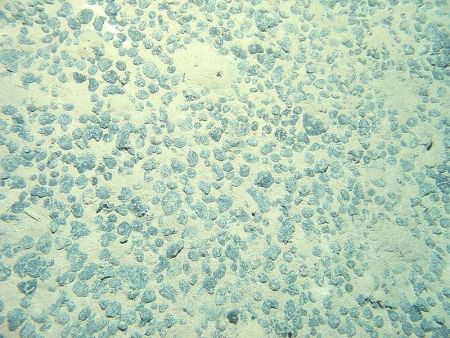
“Many investors, financial analysts and the general public expected S&P to be a fair and impartial umpire in issuing credit ratings, but the evidence we have uncovered tells a different story,” said Acting Associate Attorney General West. “Our investigation revealed that, despite their representations to the contrary, S&P’s concerns about market share, revenues and profits drove them to issue inflated ratings, thereby misleading the public and defrauding investors. In so doing, we believe that S&P played an important role in helping to bring our economy to the brink of collapse.”

Today’s action was filed in the Central District of California, home to the now defunct Western Federal Corporate Credit Union (WesCorp), which was the largest corporate credit union in the country. Following the 2008 financial crisis, WesCorp collapsed after suffering massive losses on RMBS and CDOs rated by S&P.  “Significant harm was caused by S&P’s alleged conduct in the Central District of California,” said U.S. Attorney for the Central District of California Birotte. “Across the seven counties in my district, we had huge numbers of homeowners who took out subprime mortgage loans, many of which were made by some of the country’s most aggressive lenders only because they later could be securitized into debt instruments that were given flawed ‘AAA’ ratings by S&P. This led to an untold number of foreclosures in my district. In addition, institutional investors located in my district, such as WesCorp, suffered massive losses after putting billions of dollars into RMBS and CDOs that received flawed and inflated ratings from S&P.”

The complaint, which names McGraw-Hill Companies, Inc. and its subsidiary, Standard & Poor’s Financial Services LLC (collectively S&P) as defendants, seeks civil penalties under the Financial Institutions Reform, Recovery, and Enforcement Act of 1989 (FIRREA) based on three forms of alleged fraud by S&P: (1) mail fraud affecting federally insured financial institutions in violation of 18 U.S.C. § 1341; (2) wire fraud affecting federally insured financial institutions in violation of 18 U.S.C. § 1343; and (3) financial institution fraud in violation of 18 U.S.C. § 1344. FIRREA authorizes the Attorney General to seek civil penalties up to the amount of the losses suffered as a result of the alleged violations. To date, the government has identified more than $5 billion in losses suffered by federally insured financial institutions in connection with the failure of CDOs rated by S&P from March to October 2007.  “The fraud underpinning the crisis took many different forms, and for that reason, so must our response,” said Stuart F. Delery, Principal Deputy Assistant Attorney General for the Department’s Civil Division. “As today’s filing demonstrates, the Department of Justice is committed to using every available legal tool to bring to justice those responsible for the financial crisis.”

According to the complaint, S&P publicly represented that its ratings of RMBS and CDOs were objective, independent and uninfluenced by the potential conflict of interest posed by S&P being selected to rate securities by the investment banks that sold those securities. Contrary to these representations, from 2004 to 2007, the government alleges, S&P was so concerned with the possibility of losing market share and profits that it limited, adjusted and delayed updates to the ratings criteria and analytical models it used to assess the credit risks posed by RMBS and CDOs. According to the complaint, S&P weakened those criteria and models from what S&P’s own analysts believed was necessary to make them more accurate. The complaint also alleges that, from at least March to October 2007, and because of this same desire to increase market share and profits, S&P issued inflated ratings on hundreds of billions of dollars’ worth of CDOs. At the time, according to the allegations in the complaint, S&P knew that the quality of non-prime RMBS was severely impaired, and that the ratings on those mortgage bonds would not hold. The government alleges that S&P failed to account for this impairment in the CDO ratings it was assigning on a daily basis. As a result, nearly every CDO rated by S&P during this time period failed, causing investors to lose billions of dollars.

The underlying federal investigation, code-named “Alchemy,” that led to the filing of this complaint was initiated in November 2009 in connection with the President’s Financial Fraud Enforcement Task Force.

Department of Justice Sues Standard & Poor’s for Fraud in Rating Mortgage-Backed Securities in the Years Leading Up to the Financial Crisis, Department of Justice Press Release, Feb. 5, 2013

Reversing Deforestation in the Amazon

Brazilian policymakers can take some of the credit for a dramatic slowdown in the deforestation rate in the Brazilian Amazon, say experts – but that’s not the whole story.  In November Brazil (2012) announced deforestation rates in the Amazon declined 27 percent from August 2011 to July 2012, reaching the lowest rates ever recorded for the fourth consecutive year.  According to Brazil’s National Institute for Space Research (INPE), 4656 square kilometres of Amazon rainforest were cleared over the twelve months, compared with 27,772 square kilometres in 2004.

Brazil’s government says this represents a 76 percent reduction since 2004 – coming close to the country’s commitment to reduce deforestation in the Amazon region 80 percent by 2020.  It has attributed the dramatic results to a package of policies known as PPCDAm (The Action Plan for Prevention and Control of Legal Amazon Deforestation) that were first implemented in 2004.

PPCDAm comprises more than 200 initiatives across 14 ministries that together aim to reduce deforestation in the Amazon…Over the last decade, the country has established new protected areas, indigenous lands and sustainable use areas covering 709,000 square kilometres.  This has decreased both deforestation and the incidence of fires – and crucially, more of them than previously are located near particularly threatened areas, making them more effective.We know every day where deforestation is going on in the Amazon…from detection to having people in the field stopping illegal loggers takes just five days….Brazil’s space agency, remote sensing centre, and law enforcement agencies collaborate to detect and precisely locate deforestation and forest degradation, and to apprehend perpetrators.  From detection to having people in the field stopping illegal loggers takes just five days….  Last year [Brazil]  confiscated 110 chainsaws, nine bulldozers, and 329 trucks…

Jorge Hargrave – who  worked with Wunder on the UNEP report (pdf) – and colleagues assessed the effectiveness of the PPPDAm policies.  They found that these policies were responsible for curbing deforestation – and that the command-and-control policies, particularly the issuance of environmental fines, had the most impact.  The government’s decision to focus on 36 specific municipalities where deforestation was most intense was also very effective, they found, as was the cross sector coordination and high-level political support for the program.

However, Hargrave also cautioned against over-confidence about the recent encouraging results. “It’s not clear that if the government changes or the policy changes, deforestation can’t go up again,” he said.  “In addition, the lack of land tenure security in the region was consistently identified as a key problem and the biggest bottleneck to further progress.”

In another recent study, Clarissa Costalonga e Gandour and colleagues from the Climate Policy Initiative showed that environmental policies are important – but are only part of the deforestation-reduction story.  The study found that agricultural prices – particularly meat and soybeans – had a significant impact on deforestation as well…The study makes special mention of a 2008 policy that made rural credit for agricultural activities in the Amazon conditional on proof of compliance with environmental regulations – with exceptions for smallholders.

Excerpts, KATE EVANS, How much credit can Brazil take for slowing Amazon deforestation – and how low can it go?, CIFOR, Jan. 15, 2013

Illegal Nuclear Waste Dumping, Japan

Cleanup crews in Fukushima Prefecture have dumped soil and leaves contaminated with radioactive fallout into rivers. Water sprayed on contaminated buildings has been allowed to drain back into the environment. And supervisors have instructed workers to ignore rules on proper collection and disposal of the radioactive waste.  Decontamination is considered a crucial process in enabling thousands of evacuees to return to their homes around the crippled Fukushima No. 1 nuclear power plant and resume their normal lives.  But the decontamination work witnessed by a team of Asahi Shimbun reporters shows that contractual rules with the Environment Ministry have been regularly and blatantly ignored, and in some cases, could violate environmental laws.  “If the reports are true, it would be extremely regrettable,” Fukushima Governor Yuhei Sato said at his first news conference of the year on Jan. 4. “I hope everyone involved will clearly understand how important decontamination is to the people of Fukushima.”

He called on the Environment Ministry to investigate and present a clear report to the prefectural government.  The shoddy practices may also raise questions about the decontamination program itself–and the huge amounts of money pumped into the program.  The central government initially set aside 650 billion yen ($7.4 billion) to decontaminate areas hit by radioactive substances from the March 11, 2011, accident at the Fukushima plant. Since last summer, the Environment Ministry has designated 11 municipalities in Fukushima Prefecture for special decontamination work.  Work has already begun in four municipalities to remove radioactive substances from areas within 20 meters of buildings, roads and farmland.  The Environment Ministry itself does not have the know-how to decontaminate such a large area, so it has given contracts to joint ventures led by major construction companies to do the work.

A contract worth 18.8 billion yen to decontaminate the municipality of Naraha was awarded to a group that includes Maeda Corp. and Dai Nippon Construction. A 7.7-billion-yen contract for Iitate was signed with a group that includes Taisei Corp., while a 4.3-billion-yen contract for Kawauchi was given to a group led by Obayashi Corp. A consortium that includes Kajima Corp. was awarded a 3.3-billion-yen contract to clean up Tamura.  In signing the contracts, the Environment Ministry established work rules requiring the companies to place all collected soil and leaves into bags to ensure the radioactive materials would not spread further. The roofs and walls of homes must be wiped by hand or brushes. The use of pressurized sprayers is limited to gutters to avoid the spread of contaminated water. The water used in such cleaning must be properly collected under the ministry’s rules.

A special measures law for dealing with radioactive contamination of the environment prohibits the dumping of such waste materials. Violators face a maximum prison sentence of five years or a 10-million-yen fine.  From Dec. 11 to 18, four Asahi reporters spent 130 hours observing work at various locations in Fukushima Prefecture.At 13 locations in Naraha, Iitate and Tamura, workers were seen simply dumping collected soil and leaves as well as water used for cleaning rather than securing them for proper disposal. Photographs were taken at 11 of those locations.

Excerpt, CROOKED CLEANUP (1): Radioactive waste dumped into rivers during decontamination work in Fukushima, THE ASAHI SHIMBUN, Jan. 4, 2012

Bank Secrecy: Wegelin

Wegelin & Co, the oldest Swiss private bank, said on Thursday it would shut its doors permanently after more than 2 1/2 centuries, following its guilty plea to charges of helping wealthy Americans evade taxes through secret accounts.  The plea, in U.S. District Court in Manhattan, marks the death knell for one of Switzerland’s most storied banks, whose original European clients pre-date the American Revolution. It is also potentially a major turning point in a battle by U.S. authorities against Swiss bank secrecy.  A major question was left hanging by the plea: Has the bank turned over, or does it plan to disclose, names of American clients to U.S. authorities?.. Wegelin admitted to charges of conspiracy in helping Americans evade taxes on at least $1.2 billion for nearly a decade. Wegelin agreed to pay $57.8 million to the United States in restitution and fines. Otto Bruderer, a managing partner at the bank, said in court that “Wegelin was aware that this conduct was wrong.”  He said that “from about 2002 through about 2010, Wegelin agreed with certain U.S. taxpayers to evade the U.S. tax obligations of these U.S. taxpayer clients, who filed false tax returns with the IRS.”..

The surprise plea effectively ended the U.S. case against Wegelin, one of the most aggressive bank crackdowns in U.S. history.  “Once the matter is finally concluded, Wegelin will cease to operate as a bank,” Wegelin said in a statement on Thursday from its headquarters in the remote, small town of St. Gallen next to the Appenzell Alps near the German-Austrian border.  But the fate of three Wegelin bankers, indicted in January 2012 on charges later modified to include the bank, remains up in the air. Under criminal procedural rules, the cases of the three bankers – Michael Berlinka, Urs Frei and Roger Keller – are still pending.,

Although Wegelin had about a dozen branches, all in Switzerland, at the time of its indictment, it moved quickly to wind down its business, partly through a sale of its non-U.S. assets to regional Swiss bank Raiffeisen Gruppe.….Wegelin, a partnership of Swiss private bankers, was already a shadow of its former self – it effectively broke itself up following the indictment last year by selling the non-U.S. portion of its business.

Dozens of Swiss bankers and their clients have been indicted in recent years, following a 2009 agreement by UBS AG (UBSN.VX), the largest Swiss bank, to enter into a deferred-prosecution agreement, turn over 4,450 client names and pay a $780 million fine after admitting to criminal wrongdoing in selling tax-evasion services to wealthy Americans…Banks under U.S. criminal investigation in the wider probe include Credit Suisse, which disclosed last July it had received a target letter saying it was under a grand jury investigation…Zurich-based Julius Baer and some cantonal, or regional, banks are also under scrutiny, sources familiar with the probes previously told Reuters. So are UK-based HSBC Holdings (HSBA.L) and three Israeli banks, Hapoalim, Mizrahi-Tefahot Bank Ltd and Bank Leumi (LUMI.TA), sources also said previously.

Under its plea, Wegelin agreed to pay the $20 million in restitution to the IRS as well a civil forfeiture of $15.8 million, the Justice Department said.  Wegelin also agreed to pay an additional $22.05 million fine, the Justice Department said. U.S. District Judge Jed Rakoff, who must approve the monetary penalties, set a hearing in the case for March 4 for sentencing.  Last year, the U.S. government separately seized more than $16 million of Wegelin funds in a UBS AG account in Stamford, Connecticut, via a civil forfeiture complaint.  Since Wegelin has no branches outside Switzerland, it used UBS for correspondent banking services, a standard industry practice, to handle money for U.S.-based clients.  n court papers, Bruderer said that Wegelin “believed it would not be prosecuted in the United States for this conduct because it had no branches or offices in the United States and because of its understanding that it acted in accordance with, and not in violation of, Swiss law and that such conduct was common in the Swiss banking industry.”

The case is U.S. v. Wegelin & Co et al, U.S. District Court, Southern District of New York, No. 12-cr-00002.

Excerpts, Nate Raymond and Lynnley Browning, Swiss bank Wegelin to close after guilty plea, Reuters, Jan. 4, 2013

Nigeria and the Oil Companies: the ECOWAS Judgment

Amnesty International and Socio-Economic Rights and Accountability Project (SERAP) have hailed last [Economic Community of West African States] ECOWAS Court of Justice ground-breaking judgment as a “key moment in holding governments and companies to account for pollution.”  In the case, SERAP v. Nigeria, the Court unanimously found the Nigerian government responsible for abuses by oil companies and makes it clear that the government must hold the companies and other perpetrators to account.

The Court also found that Nigeria violated articles 21 (on the right to natural wealth and resources) and 24 (on the right to a general satisfactory environment) of the African Charter on Human and Peoples’ Rights by failing to protect the Niger Delta and its people from the operations of oil companies that have for many years devastated the region.  According to the Court, the right to food and social life of the people of Niger Delta was violated by destroying their environment, and thus destroying their opportunity to earn a living and enjoy a healthy and adequate standard of living. The Court also said that both the government and the oil companies violate the human and cultural rights of the people in the region.

The Court ruled that the government’s failure to enact effective laws and establish effective institutions to regulate the activities of the companies coupled with its failure to bring perpetrators of pollution “to book” amount to a breach of Nigeria’s international human rights obligations and commitments.  The Court emphasized that “the quality of life of people is determined by the quality of the environment. But the government has failed in its duty to maintain a general satisfactory environment conducive to the development of the Niger Delta region”.

“This judgment confirms the persistent failure of the Nigerian government to properly and effectively punish oil companies that have caused pollution and perpetrated serious human rights abuses, and is an important step towards accountability for government and oil companies that continue to prioritise profit-making over and above the well-being of the people of the region,” said Femi Falana SAN, and Adetokunbo Mumuni for SERAP.  “This is a crucial precedent that vindicates the human right to a healthy environment and affirms the human right of the Nigerian people to live a life free from pollution. It also makes it clear that the government must hold the oil companies to account,” said Michael Bochenek, Director of Law and Policy at Amnesty International.  “The judgment makes it clear that the Nigerian government has failed to prevent the oil companies causing pollution. It is a major step forward in holding the government and oil companies accountable for years of devastation and deprivation.” said Bochenek.

The court affirmed that the government must now move swiftly to fully implement the judgment and restore the dignity and humanity of the people of the region.

“The judgment has also come at a time when oil is being discovered in the majority of the member states of the ECOWAS. It is vital that other states take heed of this judgement, which has laid down minimum standards of operations for government and oil companies involved in the exploitation of oil and gas in the region,” Falana and Mumuni also said.  “The time has come for the Nigerian government to stand up to powerful oil companies that have abused the human rights of the people of the Niger Delta with impunity for decades,” said Bochenek.  “We commend the ECOWAS Court for standing up for the rights and dignity of the people of the Niger Delta. We also acknowledge the important legal contribution of Dr Kolawole Olaniyan of Amnesty International, to the case,” said Falana and Mumuni.

he case was filed against the Federal Government and six oil companies over alleged violation of human rights and associated oil pollution in the Niger Delta. Specifically, the plaintiff alleged: “Violations of the right to an adequate standard of living, including the right to food, to work, to health, to water, to life and human dignity, to a clean and healthy environment; and to economic and social development – as a consequence of: the impact of oil-related pollution and environmental damage on agriculture and fisheries.”  SERAP also alleged “oil spills and waste materials polluting water used for drinking and other domestic purposes; failure to secure the underlying determinants of health, including a healthy environment, and failure to enforce laws and regulations to protect the environment and prevent pollution.”

The Court dismissed the government’s objections that SERAP had no locus standi to institute the case; that the ECOWAS Court had no jurisdiction to entertain it; and that the case was statute-barred. The Court also rejected efforts by the government to exclude a 2009  Amnesty International report on oil pollution from being considered. The report was based on an in-depth investigation into pollution caused by the international oil companies, in particular Shell, and the failure of the government of Nigeria to prevent pollution or sanction the companies.

The suit number ECW/CCJ/APP/08/09 was argued by SERAP counsel, Femi Falana SAN, Adetokunbo Mumuni and Sola Egbeyinka.  The judgment was delivered by a panel of 6 judges: Justice Awa Nana Daboya, Justice Benefeito Mosso Ramos, Justice Hansine Donli, Justice Alfred Benin, Justice Clotilde Medegan and Justice Eliam Potey.

Article 15(4) of the ECOWAS Treaty makes the Judgment of the Court binding on Member States, including Nigeria. Also, Article 19(2) of the 1991 Protocol provides that the decisions of the Court shall be final and immediately enforceable. Furthermore, non-compliance with the judgment of the Court can be sanctioned under Article 24 of the Supplementary Protocol of the ECOWAS Court of Justice, and Article 77 of the ECOWAS Treaty.

SERAP Press Release, December 2012

See also decision of the ECOWAS Community Court on Jurisdiction

The Flight of Gold: what Afghanistan, China and Iran have in common

Packed into hand luggage and tucked into jacket pockets, roughly hewed bars of gold are being flown out of Kabul with increasing regularity, confounding Afghan and American officials who fear money launderers have found a new way to spirit funds from the country.  Most of the gold is being carried on commercial flights destined for Dubai, according to airport security reports and officials. The amounts carried by single couriers are often heavy enough that passengers flying from Kabul to the Persian Gulf emirate would be well advised to heed warnings about the danger of bags falling from overhead compartments. One courier, for instance, carried nearly 60 pounds of gold bars, each about the size of an iPhone, aboard an early morning flight in mid-October, according to an airport security report. The load was worth more than $1.5 million.

The gold is fully declared and legal to fly. Some, if not most, is legitimately being sent by gold dealers seeking to have old and damaged jewelry refashioned into new pieces by skilled craftsmen in the Persian Gulf, said Afghan officials and gold dealers.  But gold dealers in Kabul and current and former Kabul airport officials say there has been a surge in shipments since early summer. The talk of a growing exodus of gold from Afghanistan has been spreading among the business community here, and in recent weeks has caught the attention of Afghan and American officials. The officials are now puzzling over the origin of the gold — very little is mined in Afghanistan, although larger mines are planned — and why so much appears to be heading for Dubai.

“We are investigating it, and if we find this is a way of laundering money, we will intervene,” said Noorullah Delawari, the governor of Afghanistan’s central bank. Yet he acknowledged that there were more questions than answers at this point. “I don’t know where so much gold would come from, unless you can tell me something about it,” he said in an interview. Or, as a European official who tracks the Afghan economy put it, “new mysteries abound” as the war appears to be drawing to a close.

Figuring out what precisely is happening in the Afghan economy remains as confounding as ever. Nearly 90 percent of the financial activity takes place outside formal banks. Written contracts are the exception, receipts are rare and statistics are often unreliable. Money laundering is commonplace, say Western and Afghan officials.  As a result, with the gold, “right now you’re stuck in that situation we usually are: is there something bad going on here or is this just the Afghan way of commerce?” said a senior American official who tracks illicit financial networks.

There is reason to be suspicious: the gold shipments track with the far larger problem of cash smuggling. For years, flights have left Kabul almost every day carrying thick wads of bank notes — dollars, euros, Norwegian kroner, Saudi Arabian riyals and other currencies — stuffed into suitcases, packed into boxes and shrink-wrapped onto pallets. At one point, cash was even being hidden in food trays aboard now-defunct Pamir Airways flights to Dubai.

Last year alone, Afghanistan’s central bank says, roughly $4.5 billion in cash was spirited out through the airport. Efforts to stanch the flow have had limited impact, and concerns about money laundering persist, according to a report released last week by the United States Special Inspector General for Afghanistan Reconstruction.  The unimpeded “bulk cash flows raise the risk of money laundering and bulk cash smuggling — tools often used to finance terrorist, narcotics and other illicit operations,” the report said. The cash, and now the gold, is most often taken to Dubai, where officials are known for asking few questions. Many wealthy Afghans park their money and families in the emirate, and gold dealers say more middle-class Afghans are sending money and gold — seen as a safeguard against economic ruin — to Dubai as talk of a postwar economic collapse grows louder. But given Dubai’s reputation as a haven for laundered money, an Afghan official said that the “obvious suspicion” is that at least some of the apparent growth in gold shipments to Dubai is tied to the myriad illicit activities — opium smuggling, corruption, Taliban taxation schemes — that have come to define Afghanistan’s economy.

There are also indications that Iran could be dipping into the Afghan gold trade. It is already buying up dollars and euros here to circumvent American and European sanctions, and it may be using gold for the same purpose.  Yahya, a dealer in Kabul, said other gold traders were helping Iran buy the precious metal here. Payment was being made in oil or with Iranian rials, which readily circulate in western Afghanistan. The Afghan dealers are then taking it to Dubai, where the gold is sold for dollars. The money is then moved to China, where it was used to buy needed goods or simply funneled back to Iran, said Yahya, who like many Afghans uses a single name.

Excerpt, MATTHEW ROSENBERG, An Afghan Mystery: Why Are Large Shipments of Gold Leaving the Country?, NY Times, Dec. 15, 2012

Another War to Save the Rhino

Retired SA Army Major General Johan Jooste was this week unveiled as the man who will be in overall command of the Kruger national park’s (located in South Africa) efforts to for once and all stop rhino poaching.  So far this year 381 rhino have been killed by poachers in Kruger, well over half the national loss of 618.  Jooste… was his usual straightforward self when commenting on the new task.  “I am no messiah. What I am is a proven leader as well as a team player…The battle lines have been drawn and now the team and I are going to work hard to push back poachers.  It is a fact that South Africa as a sovereign country is under attack by armed foreign nationals. This can be seen as a declaration of war. We are going to take the war to these bandits and we aim to win it,” the highly decorated and respected retired two-star general said in Skukuza.  SANParks chief executive Dr David Mabunda who is on record as saying the country was engaged in “a low intensity war” against poachers, said the arrival of Jooste in Kruger was another indication of the high priority the national conservation agency was giving to the scourge of rhino poaching.  “We are fully aware we will never be able to put a ranger behind every rhino. That’s why we are developing modern and innovative ways of protecting rhino against a well-organised onslaught.”

Jooste’s appointment is in line with SANParks multi-pronged approach to rhino poaching including a single operations command. He brings with him experience in military intelligence, border and area protection as well as contemporary knowledge of modern military technology, its use and integration at operational level as well as conservation knowledge.

Kim Helfric, War on rhino poaching intensifies as general joins the fray, The NewAge, Dec. 13, 2012

Turning Turkey into an Illegal Nuclear Dump: the evidence

Amid growing public concern about the discovery of radioactive waste buried at an abandoned factory in Izmir (Turkey), experts have pointed out to the possibility that there could be other sites with nuclear waste imported illegally into Turkey from foreign companies that operate nuclear plants.Public concerns about radioactive and other toxic waste began after a news report appeared in the Radikal daily last week about the discovery of highly radioactive waste buried at a defunct factory on Akçay Street, the main thoroughfare running through Izmir’s Gaziemir district. The Turkish Atomic Energy Agency (TAEK), which was assigned to test the plant on Tuesday, stated that the radioactive level at the site did not constitute a dangerous situation, but they didn’t address concerns about a radioactive material that might have been brought into Turkey illegally.   The factory, situated on more than 70 acres, used old batteries and scrap lead to produce cast lead until just a few years ago.

In relation to the inspection, a former senior manager of the Izmir factory, speaking on condition of anonymity to Radikal on Thursday, confirmed the fact that the toxic waste of the factory was buried on the site in an effort to save money by not sending the waste for proper disposal. However, he didn’t comment on the possibility of nuclear materials being brought in illegally.  It was also reported that locals, particularly children playing in the vicinity, had access to the plant as the wire fencing around the factory had corroded over time.

Radikal reported that TAEK had examined the site of the factory in 2007. A radioactive substance called europium, an illegally imported element used in nuclear reactor control rods, found on the site is thought to be the source of the radioactivity, a report from TAEK showed.  A nuclear engineer at Okan University, Tolga Yarman said the radioactive element could have entered the country along with other nuclear waste, as it was illegal to keep this substance in Turkey. In fact, other sites where nuclear waste was buried have been discovered. A similar case was reported in 1987 by Professor Ahmet Yüksel Özemre, a former general director of TAEK and Turkey’s first nuclear engineer….”The ministry should have ideal staffing levels to work more closely on the detection of nuclear waste cases by complying with European Union standards, and a control mechanism should be part of this improvement,” said Ministry of Environment and Urban Planning Deputy Undersecretary Mustafa Öztürk.  Professor Öztürk warned about tons of toxic waste which is illegally buried at many other plants in different provinces around Turkey.  “Toxic waste can only be kept on site at a plant for six months provided that plant authorities take the necessary environmental precautions, and the waste should be moved to disposal centers at the end of the period stated by law. However, plants keep running while their waste is buried in the soil without taking any precautions. This is the case for many provinces, including Istanbul, Samsun, Hatay, Kayseri and Mersin,” answered Öztürk to a question about the legal regulations regarding the conservation and disposal of toxic waste.

A similar case was reported in 1987 by Professor Özemre, who received an anonymous tip that 1,150 tons of radioactive waste, which were imported from Germany, had been buried on the site of the Göltas cement factory in Isparta, a province in southwest Turkey. Özemre had also asserted, in a written document and on several television news programs, that a flour factory in Konya had burned 800 tons of toxic waste on its site in order to generate energy.  He further noted that he would not have given credit to this anonymous tip about the nuclear waste cases in Isparta and Konya if he himself had not received a similar proposal from a German firm who offered him 40 million Deutsche Mark in return for burying 4,000 tons of radioactive waste while he served as the director of TAEK. Özemre asserted that when he did not accept the German firm’s proposal, stating that he “would not let Turkey turn into a nuclear landfill,” the firm told him that the toxic waste would be buried in Turkey one way or another.

A research commission was assigned by the Turkish Parliament to check into the claim that illegal nuclear waste was buried around Isparta and had been burned in Konya. The conclusion of the commission, published in the form of general meeting minutes in 1997, showed that the factory sites did not include radioactive elements.

Excerpt, Izmir Factory Scandal Causes Concern Over Nuclear Waste Elsewhere, http://www.haberler.com, Dec. 9, 2012

Barclays and Qatar: an Unholy Alliance?

U.S. authorities are investigating Barclays  for potentially violating anti-corruption laws during its scramble to raise money from Middle Eastern investors in the early days of the financial crisis.  The probe, being conducted by the Justice Department and the Securities and Exchange Commission, is at an early stage…The U.S. investigation follows a similar probe that British regulators opened earlier this year.

According to people familiar with the probe, it is examining Barclays’ use of middlemen serving as brokers to connect the bank with powerful Middle Eastern interests at a time when the bank was seeking a cash injection from investors in the region.  Barclays disclosed the investigation at the same time it reported a GBP106 million third-quarter loss…The new investigations represent the latest blows to a once-proud British institution. This summer, Barclays paid about $450 million to settle U.S. and British charges that it sought to manipulate benchmark interest rates, sometimes at the behest of top executives. The ensuing political furor led to the abrupt resignations of Barclays’s chairman, chief executive and chief operating officer.

The Justice Department and SEC investigation involves possible violations of the Foreign Corrupt Practices Act, which among other things bars companies with U.S. operations from bribing overseas politicians or corporate executives in order to win business.  In June 2008, as the financial crisis was gaining steam, senior bankers at Barclays persuaded the Qatar Investment Authority and other investors to inject about GBP4.5 billion into the British bank, seeking to erase fears about Barclays’s health. As part of that deal, Barclays hired the Qatar fund to provide “advisory services’ in the Middle East. The bank later disclosed that it was paying about GBP238 million in fees and commissions to Qatar Investment Authority and related entities.

This summer, the U.K.’s Financial Services Authority launched a formal investigation into Barclays’s public disclosures of those arrangements. The probe focused on past and present Barclays executives, including finance chief Chris Lucas, as well as on the manner in which Barclays wooed the Qataris to invest, according to people familiar with the matter.

Excerpts, Barclays Faces U.S. Anti-Corruption Probe, MarketWatch, Oct. 31, 2012

Fradulent Quality Certificates for Nuclear Reactors: South Korea

South Korea’s ambitious nuclear energy program is under intensive scrutiny and criticism after the discovery of microscopic cracks in the structure of a nuclear power plant and forgery of quality certificates vouching for thousands of components in at least two reactors.  Officials in all three major agencies responsible for monitoring the program said Friday there’s no danger to nuclear safety, but the government ordered the shutdown of the two reactors with the uncertified parts. At the same time, the head of the state company overseeing the program, Korea Electric Power Corp. has resigned for what he said were personal reasons.

A sequence of problems at a nuclear power plant on the southwestern coast fueled rising doubts about a program that’s been a centerpiece of the government’s energy policy since the first reactors went on line more than 30 years ago. Korea counts on nuclear energy for 30 percent of its electrical power, but critics are now demanding the government shut down some of the older plants and pull back from plans to build enough reactors to fulfill half the country’s power needs.  “I am worried about safety standards,” says Lee Chang-choon, who served as South Korea’s ambassador to the International Atomic Energy Agency during his long diplomatic career. “I do not have confidence and trust in the care of sensitive machinery operations.”

The trouble seemed to begin at the nuclear power plant at Yeonggwang where inspectors this week reported thousands of  “noncore components” were installed on the basis of fraudulent quality certificates. The Korea Hydro and Nuclear Power Corporation, which operates Korea’s four nuclear power plants, including 23 reactors, promised to replace all the parts by the end of the year while asking prosecutors to investigate alleged bribery.

Compounding the difficulties at the Yeonggwang plant, the ministry also reported the discovery of microscopic cracks in passages linking control rods to one of the reactors. An official at the Korea Hydro and Nuclear Power Corporation said the cracks affected warning signals on control panels but not operation of the reactors…

The underlying problem, however, is that South Korea has virtually no oil or natural gas deposits and is running out of coal. Nuclear power has long been seen as the only way to meet the demands of a growing industrial economy. Hong Suk-woon, Korea’s knowledge and economy minister, warned of severe power cuts that might affect industry and individual consumers as a result of shutdown of the two Yeonggwang reactors….

Others are still more critical. Yun Sun-jin, a professor who teaches courses on energy policy at Seoul National University, accuses the Korea Hydro Nuclear Power Corporation of placing higher priority on output with reduced emphasis on safety.  “They are decreasing the time for periodic overhaul of reactors,” she says. “They think a high operation rate means a more competitive strategy.”  She agrees with the view of the nongovernmental Korea Federation for the Environment that the government should shut down older plants and cancel plans to build new ones.  “We cannot believe nuclear power plants are safe,” says Yang-yi Won-young, in charge of the organization’s “nuclear phase-out” campaign. “The government says nuclear energy is the cheapest and cleanest, but they don’t take account of the cost of getting rid of nuclear waste.”…An official at the ministry of knowledge and economy listed 60 forged quality certificates since 2003 including more than 7,600 components, 98.4 percent of which, he says, were for the Yeonggwang plant. “These are noncore parts,” he says, including fuses, switches, and resistors that cannot be used for the core safety-related facility” and therefore “posing no threat of radiation leakage.”  The government, he adds, “will prepare and implement a comprehensive package of measures as soon as possible starting later this month to cope with the possible power shortages during this winte

Excerpts, By Donald Kirk, Cracks at South Korean nuclear plant raise safety concerns, Reuters, Nov. 9, 2012

Tricks of Illegal Waste Dumping

The US Navy has launched its own investigation into allegations that its contractor has been dumping on Subic Bay hazardous wastes which it siphons from US Navy ships docked here.  In an e-mailed statement on Saturday, Cynthia Cook, deputy press attache of the US Embassy in Manila, said the US Navy had “initiated its own inquiry into allegations of hazardous waste dumping by Glenn Defense Marine Philippines, a contractor for the US Navy in the Philippines.”  Cook said the embassy was aware of the investigation being conducted by the Subic Bay Metropolitan Authority (SBMA), and that it would “take appropriate action depending on the outcome of those processes.”

The SBMA board of directors is meeting on Monday to discuss the results of the initial investigation into the reported dumping by Glenn Defense Marine Philippines, the local operator of the Malaysian-owned Glenn Defense Marine Asia, said SBMA Chair Roberto Garcia.  In a letter to the SBMA earlier, the lawyers of Glenn Defense claimed that the Presidential Commission on the Visiting Forces Agreement (VFACOM) was the only agency authorized to address complaints about toxic dumping at Subic Bay.  Also on Saturday, the Subic Bay Freeport Chamber of Commerce announced it had suspended the membership of Glenn Defense, a registered locator of the Subic Bay Freeport.
Danny Piano, SBFCC president, said the group was aware of the alleged dumping in Subic waters since October. He said the chamber’s environmental committee has been on the lookout for potential environmental problems around the freeport.  Piano recounted: “At around 8 a.m. on Oct. 15, members of the committee spotted a marine [vessel] collecting liquid waste from a US Navy ship at Alava Pier. They became curious [as to] why a [ship], and not a [sewage] truck, would be performing waste collection [for] a naval ship already berthed at a pier…  “Sensing potential hazard, the members reported the situation to the SBMA ecology department for a spot check and to make sure that proper procedures were followed in dumping the waste.”

The vessel, MT Glenn Guardian, had been carrying around 50,000 gallons of domestic waste and around 200 gallons of bilge water (or a combination of water, oil, and grease), which were untreated according to laboratory tests, Piano said.

By Robert Gonzaga, US Navy begins inquiry into toxic waste dumping, Inquirer Central Luzon, Nov. 10, 210

Bankers with Chainsaws – logging companies and their banks

Some big banks do little more than pay lip service to environmental issues. HSBC likes to think of itself as different. It has signed up to many initiatives, including the Equator Principles, a set of social and environmental standards launched in 2003 for project financiers….

Sarawak (Malaysia) has lost more than 90% of its “primary” forests to logging and has the fastest rate of deforestation in Asia. Sarawak has only 0.5% of the world’s tropical forest but accounted for 25% of tropical-log exports in 2010. As timber stocks have become depleted, the loggers have moved into the palm-oil business, clearing peat-swamp forests to make way for plantations. The deforestation has been accompanied by abuses against indigenous groups, including harassment and illegal evictions. Allegations of corruption and abuse of public office dog Abdul Taib Mahmud, Sarawak’s chief minister, finance minister and planning-and-resources minister, who is believed to have firm control over the granting of logging licences. Mr Taib has long denied being corrupt.

Global Witness, a campaigning group, has analysed the publicly available financial records of seven of Sarawak’s largest logging and plantation companies.  It identified loans and other financial services from HSBC that it estimates have generated at least $116m in interest payments and $13.6m in fees for the bank since 1977. Although lending has declined over the past decade, HSBC continues to list Sarawak loggers among its clients, in apparent violation of its own Forest Land and Forest Products Sector Policy.

On paper HSBC’s forest policy gets high marks, including from BankTrack, a network of NGOs that monitors lenders. When it was drawn up in 2004, the policy required clients to have 70% of their activities certified by the Forest Stewardship Council (FSC), or equivalent, by 2009, with evidence that the remainder was legal. (The FSC is a global non-profit body that sets standards and does independent certification for logging and forest products.)
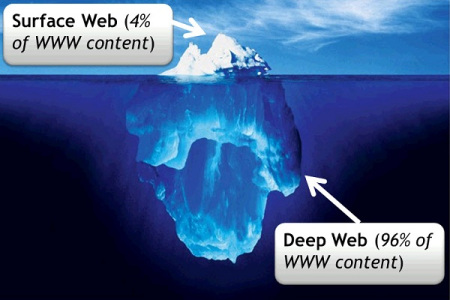
Not only did the seven firms analysed fail to meet that deadline, but none has any FSC-certified operations today. Ta Ann Holdings, for example, listed HSBC as a “principal banker” in its 2011 annual report. Ta Ann does not have FSC certification, and has failed to obtain full verification of the legality of its Sarawak concession under the independent “Verified Legal Origin” scheme. The firm has been accused of clear-felling rainforest that is home to endangered orangutan and of cutting down conservation forest for plantations. Ta Ann told Global Witness it is “collaborating closely with HSBC towards achieving full compliance” with its forest policy.
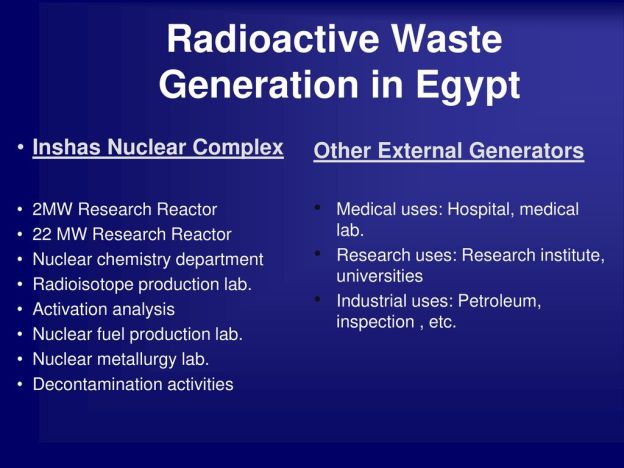
Another forestry conglomerate that is still banking with HSBC, according to its annual report, is WTK Holdings, whose intensive logging is widely believed by pressure groups to have caused landslides that ended up blocking a 50km (31-mile) stretch of river in 2010. None of WTK’s operations is FSC-certified.

In all, Global Witness identified six loans, totalling $25m, made by HSBC to non-compliant Sarawak loggers since the bank introduced its forest policy. HSBC said in 2004 that it would stop doing business with clients that failed to make a reasonable effort to comply by 2009.  The Economist asked HSBC to comment. The bank declined to discuss its clients because of confidentiality, but said it is “not accurate” to state that its clients are in violation of its forestland and forest-products policy. It said current data show that 99% of its forest-sector clients worldwide (by size of lending) are “compliant” or “near-compliant” with its policy. What precisely it means by “near-compliant” is unclear…..HSBC’s  continued involvement, however modest, allows logging firms to claim credentials they don’t deserve. Ta Ann, for instance, has run adverts saying it holds forest-policy certification from HSBC. That looks like a figleaf.

Deforestation in Sarawak: Log tale, Economist, Nov. 3, 2012, at 75

Nuclear Waste in Egypt – illegally dumped?

Egypt’s prosecution begins reviewing charges against ousted president Hosni Mubarak and his former prime ministers, Ahmed Nazif and Atef Ebeid, of negligently burying nuclear waste in Egypt, endangering citizens.  The lawsuit was filed by attorneys Hamed Mohamed, Nasser El-Askalani and Tarek Ibrahim, who are members of the Protection of Freedoms Committee of the Lawyers’ Syndicate.

The three lawyers accused Mubarak and his former regime of allowing Egyptian and European businessmen to bury nuclear waste in Egypt, particularily in desert areas close to the Mediterranean known as Al-Alamein and Al-Hamam. These areas are 71km and 106km, respectively, from Egypt’s second-largest city, Alexandria.  Hosni Mubarak is currently serving a life sentence for failing to prevent the killing of protesters during the 18-day uprising that led to his ouster on 11 February 2011.  In September, Nazif, who served as prime minister between 2004 – 2011, was founded guilty of abusing his political position for personal gain and was given a three-year prison sentence.

Prosecution reviews charges against Mubarak of burying nuclear waste, Ahram Online,Nov. 10, 2012

How to Falsify Radiation Levels: Japan

Japan’s Ministry of Health, Labor and Welfare is investigating a report that workers at the damaged Fukushima Daiichi nuclear power plant were told to use lead covers in order to hide unsafe radiation levels, an official said.The alleged incident happened December 1, nine months after a major earthquake and tsunami ravaged northern Japan and damaged the plant.”We’ll firmly deal with the matter once the practice is confirmed to constitute a violation of any law,” said the ministry official, who could not be named in line with policy.  An official with the plant’s operator, TEPCO, said the company received a report of the alleged incident Thursday from subcontractor Tokyo Energy & Systems. The report said a second subcontractor, Build-Up, created the lead covers and ordered workers to use them over their dosimeters, pocket-size devices used to detect high radiation levels.The TEPCO official could also not be named in line with policy.  okyo Energy & Systems said in its report that the workers never used the covers, the TEPCO official said. Japan’s Asahi Shimbun newspaper, however, reported Saturday that while some workers refused the orders to use the lead covers, nine others did use them for several hours.

The newspaper’s report cited plant workers, who described the lead covers as fitting snugly over the dosimeters inside the breast pockets of the workers’ protection suits.

TEPCO told CNN it ordered Tokyo Energy & Systems Inc. to conduct an investigation and is awaiting a reply.

Report: Japan nuclear workers told to hide radiation levels, CNN, July 21, 2012

China and its Collaborators in Africa

Congolese critics accuse Sassou-Nguesso [President of Congo] of using the Chinese-backed building boom to move from his ‘authoritarian-authoritarian’ model to something nearer the ‘developmental authoritarian’ style of Rwanda’s President Paul Kagame. However, Sassou-Nguesso was in triumphant mode as he inaugurated a spate of Chinese construction projects in the country’s hinterland on 14-18 May. These projects are intended to bring the benefits of oil-backed growth to regions previously isolated from the bustling cities of Brazzaville and Pointe-Noire.  Now known locally as ‘The Cutter of Ribbons’, Sassou-Nguesso is using oil money and plans to develop Congo-Brazzaville’s mineral resources to shape a new relationship with China. Once a key commercial and diplomatic ally of France, Sassou-Nguesso’s headlong rush to Beijing coincides with the election of President François Hollande. Hollande’s African policy team promises to break with the old Françafrique networks. Among their advisors is the activist lawyer William Bourdon, who has been pursuing a case against Sassou-Nguesso in France for stealing Congolese state assets…..

From fibre-optic installation and new dams to more than 1,000 kilometres of paved roads, companies like China Road and Bridge Corporation and China State Construction Engineering Corporation have quietly landed most of the major contracts issued by the Brazzaville government.  That means large profits and more deals to come.

Congo-Brazzaville, for so long the preserve of European companies, is drawing serious attention from China. The two countries have signed deals to develop special economic zones, build a new oil port and revamp an ageing refinery. For the Chinese investors, the lure is Congo-Brazzaville’s rich but under-exploited resource base. Having relied for decades on offshore oil riches and forestry, the country has until recently made little effort to exploit its mineral deposits, develop its more remote regions or diversify the economy into commerce and services. That could change if the new Asian relationships live up to their billing. For Sassou-Nguesso, the big attraction is an engagement based purely on economic and financial criteria, with a partner who does not impose awkward governance or human rights conditions.
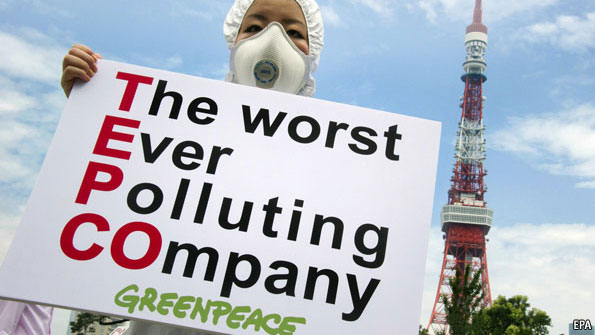
This is not Congo’s first encounter with Asian investment. South Korean and Malaysian companies, via the Consortium Congo Malaisie Corée, had proposed a huge resources-for-infrastructure deal that would build new rail lines in exchange for access to forestry and mining permits in 2008. That deal didn’t work out but the Chemin de Fer Congo Océan received part of its order of engines and cars from Korail in August 2011. Malaysian investors have looked at opportunities in the hydrocarbons sector and – building on their experience of rural Congo in the timber business – palm oil production. In 2010 Atama Plantation agreed to invest $300 million in new oil palm plantations and processing capacity.

The most recent interest from Chinese entities takes the engagement a step further. Alain Akouala Atipault, a Minister in the Presidency, was China’s guest at an international infrastructure and investment forum in Macau where, on 24 April, he signed an agreement with the China Friendship Development International Engineering Design and Consult Corporation (FDDC) – an offshoot of the Trade Ministry in Beijing.  FDDC will seek out Chinese investors interested in setting up operations in four special economic zones, which Congo plans to establish in Brazzaville, Pointe- Noire, Ouesso and the Oyo-Ollombo area. FDDC will also help to mobilise financing for the zones, build their infrastructure and carry out feasibility studies……

China’s engagement in Congo is typical of its strategy elsewhere in Africa. Beijing often takes a long-term view of whether projects will generate an economic return. Viability is seen in broad terms, encompassing not just the specific project’s concerns but also the wider trade and political benefits of partnership and the political goodwill that could open up access to valuable natural resources. Congo has both major reserves of high-value timber – a sector where Congo Dejia Wood Industry, Jua Ikié, Million Well Congo Bois, Sino-Congo Forêt and Société d’Exploitation Forestière Yuan Dong are already active – and reserves of minerals such as iron ore and potash, which are largely untouched.

China National Complete Plant Import & Export Corporation is developing the potash reserves at Mengo with Canada’s MagIndustries; Australia’s Sundance Resources relies on finance and expertise from Hanlong Mining and other Chinese infrastructure companies to make its designs on iron-ore projects in Cameroon (Mbarga) and Congo-Brazzaville (Nabeba) viable. Sundance is waiting for final approvals from Yaoundé and Brazzaville and expects all the paperwork to be signed before the end of 2012.

Beijing’s policy of ignoring questions of democracy and human rights is certainly helpful to Sassou-Nguesso’s regime – which has a poor human rights record, is marred by widespread corruption and remains fundamentally authoritarian despite the trappings of a multiparty system.

Excerpt, Congo-Brazzaville: Sassou Draws in Beijing,AllAfrica.com, June 2, 2012