Category Archives: Human Rights

Forecast a CyberAtttack: IARPA

From the website of IARPA (Intelligence Advanced Research Projects Activity (IARPA) — a US research agency under the Director of National Intelligence.

“Approaches to cyber defense typically focus on post-mortem analysis of the various attack vectors utilized by adversaries. As attacks have evolved and increased over the years, established approaches (e.g., signature-based detection, anomaly detection) have not adequately enabled cybersecurity practitioners to get ahead of these threats. This has led to an industry that has invested heavily in analyzing the effects of cyber-attacks instead of analyzing and mitigating the “cause” of cyber-attacks,

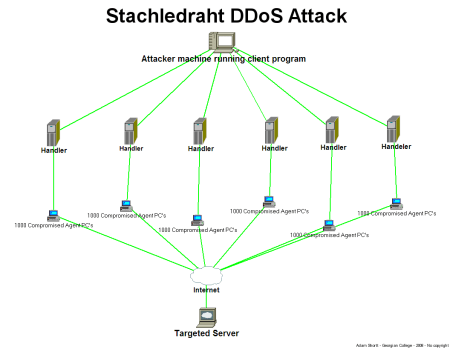
The CAUSE   (Cyber-attack Automated Unconventional Sensor Environment)Program seeks to develop cyber-attack forecasting methods and detect emerging cyber phenomena to assist cyber defenders with the earliest detection of a cyber-attack (e.g., Distributed Denial of Service (DDoS), successful spearphishing, successful drive-by, remote exploitation, unauthorized access, reconnaissance). T

he CAUSE Program aims to develop and validate unconventional multi-disciplined sensor technology (e.g., actor behavior models, black market sales) that will forecast cyber-attacks and complement existing advanced intrusion detection capabilities. Anticipated innovations include: methods to manage and extract huge amounts of streaming and batch data, the application and introduction of new and existing features from other disciplines to the cyber domain, and the development of models to generate probabilistic warnings for future cyber events. Successful proposers will combine cutting-edge research with the ability to develop robust forecasting capabilities from multiple sensors not typically used in the cyber domain…”

Excerpt from IARPA website


Scramble for Africa II – Secret Cables

Africa emerges as the 21st century theatre of espionage, with South Africa as its gateway, in the cache of secret intelligence documents and cables seen by the Guardian. “Africa is now the El Dorado of espionage,” said one serving foreign intelligence officer.

The continent has increasingly become the focus of international spying as the battle for its resources has intensified, China’s economic role has grown dramatically, and the US and other western states have rapidly expanded their military presence and operations in a new international struggle for Africa…. The leaked documents obtained by al-Jazeera and shared with the Guardian contain the names of 78 foreign spies working in Pretoria, along with their photographs, addresses and mobile phone numbers – as well as 65 foreign intelligence agents identified by the South Africans as working undercover. Among the countries sending spies are the US, India, Britain and Senegal.

The United States, along with its French and British allies, is the major military and diplomatic power on the continent. South Africa spends a disproportionate amount of time focused on Iran and jihadi groups, in spite of internal documents showing its intelligence service does not regard either as a major threat to South Africa. “The Americans get what they want,” an intelligence source said…

Chinese intelligence is identified in one secret South African cable as the suspect in a nuclear break-in. A file dating from December 2009 on South Africa’s counter-intelligence effort says that foreign agencies had been “working frantically to influence” the country’s nuclear energy expansion programme, identifying US and French intelligence as the main players. But due to the “sophistication of their covert operations”, it had not been possible to “neutralise” their activities.

However, a 2007 break-in at the Pelindaba nuclear research centre – where apartheid South Africa developed nuclear weapons in the 1970s – by four armed and “technologically sophisticated criminals” was attributed by South African intelligence to an act of state espionage. At the time officials publicly dismissed the break-in as a burglary.

Several espionage agencies were reported to have shown interest in the progress of South Africa’s Pebble Bed Modular Reactor. According to the file, thefts and break-ins at the PBMR site were suspected to have been carried out to “advance China’s rival project”. It added that China was “now one year ahead … though they started several years after PBMR launch”.

In an October 2009 report by South Africa’s intelligence service, the National Intelligence Agency (NIA), on operations in Africa, Israel is said to be “working assiduously to encircle and isolate Sudan from the outside, and to fuel insurrection inside Sudan”. Israel “has long been keen to capitalise on Africa’s mineral wealth”, the South African spying agency says, and “plans to appropriate African diamonds and process them in Israel, which is already the world’s second largest processor of diamonds”.  The document reports that members of a delegation led by then foreign minister Avigdor Lieberman had been “facilitating contracts for Israelis to train various militias” in Africa…

[According to leaked documents]: “Foreign governments and their intelligence services strive to weaken the state and undermine South Africa’s sovereignty. Continuing lack of an acceptable standard of security … increases the risk.” It lists theft of laptop computers, insufficient lock-up facilities, limited vetting of senior officials in sensitive institutions, no approved encryption on landlines or mobiles, total disregard by foreign diplomats for existing regulations, ease of access to government departments allowed to foreign diplomats, and the lack of proper screening for foreigners applying for sensitive jobs.  According to one intelligence officer with extensive experience in South Africa, the NIA is politically factionalised and “totally penetrated” by foreign agencies: “Everyone is working for someone else.” The former head of the South African secret service, Mo Shaik, a close ally of the president, Jacob Zuma, was described as a US confidant and key source of information on “the Zuma camp” in a leaked 2008 Wikileaks cable from the American embassy in Pretoria.

Excerpts Seumas Milne and Ewen MacAskill Africa is new ‘El Dorado of espionage’, leaked intelligence files , Guardian, Feb. 23, 2015

Oil Pollution in Amazon Peru

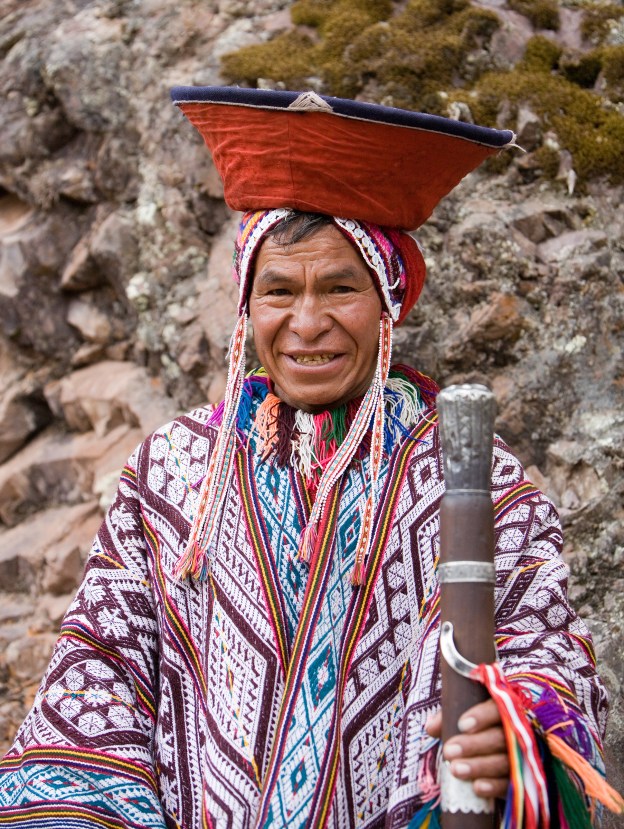
Hundreds of indigenous people deep in the Peruvian Amazon are blocking a major Amazon tributary following what they say is the government’s failure to address a social and environmental crisis stemming from oil operations.   Kichwa men, women and children from numerous communities have been protesting along the River Tigre for almost a month, barring the river with cables and stopping oil company boats from passing.  Oil companies have operated in the region for over 40 years, and have been linked by local people to pollution that has led the government to declare “environmental emergencies” in the Tigre and other river basins….

The oil concession where the protest is taking place, Lot 1-AB, is Peru’s most productive, but the contract, held by Pluspetrol, expires in August 2015. The government has committed to relicensing it and consulting the indigenous communities involved, but leaders say the contamination and other issues must be addressed first.   “What we want is remediation, compensation, and to be consulted, according to international norms, about the relicensing,” says Fachin. “We won’t permit another 30 years of work otherwise.”…The Kichwas are now they are demanding 100 million Peruvian nuevo soles, from Pluspetrol, for “compensation after almost 45 years of contamination.”

“The state declared an environmental emergency, but hasn’t done anything,” says Guillermo Sandi Tuituy, from indigenous federation Feconat. “It must find a solution to this problem if it wants to relicense the concession.”...Pluspetrol took over Lot 1-AB from Occidental in 2000. It did not respond to requests for comment.

Peru’s indigenous people protest against relicensing of oil concession, Guardian,  Feb, 2, 2012

Only One Protester was Killed: Kenya

One person was killed and several injured in January 26, 2015 when Kenyan police clashed with Maasais protesting against a local governor they accuse of misappropriating tourism funds from the Maasai Mara game reserve, an official said.  Police fired shots and teargas as thousands of people from the Maasai ethnic group, clad in traditional red cloaks, marched to the governor’s office in Narok town, the administrative centre of the sprawling Maasai Mara park, witnesses said.

Narok County Commissioner Kassim Farah, an official appointed by the president, said: “Only one protestor was killed by a bullet.  “We regret it but the organisers of the demonstration should be held responsible, not the police.” Kenya Red Cross said seven people injured in the clashes were taken to a nearby hospital.

Demonstrators marched to the gates of Governor Samuel Tunai’s office, shouting: “Tunai must go.” Some hurled rocks. The dispute began when Tunai’s administration contracted a company to collect Maasai Mara park entry fees, a deal the locals say was suspect.

Visitors to the Maasai Mara, one of Africa’s biggest tourist draws, pay $80 per day to roam an area full of wildlife such as lions, rhinos and giraffes. Upmarket lodges and luxury tented camps can charge hundreds of dollars per person per day for the experience, although a spate of militant attacks in Kenya as well as the Ebola epidemic on the other side of Africa have scared off many tourists….

Local government finance has come under increased scrutiny from Kenyans since a newly devolved system was introduced in 2013 under which local governments receive about 43 percent of the national budget directly and are responsible for raising their own additional revenues.  Devolution was designed to spread wealth and help local communities benefit from revenue earned in their areas but analysts say corruption and other issues that have blighted national politics have now also spread to local bodies

Corruption protest in Kenya’s Maasai Mara region turns deadly, Reuters, Jan. 27, 2015

Costs of Dams: Vietnam

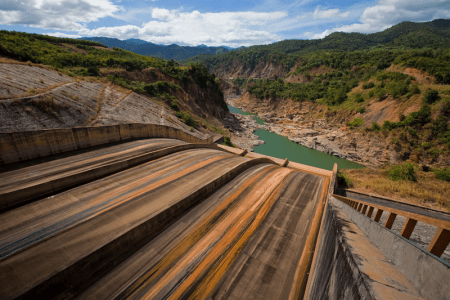
Hydropower has boomed in Vietnam over the past decade and now generates more than a third of the country’s electricity. In 2013 the National Assembly reported that 268 hydropower projects were up and running, with a further 205 projects expected to be generating by 2017. They are helping to meet a national demand for energy that the authorities forecast will treble between 2010 and 2020. Other power sources are less promising, at least in the short run. A plan to build several nuclear reactors by 2030 is behind schedule, for example. And Vietnam’s coal reserves, mostly in the north, are not easy to get at.

Yet the hydropower boom comes at a price. Rivers and old-growth forests have been ravaged, and tens of thousands of villagers, often from ethnic minorities, displaced. Many have been resettled on poor ground. Those who have stayed are at risk of flash floods caused by faulty dam technology and inadequate oversight. Green Innovation and Development Centre, an environmental group in the capital, Hanoi, says shoddy dam construction is the norm, and developers ignore the question of whether their projects could trigger earthquakes…

Many hydro-electric companies are owned by or affiliated with Electricity Vietnam (EVN), the loss-making state power monopoly. Because hydropower is Vietnam’s cheapest source of electricity, EVN resists investing in measures such as dam-safety assessments that would further erode its financial position. As it is, even though environmental-impact assessments for hydropower projects are required, they are never published, according to the United Nations Development Programme….. Hydropower companies want to keep their mountain reservoirs as full as possible in order to generate as much electricity as Vietnam’s rivers allow. But that narrow focus can deprive farmers of irrigation in the dry season. And when heavy rains come in the summer and autumn, floodwaters cascade over the dam walls with little or no warning.

Hydropower in Vietnam: Full to bursting, Economist, Jan.10, 2015, at 35

Amazon Indigenous Peoples – culture commerce

[T]he Tupe reserve, home to 40 members of the Dessana tribe, and located 15 miles (24km) up the Rio Negro river from Manaus, the capital of Brazil’s vast Amazon region.The tribe originates from more than 600 miles further upstream, in remote north-western Brazil, but three decades ago nine members moved down river to Tupe, to be near Manaus, a modern city of two million people.  Eventually they chose to go into tourism, and commercialising their culture.

Yet while they continue to be successful in doing this, some commentators remain concerned that the Tupe villagers, and other such tribal groups which have gone into tourism, are at risk of being exploited.  Former farmersToday the residents of Tupe put on traditional music and dance performances for tourists and sell their homemade jewellery to visitors….

With most visitors paying a fixed fee of around £55 per person for a package tour, the problem for the tribal people – and authorities wishing to help project them – is that thereis no industry-wide agreement on what share of the money the villagers should be paid.   Some of the 196 tourism agencies don’t pay the tribal groups at all, instead forcing them to rely on selling jewellery, with pieces typically retailing for between four reals ($1.50; £1) and 20 reals ($7.60; £5), or asking for donations….A Brazilian government agency, the National Indian Foundation, which aims to protect and further the needs of indigenous groups, is indeed now looking at whether such regulations should be enforced.In the meantime, to help tribal villages better handle business negotiations with tour firms, a non-government organisation called the Amazonas Sustainable Foundation (ASF) runs entrepreneurial programmes for members of such communities.

Excerpt from  Donna Bowater, Helping Brazil’s tribal groups benefit more from tourism, BBC, Jan. 21, 2015

Iceland as a Privacy Haven

A former NATO airbase in Iceland  looks  like nothing more than a huge warehouse from the outside.  But the barbed-wire fence surrounding it and surveillance cameras atop its gates betray  its importance.  This facility, which began operating in February 2012, is one of several data centres in Iceland. It’s run by Verne Global, a company that allows its customers to store data on servers here.

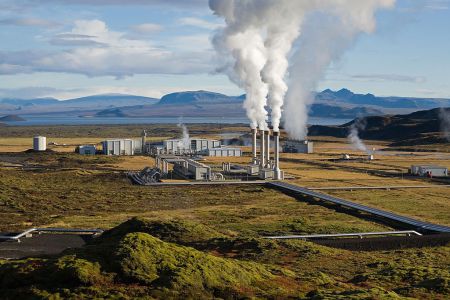
Tate Cantrell, the company’s chief technical officer, explained why Verne Global favoured this tiny Nordic nation of all places. “In Iceland, you’ve got this ideal situation: energy, excellent connectivity for data, and a constant cool climate. So Iceland was an obvious choice.”  Iceland’s abundant renewable energy from geothermal and hydroelectric plants means the costs of running these data centres are low. And the Gulf Stream current keeps the temperature in Iceland more or less stable throughout the year, avoiding the need to provide cooling for the servers and computers.

Data centres based here have another advantage, too: Iceland is in the initial stage of implementing the most progressive data-privacy laws in the world, a major selling point especially after whistleblower Edward Snowden’s revelations regarding widespread surveillance by the United States’ National Security Agency (NSA).  A recent paper published by Verne Global stated that Iceland was “uniquely positioned as a data privacy haven” because of the new regulations.

The International Modern Media Institute (IMMI), a non-profit organisation, has played an instrumental role in designing and promoting the legal framework for Iceland’s new data privacy laws….Birgitta Jónsdóttir is IMMI’s spokeswoman and now represents the Pirate Party in the Icelandic parliament.  In 2010, the IMMI, then known as the Icelandic Modern Media Initiative, proposed a resolution to change Icelandic law to ensure data privacy and freedom of speech. The proposal includes protection for whistleblowers and journalists’ sources, as well as an “ultra-modern Freedom of Information Act” based on elements from existing laws in Estonia, the United Kingdom, and Norway.

The data centres would benefit from a clause in the law that ensures the protection of intermediaries such as internet service providers and telecommunications carriers.The resolution was passed by the Icelandic parliament that same year, and is now being implemented into law, piece by piece.  “A bit more than half of what IMMI proposed has been made into law – somewhere between 50 and 70 percent,” Jonsdottir said…

Despite the new measures, Icelandic journalist Jón Bjarki Magnusson said he thinks his country still has a long way to go when it comes to media freedom.  “IMMI for me is a bit like a fairy tale, reality on the ground is different from the idea,” he told Al Jazeera at a café in downtown Reykjavik. “I like the idea but Iceland is far from being a haven for free journalism.”Earlier this year, Magnusson worked on an investigative story for DV newspaper, in which he wrongly identified an assistant to Iceland’s interior minister as being under police investigation.  Magnusson and his colleagues quickly realised their mistake and issued an apology within a few hours of publishing. But that didn’t stop the official from pressing criminal libel charges against Magnusson and a colleague of his, Johann Pall Johannsson, demanding a sentence of up to two years in prison.

Watchdog group Reporters Without Borders (RSF) has issued a statement condemning the steps against the reporters as disproportionate. The group said that freedom of information in Iceland has declined over the past two years, citing the libel case and budget cuts for public broadcasters.

Excerpt from Felix Gaedtke, Can Iceland become the ‘Switzerland of data’?, Al Jazeera, Dec. 28, 2014

UK Nuclear Tests in Australia: Maralinga

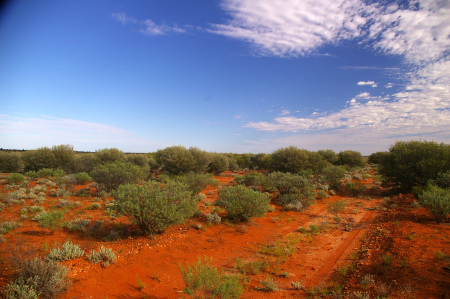
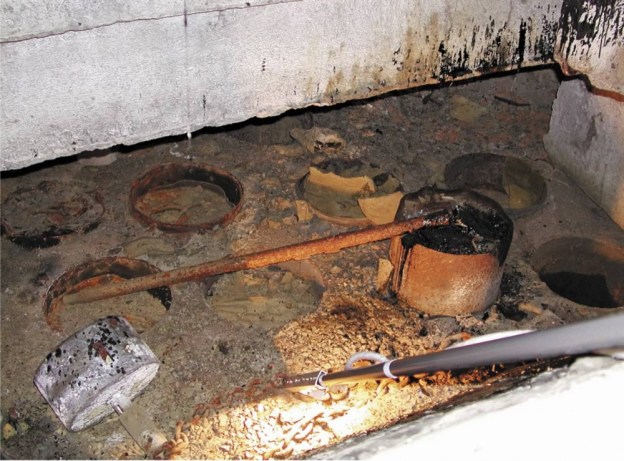
In the mid-1950s, seven bombs were tested at Maralinga in the south-west Australian outback. The combined force of the weapons doubled that of the bomb dropped on the Japanese city of Hiroshima in World War Two.  In archive video footage, British and Australian soldiers can be seen looking on, wearing short sleeves and shorts and doing little to protect themselves other than turning their backs and covering their eyes with their hands.Some reported the flashes of the blasts being so bright that they could see the bones of their fingers, like x-rays as they pressed against their faces.

A cloud hangs over Australia’s Monte Bello Islands after Britain tested its first atomic bomb
Much has been written about the health problems suffered by the servicemen as a result of radiation poisoning. Far less well-documented is the plight of the Aboriginal people who were living close to Maralinga at the time….”A lot of people got sick and died,” said Mima Smart, an aboriginal community leader.”It was like a cancer on them. People were having lung disease, liver problems, and kidney problems. A lot of them died,” she said, adding that communities around Maralinga have been paid little by way of compensation.  It’s a ten hour drive to the nearest big city, Adelaide. But people here say that the Australian government was wrong to let the tests go ahead and that Britain acted irresponsibly…

“They didn’t want to do it in their own back yard because their back yard wasn’t big enough,” said Robin Matthews, caretaker of the Maralinga Nuclear Test Site.”They thought they’d pick a supposedly uninhabited spot out in the Australian desert. Only they got it wrong. There were people here.”During the 1960s and 70s, there were several large clean-up operations to try and decontaminate the site.  All the test buildings and equipment were destroyed and buried. Large areas of the surface around the blast sites was also scraped up and buried.

But Mr Matthews said the clean-up, as well as the tests themselves, were done very much behind closed doors with a high level of secrecy.“You’ve got to remember that this was during the height of the Cold War. The British were terrified that Russian spies might try and access the site,” he said.  The indigenous communities say many locals involved in the clean-up operation also got sick.  Soil at the nuclear site grow so hot from the blast that it melted and turned to silicon has long been declared safe. There are even plans to open up the site to tourism.

But it was only a few months ago that the last of the land was finally handed back to the Aboriginal people. Most, though, say they have no desire to return there….And even almost 60 years on, the land still hasn’t recovered. Huge concrete plinths mark the spots where each of the bombs was detonate

Excerpt from Jon Donnison, Lingering impact of British nuclear tests in the Australian outback, BBC, Dec. 31, 2014

Exploiting Himalaya Rivers

Himalayan rivers, fed by glacial meltwater and monsoon rain, offer an immense resource. They could spin turbines to light up swathes of energy-starved South Asia. Exports of electricity and power for Nepal’s own homes and factories could invigorate the dirt-poor economy. National income per person in Nepal was just $692 last year, below half the level for South Asia as a whole.

Walk uphill for a few hours with staff from GMR, an Indian firm that builds and runs hydropower stations, and the river’s potential becomes clear. An engineer points to grey gneiss and impossibly steep cliffs, describing plans for an 11.2km (7-mile) tunnel, 6 metres wide, to be blasted through the mountain. The river will flow through it, before tumbling 627 metres down a steel-lined pipe. The resulting jet—210 cubic metres of water each second—will run turbines that at their peak will generate 600MW of electricity.  The project would take five years and cost $1.2 billion. It could run for over a century—and produce nearly as much as all Nepal’s installed hydropower.

Trek on and more hydro plants, micro to mighty, appear on the Marsyangdi. Downstream, China’s Sinohydro is building a 50MW plant; blasting its own 5km-long tunnel to channel water to drive it. Nearby is a new German-built one. Upstream, rival Indian firms plan more. They expect to share a transmission line to ill-lit cities in India.

GMR officials in Delhi are most excited by another river, the Upper Karnali in west Nepal, which is due to get a 900MW plant. In September the firm and Nepal’s government agreed to build it for $1.4 billion, the biggest private investment Nepal has seen.

Relations between India and Nepal are improving. Narendra Modi helped in August as the first Indian prime minister in 17 years to bother with a bilateral visit. Urged by him, the countries also agreed in September to regulate power-trade over the border, which is crucial if commercial and other lenders are to fund a hydropower boom…. Another big Indian hydro firm agreed with Nepal’s government, on November 25th, to build a 900MW hydro scheme, in east Nepal, known as Arun 3. Research done for Britain’s Department for International Development suggests four big hydro projects could earn Nepal a total of $17 billion in the next 30 years—not bad considering its GDP last year was a mere $19 billion.

All Nepal’s rivers, if tapped, could feasibly produce about 40GW of clean energy—a sixth of India’s total installed capacity today. Add the rivers of Pakistan, Bhutan and north India and the total trebles.  Bhutan has made progress: 3GW of hydro plants are to be built to produce electricity exports. The three already generating produce 1GW out of a total of 1.5GW from hydro. These rely on Indian loans, expertise and labour….

A second reason, says Raghuveer Sharma of the International Finance Corporation (part of the World Bank), was radical change that opened India’s domestic power market a decade ago. Big private firms now generate and trade electricity there and look abroad for projects. India’s government also presses for energy connections over borders, partly for the sake of diplomacy. There has even been talk of exporting 1GW to Lahore, in Pakistan—but fraught relations between the two countries make that a distant dream.

An official in India’s power ministry says South Asia will have to triple its energy production over the next 20 years. Integrating power grids and letting firms trade electricity internationally would be a big help. It would expand market opportunities and allow more varied use of energy sources to help meet differing peak demand. Nepal could export to India in summer, for example, to run fans and air conditioners. India would export energy back uphill in winter when Nepali rivers dry and turbines stop spinning.

Governments that learn to handle energy investments by the billion might manage to attract other industries, too. Nepal’s abundant limestone, for example, would tempt cement producers once power supplies are sufficient. In the mountains, it is not only treks that are rewarding.

South Asia’s Hydro-Politics: Water in them hills, Economist, Nov. 29, 2014, at 38

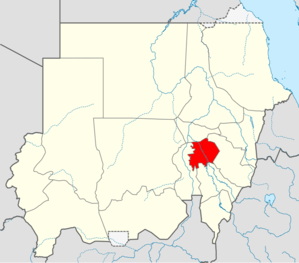
Crimes under the Rug: UN in Sudan

The United Nations-African Union Mission in Darfur (UNAMID) has proved more controversial than most…UNAMID was imposed on a reluctant Sudanese government in 2007, after the worst of the fighting between Darfuri rebels and government forces was over. The conflict has claimed some 300,000 lives and led to charges of genocide against Sudan’s president.  Matters have come to a head over reports of an attack by Sudanese soldiers in the village of Tabit on October 31st and November 1st. The troops are reported to have gone on a rampage, apparently in revenge for the disappearance of one of their own. They allegedly raped some 200 women. UNAMID eventually negotiated permission from the Sudanese authorities to investigate Tabit on November 9th. Thereafter it declared that it found no evidence of such crimes and that villagers “coexist peacefully” with the army.

This sunny conclusion was greeted with astonishment by many Darfuris, for social media were by now carrying eyewitness accounts of the violence. It also prompted a leak of UNAMID’s internal report, which is gravely at odds with the official statement. This report explained how uniformed and plain-clothes Sudanese military officials had infested Tabit while the UN team was there, ensuring that “an environment of fear and silence prevailed”. People were warned not to talk.

UNAMID’s apparent doublespeak over Tabit will have come as no surprise to the mission’s former spokeswoman, Aicha Elbasri. She resigned last year in protest against UNAMID’s ignoble history of such discrepancies, which, in her view, amounts to an organised “cover-up” of the violence in Darfur. The UN’s conduct over Tabit, she says, has been entirely consistent with her own experience of the “huge gap between the reports that we got from the field and the reports that go to the public.”

The cause of such a cover-up, argues the Moroccan-born Ms Elbasri, is the hybrid nature of the mission. The African element of UNAMID, controlled by the African Union (AU), “is completely against justice” for ordinary people and is mainly concerned with defending one of its own, President Omar al-Bashir. For the same reason the AU has been a fierce critic of the International Criminal Court, which has indicted Mr al-Bashir for war crimes.

As if to confirm Ms Elbasri’s conspiracy, Mr Bashir is redoubling his efforts to get rid of the mission now that UNAMID’s tendency to self-censorship has been sabotaged. A supine UNAMID was one thing, it seems; a mission containing a few people who might do their jobs properly quite another. He has already closed the mission’s human rights office.

The UN will have to decide whether to infuriate Mr al-Bashir further by renewing the mission’s mandate beyond next June. It is still dealing with claims of a cover-up, which the UN secretary-general, Ban Ki-moon, has called “very troubling”. That might be an apt description of UNAMID’s entire, sorry history.

Sudan and the UN: Mission in trouble, Economist, Dec. 6, 2014, at 62

How to Manipulate People in War

“We have, in my view, exquisite capabilities to kill people,” said Lt. Gen. Charles Cleveland. “We need exquisite capabilities to manipulate them.”  Psychological subtlety and the US military don’t always go hand-in-hand. Worldwide, we’ve become better known for drone strikes and Special Operations raids to kill High Value Targets. But that wasn’t enough for the last 13 years of war, according to a RAND study …“We’ve built a great apparatus for terrorism and to some degree we’ve got to be careful that doesn’t create blind spots,” Cleveland said… during a panel discussion at RAND. “There’s a cottage industry that’s built up around it [counter-terrorism]. You run the risk of basically taking on an entrenched infrastructure” whenever you try to broaden the focus killing and capturing the bad guys, he said, but we have to try.

“I don’t think we understand completely the fight we’re in,” Cleveland said. …In the US, though, “we’re horrible at ‘influence operations,’” said Cleveland. The US approach is “fractured” among multiple specialties and organizations, he said. Some key elements are in Cleveland’s USASOC — civil affairs, for example, and Military Information Support Operations (MISO), formerly known as psychological operations — while others lie entirely outside — such as cyber and electronic warfare.

To the extent US forces address psychology, propaganda, and politics at all, we tend to do it as an afterthought. “We routinely write a plan for kinetic action, and buried in there is the information operations annex,” said William Wechsler, deputy assistant secretary of Defense for special operations and combating terrorism. “Many times, it should be the opposite…. When you’re dealing with these types of adversaries [e.g. ISIL], that is often the decisive line of operations.”

That’s just one example of how the US ties its own hands with organizations, processes, even laws — indeed, an entire national security culture — designed for a very different kind of warfare. All warfare is a clash of wills, Clausewitz famously said, but Americans tend to fixate on technology and targets, not winning — or intimidating — hearts and minds….” Even when unconditional surrender is the goal, victory always means convincing the enemy to stop fighting….

Likewise, local partners are rarely reliable allies, but they aren’t the enemy either. Commanders need to understand the good, bad, and ugly of partners who may be corrupt, inept, or grinding their own political axes on the heads of rival ethnic groups. US intelligence, however, is still geared to figuring out “the enemy,” defined as a clear-cut foe. “…Where combat advisors are allowed, their roles must be negotiated between the host government and the US country by country, case by case, and there are usually strict restrictions — often imposed by American political leaders fearful of putting US troops in harm’s way.  “Putting people on the ground to do this kind of work is inherently more risky than flying an Unmanned Aerial Vehicle and dropping a Hellfire, but we have to learn how to accept that risk, because this at the end of the day is much more often the decisive line of operation,” said Wechsler….

“We are shooting behind the target in almost every case,” said Hix, because we have to grind through our methodical, outdated planning process while adversaries innovate. A new Joint Concept does away with the traditional “Phase 0″ through “Phase 5″ system, which conceives the world in terms of before, during, and after major conflicts, Hix told me after the panel. In the new world disorder, “we need those resources and authorities in what we consider to be ‘peace,”” he said. If you don’t have them, he warned, “your enemy’s playing chess while you’re playing checkers.”

By SYDNEY J. FREEDBERG JR., Killing Is Not Enough: Special Operators, Breaking Defense, Dec. 16, 2014

Data Hunger: Google

[Some] worry that Google could prove to be the ultimate digital monopoly. They do not think that its reason for being is primarily online search or the advertising business; they see it as being in the business of mining any and all data it can accumulate for new profit streams. The data hunger such a goal demands is the main reason, they argue, why Google is entering markets as diverse as self-driving cars, smart homes, robotics and health care. “Google is trying to leverage the advantage it has in one area into many others,” says Nathan Newman, a lawyer and technology activist. The idea is that Google could use its assets—its data, its unparalleled ability to exploit those data, its brilliant employees and knack for managing them—to take control of other industries.

For such a data-centric conglomerate to get ever more dominant seems against the flow of history and intuitively unlikely. But intuitive views of the direction of internet competition have been wrong before, as the existence of giants like Google, Amazon and Facebook bears witness. And should it show signs of coming to pass, the current antitrust skirmishes will give way to an epic battle on the scale of the one against Standard Oil. “If we will not endure a king as a political power,” said John Sherman, the senator who gave his name to America’s original antitrust law, “we should not endure a king over the production, transportation and sale of any of the necessaries of life.” Even one that makes things very, very easy.

Excerpt from Internet monopolies: Everybody wants to rule the world, Economist, Nov. 29, 2014. at 19

UN as a Lost Cause in Darfur

[V]illagers in Darfur say their lives can scarcely get any worse if Sudan insists on international peacekeepers leaving their region.  UNAMID, the joint United Nations-African Union Mission in Darfur, was deployed seven years ago to stem violence against civilians during a civil war in which the Sudanese government was accused of war crimes, crimes against humanity and genocide.  With fighting still dragging on, UNAMID’s shortcomings have drawn criticism from the very people it was deployed to protect and Sudan has told it to devise an exit strategy.

Khartoum’s move elicited indifference rather than opposition in northern Darfur, where much of the violence now rages.  “We won’t be affected if UNAMID leaves because it doesn’t play a significant role in protecting civilians,” said Mohamed Abdullah, a local civilian. “We only hear about UNAMID submitting reports. We don’t know what they do for us….

“Our lives are very difficult since the war began. We cannot grow crops except in a very small area because rebels and gangs come and loot our fields,” said Mohamed Ismail, a resident.Pointing to nearby mountains, Ismail added: “Just six kilometres from here, rebels and bandits dominate the region.”

The Darfur conflict, which erupted in 2003 when mainly African tribes took up arms against the Arab-led government in Khartoum, has killed hundreds of thousands of people and displaced over two million, according to the United Nations.

Tabit was under rebel control for eight years of the war, with the government reasserting its authority in 2010.  But much of that authority is nominal, with gunmen stalking dirt roads to attack military and civilian vehicles alike, preventing villagers from travelling even for healthcare….  With officials standing by during the government-organised press trip, it was difficult to speak freely about the alleged rape of 200 women and girls by Sudan’s forces in Tabit, highlighting the hurdles faced by UNAMID investigators.  UNAMID’s conclusion that there was “no evidence” of the rapes triggered an outcry from rights activists. Khartoum had delayed UNAMID’s first visit to the area in early November and denied it permission to visit a second time…

Last month, an internal U.N. review said UNAMID had failed to provide U.N. headquarters with full reports on attacks against civilians and peacekeepers.The review was ordered after media reports alleged that UNAMID had covered up details of deadly attacks to avoid provoking the government.  “UNAMID is something of a lost cause,” said a Sudan analyst with a conflict-monitoring organisation, asking not to be named.

Excerpts, War-weary Darfuris see grim future with or without UN peacekeepers, Reuters, Nov.25. 2014

States Captured by their Energy Companies – Canada

Few governments have aligned their interests so closely to those of their country’s energy and mining firms as Canada’s Conservative administration. The prime minister, Stephen Harper, has boasted of Canada as an “emerging energy superpower”. Under the banner of “responsible resource development”, his government has done its best to ease the way for minerals firms, at home and abroad, including directing some foreign aid to countries where Canadian firms wanted to drill. Ministers point with pride to the C$174 billion ($169 billion) in export revenues from sales of minerals, oil and gas in 2013 and to the fact that Canada is home to more than half of the world’s publicly listed exploration and mining companies.

But the downside of seeming so cosy with extractive firms is that whenever one of them gets in trouble—an inevitable occurrence with 1,500 firms active in more than 100 countries—the country’s image is tarnished too. So the government has recently begun to reduce that vulnerability by taking a stricter line on corporate social responsibility (CSR) and bribery by Canadian firms operating abroad. Protecting the national brand is “a huge part of it,” says Andrew Bauer of the Natural Resource Governance Institute, a group that monitors the industry and lobbies for openness.

Ed Fast, the international trade minister, admitted as much on November 14th, as he introduced new rules that require Canadian resources firms involved in disputes with local communities to take part in a resolution process. If any firms refuse, the government will withdraw its economic diplomacy on their behalf…[In the meantime there are ] protests against Canadian firms’ projects, from Romania where environmentalists are objecting to plans for an opencast gold mine, to Guatemala, where guards at a nickel mine have been accused of gang rape…

A new Canadian law  was introduced in October 2014 to curb bribery by mining and energy firms by demanding more transparency from them. The law, which still must be fleshed out in detailed regulations, requires them to disclose all payments made to domestic and foreign governments…It helped that the law was backed by an unusual coalition of non-government organisations and mining companies themselves. T  It seems that the miners’ experience in dealing with local communities is making them more sensitive to their concerns about corruption and other ills. In contrast, the oil and gas firms are lobbying for the transparency law to be weakened. They want to be given exemptions in countries whose local laws conveniently prohibit the disclosure of such payments. They also want to avoid having to give a project-by-project breakdown of their payments, without which the information would be of little use.

Excerpt Canada’s natural-resources companies: Reputation management, Economist, Nov. 22, 2014

The CIA Drone War: 2014 Deaths Update

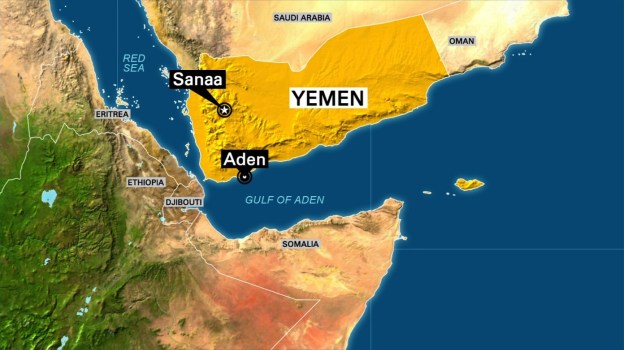
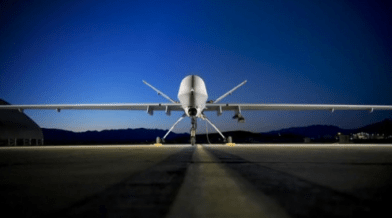
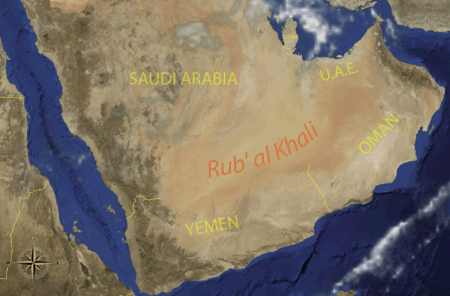
US drone strikes kill 28 unknown people for every intended target, new Reprieve report reveals. US drone strikes in Yemen and Pakistan have killed as many as 1,147 unknown people in failed attempts to kill 41 named individuals, a report by human rights charity Reprieve has found.The report looks at deaths resulting from US drone strikes in Yemen and Pakistan between November 2002 and November 2014. It identifies 41 men who appeared to have been killed multiple times – drawing into question the Obama administration’s repeated claims that the covert drone programme is ‘precise.’

While the US drone programme is shrouded in secrecy, security sources regularly brief the media on the names of those suspected militants targeted or killed in the strikes. Frequently, those individuals are reported to have been targeted or killed on multiple occasions.

Reprieve’s assessment is the first to provide an estimate of the number of people – including in some cases children – who are killed each time the US apparently attempts to assassinate a ‘high value target.’ Due to the US Government’s refusal to publish any information relating to the programme, or the ‘Kill List’ said to determine its targets, the analysis is limited to existing, publicly-available data from media reports and The Bureau of Investigative Journalism.

Key findings of the report include:

In Pakistan, 24 men were reported as killed or targeted multiple times. Missed strikes on these men killed 874 people, including 142 children.
In Yemen, 17 men were reported killed or targeted multiple times. Missile strikes on these men killed 273 others and accounted for almost half of all confirmed civilian casualties and 100% of all recorded child deaths.
In targeting Ayman al Zawahiri, the CIA killed 76 children and 29 adults. They failed twice, and Ayman al Zawahiri is reportedly still alive.
It took the US six attempts to kill Qari Hussain, a Pakistani target. During these attempts, 128 people were killed, including 13 children.

Each assassination target on the US government’s so-called Kill List ‘died’ on average more than three times before their actual death.

The US government’s drone programme has come under increasing scrutiny after a number of strikes that hit large numbers of civilians by mistake. It was recently revealed – as a result of investigations by Reprieve – that the US government compensates civilian victims of drone strikes in Yemen.

Excerpt from US drone strikes kill 28 unknown people for every intended target, new Reprieve report reveals, Nov. 25, 2014

The Mass Rapes in Darfur

As it continues its investigations into the mass rape of 200 women and girls in North Darfur, the United Nations-African Union hybrid mission in Darfur this week organized a forum focusing on the importance of integrated gender perspectives and women leaders in all peace processes…

The Global Open Day forum comes amid allegations of a mass rape in Tabit, which is located 45 kilometres south-west of El Fasher. Last week, UNAMID declared it had initiated an investigation in the area but said that its team had found no evidence confirming the claims and received no information regarding the purported acts. Village community leaders reiterated to UNAMID that they “coexist peacefully” with local military authorities in the area.

Tensions have been simmering across Darfur over the past few months. In October, an attack on UNAMID peacekeepers by armed militants claimed the lives of three peacekeepers.  The UN estimates that some 385,000 people have been displaced by the conflict between the Government of Sudan and armed movements in Darfur since the start of 2014. The world body has repeatedly called on all sides to join negotiations aimed at achieving a permanent ceasefire and comprehensive peace for the people of Darfur, which has witnessed fighting since 2003.

Darfur: amid mass rape allegations, UN-backed event promotes role of women in peace processes, UN News Center, Nov. 22, 2014

See also Darfur: All the Girls are Raped Here

Covert Ops Inside the United States

The federal government has significantly expanded undercover operations in recent years, with officers from at least 40 agencies posing as business people, welfare recipients, political protesters and even doctors or ministers to ferret out wrongdoing, records and interviews show.  At the Supreme Court, small teams of undercover officers dress as students at large demonstrations outside the courthouse and join the protests to look for suspicious activity, according to officials familiar with the practice.

At the Internal Revenue Service, dozens of undercover agents chase suspected tax evaders worldwide, by posing as tax preparers, accountants drug dealers or yacht buyers and more, court records show.  At the Agriculture Department, more than 100 undercover agents pose as food stamp recipients at thousands of neighborhood stores to spot suspicious vendors and fraud, officials said…But outside public view, changes in policies and tactics over the last decade have resulted in undercover teams run by agencies in virtually every corner of the federal government, according to officials, former agents and documents….

“Done right, undercover work can be a very effective law enforcement method, but it carries serious risks and should only be undertaken with proper training, supervision and oversight,” said Michael German, a former F.B.I. undercover agent who is a fellow at New York University’s law school. “Ultimately it is government deceitfulness and participation in criminal activity, which is only justifiable when it is used to resolve the most serious crimes.”…

the Drug Enforcement Administration stoked controversy after disclosures that an undercover agent had created a fake Facebook page from the photos of a young woman in Watertown, N.Y. — without her knowledge — to lure drug suspects.  And in what became a major political scandal for the Obama administration, agents from the Bureau of Alcohol, Tobacco, Firearms and Explosives allowed guns to slip into Mexico in 2011 in an operation known as Fast and Furious that involved undercover operations.  In response to that episode, the Justice Department issued new guidelines to prosecutors: …Before prosecutors approve such tactics, the previously undisclosed guidelines require that they consider whether an operation identifies a “clearly defined” objective, whether it is truly necessary, whether it targets “significant criminal actors or entities,” and other factors, the officials said.

Those guidelines apply only to the law enforcement agencies overseen by the Justice Department. Within the Treasury Department, undercover agents at the I.R.S., for example, appear to have far more latitude than do those at many other agencies. I.R.S. rules say that, with prior approval, “an undercover employee or cooperating private individual may pose as an attorney, physician, clergyman or member of the news media.”…

Oversight, though, can be minimal…Detailed reviews of the money spent by IRS in some of its undercover operations took as long as four and a half years to complete, according to a 2012 review by the Treasury Department’s inspector general.  Across the federal government, undercover work has become common enough that undercover agents sometimes find themselves investigating a supposed criminal who turns out to be someone from a different agency, law enforcement officials said. In a few situations, agents have even drawn their weapons on each other before realizing that both worked for the federal government…

It is impossible to tell how effective the government’s operations are or evaluate whether the benefits outweigh the costs, since little information about them is publicly disclosed. Most federal agencies declined to discuss the number of undercover agents they employed or the types of investigations they handled. The numbers are considered confidential and are not listed in public budget documents, and even Justice Department officials say they are uncertain how many agents work undercover….

At the Supreme Court, all of the court’s more than 150 police officers are trained in undercover tactics, according to a federal law enforcement official speaking on condition of anonymity because it involved internal security measures. At large protests over issues like abortion, small teams of undercover officers mill about — usually behind the crowd — to look for potential disturbances.The agents, often youthful looking, will typically “dress down” and wear backpacks to blend inconspicuously into the crowd, the official said…. The use of undercover officers is seen as a more effective way of monitoring large crowds.

A Supreme Court spokesman, citing a policy of not discussing security practices, declined to talk about the use of undercover officers. Mr. German, the former F.B.I. undercover agent, said he was troubled to learn that the Supreme Court routinely used undercover officers to pose as demonstrators and monitor large protests.  “There is a danger to democracy,” he said, “in having police infiltrate protests when there isn’t a reasonable basis to suspect criminality

Excerpt from ERIC LICHTBLAU and WILLIAM M. ARKINNOV,  More Federal Agencies Are Using Undercover Operations, NY Times, Nov 15, 2014

Surveillance: Private Web Spiders

With so many cheap or free tools out there, it is easy for anyone to set up their own NSA-esque operations and collect data. Though breaching systems and taking data without authorisation is against the law, it is possible to do a decent amount of surveillance entirely legally using open-source intelligence (OSINT) tools…. Daniel Cuthbert, chief operating officer of security consultancy Sensepost, has been happily using OSINT tool Maltego (its open-source version is charmingly called Poortego) [pdf] to track a number of people online.

Over a few days this summer, he was “stalking” a Twitter user who appeared to be working at the Central Intelligence Agency. Maltego allowed him to collect all social media messages sent out into the internet ether in the area around the CIA’s base in Langley, Virginia. He then picked up on the location of further tweets from the same user, which appeared to show her travelling between her own home and a friend or partner’s house. Not long after Cuthbert started mapping her influence, her account disappeared.

But Cuthbert has been retrieving far more illuminating data by running social network accounts related to Islamic State through Maltego. By simply adding names to the OSINT software and asking it to find links between accounts using commands known as “transforms”, Maltego draws up real-time maps showing how users are related to each other and then uncovers links between their followers. It is possible to gauge their level of influence and which accounts are bots rather than real people. Where GPS data is available, location can be ascertained too, though it is rare to find accounts leaking this – only about 2% of tweets have the feature enabled, says Cuthbert.

He has been trying, with mixed results thanks to Twitter’s deletion of accounts spreading Isis propaganda, to determine how tech savvy its members are and how they operate online. Over the past month, Cuthbert has looked at links between a number of pro-Isis users, including one with the handle @AbuHussain104, who has only tweeted 28 times, yet has more than 1,300 followers already. The prominent pro-sharia law Islamic activist Anjem Choudary has been a keen retweeter of Hussain’s words.  The London-based professional hacker has noted the group’s ability to attract followers online; his research shows how a handful of Isis-affiliated accounts have myriad links and wide influence.

Cuthbert is now on the lookout for slipups that reveal the true identity or location of the tweeter. “This is a concern for high-ranking Isis leaders, so much so, they issued a guide on using social media,” he notes, referring to reports of an as-yet unconfirmed document.,,,

Metagoofil, which runs on Linux or Mac machines, is an ideal software for uncovering data businesses have mistakenly leaked onto the internet. Running this free tool in a Linux distribution, hackers can command it to hunt for files related to a particular domain, specifying how many Google searches to look through and how many documents to download. It will then extract whatever metadata the user is looking for and store it all in a file for perusal later on.

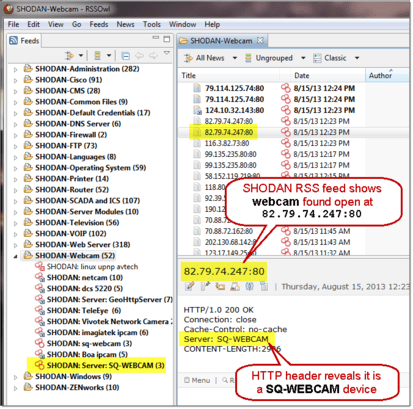
For those who want instant visual results, the Shodan search tool is a remarkable piece of work. Simple searches can reveal miraculous details. For instance, type “IP camera” into the search bar and more than 1.3m internet-connected IP cameras show up from across the world. Add “country:gb” and you’ll be shown more than 54,000 based in Great Britain. You could specify a manufacturer too, such as Samsung. That provides just 13 results. From there, it’s a matter of clicking on the IP addresses to see which ones allow you to view live footage either with or without a password (if you guess the password, even if it’s a default one such as “admin”, it will mean you are likely to have broken the Computer Misuse Act).  Either way, it is very easy to find poorly secured cameras – many have a username of “admin” and no password whatsoever, according to previous research. It is that straightforward: no coding skills required….

“The tools are mostly for reconnaissance,” says Christian Martorella, creator of Metagoofil and theHarvester, another OSINT software that pentesters – or “ethical hackers” – use to map their clients’ internet footprint. “This helps the pentester to have as much information as possible about the targets and plan the attacks. This phase is very important but … pentesters usually overlook this phase or dedicate little time, while attackers seem to spend more time in this phase.”

Privacy-conscious folk can also benefit from OSINT. While looking into how his internet service provider [ISP] was interfering with his internet connection, in a method similar to that used by Verizon for its controversial “permacookie” tracking software, researcher Lee Brotherston last month used Shodan to find servers that intercepted his traffic. The wide range of Perftech servers he found were based across the world, and though his ISP was simply using a “man-in-the-middle” technique to add a warning banner to a website he visited, … But what if the ISP was coerced by a government and dropped malware onto people’s machines as they tried to access websites? The much-maligned surveillance tool FinSpy is used for just for that purpose: it is placed into the data centres of ISPs and intercepts traffic to force surreptitious downloads of surveillance software. Instead of dropping banners, as Brotherston’s ISP did, it injects malicious JavaScript.  “When you hear about repressive governments that start installing malware on activists’ machines and then arresting them… it’s the same technique. They’re injecting data into a webpage,” says Brotherston, a Canada-based Brit. “If you’re injecting this, you may have a valid business case for doing, it but someone could break in and start dropping malware on people’s machines.”

A number of developers, inspired by the success of Shodan creator John Matherly, have drawn up search sites for hackable systems. Perhaps the most useful for security professionals, whether of the blackhat or whitehat variety, is the Kickstarter-funded PunkSPIDER, a web app vulnerability search engine, which issues an alert as soon as the visitor arrives: “Please do not use this site for malicious purposes … use it wisely or we’ll have to take it away”. It’s remarkably simple. Type or paste in a URL and it will reveal what vulnerabilities have been documented for the related site.

Such is the openness of the web, and such is the carelessness of so many web denizens, any determined citizen can gather up reams of sensitive information on others and collect enough data to create a decent picture of who they are, where they are and what they are doing. The tools are now accessible for the typical web user.

Excerpts fromTom, Fox-Brewster, Tracking Isis, stalking the CIA: how anyone can be big brother online, Guardian, Nov. 12, 2014

Uncontacted Tribes: Amazon

The vast jungles of the Amazon rainforest harbor tribes mostly isolated from the outside world, whose way of life, largely unchanged for millennia, is now increasingly threatened by intrusions from modern civilization.  Now, scientists reveal they can monitor these “uncontacted tribes” using satellites, which would allow safe, inexpensive and noninvasive tracking of these tribes in order to protect them from outside threats.

The investigators focused on indigenous groups concentrated near the headwaters of the Envira River, located at the border of Brazil and Peru. These include the Mashco-Piro, nomadic hunter-gatherers who live in Peru’s densely forested Madre de Dios region, and a number of Pano-speaking farming societies.

The researchers combed through satellite images to look at five isolated villages previously identified via overflights by Brazilian officials. They confirmed these locations and measured the sizes of their villages, houses and gardens. The villages ranged from a small one of about 50 people to a large and growing village of about 300 people. “We can find isolated villages with remote sensing and study them over time,” Walker told Live Science. “We can ask: Are they growing? Do they move?”

Surprisingly, based on the sizes of the houses and villages, the scientists find the population densities of these isolated villages is about 10 times greater, on average, than other villages of indigenous Brazilian peoples….. The researchers now plan to focus on 29 more isolated villages….

Excepts, Charles Q. Choi ,Isolated Amazon Tribes Monitored with Space-Age Technology,LiveScience.com, Nov. 5, 2014

Orphaned Gold Mines – Canada

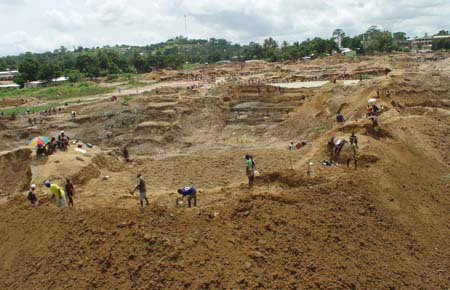
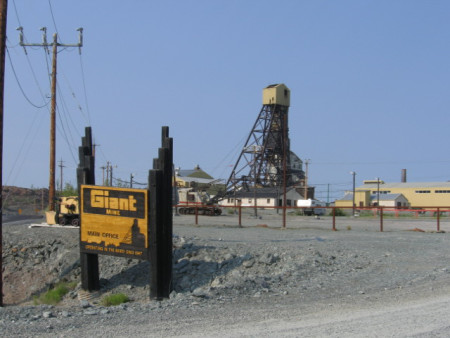
Welcome to the Giant Mine, an abandoned gold mine in Yellowknife, capital of the Northwest Territories of Canada. The Canadian government first took charge of it in 1999 after the owner declared bankruptcy and walked away. It is one of an estimated 10,000 orphaned or abandoned mines in Canada’s north that are now the government’s responsibility. And it is full of arsenic trioxide, a compound that is produced by heating arsenopyrite ore, a mineral that has traces of gold. Arsenic trioxide is odourless, tasteless, highly soluble—and lethal. An amount smaller than a pea is enough to kill. The Giant Mine has 237,000 tonnes of the stuff.

The Giant Mine opened in 1948. For the first few years arsenic trioxide went up the smokestack as vapour and came down in the surrounding area as dust. Dust-collecting “scrubbers” were added to capture some of the poisons after newspapers began warning people not to drink water made from melted snow. Once captured, the arsenic, which has the consistency of talcum powder, was blown into underground chambers. As long as the poisonous dust was in the permafrost layer, the thinking went, it would freeze solid and no longer pose a problem.

That might have worked had mine managers not later decided to dig a series of open pits to extract more gold. Now much closer to the surface, the permafrost has melted. With water leaching into and out of the mine it was only a matter of time before the arsenic threatened the waters of Great Slave Lake.

The federal government’s proposed answer, which was approved last month and whose cost has been estimated at C$1 billion ($900m), is a variation on the original plan. The largest open pit will be filled and the 15 sealed vaults containing the arsenic will be refrozen. “

The Dene, the largest group of indigenous people in the territory, in whose homelands the Giant Mine sits, want the dust taken out and reprocessed into a more stable form. Under pressure from the Dene, environmentalists and the city of Yellowknife, the government is to set up an independent body to monitor its work and check every 20 years whether plans should change. It has stopped claiming its solution will last forever, shortening the period a tad, from eternity to 100 years.

If there is a golden lining in this cloud of arsenic dust it is that the studies, remediation work and monitoring create jobs in Yellowknife, now largely a government town. “That mine is still making money,” says Walt Humphries, who is leading a campaign to turn the Giant Mine’s former recreation centre into a museum. “And it will make money for years to come.”

Canada’s Giant Mine: Giant headache, Economist, Sept. 27, 2014, at 38

Andaman Islands as a Chokepoint

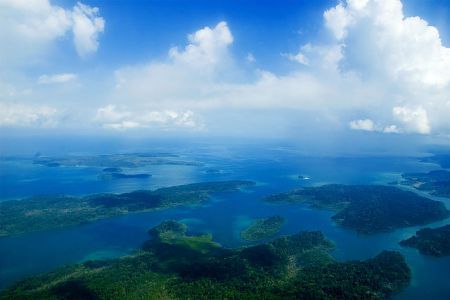
Hawks in Delhi who are suspicious of Chinese long-term aims say bluntly that India and its friends will acquire some sway over China only once the Andamans are treated as a “chokepoint”, a place to disrupt Chinese trade in the event of any future confrontation. Four-fifths of Chinese oil imports go through the strait. Chinese naval strategists warn of Indian designs to drop an “iron curtain” there…. Certainly, activity on the islands is growing. An air base that opened two years ago in Campbell Bay, Great Nicobar, has taken Indian military aircraft 300km closer than before to the Malacca Strait. Other airstrips are reportedly being built or lengthened to handle big aircraft, including the Hercules transport plane. Airfields for helicopters will follow. The navy wants to deploy drones to track passing ships. New coastguard stations serve a similar purpose. Regular naval exercises with neighbours are interspersed with big international training manoeuvres hosted in the Andamans and named “Millan”. The most recent involved 17 navies in a disaster-relief exercise meant to mark a decade after the 2004 Asian tsunami.

Such expansion, however, lacks clear purpose. The Andamans have a population of 400,000 and can support a large military presence only with difficulty. Communications are poor—at least until a long-promised submarine cable from the mainland arrives. And the economy is dependent on money and goods from mainland India. Mr Singh argues that for the Andamans to become robust, their economy must first develop. For that, he wants a big boost to tourism, including direct flights from Phuket in Thailand, only 45 minutes’ flying time away. Fisheries should also grow. One businessman in Port Blair shows off a haul of several dozen carcasses of huge yellowfin tuna. Yet real development faces all sorts of hurdles. They include a lack of available land because of strict—and certainly necessary—protection for indigenous tribal groups and valuable rainforest. India may yet develop the islands into a big military asset, but it has to balance the interests of civilians, too. It is going to be a slow boat.

The Andaman Islands: From outpost to springboard, Economist, Sept. 13, 2014, at 46


The Space Belongs to Drones

Zephyr– high-altitude “pseudo-satellite” ( HAPS) —  is actually an unmanned, ultra-light, solar-powered, propeller-driven aircraft. But it is designed, just as some satellites are, to hover indefinitely over the same part of the world. With a 23-metre wingspan and a weight of only 50kg, it is fragile and must remain above the ravages of the weather and the jet stream both by day and by night. It therefore flies at an altitude of around 21km (70,000 feet) during daylight hours, and then glides slowly down to around 15km when the sun is unavailable to keep it aloft….

The main uses for satellites are observation and communication. Both are appealing markets for HAPS. Hovering drones could act as relays for telephone calls and internet traffic in places that do not have good enough infrastructure on the ground. And there is never a shortage of customers who would like to snoop on various parts of the Earth’s surface, whether for commercial or military reasons.

By satellite, such snooping is done from an altitude of about 800km. Zephyr flies at one-fortieth of that, so the optics its needs to take pictures are far less demanding. (Just as well, of course, for it is unlikely to be able to carry a huge payload.)

Airbus is not alone in the HAPS game. Google and Facebook are involved as well—and with similar customers in mind—though Google will also be its own customer, since keeping its Google Earth imagery up to date is a demanding task. Paul Brooks, spokesman for Airbus’s HAPS programme, says he does not see these firms as competitors, but rather as collaborators in proving the idea of endurance flight and promoting the changes in regulations needed to permit its safe use. Once this has happened, and the world’s aviation authorities have agreed common operating standards, HAPS should prove a cheap and reliable alternative to blasting things into orbit.

Excerpts, Pseudo-satellites: The west wind blows afresh, Economist, Aug. 30, 2014

Pirates and Free Trade

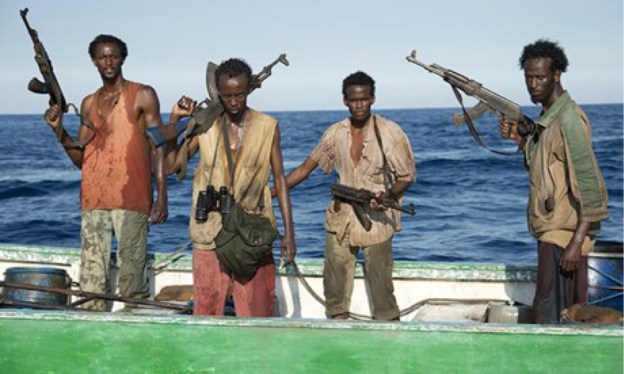
Ships navigating the lawless seas of the Gulf of Aden must keep a constant lookout for Somali pirates. The roots of Somalia’s maritime banditry lie in its desperately poor coastal villages, where the choice between fishing and piracy is an easy one for many.

Anja Shortland and Federico Varese mapped the locations of hijacked ships between 2005 and 2012. They found that hijacked vessels were always anchored far away from regional trading routes, and that big ports were not prone to piracy. There is a reason for that. Somali clans control local trade by issuing licences and charging informal taxes. The researchers reckon that communities which can tax imports and exports refuse to protect pirates because trade is a safer and more lucrative source of revenue than pirate earnings. Only clans that have no other income offer the pirates protection, in return for a share of their loot…..A… solution [to piracy] would be to build new roads and ports, which would allow remote areas to start trading. With alternative sources of income, fewer communities would be willing to harbour pirates….

A former president of Puntland repeatedly requested a road be built to Eyl, a rough-and-ready coastal town, as a quid pro quo for giving up piracy. His request was turned down, and piracy continued. Time for donors to rethink where they spend their pieces of eight.

Crime in Somalia: Pirates v economist, Economist, July 12, 2014, at 42

West versus Islamic State – the Apostles

Undercover warriors [led by the US spy agency CIA] will aim to “cut the head off the snake” by hitting the command structure of the Islamist terror group responsible for a trail of atrocities across Iraq and Syria, reports the Sunday People.  PM David Cameron has told the SAS and UK spy agencies to direct all their ­resources at defeating IS [Islamic State] after a video of US journalist James Foley being beheaded shocked the world.

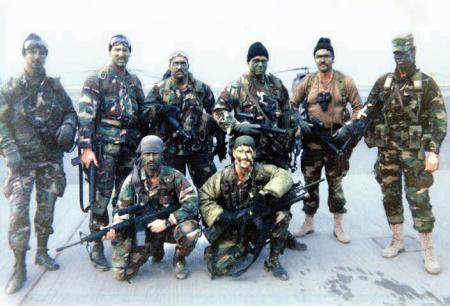
British special forces will work with America’s Delta Force and Seal Team 6. The move sees a rebirth of top secret Task Force Black, which helped defeat al-Qaeda terrorists in Iraq .This time the counter-terrorist ­experts will be targeting Abu Bakr ­al-Baghdadi, leader of IS and now the world’s most wanted terrorist.

A source said: “We need to go into Syria and Iraq and kill as many IS members as we can. You can’t ­negotiate with these people.  “This is not a war of choice. They are cash rich and have a plentiful ­supply of arms. If we don’t go after them, they will soon come after us…You have to get on the ground and take out the commanders – cut off the snake’s head.

The new task force will comprise a squadron of the SAS, special forces aircrews from the RAF and agents from MI5 and MI6. The operation will be led by America’s CIA spy agency.

One of the first jobs will be to identify the British Muslim shown on an IS video released last week apparently cutting Foley’s head off with a knife. UK intelligence sources confirmed that the killer, believed to be a British-born Pakistani from London, is already at the top of a CIA “kill list”…

Troops will also train Kurdish Peshmerga fighters…There are also moves to revive a defunct Iraqi special forces unit called the Apostles, which was ­created by the first Task Force Black a­fter the Iraq War.

Excerpts from Aaron Sharp, SAS and US special forces forming hunter killer unit to ‘smash Islamic State’, Mirror, Aug.23, 2014

The Oil Curse – South Sudan

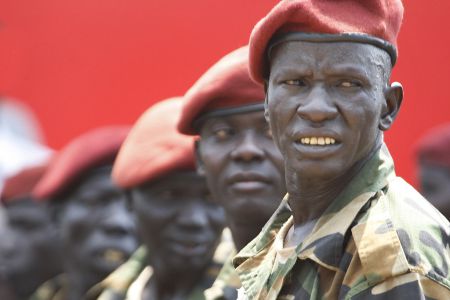
South Sudan’s oil fields have become a battleground in the struggle for power in Africa’s newest nation, encouraging Western nations and regional mediators to consider international monitoring of crude revenues as a way to remove a major bone of contention from such conflicts.  South Sudan sits on Sub-Saharan Africa’s third-biggest crude reserves, and its oil fields were early targets in fighting that erupted in December 2013 and has rumbled on despite two ceasefire deals and U.N. warnings that a man-made famine looms.

It marks an alarming slide into dysfunction by a nation whose creation three years ago the United States hailed as a foreign policy success. Instead of lifting the nation out of grinding poverty, oil is blamed for stoking a war…Diplomats and regional mediators said monitoring revenues was gaining traction as an idea for discussion, though the mechanics of such a system and how the warring sides would be pushed towards a deal have not been determined….

South Sudan’s oil output has tumbled by about a third to 160,000 barrels a day since the fighting began in December 2013, but it remains the main source of cash for President Salva Kiir’s government both by selling crude and by borrowing against future earnings, digging the nation deeper into debt.  As of June 25, 2013 South Sudan owed $256 million to China’s National Petroleum Corp, which has 40 percent of a venture developing South Sudan’s oil fields, and a further $78 million to oil trader Trafigura. [a Dutch multinational commodity trading company] It plans to borrow about $1 billion from oil firms in fiscal year 2014/15, equal to about a quarter of forecast revenues.

Rebel leader Machar, who was fired as deputy president last year, said oil sites would be a “legitimate target” unless funds were put into a neutral escrow account pending any deal.

But President Salva Kiir’s government says such outside intervention would violate its sovereignty and insists it has not bought arms since fighting began.  “We are not the protectorate of anyone,” presidential spokesman Ateny Wek Ateny said. “We have the right to buy arms, but we haven’t bought anything since December,” he said, despite rebel claims of weapon shipments arriving in recent months.  Kiir and Machar come from rival ethnic groups, and the conflict has re-opened deep ethnic divisions in the country.

Monitoring revenues is on the table for talks sponsored by the regional African grouping IGAD, though diplomats acknowledge it can only be part of a broader deal on how to share wealth and power in the divided nation…South Sudan has already lost billions of petrodollars in its young life. Kiir wrote to 75 former and serving officials in 2012 seeking the return of $4 billion that disappeared since 2005. No significant amounts were repaid, diplomats said.  Though the country – the size of France – has almost no roads and only a third of its 11 million people can read, South Sudanese now watch more wealth frittered away on fighting than on building roads or paying for schools….Fighting has killed at least 10,000 people, displaced 1.5 million and left a third of the population facing the prospect of famine as they have not planted crops…

But Western diplomats say pressure for a deal on oil monitoring needs to come from the region, led by heavyweight neighbours such as Kenya and Ethiopia.China, with its oil interests, would need to support the move, though diplomats said it had worked with the West during the crisis. Alongside China, other oil investors are India’s ONGC Videsh and Malaysia’s Petronas.”  If they can get the oil sector right, share the oil revenues in a much more inclusive manner, then that will dictate the country’s future,” said Luke Patey, author of a book on Sudan and South Sudan’s oil industry.

Excerpts from South Sudan conflict drives idea of oil wealth monitoring, Reuters, Aug. 1, 2014]

CIA Black Sites at Court of Human Rights

The CIA ran a secret jail on Polish soil, the European Court of Human Rights ruled on July 24, 2014, piling pressure on Poland, one of Washington’s closest allies, to break its long silence about the global programme for detaining al Qaeda suspects.  The court said it had been established that the CIA used a facility in a northern Polish forest, code named “Quartz”, as a hub in its network for interrogating suspected al Qaeda operatives rounded up after the Sept. 11, 2001 attacks.

Poland has always denied that the CIA had a jail on its territory, even as leaks from former U.S. intelligence officials, and a Senate investigation, brought more and more details of the programme into the open.  The July 24, 2014 ruling was the first time that a court in Europe had said that the CIA operated one of the secret jails – often referred to as “black sites” -on the continent.

Amrit Singh, a lawyer with the Open Society Justice Initiative who acted for one of the men who brought the case, told Reuters both Poland and the United States would have to take note of what she called an historic ruling…The court case was brought by lawyers for two men, Saudi-born Abu Zubaydah, and Saudi national Abd al-Rahim al-Nashiri, who are now both inmates at Guantanamo Bay, the U.S. military’s prison on Cuba.

They alleged they were flown in secret to a remote Polish airfield, then transferred to the CIA-facility near the village of Stare Kiejkuty where they were subject to treatment they said amounted to torture.  Lawyers for Nashiri said one on occasion he was forced to stand naked and hooded in his cell while his interrogator operated a power drill, making the detainee believe he would be harmed. In another incident, the lawyers said, an interrogator cocked a pistol next to Nashiri’s head.

The court ruled that, despite the wall of secrecy around the U.S.-led “extraordinary rendition” programme, there was enough circumstantial evidence to say beyond reasonable doubt that both men were held at a CIA-run facility in Poland. It said Poland knew about their detention and should have known they were at risk of ill-treatment.

The court found Poland violated its obligations under the European Convention on Human Rights to prevent torture, ensure the right to liberty, and properly investigate allegations a crime had been committed on its territory.  It ordered Poland to pay al-Nashiri 100,000 euros in damages and 130,000 euros to Zubaydah….

The ruling from Strasbourg may have implications for other European states alleged to have hosted CIA prisons: similar cases have been lodged with the court in Strasbourg against Romania and Lithuania. The court ruling did not directly cover the United States, which is outside its jurisdiction.

Excerpt from CHRISTIAN LOWE, European court says CIA ran secret jail in a Polish forest, Reuters, July 24, 2014

Partition of Central African Republic

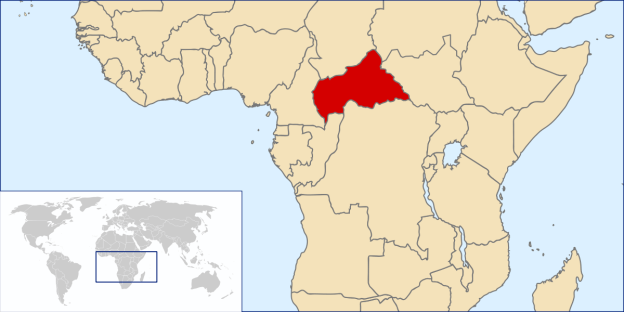
Central African Republic is de facto partitioned with Christian militias in the west of the impoverished, landlocked country pillaging diamonds and mainly Muslim Seleka rebels in the east controlling gold mines, U.N. experts said on Friday.  Violence between the Muslim and Christian communities killed at least 2,400 civilians between December 2013 and April 2014, the panel said, but they acknowledged the toll was likely higher due to underreporting.  Seleka rebels seized power more than a year ago, committing abuses on the majority Christian population that triggered waves of deadly revenge attacks by the anti-balaka Christian fighters, forcing a million people to flee their homes.

In a report to the U.N. Security Council released in July 2014, the experts who monitor sanctions violations said they believe “that armed groups, whether associated with anti-balaka or the former Seleka, have been manipulated and incited by political spoilers to commit acts of violence against civilians and international forces with the aim of strengthening those leaders’ influence and destabilizing the transition process or promoting the partition of the country.”  “The country is de facto partitioned into two … with the predominant presence of so-called anti-balaka militias in the west and of the new Seleka in the east,” the experts said.

The violence in Central African Republic has continued despite the presence of 2,000 French troops and some 6,000 African Union forces. In April, the Security Council authorized a U.N. peacekeeping force of up to 10,000 troops and 1,800 police, which is due to assume authority in September.  “Armed groups have been involved in the illicit trade and exploitation of natural resources, namely gold and diamonds,” the experts’ report said.  “In the west of the Central African Republic, anti-balaka members are digging for and trading in diamonds in remote villages,” it said. “In the east, Seleka forces retain a tight grip on artisanal gold mines.”

In December, the Security Council imposed an arms embargo on Central African Republic and then in May, it imposed sanctions on the country’s former President François Bozizé and two other men linked to the country’s conflict. ..Armed groups were mainly using small arms that were circulating in the country before the crisis or obtained from government stockpiles following the collapse of the national security forces, the experts said.

Excerpt from Michelle Nichols. Central African Republic de facto partitioned, UN experts say, Reuters, July 12, 2014

Battle Against Nuclear Waste in Australia

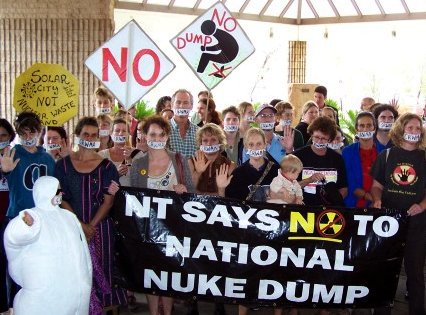
Muckaty Station in the Northern Territory [Australia] was nominated in early 2007 as a site to store low and intermediate radioactive waste under a deal negotiated with the Aboriginal Ngapa clan.

While Australia does not use nuclear power, it needs a site to store waste, including processed fuel rods from the country’s only nuclear reactor at Lucas Heights, on the outskirts of Sydney,…..Opponents have fought against the dump for years, with a trial starting in the Federal Court in Melbourn in June 2014 alleging Muckaty’s nomination was invalid due to a failure of the government and the land council to obtain the consent of all Aboriginal owners.  “What we’re here to say is ‘no more’ and that this process was so legally flawed that it is invalid,” Ron Merkel, who is representing traditional owners, told the court.  “The opposition is in no small part based on a spiritual affiliation to the land and that radioactive waste will poison the land,” he said in comments cited by Australian Associated Press

In Australian Federal Court, Aborigines continue the fight against radioactive waste dumping on their land, Agence France Presse, June 3, 2014

Pakistani Courts and the CIA Drone War

A judge at the High Court in Islamabad, Pakistan, has ordered the Pakistani police to open a criminal investigation into the CIA’s involvement in a drone strike that killed three people, including a teenager, on December 31 2009. Ruling in the case of Kareem Khan, a resident of the country’s North Waziristan region whose brother and son were among the dead, Justice Shaukat Aziz Siddiqui ordered police to examine whether Jonathan Banks, former CIA station chief in Islamabad, and John Rizzo, former CIA General Counsel, are guilty of committing murder, waging war against Pakistan and offences under the provisions of the Terrorism Act 1997 for their involvement in authorizing the New Years’ Eve strike.

Mr Khan first brought the case in 2011 with support from the Foundation for Fundamental Rights (FFR) in Pakistan. In February this year Mr Khan, who has been an outspoken critic of the covert US programme, was illegally detained for ten days by unknown men in police uniforms, ahead of a European trip where he spoke to parliamentarians about the civilian impact of the US drone programme.Commenting on the judgement, Kareem Khan said: “Today’s order is a victory for all those innocent civilians that have been killed in US-led drone strikes in Pakistan. I also feel heartened that people like me in Waziristan might now also be able to get justice for the wrongs being done to them. I sincerely hope that the authorities now do their job and investigate the culprits”.

Jennifer Gibson, attorney for legal charity Reprieve, which is assisting Mr Khan, said: “Today’s decision marks a crucial first step in finally providing justice for people like Kareem – the innocent victims of the CIA’s illegal drone wars. The message is clear – there can be no impunity for the killing of innocent people. The police in Pakistan should move to launch their investigation as soon as possible.”

Pakistani High Court orders police to investigate CIA drone strikes, Reprieve Press Release, June 5, 2014

Cheap Wild Meat: Nigeria

Just as the bush meat delicacy is gaining acceptance in all parts of the country [Nigeria] and fast becoming a source of living for many Nigerians, infrastructural development, including roads construction, have also contributed greatly in threatening plant species with most plants going into extinction.  It is a common site when travelling across the country to see hunters, women and children displaying bush meat on the highway for sale.

The bush meat business, according to Mrs Janet Efe, a bush meat merchant a long Okpela-Benin road, has come to stay. “There is no job for our husbands and children and rather than going into robbery and other dubious trades it is better they hunt in the forest where the animals roam about.”  She said that so long as human beings exist, animals will always be available for people to eat.

Bush meat is a recognised trade at rural and urban centres. Wild animals’ meat is the main source of cheap protein for the majority of rural communities in Nigeria. Over 80 per cent of the population are rural dwellers who depend on bush meat, compared with urban dwellers that depend on abattoir supplies of cow and other ruminant meat…

According to the Food and Agriculture Organization (FAO), the present level of information on the status of non-fish aquatic animal resources in Nigeria is still scanty and limited to a few inventories of wild stocks in the National Parks. A holistic approach to their management and conservation is required and recognition that the conservation of aquatic animals, including fish, is important because of their genetic resources, biological, and food values and the socio-economic implications of their extinction.

Excerpts from ALEX ABUTU, Nigeria: Biodiversity – Nigeria’s Wasting Goldmine, AllAfrica, May 21, 2014

Controlling Protesters – the Skunk Drone

South African company Desert Wolf yesterday unveiled its Skunk riot control drone at the IFSEC security exhibition outside Johannesburg. Armed with four paintball guns, it can fire a variety of ammunition to subdue unruly crowds.The Skunk is designed to control crowds without endangering the lives of security staff. Bright strobe lights and on-board speakers enable operators to communicate with and warn the crowd. If things get out of control the Skunk can use its four paintball guns to disperse or mark people in the crowd. Four ammunition hoppers can load different types of ammunition such as dye marker balls, pepper spray balls or solid plastic balls. Payload capacity of the unmanned aerial vehicle (UAV) is 40 kg but since the gun assembly weighs around 15 kg the aircraft has an excess of power.

In addition to two high definition day cameras, the Skunk carries a FLIR thermal camera for night vision capability. A camera and microphone on the operator’s station records the operators (a pilot and payload operator) so their behaviour can be monitored. Hennie Kieser, Director of Desert Wolf, said people tend to be less aggressive when they are monitored.

Desert Wolf will soon deliver the first 25 units to customers in the mining industry and the UAV will enter service around June/July. Kieser said it was sad that the mines are in a predicament with strike related violence and this is why the mines are the biggest market for the system. A full system including cameras, ground control station etc. will cost around R500 000.

Kieser said Desert Wold will definitely export the Skunk into Africa, primarily for mining operations, and that South African success will lead to other orders. He felt the best market is not in South Africa because of the current legislation restricting drone use.

Desert Wolf Unveils Riot Control UAS, UAS Vision, May 16, 2014

Drones, Weddings and the Bad Guys

Soon after a U.S. military drone killed about a dozen people on a remote road in central Yemen on Dec. 12, 2013, a disturbing narrative emerged.  Witnesses and tribal leaders said the four Hellfire missiles had hit a convoy headed to a wedding, and the Yemeni government paid compensation to some of the victims’ families. After an investigation, Human Rights Watch charged that “some, if not all those killed and wounded were civilians.”…

As a result, the Yemen attack has become fodder in a growing debate about the White House proposal for the CIA to eventually turn over its armed drones and targeted killing program to the military.  The Pentagon’s Joint Special Operations Command (JSOC), which carried out the December strike, insists that everyone killed or wounded in the attack was an Al Qaeda militant and therefore a lawful military target, U.S. officials say.  “This was not a wedding,” said a congressional aide briefed by the military. “These were bad guys.”

The CIA, which runs a separate drone killing program in Yemen, saw it differently.  According to two U.S. officials who would not be quoted discussing classified matters, the CIA informed the command before the attack that the spy agency did not have confidence in the underlying intelligence.  After the missiles hit, CIA analysts assessed that some of the victims may have been villagers, not militants. The National Counterterrorism Center, which coordinates terrorism intelligence from multiple agencies, is somewhere in the middle, saying the evidence is inconclusive.

By all accounts, the target was Shawqi Ali Ahmad Badani, a mid-level leader of Al Qaeda in the Arabian Peninsula, a virulent offshoot of Al Qaeda.  Badani, who escaped unharmed, is suspected of being the ringleader of plots that forced the State Department to temporarily close 19 U.S. diplomatic missions in the Mideast and Africa in August 2013.

The disagreement among U.S. intelligence analysts — all of whom have access to aerial video, communications intercepts, tips from Yemenis and other intelligence — shows that drone targeting is sometimes based on shaky evidence. To some members of Congress, the Yemen strike shows something else: The Joint Special Operations Command is not as careful as the CIA and shouldn’t be given responsibility for drone killings.

Yemen’s government apparently agrees. It demanded that the command stop drone strikes in the country, but let the CIA continue. The CIA launched three strikes last month (April 2014) that killed as many as 67 people.  “The amount of time that goes into a strike package at CIA is longer and more detailed than a strike package put together” at the Defense Department, said the same congressional aide. “Their standards of who is a combatant are different. Standards for collateral damage are different.”  Pentagon officials dispute that, saying that the joint command follows the policy President Obama disclosed in a speech a year ago. It bars drone strikes unless there is a “near certainty” that civilians won’t be killed.

Excerpt from KEN DILANIAN , Debate grows over proposal for CIA to turn over drones to Pentagon, LA Times, May, 11, 2014


Explosive Weapons: Deaths and Damages

Data released by Action on Armed on Violence  (AOAV) on May 14, 2014 shows that civilian deaths and injuries in 2013 from explosive weapons have increased by 15%, up from 2012.Civilians bore the brunt of bombings worldwide. AOAV recorded 37,809 deaths and injuries in 2013, 82% of whom were civilians. The trend was even worse when these weapons were used in populated areas. There civilians made up a staggering 93% of casualties.  These stark figures mean that civilian casualties from bombings and shelling worldwide have gone up for a second consecutive year.  This data is captured in AOAV’s latest report, Explosive Events, which analyses the global harm from the use of explosive weapons like missiles, artillery and improvised explosive devices (IEDs).

KEY FINDINGS
•Iraq, Syria, Pakistan, Afghanistan and Lebanon were the most affected countries in the world. More than a third of the world’s civilian casualties from explosive weapons were recorded in Iraq, where AOAV saw a dramatic escalation in bombings with improvised explosive devices (IEDs).
•Seventy-one percent (71%) of civilian casualties from explosive weapons worldwide were caused by IEDs like car bombs and roadside bombs.
•Civilian casualties in Iraq increased by 91% from 2012, with more than 12,000 deaths and injuries recorded in the country in 2013.
•Market places were bombed in 15 countries and territories, causing 3,608 civilian casualties.
•Ballistic missiles, used only in Syria, caused an average of 49 civilian casualties per incident, the highest for any explosive weapon type.

The Rights of Migrant Workers

In September 2013 reports of the abuse of Nepalese migrants working on stadiums for the 2022 football World Cup in Qatar, and the deaths of at least 44 of them, appeared in the Guardian, a British newspaper. The Nepalese government’s first response was to recall its ambassador to Qatar: the Guardian had quoted her describing the Gulf state as an “open jail”. Shortly afterwards, Nepalese and Qatari officials held a joint press conference in Doha at which they insisted Nepalese workers were “safe and fully respected”. Reports to the contrary were false and driven by “inappropriate targets and agendas”.

According to Martin Ruhs of Oxford University, the Nepalese government’s apparent lack of concern can be explained by looking at the interests of those involved. For all the mistreatment, Nepalese workers earn far more in Qatar than they could at home. Remittances make up a quarter of Nepalese GDP. If the Nepalese government were to insist that rules protecting migrant workers in Qatar should be enforced, Qatari employers might look for workers elsewhere.

In Gulf states and Singapore, where migrants have few rights on paper, the foreign workforce is huge: 94% of workers in Qatar were born abroad. Sweden and Norway, where migrants can use public services, claim welfare benefits and bring in dependents, admit relatively few purely economic migrants.

This trade-off is visible even within the European Union, where the recent accession of 12 relatively poor eastern European countries has sparked a debate about migrants’ rights to welfare. In January David Cameron, Britain’s prime minister, clashed with his Oxford contemporary, Radek Sikorski, Poland’s foreign minister. Mr Cameron wants to be able to exclude recently arrived European immigrants from welfare and public housing. “If Britain gets our taxpayers, shouldn’t it also pay their benefits?” Mr Sikorski responded….

A UN convention on migrant workers’ rights which came into force in 2003 has been ratified by only 47 countries, most of which are net senders of migrants.

The abuse of migrants: And still they come, Economist,  Apr. 19, at 54

The Fatal Attraction to Coal: World

Coal is cheap and simple to extract, ship and burn. It is abundant: proven reserves amount to 109 years of current consumption… Just as this wonder-fuel once powered the industrial revolution, it now offers the best chance for poor countries wanting to get rich.  Such arguments are the basis of a new PR campaign launched by Peabody, the world’s largest private coal company (which unlike some rivals is profitable, thanks to its low-cost Australian mines). And coal would indeed be a boon, were it not for one small problem: it is devastatingly dirty. Mining, transport, storage and burning are fraught with mess, as well as danger. Deep mines put workers in intolerably filthy and dangerous conditions. But opencast mining, now the source of much of the world’s coal, rips away topsoil and gobbles water. Transporting coal brings a host of environmental problems.

The increased emissions of carbon dioxide from soaring coal consumption threaten to fry the planet…he CO2 makes the oceans acid; burning coal also produces sulphur dioxide, which makes buildings crumble and lungs sting, and other toxic chemicals. By some counts, coal-fired power stations emit more radioactivity than nuclear ones. They release tiny, lethal particulates. Per unit generated, coal-fired stations cause far more deaths than nuclear ones, and more even than oil-fired ones.

But poverty kills people too, and slow growth can cost politicians their jobs. Two decades of environmental worries are proving only a marginal constraint on the global coal industry. The International Energy Agency has even predicted that, barring policy changes, coal may rival oil in importance by 2017… As countries get richer they tend to look for alternatives—China is scrambling to curb its rising consumption. But others, such as India and Africa, are set to take up the slack

America’s gas boom has prompted its coal miners to seek new export markets, sending prices plunging on world markets. So long as consumers do not pay for coal’s horrible side-effects, that makes it irresistibly cheap. In Germany power from coal now costs half the price of watts from a gas-fired power station. … Its production of power from cheap, dirty brown coal (lignite) is now at 162 billion kilowatt hours, the highest since the days of the decrepit East Germany.  Japan, too, is turning to coal in the wake of the Fukushima nuclear disaster. On April 11th the government approved a new energy plan entrenching its role as a long-term electricity source.

International coal companies face two worries. One is that governments may eventually impose punitive levies, tariffs and restrictions on their mucky product. The other is the global glut. Prices for thermal coal (the kind used for power and heating) are at $80-85 a tonne, which barely covers the cost of capital. Some Australian producers are even mining at a loss, having signed freight contracts with railways and ports that make them pay for capacity whether they use it or not….

Perhaps the biggest hope for all involved in the coal industry is technology. Mining and transporting coal will always be messy, but this could be overlooked were it burned cheaply and cleanly. Promising technologies abound: pulverising coal, extracting gas from it, scrubbing emissions and capturing the CO2. But none of these seems scalable in the way needed to dent the colossal damage done by coal. And all require large subsidies—from consumers, shareholders or taxpayers.

A $5.2 billion taxpayer-supported clean-coal plant in Mississippi incorporates all the latest technology. But at $6,800 per kilowatt, it will be the costliest power plant yet built (a gas-fired power station in America costs $1,000 per kW). At those prices, coal is going to stay dirty.

The fuel of the future, unfortunately: A cheap, ubiquitous and flexible fuel, with just one problem, Economist,  Apr. 19, 2014, at 55

Internet or Equinet?

“The Internet governance should be multilateral, transparent, democratic,and representative, with the participation of governments, private sector, civil society, and international organizations, in their respective roles. This should be one of the foundational principles of Internet governance,” the external affairs ministry says in its initial submission to the April 23-24 Global Multistakeholder Meeting on the Future of Internet Governance, also referred as NETmundial, in Sao Paulo, Brazil.  The proposal for a decentralised Internet is significant in view of Edward Snowden’s Wikileaks revelations of mass surveillance in recent months.

“The structures that manage and regulate the core Internet resources need to be internationalized, and made representative and democratic. The governance of the Internet should also be sensitive to the cultures and national interests of all nations.”The mechanism for governance of the Internet should therefore be transparent and should address all related issues. The Internet must be owned by the global community for mutual benefit and be rendered impervious to possible manipulation or misuse by any particular stake holder, whether state or non-state,” the ministry note says.  NETmundial will see representatives from nearly 180 countries participating to debate the future of Internet…

The US announced last month of its intent to relinquish control of a vital part of Internet Corporation for Assigned Names and Numbers (ICANN) – the Internet Assigned Numbers Authority (IANA).  “Many nations still think that a multilateral role might be more suitable than a multistakeholder approach and two years back India had proposed a 50-nation ‘Committee of Internet Related Policies’ (CIRP) for global internet governance,” Bhattacharjee added.

The concept of Equinet was first floated by Communications Minister Kapil Sibal in 2012 at the Internet Governance Forum in Baku, Azerbaijan.  Dr. Govind, chief executive officer, National Internet Exchange of India, is hopeful that Equinet is achievable. “Equinet is a concept of the Internet as a powerful medium benefiting people across the spectrum.It is all the more significant for India as we have 220 million Internet users, standing third globally after China and the US.””Moreover, by the year-end India’s number of Internet users are expected to surpass that of the US. The word Equinet means an equitable Internet which plays the role of an equaliser in the society and not limited only to the privileged people.”

He said the role of government in Internet management is important as far as policy, security and privacy of the cyber space is concerned, but the roles of the private sector, civil society and other stakeholders are no less. “Internet needs to be managed in a more collaborative, cooperative, consultative and consensual manner.”  Talking about the global strategy of renaming Internet as Equinet, he said: “Globally the US has the largest control over the management of the Internet, which is understandable since everything about Internet started there. Developing countries have still not much say over the global management of the Internet. But it is important that the Internet management be more decentralised and globalised so that the developing countries have more participation, have a say in the management where their consent be taken as well.”  The ministry note said: “A mechanism for accountability should be put in place in respect of crimes committed in cyberspace, such that the Internet is a free and secure space for universal benefaction. A ‘new cyber jurisprudence’ needs to be evolved to deal with cyber crime, without being limited by political boundaries and cyber-justice can be delivered in near real time.”

But other experts doubt the possibility of an Equinet or equalising the Internet globally.  Sivasubramanian Muthusamy, president, Internet Society India, Chennai, who is also a participant in the NETmundial, told IANS that the idea of Equinet is not achievable.  “Totally wrong idea. Internet provides a level playing field already. It is designed and operated to be universally accessible, free and open. Internet as it is operated today offers the greatest hope for developing countries to access global markets and prosper.”  “The idea of proposing to rename the Internet as Equinet has a political motive, that would pave way for telecom companies to have a bigger role to bring in harmful commercial models that would destabilize the open architecture of the Internet. If India is considering such a proposal, it would be severely criticized. The proposal does not make any sense. It is wrong advice or misplaced input that must have prompted the government of India to think of such a strange idea,” he said.

Excerpt from India wants Internet to become Equinet, Business Standard, Apr. 20, 2014

The FBI as a Paramilitary Force

With the war in Afghanistan ending, FBI officials have become more willing to discuss a little-known alliance between the bureau and the Joint Special Operations Command (JSOC) that allowed agents to participate in hundreds of raids in Iraq and Afghanistan.  The relationship benefited both sides. JSOC used the FBI’s expertise in exploiting digital media and other materials to locate insurgents and detect plots, including any against the United States. The bureau’s agents, in turn, could preserve evidence and maintain a chain of custody should any suspect be transferred to the United States for trial.

The FBI’s presence on the far edge of military operations was not universally embraced, according to current and former officials familiar with the bureau’s role. As agents found themselves in firefights, some in the bureau expressed uneasiness about a domestic law enforcement agency stationing its personnel on battlefields.

FBI’s Hostage Rescue Team (HRT)

The team’s mission was largely domestic, although it did participate in select operations to arrest fugitives overseas, known in FBI slang as a “habeas grab.” In 1987, for instance, along with the CIA, agents lured a man suspected in an airline hijacking to a yacht off the coast of Lebanon and arrested him.  In 1989, a large HRT flew to St. Croix, Virgin Islands, to reestablish order after Hurricane Hugo. That same year, at the military’s request, it briefly deployed to Panama before the U.S. invasion…

After Sept. 11, the bureau took on a more aggressive posture.

In early 2003, two senior FBI counterterrorism officials traveled to Afghanistan to meet with the Joint Special Operations Command’s deputy commander at Bagram air base. The commander wanted agents with experience hunting fugitives and HRT training so they could easily integrate with JSOC forces…Then-Lt. Gen. Stanley A. McChrystal gradually pushed the agency to help the military collect evidence and conduct interviews during raids…In 2005, all of the HRT members in Iraq began to work under JSOC. At one point, up to 12 agents were operating in the country, nearly a tenth of the unit’s shooters..But the FBI’s alliance with JSOC continued to deepen. HRT members didn’t have to get approval to go on raids, and FBI agents saw combat night after night in the hunt for targets…

FBI-JSOC operations continue in other parts of the world. When Navy SEALs raided a yacht in the Gulf of Aden that Somali pirates had hijacked in 2011, an HRT agent followed behind them. After a brief shootout, the SEALs managed to take control of the yacht.  Two years later, in October 2013, an FBI agent with the HRT was with the SEALs when they stormed a beachfront compound in Somalia in pursuit of a suspect in the Nairobi mall attack that had killed dozens.  That same weekend, U.S. commandos sneaked into Tripoli, Libya, and apprehended a suspected al-Qaeda terrorist named Nazih Abdul-Hamed al-Ruqai as he returned home in his car after morning prayers. He was whisked to a Navy ship in the Mediterranean and eventually to New York City for prosecution in federal court.  Word quickly leaked that Delta Force had conducted the operation. But the six Delta operators had help. Two FBI agents were part of the team that morning on the streets of Tripoli.

Adam Goldman and Julie Tate, Inside the FBI’s secret relationship with the military’s special operations, The Washington Post, Apr. 10, 2014

Dumping Coal in the Sea

Until recently Colombia was lax in enforcing its environmental laws. So it came as a shock to the country’s mining industry when, in January, the government halted coal exports from a port operated by Drummond, an American miner, in a row over pollution. The suspension has been costly not only for Drummond: its operations generate $66m a month in royalties and taxes for the Colombian treasury.

The mining minister, Amylkar Acosta, confirmed this week that the government would let the company resume its exports later this month, when it completes improvements to the port facility to prevent contamination of nearby beaches. The government has been under pressure to take action since environmentalists photographed an incident last year in which more than 500 tonnes of coal were dumped into the Bay of Santa Marta to stop a barge from sinking. Last month six employees at the port were charged, and face possible jail sentences. Drummond has been fined $3.6m and told to clean up the mess.

The case is an illustration of how the government, having welcomed foreign miners, is now having to contend with public disquiet over both pollution and the way the country’s mineral wealth is shared. In an election in May, President Juan Manuel Santos will seek a second term. So he cannot ignore the “hostile” climate of public opinion on the issue, says Alvaro Ponce, a Colombian mining expert.

Protests by nearby residents have delayed several big projects, including AngloGold Ashanti’s proposed gold mine in Tolima province and Eco Oro’s planned gold and silver mine in Santander province. A study by Colombia’s national audit office, published in January, found that economic and social development in towns next to large mining operations is worse than in places where illegal coca crops are grown for making cocaine.

The environment ministry is seeking new powers to require licences for exploration as well as extraction. Mining firms grumble that the process of getting projects approved is already tortuous enough. This and the recent fall in world prices of some minerals mean that up to $7.3 billion of investments are stalled, they say. Mr Acosta says the miners must accept that besides getting their official permits, they have to convince local communities to accept their presence, earning a “social licence” to operate. “Without that, the projects become unviable,” he says.

The backlash against mining has been building for some years. In the mid-2000s, when commodity prices were booming and Colombia’s internal conflicts were subsiding, the government offered incentives for foreign firms to come in and create mining jobs. It awarded exploration permits for swathes of territory, including in areas hitherto off limits, such as the fragile páramo tundra in the Andes. “The floodgates were opened,” says James Lockhart-Smith of Maplecroft, a risk-analysis firm.

But Colombia’s regulators were ill-prepared. In 2011 the government stopped accepting new applications for licences while it dealt with a backlog of 19,000. It rejected 90% of these, then turned its attention to 10,000 projects that had already been given licences, finding that 92% were failing in some way to comply with their conditions.

Despite all the stumbles and setbacks, Colombia is getting somewhere in its drive to exploit its mineral reserves. In 2013 mining investment was $3.6 billion, 21% more than in 2012. Mining already accounts for 2.3% of GDP and 7% of exports, and foreign companies are still lining up to explore new prospects. By the standards of resource-rich emerging economies, it is a fairly well-run place, so the chances are that it will succeed in coming up with a licensing regime that eases public worries without deterring investment. As in richer countries, mining projects will still be welcomed, but not at any price.

Mining in Colombia: Digging itself out of a hole, Economist, Mar. 15, 2014, at 61

Angry about Pollution: China

China is now emitting almost twice as much carbon dioxide as the next-biggest polluter, America. At current rates, it will produce 500 billion tonnes of carbon dioxide between 1990 and 2050—as much as the whole world produced between the start of the Industrial Revolution and 1970. Pollutants in the air in Beijing have hit 40 times the level decreed safe by the World Health Organisation. Yet China did not have a ministry devoted to environmental protection until 2008, and the government has done its best to keep information about the levels of filth in the air and water under wraps. Even now, the state is keeping secret a nationwide survey of soil pollution.

The new rules that have just come into effect signal the beginning of a move towards openness. They require 15,000 enterprises, including some of the biggest state-owned ones, to make public in real time details of their air pollution, waste water and heavy-metals discharges…Things are opening up at a local level, too. In 2012 only a few cities, including Beijing, published statistics on air quality. Now 179 do. And more firms are volunteering information about pollution—especially those that need foreign investors.

The impetus behind this new transparency is not a sudden enthusiasm for liberalism. Rather, the government is worried that people are increasingly angry about pollution—a recent Pew survey of the concerns of Chinese citizens found that pollution was fourth, behind inflation, corruption and inequality, but was rising fast—and attempts to clean the country up by central-government fiat are foundering.

China’s environment: A small breath of fresh air, Economist, Feb. 8, 2013, at  14

Change Your Fingertip – Deportation USA

In 2013  America removed 369,000 undocumented migrants, an increase of nine times compared with 20 years ago. This takes the total number of the deported to almost 2m in Barack Obama’s presidency…On one measure this is a great success. It is hard to find many areas where the federal government is so effective in implementing laws passed by Congress. Yet it is harmful—not just for the deported, who often have a miserable time once they are expelled  but for the country they leave behind, something which even the deporters have come to recognise….Much of that spending has created a border agency that can operate throughout the country. Before the September 11th 2001 attacks it was considered a threat to liberty for agencies to share too much information. After the report of the 9/11 Commission the opposite became true. The result is that Immigration and Customs Enforcement (ICE), the agency charged with doing the deporting, can now quickly determine whether someone serving a prison sentence for a serious crime is eligible to be deported when their time is up. More controversially, it also allows ICE to see whether someone charged by the police with relatively minor offences can also be deported.

Of the 369,000 people deported last year, roughly two-thirds were people who had been stopped while trying to cross the border. The rest—134,000 of them—were picked up in the interior of the country…Some people take more drastic steps to avoid triggering a match on the database. In November ICE arrested a doctor in Boston who flew in regularly from the Dominican Republic to alter fingerprints. A full set of unrecognisable fingertips cost $4,500.

While the police have been tracking down migrants, the Department for Homeland Security has continued to raid workplaces and audit companies to see if they employ undocumented workers. In November Infosys, an Indian IT firm, agreed to pay fines of $34m for immigration offences. …The number of people deported is largely determined by the number of beds available in detention centres, which are the holding pens for the people America expels. Each year Congress mandates funding for a certain number of beds for immigration detention and stipulates that the occupancy rate must be kept high. In 2013 that number was 34,000.   Some of these places are run by private companies for ICE, like the one in Pearsall, a small Texas town decorated with churches, car-parts shops and a high-school football field. The facility can house up to 1,800 men at any one time, sleeping on iron bunk-beds in dormitories of up to 100. This is not a prison but it has few windows, is surrounded by fences topped with razor wire and is run by the GEO Group, a company that also runs prisons…The government has to make sure that the countries where detainees were born will have them back. In rare cases this proves impossible. Families for Freedom, an NGO, says it is working with a Kenyan man who has been in immigration detention in New York for eight years. From the detention centres the deportees are rounded up and put on planes. ICE has its own air operations division which flew 44 charter flights a week in 2013, and runs a daily flight to deposit people in Central America. When flying to more unusual destinations, an ICE agent will babysit the deportee on a commercial flight.

America’s deportation machine: The great expulsion, Economist, Feb. 8, 2014, at 23

Conservation: a Military Operation

Mander, founder and chief executive officer of the International Anti-Poaching Foundation (IAPF) – registered in Houston, headquartered in Zimbabwe, and training rangers across Southern Africa [states]…”while we’re trying to win people [over], tens of thousands of animals are being killed every year. We need to do something now, on the ground, to stop the hemorrhaging. Otherwise there won’t be anything left by the time we’ve won all the hearts and minds.”

Mander’s urgency is not misplaced. Poachers in South Africa killed the equivalent of one rhino every eight hours in 2013. They hacked or sawed off their horns and sold them on the world market for as much as $27,000 per pound – more than the price of gold. That makes the average horn on the average rhino worth close to a quarter-million dollars.  Across Africa, the number of elephants has fallen from 1.3 million 40 years ago to fewer than 400,000 today. Each year, the continent loses somewhere between 5 and 10 percent of those that remain. This has prompted organizations such as the Convention on International Trade in Endangered Species to predict that Africa will lose a fifth of its elephants in 10 years.  Other groups warn that the African elephant could be extinct within a generation, consigned to picture books, zoos, and eventually fairy tales, like the unicorn.

Mass killings of Africa’s wildlife have happened before, notably in the 1970s and ’80s, a period known as the “ivory holocaust.” In 1989, an international ban on trade in elephant ivory curtailed the supply of illicit animal parts, and populations of the hardest-hit wildlife began creeping up again.  But so did the demand. Asia’s growing middle class increasingly sought out the animal contraband that serves both as ancestral trappings of wealth and a source of traditional medicines.

To supply these expanding markets, poaching has surged again. But this time the sophistication, funding, and malevolence of the poachers and their big-time criminal underwriters have reached new heights. The few who are caught are often found with their own night-vision goggles, sniper rifles, bandoliers of ammunition, and other specialized gear. Big-money backers equip the gunmen with helicopters to land inside the electric fences that guard wildlife. They bribe veterinarians to supply the poachers with powerful animal tranquilizers, which are used to fell the beasts all the more quickly.

In the face of this onslaught, the world’s conservation organizations have significantly increased their efforts despite chronic underfunding. But Mander argues that the conservation “industry,” as he calls it, is “dangerously fragmented” and wasting energy pulling in different directions.”It’s a world wildlife war. Don’t let anyone tell you it’s anything else,” he says back at his main encampment in Zimbabwe. “And the way we’re heading, we’re going to lose.”

Mander is an unlikely poster boy for an environmental conservation movement… At age 19, he joined the Australian Navy and soon transferred into the force’s equivalent of the US Navy SEALs. Six years later, he had become a fully trained Special Forces sniper and specialist diver. But his commission ended, and he shifted into private security and protection of VIPs in Iraq. Twelve tours and three years later, he’d become a wealthy man but decided to quit. …

In Zimbabwe, a wildlife reserve manager with a team of rangers out in the bush decided that hiring Mander was worth a try…Seeing the need to teach rangers about military tactics, and using money from investments he had made during his high-paying days in Iraq, Mander set up the IAPF in 2009. To date, it has trained rangers from 10 separate wilderness areas in Zimbabwe and is expanding into Mozambique. IAPF is also leading efforts from South Africa to create an international standard for wildlife rangers around Africa and beyond….

He teaches intelligence gathering and analysis, as well as overt and covert patrolling. He shows them how to set up observation posts, how to use force properly, and how to deal with battlefield casualties. Mander deploys the gear he used when he was in Iraq, the night scopes and the infrared lights. He’s working on a new gas-driven drone that can spend five hours in the air scouring the landscape for poachers. His rangers go through physical training drills every morning. Their uniforms are new and spotless. “People will try to package it up in a softer way – I don’t know why – but antipoaching is a paramilitary operation,” he says. “Law enforcement should be a ranger’s No. 1 job, but it’s been turned into a minor role.”…

Mander is not the only one militarizing ranger training. In Kenya, the British Army is helping teach similar battlefield techniques. In South Africa, former special forces soldiers are doing the same. Drones are undergoing trials in a dozen wildlife reserves across Africa. The key ingredient in Mander’s approach is a perpetual show of force, which he believes acts as a deterrent…

Critics in the conservation community worry that militarizing the antipoaching movement raises the risk of innocent people getting caught in the crossfire. They think it sidesteps the judicial process at a time when courts are beginning to impose harsher sentences on poachers….

“A lot of people will argue that we need to be focused less on the military approach I’m trying here and more on community work and hearts and minds and sustainable alternatives for communities,” Mander goes on. “Look, I’m all for that. Let’s have people out there working on that. But while they’re at it, I’m going to be here on the ground trying to stop the bleeding and hold on to what we’ve got left before everything’s dead.”

Excerpt, Mike Pflanz, The ivory police, Christian Science Monitor, Mar. 2, 2014

Archipelago for the Military: Chagos

In November 1965, the UK purchased the entire Chagos Archipelago from the then self governing colony of Mauritius for £3 million to create the British Indian Ocean Territory (BIOT), with the intent of ultimately closing the plantations to provide the uninhabited British territory from which the U.S. would conduct its military activities in the region. On 30 December 1966, the U.S. and the UK executed an Agreement through an Exchange of Notes which permit the United States Armed Forces to use any island of the BIOT for defense purposes for 50 years (through December 2016), followed by a 20-year optional extension (to 2036) to which both parties must agree by December 2014. As of 2010, only the atoll of Diego Garcia has been transformed into a military facility.  The indigenous populations of the islands were relocated to Mauritius and the Seychelles to make way for a joint United States-United Kingdom military base on Diego Garcia.

There are two transnational political issues which affect the status of the Chagos archipelago.  First, the island nation of Mauritius claims the Chagos Archipelago (which is coterminous with the BIOT), including Diego Garcia. A subsidiary issue is the Mauritian opposition to the 1 April 2010 UK Government’s declaration that the BIOT is a Marine Protected Area with fishing and extractive industry (including oil and gas exploration) prohibited.

Second, the issue of compensation and repatriation of the former inhabitants of several of the archipelago’s atolls, exiled since 1973, continues in litigation and as of 23 August 2010 has been submitted to the European Court of Human Rights by a group of former residents.Litigation continues as of 2012 regarding the right of return for the displaced islanders and Mauritian sovereignty claims. In addition, advocacy on the Chagossians’ behalf continues both in the United States and in Europe.  According to a document released by wikileaks the marine protected area in the Chagos archipelago was established to prevent former inhabitants “to pursue their claim for resettlement on the islands.”

Excerpts from wikipedia Chagos Archipelago

More on IPS environment


Your Biosignature and the Military

Human-Centered Intelligence, Surveillance & Reconnaissance (ISR) Leveraged Science & Technology (S&T) Program

The overall RHX (Human Effectiveness Directorate, Anticipate & Influence Behavior Division of the Air Force Research Laboratory) research objective is to develop human-centered S&T that enables the Air Force to more effectively execute the ISR mission…   Current ISR systems are ideal for identifying and tracking entities such as aircraft and vehicles but are less capable of identifying and tracking the human. This research will develop technologies to enable the Air Force to identify, locate and track humans of interest within the operational environment….The scope of human-centered ISR research spans the complete range of human performance starting at the individual molecular, cellular, genomic level and progressing to complex human-to-human and human-to-machine interactions. Human-centered ISR reaches across multiple domains (air, space, cyber) and has broad application to other DoD organizations and the Intelligence Community (IC).  Human-centered ISR research encompasses three major research areas: (1) human signatures, (2) human trust and interaction and (3) human analyst augmentation. The human signatures research develops technologies to sense and exploit human bio-signatures at both the molecular level and macro (anthropometric) level. The human trust and interaction research develops technologies to improve human-to-human interactions as well as human-to-machine interactions. The human analyst augmentation research develops technologies to enhance analyst performance and to test the efficacy of newly developed technologies within a simulated operational environment.

OBJECTIVE 1: Human Signatures

The objective of the Human Signatures Program is to develop technologies to discover, characterize and transition biological-based signatures (biosignatures) to enable effective human and environmental threat detection, identification and exploitation, and operator performance assessment across a variety of Air Force mission areas. Human signatures research seeks to identify and characterize unique biosignatures that can be exploited to identify, locate and track specific individuals or groups of people possessing certain characteristics of operational interest. Bioignatures range from the micro-level (molecular, cellular, genomic) up to whole body physiological signatures based on anthropometric and biomechanical properties and characteristics.

Exploitation of biosignatures also requires development of (1) sensors designed to detect and collect biosignatures; (2) analytics and informatics to process, analyze, fuse and utilize biosignature sensor data; (3) end user systems that integrate biosignatures into the layered sensor network and provide analysis, visualization, and prediction tools to exploit biosignature data.

OBJECTIVE 2: Human Trust and Interaction

The Human Trust and Interaction Program conducts research examining human-to-human interactions and human-to-machine interactions with the focus on developing technological solutions to enhance ISR capabilities and human performance assessments. Research is divided into two major areas: (1) human insight and trust and (2) human language technologies.  The objectives of the Human Interaction and Trust Program are broken down into three subareas. These are: (1) Trust and Suspicion; (2) Trust in Automation; and (3) Social Signature Exploitation. Trust and Suspicion research focuses on the recognition of suspicious activities in the cyberspace realm. The needs include the full gamut of open source data including social media to the more traditional intelligence sources. Trust in Automation is driven by human-machine teams and how humans relate to technology. A key need in this area is the establishment of trust between human operators and the machines/software they are teamed with to complete their mission. Finally, the Social Signature Exploitation theme focuses on recognizing behavior indicators that are based on social and cultural factors to assess and predict military relevant events. The need includes the use of open and closed data resources to assist decision making on the use of force or non-physical actions.

Excerpt  from Human-Centered Intelligence, Surveillance & Reconnaissance (ISR) Leveraged Science & Technology (S&T) Program, Solicitation Number: BAA-HPW-RHX-2014-0001, Agency: Department of the Air Force, Office: Air Force Materiel Command, Location: AFRL/RQK – WPAFB, available online

Bonga Oil Spill: the Nigeria v. Shell

The Director General, Nigerian Maritime Administration and Safety Agency (NIMASA) Mr. Patrick Akpobolokemi has slammed Anglo Dutch oil giant, Shell for the way and manner it handles oil spill in the country, especially in the oil and gas rich Niger Delta region.  He said the response of the foremost oil firm to oil spillages in the country fell short of international standards and practices.  The helmsman of Nigeria’s apex maritime regulatory authority spoke against the backdrop of the Bonga oil spill incident which wreaked havoc in many communities in the Niger Delta region in 2011.

The National Assembly had last week through the House of Representatives Committee on Environment, organised a public hearing over the incident.  Recounting NIMASA’s experience during the incident, Akpobolokemi said that the oil giant tried as much as possible to frustrate the agency’s attempts to move to the site of the spill.  As a stop gap measure, he explained that the agency provided some relief material to some of the communities affected by the spill.  Akpobolokemi flayed Shell for it poor response and nonchalant attitude towards spill incidents in the Niger Delta area and called for an immediate stop to this.

Said he: “The kind of impunity Shell and its allies have demonstrated so far in the Niger Delta area in the past must stop if the future of the people of Nigeria and the environment are to be protected,” adding that in other countries when spills like this occur, the first thing is remuneration, attention to the affected communities and finding ways of reducing the sufferings of the people and restoring the ecosystem, which Shell has failed to do. “Shell fell short of all these criteria and of course it is sad that it is only in Nigeria that we can witness this degree of impunity.

“We in NIMASA see this as a serious infraction to our laws, communities and the damage done to the communities and the ecosystem can be seen as genocide. When a similar spill occurred in the gulf of Mexico, Shell was alive to its responsibilities, they were made to pay compensation to the affected communities but today in Nigeria, any spill that occur, a claim of sabotage or third party claims are the order of the day.” He said NIMASA had made presentations before the House Committee on Environment, asking SNEPCO to pay compensation, not an administrative fee, to the communities totalling $6.5 billion.

“The response from Shell was evasive and do not suggest that it is a company that is alive to its responsibility. It believes that the culture of impunity can continue to go on, thereby playing with our legal system. May we use this opportunity to correct the wrong that has been done to the Nigerian environment because of the callousness of this company and we stand by our position that compensation must be paid to the communities.

“What we expect Shell to do is to come to the negotiating table and discuss with the affected communities on the means of payment so that the communities can get back their natural eco-system”.

John Iwori, Bonga Oil Spill: NIMASA Slams Shell, http://www.thisdaylive.com/,  Feb. 14, 2014


The Malaria Experiment at Comoros Islands

What if it were possible to get rid of malaria? Not just bring it under control, but wipe it from the face of the Earth, saving 660,000 lives a year, stopping hitherto endless suffering, and abolishing a barrier to economic development reckoned by the World Bank to cost Africa $12 billion a year in lost production and opportunity? It is an alluring prize, and one that Li Guoqiao, of Guangzhou University of Chinese Medicine, thinks within reach.

Dr Li is one of the researchers who turned a Chinese herbal treatment for the disease into artemisinin, one of the most effective antimalarial drugs yet invented. Now he is supervising experiments in the Comoros, using a combination drug therapy based on artemisinin, to see if malaria can be eradicated from that island country. If it works, he hopes to move on to somewhere on the African mainland, and attempt to repeat the process there….

Dr Li’s approach is to attack not the mosquito, but the disease-causing parasite itself. This parasite’s life cycle alternates between its insect host (the mosquito) and its vertebrate one (human beings). Crucially, as far as is known, humans are its only vertebrate host. Deny it them and it will, perforce, wither away—an approach that worked for the smallpox virus, which had a similarly picky appetite. In the case of smallpox, a vaccine was used to make humans hostile territory for the pathogen. Since there is no vaccine against malaria, Dr Li is instead using drugs.

To deny the parasites their human hosts long enough to exterminate them in a given area, the researchers administer three doses of Artequick, spaced a month apart. To add extra power, the first dose is accompanied by a third drug, primaquine. Dr Li and his colleagues call this approach Fast Elimination of Malaria through Source Eradication, or FEMSE.

And it works—almost. The Comoros has three islands: Moheli, Anjouan and Grande Comore. Before the experiment started, more than 90% of the inhabitants of some villages on these islands had malaria. Song Jianping, Dr Li’s lieutenant in the Comoros, blitzed Moheli with Artequick in 2007. The number of cases there fell by 95%, though reinfection from other islands caused a small subsequent rebound. In 2012 he did the same thing on Anjouan. There, the number of cases fell by 97%. In October 2013 the campaign moved to Grande Comore, the most populous island. When the process is complete there, nearly all of the 700,000 Comorans will have taken part in FEMSE.

Ninety-five percent, or even 97%, is not eradication. But it is an enormous improvement and creates a position from which eradication can be contemplated. To do that, though, means keeping an effective surveillance programme permanently in being so that those who become infected can be treated quickly, to stop them spreading the parasite…

A more immediate concern is the safety of the drugs. Artemisinin and piperaquine are pretty safe, but primaquine ruptures red blood cells in people with a deficiency of an enzyme called G6PD. That can kill. And a lot of Africans—in particular, 15% of Comorans—are G6PD-deficient….

There is also the question of informed consent to the drugs. Smallpox vaccination permanently protected the person being vaccinated. There was thus an individual as well as a collective benefit to offset any possible side-effects. Prophylactic drug treatment protects only for as long as the drugs stay in the body—which is a few weeks (and explains the need for three rounds of treatment). Dr Song’s results suggest the benefit is real. But it is a collective benefit. That changes the moral calculus. On the one hand, there is the risk of healthy people being harmed by side-effects. On the other, there is the risk of their free-riding, by taking the collective benefits while not taking the drugs themselves.

To avoid such free-riding, a lot of official encouragement to participate has happened—encouragement some people regard as tipping over into pressure and propaganda. In a public meeting in Niumadzaha, a village in the south of Grande Comore, for example, the chief doctor of the local health centre shouted through a megaphone: “This drug is safe and effective. You are not being used as guinea pigs. The WHO would not allow this administration to happen if you were being used as guinea pigs.”

Certainly, there is a lot riding on the project. Dr Mhadji says FEMSE will save the Comoros $11m a year in direct and indirect costs (for comparison, its annual health-care budget is $7.6m), as well as preserving many lives that would otherwise have been lost and saving survivors from the brain damage malaria can cause. The eradication of malaria will also, he hopes, make the Comoros more attractive as a destination for tourists.

Others hope to profit, too. Artepharm has high expectations of Artequick and is using the drug’s success in the Comoros in its marketing campaigns in South America, South-East Asia and Africa. Moreover, the arm of the Chinese government that administers that country’s foreign aid, and is thus helping pay for the project, is the Ministry of Commerce—for Chinese largesse is more explicitly tied to the promotion of the country’s business than is aid from most Western countries.

Not that the West is a disinterested party, for Western firms, too, manufacture artemisinin-based malaria therapies. On that point Dr Mhadji has strong views. He dismisses criticism of the experiment as fuelled by competition between Western and Chinese pharmaceutical companies.

As Nick White, a malaria researcher at Oxford University’s School of Tropical Medicine who has been working for years on eradicating malaria, says, “This research is radical. It is controversial. It is led by a very famous Chinese physician and investigator. There are lots of very serious questions here and a lot of unknowns.” Or, as Oscar Wilde more succinctly put it, “The truth is rarely pure and never simple.”

Malaria eradication: Cure all?, Economist, Jan 25, 2014, at 66

A Global Criminal Court Only for Africa

The International Criminal Court is to decide whether to suspend its trial of Kenyan President Uhuru Kenyatta because of a lack of cooperation by Kenyan authorities.  Judges said they would hold a hearing in the coming weeks on a possible reprimand for Kenya after prosecutors told the court on Wednesday that “pure obstructionism” was wrecking any chance of pursuing Kenyatta on charges that he orchestrated post-election violence six years ago.

The case is a test of the authority and credibility of the Western-backed court, which has seen several cases collapse, secured just one conviction in 11 years, and prompted bitter complaints from Africa that it is being singled out as a soft target.  The case against Kenyatta has been undermined by the withdrawal of a string of witnesses who prosecutors say have been intimidated or blackmailed, as well as other failures to secure documentary evidence.

In a January 31 court filing, prosecutors said a “climate of fear” had weakened their case and that judges should rule that Kenya was in breach of its obligation to help investigators.  They told the court they needed access to Kenyatta’s financial records, among other things, to see whether he had indirectly paid large sums of money to the perpetrators of the violence, in which 1,200 people died and thousands were driven from their homes.

Kenyatta, who is head of both state and government, denies the charge of crimes against humanity. His lawyers say the prosecution is now merely trying to blame Kenya for its own failure to build a case…

While Western powers led the push to establish the court and are keen to support it, they are also anxious to maintain relations with Kenya, seen as a key ally in the battle against militant Islamism in neighboring Somalia.The case grew more controversial throughout Africa after Kenyatta, the son of his country’s founder, won last year’s presidential election on a joint ticket with William Ruto, his deputy, who is on trial on similar but separate charges.  Kenya says the court risks destabilizing east Africa if it presses on with the charges.

Excerpt, BY THOMAS ESCRITT, Court to decide whether to suspend Kenyatta trial over “obstructionism”, Reuters, Feb. 6, 2014

Conservation Drones Against Poachers

A South African foundation on Wednesday received a 232.2-million-rand (about 21-million-U.S.- dollar) grant for combatting unchecked rhino poaching in Southern Africa.  The grant was donated to Peace Parks Foundation from the Dutch and Swedish Postcode Lotteries. Of the total donation, 217 million rands (about 19 million dollars) came from the Dutch Postcode Lottery, while 15.2 million rands (about 13.7 million dollars) was contributed by the Swedish Postcode Lottery.

“This is the largest single contribution made by the private sector to combat rhino poaching and wildlife crime. We welcome this public-private partnership to help ensure the survival of the species,” South Africa’s Minister of Water and Environmental Affairs, Edna Molewa said.

The South African government and its public entities—South African National Parks (SANParks) and Ezemvelo KZN (KwaZulu-Natal) Wildlife (Ezemvelo), are working closely with Peace Parks Foundation to develop a multi-pronged approach to combat rhino poaching and wildlife crime, the minister said.

The main focus will be the devaluation of the horns of live rhino, through a combination of methods, including the physical devaluation and contamination of the horn, as well as the use of tracking and monitoring technology…In particular, the emphasis will be on intelligence gathering and on technology applications such as conservation drones and other specialist equipment. It will also include training and capacity building, as well as incentives and rewards for rangers, communities and members of the public who support the conservation of rhino…The Peace Parks Foundation was established in 1997 to assist the region’s governments in their development of transfrontier conservation areas.

South African foundation receives multi-million-dollar grant for fighting rhino poaching, Xinhua, Feb. 8, 2014

Fiber Optic Cables and Surveillance

[T]he technology known as distributed acoustic sensing (DAS)… allows underground fibre-optic cables, like those used by telecoms companies, to be turned into a giant string of microphones. They can then be used to monitor all sorts of sensitive locations, from oil and gas pipelines to railway tracks, military bases and international borders. In its latest guise, DAS is even being used to help make hydraulic fracturing, or “fracking” as it is known, more efficient at releasing natural gas and oil trapped in rocks.

There are some limitations to the technology. Its powers of hearing are not sufficiently acute to pick up a conversation, for example. And since the cables inside buildings are typically a tangle of short lengths interrupted by junction-boxes, it is unlikely to work there. However, a long cable buried outdoors can provide the equivalent of a microphone every ten metres.  Algorithms are used to establish acoustic “fingerprints” for the sounds that are detected; and depending where and when they occur, each is assigned a level of risk, says Magnus McEwen-King, OptaSense’s managing director. Footsteps around a guarded facility at midday may not be unusual, but at 2am they would be.

OptaSense is also using the system to monitor sounds coming from below ground, in particular those produced by the water, sand and chemicals pumped under high pressure to fracture rock during fracking. There is concern about exactly what is going on underground, and in particular if the process might contaminate aquifers. Various seismic sensors can be used to monitor the fracking process, sometimes from test bores drilled nearby. But it is a costly and tricky process.

Shell and other oil companies are using a DAS system, which OptaSense calls vertical seismic profiling, to monitor their fracking. It uses a fibre-optic cable inserted into a well bore to build up an acoustic picture of the fracking fluid going into the rock at multiple levels. This means that potential problems, such as blockages, or leaks from one layer of rock to another, can be spotted before they become serious. And by having a clearer idea of how much fluid is going where, the fracking process can be constantly adjusted so that it runs in the most efficient way.

Listening for intruders and monitoring the efficiency of fracking are just two of the potentially lucrative applications of DAS technology. No doubt there will be others in the pipeline.

Acoustic sensing: The ear underground, Economist,  January 4, 2014, at 62

Saving Forests through Forced Evictions

For decades, the Kenyan government has attempted to evict indigenous people from the forests of Embobut and Cherangany, in the western county of Elgeiyo Marakwet. Past tactics have even included torture and setting fire to homes, those affected say…The government – accused in recent weeks of preparing to carry out yet another forced eviction – maintains that communities living in 12 forest glades must leave so it can rehabilitate the degraded forest and the water services it provides to the surrounding regions and beyond.

“This is a government initiative aimed specifically at conserving the country’s second-largest water tower – nothing else,’’ said Inspector Stephen Chessa, who works for the Kenya Forest Service (KFS) and is in charge of the Embobut eviction…

But one forest warder who preferred to remain anonymous told Thomson Reuters Foundation he and his colleagues had been instructed to evict forcefully anyone who resists the move.  The U.N. special rapporteur on the rights of indigenous peoples, James Anaya, expressed deep concern about this prospect, urging the Kenyan government “to ensure that the human rights of the Sengwer indigenous people are fully respected, in strict compliance with international standards protecting the rights of indigenous peoples”.  Most families are asking for more time to assemble their things and harvest crops before leaving the forest.   But Solomon Mibei, head of conservation for the KFS, said families would not be given extra time and the evictions would continue as planned. “They have no reason to continue staying in the forest – they were compensated,’’ he said.

The situation is complex because there are different communities living in Embobut: the Sengwer indigenous people; groups displaced by disasters and political violence; and others who have come to benefit from cultivation opportunities.  “Why should the government treat us equally with the victims of post-election violence and landslides?’’ asked Sengwer spokesperson Yator Kiptum. “The forest is our home – our case is different, it’s not fair at all.”…According to Article 63 of the constitution, community land shall be vested in and held by communities identified on the basis of ethnicity, culture or similar community of interest. Community land consists of ancestral lands and lands traditionally occupied by hunter-gatherers.

Justin Kenrick of the Forest Peoples Programme (FPP), a UK-based rights organisation, said the government’s justification for evicting people is forest conservation, but research has long since shown that forests are best preserved not by evicting ancestral communities but by supporting them to regain secure rights to their land.  Payments to evictees by the government are “intended to distract the public and the communities themselves from addressing the real issues”, Kenrick said. “According to international treaties to which Kenya is a party, the Sengwer should have been consulted, and accepted or rejected the proposal,’’ he added.  Kiptum, however, claims the Sengwer were not consulted, did not sign anything, and have not agreed to hand over their land for the small amount of money that has been paid into some people’s bank accounts.  “You cannot create a humanitarian crisis for the sake of conserving biodiversity while there are other ways of doing it better,” said Stephen Cheboi, coordinator of the North Rift Human Rights Network based in nearby Eldoret town. He also called for an audit of the compensation process.

Excerpts from Caleb Kemboi, Indigenous rights clash with forest protection in Kenya, Reuters, Jan. 17,, 2014

See also Biodiversity and Human Rights

The Transparent Individual

By integrating data you want into the visual field in front of you Google Glass is meant to break down the distinction between looking at the screen and looking at the world. When switched on, its microphones will hear what you hear, allowing Glass to, say, display on its screen the name of any song playing nearby…It could also contribute a lot to the company’s core business. Head-mounted screens would let people spend time online that would previously have been offline. They also fit with the company’s interest in developing “anticipatory search” technology—ways of delivering helpful information before users think to look for it. Glass will allow such services to work without the customer even having to reach for a phone, slipping them ever more seamlessly into the wearer’s life. A service called Google Now already scans a user’s online calendar, e-mail and browsing history as a way of providing information he has not yet thought to look for. How much more it could do if it saw through his eyes or knew whom he was talking to…

People may in time want to live on camera in ways like this, if they see advantages in doing so. But what of living on the cameras of others? “Creep shots”—furtive pictures of breasts and bottoms taken in public places—are a sleazy fact of modern life. The camera phone has joined the Chinese burn in the armamentarium of the school bully, and does far more lasting damage. As cameras connect more commonly, sometimes autonomously, to the internet, hackers have learned how to take control of them remotely, with an eye to mischief, voyeurism or blackmail.  More wearable cameras probably mean more possibilities for such abuse.

Face-recognition technology, which allows software to match portraits to people, could take things further. The technology is improving, and is already used as an unobtrusive, fairly accurate way of knowing who people are. Some schools, for example, use it to monitor attendance. It is also being built into photo-sharing sites: Facebook uses it to suggest the names with which a photo you upload might be tagged. Governments check whether faces are turning up on more than one driver’s licence per jurisdiction; police forces identify people seen near a crime scene. Documents released to the Electronic Frontier Foundation, a campaign group, show that in August 2012 the Federal Bureau of Investigation’s “Next Generation Identification” database contained almost 13m searchable images of about 7m subjects.

Face recognition is a technology, like that of drones, which could be a boon to all sorts of surveillance around the world, and may make mask-free demonstrations in repressive states a thing of the past. The potential for abuse by people other than governments is clear, too…In America, warrants to seize user data from Facebook often also request any stored photos in which the suspect has been tagged by friends (though the firm does not always comply). Warrants as broad as some of those from which the National Security Agency and others have benefited in the past could allow access to all stored photos taken in a particular place and time.

The people’s panopticon, Economist,  Nov. 16, 2013, at 27

In Fear of China: UK, France, Germany

China sees human rights] as a self-serving diplomatic optional extra, to be discarded as soon as they jeopardise other interests. And China, unlike Sri Lanka, is powerful enough to make Western leaders hold their tongues.  Of course Western governments would deny this stoutly. Discussion of human rights, Britain says, is an integral part of its relationship with China. The two countries have held 20 rounds of a bilateral dialogue on the issue and British leaders raise it at every opportunity. But the 20th round was two years ago; and there is little evidence that Chinese leaders see the harping on human rights in private exchanges as more than an irritating quirk, like the British fondness for talking about the weather.

So the version of Mr Cameron’s visit to China believed by many observers is one in which he has swallowed a big chunk of humble pie. After he met Tibet’s exiled spiritual leader, the Dalai Lama, in London last year, an incensed China froze him and his country out. British business complained it was losing out to European competitors. Mr Cameron had to reconfirm that Britain does not advocate Tibetan independence and say that he had no plans to meet the Dalai Lama again.  Only then did China welcome him back, at the head of the biggest British trade mission ever to go there. In the circumstances, he could not risk making provocative public statements about China’s “internal affairs”. It seems unlikely that the leader of any big European country will receive the Dalai Lama again. This week Global Times, a Communist Party paper, crowed that Britain, France and Germany dare not jointly provoke China “over the Dalai Lama issue. Even America’s Barack Obama delayed meeting the Dalai Lama until after his first visit to China in 2009, tacitly conceding China’s point that the meeting was not a matter of principle, but a bargaining chip.

If China is getting its way diplomatically on Tibet, it is not because repression there has eased. Over the past two years, more than 120 Tibetans have set fire to themselves in protest. This week, exiles reported the sentencing of nine Tibetans for alleged separatist activity. Similarly, although freedoms for the majority in China have expanded, dissidents are still persecuted. The most famous of them, Liu Xiaobo, winner of the 2010 Nobel peace prize, remains in jail for no more than advocating peaceful, incremental political reform.

China has succeeded in shifting human rights and Tibet far down the agenda of its international relations for three reasons. One, of course, is its enormous and still fast-growing commercial clout. Not only is it an important market for sluggish Western economies. It is also a big potential investor—in high-speed rail and nuclear projects in Britain, for example.

Second, alarm at China’s expanding military capacity and its assertive approach to territorial disputes is also demanding foreign attention. Joe Biden, the American vice-president, arrived in Beijing from Tokyo on December 4th. Liu Xiaobo and Tibet may have been among his talking-points, but a long way below China’s declaration last month of an Air Defence Identification Zone (ADIZ) over islands disputed with Japan, and the economic issues on which he had hoped to concentrate.

A third factor is China’s tactic of linking foreign criticism to economic and strategic issues. Global Times, not satisfied with Mr Cameron’s contrition, used his visit to chide Britain for the support it has shown Japan over the ADIZ, and for its alleged fomenting of trouble in Hong Kong. China might argue that linkage is something it learned from the West, and the days when its normal trading ties with America were hostage to human-rights concerns. But now China itself seems happy to use commercial pressure to bully Japan or Britain, for example.

Banyan: Lip Service, Economist, Dec. 7, 2013, at 48

Interpol Used for Political Suppression

‘Red Notices’, international wanted person alerts published by INTERPOL at national authorities’  request, come with considerable human impact: arrest, detention, frozen freedom of movement,  employment problems, and reputational and financial harm. These interferences with basic  rights can, of course, be justified when INTERPOL acts to combat international crime.

However, our casework suggests that countries are, in fact, using INTERPOL’s systems against exiled  political opponents, usually refugees, and based on corrupt criminal proceedings, pointing to a  structural problem. We have identified two key areas for reform.  First, INTERPOL’s protections against abuse are ineffective. It assumes that Red Notices are  requested in good faith and appears not to review these requests rigorously enough. Its interpretation of its cardinal rule on the exclusion of political matters is unclear, but appears to  be out of step with international asylum and extradition law. General Secretariat review also  happens only after national authorities have disseminated Red Notices in temporary form across  the globe using INTERPOL’s ‘i-link’ system, creating a permanent risk to individuals even if the  General Secretariat refuses the Red Notice. Some published Red Notices also stay in place  despite extradition and asylum decisions recognising the political nature of the case.

Excerpt from the Executive Summary of “Strengthening respect for human rights, strengthening INTERPOL” published by Fair Trials International, an NGO

Full Report, Nov. 2013

Weapons that Kill Themselves: Arms Control

To help push Soviet forces out of Afghanistan in the 1980s, America’s Central Intelligence Agency (CIA) gave Afghan fighters shoulder-launched Stinger anti-aircraft missiles. Accurate and easy-to-use, the Stingers caused grievous losses. But after the Soviet withdrawal in 1989, the CIA wanted to discourage the use of the leftover missiles. It got hold of some of those circulating on the black market and booby-trapped them, so that anyone who tried to fire one would have his head blown off. The aim, according to a former CIA official, was to deter both the sale and use of the remaining missiles…

[Today] technological tweaks may be able to help limit the spread and use of small arms, making possible weapons that stop working after a certain period of time, or can only be used by specific people or in particular places. Proponents of such technologies believe they have the potential to succeed where political and legislative attempts at arms control have failed.  Perhaps the simplest approach is the use of technological tricks that shorten weapons’ lifespans. “Self-deactivating” landmines, for example, will not detonate after their battery runs down. They have been adopted by America and some of its allies, but constitute only a tiny fraction of mines deployed around the world. In a similar vein, one proposal is that launchers for shoulder-fired missiles should only work with a uniquely configured, non-rechargeable battery manufactured in a single, tightly controlled plant. This would, in theory, limit the lifespan of the weapons for anyone without access to new batteries. But there would be workarounds. This year rebels in Syria posted video online of a portable missile-launcher rigged to an external power supply for target acquisition. It fired a missile that shot down a helicopter near the Abu ad-Duhur military airbase, south of Aleppo. Similarly rigged missiles have been fired by Hamas militants at Israeli aircraft.

Shoulder-fired missiles, RPGs, mortars, and guided anti-tank missiles could also be made to stop working after a while by engineering their chemical propellants to become inert after a predetermined period, says Patrick McCarthy, head of a UN project called the International Small Arms Control Standards. It is hardly likely that governments would buy perishable weapons of the sort for their own use, but rebel groups might accept them from a sympathetic country, at least if nothing better were on offer. This might also allay fears in the donor country that the weapons might end up in undesirable hands many years later.

A second approach to arms control is to track weapons electronically. Almost all illicit small arms were legally manufactured or imported and were later diverted, often with help from corrupt officials and forged documents. Discreet monitoring and tracking of shipping containers carrying weapons makes it harder to steal or reroute them. Jim Giermanski, a former US Air Force colonel, says America’s Defence Department recently began shipping to Afghanistan, on commercial vessels, containers capable of reporting an opened door, vibrations from a break-in attempt and their location, derived from global positioning system (GPS) satellites. A container can, in essence, “report its own hijacking”, says Dr Giermanski, now boss of Powers International, a company based in North Carolina that helps shippers adopt the tracking technology. It is just now becoming practical and inexpensive enough for wide use, he says.

In some cases it is even possible to track individual weapons by building in a transmitter that regularly signals their precise co-ordinates. This is already done for larger weapons deemed “expensive enough and consequential enough”, says Lincoln Bloomfield, a former State Department official for military and political affairs who served as a special envoy under George Bush junior. Doing the same for small arms would be expensive, but the transmitter could be cleverly attached so that removing it disables the weapon.

In RPGs, a GPS transmitter could be concealed in a grip assembly, says Jean-Marc Anzian Kouadja, executive secretary of the National Commission of Small Arms and Light Weapons at Côte d’Ivoire’s interior ministry. Wrench it out, he says, and you break the trigger mechanism. Governments might be willing to foot the bill to secure their stockpiles from insurgent raids or managers who might otherwise cut deals with gunrunners. But a problem, he notes, is that cyber-savvy rebels might work out how to use the technology to track government troops…

Tracking weapons can be done without satellites, however. Some armies have started using tiny radio-frequency identification (RFID) chips, like those found in contactless credit cards and public-transport tickets, which do not require batteries to operate. Instead, when they are passed close to a reader (when passing through a door, for example), the chips absorb enough radio energy to power up and transmit a short burst of identification data. Weapons passing in and out of an armoury can thus be tracked. SkyRFID, a company based in Ontario, notes that its weaponry tags are not damaged by vibration, grime or cleaning solvents. Replacing manual logging makes it harder for armoury staff to pretend munitions sold on the sly are still in stock. (A UN report on improving marking and tracing technologies is due to be published in April 2014.)

Another alternative to GPS transmitters would be to track weapons by outfitting them with the inexpensive SIM cards that allow mobile-phone networks to identify subscribers. A weapon would communicate with nearby mobile-network towers to indicate its position within a rough area, says Mr Kalbusch. And a system of this sort could, in theory, form the basis of a “remote control” feature, allowing weapons to be disabled from a distance.

Kill switches” or “backdoors”, as these features are sometimes known, have so far been associated with expensive weapon systems that must send and receive data to operate. David Kay, America’s most senior arms inspector in post-Saddam Iraq, has noted that one of the reasons why Russia’s best air-defence systems have not been installed in Iran is probably because the Iranians fear that Russia might be capable of countermanding missile launches against certain countries’ aircraft. Now similar “override” systems are being applied to small arms, too.

TriggerSmart, a company based in Limerick, Ireland, has developed a motorised mechanism that can block or unblock the trigger of an assault rifle. It is controlled not by a switch on the weapon itself, but rather by a command sent from an aircraft, satellite, mobile-network tower or radio station. Weighing less than 30 grams (including a standard AAA battery), the mechanism allows an “offending weapon” to be remotely disabled, says Patrick O’Shaughnessy, TriggerSmart’s head of research and development. It costs about $150 to retrofit an existing rifle or build the technology into a new one.

The biggest buyers, Mr O’Shaughnessy reckons, will be armies that work with foreign security forces. American officials have expressed interest. One in six of the Western troops killed last year in Afghanistan was slain in an “insider attack” by a partner in the country’s security forces. TriggerSmart’s technology could allow any member of a unit to block the use of firearms by partner forces. But being expected to use weapons that can be remotely disabled hardly seems likely to engender trust. And it would be impractical to introduce light-weaponry override systems in their current form for large numbers of soldiers or police, says Richard Rowe, a retired US Army major-general who oversaw the instruction and equipping of 550,000 Iraqi security recruits.

Even with further technological advances, few armies will be eager to adopt such kit, Mr Kalbusch says. Governments would worry that their arsenals could be neutered by an adversary, or, more straightforwardly, by the country that supplied the arms. Attempts to mandate use of the technology seem unlikely to succeed, because small arms are made in many countries. And sometimes foreign powers want rebels to steal a government’s weapons and use them against it, as Western-supported opponents of Libya’s Qaddafi regime did in 2011.

Away from the battlefield, other arms-control technologies are being developed to prevent the unintended or unauthorised use of weapons belonging to civilians or police officers. In the decade to 2010, 1,217 American minors were killed in accidental shootings, according to the most recent data from the Centres for Disease Control. And it is not uncommon for a police officer to be shot with a service weapon that has been wrested away.  Accordingly, new “personalised” firearms are being developed which fire only when held by the owner or another authorised person, with the specific aim of preventing a gun owner (and his family or co-workers) from being killed with his own weapon. Because the verification takes place within the weapon itself, its backers note, the technology is more likely to be accepted than remote-override features on military weapons… One example is a .22-calibre pistol called iP1 made by Armatix, a German firm. It only fires if the shooter is wearing a special wristwatch containing an RFID chip, which is detected by the gun. If the gun is more than 40 centimetres from the RFID chip, its trigger locks. Attempting to disable the trigger lock destroys the iP1 “irrevocably”, according to Maximilian Hefner, the firm’s boss. The list price is $1,699.

A similar system for shotguns, called M-2000, has been developed by iGun Technology Corporation, based in Florida. When an RFID chip embedded in a ring is brought near the shotgun, a solenoid switch instantly unlocks the trigger. (Alternatively, the chip could be surgically implanted in the owner’s hand.) The system is seamless, according to Jonathan Mossberg, the firm’s founder. “You pick up the gun, pull the trigger, it goes boom—no thought involved,” he says. The battery inside the gun that powers the RFID reader lasts for more than eight years, and it sounds a warning alarm after six years. It costs about $200 to add to a firearm.

A wristwatch or a ring could be stolen, however, so other smart guns rely instead on biometric characteristics of their owner’s body, such as a fingerprint. The New Jersey Institute of Technology has devised a personalised Beretta pistol. When its magnetic trigger is pulled past a sensor in the trigger guard, a chip is switched on to crunch data from pressure-sensing piezoelectric sensors in the handgrip. Only if they match the owner’s bone geometry and “grip dynamics” does the trigger unlock. All this happens within the tenth of a second it takes to pull the trigger all the way back. The system is not foolproof: on average, around 1% of people with the same hand size will be able to fire a gun personalised for a particular user. But a gun set up for an adult cannot be fired by a child. The US Army is testing the system at an armaments laboratory in Picatinny, New Jersey.

Firearms that are unlocked with a fingerprint reader have been developed by Kodiak Industries, based in Utah, and Safe Gun Technology, based in Georgia. Biomac Systems, a firm based in Los Angeles, California and Ferlach, Austria, is designing a biometric kit to retrofit pistols. Barack Obama has encouraged the development of such technologies and has directed America’s attorney general to review them. Smart-gun technology also received a boost last year when it won the fictional endorsement of James Bond in “Skyfall”. Issued a gun coded to his palmprint that only he can fire, Bond is told that it is “less of a random killing machine, more of a personal statement”.

And yet demand looks weak, especially in America, by far the biggest market for civilian firearms: the iGun M-2000 failed to sell at all. Maxim Popenker, an author of firearm reference books based in St Petersburg, Russia, observes that sooner or later a bad guy will shoot a good guy because the latter’s personalised gun refuses to fire due to “gloves, dirt, sweat, blood or stress”. Gun enthusiasts have raised similar objections: personalised smart guns are simply less effective for self-defence, they argue, because of the risk that the safety technology will fail to work properly. Triggers could be unlocked by voice, but this risks betraying the position of someone hiding.

Smart weapons: Kill switches and safety catches, Economist, Nov. 30, 2013, at 11

.

Private Military Firms: business in Africa

But Blackwater’s demise created space for two rivals: DynCorp International, a 60-year-old firm that diversified into military security, and Triple Canopy, founded in 2003 with a similar business model to Blackwater’s.  Groups such as Human Rights First campaign against governments’ use of private military contractors…Post-Blackwater, two trends have dominated the new industry...globalisation and indigenisation. On the supply side, there are a growing number of private military firms, and not all of the new ones were formed by former special forces from Western powers, such as Aegis and Blue Mountain, two British firms. Warlords in places such as Afghanistan and Somalia ainre creating contracting firms that they staff with local talent. Their embattled national governments are seeing the merits in contracting out security. So America is no longer the only big buyer of private force…

One thing that would greatly improve the industry’s prospects is if the United Nations began using private contractors for peacekeeping missions, as it is said to be considering. Today, such missions are staffed by soldiers from poorer countries, who are often badly trained. Mr Prince thinks that private contracting would make the UN more effective, but he has no intention of going after that business. For him, the new promised land is Africa, where he is investing in firms providing services to the oil and gas industry, in places where he thinks his expertise in providing logistics and security can give him a competitive edge.

Private military contractors: Beyond Blackwater, Economist, Nov. 23, 2013, at  65

Unable to Control its Borders: Amazonas, Venezuela

Amazonas [in Venezuela] has many problems, but those most cited by local people are mainly the responsibility of central government. Frequent and lengthy power-cuts, unpunished violent crime, a precarious air link with Caracas and an almost non-existent internet service are among them. Outside Puerto Ayacucho, in the jungle that extends almost unbroken to the Brazilian border, an even darker mood prevails in the scattered Amerindian villages. Illegal mining is destroying the forest and polluting the water. The armed forces, whose duties include environmental protection, are accused by the Amerindians of complicity with the illegal miners and with the guerrillas of Colombia’s FARC, who have shifted their camps to Venezuela to evade military pressure at home.

“The guerrillas ordered the villagers not to go out at night,” says Uriel Blanco of OPIJKA, an organisation that defends the rights of the Jivi tribe. In the early hours, community leaders claim, boats laden with fuel and food head upriver to guerrilla camps. Neither these boats nor the miners seem to have problems with checkpoints run by Mr Maduro’s National Guard. But the guard seizes game from Amerindian hunters, as well as any fuel or processed food for which they lack receipts. The state’s Catholic bishop, José Angel Divasson, says that for the FARC, Amazonas is more than just a refuge: “It’s clear that they are trafficking drugs. Why else would they need 500-metre airstrips? The light planes go over [to Colombia] with guns and they come back with drugs.”

The cocaine business, along with illegal mining of gold and coltan, a mineral used in the manufacture of electronic devices, creates an almost insatiable demand for petrol and diesel, which are heavily subsidised by the Venezuelan government. The official price of a 200-gallon drum of petrol is just 14 bolívares. But once it leaves the river-port of Samariapo, it sells for at least 2,000 bolívares on the black market. By the time it gets to San Carlos de Río Negro, near the Brazilian border, it can cost five times that. Permits to buy fuel are controlled by the army.

“We get diesel for our generator once a month,” says a villager. “That gives us six hours of electricity.” Shops on the Colombian side of the river are well-stocked with subsidised Venezuelan food, while the people for whom it was intended go hungry. Amerindian groups have demanded a meeting with the president, but there has been no reply.

Venezuela’s Amazonas state: Lawless rivers and forests, Economist, Nov. 30, 2013

The China-Laos Train: Debt and Collateral

On the ground in the northern province of Oudomxay (Laos), most jeeps roaming the deforested valley bear Chinese and Vietnamese number plates…Investment is flowing into agriculture, typically rubber plantations, market gardening and other cash crops, much of it destined for the huge Chinese population to the north. The side-effects include a loss of forests and biodiversity, serious soil erosion and growing numbers of people in this multi-ethnic province being pushed off their land.

Chinese firms have secured rubber concessions in the province covering 30,000 hectares (74,000 acres). The idea is that tens of thousands of Chinese workers will eventually be needed to tap the rubber. In the past decade the government has granted land concessions across the country for up to 100 years, often at knock-down prices, to Chinese, Vietnamese and, to a lesser extent, Thai operators. More land is now in the hands of foreigners than is used to grow rice. The fear of one expert in Laos is the emergence of a landless poor.

Not all Chinese influence is welcomed by the government. Recently a deputy prime minister, Somsavat Lengsavad, announced the closure of a Chinese-run casino near the border that had attracted drugs and prostitutes along with gamblers. Yet Mr Lengsavad, ethnically Chinese himself, has his own patronage network built on granting concessions for Chinese-run special economic zones. And he is the point man for one of Asia’s most ambitious projects: a proposed 262-mile (421-km) passenger and freight railway connecting Kunming, in the south-western Chinese province of Yunnan, with Vientiane, the Laotian capital. The $7.2 billion price tag (including interest) is nearly as big as Laos’s entire formal economy. It will take 50,000 workers five years just to lay the tracks. Two-thirds of the route will run through 76 planned tunnels or over bridges.

The collateral for such a huge project lies in the mines of Laos. In other words, the extraction of natural resources in this undeveloped country is about to accelerate. Economic rents already accrue to an oligarchy, for which the railway, one way or another, will prove a bonanza… The capital of Laos is on the mighty Mekong river, which forms the border with Thailand. Though it still has a torpid air, Vientiane is growing fast in the hands of a Communist kleptocracy whose members queue up on Saturdays in their big cars to cross the Mekong for a dose of shopping across the border. For many of the remaining 6.6m Laotians, unease and sometimes fear are the predominant emotions.

Last December a well-known democratic activist and advocate of sustainable development, Sombath Somphone, disappeared. At the same time, the government clamped down on foreign NGOs, especially those advocating land rights. Two months ago the American embassy hung a banner from its water tower calling for the return of Mr Somphone. In September the head of the American-based Asia Foundation in Laos was told to pack her bags….The trauma of its long civil war and of American carpet-bombing during the Vietnam war is never far away. One-third of the country is still contaminated by unexploded American ordnance. Hundreds of people lose limbs every year to cluster bombs.In few countries do development agencies have to operate in thinner air than in Laos. In e-mails, foreign residents drop syllables from the names of Politburo members in attempts to outsmart new Chinese surveillance technology. The regime is constantly on guard against foreigners who might be seeking to “change our country through peaceful means”.

The future of Laos: A bleak landscape, Economist, Oct. 26, 2013, at 50

The Economics of Piracy: who benefits

[T]he pirate economy is poorly understood. A report released on November 4, 2013 by the World Bank, the UN and Interpol sheds new light.  The authors interviewed current and former pirates, their financial backers, government officials, middlemen and others. They estimate that between $339m and $413m was paid in ransoms off the Somali coast between 2005 and 2012. The average haul was $2.7m. Ordinary pirates usually get $30,000-75,000 each, with a bonus of up to $10,000 for the first man to board a ship and for those bringing their own weapon or ladder.

Qat, a narcotic plant that is chewed by many, is often provided to pirates on credit during an operation. Their consumption is recorded and, when the ransom is paid, each pirate gets his share, minus what he consumed.  Other deductions include food and fines for bad behaviour, such as mistreating the crew, which often carries a $5,000 fine and dismissal…Some pirates find it difficult to retire because they end up in debt at the end of a hijack. Part of the ransom money flows to local communities that provide services to pirates.  Payments go to cooks, pimps and lawyers, who are increasingly sought after, as well as banknote-checkers with machines that can detect fakes. Money is also paid to militias that control ports. Under one agreement in Haradheere, a port north of Mogadishu, Somalia’s capital, pirates paid a “development tax” of 20% to the Shabab, an Islamist rebel group tied to al-Qaeda.

During operations, pirates spend with abandon. Interest rates on loaned goods and services are high: $10 of mobile-phone airtime is charged generally at around $20. The men on the anchored ships also pay up to three times the market price for qat, driving up prices on the coast. “With piracy everything became more and more expensive,” complains a fisherman-turned-pirate. Some locals (including former pirates) offer services to potential and actual victims of piracy, for instance as consultants, negotiators or proof-of-life interviewers. Some of these “companies” openly advertise their services, sometimes contacting victims directly.

Financing pirate expeditions can be quite cheap by comparison. The most basic ones cost a few hundred dollars, which may be covered by those taking part. Bigger expeditions, involving several vessels, may cost $30,000 and require professional financing, This comes from former police and military officers or civil servants, qat dealers, fishermen and former pirates. They take anywhere between 30% and 75% of the ransom.  A typical operation has three to five investors. Some provide loans or investment advice to other financiers. Some financiers, especially those in the Somali diaspora who have little cash inside Somalia but large deposits abroad, employ what the report describes as “trade-based money-laundering” to send funds to Somalia. This involves finding legitimate Somali importers willing to use a financier’s foreign money to pay for their shipments and reimburse him at home in cash once the goods are sold.

The same technique is sometimes used to transfer ransom money out of Somalia. Cash is also smuggled across the region’s porous borders or transferred through intermediaries. One pirate took $12,000 in $50 and $100 bills to an office that transmits money and wired it abroad, bought a car and shipped it back to Somalia. The Somali financial sector is surprisingly dynamic and growing more quickly than state institutions. Various internet-payment services have popped up, even in the roughest parts of the country.

The report identifies Djibouti, Kenya and the United Arab Emirates (UAE) as the main transit points and final destinations for much of the loot. The financial institutions in Dubai, part of the UAE, are a particular worry. Investigators concluded that the ransom from the hijacking of the MV Pompei in 2012 was moved to Djibouti, then wired to banks in Dubai.  A third of pirate financiers invest profits in setting up militias or gaining political influence. Some also finance religious extremists.

Excerpts from Somali piracy: More sophisticated than you thought, Economist, Nov. 2, 2013, at 53

The Global Slavery Index

Ten countries have three-quarters of the world’s 30m slaves, according to the first Global Slavery Index, published by Walk Free, a campaign based in Australia and supported by philanthropists. Its definition of slavery includes coerced work (including provision of sex) and children forced into marriage. Data on these provide the indices for its ranking of 162 countries.  Mauritania comes out worst, with an estimated 4% of the population enslaved. Most are born into slavery—a deeply rooted practice. Children are owned by the same people who own their parents, to be used or sold. Some of India’s 14m enslaved people were also born into slavery, based on caste or other obligations. Others are trapped in debt bondage. This practice has been a crime for nearly 40 years, but the laws against it are poorly enforced.

Definitions of slavery are controversial; many countries fiercely resent charges of inaction. But Kevin Bales, the lead researcher, says that not one government from the ten worst performers (in prevalence) has so far contested his findings. Europe’s slavery rates are the lowest, but even in Britain, one of the lowest-ranked countries, the survey reckons up to 4,600 people are enslaved. They include trafficked women and people, often with mental or family problems, who are coerced into working in construction gangs.Next year’s survey aims to sharpen the data. But without more determined efforts from governments and lawmen, it is unlikely to paint a happier picture.

Slavery: Dry bones, Economist,  Oct. 19. 2013, at  66

Reparations for Slavery – Caribbean Slaves

british-west-Indies.gifBritain ended its slave trade in 1807, and freed the slaves in its Caribbean colonies by 1838. The British government borrowed £20m, then around 40% of the budget, to meet 47,000 claims for loss of human property. The former slaves got nothing.Close to two centuries on, Caribbean politicians want redress. The Caribbean Community (Caricom) which links former British colonies with Suriname and Haiti, established an official reparations commission in July 2013 and has approached a British legal firm, Leigh Day, for advice…Among the precedents for financial reparations, West Germany and Israel signed a financial agreement in 1952, seven years on from Auschwitz. In June this year, after legal action by Leigh Day, Britain conceded payments averaging £2,600 ($4,000) each for 5,228 now elderly Kenyans who were brutally mistreated during the suppression of the Mau Mau rebellion in the 1950s. Britain’s courts will not now consider claims for atrocities occurring before 1954. Unpicking wrongs from 60 years ago is hard enough.

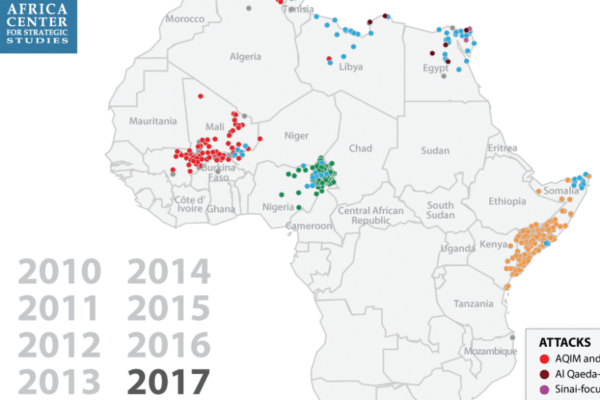
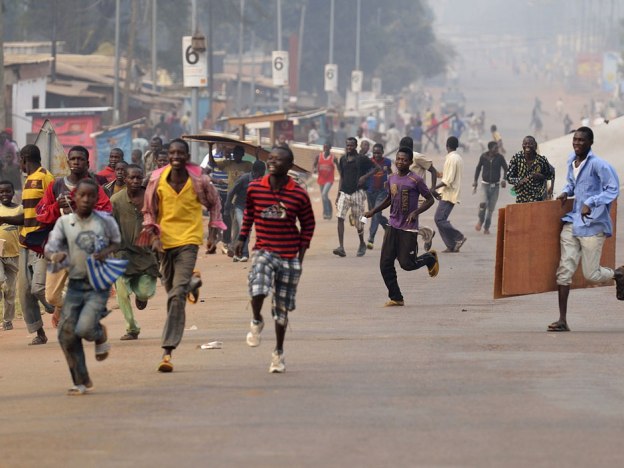
Who should pay? With the slave owners all dead, Caricom wants taxpayers’ money from Britain, France and the Netherlands… Figures quoted for the current equivalent of the £20m paid to slave owners vary from £16.5 billion to £76 billion. A widely reported demand in 1999 was for $777 trillion to be paid to Africa over five years. More than ten years on, that would still be around ten times global GDP.

Who should be paid? Caricom is talking about compensation at a national level. Based on the numbers with slave ancestors, that would funnel the lion’s share of the money to America and Brazil—with a good slice to Brixton and Birmingham.  There is potential for divisive squabbles. In Trinidad and Guyana, descendants of Indian indentured labourers outnumber the black population. Sat Maharaj, Trinidad’s most prominent Hindu leader, argues that the Indo-Caribbean population also deserves compensation. He asks whether it should also come from Islamic countries that imported slaves, and from African countries where local merchants sold slaves to Europeans.

Slavery reparations: Blood money, Economist, Oct. 5, 2013, at 42

The Damaged Credibility of Internet

On Nov. 6, 2013,  the Internet Engineering Task Force (IETF), an organisation which brings together the scientists, technicians and programmers who built the internet in the first place and whose behind-the-scenes efforts keep it running, debated what to do about all this. A strong streak of West Coast libertarianism still runs through the IETF, and the tone was mostly hostile to the idea of omnipresent surveillance. Some of its members were involved in creating the parts of the internet that spooks are now exploiting. “I think we should treat this as an attack,” said Stephen Farrell, a computer scientist from Trinity College, Dublin, in his presentation to the delegates. Discussion then moved on to what should be done to thwart it….

Even America’s government is getting in on the act. The credibility of its National Institute of Standards and Technology, which sets American cryptographic standards with the help of the NSA, has been dented by Mr Snowden’s revelations. On November 1st it announced it would review the way it carries out its work, in an effort to rebuild trust. The unspoken implication was that it would try harder to stop spooks attempting to slip “unreliable” technology past its vetting procedures.Other security experts are re-examining existing products. Dr Green and his colleague Kenn White are leading a forensic audit of Truecrypt, a popular program that enciphers a user’s hard disks but which displays some odd-looking behaviour and has rather murky origins (it is open-source, but its designers are anonymous, and are thought to live in eastern Europe).

Fixing cryptography is only part of the problem. Intelligence agencies can also tap data cables, allowing them to capture unscrambled information being sent between a user and a server, regardless of whether it is later encrypted.  Mr Snowden’s leaks seem to have boosted the market for better ways of dealing with this behaviour, too. Mike Janke, a former commando who now runs Silent Circle, a firm that offers “end-to-end” encryption software (meaning all messages are transmitted pre-scrambled), counts everything from corporations worried about industrial espionage to the Dalai Lama among his customers. He says that “business is up about 400% since the summer of Snowden”. In the wake of Mr Snowden’s revelations, his firm shut down its e-mail service and is preparing a new one that will transmit all messages pre-scrambled, meaning that only the recipient, not even the company itself, will be able to decode them…

On October 30th the Washington Post reported that America’s spies have bugged private, unencrypted fibre-optic cables which carry bits and bytes between the data centres in the worldwide networks of Google and Yahoo, without the companies’ knowledge. Google, which, of course, must be able to read its customers’ e-mail in order to inflict advertisements on them, nevertheless relies on people trusting it to guard their data, observes Dr Green.  “There’s a lot of anger out there,” says Christopher Soghoian, principal technologist at the American Civil Liberties Union, a lobbying group. “I’ve seen two blog posts by Google engineers in the last three days that contained the words ‘fuck you, NSA’.”

Excerpts, Internet security: Besieged, Economist, Nov. 9, 2013 at 83

US Operations in North Africa – Strategic Instability

The Defense Department continues to work with nations in North Africa to promote security and increase stability in the region still feeling the effects of the Arab Spring, Amanda J. Dory, the deputy assistant secretary of defense for African affairs, told a Senate panel today. Libya, Tunisia, Algeria and Morocco are confronting instability and the U.S. military is working to build or strengthen their police and military forces, Dory told the Senate Armed Services Subcommittee on Near eastern and South and Central Asian Affairs….T

he effects of the Arab Spring in North Africa continue to reverberate within the region and beyond its borders into the Sahelian states of sub-Saharan Africa, she said. Libya remains a key source of instability in North Africa and the Sahel. After the overthrow of Muammar Gadhafi, there is little government infrastructure inside Libya, Dory said, and certainly no tradition of democracy.Violence is rampant in Libya and the Libyan government is too weak to control its borders and militias provide what security there is. Arms merchants are shipping Libyan weapons out of the country and these arms are fueling instability from Mali westward, Dory said…The United States will provide general-purpose-force military training for 5,000-8,000 Libyan personnel, Dory said.“This training effort is intended to help the [Libyan] government build the military it requires to protect government institutions and maintain order,” she said.  The training of Libyan military personnel may begin next year in Bulgaria.

In Morocco, Algeria and Tunisia, DOD maintains close military-to-military ties with their military counterparts. All three are engaged in a security dialogue with the United States and “they share our goals of countering terrorism and enhancing cross-border security,” Dory said…

Excerpts, By Jim Garamone, Military Continues Work With North African Countries American Forces Press Service, Nov. 21, 2013

Let them Bleed: Pretend to Care for Peace

World alarm grew over the Central African Republic (CAR) on November 21, 2013, with France joining a chorus warning of possible genocide in the mineral-rich but poor country torn by strife since a March 2013 coup.  France’s Foreign Minister Laurent Fabius warned that the CAR was “on the verge of genocide”, while the United Nations has mooted sending thousands of peacekeepers to the landlocked nation, where unprecedented sectarian bloodshed has erupted.

In parts of the CAR, fighting has broken out between mainly Muslim former rebels who seized power in March and militia groups set up to protect Christian communities, which make up about 80 percent of the population. Both churches and mosques have been razed to the ground.”It’s total disorder,” Fabius told France 2 television, adding that the UN was considering authorising African and French troops to intervene. A regional peacekeeping force known as MISMA is currently deployed, but consists of only 2,500 men hampered by a lack of funds, arms and training.

In the latest of a long line of rebellions and coups, the Seleka rebel coalition ousted president Francois Bozize in March and put the CAR’s first Muslim leader, President Michel Djotodia, in power.Djotodia, who has officially disbanded the Seleka coalition and incorporated some of its forces into the army, announced “exceptional measures” to quell conflict, but a statement issued by his office gave no details…[The government] formed in the capital Bangui has little control of the rest of the nation, where armed groups – the remnants of successive rebellions, mutinies and insurgencies – hold sway over a people facing atrocities, food shortages and the collapse of health care.”You have seven surgeons for a population of five million, an infant mortality rate of 25 percent in some areas and 1.5 million people who have nothing, not even food, and armed gangs, bandits, etc,” Fabius said of France’s former colony in equatorial Africa.

The UN Security Council plans to vote in early December on a resolution that would allow CAR’s neighbours, the African Union and France to intervene in the sprawling nation….Plans are afoot to place MISMA under the aegis of the African Union and bring it up to 3,600 men, but diplomats and military experts warn that this number will be nowhere near enough. The bulk of MISMA is provided by Chad, with troops from Gabon, Cameroon and Equatorial Guinea.
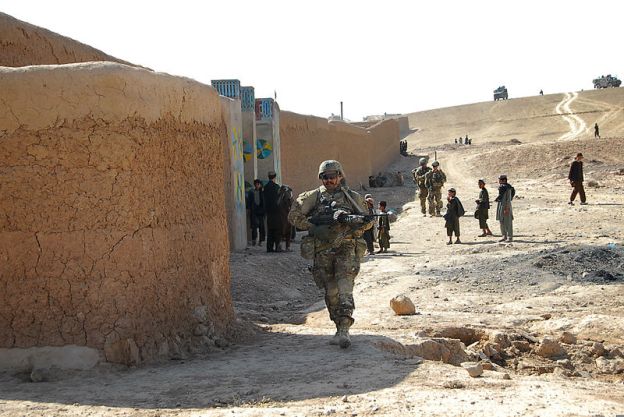
By Nicholas Barret, France joins global warnings of ‘genocide’ in C. Africa,  Agence France Presse, Nov. 22, 2013

International Criminal Court Only for Africa

Kenya said the International Criminal Court’s case against its two highest elected officials risked destabilizing the entire east African region at a meeting of the court’s member states.  At a debate to discuss the crisis resulting from the court’s cases against President Uhuru Kenyatta and his deputy William Ruto, the Kenyan attorney-general said the court and its member states were playing “Russian roulette” with the country.  “Our country is the linchpin in the peace and security involving more than 250 million people from Djibouti to Eastern Congo and everybody in between,” Githu Muigai told a special debate called at the request of the African Union. He said Kenya – an ally of the West in the fight against militant Islam in neighboring Somalia – was a “pillar of security” in Eastern Africa, to loud applause from many African delegates at the conference.

Kenyatta and Ruto face separate charges of crimes against humanity for their alleged role in stoking ethnic violence in the aftermath of an election in 2007 when 1,200 people were killed. Kenya is pressing the ICC’s members for an immediate change in the rules to say that heads of state do not have to attend trials, part of a broader campaign to halt the cases against its political leaders.  Officials also want a longer-term amendment to the founding treaty that would ban the prosecution of heads of state, a campaign which has become a rallying point in Africa, where many leaders say they are the target of an overzealous court in The Hague. Kenyatta and Ruto deny the charges of fomenting violence after the election. Ruto’s trial began last month, while Kenyatta’s trial is due to start on February 5 after being delayed for a third time.  “Africa feels marginalized, like toddlers, whom the international community feels has never learned to walk,” Kenyan Foreign Minister Amina Mohamed told Reuters.

Last week, the African Union lost its bid to have the U.N. Security Council defer the cases for a year so the two could deal with the aftermath of an attack on a shopping mall by al Qaeda-linked Somali militants in which at least 67 died.Kenya said the outcome highlighted the need for reform of the Security Council to prevent a few powerful nations imposing their will on the world. It pledged to continue its fight at the ICC’s annual meeting in The Hague.

Human rights groups oppose the proposed changes as well as apparent compromise solutions such as a British proposal that would make it easier for the accused to participate via video link, saying these would weaken the court’s mission to bring to justice those ultimately responsible for war crimes. “The amendments represent an attempt to recreate the ICC in the image of African justice,” said George Kegoro, executive director of the Kenyan section of the International Commission of Jurists.  “Timid, pliable and serving the comfort of leaders rather than justice for victims.”  The court has 34 African members, but any amendment would need the support of two thirds of the court’s 122 members to pass.  But even if the amendments have little chance of passing, Foreign Minister Mohamed said a court composed of members of equal rank should listen to Africa’s concerns. If some members were “more equal than others,” she said, then “we have no business being there.” Since their election, the two men have been defending themselves before the Hague-based court with the help of some of London’s best-known human rights lawyers.  Kenyatta’s legal team has asked judges to throw out the case against him, which they say is based on evidence from bribed witnesses.

By Thomas Escritt, Kenya warns of ICC threat to Eastern Africa’s stability, Reuters, Nov. 21, 2013

Minority Rights in Libya: the Berbers

Protesters have shut Libya’s gas export pipeline to Italy, its only customer, demanding more rights for the c, or Berber, minority and depriving the weak government of a major source of income.  The closure worsens turmoil in Libya where Prime Minister Ali Zeidan warned that the government might face budget problems next month after protesters cut oil production to a fraction of its capacity.

The North African country faces anarchy as the government has failed to rein in armed militias and radical Islamists who helped topple Muammar Gaddafi in 2011 but kept their weapons.  Although the closure on Nov. 11, 2013 of the Greenstream pipeline will take several hours to register at the other end, it adds to Italy’s energy headaches after Ukraine halted gas imports from Russia, which could also impact supplies. Italy depends heavily on Russian gas.

Amazigh protesters last month seized the port at the Mellitah complex, some 100 km west of Tripoli, and have already shut down oil exports from there. The oil and gas complex is operated by Libya’s National Oil Corp and Italian energy company Eni.”We tried to convince them not to close the pipeline, but it’s closed now,” Munir Abu Saud, head of the local oil workers’ union, told Reuters…

Tripoli has seen its authority crumbling over its restive regions and fears an exodus of foreign oil companies and investment.  The Amazigh minority in September shut a pipeline feeding gas from Eni’s Wafa field to export facilities at Mellitah. Although this squeezed exports, much of the gas Libya sends to Italy comes from offshore fields.

The Amazigh protesters want their language guaranteed under Libya’s planned new constitution and a bigger say in a committee to be elected to draft the constitution. They say Berbers are treated as second-class citizens in the Arab country.

Excerpt, By Ghaith Shennib and Ulf Laessing, Libyan Berbers shut gas pipeline to Italy, cut major income source, Reuters, Nov. 11, 2013


Who is Investing in Drones?

A United Arab Emirates (UAE) investment fund (Mubadala)  has beefed up its stake in Italy-based Piaggio Aero, just as the aeronautics firm gets ready for the debut flight of its P.1HH Hammerhead drone… Mubadala, the US $55 billion fund set up by the Emirate of Abu Dhabi in 2002, increased its stake in Piaggio Aero from 33 to 41 percent on Nov. 12, as part of an equity increase of €190 million (US $255 million).  Also Tata Ltd., a UK offshoot of India’s Tata Group, increase its stake from 33 to 44.5 percent…That means Mubadala and Tata are now the main financial backers of development of the Italian-built Hammerhead, which is an unmanned version of Piaggio Aero’s main seller, the P.180 twin-prop business aircraft….

But the Italian Defense Ministry has not invested in the program, creating an unusual situation in which Indian and Arabian Gulf capital is funding the development of a UAV in which Italy is certifying and showing keen interest….Italy and the UAE have discussed UAV development before. In 2009, the gulf state selected the Italian M-346 jet trainer, but the deal stalled, allegedly over problems related to a side deal on UAVs.  Plans had reportedly been made to co­develop a UAV with specifications that exceeded those set down by the Missile Technology Control Regime, which restricts the sales of missiles and UAVs able to carry a 500-kilogram payload at least 300 kilometers. Italy is a signatory of the treaty.

At the Paris Air Show, Debertolis said Italy would consider arming the Hammerhead, noting that the aircraft was large enough to hold weapons in internal bays and that half of what is cabin space in the manned version would remain unused. But he added that the payload would remain within the 500-kilogram maximum set down by the Missile Technology Control Regime.

Excerpts,Tom Kington UAE Ups Its Stake in Drone-maker Piaggio Aero, Defensenews.com, Nov. 15, 2013

US Punishment for Civil Disobedience: the Jeremy Hammond case

Cyber-activist Jeremy Hammond was sentenced to 10 years in federal prison on November 15, 2013 by Judge Loretta A. Preska in a federal courtroom in lower Manhattan for hacking the private intelligence firm Stratfor. When released, Hammond will be placed under supervised control, the terms of which include a prohibition on encryption or attempting to anonymize his identity online.Hammond has shown a “total lack of respect for the law,” Judge Preska said in her ruling, citing Hammond’s criminal record – which includes a felony conviction for hacking from when he was 19 – and what she called “unrepentant recidivism.” There is a “desperate need to promote respect for the law,” she said, as well as a “need for adequate public deterrence.”

Prior to the verdict, [Hammond] read from a prepared statement and said it was time for him to step away from hacking as a form of activism, but recognized that tactic’s continuing importance. “Those in power do not want the truth exposed,” Hammond said from the podium, wearing black prison garb. He later stated that the injustices he has fought against “cannot be cured by reform, but by civil disobedience and direct action.” He spoke out against capitalism and a wide range of other social ills, including mass incarceration and crackdowns on protest movements.

The Stratfor hack exposed previously unknown corporate spying on activists and organizers, including PETA and the Yes Men, and was largely constructed by the FBI using an informant named Hector Monsegur, better known by his online alias Sabu. Co-defendants in the U.K. were previously sentenced to relatively lighter terms. Citing Hammond’s record, Judge Preska said “there will not be any unwarranted sentencing disparity” between her ruling and the U.K. court’s decision.

Hammond’s supporters and attorneys had previously called on Judge Preska to recuse herself following the discovery that her husband was a victim of the hack she was charged with ruling on. That motion was denied….Hammond’s defense team repeatedly stressed that their client was motivated by charitable intentions, a fact they said was reflected in his off-line life as well. Hammond has previously volunteered at Chicago soup kitchens, and has tutored fellow inmates in GED training during his incarceration.

Rosemary Nidiry, speaking for the prosecution, painted a picture of a malicious criminal motivated by a desire to create “maximum mayhem,” a phrase Hammond used in a chat log to describe what he hoped would come from the Stratfor hack. Thousands of private credit card numbers were released as a result of the Stratfor hack, which the government argued served no public good.

Sarah Kunstler, a defense attorney for Hammond, takes issue with both the prosecution and judge’s emphasis on the phrase “maximum mayhem” to the exclusion of Hammond’s broader philosophy shows an incomplete picture. “Political change can be disruptive and destructive,” Kunstler says. “That those words exclude political action is inaccurate.”

Many supporters see Hammond’s case as part of a broader trend of the government seeking what they say are disproportionately long sentences for acts that are better understood as civil disobedience than rampant criminality. Aaron Swartz, who faced prosecution under the Computer Fraud and Abuse Act – the same statute used to prosecute Hammond – took his own life last year, after facing possible decades in prison for downloading academic journals from an MIT server. “The tech industry promised open access and democratization,” says Roy Singham, Swartz’s old boss and executive chairman of ThoughtWorks, a software company that advocates for social justice. “What we’ve given the world is surveillance and spying.” Singham says it’s “shameful” that “titans of the tech world” have not supported Hammond.

Following his first conviction for hacking, Hammond said, he struggled with returning to that life, but felt it was his responsibility. That decision ultimately lead to the Stratfor hack. “I had to ask myself, if Chelsea Manning fell into the abysmal nightmare of prison fighting for the truth, could I in good conscience do any less, if I was able?” he said, addressing the court. “I thought the best way to demonstrate solidarity was to continue the work of exposing and confronting corruption.”

Cyber-Activist Jeremy Hammond Sentenced to 10 Years In Prison, Rolling Stone, Nov. 15, 2013

The Struggle for Water: Tanzania

As farmers and herders fight over dwindling water levels in the Pangani River Basin in northeastern Tanzania, a new dispute is emerging between farmers and the state-run power utility firm over this precious resource. The Tanzania Electric Supply Company or TANESCO manages three hydropower plants located on the Pangani River near Muheza district, which are meant to provide 17 percent of the country’s electricity…For the last four years Tanzania has been experiencing a drought that locals say is the worst to have ever hit the region. Thousands of farmers and herders who earn a living here have been affected.  Jumanne Mujuni, a councilor from Mombo town, which is located a few kilometres from the Hale hydropower station in Muheza district, told IPS that the drought has pushed many to the brink as they compete with TANESCO for dwindling water supplies. He added that many locals are now embroiled in disputes with the state-run utility.“All these problems that we face are rooted in the drought. There were hardly any [problems] when there was enough water in the river,” he said.

Excerpt from Kizito Makoye,Power Struggle Rises Over Tanzania’s Pangani River, IPS, Oct. 24, 2013

The Hot Pursuit of Poachers

More suspected rhino poachers have been arrested so far this year [in South Africa] than were taken into custody for the whole of last year but rhino poaching continues unabated with 825 carcasses bearing mute testimony to the continued slaughter…This translates into 2.7 rhinos a day, with the Kruger National park still the favoured target of poachers, the majority of whom are Mozambicans. This point was stressed by former Mozambican president Joaquim Chissano speaking at the launch of the Joaquim Chissano Foundation Wildlife Preservation Initiative in Maputo earlier this week.  He said 70% of the rhino killed in South Africa can be attributed to Mozambicans. Correspondingly, 68% of suspected poachers arrested in South Africa are from South Africa’s eastern neighbour.

This point was also made earlier this year by retired SA Army general Johan Jooste, now in overall charge of SANParks wildlife anti-poaching operations. He wants a government to government agreement to give Kruger National Park rangers a “hot pursuit” option. This will allow rangers to follow poaching suspects across the border without creating international incidents.The SA National Defence Force (SANDF), via the SA Army and Army Reserves as well as SA Air Force elements, are also active in anti-rhino poaching operations in the world-renowned game reserve. Proof it is the target of choice for poachers comes from Kruger losing by far the largest number of rhinos – 500 – of any area or province.

As of the beginning of this month, 272 arrests of alleged poachers and others suspected of involvement in the horn poaching chain were secured by South African law enforcement agencies. The majority of arrests – 101 – were in Kruger.  The involvement of the wider South African defence sector in counter poaching operations is illustrated by Denel Dynamics deploying a Seeker UAV in Kruger and a Seabird Seeker reconnaissance aircraft compliments of Ivor Ichikowitz’ Paramount Group.

This week saw another side of the national effort to curb and hopefully stop rhino poaching with the first international DNA sampling training workshop… Special focus was given to the increased use of rhinoceros horn DNA sampling to combat wildlife crime.  The officials have been provided with focused training on the identification of rhino horn, horn DNA sampling and wildlife crime scene investigation. Participants were also educated in the utilisation of ICCWC (International Consortium on Combating Wildlife Crime) tools and services to enhance their wildlife crime investigation capabilities.

Excerpt,  Kim Helfrich, Fighting back against rhino poachers – in the bush and in court, DefenceWeb.com,Nov. 8, 2013

The Toxic Herbicides Case: Ecuador v. Colombia

The case brought by the Republic of Ecuador against the Republic of Colombia on 31 March 2008 before the International Court of Justice (ICJ) in respect of a dispute concerning “Colombia’s aerial spraying of toxic herbicides at locations near, at and across its border with Ecuador” was removed from the Court’s List on 13 September 2013 at the request of Ecuador…

According to the letters received from the Parties, the Agreement of 9 September 2013 [between Colombia and Ecuador] establishes, inter alia, an exclusion zone, in which Colombia will not conduct aerial spraying operations, creates a Joint Commission to ensure that spraying operations outside that zone have not caused herbicides to drift into Ecuador and, so long as they have not, provides a mechanism for the gradual reduction in the width of the said zone; according to the letters, the Agreement sets out operational parameters for Colombia’s spraying programme, records the agreement of the two Governments to ongoing exchanges of information in that regard, and establishes a dispute settlement mechanism.  In consequence, the President of the Court, on 13 September 2013, made an Order recording the discontinuance by Ecuador of the proceedings and directing the removal of the case from the Court’s List.

Aerial Herbicide Spraying (Ecuador v. Colombia), Case removed from the Court’s List at the request of the Republic of Ecuador, Press Release International Court of Justice,  Sept. 17, 2013


Migrants in a Gated World

The bodies of 92 people, almost all women and children, have been found in the Sahara desert. Rescuers said the people had died of thirst after their vehicle broke down during their attempt to reach Algeria from Niger…The group was discovered after survivors reached Arlit on foot. Local experts said that the people were victims of human trafficking and were believed to have died two weeks ago as they tried to walk 12 miles in scorching sun to reach a well after the lorry they were travelling in broke down leaving them stranded.  Sources in Niger said that the group, who began their perilous journey across the desert in late September, was comprised of local people from Zinder, the second largest city in southern Niger, close to the border with Nigeria.

One security expert stressed that the group were not economic migrants but victims of trafficking.  Moussa Akfar, a security expert based in Niamey, Niger’s capital, said: “This was in fact a case of poor people and children who were being trafficked to Algeria. There is an inquiry underway but we know that this was trafficking because economic migrants go to Libya – in Libya you find people of all nationalities, from Nigeria, Cameroon and other countries, heading to Europe.  “In this case all the victims were Nigerien from Zinder, and they were being trafficked. The questions that have to be asked now is how officials on road checkpoints did not alert the authorities about this group. There is endemic corruption at work.”..

Niger is one of the poorest countries in the world and has been rocked by repeated food crises in recent years. Last year Save the Children termed Niger the worst place in the world to be a mother amid its warnings that continuing poverty levels were driving people to undertake life-threatening journeys to higher income nations.  While many in Niger said that the October deaths were linked to trafficking, Algeria being the intended destination, Rhissa Feltou, the mayor of Arlit, said the group could have been trying to reach Europe.

Excerpt, Niger migrants died from thirst, after stranding in Sahara desert, Guardian, Oct. 31, 2011

Mining Gold and Cyanide Pollution

The $4 billion that two Canadian companies, Barrick Gold and Goldcorp, have poured into developing Pueblo Viejo, a gold mine, since 2009 amounts to the largest single foreign investment in the history of the Dominican Republic. The companies say that the money has turned the polluted ruins of what was the state-owned Rosario mine, abandoned in 1999, into a “truly world-class” operation that should provide the country’s government with $10 billion over its 25-year life.

But the project has been controversial. Just weeks after the mining started in January 2013, President Danilo Medina, who was elected last year, declared: “For every $100 of gold exports, Barrick will receive $97 and the Dominican people $3. That is simply unacceptable.” (In fact, Pueblo Viejo Dominicana Corporation, or PVDC, the company operating the mine, is 60% owned by Barrick and 40% by Goldcorp.) Mr Medina demanded that the contract be renegotiated; otherwise, he said, he would raise taxes on the mine’s profits.

This month the two sides agreed to changes that have front-loaded tax payments and could see the government get an extra $1.3 billion in 2013-16 provided that the gold price rises and stays above $1,600 an ounce (it is now around $1,350). Gustavo Montalvo, Mr Medina’s chief of staff, tweeted: “Together we ensured that words like ‘national sovereignty’, ‘justice’ or ‘transparency’ were transformed into something more concrete.”

Yet that may not calm local unrest over the mine, sited about 100 kilometres (60 miles) north of Santo Domingo, the capital. The investment was presented by both the government and company as including a clean-up of Rosario’s toxic mess and the installation of systems to keep local watercourses clean. But residents are suing PVDC, claiming that the new mine is poisoning rivers, causing illnesses and the death of farm animals. They want the government to release the environmental-impact assessment for Pueblo Viejo, which it has so far refused to do.

One farmer, María de la Cruz Mariano, said that she began to suffer skin allergies and other ailments in 2010, after PVDC began work. Tests on her blood conducted by a private laboratory showed high levels of lead, sulphur, cyanide and zinc. Some of her cattle have died from bovine anaemia, which can be caused by ingesting cyanide. Other residents report that previously clean local rivers have become polluted since PVDC built a dam to collect water containing cyanide, which is used to leach gold from crushed rock.

PVDC has signed the international code of practice for the handling of cyanide. It says it is “in the process of capturing all the surface flows” from the old and the new mines, sending the water to storage ponds where it is treated. PVDC says that, together with local people, it conducts regular, public tests on water and air.

But community leaders say they have no knowledge of such tests. The company has not answered requests to provide the dates on which they were conducted. Tests by the environment ministry, released only after a freedom of information request, found the water in the Margajita river downstream from the mine to be highly acidic, as well as containing sulphides and copper above legal limits. The ministry has made little effort to act on these results.

The old Rosario mine left some streams red with acid. PVDC’s clean-up obligations extend only within the mine perimeter; the rest was for the government. The firm points out that it has paid $75m ($37.5m of it a loan) to finance the government’s share of the work. It has also removed around 130,000 cubic metres (4.6m cubic feet) of contaminated soil. But Demóstenes Martínez, a congressman from the ruling party, argues that PVDC is violating both the constitution and the mining law.

It is not clear whether the pollution is being caused by PVDC’s operations, or is a legacy of the past. The government claims to have lost records of past tests on the rivers. But on its own the new agreement may not be enough to ensure that the mine regains the consent of the community. That will require greater candour.

Mining in the Dominican Republic:  Sickness and wealth, Economist, Sept. 21, 2013

The Curse of Displacement

Dhinkia, in the eastern Indian state of Odisha (formerly Orissa) (India)  is a hub of protest. The women, one from every village family, are staging… a sit-in. Sisir Mohapatra, a former sarpanch or village head, makes a rousing speech. He seems respected, though his police record would suggest he is a mafia don: he says he faces 35 criminal charges, and of his 60-strong extended family in Dhinkia, 40 are also wanted by the law. They claim that the charges are all trumped up. Their real crime is to oppose the biggest single foreign-investment project India has ever attracted.

Estimated to cost $12 billion, the project, promoted by POSCO, a South Korean firm, is eventually to produce 12m tonnes of steel a year for export. It will have its own power plant, port and, 200 kilometres (125 miles) inland, its own iron-ore mine. Since an agreement on the project was signed in 2005, it has been mired in controversy—a case study in why

Environmentalists worry about air pollution, coastal erosion, the endangered olive ridley turtle and much else. Many, including the Communist Party of India (CPI), which holds the local parliamentary seat, complain that the ore will be sold too cheaply, at a royalty to the government of just 27 rupees (currently about 40 cents) a tonne. Meanwhile, residents of Dhinkia and nearby villages fear for their livelihoods.

So the project has been delayed, probed by countless committees and subjected to repeated litigation. Just this week it faced hearings in Delhi at the National Green Tribunal, an environmental court. But as so often in India, one of the biggest delays has been acquiring the land. In theory, this should be easier for POSCO than for many other investors, since most of the 1,600 hectares (4,000 acres) it needs are designated as forest (even the scrubby sand dunes) and thus government land.

The residents of Dhinkia, however, claim legal rights as people whose families have been making their living from the forest for at least 75 years (which the government disputes). Some, indeed, make a very good living. Devendra Swain, like many villages, maintains betel vines, from which he earns 50,000 rupees a month selling the leaves. Mr Swain also grows rice, mangoes, cashew nuts, bananas and papaya. He claims not to be against industrialisation—except in his fecund backyard.

The villagers’ resistance to the project has seen ugly violence. In 2010 police fired rubber bullets to clear one dharna. In February there was another clash as police entered a neighbouring village, Govindpur, and started dismantling betel vines. In March three people died in a bomb explosion—victims of pro-project goons, say the villagers. The police allege the victims were blown up while making bombs themselves. Involvement in this incident is one of 61 charges facing the CPI’s Abhay Sahoo, the protesters’ leader, who is now in jail for the third time and trying to secure his release on bail. Fearing arrest or an attack by thugs, the 1,400 others in Dhinkia facing criminal charges dare not leave the village.

Of India’s million mutinies, many involve the emotive issue of land. That is one impulse behind a new law covering land acquisition and the resettlement and rehabilitation of those affected. This week it passed through Parliament’s upper house. Few disagree that some new legislation is needed to replace a much-abused British-era law from 1894.

The new bill, however, has drawn fierce criticism. Business is predictably aghast at what it sees as a populist law timed ahead of looming elections.. Some businessmen think it is simply “unworkable”.

Even some who support the principles behind the bill think their implementation has been botched. N.C. Saxena, a former senior civil servant who sits on a National Advisory Council [claims]  that it does not even cover government land. In other words, it would have no relevance for projects such as POSCO’s. Even if it did, legislation would not solve the fundamental difficulty, a total distrust of government.

“After 66 years of independence,” says Mr Mohapatra, the former sarpanch, “no one has ever been compensated properly. Whoever gave his land and his home later became a beggar.” He points to what he says is the unhappy lot of those displaced by two other projects in Odisha. One is the Hirakud dam across the Mahanadi river. It is India’s longest dam, for which Jawaharlal Nehru poured the first concrete in 1948. As many as 180,000 people had to move. Another is just down the road from Dhinkia, where a big oil refinery has been under construction since 2000. An empty field outside Dhinkia has drains and electricity, put in when plots were offered as compensation to those forced to shift. People found it so unappealing that the field is still empty. Moreover, 52 families who supported the POSCO project, many forced out of Govindpur in 2008, are still in reportedly miserable conditions in a transit camp. Add in heavy-handed police, and those agitating against the project have plenty of ammunition. Even the best-drafted law would find the going tough

This Land is Whose Land? A new law may do little to break India’s land-acquisition logjam, Economist, Sept 7, 2013, at 44

Yasuni National Park Oil Drilling: Ecuador, Amazon

Ecuador’s parliament on Thursday (Oct. 3, 2012) authorized drilling of the nation’s largest oil fields in part of the Amazon rainforest after the failure of President Rafael Correa’s plan to have rich nations pay to avoid its exploitation.  The socialist leader launched the initiative in 2007 to protect the Yasuni jungle area, which boasts some of the planet’s most diverse wildlife, but scrapped it after attracting only a small fraction of the $3.6 billion sought.

The government-dominated National Assembly authorized drilling in blocks 43 and 31, but attached conditions to minimize the impact on both the environment and local tribes. Though Correa says the estimated $22 billion earnings potential will be used to combat poverty in the South American nation, there have been protests from indigenous groups and green campaigners.  About 680,000 people have signed a petition calling for a referendum.  “We want them to respect our territory,” Alicia Cauilla, a representative of the Waorani people who live around the Yasuni area, said in an appeal to the assembly. “Let us live how we want.”  Correa has played down the potential impact of oil drilling in the area, saying it would affect only 0.01 percent of the entire Yasuni basin…

Oil output in OPEC’s smallest member has stagnated since 2010 when the government asked oil investors to sign less-profitable service contracts or leave the country. Since then, oil companies have not invested in exploration.  State oil company Petroamazonas will be in charge of extraction in blocks 43 and 31, which are estimated to hold 800 million barrels of crude and projected to yield 225,000 barrels per day eventually. Ecuador currently produces 540,000 bpd

Excerpt, By Alexandra Valencia, Ecuador congress approves Yasuni basin oil drilling in Amazon, Reuters, Oct. 4, 2013


Getting Rid of Hacktivists: US Approach

Thirteen members of a hacking collective that calls itself Anonymous were indicted on Thursday (October 3, 2013) on charges that they conspired to coordinate attacks against prominent Web sites.The 13 are accused of bringing down at least six Web sites, including those belonging to the Recording Industry Association of America, Visa and MasterCard.  The attacks caused “significant damage to the victims,” the indictment said.

The attacks, carried out from September 2010 to January 2011, were part of campaign called Operation Payback, which started as an effort to support file-sharing sites but later rallied around WikiLeaks and its founder, Julian Assange.  Hackers took down the sites by inflicting a denial of service, or DDoS, attack, in which they fired Web traffic at a site until it collapsed under the load. Though the indictment mentions 13 hackers, thousands more participated in the attack by clicking on Web links that temporarily turned their computers into a digital fire hose aimed [at the websites of the companies].

According to the indictment, which was handed up at Federal District Court in Alexandria, Va., the hackers’ tool of choice was a simple open-source application known as Low Orbit Ion Cannon, which requires very little technical know-how.  Hackers simply posted a Web link online that allowed volunteers to download an application that turned their computer into a “botnet,” or network of computers, that flooded targets like Visa.com and MasterCard.com with traffic until they crashed…

By BRIAN X. CHEN and NICOLE PERLROT, U.S. Accuses 13 Hackers in Web Attacks, New York Times, October 3, 2013

Excerpt from indictment

“In connection with planning various DDoS cyber-attacks, members of the conspiracy posted fliers captioned “OPERATION PAYBACK” and claimed that: “We sick and tired of these corporations seeking to control the internet in their pursuit of profit. Anonymous cannot sit by and do nothing while these organizations stifle the spread of ideas and attack those who wish to exercise their rights to share with others.”

PDF of Indictment on Scribd

Naming the Dead in the CIA Drone War

Naming the Dead is a project run by the Bureau of Investigative Journalism, a not-for-profit research organisation based in London. The project aims to identify those killed in CIA drone strikes on Pakistan.  Over the past nine years, the tribal region of Pakistan’s north west has been hit by hundreds of drone attacks as the CIA has sought to stamp out al Qaeda fighters and the militant groups that have given them shelter.  Missiles launched from these high-tech, unmanned aircraft have hit homes, cars, schools, shops and gatherings. At least 2,500 people have been killed, according to data already collected by the Bureau as part of our wider Covert Drone War research.

Senior US officials have described drones as highly precise weapons that target and kill enemies of the US. John Brennan, who oversaw the development of the drone campaign and is now director of the CIA, has called drone technology an ‘essential tool’ for its ‘surgical precision – the ability, with laser-like focus, to eliminate the cancerous tumour called an al Qaeda terrorist while limiting damage to the tissue around it.’

Those killed by drones include high-ranking militant leaders – figures such as Abu Yahya al Libi, al Qaeda’s feared second-in-command, or Baitullah Mehsud, commander of the Pakistan Taliban (TTP).  But according to credible media reports analysed by the Bureau, the dead also include at least 400 civilians. Some were unlucky enough to be nearby when militants were attacked. Others were killed alongside their husbands or fathers, who were believed to be militants. Still others were mistaken for terrorists by drone operators sitting thousands of miles away.

In most cases, there is little information available about who the drones are really killing. Most of the dead – an estimated four-fifths of those killed – are believed to be militants. But their deaths are typically reported as a number – their names, origins and livelihoods remain a mystery.  For so many people to die in obscurity, unnamed and unacknowledged, is a tragedy. But it is a further tragedy that the public, and even policy makers, are unable to properly test whether drones are ‘highly precise weapons’ when so little is known about who is actually dying.

Through Naming the Dead, the Bureau aims to increase the transparency around this conflict and inform the public debate. Initially this project will record all names published in open-source material – in credible reports by journalists, in legal documents presented in court, in academic studies and in field investigations carried out by human rights groups.  In the future, the Bureau aims to identify more of the dead on a regular basis, and to uncover more details of those who have been killed. Where possible we will provide further identification – where they were killed, and their occupations, full names and ages. In the remote areas of Pakistan where drone strikes take place, official identification is rare. Few people possess identification cards, birth certificates, or even documents recording their relatives’ deaths. But wherever possible this project will provide documentation recording a person’s death.

Photographs of the destruction of a particular site are included in the database. Affidavits, photos, hospital records, student identification and transcripts of interviews with researchers are all provided when available. Over time, the Bureau aims to build on such currently scarce records in an attempt to properly scrutinise the little that is reported, and the claims being made – on all sides.

Bureau of Investigative Journalism

FISA Court and Transparency

According to the Opinion of Judge F. Dennis Saylor of the FISA (Foreign Intelligence Surveillance) court, of Sept. 13, 2013 in response to a motion by the ACLU for release of certain opinions of the FISA court:

“The unauthorized disclosure in June 2013 [Edward Snowden disclosure] of a Section 215 order, and government statements in response to that disclosure, have engendered considerable public interest and debate about Section 215 of the Partiot Act. Publication of FISC opinions relating to this provision would contribute to an informed debate. Congressional amici emphasize the value public information and debate in representing their constituents and discharging their legislative responsibilities. Publication would also assure citizens of the integrity of this Court’s proceedings.

In addition, publication with only limited redactions may now be feasible, given the extent of the government’s recent public disclosures about how Section 215 is implemented. Indeed, the government advises that a declassification review process is already underway.  In view of these circumstances, and as an exercise of discretion, the Court has determinedthat it is appropriate to take steps toward publication of any Section 215 Opinions that are not subject to the ongoing FOIA litigation…”

Excerpt, See United States Foreign Intelligence Surveillance Court, In Re Orders of this Court Interpreting Section 215 of the Patriot Act, Docket No. Misc. 13-02

Hunting Down Hackers in US: Barrett Brown

A federal court in Dallas, Texas has imposed a gag order on the jailed activist-journalist Barrett Brown [pdf] and his legal team that prevents them from talking to the media about his prosecution in which he faces up to 100 years in prison for alleged offences relating to his work exposing online surveillance.

The court order, imposed by the district court for the northern district of Texas at the request of the US government, prohibits the defendant and his defence team, as well as prosecutors, from making “any statement to members of any television, radio, newspaper, magazine, internet (including, but not limited to, bloggers), or other media organization about this case, other than matters of public interest.”  It goes on to warn Brown and his lawyers that “no person covered by this order shall circumvent its effect by actions that indirectly, but deliberately, bring about a violation of this order”…

But media observers seen the hearing in the opposite light: as the latest in a succession of prosecutorial moves under the Obama administration to crack-down on investigative journalism, official leaking, hacking and online activism.Brown’s lead defence attorney, Ahmed Ghappour, has countered in court filings, the most recent of which was lodged with the court Wednesday, that the government’s request for a gag order is unfounded as it is based on false accusations and misrepresentations.

The lawyer says the gagging order is a breach of Brown’s first amendment rights as an author who continues to write from his prison cell on issues unconnected to his own case for the Guardian and other media outlets.In his memo to the court for today’s hearing, Ghappour writes that Brown’s July article for the Guardian “contains no statements whatsoever about this trial, the charges underlying the indictment, the alleged acts underlying the three indictments against Mr Brown, or even facts arguably related to this prosecution.”

Brown, 32, was arrested in Dallas on 12 September last year and has been in prison ever since, charged with 17 counts that include threatening a federal agent, concealing evidence and disseminating stolen information. He faces a possible maximum sentence of 100 years in custody.  Before his arrest, Brown became known as a specialist writer on the US government’s use of private military contractors and cybersecurity firms to conduct online snooping on the public. He was regularly quoted by the media as an expert on Anonymous, the loose affiliation of hackers that caused headaches for the US government and several corporate giants, and was frequently referred to as the group’s spokesperson, though he says the connection was overblown.

In 2011, through the research site he set up called Project PM, he investigated thousands of emails that had been hacked by Anonymous from the computer system of a private security firm, HB Gary Federal. His work helped to reveal that the firm had proposed a dark arts effort to besmirch the reputations of WikiLeaks supporters and prominent liberal journalists and activists including the Guardian’s Glenn Greenwald.

In 2012, Brown similarly pored over millions of emails hacked by Anonymous from the private intelligence company Stratfor. It was during his work on the Stratfor hack that Brown committed his most serious offence, according to US prosecutors – he posted a link in a chat room that connected users to Stratfor documents that had been released online. The released documents included a list of email addresses and credit card numbers belonging to Stratfor subscribers. For posting that link, Brown is accused of disseminating stolen information – a charge with media commentators have warned criminalises the very act of linking.

As Geoffrey King, Internet Advocacy Coordinator for the Committee to Protect Journalists, has put it, the Barrett Brown case “could criminalize the routine journalistic practice of linking to documents publicly available on the internet, which would seem to be protected by the first amendment to the US constitution under current doctrine”.

Excerpt, Ed Pilkington, US stops jailed activist Barrett Brown from discussing leaks prosecution, Guardian, Sept. 4, 2014


The Rape of Europe by Internet Giants: tax avoiding, data mining

The raid by the European Commission’s antitrust gumshoes this month on Orange (formerly France Telecom), Deutsche Telekom and Telefónica of Spain seemed to come out of the blue. The companies professed a surprise verging on stupefaction. Even some Brussels insiders were caught on the hop.  Naming no names, the commission said the inquiry involved internet connectivity. The question is whether entrenched telecoms firms are abusing their strength in the market for internet traffic to deny video-streaming websites and other content providers full access to their networks to reach consumers. Besides the content providers themselves, the other potential plaintiffs are the “wholesalers” that the content providers use to ship their data across borders (and usually the Atlantic). These rely on incumbent internet-service providers (ISPs) such as Orange to take the data the last bit of the way to subscribers’ screens and mobiles.

All eyes turned to Cogent Communications, an American wholesaler which handles data for the likes of YouTube. Cogent has complained, fruitlessly, to French and German regulators that their former monopolies were asking too much to handle data, and throttling the flow to consumers when bigger fees were not forthcoming. It is appealing against the French decision.  In theory Orange and the other network providers might simply pass on to their customers the cost of all their streaming and downloading… But Europe’s market is fiercely competitive; and regulators place all sorts of constraints on how networks can charge for their services, while haranguing them to invest in new technology and new capacity to keep up with rising traffic. Though there are similar spats in America (for instance between Cogent and Verizon, a big network operator), it looks to some Europeans like another example of the rape of the old continent by America’s data-mining, tax-avoiding internet giants.

The broader issue—and the reason, perhaps, why the antitrust watchdogs chose to weigh in—is that Europe is on the brink of big regulatory change. A draft law to be published in September will subtly alter the principle of “net neutrality”, the idea that companies which own the infrastructure cannot give priority to some traffic (eg, from their own websites) over that of others.;”

Internet access: Congestion on the line, Economist, July 20, 2013

Predictive Policing

PredPol Places, a US company, has developed] one of a range of tools using better data, more finely crunched, to predict crime. They seem to promise better law-enforcement. But they also bring worries about privacy, and of justice systems run by machines not people.  Criminal offences, like infectious disease, form patterns in time and space….

Cops working with predictive systems respond to call-outs as usual, but when they are free they return to the spots which the computer suggests. Officers may talk to locals or report problems, like broken lights or unsecured properties, that could encourage crime. Within six months of introducing predictive techniques in the Foothill area of Los Angeles, in late 2011, property crimes had fallen 12% compared with the previous year; in neighbouring districts they rose 0.5%…

For now, the predictive approach works best against burglary and thefts of vehicles or their contents. These common crimes provide plenty of historical data to chew on. But adding extra types of information, such as details of road networks, can fine-tune forecasts further. Offenders like places where vulnerable targets are simple to spot, access is easy and getaways speedy, says Shane Johnson, a criminologist at University College London. Systems devised by IBM, a technology firm, watch how big local events, proximity to payday and the weather affect the frequency and location of lawbreaking. “Muggers don’t like getting wet,” says Ron Fellows, IBM’s expert.

Predicting and forestalling crime does not solve its root causes. Positioning police in hotspots discourages opportunistic wrongdoing, but may encourage other criminals to move to less likely areas. And while data-crunching may make it easier to identify high-risk offenders—about half of American states use some form of statistical analysis to decide when to parole prisoners—there is little that it can do to change their motivation.

Misuse and overuse of data can amplify biases….But mathematical models might make policing more equitable by curbing prejudice…

This sort of transparency about what goes on in predictive systems, and what their assumptions are, may also be a partial solution to worries voiced by Andrew Ferguson, a law professor in Washington, DC. Mr Ferguson fears that judges and juries could come to place too much credence in the accuracy of crime prediction tools, jeopardising justice.

The legal limits on using social media to fish out likely wrongdoers, or create files on them, are contested. Most laws governing police investigations pre-date social networking, and some forces assert that all information posted to public forums is fair game. But Jamie Bartlett of Demos, a British think-tank, says citizens and police forces need clearer guidance about how to map physical-world privacy rights onto online spaces. He thinks gathering information about how someone behaves on social sites ought to require the same clearance needed to monitor them doggedly in public places. Officers who register anonymously or pseudonymously to read content, or send web crawlers to trawl sites against their owner’s wishes, would require yet more supervision.

Identifying true villains among the oddballs and loudmouths found by social-media searches is tricky. Most police efforts are embryonic. Evgeny Morozov, an academic and technology writer, thinks the privacy-conscious have more to fear from crime detection algorithms cooked up by social networks themselves. Some of those firms already alert investigators when they suspect users of soliciting minors. Unlike the cops they employ clever coders who can process private messages and other data that police may access only with a court order.

These projects make life difficult for many criminals. But smart ones use the internet to make predictions of their own. Nearly 80% of previously arrested burglars surveyed in 2011 by Friedland, a security firm, said information drawn from social media helps thieves plan coups. Status updates and photographs generate handy lists of tempting properties with absent owners. It does not take a crystal ball to work out what comes next.

Predictive policing: Don’t even think about it, Economist,July 20, 2013, at 24

The Drone War that’s in Full Force

There were more drone strikes in Pakistan last month (July 2013) than any month since January 2013. Three missile strikes were carried out in Yemen in the last week alone. And after Secretary of State John Kerry told Pakistanis on Thursday that the United States was winding down the drone wars there, officials back in Washington quickly contradicted him.  More than two months after President Obama signaled a sharp shift in America’s targeted-killing operations, there is little public evidence of change in a strategy that has come to define the administration’s approach to combating terrorism.  Most elements of the drone program remain in place, including a base in the southern desert of Saudi Arabia that the Central Intelligence Agency continues to use to carry out drone strikes in Yemen. In late May, administration officials said that the bulk of drone operations would shift to the Pentagon from the C.I.A.

But the C.I.A. continues to run America’s secret air war in Pakistan, where Mr. Kerry’s comments underscored the administration’s haphazard approach to discussing these issues publicly. During a television interview in Pakistan on Thursday, Mr. Kerry said the United States had a “timeline” to end drone strikes in that country’s western mountains, adding, “We hope it’s going to be very, very soon.”

But the Obama administration is expected to carry out drone strikes in Pakistan well into the future. Hours after Mr. Kerry’s interview, the State Department issued a statement saying there was no definite timetable to end the targeted killing program in Pakistan, and a department spokeswoman, Marie Harf, said, “In no way would we ever deprive ourselves of a tool to fight a threat if it arises.”

Some of those operations originate from a C.I.A. drone base in the southern desert of Saudi Arabia — the continued existence of which encapsulates the hurdles to changing how the United States carries out targeted-killing operations.  The Saudi government allowed the C.I.A. to build the base on the condition that the Obama administration not acknowledge that it was in Saudi Arabia. The base was completed in 2011, and it was first used for the operation that killed Anwar al-Awlaki, a radical preacher based in Yemen who was an American citizen.

By MARK MAZZETTI and MARK LANDLER,Despite Administration Promises, Few Signs of Change in Drone War, New York Times, Aug. 2, 2013

Price for Clean Drinking Water – Death

A second Sri Lankan protester died from wounds suffered when troops fired on villagers demonstrating against contaminated water supplies, police said as tensions remained high in the area.  Heavily armed police and Special Task Force commandos were still in the the village of Weliweriya following Thursday’s [Aug. 1, 2013] shooting and locals reported people were fearful of leaving their houses.  Criticism of the army’s use of force has mounted since the shootings.  The independent Lawyers Collective condemned the crackdown against the peaceful protest by villagers who were demanding clean drinking water for thousands of residents of Weliweriya.  One man died from the shooting while another man who was injured died overnight in hospital, police said, raising the death toll to two.  Dozens more protesters were wounded when police opened fire on hundreds of demonstrators. Local television footage showed troops with automatic weapons, some clad in body armour, firing into crowds.

Locals in Weliweriya, 20 kilometres (12 miles) northeast of Colombo, were protesting against runoff from a rubber glove-making plant that they say has polluted their groundwater supply…Dipped Products Ltd, a publicly quoted company that maintains the manufacturing plant, said Friday it was confident the water issue was unrelated to their operations but were cooperating with authorities “for an early settlement of the matter”.

Excerpt, Second protester dies in Sri Lanka water dispute, Agence France Presse, Aug. 4, 2013

Double-Tap Drone Strikes: attacking rescuers

A field investigation by the Bureau of Investigative Journalism in Pakistan’s tribal areas appears to confirm that the Central Intelligence Agency (CIA) last year briefly revived the controversial tactic of deliberately targeting rescuers at the scene of a previous drone strike. The tactic has previously been labelled a possible war crime by two UN investigators.  The Bureau’s new study focused mainly on strikes around a single village in North Waziristan – attacks that were aimed at one of al Qaeda’s few remaining senior figures, Yahya al-Libi. He was finally killed by a CIA drone strike on June 4 2012. The Bureau’s field researcher found five double-tap strikes took place in mid-2012, one of which also struck a mosque.

Congressional aides have previously been reported as describing to the Los Angeles Times reviewing a CIA video showing Yahya al-Libi alone being killed. But the Bureau’s field research appears to confirm what others reported at the time – that al-Libi’s death was part of a sequence of strikes on the same location that killed up to 16 people.  If correct, that would indicate that Congressional aides were not shown crucial additional video material.

The CIA has robustly rejected the charge. Spokesman Edward Price told the Bureau: ‘The CIA takes its commitment to Congressional oversight with the utmost seriousness. The Agency provides accurate and timely information consistent with our obligation to the oversight Committees. Any accusation alleging otherwise is baseless.’

The Bureau first broke the story of the CIA’s deliberate targeting of rescuers in a February 2012 investigation for the Sunday Times. It found evidence of 11 attacks on rescuers – so-called ‘double-tap’ strikes – in Pakistan’s tribal areas between 2009 and 2011, along with a drone strike deliberately targeting a funeral, causing mass casualties.  Reports of these controversial tactics ended by July 2011. But credible news reports emerged a year later indicating that double-tap strikes had been revived.  International media including the BBC, CNN and news agency AFP variously reported that rescuers had been targeted on five occasions between May 24 and July 23 2012, with a mosque and prayers for the dead also reportedly bombed.

The Bureau commissioned a report into the alleged attacks from Mushtaq Yusufzai, a respected journalist based in Peshawar, who reports regularly for NBC and for local paper The News.  Over a period of months, Yusufzai – who has extensive government, Taliban and civilian contacts throughout Waziristan – built up a detailed understanding of the attacks through his sources.  His findings indicate that five double-tap strikes did indeed take place again in mid-2012, one of which also struck a mosque. In total 53 people were killed in these attacks with 57 injured, the report suggests.  Yusufzai could find no evidence to support media claims that rescuers had been targeted on two further occasions.  No confirmed civilian deaths were reported by local communities in any of the strikes. A woman and three children were reportedly injured in one of the attacks. Yusufzai says: ‘It is possible some civilians were killed, but we don’t know’.

However a parallel investigation by legal charity Reprieve reports that eight civilians died in a double-tap strike on July 6 2012 (see below), with the possibility of further civilian deaths in a July 23 attack.  Islamabad-based lawyer Shahzad Akbar says Reprieve’s findings are based on interviews with villagers from affected areas…

The rescuer strikes examined by Yusufzai all appear to have been aimed at very senior militants – so-called High Value Targets. Under international humanitarian law, the greater the threat a target represents, and the more imminent that threat is deemed to be, the greater the leeway for targeting. The Bureau’s findings suggest that strikes on rescuers are still permitted in certain circumstances, such as in the pursuit of a high value target such as Yahya al-Libi….

Bureau field researcher Mushtaq Yusufzai notes that civilians now rarely appear to take part in rescue operations, and are often prevented from doing so by militants. They also fear further CIA attacks, he says.

Chris Woods,Bureau investigation finds fresh evidence of CIA drone strikes on rescuers, Aug. 1, 2013

Australia’s Detention Centers in Nauru

The detention centre on the South Pacific island nation of Nauru was based on a Statement of Principles, signed on September 10, 2001 by the President of Nauru  and Australia’s -Minister for Defence.. The statement opened the way to establish a detention centre for up to 800 people and was accompanied by a pledge of $20 million for development activities.

The purpose of the centre is to process asylum seekers and refugees arriving by boat in Australia. In November 2012, an Amnesty International team visited the camp and described it as “a human rights catastrophe … a toxic mix of uncertainty, unlawful detention and inhumane conditions.  In July 2012 the detention centre was holding 545 asylum seekers. On 19 July 2013 there was a major riot in the detention centre. Several buildings were destroyed by fire. Damage was estimated at A$60 million.The riot began at 3pm when the detainees staged a protest. Up to 200 detainees escaped and about 60 were held overnight at the islands police station.

The Department of Immigration and Citizenship (Diac) confirmed that the remaining asylum seekers on the island, around 400, had been transferred to a second processing centre on the island, a flat “black soil site” with no permanent accommodation.

Excerpts from

Oliver Laughland, Anonymous claims responsibility for attack on Nauruan government website, Guardian, July, 21, 2013 and Wikipedia: Nauru

Secret Info: 94 kids killed by US drones in Pakistan

A secret document obtained by the Bureau of Investigative Journalism  reveals for the first time the Pakistan government’s internal assessment of dozens of drone strikes, and shows scores of civilian casualties.  The United States has consistently claimed only a tiny number of non-combatants have been killed in drone attacks in Pakistan – despite research by the Bureau and others suggesting that over 400 civilians may have died in the nine-year campaign.

The internal document shows Pakistani officials too found that CIA drone strikes were killing a significant number of civilians – and have been aware of those deaths for many years.  Of 746 people listed as killed in the drone strikes outlined in the document, at least 147 of the dead are clearly stated to be civilian victims, 94 of those are said to be children.

The confidential 12-page summary paper, titled Details of Attacks by Nato Forces/Predators in FATA was prepared by government officials in Pakistan’s Federally Administered Tribal Areas (FATA).  Based on confidential reports from a network of government agents in the field, it outlines 75 separate CIA drone strikes between 2006 and late 2009 and provides details of casualties in many of the attacks. Five attacks alleged to be carried out by Nato or other unspecified forces are also listed.

The numbers recorded are much higher than those provided by the US administration, which continues to insist that no more than 50 to 60 ‘non-combatants’ have been killed by the CIA across the entire nine years of Pakistan bombings. New CIA director John Brennan has described claims to the contrary as ‘intentional misrepresentations‘.  The document shows that during the 2006-09 period covered, when Pakistan’s government and military were privately supporting the CIA’s campaign, officials had extensive internal knowledge of high civilian casualties.

Excerpt, Chris Woods, Exclusive: Leaked Pakistani report confirms high civilian death toll in CIA drone strikes, Bureau of Investigative Journalism, July 22, 2013

Shipbreaking Business or Europe Dumps Hazardous Waste in South Asia

Hundreds of European vessels are scrapped under hazardous conditions in South Asia every year. European parliamentarians have approved a new regulation to tackle the problem – but critics say it will have very limited impact…“With this, we will have a safer disposal of ships. About 90 percent of the European vessels are scrapped illegally and the Basel Convention has failed to do something about this,” said Swedish Green MEP Carl Schlyter, who negotiated the agreement with the Council and guided the legislation through the European Parliament. “Last year one European ship was sent to a substandard beaching yard in South Asia every day.”

European Union-registered ships will now have to be recycled at EU-approved facilities that meet specific safety and environmental requirements and are certified and regularly inspected. The European Commission would be obliged to act if NGOs report irregularities.  Both EU ships and non-EU ships would also have to carry an inventory of hazardous materials when calling at ports in the EU. The regulation is likely to enter into force in the beginning of 2014.

Patrizia Heidegger from Shipbreaking Platform, a global coalition of organisations working for safe and sustainable ship recycling, is not pleased with the outcome…She says that the regulation will not have a large impact since ship owners can easily flag out and circumvent the regulation if they don’t want to comply. The coalition wants the regulation to apply to all ships calling at European ports, instead of only the EU-flagged vessels.

Schlyter pushed for an EU fund to subsidise safe recycling of the ships. The fund would have been financed by fees on ships docked in EU ports, but the parliament rejected this part of the proposal.  “Without the ship recycling fund the new regulation won’t be effective. A ship recycling fund would put obligations on the ship owners beyond the flag,” Heidegger said.  “The fund was supported by all the political groups, but then the parliament voted it down after strong lobbying from ship owners and EU ports. The ports claimed that the arrangement would result in over 100 percent increase in fees, which is not true,” Schlyter told IPS.  Schlyter says that with a fund in place it would not pay to flag out. He says that the commission might propose creation of a fund later if the new regulation proves insufficient….

European ship owners dumped 365 toxic ships on South Asian beaches last year, according to the Shipbreaking Platform.  Of the top 10 European “global dumpers” in 2012, Greek ship owners were number one, dumping 167 ships on Asian beaches. German ship owners represented the second largest group of toxic ship dumpers with 48 ships, followed by ship owners from the UK with 30 ships, and Norway with 23 ships scrapped on beaches in South Asia.  According to the coalition most of the end-of-life ships sent by European ship owners did not fly an EU flag but flags from Panama, Liberia, the Bahamas or St Kitts-and-Nevis.  Bangladesh tops the list of countries having the greatest number of ships scrapped every year, with India and Pakistan trailing far behind. Unskilled and unprotected workers manually handle poisonous chemicals and are also exposed to the risk of explosion while dismantling old vessels.

Excerpts,By  Ida Karlsson, New EU Rules ‘Fail’ Against Shipbreaking Dangers, IPS, July 17, 2013


State Surveillance of Twitter Protesters

Enthusiasts called protesters in Egypt, Iran, Moldova and Tunisia “Twitter revolutionaries”. That was premature: much of the social-media content supporting the pro-democracy cause came from supporters abroad. But protests in Turkey and Brazil, where digital media are especially popular, do show how technology can muster, manage and amplify demonstrations. Zeynep Tufekci of Princeton University interviewed scores of Turkish protesters. Most cited social media as a spur.

Social media mean that pictures and video spread rapidly; supporters arrive more quickly than police can cart them away, so governments can no longer rely on quelling minor protests by force. A video circulating in Brazil advises citizen journalists to work in packs, adopting military formations to catch government wrongdoing from every available angle.

Highlighting outrageous police behaviour can prompt people to get involved. It also can show more innocuous scenes than the punch-ups and arrests that attract news photographers. These may encourage the hesitant or timid, showing that “protesters are not hooligans or terrorists but people just like you,” says Ethan Zuckerman of MIT.   Social media also counter inflammatory or complacent official channels. When a Turkish television station broadcast a documentary about penguins instead of the street protests, wags photoshopped the bedraggled birds into images of police soaking youths with water cannon, and circulated them in disgust.

Swelling the number of protesters is one thing. Co-ordinating them is another. Several hundred social-media pages advertised demonstrations across Brazil, offering tips on dodging water cannon; some sought volunteers to care for demonstrators’ children. They also helped to direct people who wished to protest in cities abroad. Brazilian hackers used denial of service attacks to briefly disable government websites, including one for next year’s costly football World Cup. All this can help give startling momentum in the real world and online. But it does not necessarily make the protests effective. An amorphous digital crowd can find it hard to agree on demands, accept compromises, or discipline provocateurs. Online voting and other clever e-democracy tools may solve this problem. But not yet.

In the meantime technology can serve the powerful, too. Protesters in Turkey and Brazil say their mobile internet access was throttled, though congestion, not censorship, may be the real culprit. Instructions issued over social networks are easily monitored by police. Amateur footage provides authorities with visual records of those who attend. Witness, an American charity which trains citizen journalists, says that where official snooping is a danger, protesters should be filmed only from behind; last July YouTube, an online video site, introduced a face-blurring tool.

Most protesters are not so careful, and police are getting better at capturing this information themselves. Since 2011 cops in Brazil have tried head-mounted face-detection cameras, which authorities claim can capture up to 400 faces a second. Hoisting them on cheap drones would offer an even better view. Police forces can also recognise demonstrators without actually seeing them: some officers in America have kit capable of recording the identifying code of all the mobile phones within a given area, and officials can also beg or seize the data from mobile operators.

More sought-after is technology that can help forestall protests. Digital marketers have long analysed social-media messages to gauge opinions about products and brands. Brazil’s security services are said to be increasing online monitoring: this can alert police to impending unrest, and spot the main troublemakers. Such tools are experimental. Technology still gives protesters the upper hand, though what they do with it is another question.

Internet protests: The digital demo, Economist, June 29, 2013, at 56

The Role Military/Industrial Complex in Industrializing Nations

In the last year, a total of 1,653 suspects were arrested and 3,778 illegal refineries destroyed in the in the ongoing anti-illegal bunkering patrols by the Joint Task Force (Operation PULO SHIELD) in the Niger Delta, according to Minister of State for Defence, Dr Olusola Obada.  In addition, 120 barges, 878 Cotonou boats, 161 tanker trucks, 178 illegal fuel dumps and 5,238 surface tanks were also destroyed by the Task Force within the same period.

Obada also said that the Defence Industries Corporation of Nigeria (DICON) will collaborate with the private sector under the Public Private Partnership (PPP) in the production of Armoured Personnel Carriers (APCs).  Obada said on Friday, while featuring in the ongoing ministerial press briefing in Abuja, that the nation’s military has “enhanced protection of oil and gas facilities through air and ground patrols of pipeline networks to deter vandals from sabotage activities. Troops were deployed on most critical platforms on a 24/7 basis to enhance their security. While criminalities in the industry have not been completely eliminated, efforts of the Joint Task Force have reduced the level crude oil theft drastically.”

She stated that towards industrialising Nigeria through the military-industrial complex, “the Federal Government in 2012 set up a high powered committee headed by the Vice President to reposition the Defence Industries Corporation of Nigeria (DICON) for greater efficiency. The report of the committee had been submitted to the President and it is expected that the recommendations would help initiate a transformation in the local production of military equipment.”

Already, Obada noted, DICON has entered into partnership with foreign companies for the manufacture of weapons, bulletproof vests and other equipment.  She also disclosed that under the Ministry of Defence’s health initiatives, 25,000 people had been place on retroviral therapy in the last one year under the Ministry of Defence HIV programme.

Special Task Force Arrest 1,653 Suspects, Destroy 3,778 Illegal Refineries Saturday, The Guardian (Nigeria), June 29, 2013

Why Colonies Need Empires

On May 17th, 2013 the territory of French Polynesia…was reinscribed on the UN’s disapproving list of “non-self-governing territories”. The UN resolution requires France to move swiftly towards setting French Polynesia on the path to self-determination.   France boycotted the proceedings. But only 12 days earlier, elections in its scattered French Polynesian imperial outpost brought a heavy defeat for the territory’s long-standing pro-independence leader, Oscar Temaru, and victory for his arch-rival, Gaston Flosse, who vows never to let another flag fly over the presidential palace. Self-determination, the French government sniffed, “cannot be

The UN’s “non-self-governing” list dates back to 1946 and originally consisted of territories reported as dependencies by the colonial powers themselves. In the decades that followed, most became independent, or were annexed, or were officially acknowledged as, in effect, enjoying political autonomy. But 16 territories around the globe, mostly minute islands in the Caribbean, Atlantic or Pacific Oceans, remain officially in the queue for decolonisation. In the Pacific they include Tokelau, Pitcairn Islands, American Samoa, Guam and New Caledonia. Each year, a UN committee meets to deliberate on their status, and to pronounce its verdict on the appropriate steps towards decolonisation.

Yet, when consulted, independence has not been the preferred option for many Pacific islanders. In two UN-supervised referendums, held in 2006 and 2007, Tokelau (population: 1,411) narrowly failed to obtain the required two-thirds majority to end its status as a New Zealand dependency, though the results were close. The 47 inhabitants of Pitcairn, still home to descendants of the Bounty’s mutineers, have no desire to end British rule. Politicians from American Samoa repeatedly ask to be removed from the UN list.

The Pacific territory with the most realistic chance of decolonisation is nickel-rich New Caledonia, a French colony since 1853. In the 1980s indigenous Kanak leaders pushing for independence managed to get their islands relisted as “non-self-governing”. Violent conflict on the island, which has a substantial French settler population, ended in 1988 only after the authorities in Paris agreed to a referendum on independence to be held ten years later. When that time came, in 1998, Kanak leaders agreed to a further delay of 15-20 years, meaning that the scheduled referendum must be held at some point before 2019—and perhaps as early as next year. Many of the French settler politicians, who remain loyal to the motherland, hope that some further compromise can again avoid a potentially polarising electoral contest.

Mr Temaru’s successful bid to have French Polynesia officially listed as still a colony was inspired by the New Caledonian experience. In the past Paris has threatened to pull the economic plug on any territory that chooses independence, explaining why many Tahitians prefer some form of loose autonomy while remaining under the French umbrella. Yet at times the government in Paris has shown signs of growing weary of its costly Pacific dependencies.

The Pacific’s colonies: Ends of empire, Economist, May 25, 2013, at 41

Deforestation: Rubber Barons and their Bankers

Along Route 7 in Cambodia’s remote north, dozens of small tractors known as “iron buffaloes” are plying a dilapidated piece of highway. Under cover of darkness, they transport freshly cut timber into nearby sawmills. The drivers wear masks, their tractors fitted with just one dim lamp at the front. Each carries between three and six logs which locals say were felled illegally on or near the Dong Nai rubber plantation, owned by Vietnam Rubber Group (VRG).

Illegal logging and land-grabbing have long been problems in Cambodia. A new report entitled “Rubber Barons” by Global Witness, a London-based environmental watchdog, has highlighted the issue once again. Dong Nai features prominently in the report, which claims that luxury timbers like rosewood, much in demand for furniture in China and guitars in the West, were culled as a 3,000-hectare (7,400-acre) section of forest was illegally cleared.

Global Witness says that local and foreign companies have amassed more than 3.7m hectares of land in Cambodia and Laos since 2000, as governments have handed out huge land concessions, many in opaque circumstances. Two-fifths of this was for rubber plantations, dominated by state companies from Vietnam, the world’s third-largest rubber producer.

The report claims that VRG and another Vietnamese company, HAGL, are among the biggest land-grabbers, and have been logging illegally in both Cambodia and Laos. It says that, through Vietnam-based funds, the two companies have received money from Deutsche Bank, while HAGL also has investment from the IFC, the private-sector arm of the World Bank. The two Vietnamese companies have denied any wrongdoing. Deutsche Bank and the IFC say they are studying the findings.

The report says that the two companies have failed to consult local communities or pay them compensation for land they formerly used. The companies routinely use armed security forces to guard plantations. Large areas of supposedly protected intact forest have been cleared, in violation of forest-protection laws and “apparently in collusion with Cambodia’s corrupt elite”.

Global Witness is urging authorities in Cambodia and Laos to revoke the two companies’ land concessions, which cover 200,000 hectares and are held through a network of subsidiaries. It thinks both companies should be prosecuted.

Logging in South-East Asia: Rubber barons, Economist, May 18, 2013

See also Bankers with Chainsaws


Open Government Data a Bonus to Mining Companies

On May 9th, 2013 Barack Obama ordered that all data created or collected by America’s federal government must be made available free to the public, unless this would violate privacy, confidentiality or security. “Open and machine-readable”, the president said, is “the new default for government information.”

This is a big bang for big data, and will spur a frenzy of activity. Pollution numbers will affect property prices. Restaurant reviews will mention official sanitation ratings. Data from tollbooths could be used to determine prices for nearby billboards. Combining data from multiple sources will yield fresh insights. For example, correlating school data with transport information and tax returns may show that academic performance depends less on income than the amount of time parents spend with their brats.

Over the next few months federal agencies must make an inventory of their data and prioritise their release. They must also take steps not to release information that, though innocuous on its own, could be joined with other data to undermine privacy—a difficult hurdle.  Many countries have moved in the same direction. In Europe the information held by governments could be used to generate an estimated €140 billion ($180 billion) a year. Only Britain has gone as far as America in making data available, however. For example, it requires the cost of all government transactions with citizens to be made public. Not all public bodies are keen on transparency. The Royal Mail refuses to publish its database of postal addresses because it makes money licensing it to businesses. On May 15th an independent review decried such practices, arguing that public-sector data belong to the public.

Rufus Pollock of the Open Knowledge Foundation, a think-tank, says most firms will eventually use at least some public-sector information in their business.

Open data: A new goldmine, Economist,  May 18, 2013, at 73

US Military Laboratory, Djibouti

Other states, such as Singapore and Hong Kong, that also began as ports have diversified in recent decades, but not Djibouti. It lacks the skilled workforce to become a financial-services centre. Yet thanks to three unrelated developments it has turned into an ever more extraordinary transit hub

First, its backdoor leads to the world’s most populous landlocked country, Ethiopia, home to a fast-growing economy that needs access to the sea. Most of the food, oil and consumer goods imported for Ethiopia’s 83m-plus people passes through Djibouti. Instability in Ethiopia’s eastern neighbour, Somalia, and bad blood with Ethiopia’s other old enemy, Eritrea, mean that Djibouti is the only main transit option. Hence a new railway line to Addis Ababa, Ethiopia’s capital, is being built.

At the same time, freighters chugging between Europe and Asia have been seeking an alternative to their traditional halfway stop in Dubai, which involves a detour into the Gulf. Djibouti is more directly en route. In 2009 it spent $400m on a state-of-the-art container terminal, the only one in the region. In the five previous years, trade volume had already doubled and is set to do so again. To expand still more, Djibouti’s port authority is close to securing $4.4 billion from abroad for another five terminals which, it is hoped, will be ready in the next four years.

Third, the woes of Djibouti’s neighbours have brought the world’s most powerful navies to its shores. Piracy in Somalia and anti-terror campaigns on the Arabian peninsula, only 32km (20 miles) away across the water, have created what a new report by Chatham House, a London-based think-tank, calls an “international maritime and military laboratory”.The United States is the biggest lab rat. Djibouti hosts the only permanent American base in Africa, home to 3,200 people, not all of them naval. Since 2010, American drones have been flying from Camp Lemonnier, beside the main airport, making it the busiest base for drones outside Afghanistan. Some 50 military flights take off every day, including a squadron of F-15E jets, which arrived in 2011. The Pentagon has drawn up plans to spend $1.4 billion to expand the base and triple the number of its special forces there to more than 1,000.

France, the former colonial master, still guarantees Djibouti’s security and keeps 2,000 troops there. The port-state also hosts the biggest military presence of Japan and China outside Asia, both drawn by the fight against Somali piracy. Along with Western countries, they co-operate keenly to protect commercial vessels—though everyone spies on each other. Djibouti also often hosts security-minded delegations from Russia, Iran and India. Even in the cold war, rarely was neutral territory so colourful or crowded.

All this toing and froing has brought Djibouti windfall revenues. President Ismail Omar Guelleh, whose family has been in charge since independence in 1977, dishes out a good slice of it to the country’s small elite, which is gratefully compliant. The rest of the almost 1m inhabitants are among the poorest in Africa, with 60% of them unemployed.Rattled by the Arab spring and fearing that even minor instability could frighten away foreign military friends and investors, the president has embarked on a carefully staged course of political reform. During legislative elections in February a fifth of the seats were allocated in proportion to votes cast rather than under the previous winner-takes-all system that has long favoured the president’s allies.

Opposition parties were given access to state media and allowed to hold rallies. They won 16 out of 65 seats but then alleged fraud, leading to demonstrations, street clashes with the police and the incarceration of the leading protesters.

The Horn of Africa: Containers—and containing dissent, Economist, May 4, 2013, at 49

The Use of Torture in Afghanistan

Military police at Australia’s detention centre in Afghanistan were pressured to make prisoners more “pliable” by gagging them, depriving them of sleep and denying them exercise…A young male detainee who was deaf mute and possibly intellectually disabled was held in the centre because of pressure from the Special Operations Task Group, despite concerns from medical staff that he was not fit to be detained.  A senior Afghan intelligence officer, a Colonel Hanif, complained vigorously that detainees were being transferred from Australian to Afghan custody on scant evidence that they were insurgents.  The Defence Force denied a teenage boy access to his dying father, a suspected insurgent who had been shot in a battle with Australians. The boy was allegedly turned over to US interrogators, though the ADF denies this.

The claims relate to 2010 and 2011, after Australia took responsibility for managing detainees in Oruzgan province from the withdrawn Dutch troops…..But Fairfax Media has been told that in the first year Australia was running the detention system, tensions flared between the military police who managed the detainees and the forces who captured and interrogated them.  One source said: “We had two very conflicting sets of guidelines: one was to treat them humanely but the other was the pressure from the SOTG [Australian Special Operations Task Group]*** and intelligence guys who wanted us to condition them in such a way as to make them more pliable … so their state of mind was conducive to interrogation. “They wanted us to gag and hood the detainees to stop them from talking to each other.

Excerpt, David Wroe, Deborah Snow,Military police pressured to make prisoners more ‘pliable’,  Sydney Morning Herald, May 18, 2013

***Special Operations Task Group (SOTG)  The Australian Special Operations Task Group (SOTG) is deployed to Southern Afghanistan to conduct population-centric, security and counter-network operations. At around 300 personnel, the SOTG is one of the largest, most potent Special Forces units in Afghanistan. The SOTG is primarily based in Multi-National Base Tarin Kot but has command and liaison elements in Kandahar and Kabul. It consists of approximately 300 personnel from the 1st and 2nd Commando Regiments, the Special Air Service Regiment, the Special Operations Engineer Regiment, the Special Operations Logistic Squadron, and various other services, units and commands around Australia.  The SOTG trains, mentors and partners with Afghan National Police officers from the Uruzgan Provincial Response Company (PRC) and other branches of the Afghan National Security Forces, in order to build their capacity and capability to establish and maintain security and stability in the region.SOTG operations are Afghan Police led in order to build confidence in the ANSF and improve the connection between the local people and the Afghan Government.  The Task Group also works closely with the co-located CT-U providing Special Forces support to operations in Uruzgan province.

Source: http://www.defence.gov.au/op/afghanistan/info/factsheet.htm

Multinational Corporations in US Courts: Kiobel v. Shell

The Alien Tort Statute (ATS)… grants American district courts jurisdiction over “any civil action by an alien for a tort only, committed in violation of the law of nations or of a treaty of the United States”. At the age of 190 it sprang back to life on April 6th 1979, when it was used to allow two Paraguayans to sue a former Paraguayan policeman in an American court for acts of torture committed in Paraguay.Since then, roughly 150 lawsuits have been filed against American and foreign corporations for actions committed around the world. Four local plaintiffs used the ATS to sue Unocal in a federal court in Los Angeles for human-rights violations allegedly committed during the construction of an oil pipeline in Myanmar. A human-rights organisation used it to sue Yahoo on behalf of two Chinese democracy activists for actions committed in China by a subsidiary. ATS suits against DaimlerChrysler and Rio Tinto, among others, are pending. Though most ATS cases have been dismissed or settled, the costs of settlements can be high and the negative publicity damaging.

Multinational companies will therefore cheer the Supreme Court’s unanimous decision in Kiobel v Royal Dutch Petroleum (Shell), released on April 17th, 2013. It dramatically limits the ability of plaintiffs to file suit against corporations in American courts for actions committed abroad.  The ruling stems from a case brought in New York by 12 Nigerian plaintiffs living in America. They allege that Shell was complicit in human-rights violations—including murder, rape, theft and destruction of property—committed by Nigeria’s armed forces in the region of Ogoniland. A federal appeals court dismissed their suit, arguing that the ATS provides no grounds for corporate-liability lawsuits. But as the 150 ATS suits show, other courts have disagreed. The Supreme Court agreed to hear the case in order to settle the question.

In an earlier ruling, in 2004, the court cautiously ruled that the ATS permitted lawsuits for “a modest number of international law violations”, such as piracy and crimes involving ambassadors, which would have been recognised when it was adopted. The court’s Kiobel ruling goes much further. It holds that the ATS does not apply to actions committed by foreign companies, and noted a strong presumption against applying American law outside the United States, “There is no indication,” wrote John Roberts, the chief justice, “that the ATS was passed to make the United States a uniquely hospitable forum for the enforcement of international norms”.  In a separate concurrence, four of the court’s liberals took a slightly softer tack, arguing that the ATS should allow suits that prevent America from becoming “a safe harbour…for a torturer or other common enemy of mankind”. But that reasoning still does not permit foreign nationals to use American courts to sue foreign companies for acts committed on foreign soil.

Extraterritoriality: The Shell game ends, Economist, Apr. 20, 2013, at 34

The Nanosecond Decision to Kill: drones

These are excerpts from the report of the UN Special Rapporteur Christof Heyns,  Apr. 9, 2013

What are Lethal Autonomous Robotics?

Robots are often described as machines that are built upon the sense-think-act paradigm: they have sensors that give them a degree of situational awareness; processors or artificial intelligence that “decides” how to respond to a given stimulus; and effectors that carry out those “decisions”. …   Under the currently envisaged scenario, humans will at least remain part of what may be called the “wider loop”: they will programme the ultimate goals into the robotic systems and decide to activate and, if necessary, deactivate them, while autonomous weapons will translate those goals into tasks and execute them without requiring further human intervention. Supervised autonomy means that there is a “human on the loop” (as opposed to “in” or “out”), who monitors and can override the robot‟s decisions. However, the power to override may in reality be limited because the decision-making processes of robots are often measured in nanoseconds and the informational basis of those decisions may not be practically accessible to the supervisor. In such circumstances humans are de facto out of the loop and the machines thus effectively constitute LARs.

Examples of  Lethal Autonomous Robotics

  • The US Phalanx system for Aegis-class cruisers automatically detects, tracks and engages anti-air warfare threats such as anti-ship missiles and aircraft.
  • The US Counter Rocket, Artillery and Mortar (C-RAM) system can automatically destroy incoming artillery, rockets and mortar rounds.
  • Israel‟s Harpy is a “Fire-and-Forget” autonomous weapon system designed to detect, attack and destroy radar emitters.
  • The United Kingdom Taranis jet-propelled combat drone prototype can autonomously search, identify and locate enemies but can only engage with a target when authorized by mission command. It can also defend itself against enemy aircraft.
  • The Northrop Grumman X-47B is a fighter-size drone prototype commissioned by the US Navy to demonstrate autonomous launch and landing capability on aircraft carriers and navigate autonomously.
  • The Samsung Techwin surveillance and security guard robots, deployed in the demilitarized zone between North and South Korea, detect targets through infrared sensors. They are currently operated by humans but have an “automatic mode”.

Advantages of Lethal Autonomous Robotics

LARs will not be susceptible to some of the human shortcomings that may undermine the protection of life. Typically they would not act out of revenge, panic, anger, spite, prejudice or fear. Moreover, unless specifically programmed to do so, robots would not cause intentional suffering on civilian populations, for example through torture. Robots also do not rape.

Disadvantages of Lethal Autonomous Robotics

Yet robots have limitations in other respects as compared to humans. Armed conflict and IHL often require human judgement, common sense, appreciation of the larger picture, understanding of the intentions behind people‟s actions, and understanding of values and anticipation of the direction in which events are unfolding. Decisions over life and death in armed conflict may require compassion and intuition. Humans – while they are fallible – at least might possess these qualities, whereas robots definitely do not.

Full Report PDF

Neither Free, Nor Informed: indigenous peoples in Ecuador

The Constitution of Ecuador adopted in 2008 establishes a broad range of rights for indigenous peoples and nationalities, including the right to prior consultation, which gives them the opportunity to influence decisions that affect their lives. But this right has yet to be fully translated into legislation, as the bill for a Law on Consultation with Indigenous Communities, Peoples and Nationalities is still being studied by the National Assembly.

Article 57, section 7 of the constitution guarantees “free, prior and informed consultation, within a reasonable period of time, on plans and programmes for exploration, exploitation and sale of non-renewable resources located on their lands which could have environmental or cultural impacts on them.” The constitution also stipulates the right of indigenous peoples “to share in the profits earned from these projects and to receive compensation for social, cultural and environmental damages caused to them. The consultation that must be conducted by the competent authorities shall be mandatory and timely.”  “If the consent of the consulted community is not obtained, steps provided for by the Constitution and the law shall be taken,” it adds.  Legal grounds for consultation are also established in Convention 169 of the International Labour Organization (ILO), which Ecuador ratified in 1998, and the United Nations Declaration on the Rights of Indigenous Peoples, adopted in 2007.

Nevertheless, recent mining and oil drilling projects have put the government’s commitment to respecting the right to consultation to the test, and spurred indigenous organisations to take action.  On Nov. 28, 2012, hundreds of indigenous representatives converged in Quito to protest the lack of consultation prior to the 11th oil auction round, in which exploration blocks containing an estimated total of 1.6 billion barrels of crude oil would be put up for bids from private companies. At the time, Domingo Peas, a leader of the Achuar indigenous ethnic group, declared that “the government says it has carried out prior consultation, but this is not true.”  “The consultations carried out among the peoples and nationalities in the areas of influence are invalid, because there was no participation by indigenous peoples and nationalities in determining the way they were conducted, they did not respect their traditional methods of decision-making, and cultural aspects, such as language, were not adequately taken into account,” he stressed.  Overall, said Peas, the consultations “were neither prior, nor free, nor informed, and were conducted in bad faith.”

The president of the influential Confederation of Indigenous Nationalities of Ecuador (CONAIE), Humberto Cholango, believes that the authorities have not done enough. “Prior consultation is still pending, we have still not seen the results we would like to see. We need the law to be approved; that would be a major advance,” he told Tierramérica*.
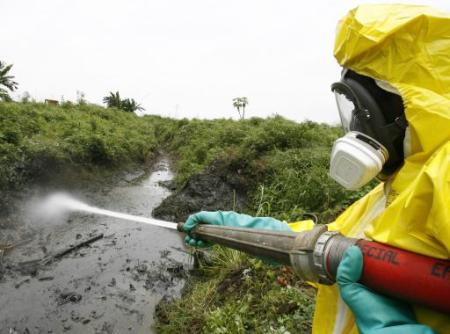
The draft law, comprising 29 articles, refers to consultation on legislative measures and establishes four stages: preparation; a public call for participation and registration; the actual holding of the consultation; and analysis of the results and conclusion.  In accordance with the law, the government will determine if a proposed bill affects the rights of certain communities, in which case the National Assembly will convene a prior consultation that will be conducted through the National Electoral Council…

One year ago, President Rafael Correa stated in one of his regular Saturday broadcasts that non-governmental organisations “want prior consultations to be popular consultations and to be binding; that means that for every step we want to take, we will need to ask the community for permission.”  “This is extremely serious. This is not what the international agreements say. This would not mean acting in the interests of the majorities, but rather in the interest of unanimity. It would be impossible to govern that way,” he declared.  In response to these statements, indigenous organisations sought reinforcement, calling on agencies such as the Inter-American Commission on Human Rights and the ILO to supervise the implementation of prior consultation.

In fact, indigenous communities in Ecuador have already turned to some of these mechanisms in the past. In 2003, the Quechua community of Sarayaku filed a complaint with the Inter-American Commission on Human Rights against the state for authorising oil exploration in their territory, without prior consultation.  The community, located in the province of Pastaza, in Ecuador’s Amazon rainforest region, denounced damages to their territory, culture and economy. In June 2012, the Inter-American Court of Human Rights ruled in favour of the community and against the state. The government is still studying how to pay the required compensation – a total of 1,398,000 dollars for material and moral damages and legal costs – and how to finish repairing the physical damage caused

By Ángela Meléndez, Ecuador’s Indigenous People Still Waiting to Be Consulted, Inter Press Service, May 2, 2012

Exploiting Digital Fingerprints: Military

Backed by a $5.6 million grant from the US Defense Advanced Research Projects Agency, a  team at Stanford is embarking on a four-year project to better understand and model complex communication patterns in social networks in real time…The new project is called MEGA: Modern Graph Analysis for Dynamic Networks, and is led by Associate Professor Ashish Goel.   A team of seven principal investigators… will develop algorithms which model human communication and detect subtle patterns in huge data sets from social media.

DARPA is interested because, from a national security standpoint, big data holds the promise of recognizing threats in unusual or suspicious social interactions of terrorists and other foreign adversaries.   Our daily social communication is spread across many forms of interaction. E-mails, tweets, text messages and Facebook posts define our modern social lives. More than ever, information about this correspondence and behavior can be collected, stored, and made available to computer scientists.With access to billions of tweets, e-mails and text messages, a project like MEGA can build reliable mathematical models of social phenomena, like the way news spreads through a network for instance, or even how people choose their social connections, Goel said.

One goal of the MEGA project is to model human online behavior and find how it shapes social networks… The second component of MEGA’s research: writing the step-by-step procedures for processing distributed data in real time….Some of their algorithms and programs will be passed directly to DARPA to be used in a security context…

Excerpt, DARPA Grant Will Help Stanford Dig Deep into the Big Data in Social Networks, Stanford.edu, April 24, 2013


Tibet – Mineral Resources, Fragile Ecology

The ecology of the Tibetan plateau, noted the Ministry of Land and Resources two years ago, is “extremely fragile”. Any damage, it warned, would be difficult or impossible to reverse. But, it went on, the China National Gold Group, a state-owned company, had achieved “astonishing results” in working to protect the environment around its mine near the region’s capital, Lhasa. On March 29th at least 83 of the mine’s workers lay buried under a colossal landslide. Its cause is not yet certain, but critics of Tibet’s mining frenzy feel vindicated.

The disaster at the Jiama copper and gold mine, about 70km (45 miles) north-west of Lhasa, has clearly embarrassed the government in Beijing. According to China Digital Times, a California-based media-monitoring website, the Communist Party ordered newspapers to stick to reports issued by the government and the state-owned news agency, Xinhua.

Foreign reporters are rarely allowed into Tibet, least of all to cover sensitive incidents. The official media have avoided speculation about any possible link between the landslide and mining activities in the area. They say the landslide covered a large area with 2m cubic metres of rubble. By the time The Economist went to press, 66 bodies had been pulled out by teams of rescuers with sniffer dogs. The high altitude and lack of oxygen made rescue work hard. A deputy minister of land and resources, Xu Deming, said preliminary investigations had shown that the landslide was caused by a “natural geological disaster”. Fragments of rock left behind by receding glaciers are being blamed, though officials do not explain why the workers’ camp was set up so close to such an apparent hazard.

The Tibetan government-in-exile based in India says it fears the disaster was caused by work related to the mine, which appears to have grown rapidly since construction began in 2008. It was formally opened two years later, at a ceremony attended by Tibet’s most senior officials. The $520m investment was described at the time as the biggest in Tibet’s mining industry by a firm belonging to the central government. The mine is owned by China Gold International Resources, a company listed in Hong Kong and Toronto. China National Gold Group is the controlling shareholder.

Tibet has been trying hard in recent years to encourage such companies to dig up the plateau’s metals and minerals. It has a lot of them to offer: China’s biggest reserves of copper and chromite (used in steel production), among the world’s biggest of lithium (used to make batteries), as well as abundant reserves of uranium, gold, borax (a component of ceramics and glass) and oil. Extracting these, however, often involves boring into a landscape considered sacred by Tibetans.

The Jiama mine, in a valley known to Tibetans as Gyama and revered as the birthplace of a seventh-century Tibetan king, has been the focus of protests by locals angered by environmental and other issues. Water from the valley flows into the Lhasa river. Woeser, a Tibetan activist based in Beijing, has blogged about locals’ fear that their water supplies will be polluted.

Tibetan resentment has been fuelled by the mining industry’s failure to provide much direct employment.

Excerpts, Mining in Tibet: The price of gold, Economist, April 6, 2013, at 54

How the US Persecutes Hacktivists

The government is treating hackers who try to make a political point as serious threats.   [T]he state has come down on them with remarkable force. This is in large measure evidence of how poignant, and troubling, their message has been.

Hacktivists, roughly speaking, are individuals who redeploy and repurpose technology for social causes. In this sense they are different from garden-variety hackers out to enrich only themselves. People like Steve Jobs, Steve Wozniak and Bill Gates began their careers as hackers — they repurposed technology, but without any particular political agenda. In the case of Mr. Jobs and Mr. Wozniak, they built and sold “blue boxes,” devices that allowed users to defraud the phone company. Today, of course, these people are establishment heroes, and the contrast between their almost exalted state and the scorn being heaped upon hacktivists is instructive.

For some reason, it seems that the government considers hackers who are out to line their pockets less of a threat than those who are trying to make a political point. Consider the case of Andrew Auernheimer, better known as “Weev.” When Weev discovered in 2010 that AT&T had left private information about its customers vulnerable on the Internet, he and a colleague wrote a script to access it. Technically, he did not “hack” anything; he merely executed a simple version of what Google Web crawlers do every second of every day — sequentially walk through public URLs and extract the content. When he got the information (the e-mail addresses of 114,000 iPad users, including Mayor Michael Bloomberg and Rahm Emanuel, then the White House chief of staff), Weev did not try to profit from it; he notified the blog Gawker of the security hole.  For this service Weev might have asked for free dinners for life, but instead he was recently sentenced to 41 months in prison and ordered to pay a fine of more than $73,000 in damages to AT&T to cover the cost of notifying its customers of its own security failure.  When the federal judge Susan Wigenton sentenced Weev on March 18, she described him with prose that could have been lifted from the prosecutor Meletus in Plato’s “Apology.”

“You consider yourself a hero of sorts,” she said, and noted that Weev’s “special skills” in computer coding called for a more draconian sentence. I was reminded of a line from an essay written in 1986 by a hacker called the Mentor: “My crime is that of outsmarting you, something that you will never forgive me for.”  When offered the chance to speak, Weev, like Socrates, did not back down: “I don’t come here today to ask for forgiveness. I’m here to tell this court, if it has any foresight at all, that it should be thinking about what it can do to make amends to me for the harm and the violence that has been inflicted upon my life.”  He then went on to heap scorn upon the law being used to put him away — the Computer Fraud and Abuse Act, the same law that prosecutors used to go after the 26-year-old Internet activist Aaron Swartz, who committed suicide in January.  The law, as interpreted by the prosecutors, makes it a felony to use a computer system for “unintended” applications, or even violate a terms-of-service agreement. That would theoretically make a felon out of anyone who lied about their age or weight on Match.com.

The case of Weev is not an isolated one. Barrett Brown, a journalist who had achieved some level of notoriety as the “the former unofficial not-spokesman for Anonymous,” the hacktivist group, now sits in federal custody in Texas. Mr. Brown came under the scrutiny of the authorities when he began poring over documents that had been released in the hack of two private security companies, HBGary Federal and Stratfor. Mr. Brown did not take part in the hacks, but he did become obsessed with the contents that emerged from them — in particular the extracted documents showed that private security contractors were being hired by the United States government to develop strategies for undermining protesters and journalists, including Glenn Greenwald, a columnist for Salon. Since the cache was enormous, Mr. Brown thought he might crowdsource the effort and copied and pasted the URL from an Anonymous chat server to a Web site called Project PM, which was under his control…..

Other hacktivists have felt the force of the United States government in recent months, and all reflect an alarming contrast between the severity of the punishment and the flimsiness of the actual charges. The case of Aaron Swartz has been well documented. Jeremy Hammond, who reportedly played a direct role in the Stratfor and HBGary hacks, has been in jail for more than a year awaiting trial. Mercedes Haefer, a journalism student at the University of Nevada, Las Vegas, faces charges for hosting an Internet Relay Chat channel where an Anonymous denial of service attack was planned. Most recently, Matthew Keys, a 26-year-old social-media editor at Reuters, who allegedly assisted hackers associated with Anonymous (who reportedly then made a prank change to a Los Angeles Times headline), was indicted on federal charges that could result in more than $750,000 in fines and prison time, inciting a new outcry against the law and its overly harsh enforcement. The list goes on.

In a world in which nearly everyone is technically a felon, we rely on the good judgment of prosecutors to decide who should be targets and how hard the law should come down on them. We have thus entered a legal reality not so different from that faced by Socrates when the Thirty Tyrants ruled Athens, and it is a dangerous one. When everyone is guilty of something, those most harshly prosecuted tend to be the ones that are challenging the established order, poking fun at the authorities, speaking truth to power — in other words, the gadflies of our society.

Excerpts, By PETER LUDLOW, Hacktivists as Gadflies, NY Times, April 13, 2013

HardBall: Chevron and the Oil Pollution in Amazon

An environmental case that has pitted Chevron against Ecuadorean Amazon villagers for two decades has taken another bizarre twist, with an American consulting firm now recanting research favorable to the villagers’ claims of pollution in remote tracts of jungle.  The consulting firm, Stratus Consulting of Boulder, Colo., announced late Thursday (April 11, 2013) that it had originally been misled by Steven R. Donziger, a lead lawyer for the Ecuadorean villagers, and had decided to disavow its contributions to scientific research about whether there was groundwater contamination that sickened the residents in swaths of rain forest.

The move prompted the plaintiffs to assert that Chevron was coercing parties to the case, citing this as another example of strong tactics employed by the company as it tries to overturn an Ecuadorean judge’s decision two years ago that it pay $18 billion in damages, one of the largest environmental awards ever. In this instance, the plaintiffs claim that Chevron pressured Stratus to retract its assessment in exchange for dismissal of legal claims in a countersuit filed by Chevron made against the firm — claims that could have pushed the consulting business into bankruptcy.  “Stratus deeply regrets its involvement in the Ecuador litigation,” the firm said. It remains unclear whether this development with Stratus will have much impact on Chevron’s appeals, because the judge also based his ruling on other environmental assessments. The judge ruled that back in the 1970s, Texaco had left an environmental mess in oil drilling operations while operating as a partner with the Ecuadorean state oil company, and that Chevron, which bought Texaco in 2001, must apologize for and was liable for the damage.

Chevron has refused to apologize. In addition to appealing the decision in the Ecuadorean courts, Chevron also filed a countersuit in federal court in New York against Mr. Donziger and Stratus Consulting, accusing them of racketeering and fraud. Because Stratus has now retracted its statements on the Ecuadorean pollution, Chevron agreed not to pursue claims against the firm anymore. On Friday, Chevron filed witness statements from Douglas Beltman, a Stratus vice president, and Ann Maest, a Stratus scientist, in which they now say they were not aware of scientific evidence of groundwater contamination in the former Texaco concession area or of any adverse health impact to people from the operations.

Mr. Beltman stated that “at Donziger’s direction,” he drafted portions of a report in the first person as if it were written by Richard Cabrera, the supposedly independent expert, that detailed environmental damage for the Ecuadorean court. “Donziger stressed to me and Ann Maest the importance of Stratus ensuring that no one learn of Stratus’ involvement in any aspect of the Cabrera Report or Responses,” he said.  In an interview, Mr. Beltman said, “This settlement was extensively negotiated with Chevron and we think it’s fair and it’s not extortion.”  Mr. Donziger said he could not comment since he was a defendant in the racketeering case filed by Chevron.

It was not immediately clear what impact Stratus’s recantation would have on the case. Chevron’s appeal is before Ecuador’s highest court, the National Court of Justice, and the company is defending itself in courts in Canada, Argentina and Brazil to avoid paying damages in those countries. The plaintiffs are waging an international campaign seeking damages because Chevron has no assets in Ecuador itself…

Kent Robertson, a Chevron spokesman, said the statements should uphold the company’s position in the American racketeering case and in the international enforcement proceedings. “The declarations today show there is no scientific evidence to support the plaintiffs’ lawyers’ allegations,” he said.

Craig Smyser, a lawyer for some of the Ecuadorean plaintiffs, said the statements by the consulting firm “should have almost no effect” because the Ecuadorean judge relied on many expert reports other than the one that Stratus was involved in.  He attributed the decision by Stratus to repudiate its earlier work to the “immense financial strain that threatened the financial extinction of the firm, including a campaign by Chevron to discredit Stratus with various government agencies and businesses with which Stratus worked.”

Chevron has been playing hardball for at least four years. The company produced video recordings from pens and watches wired with bugging devices that suggested a bribery scheme surrounding the proceedings and involving a judge hearing the case. An American behind the secret recordings was a convicted drug trafficker.  But the oil company appeared to gain the upper hand three years ago when it won a legal bid to secure the outtakes from a documentary about the case, “Crude,” in which Mr. Donziger was shown describing the need to pressure a Ecuadorean judge and boasting of meetings with Ecuadorean officials.

In a sworn statement filed in an American court, Alberto Guerra, an Ecuadorean judge who heard the Chevron case in 2003 and 2004, accused Nicolas Zambrano, the judge who issued the $18 billion verdict against Chevron, of taking a $500,000 bribe from the plaintiffs. Mr. Zambrano denied the charge, and in his own affidavit, said that Mr. Guerra had told him that Chevron would offer him $1 million in return for a favorable judgment.  Chevron has denied offering any bribes.

By CLIFFORD KRAUSS, Consultant Recants in Chevron Pollution Case in Ecuador, NY Times, April 12, 2013


The War on Dams

An Amazonian community has threatened to “go to war” with the Brazilian government after what they say is a military incursion into their land by dam builders.  The Munduruku indigenous group in Para state say they have been betrayed by the authorities, who are pushing ahead with plans to build a cascade of hydropower plants on the Tapajós river without their permission.  Public prosecutors, human rights groups, environmental organisations and Christian missionaries have condemned what they call the government’s strong-arm tactics.

According to witnesses in the area, helicopters, soldiers and armed police have been involved in Operation Tapajós, which aims to conduct an environmental impact assessment needed for the proposed construction of the 6,133MW São Luiz do Tapajós dam.  The facility, to be built by the Norte Energia consortium, is the biggest of two planned dams on the Tapajós, the fifth-largest river in the Amazon basin. The government’s 10-year plan includes the construction of four larger hydroelectric plants on its tributary, the Jamanxim.

Under Brazilian law, major infrastructure projects require prior consultation with indigenous communities. Federal prosecutors say this has not happened and urge the courts to block the scheme which, they fear, could lead to bloodshed.  “The Munduruku have already stated on several occasions that they do not support studies for hydroelectric plants on their land unless there is full prior consultation,” the prosecutors noted in a statement.

However, a court ruling last week gave the go-ahead for the survey. Government officials say that neither researchers nor logistical and support teams will enter indigenous villages. The closest they will get is about 30 miles from the nearest village, Sawré Maybu.  The ministry of mines and energy noted on its website that 80 researchers, including biologists and foresters, would undertake a study of flora and fauna. The army escort was made possible by President Dilma Rousseff, who decreed this year that military personnel could be used for survey operations. Officials say the security is for the safety of the scientists and the local population.

Missionaries said the presence of armed troops near Sawré Maybu village, Itaituba, was intimidating, degrading and an unacceptable violation of the rights of the residents.  “In this operation, the federal government has been threatening the lives of the people,” the Indigenous Missionary Council said. “It is unacceptable and illegitimate for the government to impose dialogue at the tip of a bayonet.”

The group added that Munduruku leaders ended a phone call with representatives of the president with a declaration of war. They have also issued open letters calling for an end to the military operation. “We are not bandits. We feel betrayed, humiliated and disrespected by all this,” a letter states.  One of the community’s leaders, Valdenir Munduruku, has warned that locals will take action if the government does not withdraw its taskforce by 10 April, when the two sides are set to talk. He has called for support from other indigenous groups, such as the Xingu, facing similar threats from hydroelectric dams.

Environmental groups have expressed concern. The 1,200-mile waterway is home to more than 300 fish species and provides sustenance to some of the most biodiverse forest habitats on Earth. Ten indigenous groups inhabit the basin, along with several tribes in voluntary isolation.  With similar conflicts over other proposed dams in the Amazon, such as those at Belo Monte, Teles Pires, Santo Antônio and Jirau, some compare the use of force to the last great expansion of hydropower during the military dictatorship. “The Brazilian government is making political decisions about the dams before the environmental impact assessment is done,” said Brent Millikan of the International Rivers environmental group.  “The recent military operations illustrate that the federal government is willing to disregard existing legal instruments intended to foster dialogue between government and civil society.”
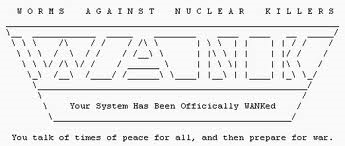
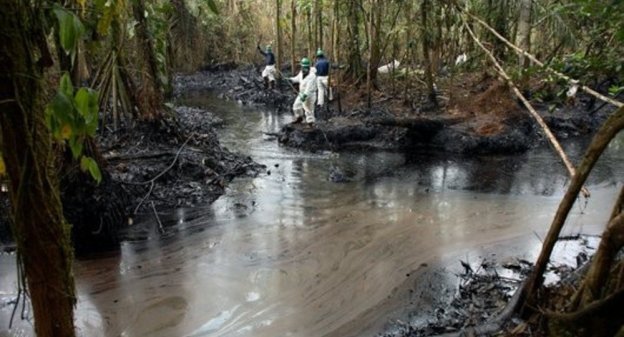
Jonathan Watts, Amazon tribe threatens to declare war amid row over Brazilian dam project, Guardian, Aprl. 3, 2013


Who is Cryptome?

Cryptome unfamiliar to the general public, is well-known in circles where intelligence tactics, government secrets and whistle-blowing are primary concerns. Since its creation in 1996, Cryptome has amassed more than 70,000 files — including lists of secret agents, high-resolution photos of nuclear power plants, and much more.

Its co-founder and webmaster, a feisty 77-year-old architect, doesn’t hesitate when asked why.  “I’m a fierce opponent of government secrets of all kinds,” says John Young. “The scale is tipped so far the other way that I’m willing to stick my neck out and say there should be none.”  Young describes several exchanges with federal agents over postings related to espionage and potential security breaches, though no charges have ever been filed. And he notes that corporate complaints of alleged copyright violations and efforts to shut Cryptome down have gone nowhere.

For Young, there’s a more persistent annoyance than these: the inevitable comparisons of Cryptome to WikiLeaks, the more famous online secret-sharing organization launched by Julian Assange and others in 2006.  Young briefly collaborated with WikiLeaks’ creators but says he was dropped from their network after questioning plans for multimillion-dollar fundraising. Cryptome operates on a minimal budget — less than $2,000 a year, according to Young, who also shuns WikiLeaks-style publicity campaigns.  “We like the scholarly approach — slow, almost boring,” says Young. He likens Cryptome to a “dusty, dimly lit library.”  That’s not quite the image that Reader’s Digest evoked in 2005, in an article titled “Let’s Shut Them Down.” Author Michael Crowley assailed Cryptome as an “invitation to terrorists,” notably because of its postings on potential security vulnerabilities.Cryptome’s admirers also don’t fully buy into Young’s minimalist self-description….

Young considers himself a freedom-of-information militant, saying he is unbothered by “the stigma of seeming to go too far.” Claims that Cryptome aids terrorists or endangers intelligence agents are “hokum,” he said. “We couldn’t possibly publish information to aid terrorists that they couldn’t get on their own,” he said, depicting his postings about security gaps as civic-minded.  “If you know a weakness, expose it, don’t hide it,” he said…

As a motto of sorts, the Cryptome home page offers a quote from psychiatrist Carl Jung: “The maintenance of secrets acts like a psychic poison which alienates the possessor from the community.”  The website says Cryptome welcomes classified and confidential documents from governments worldwide, “in particular material on freedom of expression, privacy, cryptology, dual-use technologies, national security, intelligence, and secret governance.”  Young attributes Cryptome’s longevity and stature to its legion of contributors, most of them anonymous, who provide a steady stream of material to post.  Among the most frequently downloaded of Cryptome’s recent postings were high-resolution photos of the Fukushima Dai-ichi nuclear plant in Japan after it was badly damaged in the March 2011 tsunami/earthquake disaster.

Cryptome also was a pivotal outlet last year for amorous emails between national security expert Brett McGurk and Wall Street Journal reporter Gina Chon, which led McGurk to withdraw as the Obama administration’s nominee to be ambassador to Iraq.  Other documents on the site list names of people purported to be CIA sources, officers of Britain’s MI6 spy agency, and spies with Japan’s Public Security Investigation Agency….

Another exchange with the FBI came in November 2003, according to Young, when two agents paid him a visit to discuss recent Cryptome postings intended to expose national security gaps. The postings included maps and photos of rail tunnels and gas lines leading toward New York’s Madison Square Garden, where the Republican National Convention was to be held the next year….Another confrontation occurred in 2010, when Cryptome posted Microsoft’s confidential Global Criminal Compliance Handbook, outlining its policies for conducting online surveillance on behalf of law enforcement agencies. Contending that the posting was a copyright violation, Microsoft asked that Cryptome be shut down by its host, Network Solutions. Criticism of Microsoft followed, from advocates of online free speech, and the complaint was withdrawn within a few days….

Moreover, Young urges Cryptome’s patrons to be skeptical of anything placed on the site, given that the motives of the contributors may not be known.  “Cryptome, aspiring to be a free public library, accepts that libraries are chock full of contaminated material, hoaxes, forgeries, propaganda,” Young has written on the site. “Astute readers, seeking relief from manufactured and branded information, will pick and choose…”

Excerpts from DAVID CRARY, Older, Quieter Than WikiLeaks, Cryptome Perseveres, Associated Press, Mar. 9, 2013

Shell Nigeria and the Ogoni People

On January 30th, 2013 a Dutch court ruled that Shell, Nigeria’s biggest oil producer, must compensate Friday Akpan, a farmer from the Delta region, for the pollution of his farmland and destruction of his livelihood. The ruling could open a flood-gate to legal complaints against oil companies.In 2008, five Nigerians, including Mr Akpan, filed suits in The Hague where Shell has its headquarters. The other four cases were dismissed; the court said Shell could not have prevented the spills involved. Environmental campaigners insist the company was negligent. Amnesty International says the dismissal highlights how difficult it is for Nigerians whose lives have been affected by oil pollution to get justice.

Court orders and regulatory fines are rarely enforced in Nigeria. According to a 2011 United Nations report on the Ogoniland region in the Niger Delta, restoring the area, much of which is covered in thick, black oil, could take up to 30 years. It would cost $1billion just to start the clean up. Little progress has been made since the report was published. Bad laws, lax regulation and corporate exploitation make environmental degradation even worse in Nigeria.

Shell says that nearly 26,000 barrels of its oil was spilt last year in 200 incidents in the Delta. Some 55 were the result of “operational mishaps,” including poor maintenance of facilities but 144 were caused by sabotage or people siphoning oil from pipelines. Oil theft is increasingly a cause of oil spills in the region. The illegal refining of stolen oil is common in the Niger Delta. But in a region with few jobs, poor health care and dire schools, it is little wonder people resort to refining stolen oil. For some, it is the only way left to make a living.

John Donovan, A mixed verdict, Economist, Feb 3rd, 2013

How to Save the Lions

In the dark the safest way to attack the lions was to catch them in the headlights of a car and run them over. Once the adults were downed it was easy enough to dispatch the cubs with spears and arrows. When the killing stopped last year in Kitengela, on the plains outside Nairobi National Park, six lions were dead. It was the worst such incident in recent memory.

Killing lions without a licence is a criminal offence in Kenya and the slaughter was witnessed by a trio of park rangers from the Kenya Wildlife Service. Outnumbered, they decided not to try to stop what one of them described as “mob justice” by locals angry that their goats had been eaten. Seven months later no one has been arrested. Whereas elephant and rhino poachers often end up dead or in jail, no lion killer in Kenya has ever ended up behind bars.

Recent estimates put their number (lions) in Africa at 15,000-25,000. LionAid, a conservation group based in Britain, says it knows of only 645 still in west and central Africa.  Paula Kahumbu of Kenya-based Wildlife Direct says their fate Africa-wide will be decided in Kenya, home to one in ten of the surviving beasts. Kenya is losing about 100 every year, its wildlife service estimates, most of them killed by herders whose cattle graze the land where lions hunt. Cheap pesticides, such as Carbofuran, which is tasteless and odourless, have replaced spears as the chief killer. Kenya’s human population, up from 8m at independence in 1964 to 42m-plus today, has deprived the lions of habitat and prey.

Laurence Frank, who runs Living With Lions, a Kenyan charity, says that the big cats are viewed as an expensive nuisance by rural people who see few benefits from tourism.   Compensating owners for livestock lost to lions may have reduced locals’ incentive to look after their herds. Paul Mbugua of the Kenyan Wildlife Service suspects that last year’s Kitengela killings were meant to send a message that the local Masai wanted bigger compensation. Paying them to guard the lions has worked better…..Most successful of all has been the sprouting of private conservancies turning ranches into wildlife havens that earn their keep from tourists as well as farming, and recycle the income into local communities better than national parks do. Several such ventures in Laikipia, a plateau north-west of Mount Kenya, are reversing the downward trend in lion numbers.

Excerpts, Kenya’s lions: Sad for Simba, Economist,  Jan. 26, 2013, at 45

Haunted by Sellafield, nuclear waste storage in the UK

The government’s long-term hopes of burying nuclear waste in the UK has suffered a major blow after Cumbria county council voted against plans for a £12bn underground site.  Three local authorities – Cumbria county council, Allerdale borough council and Copeland borough council – were set to vote on the search for a site, which would have been the first of its kind in the UK.

Copeland borough councillors voted six-to-one in favour of moving to onto the next stage of the search process. But Cumbria county council took an opposing view, rejecting the proposals by seven votes to three, and in the process ending the county council’s four-year formal involvement in the consultation process.  “As a decision to continue with the process needed the agreement of both the district and county councils, Cumbria county council’s decision has removed both districts from consideration,” councillors said in a statement. The vote triggered huge cheers from environmental campaigners outside the council chamber in Carlisle.

Ed Davey, Secretary of State for Energy and Climate Change, said the decision was “disappointing”….

More than 32,000 people had signed a petition against the £12bn underground storage facility.However, the issue of how to handle nuclear waste remains live in Cumbria.  Sellafield’s nuclear storage facilities remain the largest in the UK, and the ten members of the county council’s cabinet also agreed that the council will encourage the Government to invest in improvements to the existing surface storage facilities at the site while a permanent solution for the country’s higher activity radioactive waste is found.

Campaigners {West Cumbria Friends of the Earth, Greenpeace) argued the underground dump would harm the Lake District national park and its tourism industry. They also claim that studies show Cumbria’s geology is unlikely to be safe for radioactive waste.

Excerpts, Cumbria rejects radioactive waste disposal programme, http://www.channel4.com/news/, Jan. 30, 2012

Three Activists and their Twitter Accounts

A federal appeals court ruled Friday (Jan. 25, 2012)  that prosecutors can demand Twitter account information of certain users in their criminal probe into the disclosure of classified documents on WikiLeaks.  The three-judge panel of the 4th U.S. Circuit Court of Appeals also said the government’s reasons as to why it is seeking the information can remain sealed.

The case involves three Twitter account holders with some connection to the secret-busting WikiLeaks website. They had argued that forcing Twitter to cooperate with the investigation by turning over data amounts to an invasion of privacy and has a chilling effect on the free speech rights of Twitter users.

The federal panel in Richmond rejected their appeal and affirmed a magistrate’s court order that Twitter must turn over limited account information to prosecutors. The court said it weighed the right of public access against the need to keep an investigation secret. The appeals court agreed with the magistrate that the government’s interest in keeping the documents secret outweigh the right to public access.

Prosecutors have said federal law specifically allows them to seek account information as a routine investigative tool. Specifically, the Stored Communications Act allows them to obtain certain electronic data without a search warrant or a demonstration of probable cause. The government must only show that it has a reasonable belief that the records it seeks are relevant to an ongoing criminal investigation.  “This is essentially a reasonable suspicion standard,” the court wrote.  Under the Stored Communications Act, the government can also keep sealed documents related to their investigation from the subscribers. The appeals panel concluded the subscribers had no First Amendment right to access the documents. Prosecutors submitted their rationale for seeking the Twitter information to U.S. Magistrate Judge Theresa Carroll Buchanan but it was kept secret and sealed also.

The court wrote that the “government’s interests in maintaining secrecy of its investigation, preventing potential subjects from being tipped off, or altering behavior to thwart the government’s ongoing investigation, outweighed” the subscribers’ claims.

The American Civil Liberties Union and the Electronic Frontier Foundation, representing the Twitter users, said the government can use those IP addresses as a sort of virtual tracking device to identify a specific computer used by an account holder and with it the user’s physical location.

The appeals panel also allows the government to keep secret any similar orders it sought from other social media sites.

“This case shows just how easy it is for the government to obtain information about what people are doing on the Internet, and it highlights the need for our electronic privacy laws to catch up with technology,” said ACLU attorney Aden Fine. “The government should not be able to get private information like this without getting a warrant and also satisfying the standard required by the First Amendment, and it shouldn’t be able to do so in secret except in unusual circumstances”

The original order issued in December 2010 at prosecutors’ request also sought Twitter account information from WikiLeaks founder Julian Assange and Pfc. Bradley Manning, who faces life in prison if he’s convicted of indirectly aiding the enemy by leaking U.S. secrets while working as an intelligence analyst in Baghdad in 2009 and 2010.  Neither Assange nor Manning was a party in the lawsuit challenging the legality of the Twitter order.

WikiLeaks Case: U.S. Appeals Court Rules On Investigation, Huffington Post, Jan. 25, 2013

Nuclear Waste from Britain to Japan on the Pacific Grebe

Japan Nuclear Fuel Ltd. said Thursday that 28 canisters of high-level radioactive waste produced through the reprocessing of spent Japanese nuclear fuel in Britain will arrive in Aomori Prefecture in the latter half of February.  The 28 canisters of vitrified radioactive waste include 14 for Kansai Electric Power Co. and seven each for Chubu Electric Power Co. and Chugoku Electric Power Co.

The freighter Pacific Grebe carrying the waste left the port of Barrow on Wednesday Jan, 9, 2013) and will travel to Rokkasho, Aomori Prefecture, via the Panama Canal, Japan Nuclear Fuel said.  It will be the third time that vitrified radioactive waste will be brought to Japan from Britain.

Japan has received 104 canisters of such waste from Britain and plans to receive around 800 more. The 104 canisters have been stored at a facility in the village of Rokkasho.

Reprocessed nuclear waste to arrive in Aomori from Britain in late February, The Japan Times, Jan. 11, 2012

Nuclear Protesters and the Establishment: Japan

Eight million people signed an Internet petition demanding an end to nuclear power and hundreds of thousands joined public protests. Yet Japan handed an election landslide to the most pro-atomic option on offer.  Anti-nuclear activists have been left licking their wounds after the first national poll since the tsunami-sparked disaster at Fukushima saw an apparent melting away of public anger as the country welcomed back the establishment…

The Liberal Democratic Party bagged 294 of the 480 seats in the lower house, crushing their opponents, the biggest of which won only 57 seats.  Where smaller parties offered an end to nuclear power — immediately, over ten years, or within three decades — the LDP pledged only to “decide” on reactor restarts within three years.

Commentators say the pro-business party is likely to give the green light to power companies. Markets agree, with shares in Fukushima operator Tokyo Electric Power (TECPO) surging around 50 percent in two days after the win.  The problem, said the left-leaning Asahi Shimbun newspaper, was that other issues trumped nuclear; voters were frustrated with Japan’s economic malaise, huge public debts, fragile employment and diplomatic friction with China.  The public were looking for a way to punish the ruling Democratic Party of Japan for its policy failures…In fact, says the Asahi, the anti-nuclear vote was almost completely neutralised because of the fragmentation caused by this mushrooming of parties.

Excerpts from Hiroshi Hiyama, Japan anti-nuclear vote melts away, Agence France Presse, Dec. 23, 2012

The CIA Drone Program and Right to Information

A London court  has ruled against examining intelligence-sharing by [Government Communications Headquarters] GCHQ  that leads to CIA drone strikes, claiming it would ‘imperil relations’ with the US.   The case was brought by Noor Khan, a Pakistani national whose father was killed in a drone strike in March 2011. The strike, which killed over 40 people, mostly civilians who had gathered to resolve a mining dispute, is one of the bloodiest on record. Khan has also launched court action against drone strikes in Pakistan. His UK case was supported by legal charity Reprieve and solicitors Leigh Day & Co.

Khan’s lawyers argued that in cases where the UK shared intelligence with the US security services on the location of suspects, knowing that this may be used to kill them with drone strikes, the GCHQ agents responsible may be committing crimes including accessory to murder. The case was an application for a judicial review of the UK’s intelligence-sharing policy in cases where the information might lead to drone strikes.  But Lord Justice Moses and Mr Justice Simon yesterday rejected the application.  ‘It is plain, from the nature of the claims, that the purpose of the proceedings in England and in Pakistan is to persuade a court to do what it can to stop further strikes by drones operated by the United States,’ said Lord Justice Moses in his written response.  He cited a legal principle whereby ‘the courts will not sit in judgment on the sovereign acts of a foreign state’; breaking with this principle would ‘imperil relations between the states,’ he added.

In order to decide whether GCHQ agents might be open to prosecution if they shared information with the CIA that was used to target drone strikes, a UK court would have to rule on whether the CIA’s campaign in Waziristan could be considered a formal war, as this would allow the agents to claim combatant immunity.  ‘I reject the suggestion that the argument can be confined to an academic discussion as to the status of the conflict in North Waziristan,’ wrote Lord Justice Moses. ‘The claimant cannot demonstrate that his application will avoid, during the course of the hearing and in the judgment, giving a clear impression that it is the United States’ conduct in North Waziristan which is also on trial.’  ‘

The government has never officially confirmed or denied sharing intelligence for drone attacks, although in 2010, a Sunday Times article quoted ‘insiders’ claiming GCHQ had shared information about the locations of al Qaeda and Taliban commanders in both Afghanistan and Pakistan. GCHQ told the Sunday Times all intelligence sharing was in ‘strict accordance’ with the law.

Noor Khan announced he would appeal the decision. Rosa Curling, of Khan’s solicitors Leigh Day & Co, said: ‘We are disappointed that the court has decided not to engage in this very important issue, leaving our client no option but to appeal the decision. This claim raises very serious questions and issues about the UK’s involvement in the CIA drone attacks in Pakistan. This case seeks to determine the legality of intelligence sharing in relation to GCHQ assistance in CIA drone strikes.’  Kat Craig, legal director of Reprieve, said: ‘By avoiding judicial scrutiny over drone attacks, combined with its ongoing attempts to push through secret courts, this government is showing a disturbing desire to put itself above the law… If the Government is supporting the CIA’s campaign of drone strikes which are illegal, the British public have the right to know.’

Alice K Ross, High court rejects first UK challenge to CIA’s drone campaign, Bureau of Investigative Journalism, Dec. 22, 2012

Fradulent Quality Certificates for Nuclear Reactors: South Korea

South Korea’s ambitious nuclear energy program is under intensive scrutiny and criticism after the discovery of microscopic cracks in the structure of a nuclear power plant and forgery of quality certificates vouching for thousands of components in at least two reactors.  Officials in all three major agencies responsible for monitoring the program said Friday there’s no danger to nuclear safety, but the government ordered the shutdown of the two reactors with the uncertified parts. At the same time, the head of the state company overseeing the program, Korea Electric Power Corp. has resigned for what he said were personal reasons.

A sequence of problems at a nuclear power plant on the southwestern coast fueled rising doubts about a program that’s been a centerpiece of the government’s energy policy since the first reactors went on line more than 30 years ago. Korea counts on nuclear energy for 30 percent of its electrical power, but critics are now demanding the government shut down some of the older plants and pull back from plans to build enough reactors to fulfill half the country’s power needs.  “I am worried about safety standards,” says Lee Chang-choon, who served as South Korea’s ambassador to the International Atomic Energy Agency during his long diplomatic career. “I do not have confidence and trust in the care of sensitive machinery operations.”

The trouble seemed to begin at the nuclear power plant at Yeonggwang where inspectors this week reported thousands of  “noncore components” were installed on the basis of fraudulent quality certificates. The Korea Hydro and Nuclear Power Corporation, which operates Korea’s four nuclear power plants, including 23 reactors, promised to replace all the parts by the end of the year while asking prosecutors to investigate alleged bribery.

Compounding the difficulties at the Yeonggwang plant, the ministry also reported the discovery of microscopic cracks in passages linking control rods to one of the reactors. An official at the Korea Hydro and Nuclear Power Corporation said the cracks affected warning signals on control panels but not operation of the reactors…

The underlying problem, however, is that South Korea has virtually no oil or natural gas deposits and is running out of coal. Nuclear power has long been seen as the only way to meet the demands of a growing industrial economy. Hong Suk-woon, Korea’s knowledge and economy minister, warned of severe power cuts that might affect industry and individual consumers as a result of shutdown of the two Yeonggwang reactors….

Others are still more critical. Yun Sun-jin, a professor who teaches courses on energy policy at Seoul National University, accuses the Korea Hydro Nuclear Power Corporation of placing higher priority on output with reduced emphasis on safety.  “They are decreasing the time for periodic overhaul of reactors,” she says. “They think a high operation rate means a more competitive strategy.”  She agrees with the view of the nongovernmental Korea Federation for the Environment that the government should shut down older plants and cancel plans to build new ones.  “We cannot believe nuclear power plants are safe,” says Yang-yi Won-young, in charge of the organization’s “nuclear phase-out” campaign. “The government says nuclear energy is the cheapest and cleanest, but they don’t take account of the cost of getting rid of nuclear waste.”…An official at the ministry of knowledge and economy listed 60 forged quality certificates since 2003 including more than 7,600 components, 98.4 percent of which, he says, were for the Yeonggwang plant. “These are noncore parts,” he says, including fuses, switches, and resistors that cannot be used for the core safety-related facility” and therefore “posing no threat of radiation leakage.”  The government, he adds, “will prepare and implement a comprehensive package of measures as soon as possible starting later this month to cope with the possible power shortages during this winte

Excerpts, By Donald Kirk, Cracks at South Korean nuclear plant raise safety concerns, Reuters, Nov. 9, 2012

Ship Breaking – Greens against workers

At its height in 2008 Bangladesh’s ship-breaking industry accounted for half of all ships scrapped in the world, according to IHS, a consultancy. Today the country accounts for around a fifth. In these years Bangladeshi ship breakers found themselves at the forefront of criticism as NGOs and pressure groups exposed some of the worst practices causing environmental and human harm. These included high health risks due to injuries, noxious fumes and the handling of asbestos. Critics say one way in which Bangladesh competes on cost is that poor workers are unlikely to file claims for accidents or bad health. Another advantage is (or was) the use of child labour.

In 2009 the Bangladesh Environmental Lawyers Association (BELA), a public-advocacy group, convinced the Supreme Court to ban all ship recycling not meeting certain environmental standards. The court’s decision meant that by 2010 the ship-breaking industry had come to a halt. Zahirul Islam of PHP, a local manufacturer with a big ship-breaking division (the industry prefers to call it ship recycling), says that for 14 months the company was unable to import a single vessel for breaking.  Knock-on effects hurt the wider economy. A World Bank study estimated that ship breaking employed over 200,000 in Bangladesh. Many of the jobs were subsequently lost. And domestic steel prices rose sharply. Half of all Bangladesh’s steel comes from breaking ships.  Under pressure from the ship breakers, Bangladesh’s prime minister, Sheikh Hasina, has since relaxed the regulations. Hefzatur Rahman, president of the Bangladesh Ship Breakers Association, believes this has saved the industry. From just a score of vessels scrapped in the main part of Chittagong two years ago, about 150 were broken up in 2011.

Greens are not happy and want the ban reimposed. Delphine Reuter of the Shipbreaking Platform, an NGO in Brussels, describes ship recycling as “close to slavery”. It and BELA are leading the call for more regulation. That bothers international shipping firms and ship brokers, which argue that Bangladeshi ship breakers have cleaned up their act.

At the International Maritime Organisation, the UN agency responsible for curbing shipping pollution and ensuring safety, the head of pollution prevention, Nikos Mikelis, says environmentalists present Bangladesh with a false choice. “They say they are happy to have the industry, but not on the beaches. Where do they want it? In the mountains?”

Ship breaking in Bangladesh: Hard to break up, Economist, Oct. 27, 2012, at 44

Palm Oil Industry: environmental and human impacts

Indonesia’s largest palm oil company, Sinar Mas, ran into trouble recently when communities in Liberia complained about a 33,000 ha. operation being developed on their lands by its indirectly-owned subsidiary, Golden Veroleum in Butaw District, Sinoe County. Alfred Brownell, the lawyer from Green Advocates representing the Kru tribes impacted by the project who is attending the 10th Roundtable on Sustainable Palm Oil (RSPO) being held in Singapore this week noted:

Golden Veroleum is in clear violation of the RSPO’s New Planting Procedure as it has not advertised its plans to clear and plant oil palms and carry out and publicise a High Conservation Value Assessment in advance of expanding its operations. Under the RSPO procedure, the company should now cease clearance until due process is followed. The villagers are concerned that their lands are being taken without their fully informed or free consent.

This is the second palm oil development involving a prominent RSPO member to run into controversy in Liberia. Last year, a subsidiary of Malaysia’s largest palm oil consortium, Sime Darby, was criticised for expanding its operations without respecting local peoples’ rights. The company was in the early stages of developing a 220,000 ha. operation but was halted in its tracks by complaints, which, to its credit, the company has responded to by entering into dialogue with the communities.

The spotlight is now on two large palm oil operations in Cameroon. One is planned by a company called BioPalm, a subsidiary of India-based corporation Siva Group which is marking out its planned operations without consultation on the lands of the Bagyeli “Pygmies” in Océan Département in western Cameroon. The company claims to be an RSPO member but does not show up on the RSPO’s membership lists. Messe Venant, Project Coordinator of the community-based indigenous NGO Okani says:  As the affected Bagyeli communities have told us, the forest is their memory. If they lose it, they lose their past, their present and their future. They will no longer be Bagyeli. To destroy the forest is to reduce them to nothingness.

Another palm oil developer is SG Sustainable Oils Cameroon PLC (SGSOC), owned by Herakles Farms from the USA and an affiliate of Herakles Capital, which is also involved in the telecommunications, energy, infrastructure, mining and agro-industrial sectors in Africa. SGSOC is developing an oil palm plantation further north in Cameroon, but has also run into sustained opposition from local communities and concerned NGOs and has announced it will pull out of the RSPO.

Other cases are highlighted in a searching review of 15 companies’ operations carried out by the Forest Peoples Programme and SawitWatch with a consortium of other NGOs and community organisations in Liberia, Cameroon, the Democratic Republic of Congo, the Philippines, Malaysia and Indonesia.

One case examined is the operation being developed by Genting Plantations, a client of HSBC, and a subsidiary of the vast Genting group which runs a casino, hotel and property empire in Malaysia. Both companies are prominent RSPO members. Genting is now in a protracted land dispute with the Dusun and Sungai peoples in Tongod District in Sabah over the imposition of the oil palm plantation. Leonard Alaza representing the Indigenous Peoples Network of Malaysia or Jaringan Orang Asal SeMalaysia (JOAS) at the 10th Roundtable of the RSPO underway in Singapore, says:  The communities have been objecting to this plantation since 2000 and filed a court case 10 years ago asking the court to recognise their rights and freeze the company’s expansion. But instead of recognising our rights, as the RSPO standard requires, the company has been contesting even the admissibility of our case and meanwhile has taken over and planted all the disputed lands.

Excerpt from Press Release of Forest Peoples Programme, New oil palm land grabs exposed: Asian palm oil companies run into trouble in Africa, Nov. 1, 2012

Nuclear Waste Island, Orchid, Taiwan

Most people on the windswept outpost, 62 kilometres east of Taiwan’s mainland, would love to see the 100,277 barrels of nuclear waste gone. But many admit they are concerned about their livelihoods if that day comes.  Orchid Island has been a flashpoint for Taiwan’s environmental movement since nuclear waste was first shipped there in 1982. Local residents, mostly members of the Tao aboriginal group, say the waste was put on the island without their consent. Periodic protests have claimed negative health and environmental effects.

In response, Taiwan Power Co has showered the community with cash handouts, subsidies, and other benefits.  Orchid Island received subsidies worth 110 million Taiwan dollars in 2011, according to company data. That doubled local government spending, according to township secretary Huang Cheng-de.  “The current situation, basically, is that Taipower gives us quite a bit of money, and our people are becoming pretty reliant,” Huang said.  Most of the funds are divided into government-managed accounts for each of the island’s 4,700 residents, who can apply for it if they have a business or career-oriented need. Residents also receive free electricity, health-related emergency evacuations, scholarships for higher education and a 50-per-cent discount on all transportation costs to Taiwan’s mainland.  Statistics indicate local residents are taking advantage of the benefits. In 2011, they used nearly twice as much electricity per household as the national average, according to company data.

Protests have weakened and for many residents, including Chou the restaurant owner, the existence of nuclear waste has become more acceptable.  “Most people here are against the nuclear waste, but since its already here, they should pay us for using our land,” Chou said. “For now, I’m okay with it as long as they don’t add any more barrels.”  The utility plans to move the waste off the island by 2021, but only if another township in Taiwan agrees by referendum to take it, according to Huang Tian-Huang, a company deputy director.  If it goes to plan, “so goes the compensation,” Huang said, although he acknowledged that gaining consent from another community will be difficult.  Questions remain on what would support Orchid Island’s economy if those subsidies end.

For Taiwan aborigines, nuclear waste is blessing and curse, http://www.timeslive.co.za, Sept. 16, 2012

Nuclear Waste Russia: Andreyeva Bay

Andreyeva Bay, the former naval technical base come solid radioactive waste storage facility has undergone many improvements, but problems also remain. Andreyeva Bay is one of the hottest radioactive spots in Northwest Russia and work deadlines are hard to meet.  Founded in between 1960 and 1964, Andreyeva Bay’s task was to remove, store and ship for reprocessing at the Ural Mountains Mayak Chemical Combine spent nuclear fuel from nuclear submarines. After a 1982 accident in the spent nuclear fuel storage, Russia Ministery of Defense decided to reconstruct the facility. But the turbulent political and economic conditions of the 1980s and 1990s scuttled the plans. Andreyeva Bay was assigned to Minatom, Rosatom’s precursor, in 2000.  The beleaguered facility, which is nearby the Norwegian border is of special concern to Oslo. Norway’s Deputy Ambassador in Moscow, Bård Svendsen, noted that the two countries had cooperated on solving the Andreyeva bay issue for many years.  “Over these years, much has been done and much remains to be done,” said Svendsen. “Norwegian authorities will continue this work, which costs some €10 million euro a year.”  According to Rosatom’s deputy head of Department for Project Implementation and Nuclear and Radiaiton Safety, Anatoly Grigorieyev, the last 10 years have seen the installation of constant radiation monitoring and significant improvements in the conditions in which radioactive waste and spent nuclear fuel is stored.  A new installation for working with spent nuclear fuel is expected to be installed at Andreyeva Bay in 2014, and by 2015 the fuel is slated for removal – the same year a facility for handling radioactive waste should be installed, he said in remarks reported by Regnum news agency.  “The work we have planned will allow for the territory to be brought up to suitable conditions within 10-15 years,” said Grigorieyev.

Vladimir Romanov, deputy director of the Federal Medical and Biological Agency, said that studies conducted by his institute confirm that the radiological conditions at Andreyeva Bay and at Gremikha – the second onshore storage site at the Kola Peninsula for spent nuclear fuel from submarines – are indeed on the mend…. According to Valery Panteleyev, head of SevRAO, the Northwest Russian firm responsible for dealing with radioactive waste Some 846 spent fuel assemblies have been taken from storage at the former naval based to the Mayak Chemical Combine for reprocessing thanks to infrastructure built for fuel unloading purposes.  Panteleyev said Gremikha still currently is home to used removable parts from liquid metal cooled reactors submarine reactors, spent fuel assemblies, a reactor from an Alpha class submarine and more than 1000 cubic meters of solid radioactive waste.  Panteleyev said that by the end of 2012, all standard and non-standard fuel will have been sent to Mayak from Gremikha. He said that between 2012 and 2020 the removable parts of the liquid metal cooled reactors would also be gone, and that during the period between 2012 and 2014, 4000 cubic meters of solid radioactive waste would also be removed to long term storage at Saida Bay.  If all goes according to schedule, the Gremikha site will be rehabilitated by 2025.

Rosatom also presented detailed reports on an international project to build long-term storage for reactor compartments at the Saida Bay storage site for aged submarine reactors.  Panteleyev said none of the achievements at either Saida Bay or Gremikha would have been possible without international help.  The projects are being completed with funding from Germany, Italy, France, Norway, Sweden, Great Britain and the EBRD.  “These countries are investing in the creation of infrastructure for handling radioactive waste and spent nuclear fuel, dismantlement of nuclear vessels of the atomic fleet and in the infrastructure for the safe storage or reactor compartments,” said Panteleyev….

Another item of special concern at the Bellona/Rosatom seminar was the disposition of the floating spent nuclear fuel vessel, the Lepse. A former technical support vessel, taken out of service in 1988 the Lepse presents the biggest nuclear and radiation risk of all retired nuclear service ships in Russia. The Lepse’s spent nuclear fuel storage holds – in casks and caissons – 639 spent fuel assemblies, a significant portion of which are severely damaged.  Extraction of these spent fuel assemblies presents special radiological risks and technical innovation. The vessel is currently moored at Atomflot in Murmansk, the base of Russia’s nuclear icebreaker fleet.  Mikhail Repin, group director for the Russian Federal State Unitary Enterprise the Federal Center for Nuclear and Radiation Safety, said work on the Lepse is divided into three categories: transfer of the vessel to the ship repair yard Nerpa in the Murmansk Region, fixing it to an assembly based, removing the spent fuel and dividing into blocks. The work is expected to be complete by 2012.  But the barriers to enacting this project, however, remain largely bureaucratic.  “One gets the impression that international and Russian bureaucrats are capable of muddling any project, as shown by the experience with the Lepse,” said Bellona’s Niktin. The project of dismantling the Lepse have remained on paper since 1995.  The Lepse was built in 1930, and the vessel has been afloat for 75 years, said Repin… The equipment necessary for removing the spent fuel assemblies must be fabricated for specifically this project. The equipment must first ensure the safety of the workers, meaning the work will have to be done essentially remotely to ensure minimum exposure.

The iPhone, radioactive waste and rare earths: the Lynas case

Lynas Corporation, an Australian based mining company are constructing a rare earth processing plant, known as the Lynas Advanced Materials Plant (LAMP) in Gebeng industrial estate in Kuantan, Malaysia. The LAMP will process lanthanide concentrate which will be trucked from the mine site in Mt Weld Western Australia to the Port of Fremantle where it will be shipped to Malaysia. This report provides an assessment of the emissions from the LAMP plant rather than Lynas Corporation‟s activities in Western Australia. The LAMP plant will have significant atmospheric, terrestrial and waterborne emissions of toxic chemicals and radionuclides including uranium, thorium and radon gas.

________________________________________________________

A Malaysian high court put on hold until October 4 a temporary operating license granted to Lynas Corp Ltd’s controversial rare earth plant near the eastern city of Kuantan, prompting an 8 percent fall in the Australian firm’s shares on Tuesday (Sept. 24, 2012).  The rare earth plant – the world’s biggest outside China – has been ready to fire up since early May, but the company has been embroiled in lengthy environmental and safety disputes with local residents since construction began two years ago [regarding the handling of radioactive waste at the plant].

The plant is considered important to breaking China’s grip on the processing of rare earths, which are used in products ranging from smartphones to hybrid cars.

Lynas confirmed the Kuantan High Court’s decision on Tuesday, but said it would not affect production at the plant and that it plans to strongly assert its rights at the next court hearing…Lynas shares plunged more than 8 percent after the court order to A$0.795, their lowest close in almost three weeks as investors closely track each move in the sensitive case. Earlier this month they rose up to 50 percent when Malaysia approved the license.

Activists linked to the environmental group, Save Malaysia Stop Lynas, want the court to suspend the temporary license until two judicial review cases challenging the government’s decision allowing the plant to operate are heard.  “It’s a small victory, but there is still a long way to go,” Tan Bun Teet, a spokesman for the group, told Reuters after the court decision. “We will fight tooth and nail. We have a lot at stake,” he added.  The group’s previous attempts to legally stop the plant had failed.

Lynas received a temporary operating license for its long-delayed $800 million rare earth plant earlier this month, enabling it to start production as early as October.  The Malaysian Atomic Energy Licensing Board (AELB) issued the permit following an earlier recommendation from a government committee.  Protests over possible radioactive residue have drawn thousands of people and the project has become a hot topic ahead of an election that must be held by early next year.

Sources

Lee Bell, Rare Earth and Radioactive Waste: A Preliminary Waste Stream Assessment of the Lynas Advanced Materials Plant, Gebeng, Malaysia, National Toxics Network. April 2012

Siva Sithraputhran, Malaysian court puts license on hold for Lynas rare earth plant, Reuters, Sept. 25, 2012

Nuclear Protests in India and Foreign-Funded NGOs

This week police in Kudankulam, in southern Tamil Nadu, fired at thousands of anti-nuclear protesters on the beach, killing a fisherman. The locals were opposing a new, Russian-designed, 2,000MW nuclear plant, India’s biggest, which is now being filled with fuel. The 2004 Indian Ocean tsunami killed over 10,000 Indians. Now fears grow of another big wave that could bring a Fukushima-style disaster.  Protesters also claim harassment, saying officials have slapped sedition notices against 8,000 who have dared speak out. Opposition has flared before. The state’s chief minister, Jayaram Jayalalitha, once backed the protests but has now swung in favour of the plant—perhaps betting that anger over power shortages trumps anti-nuclear outbursts.

The reaction of the national government, under the prime minister, Manmohan Singh, has been mixed. Committees of investigation called the plant safe. The High Court in Chennai heard, and ruled against, a petition by locals over safety. The Supreme Court will hear an appeal.  The government’s argument that politicians not protesters should decide the country’s energy mix is reasonable. But, twitchy at criticism, it veered off in suggesting opponents merely did the bidding of a foreign hand. Mr Singh, in an interview with a science magazine in February, blamed protests on NGOs, “mostly I think based in the United States”. A tough new law is in force, severely restricting foreign money going to local NGOs.  Mr Singh’s frostiness is best understood in the context of America’s moans that a civil-nuclear deal signed with India has not led to American investors getting energy contracts. Strict liability laws scare its private investors, whereas government-backed ones, such as Russians, feel more secure. Could Mr Singh be implying that American activists are stirring the trouble in Kudankulam because the plant is Russian-built?

Nuclear Power in India: The Kudankulam conundrum, Economist, Sept. 15,2012, at 39

Right to Participate: Indigenous Peoples of Peru

Peru’s official human rights ombudsman, Defender of the People Eduardo Vega, is set to convene the first the first “prior consultation” with Amazonian indigenous peoples on oil development in their territory, under terms of a new law passed earlier this year setting terms for the process. The consultation concerns a planned new round of oil contracts planned for Bloc 1AB, currently held by Argentine firm Pluspetrol, in the watersheds of the Pastaza, Corrientes and Tigre rivers in the northeast of Loreto region. The Regional Organisation of Indigenous Peoples of the East (ORPIO), with an office in the city of Iquitos, it to represent the impacted indigenous peoples. Vega pledged the process would be carried out “with the utmost clarity so that rights of the indigenous peoples will be respected and the same process can serve for other consultations that will subsequently be carried out.”  But after years of conflict over resource extraction in the region and accusations of broken promises by the government, many indigenous residents remain skeptical about the process.

Peru: first “prior consultations” on Amazon oil development, WW4 Report, Sept. 15, 2012

Canada and its Nuclear Waste

Since the 1960s,  Canada’s nuclear power plants have generated more than two million bundles of highly radioactive used fuel. And they’re all still stored on the sites of the plants that produced them.But the pace of finding a site to store Canada’s most potent radioactive waste permanently is about to pick up.  Twenty Canadian communities have said they’ll consider volunteering to host the storage site.  That list is about to close. The Nuclear Waste Management Organization, whose job it is to find and build the site, will stop taking new names on Sept. 30, 2012.  The impending cut-off is ratcheting up the pressure on the technocrats charged with selecting a site; on the boosters who want to snare the multi-billion-dollar repository for their community; on the activists who harbour deep suspicions about safety; and on the aboriginal leaders who say they’ve been cut out of the process….

A fuel bundle for a Candu nuclear power reactor is about the size of a fireplace log. As of June 30, 2011, Canada had 2,273,873 used fuel bundles stored at its nuclear plants in Ontario, Quebec and New Brunswick.  Another 85,000 or so have been added since then.  In total, they’d fill about six NHL hockey rinks, stacked up as high as the boards.

The Nuclear Waste Management Organization, formed by the three electric utilities that run nuclear reactors, wants to bury the waste deep underground in caverns excavated from stable rock, where it can lie undisturbed forever.  The depth will probably depend on the site’s geology. A facility proposed to hold less-potent radioactive waste at the Bruce nuclear site near Kincardine will be 680 metres deep. By comparison, the CN Tower is 553 metres tall.  The NWMO is looking for a “willing” community to agree to take the $16-to-$24-billion project. The host community itself will decide how to define “willing.” Candidate communities will have multiple opportunities to withdraw if they get cold feet, the NWMO says.  As it moves through a nine-stage selection process, the NWMO hopes to have narrowed the field to one or two communities by 2015, then spend until about 2020 deciding on a specific site within the chosen community.  After that, it will take three to five years to do an extensive environmental assessment of the site. The proponents will also have to satisfy the Canadian Nuclear Safety Commission that their plan makes sense, and obtain a license to construct and operate the facility.  Then, it will take six to 10 years to build. The NWMO doesn’t expect the first bundles to be stored until 2035.  The plan is to seal the waste in sturdy, radiation-proof containers and store it deep in a stable rock formation where — even if the containers were to crack and leak — there’s be no danger of contaminating groundwater used by humans. (Although that’s the current strategy, the NWMO says it would consider a different plan if compelling evidence emerged that another technique is superior.)

Current designs call for surface buildings and facilities to cover about 100 hectares (250 acres), says the NWMO’s Michael Krizanc.  “As well, there may be a need to limit activities in the immediate area surrounding the surface facilities in order to meet regulatory or other requirements.”  Underground, the excavated caverns will cover an area of about 2.5 kilometres by 1.5 kilometres. That’s 375 hectares, or 930 acres.  “The NWMO would need to have rights to the land above the repository,” says Krizanc, but “alternative uses could be considered, with the community, for portions of the land.”….

Meanwhile in Saugeen Shores, a lively battle is under way as members of a citizens group dubbed save Save Our Saugeen Shores, or SOS, fights what they see as an attempt to impose the waste site on their community on the shore of the Great Lakes….SOS also worries that U.S. power plants might be able to force Canada to take U.S. nuclear waste in a Canadian waste site, through terms of the free trade agreement between the countries…..Up in Elliot Lake, contractors Stephen Martin and Marc Brunet can’t wait for the project to start….Elliot Lake has been identified with uranium since its founding, he shrugs: “We’re the uranium capital of the world…. This thing will be a tourist attraction. I think it’s the best thing that could happen.”

John Spears, Nuclear waste seeks a home, Toronto Star, Sept. 1, 2012

Indigenous Peoples Rights and Energy Projects: the Inter-American Court of Human Rights

Deep in the rainforest, the village of Sarayaku is two days by river from the nearest town. But its 1,200 Kichwa Indians are now in the spotlight. On July 25th the Inter-American Court of Human Rights ruled that Ecuador’s government had ignored the rights of Sarayaku’s residents when granting permission for an energy project—putting governments in the Americas on notice that big physical investments are not legal until the indigenous people they affect have had their say.

The dispute began in 1996 when Petroecuador, the state oil firm, signed a prospecting deal with a consortium led by Argentina’s Compañía General de Combustibles (CGC). Much of the area it covered was the ancestral land of Sarayaku’s residents, who were not consulted. CGC later offered locals medical aid for their consent. Some villages signed up, but Sarayaku held out.  Nonetheless, by early 2003 CGC had drilled 467 boreholes around the town for seismic surveying, and packed them with 1,433kg of high explosives. They were never detonated, and remain buried in the forest. As well as felling trees and destroying a sacred site, the company ruined some of Sarayaku’s water sources. Work ceased in 2003, and CGC’s contract ended in 2010.

The court found that the state had breached the villagers’ rights to prior consultation, communal property and cultural identity by approving the project, and that CGC’s tests had threatened their right to life. It ordered the government to pay damages, clear the remaining explosives and overhaul its consultation process. In future affected groups must be heard in a plan’s “first stages…not only when the need arises to obtain the approval of the community.” However, the judges did not ban prospecting on Sarayaku lands. The right to consultation does not grant a veto.

The ruling will be studied closely in the myriad Latin American countries struggling to balance big investments with local rights. A narrow reading of the decision suggests that governments must tiptoe around indigenous concerns, but can act more boldly when other groups protest, since the ruling was based partly on the International Labour Organisation’s Indigenous and Tribal Peoples Convention.

The ruling also shows that the regional justice system has not lost its mettle. In 2011 the Inter-American Commission on Human Rights, which litigates cases at the court, asked Brazil to halt work on the huge Belo Monte dam because its neighbours were not given a sufficient chance to speak up. Brazil’s government, which had authorised the dam only after a long public debate, saw this as a violation of its sovereignty. It did not comply, and stopped contributing money to the commission.  The commission was weakened by angering the region’s biggest country and by the criticism that it had exceeded its mandate. After Brazil presented new evidence in the case, the commission reversed its stance on Belo Monte. Moreover, last month the Organisation of American States voted to draft a reform plan for the commission, which some fear could strip it of important powers. Ecuador was among the commission’s loudest critics.

The Sarayaku case was not as heated as Belo Monte, since Ecuador’s government had already promised to pay damages. However, the court’s decision did strongly reassert its right to intervene in development cases. Moreover, Ecuador’s government plans to tender a big chunk of the Amazon for oil exploration later this year, despite indigenous opposition. If neither side backs down and the protesters appeal, the court’s next ruling on development in Ecuador may be far more contentious.

Indigenous rights in South America: Cowboys and Indians, Economist,July 28, 2012, at 32

Chevron and Amazon: the $18 billion Ecuador Liability

The D.C. Circuit Court of Appeals  on June 12, 2012  (pdf) dealt another setback to Chevron over its $18 billion Ecuador liability, reversing a lower court decision that allowed the oil giant access to documents from a prominent consulting group for the Amazon rainforest communities that sued the company.