Author Archives: Stoa

Reparations for Slavery – Caribbean Slaves

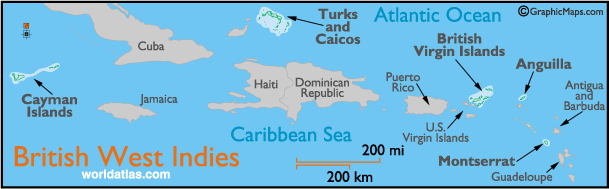
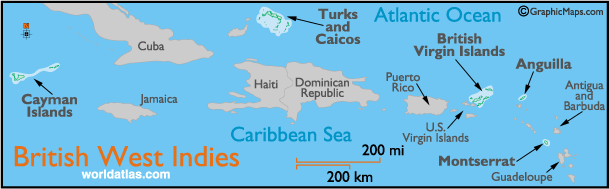
british-west-Indies.gifBritain ended its slave trade in 1807, and freed the slaves in its Caribbean colonies by 1838. The British government borrowed £20m, then around 40% of the budget, to meet 47,000 claims for loss of human property. The former slaves got nothing.Close to two centuries on, Caribbean politicians want redress. The Caribbean Community (Caricom) which links former British colonies with Suriname and Haiti, established an official reparations commission in July 2013 and has approached a British legal firm, Leigh Day, for advice…Among the precedents for financial reparations, West Germany and Israel signed a financial agreement in 1952, seven years on from Auschwitz. In June this year, after legal action by Leigh Day, Britain conceded payments averaging £2,600 ($4,000) each for 5,228 now elderly Kenyans who were brutally mistreated during the suppression of the Mau Mau rebellion in the 1950s. Britain’s courts will not now consider claims for atrocities occurring before 1954. Unpicking wrongs from 60 years ago is hard enough.

Who should pay? With the slave owners all dead, Caricom wants taxpayers’ money from Britain, France and the Netherlands… Figures quoted for the current equivalent of the £20m paid to slave owners vary from £16.5 billion to £76 billion. A widely reported demand in 1999 was for $777 trillion to be paid to Africa over five years. More than ten years on, that would still be around ten times global GDP.

Who should be paid? Caricom is talking about compensation at a national level. Based on the numbers with slave ancestors, that would funnel the lion’s share of the money to America and Brazil—with a good slice to Brixton and Birmingham.  There is potential for divisive squabbles. In Trinidad and Guyana, descendants of Indian indentured labourers outnumber the black population. Sat Maharaj, Trinidad’s most prominent Hindu leader, argues that the Indo-Caribbean population also deserves compensation. He asks whether it should also come from Islamic countries that imported slaves, and from African countries where local merchants sold slaves to Europeans.

Slavery reparations: Blood money, Economist, Oct. 5, 2013, at 42

An Islamic Superpower: Turkey

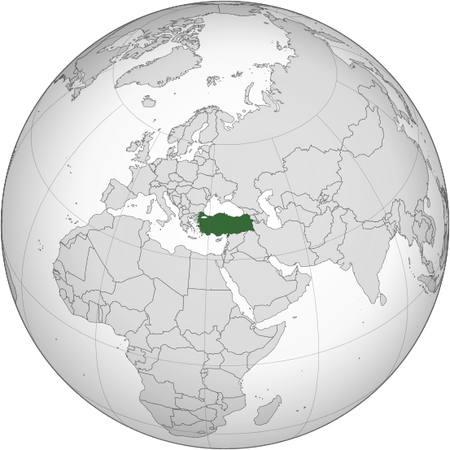
The rift with Washington deepened following Turkey’s announcement in September that it was planning to co-produce a missile-defence system with a Chinese company that is under American sanctions for its dealings with Syria, North Korea and Iran. NATO’s secretary-general, Anders Fogh Rasmussen, has warned that the Chinese equipment, which is meant to protect Turkey against a possible attack by Syria or Iran, is not compatible with those of other NATO members. Aaron Stein, a Geneva-based non-proliferation expert, reckons that the Chinese kit may be “good against drones and aircraft but not against missiles”.Turkey picked the Chinese missile because it was vastly cheaper than its European and American rivals. The Chinese also agreed to share technology that will purportedly enable Turkey to produce and export its own missiles. This fits with Mr Erdogan’s dreams of leading an Islamic superpower.

Excerpt, Turkey and its neighbours: A reset?, Economist, Nov. 9, 2013, at 59

The Damaged Credibility of Internet

On Nov. 6, 2013,  the Internet Engineering Task Force (IETF), an organisation which brings together the scientists, technicians and programmers who built the internet in the first place and whose behind-the-scenes efforts keep it running, debated what to do about all this. A strong streak of West Coast libertarianism still runs through the IETF, and the tone was mostly hostile to the idea of omnipresent surveillance. Some of its members were involved in creating the parts of the internet that spooks are now exploiting. “I think we should treat this as an attack,” said Stephen Farrell, a computer scientist from Trinity College, Dublin, in his presentation to the delegates. Discussion then moved on to what should be done to thwart it….

Even America’s government is getting in on the act. The credibility of its National Institute of Standards and Technology, which sets American cryptographic standards with the help of the NSA, has been dented by Mr Snowden’s revelations. On November 1st it announced it would review the way it carries out its work, in an effort to rebuild trust. The unspoken implication was that it would try harder to stop spooks attempting to slip “unreliable” technology past its vetting procedures.Other security experts are re-examining existing products. Dr Green and his colleague Kenn White are leading a forensic audit of Truecrypt, a popular program that enciphers a user’s hard disks but which displays some odd-looking behaviour and has rather murky origins (it is open-source, but its designers are anonymous, and are thought to live in eastern Europe).

Fixing cryptography is only part of the problem. Intelligence agencies can also tap data cables, allowing them to capture unscrambled information being sent between a user and a server, regardless of whether it is later encrypted.  Mr Snowden’s leaks seem to have boosted the market for better ways of dealing with this behaviour, too. Mike Janke, a former commando who now runs Silent Circle, a firm that offers “end-to-end” encryption software (meaning all messages are transmitted pre-scrambled), counts everything from corporations worried about industrial espionage to the Dalai Lama among his customers. He says that “business is up about 400% since the summer of Snowden”. In the wake of Mr Snowden’s revelations, his firm shut down its e-mail service and is preparing a new one that will transmit all messages pre-scrambled, meaning that only the recipient, not even the company itself, will be able to decode them…

On October 30th the Washington Post reported that America’s spies have bugged private, unencrypted fibre-optic cables which carry bits and bytes between the data centres in the worldwide networks of Google and Yahoo, without the companies’ knowledge. Google, which, of course, must be able to read its customers’ e-mail in order to inflict advertisements on them, nevertheless relies on people trusting it to guard their data, observes Dr Green.  “There’s a lot of anger out there,” says Christopher Soghoian, principal technologist at the American Civil Liberties Union, a lobbying group. “I’ve seen two blog posts by Google engineers in the last three days that contained the words ‘fuck you, NSA’.”

Excerpts, Internet security: Besieged, Economist, Nov. 9, 2013 at 83

US Operations in North Africa – Strategic Instability

The Defense Department continues to work with nations in North Africa to promote security and increase stability in the region still feeling the effects of the Arab Spring, Amanda J. Dory, the deputy assistant secretary of defense for African affairs, told a Senate panel today. Libya, Tunisia, Algeria and Morocco are confronting instability and the U.S. military is working to build or strengthen their police and military forces, Dory told the Senate Armed Services Subcommittee on Near eastern and South and Central Asian Affairs….T

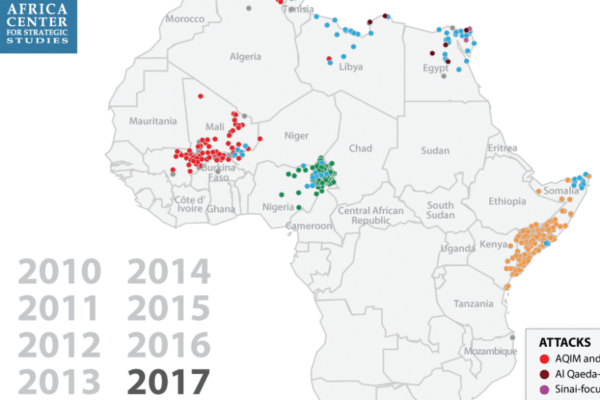
he effects of the Arab Spring in North Africa continue to reverberate within the region and beyond its borders into the Sahelian states of sub-Saharan Africa, she said. Libya remains a key source of instability in North Africa and the Sahel. After the overthrow of Muammar Gadhafi, there is little government infrastructure inside Libya, Dory said, and certainly no tradition of democracy.Violence is rampant in Libya and the Libyan government is too weak to control its borders and militias provide what security there is. Arms merchants are shipping Libyan weapons out of the country and these arms are fueling instability from Mali westward, Dory said…The United States will provide general-purpose-force military training for 5,000-8,000 Libyan personnel, Dory said.“This training effort is intended to help the [Libyan] government build the military it requires to protect government institutions and maintain order,” she said.  The training of Libyan military personnel may begin next year in Bulgaria.

In Morocco, Algeria and Tunisia, DOD maintains close military-to-military ties with their military counterparts. All three are engaged in a security dialogue with the United States and “they share our goals of countering terrorism and enhancing cross-border security,” Dory said…

Excerpts, By Jim Garamone, Military Continues Work With North African Countries American Forces Press Service, Nov. 21, 2013

Boeing Africanizes its Weapons

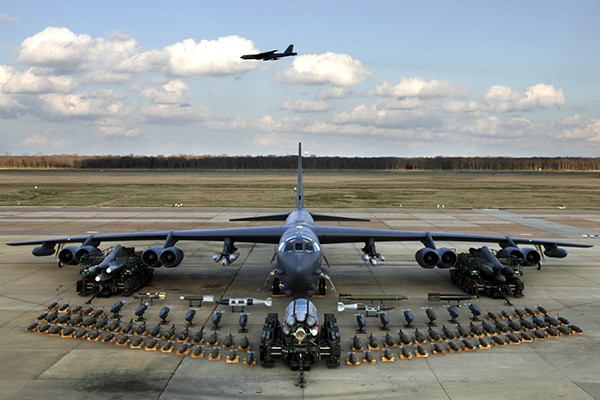
Boeing airliners are well known and operated in almost every country of the world, Boeing are more selective as to whom they sell their military products. Up to now, the African activities of Boeing Defence, Space & Security have been restricted to North Africa.This, however, is about to change. Whilst the Middle East and Asia-Pacific are trending, Chris Chadwick, President of Boeing Military Aircraft, has seen an emerging set of needs coming out of Africa, including sub-Sahara countries..“We are looking at ways to Africanise Boeing products,” said Paul Oliver, Vice President, Middle East & Africa. An example would be an AH-6i with certain systems deleted and integrated with local weapons…

Egypt is already a large-scale Boeing military aircraft customer, operating both the CH-47 Chinook and the AH-64 Apache in large numbers. Despite the recent US suspension of some foreign military assistance to Egypt, Boeing is committed to supporting equipment in Egypt.

There are other North African customers that Boeing won’t mention, but Morocco has Boeing weapons integrated onto their F-16s and has ordered additional CH-47s for delivery in 2016….Algeria in particular is interested in acquiring Boeing’s C-17 and evaluated the aircraft earlier this year. The North African country has also expressed interest in transport helicopters and intelligence, surveillance and reconnaissance (ISR) aircraft.

Excerpts, Dean Wingrin, Boeing sows seeds for African growth, DefenceWeb, Nov. 27, 2013

Why Killing Gaddafi was Bad for Africa

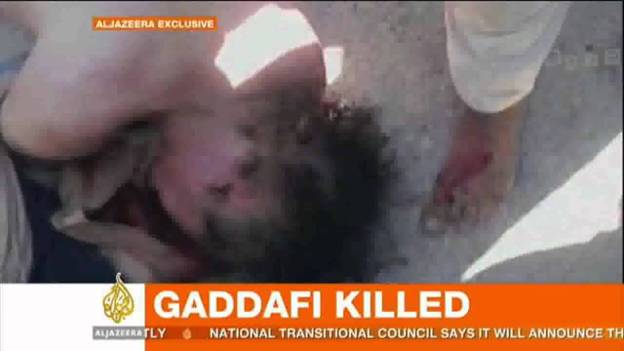
[S]ays Professor Jean-Emmanuel Pondi from the Cameroon Institute for International Relations and author of a new book on Libya, Western nations were above all vexed with Gaddafi because he refused to ‘play the diplomatic game’ and sometimes embarrassed them in public. What made matters worse was that they had no control over him because Libya had no debt – not at the World Bank, the International Monetary Fund or anywhere else. ‘Gaddafi was a problem for the world because he was economically independent and too outspoken,’ Pondi said during a seminar at the Institute for Security Studies on 21 November, 2013.  Pondi believes that even two years after Gaddafi’s death on 20 October 2011, it is important for Africans to reflect on the events that led up to the Nato intervention in Libya and the killing of Gaddafi. ‘We can’t let a long-time leader in Africa be killed on the street like a dog and not reflect on it,’ he says. To him, there is no doubt that Gaddafi was a dangerous human being and that the Gaddafi regime was a political dictatorship. ‘He even called his own people “rats”.’

Yet, at the same time, Libyans benefited from free health care and free education; fuel was almost free as well and housing was heavily subsidised. The country had one of the highest per capita incomes in the world and was second only to Mauritius on the Human Development Index for Africa – all things that were left unsaid during the campaign to topple his regime.

Pondi says it is clear that the aim of the Nato intervention, sanctioned by United Nations Resolution 1973, was primarily to get rid of Gaddafi and not to save the lives of civilians. ‘As soon as Gaddafi was dead, that was the end of the Nato intervention, even though violence was still ongoing. Civilians were still being killed,’ he says. Today, Libya is increasingly chaotic and violent, with more than 1 700 militias operating in various parts of the country – some better armed than the police and the army. Last month Libyan Prime Minister Ali Zeidan was kidnapped and held by gunmen for several hours before being released. Last week more than 40 people were killed and 400 wounded in clashes between rival militias…

In his 2011 book Au Coeur de la Libye de Khaddafi (In the heart of Gaddafi’s Libya), French specialist Patrick Haimzadeh explains the depth of the ‘mafia-like’ structure Gaddafi and his sons maintained and how it was kept going through pay-outs from Libya’s abundant oil revenues. Haimzadeh warns that any new regime that wants to replace Gaddafi will have to continue with such a system or face collapse. Would the Nato-led regime change be justified under such circumstances?

Clearly, the biggest loser after the death of Gaddafi is Africa, especially the region bordering Libya. The weapons that became freely available during the post-Gaddafi chaos have fallen into the hands of the al-Qaeda-linked groups that have been responsible for the occupation of northern Mali and for spectacular terror activities like the attack on the In Amenas gas facility in Algeria in January this year.

The African Union (AU) also lost a lot of credibility in some quarters because it was completely sidelined during the Libyan crisis. Pondi says it is unfair to say the AU had no plan to solve the stalemate between Gaddafi and the rebels controlling the eastern town of Benghazi at the time. ‘The road map was clear, firstly to put a ceasefire in place, secondly to organise a meeting between the protagonists and then to organise elections in Libya. The plan was there, but it wasn’t even given a minute at any of the meetings concerning Libya at the time.’…

Gaddafi’s demise has been tragic for Africa in other ways as well. Libya provided 15% of the budget of the AU (as did Egypt, Algeria, Nigeria and South Africa). Now both Libya and Egypt’s contributions have fallen away and the AU has to rely on European Union funds for much of its programme budget. At times Gaddafi also paid the AU contributions of smaller African states that were in arrears, as he did during the 1999 AU summit in Sirte, his hometown. During his time, Libya also invested heavily in tourism across the continent. Many hotels in the Sahel, but also as far away as South Africa, were built with Libyan funds. The Libyan airline Afriqiyah Airways also operated in several African countries until the 2011 war.

Excerpts from Liesl Louw-Vaudran, Did Nato intervene in Libya just to get rid of Gaddafi? ISS Africa, Nov. 2013

Let them Bleed: Pretend to Care for Peace

World alarm grew over the Central African Republic (CAR) on November 21, 2013, with France joining a chorus warning of possible genocide in the mineral-rich but poor country torn by strife since a March 2013 coup.  France’s Foreign Minister Laurent Fabius warned that the CAR was “on the verge of genocide”, while the United Nations has mooted sending thousands of peacekeepers to the landlocked nation, where unprecedented sectarian bloodshed has erupted.

In parts of the CAR, fighting has broken out between mainly Muslim former rebels who seized power in March and militia groups set up to protect Christian communities, which make up about 80 percent of the population. Both churches and mosques have been razed to the ground.”It’s total disorder,” Fabius told France 2 television, adding that the UN was considering authorising African and French troops to intervene. A regional peacekeeping force known as MISMA is currently deployed, but consists of only 2,500 men hampered by a lack of funds, arms and training.

In the latest of a long line of rebellions and coups, the Seleka rebel coalition ousted president Francois Bozize in March and put the CAR’s first Muslim leader, President Michel Djotodia, in power.Djotodia, who has officially disbanded the Seleka coalition and incorporated some of its forces into the army, announced “exceptional measures” to quell conflict, but a statement issued by his office gave no details…[The government] formed in the capital Bangui has little control of the rest of the nation, where armed groups – the remnants of successive rebellions, mutinies and insurgencies – hold sway over a people facing atrocities, food shortages and the collapse of health care.”You have seven surgeons for a population of five million, an infant mortality rate of 25 percent in some areas and 1.5 million people who have nothing, not even food, and armed gangs, bandits, etc,” Fabius said of France’s former colony in equatorial Africa.

The UN Security Council plans to vote in early December on a resolution that would allow CAR’s neighbours, the African Union and France to intervene in the sprawling nation….Plans are afoot to place MISMA under the aegis of the African Union and bring it up to 3,600 men, but diplomats and military experts warn that this number will be nowhere near enough. The bulk of MISMA is provided by Chad, with troops from Gabon, Cameroon and Equatorial Guinea.

By Nicholas Barret, France joins global warnings of ‘genocide’ in C. Africa,  Agence France Presse, Nov. 22, 2013

International Criminal Court Only for Africa

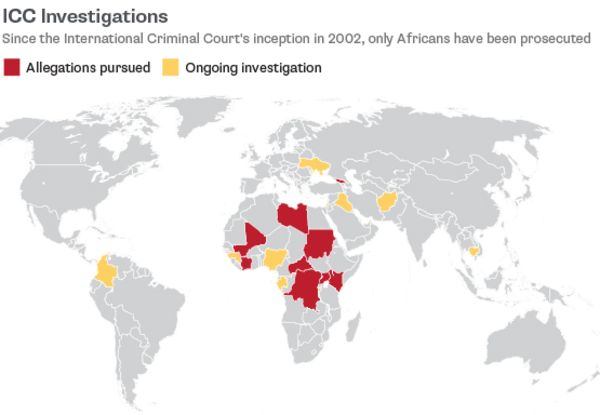
Kenya said the International Criminal Court’s case against its two highest elected officials risked destabilizing the entire east African region at a meeting of the court’s member states.  At a debate to discuss the crisis resulting from the court’s cases against President Uhuru Kenyatta and his deputy William Ruto, the Kenyan attorney-general said the court and its member states were playing “Russian roulette” with the country.  “Our country is the linchpin in the peace and security involving more than 250 million people from Djibouti to Eastern Congo and everybody in between,” Githu Muigai told a special debate called at the request of the African Union. He said Kenya – an ally of the West in the fight against militant Islam in neighboring Somalia – was a “pillar of security” in Eastern Africa, to loud applause from many African delegates at the conference.

Kenyatta and Ruto face separate charges of crimes against humanity for their alleged role in stoking ethnic violence in the aftermath of an election in 2007 when 1,200 people were killed. Kenya is pressing the ICC’s members for an immediate change in the rules to say that heads of state do not have to attend trials, part of a broader campaign to halt the cases against its political leaders.  Officials also want a longer-term amendment to the founding treaty that would ban the prosecution of heads of state, a campaign which has become a rallying point in Africa, where many leaders say they are the target of an overzealous court in The Hague. Kenyatta and Ruto deny the charges of fomenting violence after the election. Ruto’s trial began last month, while Kenyatta’s trial is due to start on February 5 after being delayed for a third time.  “Africa feels marginalized, like toddlers, whom the international community feels has never learned to walk,” Kenyan Foreign Minister Amina Mohamed told Reuters.

Last week, the African Union lost its bid to have the U.N. Security Council defer the cases for a year so the two could deal with the aftermath of an attack on a shopping mall by al Qaeda-linked Somali militants in which at least 67 died.Kenya said the outcome highlighted the need for reform of the Security Council to prevent a few powerful nations imposing their will on the world. It pledged to continue its fight at the ICC’s annual meeting in The Hague.

Human rights groups oppose the proposed changes as well as apparent compromise solutions such as a British proposal that would make it easier for the accused to participate via video link, saying these would weaken the court’s mission to bring to justice those ultimately responsible for war crimes. “The amendments represent an attempt to recreate the ICC in the image of African justice,” said George Kegoro, executive director of the Kenyan section of the International Commission of Jurists.  “Timid, pliable and serving the comfort of leaders rather than justice for victims.”  The court has 34 African members, but any amendment would need the support of two thirds of the court’s 122 members to pass.  But even if the amendments have little chance of passing, Foreign Minister Mohamed said a court composed of members of equal rank should listen to Africa’s concerns. If some members were “more equal than others,” she said, then “we have no business being there.” Since their election, the two men have been defending themselves before the Hague-based court with the help of some of London’s best-known human rights lawyers.  Kenyatta’s legal team has asked judges to throw out the case against him, which they say is based on evidence from bribed witnesses.

By Thomas Escritt, Kenya warns of ICC threat to Eastern Africa’s stability, Reuters, Nov. 21, 2013

Minority Rights in Libya: the Berbers

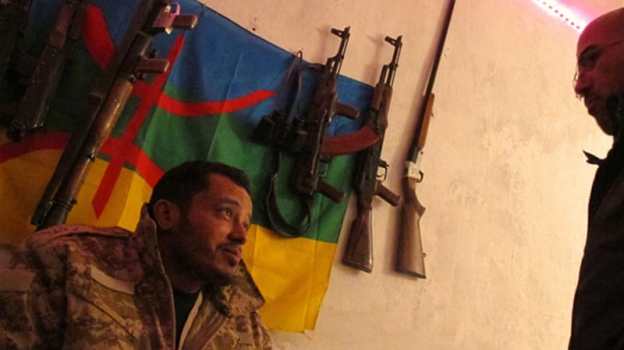
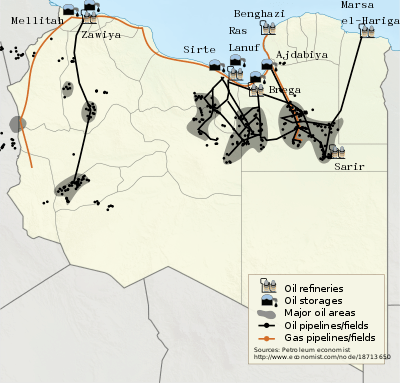
Protesters have shut Libya’s gas export pipeline to Italy, its only customer, demanding more rights for the c, or Berber, minority and depriving the weak government of a major source of income.  The closure worsens turmoil in Libya where Prime Minister Ali Zeidan warned that the government might face budget problems next month after protesters cut oil production to a fraction of its capacity.

The North African country faces anarchy as the government has failed to rein in armed militias and radical Islamists who helped topple Muammar Gaddafi in 2011 but kept their weapons.  Although the closure on Nov. 11, 2013 of the Greenstream pipeline will take several hours to register at the other end, it adds to Italy’s energy headaches after Ukraine halted gas imports from Russia, which could also impact supplies. Italy depends heavily on Russian gas.

Amazigh protesters last month seized the port at the Mellitah complex, some 100 km west of Tripoli, and have already shut down oil exports from there. The oil and gas complex is operated by Libya’s National Oil Corp and Italian energy company Eni.”We tried to convince them not to close the pipeline, but it’s closed now,” Munir Abu Saud, head of the local oil workers’ union, told Reuters…

Tripoli has seen its authority crumbling over its restive regions and fears an exodus of foreign oil companies and investment.  The Amazigh minority in September shut a pipeline feeding gas from Eni’s Wafa field to export facilities at Mellitah. Although this squeezed exports, much of the gas Libya sends to Italy comes from offshore fields.

The Amazigh protesters want their language guaranteed under Libya’s planned new constitution and a bigger say in a committee to be elected to draft the constitution. They say Berbers are treated as second-class citizens in the Arab country.

Excerpt, By Ghaith Shennib and Ulf Laessing, Libyan Berbers shut gas pipeline to Italy, cut major income source, Reuters, Nov. 11, 2013


Who is Investing in Drones?

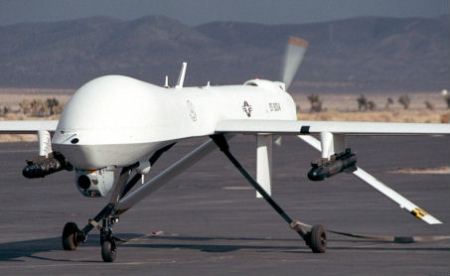
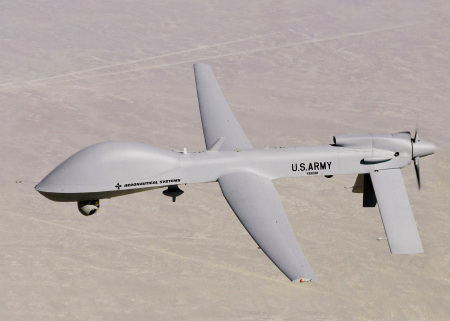
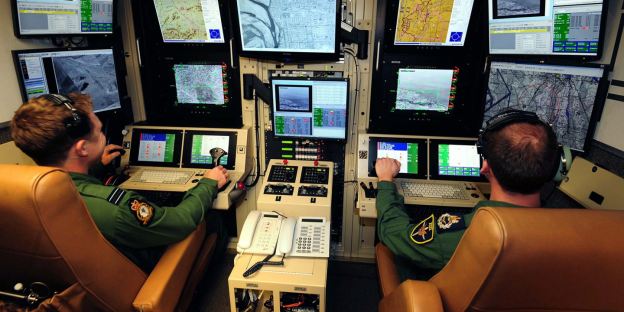
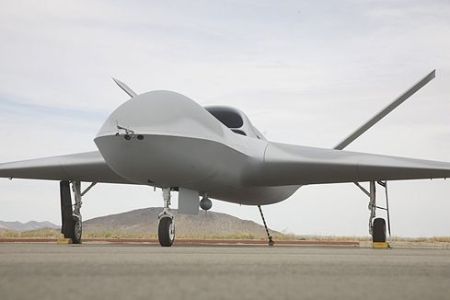
A United Arab Emirates (UAE) investment fund (Mubadala)  has beefed up its stake in Italy-based Piaggio Aero, just as the aeronautics firm gets ready for the debut flight of its P.1HH Hammerhead drone… Mubadala, the US $55 billion fund set up by the Emirate of Abu Dhabi in 2002, increased its stake in Piaggio Aero from 33 to 41 percent on Nov. 12, as part of an equity increase of €190 million (US $255 million).  Also Tata Ltd., a UK offshoot of India’s Tata Group, increase its stake from 33 to 44.5 percent…That means Mubadala and Tata are now the main financial backers of development of the Italian-built Hammerhead, which is an unmanned version of Piaggio Aero’s main seller, the P.180 twin-prop business aircraft….

But the Italian Defense Ministry has not invested in the program, creating an unusual situation in which Indian and Arabian Gulf capital is funding the development of a UAV in which Italy is certifying and showing keen interest….Italy and the UAE have discussed UAV development before. In 2009, the gulf state selected the Italian M-346 jet trainer, but the deal stalled, allegedly over problems related to a side deal on UAVs.  Plans had reportedly been made to co­develop a UAV with specifications that exceeded those set down by the Missile Technology Control Regime, which restricts the sales of missiles and UAVs able to carry a 500-kilogram payload at least 300 kilometers. Italy is a signatory of the treaty.

At the Paris Air Show, Debertolis said Italy would consider arming the Hammerhead, noting that the aircraft was large enough to hold weapons in internal bays and that half of what is cabin space in the manned version would remain unused. But he added that the payload would remain within the 500-kilogram maximum set down by the Missile Technology Control Regime.

Excerpts,Tom Kington UAE Ups Its Stake in Drone-maker Piaggio Aero, Defensenews.com, Nov. 15, 2013

US Punishment for Civil Disobedience: the Jeremy Hammond case

Cyber-activist Jeremy Hammond was sentenced to 10 years in federal prison on November 15, 2013 by Judge Loretta A. Preska in a federal courtroom in lower Manhattan for hacking the private intelligence firm Stratfor. When released, Hammond will be placed under supervised control, the terms of which include a prohibition on encryption or attempting to anonymize his identity online.Hammond has shown a “total lack of respect for the law,” Judge Preska said in her ruling, citing Hammond’s criminal record – which includes a felony conviction for hacking from when he was 19 – and what she called “unrepentant recidivism.” There is a “desperate need to promote respect for the law,” she said, as well as a “need for adequate public deterrence.”

Prior to the verdict, [Hammond] read from a prepared statement and said it was time for him to step away from hacking as a form of activism, but recognized that tactic’s continuing importance. “Those in power do not want the truth exposed,” Hammond said from the podium, wearing black prison garb. He later stated that the injustices he has fought against “cannot be cured by reform, but by civil disobedience and direct action.” He spoke out against capitalism and a wide range of other social ills, including mass incarceration and crackdowns on protest movements.

The Stratfor hack exposed previously unknown corporate spying on activists and organizers, including PETA and the Yes Men, and was largely constructed by the FBI using an informant named Hector Monsegur, better known by his online alias Sabu. Co-defendants in the U.K. were previously sentenced to relatively lighter terms. Citing Hammond’s record, Judge Preska said “there will not be any unwarranted sentencing disparity” between her ruling and the U.K. court’s decision.

Hammond’s supporters and attorneys had previously called on Judge Preska to recuse herself following the discovery that her husband was a victim of the hack she was charged with ruling on. That motion was denied….Hammond’s defense team repeatedly stressed that their client was motivated by charitable intentions, a fact they said was reflected in his off-line life as well. Hammond has previously volunteered at Chicago soup kitchens, and has tutored fellow inmates in GED training during his incarceration.

Rosemary Nidiry, speaking for the prosecution, painted a picture of a malicious criminal motivated by a desire to create “maximum mayhem,” a phrase Hammond used in a chat log to describe what he hoped would come from the Stratfor hack. Thousands of private credit card numbers were released as a result of the Stratfor hack, which the government argued served no public good.

Sarah Kunstler, a defense attorney for Hammond, takes issue with both the prosecution and judge’s emphasis on the phrase “maximum mayhem” to the exclusion of Hammond’s broader philosophy shows an incomplete picture. “Political change can be disruptive and destructive,” Kunstler says. “That those words exclude political action is inaccurate.”

Many supporters see Hammond’s case as part of a broader trend of the government seeking what they say are disproportionately long sentences for acts that are better understood as civil disobedience than rampant criminality. Aaron Swartz, who faced prosecution under the Computer Fraud and Abuse Act – the same statute used to prosecute Hammond – took his own life last year, after facing possible decades in prison for downloading academic journals from an MIT server. “The tech industry promised open access and democratization,” says Roy Singham, Swartz’s old boss and executive chairman of ThoughtWorks, a software company that advocates for social justice. “What we’ve given the world is surveillance and spying.” Singham says it’s “shameful” that “titans of the tech world” have not supported Hammond.

Following his first conviction for hacking, Hammond said, he struggled with returning to that life, but felt it was his responsibility. That decision ultimately lead to the Stratfor hack. “I had to ask myself, if Chelsea Manning fell into the abysmal nightmare of prison fighting for the truth, could I in good conscience do any less, if I was able?” he said, addressing the court. “I thought the best way to demonstrate solidarity was to continue the work of exposing and confronting corruption.”

Cyber-Activist Jeremy Hammond Sentenced to 10 Years In Prison, Rolling Stone, Nov. 15, 2013

The Struggle for Water: Tanzania

As farmers and herders fight over dwindling water levels in the Pangani River Basin in northeastern Tanzania, a new dispute is emerging between farmers and the state-run power utility firm over this precious resource. The Tanzania Electric Supply Company or TANESCO manages three hydropower plants located on the Pangani River near Muheza district, which are meant to provide 17 percent of the country’s electricity…For the last four years Tanzania has been experiencing a drought that locals say is the worst to have ever hit the region. Thousands of farmers and herders who earn a living here have been affected.  Jumanne Mujuni, a councilor from Mombo town, which is located a few kilometres from the Hale hydropower station in Muheza district, told IPS that the drought has pushed many to the brink as they compete with TANESCO for dwindling water supplies. He added that many locals are now embroiled in disputes with the state-run utility.“All these problems that we face are rooted in the drought. There were hardly any [problems] when there was enough water in the river,” he said.

Excerpt from Kizito Makoye,Power Struggle Rises Over Tanzania’s Pangani River, IPS, Oct. 24, 2013

Shell and the Oil Spills in Nigeria

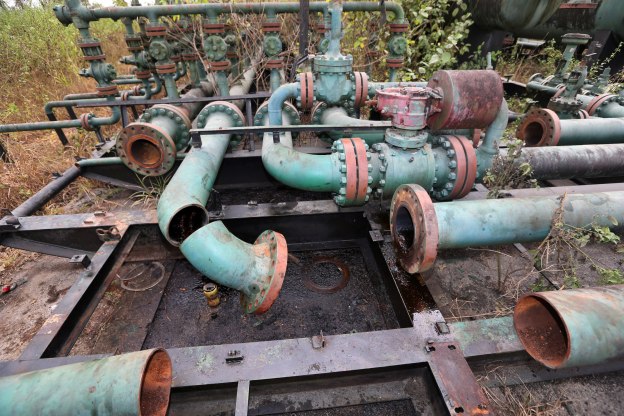
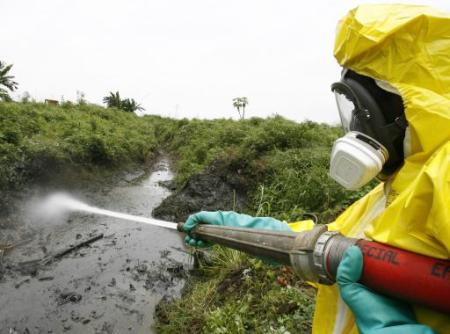
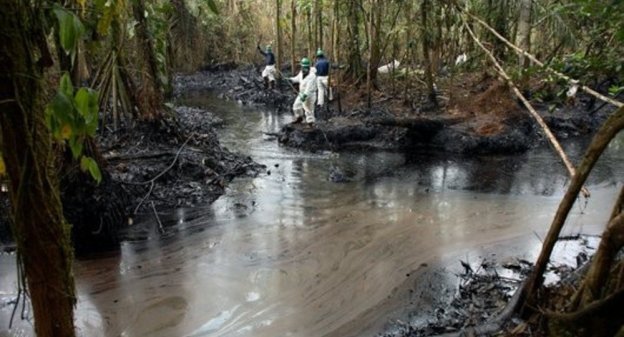
At Amnesty International and CEHRD’s request, the independent US oil pipeline specialist Accufacts assessed a number of oil spill investigation reports, as well as responses from oil companies operating in the Niger Delta and Nigeria’s national oil spill agency.  The expert found cases where the stated cause of an oil spill appears to be wrongly attributed to sabotage [by the local population]. In many other cases sabotage was listed as the cause when there was little or no data recorded to back up the claim.

Overall, Accufacts concluded that many official investigation reports were “technically incomplete”, and others “appear to be serving another agenda, more driven by politics…than pipeline forensic science”.  Nigeria’s under-resourced regulatory agencies have little oversight or control of the process and are dependent on the oil companies to carry out investigations.

In one incident, a regulator sent a student on work experience as their sole representative to an oil spill investigation.  “This is a system that is wide open to abuse – and abuse happens. There is no one to challenge the oil companies and almost no way to independently verify what they say. In effect it’s ‘trust us – we’re big oil,” said Gaughran.

Shell has made some improvements to its investigation reports since 2011, including the addition of images of oil spills on its corporate website. But serious flaws remain, including weaknesses in the underlying evidence used to attribute spills to sabotage.  Information listed in oil spill investigation reports determines whether oil companies are liable to pay compensation to affected communities.  Despite serious flaws, the reports are cited as evidence in litigation.

Amnesty International and CEHRD found evidence of Shell having changed the officially recorded cause of a spill after an investigation had taken place. In one incident, secretly filmed video of an investigation shows how officials from Shell and the regulator tried to subvert the evidence by persuading community members on the investigation team not to attribute the cause to equipment failure. Video footage of a leak from an oil spill in Bodo from 2008 reviewed by Accufacts shows that Shell seriously under-recorded the volume spilled.  Shell’s official investigation report claims only 1,640 barrels of oil were spilled in total but other evidence points to the amount being at least 60 times higher…

The report argues that companies should be legally liable for failure to take effective action to protect their systems, including from sabotage.

Amnesty International and CEHRD are calling on the oil companies to publish all investigation reports, associated photos and videos. They must provide verifiable evidence of the cause and damage to the impacted area.

Shell’s false claims on Niger Delta oil spills exposed, Amnesty International Press Release, Nov. 7, 2013

Brazil and France Collaborate on Nuclear Plant

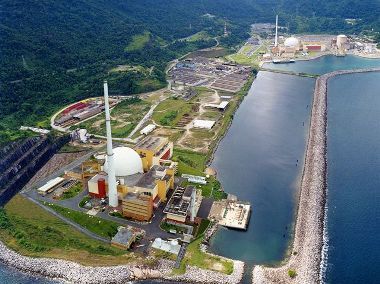
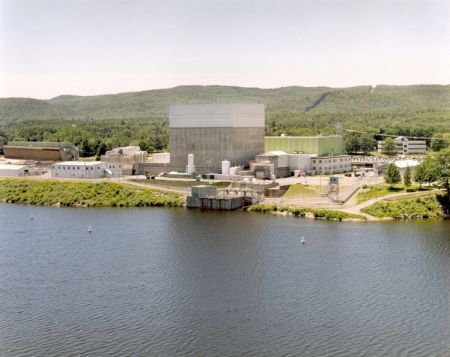
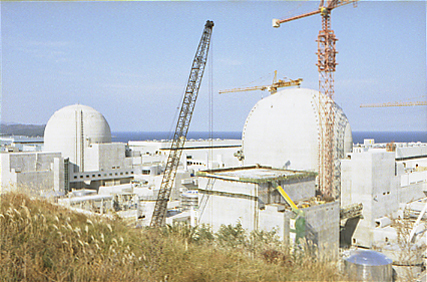
Eletrobras Eletronuclear has awarded a contract to Areva to complete the construction of the Angra 3 nuclear reactor, located in Rio de Janeiro, Brazil.  Under the €1.25bn contract, the company will supply engineering services and components, as well as the digital instrumentation and control system for the reactor.  Additional responsibilities include provision of assistance in the supervision of the installation works and the commissioning activities.

Areva president and CEO Luc Oursel said the contract continues the company’s partnership with Eletrobras that started with the construction and the supply of reactor services for the Angra 2 reactor.  ”The completion of Angra 3 confirms Brazil’s engagement in an ambitious nuclear program and illustrates the relevance of this energy source as a solution for sustainable economic development,” Oursel added.

Initiated in 2006, the construction of the 1,405 MWe Angra 3 pressurized water reactor is expected to help the Brazilian government meet the country’s increasing energy demand, and balance the energy mix.  Besides featuring the latest enhancements made to currently operational reactors, especially in terms of safety, the Angra 3 design also responds to the guidelines of the International Atomic Energy Agency (IAEA) and the Brazilian nuclear safety authority’s post-Fukushima standards.  Connected to the grid in 1985 and 2001, the Angra 1 and Angra 2 reactors have an output of 640Mwe and 1,350MWe, respectively.

Areva to support third Angra 3 nuclear reactor construction, EBR Staff Write, Nov. 8, 2013

Illegal Dumping of Nuclear Waste: Turkey

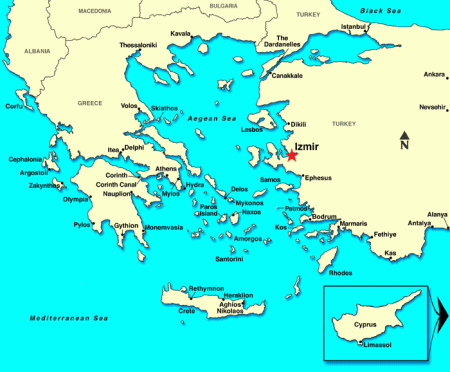
A lead factory in the Aegean province of İzmir has been fined for 5.7 million Turkish Liras ($2.9 million) over allegations of burying high levels of radioactive waste in the land.  The penalty imposed on Aslan Avcı Casting Industry lead factory is the highest environment fine imposed in Turkey to date, Environment and Urban Planning official Mehmet Emin Birpınar told Anadolu Agency Oct. 28.

The site was brought to public attention when reports of the burying of radioactive waste under the ground surfaced, with over 10,000 tons of earth being placed on top of the waste.  The radioactivity levels called for proper containment of the waste, however, despite later reports by Turkey’s Atomic Energy Commission (TAEK), assuring normal levels of radioactivity in the area, the controversy continued to generate public debate.  Recently, new reports have emerged saying the color of the land covering the waste was becoming black, suggesting the radioactive wastes’ continuing to spread in environment through wind and rainfall.

Record fine imposed for radioactive waste burial in Turkey’s Aegean district, Hurriyet Daily News, Oct. 28, 2013

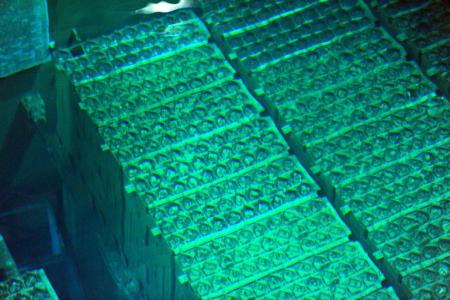
How nuclear waste accumulated in the factory? “Prof. Tolga Yarman from Okan University Faculty of Engineering explains the case: “This product is a nucleus called Europium 152 isotope. It is difficult to understand how this element can be found in Turkey. This is the major question. This product cannot be here just by itself; it must have come with other waste materials, especially with nuclear rods. But why and how can nuclear rods be here in Turkey? Who brought them? This is what we need to know. In addition, what did they melt in the factory together with the waste? They say it was unintentional, but it does not seem possible. This means that it is possible to imagine that the factory used radioactive material for its production. In that case, it is necessary to take under surveillance the production process. We are also facing a potential hazard caused by the products distributed from that company. We should immediately test some of the batteries produced in that factory.”

The Hot Pursuit of Poachers

More suspected rhino poachers have been arrested so far this year [in South Africa] than were taken into custody for the whole of last year but rhino poaching continues unabated with 825 carcasses bearing mute testimony to the continued slaughter…This translates into 2.7 rhinos a day, with the Kruger National park still the favoured target of poachers, the majority of whom are Mozambicans. This point was stressed by former Mozambican president Joaquim Chissano speaking at the launch of the Joaquim Chissano Foundation Wildlife Preservation Initiative in Maputo earlier this week.  He said 70% of the rhino killed in South Africa can be attributed to Mozambicans. Correspondingly, 68% of suspected poachers arrested in South Africa are from South Africa’s eastern neighbour.

This point was also made earlier this year by retired SA Army general Johan Jooste, now in overall charge of SANParks wildlife anti-poaching operations. He wants a government to government agreement to give Kruger National Park rangers a “hot pursuit” option. This will allow rangers to follow poaching suspects across the border without creating international incidents.The SA National Defence Force (SANDF), via the SA Army and Army Reserves as well as SA Air Force elements, are also active in anti-rhino poaching operations in the world-renowned game reserve. Proof it is the target of choice for poachers comes from Kruger losing by far the largest number of rhinos – 500 – of any area or province.

As of the beginning of this month, 272 arrests of alleged poachers and others suspected of involvement in the horn poaching chain were secured by South African law enforcement agencies. The majority of arrests – 101 – were in Kruger.  The involvement of the wider South African defence sector in counter poaching operations is illustrated by Denel Dynamics deploying a Seeker UAV in Kruger and a Seabird Seeker reconnaissance aircraft compliments of Ivor Ichikowitz’ Paramount Group.

This week saw another side of the national effort to curb and hopefully stop rhino poaching with the first international DNA sampling training workshop… Special focus was given to the increased use of rhinoceros horn DNA sampling to combat wildlife crime.  The officials have been provided with focused training on the identification of rhino horn, horn DNA sampling and wildlife crime scene investigation. Participants were also educated in the utilisation of ICCWC (International Consortium on Combating Wildlife Crime) tools and services to enhance their wildlife crime investigation capabilities.

Excerpt,  Kim Helfrich, Fighting back against rhino poachers – in the bush and in court, DefenceWeb.com,Nov. 8, 2013

The Toxic Herbicides Case: Ecuador v. Colombia

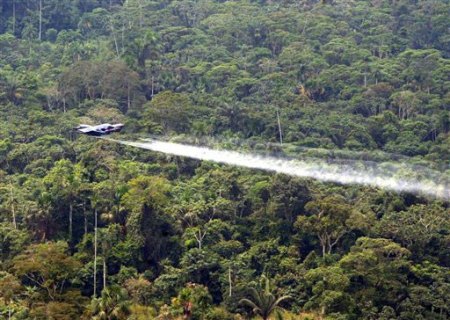
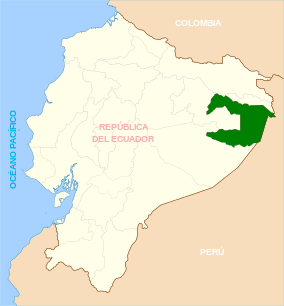
The case brought by the Republic of Ecuador against the Republic of Colombia on 31 March 2008 before the International Court of Justice (ICJ) in respect of a dispute concerning “Colombia’s aerial spraying of toxic herbicides at locations near, at and across its border with Ecuador” was removed from the Court’s List on 13 September 2013 at the request of Ecuador…

According to the letters received from the Parties, the Agreement of 9 September 2013 [between Colombia and Ecuador] establishes, inter alia, an exclusion zone, in which Colombia will not conduct aerial spraying operations, creates a Joint Commission to ensure that spraying operations outside that zone have not caused herbicides to drift into Ecuador and, so long as they have not, provides a mechanism for the gradual reduction in the width of the said zone; according to the letters, the Agreement sets out operational parameters for Colombia’s spraying programme, records the agreement of the two Governments to ongoing exchanges of information in that regard, and establishes a dispute settlement mechanism.  In consequence, the President of the Court, on 13 September 2013, made an Order recording the discontinuance by Ecuador of the proceedings and directing the removal of the case from the Court’s List.

Aerial Herbicide Spraying (Ecuador v. Colombia), Case removed from the Court’s List at the request of the Republic of Ecuador, Press Release International Court of Justice,  Sept. 17, 2013


How to Erase a State: Libya

Libyans have become accustomed to chaos in a country flooded with weaponry where militias and tribes call the shots, two years after NATO bombing helped rebels topple Muammar Gaddafi.But the daylight robbery of $55 million from a Central Bank van suggested that Prime Minister Ali Zeidan’s cabinet is losing the struggle to provide security and build state institutions.Ten gunmen intercepted the van when it left the airport in Sirte, a former Gaddafi stronghold, snatching the cash flown in from Tripoli for the local central bank branch…

Sirte, a central coastal town near Gaddafi’s birthplace, has escaped the violence rife in cities such as Benghazi in the east, where assassinations and bombings are part of daily life. But the city showcases the lawlessness engulfing postwar Libya after four decades of Gaddafi’s quirky one-man rule.The fledgling army has largely moved out of Sirte, unable to rein in armed bands or the Islamist militants of Ansar al-Sharia which runs training camps nearby, residents say.

Unable to impose security here and in other cities, the government has co-opted former anti-Gaddafi rebels, putting them on the state payroll to guard public buildings or man checkpoints, nominally as part of state security forces.In fact these gunmen report to their own commanders who have their own agendas. Some are close to Islamists like those who briefly grabbed Zeidan from his Tripoli hotel room this month in protest at a U.S. raid to seize an al Qaeda suspect.Other militias pursue tribal interests or smuggle weapons, drugs and anything else that makes money…

[I]nsecurity in the streets is exacerbated by infighting between supporters of Zeidan, a liberal, and his Islamist opponents in the General National Congress, or parliament. “The government is very weak compared with other political forces, criminals and terrorists,” said Libyan political analyst Rami Mussa.

Exploiting the power vacuum, protesters have shut down oil terminals and oilfields around the country. Oil output, the main source for the budget, is down to a fraction of the 1.6 million barrels a day Libya pumped before the uprising against Gaddafi…In the east, disfavored in Gaddafi’s time, tribes and other armed groups demand autonomy and oil wealth. Regional councils have sprung up which want to sell crude bypassing Tripoli.

Excerpt, Central Bank falls victim to Libya’s rampant crime, anarchy, Reuters, Oct. 29, 2013

Migrants in a Gated World

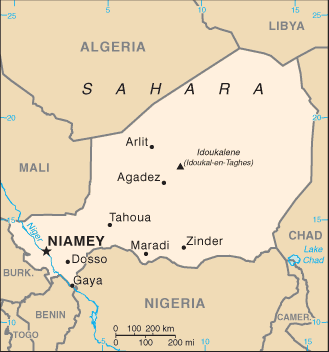
The bodies of 92 people, almost all women and children, have been found in the Sahara desert. Rescuers said the people had died of thirst after their vehicle broke down during their attempt to reach Algeria from Niger…The group was discovered after survivors reached Arlit on foot. Local experts said that the people were victims of human trafficking and were believed to have died two weeks ago as they tried to walk 12 miles in scorching sun to reach a well after the lorry they were travelling in broke down leaving them stranded.  Sources in Niger said that the group, who began their perilous journey across the desert in late September, was comprised of local people from Zinder, the second largest city in southern Niger, close to the border with Nigeria.

One security expert stressed that the group were not economic migrants but victims of trafficking.  Moussa Akfar, a security expert based in Niamey, Niger’s capital, said: “This was in fact a case of poor people and children who were being trafficked to Algeria. There is an inquiry underway but we know that this was trafficking because economic migrants go to Libya – in Libya you find people of all nationalities, from Nigeria, Cameroon and other countries, heading to Europe.  “In this case all the victims were Nigerien from Zinder, and they were being trafficked. The questions that have to be asked now is how officials on road checkpoints did not alert the authorities about this group. There is endemic corruption at work.”..

Niger is one of the poorest countries in the world and has been rocked by repeated food crises in recent years. Last year Save the Children termed Niger the worst place in the world to be a mother amid its warnings that continuing poverty levels were driving people to undertake life-threatening journeys to higher income nations.  While many in Niger said that the October deaths were linked to trafficking, Algeria being the intended destination, Rhissa Feltou, the mayor of Arlit, said the group could have been trying to reach Europe.

Excerpt, Niger migrants died from thirst, after stranding in Sahara desert, Guardian, Oct. 31, 2011

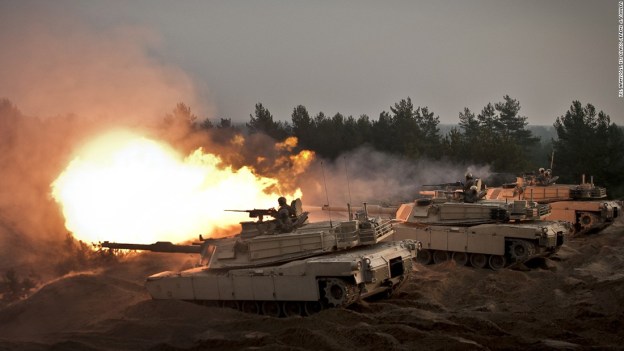
Military Tanks with No U.S. Parts

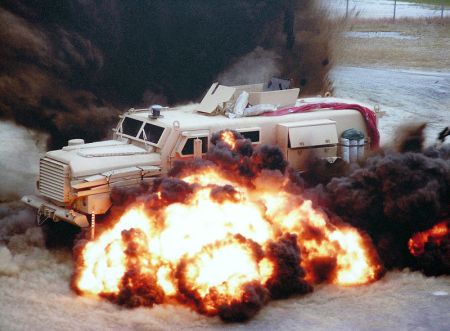
The international armoured vehicles market is facing challenging times, especially as the US and its partners withdraw from Afghanistan, potentially flooding the market with used vehicles, according to  [a South African] company [called] DCD Protected Mobility…A recent Frost & Sullivan report said the world military land vehicle market would only grow at .7% until 2021 as the US cuts back its requirements and western defence markets shrink. Certain market segments, such as armoured fighting vehicles, are projected to actually shrink over the next decade.

However… a market does still exist for armoured vehicles. “There is a requirement out there for more MRAPs [Mine-Resistant Armour Protected vehicles].” Addressing the threat of an ex-US armoured vehicles glut, he pointed out that ex-US Army vehicles are not always suitable for other customers as they are still fairly expensive to maintain and operate and are do not always meet user requirements….

That DCD Protected Mobility intends “becoming owners of the route clearance space internationally,” notably with its Husky vehicle mounted mine detection system…. The system comprises of two Husky vehicles: the first acts as a Mine Detection Vehicle (MDV) (previously a Meerkat). The second vehicle (a Husky) tows a mine-detonating trailer..Hundreds of Huskies have been sold to Canada, the USA, UK, France, Australia, Angola, Kenya, Uganda, Spain and Turkey….[T]he Husky programme has made a significant contribution to poverty alleviation in South Africa, creating 1 320 jobs across the supply chain and earning R10.3 billion in foreign exchange for the South African economy… On the sixth of November, DCD and its partners will demonstrate an unmanned version of the Husky system to the US government, developed in partnership with its partners Critical Solutions International (CSI) and Torc Robotics.

With CSI, DCD is looking at international markets like the European Union and Nato. Austria wants to buy four to six two-seat Husky vehicles through the US Foreign Military Sales (FMS) system to provide a route clearance capability they can offer to Nato.  Turkey recently bought four Huskies and… will purchase more. Turkey will “hopefully” buy around 50 more vehicles sometime next year, he told defenceWeb. Other countries that show great promise regarding the vehicle are India and Iraq.

DCD is also trying to focus on Africa and emerging markets, and places where customers do not want any US components in their vehicles. In Africa, the company is pinning some of its hopes on the Springbuck A202 armoured personnel carrier. This is selling well and is aimed at developing countries that need an “affordable but not inferior” vehicle.

Excerpt,  Guy Martin, Budget cuts, Afghanistan withdrawal negatively affecting MRAP market, DefenceWeb, Oct. 31 2013

An Oil-Rich Virgin Territory: Libya

Libya remains tempting. The oil-rich country is virgin territory. Recent rises in state salaries have made Libyans, already well-off for this part of the world, keen to spend. So is the government, since the country’s infrastructure is so poor. Before the war it signed deals to build roads, railways, houses, hospitals and schools. Now that international sanctions have been lifted, investment should be pouring in.

One problem is insecurity. Benghazi, the country’s second-biggest city, is still a no-go area for Americans, Britons and the French. But rampant militias are not the main deterrent, says Kevin Virgil of Pathfinder Capital: his London-based investment firm also works in Iraq, which is getting much investment despite being at least as dangerous.

Misrata’s militias provide better security than those in bomb-prone Benghazi. The port and free zone have broad autonomy from the central authorities in Tripoli, so decisions are taken more quickly.

Excerpts, Business in Libya: A post-Qaddafi pause, Economist, Oct. 5, 2013, at 69/Business in Misrata The can-do city, Economist, Oct. 5, 2013, at 69

The Strategic Value of Helium

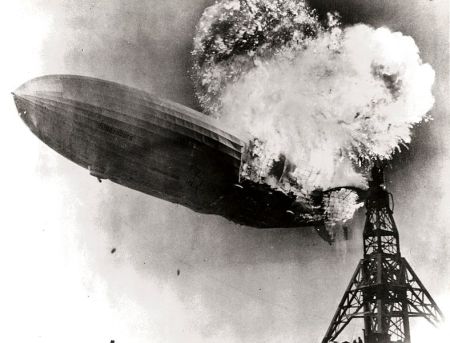
Helium  is used in a range of applications from welding and fibre-optic technology to deep-sea diving. Super-cold liquid helium is essential to making and running the superconducting magnets for MRI scanners and to manufacturing electronic devices from TVs to phones… A third of the world’s helium [ 2.1 billion cubic feet a year  out of a global market of 6.3 billion] comes from an underground reservoir in Texas built up under government auspices and run by the Bureau of Land Management. Such was the supposed strategic value of helium, a by-product of natural gas, that a reserve was created in 1925 to supply the gas to inflate airships. So jealously did America guard its helium that other countries had to fill dirigibles with flammable hydrogen—the Hindenburg was one of dozens that went up in flames as a result.

Once airships had drifted out of fashion, helium remained crucial to the space race and nuclear-weapons development. Nonetheless overall demand tapered. By the mid-1990s the cost of running the Federal Helium Reserve, which bought all the helium that gas firms could produce, was too steep to justify a buffer that was not needed. Lawmakers decided to close it and sell most of the accumulated helium to pay off debts of $1.4 billion….

Helium demand has grown by around 5% a year since 2000 with the advent of new applications, such as MRI scanners. Prices have doubled over the past five years. America’s conventional gasfields, the source of most helium, are depleting and ways to plug the gap left by the rundown of the reserve have proved difficult to develop. New plants in America and Australia are producing the gas but mishaps and technical difficulties at other new refineries in Qatar and Algeria have crimped supplies. This has encouraged firms such as Siemens and GE to look for substitutes for helium. As a result demand may expand by only 2.5% a year for the next decade or two, according to John Raquet of Spiritus Group, a consultancy.

Relief for the helium market seems destined to come from Russia, long a minor producer. The country has the wherewithal to create a reserve of its own. Gazprom appears to be gearing up to become a big supplier by 2018, just as America’s reserve is set to run dry (if it secures the cash to continue past October). Not everyone will be pleased that an arm of the Russian state may in future hold sway over their medical treatment and their children’s parties.

Helium: Inflation Warning, Economist, Sept. 28, 2013, at 68

Mining Gold and Cyanide Pollution

The $4 billion that two Canadian companies, Barrick Gold and Goldcorp, have poured into developing Pueblo Viejo, a gold mine, since 2009 amounts to the largest single foreign investment in the history of the Dominican Republic. The companies say that the money has turned the polluted ruins of what was the state-owned Rosario mine, abandoned in 1999, into a “truly world-class” operation that should provide the country’s government with $10 billion over its 25-year life.

But the project has been controversial. Just weeks after the mining started in January 2013, President Danilo Medina, who was elected last year, declared: “For every $100 of gold exports, Barrick will receive $97 and the Dominican people $3. That is simply unacceptable.” (In fact, Pueblo Viejo Dominicana Corporation, or PVDC, the company operating the mine, is 60% owned by Barrick and 40% by Goldcorp.) Mr Medina demanded that the contract be renegotiated; otherwise, he said, he would raise taxes on the mine’s profits.

This month the two sides agreed to changes that have front-loaded tax payments and could see the government get an extra $1.3 billion in 2013-16 provided that the gold price rises and stays above $1,600 an ounce (it is now around $1,350). Gustavo Montalvo, Mr Medina’s chief of staff, tweeted: “Together we ensured that words like ‘national sovereignty’, ‘justice’ or ‘transparency’ were transformed into something more concrete.”

Yet that may not calm local unrest over the mine, sited about 100 kilometres (60 miles) north of Santo Domingo, the capital. The investment was presented by both the government and company as including a clean-up of Rosario’s toxic mess and the installation of systems to keep local watercourses clean. But residents are suing PVDC, claiming that the new mine is poisoning rivers, causing illnesses and the death of farm animals. They want the government to release the environmental-impact assessment for Pueblo Viejo, which it has so far refused to do.

One farmer, María de la Cruz Mariano, said that she began to suffer skin allergies and other ailments in 2010, after PVDC began work. Tests on her blood conducted by a private laboratory showed high levels of lead, sulphur, cyanide and zinc. Some of her cattle have died from bovine anaemia, which can be caused by ingesting cyanide. Other residents report that previously clean local rivers have become polluted since PVDC built a dam to collect water containing cyanide, which is used to leach gold from crushed rock.

PVDC has signed the international code of practice for the handling of cyanide. It says it is “in the process of capturing all the surface flows” from the old and the new mines, sending the water to storage ponds where it is treated. PVDC says that, together with local people, it conducts regular, public tests on water and air.

But community leaders say they have no knowledge of such tests. The company has not answered requests to provide the dates on which they were conducted. Tests by the environment ministry, released only after a freedom of information request, found the water in the Margajita river downstream from the mine to be highly acidic, as well as containing sulphides and copper above legal limits. The ministry has made little effort to act on these results.

The old Rosario mine left some streams red with acid. PVDC’s clean-up obligations extend only within the mine perimeter; the rest was for the government. The firm points out that it has paid $75m ($37.5m of it a loan) to finance the government’s share of the work. It has also removed around 130,000 cubic metres (4.6m cubic feet) of contaminated soil. But Demóstenes Martínez, a congressman from the ruling party, argues that PVDC is violating both the constitution and the mining law.

It is not clear whether the pollution is being caused by PVDC’s operations, or is a legacy of the past. The government claims to have lost records of past tests on the rivers. But on its own the new agreement may not be enough to ensure that the mine regains the consent of the community. That will require greater candour.

Mining in the Dominican Republic:  Sickness and wealth, Economist, Sept. 21, 2013

Rivers as Fiefs: Dams in China

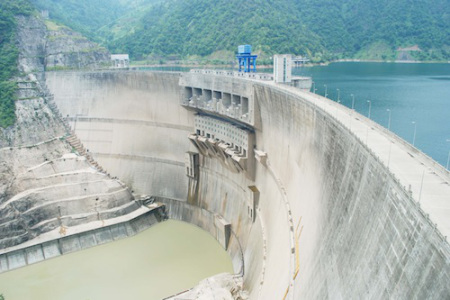
Though the Chinese authorities have made much progress in evaluating the social and environmental impact of dams, the emphasis is still on building them, even when mitigating the damage would be hard. Critics have called it the “hydro-industrial complex”: China has armies of water engineers (including Hu Jintao, the former president) and at least 300 gigawatts of untapped hydroelectric potential. China’s total generating capacity in 2012 was 1,145GW, of which 758GW came from coal-burning plants.

An important motive for China to pursue hydropower is, ironically, the environment. China desperately needs to expand its energy supply while reducing its dependence on carbon-based fuels, especially coal. The government wants 15% of power consumption to come from clean or renewable sources by 2020, up from 9% now. Hydropower is essential for achieving that goal, as is nuclear power. “Hydro, including large hydro in China, is seen as green,” says Darrin Magee, an expert on Chinese dams at Hobart and William Smith Colleges in New York state.

There is also a political reason why large hydro schemes continue to go ahead. Dambuilders and local governments have almost unlimited power to plan and approve projects, whereas environmental officials have almost no power to stop them.

The problems begin with the planning for China’s rivers, which are divided into fiefs by the state-owned power companies that build dams in much the same way as the Corps of Engineers and the Bureau of Reclamation divided up American rivers in the early 20th century. Though the staff of the water-resources ministry in Beijing know a lot about the environment, they have no say. “Big hydro projects are designed and approved by everybody but the ministry of water resources,” says Mr Magee.

Local governments, meanwhile, view dams as enticing economic development projects. The dambuilders, which have special privileges to borrow, put up the financing. The extra electricity supports industrial expansion and brings in revenues. Local officials are promoted for meeting economic performance targets and some collude for personal gain with the dambuilders. Because of the decentralised nature of the industry, local officials try to include dams in their plans. Once they have done so, they can expect the environmental impact assessments that follow to be a formality—if only because the consultants who undertake them are paid by the hydropower companies.

Environmental officials who have not been financially captured by the dambuilding economy find themselves as scarce as some of the fish they are charged to protect. Environmental activists, meanwhile, can request access to public records and demand public hearings, both required by law. But they say that these avenues are barred when they are most needed—on controversial projects that face vocal opposition. For example, the authorities have rejected requests for public records on Xiaonanhai and they have not granted a public hearing.

If environmental regulators and activists want any hope of halting a project, they must go outside normal bureaucratic channels to lobby powerful Politburo members or the national media. Although that may not always work, it did in 2004, when Wen Jiabao, then prime minister, halted construction of a cascade of 13 dams on the Nu River in south-west China in order to protect the environment. Even then some work on the projects still proceeded. Meanwhile, smaller schemes race ahead unchecked. Promoted by dambuilders and local governments, nearly 100 smaller hydroelectric projects in the Nu river region went forward without needing permission from higher up. Some began before they had even received the final approval.

China’s new leaders in recent months have signalled that they want yet more dams, approving several ambitious new projects, including what would be the highest dam in the world, on the Dadu river. After Mr Wen stepped down from his posts in the party and the government, the dams on the Nu river that he blocked received the go-ahead again.

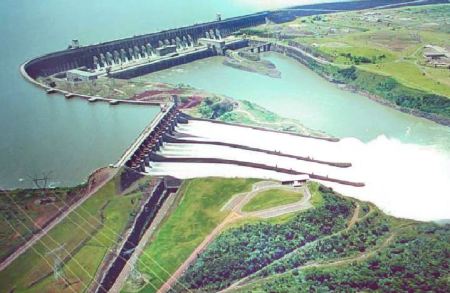
Chinese leaders have for millennia sought to tame the country’s great rivers, which have sustained and destroyed countless lives with cycles of abundance, famine and floods. Indeed their legitimacy as rulers has long been linked to their ability to do so. The Communist Party has built thousands of large dams since 1949. China is also the world’s leading builder of big dams abroad; International Rivers, a pressure group, says that Chinese companies and financiers are involved in about 300 dam projects in 66 countries.

The politics of dam-building: Opening the floodgates, Economist, Sept. 21, 2013, at 47

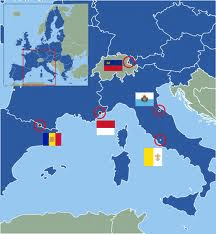
Offshore Tax Evasion: US v. Switzerland

Fearful that other banks could suffer the same fate as Wegelin, a venerable private bank that was indicted in New York in 2012 and put out of business, the Swiss government has been seeking an agreement with America that would allow the industry to pay its way out of trouble in one go. Instead, it has had to make do with one covering banks that are not already under investigation, which excludes some of the country’s biggest institutions.

The deal is cleverly structured. Of Switzerland’s 300 banks, 285 will be able to avoid prosecution if they provide certain information about American clients and their advisers, and pay penalties of 20-50% of the clients’ undeclared account balances, depending on when the account was opened and other factors. Banks that persuade clients to make disclosures before the programme starts will get reduced fines. Banks will not have to take part but the legal risks are daunting for those that don’t, even if they hold little undeclared American money. Those with no foreign clients will have to produce independent reports proving they have nothing to hide if they want a clean bill of health.

One Swiss newspaper likened the deal to “swallowing toads”. Another called it “the start of an organised surrender”. The bankers’ association sees it as a necessary evil: the only way to end legal uncertainty, albeit at a cost that will strain some institutions. Small and medium-sized Swiss private banks are already struggling. In 2012 their average return on equity was 3%; the number of private banks fell by 13, to 148, mostly because of voluntary liquidations. KPMG, a consultancy, expects this to fall by a further 25-30% by 2016 as receding legal threats encourage the return of mergers.

Some of the prospective buyers in any future M&A wave still have to make their peace with the Americans. Excluded from the deal are 14 mostly large banks that have been under investigation for some time, including Credit Suisse and Julius Bär. They will have to settle individually, with fines expected to be steep, some perhaps comparable to the $780m paid by UBS in 2009. These banks are also under pressure from European countries that have suffered tax leakage, including Germany, whose parliament has rejected a deal that would have allowed the Swiss to make regular payments of tax withheld from clients while avoiding having to name names.

Swiss bankers gamely argue that bank secrecy remains intact, pointing out that privacy laws have not been dismantled. But banks are being bullied into providing enough information, short of actual client names, to allow the Americans to make robust “mutual legal assistance” requests that leave Swiss courts with no option but to order banks to provide clients’ personal details. The courts still have some flexibility because America has yet to ratify an amended tax treaty with Switzerland, thanks to blocking tactics by Rand Paul, a senator who argues it would violate Americans’ right to privacy. But this obstacle will eventually be cleared or circumvented.

All of which fuels speculation that Switzerland could lose its crown as the leading offshore financial centre, even though it is still well ahead of fast-growing rivals in Asia. It may find comfort in the fact that the Americans plan to use information harvested from the Swiss— including “leaver lists”, which contain data on account closures and transfers to banks abroad—to go after other jurisdictions. This is part of a “domino effect” strategy, says Jeffrey Neiman, a former federal prosecutor, aimed at forcing tax evaders “so far off the beaten path that they can’t be sure if the pirate waiting to take their money will be there when they return.”

Offshore tax evasion: Swiss finished?, Economist, Sept. 7, 2013, at 72

The Curse of Displacement

Dhinkia, in the eastern Indian state of Odisha (formerly Orissa) (India)  is a hub of protest. The women, one from every village family, are staging… a sit-in. Sisir Mohapatra, a former sarpanch or village head, makes a rousing speech. He seems respected, though his police record would suggest he is a mafia don: he says he faces 35 criminal charges, and of his 60-strong extended family in Dhinkia, 40 are also wanted by the law. They claim that the charges are all trumped up. Their real crime is to oppose the biggest single foreign-investment project India has ever attracted.

Estimated to cost $12 billion, the project, promoted by POSCO, a South Korean firm, is eventually to produce 12m tonnes of steel a year for export. It will have its own power plant, port and, 200 kilometres (125 miles) inland, its own iron-ore mine. Since an agreement on the project was signed in 2005, it has been mired in controversy—a case study in why

Environmentalists worry about air pollution, coastal erosion, the endangered olive ridley turtle and much else. Many, including the Communist Party of India (CPI), which holds the local parliamentary seat, complain that the ore will be sold too cheaply, at a royalty to the government of just 27 rupees (currently about 40 cents) a tonne. Meanwhile, residents of Dhinkia and nearby villages fear for their livelihoods.

So the project has been delayed, probed by countless committees and subjected to repeated litigation. Just this week it faced hearings in Delhi at the National Green Tribunal, an environmental court. But as so often in India, one of the biggest delays has been acquiring the land. In theory, this should be easier for POSCO than for many other investors, since most of the 1,600 hectares (4,000 acres) it needs are designated as forest (even the scrubby sand dunes) and thus government land.

The residents of Dhinkia, however, claim legal rights as people whose families have been making their living from the forest for at least 75 years (which the government disputes). Some, indeed, make a very good living. Devendra Swain, like many villages, maintains betel vines, from which he earns 50,000 rupees a month selling the leaves. Mr Swain also grows rice, mangoes, cashew nuts, bananas and papaya. He claims not to be against industrialisation—except in his fecund backyard.

The villagers’ resistance to the project has seen ugly violence. In 2010 police fired rubber bullets to clear one dharna. In February there was another clash as police entered a neighbouring village, Govindpur, and started dismantling betel vines. In March three people died in a bomb explosion—victims of pro-project goons, say the villagers. The police allege the victims were blown up while making bombs themselves. Involvement in this incident is one of 61 charges facing the CPI’s Abhay Sahoo, the protesters’ leader, who is now in jail for the third time and trying to secure his release on bail. Fearing arrest or an attack by thugs, the 1,400 others in Dhinkia facing criminal charges dare not leave the village.

Of India’s million mutinies, many involve the emotive issue of land. That is one impulse behind a new law covering land acquisition and the resettlement and rehabilitation of those affected. This week it passed through Parliament’s upper house. Few disagree that some new legislation is needed to replace a much-abused British-era law from 1894.

The new bill, however, has drawn fierce criticism. Business is predictably aghast at what it sees as a populist law timed ahead of looming elections.. Some businessmen think it is simply “unworkable”.

Even some who support the principles behind the bill think their implementation has been botched. N.C. Saxena, a former senior civil servant who sits on a National Advisory Council [claims]  that it does not even cover government land. In other words, it would have no relevance for projects such as POSCO’s. Even if it did, legislation would not solve the fundamental difficulty, a total distrust of government.

“After 66 years of independence,” says Mr Mohapatra, the former sarpanch, “no one has ever been compensated properly. Whoever gave his land and his home later became a beggar.” He points to what he says is the unhappy lot of those displaced by two other projects in Odisha. One is the Hirakud dam across the Mahanadi river. It is India’s longest dam, for which Jawaharlal Nehru poured the first concrete in 1948. As many as 180,000 people had to move. Another is just down the road from Dhinkia, where a big oil refinery has been under construction since 2000. An empty field outside Dhinkia has drains and electricity, put in when plots were offered as compensation to those forced to shift. People found it so unappealing that the field is still empty. Moreover, 52 families who supported the POSCO project, many forced out of Govindpur in 2008, are still in reportedly miserable conditions in a transit camp. Add in heavy-handed police, and those agitating against the project have plenty of ammunition. Even the best-drafted law would find the going tough

This Land is Whose Land? A new law may do little to break India’s land-acquisition logjam, Economist, Sept 7, 2013, at 44

Why the US Loves GM Food

Because America was a new country, argues Greg Ibach, head of agriculture in Nebraska’s state government, a primary concern was feeding a growing population and moving food large distances. Europeans fussed about appellations and where food came from. Americans “treated food as commodities”.  Such differences of history and culture have lingering consequences. Almost all the corn and soyabeans grown in America are genetically modified. GM crops are barely tolerated in the European Union. Both America and Europe offer farmers indefensible subsidies, but with different motives. EU taxpayers often pay to keep market forces at bay, preserving practices which may be quaint, green or kindly to animals but which do not turn a profit. American subsidies give farmers an edge in commodity markets, via cheap loans and federally backed crop insurance.

Lexington: Farming as rocket science, Economist, Sept. 7, 2013, at 34

Biofuels from Agricultural Waste

Ethanol, for instance, is an alcoholic biofuel easily distilled from sugary or starchy plants. It has been used to power cars since Ford’s Model T and, blended into conventional petrol, constitutes about 10% of the fuel burned by America’s vehicles today. Biodiesel made from vegetable fats is similarly mixed (at a lower proportion of 5%) into conventional diesel in Europe. But these “first generation” biofuels have drawbacks. They are made from plants rich in sugar, starch or oil that might otherwise be eaten by people or livestock. Ethanol production already consumes 40% of America’s maize (corn) harvest and a single new ethanol plant in Hull is about to become Britain’s largest buyer of wheat, using 1.1m tonnes a year. Ethanol and biodiesel also have limitations as vehicle fuels, performing poorly in cold weather and capable of damaging unmodified engines.

In an effort to overcome these limitations, dozens of start-up companies emerged over the past decade with the aim of developing second-generation biofuels. They hoped to avoid the “food versus fuel” debate by making fuel from biomass feedstocks with no nutritional value, such as agricultural waste or fast-growing trees and grasses grown on otherwise unproductive land. Other firms planned to make “drop in” biofuels that could replace conventional fossil fuels directly, rather than having to be blended in…..

Even if second-generation processes can be economically scaled up, however, that might in turn highlight a further problem. To make a significant dent in the 2,500m litres of conventional oil that American refineries churn through each day, biofuel factories would have to be able to get hold of a staggering quantity of feedstock. Mr Ghisolfi of Beta Renewables points out that a factory with an annual output of 140m litres needs 350,000 tonnes of biomass a year to operate. “There are only certain areas, in Brazil and some parts of the US and Asia, where you can locate this much biomass within a close radius,” says Mr Ghisolfi. “I am sceptical of scaling to ten times that size, because getting 3.5m tonnes of biomass to a single collection point is going to be a very big undertaking.”

Billions of tonnes of agricultural waste are produced worldwide each year, but such material is thinly spread, making it expensive to collect and transport. Moreover, farms use such waste to condition the soil, feed animals or burn for power. Diverting existing sources of wood to make biofuels will annoy builders and paper-makers, and planting fuel crops on undeveloped land is hardly without controversy: one man’s wasteland is another’s pristine ecosystem. Dozens of environmental groups have protested against the EPA’s recent decision to permit plantations of fast-growing giant reed for biofuels, calling it a noxious and highly invasive weed. Just as the food-versus-fuel argument has proved controversial for today’s biofuels, flora-versus-fuel could be an equally tough struggle for tomorrow’s.

Biofuels: What happened to biofuels?, Economist Technology Quarterly, Sept. 7, 2013

Ports for Sale – China Buys

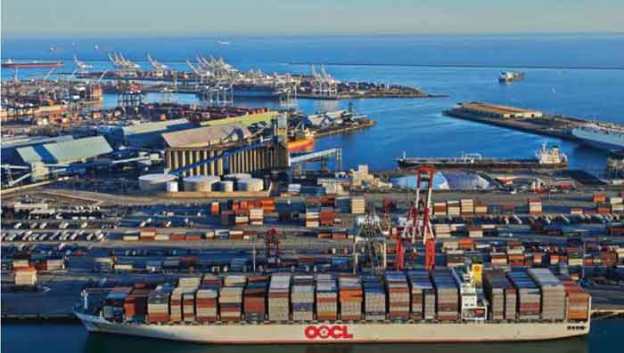
The old port of Colombo, Sri Lanka took centuries to reach its present capacity. China will have almost doubled it in under 30 months. Operated at full capacity, it would make Colombo one of the world’s 20 biggest container ports.  In the eyes of some Indians, Colombo is part of a “string of pearls”—an American-coined phrase that suggests the deliberate construction of a network of Chinese built, owned or influenced ports that could threaten India. These include a facility in Gwadar and a port in Karachi (both in Pakistan); a container facility in Chittagong (Bangladesh); and ports in Myanmar.

Is this string theory convincing? Even if the policy exists, it might not work. Were China able to somehow turn ports into naval bases, it might struggle to keep control of a series of Gibraltars so far from home. And host countries have mood swings. Since Myanmar opened up in 2012, China’s influence there has decreased. China love-bombed the Seychelles and Mauritius with presidential visits in 2007 and 2009 respectively. But since then India has successfully buttered up these island states and reasserted its role in the Maldives. Besides, China’s main motive may be commerce. C. Raja Mohan, the author of “Samudra Manthan”, a book on Sino-Indian rivalry in the Indian and Pacific Oceans, argues that China’s port bases partly reflect a desire to get easier sea access for trade to and from west China.

State-owned firms are in charge of most of China’s maritime activity, and their motives are at least partly commercial…China’s maritime interests already reflect its status as the world’s largest exporter and second-largest importer. Many of the world’s biggest container ports are in China. It controls a fifth of the world’s container fleet mainly through giant state-owned lines. By weight, 41% of ships built in 2012 were made in China.

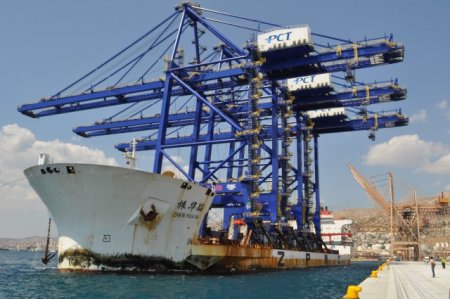
The next step is to own and run ports. Hutchison Whampoa, a buccaneering, privately owned Hong Kong conglomerate, has long had a global network of ports. The pioneer among mainland firms was Cosco Pacific, an affiliate of state-owned Cosco, China’s biggest shipping line. In 2003-07 it took minority stakes in terminals in Antwerp, Suez and Singapore. In 2009 it took charge of half of Piraeus Port in Greece. It has invested about $1 billion abroad. China Merchants Holdings International, a newcomer, has spent double that. It invested in Nigeria, as well as Colombo, in 2010. Last year it took stakes in ports in Togo and Djibouti. In January it bought 49% of Terminal Link, a global portfolio of terminals run by CMA CGM, an indebted French container line.

The pace is quickening. In March another firm, China Shipping Terminal, bought a stake in a terminal in Zeebrugge in Belgium. On May 30th China Merchants struck a multi-billion deal to create a port in Tanzania. Even the more cautious Cosco Pacific is thinking about deals in South-East Asia and investing more in Greece.

China Shipping Terminal has small stakes in facilities in Seattle and Los Angeles, according to Drewry, a consultancy. But the experience of Dubai’s DP World suggests that America would not roll out a red carpet. In 2006 DP abandoned plans to buy American ports after a political backlash. Some Americans worry that China wants to take over the Panama canal.

Chinese firms may also subscribe to a supersized vision of the industry in which an elite group of ports caters to a new generation of mega-vessels. These will be more fuel-efficient and link Asia and Europe (they can just squeeze through the Suez Canal). After a decade of hype these behemoths are now afloat. In May CMA CGM received the Jules Verne, the world’s largest container ship. It can handle 16,000 containers and has a 16-metre (52-feet) draft. In July Maersk, a Danish line, will launch an 18,000-container monster. It has ordered 20 from Daewoo, in Korea. China Shipping Container Lines, the country’s second biggest firm, has just ordered five 18,400-container vessels from Hyundai.  Some ports may struggle to cater to these ships. Some of China’s new terminals may try to exploit that. Cosco Pacific is building a dock at Piraeus that can handle mega-ships. Colombo is deep enough for ships with an 18-metre draft. Its cranes can cope with ships 24 containers wide. Nothing in India compares with that…

After political tensions in the South China Sea, China Merchants has withdrawn from a port project in Vietnam. But Cosco’s Piraeus investment, once controversial, is a success, with profits rising and the firm winning plaudits for investing and creating jobs for Greeks.

China’s port strategy is mainly motivated by commercial impulses. It is natural that a country of its clout has a global shipping and ports industry. But it could become a flashpoint for diplomatic tensions. That is the pessimistic view. The optimistic one is that the more it invests, the more incentive China has to rub along better with its trading partners. This, not deliberate expansionism, is what the locals are betting on in Colombo.

China’s foreign ports: The new masters and commanders, Economist,  June 8, 2013

The Global Regulation of Mercury

The Minamata Convention on Mercury – a global, legally binding treaty which opened for signature today – was agreed to by governments in January (2013) and formally adopted as international law…Countries began the recognition for this new treaty at a special ceremonial opening of the Diplomatic Conference in Minamata, the city where many local people were poisoned in the mid-20th Century after eating mercury-contaminated seafood from Minamata Bay. As a consequence, the neurological syndrome caused by severe mercury poisoning has come to be known as Minamata Disease.

The Minamata Convention provides for controls and reductions across a range of products, processes and industries where mercury is used, released or emitted. The treaty also addresses the direct mining of mercury, export and import of the metal, and safe storage of waste mercury.

“Mercury has some severe effects, both on human health and on the environment. UNEP has been proud to facilitate and support the treaty negotiation over the past four years because almost everyone in the world – be they small-scale gold miners, expectant mothers or waste-handlers in developing countries – will benefit from its provisions,” said Achim Steiner, Executive Director of the United Nations Environment Programme (UNEP) and Under-Secretary General of the United Nations….Other potential impacts include impaired thyroid and liver function, irritability, tremors, disturbances to vision, memory loss and cardiovascular problems.

“With the signing of the Minamata Convention on Mercury we will be going a long way in protecting the world forever from the devastating health consequences from mercury,” says WHO Director-General Dr Margaret Chan. “Mercury is one of the top ten chemicals of major public health concern and is a substance which disperses into and remains in ecosystems for generations, causing severe ill health and intellectual impairment to exposed populations.”

Under the provisions of the Minamata Convention, Governments have agreed on a range of mercury-containing products whose production, import and export will be banned by 2020. These items have non-mercury alternatives that will be further phased in as these are phased out. They include:

•Batteries, except for ‘button cell’ batteries used in implantable medical devices

•Switches and relays

•Some compact fluorescent lamps

•Mercury in cold cathode fluorescent lamps and external electrode fluorescent lamps

•Soaps and cosmetics (mercury is used in skin-whitening products)

•Some mercury-containing medical items such as thermometers and blood pressure devices.

Mercury from small-scale gold-mining and from coal-fired power stations represent the biggest source of mercury pollution worldwide. Miners inhale mercury during smelting, and mercury run-off into rivers and streams contaminates fish, the food chain and people downstream.  Under the Minamata Convention, Governments have agreed that countries will draw up strategies to reduce the amount of mercury used by small-scale miners and that national plans will be drawn up within three years of the treaty entering into force to reduce – and if possible eliminate – mercury.

The Convention will also control mercury emission and releases from large-scale industrial plants such as coal-fired power stations, industrial boilers, waste incinerators and cement clinkers facilities.

New global treaty cuts mercury emissions and releases, sets up controls on products, mines and industrial plant, UNEP Press Release, Oct 10, 2013

Yasuni National Park Oil Drilling: Ecuador, Amazon

Ecuador’s parliament on Thursday (Oct. 3, 2012) authorized drilling of the nation’s largest oil fields in part of the Amazon rainforest after the failure of President Rafael Correa’s plan to have rich nations pay to avoid its exploitation.  The socialist leader launched the initiative in 2007 to protect the Yasuni jungle area, which boasts some of the planet’s most diverse wildlife, but scrapped it after attracting only a small fraction of the $3.6 billion sought.

The government-dominated National Assembly authorized drilling in blocks 43 and 31, but attached conditions to minimize the impact on both the environment and local tribes. Though Correa says the estimated $22 billion earnings potential will be used to combat poverty in the South American nation, there have been protests from indigenous groups and green campaigners.  About 680,000 people have signed a petition calling for a referendum.  “We want them to respect our territory,” Alicia Cauilla, a representative of the Waorani people who live around the Yasuni area, said in an appeal to the assembly. “Let us live how we want.”  Correa has played down the potential impact of oil drilling in the area, saying it would affect only 0.01 percent of the entire Yasuni basin…

Oil output in OPEC’s smallest member has stagnated since 2010 when the government asked oil investors to sign less-profitable service contracts or leave the country. Since then, oil companies have not invested in exploration.  State oil company Petroamazonas will be in charge of extraction in blocks 43 and 31, which are estimated to hold 800 million barrels of crude and projected to yield 225,000 barrels per day eventually. Ecuador currently produces 540,000 bpd

Excerpt, By Alexandra Valencia, Ecuador congress approves Yasuni basin oil drilling in Amazon, Reuters, Oct. 4, 2013


Texas Accepts Vermont Nuclear Waste

The chairman of the Texas Low-Level Radioactive Waste Disposal Compact Commission says the organization is going to honor a 20-year-old agreement that guarantees space for radioactive waste from Vermont in its Texas disposal facility, a deal that Gov. Peter Shumlin said is critical now that Vermont Yankee nuclear plant is shutting down.  During a Wednesday meeting (October 3, 2012) at the Vermont Statehouse, Commission Chairman Robert Wilson said the commission recognizes Vermont is a partner in the compact.  “This compact is going to be more important than ever,” Gov. Peter Shumlin told the commission. “My concern is we remember Vermont and Texas were there first.”

In 1993 Vermont and Texas formed the compact. Under the agreement, Texas would host a low-level radioactive waste facility and Vermont would have a place to send some of the waste from its nuclear power plant. Most of the materials after the plant is decommissioned would go to the Texas facility, except for the fuel rods and higher radioactive materials, said Public Service Department Commissioner Chris Recchia.  Vermont officials are looking for assurance there will be space in Texas for the low-level radioactive waste from the Vermont Yankee nuclear power plant, which is due to be shut down next year.

Texas commission will honor radioactive waste deal with Vt. ahead of nuke plant shutdown, THE ASSOCIATED PRESS, Oct. 3, 2013

Getting Rid of Hacktivists: US Approach

Thirteen members of a hacking collective that calls itself Anonymous were indicted on Thursday (October 3, 2013) on charges that they conspired to coordinate attacks against prominent Web sites.The 13 are accused of bringing down at least six Web sites, including those belonging to the Recording Industry Association of America, Visa and MasterCard.  The attacks caused “significant damage to the victims,” the indictment said.

The attacks, carried out from September 2010 to January 2011, were part of campaign called Operation Payback, which started as an effort to support file-sharing sites but later rallied around WikiLeaks and its founder, Julian Assange.  Hackers took down the sites by inflicting a denial of service, or DDoS, attack, in which they fired Web traffic at a site until it collapsed under the load. Though the indictment mentions 13 hackers, thousands more participated in the attack by clicking on Web links that temporarily turned their computers into a digital fire hose aimed [at the websites of the companies].

According to the indictment, which was handed up at Federal District Court in Alexandria, Va., the hackers’ tool of choice was a simple open-source application known as Low Orbit Ion Cannon, which requires very little technical know-how.  Hackers simply posted a Web link online that allowed volunteers to download an application that turned their computer into a “botnet,” or network of computers, that flooded targets like Visa.com and MasterCard.com with traffic until they crashed…

By BRIAN X. CHEN and NICOLE PERLROT, U.S. Accuses 13 Hackers in Web Attacks, New York Times, October 3, 2013

Excerpt from indictment

“In connection with planning various DDoS cyber-attacks, members of the conspiracy posted fliers captioned “OPERATION PAYBACK” and claimed that: “We sick and tired of these corporations seeking to control the internet in their pursuit of profit. Anonymous cannot sit by and do nothing while these organizations stifle the spread of ideas and attack those who wish to exercise their rights to share with others.”

PDF of Indictment on Scribd

Breaking Up Toxic Ships – Pakistan

WWF-Pakistan has warned Pakistan against the import of a European ship, which is suspected to have burnt containers and cargo that may contain a substantial amount of hazardous materials such as heavy metals or PCBs.  Moreover, the vessel is suspected to carry dangerous substances in fire fighting water as well as a significant amount of fuels and oil. This container ship caught fire in July (2013) and was later towed to Port-Louis in Mauritius. (MV “HANSA BRANDENBURG”,).MV Hansa Brandenburg is a 2002-built Liberian-flagged container ship operated by the German shipping company Leonhardt & Blumberg.

WWF-Pakistan considers that this ship if imported to Pakistan may cause severe marine pollution in the Gadani area, which is already stressed because of a number of economic and industrial activities. Unplanned construction such as Fish harbour has already had serious environmental impact in the area, which is also designated as energy corridor and construction of power plants may have impact on the marine environment of the area unless proper mitigative measures are taken. According to WWF-Pakistan Technical Adviser (Marine Fisheries) Muhammad Moazzam Khan, the area of the Gadani is a part of Sonmiani, which is considered to have a rich marine biodiversity especially around Churna and Kaio islands. Dumping of toxic waste might seriously harm the fragile ecosystem of the area.

Agencies asked not to import vessel loaded with toxic chemicals, Daily Times (Pakistan) October 4, 2013


Open, Free, and American: the Internet

[T]he odds are almost zero that the NSA hasn’t tried to influence Intel’s chips.” In 2012 a paper from two British researchers described an apparent backdoor burned into a chip designed by an American firm called Actel and manufactured in China. The chip is widely used in military and industrial applications. Actel says the feature is innocent: a tool to help its engineers fix hardware bugs…

Now America’s tech giants stand accused not just of mishandling their customers’ data, but, in effect, of knowingly selling them flawed software. Microsoft has always denied installing backdoors. It says it has “significant concerns” about the latest leaks and will be “pressing the government for an explanation”. The damage goes well beyond individual companies’ brands. American technology executives often use their economic clout to shape global standards in ways that suit their companies. Now that will be harder. American input to international cryptographic standards, for example, will have to overcome sceptical scrutiny: are these suggestions honest, or do they have a hidden agenda? More broadly still, America has spent years battling countries such as Russia, China and Iran which want to wrest control of the internet from the mainly American engineers and companies who run it now, and give a greater role to governments. America has fought them off, claiming that its influence keeps the internet open and free. Now a balkanisation of the web seems more likely. Jason Healey of the Atlantic Council, a think-tank, says that the denizens of Washington, DC, have lost sight of the fact that the true source of American cyber-power is neither the NSA and its code-breaking prowess nor the offensive capabilities that produced the Stuxnet virus, which hit centrifuges at an Iranian nuclear plant; it is the hugely successful firms which dominate cyberspace and help disseminate American culture and values worldwide. By tarnishing the reputations of these firms, America’s national-security apparatus has scored an own goal.

NSA and Cryptography: Cracked Credibility, Economist, Sept. 14, 2013, at 65

Playing with Fire and Getting Burnt: West in Syria

A a collection of some of Syria’s  most powerful rebel groups have publicly abandoned the opposition’s political leaders, casting their lot with an affiliate of Al Qaeda.  As support for the Western-backed leadership has dwindled, a second, more extreme Al Qaeda group has carved out footholds across parts of Syria, frequently clashing with mainline rebels who accuse it of making the establishment of an Islamic state a priority over the fight to topple President Bashar al-Assad….The deep differences between many of those fighting in Syria and the political leaders who have represented the opposition abroad spilled into the open late Tuesday, when 11 rebel groups issued a statement declaring that the opposition could be represented only by people who have “lived their troubles and shared in what they have sacrificed.”

Distancing themselves from the exile opposition’s call for a democratic, civil government to replace Mr. Assad, they called on all military and civilian groups in Syria to “unify in a clear Islamic frame.” Those that signed the statement included three groups aligned with the Western-backed opposition’s Supreme Military Council….The rebel groups that assailed the political opposition are themselves diverse and include a number that are linked to the coalition’s Supreme Military Council. More troubling to the West, they also include the Nusra Front, a group linked to Al Qaeda. At the same time they include groups that remain opposed to another group linked to Al Qaeda: the Islamic State in Iraq and Syria…

Further complicating the picture is the rise of the new Qaeda franchise, the Islamic State in Iraq and Syria, which has established footholds across northern and eastern Syria with the intention to lay the foundations of an Islamic state.  In recent months, it has supplanted the Nusra Front as the primary destination for foreign jihadists streaming into Syria, according to rebels and activists who have had contact with the group.  Its fighters, who hail from across the Arab world, Chechnya, Europe and elsewhere, have a reputation for being well armed and strong in battle. Its suicide bombers are often sent to strike the first blow against government bases.

But its application of strict Islamic law has isolated rebels and civilians. Its members have executed and beheaded captives in town squares and imposed strict codes, forcing residents to wear modest dress and banning smoking in entire villages.

Excerpts, BEN HUBBARD and MICHAEL R. GORDON, Key Syrian Rebel Groups Abandon Exile Leaders, New York Times, Sept. 25, 2013

Naming the Dead in the CIA Drone War

Naming the Dead is a project run by the Bureau of Investigative Journalism, a not-for-profit research organisation based in London. The project aims to identify those killed in CIA drone strikes on Pakistan.  Over the past nine years, the tribal region of Pakistan’s north west has been hit by hundreds of drone attacks as the CIA has sought to stamp out al Qaeda fighters and the militant groups that have given them shelter.  Missiles launched from these high-tech, unmanned aircraft have hit homes, cars, schools, shops and gatherings. At least 2,500 people have been killed, according to data already collected by the Bureau as part of our wider Covert Drone War research.

Senior US officials have described drones as highly precise weapons that target and kill enemies of the US. John Brennan, who oversaw the development of the drone campaign and is now director of the CIA, has called drone technology an ‘essential tool’ for its ‘surgical precision – the ability, with laser-like focus, to eliminate the cancerous tumour called an al Qaeda terrorist while limiting damage to the tissue around it.’

Those killed by drones include high-ranking militant leaders – figures such as Abu Yahya al Libi, al Qaeda’s feared second-in-command, or Baitullah Mehsud, commander of the Pakistan Taliban (TTP).  But according to credible media reports analysed by the Bureau, the dead also include at least 400 civilians. Some were unlucky enough to be nearby when militants were attacked. Others were killed alongside their husbands or fathers, who were believed to be militants. Still others were mistaken for terrorists by drone operators sitting thousands of miles away.

In most cases, there is little information available about who the drones are really killing. Most of the dead – an estimated four-fifths of those killed – are believed to be militants. But their deaths are typically reported as a number – their names, origins and livelihoods remain a mystery.  For so many people to die in obscurity, unnamed and unacknowledged, is a tragedy. But it is a further tragedy that the public, and even policy makers, are unable to properly test whether drones are ‘highly precise weapons’ when so little is known about who is actually dying.

Through Naming the Dead, the Bureau aims to increase the transparency around this conflict and inform the public debate. Initially this project will record all names published in open-source material – in credible reports by journalists, in legal documents presented in court, in academic studies and in field investigations carried out by human rights groups.  In the future, the Bureau aims to identify more of the dead on a regular basis, and to uncover more details of those who have been killed. Where possible we will provide further identification – where they were killed, and their occupations, full names and ages. In the remote areas of Pakistan where drone strikes take place, official identification is rare. Few people possess identification cards, birth certificates, or even documents recording their relatives’ deaths. But wherever possible this project will provide documentation recording a person’s death.

Photographs of the destruction of a particular site are included in the database. Affidavits, photos, hospital records, student identification and transcripts of interviews with researchers are all provided when available. Over time, the Bureau aims to build on such currently scarce records in an attempt to properly scrutinise the little that is reported, and the claims being made – on all sides.

Bureau of Investigative Journalism

Space – the Wild West

Space is a current and future battleground without terrain, where invisible enemies conceivably could mount undetectable attacks to devastating effect if the right deterrent and defensive plans aren’t pursued now, the assistant defense secretary for global strategic affairs told a think tank audience on Sept. 17, 2013  Madelyn R. Creedon spoke to a Stimson Center gathering whose audience included analysts focused on the question of deterrence in space. The center released a publication this week titled “Anti-satellite Weapons, Deterrence and Sino-American Space Relations,” presenting a number of essays examining various perspectives on space deterrence.

Creedon noted that in Defense Department parlance, deterrence is “the prevention of action by the existence of a credible threat of unacceptable counteraction and/or the belief that the cost of action outweighs the perceived benefits.” In other words, she said, if deterrence is effective, an adversary has or believes he has more to lose than to gain by attacking.  Deterrence remains a core defense strategy for the United States, she added, and the nation’s nuclear deterrent is “still alive and well.”  Creedon acknowledged that one classic approach to considering space deterrence — that is, preventing potential enemies from attacking U.S. or partner satellites and other military or economic assets in space — is to try to apply lessons learned during the Cold War. Then, the United States and the Soviet Union kept an uneasy diplomatic truce and piled up enough nuclear weapons to guarantee mutually assured destruction.

But one flaw to comparing the two deterrent challenges, she said, is that an attack that disables a satellite, unlike one from a nuclear warhead that flattens a major city, doesn’t threaten a nation’s existence. Another is that the two superpowers spent decades constructing an elaborate, mirrored, deterrent Cold War architecture and protocols, while space is still, comparatively, “the Wild West.” A third is that an attack in space or cyberspace may rely on digital rather than conventional weapons, and so could occur without warning or even detection.

“If there is an attack against a space asset, it isn’t visible,” she said. “You can’t watch it on CNN, and unless you’re directly affected by the capability that the space assets provide, you’re probably completely oblivious that the attack happened.”

She said DOD is developing and implementing what safeguards it can implement in space using four mutually supportive elements to deter others from taking action against U.S. assets:

— Working to internationalize norms and establish a code of conduct to enhance stability;

— Building coalitions to enhance security;

— Adding resilience to U.S. space architectures; and

— Preparing for an attack on U.S. and allied space assets using defenses “not necessarily in space.”

“We believe this four-element approach … will bolster deterrence,” Creedon said.

The department is working with the State Department and international partners to define elements of good behavior in space, she said. “States must remain committed to enhance the welfare of humankind by cooperating with others to maintain the long-term sustainability, safety, security and stability of the outer-space environment,” she added.  Creedon said work is underway to build deterrent coalitions and increase space awareness. She said the “Five Eyes” nations, which include the United States, United Kingdom, Canada, Australia and New Zealand, are extending their intelligence cooperation to expand their collective space situational awareness…

The United States is meanwhile working to lower the benefit to potential attackers by employing more satellites, participating in satellite constellations with other countries and purchasing payload space on commercial satellites when feasible.  Creedon said the U.S. approach to space deterrence is similar to its strategy in any domain: take “prudent preparations to survive, and to operate through, and, hopefully, prevail in any conflict.”

By Karen Parrish, Official Describes Evolution of Space Deterrence, American Forces Press Service, Sept. 19, 2013

FISA Court and Transparency

According to the Opinion of Judge F. Dennis Saylor of the FISA (Foreign Intelligence Surveillance) court, of Sept. 13, 2013 in response to a motion by the ACLU for release of certain opinions of the FISA court:

“The unauthorized disclosure in June 2013 [Edward Snowden disclosure] of a Section 215 order, and government statements in response to that disclosure, have engendered considerable public interest and debate about Section 215 of the Partiot Act. Publication of FISC opinions relating to this provision would contribute to an informed debate. Congressional amici emphasize the value public information and debate in representing their constituents and discharging their legislative responsibilities. Publication would also assure citizens of the integrity of this Court’s proceedings.

In addition, publication with only limited redactions may now be feasible, given the extent of the government’s recent public disclosures about how Section 215 is implemented. Indeed, the government advises that a declassification review process is already underway.  In view of these circumstances, and as an exercise of discretion, the Court has determinedthat it is appropriate to take steps toward publication of any Section 215 Opinions that are not subject to the ongoing FOIA litigation…”

Excerpt, See United States Foreign Intelligence Surveillance Court, In Re Orders of this Court Interpreting Section 215 of the Patriot Act, Docket No. Misc. 13-02

Space Weapons and Space Law

“Policy, law and understanding of the threat to space is lagging behind the reality of what is out there,” warned Mark Roberts, a former Ministry of Defence official who was in charge of government space policy and the UK’s “offensive cyber portfolio”.….

The disabling of satellites would have a disastrous impact on society, knocking out GPS navigation systems and time signals. Banks, telecommunications, power and many infrastructures could fail, Roberts told the conference….Agreements such as the 1967 Outer Space treaty and the 1979 Moon treaty are supposed to control the arms race in space. Some states have signed but not ratified them, said Maria Pozza, research fellow at the Lauterpacht Centre for International Law at Cambridge University.  Existing treaties do not specify where air space ends and outer space begins – although 100km (62 miles) above the Earth is becoming the accepted limit.

The Navstar constellation of satellites was used to provide surveillance of Iraq during the Gulf war in 1991. Was that, asked Pozza, an aggressive use of space, a “force-multiplier”? Satellites may have also been used to photograph and locate al-Qaida bases, Osama bin Laden or even assess future strikes against Syria.

The Chinese government has recently moved to support a 2012 EU code of conduct for space development, which, Pozza said, was a softer law. The draft Prevention of the Placement of Weapons in Outer Space treaty has not yet been agreed. “Are we dismissing the possibility of a hard law or giving it a good chance?” Pozza asked.

The Chinese tested an anti-satellite weapon in 2007 that destroyed a defunct orbiting vehicle and showered debris across near Earth orbits. Other satellites have been jammed by strong radio signals. BBC transmissions to Iran were disrupted during this year’s elections through ground signals ostensibly sent from Syria.

In 2011, hackers gained control of the Terra Eos and Landsat satellites, Roberts said. The orbiting stations were not damaged. “The threat can now be from a laptop in someone’s bedroom,” he added.

Professor Richard Crowther, chief engineer at the UK Space Agency, said scientists were now exploring the possibility of robotic systems that grapple with and bring down disused satellites or laser weapons to clear away debris in orbit.  Both technologies, he pointed out, had a potential dual use as military weapons. 3D printing technologies would, furthermore, allow satellite operators to develop new hardware remotely in space.

The UK is formulating its space security policy, group captain Martin Johnson, deputy head of space policy at the MoD, said. Fylingdales, the Yorkshire monitoring station, has been cooperating for 50 years with the USA to enhance “space awareness” and early warning systems. The UK, Johnson said, was now working with the EU to develop a complementary space monitoring system.

Excerpt, Owen Bowcott, legal affairs correspondent, The Guardian, Sept. 11, 2013

Undersea Drones: DARPA Hydra

DAPRA’s Hydra Program from Federal Business Opportunities

The Hydra program will develop and demonstrate an unmanned undersea system, providing a novel delivery mechanism for insertion of unmanned air and underwater vehicles into operational environments. Situated underwater, Hydra will use modular payloads within a standardized enclosure to enable scalable, cost-effective deployment of rapid response assets and will integrate existing and emerging technologies in new ways to create an alternate means of delivering a variety of payloads close to the point of use. The Hydra program seeks to develop and demonstrate initial examples of air and undersea payloads while leaving open the potential for accommodating additional payloads in the future.

The rising number of ungoverned states, piracy, and proliferation of sophisticated defenses severely stretches current resources and impacts the nation’s ability to conduct special operations and contingency missions. The Hydra program represents a cost effective way to add undersea capacity that can be tailored to support each mission. Hydra’s communications suite could allow synergistic function with manned platforms, thus increasing their effectiveness, or could allow remote control from over-the-horizon. Technologies are intended to be adaptable to multiple delivery options, including airborne, surface, and subsurface. The Hydra program will enable other new capabilities not currently performed from undersea.

Hydra: Solicitation Number: DARPA-BAA-13-39, Agency: Other Defense Agencies, Office: Defense Advanced Research Projects Agency

s

Hunting Down Hackers in US: Barrett Brown

A federal court in Dallas, Texas has imposed a gag order on the jailed activist-journalist Barrett Brown [pdf] and his legal team that prevents them from talking to the media about his prosecution in which he faces up to 100 years in prison for alleged offences relating to his work exposing online surveillance.

The court order, imposed by the district court for the northern district of Texas at the request of the US government, prohibits the defendant and his defence team, as well as prosecutors, from making “any statement to members of any television, radio, newspaper, magazine, internet (including, but not limited to, bloggers), or other media organization about this case, other than matters of public interest.”  It goes on to warn Brown and his lawyers that “no person covered by this order shall circumvent its effect by actions that indirectly, but deliberately, bring about a violation of this order”…

But media observers seen the hearing in the opposite light: as the latest in a succession of prosecutorial moves under the Obama administration to crack-down on investigative journalism, official leaking, hacking and online activism.Brown’s lead defence attorney, Ahmed Ghappour, has countered in court filings, the most recent of which was lodged with the court Wednesday, that the government’s request for a gag order is unfounded as it is based on false accusations and misrepresentations.

The lawyer says the gagging order is a breach of Brown’s first amendment rights as an author who continues to write from his prison cell on issues unconnected to his own case for the Guardian and other media outlets.In his memo to the court for today’s hearing, Ghappour writes that Brown’s July article for the Guardian “contains no statements whatsoever about this trial, the charges underlying the indictment, the alleged acts underlying the three indictments against Mr Brown, or even facts arguably related to this prosecution.”

Brown, 32, was arrested in Dallas on 12 September last year and has been in prison ever since, charged with 17 counts that include threatening a federal agent, concealing evidence and disseminating stolen information. He faces a possible maximum sentence of 100 years in custody.  Before his arrest, Brown became known as a specialist writer on the US government’s use of private military contractors and cybersecurity firms to conduct online snooping on the public. He was regularly quoted by the media as an expert on Anonymous, the loose affiliation of hackers that caused headaches for the US government and several corporate giants, and was frequently referred to as the group’s spokesperson, though he says the connection was overblown.

In 2011, through the research site he set up called Project PM, he investigated thousands of emails that had been hacked by Anonymous from the computer system of a private security firm, HB Gary Federal. His work helped to reveal that the firm had proposed a dark arts effort to besmirch the reputations of WikiLeaks supporters and prominent liberal journalists and activists including the Guardian’s Glenn Greenwald.

In 2012, Brown similarly pored over millions of emails hacked by Anonymous from the private intelligence company Stratfor. It was during his work on the Stratfor hack that Brown committed his most serious offence, according to US prosecutors – he posted a link in a chat room that connected users to Stratfor documents that had been released online. The released documents included a list of email addresses and credit card numbers belonging to Stratfor subscribers. For posting that link, Brown is accused of disseminating stolen information – a charge with media commentators have warned criminalises the very act of linking.

As Geoffrey King, Internet Advocacy Coordinator for the Committee to Protect Journalists, has put it, the Barrett Brown case “could criminalize the routine journalistic practice of linking to documents publicly available on the internet, which would seem to be protected by the first amendment to the US constitution under current doctrine”.

Excerpt, Ed Pilkington, US stops jailed activist Barrett Brown from discussing leaks prosecution, Guardian, Sept. 4, 2014


Water Conflicts: Tajikistan versus Uzbekistan

Rogun is both a town [in Tajikistan], some 100km (60 miles) from the capital, Dushanbe, and a long-stalled dream: to build the world’s tallest hydropower dam.  Dirt-poor but water-rich, Tajikistan hopes to sell electricity to Afghanistan and South Asia. In theory, the dam, 335 metres high, could save the country from poverty and isolation, doubling Tajikistan’s power-generating capacity. But the project seems quixotic, if not outright delusional: it would cost up to $6 billion (GDP in 2012 was about $7.6 billion); Uzbekistan, a big neighbour, is fiercely opposed; and the investment climate is clouded by corruption.

Plans for the dam were drawn up long before the collapse of the Soviet Union, but were revived in the early 2000s as Tajikistan recovered from civil war. Each winter energy shortages shave an estimated 3% off GDP. Rogun will solve all problems, state propaganda and many Tajiks say.

But international donors struggle to trust Mr Rakhmon [Tajikistan’s president]. Two-fifths of Tajikistan’s electricity is diverted to a state-run aluminium smelter, TALCO. Each year, TALCO produces hundreds of millions of dollars in profits that are routed to a shell company in the British Virgin Islands. Mr Rakhmon personally oversees TALCO. Why does he not use that cash for his dam?

Central Asia’s energy and water resources were once run from Moscow. In summer upstream republics such as Tajikistan and neighbouring Kyrgyzstan released water from their dams to generate electricity and help irrigate downstream republics, such as Uzbekistan. So Tajikistan already boasts the world’s highest dam, the 300-metre Nurek, built in the 1970s. In winter Uzbekistan delivered gas. That deal broke down after independence. Mr Rakhmon and Uzbekistan’s Islam Karimov do not get along. It is the custom among autocrats in these parts.

Uzbekistan thinks Rogun would parch its cotton crop and give Tajikistan political leverage. In protest, Uzbekistan has halted gas sales to Tajikistan and blocked shipments of construction materials for Rogun. Mr Karimov has warned the dispute could lead to war.

Into this morass has waded the World Bank, sponsoring two three-year assessments of the project on condition that construction is suspended. When completed, probably later this year, the studies are expected to judge the project itself feasible, but to present nine other options—of differing heights and turbine capacities—that may offer better value.  But questioning the dam’s height does not go down well with Mr Rakhmon. In 2004 Russia offered to get RusAL, an aluminium giant, to build Rogun. But after RusAL said the dam should be 50 metres lower (and perhaps tried to muscle into TALCO), the president told them to leave…

Tajikistan cannot build Rogun alone. A brain drain has left it woefully ill-equipped to handle such a project. One of Rogun’s chief engineers, asked to confirm a few statistics, consults Wikipedia. The only realistic patrons for the project are outsiders who might be able to stomach the corruption, such as Russia or China. But neither wants to anger Uzbekistan, Central Asia’s most populous country, with its largest army.

Hydropower in Tajikistan: Folie de grandeur, Economist, July 27, 2013, at 36

GPS Jammers and Spoofers

GPS jammers are cheap: a driver can buy a dashboard model for about £50 ($78). They are a growing menace. The bubbles of electromagnetic noise they create interfere with legitimate GPS users. They can disrupt civil aviation and kill mobile-phone signals, too. In America their sale and use is banned. In Britain they are illegal for civilians to use deliberately, but not, yet, to buy: Ofcom, a regulator, is mulling a ban. In recent years Australian officials have destroyed hundreds of jammers.

In the right (or wrong) hands, they are potential weapons. Britain’s armed services test the devices in the Brecon Beacons in Wales, a military training area. North Korea uses big lorry-mounted versions to block GPS signals in South Korea. Starting with a four-day burst in August 2010, the attacks, which come from three positions inside the North, have lengthened. In early 2012 they ran for 16 days, causing 1,016 aircraft and 254 ships to report disruption…Criminals or terrorists could knock out GPS for an entire city or shipping lane anywhere in a flash. Even without North Korean-sized contraptions, the jamming can be substantial. Suitcase-sized devices on sale on the internet claim a range of 300-1,000 metres.

Malfunctioning satellites and natural interference from solar activity have hit GPS signals and sent ships off course. David Last, a navigation expert, says an accidental power cut, perhaps caused by a jammer taken on board a car ferry, could cause a shipwreck. Generating a false signal—spoofing—is another threat. In December 2011 Iran said it had spoofed an American drone before capturing it (most experts dismiss the claim). So far effective spoofing seems confined to laboratories, but Mr Last says some governments are already taking countermeasures.

One solution is a different means of navigation. In April South Korea announced plans for a network of 43 eLoran (enhanced long-range navigation) ground-based radio towers, based on technology first used in the second world war. It uses a far stronger signal than GPS, and should give pilots and ships’ captains a safer alternative by 2016. With Chinese and Russian help, South Korea hopes to expand coverage across the region.  Britain’s General Lighthouse Authorities (GLA) are following suit with seven new eLoran stations. Martin Bransby, an engineer with the GLA, says this will replace visual navigation as the main backup for GPS. It will be working by mid-2014, and cost less than £700,000; receivers cost £2,000 per vessel. By 2019 coverage should reach all big British ports.

America’s military-research agency DARPA has an experimental “single-chip timing and inertial measurement unit” (TIMU). When finished, according to the project’s boss, Andrei Shkel, it will use tiny gyroscopes and accelerometers to track its position without using satellites or radio towers. America’s White Sands missile range in New Mexico is installing a “Non-GPS Based Positioning System”, using ground-based antennae to provide centimetre-level positioning over 2,500 square miles. In May the Canadian government said it would splash out on anti-jam upgrades for military aircraft.

A new version of the US air force’s bunker-busting bomb, designed in part to destroy Iranian nuclear facilities, includes technology to prevent defenders from blocking its satellite-based guidance systems. MBDA, a European missile firm, is working on similar lines.

But for many users, GPS and other space-based navigation systems—which include Russia’s GLONASS, China’s partly complete Beidou, and an as-yet unfinished project by the European Union—remain indispensable and ubiquitous. They are also vulnerable. For those whose lives or livelihoods depend on knowing where they are, more resilient substitutes cannot come fast enough.

GPS jamming: Out of sight, Economist, July 27, 2013, at 51

Australia the Big Brother of Timor-Leste

The future finances of the young, poor nation of Timor-Leste, formerly East Timor, have become embroiled in allegations of skulduggery by Australia nearly a decade ago. Timor-Leste has taken its big, wealthy neighbour to arbitration over a 2006 agreement on the exploitation of oil and gas in the sea between them. Speaking on a visit to Singapore this week, Timor-Leste’s oil minister, Alfredo Pires, claimed to have “irrefutable proof” that, during negotiations in 2004, Australia’s secret services had illegally obtained information. His lawyer claims the Timorese prime minister’s offices were bugged. Whatever the truth, leaders in Timor-Leste feel Australia took advantage of them. In 2004 the tiny nation was still recovering from the devastation that followed its vote for independence from Indonesia in a UN-organised referendum in 1999. The Indonesian army and supporting militias had sought revenge in a rampage of killing and destruction.

Ever since, Timor-Leste’s hopes of prosperity have rested on offshore oil and gas reserves. But most are located in the Timor Gap, under waters also claimed by Australia. Cash-strapped and desperate for revenue to start flowing, leaders saw no option but to agree to treaties with Australia that many in Timor-Leste see as unfair. In all, three linked treaties covering the Timor Gap were signed, but the maritime boundaries were never agreed upon.

The first, the Timor Sea Treaty, signed in 2002, gives Timor-Leste 90% of the revenue from a Joint Petroleum Development Area (JPDA). This meant that revenues could start flowing.  The JPDA was a compromise between Australia’s insistence the maritime boundary be the deepest point as agreed with Indonesia in 1972, and Timor-Leste’s hope to use the “median line”, halfway across the sea. Only 20% of one of the largest fields, Greater Sunrise, is within the JPDA.

Then another treaty[Treaty between Australia and Timor-Leste on Certain Maritime Arrangements in the Timor Sea (CMATS)] was signed in 2006, after two years of tortuous negotiations, during which the alleged spying took place. This one gives each country an equal share of revenue from Greater Sunrise on condition that they waive their rights to assert sovereignty, or pursue any legal claim over the border, for 50 years.  It is this treaty that rankles with the Timorese. If the median line were the border, Greater Sunrise and many other fields would fall in Timorese waters. Mr Pires says that the uncertainty about the maritime boundary makes it hard to plan for the long term or to attract investment. Despite its growing oil wealth (its petroleum fund already contains $13 billion) Timor-Leste remains one of Asia’s poorest countries. It is pinning its hopes on the Tasi Mane project, an ambitious plan to build a gas plant to process gas from Greater Sunrise, and a refinery and associated petrochemical industry. That is a gamble as long as the sovereignty issue is unresolved and an impasse persists over the route of a gas pipeline from Greater Sunrise. Timor-Leste wants a pipeline to Tasi Mane to bring jobs and income. Australia wants a pipeline to Darwin. The bugging allegation and arbitration proceedings seem intended to force Australia to the negotiating table. Leaders in Timor-Leste hope to break the logjam and perhaps to win a better deal.

Timor-Leste and Australia: Bugs in the pipeline, Economist, June 8, 2013, at 44

Response of Australia


Economic Choking: US in Somalia

For Mohamed Abdulle, sending money to his family in Somalia means a trip to a high street in Stratford, East London, home to a large expatriate community. Once there he hands over cash, a telephone number and a name, usually that of his grandmother who lives in Somalia’s capital, Mogadishu, to an agent. A few minutes later Mr Abdulle, who works as a shop assistant, gets a text message letting him know the cash has arrived on the other side. This fast and reliable system, developed during decades of war in Somalia, is used by hundreds of thousands in the global diaspora, as well as by some UN offices and aid agencies to pay staff.

Perhaps not for much longer. Barclays, a big retail bank, has served notice that it will close the accounts of some 250 money-transfer businesses. The bank said the decision followed a routine legal review. Some money remitters “don’t have the proper checks in place to spot criminal activity,” the bank says, or could “unwittingly” be financing terrorists.

Barclays was among the last British banks willing to deal with agents who cheaply transfer money to poor countries. Many European banks have become nervous about such cash transfers after the American government last year forced HSBC, another big British bank, into a $1.9 billion settlement over allegedly shoddy money-laundering controls…..

Meanwhile, a group of 100 academics and other notables [petition] written to the British government asking it to avert a humanitarian crisis in the Horn of Africa. An estimated 40% of Somalia’s population depends on money sent from abroad. A recent study showed that three-quarters of recipients need the money to buy essentials, such as food and medicine.

“This will mean children being pulled out of school, people going hungry or not getting medicines they need,” said Laura Hammond, a lecturer at the University of London. The Somali Money Services Association, another British trade body, warned that the consequences of the closure of the accounts would be “worse than the drought” that ravaged Somalia two years ago and killed tens of thousands.

So far attention has focused on Somalia, where years of conflict have destroyed the banks and left no real alternatives to cheap money transfers. But the 250 firms put on notice by Barclays also include some serving Ghana and Nigeria, as well as India and Bangladesh. More sophisticated and expensive competitors such as Western Union may now benefit. A reduction in competition in the African remittance market will drive up prices.  Africans already pay more than any other migrant group to send money home. The cost of remitting to sub-Saharan Africa, typically around 12%, is three percentage points higher than the global average…

Some observers are calling for the creation of new institutions that could replace private banks. One suggestion is a “remittance bank” hosted by the UN or a multilateral agency. Another is a code of conduct worked out by remitters, banks and regulators. “This needs to be driven by government,” says Leon Isaacs of the International Association of Money Transfer Networks. “Or the banks won’t get the comfort they want.”

African money transfers: Let them remit, Economist, July 20, 2013, at 43

See also Family Ties: Remittances and Livelihoods Support in Puntland and Somaliland Study Report (pdf)

The Rape of Europe by Internet Giants: tax avoiding, data mining

The raid by the European Commission’s antitrust gumshoes this month on Orange (formerly France Telecom), Deutsche Telekom and Telefónica of Spain seemed to come out of the blue. The companies professed a surprise verging on stupefaction. Even some Brussels insiders were caught on the hop.  Naming no names, the commission said the inquiry involved internet connectivity. The question is whether entrenched telecoms firms are abusing their strength in the market for internet traffic to deny video-streaming websites and other content providers full access to their networks to reach consumers. Besides the content providers themselves, the other potential plaintiffs are the “wholesalers” that the content providers use to ship their data across borders (and usually the Atlantic). These rely on incumbent internet-service providers (ISPs) such as Orange to take the data the last bit of the way to subscribers’ screens and mobiles.

All eyes turned to Cogent Communications, an American wholesaler which handles data for the likes of YouTube. Cogent has complained, fruitlessly, to French and German regulators that their former monopolies were asking too much to handle data, and throttling the flow to consumers when bigger fees were not forthcoming. It is appealing against the French decision.  In theory Orange and the other network providers might simply pass on to their customers the cost of all their streaming and downloading… But Europe’s market is fiercely competitive; and regulators place all sorts of constraints on how networks can charge for their services, while haranguing them to invest in new technology and new capacity to keep up with rising traffic. Though there are similar spats in America (for instance between Cogent and Verizon, a big network operator), it looks to some Europeans like another example of the rape of the old continent by America’s data-mining, tax-avoiding internet giants.

The broader issue—and the reason, perhaps, why the antitrust watchdogs chose to weigh in—is that Europe is on the brink of big regulatory change. A draft law to be published in September will subtly alter the principle of “net neutrality”, the idea that companies which own the infrastructure cannot give priority to some traffic (eg, from their own websites) over that of others.;”

Internet access: Congestion on the line, Economist, July 20, 2013

Predictive Policing

PredPol Places, a US company, has developed] one of a range of tools using better data, more finely crunched, to predict crime. They seem to promise better law-enforcement. But they also bring worries about privacy, and of justice systems run by machines not people.  Criminal offences, like infectious disease, form patterns in time and space….

Cops working with predictive systems respond to call-outs as usual, but when they are free they return to the spots which the computer suggests. Officers may talk to locals or report problems, like broken lights or unsecured properties, that could encourage crime. Within six months of introducing predictive techniques in the Foothill area of Los Angeles, in late 2011, property crimes had fallen 12% compared with the previous year; in neighbouring districts they rose 0.5%…

For now, the predictive approach works best against burglary and thefts of vehicles or their contents. These common crimes provide plenty of historical data to chew on. But adding extra types of information, such as details of road networks, can fine-tune forecasts further. Offenders like places where vulnerable targets are simple to spot, access is easy and getaways speedy, says Shane Johnson, a criminologist at University College London. Systems devised by IBM, a technology firm, watch how big local events, proximity to payday and the weather affect the frequency and location of lawbreaking. “Muggers don’t like getting wet,” says Ron Fellows, IBM’s expert.

Predicting and forestalling crime does not solve its root causes. Positioning police in hotspots discourages opportunistic wrongdoing, but may encourage other criminals to move to less likely areas. And while data-crunching may make it easier to identify high-risk offenders—about half of American states use some form of statistical analysis to decide when to parole prisoners—there is little that it can do to change their motivation.

Misuse and overuse of data can amplify biases….But mathematical models might make policing more equitable by curbing prejudice…

This sort of transparency about what goes on in predictive systems, and what their assumptions are, may also be a partial solution to worries voiced by Andrew Ferguson, a law professor in Washington, DC. Mr Ferguson fears that judges and juries could come to place too much credence in the accuracy of crime prediction tools, jeopardising justice.

The legal limits on using social media to fish out likely wrongdoers, or create files on them, are contested. Most laws governing police investigations pre-date social networking, and some forces assert that all information posted to public forums is fair game. But Jamie Bartlett of Demos, a British think-tank, says citizens and police forces need clearer guidance about how to map physical-world privacy rights onto online spaces. He thinks gathering information about how someone behaves on social sites ought to require the same clearance needed to monitor them doggedly in public places. Officers who register anonymously or pseudonymously to read content, or send web crawlers to trawl sites against their owner’s wishes, would require yet more supervision.

Identifying true villains among the oddballs and loudmouths found by social-media searches is tricky. Most police efforts are embryonic. Evgeny Morozov, an academic and technology writer, thinks the privacy-conscious have more to fear from crime detection algorithms cooked up by social networks themselves. Some of those firms already alert investigators when they suspect users of soliciting minors. Unlike the cops they employ clever coders who can process private messages and other data that police may access only with a court order.

These projects make life difficult for many criminals. But smart ones use the internet to make predictions of their own. Nearly 80% of previously arrested burglars surveyed in 2011 by Friedland, a security firm, said information drawn from social media helps thieves plan coups. Status updates and photographs generate handy lists of tempting properties with absent owners. It does not take a crystal ball to work out what comes next.

Predictive policing: Don’t even think about it, Economist,July 20, 2013, at 24

Shadow Oil Deals and Safe-Sex Transactions: Nigeria

Deals for oilfields can be as opaque as the stuff that is pumped from them. But when partners fall out and go to court, light is sometimes shed on the bargaining process—and what it exposes is not always pretty. That is certainly true in the tangled case of OPL245, a massive Nigerian offshore block with as much as 9 billion barrels of oil—enough to keep all of Africa supplied for seven years.

After years of legal tussles, in 2011 Shell, in partnership with ENI of Italy, paid a total of $1.3 billion for the block. The Nigerian government acted as a conduit for directing most of that money to the block’s original owner, a shadowy local company called Malabu Oil and Gas. Two middlemen hired by Malabu, one Nigerian, one Azerbaijani, then sued the firm separately in London—in the High Court and in an arbitration tribunal, respectively—claiming unpaid fees for brokering the deal.

The resulting testimony and filings make fascinating reading for anyone interested in the uses and abuses of anonymous shell companies, the dilemmas that oil firms face when operating in ill-governed countries and the tactics they feel compelled to employ to obfuscate their dealings with corrupt bigwigs. They also demonstrate the importance of the efforts the G8 countries will pledge to make, at their summit next week, to put a stop to hidden company ownership and to make energy and mining companies disclose more about the payments they make to win concessions. On June 12th the European Parliament voted to make EU-based resources companies disclose all payments of at least €100,000 ($130,000) on any project.

The saga of block OPL245 began in 1998 when Nigeria’s then petroleum minister, Dan Etete, awarded it to Malabu, which had been established just days before and had no employees or assets. The price was a “signature bonus” of $20m (of which Malabu only ever paid $2m).

The firm intended to bring in Shell as a 40% partner, but in 1999 a new government took power and two years later it cried foul and cancelled the deal. The block was put out to bid and Shell won the right to operate it, in a production-sharing contract with the national petroleum company, subject to payment of an enlarged signature bonus of $210m. Shell did not immediately pay this, for reasons it declines to explain, but began spending heavily on exploration in the block.

Malabu then sued the government. After much legal wrangling, they reached a deal in 2006 that reinstated the firm as the block’s owner. This caught Shell unawares, even though it had conducted extensive due diligence and had a keen understanding of the Nigerian operating climate thanks to its long and often bumpy history in the country. It responded by launching various legal actions, including taking the government to the World Bank’s International Centre for the Settlement of Investment Disputes.

Malabu ploughed on, hiring Ednan Agaev, a former Soviet diplomat, to find other investors. Rosneft of Russia and Total of France, among others, showed interest but were put off by Malabu’s disputes with Shell and the government. Things moved forward again when Emeka Obi, a Nigerian subcontracted by Mr Agaev, brought in ENI (which already owned a nearby oil block). After further toing and froing—and no end of meetings in swanky European hotels—ENI and Shell agreed in 2011 to pay $1.3 billion for the block. Malabu gave up its rights to OPL245 and Shell dropped its legal actions (see timeline).

The deal was apparently split into two transactions. Shell and ENI paid $1.3 billion to the Nigerian government. Then, once Malabu had signed away its rights to the block, the government clipped off its $210m unpaid signature bonus and transferred just under $1.1 billion to Malabu.  Tom Mayne of Global Witness, an NGO, has followed the case closely; he believes things were structured this way so that Shell and ENI could obscure their deal with Malabu by inserting a layer between them. Mr Agaev, Malabu’s former fixer, lends weight to this interpretation. It was, he says, structured to be a “safe-sex transaction”, with the government acting as a “condom” between the buyers and seller.

Oil companies in emerging markets: Safe sex in Nigeria, Economist, June 15, 2013, at 63

Indian Nuclear Submarines firing from land, air and sea

The miniature reactor on board India’s first indigenous nuclear submarine INS Arihant has gone “critical”, which marks a big stride towards making the country’s long-awaited “nuclear weapons triad,” an operational reality.  Sources, in the early hours of Saturday, said the 83 MW pressurized light-water reactor attained “criticality” after several months of “checking and re-checking” of all the systems and sub-systems of the 6000-tonne submarine at the secretive ship-building centre at Visakhapatnam.

INS Arihant, till now, was being tested in the harbor on shore-based, high-pressure steam. With the reactor going critical now, the submarine will eventually head for open waters for extensive “sea- acceptance trials”, which will include firing of its 750-km range K-15 ballistic missiles. The sea trials will take at least another 18 months before INS Arihant can become fully operational.

When that happens, India will finally get the long-elusive third leg of its nuclear triad — the capability to fire nuclear weapons from the land, air and sea. The first two legs — the rail and road-mobile Agni series of ballistic missiles and fighters like Sukhoi 30MKIs and Mirage-2000s capable of delivering nuclear warheads — are already in place with the armed forces.

The capability to deploy submarine-launched ballistic missiles (SLBMs) is crucial since India has a declared “no first-use policy” for nuclear weapons, and hence needs a robust and viable second-strike capability

Rajat Pandit, Reactor of India’s first indigenous nuclear submarine INS Arihant goes ‘critical’, The Times of India, Aug. 10, 2013


Cold World Nuclear Experiments in California

Several environmental groups on Aug. 6, 2013 sued state regulators over the cleanup of a former nuclear research lab, saying low-level radioactive waste was improperly shipped to landfills.  Consumer Watchdog, along with other groups, filed a lawsuit Tuesday in Sacramento County Superior Court against the Department of Public Health and Department of Toxic Substances Control, which oversees the cleanup at the Santa Susana Field Laboratory.  Located about 30 miles northwest of Los Angeles, Santa Susana was once home to nuclear research and rocket engine tests. In 1959, one of the reactors suffered a partial nuclear meltdown. Responsible parties including Boeing Co., NASA and the U.S Energy Department have been working with state officials to meet a 2017 deadline to rid the nearly 2,900-acre site of contaminated soil.

In their complaint, the groups contend that materials from several buildings that were demolished were sent to landfills and metal recycling shops that are not licensed to accept radioactive waste. They also sought a temporary restraining order to stop Boeing from tearing down a plutonium fuel fabrication building on the hilltop complex….Officials at the toxic control agency rejected the allegations, saying that debris sent offsite posed no threat to human health or the environment.

Stewart Black, a deputy director at DTSC, said the state followed the rules in the demolishing and disposal of old buildings.   During the Cold War, workers at the site tested thousands of rockets and experimented with nuclear reactors, which were operational until 1980. And by the time the rest of the lab closed in 2006, a toxic legacy of radioactive and chemical contamination had been left.  Former workers and residents in nearby neighborhoods have blamed the lab for a variety of health problems.

Groups sue to block demolition at ex-nuclear site, Associated Press, Aug. 6, 2013

The Drone War that’s in Full Force

There were more drone strikes in Pakistan last month (July 2013) than any month since January 2013. Three missile strikes were carried out in Yemen in the last week alone. And after Secretary of State John Kerry told Pakistanis on Thursday that the United States was winding down the drone wars there, officials back in Washington quickly contradicted him.  More than two months after President Obama signaled a sharp shift in America’s targeted-killing operations, there is little public evidence of change in a strategy that has come to define the administration’s approach to combating terrorism.  Most elements of the drone program remain in place, including a base in the southern desert of Saudi Arabia that the Central Intelligence Agency continues to use to carry out drone strikes in Yemen. In late May, administration officials said that the bulk of drone operations would shift to the Pentagon from the C.I.A.

But the C.I.A. continues to run America’s secret air war in Pakistan, where Mr. Kerry’s comments underscored the administration’s haphazard approach to discussing these issues publicly. During a television interview in Pakistan on Thursday, Mr. Kerry said the United States had a “timeline” to end drone strikes in that country’s western mountains, adding, “We hope it’s going to be very, very soon.”

But the Obama administration is expected to carry out drone strikes in Pakistan well into the future. Hours after Mr. Kerry’s interview, the State Department issued a statement saying there was no definite timetable to end the targeted killing program in Pakistan, and a department spokeswoman, Marie Harf, said, “In no way would we ever deprive ourselves of a tool to fight a threat if it arises.”

Some of those operations originate from a C.I.A. drone base in the southern desert of Saudi Arabia — the continued existence of which encapsulates the hurdles to changing how the United States carries out targeted-killing operations.  The Saudi government allowed the C.I.A. to build the base on the condition that the Obama administration not acknowledge that it was in Saudi Arabia. The base was completed in 2011, and it was first used for the operation that killed Anwar al-Awlaki, a radical preacher based in Yemen who was an American citizen.

By MARK MAZZETTI and MARK LANDLER,Despite Administration Promises, Few Signs of Change in Drone War, New York Times, Aug. 2, 2013

Price for Clean Drinking Water – Death

A second Sri Lankan protester died from wounds suffered when troops fired on villagers demonstrating against contaminated water supplies, police said as tensions remained high in the area.  Heavily armed police and Special Task Force commandos were still in the the village of Weliweriya following Thursday’s [Aug. 1, 2013] shooting and locals reported people were fearful of leaving their houses.  Criticism of the army’s use of force has mounted since the shootings.  The independent Lawyers Collective condemned the crackdown against the peaceful protest by villagers who were demanding clean drinking water for thousands of residents of Weliweriya.  One man died from the shooting while another man who was injured died overnight in hospital, police said, raising the death toll to two.  Dozens more protesters were wounded when police opened fire on hundreds of demonstrators. Local television footage showed troops with automatic weapons, some clad in body armour, firing into crowds.

Locals in Weliweriya, 20 kilometres (12 miles) northeast of Colombo, were protesting against runoff from a rubber glove-making plant that they say has polluted their groundwater supply…Dipped Products Ltd, a publicly quoted company that maintains the manufacturing plant, said Friday it was confident the water issue was unrelated to their operations but were cooperating with authorities “for an early settlement of the matter”.

Excerpt, Second protester dies in Sri Lanka water dispute, Agence France Presse, Aug. 4, 2013

Double-Tap Drone Strikes: attacking rescuers

A field investigation by the Bureau of Investigative Journalism in Pakistan’s tribal areas appears to confirm that the Central Intelligence Agency (CIA) last year briefly revived the controversial tactic of deliberately targeting rescuers at the scene of a previous drone strike. The tactic has previously been labelled a possible war crime by two UN investigators.  The Bureau’s new study focused mainly on strikes around a single village in North Waziristan – attacks that were aimed at one of al Qaeda’s few remaining senior figures, Yahya al-Libi. He was finally killed by a CIA drone strike on June 4 2012. The Bureau’s field researcher found five double-tap strikes took place in mid-2012, one of which also struck a mosque.

Congressional aides have previously been reported as describing to the Los Angeles Times reviewing a CIA video showing Yahya al-Libi alone being killed. But the Bureau’s field research appears to confirm what others reported at the time – that al-Libi’s death was part of a sequence of strikes on the same location that killed up to 16 people.  If correct, that would indicate that Congressional aides were not shown crucial additional video material.

The CIA has robustly rejected the charge. Spokesman Edward Price told the Bureau: ‘The CIA takes its commitment to Congressional oversight with the utmost seriousness. The Agency provides accurate and timely information consistent with our obligation to the oversight Committees. Any accusation alleging otherwise is baseless.’

The Bureau first broke the story of the CIA’s deliberate targeting of rescuers in a February 2012 investigation for the Sunday Times. It found evidence of 11 attacks on rescuers – so-called ‘double-tap’ strikes – in Pakistan’s tribal areas between 2009 and 2011, along with a drone strike deliberately targeting a funeral, causing mass casualties.  Reports of these controversial tactics ended by July 2011. But credible news reports emerged a year later indicating that double-tap strikes had been revived.  International media including the BBC, CNN and news agency AFP variously reported that rescuers had been targeted on five occasions between May 24 and July 23 2012, with a mosque and prayers for the dead also reportedly bombed.

The Bureau commissioned a report into the alleged attacks from Mushtaq Yusufzai, a respected journalist based in Peshawar, who reports regularly for NBC and for local paper The News.  Over a period of months, Yusufzai – who has extensive government, Taliban and civilian contacts throughout Waziristan – built up a detailed understanding of the attacks through his sources.  His findings indicate that five double-tap strikes did indeed take place again in mid-2012, one of which also struck a mosque. In total 53 people were killed in these attacks with 57 injured, the report suggests.  Yusufzai could find no evidence to support media claims that rescuers had been targeted on two further occasions.  No confirmed civilian deaths were reported by local communities in any of the strikes. A woman and three children were reportedly injured in one of the attacks. Yusufzai says: ‘It is possible some civilians were killed, but we don’t know’.

However a parallel investigation by legal charity Reprieve reports that eight civilians died in a double-tap strike on July 6 2012 (see below), with the possibility of further civilian deaths in a July 23 attack.  Islamabad-based lawyer Shahzad Akbar says Reprieve’s findings are based on interviews with villagers from affected areas…

The rescuer strikes examined by Yusufzai all appear to have been aimed at very senior militants – so-called High Value Targets. Under international humanitarian law, the greater the threat a target represents, and the more imminent that threat is deemed to be, the greater the leeway for targeting. The Bureau’s findings suggest that strikes on rescuers are still permitted in certain circumstances, such as in the pursuit of a high value target such as Yahya al-Libi….

Bureau field researcher Mushtaq Yusufzai notes that civilians now rarely appear to take part in rescue operations, and are often prevented from doing so by militants. They also fear further CIA attacks, he says.

Chris Woods,Bureau investigation finds fresh evidence of CIA drone strikes on rescuers, Aug. 1, 2013

Leaking Radioactive Water into the Pacific Ocean: Fukushima

The operator of the crippled Fukushima nuclear plant on Monday admitted for the first time that radioactive groundwater has leaked out to sea, fuelling fears of ocean contamination…Earlier this month Tokyo Electric Power (TEPCO) said groundwater samples taken at the battered plant showed levels of possibly cancer-causing caesium-134 had shot up more than 110 times in a few days.

TEPCO did not know the exact reasons for the increased readings but had maintained the toxic groundwater was likely contained at the current location, largely by concrete foundations and steel sheets.  “But now we believe that contaminated water has flown out to the sea,” a TEPCO spokesman said Monday (July 22, 2013).  However, the spokesman insisted that the impact of the radioactive water on the ocean would be limited.  “Seawater data have shown no abnormal rise in the levels of radioactivity.”

Radioactive substances released by the meltdowns of reactors at the plant in the aftermath of the huge tsunami of March 2011 have made their way into underground water, which usually flows out to sea.  Environment experts warn that such leakage may affect marine life and ultimately impacting humans who eat sea creatures.

Excerpt, TEPCO admits radioactive water leaked into sea at Fukushima, AFP, July 22, 2013


Australia’s Detention Centers in Nauru

The detention centre on the South Pacific island nation of Nauru was based on a Statement of Principles, signed on September 10, 2001 by the President of Nauru  and Australia’s -Minister for Defence.. The statement opened the way to establish a detention centre for up to 800 people and was accompanied by a pledge of $20 million for development activities.

The purpose of the centre is to process asylum seekers and refugees arriving by boat in Australia. In November 2012, an Amnesty International team visited the camp and described it as “a human rights catastrophe … a toxic mix of uncertainty, unlawful detention and inhumane conditions.  In July 2012 the detention centre was holding 545 asylum seekers. On 19 July 2013 there was a major riot in the detention centre. Several buildings were destroyed by fire. Damage was estimated at A$60 million.The riot began at 3pm when the detainees staged a protest. Up to 200 detainees escaped and about 60 were held overnight at the islands police station.

The Department of Immigration and Citizenship (Diac) confirmed that the remaining asylum seekers on the island, around 400, had been transferred to a second processing centre on the island, a flat “black soil site” with no permanent accommodation.

Excerpts from

Oliver Laughland, Anonymous claims responsibility for attack on Nauruan government website, Guardian, July, 21, 2013 and Wikipedia: Nauru

Secret Info: 94 kids killed by US drones in Pakistan

A secret document obtained by the Bureau of Investigative Journalism  reveals for the first time the Pakistan government’s internal assessment of dozens of drone strikes, and shows scores of civilian casualties.  The United States has consistently claimed only a tiny number of non-combatants have been killed in drone attacks in Pakistan – despite research by the Bureau and others suggesting that over 400 civilians may have died in the nine-year campaign.

The internal document shows Pakistani officials too found that CIA drone strikes were killing a significant number of civilians – and have been aware of those deaths for many years.  Of 746 people listed as killed in the drone strikes outlined in the document, at least 147 of the dead are clearly stated to be civilian victims, 94 of those are said to be children.

The confidential 12-page summary paper, titled Details of Attacks by Nato Forces/Predators in FATA was prepared by government officials in Pakistan’s Federally Administered Tribal Areas (FATA).  Based on confidential reports from a network of government agents in the field, it outlines 75 separate CIA drone strikes between 2006 and late 2009 and provides details of casualties in many of the attacks. Five attacks alleged to be carried out by Nato or other unspecified forces are also listed.

The numbers recorded are much higher than those provided by the US administration, which continues to insist that no more than 50 to 60 ‘non-combatants’ have been killed by the CIA across the entire nine years of Pakistan bombings. New CIA director John Brennan has described claims to the contrary as ‘intentional misrepresentations‘.  The document shows that during the 2006-09 period covered, when Pakistan’s government and military were privately supporting the CIA’s campaign, officials had extensive internal knowledge of high civilian casualties.

Excerpt, Chris Woods, Exclusive: Leaked Pakistani report confirms high civilian death toll in CIA drone strikes, Bureau of Investigative Journalism, July 22, 2013

Weather Modification and the CIA

image from wikipedia

According to US website ‘Mother Jones’ the CIA is helping fund a study by the National Academy of Sciences (NAS) that will investigate whether humans could use geoengineering – which is defined as deliberate and large-scale intervention in the Earth’s climatic system – to stop climate change.The NAS website describes the study as an investigation into “a limited number of proposed geoengineering techniques, including examples of both solar radiation management (SRM) and carbon dioxide removal (CDR) techniques.”  The purpose of this is to comment “generally on the potential impacts of deploying these technologies, including possible environmental, economic, and national security concerns”, the website claims.  Solar radiation management (SRM) is a theoretical branch of geoengineering which moots the idea of reflecting sunlight in an attempt to block infrared radiation and halt rising temperatures.

The cost of the project is reported to be $630,000, which NAS is splitting with the CIA, the National Oceanic and Atmospheric Administration, and NASA reports say.  A reference on the NAS website to “the US intelligence community” funding the project refers to the CIA, an NAS spokesman claimed.

Much speculation has surrounded claims that the US government has long been involved in types of weather manipulation, including a much-discussed attempt to cloud-seed – the process of dispersing substances into the air to create cloud condensation or ice nuclei and subsequently rain or snow – during the Vietnam war.

It was also widely reported that the Chinese government seeded clouds ahead of the 2008 Olympics opening ceremony to create a downpour elsewhere and keep the stadium dry by firing iodide crystals into rain clouds over Beijing.

Weather manipulation was most recently in the news after claims by some American commentators that devastating tornadoes in Oklahoma, along with other extreme weather events like Hurricane Sandy, were created by the US government using the Haarp antenna farm in Alaska.

CIA backs $630,000 study into how to control global weather through geoengineering,The Independent, July 21, 2013

Operation Nomad Shadow: Spying Drones

Operation Nomad Shadow, a …[classified but widely advertised] U.S. military surveillance program. Since November 2011, the U.S. Air Force has been flying unarmed drones from Incirlik Air Base in Turkey…. The camera-equipped Predators hover above the rugged border with Iraq and beam high-resolution imagery to the Turkish armed forces, helping them pursue PKK rebels as they slip back and forth across the mountains.

As the Obama administration dials back the number of drone attacks in Afghanistan, Pakistan and Yemen, the U.S. military is shifting its huge fleet of unmanned aircraft to other hot spots around the world. This next phase of drone warfare is focused more on spying than killing and will extend the Pentagon’s robust surveillance networks far beyond traditional, declared combat zones.

Over the past decade, the Pentagon has amassed more than 400 Predators, Reapers, Hunters, Gray Eagles and other high-altitude drones…Some of the unmanned aircraft will return home with U.S. troops when they leave Afghanistan. But many of the drones will redeploy to fresh frontiers, where they will spy on a melange of armed groups, drug runners, pirates and other targets…

Elsewhere in the Middle East, the U.S. Air Force has drone hubs in Qatar and the United Arab Emirates to conduct reconnaissance over the Persian Gulf. Twice since November, Iran has scrambled fighter jets to approach or fire on U.S. Predator drones that edged close to Iranian airspace.

In Africa, the U.S. Air Force began flying unarmed drones over the Sahara five months ago to track al-Qaeda fighters and rebels in northern Mali. The Pentagon has also set up drone bases in Ethiopia, Djibouti and Seychelles. Even so, the commander of U.S. forces in Africa told Congress in February that he needed a 15-fold increase in surveillance, reconnaissance and intelligence-gathering on the continent.  In an April speech, Deputy Defense Secretary Ashton B. Carter said the Pentagon is planning for the first time to send Reaper drones — a bigger, faster version of the Predator — to parts of Asia other than Afghanistan. He did not give details. A Defense Department spokeswoman said the military “hasn’t made any final decisions yet” but is “committed to increasing” its surveillance in Asia and the Pacific.

One possible destination for more U.S. drones is Colombia. Last year, Colombian armed forces killed 32…[drug traffickers]  after the U.S. military helped pinpoint the targets’ whereabouts with manned surveillance aircraft and other equipment, according to Jose A. Ruiz, a Southern Command spokesman.The U.S. military has occasionally operated small drones — four-foot-long ScanEagles, which are launched by a catapult — in Colombia.

In the fall of 2011, four disassembled Predator drones arrived in crates at Incirlik Air Base in… [Turkey], a joint U.S.-Turkish military installation.The drones came from Iraq, where for the previous four years they had been devoted to surveilling that country’s northern mountains. Along with manned U.S. aircraft, the Predators tracked the movements of PKK fighters, sharing video feeds and other intelligence with the Turkish armed forces.  The Kurdish group has long fought to create a [state]…, launching cross-border attacks from its hideouts in northern Iraq….

In December 2011, Turkish jets bombed a caravan of suspected PKK fighters crossing from Iraq into Turkey, killing 34 people. The victims were smugglers, however, not terrorists — a blunder that ignited protests across Turkey.  The Wall Street Journal reported last year that American drone operators had alerted the Turkish military after a Predator spotted the suspicious caravan…

[In 2013 the PKK claimed to have shot down an American drone patrolling the Turkey/Iraq border as part of Operation Nomad Shadow.]

Excerpts, By Craig Whitlock, U.S. military drone surveillance is expanding to hot spots beyond declared combat zones, Washington Post, July 20, 2013

Shipbreaking Business or Europe Dumps Hazardous Waste in South Asia

Hundreds of European vessels are scrapped under hazardous conditions in South Asia every year. European parliamentarians have approved a new regulation to tackle the problem – but critics say it will have very limited impact…“With this, we will have a safer disposal of ships. About 90 percent of the European vessels are scrapped illegally and the Basel Convention has failed to do something about this,” said Swedish Green MEP Carl Schlyter, who negotiated the agreement with the Council and guided the legislation through the European Parliament. “Last year one European ship was sent to a substandard beaching yard in South Asia every day.”

European Union-registered ships will now have to be recycled at EU-approved facilities that meet specific safety and environmental requirements and are certified and regularly inspected. The European Commission would be obliged to act if NGOs report irregularities.  Both EU ships and non-EU ships would also have to carry an inventory of hazardous materials when calling at ports in the EU. The regulation is likely to enter into force in the beginning of 2014.

Patrizia Heidegger from Shipbreaking Platform, a global coalition of organisations working for safe and sustainable ship recycling, is not pleased with the outcome…She says that the regulation will not have a large impact since ship owners can easily flag out and circumvent the regulation if they don’t want to comply. The coalition wants the regulation to apply to all ships calling at European ports, instead of only the EU-flagged vessels.

Schlyter pushed for an EU fund to subsidise safe recycling of the ships. The fund would have been financed by fees on ships docked in EU ports, but the parliament rejected this part of the proposal.  “Without the ship recycling fund the new regulation won’t be effective. A ship recycling fund would put obligations on the ship owners beyond the flag,” Heidegger said.  “The fund was supported by all the political groups, but then the parliament voted it down after strong lobbying from ship owners and EU ports. The ports claimed that the arrangement would result in over 100 percent increase in fees, which is not true,” Schlyter told IPS.  Schlyter says that with a fund in place it would not pay to flag out. He says that the commission might propose creation of a fund later if the new regulation proves insufficient….

European ship owners dumped 365 toxic ships on South Asian beaches last year, according to the Shipbreaking Platform.  Of the top 10 European “global dumpers” in 2012, Greek ship owners were number one, dumping 167 ships on Asian beaches. German ship owners represented the second largest group of toxic ship dumpers with 48 ships, followed by ship owners from the UK with 30 ships, and Norway with 23 ships scrapped on beaches in South Asia.  According to the coalition most of the end-of-life ships sent by European ship owners did not fly an EU flag but flags from Panama, Liberia, the Bahamas or St Kitts-and-Nevis.  Bangladesh tops the list of countries having the greatest number of ships scrapped every year, with India and Pakistan trailing far behind. Unskilled and unprotected workers manually handle poisonous chemicals and are also exposed to the risk of explosion while dismantling old vessels.

Excerpts,By  Ida Karlsson, New EU Rules ‘Fail’ Against Shipbreaking Dangers, IPS, July 17, 2013


Antarctica: Environment and Geopolitics

The meeting  (week of July 14, 2013)of the Conservation of Antarctic Marine Living Resources (CCAMLR) offers a “unique opportunity” for representatives of 24 countries and the European Union to…  designate the world’s largest marine reserves  Nature conservation is also a question of geopolitical interests — an arena in which no country wants to lose influence. The countries at the meeting are those active in Antarctica, in either a business or scientific capacity. So far, two opposing camps have remained insistent on their positions.

On the one side, the Western nations have proposed marine reserves. The United States and New Zealand are proposing to protect the Ross Sea area along Antarctica’s east coast. In some areas, fishing would be banned; in other areas, strict limits would be imposed. But China, Japan, Ukraine, Norway and and Russia, in particular, have shown little interest in an agreement. All have considerable business interests in the region.

Norwegian ships also catch vast quantities of krill off the coast of Antarctica to feed large salmon farms back home. The government in Oslo has little interest in major marine reserves on the southern continent. Norway has considerable influence, as well. The CCAMLR negotiations in Oslo are being led by Terje Løbach, an official at the Norwegian Fisheries Ministry. At the last CCAMLR meeting in Australia, his country was among those that offered the most adamant resistance to creating marine reserves. Participants claim Løbach used his advantage as the leader of the meeting to further the positions of his government rather than seek compromises. The conference in Australia ultimately failed to reach any agreement…

Russian representatives, for example, are leading the opposition against the US-New Zealand proposal for a marine protection area in the Ross Sea area. New Zealand and the US are proposing fishing quotas for the 2.3 million-square-kilometer area. But the Russians feel they have been cheated in the considerations. “They fear that the bear skin will be divided up without them,” one participant said.

Antarctica Conference: Deal Could Preserve Pristine Waters, Associated Press, July 15, 2013

Multinationals and their Stateless Income

Cross-border corporate taxation is fiendishly complex, the lobbying around it furious. Several recent academic studies show just how pervasive tax avoidance is.  The ability to shift profits to low-tax countries by locating intellectual property in them, which is then licensed to related businesses in high-tax countries, is often assumed to be the preserve of high-tech companies. Yet in “Through a Latte, Darkly”, a new study of how Starbucks has largely avoided paying tax in Britain, Edward Kleinbard of the University of Southern California shows that current tax rules make it easy for all sorts of firms to generate what he calls “stateless income”: profit subject to tax in a jurisdiction that is neither the location of the factors of production that generate the income nor where the parent firm is domiciled. In Starbucks’s case, the firm has in effect turned the process of making an expensive cup of coffee into intellectual property.

In another new paper Harry Grubert of America’s Treasury and Rosanne Altshuler of Rutgers University delve into tax returns by American multinationals in 2006. They examine all the foreign profits held abroad by these firms (because bringing the money home would incur tax). A remarkable 36.8% of these profits were recorded in countries taxing them at a rate of 0-5%, and a further 9.1% were in countries taxing at 5-10%. Given how much more aggressive their tax-avoidance strategies are believed to have become since, it seems likely that the proportion of foreign profits held by American firms in low-tax countries is now well over half. It will take more than fine words in a communiqué to change behaviour when so much is at stake,

Excerpt, The G8 summit: T time, Economist, June 22, 2013, at 72

State Surveillance of Twitter Protesters

Enthusiasts called protesters in Egypt, Iran, Moldova and Tunisia “Twitter revolutionaries”. That was premature: much of the social-media content supporting the pro-democracy cause came from supporters abroad. But protests in Turkey and Brazil, where digital media are especially popular, do show how technology can muster, manage and amplify demonstrations. Zeynep Tufekci of Princeton University interviewed scores of Turkish protesters. Most cited social media as a spur.

Social media mean that pictures and video spread rapidly; supporters arrive more quickly than police can cart them away, so governments can no longer rely on quelling minor protests by force. A video circulating in Brazil advises citizen journalists to work in packs, adopting military formations to catch government wrongdoing from every available angle.

Highlighting outrageous police behaviour can prompt people to get involved. It also can show more innocuous scenes than the punch-ups and arrests that attract news photographers. These may encourage the hesitant or timid, showing that “protesters are not hooligans or terrorists but people just like you,” says Ethan Zuckerman of MIT.   Social media also counter inflammatory or complacent official channels. When a Turkish television station broadcast a documentary about penguins instead of the street protests, wags photoshopped the bedraggled birds into images of police soaking youths with water cannon, and circulated them in disgust.

Swelling the number of protesters is one thing. Co-ordinating them is another. Several hundred social-media pages advertised demonstrations across Brazil, offering tips on dodging water cannon; some sought volunteers to care for demonstrators’ children. They also helped to direct people who wished to protest in cities abroad. Brazilian hackers used denial of service attacks to briefly disable government websites, including one for next year’s costly football World Cup. All this can help give startling momentum in the real world and online. But it does not necessarily make the protests effective. An amorphous digital crowd can find it hard to agree on demands, accept compromises, or discipline provocateurs. Online voting and other clever e-democracy tools may solve this problem. But not yet.

In the meantime technology can serve the powerful, too. Protesters in Turkey and Brazil say their mobile internet access was throttled, though congestion, not censorship, may be the real culprit. Instructions issued over social networks are easily monitored by police. Amateur footage provides authorities with visual records of those who attend. Witness, an American charity which trains citizen journalists, says that where official snooping is a danger, protesters should be filmed only from behind; last July YouTube, an online video site, introduced a face-blurring tool.

Most protesters are not so careful, and police are getting better at capturing this information themselves. Since 2011 cops in Brazil have tried head-mounted face-detection cameras, which authorities claim can capture up to 400 faces a second. Hoisting them on cheap drones would offer an even better view. Police forces can also recognise demonstrators without actually seeing them: some officers in America have kit capable of recording the identifying code of all the mobile phones within a given area, and officials can also beg or seize the data from mobile operators.

More sought-after is technology that can help forestall protests. Digital marketers have long analysed social-media messages to gauge opinions about products and brands. Brazil’s security services are said to be increasing online monitoring: this can alert police to impending unrest, and spot the main troublemakers. Such tools are experimental. Technology still gives protesters the upper hand, though what they do with it is another question.

Internet protests: The digital demo, Economist, June 29, 2013, at 56

Air Pollution: the Palm Oil Conglomerates


Since the mid-1980s, when Indonesia first began to clear its bountiful forests on an industrial scale in favour of lucrative palm-oil plantations, “haze” has become an almost annual occurrence in South-East Asia. The cheapest way to clear logged woodland is to burn it, producing an acrid cloud of foul white smoke that, carried by the wind, can cover hundreds, or even thousands, of square miles.

The intervening decades have seen the passage of numerous national and international regulations to stop the fires, but all, it seems, to no avail. The past two weeks have seen some of the worst smog ever, taking a severe toll not only on peoples’ lungs, throats and tempers, but also on diplomatic relations and Indonesia’s attempts to improve its environmental image. Worse still, despite the outcry, it is hard to see how matters are going to improve over the next few years.

Most of the burning, which starts every dry season, is concentrated this year in Riau province on the east coast of Sumatra. Indonesia is the world’s biggest palm-oil producer and Riau its most productive province. Sadly for Singapore and Malaysia, it lies just across the Strait of Malacca from them. From June 16th Singapore and large parts of Malaysia were smothered in smog from this year’s fires.

In Singapore the pollution was the worst ever, pummelling the previous records set in 1997, when the haze affected six countries and perhaps 70m people. Then, the Pollutants Standard Index (PSI) in Singapore, a measure of air quality, hit a panic-inducing 226, defined as “very unhealthy”. On June 19th, by contrast (the day of the satellite picture above), the PSI climbed to over 300, defined as “hazardous”, before peaking at 401 on June 21st. The government issued face masks and almost everyone took its advice to stay indoors. Malaysia declared a state of emergency in parts of its southern state of Johor when the Air Pollution Index, only slightly different from Singapore’s PSI, exceeded 500; it reached 750 on June 23rd. Kuala Lumpur, the capital, and coastal cities were also badly affected, as was Riau province itself, where hundreds were evacuated.

Fraternal relations within the Association of South-East Asian Nations (ASEAN), the regional political grouping, quickly dissolved into acrimonious finger-pointing. Agung Laksono, the minister in charge of Indonesia’s response to the crisis, said that Singaporeans were behaving “like children, in such a tizzy”. Singaporeans and Malaysians pointed out that Indonesia was the only ASEAN member not to have ratified a 2002 Agreement on Transboundary Haze Pollution. It was only on June 24th, when the damage was done, that its president, Susilo Bambang Yudhoyono, apologised to his irate neighbours.

At least three laws in Indonesia prohibit the burning and clearance of forests, and in particular Sumatra’s extensive peat wetlands. But environmental campaigners argue that the government has never seriously enforced these laws. Despite the arrest in Sumatra this week of eight farmers, supposedly caught red-handed, hardly anyone has been successfully prosecuted over the years for lighting fires. Palm oil’s economic importance to Indonesia seems to afford the industry protection. Last year exports totalled $17.9 billion, second only to coal. Some 5m people live off the industry. These are big numbers in a relatively poor country.

About half of the vast amount of land on which the fires are burning in Sumatra belongs to big palm-oil conglomerates, many of them Malaysian-owned. They have been accused of setting illegal fires in the past, in order to clear more of their concessions for palm oil. Satellite imagery clearly shows fires burning on the land of some of them, and the Indonesian government has named eight companies that it wants to investigate. Even so, it is going to be very difficult to apportion blame. One company, Singapore-based Asia Pacific Resources International Limited, acknowledges that there have been three fires on its land, but claims these had “originally started outside of its concession area”.

Another perennial problem is corruption. This year’s disaster was preceded on June 14th by the arrest of Rusli Zainal, the governor of Riau since 2003. He was charged, among other crimes, with dishing out illegal logging permits to finance a forthcoming re-election campaign. Under the country’s political decentralisation in 2001, generally considered to be good for democracy, the power to regulate land use passed from Jakarta to regional and often district-level politicians. They have often abused this authority to raise money.

Much of the area now burning in Riau is peat wetland, almost all that’s left after years of rampant deforestation. Peat, which can go down to a depth of 30m in Sumatra, is highly combustible, even many metres down. A fire doused on the surface might smoulder underground long after. It is illegal to burn peat for commercial development. But as the past few weeks have proved, the law is not enough. And, ominously for those hoping for clear skies and clean air, a lot of peat is left.

South-East Asia’s smog: Unspontaneous combustion, Economist, June 29, 2013, at 39

Digital Bombs: Plan X

The U.S. Defense Advanced Research Projects Agency DARPA has chosen six companies so far to define ways of understanding, planning, and managing military cyber warfare operations in real-time, large-scale, and dynamic networks.  DARPA has awarded six contracts collectively worth nearly $74 million for the Foundational Cyberwarfare (Plan X) project to conduct research into the nature of cyber warfare, and to develop strategies to seize and maintain U.S. cyber security and cyber attack dominance.

The contracts awarded are to Data Tactics, Intific, Raytheon SI Government Solutions,  Aptima, Apogee Research,  and the Northrop Grumman…

Today’s understanding of the cyber domain poses integration challenges with existing military capabilities, and connects computers using traceroute, packet analysis, and other techniques. In fact, current research is just beginning to answer questions about the cyber domain, DARPA officials say.

The Plan X program contractors will define a cyber battlespace as three main concepts: network map, operational units, and capability set.  The network map is a collection of nodes and edges, and shows how computers are connected; the network map is where military planners and operators interact. Operational units are platforms such as ships, aircraft, and armored combat vehicles that are part of the network topology. There are two primary types of operational units: entry nodes and support platforms.  An entry node gives direct physical access into a network, while support platforms control different aspects of an operation — similarly to how military fighters, bombers, and unmanned aircraft control different aspects of air campaigns.

The capability set involves technologies the military uses to control the cyber battlespace, and are divided into three categories: access, functional, and communication.  Access enables a user to run programs or payloads. Functional involves other types of technology that affect computers and networks, such as network scanners, denial-of-service, defense evasion, network and host reconnaissance, and operating system control. Communication helps entry nodes, support platforms, and system capabilities to exchange information.

The Plan X program seeks to integrate the cyber battlespace concepts of the network map, operational unit, and capability set in military cyber operations, and will be developed as an open platform architecture for integration with government and industry technologies.

The Plan X program is structured around an on-site collaborative research space (CRS) in Arlington, Va., where the program contractors will be organized as a virtual technology startup. Several contract awards are expected, and the program will run in four one-year phases.

Excerpt, John Keller, DARPA picks six companies to define enabling technologies for U.S. cyber warfare strategy, Military and Aerospace,  July 11, 2013

Pakistan Knows about US Drone Strikes

Pakistan reached an understanding with the United States on drone strikes targeting Islamist militants and the attacks can be useful, according leaked remarks from a former intelligence chief.

Pakistan publicly condemns US missile attacks on Taliban and Al-Qaeda operatives as a violation of its sovereignty, but the new revelations are the latest sign of double-dealing in private…Ahmed Shuja Pasha, who headed Pakistan’s premier Inter-Services Intelligence (ISI) agency at the time of bin Laden’s killing in 2011, told investigators that drone strikes had their uses.  “The DG (director general) said there were no written agreements. There was a political understanding,” the report said.

The Americans had been asked to stop drone strikes because they caused civilian casualties, but “it was easier to say no to them in the beginning, but ‘now it was more difficult’ to do so,” it quoted the former spymaster as saying.  “Admittedly the drone attacks had their utility, but they represented a breach of national sovereignty. They were legal according to American law but illegal according to international law,” the report quoted the ISI chief as saying.  He also confirmed that Shamsi air base, in southwestern Pakistan, had been used for US drone strikes against people in the country.  Pakistan ordered US personnel to leave the base after botched US air strikes killed 24 Pakistani soldiers in November 2011.

His interviews also laid bare extraordinary levels of distrust between Pakistan and the United States, particularly in 2011 when relations plummeted over the US raid that killed bin Laden and a CIA contractor who shot dead two Pakistanis.  Pasha said US arrogance “knew no limits” and accused the Americans of waging “psychological warfare” over the whereabouts of Taliban leader Mullah Omar and bin Laden’s successor Ayman al-Zawahiri.  He quoted a US intelligence officer as saying “you are so cheap… we can buy you with a visa,” and said himself that systemic failures showed Pakistan was a “failing state”.  The Pakistani report condemned the US raid as an “American act of war” and said the military should have responded much more quickly to a three-hour operation, 100 miles inside its territory.  It was Pakistan’s “greatest humiliation” since East Pakistan seceded in 1971, it said.

Pakistan-US had ‘understanding’ on drone strikes, AFP, July 9, 2013

Cyber-Attacks on South Korea 2009-2013

The massive cyber attacks on South Korean banks and broadcasters earlier this year were part of a broad campaign of cyber espionage which dates back at least to 2009, a US security firm has concluded. The study by the firm McAfee  (Dissecting Operation Troy: Cyberespionage in South Korea) stopped short of blaming specific entities for the March 20 onslaught but said it found a pattern of sophisticated attacks, including efforts to wipe away traces that could lead to detection.  “The level of sophistication would indicate it is above and beyond your average individual or run-of-the mill hacktivism group,” said James Walter, a McAfee researcher and co-author of the study.

An official South Korean investigation in April determined North Korea’s military intelligence agency was responsible for the attacks which shut down the networks of TV broadcasters KBS, MBC and YTN, halted financial services and crippled operations at three banks….

But McAfee said the attacks represented only a small portion of the cyber campaign being carried out since 2009.  “One of the primary activities going on here is theft of intellectual property, data exfiltration, essentially stealing of secrets,” Walter said.  The report said the attacks, known first as Dark Seoul and now as Operation Troy were “more than cybervandalism… South Korean targets were actually the conclusion of a covert espionage campaign.”  McAfee concluded that two groups claiming responsibility for the attack were not credible.  “The clues left behind confirm that the two groups claiming responsibility were a fabrication to throw investigators off the trail and to mask the true source,” the report said.

Walter said that it is possible that with the campaign nearing detection, the hackers launched these attacks to distract the public and then sought to blame them on little-known entities, the NewRomanic Cyber Army Team, and the Whois Hacking Team.  He added that up to now, the cyber espionage effort “has been very successful in being under the radar” and that “what we see now was a more visible activity that is coupled with a distraction campaign.”

McAfee concluded that the remote-access Trojan was compiled January 26, and a component to wipe the records of numerous systems was compiled January 31.”The attackers who conducted the operation remained hidden for a number of years prior to the March 20 incident by using a variety of custom tools,” the report said.  “Our investigation into Dark Seoul has found a long-term domestic spying operation underway since at least 2009… We call this Operation Troy, based on the frequent use of the word ‘Troy’ in the compile path strings in the malware.”  McAfee carried out the study as part of its research into cybersecurity issues, Walter said.

The attack came days after North Korea had accused South Korea and the United States of being behind a “persistent and intensive” hacking assault that temporarily took a number of its official websites offline.  It also coincided with heightened military tensions on the Korean peninsula, following Pyongyang’s nuclear test in February.

South Korean cyber attacks tip of the iceberg: McAfee, Associated Press, Agence France Press, July 10, 2013

The Renewable Energy Bubble in Japan

The shining light that was once Japan’s renewable energy industry is beginning to dim as reality sets in and it faces competition from a rejuvenated nuclear power industry…According to a February nationwide survey by the Japan Renewable Energy Foundation, 34 of the 79 solar energy producers who responded said they had given up on at least one solar power project. Roughly 45 percent of those respondents cited difficulties in land procurement, followed by 25 percent who said they had problems joining the power grid.

One such project in Hokkaido, located near the New Chitose Airport, called for a 100-hectare solar power generation facility. The site adjacent to the Abiragawa river remains covered in weeds to this day.  “We call it an April 17 crisis,” said Hiroaki Fujii, the 43-year-old executive vice president at SB Energy Corp., a Tokyo-based company that designed the plans.  On that date this year, Hokkaido Electric Power Co. said it would only purchase a total of 400 megawatts of electricity as part of the feed-in tariff system from the so-called mega-solar power plants, each with a generation capacity of 2 megawatts or more. That amounts to turning down as many as 70 percent of the 87 applications to sell it power, filed through March, with a combined output capacity of 1.568 gigawatts.  One Hokkaido Electric official justified the decision: “Our power grid has a limited capacity. Accepting too much power from solar plants, where output levels fluctuate wildly depending on the weather, compromises a stable supply of electricity.”

One Sapporo-based real estate company lost money speculating. The company purchased two plots of land to host solar power plants that never materialized. “We were taken in by a renewable energy bubble,” the company’s president lamented.

The renewable energy feed-in tariff system was introduced in July 2012. It obligates utilities to purchase electricity generated by solar and wind plants at predetermined prices. The then-ruling Democratic Party of Japan initiated the system in a bid to bolster the nation’s renewable energy production, which accounted for less than 2 percent of the total power generation at the time, to 30 percent.

The regional utility’s decision to limit its purchases of solar power cannot be assigned to grid capacity alone. The decision was taken in large part due to Hokkaido Electric’s expectations that all three idled reactors at its Tomari nuclear power plant will eventually go back online…But if utilities revert to relying on nuclear power to levels before the Fukushima disaster, that could leave very little room for the emerging renewable energy industries to grow.

Enter the savior of Japan’s nuclear energy sector: Prime Minister Shinzo Abe’s growth strategy. The Abe administration is eager to export Japan’s nuclear technologies and expertise. Not only did his government help secure a contract to build nuclear reactors in Turkey, but Abe himself, acting as the country’s top salesman, visited Saudi Arabia, India and Central Europe to promote Japanese nuclear capabilities.  In late March, a group representing the Japan Atomic Industrial Forum (JAIF) also visited the Sizewell nuclear power plant 160 kilometers northeast of London. The forum’s constituent members include power utilities and manufacturers dealing in nuclear technologies.  There are plans to build two more nuclear reactors on the grounds of the Sizewell site.

“Expanding our nuclear operations overseas has come to play a larger role in our perspective since the Abe administration came to power,” said Akihiro Matsuzaki, an official in the JAIF Department of International Affairs and a member of the mission to Sizewell. Foundation work is already under way there.  Hitachi Ltd., which acquired Britain’s Horizon Nuclear Power Ltd., said it also hopes to boost the annual sales of its nuclear business division from the current 160 billion yen ($1.64 billion) to 360 billion yen by fiscal 2020.  “We will be part of Abenomics (Abe’s economic policy),” Hitachi Senior Vice President Tatsuro Ishizuka told a briefing session for investors on June 13.

MARI FUJISAKI, Japan’s growth in renewable energy dims as nuclear strives for comeback, Asahi Shimbun July 7, 2013

Civilian Deaths from Drone Strikes

Despite the touted precision of drone strikes by the Obama Administration, drones were found to be statistically more likely to cause civilian casualties than manned aircraft in Afghanistan, said Center for Civilians in Conflict today.  The finding appeared in an article for PRISM, a journal of the Center for Complex Operations by Dr. Larry Lewis, a CNA analyst advising the US military, and Sarah Holewinski, executive director for Center for Civilians in Conflict. Based on Dr. Lewis’ analysis of air engagements from mid-2010 through mid-2011, strikes by unmanned aerial vehicles (UAVs) or drones were approximately ten times more likely to cause casualties than strikes by manned aircraft.

The data was taken when air engagements during the war in Afghanistan were at their peak and following General McChrystal’s 2009 push to reduce civilian casualties. Drone operators and analysts had limited training on minimizing civilian harm compared to manned aircrews, and faced additional challenges including a limited field of view (the “soda straw” effect) and communications challenges for operators in different locations from the analysts looking at the target.

“We’ve been told over and over that drones by their very nature are better at avoiding civilians, but these findings show that simply isn’t the case,” said Holewinski. “The point is, drones aren’t inherently good or bad for civilians living under them. It all depends on how those drones are used. Without the right inputs and training and directives on civilian protection, drone pilots behind their joysticks have no more advantage in saving civilian lives than any other pilot.”

The study found that in Afghanistan initial battle damage assessments following air strikes are not always accurate with regard to what civilian harm had been caused. On the ground follow-up in some instances contradicted official US assessments of zero civilian casualties. In remote drone operations, such as those found in Pakistan and Yemen, such assessment challenges are compounded by the absence of troops on the ground to investigate any incident and a lack of transparency about the operations generally. According to the Center, this makes claims by the US government on minimum civilian harm from drone strikes outside of Afghanistan questionable.

Excerpt from Press Release Drones More Likely to Harm Civilians than Manned Aircraft in Afghanistan, Center for Civilians in Conflict, July 2, 2013

Tracking Illegal Ivory: the Forensics

The atmospheric carbon left over from nuclear bomb testing could help scientists track poached ivory, new research has found.  These bomb tests changed the level of carbon in the atmosphere, which can be traced to date elephant tusks…Scientists say the findings, published in PNAS, could make it easier to enforce the ivory ban.The number of elephants being poached is now at the highest it has been for two decades, according to a UN backed report.  This was highlighted in January when a family of 11 elephants was slaughtered in Kenya, their tusks hacked off with machetes.

Traditional radiocarbon dating determines the age of ancient objects by measuring the amount of carbon-14 (C14).  The approximate time since an organism died can be measured from the amount of C14 left in its remains. But remains from after the Cold War contain higher levels of C14 due to the nuclear bombs.  In a new study Dr Uno and colleagues used this increase in carbon to date herbivore samples, which they matched to corresponding points on the bomb-curve

In the 1980s, more than half of Africa’s elephants are thought to have been wiped out by poachers. This led to an international ban on trading ivory in 1989….Scientists have found that radioactive carbon in the atmosphere emitted during the Cold War bomb tests will make it easier to distinguish between illegal ivory–that acquired after the 1989 ban– and legal ivory– that acquired before the 1989 trade ban.  The amount of radiocarbon in the atmosphere nearly doubled during nuclear weapons tests from 1952 to 1962, which steadily dropped after tests were restricted to underground. This has been dubbed “the bomb-curve”.

The levels have declined since but as they are still absorbed by plant, they enter the food chain and are measurable in plant and animal tissues.  The concentration of radiocarbon found in tiny samples of animal tissue can accurately determine the year of an animals death, from 1955 until today, Kevin Uno from Colombia University, US, explained to BBC News.  “This is different to the traditional dating technique which takes advantage of the loss of radiocarbon through time.”  Traditional radiocarbon dating would only be able to pick up an “imperceptible amount of decay” added Dr Uno, but because the bomb spike doubled the concentration or carbon, they were able to find huge variations over the last 60 years, which enabled accurate dating.Dr Uno said this technique “would dovetail very nicely with DNA testing which tells you the region of origin, but not the date”.  As anti-poaching funding is extremely limited, understanding where the poaching hotspots are, as well as how old the tusks are, could help the international community to direct funding to the places most at risk, he added…

These wildlife forensics are ready to roll, now we need to speak to the organisations who can set up a programme to make it happen.”

Excerpts, Melissa Hogenboom, Carbon from nuclear tests could help fight poacher, BBC News, July 1, 2013

The Role Military/Industrial Complex in Industrializing Nations

In the last year, a total of 1,653 suspects were arrested and 3,778 illegal refineries destroyed in the in the ongoing anti-illegal bunkering patrols by the Joint Task Force (Operation PULO SHIELD) in the Niger Delta, according to Minister of State for Defence, Dr Olusola Obada.  In addition, 120 barges, 878 Cotonou boats, 161 tanker trucks, 178 illegal fuel dumps and 5,238 surface tanks were also destroyed by the Task Force within the same period.

Obada also said that the Defence Industries Corporation of Nigeria (DICON) will collaborate with the private sector under the Public Private Partnership (PPP) in the production of Armoured Personnel Carriers (APCs).  Obada said on Friday, while featuring in the ongoing ministerial press briefing in Abuja, that the nation’s military has “enhanced protection of oil and gas facilities through air and ground patrols of pipeline networks to deter vandals from sabotage activities. Troops were deployed on most critical platforms on a 24/7 basis to enhance their security. While criminalities in the industry have not been completely eliminated, efforts of the Joint Task Force have reduced the level crude oil theft drastically.”

She stated that towards industrialising Nigeria through the military-industrial complex, “the Federal Government in 2012 set up a high powered committee headed by the Vice President to reposition the Defence Industries Corporation of Nigeria (DICON) for greater efficiency. The report of the committee had been submitted to the President and it is expected that the recommendations would help initiate a transformation in the local production of military equipment.”

Already, Obada noted, DICON has entered into partnership with foreign companies for the manufacture of weapons, bulletproof vests and other equipment.  She also disclosed that under the Ministry of Defence’s health initiatives, 25,000 people had been place on retroviral therapy in the last one year under the Ministry of Defence HIV programme.

Special Task Force Arrest 1,653 Suspects, Destroy 3,778 Illegal Refineries Saturday, The Guardian (Nigeria), June 29, 2013

Why Colonies Need Empires

On May 17th, 2013 the territory of French Polynesia…was reinscribed on the UN’s disapproving list of “non-self-governing territories”. The UN resolution requires France to move swiftly towards setting French Polynesia on the path to self-determination.   France boycotted the proceedings. But only 12 days earlier, elections in its scattered French Polynesian imperial outpost brought a heavy defeat for the territory’s long-standing pro-independence leader, Oscar Temaru, and victory for his arch-rival, Gaston Flosse, who vows never to let another flag fly over the presidential palace. Self-determination, the French government sniffed, “cannot be

The UN’s “non-self-governing” list dates back to 1946 and originally consisted of territories reported as dependencies by the colonial powers themselves. In the decades that followed, most became independent, or were annexed, or were officially acknowledged as, in effect, enjoying political autonomy. But 16 territories around the globe, mostly minute islands in the Caribbean, Atlantic or Pacific Oceans, remain officially in the queue for decolonisation. In the Pacific they include Tokelau, Pitcairn Islands, American Samoa, Guam and New Caledonia. Each year, a UN committee meets to deliberate on their status, and to pronounce its verdict on the appropriate steps towards decolonisation.

Yet, when consulted, independence has not been the preferred option for many Pacific islanders. In two UN-supervised referendums, held in 2006 and 2007, Tokelau (population: 1,411) narrowly failed to obtain the required two-thirds majority to end its status as a New Zealand dependency, though the results were close. The 47 inhabitants of Pitcairn, still home to descendants of the Bounty’s mutineers, have no desire to end British rule. Politicians from American Samoa repeatedly ask to be removed from the UN list.

The Pacific territory with the most realistic chance of decolonisation is nickel-rich New Caledonia, a French colony since 1853. In the 1980s indigenous Kanak leaders pushing for independence managed to get their islands relisted as “non-self-governing”. Violent conflict on the island, which has a substantial French settler population, ended in 1988 only after the authorities in Paris agreed to a referendum on independence to be held ten years later. When that time came, in 1998, Kanak leaders agreed to a further delay of 15-20 years, meaning that the scheduled referendum must be held at some point before 2019—and perhaps as early as next year. Many of the French settler politicians, who remain loyal to the motherland, hope that some further compromise can again avoid a potentially polarising electoral contest.

Mr Temaru’s successful bid to have French Polynesia officially listed as still a colony was inspired by the New Caledonian experience. In the past Paris has threatened to pull the economic plug on any territory that chooses independence, explaining why many Tahitians prefer some form of loose autonomy while remaining under the French umbrella. Yet at times the government in Paris has shown signs of growing weary of its costly Pacific dependencies.

The Pacific’s colonies: Ends of empire, Economist, May 25, 2013, at 41

The Art of Selling Weapons: offsets

[When governments buy weapons] it is standard to supplement the main deal with a side contract, usually undisclosed, that outlines additional investments that the winning bidder must make in local projects or else pay a penalty. Welcome to the murky world of “offsets”.

The practice came of age in the 1950s, when Dwight Eisenhower forced West Germany to buy American-made defence gear to compensate for the costs of stationing troops in Europe. Since then it has grown steadily and is now accepted practice in 120 countries. It has its own industry newsletter and feeds a lively conference circuit. The latest jamboree, hosted by the Global Offset and Countertrade Association, was held in Florida…. Yet its very structure serves to mask a build-up in the unrecognised financial liabilities of companies. It also, critics argue, fosters corruption, especially in poorer parts of the world.

Avascent, a consultancy, reckons that defence and aerospace contractors’ accrued offset “obligations”—investments they have promised but not yet made—are about $250 billion today and could be almost $450 billion by 2016. The industry’s own estimates are lower, but all agree the trajectory is upward.

Offsets come in two types. Direct offsets require investment in or partnerships with local defence firms. The idea is to develop self-sufficiency. Turkey, for instance, now meets half its own defence needs thanks to such arrangements. Indirect (non-defence) offsets include everything from backing new technologies or business parks to building hotels, donating to universities and even supporting condom-makers. Here the stated intention is to achieve more general economic or social goals.

Both types of offset are controversial. Economists view offsets as market-distorting. The World Trade Organisation bans their use as a criterion for contract evaluation in all industries except defence. Anti-corruption groups see them as a clever way to channel bribes. Even if many offset deals are clean, they are widely seen as a “dark art”, admits an industry executive. “Offset” has become a dirty word; the industry now prefers the euphemistic “industrial participation”.

The practice is frowned upon in some advanced economies. The European Commission is trying to impose a ban on all offsets in EU-to-EU contracts, and on indirect offsets when the supplier is from outside the union…

America has long been officially against offsets, though it practises something similar at home under the Buy American Act of 1933, which requires foreign arms-makers to source much of the work locally… And as embassy cables published by WikiLeaks make clear, America’s diplomats are sometimes closely involved in its firms’ discussions with foreign governments, including even squeaky-clean Norway’s, over proposed offsets.

In less developed countries, where defence spending is generally rising, offsets are booming. One appeal is that they can be recorded as foreign direct investment, boosting the government’s economic-management credentials. The two biggest arms-buyers in the Gulf, Saudi Arabia and the United Arab Emirates, have long-standing, sophisticated offset programs…Brazil and India are catching up…

This growth is fuelling a thriving offsets industry. At one end are dozens of small brokers who hawk ideas for offset projects to arms-makers and their clients. With the right contacts in government and the armed forces, even small outfits can service the largest defence firms. Take Dolin International Trade & Capital, a one-man operation run by Dov Hyman from his home in suburban New York. Mr Hyman cut his teeth as a textile trader in Nigeria. Today he advises African governments looking to use offsets while helping multinationals craft offset packages.

Further up the chain are a few sophisticated outfits that structure complex deals and arrange financing. The best known is London-based Blenheim Capital. These are assembling ever more creative packages, including, for instance, helping procuring countries to use contractors’ offset obligations as collateral for loans, backed by the “performance bonds” that firms set aside to cover unfulfilled obligations.

These middlemen are offsets’ most vocal defenders. Mr Hyman cites reams of examples of deals that he believes brought great benefits for purchasing countries’ economies. The best of them are “beautiful solutions”: for instance when arms-sellers satisfy offset obligations by guaranteeing credit lines for local manufacturers, thus reducing their financing costs. Using a multinational’s good standing in this way is “an efficient means of making possible transactions that otherwise wouldn’t be viable,” he argues.

However, some projects take contractors disconcertingly far away from their core competence. Take the shrimp farm set up in Saudi Arabia in 2006 with backing from Raytheon, a maker of radar systems and missiles. Praised at first as a model offset, it reportedly struggled to keep its pools properly maintained in searing temperatures and eventually went bust.

Moreover, the academic literature on offsets suggests that the promised benefits are elusive. There are some technology-transfer success stories: for instance, China has boosted its defence-manufacturing capability by requiring offsets when buying kit from Russia. However, research by Paul Dunne of Bristol Business School and Jurgen Brauer of Augusta State University has found that such deals are generally pricier than “off-the-shelf” arms purchases and create little new or sustainable employment. The offsets associated with the giant South African arms purchases of the late 1990s have created 28,000 direct jobs, claims the country’s government. Even if true, it is well below the 65,000 first envisaged. India’s auditor-general recently concluded that some offsets have produced no value for the country.

Judging performance is hard because of a lack of openness. Asked for confirmation of the fate of the shrimp farm, the Saudi offset authority said it kept “minimum information” on projects after their founding and suggested contacting its commercial backers. Raytheon declined to comment and suggested contacting the Saudis. DevCorp, another backer, did not respond. A study published in February by Transparency International, an anti-graft group, found that a third of governments that use offsets neither audit them nor impose due-diligence requirements on contractors.

Worse, accounting rulemakers have failed to impose any requirement to disclose offset liabilities. Companies can thus choose how, or whether, to put them on the balance-sheet. Defence firms have lobbied successfully for offsets to remain classified as “proprietary”, so they do not have to disclose their obligations. In some ways things have got worse: the Commerce Department’s annual report on American contractors’ offsets no longer even breaks out the numbers country-by-country.

This murkiness makes it hard to determine who really pays for offsets. On the face of it, the defence companies do. But Shana Marshall, an offsets-watcher at George Washington University, believes that they build the cost into their bids. Politicians and officials in procuring countries know that they are paying the bill through padded prices, but they accept this because offsets give them some grand projects to trumpet and sometimes provide palm-greasing opportunities.

A study in Belgium found that the country ended up paying 20-30% more for military gear when offsets were factored in. If the costs are largely borne by taxpayers, the benefits accrue to individuals and institutions chosen by the procuring government. This make offsets a good way to conceal delivery of public subsidies to interest groups, according to Ms Marshall.

A number of deals have been exposed as, or are suspected of being, corrupt. A commission has been set up to look into South African contracts dating back to 1999; the government has already conceded that offset credits changed hands at inflated prices. Since 2006 prosecutors in Portugal have been investigating offsets connected with a €1 billion ($1.3 billion) submarine contract with Germany’s Ferrostaal, HDW and ThyssenKrupp. Three Ferrostaal board members and seven Portuguese businessmen are on trial, charged with fraud and falsifying documents.  EADS, a large European contractor, is facing multiple inquiries over its sale of 15 Eurofighter planes to Austria. Prosecutors in Vienna and Munich are looking into allegations that millions of euros in kickbacks flowed through a web of offshore firms and side-deals, linked to offset agreements worth €3.5 billion, twice the value of the main contract. (In other words, EADS was supposed to generate €2 of business for Austrian firms for every euro it received for the planes—an unusually high ratio even in fiercely bid contracts.) Tom Enders, EADS’s chief executive, told Der Spiegel, a German magazine, that he “knew nothing about the shadowy world of dubious firms allegedly behind this.” The company says it is co-operating fully with prosecutors and that an internal investigation has so far found no evidence of punishable activity.

Prosecutors are also looking into whether AgustaWestland, part of Finmeccanica, an Italian defence firm, paid bribes to secure the sale of 12 helicopters to India in 2010. Finmeccanica’s former chief executive and the former head of AgustaWestland are due to go on trial next month. According to Italian court filings, suspicious payments allegedly flowed through a sham offset contract for software with help from a Swiss-based consultant. The helicopter-maker and the charged individuals deny wrongdoing.

Industry figures point out that all but the Indian case are at least five years old. They argue that corruption is harder to get away with today because of stricter anti-bribery laws and enforcement in America and Europe. Companies’ general counsels pay much more attention to offsets than they did a decade ago, says Grant Rogan, the head of Blenheim Capital.

Even if graft really is on the wane, offsets’ complexities make it hard to measure the true cost of defence deals. Procuring governments may apply generous “multipliers” to give extra credit to projects they deem exceptionally beneficial, especially if they are keen to buy the kit in question. As a result, defence contractors often find their liabilities turn out to be a lot less than their nominal obligations. A $5 billion sale of military kit might come with, say, $4 billion of gross offset requirements, but after multipliers it might only cost $500m to fulfil. A book on the arms trade, “The Shadow World”, by Andrew Feinstein, describes a contract Saab won in South Africa: to receive more than $200m in credits all the planemaker was required to do, the book says, was to spend $3m upgrading pools in Port Elizabeth and marketing the town to Swedish tourists. Saab says the tourism project cost much more, and suggested that it was up to the authorities to decide what value they put on what it achieved.

This sleight-of-hand helps to explain why industry executives are better disposed towards offsets in private than in public, says Ms Marshall. They say they could happily live without them, but they do not lobby to have them banned. Indeed, some big contractors see their ability to craft a package of attractive offsets as a “source of competitive advantage”, as Boeing’s boss, Jim McNerney, puts it.

The largest such firms will employ dozens of offset specialists to give them an edge in bidding. Lockheed, another American contractor, has about 40. As long ago as 2005 the firm was touting its leadership in offsets to win Thai contracts, according to a leaked diplomatic cable.  A downside for the companies is that dealing with national offset agencies can be frustrating. And though the companies’ offset liabilities are smaller in reality than on paper, they can still be daunting: one American contractor, for instance, has $10 billion of nominal obligations in a single Gulf state that will cost $1 billion-2 billion to fulfil, according to a consultant (who will not say which firm or country)….

How long can the offsets boom last?  But in the shorter term, their growth will be fuelled by American and European contractors’ intensifying efforts to sell outside their shrinking home markets, to big developing countries whose defence budgets are growing…. Remarkably, offsets are now said to be the main criterion in contract evaluation in Turkey and some Asian countries—more important than the price or the technical capability of the defence equipment itself.

The defence industry: Guns and sugar, Economist,May 25, 2013, at 63

Deforestation: Rubber Barons and their Bankers

Along Route 7 in Cambodia’s remote north, dozens of small tractors known as “iron buffaloes” are plying a dilapidated piece of highway. Under cover of darkness, they transport freshly cut timber into nearby sawmills. The drivers wear masks, their tractors fitted with just one dim lamp at the front. Each carries between three and six logs which locals say were felled illegally on or near the Dong Nai rubber plantation, owned by Vietnam Rubber Group (VRG).

Illegal logging and land-grabbing have long been problems in Cambodia. A new report entitled “Rubber Barons” by Global Witness, a London-based environmental watchdog, has highlighted the issue once again. Dong Nai features prominently in the report, which claims that luxury timbers like rosewood, much in demand for furniture in China and guitars in the West, were culled as a 3,000-hectare (7,400-acre) section of forest was illegally cleared.

Global Witness says that local and foreign companies have amassed more than 3.7m hectares of land in Cambodia and Laos since 2000, as governments have handed out huge land concessions, many in opaque circumstances. Two-fifths of this was for rubber plantations, dominated by state companies from Vietnam, the world’s third-largest rubber producer.

The report claims that VRG and another Vietnamese company, HAGL, are among the biggest land-grabbers, and have been logging illegally in both Cambodia and Laos. It says that, through Vietnam-based funds, the two companies have received money from Deutsche Bank, while HAGL also has investment from the IFC, the private-sector arm of the World Bank. The two Vietnamese companies have denied any wrongdoing. Deutsche Bank and the IFC say they are studying the findings.

The report says that the two companies have failed to consult local communities or pay them compensation for land they formerly used. The companies routinely use armed security forces to guard plantations. Large areas of supposedly protected intact forest have been cleared, in violation of forest-protection laws and “apparently in collusion with Cambodia’s corrupt elite”.

Global Witness is urging authorities in Cambodia and Laos to revoke the two companies’ land concessions, which cover 200,000 hectares and are held through a network of subsidiaries. It thinks both companies should be prosecuted.

Logging in South-East Asia: Rubber barons, Economist, May 18, 2013

See also Bankers with Chainsaws


Business Models of Piracy – Somalia & Niger Delta

The decline in Somali piracy (which, according to a recent World Bank report, may at its peak have cost the world up to $18 billion a year in extra shipping expenses and lost trade) is partly the result of increasingly sophisticated co-ordination by international naval task-forces. Shipping companies are also making their vessels harder to attack thanks to a range of defensive measures, such as razor wire around decks, high-pressure hoses and maintaining speeds that make boarding hazardous. Armed security guards on many of the ships transiting pirate-infested waters have helped too.But the pirates could still make a comeback. The cost of deterring them is high. Shipping companies may lower their guard if they think the threat has passed, and patrolling naval forces could be needed elsewhere. And although Somali piracy has faded, west Africa has seen a surge in attacks on ships passing through the Gulf of Guinea.

Tom Patterson, a maritime security expert at Control Risks, a consultancy, says these pirates, who largely come from militant groups in the Niger Delta, have a different business model to their Somali counterparts. They tend to hold ships for about two to five days, removing as much of their cargo as possible (usually gas oil) and then auctioning it to the highest bidder. Hostages are taken if potentially valuable. This week five Poles and Russians, held since April 25th when pirates attacked the German-operated City of Xiamen container ship off Nigeria’s coast, were released, doubtless after a ransom payment.

International naval forces are unlikely to intervene. Nigeria has a decent navy of its own which claims to be upping its efforts to contain piracy. But foreign diplomats believe that some military officials turn a blind eye to thefts in return for a share of the spoils

Hijackings on the high seas: Westward Ho!, Economist, May 18, 2013, at 67

Tax Havens under Attack

[In] the Cayman Islands,  corruption would have been high on the list of election issues in a society where “everybody expects that you are going into politics to make your money”, as a former auditor-general recently put it. But there is plenty more to worry Caymanians and the inhabitants of Britain’s other remaining scraps of empire in the Caribbean: Anguilla, the British Virgin Islands (BVI), Montserrat and the Turks and Caicos Islands. Tourism and international finance have brought prosperity but the “twin pillars” are showing cracks. Fiscal fumbling has compounded the problem and has strained relations with Britain, which has long provided an economic backstop. The region’s two big tax havens, Cayman and the BVI, are under attack as never before.

The world economic slowdown hit these small, open economies hard…. In some cases Britain has pushed for income taxes to supplement the fees and indirect taxes that the territories rely on. But these do not go down well with footloose offshore types. Under pressure from the Foreign Office, Cayman’s government last year proposed a 10% levy for foreigners, who make up half the 38,000 workforce. This was scrapped when businesses squealed. Wary of scaring away business, the BVI has not raised the $350 fee for incorporation since 2004.

Avoiding fee rises is seen as important at a time when tax havens are under bombardment, especially from Europe. The five territories, Bermuda and others have been arm-twisted into backing a multilateral scheme for the automatic exchange of tax information. A longer-term threat is the growing international call for public registration of the “beneficial” (ie real) owners of companies and trusts. Standards must be applied evenly, says Orlando Smith, premier of the BVI, “otherwise, businesses will simply go to other jurisdictions.”

Offshore optimists note that China and Russia, whose citizens are big users of Caribbean havens, have not signed up to the information-sharing pact. But remaining attractive to clients while complying with ever more stringent international rules is “an increasingly difficult needle to thread”, says Andrew Morriss of the University of Alabama. No wonder the territories are trying to diversify away from finance, which in the BVI’s case accounts for 60% of government revenues. Anguilla is looking at fishing, Cayman toying with medical tourism. But hip replacements will not be as lucrative as hedge funds.

Britain is gently encouraging these efforts, while recognising that, as an official puts it, “There isn’t a long list of options.” It is trying to improve governance, too. After it threatened to veto a Cayman port project which had been awarded to a Chinese company without an open tender, bidding was restarted. Britain retains the power to block laws, suspend constitutions and dismiss governments. The Turks and Caicos constitution has been suspended twice, most recently in 2009 after an inquiry found “a high probability of systemic corruption”. This led to three years of direct rule by the British-appointed governor.

Putting your man in charge is one thing, putting money on the table quite another. To avoid it, Britain will have to play its hand carefully. It has to be seen to join the likes of France and Germany in taking a firm stand against offshore financial shenanigans, especially now that the prime minister, David Cameron, has made tax and transparency themes of this year’s G8 agenda. On May 20th he told Britain’s dependencies to “get [their] houses in order”. But if the havens lose their cash cow, they might have to go cap-in-hand to London. “Taxpayers Bail Out Tax Havens” is the last headline Mr Cameron wants to see.

The Caribbean: Treasure islands in trouble, Economist, May25, 2013, at 35

Blackstone, China, Secrecy: Guyana

The government of Guyana wants to move forward with an $840m project at Amaila Falls, deep in the forested interior. At full capacity of 165MW, it could supply more power than Guyana’s present needs.  The lead developer is Sithe Global, part of the Blackstone Group. Sithe wants a guaranteed 19% return on its equity stake, and plans to start construction this year. China Railway First Group signed an engineering contract in September. The China Development Bank will lend most of the money. The Inter-American Development Bank has been asked to chip in $175m; the World Bank was initially involved, but has pulled out.

Amaila’s supporters point out that it will flood less than 55 square km (21 square miles). No villages will be displaced and little wildlife will be disturbed. Guyana would no longer rely on fossil fuels for electricity. After two decades, ownership would pass to the government, construction costs paid off.

Opponents worry that clean electricity will not come cheap. Guyana Power and Light (GPL), the state-owned electricity company, will pay about $100m a year to the Amaila consortium. Electricity bills are unlikely to fall (three people were killed last year in protests over electricity charges). And Amaila’s power may not be reliable. The El Niño weather pattern can bring a year-long drought. In normal years, the plant will run below capacity between October and April. GPL will have to pay for backup thermal power. The IMF has urged “careful consideration of the [financial] risks”.

Plans to build Amaila date from 1997, though Sithe only got involved in 2009. The estimated cost has risen steadily. An access road is unfinished. There is as yet no economic feasibility study for the project; when completed, the study will remain confidential, as is GPL’s outline power-purchase agreement. Opposition parties complain that the government is being “secretive” about Amaila. On April 24th they blocked funds for a government equity-stake in the project. If Amaila is as beneficial as its backers claim, an open debate might generate broader support for the project, and cut its $56m bill for political risk insurance.

Hydropower in Guyana: Shrouded in secrecy, Economist, May, 4, 2013, at 39

Mining Companies Love Least Developed Countries

An expert panel led by Kofi Annan, a former UN secretary-general, looked at five deals struck between 2010 and 2012, and compared the sums for which government-owned mines were sold with independent assessments of their value. It found a gap of $1.36 billion, double the state’s annual budget for health and education. And these deals are just a small subset of all the bargains struck, says the report, which Mr Annan presented in Cape Town, South Africa, on May 10th.

The report highlights some puzzling details. For instance ENRC, a London-listed Kazakh mining firm, waived its rights to buy out a stake in a mining enterprise owned by Gécamines, Congo’s state miner, only to acquire it for $75m from a company owned by Dan Gertler, an Israeli businessman, which had paid $15m for it just months earlier. Mr Gertler is close to Joseph Kabila, Congo’s president. ENRC, which is being investigated by the Serious Fraud Office in Britain, was Congo’s third-largest copper producer last year. Both ENRC and Mr Gertler deny wrongdoing.

African countries often fail to collect reasonable taxes on mining, says Mr Annan’s panel. For example, Zambia’s copper exports were worth $10 billion in 2011, but its tax receipts from mining were a meagre $240m. The widespread use by mining firms of offshore investment vehicles as conduits for profits creates scope for tax avoidance. Their use is not restricted to rich-world companies. Much of the oil that Angola ships to China is via a company called the China International Fund. Its trading prices are not made public…

Congo’s prime minister, Matata Ponyo Mapon, promises change. In January 2013… Mr Ponyo said he would rein in the state-owned mining companies and increase transparency in the industry. “We must avoid situations where we’re not publishing our mining contracts, where our state assets are undervalued, and where the government doesn’t know what its state mining companies are doing,” he told miners and officials at a conference in January….

Last year miners in Congo, which include Freeport-McMoRan and Glencore Xstrata, shipped $6.7 billion-worth of copper and cobalt from the country.

Business in the Democratic Republic of Congo: Murky minerals, Economist, May 18, 2013, at 74


Open Government Data a Bonus to Mining Companies

On May 9th, 2013 Barack Obama ordered that all data created or collected by America’s federal government must be made available free to the public, unless this would violate privacy, confidentiality or security. “Open and machine-readable”, the president said, is “the new default for government information.”

This is a big bang for big data, and will spur a frenzy of activity. Pollution numbers will affect property prices. Restaurant reviews will mention official sanitation ratings. Data from tollbooths could be used to determine prices for nearby billboards. Combining data from multiple sources will yield fresh insights. For example, correlating school data with transport information and tax returns may show that academic performance depends less on income than the amount of time parents spend with their brats.

Over the next few months federal agencies must make an inventory of their data and prioritise their release. They must also take steps not to release information that, though innocuous on its own, could be joined with other data to undermine privacy—a difficult hurdle.  Many countries have moved in the same direction. In Europe the information held by governments could be used to generate an estimated €140 billion ($180 billion) a year. Only Britain has gone as far as America in making data available, however. For example, it requires the cost of all government transactions with citizens to be made public. Not all public bodies are keen on transparency. The Royal Mail refuses to publish its database of postal addresses because it makes money licensing it to businesses. On May 15th an independent review decried such practices, arguing that public-sector data belong to the public.

Rufus Pollock of the Open Knowledge Foundation, a think-tank, says most firms will eventually use at least some public-sector information in their business.

Open data: A new goldmine, Economist,  May 18, 2013, at 73

Collusion in the Oil Market

The European Commission declared that it feared oil companies had “colluded” to distort benchmark prices for crude, oil products and biofuels. Royal Dutch Shell, BP, Norway’s Statoil and Italy’s ENI  all said that they were co-operating with the commission. The competition authorities also called on the London offices of Platts, a subsidiary of McGraw Hill, an American publisher and business-information firm, which sets reference prices for these commodities.

The volumes of oil and products linked to these benchmark prices are vast. Futures and derivatives markets are also built on the price of the underlying physical commodity. At least 200 billion barrels a year, worth in the order of $20 trillion, are priced off the Brent benchmark, the world’s biggest, according to Liz Bossley, chief executive of Consilience, an energy-markets consultancy. The commission has said that even small price distortions could have a “huge impact” on energy prices. Statoil has said that the commission’s interest goes all the way back to 2002. If it is right, then the sums involved could be huge, too.

The authorities are tight-lipped about their focus, but they seem to be examining the integrity of benchmark prices. Each day Platts’s reporters establish a reference price by following the value of public bids and offers during a half-hour “window” before a set time—4:30pm in London, for example. This “Market-on-Close” (MOC) method is based on the idea that using published, verifiable deals to set the price is more reliable than having reporters ring around their pals, who might be tempted to talk their own books.  Platts keenly defends the MOC method. It points out that it ignores bids, offers and deals that are anomalous or suspicious. “We are not aware of any evidence that our price assessments are not reflective of market value,” it says, before declaring that it stands behind its method.

Yet such price-setting mechanisms have come in for criticism. The International Organisation of Securities Commissions (IOSCO), a grouping of financial regulators, said last year that the potential for false reporting “is not mere conjecture.” Total, a French oil giant…told IOSCO that benchmark prices were out of line with the underlying market “several times a year”.

Nobody knows what, if anything, the present investigation will find. The authorities should be scouring firms’ books for trades within the half-hour window that are offset in the futures markets. Perhaps they will find deals used in Platts’s assessment that are quietly unwound by the oil companies in private. They should also check shipping registers to see that cargoes have actually changed hands, or whether deals are fictitious. If any of these tricks could distort the benchmark by even a few cents, it might create a handy profit on contracts that are priced off it.

Oil consumers have been quick to rage at news of this week’s raids. The belief that oil companies rip off consumers is as unshakable as the idea that Rockefeller was good with money. “Our members…will be incandescent if what many have long suspected—that is price fixing—proves to be true,” said Robert Downes, of the Forum of Private Business, a British group that backs small firms. In fact, if there have indeed been price distortions, then these could as well have nudged prices down as forced them up—because oil traders make money on price movements, not just rises.

It is a complicated picture and the EU’s competition authorities are likely to take months or years before deciding whether they suspect any oil companies of having committed a crime. Meanwhile, a reform of the oil markets is unlikely to come anytime soon. Despite IOSCO’s fears of price distortion, it backed away from recommending changes—after fierce lobbying from the industry.

Trading in oil: Libor in a barrel, Economist,, May 18, 2013, at 77

Himalayas and Climate Change: the Third Pole

Though the amount of ice on the plateau of Tibet and its surrounding mountains, such as the Himalayas, Karakoram and Pamirs, is a lot smaller than that at the poles, it is still huge. The area’s 46,000 glaciers cover 100,000 square kilometres (40,000 square miles)—about 6% of the area of the Greenland ice cap. Another 1.7m square kilometres is permafrost, which can be up to 130 metres deep. That is equivalent to 7% of the Arctic’s permafrost. Unlike the ice at the poles, the fate of this ice affects a lot of people directly. The area is known by some as Asia’s water tower, because it is the source of ten of the continent’s biggest rivers. About 1.5 billion people, in 12 countries, live in the basins of those rivers. Welcome, then, to the Earth’s “Third Pole”.

Until recently studies of the Third Pole were piecemeal—not surprising, given its remoteness, the altitude, the harsh weather and the fact that little love is lost between the countries among which it is divided. In 2009, however, Yao Tandong of the Institute of Tibetan Plateau Research, in Beijing, Lonnie Thompson of the Ohio State University and Volker Mosbrugger of the Senckenberg World of Biodiversity, in Frankfurt, started an international programme involving these countries, called the Third Pole Environment (TPE). Last month, its fourth workshop met in Dehradun, India.

One question on everyone’s mind is whether the glaciers are retreating, as is happening in parts of the real polar regions. The Intergovernmental Panel on Climate Change’s report in 2007 foolishly suggested that the Himalayas’ glaciers could disappear as early as 2035. Given the amount of ice they contain, it would take weather gods armed with blow torches to melt them that quickly, and this suggestion was rapidly discredited…..

One outcome of the workshop, then, has been to establish that the overall ice cover of the Third Pole, like that of the two real poles, is shrinking. Another is to show how precarious and piecemeal data about the area are. Its role as the source of so many rivers means that absence of data matters. The Chinese Academy of Sciences, of which both Dr Yao’s and Dr Wu’s institutes are part, has therefore set up a fund of 400m yuan ($65m) for research on the Third Pole and, crucially, a quarter of this is earmarked for work outside China.

The TPE’s researchers will now monitor a set of bellwether glaciers every six months. They will set up observatories to measure solar radiation, snowfall, meltwater and changes in the soil, as well as air temperature, pressure, humidity and wind. And they plan to take cores from the ice on the Tibetan plateau. These will let them reconstruct the area’s climate over the past few hundred thousand years. Together, these data will give them a better grip on how much—and why—the Third Pole is changing.

The climate of Tibet: Pole-land, Economist,, May 11, 2013,  at 84

US Military Laboratory, Djibouti

Other states, such as Singapore and Hong Kong, that also began as ports have diversified in recent decades, but not Djibouti. It lacks the skilled workforce to become a financial-services centre. Yet thanks to three unrelated developments it has turned into an ever more extraordinary transit hub

First, its backdoor leads to the world’s most populous landlocked country, Ethiopia, home to a fast-growing economy that needs access to the sea. Most of the food, oil and consumer goods imported for Ethiopia’s 83m-plus people passes through Djibouti. Instability in Ethiopia’s eastern neighbour, Somalia, and bad blood with Ethiopia’s other old enemy, Eritrea, mean that Djibouti is the only main transit option. Hence a new railway line to Addis Ababa, Ethiopia’s capital, is being built.

At the same time, freighters chugging between Europe and Asia have been seeking an alternative to their traditional halfway stop in Dubai, which involves a detour into the Gulf. Djibouti is more directly en route. In 2009 it spent $400m on a state-of-the-art container terminal, the only one in the region. In the five previous years, trade volume had already doubled and is set to do so again. To expand still more, Djibouti’s port authority is close to securing $4.4 billion from abroad for another five terminals which, it is hoped, will be ready in the next four years.

Third, the woes of Djibouti’s neighbours have brought the world’s most powerful navies to its shores. Piracy in Somalia and anti-terror campaigns on the Arabian peninsula, only 32km (20 miles) away across the water, have created what a new report by Chatham House, a London-based think-tank, calls an “international maritime and military laboratory”.The United States is the biggest lab rat. Djibouti hosts the only permanent American base in Africa, home to 3,200 people, not all of them naval. Since 2010, American drones have been flying from Camp Lemonnier, beside the main airport, making it the busiest base for drones outside Afghanistan. Some 50 military flights take off every day, including a squadron of F-15E jets, which arrived in 2011. The Pentagon has drawn up plans to spend $1.4 billion to expand the base and triple the number of its special forces there to more than 1,000.

France, the former colonial master, still guarantees Djibouti’s security and keeps 2,000 troops there. The port-state also hosts the biggest military presence of Japan and China outside Asia, both drawn by the fight against Somali piracy. Along with Western countries, they co-operate keenly to protect commercial vessels—though everyone spies on each other. Djibouti also often hosts security-minded delegations from Russia, Iran and India. Even in the cold war, rarely was neutral territory so colourful or crowded.

All this toing and froing has brought Djibouti windfall revenues. President Ismail Omar Guelleh, whose family has been in charge since independence in 1977, dishes out a good slice of it to the country’s small elite, which is gratefully compliant. The rest of the almost 1m inhabitants are among the poorest in Africa, with 60% of them unemployed.Rattled by the Arab spring and fearing that even minor instability could frighten away foreign military friends and investors, the president has embarked on a carefully staged course of political reform. During legislative elections in February a fifth of the seats were allocated in proportion to votes cast rather than under the previous winner-takes-all system that has long favoured the president’s allies.

Opposition parties were given access to state media and allowed to hold rallies. They won 16 out of 65 seats but then alleged fraud, leading to demonstrations, street clashes with the police and the incarceration of the leading protesters.

The Horn of Africa: Containers—and containing dissent, Economist, May 4, 2013, at 49

Dams in Brazil

Some 20,000 labourers are working around the clock at Belo Monte on the Xingu river, the biggest hydropower plant under construction anywhere. When complete, its installed capacity, or theoretical maximum output, of 11,233MW will make it the world’s third-largest, behind China’s Three Gorges and Itaipu, on the border between Brazil and Paraguay.  Everything about Belo Monte is outsized, from the budget (28.9 billion reais, or $14.4 billion), to the earthworks—a Panama Canal-worth of soil and rock is being excavated—to the controversy surrounding it. In 2008 a public hearing in Altamira, the nearest town, saw a government engineer cut with a machete. In 2010 court orders threatened to stop the auction for the project. The private-sector bidders pulled out a week before. When officials from Norte Energia, the winning consortium of state-controlled firms and pension funds, left the auction room, they were greeted by protesters—and three tonnes of pig muck.

Since then construction has twice been halted briefly by legal challenges. Greens and Amerindians often stage protests. Xingu Vivo (“Living Xingu”), an anti-Belo Monte campaign group, displays notes from supporters all over the world in its Altamira office… But visit the site and Belo Monte now looks both unstoppable and much less damaging to the environment than some of its foes claim…

Brazil already generates 80% of its electricity from hydro plants—far more than other countries. But two-thirds of its hydro potential is untapped. The snag is that most of it lies in untouched rivers in the Amazon basin. Of 48 planned dams, 30 are in the rainforest. They include the almost completed Jirau and Santo Antônio on the Madeira river, which will add 6,600MW to installed capacity. But it is Belo Monte, the giant among them, that has become the prime target of anti-dams campaigners.Opponents say that dams only look cheap because the impact on locals is downplayed and the value of other uses of rivers—for fishing, transport and biodiversity—is not counted. They acknowledge that hydropower is low-carbon, but worry that reservoirs in tropical regions can release large amounts of methane, a much more powerful greenhouse gas.

In the 20th century thousands of dams were built around the world. Some were disasters: Brazil’s Balbina dam near Manaus, put up in the 1980s, flooded 2,400 square km (930 square miles) of rainforest for a piffling capacity of 250MW. Its vast, stagnant reservoir makes it a “methane factory”, says Philip Fearnside of the National Institute for Amazonian Research, a government body in Manaus. Proportionate to output, it emits far more greenhouse gases than even the most inefficient coal plant.

But many dams were worth it (though the losers rarely received fair compensation). Itaipu, built in the 1970s by Brazil’s military government, destroyed some of the world’s loveliest waterfalls, flooded 1,350 square km and displaced 10,000 families. But it now supplies 17% of Brazil’s electricity and 73% of Paraguay’s. It is highly efficient, producing more energy than the Three Gorges, despite being smaller.

Of Brazil’s total untapped hydropower potential of around 180,000MW, about 80,000MW lies in protected regions, mostly indigenous territories, for which there are no development plans. The government expects to use most of the remaining 100,000MW by 2030, says Mr Ventura. But it will minimise the social and environmental costs, he insists. The new dams will use “run of river” designs, eschewing large reservoirs and relying on the water’s natural flow to power the turbines. And they will not flood any Indian reserves.,,,

The protesters’ legal challenge to Belo Monte is based on the claim that they have not been properly consulted, something the government denies. The constitution says that before exploiting any resource on Amerindian lands, the government must consult the inhabitants. But it is silent on how this should be done. The International Labour Organisation (ILO) has a similar clause in its Convention 169 on indigenous rights, to which Brazil is a signatory.  The government says that since no demarcated territories will be flooded, such formal protections do not apply. “We hold consultations about the projects we’re doing not because we have to, but because it is right,” says Mr Ventura. Between 2007 and 2010 there were four public hearings and 12 public consultations about Belo Monte, as well as explanatory workshops and 30 visits to Indian villages.

In 2011, in response to a complaint filed by Indian groups, the Inter-American Commission on Human Rights called for a halt to construction pending further consultation. That was “precipitate and unjustified”, said the government, refusing the request. The ILO has asked Brazil’s government for more information on how it intends to fulfil its legal obligations.

The legal uncertainty surrounding Belo Monte is bad for both the Indians and contractors, says Mr Sales—not to mention Brazil as a whole. A draft law detailing how to consult indigenous people is expected by the end of the year. But before Congress legislates, ground is likely to have been broken on most of the new dams….

Belo Monte was given an initial budget of 16 billion reais, which had risen to 19 billion reais by the time of the auction. Norte Energia’s winning bid for Belo Monte offered a price of 77.97 reais/MWh. Since then, its budget has risen by a third.  Officials insist that the costs are Norte Energia’s problem. That looks disingenuous. The group is almost wholly state-owned. In November, the national development bank gave Norte Energia a loan of 22.5 billion reais—its largest-ever credit. If Belo Monte turns out to be a white elephant, the bill will fall on the taxpayer.

Dams in the Amazon: the Rights and Wrongs of Belo Monte, Economist, May 4, 2013, at 37

Bay of Bengal: fishermen v. port builders

Bangladesh’s Chittagong, has… become a bottleneck. The Bangladeshis are modernising it… China is putting $200m towards upgrading the airport at Cox’s Bazar, the country’s southernmost tip, to attract investment and tourists.  Myanmar’s …new government, keen for foreign inflows to help rebuild the economy, has been approving projects that sat idle for years. Sittwe is one, but it looks small compared with the Dawei project on Myanmar’s Tenasserim coast… a deepwater port, industrial zone and highways to connect it with distant Bangkok, estimated to cost $8.5 billion.Thailand’s rulers dabbled for centuries with the idea of building a canal across the Kra isthmus, which would link their own gulf directly to the Andaman Sea and save days of costly shipping through the Strait of Malacca. Dawei should do the trick…. The Japanese are taking advantage of Myanmar’s opening to build a riverine port called Thilawa, south of Yangon.

The Chinese are exploring ways round their own Malacca-strait dilemma. They have been building new oil and gas pipelines across the whole of Myanmar starting from a new port-terminal at Kyaukphyu, near Sittwe….China’s activity in the Bay of Bengal is purely “defensive” [some say] but Indians versed in the “string of pearls” theory, which sees Chinese-built ports encircling India, will not be much comforted.

Amid the sometimes airy speculation, it is relatively easy to predict the effects on the repurposed waters of the bay. Yugraj Yadava, the director of an environmental watchdog in Chennai, says increased shipping is already eroding traditional livelihoods and polluting the sea. About 31% of the world’s coastal fishermen live and work on the Bay of Bengal, and they stand to lose huge tracts to the port-builders (and to rising sea levels, too). Mr Yadava says the bay still has some of the world’s healthiest natural fisheries, but they are under threat, not least from non-native species that stow away in long-haulers’ ballast.

Collisions between fishing vessels and commercial ships are becoming more frequent, as are snagged nets. All this will probably accelerate in the next few years. Before the Bay of Bengal falls victim to its new-found popularity, it might be good if some of its beneficiaries were to build a transnational maritime authority, to limit the damage.

Excerpts, The Bay of Bengal: New bay dawning, Economist,Apr. 27, 2013, at 40

The Risk of Unburnable Carbon

Several  reports suggest that markets are overlooking the risk of “unburnable carbon”. The share prices of oil, gas and coal companies depend in part on their reserves. The more fossil fuels a firm has underground, the more valuable its shares. But what if some of those reserves can never be dug up and burned?

If governments were determined to implement their climate policies, a lot of that carbon would have to be left in the ground, says Carbon Tracker, a non-profit organisation, and the Grantham Research Institute on Climate Change, part of the London School of Economics. Their analysis starts by estimating the amount of carbon dioxide that could be put into the atmosphere if global temperatures are not to rise by more than 2°C, the most that climate scientists deem prudent. The maximum, says the report, is about 1,000 gigatons (GTCO2) between now and 2050. The report calls this the world’s “carbon budget”.

Existing fossil-fuel reserves already contain far more carbon than that. According to the International Energy Agency (IEA), in its “World Energy Outlook”, total proven international reserves contain 2,860GTCO2—almost three times the carbon budget. The report refers to the excess as “unburnable carbon”.

Most of the reserves are owned by governments or state energy firms; they could be left in the ground by public-policy choice (ie, if governments took the 2°C target seriously). But the reserves of listed oil companies are different. These are assets developed using money raised from investors who expect a return. Proven reserves of listed firms contain 762GTCO2—most of what can prudently be burned before 2050. Listed potential reserves have 1,541GTCO2 embedded in them.

So companies and governments already have far more oil, gas and coal than they need (again, assuming temperatures are not to rise by more than 2°C). Logically, the response to this would be for governments to leave their reserves untouched and for companies to run theirs slowly down, returning more of what they earn to shareholders. Neither of these things is happening. State-owned companies are taking an increasing share of total energy output. And in 2012, says Carbon Tracker, the 200 largest listed oil, gas and coal companies spent five times as much—$674 billion—on developing new reserves as they did returning money to shareholders ($126 billion). ExxonMobil alone plans to spend $37 billion a year on exploration in each of the next three years.

Such behaviour, on the face of it, makes no sense. One possible explanation is that companies are betting that government climate policies will fail; they will be able to burn all their reserves, including new ones, after all. This implies that global temperatures would either soar past the 2°C mark, or be restrained by a technological fix, such as carbon capture and storage, or geo-engineering.Recent events make such a bet seem rational. On April 16th the European Parliament voted against attempts to shore up Europe’s emissions trading system against collapse. The system is the EU’s flagship environmental policy and the world’s largest carbon market.  Putting it at risk suggests that Europeans have lost their will to endure short-term pain for long-term environmental gain. Nor is this the only such sign. Several cash-strapped EU countries are cutting subsidies for renewable energy. And governments around the world have failed to make progress towards a new global climate-change treaty. Betting against tough climate policies seems almost prudent.

The markets are [also] mispricing risk by valuing companies as if all their reserves will be burned. Investors treat reserves as an indicator of future revenues. They therefore require companies to replace reserves depleted by production, even though this runs foul of emission-reduction policies. Fossil-fuel firms live and die by a measure called the reserve replacement ratio, which must remain above 100%. Companies see their shares marked down if the ratio falls, even when they pull the plug on dodgy, expensive projects. This happened to Shell, for example, when it suspended drilling in the Arctic in February….

At the moment neither public policies nor markets reflect the risks of a warmer world.

Energy Firms and Climate Change: Unburnable Fuel, Economist, May 4, 2013, at 68

Flooding Vietnam: Climate Change

Ho Chi Minh City (known locally as HCMC), Vietnam, a city full of rivers and canals,  has so far been spared a devastating flood, and donors have so far been eager to help. The World Bank, for example, has upgraded stormwater and canal infrastructure in a few central districts, and on April 8th, 2013 officials from the Dutch city of Rotterdam were in town to promote a joint Dutch-Vietnamese project designed to help HCMC adapt to climate change.Yet nearly half the city lies less than one metre above sea level, and scientists say groundwater extraction, which causes land subsidence, may be having a huge unseen effect. Nearly 70% of the city is already vulnerable to extreme flooding, according to the Asian Development Bank.

Flood risks are rising in HCMC’s lower-lying districts, in part because the property boom that accompanied Vietnam’s 2007 entry to the World Trade Organisation led many developers to build wherever they could. One potential victim is an Intel factory inside a high-tech park on HCMC’s eastern outskirts. The threat to such a big firm is troubling because the city accounts for more than half of foreign direct investment in Vietnam, and exports have helped offset weak consumer demand. In Vietnam urban floods also pose public health risks in the form of outbreaks of cholera or dysentery…

The government is promoting a plan to build a 172-km (106-mile), $2.6 billion system of ring dykes to protect urban areas west of the Saigon River. But the financing is not yet secure, and the World Bank has said such large flood-control solutions may be unsustainable.

A better option may be a smaller $1.4 billion dyke proposed by Royal HaskoningDHV, a Dutch consultancy that has managed similar projects in New Orleans and other flood-prone places. But officials at the Ministry of Agriculture and Rural Development typically prefer expensive infrastructure projects, which offer opportunities for kickbacks. “They love dykes,” says Ho Long Phi, a professor at Vietnam National University in HCMC.  Mr Phi may be Saigon’s best flood-control asset. Unlike many Vietnamese officials, he understands that bigger flood-protection measures are not necessarily better, and that if the city is to prosper in the long term, it will need to work with, rather than against, nature. Today’s policies will only transfer flooding risks to future generations. In Mr Phi’s view, the only thing that may change the government’s short-sighted approach to flood prevention is a catastrophe,

Up a creek: A low-lying city must take drastic action to prevent flooding, Economist, May 4,  2013, at 41

Hunter and Killer Drones

The Pentagon is discussing the possibility of replacing human drone operators with computer algorithms, especially for ‘signature strikes‘ where unknown targets are killed simply because they meet certain criteria. So what characteristics define an ‘enemy combatant’ and where are they outlined in law?

Drone strikes and targeted killings have become the weapon of choice for the Obama administration in their ongoing war against terrorists. But what impact is this technology having, not only on those who are the targets (both intended and unintended), but on the way we are likely to wage war in the future?

John Sifton is the advocacy director for Asia at Human Rights Watch, and says that while drones are currently controlled remotely by trained military personnel, there are already fears that the roving killing machines could be automated in the future.  ‘One of the biggest concerns human rights groups have right now is the notion of a signature strike,’ he says. ‘[This is] the notion that you could make a decision about a target based on its appearance. Say—this man has a Kalashnikov, he’s walking on the side of the road, he is near a military base. He’s a combatant, let’s kill him. That decision is made by a human right now, but the notion that you could write an algorithm for that and then program it into a drone… sounds science fiction but is in fact what the Pentagon is already thinking about. There are already discussions about this, autonomous weapons systems.’‘That is to human rights groups the most terrifying spectre that is currently presented by the drones.’

Sarah Knuckey is the director of the Project on Extrajudicial Executions at New York University Law School and an advisor to the UN. She says the way that drones are used to conduct warfare is stretching the limits of previous international conventions and is likely to require new rules of engagement to be drawn up…The rules of warfare built up after World War II to protect civilians are already hopelessly outdated, she says. The notion of border sovereignty has already been trashed by years of drone strikes, which she estimates have targeted upwards of 3,000 individuals, with reports of between 400 and 800 civilian casualties.

Excerpt from Annabelle Quince, Future of drone strikes could see execution by algorithm, May 21, 2013

China – Australia Dependency

China’s demand for iron and coal has helped to turn it into Australia’s biggest trading partner and to keep Australia more economically robust than most other rich countries. But in some parts of the country the new relationship with China came as a reminder of the unwelcome side-effects of the boom… Chinese trade not only helped Australia survive the global downturn. It has also boosted the currency’s strength, and made it harder for manufacturers to find markets for their exports. The problem is unevenly distributed around the country. ‘

South Australia has suffered the greatest pain: in no other state does manufacturing account for such a big share of the economy…. Five years ago, Mitsubishi closed its plant in Adelaide. Australia’s remaining carmakers, Holden, Ford and Toyota, have shed jobs steadily since then. Australians are buying imported cars more cheaply than ever, especially from Japan; their dollar has risen by 26% against the yen since October.  Even wine, South Australia’s third-biggest export, has suffered: exports in fiscal 2012 dropped in value by A$62m ($65m), or 2%. Codan, an electronics company based in Adelaide, has done better. By making many high-tech products in Malaysia, it has been able to protect itself from the strong Aussie dollar.

The Australian dollar: Resources boomerang, Economist, Apr. 20, 2013, at 44

The Use of Torture in Afghanistan

Military police at Australia’s detention centre in Afghanistan were pressured to make prisoners more “pliable” by gagging them, depriving them of sleep and denying them exercise…A young male detainee who was deaf mute and possibly intellectually disabled was held in the centre because of pressure from the Special Operations Task Group, despite concerns from medical staff that he was not fit to be detained.  A senior Afghan intelligence officer, a Colonel Hanif, complained vigorously that detainees were being transferred from Australian to Afghan custody on scant evidence that they were insurgents.  The Defence Force denied a teenage boy access to his dying father, a suspected insurgent who had been shot in a battle with Australians. The boy was allegedly turned over to US interrogators, though the ADF denies this.

The claims relate to 2010 and 2011, after Australia took responsibility for managing detainees in Oruzgan province from the withdrawn Dutch troops…..But Fairfax Media has been told that in the first year Australia was running the detention system, tensions flared between the military police who managed the detainees and the forces who captured and interrogated them.  One source said: “We had two very conflicting sets of guidelines: one was to treat them humanely but the other was the pressure from the SOTG [Australian Special Operations Task Group]*** and intelligence guys who wanted us to condition them in such a way as to make them more pliable … so their state of mind was conducive to interrogation. “They wanted us to gag and hood the detainees to stop them from talking to each other.

Excerpt, David Wroe, Deborah Snow,Military police pressured to make prisoners more ‘pliable’,  Sydney Morning Herald, May 18, 2013

***Special Operations Task Group (SOTG)  The Australian Special Operations Task Group (SOTG) is deployed to Southern Afghanistan to conduct population-centric, security and counter-network operations. At around 300 personnel, the SOTG is one of the largest, most potent Special Forces units in Afghanistan. The SOTG is primarily based in Multi-National Base Tarin Kot but has command and liaison elements in Kandahar and Kabul. It consists of approximately 300 personnel from the 1st and 2nd Commando Regiments, the Special Air Service Regiment, the Special Operations Engineer Regiment, the Special Operations Logistic Squadron, and various other services, units and commands around Australia.  The SOTG trains, mentors and partners with Afghan National Police officers from the Uruzgan Provincial Response Company (PRC) and other branches of the Afghan National Security Forces, in order to build their capacity and capability to establish and maintain security and stability in the region.SOTG operations are Afghan Police led in order to build confidence in the ANSF and improve the connection between the local people and the Afghan Government.  The Task Group also works closely with the co-located CT-U providing Special Forces support to operations in Uruzgan province.

Source: http://www.defence.gov.au/op/afghanistan/info/factsheet.htm

Weapons Supply to Syria: CIA & Co.

Qatar, which has taken a lead in arming the Syrian opposition, is coordinating with the CIA and has tightened control of the arms flow to keep weapons out of the hands of al Qaeda-linked Islamist fighters, according to rebels and officials familiar with the operation.  With Britain and France discussing lifting an EU ban on arming the rebels fighting President Bashar al-Assad, Western countries are concerned about making sure no arms end up in the hands of groups like Jabhat al-Nusra, which has pledged support for al Qaeda and which Washington considers a terrorist group.

Rebel fighters in Syria say that in recent months the system for distributing arms has become more centralized, with arms being delivered through opposition National Coalition’s General Command, led by Selim Idriss, a general who defected to the opposition and is a favorite of Washington.

Qatar mostly sends arms to rebels operating in the north of Syria, while Saudi Arabia, another rich Gulf Arab kingdom, sends weapons to fighters operating in the south, several rebel commanders said….”Before the Coalition was formed they were going through liaison offices and other military and civil formations. That was at the beginning. Now it is different – it is all going through the Coalition and the military command.”  Shipments of weapons to Syrian rebels were curbed last year when Washington raised concerns that arms were falling into the hands of groups like Jabhat al-Nusra.

Today, Qatari shipments have resumed with tighter controls exerted from the palace of Qatar’s emir, Sheikh Hamad bin Khalifa al-Thani, in consultation with the U.S. Central Intelligence Agency, said a senior Qatari security official. “There’s an operations room in the Emir’s diwan (office complex), with representatives from every ministry sitting in that room, deciding how much money to allocate for Syria’s aid,” the Qatari official said.  “There’s a lot of consultation with the CIA, and they help Qatar with buying and moving the weapons into Syria, but just as consultants,” he said. The CIA declined to comment.  Rebel commanders contacted by Reuters said they submit their lists of needs to the General Command led by Idriss, which forwards the requests to Qatar or Saudi Arabia.

One Western source involved in the process said the new system of control is not foolproof: sometimes weapons sent in by Qatar do in fact reach hardline groups.Several rebel commanders said they believed wealthy Kuwaiti and Saudi individuals were also sending weapons and money to rebel fighters outside the National Coalition’s distribution channel.  “They usually ask for a video proving that an attack took place with the name of the brigade that did it. Sometimes they ask for a statement expressing gratitude,” said a rebel commander in Damascus.  He said the Saudis and Qataris also occasionally send weapons into each other’s territory, bypassing normal controls. “Sometimes the Qataris manage to send stuff to the southern part and the Saudis to the northern side. When they do so, they send it to brigades that are not part of the military command.”

According to the Qatari official, weapons supplied included small arms including AK-47 rifles, rocket propelled grenades, hand grenades and ammunition. Qatar also provides instructions on battlefield techniques such as how to rig weapons on vehicles.

[How?]

The weapons are purchased mainly from eastern Europe by arms brokers based in Britain and France, and are flown from Qatar to Ankara and then trucked to Syria, the Qatari source added.

[Timeframe]

Hugh Griffiths, a researcher on arms transfers at the Stockholm International Peace Research Institute, said 90 Qatari military air cargo flights were made to Turkey between 3 January 2012 and the end of April 2013.He suggested the Qataris had made no particular effort to disguise the nature of the cargo.  “The Qataris never announced the cargo as ‘humanitarian aid’ as pretence, they’ve always been more forthright in terms of their support in the form of military aid,” he said.

[Military Bases and Mercenaries]

The planes were Qatari air force aircraft flying from Al Udeid, a big air force base shared with the U.S. military.”This is quite unusual for arms deliveries intended for non-state actors in conflict zones, in the last 20 years or so the pattern has been to use private, commercial companies,” he said.

By Amena Bakr and Mariam Karouny, Qatar, allies tighten coordination of arms flows to Syria, Reuters, May 14, 2013

US Government Lobbying for Biotechnology Industry

American diplomats lobbied aggressively overseas to promote genetically modified (GM) food crops such as soy beans, an analysis of official cable traffic revealed on Tuesday.  The review of more than 900 diplomatic cables by the campaign group Food and Water Watch showed a carefully crafted campaign to break down resistance to GM products in Europe and other countries, and so help promote the bottom line of big American agricultural businesses.

The cables, which first surfaced with the Wikileaks disclosures two years ago, described a series of separate public relations strategies, unrolled at dozens of press junkets and biotech conferences, aimed at convincing scientists, media, industry, farmers, elected officials and others of the safety and benefits of GM producs…The public relations effort unrolled by the State Department also ventured into legal terrain, accotrding to the report. US officials stationed overseas opposed GM food labelling laws as well as rules blocking the import of GM foods. The report notes that some of the lobbying effort had direct benefits. About 7% of the cables mentioned specific companies, and 6% mentioned Monsanto. “This corporate diplomacy was nearly twice as common as diplomatic efforts on food aid,” the report said….

In some instances, there was little pretence at hiding that resort to pressure – at least within US government circles. In a 2007 cable, released during the earlier Wikileaks disclosures, Craig Stapleton, a friend and former business partner of George Bush, advised Washington to draw up a target list in Europe in response to a move by France to ban a variety of GM Monsanto corn.  “Country team Paris recommends that we calibrate a target retaliation list that causes some pain across the EU since this is a collective responsibility, but that also focuses in part on the worst culprits,” Stapleton wrote at the time.”The list should be measured rather than vicious and must be sustainable over the long term, since we should not expect an early victory. Moving to retaliation will make clear that the current path has real costs to EU interests and could help strengthen European pro-biotech voices,” he wrote.

Excerpts, Suzanne Goldenberg,Diplomatic cables reveal aggressive GM lobbying by US officials, Guardian, May 15, 2013

The Nuclear Village in Japan

After an earthquake and tsunami created a creeping nuclear catastrophe two years ago the Democratic Party of Japan (DPJ) said it would get the country out of nuclear energy by 2040. Although it quickly backtracked, almost all of Japan’s 50 commercial reactors are still lying idle.

In February this year (2013), Shinzo Abe, leader of the then incoming Liberal Democratic Party (LDP), said the new government would restart reactors after they passed a forthcoming set of new safety tests. The country’s “nuclear village”, a cosy bunch from industry and government, cheered. But now the stricken Fukushima Dai-ichi plant is starting to alarm the public once more. On April 15th, 2013 the International Atomic Energy Agency (IAEA), a UN body, flew in to investigate a series of dangerous incidents.

A power outage in March (2013) left four underground pools that store thousands of the plant’s nuclear fuel rods without fresh cooling water for several hours. A rat, it later emerged, had gnawed through a cable. Workmen laying down rat-proof netting caused another outage. Then this month regulators discovered that thousands of gallons of radioactive water had seeped into the ground; the plant’s operator had installed a jerry-rigged system of plastic sheeting, which sprang leaks. The quantity of contaminated water has become a crisis in its own right, the manager has admitted. And now the pipes used to transfer water to safer storage containers are leaking too.

Experts who examined the causes of the 2011 catastrophe reckon the LDP has paid too little attention to what went wrong. Kiyoshi Kurokawa, the chairman of a parliamentary investigation, says the country may be moving “too hastily back towards nuclear power, without fully regaining the trust of the Japanese public and the international community”. Yoichi Funabashi, a former editor of Asahi Shimbun newspaper who headed a private-sector investigation, says it is unfortunate that the 2012 election, which brought the LDP back to office, did not include a proper debate about the future of nuclear energy.

Now the set of policies known as “Abenomics” is making a return to nuclear power ever more pressing. The LDP is expected to push hard to restart plants if it wins a crucial election for the upper house of parliament this summer. Mr Abe’s focus on the economy has given greater say to the voice of business, including the big utilities whose plants are idle. Smaller firms clamour for cheaper power too.

Japan’s broader economic future may be at stake… [the deterioration of  overall current-account balance]  could affect Japan’s ability to keep funding its huge public debt domestically. A big cause is the cost of energy imported to fill the gap left by nuclear power. A weaker yen, the result of the central bank’s radical loosening of monetary policy, is further pushing up the price of imported oil and gas…[T]he public is still afraid of nuclear power. A nationwide poll  in February 2013 found that around 70% of respondents wanted either to phase out all the plants, or to shut them down immediately. Opposition is likely to be strongest at the local level, as regions move to switch their reactors back on. This week an Osaka court ruled on a suit brought by local residents to have Japan’s only two operating reactors, at the Oi plant in Fukui prefecture, shut down. They lost, but their suit looks like only the first of many battles

Japan’s nuclear future: Don’t look now, Economist, Apr. 20, 2013, at 44.

Choking Uranium Markets to Stop Nuclear Weapons

Making nuclear weapons requires access to materials—highly enriched uranium or plutonium—that do not exist in nature in a weapons-usable form.   The most important suppliers of nuclear technology have recently agreed guidelines to restrict access to the most sensitive industrial items, in the framework of the Nuclear Suppliers Group (NSG). Nevertheless, the number of countries proficient in these industrial processes has increased over time, and it is now questionable whether a strategy based on close monitoring of technology ‘choke points’ is by itself a reliable barrier to nuclear proliferation.  Time to tighten regulation of the uranium market?

Not all the states that have developed a complex nuclear fuel cycle have naturally abundant uranium. This has created a global market for uranium that is relatively free—particularly compared with the market for sensitive technologies….

Many African states have experienced increased investment in their uranium extractive sectors in recent years. Many, though not all, have signed and ratified the 1996 African Nuclear Weapon Free Zone (Pelindaba) Treaty, which entered into force in 2009. Furthermore, in recent years, the relevant countries have often worked with the IAEA to introduce an Additional Protocol to their safeguards agreement with the agency…

One proliferation risk inherent in the current system is that inadequate or falsified information connected to what appear to be legitimate transactions will facilitate uranium acquisition by countries that the producer country would not wish to supply….

A second risk is that uranium ore concentrate (UOC) is diverted, either from the site where it was processed or during transportation, so the legitimate owners no longer have control over it. UOC is usually produced at facilities close to mines—often at the mining site itself—to avoid the cost and inconvenience of transporting large quantities of very heavy ore in raw form to a processing plant.,,,UOC is usually packed into steel drums that are loaded into standard shipping containers for onward movement by road, rail or sea for further processing. The loss of custody over relatively small quantities of UOC represents a serious risk if diversion takes place regularly. The loss of even one full standard container during transport would be a serious proliferation risk by itself. There is thus a need for physical protection of the ore concentrate to reduce the risk of diversion at these stages.

A third risk is that some uranium extraction activity is not covered by the existing rules. For example, uranium extraction can be a side activity connected to gold mining or the production of phosphates. Regulations should cover all activities that could lead to uranium extraction, not only those where uranium extraction is the main stated objective.

Restricting access to natural uranium could be an important aspect of the global efforts to obstruct the spread of nuclear weapons

Excerpts, from  Ian Anthony and Lina Grip, The global market in natural uranium—from proliferation risk to non-proliferation opportunity, SIPRI, Apr. 13, 2013

Covert Operations in Iran

Washington believed that covert action against Iran’s nuclear facilities would be more effective and less risky than an all-out war… In fact, Mark Fitzpatrick, former deputy assistant secretary of state for non-proliferation said: “Industrial sabotage is a way to stop the programme, without military action, without fingerprints on the operation, and really, it is ideal, if it works.”The US has a long history of covert operations in Iran, beginning in 1953 with the CIA orchestrated coup d’état that toppled the popularly elected Iranian prime minister Mohammad Mossadegh and installed a dictator, Reza Shah. The US has reorganised its covert operations after the collapse of the shah in 1979…

In January 2011, it was revealed that the Stuxnet cyber-attack, an American-Israeli project to sabotage the Iranian nuclear programme, has been accelerated since President Barack Obama first took office. Referring to comments made by the head of Mossad, then US secretary of state Hillary Clinton confirmed the damages inflicted on Iran’s nuclear programme have been achieved through a combination of “sabotage and sanctions”.

Meanwhile, several Iranian nuclear scientists were assassinated. The New York Times reported that Mossad orchestrated the killings while Iran claimed the attacks were part of a covert campaign by the US, UK and Israel to sabotage its nuclear programme….

There are at least 10 major repercussions arising from the US, West and Israeli policy of launching covert war and cyber-attacks against Iranian nuclear facilities and scientists.

First, cyber war is a violation of international law. According to the UN Charter, the use of force is allowed only with the approval of the UN Security Council in self-defence and in response to an attack by another country. A Nato-commissioned international group of researchers, concluded that the 2009 Stuxnet attack on Iran’s nuclear facilities constituted “an act of force”, noting that the cyber-attack has been a violation of international law.Second, the US covert operations are a serious violation of the Algiers Accord. The 1981 Algiers Accords agreed upon between Iran and the US clearly stated that “it is and from now on will be the policy of the US not to intervene, directly or indirectly, politically or militarily, in Iran’s internal affairs”.

Third, the cyber war has propelled Tehran to become more determined in its nuclear efforts and has made major advancement. According to reports by the International Atomic Energy Agency (IAEA), prior to covert operations targeting the nuclear programme, Iran had one uranium enrichment site, a pilot plant of 164 centrifuges enriching uranium at a level of 3.5 per cent, first generation of centrifuges and approximately 100 kg stockpile of enriched uranium.Today, it has two enrichment sites with roughly 12,000 centrifuges, can enrich uranium up to 20 per cent, possesses a new generation of centrifuges and has amassed a stockpile of more than 8,000kg of enriched uranium.

Fourth, the strategy pursued has constituted a declaration of war on Iran, and a first strike. Stuxnet cyber-attack did cause harm to Iran’s nuclear programme, therefore it can be considered the first unattributed act of war against Iran, a dangerous prelude toward a broader war.

Fifth… [s]uch short-sighted policies thicken the wall of mistrust, further complicating US-Iran rapprochement and confidence-building measures.

Sixth, Iran would consider taking retaliatory measures by launching cyber-counter-attacks against facilities in Israel, the West and specifically the US…

Seventh, Iran is building a formidable domestic capacity countering and responding to western cyber-warfare. Following the Stuxnet attack, Iran’s Supreme Leader issued a directive to establish Iran’s cyber army that is both offensive and defensive. Today, the Islamic Revolutionary Guards Corps (IRGC) has the fourth biggest cyber army in the world. Israel’s Institute for National Security Studies (INSS) acknowledged that IRGC is one of the most advanced nations in the field of cyberspace warfare.

Eighth, Iran now has concluded that information gathered by IAEA inspectors has been used to create computer viruses, facilitate sabotage against its nuclear programme and the assassinations of nuclear scientists. Iranian nuclear energy chief stated that the UN nuclear watchdog [IAEA] has been infiltrated by “terrorists and saboteurs.” Such conclusions have not only discredited the UN Nuclear Watchdog but have pushed Iran to limit its technical and legal cooperation with the IAEA to address outstanding concerns and questions.

Ninth, worsening Iranians siege mentality by covert actions and violations of the country’s territorial sovereignty could strengthen the radicals in Tehran to double down on acquiring nuclear weapons. Iran could be pondering now the reality that the US is not waging a covert war on North Korea (because it possesses a nuclear bomb), Muammar Gaddafi lost his grip on power in Libya after ceding his nuclear programme, and Iraq and Afghanistan were invaded (because they had no nuclear weapon).

Tenth, the combination of cyber-attacks, industrial sabotage and assassination of scientists has turned public opinion within Iran against western interference within the country…[P]rovocative western measures have convinced the Iranian government that the main issue is not the nuclear programme but rather regime change.

Excerpts from  Seyed Hossein Mousavian, Ten consequences of US covert war against Iran, Gulf News, May 11, 2013

Multinational Corporations in US Courts: Kiobel v. Shell

The Alien Tort Statute (ATS)… grants American district courts jurisdiction over “any civil action by an alien for a tort only, committed in violation of the law of nations or of a treaty of the United States”. At the age of 190 it sprang back to life on April 6th 1979, when it was used to allow two Paraguayans to sue a former Paraguayan policeman in an American court for acts of torture committed in Paraguay.Since then, roughly 150 lawsuits have been filed against American and foreign corporations for actions committed around the world. Four local plaintiffs used the ATS to sue Unocal in a federal court in Los Angeles for human-rights violations allegedly committed during the construction of an oil pipeline in Myanmar. A human-rights organisation used it to sue Yahoo on behalf of two Chinese democracy activists for actions committed in China by a subsidiary. ATS suits against DaimlerChrysler and Rio Tinto, among others, are pending. Though most ATS cases have been dismissed or settled, the costs of settlements can be high and the negative publicity damaging.

Multinational companies will therefore cheer the Supreme Court’s unanimous decision in Kiobel v Royal Dutch Petroleum (Shell), released on April 17th, 2013. It dramatically limits the ability of plaintiffs to file suit against corporations in American courts for actions committed abroad.  The ruling stems from a case brought in New York by 12 Nigerian plaintiffs living in America. They allege that Shell was complicit in human-rights violations—including murder, rape, theft and destruction of property—committed by Nigeria’s armed forces in the region of Ogoniland. A federal appeals court dismissed their suit, arguing that the ATS provides no grounds for corporate-liability lawsuits. But as the 150 ATS suits show, other courts have disagreed. The Supreme Court agreed to hear the case in order to settle the question.

In an earlier ruling, in 2004, the court cautiously ruled that the ATS permitted lawsuits for “a modest number of international law violations”, such as piracy and crimes involving ambassadors, which would have been recognised when it was adopted. The court’s Kiobel ruling goes much further. It holds that the ATS does not apply to actions committed by foreign companies, and noted a strong presumption against applying American law outside the United States, “There is no indication,” wrote John Roberts, the chief justice, “that the ATS was passed to make the United States a uniquely hospitable forum for the enforcement of international norms”.  In a separate concurrence, four of the court’s liberals took a slightly softer tack, arguing that the ATS should allow suits that prevent America from becoming “a safe harbour…for a torturer or other common enemy of mankind”. But that reasoning still does not permit foreign nationals to use American courts to sue foreign companies for acts committed on foreign soil.

Extraterritoriality: The Shell game ends, Economist, Apr. 20, 2013, at 34

U.S. Special Operations in 30 African Countries

The United States Army’s Transportation Command (US-TRANSCOM) is looking for private flight contractors to transport commandos from the Joint Special Taskforce Trans-Sahara as they conduct ‘high risk activities’ in 31 African countries.The pre-solicitation notice, issued by the US-TRANSCOM on 1 April, says the contractor will need to conduct air drops, fly commandos in and out of hostile territory and carry out short notice medical evacuation between 12 August 2013 and 27 June 2017. A 10.5 month base period will start in August this year to be followed by three one-year option periods.  [This is]  under the auspices of the US military’s Africa Command, under which the Joint Special Operations Task Force – Trans Sahara (JSOTF-TF) falls.

TRANSCOM is looking for aircraft able to carry at least six passengers and 2 500 pounds of cargo. From the US intelligence hub located in a military airfield in Ouagadougou, Burkina Faso..…”Services shall be based at Ouagadougou, Burkina Faso, with services provided to, but not limited to, the recognized political boundaries of Algeria, Burkina Faso, Cameroon, Central African Republic, Chad, Democratic Republic of the Congo, Ethiopia, Kenya, Libya, Mali, Mauritania, Morocco, Niger, Nigeria, Senegal, Sudan, South Sudan, Tunisia, and Uganda, as dictated by operational requirements. It is anticipated the most likely additional locations for missions from the above list would be to: Algeria, Burkina Faso, Cameroon, Chad, Libya, Mali, Mauritania, Morocco, Niger, Nigeria, Senegal, and Tunisia,” the Transcom work statement reads.

The expansion of US commando operations is focused on confronting the threat posed by Sahelian and sub-Saharan terror groups which include Al Qaeda in the Islamic Maghreb (AQIM), Ansar al Dine and the Movement for Oneness and Jihad in West Africa (MUJAO), which operate in nearly all north and north-west African countries. The operations are also aimed at confronting Al Qaeda inspired Nigerian Islamist militant groups Boko Haram and its more radical splinter movement Jamā atu Anṣāril Muslimīna fī Bilādis Sūdān (Vanguard for the Protection of Muslims in Black Africa), better known as Ansaru.

In East and Central Africa, the US special forces operations will target renegade rebel groups such as the Lord’s Resistance Army (LRA) and its leader Joseph Kony, Al Shabaab in Somalia, Islamic militant sleeper cells in the coastal areas of Kenya and Tanzania and various regional rebel groups operating in the eastern Democratic Republic of Congo. In yet another sign of intensifying US military and security interest in Africa, the US Defence Logistics Agency on April 12 issued a request for bids to provide the US Air Force with 547,500 gallons of No. 2 diesel fuel “for ongoing deliveries to Niamey Airport, Niger, (Africa).“The fuel is intended for a fleet of unarmed US Predator drones which are presently flying intelligence and surveillance missions from a military airport in Niamey into Mali, Niger, Nigeria, Mauritania, Algeria and other suspected terrorist locations in the Sahel.

Since 2009, private flight contractors engaged by US special operations forces have been operating Pilatus PC-12s on intelligence gathering and image collection missions over Uganda, Sudan, South Sudan, Central Africa Republic and other Central African states from a small airport located near the Ugandan city of Entebbe. 

Excerpt, Oscar Nkala, US Army seeking private contractors for African commando transportation, www.defenceweb.co.z, May 7, 2013

The Nanosecond Decision to Kill: drones

These are excerpts from the report of the UN Special Rapporteur Christof Heyns,  Apr. 9, 2013

What are Lethal Autonomous Robotics?

Robots are often described as machines that are built upon the sense-think-act paradigm: they have sensors that give them a degree of situational awareness; processors or artificial intelligence that “decides” how to respond to a given stimulus; and effectors that carry out those “decisions”. …   Under the currently envisaged scenario, humans will at least remain part of what may be called the “wider loop”: they will programme the ultimate goals into the robotic systems and decide to activate and, if necessary, deactivate them, while autonomous weapons will translate those goals into tasks and execute them without requiring further human intervention. Supervised autonomy means that there is a “human on the loop” (as opposed to “in” or “out”), who monitors and can override the robot‟s decisions. However, the power to override may in reality be limited because the decision-making processes of robots are often measured in nanoseconds and the informational basis of those decisions may not be practically accessible to the supervisor. In such circumstances humans are de facto out of the loop and the machines thus effectively constitute LARs.

Examples of  Lethal Autonomous Robotics

  • The US Phalanx system for Aegis-class cruisers automatically detects, tracks and engages anti-air warfare threats such as anti-ship missiles and aircraft.
  • The US Counter Rocket, Artillery and Mortar (C-RAM) system can automatically destroy incoming artillery, rockets and mortar rounds.
  • Israel‟s Harpy is a “Fire-and-Forget” autonomous weapon system designed to detect, attack and destroy radar emitters.
  • The United Kingdom Taranis jet-propelled combat drone prototype can autonomously search, identify and locate enemies but can only engage with a target when authorized by mission command. It can also defend itself against enemy aircraft.
  • The Northrop Grumman X-47B is a fighter-size drone prototype commissioned by the US Navy to demonstrate autonomous launch and landing capability on aircraft carriers and navigate autonomously.
  • The Samsung Techwin surveillance and security guard robots, deployed in the demilitarized zone between North and South Korea, detect targets through infrared sensors. They are currently operated by humans but have an “automatic mode”.

Advantages of Lethal Autonomous Robotics

LARs will not be susceptible to some of the human shortcomings that may undermine the protection of life. Typically they would not act out of revenge, panic, anger, spite, prejudice or fear. Moreover, unless specifically programmed to do so, robots would not cause intentional suffering on civilian populations, for example through torture. Robots also do not rape.

Disadvantages of Lethal Autonomous Robotics

Yet robots have limitations in other respects as compared to humans. Armed conflict and IHL often require human judgement, common sense, appreciation of the larger picture, understanding of the intentions behind people‟s actions, and understanding of values and anticipation of the direction in which events are unfolding. Decisions over life and death in armed conflict may require compassion and intuition. Humans – while they are fallible – at least might possess these qualities, whereas robots definitely do not.

Full Report PDF

US Special Operations in 70 Countries

Not long after Adm. William H. McRaven led the mission to kill Osama bin Laden, he was put in charge of the nation’s entire contingent of Special Operations forces, and set to work revamping them to face a widening array of new threats as America’s combat role in the Middle East and southwest Asia winds down….Admiral McRaven’s goal is to recast the command from its popular image of commandos killing or capturing terrorists, and expand a force capable of carrying out a range of missions short of combat — including training foreign militaries to counter terrorists, drug traffickers and insurgents, gathering intelligence and assessing pending risk, and advising embassies on security.

But along the way, the ambitious Admiral McRaven has run into critics who say he is overreaching, or as one Congressional critic put it, “empire building” at a time when the military is shrinking its footprint in Afghanistan and refocusing on other hot spots around the world. Congress has blocked, at least temporarily, an idea to consolidate several hundred of the command’s Washington-based staff members in a $10 million-a-year satellite office here, saying it would violate spending limits on such offices.

At the same time, Admiral McRaven has also faced criticism that he is encroaching on the turf of the military’s traditionally powerful regional commanders. Shortly before leaving the Pentagon, former Defense Secretary Leon E. Panetta granted Admiral McRaven new authority to make staffing decisions in the Special Operations units assigned to the regional commanders. While they will still have the final say on missions in their region, Admiral McRaven will now have the ability to allocate the much sought-after 11,000 deployed Special Operations forces where he determines intelligence and world events indicate they are most needed.

Indeed, in the past year, the command has conducted three classified exercises to determine where it can expand Special Operations forces in regions where they have not operated in large numbers for the past decade, especially in Asia, Africa and Latin America.

As for the office he has sought in Washington, Admiral McRaven couches his plans to consolidate the command’s disparate operations into a new “National Capital Region” office in similar reform-minded terms, telling Congress in April that it would “better support coordination and decision-making” with other federal agencies.  Supporters described the plan as a management efficiency for the 373 people serving as liaison officers scattered in dozens of executive branch departments and the intelligence community, as well as members of a legislative affairs office that has operated here since the mid-1980s.  If the plan is approved, an additional 70 Special Operations personnel could be assigned to the Washington office. By comparison, the Central Command, which oversees the Middle East and South Asia, has just 15 people in Washington. The Africa Command has 10. The headquarters would be overseen by a three-star officer and is envisioned to have an annual budget of $10 million, although some of that money is already in the command’s budget for staff assigned to duties here.

Admiral McRaven’s proposals have run afoul of Congress before. Last spring [2012], the Special Operations Command sought approval for new authority from Congress to train foreign internal security forces that had been off limits to the American military… Statistics provided by Special Operations Command noted that in any given week, its personnel were operating in more than 70 countries. During one week in March (2012), for example, the command had teams in 92 nations.  Until now, those troops have been financed through the geographic commands in the Middle East, Africa, Europe or Latin America….The goal, command officials say, is not just improving their quality but also improving their coordination with foreign troops and diplomats. The command has sent liaison officers to 10 United States embassies worldwide – Australia, Canada, Britain, Jordan, Poland, Colombia, France, Turkey, Kenya and Italy – to advise indigenous special forces and coordinate activities with those troops.

Nearly a decade ago a similar experiment to place small teams of Special Operations troops in American embassies to gather intelligence on terrorists and to prepare for potential missions to disrupt, capture or kill them, backfired.  In one case, members of the “military liaison elements” in Paraguay were pulled out of the country after killing an armed robber who attacked them. The shooting had nothing to do with their mission, but the episode embarrassed senior embassy officials, who had not been told the team was operating in the country.

Admiral McRaven says those early problems have been ironed out, and his troops carry out missions only with the approval of the regional American commander and the United States ambassador in that country.

ERIC SCHMITT and THOM SHANKER, A Commander Seeks to Chart a New Path for Special Operations, New York Times, May 1, 2013


Neither Free, Nor Informed: indigenous peoples in Ecuador

The Constitution of Ecuador adopted in 2008 establishes a broad range of rights for indigenous peoples and nationalities, including the right to prior consultation, which gives them the opportunity to influence decisions that affect their lives. But this right has yet to be fully translated into legislation, as the bill for a Law on Consultation with Indigenous Communities, Peoples and Nationalities is still being studied by the National Assembly.

Article 57, section 7 of the constitution guarantees “free, prior and informed consultation, within a reasonable period of time, on plans and programmes for exploration, exploitation and sale of non-renewable resources located on their lands which could have environmental or cultural impacts on them.” The constitution also stipulates the right of indigenous peoples “to share in the profits earned from these projects and to receive compensation for social, cultural and environmental damages caused to them. The consultation that must be conducted by the competent authorities shall be mandatory and timely.”  “If the consent of the consulted community is not obtained, steps provided for by the Constitution and the law shall be taken,” it adds.  Legal grounds for consultation are also established in Convention 169 of the International Labour Organization (ILO), which Ecuador ratified in 1998, and the United Nations Declaration on the Rights of Indigenous Peoples, adopted in 2007.

Nevertheless, recent mining and oil drilling projects have put the government’s commitment to respecting the right to consultation to the test, and spurred indigenous organisations to take action.  On Nov. 28, 2012, hundreds of indigenous representatives converged in Quito to protest the lack of consultation prior to the 11th oil auction round, in which exploration blocks containing an estimated total of 1.6 billion barrels of crude oil would be put up for bids from private companies. At the time, Domingo Peas, a leader of the Achuar indigenous ethnic group, declared that “the government says it has carried out prior consultation, but this is not true.”  “The consultations carried out among the peoples and nationalities in the areas of influence are invalid, because there was no participation by indigenous peoples and nationalities in determining the way they were conducted, they did not respect their traditional methods of decision-making, and cultural aspects, such as language, were not adequately taken into account,” he stressed.  Overall, said Peas, the consultations “were neither prior, nor free, nor informed, and were conducted in bad faith.”

The president of the influential Confederation of Indigenous Nationalities of Ecuador (CONAIE), Humberto Cholango, believes that the authorities have not done enough. “Prior consultation is still pending, we have still not seen the results we would like to see. We need the law to be approved; that would be a major advance,” he told Tierramérica*.
The draft law, comprising 29 articles, refers to consultation on legislative measures and establishes four stages: preparation; a public call for participation and registration; the actual holding of the consultation; and analysis of the results and conclusion.  In accordance with the law, the government will determine if a proposed bill affects the rights of certain communities, in which case the National Assembly will convene a prior consultation that will be conducted through the National Electoral Council…

One year ago, President Rafael Correa stated in one of his regular Saturday broadcasts that non-governmental organisations “want prior consultations to be popular consultations and to be binding; that means that for every step we want to take, we will need to ask the community for permission.”  “This is extremely serious. This is not what the international agreements say. This would not mean acting in the interests of the majorities, but rather in the interest of unanimity. It would be impossible to govern that way,” he declared.  In response to these statements, indigenous organisations sought reinforcement, calling on agencies such as the Inter-American Commission on Human Rights and the ILO to supervise the implementation of prior consultation.

In fact, indigenous communities in Ecuador have already turned to some of these mechanisms in the past. In 2003, the Quechua community of Sarayaku filed a complaint with the Inter-American Commission on Human Rights against the state for authorising oil exploration in their territory, without prior consultation.  The community, located in the province of Pastaza, in Ecuador’s Amazon rainforest region, denounced damages to their territory, culture and economy. In June 2012, the Inter-American Court of Human Rights ruled in favour of the community and against the state. The government is still studying how to pay the required compensation – a total of 1,398,000 dollars for material and moral damages and legal costs – and how to finish repairing the physical damage caused

By Ángela Meléndez, Ecuador’s Indigenous People Still Waiting to Be Consulted, Inter Press Service, May 2, 2012

Foreign Corporate Immunity: Chevron/Canada v. Ecuador

A Toronto judge halted on May 1, 2013 an effort to enforce a $19 billion Ecuadorean judgment against U.S. oil company Chevron Corp in Canada, finding that his Ontario provincial court was the wrong place for the case.  The action is the latest skirmish in a two-decade conflict between Chevron and residents of Ecuador’s Lago Agrio region over claims that Texaco, which Chevron acquired in 2001, contaminated the area from 1964 to 1992.

Citing Chevron’s promise to fight the plaintiffs until “hell freezes over, and then fight it out on the ice,” Justice David Brown of the Ontario court foresaw a “bitter, protracted” battle that would be costly and time consuming.  “While Ontario enjoys a bountiful supply of ice for part of each year, Ontario is not the place for that fight,” Brown wrote in his ruling on Wednesday. “Ontario courts should be reluctant to dedicate their resources to disputes where, in dollars and cents terms, there is nothing to fight over.”

Alan Lenczner, principal lawyer in Toronto for the Ecuadorean plaintiffs, said they would definitely appeal, arguing that a multinational company could not be immune from enforcement in a country where it earns so much. “Chevron Corp itself earns no money,” he said in a statement. “All its earnings and profits come from subsidiaries including, importantly, Chevron Canada.”  Chevron Canada’s assets are worth more than $12 billion, the plaintiffs had said, and alongside separate actions in Argentina and Brazil, they had sought to persuade the Ontario court to collect the damages awarded to them by the South American court.

Chevron, the second-largest U.S. oil company, has steadfastly refused to pay, saying the February 2011 ruling by the court in Lago Agrio was influenced by fraud and bribery. A related fraud case goes to trial in New York in October.  The Supreme Court of Canada has ruled that the country’s courts can recognize and enforce foreign judgments in cases where there is a “reasonable and substantial connection” between the cause of the action and the foreign court. Chevron called Brown’s ruling a “significant setback” to the Ecuadoreans’ strategy of seeking enforcement against subsidiaries that were not parties to the Ecuador case.  “The plaintiffs should be seeking enforcement in the United States – where Chevron Corporation resides. In the U.S., however, they would be confronted by the fact that eight federal courts have already found the Ecuador trial tainted by fraud,” Chevron said in a statement. Last month, a consulting firm whose work helped lead to the $19 billion award against Chevron disavowed some environmental claims used to obtain the judgment.

Excerpt, Judge halts Chevron-Ecuador enforcement action in Canada, Reuters, May 1, 2013

Fighting Biopiracy: European Union

The European Union is debating a biopiracy law requiring industry to compensate indigenous people if it makes commercial use of local knowledge such as plant-based medicines.  Under the law – based on the international convention on access to biodiversity, the Nagoya protocol – the pharmaceuticals industry would need the written consent of local or indigenous people before exploring their region’s genetic resources or making use of their traditional know-how. Relevant authorities would have the power to sanction companies which failed to comply, protecting local interests from the predatory attitude of big European companies.

A German pharmaceutical company’s dealings in South Africa [is an example of biopiracy].  Pelargonium sidoides, a variety of geranium known for its antimicrobial and expectorant qualities, has been used traditionally by indigenous communities in South Africa for centuries to treat bronchitis and other respiratory diseases. It also stimulates the nervous system, so has been used in the treatment of AIDS and tuberculosis.  In 2000, the German company Schwabe made significant profits on Umckaloabo, a product derived from the geranium, without compensating local communities. It then filed patents claiming exclusive rights to the medical use of the plant.

But in 2010 the patents were cancelled following appeals from the African Centre for Biosafety in South Africa and the Bern Declaration in Switzerland, calling the patents “an illegitimate and illegal monopolization of genetic resources derived from traditional knowledge and a stark opposition to the Convention on Biodiversity.”…[The] law would help protect biodiversity and ensure that the people from the region are adequately compensated for their resource and their traditional know-how. …The need to ensure the property rights of indigenous populations becomes more pressing as industry looks more and more to plant and animal-based cures to common diseases.Only 16 countries have ratified the Nagoya protocol. The European Union and its 24 of its 27 member states have signed the convention, but are yet to ratify it. When they do, Nagoya should soon reach the 50 states needed for it to come into force…  “The 16 states are countries in the South…

Excerpts, EU ponders biopiracy law to protect indigeneous people, EurActiv, April 26,  2013

See also EU portal on Biodiversity and Benefits Sharing

See also article on Alice v. Schwabe

Exploiting Digital Fingerprints: Military

Backed by a $5.6 million grant from the US Defense Advanced Research Projects Agency, a  team at Stanford is embarking on a four-year project to better understand and model complex communication patterns in social networks in real time…The new project is called MEGA: Modern Graph Analysis for Dynamic Networks, and is led by Associate Professor Ashish Goel.   A team of seven principal investigators… will develop algorithms which model human communication and detect subtle patterns in huge data sets from social media.

DARPA is interested because, from a national security standpoint, big data holds the promise of recognizing threats in unusual or suspicious social interactions of terrorists and other foreign adversaries.   Our daily social communication is spread across many forms of interaction. E-mails, tweets, text messages and Facebook posts define our modern social lives. More than ever, information about this correspondence and behavior can be collected, stored, and made available to computer scientists.With access to billions of tweets, e-mails and text messages, a project like MEGA can build reliable mathematical models of social phenomena, like the way news spreads through a network for instance, or even how people choose their social connections, Goel said.

One goal of the MEGA project is to model human online behavior and find how it shapes social networks… The second component of MEGA’s research: writing the step-by-step procedures for processing distributed data in real time….Some of their algorithms and programs will be passed directly to DARPA to be used in a security context…

Excerpt, DARPA Grant Will Help Stanford Dig Deep into the Big Data in Social Networks, Stanford.edu, April 24, 2013


The Fault Lines of Nuclear Waste Storage

A bipartisan quartet of senators dropped a draft of a long-awaited bill on April 25, 2013 that would change how the United States stores nuclear waste.  The draft bill would enable the transfer of spent nuclear fuel currently housed at commercial nuclear facilities to intermediate storage sites. It also would allow states and local governments to apply to host the nation’s long-term waste repository.It also proposes creating a new federal agency to manage nuclear waste, taking that responsibility from the Energy Department (DOE). The president would appoint the head of that agency, which would be subject to Senate confirmation…The bill largely implements findings by the Blue Ribbon Commission on America’s Nuclear Future, an expert panel convened by President Obama in 2010. Some of the suggestions that made it into the draft bill will likely run into opposition.

Chiefly, Republicans will not be keen on moving nuclear waste to interim storage sites before a permanent repository has been identified.  The draft legislation calls for a pilot project to take in waste from high-risk areas — such as waste stored near fault lines — by 2021. After that, any nuclear waste could be sent to interim storage units so long as “substantial progress” is being made to site and select a permanent repository.  An alternative proposal by Feinstein and Alexander would require proposals for the pilot program to be submitted no later than six months after the bill becomes law.  But GOP lawmakers worry that interim storage sites would turn into de facto permanent ones without identifying a permanent facility.  They point to the recent flap regarding the Yucca Mountain site as a cautionary tale.  Obama pulled the plug on Nuclear Regulatory Commission reviews of DOE’s application to use the Nevada site in 2009.

Republicans viewed it as a political move — Obama campaigned on shuttering Yucca, and Senate Majority Leader Harry Reid (D-Nev.) opposes the site. They also said it was illegal because federal law identifies Yucca as the nation’s lone permanent repository.  Republicans, therefore, want to ensure a permanent site is selected before transporting waste to interim facilities to avoid a similar political kerfuffle.  GOP lawmakers might also oppose the draft bill’s call for a “consent-based” process that lets states and local governments apply to host the nation’s permanent repository.  Again, they say it’s a legal issue. Since a 1982 federal law fingers Yucca as the nation’s sole permanent nuclear waste dump, some Republicans argue there can be no others.  That’s the line House Republicans have taken.  They say any legislation coming over from the Senate that doesn’t identify Yucca as the nation’s permanent repository won’t move. And Senate legislation has almost no chance of including such a component considering Reid’s virulent opposition to Yucca.

Murkowski and the bill’s other backers have tried to minimize the Yucca issue by contending that more than one permanent storage site is likely necessary to handle the nation’s volume of nuclear waste.  The Alaska Republican has said she doesn’t want to give up on Yucca, but that she wants to do something about nuclear waste. She said the matter is urgent, pointing to leaking nuclear waste containers at the Hanford Nuclear Reservation in Washington state….

Zack Colman, Senators float nuclear waste storage draft bill, The Hill, April 25,  2013

Tax Havens: Micro-States in Europe

Armed with a cache of more than 2m documents, leaked from two offshore service providers, a group of investigative journalists has spent the past week publishing articles that lift the lid on thousands of companies and trusts set up in the British Virgin Islands and Cook Islands. The vast client list ranges from Asian politicians to Canadian lawyers—and no fewer than 4,000 Americans. For an industry that peddles secrecy and likes to operate in the shadows it is all rather embarrassing.

Opinions vary on the impact of the leaks. Tax campaigners have cheered it as a “game changer”. Offshore operators counter that most of the activity uncovered is legal. So what if President François Hollande’s former campaign treasurer has a Cayman Islands company? So do thousands of banks and hedge funds. Nevertheless, the affair will add to international scrutiny of tax havens. The pressure on them has grown as governments scramble to plug fiscal holes and push for the systematic exchange of tax information across borders. Germany’s finance minister welcomed the leak, hopeful that it would provide leverage to force more co-operation from “those who have been more reticent” to rein in the havens.

Faced with an end to the days of easy money, offshore jurisdictions are being forced to rethink their strategies. One of the more proactive has been Liechtenstein, nestled between Switzerland and Austria. The principality has long been popular with European tax dodgers, but growth accelerated when Swiss banks hawked Liechtenstein foundations to clients worldwide. This lucrative niche was damaged in 2008 when the former head of Germany’s postal service and many others were caught hiding money in the principality.

Under pressure from Germany and America, Liechtenstein buckled, agreeing to dilute bank secrecy and to exchange tax information. It has since signed many bilateral tax agreements and clamped down on money-laundering. The local financial industry has paid a high price for this. Liechtenstein banks’ client assets declined by almost 30% in the five years to 2011, to SFr110 billion ($118 billion)…

Other offshore centres must also attempt to square this circle. Next may be Luxembourg, a leader in offshore banking and tax avoidance. Bowing to greatly intensified pressure from its neighbours since the Cyprus debacle, the Grand Duchy has dropped its long-held opposition to swapping information about non-resident depositors with other EU countries. Jean-Claude Juncker, the prime minister, said the policy shift was about “following a global movement”, not caving in to German demands. Whether automatic information exchange can be introduced “without great damage”, as he confidently declared, remains to be seen.

Offshore finance: Leaky devils, Economist, April 13, 2013, at 71

A Love Affair with Iran: Glencore and Trafigura

Glencore, a commodity trading house run by the billionaire Ivan Glasenberg, traded $659m (£430m) of goods, including aluminium oxide, to Iran last year, the Guardian has established.  The company…has admitted that some of its aluminium oxide ended up in the hands of Iranian Aluminium Company (Iralco).  Trafigura, another commodity trading house, has also admitted to trading an unspecified aluminium oxide (also known as alumina) with Iralco in the past.

The International Atomic Energy Agency has named Iralco as supplying aluminium to Iran Centrifuge Technology Company (Tesa), which is part of the Atomic Energy Organisation of Iran (AEOI). Aluminium oxide is an important material in gas centrifuges used to enrich uranium.  At the time of the Glencore and Trafigura trades with Iralco, it was not illegal or a breach of sanctions to supply Iran with alumina. It is unknown whether Glencore or Trafigura’s alumina passed from Iralco to Tesa, or whether it was used in centrifuge construction.

Since 2006, AEOI has been subject to UN sanctions designed to prevent Iran’s nuclear armament ambitions. Trading with Tesa has been specifically banned under US, EU and UK sanctions since July 2010. Iralco was added to the EU sanctions list in December 2012.  Glencore said it “ceased transactions” with Iralco immediately when it learned of its links with Tesa, and the last trade was in October 2012. “Prior to EU sanctions in December 2012, we were not aware of a link/contract between Iralco and Tesa,” the company said in a statement.  Glencore said it is “reliant on the relevant regulatory bodies/governments to advise us on developments in who we can/can’t do business with”.

Tehran, which some experts say already has enough enriched uranium to make several nuclear weapons, is in the middle of upgrading its stock of more than 10,000 centrifuges. The IAEA said Iran is replacing outdated centrifuges with thousands of more powerful IR-2m models.  Experts at the Institute for Science and International Security (Isis) in London said: “Iran is trying to replace maraging [super-strong] steel end-caps with high strength aluminium end-caps.”  Mark Fitzpatrick, director of Isis’s nonproliferation and disarmament programme, said the new centrifuges could enrich uranium four to five times faster than the existing ones. Iran insists its enriched material is for peaceful use, not for nuclear weapons, but it has refused to allow IAEA inspectors into several of its atomic facilities.

The Guardian has learned that Glencore traded $659m worth of metals, wheat and coal with Iranian entities during 2012. Buried deep in its annual report, one of Glencore’s US affiliates, Century Aluminium, 46% owned by Glencore, states: “During 2012 non-US affiliates of the largest stockholder of the company [Glencore] entered into sales contracts for wheat and coal as well as sale and purchase contracts for metal oxides and metals with Iranian entities, which are either fully or majority owned by the GOI [government of Iran].”…..

Trafigura, which came to global political attention when it was revealed that a licensed independent contractor of a ship it had chartered dumped tonnes of toxic oil slops in Ivory Coast, said: “We can confirm that Trafigura has traded with Iralco in the past. In October 2011, a physical swap agreement was reached whereby Trafigura provided alumina to Iralco in return for aluminium for Trafigura to export worldwide. No deliveries have been made or exports received since new EU sanctions were published in December 2012.

Excerpts, Rupert Neate, Glencore traded with Iranian supplier to nuclear weapon’s programme, Guardian,  Apr. 21, 2013

The Arms Trade Treaty and $70bn Weapons Market

[T] global Arms Trade Treaty (ATT) … was overwhelmingly approved by 154 countries on April 2nd, 2013 by the General Assembly of the United Nations.  The next stage is for those countries which voted for the treaty to begin formally signing up to it in early June. Each signatory country will then have to ratify it at home. The treaty will come into legal force 90 days after the 50th country has ratified it—perhaps as soon as the end of this year. For some, ratification will be a simple process; for others it could prove harder.

The Obama administration is a strong supporter and likely to sign up soon. But getting the two-thirds majority in the Senate needed for ratification will be a struggle, even though the American Bar Association has confirmed the treaty does not infringe any constitutional right to bear arms (as the NRA claims). America’s defence industry also supports it, hoping to bring other countries’ arms

Whatever difficulties may lie ahead, supporters of the treaty to regulate the $70-billion-a-year trade in arms are jubilant. It is the climax of a campaign that began a decade ago. It had especially strong support from African and Caribbean countries where society has been torn apart by civil war or transnational crime, both stoked by the illicit trade in small arms. The deal involved compromises: for example, a weaker section on munitions. But what a senior diplomat close to the negotiations describes as “the heart” of the treaty—the prohibitions section—is alive and beating.

The ATT requires states to establish regulations for arms imports and exports in eight main categories: battle tanks, armoured combat vehicles, large-calibre artillery, combat aircraft, attack helicopters, warships, missiles and missile launchers, and small arms and light weapons. They must assess whether their transfer could lead to serious violations of international humanitarian law, terrorism or organised crime. They must take into account the risk of serious acts of violence against civilians, particularly women and children. An overriding risk of any of these consequences means states must block the deal.

States must also report annually on all their arms transfers to a UN-run “implementation support unit”. The aim is to shine a light on a previously murky business and make governments accountable under the terms of the treaty. The main sanction is embarrassment. That may seem feeble, but previous treaties on landmines and cluster bombs have set a new global norm which makes it shameful to use such weapons indiscriminately.

The abstainers include big arms exporters (China and Russia) and importers (India, Saudi Arabia, Egypt and Indonesia). But they may sign up later. Russia says it needs more time, while China (surprising some) played a constructive role, apparently influenced by the African countries with which it has forged close commercial ties. Both may find they pay an economic price if their arms industries are increasingly excluded from global supply chains. It will take time for new standards of behaviour to establish themselves, but the push has begun and the treaty can be further strengthened over time. For the moment, says a diplomat involved with the treaty over many years, what has been achieved is “pretty damn good”.

Regulating the weapons trade: A Killer Deal, Economist, April 6, 2013, at 69


Tibet – Mineral Resources, Fragile Ecology

The ecology of the Tibetan plateau, noted the Ministry of Land and Resources two years ago, is “extremely fragile”. Any damage, it warned, would be difficult or impossible to reverse. But, it went on, the China National Gold Group, a state-owned company, had achieved “astonishing results” in working to protect the environment around its mine near the region’s capital, Lhasa. On March 29th at least 83 of the mine’s workers lay buried under a colossal landslide. Its cause is not yet certain, but critics of Tibet’s mining frenzy feel vindicated.

The disaster at the Jiama copper and gold mine, about 70km (45 miles) north-west of Lhasa, has clearly embarrassed the government in Beijing. According to China Digital Times, a California-based media-monitoring website, the Communist Party ordered newspapers to stick to reports issued by the government and the state-owned news agency, Xinhua.

Foreign reporters are rarely allowed into Tibet, least of all to cover sensitive incidents. The official media have avoided speculation about any possible link between the landslide and mining activities in the area. They say the landslide covered a large area with 2m cubic metres of rubble. By the time The Economist went to press, 66 bodies had been pulled out by teams of rescuers with sniffer dogs. The high altitude and lack of oxygen made rescue work hard. A deputy minister of land and resources, Xu Deming, said preliminary investigations had shown that the landslide was caused by a “natural geological disaster”. Fragments of rock left behind by receding glaciers are being blamed, though officials do not explain why the workers’ camp was set up so close to such an apparent hazard.

The Tibetan government-in-exile based in India says it fears the disaster was caused by work related to the mine, which appears to have grown rapidly since construction began in 2008. It was formally opened two years later, at a ceremony attended by Tibet’s most senior officials. The $520m investment was described at the time as the biggest in Tibet’s mining industry by a firm belonging to the central government. The mine is owned by China Gold International Resources, a company listed in Hong Kong and Toronto. China National Gold Group is the controlling shareholder.

Tibet has been trying hard in recent years to encourage such companies to dig up the plateau’s metals and minerals. It has a lot of them to offer: China’s biggest reserves of copper and chromite (used in steel production), among the world’s biggest of lithium (used to make batteries), as well as abundant reserves of uranium, gold, borax (a component of ceramics and glass) and oil. Extracting these, however, often involves boring into a landscape considered sacred by Tibetans.

The Jiama mine, in a valley known to Tibetans as Gyama and revered as the birthplace of a seventh-century Tibetan king, has been the focus of protests by locals angered by environmental and other issues. Water from the valley flows into the Lhasa river. Woeser, a Tibetan activist based in Beijing, has blogged about locals’ fear that their water supplies will be polluted.

Tibetan resentment has been fuelled by the mining industry’s failure to provide much direct employment.

Excerpts, Mining in Tibet: The price of gold, Economist, April 6, 2013, at 54

How the US Persecutes Hacktivists

The government is treating hackers who try to make a political point as serious threats.   [T]he state has come down on them with remarkable force. This is in large measure evidence of how poignant, and troubling, their message has been.

Hacktivists, roughly speaking, are individuals who redeploy and repurpose technology for social causes. In this sense they are different from garden-variety hackers out to enrich only themselves. People like Steve Jobs, Steve Wozniak and Bill Gates began their careers as hackers — they repurposed technology, but without any particular political agenda. In the case of Mr. Jobs and Mr. Wozniak, they built and sold “blue boxes,” devices that allowed users to defraud the phone company. Today, of course, these people are establishment heroes, and the contrast between their almost exalted state and the scorn being heaped upon hacktivists is instructive.

For some reason, it seems that the government considers hackers who are out to line their pockets less of a threat than those who are trying to make a political point. Consider the case of Andrew Auernheimer, better known as “Weev.” When Weev discovered in 2010 that AT&T had left private information about its customers vulnerable on the Internet, he and a colleague wrote a script to access it. Technically, he did not “hack” anything; he merely executed a simple version of what Google Web crawlers do every second of every day — sequentially walk through public URLs and extract the content. When he got the information (the e-mail addresses of 114,000 iPad users, including Mayor Michael Bloomberg and Rahm Emanuel, then the White House chief of staff), Weev did not try to profit from it; he notified the blog Gawker of the security hole.  For this service Weev might have asked for free dinners for life, but instead he was recently sentenced to 41 months in prison and ordered to pay a fine of more than $73,000 in damages to AT&T to cover the cost of notifying its customers of its own security failure.  When the federal judge Susan Wigenton sentenced Weev on March 18, she described him with prose that could have been lifted from the prosecutor Meletus in Plato’s “Apology.”

“You consider yourself a hero of sorts,” she said, and noted that Weev’s “special skills” in computer coding called for a more draconian sentence. I was reminded of a line from an essay written in 1986 by a hacker called the Mentor: “My crime is that of outsmarting you, something that you will never forgive me for.”  When offered the chance to speak, Weev, like Socrates, did not back down: “I don’t come here today to ask for forgiveness. I’m here to tell this court, if it has any foresight at all, that it should be thinking about what it can do to make amends to me for the harm and the violence that has been inflicted upon my life.”  He then went on to heap scorn upon the law being used to put him away — the Computer Fraud and Abuse Act, the same law that prosecutors used to go after the 26-year-old Internet activist Aaron Swartz, who committed suicide in January.  The law, as interpreted by the prosecutors, makes it a felony to use a computer system for “unintended” applications, or even violate a terms-of-service agreement. That would theoretically make a felon out of anyone who lied about their age or weight on Match.com.

The case of Weev is not an isolated one. Barrett Brown, a journalist who had achieved some level of notoriety as the “the former unofficial not-spokesman for Anonymous,” the hacktivist group, now sits in federal custody in Texas. Mr. Brown came under the scrutiny of the authorities when he began poring over documents that had been released in the hack of two private security companies, HBGary Federal and Stratfor. Mr. Brown did not take part in the hacks, but he did become obsessed with the contents that emerged from them — in particular the extracted documents showed that private security contractors were being hired by the United States government to develop strategies for undermining protesters and journalists, including Glenn Greenwald, a columnist for Salon. Since the cache was enormous, Mr. Brown thought he might crowdsource the effort and copied and pasted the URL from an Anonymous chat server to a Web site called Project PM, which was under his control…..

Other hacktivists have felt the force of the United States government in recent months, and all reflect an alarming contrast between the severity of the punishment and the flimsiness of the actual charges. The case of Aaron Swartz has been well documented. Jeremy Hammond, who reportedly played a direct role in the Stratfor and HBGary hacks, has been in jail for more than a year awaiting trial. Mercedes Haefer, a journalism student at the University of Nevada, Las Vegas, faces charges for hosting an Internet Relay Chat channel where an Anonymous denial of service attack was planned. Most recently, Matthew Keys, a 26-year-old social-media editor at Reuters, who allegedly assisted hackers associated with Anonymous (who reportedly then made a prank change to a Los Angeles Times headline), was indicted on federal charges that could result in more than $750,000 in fines and prison time, inciting a new outcry against the law and its overly harsh enforcement. The list goes on.

In a world in which nearly everyone is technically a felon, we rely on the good judgment of prosecutors to decide who should be targets and how hard the law should come down on them. We have thus entered a legal reality not so different from that faced by Socrates when the Thirty Tyrants ruled Athens, and it is a dangerous one. When everyone is guilty of something, those most harshly prosecuted tend to be the ones that are challenging the established order, poking fun at the authorities, speaking truth to power — in other words, the gadflies of our society.

Excerpts, By PETER LUDLOW, Hacktivists as Gadflies, NY Times, April 13, 2013

Killing Unknown Extremists: drones

The US government was accused of hiding the truth about its drone programme after leaked intelligence files revealed that it was targeting unidentified militants who posed no immediate threat to the United States.

Despite President Barack Obama’s public promise that the CIA’s armed Predators and Reapers were only firing on those suspected of plotting against America, top-secret documents show that in one year alone almost half of those killed were simply listed as “unknown extremists”. The documents, obtained by US news agency McClatchy, also reveal Pakistan’s intelligence agency was co-operating with the US at the same time as its government was condemning drone strikes on its soil.  “There is now mounting evidence that the Obama administration is misleading the American public – and the world at large – about the drone war it is waging in Pakistan,” said Jennifer Gibson, a lawyer working with the British human rights charity Reprieve.

“The reports show a significant number of the strikes have nothing to do with al-Qa’ida. Instead, they may have been a quid pro quo exchange between two countries’ spy agencies. The result is that the US often doesn’t know who it is killing.”

The US has come under increasing international pressure to open up its decision-making process to scrutiny following claims that the drone programme has killed hundreds of civilians among an estimated death toll of 2,500, predominantly in Pakistan and Yemen. Preparations are in place to transfer more control of the programme from the CIA to the Pentagon, in a move said to herald greater transparency.

The US intelligence reports leaked to McClatchy covered, its reporters said, most of the drone strikes in Pakistan during 2006 to 2008 as well as 2010 to 2011. Most of the attacks targeted al-Qa’ida but many were aimed at the Haqqani network and factions of the Pakistani Taliban.  At least 265 of the 482 people killed by the CIA programme in the 12 months up to September 2011 were listed as Afghan, Pakistani or “unknown extremists”.This contrasts sharply with US administration’s claim that drones are only used to target “senior operational leaders” in al-Qa’ida, those involved in the 11 September 2001 attacks or individuals plotting imminent attacks on the US.

Last night a spokesman for the US Department of Defence said neither they nor the CIA commented on intelligence matters

Excerpt, Terri Judd US drones target low-level militants who pose no threat, Independent, April 10, 2013

HardBall: Chevron and the Oil Pollution in Amazon

An environmental case that has pitted Chevron against Ecuadorean Amazon villagers for two decades has taken another bizarre twist, with an American consulting firm now recanting research favorable to the villagers’ claims of pollution in remote tracts of jungle.  The consulting firm, Stratus Consulting of Boulder, Colo., announced late Thursday (April 11, 2013) that it had originally been misled by Steven R. Donziger, a lead lawyer for the Ecuadorean villagers, and had decided to disavow its contributions to scientific research about whether there was groundwater contamination that sickened the residents in swaths of rain forest.

The move prompted the plaintiffs to assert that Chevron was coercing parties to the case, citing this as another example of strong tactics employed by the company as it tries to overturn an Ecuadorean judge’s decision two years ago that it pay $18 billion in damages, one of the largest environmental awards ever. In this instance, the plaintiffs claim that Chevron pressured Stratus to retract its assessment in exchange for dismissal of legal claims in a countersuit filed by Chevron made against the firm — claims that could have pushed the consulting business into bankruptcy.  “Stratus deeply regrets its involvement in the Ecuador litigation,” the firm said. It remains unclear whether this development with Stratus will have much impact on Chevron’s appeals, because the judge also based his ruling on other environmental assessments. The judge ruled that back in the 1970s, Texaco had left an environmental mess in oil drilling operations while operating as a partner with the Ecuadorean state oil company, and that Chevron, which bought Texaco in 2001, must apologize for and was liable for the damage.

Chevron has refused to apologize. In addition to appealing the decision in the Ecuadorean courts, Chevron also filed a countersuit in federal court in New York against Mr. Donziger and Stratus Consulting, accusing them of racketeering and fraud. Because Stratus has now retracted its statements on the Ecuadorean pollution, Chevron agreed not to pursue claims against the firm anymore. On Friday, Chevron filed witness statements from Douglas Beltman, a Stratus vice president, and Ann Maest, a Stratus scientist, in which they now say they were not aware of scientific evidence of groundwater contamination in the former Texaco concession area or of any adverse health impact to people from the operations.

Mr. Beltman stated that “at Donziger’s direction,” he drafted portions of a report in the first person as if it were written by Richard Cabrera, the supposedly independent expert, that detailed environmental damage for the Ecuadorean court. “Donziger stressed to me and Ann Maest the importance of Stratus ensuring that no one learn of Stratus’ involvement in any aspect of the Cabrera Report or Responses,” he said.  In an interview, Mr. Beltman said, “This settlement was extensively negotiated with Chevron and we think it’s fair and it’s not extortion.”  Mr. Donziger said he could not comment since he was a defendant in the racketeering case filed by Chevron.

It was not immediately clear what impact Stratus’s recantation would have on the case. Chevron’s appeal is before Ecuador’s highest court, the National Court of Justice, and the company is defending itself in courts in Canada, Argentina and Brazil to avoid paying damages in those countries. The plaintiffs are waging an international campaign seeking damages because Chevron has no assets in Ecuador itself…

Kent Robertson, a Chevron spokesman, said the statements should uphold the company’s position in the American racketeering case and in the international enforcement proceedings. “The declarations today show there is no scientific evidence to support the plaintiffs’ lawyers’ allegations,” he said.

Craig Smyser, a lawyer for some of the Ecuadorean plaintiffs, said the statements by the consulting firm “should have almost no effect” because the Ecuadorean judge relied on many expert reports other than the one that Stratus was involved in.  He attributed the decision by Stratus to repudiate its earlier work to the “immense financial strain that threatened the financial extinction of the firm, including a campaign by Chevron to discredit Stratus with various government agencies and businesses with which Stratus worked.”

Chevron has been playing hardball for at least four years. The company produced video recordings from pens and watches wired with bugging devices that suggested a bribery scheme surrounding the proceedings and involving a judge hearing the case. An American behind the secret recordings was a convicted drug trafficker.  But the oil company appeared to gain the upper hand three years ago when it won a legal bid to secure the outtakes from a documentary about the case, “Crude,” in which Mr. Donziger was shown describing the need to pressure a Ecuadorean judge and boasting of meetings with Ecuadorean officials.

In a sworn statement filed in an American court, Alberto Guerra, an Ecuadorean judge who heard the Chevron case in 2003 and 2004, accused Nicolas Zambrano, the judge who issued the $18 billion verdict against Chevron, of taking a $500,000 bribe from the plaintiffs. Mr. Zambrano denied the charge, and in his own affidavit, said that Mr. Guerra had told him that Chevron would offer him $1 million in return for a favorable judgment.  Chevron has denied offering any bribes.

By CLIFFORD KRAUSS, Consultant Recants in Chevron Pollution Case in Ecuador, NY Times, April 12, 2013


Funding its Enemies: United States

The U.S. government may accidentally be funneling millions of dollars to the very terrorists and insurgents it’s fighting in Afghanistan through sloppy contracting regulations, according to a new government report.  The report, called “Contracting With the Enemy”  (pdf) and published April 11, 2013 by the Special Inspector General for Afghanistan Reconstruction (SIGAR), examined the system designed to make sure that the U.S. reconstruction is not providing business for any individuals or groups associated with terrorist or insurgent organizations.  SIGAR said that due to “several weaknesses” in the long and complicated process, “millions of contracting dollars could be diverted to forces seeking to harm U.S. military and civilian personnel in Afghanistan and derail the multi-billion dollar reconstruction effort.”

The report centered on what’s known as Section 841, part of the 2012 National Defense Authorization Act that describes how the U.S. government is supposed to identify individuals or companies with suspected ties to insurgents, confirm that information, pass it along to the head of the contracting activity, then to the primary contractor and finally to the targeted subcontractors whose business deals would then be voided or restricted based on guidance from higher up.

SIGAR said Section 841 was part of a “variety of efforts” undertaken by the government to keep American contracting money out of terrorists’ hands in the wake of incidents like the $2.16 billion Host Nation Trucking contract. In that instance, SIGAR said, the U.S. government paid several companies to ship more than 70 percent of food and materiel to American troops in Afghanistan, only to realize that some of those funds were “widely believed to have been funneled to insurgents.”

Section 841 is still full of holes, SIGAR said, from the military not telling the head of contracting activity about potentially shady actors to the head of the contracting activity not telling their prime contractors.  The SIGAR report also notes that Section 841 only applies to contracts worth more than $100,000, even though it said approximately 80 percent of contracts awarded in Afghanistan are worth less than that.

SIGAR made seven recommendations to rectify the reporting loopholes, most to “improve visibility over active contracts” and one to ditch the $100,000 threshold on Section 841. The SIGAR report said the military in general agreed with those recommendations but plans to issue a formal response to the new report later.

US May Unwittingly Fund Terrorism in Afghanistan: Report, ABC News, Apr. 13, 2013

Greening the Shipping Industry

The shipping industry faces the cost of complying with a deluge of new rules(issued by the International Maritime Organisation (IMO)). To make matters worse, it is in the middle of a slump caused by too many ships chasing too little trade.  As the deadlines for all these rules approach, shipping bosses are firing off distress flares. Masamichi Morooka, chairman of the International Chamber of Shipping (ICS), a lobby group, lamented on March 19th that the cost could run into “hundreds of billions” of dollars. He begged regulators to take into account the dire state of shipping

One of the first big expenses will be for cleaner fuel. Ships used to burn the cheap, unrefined crud, laden with sulphur and other nasties, that is left over when oil is refined. The fine soot that such fuel gives off can cause premature deaths from asthma and heart attacks. So in 2005 the IMO started to limit the sulphur content of maritime fuel, especially in “emission-control areas” along heavily populated coasts in North America and Europe. These limits are set to be tightened drastically,  Such fuels currently cost about 50% more than unrefined “residual” grades…

Shipping firms are also under pressure to cut their emissions of carbon dioxide and other greenhouse gases. The IMO reckons that ships cause about 2.7% of total man-made emissions, a bit more than planes but a lot less than cars and trucks. Under a convention it has brought into force this year, ships will have to introduce fuel-economy measures with the aim of reducing their emissions by 20% by 2020 and 50% by 2050….

The IMO is also pressing on with planned new rules on cleaning up ships’ ballast water. These may come into effect this year, once enough national governments have signed up for them. A study last year in the Journal of Marine Engineering and Technology* reckoned that around 60,000 ships worldwide would need refitting with one or more cleansing units, costing up to $1.7m each. In that case, shipping firms could be whacked with a bill of the order of $50 billion…

New proposals to make shipping greener, and push it further into the red, keep popping up. This week the European Parliament’s environment committee backed proposals for recycling levies on vessels calling at EU ports. This would pay for safer scrapping of old ships, which can contain asbestos and other toxic materials….

At a conference in Athens recently John Platsidakis, a Greek shipping boss who chairs an association of bulk-cargo operators, grumbled: “We carry 90% of world trade and we emit only 2.7% of the CO2 but still we are treated as if we are acting with indifference to the environment.”…[A]irlines, for example, have lobbied more shrewdly than shipping firms. But then again, the shipping industry is bigger and more fragmented than aviation, making it harder for it to present a united front. Many small, family-owned shipping firms have publicity-shy bosses and lack the sophisticated public-relations machines that giant firms deploy….[T]he ICS seeks to represent the entire global merchant-shipping fleet with just 20 people. The industry’s sluggish lobbying has meant that rules get passed before it has a chance to object to them. And once they are passed, it is much harder to get them changed.

The shipping industry: Sinking under a big green wave, Economist, Mar. 30, 2013, at 69

Gas as Tool of Foreign Policy: Gazprom

The good times for Gazprom once seemed like they would never end. The world’s largest natural-gas producer, founded out of the old Soviet gas ministry, enjoyed sky-high gas prices for years. The gas flowed along pipelines into Europe; the profits flowed back. Gazprom began work on a $1.9 billion headquarters in St Petersburg and acted as a bottomless wallet for Russia’s rulers. Whatever problems it encountered, it could “drown with money”, as Natalia Volchkova of the New Economic School in Moscow puts it.  All this is now under threat. Its ageing gasfields are in decline. Thanks to America’s shale boom, gas is more plentiful on the world market. Gazprom’s European customers are realising that they have other choices. The prices it can charge are falling, and with them the firm’s prospects.

Years of easy money have made Gazprom fat and slow. It dominates its domestic market, producing 75% of Russia’s gas. It enjoys a monopoly over exports of the stuff. Until recently, it had a tight grip on western Europe, where it supplies around 25% of gas. It retains an even tighter grip on former Soviet-bloc countries in eastern Europe. For a long time, this insulated Gazprom from shifts in global gas markets.

Gazprom is not a normal company. It serves two masters. As a firm that issues shares to outside investors, it should in theory strive to maximise profits in the long run. But since it is majority-owned by the Russian state, it pursues political goals, too.  In practice, it serves one master more assiduously than the other. As President Vladimir Putin consolidated his power in the early 2000s, he built Gazprom into a main instrument of Russia’s new state capitalism. He appointed allies to top positions. He used Gazprom as a tool of foreign policy, for example by cutting off gas supplies to Georgia, Ukraine, Belarus and Moldova during political rows.  Gazprom’s deep pockets have helped Mr Putin at home, too. It sells gas cheaply in Russia, so that the poor do not freeze in winter. Oddly for an energy company, it has bought television stations and newspapers, all of which are now friendly to the Kremlin. Mikhail Krutikhin of RusEnergy, a consultancy, says, “Gazprom has one manager: Putin.”

With friends in high places, Gazprom has enjoyed low taxes and privileged access to gasfields. But its costs are startlingly high…And some projects favoured by Mr Putin are of questionable economic value. For example, he is dead set on building a $21-billion South Stream pipeline between southern Russia and Austria via eastern Europe. This project has political appeal because it would bypass troublesome Ukraine as the main transit route for gas to Europe. But given weak prices and demand, it is “commercial idiocy”, says Mr Krutikhin. The opening in 2011 of Nord Stream, an offshore pipeline to Germany, was a diplomatic coup for Mr Putin, but it is still running far below capacity….

Gas on the spot market is often much cheaper than Russian gas delivered under long-term contracts… Because so many of its customers are tied to contracts, the full effects of the global gas glut on Gazprom’s bottom line will not be felt straight away….   The final threat to Gazprom’s old way of doing business is legal. An antitrust probe launched by the European Commission alleges that Gazprom is using its dominant position in central and eastern Europe to restrict competition and hike prices. If it loses the case, it could face a fine of up to $14 billion and lose the mighty lever of being able to charge some European countries more than others.  An adverse ruling might also threaten its strategy of trying to dominate the European gas market by owning both the supplies and the means of distributing them. Gazprom has quietly bought gas pipelines and storage facilities. It has tried to strike deals whereby it lends money to impoverished European utilities in order to secure their custom. If this strategy stops working, Gazprom will no longer be such a potent foreign-policy tool for the Kremlin….

Gazprom’s future may involve more robust competition even at home. Two domestic rivals have emerged: Novatek, a gas producer part owned by Gennady Timchenko, an old acquaintance of Mr Putin’s, and Rosneft, a state-owned oil firm led by Mr Putin’s trusted adviser, Igor Sechin. Put together, non-Gazprom firms now account for a quarter of all Russian gas production….

The other way to get gas to Asia would be via pipeline. The obvious destination is China, which sits on Russia’s doorstep and is potentially the world’s biggest market for gas. The two countries have haggled unsuccessfully for a decade. In February they revealed they had agreed to everything related to pipeline exports apart from the price. China has signed up to import gas from Central Asia, Australia, the Middle East and west Africa; almost everywhere, in fact, except Russia. China refuses to pay Asian prices; Gazprom won’t budge.

Gazprom: Russia’s wounded giant, Economist, Mar. 30, 2013, at 69

The Secret Bugs: Exploits

Packets of computer code, known as “exploits”, allow hackers to infiltrate or even control computers running software in which a design flaw, called a “vulnerability”, has been discovered. Criminal and, to a lesser extent, terror groups purchase exploits on more than two dozen illicit online forums or through at least a dozen clandestine brokers, says Venkatramana Subrahmanian, a University of Maryland expert in these black markets. He likens the transactions to “selling a gun to a criminal”.

Just a dozen years ago the buying and selling of illicit exploits was so rare that India’s Central Bureau of Investigation had not yet identified any criminal syndicates involved in the trade, says R.K. Raghavan, a former director of the bureau. Underground markets are now widespread, he says. Exploits empower criminals to steal data and money. Worse still, they provide cyber-firepower to hostile governments that would otherwise lack the expertise to attack an advanced country’s computer systems, worries Colonel John Adams, head of the Marine Corps’ Intelligence Integration Division in Quantico, Virginia.

Exploits themselves are generally legal. Several legitimate businesses sell them. A Massachusetts firm called Netragard last year sold more than 50 exploits to businesses and government agencies in America for prices ranging from $20,000 to more than $250,000. Adriel Desautels, Netragard’s founder, describes some of the exploits sold as “weaponised”. The firm buys a lot from three dozen independent hackers who, like clients, are carefully screened to make sure they are not selling code to anyone else, and especially not to a criminal group or unfriendly government.

More than half of exploits sold are now bought from bona fide firms rather than from freelance hackers, says Roy Lindelauf, a researcher at the Netherlands Defence Academy. He declines to say if Dutch army or intelligence agencies buy exploits, noting that his government is still figuring out “what we’re allowed to do offensively”.Laws to ban the trade in exploits are being mooted. Marietje Schaake, a Dutch member of the European Parliament, is spearheading an effort to pass export-control laws for exploits. It is gathering support, she says, because they can be used as “digital weapons” by despotic regimes. For example, they could be used to monitor traffic on a dissident’s smartphone. However, for a handful of reasons, new laws are unlikely to be effective.

Exploits are a form of knowledge, expressed in computer code. Attempting to stop people from generating and spreading knowledge is futile, says Dave Aitel, a former computer scientist at America’s National Security Agency (NSA) who went on to found Immunity, a computer-security firm in Florida. He says that legal systems would not even agree on which code is good and which is bad. Many legal experts say code should be protected by free-speech laws—it is, after all, language expressed as strings of zeros and ones.

Moreover, tracking down exploits is hard. Hackers keep them secret so that the intended victim doesn’t identify and fix the vulnerability, thereby rendering the exploit worthless. As a French exploit developer puts it, those liable to be rapidly detected are about as useful as a “disposable gun” that can be fired just once. Secrecy surrounding the design, sale and use of exploits makes protecting computer networks from them akin to finding “unknown unknowns”, says Kenneth Geers, a cyber-security specialist at America’s Naval Criminal Investigative Service.

Several governments want firms to develop exploits. In 2010 a computer worm called Stuxnet was revealed to have attacked Iran’s nuclear kit. It used four main exploits to get in; at least one appears to have been bought rather than developed in-house by the government that launched the attack (presumably America or Israel), says David Lindahl, an IT expert at the Swedish Defence Research Agency, a government body in Stockholm. An unprecedented weapon, Stuxnet remained undetected for years by quietly erasing its tracks after “planting sabotage charges at exactly the right place” in Iran’s uranium-enrichment centrifuges, Mr Lindahl says.

Nearly all well-financed intelligence agencies buy exploits, says Eric Filiol, a lieutenant-colonel in computer intelligence for France’s army until 2009. Computer experts who years ago would reveal software vulnerabilities for mere prestige have realised that they were treating “diamonds as pebbles”, says Mr Filiol, now head of the Operational Cryptography and Computer Virology Lab in Laval. His lab is partly financed by France’s defence ministry to provide it with exploits.

The price of exploits has risen more than fivefold since 2004, Mr Filiol says, referring to a confidential document. They vary greatly, depending on three main factors: how hard the exploit is to develop; the number of computers to which it provides access; and the value of those computers. An exploit that can stealthily provide administrator privileges to a distant computer running Windows XP, a no-longer-fashionable operating system, costs only about $40,000. An exploit for Internet Explorer, a popular browser, can cost as much as $500,000 (see chart).

Software firms also buy exploits to identify and repair vulnerabilities in their products before others take advantage of them. A small Vancouver firm called Tarsnap, for example, has paid 30 people who pointed out flaws in its encryption software for online PC backups. To develop better defences for its clients’ computer systems, HP, an American giant, has spent more than $7m since 2005 buying hundreds of “zero days”, as undiscovered exploits are also known in hacker slang. (Once discovered, an exploit’s days are numbered, literally: it becomes a “one day”, then a “two day”, and so on until the vulnerability it exploits is patched.)

Such “bug bounty” schemes, however, will struggle to compete with buyers who want to exploit rather than seal vulnerabilities. Tarsnap’s biggest payout was just $500. Last year Google offered Vupen, a French firm, $60,000 for an exploit that burrowed into its Chrome browser. Vupen’s boss, Chaouki Bekrar, balked, noting that he could get more elsewhere.

Other reputable customers, such as Western intelligence agencies, often pay higher prices. Mr Lindelauf reckons that America’s spies spend the most on exploits. Vupen and other exploit vendors decline to name their clients. However, brisk sales are partly driven by demand from defence contractors that see cyberspace as a “new battle domain”, says Matt Georgy, head of technology at Endgame, a Maryland firm that sells most of its best exploits for between $100,000 and $200,000. He laments a rise in sales by unscrupulous vendors to dangerous groups.

On March 12th the head of the Pentagon’s Cyber Command, General Keith Alexander, warned the Senate Armed Services Committee that state-sponsored groups are stepping up efforts to steal and destroy data using “cybertools” purchased in illicit online markets. As an American military-intelligence official points out, governments that buy exploits are “building the black market”, thereby bankrolling dangerous R&D. For this reason, governments appear increasingly keen to develop exploits in-house. Paulo Shakarian, a cyberwar expert at West Point, an American military academy, says China appears to be moving in this direction.

Developing exploits in-house reduces the risk that a double-dealing vendor will resell code meant to be exclusive. Even so, the trade isn’t likely to fade away. When developers work out a trick that gives them control over the targeted software, they like to yell out a celebratory “who’s your daddy?” notes Pierre Roberge, boss of Arc4dia, a Quebec firm that sells exploits to spy agencies. Exploit trading will continue as long as people pay big money for the opportunity to utter the same joke—this time at the expense of a victim who has been hacked.

Cyber-security: The digital arms trade, Economist, Mar. 30, 2013, at 65.

The Sanctions Busters: Iran and Friends

The past 15 months have been grim for Iranian businesses which trade with the outside world. America has tightened sanctions against Iran’s financial system; the European Union has put an embargo on its oil; and international traders are wary of dealing with the country.Iranian businesses are used to fighting for survival. The Islamic Republic has faced sanctions of one sort or another since its creation in 1979. Parts for Iran’s ageing civilian airliners trickle in from the black market. A host of sanctioned products, from industrial chemicals to anti-aircraft missiles, come from China. Almost any good can be found in Iran, at a price.  Amir, a manager in a mining business, says he regularly meets British and German suppliers in Turkey, to obtain the most advanced equipment to tap Iran’s mineral wealth. “Foreign firms are terrified of doing something illegal, but in the end they are businessmen,” he says. “The Europeans send our cargoes to Dubai, documented as the final destination. From there we are in charge.” Amir uses Gulf middlemen to change the documents, for a fee of 3-5%, before the goods are shipped to Bandar Abbas, Iran’s largest port.

Because few international banks deal with sanctioned Iranian institutions, Iranian importers have to find roundabout ways of paying suppliers. Amir uses a network of Iranian go-betweens who own companies in South Africa and Malaysia to pay his suppliers’ Western banks. He says 30% of his revenues are spent on avoiding sanctions—not counting the time involved.

The sanctions have hit Iran’s oil industry the hardest. Iran’s government depends on oil for more than half of its revenue, but exports have fallen and grown more volatile. The country’s total production is a quarter less than the 3.6m barrels per day it pumped in 2011.  One way of keeping sales going is to dress up Iranian oil as Iraqi. Another trick is to move Iranian oil onto foreign tankers on the open sea. Once crews have switched off their ships’ tracking beacons, this is all but undetectable. The oil is sold at a discount. Fujairah, in the United Arab Emirates (UAE), is a big market for Iranian oil. Business is down, says Sajad, but European firms still trade with Iran, using Swiss subsidiaries which broker deals with the Iranians and collect the crude using tankers under the flag of a third country.

The sanctions have been a fillip for the few institutions still handling Iranian money. One foreign bank charges 5% on cash moving in or out of Iran, says an Iranian shipping source. Normal business rates are a fraction of a percent, but Iranian firms have little choice.

Sometimes the fear of sanctions is more effective than the sanctions themselves. A customer in the UAE owed $1.3m to Sajad’s shipping firm but would only send it in costly small instalments. Sajad flew to the Gulf to pick up the balance in cash. “I was nervous about what I would say to customs from either country if they checked my suitcase,” he says. “I decided I would tell the truth. I am not a criminal.” But no one did.

Dodging sanctions in Iran: Around the block, Economist, Mar. 3, 2013, at 68

It Can Cost Your Life: Shipping Minerals

A dark underbelly exists in Indonesia’s thriving trade with China. Since late 2010 five ships loaded with Indonesian minerals have sunk when bound for China, with huge loss of life. Little has been done to break the deadly trend. Indeed, plenty of interests have an incentive to hush it up. The latest ship to founder is the Harita Bauxite, a bulk carrier which sank on February 17th near the Philippines. Of its 24 crew, who were all or mainly from Myanmar, ten were rescued, one of whom later died. Fourteen were still missing when the search was called off two weeks later.

The vessel is thought to have been carrying nickel ore, a potentially deadly cargo, loaded on Obi island in the remote Indonesian province of Muluku and destined for China’s steel mills. In terms of the global bulk trade, shipments of nickel ore from Indonesia to China are tiny: just 2m-3m tonnes out of more than 4 billion tonnes of bulk goods carried each year on over 9,000 vessels. Yet this backwater trade accounted for four of the 20 bulk freighters lost worldwide during 2010-11, and for 66 of 82 deaths, according to Intercargo, an association of ship owners.

ll four ships were found to have sunk because the cargo had liquefied. Nickel ore is dangerous because if it gets too wet, the fine, claylike particles that are often present in the ore turn the cargo to a liquid gloop that sloshes about the holds with such momentum that even a giant ship can capsize. The four ships had loaded during Indonesia’s rainy season. The ore is typically stockpiled in the open. Quite how the Harita Bauxite foundered is not yet clear, but if liquefaction was a factor, as many in the shipping industry suspect, it will have been another entirely avoidable tragedy.

Preventing liquefaction should be fairly simple. It involves checking the moisture content of susceptible commodities. If they are too wet, a surveyor will deem the cargo unsafe and not to be loaded. Time and again in Indonesia, checks have been inadequate. With the bulk-shipping business in the doldrums, the profitable nickel trade is a siren call for ship owners and charterers. Indonesia’s ministers and mandarins in Jakarta, the capital, refuse to comment on the tragedies and have done little to tighten policing at faraway ports in Sulawesi, Muluku and Papua.

Ship captains report intimidation by miners and agents if they refuse to accept cargo. A leading marine insurer says the ports’ remoteness makes it hard to sample cargoes reliably. Local officials turn a blind eye to unsafe practices. Peter Lundahl Rasmussen at Bimco, a maritime association, says surveyors trying to do their job have been assaulted or arrested.

With insurance claims mounting, shipping bodies and insurers have issued plenty of instructions about how to load nickel ore safely, especially in Indonesia. The International Maritime Organisation (IMO), the UN agency responsible for shipping safety, is also taking steps to tighten the regulations for commodities that can suffer liquefaction.

But the IMO’s process is a glacial one, and the new rules will not clear its various committees and be promulgated until at least 2015. Even then, the organisation relies on its members to enforce regulations. In Indonesia, in other words, the impact of tighter rules may be minimal. Moreover, existing and planned legislation covers ore depots and the ports, but not the transit between the two, where rain may do its dangerous work. Steve Cameron at RTI, a risk consultancy, argues that it would be more effective if mining companies faced charges of corporate manslaughter for not ensuring that their ore reaches ships in good condition.

Shipping: Deadly Trade, Economist, Mar. 23, 2013, at 46.


How the FBI Uses Technology Firms

National Security Letters [NSLs] are written demands from the FBI that compel internet service providers, credit companies, financial institutions and others to hand over confidential records about their customers, such as subscriber information, phone numbers and e-mail addresses, websites visited and more.  NSLs are a powerful tool because they do not require court approval, and they come with a built-in gag order, preventing recipients from disclosing to anyone that they have even received an NSL. An FBI agent looking into a possible anti-terrorism case can self-issue an NSL to a credit bureau, ISP or phone company with only the sign-off of the Special Agent in Charge of their office. The FBI has to merely assert that the information is “relevant” to an investigation into international terrorism or clandestine intelligence activities.

The lack of court oversight raises the possibility for extensive abuse of NSLs under the cover of secrecy, which the gag order only exacerbates. In 2007 a Justice Department Inspector General audit found that the FBI had indeed abused its authority and misused NSLs on many occasions. After 9/11, for example, the FBI paid multimillion-dollar contracts to AT&T and Verizon requiring the companies to station employees inside the FBI and to give these employees access to the telecom databases so they could immediately service FBI requests for telephone records. The IG found that the employees let FBI agents illegally look at customer records without paperwork and even wrote NSLs for the FBI.

The first challenge to NSLs occurred around an NSL that was sent in 2005 to Library Connection, a consolidated back office system for several libraries in Connecticut. The gag order was challenged and found to be unconstitutional because it was a blanket order and was automatic. As a result of that case, the government revised the statute to allow recipients to challenge the gag order. .  Now companies can simply notify the FBI in writing that they oppose the gag order, leaving the burden on the FBI to prove in court that disclosure of an NSL would harm a national security case. The case also led to changes in Justice Department procedures. Since Feb. 2009, NSLs must include express notification to recipients that they have a right to challenge the built-in gag order that prevents them from disclosing to anyone that the government is seeking customer records.

Few recipients, however, have ever used this right to challenge the letters or gag orders.

When recipients have challenged NSLs, the proceedings have occurred mostly in secret, with court documents either sealed or redacted heavily to cover the name of the recipient and other identifying details about the case.

On March 2013  U.S. District Judge Susan Illston (California) ordered the government to stop issuing so-called NSLs across the board, in a stunning defeat for the Obama administration’s surveillance practices. She also ordered the government to cease enforcing the gag provision in any other cases. However, she stayed her order for 90 days to give the government a chance to appeal to the Ninth Circuit Court of Appeals.

“We are very pleased that the Court recognized the fatal constitutional shortcomings of the NSL statute,” said Matt Zimmerman, senior staff attorney for the Electronic Frontier Foundation, which filed a challenge to NSLs on behalf of an unknown telecom that received an NSL in 2011. “The government’s gags have truncated the public debate on these controversial surveillance tools. Our client looks forward to the day when it can publicly discuss its experience.”  The telecommunications company received the ultra-secret demand letter in 2011 from the FBI seeking information about a customer or customers. The company took the extraordinary and rare step of challenging the underlying authority of the National Security Letter, as well as the legitimacy of the gag order that came with it.

After the telecom challenged the NSL, the Justice Department took its own extraordinary measure and sued the company, arguing in court documents that the company was violating the law by challenging its authority.

In her ruling, Judge Illston agreed with EFF, saying that the NSL nondisclosure provisions “significantly infringe on speech regarding controversial government powers.”  She noted that the telecom had been “adamant about its desire to speak publicly about the fact that it received the NSL at issue to further inform the ongoing public debate” on the government’s use of the letters.  She also said that the review process for challenging an order violated the separation of powers. Because the gag order provisions cannot be separated from the rest of the statute, Illston ruled that the entire statute was unconstitutional.

Illston found that although the government made a strong argument for prohibiting the recipients of NSLs from disclosing to the target of an investigation or the public the specific information being sought by an NSL, the government did not provide compelling argument that the mere fact of disclosing that an NSL was received harmed national security interests.  A blanket prohibition on disclosure, she found, was overly broad and “creates too large a danger that speech is being unnecessarily restricted.” She noted that 97 percent of the more than 200,000 NSLs that have been issued by the government were issued with nondisclosure orders.

——

Number of NSLs Issued by FBI

2003——-39,346

2004——56,507

2005—–47,221

2006—-49,425

2007—-16,804

2008—-24,744

2009—14,788

2010—24,287

2011—16,511

(Source: DoJ reports)

She also noted that since the gag order on NSL’s is indefinite — unless a recipient files a petition with the court asking it to modify or set aside the nondisclosure order — it amount to a “permanent ban on speech absent the rare recipient who has the resources and motivation to hire counsel and affirmatively seek review by a district court.”

This case is remarkable for a number of reasons, among them the fact that a telecom challenged the NSL in the first place, and that EFF got the government to agree to release some of the documents to the public, though the telecom was not identified in them. The Wall Street Journal, however, used details left in the court records, and narrowed the likely plaintiffs down to one, a small San-Francisco-based telecom named Credo. The company’s CEO, Michael Kieschnick, didn’t confirm or deny that his company is the unidentified recipient of the NSL, but did release a statement following Illston’s ruling.

“This ruling is the most significant court victory for our constitutional rights since the dark day when George W. Bush signed the Patriot Act,” Kieschnick said. “This decision is notable for its clarity and depth. From this day forward, the U.S. government’s unconstitutional practice of using National Security Letters to obtain private information without court oversight and its denial of the First Amendment rights of National Security Letter recipients have finally been stopped by our courts.”

The case began sometime in 2011, when Credo or another telecom received the NSL from the FBI.EFF filed a challenge on behalf of the telecom.   In May that year on First Amendment grounds, asserting first that the gag order amounted to unconstitutional prior restraint and, second, that the NSL statute itself “violates the anonymous speech and associational rights of Americans” by forcing companies to hand over data about their customers.

The redacted documents don’t indicate the exact information the government was seeking from the telecom, and EFF won’t disclose the details. But by way of general explanation, Zimmerman said that the NSL statute allows the government to compel an ISP or web site to hand over information about someone who posted anonymously to a message board or to compel a phone company to hand over “calling circle” information, that is, information about who has communicated with someone by phone.

An FBI agent could give a telecom a name or a phone number, for example, and ask for the numbers and identities of anyone who has communicated with that person. “They’re asking for association information – who do you hang out with, who do you communicate with, [in order] to get information about previously unknown people.

“That’s the fatal flaw with this [law],” Zimmerman told Wired last year. “Once the FBI is able to do this snooping, to find out who Americans are communicating with and associating with, there’s no remedy that makes them whole after the fact. So there needs to be some process in place so the court has the ability ahead of time to step in on behalf of Americans

Excerpts, Kim Zetter, Federal Judge Finds National Security Letters: Unconstitutional, Bans Them, Wired,  Mar. 15, 2013

The War on Dams

An Amazonian community has threatened to “go to war” with the Brazilian government after what they say is a military incursion into their land by dam builders.  The Munduruku indigenous group in Para state say they have been betrayed by the authorities, who are pushing ahead with plans to build a cascade of hydropower plants on the Tapajós river without their permission.  Public prosecutors, human rights groups, environmental organisations and Christian missionaries have condemned what they call the government’s strong-arm tactics.

According to witnesses in the area, helicopters, soldiers and armed police have been involved in Operation Tapajós, which aims to conduct an environmental impact assessment needed for the proposed construction of the 6,133MW São Luiz do Tapajós dam.  The facility, to be built by the Norte Energia consortium, is the biggest of two planned dams on the Tapajós, the fifth-largest river in the Amazon basin. The government’s 10-year plan includes the construction of four larger hydroelectric plants on its tributary, the Jamanxim.

Under Brazilian law, major infrastructure projects require prior consultation with indigenous communities. Federal prosecutors say this has not happened and urge the courts to block the scheme which, they fear, could lead to bloodshed.  “The Munduruku have already stated on several occasions that they do not support studies for hydroelectric plants on their land unless there is full prior consultation,” the prosecutors noted in a statement.

However, a court ruling last week gave the go-ahead for the survey. Government officials say that neither researchers nor logistical and support teams will enter indigenous villages. The closest they will get is about 30 miles from the nearest village, Sawré Maybu.  The ministry of mines and energy noted on its website that 80 researchers, including biologists and foresters, would undertake a study of flora and fauna. The army escort was made possible by President Dilma Rousseff, who decreed this year that military personnel could be used for survey operations. Officials say the security is for the safety of the scientists and the local population.

Missionaries said the presence of armed troops near Sawré Maybu village, Itaituba, was intimidating, degrading and an unacceptable violation of the rights of the residents.  “In this operation, the federal government has been threatening the lives of the people,” the Indigenous Missionary Council said. “It is unacceptable and illegitimate for the government to impose dialogue at the tip of a bayonet.”

The group added that Munduruku leaders ended a phone call with representatives of the president with a declaration of war. They have also issued open letters calling for an end to the military operation. “We are not bandits. We feel betrayed, humiliated and disrespected by all this,” a letter states.  One of the community’s leaders, Valdenir Munduruku, has warned that locals will take action if the government does not withdraw its taskforce by 10 April, when the two sides are set to talk. He has called for support from other indigenous groups, such as the Xingu, facing similar threats from hydroelectric dams.

Environmental groups have expressed concern. The 1,200-mile waterway is home to more than 300 fish species and provides sustenance to some of the most biodiverse forest habitats on Earth. Ten indigenous groups inhabit the basin, along with several tribes in voluntary isolation.  With similar conflicts over other proposed dams in the Amazon, such as those at Belo Monte, Teles Pires, Santo Antônio and Jirau, some compare the use of force to the last great expansion of hydropower during the military dictatorship. “The Brazilian government is making political decisions about the dams before the environmental impact assessment is done,” said Brent Millikan of the International Rivers environmental group.  “The recent military operations illustrate that the federal government is willing to disregard existing legal instruments intended to foster dialogue between government and civil society.”

Jonathan Watts, Amazon tribe threatens to declare war amid row over Brazilian dam project, Guardian, Aprl. 3, 2013


Gated Rainforests: the militarization of conservation

The  Epulu  village  in the Democratic Republic of Congo is situated inside a nature reserve in the Ituri rainforest, an area covering 5,000 square miles that is supposed to be off limits to hunters and gold prospectors. A militia, led by a former elephant poacher called Paul Sadala, has terrorised communities inside the reserve since 2012, employing methods brutal even by the grisly standards of this part of the world.

“The attacks were absolutely terrifying,” said Justin Oganda, a representative of the residents of Epulu who remain displaced in Mambasa, about 50 miles away. By the end of that day in June, the militiamen had murdered, raped, burned people alive and even eaten the flesh and heart of one of their victims. “To have killed so many people, to burn them alive, the cannibalism … Mentally they cannot be normal,” Oganda added.

As ever with Congo, it is not just a simple tale of victims and villains. Sadala, who goes by the nom de guerre Morgan, and his “Mai Mai Morgan” gunmen are thought to have powerful supporters in the security forces who enable their lucrative illegal trade in ivory and smuggled gold. Some local people with an eye on the gold in the ground beneath their feet tacitly support Morgan, who improbably also likes to be called Chuck Norris. “There is complicity between [Morgan] and certain elements within the army,” said Jefferson Abdallah Pene Mbaka, the MP for Mambasa. “With the support of certain army authorities [Mai Mai Morgan] have increased their poaching activities. The sale of ivory is organised by these figures in the army.” Many people in the region believe soldiers have orders not to arrest Morgan.

Morgan’s principal targets are those who operate and police the Unesco-recognised world heritage site known as the Okapi wildlife reserve, or by its French acronym, RFO. The laws of the reserve forbid the hunting of endangered species, especially elephants and okapi, and the exploitation of its gold reserves….The suspicion is that at least some of Morgan’s booty winds up 280 miles south-west of Epulu, in the hands of the Congolese army. At the end of 2012 the United Nations group of experts on Congo issued a report that accused Congolese general Jean Claude Kifwa in the provincial capital, Kisangani, of giving “arms, ammunition, uniforms and communication equipment to Mai Mai Morgan in exchange for ivory”….

Despite the brutality of the attacks, many reserve dwellers express sympathy for Morgan, with some even confessing to outright support for him. “I am behind Morgan,” said an 18-year-old in a small village not far from Epulu who refused to give his name. “Because Morgan is here the rangers cannot patrol and we are free to dig for gold. But I wouldn’t support him if he came here and burned our homes.”  Most people, however, have a more nuanced position, saying that although revolted by his methods, they support his stated desire to see the size of the reserve reduced and more rights given to locals to hunt and dig.  “The forest is where we find what we need to survive,” said Matope Mapilanga, the leader of a Pygmy community on the edge of the reserve. “[The park authorities] have cut our land, there is now a part we cannot access. It has worsened in the last few years, since the RFO got bigger. We would prefer that the people of the RFO weren’t in our forest. We feel like the big non-governmental organisations and the rangers have privileged the animals over the people.”

The conservationists remain unconvinced, though. “The people who say they support Morgan are just those people who want to dig gold and exploit timber,” said Robert Mwinyihali, the project leader for Wildlife Conservation Society’s (WCS) work in the Ituri rainforest. WCS has given financial backing to the park rangers and the Congolese Wildlife Authority’s work in the reserve. “There are laws in Congo about the exploitation of resources,” said Mwinyihali. “These people can either respect those laws, or they can ignore them and commit criminal acts.”  WCS and GIC’s support for the park rangers has led to accusations that they are partly responsible for the militarisation of the conflict. However, Mwinyihali said the biggest problem was the absence of effective intervention by the Congolese state, which meant NGOs and the park rangers had had to fulfil roles that should be the government’s responsibility: for example, bringing in armed guards to track Morgan. Bernard Iyomi Iyatshi, the director of park rangers, complained about a lack of government funds for his anti-poaching operations.
Mwinyihali also accused the Congolese government of doing little to reconcile the park authorities and local communities. As mutual resentment and misunderstanding grows, Morgan and other armed groups are able to exploit the toxic atmosphere and continue their poaching, digging and savage attacks.  “There are no job opportunities created by government investment here,” said Mwinyihali. “This has led to this crisis, where people have no option but to want to dig for gold. This leads to the conflict with the park authorities, and then it is only a small step to people taking up arms and joining militias.”  Despite being a member of the ruling party, Mbaka is an outspoken critic of the government’s policy, or lack of it, in the region. “Swaths of the park are inaccessible, there’s just no infrastructure,” he said. “It’s an absolute scandal, there’s potentially so much wealth here. It also means it is difficult to track and stop men like Morgan.”  Even if Morgan is caught, people fear that his powerful backers in the army will find another militia to continue poaching and stealing gold…

About 70% per cent of the ivory from slaughtered African elephants goes to China, another of the countries warned by Cites. The price of ivory has rocketed. Cites reported that the price more than doubled between 2004 and 2010, from about $300 to $700 (£198 to £462) a kilogramme. An Associated Press investigation in 2010 claimed ivory was being sold in China for $1,800 a kilogramme.

Excerpt, Pete Jones, Gold and poaching bring murder and misery to Congolese wildlife reserve, Guardian, Mar. 31, 2013

SeaWeb Live: drones, mules & gliders

UUVs [unmanned underwater vehicles]  will probably play a bigger role as roving wireless nodes that increase the reach of underwater networks. The latest “glider” UUVs consume very little battery power…. Already, gliders serving as “mules” are descending to sensors in deep water where they acoustically collect information. They then ascend to the surface and send the data via radio, says David Kelly, chief executive of Bluefin Robotics, which provides UUVs to half a dozen navies.

The US Navy has ordered several gliders to form underwater mobile networks. With no engine noise, a stealthy “swarm” of gliders could monitor submarines and ships entering a strait, for example, surfacing to transmit their findings. Floating gateway nodes, dropped from the air, allow messages to be sent to submerged devices via low-frequency acoustic signals. This scheme, known as Deep Siren and developed by Raytheon, an American defence contractor, has been tested by the British and American navies.

“Underwater networking will put an end to the ‘data starvation’ experienced by submarines”.  The combination of acoustic signalling and UUVs, which can deliver data physically, will put an end to the “data starvation” experienced by submarines, as America’s submarine command described it in a report last year. Often incommunicado, subs have been condemned to “lone wolf” roles, says Xavier Itard, head of submarine products at DCNS, a French shipbuilder. His firm is developing a funnel-shaped torpedo-tube opening that would make it easier for a UUV to dock with a submarine. Being able to send messages quickly via acoustic networks would enable submarines to take on more tactical roles—inserting special forces when needed to a nearby battlefield, say, or supporting ground operations by launching cruise missiles from the depths.

The Soviet-built ELF radio system remains a “backbone” of Russia’s submarine communications, according to a Norwegian expert. But in a clear vote of confidence in newer technologies, America shut down its own system in 2004. Thanks to steady progress in undersea networks, what was once a technological marvel was, a US Navy statement explained, “no longer necessary”. Whether via sound waves, laser pulses, optical fibres or undersea drones, there are now better ways to deliver data underwater.

Excerpt , Underwater networking: Captain Nemo goes online, Economist Technology Quarterly, Mar. 9, 2013, at 7

A Nuclear Superpower: South Korea

North Korea’s weapons program is not the only nuclear headache for South Korea. The country’s radioactive waste storage is filling up as its nuclear power industry burgeons, but what South Korea sees as its best solution — reprocessing the spent fuel so it can be used again — faces stiff opposition from its U.S. ally.  South Korea fired up its first reactor in 1978 and since then the resource-poor nation’s reliance on atomic energy has steadily grown. It is now the world’s fifth-largest nuclear energy producer, operating 23 reactors. But unlike the rapid growth of its nuclear industry, its nuclear waste management plan has been moving at a snail’s pace.

A commission will be launched before this summer to start public discussion on the permanent storage of spent nuclear fuel rods, which must be locked away for tens of thousands of years. Temporary storage for used rods in spent fuel pools at nuclear power plants is more than 70 percent full.  Undeterred by the Fukushima nuclear disaster or recent local safety failings, South Korea plans to boost atomic power to 40 percent of its energy needs with the addition of 11 reactors by 2024.  South Korea also has big ambitions to export its nuclear knowhow, originally transferred from the U.S. under a 1973 treaty that governs how its East Asian ally uses nuclear technology and explicitly bars reprocessing. The treaty also prohibits enrichment of uranium, a process that uranium must undergo to become a viable nuclear fuel, so South Korea has to get countries such as the U.S. and France to do enrichment for it.

That treaty is at the heart of Seoul’s current dilemma. It wants reprocessing rights to reduce radioactive waste and the right to enrich uranium, which would reduce a hefty import bill and aid its reactor export business. The catch: The technologies that South Korea covets can also be used to develop nuclear weapons.  Accommodating Seoul’s agenda would run counter to the Obama administration’s efforts to prevent the spread of nuclear weapons and also potentially undermine its arguments against North Korea’s attempts to develop warheads and Iran’s suspected nuclear weapons program. South Korea, with its history of dabbling in nuclear weapons development in the 1970s and in reprocessing in the early 1980s, might itself face renewed international suspicion.

“For the United States, this is a nonproliferation issue. For South Korea, this is the issue of high-level radioactive waste management and energy security,” said Song Myung Jae, chief executive officer of state-run Korea Radioactive Waste Management Corp. “For a small country like South Korea, reducing the quantity of waste even just a little is very important.”

Newly elected President Park Geun Hye made revision of the 38-year-old treaty one of her top election pledges in campaigning last year. The treaty expires in March 2014 and a new iteration has to be submitted to Congress before the summer. The two sides have not narrowed their differences on reprocessing and enrichment by much despite ongoing talks.  South Korea also argues that uranium enrichment rights will make it a more competitive exporter of nuclear reactors as the buyers of its reactors have to import enriched uranium separately while rivals such as France and Japan can provide it. It is already big business after a South Korean consortium in 2009 won a $20 billion contract to supply reactors to the United Arab Emirates. Former President Lee Myung Bak set a target of exporting one nuclear reactor a year, which would make South Korea one of the world’s biggest reactor exporters.

Doing South Korea a favor would be a huge exception for the U.S. Congress, which has never given such consent to non-nuclear weapon states that do not already have reprocessing or enrichment technology.  “It is not the case that we think Korea will divert the material. It’s not a question of trust or mistrust,” Sharon Squassoni, director of the Proliferation Prevention Program at the Center for Strategic and International Studies in Washington, said on the sidelines of the Asian Nuclear Forum in Seoul last month. “It’s a question of global policies.”

Nuclear waste storage is highly contentious in densely populated South Korea, as no one welcomes a nuclear waste dump in their backyard. Temporary storage for spent nuclear fuel rods at South Korea’s nuclear plants was 71 percent full in June, with one site in Ulsan — the heartland of South Korea’s nuclear industry — set to hit full capacity in 2016.
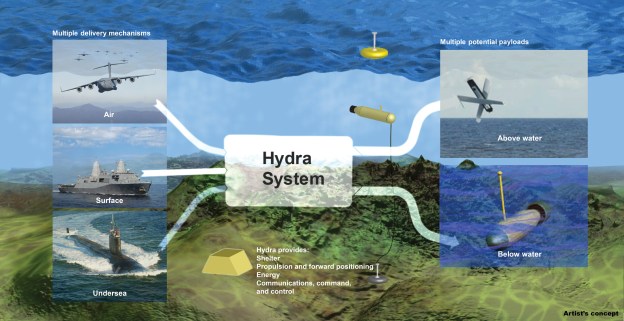
To accommodate the 100,000 tons of nuclear waste that South Korea is expected to generate this century, it needs a disposal vault of 20 sq. km in rock caverns some 500 meters underground, according to a 2011 study by analyst Seongho Sheen published in the Korean Journal of Defense Analysis. “Finding such a space in South Korea, a country the size of the state of Virginia, and with a population of about 50 million, would be enormously difficult,” it said.

The country’s first permanent site to dump less-risky, low-level nuclear waste such as protective clothes and shoes worn by plant workers will be completed next year after the government pacified opposition from residents of Gyeongju city, South Korea’s ancient capital, with 300 billion won ($274 million) in cash, new jobs and other economic benefits for the World Heritage city. The 2.1 million sq. meter dump will eventually hold 800,000 drums of nuclear waste.  “Opponents were concerned that the nuclear dump would hurt the reputation of the ancient capital,” said Kim Ik Jung, a medical professor at the Dongguk University in Gyeongju.

To make its demands more palatable to the U.S., South Korea is emphasizing a fledgling technology called pyroprocessing that it hopes will douse concerns about proliferation because the fissile elements that are used in nuclear weapons remain mixed together rather than being separated.  South Korea’s Atomic Energy Research Institute said pyroprocessing technology could reduce waste by 95 percent compared with 20 to 50 percent from existing reprocessing technology.

The U.S. has agreed to conduct joint research with South Korea on managing spent nuclear fuel, including pyroprocessing, but some scientists say the focus on an emerging technology that may not be economically feasible is eclipsing the more urgent need to address permanent storage of spent nuclear fuel.  “Even under the most optimistic scenario, pyroprocessing and the associated fast reactors will not be available options for dealing with South Korea’s spent fuel on a large scale for several decades,” said Ferenc Dalnoki-Veress, Miles Pomper and Stephanie Lieggi in a joint report for the James Martin Center for Nonproliferation Studies at the Monetary Institute of International Studies. “With or without pyroprocessing, South Korea will need additional storage capacity.”

But for South Korea, researching and developing the technology is a bet worth making.  “The U.S. does not need nuclear energy as desperately as South Korea,” said Sheen, a professor at Seoul National University.

YOUKYUNG LEE, Pact stifles South as nuke waste piles up, Japan Times, Mar. 27, 2013

Drone War Moves to West Africa

The newest outpost in the US government’s empire of drone bases sits behind a razor-wire-topped wall outside Niger’s capital Niamey.  The US air force began flying a handful of unarmed Predator drones from here last month (Feb. 2013). The drones emerge sporadically from a borrowed hangar and soar north in search of al-Qaida fighters and guerrillas from other groups hiding in the region’s deserts and hills.  The harsh terrain of north and west Africa is rapidly emerging as yet another front in the long-running US war against terrorist networks, a conflict that has fuelled a revolution in drone warfare.

Since taking office in 2009, President Barack Obama has relied heavily on drones for operations, both declared and covert, in Afghanistan, Iraq, Pakistan, Yemen, Libya and Somalia. US drones also fly from allied bases in Turkey, Italy, Saudi Arabia, Qatar, the United Arab Emirates and the Philippines.  Now they are becoming a fixture in Africa. The US military has built a major drone hub in Djibouti, on the Horn of Africa, and flies unarmed Reaper drones from Ethiopia. Until recently, it conducted reconnaissance flights over east Africa from the island nation of Seychelles.  The Predator drones in Niger, a landlocked and dirt-poor country, give the Pentagon a strategic foothold in west Africa. Niger shares a long border with Mali, where an al-Qaida affiliate and other Islamist groups have taken root. Niger also borders Libya and Nigeria, which are also struggling to contain armed extremist movements.

Like other US drone bases, the Predator operations in Niger are shrouded in secrecy. The White House announced in February that Obama had deployed about 100 military personnel to Niger on an “intelligence collection” mission, but it did not make any explicit reference to drones. Since then, the defense department has publicly acknowledged the presence of drones here but has revealed little else. The Africa Command, which oversees US military missions on the continent, denied requests from a Washington Post reporter to interview American troops in Niger or to tour the military airfield where the drones are based, near Niamey’s international airport.

Government officials in Niger, a former French colony, were slightly more forthcoming. President Issoufou Mahamadou said his government invited Washington to send surveillance drones because he was worried that the country might not be able to defend its borders from Islamist fighters based in Mali, Libya or Nigeria.  “We welcome the drones,” Mahamadou said in an interview at the presidential palace in Niamey. Citing the “feeble capability” of many west African militaries, he said Niger and its neighbors desperately needed foreign help to track the movements of guerrillas across the Sahara and Sahel, an arid territorial belt that covers much of the region.  “Our countries are like the blind leading the blind,” he said. “We rely on countries like France and the United States. We need co-operation to ensure our security.”  The Predator drones in Niger are unarmed, US officials said, though they have not ruled out equipping the aircraft with Hellfire missiles in the future. For now, the drones are conducting surveillance over Mali and Niger….

But the rules of engagement are blurry. Intelligence gathered by the Predators could indirectly help the French fix targets for airstrikes or prompt Nigerien security forces to take action on their territory.  Moreover, US officials have acknowledged that they could use lethal force under certain circumstances. Last month, army general Martin Dempsey, the chairman of the Joint Chiefs of Staff, told Congress that the US military had designated “a handful of high-value individuals” in north Africa for their suspected connections to al-Qaida, making them potential targets for capture or killing.  The Pentagon declined to say exactly how many Predator aircraft it has sent to Niger or how long it intends to keep them there. But there are signs that the US military wants to establish a long-term presence in west Africa.  After years of negotiations, the Obama administration signed an agreement with Niger in January that provides judicial protection and other safeguards for US troops in the country.  Two US defense officials, speaking on the condition of anonymity to discuss internal planning, said the Pentagon ultimately wants to move the Predators to the Saharan city of Agadez, in northern Niger.  Agadez is closer to parts of southern Algeria and southern Libya where fighters and arms traffickers allied with al-Qaida have taken refuge. The airfield in Agadez, however, is rudimentary and needs improvements before it can host drones, officials said.

Excerpts,Craig Whitlock, Drone warfare: Niger becomes latest frontline in US war on terror, Guardian, Mar. 26, 2013

Drone Warfare Goes Mainstream: like it

occupy drone warfare.  Image from https://www.facebook.com/OccupyDroneWarfare

Rand Paul’s filibuster (March 2012) drew renewed attention to the U.S. government’s program of drone warfare. Paul’s focus — whether Obama believed that he could legally authorize a drone strike on a U.S. citizen on American soil — ultimately earned a direct response from Attorney General Eric Holder.

But  the main targets of drones have been mostly foreigners living in countries like Afghanistan, Pakistan and Yemen. The irony, given all the attention and some plaudits given to Paul’s filibuster, is that most Americans support the use of drones to fight terrorists abroad. While Paul inveighed against a hypothetical killing, the actual killings that do happen are not that controversial in the minds of most Americans. An open question, however, is whether their minds could be changed.

Only last month, the Pew Center asked a random sample of Americans whether they supported “the United States conducting missile strikes from pilotless aircraft called drones to target extremists in countries such as Pakistan, Yemen, and Somalia?” A majority, 56 percent, approved while 26 percent disapproved and 18 percent were not sure — numbers similar to two 2012 polls.

In fact, drone strikes attracted roughly similar amounts of support from across the partisan spectrum: 68 percent of Republicans approved, as did 58 percent of Democrats and 51 percent of independents. A pattern of relative bipartisanship is not all that common in public opinion today, but it is predictable in this case. When leaders in the two parties don’t really disagree on something, there is no reason for partisans in the public to disagree either. In John Zaller’s magisterial account of how public opinion is formed and evolves, he refers to a pattern of bipartisanship like this one as a “mainstream effect.” Like it or not, drone warfare has become so common that “mainstream” does not sound inapt.

Thus, there is little reason to expect public opinion about the drone program to change without concerted and prolonged dissent from political leaders. That does not seem to be forthcoming. Paul’s dissent — which didn’t even emphasize foreign targets of American drones — was met with harsh rebuttals from Lindsay Graham, John McCain and the Wall Street Journal editorial page. Democrats were not exactly rushing to stand with Paul either.

Would dissent from Capitol Hill make any difference? Actually, it might. Some evidence suggests public support for drone warfare is soft. The Pew survey provides hints of that. The main concern about drones — one that 53 percent of the public was “very concerned” about — was civilian casualties, which occur with some regularity…

Excerpts from Ezra Klein, Most Americans approve of foreign drone strikes, Washington Post. Mar. 8, 2013

Rape is a Way of Life in Congo

The U.N. peacekeeping mission in the Democratic Republic of Congo has threatened to stop supporting two Congolese army battalions unless soldiers accused of raping scores of women in an eastern town are prosecuted, said a senior U.N. official.  The United Nations said 126 women were raped in Minova in November 2012 after Congolese troops fled to the town as so-called M23 rebels briefly captured the nearby provincial capital of Goma.

The senior U.N. official, speaking on condition of anonymity, said the two Congolese battalions had been told to start prosecuting soldiers accused of raping the women in Minova this month or they would lose the support of U.N. peacekeepers, Reuters reports.  “Many rapes were committed. We have investigated, we have identified a number of cases and we demand that the Congolese authorities take action legally against those people,” said the official. He did not say how many soldiers had been accused. “Since nothing sufficient has happened at this stage we have already put two units of the armed forces of Congo on notice that if they do not act promptly we shall cease supporting them,” he said. “They have to shape up.”

U.N. spokesman Martin Nesirky said in December that alleged human rights abuses were committed in and around Minova between November 20 and November 30, including the 126 rapes and the killing of two civilians. Nesirky said at the time that two soldiers were charged with rape, while seven more were charged with looting.  The U.N. peacekeeping mission in Congo, known as MONUSCO, has a mandate to protect civilians and supports operations by the Congolese army. There are more than 17,000 troops in Congo – a country the size of Western Europe.

Peacekeepers have been stretched thin by the M23 rebellion in the resource-rich east of Congo and the U.N. Security Council is considering creating a special intervention force, which one senior council diplomat has said would be able to “search and destroy” the M23 rebels and other armed groups in the country.  M23 began taking parts of eastern Congo early last year, accusing the government of failing to honor a 2009 peace deal. That deal ended a previous rebellion and led to the rebels’ integration into the army, but they have since deserted.

African leaders signed a U.N.-mediated accord late last month aimed at ending two decades of conflict in eastern Congo and paving the way for the intervention force

U.N. threatens to stop working with Congo army units accused of rape, Reuters, Mar. 8, 2013


Who is Cryptome?

Cryptome unfamiliar to the general public, is well-known in circles where intelligence tactics, government secrets and whistle-blowing are primary concerns. Since its creation in 1996, Cryptome has amassed more than 70,000 files — including lists of secret agents, high-resolution photos of nuclear power plants, and much more.

Its co-founder and webmaster, a feisty 77-year-old architect, doesn’t hesitate when asked why.  “I’m a fierce opponent of government secrets of all kinds,” says John Young. “The scale is tipped so far the other way that I’m willing to stick my neck out and say there should be none.”  Young describes several exchanges with federal agents over postings related to espionage and potential security breaches, though no charges have ever been filed. And he notes that corporate complaints of alleged copyright violations and efforts to shut Cryptome down have gone nowhere.

For Young, there’s a more persistent annoyance than these: the inevitable comparisons of Cryptome to WikiLeaks, the more famous online secret-sharing organization launched by Julian Assange and others in 2006.  Young briefly collaborated with WikiLeaks’ creators but says he was dropped from their network after questioning plans for multimillion-dollar fundraising. Cryptome operates on a minimal budget — less than $2,000 a year, according to Young, who also shuns WikiLeaks-style publicity campaigns.  “We like the scholarly approach — slow, almost boring,” says Young. He likens Cryptome to a “dusty, dimly lit library.”  That’s not quite the image that Reader’s Digest evoked in 2005, in an article titled “Let’s Shut Them Down.” Author Michael Crowley assailed Cryptome as an “invitation to terrorists,” notably because of its postings on potential security vulnerabilities.Cryptome’s admirers also don’t fully buy into Young’s minimalist self-description….

Young considers himself a freedom-of-information militant, saying he is unbothered by “the stigma of seeming to go too far.” Claims that Cryptome aids terrorists or endangers intelligence agents are “hokum,” he said. “We couldn’t possibly publish information to aid terrorists that they couldn’t get on their own,” he said, depicting his postings about security gaps as civic-minded.  “If you know a weakness, expose it, don’t hide it,” he said…

As a motto of sorts, the Cryptome home page offers a quote from psychiatrist Carl Jung: “The maintenance of secrets acts like a psychic poison which alienates the possessor from the community.”  The website says Cryptome welcomes classified and confidential documents from governments worldwide, “in particular material on freedom of expression, privacy, cryptology, dual-use technologies, national security, intelligence, and secret governance.”  Young attributes Cryptome’s longevity and stature to its legion of contributors, most of them anonymous, who provide a steady stream of material to post.  Among the most frequently downloaded of Cryptome’s recent postings were high-resolution photos of the Fukushima Dai-ichi nuclear plant in Japan after it was badly damaged in the March 2011 tsunami/earthquake disaster.

Cryptome also was a pivotal outlet last year for amorous emails between national security expert Brett McGurk and Wall Street Journal reporter Gina Chon, which led McGurk to withdraw as the Obama administration’s nominee to be ambassador to Iraq.  Other documents on the site list names of people purported to be CIA sources, officers of Britain’s MI6 spy agency, and spies with Japan’s Public Security Investigation Agency….

Another exchange with the FBI came in November 2003, according to Young, when two agents paid him a visit to discuss recent Cryptome postings intended to expose national security gaps. The postings included maps and photos of rail tunnels and gas lines leading toward New York’s Madison Square Garden, where the Republican National Convention was to be held the next year….Another confrontation occurred in 2010, when Cryptome posted Microsoft’s confidential Global Criminal Compliance Handbook, outlining its policies for conducting online surveillance on behalf of law enforcement agencies. Contending that the posting was a copyright violation, Microsoft asked that Cryptome be shut down by its host, Network Solutions. Criticism of Microsoft followed, from advocates of online free speech, and the complaint was withdrawn within a few days….

Moreover, Young urges Cryptome’s patrons to be skeptical of anything placed on the site, given that the motives of the contributors may not be known.  “Cryptome, aspiring to be a free public library, accepts that libraries are chock full of contaminated material, hoaxes, forgeries, propaganda,” Young has written on the site. “Astute readers, seeking relief from manufactured and branded information, will pick and choose…”

Excerpts from DAVID CRARY, Older, Quieter Than WikiLeaks, Cryptome Perseveres, Associated Press, Mar. 9, 2013

How to Divide a Lake: Malawi against Tanzania

Over two million families who solely depend on Lake Malawi for their livelihoods are anxiously putting their hopes into an upcoming mediation between Malawi and Tanzania intended to put an end to a longstanding ownership dispute.  The mediation will start March 2013 after both parties agreed in December 2012 to engage the assistance of the Forum for Former African Heads of State and Government, which is chaired by Mozambique’s former President Joachim Chissano.

According to authorities, about 1.5 million Malawians and 600,000 Tanzanians depend on Africa’s third-largest lake for food, transportation and other daily needs. When IPS visited Karonga District, on the shores of Lake Malawi, surrounding communities said they were worried about the increased tension and keen to see a resolution.

Known as Lake Nyasa in Tanzania and Lago Niassa in Mozambique, the disputed water mass is thought to sit over rich oil and gas reserves, according to recent Malawian government reports.  The mineral potential has rekindled a border dispute between Malawi and Tanzania, which has remained unresolved for almost half a century.

The conflict escalated last July when Malawi awarded oil exploration licenses to United Kingdom-based Surestream Petroleum.  And last December, Malawi awarded the second-largest license to SacOil Holdings Ltd. of South Africa, a move that deepened the crisis.  Twice, the two countries tried to resolve the dispute diplomatically, but to no avail.  Both countries are hoping for the best outcome that will settle the dispute, once and for all when mediation begins this month.
Malawi’s first president, Hastings Kamuzu Banda, was the first to claim that Lake Malawi was part of the southern African nation. He based his claim on the 1890 Heligoland Agreement between Britain and Germany, which stipulated that the border between the countries lay along the Tanzanian side of the lake.  The treaty was reaffirmed at the 1963 Organisation of African Unity Summit in Ethiopia and was reluctantly accepted by Tanzania.  Malawi’s Foreign Affairs Minister Ephraim Chiume told IPS that their position is based on the 1890 Treaty and that the African Union in 2002 and 2007 upheld the colonial agreement.  “The Heligoland Treaty gave the entire lake to us and this is what forms the basis of our position and proof that we own the entire lake,” said Chiume.
Tanzania’s position is that the treaty was flawed. Tanzania has remained resolute that it owns half of the lake – saying that the border runs through the middle of the lake excluding the section that lies in Mozambique.  Tanzania’s position is that a partition drawn in the middle of the lake, stressing that this is the practice among countries which share water bodies.  “Tanzania has sought recourse to international law, which indicates that borders are generally in the middle of a body of water… Tanzania should therefore own half the lake,” Tanzanian Minister of Foreign Affairs Benard Membe told IPS in a telephone interview.  Membe said that the treaty was flawed because it denied Tanzanian’s living on the shores of the lake their given right to utilise proximate water and marine resources to earn their daily living.

These are the positions that Chissano and his two colleagues; former South African President Thabo Mbeki and former Botswana President Ketumire Masire will have to consider.

Meanwhile, the dispute has also brought to the fore the impact oil drilling would have on a fresh water lake blessed with over 2,000 different fish species, which attracts scuba divers the world over. Local environmentalists fear that drilling in the lake will damage eco-tourism and the marine environment affecting the fishing region in the northern part of the country.  “It will endanger the social and economic lives of millions of people directly dependent on the lake for water, transport and most importantly fish for protein,” said Reginald Mumba of Rehabilitation of the Environment — a local environmental non-profit

Excerpts from By Mabvuto Banda,Two Million People Hold their Breath Over Lake Malawi Mediation, Inter Press Service,  Mar. 3, 2013

Water Shortages in the MIddle East: Tigris and Euphrates

According to a study in Water Resources Research, an American scientific journal, between 2003 and 2009 the region that stretches from eastern Turkey to western Iran lost 144 cubic kilometres of fresh water.  That figure is vast. It is equivalent in volume to the Dead Sea and, according to the study’s senior author, Jay Famiglietti of the University of California, Irvine, implies that the region is suffering the world’s second-fastest rate of water depletion after northern India. The water table sank by 0.3 metres (one foot) a year in 2006-09. At the point where the Euphrates crosses from Syria into Iraq, it now flows at only 70% of the rate it once did. All this in an area that already faces severe water shortages.

The study provides the first accurate estimate of all the water in the basin. National statistics are flawed and incomplete; some figures are even state secrets. But the study uses satellite data from America’s NASA which is not subject to these restrictions. These satellites not only measure surface water by photographs but, thanks to precise measurements of the effect of bodies of water on the atmosphere, can even calculate the amount of water in the aquifer below them.

The main reason for the depletion turns out to be that more water is being taken out of the underground aquifer, mainly by farmers. The rate of loss accelerated after drought hit the region in 2007. Between 2007 and 2009, in response to reduced flows of water in the rivers, Iraq’s government dug 1,000 new wells and abstracted four-fifths of all its groundwater reserves. The aquifer is not being replenished at anything like that rate, so this cannot continue for long.

The rapid depletion has implications for managing the basin, which is shared by Turkey, Syria, Iraq and Iran. All the countries have extensive dams, reservoirs and other sorts of infrastructure on both rivers which control the water’s flow. But they have no international treaty governing when and by how much they can shut the flow down.

Over the years, this has not mattered much. The countries have rubbed along, sometimes amicably, sometimes not, with downstream ones (notably Syria and Iraq) assuming there would always be enough water in the upstream reservoirs of Turkey for them all. But if the new study is any guide, that assumption may not hold for much longer.

The Tigris and Euphrates: Less fertile crescent, Economist, Mar. 9, 2013, at 42

Anti-Nuclear Protests: Taiwan

In what organizers called the largest anti-nuclear protest in Taiwan, an estimated 200,000 people took to the streets in several parts of the island on March 9, 2013 to call for the scrapping of nuclear power plants.  The protest was held simultaneously in northern, central, southern and eastern Taiwan just two days before the second anniversary of the meltdown of Japan’s Fukushima nuclear power plant in the wake of the big earthquake and tsunami on March 11, 2011.

The march participants demanded that the government not allocate any more funding for the construction of Taiwan’s fourth nuclear power plant in New Taipei City. Construction of the plant has stretched over 14 years and has so far costed taxpayers US$10 billion. It is scheduled to be completed later this year.  But there are increasing concerns over safety, especially given several flooding incidents at the plant being built by the state-run Taipower. Protesters urged the government not to allow fuel rod filling at the new power plant.  More than 6.5 million people, including the residents of Taipei, live within just 80 kilometers of the plant.

Protesters also demanded the speedy decommissioning of Taiwan’s first, second and third nuclear power plants now under operation. All three plants are around three decades old.  In addition, protesters called for the removal of stored nuclear waste from Taiwan’s outlying Orchid Island immediately, as well as a review of the government’s policy to eventually phase out the use of nuclear power, and the government’s implementation of “zero growth for electricity demands.”

A spokeswoman for the Presidential Office said President Ma Ying-jeou was willing to have dialogues with anti-nuclear groups and listen to their suggestions on how Taiwan can find alternatives for nuclear power.Garfi Li cited Ma as saying that the government’s nuclear power policy is based on the premises of “no shortage of electricity, reasonable electricity prices, and honoring the promise to cutting carbon emission to the international community.”…

Previously, the economics ministry, which oversees Taiwan’s state-owned Taipower — the operator of the nuclear power plants — has said Taiwan needs nuclear power so as to avoid being overdependent on imported energy raw material and rising international prices for them. The economics minister has also warned of an energy shortage if the fourth plant is not put into operation….Most importantly, protesters argued that safety, rather than carbon emission reduction and cheap energy prices, should be top priority. They argue that Taiwan’s power plants are among the most dangerous in the world — they are located near fault lines and in densely populated areas, much more densely populated than Fukushima.said they were adamantly opposed to the increase of thermal power, adding that Taichung should increase the use of solar and wind power instead….

In Taitung, eastern Taiwan, the protesters called for nuclear waste to be removed from their area. More than 2,000 people took part in that protest, the largest mass movement in years in Taitung.”We have to take to the streets for the good of the next generation,” one organizer said.Following Orchid Island off the Taitung County, Nantien village in the county’s Dajen township has been slected as one of the possible nuclear waste storage site

200,000 TAKE PART IN TAIWAN’S ANTI-NUCLEAR PROTEST. Focus Taiwan News Channel, Mar. 9, 2013


Nowhere to Go? Nuclear Waste

Federal officials are looking to ship some 3 million gallons of radioactive waste from Washington state to New Mexico, giving the government more flexibility to deal with leaking tanks at Hanford Nuclear Reservation…The Department of Energy said its preferred plan would ultimately dispose of the waste in a massive repository – called the Waste Isolation Pilot Plant – near Carlsbad, N.M, where radioactive materials are buried in rooms excavated in vast salt beds nearly a half-mile underground.

The federal proposal was quickly met with criticism from a New Mexico environmental group that said the state permit allowing the government to bury waste at the plant would not allow for shipments from Hanford, the nation’s most contaminated nuclear site.  Sen. Tom Udall, D-N.M., said WIPP specifically prohibits waste from Hanford and any proposal to modify permit language in this case would need “strong justification and public input.”  “WIPP has demonstrated success in its handling of defense TRU waste,” Udall said in a statement. “With regard to Hanford waste, I urge all parties involved to exhibit caution and scientific integrity to ensure that DOE is abiding by the law and that the waste classifications are justified.”  The waste near Carlsbad includes such things as clothing, tools and other debris.

The transfer from Washington would target so-called transuranic waste, which is less radioactive than some of the sludge at Hanford, and accounts for a fraction of the roughly 50 million gallons of waste there currently. Federal officials have identified six leaking tanks, and five of the leakers contain transuranic waste, said Tom Fletcher, assistant manager of the tank farms for the Energy Department.  Dave Huizenga, head of the Energy Department’s Environmental Management program, said the transfer would not impact the safe operations of the New Mexico facility.  “This alternative, if selected for implementation in a record of decision, could enable the Department to reduce potential health and environmental risk in Washington State,” said Huizenga.

Don Hancock, of the Albuquerque-based watchdog group Southwest Research and Information opposing the transfer to New Mexico, said this is not the first time DOE has proposed bringing more waste to the plant near Carlsbad.  “This is a bad, old idea that’s been uniformly rejected on a bipartisan basis by politicians when it came up in the past, and it’s been strongly opposed by citizen groups like mine and others,” Hancock said. “It’s also clear that it’s illegal.”

Disposal operations near Carlsbad began in March 1999. Since then, more than 85,000 cubic meters of waste have been shipped to WIPP from a dozen sites around the country.  Any additional waste from Hanford would have to be analyzed to ensure it could be stored at the site because a permit issued by the New Mexico Environment Department dictates what kinds of waste and the volumes that can be stored there…

Washington Gov. Jay Inslee says the proposal is a good start in the process of getting rid of Hanford’s waste… He also said a system is in place to treat the groundwater should contamination from the leaks reach it.  In the meantime, Inslee plans to push Congress to fully fund this proposal, saying “every single dollar of it is justified.”

South-central Washington’s Hanford Nuclear Reservation is home to 177 underground tanks, which hold toxic and radioactive waste left from decades of plutonium production for the country’s nuclear weapons arsenal…In a letter to Inslee, the Department of Energy estimated it will have to eliminate $92 million for its Office of River Protection, which oversees efforts to empty the tanks and build a plant to treat the waste. The cuts will result in furloughs or layoffs impacting about 2,800 contract workers, the agency said…. [Currently]The U.S. government spends some $2 billion each year on cleanup at Hanford – one-third of its entire budget for nuclear cleanup nationally….

Excerpts, Austin Reed Federal proposal for nuclear waste problem in Washington State, Associated Press, Mar. 8, 2013

Lack of Transparency – Drone Strikes

As scrutiny and debate over the use of remotely piloted aircraft (RPA) [drones or UAVs] by the American military increased last month, the Air Force reversed a policy of sharing the number of airstrikes launched from RPAs in Afghanistan and quietly scrubbed those statistics from previous releases kept on their website.  In October 2012, Air Force Central Command started tallying weapons releases from RPAs, broken down into monthly updates.

The Air Force maintained that policy for the statistics reports for November, December and January. But the February numbers, released March 7, contained empty space where the box of RPA statistics had previously been. Additionally, monthly reports hosted on the Air Force website have had the RPA data removed.   Those files still contained the RPA data as of Feb. 16, according to archived web pages accessed via Archive.org. Metadata included in the new, RPA-less versions of the reports show the files were all created Feb. 22.

Defense Department spokesman Cmdr. Bill Speaks said the department was not involved in the decision to remove the statistics. AFCENT did not respond to a request for comment by press time.The data removal coincided with increased scrutiny on RPA policy caused by President Barack Obama’s nomination of John Brennan to head the CIA. Brennan faced opposition in the Senate over the use of RPAs and his defense of their legality in his role as Obama’s deputy national security adviser.

On Feb. 20, two days before the metadata indicates the scrubbed files were created, Sen. Rand Paul, R-Ky., sent a letter to Brennan saying that he would filibuster the nomination over concerns about using RPA strikes inside the U.S., a threat he carried out for over 12 hours on March 6 (Brennan was confirmed the next day).  That same day, Sen. Lindsay Graham, R-S.C., told a crowd in South Carolina that strikes by American RPAs have killed 4,700 people.  “Sometimes you hit innocent people, and I hate that, but we’re at war, and we’ve taken out some very senior members of al-Qaida,” Graham was quoted by the Patch website as saying.

Excerpts, Brian Everstine and Aaron Mehta AF removes RPA airstrike number from summary, Air Force Times, Mar 8, 2013


Keep Talking, the State Listens

DARPA is funding a project that uses crowdsourcing to improve how machines analyze our speech. Even more radical: DARPA wants to make systems so accurate, you’ll be able to easily record, transcribe and recall all the conversations you ever have... But it’s not just about better recordings of what you say. It’ll lead to more recorded conversations, quickly transcribed and then stored in perpetuity — like a Twitter feed or e-mail archive for everyday speech. Imagine living in a world where every errant utterance you make is preserved forever.

University of Texas computer scientist Matt Lease… has attracted enough attention for Darpa to award him a $300,000 award over two years to study the new project, called “Blending Crowdsourcing with Automation for Fast, Cheap, and Accurate Analysis of Spontaneous Speech.” The project envisions a world that is both radically transparent and a little freaky.

The idea is that business meetings or even conversations with your friends and family could be stored in archives and easily searched. The stored recordings could be held in servers, owned either by individuals or their employers….

How? The answer, Lease says, is in widespread use of recording technologies like smartphones, cameras and audio recorders — a kind of “democratizing force of everyday people recording and sharing their daily lives and experiences through their conversations.” But the trick to making the concept functional and searchable, says Lease, is blending automated voice analysis machines with large numbers of human analysts through crowdsourcing. That could be through involving people “strategically,” to clean up transcripts where machines made a mistake. Darpa’s older EARS project relied entirely on automation, which has its drawbacks….

Crowdsourcing is all about harnessing distributed networks of people — crowds — to do tasks better and more efficiently than individuals or machines. Recently, that’s meant harnessing large numbers of people to build digital maps, raising funds for a film project at Kickstarter, or doing odd-jobs at Amazon Mechanical Turk — one system being studied as part of the project. Darpa has also taken an interest in crowdsourcing as a way to analyze vast volumes of intelligence data, and Darpa’s sibling in the intelligence community, IARPA, has researched crowdsourcing as a way to find the best intelligence predictions.

It also raises some thorny legal and social questions about privacy. For one, there is an issue with “respecting the privacy rights of multiple people involved,” Lease says. One solution, for a business conference that’s storing and transcribing everything said by the participants, could be a mutual agreement between all parties. He adds that technical issues when it comes to archiving recorded speech are still open questions, but people could potentially hold their cell phone conversations on remote servers; or on individual, privately-held servers.

The other problem is figuring out how to search massive amounts of transcribed speech, like how search engines such as Google use complex algorithms to match and optimize search queries with results that are likely to be relevant. Fast and cheap web analytics — judging what people type and matching it up to what they click — is one way to do it. Studying focus groups are more precise, but expensive. A third way, Lease suggests, is using more crowdsourcing as a sort of a “middle-ground” between the two methods.

But it’s unknown how the research will be applied to the military. Lease wouldn’t speculate, and it’s still very much a basic research project. Though if it’s similar to EARS at all, then it may not be too difficult to figure out. A 2003 memorandum from the Congressional Research Service described EARS as focusing on speech picked up from broadcasts and telephone conversations, “as well as extract clues about the identity of speakers” for “the military, intelligence and law enforcement communities.” Though Lease didn’t mention automatically recognizing voices. But the research may not have to go that far — if we’re going to be recording ourselves.

Excerpt, BY ROBERT BECKHUSEN, Darpa Wants You to Transcribe, and Instantly Recall, All of Your Conversations, Wired, Mar. 4, 2013

A Bag of Dollars: Afghan Militia,US Special Forces and the CIA

The decision by Afghanistan’s president, Hamid Karzai, on February 24th to expel American special forces from the province of Wardak, south-west of the capital, Kabul, has thrown the NATO coalition into confusion. It has also turned attention to these elite but shadowy American units. The government has given the forces two weeks to leave the province, accusing them of complicity in murders and disappearances.

The order was announced at a hastily convened press conference, and the crimes were blamed especially on Afghan irregulars who had been recruited to work alongside the Americans. Mr Karzai, however, has made it clear that he holds America responsible. The government says residents of the province have long complained of the irregulars’ abuses and that it is taking action only after the NATO coalition failed to do so.

Mr Karzai’s expulsion of the special forces throws into question a principal element of the coalition’s strategy. These units increasingly play the lead role in fighting the Taliban, as other forces are shifted into training and advising Afghan troops ahead of the full withdrawal of American combat forces by the end of 2014. Both NATO and Afghan commanders credit raids by American special forces for weakening the Taliban.

Special forces are also training tens of thousands of civilians for the Afghan Local Police (ALP), a village-based defence force which has become a central part of the effort to shore up security in rural areas. However many American troops remain in Afghanistan for training after 2014, local commanders are expected to want plenty of special forces alongside them.

Both the raids by special forces and the recruiting of militiamen at the local level have always sat uneasily with Mr Karzai. It was only after much arm-twisting that he was persuaded to accept the idea of the ALP at all. As the deadline nears for the Afghan government to assume all responsibility for the country’s security, the president has wanted to be seen exerting Afghan sovereignty and clearly laying down what NATO can and cannot do in the provinces.

What rankles the government about the allegations in Wardak is the suggestion that the Americans are getting unaccountable Afghans to do their dirty work. Such proxy forces have long existed in Afghanistan and, this time around, date from the earliest stages of the American war, when bags of dollars were handed to local strongmen to buy the services of their militias. At the time, hostility towards the Taliban overrode any unsavoury behaviour. Both American special forces and the CIA have murky histories with such paramilitary groups.

Who stands accused of the crimes in Wardak, and whether there are such American-backed groups there at all, is central to the confusion today. “I genuinely don’t know who is operating there,” says one NATO official. The picture is further muddied because the main Kabul-to-Kandahar highway that runs through Wardak is partly secured by another armed force of Afghans known to be working for private-security companies. Whatever crimes were or were not committed in the province, Mr Karzai’s government blames the Americans for creating “parallel groups and structures” of Afghan forces outside the control of the government.

Local leaders from Wardak confirm the abuses took place, but do not know who committed them. The perpetrators sometimes wore uniforms and sometimes not, say locals, who say the men were not part of the Afghan army.Meanwhile America is holding drawn-out negotiations with Mr Karzai over the role and status of American troops who stay beyond 2014. The Afghan announcement about American special forces in Wardak may have something to do with these talks. In previous rounds of negotiations, NATO has sometimes surprised observers by backing down on points which had seemed non-negotiable only a few years earlier. Mr Karzai may now be pressing them to make similar choices about the use of special forces.

Afghanistan: Yankee beards go home, Economist, Mar. 2, 2013, at 42devgru-bodyguards-and-karzai.jpg

The Polar Bear: An Animal or Icon

The Inuit see the animal as a fierce predator, a cultural symbol and a valuable source of food, warmth and money in a part of the world where all three are in short supply.Yet to animal-welfare and green groups in warmer places the polar bears are both an icon in the fight against climate change and an animal under threat of extinction. The melting of the Arctic’s ice cap, which the bears use as a hunting platform, means the estimated population of between 20,000 and 25,000 will decline sharply, they say. They see hunting the bears as an anachronism and want international trade in bear pelts and parts, already severely restricted, completely banned.

These opposing views are set to clash at a meeting of the Convention on International Trade in Endangered Species of Wild Fauna and Flora (CITES), an intergovernmental agreement, between March 3rd and 14th in Bangkok. Having failed at the previous meeting of CITES in 2010, the United States is again leading a move to switch the polar bear from Appendix II of the convention to Appendix I, which would ban trade in all but “exceptional” circumstances. The American proposal is backed by Russia but opposed by Canada, Norway, Denmark (which represents Greenland) and the CITES secretariat.

The debate promises to be emotional. What it lacks are facts. The Americans acknowledge that only eight of the 19 known groups of polar bears have been surveyed since 2000. Of the remaining 11, four have never been surveyed. The submission relies on a controversial forecast undertaken for the US Fish and Wildlife Service in 2007 that suggests the decline in sea ice will lead to the disappearance of two-thirds of the world’s polar bears by 2050.  Should the United States obtain the two-thirds majority needed to change the bear’s status, it will be a blow to the Inuit. Their trade in walrus tusks and narwhal horns has dried up because of curbs on sales of ivory designed largely to protect elephants. The trade in seal pelts and meat was curtailed by a 2009 import ban by the European Union, though this granted a limited exemption to indigenous peoples.

In Canada polar bears are hunted under annual quotas set by territorial governments. The Inuit trade bear pelts, claws and teeth, and sell some of the quota to trophy hunters, who employ local guides and buy local supplies…..

Countries which want to become observers at the Arctic Council, an intergovernmental body, will be reluctant to vote against Canada, Norway and Denmark on the issue. Canada takes over as chairman of the council in May. Still, it will take resolve to stand up to the United States, also a council member, and the array of animal-welfare and environmental groups backing its position.

The Inuit also argue that if the problem is climate change, to ban trade in polar bears is to attack the symptom rather than the cause. That was the argument of the European Union’s environment commissioner, Janez Potocnik, when the European Parliament debated the issue earlier this month. But the MEPs still voted in support of the American position.

Canada’s Inuit: Polar-bear politics, Economist, Feb. 23, at 36

The Super Military Helicopter: VTOL-X

From the DARPA website:

The versatility of helicopters and other vertical take-off and landing (VTOL) aircraft make them ideal for a host of military operations. Currently, only helicopters can maneuver in tight areas, land in unprepared areas, move in all directions, and hover in midair while holding a position. This versatility often VTOL aircraft the right aerial platform for transporting troops, surveillance operations, special operations and search-and-rescue missions.

Compared to fixed-wing aircraft, helicopters are slower-leaving them more vulnerable to damage from enemy weapons. Special operations that rely on lightning-quick strikes and medical units that transport patients to care facilities need enhanced speed to shorten mission times, increase mission range, reduce the number of refueling events and, most important, reduce exposure to the adversary.

By their very design, rotary-wing aircraft that take off and land vertically have a disadvantage achieving speeds comparable to fixed-wing aircraft.,,,”For the past 50 years, we have seen jets go higher and faster while VTOL aircraft speeds have flat-lined and designs have become increasingly complex,” said Ashish Bagai, DARPA program manager. “To overcome this problem, DARPA has launched the VTOL X-Plane program to challenge industry and innovative engineers to concurrently push the envelope in four areas: speed, hover efficiency, cruise efficiency and useful load capacity.”  “We have not made this easy,” he continued. “Strapping rockets onto the back of a helicopter is not the type of approach we’re looking for…This time, rather than tweaking past designs, we are looking for true cross-pollinations of designs and technologies from the fixed-wing and rotary-wing worlds.

Excerpt from DARPA EXPERIMENTAL AIRCRAFT PROGRAM TO DEVELOP THE NEXT GENERATION OF VERTICAL FLIGHT, February 25, 2013

See also https://www.fbo.gov/

Crying over Spilled Oil; BP Deepwater Horizon

After the Deepwater Horizon oil rig exploded in 2010, killing 11 workers and spewing a lake of oil into the Gulf of Mexico, BP knew it would be punished severely. So far, the British oil firm has set aside $42 billion to pay fines, compensate victims and clean up the mess. Of this, some $36 billion has already been paid out or earmarked. America has also temporarily barred the company from bidding for federal contracts.

In all, BP has shelled out $14 billion to stop the spill and restore the coast to the way it was. It has paid out or earmarked $17.5 billion to compensate individuals and small businesses, plus another $4 billion to settle criminal charges with the Department of Justice. It has also set aside $3.5 billion to pay penalties for oil leaks under America’s Clean Water Act.  These have yet to be determined. A civil trial, set to begin on February 25th in New Orleans, will apportion blame for the accident, determine how much oil gushed out and apply financial penalties. The federal government is demanding $21 billion in compensation for spilt oil. To get that much, it must prove BP was “grossly negligent”. It must also persuade the court to accept its estimate of the size of the leak, rather than

As if that were not enough, BP’s annual results, released on February 5th, harboured another nasty surprise. Tucked away on page 42 were details of hefty new claims against the oil giant. Alabama, Mississippi, Florida and Louisiana are demanding $34 billion for economic losses and property damage. These mainly relate to tax revenues allegedly lost as a result of disruptions to businesses, says BP.  The oil giant knew that a bill was in the post: a three-year statute of limitations will soon expire. However, it was not expecting the bill to be so big. BP disputes the way the sum has been calculated and is ready to fight the claims in court. It reckons that the states will have a tough job substantiating their calculations of forgone taxes.

Both claims seem likely to be settled out of court…BP would far rather end the matter quickly and get on with its business. The uncertainty over the final bill is weighing down its share price. And its sheer size is daunting. If all the claims against it are upheld, BP’s total bill will amount to $90 billion or so. By way of comparison, Saddam Hussein’s Iraq was ordered to pay reparations of $52 billion ($88 billion in today’s money) for invading Kuwait.

One reason why a settlement has proved elusive is that the case is so complex. It involves three pieces of legislation and several layers of federal, state and local government with precious little co-ordination between them. For example, BP notes that 11 tiny Louisiana parishes have made a separate claim for damage to local wildlife. BP’s woes are not over.

The Deepwater Horizon disaster: Spills and bills, Economist, Feb. 9, 2013, at 66

Icesave Case: winners & losers of bank failures

In 2008 Britain’s former prime minister Gordon Brown chose to invoke anti-terrorism laws to freeze the assets of a failed Icelandic bank…In January 28, 2013 a ruling delivered in Luxembourg by the European Free-Trade Association Court, dealt with the collapse of Icesave, an online subsidiary of Iceland’s Landsbanki. Before the crisis Icesave had used a European “passport” to open branches abroad and collected deposits in Britain and the Netherlands with almost no oversight from regulators in those countries. One condition of its passport was that it promised that its deposits were backed by a national deposit-insurance scheme in Iceland. Yet when the bank collapsed Iceland’s deposit scheme was overwhelmed. Icelandic depositors in the bank ended up getting their money back; the British and Dutch governments both had to step in to compensate depositors in their countries.

Many observers had expected the court to rule that Iceland was obliged to stand behind its national deposit-protection plan and not to discriminate against foreign depositors. Instead the court found that Iceland was obliged only to make sure that it had a deposit-insurance scheme. The state was not required to pay out if the scheme had no money because of a banking crisis. Oddly, the court also found that Iceland had not breached an obligation not to discriminate between domestic and foreign depositors, even though it made only the domestic ones whole.

The questions addressed by the court may seem anachronistic: European law on deposit protection has been extensively rewritten since the crisis. Yet the ruling is another warning to those who hope that regulators can strike binding agreements on how they will share the costs of a future banking crisis. Supervisors in America are already trying to ensure that foreign banks there operate as separately capitalised subsidiaries, so they do not have to rely on the vigilance of foreign regulators. Hopes that Europe’s banking union will include a mutual deposit-guarantee scheme are in any case faint. This week’s ruling will only weaken confidence in the willingness of countries to bail out foreign creditor

The Icesave ruling: In the cooler, Economist, Feb. 2, 2013, at 64

Watching your Internet Fingerprint

The current standard method for validating a user’s identity for authentication on an information system requires humans to do something that is inherently difficult: create, remember, and manage long, complex passwords. Moreover, as long as the session remains active, typical systems incorporate no mechanisms to verify that the user originally authenticated is the user still in control of the keyboard. Thus, unauthorized individuals may improperly obtain extended access to information system resources if a password is compromised or if a user does not exercise adequate vigilance after initially authenticating at the console.

The Active Authentication program seeks to address this problem by developing novel ways of validating the identity of the person at the console that focus on the unique aspects of the individual through the use of software-based biometrics. Biometrics is defined as the characteristics used to uniquely recognize humans based upon one or more intrinsic physical or behavioral traits. This program focuses on the computational behavioral traits that can be observed through how we interact with the world. Just as when you touch something with our finger you leave behind a fingerprint, when you interact with technology you do so in a pattern based on how your mind processes information, leaving behind a “cognitive fingerprint.”

This BAA addresses the first phase of this program. In the first phase of the program, the focus will be on researching biometrics that does not require the installation of additional hardware sensors. Rather, DARPA will look for research on biometrics that can be captured through the technology already in use in a standard DoD office environment, looking for aspects of the “cognitive fingerprint.” A heavy emphasis will be placed on validating any potential new biometrics with empirical tests to ensure they would be effective in large scale deployments.

The later planned phases of the program that are not addressed in this BAA will focus on developing a solution that integrates any available biometrics using a new authentication platform suitable for deployment on a standard Department of Defense desktop or laptop. The planned combinatorial approach of using multiple modalities for continuous user identification and authentication is expected to deliver a system that is accurate, robust, and transparent to the user’s normal computing experience. The authentication platform is planned to be developed with open Application Programming Interfaces (APIs) to allow the integration of other software or hardware biometrics available in the future from any source.

The combined aspects of the individual that this program is attempting to uncover are the aspects that are the computational behavioral “fingerprint” of the person at the keyboard. This has also been referred to in existing research as the “cognitive fingerprint.” The proposed theory is that how individuals formulate their thoughts and actions are reflected through their behavior, and this behavior in turn can be captured as metrics in how the individual performs tasks using the computer.

Some examples of the computational behavior metrics of the cognitive fingerprint include:

− keystrokes

− eye scans

− how the user searches for information (verbs and predicates used)

− how the user selects information (verbs and predicates used)

− how the user reads the material selected

• eye tracking on the page

• speed with which the individual reads the content

− methods and structure of communication (exchange of email)

These examples are only provided for illustrative purposes and are not intended as a list of potential research topics. The examples above include potential biometrics that would not be supported through this BAA due to a requirement for the deployment of additional hardware based sensors (such as tracking eye scans).

Excerpt from, Broad Agency Announcement, Active Authentication, DARPA-BAA-12-06, January 12, 2012

On Feb. 12, 2013, two groups announced related projects. The first is an industry group calling itself the FIDO (Fast IDentity Online) Alliance. It consists of the computer-maker, Lenovo, the security firm, Nok Nok Labs, the online payment giant, PayPal, the biometrics experts, Agnito, and the authentication specialists, Validity. The second is the Defense Advanced Research Project Agency (DARPA), a research and development arm of the Defense Department.

Excerpt from DARPA, FIDO Alliance Join Race to Replace Passwords, CNET, Feb. 12, 2013

Shell Nigeria and the Ogoni People

On January 30th, 2013 a Dutch court ruled that Shell, Nigeria’s biggest oil producer, must compensate Friday Akpan, a farmer from the Delta region, for the pollution of his farmland and destruction of his livelihood. The ruling could open a flood-gate to legal complaints against oil companies.In 2008, five Nigerians, including Mr Akpan, filed suits in The Hague where Shell has its headquarters. The other four cases were dismissed; the court said Shell could not have prevented the spills involved. Environmental campaigners insist the company was negligent. Amnesty International says the dismissal highlights how difficult it is for Nigerians whose lives have been affected by oil pollution to get justice.

Court orders and regulatory fines are rarely enforced in Nigeria. According to a 2011 United Nations report on the Ogoniland region in the Niger Delta, restoring the area, much of which is covered in thick, black oil, could take up to 30 years. It would cost $1billion just to start the clean up. Little progress has been made since the report was published. Bad laws, lax regulation and corporate exploitation make environmental degradation even worse in Nigeria.

Shell says that nearly 26,000 barrels of its oil was spilt last year in 200 incidents in the Delta. Some 55 were the result of “operational mishaps,” including poor maintenance of facilities but 144 were caused by sabotage or people siphoning oil from pipelines. Oil theft is increasingly a cause of oil spills in the region. The illegal refining of stolen oil is common in the Niger Delta. But in a region with few jobs, poor health care and dire schools, it is little wonder people resort to refining stolen oil. For some, it is the only way left to make a living.

John Donovan, A mixed verdict, Economist, Feb 3rd, 2013

Leaking Toxics: Hanford Nuclear Site

United States: Washington state Gov. Jay Inslee got a disturbing call Friday (Feb. 15, 2013) from Energy Secretary Steven Chu: Nuclear waste is leaking out of a tank in one of the most contaminated nuclear waste sites in the U.S.  Inslee released a statement, saying a single shell tank at Hanford Nuclear Reservation is slowly losing between 150 and 300 gallons of radioactive waste each year. All of the liquid was removed from the tank in February 1995; what’s left is toxic sludge.  According to Inslee “The leaking tank was built in the 1940’s and was stabilized in February 1995, when all pumpable liquids were removed by agreement with the State. The tank currently contains approximately 447,000 gallons of sludge, a mixture of solids and liquids with a mud-like consistency. This is the first tank which has been documented to be losing liquids since interim stabilization was completed in 2005. There are a total of 177 tanks at the Hanford site, 149 of which are single shell tanks.”

Inslee said “Fortunately, there is no immediate public health risk. The newly discovered leak may not hit the groundwater for many years, and we have a groundwater treatment system in place that provides a last defense for the river. However, the fact that this tank is one of the farthest from the river is not an excuse for delay. It is a call to act now.”

Northwest News Network reporter Anna King, who’s tracking the Hanford site, found activists who say there’s a worse problem than the leak: Now that the tank is breached, where will officials put the toxic waste? “Tom Carpenter heads the Seattle-based watchdog group Hanford Challenge. He says Friday’s news highlights the fact that there’s little space to move highly radioactive waste to. So Carpenter asks, ‘If you have another leak, what do you do? You don’t have any strategy for that.’ And the Hanford Advisory Board and the state of Washington and Hanford Challenge and others have been calling upon the Department of Energy to build new tanks. That call has been met with silence.”

Hanford has been in existence since the 1940s, when the site was used to prepare plutonium for bombs….Federal officials have spent many years and billions of dollars cleaning up the reservation, including efforts to protect the nearby Columbia River. There are 177 tanks holding nuclear waste at the Hanford site; Gov. Inslee says 149 are single shelled, like the leaking one. Worse, they’ve outlived their 20-year life expectancy.

The waste mitigation work now faces a predicament with the impending sequester, the automatic across-the-board federal spending cuts that are set to take effect March 1 unless Congress reaches a different arrangement on a spending plan. Inslee says this will mean layoffs at Hanford and could even stop work there. He termed the combination of the leak and the budget cuts the “perfect radioactive storm,” according to the Seattle Post-Intelligencer.

Excerpts from KORVA COLEMAN, Nuclear Waste Seeping From Container In Hazardous Wash. State Facility, NPR, Feb. 16, 2013 and from Governor Inslee’s statement on news of Hanford leak Feb 15, 2013

Lethal Operations Against US Citizens Lawful: secret memo

A confidential Justice Department memo concludes that the U.S. government can order the killing of American citizens if they are believed to be “senior operational leaders” of al-Qaida or “an associated force” — even if there is no intelligence indicating they are engaged in an active plot to attack the U.S.The 16-page memo, a copy of which was obtained by NBC News, provides new details about the legal reasoning behind one of the Obama administration’s most secretive and controversial polices: its dramatically increased use of drone strikes against al-Qaida suspects abroad, including those aimed at American citizens, such as the September 2011 strike in Yemen that killed alleged al-Qaida operatives Anwar al-Awlaki and Samir Khan. Both were U.S. citizens who had never been indicted by the U.S. government nor charged with any crimes….The undated memo is entitled “Lawfulness of a Lethal Operation Directed Against a U.S. Citizen who is a Senior Operational Leader of Al Qa’ida or An Associated Force.” It was provided to members of the Senate Intelligence and Judiciary committees in June by administration officials on the condition that it be kept confidential and not discussed publicly.

Although not an official legal memo, the white paper was represented by administration officials as a policy document that closely mirrors the arguments of classified memos on targeted killings by the Justice Department’s Office of Legal Counsel, which provides authoritative legal advice to the president and all executive branch agencies. The administration has refused to turn over to Congress or release those memos publicly — or even publicly confirm their existence. A source with access to the white paper, which is not classified, provided a copy to NBC News.

“This is a chilling document,” said Jameel Jaffer, deputy legal director of the ACLU, which is suing to obtain administration memos about the targeted killing of Americans. “Basically, it argues that the government has the right to carry out the extrajudicial killing of an American citizen. … It recognizes some limits on the authority it sets out, but the limits are elastic and vaguely defined, and it’s easy to see how they could be manipulated.”…..

The completeness of the administration’s public accounts of its legal arguments was also sharply criticized last month by U.S. Judge Colleen McMahon in response to a lawsuit brought by the New York Times and the ACLU seeking access to the Justice Department memos on drone strikes targeting Americans under the Freedom of Information Act. McMahon, describing herself as being caught in a “veritable Catch-22,” said she was unable to order the release of the documents given “the thicket of laws and precedents that effectively allow the executive branch of our government to proclaim as perfectly lawful certain actions that seem on their face incompatible with our Constitution and laws while keeping the reasons for the conclusion a secret.”  In her ruling, McMahon noted that administration officials “had engaged in public discussion of the legality of targeted killing, even of citizens.” But, she wrote, they have done so “in cryptic and imprecise ways, generally without citing … any statute or court decision that justifies its conclusions.”……..

“A lawful killing in self-defense is not an assassination,” the white paper reads. “In the Department’s view, a lethal operation conducted against a U.S. citizen whose conduct poses an imminent threat of violent attack against the United States would be a legitimate act of national self-defense that would not violate the assassination ban. Similarly, the use of lethal force, consistent with the laws of war, against an individual who is a legitimate military target would be lawful and would not violate the assassination ban.”

Excerpts from Michael Isikoff. EXCLUSIVE: Justice Department memo reveals legal case for drone strikes on Americans, NBC News, Feb. 6, 2012

S&P: Unfair Umpire Misleading the Public

Attorney General Eric Holder announced on Feb. 5, 2013 that the Department of Justice has filed a civil lawsuit against the credit rating agency Standard & Poor’s Ratings Services  (pdf) alleging that S&P engaged in a scheme to defraud investors in structured financial products known as Residential Mortgage-Backed Securities (RMBS) and Collateralized Debt Obligations (CDOs). The lawsuit alleges that investors, many of them federally insured financial institutions, lost billions of dollars on CDOs for which S&P issued inflated ratings that misrepresented the securities’ true credit risks. The complaint also alleges that S&P falsely represented that its ratings were objective, independent, and uninfluenced by S&P’s relationships with investment banks when, in actuality, S&P’s desire for increased revenue and market share led it to favor the interests of these banks over investors.

“Put simply, this alleged conduct is egregious – and it goes to the very heart of the recent financial crisis,” said Attorney General Holder. “Today’s action is an important step forward in our ongoing efforts to investigate – and – punish the conduct that is believed to have contributed to the worst economic crisis in recent history. It is just the latest example of the critical work that the President’s Financial Fraud Enforcement Task Force is making possible.”

Attorney General Eric Holder was joined in announcing the filing of the civil complaint by Acting Associate Attorney General Tony West, Principal Deputy Assistant Attorney General for the Civil Division Stuart F. Delery, and U.S. Attorney for the Central District of California André Birotte Jr. Also joining the Department of Justice in making this announcement were the attorneys general from California, Connecticut, Delaware, the District of Columbia, Illinois, Iowa and Mississippi, who have filed or will file civil fraud lawsuits against S&P alleging similar misconduct in the rating of structured financial products. Additional state attorneys general are expected to make similar filings today.

“Many investors, financial analysts and the general public expected S&P to be a fair and impartial umpire in issuing credit ratings, but the evidence we have uncovered tells a different story,” said Acting Associate Attorney General West. “Our investigation revealed that, despite their representations to the contrary, S&P’s concerns about market share, revenues and profits drove them to issue inflated ratings, thereby misleading the public and defrauding investors. In so doing, we believe that S&P played an important role in helping to bring our economy to the brink of collapse.”

Today’s action was filed in the Central District of California, home to the now defunct Western Federal Corporate Credit Union (WesCorp), which was the largest corporate credit union in the country. Following the 2008 financial crisis, WesCorp collapsed after suffering massive losses on RMBS and CDOs rated by S&P.  “Significant harm was caused by S&P’s alleged conduct in the Central District of California,” said U.S. Attorney for the Central District of California Birotte. “Across the seven counties in my district, we had huge numbers of homeowners who took out subprime mortgage loans, many of which were made by some of the country’s most aggressive lenders only because they later could be securitized into debt instruments that were given flawed ‘AAA’ ratings by S&P. This led to an untold number of foreclosures in my district. In addition, institutional investors located in my district, such as WesCorp, suffered massive losses after putting billions of dollars into RMBS and CDOs that received flawed and inflated ratings from S&P.”

The complaint, which names McGraw-Hill Companies, Inc. and its subsidiary, Standard & Poor’s Financial Services LLC (collectively S&P) as defendants, seeks civil penalties under the Financial Institutions Reform, Recovery, and Enforcement Act of 1989 (FIRREA) based on three forms of alleged fraud by S&P: (1) mail fraud affecting federally insured financial institutions in violation of 18 U.S.C. § 1341; (2) wire fraud affecting federally insured financial institutions in violation of 18 U.S.C. § 1343; and (3) financial institution fraud in violation of 18 U.S.C. § 1344. FIRREA authorizes the Attorney General to seek civil penalties up to the amount of the losses suffered as a result of the alleged violations. To date, the government has identified more than $5 billion in losses suffered by federally insured financial institutions in connection with the failure of CDOs rated by S&P from March to October 2007.  “The fraud underpinning the crisis took many different forms, and for that reason, so must our response,” said Stuart F. Delery, Principal Deputy Assistant Attorney General for the Department’s Civil Division. “As today’s filing demonstrates, the Department of Justice is committed to using every available legal tool to bring to justice those responsible for the financial crisis.”

According to the complaint, S&P publicly represented that its ratings of RMBS and CDOs were objective, independent and uninfluenced by the potential conflict of interest posed by S&P being selected to rate securities by the investment banks that sold those securities. Contrary to these representations, from 2004 to 2007, the government alleges, S&P was so concerned with the possibility of losing market share and profits that it limited, adjusted and delayed updates to the ratings criteria and analytical models it used to assess the credit risks posed by RMBS and CDOs. According to the complaint, S&P weakened those criteria and models from what S&P’s own analysts believed was necessary to make them more accurate. The complaint also alleges that, from at least March to October 2007, and because of this same desire to increase market share and profits, S&P issued inflated ratings on hundreds of billions of dollars’ worth of CDOs. At the time, according to the allegations in the complaint, S&P knew that the quality of non-prime RMBS was severely impaired, and that the ratings on those mortgage bonds would not hold. The government alleges that S&P failed to account for this impairment in the CDO ratings it was assigning on a daily basis. As a result, nearly every CDO rated by S&P during this time period failed, causing investors to lose billions of dollars.

The underlying federal investigation, code-named “Alchemy,” that led to the filing of this complaint was initiated in November 2009 in connection with the President’s Financial Fraud Enforcement Task Force.

Department of Justice Sues Standard & Poor’s for Fraud in Rating Mortgage-Backed Securities in the Years Leading Up to the Financial Crisis, Department of Justice Press Release, Feb. 5, 2013

How to Save the Lions

In the dark the safest way to attack the lions was to catch them in the headlights of a car and run them over. Once the adults were downed it was easy enough to dispatch the cubs with spears and arrows. When the killing stopped last year in Kitengela, on the plains outside Nairobi National Park, six lions were dead. It was the worst such incident in recent memory.

Killing lions without a licence is a criminal offence in Kenya and the slaughter was witnessed by a trio of park rangers from the Kenya Wildlife Service. Outnumbered, they decided not to try to stop what one of them described as “mob justice” by locals angry that their goats had been eaten. Seven months later no one has been arrested. Whereas elephant and rhino poachers often end up dead or in jail, no lion killer in Kenya has ever ended up behind bars.

Recent estimates put their number (lions) in Africa at 15,000-25,000. LionAid, a conservation group based in Britain, says it knows of only 645 still in west and central Africa.  Paula Kahumbu of Kenya-based Wildlife Direct says their fate Africa-wide will be decided in Kenya, home to one in ten of the surviving beasts. Kenya is losing about 100 every year, its wildlife service estimates, most of them killed by herders whose cattle graze the land where lions hunt. Cheap pesticides, such as Carbofuran, which is tasteless and odourless, have replaced spears as the chief killer. Kenya’s human population, up from 8m at independence in 1964 to 42m-plus today, has deprived the lions of habitat and prey.

Laurence Frank, who runs Living With Lions, a Kenyan charity, says that the big cats are viewed as an expensive nuisance by rural people who see few benefits from tourism.   Compensating owners for livestock lost to lions may have reduced locals’ incentive to look after their herds. Paul Mbugua of the Kenyan Wildlife Service suspects that last year’s Kitengela killings were meant to send a message that the local Masai wanted bigger compensation. Paying them to guard the lions has worked better…..Most successful of all has been the sprouting of private conservancies turning ranches into wildlife havens that earn their keep from tourists as well as farming, and recycle the income into local communities better than national parks do. Several such ventures in Laikipia, a plateau north-west of Mount Kenya, are reversing the downward trend in lion numbers.

Excerpts, Kenya’s lions: Sad for Simba, Economist,  Jan. 26, 2013, at 45

Hunting Down Somali Pirates: British Empire

Times are tough and getting worse for Somali pirates, as their targets take countermeasures. The number of attacks off the Horn of Africa tumbled from 236 in 2011 to no more than 72 in 2012, according to the International Maritime Bureau, a body that monitors crime at sea.

Now a private naval effort is adding to their woes. A company called Typhon will use a 10,000 tonne “mother ship” to accompany convoys of merchant vessels. With 60 mostly armed, mostly British ex-soldiers on board, it will deploy speedboats and unmanned drones to watch and intercept hostile boats.  Anthony Sharp, Typhon’s boss, says customers will find that more efficient than putting armed guards on every ship. It will also spare them keeping guns on board (which is tricky in law). Typhon plans to have three large ships by the year end, with at least one based in the Gulf of Guinea, a hotspot for pirate attacks last year, and ten by 2016.

Its backers include Simon Murray, a former foreign legionnaire who is now chairman of Glencore, a commodities giant due soon to merge with Xstrata, a mining behemoth. The new outfit will be a big potential customer for Typhon. But Mr Sharp downplays comparisons with Britain’s East India Company, which ran a private empire with its own navy. His is “actually quite a boring business,” he claims. Not for the pirates.

Piracy: Privateers,Economist, Jan.12, 2013, at 54

Haunted by Sellafield, nuclear waste storage in the UK

The government’s long-term hopes of burying nuclear waste in the UK has suffered a major blow after Cumbria county council voted against plans for a £12bn underground site.  Three local authorities – Cumbria county council, Allerdale borough council and Copeland borough council – were set to vote on the search for a site, which would have been the first of its kind in the UK.

Copeland borough councillors voted six-to-one in favour of moving to onto the next stage of the search process. But Cumbria county council took an opposing view, rejecting the proposals by seven votes to three, and in the process ending the county council’s four-year formal involvement in the consultation process.  “As a decision to continue with the process needed the agreement of both the district and county councils, Cumbria county council’s decision has removed both districts from consideration,” councillors said in a statement. The vote triggered huge cheers from environmental campaigners outside the council chamber in Carlisle.

Ed Davey, Secretary of State for Energy and Climate Change, said the decision was “disappointing”….

More than 32,000 people had signed a petition against the £12bn underground storage facility.However, the issue of how to handle nuclear waste remains live in Cumbria.  Sellafield’s nuclear storage facilities remain the largest in the UK, and the ten members of the county council’s cabinet also agreed that the council will encourage the Government to invest in improvements to the existing surface storage facilities at the site while a permanent solution for the country’s higher activity radioactive waste is found.

Campaigners {West Cumbria Friends of the Earth, Greenpeace) argued the underground dump would harm the Lake District national park and its tourism industry. They also claim that studies show Cumbria’s geology is unlikely to be safe for radioactive waste.

Excerpts, Cumbria rejects radioactive waste disposal programme, http://www.channel4.com/news/, Jan. 30, 2012

Rare Earths Pollution: Australia, Malaysia and Lynas Corp.

According to the Oeko Institute, a non-profit association: The facility for refining Australian ore concentrate rich in rare earth metals of Lynas Corporation in Malaysia has several deficiencies concerning the operational environmental impacts. The environment is affected by acidic substances as well as from dust particles, which are emitted into the air in substantially larger concentrations than would be state-of-the-art in off-gas treatment in Europe. The storage of radioactive and toxic wastes on site does not prevent leachate from leaving the facility and entering ground and groundwater. For the long-term disposal of wastes under acceptable conditions concerning radiation safety a sustainable concept is still missing. These are the results of a study of Oeko-Institute on behalf of the Malaysian NGO SMSL.

In its facility in Kuantan/Malaysia Lynas refines ore concentrate for precious rare earth metals. These strategic metals are applied for example to produce catalysts…The ore concentrate to be refined in Malaysia additionally contains toxic and radioactive constituents such as Thorium. The NGO commissioned Oeko-Institute to check whether the processing of the ore leads to hazardous emissions from the plant or will remain as dangerous waste in Malaysia.

Storage of wastes insufficient

The storage of wastes, that are generated in the refining process, shall be stored in designated facilities on the site, separately for three waste categories. According to chemist and nuclear waste expert Gerhard Schmidt, there will be problems with the pre-drying of wastes that is of a high Thorium content. “Especially in the wet and long monsoon season from September to January, this emplacement process doesn’t work”, says Schmidt. “The operator has not demonstrated how this problem can be resolved without increasing the radiation doses for workers”.

Additionally the storages are only isolated with a one-millimeter thick plastic layer and a 30 cm thick clay layer. This is insufficient to reliably enclose the several meters high and wet waste masses. “For the long-term management of these wastes Lynas has urgently to achieve a solution”, claims Gerhard Schmidt, and adds: “in no case those wastes should be marketed or used as construction material, as currently proposed by the operator (Lynas) and the regulator (AELB/MOSTI). According to our calculations this would mean to pose high radioactive doses to the public via direct radiation”.

One of the most serious abnormalities is that in the documents relevant data is missing, which prevents reliably accounting for all toxic materials introduced”, says project manager Gerhard Schmidt. “So it is not stated which and to what amount toxic by-products, besides Thorium, are present in the ore concentrate. Also in the emissions of the facility via wastewater only those constituents are accounted for that are explicitly listed in Malaysian water regulation, but not all emitted substances.” The salt content of the wastewater is as high that it is comparable to seawater. This is discharged without any removal into the river Sungai Balok.

The scientists at Oeko-Institute evaluate the detected deficiencies as very serious. Those deficiencies should have been already detected in the licensing process, when the application documents were being checked. However the operator received a construction license in 2008 and a temporary operating license in 2012.

Especially for the safe long-term disposal of the radioactive wastes a suitable site that meets internationally accepted safety criteria has to be selected urgently. A consensus has to be reached with the affected stakeholders, such as the local public and their representatives. “If it further remains open how to manage those wastes in a long-term sustainable manner, a future legacy associated with unacceptable environmental and health risks is generated”, considers Schmidt. “The liability to prevent those risks and to remove the material is so shifted to future generations, which is not acceptable.”

Rare earths are important metals that are used in future technologies such as efficient electro motors, lighting and catalysts. In its study from 2011 “Study on Rare Earths and Their Recycling” Oeko-Institute showed that no relevant recycling of these metals is performed so far. Albeit recent positive developments in this direction: satisfying the prognosticated global requires the extension of the worldwide primary production.

Rare earth refining in Malaysia without coherent waste management concept, Oeko Institute Press Release, Jan. 28, 2013

See also  Oeko Report on Lynas (pdf)e

Three Activists and their Twitter Accounts

A federal appeals court ruled Friday (Jan. 25, 2012)  that prosecutors can demand Twitter account information of certain users in their criminal probe into the disclosure of classified documents on WikiLeaks.  The three-judge panel of the 4th U.S. Circuit Court of Appeals also said the government’s reasons as to why it is seeking the information can remain sealed.

The case involves three Twitter account holders with some connection to the secret-busting WikiLeaks website. They had argued that forcing Twitter to cooperate with the investigation by turning over data amounts to an invasion of privacy and has a chilling effect on the free speech rights of Twitter users.

The federal panel in Richmond rejected their appeal and affirmed a magistrate’s court order that Twitter must turn over limited account information to prosecutors. The court said it weighed the right of public access against the need to keep an investigation secret. The appeals court agreed with the magistrate that the government’s interest in keeping the documents secret outweigh the right to public access.

Prosecutors have said federal law specifically allows them to seek account information as a routine investigative tool. Specifically, the Stored Communications Act allows them to obtain certain electronic data without a search warrant or a demonstration of probable cause. The government must only show that it has a reasonable belief that the records it seeks are relevant to an ongoing criminal investigation.  “This is essentially a reasonable suspicion standard,” the court wrote.  Under the Stored Communications Act, the government can also keep sealed documents related to their investigation from the subscribers. The appeals panel concluded the subscribers had no First Amendment right to access the documents. Prosecutors submitted their rationale for seeking the Twitter information to U.S. Magistrate Judge Theresa Carroll Buchanan but it was kept secret and sealed also.

The court wrote that the “government’s interests in maintaining secrecy of its investigation, preventing potential subjects from being tipped off, or altering behavior to thwart the government’s ongoing investigation, outweighed” the subscribers’ claims.

The American Civil Liberties Union and the Electronic Frontier Foundation, representing the Twitter users, said the government can use those IP addresses as a sort of virtual tracking device to identify a specific computer used by an account holder and with it the user’s physical location.

The appeals panel also allows the government to keep secret any similar orders it sought from other social media sites.

“This case shows just how easy it is for the government to obtain information about what people are doing on the Internet, and it highlights the need for our electronic privacy laws to catch up with technology,” said ACLU attorney Aden Fine. “The government should not be able to get private information like this without getting a warrant and also satisfying the standard required by the First Amendment, and it shouldn’t be able to do so in secret except in unusual circumstances”

The original order issued in December 2010 at prosecutors’ request also sought Twitter account information from WikiLeaks founder Julian Assange and Pfc. Bradley Manning, who faces life in prison if he’s convicted of indirectly aiding the enemy by leaking U.S. secrets while working as an intelligence analyst in Baghdad in 2009 and 2010.  Neither Assange nor Manning was a party in the lawsuit challenging the legality of the Twitter order.

WikiLeaks Case: U.S. Appeals Court Rules On Investigation, Huffington Post, Jan. 25, 2013

What is the High Energy Liquid Laser?

Enemy surface-to-air threats to manned and unmanned aircraft have become increasingly sophisticated, creating a need for rapid and effective response to this growing category of threats. High power lasers can provide a solution to this challenge, as they harness the speed and power of light to counter multiple threats. Laser weapon systems provide additional capability for offensive missions as well—adding precise targeting with low probability of collateral damage. For consideration as a weapon system on today’s air assets though, these laser weapon systems must be lighter and more compact than the state-of-the-art has produced.

The goal of the High Energy Liquid Laser Area Defense System (HELLADS) program is to develop a 150 kilowatt (kW) laser weapon system that is ten times smaller and lighter than current lasers of similar power, enabling integration onto tactical aircraft to defend against and defeat ground threats. With a weight goal of less than five kilograms per kilowatt, and volume of three cubic meters for the laser system, HELLADS seeks to enable high-energy lasers to be integrated onto tactical aircraft, significantly increasing engagement ranges compared to ground-based systems.

The program has completed laboratory testing of a fundamental building block for HELLADS, a single laser module that successfully demonstrated the ability to achieve high power and beam quality from a significantly lighter and smaller laser. The program is now in the final development phase where a second laser module will be built and combined with the first module to generate 150 kW of power.

The plan is for the laser to be transported to White Sands Missile Range for ground testing against rockets, mortars, surface-to-air missiles and to conduct simulated air-to-ground offensive missions.

High Energy Liquid Laser Area Defense System (HELLADS)

Arctic Oil Spills are Not Preventable

The Arctic Council Oil Spill Task Force, jointly led by the US, Norway and Russia, has finalized its work with drafting an agreement on oil pollution incidents in Arctic waters.  The agreement is to be presented and signed during the upcoming Arctic Council Ministerial meeting in Kiruna, Sweden, in May. The agreement comes as a result of a decision made by ministers of the 8 Arctic Countries at their previous meeting, i.e., in May 2011 in Nuuk, Greenland, to develop an international instrument on Arctic marine oil pollution preparedness and response.

The agreement will cover Arctic marine areas of the 8 Arctic Countries and apply to all kind of possible pollution sources, oilrigs and ships, except ships operated by a state such as naval vessels. The oil spill agreement will stipulate that each Arctic country must have a system in place that takes into account activities or places that are particularly likely to give rise to or suffer from incidents as well as areas of special ecological significance. Among other things, the agreement will contain rules for notifying about, monitoring, and assisting in responses to oil pollution incidents. It also will have stipulations regarding information exchange, the carrying out of joint exercises and training, and meetings of the parties to the agreement.

While advocating a moratorium on Arctic marine oil and gas extraction, environmentalist groups that have been following the preparation of the agreement text are welcoming it as a step forward in fighting oil spills. According to environmentalists, given that resource exploration and extraction in Arctic waters is increasing, oil spill incidents will inevitably happen. These groups also praises the fact that the agreement will recognize the role of indigenous peoples and other Arctic residents in supporting oil spill preparedness and response. Yet, at the same time, they criticize the agreement for not facilitating the use of privately owned – i.e., by oil companies – response equipment. NGOs furthermore point out that while the agreement goes a good long way to maintain and harmonize national procedures, it fails to commit its parties to actually raise their preparedness and response standards.

From the website of Arctic Council Indigenous Peoples Secretariat

The Evaporation of Andes Glaciers: a study

The glacier retreat in the tropical Andes over the last three decades is unprecedented since the maximum extension of the Little Ice Age (LIA, mid-17th–early 18th century). In terms of changes in mass balance, although there have been some sporadic gains on several glaciers, we show that the trend has been quite negative over the past 50 yr, with a mean mass balance deficit for glaciers in the tropical Andes that is slightly more negative than the one computed on a global scale. A break point in the trend appeared in the late 1970s with mean annual mass balance per year decreasing from −0.2 m w.e. in the period 1964–1975 to −0.76 m w.e. in the period 1976–2010.

In addition, even if glaciers are currently retreating everywhere in the tropical Andes, it should be noted that this is much more pronounced on small glaciers at low altitudes that do not have a permanent accumulation zone, and which could disappear in the coming years/decades. Monthly mass balance measurements performed in Bolivia, Ecuador and Colombia show that variability of the surface temperature of the Pacific Ocean is the main factor governing variability of the mass balance at the decadal timescale. Precipitation did not display a significant trend in the tropical Andes in the 20th century, and consequently cannot explain the glacier recession. On the other hand, temperature increased at a significant rate of 0.10 °C decade−1 in the last 70 yr. The higher frequency of El Niño events and changes in its spatial and temporal occurrence since the late 1970s together with a warming troposphere over the tropical Andes may thus explain much of the recent dramatic shrinkage of glaciers in this part of the world.

A. Rabatel, et al.,Current state of glaciers in the tropical Andes: a multi-century perspective on glacier evolution and climate change. The Cryosphere: An Interactive Open Access Journal of the European Geosciences Union

Just Hit See-Me: the new military satellites

The Seeme Program from DARPA website:

DARPA’s SeeMe (Space Enabled Effects for Military Engagements) program aims to give mobile individual US warfighters access to on-demand, space-based tactical information in remote and beyond- line-of-sight conditions. If successful, SeeMe will provide small squads and individual teams the ability to receive timely imagery of their specific overseas location directly from a small satellite with the press of a button — something that’s currently not possible from military or commercial satellites.

The program seeks to develop a constellation of small “disposable” satellites, at a fraction of the cost of airborne systems, enabling deployed warfighters overseas to hit ‘see me’ on existing handheld devices to receive a satellite image of their precise location within 90 minutes. DARPA plans SeeMe to be an adjunct to unmanned aerial vehicle (UAV) technology, which provides local and regional very-high resolution coverage but cannot cover extended areas without frequent refueling. SeeMe aims to support warfighters in multiple deployed overseas locations simultaneously with no logistics or maintenance costs beyond the warfighters’ handheld devices.

The SeeMe constellation may consist of some two-dozen satellites, each lasting 60-90 days in a very low-earth orbit before de-orbiting and completely burning up, leaving no space debris and causing no re-entry hazard. The program may leverage DARPA’s Airborne Launch Assist Space Access (ALASA) program, which is developing an aircraft-based satellite launch platform for payloads on the order of 100 lbs. ALASA seeks to provide low-cost, rapid launch of small satellites into any required orbit, a capability not possible today from fixed ground launch sites.

Raytheon Company was awarded a $1.5 million Defense Advanced Research Projects Agency (DARPA) contract for phase one of the agency’s Space Enabled Effects for Military Engagements (SeeMe) program. During the next nine months, the company will complete the design for small satellites to enhance warfighter situational awareness in the battlespace.  Raython News Release, Dec. 13, 2012