Category Archives: War

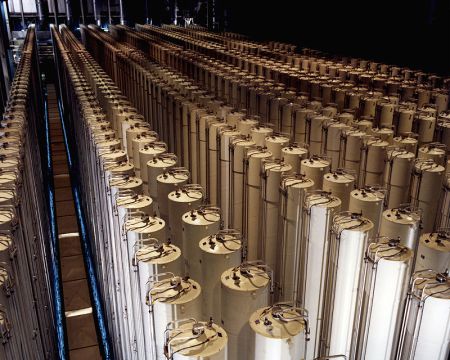
Nuclear and Toxic Waste-Iraq

Most of the Iraq’s vast deposits of radioactive materials are a legacy of the turbulent regime of former leader Saddam Hussein, and have built up over the last four decades. Other toxic materials can be found in the country’s graveyards of contaminated industrial equipment“The parliament has decided to study the situation again after other provinces [including Dhi Qar] rejected such decision,” said Yahya al-Nasiri, governor of the southern Dhi Qar province.

“The proposals suggest burying the waste outside the country or in the desert…Asked if there are other ways to dispose of the waste, he said “it could possibly be buried in the sea using special containers or be sent to countries willing to take it, in exchange for money.”

While Nasiri said other provinces have rejected a similar request, Dhi Qar’s provincial council voted against the Iraqi parliament’s proposal in early July 2015 to use some of the southern province’s land as a burial site for the radioactive pollutants coming from all other provinces of the country.  Dhi Qar’s health and environment committee head Abdulamir Salim at the time slammed the proposal and said it posed a “real threat to the health and security of the province’s citizens.”..

An official Iraqi study in 2010 found more than 40 sites across the country that were contaminated with high levels or radiation and dioxins.  Iraq “without doubt” suffers from these radioactive pollutants inherited from “continuous wars” starting in the 1980s Iraqi-Iran war to the Gulf War in 1990s till 2003, when the United States used highly advanced weapons – including depleted uranium – in its efforts to topple Hussein’s regime, the governor lamented….However, it is not only war-produced pollutants that harm people’s health in Iraq – in addition, there is a lack of quality controls imposed on imported goods.  Radioactive material is also “the result of imports of car parts from Japan to the province,” he added….Areas around Iraqi cities such as Najaf, Basra and Fallujah accounted for more than 25 percent of the contaminated sites, with the southern city of Basra – the frontline during Iran-Iraq war and the Gulf War – having 11 sites, according to the 2010 study.

The study, carried out by the environment, health and science ministries found that scrap metal yards in and around the capital Baghdad and Basra contain high levels of ionizing radiation, which is thought to come from depleted uranium used in munitions during the first Gulf war and since the 2003 invasion.  “The U.S. army unfortunately caused an increase in these radioactive material by using uranium and its advanced arms that use a lot of harmful radioactive material,” Nasiri said. “But the U.S. army did not help nor support our projects to get rid of these pollutants.”

Excerpts from Dina al-Shibeeb, Iraq studying new plan on where to bury radioactive waste, says official, Al Arabiya News, July 18, 2015

Power of Indigenous Defense Industry

Even though Colombia, Kuwait, Malaysia, Morocco and Singapore have very different perspectives and agendas, they are all expected to sharply increase their defence spending over the next 10 years. Due to the arms race and an increasing threat perception, the effects of the 2008 financial slowdown on defence spending in these transitioning markets are gradually reducing.

“Unlike leading transitioning economies like India, South Korea, Turkey, the United Arab Emirates and Brazil, the five countries selected for this study are still attempting to develop an industrial base …,” said Frost & Sullivan Aerospace & Defence Industry AnalystAlix Leboulanger. “Upon a closer look at these countries’ dynamics, it is found that their political intent is stronger than their financial and infrastructure capabilities.”  Several factors are dampening indigenisation plans. The increasingly competitive marketplace has left little room for emerging local players unless they can distinguish themselves appropriately – for instance, with price in Colombia and technology in Singapore. Moreover, weak market prospects beyond local demand, along with the absence of small- and medium-sized enterprises, have restricted partnership opportunities and transfer-of-technology ventures with foreign companies.

Investing in high-end foreign technology is perceived as the way forward to fulfil three objectives: achieving modernisation programmes, consolidating the domestic industrial base, and providing employment to locals,” explained Leboulanger. “This will require efficient and easily-applicable regulations to create an attractive and stable environment for foreign investments and industrial partnerships. The lack of skilled personnel and infrastructure, also need to be addressed.”… Financial constraints mean that governments will try to reduce armed forces and invest in combat-proven platforms, surplus material and second-hand equipment…

“As a matter of fact Colombia, Kuwait, Malaysia, Morocco and Singapore are expected to spend 21 percent of their total budget, circa 9.77 billion USD per year, on new equipment.”

Combat Readiness Plans Win Over Defence Indigenisation Targets in Select Markets, Finds Frost & Sullivan, PR Newswire, July 22, 2015

Foreign-Funded NGOs as Foreign Agents

Since Russia annexed Crimea last year, it has become almost impossible for scientists in Russia to buy anything in the United States or Japan that has a dual purpose, said physicist Alexander Shilov, who works in the Institute of Laser Physics in Russia’s scientific hub of Akademgorodok, or Academy Town — part of Russia’s third-largest city of Novosibirsk…The U.S. and EU sanctions were designed to halt exports to the Russian defense sector. When announcing a new round of sanctions in July 2014, the European Union noted specifically that they “should not affect the exports of dual-use goods and technology” to Russia for “non-military use.” In reality, many Western companies were so spooked by the sanctions and the penalties they could face for violating them that the door was shut completely, the scientists say….

What’s more, foreign-made equipment is now less affordable for Russian scientists because of the depreciation in the Russian ruble, which lost nearly half of its value since the Crimean annexation.

The scientists’ plight has been compounded by the Kremlin’s own crackdown on Russian private funding of science, stemming from suspicions of Western influence. The government this year labeled the Dynasty foundation, Russia’s largest source of private funding for science, a “foreign agent” — which makes the group vulnerable to an array of surprise checks and audits. It is a Cold War term that carries connotations of spying. The foundation fell afoul of the officialdom because its Russian founder funds the organization from money transferred from his foreign bank accounts.  “If Dynasty was named a foreign agent, then everyone who had contracts with Dynasty is an accomplice of a foreign agent,” said Shilov. “We are all spies now.”

The government has become increasingly suspicious of foreign-funded non-governmental organizations, seeing them as potential agents of a hostile West. Russia has brushed off the sanctions imposed by the United States and European Union, saying that Russia has plenty of resources to replace banned imports with its own production.

Excerpts from  NATALIYA VASILYEVA5, Russian scientists squeezed by sanctions, Kremlin policies, Associated Press, July 20, 2015

Al Qaeda Arabian Peninsula as Benefactor

Yemen: Local militias backed by Saudi Arabia, special forces from the United Arab Emirates and Al Qaeda Arabian Peninsula (AQAP) militants all fought on the same side this week to wrest back control over most of Yemen’s second city, Aden, from pro-Iranian Houthi rebels, according to local residents and Houthi forces.

The U.S. has backed a Saudi-led coalition that launched airstrikes against the Houthis…. [But at the same time],  the U.S. continues to conduct separate airstrikes targeting AQAP militants in Yemen.  Meanwhile, Saudi-backed militias are spearheading efforts to roll back Houthi gains and reinstate the government that the rebels drove into exile in neighboring Saudi Arabia. But they have turned to Yemen-based al Qaeda in the Arabian Peninsula, or AQAP, for help, according to local residents and a senior Western diplomat. This puts the U.S.-allied Gulf kingdom on the same side as one of the world’s most notorious extremist groups…

The AQAP militants are exploiting the chaos to expand across Yemen, according to Western officials. At the same time, the regional coalition has been criticized for ignoring the group’s territorial gains since the onset of the conflict, while relentlessly targeting Houthi rebels.

The local militias used trucks and weapons supplied by the Saudi-led military coalition to finally push the Houthis out of the Aden ports after a five-month battle, local residents said. AQAP militants celebrated the victory alongside the militias, parading cadavers of Houthis on a main commercial street in the city to a cheering crowd, according to residents and video posted online.

Aden wasn’t the first victory for AQAP in this conflict. In April, the group captured al-Mukalla, the country’s largest eastern seaport. The Saudi-backed militias have also acknowledged that they fought with AQAP against the Houthis in Ataq, the capital of Shabwa province, earlier this year.

Since 2011, the U.S. has spent nearly $500 million to train and equip Yemen’s security forces to battle AQAP. The U.S. has also backed the Saudi-led regional coalition with intelligence and logistical support since it formed in March 2015, imposing a crippling aerial and naval blockade across Yemen.  American officials acknowledge that AQAP is one of the war’s biggest benefactor…

Excerpts from Al Qaeda Helps Saudi-Backed Forces in Yemen, Dow Jones Business News, July 16, 2015.

The Rule of Law in Afghanistan?

Office of the Special Inspector General for Afghanistan Reconstruction, known as SIGAR: Rule of Law in Afghanistan: U.S. Agencies Lack a Strategy and Cannot Fully Determine the Effectiveness of Programs Costing More Than $1 Billion

U.S. efforts to develop the rule of law in Afghanistan have been impaired by four significant factors. First, U.S agencies lack a comprehensive rule of law strategy to help plan and  guide their efforts. Second, DOD [US Department of Defense] is unable to account for the total amount of funds it spent to support rule of law development. Third, DOD, DOJ [US Department of Justice], State Department, and USAID all have had problems measuring the performance of their respective rule of law programs.

Fourth, U.S. efforts are undermined by significant challenges from pervasive corruption in Afghanistan’s justice sector and the uncertainty regarding whether the Afghan government can or will sustain U.S. program activities and reforms.

U.S. agencies—led by DOD, DOJ, State, and USAID—lack a current, comprehensive interagency rule of law strategy to help plan and guide U.S. rule of law development efforts in Afghanistan….SIGAR determined that DOD, DOJ, State, and USAID have spent more than $1 billion on at least 66 programs since 2003 to develop the rule of law in Afghanistan.

Animal Diseases as Biological Weapons

The World Health Organisation (WHO), animal health and national defence officers called for wider international co-operation to avoid the spread of animal diseases that could be used as biological weapons.  Sixty percent of human diseases come from animal agents and 80% of the agents that could be used for bio-terrorism are of animal origin, said Bernard Vallat, director general of the World Organisation for Animal Health (OIE).

“History has shown animal diseases have often been used as weapons before. Advances in genetics can now make them even more harmful. So we are calling for further investment to be made at national level on bio-security,” Vallat said at a conference on biological threat reduction.  Diseases have spread from animals to humans for millennia, with latest examples including the bird flu virus that has killed hundreds of people around the globe.

The OIE and the WHO warned animal disease agents could escape naturally, accidentally but also intentionally from laboratories, to be used as bio-weapons….Security breaches involving animal diseases are not rare.  The Pentagon said in May 2015 and June the US military had sent live samples of anthrax, which can be used as biological weapon, to five countries outside the United States and to dozens of US labs.

Excerpts from Beware of animal diseases as biological weapons, health experts say, Reuters, June 30, 2015

United States Forces in Gabon

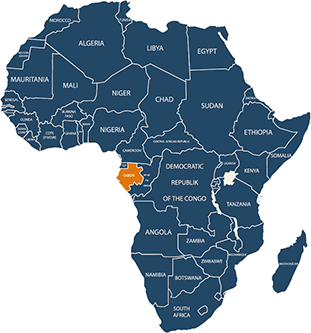
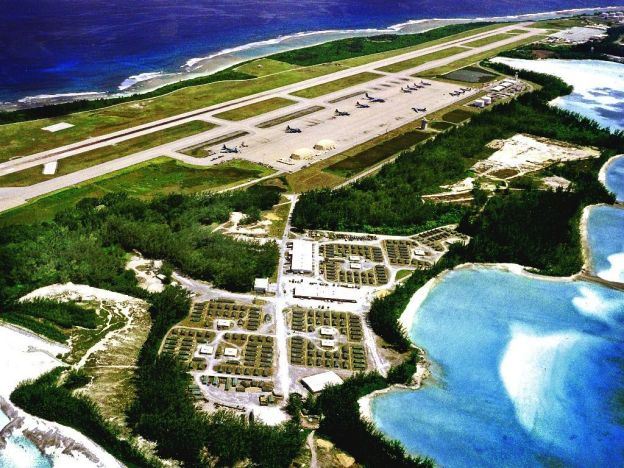
The [United States] Marines worked with the government of Gabon to test the full-scale employment of the force on the continent. Their forward-staged compound, known as a Cooperative Security Location, (CSL)…also provides the Marines with easy access to their MV-22 Osprey and KC-130J aircraft, which are critical in providing a crisis-response capability over a geographically dispersed area.  “For this particular CSL, we planned to support up to 200 personnel,” said 1st Lt. Micah Tate, the combat logistics detachment’s executive officer. “From those personnel, we have around 20 logistics Marines who are providing direct support and two platoons of infantrymen that are able to embark on the Ospreys. That’s the point of these CSLs.”

Excerpt from Marines test forward-staging abilities in Gabon, June 23 2015 

The Torture Sites: CIA

The existence of the approximately 14,000 photographs will probably cause yet another delay in the military commissions at Guantanamo Bay, Cuba, as attorneys for the defendants demand all of the images be turned over to them and the government wades through the material to decide what it thinks is relevant to the proceedings.  Defence attorneys said they have not yet been informed about the photographs and said it is unacceptable that they should come to light only now, more than three years after the arraignment of Khalid Sheik Mohammed and four other defendants accused of planing the September 11 attacks.

The electronic images depict external and internal shots of facilities where the CIA held al-Qaeda suspects after 9/11…They do include images of naked detainees during transport, …The pictures also show CIA personnel and members of foreign intelligence services, as well as psychologists Bruce Jessen and James Mitchell, among the architects of the interrogation program. …Among the images are those of cells and bathrooms at the detention sites, including a facility in Afghanistan known as “Salt Pit“, where the waterboard was photographed.

A US official described the photographs of the Salt Pit as looking like a dungeon. The official added that many of the pictures appear to have been taken for budgetary reasons to document how money was being spent.  The bulk of the photographs depict black sites in Thailand, Afghanistan and Poland. There are fewer shots of prisons in Romania and Lithuania, which were among the last to be used before they were closed in 2006.  A US official said there are also photographs of confinement boxes where detainees such as Abu Zubaydah, who is now at Guantanamo, were forced into for hours.

Also among the photographs are images of Zubaydah shortly after he was captured in 2002; he was wounded in the leg during a shootout with Pakistani security forces. The pictures show his injury. Later shots show him wearing an eye patch. A former CIA official said Zubaydah had a pre-existing eye injury that was infected when the agency captured him. The eye was later removed.

Excerpts from Adam Goldman ,Photos of CIA ‘black sites’ come to light, Washington Post, June 28, 2015

Surgically Implanted Explosive Devices and Drone Strikes

The documents, provided to the Guardian by NSA whistleblower Edward Snowden and reported in partnership with the New York Times, discuss how a joint US, UK and Australian programme codenamed Overhead supported the strike in Yemen in 2012….

British officials and ministers follow a strict policy of refusing to confirm or deny any support to the targeted killing programme, and evidence has been so scant that legal challenges have been launched on the basis of single paragraphs in news stories.

The new documents include a regular series of newsletters – titled Comet News – which are used to update GCHQ personnel on the work of Overhead, an operation based on satellite, radio and some phone collection of intelligence. Overhead began as a US operation but has operated for decades as a partnership with GCHQ and, more recently, Australian intelligence.

The GCHQ memos, which span a two-year period, set out how Yemen became a surveillance priority for Overhead in 2010, in part at the urging of the NSA, shortly after the failed 2009 Christmas Day bomb plot in which Umar Farouk Abdulmutallab attempted to detonate explosives hidden in his underpants on a transatlantic flight.  Ten months later a sophisticated plot to smuggle explosives on to aircraft concealed in printer cartridges was foiled at East Midlands airport. Both plots were the work of al-Qaida in the Arabian Peninsula (AQAP), the Yemen-based al-Qaida offshoot.

One Comet News update reveals how Overhead’s surveillance networks supported an air strike in Yemen that killed two men on 30 March 2012. The men are both described as AQAP members.  In the memo, one of the dead men is identified as Khalid Usama – who has never before been publicly named – a “doctor who pioneered using surgically implanted explosives”. The other is not identified…

US officials confirmed to Reuters in 2012 that there had been a single drone strike in Yemen on 30 March of that year. According to a database of drone strikes maintained by the not-for-profit Bureau of Investigative Journalism, the only incident in Yemen on that date targeted AQAP militants, causing between six and nine civilian casualties, including six children wounded by shrapnel.  Asked whether the strike described in the GCHQ documents was the same one as recorded in the Bureau’s database, GCHQ declined to comment.

The incident is one of more than 500 covert drone strikes and other attacks launched by the CIA and US special forces since 2002 in Pakistan, Yemen and Somalia – which are not internationally recognised battlefields.  The GCHQ documents also suggest the UK was working to build similar location-tracking capabilities in Pakistan, the country that has seen the majority of covert strikes, to support military operations “in-theatre”.

A June 2009 document indicates that GCHQ appeared to accept the expanded US definition of combat zones, referring to the agency’s ability to provide “tactical and strategic SIGINT [signals intelligence] support to military operations in-theatre, notably Iraq and Afghanistan, but increasingly Pakistan”. The document adds that in Pakistan, “new requirements are yet to be confirmed, but are both imminent and high priority”….

By this point NSA and GCHQ staff working within the UK had already prioritised surveillance of Pakistan’s tribal areas, where the majority of US covert drone strikes have been carried out. A 2008 memo lists surveillance of two specific sites and an overview of satellite-phone communications of the Federally Administered Tribal Areas, in which nearly all Pakistan drone strikes have taken place, among its key projects.

British intelligence-gathering in Pakistan is likely to have taken place for a number of reasons, not least because UK troops in Afghanistan were based in Helmand, on the Pakistani border.One of the teams involved in the geo-location of surveillance targets was codenamed “Widowmaker”, whose task was to “discover communications intelligence gaps in support of the global war on terror”, a note explains.

Illustrating the close links between the UK, US and Australian intelligence services, Widowmaker personnel are based at Menwith Hill RAF base in Yorkshire, in the north of England, in Denver, Colorado, and in Alice Springs in Australia’s Northern Territory.

Other Snowden documents discuss the difficult legal issues raised by intelligence sharing with the US….The UK has faced previous legal challenges over the issue. In 2012, the family of a tribal elder killed in Pakistan, Noor Khan, launched a court case in England in which barristers claimed GCHQ agents who shared targeting intelligence for covert strikes could be “accessory to murder”. Judges twice refused to rule on the issue on the grounds it could harm the UK’s international relations.

Excerpts from Alice Ross and James Ball,  GCHQ documents raise fresh questions over UK complicity in US drone strikes,  Guardian, June 24, 2015

War against the Islamic State – All Out

Excerpts from David A. Deptula,  How to Defeat the Islamic State, Washington Post

From the U.S. perspective, the most important goal is not the maintenance of the Iraqi government but the destruction of the Islamic State.  The current U.S.-led coalition is following the counterinsurgency model used in Iraq and Afghanistan for more than a decade, but the Islamic State is not an insurgency. The Islamic State is a self-declared sovereign government. We must stop trying to fight the last war and develop a new strategy.

The Islamic State can be decomposed through a comprehensive and robust air campaign designed to: (1) terminate its expansion; (2) paralyze and isolate its command-and-control capability; (3) undermine its ability to control the territory it occupies; and (4) eliminate its ability to export ­terror.

But to do these things, air power has to be applied like a thunderstorm, not a drizzle. In the campaign against the Islamic State, we are averaging 12 strike sorties per day. During Operation Desert Storm in Iraq and Kuwait in 1991, the average was 1,241; in Operation Allied Force in Kosovo in 1999, it was 298; in the first 30 days of Operation Iraqi Freedom in 2003, 691; during Operation Enduring Freedom in Afghanistan in 2001, 86.

In the past two decades, several strategic victories were brought about by air power operating in conjunction with indigenous ground forces — none of which were better than the Iraqi army. Robust air power, along with a few air controllers, carried the Northern Alliance to victory over the Taliban, at minimal cost in blood and treasure to the United States. Bosnia, Kosovo and Libya similarly involved airstrikes well in excess of those being used against the Islamic State.

Complicating the effort to defeat the Islamic State is an excessive focus on the avoidance of collateral damage and casualties. In an armed conflict, the military establishes rules of engagement designed to balance the moral imperative to minimize damage and unintentional casualties against what’s required to accomplish the mission. Recently reported by pilots actually fighting the Islamic State is that the current rules — which far exceed accepted “Law of War” standards — impose excessive restrictions that work to the advantage of the enemy. The ponderous and unnecessary set of procedures in place is allowing the Islamic State to exploit our desire to avoid civilian causalities to commit atrocities on the ground…

The best way to improve our force effectiveness while still minimizing collateral damage and casualties is to allow them to use their judgment. This is called “mission command,” and the Pentagon should empower our aviators to employ it.

The fastest way to end the inhumanity of war is to eliminate its source — in this case, the Islamic State — as quickly as possible. Gradualism doomed the effectiveness of air power in the “Rolling Thunder” air campaign from 1965 to 1968 during the Vietnam War. The current gradualist approach is worsening the suffering and increasing the loss of innocent life. While unintended casualties of war are regrettable, those associated with airstrikes pale in comparison with the savage acts being carried out by the Islamic State. What is the logic of a policy that restricts the use of air power to avoid the possibility of collateral damage while allowing the certainty of the Islamic State’s crimes against humanity?

This does not have to be a “long war,” as has been claimed by those whose politics benefit from that assertion, as well as those whose experience is rooted in counterinsurgency. The counterinsurgency operations in Iraq and Afghanistan went on for eight and 14 years, respectively. Desert Storm took 43 days; Bosnia’s Operation Deliberate Force, 22 days; Allied Force, 78 days; the decisive phase of Enduring Freedom took 60 days. A robust air campaign can devastate the Islamic State to the point where Iraqi and Kurdish forces can end the occupation.

Excerpts from David A. Deptula How to defeat the Islamic State, Washington Post, June 5, 2015

Nuclear Weapons are Here to Stay

[D]espite the establishment in 2009 of [a process to] discuss multilateral disarmament, not much has happened. The main reason is the chilling of relations between Russia and the West, which predated Russia’s annexation of Crimea. An offer by Mr Obama in 2013 of new negotiations to reduce each side’s stock of warheads by a third was met with stony silence.

More recently Russia has, according to America, violated both the 1987 Intermediate Nuclear Forces treaty, by testing a banned missile, and the Budapest Memorandum of 1994 that guaranteed Ukraine’s security when it gave up the nuclear weapons it had inherited on the break-up of the Soviet Union. The Russians are also refusing to attend next year’s Nuclear Security Summit, a meeting to prevent fissile material falling into the wrong hands.

Without further cuts in American and Russian nuclear forces (which account for more than 90% of the world’s nuclear weapons), China, the most opaque of the P5 power (US, UK, Russia, China, France), will block attempts to get multilateral disarmament talks going. However, Rose Gottemoeller, America’s under-secretary of state for arms control, praises China for its leading role in producing a common glossary of nuclear terminology. This may not sound much, but it is seen within the P5 as essential for future negotiations.

Ms Gottemoeller is also keen to stress that, despite the Russian impasse, America has tried to meet its obligations. It is eliminating “excess” warheads at the rate of almost one a day and closing down old bits of nuclear infrastructure. …It is doubtful whether these modest, incremental efforts will cut much ice with the Humanitarian Impacts of Nuclear Weapons Initiative, a movement supported by civil-society groups and championed by Austria, Norway and Mexico. Faced with what they see as foot-dragging by the P5 (which are modernising their nuclear forces to maintain their long-term effectiveness), the initiative’s backers, some of which want to make nuclear weapons illegal, may question whether working through the NPT serves any purpose…

Another source of friction is the failure to hold the conference on creating a WMD-free zone in the Middle East that was promised in 2010. Israel,…insists that regional security arrangements must precede any talks on disarmament, whereas Egypt says the first step is for Israel to accede to the NPT—a non-starter.

Excerpts from Nuclear weapons: Fractious, divided but still essential, Economist, May 2, 2015, at 54

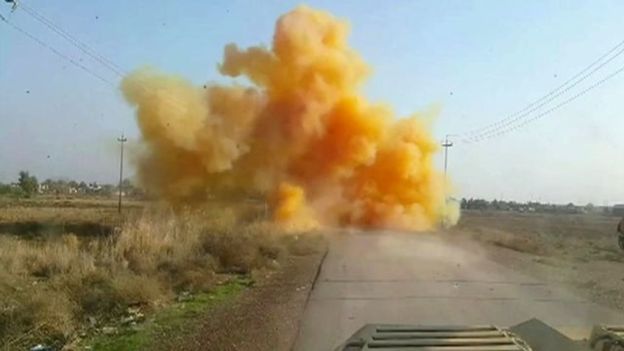
Chlorine Attacks in Syria

The U.N. Security Council should make sure that the people allegedly responsible for chlorine attacks in Syria are brought to justice, Russia’s U.N. ambassador said on June 3, 2015….The United States has been promoting Security Council action to assess blame for alleged chlorine attacks, which Syrian activists and doctors say have been increasingly used in recent weeks.

The Organization for the Prohibition of Chemical Weapons, the global chemical weapons watchdog based in The Hague, Netherlands, has condemned the use of chlorine in Syria as a breach of international law. But the OPCW does not have a mandate to determine responsibility for the use of chemical weapons.  In its latest report, the OPCW said a fact-finding team would visit Syria to look into recent allegations of attacks using toxic chemicals. Syria’s U.N. Ambassador Bashar Ja’afari told The Associated Press that the team had arrived and would visit areas that the two parties agreed on.

The United States has been pressing for “an accountability mechanism” to attribute blame and has been discussing council action with the Russians and other council members.  A Security Council diplomat… said there is no single view yet on how best to achieve accountability. The diplomat said Russia favors a weaker approach while Western council members are insisting on a resolution that puts accountability under the Security Council, in consultation with the OPCW.

EDITH M. LEDERER , Russia Wants Accountability for Chlorine Attacks in Syria, Associated Press, June 3, 2015

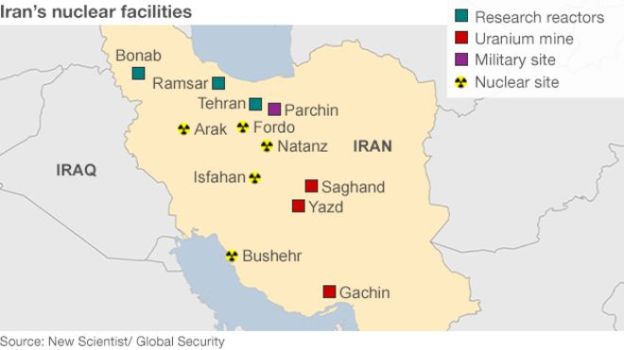
Nuclear Capability of Iran – Natanz, Fordow, Parchin

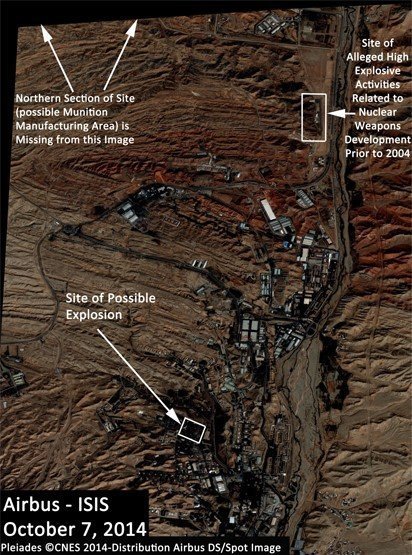
One [of the problems] is the ambiguity about what rights the Iranians will have to continue nuclear research and development. They are working on centrifuges up to 20 times faster than today’s, which they want to start deploying when the agreement’s [the currently negotiated agreement between Iran and United States/Europe]  first ten years are up. The worry is that better centrifuges reduce the size of the clandestine enrichment facilities that Iran would need to build if it were intent on escaping the agreement’s strictures.

That leads to the issue on which everything else will eventually hinge. Iran has a long history of lying about its nuclear programme. It only declared its two enrichment facilities, Natanz and Fordow, after Western intelligence agencies found out about them. A highly intrusive inspection and verification regime is thus essential, and it would have to continue long after other elements of an agreement expire. Inspectors from the IAEA would have to be able to inspect any facility, declared or otherwise, civil or military, on demand…

For a deal to be done in June 2015, Iran will have to consent to an [intrusive] inspection regime. It will also have to answer about a dozen questions already posed by the IAEA about the “possible military dimensions” of its nuclear programme. Yet on March 23, 2015Yukiya Amano, the agency’s director, said that Iran had replied to only one of those questions. Parchin, a military base which the IAEA believes may have been used for testing the high-explosive fuses that are needed to implode, and thus set off, the uranium or plutonium at the core of a bomb, remains out of bounds. Nor has the IAEA been given access to Mohsen Fakhrizadeh, the physicist and Revolutionary Guard officer alleged to be at the heart of the weapons development research. The IAEA’s February 19, 2015 report on Iran stated that it “remains concerned about the possible existence…of undisclosed nuclear-related activities…including activities related to the development of a nuclear payload for a missile.”

Excerpts from, The Iran Nuclear Talks: Not Yet the Real Deal, Economist, Apr. 4, 2015, at 43

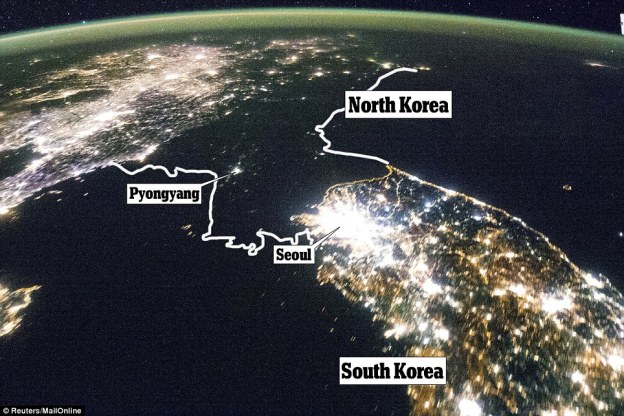
Iran Wants to Be North Korea: nuclear weapons

The US tried to deploy a version of the Stuxnet computer virus to attack North Korea’s nuclear weapons programme five years  (2010) ago but ultimately failed, according to people familiar with the covert campaign.  The operation began in tandem with the now-famous Stuxnet attack that sabotaged Iran’s nuclear programme in 2009 and 2010 by destroying a thousand or more centrifuges that were enriching uraniumc. Reuters and others have reported that the Iran attack was a joint effort by US and Israeli forces.

According to one US intelligence source, Stuxnet’s developers produced a related virus that would be activated when it encountered Korean-language settings on an infected machine…But the National Security Agency-led campaign was stymied by North Korea’s utter secrecy, as well as the extreme isolation of its communications systems...North Korea has some of the most isolated communications networks in the world. Just owning a computer requires police permission, and the open internet is unknown except to a tiny elite. The country has one main conduit for internet connections to the outside world, through China.  In contrast, Iranians surfed the net broadly and had interactions with companies from around the globe.

The US has launched many cyber espionage campaigns, but North Korea is only the second country, after Iran, that the NSA is now known to have targeted with software designed to destroy equipment.

Experts in nuclear programmes said there were similarities between North Korea and Iran’s operations, and the two countries continue to collaborate on military technology. Both countries use a system with P-2 centrifuges, obtained by Pakistani nuclear scientist AQ Khan, who is regarded as the father of Islamabad’s nuclear bomb, they said. Like Iran, North Korea probably directs its centrifuges with control software developed by Siemens AG that runs on Microsoft Corp’s Windows operating system, the experts said. Stuxnet took advantage of vulnerabilities in both the Siemens and Microsoft programmes…

Despite modest differences between the programmes, “Stuxnet can deal with both of them. But you still need to get it in,” said Olli Heinonen, senior fellow at Harvard University’s Belfer Center for Science and International Affairs and former deputy director general of the International Atomic Energy Agency…

The Stuxnet campaign against Iran, code-named Olympic Games, was discovered in 2010. It remains unclear how the virus was introduced to the Iranian nuclear facility in Natanz, which was not connected to the Internet.,,,According to cybersecurity experts, Stuxnet was found inside industrial companies in Iran that were tied to the nuclear effort. As for how Stuxnet got there, a leading theory is that it was deposited by a sophisticated espionage programme developed by a team closely allied to Stuxnet’s authors, dubbed the Equation Group by researchers at Kaspersky Lab…

In addition, North Korea likely has plutonium, which does not require a cumbersome enrichment process depending on the cascading centrifuges that were a fat target for Stuxnet, they said.

Excerpts from NSA tried Stuxnet cyber-attack on North Korea five years ago but failed, Reuters, May 29, 2015

Killing with Liquid Lasers: HELLADS

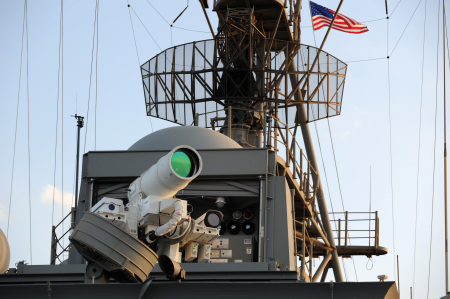
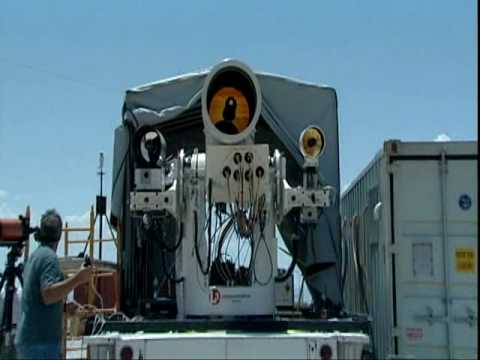
A high-power laser weapon light enough to be carried by tactical aircraft has moved out of the laboratory and onto the testing ground. General Atomics Aeronautical Systems’ High-Energy Liquid Laser Defense System (HELLADS) has finished its US Government Acceptance Test Procedure and is on its way to the White Sands Missile Range in New Mexico for live-fire tests.

Laser weapons have made great strides in recent years, but one of the most sought after goals has been to marry high power to light weight so the system can be installed in aircraft… patrol ships and armored combat vehicles [and drones] … [T]he all-electric HELLADS punches a 150 kW laser, yet is only a tenth the size and weight of comparable systems.

Excerpts from  David Szondy, Lightweight High-Energy Liquid Laser (HELLADS) prepared for live fire tests, gizmag.com, May 30, 2015


The Cyber-Intelligence Ruling Class

[The] Intelligence National Security Alliance. INSA is a powerful but 
little-known coalition established in 2005 by companies working for the National Security Agency. In recent years, it has become the premier organization for the men and women who run the massive cyberintelligence-industrial complex that encircles Washington, DC…[One such company is founded by]  former Navy SEAL named Melchior Baltazar, the CEO of an up-and-coming company called SDL Government. Its niche, an eager young flack explained, is providing software that military agencies can use to translate hundreds of thousands of Twitter and Facebook postings into English and then search them rapidly for potential clues to terrorist plots or cybercrime.

It sounded like the ideal tool for the NSA. Just a few months earlier, Snowden had leaked documents revealing a secret program called PRISM, which gave the NSA direct access to the servers of tech firms, including Facebook and Google. He had also revealed that the NSA and its British counterpart, the GCHQ, had special units focused on cracking encryption codes for social media globally….

This small company, and INSA itself, are vivid examples of the rise of a new class in America: the cyberintelligence ruling class.  These are the people—often referred to as “intelligence professionals”—who do the actual analytical and targeting work of the NSA and other agencies in America’s secret government. Over the last 15 years, thousands of former high-ranking intelligence officials and operatives have left their government posts and taken up senior positions at military contractors, consultancies, law firms, and private-equity firms. In their new jobs, they replicate what they did in government—often for the same agencies they left. But this time, their mission is strictly for-profit.

Take Olsen, who served as general counsel for the NSA and as a top lawyer for the Justice Department before joining the National Counter-Terrorism Center (NCTC). He is now the president for consulting services of IronNet Cybersecurity, the company founded last year by Army Gen. Keith Alexander, the longest-
serving director in the history of the NSA. The  firm is paid up to $1 million a month to consult with major banks and financial institutions in a “cyber war council” that will work with the NSA, the Treasury Department, and other agencies to deter cyberattacks that “could trigger financial panic,” Bloomberg reported last July 2014.

Some members of this unique class are household names. Most cable-news viewers, for example, are familiar with Michael Chertoff and Michael Hayden, two of the top national-security officials in the Bush administration. In 2009, they left their positions at the Justice Department and the NSA, respectively, and created the Chertoff Group, one of Washington’s largest consulting firms, with a major emphasis on security..

Well, enough, you might say: Isn’t this simply a continuation of Washington’s historic revolving door? The answer is no. As I see it, the cyberintelligence- industrial complex is qualitatively different from—and more dangerous than—the military-industrial complex identified by President Eisenhower in his famous farewell address. This is because its implications for democracy, inequality, and secrecy are far more insidious….To confront the surveillance state, we also have to confront the cyberintelligence ruling class and expose it for what it really is: a joint venture of government officials and private-sector opportunists with massive power and zero accountability.

Excerpts from Tim Shorrock, How Private Contractors Have Created a Shadow NSA, Nation, May  27, 2015.

A State from Scratch: the Islamic State

f sentiment in the towns in or bordering the so-called “caliphate” of Islamic State (IS) is anything to go by, the jihadists are winning the war. “IS is here to stay,” a doctor in Falluja says of the group’s grip on Anbar, Iraq’s largest province. It is a sharp reversal from just a few months ago, when the campaign against IS seemed to be going quite well…[A]fter the retreat of Syrian regime forces from Palmyra, the black flag of IS now flies over the ancient city; while Ramadi, the capital of Anbar province, Iraq, fell on May 17th. The idea that IS was in retreat has thus taken a severe jolt.

Barack Obama describes the loss of Ramadi as a mere “tactical setback”. But a blame game has since broken out.   In any case the group’s [IS] recent successes owe more to the weakness of the forces opposing it than to its own strength. The regime of Bashar Assad in Syria is looking wobblier than at any time since 2012. Its army fled Palmyra. Although Iraq’s Shia militias put up a good fight in places, its Shia-dominated and often badly led army is reluctant to fight and die for Sunni territory. Unless it improves the jihadists may advance further. The government remains reluctant to arm the Sunni tribesmen who might defend their homes.

The recent gains by IS also do little to address its weaknesses. It needs to generate huge funds to maintain its pretension to be a caliphate, yet its income streams, such as those from illicit oil sales, ransoms and looted antiquities, are all vulnerable to concerted pressure and windfalls from conquest are dwindling.

Its top-down structure leaves it vulnerable to “kill or capture” raids by American special forces (like one in Syria on May 15th that resulted in the death of Abu Sayyaf, the outfit’s financial brain). A more concerted air campaign could also set it back. Western forces are managing a meagre 15 strikes a day (compared with the 50 a day NATO carried out against Qaddafi’s less formidable forces in Libya). Mr McCain says that 75% of sorties fail to fire a weapon or drop a bomb, because targets are not identified. That might change if America provided forward air controllers.

The state of the caliphate: The fortunes of war, Economist, May 30, 2015

Looking Behind the Brick Wall: Military

From the DARPA website on project  Revolutionary Enhancement of Visibility by Exploiting Active Light-fields (REVEAL) program

Imagine, for example, squad members patrolling a street in a deployed urban environment, and an armed assailant crouching behind a car or a concrete barrier. Without the benefit of different vantage points (from the air, for example), the squad could be blind to the hidden threat. If by chance a glass storefront window were behind the assailant, the squad might spot the assailant’s reflection in the window. But if the backdrop were a brick wall, there would be no visible reflection. By exploiting currently untapped aspects of light and the varied paths of photons bouncing off the brick wall, troops using hardware based on the theoretical foundations provided by REVEAL might someday be able to detect the otherwise hidden assailant [or see clearly what people are doing inside their homes].

Another potential application could be determining an unknown material’s composition and other properties from a safe distance, avoiding the potential danger associated with close proximity and physical examination. Based on information carried by the photons interacting with the material, it may be possible for troops in the future to identify radioactive, biological or chemical threats and camouflaged targets from much farther away than currently possible.

See also FBO

Bombing Cities from the Sea: the Railgun

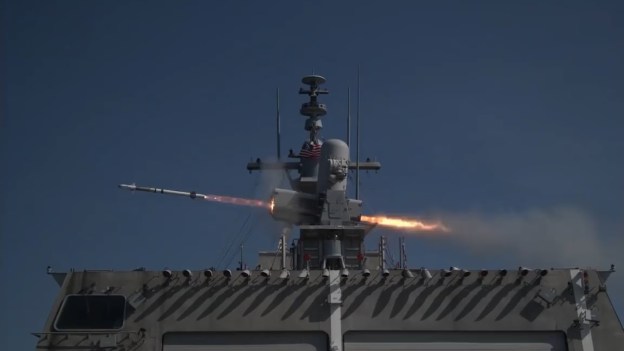
Two firms have been working on the navy’s railgun—BAE Systems and General Atomics. Amir Chaboki, the project leader at BAE, is coy about what advances in metallurgy, materials science and electrical engineering have made a useful weapon (railgun) possible. But he says his firm’s weapon should be able to go hundreds of shots between rail replacements. And, thanks to the trend for “electric boats”, in which a warship uses electric power for everything from the lights in the captain’s bathroom to the main engines, vessels with enough juice to fire the weapon are now coming into service. USS Zumwalt, the first of a new class of destroyers that have enough power generation to run a railgun, will be commissioned soon.

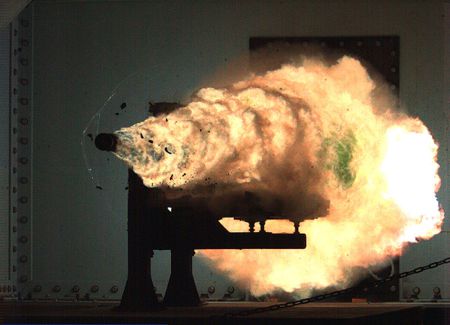
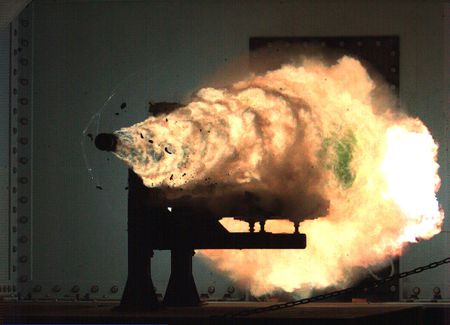
The brief given to the companies is to develop a weapon that can fire a 10kg projectile at about 2.5km a second. This is roughly seven times the speed of sound—and about three times the muzzle velocity of a conventional naval gun. At those sorts of speeds, there is no need to give the projectile a warhead. Its momentum is enough to cause destruction. The design has a muzzle energy of 32 megajoules, which is roughly the kinetic energy that would be carried by a small hatchback doing 900kph. The fiery plume, visible in the photograph, that accompanies the projectile out of the gun is not the result of propellant exploding but of the air itself being ionised by the electric current in the barrel.

The sheer destructive potential of the new weapon, though, is not the main point. Although a railgun’s speed makes plenty of headlines, old-style naval guns—such as the 16-inch monsters found on second-world-war battleships—had muzzle energies ten times as high. Modern ship-launched cruise missiles can deliver large explosive warheads to targets hundreds of nautical miles away.

Instead, says Commander Jason Fox of Naval Sea Systems Command, the part of the navy responsible for railguns, the weapon offers three other advantages. One is range. The projectile’s speed means ships could attack other vessels, or bombard targets on land, from a distance of 110 nautical miles. (about 204 kilometers or 127 miles) That is much farther than existing naval guns can manage, and beyond the range of at least some shore-launched anti-ship missiles.

Another advantage is safety. If a ship is hit by enemy fire, its magazine of high-explosive shells can detonate, with potentially devastating consequences. A vessel equipped with railguns would have only inert slugs on board, so would not face that risk. (As a bonus, the modest dimensions of the projectiles would allow more of them to be stored.)

But the biggest advantage, says Commander Fox, is cost. A single ship-launched missile can set the navy back well over $1m. Current estimates for railgun projectiles are around $25,000 per shot. Even given the tendency for costs to swell, that is a dramatic saving. And not even America’s military budget is infinite.

Like Dr Chaboki, Commander Fox is coy about specific tactical applications for railguns, beyond long-range bombardment—although he says that the next challenge will be to work out a way to guide the projectiles, to permit accurate fire from a hundred miles’ distance. One navy document talks about rail guns (suitably upgraded for an even longer range) as providing more shore-bombardment ability than an aircraft-carrier’s worth of planes.

Peter Roberts, a naval expert at the Royal United Services Institute, in London, thinks that smaller versions of the weapon could one day find uses as anti-aircraft guns or anti-missile weapons, applications where their enormous speeds would make them hard to evade. Nor, says Mr Roberts, are the Americans the only ones pursuing the idea. Researchers in China are thought to be working on a similar system. If and when someone manages to perfect one, the centuries-long monopoly of gunpowder will have come to an end.

Excerpts from  Advanced Weapons: Rail Strikes, Economist, May 9, 2015, at 73

The X-37B Drone: 4th Mission

The unmanned X-37B spacecraft was launched May 20 2015  atop a United Launch Alliance Atlas 5 rocket from Florida’s Cape Canaveral Air Force Station. The liftoff will begin the reusable space plane’s fourth mission, which is known as OTV-4 (short for Orbital Test Vehicle-4).  Most of the X-37B’s payloads and specific activities are classified, so it’s not clear what the space plane will be doing once it leaves Earth. This secrecy has led to some speculation that the vehicle might be some sort of space weapon. Air Force officials have repeatedly rejected that notion, saying that the X-37B flights simply test a variety of new space technologies.

For example, the space plane is carrying a type of ion engine called a Hall thruster on OTV-4, Air Force officials said. This Hall thruster is an advanced version of the one that powered the first three Advanced Extremely High Frequency military communications satellites, the officials added.  NASA is also flying an experiment on OTV-4. The agency’s Materials Exposure and Technology Innovation in Space investigation will see how exposure to the space environment affects nearly 100 different types of materials. The results should aid in the design of future spacecraft, NASA says.

The X-37B looks like a miniature version of NASA’s now-retired space shuttle. The robotic, solar-powered space plane is about 29 feet long by 9.5 feet tall (8.8 by 2.9 meters), with a wingspan of 15 feet (4.6 meters) and a payload bay the size of a pickup-truck bed. Like the space shuttle, the X-37B launches vertically and lands horizontally, on a runway.

Excerpts from Mike Wall, Air Force Gets X-37B Space Plane Ready for Its Next Mystery,  SPACE.COM, May 18, 2015

CIA Drone Strikes from Germany

The case of three Yemenis whose relatives were killed in the attack in August 2012, will be heard on Wednesday by a court in Cologne, Germany. Lawyers for the victims say the German government shares responsibility for the death of civilians because the US military base of Ramstein, which allegedly played a key role in the attack, is on German soil. The government rejects the claim.

Faisal bin Ali Jaber, who lost his brother-in-law Salim, a preacher, and his nephew Waleed, a police officer, in the strike on the village of Khashamir on 29 August, 2012,…Bin Ali Jaber, whose extended family had travelled back to the eastern Yemeni village to celebrate a wedding, had been having supper when he felt the impact of five rockets hitting the ground. Speaking in Arabic through a translator, he recalled leaving his house with his wife. “We found scattered body parts and people picking them up. We picked them up as well. It (soon) became apparent that Salim and Walid were among the victims. The incident was a tragedy in every way, for all the residents of Khashamir and the surrounding villages.”

Ramstein, in the German state of Rheinland Pfalz, is used by the US military on condition nothing is done there that violates German law. The German government has been repeatedly accused of failing to confront Washington over Ramstein’s alleged role in the drone war.The case rests on the claim that Ramstein is central to the drone strikes because it relays crucial information via satellite that enables drone operators in Nevada to communicate with the aircraft in Yemen, Pakistan, Afghanistan and elsewhere.  The geographical location of Ramstein is said to be vital to the transmission of the information, because, due to the curvature of the earth, a relay station is needed between the US and the Middle East.

Der Spiegel and the Intercept website reported in April 2015  that Ramstein is critical to the US drone strikes, quoting experts, but the US government has so far failed to confirm or deny the claim.  The potential loss of Ramstein as a strategically located relay station would present the US with the tough challenge of finding an alternative country willing to offer it a hub, amid global controversy and growing unease over drone strikes.

Excerpts from Kate Connolly ,German court to hear case brought by relatives of Yemen drone attack victims, Guardian, May 22, 2015

Chinese Military Base in Africa: Djibouti

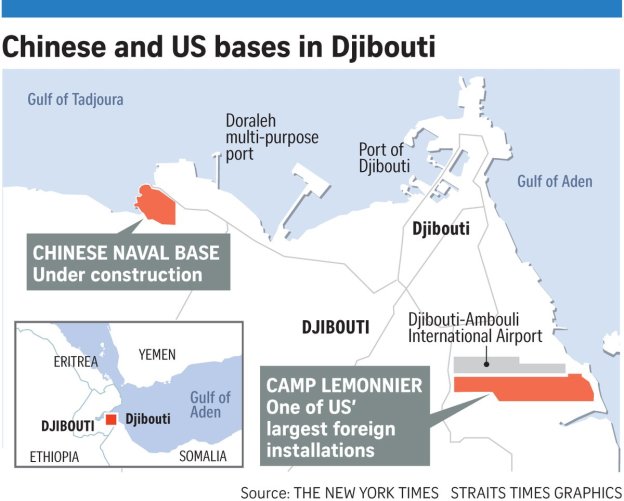
China is negotiating a military base in the strategic port of Djibouti, an historic development that would see the US and China each have bases in the small nation that guards the entrance to the Red Sea and the Suez Canal. President Ismail Omar Guelleh says that discussions are “ongoing” and that Beijing is “welcome”.  Djibouti is already home to Camp Lemonnier, the military headquarters used by US Special Forces for covert, anti-terror and other operations in Yemen and in Africa. France, the former colonial master, and Japan also have bases in the port, which is used by many foreign navies to fight piracy in neighbouring Somalia…

China signed a security and defence agreement with Djibouti in February 2014. But a Chinese military base in Djibouti, the first in Africa, “would definitely be historic”, according to David Shinn, a former US ambassador to Ethiopia.  The US was reportedly angry about the conclusion last year of the China-Djibouti defence deal last year. But Shinn predicts that the US will take it in its stride…

China is reportedly considering a permanent military base in Obock, Djibouti’s northern port city.  “China clearly has a goal of building a blue-water navy, which means it will at some point go well beyond the east coast of Africa and the western Indian Ocean, and it has to think — long term — about how it would be able to service its naval vessels as they go further and further, ” he explained.

Camp Lemonnier, home to 4,000 American citizens, is in the south-east of Djibouti. The US in May 2015 signed a 20-year lease, indicating its willingness to stay. Terms of the lease were not disclosed.

A new Chinese deep-sea port in Djibouti…could provide a boost to China’s sphere of influence, which already extends from the South China Sea, along the west coast of Myanmar to the Arabian-Sea coastal port of Gwadar, Pakistan — a major destination in the China-Pakistan Economic Corridor.  “Establishing these deep-sea ports is really about securing its economic interests, projecting influence and securing oil exports from the Gulf region,”…..

Trade between Africa and China, in excess of 200 billion dollars (180 billion euros), is above the continent’s trade with the European Union or the US.  In Djibouti, China is already financing major infrastructure projects estimated to total more than 9 billion dollars (8 billion euros), including improved ports, airports and railway lines….There was speculation that Russia also wanted to establish a presence in Djibouti, but the presence of Russian warships may have created even more controversy in western nations because of the crisis in the Ukraine.

Excerpts  Michel Arseneault, ‘Historic’ Chinese military base to open in Horn of Africa, Agence France Presse, May 11, 2015

Ukraine – Nuclear Power and Waste

UKRAINE, More than 3,000 spent nuclear fuel rods are kept inside metal casks within towering concrete containers in an open-air yard close to a perimeter fence at Zaporizhia, the Guardian discovered on a recent visit to the plant, which is 124 miles (200km) from the current front line.“

With a war around the corner, it is shocking that the spent fuel rod containers are standing under the open sky, with just a metal gate and some security guards waltzing up and down for protection,” said Patricia Lorenz, a Friends of the Earth nuclear spokeswoman who visited the plant on a fact-finding mission.“I have never seen anything like it,” she added. “It is unheard of when, in Germany, interim storage operators have been ordered by the court to terror-proof their casks with roofs and reinforced walls.”  

Industry experts said that ideally the waste store would have a secondary containment system such as a roof.  Ukraine’s conflict in Donbass is 124 miles away from the plant, but Gustav Gressel, a fellow at the European Council of Foreign Relations thinks the front line is too far away – for now – to be at risk from fighting.

However, locals still fear for the potential consequences if the conflict was to spread in the plant’s direction. Just three decades ago, an explosion at the Chernobyl nuclear power plant north of Kiev released a radioactive cloud that poisoned vast tracts of land…

Plant security at Zaporizhia is now at a ‘high readiness’ level, while air force protection and training exercises have been stepped up. Officials say that if fighting reaches the plant, there are plans for the closure of access roads and deployment of soldiers.  But they say that no containment design could take the stresses of military conflict into account. “Given the current state of warfare, I cannot say what could be done to completely protect installations from attack, except to build them on Mars,” Sergiy Bozhko , the chairman of the State Nuclear Regulatory Inspectorate of Ukraine (SNRIU) told the Guardian…..

However, a dry storage container with a resilient roof and in-house ventilation would offer greater protection….

“Nuclear energy is the only possible option for us to replace the generated electricity that we lost [from coal and gas],” a government source told the Guardian. “After the start of open war with Russia, it was understood that all our other strategies in the energy sphere would become impossible.” Some 60% of Ukraine’s electricity is now produced by 15 ageing reactors – concentrated in four giant plants. Nine of these will reach the end of their design lifetimes in the next five years, and three have already.  Most of Ukraine’s nuclear fleet depends on Russia’s Rosatom to supply its enriched uranium fuel – and to whisk away the resulting radioactive waste for storage…

But as fear and loathing in the war-torn region grow, government sources say that in the long term, Ukraine aims to forge a three-way split in nuclear fuel supply contracts between US-company Westinghouse, European companies, such as Areva, and Rosatom. This creates its own safety issues….

Last December (2014), the US firm signed a memo with Ukraine to “significantly increase fuel deliveries” to Ukrainian plants, though the details are sketchy. A similar deal was signed with the French nuclear company Areva on 24 April.  But fears of Russian retaliation have dogged past plans to shift supply or disposal contracts to the West, and market diversification will be a slow process….

The US has provided technology, training and hundreds of millions of dollars to help Ukraine’s push for fuel diversification, according to a US diplomatic cable from 2009, published by Wikileaks.  Westinghouse has also lobbied the Ukrainian government at ministerial level to commit to buying their fuel for at least five reactors. Plant managers say that it will be used in Zaporizhia by 2017.

Excerpts from Nuclear waste stored in ‘shocking’ way 120 miles from Ukrainian front line, Guardian, May 6, 2015

Never Ending – War in Afghanistan

Months after President Obama formally declared that the United States’ long war against the Taliban was over in Afghanistan, the American military is regularly conducting airstrikes against low-level insurgent forces and sending Special Operations troops directly into harm’s way under the guise of “training and advising.”…[I]nterviews with American and Western officials in Kabul and Washington offer a picture of a more aggressive range of military operations against the Taliban in recent months, as the insurgents have continued to make gains against struggling government forces.

Rather than ending the American war in Afghanistan, the military is using its wide latitude to instead transform it into a continuing campaign of airstrikes — mostly drone missions — and Special Operations raids that have in practice stretched or broken the parameters publicly described by the White House.

Western and military officials said that American and NATO forces conducted 52 airstrikes in March 2015 months after the official end of the combat mission. Many of these air assaults, which totaled 128 in the first three months of 2015, targeted low- to midlevel Taliban commanders in the most remote reaches of Afghanistan.,,,“They are putting guys on the ground in places to justify the airstrikes,” one of the officials said. “It’s not force protection when they are going on the offensive.”…Gen. John F. Campbell, vehemently denied accusations that he was putting troops into harm’s way just to enable more airstrikes.….“Washington is going to have to say what they say politically for many different audiences, and I have no issue with that,” General Campbell said. “I understand my authorities and what I have to do with Afghanistan’s forces and my forces. And if that doesn’t sell good for a media piece then, again, I can’t worry about it.”

The operations are continuing during a troubling stretch for the Afghan security forces, as the Taliban are continuing to make gains…Mr. Ghani, who has yet to name a minister of defense, has in many ways outsourced much of the running of the war to General Campbell.

Excerpts from AZAM AHMED and JOSEPH GOLDSTEIN, Taliban Gains Pull U.S. Units Back Into Fight in Afghanistan, NY Times, Apr. 29, 2015

Brazil as Space Power

The Brazilian government is ending a decade-long project to operate Ukraine’s Cyclone-4 rocket from Brazilian territory following a government review that found too many open questions about its cost and future market success, the deputy chief of the Brazilian Space Agency (AEB) said.  It remains unclear whether the decision will force Brazil to pay Ukraine any financial penalties for a unilateral cancellation of a bilateral agreement. Over the years, the work to build a launch facility for Ukraine’s Cyclone at Brazil’s Alcantara spaceport has suffered multiple stops and starts as one side or the other fell short on its financial obligations to the effort…

Noronha de Souza said the idea of making a profit in the launch business is now viewed as an illusion. The project, he said, was unlikely ever to be able to support itself on commercial revenue alone.  “Do you really believe launchers make money in any part of the world? I don’t believe so. If the government doesn’t buy launches and fund the development of technology, it does not work,” he said.  “Everybody talks about SpaceX [of Hawthorne, California] like it’s magic, somehow different. It’s no different. Their connections with NASA have been important. If NASA had stopped the funding, where would they be? I really appreciate what they are doing, but I doubt whether launch bases can make money and survive on their own without government support.”…

While the Cyclone-4 project is about to end, Brazil has maintained as a strategic goal the development of a space-launch vehicle from the Brazilian military-owned Alcantara facility. As such it is continuing work with the German Aerospace Center, DLR, on a small solid-fueled vehicle, called VLM-1 for Microsatellite Launch Vehicle, that began as a launcher for suborbital missions and has evolved to a small-satellite-launch capability…

AEB is a purely civilian agency funded through the Science and Technology Ministry. Until a few years ago, the Brazilian military had not been a player in the nation’s space policy. That is starting to change with the Brazilian Defense Ministry’s establishment of space-related operational requirements.  Among those requirements is a radar Earth observation satellite, which AEB has penciled into its program for around 2020. Aside from allowing the use of its Alcantara site, the Brazilian military is not yet financing any AEB work, but the military is expected to pay for launches of its satellites once the development is completed

AEB is finishing design of a small multimission satellite platform whose first launch will be of the Amazonia-1 Earth observation payload, with a medium-resolution imager of 10-meter-resolution, similar to the capacity of today’s larger China-Brazil CBERS-4 satellite, which is in orbit.

Brazil and Argentina’s CONAE space agency will be dividing responsibility for an ocean-observation satellite system, using the same multimission platform, called Sabia-Mar. The first Sabia-Mar is scheduled for launch in 2017, with a second in 2018, according to AEB planning.

Excerpts from Peter B. de Selding Brazil Pulling Out of Ukrainian Launcher Project,  Space News, Apr. 16, 2015

Russia has rushed to take advantage of the cancellation of space agreement between Brazil and Ukraine. [Russia] wants bot build  joint projects and space programs on the long term with BRICS Group member countries, particularly Brazil.  Brazil attempts to build its own cosmodrome, and unfortunately for the loss of Ukraine and its technology, the Brazilian-Ukrainian Project for the use of the Cyclone rocket in coastal launchings is practically minimalized…Russia proposed its variant of work, consisting in principle on the installation, already existent, of several satellite navigation stations Glonass and tbe idea of helping Brasilia in some way to the construction of the cosmodrome.

Excerpt from  Odalys Buscarón Ochoa, Russia Interested in Space Coop with BRICS Countries, Prensa Latina, Apr. 24, 2015

Under-sea GPS: DARPA POSYDON

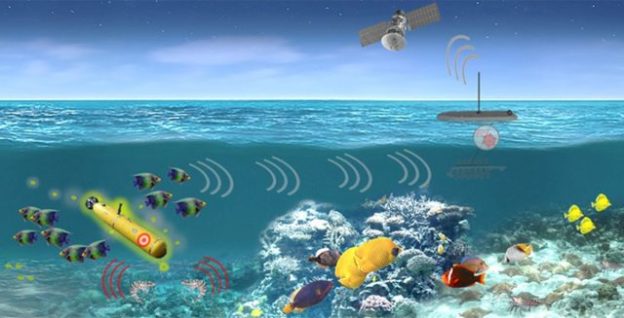
The objective of the POSYDON program is to develop an undersea system that provides omnipresent, robust positioning. DARPA envisions that the POSYDON program will distribute a small number of acoustic sources, analogous to GPS satellites, around an ocean basin.  By measuring the absolute range to multiple source signals, an undersea platform can obtain continuous, accurate positioning without surfacing for a GPS fix.

DARPA program  April 14, 2015


Nuclear Benefits – Pakistan/Saudi Arabia Friendship

The Pakistani Parliament, even while stating its commitment to protect the territory of Saudi Arabia, recently adopted a resolution not to join the Saudi-led coalition fighting Houthi rebels in Yemen….The foreign affairs minister of the United Arab Emirates, Anwar Gargash, blasted the decision as “contradictory and dangerous and unexpected,” accusing Pakistan of advancing Iran’s interests rather than those of its own Persian Gulf allies. Pakistan was choosing neutrality in an “existential confrontation,” he said, and it would pay the price… Millions of Pakistanis work in the Persian Gulf, sending back vast remittances. Many of Pakistan’s politicians and generals have major investments in the region, and some have a deep affinity for Wahhabism. Rich Arabs in Pakistan are treated like royalty, allowed to flout hunting and environmental protection laws… [S]ome backpedaling has begun. The Pakistani military agreed to commit naval vessels to help enforce an arms embargo against the Houthis. This, however, will not undo the damage: The recent deterioration of Pakistan’s ties with its Arab benefactors, even if it turns out to be temporary, is unprecedented.

For Saudi Arabia, the Pakistani Parliament’s surprising assertion of independence was especially worrisome because it came on the heels of the American-backed preliminary nuclear deal with Iran…This development undermines Saudi Arabia’s longstanding nuclear strategy. In the 1970s, partly to extend its influence, partly in the name of Muslim solidarity, it began bankrolling Pakistan’s nuclear program. In gratitude, the Pakistani government renamed the city of Lyallpur as Faisalabad, after King Faisal of Saudi Arabia. When Pakistan seemed to dither after India tested five nuclear bombs in May 1998, the Saudi government pledged to give it 50,000 barrels of oil a day for free. Pakistan soon tested six of its own bombs. Later, the Saudi defense minister at the time, Prince Sultan, visited the secret nuclear and missile facilities at the Kahuta complex near Islamabad… In exchange for its largesse, Saudi Arabia has received Pakistani military assistance in the form of soldiers, expertise and ballistic missiles.

The Saudi government has taken the quid pro quo to imply certain nuclear benefits as well, including, if need be, the delivery at short notice of some of the nuclear weapons it has helped pay for. Some Pakistani warheads are said to have been earmarked for that purpose and reportedly are stocked at the Minhas air force base in Kamra, near Islamabad. (Pakistan, which has as many as 120 nuclear warheads, denies this..)

The Saudis have also come to expect that they fall under the nuclear protection of Pakistan, much like, say, Japan is covered by the United States’s nuclear umbrella. Pakistan’s nuclear forces were developed to target India, but they can strike farther, as was recently demonstrated by the successful test launch of the Shaheen-3 missile, which has a range of 2,750 kilometers.

In March 2015 Saudi Arabia signed an agreement with South Korea “to assess the potential” for the construction of two nuclear reactors in Saudi Arabia. It plans to build 16 nuclear-power reactors over the next 20 years, with the first reactor expected to be on line in 2022, according to the World Nuclear Association. It insists on having a full civilian fuel cycle, leaving open the possibility of reprocessing weapon-grade plutonium from nuclear waste.

Excerpts, Pervez Hoodbhoy, Pakistan, the Saudis’ Indispensable Nuclear Partnership, NY Times, Apr. 21, 2015

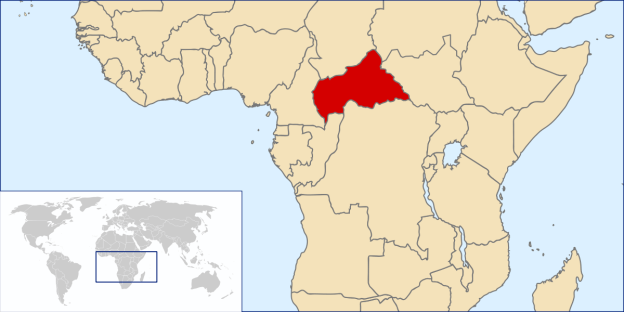
Peacekeepers Kill Demonstrators: Central African Republic

One person died and a dozen people were wounded when hundreds of protesters clashed with U.N. peacekeepers in the Central African Republic on April  10, 2015 local authorities said.  The demonstrators in the town of Kaga-Bandoro,[Christians]  about 350 km (220 miles) north of the capital Bangui, were angry that the U.N. MINUSCA mission had failed to stop raids by ethnic Peuhl pastoralists [Muslims]…”The protesters attacked the town’s aerodrome. To beat them back, the Pakistani blue helmets used tear gas and guns,” the town prefect Gaston Yendemo said, adding that the injured had been taken to hospital. Among those hurt was a Pakistani peacekeeper.

A statement from MINUSCA said up to 400 people, some armed with weapons, attacked the camp. They threw stones at peacekeepers and tried to force their way through the camp barrier, which they set on fire.  “Given the scale of the attack, the blue helmets needed to react by firing in the air. We deplore the death of one person and several injuries among the attackers,” it said, adding that it was the second attack in a week against the base.

Thousands have been killed and around a million displaced from their homes in violence that has gripped the impoverished landlocked country since the mainly-Muslim Seleka took power in March 2013.  The group gave up power last year in the face of diplomatic pressure and violence by the “anti-balaka” militia, who are mainly Christian or animist, and an interim government was installed.

One dead in protest against peacekeepers in Central African Republic, Reuters,  Apr. 10, 2015

Nuclear Submarines on Fire

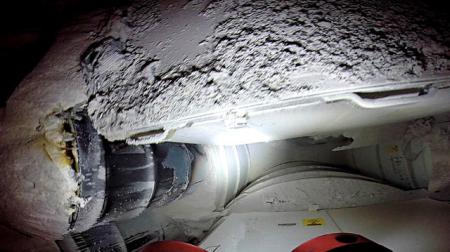
More than 80 firefighters and 20 fire trucks were involved in the work to extinguish the fire [that occurred on nuclear submarine  the “Oryol”], at around 2PM Moscow time during  works on the submarine, at Zvezdochk,  shipyard in Severodvinsk Russia.   The first information that the fire had been put out, came at around 5PM, but this information turned out to be false. The fire was not extinguished until 00:57 Moscow time, after the dock with the submarine had been flooded.  The vessels reactor had been shut down and the fuel had been unloaded before the repairs started. The submarine had no weapons onboard

One of many accidents
This accident that occurred on April 7, 2015 was the latest in a series of accidents that have occurred at Zvezdochka and other ship repair yards in Northwest-Russia during the last years.

On December 29, 2011 a fire broke out on the nuclear-powered Delta IV-class submarine “Yekaterinburg” while it was in a floating dock at the naval yard Roslyakovo just north of the town of Murmansk on the Kola Peninsula. According to the first official reports the fire only harmed the outer rubber coating of the submarine, and all the missiles had removed from the vessel before going in dock. Later Northern Fleet officials admitted that the submarine had both missiles and torpedoes on board. “Yekaterinburg” was re-launchedin June 2014, after two years of repairs.

In March 2014, during decommissioning work on the Oscar-II class nuclear submarine “Krasnodar” at the Nerpa naval yard north of Murmansk, the rubber on the outer hull of the submarine caught fire. There were no radioactive leakages, and no one was hurt in the accident.

Tuesday’s accident was the seventh at Zvezdochka in ten years, according to RIANovosti.  The other accidents were:

February 19 2010: Fire during dismantling of the Akula-class nuclear submarine K-480 “Ak Bars”. No casualties. Cause of fire: violation of fire safety during hot works.
December 11 2009: Leak of two cubic meters of liquid radioactive waste from a broken pipeline. No casualties, no radioactive waste leaked into the environment.
October 6 2009: Fire during dismantling of the Yankee-class nuclear submarine K-403 “Kazan”. The fire occurred during use of gas-flame cutter. Workers evacuated, no casualties.
March 25 2009: Fire during dismantling of the Yankee-class nuclear submarine K-411 “Orenburg”. The rubber coating of the vessel caught fire during hot works. No casualties.
July 26 2007: The main ballast tank of a nuclear submarine in dry dock was punctured as a result of excess air pressure. No casualties.
August 1 2005: Two people died in a fire during dismantling of an Akula-class nuclear submarine. Cause of the fire was ignition of vapors of fuel and lubricants during hot works.

Excerpts  from Trude Pettersen, Fire-struck nuclear submarine to be repaired, Barents Observer, Apr. 8, 2015

Global Oil Chokepoints and War in Yemen

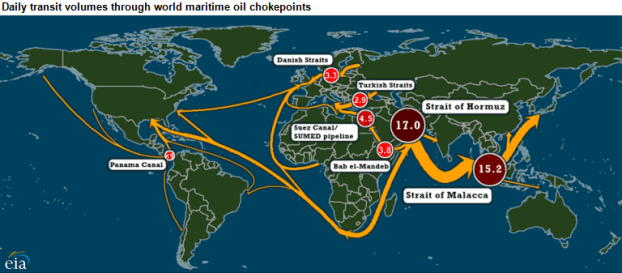
Fighters from Yemen’s Houthi militia entered  on March 31, 2015 a coastal military base overlooking the Red Sea’s strategic Bab el-Mandeb strait, local officials told Reuters.  Soldiers of the 17th Armored Division in the Dabab district in Yemen’s southwestern Taiz province opened the gates to the Houthis, whose military advance has been challenged by six days of Saudi-led air strikes. This means that Houthi rebels have a foothold along one of the world’s crucial oil chokepoints.    According to the US Energy Information Administration’s (EIA) fact-sheet on global oil chokepoints, 3.8 million barrels of oil and “refined petroleum products” passed through the Bab el-Mandeb each day on its way to Europe, Asia, and the US, making it the world’s fourth-busiest chokepoint.  The strait controls access to multiple oil terminals and to a oil pipeline co-owned by state companies from Egypt, Saudi Arabia, the United Arab Emirates and Qatar that transits oil between the Red Sea and the Mediterranean Sea, called the Suez-Mediterranean or SUMED pipeline.  The Bab el-Mandeb is 18 miles wide at its narrowest point, “limiting tanker traffic to two 2-mile-wide channels for inbound and outbound shipments,” according to the Energy Information Administration.

“Closure of the Bab el-Mandeb could keep tankers from the Persian Gulf from reaching the Suez Canal or SUMED Pipeline, diverting them around the southern tip of Africa, adding to transit time and cost,” the EIA fact-sheet explains. “In addition, European and North African southbound oil flows could no longer take the most direct route to Asian markets via the Suez Canal and Bab el-Mandeb.”

Recent events in Yemen, where a Saudi-led Arab military coalition is fighting to restore president Abd Rabbu Mansur Hadi against an Iranian-backed insurgent movement, have already jolted global oil prices.

Excerpt from ARMIN ROSEN,  Iran-backed Houthi militants in Yemen just captured a military base along one of the world’s major oil lanes, Reuters, Mar. 31, 2015

More from wikipedia: On February 22, 2008, it was revealed that a company owned by Tarek bin Laden is planning to build a bridge  across the Bab el-Mandeb strait, linking Yemen with Djibouti.  Middle East Development LLC, a Dubai company owned by Tarek bin Laden, would build the bridge. The project has been assigned to engineering company COWI in collaboration with architect studio Dissing+Weitling, both from Denmark.

Nuclear Submarines with Attack Boats: China

China’s latest nuclear submarine design appear to include a shelter capable of holding a miniature submarine for special operations forces (SOF) not unlike vehicles used to deliver Navy SEALs to shore from U.S. nuclear attack boats, according to an image in wide circulation in Chinese online networks.  The Chinese boat — a Type-93T or Shang-class nuclear attack submarine — features a hangar for the SOF submersible that would allow People’s Liberation Army troops to discrete deployment much like U.S. forces, according to a translation of a March 17 story in the state-run Reference News.  The image was first reported in English by Jane’s Defence Weekly….

The Chinese report on the delivery vehicle follow a consistent trend in Chinese ship design, according U.S. Naval Institute’s Combat Fleets of the World author Eric Wertheim. “It shows that they are really looking at Western designs and take lessons learned and look at how we use our subs and incorporate some those features into their own,” he told USNI [U.S. Naval Institute] News…In a wider context, China’s submarine abilities improve and their operations expand beyond their home waters it is making neighbors nervous.   Recenty the Indian Navy expressed concern over a Shang SSN that patrolled near its coastline from December 2014 to February 2015, according to a report in The Telegraph

Excerpt from Sam LaGrone, Chinese Nuclear Sub Design Includes Special Operations Mini-Sub,  U.S. Naval Institute News, Mar. 25, 2015

The Train Wreck of Yemen – War

Secret files held by Yemeni security forces that contain details of American intelligence operations in the country have been looted by Iran-backed militia leaders, exposing names of confidential informants and plans for U.S.-backed counter-terrorism strikes, U.S. officials say.U.S. intelligence officials believe additional files were handed directly to Iranian advisors by Yemeni officials who have sided with the Houthi militias that seized control of Sana, the capital, in September 2014, which led the U.S.-backed president to flee to Aden…. President Obama had hailed Yemen last fall as a model for counter-terrorism operations elsewhere….

Houthi leaders in Sana took over the offices of Yemen’s National Security Bureau, which had worked closely with the CIA and other intelligence agencies, according to two U.S. officials who spoke on the condition of anonymity to discuss sensitive operations.

The loss of the intelligence networks, in addition to the escalating conflict, contributed to the Obama administration’s decision to halt drone strikes in Yemen for two months, to vacate the U.S. Embassy in Sana last month and to evacuate U.S. special operations and intelligence teams from a Yemeni air base over the weekend.

The Houthis claimed on March 25, 2015 that they had captured that air base, Al Anad, as new fighting broke out in and around the southern seaport of Aden, the country’s financial hub, where Hadi had taken refuge. Over the weekend, the Houthis seized the central city of Taizz…..Foreign Minister Riad Yassin said Hadi was overseeing the city’s defense from an undisclosed safe location. The Associated Press reported that he had fled the country on a boat….

As the turmoil deepened, Yemen appeared to be descending into a civil war that could ignite a wider regional struggle.,,,Saudi Arabia launched airstrikes against Iran-backed militias in Yemen to bolster the positions of the Yemeni government against the rapid advance of the Shiite militias,…Saudi Arabia reportedly moved troops, armored vehicles and artillery to secure its border with Yemen, which sits alongside key shipping routes.,,,,

The Houthis and their allies, backed by tanks and artillery, advanced Wednesday to within a few miles of Aden after battles north of the city, officials and witnesses said. Much of the rebels’ heavy weaponry was provided by Yemeni military units that remained loyal to former President Ali Abdullah Saleh, who was toppled in 2012 and is a bitter opponent of Hadi [who is supported by the US]…..

Four U.S. drone strikes have been reported in Yemen this year, according to the Long War Journal, a website that tracks the attacks. That compares with 23 in the first 10 months of 2014. The Houthi takeover of Sana forced a pause in the program. … [T}he Houthis may have captured a “significant portion” of the $500 million in military equipment that the U.S. has given Hadi’s government.The equipment approved included Huey II helicopters, Humvees, M-4 rifles, night-vision goggles, body armor and hand-launched Raven drones….

“It was a train wreck that anyone who knows anything about Yemen could see happening. It seems we put our head in the sand, and the train wreck has happened and now we are saying, ‘How did this happen?’” said Ali Soufan, a former senior FBI agent.

Excerpts from By BRIAN BENNETT AND ZAID AL-ALAYA, Iran-backed rebels loot Yemen files about U.S. spy operations, Associated Press

Weapons-Grade Uranium-S. Africa: better than gold

In the early hours of 28 July 2012, three people, one of them an 82-year-old nun named Megan Rice, broke into the Y-12 Nuclear Security Complex near the city of Oak Ridge, Tennessee. Y-12 is where all of America’s highly enriched uranium (HEU) – for making nuclear weapons is stored… in November 2007, two groups of intruders cut through the security fences surrounding South Africa’s 118-acre Pelindaba Nuclear Research Centre, west of Pretoria. They got as far as the emergency operations centre before a barking dog alerted a stand-in security office….=

Pelindaba houses South Africa’s stockpile of HEU, which was extracted in 1990 from the six or seven nuclear bombs that the old National Party government had built. According to the Center for Public Integrity (CPI) report, the HEU was melted down and cast into ingots, which were stored at Pelindaba. Over the years, some of the HEU was used to make medical isotopes for sale…..

Now, according to the CPI report, about 220 kg of the HEU remains, with no immediate purpose. This gives Pretoria the theoretical ability to make nuclear weapons again. But what really bothers the US officials who the CPI interviewed is that terrorists could steal the HEU and use it to make nuclear weapons. The report says Pelindaba contains enough weapons-grade uranium to fuel half a dozen bombs, each powerful enough to obliterate central Washingt

…US President Barack Obama has been trying very hard since 2011 to persuade President Jacob Zuma to relinquish the HEU stockpile, as part of his global effort to mop up such fissile material from nuclear states.

So why won’t South Africa give up its HEU stockpile? …Pelindaba is now probably more secure than most US nuclear facilities – especially after the US spent nearly US$10 million in helping South Africa to upgrade security there after the 2007 break-in. … [T]he main reason Pretoria wants to keep its HEU is because ‘it’s a stick they are using to beat up on the US for not dismantling its own nuclear weapons.’
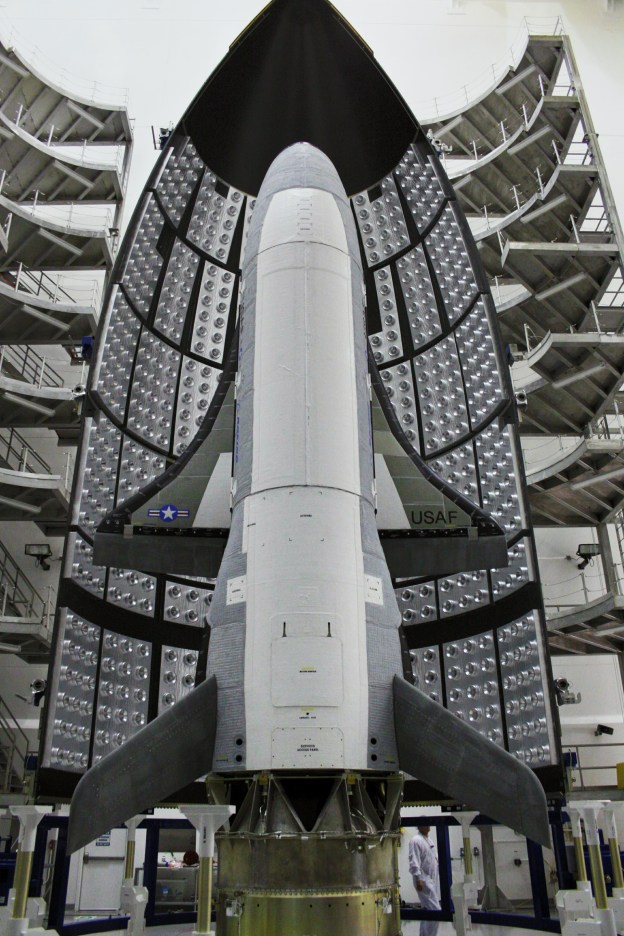
In the end though, the 220 kg of highly enriched uranium stored away in the depths of Pelindaba has much more than commercial or tactical value…the stockpile is a symbol of South Africa’s sovereignty, its power and its integrity: of its ability to use nuclear energy for peaceful purposes – and even of its technical ability to construct an atomic weapon. But also of its firm moral determination never to do so.  In that sense, the 220 kg of highly enriched uranium ingots are more precious to the African National Congress government than all the gold bullion in the Reserve Bank. They aren’t going anywhere.
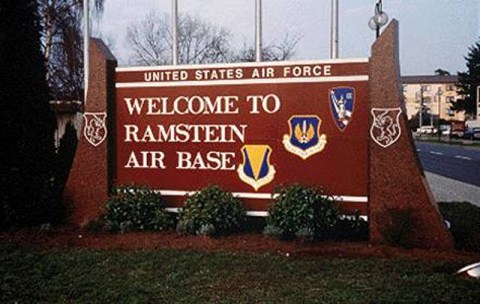
Excerpt from Peter Fabricius, Foreign Editor, Independent Newspapers, South Africa ISS,  Why is Pretoria so jealously guarding it fissile material? Mar. 19, 2014

The Weapons Business

The United States has taken a firm lead as the major arms exporter globally, according to new data on international arms transfers published by Stockholm International Peace Research Institute (SIPRI) on March 16, 2014. Overall, the volume of international transfers of major conventional weapons grew by 16 per cent between 2005–2009 and 2010–14.

The volume of US exports of major weapons rose by 23 per cent between 2005–2009 and 2010–14. The USA’s share of the volume of international arms exports was 31 per cent in 2010–14, compared with 27 per cent for Russia. Russian exports of major weapons increased by 37 per cent between 2005–2009 and 2010–14. During the same period, Chinese exports of major arms increased by 143 per cent, making it the third largest supplier in 2010–14, however still significantly behind the USA and Russia.  ‘The USA has long seen arms exports as a major foreign policy and security tool, but in recent years exports are increasingly needed to help the US arms industry maintain production levels at a time of decreasing US military expenditure’, said Dr Aude Fleurant, Director of the SIPRI Arms and Military Expenditure Programme.

Arms imports to Gulf Cooperation Council (GCC) states increased by 71 per cent from 2005–2009 to 2010–14, accounting for 54 per cent of imports to the Middle East in the latter period. Saudi Arabia rose to become the second largest importer of major weapons worldwide in 2010–14, increasing the volume of its arms imports four times compared to 2005–2009.

‘Mainly with arms from the USA and Europe, the GCC states have rapidly expanded and modernized their militaries’, said Pieter Wezeman, Senior Researcher with the SIPRI Arms and Military Expenditure Programme. ‘The GCC states, along with Egypt, Iraq, Israel and Turkey in the wider Middle East, are scheduled to receive further large orders of major arms in the coming years.’

Asian arms imports continue to increase.  Of the top 10 largest importers of major weapons during the 5-year period 2010–14, 5 are in Asia: India (15 per cent of global arms imports), China (5 per cent), Pakistan (4 per cent), South Korea (3 per cent) and Singapore (3 per cent). …

African arms imports increased by 45 per cent between 2005–2009 to 2010–14.Between 2005–2009 and 2010–14 Algeria was the largest arms importer in Africa, followed by Morocco, whose arms imports increased elevenfold.  Deliveries and orders for ballistic missile defence systems increased significantly in 2010–14, notably in the GCC and North East Asia.

More information at SIPRI

Illegal Nuclear Imports – Lebanon

Parliament Speaker Nabih Berri has filed a lawsuit against merchants responsible for importing radioactive products into Lebanon, a judicial source told The Daily Star Thursday.  Berri filed the case with the State Prosecution on March 11, 2015, on behalf of himself as both a citizen of Lebanon and the speaker of Parliament, the source added.

The case targets those who participated “in the crime of importing radioactive products to Lebanon, which has negative effects on public health and the environment.”Berri requested that the locations of radioactive products be determined, the suspects detained and the material sent back to the source. State Prosecutor Judge Samir Hammoud tasked criminal investigators with carrying out the probe…

The move came after the local newspaper As-Safir reported that Defense Minister Samir Moqbel had made a decision to transform a  into a landfill for radioactive waste.  After Berri voiced his rejection to the plan, Army Commander Gen.Jean Kahwagi assured him that it would not go through.  The Secretary General of the National Council for Scientific Research Mouin Hamzeh also told As-Safir that the plan violated environmental laws, because the landfill would be close to touristic and residential areas….

As-Safir’s report also stated that “gangs and mafias” had been smuggling radioactive products from Syria and Iraq through illegal crossings on the Lebanese borders.

Excerpt, Lebanon speaker sues over radioactive imports, Daily Star, Mar. 12, 2015


Parliament Speaker Nabih Berri has filed a lawsuit against merchants responsible for importing radioactive products into Lebanon, a judicial source told The Daily Star Thursday.  Berri filed the case with the State Prosecution on March 11, 2015, on behalf of himself as both a citizen of Lebanon and the speaker of Parliament, the source added.

The case targets those who participated “in the crime of importing radioactive products to Lebanon, which has negative effects on public health and the environment.”Berri requested that the locations of radioactive products be determined, the suspects detained and the material sent back to the source. State Prosecutor Judge Samir Hammoud tasked criminal investigators with carrying out the probe…

The move came after the local newspaper As-Safir reported that Defense Minister Samir Moqbel had made a decision to transform a  into a landfill for radioactive waste.  After Berri voiced his rejection to the plan, Army Commander Gen.Jean Kahwagi assured him that it would not go through.  The Secretary General of the National Council for Scientific Research Mouin Hamzeh also told As-Safir that the plan violated environmental laws, because the landfill would be close to touristic and residential areas….

As-Safir’s report also stated that “gangs and mafias” had been smuggling radioactive products from Syria and Iraq through illegal crossings on the Lebanese borders.

Excerpt, Lebanon speaker sues over radioactive imports, Daily Star, Mar. 12, 2015

Forecast a CyberAtttack: IARPA

From the website of IARPA (Intelligence Advanced Research Projects Activity (IARPA) — a US research agency under the Director of National Intelligence.

“Approaches to cyber defense typically focus on post-mortem analysis of the various attack vectors utilized by adversaries. As attacks have evolved and increased over the years, established approaches (e.g., signature-based detection, anomaly detection) have not adequately enabled cybersecurity practitioners to get ahead of these threats. This has led to an industry that has invested heavily in analyzing the effects of cyber-attacks instead of analyzing and mitigating the “cause” of cyber-attacks,

The CAUSE   (Cyber-attack Automated Unconventional Sensor Environment)Program seeks to develop cyber-attack forecasting methods and detect emerging cyber phenomena to assist cyber defenders with the earliest detection of a cyber-attack (e.g., Distributed Denial of Service (DDoS), successful spearphishing, successful drive-by, remote exploitation, unauthorized access, reconnaissance). T

he CAUSE Program aims to develop and validate unconventional multi-disciplined sensor technology (e.g., actor behavior models, black market sales) that will forecast cyber-attacks and complement existing advanced intrusion detection capabilities. Anticipated innovations include: methods to manage and extract huge amounts of streaming and batch data, the application and introduction of new and existing features from other disciplines to the cyber domain, and the development of models to generate probabilistic warnings for future cyber events. Successful proposers will combine cutting-edge research with the ability to develop robust forecasting capabilities from multiple sensors not typically used in the cyber domain…”

Excerpt from IARPA website


400 Nuclear Safety Failures: Nuclear Weapons, U.K.

Britain’s nuclear weapons base has suffered from a dozen serious nuclear safety failures in recent years, according to official records.  Over the last six years HM Naval Base Clyde, where Britain’s Trident nuclear submarine fleet is based, suffered from nearly 400 “widespread” nuclear safety events relating to a “poor safety culture”.

In 12 of these cases the problems involved an “actual or high” risk of unplanned exposure to radiation or contained release of radiation within a building or submarine, according to information released by ministers in the last week.  Last year the number of nuclear safety events involving nuclear propulsion nearly doubled, from 57 in 2013 to 99 in 2014.  In one incident in 2012, contractors working on the base were exposed to radiation while repairing submarine equipment.

The 12 most serious events at the base, classified by the Ministry of Defence as “Category B”, are ones in which there is an “actual or high potential for a contained release [of radiation] within building or submarine or unplanned exposure to radiation”.  According to the Ministry’s own criteria, this classification is used for safety events that involve a “major failure in administrative controls or regulatory compliance”.

Other serious nuclear safety events included the unsafe operation of a crane on a jetty handling explosives, faulty radiation testing, and low-level radioactive contamination around a pipe that dumps supposedly decontaminated waste into the sea.  Despite the problems, the base has not recently suffered from any of the most serious category of safety failures – ‘Category A’ – which would have involved release into the environment in the surrounding area.

Excerpt from JON STONE,Britain’s nuclear weapons base suffers from ‘serious’ nuclear safety incidents and ‘poor safety culture, Independent, Mar. 2, 2015

Scramble for Africa II – Secret Cables

Africa emerges as the 21st century theatre of espionage, with South Africa as its gateway, in the cache of secret intelligence documents and cables seen by the Guardian. “Africa is now the El Dorado of espionage,” said one serving foreign intelligence officer.

The continent has increasingly become the focus of international spying as the battle for its resources has intensified, China’s economic role has grown dramatically, and the US and other western states have rapidly expanded their military presence and operations in a new international struggle for Africa…. The leaked documents obtained by al-Jazeera and shared with the Guardian contain the names of 78 foreign spies working in Pretoria, along with their photographs, addresses and mobile phone numbers – as well as 65 foreign intelligence agents identified by the South Africans as working undercover. Among the countries sending spies are the US, India, Britain and Senegal.

The United States, along with its French and British allies, is the major military and diplomatic power on the continent. South Africa spends a disproportionate amount of time focused on Iran and jihadi groups, in spite of internal documents showing its intelligence service does not regard either as a major threat to South Africa. “The Americans get what they want,” an intelligence source said…

Chinese intelligence is identified in one secret South African cable as the suspect in a nuclear break-in. A file dating from December 2009 on South Africa’s counter-intelligence effort says that foreign agencies had been “working frantically to influence” the country’s nuclear energy expansion programme, identifying US and French intelligence as the main players. But due to the “sophistication of their covert operations”, it had not been possible to “neutralise” their activities.

However, a 2007 break-in at the Pelindaba nuclear research centre – where apartheid South Africa developed nuclear weapons in the 1970s – by four armed and “technologically sophisticated criminals” was attributed by South African intelligence to an act of state espionage. At the time officials publicly dismissed the break-in as a burglary.

Several espionage agencies were reported to have shown interest in the progress of South Africa’s Pebble Bed Modular Reactor. According to the file, thefts and break-ins at the PBMR site were suspected to have been carried out to “advance China’s rival project”. It added that China was “now one year ahead … though they started several years after PBMR launch”.

In an October 2009 report by South Africa’s intelligence service, the National Intelligence Agency (NIA), on operations in Africa, Israel is said to be “working assiduously to encircle and isolate Sudan from the outside, and to fuel insurrection inside Sudan”. Israel “has long been keen to capitalise on Africa’s mineral wealth”, the South African spying agency says, and “plans to appropriate African diamonds and process them in Israel, which is already the world’s second largest processor of diamonds”.  The document reports that members of a delegation led by then foreign minister Avigdor Lieberman had been “facilitating contracts for Israelis to train various militias” in Africa…

[According to leaked documents]: “Foreign governments and their intelligence services strive to weaken the state and undermine South Africa’s sovereignty. Continuing lack of an acceptable standard of security … increases the risk.” It lists theft of laptop computers, insufficient lock-up facilities, limited vetting of senior officials in sensitive institutions, no approved encryption on landlines or mobiles, total disregard by foreign diplomats for existing regulations, ease of access to government departments allowed to foreign diplomats, and the lack of proper screening for foreigners applying for sensitive jobs.  According to one intelligence officer with extensive experience in South Africa, the NIA is politically factionalised and “totally penetrated” by foreign agencies: “Everyone is working for someone else.” The former head of the South African secret service, Mo Shaik, a close ally of the president, Jacob Zuma, was described as a US confidant and key source of information on “the Zuma camp” in a leaked 2008 Wikileaks cable from the American embassy in Pretoria.

Excerpts Seumas Milne and Ewen MacAskill Africa is new ‘El Dorado of espionage’, leaked intelligence files , Guardian, Feb. 23, 2015

Nuclear Weapons of Saudi Arabia via Pakistan

The visit by the chairman of Pakistan’s Joint Chiefs of Staff Committee in Feb. 2015 will likely prompt concern in Washington and other major capitals that Saudi Arabia and Pakistan have reconfirmed an arrangement whereby Pakistan, if asked, will supply Saudi Arabia with nuclear warheads. The main meeting on Gen. Rashid Mahmoud’s itinerary was with King Salman — the topics discussed were reported as “deep relations between the two countries and … a number of issues of common interest.”…For decades, Riyadh has been judged a supporter of Pakistan’s nuclear weapons program, providing financing in return for a widely assumed understanding that, if needed, Islamabad will transfer technology or even warheads…

Although Pakistani nuclear technology also helped Iran’s program, the relationship between Islamabad and Riyadh has been much more obvious.  In 1999, a year after Pakistan tested two nuclear weapons, then Saudi defense minister Prince Sultan visited the unsafeguarded uranium enrichment plant at Kahuta outside Islamabad — prompting a US diplomatic protest.

Excerpts from SIMON HENDERSON, Saudi Arabia and Pakistan may have just renewed a secret nuclear weapons pact, Business Insider, Feb. 4, 2014

How to Destroy a Country: Attack Central Bank

The United Nations condemned a reported attack on an office of Libya’s central bank in the eastern city of Benghazi, calling for an inquiry into the incident that has complicated talks between the country’s warring parties.,,The incident at the bank, which has tried to stay out of the conflict, weakened the Libyan dinar against the dollar on the parallel market. The bank is controlling the country’s vital oil revenues and foreign currency reserves.“The United Nations Support Mission in Libya condemns the reported armed attack against the Central Bank branch in Benghazi, a sovereign symbol of the Libyan State,” it said in a statement…

A Reuters reporter could see damage to the bank building located in the city center, the scene of heavy battles for weeks between eastern government troops and Islamist fighters…Both conflict parties have been fighting for control of the oil producer and appointed separate heads for the central bank which held $109 billion in foreign reserves at the end of June, the last published figure. Experts believe the figure has fallen due to a slump in oil output.  Oil revenues are booked abroad on accounts of a state bank to which only the central bank has access. About half of the currency reserves are held in illiquid or rather exotic assets such as equity stakes from Italy to Bahrain or Chinese bonds.

Excerpt from U.N. condemns attack on Libyan central bank, demands inquiry, Reuters,  Jan. 23, 2015

Torture Island: Diego Garcia

The UK government is facing renewed pressure to make a full disclosure of its involvement in the CIA’s post-9/11 kidnap and torture programme after another leading Bush-era US official said suspects were held and interrogated on the British territory of Diego Garcia. Lawrence Wilkerson, who was chief of staff to Colin Powell at the US state department, said the Indian Ocean atoll was used by the CIA as “a transit site where people were temporarily housed, let us say, and interrogated from time to time”.  In an interview with Vice News, Wilkerson said three US intelligence sources had informed him that the CIA used Diego Garcia for what he described as “nefarious activities”, with prisoners being held for weeks at a time…

Diego Garcia’s population was removed during the late 1960s and early 70s and forced to settle on the Seychelles and Mauritius. Since then the atoll has been leased by the UK to the US for use as a military base.

Wilkerson is the latest of a number of well-placed officials who have said that after 9/11 the atoll was also used in the CIA rendition programme.Barry McCaffrey, a retired four-star American general, has twice spoken publicly about the use of Diego Garcia to detain suspects. Manfred Nowak, a former United Nations special rapporteur on torture, has said he has heard from reliable sources that the US held prisoners on ships in the Indian Ocean. Dick Marty, a Swiss senator who led a Council of Europe investigation into the CIA’s use of European territory and air space, said he received confirmation of the use of the atoll. He later said he received the assistance of some CIA officers during his investigation….There also is a wealth of circumstantial evidence to suggest that Diego Garcia was used in the so-called rendition programme…

Excerpt from  Ian Cobain, CIA interrogated suspects on Diego Garcia, says Colin Powell aide,  Guardian, Jan. 30, 2015

The Justice System in Afghanistan – Love Taliban

Frustrated by Western-inspired legal codes and a government court system widely seen as corrupt, many Afghans think that the militants’ quick and tradition-rooted rulings are their best hope for justice. In the Pakistani cities of Quetta and Chaman, havens for exiled Taliban figures, local residents describe long lines of Afghans waiting to see judges.“You won’t find the same number of people in the Afghan courts as you do in the Taliban courts,” said Hajji Khudai Noor, a Kandahar resident who recently settled a land dispute through the Taliban in Quetta. “There are hundreds of people waiting for justice there.”

Western officials have long considered a fair and respected justice system to be central to quelling the insurgency, in an acknowledgment that the Taliban’s appeal had long been rooted in its use of traditional rural justice codes. But after the official end of the international military mission and more than a billion dollars in development aid to build up Afghanistan’s court system, it stands largely discredited and ridiculed by everyday Afghans. A common refrain, even in Kabul, is that to settle a dispute over your farm in court, you must first sell your chickens, your cows and your wife.  Countless training programs funded by Western allies for lawyers and judges have become bywords for waste….

The Taliban have seized on this discontent. In some areas, they have set up mobile courts to reach villages outside their zones of influence. They hold hearings two days a week in the southern borderlands, requiring plaintiffs to produce evidence and witnesses. In Kunar, Taliban legal experts embed with militant commanders to provide services to locals and the fighters.

While few Afghans recall the Taliban rule from 1996 to 2001 with any fondness, the lack of corruption in justice then was seen by some as a strong suit. Bribes were uncommon. The power of litigants and their extended clans mattered less. The implementation of Islamic law, or at least the rural Afghan version of it, was standard.

But the brutality at the heart of Taliban justice has not been forgotten. Mass public executions were common. Minor offenses, like cutting beards short or listening to music, often brought fierce beatings as punishment. Yet the government system still compares unfavorably in the eyes of many Afghan,s

Excerpts from AZAM AHMED, Taliban Justice Gains Favor as Official Afghan Courts Fail, NY Times,  Jan. 31, 2015

U.S. Military Spending 2015

U.S. Deputy Defense Secretary Robert Work on Wednesday, Jan. 28, 2015 urged NATO allies to develop and make more innovative weapons, and said bold action was needed to stay ahead of rapid weapons development by China, Russia and other countries.  Work said the Pentagon has a new plan called “Defense Innovation Initiative” and a separate effort targeting longer-term projects to ensure that the United States continues to have a decisive competitive advantage against potential foes.

Work said concerns about advances by other countries were a key reason that the Pentagon’s fiscal 2016 budget plan to be delivered to Congress will exceed budget caps set by Congress and reverse five years of declines in U.S. military spending.   He said the budget would include “significant” investments in nuclear weapons, space control capabilities, advanced sensors, missile defense and cyber, as well as unmanned undersea vehicles, high-speed strike weapons, a new jet engine, high-energy lasers and rail gun technology…..Lockheed Martin Corp  and Boeing  and other key weapons makers have repeatedly urged the Pentagon to step up investments in key technologies….

Kendall said the department would also earmark funds for development and prototyping of a new “next-generation X-plane” that would eventually succeed the F-35 fighter jet, and a new engine.

Excerpts, ANDREA SHALAL, Pentagon official urges NATO to focus on innovative weapons. Jan 28, 2015

Like Wolves Like Drones: DARPA CODE

Most unmanned aerial systems (UAS) [i.e. drones] require constant control by a dedicated pilot and sensor operator as well as a large number of analysts, all via telemetry. These requirements severely limit the scalability and cost-effectiveness of UAS operations and pose operational challenges in dynamic, long-distance engagements with highly mobile targets in contested electromagnetic environments.  DARPA’s Collaborative Operations in Denied Environment (CODE) program aims to overcome these challenges by developing algorithms and software,,,with the goal of improving U.S. forces’ ability to conduct operations in denied or contested airspace.

CODE intends to focus in….the capability for groups of UAS to work together under a single human commander’s supervision….. CODE’s envisioned improvements to collaborative autonomy would help transform UAS operations from requiring multiple people to operate each UAS to having one person who is able to command and control six or more unmanned vehicles simultaneously. Commanders could mix and match different systems with specific capabilities that suit individual missions instead of depending on a single UAS that integrates all needed capabilities but whose loss would be potentially catastrophic.

“Just as wolves hunt in coordinated packs with minimal communication, multiple CODE-enabled unmanned aircraft would collaborate to find, track, identify and engage targets, all under the command of a single human mission supervisor,” said Jean-Charles Ledé, DARPA program manager.

Excerpts from DARPA website


To Conquer Space – China

After decades hiding deep in China’s interior, the country’s space-launch programme is preparing to go a bit more public. By the tourist town of Wenchang on the coast of the tropical island of Hainan, work is nearly complete on China’s fourth and most advanced launch facility…Secrecy remains ingrained—soldiers at a gate politely but firmly decline to say what they are guarding.

The decision to build the base on Hainan was made for technical reasons: its proximity to the equator, at a latitude of 19 degrees north, will allow rockets to take better advantage of the kick from the Earth’s rotation than is currently possible with launches from China’s other bases which were built far inland at a time of cold-war insecurity. That will allow a bigger payload for each unit of fuel—a boon for China’s space ambitions, which include taking a bigger share of the commercial satellite-launch market, putting an unmanned rover on Mars around 2020, completing a manned space station around 2022 and possibly putting a person on the moon in the coming decade, too. By 2030 China hopes to test what could be one of the world’s highest-capacity rockets, the Long March 9.have no explanation for the apparent delay. Secrecy is a difficult habit to shake off.

Excerpt from Space: Ready for launch,  Economist, Jan. 10, 2015, at 40

Israel Nuclear Ambiguity Benefits U.S.

Defense officials are fighting a three-year-old request under the Freedom of Information Act to release a 1987 report supposedly discussing Israel’s nuclear technology.  Grant Smith of the Institute for Research: Middle Eastern Policy  filed the request in 2012 and raised the issue in court after he said the request “went nowhere” for several years. He has been a critic of many U.S. policies related to Israel and of what he believes to be the inordinate influence of Israel in the American government.

In a seldom-used legal move known as optional review, Pentagon officials have asked the Israeli government to review the report before they consider releasing it.  Smith said the Defense Department has denied being able to locate the report, claimed it contained sensitive Israeli government information and cited FOIA exemptions, non-disclosure agreements and patents to intellectual property rights in its efforts to block the release of the report.

The unclassified report in question, titled “Critical Technology Issues in Israel and NATO Countries,” has surfaced in media stories and nonprofit research but has never been released to the public, according to court documents filed by Smith.  Smith’s legal complaint mentioned a 1995 publication called the Risk Report, which supposedly cited findings from the Pentagon document without referencing it by name.  The Risk Report claimed “the United States approved the sale of powerful computers that could boost Israel’s well-known but officially secret A-Bomb and missile programs” and identified the report only as “a 1987 Pentagon-sponsored study.”

Smith called the Department of Defense’s decision to seek Israeli approval a “cover-up” in the response he filed with the court Jan. 7.  “There is pressing urgency to release this report in the current context of regional nuclear negotiations which can only have a productive outcome if Americans and other concerned parties are more fully informed of the true state of affairs,” his response said.

Jonathan Schanzer, vice president for research at the Foundation for Defense of Democracies, called the likely existence of Israeli nuclear weapons an “open secret” in the international community….Israel… has never disclosed its alleged arsenal, nor has the U.S. ever formally acknowledged its existence….

“Making sure that the Israelis have the ambiguity they need on nuclear issues actually boosts our nonproliferation diplomacy by preventing tensions in the region and backlashes from Israel’s neighbors,” said the official, who requested anonymity.

U.S. District Court Judge Tanya Chutkan issued an order Jan. 8, 2015 requiring Defense officials to say whether they planned to invoke a non-disclosure provision that would allow them to keep the report secret at Israel’s request by Feb. 12. If not, Chutkan will begin the process of privately reviewing the report herself.  Defense officials said they expect the Israeli government to complete its review of the report by Jan. 16, 2015

BY SARAH WESTWOOD , Legal battle to publish unclassified DOD report on Israeli nukes nears end, Jan. 8, 2015

Hacked to be Framed: N. Korea – Wapomi Worm

Foreign hackers could have broken into North Korean computers and used them to make the country look responsible for hacking Sony, experts have said.  Any attempt to blame North Korea for the attack because hackers used a North Korean IP address “must be treated as suspect”, security firm Cloudmark said. That is one of the reasons that the FBI has given for suspecting the country for the attack, which took down Sony Pictures’ systems for weeks.  Security experts have continued to be dubious of the claim, but FBI officials have continued to blame North Korea.

The country has a very small connection to the internet, run by its national telecom ministry and a Thai firm. As a demonstration of how few connections North Korea has to the internet, Cloudmark said that it has the same amount of IP addresses allocated to it as the entire country.  Cloudmark said that the North Korean addresses it traces tend to send out spam, which is usually the sign of an infected machine. It identified the Wapomi worm, which is transmitted by USB drives and file server shares, as the code that is allowing outside people to control the machine.

While there is no guarantee that the same worm is present on the computers that have carried out the attack, the prevalence of infected computers in the country shows how easy it could have been for Sony’s hackers to give the impression they were based on North Korea.  Cloud mark said that “unless the FBI releases more specific details of their case against North Korea, including email headers and mail server logs, some experts will continue to question if they are in fact correct”.

ANDREW GRIFFIN ,North Korea might have been hacked to frame it for Sony cyberattack, say experts, Independent, January 12, 2015

Militarization of Space: Japan

Japan is shifting its space program toward potential military uses in a new policy hailed on as a “historic turning point” by Prime Minister Shinzo Abe, who wants to strengthen defence and boost exports.  The move comes as emerging powers such as China and India join the United States to expand space activities for commercial and security purposes.

Last year, Abe eased a postwar curb on arms exports and on allowing troops to fight overseas, as part of a more robust military and diplomatic posture for Japan…

The new measures will see Tokyo increase its fleet of global-positioning satellites to seven over the next decade, up from one now, to make Japan independent of other countries for uses from navigating vehicles to guiding weapons systems. Japan will also step up the number of its information gathering satellites, which collect pictures of vessels and military facilities and measure sea surface temperatures for submarine detection, from four now.  “The security environment surrounding Japan is getting tougher, and the importance of space is getting bigger for safeguarding our security,” the government said in a report.

Japan is targeting sales of five trillion yen ($42 billion) of space-related hardware over the next decade by stimulating domestic demand and helping manufacturers win overseas orders, the report said.  It did not give a comparative figure for the past 10 years. But such sales are estimated to total a little more than 300 billion yen annually now, a Cabinet Secretariat official said.  Japan’s major satellite manufacturers include Mitsubishi Electric Corp and NEC Co

Japan reorients space effort to bolster security, drive exports, Reuters, Jan. 9, 2014

Crimes under the Rug: UN in Sudan

The United Nations-African Union Mission in Darfur (UNAMID) has proved more controversial than most…UNAMID was imposed on a reluctant Sudanese government in 2007, after the worst of the fighting between Darfuri rebels and government forces was over. The conflict has claimed some 300,000 lives and led to charges of genocide against Sudan’s president.  Matters have come to a head over reports of an attack by Sudanese soldiers in the village of Tabit on October 31st and November 1st. The troops are reported to have gone on a rampage, apparently in revenge for the disappearance of one of their own. They allegedly raped some 200 women. UNAMID eventually negotiated permission from the Sudanese authorities to investigate Tabit on November 9th. Thereafter it declared that it found no evidence of such crimes and that villagers “coexist peacefully” with the army.

This sunny conclusion was greeted with astonishment by many Darfuris, for social media were by now carrying eyewitness accounts of the violence. It also prompted a leak of UNAMID’s internal report, which is gravely at odds with the official statement. This report explained how uniformed and plain-clothes Sudanese military officials had infested Tabit while the UN team was there, ensuring that “an environment of fear and silence prevailed”. People were warned not to talk.

UNAMID’s apparent doublespeak over Tabit will have come as no surprise to the mission’s former spokeswoman, Aicha Elbasri. She resigned last year in protest against UNAMID’s ignoble history of such discrepancies, which, in her view, amounts to an organised “cover-up” of the violence in Darfur. The UN’s conduct over Tabit, she says, has been entirely consistent with her own experience of the “huge gap between the reports that we got from the field and the reports that go to the public.”

The cause of such a cover-up, argues the Moroccan-born Ms Elbasri, is the hybrid nature of the mission. The African element of UNAMID, controlled by the African Union (AU), “is completely against justice” for ordinary people and is mainly concerned with defending one of its own, President Omar al-Bashir. For the same reason the AU has been a fierce critic of the International Criminal Court, which has indicted Mr al-Bashir for war crimes.

As if to confirm Ms Elbasri’s conspiracy, Mr Bashir is redoubling his efforts to get rid of the mission now that UNAMID’s tendency to self-censorship has been sabotaged. A supine UNAMID was one thing, it seems; a mission containing a few people who might do their jobs properly quite another. He has already closed the mission’s human rights office.

The UN will have to decide whether to infuriate Mr al-Bashir further by renewing the mission’s mandate beyond next June. It is still dealing with claims of a cover-up, which the UN secretary-general, Ban Ki-moon, has called “very troubling”. That might be an apt description of UNAMID’s entire, sorry history.

Sudan and the UN: Mission in trouble, Economist, Dec. 6, 2014, at 62

Marshall Islands against 9 Nuclear States

On April 24, 2014, the Republic of the Marshall Islands (RMI) filed applications in the International Court of Justice against the nine nuclear-armed states, United States, United Kingdom, France, Russia, China, India, Pakistan, Israel, and North Korea.  The RMI also filed a companion case against the United States in U.S. federal court in San Francisco….

Three of the nine states possessing nuclear arsenals, the UK, India, and Pakistan, have accepted the compulsory jurisdiction of the Court when the opposing state has done so, as the Marshall Islands has. The cases are proceeding as to those states, and developments can be followed on the ICJ website, http://www.icj-cij.org.  As to the other six states, RMI is calling on them to accept the jurisdiction of the Court in these cases and to explain to the Court their positions regarding the nuclear disarmament obligations. However, China has already notified the Court that it declines to accept the Court’s jurisdiction in this matter.

The claims in the ICJ cases are for:

1)      breach of the obligation to pursue in good faith negotiations leading to nuclear disarmament, by refusing to commence multilateral negotiations to that end and/or by implementing policies contrary to the objective of nuclear disarmament;

2)      breach of the obligation to pursue negotiations in good faith on cessation of the nuclear arms race at an early date;

3)      breach of the obligation to perform the above obligations in good faith, by planning for retention of nuclear forces for decades into the future;

4)      failure to perform obligations relating to nuclear disarmament and cessation of the nuclear arms race in good faith by effectively preventing the great majority of non-nuclear weapon states from fulfilling their part of those obligations.

For the Nuclear Non-Proliferation Treaty (NPT) nuclear-weapon states, the U.S., UK, France, Russia, and China, the claims are made under both the NPT and customary international law. For the four states possessing nuclear arsenals outside the NPT, India, Pakistan, Israel, and North Korea, the claims are made under customary international law only. The customary obligations are based on widespread and representative participation of states in the NPT and the long history of United Nations resolutions on nuclear disarmament, and reflect as well the incompatibility of use of nuclear weapons with international law.

Hearings on preliminary issues – whether the cases are suitable for decision by the Court – probably will take place by late 2015 or early 2016. Proceedings on the merits could take another two or three years.

Excepts from The Marshall Islands’ Nuclear Zero Cases in the World Court:. Background and Current Status, Lawyers Committee on Nuclear Policy/November 2014

How to Manipulate People in War

“We have, in my view, exquisite capabilities to kill people,” said Lt. Gen. Charles Cleveland. “We need exquisite capabilities to manipulate them.”  Psychological subtlety and the US military don’t always go hand-in-hand. Worldwide, we’ve become better known for drone strikes and Special Operations raids to kill High Value Targets. But that wasn’t enough for the last 13 years of war, according to a RAND study …“We’ve built a great apparatus for terrorism and to some degree we’ve got to be careful that doesn’t create blind spots,” Cleveland said… during a panel discussion at RAND. “There’s a cottage industry that’s built up around it [counter-terrorism]. You run the risk of basically taking on an entrenched infrastructure” whenever you try to broaden the focus killing and capturing the bad guys, he said, but we have to try.

“I don’t think we understand completely the fight we’re in,” Cleveland said. …In the US, though, “we’re horrible at ‘influence operations,’” said Cleveland. The US approach is “fractured” among multiple specialties and organizations, he said. Some key elements are in Cleveland’s USASOC — civil affairs, for example, and Military Information Support Operations (MISO), formerly known as psychological operations — while others lie entirely outside — such as cyber and electronic warfare.

To the extent US forces address psychology, propaganda, and politics at all, we tend to do it as an afterthought. “We routinely write a plan for kinetic action, and buried in there is the information operations annex,” said William Wechsler, deputy assistant secretary of Defense for special operations and combating terrorism. “Many times, it should be the opposite…. When you’re dealing with these types of adversaries [e.g. ISIL], that is often the decisive line of operations.”

That’s just one example of how the US ties its own hands with organizations, processes, even laws — indeed, an entire national security culture — designed for a very different kind of warfare. All warfare is a clash of wills, Clausewitz famously said, but Americans tend to fixate on technology and targets, not winning — or intimidating — hearts and minds….” Even when unconditional surrender is the goal, victory always means convincing the enemy to stop fighting….

Likewise, local partners are rarely reliable allies, but they aren’t the enemy either. Commanders need to understand the good, bad, and ugly of partners who may be corrupt, inept, or grinding their own political axes on the heads of rival ethnic groups. US intelligence, however, is still geared to figuring out “the enemy,” defined as a clear-cut foe. “…Where combat advisors are allowed, their roles must be negotiated between the host government and the US country by country, case by case, and there are usually strict restrictions — often imposed by American political leaders fearful of putting US troops in harm’s way.  “Putting people on the ground to do this kind of work is inherently more risky than flying an Unmanned Aerial Vehicle and dropping a Hellfire, but we have to learn how to accept that risk, because this at the end of the day is much more often the decisive line of operation,” said Wechsler….

“We are shooting behind the target in almost every case,” said Hix, because we have to grind through our methodical, outdated planning process while adversaries innovate. A new Joint Concept does away with the traditional “Phase 0″ through “Phase 5″ system, which conceives the world in terms of before, during, and after major conflicts, Hix told me after the panel. In the new world disorder, “we need those resources and authorities in what we consider to be ‘peace,”” he said. If you don’t have them, he warned, “your enemy’s playing chess while you’re playing checkers.”

By SYDNEY J. FREEDBERG JR., Killing Is Not Enough: Special Operators, Breaking Defense, Dec. 16, 2014

DARPA for Transparent Computing

From the DARPA website
Modern computing systems act as black boxes in that they accept inputs and generate outputs but provide little to no visibility of their internal workings. This greatly limits the potential to understand...advanced persistent threats (APTs). APT adversaries act slowly and deliberately over a long period of time to expand their presence in an enterprise network and achieve their mission goals (e.g., information exfiltration, interference with decision making and denial of capability). Because modern computing systems are opaque, APTs can remain undetected for years if their individual activities can blend with the background “noise” inherent in any large, complex environment. ..

The Transparent Computing (TC) program aims to make currently opaque computing systems transparent by providing high-fidelity visibility into component interactions during system operation across all layers of software abstraction, while imposing minimal performance overhead. The program will develop technologies to record and preserve the provenance of all system elements/components (inputs, software modules, processes, etc.); dynamically track the interactions and causal dependencies among cyber system components; assemble these dependencies into end-to-end system behaviors; and reason over these behaviors, both forensically and in real-time. By automatically or semi-automatically “connecting the dots” across multiple activities that are individually legitimate but collectively indicate malice or abnormal behavior, TC has the potential to enable the prompt detection of APTs and other cyber threats, and allow complete root cause analysis and damage assessment once adversary activity is identified. In addition, the TC program will integrate its basic cyber reasoning functions in an enterprise-scale cyber monitoring and control construct that enforces security policies at key ingress/exit points, e.g., the firewall.

Excerpt from http://www.darpa.mil/Our_Work/I2O/Programs/Transparent_Computing.aspx

Space Conquest: DARPA Phoenix

The traditional process of designing, developing, building and deploying space systems is long and expensive. Satellites today cannot follow the terrestrial paradigm of “assemble, repair, upgrade, reuse,” and must be designed to operate without any upgrades or repairs for their entire lifespan—a methodology that drives size, complexity and ultimately cost. These difficulties apply especially to the increasing number of expensive, mission-critical satellites launched every year into geosynchronous Earth orbit (GEO), approximately 22,000 miles above the Earth. Unlike objects in low Earth orbit (LEO), such as the Hubble Space Telescope, satellites in GEO are essentially unreachable with current technology.

Advanced GEO space robotics: DARPA is developing a variety of robotics technologies to address key on-orbit mission needs, including assembly, repair, asset life extension, refueling, etc., in the harsh environment of geosynchronous orbit. Development activities include the maturation of robotic arms and multiple generic and mission-specific tools. …

Satlets: A new low-cost, modular satellite architecture that can scale almost infinitely. Satlets are small independent modules (roughly 15 pounds/7 kg) that incorporate essential satellite functionality (power supplies, movement controls, sensors, etc.). Satlets share data, power and thermal management capabilities. They also physically aggregate (attach together) in different combinations that would provide capabilities to accomplish a range of diverse space missions with any type, size or shape payload. Because they are modular, they can be produced on an assembly line at low cost and integrated very quickly with different payloads. DARPA is presently focused on validating the technical concept of satlets in LEO.

Payload Orbital Delivery (POD) system: The POD is a standardized mechanism designed to safely carry a wide variety of separable mass elements to orbit—including payloads, satlets and electronics—aboard commercial communications satellites.

UN as a Lost Cause in Darfur

[V]illagers in Darfur say their lives can scarcely get any worse if Sudan insists on international peacekeepers leaving their region.  UNAMID, the joint United Nations-African Union Mission in Darfur, was deployed seven years ago to stem violence against civilians during a civil war in which the Sudanese government was accused of war crimes, crimes against humanity and genocide.  With fighting still dragging on, UNAMID’s shortcomings have drawn criticism from the very people it was deployed to protect and Sudan has told it to devise an exit strategy.

Khartoum’s move elicited indifference rather than opposition in northern Darfur, where much of the violence now rages.  “We won’t be affected if UNAMID leaves because it doesn’t play a significant role in protecting civilians,” said Mohamed Abdullah, a local civilian. “We only hear about UNAMID submitting reports. We don’t know what they do for us….

“Our lives are very difficult since the war began. We cannot grow crops except in a very small area because rebels and gangs come and loot our fields,” said Mohamed Ismail, a resident.Pointing to nearby mountains, Ismail added: “Just six kilometres from here, rebels and bandits dominate the region.”

The Darfur conflict, which erupted in 2003 when mainly African tribes took up arms against the Arab-led government in Khartoum, has killed hundreds of thousands of people and displaced over two million, according to the United Nations.

Tabit was under rebel control for eight years of the war, with the government reasserting its authority in 2010.  But much of that authority is nominal, with gunmen stalking dirt roads to attack military and civilian vehicles alike, preventing villagers from travelling even for healthcare….  With officials standing by during the government-organised press trip, it was difficult to speak freely about the alleged rape of 200 women and girls by Sudan’s forces in Tabit, highlighting the hurdles faced by UNAMID investigators.  UNAMID’s conclusion that there was “no evidence” of the rapes triggered an outcry from rights activists. Khartoum had delayed UNAMID’s first visit to the area in early November and denied it permission to visit a second time…

Last month, an internal U.N. review said UNAMID had failed to provide U.N. headquarters with full reports on attacks against civilians and peacekeepers.The review was ordered after media reports alleged that UNAMID had covered up details of deadly attacks to avoid provoking the government.  “UNAMID is something of a lost cause,” said a Sudan analyst with a conflict-monitoring organisation, asking not to be named.

Excerpts, War-weary Darfuris see grim future with or without UN peacekeepers, Reuters, Nov.25. 2014

Nuclear Waste Mismanagement: Los Alamos to WIPP

The Timeline

June 2011: Las Conchas Fire threatens transuranic nuclear waste stored at Los Alamos.

Jan. 5, 2012: New Mexico Environment Department and Los Alamos National Laboratory (LANL) prioritize cleanup of above-ground legacy waste and agree on a June 30, 2014, deadline to ship all Cold War-era nuclear waste to the Waste Isolation Pilot Plant (WIPP).

June 26, 2012: Gov. Susana Martinez visits Los Alamos to celebrate the 1,000th shipment of waste to WIPP.

Aug. 1, 2012: LANL changes policy, requiring organic kitty litter instead of the clay-based variety to absorb liquids in packaging of nuclear waste.

September 2012: The lab begins using organic kitty litter exclusively as an absorbent in waste.

August 2013: LANL officials authorize waste packaging contractor EnergySolutions to add neutralizer to acidic waste, despite manufacturer’s warnings about incompatibility.

Dec. 4, 2013: Waste Drum 68660 is packaged at Los Alamos for shipment to WIPP.

Feb. 5, 2014: An underground truck fire forces evacuation at WIPP.

Feb. 14, 2014: A chemical reaction causes the drum to rupture, triggering a radiation leak that exposed more than 20 workers to contamination and indefinitely shut down WIPP.

May 2014: The first public reports emerge that organic kitty litter may have been a factor in the radiation leak at WIPP, and WIPP officials learn details about the waste from LANL that indicate the lab hid certain truths about its contents and their volatility.

June 17, 2014: LANL scientists conclude heat from the ruptured drum at WIPP could have made up to 55 more drums stored nearby more volatile.

July 23, 2014: LANL officials acknowledge a lead-contaminated glove in the waste drum that burst at WIPP has been added to the factors being investigated as the possible cause.

Sept. 30, 2014: U.S. Department of Energy announces full resumption of activities at WIPP could be five years away and estimates the recovery cost at $500 million.

Oct. 1, 2014: U.S. Department of Energy Office of Inspector General issues a report condemning LANL for failing to follow its own internal safety procedures and warnings against mixing volatile components in the drum that ruptured at WIPP.

In the summer of 2012, Gov. Susana Martinez visited the hilltop facilities of Los Alamos National Laboratory to commemorate a milestone. The lab, under an agreement with the state, had just shipped its 1,000th truckload of Cold War-era nuclear waste from the grounds of Los Alamos to a salt cavern deep under the Southern New Mexico desert.  The achievement meant the lab was well on its way to meeting a June 30, 2014, deadline imposed by Martinez to remove radioactive gloves, machinery and other equipment left over from decades of nuclear weapons research.

For Los Alamos National Security LLC, the private consortium that operates the lab, the stakes were high. Meeting the deadline would help it secure an extension of its $2.2 billion annual contract from the U.S. Department of Energy.

But the following summer, workers packaging the waste came across a batch that was extraordinarily acidic, making it unsafe for shipping. The lab’s guidelines called for work to shut down while the batch underwent a rigid set of reviews to determine how to treat it, a time-consuming process that jeopardized the lab’s goal of meeting the deadline.
Instead, the lab and its various contractors took shortcuts in treating the acidic nuclear waste, adding neutralizer and a wheat-based organic kitty litter to absorb excess liquid. The combination turned the waste into a potential bomb that one lab chemist later characterized as akin to plastic explosives, according to a six-month investigation by The New Mexican.

The lab then shipped a 55-gallon drum of the volatile material 330 miles to the Waste Isolation Pilot Plant, the nation’s only underground repository for nuclear waste, southeast of Carlsbad. Documents accompanying the drum, which were supposed to include a detailed description of its contents, were deeply flawed. They made no mention of the acidity or the neutralizer, and they mischaracterized the kitty litter as a clay-based material — not the more combustible organic variety that most chemists would have recognized as hazardous if mixed with waste laden with nitrate salts, according to interviews and a review of thousands of pages of documents and internal emails obtained through a Freedom of Information Act request.

In Feb. 14, with the campaign to clear the waste from Los Alamos more than 90 percent complete, the drum’s lid cracked open. Radiation leaked into the air. Temperatures in the underground chamber soared to 1,600 degrees, threatening dozens of nearby drums. At least 20 workers were contaminated with what federal officials have described as low levels of radiation.

The facility, meanwhile, remains shut down as an estimated $500 million recovery effort expected to last several years gets underway, leaving thousands of containers of nuclear waste destined for WIPP stranded at national laboratories across the country.

Documents and internal emails show that even after the radiation leak, lab officials downplayed the dangers of the waste — even to the Carlsbad managers whose staff members were endangered by its presence — and withheld critical information from regulators and WIPP officials investigating the leak. Internal emails, harshly worded at times, convey a tone of exasperation with LANL from WIPP personnel, primarily employees of the Department of Energy and Nuclear Waste Partnership, the contractor that operates the repository.

Taken together, the documents provide a window into a culture of oversight at the lab that, in the race to clean up the waste, had so broken down that small missteps sometimes led to systemic problems….

The National Nuclear Security Administration’s Accident Investigation Board, an arm of the Energy Department, is expected to soon release findings of its investigation on the cause of the radiation leak. And the New Mexico Environment Department is set to begin levying fines against LANL that some lab officials expect could total $10 million or more.  As its report takes shape, the federal board is exploring what role LANL contractors’ profit motive and the rush to meet the deadline imposed by the state Environment Department — a key objective necessary to fully extend its lucrative contract — played in the missteps that caused the leak.,,,

More than three months after the leak, LANL chemist Steve Clemmons compared the ingredients of the drum, labeled Waste Drum 68660, to a database of federal patents and found that together, the drum’s contents match the makeup of patented plastic, water-gel and slurry explosives, according to a memo.  “All of the required components included in the patent claims would be present,” Clemmons wrote in the May 21 memo.
Personnel at WIPP were oblivious to Clemmons’ discovery….

Frustrations over LANL’s reluctance to share what it knew about Waste Drum 68660 had been percolating at WIPP long before the discovery of the memo that suggested the drum contained all the ingredients of a patented plastic explosive.  A May 5 email between WIPP employee James Willison and federal contractor Fran Williams suggested LANL was reluctant to acknowledge the most basic details about what Waste Drum 68660 held. “LANL used a wheat-based kitty litter rather than clay-based kitty litter as a stabilizer,” Willison wrote. “They fessed up after we nailed down the general area.

Excerpts from Patrick Malone, LANL officials downplayed waste’s dangers even after leak, The New Mexican, Dec. 9, 2014

Old and New Colonialists in Africa

External [states]…often come with predefined programmes and they tend to interfere when things do not develop as they would like to see it….Analysis of the security activities of seven major actors in Africa—China, France, Russia, the United Kingdom, the United States, the European Union and the United Nations—shows an increasing use of multilateral approaches, support for the ‘Africanization’ of African security, and the privatization of external security support. These are the main findings of a new SIPRI monograph edited by Olawale Ismail and Elisabeth Sköns and supported by the Open Society Foundation.

Data on Chinese security activities in Africa are difficult to obtain. UN data on peace operations show a strong growth in Chinese contributions to UN peace operations in Africa since 2000. SIPRI data on transfers of major weapons show that China’s arms transfers have focused on a few large deliveries to 2–3 countries at a time (e.g. Namibia, Sudan and Zimbabwe in 2004-2008; and Tanzania, Nigeria and Ghana in 2009–13) and have increased significantly since the early 2000s…. China’s arms sales to some  countries, such as the Democratic Republic of the Congo (DRC), Sudan and Zimbabwe, have come under scrutiny from human rights advocacy groups and Western governments…

France has a long-term engagement in African security affairs, especially in the countries it previously colonized….  France still retains significant military capacities in sub-Saharan Africa. It is a major contributor of troops and logistical support for military operations in Africa and a trainer of African military and security forces. Rather than renouncing its role as a key actor in Africa’s security, France has found alternative and more cost-effective ways to remain influential.

Russian security-related activities in sub-Saharan Africa seem to have intensified in recent years. These include arms transfers, military training, peacekeeping and anti-piracy operations, and are primarily undertaken in areas that developed strong links with the Soviet Union in the 1970s and 1980s (i.e. the Horn of Africa and southern Africa). However, there are also signs of intensified security relations with states across subSaharan Africa that have relations with Russian firms involved in mineral exploration and exploitation.  Russia is the largest supplier of major weapons to sub-Saharan Africa apart from South Africa, accounting for 30 per cent of the total in 2009-2013.

British security activities in Africa have been placed within a security and development framework and pursued at arms length: the UK has provided training for African forces and support for security sector reform (SSR) and peacebuilding efforts, while committing few troops to peace operations.  The main exception to direct British military involvement in Africa during the 2000s is the UK’s bilateral intervention in Sierra Leone in 2000, which involved a total of 2500 British troops, backed by a naval force. The UK has also participated in EU NAVFOR, the multilateral anti-piracy operation that was launched under the auspices of the EU in 2008. While the SSR agenda is relatively new, British involvement in training African armed forces has been ongoing since the colonial era.

US policies  have included the initiation of counter-terrorism programmes in east Africa and the Sahel in 2001 and of maritime security programmes in east and west Africa during the 2000s; the establishment of a military base in Djibouti in 2002 and the gradual implementation since the early 2000s of a basing system providing access to African military facilities.  The increased US strategic view of Africa is reflected in the establishment in 2008 of AFRICOM, a separate unified military command for Africa,…

Excerpts from SECURITY ACTIVITIES OF EXTERNAL ACTORS IN AFRICA, Stockholm International Peace Research Institute (SIPRI), Nov. 25, 2014

U.S. Sanctions: Abusing SWIFT

The Society for Worldwide Interbank Financial Telecommunication (SWIFT) provides a network that enables financial institutions worldwide to send and receive information about financial transactions in a secure, standardized and reliable environment.  SWIFT is not an international organization.  It is instead a cooperative society under Belgian law and it is owned by its member financial institutions…

But the network’s very usefulness means it is increasingly being cast in a new role, as a tool of international sanctions. In 2012 it was obliged, under European law, to cut off access for Iranian banks that had been subjected to sanctions by the European Union. Now there are calls for Russian banks to be banned from SWIFT in response to Russia’s invasion of Ukraine.

A group of American senators is arguing for the measure, which could be inserted into a broader bill on sanctions against Russia that has a good chance of being passed in the next session of Congress. The European Parliament passed a resolution in September calling on the EU to consider mandating a cut-off…European governments are divided, with Britain and Poland among the keenest.

The earlier SWIFT ban is widely seen as having helped persuade Iran’s government to negotiate over its nuclear programme. The ban was one of the first sanctions Tehran asked to be lifted, points out Mark Dubowitz of the Foundation for Defence of Democracies, a Washington-based think-tank. Though some of the banks blocked from SWIFT managed to keep moving money by leasing telephone and fax lines from peers in Dubai, Turkey and China, or (according to a Turkish prosecutor’s report) by using non-expelled Iranian banks as conduits, such workarounds are a slow and expensive pain. And the sanctions prompted Western banks to stop conducting other business with the targeted banks.

The impact of a reprise on Russia’s already fragile economy would be huge. Its banks are more connected to international trade and capital markets than Iran’s were. They are heavy users not only of SWIFT itself but also of other payment systems to which it connects them, such as America’s Fedwire and the European Central Bank’s Target2. Kommersant, a Russian newspaper, has reported that more than 90% of transactions involving Russian banks cross borders.

Foreign firms that do business in Russia would suffer, too. Countries that trade heavily with Russia, such as Germany and Italy, are therefore none too keen…

SWIFT’s own rules allow it to cut off banks involved in illegal activity, and it has occasionally done so. But if it ends up being used frequently for sanctions, it could come to be seen as an instrument of foreign policy…Already there are calls for it to be used in other conflicts: pro-Palestinian groups have recently sought for Israel’s banks to be shut out, for instance. And as China’s economic clout grows, might it want Taiwanese banks excluded?

Another risk is that using SWIFT in this way could lead to the creation of a rival. Russia’s central bank is pre-emptively working to develop an alternative network; China has also shown interest in shifting the world’s financial centre of gravity eastward. Earlier this year it co-founded a BRICS development bank with Russia, India, China and South Africa, and its UnionPay service, set up in 2002, has loosened the stranglehold of MasterCard and Visa on card payments. If China and other countries that feared being subjected to future Western sanctions joined the Russian venture, it might become an alternative to SWIFT—and one less concerned with preventing money laundering and the financing of terrorism…

America’s current crop of senior Treasury officials are similarly cautious, despite being vocal proponents of sanctions in general. SWIFT is a “global utility”, says one, and using it for sanctions should be “an extraordinary step, to be used in only the most extraordinary situations”. Blocking access to SWIFT, he frets, could mean that traffic shifts to networks that are less secure and easier to disrupt—and thus make life easier for criminals and cyberterrorists, including those in rogue governments. Against those who threaten global security, a SWIFT ban is a powerful and proven weapon. But it is also a risky one.

Financial Sanctions: The Pros and Cons of a SWIFT Response, Economist,  Nov. 22, 2014

The Division of Libya

Libya’s self-proclaimed prime minister [Omar al-Hassi] has warned that attempts by a rival government in the east to assert control over the oil industry could escalate the political conflict dividing the OPEC member state and force it to break in two.  Libya has had two governments competing for power since August 2014 when a group called Operation Libya Dawn, which opponents say is backed by Islamists, seized Tripoli and forced the elected Prime Minister Abdullah al-Thinni to flee 1,000 km to a small city near the border with Egypt.

The warning by Omar al-Hassi, prime minister of the rival government, came after Thinni’s government claimed air strikes on Tripoli’s Mitigate airport this week, escalating a confrontation that started with an attack by Libya Dawn on a rival force in Tripoli in July.  The new rulers in the capital are not recognised by the United Nations and world powers but have taken over ministries, oil facilities, airports and much of western and central Libya.

In a step to assert control over the oil industry, Thinni’s government said it had appointed a new chairman of the National Oil Corp. Thinni had initially retained the state oil firm’s previous head, Mustafa Sanallah, but he remains in Tripoli.  The conflict gripping Libya three years after the overthrow of Muammar Gaddafi poses a legal dilemma for oil traders, who are left wondering who owns Libya’s oil exports, worth more that $10 billion a year. The country sits on Africa’s largest oil reserves…

“There are attempts (by Thinni) to set up an eastern Supreme Court, there are attempts to launch a central bank in the east, there are attempts to establish a separate oil ministry in the east,” said Hassi, who said he was against partition.

Thinni’s government has sought to move heads of state-run institutions to the east as he is recognised by the international community, but he too denies any plans for secession.

But Hassi said Thinni’s government had shown it intended to control oil facilities in the eastern rump state by picking al-Mabrook Bou Seif as new NOC Chairman, since he was from the same tribe as Ibrahim Jathran, a former rebel leader who seized eastern ports for a year to press for regional autonomy.

Struggle over Libya’s oil risks breaking up country -rival PM, Reuters,  Nov. 28, 2014

The CIA Drone War: 2014 Deaths Update

US drone strikes kill 28 unknown people for every intended target, new Reprieve report reveals. US drone strikes in Yemen and Pakistan have killed as many as 1,147 unknown people in failed attempts to kill 41 named individuals, a report by human rights charity Reprieve has found.The report looks at deaths resulting from US drone strikes in Yemen and Pakistan between November 2002 and November 2014. It identifies 41 men who appeared to have been killed multiple times – drawing into question the Obama administration’s repeated claims that the covert drone programme is ‘precise.’

While the US drone programme is shrouded in secrecy, security sources regularly brief the media on the names of those suspected militants targeted or killed in the strikes. Frequently, those individuals are reported to have been targeted or killed on multiple occasions.

Reprieve’s assessment is the first to provide an estimate of the number of people – including in some cases children – who are killed each time the US apparently attempts to assassinate a ‘high value target.’ Due to the US Government’s refusal to publish any information relating to the programme, or the ‘Kill List’ said to determine its targets, the analysis is limited to existing, publicly-available data from media reports and The Bureau of Investigative Journalism.

Key findings of the report include:

In Pakistan, 24 men were reported as killed or targeted multiple times. Missed strikes on these men killed 874 people, including 142 children.
In Yemen, 17 men were reported killed or targeted multiple times. Missile strikes on these men killed 273 others and accounted for almost half of all confirmed civilian casualties and 100% of all recorded child deaths.
In targeting Ayman al Zawahiri, the CIA killed 76 children and 29 adults. They failed twice, and Ayman al Zawahiri is reportedly still alive.
It took the US six attempts to kill Qari Hussain, a Pakistani target. During these attempts, 128 people were killed, including 13 children.

Each assassination target on the US government’s so-called Kill List ‘died’ on average more than three times before their actual death.

The US government’s drone programme has come under increasing scrutiny after a number of strikes that hit large numbers of civilians by mistake. It was recently revealed – as a result of investigations by Reprieve – that the US government compensates civilian victims of drone strikes in Yemen.

Excerpt from US drone strikes kill 28 unknown people for every intended target, new Reprieve report reveals, Nov. 25, 2014

CyberWeapons: Regin Malware

An advanced piece of malware, newly uncovered, has been in use since as early as 2008 to spy on governments, companies and individuals, Symantec said in a report .  The Regin cyberespionage tool uses several stealth features to avoid detection, a characteristic that required a significant investment of time and resources and that suggests it’s the product of a nation-state, Symantec warned, without hazarding a guess about which country might be behind it. The malware’s design makes it highly suited for long-term mass surveillance, according to the maker of antivirus software…

The highly customizable nature of Regin, which Symantec labeled a “top-tier espionage tool,” allows for a wide range of remote access Trojan capabilities, including password and data theft, hijacking the mouse’s point-and-click functions, and capturing screenshots from infected computers. Other infections were identified monitoring network traffic and analyzing email from Exchange databases….

The malware’s targets are geographically diverse, Symantec said, observing more than half of the infections in Russia and Saudi Arabia. Among the other countries targeted are Ireland, Mexico and India. [ Regin have been identified also in Afghanistan, Algeria, Belgium, Brazil, Fiji, Germany,Indonesia, Iran, Kiribati, Malaysia, Pakistan, Syria]

Regin is composed of five attack stages that are hidden and encrypted, with the exception of the first stage, which begins a domino chain of decrypting and executing the next stage. Each individual stage contains little information about malware’s structure. All five stages had to be acquired to analyze the threat posed by the malware.  The multistage architecture of Regin, Symantec said, is reminiscent of Stuxnet, a sophisticated computer virus discovered attacking a nuclear enrichment facility in Iran in 2010, and Duqu, which has identical code to Stuxnet but which appeared designed for cyber espionage instead of sabotage.  Symantec said it believes that many components of Regin remain undiscovered and that additional functionality and versions may exist.  “Regin uses a modular approach,” Symantec said, “giving flexibility to the threat operators as they can load custom features tailored to individual targets when required.”

Excerpt from Steven Musil Stealthy Regin malware is a ‘top-tier espionage tool’, CNET, Nov. 23, 2014

The Mass Rapes in Darfur

As it continues its investigations into the mass rape of 200 women and girls in North Darfur, the United Nations-African Union hybrid mission in Darfur this week organized a forum focusing on the importance of integrated gender perspectives and women leaders in all peace processes…

The Global Open Day forum comes amid allegations of a mass rape in Tabit, which is located 45 kilometres south-west of El Fasher. Last week, UNAMID declared it had initiated an investigation in the area but said that its team had found no evidence confirming the claims and received no information regarding the purported acts. Village community leaders reiterated to UNAMID that they “coexist peacefully” with local military authorities in the area.

Tensions have been simmering across Darfur over the past few months. In October, an attack on UNAMID peacekeepers by armed militants claimed the lives of three peacekeepers.  The UN estimates that some 385,000 people have been displaced by the conflict between the Government of Sudan and armed movements in Darfur since the start of 2014. The world body has repeatedly called on all sides to join negotiations aimed at achieving a permanent ceasefire and comprehensive peace for the people of Darfur, which has witnessed fighting since 2003.

Darfur: amid mass rape allegations, UN-backed event promotes role of women in peace processes, UN News Center, Nov. 22, 2014

See also Darfur: All the Girls are Raped Here

Destroy Emails: CIA

A CIA plan to erase tens of thousands of its internal emails — including those sent by virtually all covert and counterterrorism officers after they leave the agency — is drawing fire from Senate Intelligence Committee members concerned that it would wipe out key records of some of the agency’s most controversial operations.  The agency proposal, which has been tentatively approved by the National Archives, “could allow for the destruction of crucial documentary evidence regarding the CIA’s activities,” Senate Intelligence Committee Chair Dianne Feinstein and ranking minority member Sen. Saxby Chambliss, R-Ga., wrote in a letter to Margaret Hawkins,  (pdf) the director of records and management services at the archives.

But agency officials quickly shot back, calling the committee’s concerns grossly overblown and ill informed. They insist their proposal is completely in keeping with — and in some cases goes beyond — the email retention policies of other government agencies. “What we’ve proposed is a totally normal process,” one agency official told Yahoo News.

The source of the controversy may be that the CIA, given its secret mission and rich history of clandestine operations, is not a normal agency. And its proposal to destroy internal emails comes amid mounting tensions between the CIA and its Senate oversight panel, stoked by continued bickering over an upcoming committee report — relying heavily on years-old internal CIA emails — that is sharply critical of the agency’s use of waterboarding and other aggressive interrogation techniques against al-Qaida suspects in the aftermath of the 9/11 terror attacks.

In this case, however, Chambliss — a conservative Republican who has sided with the CIA on the interrogation issue — joined with Feinstein in questioning the agency’s proposed new email policy, which would allow for the destruction of email messages sent by all but a relatively small number of senior agency officials.  “In our experience, email messages are essential to finding CIA records that may not exist in other so-called permanent records,” the two senators wrote in their letter, a copy of which was also sent this week to CIA Director John Brennan and Director of National Intelligence James Clapper. …

Under the new proposal, only the emails of 22 senior agency officials would be permanently retained; all others, including all covert officers except the director of the National Clandestine Service, could be deleted three years after the employees leave the CIA “or when no longer needed, whichever is sooner,” according to a copy of the agency’s plan….

But the plan has sparked criticism from watchdog groups and historians who note the agency’s track record of destroying potentially embarrassing material: In 2007, it was disclosed that agency officials had destroyed hundreds of hours of videotapes documenting the waterboarding of two high-value detainees. The disclosure prompted a criminal investigation by the Justice Department as well as a separate National Archives probe into whether the agency had violated the Federal Records Act. Neither inquiry led to any federal charges.

The CIA has a history of destroying records “that are embarrassing” and “disclose mistakes” or “reflect poorly on the conduct of the CIA,” said Tim Weiner, the author of “Legacy of Ashes, a history of the CIA,” in comments filed with the National Archives by Open the Government, a watchdog group that is seeking to block the CIA proposal. He noted that during the Iran-Contra Affair, for example, those involved “fed so many records into the shredder that they jammed the shredder.” “It cannot be left to the CIA to determine what is a record of historical significance,” Weiner said.

Excerpts from Michael Isikoff,The CIA wants to destroy thousands of internal emails covering spy operations and other activities, Yahoo News, Nov. 20, 2014

Nuclear Power Love – Saudi Arabia

The government of Saudi Arabia is feeling anxiety over the evident progress in nuclear talks between the United States and Iran. Indeed, as Riyadh’s regional rival moves closer to receiving international recognition for its nuclear program, the kingdom’s own nuclear aspirations seem to have stalled completely: a proposed U.S.-Saudi nuclear agreement has been at a standstill for six years. And the stalled talks are only one of several issues that have hurt the relationship between Riyadh and Washington in recent years.

The U.S.-Saudi nuclear talks were initiated in 2008, when then Secretary of State Condoleezza Rice and her Saudi counterpart, Prince Saud al-Faisal, signed a Memorandum of Understanding on Nuclear Energy Cooperation. At the time, many observers expected that the two countries were forging a new pillar for their 80-year-long strategic partnership. Indeed, Saudi Arabia soon announced its intention to build 16 nuclear power plants (at an estimated cost of $112 billion), which would have made it the world’s largest civilian nuclear program and generated tens of thousands of high-paying jobs for the kingdom’s growing population. Riyadh has justified its nuclear ambitions by pointing to the country’s dependence on oil and gas exports, which constitute 80 percent of national revenue; if Saudi Arabia could meet its own growing energy demands through nuclear energy, it wouldn’t have to curtail its sale of oil on the international market.

But before Saudi Arabia enjoys its first watt of nuclear energy, it needs to find partners who are willing to help build its nuclear infrastructure—and at the moment, the United States doesn’t seem willing to play that role. Washington has said that it would first need to reach an agreement with Riyadh on adherence to the Atomic Energy Act of 1954, a U.S. law that regulates nuclear commerce—and those efforts have stalled over the question of whether Saudi Arabia would be subject to the so-called Gold Standard provision that would proscribe Riyadh from enriching uranium or reprocessing plutonium.

Riyadh is unsurprisingly incensed at any suggestion that it wouldn’t be accorded the same right to enrich uranium that the United States effectively granted to Iran under the interim agreement between those two countries. Sources familiar with the negotiations say that Riyadh has argued that the Gold Standard represents an unacceptable infringement on its national sovereignty, emphasizing that the Nuclear Non-Proliferation Treaty, of which Saudi Arabia is a signatory, stipulates that countries have a right to develop peaceful nuclear energy.

The White House has so far seemed reluctant to offer any compromise….Complicating matters is the fact that Israel is likely to oppose any nuclear deal with Saudi Arabia that doesn’t adhere to the Gold Standard and will pressure its allies in Washington to do the same. (Israel tacitly approved the 2009 nuclear deal between the United States and the UAE, which was compliant with the Gold Standard.)

Saudi Arabia, should it fail to reach an understanding with Washington, might instead choose to partner with either France or Russia to develop its nuclear program. Last January, during a state visit by French President François Hollande to Riyadh, the French company Areva, the world’s largest nuclear firm, signed a Me moandums of Understanding with five Saudi companies that aim to develop the industrial and technical skills of local companies. Similarly, the CEO of Russia’s Rosatom, Sergei Kiriyenko, announced in July that Russia and Saudi Arabia expect to sign an agreement on civilian nuclear cooperation later this year. If Saudi Arabia follows through on these agreements, it would be to the detriment of U.S. companies—and, perhaps, the broader U.S.-Saudi strategic partnership.

At present, a compromise between Saudi Arabia and the United States seems unlikely…. [But] One promising precedent is the U.S.-Vietnam nuclear agreement of 2014, which allowed Hanoi to obtain any nuclear reactor fuel that it needs for its reactors from the international market, rather than produce the material itself—a model that was dubbed the Silver Standard. This arrangement would likely be acceptable to Riyadh, as it is consistent with the agreement that Rice and Faisal signed in 2008. It’s unclear, however, whether it would be acceptable to Congress. U.S. politicians who claim to fear “Saudi nukes”—or the prospect that Riyadh’s nuclear program could fall into the hands of Islamist extremists—are unlikely to accept anything short of the Gold Standard.

Excerpt, Sigurd Neubauer, Saudi Arabia’s Nuclear Envy, Foreign Affairs, Nov. 16, 2014

China in Tanzania: Modern Colonization

China and Tanzania have concluded (November 2014) a month-long naval training exercise, the first joint training exercise in the history of bilateral military relations between the two countries. The closing ceremony of exercise Beyond/Transcend 2014 was held on November 14 at Kigamboni Naval Base, Tanzania  and attended by guests that included China’s ambassador to Tanzania, the chief of the Tanzanian military and heads of the navy and air force.

The exercise between the Chinese People’s Liberation Army Navy (PLAN) and Tanzanian People’s Defence Force (TPDF) kicked off on October 16 in Tanzania’s capital Dar es Salaam, with more than 100 navy officers and seamen participating, although the official opening ceremony was held on October 21….

Tanzanian has emerged as a key ally to the PLAN as it intensifies partnerships and operational deployments in the Indian Ocean Region (IOR) and conducts anti-piracy patrols in the area. In December last year the 15th Chinese naval task force charged with escorting ships and patrolling for pirates visited Dar es Salaam on its way back to China.

China’s strong relationship with Tanzanian can be seen in its support for the military. China has recently sold the East African country 24 Type 63A light amphibious tanks, 12 Type 07PA 120 mm self-propelled mortars, FB-6A mobile short-range air defence systems and A100 300 mm multiple rocket launchers. This follows military hardware delivered earlier in the decade, including tanks, armoured personnel carriers and combat aircraft.

The Chinese government also built the Tanzanian Military Academy (TMA) and the Shanghai Construction Group has been contracted by the Tanzanian Ministry of Defence and National Service to construct 12 000 housing units financed by a $550 million loan from the Exim Bank of China.

On the economic side, China has invested in various Tanzanian projects and late last month signed investment deals worth more than $1.7 billion, including one to build a satellite city to ease congestion in Dar es Salaam. The money will be used to develop infrastructure, power distribution and business cooperation. Tanzania also announced $85 million in grants and zero-interest loans from China, Reuters reports.  In recent years, Chinese companies have signed deals to build a rail network and a 532 km (330 mile) natural gas pipeline. Between July and September 2014, Chinese investments totalled $534 million, compared to $124 million during the same period last year.

China says it will “speed up the construction” of the Bagamoyo port, a new Indian Ocean project being built north of Dar es Salaam, and begin offshore oil and gas exploration off Tanzania.  China’s exports to Tanzania, which totalled $1.099 billion from 2012 to 2013, were roughly double the $495.74 million worth of goods China imported from Tanzania.

China and Tanzania conclude historic naval exercise, defenceWeb, Nov. 18, 2014

India as a Nuclear Power

In a major step towards realizing its nuclear energy ambitions, India is engaged in talks with the European Union to sign a civil nuclear cooperation agreement and the deal is expected to be inked by next year.  “An agreement is expected to be signed between the India’s department of atomic energy and joint research centre of the European Union. It will mostly focus on areas of research and energy,” EU’s ambassador to India Joao Cravinho told PTI…Cravinho said talks between the two sides are on and the agreement should be signed next year (2015). He, however, did not give any specific time frame on when the agreement will be inked.”There were concerns raised by few countries about signing an agreement because India is not a signatory of the Non-Proliferation Treaty, but there is a consensus on this now,” he said….

The deal would provide a major boost to India’s efforts in getting an entry to the elite Nuclear Suppliers Group, considering the clout of the EU on the global platform.  After the landmark Indo-US nuclear deal, India has signed nuclear deals with Russia, Kazakhstan, United Kingdom, South Korea, Mongolia, and France.  It also signed a nuclear cooperation agreement with Australia in September, paving way to import uranium for its reactors.

India, EU to sign civil nuclear pact by next year, PTI,  Nov 16, 2014

Surveillance: Private Web Spiders

With so many cheap or free tools out there, it is easy for anyone to set up their own NSA-esque operations and collect data. Though breaching systems and taking data without authorisation is against the law, it is possible to do a decent amount of surveillance entirely legally using open-source intelligence (OSINT) tools…. Daniel Cuthbert, chief operating officer of security consultancy Sensepost, has been happily using OSINT tool Maltego (its open-source version is charmingly called Poortego) [pdf] to track a number of people online.

Over a few days this summer, he was “stalking” a Twitter user who appeared to be working at the Central Intelligence Agency. Maltego allowed him to collect all social media messages sent out into the internet ether in the area around the CIA’s base in Langley, Virginia. He then picked up on the location of further tweets from the same user, which appeared to show her travelling between her own home and a friend or partner’s house. Not long after Cuthbert started mapping her influence, her account disappeared.

But Cuthbert has been retrieving far more illuminating data by running social network accounts related to Islamic State through Maltego. By simply adding names to the OSINT software and asking it to find links between accounts using commands known as “transforms”, Maltego draws up real-time maps showing how users are related to each other and then uncovers links between their followers. It is possible to gauge their level of influence and which accounts are bots rather than real people. Where GPS data is available, location can be ascertained too, though it is rare to find accounts leaking this – only about 2% of tweets have the feature enabled, says Cuthbert.

He has been trying, with mixed results thanks to Twitter’s deletion of accounts spreading Isis propaganda, to determine how tech savvy its members are and how they operate online. Over the past month, Cuthbert has looked at links between a number of pro-Isis users, including one with the handle @AbuHussain104, who has only tweeted 28 times, yet has more than 1,300 followers already. The prominent pro-sharia law Islamic activist Anjem Choudary has been a keen retweeter of Hussain’s words.  The London-based professional hacker has noted the group’s ability to attract followers online; his research shows how a handful of Isis-affiliated accounts have myriad links and wide influence.

Cuthbert is now on the lookout for slipups that reveal the true identity or location of the tweeter. “This is a concern for high-ranking Isis leaders, so much so, they issued a guide on using social media,” he notes, referring to reports of an as-yet unconfirmed document.,,,

Metagoofil, which runs on Linux or Mac machines, is an ideal software for uncovering data businesses have mistakenly leaked onto the internet. Running this free tool in a Linux distribution, hackers can command it to hunt for files related to a particular domain, specifying how many Google searches to look through and how many documents to download. It will then extract whatever metadata the user is looking for and store it all in a file for perusal later on.

For those who want instant visual results, the Shodan search tool is a remarkable piece of work. Simple searches can reveal miraculous details. For instance, type “IP camera” into the search bar and more than 1.3m internet-connected IP cameras show up from across the world. Add “country:gb” and you’ll be shown more than 54,000 based in Great Britain. You could specify a manufacturer too, such as Samsung. That provides just 13 results. From there, it’s a matter of clicking on the IP addresses to see which ones allow you to view live footage either with or without a password (if you guess the password, even if it’s a default one such as “admin”, it will mean you are likely to have broken the Computer Misuse Act).  Either way, it is very easy to find poorly secured cameras – many have a username of “admin” and no password whatsoever, according to previous research. It is that straightforward: no coding skills required….

“The tools are mostly for reconnaissance,” says Christian Martorella, creator of Metagoofil and theHarvester, another OSINT software that pentesters – or “ethical hackers” – use to map their clients’ internet footprint. “This helps the pentester to have as much information as possible about the targets and plan the attacks. This phase is very important but … pentesters usually overlook this phase or dedicate little time, while attackers seem to spend more time in this phase.”

Privacy-conscious folk can also benefit from OSINT. While looking into how his internet service provider [ISP] was interfering with his internet connection, in a method similar to that used by Verizon for its controversial “permacookie” tracking software, researcher Lee Brotherston last month used Shodan to find servers that intercepted his traffic. The wide range of Perftech servers he found were based across the world, and though his ISP was simply using a “man-in-the-middle” technique to add a warning banner to a website he visited, … But what if the ISP was coerced by a government and dropped malware onto people’s machines as they tried to access websites? The much-maligned surveillance tool FinSpy is used for just for that purpose: it is placed into the data centres of ISPs and intercepts traffic to force surreptitious downloads of surveillance software. Instead of dropping banners, as Brotherston’s ISP did, it injects malicious JavaScript.  “When you hear about repressive governments that start installing malware on activists’ machines and then arresting them… it’s the same technique. They’re injecting data into a webpage,” says Brotherston, a Canada-based Brit. “If you’re injecting this, you may have a valid business case for doing, it but someone could break in and start dropping malware on people’s machines.”

A number of developers, inspired by the success of Shodan creator John Matherly, have drawn up search sites for hackable systems. Perhaps the most useful for security professionals, whether of the blackhat or whitehat variety, is the Kickstarter-funded PunkSPIDER, a web app vulnerability search engine, which issues an alert as soon as the visitor arrives: “Please do not use this site for malicious purposes … use it wisely or we’ll have to take it away”. It’s remarkably simple. Type or paste in a URL and it will reveal what vulnerabilities have been documented for the related site.

Such is the openness of the web, and such is the carelessness of so many web denizens, any determined citizen can gather up reams of sensitive information on others and collect enough data to create a decent picture of who they are, where they are and what they are doing. The tools are now accessible for the typical web user.

Excerpts fromTom, Fox-Brewster, Tracking Isis, stalking the CIA: how anyone can be big brother online, Guardian, Nov. 12, 2014

Drones and the Anti-Poaching War: Tanzania

The Tanzania National Parks Authority (TANAPA) says it is looking to deploy the French-made Delair Tech DT-18 unmanned aerial vehicle (UAV) to carry out surveillance operations over key national reserves to protect critically endangered elephant and rhinos from poachers.

This follows successful test-flights of the DT-18 UAV over the Tarangire National Park last week by private Tanzanian company Bathawk Recon…Bathawk Recon is a private company which was set up to develop and deploy UAV surveillance systems for national parks and game reserves.  Its representative Mike Chambers said the UAV had performed to their satisfaction in both day and night surveillance operations. He said the DT 18 can fly multiple day and night missions thanks to an infrared camera….

TheDT-18 trials were conducted under the auspices of the (Tanzanian) Private Sector Anti Poaching Initiative which seeks to bring the private sector to participate in war against poaching.The UAV systems will be operated by the Wildlife Crime Unit (WCU) of the national parks authority. Tanzania is battling a serious rhino and elephant poaching crisis and the populations of both species have continued to decline in the last few years. The most affected are Selous Game Reserve, Tarangire National Park and Ruaha Game Reserve.  Some 30 elephants are killed every day in Tanzania by poachers.

Excerpts from Oscar Nkala, Tanzania seeking to deploy DT-18 UAVs in anti-poaching war, DefenceWeb.com, Nov. 12, 2104

Secrecy at the International Atomic Energy Agency

The IAEA [International Atomic Energy Agency], which is charged with both promoting the peaceful use of nuclear power and controlling fuel that could be used in weapons, is holding its quadrennial safeguards meeting behind closed doors for the first time in at least 12 years this week in Vienna. The agency also decided to withdraw information about nuclear projects that have led to proliferation risks.

The IAEA restricted access to the symposium [Linking, Implementation, Safety, Nuclear, Safeguards, Atomic Energy, Technology, Science, Energy, Chemistry, Physics] held between October 20 and October 24, 2014, so participants aren’t “inhibited,” spokeswoman Gill Tudor said in an e-mail while noting that the opening and closing ceremonies will be public. Information about technical cooperation, which has been progressively restricted since 2012, will be made available again in the “coming weeks,” IAEA public-information director Serge Gas said in an e-mail….

To be sure, some IAEA members such as Iran would like to see the agency impose even greater controls over information. President Hassan Rouhani’s government asked the IAEA in a Sept. 19 open letter to investigate leaks of confidential data that it said could violate the interim agreement it signed with world powers last year.

Iran’s stance shows the agency is guilty of a double failure, according to Tariq Rauf, a former IAEA official who is now a director at the Stockholm International Peace Research Institute. While the public is increasingly excluded from the scientific debate that shapes policy decisions, “the agency routinely allows secret information about nuclear programs to be given to select Western countries, which then leak it out,” he said.… The U.S. Government Accountability Office said in a 2011 report it’s wary about IAEA help to Cuba, Iran, Sudan and Syria.  Past IAEA technical assistance probably wound up helping Pakistan discover and mine the uranium that went into its nuclear weapons. In Syria, the agency developed a uranium-ore production facility that later drew scrutiny after the Middle East country allegedly built a secret reactor…

Scientists at this week’s meeting will explain how they can use rooftop sensors to sniff out the gases given off during plutonium production, according to the meeting agenda. Others will look at new ways to analyze satellite imagery, more sensitive methods for measuring traces of radioactivity and the difficulties in keeping track of nuclear material at places like Japan’s $20 billion plutonium-separation facility in Rokkasho. 

Excerpts from Jonathan Tirone. Nuclear Secrecy Feeds Concerns of Rogues Getting Weapons, Bloomberg, Oct 22, 2014n

China Anti-Satellite Weapons

China had conducted two anti-satellite tests recently with its new laser technology, Konstantin Sivkov, the first deputy head of the Moscow-based Academy of Geopolitical Problems, told the Voice of Russia on Nov. 6, 2014….. The China Academy of Engineering Physics’ low-altitude air defense system designed to intercept aircraft below 500 meters was used in several drills against drones.

The PLA carried out two anti-satellite exercises with its laser weapon system as well, Sivkov also said, adding that it is crucial for China to destroy US satellites at the beginning of a conflict, should one arise. By shooting down US satellites, the PLA will be capable of blinding American air, ground and naval forces on the battlefield. After China tested its anti-satellite weapon for the first time in 2007, US satellites have been periodically disturbed by the Chinese laser weapon several times in orbit, the Defense News reported… Realizing that lasers are capable of destroying every advanced weapon systems, including aircraft carriers, China has invested huge sums in the development of such weaponry since the 1960s.

During an exercise held in 2009, the PLA successfully destroyed incoming rockets with a laser cannon. After the Shenguang 1 and Shenguang 2, the China Academy of Engineering Physics put the Shenguang 3 high-energy research center in service at Sichuan province located in southwestern China…

Excerpt, China conducted two anti-satellite tests: Voice of Russia, Nov. 6, 2014

Natural Resource Curse – Central African Republic

Gold and diamond sales are being used to finance conflict in Central African Republic and United Nations peacekeepers should monitor mining sites to clamp down on illicit trade, a U.N. panel of experts * [pdf]said.In a report, the panel also said the peacekeeping mission (MINUSCA) should deploy troops to the remote north of the country and use drones to monitor the rebel-controlled region to put an end to simmering violence there.  The mission, which launched in September, is operating at only two-thirds of its planned 12,000-strong capacity.

Central African Republic was plunged into chaos when northern, mostly Muslim Seleka rebels seized control of the majority Christian country in March 2013, prompting a vicious backlash by the largely Christian ‘anti-balaka’ militia.  The panel said that some 3,000 people had been killed between December 2013 – when the U.N. Security Council imposed an arms embargo – and August 2014.  The Kimberley Process – a group of 81 countries, including all the major diamond producers, formed to prevent ‘blood diamonds’ from funding conflict – imposed an export ban on raw gems from Central African Republic in 2013.  But since then, an additional 140,000 carats of diamonds, valued at $24 million, had been smuggled out of the country, the panel estimated…..

In their northern enclave, the former Seleka fighters are imposing taxes on a wide range of goods from gold mining to coffee, livestock, and diamonds to fund their operations, the report found.  Former Seleka fighters were issuing mining licences to gold miners at the Ndassima mine near the rebels’ headquarters of Bambari, in the centre of the country, it said…

It suggested that interim President Catherine Panza’s decision to name representatives of the armed groups to cabinet roles may have fuelled conflict.”Competition among political representatives of armed groups for ministerial positions, as well as among military commanders for control of resources, accounts for of the recent infighting between former components of Seleka and rival factions of anti-balaka,” said the report, dated Oct. 29 but only made public this week.

Excerpts, Gold, diamonds fuelling conflict in Central African Republic, Reuters, Nov. 5, 2014

*Letter dated 28 October 2014 from the Panel of Experts on the  Central African Republic established pursuant to Security Council  resolution 2127 (2013) addressed to the President of the Security Council [S/2014/762]

New Military Tanks: Ground X-Vehicle

From the DARPA website:

For the past 100 years of mechanized warfare, protection for ground-based armored fighting vehicles and their occupants has boiled down almost exclusively to a simple equation: More armor equals more protection. Weapons’ ability to penetrate armor, however, has advanced faster than armor’s ability to withstand penetration. As a result, achieving even incremental improvements in crew survivability has required significant increases in vehicle mass and cost.,,,

DARPA has created the Ground X-Vehicle Technology (GXV-T) program to help overcome these challenges and disrupt the current trends in mechanized warfare….“GXV-T’s goal is not just to improve or replace one particular vehicle—it’s about breaking the ‘more armor’ paradigm and revolutionizing protection for all armored fighting vehicles,” said Kevin Massey, DARPA program manager. “Inspired by how X-plane programs have improved aircraft capabilities over the past 60 years, we plan to pursue groundbreaking fundamental research and development to help make future armored fighting vehicles significantly more mobile, effective, safe and affordable.”

GXV-T’s technical goals include the following improvements relative to today’s armored fighting vehicles:…

Radically Enhanced Mobility – Ability to traverse diverse off-road terrain, including slopes and various elevations; advanced suspensions and novel track/wheel configurations; extreme speed; rapid omnidirectional movement changes in three dimensions

Survivability through Agility – Autonomously avoid incoming threats without harming occupants through technologies such as agile motion (dodging) and active repositioning of armor

Crew Augmentation – Improved physical and electronically assisted situational awareness for crew and passengers; semi-autonomous driver assistance and automation of  key crew functions similar to capabilities found in modern commercial airplane cockpits

Signature Management – Reduction of detectable signatures, including visible, infrared (IR), acoustic and electromagnetic (EM)

Excerpts from NEW GROUND X-VEHICLE TECHNOLOGY (GXV-T) PROGRAM AIMS TO BREAK THE “MORE ARMOR” PARADIGM FOR PROTECTION, http://www.darpa.mil, August 18, 2014


Surveillance – Undress People Remotely

Officials from Guinness World Records today recognized DARPA’s Terahertz Electronics program for creating the fastest solid-state amplifier integrated circuit ever measured. The ten-stage common-source amplifier operates at a speed of one terahertz (1012 GHz), or one trillion cycles per second—150 billion cycles faster than the existing world record of 850 gigahertz set in 2012.…Developed by Northrop Grumman Corporation, the Terahertz Monolithic Integrated Circuit (TMIC) exhibits power gains several orders of magnitude beyond the current state of the art…  For years, researchers have been looking to exploit the tremendously high-frequency band beginning above 300 gigahertz where the wavelengths are less than one millimeter. The terahertz level has proven to be somewhat elusive though due to a lack of effective means to generate, detect, process and radiate the necessary high-frequency signals.  Current electronics using solid-state technologies have largely been unable to access the sub-millimeter band of the electromagnetic spectrum due to insufficient transistor performance…

According to  Dev Palmer, DARPA program manager. “This breakthrough could lead to revolutionary technologies such as high-resolution security imaging systems, improved collision-avoidance radar, communications networks with many times the capacity of current systems and spectrometers that could detect potentially dangerous chemicals and explosives with much greater sensitivity.”

DARPA has made a series of strategic investments in terahertz electronics through itsHiFIVE, SWIFT and TFAST programs. Each program built on the successes of the previous one, providing the foundational research necessary for frequencies to reach the terahertz threshold.

Excerpts from DARPA CIRCUIT ACHIEVES SPEEDS OF 1 TRILLION CYCLES PER SECOND, EARNS GUINNESS WORLD RECORD, DARPA website, http://www.darpa.mil, Oct. 28, 2014

This technology can be used for Security and Communications (including military communications): Here from Wikipedia

Security:
Terahertz radiation can penetrate fabrics and plastics, so it can be used in surveillance, such as security screening, to uncover concealed weapons on a person, remotely. This is of particular interest because many materials of interest have unique spectral “fingerprints” in the terahertz range…. In January 2013, the NYPD announced plans to experiment with the newfound technology to detect concealed weapons, prompting Miami blogger and privacy activist Jonathan Corbett to file a lawsuit against the department in Manhattan federal court that same month, challenging such use: “For thousands of years, humans have used clothing to protect their modesty and have quite reasonably held the expectation of privacy for anything inside of their clothing, since no human is able to see through them.” He seeks a court order to prohibit using the technology without reasonable suspicion or probable cause.


Hypersonic Weapons

Payloads on hypersonic aircraft, whether they are weapons or sensors, could reach their destination within minutes, rather than hours, said Mark Lewis, former chief scientist of the Air Force and now director of the Science and Technology Institute at the Institute for Defense Analyses, a federally funded research-and-development center.  Hypersonic speed is generally defined as beginning at Mach 5, which is the point where aerodynamic heating caused by the speed of the vehicle cutting through the atmosphere becomes a factor.

The Air Force concluded its successful X-51 WaveRider program in 2013. The final test had the missile-like aircraft flying at Mach 5.1 for about 200 seconds.  Meanwhile, the Army is testing the advanced hypersonic weapon, a missile designed for vertical launch. It suffered a failed test seconds after takeoff in August 2014, but that was caused by a faulty booster, not the missile or hypersonic technology itself, Lewis noted….

Hypersonic technology could be seen as a follow-on to stealth, Lewis said. Even if an aircraft has that kind of technology, it doesn’t mean it is invisible, he said. Adversaries are growing better at spotting stealthy aircraft, he said. Speed might compensate for that, he said. “If I can fly really fast, it makes it harder to act against me. It doesn’t make it impossible. But it makes it harder.”

Top Air Force leaders are indicating that they want to move hypersonic technology to the next level.  Air Force Chief of Staff Gen. Mark Welsh and Secretary Deborah Lee James in the document “America’s Air Force: A Call to the Future,” said hypersonic development was number one on the service’s list of top five technology priorities.  [T]the Air Force sees hypersonic weapons as a potential means to break through anti-access/area-denied battlefields where adversaries have robust defenses….

The Air Force will team with the Defense Advanced Research Projects Agency on two new hypersonic programs, he said. The first will be a cruise missile called HAWC, the hypersonic air-breathing weapons concept. The other is called tactical boost glide, which will accelerate an aircraft to Mach 5 plus speeds, then let it glide to its target.

Similarly, space planes could deliver payloads in minutes. The reusable space plane concept has been proposed many times over the years, and received a new lease on life when DARPA awarded three contracts to Boeing, Masten Space Systems and Northrop Grumman to study the idea of a two-stage launch system that could rapidly place 3,000 to 5,000 pounds into orbit. The Air Force has never given up on that idea, as evidenced by the new DARPA initiative, Lewis said.  Space planes have been talked about for decades, Lewis said. There have been many starts and stops in developing the concept, he added.

NASA’s space shuttle was originally conceived as a vehicle that could rapidly lift payloads into space at low cost, and be flexible and responsive. It never lived up to that promise.

The DARPA experimental spaceplane (XS-1) program envisions a reusable aircraft that could be launched from a mobile platform, and return 10 times within 10 days. It would employ a reusable first stage that would fly to Mach 10 at a suborbital altitude. At that point, one or more expendable upper stages would separate and deploy a satellite into low-Earth orbit.  While a space plane in low-Earth orbit could potentially be used as a weapon, it would more likely be employed as a means to rapidly replace satellites that have been damaged in a space war, or to place sensors over regions where there are currently no assets, Lewis said….


Meanwhile, more akin to the space shuttle than the DARPA concept for the space plane, the Air Force continues to use the X-37B, a top-secret orbiter that also glides to Earth. One has been in orbit since October 2012. The Air Force has repeatedly denied that it has, or is intended to be, weaponized. What its exact mission is remains classified

Excerpts from Stew Magnuson, Hypersonic Weapons Can Defeat Distance, National Defense Magazine, Nov.  2014


Sabotaging Iran’s Nuclear Program

A U.S. security institute said it has located via satellite imagery a section of a sprawling Iranian military complex where it said an explosion or fire might have taken place earlier this week. (pdf).

Iran’s official IRNA news agency on Monday cited an Iranian defence industry body as saying that two workers were killed in a fire at an explosives factory in an eastern district of Tehran.  Iran’s Defence Industries Organisation said the fire broke out on Sunday evening, IRNA said, giving no further detail.  An Iranian opposition website, Saham, described the incident as a strong explosion that took place near the Parchin military complex around 30 km southeast of the capital. It did not give a source and the report could not be independently verified….  The dissident National Council of Resistance of Iran (NCRI) exposed Iran’s uranium enrichment plant at Natanz and a heavy water facility at Arak in 2002. But analysts say it has a mixed track record and a clear political agenda.

The Washington-based Institute for Science and International Security (ISIS) said it had obtained commercially available satellite imagery on which six buildings at Parchin appeared damaged or destroyed.  However, the images ISIS issued indicated the site of the possible blast was not the same location in Parchin where the U.N. nuclear agency suspects that Iran, possibly a decade ago, carried out explosives tests that could be relevant for developing a nuclear arms capability. Iran denies any such aim.

The U.N. International Atomic Energy Agency wants to visit this area of Parchin, but Iran has so far not granted access. Iran says Parchin is a conventional military facility and that its nuclear programme is entirely peaceful. It has often accused its enemies of seeking to sabotage its atomic activities.

ISIS said its analysis of the satellite imagery from Oct. 7 and 8 indicated an explosion could have taken place at a southern section of Parchin.  “Several signatures that coincide with those expected from an explosion site are visible here,” it said on its website.  “Two buildings that were present in August 2014 are no longer there, while a third building appears to be severely damaged. In total at least six buildings appear damaged or destroyed,” ISIS added.

Israel and the United States have not ruled out military action against Iran if diplomacy fails to resolve a decade-old dispute over Tehran’s nuclear programme. Israel is widely believed to be the Middle East’s only nuclear-armed power.

U.S. think-tank says it located possible blast at Iran military site, Reuters, Oct. 9, 2014

The Benefits of War

[I]n Kurdish-run Iraq, three Western oil firms, Genel Energy, DNO and Gulf Keystone, continue to pump out crude that is piped or sent by road to Turkey. Their combined market value plunged after IS seized the city of Mosul in June, but has recovered to $8.3 billion, down 29% from the start of the year—a hefty fall, but not so bad for firms on the front line of fanaticism.“We’ve gone from a place that was a bit tricky in terms of security to a full-on war,” says the chief of one firm. But he is confident that the Kurdish region’s well-armed militia will protect his business. So far investors have tweaked their financial models, not run for the door. Analysts now assume a cost of capital of 15%, up from 12.5% before IS struck, he says….

For a start, it is possible to grind out profits in troubled places. Lafarge, a French cement giant, has operations across the Middle East and north Africa. Sales there have risen slightly since 2009 and gross operating profits are now $1.5 billion a year. MTN, a South African mobile-telecoms firm with a thirst for danger, has a division in Syria (and in Sudan and Iran) where gross operating profits rose by 56% in the first six months of this year….

[But]  And strife in Libya and Egypt has damaged north Africa’s hopes of becoming a production hub for Europe. Like countries, multinational companies have no permanent allies—only permanent interests.

Companies and geopolitical risk: Profits in a time of war, Economist, Sept 20, 2014, at 59

Andaman Islands as a Chokepoint

Hawks in Delhi who are suspicious of Chinese long-term aims say bluntly that India and its friends will acquire some sway over China only once the Andamans are treated as a “chokepoint”, a place to disrupt Chinese trade in the event of any future confrontation. Four-fifths of Chinese oil imports go through the strait. Chinese naval strategists warn of Indian designs to drop an “iron curtain” there…. Certainly, activity on the islands is growing. An air base that opened two years ago in Campbell Bay, Great Nicobar, has taken Indian military aircraft 300km closer than before to the Malacca Strait. Other airstrips are reportedly being built or lengthened to handle big aircraft, including the Hercules transport plane. Airfields for helicopters will follow. The navy wants to deploy drones to track passing ships. New coastguard stations serve a similar purpose. Regular naval exercises with neighbours are interspersed with big international training manoeuvres hosted in the Andamans and named “Millan”. The most recent involved 17 navies in a disaster-relief exercise meant to mark a decade after the 2004 Asian tsunami.

Such expansion, however, lacks clear purpose. The Andamans have a population of 400,000 and can support a large military presence only with difficulty. Communications are poor—at least until a long-promised submarine cable from the mainland arrives. And the economy is dependent on money and goods from mainland India. Mr Singh argues that for the Andamans to become robust, their economy must first develop. For that, he wants a big boost to tourism, including direct flights from Phuket in Thailand, only 45 minutes’ flying time away. Fisheries should also grow. One businessman in Port Blair shows off a haul of several dozen carcasses of huge yellowfin tuna. Yet real development faces all sorts of hurdles. They include a lack of available land because of strict—and certainly necessary—protection for indigenous tribal groups and valuable rainforest. India may yet develop the islands into a big military asset, but it has to balance the interests of civilians, too. It is going to be a slow boat.

The Andaman Islands: From outpost to springboard, Economist, Sept. 13, 2014, at 46


Bitcoin and US Military

The global policy counsel of the Bitcoin Foundation flew to Florida to meet with officials from U.S. Special Operations Command for a daylong discussion  on the role of so-called cryptocurrencies—of which bitcoin is the best known—in illicit finance… The military’s interest in virtual currency is part of an overall effort by special operations forces to understand how their enemies finance themselves, and what intelligence special operators can glean by following the illicit money…Defense officials said ISIS is part of a global dark network on the Internet that is involved in the use of virtual currency—although ISIS itself is “principally funded through means other than virtual currency.”

The invitation-only event, called simply the “Virtual Currency Workshop,” was held at an office building in downtown Tampa near MacDill Air Force Base where Special Operations Command is based,…It was organized by a little-known but highly influential group called Business Executives for National Security, which facilitates connections between American business leaders and the U.S. military.The group’s members include a who’s who of America’s corporate and financial elite, according to its website, including Jeff Bezos of Amazon, former AIG CEO Hank Greenberg and David Koch of Koch Industries.,,,

A key question for the officers in the room: Can the U.S. military trace bitcoin? “That’s a difficult question,”…  For the Bitcoin Foundation, which represents a broad array of libertarian technologists who can be skeptical of the U.S. government, meeting face-to-face with the national security establishment carries certain risks.  “This is the first time I’ve talked in an organized way with the U.S. military,” said Jim Harper, global policy counsel of the Bitcoin Foundation. For their part, the special operations officers said it’s their job to dive into and understand new communities. ” … The military officials said they are mindful of the civil liberties concerns involved in monitoring private financial transactions on the Internet. “Anytime we come across information about a U.S. citizen, that information is to be disposed of if it is discovered,” the official said. “Our purpose is never to disrupt legitimate businesses.”

Participants in the event said they agreed to hold it under “Chatham House rules” that barred them from identifying other attendees or revealing what was said.

Excerpts, Eamon Javers , Special Ops grill bitcoin for its terror fight, CNBC, Sept. 27, 2014

On-Demand Germs: Bioengineering for the Military

From the DARPA website:

The development of increasingly sophisticated techniques and tools to sequence, synthesize and manipulate genetic material has led to the rapidly maturing discipline of synthetic biology. …[But] The costs of maintaining required environmental controls and detecting and compensating for genetic alterations are substantial and severely limit the widespread application of synthetic biology to U.S. national security missions.

To help address these challenges, DARPA has created the Biological Robustness in Complex Settings (BRICS)  BRICS seeks to develop the fundamental understanding and component technologies needed to increase the biological robustness and stability of engineered organisms while maintaining or enhancing the safe application of those organisms in complex biological environments. The goal is to create the technical foundation for future engineered biological systems to achieve greater biomedical, industrial and strategic potential.

“By making these systems more robust, stable and safe, BRICS seeks to harness the full range of capabilities at the intersection of engineering and biology,” said Justin Gallivan, DARPA program manager. “These capabilities could include efficient on-demand bio-production of novel drugs, fuels, sensors and coatings; or engineered microbes able to optimize human health by treating or preventing disease.”

Excerpt from BUILDING THE FOUNDATION FOR FUTURE SYNTHETIC BIOLOGY APPLICATIONS WITH BRICS, July 29, 2014

Predator Bacteria for War

The  Pathogen Predators Program of DARPA would represent a significant departure from conventional antibacterial therapies that rely on small molecule antibiotics. While antibiotics have been remarkably effective in the past, their widespread use has led to the emergence of antibiotic-resistant bacterial infections that are difficult or impossible to treat. In vitro studies have shown that predators such as Bdellovibrio bacteriovorus and Micavibrio aeruginosavorus can prey upon more than one hundred different human pathogens and will also prey on multi-drug resistant bacteria.

The Pathogen Predators program will answer three fundamental questions about bacterial predators:

1) Are predators toxic to recipient (host) organisms?
2) Against what pathogens (prey) are predators effective?
3) Can pathogens develop resistance to predation?

This list [of bacteria that could be killed by predator bacteria] includes NIAID (National Institute of Allergy and Infectious Diseases) Category A and B threats to national security:

NIAID Category A and B
Yersinia pestis (i.e. plague)
Francisella tularensis (i.e. tularemia)
Brucella species
Coxiella burnetii (i.e. Q fever)
Rickettsia prowazekii (i.e.  typhus)
Burkholderia mallei (i.e. glanders)
Burkholderia pseudomallei (i.e. melioidosis)

Source DARRA (pdf)

Manipulation of Wireless Networks -Military

From the DARPA website and DARPA-BAA-14-44 WND Phases 2 and 3

The majority of work to develop and mature military wireless networks to date has focused on efficiency and stability in benign conditions…As the use of wireless systems expands, the likelihood of network compromise (whether maliciously or by unwitting misconfiguration) will increase. Beyond the conventional node-by-node security in use today, a set of network-based checks are needed to ensure that misinformation inserted into the control protocols does not disable the network functionality.

The Wireless Network Defense (WND) program is developing and demonstrating new technology to protect the control protocols of wireless networks from the effects of advanced attacks or other forms of compromise. The program focuses on the protocols at the network and medium access control (MAC) layers of the network stack with the goal of protecting those protocols that coordinate among the distributed devices’ management of resources such as spectrum, time, and power, and delivery of information.

The development of this technology will both improve the robustness of the class of wireless networks that are being procured and fielded in the near future, and also provide a reliable foundation on which to build the next generation of wireless systems. These new defenses will minimize the impact of attacks on network control and will force attacks to be observable and attributable in order to be effective.

Ideally…[one] should anticipate both passive listeners and active attackers; colluding attackers; dynamic attacks; and informed adversaries…[One]should assume that passive listeners and  active attackers will be able to collude. That is, the threat model is a real-world adversary.  Systems should be designed to mitigate attacks under all combinations of attackers and attacks…. [One]should further design mitigations and enhancements such that these mitigations and enhancements cannot themselves be leveraged by a knowledgeable adversary to attack the network.

See DARPA-BAA-14-44 WND Phases 2 and 3

US Technology Firms and War

[N]imbler Silicon Valley outfits are beginning to invade the defence industry’s territory. “Warfare is going digital,” observes Tom Captain of Deloitte, a consulting firm. Tech firms have shown that they can supply robots, drones and intelligence software. SpaceX, founded by Elon Musk, a tech entrepreneur, is taking America’s air force to court to reopen bidding for a satellite-launch contract awarded to Boeing and Lockheed.

Excerpt, Weapons-makers: The case for defence, Economist, July 19, 2014, at 55

Militarization of Japan: the Fourth Force

Japan will add a new division to its military or Self-Defense Forces in 2019, to protect equipment in orbit from space debris as well as other attacks, a source familiar with Japan-U.S. relations said, according to a report by the South China Morning Post.

Japan revised a law regarding its non-military activities in space in 2008, allowing the creation of a “space force,” which will initially be responsible for monitoring dangerous debris floating within close vicinity of the Earth, as well as protect satellites from collisions or attacks, according to the report, which added that the U.S. has been informed of the development by the Japanese Defense Ministry. There are around 3,000 fragments of space debris currently at risk of smashing into reconnaissance or communication satellites around the Earth.  Japan will assist the U.S. military with the information it obtains through this program, and looks to strengthen bilateral cooperation in space, or the “fourth battlefield,” the report said.  The “fourth force” will initially use radar and telescope facilities in the Okayama prefecture that the defense ministry acquired from the Japan Space Forum, which also owns the Spaceguard Center radar facility in Kagamino and a telescope facility in Ihara.

Units from Japan’s Air Self-Defense Force are currently being considered by the defense ministry to make up parts of the new space force. And, the Japanese ministries of defense, education, culture, sports, science and technology, along with the Japan Aerospace Exploration Agency, or JAXA, will jointly acquire the radar and telescope facilities from the Japan Space Forum, a Tokyo-based think tank that coordinates aerospace-related activities among government, industry and academia.

Japan and the U.S. have reportedly been working on a space force since 2007, when China tested its satellite destruction capabilities by launching a missile against one of its own satellites and destroyed it.  In May, at a space development cooperation meeting held in Washington, the Japanese and U.S. governments agreed to increase cooperation in using satellites for monitoring space debris, marine surveillance, and to protect one another’s space operations. Japan also pledged to share information acquired by JAXA with the U.S. Strategic Command.

Excerpts from Alroy Menezes, Japan’s ‘Space Force’ To Protect Satellites In Orbit, International Business Times, Aug. 4, 2014

West versus Islamic State – the Apostles

Undercover warriors [led by the US spy agency CIA] will aim to “cut the head off the snake” by hitting the command structure of the Islamist terror group responsible for a trail of atrocities across Iraq and Syria, reports the Sunday People.  PM David Cameron has told the SAS and UK spy agencies to direct all their ­resources at defeating IS [Islamic State] after a video of US journalist James Foley being beheaded shocked the world.

British special forces will work with America’s Delta Force and Seal Team 6. The move sees a rebirth of top secret Task Force Black, which helped defeat al-Qaeda terrorists in Iraq .This time the counter-terrorist ­experts will be targeting Abu Bakr ­al-Baghdadi, leader of IS and now the world’s most wanted terrorist.

A source said: “We need to go into Syria and Iraq and kill as many IS members as we can. You can’t ­negotiate with these people.  “This is not a war of choice. They are cash rich and have a plentiful ­supply of arms. If we don’t go after them, they will soon come after us…You have to get on the ground and take out the commanders – cut off the snake’s head.

The new task force will comprise a squadron of the SAS, special forces aircrews from the RAF and agents from MI5 and MI6. The operation will be led by America’s CIA spy agency.

One of the first jobs will be to identify the British Muslim shown on an IS video released last week apparently cutting Foley’s head off with a knife. UK intelligence sources confirmed that the killer, believed to be a British-born Pakistani from London, is already at the top of a CIA “kill list”…

Troops will also train Kurdish Peshmerga fighters…There are also moves to revive a defunct Iraqi special forces unit called the Apostles, which was ­created by the first Task Force Black a­fter the Iraq War.

Excerpts from Aaron Sharp, SAS and US special forces forming hunter killer unit to ‘smash Islamic State’, Mirror, Aug.23, 2014

The Oil Curse – South Sudan

South Sudan’s oil fields have become a battleground in the struggle for power in Africa’s newest nation, encouraging Western nations and regional mediators to consider international monitoring of crude revenues as a way to remove a major bone of contention from such conflicts.  South Sudan sits on Sub-Saharan Africa’s third-biggest crude reserves, and its oil fields were early targets in fighting that erupted in December 2013 and has rumbled on despite two ceasefire deals and U.N. warnings that a man-made famine looms.

It marks an alarming slide into dysfunction by a nation whose creation three years ago the United States hailed as a foreign policy success. Instead of lifting the nation out of grinding poverty, oil is blamed for stoking a war…Diplomats and regional mediators said monitoring revenues was gaining traction as an idea for discussion, though the mechanics of such a system and how the warring sides would be pushed towards a deal have not been determined….

South Sudan’s oil output has tumbled by about a third to 160,000 barrels a day since the fighting began in December 2013, but it remains the main source of cash for President Salva Kiir’s government both by selling crude and by borrowing against future earnings, digging the nation deeper into debt.  As of June 25, 2013 South Sudan owed $256 million to China’s National Petroleum Corp, which has 40 percent of a venture developing South Sudan’s oil fields, and a further $78 million to oil trader Trafigura. [a Dutch multinational commodity trading company] It plans to borrow about $1 billion from oil firms in fiscal year 2014/15, equal to about a quarter of forecast revenues.

Rebel leader Machar, who was fired as deputy president last year, said oil sites would be a “legitimate target” unless funds were put into a neutral escrow account pending any deal.

But President Salva Kiir’s government says such outside intervention would violate its sovereignty and insists it has not bought arms since fighting began.  “We are not the protectorate of anyone,” presidential spokesman Ateny Wek Ateny said. “We have the right to buy arms, but we haven’t bought anything since December,” he said, despite rebel claims of weapon shipments arriving in recent months.  Kiir and Machar come from rival ethnic groups, and the conflict has re-opened deep ethnic divisions in the country.

Monitoring revenues is on the table for talks sponsored by the regional African grouping IGAD, though diplomats acknowledge it can only be part of a broader deal on how to share wealth and power in the divided nation…South Sudan has already lost billions of petrodollars in its young life. Kiir wrote to 75 former and serving officials in 2012 seeking the return of $4 billion that disappeared since 2005. No significant amounts were repaid, diplomats said.  Though the country – the size of France – has almost no roads and only a third of its 11 million people can read, South Sudanese now watch more wealth frittered away on fighting than on building roads or paying for schools….Fighting has killed at least 10,000 people, displaced 1.5 million and left a third of the population facing the prospect of famine as they have not planted crops…

But Western diplomats say pressure for a deal on oil monitoring needs to come from the region, led by heavyweight neighbours such as Kenya and Ethiopia.China, with its oil interests, would need to support the move, though diplomats said it had worked with the West during the crisis. Alongside China, other oil investors are India’s ONGC Videsh and Malaysia’s Petronas.”  If they can get the oil sector right, share the oil revenues in a much more inclusive manner, then that will dictate the country’s future,” said Luke Patey, author of a book on Sudan and South Sudan’s oil industry.

Excerpts from South Sudan conflict drives idea of oil wealth monitoring, Reuters, Aug. 1, 2014]

India’s Drones and Nukes

Washington-based Institute for Science and International Security (ISIS) suggests that India appeared to have followed through on its publicly announced intention to build the  Special Material Enrichment Facility (SMEF) and started constructing a large enrichment centrifuge complex near Chitradurga, Karnataka.  Furthermore, [o]n June 20, 2014 IHS Jane’s revealed that India was possibly extending Mysore’s Indian Rare Metals Plant into clandestine production of uranium hexafluoride that could theoretically be channelled towards the manufacture of hydrogen bombs.

This week the Washington-based Institute for Science and International Security (ISIS) suggested that the country appeared to have followed through on its publicly announced intention to build the SMEF and started constructing a large enrichment centrifuge complex near Chitradurga, Karnataka, where, between 2009 and 2010, approximately 10,000 acres of land were allegedly diverted for various defence purposes.

Within this walled-off tract, 1,410 acres in Ullarthi Kaval and 400 acres in Khudapura were allocated to the Bhabha Atomic Research Centre for the purpose of developing the SMEF, the ISIS said, adding that a further 4,000 acres in Varavu Kaval and 290 acres in Khudapura were allocated to the Defence Research and Development Organisation for the purpose of developing and testing “long-endurance (48-72 hours) Unmanned Aerial Vehicles and Unmanned Combat Aerial Vehicles.”…

The report’s authors, David Albright and Serena Kelleher-Vergantini, said that the new facility “will significantly increase India’s ability to produce enriched uranium for both civil and military purposes, including nuclear weapons”, urging India to therefore announce that the SMEF would be subject to International Atomic Energy Agency safeguards, committed only to peaceful uses….At the heart of India’s apparently strong enrichment thrust is an urgent need for Highly Enriched Uranium for the indigenously developed INS Arihant nuclear-powered ballistic missile submarine and probably for nuclear and thermonuclear weapons.

Excerpt from NARAYAN LAKSHMAN. Karnataka home to second covert nuke site, drone testing: report,  The  Hindu, July 2, 2014

VTOL-X Plane Phantom Swift

The US Defense Advanced Research Projects Agency (DARPA) is to undertake in July 2014 conceptual design reviews for the four vertical take-off and landing (VTOL) X-Plane contenders a Boeing programme official disclosed on 24 June 2014.  Announced by DARPA in early 2013, the VTOL X-Plane programme is geared at demonstrating efficient hover and high-speed flight. The specific requirements are that the aircraft achieve a top sustained flight speed of 300 kt to 400 kt; raise aircraft hover efficiency from 60% to at least 75%; present a more favourable cruise lift-to-drag ratio of at least 10, up from the current 5-6; and carry a useful load of at least 40% of the vehicle’s projected gross weight of 10,000-12,000 lb (4,500-5,450 kg).

Of the four contenders, Boeing’s Phantom Swift is currently the only one to have been built (as a 17% scale model) and flown…While DARPA did not specify whether the aircraft be manned or unmanned, all of the entrants have opted for unmanned.

Excerpt from DARPA to progress VTOL X-Plane as Boeing reveals Phantom Swift details,  IHS Jane’s International Defence Review, June 25, 2014

New Long Range Anti-Ship Missile

From the DARPA website: Current surface-launched, anti-ship missiles face a challenge penetrating sophisticated enemy air defense systems from long range. As a result, warfighters may require multiple missile launches and overhead targeting assets to engage specific enemy warships from beyond the reach of counter-fire systems.  To overcome these challenges, the joint DARPA – Navy Long Range Anti-Ship Missile (LRASM) program is investing in advanced technologies to provide a leap ahead in U.S. surface warfare capability. The LRASM program aims to reduce dependence on intelligence, surveillance and reconnaissance (ISR) platforms, network links, and GPS navigation in electronic warfare environments. Autonomous guidance algorithms should allow the LRASM to use less-precise target cueing data to pinpoint specific targets in the contested domain. The program also focuses on innovative terminal survivability approaches and precision lethality in the face of advanced counter measures…

Lockheed Martin Missiles and Fire Control (LMMFC) Strike Weapons, Orlando, Fla., is the performer for the demonstration of the LRASM weapon, and BAE Systems, Information and Electronic Systems Integration, Nashua, NH, is the performer for the design and delivery of onboard sensor systems. In July 2, 2014 Lockheed Martin Corporation, Orlando, Florida, was awarded a contract for an amount not to exceed $200,000,000 for the Long Range Anti-Ship Missile Accelerated Acquisition program. he Defense Advanced Research Projects Agency (DARPA), Arlington, Virginia, is the contracting activity (HR0011-14-C-0079).

Drone Missile Defense

The best time to shoot down a hostile missile is straight after take-off. During this initial “boost phase” it moves more slowly, is easier to spot (because its exhaust plumes are so hot) and presents a bigger target (having not yet ditched its first-stage fuel tanks). A bonus is that the debris may come crashing down on the country that launched it—your enemy—rather than you. But the main advantage of “boost-phase missile defence” is that your military does not have to deal with decoys.   A missile that has breached the atmosphere and begun its midcourse glide can throw off lots of decoys. In the vacuum of space, tinfoil balloons, or clouds of aluminium strips known as chaff, will keep pace with the missile that released them. Not even the American military can distinguish sophisticated decoys from a warhead (though it might manage with crude ones designed by Iran or North Korea, say).

The downside, though, [of a boost-phase missile defense] is that requires speed. Interceptors (anti-missile missiles) fired from sea or land will probably be too late. Ronald Reagan’s proposed solution was “Star Wars”: armed satellites orbiting above hostile nations’ launchpads. It cost a packet, didn’t work and was scrapped in the 1990s. But some experts say the moment has arrived for a sequel: high-altitude drones. North Korea’s arsenal of ballistic missiles could probably be countered if as few as three drones were suitably stationed at all times, says Dale Tietz, a former Star Wars analyst. An American Global Hawk drone, which can fly uninterrupted for 30 hours, held 18km above nearby international waters could probably carry several interceptors fast enough to shoot down missiles heading north towards America, he says. It could be alerted to launches by infrared-sensing satellites already in orbit.

Protecting Israel and Europe from Iranian missiles would be harder. Iran is bigger than North Korea, so interceptors would need to be faster (and therefore larger) to reach deep inside its territory. The Pentagon has started to research drone-missile defence, but should be spending more, says David Trachtenberg, a former deputy assistant defence secretary, because the payoff could be “tremendous”. Such an approach would fail against really big countries like China and Russia (which in any case can launch missiles from undetectable submarines). In one sense this is a plus: what does not work against a country cannot antagonise it. Congress would oppose any system that would spur an arms race, says Kingston Reif of the Centre for Arms Control and Non-Proliferation, a think-tank.

Supporters of drone-missile defence note that America’s existing system, which aims to shoot down hostile intercontinental ballistic missiles with interceptors fired from Alaska and California, has failed every big test since 2008. Sceptics retort that although American drones are stealthy—dozens went undetected over Pakistan during the hunt for Osama bin Laden—better radar and anti-aircraft batteries could render them vulnerable or force them to patrol too far from their intended targets. If North Korea were to develop faster missiles this problem would be compounded, says David Montague, a former head of the missiles division at Lockheed (now Lockheed Martin), a defence firm.

Two years ago a report by the National Research Council advised the Pentagon to give up the attempt to design a boost-phase missile system. The challenge of keeping interceptors close enough to enemy launchpads is “pretty much insurmountable”, says Mr Montague, who was one of the authors. Which camp will prevail is not yet clear. But if the current system fails its next test, probably this summer, the debate will heat up further.

Missile defence: Star Wars 2: attack of the drones, Economist,  May 17, 2014, at 29

CIA Black Sites at Court of Human Rights

The CIA ran a secret jail on Polish soil, the European Court of Human Rights ruled on July 24, 2014, piling pressure on Poland, one of Washington’s closest allies, to break its long silence about the global programme for detaining al Qaeda suspects.  The court said it had been established that the CIA used a facility in a northern Polish forest, code named “Quartz”, as a hub in its network for interrogating suspected al Qaeda operatives rounded up after the Sept. 11, 2001 attacks.

Poland has always denied that the CIA had a jail on its territory, even as leaks from former U.S. intelligence officials, and a Senate investigation, brought more and more details of the programme into the open.  The July 24, 2014 ruling was the first time that a court in Europe had said that the CIA operated one of the secret jails – often referred to as “black sites” -on the continent.

Amrit Singh, a lawyer with the Open Society Justice Initiative who acted for one of the men who brought the case, told Reuters both Poland and the United States would have to take note of what she called an historic ruling…The court case was brought by lawyers for two men, Saudi-born Abu Zubaydah, and Saudi national Abd al-Rahim al-Nashiri, who are now both inmates at Guantanamo Bay, the U.S. military’s prison on Cuba.

They alleged they were flown in secret to a remote Polish airfield, then transferred to the CIA-facility near the village of Stare Kiejkuty where they were subject to treatment they said amounted to torture.  Lawyers for Nashiri said one on occasion he was forced to stand naked and hooded in his cell while his interrogator operated a power drill, making the detainee believe he would be harmed. In another incident, the lawyers said, an interrogator cocked a pistol next to Nashiri’s head.

The court ruled that, despite the wall of secrecy around the U.S.-led “extraordinary rendition” programme, there was enough circumstantial evidence to say beyond reasonable doubt that both men were held at a CIA-run facility in Poland. It said Poland knew about their detention and should have known they were at risk of ill-treatment.

The court found Poland violated its obligations under the European Convention on Human Rights to prevent torture, ensure the right to liberty, and properly investigate allegations a crime had been committed on its territory.  It ordered Poland to pay al-Nashiri 100,000 euros in damages and 130,000 euros to Zubaydah….

The ruling from Strasbourg may have implications for other European states alleged to have hosted CIA prisons: similar cases have been lodged with the court in Strasbourg against Romania and Lithuania. The court ruling did not directly cover the United States, which is outside its jurisdiction.

Excerpt from CHRISTIAN LOWE, European court says CIA ran secret jail in a Polish forest, Reuters, July 24, 2014

Partition of Central African Republic

Central African Republic is de facto partitioned with Christian militias in the west of the impoverished, landlocked country pillaging diamonds and mainly Muslim Seleka rebels in the east controlling gold mines, U.N. experts said on Friday.  Violence between the Muslim and Christian communities killed at least 2,400 civilians between December 2013 and April 2014, the panel said, but they acknowledged the toll was likely higher due to underreporting.  Seleka rebels seized power more than a year ago, committing abuses on the majority Christian population that triggered waves of deadly revenge attacks by the anti-balaka Christian fighters, forcing a million people to flee their homes.

In a report to the U.N. Security Council released in July 2014, the experts who monitor sanctions violations said they believe “that armed groups, whether associated with anti-balaka or the former Seleka, have been manipulated and incited by political spoilers to commit acts of violence against civilians and international forces with the aim of strengthening those leaders’ influence and destabilizing the transition process or promoting the partition of the country.”  “The country is de facto partitioned into two … with the predominant presence of so-called anti-balaka militias in the west and of the new Seleka in the east,” the experts said.

The violence in Central African Republic has continued despite the presence of 2,000 French troops and some 6,000 African Union forces. In April, the Security Council authorized a U.N. peacekeeping force of up to 10,000 troops and 1,800 police, which is due to assume authority in September.  “Armed groups have been involved in the illicit trade and exploitation of natural resources, namely gold and diamonds,” the experts’ report said.  “In the west of the Central African Republic, anti-balaka members are digging for and trading in diamonds in remote villages,” it said. “In the east, Seleka forces retain a tight grip on artisanal gold mines.”

In December, the Security Council imposed an arms embargo on Central African Republic and then in May, it imposed sanctions on the country’s former President François Bozizé and two other men linked to the country’s conflict. ..Armed groups were mainly using small arms that were circulating in the country before the crisis or obtained from government stockpiles following the collapse of the national security forces, the experts said.

Excerpt from Michelle Nichols. Central African Republic de facto partitioned, UN experts say, Reuters, July 12, 2014

Corruption in Somalia

A United Nations panel that monitors compliance with U.N. sanctions on Somalia has accused Somalia’s  president, a former minister, and a U.S. law firm of conspiring to divert Somali assets recovered abroad, according to a new report.  The Somalia and Eritrea Monitoring Group, an 8-person committee, disclosed the findings in a confidential report to the U.N. Security Council’s Somalia/Eritrea sanctions committee. Reuters reviewed a copy of the 37-page document.  The U.N. Monitoring Group said the information it has gathered so far “reflects exploitation of public authority for private interests and indicates at the minimum a conspiracy to divert the recovery of overseas assets in an irregular manner.”

Most of the overseas assets were frozen at the outset of the civil war in 1991 and include cash and gold held in banks during two decades of chaos and conflict in Somalia, as well as government properties on foreign soil.  What the monitors describe as a conspiracy involved the U.S.-based law firm Shulman Rogers, President Hassan Sheikh Mohamud and his office, former foreign minister Fawzia Yusuf H. Adam, as well as two other individuals whom the monitors said acted as liaisons between Shulman Rogers and Somalia…

All those accused of involvement in the plan to divert assets have denied any wrongdoing. Several accused the chairman of the Monitoring Group, Jarat Chopra, of dubious investigative methods and making baseless assertions….

A 2013 U.N. Monitoring Group report said individuals in Mohamud’s government used the Somali central bank as a personal “slush fund”, with an average 80 percent of withdrawals made for private purposes. The presidency and the then-central bank governor Abdusalam Omer have strongly denied that accusation..  In its latest report, the Monitoring Group said that “a complex architecture of multiple secret contracts, which defied a separation of powers between the Presidency and the Central Bank, created the opportunity and rationalization for the misappropriation of public resources.”  “‘Pie-cutting’ of overseas assets by those involved in the project entailed retention of excessive percentages and direct payments from recovered assets as well as attempts to circumvent deposits in the Central Bank of Somalia,” it added.

Abrar, the former central bank governor who was also a former Citigroup vice president, quit last October after seven weeks on the job, alleging she had been pressured to sign a contract with Shulman Rogers that she feared could invite corruption at the central bank.According to the new report, she sent her resignation from Dubai after fleeing from Mogadishu out of fear for her safety.The Monitoring Group said it had followed up on a number of Abrar’s allegations and her concerns about the contract and the planned scheme for the recovery of Somalia’s overseas assets. One of her main worries, the monitors said, was a clause in a July 2013 contract with Shulman Rogers that gave the law firm a bonus of 5 percent of recovered assets in addition to its fees and for Shulman Rogers to retain a further 6 percent of recovered assets for undefined costs and expenses.

“Ms. Abrar considered this clause for undefined costs and expenses to be for hidden fees and ultimately understood that it was meant as a side payment to be divided two percent each between Foreign Minister Adam, Musa Haji Mohamed Ganjab and Abdiaziz Hassan Giyaajo Amalo,” the report said…

After consulting with the World Bank, the Somali president’s office said in a statement to Reuters that it revoked a power of attorney it had granted to Shulman Rogers in May and was renegotiating its contract with the law firm.

Excerpts from LOUIS CHARBONNEAU AND DRAZEN JORGIC, Exclusive: U.N. monitors allege ‘conspiracy’ to divert Somali assets, Reuters, July 15, 2014

Iran Nuclear Talks: the Khamenei Card

On July 7, 1014 as critical nuclear negotiations got underway in Vienna between Iran, the United States, Europe, Russia and China, Khamenei (Iranian Supreme Leader) started talking hard numbers.  The Supreme Leader’s remarks were unprecedented both because they represented a blatant intervention from his perch in Tehran in the super-sensitive talks in Vienna, and because they relayed confidential technical details that had not been aired publicly before by Iranian officials.

The moment could not be more critical. An agreement is supposed to be reached before July 20, 2014 that will rein in the threat of Iran acquiring nuclear weapons and end or curtail the Western sanctions that have put so much pressure on Tehran. Failure to reach an accord will add yet more potentially apocalyptic uncertainties to the Middle Eastern scene…

The Supreme Leader started talking about SWUs, which it is fair to say few Iranians, or for that matter Americans, Europeans, Russians or Chinese ever have heard of.  In this context the acronym stands for “separative work units,” which relates directly to Iran’s ability to enrich uranium to levels that might feed into nuclear weapons. SWU defines the capability derived from the number of uranium-enriching centrifuges and their efficiency. For example one thousand AR1 centrifuges with the efficiency of 0.9 translates into 900 SWU, whereas 225 AR2 centrifuges with an efficiency of 4 translates into 900 SW…

“They want us to be content with 10,000 SWUs,” he said. That is, he estimates the bottom line the West will accept. “But they have started from 500 and 1000 SWUs,” he added. “Our people say that we need 190,000 SWUs,” he went on. That’s a big spread to try to close.  Khamenei then raised the problem of American and European objections to the more-or-less bomb-proof underground facility Iran has built at Fordo, where much of its enrichment goes on. “They emphasize Fordo because they cannot get to it,” said Khamenei. “They say you must not have a place which we cannot strike. Isn’t this ridiculous?”

Last December [2013] Khamenei said publicly he would not interfere in the negotiations and would leave the details to the diplomats. Now it appears he is playing a more shadowy game, either dictating terms to the Iranian team in Vienna or, perhaps, providing them the cover they need to stand firm.

A source close to the negotiations told IranWire that the numbers Khamenei cited are precisely what American negotiators have put on the table, and constitute one of the confidential topics being discussed over the past few months. Two days before Khamenei spoke, Under Secretary of States for Political Affairs Wendy Sherman, the senior American negotiator, said that Iran must end up with a fraction of the centrifuges it currently runs, but she did not cite any numbers.

The source said that Khamenei’s statements are technically significant, and are in line with the terms of the negotiations, which deal with SWUs rather than the number of centrifuges as such.

According to a European diplomat who is a member of his country’s nuclear negotiating team, the accuracy of the numbers leaked by Khamenei is both astonishing and worrisome, because he is limiting publicly the concessions that might be made by Iranian President Hassan Rouhani’s team….

It is clear Khamenei wants to leave no doubt about his regime’s red lines in the negotiations…  But Khamenei doesn’t see this crisis only in terms of nukes. For the West, he says, the nuclear issue “is just an excuse” to pressure Iran, he said. “If it is not the nuclear issue they will come up with another excuse—human rights, women’s right, etc.”

Excerpts from Reza HaghighatNejad, Iran Supreme Leader Spills the Nuke Talk Secrets, Daily Beast, July 9, 2014

Nuclear Materials in Iraq – 2014 War

The U.N. atomic agency said on Thursday (July 10, 2014) it believed nuclear material which Iraq said had fallen into the hands of insurgents was “low grade” and did not pose a significant security risk.  Iraq told the United Nations that the material was used for scientific research at a university in the northern town of Mosul and appealed for help to “stave off the threat of their use by terrorists in Iraq or abroad”.

Iraq’s U.N. envoy this week also said that the government had lost control of a former chemical weapons facility to “armed terrorist groups” and was unable to fulfill its international obligations to destroy toxins kept there.  An al Qaeda offshoot, Islamic State in Iraq and the Levant, took over swathes of Syria and Iraq before renaming itself Islamic State in June and declaring its leader caliph – a title held by successors of the Prophet Mohammad.

The U.N. International Atomic Energy Agency (IAEA) “is aware of the notification from Iraq and is in contact to seek further details”, IAEA spokeswoman Gill Tudor said.  “On the basis of the initial information we believe the material involved is low grade and would not present a significant safety, security or nuclear proliferation risk,” she said. “Nevertheless, any loss of regulatory control over nuclear and other radioactive materials is a cause for concern.”

Iraqi U.N. Ambassador Mohamed Ali Alhakim told U.N. Secretary-General Ban Ki-moon in a July 8 letter that nearly 40 kg (88 pounds) of uranium compounds were kept at the university.  “Terrorist groups have seized control of nuclear material at the sites that came out of the control of the state,” he said.

However, a U.S. government source said it was not believed to be enriched uranium and therefore would be difficult to use to manufacture into a nuclear weapon. Russian Foreign Ministry spokesman Alexander Lukashevich said the reported seizure likely posed no direct threat. But, he said: “The sheer fact that the terrorists … show unmistakeable interest in nuclear and chemical materials is, of course, very alarming”.

Any loss or theft of highly enriched uranium, plutonium or other types of radioactive material is potentially serious as militants could try to use them to make a crude nuclear device or a “dirty bomb”, experts say.  Olli Heinonen, a former IAEA chief inspector, said that if the material came from a university it could be laboratory chemicals or radiation shielding, consisting of natural or depleted uranium.  “You cannot make a nuclear explosive from this amount, but all uranium compounds are poisonous,” Heinonen told Reuters. “This material is also not ‘good’ enough for a dirty bomb.”  In a so-called “dirty bomb”, radioactive material such as might be found in a hospital or factory is combined with conventional explosives that disperse the hazardous radiation.

Citing U.N. investigations dating back ten years or more, Heinonen said there should be no enriched uranium in Mosul. The Vienna-based IAEA helped dismantle Iraq’s clandestine nuclear programme in the 1990s – during Heinonen’s three decades there.  “Iraq should not have any nuclear installation left which uses nuclear material in these quantities,” he said.  Another proliferation expert, Mark Hibbs of the Carnegie Endowment think-tank, said: “The Mosul region and several university departments were scoured again and again by U.N. inspectors for a decade after the first Gulf War (1990-1991) and they know what materials were stored there.”  “These included tons of uranium liquid wastes, sources, uranium oxides, and uranium tetrafluoride. Some of these items are still there, but there’s no enriched uranium,” he said.

Excerpts from Fredrik Dahl, UPDATE 4-Seized nuclear material in Iraq “low grade” – UN agency, Reuters, July 10, 2014

CIA in the New Kurdistan

Western contractors hired to expand the facility and a local intelligence official confirmed the construction project, which is visible from the main highway linking Erbil/Irbil to Mosul, the city whose fall June 10, 2014 triggered the Islamic State’s sweep through northern and central Iraq. Residents around the airport say they can hear daily what they suspect are U.S. drones taking off and landing at the facility.  Expansion of the facility comes as it seems all but certain that the autonomous Kurdish regional government and the central government in Baghdad, never easy partners, are headed for an irrevocable split — complicating any U.S. military hopes of coordinating the two entities’ efforts against the Islamic State…

The peshmerga Kurds has worked closely over the years with the CIA, U.S. Special Forces and the Joint Special Operations Command, the military’s most secretive task force, which has become a bulwark of counterterrorism operations. Peshmerga forces already are staffing checkpoints and bunkers to protect the CIA station, which sits a few hundred yards from the highway.

“Within a week of the fall of Mosul we were being told to double or even triple our capacities,” said one Western logistics contractor who spoke on condition of anonymity because he’d signed nondisclosure agreements with the U.S. government on the matter.  “They needed everything from warehouse space to refrigeration capacity, because they operate under a different logistics command than the normal military or embassy structures,” the contractor said. “The expansion was aggressive and immediate.”…The local Kurdish intelligence official described what was taking place as a “long-term relationship with the Americans.”

U.S. Secretary of Defense Chuck Hagel said July 3, 2014 that Irbil would host such a center, in addition to one being set up in Baghdad, and suggested it had already begun operating. “We have personnel on the ground in Irbil, where our second joint operations center has achieved initial operating capability,” he said then.

The Kurdish official, who spoke on condition of anonymity, said: “It’s no secret that the American special forces and CIA have a close relationship with the peshmerga.” He added that the facility had operated even “after the Americans were forced out of Iraq by al-Maliki,” a reference to the 2011 U.S. troop withdrawal after the Obama administration and the Iraqi government couldn’t agree on a framework for U.S. forces to remain in the country.

The official refused to directly identify the location of the facility but when he was shown the blurred-out location on an online satellite-mapping service he joked: “The peshmerga do not have the influence to make Google blur an area on these maps. I will leave the rest to your conclusions.

Expansion of ‘secret’ CIA post suggests closer U.S.-Kurd ties, Seattle Times, July 11, 2014

An Independent Kurdistan

Kurdish peshmerga forces are said to have seized control of production facilities at the Bai Hassan and Kirkuk oil fields in the north of the country.Kurdish MPs have also withdrawn from Iraq’s central government.  They did so after Iraqi Prime Minister Nouri Maliki accused the Kurds of harbouring extremists.  Kurdish forces have moved into areas of north-western Iraq abandoned by the Iraqi army during the advance of Islamist insurgents led by the Isis (Islamic State in Iraq and the Levant) group over the past month…

The Kurds have since declared plans to hold a referendum on independence in the areas seized, escalating tensions with Iraq’s central authorities.  In a statement on Friday, the Iraqi oil ministry condemned the seizure of oil refineries, adding that they expected Kurdish fighters to “support security forces in confronting terrorist groups rather than using the conditions to raid and occupy oil fields”.  Reuters news agency said a senior source within the Kurdistan Regional Government had confirmed the takeover.

The unnamed source said they had been “forced to act to protect Iraq’s infrastructure after learning of attempts by Iraq oil ministry officials to sabotage it”….The two oilfields are said to have a combined daily output capacity of some 400,000 barrels per day, AFP quotes a ministry spokesman as saying.

The Kurdish minority in Iraq managed to establish an autonomous region in the north in 2005 after decades of political and military efforts to seek self-rule…Leader of the Kurdish region of Iraq Massoud Barzani: “The goal of Kurdistan is independence”

Iraqi Foreign Minister Hoshiyar Zebari, who is himself a Kurdish politician, told Reuters news agency on Friday that the Kurdish political bloc had suspended all day-to-day government business after Mr Maliki’s remarks.  He said the country risked division if an inclusive government was not formed soon, adding: “The country is now divided literally into three states – Kurdish, a black state [Isis] and Baghdad.”

Iraq conflict: Kurds seize two oilfields in north, BBC, Juy 12, 2014

10 Million Land Mines

In June 2014, the American ambassador to Mozambique, Douglas M. Griffiths, speaking on behalf of an American observer delegation at the conference of The Convention on the Prohibition of the Use, Stockpiling, Production and Transfer of Anti-Personnel Mines and on Their Destruction announced that the United States would no longer produce or acquire antipersonnel land mines or replace old ones that expire, which will have the practical effect of reducing the estimated 10 million mines in the American stockpile. Mr. Griffiths also said the United States was “diligently pursuing solutions that would be compliant with the convention and that would ultimately allow us to accede to the convention.”
While he gave no date, the language was still the first explicit commitment that the United States intended to sign the treaty.

“With this announcement, the U.S. has changed its mine ban stance and has laid the foundation for accession to the treaty,” said Stephen Goose, the executive director of the arms division at Human Rights Watch…. “No target date has been set for accession by the U.S., and no final decision has been made on whether to join the treaty,” he said. “The U.S. is reserving the right to use its 10 million antipersonnel mines anywhere in the world until the mines expire.”....Other disarmament advocates were equally pointed in their criticism. Daryl G. Kimball, the executive director of the Arms Control Association in Washington, expressed concern about the absence of a timetable to destroy the stockpile. Without that, the announcement would have little practical effect “for many, many years to come.”…

The United States is researching ways to replicate the strategic value of antipersonnel land mines without their collateral damage…American defense officials have argued that these weapons have an important purpose — in deterring ground invasions, for example — and that the United States would put itself at a disadvantage by renouncing them. A number of potential American adversaries — notably Russia, China and Iran — have not signed the treaty….

The Pentagon’s main objection to the treaty focuses on American difficulties defending South Korea from North Korea. The Demilitarized Zone between them is filled with land mines — periodically they detonate, as animals step on them — and they are considered a central element of South Korea’s first-line defense against a North Korean invasion.  But to destroy Seoul, the South Korean capital, the North does not need a land invasion: Its artillery could wreak great damage. So advocates of signing the treaty have argued that the mines along the zone are an outdated Cold War relic.

Excerpts, RICK GLADSTONE, U.S. Lays Groundwork to Reduce Land Mines and Join Global Treaty, NY Times, June 27, 2014

United States Military Presence in Africa

In partnership with Senegal and the Economic Community of West African States (ECOWAS), U.S. Army Africa conducted U.S. Africa Command’s Exercise Western Accord 14 to enhance ECOWAS’ ability to provide mission command capability to support regional peace operations.

Training focused on developing the ability to plan, deploy, employ, sustain, and redeploy a rapid deployment force in response to a regional crisis. Western Accord 14 is a key element in a broader series of military-to-military activities to demonstrate the strong partnership between the U.S and western regional African partners, and all of the participating militaries, US Army Africa said.

In an ongoing partnership, the U.S. along with 16 other countries participated in Exercise Western Accord (WA 14) in Dakar, Senegal from June 16-27.  “For the past few decades, America has partnered with African militaries in medical capacity-building events and various training engagements across a number of key skill sets,” said Col. Robert Dixon, strategy and plans director, USARAF. “During part one of the exercise, ECOWAS and partnering nations received academics that took them through the UN standards for mission analysis and focused on collective tasks, functional, and staff procedures in support of Command and Control of a peacekeeping operation based on real world events. During the command post exercise (the second part of the exercise), they prepared and executed their plan to move forces into a contested area, defeat the threat, and restore basic services and the rule of law while setting the stage for national reconciliation.”

The ‘Accord’ series is important not only to the U.S. Army, but to the AFRICOM leadership as well, noted Dixon.  “We do the exercise for the AFRICOM commander,” he said. “Primarily what we’re doing is training a joint force, familiarizing ourselves with the African environment, and working in Africa with our African partners. Working with countries participating in UN or African Union peacekeeping operations in countries like Somalia, Malawi, the eastern part of the Democratic Republic of Congo, in the Central African Republic helps with shaping exercises to replicate real-world environments that better prepares countries for the type of environment they will go into,” Dixon said.  For the first time in the exercise’s history, Dixon said Western Accord 14 has included non-government organizations, the civilian and police components along with the military component replicating peacekeeping operations in Africa to strengthen the relationship between the authorities and enhance regional security in West Africa.

16 countries train, familiarize, partner during Western Accord 2014, Press Release US Army Africa, July 3, 2014

US Operations in Somalia 2014

U.S. military advisors have secretly operated in Somalia since around 2007 and Washington plans to deepen its security assistance to help the country fend off threats by Islamist militant group al Shabaab, U.S. officials said.  The comments are the first detailed public acknowledgement of a U.S. military presence in Somalia dating back since the U.S. administration of George W. Bush and add to other signs of a deepening U.S. commitment to Somalia’s government, which the Obama administration recognized last year.

The deployments, consisting of up to 120 troops on the ground, go beyond the Pentagon’s January 2014 announcement that it had sent a handful of advisors in October 2013. That was seen at the time as the first assignment of U.S. troops to Somalia since 1993 when two U.S. helicopters were shot down and 18 American troops killed in the “Black Hawk Down” disaster.  The plans to further expand U.S. military assistance coincide with increasing efforts by the Somali government and African Union peacekeepers to counter a bloody seven-year insurgent campaign by the al Qaeda-linked al Shabaab to impose strict Islamic law inside Somalia.

Those U.S. plans include greater military engagement and new funds for training and assistance for the Somali National Army (SNA), after years of working with the African Union Mission in Somalia, or AMISOM, which has about 22,000 troops in the country from Uganda, Kenya, Sierra Leone, Burundi, Djibouti and Ethiopia.  “What you’ll see with this upcoming fiscal year is the beginning of engagement with the SNA proper,” said a U.S. defense official, who declined to be identified. The next fiscal year starts in October.

An Obama administration official told Reuters there were currently up to 120 U.S. military personnel on the ground throughout Somalia and described them as trainers and advisors. “They’re not involved in combat,” the official told Reuters, speaking on condition of anonymity, adding that until last year, U.S. military advisors had been working with AMISOM troop contributors, as opposed to Somali forces.  President Barack Obama last year determined that Somalia could receive U.S. military assistance…

U.S. special operations forces have staged high-profile raids in the past in Somalia, including an aborted attempt in October to capture an al Shabaab operative in the militant group’s stronghold of Barawe. U.S. officials have acknowledged Washington’s support for AMISOM and Somalia’s struggle against al Shabaab.  U.S. Central Intelligence Agency officials have been known to operate in the country.  U.S. troop numbers on the ground in Somalia vary over time, the officials told Reuters. Deployments are “staggered” and “short-term,” one official said. But the Obama administration official added that there was overlap in the deployments to allow for a persistent presence on the ground.

Excerpt from PHIL STEWART, Exclusive: U.S. discloses secret Somalia military presence, up to 120 troops, Reuters, July 2, 2014


Killing off Foreign Tech Firms – China

E-commerce companies and banks in China are scrapping hardware and uninstalling software for mainframe servers made by American suppliers in favor of homegrown brands said to be safe, advanced and a lot less expensive.  Domestic rivals of these companies such as Huawei Technology Co. and Inspur Co. are winning contracts from state company and bank IT departments at an accelerating rate.

Some companies, such as e-commerce giant Alibaba Group, have been building internal computer networks with open-source software and commonly available hardware.  The movement dates to 2008, when Alibaba’s computer-network department director Wang Jian proposed cutting back on foreign suppliers and replacing their wares with equipment and technology developed almost entirely in-house. What Wang wanted to get rid of most was the so-called IOE system, an acronym for an IT network based on the names of three suppliers: IBM, whose servers are packaged with the Unix operating system; Oracle, which supplies database-management systems; and EMC, the maker of data-storage hardware. Wang dubbed his campaign the “De-IOE Movement.”

Wang decided to revamp Alibaba’s network by replacing its Unix-based servers with less expensive, X86-based PC servers running on the open-source Linux operating system. In such a system, several PCs with X86 microprocessors inside can be linked in a chain to function as a server, replacing a mainframe server. The e-commerce company also built a database management-system of its own with an open-source structure, and started storing data on an internal cloud-storage system…

De-IOE Movement milestones were reached in May 2013 when Alibaba pulled the plug on its last IBM server, and two months later when Alibaba’s advertising department abandoned its Oracle database. The rest of the company’s databases are scheduled to switch to a homegrown system from Oracle’s by 2015.

IT departments at companies and banks across the country are now following Alibaba’s example — and hitting their longtime American suppliers in the pocketbook.  The switch to servers made at home has been a slow process for Chinese banks. Ultimately, the banks’ IT experts have been making these decisions, although they’re being encouraged by the government to choose Chinese suppliers, according to a source close to the China Banking Regulatory Commission.  [But]

“Getting rid of IOE means that all of the software must be moved and made compatible to domestic server systems, which seems to be a mission impossible,” said the consultant…And replacement costs can be astronomical. “The basic technology networks for an IOE system and a ‘De-IOE’ system are totally different,” said another source a state bank. “De-IOE will lead to transforming personnel and management. It’s hard to estimate how high the costs will be.”  Ultimately, said the IT consultant, Chinese banks will only manage to kill off IOE systems if products made by Chinese suppliers can provide comparable security and capacity levels, and if the new hardware and software are compatible.

China pulling the plug on IBM, Oracle, others, MarketWatch June 26, 2014

Cyber-Warriors: US and China

On May 19th, 2014 the Justice Department unveiled 31 charges against five members of China’s People’s Liberation Army (PLA), involving breaking six laws, from relatively minor counts of identity theft to economic espionage, which carries a maximum sentence of 15 years. This is the first time the government has charged employees of a foreign government with cybercrime. The accused are unlikely ever to stand trial. Even so, the Justice Department produced posters with mugshots of the men beneath the legend “wanted by the FBI”. They may never be punished, but that is not the point. Google any of their names and the mugshots now appear, the online equivalent of a perp walk.

That China’s government spies on the commercial activities of companies in America is not news in itself. Last year Mandiant, a cyber-security firm based in Virginia, released a report that identified Unit 61398 of the PLA as the source of cyber-attacks against 140 companies since 2006. But the indictment does reveal more details about what sorts of things the Chinese cybersnoops have been snaffling.

Hackers stole designs for pipes from Westinghouse, an American firm, when it was building four nuclear power stations in China, and also took e-mails from executives who were negotiating with a state-owned company. They took financial information from SolarWorld, a maker of solar panels; gained access to computers owned by US Steel while it was in a trade dispute with a state-owned company; and took files from Alcoa, an aluminium producer, while it was in a joint venture with another Chinese government-backed firm. ATI, another metal firm, and the United Steelworkers union were hacked, too.

American firms that do business in China have long lobbied behind closed doors for Uncle Sam to do something about Chinese hackers. America’s government has hitherto followed a similar logic, pressing China in private. The decision to make a fuss reflects the failure of that approach. When the existence of Unit 61398 became public its troops paused for a while, then continued as before.

Confronting the PLA’s hackers comes at a cost. China has pulled out of a bilateral working group on cyber-security in response to the indictments. Global Times, a Chinese English-language daily, denounced America as: “a mincing rascal”. But doing nothing has a cost, too. Companies like Westinghouse and US Steel have a hard enough time competing with Chinese firms, without having their business plans and designs pinched by thieves in uniform. Nor is the spying limited to manufacturers: tech companies have been targeted by the same group…

Second, America’s spying on Huawei, a Chinese maker of telecoms and networking equipment, makes China’s government doubt that America follows its own rules.

Chinese spying: Cybersnoops and mincing rascals,  Economist, May 24, at 28

A New GPS for the Military

Teaming up with Northrop Grumman as its primary contractor, DARPA is working today to integrate micro-electro-mechanical systems, called MEMS, and atomic inertial guidance technologies, forming a new “single inertial measurement unit” in a project designated the “Chip-Scale Combinatorial Atomic Navigator” — C-SCAN.

Translated into plain English, what C-SCAN aims to accomplish is to create a chip that performs the functions today served by orbiting GPS satellites. The chip would constantly “know” where it is in space-time, and would have this knowledge without having to ping a satellite (and maintain line-of-sight communication with a satellite) to do it… Elimination of the need to rely on satellites to determine one’s location would similarly enable the use of “GPS-like” technology for getting directions within buildings and underground — for example, in subway systems…

One of the primary vulnerabilities in today’s hi-tech, ultra-accurate weapons systems, you see, is their dependence upon GPS signals to guide them to their destinations. American “smart bombs” and guided missiles all depend greatly on GPS to know where they are, and to get where they’re going. American dominance in drone technology, similarly, depends on GPS.  Problem is, while we know this is a problem, the “bad guys” know it, too — and can sometimes hack GPS signals so as to confuse, and even hijack, American weapons systems. Case in point: in 2011, Iran boasted that it had commandeered and captured a Lockheed Martin RQ-170 Sentinel — one of our most advanced “stealth” surveillance drones — in flight over Iranian territory. The Iranians didn’t have to shoot the drone down, either. Instead, they forced it to land in Iran, and captured it intact. According to Iranian engineers, this was accomplished by first jamming communications with the Sentinel’s remote controllers, then “spoofing” GPS signals, tricking the drone into landing at what it thought was its home base in Afghanistan — but what was actually an Iranian airfield.

Drones equipped with a future C-SCAN technology would be less likely to fall victim to such a trap. While their communications might be cut off, forcing them to default to autopilot and return to base, they’d at least return to the right base, because an internal chip would tell them how to get there.

Current weapons systems often include internal gyroscopes, granted, that perform some of the functions that C-SCAN aims to perfect. But as DARPA observes, present-day gyroscopes are “bulky” equipment, “expensive,” and don’t perform with the kind of accuracy that DARPA wants to see.  The objective, therefore, is to explore cutting edge technologies to put gyroscope-like functionality on a chip, resulting in “small size, low power consumption, high resolution of motion detection and a fast start up time” — all loaded onto one small microchip….

Microchip-based guidance could be the solution the military is seeking to an oft-discussed problem with the nation’s newest generation of Mach 7 railguns, whose great range, speed, power — and cheapness — make them an attractive weapons system… if we can only figure a way to guide their projectiles accurately

Rich Smith, Why Is the U.S. Government Working Frantically to Get Rid of GPS?, Motley Fool, June 15, 2015

Pakistani Courts and the CIA Drone War

A judge at the High Court in Islamabad, Pakistan, has ordered the Pakistani police to open a criminal investigation into the CIA’s involvement in a drone strike that killed three people, including a teenager, on December 31 2009. Ruling in the case of Kareem Khan, a resident of the country’s North Waziristan region whose brother and son were among the dead, Justice Shaukat Aziz Siddiqui ordered police to examine whether Jonathan Banks, former CIA station chief in Islamabad, and John Rizzo, former CIA General Counsel, are guilty of committing murder, waging war against Pakistan and offences under the provisions of the Terrorism Act 1997 for their involvement in authorizing the New Years’ Eve strike.

Mr Khan first brought the case in 2011 with support from the Foundation for Fundamental Rights (FFR) in Pakistan. In February this year Mr Khan, who has been an outspoken critic of the covert US programme, was illegally detained for ten days by unknown men in police uniforms, ahead of a European trip where he spoke to parliamentarians about the civilian impact of the US drone programme.Commenting on the judgement, Kareem Khan said: “Today’s order is a victory for all those innocent civilians that have been killed in US-led drone strikes in Pakistan. I also feel heartened that people like me in Waziristan might now also be able to get justice for the wrongs being done to them. I sincerely hope that the authorities now do their job and investigate the culprits”.

Jennifer Gibson, attorney for legal charity Reprieve, which is assisting Mr Khan, said: “Today’s decision marks a crucial first step in finally providing justice for people like Kareem – the innocent victims of the CIA’s illegal drone wars. The message is clear – there can be no impunity for the killing of innocent people. The police in Pakistan should move to launch their investigation as soon as possible.”

Pakistani High Court orders police to investigate CIA drone strikes, Reprieve Press Release, June 5, 2014

Synthetic Biology and the Military

Twist Bioscience announced that it raised $26 million in a Series B financing to commercialize the company’s semiconductor-based synthetic gene manufacturing process. Nick and Joby Pritzker, through their family’s firm Tao Invest, led the round, with participation from ARCH Venture Partners, Paladin Capital Group, Yuri Milner and additional strategic corporate and venture investors. All existing investors participated in the round.

The company also received a $5.1 million contract from the Defense Advanced Research Projects Agency (DARPA) to fund development of Twist’s technology platform for the large-scale, high-throughput construction of genetic designs. DARPA granted the contract under the Living Foundries: 1000 Molecules Program, which seeks to build a scalable, integrated, rapid design and prototyping infrastructure for the facile engineering of biology…

Said Emily Leproust, Ph.D., chief executive officer of Twist Bioscience. “Today, we have all the necessary components in place to automate and scale our synthetic gene manufacturing process and staff strategically, with the goal of bringing our first products and services to the market in 2015.”

According to to Twist Bioscience “At Twist Bioscience, our expertise is synthetic DNA. We have developed a proprietary semiconductor-based synthetic DNA manufacturing process featuring a 10,000-well silicon platform capable of producing synthetic biology tools, such as oligonucleotides, genes, pathways, chassis and genomes. By synthesizing DNA on silicon instead of on traditional 96-well plastic plates, our platform overcomes the current inefficiencies of synthetic DNA production, and enables cost-effective, rapid, high-quality and high throughput synthetic gene production. The Twist Bioscience platform has the potential to greatly accelerate the development of personalized medicine, sustainable chemical production, improved agriculture production as well as new applications such as in vivo diagnostics, biodetection and data storage. 

Twist Bioscience Secures $31.1 Million,  PRESS RELEASE, May 27, 2014


U.N. Drones and Robots

The United Nations will move more into the use of high technology including UAVs and EOD (explosive ordnance disposal) robots in peacekeeping operations to confront new challenges and offer the best value for funding in future.  UAVs have been deployed by MONUSCO in the DRC since late last year (2013) to provide added eyes to UN forces there in an ongoing quest to protect civilians.  There are currently over 116 000 UN military, police and civilian personnel from more than 120 countries serving in 16 peacekeeping missions worldwide.

One example of new technology being utilised beneficially came last month (May 2014) during a ferry accident on Lake Kivu. A UN Falco UAV spotted the craft in distress and UN personnel in the DRC were able to immediately despatch speedboats and a helicopter, rescuing 15 people.  “From the second it spotted the sinking ship, the UAV stayed at the scene searching for survivors and providing situational awareness,” said Ameerah Haq, Under-Secretary-General for Field Support.  “This illustrates the flexibility and the ability of UAVs to greatly enhance situational awareness and aid life-saving operations by the provision of real-time imagery to support reaction to incidents.”

The UN has also enhanced its use of thermal imaging, closed-circuit television, night vision abilities and GIS (geographic information systems) data to improve situational awareness to provide better for the safety and security for its peacekeepers.  As part of the ongoing effort by the Departments of Peacekeeping Operations (DPKO) and of Field Support (DFS) to take advantage of emerging technologies and innovations, a group of five experts is being tasked with advising on how best to use these capabilities.

Excerpts, New challenges spur UN peacekeeping to become a force for the future, DefenceWeb,  June 3, 2014

Protecting Foreign Oil Companies – Somaliland

U.N. experts warn that plans by Somalia’s breakaway enclave Somaliland to deploy special forces to protect foreign oil companies could worsen conflicts in the long unstable Horn of Africa.  A confidential May 27, 2014 letter to the U.N. Security Council sanctions committee on Somalia and Eritrea, obtained by Reuters on May 30, 2014, recommends the panel consider whether the planned armed unit could be viable or not.

“The deployment of an Oil Protection Unit could play into internal and regional conflicts that appear to be brewing within Somaliland and between Somaliland and other regional authorities, if its deployment is not handled carefully or accompanied by mitigating measures,” the coordinator of the expert monitoring group, Jarat Chopra, wrote.  The experts, who monitor sanctions violations, said in July that Western commercial oil exploration in disputed areas and discrepancies over which authorities can issue licenses to companies could cause more fighting in Somalia.  Chopra’s letter repeated that “legal and constitutional discrepancies in respect of oil licensing throughout Somalia have opened the door for potential conflicts between the Federal Government of Somalia and regional authorities, and between regional authorities themselves.”

The overthrow of a dictator in 1991 plunged Somalia into two decades of violence, first at the hands of clan warlords and then Islamist militants, while two semi-autonomous regions – Puntland and Somaliland – have cropped up in northern Somalia.  About a dozen companies, including many multinational oil and gas majors, had licenses to explore Somalia before 1991, but since then Somaliland, Puntland and other authorities have granted their own licenses for the same blocks….

Excerpt, MICHELLE NICHOLS AND LOUIS CHARBONNEA, Exclusive: U.N. experts wary of Somaliland plan for armed oil protection unit, Reuters, May 30, 2014

Drones, Weddings and the Bad Guys

Soon after a U.S. military drone killed about a dozen people on a remote road in central Yemen on Dec. 12, 2013, a disturbing narrative emerged.  Witnesses and tribal leaders said the four Hellfire missiles had hit a convoy headed to a wedding, and the Yemeni government paid compensation to some of the victims’ families. After an investigation, Human Rights Watch charged that “some, if not all those killed and wounded were civilians.”…

As a result, the Yemen attack has become fodder in a growing debate about the White House proposal for the CIA to eventually turn over its armed drones and targeted killing program to the military.  The Pentagon’s Joint Special Operations Command (JSOC), which carried out the December strike, insists that everyone killed or wounded in the attack was an Al Qaeda militant and therefore a lawful military target, U.S. officials say.  “This was not a wedding,” said a congressional aide briefed by the military. “These were bad guys.”

The CIA, which runs a separate drone killing program in Yemen, saw it differently.  According to two U.S. officials who would not be quoted discussing classified matters, the CIA informed the command before the attack that the spy agency did not have confidence in the underlying intelligence.  After the missiles hit, CIA analysts assessed that some of the victims may have been villagers, not militants. The National Counterterrorism Center, which coordinates terrorism intelligence from multiple agencies, is somewhere in the middle, saying the evidence is inconclusive.

By all accounts, the target was Shawqi Ali Ahmad Badani, a mid-level leader of Al Qaeda in the Arabian Peninsula, a virulent offshoot of Al Qaeda.  Badani, who escaped unharmed, is suspected of being the ringleader of plots that forced the State Department to temporarily close 19 U.S. diplomatic missions in the Mideast and Africa in August 2013.

The disagreement among U.S. intelligence analysts — all of whom have access to aerial video, communications intercepts, tips from Yemenis and other intelligence — shows that drone targeting is sometimes based on shaky evidence. To some members of Congress, the Yemen strike shows something else: The Joint Special Operations Command is not as careful as the CIA and shouldn’t be given responsibility for drone killings.

Yemen’s government apparently agrees. It demanded that the command stop drone strikes in the country, but let the CIA continue. The CIA launched three strikes last month (April 2014) that killed as many as 67 people.  “The amount of time that goes into a strike package at CIA is longer and more detailed than a strike package put together” at the Defense Department, said the same congressional aide. “Their standards of who is a combatant are different. Standards for collateral damage are different.”  Pentagon officials dispute that, saying that the joint command follows the policy President Obama disclosed in a speech a year ago. It bars drone strikes unless there is a “near certainty” that civilians won’t be killed.

Excerpt from KEN DILANIAN , Debate grows over proposal for CIA to turn over drones to Pentagon, LA Times, May, 11, 2014


Explosive Weapons: Deaths and Damages

Data released by Action on Armed on Violence  (AOAV) on May 14, 2014 shows that civilian deaths and injuries in 2013 from explosive weapons have increased by 15%, up from 2012.Civilians bore the brunt of bombings worldwide. AOAV recorded 37,809 deaths and injuries in 2013, 82% of whom were civilians. The trend was even worse when these weapons were used in populated areas. There civilians made up a staggering 93% of casualties.  These stark figures mean that civilian casualties from bombings and shelling worldwide have gone up for a second consecutive year.  This data is captured in AOAV’s latest report, Explosive Events, which analyses the global harm from the use of explosive weapons like missiles, artillery and improvised explosive devices (IEDs).

KEY FINDINGS
•Iraq, Syria, Pakistan, Afghanistan and Lebanon were the most affected countries in the world. More than a third of the world’s civilian casualties from explosive weapons were recorded in Iraq, where AOAV saw a dramatic escalation in bombings with improvised explosive devices (IEDs).
•Seventy-one percent (71%) of civilian casualties from explosive weapons worldwide were caused by IEDs like car bombs and roadside bombs.
•Civilian casualties in Iraq increased by 91% from 2012, with more than 12,000 deaths and injuries recorded in the country in 2013.
•Market places were bombed in 15 countries and territories, causing 3,608 civilian casualties.
•Ballistic missiles, used only in Syria, caused an average of 49 civilian casualties per incident, the highest for any explosive weapon type.

How to Destroy Chemical Weapons – Syria

On April 22, 2014 the Organisation for the Prohibition of Chemical Weapons (OPCW) declared that 86.5% of all chemicals and 88.7% of the most deadly “Priority 1” substances on a revised list, such as sulphur mustard and precursors for sarin, a nerve gas, had been boarded and removed from Syria. Since early April six consignments have been delivered to Latakia (Syria’s port) , a “significant acceleration”, according to the OPCW, after a long gap when very little had happened.

The next destination for the chemicals is a container terminal at Gioia Tauro in southern Italy, from where most of it will transfer to an American ship, the MV Cape Ray, which is equipped with two mobile hydrolysis units for neutralising the stuff. The Cape Ray, now in Spain, will then head for international waters with a ten-country security escort, and begin its work. Rear-Admiral Bob Burke, director of American naval operations in Europe and Africa, says that if the sea is fairly calm it should take about 60 days of round-the-clock processing to neutralise the chemical agents, making it just possible that the June 30th deadline for destroying all Syria’s chemical weapons will be met. Some worries linger, however.

The first is continuing disagreement between Syria and the OPCW over the destruction of production and storage sites. All the weapons-producing equipment inside has been smashed, but the Syrians are arguing only for “destruction by inactivation”, which means just locking some doors. But Michael Luhan of the OPCW says that while there is no definition for destruction of such structures in the Chemical Weapons Convention (CWC), in OPCW “common law” it has come to mean “taken down to the foundations”. A compromise may be possible, but there is a danger of setting a bad precedent.

Second, Dina Esfandiary of the International Institute for Strategic Studies in London says that a mechanism for future “challenge” inspections, something OPCW has never previously done, will be needed if Syria is to be certified as entirely free of chemical weapons. It remains possible that the regime has hidden stocks, which on past form it might use—and then blame the rebels for. The status of one chemical-weapons site, in an area the regime claims is too dangerous for removal operations, remains “unresolved”, says Mr Luhan.

Reports earlier this month that helicopters dropped bombs filled with industrial chlorine gas on the rebel-held village of Kfar Zita, injuring and terrifying dozens of civilians, suggest that the regime has not changed its ways. The attack was reported as a rebel atrocity on Syrian TV before it had even happened, says Ms Esfandiary. The use of chlorine gas is hard to prove. It is not banned under the CWC and it does not linger, making the extraction of evidence from soil samples almost impossible. That is one reason why no signatory to the convention has asked the OPCW to investigate. However, if use with intent to maim or kill could be established, it would be a clear breach of the convention. A further requirement of the convention is that signatories give a full history of their chemical-weapons programme, accounting for the scientists who worked on it and other countries that may have assisted it (in Syria’s case, probably Russia and Egypt). But Ms Esfandiary doubts that, with the architect of the programme still in power, the regime would reveal anything that might incriminate it in the killing of more than 1,000 people by sarin gas in the Damascus suburb of Ghouta on April 21, 2013, a war crime for which it still denies all responsibility. Eliminating Syria’s

Chemical Weapons,  Getting There, Economist, Apr. 26, 2014, at 45.

China’s Anti-Satellite Capabilities

Chinese media claimed on May 3, 2014 without reference to specific sources…that China has destroyed the control chip of a Japanese spy satellite with a secret weapon.  The attack reportedly happened when the satellite was tracking a Chinese J-20 stealth fighter jet in northwestern China. The satellite is the third Japanese spy satellite launched from Kagoshima, Japan….Chinese media goes on to claim that US analysts believe that China used the electromagnetic pulse weapon Poacher One in the attack. That is China’s top secret military research and development project.

The PLA’s electromagnetic weapon Poacher One is able to transmit an electromagnetic pulse of several megawatt continuously for one minute to destroy all military and civil electronic information and communications systems operating within a few kilometres. It can also destroy an enemy’s internal chips.  The report claims further that US military previously revealed that the PLA had sent a satellite near a US spy satellite and blinded it with spray of coating on its camera. PLA has lots of means to attack and interfere with satellites. US military is concerned that neutralisation of US satellites by PLA’s space force will be its nightmare in war.  However, the development of anti-satellite technology does not stop there. It may be the basis for the technology to intercept an ICBM. That will be a much greater worry for the US military.

Excerpt from CHANKAIYEE2 , China claims successful attack on Japanese military satellite; destroyed control chip with “secret weapon”, China Daily,  MAY 3, 2014

What Putin and the CIA have in Common

The West has made NATO’s military alliance the heart of its response to Russia’s power grab in Ukraine. But we may be fighting the wrong battle: The weapons President Vladimir Putin has used in Crimea and eastern Ukraine look more like paramilitary “covert action” than conventional military force.  Putin, the former KGB officer, may in fact be taking a page out of America’s playbook during the Ronald Reagan presidency, when the Soviet empire began to unravel thanks to a relentless U.S. covert-action campaign. Rather than confront Moscow head on, Reagan nibbled at the edges, by supporting movements that destabilized Russian power in Afghanistan, Nicaragua, Angola and, finally, Poland and eastern Europe.

It was a clever American strategy back then, pushing a wounded Soviet Union and opportunistically exploiting local grievances, wherever possible. And it’s an equally clever Russian approach now, offering maximum gain at minimum potential cost.  The parallel was drawn for me this past week by John Maguire, a former CIA paramilitary covert-action officer, who served in the contras program in Nicaragua and later in the Middle East. “At the end of the day, Putin is a case officer,” says Maguire. “He watched what we did in the 1980s, and now he’s playing it back against us.”..  [T]he real action was covert destabilization of major cities in eastern Ukraine. Since these cities are largely Russian-speaking, Putin could count on a base of local popular support.  Last week, Pro-Russian “demonstrators” seized buildings in Donetsk, Kharkiv and Luhansk. Some demonstrators said they wanted to conduct referendums on joining Russia, just as Crimea did prior to its annexation. It was a clever exploitation of local cultural and religious bias — the sort of “divide and rule” move favored by intelligence agencies for centuries…

If you look back at the way the United States worked with Solidarity in Poland in the 1980s, you can see why this form of clandestine activity is so powerful. The CIA’s primary ally was the Catholic Church, headed by a Polish pope, John Paul II, who believed as a matter of religious conviction that Soviet communism should be rolled back. To work with the church, the agency needed a waiver from rules that banned operations with religious organizations.

One thing Putin learned from watching the Soviet empire fall is that the most potent weapons are those that go under the radar — and are nominally legal in the countries where operations are taking place. All the nuclear might of the Soviet Union was useless against the striking workers in Poland, or hit-and-run guerrillas in Nicaragua, or mujahedeen fighters in Afghanistan. The Soviet Union was a giant beast felled by a hundred small pricks of the lance.

How can America and the West fight back effectively against Putin’s tactics?… The trick for the interim government in Kiev is to fight a nonviolent counterinsurgency — keeping a unified Ukrainian population on its side as much as possible.

The Ukrainian struggle tells us that this is a different kind of war. Putin has learned the lessons of Iraq and Afghanistan, yes, but also those of Poland and East Germany. An ex-spy is calling the shots in Moscow, using a dirty-tricks manual he knows all too well.
Excerpt, David Ignatius, David Ignatius: Putin steals CIA playbook on anti-Soviet covert operations, Washington Post, May 4, 2014

The Militarization of Deep Sea: DARPA Tuna

Tactical Undersea Network Architectures (TUNA). Solicitation Number: DARPA-BAA-14-32, Defense Advanced Research Projects Agency (DARPA)

DARPA is soliciting innovative research proposals in the area of undersea fiber optic-based communications networks. Proposed research should investigate innovative approaches that enable revolutionary advances in science, devices, or systems. Specifically excluded is research that primarily results in evolutionary improvements to the existing state of practice.  This solicitation seeks proposals for an initial fifteen month phase (Phase 1) of the Tactical Undersea Network Architectures (TUNA) program. Performers are sought for the following Technical Areas (TAs):

TA1. System designs
TA2. Small undersea fiber optic cables
TA3. Buoy node systems.

from Federal Business Opportunities, Apr. 17, 2014

Mobile Networks on Drones

From the DARPA Website

Missions in remote, forward operating locations often suffer from a lack of connectivity to tactical operation centers and access to valuable intelligence, surveillance, and reconnaissance (ISR) data. The assets needed for long-range, high-bandwidth communications capabilities are often unavailable to lower echelons due to theater-wide mission priorities. DARPA’s Mobile Hotspots program aims to help overcome this challenge by developing a reliable, on-demand capability for establishing long-range, high-capacity reachback that is organic to tactical units. The program is building and demonstrating a scalable, mobile millimeter-wave communications backhaul network mounted on small unmanned aerial vehicles (UAVs) and providing a 1 Gb/s capacity. DARPA performers recently completed the first of three phases in which they developed and tested key technologies to be integrated into a complete system and flight tested in subsequent phases…

Smaller, steerable millimeter-wave antennas: During field testing, the program successfully demonstrated steerable, compact millimeter-wave antennas that rapidly acquire, track, and establish a communications link between moving platforms. Steerable millimeter-wave antennas will enable the formation of a high-capacity backhaul network between aerial and ground platforms.

Low-noise amplifiers: Performers also demonstrated an advanced low-noise amplifier (LNA), which boosts the desired communications signal while minimizing unwanted noise. The prototype achieved the record for the world’s lowest noise millimeter-wave LNA at about half the noise figure of a typical LNA.

More efficient and capable power amplifiers: Efficient millimeter-wave amplification is required to achieve the long ranges (> 50 km) desired in the Mobile Hotspots program….

New approaches for robust airborne networking: Mobile ad-hoc networking approaches were developed to maintain the high-capacity backhaul network among mobile air and ground platforms. Phase 1 performers developed unique solutions to overcome connectivity and network topology challenges associated with mobility and signal blockages due to terrain and platform shadowing.

Low-Size, Weight, and Power (SWAP) pod design to carry it all: Performers created engineering designs for small, lightweight pods to be mounted on an RQ-7 Shadow UAV. The pods, with all of the Mobile Hotspots components inside, are designed to meet the challenging program goals of widths no more than 8 inches, weight less than 20 pounds, and power consumption less than 150 watts.

Phase 2 of the program began March 2014. Two performers, L-3 Communications and FIRST RF, were chosen to lead teams comprising several Phase 1 performers…A planned third phase will encompass field testing of the Mobile Hotspot systems on networks of multiple SRQ-7 Shadow UAVs and mobile ground vehicles.

The FBI as a Paramilitary Force

With the war in Afghanistan ending, FBI officials have become more willing to discuss a little-known alliance between the bureau and the Joint Special Operations Command (JSOC) that allowed agents to participate in hundreds of raids in Iraq and Afghanistan.  The relationship benefited both sides. JSOC used the FBI’s expertise in exploiting digital media and other materials to locate insurgents and detect plots, including any against the United States. The bureau’s agents, in turn, could preserve evidence and maintain a chain of custody should any suspect be transferred to the United States for trial.

The FBI’s presence on the far edge of military operations was not universally embraced, according to current and former officials familiar with the bureau’s role. As agents found themselves in firefights, some in the bureau expressed uneasiness about a domestic law enforcement agency stationing its personnel on battlefields.

FBI’s Hostage Rescue Team (HRT)

The team’s mission was largely domestic, although it did participate in select operations to arrest fugitives overseas, known in FBI slang as a “habeas grab.” In 1987, for instance, along with the CIA, agents lured a man suspected in an airline hijacking to a yacht off the coast of Lebanon and arrested him.  In 1989, a large HRT flew to St. Croix, Virgin Islands, to reestablish order after Hurricane Hugo. That same year, at the military’s request, it briefly deployed to Panama before the U.S. invasion…

After Sept. 11, the bureau took on a more aggressive posture.

In early 2003, two senior FBI counterterrorism officials traveled to Afghanistan to meet with the Joint Special Operations Command’s deputy commander at Bagram air base. The commander wanted agents with experience hunting fugitives and HRT training so they could easily integrate with JSOC forces…Then-Lt. Gen. Stanley A. McChrystal gradually pushed the agency to help the military collect evidence and conduct interviews during raids…In 2005, all of the HRT members in Iraq began to work under JSOC. At one point, up to 12 agents were operating in the country, nearly a tenth of the unit’s shooters..But the FBI’s alliance with JSOC continued to deepen. HRT members didn’t have to get approval to go on raids, and FBI agents saw combat night after night in the hunt for targets…

FBI-JSOC operations continue in other parts of the world. When Navy SEALs raided a yacht in the Gulf of Aden that Somali pirates had hijacked in 2011, an HRT agent followed behind them. After a brief shootout, the SEALs managed to take control of the yacht.  Two years later, in October 2013, an FBI agent with the HRT was with the SEALs when they stormed a beachfront compound in Somalia in pursuit of a suspect in the Nairobi mall attack that had killed dozens.  That same weekend, U.S. commandos sneaked into Tripoli, Libya, and apprehended a suspected al-Qaeda terrorist named Nazih Abdul-Hamed al-Ruqai as he returned home in his car after morning prayers. He was whisked to a Navy ship in the Mediterranean and eventually to New York City for prosecution in federal court.  Word quickly leaked that Delta Force had conducted the operation. But the six Delta operators had help. Two FBI agents were part of the team that morning on the streets of Tripoli.

Adam Goldman and Julie Tate, Inside the FBI’s secret relationship with the military’s special operations, The Washington Post, Apr. 10, 2014

Drone War 2014 – Covert and Lethal

A UN counter-terrorism expert has published the second report of his year-long investigation into drone strikes, highlighting 30 strikes where civilians are reported to have been killed.  The report, by British lawyer Ben Emmerson QC, identifies 30 attacks between 2006 and 2013 that show sufficient indications of civilian deaths to demand a ‘public explanation of the circumstances and the justification for the use of deadly force’ under international law.

Emmerson analysed 37 strikes carried out by the US, UK and Israel in Afghanistan, Pakistan, Yemen, Somalia and Gaza, to arrive at a ‘sample’ of strikes that he believes those nations have a legal duty to explain.

Britain and the US conduct strikes as part of the armed conflict in Afghanistan, and the US also conducts covert strikes in Pakistan, Yemen and Somalia.  Although Israel has never officially acknowledged using armed drones, Emmerson met with Israeli officials in the course of preparing his report and lists seven attacks in Gaza among those requiring investigation.

This report expands on an argument for the legal obligation for states to investigate and account for credible claims of civilian casualties, which Emmerson first laid out in his previous report, presented to the UN General Assembly in October (2013).

He writes: ‘in any case in which there have been, or appear to have been, civilian casualties that were not anticipated when the attack was planned, the State responsible is under an obligation to conduct a prompt, independent and impartial fact-finding inquiry and to provide a detailed public explanation of the results.

A February 2010 attack in Afghanistan serves as a ‘benchmark’ of the kind of disclosure that should follow claims of civilian casualties. After a US drone attack on a convoy of trucks reportedly killed up to 23 civilians, the International Security Assistance Force (Isaf), which runs international operations in Afghanistan, partially declassified the findings of its internal investigation. Emmerson writes that this report strongly criticised the crew’s actions and revealed ‘a propensity to “kinetic activity” [lethal action]‘.  This level of transparency is rare.

The most recent incident featured in Emmerson’s report is a December 2013 attack that hit a wedding procession near Rada’a in Yemen, killing at least 12. Multiple sources have identified numerous civilian casualties among the dead, including a Human Rights Watch investigation published last week.   Three unnamed US officials told Associated Press after the publication of Human Rights Watch’s report that an internal investigation had found only alleged militants were killed – but no results of this investigation have yet been officially released.

Information is particularly scarce for activity in Somalia, Emmerson notes. The only strike from the country in the report is the February 2012 strike that killed former British citizen Mohamed Sakr, whose case the Bureau has reported on as part of its investigation into the British government’s deprivation of citizenship.

Neither the US nor the UK routinely publish details of their drone operations. The UK states that it has killed civilians in only one incident in Afghanistan, a March 2011 strike that killed four civilians.  The US has repeatedly dismissed the Bureau’s estimate that at least 400 civilians have died in Pakistan drone strikes as ‘ludicrous’; the CIA director John Brennan has said that claims of high civilian casualties amount to ‘disinformation’.

Emmerson notes that operations that kill civilians are not necessarily illegal under international law, but states have a duty of transparency where there are credible allegations of non-combatants being harmed.  The report does not take a position on the legality of drone strikes away from the battlefield, but says there is an ‘urgent and imperative need’ for international agreement on the legal arguments advanced in favour of covert lethal action.

The US has argued that its strikes are legal on two grounds: they are legitimate acts of self-defence against an imminent threat, and they are part of an armed conflict against an enemy, al Qaeda, and its ‘associated forces’. Emmerson asks a series of questions – about the thresholds for action in self-defence, the definition of ‘imminent’ threat, al Qaeda’s current state, and more – on which he says the international community must reach consensus.  Last week the European Parliament voted 534 to 49 in favour of a motion calling on the EU to develop a ‘common position’ on drone strikes and other targeted killings.  To date, Europe has remained largely silent on the issue, but the motion expressed ’grave concern’ over drone strikes ‘outside the international legal framework’ and called on member states not to ‘facilitate such killings by other states’.

The UK has refused to clarify whether it shares intelligence with the US that could lead to drone strikes in Pakistan; in January the Court of Appeal ruled that any attempt to force the government to disclose such information could endanger international relations. In December, Emmerson told a meeting in parliament that such intelligence-sharing is ‘inevitable’ owing to the closeness of the relationship between the US and UK. ‘It would be absurd if it were not the case,’ he added.

Alice K. Ross, UN report identifies 30 drone strikes that require ‘public explanation, Bureau of Investigative Journalism, Mar. 1, 2014

Human – Machine Interfaces

From the DARPA website

The mission of the Biological Technologies Office (BTO) is to foster, demonstrate, and transition breakthrough fundamental research, discoveries, and applications that integrate biology, engineering, and computer science for national security. BTO seeks to establish and invest in new communities of scientific interest at the intersection of traditional and emerging disciplines. Its investment portfolio goes far beyond life sciences applications in medicine to include areas of research such as human-machine interfaces, microbes as production platforms, and deep exploration of the impact of evolving ecologies and environments on U.S. readiness and capabilities. BTO’s programs operate across a wide range of scales, from individual cells to complex biological systems including mammalian and non-mammalian organisms and the macro- and micro-environments in which they operate.

BTO Focus Areas

Restore and Maintain Warfighter Abilities Military readiness depends on the health and wellbeing of military service members. A critical part of BTO’s mission is to cultivate new discoveries that help maintain peak warfighter abilities and restore those abilities as quickly and fully as possible when they are degraded or lost. This focus area is grounded in the development of new techniques and therapeutic strategies for addressing current and emerging threats, but extends beyond medical applications to include exploration of complex biological issues that can impact an individual’s ability to operate and interact in the biological and physical world. The research portfolio includes neuroscience to drive a deeper understanding of the human brain, how it interfaces with the body and the external world, and how it directs and coordinates behavior, including decision-making in demanding environs. BTO will extend work involving human participants and apply insights from physiology, biochemistry, psychology, sociology, and related sciences to such emerging-science domains as bioengineering, bioinformatics, and microbiomics.

Harness Biological Systems The highly evolved functional and synthetic capabilities of biological systems can be harnessed to develop new products and systems in support of national security with advantages over what even the most advanced conventional chemistry and manufacturing technologies can achieve. This space and its opportunities are just becoming tangible due to the rapid, simultaneous development of genome-scale engineering tools, enormous genomic datasets, new analytical capabilities, and the convergence of several engineering and scientific disciplines with biology. BTO seeks to establish a fundamental understanding of natural processes and the underlying design rules that govern the behavior of biological systems, and apply that knowledge to forward-engineer new systems and products with novel functionality. To support this work, BTO develops techniques at the intersection of automation, computer science, and biology to explore biological data at massive scales.

Apply Biological Complexity at Scale Biological systems operate over an enormous range of spatial, physical, and temporal scales. Some organisms thrive as individual cells, while many others, including humans, are colonized by communities of foreign cells that greatly outnumber their own and have potentially significant but still largely mysterious impacts on metabolism, psychological state, performance, and health. Disease vectors migrate around the globe slowly and stealthily at times, and at other times in devastating waves of breathtaking speed—poorly understood dynamics that can threaten national security. And because they are so difficult to parse from larger biological and ecological phenomena, population-level effects of relevance to agriculture and food security remain largely unplumbed. BTO is looking into pursuing new insights derived from biological complexity and living-system dynamics with the goal of developing applications to enhance global-scale stability and human wellbeing.

See DARPA Pushes for Industrial Revolution in Genetic Engineering

Militarization of the Deep Sea

U.S. military researchers are moving forward with a program to hide ruggedized electronic devices at the bottom of the world’s oceans that when called on will float to the surface to jam, disrupt, and spy on enemy forces.  Officials of the U.S. Defense Advanced Research Projects Agency (DARPA) in Arlington, Va., this week released a formal solicitation (DARPA-BAA-14-27) for the second and third phases of the Upward Falling Payloads (UFP) project to hide sensors and other devices on the ocean floor that will last for as long as five years concealed at depths to 20,000 feet.

Last summer (2013) DARPA awarded UFP phase-one contracts to Sparton Electronics of De Leon Springs, Fla., and to Zeta Associates Inc. in Fairfax, Va., to develop conceptual designs of a future system with the potential to launch sensors, electronic jammers, laser dazzlers, and other devices surreptitiously and quickly in any of the world’s maritime hot spots…

Sparton and Zeta experts designed UFP concepts that not only would float sensors to the ocean’s surface, but also potentially launch a wave of distracting light strobes, blinding lasers, electronic warfare jammers, or other kinds of non-lethal weapons able to pop up without warning in the middle of an adversary’s naval battle group.

“The goal is to support the Navy with distributed technologies anywhere, anytime over large maritime areas. If we can do this rapidly, we can get close to the areas we need to affect, or become widely distributed without delay,” says Andy Coon, the DARPA UFP program manager. “To make this work, we need to address technical challenges like extended survival of nodes under extreme ocean pressure, communications to wake-up the nodes after years of sleep, and efficient launch of payloads to the surface.”…

DARPA moves forward with project to lay sea-based electronic ambushes for enemy naval forces,  Indian Defence, March 27, 2014

See also https://www.fbo.gov/index?s=opportunity&mode=form&id=234431690a8c824d7b67a24d95596e7c&tab=core&tabmode=list&=


Cyberwar: USA Official Doctrine


In his first major speech [March 28, 2014] on cyber policy, Defense Secretary Chuck Hagel sough to project strength but also to tame perceptions of the United States as an aggressor in computer warfare, stressing that the government “does not seek to militarize cyberspace.”…

Hagel said that the fighting force at U.S. Cyber Command will number more than 6,000 people by 2016, making it one of the largest such ­forces in the world. The force will help expand the president’s options for responding to a crisis with “full-spectrum cyber capabilities,” Hagel said, a reference to cyber operations that can include destroying, damaging or sabotaging an adversary’s computer systems and that can complement other military operations.

But, Hagel said, the military’s first purpose is “to prevent and de-escalate conflict.” The Pentagon will maintain “an approach of restraint to any cyber operations outside of U.S. government networks.”  Although some U.S. adversaries, notably China and Russia, which also have formidable cyber capabilities, may view his remarks with skepticism, Hagel said the Pentagon is making an effort to be “open and transparent” about its cyber­forces and doctrine. The hope, senior officials said, is that transparency will lead to greater stability in cyberspace.  To underscore the point, Hagel’s speech was broadcast live from NSA headquarters at Fort Meade, the first such broadcast from the agency…

Tensions over U.S. cyber operations intensified again last weekend after a report that the NSA had penetrated the networks of a Chinese telecommunications giant, Huawei Technologies, in search of evidence that it was involved in espionage operations for Beijing and to use its equipment to spy on adversaries such as Iran. After the disclosure, first reported by the New York Times and Der Spiegel, China demanded a halt to any such activity and called for an explanation…

Analysts said that China and Russia were unlikely to be convinced by Hagel’s remarks. Revelations about the NSA’s activities, based on documents provided by former contractor Edward Snowden, make U.S. assertions that it is focused on protecting U.S. national security — and not actively infiltrating others’ networks — that much harder to accept, they said.

Excerpts from: Ellen Nakashima, U.S. cyberwarfare force to grow significantly, defense secretary says, Washington Post, Mar. 28, 2014

See also http://www.defense.gov/news/newsarticle.aspx?id=121928


Benefits of Threshold Nuclear Power: Japan v. China

China has urged Japan to return over 300 kilograms of weapons grade plutonium to the Unites States and to explain how it intends to resolve its surplus plutonium problem. At a regular press briefing in Beijing on 17 February 2014, and in response to a question on Japan’s plutonium stocks, a Foreign Ministry spokeswoman stated:

“China attaches great importance to nuclear proliferation risks and potential threats posed by nuclear materials to regional security. China has grave concerns over Japan’s possession of weapons-grade nuclear materials… Japan’s failure to hand back its stored weapons-grade nuclear materials to the relevant country has ignited concerns of the international community including China.”

As reported in January 2014, agreement has been reached between the United States and Japan for the return of plutonium used in the Fast Critical Assembly (FCA) in JAERI Tokai Research Establishment, Tokai-mura, Ibaraki Prefecture. The formal agreement is expected to be concluded at the Nuclear Security Summit in the Netherlands in March 2014. In its latest declaration to the International Atomic Energy Agency (IAEA) and in its 2012 plutonium management report Japan stated that the FCA facility has the total of 331 kg of plutonium, of which 293 kg is fissile plutonium. The largest share of this plutonium was supplied by the United Kingdom in addition to that supplied by the United States.

Commenting further, the Chinese Foreign Ministry declared:

“China believes that Japan, as a party to the Treaty on the Non-Proliferation of Nuclear Weapons, should strictly observe its international obligations of nuclear non-proliferation and nuclear security. The IAEA requires all parties to maintain a best possible balance of supply and demand of nuclear materials as contained in the Guidelines for the Management of Plutonium. Japan’s large stockpile of nuclear materials including weapons-grade materials on its territory is an issue concerning nuclear material security, proliferation risks and big supply-demand imbalance.”

In addition to the call for the return of the weapon’s grade plutonium, the Chinese statement also raises a question over Japanese fuel cycle policy and its inability to use its existing plutonium stocks. With all 48 nuclear power reactors shutdown there is currently no demand for its separated plutonium as mixed oxide (MOX) fuel. However, Japanese policy continues to plan the commercial operation of the Rokkasho-mura reprocessing plant as early as October 2014, following a safety assessment by the Nuclear Regulatory Authority (NRA). In its latest declaration to the IAEA, Japan’s Atomic Energy Commission reported that as of 31 December 2012, Japan held 44,241 kg of separated unirradiated plutonium, of which 9,295 kg was stored in Japan and 34,946 kg was stored abroad. Japan’s plutonium program, its challenges and alternatives was recently addressed at a Tokyo symposium and in detailed analysis by IPFM.

As yet, there has been no official response from the Japanese government to the Chinese Foreign Ministry statement, which has been extensively reported through Chinese media outlets

By Shaun Burnie with Mycle Schneider, China calls on Japan to return weapons grade plutonium to the United States, International Panel on Fissile Materials, Feb 18, 2014

Killing with Missiles: the market

Late last year (2013) Forecast International predicted that manufacturers will produce 200 000 anti-armour missiles worth $9.7 billion through 2022. The company said that combat operations in Iraq, Afghanistan, and elsewhere have spurred anti-armour purchases by the U.S. and other militaries. Ironically, these missiles are not engaging tanks, but rather a host of other target types – from terrorist hideouts to unarmoured pickup trucks. Established market players have benefitted from this evolving trend, according to Forecast International.  “U.S. and Israeli firms still have the largest share of the anti-armour missile market,” said Larry Dickerson, Forecast International’s senior missile analyst. During this period, “Lockheed Martin, Raytheon and Rafael will earn $2.8 billion selling anti-armour missiles to customers worldwide,” Dickerson said.

The market positions of these manufacturers have become increasingly intertwined. For example, Lockheed Martin has cooperated with Raytheon in the development and production – and marketing – of the FGM-148 Javelin man-portable anti armour missile system. The Javelin is the U.S. Department of Defence’s standard man-portable anti-tank guided weapon, and nearly a dozen nations employ it.

Meanwhile, new systems are emerging overseas. “Europe is working on next-generation systems to win back the market share it once had,” Dickerson said. These include the Missile Moyenne Portee (MMP) and the Missile Longue Portee (MLP), which will replace MILAN and HOT, respectively.

For its part, Rafael Advanced Defence Systems is Israel’s leading anti-armour missile manufacturer. Against most expectations, Israel has slowly secured export production contracts for its anti-armour missiles and from an area once thought to present few opportunities – Europe. Rafael can count seven European countries as customers of its family of SPIKE anti-armour missiles, providing a stable production base for the company, according to Forecast International.

Companies are also working on new lightweight missiles that can perform various missions and demonstrate the blurring between different markets. “Missiles are slowly evolving, becoming more than just a weapon for use against tanks or aircraft or bunkers,” Dickerson said. “Eventually, the anti-tank missile market will cease to be an independent entity, becoming submerged in a larger strike weapons market.”

Excerpt from Shoulder launched anti-tank missile market worth $3.2 billion, defenceWeb, Wednesday, Mar. 5, 2014

What is Stratobus: a drone + satellite

StratoBus, a surprising vehicle halfway between a drone and a satellite, will be able to carry out a wide range of missions, including observation, security, telecommunications, broadcasting and navigation… and it offers a lifespan of five years.   The StratoBus project is led by Thales Alenia Space, along with partners Airbus Defence & Space, Zodiac Marine and CEA-Liten. It embodies a new concept for an autonomous airship, operating at an altitude of about 20 kilometers. This is in the lower reaches of the stratosphere, but well above air traffic and jet streams. StratoBus will be able to carry payloads up to 200 kg. The project is part of the creation of an airship company by the Pégase competitiveness cluster in southern France…

The platform itself is a high-altitude airship measuring 70 to 100 meters long and 20 to 30 meters in diameter. It will feature a number of technological innovations, in particular to make sure it captures the Sun’s rays in all seasons: a power generation system (coupling the solar panels to a solar power amplification system patented by Thales), an ultra-light reversible fuel cell for energy storage, etc.  The StratoBus platform will require continuous significant energy input to offset the wind: two electric motors will automatically adjust their output power depending on wind speed (up to 90 km/h).

STRATOBUS – HALFWAY BETWEEN A DRONE AND A SATELLITE, Thalesgroup.com, Mar. 10, 2014

Congo, Rwanda and the UN: Genociadial

U .N. peacekeepers in Democratic Republic of Congo and government forces have attacked Rwandan Hutu rebels based in eastern borderlands, U.N. and Congolese official..The Democratic Forces for the Liberation of Rwanda (FDLR) rebels have been involved in nearly two decades of conflict that spilled into eastern Congo after neighboring Rwanda’s 1994 genocide.

Government troops, backed by a United Nations brigade with a robust mandate to eradicate Congo’s myriad eastern armed groups, won a rare victory last year against M23, a Congolese Tutsi rebel force that had been the FDLR’s principal enemy.  Colonel Felix Basse, military spokesman for the Congo mission, known as MONUSCO, said U.N. troops had deployed in the Virunga National Park in North Kivu province and were backing a Congolese offensive against the FDLR.  Basse said the 3,000-strong U.N. Intervention Brigade, made up of troops from South Africa, Tanzania and Malawi, was taking part in the joint offensive. “These operations will continue. We have a mandate to protect the population and restore the authority of the state,” he said.

The FDLR is made up in part of former Rwandan soldiers and Hutu militia who fled to Congo after taking part in the killing of 800,000 Rwandan Tutsis and moderate Hutus 20 years ago. They are accused of civilian killings and rapes by rights groups.  While their numbers have dwindled to a few thousand in recent years, previous attempts to disarm the rebels have failed. They are considered one of the principal obstacles to durable peace in the mineral-rich zone.

Rwanda twice invaded Congo in the late 1990s to try to wipe out Hutu fighters, helping ignite two regional wars and countless smaller conflicts that killed millions of people. Kigali has been accused of backing armed groups in eastern Congo, most recently by a panel of U.N. experts who say Rwanda armed and organized M23. Rwanda has denied this and says Congo’s army is collaborating with the FDLR.  At the height of its 20-month rebellion M23 took control of Goma – eastern Congo’s largest city – in the most serious threat to President Joseph Kabila’s regime to date.  A U.N. experts’ report in January said there were credible reports that the M23 continued to recruit fighters in Rwanda.

U.N. and Congolese troops attack Rwandan Hutu rebels, Reuters, Mar. 13, 2014


Military Capabilities of India – 2014

India’s first-ever dedicated military satellite, Rukmini or GSAT-7, “seamlessly networked” around 60 warships and 75 aircraft during the massive month-long naval combat exercise in the Bay of Bengal that ended on Feb. 28, 2014…Apart from GSAT-7, the exercise this year also saw the “maiden participation” of nuclear-powered submarine INS Chakra, on a 10-year lease from Russia for $1 billion, and the newly-acquired P-8I  [Boeing P-8 Poseidon] long range maritime patrol aircraft [bought from the United States].

While the over 8,000-tonne INS Chakra is not armed with long-range nuclear missiles because of international treaties like the Missile Technology Control Regime, it serves as “a potent hunter-killer” of enemy warships and submarines, apart from being capable of firing land-attack cruise missiles.  INS Chakra adds some desperately-needed muscle to underwater combat arm at a time when the Navy is grappling with just 13 ageing diesel-electric submarines, three of which are stuck in life-extension refits  As for the P-8Is, the Navy has till now inducted three of the eight such sensor and radar-packed aircraft ordered in 2009 for $2.1billion from the US. Also armed with potent anti-submarine warfare capabilities, the P-8Is are working in conjunction with medium-range Dorniers [from Germany] and Israeli Searcher-II and Heron UAVs (unmanned aerial vehicles) to create a three-tier surveillance grid in the heavily-militarized IOR.  India, in fact, is in the process of ordering another four P-8I aircraft.

Excerpt from Rajat Pandit, Navy validates massive exercise under country’s first military satellite’s gaze, The Times of India Mar. 1, 2013

ARES: the New Drone

From the DARPA website

AERIAL RECONFIGURABLE EMBEDDED SYSTEM (ARES)

DARPA unveiled the Transformer (TX) program in 2009. Transformer aimed to develop and demonstrate a prototype system that would provide flexible, terrain-independent transportation for logistics, personnel transport and tactical support missions for small ground units. In 2013, DARPA selected the Aerial Reconfigurable Embedded System (ARES) design concept to move forward.  ARES is a vertical takeoff and landing (VTOL) flight module designed to operate as an unmanned platform capable of transporting a variety of payloads. The ARES VTOL flight module is designed to have its own power system, fuel, digital flight controls and remote command-and-control interfaces. Twin tilting ducted fans would provide efficient hovering and landing capabilities in a compact configuration, with rapid conversion to high-speed cruise flight…

The ARES program would enable numerous benefits, including:

Useful load capability as high as 3,000 pounds, more than 40 percent of the takeoff gross weight of the aircraft

Flight performance similar to light aircraft

Compact configuration and the ability to use landing zones half the size typically needed by helicopters of similar size

VTOL operations from prepared, unprepared and ship-based landing sites


Conservation: a Military Operation

Mander, founder and chief executive officer of the International Anti-Poaching Foundation (IAPF) – registered in Houston, headquartered in Zimbabwe, and training rangers across Southern Africa [states]…”while we’re trying to win people [over], tens of thousands of animals are being killed every year. We need to do something now, on the ground, to stop the hemorrhaging. Otherwise there won’t be anything left by the time we’ve won all the hearts and minds.”

Mander’s urgency is not misplaced. Poachers in South Africa killed the equivalent of one rhino every eight hours in 2013. They hacked or sawed off their horns and sold them on the world market for as much as $27,000 per pound – more than the price of gold. That makes the average horn on the average rhino worth close to a quarter-million dollars.  Across Africa, the number of elephants has fallen from 1.3 million 40 years ago to fewer than 400,000 today. Each year, the continent loses somewhere between 5 and 10 percent of those that remain. This has prompted organizations such as the Convention on International Trade in Endangered Species to predict that Africa will lose a fifth of its elephants in 10 years.  Other groups warn that the African elephant could be extinct within a generation, consigned to picture books, zoos, and eventually fairy tales, like the unicorn.

Mass killings of Africa’s wildlife have happened before, notably in the 1970s and ’80s, a period known as the “ivory holocaust.” In 1989, an international ban on trade in elephant ivory curtailed the supply of illicit animal parts, and populations of the hardest-hit wildlife began creeping up again.  But so did the demand. Asia’s growing middle class increasingly sought out the animal contraband that serves both as ancestral trappings of wealth and a source of traditional medicines.

To supply these expanding markets, poaching has surged again. But this time the sophistication, funding, and malevolence of the poachers and their big-time criminal underwriters have reached new heights. The few who are caught are often found with their own night-vision goggles, sniper rifles, bandoliers of ammunition, and other specialized gear. Big-money backers equip the gunmen with helicopters to land inside the electric fences that guard wildlife. They bribe veterinarians to supply the poachers with powerful animal tranquilizers, which are used to fell the beasts all the more quickly.

In the face of this onslaught, the world’s conservation organizations have significantly increased their efforts despite chronic underfunding. But Mander argues that the conservation “industry,” as he calls it, is “dangerously fragmented” and wasting energy pulling in different directions.”It’s a world wildlife war. Don’t let anyone tell you it’s anything else,” he says back at his main encampment in Zimbabwe. “And the way we’re heading, we’re going to lose.”

Mander is an unlikely poster boy for an environmental conservation movement… At age 19, he joined the Australian Navy and soon transferred into the force’s equivalent of the US Navy SEALs. Six years later, he had become a fully trained Special Forces sniper and specialist diver. But his commission ended, and he shifted into private security and protection of VIPs in Iraq. Twelve tours and three years later, he’d become a wealthy man but decided to quit. …

In Zimbabwe, a wildlife reserve manager with a team of rangers out in the bush decided that hiring Mander was worth a try…Seeing the need to teach rangers about military tactics, and using money from investments he had made during his high-paying days in Iraq, Mander set up the IAPF in 2009. To date, it has trained rangers from 10 separate wilderness areas in Zimbabwe and is expanding into Mozambique. IAPF is also leading efforts from South Africa to create an international standard for wildlife rangers around Africa and beyond….

He teaches intelligence gathering and analysis, as well as overt and covert patrolling. He shows them how to set up observation posts, how to use force properly, and how to deal with battlefield casualties. Mander deploys the gear he used when he was in Iraq, the night scopes and the infrared lights. He’s working on a new gas-driven drone that can spend five hours in the air scouring the landscape for poachers. His rangers go through physical training drills every morning. Their uniforms are new and spotless. “People will try to package it up in a softer way – I don’t know why – but antipoaching is a paramilitary operation,” he says. “Law enforcement should be a ranger’s No. 1 job, but it’s been turned into a minor role.”…

Mander is not the only one militarizing ranger training. In Kenya, the British Army is helping teach similar battlefield techniques. In South Africa, former special forces soldiers are doing the same. Drones are undergoing trials in a dozen wildlife reserves across Africa. The key ingredient in Mander’s approach is a perpetual show of force, which he believes acts as a deterrent…

Critics in the conservation community worry that militarizing the antipoaching movement raises the risk of innocent people getting caught in the crossfire. They think it sidesteps the judicial process at a time when courts are beginning to impose harsher sentences on poachers….

“A lot of people will argue that we need to be focused less on the military approach I’m trying here and more on community work and hearts and minds and sustainable alternatives for communities,” Mander goes on. “Look, I’m all for that. Let’s have people out there working on that. But while they’re at it, I’m going to be here on the ground trying to stop the bleeding and hold on to what we’ve got left before everything’s dead.”

Excerpt, Mike Pflanz, The ivory police, Christian Science Monitor, Mar. 2, 2014

The Bikini Atoll Nuclear Experiment 60 years after

The Marshall Islands marked the 60th anniversary Saturday of a U.S. hydrogen bomb test at Bikini Atoll, holding a commemorative program in the capital Majuro for people who suffered exposure to radiation from the United States’ biggest ever nuclear experiment.  The program began with a memorial walk by some 500 people in honor of the victims and survivors of the so-called “Bravo” test on March 1, 1954..Other participants included Rose Gottemoeller, acting U.S. undersecretary of state for arms control and international security…

Acknowledging the sacrifices of the Marshallese people and recognizing the effects of nuclear testing, Gottemoeller said the United States “has acted on its responsibility” by continuously providing medical and environmental programs in the Marshall Islands, on top of the $600 million it has extended as direct assistance and subsides, financial support for rehabilitation of the affected atolls, site monitoring and ongoing healthcare programs…

But Loeak and local resident Nerje Joseph, 65, who was exposed to the radiation, dismiss Gottemoeller’s pronouncement as nothing new and lament that their demand for additional compensation for the victims and the cleanup of the islands continues to fall on deaf ears.  Loeak reiterated that based on the assessment of an independent tribunal, the legitimate claims for damages amount to more than $2 billion, making the $150 million contribution of the United States in 1986 “a tiny and inadequate drop in an ocean of pain and suffering.”

“We remain the closest of friends with the United States but there is unfinished business relating to the nuclear weapons testing that must be addressed if that legacy of distrust is to become one of mutual confidence and respect,” he said.  “The United States must finally come clean and live up to its responsibility to help the Marshall Islands live with the devastation caused by their nuclear testing,” he added.

Excerpt from, Marshall Islands marks 60th anniversary of Bikini Atoll nuclear test, Kyodo News International, Feb. 28, 2014

See also Elli Louka: International Environmental Law: Fairness, Effectiveness and World Order

A Leaking Atom Bomb: Hanford, USA

There are “significant construction flaws” in some newer, double-walled storage tanks at Washington state’s Hanford nuclear waste complex, which could lead to additional leaks, according to documents obtained by The Associated Press.  Those tanks hold some of the worst radioactive waste at the nation’s most contaminated nuclear site.

One of the 28 giant underground tanks was found to be leaking in 2013. But subsequent surveys of other double-walled tanks performed for the U.S. Department of Energy by one of its Hanford contractors found at least six shared defects with the leaking tank that could lead to future leaks, the documents said. Thirteen additional tanks also might be compromised, according to the documents.  Questions about the storage tanks jeopardize efforts to clean up radioactive waste at the southeastern Washington site. Those efforts already cost taxpayers about $2 billion a year.  “It is time for the Department (of Energy) to stop hiding the ball and pretending that the situation at Hanford is being effectively managed,” Sen. Ron Wyden, D-Ore., wrote this week in a letter to Energy Secretary Ernest Moniz…

Hanford contains some 53 million gallons of high-level radioactive wastes from the production of plutonium for nuclear weapons. They are stored in 177 underground storage tanks, many of which date back to World War II and are single-walled models that have leaked. The 28 double-walled tanks were built from the 1960s to the 1980s.

Current plans call for transferring wastes from leaking single-walled tanks to the newer and bigger double-walled tanks, where the waste will be stored while a $13 billion plant for treating the waste is constructed. But the treatment plant is plagued with design problems and construction has stalled.  The situation did not appear dire until the news in October 2012 that the oldest of the double-walled tanks, called AY-102, had leaked, becoming the first of those 28 tanks to do so.

At the time, the Energy Department blamed construction problems with this particular tank for the leak and said it “seems unlikely” that the other double-walled tanks would leak.  However, Wyden said engineering reviews of six other double-walled tanks “found significant construction flaws in those six tanks essentially similar to those at the leaking tank.” Those six tanks contain about 5 million gallons of radioactive wastes, wrote Wyden, who is chairman of the Senate Energy and Natural Resources Committee….

Hanford, located near the city of Richland, stores about two-thirds of the nation’s high-level radioactive waste.  Officials have said the leaking materials pose no immediate risk to public safety or the environment because it would take perhaps years for the chemicals to reach groundwater.  The federal government built Hanford at the height of World War II as part of the Manhattan Project to build the atomic bomb.

Excerpts from Drew Vattiat, Hanford’s worst radioactive waste vulnerable to leaks from flaws in newer storage tanks, Associated Press, Feb. 28, 2014

Archipelago for the Military: Chagos

In November 1965, the UK purchased the entire Chagos Archipelago from the then self governing colony of Mauritius for £3 million to create the British Indian Ocean Territory (BIOT), with the intent of ultimately closing the plantations to provide the uninhabited British territory from which the U.S. would conduct its military activities in the region. On 30 December 1966, the U.S. and the UK executed an Agreement through an Exchange of Notes which permit the United States Armed Forces to use any island of the BIOT for defense purposes for 50 years (through December 2016), followed by a 20-year optional extension (to 2036) to which both parties must agree by December 2014. As of 2010, only the atoll of Diego Garcia has been transformed into a military facility.  The indigenous populations of the islands were relocated to Mauritius and the Seychelles to make way for a joint United States-United Kingdom military base on Diego Garcia.

There are two transnational political issues which affect the status of the Chagos archipelago.  First, the island nation of Mauritius claims the Chagos Archipelago (which is coterminous with the BIOT), including Diego Garcia. A subsidiary issue is the Mauritian opposition to the 1 April 2010 UK Government’s declaration that the BIOT is a Marine Protected Area with fishing and extractive industry (including oil and gas exploration) prohibited.

Second, the issue of compensation and repatriation of the former inhabitants of several of the archipelago’s atolls, exiled since 1973, continues in litigation and as of 23 August 2010 has been submitted to the European Court of Human Rights by a group of former residents.Litigation continues as of 2012 regarding the right of return for the displaced islanders and Mauritian sovereignty claims. In addition, advocacy on the Chagossians’ behalf continues both in the United States and in Europe.  According to a document released by wikileaks the marine protected area in the Chagos archipelago was established to prevent former inhabitants “to pursue their claim for resettlement on the islands.”

Excerpts from wikipedia Chagos Archipelago

More on IPS environment


Saving the Elephant: $300 Million

Six tonnes of elephant tusks and ivory trinkets were destroyed in a tarmac crusher in the factory city of Dongguan in China on January 6th, 2014.  Most of the 33-tonne stockpile of Hong Kong—home to many of the world’s most avid buyers of ivory—as well as those of several European countries will soon meet the same fate. In the past few years ivory has also been destroyed in the United States, Gabon, Kenya and the Philippines.

These scenes lack both the curling smoke and dramatic setting of the vast pyre of tusks burned in Kenya’s Nairobi National Park in 1989. (Most ivory is now destroyed by crushing, rather than burning, to avoid polluting the atmosphere.) But they may prove equally significant in the long fight to stop poaching and save the elephant from extinction.  The bonfire near Nairobi was the prelude to a global ban on trade in ivory, a collapse in demand and a lull in poaching that gave the African elephant population time to recover. But in the past five years poaching has picked up again. An estimated 25,000 elephants are killed each year by poachers, many of them linked to organised crime. In some places the species is close to being wiped out…

Links between ivory traffickers and African militias such as the Lord’s Resistance Army, a thuggish band of guerrillas that originated in Uganda, have put the issue on the national-security agenda in America and elsewhere. The result is attention from political heavyweights including Bill and Hillary Clinton; John Kerry, America’s secretary of state; and David Cameron, Britain’s prime minister. African governments have agreed to to beef up park patrols, create anti-poaching police units in the states where elephants roam and strengthen anti-poaching laws. The measures have so far been underfunded. Making them stick would cost an estimated $300m over ten years, much of which it is hoped will come from the rich countries at the conference.

Though campaigners welcome the plan they argue that curbing the supply of ivory is not enough. Since 1989 countries with elephant populations have twice been allowed to sell stockpiled ivory from elephants that died naturally under CITES, a global agreement on international trade in endangered species. Before the second sale, in 2008, conservationists warned that it would revive the market in China, where ivory ornaments have long been prized, and make poaching profitable once more. They were right. The ivory bought by the Chinese government is drip-fed onto the domestic market at a rate of five tonnes a year. That comes nowhere close to meeting demand, estimated at 200 tonnes a year. And the sales have coincided with an explosive increase in poaching.

The ivory trade: Up in smoke, Economist,Feb. 8, 2014, at 60

Your Biosignature and the Military

Human-Centered Intelligence, Surveillance & Reconnaissance (ISR) Leveraged Science & Technology (S&T) Program

The overall RHX (Human Effectiveness Directorate, Anticipate & Influence Behavior Division of the Air Force Research Laboratory) research objective is to develop human-centered S&T that enables the Air Force to more effectively execute the ISR mission…   Current ISR systems are ideal for identifying and tracking entities such as aircraft and vehicles but are less capable of identifying and tracking the human. This research will develop technologies to enable the Air Force to identify, locate and track humans of interest within the operational environment….The scope of human-centered ISR research spans the complete range of human performance starting at the individual molecular, cellular, genomic level and progressing to complex human-to-human and human-to-machine interactions. Human-centered ISR reaches across multiple domains (air, space, cyber) and has broad application to other DoD organizations and the Intelligence Community (IC).  Human-centered ISR research encompasses three major research areas: (1) human signatures, (2) human trust and interaction and (3) human analyst augmentation. The human signatures research develops technologies to sense and exploit human bio-signatures at both the molecular level and macro (anthropometric) level. The human trust and interaction research develops technologies to improve human-to-human interactions as well as human-to-machine interactions. The human analyst augmentation research develops technologies to enhance analyst performance and to test the efficacy of newly developed technologies within a simulated operational environment.

OBJECTIVE 1: Human Signatures

The objective of the Human Signatures Program is to develop technologies to discover, characterize and transition biological-based signatures (biosignatures) to enable effective human and environmental threat detection, identification and exploitation, and operator performance assessment across a variety of Air Force mission areas. Human signatures research seeks to identify and characterize unique biosignatures that can be exploited to identify, locate and track specific individuals or groups of people possessing certain characteristics of operational interest. Bioignatures range from the micro-level (molecular, cellular, genomic) up to whole body physiological signatures based on anthropometric and biomechanical properties and characteristics.

Exploitation of biosignatures also requires development of (1) sensors designed to detect and collect biosignatures; (2) analytics and informatics to process, analyze, fuse and utilize biosignature sensor data; (3) end user systems that integrate biosignatures into the layered sensor network and provide analysis, visualization, and prediction tools to exploit biosignature data.

OBJECTIVE 2: Human Trust and Interaction

The Human Trust and Interaction Program conducts research examining human-to-human interactions and human-to-machine interactions with the focus on developing technological solutions to enhance ISR capabilities and human performance assessments. Research is divided into two major areas: (1) human insight and trust and (2) human language technologies.  The objectives of the Human Interaction and Trust Program are broken down into three subareas. These are: (1) Trust and Suspicion; (2) Trust in Automation; and (3) Social Signature Exploitation. Trust and Suspicion research focuses on the recognition of suspicious activities in the cyberspace realm. The needs include the full gamut of open source data including social media to the more traditional intelligence sources. Trust in Automation is driven by human-machine teams and how humans relate to technology. A key need in this area is the establishment of trust between human operators and the machines/software they are teamed with to complete their mission. Finally, the Social Signature Exploitation theme focuses on recognizing behavior indicators that are based on social and cultural factors to assess and predict military relevant events. The need includes the use of open and closed data resources to assist decision making on the use of force or non-physical actions.

Excerpt  from Human-Centered Intelligence, Surveillance & Reconnaissance (ISR) Leveraged Science & Technology (S&T) Program, Solicitation Number: BAA-HPW-RHX-2014-0001, Agency: Department of the Air Force, Office: Air Force Materiel Command, Location: AFRL/RQK – WPAFB, available online

Living with Nuclear Waste: New Mexico

Unusually high levels of radioactive particles were found at an underground nuclear waste site in New Mexico on Saturday, Feb. 16, 2014 in what a spokesman said looked like the first real alarm since the plant opened in 1999.  U.S. officials were testing for radiation in air samples at the site where radioactive waste, such as plutonium used in defense research and nuclear weapon making, is dumped half a mile below ground in an ancient salt formation.

“They (air monitors) have alarmed in the past as a false positive because of malfunctions, or because of fluctuations in levels of radon (a naturally occurring radioactive gas),” Department of Energy spokesman Roger Nelson said.  “But I believe it’s safe to say we’ve never seen a level like we are seeing. We just don’t know if it’s a real event, but it looks like one,” he said.  It was not yet clear what caused the air-monitoring system to indicate that radioactive particles were present at unsafe levels, Nelson said.

No one was underground at the Department of Energy Waste Isolation Pilot Plant near Carlsbad, in New Mexico’s south east, when the alarm went off at 11:30 p.m. MST on Friday, and none of the 139 employees working above ground at the facility was exposed to radioactive contaminants, he said.  Workers were asked to shelter where they were until the end of their shifts and were allowed to leave the facility at 5 p.m. local time on Saturday, Nelson said. No air exchange with the surface was occurring after the ventilation system automatically switched to filtration, he said…A different part of the site was evacuated this month after a truck used to haul salt caught fire. Several workers suffered smoke inhalation, an agency statement said.

Possible radiation leak at New Mexico military nuclear waste site, Reuters, Feb. 16, 2014

A Global Criminal Court Only for Africa

The International Criminal Court is to decide whether to suspend its trial of Kenyan President Uhuru Kenyatta because of a lack of cooperation by Kenyan authorities.  Judges said they would hold a hearing in the coming weeks on a possible reprimand for Kenya after prosecutors told the court on Wednesday that “pure obstructionism” was wrecking any chance of pursuing Kenyatta on charges that he orchestrated post-election violence six years ago.

The case is a test of the authority and credibility of the Western-backed court, which has seen several cases collapse, secured just one conviction in 11 years, and prompted bitter complaints from Africa that it is being singled out as a soft target.  The case against Kenyatta has been undermined by the withdrawal of a string of witnesses who prosecutors say have been intimidated or blackmailed, as well as other failures to secure documentary evidence.

In a January 31 court filing, prosecutors said a “climate of fear” had weakened their case and that judges should rule that Kenya was in breach of its obligation to help investigators.  They told the court they needed access to Kenyatta’s financial records, among other things, to see whether he had indirectly paid large sums of money to the perpetrators of the violence, in which 1,200 people died and thousands were driven from their homes.

Kenyatta, who is head of both state and government, denies the charge of crimes against humanity. His lawyers say the prosecution is now merely trying to blame Kenya for its own failure to build a case…

While Western powers led the push to establish the court and are keen to support it, they are also anxious to maintain relations with Kenya, seen as a key ally in the battle against militant Islamism in neighboring Somalia.The case grew more controversial throughout Africa after Kenyatta, the son of his country’s founder, won last year’s presidential election on a joint ticket with William Ruto, his deputy, who is on trial on similar but separate charges.  Kenya says the court risks destabilizing east Africa if it presses on with the charges.

Excerpt, BY THOMAS ESCRITT, Court to decide whether to suspend Kenyatta trial over “obstructionism”, Reuters, Feb. 6, 2014

Conservation Drones Against Poachers

A South African foundation on Wednesday received a 232.2-million-rand (about 21-million-U.S.- dollar) grant for combatting unchecked rhino poaching in Southern Africa.  The grant was donated to Peace Parks Foundation from the Dutch and Swedish Postcode Lotteries. Of the total donation, 217 million rands (about 19 million dollars) came from the Dutch Postcode Lottery, while 15.2 million rands (about 13.7 million dollars) was contributed by the Swedish Postcode Lottery.

“This is the largest single contribution made by the private sector to combat rhino poaching and wildlife crime. We welcome this public-private partnership to help ensure the survival of the species,” South Africa’s Minister of Water and Environmental Affairs, Edna Molewa said.

The South African government and its public entities—South African National Parks (SANParks) and Ezemvelo KZN (KwaZulu-Natal) Wildlife (Ezemvelo), are working closely with Peace Parks Foundation to develop a multi-pronged approach to combat rhino poaching and wildlife crime, the minister said.

The main focus will be the devaluation of the horns of live rhino, through a combination of methods, including the physical devaluation and contamination of the horn, as well as the use of tracking and monitoring technology…In particular, the emphasis will be on intelligence gathering and on technology applications such as conservation drones and other specialist equipment. It will also include training and capacity building, as well as incentives and rewards for rangers, communities and members of the public who support the conservation of rhino…The Peace Parks Foundation was established in 1997 to assist the region’s governments in their development of transfrontier conservation areas.

South African foundation receives multi-million-dollar grant for fighting rhino poaching, Xinhua, Feb. 8, 2014

Nowhere to Hide: Panopticon Satellites

From the DARPA website: DARPA’s Membrane Optical Imager for Real-Time Exploitation (MOIRE) program aims to create technologies that would enable future high-resolution orbital telescopes to provide real-time video and images of the Earth from Geosynchronous Earth Orbit (GEO)—roughly 22,000 miles above the planet’s surface. Size and cost constraints have so far prevented placing large-scale imaging satellites in GEO, so MOIRE is developing technologies that would make orbital telescopes much lighter, more transportable and more cost-effective.

Currently in its second and final phase, the program recently successfully demonstrated a ground-based prototype that incorporated several critical technologies, including new lightweight polymer membrane optics to replace glass mirrors. Membrane optics traditionally have been too inefficient to use in telescope optics. MOIRE has achieved a technological first for membrane optics by nearly doubling their efficiency, from 30 percent to 55 percent. The improved efficiency enabled MOIRE to take the first images ever with membrane optics.

While the membrane is less efficient than glass, which is nearly 90 percent efficient, its much lighter weight enables creating larger lenses that more than make up the difference. The membrane is also substantially lighter than glass. Based on the performance of the prototype, a new system incorporating MOIRE optics would come in at roughly one-seventh the weight of a traditional system of the same resolution and mass. As a proof of concept, the MOIRE prototype validates membrane optics as a viable technology for orbital telescopes.

“Membrane optics could enable us to fit much larger, higher-resolution telescopes in smaller and lighter packages,” said Lt. Col. Larry Gunn, DARPA program manager. “In that respect, we’re ‘breaking the glass ceiling’ that traditional materials impose on optics design. We’re hoping our research could also help greatly reduce overall costs and enable more timely deployment using smaller, less expensive launch vehicles.”

Instead of reflecting light with mirrors or refracting it with lenses, MOIRE’s membrane optics diffract light. Roughly the thickness of household plastic wrap, each membrane serves as a Fresnel lens—it is etched with circular concentric grooves like microscopically thin tree rings, with the grooves hundreds of microns across at the center down to only 4 microns at the outside edge. The diffractive pattern focuses light on a sensor that the satellite translates into an image.

MOIRE technology houses the membranes in thin metal “petals” that would launch in a tightly packed configuration roughly 20 feet in diameter. Upon reaching its destination orbit, a satellite would then unfold the petals to create the full-size multi-lens optics. The envisioned diameter of 20 meters (about 68 feet) would be the largest telescope optics ever made and dwarf the glass mirrors contained in the world’s most famous telescopes.

From GEO, it is believed, a satellite using MOIRE optics could see approximately 40 percent of the earth’s surface at once. The satellite would be able to focus on a 10 km-by-10 km area at 1-meter resolution, and provide real-time video at 1 frame per second.

Ball Aerospace & Technologies Corp. is the prime contractor for the MOIRE program.

Vanishing Electronics: Military

What are VANISHING PROGRAMMABLE RESOURCES (VAPR)?  From the DARPA website

What if these electronics simply disappeared when no longer needed? DARPA announces the Vanishing Programmable Resources (VAPR) program with the aim of revolutionizing the state of the art in transient electronics or electronics capable of dissolving into the environment around them. Transient electronics developed under VAPR should maintain the current functionality and ruggedness of conventional electronics, but, when triggered, be able to degrade partially or completely into their surroundings. Once triggered to dissolve, these electronics would be useless to any enemy who might come across them.

The Vanishing Programmable Resources (VAPR) program seeks electronic systems capable of physically disappearing in a controlled, triggerable manner. These transient electronics should have performance comparable to commercial-off-the-shelf electronics, but with limited device persistence that can be programmed, adjusted in real-time, triggered, and/or be sensitive to the deployment environment.  VAPR seeks to enable transient electronics as a deployable technology. To achieve this goal, researchers are pursuing new concepts and capabilities to enable the materials, components, integration, and manufacturing that will realize this new class of electronics.

Transient electronics may enable a number of revolutionary military capabilities including sensors for conventional indoor/outdoor environments, environmental monitoring over large areas, and simplified diagnosis, treatment, and health monitoring in the field. Large-area distributed networks of sensors that can decompose in the natural environment (ecoresorbable) may provide critical data for a specified duration, but no longer. Alternatively, devices that resorb into the body (bioresorbable) may aid in continuous health monitoring and treatment in the field.

Companies involved IBM: IBM plans is to utilize the property of strained glass substrates to shatter as the driving force to reduce attached CMOS chips into Si and SiO2 powder.

BAE Systems

Saudi Arabia Not Happy Iraq Gets Drones

The report that America’s drone war has assumed frightening proportions under President Barack Obama should surprise no one. It took only three days for the new commander-in-chief to order his first covert drone strike.  On Jan. 23, 2009, a CIA drone flattened a house in Pakistan’s tribal region. At least nine civilians died, most of them from one family. The lone survivor, a 14-year-old boy, had shrapnel wounds in his stomach and a fractured skull. He lost one eye. Later that day, the CIA leveled another house killing between five and ten people

A week after Obama received the Nobel Peace Prize, a missile slammed into a hamlet in Yemen, hitting one of the poorest tribes in the poorest country in Arabian Peninsula. At least 41 civilians were killed, including 21 children and five pregnant women.  Not only has the number of drone strikes and the resulting civilian casualties increased under Obama’s watch, but he has also widened the scope of the drone war to include new countries like Yemen and Somalia. Missile strikes from unmanned drones killing unmentionable numbers of people are now the crucial component of America’s war on terror. Across Pakistan, Yemen and Somalia, the Obama administration has launched more than 390 drone strikes in the five years since the first attack On Jan. 23, 2009 – eight times as many as were launched in the entire Bush presidency. These strikes have killed more than 2,400 people, overwhelming majority of them civilians…

A convoy taking a Yemeni bride to her wedding came under attack on Dec. 12, 2013 causing the biggest single loss of civilian life from a US strike for more than a year in that country. President Bush ordered a single drone strike in Yemen, killing six people in 2002. Under Obama, the CIA and the Pentagon have launched at least 58 drone strikes on the country killing more than 281 people, including at least 24 civilians.

The UN General Assembly passed a resolution on Dec. 18, 2013 calling on states using drone strikes as a counterterrorism measure to comply with their obligations under international law and the UN Charter. Amnesty International released a report on Oct. 22, 2013 raising serious concerns about several recent drone strikes that appear to have killed civilians outside the bounds of the law. Pakistan High Court Chief Justice Dost Muhammad Khan issued a ruling on May 9, 2013 declaring the ongoing US drone strikes against tribal areas illegal under international law and saying they amount to “war crimes” when they kill innocents.

But rather than addressing such global concerns, the Obama administration is sending drones to Iraq, adding a sinister dimension to the sectarian strife there. The Iraqi government will get 48 drones this month and 10 surveillance drones in upcoming weeks.

Drone deaths on the rise, Saudi Gazette,  Jan 27, 2014

Covering Up Weapons Sales: Germany

Germany… exports a lot of weapons: more than Britain, France or any other country besides America and Russia. Some German makers of military gear are part of civilian industrial giants, such as Airbus Group (which has dropped its ungainly old name, EADS, to adopt the brand of its commercial-aircraft business), and ThyssenKrupp, a steelmaker. But the biggest German company known mainly for weapons, Rheinmetall, is just 26th in the world league of arms-exporting firms. And Krauss Maffei Wegmann (KMW), which makes the Leopard 2 tank, is 54th.

Germans are, in general, proud of their export prowess. But although foreign sales of weaponry bring in almost €1 billion ($1.4 billion) a year, they are a delicate subject, and lately beset by bad press. Several German firms are accused of bribery in Greece. A former defence official there has said that of €8m in bribes he took, €3.2m came from German firms, including Wegmann (now part of KMW) and Rheinmetall. On January 3rd KMW’s alleged middleman was detained after a court hearing. The firm itself denies any bribery. Atlas, a maker of naval weapons owned jointly by Airbus and ThyssenKrupp, is under fire too. A former representative in Athens has reportedly admitted to bribery; the company says it is investigating the matter.

On another front, the industry faces criticism over the countries it sells to—most recently over a deal to sell Leopard 2s to Saudi Arabia. Arms sales to anywhere other than NATO and “NATO-equivalent” countries are in principle forbidden. But the Federal Security Council, headed by Chancellor Angela Merkel, can approve exceptions when foreign policy dictates, as long as they do not harm human rights.

Peace campaigners fear that the exceptions are becoming less exceptional. NATO countries’ budgets are being squeezed, so Germany’s armsmakers are looking farther abroad. Rheinmetall, for example, has a target of 50% of exports outside Europe by 2015. Asia is a growing target: Singapore recently signed a €1.6 billion deal for ThyssenKrupp submarines.

German small arms are also popular. Heckler & Koch’s G3 rifle (together with its variants) is the world’s most popular after the Russian AK-47….But Germany’s arms exports are probably in little danger, since they have the same reputation for reliability as its cars and other industrial goods.

Moreover, there are ways to lessen the controversy of selling things used to wage war. For example, making guns for a fighter jet assembled elsewhere is less visible than selling a German-made tank. Military transport, logistics, surveillance and protective equipment together account for five times as much of German defence firms’ output as weapons and ammunition—and are less likely to be blamed for civilian casualties. Stephan Boehm, an analyst at Commerzbank, sees such non-lethal materiel as a bright spot for German exporters. The flagging fortunes of Rheinmetall, in particular, should be restored by strong sales of the armoured transporters it produces in a joint venture with MAN, a lorry-maker.

Critics say the government is too willing to let arms firms export to dodgy regimes. The Federation of German Security & Defence Industries argues that strong exports are crucial to spread the development costs of the equipment Germany needs to defend itself. This would be less of a problem, the lobby group admits, if Europe’s fragmented defence industry were consolidated; it says the government should not have vetoed a proposal last year to merge EADS with BAE Systems of Britain. Weapons account for less than 1% of Germany’s exports. But it is a 1% that it, like other countries, is loth to give up.

German weapons firms: No farewell to arms, Economist, Jan. 11, 2014, at 56

The Secret Weapons Production

By far the world’s fastest torpedo, Russia’s rocket-powered VA-111 Shkval (Squall) can slice through the sea for more than 11km at a speed above 370 kilometres per hour. It packs a 210kg warhead and cannot be dodged or stopped by the West’s big warships. Christopher Harmer, a commander in the US Navy until 2011, says vessels must therefore remain beyond the Shkval’s “pretty nasty range”, or strike the enemy above or below water quickly enough to prevent a launch.

No wonder, he says, that the West tries to keep tabs on each model which leaves its manufacturer, Dastan Engineering, a Russian-owned enterprise in Kyrgyzstan. That is hard: unlike big strategic missiles, the Shkval, 8.2 metres (27 feet) long, fits in an ordinary lorry. The resources used to monitor these facilities cannot be revealed, says a former Western naval chief. But, he adds, given the Shkval’s power, “Why wouldn’t you choose everything you had?”

The tracking of Shkval exports is but one part of a broad and increasing effort by the West to track a class of “showstopper” weapons that are both rare and easy to hide. Russia and other countries have stepped up the lucrative export of advanced weapons, especially missiles, designed with an eye to constraining rival Western forces, says Tor Bukkvoll, head of the Russia programme at Norway’s Defence Research Establishment, a defence-ministry body. Such “area denial” munitions allow an attack to be launched without the giveaway of first having to amass troops or hardware.

These weapons can be user-friendly enough even for non-state groups. On July 14th 2006 Hizbullah militants in Lebanon hit an Israeli corvette more than 15km offshore with an Iranian-made C-802 anti-ship missile, killing four sailors and severely damaging the warship. If Israel had known that Hizbullah possessed this weapon, the corvette’s automated countermeasure systems would not have been switched to standby and the attack would have failed, says Alex Tal, a former head of Israel’s navy.

The subsonic C-802 is not even particularly formidable. It is an old variant of a Chinese missile. Newer anti-ship or land-attack missiles fly faster and farther, and dodge interceptors. Their solid fuel means that they can be launched discreetly on short notice, Mr Tal says. Older types such as China’s widely exported Silkworm missiles require lengthy mixing and loading of volatile liquid propellants, a process which can be spotted from planes or satellites. With the newer models, the satellites have to keep watch on lorries leaving factories, which is costly and uncertain.

Among the most feared exports are Russia’s supersonic Klub (3M-54) and Yakhont guided missiles. Faster than their Western counterparts, they can be launched from land batteries, aircraft, ships and submarines, carry large warheads, and reach targets 300km away. The Klub (called the Sizzler by NATO) accelerates to three times the speed of sound in the stretch before striking. Countries publicly known to have the Klub or Yakhont include Algeria, China, India, Syria and Vietnam.

America has “a pretty good idea” of other secret exports, because it tracks ships worldwide, says Lawrence Korb, an assistant secretary of defence under Ronald Reagan who is now at the Centre for American Progress, a think-tank. But countries without such capabilities (or close ties to America) can be left in the dark. Even top-notch spy services are uncertain about some of the most burning questions. Has Syria’s Assad regime passed along some of its Yakhont missiles to Hizbullah for use against Israel? Is Iran’s boast of possessing the Shkval a bluff? Do North Korean subs have it? (Some reports suggest that a Shkval was used to sink a South Korean ship in 2010.) Mr Harmer, now at the Institute for the Study of War in Washington, DC, says that keeping track of every such device manufactured is impossible.

Uncertainty over arsenals is growing as a result of increasing “clandestinisation” of munitions manufacture and transport, says Jim Thomas, a senior Pentagon official until 2007. Now at the Centre for Strategic and Budgetary Assessments, another Washington think-tank, Mr Thomas says missiles are now emerging from “dual-use” factories that also ship non-military goods, and from factories made to appear as producers of solely civilian ones. This makes it harder for “squints” (intelligence officers who study satellite and drone imagery) to identify munitions of interest.

Manufacturers are marketing and designing munitions with concealment in mind. A Moscow firm called The Klubhas offered a system of four Klub missiles and an erector, with a control compartment for two operators, all concealed inside a standard shipping container. The “Club-K Container Missile System”, can be transported and fired from a merchant ship, freight train, or lorry. An expert at a European missile-maker says, “before you could see a Klub missile from space; now you can’t—you need spies.”

Israel already relies heavily on human sources to detect arms shipments to its enemies, says Shlomo Brom, a former intelligence officer and retired head of strategic planning at Israel’s General Staff. This is partly because Israel does not have enough satellites to monitor all the far-flung facilities where the most worrisome munitions are made. And arms shipments to Israel’s adversaries, he says, are increasingly disguised as civilian products.

The “vast majority” of munitions leaving Russian ports for Syria now travel on merchant ships that call at commercial ports rather than Russia’s naval base at the Syrian city of Tartus, says Farley Mesko, chief operating officer at C4ADS, an American investigative group. In September it published a report on concealed arms shipments calledThe Odessa Network” (pdf). Missiles are separated from their bulky launchers and transporters, and travel in containers that could just as well be carrying televisions, he says. Ten Shkvals could fit in just one container.

The spies’ efforts are bearing fruit. In January, May and July (2013) Israeli air strikes destroyed Russian- and Iranian-made missiles at locations in Syria. In October Sudan’s government accused Israel of bombing a weapons factory in Khartoum. Military-intelligence officials elsewhere are encouraged. They are pushing for more spies to conduct more missions.

Japan wants greater efforts to go into locating missiles in China and North Korea, says Narushige Michishita, a former specialist on the two countries’ arsenals at Japan’s defence ministry. His country’s intelligence on North Korea’s launching pads and procedures is excellent, he says, thanks largely to a 1998 decision to splurge on optical and radar satellites. But more human intelligence is now needed—North Korea has increased its fleet of “transporter-erector-launcher” lorries for Ro-Dong medium-range ballistic missiles from nine to about 50. Mr Michishita, now at Tokyo’s National Graduate Institute for Policy Studies, says these can lurk inconspicuously while Ro-Dong missiles are taking on their liquid fuel—and then pull out and fire.

At least these weapons are broadly known. The next threat is arms developed in secret, so adversaries will not even know what to look for, says Mr Thomas, the former Pentagon official. Such devices may feature targeting systems which use location co-ordinates freely available from Google Earth. This would give even small and poor attackers the chance to deliver formidable weapons accurately.

Amid the growing demand for good intelligence, smaller countries see a role in helping allies. They may not be targeted by the weapons systems in question, says Todor Tagarev, a former Bulgarian defence minister, but passing nuggets along to bigger allies cultivates goodwill.

Outside the spy world, business is booming too. Big countries may be worried about the threat. But they see an upside too. It is their defence industries which are also the best source of countermeasures to the new weapons. Briefing an ally about threats can also be an implicit sales pitch. Seen this way, says the expert at a European missile-maker, insights from military intelligence are also part of defence-industry marketing.

Weaponry and espionage: A shot from the dark, Economist,  Nov. 30, 2013, at 58

Mining in Africa: who gets the money?

Most west African governments have signed—or pledged to sign—the Extractive Industries Transparency Initiative (EITI). The EITI tries to ensure that contracts and accounts of taxes and revenue generated by concessions are open to public scrutiny. But that is easier said than done. Last year Liberia’s government asked a British accounting firm, Moore Stephens, to carry out an audit of Liberian mining contracts signed between the middle of 2009 and the end of 2011. The audit, published in May 2013, found that 62 of the 68 concessions ratified by Liberia’s parliament had not complied with laws and regulations. The government has yet to take action after a string of recommendations emerged from an EITI retreat in July 2013.

Regional governments also fret over a practice known as “concession flipping”, whereby foreign mining companies that do not have the capacity to exploit sites sell their concessions to larger companies for windfall profits. “Every flip is essentially a heist on the government exchequer, with anonymous offshore firms as the getaway car,” says Leigh Baldwin of Global Witness, a London-based lobby that fights for fairer deals for local people and their governments from mining and other resources. Concession flipping, he adds, is widespread in Africa. The Africa Progress Panel, headed by Kofi Annan, a Ghanaian who once led the UN, has put out a report called “Equity in Extractives”. This, too, stresses a need for more openness in mining contracts. As people in the region demand more democracy, better deals from mining are a new priority.

Mining in west Africa: Where’s our cut?, Economist, Dec. 7, 2013, at 51

Trapping the Dirty Bomb

Nuclear and radiological materials slipped out of regulatory control 2,331 times between 1995 and the start of 2013, according to the Incident and  Trafficking Database compiled by the International Atomic Energy Agency (IAEA). The materials are widely used in industry, agriculture and medicine. They are kept in many poorly guarded X-ray and cancer-treatment clinics. Such places are often not overseen with terrorism in min  d. They have even been bought by crooks as front operations, says Rajiv Nayan, of India’s Institute for Defence Studies and Analyses. Raids on abandoned uranium mines in the Democratic Republic of Congo are more frequent, according to that country’s General Atomic-Energy Commission. The problem is most acute in the former Soviet Union: in Ukraine alone, roughly 2,500 organisations use radiological materials.

In Georgia a counter-trafficking unit set up by the interior ministry seven years ago has arrested two or three teams smuggling radiological material every year save 2009. The lure of profits is so strong that some ex-cons get back into the business, says Archil Pavlenishvili, leader of the unit. Interpol has said such trafficking is growing: an acute “real threat to global security”.  It all sounds scary enough. But the reality has been less so. Moreover, by many accounts the most plausible dangers appear to be declining.

For a start, an “overwhelming” number of buyers turn out to be undercover cops, says Mark Hibbs of the Carnegie Endowment for International Peace, a think-tank. A sizeable network of informers helps Georgia’s interior ministry to keep a close eye on the four or five cells in the country currently trying to obtain or sell radiological material, says Mr Pavlenishvili. ..Beyond this, intelligence agencies are hunting down traffickers with help from special “link analysis” computer programs. Also known as “network analysis” software, this crunches data from numerous sources to identify people whose travel, purchases, web searches, communications, schooling and so forth may spell trouble—perhaps an employee in radiation therapy who begins frequenting an inconveniently located bar whose owner receives phone calls from a drug-runner with growing operations.

Half a dozen Western governments “pay huge amounts of attention” to this, says an executive at a developer of the software. At least one spy agency in America, Australia, Britain, Canada, New Zealand, and an unnamed European country pays more than $1m a month to use it. The counter-trafficking units in both Georgia and Romania note that link-analysis software made by i2, owned by the giant IBM computer company, has helped to nab traffickers. Atsuko Nishigaki, the unit’s boss, says Japan’s economy ministry employs ten analysts to use a competitor’s software to identify traffickers in nuclear or radiological material.

America’s National Nuclear Security Administration has sponsored the installation of radiation-detection kit at ports in 23 countries and counting. The Megaports Initiative, as it is called, aims to have half of the world’s maritime container cargo routinely scanned by 2015. Networked systems are also being developed with detectors small enough to be worn on a police officer’s belt. The idea is to relay data on potentially dangerous radiation through a mobile-phone network to a central computer. Knowing each device’s location and the strength of the radiation it detects, the computer can “triangulate” the source’s approximate location.

Difficult problems remain. False alarms triggered by anything from a pallet of cat litter to radiation-therapy patients and nuclear-power-plant shipments have slowed research and development on one such network at the Lawrence Livermore National Laboratory in California, says Simon Labov, a co-ordinator there. Even so, the lab’s work continues to be financed by America’s defence, energy and homeland-security departments. In October 2013 the latter’s Domestic Nuclear Detection Office asked for proposals for a similar system, dubbed Human Portable Tripwire. Other outfits that have developed technology for such schemes include Smiths Detection in Britain and, in America, Berkeley Nucleonics, General Electric, GENTAG, Passport Systems and Purdue University.

The sheer danger of making a dirty bomb is a factor too. Without the right equipment and expertise, the really nasty stuff can kill the maker of a bomb before it is ready—part of the reason, perhaps, that no spectacular dirty-bomb attack has yet been launched. F

Dirty Bombs: Glowing in the dark, Economist, Dec. 14, 2013, at 67

Weapons that Kill Themselves: Arms Control

To help push Soviet forces out of Afghanistan in the 1980s, America’s Central Intelligence Agency (CIA) gave Afghan fighters shoulder-launched Stinger anti-aircraft missiles. Accurate and easy-to-use, the Stingers caused grievous losses. But after the Soviet withdrawal in 1989, the CIA wanted to discourage the use of the leftover missiles. It got hold of some of those circulating on the black market and booby-trapped them, so that anyone who tried to fire one would have his head blown off. The aim, according to a former CIA official, was to deter both the sale and use of the remaining missiles…

[Today] technological tweaks may be able to help limit the spread and use of small arms, making possible weapons that stop working after a certain period of time, or can only be used by specific people or in particular places. Proponents of such technologies believe they have the potential to succeed where political and legislative attempts at arms control have failed.  Perhaps the simplest approach is the use of technological tricks that shorten weapons’ lifespans. “Self-deactivating” landmines, for example, will not detonate after their battery runs down. They have been adopted by America and some of its allies, but constitute only a tiny fraction of mines deployed around the world. In a similar vein, one proposal is that launchers for shoulder-fired missiles should only work with a uniquely configured, non-rechargeable battery manufactured in a single, tightly controlled plant. This would, in theory, limit the lifespan of the weapons for anyone without access to new batteries. But there would be workarounds. This year rebels in Syria posted video online of a portable missile-launcher rigged to an external power supply for target acquisition. It fired a missile that shot down a helicopter near the Abu ad-Duhur military airbase, south of Aleppo. Similarly rigged missiles have been fired by Hamas militants at Israeli aircraft.

Shoulder-fired missiles, RPGs, mortars, and guided anti-tank missiles could also be made to stop working after a while by engineering their chemical propellants to become inert after a predetermined period, says Patrick McCarthy, head of a UN project called the International Small Arms Control Standards. It is hardly likely that governments would buy perishable weapons of the sort for their own use, but rebel groups might accept them from a sympathetic country, at least if nothing better were on offer. This might also allay fears in the donor country that the weapons might end up in undesirable hands many years later.

A second approach to arms control is to track weapons electronically. Almost all illicit small arms were legally manufactured or imported and were later diverted, often with help from corrupt officials and forged documents. Discreet monitoring and tracking of shipping containers carrying weapons makes it harder to steal or reroute them. Jim Giermanski, a former US Air Force colonel, says America’s Defence Department recently began shipping to Afghanistan, on commercial vessels, containers capable of reporting an opened door, vibrations from a break-in attempt and their location, derived from global positioning system (GPS) satellites. A container can, in essence, “report its own hijacking”, says Dr Giermanski, now boss of Powers International, a company based in North Carolina that helps shippers adopt the tracking technology. It is just now becoming practical and inexpensive enough for wide use, he says.

In some cases it is even possible to track individual weapons by building in a transmitter that regularly signals their precise co-ordinates. This is already done for larger weapons deemed “expensive enough and consequential enough”, says Lincoln Bloomfield, a former State Department official for military and political affairs who served as a special envoy under George Bush junior. Doing the same for small arms would be expensive, but the transmitter could be cleverly attached so that removing it disables the weapon.

In RPGs, a GPS transmitter could be concealed in a grip assembly, says Jean-Marc Anzian Kouadja, executive secretary of the National Commission of Small Arms and Light Weapons at Côte d’Ivoire’s interior ministry. Wrench it out, he says, and you break the trigger mechanism. Governments might be willing to foot the bill to secure their stockpiles from insurgent raids or managers who might otherwise cut deals with gunrunners. But a problem, he notes, is that cyber-savvy rebels might work out how to use the technology to track government troops…

Tracking weapons can be done without satellites, however. Some armies have started using tiny radio-frequency identification (RFID) chips, like those found in contactless credit cards and public-transport tickets, which do not require batteries to operate. Instead, when they are passed close to a reader (when passing through a door, for example), the chips absorb enough radio energy to power up and transmit a short burst of identification data. Weapons passing in and out of an armoury can thus be tracked. SkyRFID, a company based in Ontario, notes that its weaponry tags are not damaged by vibration, grime or cleaning solvents. Replacing manual logging makes it harder for armoury staff to pretend munitions sold on the sly are still in stock. (A UN report on improving marking and tracing technologies is due to be published in April 2014.)

Another alternative to GPS transmitters would be to track weapons by outfitting them with the inexpensive SIM cards that allow mobile-phone networks to identify subscribers. A weapon would communicate with nearby mobile-network towers to indicate its position within a rough area, says Mr Kalbusch. And a system of this sort could, in theory, form the basis of a “remote control” feature, allowing weapons to be disabled from a distance.

Kill switches” or “backdoors”, as these features are sometimes known, have so far been associated with expensive weapon systems that must send and receive data to operate. David Kay, America’s most senior arms inspector in post-Saddam Iraq, has noted that one of the reasons why Russia’s best air-defence systems have not been installed in Iran is probably because the Iranians fear that Russia might be capable of countermanding missile launches against certain countries’ aircraft. Now similar “override” systems are being applied to small arms, too.

TriggerSmart, a company based in Limerick, Ireland, has developed a motorised mechanism that can block or unblock the trigger of an assault rifle. It is controlled not by a switch on the weapon itself, but rather by a command sent from an aircraft, satellite, mobile-network tower or radio station. Weighing less than 30 grams (including a standard AAA battery), the mechanism allows an “offending weapon” to be remotely disabled, says Patrick O’Shaughnessy, TriggerSmart’s head of research and development. It costs about $150 to retrofit an existing rifle or build the technology into a new one.

The biggest buyers, Mr O’Shaughnessy reckons, will be armies that work with foreign security forces. American officials have expressed interest. One in six of the Western troops killed last year in Afghanistan was slain in an “insider attack” by a partner in the country’s security forces. TriggerSmart’s technology could allow any member of a unit to block the use of firearms by partner forces. But being expected to use weapons that can be remotely disabled hardly seems likely to engender trust. And it would be impractical to introduce light-weaponry override systems in their current form for large numbers of soldiers or police, says Richard Rowe, a retired US Army major-general who oversaw the instruction and equipping of 550,000 Iraqi security recruits.

Even with further technological advances, few armies will be eager to adopt such kit, Mr Kalbusch says. Governments would worry that their arsenals could be neutered by an adversary, or, more straightforwardly, by the country that supplied the arms. Attempts to mandate use of the technology seem unlikely to succeed, because small arms are made in many countries. And sometimes foreign powers want rebels to steal a government’s weapons and use them against it, as Western-supported opponents of Libya’s Qaddafi regime did in 2011.

Away from the battlefield, other arms-control technologies are being developed to prevent the unintended or unauthorised use of weapons belonging to civilians or police officers. In the decade to 2010, 1,217 American minors were killed in accidental shootings, according to the most recent data from the Centres for Disease Control. And it is not uncommon for a police officer to be shot with a service weapon that has been wrested away.  Accordingly, new “personalised” firearms are being developed which fire only when held by the owner or another authorised person, with the specific aim of preventing a gun owner (and his family or co-workers) from being killed with his own weapon. Because the verification takes place within the weapon itself, its backers note, the technology is more likely to be accepted than remote-override features on military weapons… One example is a .22-calibre pistol called iP1 made by Armatix, a German firm. It only fires if the shooter is wearing a special wristwatch containing an RFID chip, which is detected by the gun. If the gun is more than 40 centimetres from the RFID chip, its trigger locks. Attempting to disable the trigger lock destroys the iP1 “irrevocably”, according to Maximilian Hefner, the firm’s boss. The list price is $1,699.

A similar system for shotguns, called M-2000, has been developed by iGun Technology Corporation, based in Florida. When an RFID chip embedded in a ring is brought near the shotgun, a solenoid switch instantly unlocks the trigger. (Alternatively, the chip could be surgically implanted in the owner’s hand.) The system is seamless, according to Jonathan Mossberg, the firm’s founder. “You pick up the gun, pull the trigger, it goes boom—no thought involved,” he says. The battery inside the gun that powers the RFID reader lasts for more than eight years, and it sounds a warning alarm after six years. It costs about $200 to add to a firearm.

A wristwatch or a ring could be stolen, however, so other smart guns rely instead on biometric characteristics of their owner’s body, such as a fingerprint. The New Jersey Institute of Technology has devised a personalised Beretta pistol. When its magnetic trigger is pulled past a sensor in the trigger guard, a chip is switched on to crunch data from pressure-sensing piezoelectric sensors in the handgrip. Only if they match the owner’s bone geometry and “grip dynamics” does the trigger unlock. All this happens within the tenth of a second it takes to pull the trigger all the way back. The system is not foolproof: on average, around 1% of people with the same hand size will be able to fire a gun personalised for a particular user. But a gun set up for an adult cannot be fired by a child. The US Army is testing the system at an armaments laboratory in Picatinny, New Jersey.

Firearms that are unlocked with a fingerprint reader have been developed by Kodiak Industries, based in Utah, and Safe Gun Technology, based in Georgia. Biomac Systems, a firm based in Los Angeles, California and Ferlach, Austria, is designing a biometric kit to retrofit pistols. Barack Obama has encouraged the development of such technologies and has directed America’s attorney general to review them. Smart-gun technology also received a boost last year when it won the fictional endorsement of James Bond in “Skyfall”. Issued a gun coded to his palmprint that only he can fire, Bond is told that it is “less of a random killing machine, more of a personal statement”.

And yet demand looks weak, especially in America, by far the biggest market for civilian firearms: the iGun M-2000 failed to sell at all. Maxim Popenker, an author of firearm reference books based in St Petersburg, Russia, observes that sooner or later a bad guy will shoot a good guy because the latter’s personalised gun refuses to fire due to “gloves, dirt, sweat, blood or stress”. Gun enthusiasts have raised similar objections: personalised smart guns are simply less effective for self-defence, they argue, because of the risk that the safety technology will fail to work properly. Triggers could be unlocked by voice, but this risks betraying the position of someone hiding.

Smart weapons: Kill switches and safety catches, Economist, Nov. 30, 2013, at 11

.

Getting Rid of Chemical Weapons: logistics and compromises

Nobody thought it would be easy to transport several hundred tonnes of highly toxic chemical agents on a road that runs through territory fought over by two sides in a civil war. Speaking in Oslo on December 9th, a day before collecting the Nobel peace prize awarded to the Organisation for the Prohibition of Chemical Weapons (OPCW), Ahmet Uzumcu, its head, warned that a December 31st deadline for getting the Syrian government’s most lethal substances out of the country would be “quite difficult” to meet.

Yet much has been achieved. A joint team from the UN and The Hague-based OPCW was sent to Syria two months ago as part of a deal to avert an American missile strike in response to President Bashar Assad’s use of chemical weapons on August 21st. Co-operation from the Syrian government, which has a legal responsibility for implementing the plan, has been all that could have been hoped for, says Sigrid Kaag, a Dutch diplomat who leads the mission. Key milestones for the verification of chemical-weapons stockpiles and the functional destruction of the facilities where they have been produced were met on time (October 27th and November 1st, respectively). Of 23 sites, 22 were visited by inspectors. The one that proved inaccessible because of fighting is believed to have been dismantled and abandoned.

Destruction of unfilled munitions will be completed before the target date of January 31st. At least for now (and assuming there has been no cheating), it is unlikely that Syria has the capacity to make or fill any new weapons. However, by the end of this month, 500 tonnes of nerve agents, such as sarin and mustard gas (known as “priority weapons”), have to be removed for safe destruction. This task is daunting.

First, the weapons must be sealed and packaged in special containers brought across the border from Lebanon by Syrian technicians who have been trained there by OPCW specialists. Then they must be transported by road from multiple sites to Syria’s biggest port, Latakia. Once there, they will be loaded onto ships provided by Norway and Denmark and taken to an American government-owned vessel, the Cape Ray* a 200-metre (650-foot) cargo ship that is part of a reserve fleet used for transporting military hardware. The Cape Ray has been fitted with equipment for breaking down lethal chemical agents into a sludge similar to industrial toxic waste. It will eventually be handled by commercial firms in a number of countries, according to Ms Kaag.

The biggest obstacle is getting the lorries carrying the chemicals through to Latakia, because the highway between Damascus and Homs, which they have to use, remains contested. In recent weeks fighting for control of towns along it, such as Qara, Deir Attiyah and al-Nabak, has been fierce. The first two are in government hands but al-Nabak, some 80km from Damascus, is disputed. A pro-government newspaper, al-Watan, claimed this week that the highway had reopened after 20 days of bloody fighting around al-Nabak, but rebels claimed still to be holding on in parts of the town.

Ms Kaag recently met moderate opposition leaders in Turkey, but despite assurances that they support the safe removal of the regime’s chemical weapons it is questionable whether they have any influence in implementing temporary ceasefires that would ensure safe passage. The OPCW is in the uncomfortable position of relying on the military success of regime forces, supported by local militias led by Hizbullah, the Lebanese party-cum-militia, to meet its timelines. A further 800 tonnes of less lethal industrial chemicals destined for incineration at commercial toxic-waste plants outside Syria must also be transported to Latakia by early February.

Ms Kaag says that although “the situation remains complex and the security situation volatile…we intend to forge ahead.” Mr Uzumcu is equally bullish about meeting the overarching objective of destroying the entire Syrian chemical arsenal by the end of next June. However, the UN’s secretary-general, Ban Ki-Moon, in a leaked letter to the Security Council last week, expressed his concern both about the “highly dangerous” nature of this stage of the mission and about the vulnerability of the team’s headquarters in Damascus. An alternative base in nearby Cyprus is being considered.

The joint mission has already achieved a lot in a very short time. Ms Kaag describes a week of the current operation as being the equivalent of several months of any other the OPCW has undertaken since its formation in 1997. But there is no guarantee that it can maintain the momentum. The Syrian government has asked the international community to provide armoured vehicles to help it move the chemicals. The request is understandably being treated with suspicion but it might have to be granted if there is no other way of getting the chemicals to Latakia. Russia, an Assad ally, has said it is willing to step in. Working closely with a regime that has done terrible things to its own people has always been morally compromising. It is becoming even more so.

Syria’s war: An inconvenient truth, Economist,  Dec. 14, 2013, at 58

*The 648-foot Cape Ray, built in 1977, is generally used to transport vehicles to war zones from the United States. The ship has been outfitted, by Army civilians, with two portable hydrolysis systems designed to neutralize chemicals weapons in Syria’s arsenal.
Under the United Nations-backed plan, some 700 metric tons of chemicals will be loaded into shipping containers and moved to Latakia, a Syrian city on the Mediterranean Sea, where they will be placed onto cargo ships and eventually transferred to the Cape Ray. Once the chemicals are destroyed aboard the vessel, the waste, some 1.2 million gallons’ worth, will be offloaded at an unspecified commercial treatment facility. See Official Homepage of the United States Army

Private Military Firms: business in Africa

But Blackwater’s demise created space for two rivals: DynCorp International, a 60-year-old firm that diversified into military security, and Triple Canopy, founded in 2003 with a similar business model to Blackwater’s.  Groups such as Human Rights First campaign against governments’ use of private military contractors…Post-Blackwater, two trends have dominated the new industry...globalisation and indigenisation. On the supply side, there are a growing number of private military firms, and not all of the new ones were formed by former special forces from Western powers, such as Aegis and Blue Mountain, two British firms. Warlords in places such as Afghanistan and Somalia ainre creating contracting firms that they staff with local talent. Their embattled national governments are seeing the merits in contracting out security. So America is no longer the only big buyer of private force…

One thing that would greatly improve the industry’s prospects is if the United Nations began using private contractors for peacekeeping missions, as it is said to be considering. Today, such missions are staffed by soldiers from poorer countries, who are often badly trained. Mr Prince thinks that private contracting would make the UN more effective, but he has no intention of going after that business. For him, the new promised land is Africa, where he is investing in firms providing services to the oil and gas industry, in places where he thinks his expertise in providing logistics and security can give him a competitive edge.

Private military contractors: Beyond Blackwater, Economist, Nov. 23, 2013, at  65

China Space Program: Military Apps

Most space programmes are military to some extent. Both America and the Soviet Union used modified missiles to launch their satellites and spacemen in the early days. And even in the days of the Space Shuttle, NASA was employing that device to put spy satellites into orbit, and recover them. For China’s space effort these still are the early days, so civilian and military applications remain intertwined.  In July, for example, the CNSA (China National Space Administration) launched a trio of satellites, allegedly as part of a project to clean up space near Earth by removing orbital debris. Such debris is indeed a problem, given the number of launches that have happened since the hoisting of Sputnik in 1957. Nor did China itself help when, during the testing of an anti-satellite weapon in 2007, it blew one of its own redundant satellites into about 150,000 pieces. So a charitable view might be that this mission was a piece of contrition. Cynics, however, suspect that what was actually launched was another type of antisatellite weapon—or, at most, a piece of dual-use technology which could act as a space-sweeper as well.

One of the newly launched probes was indeed equipped with a robotic arm of the sort that might pick up space litter. The other two were, the story went, to stand in for bits of debris. But once initial tests were over, the satellite with the robotic arm made a number of unusual manoeuvres and approached not one of the devices it was launched with, but rather an ageing satellite in a different orbit—just the sort of behaviour that would be useful if you wanted to eliminate an observation or communication satellite belonging to another country.

The Chinese are not the only ones working on space weaponry, of course. America is busy in the field, too. And that accounted for a slightly more desolate atmosphere at the meeting than is normal at astronautical congresses. American law prohibits NASA from collaborating with China, or even organising bilateral exchanges with it.

Excerpt, China in Space: How Long a Reach?, Economist, Sept. 28, 2013, at 75

The Jihadist View of the World

Al-Qaeda.., including militia groups under the umbrella name of Ansar al-Sharia (Partisans of Islamic Law)in Yemen, Libya, Tunisia, Mali and Egypt that both compete and co-operate with the organisation, have recovered momentum and self-confidence as the hopes invested in the Arab spring have withered. Indeed, the reverses of the Arab spring have been a boon to it.Take Egypt. After the coup that toppled President Muhammad Morsi in July, Mr Zawahiri posted a 15-minute message on jihadist websites arguing that “the crusaders” in the West and their allies in the Arab world will never allow the establishment of an Islamist state…Look to the biggest gift the Arab spring has given al-Qaeda: the increasingly sectarian civil war in Syria.  The prospect of overthrowing Bashar Assad is catnip to jihadists; his Alawite regime is an heretical abomination to the hyper-orthodox Salafis from which al-Qaeda draws its support. Western intelligence thinks most of Syria’s effective rebel militias may now be jihadist, with thousands of fighters from other Muslim countries and hundreds from Europe, especially Britain, France and the Netherlands.

The Islamic State of Iraq and al-Sham (ISIS), formerly al-Qaeda in Iraq (AQI), has recently pushed into eastern Syria from Iraq, following a resurgence there that is part of the more general pattern of ineradicability…Al-Qaeda wants to bring Iraq, Syria and Lebanon together into a single “caliphate”, and ISIS uses foreign fighters drawn to Syria on both sides of the porous border with Iraq. It has also tried to merge with Jabhat al-Nusra (JAN), one of the most militarily formidable rebel militias (and the one with which Mr Qunaibi is associated). …For the time being, ISIS and JAN are focused entirely on the would-be caliphate of the Levant. Most of the network’s affiliates are similarly engaged in regional struggles, the most extensive being that of al-Qaeda in the Islamic Maghreb, the north African branch. AQIM is seeking to make use of Libya’s post-revolutionary chaos, and weapons from Muammar Qaddafi’s former arsenal, to create an “arc of instability” across the Sahara and the Sahel. It provides help and advice to jihadist organisations from Boko Haram in Nigeria to the Shabab in Somalia.In 2012 AQIM commanders allied to an indigenous insurgent group, Ansar Eddine, took control of the northern half of Mali. They ruthlessly implemented sharia law and picked an unnecessary fight with the National Movement for the Liberation of Azawad, a grouping of rebel Tuaregs…

An intense drone campaign has killed several of AQAP’s (al-Qaeda in the Arabian Peninsula) senior leaders; its second-in-command, Said al-Shihri, died on July 16th. Yemeni government operations have driven it out of some of the southern tribal areas it overran in 2011. But it has lost none of its ambition….Bruce Riedel, who has advised four presidents and is now at the Saban Centre for Middle East Policy in Washington, DC, recently warned that al-Qaeda in Pakistan remains embedded in a network of local support groups from the Taliban to Lashkar-e-Taiba. After the departure of NATO combat forces in 2014 it may be able to regenerate itself, rather as ISIS did in Iraq….Thomas Sanderson of the Centre for Strategic and International Studies, also in Washington, says al-Qaeda and its allies in Pakistan are weaving a narrative that equates America’s post-2014 withdrawal with the mujahideen defeat of the Soviet Union, another superpower with feet of clay, 25 years earlier…

One counter-terrorism intelligence source recently observed: “Tactically, we may have defeated the central leadership, but strategically, they are winning.”  While attacks on the far enemy are important both as a deterrent and as a source of jihadist inspiration, they are not al-Qaeda’s main purpose. Its overriding aim remains, as it has been since bin Laden saw the retreat of the Soviet Union, the creation of a new caliphate across the Islamic world based on unswerving adherence to sharia law. That requires the corrupting influence of the “Zionist-Crusader alliance” in the region to be extirpated and all apostate Muslim governments removed.

Seen from that point of view, things are not going badly. Al-Qaeda believes America is in retreat not just in Afghanistan but also across the Middle East. The poisoning of the Arab spring has given it new purpose and ideological momentum. Al-Qaeda itself may be divided and in some places depleted. It may be shunned by some with similar ideologies, and its affiliates may increasingly ignore its ageing leadership. But the Salafi jihadist view of the world that al-Qaeda promotes and fights for has never had greater traction.

Excerpts, The state of al-Qaeda: The unquenchable fire, Economist. Sept. 28, 2013, at 21

An Islamic Superpower: Turkey

The rift with Washington deepened following Turkey’s announcement in September that it was planning to co-produce a missile-defence system with a Chinese company that is under American sanctions for its dealings with Syria, North Korea and Iran. NATO’s secretary-general, Anders Fogh Rasmussen, has warned that the Chinese equipment, which is meant to protect Turkey against a possible attack by Syria or Iran, is not compatible with those of other NATO members. Aaron Stein, a Geneva-based non-proliferation expert, reckons that the Chinese kit may be “good against drones and aircraft but not against missiles”.Turkey picked the Chinese missile because it was vastly cheaper than its European and American rivals. The Chinese also agreed to share technology that will purportedly enable Turkey to produce and export its own missiles. This fits with Mr Erdogan’s dreams of leading an Islamic superpower.

Excerpt, Turkey and its neighbours: A reset?, Economist, Nov. 9, 2013, at 59

US Operations in North Africa – Strategic Instability

The Defense Department continues to work with nations in North Africa to promote security and increase stability in the region still feeling the effects of the Arab Spring, Amanda J. Dory, the deputy assistant secretary of defense for African affairs, told a Senate panel today. Libya, Tunisia, Algeria and Morocco are confronting instability and the U.S. military is working to build or strengthen their police and military forces, Dory told the Senate Armed Services Subcommittee on Near eastern and South and Central Asian Affairs….T

he effects of the Arab Spring in North Africa continue to reverberate within the region and beyond its borders into the Sahelian states of sub-Saharan Africa, she said. Libya remains a key source of instability in North Africa and the Sahel. After the overthrow of Muammar Gadhafi, there is little government infrastructure inside Libya, Dory said, and certainly no tradition of democracy.Violence is rampant in Libya and the Libyan government is too weak to control its borders and militias provide what security there is. Arms merchants are shipping Libyan weapons out of the country and these arms are fueling instability from Mali westward, Dory said…The United States will provide general-purpose-force military training for 5,000-8,000 Libyan personnel, Dory said.“This training effort is intended to help the [Libyan] government build the military it requires to protect government institutions and maintain order,” she said.  The training of Libyan military personnel may begin next year in Bulgaria.

In Morocco, Algeria and Tunisia, DOD maintains close military-to-military ties with their military counterparts. All three are engaged in a security dialogue with the United States and “they share our goals of countering terrorism and enhancing cross-border security,” Dory said…

Excerpts, By Jim Garamone, Military Continues Work With North African Countries American Forces Press Service, Nov. 21, 2013

Boeing Africanizes its Weapons

Boeing airliners are well known and operated in almost every country of the world, Boeing are more selective as to whom they sell their military products. Up to now, the African activities of Boeing Defence, Space & Security have been restricted to North Africa.This, however, is about to change. Whilst the Middle East and Asia-Pacific are trending, Chris Chadwick, President of Boeing Military Aircraft, has seen an emerging set of needs coming out of Africa, including sub-Sahara countries..“We are looking at ways to Africanise Boeing products,” said Paul Oliver, Vice President, Middle East & Africa. An example would be an AH-6i with certain systems deleted and integrated with local weapons…

Egypt is already a large-scale Boeing military aircraft customer, operating both the CH-47 Chinook and the AH-64 Apache in large numbers. Despite the recent US suspension of some foreign military assistance to Egypt, Boeing is committed to supporting equipment in Egypt.

There are other North African customers that Boeing won’t mention, but Morocco has Boeing weapons integrated onto their F-16s and has ordered additional CH-47s for delivery in 2016….Algeria in particular is interested in acquiring Boeing’s C-17 and evaluated the aircraft earlier this year. The North African country has also expressed interest in transport helicopters and intelligence, surveillance and reconnaissance (ISR) aircraft.

Excerpts, Dean Wingrin, Boeing sows seeds for African growth, DefenceWeb, Nov. 27, 2013

Why Killing Gaddafi was Bad for Africa

[S]ays Professor Jean-Emmanuel Pondi from the Cameroon Institute for International Relations and author of a new book on Libya, Western nations were above all vexed with Gaddafi because he refused to ‘play the diplomatic game’ and sometimes embarrassed them in public. What made matters worse was that they had no control over him because Libya had no debt – not at the World Bank, the International Monetary Fund or anywhere else. ‘Gaddafi was a problem for the world because he was economically independent and too outspoken,’ Pondi said during a seminar at the Institute for Security Studies on 21 November, 2013.  Pondi believes that even two years after Gaddafi’s death on 20 October 2011, it is important for Africans to reflect on the events that led up to the Nato intervention in Libya and the killing of Gaddafi. ‘We can’t let a long-time leader in Africa be killed on the street like a dog and not reflect on it,’ he says. To him, there is no doubt that Gaddafi was a dangerous human being and that the Gaddafi regime was a political dictatorship. ‘He even called his own people “rats”.’

Yet, at the same time, Libyans benefited from free health care and free education; fuel was almost free as well and housing was heavily subsidised. The country had one of the highest per capita incomes in the world and was second only to Mauritius on the Human Development Index for Africa – all things that were left unsaid during the campaign to topple his regime.

Pondi says it is clear that the aim of the Nato intervention, sanctioned by United Nations Resolution 1973, was primarily to get rid of Gaddafi and not to save the lives of civilians. ‘As soon as Gaddafi was dead, that was the end of the Nato intervention, even though violence was still ongoing. Civilians were still being killed,’ he says. Today, Libya is increasingly chaotic and violent, with more than 1 700 militias operating in various parts of the country – some better armed than the police and the army. Last month Libyan Prime Minister Ali Zeidan was kidnapped and held by gunmen for several hours before being released. Last week more than 40 people were killed and 400 wounded in clashes between rival militias…

In his 2011 book Au Coeur de la Libye de Khaddafi (In the heart of Gaddafi’s Libya), French specialist Patrick Haimzadeh explains the depth of the ‘mafia-like’ structure Gaddafi and his sons maintained and how it was kept going through pay-outs from Libya’s abundant oil revenues. Haimzadeh warns that any new regime that wants to replace Gaddafi will have to continue with such a system or face collapse. Would the Nato-led regime change be justified under such circumstances?

Clearly, the biggest loser after the death of Gaddafi is Africa, especially the region bordering Libya. The weapons that became freely available during the post-Gaddafi chaos have fallen into the hands of the al-Qaeda-linked groups that have been responsible for the occupation of northern Mali and for spectacular terror activities like the attack on the In Amenas gas facility in Algeria in January this year.

The African Union (AU) also lost a lot of credibility in some quarters because it was completely sidelined during the Libyan crisis. Pondi says it is unfair to say the AU had no plan to solve the stalemate between Gaddafi and the rebels controlling the eastern town of Benghazi at the time. ‘The road map was clear, firstly to put a ceasefire in place, secondly to organise a meeting between the protagonists and then to organise elections in Libya. The plan was there, but it wasn’t even given a minute at any of the meetings concerning Libya at the time.’…

Gaddafi’s demise has been tragic for Africa in other ways as well. Libya provided 15% of the budget of the AU (as did Egypt, Algeria, Nigeria and South Africa). Now both Libya and Egypt’s contributions have fallen away and the AU has to rely on European Union funds for much of its programme budget. At times Gaddafi also paid the AU contributions of smaller African states that were in arrears, as he did during the 1999 AU summit in Sirte, his hometown. During his time, Libya also invested heavily in tourism across the continent. Many hotels in the Sahel, but also as far away as South Africa, were built with Libyan funds. The Libyan airline Afriqiyah Airways also operated in several African countries until the 2011 war.

Excerpts from Liesl Louw-Vaudran, Did Nato intervene in Libya just to get rid of Gaddafi? ISS Africa, Nov. 2013

Let them Bleed: Pretend to Care for Peace

World alarm grew over the Central African Republic (CAR) on November 21, 2013, with France joining a chorus warning of possible genocide in the mineral-rich but poor country torn by strife since a March 2013 coup.  France’s Foreign Minister Laurent Fabius warned that the CAR was “on the verge of genocide”, while the United Nations has mooted sending thousands of peacekeepers to the landlocked nation, where unprecedented sectarian bloodshed has erupted.

In parts of the CAR, fighting has broken out between mainly Muslim former rebels who seized power in March and militia groups set up to protect Christian communities, which make up about 80 percent of the population. Both churches and mosques have been razed to the ground.”It’s total disorder,” Fabius told France 2 television, adding that the UN was considering authorising African and French troops to intervene. A regional peacekeeping force known as MISMA is currently deployed, but consists of only 2,500 men hampered by a lack of funds, arms and training.

In the latest of a long line of rebellions and coups, the Seleka rebel coalition ousted president Francois Bozize in March and put the CAR’s first Muslim leader, President Michel Djotodia, in power.Djotodia, who has officially disbanded the Seleka coalition and incorporated some of its forces into the army, announced “exceptional measures” to quell conflict, but a statement issued by his office gave no details…[The government] formed in the capital Bangui has little control of the rest of the nation, where armed groups – the remnants of successive rebellions, mutinies and insurgencies – hold sway over a people facing atrocities, food shortages and the collapse of health care.”You have seven surgeons for a population of five million, an infant mortality rate of 25 percent in some areas and 1.5 million people who have nothing, not even food, and armed gangs, bandits, etc,” Fabius said of France’s former colony in equatorial Africa.

The UN Security Council plans to vote in early December on a resolution that would allow CAR’s neighbours, the African Union and France to intervene in the sprawling nation….Plans are afoot to place MISMA under the aegis of the African Union and bring it up to 3,600 men, but diplomats and military experts warn that this number will be nowhere near enough. The bulk of MISMA is provided by Chad, with troops from Gabon, Cameroon and Equatorial Guinea.

By Nicholas Barret, France joins global warnings of ‘genocide’ in C. Africa,  Agence France Presse, Nov. 22, 2013

International Criminal Court Only for Africa

Kenya said the International Criminal Court’s case against its two highest elected officials risked destabilizing the entire east African region at a meeting of the court’s member states.  At a debate to discuss the crisis resulting from the court’s cases against President Uhuru Kenyatta and his deputy William Ruto, the Kenyan attorney-general said the court and its member states were playing “Russian roulette” with the country.  “Our country is the linchpin in the peace and security involving more than 250 million people from Djibouti to Eastern Congo and everybody in between,” Githu Muigai told a special debate called at the request of the African Union. He said Kenya – an ally of the West in the fight against militant Islam in neighboring Somalia – was a “pillar of security” in Eastern Africa, to loud applause from many African delegates at the conference.

Kenyatta and Ruto face separate charges of crimes against humanity for their alleged role in stoking ethnic violence in the aftermath of an election in 2007 when 1,200 people were killed. Kenya is pressing the ICC’s members for an immediate change in the rules to say that heads of state do not have to attend trials, part of a broader campaign to halt the cases against its political leaders.  Officials also want a longer-term amendment to the founding treaty that would ban the prosecution of heads of state, a campaign which has become a rallying point in Africa, where many leaders say they are the target of an overzealous court in The Hague. Kenyatta and Ruto deny the charges of fomenting violence after the election. Ruto’s trial began last month, while Kenyatta’s trial is due to start on February 5 after being delayed for a third time.  “Africa feels marginalized, like toddlers, whom the international community feels has never learned to walk,” Kenyan Foreign Minister Amina Mohamed told Reuters.

Last week, the African Union lost its bid to have the U.N. Security Council defer the cases for a year so the two could deal with the aftermath of an attack on a shopping mall by al Qaeda-linked Somali militants in which at least 67 died.Kenya said the outcome highlighted the need for reform of the Security Council to prevent a few powerful nations imposing their will on the world. It pledged to continue its fight at the ICC’s annual meeting in The Hague.

Human rights groups oppose the proposed changes as well as apparent compromise solutions such as a British proposal that would make it easier for the accused to participate via video link, saying these would weaken the court’s mission to bring to justice those ultimately responsible for war crimes. “The amendments represent an attempt to recreate the ICC in the image of African justice,” said George Kegoro, executive director of the Kenyan section of the International Commission of Jurists.  “Timid, pliable and serving the comfort of leaders rather than justice for victims.”  The court has 34 African members, but any amendment would need the support of two thirds of the court’s 122 members to pass.  But even if the amendments have little chance of passing, Foreign Minister Mohamed said a court composed of members of equal rank should listen to Africa’s concerns. If some members were “more equal than others,” she said, then “we have no business being there.” Since their election, the two men have been defending themselves before the Hague-based court with the help of some of London’s best-known human rights lawyers.  Kenyatta’s legal team has asked judges to throw out the case against him, which they say is based on evidence from bribed witnesses.

By Thomas Escritt, Kenya warns of ICC threat to Eastern Africa’s stability, Reuters, Nov. 21, 2013