Category Archives: War

Space Junk Removal

The first experiment designed to demonstrate active space-debris removal in orbit reached the International Space Station on April 4, 2018 aboard SpaceX’s Dragon capsule.    The RemoveDebris experiment, designed by a team led by the University of Surrey in the U.K. as part of a 15.2 million euro ($18.7 million), European Union (EU)-funded project, is about the size of a washing machine and weighs 100 kilograms (220 lbs.).

It carries three types of technologies for space-debris capture and active deorbiting — a harpoon, a net and a drag sail. It will also test a lidar system for optical navigation that will help future chaser spacecraft better aim at their targets.

“For this mission, we are actually ejecting our own little cubesats,” Jason Forshaw, RemoveDebris project manager at the University of Surrey, said last year. “These little cubesats are maybe the size of a shoebox, very small. We eject them and capture them with the net.”

“We are testing these four technologies in this demonstration mission, and we want to see whether they work or not,” said Forshaw, referring to the harpoon, net, drag sail and lidar. “If they work, then that would be fantastic, and then these technologies could be used on future missions.”

Some 40,000 space objects — the vast majority of which are defunct satellites and fragments from collisions — are currently being tracked by the U.S.-based Space Surveillance Network. It is estimated that some 7,600 metric tons (8,378 tons) of junk hurtle around the Earth at speeds of up to 17,500 mph, threatening functioning spacecraft, according to a statement from the University of Surrey….

[T]hese same means of capturing debris could easily be used to destroy or otherwise interfere with functional orbital assets [i.e, a functional satellite], most of which are not equipped with a rapid means of evasion or any other form of defense. To a harpoon, net, or drag sail, there is little difference between an out of control hunk of Soviet era rocket and an operational communications or reconnaissance satellite.

Excerpts from BY ALEX HOLLINGS, SpaceX delivers prototype space junk collector to the ISS, but the experiment has serious defense implications, SOFREP.com, Apr. 6, 2018;

This Space Junk Removal Experiment Will Harpoon & Net Debris in Orbit, Space.com, Apr. 6, 2018

US in Africa: Ghana

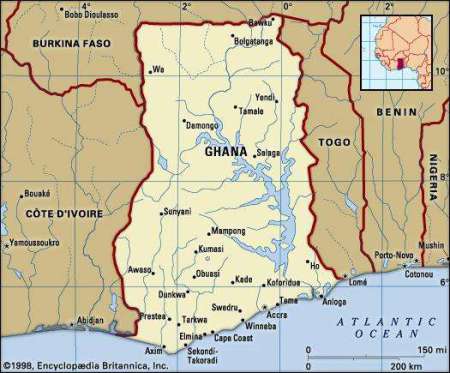
Ghana’s parliament on March 23, 2018 ratified a deal granting “unimpeded” access to the United States to deploy troops and military equipment in the West African nation in a vote boycotted by the opposition, legislators said.The Ghana-U.S. Military Cooperation agreement requires Ghana to provide unimpeded access to agreed facilities and areas to U.S. forces, their contractors and other related services.

It said facilities provided by Ghana shall be designated as either for exclusive use by U.S. troops or to be jointly used with their Ghanaian counterparts. “Ghana shall also provide access to and use of a runway that meets the requirements of United States forces,” it said. The Americans will use

But critics, including some civil society groups, say this year’s agreement amounted to mortgaging the country’s sovereignty.

Ghana votes to host U.S. military; opposition boycotts vote, Reuters, Mar. 23, 2018

The Prefect Crystal Ball for Gray War

The activity, hostile action that falls short of–but often precedes–violence, is sometimes referred to as gray zone warfare, the ‘zone’ being a sort of liminal state in between peace and war. The actors that work in it are difficult to identify and their aims hard to predict, by design…

Dubbed COMPASS, the new program will “leverage advanced artificial intelligence technologies, game theory, and modeling and estimation to both identify stimuli that yield the most information about an adversary’s intentions, and provide decision makers high-fidelity intelligence on how to respond–-with positive and negative tradeoffs for each course of action,” according to a DARPA notice posted on March 14, 2018.

Teaching software to understand and interpret human intention — a task sometimes called “plan recognition” …has advanced as quickly as the spread of computers and the internet, because all three are intimately linked.

From Amazon to Google to Facebook, the world’s top tech companies are pouring money into probabilistic modeling of user behavior, as part of a constant race to keep from losing users to sites that can better predict what they want. A user’s every click, “like,” and even period of inactivity adds to the companies’ almost unimaginably large sets, and new  machine learning and statistical techniques make it easier than ever to use the information to predict what a given user will do next on a given site.

But inferring a user’s next Amazon purchase (based on data that user has volunteered about previous choices, likes, etc.) is altogether different from predicting how an adversary intends to engage in political or unconventional warfare. So the COMPASS program seeks to use video, text, and other pieces of intelligence that are a lot harder to get than shopping-cart data…

Unlike shopping, the analytical tricks that apply to one gray-zone adversary won’t work on another. “History has shown that no two [unconventional warfare] situations or solutions are identical, thus rendering cookie-cutter responses not only meaningless but also often counterproductive,” wrote Gen. Joseph Votel, who leads U.S. Central Command, in his seminal 2016 treatise on gray zone warfare.

Exceprts from The Pentagon Wants AI To Reveal Adversaries’ True Intention, www.govexec.com, Mar. 17, 2018

The Scramble for Maldives: US/India v. China

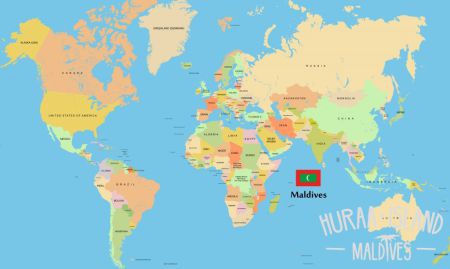
The Maldives archipelago, popular among luxury honeymooners, has become a playing field for geostrategic rivalry as China expands its influence in the Indian Ocean and the U.S. and India push back.

Maldives President Abdulla Yameen Abdul Gayoom, who has steadily swung his country toward Beijing and away from traditional partner New Delhi, has imposed a state of emergency, jailed opponents and clamped down on protests to weaken his opposition, which is led by pro-India ex-President Mohamed Nasheed.

India and the U.S. don’t want Beijing, already dominant in the South China Sea, to entrench itself in these waters. The island nation sits astride shipping lanes that connect China to the oil-supplying countries of the Middle East, via the Strait of Malacca. The location also makes the Maldives vital to Beijing’s Belt and Road plan to develop land and sea trading routes linking China to Europe.

Chinese President Xi Jinping won Mr. Gayoom’s support for the project’s maritime corridor on a visit to the Maldives in 2014, and China began investing in island infrastructure. A Chinese bridge now under construction will connect the capital city, Malé, to a nearby island where its airport is located. A Chinese company is expanding the airport; another has leased an island close by for development. Chinese contractors are building roads and housing units for locals.

Many in the Maldives opposition have raised concerns that Chinese infrastructure loans will turn into “debt traps,” particularly after a major Chinese-financed port in neighboring Sri Lanka passed into Chinese control last year when Colombo couldn’t repay.

U.S. Secretary of State Rex Tillerson…called China’s infrastructure-financing deals an example of “predatory economics” that saddle developing countries with unsustainable debt and could undercut their sovereignty.  Mr. Gayoom steered a constitutional amendment through parliament in 2015 allowing foreigners to own land, a change the government said was meant to attract investment and critics in the country said could help Beijing establish a military foothold.

In recent years, China has built a naval base in Djibouti in East Africa; in addition to the port in Sri Lanka, it operates one in Pakistan. A senior Indian navy officer said Chinese submarines and research vessels are visiting the Indian Ocean more frequently.

The Indian military deploys aircraft specialized in anti-submarine warfare to patrol the ocean, and its government is negotiating the purchase of U.S. drones with advanced surveillance features. India also plans to build new attack submarines, and a military upgrade is afoot in its Andaman and Nicobar Islands, whose capital is around 1,200 nautical miles from Malé.

Excerpts from China-India Rivarly Plays out in Maldives, Wall Street Journal, Mar. 6, 2019

How to Profit from Chaos: the case for Libyan oil

On February 26, 2018, the U.S. Department of the Treasury’s Office of Foreign Assets Control (OFAC) today sanctioned six individuals, 24 entities, and seven vessels pursuant to Executive Order (E.O.) 13726 for threatening the peace, security, or stability of Libya through the illicit production, refining, brokering, sale, purchase, or export of Libyan oil or for being owned or controlled by designated persons.  Oil smuggling undermines Libya’s sovereignty, fuels the black market and contributes to further instability in the region while robbing the population of resources that are rightly theirs.  Illicit exploitation of Libyan oil is condemned by United Nations Security Council Resolutions (UNSCRs) 2146 (2014) as modified by 2362 (2017).  As a result of today’s actions, any property or interest in property of those designated by OFAC within U.S. jurisdiction is blocked.  Additionally, U.S. persons are generally prohibited from engaging in transactions with blocked persons, including entities owned or controlled by designated persons.

OFAC designated Darren Debono, Gordon Debono, Rodrick Grech, Fahmi Ben Khalifa, Ahmed Ibrahim Hassan Ahmed Arafa, and Terence Micallef pursuant to E.O. 13726 for their involvement in the smuggling of petroleum products from Libya to Europe.  In 2016, Maltese nationals Darren and Gordon Debono formed an unofficial consortium for illicit fuel smuggling from Zuwarah, Libya, to Malta and Italy in an operation that reportedly earned the group over 30 million eurosLibyan national Fahmi Ben Khalifa managed the Libya side of the fuel smuggling operation, and Maltese national Rodrick Grech transported the Libya-originated fuel to European ports where it was sold using falsified fuel certificates, reportedly forged by Egyptian-Maltese citizen Ahmed Ibrahim Hassan Arafa, to obfuscate the fuel’s origin.  Additionally, Maltese national Terence Micallef operated a Malta-based shell company to sell the smuggled petroleum products in Europe.

The February 26, 2018 Treasury action also targeted 21 companies for being owned or controlled by Darren and Gordon Debono and three additional companies for being involved in the illicit exploitation of crude oil or any other natural resources in Libya, including the illicit production, refining, brokering, sale, purchase, or export of Libyan oil.  [These included]….the Malta-based Scoglitti Restaurant, Marie De Lourdes Company Limited, World Water Fisheries Limited, and Andrea Martina Limited for being owned or controlled by Darren Debono.

Excerpts from Press Release, Treasury Sanctions International Network Smuggling Oil from Libya to Europe, Feb. 26, 2018

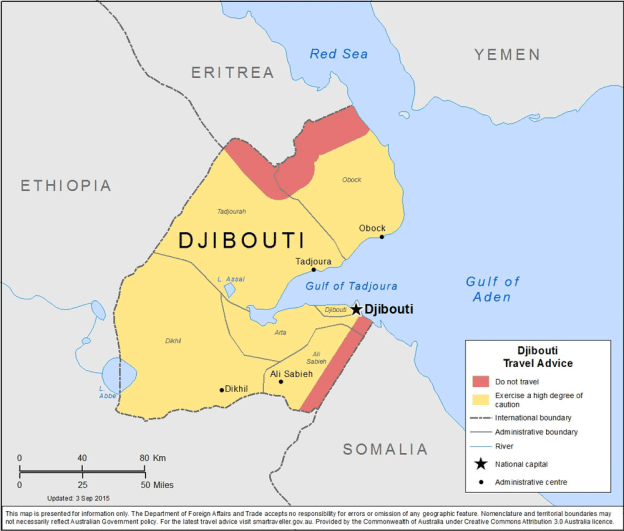
Who’s Fighting over Djibouti?

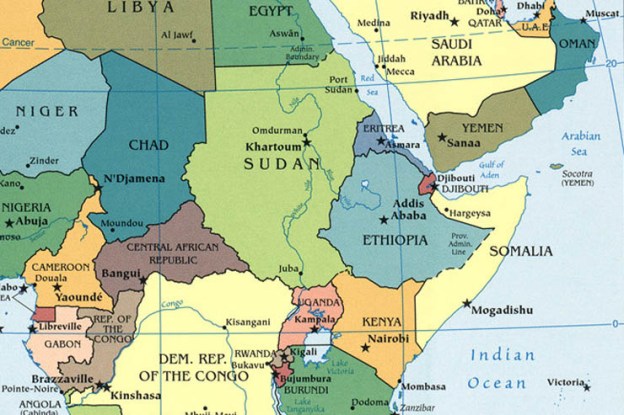
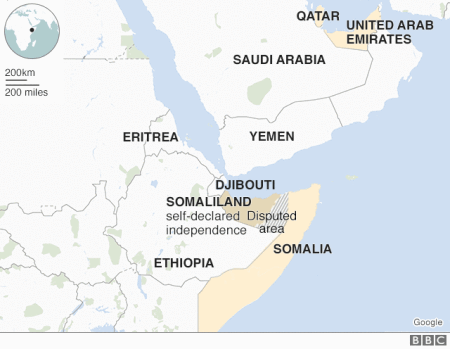
The top US general for Africa told lawmakers the American military could face “significant” consequences should China take a key port in Djibouti….  In Febuary 2018, Djibouti ended its contract with Dubai’s DP World, one of the world’s biggest port operators, to run the Doraleh Container Terminal, citing failure to resolve a dispute that began in 2012.  DP World called the move an illegal seizure of the terminal and said it had begun new arbitration proceedings before the London Court of International Arbitration.

During a congressional hearing on March 7, 2018, dominated by concerns about China’s role in Africa, lawmakers said they had seen reports that Djibouti seized control of the port to give it to China as a gift. China has already built a military base in Djibouti, just miles from a critical US military base.

Djibouti is strategically located at the southern entrance to the Red Sea on the route to the Suez Canal.  Marine General Thomas Waldhauser, the top US military commander overseeing troops in Africa, said if China placed restrictions on the port’s use, it could affect resupplying the US base in Djibouti and the ability of Navy ships to refuel there.  Djibouti hosts a vital US military base home to about 4,000 personnel,[Camp Lemonnier] including special operations forces, and is a launchpad for operations in Yemen and Somalia.

China has sought to be visible in Africa, including through high-profile investment in public infrastructure projects, as it deepens trade ties.  Waldhauser said the United States would be unable to match the scale of Chinese investment throughout Africa, noting Beijing’s construction of shopping malls, government buildings and even soccer stadiums.  “We’ll never outspend the Chinese in Africa,” Waldhauser said, noting some Chinese investments in Djibouti.

In 2018, the US military put countering China, along with Russia, at the centre of a new national defence strategy.  The Pentagon said China was a part of “revisionist powers” that “seek to create a world consistent with authoritarian models.”

Excerpts from  Significant consequences if China takes port in Djibouti, Reuters, Mar. 7, 2018

Up, Close and Personal: How to Destroy the Enemy

Deep southern Negev desert, Israel, there is a small town called Baladia, with a main square, five mosques, cafés, a hospital, multi-storey blocks of flats, a kasbah and a cemetery. Oddly, it also has a number of well-constructed tunnels. The only people milling around in its streets are Israeli Defence Force (IDF) soldiers. Baladia, the Arab word for city, is part of the Tze’elim army base**. It has been built to provide a realistic training ground for the next time the IDF is required to go into Gaza to destroy Hamas missile launchers…Acceptance among Western armies that future fights are most likely to take place in cities. Megacities with populations of more than 10m are springing up across Africa and Asia. They are often ringed by closely packed slums controlled by neighbourhood gangs. Poor governance, high unemployment and criminality make them fertile territory for violent extremism.

It is hardly surprising that non-state adversaries of the West and its allies should seek asymmetric advantage by taking the fight into cities. Air power and precision-guided munitions lose some of their effectiveness in urban warfare because their targets can hide easily and have no scruples about using a densely packed civilian population as a shield.

Valuable lessons have been learned from the battle for Sadr City, a large suburb of Baghdad, in 2008, Israel going into Gaza in 2014 and the defeat of Islamic State (IS) in Mosul 2017….As General Mark Milley, the head of the US Army, puts it, “it took the infantry and the armour and the special operations commandos to go into that city, house by house, block by block, room by room…and it’s taken quite a while to do it, and at high cost.” He thinks that his force should now focus less on fighting in traditional environments such as woodland and desert and more on urban warfare.

To that end, he advocates smaller but well-armoured tanks that can negotiate city streets, and helicopters with a narrower rotor span that can fly between buildings. At the organisational level, that means operating with smaller, more compartmentalised fighting units with far more devolved decision-making powers…

Western military forces should still enjoy a significant technological edge. They will have a huge range of kit, including tiny bird- or insect-like unmanned aerial vehicles that can hover outside buildings or find their way in. Unmanned ground vehicles can reduce the risk of resupplying troops in contested areas and provide medical evacuation for injured soldiers, and some of them will carry weapons….

For all the advances that new technologies can offer, General Milley says it is a fantasy to think that wars can now be won without blood and sacrifice: “After the shock and awe comes the march and fight…to impose your political will on the enemy requires you…to destroy that enemy up close with ground forces.”

Excerpt from House to House in the The New Battlegrounds, Economist Special Report, the Future of War, Jan. 27, 2018

***In 2005, the Israeli Defense Forces, with assistance from the United States, built the Urban Warfare Training Center at the Tze’elim Army Base, at a cost of $45 million. Nicknamed “Baladia” it is a 7.4 square mile training center used to instruct soldiers in urban warfare techniques, and consists of an imitation Middle Eastern style city with multiple multistory buildings. It has been used to train various military organizations, including the US Army and UN peacekeepers.  Wikipedia

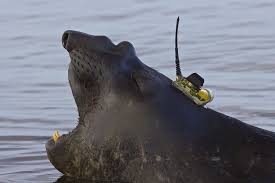
The Perfect Spies: Animals as Mobile Sensors of US Enemies

The world’s vast oceans and seas offer seemingly endless spaces in which adversaries of the United States can maneuver undetected. The U.S. military deploys networks of manned and unmanned platforms and sensors to monitor adversary activity, but the scale of the task is daunting and hardware alone cannot meet every need in the dynamic marine environment. Sea life, however, offers a potential new advantage. Marine organisms are highly attuned to their surroundings—their survival depends on it—and a new program out of DARPA’s Biological Technologies Office aims to tap into [marine animals] natural sensing capabilities to detect and signal when activities of interest occur in strategic waters such as straits and littoral regions.

The Persistent Aquatic Living Sensors (PALS) program, led by program manager Lori Adornato, will study natural and modified organisms to determine which ones could best support sensor systems that detect the movement of manned and unmanned underwater vehicles. PALS will investigate marine organisms’ responses to the presence of such vehicles, and characterize the resulting signals or behaviors so they can be captured, interpreted, and relayed by a network of hardware devices.

Beyond sheer ubiquity, sensor systems built around living organisms would offer a number of advantages over hardware alone. Sea life adapts and responds to its environment, and it self-replicates and self-sustains. Evolution has given marine organisms the ability to sense stimuli across domains—tactile, electrical, acoustic, magnetic, chemical, and optical. Even extreme low light is not an obstacle to organisms that have evolved to hunt and evade in the dark.

However, evaluating the sensing capabilities of sea life is only one of the challenges for PALS researchers. Performer teams supporting DARPA will also have to develop hardware, software, and algorithms to translate organism behavior into actionable information and then communicate it to end users…. The complete sensing systems must also discriminate between target vehicles and other sources of stimuli, such as debris and other marine organisms, to limit the number of false positives.

Adornato is aiming to demonstrate the approach and its advantages in realistic environments to convey military utility. “Our ideal scenario for PALS is to leverage a wide range of native marine organisms, with no need to train, house, or modify them in any way, which would open up this type of sensing to many locations,” Adornato said.

Excerpt from PALS Turns to Marine Organisms to Help Monitor Strategic Waters: Highly adapted sea life could help U.S. military detect adversary activity over large areas, Feb. 2, 2018

Let the Race Begin: Nuclear Saudi Arabia v. Iran

In the desert 220km (137 miles) from Abu Dhabi, the capital of the United Arab Emirates (UAE), a South Korean firm is close to finishing the Arab world’s first operational nuclear-power reactor. The project started ten years ago in Washington, where the Emiratis negotiated a “123 agreement”. Such deals, named after a clause in America’s export-control laws, impose tough safeguards in return for American nuclear technology. When the UAE signed one in 2009, it also pledged not to enrich uranium or reprocess spent fuel into plutonium. Both can be used to make nuclear weapons. Arms-control wonks called it the gold standard of 123 deals.

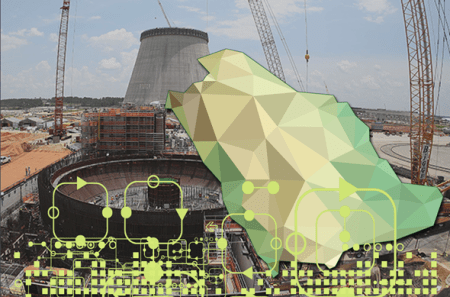
Saudi Arabia… has its own ambitious nuclear plans: 16 reactors, at a cost of up to $80bn. But, unlike the UAE, it wants to do its own enrichment. Iran, its regional rival, is already a step ahead. The most controversial provision of the nuclear deal it signed with world powers in 2015 allows it to enrich uranium. Iran did agree to mothball most of the centrifuges used for enrichment, and to process the stuff only to a level far below what is required for a bomb. Still, it kept the technology. The Saudis want to have it, too… Indeed, critics of the Iran deal fear that a Saudi enrichment programme would compromise their effort to impose tighter restrictions on Iran. But Donald Trump, America’s president, is less concerned. He has close ties with the Saudis. He has also pledged to revitalise America’s ailing nuclear industry. Among the five firms bidding for the Saudi project is Westinghouse, an American company that filed for bankruptcy last year. It would not be able to join the project without a 123 agreement…One is Rosatom, Russia’s state-owned nuclear-power company, which is pursuing a frenetic sort of nuclear diplomacy in the Middle East. In December it signed a $21.3bn contract to build Egypt’s first power reactor. Jordan inked a $10bn deal with the Russians in 2015. Despite their differences, particularly over Syria, the Saudis are keen to have closer ties with the region’s resurgent power [Russia]. King Salman spent four days in Moscow in October 2017, the first such visit by a Saudi ruler.

Excerpt from Nuclear Power in the Middle East: An Unenriching debate, Economist,  Feb. 10, 2018

The Power of Yes-Men

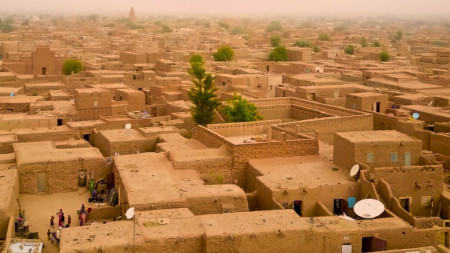
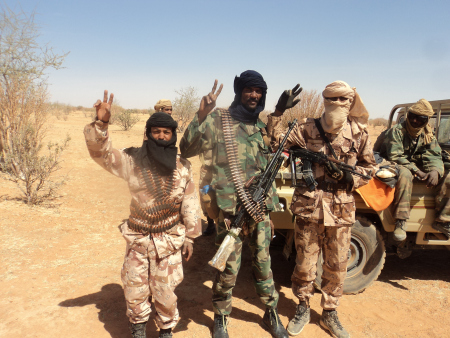
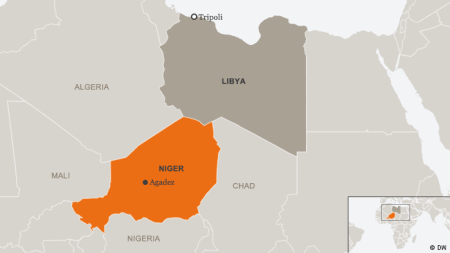
American military engagement in Niger is a $110 million drone base the U.S. is building about 450 miles northeast of Niamey in Agadez…Its existence was partially confirmed in February 2018, inadvertently, when it was discovered that Strava, a fitness app used mostly  by westerners, had released location data that showed the global movements of the users of workout trackers like Fitbit — and the data showed unusual activity in far-off Aguelal, Agadez, Niger.

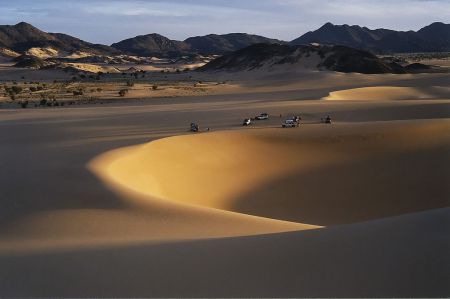
On the southeast edge of the civilian airport, accessible by tracks in the sand used mainly to exit the town, is Nigerien Air Base 201, or in common parlance “the American base.” The base, scheduled for completion in late 2018, is technically the property of the Nigerien military, though it is paid for, built, and operated by Americans. It is being constructed on land formerly used by Tuareg cattle-herders. … The U.S. currently flies drones out of an airport in Niamey, but those operations will be shifted to Agadez once the new base is completed.

When asked to confirm the American presence in those areas of Niger, U.S. Africa Command spokesperson Samantha Reho replied, “I can confirm there are approximately 800 Department of Defense personnel (military, civilian, and contractor) currently working in Niger, making that country the second-highest concentration of DoD people across the continent, with the first being in Djibouti at Combined Joint Task Force-Horn of Africa.”

The U.S. is just one of several Western militaries that have established and strengthened military ties to Niger over the past few years. France has had soldiers in the country since 2013, when it launched Opération Serval in neighboring Mali. In 2015, France reopened a colonial fort in Madama, close to the border with Libya — unthinkable during the times of Moammar Gadhafi; the Libyan leader maintained a sphere of influence in the region that would have been at odds with a French military presence. Germany sent its own troops in Niger to support the United Nations peacekeeping mission across the border in Mali, and German Chancellor Angela Merkel even visited Niger in 2017. And Italy recently announced it would send 470 troops to a French base in the north of Niger to fight migrant transporters….

The base in Agadez is about 6 square kilometers, though most of the land is yet to be developed. ….. The base is tucked away and hidden from Agadez first by the 8-to-10-foot wall that separates the city of 125,000 from the airport, and it is surrounded by a barbed wire fence with sandbags, so despite there being a few hundred Americans in Agadez, you would hardly know they were there unless you went looking. Both the Nigerien and the American governments prefer to keep it this way…

The man the middle is Mahamadou Issoufou, the president of Niger. In power for six years, he has adopted a clear strategy for trying to keep control of things – by aligning himself closely with Europe and the United States, while presiding over an electoral system that his opponents describe as rigged. This is not a recipe for stability in a country that has had little of it since its founding in 1960, at the end of French colonial rule.

Issoufou is a trained engineer and a former secretary-general of Somaïr, a uranium mine that was run by the French company Areva. Until migration and terrorism, uranium was the focal point of outside, particularly French, interest in Niger. France’s electricity grid is powered by nuclear energy, and Areva’s uranium concessions in Niger provide up to one-fifth of the uranium necessary to power that grid. Issoufou’s predecessor, Mamadou Tandja, had sparred with the French over the concession, and in 2009, then-French President Nicholas Sarkozy visited Niger to negotiate a deal on opening a new mine called Imouraren. After a $1.2 billion deal was struck, Tandja tried to reverse the constitution to stay in power for a third term, and after street protests, a group of low-ranking army officers carried out a coup d’état.

When the transition period ended with Issoufou’s election in 2011, the Fukushima nuclear disaster in Japan caused a sharp downturn in global uranium prices. Areva dropped its plans for Imouraren, and Issoufouacquiesced to the French firm’s plans for delaying the mine until prices rose, denting economic growth prospects for the country. But despite losing out on Imouraren, Issoufou quickly became a donor darling and found that the closer he was to France and the West, the better his image and the more firm his hold on political power. Issoufou was criticized heavily for going to Paris to attend the “Je Suis Charlie” march in January 2015, and some human rights organizations view him as a lackey of the West. He works with Image Sept, a French firm with close ties to the Parisian political elite, to manage his image.A couple of months before his re-election in 2016, Issoufou jailed his main political opponent and former close ally, Hama Amadou of the Moden Lumana party….

Many people I spoke to in Niger feel their country has had its autonomy usurped by Westerners. “The reality is that Niger is not at a level where it can say yes or no to the French or Americans. … We only have sovereignty on paper,” said Djibril Abarché, president of the Nigerien Human Rights Association.

Exceprts from Joe Penny, Drones in the Sahara, the Intercept, Feb. 18, 2018

Handcrafted Terror

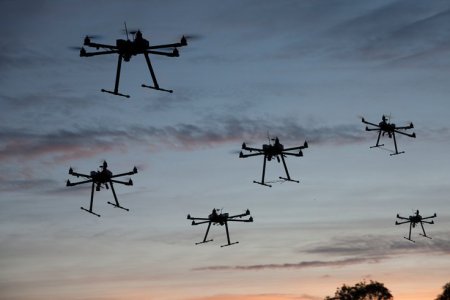
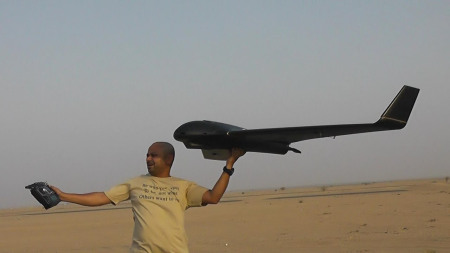
An attack on Russian forces in Syria on January 5th, 2018 by 13 home-made drones is a good example of “asymmetric” warfare..The craft involved in these attacks resembled hobbyists’ model aircraft. They had three-metre wingspans, were built crudely of wood and plastic, and were powered by lawnmower engines. Each carried ten home-made shrapnel grenades under its wings.  The drones were guided by GPS and had a range of 100km. The electronics involved were off-the-shelf components, and the total cost of each drone was perhaps a couple of thousand dollars. The airframes bore a resemblance to those of Russian Orlan-10 drones, several of which have been shot down by rebel forces in Syria. The craft may thus have been a cheap, garage-built copy of captured kit.

Guerrillas have been using commercial drones since 2015. Islamic State (IS), one of the groups active in Syria, makes extensive use of quadcopters to drop grenades. In 2017 alone the group posted videos of over 200 attacks. IS has also deployed fixed-wing aircraft based on the popular Skywalker X8 hobby drone. These have longer ranges than quadcopters and can carry bigger payloads. Other groups in Syria, and in Iraq as well, employ similar devices. Their use has spread, too, to non-politically-motivated criminals. In October, four Mexicans allegedly linked to a drug cartel were arrested with a bomb-carrying drone…

Existing defences are not geared up to cope with small drones, which are difficult to spot, identify and track, and which may be too numerous to stop. Jamming might be thought an obvious solution….Many jammers, with names like Dedrone, DroneDefender and DroneShield, have already been employed by various countries. …Drones are, however, becoming increasingly autonomous. This means there is no operator link to jam…But new technologies such as optical navigation (which permits a drone to compare its surroundings with an on-board electronic map, and thus to know where it is) will make even GPS jammers useless. Hence the need for “kinetic solutions”, to shoot drones down.

Small drones are surprisingly hard targets, however. Iraqi forces in Mosul used to joke that trying to deal with an IS drone attack was like being at a wedding celebration: everyone fired their Kalashnikovs into the air with no effect. A recent American army manual …suggests that rather than aiming directly at a drone, the entire squad should fire their weapons at a fixed point ahead of it, hoping to bring the small drones down with a curtain of fire. The manual also advises commanders that the best course of action may be “immediate relocation of the unit to a safer location”….

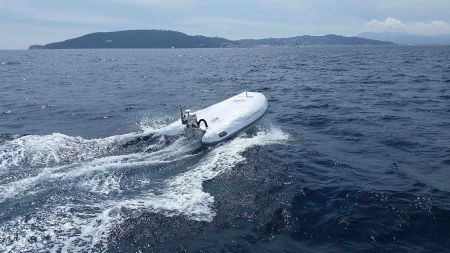
A similar problem applies at sea, where billion-dollar ships might have their defences overwhelmed by squadrons of cheap, jerry-built drones. The mainstay of American naval air defence is Aegis, an orchestrated arrangement of radars, computers, missiles and cannons. The short-range element of Aegis is a Dalek-like, rapid-fire cannon called Phalanx, which spits out 75 rounds a second and can shoot down incoming cruise missiles. This will not cope well with lots of small drones, though. The navy is now upgrading Aegis’s software to handle multiple simultaneous incoming targets by scheduling bursts of fire to destroy as many members of a swarm as possible. It is doubtful, however, whether one gun could account for more than a handful of attackers coming in from all directions at once. An unclassified study suggests that it could be overwhelmed by as few as eight [handcrafted drones].

Developers of drone-countering measures hope to overcome that by using laser weapons…An American army document from 2016 thus emphasises the importance of stopping drones “left of launch”—that is, before they can take off. IS drone workshops and operators have been attacked to stop the drone threat… Until adequate defences are in place, then, guerrilla drone swarms will be a real danger.

Excerpt from Buzz, buzz, you’re dead, Economist, Feb. 10, at 70

Slavery Never Dies

The African Union on Friday urged Mauritania to make a greater effort to eliminate slavery after the country handed out lenient sentences to a family of slave owners in a landmark conviction….In a statement published online, the African Union (AU)’s Committee of Experts on the Rights and Welfare of the Child said that…Mauritania should also “give due regard to the issue of slavery and make the elimination… one of its priorities,” the pan-African body said…

Mauritania was the last country in the world to abolish slavery in 1981, and has one of the highest rates of slavery in the world, with 1 in 100 people living as slaves, according to the 2016 Global Slavery Index.  Slavery is a historical practice in Mauritania, where dark-skinned ethnic groups make up the main “slave caste”, often working as domestic servants and cattle herders. A new anti-slavery law in 2015 doubled the prison term for perpetrators to 20 years, but in its second prosecution a year later Mauritania gave two slave owners only five-year sentences.

Exceprts from African Union urges Mauritania to crack down on slavery, Reuters, Jan. 26, 2018


The Hide and Seek with North Korea

China, Russia and other countries are failing to rein in North Korea’s illicit financing and weapons proliferation activity, according to a new United Nations report…Their draft report, distributed late the week of Feb. 1, 2018 to a U.N. committee overseeing North Korea sanctions compliance before it heads to the Security Council, details the many ways that Pyongyang is sidestepping bans on trade, finance and weapon sales, according to people who have read the document.

The report also cites evidence from a member country that Myanmar is buying a ballistic-missile system and conventional weapons from North Korea, including rocket launchers and surface-to-air missiles. Intelligence provided to the investigators suggest Myanmar… is seeking items that are controlled by nuclear and other major weapon proliferation agreements.

The U.N. investigators criticized China, Russia, Malaysia and other countries for failing to do enough to curb illicit finance and trade being conducted in their countries. Roughly $200 million in North Korean coal and other commodities was exported in violation of U.N. bans, the panel said.

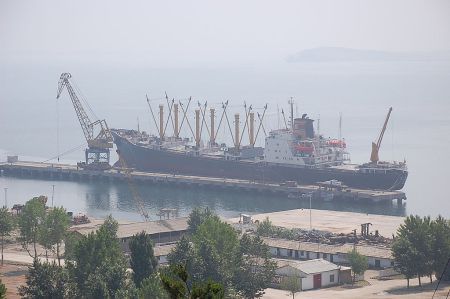
Much of North Korea’s coal and fuel shipments went through Chinese, Malaysian, Vietnamese or Russian ports. More than 30 representatives of North Korean financial institutions have been operating abroad, including in China and Russia, the investigators say.

U.N. investigators, citing member-country intelligence, said North Korean ballistic-missile technicians visited Syria several times in 2016 and continue to operate at three sites in the country. They also cited evidence that Syria had received valves and special acid-resistant tiles that are known to be used in chemical-weapons programs.There were enough tiles, according to the U.N. panel’s inspection of interdicted cargo, for a large-scale, high-temperature industrial project. According to one member state, the tiles could be used to build the interior walls of a chemical factory. Two shipments interdicted in late 2016, according to the report, contained enough valves, pipes and cables to build a large-scale industrial project.

U.N. Report Faults China, Russia for Subverting North Korea Sanctions, WSJ, Feb. 3, 2018

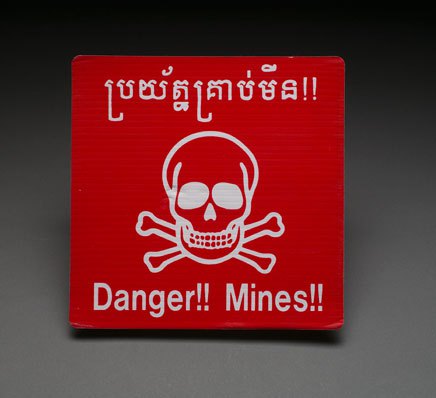
Demining with Bare Hands: Benghazi

Mines planted during more than three years of war in Benghazi (2014-2017) are taking a high toll on under-equipped deminers and residents trying to return to districts where protracted battles took place. Military engineers striving to clear the explosives lack mine detectors and are working with basic tools and their bare hands. Their task is painstaking and extremely dangerous: 50 have been killed and 60 wounded, according to a military source.

The war in Benghazi erupted in 2014, when Libyan commander Khalifa Haftar began battling ISIS and other opponents, part of a broader conflict that spread in Libya after the fall of Muammar Gaddafi seven years ago.  Despite warnings from the military and indications of mined areas scribbled on walls, some long-displaced residents impatient to rebuild their lives have gone home, with deadly consequences.  [ISIS had used abandoned houses for shelter durng the war. Before they retreated they planted mines in the houses].

Excerpts from Mines still claim legs and lives in Libya’s Benghazi, months after war ceased, Reuters, Jan. 21, 2017


India as a Legitimate Nuclear Power

India on January 19, 2017 joined the Australia Group which aims to stop the development and acquisition of chemical and biological weapons, a move that may take the country an inch closer to joining the Nuclear Suppliers’ group (NSG).  This is the third multilateral export control group – after the Missile Technology Control Regime (MTCR) and Wassenaar Arrangement – that India has become a member of.  The Ministry of External Affairs said that the series of multilateral export control groups that India has joined “helps in establishing our credentials” for joining the NSG. India joined the MTCR in June 2016, followed by the Wassenaar Arrangement in December 2017…

India’s application to the NSG has been pending largely due to opposition from China, which wants the group to first draw up guidelines for all the candidates who have not signed the nuclear non-proliferation treaty. Pakistan has also applied to join the NSG, but has never been granted a waiver from the NSG’s export rules, unlike India, which was given one in 2008.

Excerpts from India Enters Australia Group, Inches Closer to Joining Nuclear Suppliers Group, https://thewire.in/,  Jan. 19, 2018

Thugs and Lambs: the war in Yemen

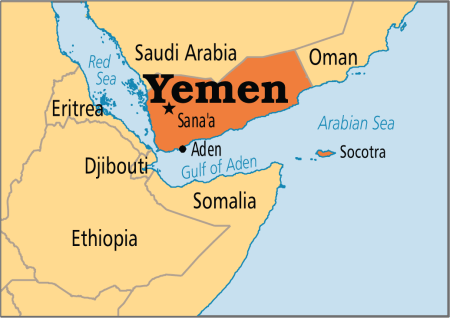
A withering United Nations report on Yemen’s civil war provides fresh evidence about the extent to which Saudi Arabia and Iran have intervened in the conflict, pursuing their regional proxy war even as Yemen disintegrated into “warring statelets” that would be difficult to reunite. The U.N. panel said there were “strong indications of the supply of arms-related material manufactured in, or emanating from, the Islamic Republic of Iran,” in violation of a U.N. embargo on Yemen.

The U.N. experts were particularly critical of airstrikes by the Saudi-led coalition. The U.N. previously had said that the majority of the more than 5,000 civilian deaths in the conflict are a result of the airstrikes, which are carried out by a handful of coalition countries including Saudi Arabia and the United Arab Emirates, often using U.S.-supplied munitions.  The report, which has not yet been made public, was obtained by The Washington Post…

Eight million people, or a third of the Yemen’s population, are facing famine. A cholera outbreak that has affected roughly a million people is one of the largest ever recorded. More than 10,000 people have been killed since the war began…

At least four attacks on Saudi Arabia were carried out with missiles capable of a range “beyond that normally expected of the known missiles” in the Houthi arsenal, the panel said. The U.N. panel examined the remnants of two of the missiles – fired July 22 and Nov. 4, 2017 – and found they were consistent with the design of an Iranian missile and “almost certainly produced by the same manufacturer.”  While the report criticized Iran for failing to halt the transfer of weapons, the panel could not say with certainty how they were transported to the Houthis or who the supplier was.

In reviewing the conduct of Saudi-led military activity, the U.N. panel examined 10 airstrikes last year that killed 157 people, including 85 children, and found that “measures taken by the Saudi Arabia-led coalition in its targeting process to minimize child casualties, if any, remain largely ineffective.” And a coalition committee tasked with investigating the airstrikes had in some cases denied that strikes had taken place despite “clear evidence” to the contrary, the report said… The panel had corroborated media reports that the United Arab Emirates – part of the Saudi-led military coalition – had tortured prisoners under its control. The Saudi-led coalition, which enforced a blockade on Yemen, was using the “threat of starvation as a bargaining tool and an instrument of war.”The Houthis had carried out extrajudicial executions and mass detentions, fueling a cycle of revenge that “may last for years.”…“Political decision makers on all sides are not bearing the brunt of the war,” the report added. “Yemeni civilians are.”

Excerpts from KAREEM FAHIM A United Nations probe has detailed the fallout of the proxy war in Yemen between the Saudi coalition and Iran,  Washington Post, Jan 12, 2018

The First to Shoot…from Space

North Korea’s preparations to launch a more advanced reconnaissance satellite with a high-resolution scanning capability threaten to push Asia’s space race deeper into the military theater.  The Kwangmyongsong-5 Earth-exploration satellite, likely to be packaged with a separate communications satellite, will technically allow North Korea to transmit data down to the ground for the first time, thus offering real-time intelligence for potential ballistic-missile strikes.

This is well short of the technological capacity needed to deploy orbital weapon systems, but will cause some unease among Asian power-brokers China, Japan and India as they pour money into the last strategic frontier of outer space.  Space programs in Asia have largely been driven by competition for the US$300 billion global commercial transponders market, which is expected to double by 2030 if demand holds.

A shift toward miniature satellites of less than 20 kilograms, mostly used by governments and smaller companies, has drawn nations as diverse as Singapore, Pakistan, Vietnam and South Korea into a field led by Japan and China, with India a more recent player.

Japan placed two satellites in different orbits for the first time on December 2017, displaying a technical edge aimed at reducing launch costs for commercial clients. India announced this week that it had successfully tested a GSLV Mark III rocket that can lift a 4-ton satellite into orbit. In 2017, it managed to launch 104 satellites of varying sizes in just one operation. China has loftier ambitions, including a lunar landing some time in 2018, after sending a roving module down a steep crater on the moon in 2013. About 40 Chinese launches are likely in 2018, mainly to boost communications.  India and Japan are both locked in undeclared space races with China that go well beyond commercial rivalries and have muddied the debate over North Korea’s shadowy aims….

“Militarization” refers to any systems that enhance the capability of forces in a conventional setting, such as intelligence, communications and surveillance. “Weaponization” is the physical deployment of weapons in outer space or in a ground mode where they can be used to attack and destroy targets in orbit.  The United Nations Treaty on Outer Space prohibits the deployment of weapons of mass destruction in space, but the US has blocked efforts to ban space weapons outright. In 2007, Washington said it would “preserve its rights, capabilities, and freedom of action in space.”

Excerpts from  ALAN BOYD,  Asia’s Space Race Gathers Pace, Asia Times, Jan. 6, 2018

Killer Robotic Insects

On November 12, 2017,  a video called “Slaughterbots” was uploaded to YouTube. … It is set in a near-future in which small drones fitted with face-recognition systems and shaped explosive charges can be programmed to seek out and kill known individuals or classes of individuals (those wearing a particular uniform, for example). In one scene, the drones are shown collaborating with each other to gain entrance to a building. One acts as a petard, blasting through a wall to grant access to the others…

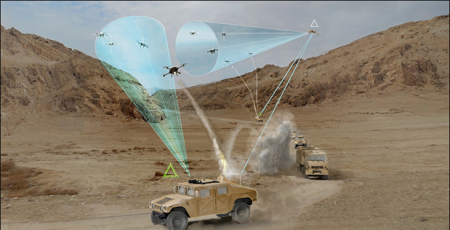
[M]ilitary laboratories around the planet are busy developing small, autonomous robots for use in warfare, both conventional and unconventional. In America, in particular, a programme called MAST (Micro Autonomous Systems and Technology), which has been run by the US Army Research Laboratory in Maryland, is wrapping up this month after ten successful years….. Its successor, the Distributed and Collaborative Intelligent Systems and Technology (DCIST) programme, which began earlier this year, is now getting into its stride….Along with flying drones, MAST’s researchers have been developing pocket-sized battlefield scouts that can hop or crawl ahead of soldiers. DCIST’s purpose is to take these autonomous robots and make them co-operate. The result, if the project succeeds, will be swarms of devices that can take co-ordinated action to achieve a joint goal.

If swarms of small robots can be made to collaborate autonomously, someone, somewhere will do it…[Many of these small robots are today] cyclocopters …of less than 30 grams. Such machines can outperform polycopters...Cyclocopter aerodynamics is more like that of insects than of conventional aircraft…Cyclocopters get better as they get smaller. They are also quieter…[Another innovation involves] robots…that hop.One of the most advanced is Salto, developed by the Biomimetic Millisystems Laboratory at the University of California, Berkeley. Salto… has the agility to bounce over uneven surfaces and also to climb staircases…

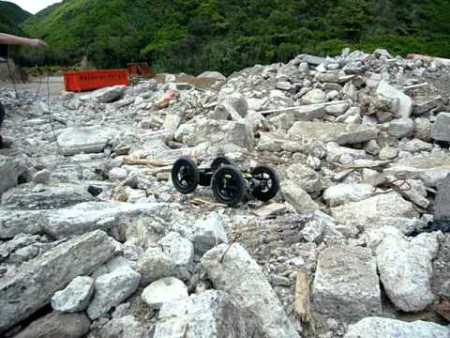
Bouncing over the rubble of a collapsed building is not the only way to explore it. Another is to weave through the spaces between the debris. Researchers at the Biomimetic Millisystems lab are working on that, too. Their solution resembles a cockroach.

Getting into a building, whether collapsed or intact, is one thing. Navigating around it without human assistance is quite another. For this purpose MAST has been feeding its results to the Defence Advanced Research Projects Agency (DARPA)… The next challenge…is getting the robots to swarm and co-ordinate their behavior effectively.

Excerpt from Miniature Robots: Bot Flies, Economist, Dec. 16, 2017

Fake Nuclear Leaks:

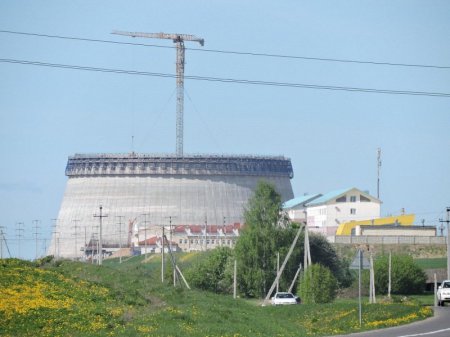
Russia, which for years has used its vast supply of natural gas as a political lever with energy-hungry Europe, is building a nuclear power plant in Moscow-friendly Belarus. Neighboring Lithuania and Poland are so determined to escape Russia’s clutch that they refused to buy electricity from the plant.

Still, the $11 billion Ostrovets nuclear-power project, 30 miles from Lithuania’s capital, Vilnius, is fueling fears in the Baltic republic. Lithuanians say they don’t think Moscow would actually trigger a nuclear accident but they do worry about a panic-inducing warning of a leak—real or not.  “Even a fake message about the disaster could trigger a lot of damage to our country,” said Lithuanian President Dalia Grybauskaitė. “We treat this as a national security threat.”  Evacuating Vilnius would be massively disruptive, lower the country’s defenses, and increase its vulnerability to potential covert action by Russia…

Infrastructure projects are seen as potential weapons in other parts of the world. South Korea so fears North Korea will use its Imnam hydroelectric dam to try to flood Seoul that it spent $429 million building its own dam in defense. China’s new artificial islands in the South China Sea are seen by the U.S. and its allies as permanent aircraft carriers…

European officials are divided over the potential threat from the Ostrovets plant. Rosatom has projects around Europe, including nuclear power plants under construction in Hungary and Finland. Accidents are bad for business, even false alarms, say energy experts.

Excerpts from Russia Nuclear Plant Worries Europe, Wall Street Journal,  Dec. 24, 2017

Red-Dead: water crisis in the Middle East

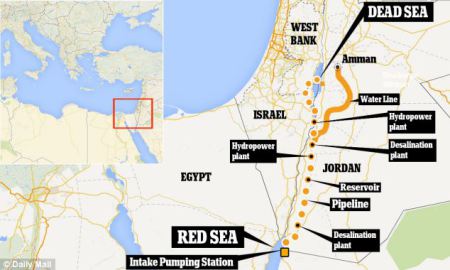
The Dead Sea is dying. Half a century ago its hyper-salty, super-pungent waters stretched 80km from north to south. That has shrunk to just 48km at its longest point. The water level is falling by more than a meter per year. All but a trickle from its source, the Jordan River, is now used up before it reaches the sea. “It will never disappear, because it has underground supplies, but it will be like a small pond in a very big hole,” says Munqeth Mehyar of EcoPeace, an NGO.

Until the summer of 2017 Israel and Jordan, which share the sea, were trying to slow the decline. The “Red-Dead project”, as it is called, would desalinate seawater at the Jordanian port of Aqaba and pump 200m cubic metres of leftover brine into the Dead Sea each year. That would not be enough to stabilise the sea, which needs at least 800m cubic metres to stay at current levels. Still, it would help—and the project has a much more important benefit.

The World Bank defines water scarcity as less than 1,000 cubic metres per person annually. Jordan can provide less than 15% of that. The Aqaba plant would send fresh water to southern towns in both Jordan and Israel. In return for its share, Israel agreed to pump an equal amount to parched northern Jordan, where most of the population lives.

But the project was now on hold due a dispute between Jordan and Israel. On July 23rd, 2017 a Jordanian teenager delivering furniture to the Israeli embassy stabbed a security guard. The guard opened fire, killing both his assailant and an innocent bystander….

Jordan is already one of the world’s most arid countries. Climate change will make matters worse. By the end of the century, say scientists from Stanford University, Jordan could be 4°C hotter, with about a third less rain. It needs to rationalise water consumption. And Israel, which wants a stable neighbour to its east, has an interest in getting water projects back on track.

Excerpts from Jordan’s Water Crisis: Diplomatic Drought: Economist, Dec. 2, 2017

The Subterraneans

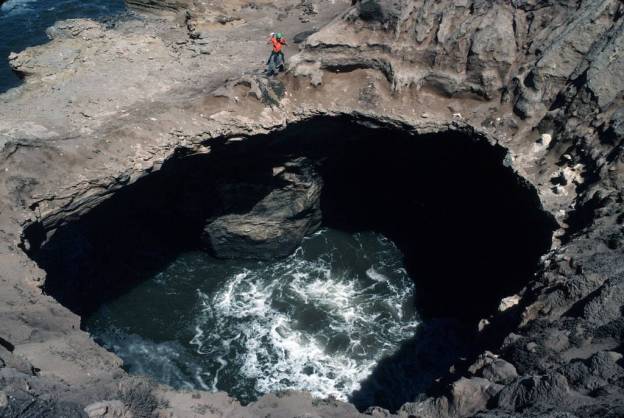
Underground settings are becoming increasingly relevant to global security and safety. Rising populations and urbanization are requiring military and civilian first responders to perform their duties below ground in human-made tunnels, underground urban spaces [e.g. mass transit, water infrastructure] and natural cave networks. Recognizing that innovative, enhanced technologies could accelerate development of critical lifesaving capabilities, DARPA today announced its newest challenge: the DARPA Subterranean Challenge.

The DARPA Subterranean or “SubT” Challenge aims to explore new approaches to rapidly map, navigate, and search underground environments. Teams from around the world will be invited to propose novel methods for tackling time-critical scenarios through unknown courses in mapping subsurface networks and unpredictable conditions, which are too hazardous for human first responders.

“One of the main limitations facing warfighters and emergency responders in subterranean environments is a lack of situational awareness; we often don’t know what lies beneath us,” said Timothy Chung, program manager in DARPA’s Tactical Technology Office (TTO). “The DARPA Subterranean Challenge aims to provide previously unimaginable situational awareness capabilities for operations underground.”

“We’ve reached a crucial point where advances in robotics, autonomy, and even biological systems could permit us to explore and exploit underground environments that are too dangerous for humans,” said TTO Director Fred Kennedy.“Instead of avoiding caves and tunnels, we can use surrogates to map and assess their suitability for use. Through the DARPA Subterranean Challenge, we are inviting the scientific and engineering communities—as well as the public—to use their creativity and resourcefulness to come up with new technologies and concepts to make the inaccessible accessible.

Excerpts from DARPA Subterranean Challenge Aims to Revolutionize Underground Capabilities, Dec. 21, 2017

UN Peacekeepers as Lackeys of Governments

Peace-keeping mission of United Nations is need the consent of the host governments to operate; the UN cannot invade. But too often agencies and blue helmets (as in the headgear worn by peacekeepers) are lackeys of autocrats, forming “abusive” relationships with those in power, according to Richard Gowan of Columbia University. This undermines the UN’s claim to moral authority.

The operation in the Democratic Republic of Congo (DRC) is a case in point. The UN has deployed peacekeepers there since 1999, and MONUSCO, the French acronym by which the mission is known, now has about 16,000 troops, and costs more than $1bn a year.  Since 2016, the UN has failed to prevent violence that has forced over 1m people to flee their homes. Troops get away with defining their operating boundaries conservatively. Perversely, they are rewarded for not using their kit, as they are reimbursed for equipment returned in good condition. Meanwhile MONUSCO cannot easily get rid of underperforming civilian staff, partly because of pressure from trade unions but also because of the complex way in which UN headquarters imposes its choice of recruits on the mission.

Another $1bn-per-year mission, UNMISS, has done almost nothing to prevent the descent into civil war and famine since South Sudan gained independence from Sudan in 2011. The 12,500 peacekeepers have a mandate to protect civilians, but have failed to do so. In August 2016 aid workers were raped, beaten and robbed by South Sudanese government troops just minutes away from the main UN compound in Juba, the capital. Despite desperate phone and text messages from the victims, the 2,000 or so troops never stirred. “[The blue helmets] are supposed to protect civilians,” admits a UN official in South Sudan. “But they don’t. Something is upside down. It’s not working.”  One reason for the failure is that the mission asks permission from the government before it sends out troops…But since it is often the government carrying out the massacres, permission is often refused or delayed…

Excerpt from The UN in Conflict Areas: Looking the Other Way, Economist, Oct. 28, 2017

Killing them like Flies: the Enduring Myth of Precision Strikes

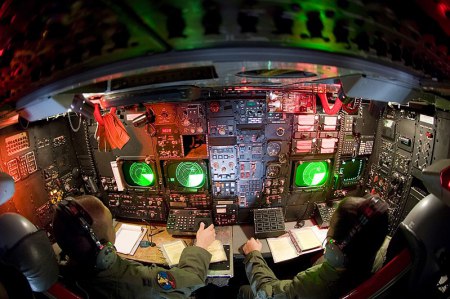
The American-led war against the Islamic State began in August 2014. …In the effort to expel ISIS from Iraq and Syria, the coalition has conducted more than 27,500 strikes to date [Nov. 2017], deploying everything from Vietnam-era B-52 bombers to modern Predator drones. That overwhelming air power has made it possible for local ground troops to overcome heavy resistance and retake cities throughout the region. “U.S. and coalition forces work very hard to be precise in airstrikes,” Maj. Shane Huff, a spokesman for the Central Command, told us, and as a result “are conducting one of the most precise air campaigns in military history.”

The US military planners describe a target-selection process grounded in meticulously gathered intelligence, technological wizardry, carefully designed bureaucratic hurdles and extraordinary restraint. Intelligence analysts pass along proposed targets to “targeteers,” who study 3-D computer models as they calibrate the angle of attack. A team of lawyers evaluates the plan, and — if all goes well — the process concludes with a strike so precise that it can, in some cases, destroy a room full of enemy fighters and leave the rest of the house intact.

The coalition usually announces an airstrike within a few days of its completion. It also publishes a monthly report assessing allegations of civilian casualties. Those it deems credible are generally explained as unavoidable accidents — a civilian vehicle drives into the target area moments after a bomb is dropped, for example. The coalition reports that since August 2014, it has killed tens of thousands of ISIS fighters and, according to our tally of its monthly summaries, 466 civilians in Iraq.

NY Times reporting…found that one in five of the coalition strikes we identified resulted in civilian death, a rate more than 31 times that acknowledged by the coalition. It is at such a distance from official claims that, in terms of civilian deaths, this may be the least transparent war in recent American history. Our reporting, moreover, revealed a consistent failure by the coalition to investigate claims properly or to keep records that make it possible to investigate the claims at all. While some of the civilian deaths we documented were a result of proximity to a legitimate ISIS target, many others appear to be the result simply of flawed or outdated intelligence that conflated civilians with combatants. In this system, Iraqis are considered guilty until proved innocent. Those who survive the strikes, people like…remain marked as possible ISIS sympathizers, with no discernible path to clear their names.

Excerpts from A The Uncounted, New York Times, Nov. 16, 2017

The Power Plays in Africa

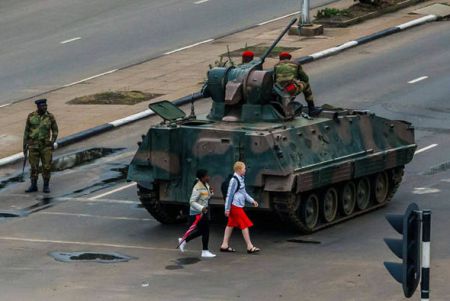
As the overthrow of despot Robert Mugabe entered a stalemate on November 17,  2017, eyes turned to China — Zimbabwe’s largest foreign investor and a key ally — amid speculation over its role in the military coup.Source in Harare believe the Zimbabwean conflict within the ruling party Zanu PF is involving two rival camps has direct links to China and Russia with both countries trying to control and protect their own economic interests.

The army chief General Constantino Chiwenga, visited Beijing l — just days before tanks rolled into the streets of Harare. President Mugabe has been been hostile to the Chinese in recent years accusing them of plundering the countries diamonds worth $15 billion.  On October 2017 First Lady Grace Mugabe was in Russia where she represented her 93-year-old husband at a function where he was honoured with some accolade in Russia at the World Federation of Democratic Youth (WFDY) in Moscow.

“It is a BRICS internal rivalry with both Russia and South Africa on one side trying to protect their economic interests and China on the other side,” a regional think-tank in London said on November 17, 2017… Russia has been investing in several projects in southern African nations, for example, the ALROSA group of diamond mining companies is engaged in several projects in Zimbabwe, while mining and steelmaking company Evraz and Severstal steel and steel-related mining company conduct their business in South Africa.

Russia and South Africa, which together control about 80% of the world’s reserves of platinum group metals, have created a trading bloc similar to OPEC to control the flow of exports according to Bloomberg.

Zimbabwe, Canada, and the U.S. are among other major platinum group metals producers.

Russian and South African officials signed a memorandum of understanding today to cooperate in the industry.South Africa mines about 70 percent of the world’s platinum, while Russia leads in palladium, a platinum group metal used in autocatalysts, with about 40% of output, according to a 2012 report by Johnson Matthey Plc.

According to the Chamber of Mines of Zimbabwe (CMZ) and geologists, Zimbabwe has far bigger platinum reserves than Russia. The country currently has the second known largest platinum reserves after South Africa. Experts say underfunding and limited exploration has over the years stifled growth of the mining sector.

The Zimbabwe chamber is on record saying it seeks to increase production to the targeted 500 000 ounces per annum requires the setting up of base and precious metal smelters and refineries, investment of $2,8 billion in mines, $2 billion in processing plants and between $200 and $500 million to ensure adequate power supply. Already, the country’s major platinum miners – Zimplats, Unki and Mimosa who are currently processing the metal in neighbouring South Africa – have undertaken to construct the refinery….

Miles Blessing Tendi, a lecturer in African history and politics at the University of Oxford, says there is no way to be certain if China knew about Mugabe’s fate but believes China’s respect for sovereignty would make their involvement uncharacteristic.

Excerpt, It gets ugly as Russia and South Africa gang-up against China over Zimbabwe coup, http://www.thezimbabwemail.com/, November 17, 2017

Cultivating the Many Gaddafis

When Doundou Chefou first took up arms as a youth a decade ago, it was for the same reason as other ethnic Fulani herders along the Niger-Mali border: to protect his livestock.  He had nothing against the Republic of Niger, let alone the United States of America. His quarrel was with rival Tuareg cattle raiders.

Yet in October 2017 he led dozens of militants allied to Islamic State in a deadly assault against allied US-Niger forces, killing four soldiers from each nation and demonstrating how dangerous the West’s mission in the Sahel has become.

The transition of Chefou and men like him from vigilantes protecting their cows to jihadists capable of carrying out complex attacks is a story Western powers would do well to heed, as the pursuit of violent extremism in West Africa becomes ever more enmeshed in long-standing ethnic and clan conflicts.

For centuries Tuareg and Fulani lived as nomads herding animals and trading – Tuareg mostly across the dunes and oases of the Sahara and Fulani mostly in the Sahel, a vast band of semi-arid scrubland that stretches from Senegal to Sudan….Though they largely lived peacefully side-by-side, arguments occasionally flared, usually over scarce watering points. A steady increase in the availability of automatic weapons made the rivalry more deadly.

A turning point was the Western-backed ousting of Libya’s Muammar Gaddafi in 2011. With his demise, many Tuareg who fought as mercenaries for Gaddafi returned home, bringing with them the contents of Libya’s looted armouries.  Some returnees launched a rebellion in Mali to create a breakaway Tuareg state in the desert north, a movement hijacked by al Qaeda-linked jihadists who had been operating in Mali for years. In 2012, they swept across northern Mali, seizing key towns and prompting a French intervention that pushed them back in 2013.

Amid the violence and chaos, some Tuareg turned their guns on rivals from other ethnic groups like the Fulani, who then went to the Islamists for arms and training.

“The Tuareg were armed and were pillaging the Fulani’s cattle,” Niger Interior Minister Mohamed Bazoum told Reuters. “The Fulani felt obliged to arm themselves.”..

Tuareg in Mali and Niger dreamed of and sometimes fought for an independent state, Fulani generally been more pre-occupied by concerns over the security of their community and the herds they depend on. “For the Fulani, it was a sense of injustice, of exclusion, of discrimination and a need for self-defence,”  A militant who proved particularly good at tapping into this dissatisfaction was Adnan Abu Walid al-Sahrawi, an Arabic-speaking north African, several law enforcement sources said.  Al-Sahrawi recruited dozens of Fulani into the Movement for Unity and Jihad in West Africa (MUJWA), loosely allied to al Qaeda in the region and controlled Gao and the area to the Niger border in 2012.

Why pastoralists in Mali and Niger turned to jihad, Reuters, Nov. 13,  2017

When Thugs Become States

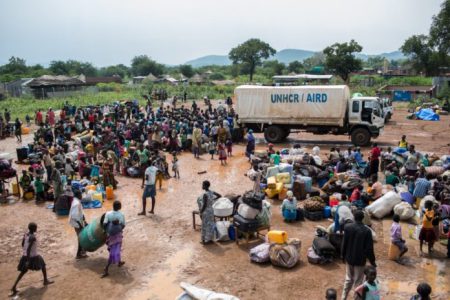
South Sudan President Salva Kiir’s government is using food as a weapon of war to target civilians by blocking life-saving aid in some areas, United Nations sanctions monitors told the Security Council in a confidential report (November 2017).  During 2016 and 2017, the UN monitors said a military campaign by government troops in Wau and surrounding areas in Western Bahr el-Ghazal targeted civilians on ethnic grounds and displaced more than 100,000.

“The government has during much of 2017 deliberately prevented life-saving food assistance from reaching some citizens,” the monitors wrote. “These actions amount to using food as a weapon of war with the intent to inflict suffering on civilians the government views as opponents to its agenda.”

One humanitarian assessment mission told UN monitors 164 young children and elderly died from hunger and disease between January and September 2017.

Excerpts  Food used as weapon of war in South Sudan, Reuters, Nov. 13,  2017

Leveling: How a 5,000 km/h Speed Feels on Earthlings

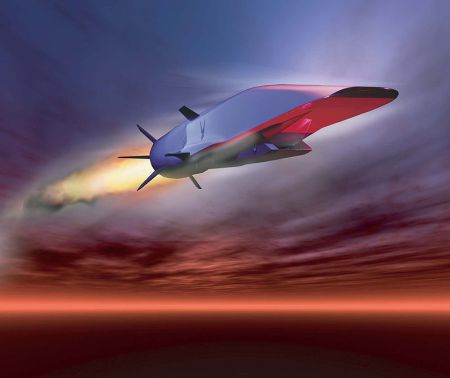
Hypersonic missiles [weapons faster than the speed of sound]— specifically hypersonic glide vehicles and hypersonic cruise missiles — are a new class of threat because they are capable both of maneuvering and of flying faster than 5,000 kilometers per hour. These features enable such missiles to penetrate most missile defenses and to further compress the timelines for a response by a nation under attack.

Hypersonic missiles are being developed by the United States, Russia, and China. Their proliferation beyond these three could result in other powers setting their strategic forces on hair-trigger states of readiness. And such proliferation could enable other powers to more credibly threaten attacks on major powers.  The diffusion of hypersonic technology is under way in Europe, Japan, Australia, and India — with other nations beginning to explore such technology. Proliferation could cross multiple borders if hypersonic technology is offered on world markets.

There is probably less than a decade available to substantially hinder the potential proliferation of hypersonic missiles and associated technologies. To this end, the report recommends that (1) the United States, Russia, and China should agree not to export complete hypersonic missile systems or their major components and (2) the broader international community should establish controls on a wider range of hypersonic missile hardware and technology.rs.

The unavoidable requirement is for the United States, Russia, and China to agree on a nonproliferation policy. France could play a key role in bringing other governments into agreement on a broader control policy.

The technical and economic barriers to developing hypersonic technology are great enough to add to the effectiveness of a nonproliferation policy.

A two-tiered approach to containing the spread of hypersonic systems and components appears to be the most promising.

First, we recommend a policy of export denial for complete hypersonic delivery vehicles and enough major subsystems to effectively provide access to complete hypersonic missiles.

Second, given dual-use concerns, we also recommend a policy of case-by-case export reviews for scramjets and other hypersonic engines and components, fuels for hypersonic use, sensors, navigation, and communication items for hypersonic flight, hypersonic flight controls, design tools and modeling for such uses, and ground simulation and testing for hypersonic systems.

The necessary first step is for the United States, Russia, and China to agree not to export complete hypersonic missiles or their major subsystems.

Excerpts from Richard H. Speier et al., Hindering the Spread of a New Class of Weapons, Rand Corporation, Sept. 2017

Nuclear Testing and Radioactive Leaks

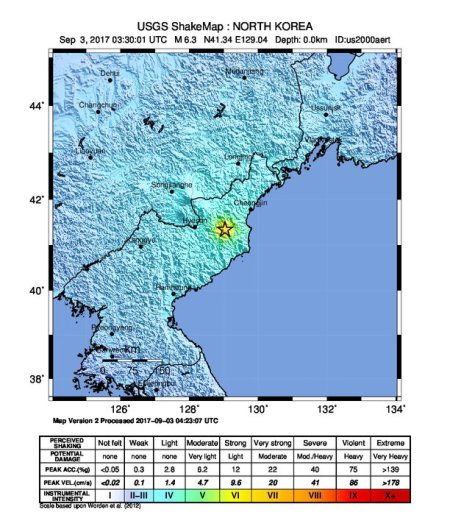
A fresh nuclear test at North Korea’s mountainous testing site could trigger a leak of radioactive material, South Korea’s chief meteorologist has warned.A hollow space of up to 100m in length in the bottom of Mount Mantap could implode, Nam Jae-cheol said. Pyongyang’s last nuclear test in early September 2017 appeared to have triggered several landslides.

North Korea has conducted six nuclear tests since 2006, using the same site test each time.  “There is a hollow space, which measures about 60 to 100 metres in length, at the bottom of Mount Mantap in the Punggye-ri site,” Mr Nam was quoted by South Korean news agency Yonhap as saying.”Should another nuke test occur, there is the possibility of a collapse,” he warned.  The Punggye-ri test site, situated in mountainous terrain in the north-east of the country, is thought to be Pyongyang’s main nuclear facility and the only active nuclear testing site in the world.

Hong Kong’s South China Morning Post newspaper reported on October 27, 2017 that Chinese geologists warned North Korean officials after the September 2017 test that additional tests there could lead to a massive collapse and a leak of radioactive waste…

Pyongyang might soon launch a satellite – widely seen as a test of the country’s ballistic missile technology.

Excerpts from North Korea: Fresh test could trigger radioactive leak, South says, BBC, Oct. 2017

Who is Afraid of North Korea

President Trump agreed in September 2017 to send more of the Pentagon’s “strategic assets” to South Korea on a rotational basis to deter North Korean provocations, but what exactly that means remains something of a mystery.

The U.S. assets — typically defined as submarines, aircraft carriers, nuclear weapons or bombers — have long been involved in the standoff that began with the 1953 Korean Armistice Agreement after open warfare subsided between the two Koreas.

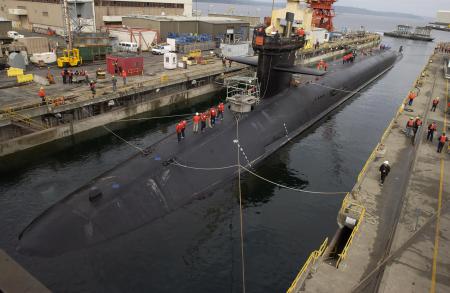
The U.S. Navy typically keeps the movements of its submarines secret, but it also has periodically sent them to port in South Korea. The USS Michigan, an Ohio-class nuclear-powered submarine, has appeared at Busan Naval Base in South Korea at least twice in 2017. It is capable of carrying cruise missiles and elite Navy SEALs, although not ballistic missiles.

More recently, the Navy announced last week it has plans for a massive exercise involving three aircraft carriers — the USS Nimitz, the USS Theodore Roosevelt and the USS Ronald Reagan — and their associated strike groups, each of which include dozens of aircraft and thousands of sailors and Marines.

Excerpts from  Dan Lamothe, In standoff with North Korea, the U.S. keeps deployment of ‘strategic assets’ mysterious, Washington Post, Oct. 29, 2017

The Flourishing Jihadists and their Support Systems

U.S. special forces who accompanied Niger’s military at a meeting of village leaders in Tongo Tongo on Oct. 4, 2017were working in the country’s treacherous western borderlands, a region of shifting tribal allegiances, opaque motives and ethnic grudges going back decades, all feeding into a growing jihadi problem.  Four Americans and five Nigerien troops died after leaving Tongo Tongo and being ambushed and heavily outgunned by fighters armed with automatic weapons and rocket-propelled grenades. The militants are believed to be from a Malian-led militia, Islamic State in the Greater Sahel, which declared allegiance to the overall militant organization in 2015.

One error appears to have been downplaying the danger. The Tillaberi and Tahoua regions in western Niger have been under a state of emergency since March 2017, as Niger has confronted the Islamic State offshoot, led by Malian extremist Abu Walid Sahrawi. U.S. forces have been present in the region to advise and assist Nigerien forces.

The United Nations has cataloged 46 attacks by extremists in western Niger since February 2016, including a February 2017 attack that killed 15 Nigerien soldiers and one a year ago that killed 22 Nigerien forces at a refugee camp.,,

Niger’s interior minister, Mohamed Bazoum, said intelligence failures were to blame for the nine deaths. He said Islamic State in the Greater Sahel is more entrenched in local communities than are government forces.

Adam Sandor, an analyst on violent extremism in the Sahel at the University of Ottawa, said….“Essentially, the attackers are believed to have been scoping out and planning the attack and must have a knowledge of local communities in the area. Local communities most likely shared with them the information regarding the Nigerien Armed Forces operating with foreigners or military advisors in this space,” he said.  Leaders of Tongo Tongo village have been arrested, amid suspicions they were delaying the departure of the Nigerien and U.S. forces to pave the way for the attackers.

America has 6,000 troops in 50 countries across the continent, according to the Department of Defense, although many of the missions are charged with guarding U.S. embassies. The counter-terrorism deployments include an estimated 1,000 special operations forces, many posted in high-risk locations such as Somalia, Mali and Nigeria. An estimated 800 troops are in Niger.  The U.S. also operates a string of drone bases throughout Africa, including one in Niger.

The Shabab is the deadliest of Africa’s terrorist groups and is believed to be responsible for the country’s worst terrorist attack: At least 358 people were killed Oct. 14, 2017 and 56 are still missing. The attack came weeks after a U.S. drone strike killed 10 civilians, including three children, in Bariire, west of Mogadishu.  The U.S. has carried out at least 60 drone strikes in Somalia since January 2017, according to the Bureau of Investigative Journalism, killing up to 510 people, including at least 38 civilians. The Shabab has killed 2,745 people in 2017, carrying out 987 of the continent’s 1,827 incidents of violent extremism in the first nine months of the year, according to the analytical group African Center for Strategic Studies.

The Shabab also has a presence in Kenya, where it launches regular attacks, including the 2013 Westgate shopping mall massacre that killed at least 67 people, and the 2015 Garissa University College attack, where 147 people — mainly university students — were killed. The terrorist group is believed to have a presence across East Africa.

Boko Haram, operating in Nigeria, Cameroon, Chad and southeastern Niger, was responsible for 2,232 deaths in the first nine months of the year, according to the Bureau of Investigative Journalism.

In Mali, myriad armed extremists operate, including Islamic State in the Greater Sahel and its rival the Group for the Support of Islam and Muslims, formed in March 2017 from several Al Qaeda-linked extremist groups, including Al Qaeda in the Islamic Maghreb. In 2012, Islamist militias took over half of the country before the French military drove them out of major cities.

The militias range freely across rural areas, crossing borders at will, launching operations in Mauritania, Ivory Coast and Burkina Faso, including attacks on hotels and resorts popular with foreigners.   In the Democratic Republic of Congo, where myriad rebel groups vie for control over mineral resources, a new organization emerged recently declaring fealty to Islamic State.  By comparison, Niger is one of the more stable countries in the region, making it the U.S. choice for a drone base being built outside Agadez, in central Niger, that will launch strikes across the region.

The Tongo Tongo attack has focused attention on Sahel leader Sahrawi…. He has a history of swapping sides and financing his operations through kidnappings.  He has recruited fighters from among the Fulani nomads in western Niger, exploiting ethnic rivalries with the Daoussahak people in the region, some of whom have formed a militia called the National Movement for the Liberation of Azawad. Both Niger and France have used the group as a proxy force to fight Islamic State in the Great Sahel, deepening ethnic animosities.

Excerpts from After Niger attack, a look at clandestine jihadis posing a growing danger to U.S. forces in Africa, L.A. Times, Oct. 21, 2017

Trapped to Death

By the start of 2017 the Taliban was pushing hard to take Sangin city’s district centre, Afghanistan, a fortified compound which housed the local security and administrative officials, just a few miles from Hamid Gul’s family home. The compound was the only thing stopping the Taliban from claiming the whole district as their own. The US, which had lost at least 70 of its own troops keeping Sangin out of insurgent hands over the years, scrambled to respond with scores of airstrikes.  Hamid was convinced that his family were still safer behind Taliban lines than in Laskhar Gah, one of the Taliban’s prime targets. But on the morning of February 10 2017, he got an unexpected phone call from a neighbour in Sangin: the family’s house had been flattened.  In that one night Hamid Gul lost his 50 year-old mother, Bibi Bakhtawara, six brothers and a sister. All seven children were under 16 years of age. Bibi Rahmania, his niece, also died. She was just two years old.

By the end of those three days, five women and 19 children were dead
Hamid was not the only person given devastating news on that day. On the same night, a few hours later, a second civilian house, just a few miles away from his own, was also hit. The following night a third one was struck.

To this day, there is no consensus about what happened to those three houses and why. What is clear, however, is that by the end of those three days in early February five women and 19 children were dead, among a full toll of 26 civilians, a Bureau investigation has established.

Three local officials interviewed by Bureau reporters on the ground claimed US airstrikes had destroyed the houses and killed their inhabitants. The United Nations (UN) said the same, in its biannual accounting of Afghan civilians killed in the war, released in July 2017, adding that there appeared to have been no fighting in the area at the time, meaning the attacks may have been pre-planned.

A spokesperson for Resolute Support, the US-led Nato mission in Afghanistan, told the Bureau that after four investigations the organisation could not confirm or deny responsibility for killing the civilians, though he pushed back strongly against the UN’s claims that there was no fighting in the villages at the time. Resolute Support has officially concluded the case as “disputed”, one of four categories for recording allegations of civilian casualties. It was used in this case because Resolute Support cannot decide if insurgents or the Afghan National Security Forces (ANSF) were responsible for the casualties, the spokesperson told the Bureau.

The fact that no-one has taken responsibility for the deaths of 24 women and children offers an insight into the lack of accountability of America’s longest-running conflict, which it now fights largely from the air under opaque rules of engagement against 20-odd armed groups.

Excerpts from  Caught in the crossfire
Civilians are bearing the brunt of conflict in Afghanistan, Bureau of Investigative Journalism, Sept. 30, 2017

The Meaning of Forever: permanent military presence

UK Foreign Minister Michael Fallon cemented a raft of military agreements with Oman in August 2017, including the use of an Arabian Sea port for British naval ships.  Fallon visited the sultanate on August 28, 2017 to sign agreements with his counterpart and strengthen the already close military ties between the two countries.  A memorandum of understanding was signed between the two defence ministers to allow British naval ships to the use facilities at Duqm port before the establishment of the UK Joint Logistics Support Base.  “This agreement ensures British engineering expertise will be involved in developing Duqm as a strategic port for the Middle East, benefiting the Royal Navy and others,” Fallon said….Among the craft that will be allowed to dock in Duqm is the HMS Queen Elizabeth aircraft carrier, the largest ship in the British navy.   From Duqm, the supercarrier will be able to “project influence across an important region” the UK foreign office said.

The Joint Logistics Support Base*** will give the UK a “permanent” military presence in Oman, serving as a naval base, training facility, and key logistics centre, the foreign office said on its website.

Also finalised were joint exercises between the two countries, including “Saif Sareea 3” due to take place next year in Duqm.  Oman and the UK have some of the strongest military relations in the Gulf, strengthened after Sultan Qaboos bin Said took to the throne in 1970.  The UK was a key ally in the sultan’s war against communist separatists in the south of the country.  British military officers have traditionally trained the Omani armed forces, while the UK has been a notable arms supplier including the sale of 12 Typhoon “Eurofighters” with the first jets delivered in May

Excerpts from UK secures use of Oman naval base in Duqm, The New Arab, Aug. 29, 2017

***Once completed, the UK Joint Logistics Support Base, a multi-million pound joint venture between British defence company Babcock International and the Oman Drydock Company, will provide the UK a permanent training facility in addition to a key military logistics centre in the Gulf. It will also be connected to other Gulf countries by the Gulf Rail Project.

The Deadly Combination

Two North Korean shipments to a Syrian government agency responsible for the country’s chemical weapons program were intercepted in mid-2017 according to a confidential United Nations report on North Korea sanctions violations.  The report by a panel of independent U.N. experts, which was submitted to the U.N. Security Council in August 2017 and seen by Reuters gave no details on when or where the interdictions occurred or what the shipments contained.  “The panel is investigating reported prohibited chemical, ballistic missile and conventional arms cooperation between Syria and the DPRK (North Korea),” the experts wrote in the 37-page report.

“Two member states interdicted shipments destined for Syria. Another Member state informed the panel that it had reasons to believe that the goods were part of a KOMID contract with Syria,” according to the report.

KOMID is the Korea Mining Development Trading Corporation.  It was blacklisted by the Security Council in 2009 and described as Pyongyang’s key arms dealer and exporter of equipment related to ballistic missiles and conventional weapons. In March 2016 the council also blacklisted two KOMID representatives in Syria.  “The consignees were Syrian entities designated by the European Union and the United States as front companies for Syria’s Scientific Studies and Research Centre (SSRC), a Syrian entity identified by the Panel as cooperating with KOMID in previous prohibited item transfers,” the U.N. experts wrote.  SSRC has overseen the country’s chemical weapons program since the 1970s.

The U.N. experts said activities between Syria and North Korea they were investigating included cooperation on Syrian Scud missile programs and maintenance and repair of Syrian surface-to-air missiles air defense systems….The experts said they were also investigating the use of the VX nerve agent in Malaysia to kill the estranged half-brother of North Korea’s leader Kim Jong Un in February.
North Korea has been under U.N. sanctions since 2006 over its ballistic missile and nuclear programs…Syria agreed to destroy its chemical weapons in 2013 under a deal brokered by Russia and the United States. However, diplomats and weapons inspectors suspect Syria may have secretly maintained or developed a new chemical weapons capability.

During the country’s more than six-year long civil war the Organisation for the Prohibition of Chemical Weapons has said the banned nerve agent sarin has been used at least twice, while the use of chlorine as a weapon has been widespread. The Syrian government has repeatedly denied using chemical weapons.

On September 7, Israel targeted and heavily damaged a SSRC weapons factory in Masyaf Syria.

Excerpts from Michelle Nichols North Korea shipments to Syria chemical arms agency intercepted: U.N. report, Reuters, Aug. 21, 2017
Excerpts from Israel Hits Syrian Site Said to be Linked to Nuclear Weapons, Reuters, Sept. 7, 2017

Battle of 1500 Chagossians: Diego Garcia

On June 22nd, 2017 the UN weighed in on a dispute between Britain and Mauritius over the Chagos islands, a tiny but strategically important archipelago in the Indian Ocean. Ninety-four countries sided with Mauritius; just 15 backed Britain… Only four members of the EU voted with Britain; one, Cyprus, voted with Mauritius and 22 abstained, including usually reliable allies France, Germany, Italy, the Netherlands and Spain.

The roots of the dispute go back to 1965, when Britain lopped off the Chagos islands from Mauritius, at the time a British colony. It loaned the largest island, Diego Garcia, to America to use as a military base. Since then the atoll, which is within striking distance of east Africa, the Middle East and South-East Asia, has become indispensable for America’s armed forces, who nickname it “the footprint of freedom”. It gives them control over the Indian Ocean and has served as a base for long-range bombers to pummel Afghanistan and Iraq. The CIA used it as a “black site” in its rendition programme.

But taking over Diego Garcia for military use meant deporting some 1,500 Chagossians, mostly to Mauritius and the Seychelles. They have never been allowed to return; many moved to Britain. (After landing at Gatwick airport, they were given temporary accommodation nearby in Crawley, where most of them still live.)

The importance of the vote should not be exaggerated. It refers the case to the ICJ, whose opinion will be non-binding….The ICJ will probably offer an advisory opinion on the matter, but not before the spring of 2019.

Excerpt from: Britain and Diego Garcia: Tropical Storm, Economist, July 1, 2017

Registrar Brain: humans in war

Two millivolts is enough to show that someone has seen something even before he knows he has seen it himself. The two millivolts in question are those associated with P300, a fleeting electrical signal produced by a human brain which has just recognised an object it has been seeking. Crucially, this signal is detectable by electrodes in contact with a person’s scalp before he is consciously aware of having recognised anything.

That observation is of great interest to the Defence Advanced Research Projects Agency (DARPA).  DARPA’s Neurotechnology for Intelligence Analysts programme is dedicated to exploiting it in the search for things like rocket launchers and roadside bombs in drone and satellite imagery. To that end it has been paying groups of researchers to look into ways of using P300 to cut human consciousness out of the loop in such searches.

Among the beneficiaries are Robert Smith’s group at Honeywell Aerospace, in Phoenix, Arizona, and Paul Sajda’s at Neuromatters, in New York. Both of the “image triage systems” designed by these groups require the humans in them to wear special skull-enclosing caps. Each cap is fitted with 32 electrodes that record the brain’s electrical responses to whatever stimuli it is subjected to. Wearers have pictures flashed before their eyes at the rate of ten a second. That is too fast for conscious recognition, because the brain’s attention will have moved on to the next image before consciousness can come into play. It is not, though, too fast for the initial stages of recognition, marked by a P300 signal, to occur when suspicious items are present. Images that provoke such a signal are then tagged for review. According to Dr Sajda, this triples the speed with which objects of interest can be found.

Speed is important, of course. But in matters such as this, accuracy matters more. And some people think they can improve that, too—not by reading the brain, but by stimulating it. Many studies have shown that zapping the brain with a weak electric current, a procedure called transcranial neuronal stimulation, enhances what is known as “fluid intelligence”. This is the ability to reason, as opposed merely to recall facts. Another American military-research establishment, the Intelligence Advanced Research Projects Activity (IARPA), hopes to exploit this phenomenon for the purpose of target identification….[W]ith a current of just two milliamps, the stimulation is painless and safe, says Vincent Clark, a neuroscientist at the University of New Mexico. In a project paid for in part by IARPA, he and his team have stimulated the brains of more than 1,000 volunteers using a 9V battery connected to electrodes on the scalp. After half an hour of stimulation, volunteers spot in test photographs 13% more snipers, makeshift bombs and the like than do volunteers given a “sham” current of 100 microamps (5% of the experimental current) that mimics the skin-tingling induced by the experimental current.

Excerpts from Know your enemy: How to make soldiers’ brains better at noticing threats, Economist,  July 29, 2017

The Nuclear Supply Chain

The report from the Energy Futures Initiative released on August 15, 2017 by former Energy Secretary Ernest Moniz calls for greater federal investment in the US huclear-power industry. The report calls for expanded government loan guarantees, tax incentives and research on nuclear technology.

Nuclear power makes up about 20 percent of U.S. electricity generation, but the industry has been struggling.  Five nuclear plants, with a combined capacity of 5 gigawatts, have closed early since 2013, and an additional six plants are scheduled to shutter early over the next nine years. Of the two new nuclear plants under construction in the U.S., one was halted by Scana Corp. in July 2017 and backers of the other, Southern Co.’s Vogtle plant in Georgia, are seeking additional aid from the federal government.

Westinghouse Electric Co., the nuclear technology pioneer that is part of Toshiba Corp., went bankrupt in March, after it hit delays with its AP1000 reactors at each of those plants. After it declared bankruptcy, Westinghouse — whose technology is used in more than half the world’s nuclear power plants — said it shifted its focus from building reactors to helping dismantle them.

The U.S. needs companies and engineers that can both build and run nuclear enterprises…. The U.S. Navy’s reactors require supplies and qualified engineers, and American nuclear scientists fill vital national security roles, it said.  Companies, such as BWX Technologies Inc. of Lynchburg, Virginia manufacture nuclear components for both the commercial nuclear industry and naval reactors. If the commercial business collapses, that may mean one less company able to process highly enriched uranium, according to the report.

“A shrinking commercial enterprise will have long term spillover effects on the Navy supply chain, including by lessened enthusiasm among American citizens to pursue nuclear technology careers,” according to the report.

In addition to extending a tax credit for new nuclear power and the Energy Department’s loan guarantee program, the report says the federal government could also direct the Federal Energy Regulatory Commission to “place a greater emphasis on the national security importance of nuclear power and its associated supply chain.”

Excerpts from Moniz: Nuclear Power’s Woes Imperil US National Security, Bloomberg, Aug. 15, 2017


Scientific Torture

Was the Central Intelligence Agency’s post-9/11 “enhanced interrogation” program an instance of human experimentation?

Recently declassified documents raise this explosive question. The documents were obtained by the American Civil Liberties Union in connection with a federal lawsuit scheduled for trial on September 2017. The case was brought on behalf of three former detainees against two psychologists who developed the C.I.A.’s program..[T]he C.I.A. paid the psychologists to develop a research methodology and instructed physicians and other medical staff members at clandestine detention sites to monitor and chart the health conditions of detainees.

In response, the advocacy group Physicians for Human Rights has charged that the program was an unlawful experiment on human beings. It calls the program “one of the gravest breaches of medical ethics by United States health professionals since the Nuremberg Code,” the ethical principles written to protect people from human experimentation after World War II. In its lawsuit, the A.C.L.U. is pressing a similar claim….

To some degree, the documents suggest, the two psychologists resisted pressure within the C.I.A. for rigorous assessment of the program’s efficacy. They argued that interrogation strategies can’t be standardized and therefore can’t be compared, like medical treatments, in randomized, prospective fashion. But backers of more systematic assessment seem to have won out. In an undated document, the C.I.A.’s chief of medical services chided Dr. Mitchell and Dr. Jessen for treating the torture program as an “art form” that “could not be objectively analyzed,” then pressed the “need to look more objectively for the least intrusive way to gain cooperation.”…

Given that, in the words of President Barack Obama, “we tortured some folks,” isn’t it better to have learned something about the toll on bodies and minds?… Here’s why it may be….Prohibiting data collection as an adjunct to torture makes it harder for perpetrators to hone their technique. It stands in the way of efforts to make torture, like some medical procedure, “safe and effective.” And it keeps apologists from rationalizing that abuse is acceptable since researchers are making improvements.  Observational studies of the torturer’s craft victimize people by legitimizing it. And they put future captives at greater risk for becoming victims.

Excerpts from  M. GREGG BLOCHE , When Torture Becomes Science, New York Times, Aug. 12, 2017 full article

Secret Trade Deals – Role of Wikileaks

On August 11, 2015 WikiLeaks has launched a campaign to crowd-source a €100,000 reward for Europe’s most wanted secret: the Transatlantic Trade and Investment Partnership (TTIP).

Starting pledges have already been made by a number of high profile activists and luminaries from Europe and the United States….Since it began to face opposition from BRICS countries at the World Trade Organisation, US policy has been to push through a triad of international “trade agreements” outside of the WTO framework, aimed at radically restructuring the economies of negotiating countries, and cutting out the rising economies of Brazil, Russia, India, China and South Africa (BRICS).

The three treaties, the “Three Big T’s”, aim to create a new international legal regime that will allow transnational corporations to bypass domestic courts, evade environmental protections, police the internet on behalf of the content industry, limit the availability of affordable generic medicines, and drastically curtail each country’s legislative sovereignty.  Two of these super-secret trade deals have already been published in large part by WikiLeaks – the Transpacific Partnership Agreement (TPP) and the Trade in Services Agreement (TISA) – defeating unprecedented efforts by negotiating governments to keep them under wraps.

But for Europeans the most significant of these agreements remains shrouded in almost complete secrecy. The Transatlantic Trade and Investment Partnership (TTIP), which is currently under negotiation between the US and the European Union, remains closely guarded by negotiators and big corporations have been given privileged access. The public cannot read it.

Today WikiLeaks is taking steps to ensure that Europeans can finally read the monster trade deal, which has been dubbed an “economic NATO” by former US Secretary of State Hillary Clinton.  Using the new WikiLeaks pledge system everyone can help raise the bounty for Europe’s most wanted leak. The system was deployed in June to raise a $100,000 bounty for the TTIP’s sister-treaty for the Pacific Rim, the TPP.

The pledge system has been hailed by the New York Times as “a great disrupter”, which gives “millions of citizens… the ability to debate a major piece of public policy,” and which “may be the best shot we have at transforming the [treaty negotiation] process from a back-room deal to an open debate.”

WikiLeaks founder Julian Assange said,

“The secrecy of the TTIP casts a shadow on the future of European democracy. Under this cover, special interests are running wild, much as we saw with the recent financial siege against the people of Greece. The TTIP affects the life of every European and draws Europe into long term conflict with Asia. The time for its secrecy to end is now.”

Excerpts from WikiLeaks goes after hyper-secret Euro-American trade pact

Nuclear plutonium Live

South Carolina is suing the U.S. government to recover $100 million in fines it says the Department of Energy owes the state for failing to remove one metric ton of plutonium stored there.  The lawsuit was filed on August 7, 2017.

Congress approved fines of $1 million per day for the first 100 days of each year through 2021, beginning 2016, if the weapons-grade plutonium was not removed from the Savannah River Site at the state’s border with Georgia, the attorney general’s office said.   The federal government cannot break its obligations and “leave South Carolina as the permanent dumping ground for weapons-grade plutonium” said in the complaint.

Built in the 1950s, the U.S.-owned Savannah River Site processes and stores nuclear materialss.  A U.S. treaty with Russia in 2000 [The Plutonium Disposition Agreement]* required each country to dispose of 34 metric tons of weapons-grade plutonium, left over from the Cold War.

The United States began building a mixed oxide fuel fabrication facility, known as the MOX project, at the Savannah River Site to dispose of weapons-grade plutonium by mixing it with uranium to form safer fuel pellets for use in commercial nuclear reactors.  But the project is years overdue and billions over budget, and the technology for the new fuel fabrication is not fully developed. Russian President Vladimir Putin in October 2016 pulled out of the plutonium pact amid rising tensions over Ukraine and Syria.  The Trump administration proposed in the fiscal year 2018 budget to scrap the project and pursue diluting the plutonium and disposing it underground, an alternative called for by the Obama administration.

Excerpts from   Harriet McLeod, South Carolina seeks $100 million from U.S. over plutonium removal, Reuters,  Aug. 9, 2017

*through which the United States and Russia agreed to immobilize 68 metric tons of weapons-grade plutonium.

Mosaic Warfare: how to fight like a network

DARPA’s Strategic Technology Office (STO) on August 4, 2017 unveiled its updated approach to winning or deterring future conflicts. The foundation of STO’s new strategy rests on the recognition that traditional U.S. asymmetric technology advantage—such as highly advanced satellites, stealth aircraft, or precision munitions—today offer a reduced strategic value because of growing global access to comparable high-tech systems and components, many of which are now commercially available. Additionally, the high cost and sometimes decades-long development timelines for new military systems can’t compete with the fast refresh rate of electronics component technology on the commercial market, which can make new military systems obsolete before they’re delivered.

STO’s updated strategy seeks a new asymmetric advantage—one that imposes complexity on adversaries by harnessing the power of dynamic, coordinated, and highly autonomous composable systems.

“We’ve developed a technology-based vision that would enable highly complex, strategic moves by composing multiple contributing systems to enable what might be thought of as ‘mosaic warfare,’ in which individual components can respond to needs in real time to create desired outcomes,” said Tom Burns, director of STO. “The goal is to fight as a network to create a chain of effects—or, more accurately because these effects are not linear, ‘effects webs’—to deter and defeat adversaries across multiple scales of conflict intensity. This could be anything from conventional force-on-force battles to more nebulous ‘Gray Zone’ conflicts, which don’t reach the threshold of traditional military engagements but can be equally disruptive and subversive.”

U.S. military power has traditionally relied upon monolithic military systems where one type of aircraft, for example, is designed to provide a single end-to-end capability tailored to a very specific warfighting context—and be a significant loss if shot down. In contrast, the composable effects webs concept seeks a mosaic-like flexibility in designing effects for any threat scenario. By using less expensive systems brought together on demand as the conflict unfolds, these effects webs would enable diverse, agile applications—from a kinetic engagement in a remote desert setting, to multiple small strike teams operating in a bustling megacity, or an information operation to counter an adversary spreading false information in a population threatening friendly forces and strategic objectives. Mosiacs can rapidly be tailored to accommodate available resources, adapt to dynamic threats, and be resilient to losses and attrition.

This means that even if an adversary can neutralize a number of pieces of the mosaic, the collective can instantly respond as needed to still achieve the desired, overall effect.”…The mosaic strategy is also anticipated to change the way the military thinks about designing and buying future systems. Instead of spending years or even decades building exquisite, monolithic systems to rigid requirements, future acquisition programs would be able to buy mosaic “tiles” at a rapid, continuous pace. The true power of the new capabilities will come from the composite mosaic effects.

The approach will draw in part on a number of existing DARPA programs that are developing enabling technologies to achieve the challenging mosaic warfare architecture, including: The Complex Adaptive System Composition And Design Environment (CASCADE) program is addressing composition of existing and new systems; the System of Systems Integration Technology and Experimentation (SoSITE) program is focused on integrating the various systems to work together; Distributed Battle Management (DBM) and Resilient Synchronized Planning and Assessment for the Contested Environment (RSPACE) are addressing battle management command and control; and Communications in Contested Environments (C2E) and Dynamic Network Adaptation for Mission Optimization (DyNAMO) are focused on seamless, adaptable communications and networking.

Excerpts from Strategic Technology Office Outlines Vision for “Mosaic Warfare”, DARPA Press Release, Aug. 4, 2017

How to Use Children for War

From 13 to 23 June 2017, the High Commissioner for Human Rights deployed a team of human rights officers to Angola to interview refugees who had fled violent attacks launched between 12 March and 19 June 2017, on different villages of Kamonia territory, Kasai province, in the context of the ongoing crisis in the Greater Kasai region, in the Democratic Republic of the Congo (DRC). 

Human rights violations and abuses were committed against civilians by DRC Government armed forces and pro-Government militia – the Bana Mura – and by an anti-Government militia – the Kamuina Nsapu – during attacks on villages, that were often launched along ethnic lines. The violence has caused thousands of victims since August 2016 and MONUSCO identified at least 80 mass graves as of July 2017. According to the office of the United Nations High Commissioner for Human Rights (UNHCR), approximately 30,000 people fled the Kasai to Angola between April and 22 June 2017 while 1.3 million people were internally displaced.

In all incidents documented by the team, the Kamuina Nsapu were reported to have used boys and girls, many aged between seven and 13, as fighters. Witnesses also said groups of girls called “Lamama” accompanied the militia, shaking their straw skirts and drinking victims’ blood as part of a magic ritual that was supposed to render the group invincible. All the refugees interviewed by the team said they were convinced of the magical powers of the Kamuina Nsapu.

“This generalised belief, and resulting fear, by segments of the population in the Kasais may partly explain why a poorly armed militia, composed to a large extent of children, has been able to resist offensives by a national army for over a year,”

Excerpts from Report of a Mission of the United Nations High Commissioner for Human Rights – accounts of Congolese fleeing the crisis in the Kasai region, in the Democratic Republic of the Congo, Aug. 2017

Unsafe Genes: DARPA

DARPA created the Safe Genes program to gain a fundamental understanding of how gene editing technologies function; devise means to safely, responsibly, and predictably harness them for beneficial ends; and address potential health and security concerns related to their accidental or intentional misuse. Today, DARPA announced awards to seven teams that will pursue that mission, led by: The Broad Institute of MIT and Harvard; Harvard Medical School; Massachusetts General Hospital; Massachusetts Institute of Technology; North Carolina State University; University of California, Berkeley; and University of California, Riverside. DARPA plans to invest $65 million in Safe Genes over the next four years as these teams work to collect empirical data and develop a suite of versatile tools that can be applied independently or in combination to support bio-innovation and combat bio-threats.

Gene editing technologies …[can] selectively disable cancerous cells in the body, control populations of disease-spreading mosquitos, and defend native flora and fauna against invasive species, among other uses. The potential national security applications and implications of these technologies are equally profound, including protection of troops against infectious disease, mitigation of threats posed by irresponsible or nefarious use of biological technologies, and enhanced development of new resources derived from synthetic biology, such as novel chemicals, materials, and coatings with useful, unique properties.

Achieving such ambitious goals, however, will require more complete knowledge about how gene editors, and derivative technologies including gene drives, function at various physical and temporal scales under different environmental conditions, across multiple generations of an organism. In parallel, demonstrating the ability to precisely control gene edits, turning them on and off under certain conditions or even reversing their effects entirely, will be paramount to translation of these tools to practical applications…

Each of the seven teams will pursue one or more of three technical objectives: develop genetic constructs—biomolecular “instructions”—that provide spatial, temporal, and reversible control of genome editors in living systems; devise new drug-based countermeasures that provide prophylactic and treatment options to limit genome editing in organisms and protect genome integrity in populations of organisms; and create a capability to eliminate unwanted engineered genes from systems and restore them to genetic baseline states. Safe Genes research will not involve any releases of organisms into the environment; however, the research—performed in contained facilities—could inform potential future applications, including safe, predictable, and reversible gene drives….

A Harvard Medical School team led by Dr. George Church seeks to develop systems to safeguard genomes by detecting, preventing, and ultimately reversing mutations that may arise from exposure to radiation. This work will involve creation of novel computational and molecular tools to enable the development of precise editors that can distinguish between highly similar genetic sequences. The team also plans to screen the effectiveness of natural and synthetic drugs to inhibit gene editing activity.

A North Carolina State University (NCSU) team led by Dr. John Godwin aims to develop and test a mammalian gene drive system in rodents. The team’s genetic technique targets population-specific genetic variants found only in particular invasive communities of animals. If successful, the work will expand the tools available to manage invasive species that threaten biodiversity and human food security, and that serve as potential reservoirs of infectious diseases affecting native animal and human populations….

A University of California, Berkeley team led by Dr. Jennifer Doudna will investigate the development of novel, safe gene editing tools for use as antiviral agents in animal models, targeting the Zika and Ebola viruses. The team will also aim to identify anti-CRISPR proteins capable of inhibiting unwanted genome-editing activity, while developing novel strategies for delivery of genome editors and inhibitors….

A University of California, Riverside team led by Dr. Omar Akbari seeks to develop robust and reversible gene drive systems for control of Aedes aegypti mosquito populations.

Excerpts from Building the Safe Genes Toolkit, DARPA Press Release, July 19, 2017

The Repatriation of Corpses

Seven months after Libyan forces defeated Islamic State in Sirte, hundreds of bodies of foreign militants are still stored in freezers as authorities negotiate with other governments to decide what to do with them, local officials say.   The corpses have been shipped to Misrata, a city further to the west whose forces led the fight to defeat Islamic State in Sirte in December 2016.

Allowing the bodies to be shipped home to countries such as Tunisia, Sudan and Egypt would be sensitive for the governments involved, wary of acknowledging how many of their citizens left to fight as jihadists in Iraq, Syria and Libya.   “Our team removed hundreds of bodies,” a member of the Misrata organised crime unit dealing with the bodies told Reuters, his face masked to conceal his identity because of security concerns.

“This is the main operation which allows us to preserve the bodies, document and photograph them and collect DNA samples… At the height of its territorial control, [ISIS] attracted recruits from the Middle East, North Africa and Europe to its ranks.   In Tunisia, officials say more than 3,000 citizens left to fight in Syria, Iraq and Libya.

Excerpts from  Hundreds of IS corpses await repatriation from Libya, Reuters, July 24, 2017

Privatization for Obfuscation: military training in Jordan

US military aid to Washington’s key ally in the region –  Jordan – has risen to a staggering $463m in 2016 alone. But little is known about how this money is spent. Who benefits? And who or what is secured by US military funding?

The King Abdullah II Special Operations Training Centre (KASOTC) is the centrepiece of US-Jordanian counterterrorism and intelligence cooperation. It not only offers a base for the training of international Special Forces and Jordanian border guards, but also for military adventure holidays, corporate leadership programmes, and stunt training for actors. While war at KASOTC is an interactive and consumable event for affluent customers, it engenders deadly realities for others.

Following Jordanian approval of a political-military agreement concerning the use of the facility, the US provided $99m of military assistance for the construction of the centre, accounting for a third of the total US military aid to Jordan in 2005. While KASOTC was built by the Army Corps of Engineers Transatlantic Programs Center, it is owned by the Jordanian Armed Forces (JAF), and managed by the Maryland-based limited liability company ViaGlobal.

The ViaGlobal staff based at KASOTC have US military background. Also the board of the company almost exclusively consists of retired US military personnel. Although KASOTC thereby comes close to operating as a US army training centre, its business structure allows both the US and the Jordanian governments to insist that there are indeed no foreign military training centres in the country

According to one ViaGlobal employee, in 2013, 60 percent of the revenues earned at KASOTC came from the training of US soldiers and 20 percent from the training of Jordanian forces.  KASOTC offers its customers what its construction manager imagined to be an environment that is just like what soldiers might encounter with terrorists. Besides a fake Afghan village, a real Airbus 300, a mock city, and a sniper range, KASOTC also features its own artificial refugee camp. The simulation of a typical terrorist environment is further enhanced by the use of thousands of sound and smell effects, fog generators, and rooftop explosions…

As part of its Annual Warrior Competition, KASOTC for instance invitesSpecial Forces units from all over the world to what its business manager, a former US marine, in 2013 aptly called the Olympics of Special Forces.   The event itself primarily serves PR purposes and is sponsored by international weapons producers. In return for their sponsoring, the latter can directly showcase their products to the participating units.

Excerpts from Benjamin Schuetze, Jordan’s KASOTC: Privatising anti-terror training, AlJazeera, July 17, 2018

Piracy Alive and Well

Continuing decline in the number of reported incidents of maritime piracy and armed robbery against ships has been revealed in the second quarter piracy report of the International Chamber of Commerce (ICC) International Maritime Bureau (IMB), published today. According to the report, the first half of 2017 saw a total of 87 incidents reported to the IMB Piracy Reporting Centre compared with 97 for the same period in 2016…

[I]n the first six-months of 2017, 63 vessels were boarded, 12 fired upon, four were hijacked and attacks were attempted on another eight vessels. A total of 63 crew have been taken hostage so far, this year while 41 have been kidnapped from their vessels, three injured and two killed.

The encouraging downward trend has been marred however by the hijacking of a small Thai product tanker en route from Singapore to Songkhla, Thailand. The hijacking, at the end of June 2017, was conducted by six heavily armed pirates who transferred 1,500 MT of gas oil to another vessel. The incident followed a similar pattern to a series of product tanker hijackings in the region which occurred approximately every two weeks between April 2014 and August 2015….

Cooperation between Indonesia, Malaysia and Philippines has been recognised as the fundamental reason for the overall decline in the number of reported incidents in and around the Philippines…

Somali pirates still retain the skills and capacity to attack merchant ships far from coastal waters. Pirates in Nigeria continue to dominate when it comes to reports of kidnappings

Excerpts from Second quarter report reveals 87 incidents of maritime piracy in first half of year,  ICC Commercial Crime Services, Press Release, July 4, 2017.

Facilitating Genocide

Three non-government organisations (NGOs) filed a lawsuit in Paris against French bank BNP Paribas, alleging it knowingly approved a transfer of $1.3 million from the Rwandan central bank to an arms dealer during the Rwandan genocide in 1994.
More than 800,000 ethnic Tutsis and moderate Hutus were slaughtered during a three-month killing spree by Hutu extremists after a plane carrying the president, Juvenal Habyarimana, was shot down.  The three groups – Sherpa, CPCR (Collective of Civil Parties for Rwanda) and Ibuka France – said their suit accused BNP Paribas of complicity in genocide, crimes against humanity and war crimes. They said a UN arms embargo on Rwanda was in effect at the time of the transfer.

The statement from the NGOs said Hutu colonel Théoneste Bagosora agreed the purchase of 80 tonnes of arms with a dealer on June 17, 1994 and these were delivered to Gisenyi in Rwanda via Goma, a city in the Democratic Republic of Congo. The UN Security Council put an arms embargo in place the previous month.  Bagosora (70) is serving a 35-year sentence for crimes against humanity in connection with the Rwandan genocide.

The NGOs said BNP’s predecessor, Banque Nationale de Paris, which merged with Paribas in 2000 to create BNP Paribas, knowingly accepted the transfer of $1.3 million from its client, the Rwandan central bank, to the arms dealer’s Swiss account.

Excerpts from NGOs file suit alleging BNP Paribas complicity in Rwanda genocide, Reuters, June 30, 2017

Spreading the War Bug

Foreign Policy reported recently that key officials within the Trump administration are “pushing to broaden the war in Syria, viewing it as an opportunity to confront Iran and its proxy forces on the ground there”. The strategy was being advocated over objections from the Pentagon, but it doesn’t seem to be deterring the White House.  As the Washington Post made clear just a few days ago, Iranian and US forces have already been directly clashing in the region, and officials are busy planning the “next stage” of the Syria war once Isis is defeated – a plan that centers around directly attacking the Iranians….

Just this weekend, Politico quoted key Republican senator Tom Cotton saying: “The policy of the United States should be regime change in Iran.” The CIA has already expanded its Iranian covert operations, while the main White House liaison to intelligence agencies, Ezra Cohen-Watnick, has reportedly“told other administration officials that he wants to use American spies to help oust the Iranian government”. And US secretary of state Rex Tillerson, in little noticed comments to Congress last week, called for “regime change” in Iran as well (albeit a “peaceful” one – whatever that means)…

The Trump administration’s plans may not stop in Syria either. Some officials have allegedly also been pushing for the Pentagon to step up its support of Saudi Arabia’s appalling war in Yemen, which has left 20 million people on the verge of starvation – all to go after Iranian-backed forces in the region as well.

All this comes as the Trump administration ramps up war across the Middle East. They are conducting drone strikes at a rate almost four times that of the Obama administration; civilian deaths from US forces in Syria have skyrocketed; special operations in Somalia have been ramping up; and the Pentagon is sending thousands of more troops to Afghanistan.

Excerpt from: Trevor Timm, Trump administration Donald Trump’s bloodlust for war in the Middle East risks chaos, Guardian, June 27, 2017

The Brutal Kangaroos

On June 22nd 2017, WikiLeaks published documents from the Brutal Kangaroo project of the CIA. Brutal Kangaroo is a tool suite for Microsoft Windows that targets closed networks by air gap jumping using thumbdrives…

The documents describe how a CIA operation can infiltrate a closed network (or a single air-gapped computer) within an organization or enterprise without direct access. It first infects a Internet-connected computer within the organization (referred to as “primary host”) and installs the BrutalKangaroo malware on it. When a user is using the primary host and inserts a USB stick into it, the thumbdrive itself is infected with a separate malware. If this thumbdrive is used to copy data between the closed network and the LAN/WAN, the user will sooner or later plug the USB disk into a computer on the closed network. By browsing the USB drive with Windows Explorer on such a protected computer, it also gets infected with exfiltration/survey malware. If multiple computers on the closed network are under CIA control, they form a covert network to coordinate tasks and data exchange. Although not explicitly stated in the documents, this method of compromising closed networks is very similar to how Stuxnet worked.

Excerpts from Brutal Kangaroo Press Release Wikileaks, June 22, 2017

Firing Back with Vengeance: the NSA Weapons

The strike on IDT, a conglomerate,… was similar to WannaCry in one way: Hackers locked up IDT data and demanded a ransom to unlock it.  But the ransom demand was just a smoke screen for a far more invasive attack that stole employee credentials. With those credentials in hand, hackers could have run free through the company’s computer network, taking confidential information or destroying machines….Were it not for a digital black box that recorded everything on IDT’s network, …the attack might have gone unnoticed.

Scans for the two hacking tools used against IDT indicate that the company is not alone. In fact, tens of thousands of computer systems all over the world have been “backdoored” by the same N.S.A. weapons. Mr. Ben-Oni and other security researchers worry that many of those other infected computers are connected to transportation networks, hospitals, water treatment plants and other utilities…

Both WannaCry and the IDT attack used a hacking tool the agency had code-named EternalBlue. The tool took advantage of unpatched Microsoft servers to automatically spread malware from one server to another, so that within 24 hours… hackers had spread their ransomware to more than 200,000 servers around the globe. The attack on IDT went a step further with another stolen N.S.A. cyberweapon, called DoublePulsar. The N.S.A. used DoublePulsar to penetrate computer systems without tripping security alarms. It allowed N.S.A. spies to inject their tools into the nerve center of a target’s computer system, called the kernel, which manages communications between a computer’s hardware and its software.

In the pecking order of a computer system, the kernel is at the very top, allowing anyone with secret access to it to take full control of a machine. It is also a dangerous blind spot for most security software, allowing attackers to do what they want and go unnoticed. In IDT’s case, attackers used DoublePulsar to steal an IDT contractor’s credentials. Then they deployed ransomware in what appears to be a cover for their real motive: broader access to IDT’s businesses…

But the attack struck Mr. Ben-Oni as unique. For one thing, it was timed perfectly to the Sabbath. Attackers entered IDT’s network at 6 p.m. on Saturday on the dot, two and a half hours before the Sabbath would end and when most of IDT’s employees — 40 percent of whom identify as Orthodox Jews — would be off the clock. For another, the attackers compromised the contractor’s computer through her home modem — strange.

The black box of sorts, a network recording device made by the Israeli security company Secdo, shows that the ransomware was installed after the attackers had made off with the contractor’s credentials. And they managed to bypass every major security detection mechanism along the way. Finally, before they left, they encrypted her computer with ransomware, demanding $130 to unlock it, to cover up the more invasive attack on her computer.

A month earlier, Microsoft had issued a software patch to defend against the N.S.A. hacking tools — suggesting that the agency tipped the company off to what was coming. Microsoft regularly credits those who point out vulnerabilities in its products, but in this case the company made no mention of the tipster. Later, when the WannaCry attack hit hundreds of thousands of Microsoft customers, Microsoft’s president, Brad Smith, slammed the government in a blog post for hoarding and stockpiling security vulnerabilities.  For his part, Mr. Ben-Oni said he had rolled out Microsoft’s patches as soon as they became available, but attackers still managed to get in through the IDT contractor’s home modem.

There are now YouTube videos showing criminals how to attack systems using the very same N.S.A. tools used against IDT, and Metasploit, an automated hacking tool, now allows anyone to carry out these attacks with the click of a button….

“Once DoublePulsar is on the machine, there’s nothing stopping anyone else from coming along and using the back door,” Mr. Dillon said.More distressing, Mr. Dillon tested all the major antivirus products against the DoublePulsar infection and a demoralizing 99 percent failed to detect it.  “We’ve seen the same computers infected with DoublePulsar for two months and there is no telling how much malware is on those systems,” Mr. Dillon said. “Right now we have no idea what’s gotten into these organizations.”..

Could that attack be coming? The Shadow Brokers resurfaced last month, promising a fresh load of N.S.A. attack tools, even offering to supply them for monthly paying subscribers — like a wine-of-the-month club for cyberweapon enthusiasts.

Excerpts from NICOLE PERLROTHJUNE, A Cyberattack ‘the World Isn’t Ready For’,  New York Times, June 20, 2017

Engineering Revolutions: the CIA

There’s the extremely odd tale of how the CIA imported significant amounts of LSD from its Swiss manufacturer in hopes that it could used for successful mind control. Instead, by dosing thousands of young volunteers including Ken Kesey, Whitey Bulger, and Grateful Dead lyricist Robert Hunter, the Agency accidentally helped popularize acid and generate the 1960s counter-culture of psychedelia.

During the Vietnam War, the U.S. allied with anti-communist forces in Laos that leveraged our support to become some of the largest suppliers of opium on earth. Air America, a CIA front, flew supplies for the guerrillas into Laos and then flew drugs out, all with the knowledge and protection of U.S. operatives.  The same dynamic developed in the 1980s as the Reagan administration tried to overthrow the Sandinista government in Nicaragua. The planes that secretly brought arms to the contras turned around and brought cocaine back to America, again shielded from U.S. law enforcement by the CIA.

Most recently, there’s our 16-year-long war in Afghanistan. While less has been uncovered about the CIA’s machinations here, it’s hard not to notice that we installed Hamid Karzai as president while his brother apparently was on the CIA payroll and, simultaneously, one of the country’s biggest opium dealers. Afghanistan now supplies about 90 percent of the world’s heroin.

The documentary ‘America’s War on Drugs’ on the History Channel makes clear that this is not part of a secret government plot to turn Americans into drug addicts. But, as Moran puts it, “When the CIA is focused on a mission, on a particular end, they’re not going to sit down and pontificate about ‘What are the long-term, global consequences of our actions going to be?’” Winning their secret wars will always be their top priority, and if that requires cooperation with drug cartels which are flooding the U.S. with their product, so be it. “A lot of these patterns that have their origins in the 1960s become cyclical,” Moran adds. “Those relationships develop again and again throughout the war on drugs.”

Excerpt from Jon Schwarz, THE HISTORY CHANNEL IS FINALLY TELLING THE STUNNING SECRET STORY OF THE WAR ON DRUGS,  the Intercept, June 18, 2017

National Parks: Benin

Benin is hiring scores of extra park rangers and bringing in conservation scientists to rehabilitate part of West Africa’s largest wildlife reserve, which contains big cats and thousands of elephants that have largely died out elsewhere in the region. The W-Arli-Pendjari (WAP) complex is the region’s biggest remaining expanse of savannah, covering more than 30,000 sq km of Benin, Niger and Burkina Faso.

The tiny nation has partnered with NGO African Parks for the 10-year project centred on the 4,800 sq km Pendjari National Park, part of WAP and seen as the most viable tourist hub for the area, officials involved told Reuters.

“Pendjari is an opportunity for Benin and the region,” Jose Pliya, director of Benin’s national tourism agency, told Reuters. “This partnership will help us make it a sustainable tourism destination and a lever for development and employment for Beninoise.”

Boosting ecotourism faces challenges, not least because jihadists are thought to have infiltrated parts of the wider reserve. France, former colonial master of the three nations straddling the park advised it citizens against all travel to the Burkina Faso side of the expanse.

To better police the park, the project will recruit 10 officers or specialists, train 90 guards, set up a satellite communications network and put a 190 km fence around it, a joint statement from African Parks and Benin said.

Excerpts from Moves to save part of west Africa’s last big wildlife refuge, Reuters, June 2, 2017

Cyberwar: government hackers

The mysterious hacking group that supplied a critical component of the WannaCry “ransomware” software attack that spread across the globe in mid-May 2017 has been releasing alleged National Security Agency secrets for the past eight months.  Former intelligence officials now fear that the hackers, who go by the name Shadow Brokers, are taking a new tack: exposing the identities of the NSA’s computer-hacking team. That potentially could subject these government experts to charges when traveling abroad.

The Shadow Brokers on April 14, 2017 posted on a Russian computer file-sharing site what they said were NSA files containing previously unknown attack tools and details of an alleged NSA hack affecting Middle Eastern and Panamanian financial institutions.

But something went largely unnoticed outside the intelligence community. Buried in the files’ “metadata”—a hidden area that typically lists a file’s creators and editors—were four names. It isn’t clear whether the names were published intentionally or whether the files were doctored. At least one person named in the metadata worked for the NSA, a person familiar with the matter said.  Additionally, the hacking group in April, 2017 sent several public tweets that seemingly threatened to expose the activities of a fifth person, former NSA employee Jake Williams, who had written a blog post speculating the group has ties to Russia… Security experts who have examined the documents believe they contain legitimate information, including code that can be used in hacks, as well as the names of the files’ creators and editors.

Because nation-state hackers might run afoul of other countries’ laws while discharging their duties, they could, if identified, face charges when outside their country. So, to keep their own people safe, governments for decades have abided by a “gentleman’s agreement” that allows government-backed hackers to operate in anonymity, former intelligence officials say….

Some former intelligence officials suggested the U.S. prompted the outing of state-sponsored hackers when it indicted five Chinese military hackers by name in 2014, and more recently brought charges against two officers with Russia’s Federal Security Service over a 2014 Yahoo Inc. breach.  By exposing cyberagents, the Shadow Brokers appear to be taking a page from the U.S. playbook, said Mr. Williams, who worked for the NSA’s Tailored Access Operations hacking group until 2013. An NSA spokesman said the agency doesn’t comment about “most individuals’ possible current, past or future employment with the agency.”  “We’ve fired first,” Mr. Williams said, referring to the U.S. charging the alleged Chinese hackers by name. “This is us taking flak.”…

The documents revealed jealously guarded tactics and techniques the NSA uses to access computer systems…For example, the files include source code for software designed to give its creators remote access to hacked machines, and to evade detection from antivirus software. If the code was created by the NSA, it now gives security professionals a digital fingerprint they can use to track the NSA’s activities prior to the leak.

That could prove disruptive to NSA activities, forcing the agency to consider pulling its software from others’ networks and taking other steps to erase its tracks. And while the information could help companies determine whether they have been hacked by the NSA, it could also be used to create more malicious software. The Shadow Brokers tools, for example, are now being used to install malicious software such as WannaCry on corporate networks.

Mr. Williams initially thought the Shadow Brokers had access only to a limited set of NSA tools. His assessment changed after three tweets directed at him April 9, 2017 included terms suggesting the group had “a lot of operational data or at least operational insight” into his work at the NSA, he said.  The tweets, which are public, are cryptic. They express displeasure over an article Mr. Williams wrote attempting to link the Shadow Brokers to Russia. They also mention apparent software code names, including “OddJob” and “Windows BITS persistence.”…..OddJob is a reference to software released by the Shadow Brokers five days after the tweets. “Windows BITS persistence” is a term whose meaning isn’t publicly known.

Excerpts from In Modern Cyber War, the Spies Can Become Targets, Too, Wall Street Journal, May 25, 2017


Behavior Mining

Understanding and assessing the readiness of the warfighter is complex, intrusive, done relatively infrequently, and relies heavily on self-reporting. Readiness is determined through medical intervention with the help of advanced equipment, such as electrocardiographs (EKGs) and otherspecialized medical devices that are too expensive and cumbersome to employ continuously without supervision in non-controlled environments. On the other hand, currently 92% of adults in the United States own a cell phone, which could be used as the basis for continuous, passive health and readiness assessment.  The WASH program will use data collected from cellphone sensors to enable novel algorithms that conduct passive, continuous, real-time assessment of the warfighter.

DARPA’s WASH [Warfighter Analytics using Smartphones for Health] will extract physiological signals, which may be weak and noisy, that are embedded in the data obtained through existing mobile device sensors (e.g., accelerometer, screen, microphone). Such extraction and analysis, done on a continuous basis, will be used to determine current health status and identify latent or developing health disorders. WASH will develop algorithms and techniques for identifying both known indicators of physiological problems (such as disease, illness, and/or injury) and deviations from the warfighter’s micro-behaviors that could indicate such problems.

Excerpt from Warfighter Analytics using Smartphones for Health (WASH)
Solicitation Number: DARPA-SN-17-4, May, 2, 2018

See also Modeling and discovering human behavior from smartphone sensing life-log data for identification purpose

SpaceX Falcon

A SpaceX Falcon rocket lifted off from the Kennedy Space Center in Florida on May , 2017 to boost a classified spy satellite into orbit for the U.S. military, then turned around and touched down at a nearby landing pad.

It was the 34th mission for SpaceX, but its first flight for the Department of Defense, a customer long-pursued by company founder Elon Musk. The privately owned SpaceX once sued the Air Force over its exclusive launch services contract with United Launch Alliance (ULA), a partnership of Lockheed-Martin and Boeing.)  The liftoff of a classified satellite for the National Reconnaissance Office (NRO) officially broke ULA’s 10-year monopoly on launching U.S. military and national security satellites.

In addition to the NRO’s business, SpaceX has won two Air Force contracts to launch Global Positioning System satellites in 2018 and 2019.  For now, the military’s business is a fraction of more than 70 missions, worth more than $10 billion, slated to fly on SpaceX rockets. But with up to 13 more military satellite launches open for competitive bidding in the next few years and ULA’s lucrative sole-source contract due to end in 2019, SpaceX is angling to become a majo launch service provider to the Department of Defense.

A month ago, SpaceX for the first time launched one of its previously flown rockets to send an SES communications satellite into orbit, a key step in Musk’s quest to demonstrate reusability and slash launch costs.

Excertps, SpaceX Launches US Spy Satellite on Secret Mission, Nails Rocket Landing, Space.com, May 1, 2017

17+23 Mass Graves in Gongo

The Kamwina Nsapu rebellion is an ongoing rebellion instigated by the Kamwina Nsapu militia against state security forces in the Democratic Republic of the Congo (DRC).  The ilitia are named after Kamwina Nsapu [translating black ant], the tribal chief in the region.  The rebellion takes place in the provinces of Kasaï-Central, Kasaï, Kasai-Oriental and Lomami.   This region supported the opposition in the last presidential election against the current President Joseph Kabila who refused to step down at the end of his final term in office in December 2016,  Tensions flared when the government appointed those close to them rather than tribal chiefs into powerful positions in the local government. In June 2016, Kamwina Nsapu contested the central government’s power and began calling for an insurrection and attacked local police. On 12 August 2016, he was killed alongside eight other militiamen and 11 policemen in Tshimbulu. Upon his death, the Congolese Observatory for Human Rights condemned his killing and suggested he should have been arrested instead. There is an ethnic nature to the conflict with the militia mostly made up of Luba people and they have selectively killed non-Luba people.

On 9 February 2017, fighting erupted in Tshimbulu between 300 militiamen and the armed forces in a reprisal attack by the militia…On 14 February, the United Nations human rights spokeswoman Liz Throssell announced that at least 101 people had been killed by government forces between 9 and 13 February, with 39 women confirmed to be among them.  A few days later, a video showing members of the Congolese military killing civilians in the village of Mwanza Lomba was leaked.’

Investigators working for the United Nations have discovered 17 mass graves in the Central Democratic Republic of Congo, adding to the 23 graves that were recently discovered in the area.

“The discovery of yet more mass graves and the reports of continued violations and abuses highlight the horror that has been unfolding in the Kasais over the last nine months,” UN High Commissioner for Human Rights Zeid Ra’ad Al Hussein said.  The discovery of the graves warrants an investigation by an international body, such as the International Criminal court (ICC).  It has also been reported that at least two women and three girls were raped by government soldiers during the operation.

The Kamuina Nsapu militia group has also been accused of carrying out a series of criminal activities against locals in Central DRC, including killings, abductions, and the recruitment of child soldiers.

Excerpts from Wikipedia and UN Discovers 17 Mass Graves in Central Congo, FacetoFace Africa, Apr. 20, 2017 https://face2faceafrica.com/article/mass-grave-d.


Who is Selling Weapons to Yemen

As Yemen’s formal economy collapses, a war economy has taken its place. For a fee, any truck can pass checkpoints without inspection, no matter what it carries. Weapons-smuggling is rife; particularly, says a diplomat, of Saudi-supplied arms. So cheap and plentiful are hand-grenades that Yemenis throw them to celebrate weddings. Sheikhs offer their tribesmen as fighters for neighbouring countries willing to pay for regional influence….

Outsiders have added greatly to the fragmentation of Yemen. Iran has long backed the Houthis with weapons, but ideas are just as lethal an export…Saudi Arabia countered by exporting its own Wahhabi version of Sunni Islam. Radical preachers, such as Muqbil al-Waddai, opened retreats in the desert, where at prayer-time trainees bowed down to Kalashnikovs laid in front of them. With Sunnis concentrated on the coast and in the east, and Shias predominating in the highlands of the north-west, their rival creeds prised the country apart.

Such are the animosities that Yemen, stitched together in 1990, is now disintegrating. The south seethes at the northern bullies who bombarded their roads and sniped at their citizens when they briefly conquered Aden in the early months of the war. The north decries the southern traitors who invited Saudi and Emirati forces to drop bombs on them and isolate them by land, air and sea after the outsiders joined the war in March 2015…

Reluctant to take risks, Saudi pilots fly high, out of range of anti-aircraft fire. That spares Saudi lives, but imprecise bombing increases Yemeni civilian casualties. The UN says over 7,000 Yemenis have been killed in the two years of war. Hospitals were attacked 18 times in 2016.

Hunger is also taking a toll. Yemen imports 90% of its food, so the warring parties control its supply as yet another weapon. Without electricity to keep it cool, much of what gets through perishes. Of some 27m Yemenis, 7m are going hungry, says the UN, almost double the figure in January. Some 3m people have fled their homes, but of Yemen’s neighbours, only Djibouti accepts refugees. Yemen, says the UN, is the world’s largest humanitarian crisis.

Saudi Arabia insists all this is a price worth paying for reinstating the president the Houthis chased out of the capital in 2015…Vowing to push Iran back, the new Saudi king’s impulsive son and defence minister, Muhammad bin Salman, saw a chance to prove his mettle.

But even if the diagnosis was accurate, the prince’s response has been fatally flawed. War has only exacerbated the manageable threat that Saudi Arabia faced at the start. No matter how often its loyal press report victorious advances, the front lines have in fact changed very little. But Saudi Arabia now looks more vulnerable and Iran looms larger than ever. The Houthis mount regular raids dozens of kilometres into Saudi Arabia, often unopposed. Missiles land as far north as Riyadh, most recently striking an airbase there on March 18th, and disable coalition naval vessels in the Red Sea. Scores of Saudi and UAE tanks have been struck. As always, al-Qaeda and Islamic State fill the copious ungoverned spaces, perhaps offering a refuge for fighters fleeing Iraq and Syria. As a war it predicted would quickly end enters its third year, Saudi Arabia seems without an exit strategy. “Yemen [is] in danger of fracturing beyond the point of no return,” said a recent UN report.

All permanent members of the UN Security Council are against the war, but they are all ready to sell Yemen for arms,” says an ex-UN official who worked on Yemen. By night Saudi Arabia launches American-made Reaper combat drones from an American base in Djibouti. In order to buy silence, King Salman promised China $65bn of investment on a visit this month….

Beggar thy neighbourYemen’s war enters its third bloody year, Economist, Mar. 25, 2017

Ecological Hooliganism: smashing the coral triangle

Giant clams are one of Buddhism’s “seven treasures”, along with gold and lapis lazuli. China’s new rich prize their shells as showy ornaments. Each can fetch as much as $3,000, so each haul was worth a fortune to the fishermen of Tanmen, a little fishing port on the island province of Hainan in Southern China.  But Chinese government banned the clam fishing…
The ban is surely welcome. [S]ome of the most biodiverse coral reefs on Earth have been destroyed in the South China Sea thanks to giant-clam poachers. In the shallow waters of the reefs, crews use the propellers of small boats launched from each mother-ship to smash the surrounding coral and thus free the clams anchored fast to the reef. Though the practice has received little attention, it is ecological hooliganism, and most of it has been perpetrated by boats from Tanmen.

The fishermen have not been the reefs’ only adversaries. China’s huge and (to its neighbours) controversial programme since late 2013 of building artificial islands around disputed rocks and reefs in the South China Sea has paved over another 22 square miles of coral. When the two activities are taken together, Mr McManus says, about 10% of the reefs in the vast Spratly archipelago to the south of Hainan, and 8% of those in the Paracel islands, between Hainan and Vietnam, have been destroyed. Given that Asia’s Coral Triangle, of which the South China Sea forms the apex, is a single, interconnected ecosystem, the repercussions of these activities, environmentalists say, will be huge…

But still..A few streets back from the waterfront in Tanmen, elegant boutiques sell jewellery and curios fashioned from the giant clams—and clam shells are still stacked outside. And the provincial money that is so clearly being lavished on Tanmen sits oddly with the illegality of its townsfolk’s way of life. .. [I] n 2013 President Xi Jinping himself showed up in Tanmen. Boarding one of the trawlers he declared to the crew, according to state media, “You guys do a great job!” The media did not report that a year earlier the trawler in question had been caught in the territorial waters of Palau, and in the confrontation with local police that followed one of the crew members had been shot dead. In Chinese propaganda, Tanmen’s fishermen are patriots and model workers.

Over the years Tanmen’s fishermen have become part of China’s power projection in the South China Sea, an unofficial but vital adjunct to the Chinese navy and coastguard. The biggest trawlers are organised into a maritime militia ready to fight a “people’s war” at sea. Though generally unarmed, they undergo training and take orders from the navy.

They are facts on the water, and have been involved in China’s growing aggression in the South China Sea. In 2012 boats from Tanmen were part of a navy-led operation to wrest control of Scarborough Shoal from the Philippines, chasing Philippine fishing vessels away. In 2014 they escorted a Chinese oil rig that was being towed provocatively into Vietnamese waters. On land, Vietnamese expressed their rage by ransacking factories they thought were Chinese-owned. At sea, boats from Tanmen rammed and sank one of the rickety Vietnamese vessels coming out to protest.

Mysteriously, though, the giant trawlers of the Tanmen militia are now rafted up, their crews sent home. Perhaps China is keen to lower tensions in the region….A policy introduced in January aims to cut the catch from China’s fishing fleet, the world’s largest, by a sixth, in the name of sustainability. That will hit Tanmen’s fishermen hard, making them less willing to defend China’s claims. Francis Drake would have understood: pirates are patriotic, but usually only when it pays.

Excerpts from Clamshell Phoneys, Economist, Mar. 25, 2017

Internet Cables and US Security

A real-estate magnate is financing Google’s and Facebook Inc.’s new trans-Pacific internet cable, the first such project that will be majority-owned by a single Chinese company.  Wei Junkang, 56, is the main financier of the cable between Los Angeles and Hong Kong, a reflection of growing interest from China’s investors in high-tech industries.   It will be the world’s highest-capacity internet link between Asia and the U.S.

For Alphabet Inc.’s Google and Facebook, the undersea cable provides a new data highway to the booming market in Southeast Asia. Google and Facebook, which are blocked in China but seeking ways back in, declined to comment on market possibilities in China. Google said the project, called the Pacific Light Cable Network, will be its sixth cable investment and will help it provide faster service to Asian customers…

Backers hope to have Pacific Light operating in late 2018. The elder Mr. Wei’s company, Pacific Light Data Communication Co., will own 60%, Eric Wei said, and Google and Facebook will each own 20%. The project cost is estimated at $500 million, and the Chinese company hired U.S. contractor TE SubCom to manufacture and lay the 17-millimeter wide, 7,954-mile long cable…

The cable project requires U.S. government approval, including a landing license from the Federal Communications Commission and a review by Team Telecom, a committee of officials from the departments of defense, homeland security and justice….

Pacific Light will likely face higher scrutiny from Team Telecom due to the controlling interest by a foreign investor, said Bruce McConnell, global vice president of the EastWest Institute and a former senior cybersecurity official with the Department of Homeland Security.

Team Telecom rarely rejects a landing license application, Mr. McConnell said, but cable operators must agree to security terms.“The agreement is usually heavily conditioned to ensure that (U.S.) security concerns are met,” he said.

The terms often require an American operator of the cable to assist U.S. authorities in legal electronic surveillance, including alerting regulators if foreign governments are believed to have accessed domestic data, according to copies of agreements filed with the FCC. The U.S. landing party usually must also be able to cut off U.S. data from the international network if asked…

More than 99% of the world’s internet and phone communications rely on fiber-optic cables crisscrossing continents and ocean floors. That makes these cables critical infrastructure to governments and a target for espionage.

One of the Eric Wei’s businesses is a Chinese alternative to the QR code called a D9 code, which the company promotes as a “safe” alternative to foreign technology.

Excerpts from  China Firm Backs Asia-US Cable, Wall Street Journal, Mar. 16, 2017

US Special Forces Wars: 2017

Yemen to Syria to Central Africa, the Trump administration is relying on Special Operations forces to intensify its promised fight against the Islamic State and other terrorist groups as senior officials embrace an Obama-era strategy to minimize the American military’s footprint overseas.

In Africa, President Trump is expected to soon approve a Pentagon proposal to remove constraints on Special Operations airstrikes and raids in parts of Somalia to target suspected militants with the Shabab, an extremist group linked to Al Qaeda. Critics say that the change — in one of the few rejections of President Barack Obama’s guidelines for the elite forces — would bypass rules that seek to prevent civilian deaths from drone attacks and commando operations.

The global reach of special operators is widening. During the peak of the conflicts in Iraq and Afghanistan, nearly 13,000 Special Operations forces were deployed on missions across the globe, but a large majority were assigned to those two countries. Now, March 2017, more than half of the 8,600 elite troops overseas are posted outside the Middle East or South Asia, operating in 97 countries, according to the Special Operations Command.  Still, about one-third of the 6,000 American troops currently in Iraq and Syria are special operators, many of whom are advising local troops and militias on the front lines. About a quarter of the 8,400 American troops in Afghanistan are special operators.

In Africa, about one-third of the nearly 6,000 overall troops are Special Operations forces. The only permanent American installation on the continent is Camp Lemonnier [Djibouti], a sprawling base of 4,000 United States service members and civilians in Djibouti that serves as a hub for counterterrorism operations and training. The United States Air Force flies surveillance drones from small bases in Niger and Cameroon.

Elsewhere in Africa, the roles of special operators are varied, and their ranks are small, typically measured in the low dozens for specific missions. Between 200 and 300 Navy SEALs and other special operators work with African allies to hunt shadowy Shabab terrorists in Somalia. As many as 100 Special Forces soldiers help African troops pursue the notorious leader of the Lord’s Resistance Army, Joseph Kony. And Navy SEALs are training Nigerian commandos for action in the oil-rich delta.

The United States is building a $50 million drone base in Agadez, Niger, that is likely to open sometime in 2018 to monitor Islamic State insurgents in a vast area on the southern flank of the Sahara that stretches from Senegal to Chad.  Mr. Trump’s tough talk on terrorism has been well received in Chad, where American Special Operations and military instructors from several Western nations finished an annual three-week counterterrorism training exercise last week.

Excerpts from AERIC SCHMITT, Using Special Forces Against Terrorism, Trump Seeks to Avoid Big Ground Wars, Mar. 19, 2017

How to Kill Bacteria: Robo-Cells

Johns Hopkins University researchers are setting out to design and test self-directed microscopic warriors that can locate and neutralize dangerous strains of bacteria…[The goal] s to devise a prototype biocontrol system that can dispatch single-cell fighters to track down and engulf specific pathogens, rendering them harmless. The funding was awarded by the Defense Advanced Research Projects Agency, commonly called DARPA.

Possible first targets in this proof-of-concept project include Legionella, the bacteria that cause Legionnaire’s disease; and Pseudomonas aeruginosa, a bacterial strain that is the second-leading cause of infections found in hospitals. If the project succeeds, these tiny infection-fighters might one day be dispatched to curtail lethal microbes lurking in medical settings. Eventually, they could also be used to cleanse contaminated soil or possibly defend against bioterror attacks.

An important goal of the project is that each of the proposed soldier cells must carry out its own mission without relying on step-by-step commands from a remote human operator.

“Once you set up this biocontrol system inside a cell, it has to do its job autonomously, sort of like a self-driving car,” said Pablo A. Iglesias.”…In a similar way, the biocontrol systems we’re developing must be able to sense where the pathogens are, move their cells toward the bacterial targets, and then engulf them to prevent infections among people who might otherwise be exposed to the harmful microbes.”

These experts plan to biologically embed search-and-surround orders within a familiar type of amoeba cell called Dictyostelium discoideum [slime mold]. These widely studied microbes, commonly found in damp soil such as riverbeds, typically engulf and dine on bacteria, which are much smaller.  “These amoebas possess receptors that can detect the biochemical ‘scents’ emitted by bacteria,” Robinson said. “Our goal is to use concepts from control theory to design a ‘super amoeba’ that can recognize a particular bad guy—a specific type of disease-causing bacteria—and then move toward and attack these target cells.”  Robinson added: “The plan is to develop amoebas that are super-sensitive to these bacterial signals and home in on them as though they were a plate piled high with fresh chocolate chip cookies. The goal is to make these amoebas behave as though this is the most natural thing to do.”.. But if the project is successful, the researchers say the single-cell fighters could eventually be introduced into the cooling and ventilation system in a hospital, where they could feast on the bacteria that are currently causing dangerous infections. One possible method of introducing the infection fighters into such systems might be through use of a spray solution.

Iglesias noted that initial efforts will focus on bacteria lurking outside, not within the body.  “In this contract, we are not targeting bacteria in human blood,” he said, “but the hope is that the techniques we develop would ultimately be useful for that.”

Excerpts from Phil Sneiderman, Johns Hopkins researchers aim to design self-driving cells to pursue deadly bacteria, John Hopkins University, Feb. 2, 2016

CIA Hacking Tools

On 7 March 2017, WikiLeaks began its new series of leaks on the U.S. Central Intelligence Agency…code-named “Vault 7” by WikiLeaks..

The first full part of the series, “Year Zero”, comprises 8,761 documents and files from an isolated, high-security network situated inside the CIA’s Center for Cyber Intelligence in Langley, Virgina. It follows an introductory disclosure last month of CIA targeting French political parties and candidates in the lead up to the 2012 presidential election.

“Year Zero” introduces the scope and direction of the CIA’s global covert hacking program, its malware arsenal and dozens of “zero day” weaponized exploits against a wide range of U.S. and European company products, include Apple’s iPhone, Google’s Android and Microsoft’s Windows and even Samsung TVs, which are turned into covert microphones….

By the end of 2016, the CIA’s hacking division, which formally falls under the agency’s Center for Cyber Intelligence (CCI), had over 5000 registered users and had produced more than a thousand hacking systems, trojans, viruses, and other “weaponized” malware. Such is the scale of the CIA’s undertaking that by 2016, its hackers had utilized more code than that used to run Facebook. The CIA had created, in effect, its “own NSA”…

Once a single cyber ‘weapon’ is ‘loose’ it can spread around the world in seconds, to be used by rival states, cyber mafia and teenage hackers alike.

CIA malware and hacking tools are built by EDG (Engineering Development Group), a software development group within CCI (Center for Cyber Intelligence), a department belonging to the CIA’s DDI (Directorate for Digital Innovation)…. Malware called “Weeping Angel”, developed by the CIA’s Embedded Devices Branch (EDB), infests smart TVs, transforming them into covert microphones…  The attack against Samsung smart TVs was developed in cooperation with the United Kingdom’s MI5/BTSS. After infestation, Weeping Angel places the target TV in a ‘Fake-Off’ mode, so that the owner falsely believes the TV is off when it is on. In ‘Fake-Off’ mode the TV operates as a bug, recording conversations in the room and sending them over the Internet to a covert CIA server.

As of October 2014 the CIA was also looking at infecting the vehicle control systems used by modern cars and trucks. The purpose of such control is not specified, but it would permit the CIA to engage in nearly undetectable assassinations.

The CIA’s Mobile Devices Branch (MDB) developed numerous attacks to remotely hack and control popular smart phones. Infected phones can be instructed to send the CIA the user’s geolocation, audio and text communications as well as covertly activate the phone’s camera and microphone.

Despite iPhone’s minority share (14.5%) of the global smart phone market in 2016, a specialized unit in the CIA’s Mobile Development Branch produces malware to infest, control and exfiltrate data from iPhones and other Apple products running iOS, such as iPads. CIA’s arsenal includes numerous local and remote “zero days” developed by CIA or obtained from GCHQ, NSA, FBI or purchased from cyber arms contractors such as Baitshop. The disproportionate focus on iOS may be explained by the popularity of the iPhone among social, political, diplomatic and business elites.

A similar unit targets Google’s Android which is used to run the majority of the world’s smart phones (~85%) including Samsung, HTC and Sony. 1.15 billion Android powered phones were sold last year. “Year Zero” shows that as of 2016 the CIA had 24 “weaponized” Android “zero days” which it has developed itself and obtained from GCHQ, NSA and cyber arms contractors.

These techniques permit the CIA to bypass the encryption of WhatsApp, Signal, Telegram, Wiebo, Confide and Cloackman by hacking the “smart” phones that they run on and collecting audio and message traffic before encryption is applied.

The CIA also runs a very substantial effort to infect and control Microsoft Windows users with its malware.

Attacks against Internet infrastructure and webservers are developed by the CIA’s Network Devices Branch (NDB). The CIA has developed automated multi-platform malware attack and control systems covering Windows, Mac OS X, Solaris, Linux and more, such as EDB’s “HIVE” and the related “Cutthroat” and “Swindle” tools, which are described in the examples section below.

Cyber ‘weapons’ are in fact just computer programs which can be pirated like any other. Since they are entirely comprised of information they can be copied quickly with no marginal cost.  Securing such ‘weapons’ is particularly difficult since the same people who develop and use them have the skills to exfiltrate copies without leaving traces — sometimes by using the very same ‘weapons’ against the organizations that contain them. There are substantial price incentives for government hackers and consultants to obtain copies since there is a global “vulnerability market” that will pay hundreds of thousands to millions of dollars for copies of such ‘weapons’. Similarly, contractors and companies who obtain such ‘weapons’ sometimes use them for their own purposes, obtaining advantage over their competitors in selling ‘hacking’ services…

In addition to its operations in Langley, Virginia the CIA also uses the U.S. consulate in Frankfurt as a covert base for its hackers covering Europe, the Middle East and Africa….

If there is a military analogy to be made, the infestation of a target is perhaps akin to the execution of a whole series of military maneuvers against the target’s territory including observation, infiltration, occupation and exploitation...

The CIA’s hand crafted hacking techniques pose a problem for the agency. Each technique it has created forms a “fingerprint” that can be used by forensic investigators to attribute multiple different attacks to the same entity…The CIA’s Remote Devices Branch’s UMBRAGE group collects and maintains a substantial library of attack techniques ‘stolen’ from malware produced in other states including the Russian Federation.  With UMBRAGE and related projects the CIA cannot only increase its total number of attack types but also misdirect attribution by leaving behind the “fingerprints” of the groups that the attack techniques were stolen from.

Excerpts from, Vault 7: CIA Hacking Tools Revealed, Wikileaks Press Release, Mar. 7, 2017

Kill Operations in Yemen

The Pentagon has quietly ordered new commando deployments to the Middle East and North Africa amid an unprecedented series of American airstrikes in Yemen, counterterrorism officials tell ABC News.  The moves appear to signal that the U.S. military is kicking off a more aggressive counterterrorism campaign… against Qaeda in the Arabian Peninsula (AQAP) and ISIS strongholds in Syria and areas in North Africa.

The Trump administration in late January 2017 launched the first known ground force operation in Yemen in two years followed by an unprecedented two-dozen or more airstrikes the first week of March 2017 targeting al-Qaeda’s most dangerous affiliate, including airstrikes March 2, 2017 night. This week also saw the killing of al-Qaeda’s overall deputy leader in a U.S. drone strike in northwestern Syria….

Un-announced fresh deployments of elite American commando units from the Army’s Delta Force and Navy SEAL teams continue…

But the first known ground force operation in two years on Jan. 28, 2017 raid by the Navy’s “black ops” counterterror unit, SEAL Team Six, came at a high price.  The experienced operators were caught in a withering mountain gunfight with fighters from AQAP, the only terrorist group which has succeeded three times in smuggling sophisticated bombs aboard U.S.-bound jetliners, which were defused before they exploded.

“There were women straight up shooting at the SEALs,” said a counterterrorism official briefed on the fight, describing the unusual battle, which resulted in one SEAL killed in action, some children in the compound killed by crossfire as the SEALs tried to search buildings and then broke contact, leaving the site aboard MV-22 Osprey aircraft. One Osprey had to make a hard landing, which injured three SEALs and the aircraft had to be destroyed in place by the operators….

One computer hard drive and phones containing a wealth of contact information for al-Qaeda operatives around the region were recovered by the SEALs…While the Yemen operation has become politicized in Washington as having “failed,” with some Democrats questioning whether any intelligence gains were worth the high cost of SEAL Ryan Owens’ life, a $75 million aircraft crashed and children killed in crossfire, military analysts continue “docex” — document exploitation — in an eavesdrop-proof sensitive compartmented information facility….

Excerpts from JAMES GORDON MEEK,US special ops step up strikes on al-Qaeda and ISIS, insiders say, Mar. 3, 2017


Power Grid: smart and sensitive

Raytheon Company  and Utilidata have formed a strategic alliance to help power utilities proactively detect, defend against and respond to cyber threats.  The effort will combine Utilidata’s experience in the use of real-time data from the electrical grid to detect and respond to cyber attacks and Raytheon’s expertise in proactive cyber threat hunting, automation and managed security services to provide world-class cybersecurity, analytics and other innovative technologies….

[According to] Scott DePasquale, chairman and CEO of Utilidata. “With more and more devices and systems connected to the internet, and all of them needing electrical power, these challenges are increasing exponentially. This new alliance will help define the future of cybersecurity in the power utilities sector.”  In December 2015, a cyber attack shut down a large section of the Ukrainian power grid – an incident that the Department of Energy identified in the 2017 installment of the Quadrennial Energy Review as an ‘indicator of what is possible.’

Excerpts from  Raytheon, Utilidata to deliver defense-grade cybersecurity for utilities, PRNewswire, Feb. 8, 2017

Shooting to Death Poachers: conservation

A South African, 31 Zambians and seven Mozambicans were among 443 people arrested in Zimbabwe in 2016 for poaching, the national parks authority has said. [According to] the Zimbabwe Parks and Wildlife Management Authority (ZimParks) spokesperson Caroline Washaya-Moyo said there was an increase on arrests last year compared to 2015 when 317 were arrested.

Washaya-Moyo said locals, who constitute a majority of those arrested for poaching, are working mainly with colleagues from Zambia as well as Mozambique, targeting wildlife sanctuaries in the north-west and south-east of the country.  “Mozambican poaching groups target Gonarezhou National Park and Save Valley Conservancy, where they poach elephants. It has now emerged that most of the poaching taking place inland is being perpetrated by syndicate members of different groups, who are hired to form one larger organised gang,” Washaya-Moyo said.

However, the introduction of modern anti-poaching strategies, such as sniffer and tracker dogs as well as unmanned aerial vehicles (UAVs) she said, is likely to help boost anti-poaching activities. In September 2016 South Africa’s UAV and Drone Solutions (UDS) provided UAVs to Zimbabwe. The technology was deployed to Hwange National Park, Zimbabwe’s largest game park, to fight elephant and other wildlife poaching. Between 2013 and last year, poaching syndicates killed at least 300 elephants through cyanide poisoning in the park. “This silent poaching method has serious effects to the eco-system and is a potential threat to human life,” she said.

ZimParks released the 2016 report in a week it also announced the shooting to death of three suspected poachers in Hwange National Park and Hurungwe near Lake Kariba. Two were killed on 10 January in Hwange while one, believed to be a Zambian, was shot dead in Hurungwe on 11 January….

A Zimbabwean safari operator, Langton Masunda, blamed recurrent droughts, a difficult local economy and global restrictions in lion and elephant hunting for the high poaching cases in the country.  “Without money coming from hunting, communities derive little value from wildlife and when that happens they are tempted to poach. The economic conditions are pushing some to poach as well. So poaching at those low levels then escalate into wider scale and more organised poaching activities,” he said

Excerpts from Ian Nyathi,  Increase in number of poachers arrested in Zimbabwe as slaughter continues, http://www.defenceweb.co.za/, Jan. 16, 2017

Undersea War Networks: DARPA Tuna

DARPA’s Tactical Undersea Network Architecture (TUNA) program completed its initial phase, successfully developing concepts and technologies aimed at restoring connectivity for U.S. forces when traditional tactical networks are knocked offline or otherwise unavailable. The program now enters the next phase, which calls for the demonstration of a prototype of the system at sea.

TUNA seeks to develop and demonstrate novel, optical-fiber-based technology options and designs to temporarily restore radio frequency (RF) tactical data networks in a contested environment via an undersea optical fiber backbone. The concept involves deploying RF network node buoys—dropped from aircraft or ships, for example—that would be connected via thin underwater fiber-optic cables. The very-small-diameter fiber-optic cables being developed are designed to last 30 days in the rough ocean environment—long enough to provide essential connectivity until primary methods of communications are restored.

Supplying power to floating buoy nodes on the open sea presents a particular challenge. During the first phase of the program, the University of Washington’s Applied Physics Lab (APL) developed a unique concept called the Wave Energy Buoy that Self-deploys (WEBS), which generates electricity from wave movement. The WEBS system is designed to fit into a cylinder that could be deployed from a ship or aircraft.

Excerpt from Networks of the Sea Enter Next Stage, DARPA website, Jan. 5, 2017

The first genocide of the 20th century

Germany was sued for damages in the United States on January 6, 2017 by descendants of the Herero and Nama people of Namibia, for what they called a genocide campaign by German colonial troops in the early 1900s that led to more than 100,000 deaths .

See Herero v. Germany (pdf)

According to a complaint filed with the US District Court in Manhattan, Germany has excluded the plaintiffs from talks with Namibia regarding what occurred and has publicly said any settlement will not include reparations to victims, even if compensation is awarded to Namibia itself.

“There is no assurance that any of the proposed foreign aid by Germany will actually reach or assist the minority indigenous communities that were directly harmed,” the plaintiffs’ lawyer Ken McCallion said in an email. “There can be no negotiations or settlement about them that is made without them.”  The proposed class-action lawsuit seeks unspecified sums for thousands of descendants of the victims, for the “incalculable damages” caused.

The slaughter took place from roughly 1904 to 1908, when Namibia was a German colony known as South West Africa, after the Herero and Nama groups rebelled against German rule.According to published reports, victims were also subjected to harsh conditions in concentration camps and some had their skulls sent to Germany for scientific experiments.Some historians view what occurred as the 20th century’s first genocide, and a 1985 United Nations report said the “massacre” of Hereros qualified as genocide…

The plaintiffs…sued under the Alien Tort Statute, a 1789 US law often invoked in human rights cases.

The US Supreme Court narrowed the law’s reach in a 2013 decision, Kiobel v. Royal Dutch Petroleum Co, saying it was presumed not to cover foreign conduct unless the claims sufficiently “touch and concern” the United States.  McCallion said Kiobel and later rulings “leave the door open” for US courts to assert jurisdiction in genocide cases. The plaintiffs, including some from New York, also brought federal common law and New York state law claims.

Germany sued over early 1900s Namibia slaughter, Reuters, Jan. 6, 2017

Secrets of the Ocean Floor

Three billion dollars sounds a lot to spend on a map. But if it is a map of two-thirds of Earth’s surface, then the cost per square kilometre, about $8.30, is not, perhaps, too bad. And making such a map at such a cost is just what an organisation called the General Bathymetric Chart of the Oceans (GEBCO) is proposing to do. GEBCO, based in Monaco, has been around since 1903. Its remit, as its name suggests, is to chart the seabed completely. Until now, it has managed less than a fifth of that task in detail. But means of mapping the depths have improved by leaps and bounds over recent decades. So, with the aid of the Nippon Foundation, a large, Japanese philanthropic outfit, GEBCO now proposes to do the job properly. It plans to complete its mission by 2030….

Despite water’s apparent transparency, the sea absorbs light so well that anywhere below 200 metres is in pitch darkness. Radio waves (and thus radar) are similarly absorbed. Sound waves do not suffer from this problem, which is why sonar works for things like hunting submarines. But you cannot make sonic maps from a satellite. For that, you have to use the old-fashioned method of pinging sonar from a ship. Which is just what GEBCO plans to do.,,,

[The technique used to map the sea floor] is “echo sounding”, using sonar reflected from the seabed. Marie Tharp and Bruce Heezen of Columbia University, in New York, pioneered the technique in the 1950s and 1960s by using technology developed during the second world war. With it, they mapped part of the Mid Atlantic Ridge, an underwater mountain chain…

Cable-laying companies, oil firms, academic oceanography laboratories, national hydrographic surveys and the world’s navies all have oodles of sounding data. One of GEBCO’s jobs is to gather this existing information together and sew it into a new database, to create a coherent portrayal of the known ocean floor.  The organisation is also keen to include data collected by helpful volunteers. A new digital platform overseen by America’s National Oceanic and Atmospheric Administration encourages the crowdsourcing of bathymetric data, letting mariners upload their findings easily. Recent political initiatives, such as a deal made in Galway in 2013 between America, Canada and the European Union to support transatlantic floor-mapping, will also boost efforts. National icebreakers are gathering information in parts of the ocean too frozen for other vessels to reach. And GEBCO is trying to persuade governments and companies with proprietary data on the sea floor to share them. One such firm, a cable-laying outfit called Quintillion, has already agreed to do so…

[A] accurate map of the seabed may help open this unknown two-thirds of Earth’s surface to economic activity. ..[T]he world’s navies (or, at least, those among them with submarine capability) will also take an interest—for an accurate seabed map will both show good places for their boats to hide and suggest where their rivals’ vessels might be secreted. Whether they will welcome GEBCO making this information public is a different question

Excerpt from Bathymetry: In an octopus’s garden, Economist,  Oct. 29, 2016

Smart War: find and kill

[T] he Global Positioning System (GPS) of orbiting satellites on which they rely was originally—and, indeed, remains—a military technology. The system is, for instance, relied upon by the JDAM (joint direct-attack munition) kits that America’s air force attaches to its free-fall bombs to turn them into smart weapons that can be guided with precision to their targets.

But JDAM and similar systems work only when they can receive signals from GPS satellites. And such signals are weak—approximately as powerful as a standard television transmission would be if the transmitter were five times as far away as the Moon is. They are thus easily jammed. For obvious reasons, details of the capabilities of jammers are hard to come by, but a Russian system called Pole-21, for instance, may be able to suppress GPS signals as much as 80km (50 miles) away.

One way to get around this—and to guide weapons automatically to their targets without relying on satellites—is to give weapons a map…. Israel is in the forefront, with a system which it calls Spice. Like JDAM, Spice is an add-on kit that turns unguided bombs into smart ones. It is designed and built by Rafael Advanced Defense Systems, an Israeli weapons company, and comes into service this month.

Spice contains an “electro-optical scene matching system” … [I]ts memory is loaded with pictures of the target area, taken beforehand by aircraft (piloted or unpiloted) or by satellite. …Spice can operate in darkness, and can penetrate smoke and fog. Moreover..Spice stores enough data to cover the entire route to a target.

Spice’s claimed performance is impressive. Rafael says it can guide a bomb released 100km from a target to a strike point within two metres of that target. The firm says, too, that its device is not confused by minor changes in the scenery around a target, which it can find even if some nearby areas have been obscured—say, by camouflage. Spice also has the advantage over GPS-guided weapons of working when a target’s exact position is unknown, or if the co-ordinates have been misreported. All you need is a picture of what is to be hit, and an approximate location, for Spice to find and hit it.

Other countries, in particular America, are following Israel’s lead. In January of this year, America’s air force signed a contract with Scientific Systems, a firm in Woburn, Massachusetts, to develop what that company calls its Image-Based Navigation and Precision Targeting (ImageNav) system….The initial plan is to fit ImageNav to the air force’s Small Diameter Bomb, a free-fall weapon at present guided by GPS. If this is successful, deployment on cruise missiles and drones will follow.

Meanwhile Lockheed Martin, the world’s biggest aerospace firm, is working on an optical-navigation system called Northstar.

Fitting bombs and missiles with vision in this way thus looks like the future. That does not mean GPS will not be used as well—a belt-and-braces approach is often wise in war. But bombs that can see their targets, rather than blindly following their noses to a set of co-ordinates, are always likely to have the edge.

Excerpts Bombs that can recognise their targets are back in fashion, Economist, Dec. 3, 2016

Saudi Arabia Uses Cluster Bombs in Yemen

A Saudi-led Arab coalition will halt its use of British-made cluster munitions in Yemen, the Saudi government said on on December 19, 2016, after 20 months of war in which thousands of civilians have been killed and injured in airstrikes.  In London, Britain’s defense minister, Michael Fallon, confirmed in Parliament that the coalition had dropped “a limited number” of British-supplied cluster munitions in Yemen.   Britain, a signatory to an international convention that prohibits use of the munitions, has been investigating whether the coalition dropped the munitions, BL-755 bombs, in Yemen after a report in May 2016 by the rights group Amnesty International…Mr. Fallon stressed that Britain had sold the munitions to Riyadh in the 1980s, long before the convention in 2008.

They pose a particular risk to children, who can be attracted by their toylike appearance and bright colors.  Amnesty International said in May 2016 that civilians returning home in northern Yemen risked injury and death from “minefields” of deadly cluster bombs.

Excerpt from Saudi Arabia Says It Will Stop Using British-Made Cluster Bombs in Yemen, Reuters, Dec. 19, 2016

Nationalizing the Internet

Seeking to cut dependence on companies such as Google, Microsoft, and LinkedIn, Putin in recent years has urged the creation of domestic versions of everything from operating systems and e-mail to microchips and payment processing. Putin’s government says Russia needs protection from U.S. sanctions, bugs, and any backdoors built into hardware or software. “It’s a matter of national security,” says Andrey Chernogorov, executive secretary of the State Duma’s commission on strategic information systems. “Not replacing foreign IT would be equivalent to dismissing the army.”

Since last year, Russia has required foreign internet companies to store Russian clients’ data on servers in the country. In January 2016 the Kremlin ordered government agencies to use programs for office applications, database management, and cloud storage from an approved list of Russian suppliers or explain why they can’t—a blow to Microsoft, IBM, and Oracle. Google last year was ordered to allow Android phone makers to offer a Russian search engine. All four U.S. companies declined to comment.

And a state-backed group called the Institute of Internet Development is holding a public contest for a messenger service to compete with text and voice apps like WhatsApp and Viber. Russia’s Security Council has criticized the use of those services by state employees over concerns that U.S. spies could monitor the encrypted communications while Russian agencies can’t,,

On Nov. 10, 2016, Russia’s communications watchdog said LinkedIn would be blocked for not following the data-storage rules….. That same day, the Communications Ministry published draft legislation that would create a state-controlled body to monitor .ru domains and associated IP addresses. The proposal would also mandate that Russian internet infrastructure be owned by local companies and that cross-border communication lines be operated only by carriers subject to Russian regulation…

The biggest effect of the Kremlin’s internet campaign can be seen in the Moscow city administration, which is testing Russian-made e-mail and calendar software MyOffice Mail on 6,000 machines at City Hall. The city aims to replace Microsoft Outlook with the homegrown alternative, from Moscow-based New Cloud Technologies, on as many as 600,000 computers in schools, hospitals, and local agencies….“Money from Russian taxpayers and state-controlled companies should be spent primarily on domestic software,” Communications Minister Nikolay Nikiforov told reporters in September. “It’s a matter of jobs, of information security, and of our strategic leadership in IT.”

Excerpts from Microsoft Isn’t Feeling Any Russian Thaw, Bloomberg, Nov. 17, 2016

Drone Strikes: the body count

The U.S. assaults… have been far more deadly than is generally recognized. Military sources say that drone strikes have killed between 20,000 and 25,000 Islamic State operatives in Iraq and Syria. U.S. conventional attacks have killed about 30,000 more, for a total “body count” of over 50,000….The CIA and JSOC both conduct roughly the same number of drone flights every day. But the sources said the military’s drones conducted more than 20,000 strikes over the last year, in Afghanistan, Yemen and Syria, while the CIA is said to have struck less than a dozen targets over that same period.

The CIA oversaw much of America’s drone warfare during the first half of Obama’s presidency, when it was targeting al-Qaida operatives in Pakistan. But the agency’s focus on such counterterrorism “direct action” appears to have diminished over the past several years.

Obama’s  preference for special operations forces and their “small-footprint” tactics, as opposed to big conventional assaults….One unlikely legacy of Obama’s presidency is that he made the secret, once-impermissible tactic of targeted killing the preferred tool of U.S. counterterrorism policy.

Excerpt from David Ignatius, Pentagon and CIA in a terror turf war,  Washington Post. Dec 12, 2016

Nuclear Ships Go to Die

A $1.65 billion facility will be built at a nuclear site in eastern Idaho to handle fuel waste from the nation’s fleet of nuclear-powered warships, the Navy and U.S. Department of Energy announced Tuesday.Officials said the new facility is needed to keep nuclear-powered aircraft carriers and submarines deployed.

The new construction will be at the Naval Reactors facility on the Energy Department’s southeastern Idaho site that covers about 890-square-miles of high-desert sagebrush steppe. The area also includes the Idaho National Laboratory, considered the nation’s primary lab for nuclear research.  Officials said site preparation is expected to begin in 2017 with construction of the facility likely to start in 2019, creating 360 on-site jobs. The facility is expected to start operating in late 2024…

Officials say the new facility will operate through at least 2060 and can handle a new type of spent-fuel shipping container, which is not possible at the current facility. The Gerald R. Ford aircraft carrier will use the new container when the carrier becomes operational. So will nuclear-powered submarines under construction, officials said.  The facility will have storage spaces to submerge the fuel waste in water so it cools before being transferred into dry storage areas, said Don Dahl, a spokesman for the Naval Reactors facility.

The places where the waste will be submerged will meet seismic standards aimed at preventing them from being affected by earthquakes, unlike existing storage spaces at the site that don’t meet those standards.

The Naval Nuclear Propulsion Program, a joint Navy and Energy Department organization, has been sending spent Navy fuel to the Idaho site since 1957. It’s transported by rail from shipyards. Dahl declined to describe security at Navy site….

Nuclear waste coming into Idaho prompted lawsuits when state leaders in the late 1980s and early 1990s thought the site was becoming a permanent nuclear waste repository. The lawsuits culminated in a 1995 agreement, then a 2008 addendum, limiting such shipments and requiring most nuclear waste to be removed from the federal site by 2035. The deal applies to the Navy’s spent nuclear fuel.  Under the agreement, fuel waste coming to the new facility after 2035 will only remain for the six years it takes to cool in pools. After that, it’s required to be put in dry storage and taken out of Idaho. However, the nation has no repository for spent nuclear fuel at this time, so where it will go is not clear.

US to build $1.6B Idaho facility for warships’ nuclear waste, Associated Press, Dec. 6, 2016

Kidnapper Satellites: war in space

It was May 2014 when a small team of American airmen monitoring a Russian satellite launch saw something they had never seen before. An object the team thought was a piece of debris from the launch suddenly came to life.  “The one object that we assumed was a piece of debris started to maneuver in close proximity to the (rocket) booster,” recalled Lt. Gen. David Buck …at Vandenberg Air Force Base in California. Buck… said the deliberate maneuvers the mystery object made close to the rocket’s booster were a red flag. Getting that close to another object in space is a complex feat, as objects can move as fast as 17,500 miles per hour….[W]hat the US military was witnessing was not debris at all, but instead a satellite with a dangerous capability, one that could allow it to cozy up next to another satellite and potentially destroy it….

The Russian satellite is officially known as Kosmos 2499 but it has been given a more daunting nickname: “kamikaze,” a spacecraft expressly designed to maneuver up close to another satellite to disable or destroy it. In other words, it’s a satellite that could go on the attack.Retired Gen. William Shelton, the former commander of Air Force space command, likened the satellite to a space Trojan horse. “You could have something on orbit that, for all intents and purposes, looks like a communications satellite, when in actuality, it is also a weapon,” said Shelton.

Kosmos 2499 is far from the only threat. In September 2014, just a few months after Kosmos was placed in orbit, Russia launched an additional satellite named Luch with both maneuvering and spying capabilities.  “This satellite has been maneuvering through geosynchronous space … cozying up close to various communications satellites, listening to what traffic is flowing over those,” said Paul Graziani, CEO of civilian satellite tracker Analytical Graphics, Inc. (AGI).

Over the course of a year, Graziani’s team has watched as Luch parked itself next to three US commercial satellites and one European satellite. The Russians flew the satellite close enough to collect both civilian and, possibly, sensitive military information.  Graziani was charged with delivering the bad news to US-owned commercial satellite company Intelsat…

“If the operators of this spacecraft so chose, they could direct it to actually hit another spacecraft,” said Graziani.  Like Kosmos, Luch’s ability to maneuver has the potential to make it into a satellite killer.

 Launched in 2013, the Shiyan, meaning “experiment” in Chinese, was “experimenting” shadowing the smaller satellite, according to AGI. But then something unexpected happened: The smaller satellite repeatedly disappeared and then reappeared on their screens.“We saw the approach, we saw the larger spacecraft come close to the smaller spacecraft, and then we no longer saw the smaller spacecraft,” said Graziani.

The only reasonable explanation, experts say, is that the Shiyan has a robotic arm that was repeatedly grabbing and then releasing its smaller partner.  The Chinese government acknowledged the satellite’s robotic arm, saying the satellite is “mainly used in space debris observation,” according to the state-run Xinhua News Agency.

But space watchers like Graziani see a more sinister application.  “You could grab and hold of a satellite and maneuver it out of its mission,” said Graziani  If true, it would be a new threatening capability, allowing the Shiyan to essentially kidnap another satellite….

Lasers:  “You can aim a laser at a satellite’s sensor and try to make it hard to see,” said Laura Grego, a scientist with the Union of Concerned Scientists. “Like someone shining a flashlight in your eyes.”With power dialed up high that same laser could permanently fry the satellite’s sensor. But “very expensive and important satellites should have shutters” to block this kind of threat, said Grego, who considers these types of activities more of a nuisance than a space attack.

Space drone: Moving further into the realm of science fiction, the US military has developed the first space drone, the X-37B. Bearing a striking resemblance to the space shuttle, the drone is officially a reusable spacecraft for carrying payloads into space…Its other missions are classified, but the drone’s maneuverability, payload space and ability to stay in orbit for hundreds of days have space watchers and countries like Russia and China wondering whether the X-37B would one day be used as a space fighter jet,

Excerpts from Jim Sciutto and Jennifer Rizzo War in space: Kamikazes, kidnapper satellites and lasers, CNN, Nov. 29, 2016

Best Practices to Capture or Kill

The creation of a new  Joint Special Operations Command (JSOC ) entity,  the “Counter-External Operations Task Force,” this late [November 2016]  in the Obama’s tenure is the “codification” of best practices in targeting terrorists outside of conventional conflict zones, according to the officials who spoke on the condition of anonymity …[These practices]include guidelines for counterterrorism operations such as approval by several agencies before a drone strike and “near certainty” that no civilians will be killed. This series of presidential orders is known as the “playbook.”

The new JSOC task force could also offer intelligence, strike recommendations and advice to the militaries and security forces of traditional Western allies, or conduct joint operations, officials said. In other parts of the world, with weak or no governments, JSOC could act unilaterally…

The new JSOC task force will report to the Pentagon through the U.S. Special Operations Command, or SOCOM, according to U.S. military officials, creating a hybrid command system that can sidestep regional commanders for the sake of speed….But [the problem is that] regional commanders, all four star generals, guard their turf carefully.

Officials hope the task force, known throughout the Pentagon as “Ex-Ops,” will be a clearinghouse for intelligence coordinating and targeting against groups or individuals attempting to plot attacks in places like the United States and Europe.  According to officials familiar with plans for the task force, it will initially draw on an existing multinational intelligence operation in the Middle East that tracks foreign fighters, called Gallant Phoenix, and one of JSOC’s intelligence centers in Northern Virginia.

While in the past the smaller task forces, such as Gallant Phoenix, were staffed by representatives from different intelligence agencies, the new task force aims to have decision-makers present, ensuring that the targeting process happens in one place and quickly…. “There has never been an ex-ops command team that works trans-regionally to stop attacks.”

Excerpts from  Thomas Gibbons-Neff and Dan Lamothe, Obama administration expands elite, Washington Post, Nov.25, 2016


The Yemen Files

On November 25, 2016,  WikiLeaks released the Yemen Files.The Yemen Files are a collection of more than 500 documents from the United States embassy in Sana’a, Yemen. Comprising more than 200 emails and 300 PDFs, the collection details official documents and correspondence pertaining to the Office for Military Cooperation (OMC) located at the US embassy. The collection spans the period from 2009 until just before the war in Yemen broke out in earnest during March 2015.

Julian Assange said: “The war in Yemen has produced 3.15 million internally displaced persons. Although the United States… is deeply involved in the conduct of the war itself reportage on the war in English is conspicuously rare.”

Yemen is of significant strategic interest as Yemen controls a narrow choke-point to the Red Sea and the Suez Canal through which 11% of the world’s petroleum passes each day. In addition, Yemen borders Saudi Arabia (to the north) and Oman (to the east) and has access to the Arabian Sea, through which another 20% of the world’s petroleum passes from the Strait of Hormuz (including the oil of Saudi Arabia and Iran). Saudi Arabia seeks to control a port in Yemen to avoid the potential constriction of its oil shipments byIran along the Strait of Hormuz or by countries which can control its other oil shipment path along the Red Sea.The Yemen Files offer documentary evidence of the US arming, training and funding of Yemeni forces in the years building up to the war. The documents reveal, among other things, procurement of many different weapon types: aircraft, vessels, vehicles, proposals for maritime border security control and Yemeni procurement of US biometric systems.

See also Yemen File


The Quiet Revolution in Space

National security critically depends on space, and the Defense Advanced Research Projects Agency (DARPA) is focused today on creating the capabilities needed to help make that environment a real-time operational domain, DARPA Director Dr. Arati Prabhakar…

“The questions we ask ourselves at DARPA about the space domain … is what would it take to make the space domain robust for everything that we need militarily and for intelligence, and what would it take to make space a real-time operational domain, which it’s not at all today,” the director said, noting that many other nation-states now are active in orbit and space is a domain where conflict is becoming a real possibility.

Through a national security lens, she added, nothing needed from an intelligence or military perspective can be done effectively without access to space. Something as simple as navigation completely depends on GPS in nearly every part of the world and in every operating regime.

In an era of declining budgets and adversaries’ evolving capabilities, quick, affordable and routine access to space is increasingly critical for national and economic security. Today’s satellite launch systems require scheduling years in advance for a limited inventory of available slots and launches often cost hundreds of millions of dollars each. The Defense Advanced Research Projects Agency created its Experimental Spaceplane, or XS-1, program to help overcome these challenges and reduce the time to get capabilities to space. DARPA artist-concept graphics  “Because of the demands on launch, from the day you know you have to put an asset on orbit to the time you can plan on a launch today is still unacceptably long,” Prabhakar said.

Commercial capabilities will help, she added, “but if in a time of war we imagine if we could go to space not in a month or next week but tomorrow, think about how that would completely change the calculus for an adversary that’s thinking about [using an antisatellite] weapon to take out one of our satellites

”With that ambition in mind, DARPA is now starting Phase 2 of its Experimental Spaceplane, or XS-1.“It’s a reusable first stage that’s designed to be able to put 3,000 or 5,000 pounds into low earth orbit … at a very low cost point — a few million dollars — but very significantly the objective on the DARPA program is by the end of the program to fly that spacecraft 10 times in 10 days,” Prabhakar said, “something that’s inconceivable with any of the spacecraft we have today.”

A second piece of the puzzle is what can be done in orbit, she added, referring to low earth orbit, or LEO, an orbit around Earth whose altitude is between 99 and 1,200 miles.

“We’re doing some amazing work with geo[synchronous]-robotics and rethinking [geostationary Earth orbit]-architectures once you have an asset that would allow you to extend the life or do inspection or simple repairs at GEO, which is something you can’t do today.  GEO [geostationary orbit]is a stable region of space 22,370 miles from Earth.  And because GEO is a stable environment for machines — but hostile for people because of high radiation levels — DARPA thinks the key technology there is space robotics.  DARPA’s Phoenix program seeks to enable GEO robotics servicing and asset life extension while developing new satellite architectures to reduce the cost of space-based systems.

The program’s goal is to develop and demonstrate technologies that make it possible to inspect and robotically service cooperative space systems in GEO and to validate new satellite assembly architectures. Phoenix has validated the concept that new satellites could be built on orbit by physically aggregating “satlets” in space, according to DARPA.

Satlets are small independent modules that can attach together to create a new low-cost, modular satellite architecture, DARPA says. Satlets incorporate essential satellite functionality — power supplies, movement controls, sensors and others — and share data, power and thermal management capabilities. DARPA now is working to validate the technical concept of satlets in LEO [Low earth orbit an orbit around Earth whose altitude is between 99 and 1,200 miles.]

Excerpts from  Cheryl Pellerin Director: DARPA Space Projects Critical to Shifting Trajectories , US DOD News, Nov. 22, 2016


Trapping and Killing Drones

The rapid evolution of small unmanned air systems (sUAS) technologies fueled by the exponential growth of the commercial drone sector, has created new asymmetric threats for [conventional armies]…[There is is a need to] identify, track, and neutralize these sUASs while mitigating collateral damage.

DARPA is soliciting proposals for award for the Mobile Force Protection (MFP) program … The MFP program [seeks to develop a system] capable of defeating a raid of self-guided, small Unmanned Aircraft Systems attacking a high value asset on the move. The program …seeks to develop an integrated system capable of providing protection to ground or naval convoys against self-guided sUAS and, to the extent possible, other asymmetric threats… By focusing on protecting mobile assets, the program plans to emphasize low-footprint solutions in terms of size, weight, power (SWaP),and manning….The Mobile Force Protection program has selected the U.S. Army Maneuver Aviation and Fires Integration Application (MAFIA) as the software architecture…(www.fbo.org)

Note that In 2016 the Islamic State tried to use small commercial drones to launch attacks, prompting American commanders in Iraq to issue a warning to forces fighting the group to treat any type of small flying aircraft as a potential explosive device.  (NY Times).

The Niger Delta Avengers

Leaders from Nigeria’s Niger Delta called on President Muhammadu Buhari to pull the army out from the oil hub, order oil firms to move headquarters there and spend more on development to end militancy in the region.  Buhari met leaders from the southern swampland for the first time since militants started a wave of attacks on oil pipelines in January 2016 to push for a greater share of oil revenues.

At the meeting in the presidential villa in Abuja, Niger Delta leaders, joined by representatives of militant groups, gave Buhari a list of 16 demands to pacify the impoverished region where many say they do not benefit from the oil wealth…

The delegation leader said oil firms should move headquarters to the region so unemployed youths – who often work for militants – could get more jobs. Foreign firms active in Nigeria are often based in the commercial capital Lagos.  The Niger Delta leaders also asked for more funds for the development and an amnesty plan for former fighters which Buhari had planned to cut.

The attacks, which put four key export streams under force majeure, had led production to plunge to 1.37 million barrels per day in May, the lowest level since July 1988, according to the International Energy Agency (IEA), from 2.2 million barrels in January 2016.

Nigeria agreed on a ceasefire with major militant groups in 2009 to end an earlier insurgency. But previously unknown groups have since taken up arms after authorities tried to arrest a former militant leader on corruption charges.  Under a 2009 amnesty, fighters who lay down arms receive training and employment. However, of the $300 million annual funding set aside for this, much ends up in the pockets of “generals” or officials, analysts say – an endemic problem in a country famous for graft.

Any ceasefire would be difficult to enforce as militants are splintered into small groups of angry, young unemployed men even their leaders struggle to control.

A major group, the Niger Delta Avengers, had initially declared a ceasefire in August 2016 but then claimed another attack in October 2016 .

Excerpts from Niger Delta leaders want army out, Reuters, Nov. 2, 2016

Mega Data to Uncover Terrorists

DARPA is soliciting research proposals in the area of modeling adversarial activity for the purpose of producing high-confidence indications and warnings of efforts to acquire, fabricate, proliferate, and/or deploy weapons of mass terrorism (WMT)….

The goal of the Modeling Adversarial Activity (MAA) program is  to develop mathematical and computational techniques for the integration and analysis of multiple sources of transaction data … Currently, transaction data is used as a means to validate leads developed from traditional sources such as Signals Intelligence (SIGINT). MAA assumes that an adversary’s WMT activities will result in observable transactions. …

MAA may draw on related domains, including human trafficking, smuggling of drugs, antiquities or rare wildlife species, and illegal arms dealing, during the creation of synthetic data sets to meet the need for a large amount and diverse types of synthetic data….

Excerpt from Broad Agency Announcement Modeling Adversarial Activity (MAA) DARPA-BAA-16-61, September 30, 2016

Conspiracy as Government

WikiLeaks founder Julian Assange first outlined the hypothesis nearly a decade ago: Can total transparency defeat an entrenched group of insiders?“Consider what would happen,” Assange wrote in 2006, if one of America’s two major parties had their emails, faxes, campaign briefings, internal polls and donor data all exposed to public scrutiny.”They would immediately fall into an organizational stupor,” he predicted, “and lose to the other.”

A decade later, various organs of the Democratic Party have been hacked; several staffers have resigned and Democratic presidential candidate Hillary Clinton has seen the inner workings of her campaign exposed to the public, including disclosures calling into question her positions on trade and Wall Street and her relationship with the party’s left . Many of these emails have been released into the public domain by WikiLeaks.

Some see the leaks as a sign that Assange has thrown his lot in with Republican rival Donald Trump or even with Russia. But others who’ve followed Assange over the years say he’s less interested in who wins high office than in exposing — and wearing down — the gears of political power that grind away behind the scenes.  “He tends not to think about people, he thinks about systems,” said Finn Brunton, an assistant professor at New York University who has tracked WikiLeaks for years. “What he wants to do is interfere with the machinery of government regardless of who is in charge.”WikiLeaks’ mission was foreshadowed 10 years ago in “Conspiracy as Governance,” a six-page essay Assange posted to his now-defunct blog.

In the essay, Assange described authoritarian governments, corporations, terrorist organizations and political parties as “conspiracies” — groups that hoard secret information to win a competitive advantage over the general public. Leaks cut these groups open like a double-edged knife, empowering the public with privileged information while spreading confusion among the conspirators themselves, he said. If leaking were made easy, Assange argued, conspiratorial organizations would be gripped by paranoia, leaving transparent groups to flourish…

It’s possible that malicious sources are using WikiLeaks for their own ends, said Lisa Lynch, an associate professor at Drew University who has also followed Assange’s career. But she noted that a lifetime far from public service and an aversion to email make Trump a more difficult target.”If Trump had a political career, he’d be more available for Wikileaking,” she said…

He has targeted Republican politicians in the past; in the run-up to the 2008 election his group published the contents of vice presidential candidate Sarah Palin’s inbox. Her reaction at the time anticipated the Democrats’ outrage today. “What kind of a creep would break into a person’s files, steal them, read them, then give them to the press to broadcast all over the world to influence a presidential campaign?” Palin wrote in her autobiography, “Going Rogue.”

Excerpt fro RAPHAEL SATTER,With email dumps, WikiLeaks tests power of full transparency, Associated Press, Oct. 24, 2016

China as a Space Achiever

China’s experimental space lab Tiangong-2 orbiting the Earth with two astronauts on board has successfully launched a micro-satellite, roughly the size of a desktop printer. Weighing 47 kilogrammes, the micro satellite has a series of visible light cameras, including a 25 megapixel camera and wide-angle imagers. Its mission is to take photographs of Tiangong II and the Shenzhou 11 spacecraft, which docked with the lab on Wednesday.

The Tiangong II space laboratory released its companion satellite, Banxing-2, at 7:31 am local time on October 23, 2016. The satellite, which the media has nicknamed “Selfie Stick”, also has an infrared camera that is temperature-sensitive…“Like a private nurse for Tiangong II and Shenzhou XI, the companion satellite monitors their conditions all the time, which is helpful in detecting failures”

China’s space lab launches micro-satellite, Indian Express, Oct. 24, 2016

Space Surveillance Telescope: military use

The most sophisticated space surveillance telescope ever developed is ready to begin tracking thousands of space objects as small as a softball. It’s a boon to space surveillance and science and a new military capability important to the nation and the globe, an Air Force general says.

Developed by the Defense Advanced Research Projects Agency, the Space Surveillance Telescope  (SST) is the most sophisticated instrument of its kind ever developed. It was transferred to the Air Force on Oct. 18, 2016, which has plans to operate it jointly with the Royal Australian Air Force….The Air Force will move the SST to Harold E. Holt Naval Communication Station in Western Australia, operating and maintaining the telescope jointly with the Royal Australian Air Force.The SST also will be a dedicated sensor in the U.S. Space Surveillance Network, operated by the Air Force Space Command.

SST has increased space situational awareness from a narrow view of a few large objects at a time to a widescreen view of 10,000 objects as small as softballs, DARPA says. The telescope also can search an area larger than the continental United States in seconds and survey the entire geosynchronous belt in its field of view –– a quarter of the sky –– multiple times in a night.

Excerpt Advanced Space Surveillance Telescope Has Critical Military Applications, US Department of Defense News, Oct. 22, 2016

Cargo Boxes for Torture, CIA

A warehouse in a tiny Lithuanian village.. not far from the Lithuanian capital city of Vilnius, is thought to be where the alleged 9/11 mastermind Khaled Sheikh Mohamed was held, as well as other prisoners who were subjected to secret confinement by the CIA. It was established in 2004 at the height of the US-led “rendition, detention, interrogation” programme, which saw terror suspects clandestinely captured and transported around the world.

The documents obtained by the Bureau of Investigative Journalism (pdf)  disclose inside details of assistance provided by the Lithuanian State Security Department (SSD) to the CIA.

They take the form of dozens of pages of interview summaries gathered during a 2010 investigation by the Lithuanian state prosecutor which looked at allegations state officials had helped US agents set up a secret prison. The cache, which has been secret up until now, forms part of several hundred pages of material disclosed by the Lithuanian government to the European Court of Human Rights (ECHR) in 2015…

On several occasions, SSD officers describe helping the CIA transfer boxes – which they described as “cargo” – in and out of the facility. The dates of these transfers match those on which lawyers believe that al Qaeda suspects were brought in and out of Lithuania. The boxes were each more than a metre long and needed two people to carry them, the documents say.  Lithuanian officials told prosecutors they did not know what was in the boxes they helped transport, and that although they had access to the building, they did not see all of it.

In shutting down their investigation, Lithuanian prosecutors stated that they had “no data” concerning the “precise purpose of the cargo”. It “could have been communications equipment,” the office concluded.  The country has long denied that CIA prisoners were held on its territory,…But details in the interview summaries correspond closely with findings in a 2014 Senate Intelligence Committee report on CIA secret prisons, which describes how two facilities were set up in the same country. One of them, known as “site Violet”, was used to hold prisoners in 2005 and 2006…

Abu Zubaydah is believed to have been held in Lithuania during 2005-6, and is suing the country for its alleged role in his detention at the ECHR.

Documents declassified by the CIA in June this year suggeLithuania cooperated with the CIA to secretly transfer prisoners and detain them on Lithuanian territory…

Excerpts from Crofton Black, “Site Violet”: How Lithuania helped run a secret CIA prison, Bureau of Investigative Journalism, Oct. 10, 2016

The Hornet’s Nest in Syria

Tensions between Russia and the United States are coming to a head over the civil war in Syria. Washington has suspended bilateral talks with Russia to end the five-year old war. Moscow has suspended an agreement to destroy 34 tons of weapons-grade plutonium that was reached during the year 2000, using especially harsh rhetoric. Meanwhile, Syrian regime forces—with the backing of Russian airpower—are continuing to mount a fierce attack on the partially rebel-held city of Aleppo with Washington seemingly powerless to influence events on the ground….Among the four options that may be under consideration [in the United States] are a no-fly-zone, safe zones, attacking the Syrian air force and arming the Syrian rebels with additional weaponry. But each option carries with it significant risk of escalation or blowback.
While the United States has the capability to defeat Russian and Syrian regime air forces and air defenses, which is necessary to establish a no-fly zone or safe-zone, or to destroy the regime’s airpower, there are several risks from a legal and military standpoint. The legal problem comes from the fact that the United States is not technically at war with the Syria, nor is there a UN resolution authorizing American forces to operate inside that nation… [On the contrary] Russia is invited in by the legitimate regime.

A no-fly zone or safe zone would require U.S. combat aircraft to intercept and possibly shoot down Russian and Syrian warplanes entering into the area designated by Washington and its allies…. [But] It is highly unlikely that any U.S. President would be willing to risk war against a nuclear-armed power with only four months left in office in a conflict with few—if any—vital American interests at stake. The Russians know that and might not be willing to back down in the event of an air-to-air confrontation with American forces because too much national prestige—and even Mr. Putin’s personal prestige—would be on the line. Thus, such an encounter could escalate in unpredictable ways…

A worse option still would be for the U.S. military to attack the Syrian air force and its bases directly since it would an overt act of war against Syria—even more so than a no-fly or safe zone. As Secretary Kerry pointed out, without a U.N. Security Council resolution, the United States does not have legal grounds to go to war. But moreover, the military difficulties with directly attacking Syrian forces are more problematic.

The United States Air Force, Navy and Marine Corps could easily annihilate Syrian and even Russian air defenses—and airpower—inside Syria. Moscow—even with the fearsome capabilities of its S-400 air and missile defense system—is not able to defeat the U.S. Air Force’s fleet of stealthy Lockheed Martin F-22 Raptors, which are able to fly inside zones protected by those system and defeat them. In fact, defeating advanced air defenses is one of the Raptor’s primary missions. Nor would Russian Su-30SM or Su-35S Flankers survive long against the Raptor, which was specifically designed to counter advanced next-generation Soviet fighters that ultimately never materialized….

[But] Russia might not limit its retaliation to just American and NATO forces in Syria. Given Moscow’s arsenal of Kaliber-NK cruise missiles and long-range bombers and submarines, the Kremlin has options to strike back across a huge geographic range. It is not outside realm of the possible that Russia would hit back at U.S. bases in Qatar, United Arab Emirates or Turkey using long-range precision-guided cruise missiles. The Russian Black Sea fleet and the Caspian Sea flotilla can easily hit such targets. Then there is Moscow’s formidable bomber fleet which can target the continental United States itself….

It might be prudent to exercise restraint before launching a new war—against a nuclear-armed power—that the American people don’t necessarily want to fight. That’s especially true in a conflict where the lines are blurry and there are no clear-cut good guys—where even so-called “moderate” rebels backed by the U.S. government are beheading children.  Under such circumstances, the best policy for the United States might simply be to leave well enough alone—there is simply no need to stick our fingers into yet another hornet’s nest.

Excerpts from Dave Majumdar, Why the United States Should Exercise Restraint Before Launching A New War in Syria, National Interest, Oct. 3, 2016

50 Million Gallons Nuclear Waste: Hanford

A federal court hearing set for October 2016 could reshape safety rules at the federal government’s Hanford nuclear-weapons-production complex in south central Washington state, where critics contend noxious vapors from underground tanks have harmed workers.At the hearing in Spokane, Wash., Judge Thomas O. Rice plans to consider motions filed by the Washington attorney general and private parties for a preliminary injunction requiring that certain safety measures be taken, including greater use of portable breathing apparatuses.

The parties say workers were exposed to vapors from the underground tanks, which hold more than 50 million gallons of radioactive and chemical waste. The waste was created when Hanford, which closed in the late 1980s, produced plutonium for the atomic-weapons program.

The injunction requests are part of litigation filed last year over the vapor issue against the Energy Department and one of its major Hanford contractors by the state, as well as an environmental and workers-advocacy group and a local labor union.

Earlier in 2016 “over 50 Hanford tank farm workers were sickened by toxic vapors spewed into the air,” said a court filing by the attorney general’s office. Over the years, hundreds or more workers have suffered problems ranging from nosebleeds and headaches to long-term lung and brain damage, the plaintiffs contend….

The Energy Department, which oversees the cleanup, in a court filing called the injunction motions “an unwarranted intrusion into DOE’s ongoing cleanup operations, including the world-class worker-safety and industrial-hygiene measures” the agency has put in place….Granting the preliminary injunction could also delay by up to five years efforts to comply with a separate court-mandated schedule for emptying tanks as part of a long-term plan to treat and dispose of the waste, the filing said. Among other things, workers using supplied-air packs “generally move more slowly,” it added.

Excerpts from At Hanford Nuclear Site, Hearing on Tap After Workers Complain of Noxious Vapors, WSJ, Oct. 1, 2016

Nigeria Sex Slavery in Italy

[Italy, Sicily, September 2016] Young, exhausted and vulnerable, many victims report being told prostitution is the only way to repay hefty debts ranging from 25,000 to 100,000 euros ($28,000-$112,000) to their traffickers, Italian charities say. Fear plays a large part in the juju rituals, with pubic hair, fingernails and blood collected from the victim as she is made to swear never to report her situation to the authorities, rights groups say. In some cases, fearing the juju “spell” may be turned on them and they may die, Nigerian parents insist their daughters obey their traffickers, testimony from Italian court documents shows…With numbers of Nigerians rising in Sicily, prostitution is a thriving business, campaigners say – though nobody knows exactly how many women end up plying their trade on the streets…

The new arrivals are also stretching the workload of the International Organization for Migration [IOM}, the UN refugee agency (UNHCR) and local charities, aid workers say. “It is reaching a stage where it is out of control,” said Margherita Limoni, a legal advisor with the IOM in Catania.  The number of Nigerian women arriving in Italy has almost doubled in the past year, surpassing 6,300 in the first eight months of 2016, up from 3,400 for the same period last year, according to the IOM.

Excerpts Rise in Nigerian sex slavery in Italy fuelled by violence and juju magic, Reuters, Sept. 29, 2016


Electronic Warfare: Algorithm Dominance

US Army Secretary Eric Fanning announced [in August 2016] a new Rapid Capabilities Office to accelerate the development of cyber, electronic warfare…That rapid technological progression is on full display, for example, in eastern Ukraine, where Ukrainian soldiers have been battling Russian-backed forces since 2014. For example, Russian-backed separatists have used EW and GPS-spoofing to jam and misdirect the drones that Ukrainian troops use to scope out enemy positions. “Over the past several years we’ve learned from what we’ve seen from Russia and Ukraine, and later in Syria, and from the different capabilities they’ve brought to the battlefield. We’ve seen the combination of unmanned aerial systems and offensive cyber and advanced electronic warfare capabilities and how they provided Russian forces a new degree of sophistication,” said Fanning…

“My guess is … that after 15 years of doing largely counter-insurgency operations in the Middle East, the Army is now taking a look at how it would do large force-on-force conflict in a place like Europe. ”

The pace of innovation in EW — in the form of novel new waveforms that can disrupt an adversary’s electronics, paint enemy stealth aircraft* etc. — has surprised many in the military. That’s because EW innovation has become less and less a hardware challenge and more of a software challenge. You can make a new weapon as quickly as your algorithm can pull together a new waveform from the spectrum. But the military, too often, still procures EW assets the same way it buys jets and boats. Slowly.

Excerpts from To Counter Russia’s Cyber Prowess, US Army Launches Rapid-Tech Office, DefenseOne, Aug. 31, 2016

*Radar-absorbent material (RAM), often paints used on aircraft,: absorb radiated energy from a ground or air based radar station into the coating and convert it to heat rather than reflect it back thus avoiding detection by the radar.

Killing Civilians in Theory and Practice

[T]he long list of errant airstrikes carried out by American warplanes: Weddings, funerals, hospitals and friendly forces have been mistakenly attacked, with each strike prompting fresh outrage.

While most of those killed have been civilians — in Afghanistan alone, the United Nations recorded 1,243 civilians killed in airstrikes between 2009 and 2015 — American-led forces have repeatedly struck friendly forces. It is a pattern that was repeated last weekend with a pair of separate airstrikes in Syria and Afghanistan that have again cast a harsh spotlight on the seeming inability of the United States to avoid hitting the wrong targets in its air campaigns.

[A]lmost all the mistaken strikes over the years have come down to two main reasons: Faulty intelligence, and what military strategists call “the fog of war,” referring to the confusion of the battlefield.

WRONG TARGETS

Many of the deadliest American airstrikes to hit civilians in the last 15 years have taken place in Afghanistan.

·         JULY 1, 2002

An American AC-130 gunship struck an engagement party in the village of Kakrak in Uruzgan Province, killing 48 people.

·         MAY 4, 2009

American airstrikes in the village of Granai in Farah Province killed 147 civilians, the Afghan government said. The United States estimated that 20 to 30 civilians and as many as 65 Taliban fighters had been killed.

·         SEPT. 4, 2009

An American F-15E fighter jet, acting on orders from a German commander, dropped a 500-pound bomb on a tanker truck outside the village of Haji Sakhi Dedby in Kunduz Province, killing at least 70 people, and possibly dozens more.

·         OCT. 3, 2015

An American AC-130 gunship, called in by American Special Forces, struck a hospital run by Doctors Without Borders in Kunduz, killing 42 people…

No matter what the intent, killing civilians by mistake can amount to a war crime, though the military almost never brings criminal charges against those involved. That was the case with the strike on a hospital run by Doctors Without Borders in Kunduz, in northern Afghanistan, in 2015, that killed 42 people. The military’s own investigation found that those who took part in the attack “failed to comply with the” laws of armed conflict, and though 12 service members were disciplined, none faced criminal charges…

One of the issues, experts say, is the culture of the Air Force itself….“One of the core aspects of air power theory is this idea that with enough reconnaissance, with enough data with enough data crunching, we can paint an extremely hyper-accurate picture of the battlefield that is going to not only eliminate accidental strikes, but it’s going to make it so we can strike directly and precisely,” Mr. Farley said.“So in some sense, that kind of extreme optimism about air-power targeting is baked into Air Force culture, is baked into the Air Force cake,” he added.

But bad information leads to bad outcomes. Faulty readings of surveillance from drones and other sources appear to have been involved in the strike in Syria, which infuriated the Syrian government and its Russian backers, further undermining an already shaky cease-fire there.

The attack occurred on September 17, 2016  when fighter jets from the American-led coalition struck what the military believed was an Islamic State position. The attack was methodical and merciless — the jets took run after run over the camp in an effort destroy it, cutting down men as they fled.But about 20 minutes into the strike, Russia notified the United States that the jets were hitting troops loyal to the Syrian government, not the Islamic State. Russia and Syria have since said that more than 60 Syrian troops were killed.

Excerpts from  MATTHEW ROSENBERG,It’s Not Like Hollywood: Why U.S. Airstrikes Go Awry 20, NY Times Sept. 20, 2016

Tin, Tantalum and Tungsten: Congo

Congo’s tin, tantalum and tungsten are used in electronics around the world. Although some of these minerals come from big industrial copper mines in Katanga, Congo’s south, and a gold mine in South Kivu, there is not yet a single modern mine in North Kivu.

Until now the province’s metal has been dug out almost entirely by hand. Yet Alphamin hopes to show that it can run a modern industrial mine in a part of the world that scares other modern miners away.

Alphamin says that the investment is attractive—even at a time of low commodity prices—because the ore that it plans to extract is richer than that found anywhere else in the world. Behind the company’s camp on the hill are stacks of carefully ordered cylinders of rock drilled out to map the riches beneath the mountain. (Like almost everything else in the camp, the drill rig had to be lifted in by helicopter.) The ore they contain is 4.5% grade. That means that for every 100 tonnes of ore extracted, the firm will be able to sell 3.25 tonnes of tin (not all the tin can be extracted from the rock). Most other mines would be happy to produce 0.7 tonnes…..

If the gamble pays off Alphamin’s investors will make juicy returns. But to do so they may have to convince locals that the project is in their interest. If not, they risk protests and sabotage  .In 2007 some 18,000 people lived at Bisie, working the site with pickaxes and shovels. They produced some 14,000 tonnes of tin that year—or perhaps 5% of world production. To get it to market people carried concentrated ore on their heads through the jungle to an airstrip where small planes could land to carry it out. It was back-breaking work but lucrative for many Congolese. That era began to come to an end in 2011, thanks in part to an American law.

Under the Dodd-Frank act, a law aimed mainly at tightening bank regulation, firms operating in the United States must be able to show where the minerals used in their products came from. The idea was to stop rebels in poor countries from selling gold and diamonds to fund wars. The law all but shut down artisanal mining in much of eastern Congo.

Elsewhere in eastern Congo artisanal mines have gradually reopened thanks to a verification scheme under which the UN and the government check mines and allow certified ones to “tag and bag” minerals. The site at Bisie has, however, never been certified. And although Alphamin will provide some well-paid jobs to locals, as well as pay taxes to the central government, its mechanised operations will never employ anything like the thousands of people who once toiled there with pick and shovel. Alphamin has promised to fund local projects, such as a new school, that are intended to benefit 44 villages.

Excerpts from Mining in the Democratic Republic of Congo: The richest, riskiest tin mine on Earth, Economist, Aug. 27, 2016

Animal Slaves: Militarization of conservation

The Bambuti people were the original inhabitants of Virunga National Park in the Democratic Republic of Congo, the oldest national park in Africa whose boundaries date back to 1925 when it was first carved out by King Albert of Belgium. But forbidden from living or hunting inside, the Bambuti now face repression from both park rangers and armed groups.

Other communities in the park accuse the DRC’s National Park Authority IICCN) of expropriating land without their consent and without providing compensation, but park authorities say that rangers must undertake “legitimate defense” and take action when people in the park “recruit armed groups to secure the land.”

Virunga National Park is considered a sensitive zone for the government because of potential oil exploration, mining and rebel groups.Compounding the difficult relationship between communities and conservationists is the park’s location. According to researchers, it lies at the epicenter of an ongoing conflict and is affected by cross-border dynamics between Rwanda and Uganda.

Patrick Kipalu, of the NGO Forest People’s Program, believes that the park and government’s exclusion of the Bambuti from conservation efforts is a waste of the immense amount of knowledge indigenous communities have about forest ecosystems. One solution, he said, would be to recruit them as rangers in protecting the park.

The ICCN’s Jean Claude Kyungu said that there are “specific criteria” for recruiting rangers, which the Bambuti do not fulfill, including having a diploma from the state.Norbert Mushenzi, the ICCN’s deputy director of the Virunga National Park, said that the Bambuti have an “intellectual deficiency” and one way for them to benefit from the park is to “sell their cultural products and dances to tourists.”

His view is not unusual; many people, including those directly involved in advocating for the Bambuti, believe that they are inferior to Bantu communities...Doufina Tabu, president of a human rights organization, the Association of Volunteers of Congo (ASVOCO), works with Bambuti communities living outside the park whose land has been stolen….While Tabu advocates for the Bambuti to secure land, he also believes that they must integrate into society, “so they can live like others.”“There are things in their culture that we must change. They can’t continue to stay in the forest like animals,” he said.

A report by Survival International states that forcing “development” on indigenous people has “disastrous” impacts and that the most important factor to their well being is whether or not their land rights are respected.According to Kipalu, the living conditions of the Bambuti are far worse now than when they were in the forest. “Being landless and living on the lands of other people means that they end up being treated almost as slaves,” he said…

Around Kahuzi-Biega National Park, which like Virunga, is classified as a World Heritage Site, the organization Environment, Natural Resources and Development, ERND, together with the Rainforest Foundation Norway, filed a legal complaint in 2010 for the Batwa, another indigenous group, to receive compensation for the loss of their lands inside the park.

The case landed at the Supreme Court in Kinshasa in 2013 where it has remained. In May 2016, the organizations submitted their complaint to the African Commission of Human and People’s Rights, but have yet to receive a response from the Congolese government…Although the DRC voted to adopt the UN Declaration on the Rights of Indigenous People in 2007, the country’s constitution, 1973 land law and the 2002 Forestry Code make no reference to the rights of indigenous people. The proposed law includes the protection of their traditional medicine and culture, as well as access to land and natural resources. Article 42 specifically states that indigenous people have the right to return to their ancestral lands and be fairly and adequately compensated if they have to relocate.

Excerpts from Zahra Moloo Militarised Conservation Threatens DRC’s Indigenous People – Part 2, IPS, Sept. 15, 2016

South Sudan as a State

“There is no evidence to suggest that more weapons are required in South Sudan for the government to achieve a stable security environment,” the UN monitors said. “Rather, the continued influx of weapons … contributes to spreading instability and the continuation of the conflict.”

They said while Sudan had provided small arms, bullets and logistical support to opposition troops, they “found no evidence to date that Sudan – or any other neighbouring country – has provided heavy weapons … which has limited the opposition’s ability to mount large-scale operations.”

Two truckloads of ammunition were transferred to the capital Juba from Uganda in June 2016, while in 2015 South Sudanese army chief Paul Malong asked a Lebanese company to begin developing a small ‘arms ammunition manufacturing facility in Juba, the monitors said.

A UN peacekeeping mission (UNMISS) has been in South Sudan since the country gained independence from Sudan in 2011.The UN monitors said that in rhetoric and action, government-affiliated forces “have actively threatened the operations and personnel of UNMISS and other UN agencies, and both parties have continued to target humanitarian workers.”

During the violence in July 2016, between 80 and 100 uniformed soldiers overran Juba’s Hotel Terrain compound, home to the staff of international organizations, and in four hours killed an ethnic Nuer journalist and raped at least five foreign aid workers and other staff working at the compound, the monitors said.The monitors said given the number of soldiers involved, the number of items stolen and the systematic damage inflicted, “this attack was well co-ordinated and cannot be considered as an opportunistic act of violence and robbery.”,,,

A political rivalry between President Salva Kiir, an ethnic Dinka, and opposition leader Riek Machar, a Nuer, sparked the civil war. The pair signed a shaky peace deal a year ago, but fighting has continued. Machar fled the country after the violence between their troops erupted in July 2016

Excerpts South Sudan buying arms as economy collapses – UN panel, Reuters, Sept, 9 2016

Libya’s Chemical Weapons

Announcing a major milestone in the international operation to verifiably eliminate Libya’s remaining chemical weapons stocks, the Director-General of the Organisation for the Prohibition of Chemical Weapons (OPCW), Ambassador Ahmet Üzümcü, confirmed that the chemicals have been successfully removed from Libya on 27 August 2016.

The operation — facilitated and coordinated by the OPCW — responds to Libya’s request for assistance in meeting its obligations under the Chemical Weapons Convention. The request was approved by the OPCW Executive Council and endorsed by the United Nations Security Council in July 2016. Removal of these chemicals is the first stage of an ongoing operation to verifiably eliminate the remnants of Libya’s now-defunct chemical weapon programme….

Canada, Denmark, Finland, France, Germany, Italy, Malta, Spain, United Kingdom and the United States have so far responded to the call for assistance by contributing personnel, technical expertise, equipment, financial and other resources. Notably, Denmark has provided maritime assets to transport the chemicals

Excerpts from Libya’s Remaining Chemical Weapon Precursors Successfully Removed, Press Release of OPCW, Aug. 31,  2016

Rocket Greed

Missiles excite, for unlike other weapons, demand for them is growing strongly. Global defence spending grew by just 1% in 2015—after five years of severe budget cuts in many countries—but the global market for missiles and missile-defence systems is racing ahead at around 5% a year. The capabilities of such weapons are increasing, and with that their price and profitability. Missiles are no longer just flying bombs; they now often contain more computer than explosive to help find their target autonomously…

Executives [of weapon companies] are putting missiles at the forefront of their efforts to expand abroad and to reduce their reliance on home governments.… The most go-ahead so far has been MBDA, a European joint venture, which last year won more missile orders outside Europe than within its home continent. Others are now catching up on foreign sales. Raytheon hopes soon to sign a $5.6 billion deal with Poland to upgrade its Patriot missile-defence shield, while Lockheed and MBDA plan to ink a deal with Germany for their air-defence systems.

[M]issile divisions at Western firms are facing more competition from Chinese, Israeli and Russian firms in some export markets….

Excerpts from Defence Firms: Rocketing Around the World, Economist, July 16, 2016, at 56

Water Scarcity in West Bank and Gaza

[M]ost of Israel’s water is artificially produced. About a third comes from desalination plants that are among the world’s most advanced. Farmers rely on reclaimed water for irrigation. Israel recycles 86% of its wastewater, the highest level anywhere; Spain, the next best, reuses around 20%.

West Bank: None of these high-tech solutions helps the Palestinians [in the West Bank,] though, because they are not connected to Israel’s water grid. They rely on the so-called “mountain aquifer”, which lies beneath land Israel occupied in 1967. The 1995 Oslo Accords stipulated that 80% of the water from the aquifer would go to Israel, with the rest allocated to the Palestinians. The agreement, meant to be a five-year interim measure, will soon celebrate its 21st birthday. During that time the Palestinian population in the West Bank has nearly doubled, to almost 3m. The allocation has not kept pace.

The settler population has doubled too, and they face their own shortages. In Ariel, a city of 19,000 adjacent to Salfit, residents experienced several brief outages this month. Smaller settlements in the area, which are not hooked up to the national grid, have dealt with longer droughts. Palestinians have suffered far more, however. On average they get 73 litres per day, less than the 100-litre minimum recommended by the World Health Organisation.

The situation is even worse in Gaza, which relies almost entirely on a fast-shrinking coastal aquifer; what remains is polluted from years of untreated sewage and agricultural run-off. The stuff that comes out of Gazan taps is already brackish and salty. UN experts think that aquifer will be irreversibly damaged by 2020.

Israel’s water authority sells the Palestinians 64m cubic metres of water each year. It says they cause their own shortages, because up to a third of the West Bank’s water supply leaks out of rusting Palestinian pipes. A joint water committee is supposed to resolve these issues, but it has not met for five years…

Water in the West Bank: Nor yet a drop to drink, Economist, July 30, 2016, at 38

Stop the Dirty Bomb

A DARPA program aimed at preventing attacks involving radiological “dirty bombs” and other nuclear threats has successfully developed and demonstrated a network of smartphone-sized mobile devices that can detect the tiniest traces of radioactive materials. Combined with larger detectors along major roadways, bridges, other fixed infrastructure, and in vehicles, the new networked devices promise significantly enhanced awareness of radiation sources and greater advance warning of possible threats.

The demonstration of efficacy earlier this year was part of DARPA’s SIGMA program, launched in 2014 with the goal of creating a cost-effective, continuous radiation-monitoring network able to cover a large city or region. The demonstration was conducted at one of the Port Authority of New York and New Jersey’s major transportation hubs where DARPA tested more than 100 networked SIGMA sensors…

The pocket-sized radiation “pager” sensors developed by DARPA and used in the exercise can be easily worn on a person’s belt, are one-tenth the cost of conventional sensors, and are up to 10 times faster in detecting gamma and neutron radiation. Moreover, the program achieved its price goal of 10,000 pocket-sized detectors for $400 per unit….A large-scale test deployment of more than 1,000 detectors is being planned for Washington, D.C., later this year.

Excerpt from Ushering in a New Generation of Low-Cost, Networked, Nuclear-Radiation Detectors, OUTREACH@DARPA.MIL, Aug. 23, 2016

Ban Nuclear Weapons: genie back into bottle?

Australia*** has attempted to derail a ban on nuclear weapons at a UN meeting on disarmament, by single-handedly forcing a vote on a report that had been expected to pass unanimously.The report, which recommended negotiations begin in 2017 to ban nuclear weapons, was eventually passed by 68 votes to 22.

Moves towards a ban have been pursued because many saw little progress under the existing non-proliferation treaty, which obliges the five declared nuclear states to “pursue negotiations in good faith” towards “cessation of the nuclear arms race … and nuclear disarmament”.

The proposal recommended a conference be held next year to negotiate “a legally binding instrument to prohibit nuclear weapons, leading towards their total elimination”.,…Anti-nuclear campaigners involved in the process expected the report would pass without objection. But Australia surprised observers by objecting and forcing a vote…

in 2015, documents obtained under Freedom of Information revealed Australia opposed the ban on nuclear weapons, since it believed it relied on US nuclear weapons as a deterrent.  “As long as the threat of nuclear attack or coercion exists, and countries like the DPRK [North Korea] seek these weapons and threaten others, Australia and many other countries will continue to rely on US extended nuclear deterrence,” said one of the briefing notes for government ministers.

The documents revealed however that Australia and the US were worried about the momentum gathering behind the Austrian-led push for a ban nuclear weapons, which diplomats said was “fast becoming a galvanising focus for those pushing the ban treaty option”.

Excerpts from Australia attempts to derail UN plan to ban nuclear weapons, Guardian, Aug. 20, 2017

***The following countries agreed with Australia: Belgium, Bulgaria, Canada, Croatia, Estonia, Finland, Germany, Greece, Hungary, Italy, Japan, Latvia, Lithuania, Netherlands, Norway, Poland, Portugal, Republic of Korea, Romania, Slovakia, Slovenia, Spain and Turkey

These countries want a legal instrument to ban nuclear weapons ASAP: Afghanistan, Algeria, Andorra, Angola, Antigua and Barbuda, Argentina, Austria, Bahamas, Bahrain, Barbados, Belize, Benin, Bolivia, Botswana, Brazil, Brunei, Burkina Faso, Burundi, Cabo Verde, Cambodia, Central African Republic, Chad, Chile, Colombia, Comoros, Congo, Cook Islands, Costa Rica, Côte d’Ivoire, Cuba, Cyprus, Democratic Republic of the Congo, Djibouti, Dominica, Dominican Republic, Ecuador, Egypt, El Salvador, Eritrea, Ethiopia, Fiji, Gambia, Ghana, Grenada, Guatemala, Guinea, Guinea-Bissau, Guyana, Haiti, Honduras, Indonesia, Iraq, Ireland, Islamic Republic of Iran, Jamaica, Jordan, Kazakhstan, Kenya, Kiribati, Kuwait, Kyrgyzstan, Lebanon, Lesotho, Liberia, Libya, Liechtenstein,Madagascar, Malawi, Malaysia, Mali, Malta, Marshall Islands, Mauritania, Mauritius, Mexico, Mongolia, Namibia, Nauru, Nicaragua, Niger, Nigeria, Oman, Niue, Palau, Panama, Papua New Guinea, Paraguay, Peru, Philippines, Qatar, Saint Kitts and Nevis, Saint Lucia. Saint Vincent and the Grenadines, Samoa, San Marino, Sao Tome and Principe, Saudi Arabia, Senegal, Serbia, Seychelles, Sierra Leone, Singapore, Somalia, South Africa, Sri Lanka, State of Palestine, Sudan, Suriname, Swaziland, Tajikistan, The former Yugoslav Republic of Macedonia, Timor Leste, Togo, Trinidad and Tobago, Tunisia, Tuvalu, Uganda, United Arab Emirates, United Republic of Tanzania, Uruguay, Vanuatu, Venezuela, Viet Nam, Yemen, Zambia, Zimbabwe

See the Legal Gap

Land Scarcity: Nigeria

Muslim herdsmen fleeing Boko Haram jihadists and fast-spreading desertification in the north of Nigeria are clashing with Christian farmers in the south, adding a dangerous new dimension to the sectarian tensions and militancy plaguing the country.

Thousands of people from Muslim Fulani tribes have moved southwards this year, leading to a series of clashes over land that have killed more than 350 people, most of them Christian crop farmers, according to residents and rights activists.

The fighting threatens to fracture the country further by bolstering support for a Christian secessionist movement in the south-east, which has been lingering for decades but gained fresh momentum late last year when resentment over poverty and the arrest of one of its leaders spilled over into street protests… [The Christian South] is campaigning  for an independent Biafra. They say they want to stop the Muslim north from dominating the Christian south…..The population of poverty-stricken Nigeria is expected to more than double to almost 400 million by 2050, according to the United Nations.y.

In one of the deadliest clashes, about 50 people were killed in April when Fulanis attacked the village of Nimbo in the south-eastern state of Biafra, according to residents, rights groups and lawmakers who visited Nimbo after the violence.

Excerpts from, Nigeria riven by new battles over scarce fertile land, Reuters, August 12, 2016

Weapons for the Underdogs

The modern equivalents  of  [improvised weapons] are more high-tech and, like Aleppo’s hell cannons, far deadlier...Any side that begins with a technological advantage will see it erode quickly as the underdogs improve their improvisation capabilities… [H]ell cannons are being mounted on vehicles and fitted with recoil springs to absorb the launch explosion. This improves stability, which in turn enables greater accuracy with follow-up shots. Some designs are no longer fired by lighting a fuse, but at a safe distance with a car battery wired to the propellant charge. Bigger cannons heave oxygen cylinders and, astonishingly, even large household water-heaters packed with enough explosives to destroy a cluster of buildings.

The ominous consequences have led America’s Defence Advanced Research Projects Agency (DARPA), an arm of the Pentagon, to try to keep up with developments by soliciting worldwide for new ways to make weapons using commercially available materials and technologies. More than 20 experts are now reviewing hundreds of submissions. To better assess the risks, some of the most promising designs will be built as prototypes and tested…[DARPA Improv]

Improvised weaponry typically is not as fearsome as that made by defence companies. But it is a lot cheaper and often effective enough… Despite receiving arms shipments from Iran and Russia, Syria’s regime still uses its own improvised “barrel bombs”—devastating devices made by filling oil drums with explosives and scrap metal….

Even defence firms are turning to more commercially available equipment to make weapons. Lasers used to cut and weld materials in industry, for example, are now so powerful that Boeing bought a 10kW model to put into its High Energy Laser Mobile Demonstrator (HEL MD), a system it has assembled for the American army to shoot down drones and incoming mortar shells by firing a laser beam at them. Just think of HEL MD as “a welding torch” with a reach of kilometres, says David DeYoung, head of the Boeing unit that built it. While the off-the-shelf laser is powerful enough for its role, IPG Photonics of Massachusetts is now selling a 20kW laser.

Smartphones are useful in making weapons. They contain GPS navigation and frequency-hopping technology, which transmits signals that are hard to intercept or jam (both were military developments). Other useful things inside include accelerometers, compasses, gyroscopes, motion detectors and sensors for orientation, measuring magnetic fields and capturing reflected infra-red light (to turn off the screen when it detects the phone is close to the ear, saving battery power and preventing inadvertent touches). All of that can be used for missile guidance and communications, adds Mr Shapir. The guidance and remote-control systems sold with consumer drones offer additional capabilities…

Part of the problem is that anyone can buy not just sophisticated hardware but also a 3D printer to make basic weapon components, says Rear-Admiral Brian Brakke, deputy director of operations at the Pentagon’s Joint Improvised-Threat Defeat Agency. In Iraq and Syria, Islamic State has been working on dropping improvised bombs from remotely controlled model aircraft. These might carry bigger payloads than the small quadcopters widely sold as drones to hobbyists and commercial operators. The jihadist group has also begun developing remote-control systems for driverless vehicles to deliver huge improvised explosive devices without suicide-volunteers, Mr Brakke believes….

Recent developments in biotechnology have moved the boundaries as well. So-called “biohacking” groups have begun experimenting with homespun processes, much as early computer hackers did with information technology. The biohackers see DNA as a form of software that can be manipulated to design new biological processes and devices. Some of the amateur labs are still relatively crude, but nevertheless there is concern that they could be used to create killer bugs or provide training for bioterrorists. America’s FBI has been watching developments and even organising some biohacker gatherings. That may seem reckless, but the idea is to encourage responsible behaviour and self-policing rather than risk a crackdown that drives the movement underground.

Excerpts from  Improvised Weapons, Hell’s Kitchen, Economist,  May 21, at 2016

The Genius Puppetry behind the Syrian War

By most accounts, America’s efforts to covertly train and supply moderate rebels in Syria aren’t going so well. Apart from the obvious (Assad is still firmly entrenched in power and continuing to receive ever-growing external support),The New York Times recently reported that some arms provided by the Central Intelligence Agency (CIA) and Saudi Arabia haven’t quite reached their intended targets. According to the report, some individuals in Jordan’s intelligence bureau — ostensibly partnering to funnel weapons to Assad’s opponents — stole weapons destined for U.S.-backed rebels and instead sold them on the black market…..

American involvement in Syria comes in two main flavors. The first is a limited covert operation to support moderate rebels in their quest to unseat Assad. The second is an overt military campaign to combat ISIL. .

Deliberations over what the United States ought to do militarily in Syria began as early as 2012. The first rebels trained, funded, and armed by the CIA — a small “50-man cell” of fighters — were reported to have arrived in the fall of 2013, a few months after Obama gave the green light. Since then, America’s CIA covert operation against the Syrian regime, known as Timber Sycamore, has grown substantially. In 2014, reports suggested that the United States was “ramping up” its support to the rebels through the provision of TOW anti-tank guided missiles. Earlier this year, The New York Times reported that America wasn’t acting alone. Timber Sycamore had become a joint effort with Saudi Arabia: The Saudis provided cash and arms, while the Americans provided training.

To date, efforts to replace Assad or bring him to the negotiating table haven’t succeeded….[and]America’s efforts to replace Assad are further complicated by a parallel but distinct effort to degrade and destroy ISIL…

Covert intervention allows major powers to “back stage” their role. As a result, any escalatory incidents or clashes can be obscured from the “audience” (i.e. domestic publics and third party states), which preserves face-saving ways to de-escalate. “Back-staging” outside meddling can protect the “front stage” performance of a localized war with limited geopolitical stakes and the potential for diplomatic resolution. The CIA’s Timber Sycamore program embodies this logic in key respects. By rejecting an overt and acknowledged relationship with Syrian rebel groups, the Obama White House has retained greater flexibility to tweak the program as the war evolves. Even relatively porous secrecy may help to evade the daily media reporting, public justifications, and regular congressional involvement that so often accompany overt programs. Moreover, by embracing a “back stage” role in Syria, the United States has avoided a naked geopolitical challenge to other states. Doing so reduces the chances of a public diplomatic crisis should American-supplied weaponry advertently or inadvertently be used in a clash with, say, Iranian personnel in Syria. Russia’s “front stage” air intervention and American overt air strikes against ISIL only strengthens this limited war logic. With Russian and American pilots in the skies, keeping the American program against Russia’s ally in Damascus low-profile makes U.S.-Russian crisis prevention measures easier.

Excerpts from AUSTIN CARSON AND MICHAEL POZNANSKY, THE LOGIC FOR (SHODDY) U.S. COVERT ACTION IN SYRIA, from War on the Rocks, July 21, 2016

South Sudan: a nightmare alive

Mass killings, rape, torture, abductions and forced cannibalism have led to an increase in mental illness in South Sudan, with patients routinely housed in prisons due to an “almost total” absence of mental health care,.  There are only two practicing psychiatrists for South Sudan’s 11 million people, Amnesty International said in a report released on July 5, 2016 ahead of the country’s fifth anniversary of independence on July 9.

“My mind is not good,” the report quoted one man, Phillip, as saying as he described being forced to eat the flesh of dead men rounded up and shot in a security forces building in the capital, Juba, when conflict broke out in December 2013.  “They found me, tied my arms behind my back and forced me at gunpoint to drink blood and eat flesh … At night when I sleep, those who were killed come back in my nightmares.”

More than 10,000 people have been killed and two million displaced since fighting erupted between forces loyal to President Salva Kiir and his former deputy Riek Machar.

Clashes have continued even though warring factions signed a peace deal in August 2015, with 200,000 people still sheltering in United Nations military bases across the country.

Lual, another man quoted in the report, said he felt suicidal after security officers forced him to disembowel corpses in detention in Juba in 2014.”Whenever they would kill people, we would be taken to dissect the stomachs of those who were killed, so they could be thrown into the river and wouldn’t float,” he was quoted as saying.

Excerpts from Cannibalism, rape and death: trauma as South Sudan turns five, Reuters, July 5, 2016

How to Make Space Friendly for Military Use

From the DARPA website

The volume of Earth’s operational space domain is hundreds of thousands times larger than the Earth’s oceans. It contains thousands of objects hurtling at tens of thousands of miles per hour. The scales and speeds in this extreme environment are difficult enough to grasp conceptually, let alone operationally, as is required for commanders overseeing the nation’s increasingly critical space assets.

Current [US] space domain awareness tools and technologies were developed when there were many fewer objects in space. Only a few nations could even place satellites in orbit, and those orbits were easily predictable without advanced software tools. That situation has changed dramatically in the past decade with a developing space industry flooding once lonely orbits with volleys of satellite constellations. Despite this much more complex and chaotic environment, commanders with responsibility for space domain awareness often rely on outdated tools and processes—and thus incomplete information—as they plan, assess, and execute U.S. military operations in space.

To help address these technical and strategic challenges, DARPA is launching the first of two planned efforts under the Agency’s new Hallmark program, which has the overarching goal to provide breakthrough capabilities in U.S. space command and control. This first effort, the Hallmark Software Testbed (Hallmark-ST), has as its primary goal the creation of an advanced enterprise software architecture for a testbed for tools that will integrate a full spectrum of real-time space-domain systems and capabilities. The testbed would be used to expedite the creation and assessment of a comprehensive set of new and improved tools and technologies that could be spun off into near-term operational use for the Defense Department’s Joint Space Operations Center (JSpOC) and Joint Interagency Combined Space Operations Center (JICSpOC).

“For example, an intuitive user interface incorporating 3-D visualization technology would present complex information in novel ways and provide commanders with unprecedented awareness and comprehension. An advanced testbed featuring playback and simulation capabilities would significantly facilitate research and development activities, experiments, and exercises to evaluate new technologies for their impact on space command and control capabilities.”

The enterprise architecture would be the backbone of a long-term testbed, the Hallmark Space Evaluation and Analysis Capability (SEAC), anticipated to be located in Northern Virginia.

Excerpts from Hallmark Envisions Real-Time Space Command and Control,  www. darpa. mil, June 17, 2016

See also Hallmark Software Testbed (Hallmark-ST)/Solicitation Number: DARPA-BAA-16-40, June 17, 2016 Federal Business Opportunities

An Army of Virtual Data Scientists

Popular search engines are great at finding answers for point-of-fact questions like the elevation of Mount Everest or current movies running at local theaters. They are not, however, very good at answering what-if or predictive questions—questions that depend on multiple variables, such as “What influences the stock market?” or “What are the major drivers of environmental stability?” In many cases that shortcoming is not for lack of relevant data. Rather, what’s missing are empirical models of complex processes that influence the behavior and impact of those data elements. In a world in which scientists, policymakers and others are awash in data, the inability to construct reliable models that can deliver insights from that raw information has become an acute limitation for planners.

To free researchers from the tedium and limits of having to design their own empirical models, DARPA today launched its Data-Driven Discovery of Models (D3M) program. The goal of D3M is to help overcome the data-science expertise gap by enabling non-experts to construct complex empirical models through automation of large parts of the model-creation process. If successful, researchers using D3M tools will effectively have access to an army of “virtual data scientists.”..

“We have an urgent need to develop machine-based modeling for users with no data-science background. We believe it’s possible to automate certain aspects of data science, and specifically to have machines learn from prior example how to construct new models.”..

Some experts project deficits of 140,000 to 190,000 data scientists worldwide in 2016 alone, and increasing shortfalls in coming years. Also, because the process to build empirical models is so manual, their relative sophistication and value is often limited.

Excerpts from DARPA Goes “Meta” with Machine Learning for Machine Learning Data-Driven Discovery of Models (D3M) seeks to increase pace of scientific discovery and improve military planning, logistics and intelligence outcomes,  DARPA Website, June 17, 2016

Drones Talk Like Wolves

From the DARPA website:

CODE intends to focus on developing and demonstrating improvements in collaborative autonomy—the capability of groups of UAS to work together under a single person’s supervisory control. The unmanned vehicles would continuously evaluate their own states and environments and present recommendations for coordinated UAS actions to a mission supervisor, who would approve or disapprove such team actions and direct any mission changes. Using collaborative autonomy,

CODE’s envisioned improvements to collaborative autonomy would help transform UAS operations from requiring multiple operators for each UAS to having one mission commander simultaneously directing all of the unmanned vehicles required for the mission. …

CODE’s prototype human-system interface (HSI) is designed to allow a single person to visualize, supervise, and command a team of unmanned systems in an intuitive manner. Mission commanders can know their team’s status and tactical situation, see pre-planned and alternative courses of action, and alter the UASs’ activities in real time.  For example, the mission commander could pick certain individual UASs from a team, circle them on the command station display, say “This is Group 1,” circle another part of the map, and say “Group 1 search this area.”

Companies involved Lockheed Martin Corporation (Orlando, Fla.) and the Raytheon Company (Tucson, Ariz.).  Also:

  • Daniel H. Wagner Associates (Hampton, Va.)
  • Smart Information Flow Technologies, LLC (Minneapolis, Minn.)
  • Soar Technology, Inc. (Ann Arbor, Mich.)
  • SRI International (Menlo Park, Calif.)
  • Vencore Labs dba Applied Communication Sciences (Basking Ridge, N.J.)


Excerpts from CODE Takes Next Steps toward More Sophisticated, Resilient, and Collaborative Unmanned Air Systems

Tuna Boats in Mozambique

Mozambique’s tuna fishing fleet needs to be refitted to meet European Union standards, Finance Minister Adriano Maleiane said on May 23, 2016 piling more costs onto a project at the centre of a debt crisis.

The boats were paid for out of an $850 million loan arranged in 2013 by Credit Suisse and Russia’s VTB to finance “fishing infrastructure”. The cash came in the form of a government-backed bond to state tuna-fishing company Ematum.

Nearly three years later, the fishing project, initially touted as self-sustaining, has severely underperformed and added to a sovereign foreign debt mountain equal to 80 percent of GDP that could bankrupt the [country]….Not only did Ematum fall short of its targets but $500 million of the “tuna bond” was subsequently designated for “maritime security” and reallocated to the defence budget.The 24 boats, which were built in France, will now be modified in South Africa so they can export tuna to Europe…Mozambique’s government cannot afford to have them all upgraded at once. “The costs involved in refitting the boats are high, hence the work is being done in phases,” Maleiane was quoted by the state news agency as saying.

Deepening the mire, a further $1.35 billion of previously undisclosed government-backed debt emerged last month, prompting the International Monetary Fund and Western governments to suspend budgetary aid support.  The loans included $622 million for Proindicus, a state-owned company tasked with providing maritime security, and a $535 million for Mozambique Asset Management (MAM) to build a shipyard for gas projects…The hidden loans have exposed widespread government mismanagement that risks pushing a promising African economy, one that emerged from a ruinous 1976-92 civil war, into crisis.

Excerpts from Mozambique to refit tuna fleet, compounding debt crisis, Reuters, May 24, 2016

Nuclear-Powered Aircraft Carrier, India

India’s navy has finalised plans for a nuclear-powered super-carrier, which is scheduled to be built in Kochi with US help.  In preparation for the long-gestation project, estimated for the year 2028, the navy is setting up the building blocks that will identify the aircraft to be based on the carrier.  The carrier is  to be called the INS-Vishal.

Nuclear energy enables a carrier to sail for months without needing to dock for refuelling. The navy wants a nuclear-powered carrier….to enhance its reach beyond territorial waters.  It has determined that the carrier will need a nuclear reactor generating 180MW for propulsion, and may go for two reactors of 90MW each. Talks with the Bhabha Atomic Research Centre (Barc) are at an advanced stage.

The navy has bolstered its case for a nuclear-powered carrier by citing the nuclear deals India has signed not only with the US but also with Japan and Germany, albeit for peaceful uses of nuclear technology…The navy had invited preliminary inquiries from foreign entities for the design and development of the Vishal: DCNS of France, Rosoboronexport of Russia, Lockheed Martin of the US. Within the top brass, however, there is now a congealing of opinion that the US option may be the one to go after.

This is as much because of the technology regime that India promises to enter following the nuclear deals as because the US is actually operating carriers and building them, the latest being the Gerald R Ford class

“In the Arihant (the Indian nuclear submarine now in sea trials) we have gained, with some Russian help, the ability to develop a reactor for our purpose. Barc is confident that it can build for the carrier too,” the officer said…The only Indian operational carrier now is the Vikramaditya. At 45,000 tonnes it has a flight deck that is still too small for the new dimensions of carrier operations the navy is envisaging from the Vishal, the officer said.

Excerpts from Plan for nuclear-driven carrier with US help, the Telegraph (Calcutta) May 16, 2016


Destruction of Chemical Weapons: DARPA

Chemical weapons are banned by treaties, though that hasn’t stopped a few countries from maintaining stockpiles. Right now it’s possible to clean up that mess, but it’s a tremendous amount of work, and expensive work too….[DARPA] has in the works the “Agnostic Compact Demilitarization of Chemical Agents” or ACDC. Their goal: a machine that turns chemical-weapon-tainted soil into fertile soil, that can fit roughly in a shipping container, and is a fraction of the cost to process the chemicals today…

After chemical weapons were used in the Syrian civil war, the Syrian government, under international supervision, revealed their stockpile and turned it over to an international team. That team, using the U.S. Navy’s Cape Ray ship, incinerated and neutralized tons of chemical agents over the better part of a year, while at sea. The cost was around $250 million.

[Southwest Research Institute]’s approach combines a commercially available reforming-engine technology that, along with local soil, can convert organic molecules to non-hazardous components. The engine is designed such that, as part of the destruction process, the organic molecules act as a fuel and efficiently generate recoverable energy that can be converted to electricity. The SwRI process is agnostic to the chemical to be degraded, and is a much greener process than either conventional hydrolysis or incineration, both of which are logistically intensive and require subsequent secondary treatment of large amounts of hazardous waste.

The project is only nine months along. Next year, the team is hopeful they’ll have a demonstration of the technology, and then, when the project’s 36 months are up, they are aiming for a chemical cleaning tool just 1 percent as expensive as the Cape Ray mission. The cost of ACDC, if all goes according to plan, is expected to be just $2.6 million.

Excerpt from Kelsey D. Atherton, DARPA WANTS TO TRANSFORM CHEMICAL WAR SITES INTO FERTILE SOIL, Popular Science, May 12, 2016

Messaging Secrecy: US Military

The United States Department of Defense and DARPA [seek to establish] a secure messaging system that can provide repudiation or deniability, perfect forward and backward secrecy, time to live/self delete for messages, one time eyes only messages, a decentralized infrastructure to be resilient to cyber-attacks, and ease of use for individuals in less than ideal situations….The messaging platform will transfer messages via a secure decentralized protocol that will be secured across multiple channels, including but not limited to: 1) Transport protocol, 2) Encryption of messages via various application protocols, 3) Customized blockchain implementation of message deconstruction and reconstruction, and decentralized ledger implementation

Excerpts from SBIR.defense business. org

A Barbed Wire for Outer Space

In 2007 a missile launch by the Chinese in 2007 blew up a dead satellite and littered space with thousands of pieces of debris. But it was another Chinese launch  in 2013 that made the Pentagon really snap to attention, opening up the possibility that outer space would become a new front in modern warfare.  This time, the rocket reached close to a far more distant orbit — one that’s more than 22,000 miles away — and just happens to be where the United States parks its most sensitive national security satellites, used for tasks such as guiding precision bombs and spying on adversaries.

The flyby served as a wake-up call and prompted the Defense Department and intelligence agencies to begin spending billions of dollars to protect what Air Force Gen. John Hyten in an interview called the “most valuable real estate in space.”..[I]nstead of relying only on large and expensive systems, defense officials plan to send swarms of small satellites into orbit that are much more difficult to target–GPS III is the next generation of GPS satellites..

At the same time..[a]gencies have begun participating in war-game scenarios involving space combat at the recently activated Joint Interagency Combined Space Operations Center. The Pentagon is even developing what is known as the “Space Fence,” which would allow it to better track debris in space.

National security officials are not only concerned that missiles could take out their satellites but also that a craft’s equipment could be easily jammed. Potential enemies could “dazzle” sensors, temporarily blinding them, or deploy tiny “parasitic satellites” that attach to host satellites and do their worst. That could lead to soldiers stranded on the battlefield with little means of communication or missiles that would not be able to find their targets.  “We have considered space a sanctuary for quite some time. And therefore a lot of our systems are big, expensive, enormously capable, but enormously vulnerable,” said Deputy Defense Secretary Robert O. Work.

Pentagon officials say that Russia and China have been developing the capability to attack the United States in space…Pentagon officials fear its satellites could be sitting ducks. Navy Adm. Cecil Haney, commander of the U.S. Strategic Command, said recently that North Korea has successfully jammed GPS satellites, that Iran was busy building a space program and that “violent extremist organizations” were able to access space-based technologies to help them encrypt communications, among other things.

The Pentagon spends $22 billion on space programs and is investing an additional $5 billion in space efforts this year, including $2 billion for what is known as “space control,” which includes its highly classified offensive programs. Hyten declined to discuss the ways in which the United States is preparing to attack other countries in space. But the United States has had the capability to blow up satellites since 1985, when an F-15 fighter pilot fired a missile into space that took out an old military observation satellite.

Excerpts from  Christian Davenport: A fight to protect ‘the most valuable real estate in space, Washington Post, May 9, 2016

Biometrics Gone Wrong

Despite their huge potential, artificial intelligence and biometrics still very much need human input for accurate identification, according to the director of the Defense Advanced Research Projects Agency.  Speaking at  an Atlantic Council event, Arati Prabhakar said that while the best facial recognition systems out there are statistically better than most humans at image identification, that when they’re wrong, “they are wrong in ways that no human would ever be wrong”….

“You want to embrace the power of these new technologies but be completely clear-eyed about what their limitations are so that they don’t mislead us,” Prabhakar said. That’s a stance humans must take with technology writ large, she said, explaining her hesitance to take for granted what many of her friends in Silicon Valley often assume  — that more data is always a good thing.  More data could just mean that you have so much data that whatever hypothesis you have you can find something that supports it,” Prabhakar said

DARPA director cautious over AI, biometrics, Planet Biometrics, May 4, 2016

Unhackable GPS

South Korea has revived a project to build a backup ship navigation system that would be difficult to hack after a recent wave of GPS signal jamming attacks it blamed on North Korea disrupted fishing vessel operations, officials say.Global Positioning System (GPS) and other electronic navigation aids are vulnerable to signal loss from solar weather effects, radio and satellite interference and deliberate jamming.

South Korea, which says it has faced repeated attempts by the rival North to interfere with satellite signals, will award a 15 billion won ($13 million) contract this month to secure technology required to build an alternative land-based radio system called eLoran (enhanced LOng-RAnge Navigation), which it hopes will provide reliable alternative position and timing signals for navigation….

GPS vulnerability poses security and commercial risks, especially for ships whose crews are not familiar with traditional navigation techniques or using paper charts.The General Lighthouse Authorities of the UK and Ireland, which tried to pioneer an eLoran system in Europe, conducted simulated communications attacks on ships at sea and said the results “demonstrated the devastating effects of jamming on the ships’ electronic bridge systems”.The United States, Russia and India are all looking into deploying versions of eLoran, which sends a much stronger signal and is harder to jam, as backup.

Installing an eLoran receiver and antenna on a ship would cost thousands of dollars, although cheaper options could include incorporating eLoran systems into satnav devices, according to technical specialists.

Excerpts from South Korea Revives GPS Backup After Cyber Attack  , euters, May 1, 2016

Hacking German Nuclear Plants

A computer virus has been found in a nuclear power plant in Bavaria…The virus was found in Block B of the nuclear reactor at Gundremmingen in western Bavaria, a statement released by the power plant said.  The malware is well known to IT specialists and it attempts to create a connection to the internet without the user of the computer choosing to do so, the statement added…[T]he virus posed no danger to the public as all the computers which are responsible for controlling the plant are disconnected from one another and not connected to the internet. The virus is also not capable of manipulating the functions of the power plant, the statement claims. State authorities have been informed about the issues and specialists from the energy firm RWE are examining the computer system to asses how it became infected with the virus..
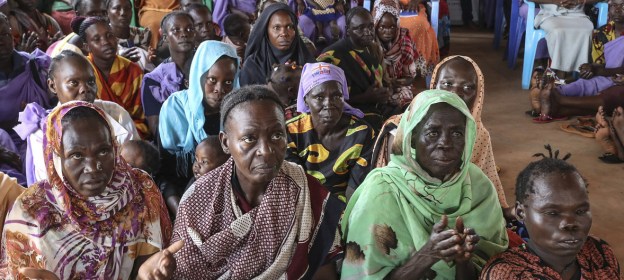
Germans are very sensitive to the dangers of nuclear technology… As recent as 2010, officials found traces of radioactivity connected to the 1986 Chernobyl catastrophe in German wildlife, like wild boar…Shortly after the Fukushima meltdown in 2011, Chancellor Angela Merkel announced that the country would phase out nuclear power by 2021…

Several newspapers reported that the terrorists behind the Paris attacks had the plans for a German nuclear facility, a claim later denied by German intelligence. Then, days later, it was found that inspectors responsible for carrying out safety checks at two nuclear plants had submitted fake reports.

Excerpts from Computer Virus in Bavarian Nuclear Plant, http://www.thelocal.de/, Apr. 26, 2016

Biometrics: Behavioral and Physical

From DARPA pdf document available at  FedBizOpps. Gov Enhanced Attribution
Solicitation Number: DARPA-BAA-16-34

Malicious actors in cyberspace currently operate with little fear of being caught due to the fact that it is extremely difficult, in some cases perhaps even impossible, to reliably and confidently attribute actions in cyberspace to individuals. The reason cyber attribution is difficult stems at least in part from a lack of end-to-end accountability in the current Internet infrastructure…..The identities of malicious cyber operators are largely obstructed by the use of multiple layers of indirection… The lack of detailed information about the actions and identities of the adversary cyber operators inhibits policymaker considerations and decisions for both cyber and non-cyber response options (e.g., economic sanctions under EO-13694).

The DARPA’s Enhanced Attribution program aims to make currently opaque malicious cyber adversary actions and individual cyber operator attribution transparent by providing high-fidelity visibility into all aspects of malicious cyber operator actions and to increase the Government’s ability to publicly reveal the actions of individual malicious cyber operators without damaging sources and methods….

The program seeks to develop:

–technologies to extract behavioral and physical biometrics from a range of devices and
vantage points to consistently identify virtual personas and individual malicious cyber
operators over time and across different endpoint devices and C2 infrastructures;
–techniques to decompose the software tools and actions of malicious cyber operators into semantically rich and compressed knowledge representations;
–scalable techniques to fuse, manage, and project such ground-truth information over time,toward developing a full historical and current picture of malicious activity;

–algorithms for developing predictive behavioral profiles within the context of cyber campaigns; and
–technologies for validating and perhaps enriching this knowledge base with other sources of data, including public and commercial sources of information.

Excerpts from Enhanced Attribution, Solicitation Number: DARPA-BAA-16-34, April 22, 2016

Who is Watching North Korea

The 38 North, a US institute monitoring North Korea said that the country appears to be beginning or planning to extract plutonium, the core material of a nuclear bomb, at a nuclear plant in Yongbyon, north of Pyongyang.  Satellite imagery dated April 11,  2016 shows a vehicle loaded with tanks or casks in the premises of a nuclear reprocessing facility, according to the 38 North website operated by Johns Hopkins University’s US-Korea Institute in Washington.  “Such tanks or casks could be used to supply chemicals used in a reprocessing campaign intended to produce additional plutonium, haul out waste products or a number of other related activities,” the institute said.  Similar vehicles were observed in the early 2000s, it said, when North Korea extracted plutonium apparently as part of its nuclear programmes.

On April 4, 2016 the institute said plumes were detected from the reprocessing facility fueling the speculation that Pyongyang has engaged in additional production of plutonium.

Excerpts from Satellite images show North Korea may have begun extracting plutonium at nuclear facility, says US institute, Associated Press, Apr. 16, 2016

Nuclear Weapons: Belgium

The US has approximately 180 B61 bombs – more than 10 times as powerful as those dropped on Hiroshima – at six locations in five countries across Europe.  An unknown number of these weapons are stored at the Kleine Brogel airbase in Belgium.  And Belgium has been the focus of European security services due to its reputation as a hotbed of radicalisation. During the first breach in 2010, anti-nuclear campaigners spent up to an hour wandering around the air base before security personnel moved in.A few months later activists again managed to sneak onto the site, this time reportedly gaining access to one of the hardened shelters used to house F-16 fighter jets as well as atomic weapons….

The US has stored non-strategic or tactical forward-deployed weapons at European facilities since the Cold War.The US Defence Department maintains about 4,760 nuclear warheads; an estimated 2,080 warheads are deployed while 2,680 warheads are held in storage….US bases have also been hit by worrying security breaches, including the break-in at the Y-12 site in Tennessee in 2012, one of the United States’ most sensitive sites. …….

Belgian authorities evacuated nuclear power plants at Doel, which houses four reactors, and Tihange, which houses three, in the immediate aftermath of terrorist attacks of March 2016…

Excerpts from TOM BATCHELOR, Security breaches uncovered at EUROPEAN bases storing US nuclear warheads, Express UK, Apr. 4, 2016

Nuclear-Powered Submarines of India

The INS Arihant, India’s first nuclear-powered submarine armed with ballistic missiles (SSBN, in military jargon)… is a 6,000-tonne boat that will provide India with the third leg of its nuclear “triad”—it already has land- and air-launched nukes….India believes SSBNs are a vital part of its nuclear strategy, which forswears the first use of nuclear weapons….Because they can readily avoid detection, SSBNs can survive a surprise attack and thus ensure India’s ability to launch a retaliatory “second strike”….Some nuclear theorists argue that submarine-based deterrents promote peace by making the other side more frightened to attack first. …

China is ahead of the game. It has a fleet of four second-generation Jin-class SSBNs and is testing JL-2 missiles to install in them. These weapons have a range of 7,400km (4,600 miles)—too short, for now, to reach the American mainland from the relative safety of the South China Sea. Pakistan, for its part, is in the early stages of a lower-cost approach. This involves arming diesel-powered subs with nuclear-armed cruise missiles with a range of 700km.

A more immediate worry to India is Pakistan’s development and deployment of smaller “tactical” nuclear weapons for use on the battlefield. These may make it more likely that any war between India and Pakistan will go nuclear. They also increase the risk of Pakistan’s weapons being used accidentally—or falling into the hands of extremists (such weapons are under the control of lower-level commanders whose professionalism and loyalty may be dubious)….

India says it will not develop battlefield nukes of its own. Instead, it will rely on the threat of massive retaliation against any use of nuclear weapons by Pakistan. Still, it may be another decade before India has a fully-fledged sea-based deterrent. Arihant’s Russian nuclear-power generator is unsuited to long patrols. Initially, the sub is due to be armed with the K-15 missile, with a range of 750km—not enough to reach big cities in northern Pakistan. Striking Chinese ones would be harder still.

Asian Nuclear Weapons: What Lurks Beneathh, Economist, Feb. 6, 2016, at 36

The Sea Hunter Drone

The Anti-Submarine Warfare (ASW) Continuous Trail Unmanned Vessel (ACTUV) is developing an unmanned vessel optimized to robustly track quiet diesel electric submarines. … capable of missions spanning thousands of kilometers of range and months of endurance under a sparse remote supervisory control model. This includes…autonomous interactions with an intelligent adversary.
Excerpts from Anti-Submarine Warfare (ASW) Continuous Trail Unmanned Vessel (ASW Continuous Trail Unmanned Vessel (ACTUV))


Stolen Nuclear Materials: Iraq

Iraq is searching for “highly dangerous” radioactive material stolen in 2015, according to an environment ministry document and seven security, environmental and provincial officials who fear it could be used as a weapon if acquired by Islamic State.

The material, stored in a protective case the size of a laptop computer, went missing in November 2015 from a storage facility near the southern city of Basra belonging to U.S. oilfield services company Weatherford WFT.N, the document seen by Reuters showed and officials confirmed…

The material, which uses gamma rays to test flaws in materials used for oil and gas pipelines in a process called industrial gamma radiography, is owned by Istanbul-based SGS Turkey, according to the document and officials.  A U.S. official said separately that Iraq had reported a missing specialized camera containing highly radioactive Iridium-192 to the International Atomic Energy Agency (IAEA), the Vienna-based U.N. nuclear watchdog, in November 2015….The environment ministry document, dated Nov. 30 and addressed to the ministry’s Centre for Prevention of Radiation, describes “the theft of a highly dangerous radioactive source of Ir-192 with highly radioactive activity belonging to SGS from a depot belonging to Weatherford in the Rafidhia area of Basra province”…

A senior environment ministry official based in Basra, who declined to be named as he is not authorised to speak publicly, told Reuters the device contained up to 10 grams (0.35 ounces) of Ir-192 “capsules”, a radioactive isotope of iridium also used to treat cancer.

The material is classed as a Category 2 radioactive source by the IAEA, meaning that if not managed properly it could cause permanent injury to a person in close proximity to it for minutes or hours, and could be fatal to someone exposed for a period of hours to days….

Large quantities of Ir-192 have gone missing before in the United States, Britain and other countries, stoking fears among security officials that it could be used to make a dirty bomb…..“They could simply attach it to explosives to make a dirty bomb,” said the official, who works at the interior ministry…But the official said the initial inquiry suggested the perpetrators had specific knowledge of the material and the facility. “No broken locks, no smashed doors and no evidence of forced entry,” he said….

Besides the risk of a dirty bomb, the radioactive material could cause harm simply by being left exposed in a public place for several days, said David Albright, a physicist and president of the Washington-based Institute for Science and International Security…The senior environmental official said authorities were worried that whoever stole the material would mishandle it, leading to radioactive pollution of “catastrophic proportions”.

Excerpts from Exclusive: Radioactive material stolen in Iraq raises security fears, Reuters, Feb. 17, 2016


Super Semiconductor Chips: Military

Competition for scarce electromagnetic (EM) spectrum is increasing, driven by a growing military and civilian demand for connected devices. As the spectrum becomes more congested, the Department of Defense (DoD) will need better tools for managing the EM environment and for avoiding interference from competing signals. One recent DARPA-funded advance, an exceptionally high-speed analog-to-digital converter (ADC), represents a major step forward. The ADC could help ensure the uninterrupted operation of spectrum-dependent military capabilities, including communications and radar, in contested EM environments. The advance was enabled by 32 nm silicon-on-insulator (SOI) semiconductor technologies available through DARPA’s ongoing partnership with GlobalFoundries, a manufacturer of highly-advanced semiconductor chips.

The EM spectrum, whose component energy waves include trillionth-of-a-meter-wavelength gamma rays to multi-kilometer-wavelength radio waves, is an inherently physical phenomenon. ADCs convert physical data—that is, analog data—on the spectrum into numbers that a digital computer can analyze and manipulate, an important capability for understanding and adapting to dynamic EM environments. Today’s ADCs, however, only process data within a limited portion of the spectrum at a given time. As a result, they can temporarily overlook critical information about radar, jamming, communications, and other potentially problematic EM signals. DARPA’s Arrays at Commercial Timescales (ACT) program addressed this challenge by supporting the development of an ADC with a processing speed nearly ten times that of commercially available, state-of-the-art alternatives. By leveraging this increased speed, the resulting ADC can analyze data from across a much wider spectrum range, allowing DoD systems to better operate in congested spectrum bands and to more rapidly react to spectrum-based threats.

How fast is fast? The new ADC samples and digitizes spectrum signals at a rate of over 60 billion times per second (60 GigaSamples/sec). …The new ADC can provide a “one-stop shop” for processing radar, communications and electronic warfare signals.

Desirable as these blazing sampling speeds are, they also pose challenges. The amount of data generated is staggering, reaching nearly a terabyte per second. This high data rate requires on-chip data-management circuitry that allows signals to be processed locally on the ADC, reducing the amount of data that must be communicated to neighboring electronics. This on-board digital signal processing burns quite a bit of power and also demands state-of-the-art transistors. The 32 nm SOI technology offered by Global Foundries, the only certified DoD supplier of this circuit technology, provided ACT with the leading-edge transistors needed to sample and process the RF spectrum without exceeding power or data-transfer limitations.

Upcoming ACT designs will go further. By using GlobalFoundries’ even more advanced 14 nm technology, ACT’s next generation of ADCs aim to reduce power requirements by an additional 50 percent and enable yet smaller and lighter systems that can sample even greater swaths of the spectrum.

Excerpts from New Chips Ease Operations In Electromagnetic Environs, Jan. 11, 2016

Hacking the Power Grid

In Ukraine on Dec. 23, 2015 the power suddenly went out for thousands of people in the capital, Kiev, and western parts of the country. While technicians struggled for several hours to turn the lights back on, frustrated customers got nothing but busy signals at their utilities’ call centers….Hackers had taken down almost a quarter of the country’s power grid, claimed Ukrainian officials.  Specifically, the officials blamed Russians for tampering with the utilities’ software, then jamming the power companies’ phone lines to keep customers from alerting anyone….Several of the firms researching the attack say signs point to Russians as the culprits. The malware found in the Ukrainian grid’s computers, BlackEnergy3, is a known weapon of only one hacking group—dubbed Sandworm by researcher ISight Partners—whose attacks closely align with the interests of the Russian government. The group carried out attacks against the Ukrainian government and NATO in 2014…

The more automated U.S. and European power grids are much tougher targets. To cloak Manhattan in darkness, hackers would likely need to discover flaws in the systems the utilities themselves don’t know exist before they could exploit them. In the Ukrainian attack, leading security experts believe the hackers simply located the grid controls and delivered a command that shut the power off. Older systems may be more vulnerable to such attacks, as modern industrial control software is better at recognizing and rejecting unauthorized commands, says IOActive’s Larsen.

That said, a successful hack of more advanced U.S. or European systems would be a lot harder to fix. Ukrainian utility workers restored power by rushing to each disabled substation and resetting circuit breakers manually. Hackers capable of scrambling New York’s power plant software would probably have to bypass safety mechanisms to run a generator or transformer hotter than normal, physically damaging the equipment. That could keep a substation offline for days or weeks, says Michael Assante, former chief security officer for the nonprofit North American Electric Reliability.

Hackers may have targeted Ukraine’s grid for the same reason NATO jets bombed Serbian power plants in 1999: to show the citizenry that its government was too weak to keep the lights on. The hackers may even have seen the attack as in-kind retaliation after sabotage left 1.2 million people in Kremlin-controlled Crimea without lights in November 2015. In that case, saboteurs blew up pylons with explosives, then attacked the repair crews that came to fix them, creating a blackout that lasted for days. Researchers will continue to study the cyber attack in Ukraine, but the lesson may be that when it comes to war, a bomb still beats a keyboard.

Excerpts How Hackers Took Down a Power Grid, Bloomberg Business Week, Jan. 14, 2016

GeoProfile as a Surveillance Tool

Guerrillas and terrorists are not fools. They are aware they may be under surveillance, and take what they hope are appropriate counter-measures. They are unlikely, for example, to make calls from inside a safe house in which they are living. Instead, they typically make calls from roughly spaced out nearby locations, taking care not to call too often from the same spot. They hope, thereby, that if their activity is being monitored, it will appear random and therefore meaningless.

Spacing things out like this is, in mathematical fact, anything but random: that, in itself, is suspicious. But true randomness would also be odd. As Ian Laverty, the boss of ECRI, a geoprofiling-software firm in Vancouver, observes, innocent phone calls have geographical patterns, because people have routines. Those who take steps to elude the authorities thus often end up unwittingly creating a profile of where their home base is—a profile that a piece of ECRI’s software called Rigel Analyst can spot. This software is used by more than 90 intelligence agencies around the world. Its applications include searching for Taliban rocket caches in Afghanistan.

Geoprofiling is thus already an important counter-insurgency tool…according to a geoprofiler in Denmark’s intelligence apparatus who prefers to remain anonymous. This operative uses geoprofiling software called ArcGIS that analyses Global Positioning System (GPS) data provided unwittingly by insurgents’ growing use of smartphones and other gadgets that are equipped, by default, with GPS kit. For example, simply right-clicking on propaganda images posted online often obtains a GPS “geocode” that reveals where the picture was taken.

Excerpts from Counter-Terrorism, Shrinking the Haystack,  /Economist,Jan. 16, 2016, at 86

Eco-Peace for the Middle East?

EcoPeace, a joint Israeli, Jordanian and Palestinian NGO thinks it just might. In December it presented an ambitious, if far from fully developed, $30 billion plan to build a number of desalination plants on the Mediterranean shore of Israel and the Gaza Strip. At the same time, large areas in Jordan’s eastern desert would host a 200 square km (75 square mile) solar-energy plant, which would provide power for desalination (and for Jordan) in exchange for water from the coast. “A new peaceful economy can be built in our region around water and energy” says Gidon Bromberg, EcoPeace’s Israeli director. Jordan and the Palestinian Authority are already entitled to 120 million cubic meters of water a year from the Jordan river and West Bank aquifers but this is not enough to meet demand, particularly in Jordan, which regularly suffers from shortages….

The main drawback to making fresh water from the sea is that it takes lots of energy. Around 25% of Jordan’s electricity and 10% of Israel’s goes on treating and transporting water. Using power from the sun could fill a sizeable gap, and make Palestinians less dependent on Israeli power. Renewables supply just 2% of Israel’s electricity needs, but the government is committed to increasing that share to 17% by 2030. Jordan, which has long relied on oil supplies from Arab benefactors, is striving for 10% by 2020.,,, Over the past 40 years there has been a series of plans to build a Red Sea-Dead Sea canal that would have irrigated the Jordan Valley and generated power, none of which have been built.

Beyond many logistical and financial obstacles, the plan’s boosters also have to navigate a political minefield.

Excerpts from Utilities in the Middle East: Sun and Sea, Economist, Jan. 16, 2016, at 54

US Nuclear Revitalization

As North Korea dug tunnels at its nuclear test site last fall, watched by American spy satellites, the Obama administration was preparing a test of its own in the Nevada desert.

A fighter jet took off with a mock version of the nation’s first precision-guided atom bomb. Adapted from an older weapon, it was designed with problems like North Korea in mind: Its computer brain and four maneuverable fins let it zero in on deeply buried targets like testing tunnels and weapon sites. And its yield, the bomb’s explosive force, can be dialed up or down depending on the target, to minimize collateral damage.

Mr. Obama has long advocated a “nuclear-free world.” His lieutenants argue that modernizing existing weapons can produce a smaller and more reliable arsenal while making their use less likely because of the threat they can pose. The changes, they say, are improvements rather than wholesale redesigns, fulfilling the president’s pledge to make no new nuclear arms.

But critics, including a number of former Obama administration officials, look at the same set of facts and see a very different future. The explosive innards of the revitalized weapons may not be entirely new, they argue, but the smaller yields and better targeting can make the arms more tempting to use — even to use first, rather than in retaliation.

The United States military is replacing the fixed tail section of the B61 bomb with steerable fins and adding other advanced technology. The result is a bomb that can make more accurate nuclear strikes and a warhead whose destructive power can be adjusted to minimize collateral damage and radioactive fallout…

The B61 Model 12, the bomb flight-tested last year in Nevada, is the first of five new warhead types planned as part of an atomic revitalization estimated to cost up to $1 trillion over three decades. As a family, the weapons and their delivery systems move toward the small, the stealthy and the precise.  Already there are hints of a new arms race. Russia called the B61 tests “irresponsible” and “openly provocative.” China is said to be especially worried about plans for a nuclear-tipped cruise missile….The advanced cruise missile are estimated to cost up to $30 billion for roughly 1,000 weapons….Because the missile comes in nuclear and non-nuclear varieties, a foe under attack might assume the worst and overreact, initiating nuclear war.

Excerpt from WILLIAM J. BROAD and DAVID E. SANGERJAN, As U.S. Modernizes Nuclear Weapons, ‘Smaller’ Leaves Some Uneasy, NY Times, Jan. 11, 2016

see also Nuclear Weapons, Justice and the Law

Sexual Violence in Burundi

UN High Commissioner for Human Rights Zeid Ra’ad Al Hussein warned on January 15, 2016 that deeply worrying new trends are emerging in Burundi, including cases of sexual violence by security forces and a sharp increase in enforced disappearances and torture cases. He also called for an urgent investigation into the events that took place in Bujumbura on 11-12 December,2015  including the reported existence of at least nine mass graves.

“We have documented 13 cases of sexual violence against women, which began during the search and arrest operations that took place after the December events in the neighbourhoods perceived as supportive of the opposition. The pattern was similar in all cases:  security forces allegedly entered the victims’ houses, separated the women from their families, and raped – in some cases gang-raped – them,” Zeid said…

“Despite these allegations of large-scale arrests, my Office is finding that only a small proportion of them appear to be in official places of detention,” said the High Commissioner. “The increasing number of enforced disappearances, coupled with allegations of secret detention facilities and mass graves is extremely alarming,” he said……In addition, he said, witnesses had reported the existence of at least nine mass graves in Bujumbura and its surroundings – including one in a military camp –containing more than 100 bodies in total, all of them allegedly killed on 11 December 2015. …“My Office is analysing satellite images in an effort to shed more light on these extremely serious allegations,” Zeid said. “All the alarm signals, including the increasing ethnic dimension of the crisis, are flashing red,” he added.

According to information gathered from inhabitants of various neighbourhoods, some of the victims of human rights violations during the search operations that followed the 11 December, 2015 events were targeted because they were Tutsis.

Excerpts from Press Release, Alarming new patterns of violations emerging in Burundi – Zeid , Jan. 15, 2016

Drones Inside Ships: Military

Small-deck ships such as destroyers and frigates could greatly increase their effectiveness if they had their own unmanned air systems (UASs) to provide intelligence, surveillance and reconnaissance (ISR) and other capabilities at long range around the clock. Current state-of-the-art UASs, however, lack the ability to take off and land from confined spaces in rough seas and achieve efficient long-duration flight. TERN (Tactically Exploited Reconnaissance Node) , a joint program between DARPA and the U.S. Navy’s Office of Naval Research (ONR), seeks to provide these and other previously unattainable capabilities. As part of Tern’s ongoing progress toward that goal, DARPA has awarded Phase 3 of Tern to a team led by the Northrop Grumman Corporation….  The Tern Phase 3 design envisions a tail-sitting, flying-wing aircraft with twin counter-rotating, nose-mounted propellers. The propellers would lift the aircraft from a ship deck, orient it for horizontal flight and provide propulsion to complete a mission. They would then reorient the craft upon its return and lower it to the ship deck. The system would fit securely inside the ship when not in use.

Tern’s potentially groundbreaking capabilities have been on the Navy’s wish list in one form or another since World War II. The production of the first practical helicopters in 1942 helped the U.S. military realize the potential value of embedded vertical takeoff and landing (VTOL) aircraft to protect fleets and reduce the reliance on aircraft carriers and land bases.  The Tern demonstrator will bear some resemblance to the Convair XFY-1 Pogo, an experimental ship-based VTOL fighter designed by the Navy in the 1950s to provide air support for fleets. Despite numerous successful demonstrations, the XFY-1 never advanced beyond the prototype stage, in part because the Navy at the time was focusing on faster jet aircraft and determined that pilots would have needed too much training to land on moving ships in rough seas….Moving to [drones removes the need for training aircraft pilots].

Excerpt from DARPA Tern Moves Closer to Full-Scale Demonstration of Unmanned VTOL Aircraft Designed for Small Ships

Destroying ISIS Cash: death toll

In an extremely unusual airstrike, the U.S. dropped bombs on January 10, 2016 in central Mosul, Iraq, destroying a building containing huge amounts of cash ISIS was using to pay its troops and for ongoing operations, two U.S. defense officials told CNN.  The officials could not say exactly how much money was there or in what currency, but one described it as “millions.”Two 2,000-pound bombs destroyed the site quickly. But the longstanding impact may be even more significant. The officials said the U.S. plans to strike more financial targets like this one to take away ISIS’s ability to function as a state-like entity.  This is a similar expansion to the target list as happened several weeks ago, when U.S. warplanes began hitting ISIS oil trucks…U.S. aircraft and drones watched the site for days trying to determine when the fewest number of civilians would be in the area.  Because civilians were nearby during the daylight hours, and ISIS personnel were working there at night, the decision was made to strike at dawn on Sunday.

U.S. commanders had been willing to consider up to 50 civilian casualties from the airstrike due to the importance of the target. But the initial post-attack assessment indicated that perhaps five to seven people were killed.  In recent weeks, the U.S. has said it will assess all targets on a case-by-case basis and may be more willing to tolerate civilians casualties for more significant targets.

Excerpts from U.S. bombs ‘millions’ in ISIS currency holdings, CNN, January 11, 2016

Migrating Nuclear Waste: West Lake Landfill

The West Lake Landfill is an unlined mixed-waste landfill located in Bridgeton, Missouri, near St. Louis and the Mississippi River, whose contents have been shown to include radioactive waste; it is thus also an EPA Superfund cleanup. It is operated by Bridgeton Landfill, LLC; Rock Road Industries, Inc.; and CotterCorporation …Contamination from this landfill containing nuclear-weapons-related waste likely has migrated off-site, according to a study published in the Journal of Environmental Radioactivity...The U.S. Environmental Protection Agency, have said their radiation sampling hasn’t shown evidence of the site posing a threat to the public.

The study’s authors, who include Robert Alvarez, a former senior Energy Department official in the Clinton administration, said they gathered more than 200 samples of soil and sediments from a roughly 75-square-mile area around the landfill. Dozens of the samples contained levels of radioactive lead that exceeded a cleanup standard used in the past by the federal government, the study said.  With West Lake being the largest known nearby repository of radioactive material, the findings are “strong evidence” of the landfill being the primary source, the study concluded. Radon gas is likely escaping from the site and decaying into radioactive lead, said the study.  Some of the highest levels were found in dust samples from several homes, said Mr. Alvarez. Those locations ” deserve further attention,” he said.  Mr. Alvarez, who has been critical of many federal nuclear policies, said some of the contamination, particularly in the homes, could be residue from old above-ground weapons-waste storage sites that were in the area until the early 1970s, when what was left was buried at West Lake.

For instance, as previously reported, federal surveys have found yards of some homes near a tainted creek that runs through the area to be contaminated with low levels of radioactive material, mainly thorium…..

Excerpt from John R. Emshwiller Study Finds Radioactive Waste at St. Louis-Area Landfill Has Migrated Off-Site, Nasdaq, Jan. 2, 2016

ISIS Money

So while Islamic State probably maintains some refining capacity, the majority of the oil in IS territory is refined by locals who operate thousands of rudimentary, roadside furnaces that dot the Syrian desert.  Pentagon officials also acknowledge that for more than a year they avoided striking tanker trucks to limit civilian casualties. “None of these guys are ISIS. We don’t feel right vaporizing them, so we have been watching ISIS oil flowing around for a year,” says Knights. That changed on Nov. 16, 2015 when four U.S. attack planes and two gunships destroyed 116 oil trucks. A Pentagon spokesman says the U.S. first dropped leaflets warning drivers to scatter.

Beyond oil, the caliphate is believed by U.S. officials to have assets including $500 million to $1 billion that it seized from Iraqi bank branches last year, untold “hundreds of millions” of dollars that U.S. officials say are extorted and taxed out of populations under the group’s control, and tens of millions of dollars more earned from looted antiquities and ransoms paid to free kidnap victims….

Arguably the least appreciated resource for Islamic State is its fertile farms. Before even starting the engine of a single tractor, the group is believed to have grabbed as much as $200 million in wheat from Iraqi silos alone.  paid on black markets. And how do you conduct airstrikes on farm fields?  For his part, Bahney contends that the group’s real financial strength is its fanatical spending discipline. Rand estimates the biggest and most important drain on Islamic State’s budget is the salary line for up to 100,000 fighters. But the oil revenue alone could likely pay those salaries almost two times over, Bahney says.

Excerpts from Cam Simpson, Why U.S. Efforts to Cut Off Islamic State’s Funds Have Failed: It’s more than just oil, WSJ, Nov. 19, 2015

The Japan-India Nuclear Deal, 2015


Prime Minister Shinzo Abe’s agreement in principle to supply nuclear power technology to India may run counter to Japan’s stated commitment against the proliferation of nuclear weapons.  The deal was reached on Dec. 12, 2015 during a meeting between Abe, who is visiting New Delhi, and his Indian counterpart, Narendra Modi. If an actual nuclear power agreement is signed, it would mark the first for Japan with a nation that has not signed the Nuclear Nonproliferation Treaty. The latest move by Japan was met swiftly with criticism in Hiroshima and Nagasaki.

Japan and India began negotiating a nuclear power agreement in 2010 when the Democratic Party of Japan was still in power. Japan had wanted a provision in any such deal that would allow it to immediately stop any nuclear power cooperation should India resume testing of nuclear weapons, which has been on hold since 1998.  Although a joint declaration and a memorandum regarding a nuclear power agreement were released on Dec. 12, 2015 no provisions were included regarding a suspension of cooperation should India resume nuclear testing.  In the joint declaration, the two leaders confirmed that a nuclear power agreement would be signed after completion of the technological details through further negotiations between the two nations.

Excerpt from Japan’s nuclear power deal in principle with India a first with an NPT non-signer,  ASAHI SHIMBUN, Dec. 13, 2015


The New Saddam Husseins

[The] intelligence network Islamic State has put in place since it seized vast stretches of Iraq and neighbouring Syria… [is overseen by] former army and intelligence officers, many of whom helped keep former Iraqi strongman Saddam Hussein and his Baath Party in power for years. …The Baathists have strengthened the group’s spy networks and battlefield tactics and are instrumental in the survival of its self-proclaimed Caliphate, according to interviews with dozens of people, including Baath leaders, former intelligence and military officers, Western diplomats and 35 Iraqis who recently fled Islamic State territory for Kurdistan.  Of Islamic State’s 23 portfolios – equivalent to ministries – former Saddam regime officers run three of the most crucial: security, military and finance, according to Hisham al-Hashimi, an Iraqi analyst who has worked with the Iraqi government….In many ways, it is a union of convenience. Most former Baathist officers have little in common with Islamic State. Saddam promoted Arab nationalism and secularism for most of his rule.  But many of the ex-Baathists working with Islamic State are driven by self preservation and a shared hatred of the Shi’ite-led government in Baghdad. Others are true believers who became radicalised in the early years after Saddam’s ouster, converted on the battlefield or in U.S. military and Iraqi prisons….

Baathists began collaborating with al Qaeda in Iraq – the early incarnation of what would become Islamic State – soon after Saddam Hussein was ousted in 2003. Saddam had run a brutal police state. The U.S. occupation dissolved the Baath Party and barred senior and even middling party officials from joining the new security services. Some left the country, others joined the anti-American insurgency…..By 2014, the Baathists and the jihadists were back to being allies. As Islamic State fighters swept through central Iraq, they were joined by the Army of the Men of the Naqshbandi Order, a group of Baathist fighters..That has boosted Islamic State’s firepower and tactical prowess….Emma Sky, a former adviser to the U.S. military, believes Islamic State has effectively subsumed the Baathists. “The mustached officers have grown religious beards. I think many have genuinely become religious,” she said.

Among the most high profile Baathists to join Islamic State are Ayman Sabawi, the son of Saddam Hussein’s half brother, and Raad Hassan, Saddam’s cousin, said the senior Salahuddin security official and several tribal leaders. Both were children during Saddam’s time, but the family connection is powerfully symbolic. More senior officers now in Islamic State include Walid Jasim (aka Abu Ahmed al-Alwani) who was a captain of intelligence in Saddam’s time, and Fadhil al-Hiyala (aka Abu Muslim al-Turkmani) whom some believe was a deputy to Islamic State leader Abu Bakr al-Baghdadi until he was killed in an airstrike earlier this year.

The group’s multi-layered security and intelligence agencies in Mosul, the biggest city in northern Iraq, are overseen by an agency called Amniya – literally ‘Security’. The agency has six branches, each responsible for maintaining a different aspect of security…..They also run a network of informants, placing children such as 14-year-old Mohannad in mosques and markets, and women at funerals and family gatherings, according to residents of Mosul…

Islamic State execution squads often arrive in a large bus with tinted windows, another resident said. Police seal off streets surrounding the place where a killing is to be carried out. Men dressed in black with balaclavas either shoot people, or behead them with swords.The bodies of those deemed to have committed the worst offences – cursing God or the group – are thrown in an area called al-Khafsa, a deep natural crater in the desert just south of Mosul, residents in the city said. Those killed for lesser crimes are returned to their families wrapped in a blanket.

Excerpts from  Isabel Coles and Ned Parker, The Baathists: How Saddam’s men help Islamic State rule, Reuters, Dec. 11, 2015

From Cities to Shantytowns: Basra, Iraq

Basra should be Iraq’s most successful province. It lies furthest from IS’s front lines and has a tradition as the country’s most cosmopolitan city. It remains the country’s dynamo. It has Iraq’s only ports, and oil production that generates around 95% of the government’s oil revenues. But four decades of war, sanctions, occupation, neglect and Shia infighting have rendered it decrepit and dysfunctional. Its utilities are worse than those of Mosul, Iraq’s second city, which is controlled by IS. Power cuts last most of the day. The water is stickily saline. The air is acrid from oil plumes and from sewage that dribbles into collapsed canals which once saw Basra called “the Venice of the East”. Cholera is back. “Our health was better under sanctions and Saddam Hussein,” says a local councillor.

With nothing to do, the city’s youth turn to militias for jobs. They are probably the province’s largest employer...International oil companies might have kick-started the economy, but chose to locate all but essential operations abroad. Though local hire is cheaper, under their oil contracts, whoever they hire the Iraqi government pays. Such are the inflated costs that producing a barrel of Iraqi oil costs twice as much as in Saudi Arabia.

The oil companies argue that foreign labour is more reliable. But had the security environment been better and had Iraq paid its dues, they might have established training centres and universities in Iraq just as they did in Saudi Arabia. By sealing themselves off from Iraq, they are creating a vicious circle. As the gap between them and the locals widen, grievances mount. Worried about the prospects, Occidental Petroleum Corp, America’s fourth-largest producer, asked the government to buy back its stake in Zubair, a large southern oilfield, last month.

Iraqi politics compounds the lack of opportunity. The ruling parties in Baghdad divvy up the oil revenues before they trickle south. Their local representatives immobilise the rest. Basra’s governor, council head and mayor all belong to rival religious Shia parties. Each vetoes the others’ decisions and projects. Their militiamen jostle for control on the streets. In October 2014 Badr, the most powerful militia group, took over Saddam’s palace, from where the British ran their occupation in 2003, and pinned portraits of Iran’s supreme leader, Ali Khamenei, and Shia Iraq’s own religious leader, Ali al-Sistani, on its walls. Posters of their martyrs line Basra’s highways. The limited political freedoms gained since Saddam’s fall are receding…

“The middle class are selling what assets they still have and are fleeing the country,” says a local journalist, who is toying with following them. Flights bound for Istanbul leave full and return half empty. But the numbers in Basra are quickly replenished. Land clearance for oilfields has triggered a rural flight, ringing the city in shantytowns. More arrive from poorer neighbouring provinces with no oil. As an urban middle class is replaced by more conservative, poorer people from the countryside, Basra’s character is changing…. Restoration of the city’s grand old Jewish and Greek palaces stopped when Saddam was overthrown.

An hour’s drive north of Basra, the city of Amara shows what could be possible. There, the Shia religious parties co-operate, holding each other to account rather than blocking each others’ projects. The province has revamped its roads and sewage system and sports flashy government buildings. Chinese contractors shop in the markets without their security escorts. Two new gas-powered plants are set to fire up next year. But much worse can happen, too. In 2013 Iraqis in the disenfranchised north-west staged months of protests, which the authorities ignored and then fiercely repressed. Islamic State took their place, offering another way.

Excerpts from Iraq: The blighted city, Economist,  Nov. 21, 2015, at 48.

The CIA Khost Force in Afghanistan

The CIA continues to run a shadow war in the eastern part of Afghanistan, overseeing an Afghan proxy called the Khost Protection Force (KPF), according to local officials, former commanders of that militia and Western advisers.  The highly secretive paramilitary unit has been implicated in civilian killings, torture, questionable detentions, arbitrary arrests and use of excessive force in controversial night raids, abuses that have mostly not been previously disclosed.

Here in Khost–the strategic eastern border province, which has long served as a key gateway for militants entering from Pakistan, the KPF fights in conjunction with the CIA out of Forward Operating Base Chapman.In Khost, the KPF is more influential than the Afghan army and police, and is unaccountable to the provincial government, often acting outside normal chains of command. Locally, militias such as the KPF are called “campaign forces,” an informal name Afghans use for pro-government armed groups….

But a visit to Khost last month revealed that although there is coordination with the security directorate — the NDS — the CIA is still directing the KPF’s operations, paying fighters’ salaries, and training and equipping them. American personnel were gathering biometric data of alleged suspects, according to witnesses, former KPF commanders and local officials who regularly meet with the force and their American overseers.

The KPF was one of several large paramilitary forces created by the CIA in the months after the Taliban was ousted following the 9/11 attacks. Recruits were drawn from local tribes in Khost with promises of salaries, equipment and conditions that were better than in the Afghan military.The force largely operates along the border with North Waziristan, the Pakistani tribal region that is a nerve center for the Taliban, its ally, the Haqqani Network, and al-Qaeda. Fighters receive as much as $400 a month in salary, twice what a soldier in the Afghan security forces earns. Commanders earn $1,000 or more a month, as much as an Afghan army general. Equipped with night-vision goggles, they drive tan Humvees and armored trucks mounted with machine guns.CIA operatives often travel along on raids with the KPF in order to call in airstrikes, from U.S. warplanes or drones, if needed, said Sardar Khan Zadran, a former top KPF commander who still maintains close links to the force.  “They are accountable to no one but the Americans,” Zadran said…

On Nov. 7, 2015 hundreds of angry villagers took to the streets of Khost city. There had been another night raid in which the KPF killed two people, described by the protesters as civilians. The corpses were placed in pickup trucks, and the crowd moved toward Camp Chapman. Some clutched sticks and tree branches. Others carried white Taliban flags.“Death to Americans,” they chanted. “Death to American slaves.”

It was the latest sign of a growing backlash against the CIA and its proxy.The provincial council, several of its members said, has received thousands of complaints about the KPF, not just about the deadly night raids, but also about strict roadblocks that can last for hours. “If their problems are not solved, those people might start cooperating with the insurgents,” said Bostan Walizai, a human rights activist.

Excerpts from  Sudarsan Raghavan, CIA runs shadow war with Afghan militia implicated in civilian killings, Washington Post,  Dec. 3, 2015

The Science of Killing: snipers


TrackingPoint, a Texan firm has a system that collects and crunches almost all the variables (distance to target; air temperature and pressure; compass bearing, to allow for the Earth’s spin; and even the size of the area on the target that will produce a kill) which might cause a dumb round to miss. The sniper has only to add wind speed and direction, and then pull the trigger. The gun waits until its calculations suggest all is well before firing the bullet. According to John McHale, TrackingPoint’s boss, a marksman can “close his eyes at this point and just wiggle his gun” until it fires….TrackingPoint’s system is now available—and more than 45 of the world’s defence ministries would, indeed, like to avail themselves of it. At the moment, unless their address is in Arlington, Virginia, they cannot; the American government has forbidden the system’s export. This, though, has not stopped people trying. TrackingPoint has suffered so many cyber attacks that details are now kept strictly offline. Yet sooner or later, the secret will out. When it does, the mystique of the sniper may simply evaporate, as every infantry grunt in an army that can afford it becomes a sharpshooter in his own right.

Excerpt, The Future of Sniping: Enemy at the Gates, Economist, Nov. 21, 2015 at 73

Chinese Drones

China has displayed its latest and biggest military unmanned aircraft at an industry expo in Shenzhen, Guangdong province…Considering the rule that China’s defence sector never publicly displays advanced weapons solely designed for the People’s Liberation Army (PLA), the public debut of CH-5 at the China (Shenzhen) International Unmanned Vehicle Systems Trade Fair has an unmistakable indication: China is eager to sell it.  “We have sold the CH-3 to several foreign nations and now we plan to launch the export version of the CH-5 to the international market. It can perform air-to-ground strike, reconnaissance and transport operations,” said Shi Wen, chief designer of the CH series at China Academy of Aerospace Aerodynamics..  They did not disclose which countries have introduced the CH series, but earlier reports quoted Vasily Kashin, a senior analyst with the Moscow-based Centre for Analysis of Strategies and Technologies, as saying Egypt, Saudi Arabia and Iraq have deployed drones from the CH family.…[T]he drone can stay in the air for as long as about 40 hours and operate at an altitude of up to 10 km.  Compared with other military drones that usually have a maximum take-off weight of less than 1,500 kg, the CH-5 is much more powerful-it is able to fly with a weight of 3,000 kg and carry 900 kg of equipment and weapons.

Excerpt from China displays biggest drone, The Hindu, Nov. 21, 2015

Cannibalism and Rape in South Sudan

The African Union Commission of Inquiry on South Sudan, Excerpt on Human Rights Violations, released October 27,2015

The Commission found cases of sexual and gender based violence committed by both parties against women. It also documented extreme cruelty exercised through mutilation of bodies, burning of bodies, draining human blood from people who had just been killed and forcing others from one ethnic community to drink the blood or eat burnt human flesh. Such claims were registered during interviews of witnesses of crimes committed in Juba.

Elsewhere, witnesses of crimes committed in Bor Town, also provided evidence of brutal killings and cruel mutilations of dead bodies. In Malakal town, reports of abduction and disappearance of women from churches and the hospital where communities had sought refuge during the hostilities that began in December 2013 were rife. In Unity State, Bentiu, the capital has been the focus of much of the fighting, having changed hands several times between government and opposition soldiers during the course of the conflict. Bentiu town is largely destroyed. In Leer county, the Commission heard testimony of civilians, including children and teenagers killed, houses, farms and cattle burned, and of sexual violence.

The Commission found that most of the atrocities were carried out against civilian populations taking no active part in the hostilities. Places of religion and hospitals were attacked, humanitarian assistance was impeded, towns pillaged and destroyed, places of protection were attacked and there was testimony of possible conscription of children under 15 years old….

The Commission also found that civilians were targeted in Malakal, which was under the control of both parties at different times during the conflict. Serious violations were committed in Malakal Teaching Hospital through the killings of civilians and women were raped at the Malakal Catholic Church between 18th and 27th February 2014. In Bentiu the Commission heard testimony of the extremely violent nature of the rape of women and girls – that in some instances involved maiming and dismemberment of limbs. Testimony from women in UNMISS PoC Site in Unity State detailed killings, abductions, disappearances, rapes, beatings, stealing by forces and being forced to eat dead human flesh.

Privatization of Army: Nigeria

Private security is big business in Nigeria. The country suffers bombings in the north, sectarian violence in the centre and simmering insecurity in the oil-producing south-east. Red24, a Scottish security firm, says more than 600 people are kidnapped in the country every year, putting it among the five worst for that sort of crime…  [There are] 1,500 and 2,000 private security companies in Nigeria. Because they cannot legally carry weapons, armed units must be hired from national forces….Private companies pay the security forces handsomely. But that also encourages commanders to hire out their men. The result is a privatisation of public security, reckons Rita Abrahamsen, a professor at the University of Ottawa. In 2011 a retired deputy inspector-general estimated that up to 100,000 police officers (about a third of the country’s total) were working for “a few fortunate individuals”, and questioned what that meant for regular Nigerians. Martin Ewence, a British naval commander turned consultant, reckons that the navy in effect has “given over its maritime security responsibilities”.

In the worst cases, the private-security culture fuels conflict. Oil companies in the Niger delta have been criticised for arming Nigeria’s Joint Task Force in a bid to secure their assets. The task-force’s combination of police, army and naval personnel, whose houseboats are moored in the delta’s greasy creeks to “tax” passing barges, are accused of human-rights abuses and involvement in the theft of oil.

Private security in Nigeria: Rent-a-cop, Economist, Oct. 17, 2015, at 54

Drones in Peacekeeping Operations: South Sudan

The U.N. Security Council is urging the use of unarmed drones in the peacekeeping mission in South Sudan, but the government there says that could cause “disagreement and hostility” as a peace deal tries to take hold.  The council on October 9, 2015 adopted a U.S.-drafted resolution requesting the U.N. secretary-general to “prioritize” the deployment of remaining troops, plus military helicopters and drones. The U.N. is exploring the use of drones in a growing number of peacekeeping missions after first using them in Congo in 2013.  But deploying the drones — even getting them into South Sudan — needs government consent. “The mission requires the collaboration and cooperation from the host authorities for its operations, including air and aviation ones,” a U.N. official said. The official spoke on condition of anonymity because they were not authorized to speak publicly.  Ambassador Francis Deng told the council that requesting drones without consulting his government is “to invite controversy.”

South Sudan’s rival sides signed a peace deal in August 2015, but numerous cease-fire violations have been reported. Each side blames the other for the violations. Meanwhile, more than 100,000 civilians remain sheltered in U.N. bases throughout the country. Thousands have been killed in the conflict fueled by the rivalry between President Salva Kiir and former vice president Riek Machar.  The council resolution also extends the peacekeeping mission’s mandate until Dec. 15 while supporting the implementation of the peace deal. The mission has more than 12,500 uniformed personnel on the ground.

Excerpts from UN Wants Peacekeeping Drones in South Sudan, Which Objects, Associated Press, Oct. 10, 2015

Leaked Papers on US Drone War: 2015

The Obama administration has portrayed drones as an effective and efficient weapon in the ongoing war with al Qaeda and other radical groups. Yet classified Pentagon documents obtained by The Intercept reveal that the U.S. military has faced “critical shortfalls” in the technology and intelligence it uses to find and kill suspected terrorists in Yemen and Somalia.
Those shortfalls stem from the remote geography of Yemen and Somalia and the limited American presence there. As a result, the U.S. military has been overly reliant on signals intelligence from computers and cellphones, and the quality of those intercepts has been limited by constraints on surveillance flights in the region.

The documents are part of a study by a Pentagon Task Force on Intelligence, Surveillance, and Reconnaissance. They provide details about how targets were tracked for lethal missions carried out by the Joint Special Operations Command, or JSOC, in Yemen and Somalia between January 2011 and summer 2012. When the study was circulated in 2013, the Obama administration was publicly floating the idea of moving the bulk of its drone program to the Pentagon from the CIA, and the military was eager to make the case for more bases, more drones, higher video quality, and better eavesdropping equipment.

Yet by identifying the challenges and limitations facing the military’s “find, fix, finish” operations in Somalia and Yemen — the cycle of gathering intelligence, locating, and attacking a target — the conclusions of the ISR study would seem to undermine the Obama administration’s claims of a precise and effective campaign, and lend support to critics who have questioned the quality of intelligence used in drone strikes.

One of the most glaring problems identified in the ISR study was the U.S. military’s inability to carry out full-time surveillance of its targets in the Horn of Africa and Yemen. Behind this problem lies the “tyranny of distance” — a reference to the great lengths that aircraft must fly to their targets from the main U.S. air base in Djibouti, the small East African nation that borders Somalia and sits just across the Gulf of Aden from Yemen. Surveillance flights are limited by fuel — and, in the case of manned aircraft, the endurance of pilots. In contrast with Iraq, where more than 80 percent of “finishing operations” were conducted within 150 kilometers of an air base, the study notes that “most objectives in Yemen are ~ 500 km away” from Djibouti and “Somalia can be over 1,000 km.” The result is that drones and planes can spend half their air time in transit, and not enough time conducting actual surveillance….

Compounding the tyranny of distance, the ISR study complained, was the fact that JSOC had too few drones in the region to meet the requirements mandated for carrying out a finishing operation.  The “sparse” available resources meant that aircraft had to “cover more potential leads — stretching coverage and leading to [surveillance] ‘blinks.’” Because multiple aircraft needed to be “massed” over one target before a strike, surveillance of other targets temporarily ceased, thus breaking the military’s ideal of a “persistent stare” or the “unblinking eye” of around-the-clock tracking.

JSOC relied on manned spy planes to fill the orbit gap over Yemen. In June 2012 there were six U-28 spy planes in operation in East Africa and the Arabian Peninsula,..Only in the summer of 2012, with the addition of contractor-operated drones based in Ethiopia and Fire Scout unmanned helicopters, did Somalia have the minimum number of drones commanders wanted. The number of Predator drones stationed in Djibouti doubled over the course of the study, and in 2013, the fleet was moved from the main U.S. air base, Camp Lemonnier, to another Djibouti airstrip because of overcrowding and a string of crashes.

Expanding the use of aircraft launched from ships.

JSOC already made use of Fire Scout helicopter drones and small Scan Eagle drones off the coast of Somalia, as well as “Armada Sweep,” which a 2011 document from the National Security Agency, provided by former contractor Edward Snowden, describes as a “ship-based collection system” for electronic communications data. (The NSA declined to comment on Armada Sweep.)…

The find, fix, finish cycle is known in the military as FFF, or F3. But just as critical are two other letters: E and A, for “exploit and analyze,” referring to the use of materials collected on the ground and in detainee interrogations..  F3EA became doctrine in counterinsurgency campaigns in Iraq and Afghanistan in the mid-2000s…

[But] Assassinations are intelligence dead ends.  The ISR study shows that after a “kill operation” there is typically nobody on the ground to collect written material or laptops in the target’s house, or the phone on his body, or capture suspects and ask questions. Yet collection of on-the-ground intelligence of that sort — referred to as DOMEX, for “document and media exploitation,” and TIR, for “tactical interrogation report” — is invaluable for identifying future targets.,,,[Another issue is whether the US government can rely on foreign governments for intelligence]….In 2011, for example, U.S. officials told the Wall Street Journal that they had killed a local governor because Yemeni officials didn’t tell them he was present at a gathering of al Qaeda figures. “We think we got played,” one official said. (The Yemeni government disputed the report.)…
With limited ability to conduct raids or seize materials from targeted individuals in Yemen and Somalia, JSOC relied overwhelmingly on monitoring electronic communications to discover and ultimately locate targets.  The documents state bluntly that SIGINT is an inferior form of intelligence. Yet signals accounted for more than half the intelligence collected on targets, with much of it coming from foreign partners. The rest originated with human intelligence, primarily obtained by the CIA. “These sources,” the study notes, “are neither as timely nor as focused as tactical intelligence” from interrogations or seized materials.  Making matters worse, the documents refer to “poor” and “limited”capabilities for collecting SIGINT, implying a double bind in which kill operations were reliant on sparse amounts of inferior intelligence.

The disparity with other areas of operation was stark, as a chart contrasting cell data makes clear: In Afghanistan there were 8,900 cell data reports each month, versus 50 for Yemen and 160 for Somalia. Despite that, another chart shows SIGINT comprised more than half the data sources that went into developing targets in Somalia and Yemen in 2012.  Cellphone data was critical for finding and identifying targets, yet a chart from a Pentagon study shows that the military had far less information in Yemen and Somalia than it was accustomed to having in Afghanistan….

After locating a target, usually by his cellphone or other electronics, analysts would study video feeds from surveillance aircraft “to build near-certainty via identification of distinguishing physical characteristics.”

A British intelligence document on targeted killing in Afghanistan, which was among the Snowden files, describes a similar process of “monitoring a fixed location, and tracking any persons moving away from that location, and identifying if a similar pattern is experienced through SIGINT collect.” The document explains that “other visual indicators may be used to aid the establishment of [positive identification]” including “description of clothing” or “gait.” After a shot, according to the British document and case studies in the Pentagon’s ISR report, drones would hover to determine if their target had been hit, collecting video and evidence of whether the cellphone had been eliminated...  Yet according to the ISR study, the military faced “critical shortfalls of capabilities” in the technologies enabling that kind of precise surveillance and post-strike assessment. At the time of the study, only some of the Reaper drones had high-definition video, and most of the aircraft over the region lacked the ability to collect “dial number recognition” data.

Excerpts from Firing Blind, Intercept, the Drone Papers, Oct. 2015

Bio-Electrical Brains: Military

DARPA has selected seven teams of researchers to begin work on the Agency’s Electrical Prescriptions (ElectRx) program, which has as its goal the development of a closed-loop system that treats diseases by modulating the activity of peripheral nerves…. Ultimately, the program envisions a complete system that can be tested in human clinical trials aimed at conditions such as chronic pain, inflammatory disease, post-traumatic stress and other illnesses that may not be responsive to traditional treatments.

“The peripheral nervous system is the body’s information superhighway, communicating a vast array of sensory and motor signals that monitor our health status and effect changes in brain and organ functions to keep us healthy,“ said Doug Weber, the ElectRx program manager and a biomedical engineer who previously worked as a researcher for the Department of Veterans Affairs. “We envision technology that can detect the onset of disease and react automatically to restore health by stimulating peripheral nerves to modulate functions in the brain, spinal cord and internal organs.”

The oldest and simplest example of this concept is the cardiac pacemaker, which uses brief pulses of electricity to stimulate the heart to beat at a healthy rate. Extending this concept to other organs like the spleen may offer new opportunities for treating inflammatory diseases such as rheumatoid arthritis. Fighting inflammation may also provide new treatments for depression, which growing evidence suggests might be caused in part by excess levels of inflammatory biomolecules. Peripheral nerve stimulation may also be used to regulate production of neurochemicals that regulate learning and memory in the brain, offering new treatments for post-traumatic stress and other mental health disorders.

Circuit Therapeutics (Menlo Park, Calif.), a start-up co-founded by Karl Deisseroth and Scott Delp, is a new DARPA performer. The team plans to further develop its experimental optogenetic methods for treating neuropathic pain, building toward testing in animal models before seeking to move to clinical trials in humans.

A team at Columbia University (New York), led by Elisa Konofagou, will pursue fundamental science to support the use of non-invasive, targeted ultrasound for neuromodulation. The team aims to elucidate the underlying mechanisms that may make ultrasound an option for chronic intervention, including activation and inhibition of nerves.

A team at the Florey Institute of Neuroscience and Mental Health (Parkville, Australia), led by John Furness, is a first-time DARPA performer. Team members will seek to map the nerve pathways that underlie intestinal inflammation, with a focus on determining the correlations between animal models and human neural circuitry. They will also explore the use of neurostimulation technologies based on the cochlear implant —developed by Cochlear, Inc. to treat hearing loss, but adapted to modulate activity of the vagus nerve in response to biofeedback signals—as a possible treatment for inflammatory bowel disease.

A team at the Johns Hopkins University (Baltimore), led by Jiande Chen, aims to explore the root mechanisms of inflammatory bowel disease and the impact of sacral nerve stimulation on its progression. The team will apply a first-of-its-kind approach to visualize intestinal responses to neuromodulation in animal models.

A team at the Massachusetts Institute of Technology (Cambridge, Mass.), led by Polina Anikeeva, will aim to advance its established work in magnetic nanoparticles for localized, precision in vivo neuromodulation through thermal activation of neurons in animal models. The team’s work will target the adrenal gland and the splanchnic nerve circuits that govern its function. To increase specificity and minimize potential side effects of this method of stimulation, the team seeks to develop nanoparticles with the ability to bind to neuronal membranes. Dr. Anikeeva was previously a DARPA Young Faculty Awardee.

A team at Purdue University (West Lafayette, Ind.), led by Pedro Irazoqui, will leverage an existing collaboration with Cyberonics to study inflammation of the gastrointestinal tract and its responsiveness to vagal nerve stimulation through the neck. Validation of the mechanistic insights that emerge from the effort will take place in pre-clinical models in which novel neuromodulation devices will be applied to reduce inflammation in a feedback-controlled manner. Later stages of the effort could advance the design of clinical neuromodulation devices.

A team at the University of Texas, Dallas, led by Robert Rennaker and Michael Kilgard, will examine the use of vagal nerve stimulation to induce neural plasticity for the treatment of post-traumatic stress. As envisioned, stimulation could enhance learned behavioral responses that reduce fear and anxiety when presented with traumatic cues. Dr. Rennaker is a U.S. Marine Corps veteran who served in Liberia, Kuwait and Yugoslavia.

“Using the peripheral nervous system as a medium for delivering therapy is largely new territory and it’s rich with potential to manage many of the conditions that impact the readiness of our military and, more generally, the health of the nation,” Weber said. “It will be an exciting path forward.”

Press Release: Work Begins to Support Self-Healing of Body and Mind
Integrated, international efforts under ElectRx program blend mapping of neural circuits and development of novel bio-electrical interfaces  OUTREACH@DARPA.MIL, Oct. 5, 2015

Nuclear Weapons Proliferation: the Race

As nuclear blasts go, North Korea’s first test in 2006 was small. The detonation of an underground device produced an explosive force well below one kiloton (less than a tenth of the size of the bomb dropped on Hiroshima in 1945). Even so, the vibrations it caused were recorded half a world away in the centre of Africa. Advances in the sensitivity of seismic sensors and monitoring software are now good enough to distinguish between a distant nuclear detonation and, say, a building being demolished with conventional explosives, says Lassina Zerbo, head of the Preparatory Commission for the Comprehensive Test-Ban-Treaty Organisation (CTBTO), the international organisation that seeks to enforce the agreement ratified, so far, by 163 nations.

The CTBTO operates 170 seismic stations worldwide, 11 underwater hydroacoustic centres detecting sound waves in the oceans, 60 listening stations for atmospheric infrasound (low-frequency acoustic waves that can travel long distances) and 96 labs and radionuclide-sampling facilities. More sensors are being installed. Crucially, however, the optimal number for global coverage was recently reached. It is now impossible, reckons Dr Zerbo, to test even a small nuclear weapon in secret anywhere on Earth. And on top of that, the United States Air Force runs a detection network that includes satellites that can spot nuclear-weapons tests.

It is better, though, to discover a secret weapons programme before testing. Once a country has a nuclear bomb or two, there is not much other governments can do to stop it from making more, says Ilan Goldenberg, a former head of the Iran team at the Pentagon. Plenty of states want such capabilities. The Defence Science Board, an advisory body to the Pentagon, concluded in a report last year that the number of countries that might seek nuclear weapons is higher now than at any time since the cold war. Those states include Saudi Arabia and other Sunni-Arab rivals of Iran, which in July, after long and tortuous negotiations, signed a nuclear deal with America and other nations to restrict its nuclear activities, and to allow enhanced monitoring and inspection of its facilities.

As the technologies to unearth work on clandestine nuclear weapons become more diverse and more powerful, however, the odds of being detected are improving. Innovation is benefiting detection capabilities, says Ramesh Thakur, a former UN assistant secretary-general. The products under development range from spy software that sifts through electronic communications and financial transactions to new scanners that can detect even heavily shielded nuclear material….

Software used for this type of analysis include i2 Analyst’s Notebook from IBM, Palantir from a Californian firm of the same name, and ORA, which was developed with Pentagon funds at Carnegie Mellon University in Pennsylvania. ORA has crunched data on more than 30,000 nuclear experts’ work and institutional affiliations, research collaborations and academic publications, says Kathleen Carley, who leads the ORA work at Carnegie Mellon. Changes, such as a halt in publishing, can tell stories: scientists recruited into a weapons programme typically cannot publish freely. Greater insights appear when classified or publicly unavailable information is sifted too. Credit-card transactions can reveal that, say, a disproportionate number of doctors specialising in radiation poisoning are moving to the same area.

The software uses combinatorial mathematics, the analysis of combinations of discrete items, to score individuals on criteria including “centrality” (a person’s importance), “between-ness” (their access to others), and “degree” (the number of people they interact with). Network members with high between-ness and low degree tend to be central figures: they have access to lots of people, but like many senior figures may not interact with that many. Their removal messes things up for everybody. Five or more Iranian nuclear scientists assassinated in recent years—by Israel’s Mossad, some suspect—were no doubt chosen with help from such software, says Thomas Reed, a former secretary of the United States Air Force and co-author of “The Nuclear Express”, a history of proliferation.

Importantly, the software can also evaluate objects that might play a role in a nuclear programme. This is easier than it sounds, says a former analyst (who asked not to be named) at the Pentagon’s Central Command in Tampa, Florida. Ingredients for homemade conventional bombs and even biological weapons are available from many sources, but building nukes requires rare kit. The software can reveal a manageable number of “chokepoints” to monitor closely, he says. These include links, for instance, between the few firms that produce special ceramic composites for centrifuges and the handful of companies that process the material.

A number of countries, including Japan and Russia, use network analysis. Japan’s intelligence apparatus does so with help from the Ministry of Economy, Trade and Industry, which assists in deciding which “dual use” items that might have both peaceful and military purposes should not be exported. Such work is tricky, says a member of the advisory board (who also asked not to be named) to the security council of the Russian Federation, a body chaired by Vladimir Putin. Individual items might seem innocent enough, he says, and things can be mislabelled.

Data sources are diverse, so the work takes time. Intelligence often coalesces after a ship has left port, so foreign authorities are sometimes asked to board and search, says Rose Gottemoeller, undersecretary for arms control at America’s State Department. The speed of analysis is increasing, however. Software that converts phone conversations into computer-readable text has been “extremely helpful”, says John Carlson, a former head of the Australian foreign ministry’s Safeguards and Non-Proliferation Office.

Would-be nuclear states can also reduce their networks. North Korea helped to keep its centrifuge facility secret by using mostly black-market or domestically manufactured components. Iran is also indigenising its nuclear programme, which undermines what network analysis can reveal, says Alexander Montgomery, a political scientist at Reed College in Portland, Oregon. Iran mines uranium domestically and has produced centrifuge rotors with carbon fibre, instead of importing special maraging steel which is usually required.

A big computer system to make sense of all this would help, says Miriam John, vice-chairman of the Pentagon’s Threat Reduction Advisory Committee. Which is why the Pentagon is building one, called Constellation. Dr John describes it as a “fusion engine” that merges all sorts of data. For instance, computers can comb through years of satellite photos and infra-red readings of buildings to detect changes that might reveal nuclear facilities. Constellation aims to increase the value of such nuggets of information by joining them with myriad other findings. For example, the whereabouts of nuclear engineers who have stopped teaching before retirement age become more interesting if those people now happen to live within commuting distance of a suspect building.

Yet photographs and temperature readings taken from satellites, even in low Earth orbit, only reveal so much. With help from North Korea, Syria disguised construction of a nuclear reactor by assembling it inside a building in which the floor had been lowered. From the outside the roof line appeared to be too low to house such a facility. To sidestep the need for a cooling tower, water pipes ran underground to a reservoir near a river. The concealment was so good the site was discovered not with remote sensing but only thanks to human intelligence, says Dr Tobey, the former National Security Council official. (Israel bombed the building in 2007 before it could be completed.)

Some chemical emissions, such as traces of hydrofluoric acid and fluorine, can escape from even well-built enrichment facilities and, with certain sensors, have been detectable from space for about a decade, says Mr Carlson, the Australian expert. But detecting signs of enrichment via radiation emissions requires using different sorts of devices and getting much closer to suspected sources.

The “beauty” of neutrons and alpha, beta and gamma radiation, is that the energy levels involved also reveal if the source is fit for a weapon, says Kai Vetter, a physicist at the University of California, Berkeley. But air absorbs enough radiation from uranium and plutonium bomb fuel to render today’s detectors mostly useless unless they are placed just a few dozen metres away. (Radiological material for a “dirty bomb” made with conventional explosives is detectable much farther away.) Lead shielding makes detection even harder. Not one of the more than 20 confirmed cases of trafficking in bomb-usable uranium or plutonium has been discovered by a detector’s alarm, says Elena Sokova, head of the Vienna Centre for Disarmament and Non-Proliferation, a think-tank.

Ground-based detectors are becoming more sensitive….. Detectors still need to be close to whatever it is they are monitoring, which mostly restricts their use to transport nodes, such as ports and borders. The range the detectors operate over might stretch to about 100 metres in a decade or so, but this depends on uncertain advances in “active interrogation”—the bombardment of an object with high-energy neutrons or protons to produce other particles which are easier to pick up. One problem is that such detectors might harm stowaways hiding in cargo.

That risk has now been solved, claims Decision Sciences, a Californian company spun out of the Los Alamos National Laboratory in America. It uses 16,000 aluminium tubes containing a secret gas to record the trajectory of muons. These are charged particles created naturally in the atmosphere and which pass harmlessly through people and anything else in their path. However, materials deflect their path in different ways. By measuring their change in trajectory, a computer can identify, in just 90 seconds, plutonium and uranium as well as “drugs, tobacco, explosives, alcohol, people, fill in the blank”, says Jay Cohen, the company’s chief operating officer and a former chief of research for the United States Navy. The ability to unearth common contraband will make the machine’s $5m price tag more palatable for border officials. A prototype is being tested in Freeport, Bahamas.

Other groups are also working on muon detectors, some using technology developed for particle physics experiments at the Large Hadron Collider in Switzerland. Another approach involves detecting neutrinos, which are produced by the sun and nuclear reactors, and seeing how they interact with other forms of matter. The NNSA and other organisations are backing the construction of a prototype device called WATCHMAN in an old salt mine (to shield it from cosmic rays and other interference) in Painesville, Ohio. It will be used to detect neutrinos from limited plutonium production at a nuclear power station 13km away. Such a system might have a 1,000km range, eventually. But even that means it would require a friendly neighbour to house such a facility on the borders of a country being monitored.

Once nuclear facilities have been discovered, declared or made available for inspection as part of a deal, like that signed with Iran, the job of checking what is going on falls to experts from the UN’s International Atomic Energy Agency (IAEA). The equipment available to them is improving, too. The Canadian Nuclear Safety Commission has built a prototype hand-held spectrometer for determining if traces of uranium collected on a cotton swab and blasted with a laser emit a spectral signature that reveals enrichment beyond that allowed for generating electricity. Within three years it will provide an unprecedented ability to assess enrichment without shipping samples back to a lab, says Raoul Awad, director-general of security and safeguards at the commission.

Laser scanning can also reveal other signs of enrichment. A decade ago inspectors began scanning intricate centrifuge piping with surveying lasers. A change between visits can reveal any reconfiguration of the sort necessary for the higher levels of enrichment needed for bombmaking. Secret underground facilities might also be found by wheeling around new versions of ground-penetrating radar.

The remote monitoring of sites made available to inspectors is also getting better. Cameras used to record on videotape, which was prone to breaking—sometimes after less than three months’ use, says Julian Whichello, a former head of the IAEA’s surveillance unit. Today’s digital cameras last longer and they can be programmed to take additional pictures if any movement is detected or certain equipment is touched. Images are encrypted and stamped with sequential codes. If technicians at a monitored facility delete any pictures, the trickery will be noticed by software and the inspectors informed.

Such technology, however, only goes so far. The IAEA cannot inspect computers and countries can veto the use of some equipment. It does seem that inspectors sent to Iran will get access to Parchin, a site near Tehran where intelligence agencies say tests related to nuclear-weapons making took place. (Iran denies it has a military programme.) But even the best tech wizardry can only reveal so much when buildings have been demolished and earth moved, as in Parchin.

Could nuclear weapons be built in secret today? …. A senior American State Department counter-proliferation official (whose asked to remain anonymous), however, says that it is not impossible…Companies, including a General Electric consortium, are making progress enriching uranium with lasers . If this becomes practical, some worry that it might be possible to make the fuel for a nuclear bomb in smaller facilities with less fancy kit than centrifuges

Monitoring nuclear weapons: The nuke detectives, Economist Technology Quarterly, Sept. 5, 2015, at 10

Nuclear Power in African Countries

In Democratic Republic of Congo’s nuclear plant is in limbo, after it shut down its reactor in 2004 due to overheating, lack of spares and unwillingness by the US to send parts.  Egypt, Niger, Ghana, Tanzania, Morocco, Algeria and Nigeria have also begun the rollout of projects in this sector.

In May 2015, South Africa announced that it will procure a nuclear fleet to generate 9,600MW of power at a cost of $100 billion. The country’s installed nuclear generating capacity of 1,830 MW from its two reactors at Koeberg. These plants were commissioned in 1984 and will be closed in 2025….”We are still on course with our plans to construct an additional eight new nuclear plants by 2023 to produce 9,600MW,” Ms Joemat-Petterson said.[South African Energy Minister ]

Kenya is also planning to construct nuclear power plants that it hopes will generate a minimum of 4,000MW from 2023.  “We have no option but to embrace nuclear early enough to avoid starting the process long after we have exhausted geothermal sources,” Energy Principal Secretary Joseph Njoroge said.

The key question, however, is if the countries on the continent can afford the costs of setting up nuclear plants. Nuclear reactor costs run into billions of dollars but the main cost is in the initial investment and the plant itself. It is a long-term form of energy, with reactors operating for close to 60 years producing electricity with minimal maintenance.

For instance, Nigeria is looking for $32 billion to construct four nuclear plants. However, the project is shrouded in controversy as the country is currently facing a financial deficit, with other key infrastructure projects pending.  Ochilo Ayacko, the chief executive of the Kenya Nuclear Electricity Board, said that the country will need at least $20 million to put up its 4,000MW plants. Uganda is also facing financial hurdle as it seeks to join the nuclear club. According to an AF-Consult Switzerland report, Uganda will require $26 billion to have an installed capacity of 4,300MW from nuclear energy by 2040.  James Isingoma Baanabe, Uganda’s acting Commissioner for Energy Efficiency and Conservation, said it will take the country at least 20 years to build its first nuclear plant, mostly because of financing.

In 2000, Tanzania invited bids to construct its nuclear plant, with South Africa’s South Areva, being touted as a front runner. However, little came of this as the country slowed down in its nuclear bid because of financing challenges.

For most nuclear projects, security is key… In 2014, Niger saw militants from Al Qaeda in the Islamic Maghreb attack the Somair uranium mine owned by Areva, killing 26 people.  In April 2015, the Nigerian government announced that it was downscaling its uranium stockpiles and beefing up security around the proposed sites of its nuclear reactors.

Kenya is also facing insecurity from Somali Al Shabaab militants who have in several occasions tried to blow up power plants in Garissa and northern Kenya. Securing these facilities is a key concern in the preliminary report handed to the Kenyan government by Josi Bastos, the International Atomic Energy Agency team leader.

Excerpts  from Allan Olingo,  Africa Now Turns to Nuclear for Power Generation Amid Fears of Insecurity, allafrica.com, Sept. 15, 2015

Uranium in Central Asia-Water Pollution

Kyrgyzstan:   Dr Osekeeva’s 38 years practising family medicine in this idyllic-looking valley in southern Kyrgyzstan make her a cataloguer of death. Cancer rates are rising, she says, and she thinks she knows the culprit. Buried along the river in and around Mailuu-Suu, a town of some 20,000 people, lurks the poisonous legacy of the Soviet Union’s first atom bombs: 2m cubic metres of radioactive waste leaching into the water supply.  Mailuu-Suu was once closed to outsiders. Its well-paid workers were treated as members of the elite: they received perks such as handouts of beer and beach vacations in Crimea. Over the years, they mined and milled 10,000 tonnes of uranium ore into yellowcake, ready for conversion into bomb material. Uranium was also sent from as far as East Germany and Czechoslovakia to be processed here.

With the collapse of the Soviet Union and local industry in 1991, the specialists left. Supervision of the town’s 23 tailings sites—dumps containing the hazardous leftovers—became sporadic. Fences and warning signs have been looted for scrap metal. Today, cows graze atop the invisible menace. Goats sleep inside an abandoned uranium mineshaft. Local dairy products and meat are often unsafe; kitchen taps spew silty river water laced with heavy metals.

Neighbouring countries worry. The river through Mailuu-Suu is prone to earthquakes and floods. It is only about 15 miles (25km) upstream from Central Asia’s breadbasket, the Fergana Valley, which is home to over 10m people. Every few years landslides block the flow, threatening to flood the dumps and wash radionuclides over the melon patches and cornfields downstream. A European aid official warns of a “creeping environmental disaster”.

Mailuu-Suu is only a small part of the picture. Dotting hills above the Fergana—straddling the post-Soviet republics of Kyrgyzstan, Tajikistan and Uzbekistan—lie dozens of other tailings dumps. Many also contain other heavy metals such as lead, arsenic and cadmium, which can be more dangerous to the body than radiation. Few are secured or monitored.

The three countries are hardly on speaking terms, so cross-border co-operation is non-existent. …Kyrgyzstan, however, has made a little progress. Between 2010 and 2012, an $8.4m World Bank-led project moved 150,000 cubic metres of waste from one of the most accident-prone tailings dumps in Mailuu-Suu to a safer spot up the hill. But locals complain they were not briefed properly about this. They say workers stirred up radioactive dust; many claim cancers have grown more frequent since the transfer.

The government is appealing to the European Union for $50m to deal with ten sites at Mailuu-Suu it says are in need of “urgent” relocation. Others estimate that even this relatively small project would cost hundreds of millions. Kyrgyz officials grumble that donors are slow to make decisions, spending millions on assessments that take years.

The International Atomic Energy Agency says the landslides and flooding make Mailuu-Suu “high risk” and a top priority. But donors can be forgiven for hesitating. Corruption and inertia have eroded many government institutions in Kyrgyzstan and its neighbours.

Uranium in Central Asia: Poisoned legacy, Economist, July 11, at 40

US Sanctions and Russian Titanium

The United States imposed sanctions on Russia’s state arms export agency and four defense industry enterprises for alleged violations of international arms control regimes restricting export of nuclear and missile technologies to Iran, North Korea and Syria on Wednesday.

A notice posted on the U.S. government’s Federal Register on the State Department’s behalf on September 2, 2015 said the move was a response to violations of the Iran, North Korea and Syrian Nonproliferation Act (INKSNA).  The act prohibits the transfer of goods, services and technologies restricted under international arms control agreements such as the Missile Technology Control Regime to Iran, North Korea and Syria.

A spokesman from the U.S. Embassy in Moscow, Will Stevens, told The Moscow Times that the Russian entities sanctioned under the act were among 23 foreign entities — including firms and entities based in China, Turkey and the United Arab Emirates — found to be engaging in violations of arms export conventions.

Russian arms export agency Rosoboronexport said it was unable to comment on the issue at this time.  The Russian defense industry firms that were involved in the alleged INKSNA violations were fighter jet manufacturer MiG, the high-precision weapons maker Instrument Design Bureau (KBP) Tula, NPO Mashinostroyenia — a rocket and missile design bureau in Reutov, outside Moscow — and Katod in Novosibirsk, which makes night-vision optics, among other things. The sanctions prevent any U.S. companies or government agencies from doing business with the sanctioned Russian arms entities.

The U.S. did not specify which arms deals in particular triggered the latest sanctions actions imposed on Russia’s defense industry…

Vadim Kozyulin of the Moscow-based PIR Center think tank argued that the imposition of sanctions under the Iran, North Korea and Syria Non-Proliferation Act was politically motivated …Kozyulin speculated that the arms transfers in question are deliveries to Syrian President Bashar Assad’s embattled regime, or the expected future delivery of advanced S-300 air defense systems to Iran — which, he pointed out, is not prohibited by any United Nations resolutions governing arms sales to Iran…

Russia’s largest arms export partners are nations such as China, India and Algeria…“This is not the first time that the U.S. has imposed sanctions on Russian defense companies,” Kozyulin noted. “I used to compile a list of such cases and I guess that you can count about 40 to 50 times when Russian companies were sanctioned by the U.S. since 1998.”…

However, Yury Barmin, an independent Russian expert on the global arms trade, said that “some Russian companies may import spare parts from the U.S. and the latest sanctions may force them to revise their procurement strategies and delay some outstanding orders.”…

Russians responded to the timing of the U.S. decision to place sanctions on 23 global entities for alleged INKSNA violations by accusing Washington of pursuing and protecting its own interests in the global arms market. Barmin argued that Wednesday’s sanctions were only implemented after the completion of a Pentagon contract with Rosoboronexport to deliver 30 Russian-built Mi-17 helicopters to the Afghan military in the wake of NATO’s withdrawal.“Now that this deal has been concluded the U.S. deemed it possible to impose sanctions,” he said.

The CEO of Russian defense firm Katod, which was producing night-vision goggles for sale on the U.S. market, told  that his company was sanctioned because the U.S. feared Russian competition in this segment of the arms market….

Barmin too pointed to the lack of contact with U.S. financial institutions and argued that existing measures will have little impact, “unless Rosoboronexport [is] prevented from performing banking transactions globally, which would imply cutting Russia off from SWIFT altogether.”

If the tit-for-tat game of sanctions with Russia continues, and the U.S. manages to cause significant damage to the Russian defense industry, Kozyulin pointed out that Russia holds certain trump cards that it could use to fight back at the U.S. defense industry.  “For example, Russian titanium,” which is used for Boeing aircraft, “and engines for space rockets might be prohibited for export to the U.S.”

Excerpts from Matthew Bodner, U.S. Sanctions Russian Arms Export Agency for Non-Proliferation Violation, Moscow Times, Sept. 2, 2015

Recyclable, Mini and Lethal: Drones

From DARPA Website:  An ability to send large numbers of small unmanned air systems (UAS) with coordinated, distributed capabilities could provide U.S. forces with improved operational flexibility at much lower cost than is possible with today’s expensive, all-in-one platforms—especially if those unmanned systems could be retrieved for reuse while airborne. So far, however, the technology to project volleys of low-cost, reusable systems over great distances and retrieve them in mid-air has remained out of reach.

To help make that technology a reality, DARPA has launched the Gremlins program….The program envisions launching groups of gremlins from large aircraft such as bombers or transport aircraft, as well as from fighters and other small, fixed-wing platforms while those planes are out of range of adversary defenses. When the gremlins complete their mission, a C-130 transport aircraft would retrieve them in the air and carry them home, where ground crews would prepare them for their next use within 24 hours….With an expected lifetime of about 20 uses, Gremlins could fill an advantageous design-and-use space between existing models of missiles and conventional aircraft…

Excerpts from Friendly “Gremlins” Could Enable Cheaper, More Effective, Distributed Air Operations, DARPA Website, Aug. 28, 2015


Uranium Fuel Bank: IAEA-Kazakhstan Deal

The IAEA and Kazakhstan on August 27, 2015  signed an agreement to set up the IAEA Low Enriched Uranium (LEU) Bank in Oskemen, Kazakhstan.  The IAEA LEU Bank, operated by Kazakhstan, will be a physical reserve of LEU available for eligible IAEA Member States. It will host a reserve of LEU, the basic ingredient of nuclear fuel, and act as a supplier of last resort for Member States in case they cannot obtain LEU on the global commercial market or otherwise. It will not disrupt the commercial market.

“I am confident that the IAEA LEU Bank will operate safely and securely, in line with the applicable IAEA nuclear safety standards and nuclear security guidance,” said IAEA Director General Yukiya Amano following the signature of a Host State Agreement with Foreign Minister Erlan Idrissov in Astana. “As the world’s largest uranium producer, with expertise in peaceful nuclear technology, Kazakhstan is well suited to hosting the IAEA LEU Bank.”

The Host State Agreement, a related technical agreement signed by Mr Amano and Energy Minister Vladimir Shkolnik, and a contract between the IAEA and Kazakhstan’s Ulba Metallurgical Plant comprise the legal framework for the IAEA LEU Bank….The IAEA LEU Bank will be a physical reserve of up to 90 metric tons of LEU, sufficient to run a 1,000 MWe light-water reactor. Such a reactor can power a large city for three years. The IAEA LEU Bank will be located at the Ulba Metallurgical Plant in Oskemen in north-eastern Kazakhstan. The plant has been handling and storing nuclear material, including LEU, safely and securely for more than 60 years.

The establishment and operation of the IAEA LEU Bank is fully funded through US $150 million of voluntary contributions from the Nuclear Threat Initiative, the United States, the European Union, the United Arab Emirates, Kuwait, Norway and Kazakhstan…

The IAEA LEU Bank is part of global efforts to create an assured supply of nuclear fuel to countries in case of disruptions to the open market or other existing supply arrangements for LEU. Other assurance of supply mechanisms established with IAEA approval include a guaranteed physical reserve of LEU maintained by the Russian Federation at the International Uranium Enrichment Centre in Angarsk, and a UK assurance of supply guarantee for supplies of LEU enrichment services. The United States also operates its own LEU reserve.

The IAEA Board of Governors authorized the establishment and operation of the IAEA LEU Bank on 3 December 2010. On 29 July 2011, Kazakhstan offered to host the IAEA LEU Bank in response to the Agency’s request for Expressions of Interest.

Since 2011, Kazakhstan and the IAEA have been working on the technical details for the establishment of the IAEA LEU Bank and have negotiated the Host State Agreement governing the establishment and hosting of the Bank.  In June 2015, the IAEA and the Russian Federation signed an agreement allowing transit of LEU and equipment through Russian territory to and from the IAEA LEU Bank.
Exceprts from Miklos Gaspar, IAEA and Kazakhstan Sign Agreement to Establish Low Enriched Uranium Bank , IAEA Office of Public Information and Communication, Aug. 27, 2015


United States Military Strategy: 2015 and beyond

The United States [is developing]  a “third offset strategy”… It is the third time since the second world war that America has sought technological breakthroughs to offset the advantages of potential foes and reassure its friends. The first offset strategy occurred in the early 1950s, when the Soviet Union was fielding far larger conventional forces in Europe than America and its allies could hope to repel. The answer was to extend America’s lead in nuclear weapons to counter the Soviet numerical advantage—a strategy known as the “New Look”.

A second offset strategy was conceived in the mid-1970s. American military planners, reeling from the psychological defeat of the Vietnam war, recognised that the Soviet Union had managed to build an equally terrifying nuclear arsenal. They had to find another way to restore credible deterrence in Europe. Daringly, America responded by investing in a family of untried technologies aimed at destroying enemy forces well behind the front line. Precision-guided missiles, the networked battlefield, reconnaissance satellites, the Global Positioning System (GPS) and radar-beating “stealth” aircraft were among the fruits of that research…The second offset strategy,  the so-called “revolution in military affairs” was hammered home in 1991 during the first Gulf war. Iraqi military bunkers were reduced to rubble and Soviet-style armoured formations became sitting ducks. Watchful Chinese strategists, who were as shocked as their Soviet counterparts had been, were determined to learn from it.

The large lead that America enjoyed then has dwindled. Although the Pentagon has greatly refined and improved the technologies that were used in the first Gulf war, these technologies have also proliferated and become far cheaper. Colossal computational power, rapid data processing, sophisticated sensors and bandwidth—some of the components of the second offset—are all now widely available.

And America has been distracted. During 13 years of counter-insurgency and stabilisation missions in Afghanistan and Iraq, the Pentagon was more focused on churning out mine-resistant armoured cars and surveillance drones than on the kind of game-changing innovation needed to keep well ahead of military competitors. America’s combat aircraft are 28 years old, on average. Only now is the fleet being recapitalised with the expensive and only semi-stealthy F-35 Joint Strike Fighter.  China, in particular, has seized the opportunity to catch up. With a defence budget that tends to grow by more than 10% a year, it has invested in an arsenal of precision short- to medium-range ballistic and cruise missiles, submarines equipped with wake-homing torpedoes and long-range anti-ship missiles, electronic warfare, anti-satellite weapons, modern fighter jets, integrated air defences and sophisticated command, control and communications systems.

The Chinese call their objective “winning a local war in high-tech conditions”. In effect, China aims to make it too dangerous for American aircraft-carriers to operate within the so-called first island chain (thus pushing them out beyond the combat range of their tactical aircraft) and to threaten American bases in Okinawa and South Korea. American strategists call it “anti-access/area denial”, or A2/AD.  The concern for America’s allies in the region is that, as China’s military clout grows, the risks entailed in defending them from bullying or a sudden aggressive act—a grab of disputed islands to claim mineral rights, say, or a threat to Taiwan’s sovereignty—will become greater than an American president could bear. Some countries might then decide to throw in their lot with the regional hegemon.

Although China is moving exceptionally quickly, Russia too is modernising its forces after more than a decade of neglect. Increasingly, it can deploy similar systems. Iran and North Korea are building A2/AD capabilities too, albeit on a smaller scale than China. Even non-state actors such as Hizbullah in Lebanon and Islamic State in Syria and Iraq are acquiring some of the capabilities that until recently were the preserve of military powers.

Hence the need to come up with a third offset strategy.….America needs to develop new military technologies that will impose large costs on its adversaries

The programme needs to overcome at least five critical vulnerabilities.

  • The first is that carriers and other surface vessels can now be tracked and hit by missiles at ranges from the enemy’s shore which could prevent the use of their cruise missiles or their tactical aircraft without in-flight refuelling by lumbering tankers that can be picked off by hostile fighters.
  • The second is that defending close-in regional air bases from a surprise attack in the opening stages of a conflict is increasingly hard.
  • Third, aircraft operating at the limits of their combat range would struggle to identify and target mobile missile launchers.
  • Fourth, modern air defences can shoot down non-stealthy aircraft at long distances.
  • Finally, the satellites America requires for surveillance and intelligence are no longer safe from attack.

It is an alarming list. Yet America has considerable advantages…. Those advantages include unmanned systems, stealthy aircraft, undersea warfare and the complex systems engineering that is required to make everything work together.

Over the next decade or so, America will aim to field unmanned combat aircraft that are stealthy enough to penetrate the best air defences and have the range and endurance to pursue mobile targets. Because they have no human pilots, fewer are needed for training. Since they do not need to rest, they can fly more missions back to back. And small, cheaper American drones might be used to swarm enemy air defences.

Drones are widespread these days, but America has nearly two decades of experience operating them. And the new ones will be nothing like the vulnerable Predators and Reapers that have been used to kill terrorists in Yemen and Waziristan. Evolving from prototypes like the navy’s “flying wing” X-47B and the air force’s RQ-180, they will be designed to survive in the most hostile environments. The more autonomous they are, the less they will have to rely on the control systems that enemies will try to disrupt—though autonomy also raises knotty ethical and legal issues.

Some of the same technologies could be introduced to unmanned underwater vehicles. These could be used to clear mines, hunt enemy submarines in shallow waters, for spying and for resupplying manned submarines, for example, with additional missiles. They can stay dormant for long periods before being activated for reconnaissance or strike missions. Big technical challenges will have to be overcome:.. [T]he vehicles will require high-density energy packs and deep undersea communications.

Contracts will be awarded this summer for a long-range strike bomber, the first new bomber since the exotic and expensive B-2 began service two decades ago. The B-3, of which about 100 are likely to be ordered, will also have a stealthy, flying-wing design…

If surface vessels, particularly aircraft-carriers, are to remain relevant, they will need to be able to defend themselves against sustained attack from precision-guided missiles. The navy’s Aegis anti-ballistic missile-defence system is capable but expensive: each one costs $20m or so. If several of them were fired to destroy an incoming Chinese DF-21D anti-ship ballistic missile, the cost for the defenders might be ten times as much as for the attackers.

If carriers are to stay in the game, the navy will have to reverse that ratio. Hopes are being placed in two technologies: electromagnetic rail guns, which fire projectiles using electricity instead of chemical propellants at 4,500mph to the edge of space, and so-called directed-energy weapons, most likely powerful lasers. The rail guns are being developed to counter ballistic missile warheads; the lasers could protect against hypersonic cruise missiles. In trials, shots from the lasers cost only a few cents. The navy has told defence contractors that it wants to have operational rail guns within ten years.

Defending against salvoes of incoming missiles will remain tricky and depend on other technological improvements, such as compact long-range radars that can track multiple targets. Finding ways to protect communications networks, including space-based ones, against attack is another priority. Satellites can be blinded by lasers or disabled by exploding missiles. One option would be to use more robust technologies to transmit data—such as chains of high-altitude, long-endurance drones operating in relays….

As Elbridge Colby of the Centre for a New American Security argues: “The more successful the offset strategy is in extending US conventional advantages, the more attractive US adversaries will find strategies of nuclear escalation.” The enemy always gets a vote.

Weapons Technology: Who’s Afraid of America, Economist, June 13, 2015, at 57.

The B-3 Nuclear Capable Bomber

The US Air Force wants to to build a new long-range strike bomber. The B-3, as it is likely to be named, will be a nuclear-capable aircraft designed to penetrate the most sophisticated air defences. The contract [that would be signed by the  US Air Force and  a weapons company] itself will be worth $50 billion-plus in revenues to the successful bidder, and there will be many billions of dollars more for work on design, support and upgrades. The plan is to build at least 80-100 of the planes at a cost of more than $550m each.

The stakes could not be higher for at least two of the three industrial heavyweights… On one side is a team of Boeing and Lockheed Martin; on the other, Northrop Grumman. The result could lead to a shake-out in the defence industry, with one of the competitors having to give up making combat aircraft for good.  After the B-3 contract is awarded, the next big deal for combat planes—for a sixth-generation “air-dominance fighter” to replace the F-22 and F-18 Super Hornet—will be more than a decade away. So Richard Aboulafia of the Teal Group, an aviation-consulting firm, believes it will be hard for the loser to stay in the combat-aircraft business. ..

Usually in a contest of this kind, particularly this close to its end, a clear favourite emerges. Industry-watchers rate this one as still too close to call. That is partly because the degree of secrecy surrounding what is still classified as a “black programme” has remained high. Only the rough outlines of the aircraft’s specification have been revealed. It will be stealthy, subsonic, have a range of around 6,000 miles (9,650km) and be able to carry a big enough payload to destroy many targets during a single sortie. …

The target for the plane to come into operation is the mid-2020s—if possible, even earlier. In part this is because of fast-emerging new threats and in part because the average age of America’s current bomber fleet, consisting of 76 geriatric B-52s, 63 B-1s and 20 B-2s, is 38 years. Keeping such ancient aircraft flying in the face of metal fatigue and corrosion is a constant struggle: just 120 are deemed mission-ready. None of these, except the B-2s, can penetrate first-rate air defences without carrying cruise missiles—and the missiles are of little use against mobile targets.

In the kind of one-sided wars that America and its allies fought in the years after the September 11th 2001 attacks, such deficiencies were not a problem. But during that period China, in particular, has invested heavily in “anti-access/area-denial” (A2/AD) capabilities. These include thousands of precision-guided missiles of increasing range that could threaten America’s bases in the Western Pacific, and any carriers sailing close enough to shore to launch their short-range tactical aircraft….A new long-range bomber that can penetrate the most advanced air defences is thus seen as vital in preserving America’s unique ability to project power anywhere in the world.

Excerpts from Military aircraft: Battle joined, Economist, May 2, 2015, at 55.

Nuclear and Toxic Waste-Iraq

Most of the Iraq’s vast deposits of radioactive materials are a legacy of the turbulent regime of former leader Saddam Hussein, and have built up over the last four decades. Other toxic materials can be found in the country’s graveyards of contaminated industrial equipment“The parliament has decided to study the situation again after other provinces [including Dhi Qar] rejected such decision,” said Yahya al-Nasiri, governor of the southern Dhi Qar province.

“The proposals suggest burying the waste outside the country or in the desert…Asked if there are other ways to dispose of the waste, he said “it could possibly be buried in the sea using special containers or be sent to countries willing to take it, in exchange for money.”

While Nasiri said other provinces have rejected a similar request, Dhi Qar’s provincial council voted against the Iraqi parliament’s proposal in early July 2015 to use some of the southern province’s land as a burial site for the radioactive pollutants coming from all other provinces of the country.  Dhi Qar’s health and environment committee head Abdulamir Salim at the time slammed the proposal and said it posed a “real threat to the health and security of the province’s citizens.”..

An official Iraqi study in 2010 found more than 40 sites across the country that were contaminated with high levels or radiation and dioxins.  Iraq “without doubt” suffers from these radioactive pollutants inherited from “continuous wars” starting in the 1980s Iraqi-Iran war to the Gulf War in 1990s till 2003, when the United States used highly advanced weapons – including depleted uranium – in its efforts to topple Hussein’s regime, the governor lamented….However, it is not only war-produced pollutants that harm people’s health in Iraq – in addition, there is a lack of quality controls imposed on imported goods.  Radioactive material is also “the result of imports of car parts from Japan to the province,” he added….Areas around Iraqi cities such as Najaf, Basra and Fallujah accounted for more than 25 percent of the contaminated sites, with the southern city of Basra – the frontline during Iran-Iraq war and the Gulf War – having 11 sites, according to the 2010 study.

The study, carried out by the environment, health and science ministries found that scrap metal yards in and around the capital Baghdad and Basra contain high levels of ionizing radiation, which is thought to come from depleted uranium used in munitions during the first Gulf war and since the 2003 invasion.  “The U.S. army unfortunately caused an increase in these radioactive material by using uranium and its advanced arms that use a lot of harmful radioactive material,” Nasiri said. “But the U.S. army did not help nor support our projects to get rid of these pollutants.”

Excerpts from Dina al-Shibeeb, Iraq studying new plan on where to bury radioactive waste, says official, Al Arabiya News, July 18, 2015

Power of Indigenous Defense Industry

Even though Colombia, Kuwait, Malaysia, Morocco and Singapore have very different perspectives and agendas, they are all expected to sharply increase their defence spending over the next 10 years. Due to the arms race and an increasing threat perception, the effects of the 2008 financial slowdown on defence spending in these transitioning markets are gradually reducing.

“Unlike leading transitioning economies like India, South Korea, Turkey, the United Arab Emirates and Brazil, the five countries selected for this study are still attempting to develop an industrial base …,” said Frost & Sullivan Aerospace & Defence Industry AnalystAlix Leboulanger. “Upon a closer look at these countries’ dynamics, it is found that their political intent is stronger than their financial and infrastructure capabilities.”  Several factors are dampening indigenisation plans. The increasingly competitive marketplace has left little room for emerging local players unless they can distinguish themselves appropriately – for instance, with price in Colombia and technology in Singapore. Moreover, weak market prospects beyond local demand, along with the absence of small- and medium-sized enterprises, have restricted partnership opportunities and transfer-of-technology ventures with foreign companies.

Investing in high-end foreign technology is perceived as the way forward to fulfil three objectives: achieving modernisation programmes, consolidating the domestic industrial base, and providing employment to locals,” explained Leboulanger. “This will require efficient and easily-applicable regulations to create an attractive and stable environment for foreign investments and industrial partnerships. The lack of skilled personnel and infrastructure, also need to be addressed.”… Financial constraints mean that governments will try to reduce armed forces and invest in combat-proven platforms, surplus material and second-hand equipment…

“As a matter of fact Colombia, Kuwait, Malaysia, Morocco and Singapore are expected to spend 21 percent of their total budget, circa 9.77 billion USD per year, on new equipment.”

Combat Readiness Plans Win Over Defence Indigenisation Targets in Select Markets, Finds Frost & Sullivan, PR Newswire, July 22, 2015

Foreign-Funded NGOs as Foreign Agents

Since Russia annexed Crimea last year, it has become almost impossible for scientists in Russia to buy anything in the United States or Japan that has a dual purpose, said physicist Alexander Shilov, who works in the Institute of Laser Physics in Russia’s scientific hub of Akademgorodok, or Academy Town — part of Russia’s third-largest city of Novosibirsk…The U.S. and EU sanctions were designed to halt exports to the Russian defense sector. When announcing a new round of sanctions in July 2014, the European Union noted specifically that they “should not affect the exports of dual-use goods and technology” to Russia for “non-military use.” In reality, many Western companies were so spooked by the sanctions and the penalties they could face for violating them that the door was shut completely, the scientists say….

What’s more, foreign-made equipment is now less affordable for Russian scientists because of the depreciation in the Russian ruble, which lost nearly half of its value since the Crimean annexation.

The scientists’ plight has been compounded by the Kremlin’s own crackdown on Russian private funding of science, stemming from suspicions of Western influence. The government this year labeled the Dynasty foundation, Russia’s largest source of private funding for science, a “foreign agent” — which makes the group vulnerable to an array of surprise checks and audits. It is a Cold War term that carries connotations of spying. The foundation fell afoul of the officialdom because its Russian founder funds the organization from money transferred from his foreign bank accounts.  “If Dynasty was named a foreign agent, then everyone who had contracts with Dynasty is an accomplice of a foreign agent,” said Shilov. “We are all spies now.”

The government has become increasingly suspicious of foreign-funded non-governmental organizations, seeing them as potential agents of a hostile West. Russia has brushed off the sanctions imposed by the United States and European Union, saying that Russia has plenty of resources to replace banned imports with its own production.

Excerpts from  NATALIYA VASILYEVA5, Russian scientists squeezed by sanctions, Kremlin policies, Associated Press, July 20, 2015

Al Qaeda Arabian Peninsula as Benefactor

Yemen: Local militias backed by Saudi Arabia, special forces from the United Arab Emirates and Al Qaeda Arabian Peninsula (AQAP) militants all fought on the same side this week to wrest back control over most of Yemen’s second city, Aden, from pro-Iranian Houthi rebels, according to local residents and Houthi forces.

The U.S. has backed a Saudi-led coalition that launched airstrikes against the Houthis…. [But at the same time],  the U.S. continues to conduct separate airstrikes targeting AQAP militants in Yemen.  Meanwhile, Saudi-backed militias are spearheading efforts to roll back Houthi gains and reinstate the government that the rebels drove into exile in neighboring Saudi Arabia. But they have turned to Yemen-based al Qaeda in the Arabian Peninsula, or AQAP, for help, according to local residents and a senior Western diplomat. This puts the U.S.-allied Gulf kingdom on the same side as one of the world’s most notorious extremist groups…

The AQAP militants are exploiting the chaos to expand across Yemen, according to Western officials. At the same time, the regional coalition has been criticized for ignoring the group’s territorial gains since the onset of the conflict, while relentlessly targeting Houthi rebels.

The local militias used trucks and weapons supplied by the Saudi-led military coalition to finally push the Houthis out of the Aden ports after a five-month battle, local residents said. AQAP militants celebrated the victory alongside the militias, parading cadavers of Houthis on a main commercial street in the city to a cheering crowd, according to residents and video posted online.

Aden wasn’t the first victory for AQAP in this conflict. In April, the group captured al-Mukalla, the country’s largest eastern seaport. The Saudi-backed militias have also acknowledged that they fought with AQAP against the Houthis in Ataq, the capital of Shabwa province, earlier this year.

Since 2011, the U.S. has spent nearly $500 million to train and equip Yemen’s security forces to battle AQAP. The U.S. has also backed the Saudi-led regional coalition with intelligence and logistical support since it formed in March 2015, imposing a crippling aerial and naval blockade across Yemen.  American officials acknowledge that AQAP is one of the war’s biggest benefactor…

Excerpts from Al Qaeda Helps Saudi-Backed Forces in Yemen, Dow Jones Business News, July 16, 2015.