Author Archives: Stoa

Killing with Liquid Lasers: HELLADS

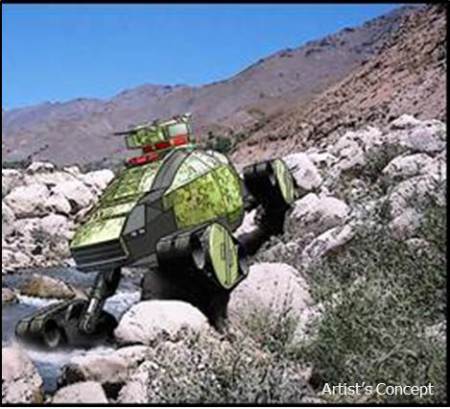
A high-power laser weapon light enough to be carried by tactical aircraft has moved out of the laboratory and onto the testing ground. General Atomics Aeronautical Systems’ High-Energy Liquid Laser Defense System (HELLADS) has finished its US Government Acceptance Test Procedure and is on its way to the White Sands Missile Range in New Mexico for live-fire tests.

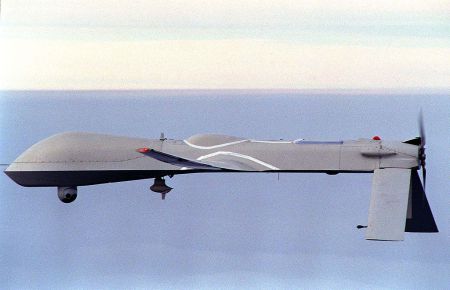
Laser weapons have made great strides in recent years, but one of the most sought after goals has been to marry high power to light weight so the system can be installed in aircraft… patrol ships and armored combat vehicles [and drones] … [T]he all-electric HELLADS punches a 150 kW laser, yet is only a tenth the size and weight of comparable systems.

Excerpts from  David Szondy, Lightweight High-Energy Liquid Laser (HELLADS) prepared for live fire tests, gizmag.com, May 30, 2015


The Cyber-Intelligence Ruling Class

[The] Intelligence National Security Alliance. INSA is a powerful but 
little-known coalition established in 2005 by companies working for the National Security Agency. In recent years, it has become the premier organization for the men and women who run the massive cyberintelligence-industrial complex that encircles Washington, DC…[One such company is founded by]  former Navy SEAL named Melchior Baltazar, the CEO of an up-and-coming company called SDL Government. Its niche, an eager young flack explained, is providing software that military agencies can use to translate hundreds of thousands of Twitter and Facebook postings into English and then search them rapidly for potential clues to terrorist plots or cybercrime.

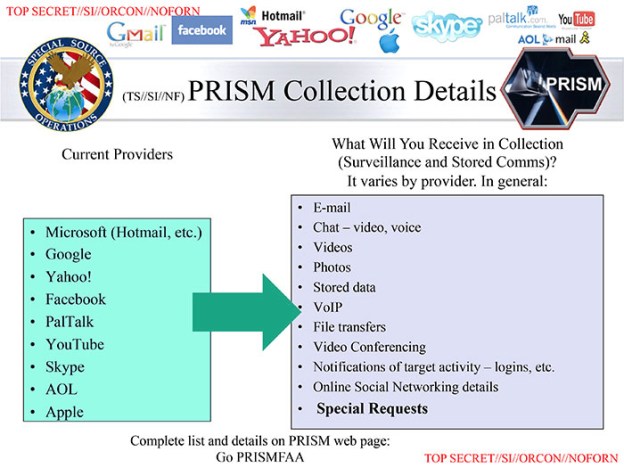
It sounded like the ideal tool for the NSA. Just a few months earlier, Snowden had leaked documents revealing a secret program called PRISM, which gave the NSA direct access to the servers of tech firms, including Facebook and Google. He had also revealed that the NSA and its British counterpart, the GCHQ, had special units focused on cracking encryption codes for social media globally….

This small company, and INSA itself, are vivid examples of the rise of a new class in America: the cyberintelligence ruling class.  These are the people—often referred to as “intelligence professionals”—who do the actual analytical and targeting work of the NSA and other agencies in America’s secret government. Over the last 15 years, thousands of former high-ranking intelligence officials and operatives have left their government posts and taken up senior positions at military contractors, consultancies, law firms, and private-equity firms. In their new jobs, they replicate what they did in government—often for the same agencies they left. But this time, their mission is strictly for-profit.

Take Olsen, who served as general counsel for the NSA and as a top lawyer for the Justice Department before joining the National Counter-Terrorism Center (NCTC). He is now the president for consulting services of IronNet Cybersecurity, the company founded last year by Army Gen. Keith Alexander, the longest-
serving director in the history of the NSA. The  firm is paid up to $1 million a month to consult with major banks and financial institutions in a “cyber war council” that will work with the NSA, the Treasury Department, and other agencies to deter cyberattacks that “could trigger financial panic,” Bloomberg reported last July 2014.

Some members of this unique class are household names. Most cable-news viewers, for example, are familiar with Michael Chertoff and Michael Hayden, two of the top national-security officials in the Bush administration. In 2009, they left their positions at the Justice Department and the NSA, respectively, and created the Chertoff Group, one of Washington’s largest consulting firms, with a major emphasis on security..

Well, enough, you might say: Isn’t this simply a continuation of Washington’s historic revolving door? The answer is no. As I see it, the cyberintelligence- industrial complex is qualitatively different from—and more dangerous than—the military-industrial complex identified by President Eisenhower in his famous farewell address. This is because its implications for democracy, inequality, and secrecy are far more insidious….To confront the surveillance state, we also have to confront the cyberintelligence ruling class and expose it for what it really is: a joint venture of government officials and private-sector opportunists with massive power and zero accountability.

Excerpts from Tim Shorrock, How Private Contractors Have Created a Shadow NSA, Nation, May  27, 2015.

Surveillance State: US

Were it not for Edward Snowden or someone like him, the N.S.A. would likely still be collecting the records of almost every phone call made in the United States, and no one outside of government would know it. A handful of civil-liberties-minded representatives and senators might drop hints in hearings and ask more pointed questions in classified settings. Members of the public would continue making phone calls, unaware that they were contributing to a massive government database that was supposedly intended to make their lives safer but had not prevented a single terrorist attack. And, on Monday June 1, 2015  the government’s Section 215 powers, used to acquire records from hundred of billions of phone calls, among other “tangible things,” would be quietly renewed.

Snowden shouldn’t have been necessary. The Foreign Intelligence Surveillance Court (or FISA Court), which evaluates Section 215 requests, is supposed to be interpreting the law to make sure that government surveillance doesn’t go outside of it. Congressional intelligence committees, which review the activities of the N.S.A., are supposed to be providing some oversight. The N.S.A. itself reports to the Department of Defense, which reports to the White House, all of which have dozens of lawyers, who are all supposed to apply the law. The government, in other words, is supposed to be watching itself…

The government enshrouds the details of its surveillance programs in a technical vocabulary (“reasonable articulable suspicion,” “seeds,” “queries,” “identifiers”) that renders them too dull and opaque for substantive discussion by civilians. …Little is known about how other authorities, including Executive Order 12333, which some consider the intelligence community’s most essential charter, are being interpreted to permit spying on Americans. And a redacted report, released last week by the Department of Justice’s Office of the Inspector General, hints at how much we still don’t know about Section 215. Nearly two years into the congressional debate over the use and legality of Section 215, the report provides the first official confirmation that the “tangible things” obtained by the F.B.I. through Section 215 include not just phone metadata but “email transactional records” and two full lines of other uses, all of which the F.B.I. saw fit to redact.

Excerpts from MATTATHIAS SCHWARTZ, Who Needs Edward Snowden?,  New Yorker, MAY 28, 2015

A State from Scratch: the Islamic State

f sentiment in the towns in or bordering the so-called “caliphate” of Islamic State (IS) is anything to go by, the jihadists are winning the war. “IS is here to stay,” a doctor in Falluja says of the group’s grip on Anbar, Iraq’s largest province. It is a sharp reversal from just a few months ago, when the campaign against IS seemed to be going quite well…[A]fter the retreat of Syrian regime forces from Palmyra, the black flag of IS now flies over the ancient city; while Ramadi, the capital of Anbar province, Iraq, fell on May 17th. The idea that IS was in retreat has thus taken a severe jolt.

Barack Obama describes the loss of Ramadi as a mere “tactical setback”. But a blame game has since broken out.   In any case the group’s [IS] recent successes owe more to the weakness of the forces opposing it than to its own strength. The regime of Bashar Assad in Syria is looking wobblier than at any time since 2012. Its army fled Palmyra. Although Iraq’s Shia militias put up a good fight in places, its Shia-dominated and often badly led army is reluctant to fight and die for Sunni territory. Unless it improves the jihadists may advance further. The government remains reluctant to arm the Sunni tribesmen who might defend their homes.

The recent gains by IS also do little to address its weaknesses. It needs to generate huge funds to maintain its pretension to be a caliphate, yet its income streams, such as those from illicit oil sales, ransoms and looted antiquities, are all vulnerable to concerted pressure and windfalls from conquest are dwindling.

Its top-down structure leaves it vulnerable to “kill or capture” raids by American special forces (like one in Syria on May 15th that resulted in the death of Abu Sayyaf, the outfit’s financial brain). A more concerted air campaign could also set it back. Western forces are managing a meagre 15 strikes a day (compared with the 50 a day NATO carried out against Qaddafi’s less formidable forces in Libya). Mr McCain says that 75% of sorties fail to fire a weapon or drop a bomb, because targets are not identified. That might change if America provided forward air controllers.

The state of the caliphate: The fortunes of war, Economist, May 30, 2015

Looking Behind the Brick Wall: Military

From the DARPA website on project  Revolutionary Enhancement of Visibility by Exploiting Active Light-fields (REVEAL) program

Imagine, for example, squad members patrolling a street in a deployed urban environment, and an armed assailant crouching behind a car or a concrete barrier. Without the benefit of different vantage points (from the air, for example), the squad could be blind to the hidden threat. If by chance a glass storefront window were behind the assailant, the squad might spot the assailant’s reflection in the window. But if the backdrop were a brick wall, there would be no visible reflection. By exploiting currently untapped aspects of light and the varied paths of photons bouncing off the brick wall, troops using hardware based on the theoretical foundations provided by REVEAL might someday be able to detect the otherwise hidden assailant [or see clearly what people are doing inside their homes].

Another potential application could be determining an unknown material’s composition and other properties from a safe distance, avoiding the potential danger associated with close proximity and physical examination. Based on information carried by the photons interacting with the material, it may be possible for troops in the future to identify radioactive, biological or chemical threats and camouflaged targets from much farther away than currently possible.

See also FBO

Bombing Cities from the Sea: the Railgun

Two firms have been working on the navy’s railgun—BAE Systems and General Atomics. Amir Chaboki, the project leader at BAE, is coy about what advances in metallurgy, materials science and electrical engineering have made a useful weapon (railgun) possible. But he says his firm’s weapon should be able to go hundreds of shots between rail replacements. And, thanks to the trend for “electric boats”, in which a warship uses electric power for everything from the lights in the captain’s bathroom to the main engines, vessels with enough juice to fire the weapon are now coming into service. USS Zumwalt, the first of a new class of destroyers that have enough power generation to run a railgun, will be commissioned soon.

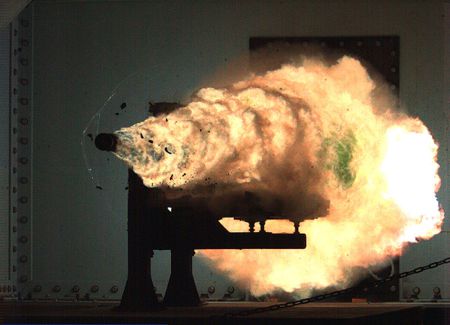
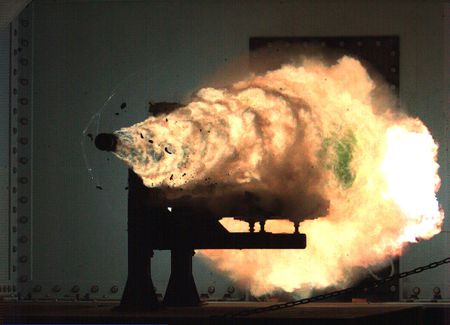
The brief given to the companies is to develop a weapon that can fire a 10kg projectile at about 2.5km a second. This is roughly seven times the speed of sound—and about three times the muzzle velocity of a conventional naval gun. At those sorts of speeds, there is no need to give the projectile a warhead. Its momentum is enough to cause destruction. The design has a muzzle energy of 32 megajoules, which is roughly the kinetic energy that would be carried by a small hatchback doing 900kph. The fiery plume, visible in the photograph, that accompanies the projectile out of the gun is not the result of propellant exploding but of the air itself being ionised by the electric current in the barrel.

The sheer destructive potential of the new weapon, though, is not the main point. Although a railgun’s speed makes plenty of headlines, old-style naval guns—such as the 16-inch monsters found on second-world-war battleships—had muzzle energies ten times as high. Modern ship-launched cruise missiles can deliver large explosive warheads to targets hundreds of nautical miles away.

Instead, says Commander Jason Fox of Naval Sea Systems Command, the part of the navy responsible for railguns, the weapon offers three other advantages. One is range. The projectile’s speed means ships could attack other vessels, or bombard targets on land, from a distance of 110 nautical miles. (about 204 kilometers or 127 miles) That is much farther than existing naval guns can manage, and beyond the range of at least some shore-launched anti-ship missiles.

Another advantage is safety. If a ship is hit by enemy fire, its magazine of high-explosive shells can detonate, with potentially devastating consequences. A vessel equipped with railguns would have only inert slugs on board, so would not face that risk. (As a bonus, the modest dimensions of the projectiles would allow more of them to be stored.)

But the biggest advantage, says Commander Fox, is cost. A single ship-launched missile can set the navy back well over $1m. Current estimates for railgun projectiles are around $25,000 per shot. Even given the tendency for costs to swell, that is a dramatic saving. And not even America’s military budget is infinite.

Like Dr Chaboki, Commander Fox is coy about specific tactical applications for railguns, beyond long-range bombardment—although he says that the next challenge will be to work out a way to guide the projectiles, to permit accurate fire from a hundred miles’ distance. One navy document talks about rail guns (suitably upgraded for an even longer range) as providing more shore-bombardment ability than an aircraft-carrier’s worth of planes.

Peter Roberts, a naval expert at the Royal United Services Institute, in London, thinks that smaller versions of the weapon could one day find uses as anti-aircraft guns or anti-missile weapons, applications where their enormous speeds would make them hard to evade. Nor, says Mr Roberts, are the Americans the only ones pursuing the idea. Researchers in China are thought to be working on a similar system. If and when someone manages to perfect one, the centuries-long monopoly of gunpowder will have come to an end.

Excerpts from  Advanced Weapons: Rail Strikes, Economist, May 9, 2015, at 73

Nuclear Waste Disposal: Japan

The Japanese government will select potential areas to host nuclear dump sites instead of waiting for communities to volunteer, according to the revised policy on permanent disposal of high-level radioactive waste that was adopted by the Cabinet on May 22, 2015  The revision, the first in seven years, was prompted after towns, villages and cities throughout Japan snubbed requests to host nuclear waste dumps. The government has been soliciting offers since 2002.

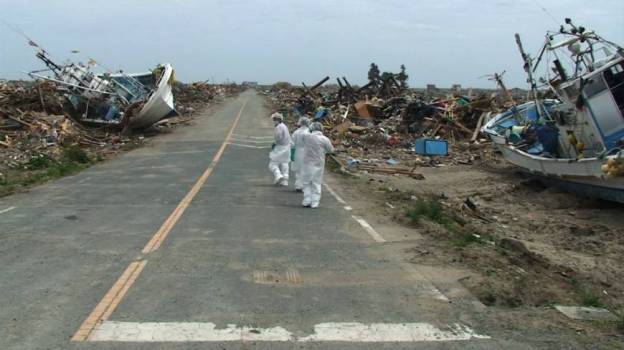
The move is seen as a sign that the government wants to address the matter as it proceeds with its pursuit of reactor restarts. All commercial units have largely sat idle since the triple meltdown at the Fukushima No. 1 plant in 2011….Prime Minister Shinzo Abe’s administration is seeking to revive atomic power, although the majority of the public remains opposed in light of the Fukushima disaster, which left tens of thousands homeless. Critics have attacked the government for promoting atomic power without resolving where all the waste will end up.

Permanent disposal of high-level nuclear waste requires that a depository be built more than 300 meters underground, where the materials must lie for up to 100,000 years until radiation levels fall to the point where there is no harm to humans or the environment.  About 17,000 tons of spent fuel is stored on the premises of nuclear plants and elsewhere in Japan, but some would run out of space in three years if all the reactors got back online.  Under the revision, the government said it will allow future generations to retrieve high-level waste from such facilities should policy changes or new technologies emerge.

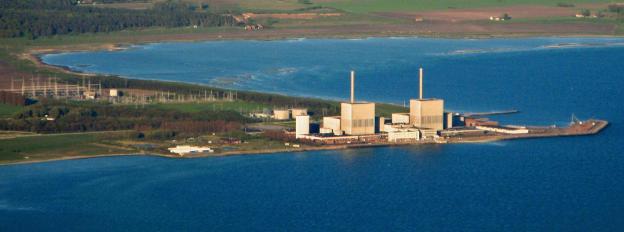
Worldwide, only Finland and Sweden have been able to pick final depository sites.

Excerpts from METI changes tactics after search for nuclear waste host proves futile,  Japan Times, May 22, 2015

The X-37B Drone: 4th Mission

The unmanned X-37B spacecraft was launched May 20 2015  atop a United Launch Alliance Atlas 5 rocket from Florida’s Cape Canaveral Air Force Station. The liftoff will begin the reusable space plane’s fourth mission, which is known as OTV-4 (short for Orbital Test Vehicle-4).  Most of the X-37B’s payloads and specific activities are classified, so it’s not clear what the space plane will be doing once it leaves Earth. This secrecy has led to some speculation that the vehicle might be some sort of space weapon. Air Force officials have repeatedly rejected that notion, saying that the X-37B flights simply test a variety of new space technologies.

For example, the space plane is carrying a type of ion engine called a Hall thruster on OTV-4, Air Force officials said. This Hall thruster is an advanced version of the one that powered the first three Advanced Extremely High Frequency military communications satellites, the officials added.  NASA is also flying an experiment on OTV-4. The agency’s Materials Exposure and Technology Innovation in Space investigation will see how exposure to the space environment affects nearly 100 different types of materials. The results should aid in the design of future spacecraft, NASA says.

The X-37B looks like a miniature version of NASA’s now-retired space shuttle. The robotic, solar-powered space plane is about 29 feet long by 9.5 feet tall (8.8 by 2.9 meters), with a wingspan of 15 feet (4.6 meters) and a payload bay the size of a pickup-truck bed. Like the space shuttle, the X-37B launches vertically and lands horizontally, on a runway.

Excerpts from Mike Wall, Air Force Gets X-37B Space Plane Ready for Its Next Mystery,  SPACE.COM, May 18, 2015

CIA Drone Strikes from Germany

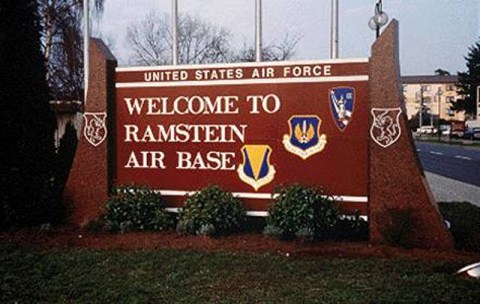
The case of three Yemenis whose relatives were killed in the attack in August 2012, will be heard on Wednesday by a court in Cologne, Germany. Lawyers for the victims say the German government shares responsibility for the death of civilians because the US military base of Ramstein, which allegedly played a key role in the attack, is on German soil. The government rejects the claim.

Faisal bin Ali Jaber, who lost his brother-in-law Salim, a preacher, and his nephew Waleed, a police officer, in the strike on the village of Khashamir on 29 August, 2012,…Bin Ali Jaber, whose extended family had travelled back to the eastern Yemeni village to celebrate a wedding, had been having supper when he felt the impact of five rockets hitting the ground. Speaking in Arabic through a translator, he recalled leaving his house with his wife. “We found scattered body parts and people picking them up. We picked them up as well. It (soon) became apparent that Salim and Walid were among the victims. The incident was a tragedy in every way, for all the residents of Khashamir and the surrounding villages.”

Ramstein, in the German state of Rheinland Pfalz, is used by the US military on condition nothing is done there that violates German law. The German government has been repeatedly accused of failing to confront Washington over Ramstein’s alleged role in the drone war.The case rests on the claim that Ramstein is central to the drone strikes because it relays crucial information via satellite that enables drone operators in Nevada to communicate with the aircraft in Yemen, Pakistan, Afghanistan and elsewhere.  The geographical location of Ramstein is said to be vital to the transmission of the information, because, due to the curvature of the earth, a relay station is needed between the US and the Middle East.

Der Spiegel and the Intercept website reported in April 2015  that Ramstein is critical to the US drone strikes, quoting experts, but the US government has so far failed to confirm or deny the claim.  The potential loss of Ramstein as a strategically located relay station would present the US with the tough challenge of finding an alternative country willing to offer it a hub, amid global controversy and growing unease over drone strikes.

Excerpts from Kate Connolly ,German court to hear case brought by relatives of Yemen drone attack victims, Guardian, May 22, 2015

Chinese Military Base in Africa: Djibouti

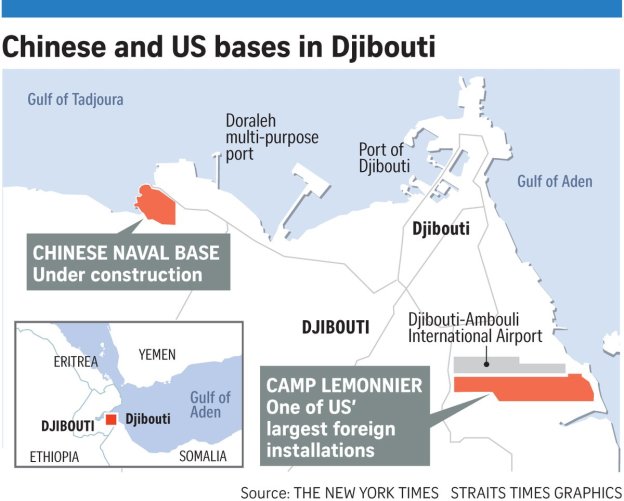
China is negotiating a military base in the strategic port of Djibouti, an historic development that would see the US and China each have bases in the small nation that guards the entrance to the Red Sea and the Suez Canal. President Ismail Omar Guelleh says that discussions are “ongoing” and that Beijing is “welcome”.  Djibouti is already home to Camp Lemonnier, the military headquarters used by US Special Forces for covert, anti-terror and other operations in Yemen and in Africa. France, the former colonial master, and Japan also have bases in the port, which is used by many foreign navies to fight piracy in neighbouring Somalia…

China signed a security and defence agreement with Djibouti in February 2014. But a Chinese military base in Djibouti, the first in Africa, “would definitely be historic”, according to David Shinn, a former US ambassador to Ethiopia.  The US was reportedly angry about the conclusion last year of the China-Djibouti defence deal last year. But Shinn predicts that the US will take it in its stride…

China is reportedly considering a permanent military base in Obock, Djibouti’s northern port city.  “China clearly has a goal of building a blue-water navy, which means it will at some point go well beyond the east coast of Africa and the western Indian Ocean, and it has to think — long term — about how it would be able to service its naval vessels as they go further and further, ” he explained.

Camp Lemonnier, home to 4,000 American citizens, is in the south-east of Djibouti. The US in May 2015 signed a 20-year lease, indicating its willingness to stay. Terms of the lease were not disclosed.

A new Chinese deep-sea port in Djibouti…could provide a boost to China’s sphere of influence, which already extends from the South China Sea, along the west coast of Myanmar to the Arabian-Sea coastal port of Gwadar, Pakistan — a major destination in the China-Pakistan Economic Corridor.  “Establishing these deep-sea ports is really about securing its economic interests, projecting influence and securing oil exports from the Gulf region,”…..

Trade between Africa and China, in excess of 200 billion dollars (180 billion euros), is above the continent’s trade with the European Union or the US.  In Djibouti, China is already financing major infrastructure projects estimated to total more than 9 billion dollars (8 billion euros), including improved ports, airports and railway lines….There was speculation that Russia also wanted to establish a presence in Djibouti, but the presence of Russian warships may have created even more controversy in western nations because of the crisis in the Ukraine.

Excerpts  Michel Arseneault, ‘Historic’ Chinese military base to open in Horn of Africa, Agence France Presse, May 11, 2015

100 Years of Oil Leaks: Gulf of Mexico

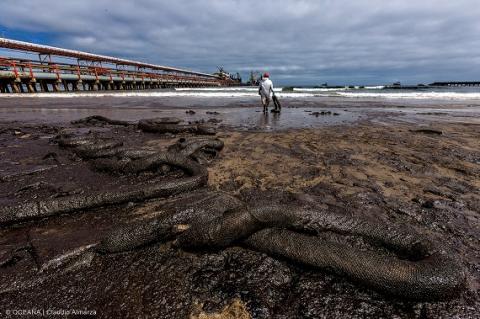
A decade-old oil leak where an offshore platform toppled during a hurricane could continue spilling crude into the Gulf of Mexico for a century or more if left unchecked, according to government estimates obtained by The Associated Press that provide new details about the scope of the problem.  Taylor Energy Company, which owned the platform and a cluster of oil wells, has played down the extent and environmental impact of the leak. The company also maintains that nothing can be done to completely eliminate the chronic oil slicks that often stretch for miles off the coast of Louisiana….

Federal regulators suspect oil is still leaking from at least one of 25 wells that remain buried under mounds of sediment from an underwater mudslide triggered by waves whipped up by Hurricane Ivan in 2004….A Taylor contractor drilled new wells to intercept and plug nine wells deemed capable of leaking oil. But a company official has asserted that experts agree the “best course of action … is to not take any affirmative action” due to the risks of additional drilling…

The AP’s review of more than 2,300 Coast Guard pollution reports since 2008 showed a dramatic spike in sheen sizes and oil volumes since Sept. 1, 2014. That reported increase came just after federal regulators held a workshop August 2014 to improve the accuracy of Taylor’s slick estimates and started sending government observers on a Taylor contractor’s daily flights over the site.

Presented with AP’s findings, the Coast Guard provided a new leak estimate that is about 20 times greater than one recently touted by the company. In a February 2015 court filing, Taylor cited a year-old estimate that oil was leaking at a rate of less than 4 gallons per day.

A Coast Guard fact sheet says sheens as large as 1.5 miles wide and 14 miles long have been spotted by Taylor since the workshop. Since last September, the estimated daily volume of oil discharged from the site has ranged from roughly 42 gallons to 2,329 gallons, with a daily average of more than 84 gallons.,,, Based on satellite imagery and pollution reports, the watchdog group SkyTruth estimates between 300,000 and 1.4 million gallons have spilled from the site since 2004, with an annual average daily leak rate between 37 and 900 gallons.

Ken Arnold, an industry consultant, said natural oil seeps from cracks in the seabed can last for thousands of years. But he has never heard of another commercial oil spill lasting more than a decade, let alone a century.

In 2008, Taylor set aside hundreds of millions of dollars to pay for leak-related work as part of a trust agreement with the Interior Department. The company says it has spent tens of millions of dollars on its efforts to contain and halt the leak, but it hasn’t publicly disclosed how much money is left in the trust. The company sold all its offshore leases and oil and gas interests in 2008, four years after founder Patrick Taylor died, and is down to only one full-time employee.

Justice Department officials say the company approached the government concerning the trust fund, but they declined to discuss the terms of its proposal. Federal agencies responded that more work needed to be done, including installing a more effective containment dome system, and that the company remained responsible for doing that work, the officials said.

Oil leak that began after 2004 storm could last a century, U.S. says, Chicago Tribune, May 15, 2015


Releasing Nuclear Waste into the Pacific – Fukushima

From the Report of the IAEA regarding  Radioactive Water at Fukushima:

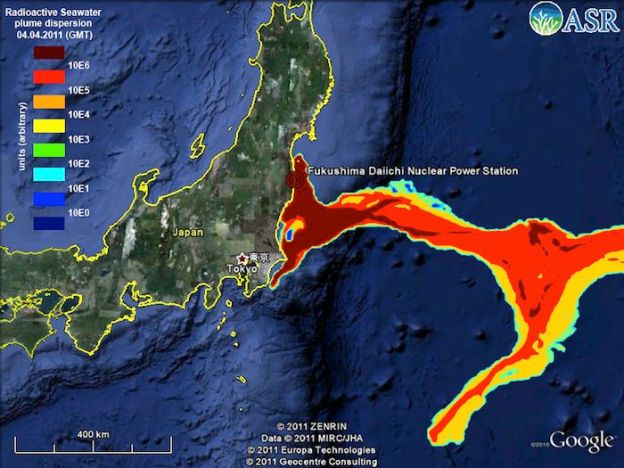
While the IAEA is recognizing the usefulness of the large number of water treatment systems deployed by TEPCO for decontaminating and thereby ensuring highly radioactive water accumulated at the site is not inappropriately released to the environment including the adjacent Pacific Ocean, the IAEA team also notes that currently not all of these systems are operating to their full design capacity and performance. ….The IAEA team is of the opinion that the present plan to store the treated contaminated water containing tritium in above ground tanks, with a capacity of 800,000 m 3 , is at best a temporary measure while a more sustainable solution is needed. Therefore the present IAEA team reiterates the advisory point of the previous decommissioning mission: “The IAEA team believes it is necessary to find a sustainable solution to the problem of managing contaminated water at TEPCO’s Fukushima Daiichi NPS.

This would require considering all options, including the possible resumption of controlled discharges to the sea. TEPCO is advised to perform an assessment of the potential radiological impact to the population and the environment arising from the release of water containing tritium and any other residual radionuclides to the sea in order to evaluate the radiological significance and to have a good scientific basis for taking decisions. It is clear that final decision making will require engaging all stakeholders, including TEPCO, the NRA, the National Government, Fukushima Prefecture Government, local communities and others”.

From the IAEA report Released on May 14, 2015 MISSION REPORT IAEA INTERNATIONAL PEER REVIEW MISSION ON MID-AND-LONG-TERM ROADMAP TOWARDS THE DECOMMISSIONING OF TEPCO’S FUKUSHIMA DAIICHI NUCLEAR POWER STATION UNITS 1-4 (Third Mission) Tokyo and Fukushima Prefecture, Japan 9 – 17 February 2015

Costs of Closing Down Nuclear Plants

According to Callan Investment Institute, underfunded decommissioning costs could amount to $23 billion from investor-owned utilities.  The industry has already set aside $50 billion to fund specific trust funds designated exclusively for decommissioning expenses, mostly collected from ratepayers….

As part of the Nuclear Regulatory Commission commissioning and licensing of a power plant, the plant owners establish a trust fund, known as the Nuclear Decommissioning Trust, or NDT. The sole purpose of this trust fund is to provide funds for the cost to decommission the facility when that time comes. The owners contribute annually to the fund, in relationship to the percent ownership, based on projected costs and length of the license. The companies are the final backstop to shortfalls in funding to these trusts.

The origin of the capital for fund contributions is from customer rate cases – in other words, NDT funding is part of our monthly electric bills. Owners are required to review annually and submit every two years to the NRC both the fund balance and cost estimates for decommissioning. The NRC provides a formula of costs for operators to compare with the balances on the NDT, or the companies can file site-specific cost projections for each facility.

The total industry-wide decommissioning costs are estimated by Callan to be $80 billion….[For instance] Entergy, according to the study, their NDT could be short by about $2 billion and to make up this difference over the average life remaining of their licenses, management should be setting aside $186 million a year rather than the $39 million currently. However, ETR is not alone in the study. The industry contributed $315 million in 2013 when Callan calculates the amount should be closer to $1.6 billion. Below are some shortfall numbers for the five largest nuclear power generators,…

According to Callan, Exelon has potential net deficiencies of $7.7 billion including Constellation Energy; Duke has a potential net deficiency of $2.3 billion; Entergy of $2.0 billion; Dominion Resources  of $1.3 billion; and NextEra has a potential surplus of $208 million. Combined, the largest five producers of nuclear power have a potential decommissioning deficit of $13.1 billion, or 57% of the projected total industry-wide.

Excerpts from George Fisher, A $23 Billion Potential Shortfall For 27 Utilities With Nuclear Power Plants, Seeking Alpha,May. 15, 2015

Full Study (pdf)

Ukraine – Nuclear Power and Waste

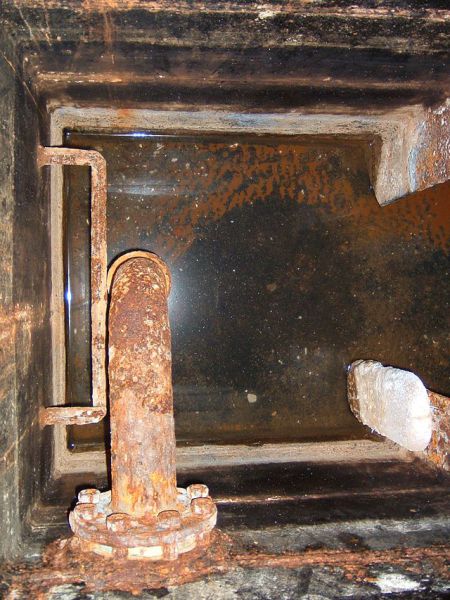
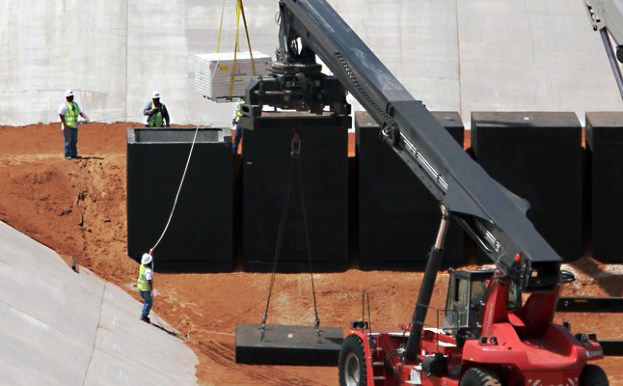
UKRAINE, More than 3,000 spent nuclear fuel rods are kept inside metal casks within towering concrete containers in an open-air yard close to a perimeter fence at Zaporizhia, the Guardian discovered on a recent visit to the plant, which is 124 miles (200km) from the current front line.“

With a war around the corner, it is shocking that the spent fuel rod containers are standing under the open sky, with just a metal gate and some security guards waltzing up and down for protection,” said Patricia Lorenz, a Friends of the Earth nuclear spokeswoman who visited the plant on a fact-finding mission.“I have never seen anything like it,” she added. “It is unheard of when, in Germany, interim storage operators have been ordered by the court to terror-proof their casks with roofs and reinforced walls.”  

Industry experts said that ideally the waste store would have a secondary containment system such as a roof.  Ukraine’s conflict in Donbass is 124 miles away from the plant, but Gustav Gressel, a fellow at the European Council of Foreign Relations thinks the front line is too far away – for now – to be at risk from fighting.

However, locals still fear for the potential consequences if the conflict was to spread in the plant’s direction. Just three decades ago, an explosion at the Chernobyl nuclear power plant north of Kiev released a radioactive cloud that poisoned vast tracts of land…

Plant security at Zaporizhia is now at a ‘high readiness’ level, while air force protection and training exercises have been stepped up. Officials say that if fighting reaches the plant, there are plans for the closure of access roads and deployment of soldiers.  But they say that no containment design could take the stresses of military conflict into account. “Given the current state of warfare, I cannot say what could be done to completely protect installations from attack, except to build them on Mars,” Sergiy Bozhko , the chairman of the State Nuclear Regulatory Inspectorate of Ukraine (SNRIU) told the Guardian…..

However, a dry storage container with a resilient roof and in-house ventilation would offer greater protection….

“Nuclear energy is the only possible option for us to replace the generated electricity that we lost [from coal and gas],” a government source told the Guardian. “After the start of open war with Russia, it was understood that all our other strategies in the energy sphere would become impossible.” Some 60% of Ukraine’s electricity is now produced by 15 ageing reactors – concentrated in four giant plants. Nine of these will reach the end of their design lifetimes in the next five years, and three have already.  Most of Ukraine’s nuclear fleet depends on Russia’s Rosatom to supply its enriched uranium fuel – and to whisk away the resulting radioactive waste for storage…

But as fear and loathing in the war-torn region grow, government sources say that in the long term, Ukraine aims to forge a three-way split in nuclear fuel supply contracts between US-company Westinghouse, European companies, such as Areva, and Rosatom. This creates its own safety issues….

Last December (2014), the US firm signed a memo with Ukraine to “significantly increase fuel deliveries” to Ukrainian plants, though the details are sketchy. A similar deal was signed with the French nuclear company Areva on 24 April.  But fears of Russian retaliation have dogged past plans to shift supply or disposal contracts to the West, and market diversification will be a slow process….

The US has provided technology, training and hundreds of millions of dollars to help Ukraine’s push for fuel diversification, according to a US diplomatic cable from 2009, published by Wikileaks.  Westinghouse has also lobbied the Ukrainian government at ministerial level to commit to buying their fuel for at least five reactors. Plant managers say that it will be used in Zaporizhia by 2017.

Excerpts from Nuclear waste stored in ‘shocking’ way 120 miles from Ukrainian front line, Guardian, May 6, 2015

Oil Pollution in Nigeria – Shell

Farmers impacted by the Shell Petroleum Development Company, SPDC, Kolo Creek oil fields spill in Otuasega, Ogbia Local Government Area of Bayelsa State, have gone to court over the April 15, 2015 spill, which polluted their farms.According to the farmers, they were excluded from a Joint Investigation Visit to probe the impact of the spill despite their attempt to draw the attention of the team to their impacted farms.

A fish farmer, Mr. Aku Asei, whose three ponds were impacted, said the affected farmers numbering over 50 resolved to take legal action over the incident in the wake of the alleged claim of sabotage by Shell.”This is a clear case of the powerful and rich oil firm against the weak and poor farmers. They are claiming that the spill was caused by sabotage and abandoned the polluted environment. The regulations which they relied on to absolve themselves clearly stated that the operator of the field where pollution occurs must clean up the site irrespective of the cause but SPDC officials declined to capture the farms as impacted areas….[T]he spill was as a result of negligence by SPDC surveillance contractors deployed to guard the facility…

The farmers, made up of fish farmers, banana and plantain plantation owners in the area also appealed to Bayelsa State Government to assist them in prevailing on the oil firm to clean up the areas and pay compensation to them.

Nigeria: Farmers Take Shell to Court Over Oil Spill Impact in Bayelsa, AllAfrica.com, May 12, 2015

The 2015 US-China Nuclear Deal

President Obama intends to renew a nuclear cooperation agreement with China. The deal would allow Beijing to buy more U.S.-designed reactors and pursue a facility or the technology to reprocess plutonium from spent fuel. China would also be able to buy reactor coolant technology that experts say could be adapted to make its submarines quieter and harder to detect.,,

The Nuclear Energy Institute, an industry trade group, argues that the new agreement will clear the way for U.S. companies to sell dozens of nuclear reactors to China, the biggest nuclear power market in the world.  Yet the new version of the nuclear accord — known as a 123 agreement under the Atomic Energy Act of 1954 — would give China leeway to buy U.S. nuclear energy technology at a sensitive moment: The Obama administration has been trying to rally support among lawmakers and the public for a deal that would restrict Iran’s nuclear program — a deal negotiated with China’s support.,,,

If Congress rejects the deal, “that would allow another country with lower levels of proliferation controls to step in and fill that void,” said a senior administration official…

{T}he current nuclear agreement with China does not expire until the end of the year (2015)…Henry Sokolski, executive director of the Nonproliferation Policy Education Center, has been urging lawmakers to insist on requiring advance consent for the reprocessing of spent fuel from U.S.-designed reactors into plutonium suitable for weapons. He also is concerned about the sale of certain nuclear energy technologies, especially coolant pumps with possible naval use.

Charlotte-based Curtiss-Wright developed advanced coolant pumps for the U.S. Navy’s submarines. The same plant produces a scaled-up version for the Westinghouse AP1000 series reactors, each of which uses four big pumps. These pumps reduce noises that would make a submarine easier to detect…..An Obama administration official said the reactor coolant pumps are much too big to fit into a submarine. However, a 2008 paper by two former nuclear submarine officers working on threat reduction said that “the reverse engineering would likely be difficult” but added that “certainly, the Chinese have already reversed engineered very complex imported technology in the aerospace and nuclear fields.”…

The United States has bilateral 123 agreements with 22 countries, plus Taiwan, for the peaceful use of nuclear power. Some countries that do not have such agreements, including Saudi Arabia, Jordan and Malaysia, have expressed interest in clearing obstacles to building nuclear reactors.

China and the United States reached a nuclear cooperation pact in 1985, before China agreed to safeguards with the International Atomic Energy Agency. IAEA safeguards went into force in 1989, but Congress imposed new restrictions after the Chinese government’s June 1989 crackdown on protesters in Tiananmen Square. The 123 agreement finally went into effect in March 1998; President Bill Clinton waived the 1989 sanctions after China pledged to end assistance to Pakistan’s nuclear weapons program and nuclear cooperation with Iran.

In December 2006, Westinghouse Electric — majority-owned by Toshiba — signed an agreement to sell its AP1000 reactors to China. Four are under construction, six more are planned, and the company hopes to sell 30 others, according to an April report from the Congressional Research Service (CRS)….“Missile proliferation from Chinese entities is a continuing concern.” The United States wants China to refrain from selling missiles capable of carrying nuclear weapons, a payload of 1,100 pounds, as far as 190 miles

China has a pilot plant engaged in reprocessing in Jiu Quan, a remote desert town in Gansu province. Satellite photos show that it is next to a former military reprocessing plant, according to Frank von Hippel, a Princeton University physics professor who specializes in nuclear arms control.

Excerpts from Steven Mufson, Obama’s quiet nuclear deal with China raises proliferation concerns,   Washington Post  May 10, 2015

Illegal Waste from Canada to Philippines

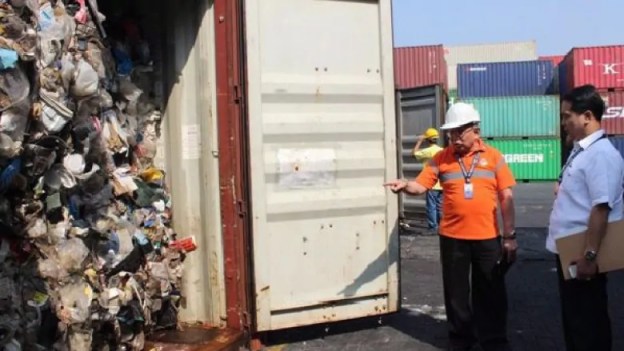
Fifty containers of Canadian garbage, including used adult diapers, have been languishing in the port of Manila in the Philippines for almost two years and setting off recent protests by environmental and public health activists.The activists, among them a Catholic priest, say the containers hold toxic and hazardous waste, although a recent study by Philippines officials suggests they’re simply stuffed with household garbage.

Late last year (2014), the Philippines government recommended the containers be returned to Canada under the provisions of the Basel Convention, which prohibits developed countries from shipping waste to developing nations.“The Basel Convention says, as a developed country, (Canada) cannot export waste,” Filipino environment secretary Ramon Paje said in a televised interview. “That would be considered as dumping.”…

A spokeswoman for Foreign Affairs (Canada) reiterated the government’s long-stated opinion that the case is a private commercial matter involving a Canadian company and its Philippines partner.….Chronic Inc., a plastics exporter based in Whitby, Ontario , shipped the containers — supposedly filled with recyclable Vancouver plastics — to the Philippines in the spring and summer of 2013. But upon inspection, the country’s Bureau of Customs found the containers were filled with stinking household garbage, including used adult diapers and kitchen waste.

The bureau said the material could “pose biohazard risks” and impounded the shipment.
Jim Makris, head of the Lee-Anne Goodmandenied last year that he shipped garbage to the Philippines….The Philippine Daily Inquirer reported in 2014 that the Bureau of Customs is investigating the 150-worker plant in Valenzuela City started by Makris to sort and sell the plastic he ships.

Excerpts from Lee-Anne Goodman, 50 containers of Canadian garbage rots in Manila for two years, Canadian Press, Mar. 20, 2015

Energy Self-Sufficiency: Argentina

Despite the precipitous fall in global oil prices (from 110 dollars in 2014 to under 50 dollars in 2015), Argentina has continued to follow its strategy of producing unconventional shale oil, although in the short term there could be problems attracting the foreign investment needed to exploit the Vaca Muerta shale deposit,  Argentina’s energy trade deficit climbed to almost seven billion dollars in 2014, partly due to the decline in the country’s conventional oil reserves.  Eliminating that deficit depends on the development of Vaca Muerta, a major shale oil and gas deposit in the Neuquén basin in southwest Argentina. At least 10 billion dollars a year in investment are needed over the next few years to tap into this source of energy…

According to the state oil company Yacimientos Petrolíferos Fiscales (YPF), Vaca Muerta multiplied Argentina’s oil reserves by a factor of 10 and its gas reserves by a factor of 40, which will enable this country not only to be self-sufficient in energy but also to become a net exporter of oil and gas. YPF has been assigned 12,000 of the 30,000 sq km of the shale oil and gas deposit in the province of Neuquén.  The company admits that to exploit the deposit, it will need to partner with transnational corporations capable of providing capital.

It has already done so with the U.S.-based Chevron in the Loma Campana deposit, where it had projected a price of 80 dollars a barrel this year….YPF has also signed agreements for the joint exploitation of shale deposits with Malaysia’s Petronas and Dow Chemical of the United States, while other transnational corporations have announced their intention to invest in Vaca Muerta.

Excerpts from Fabiana Frayssinet, Plunging Oil Prices Won’t Kill Vaca Muerta, PS, Apr. 10, 2015

Nuclear Industry in Siberia

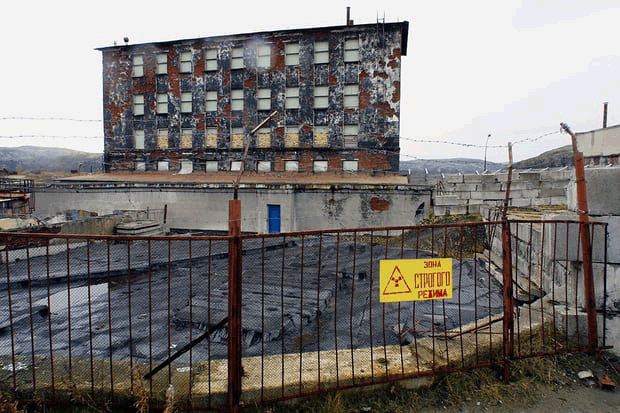
Professor Leonid Rikhvanov says he has a number of questions about the potential damage to the community from reactors that have been used since the Soviet Era .His plea comes as the Siberian Chemical Combine  (SCC) in Seversk, a secretive city located 15 miles north of Tomsk, prepares for the construction of a new experimental fast reactor  known as BREST-300…

‘I would also like to raise the question of conducting a complex study on how the SCC’s reactors have affected the environment over the past 50 years. Before making a decision on new projects, it’d be worth estimating the outcomes of the old ones’…Siberian Chemical Combine in Seversk, a secretive city located 15 miles north of Tomsk, prepares for the construction of a new experimental fast reactor.

‘And lastly I would ask about warheads [housed at SCC as recently as the 1990s]. Have they been replaced or not? If not, in what conditions are they kept?’He added: ‘I’m not radical and I support the idea of nuclear energy. But the approach to its use, and to estimating risks, should be totally different. Russian nuclear enterprises as they are now are so dangerous that it’d definitely be better if they didn’t exist at all.’

On April 6 2015 it was reported in Seversk that construction was already under way of a pilot plant for the production of fuel for the experimental BREST-300 reactor.The new reactor will work on special ‘pills’ made from the spent nuclear fuel and taken from the old reactors, with officials saying it will allow waste-free production of energy.  It is thought the pilot plant will begin operating in 2017, with the full new BREST-300 reactor up and running from 2020.

Prof Rikhvanov stressed that he is not anti-nuclear but insisted that it has to be used correctly with the proper safety and environmental considerations in place. An accident at a new plant at the Siberian Chemical Combine in February 2015 resulted in an employee receiving burns to his hands.And, of course, a massive explosion at the site in April 1993 resulted in the release of a radioactive gas cloud in an incident listed as one of the world’s worst nuclear accidents.Prof Rikhvanov was one of the experts flown into Seversk following the incident, allowing him a rare glimpse inside the secretive city to analyse the state of the plant.

‘First of all, we got to see what is there,’ he recalled. ‘I visited all the production facilities, I saw the reactors, the well where the waste is put to, and the warehouses where the nuclear warheads were stored with my own eyes.’I saw about 23,000 decommissioned warheads stored there. And I doubt they have been moved elsewhere since then. By the way, at the time, they were stored in terrible conditions and I don’t know what it is like now.’ The professor also found out that a facility for storing liquid radioactive waste in aquifers was located near to where the water supply was sourced on the Tom River.  As far as he is aware, the situation remains the same. He said: ‘We pump water from aquifers on the left side of the river, and store some of the most hazardous elements humanity has ever created in aquifers on the other side of the river…

Another concern he has is that the city is ‘still not prepared’ for a mass evacuation in the event of a major incident.’The road to Maryinsk is terrible, the second branch of the railway hasn’t spring out yet,’ he said. ‘There is also no separate railway to ship the radioactive materials to SCC without going through Tomsk. Such freights are now going through city railway station which creates additional risks.’

Excerpts from Olga Gertcyk & Derek Lambie, Expert raises serious questions over state of the nuclear industry in Siberia,  Siberian Times, May 2, 2015

Kitty Litter and Nuclear Waste: Don’t Mix

The US energy department is to fund $73m in road and other infrastructure projects in New Mexico as compensation for radiation leaks at a nuclear laboratory and underground dump.The deal struck between the department and New Mexico forgoes fines and instead applies funds to upgrade federal nuclear facilities and surrounding communities in the state, according to settlement documents.  Projects include construction of a $5m emergency operations centre in Carlsbad, near where the nuclear waste dump leaked radiation in February 2014.

The leak at the Waste Isolation Pilot Plant, or Wipp, exposed 22 workers to radiation in amounts not expected to threaten their health and led to the indefinite suspension of key operations at the site, which is the energy department’s only permanent underground disposal facility for certain types of waste from US nuclear labs.The radiation accident was caused by “chemically incompatible” contents, including cat litter, which reacted in a barrel of waste and caused it to rupture, according to a federal probe of the mishap.  The breached drum containing radioisotopes such as plutonium was improperly packaged with the wrong sort of absorbent litter at the Los Alamos National Laboratory near Santa Fe before it arrived at WIPP for disposal, investigators found….

The deal includes $34m to improve roads around the Wipp site, $12m to improve nuclear waste transportation routes in and around Los Alamos, and $9.5m in stormwater management upgrades at the lab’s complex.In addition it provides $10m for improvements to water infrastructure in and around Los Alamos and $2.75m for an independent compliance and operational review. Energy department officials have estimated the cost of the initial recovery of the dump at $240m and that it might be two years or more before it is fully operational.

Excerpts from New Mexico radiation accident: $73m compensation deal struck over leak, Guardian, Apr. 30, 2015

Never Ending – War in Afghanistan

Months after President Obama formally declared that the United States’ long war against the Taliban was over in Afghanistan, the American military is regularly conducting airstrikes against low-level insurgent forces and sending Special Operations troops directly into harm’s way under the guise of “training and advising.”…[I]nterviews with American and Western officials in Kabul and Washington offer a picture of a more aggressive range of military operations against the Taliban in recent months, as the insurgents have continued to make gains against struggling government forces.

Rather than ending the American war in Afghanistan, the military is using its wide latitude to instead transform it into a continuing campaign of airstrikes — mostly drone missions — and Special Operations raids that have in practice stretched or broken the parameters publicly described by the White House.

Western and military officials said that American and NATO forces conducted 52 airstrikes in March 2015 months after the official end of the combat mission. Many of these air assaults, which totaled 128 in the first three months of 2015, targeted low- to midlevel Taliban commanders in the most remote reaches of Afghanistan.,,,“They are putting guys on the ground in places to justify the airstrikes,” one of the officials said. “It’s not force protection when they are going on the offensive.”…Gen. John F. Campbell, vehemently denied accusations that he was putting troops into harm’s way just to enable more airstrikes.….“Washington is going to have to say what they say politically for many different audiences, and I have no issue with that,” General Campbell said. “I understand my authorities and what I have to do with Afghanistan’s forces and my forces. And if that doesn’t sell good for a media piece then, again, I can’t worry about it.”

The operations are continuing during a troubling stretch for the Afghan security forces, as the Taliban are continuing to make gains…Mr. Ghani, who has yet to name a minister of defense, has in many ways outsourced much of the running of the war to General Campbell.

Excerpts from AZAM AHMED and JOSEPH GOLDSTEIN, Taliban Gains Pull U.S. Units Back Into Fight in Afghanistan, NY Times, Apr. 29, 2015

Brazil as Space Power

The Brazilian government is ending a decade-long project to operate Ukraine’s Cyclone-4 rocket from Brazilian territory following a government review that found too many open questions about its cost and future market success, the deputy chief of the Brazilian Space Agency (AEB) said.  It remains unclear whether the decision will force Brazil to pay Ukraine any financial penalties for a unilateral cancellation of a bilateral agreement. Over the years, the work to build a launch facility for Ukraine’s Cyclone at Brazil’s Alcantara spaceport has suffered multiple stops and starts as one side or the other fell short on its financial obligations to the effort…

Noronha de Souza said the idea of making a profit in the launch business is now viewed as an illusion. The project, he said, was unlikely ever to be able to support itself on commercial revenue alone.  “Do you really believe launchers make money in any part of the world? I don’t believe so. If the government doesn’t buy launches and fund the development of technology, it does not work,” he said.  “Everybody talks about SpaceX [of Hawthorne, California] like it’s magic, somehow different. It’s no different. Their connections with NASA have been important. If NASA had stopped the funding, where would they be? I really appreciate what they are doing, but I doubt whether launch bases can make money and survive on their own without government support.”…

While the Cyclone-4 project is about to end, Brazil has maintained as a strategic goal the development of a space-launch vehicle from the Brazilian military-owned Alcantara facility. As such it is continuing work with the German Aerospace Center, DLR, on a small solid-fueled vehicle, called VLM-1 for Microsatellite Launch Vehicle, that began as a launcher for suborbital missions and has evolved to a small-satellite-launch capability…

AEB is a purely civilian agency funded through the Science and Technology Ministry. Until a few years ago, the Brazilian military had not been a player in the nation’s space policy. That is starting to change with the Brazilian Defense Ministry’s establishment of space-related operational requirements.  Among those requirements is a radar Earth observation satellite, which AEB has penciled into its program for around 2020. Aside from allowing the use of its Alcantara site, the Brazilian military is not yet financing any AEB work, but the military is expected to pay for launches of its satellites once the development is completed

AEB is finishing design of a small multimission satellite platform whose first launch will be of the Amazonia-1 Earth observation payload, with a medium-resolution imager of 10-meter-resolution, similar to the capacity of today’s larger China-Brazil CBERS-4 satellite, which is in orbit.

Brazil and Argentina’s CONAE space agency will be dividing responsibility for an ocean-observation satellite system, using the same multimission platform, called Sabia-Mar. The first Sabia-Mar is scheduled for launch in 2017, with a second in 2018, according to AEB planning.

Excerpts from Peter B. de Selding Brazil Pulling Out of Ukrainian Launcher Project,  Space News, Apr. 16, 2015

Russia has rushed to take advantage of the cancellation of space agreement between Brazil and Ukraine. [Russia] wants bot build  joint projects and space programs on the long term with BRICS Group member countries, particularly Brazil.  Brazil attempts to build its own cosmodrome, and unfortunately for the loss of Ukraine and its technology, the Brazilian-Ukrainian Project for the use of the Cyclone rocket in coastal launchings is practically minimalized…Russia proposed its variant of work, consisting in principle on the installation, already existent, of several satellite navigation stations Glonass and tbe idea of helping Brasilia in some way to the construction of the cosmodrome.

Excerpt from  Odalys Buscarón Ochoa, Russia Interested in Space Coop with BRICS Countries, Prensa Latina, Apr. 24, 2015

Under-sea GPS: DARPA POSYDON

The objective of the POSYDON program is to develop an undersea system that provides omnipresent, robust positioning. DARPA envisions that the POSYDON program will distribute a small number of acoustic sources, analogous to GPS satellites, around an ocean basin.  By measuring the absolute range to multiple source signals, an undersea platform can obtain continuous, accurate positioning without surfacing for a GPS fix.

DARPA program  April 14, 2015


Building Climate Resilience in Ecosystems

Some ecosystems show little response [to climate change] until a threshold or tipping point is reached where even a small perturbation may trigger collapse into a state from which  recovery is difficult .  ….[S}uch collapse may be altered by conditions that can be managed locally…. [This] provides  potential opportunities for pro-active management.…[C]rises in iconic UNESCO World Heritage sites illustrate that such stewardship is at risk of failing. The term “safe operating space” frames the  problem of managing our planet in terms of staying within acceptable levels or “boundaries” for global stressors [Such as climate change]….

Obviously, local interventions are no panacea for the threats of climatic change. For example, melting of arctic sea ice with its far-reaching ecological consequences cannot be arrested by local management. However, ways of building climate resilience are emerging for a variety of ecosystems, ranging from control of local sources of ocean acidification  to management of grazing pressure on dry ecosystems,World Heritage Areas.

The Doñana wetlands in southern Spain provide the most important wintering site for waterfowl in Europe. They contain the largest temporary pond complex in Europe, with a diversity of amphibians and invertebrates. Despite the site’s protected status, the marshes are threatened by eutrophication due to pollution and reduced flow of incoming streams, promoting toxic cyanobacterial blooms and dominance by invasive floating plants that create anoxic conditions in the water. In addition, groundwater extraction for strawberry culture and beach tourism also has major impacts.  Little has been done to control these local stressors, leaving Doñana unnecessarily vulnerable to climate change. UNESCO has just rated this World Heritage Site as under ‘very high threat’.

The Great Barrier Reef is the largest coral system in the world. In response to multiple threats, fishing has been prohibited since 2004 over 33% of the Great Barrier Reef Marine Park, and efforts have begun to reduce runoff of nutrients, pesticides, herbicides and sediments from land. However, these interventions may be too little, too late. Approximately half of the coral cover has been lost in recent decades, and the outlook is “poor, and declining” with climate change, coastal development and dredging as major future threats. The World Heritage Committee has warned that in the absence of a solid long-term plan, it would consider listing the reef as “in danger” in 2015.

More available online Creating a Safe Operating Space for Iconic Ecosystems By M. Scheffer et al, 2015

Nuclear Benefits – Pakistan/Saudi Arabia Friendship

The Pakistani Parliament, even while stating its commitment to protect the territory of Saudi Arabia, recently adopted a resolution not to join the Saudi-led coalition fighting Houthi rebels in Yemen….The foreign affairs minister of the United Arab Emirates, Anwar Gargash, blasted the decision as “contradictory and dangerous and unexpected,” accusing Pakistan of advancing Iran’s interests rather than those of its own Persian Gulf allies. Pakistan was choosing neutrality in an “existential confrontation,” he said, and it would pay the price… Millions of Pakistanis work in the Persian Gulf, sending back vast remittances. Many of Pakistan’s politicians and generals have major investments in the region, and some have a deep affinity for Wahhabism. Rich Arabs in Pakistan are treated like royalty, allowed to flout hunting and environmental protection laws… [S]ome backpedaling has begun. The Pakistani military agreed to commit naval vessels to help enforce an arms embargo against the Houthis. This, however, will not undo the damage: The recent deterioration of Pakistan’s ties with its Arab benefactors, even if it turns out to be temporary, is unprecedented.

For Saudi Arabia, the Pakistani Parliament’s surprising assertion of independence was especially worrisome because it came on the heels of the American-backed preliminary nuclear deal with Iran…This development undermines Saudi Arabia’s longstanding nuclear strategy. In the 1970s, partly to extend its influence, partly in the name of Muslim solidarity, it began bankrolling Pakistan’s nuclear program. In gratitude, the Pakistani government renamed the city of Lyallpur as Faisalabad, after King Faisal of Saudi Arabia. When Pakistan seemed to dither after India tested five nuclear bombs in May 1998, the Saudi government pledged to give it 50,000 barrels of oil a day for free. Pakistan soon tested six of its own bombs. Later, the Saudi defense minister at the time, Prince Sultan, visited the secret nuclear and missile facilities at the Kahuta complex near Islamabad… In exchange for its largesse, Saudi Arabia has received Pakistani military assistance in the form of soldiers, expertise and ballistic missiles.

The Saudi government has taken the quid pro quo to imply certain nuclear benefits as well, including, if need be, the delivery at short notice of some of the nuclear weapons it has helped pay for. Some Pakistani warheads are said to have been earmarked for that purpose and reportedly are stocked at the Minhas air force base in Kamra, near Islamabad. (Pakistan, which has as many as 120 nuclear warheads, denies this..)

The Saudis have also come to expect that they fall under the nuclear protection of Pakistan, much like, say, Japan is covered by the United States’s nuclear umbrella. Pakistan’s nuclear forces were developed to target India, but they can strike farther, as was recently demonstrated by the successful test launch of the Shaheen-3 missile, which has a range of 2,750 kilometers.

In March 2015 Saudi Arabia signed an agreement with South Korea “to assess the potential” for the construction of two nuclear reactors in Saudi Arabia. It plans to build 16 nuclear-power reactors over the next 20 years, with the first reactor expected to be on line in 2022, according to the World Nuclear Association. It insists on having a full civilian fuel cycle, leaving open the possibility of reprocessing weapon-grade plutonium from nuclear waste.

Excerpts, Pervez Hoodbhoy, Pakistan, the Saudis’ Indispensable Nuclear Partnership, NY Times, Apr. 21, 2015

The Nuclearization of Sub-Saharan Africa

Kenya and Uganda are among the countries making progress in nuclear technology in sub-Saharan Africa with both involved with the pre-feasibility study stage in their atomic energy programmes.  According to the the International Atomic Energy Agency (IAEA), Kenya successfully completed its pre-feasibility stage while Uganda is currently conducting its own.

A pre-feasibility stage involves assessing energy needs, proposing roadmaps, developing expertise and training human resources, establishing policy and regulatory frameworks and mobilizing funding as a country prepares to conduct feasibility studies for nuclear plants.

“Kenya and Uganda join their sub-Saharan Africa counter-parts, Ghana, Nigeria, Sudan and Niger while in North Africa – Egypt, Algeria, Morocco, Tunisia and Libya have taken notable steps,” Jin Kwang Lee, African Regional Officer at IAEA told a conference on energy and nuclear power in Kwale….James Banaabe Isingoma, Uganda’s acting Commissioner for Energy Efficiency and Conservation told East African Business Week while it is perceived Uganda will build a nuclear plant by 2026, this projection is too ambitious, because financing for reactors is hard to find.  Kenya aims to have a nuclear plant by 2025…

Kenya hopes to establish a 1,000 MW reactor between 2022 and 2027. Njoroge said, “We are committed to the introduction of nuclear energy to our country’s energy mix which is currently dominated by hydro-power projects. We will soon deplete geothermal and hydro generation hence be left with no choice, but to go nuclear,” he said.  “We are injecting Ksh 300 million (about $3 million) in human resource training annually and we think nuclear will be a game changer. It is economically strategic because all other available resources will be exploited by 2031,” Njoroge said.He said, “It means we will be able to drive ironuclear power plantn and steel production, electric rails, powering mills and petroleum pipelines.”

Currently, the two regional neighbours are grappling with insufficient power supply as demand increases with economic growth and rural electrification programmes that are putting more people on the grid.

Excerpt from Uganda: Kenya and Uganda Eye Nuclear Power, allAfrica.com, Apr. 19, 2015

Investigating the Deep Dark Web

DARPA’s Memex search technologies have garnered much interest due to their initial mainstream application: to uncover human trafficking operations taking place on the “dark web”, the catch-all term for the various internet networks the majority of people never use, such as Tor, Freenet and I2P. And a significant number of law enforcement agencies have inquired about using the technology. But Memex promises to be disruptive across both criminal and business worlds.

Christopher White, who leads the team of Memex partners, which includes members of the Tor Project, a handful of prestigious universities, NASA and research-focused private firms, tells FORBES the project is so ambitious in its scope, it wants to shake up a staid search industry controlled by a handful of companies: Google, Microsoft,  and Yahoo.

Putting those grandiose ideas into action, DARPA will today open source various components of Memex, allowing others to take the technologies and adapt them for their own use. As is noticeable from the list of technologies below, there’s great possibility for highly-personalised search, whether for agents trying to bring down pedophiles or the next Silk Road, or anyone who wants a less generic web experience.

Uncharted Software, University of Southern California and Next Century Corporation
These three have produced the front-end interfaces, called TellFinder and DIG, currently being used by Memex’s law enforcement partners. “They’re very good at making things look slick and shiny. Processing and displaying information is really hard and quite subjective,” says White.

The ArrayFire tech is a software library designed to support accelerated computing, turbo-boosting web searches over GPUs. “A few lines of code in ArrayFire can replace dozens of lines of parallel computing code, saving users valuable time and lowering development costs,” the blurb for the technology reads.

Carnegie Mellon University (CMU) is building various pieces of the Memex puzzle, but its TJBatchExtractor is what’s going open source today. It allows a user to extract data, such as a name, organisation or location, from advertisements. It was put to good use in the anti-human trafficking application already in use by law enforcement agencies.

Diffeo’s Dossier Stack learns what a user wants as they search the internet. “Instead of relying on Google’s ranking to tell you what’s important, you can say, “I want the Thomas that’s in the UK not the US, so don’t send me anything that has US-oriented information,” explains White.

Hyperion Gray’s crawlers are designed to replicate human interaction with websites. “Think of what they do as web crawling on steroids,” says White. Its AutoLogin component takes authentication credentials funnelled into the system to crawl into password-protected areas of websites, whilst Formasaurus does the same but for web forms, determining what happens when fields are filled in. The Frontera, SourcePin and Splash tools make it easy for the average user to organise and view the kind of content they want in their results. Its HG Profiler code looks for matches of data across different pages where there’s no hyperlink making it obvious. Hyperion Gray also built Scrapy-­Dockerhub, which allows easy repackaging of crawlers into Docker containers, allowing for “better and easier web crawling”, notes White.

IST Research and Parse.ly: “These tools [Scrapy Cluster, pykafka and steamparse] are major infrastructure components so that you can build a very scalable, real-time web crawling architecture.”

Jet Propulsion Laboratory (JPL). This NASA-based organisation has crafted a slew of Memex building blocks, four of which – ImageCat, FacetSpace, LegisGATE and ImageSpace – are applications built on top of Apache Software Foundation projects that allow users to analyse and manipulate vast numbers of images and masses of text. JPL also created a video and image analysis system called SMQTK to rank that kind of visual content based on relevance, making it easy for the user to connect files to the topic they care about. Its Memex Explorer brings all those tools together under a common interface.

MIT Lincoln Laboratory.  Three of MIT’s contributions – Text.jl, MITIE, Topic – are natural language processing tools. They allow the user, for example, to search for where two organisations are mentioned in different documents, or to ask for terse descriptions of what a document or a webpage is about.

New York University.  NYU, in collaboration with JPL and Continuum Analytics, has created an interface called Topic, which lets the user interact with “focused crawlers”, which consistently update indexes to produce what’s relevant to the user, always “narrowing the thing they’re crawling”, notes White. “We have a few of these different kinds of crawlers as it’s not clear for every domain what the right crawling strategy is.

Qadium.  This San Francisco firm has submitted a handful of utilities that allow for “data marshalling”, a way to organise data so it can be inspected in different ways.

Sotera Defense Solutions. This government contractor has created the aptly-named DataWake. It collects all links that the user didn’t click on but could, and maybe should, have. This “wake” includes the data behind those links.

SRI International.  SRI is working alongside the Tor Project, the US Navy and some of the original creators of Tor, the anonymising browser that encrypts traffic and loops users through a number of servers to protect their identities. SRI has developed a “dark crawler” called the Hidden Service Forum Spider, that grabs content from Hidden Services – those sites hosted on Tor nodes and are used for especially private services, be they drug markets or human rights forums for those living under repressive regimes. The HSProbe, meanwhile, looks for Hidden Service domains. The Memex team is keen to learn more about the darker corners of the web, partly to help law enforcement clean it of illegal content, but also to get a better understanding of how big the unmapped portions of the internet are.

DARPA is funding the Tor Project, which is one of the most active supporters of privacy in the technological world, and the US Naval Research Laboratory to test the Memex tools. DARPA said Memex wasn’t about destroying the privacy protections offered by Tor, even though it wanted to help uncover criminals’ identities. “None of them [Tor, the Navy, Memex partners] want child exploitation and child pornography to be accessible, especially on Tor. We’re funding those groups for testing,” says White.

DeepDive from Stanford turns text and multimedia into “knowledge bases”, creating connections between relationships of the different people or groups being searched for. “It’s machine learning tech for inferring patterns, working relationships… finding links across a very large amount of documents,” adds White.

Excerpts from Thomas Fox-Brewster, Watch Out Google, DARPA Just Open Sourced All This Swish ‘Dark Web’ Search Tech,Forbes, Apr. 17, 2015

For extensive information see DARPA MEMEX

Peacekeepers Kill Demonstrators: Central African Republic

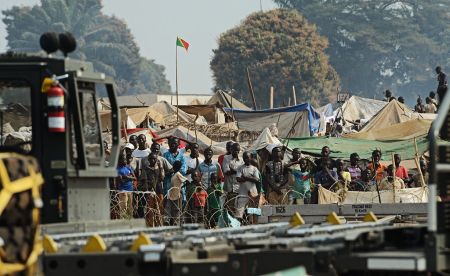
One person died and a dozen people were wounded when hundreds of protesters clashed with U.N. peacekeepers in the Central African Republic on April  10, 2015 local authorities said.  The demonstrators in the town of Kaga-Bandoro,[Christians]  about 350 km (220 miles) north of the capital Bangui, were angry that the U.N. MINUSCA mission had failed to stop raids by ethnic Peuhl pastoralists [Muslims]…”The protesters attacked the town’s aerodrome. To beat them back, the Pakistani blue helmets used tear gas and guns,” the town prefect Gaston Yendemo said, adding that the injured had been taken to hospital. Among those hurt was a Pakistani peacekeeper.

A statement from MINUSCA said up to 400 people, some armed with weapons, attacked the camp. They threw stones at peacekeepers and tried to force their way through the camp barrier, which they set on fire.  “Given the scale of the attack, the blue helmets needed to react by firing in the air. We deplore the death of one person and several injuries among the attackers,” it said, adding that it was the second attack in a week against the base.

Thousands have been killed and around a million displaced from their homes in violence that has gripped the impoverished landlocked country since the mainly-Muslim Seleka took power in March 2013.  The group gave up power last year in the face of diplomatic pressure and violence by the “anti-balaka” militia, who are mainly Christian or animist, and an interim government was installed.

One dead in protest against peacekeepers in Central African Republic, Reuters,  Apr. 10, 2015

Corruption Begets Corruption: Nigeria Oil

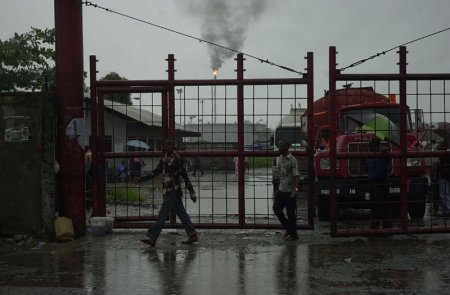
Dead fish wash up on the once-fertile shores of creeks around Bodo, a town in the Niger delta, that are covered with crude oil more than six years after two massive spills. Locals have only now received compensation from Shell, the oil firm responsible for the leaks. For the first time in half a decade, fishermen have cash to start businesses, repair their houses and send children to school… “Look,” says the chief of a tiny town called B-Dere, just a few miles from Bodo. He gestures to the deathly-black banks still bearing the marks of the slicks. “There is nothing to drink, nowhere to fish. What good has come from it?”

The cash that the oil industry provides has greased Nigerian politics for decades. Gross mismanagement and corruption in the industry are the causes of much of the inequality and discontent with the ruling party in an economy that is not just Africa’s largest but that ought to also be one of its wealthiest…

Nigeria pumps something like 2m barrels of oil a day. These account for most of its exports and about 70% of government revenues. But official figures are as murky as its polluted creeks. Volumes are recorded only at export terminals rather than at the wellhead, says Celestine AkpoBari of the Port Harcourt-based advocacy group, Social Action. Were a proper tally kept, he says, corruption would be exposed on a scale that would shock even the most cynical Nigerian.

It seems likely that more than 100,000 barrels of crude are stolen (or “bunkered” in the local parlance) every day, at a cost to the state and investors of billions of dollars a year. Politicians, oil workers and security forces are said to be behind the complex cartels that steal, illegally refine and sell crude oil. They have amassed almost unimaginable wealth in a country where poverty is still rife.

Oil’s taint has seeped into almost all levels of government and business. Yet the central problem is found in the petroleum ministry, which wields vast unaccountable power. The Nigerian National Petroleum Corporation (NNPC), a state-owned behemoth, is responsible for all aspects of the industry, from exploration to production and regulation. It is among the most secretive oil groups in the world, and is “accountable to no one”, says Inemo Samiama, country head of the Stakeholder Democracy Network, a non-profit group.

In 2013 the former governor of the central bank, Lamido Sanusi, alleged that $20 billion in oil revenues was missing from state coffers. He was fired for his troubles soon after. …

Even where cash has not been nicked, it has often been squandered. Take the Excess Crude Account (ECA), a sovereign-wealth fund intended to cushion Nigeria’s budget against falling oil prices. Most of it was spent over the past two years, despite oil prices being relatively high for most of that period.

The industry itself is in as sorry a state as the government’s finances. Although oil practically gushes from the ground in parts of the delta, oil output has been stagnant for years and billions of dollars of investment are stalled because of uncertainty over a new law for the industry.  This is holding back Nigeria’s economy almost across the board. Because the industry has failed to build the infrastructure to pipe gas to domestic consumers such as power plants, much of it is simply flared and burned: Britain reckons that some $800m worth of Nigeria’s gas a year goes up in smoke. The country is also chronically short of fuel even though it has four state-owned oil refineries. Because of poor maintenance and ageing equipment they operate at well below capacity, forcing Nigeria to import about 70% of the fuel it needs. There is little incentive for reform since the government pays hefty subsidies to NNPC to keep on importing…

But a starting point should be to halt subsidies for fuel imports. At a stroke that would undercut a major source of corruption and crime (both on land and at sea) that spills into neighbouring countries, the destination for smuggled consignments of cheap Nigerian fuel. It should also take a close look at NNPC, which should not be allowed both to participate in the market and regulate it. Some of its assets could be privatised. The ruling party and opposition are considering both….

For communities in Ogoniland, the most pressing problem is cleaning up. Shell has promised to mop up the mess around Bodo, though the process has yet to start. Compensation is one thing, Bodo residents say, but what they really want is their livelihood back.

Nigeria’s oil: Crude politics, Economist,  Mar. 28, 2015, at 54

Boycotting Coal

Chinese coal  consumption dipped by 1.6% in 2014, despite economic growth of 7.3%. The country’s voracious appetite for steel is peaking, damping demand for coking coal. Worries about pollution mean that demand for thermal coal, as used in power stations, is slackening too. Water conservation is another concern for policymakers—on current trends coal could account for a quarter of China’s water use by 2020 and coal reserves are mainly in the most parched regions. Its coal-fired plants are running at only 54% of capacity, a 35-year low. In Beijing two big coal-fired plants closed this week; the capital’s last one will shut down next year.

Another prop to demand has been power generation in rich countries. But in America coal now struggles to compete with natural gas, which has fallen by 80% in price since 2008. Domestic coal use there peaked in 2007. European consumption soared after Germany’s hasty decision to close its nuclear-power plants. But gas and renewables are eating into that.

Coalswarm, an environmental think-tank, says in a new report that two-thirds of coal-fired power plants proposed worldwide since 2010 have been stalled or cancelled…. Overall, Europe and America have already cut coal-fired generation capacity by over a fifth in a decade. The output of American coal mines dropped to 1993 levels in 2013.

Political pressure is growing against the most carbon-intensive fossil fuel. Coal provides 40% of the world’s electricity. But of 1,617GW of global capacity, 75% is of the dirtiest kind…. The chimneys of all but the most modern coal plants also emit plenty of other nasties. Mercury emissions stunt young brains. Sulphur and nitrous oxides scald lungs. Overall, coal kills around 800,000 people a year, most of them poor. In China it is responsible for up to a sixth of the particulates most dangerous for human health.

In America the coal and electric-utility industries are fighting the Environmental Protection Agency’s attempts to curb emissions of CO2, mercury and other toxins contained in coal. On March 25th, 2015 the Supreme Court heard arguments by some state governments, backed by the miners and utilities, that the agency has failed duly to consider the cost of its measures against mercury (see article).

Campaigners reckon 80% of the world’s coal reserves must stay in the ground if the planet is to stand a chance of keeping global warming under 2ºC by 2050. A divestment movement akin to the apartheid-era campaign to boycott South Africa is under way in many universities. Stanford may dump its coal investments and Oxford University is under pressure to do likewise. The World Bank no longer invests in coal-fired plants. Last year Norway’s sovereign-wealth fund dumped its holdings in more than 50 coal companies worldwide. South Korea recently introduced a carbon cap-and-trade scheme which punishes coal….

Furthermore, in some emerging markets, India especially, demand for coal is set to continue rising—so overall global demand may not peak until at least the 2030s. This week India’s government predicted a 19% rise in the country’s coal imports in this fiscal year. But thereafter the plan is to bring in private contractors to develop India’s untapped coalfields, and then to phase out all thermal-coal imports. If so, that will be grim news for the Indonesian, Australian and South African mining firms that are supplying India at the moment.

Even though some other developing nations’ coal imports will grow in future, coal companies are having to face up to a crisis now. Some are cutting costs and getting ready for a wave of consolidation. Others are litigating and lobbying against change.

Excerpts from Coal Mining: In the Depths, Economist, Mar. 28, 2015, at 65

Fighting U.S. Sanctions: national payment systems

International payment operators Visa and MasterCard have started processing domestic payments inside Russia’s new national processing system, launched in response to U.S. sanctions against Moscow that saw cards from several Russian banks blocked in 2014. Observers see the creation of the National Card Payment System as the first step towards an autonomous financial system in Russia.

“The national system has already been introduced, quickly and at a little cost, and it has fully resolved the problem of payments inside the country,” says Sergei Khestanov, professor of finance and banking at the Russian Presidential Academy of National Economy and Public Administration.  If Visa and Mastercard do not fulfill the requirements of the Central Bank, they will have to pay a security deposit, whose size will be linked directly to the turnover of the credit card systems. Morgan Stanley estimated the figure at $950 million for Visa and $500 million for MasterCard.

According to Khestanov, processing Visa transactions through the national system should be viewed as a compromise: The Russian government’s control of the transactions will strengthen, but the international systems will continue to operate in Russia.  “The potential of the development of the Russian cashless payment market is still enormous,” explains Anton Soroko, an analyst at Finam Investment Holding.,,,For the time being, experts are avoiding any clear-cut predictions of success, and say that Visa’s protocols are more complex than MasterCard’s. “We will see if this will be successful only after the infrastructure assumes the full burden,” says chief analyst at UFS IS Ilya Balakirev.

The next stage should be the Russian national payment system’s issuance of plastic cards, which is slated for December 2015.The picture is further complicated by the emergence of Asian operators as an alternative to western payment systems. Immediately after the introduction of sanctions against Russia by the U.S., the Chinese bank card system UnionPay entered the Russian market in April 2014, followed in March 2015 by Japan Credit Bureau (JCB). By 2017 Russia is planning to issue about two million UnionPay cards and three million JCB cards.

Excerpts from Alexei Lossan, Visa and MasterCard join Russia’s National Card Payment System, Russia Beyond the Headlines, Apr.  2, 2015

Nuclear Submarines on Fire

More than 80 firefighters and 20 fire trucks were involved in the work to extinguish the fire [that occurred on nuclear submarine  the “Oryol”], at around 2PM Moscow time during  works on the submarine, at Zvezdochk,  shipyard in Severodvinsk Russia.   The first information that the fire had been put out, came at around 5PM, but this information turned out to be false. The fire was not extinguished until 00:57 Moscow time, after the dock with the submarine had been flooded.  The vessels reactor had been shut down and the fuel had been unloaded before the repairs started. The submarine had no weapons onboard

One of many accidents
This accident that occurred on April 7, 2015 was the latest in a series of accidents that have occurred at Zvezdochka and other ship repair yards in Northwest-Russia during the last years.

On December 29, 2011 a fire broke out on the nuclear-powered Delta IV-class submarine “Yekaterinburg” while it was in a floating dock at the naval yard Roslyakovo just north of the town of Murmansk on the Kola Peninsula. According to the first official reports the fire only harmed the outer rubber coating of the submarine, and all the missiles had removed from the vessel before going in dock. Later Northern Fleet officials admitted that the submarine had both missiles and torpedoes on board. “Yekaterinburg” was re-launchedin June 2014, after two years of repairs.

In March 2014, during decommissioning work on the Oscar-II class nuclear submarine “Krasnodar” at the Nerpa naval yard north of Murmansk, the rubber on the outer hull of the submarine caught fire. There were no radioactive leakages, and no one was hurt in the accident.

Tuesday’s accident was the seventh at Zvezdochka in ten years, according to RIANovosti.  The other accidents were:

February 19 2010: Fire during dismantling of the Akula-class nuclear submarine K-480 “Ak Bars”. No casualties. Cause of fire: violation of fire safety during hot works.
December 11 2009: Leak of two cubic meters of liquid radioactive waste from a broken pipeline. No casualties, no radioactive waste leaked into the environment.
October 6 2009: Fire during dismantling of the Yankee-class nuclear submarine K-403 “Kazan”. The fire occurred during use of gas-flame cutter. Workers evacuated, no casualties.
March 25 2009: Fire during dismantling of the Yankee-class nuclear submarine K-411 “Orenburg”. The rubber coating of the vessel caught fire during hot works. No casualties.
July 26 2007: The main ballast tank of a nuclear submarine in dry dock was punctured as a result of excess air pressure. No casualties.
August 1 2005: Two people died in a fire during dismantling of an Akula-class nuclear submarine. Cause of the fire was ignition of vapors of fuel and lubricants during hot works.

Excerpts  from Trude Pettersen, Fire-struck nuclear submarine to be repaired, Barents Observer, Apr. 8, 2015

Slavery and the Fishing Industry

Maung Toe, an immigrant from Myanmar, laboured unpaid for six months on a Thai ship fishing illegally in Indonesian waters…naval patrols came close, but the crew would evade them. He had been forced aboard at gunpoint and sold by a broker to the captain for $900. It was the first time he had ever seen the sea.

Mr Maung’s story is told by the Environmental Justice Foundation (EJF), a charity, in a recent study of trafficking and piracy in Thailand’s seafood industry. The country hosts tens of thousands of trafficking victims, by conservative estimates, many from Myanmar, as well as from Cambodia and Bangladesh. Many of them sweat on trawlers or in vast fish-processing plants. Some were duped by recruitment agents; a few were kidnapped. Others are migrants who were waylaid by traffickers while travelling through Thailand.

Overfishing is partly to blame. Average catches in Thai waters have fallen by 86% since the industry’s large expansion in the 1960s. Such meagre pickings have driven local workers out of the industry and encouraged captains to seek ultra-cheap alternatives. Boats now fish farther afield and stay at sea for months at a time, making slavery harder to spot.

International pressure is mounting. The American government ranks Thailand among the least effective of all countries in fighting trafficking, along with Iran, North Korea and Syria. Food firms in Europe and North America—who together purchase about a third of Thailand’s fish exports—seem concerned. Last year the prime minister, Prayuth Chan-ocha, promised tougher enforcement. At a press conference this month, the authorities said they had identified nearly 600 trafficking victims in 2014.

But cynics worry that the military government in power since a coup last May will turn a blind eye again once the immediate threat to exports fades. Frank discussion of the business seems to be discouraged. Two journalists in Phuket—an Australian and a Thai—may face a defamation trial for republishing sentences from a Reuters article alleging that navy personnel had helped traffickers. In January  2015 campaigners forced the government to drop a plan to put convicts to work on fishing boats—a policy probably intended to dampen demand for bonded labour. A broader shift towards respecting human rights seems some way off.

Excerpts, Slavery and seafood: Here be monsters, Economist, Mar. 14, 2015, at 62

Nile Water: Egypt, Sudan, Ethiopia

Egypt, Ethiopia and Sudan on March 23, 2015 signed an initial agreement on sharing water from the Nile River that runs through the three countries, as Addis Ababa presses ahead with its construction of a massive new dam it hopes will help alleviate the country’s power shortages.  The dam had been an issue of contention among the three countries, with Egypt concerned it would reduce its share of the Nile established under a colonial-era agreement that gave Egypt and Sudan the main rights to exploit the river’s water…..

“While you are working for the development of your people, keep in mind the Egyptian people, for whom the Nile is not only a source of water, but a source of life,” el-Sissi said, addressing his Ethiopian counterpart after the three watched a short film about the Grand Renaissance Dam highlighting how it could benefit the region.

Cairo previously had voiced fears that Ethiopia’s $4.2 billion hydro-electric project, announced in 2011, would diminish its share of the Nile, which provides almost all of the desert nation’s water needs, especially under previous governments.

The agreement, hashed out by officials from the three countries weeks beforehand in Khartoum, outlines principles by which they will cooperate to use the water fairly and resolve any potential disputes peacefully, leaving details on specific procedures to be determined later after the release of joint, expert studies.

“The Egyptians don’t really have any other options,” said Ethiopian water researcher Seifulaziz Milas, adding that once the dam had been built and the land behind it flooded, the amount of water flowing down the Nile would return to normal. “It’s just a question of filling up the reservoir, after that there’s nowhere else for the water to go besides downstream.”

Until recently, Ethiopia had abided by the colonial-era agreement that gives downstream Egypt and Sudan rights to the Nile water, with Egypt taking 55.5 billion cubic meters and Sudan 18.5 billion cubic meters of the total of 84 billion cubic meters, with 10 billion lost to evaporation.

That agreement, first signed in 1929, took no account of the eight other nations along the 6,700-kilometer (4,160-mile) river and its basin, which have been agitating for a decade for a more equitable accord.  But in 2013, Ethiopia’s parliament unanimously ratified a new accord that replaced previous deals that awarded Egypt veto powers over Nile projects….  Experts have estimated that Egypt could lose as much as 20 percent percent of its Nile water in the three to five years needed for Ethiopia to fill the dam’s massive reservoir.

Excerpt from MOHAMED OSMAN and BRIAN ROHAN , Egypt, Ethiopia and Sudan Sign Accord Over Nile, Associated Press, Mar. 23, 2015

Global Oil Chokepoints and War in Yemen

Fighters from Yemen’s Houthi militia entered  on March 31, 2015 a coastal military base overlooking the Red Sea’s strategic Bab el-Mandeb strait, local officials told Reuters.  Soldiers of the 17th Armored Division in the Dabab district in Yemen’s southwestern Taiz province opened the gates to the Houthis, whose military advance has been challenged by six days of Saudi-led air strikes. This means that Houthi rebels have a foothold along one of the world’s crucial oil chokepoints.    According to the US Energy Information Administration’s (EIA) fact-sheet on global oil chokepoints, 3.8 million barrels of oil and “refined petroleum products” passed through the Bab el-Mandeb each day on its way to Europe, Asia, and the US, making it the world’s fourth-busiest chokepoint.  The strait controls access to multiple oil terminals and to a oil pipeline co-owned by state companies from Egypt, Saudi Arabia, the United Arab Emirates and Qatar that transits oil between the Red Sea and the Mediterranean Sea, called the Suez-Mediterranean or SUMED pipeline.  The Bab el-Mandeb is 18 miles wide at its narrowest point, “limiting tanker traffic to two 2-mile-wide channels for inbound and outbound shipments,” according to the Energy Information Administration.

“Closure of the Bab el-Mandeb could keep tankers from the Persian Gulf from reaching the Suez Canal or SUMED Pipeline, diverting them around the southern tip of Africa, adding to transit time and cost,” the EIA fact-sheet explains. “In addition, European and North African southbound oil flows could no longer take the most direct route to Asian markets via the Suez Canal and Bab el-Mandeb.”

Recent events in Yemen, where a Saudi-led Arab military coalition is fighting to restore president Abd Rabbu Mansur Hadi against an Iranian-backed insurgent movement, have already jolted global oil prices.

Excerpt from ARMIN ROSEN,  Iran-backed Houthi militants in Yemen just captured a military base along one of the world’s major oil lanes, Reuters, Mar. 31, 2015

More from wikipedia: On February 22, 2008, it was revealed that a company owned by Tarek bin Laden is planning to build a bridge  across the Bab el-Mandeb strait, linking Yemen with Djibouti.  Middle East Development LLC, a Dubai company owned by Tarek bin Laden, would build the bridge. The project has been assigned to engineering company COWI in collaboration with architect studio Dissing+Weitling, both from Denmark.

Nuclear Submarines with Attack Boats: China

China’s latest nuclear submarine design appear to include a shelter capable of holding a miniature submarine for special operations forces (SOF) not unlike vehicles used to deliver Navy SEALs to shore from U.S. nuclear attack boats, according to an image in wide circulation in Chinese online networks.  The Chinese boat — a Type-93T or Shang-class nuclear attack submarine — features a hangar for the SOF submersible that would allow People’s Liberation Army troops to discrete deployment much like U.S. forces, according to a translation of a March 17 story in the state-run Reference News.  The image was first reported in English by Jane’s Defence Weekly….

The Chinese report on the delivery vehicle follow a consistent trend in Chinese ship design, according U.S. Naval Institute’s Combat Fleets of the World author Eric Wertheim. “It shows that they are really looking at Western designs and take lessons learned and look at how we use our subs and incorporate some those features into their own,” he told USNI [U.S. Naval Institute] News…In a wider context, China’s submarine abilities improve and their operations expand beyond their home waters it is making neighbors nervous.   Recenty the Indian Navy expressed concern over a Shang SSN that patrolled near its coastline from December 2014 to February 2015, according to a report in The Telegraph

Excerpt from Sam LaGrone, Chinese Nuclear Sub Design Includes Special Operations Mini-Sub,  U.S. Naval Institute News, Mar. 25, 2015

Green Dams that Kill

A planned mega-dam in Guatemala, whose carbon credits will be tradable under the EU’s emissions trading system, has been linked to grave human rights abuses, including the killing of six indigenous people, two of them children.  Several European development banks and the World Bank’s International Finance Corporation (IFC) have provided funds for the $250m (£170m) Santa Rita dam.

But human rights groups back claims from the Mayan community that they were never consulted about the hydro project, which will forcibly displace thousands of people to generate 25MW of energy, mostly for export to neighbouring countries.  The issue has become a focus of indigenous protest in Guatemala – which has led to a march on the capital and severe political repression.

“At the moment our community is living under the same conditions as they did during the war,” Maximo Ba Tiul, a spokesman for the Peoples’ Council of Tezulutlán told the Guardian. “Our civilian population is once again being terrorised by armed thugs.”  Around 200,000 Mayans died or were “disappeared” during the civil war of the early 1980s, leading to the conviction of the country’s former president, Efraín Ríos Montt, in 2013 on genocide charges.

Augusto Sandino Ponce, the son of a local landowner who community leaders allege worked as a contractor to Montt’s junta during the civil war, is at the centre of new accusations of human rights violations. Last April Ponce and his bodyguards allegedly opened fire on a Mayan community ceremony in which families asked the Earth for permission to plant their crops. One local man, Victor Juc, was killed and several were injured. Ponce reportedly claims he was acting in self defence…

In a letter to the United Nations Framework Convention on Climate Change’s (UNFCCC) clean development mechanism (CDM) executive board,  the People’s Council of Tezulutlán outlined a litany of human rights abuses in the region, including kidnappings, evictions, house burnings, attacks by men wielding machetes and guns, and the arrest of community leaders.  The council also says that an environmental impact assessment for the dam suggests that it would create a 40ft-high wall, flooding local communities and depriving them of access to water, food, transport and recreation.  In approving projects, the CDM board pursues a narrow remit focused on emissions reductions. The reign of terror in the Alta Verapaz region, falls outside it – as did similar events in Honduras….

Perhaps the most shocking incident took place on 23 August 2013, when two children were killed by an allegedly drunken Santa Rita hydroelectricity company worker looking for David Chen, a community leader in the Monte Olivo region.   Chen was meeting with the rapporteur of the Inter American Commission on Human Rights at the time. When the worker could not find him, he is said to have lined up two of Chen’s nephews, David Stuart Pacay Maaz, 11 and Haggai Isaac Guitz Maaz, 13, and killed them with a single bullet to one child’s head that continued through the throat of the other. The killer has since been killed himself.  The annual report of the UN’s High Commissioner for Human Rights implicitly blamed the approval of the dam project for the killings….

Eva Filzmoser, the director of Carbon Market Watch said: “We want the CDM board to take responsibility and establish a grievance and redress mechanism for local communities to appeal, ask for problematic decisions to be rescinded and gain redress. We will be pushing for this at the Paris climate summit to apply to all forms of climate finance in the future.”Efforts to reform the CDM were boosted last month, when 18 countries signed a “Geneva declaration” calling for human rights norms to be integrated into UNFCCC climate decisions….Signatory countries to the declaration include France, Sweden, Ireland, Mexico, Uruguay and Peru.

Excerpts Green’ dam linked to killings of six indigenous people in Guatemala, Guardian, Mar. 26, 2015

Do Not Forget Fukushima

The nuclear disaster was a sensitive subject at the 3rd UN World Conference on Disaster Risk Reduction for Civil Society that took place in Sendai, Japan, March 2015 .  Masaaki Ohashi, the co-chair of   Japan Civil Society Organization Coalition  (JCC) a coalition of humanitarian NGOs formed ahead of the summit, praised the new Sendai disaster reduction framework for stating clearly that it applies to man-made and technological hazards – which covers nuclear power – as well as natural hazards.

He and others also noted the importance of an official presentation made at the conference about the lessons learned from the Fukushima crisis.  “The Japanese government, represented by the Cabinet Office, has clearly indicated that they are breaking away from the ‘safety’ myth around nuclear power plants, so we’re seeing a step forward,” said Takeshi Komino, general secretary of aid agency CWS Japan.

“Our preparedness (for Fukushima) was totally inefficient – we assumed the incident would affect a 10 km radius from the plant, but it was more than 30 km,” he said.The operation to evacuate people living in the danger zone was confused and not enough support was provided, he said. Failings meant that some hospital patients died at evacuation centres, he noted.A disaster prevention and evacuation plan has since been drawn up for 550,000 people, Yamamoto said. The government is continuing with its decontamination work, and is monitoring health in Fukushima, offering tests for thyroid cancer to those aged 18 and under, he added.

Civil society groups supporting Fukushima residents still struggling with the aftermath of the crisis launched a booklet at the Sendai conference containing 10 key lessons from the disaster, available in several languages including English.,,Komino of CWS Japan said it should be up to countries and communities to decide whether they want nuclear power, but “we are against the creation of the safety myth”.  “Pro-active risk identification and risk disclosure to the communities prior to the installation of such facilities is critical,” he emphasised.

JCC2015’s Ohashi said that, as the Japanese government aims to export nuclear energy technology to developing countries, it bears a “producer’s responsibility” to share its knowledge about the risks and how to deal with them….

For example, in some countries that have shown interest in nuclear power, such as Bangladesh and Thailand, it may be difficult for people to shut themselves inside concrete buildings in the event of an accident. And in others, low literacy levels make written public education materials less useful than comic strip versions.  Takeuchi questioned the legitimacy of suggesting that nuclear emergencies could really be prevented.  “Even if you can put risk reduction measures in place, it would cost a ridiculous amount,” he told the Thomson Reuters Foundation in Fukushima…

Of the 160,000 people who left their homes after the nuclear accident, around 120,000 are still classified as evacuees. Some remain in cramped temporary accommodation, in prefabricated buildings erected on parks and other public land.   In places like Iwaki City, south of the evacuation zone, the influx of displaced people seeking new homes and jobs has stirred resentment among residents  Even though local officials have made preparations to revitalize empty towns and villages once they are decreed safe, there is concern that only older generations will want to return, raising questions about their future viability.

Excerpts from MEGAN ROWLING , Japan wants to share the lessons it learned from the Fukushima nuclear disaster, Business Insider Australia, Mar. 27, 2015

The Train Wreck of Yemen – War

Secret files held by Yemeni security forces that contain details of American intelligence operations in the country have been looted by Iran-backed militia leaders, exposing names of confidential informants and plans for U.S.-backed counter-terrorism strikes, U.S. officials say.U.S. intelligence officials believe additional files were handed directly to Iranian advisors by Yemeni officials who have sided with the Houthi militias that seized control of Sana, the capital, in September 2014, which led the U.S.-backed president to flee to Aden…. President Obama had hailed Yemen last fall as a model for counter-terrorism operations elsewhere….

Houthi leaders in Sana took over the offices of Yemen’s National Security Bureau, which had worked closely with the CIA and other intelligence agencies, according to two U.S. officials who spoke on the condition of anonymity to discuss sensitive operations.

The loss of the intelligence networks, in addition to the escalating conflict, contributed to the Obama administration’s decision to halt drone strikes in Yemen for two months, to vacate the U.S. Embassy in Sana last month and to evacuate U.S. special operations and intelligence teams from a Yemeni air base over the weekend.

The Houthis claimed on March 25, 2015 that they had captured that air base, Al Anad, as new fighting broke out in and around the southern seaport of Aden, the country’s financial hub, where Hadi had taken refuge. Over the weekend, the Houthis seized the central city of Taizz…..Foreign Minister Riad Yassin said Hadi was overseeing the city’s defense from an undisclosed safe location. The Associated Press reported that he had fled the country on a boat….

As the turmoil deepened, Yemen appeared to be descending into a civil war that could ignite a wider regional struggle.,,,Saudi Arabia launched airstrikes against Iran-backed militias in Yemen to bolster the positions of the Yemeni government against the rapid advance of the Shiite militias,…Saudi Arabia reportedly moved troops, armored vehicles and artillery to secure its border with Yemen, which sits alongside key shipping routes.,,,,

The Houthis and their allies, backed by tanks and artillery, advanced Wednesday to within a few miles of Aden after battles north of the city, officials and witnesses said. Much of the rebels’ heavy weaponry was provided by Yemeni military units that remained loyal to former President Ali Abdullah Saleh, who was toppled in 2012 and is a bitter opponent of Hadi [who is supported by the US]…..

Four U.S. drone strikes have been reported in Yemen this year, according to the Long War Journal, a website that tracks the attacks. That compares with 23 in the first 10 months of 2014. The Houthi takeover of Sana forced a pause in the program. … [T}he Houthis may have captured a “significant portion” of the $500 million in military equipment that the U.S. has given Hadi’s government.The equipment approved included Huey II helicopters, Humvees, M-4 rifles, night-vision goggles, body armor and hand-launched Raven drones….

“It was a train wreck that anyone who knows anything about Yemen could see happening. It seems we put our head in the sand, and the train wreck has happened and now we are saying, ‘How did this happen?’” said Ali Soufan, a former senior FBI agent.

Excerpts from By BRIAN BENNETT AND ZAID AL-ALAYA, Iran-backed rebels loot Yemen files about U.S. spy operations, Associated Press

Weapons-Grade Uranium-S. Africa: better than gold

In the early hours of 28 July 2012, three people, one of them an 82-year-old nun named Megan Rice, broke into the Y-12 Nuclear Security Complex near the city of Oak Ridge, Tennessee. Y-12 is where all of America’s highly enriched uranium (HEU) – for making nuclear weapons is stored… in November 2007, two groups of intruders cut through the security fences surrounding South Africa’s 118-acre Pelindaba Nuclear Research Centre, west of Pretoria. They got as far as the emergency operations centre before a barking dog alerted a stand-in security office….=

Pelindaba houses South Africa’s stockpile of HEU, which was extracted in 1990 from the six or seven nuclear bombs that the old National Party government had built. According to the Center for Public Integrity (CPI) report, the HEU was melted down and cast into ingots, which were stored at Pelindaba. Over the years, some of the HEU was used to make medical isotopes for sale…..

Now, according to the CPI report, about 220 kg of the HEU remains, with no immediate purpose. This gives Pretoria the theoretical ability to make nuclear weapons again. But what really bothers the US officials who the CPI interviewed is that terrorists could steal the HEU and use it to make nuclear weapons. The report says Pelindaba contains enough weapons-grade uranium to fuel half a dozen bombs, each powerful enough to obliterate central Washingt

…US President Barack Obama has been trying very hard since 2011 to persuade President Jacob Zuma to relinquish the HEU stockpile, as part of his global effort to mop up such fissile material from nuclear states.

So why won’t South Africa give up its HEU stockpile? …Pelindaba is now probably more secure than most US nuclear facilities – especially after the US spent nearly US$10 million in helping South Africa to upgrade security there after the 2007 break-in. … [T]he main reason Pretoria wants to keep its HEU is because ‘it’s a stick they are using to beat up on the US for not dismantling its own nuclear weapons.’

In the end though, the 220 kg of highly enriched uranium stored away in the depths of Pelindaba has much more than commercial or tactical value…the stockpile is a symbol of South Africa’s sovereignty, its power and its integrity: of its ability to use nuclear energy for peaceful purposes – and even of its technical ability to construct an atomic weapon. But also of its firm moral determination never to do so.  In that sense, the 220 kg of highly enriched uranium ingots are more precious to the African National Congress government than all the gold bullion in the Reserve Bank. They aren’t going anywhere.

Excerpt from Peter Fabricius, Foreign Editor, Independent Newspapers, South Africa ISS,  Why is Pretoria so jealously guarding it fissile material? Mar. 19, 2014

From Switzerland: Stolen Money Trickles Back to Nigeria

Geneva’s public prosecutor will send $380 million confiscated from the family of Nigeria’s former military ruler Sani Abacha to Nigeria and closed a 16-year investigation into his funds, the prosecutor’s office said.   Abacha stole as much as $5 billion of public money during his five years running Africa’s top oil producing country from 1993 until his death in 1998, according to the corruption watchdog Transparency International.

The return of the $380 million follows an agreement between Nigeria and the Abacha family in July 2014, the prosecutor’s statement said. The agreement provides for Nigeria to receive the frozen funds in return for dropping a complaint against Abba Abacha, Sani’s son.He was charged by a Swiss court with money-laundering, fraud and forgery in April 2005, after being extradited from Germany, and subsequently spent 561 days in custody. In 2006 Switzerland ordered funds held by him in Luxembourg to be confiscated.  The return of the funds is conditional on effective monitoring by the World Bank of how the funds are used.

Switzerland to return $380 million of Abacha’s loot to Nigeria, Reuters, Mar. 19, 2015

Nuclear Waste Nightmare – Germany

Germany aims to phase out its nine remaining reactors by 2022, faster than almost any country. But nobody knows exactly how much it costs to shut and clean up atomic-power plants and all the facilities used over decades to store radioactive waste. Building a depository for the waste deep underground and delivering the waste add additional unknown costs…

“There are still no clear answers to many fundamental questions involving final and intermediate storage, dismantling [reactors] and transporting radioactive waste,” said Frank Mastiaux, chief executive of EnBW Energie Baden-Württemberg AG, one of Germany’s largest utility companies. “Concrete concepts have long been promised, but there is nothing yet in sight.”

Nuclear energy accounts for about 16% of German electricity production, down from a peak of 31% in 1997, according to the federal statistics office. France gets roughly 75% of its electricity from nuclear energy and the U.S. around 20%, according to the World Nuclear Association. The issue of Germany’s decommissioning became urgent in 2011, after the disaster at Japan’s Fukushima power plant, when Ms. Merkel decided to accelerate the shutdown of all German reactors by as much as 14 years, to 2022.

That move forced EnBW and Germany’s other big utilities—E.ON SE, RWE AG and a unit of Sweden’s Vattenfall AB—to book billions of euros in write-downs on nuclear assets and increase their provisions for early decommissioning of the facilities. The provisions now total about €37 billion ($40 billion).

The cost could ultimately top €50 billion, estimates Gerald Kirchner, a nuclear expert previously at Germany’s federal office for radiation protection.And that money might have to be covered by taxpayers if a power company faces insolvency or some other scenarios, the government report warned.

The energy companies are being pummeled by falling electricity demand in Europe and billions of euros in government-subsidized so-called green energy flooding the power grid. Both effects are eroding wholesale power prices, leaving conventional power stations unprofitable…

Germany isn’t alone in tackling decommissioning. The International Energy Agency says roughly half of the world’s 434 nuclear-power plants will be retired by 2040. Most are in Europe, the U.S., Russia and Japan.Despite this global trend, no country yet has a site ready for final disposal of radioactive waste.

Germany is trying to find a deep geological site suitable to store highly radioactive waste for about one million years—the time waste needs to become safe to most living organisms. The country expects about 600,000 cubic meters of radioactive waste by 2080. And that doesn’t include more highly radioactive waste slated to be shipped back soon from France and Britain, where German nuclear fuel had been sent for reprocessing…

Until a final disposal site is found, all waste will be stored temporarily. Keeping interim facilities safe is expensive. E.ON has said delays in finding a disposal site will cost the German nuclear industry €2.6 billion.Utilities have sued the German government to recover some cleanup costs, but verdicts could be years away. And their efforts face political opposition.

Excerpts By NATALIA DROZDIAK and JENNY BUSCHE, Germany’s Nuclear Costs Trigger Fears, Wall Street Journal, Mar. 22, 2015

Nuclear Waste: Divided Europe

Germany, Poland and Sweden are all jumping on the bandwagon to criticise Denmark’s plans to safely dispose of its 5,000-10,000 cubic metres of nuclear waste. The main criticisms concern both the geographical areas being considered for the waste storage and the assessment of the type of waste that is being deposited, reports Ingeniøren.

Currently, Denmark’s nuclear waste is stored in Risø, a town on the west Zealand coastline north of Roskilde, where the country’s DR3 reactor is located. The waste is piling up and is scheduled to be removed by 2023 and put in a final repository. [Note that Denmark doe s not produce nuclear energy.  The radioactive waste has been produced by research reactors at the Risø National Laboratory that are  in the process of being decommissioned].

Based on a report by Rambøll, an engineering consultancy group commissioned by the Ministry of Health to assess waste locations, Denmark is considering six possible locations for the waste site: Rødbyhavn on Lolland, Paradisbakkerne on Bornholm, Thyolm, Thise, Skive and Kertinge Mark Kerteminde. All six municipalities have declined to have the waste deposited on their lands.

German and Polish authorities have been particularly worried about locations near their borders as both countries have said Denmark’s final repository plans would be too close to the surface for nuclear waste and would be a real threat to groundwater contamination.

Umweltsinstitu München, a German environmental group, has said none of the six sites would be suitable for depositing such waste since they are all located in coastal zones, which are prone to danger due to rising sea levels.

The Danish plan is to bury the waste between 30 and 100 metres below the surface, though other nations are recommending the waste be buried between 300 and 800 metres.  Furthermore, the Swedish authorities have called into question Denmark’s classification of special waste.

Part of the waste at Risø includes 233 kilos of special waste, consisting mainly of spent fuel rods, which Sweden would classify as highly radioactive, but Denmark has not. The rods were classified as highly radioactive in 2003, but Dansk Dekommissionering, the group responsible for decommissioning the Risø reactor, later downgraded them.  The Polish and German authorities have also expressed concern over the Danish assessment, claiming greater demands need to be placed on safety for these highly radioactive rods. Denmark has tried to export the special waste over the last 15 years, but has yet to have any takers.

The Danish Parliament will consider three options for disposing of the waste: the final repository, intermediate storage and export, or a combination.

Excerpts from Dwayne Mamo, Neighbouring nations nail Denmark on nuclear waste plan, the Copenhagen Post, Feb. 5, 2015

The Weapons Business

The United States has taken a firm lead as the major arms exporter globally, according to new data on international arms transfers published by Stockholm International Peace Research Institute (SIPRI) on March 16, 2014. Overall, the volume of international transfers of major conventional weapons grew by 16 per cent between 2005–2009 and 2010–14.

The volume of US exports of major weapons rose by 23 per cent between 2005–2009 and 2010–14. The USA’s share of the volume of international arms exports was 31 per cent in 2010–14, compared with 27 per cent for Russia. Russian exports of major weapons increased by 37 per cent between 2005–2009 and 2010–14. During the same period, Chinese exports of major arms increased by 143 per cent, making it the third largest supplier in 2010–14, however still significantly behind the USA and Russia.  ‘The USA has long seen arms exports as a major foreign policy and security tool, but in recent years exports are increasingly needed to help the US arms industry maintain production levels at a time of decreasing US military expenditure’, said Dr Aude Fleurant, Director of the SIPRI Arms and Military Expenditure Programme.

Arms imports to Gulf Cooperation Council (GCC) states increased by 71 per cent from 2005–2009 to 2010–14, accounting for 54 per cent of imports to the Middle East in the latter period. Saudi Arabia rose to become the second largest importer of major weapons worldwide in 2010–14, increasing the volume of its arms imports four times compared to 2005–2009.

‘Mainly with arms from the USA and Europe, the GCC states have rapidly expanded and modernized their militaries’, said Pieter Wezeman, Senior Researcher with the SIPRI Arms and Military Expenditure Programme. ‘The GCC states, along with Egypt, Iraq, Israel and Turkey in the wider Middle East, are scheduled to receive further large orders of major arms in the coming years.’

Asian arms imports continue to increase.  Of the top 10 largest importers of major weapons during the 5-year period 2010–14, 5 are in Asia: India (15 per cent of global arms imports), China (5 per cent), Pakistan (4 per cent), South Korea (3 per cent) and Singapore (3 per cent). …

African arms imports increased by 45 per cent between 2005–2009 to 2010–14.Between 2005–2009 and 2010–14 Algeria was the largest arms importer in Africa, followed by Morocco, whose arms imports increased elevenfold.  Deliveries and orders for ballistic missile defence systems increased significantly in 2010–14, notably in the GCC and North East Asia.

More information at SIPRI

Online Anonymity Guaranteed by DARPA

From the DARPA website—DARPA “BRANDEIS” PROGRAM AIMS TO ENSURE ONLINE PRIVACY

DARPA announced plans on March 11, 2015 to research and develop tools for online privacy, one of the most vexing problems facing the connected world as devices and data proliferate beyond a capacity to be managed responsibly. Named for former Supreme Court Justice Louis Brandeis, who while a student at Harvard law school co-developed the concept of a “right to privacy”…The goal of DARPA’s newly launched Brandeis program is to enable information systems that would allow individuals, enterprises and U.S. government agencies to keep personal and/or proprietary information private.

Existing methods for protecting private information fall broadly into two categories: filtering the release of data at the source, or trusting the user of the data to provide diligent protection. Filtering data at the source, such as by removing a person’s name or identity from a data set or record, is increasingly inadequate because of improvements in algorithms that can cross-correlate redacted data with public information to re-identify the individual. According to research conducted by Dr. Latanya Sweeney at Carnegie Mellon University, birthdate, zip code and gender are sufficient to identify 87% of Americans by name.

On the other side of the equation, trusting an aggregator and other data recipients to diligently protect their store of data is also difficult. In the past few months alone, as many as 80 million social security numbers were stolen from a health insurer, terabytes of sensitive corporate data (including personnel records) were exfiltrated from a major movie studio and many personal images were illegitimately downloaded from cloud services.

“Currently, most consumers do not have effective mechanisms to protect their own data, and the people with whom we share data are often not effective at providing adequate protection’

Currently, we do not have effective mechanisms to protect data ourselves, and the people with whom we share data are often not effective at providing adequate protection.The vision of the Brandeis program is to break the tension between (a) maintaining privacy and (b) being able to tap into the huge value of data. Rather than having to balance between them, Brandeis aims to build a third option, enabling safe and predictable sharing of data in which privacy is preserved. Specifically, Brandeis will develop tools and techniques that enable us to build systems in which private data may be used only for its intended purpose and no other. The potential for impact is dramatic.

Assured data privacy can open the doors to personal medicine (leveraging cross-linked genotype/phenotype data), effective smart cities (where buildings, energy use, and traffic controls are all optimized minute by minute), detailed global data (where every car is gathering data on the environment, weather, emergency situations, etc.), and fine grained internet awareness (where every company and device shares network and cyber-attack data). Without strong privacy controls, every one of these possibilities would face systematic opposition [it should].

From the DARPA website

Illegal Nuclear Imports – Lebanon

Parliament Speaker Nabih Berri has filed a lawsuit against merchants responsible for importing radioactive products into Lebanon, a judicial source told The Daily Star Thursday.  Berri filed the case with the State Prosecution on March 11, 2015, on behalf of himself as both a citizen of Lebanon and the speaker of Parliament, the source added.

The case targets those who participated “in the crime of importing radioactive products to Lebanon, which has negative effects on public health and the environment.”Berri requested that the locations of radioactive products be determined, the suspects detained and the material sent back to the source. State Prosecutor Judge Samir Hammoud tasked criminal investigators with carrying out the probe…

The move came after the local newspaper As-Safir reported that Defense Minister Samir Moqbel had made a decision to transform a  into a landfill for radioactive waste.  After Berri voiced his rejection to the plan, Army Commander Gen.Jean Kahwagi assured him that it would not go through.  The Secretary General of the National Council for Scientific Research Mouin Hamzeh also told As-Safir that the plan violated environmental laws, because the landfill would be close to touristic and residential areas….

As-Safir’s report also stated that “gangs and mafias” had been smuggling radioactive products from Syria and Iraq through illegal crossings on the Lebanese borders.

Excerpt, Lebanon speaker sues over radioactive imports, Daily Star, Mar. 12, 2015


Parliament Speaker Nabih Berri has filed a lawsuit against merchants responsible for importing radioactive products into Lebanon, a judicial source told The Daily Star Thursday.  Berri filed the case with the State Prosecution on March 11, 2015, on behalf of himself as both a citizen of Lebanon and the speaker of Parliament, the source added.

The case targets those who participated “in the crime of importing radioactive products to Lebanon, which has negative effects on public health and the environment.”Berri requested that the locations of radioactive products be determined, the suspects detained and the material sent back to the source. State Prosecutor Judge Samir Hammoud tasked criminal investigators with carrying out the probe…

The move came after the local newspaper As-Safir reported that Defense Minister Samir Moqbel had made a decision to transform a  into a landfill for radioactive waste.  After Berri voiced his rejection to the plan, Army Commander Gen.Jean Kahwagi assured him that it would not go through.  The Secretary General of the National Council for Scientific Research Mouin Hamzeh also told As-Safir that the plan violated environmental laws, because the landfill would be close to touristic and residential areas….

As-Safir’s report also stated that “gangs and mafias” had been smuggling radioactive products from Syria and Iraq through illegal crossings on the Lebanese borders.

Excerpt, Lebanon speaker sues over radioactive imports, Daily Star, Mar. 12, 2015

Wikipedia Lawsuit against U.S. NSA

Excerpts from the Lawsuit of Wikipedia against the NSA

UNITED STATES DISTRICT COURT DISTRICT OF MARYLAND, Case 1:15-cv-00662-RDB, Filed 03/10/15

The government conducts at least two kinds of surveillance under the The Foreign Intelligence Surveillance Amendments Act of 2008 (FAA).  Under a program called “PRISM,” the government obtains stored and real-time communications directly from U.S. companies—such as Google, Yahoo, Facebook, and Microsoft—that provide communications services to targeted accounts.

This case concerns a second form of surveillance, called Upstream. Upstream surveillance involves the NSA’s seizing and searching the internet communications of U.S. citizens and residents en masse as those communications travel across the internet “backbone” in the United States. The internet backbone is the network of high-capacity cables, switches, and routers that facilitates both domestic and international communication via the internet.The NSA conducts Upstream surveillance by connecting surveillance devices to multiple major internet cables, switches, and routers inside the United States. These access points are controlled by the country’s largest telecommunications providers, including Verizon Communications, Inc. and AT&T, Inc. ….

. With the assistance of telecommunications providers, the NSA intercepts a wide variety of internet communications, including emails, instant messages, webpages, voice calls, and video chats. It copies and reviews substantially all international emails and other “text-based” communications—i.e., those whose content includes searchable text.

More specifically, Upstream surveillance encompasses the following processes, some of which are implemented by telecommunications providers acting at the NSA’s direction:

• Copying. Using surveillance devices installed at key access points, the NSA makes a copy of substantially all international text-based communications—and many domestic ones—flowing across certain high-capacity cables, switches, and routers. The copied traffic includes email, internet-messaging communications, web-browsing content, and search-engine queries.

• Filtering. The NSA attempts to filter out and discard some wholly domestic communications from the stream of internet data, while preserving international communications. The NSA’s filtering out of domestic communications is incomplete, however, for multiple reasons. Among them, the NSA does not eliminate bundles of domestic and international communications that transit the internet backbone together. Nor does it eliminate domestic communications that happen to be routed abroad.

• Content Review. The NSA reviews the copied communications—including their full content—for instances of its search terms. The search terms, called “selectors,” include email addresses, phone numbers, internet protocol (“IP”) addresses, and other identifiers that NSA analysts believe to be associated with foreign intelligence targets. Again, the NSA’s targets are not limited to suspected foreign agents and terrorists, nor are its selectors limited to individual email addresses. The NSA may monitor or “task” selectors used by large groups of people who are not suspected of any wrongdoing— such as the IP addresses of computer servers used by hundreds of different people.

• Retention and Use. The NSA retains all communications that contain selectors associated with its targets, as well as those that happened to be bundled with them in transit….

NSA analysts may read, query, data-mine, and analyze these communications with few restrictions, and they may share the results of those efforts with the FBI, including in aid of criminal investigations….. In other words, the NSA copies and reviews the communications of millions of innocent people to determine whether they are discussing or reading anything containing the NSA’s search terms. The NSA’s practice of reviewing the content of communications for selectors is sometimes called “about” surveillance. This is because its purpose is to identify not just communications that are to or from the NSA’s targets but also those that are merely “about” its targets. Although it could do so, the government makes no meaningful effort to avoid the interception of communications that are merely “about” its targets; nor does it later purge those communications.

PDF document of Lawsuit

Land for Nuclear Waste – Fukushima

The March 11, 2011 earthquake and subsequent tsunami tore through coastal towns in northern Japan and set off meltdowns at Tokyo Electric Power’s Fukushima Daiichi plant, which sits partly in Okuma.  Japan has since allocated more than $15 billion to an unprecedented project to lower radiation in towns around the plant, such as Okuma. Every day across Fukushima prefecture, teams of workers blast roads with water, scrub down houses, cut branches and scrape contaminated soil off farmland.  That irradiated trash now sits in blue and black plastic sacks across Fukushima, piled up in abandoned rice paddies, parking lots and even residents’ backyards.  Japan plans to build a more permanent storage facility over the coming years in Okuma and Futaba, another now-abandoned town close to the Fukushima nuclear plant – over the opposition of some local residents.

“This land has our blood and sweat running through it and I can’t just let go of it like that,” said Koji Monma, 60, an Okuma resident who heads a local landowners’ group.  Fukushima’s governor agreed to take the waste facility after Tokyo said it would provide $2.5 billion in subsidies, and promised to take the waste out of the prefecture after 30 years. Mayors of Futaba and Okuma have since agreed to host the 16 square km (6.2 square mile) facility – about five times the size of New York’s Central Park – which will wrap around the Fukushima plant and house multiple incinerators.

Some 2,300 residents who own plots of land in Futaba and Okuma which the government needs for the waste plant face what many describe as an impossible choice...Distrust of government promises runs deep among residents here. …

The ministry has hired around 140 real estate representatives to negotiate land sales with individual owners.

Excerpts from BY MARI SAITO, Fukushima residents torn over nuclear waste storage plan, Reuters, Mar. 9, 2014

Forecast a CyberAtttack: IARPA

From the website of IARPA (Intelligence Advanced Research Projects Activity (IARPA) — a US research agency under the Director of National Intelligence.

“Approaches to cyber defense typically focus on post-mortem analysis of the various attack vectors utilized by adversaries. As attacks have evolved and increased over the years, established approaches (e.g., signature-based detection, anomaly detection) have not adequately enabled cybersecurity practitioners to get ahead of these threats. This has led to an industry that has invested heavily in analyzing the effects of cyber-attacks instead of analyzing and mitigating the “cause” of cyber-attacks,

The CAUSE   (Cyber-attack Automated Unconventional Sensor Environment)Program seeks to develop cyber-attack forecasting methods and detect emerging cyber phenomena to assist cyber defenders with the earliest detection of a cyber-attack (e.g., Distributed Denial of Service (DDoS), successful spearphishing, successful drive-by, remote exploitation, unauthorized access, reconnaissance). T

he CAUSE Program aims to develop and validate unconventional multi-disciplined sensor technology (e.g., actor behavior models, black market sales) that will forecast cyber-attacks and complement existing advanced intrusion detection capabilities. Anticipated innovations include: methods to manage and extract huge amounts of streaming and batch data, the application and introduction of new and existing features from other disciplines to the cyber domain, and the development of models to generate probabilistic warnings for future cyber events. Successful proposers will combine cutting-edge research with the ability to develop robust forecasting capabilities from multiple sensors not typically used in the cyber domain…”

Excerpt from IARPA website


European Nuclear Power Union

The UK and seven other countries last month called for a new package of nuclear aid funding and support, in a letter sent to the commission ahead of the EU’s Energy Union policy launch.  The letter, seen by the Guardian, calls for new EU financing mechanisms for nuclear as a low carbon technology, and research and innovation initiatives to deal with the costly and unresolved issues of nuclear waste and decommissioning.  New state aid guidelines are also needed, it says, and these should be based on past EU decisions, including the approval of the UK’s planned Hinkley Point C nuclear plant in Somerset, UK…..

The letter to the commission’s vice president Sefkovic and climate commissioner Miguel Cañete was signed by the Romanian energy minister, Andrei Gerea, on behalf of ministers in seven other countries including the UK, France, Poland, the Czech Republic, Lithuania, Slovenia and Slovakia.  The ministers’ core argument is that many countries would not be able to cost-effectively meet EU climate targets and energy security objectives, without bloc support for new nuclear plant builds and the maintenance of existing reactors….The minutes show that the EU decision largely rested on the imputed common interest in advancing nuclear power outlined in the Euratom treaty. But Hinkley’s approval was resisted by the commission’s environment and climate directorates who argued that it called into question the bloc’s ‘technology neutrality’ and would create market distortions.

Excerpt from Arthur Neslen, UK joins Romanian push for new EU nuclear aid package, Guardian, Mar. 4, 2015


Nuclear Energy Politics: the subsidies

A German energy cooperative will take legal action against the European Commission for approving state aid for a 16 billion pound ($25 billion) nuclear power plant in Britain…arguing it threatens to distort competition.  The project, to be built by French utility EDF at Hinkley Point in southwest England, is crucial for Britain’s plan to replace a fifth of its ageing nuclear power and coal plants in the coming decade while reducing carbon emissions. The plan to pay a guaranteed price for power produced at the plant faces opposition from some other countries and some EU policymakers, as well as some other energy suppliers.

“Highly subsided nuclear power from this plant will noticeably distort European competitiveness,” said Soenke Tangermann, managing director of Greenpeace Energy, which describes itself as Germany’s largest national independent energy cooperative. Tangermann said it would affect prices at the power exchange in Germany and could also set a precedent. “This effect will have economic disadvantages for committed green power providers like us,” he said in a statement. He added the group would file a plea for annulment at the European Court of Justice in Luxembourg as soon the Commission’s approval was published.

Excerpt from German energy cooperative plans legal action over UK nuclear plan, Reuters, Mar. 4, 2015

400 Nuclear Safety Failures: Nuclear Weapons, U.K.

Britain’s nuclear weapons base has suffered from a dozen serious nuclear safety failures in recent years, according to official records.  Over the last six years HM Naval Base Clyde, where Britain’s Trident nuclear submarine fleet is based, suffered from nearly 400 “widespread” nuclear safety events relating to a “poor safety culture”.

In 12 of these cases the problems involved an “actual or high” risk of unplanned exposure to radiation or contained release of radiation within a building or submarine, according to information released by ministers in the last week.  Last year the number of nuclear safety events involving nuclear propulsion nearly doubled, from 57 in 2013 to 99 in 2014.  In one incident in 2012, contractors working on the base were exposed to radiation while repairing submarine equipment.

The 12 most serious events at the base, classified by the Ministry of Defence as “Category B”, are ones in which there is an “actual or high potential for a contained release [of radiation] within building or submarine or unplanned exposure to radiation”.  According to the Ministry’s own criteria, this classification is used for safety events that involve a “major failure in administrative controls or regulatory compliance”.

Other serious nuclear safety events included the unsafe operation of a crane on a jetty handling explosives, faulty radiation testing, and low-level radioactive contamination around a pipe that dumps supposedly decontaminated waste into the sea.  Despite the problems, the base has not recently suffered from any of the most serious category of safety failures – ‘Category A’ – which would have involved release into the environment in the surrounding area.

Excerpt from JON STONE,Britain’s nuclear weapons base suffers from ‘serious’ nuclear safety incidents and ‘poor safety culture, Independent, Mar. 2, 2015

Spilling Toxic Liquids – Train Accidents

The US federal government predicts that trains hauling crude oil or ethanol will derail an average of 10 times a year over the next two decades, causing more than $4 billion in damage and possibly killing hundreds of people if an accident happens in a densely populated part of the U.S.  The projection comes from a previously unreported analysis by the Department of Transportation that reviewed the risks of moving vast quantities of both fuels across the nation and through major cities. The study completed last July took on new relevance this week after a train loaded with crude derailed in West Virginia, sparked a spectacular fire and forced the evacuation of hundreds of families .  This  accident was the latest in a spate of fiery derailments, and senior federal officials said it drives home the need for stronger tank cars, more effective braking systems and other safety improvements.

The volume of flammable liquids transported by rail has risen dramatically over the last decade, driven mostly by the oil shale boom in North Dakota and Montana. This year, rails are expected to move nearly 900,000 car loads of oil and ethanol in tankers. Each can hold 30,000 gallons of fuel.  Based on past accident trends, anticipated shipping volumes and known ethanol and crude rail routes, the analysis predicted about 15 derailments in 2015, declining to about five a year by 2034.

The 207 total derailments over the two-decade period would cause $4.5 billion in damage, according to the analysis, which predicts 10 “higher consequence events” causing more extensive damage and potential fatalities.  If just one of those more severe accidents occurred in a high-population area, it could kill more than 200 people and cause roughly $6 billion in damage.

The Association of American Railroads  and the Railway Supply Institute, which represents tank car owners and manufacturers, said federal officials had inflated damage estimates and exaggerated risk….Safety officials are pushing to make the tanker-car fleet even stronger and confronting opposition from energy companies and other tank car owners….Derailments can happen in many ways. A rail can break underneath a train. An axle can fail. A vehicle can block a crossing. Having a better tank car will not change that, but it should reduce the odds of a tank car leaking or rupturing,…

Railroads last year voluntarily agreed to reduce oil train speeds to 40 mph in urban areas. Regulators said they are considering lowering the speed limit to 30 mph for trains not equipped with advanced braking systems. Oil and rail industries say it could cost $21 billion to develop and install the brakes, with minimal benefits.

Derailments of trains hauling fuel could kill hundreds, cost billions, Associated Press, Feb. 22, 2015

Scramble for Africa II – Secret Cables

Africa emerges as the 21st century theatre of espionage, with South Africa as its gateway, in the cache of secret intelligence documents and cables seen by the Guardian. “Africa is now the El Dorado of espionage,” said one serving foreign intelligence officer.

The continent has increasingly become the focus of international spying as the battle for its resources has intensified, China’s economic role has grown dramatically, and the US and other western states have rapidly expanded their military presence and operations in a new international struggle for Africa…. The leaked documents obtained by al-Jazeera and shared with the Guardian contain the names of 78 foreign spies working in Pretoria, along with their photographs, addresses and mobile phone numbers – as well as 65 foreign intelligence agents identified by the South Africans as working undercover. Among the countries sending spies are the US, India, Britain and Senegal.

The United States, along with its French and British allies, is the major military and diplomatic power on the continent. South Africa spends a disproportionate amount of time focused on Iran and jihadi groups, in spite of internal documents showing its intelligence service does not regard either as a major threat to South Africa. “The Americans get what they want,” an intelligence source said…

Chinese intelligence is identified in one secret South African cable as the suspect in a nuclear break-in. A file dating from December 2009 on South Africa’s counter-intelligence effort says that foreign agencies had been “working frantically to influence” the country’s nuclear energy expansion programme, identifying US and French intelligence as the main players. But due to the “sophistication of their covert operations”, it had not been possible to “neutralise” their activities.

However, a 2007 break-in at the Pelindaba nuclear research centre – where apartheid South Africa developed nuclear weapons in the 1970s – by four armed and “technologically sophisticated criminals” was attributed by South African intelligence to an act of state espionage. At the time officials publicly dismissed the break-in as a burglary.

Several espionage agencies were reported to have shown interest in the progress of South Africa’s Pebble Bed Modular Reactor. According to the file, thefts and break-ins at the PBMR site were suspected to have been carried out to “advance China’s rival project”. It added that China was “now one year ahead … though they started several years after PBMR launch”.

In an October 2009 report by South Africa’s intelligence service, the National Intelligence Agency (NIA), on operations in Africa, Israel is said to be “working assiduously to encircle and isolate Sudan from the outside, and to fuel insurrection inside Sudan”. Israel “has long been keen to capitalise on Africa’s mineral wealth”, the South African spying agency says, and “plans to appropriate African diamonds and process them in Israel, which is already the world’s second largest processor of diamonds”.  The document reports that members of a delegation led by then foreign minister Avigdor Lieberman had been “facilitating contracts for Israelis to train various militias” in Africa…

[According to leaked documents]: “Foreign governments and their intelligence services strive to weaken the state and undermine South Africa’s sovereignty. Continuing lack of an acceptable standard of security … increases the risk.” It lists theft of laptop computers, insufficient lock-up facilities, limited vetting of senior officials in sensitive institutions, no approved encryption on landlines or mobiles, total disregard by foreign diplomats for existing regulations, ease of access to government departments allowed to foreign diplomats, and the lack of proper screening for foreigners applying for sensitive jobs.  According to one intelligence officer with extensive experience in South Africa, the NIA is politically factionalised and “totally penetrated” by foreign agencies: “Everyone is working for someone else.” The former head of the South African secret service, Mo Shaik, a close ally of the president, Jacob Zuma, was described as a US confidant and key source of information on “the Zuma camp” in a leaked 2008 Wikileaks cable from the American embassy in Pretoria.

Excerpts Seumas Milne and Ewen MacAskill Africa is new ‘El Dorado of espionage’, leaked intelligence files , Guardian, Feb. 23, 2015

Russia Improves Nuclear Waste Management

Russia has introduced an automated system for the accounting and control of its radioactive substances and waste that encompasses more than 2000 organizations. The system follows an order by state nuclear corporation Rosatom, 113 subsidiaries of which account for 96% of the country’s radioactive substances and waste.  The system automates the collection and monitoring of the availability, production, transmission, receipt, processing, conditioning, siting and deregistration of radioactive substances and waste, as well as their changes in status, properties and location….Full implementation of the system is scheduled for late 2015…[T]he system is needed for the implementation of a Russian government decree on the procedure for state registration and control of radioactive waste.”The new solution enables a high level of quality control in the movement of radioactive substances and waste and provides complete data for assessment of the financial responsibility for handling them,.”

In June 2011, the Russian legislature passed the Radioactive Waste Management Law developing a unified state radioactive waste management system that brought Russia into compliance with the United Nations Joint Convention on the Safe Management of Spent Nuclear Fuel ( adopted in 1997 entered into force in 2001). In April 2012, the state-run national operator for radioactive waste, NO RAO, was created to manage this process.

Plans for disposal of low- and intermediate-level wastes are to be in place by 2018. It is expected to establish repositories for 300,000 cubic metres of low- and intermediate-level radioactive waste, and an underground research laboratory in Nizhnekansky granitoid massif at Zheleznogorsk near Krasnoyarsk for study into the feasibility of disposal of solid high-level radioactive waste and solid medium-level long-lived wastes by 2021. A decision on final high-level radioactive waste repository is expected by 2025.

Excerpts from Russia makes progress with radwaste data management, World Nuclear News, Feb. 23, 2015


Radioactive Water: Fukushima Leaks to Pacific

Sensors at the Fukushima nuclear plant have detected a fresh leak of highly radioactive water to the sea, the plant’s operator announced on Feb. 22, 2015, highlighting difficulties in decommissioning the plant.  Tokyo Electric Power Co (Tepco) said the sensors, which were rigged to a gutter that pours rain and ground water at the Fukushima Daiichi plant to a nearby bay, detected contamination levels up to 70 times greater than the already-high radioactive status seen at the plant campus.  Tepco said its inspections of tanks storing nuclear waste water did not find any additional abnormalities, but it shut the gutter to prevent radioactive water from going into the Pacific Ocean.

Fresh leak detected at Fukushima N-plant, Agency France, Presse, Feb. 23, 2015

70 000 Nuclear Refugees: Fukushima

The first three of Fukushima Dai-ichi’s six reactors melted down in March 2011 and the fourth was damaged. TEPCO’s early guess was that decommissioning would take 30-40 years. That is certainly optimistic.

Engineers are grappling with problems with little precedent. Akira Ono, the plant manager, says cameras have begun peeking into the first reactor to check the state of 100 tonnes of molten fuel. A robot needs to be developed to extract the fuel. Last October the utility pushed back the start of this removal work by five years, to 2025. Dale Klein, a former chairman of America’s Nuclear Regulatory Commission, says that the schedule for decommissioning the plant is pure supposition until engineers figure out how to remove all the fuel.

One victory for engineers is with reactor four. Late last year the last of 1,535 highly toxic fuel rods was plucked from the spent-fuel pool a year ahead of schedule. The fear was that the complex could not withstand another strong earthquake.  Solutions create new problems. Water is pumped in to keep melted uranium at the bottom of reactors one, two and three from overheating. A purification system, known on-site as the “seven samurai”, is struggling to keep up with the flow of contaminated water being produced—370,000 tonnes and rising is stored in vast tanks. Even when the worst nuclides are filtered out, TEPCO will face huge opposition with plans to dump the water into the Pacific.

Then there is the ice wall. TEPCO is attempting to freeze the ground in a huge ring around the four damaged reactors to prevent toxins from reaching the groundwater and flowing into the sea. Workers have dug vast holes and filled them with coolant. In May they will begin refrigerating the coolant to up to -40ºC. Whether the wall can take another big earthquake or work in the baking summer is not proven. The cost for this so far: ¥32 billion ($272m).

Meanwhile, a lower-tech clean-up is taking place beyond the Dai-ichi site over a big swathe of Fukushima’s rolling countryside. Armed with Geiger counters, men in mechanical diggers or with shovels are skimming off contaminated soil. Once the land is clean, at least some residents have a hope of returning home—71,000 nuclear refugees remain in temporary housing. But it could take years.

The price tag for the whole clean-up is as uncertain as its duration. For one, decontamination costs depend on lowering annual radiation to 1 millisievert, a goal now widely seen as unrealistic, says Tatsujiro Suzuki, a former vice-chairman of the Japan Atomic Energy Commission.

TEPCO says decommissioning Dai-ichi’s four damaged reactors will cost ¥980 billion, but that does not include the clean-up, fuel storage or compensation. On a broader reckoning, the Japan Centre for Economic Research, a private research institute, puts the bill over the next decade at ¥5.7 trillion-¥20 trillion, but that still excludes compensation to the fisheries and farming industries. A still broader calculation by the same institute puts the entire cost of the disaster at ¥40 trillion-¥50 trillion. Thanks to government bail-outs, the company that so mismanaged Fukushima Dai-ichi carries on. It even says it will make a profit this year.

Fukushima Daiichi: Mission impossible, Economist, Feb.7, 2015, at 36

Nuclear Renaissance: Egypt-Russia Deal

Russian President Vladimir Putin and Egyptian President Abdel Fattah el-Sisi signed a preliminary agreement to jointly build Egypt’s first nuclear power plant, after the two leaders met in Cairo on February 9-10, 2015.  This announcement comes after multiple reports last November (2014) about Russia’s state nuclear power company Rosatom’s agreement to help Iran build several nuclear reactors, including reactors at Iran’s Russian-built Bushehr nuclear power plant.

Putin had travelled to Cairo this week upon Sisi’s invitation. Russian-Egyptian relations began improving after the July 2013 military ouster of former president Mohamed Morsi, when U.S.-Egyptian relations began to decline.  Cairo grew increasingly concerned with what it perceived to be U.S. engagement with the Muslim Brotherhood, and felt abandoned in its fight against terrorists, particularly in the restless Sinai—a hotbed of radicalism and instability going back to President Hosni Mubarak’s time. Washington also delayed weapons deliveries to Egypt, withheld military aid, and later halted the nascent bilateral strategic dialogue. The decline of U.S.-Egyptian relations created an opportunity for Putin to step in and assert his national interests in Egypt.

Putin and Sisi see eye to eye on a number of issues. Putin would certainly prefer to see a secular government in Egypt. Unlike President Obama, Putin enthusiastically endorsed Sisi’s bid for Egyptian presidency. Russia’s Supreme Court has designated the Muslim Brotherhood a terrorist organization in February 2003. Russia continues to battle an increasingly-radicalized insurgency in the Caucasus and the Kremlin has long believed the Brotherhood helped arm radical Islamists in Russia. Putin certainly won’t criticize Sisi on his democratic backslide.

Economic relations have significantly improved between Egypt and Russia in recent years….Putin’s trip to Cairo created a political opportunity for him to show to the West, in light of his aggression in Ukraine, that he is not isolated, no matter what the West says…

Cairo used to be Washington’s partner on energy cooperation. This is no longer the case.In February 2006, the George W. Bush administration announced the Global Nuclear Energy Partnership (GNEP). It aimed to create an international partnership, which would advance safe and extensive global expansion of nuclear power through so-called “cradle-to-grave fuel services” within a regulated market for enriched uranium, where several large countries would provide enriched uranium to smaller countries. This plan aimed to address crucial concerns about nuclear weapons proliferation and waste management, and to eliminate the need for smaller countries to build facilities for uranium processing and disposal in the first place, saving them billions. Egypt was among participant countries in GNEP. President Obama, however, effectively scrapped parts of GNEP and now shows little interest in expanding the strategic energy partnership with Egypt. Putin is only too happy to fill the gap, and is not concerned with the safeguards inherent to GNEP.

Excerpt from Anna Borshchevskaya, Russia-Egypt Nuclear Power Plant Deal: Why Ignoring Egypt’s Needs Is Bad For The U.S., Forbes, Feb. 13, 2015

How Ships Dump Oily Waste at Sea

A ship company based in Germany and the chief engineer on one of its vessels have agreed to plead guilty to illegally dumping oily water off Alaska.  The AML Ship Management GMBH and Nicolas Sassin, the chief engineer on the AML-operated ship City of Tokyo, agreed to plead guilty to violating federal clean water law by knowingly dumping 4,500 gallons of oily bilge water south of the Aleutian Islands.  The company and Sassin, 45, face a separate charge of presenting false pollution oversight records to the U.S. Coast Guard when the vessel docked in Portland, Oregon, prosecutors said.  As part of the plea deal, AML agreed to pay $800,000 in fines and community service payments…

Discharge of oily waste from vessels is a worldwide problem, said Kevin Feldis, first assistant U.S. attorney.”This is the first time we have charged Clean Water Act crimes for an actual discharge of oil into the EEZ (exclusive economic zone) off the coast of Alaska,” Feldis said in an email. “As detailed in the court documents, witnesses saw a sheen off the side of the vessel after the chief engineer hooked up a pump to illegally dump oily bilge water overboard.

Water routinely accumulates in the bilge, or bottom, of vessels. Federal law requires ships to store it until it can be treated on shore, or to run it through an onboard oil-water separator. Water that contains less than 15 parts per million of petroleum can be dumped overboard…On Aug. 29, 2015  as the ship passed 165 miles south of Alaska’s Sanak Island, Sassin used an illegal pump system to dump untreated oily bilge water over the side of the 603-foot ship, bypassing the oil-water separator and other pollution control equipment, prosecutors said.

“Nobody knows exactly how much oily waste is illegally dumped from ships, but as this case demonstrates, a determined engineer with a few pieces of equipment who does not have proper oversight can easily circumvent the pollution prevention equipment onboard vessels,” Feldis said.

Excerpt from DAN JOLING, German company, ship’s chief engineer reach plea agreement in Alaska marine pollution case, Associated Press, Feb. 12, 2015

Catching Illegal Fishers

From INTERPOL: Between 6 and 13 January, 2005 a Royal New Zealand Naval Patrol spotted the vessels – the Yongding, the Kunlun and the Songhua – hauling gill nets laden with toothfish in an area regulated by the Convention on the Conservation of Antarctic Marine Living Resources (CCAMLR) where such fishing methods are prohibited.

——

The Pew Charitable Trusts, an American research group… reckons that around one fish in five sold in restaurants or shops has been caught outside the law. That may amount to 26m tonnes of them every year, worth more than $23 billion. This illegal trade, though not the only cause of overfishing, is an important one…

The new monitoring system has been developed by the Satellite Applications Catapult, a British government-backed innovation centre based at Harwell, near Oxford, in collaboration with Pew. In essence, it is a big-data project, pulling together and cross-checking information on tens of thousands of fishing boats operating around the world. At its heart is what its developers call a virtual watch room, which resembles the control centre for a space mission. A giant video wall displays a map of the world, showing clusters of lighted dots, each representing a fishing boat.

The data used to draw this map come from various sources, the most important of which are ships’ automatic identification systems (AIS). These are like the transponders carried by aircraft. They broadcast a vessel’s identity, position and other information to nearby ships and coastal stations, and also to satellites. An AIS is mandatory for all commercial vessels, fishing boats included, with a gross tonnage of more than 300. Such boats are also required, in many cases, to carry a second device, known as a VMS (vessel monitoring system). This transmits similar data directly to the authorities who control the waters in which the vessel is fishing, and carrying it is a condition of a boat’s licence to fish there. Enforcement of the AIS regime is patchy, and captains do sometimes have what they feel is a legitimate reason for turning it off, in order not to alert other boats in the area to profitable shoals. But the VMS transmits only to officialdom, so there can be no excuse for disabling it. Switching off either system will alert the watch room to potential shenanigans.

The watch room first filters vessels it believes are fishing from others that are not. It does this by looking at, for example, which boats are in areas where fish congregate. It then tracks these boats using a series of algorithms that trigger an alert if, say, a vessel enters a marine conservation area and slows to fishing speed, or goes “dark” by turning off its identification systems. Operators can then zoom in on the vessel and request further information to find out what is going on. Satellites armed with synthetic-aperture radar can detect a vessel’s position regardless of weather conditions. This means that even if a ship has gone dark, its fishing pattern can be logged. Zigzagging, for example, suggests it is long-lining for tuna. When the weather is set fair, this radar information can be supplemented by high-resolution satellite photographs. Such images mean, for instance, that what purports to be a merchant ship can be fingered as a transshipment vessel by watching fishing boats transfer their illicit catch to it.

As powerful as the watch room is, though, its success will depend on governments, fishing authorities and industry adopting the technology and working together, says Commander Tony Long, a 27-year veteran of the Royal Navy who is the director of Pew’s illegal-fishing project. Those authorities need to make sure AIS and VMS systems are not just fitted, but are used correctly and not tampered with. This should get easier as the cost of the technology falls.

Enforcing the use of an identification number that stays with a ship throughout its life, even if it changes hands or country of registration, is also necessary. An exemption for fishing boats ended in 2013, but the numbering is still not universally applied. Signatories to a treaty agreed in 2009, to make ports exert stricter controls on foreign-flagged fishing vessels, also need to act. Fishermen seek out ports with lax regulations to land illegal catches….

The watch room will also allow the effective monitoring of marine reserves around small island states that do not have the resources to do it for themselves. The first test of this approach could be to regulate a reserve of 836,000 square kilometres around the Pitcairn Islands group, a British territory in the middle of the South Pacific with only a few dozen inhabitants.

The watch-room system is, moreover, capable of enlargement as new information sources are developed. One such may be nanosats. These are satellites, a few centimetres across, that can be launched in swarms to increase the number of electronic eyes in the sky while simultaneously reducing costs. Closer to the surface, unmanned drones can do the same.

Combating illegal fishing: Dragnet, Economist, Jan 24, 2015, at 70

Nuclear Weapons of Saudi Arabia via Pakistan

The visit by the chairman of Pakistan’s Joint Chiefs of Staff Committee in Feb. 2015 will likely prompt concern in Washington and other major capitals that Saudi Arabia and Pakistan have reconfirmed an arrangement whereby Pakistan, if asked, will supply Saudi Arabia with nuclear warheads. The main meeting on Gen. Rashid Mahmoud’s itinerary was with King Salman — the topics discussed were reported as “deep relations between the two countries and … a number of issues of common interest.”…For decades, Riyadh has been judged a supporter of Pakistan’s nuclear weapons program, providing financing in return for a widely assumed understanding that, if needed, Islamabad will transfer technology or even warheads…

Although Pakistani nuclear technology also helped Iran’s program, the relationship between Islamabad and Riyadh has been much more obvious.  In 1999, a year after Pakistan tested two nuclear weapons, then Saudi defense minister Prince Sultan visited the unsafeguarded uranium enrichment plant at Kahuta outside Islamabad — prompting a US diplomatic protest.

Excerpts from SIMON HENDERSON, Saudi Arabia and Pakistan may have just renewed a secret nuclear weapons pact, Business Insider, Feb. 4, 2014

100-Year Nuclear Waste Storage – Texas

A Dallas-based company that handles low-level radioactive waste is taking the first step toward making a West Texas facility the first interim storage site for high-level nuclear waste from around the country.  Waste Control Specialists notified the Nuclear Regulatory Commission of the company’s plan to seek a license to build a facility in rural Andrews County that would store spent fuel rods from power plants for as long as 100 years. The location is about 350 miles west of Dallas and 120 miles south of Lubbock, along Texas’ border with New Mexico…The waste would be stored above ground.

In January 2015, Andrews County commissioners unanimously passed a resolution in support of the company’s latest efforts, County Judge Richard Dolgener said.  “The community is embracing having the high level interim storage here,” he said.  Andrews resident Humberto Acosta said he is one of “very few” in town who are opposed to the plan. Many around town, he said, aren’t informed about the dangers of the waste, which remains radioactive for thousands of years.

Two other efforts are underway in the region to build a similar storage facility. Officials with the Lea-Eddy Energy Alliance in southeastern New Mexico are interested, as is Austin-based AFCI Texas. The latter is looking at two possible sites in Texas, but AFCI’s Monty Humble said it’s “premature to discuss them publicly.”

There is currently no disposal site in the United States for spent rods from the more than 100 operating commercial nuclear reactors across the country…A presidential commission in 2012 recommended the U.S. look for an alternative to Yucca Mountain, preferably in a community that was interested in hosting a nuclear waste facility. For now, spent fuel is stored next to reactors in pools or in dry casks.  The federal government has collected tens of billions of dollars from utilities over the years to fund disposal at Yucca Mountain. Whichever entity builds the site stands to make billions to store the spent fuel rods.

Waste Control Specialists currently disposes of low-level radioactive waste from more than three dozen states and depleted uranium from the U.S. Department of Energy.

Excerpts  from Dallas company seeks to store nation’s spent nuclear fuel at West Texas site,  Associated Press, Feb. 6, 2015


Oil Pollution in Amazon Peru

Hundreds of indigenous people deep in the Peruvian Amazon are blocking a major Amazon tributary following what they say is the government’s failure to address a social and environmental crisis stemming from oil operations.   Kichwa men, women and children from numerous communities have been protesting along the River Tigre for almost a month, barring the river with cables and stopping oil company boats from passing.  Oil companies have operated in the region for over 40 years, and have been linked by local people to pollution that has led the government to declare “environmental emergencies” in the Tigre and other river basins….

The oil concession where the protest is taking place, Lot 1-AB, is Peru’s most productive, but the contract, held by Pluspetrol, expires in August 2015. The government has committed to relicensing it and consulting the indigenous communities involved, but leaders say the contamination and other issues must be addressed first.   “What we want is remediation, compensation, and to be consulted, according to international norms, about the relicensing,” says Fachin. “We won’t permit another 30 years of work otherwise.”…The Kichwas are now they are demanding 100 million Peruvian nuevo soles, from Pluspetrol, for “compensation after almost 45 years of contamination.”

“The state declared an environmental emergency, but hasn’t done anything,” says Guillermo Sandi Tuituy, from indigenous federation Feconat. “It must find a solution to this problem if it wants to relicense the concession.”...Pluspetrol took over Lot 1-AB from Occidental in 2000. It did not respond to requests for comment.

Peru’s indigenous people protest against relicensing of oil concession, Guardian,  Feb, 2, 2012

Only One Protester was Killed: Kenya

One person was killed and several injured in January 26, 2015 when Kenyan police clashed with Maasais protesting against a local governor they accuse of misappropriating tourism funds from the Maasai Mara game reserve, an official said.  Police fired shots and teargas as thousands of people from the Maasai ethnic group, clad in traditional red cloaks, marched to the governor’s office in Narok town, the administrative centre of the sprawling Maasai Mara park, witnesses said.

Narok County Commissioner Kassim Farah, an official appointed by the president, said: “Only one protestor was killed by a bullet.  “We regret it but the organisers of the demonstration should be held responsible, not the police.” Kenya Red Cross said seven people injured in the clashes were taken to a nearby hospital.

Demonstrators marched to the gates of Governor Samuel Tunai’s office, shouting: “Tunai must go.” Some hurled rocks. The dispute began when Tunai’s administration contracted a company to collect Maasai Mara park entry fees, a deal the locals say was suspect.

Visitors to the Maasai Mara, one of Africa’s biggest tourist draws, pay $80 per day to roam an area full of wildlife such as lions, rhinos and giraffes. Upmarket lodges and luxury tented camps can charge hundreds of dollars per person per day for the experience, although a spate of militant attacks in Kenya as well as the Ebola epidemic on the other side of Africa have scared off many tourists….

Local government finance has come under increased scrutiny from Kenyans since a newly devolved system was introduced in 2013 under which local governments receive about 43 percent of the national budget directly and are responsible for raising their own additional revenues.  Devolution was designed to spread wealth and help local communities benefit from revenue earned in their areas but analysts say corruption and other issues that have blighted national politics have now also spread to local bodies

Corruption protest in Kenya’s Maasai Mara region turns deadly, Reuters, Jan. 27, 2015

How to Destroy a Country: Attack Central Bank

The United Nations condemned a reported attack on an office of Libya’s central bank in the eastern city of Benghazi, calling for an inquiry into the incident that has complicated talks between the country’s warring parties.,,The incident at the bank, which has tried to stay out of the conflict, weakened the Libyan dinar against the dollar on the parallel market. The bank is controlling the country’s vital oil revenues and foreign currency reserves.“The United Nations Support Mission in Libya condemns the reported armed attack against the Central Bank branch in Benghazi, a sovereign symbol of the Libyan State,” it said in a statement…

A Reuters reporter could see damage to the bank building located in the city center, the scene of heavy battles for weeks between eastern government troops and Islamist fighters…Both conflict parties have been fighting for control of the oil producer and appointed separate heads for the central bank which held $109 billion in foreign reserves at the end of June, the last published figure. Experts believe the figure has fallen due to a slump in oil output.  Oil revenues are booked abroad on accounts of a state bank to which only the central bank has access. About half of the currency reserves are held in illiquid or rather exotic assets such as equity stakes from Italy to Bahrain or Chinese bonds.

Excerpt from U.N. condemns attack on Libyan central bank, demands inquiry, Reuters,  Jan. 23, 2015

Torture Island: Diego Garcia

The UK government is facing renewed pressure to make a full disclosure of its involvement in the CIA’s post-9/11 kidnap and torture programme after another leading Bush-era US official said suspects were held and interrogated on the British territory of Diego Garcia. Lawrence Wilkerson, who was chief of staff to Colin Powell at the US state department, said the Indian Ocean atoll was used by the CIA as “a transit site where people were temporarily housed, let us say, and interrogated from time to time”.  In an interview with Vice News, Wilkerson said three US intelligence sources had informed him that the CIA used Diego Garcia for what he described as “nefarious activities”, with prisoners being held for weeks at a time…

Diego Garcia’s population was removed during the late 1960s and early 70s and forced to settle on the Seychelles and Mauritius. Since then the atoll has been leased by the UK to the US for use as a military base.

Wilkerson is the latest of a number of well-placed officials who have said that after 9/11 the atoll was also used in the CIA rendition programme.Barry McCaffrey, a retired four-star American general, has twice spoken publicly about the use of Diego Garcia to detain suspects. Manfred Nowak, a former United Nations special rapporteur on torture, has said he has heard from reliable sources that the US held prisoners on ships in the Indian Ocean. Dick Marty, a Swiss senator who led a Council of Europe investigation into the CIA’s use of European territory and air space, said he received confirmation of the use of the atoll. He later said he received the assistance of some CIA officers during his investigation….There also is a wealth of circumstantial evidence to suggest that Diego Garcia was used in the so-called rendition programme…

Excerpt from  Ian Cobain, CIA interrogated suspects on Diego Garcia, says Colin Powell aide,  Guardian, Jan. 30, 2015

The Justice System in Afghanistan – Love Taliban

Frustrated by Western-inspired legal codes and a government court system widely seen as corrupt, many Afghans think that the militants’ quick and tradition-rooted rulings are their best hope for justice. In the Pakistani cities of Quetta and Chaman, havens for exiled Taliban figures, local residents describe long lines of Afghans waiting to see judges.“You won’t find the same number of people in the Afghan courts as you do in the Taliban courts,” said Hajji Khudai Noor, a Kandahar resident who recently settled a land dispute through the Taliban in Quetta. “There are hundreds of people waiting for justice there.”

Western officials have long considered a fair and respected justice system to be central to quelling the insurgency, in an acknowledgment that the Taliban’s appeal had long been rooted in its use of traditional rural justice codes. But after the official end of the international military mission and more than a billion dollars in development aid to build up Afghanistan’s court system, it stands largely discredited and ridiculed by everyday Afghans. A common refrain, even in Kabul, is that to settle a dispute over your farm in court, you must first sell your chickens, your cows and your wife.  Countless training programs funded by Western allies for lawyers and judges have become bywords for waste….

The Taliban have seized on this discontent. In some areas, they have set up mobile courts to reach villages outside their zones of influence. They hold hearings two days a week in the southern borderlands, requiring plaintiffs to produce evidence and witnesses. In Kunar, Taliban legal experts embed with militant commanders to provide services to locals and the fighters.

While few Afghans recall the Taliban rule from 1996 to 2001 with any fondness, the lack of corruption in justice then was seen by some as a strong suit. Bribes were uncommon. The power of litigants and their extended clans mattered less. The implementation of Islamic law, or at least the rural Afghan version of it, was standard.

But the brutality at the heart of Taliban justice has not been forgotten. Mass public executions were common. Minor offenses, like cutting beards short or listening to music, often brought fierce beatings as punishment. Yet the government system still compares unfavorably in the eyes of many Afghan,s

Excerpts from AZAM AHMED, Taliban Justice Gains Favor as Official Afghan Courts Fail, NY Times,  Jan. 31, 2015

U.S. Military Spending 2015

U.S. Deputy Defense Secretary Robert Work on Wednesday, Jan. 28, 2015 urged NATO allies to develop and make more innovative weapons, and said bold action was needed to stay ahead of rapid weapons development by China, Russia and other countries.  Work said the Pentagon has a new plan called “Defense Innovation Initiative” and a separate effort targeting longer-term projects to ensure that the United States continues to have a decisive competitive advantage against potential foes.

Work said concerns about advances by other countries were a key reason that the Pentagon’s fiscal 2016 budget plan to be delivered to Congress will exceed budget caps set by Congress and reverse five years of declines in U.S. military spending.   He said the budget would include “significant” investments in nuclear weapons, space control capabilities, advanced sensors, missile defense and cyber, as well as unmanned undersea vehicles, high-speed strike weapons, a new jet engine, high-energy lasers and rail gun technology…..Lockheed Martin Corp  and Boeing  and other key weapons makers have repeatedly urged the Pentagon to step up investments in key technologies….

Kendall said the department would also earmark funds for development and prototyping of a new “next-generation X-plane” that would eventually succeed the F-35 fighter jet, and a new engine.

Excerpts, ANDREA SHALAL, Pentagon official urges NATO to focus on innovative weapons. Jan 28, 2015

Costs of Dams: Vietnam

Hydropower has boomed in Vietnam over the past decade and now generates more than a third of the country’s electricity. In 2013 the National Assembly reported that 268 hydropower projects were up and running, with a further 205 projects expected to be generating by 2017. They are helping to meet a national demand for energy that the authorities forecast will treble between 2010 and 2020. Other power sources are less promising, at least in the short run. A plan to build several nuclear reactors by 2030 is behind schedule, for example. And Vietnam’s coal reserves, mostly in the north, are not easy to get at.

Yet the hydropower boom comes at a price. Rivers and old-growth forests have been ravaged, and tens of thousands of villagers, often from ethnic minorities, displaced. Many have been resettled on poor ground. Those who have stayed are at risk of flash floods caused by faulty dam technology and inadequate oversight. Green Innovation and Development Centre, an environmental group in the capital, Hanoi, says shoddy dam construction is the norm, and developers ignore the question of whether their projects could trigger earthquakes…

Many hydro-electric companies are owned by or affiliated with Electricity Vietnam (EVN), the loss-making state power monopoly. Because hydropower is Vietnam’s cheapest source of electricity, EVN resists investing in measures such as dam-safety assessments that would further erode its financial position. As it is, even though environmental-impact assessments for hydropower projects are required, they are never published, according to the United Nations Development Programme….. Hydropower companies want to keep their mountain reservoirs as full as possible in order to generate as much electricity as Vietnam’s rivers allow. But that narrow focus can deprive farmers of irrigation in the dry season. And when heavy rains come in the summer and autumn, floodwaters cascade over the dam walls with little or no warning.

Hydropower in Vietnam: Full to bursting, Economist, Jan.10, 2015, at 35

Like Wolves Like Drones: DARPA CODE

Most unmanned aerial systems (UAS) [i.e. drones] require constant control by a dedicated pilot and sensor operator as well as a large number of analysts, all via telemetry. These requirements severely limit the scalability and cost-effectiveness of UAS operations and pose operational challenges in dynamic, long-distance engagements with highly mobile targets in contested electromagnetic environments.  DARPA’s Collaborative Operations in Denied Environment (CODE) program aims to overcome these challenges by developing algorithms and software,,,with the goal of improving U.S. forces’ ability to conduct operations in denied or contested airspace.

CODE intends to focus in….the capability for groups of UAS to work together under a single human commander’s supervision….. CODE’s envisioned improvements to collaborative autonomy would help transform UAS operations from requiring multiple people to operate each UAS to having one person who is able to command and control six or more unmanned vehicles simultaneously. Commanders could mix and match different systems with specific capabilities that suit individual missions instead of depending on a single UAS that integrates all needed capabilities but whose loss would be potentially catastrophic.

“Just as wolves hunt in coordinated packs with minimal communication, multiple CODE-enabled unmanned aircraft would collaborate to find, track, identify and engage targets, all under the command of a single human mission supervisor,” said Jean-Charles Ledé, DARPA program manager.

Excerpts from DARPA website


To Conquer Space – China

After decades hiding deep in China’s interior, the country’s space-launch programme is preparing to go a bit more public. By the tourist town of Wenchang on the coast of the tropical island of Hainan, work is nearly complete on China’s fourth and most advanced launch facility…Secrecy remains ingrained—soldiers at a gate politely but firmly decline to say what they are guarding.

The decision to build the base on Hainan was made for technical reasons: its proximity to the equator, at a latitude of 19 degrees north, will allow rockets to take better advantage of the kick from the Earth’s rotation than is currently possible with launches from China’s other bases which were built far inland at a time of cold-war insecurity. That will allow a bigger payload for each unit of fuel—a boon for China’s space ambitions, which include taking a bigger share of the commercial satellite-launch market, putting an unmanned rover on Mars around 2020, completing a manned space station around 2022 and possibly putting a person on the moon in the coming decade, too. By 2030 China hopes to test what could be one of the world’s highest-capacity rockets, the Long March 9.have no explanation for the apparent delay. Secrecy is a difficult habit to shake off.

Excerpt from Space: Ready for launch,  Economist, Jan. 10, 2015, at 40

Amazon Indigenous Peoples – culture commerce

[T]he Tupe reserve, home to 40 members of the Dessana tribe, and located 15 miles (24km) up the Rio Negro river from Manaus, the capital of Brazil’s vast Amazon region.The tribe originates from more than 600 miles further upstream, in remote north-western Brazil, but three decades ago nine members moved down river to Tupe, to be near Manaus, a modern city of two million people.  Eventually they chose to go into tourism, and commercialising their culture.

Yet while they continue to be successful in doing this, some commentators remain concerned that the Tupe villagers, and other such tribal groups which have gone into tourism, are at risk of being exploited.  Former farmersToday the residents of Tupe put on traditional music and dance performances for tourists and sell their homemade jewellery to visitors….

With most visitors paying a fixed fee of around £55 per person for a package tour, the problem for the tribal people – and authorities wishing to help project them – is that thereis no industry-wide agreement on what share of the money the villagers should be paid.   Some of the 196 tourism agencies don’t pay the tribal groups at all, instead forcing them to rely on selling jewellery, with pieces typically retailing for between four reals ($1.50; £1) and 20 reals ($7.60; £5), or asking for donations….A Brazilian government agency, the National Indian Foundation, which aims to protect and further the needs of indigenous groups, is indeed now looking at whether such regulations should be enforced.In the meantime, to help tribal villages better handle business negotiations with tour firms, a non-government organisation called the Amazonas Sustainable Foundation (ASF) runs entrepreneurial programmes for members of such communities.

Excerpt from  Donna Bowater, Helping Brazil’s tribal groups benefit more from tourism, BBC, Jan. 21, 2015

Costs of Demolishing Nuclear Reactors

/The International Energy Agency (IEA) said late in 2014  (pdf) that almost 200 of the 434 reactors in operation around the globe would be retired by 2040, and estimated the cost of decommissioning them at more than $100 billion.  But many experts view this figure as way too low, because it does not include the cost of nuclear waste disposal and long-term storage and because decommissioning costs – often a decade or more away – vary hugely per reactor and by country…. The IEA’s head of power generation analysis, Marco Baroni, said that even excluding waste disposal costs, the $100 billion estimate was indicative, and that the final cost could be as much as twice as high. He added that decommissioning costs per reactor can vary by a factor of four.Decommissioning costs vary according to reactor type and size, location, the proximity and availability of disposal facilities, the intended future use of the site, and the condition of the reactor at the time of decommissioning….

The U.S. Nuclear Regulatory Commission estimates that the cost of decommissioning in the United States – which has some 100 reactors – ranges from $300 million to $400 million per reactor, but some reactors might cost much more.  France’s top public auditor and the nuclear safety authority estimate the country’s decommissioning costs at between 28 billion and 32 billion euros ($32-37 billion).  German utilities – such as E.ON, which last month said it would split in two, spinning off power plants to focus on renewable energy and power grids – have put aside 36 billion euros. .  Britain’s bill for decommissioning and waste disposal is now estimated at 110 billion pounds ($167 billion) over the next 100 years, double the 50 billion pound estimate made 10 years ago.  Japanese government estimates put the decommissioning cost of the country’s 48 reactors at around $30 billion, but this is seen as conservative. Russia has 33 reactors and costs are seen ranging from $500 million to $1 billion per reactor.

Excerpt, Global nuclear decommissioning cost seen underestimated, may spiral, Reuters, Jan, 19, 2015

Weather Modification in China

China aims to induce more than 60 billion cubic metres of additional rain each year by 2020, using an “artificial weather” programme to fight chronic water shortages…China’s water resources are among the world’s lowest, standing at 2,100 cubic metres per person, or just 28 per cent of the world average. Shortages are particularly severe in the country’s northeast and northwest.

China has already allocated funds of 6.51 billion yuan (S$1.45 billion) for artificial weather creation since 2008, the State Council, or cabinet, said in a document setting out the programme from 2014 to 2020. “Weather modification has an important role to play in easing water shortages, reducing natural disasters, protecting ecology and even safeguarding important events,” it added.  The figure of 60 billion cu.m is equivalent to more than one-and-a-half times the volume of the Three Gorges reservoir, part of the world’s largest hydropower plant.

China sets 2020 “artificial weather” target to combat water shortages, Reuters, Jan. 13, 2015

Demand for Gold Causes Deforestation

The global gold rush, driven by increasing consumption in developing countries and uncertainty in financial markets, is an increasing threat for tropical ecosystems. Gold mining causes significant alteration to the environment, yet mining is often overlooked in deforestation analyses because it occupies relatively small areas. As a result, we lack a comprehensive assessment of the spatial extent of gold mining impacts on tropical forests.

The study Global demand for gold is another threat for tropical forests published in Environmental Research Letters provides a regional assessment of gold mining deforestation in the tropical moist forest biome of South America. Specifically, we analyzed the patterns of forest change in gold mining sites between 2001 and 2013, and evaluated the proximity of gold mining deforestation to protected areas (PAs)….Approximately 1680 km2 of tropical moist forest was lost in these mining sites between 2001 and 2013. Deforestation was significantly higher during the 2007–2013 period, and this was associated with the increase in global demand for gold after the international financial crisis….In addition, some of the more active zones of gold mining deforestation occurred inside or within 10 km of ~32 PAs. There is an urgent need to understand the ecological and social impacts of gold mining because it is an important cause of deforestation in the most remote forests in South America, and the impacts, particularly in aquatic systems, spread well beyond the actual mining sites.

Excerpt from Abstract, Global demand for gold is another threat for tropical forests

Israel Nuclear Ambiguity Benefits U.S.

Defense officials are fighting a three-year-old request under the Freedom of Information Act to release a 1987 report supposedly discussing Israel’s nuclear technology.  Grant Smith of the Institute for Research: Middle Eastern Policy  filed the request in 2012 and raised the issue in court after he said the request “went nowhere” for several years. He has been a critic of many U.S. policies related to Israel and of what he believes to be the inordinate influence of Israel in the American government.

In a seldom-used legal move known as optional review, Pentagon officials have asked the Israeli government to review the report before they consider releasing it.  Smith said the Defense Department has denied being able to locate the report, claimed it contained sensitive Israeli government information and cited FOIA exemptions, non-disclosure agreements and patents to intellectual property rights in its efforts to block the release of the report.

The unclassified report in question, titled “Critical Technology Issues in Israel and NATO Countries,” has surfaced in media stories and nonprofit research but has never been released to the public, according to court documents filed by Smith.  Smith’s legal complaint mentioned a 1995 publication called the Risk Report, which supposedly cited findings from the Pentagon document without referencing it by name.  The Risk Report claimed “the United States approved the sale of powerful computers that could boost Israel’s well-known but officially secret A-Bomb and missile programs” and identified the report only as “a 1987 Pentagon-sponsored study.”

Smith called the Department of Defense’s decision to seek Israeli approval a “cover-up” in the response he filed with the court Jan. 7.  “There is pressing urgency to release this report in the current context of regional nuclear negotiations which can only have a productive outcome if Americans and other concerned parties are more fully informed of the true state of affairs,” his response said.

Jonathan Schanzer, vice president for research at the Foundation for Defense of Democracies, called the likely existence of Israeli nuclear weapons an “open secret” in the international community….Israel… has never disclosed its alleged arsenal, nor has the U.S. ever formally acknowledged its existence….

“Making sure that the Israelis have the ambiguity they need on nuclear issues actually boosts our nonproliferation diplomacy by preventing tensions in the region and backlashes from Israel’s neighbors,” said the official, who requested anonymity.

U.S. District Court Judge Tanya Chutkan issued an order Jan. 8, 2015 requiring Defense officials to say whether they planned to invoke a non-disclosure provision that would allow them to keep the report secret at Israel’s request by Feb. 12. If not, Chutkan will begin the process of privately reviewing the report herself.  Defense officials said they expect the Israeli government to complete its review of the report by Jan. 16, 2015

BY SARAH WESTWOOD , Legal battle to publish unclassified DOD report on Israeli nukes nears end, Jan. 8, 2015

Hacked to be Framed: N. Korea – Wapomi Worm

Foreign hackers could have broken into North Korean computers and used them to make the country look responsible for hacking Sony, experts have said.  Any attempt to blame North Korea for the attack because hackers used a North Korean IP address “must be treated as suspect”, security firm Cloudmark said. That is one of the reasons that the FBI has given for suspecting the country for the attack, which took down Sony Pictures’ systems for weeks.  Security experts have continued to be dubious of the claim, but FBI officials have continued to blame North Korea.

The country has a very small connection to the internet, run by its national telecom ministry and a Thai firm. As a demonstration of how few connections North Korea has to the internet, Cloudmark said that it has the same amount of IP addresses allocated to it as the entire country.  Cloudmark said that the North Korean addresses it traces tend to send out spam, which is usually the sign of an infected machine. It identified the Wapomi worm, which is transmitted by USB drives and file server shares, as the code that is allowing outside people to control the machine.

While there is no guarantee that the same worm is present on the computers that have carried out the attack, the prevalence of infected computers in the country shows how easy it could have been for Sony’s hackers to give the impression they were based on North Korea.  Cloud mark said that “unless the FBI releases more specific details of their case against North Korea, including email headers and mail server logs, some experts will continue to question if they are in fact correct”.

ANDREW GRIFFIN ,North Korea might have been hacked to frame it for Sony cyberattack, say experts, Independent, January 12, 2015

Militarization of Space: Japan

Japan is shifting its space program toward potential military uses in a new policy hailed on as a “historic turning point” by Prime Minister Shinzo Abe, who wants to strengthen defence and boost exports.  The move comes as emerging powers such as China and India join the United States to expand space activities for commercial and security purposes.

Last year, Abe eased a postwar curb on arms exports and on allowing troops to fight overseas, as part of a more robust military and diplomatic posture for Japan…

The new measures will see Tokyo increase its fleet of global-positioning satellites to seven over the next decade, up from one now, to make Japan independent of other countries for uses from navigating vehicles to guiding weapons systems. Japan will also step up the number of its information gathering satellites, which collect pictures of vessels and military facilities and measure sea surface temperatures for submarine detection, from four now.  “The security environment surrounding Japan is getting tougher, and the importance of space is getting bigger for safeguarding our security,” the government said in a report.

Japan is targeting sales of five trillion yen ($42 billion) of space-related hardware over the next decade by stimulating domestic demand and helping manufacturers win overseas orders, the report said.  It did not give a comparative figure for the past 10 years. But such sales are estimated to total a little more than 300 billion yen annually now, a Cabinet Secretariat official said.  Japan’s major satellite manufacturers include Mitsubishi Electric Corp and NEC Co

Japan reorients space effort to bolster security, drive exports, Reuters, Jan. 9, 2014

Claim of Denmark on the Arctic

In 2007 a Russian-led polar expedition, descending through the icy waters of the Arctic Ocean in a Mir submarine, planted a titanium Russian tricolour on the sea bed 4km (2.5 miles) beneath the North Pole… Over the next few years the Arctic Council (a talking shop for governments with territories inside the Arctic Circle, and others who attend as observers) became much more influential and one of the few remaining border disputes there (between Norway and Russia) was settled.

Now Denmark has staked a claim to the North Pole, too. On December 15th it said that, under the UN Convention on the Law of the Sea (UNCLOS), some 900,000 square kilometres of the Arctic Ocean north of Greenland belongs to it (Greenland is a self-governing part of Denmark). The timing was happenstance. Claims under UNCLOS have to be made within ten years of ratification—and the convention became law in Denmark on December 16th 2004. But its claim conflicts with those of Russia, which has filed its own case under UNCLOS, and (almost certainly) Canada, which plans to assert sovereignty over part of the polar continental shelf (see map).

The prize for these countries is the mineral wealth of the Arctic, which global warming may make more accessible. Temperatures in the region are rising at twice the rate of the rest of the Earth. According to the United States Geological Survey, the area has an eighth of the world’s untapped oil and perhaps a quarter of its gas….

The melting of the summer sea ice has also opened up trade routes between Asia and Europe via the top of the world; 71 cargo ships plied the north-east passage last summer, up from 46 in 2012. And trade requires rules. Moreover, under UNCLOS, most of the known energy and mineral reserves are within countries’ 200-nautical mile economic zones anyway. So everyone has an interest in minimising conflicts and amicably settling those that crop up.

But… in the summer of 2014 it carried out extensive combat exercises in the Arctic for the first time since the end of the cold war. It is re-equipping old Soviet bases there and in July tested the first of its new-generation rockets, called the Angara, from a cosmodrome in the high north. Sweden spent part of the summer searching for a Russian submarine that it suspected of slipping into its territorial waters.

Denmark’s claim will test whether Russia is willing to stick to the rules in the Arctic. It is based on a provision of the law of the sea which says countries may control an area of seabed if they can show it is an extension of their continental shelf. (Denmark argues that the Lomonosov ridge, which bisects the Arctic, starts in Greenland.) All Arctic countries, Russia included, have promised to respect this law.

Excerpts, The Arctic: Frozen conflict, Economist, Dec. 20, 2014, at 89

Iceland as a Privacy Haven

A former NATO airbase in Iceland  looks  like nothing more than a huge warehouse from the outside.  But the barbed-wire fence surrounding it and surveillance cameras atop its gates betray  its importance.  This facility, which began operating in February 2012, is one of several data centres in Iceland. It’s run by Verne Global, a company that allows its customers to store data on servers here.

Tate Cantrell, the company’s chief technical officer, explained why Verne Global favoured this tiny Nordic nation of all places. “In Iceland, you’ve got this ideal situation: energy, excellent connectivity for data, and a constant cool climate. So Iceland was an obvious choice.”  Iceland’s abundant renewable energy from geothermal and hydroelectric plants means the costs of running these data centres are low. And the Gulf Stream current keeps the temperature in Iceland more or less stable throughout the year, avoiding the need to provide cooling for the servers and computers.

Data centres based here have another advantage, too: Iceland is in the initial stage of implementing the most progressive data-privacy laws in the world, a major selling point especially after whistleblower Edward Snowden’s revelations regarding widespread surveillance by the United States’ National Security Agency (NSA).  A recent paper published by Verne Global stated that Iceland was “uniquely positioned as a data privacy haven” because of the new regulations.

The International Modern Media Institute (IMMI), a non-profit organisation, has played an instrumental role in designing and promoting the legal framework for Iceland’s new data privacy laws….Birgitta Jónsdóttir is IMMI’s spokeswoman and now represents the Pirate Party in the Icelandic parliament.  In 2010, the IMMI, then known as the Icelandic Modern Media Initiative, proposed a resolution to change Icelandic law to ensure data privacy and freedom of speech. The proposal includes protection for whistleblowers and journalists’ sources, as well as an “ultra-modern Freedom of Information Act” based on elements from existing laws in Estonia, the United Kingdom, and Norway.

The data centres would benefit from a clause in the law that ensures the protection of intermediaries such as internet service providers and telecommunications carriers.The resolution was passed by the Icelandic parliament that same year, and is now being implemented into law, piece by piece.  “A bit more than half of what IMMI proposed has been made into law – somewhere between 50 and 70 percent,” Jonsdottir said…

Despite the new measures, Icelandic journalist Jón Bjarki Magnusson said he thinks his country still has a long way to go when it comes to media freedom.  “IMMI for me is a bit like a fairy tale, reality on the ground is different from the idea,” he told Al Jazeera at a café in downtown Reykjavik. “I like the idea but Iceland is far from being a haven for free journalism.”Earlier this year, Magnusson worked on an investigative story for DV newspaper, in which he wrongly identified an assistant to Iceland’s interior minister as being under police investigation.  Magnusson and his colleagues quickly realised their mistake and issued an apology within a few hours of publishing. But that didn’t stop the official from pressing criminal libel charges against Magnusson and a colleague of his, Johann Pall Johannsson, demanding a sentence of up to two years in prison.

Watchdog group Reporters Without Borders (RSF) has issued a statement condemning the steps against the reporters as disproportionate. The group said that freedom of information in Iceland has declined over the past two years, citing the libel case and budget cuts for public broadcasters.

Excerpt from Felix Gaedtke, Can Iceland become the ‘Switzerland of data’?, Al Jazeera, Dec. 28, 2014

UK Nuclear Tests in Australia: Maralinga

In the mid-1950s, seven bombs were tested at Maralinga in the south-west Australian outback. The combined force of the weapons doubled that of the bomb dropped on the Japanese city of Hiroshima in World War Two.  In archive video footage, British and Australian soldiers can be seen looking on, wearing short sleeves and shorts and doing little to protect themselves other than turning their backs and covering their eyes with their hands.Some reported the flashes of the blasts being so bright that they could see the bones of their fingers, like x-rays as they pressed against their faces.

A cloud hangs over Australia’s Monte Bello Islands after Britain tested its first atomic bomb
Much has been written about the health problems suffered by the servicemen as a result of radiation poisoning. Far less well-documented is the plight of the Aboriginal people who were living close to Maralinga at the time….”A lot of people got sick and died,” said Mima Smart, an aboriginal community leader.”It was like a cancer on them. People were having lung disease, liver problems, and kidney problems. A lot of them died,” she said, adding that communities around Maralinga have been paid little by way of compensation.  It’s a ten hour drive to the nearest big city, Adelaide. But people here say that the Australian government was wrong to let the tests go ahead and that Britain acted irresponsibly…

“They didn’t want to do it in their own back yard because their back yard wasn’t big enough,” said Robin Matthews, caretaker of the Maralinga Nuclear Test Site.”They thought they’d pick a supposedly uninhabited spot out in the Australian desert. Only they got it wrong. There were people here.”During the 1960s and 70s, there were several large clean-up operations to try and decontaminate the site.  All the test buildings and equipment were destroyed and buried. Large areas of the surface around the blast sites was also scraped up and buried.

But Mr Matthews said the clean-up, as well as the tests themselves, were done very much behind closed doors with a high level of secrecy.“You’ve got to remember that this was during the height of the Cold War. The British were terrified that Russian spies might try and access the site,” he said.  The indigenous communities say many locals involved in the clean-up operation also got sick.  Soil at the nuclear site grow so hot from the blast that it melted and turned to silicon has long been declared safe. There are even plans to open up the site to tourism.

But it was only a few months ago that the last of the land was finally handed back to the Aboriginal people. Most, though, say they have no desire to return there….And even almost 60 years on, the land still hasn’t recovered. Huge concrete plinths mark the spots where each of the bombs was detonate

Excerpt from Jon Donnison, Lingering impact of British nuclear tests in the Australian outback, BBC, Dec. 31, 2014

Hacking Nuclear Plants – South Korea

Korea Hydro & Nuclear Power Co Ltd said it would beef up cybersecurity by hiring more IT security experts and forming an oversight committee, as it came in for fresh criticism from lawmakers following recent hacks against its headquarters.  The nuclear operator, part of state-run utility Korea Electric Power Corp, said earlier this month that non-critical data had been stolen from its systems, while a hacker threatened in Twitter messages to close three reactors.

The control systems of the two complexes housing those reactors had not been exposed to any malignant virus, Seoul’s energy ministry and nuclear watchdog said in a joint statement, adding the systems were inaccessible from external networks.  Energy Minister Yoon Sang-jick told a parliamentary session that evidence of the presence and removal of a “worm” — which the ministry said was probably inadvertently introduced by workers using unauthorized USB devices — was unrelated to the recent hacking incidents, drawing scepticism from some lawmakers.  “I doubt control systems are perfectly safe as said,” Lee Jung-hyun, a lawmaker in the ruling Saenuri party, told the committee hearing.

Worries about nuclear safety in South Korea, which relies on nuclear reactors for a third of its power and is the world’s fifth-largest nuclear power user, have mounted since the 2011 Fukushima disaster in Japan and a domestic scandal in 2012 over the supply of reactor parts with fake security certificates…Korea Hydro and Nuclear Power President and CEO Cho Seok told the hearing that all control systems of the country’s 23 nuclear reactors were safe against malignant codes. Recently, he said that cyberattacks on non-critical operations at the company’s headquarters were continuing, although he did not elaborate for security reasons.

Excerpt from South Korea nuclear operator finds computer ‘worm’ in control system, Reuters, Jan, 1, 2015

Exploiting Himalaya Rivers

Himalayan rivers, fed by glacial meltwater and monsoon rain, offer an immense resource. They could spin turbines to light up swathes of energy-starved South Asia. Exports of electricity and power for Nepal’s own homes and factories could invigorate the dirt-poor economy. National income per person in Nepal was just $692 last year, below half the level for South Asia as a whole.

Walk uphill for a few hours with staff from GMR, an Indian firm that builds and runs hydropower stations, and the river’s potential becomes clear. An engineer points to grey gneiss and impossibly steep cliffs, describing plans for an 11.2km (7-mile) tunnel, 6 metres wide, to be blasted through the mountain. The river will flow through it, before tumbling 627 metres down a steel-lined pipe. The resulting jet—210 cubic metres of water each second—will run turbines that at their peak will generate 600MW of electricity.  The project would take five years and cost $1.2 billion. It could run for over a century—and produce nearly as much as all Nepal’s installed hydropower.

Trek on and more hydro plants, micro to mighty, appear on the Marsyangdi. Downstream, China’s Sinohydro is building a 50MW plant; blasting its own 5km-long tunnel to channel water to drive it. Nearby is a new German-built one. Upstream, rival Indian firms plan more. They expect to share a transmission line to ill-lit cities in India.

GMR officials in Delhi are most excited by another river, the Upper Karnali in west Nepal, which is due to get a 900MW plant. In September the firm and Nepal’s government agreed to build it for $1.4 billion, the biggest private investment Nepal has seen.

Relations between India and Nepal are improving. Narendra Modi helped in August as the first Indian prime minister in 17 years to bother with a bilateral visit. Urged by him, the countries also agreed in September to regulate power-trade over the border, which is crucial if commercial and other lenders are to fund a hydropower boom…. Another big Indian hydro firm agreed with Nepal’s government, on November 25th, to build a 900MW hydro scheme, in east Nepal, known as Arun 3. Research done for Britain’s Department for International Development suggests four big hydro projects could earn Nepal a total of $17 billion in the next 30 years—not bad considering its GDP last year was a mere $19 billion.

All Nepal’s rivers, if tapped, could feasibly produce about 40GW of clean energy—a sixth of India’s total installed capacity today. Add the rivers of Pakistan, Bhutan and north India and the total trebles.  Bhutan has made progress: 3GW of hydro plants are to be built to produce electricity exports. The three already generating produce 1GW out of a total of 1.5GW from hydro. These rely on Indian loans, expertise and labour….

A second reason, says Raghuveer Sharma of the International Finance Corporation (part of the World Bank), was radical change that opened India’s domestic power market a decade ago. Big private firms now generate and trade electricity there and look abroad for projects. India’s government also presses for energy connections over borders, partly for the sake of diplomacy. There has even been talk of exporting 1GW to Lahore, in Pakistan—but fraught relations between the two countries make that a distant dream.

An official in India’s power ministry says South Asia will have to triple its energy production over the next 20 years. Integrating power grids and letting firms trade electricity internationally would be a big help. It would expand market opportunities and allow more varied use of energy sources to help meet differing peak demand. Nepal could export to India in summer, for example, to run fans and air conditioners. India would export energy back uphill in winter when Nepali rivers dry and turbines stop spinning.

Governments that learn to handle energy investments by the billion might manage to attract other industries, too. Nepal’s abundant limestone, for example, would tempt cement producers once power supplies are sufficient. In the mountains, it is not only treks that are rewarding.

South Asia’s Hydro-Politics: Water in them hills, Economist, Nov. 29, 2014, at 38

Artificial Reefs

Reefs improvised from junk often do not work well. Corals struggle to colonise some metals, and cars and domestic appliances mostly disintegrate in less than a decade. Some organisms do not take to paints, enamels, plastics or rubber. Precious little sea life has attached itself to the 2m or so tyres sunk in the early 1970s to create a reef off Fort Lauderdale, Florida. Tyres occasionally break free, smash into coral on natural reefs and wash ashore.

Yet building artificial reefs that are attractive to marine life can pay dividends. Some of the reefs built in Japanese waters support a biomass of fish that is 20 times greater than similarly sized natural reefs, says Shinya Otake, a marine biologist at Fukui Prefectural University. He expects further gains from a decision by the Japanese government to build new reefs in deep water where they will be bathed in nutrients carried in plankton-rich seawater welling up from below.

The potential bounty was confirmed in a recent study by Occidental College in Los Angeles. Over five to 15 years researchers surveyed marine life in the vicinity of 16 oil and gas rigs off the Californian coast. These were compared with seven natural rocky reefs. The researchers found that the weight of fish supported by each square metre of sea floor was 27 times higher for the rigs. Although much of this increase comes from the rigs providing fish with the equivalent of skyscraper-style living, it suggests that leaving some rigs in place when production ceases might benefit the environment.

Making reefs with hollow concrete modules has been especially successful. Called reef balls, these structures are pierced with holes and range in height up to 2.5 metres. The design is promoted by the Reef Ball Foundation, a non-profit organisation based in Athens, Georgia. Reef balls can be positioned to make the most of photosynthesis and for plankton to drift slowly across their curved inner surface. This improves the nourishment of plants and creatures setting up home within. A hole in the top reduces the chance of them being moved about by storm currents.

Concrete used to make a reef ball is mixed with microsilica, a silicon-dioxide powder, to strengthen the material and lower its acidity level to be more organism-friendly. The balls are cast from fibreglass moulds, which are typically sprayed with a sugary solution before the concrete is poured. This creates tiny hollows which provide a foothold for larval corals. Over 500,000 reef balls have been placed in the waters of more than 60 countries, and each one should last for some 500 years, says the foundation.

The value of artificial reefs has been boosted by the spread of GPS devices and sophisticated sonars on boats. This allows fishermen to locate the subsea structures precisely. It is necessary to be directly above the reef to reel in more fish, says David Walter of Walter Marine, an Alabama company that used to sink vehicles for fishermen but now places pyramid-shaped, hurricane-resistant steel, concrete and limestone structures to create artificial reefs. These constructions can cost nearly $2,000, but many fishermen consider them to be a good investment, especially to catch red snapper.

Using underwater drones for long-term studies of reefs and their associated marine life is also helping improve designs. Sensors can be installed on reefs to monitor boat traffic and activities such as fishing and scuba diving.

Perhaps the most innovative way to build a reef involves anchoring a frame made with steel reinforcing bars to the sea floor and zapping it continuously it with electricity. This causes minerals dissolved in seawater to crystallise on the metal, thickening the structure by several centimetres a year. Biorock, as the resulting material has been trademarked, becomes stronger than concrete but costs less to make. More than 400 “electrified” reefs, many the size of a small garage, have been built this way. Three-quarters of them are in the ocean around Indonesia.

Excerpts, Artificial reefs: Watery dwellings, Economist, Dec.6, 2014,  Technology Quarterly,  at 4

Crimes under the Rug: UN in Sudan

The United Nations-African Union Mission in Darfur (UNAMID) has proved more controversial than most…UNAMID was imposed on a reluctant Sudanese government in 2007, after the worst of the fighting between Darfuri rebels and government forces was over. The conflict has claimed some 300,000 lives and led to charges of genocide against Sudan’s president.  Matters have come to a head over reports of an attack by Sudanese soldiers in the village of Tabit on October 31st and November 1st. The troops are reported to have gone on a rampage, apparently in revenge for the disappearance of one of their own. They allegedly raped some 200 women. UNAMID eventually negotiated permission from the Sudanese authorities to investigate Tabit on November 9th. Thereafter it declared that it found no evidence of such crimes and that villagers “coexist peacefully” with the army.

This sunny conclusion was greeted with astonishment by many Darfuris, for social media were by now carrying eyewitness accounts of the violence. It also prompted a leak of UNAMID’s internal report, which is gravely at odds with the official statement. This report explained how uniformed and plain-clothes Sudanese military officials had infested Tabit while the UN team was there, ensuring that “an environment of fear and silence prevailed”. People were warned not to talk.

UNAMID’s apparent doublespeak over Tabit will have come as no surprise to the mission’s former spokeswoman, Aicha Elbasri. She resigned last year in protest against UNAMID’s ignoble history of such discrepancies, which, in her view, amounts to an organised “cover-up” of the violence in Darfur. The UN’s conduct over Tabit, she says, has been entirely consistent with her own experience of the “huge gap between the reports that we got from the field and the reports that go to the public.”

The cause of such a cover-up, argues the Moroccan-born Ms Elbasri, is the hybrid nature of the mission. The African element of UNAMID, controlled by the African Union (AU), “is completely against justice” for ordinary people and is mainly concerned with defending one of its own, President Omar al-Bashir. For the same reason the AU has been a fierce critic of the International Criminal Court, which has indicted Mr al-Bashir for war crimes.

As if to confirm Ms Elbasri’s conspiracy, Mr Bashir is redoubling his efforts to get rid of the mission now that UNAMID’s tendency to self-censorship has been sabotaged. A supine UNAMID was one thing, it seems; a mission containing a few people who might do their jobs properly quite another. He has already closed the mission’s human rights office.

The UN will have to decide whether to infuriate Mr al-Bashir further by renewing the mission’s mandate beyond next June. It is still dealing with claims of a cover-up, which the UN secretary-general, Ban Ki-moon, has called “very troubling”. That might be an apt description of UNAMID’s entire, sorry history.

Sudan and the UN: Mission in trouble, Economist, Dec. 6, 2014, at 62

Indigenization of Nuclear Energy: China

China General Nuclear Power (CGN), a state-owned enterprise (SOE) that is the country’s largest nuclear firm, is planning to float shares on the Hong Kong stock exchange on December 10th. Market rumours suggest it will raise well over $3 billion. Dealogic, a research firm, reckons this is likely to be the biggest listing in Hong Kong as well as the largest utility IPO globally so far this year.

Some see in the flotation a harbinger of a nuclear renaissance. If true, this would bring cheer to a gloomy industry. The shale-gas revolution has undercut the economics of building new nuclear reactors in North America. And since the deadly tsunami and nuclear fiasco at the Fukushima site in Japan nearly four years ago, confidence in this technology has waned in many places. Germany, for example, is getting out of nuclear power (see article).

China put a moratorium on new plants after that accident too, but the boosters have now prevailed over the doubters. The State Council, the country’s ruling body, wants a big expansion of nuclear power along the country’s coast to triple capacity by 2020 (see map). This plan is not as ambitious as before Fukushima, but Moody’s, a credit-ratings agency, nevertheless calls it an “aggressive nuclear expansion”. Some analysts look beyond 2020 and predict an even bigger wave of nuclear power plants will be built in inland provinces, giving a boost to this type of energy worldwide….One factor that could slow growth is cost. In the past Chinese governments were happy to throw endless pots of money at favoured state firms in industries deemed “strategic”. Times are changing, however. Economic growth is slowing, and the government must now deal with massive debts left over from previous investment binges. Since the export-oriented and investment-led model of growth is sputtering, officials may soon be keen to boost domestic consumption rather than merely shovel subsidised capital at big investment projects.

And it is not just that China may—and should—be starting to pay attention to the true cost of infrastructure projects. Rapid technological advances are also making low-carbon alternatives to nuclear power appear more attractive. Bloomberg New Energy Finance, an industry publisher, forecasts that onshore wind will be the cheapest way to make electricity in the country by 2030. Though coal will remain China’s leading fuel for some time, Bloomberg’s analysts think that renewables could produce three times as much power as nuclear in the country by that year.

What is more, as a latecomer, China had the chance to standardise designs of new nuclear plants to gain economies of scale and minimise risk. But rather than build copies of safe and proven designs from Westinghouse of America or Areva of France, it is insisting on “indigenisation”. This approach is in line with China’s desire to create national champions in key industries, as it has in high-speed rail.

Excerpts from Nuclear power in China Promethean perils, Economist, Dec. 6, 2014, at 75

Who is Afraid of China? the Silk Road

Xi Jinping, China’s president, is leading the new charge. In September 2013 he outlined plans to reinvigorate the ancient Silk Road with a modern network of high-speed rail, motorways, pipelines, ports and fibre-optic cables stretching across the region. The economic highway he envisages follows three routes: one running from central China through Central Asia and the Middle East; a maritime route extending from the southern coast; and a third branching out from Yunna…

Countries bordering on China are wary of its ambitions. They are concerned partly about China’s economic clout, fretting that it will derive disproportionate benefits from the links. (Many of the goods, such as drugs and guns, which Laos and Myanmar have to trade are illegal.) Chinese goods, they worry, may flood their markets and drown their own nascent industries. China enjoys the electricity generated by dams that raise the risk of flash floods downstream. Neighbours grumble that China’s emphasis is on laying tarmac and iron rather than sharing technical know-how, and that it often uses Chinese workers rather than their own citizens.

Stretching the Threads: The New Silk Road, Economist,  Nov. 29, 2014, at 41

Feudal System of Piracy in Africa

Just a few years ago the most dangerous waters in the world were off the coast of Somalia. But piracy there has fallen dramatically. It is more than two years since Somali pirates last successfully boarded a ship. At their peak in 2011, attacks were taking place almost daily. The number of attempts has fallen to a handful every month. Now it is the Gulf of Guinea that is the worst piracy hotspot, accounting for 19% of attacks worldwide, as recorded by the International Maritime Bureau. It registers an attack nearly every week  The numbers are probably underestimates. America’s Office of Naval Intelligence reckons the real figure is more than twice as large—and growing.

The nature of piracy is quite different on the two sides of the continent. Around the Horn of Africa in the east, Somali pirates seek to seize ships and crews for ransom, and have ventured deep into the Indian Ocean. In the Gulf of Guinea in the west, attackers are more intent on stealing cash and cargoes of fuel, such as diesel, from ships coming in to port. Crews are sometimes kidnapped.

It is a quicker hit than the Somali hostage-taking. It also tends to be more violent because the attackers have little incentive to keep the crews safe. Armed resistance is often met with heavy machine guns and military tactics, says Haakon Svane, of the Norwegian shipowners’ association. Ships are seized for a few days, anchored quietly and cargoes are siphoned off into smaller vessels. The gangs also appear to have good intelligence, security sources say: they often know which ships to attack and they recruit the skilled crewmen needed to operate the equipment.

Frequently the targets are themselves involved in regional smuggling, so they switch off transponders or assume false identities, making it hard for rudimentary anti-piracy forces to keep track of them. Moreover, they do not report attacks.

Incidents have stretched all the way from the Ivory Coast to Angola, but the root of the problem lies in Nigeria. Most acts of piracy are committed in Nigerian seas, by Nigerian criminals. The trouble at sea is ultimately tied to the country’s dysfunctional oil industry and the violent politics of the Niger Delta, where most of the oil is produced. Nigeria is the world’s eighth-largest oil producer; nevertheless, it suffers from shortages of refined fuels.

Widespread “bunkering” (the term Nigerians use for the theft of oil) and a violent insurgency created the conditions for piracy to flourish. Analysts say there tend to be spikes in both bunkering and maritime criminality before elections, which may mean that politicians are using illicit means to finance themselves. If so, expect pilfering to rise as Nigeria’s presidential vote nears in February. “The ransoms are used for the elections,” says Hans Tino Hansen, managing director of the Risk Intelligence consultancy. He points to a “feudal system” in which politicians protect pirates in return for a cut of their profits. An added problem is that elections may divert the attention of the security agencies…Te worry is that piracy, itself, is becoming enmeshed with drugs- and arms-smuggling networks linked to violent jihadist groups in the Sahel.

Piracy in Africa: The ungoverned seas, Economist, Nov 29, 2014, at 44

Who Slaughters the Elephants?

Across Africa the illegal slaughter of elephants is accelerating at such a pace—recent estimates put the number killed at 100,000 in just three years—that it threatens to exterminate whole populations. The worst of this butchery takes place in Tanzania, the biggest source of illegal ivory.

Every third poached elephant in Africa dies on the watch of Tanzania’s president, Jakaya Kikwete…One contributing factor may be the government’s failure to investigate and if necessary prosecute high-level offenders. Some of these are said to be closely connected to the ruling Party of the Revolution (CCM), which has dominated the politics of Tanzania since the country’s mainland became independent.  State corruption runs through Tanzania’s illegal ivory trade from savannah to sea. At the bottom of the poaching networks are hired helpers who are often recruited from the armed forces. If caught, officers are transferred to new posts rather than fired. Some allege that soldiers rent out guns to poachers….

Police have even been known to escort convoys of illicit ivory….Other armed forces and governments are also said to be involved. A report by the Environmental Investigation Agency, a non-profit group in London, documents involvement in the illegal ivory trade by Chinese government and military officials. Yet it is allegations of corruption closer to the top of the Tanzanian ruling party that are of the greatest concern

Tanzania’s dwindling elephants: Big game poachers, Economist, Nov. 8, 2014, at 53

Marshall Islands against 9 Nuclear States

On April 24, 2014, the Republic of the Marshall Islands (RMI) filed applications in the International Court of Justice against the nine nuclear-armed states, United States, United Kingdom, France, Russia, China, India, Pakistan, Israel, and North Korea.  The RMI also filed a companion case against the United States in U.S. federal court in San Francisco….

Three of the nine states possessing nuclear arsenals, the UK, India, and Pakistan, have accepted the compulsory jurisdiction of the Court when the opposing state has done so, as the Marshall Islands has. The cases are proceeding as to those states, and developments can be followed on the ICJ website, http://www.icj-cij.org.  As to the other six states, RMI is calling on them to accept the jurisdiction of the Court in these cases and to explain to the Court their positions regarding the nuclear disarmament obligations. However, China has already notified the Court that it declines to accept the Court’s jurisdiction in this matter.

The claims in the ICJ cases are for:

1)      breach of the obligation to pursue in good faith negotiations leading to nuclear disarmament, by refusing to commence multilateral negotiations to that end and/or by implementing policies contrary to the objective of nuclear disarmament;

2)      breach of the obligation to pursue negotiations in good faith on cessation of the nuclear arms race at an early date;

3)      breach of the obligation to perform the above obligations in good faith, by planning for retention of nuclear forces for decades into the future;

4)      failure to perform obligations relating to nuclear disarmament and cessation of the nuclear arms race in good faith by effectively preventing the great majority of non-nuclear weapon states from fulfilling their part of those obligations.

For the Nuclear Non-Proliferation Treaty (NPT) nuclear-weapon states, the U.S., UK, France, Russia, and China, the claims are made under both the NPT and customary international law. For the four states possessing nuclear arsenals outside the NPT, India, Pakistan, Israel, and North Korea, the claims are made under customary international law only. The customary obligations are based on widespread and representative participation of states in the NPT and the long history of United Nations resolutions on nuclear disarmament, and reflect as well the incompatibility of use of nuclear weapons with international law.

Hearings on preliminary issues – whether the cases are suitable for decision by the Court – probably will take place by late 2015 or early 2016. Proceedings on the merits could take another two or three years.

Excepts from The Marshall Islands’ Nuclear Zero Cases in the World Court:. Background and Current Status, Lawyers Committee on Nuclear Policy/November 2014

How to Manipulate People in War

“We have, in my view, exquisite capabilities to kill people,” said Lt. Gen. Charles Cleveland. “We need exquisite capabilities to manipulate them.”  Psychological subtlety and the US military don’t always go hand-in-hand. Worldwide, we’ve become better known for drone strikes and Special Operations raids to kill High Value Targets. But that wasn’t enough for the last 13 years of war, according to a RAND study …“We’ve built a great apparatus for terrorism and to some degree we’ve got to be careful that doesn’t create blind spots,” Cleveland said… during a panel discussion at RAND. “There’s a cottage industry that’s built up around it [counter-terrorism]. You run the risk of basically taking on an entrenched infrastructure” whenever you try to broaden the focus killing and capturing the bad guys, he said, but we have to try.

“I don’t think we understand completely the fight we’re in,” Cleveland said. …In the US, though, “we’re horrible at ‘influence operations,’” said Cleveland. The US approach is “fractured” among multiple specialties and organizations, he said. Some key elements are in Cleveland’s USASOC — civil affairs, for example, and Military Information Support Operations (MISO), formerly known as psychological operations — while others lie entirely outside — such as cyber and electronic warfare.

To the extent US forces address psychology, propaganda, and politics at all, we tend to do it as an afterthought. “We routinely write a plan for kinetic action, and buried in there is the information operations annex,” said William Wechsler, deputy assistant secretary of Defense for special operations and combating terrorism. “Many times, it should be the opposite…. When you’re dealing with these types of adversaries [e.g. ISIL], that is often the decisive line of operations.”

That’s just one example of how the US ties its own hands with organizations, processes, even laws — indeed, an entire national security culture — designed for a very different kind of warfare. All warfare is a clash of wills, Clausewitz famously said, but Americans tend to fixate on technology and targets, not winning — or intimidating — hearts and minds….” Even when unconditional surrender is the goal, victory always means convincing the enemy to stop fighting….

Likewise, local partners are rarely reliable allies, but they aren’t the enemy either. Commanders need to understand the good, bad, and ugly of partners who may be corrupt, inept, or grinding their own political axes on the heads of rival ethnic groups. US intelligence, however, is still geared to figuring out “the enemy,” defined as a clear-cut foe. “…Where combat advisors are allowed, their roles must be negotiated between the host government and the US country by country, case by case, and there are usually strict restrictions — often imposed by American political leaders fearful of putting US troops in harm’s way.  “Putting people on the ground to do this kind of work is inherently more risky than flying an Unmanned Aerial Vehicle and dropping a Hellfire, but we have to learn how to accept that risk, because this at the end of the day is much more often the decisive line of operation,” said Wechsler….

“We are shooting behind the target in almost every case,” said Hix, because we have to grind through our methodical, outdated planning process while adversaries innovate. A new Joint Concept does away with the traditional “Phase 0″ through “Phase 5″ system, which conceives the world in terms of before, during, and after major conflicts, Hix told me after the panel. In the new world disorder, “we need those resources and authorities in what we consider to be ‘peace,”” he said. If you don’t have them, he warned, “your enemy’s playing chess while you’re playing checkers.”

By SYDNEY J. FREEDBERG JR., Killing Is Not Enough: Special Operators, Breaking Defense, Dec. 16, 2014

DARPA for Transparent Computing

From the DARPA website
Modern computing systems act as black boxes in that they accept inputs and generate outputs but provide little to no visibility of their internal workings. This greatly limits the potential to understand...advanced persistent threats (APTs). APT adversaries act slowly and deliberately over a long period of time to expand their presence in an enterprise network and achieve their mission goals (e.g., information exfiltration, interference with decision making and denial of capability). Because modern computing systems are opaque, APTs can remain undetected for years if their individual activities can blend with the background “noise” inherent in any large, complex environment. ..

The Transparent Computing (TC) program aims to make currently opaque computing systems transparent by providing high-fidelity visibility into component interactions during system operation across all layers of software abstraction, while imposing minimal performance overhead. The program will develop technologies to record and preserve the provenance of all system elements/components (inputs, software modules, processes, etc.); dynamically track the interactions and causal dependencies among cyber system components; assemble these dependencies into end-to-end system behaviors; and reason over these behaviors, both forensically and in real-time. By automatically or semi-automatically “connecting the dots” across multiple activities that are individually legitimate but collectively indicate malice or abnormal behavior, TC has the potential to enable the prompt detection of APTs and other cyber threats, and allow complete root cause analysis and damage assessment once adversary activity is identified. In addition, the TC program will integrate its basic cyber reasoning functions in an enterprise-scale cyber monitoring and control construct that enforces security policies at key ingress/exit points, e.g., the firewall.

Excerpt from http://www.darpa.mil/Our_Work/I2O/Programs/Transparent_Computing.aspx

Space Conquest: DARPA Phoenix

The traditional process of designing, developing, building and deploying space systems is long and expensive. Satellites today cannot follow the terrestrial paradigm of “assemble, repair, upgrade, reuse,” and must be designed to operate without any upgrades or repairs for their entire lifespan—a methodology that drives size, complexity and ultimately cost. These difficulties apply especially to the increasing number of expensive, mission-critical satellites launched every year into geosynchronous Earth orbit (GEO), approximately 22,000 miles above the Earth. Unlike objects in low Earth orbit (LEO), such as the Hubble Space Telescope, satellites in GEO are essentially unreachable with current technology.

Advanced GEO space robotics: DARPA is developing a variety of robotics technologies to address key on-orbit mission needs, including assembly, repair, asset life extension, refueling, etc., in the harsh environment of geosynchronous orbit. Development activities include the maturation of robotic arms and multiple generic and mission-specific tools. …

Satlets: A new low-cost, modular satellite architecture that can scale almost infinitely. Satlets are small independent modules (roughly 15 pounds/7 kg) that incorporate essential satellite functionality (power supplies, movement controls, sensors, etc.). Satlets share data, power and thermal management capabilities. They also physically aggregate (attach together) in different combinations that would provide capabilities to accomplish a range of diverse space missions with any type, size or shape payload. Because they are modular, they can be produced on an assembly line at low cost and integrated very quickly with different payloads. DARPA is presently focused on validating the technical concept of satlets in LEO.

Payload Orbital Delivery (POD) system: The POD is a standardized mechanism designed to safely carry a wide variety of separable mass elements to orbit—including payloads, satlets and electronics—aboard commercial communications satellites.

Data Hunger: Google

[Some] worry that Google could prove to be the ultimate digital monopoly. They do not think that its reason for being is primarily online search or the advertising business; they see it as being in the business of mining any and all data it can accumulate for new profit streams. The data hunger such a goal demands is the main reason, they argue, why Google is entering markets as diverse as self-driving cars, smart homes, robotics and health care. “Google is trying to leverage the advantage it has in one area into many others,” says Nathan Newman, a lawyer and technology activist. The idea is that Google could use its assets—its data, its unparalleled ability to exploit those data, its brilliant employees and knack for managing them—to take control of other industries.

For such a data-centric conglomerate to get ever more dominant seems against the flow of history and intuitively unlikely. But intuitive views of the direction of internet competition have been wrong before, as the existence of giants like Google, Amazon and Facebook bears witness. And should it show signs of coming to pass, the current antitrust skirmishes will give way to an epic battle on the scale of the one against Standard Oil. “If we will not endure a king as a political power,” said John Sherman, the senator who gave his name to America’s original antitrust law, “we should not endure a king over the production, transportation and sale of any of the necessaries of life.” Even one that makes things very, very easy.

Excerpt from Internet monopolies: Everybody wants to rule the world, Economist, Nov. 29, 2014. at 19

UN as a Lost Cause in Darfur

[V]illagers in Darfur say their lives can scarcely get any worse if Sudan insists on international peacekeepers leaving their region.  UNAMID, the joint United Nations-African Union Mission in Darfur, was deployed seven years ago to stem violence against civilians during a civil war in which the Sudanese government was accused of war crimes, crimes against humanity and genocide.  With fighting still dragging on, UNAMID’s shortcomings have drawn criticism from the very people it was deployed to protect and Sudan has told it to devise an exit strategy.

Khartoum’s move elicited indifference rather than opposition in northern Darfur, where much of the violence now rages.  “We won’t be affected if UNAMID leaves because it doesn’t play a significant role in protecting civilians,” said Mohamed Abdullah, a local civilian. “We only hear about UNAMID submitting reports. We don’t know what they do for us….

“Our lives are very difficult since the war began. We cannot grow crops except in a very small area because rebels and gangs come and loot our fields,” said Mohamed Ismail, a resident.Pointing to nearby mountains, Ismail added: “Just six kilometres from here, rebels and bandits dominate the region.”

The Darfur conflict, which erupted in 2003 when mainly African tribes took up arms against the Arab-led government in Khartoum, has killed hundreds of thousands of people and displaced over two million, according to the United Nations.

Tabit was under rebel control for eight years of the war, with the government reasserting its authority in 2010.  But much of that authority is nominal, with gunmen stalking dirt roads to attack military and civilian vehicles alike, preventing villagers from travelling even for healthcare….  With officials standing by during the government-organised press trip, it was difficult to speak freely about the alleged rape of 200 women and girls by Sudan’s forces in Tabit, highlighting the hurdles faced by UNAMID investigators.  UNAMID’s conclusion that there was “no evidence” of the rapes triggered an outcry from rights activists. Khartoum had delayed UNAMID’s first visit to the area in early November and denied it permission to visit a second time…

Last month, an internal U.N. review said UNAMID had failed to provide U.N. headquarters with full reports on attacks against civilians and peacekeepers.The review was ordered after media reports alleged that UNAMID had covered up details of deadly attacks to avoid provoking the government.  “UNAMID is something of a lost cause,” said a Sudan analyst with a conflict-monitoring organisation, asking not to be named.

Excerpts, War-weary Darfuris see grim future with or without UN peacekeepers, Reuters, Nov.25. 2014

Nuclear Waste Mismanagement: Los Alamos to WIPP

The Timeline

June 2011: Las Conchas Fire threatens transuranic nuclear waste stored at Los Alamos.

Jan. 5, 2012: New Mexico Environment Department and Los Alamos National Laboratory (LANL) prioritize cleanup of above-ground legacy waste and agree on a June 30, 2014, deadline to ship all Cold War-era nuclear waste to the Waste Isolation Pilot Plant (WIPP).

June 26, 2012: Gov. Susana Martinez visits Los Alamos to celebrate the 1,000th shipment of waste to WIPP.

Aug. 1, 2012: LANL changes policy, requiring organic kitty litter instead of the clay-based variety to absorb liquids in packaging of nuclear waste.

September 2012: The lab begins using organic kitty litter exclusively as an absorbent in waste.

August 2013: LANL officials authorize waste packaging contractor EnergySolutions to add neutralizer to acidic waste, despite manufacturer’s warnings about incompatibility.

Dec. 4, 2013: Waste Drum 68660 is packaged at Los Alamos for shipment to WIPP.

Feb. 5, 2014: An underground truck fire forces evacuation at WIPP.

Feb. 14, 2014: A chemical reaction causes the drum to rupture, triggering a radiation leak that exposed more than 20 workers to contamination and indefinitely shut down WIPP.

May 2014: The first public reports emerge that organic kitty litter may have been a factor in the radiation leak at WIPP, and WIPP officials learn details about the waste from LANL that indicate the lab hid certain truths about its contents and their volatility.

June 17, 2014: LANL scientists conclude heat from the ruptured drum at WIPP could have made up to 55 more drums stored nearby more volatile.

July 23, 2014: LANL officials acknowledge a lead-contaminated glove in the waste drum that burst at WIPP has been added to the factors being investigated as the possible cause.

Sept. 30, 2014: U.S. Department of Energy announces full resumption of activities at WIPP could be five years away and estimates the recovery cost at $500 million.

Oct. 1, 2014: U.S. Department of Energy Office of Inspector General issues a report condemning LANL for failing to follow its own internal safety procedures and warnings against mixing volatile components in the drum that ruptured at WIPP.

In the summer of 2012, Gov. Susana Martinez visited the hilltop facilities of Los Alamos National Laboratory to commemorate a milestone. The lab, under an agreement with the state, had just shipped its 1,000th truckload of Cold War-era nuclear waste from the grounds of Los Alamos to a salt cavern deep under the Southern New Mexico desert.  The achievement meant the lab was well on its way to meeting a June 30, 2014, deadline imposed by Martinez to remove radioactive gloves, machinery and other equipment left over from decades of nuclear weapons research.

For Los Alamos National Security LLC, the private consortium that operates the lab, the stakes were high. Meeting the deadline would help it secure an extension of its $2.2 billion annual contract from the U.S. Department of Energy.

But the following summer, workers packaging the waste came across a batch that was extraordinarily acidic, making it unsafe for shipping. The lab’s guidelines called for work to shut down while the batch underwent a rigid set of reviews to determine how to treat it, a time-consuming process that jeopardized the lab’s goal of meeting the deadline.
Instead, the lab and its various contractors took shortcuts in treating the acidic nuclear waste, adding neutralizer and a wheat-based organic kitty litter to absorb excess liquid. The combination turned the waste into a potential bomb that one lab chemist later characterized as akin to plastic explosives, according to a six-month investigation by The New Mexican.

The lab then shipped a 55-gallon drum of the volatile material 330 miles to the Waste Isolation Pilot Plant, the nation’s only underground repository for nuclear waste, southeast of Carlsbad. Documents accompanying the drum, which were supposed to include a detailed description of its contents, were deeply flawed. They made no mention of the acidity or the neutralizer, and they mischaracterized the kitty litter as a clay-based material — not the more combustible organic variety that most chemists would have recognized as hazardous if mixed with waste laden with nitrate salts, according to interviews and a review of thousands of pages of documents and internal emails obtained through a Freedom of Information Act request.

In Feb. 14, with the campaign to clear the waste from Los Alamos more than 90 percent complete, the drum’s lid cracked open. Radiation leaked into the air. Temperatures in the underground chamber soared to 1,600 degrees, threatening dozens of nearby drums. At least 20 workers were contaminated with what federal officials have described as low levels of radiation.

The facility, meanwhile, remains shut down as an estimated $500 million recovery effort expected to last several years gets underway, leaving thousands of containers of nuclear waste destined for WIPP stranded at national laboratories across the country.

Documents and internal emails show that even after the radiation leak, lab officials downplayed the dangers of the waste — even to the Carlsbad managers whose staff members were endangered by its presence — and withheld critical information from regulators and WIPP officials investigating the leak. Internal emails, harshly worded at times, convey a tone of exasperation with LANL from WIPP personnel, primarily employees of the Department of Energy and Nuclear Waste Partnership, the contractor that operates the repository.

Taken together, the documents provide a window into a culture of oversight at the lab that, in the race to clean up the waste, had so broken down that small missteps sometimes led to systemic problems….

The National Nuclear Security Administration’s Accident Investigation Board, an arm of the Energy Department, is expected to soon release findings of its investigation on the cause of the radiation leak. And the New Mexico Environment Department is set to begin levying fines against LANL that some lab officials expect could total $10 million or more.  As its report takes shape, the federal board is exploring what role LANL contractors’ profit motive and the rush to meet the deadline imposed by the state Environment Department — a key objective necessary to fully extend its lucrative contract — played in the missteps that caused the leak.,,,

More than three months after the leak, LANL chemist Steve Clemmons compared the ingredients of the drum, labeled Waste Drum 68660, to a database of federal patents and found that together, the drum’s contents match the makeup of patented plastic, water-gel and slurry explosives, according to a memo.  “All of the required components included in the patent claims would be present,” Clemmons wrote in the May 21 memo.
Personnel at WIPP were oblivious to Clemmons’ discovery….

Frustrations over LANL’s reluctance to share what it knew about Waste Drum 68660 had been percolating at WIPP long before the discovery of the memo that suggested the drum contained all the ingredients of a patented plastic explosive.  A May 5 email between WIPP employee James Willison and federal contractor Fran Williams suggested LANL was reluctant to acknowledge the most basic details about what Waste Drum 68660 held. “LANL used a wheat-based kitty litter rather than clay-based kitty litter as a stabilizer,” Willison wrote. “They fessed up after we nailed down the general area.

Excerpts from Patrick Malone, LANL officials downplayed waste’s dangers even after leak, The New Mexican, Dec. 9, 2014
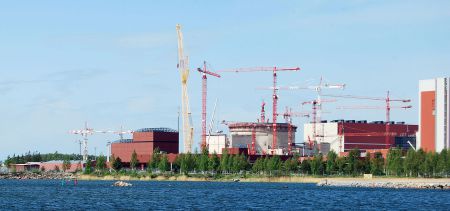
States Captured by their Energy Companies – Canada

Few governments have aligned their interests so closely to those of their country’s energy and mining firms as Canada’s Conservative administration. The prime minister, Stephen Harper, has boasted of Canada as an “emerging energy superpower”. Under the banner of “responsible resource development”, his government has done its best to ease the way for minerals firms, at home and abroad, including directing some foreign aid to countries where Canadian firms wanted to drill. Ministers point with pride to the C$174 billion ($169 billion) in export revenues from sales of minerals, oil and gas in 2013 and to the fact that Canada is home to more than half of the world’s publicly listed exploration and mining companies.

But the downside of seeming so cosy with extractive firms is that whenever one of them gets in trouble—an inevitable occurrence with 1,500 firms active in more than 100 countries—the country’s image is tarnished too. So the government has recently begun to reduce that vulnerability by taking a stricter line on corporate social responsibility (CSR) and bribery by Canadian firms operating abroad. Protecting the national brand is “a huge part of it,” says Andrew Bauer of the Natural Resource Governance Institute, a group that monitors the industry and lobbies for openness.

Ed Fast, the international trade minister, admitted as much on November 14th, as he introduced new rules that require Canadian resources firms involved in disputes with local communities to take part in a resolution process. If any firms refuse, the government will withdraw its economic diplomacy on their behalf…[In the meantime there are ] protests against Canadian firms’ projects, from Romania where environmentalists are objecting to plans for an opencast gold mine, to Guatemala, where guards at a nickel mine have been accused of gang rape…

A new Canadian law  was introduced in October 2014 to curb bribery by mining and energy firms by demanding more transparency from them. The law, which still must be fleshed out in detailed regulations, requires them to disclose all payments made to domestic and foreign governments…It helped that the law was backed by an unusual coalition of non-government organisations and mining companies themselves. T  It seems that the miners’ experience in dealing with local communities is making them more sensitive to their concerns about corruption and other ills. In contrast, the oil and gas firms are lobbying for the transparency law to be weakened. They want to be given exemptions in countries whose local laws conveniently prohibit the disclosure of such payments. They also want to avoid having to give a project-by-project breakdown of their payments, without which the information would be of little use.

Excerpt Canada’s natural-resources companies: Reputation management, Economist, Nov. 22, 2014

Keystone XL: 2014 Update

Keystone XL makes environmentalists livid… Oil extracted from Canada’s tar sands produces about 17% more carbon dioxide than conventionally-pumped supplies do—largely thanks to the energy needed to get it out of the ground. The process uproots forests and leaves toxic lakes behind. A pipeline carrying Canadian oil to Gulf coast refineries would lower the cost of getting such oil to market, so it might encourage energy firms to extract more…

Canadian oil is already getting to market, points out Charles Ebinger of the Brookings Institution, a think-tank—just mostly by barge and train. A new pipeline would ease the strain on Canada’s railways and increase the profitability of extracting the oil. But compared with swings in global oil prices, the effect will be small. Nor will many jobs be created. Most of those 42,000 are temporary posts; just 35 full-time permanent employees will be needed to run the pipeline.  Oddly, the project may not matter much in Louisiana. If completed, Keystone XL will deliver oil to Texas…

Excerpt from: Keystone XL: Back in the Pipeline, Economist, Nov. 22, 2014, at 26

Old and New Colonialists in Africa

External [states]…often come with predefined programmes and they tend to interfere when things do not develop as they would like to see it….Analysis of the security activities of seven major actors in Africa—China, France, Russia, the United Kingdom, the United States, the European Union and the United Nations—shows an increasing use of multilateral approaches, support for the ‘Africanization’ of African security, and the privatization of external security support. These are the main findings of a new SIPRI monograph edited by Olawale Ismail and Elisabeth Sköns and supported by the Open Society Foundation.

Data on Chinese security activities in Africa are difficult to obtain. UN data on peace operations show a strong growth in Chinese contributions to UN peace operations in Africa since 2000. SIPRI data on transfers of major weapons show that China’s arms transfers have focused on a few large deliveries to 2–3 countries at a time (e.g. Namibia, Sudan and Zimbabwe in 2004-2008; and Tanzania, Nigeria and Ghana in 2009–13) and have increased significantly since the early 2000s…. China’s arms sales to some  countries, such as the Democratic Republic of the Congo (DRC), Sudan and Zimbabwe, have come under scrutiny from human rights advocacy groups and Western governments…

France has a long-term engagement in African security affairs, especially in the countries it previously colonized….  France still retains significant military capacities in sub-Saharan Africa. It is a major contributor of troops and logistical support for military operations in Africa and a trainer of African military and security forces. Rather than renouncing its role as a key actor in Africa’s security, France has found alternative and more cost-effective ways to remain influential.

Russian security-related activities in sub-Saharan Africa seem to have intensified in recent years. These include arms transfers, military training, peacekeeping and anti-piracy operations, and are primarily undertaken in areas that developed strong links with the Soviet Union in the 1970s and 1980s (i.e. the Horn of Africa and southern Africa). However, there are also signs of intensified security relations with states across subSaharan Africa that have relations with Russian firms involved in mineral exploration and exploitation.  Russia is the largest supplier of major weapons to sub-Saharan Africa apart from South Africa, accounting for 30 per cent of the total in 2009-2013.

British security activities in Africa have been placed within a security and development framework and pursued at arms length: the UK has provided training for African forces and support for security sector reform (SSR) and peacebuilding efforts, while committing few troops to peace operations.  The main exception to direct British military involvement in Africa during the 2000s is the UK’s bilateral intervention in Sierra Leone in 2000, which involved a total of 2500 British troops, backed by a naval force. The UK has also participated in EU NAVFOR, the multilateral anti-piracy operation that was launched under the auspices of the EU in 2008. While the SSR agenda is relatively new, British involvement in training African armed forces has been ongoing since the colonial era.

US policies  have included the initiation of counter-terrorism programmes in east Africa and the Sahel in 2001 and of maritime security programmes in east and west Africa during the 2000s; the establishment of a military base in Djibouti in 2002 and the gradual implementation since the early 2000s of a basing system providing access to African military facilities.  The increased US strategic view of Africa is reflected in the establishment in 2008 of AFRICOM, a separate unified military command for Africa,…

Excerpts from SECURITY ACTIVITIES OF EXTERNAL ACTORS IN AFRICA, Stockholm International Peace Research Institute (SIPRI), Nov. 25, 2014

U.S. Sanctions: Abusing SWIFT

The Society for Worldwide Interbank Financial Telecommunication (SWIFT) provides a network that enables financial institutions worldwide to send and receive information about financial transactions in a secure, standardized and reliable environment.  SWIFT is not an international organization.  It is instead a cooperative society under Belgian law and it is owned by its member financial institutions…

But the network’s very usefulness means it is increasingly being cast in a new role, as a tool of international sanctions. In 2012 it was obliged, under European law, to cut off access for Iranian banks that had been subjected to sanctions by the European Union. Now there are calls for Russian banks to be banned from SWIFT in response to Russia’s invasion of Ukraine.

A group of American senators is arguing for the measure, which could be inserted into a broader bill on sanctions against Russia that has a good chance of being passed in the next session of Congress. The European Parliament passed a resolution in September calling on the EU to consider mandating a cut-off…European governments are divided, with Britain and Poland among the keenest.

The earlier SWIFT ban is widely seen as having helped persuade Iran’s government to negotiate over its nuclear programme. The ban was one of the first sanctions Tehran asked to be lifted, points out Mark Dubowitz of the Foundation for Defence of Democracies, a Washington-based think-tank. Though some of the banks blocked from SWIFT managed to keep moving money by leasing telephone and fax lines from peers in Dubai, Turkey and China, or (according to a Turkish prosecutor’s report) by using non-expelled Iranian banks as conduits, such workarounds are a slow and expensive pain. And the sanctions prompted Western banks to stop conducting other business with the targeted banks.

The impact of a reprise on Russia’s already fragile economy would be huge. Its banks are more connected to international trade and capital markets than Iran’s were. They are heavy users not only of SWIFT itself but also of other payment systems to which it connects them, such as America’s Fedwire and the European Central Bank’s Target2. Kommersant, a Russian newspaper, has reported that more than 90% of transactions involving Russian banks cross borders.

Foreign firms that do business in Russia would suffer, too. Countries that trade heavily with Russia, such as Germany and Italy, are therefore none too keen…

SWIFT’s own rules allow it to cut off banks involved in illegal activity, and it has occasionally done so. But if it ends up being used frequently for sanctions, it could come to be seen as an instrument of foreign policy…Already there are calls for it to be used in other conflicts: pro-Palestinian groups have recently sought for Israel’s banks to be shut out, for instance. And as China’s economic clout grows, might it want Taiwanese banks excluded?

Another risk is that using SWIFT in this way could lead to the creation of a rival. Russia’s central bank is pre-emptively working to develop an alternative network; China has also shown interest in shifting the world’s financial centre of gravity eastward. Earlier this year it co-founded a BRICS development bank with Russia, India, China and South Africa, and its UnionPay service, set up in 2002, has loosened the stranglehold of MasterCard and Visa on card payments. If China and other countries that feared being subjected to future Western sanctions joined the Russian venture, it might become an alternative to SWIFT—and one less concerned with preventing money laundering and the financing of terrorism…

America’s current crop of senior Treasury officials are similarly cautious, despite being vocal proponents of sanctions in general. SWIFT is a “global utility”, says one, and using it for sanctions should be “an extraordinary step, to be used in only the most extraordinary situations”. Blocking access to SWIFT, he frets, could mean that traffic shifts to networks that are less secure and easier to disrupt—and thus make life easier for criminals and cyberterrorists, including those in rogue governments. Against those who threaten global security, a SWIFT ban is a powerful and proven weapon. But it is also a risky one.

Financial Sanctions: The Pros and Cons of a SWIFT Response, Economist,  Nov. 22, 2014

The Division of Libya

Libya’s self-proclaimed prime minister [Omar al-Hassi] has warned that attempts by a rival government in the east to assert control over the oil industry could escalate the political conflict dividing the OPEC member state and force it to break in two.  Libya has had two governments competing for power since August 2014 when a group called Operation Libya Dawn, which opponents say is backed by Islamists, seized Tripoli and forced the elected Prime Minister Abdullah al-Thinni to flee 1,000 km to a small city near the border with Egypt.

The warning by Omar al-Hassi, prime minister of the rival government, came after Thinni’s government claimed air strikes on Tripoli’s Mitigate airport this week, escalating a confrontation that started with an attack by Libya Dawn on a rival force in Tripoli in July.  The new rulers in the capital are not recognised by the United Nations and world powers but have taken over ministries, oil facilities, airports and much of western and central Libya.

In a step to assert control over the oil industry, Thinni’s government said it had appointed a new chairman of the National Oil Corp. Thinni had initially retained the state oil firm’s previous head, Mustafa Sanallah, but he remains in Tripoli.  The conflict gripping Libya three years after the overthrow of Muammar Gaddafi poses a legal dilemma for oil traders, who are left wondering who owns Libya’s oil exports, worth more that $10 billion a year. The country sits on Africa’s largest oil reserves…

“There are attempts (by Thinni) to set up an eastern Supreme Court, there are attempts to launch a central bank in the east, there are attempts to establish a separate oil ministry in the east,” said Hassi, who said he was against partition.

Thinni’s government has sought to move heads of state-run institutions to the east as he is recognised by the international community, but he too denies any plans for secession.

But Hassi said Thinni’s government had shown it intended to control oil facilities in the eastern rump state by picking al-Mabrook Bou Seif as new NOC Chairman, since he was from the same tribe as Ibrahim Jathran, a former rebel leader who seized eastern ports for a year to press for regional autonomy.

Struggle over Libya’s oil risks breaking up country -rival PM, Reuters,  Nov. 28, 2014

The CIA Drone War: 2014 Deaths Update

US drone strikes kill 28 unknown people for every intended target, new Reprieve report reveals. US drone strikes in Yemen and Pakistan have killed as many as 1,147 unknown people in failed attempts to kill 41 named individuals, a report by human rights charity Reprieve has found.The report looks at deaths resulting from US drone strikes in Yemen and Pakistan between November 2002 and November 2014. It identifies 41 men who appeared to have been killed multiple times – drawing into question the Obama administration’s repeated claims that the covert drone programme is ‘precise.’

While the US drone programme is shrouded in secrecy, security sources regularly brief the media on the names of those suspected militants targeted or killed in the strikes. Frequently, those individuals are reported to have been targeted or killed on multiple occasions.

Reprieve’s assessment is the first to provide an estimate of the number of people – including in some cases children – who are killed each time the US apparently attempts to assassinate a ‘high value target.’ Due to the US Government’s refusal to publish any information relating to the programme, or the ‘Kill List’ said to determine its targets, the analysis is limited to existing, publicly-available data from media reports and The Bureau of Investigative Journalism.

Key findings of the report include:

In Pakistan, 24 men were reported as killed or targeted multiple times. Missed strikes on these men killed 874 people, including 142 children.
In Yemen, 17 men were reported killed or targeted multiple times. Missile strikes on these men killed 273 others and accounted for almost half of all confirmed civilian casualties and 100% of all recorded child deaths.
In targeting Ayman al Zawahiri, the CIA killed 76 children and 29 adults. They failed twice, and Ayman al Zawahiri is reportedly still alive.
It took the US six attempts to kill Qari Hussain, a Pakistani target. During these attempts, 128 people were killed, including 13 children.

Each assassination target on the US government’s so-called Kill List ‘died’ on average more than three times before their actual death.

The US government’s drone programme has come under increasing scrutiny after a number of strikes that hit large numbers of civilians by mistake. It was recently revealed – as a result of investigations by Reprieve – that the US government compensates civilian victims of drone strikes in Yemen.

Excerpt from US drone strikes kill 28 unknown people for every intended target, new Reprieve report reveals, Nov. 25, 2014

CyberWeapons: Regin Malware

An advanced piece of malware, newly uncovered, has been in use since as early as 2008 to spy on governments, companies and individuals, Symantec said in a report .  The Regin cyberespionage tool uses several stealth features to avoid detection, a characteristic that required a significant investment of time and resources and that suggests it’s the product of a nation-state, Symantec warned, without hazarding a guess about which country might be behind it. The malware’s design makes it highly suited for long-term mass surveillance, according to the maker of antivirus software…

The highly customizable nature of Regin, which Symantec labeled a “top-tier espionage tool,” allows for a wide range of remote access Trojan capabilities, including password and data theft, hijacking the mouse’s point-and-click functions, and capturing screenshots from infected computers. Other infections were identified monitoring network traffic and analyzing email from Exchange databases….

The malware’s targets are geographically diverse, Symantec said, observing more than half of the infections in Russia and Saudi Arabia. Among the other countries targeted are Ireland, Mexico and India. [ Regin have been identified also in Afghanistan, Algeria, Belgium, Brazil, Fiji, Germany,Indonesia, Iran, Kiribati, Malaysia, Pakistan, Syria]

Regin is composed of five attack stages that are hidden and encrypted, with the exception of the first stage, which begins a domino chain of decrypting and executing the next stage. Each individual stage contains little information about malware’s structure. All five stages had to be acquired to analyze the threat posed by the malware.  The multistage architecture of Regin, Symantec said, is reminiscent of Stuxnet, a sophisticated computer virus discovered attacking a nuclear enrichment facility in Iran in 2010, and Duqu, which has identical code to Stuxnet but which appeared designed for cyber espionage instead of sabotage.  Symantec said it believes that many components of Regin remain undiscovered and that additional functionality and versions may exist.  “Regin uses a modular approach,” Symantec said, “giving flexibility to the threat operators as they can load custom features tailored to individual targets when required.”

Excerpt from Steven Musil Stealthy Regin malware is a ‘top-tier espionage tool’, CNET, Nov. 23, 2014

The Mass Rapes in Darfur

As it continues its investigations into the mass rape of 200 women and girls in North Darfur, the United Nations-African Union hybrid mission in Darfur this week organized a forum focusing on the importance of integrated gender perspectives and women leaders in all peace processes…

The Global Open Day forum comes amid allegations of a mass rape in Tabit, which is located 45 kilometres south-west of El Fasher. Last week, UNAMID declared it had initiated an investigation in the area but said that its team had found no evidence confirming the claims and received no information regarding the purported acts. Village community leaders reiterated to UNAMID that they “coexist peacefully” with local military authorities in the area.

Tensions have been simmering across Darfur over the past few months. In October, an attack on UNAMID peacekeepers by armed militants claimed the lives of three peacekeepers.  The UN estimates that some 385,000 people have been displaced by the conflict between the Government of Sudan and armed movements in Darfur since the start of 2014. The world body has repeatedly called on all sides to join negotiations aimed at achieving a permanent ceasefire and comprehensive peace for the people of Darfur, which has witnessed fighting since 2003.

Darfur: amid mass rape allegations, UN-backed event promotes role of women in peace processes, UN News Center, Nov. 22, 2014

See also Darfur: All the Girls are Raped Here

Destroy Emails: CIA

A CIA plan to erase tens of thousands of its internal emails — including those sent by virtually all covert and counterterrorism officers after they leave the agency — is drawing fire from Senate Intelligence Committee members concerned that it would wipe out key records of some of the agency’s most controversial operations.  The agency proposal, which has been tentatively approved by the National Archives, “could allow for the destruction of crucial documentary evidence regarding the CIA’s activities,” Senate Intelligence Committee Chair Dianne Feinstein and ranking minority member Sen. Saxby Chambliss, R-Ga., wrote in a letter to Margaret Hawkins,  (pdf) the director of records and management services at the archives.

But agency officials quickly shot back, calling the committee’s concerns grossly overblown and ill informed. They insist their proposal is completely in keeping with — and in some cases goes beyond — the email retention policies of other government agencies. “What we’ve proposed is a totally normal process,” one agency official told Yahoo News.

The source of the controversy may be that the CIA, given its secret mission and rich history of clandestine operations, is not a normal agency. And its proposal to destroy internal emails comes amid mounting tensions between the CIA and its Senate oversight panel, stoked by continued bickering over an upcoming committee report — relying heavily on years-old internal CIA emails — that is sharply critical of the agency’s use of waterboarding and other aggressive interrogation techniques against al-Qaida suspects in the aftermath of the 9/11 terror attacks.

In this case, however, Chambliss — a conservative Republican who has sided with the CIA on the interrogation issue — joined with Feinstein in questioning the agency’s proposed new email policy, which would allow for the destruction of email messages sent by all but a relatively small number of senior agency officials.  “In our experience, email messages are essential to finding CIA records that may not exist in other so-called permanent records,” the two senators wrote in their letter, a copy of which was also sent this week to CIA Director John Brennan and Director of National Intelligence James Clapper. …

Under the new proposal, only the emails of 22 senior agency officials would be permanently retained; all others, including all covert officers except the director of the National Clandestine Service, could be deleted three years after the employees leave the CIA “or when no longer needed, whichever is sooner,” according to a copy of the agency’s plan….

But the plan has sparked criticism from watchdog groups and historians who note the agency’s track record of destroying potentially embarrassing material: In 2007, it was disclosed that agency officials had destroyed hundreds of hours of videotapes documenting the waterboarding of two high-value detainees. The disclosure prompted a criminal investigation by the Justice Department as well as a separate National Archives probe into whether the agency had violated the Federal Records Act. Neither inquiry led to any federal charges.

The CIA has a history of destroying records “that are embarrassing” and “disclose mistakes” or “reflect poorly on the conduct of the CIA,” said Tim Weiner, the author of “Legacy of Ashes, a history of the CIA,” in comments filed with the National Archives by Open the Government, a watchdog group that is seeking to block the CIA proposal. He noted that during the Iran-Contra Affair, for example, those involved “fed so many records into the shredder that they jammed the shredder.” “It cannot be left to the CIA to determine what is a record of historical significance,” Weiner said.

Excerpts from Michael Isikoff,The CIA wants to destroy thousands of internal emails covering spy operations and other activities, Yahoo News, Nov. 20, 2014

Covert Ops Inside the United States

The federal government has significantly expanded undercover operations in recent years, with officers from at least 40 agencies posing as business people, welfare recipients, political protesters and even doctors or ministers to ferret out wrongdoing, records and interviews show.  At the Supreme Court, small teams of undercover officers dress as students at large demonstrations outside the courthouse and join the protests to look for suspicious activity, according to officials familiar with the practice.

At the Internal Revenue Service, dozens of undercover agents chase suspected tax evaders worldwide, by posing as tax preparers, accountants drug dealers or yacht buyers and more, court records show.  At the Agriculture Department, more than 100 undercover agents pose as food stamp recipients at thousands of neighborhood stores to spot suspicious vendors and fraud, officials said…But outside public view, changes in policies and tactics over the last decade have resulted in undercover teams run by agencies in virtually every corner of the federal government, according to officials, former agents and documents….

“Done right, undercover work can be a very effective law enforcement method, but it carries serious risks and should only be undertaken with proper training, supervision and oversight,” said Michael German, a former F.B.I. undercover agent who is a fellow at New York University’s law school. “Ultimately it is government deceitfulness and participation in criminal activity, which is only justifiable when it is used to resolve the most serious crimes.”…

the Drug Enforcement Administration stoked controversy after disclosures that an undercover agent had created a fake Facebook page from the photos of a young woman in Watertown, N.Y. — without her knowledge — to lure drug suspects.  And in what became a major political scandal for the Obama administration, agents from the Bureau of Alcohol, Tobacco, Firearms and Explosives allowed guns to slip into Mexico in 2011 in an operation known as Fast and Furious that involved undercover operations.  In response to that episode, the Justice Department issued new guidelines to prosecutors: …Before prosecutors approve such tactics, the previously undisclosed guidelines require that they consider whether an operation identifies a “clearly defined” objective, whether it is truly necessary, whether it targets “significant criminal actors or entities,” and other factors, the officials said.

Those guidelines apply only to the law enforcement agencies overseen by the Justice Department. Within the Treasury Department, undercover agents at the I.R.S., for example, appear to have far more latitude than do those at many other agencies. I.R.S. rules say that, with prior approval, “an undercover employee or cooperating private individual may pose as an attorney, physician, clergyman or member of the news media.”…

Oversight, though, can be minimal…Detailed reviews of the money spent by IRS in some of its undercover operations took as long as four and a half years to complete, according to a 2012 review by the Treasury Department’s inspector general.  Across the federal government, undercover work has become common enough that undercover agents sometimes find themselves investigating a supposed criminal who turns out to be someone from a different agency, law enforcement officials said. In a few situations, agents have even drawn their weapons on each other before realizing that both worked for the federal government…

It is impossible to tell how effective the government’s operations are or evaluate whether the benefits outweigh the costs, since little information about them is publicly disclosed. Most federal agencies declined to discuss the number of undercover agents they employed or the types of investigations they handled. The numbers are considered confidential and are not listed in public budget documents, and even Justice Department officials say they are uncertain how many agents work undercover….

At the Supreme Court, all of the court’s more than 150 police officers are trained in undercover tactics, according to a federal law enforcement official speaking on condition of anonymity because it involved internal security measures. At large protests over issues like abortion, small teams of undercover officers mill about — usually behind the crowd — to look for potential disturbances.The agents, often youthful looking, will typically “dress down” and wear backpacks to blend inconspicuously into the crowd, the official said…. The use of undercover officers is seen as a more effective way of monitoring large crowds.

A Supreme Court spokesman, citing a policy of not discussing security practices, declined to talk about the use of undercover officers. Mr. German, the former F.B.I. undercover agent, said he was troubled to learn that the Supreme Court routinely used undercover officers to pose as demonstrators and monitor large protests.  “There is a danger to democracy,” he said, “in having police infiltrate protests when there isn’t a reasonable basis to suspect criminality

Excerpt from ERIC LICHTBLAU and WILLIAM M. ARKINNOV,  More Federal Agencies Are Using Undercover Operations, NY Times, Nov 15, 2014

Nuclear Power Love – Saudi Arabia

The government of Saudi Arabia is feeling anxiety over the evident progress in nuclear talks between the United States and Iran. Indeed, as Riyadh’s regional rival moves closer to receiving international recognition for its nuclear program, the kingdom’s own nuclear aspirations seem to have stalled completely: a proposed U.S.-Saudi nuclear agreement has been at a standstill for six years. And the stalled talks are only one of several issues that have hurt the relationship between Riyadh and Washington in recent years.

The U.S.-Saudi nuclear talks were initiated in 2008, when then Secretary of State Condoleezza Rice and her Saudi counterpart, Prince Saud al-Faisal, signed a Memorandum of Understanding on Nuclear Energy Cooperation. At the time, many observers expected that the two countries were forging a new pillar for their 80-year-long strategic partnership. Indeed, Saudi Arabia soon announced its intention to build 16 nuclear power plants (at an estimated cost of $112 billion), which would have made it the world’s largest civilian nuclear program and generated tens of thousands of high-paying jobs for the kingdom’s growing population. Riyadh has justified its nuclear ambitions by pointing to the country’s dependence on oil and gas exports, which constitute 80 percent of national revenue; if Saudi Arabia could meet its own growing energy demands through nuclear energy, it wouldn’t have to curtail its sale of oil on the international market.

But before Saudi Arabia enjoys its first watt of nuclear energy, it needs to find partners who are willing to help build its nuclear infrastructure—and at the moment, the United States doesn’t seem willing to play that role. Washington has said that it would first need to reach an agreement with Riyadh on adherence to the Atomic Energy Act of 1954, a U.S. law that regulates nuclear commerce—and those efforts have stalled over the question of whether Saudi Arabia would be subject to the so-called Gold Standard provision that would proscribe Riyadh from enriching uranium or reprocessing plutonium.

Riyadh is unsurprisingly incensed at any suggestion that it wouldn’t be accorded the same right to enrich uranium that the United States effectively granted to Iran under the interim agreement between those two countries. Sources familiar with the negotiations say that Riyadh has argued that the Gold Standard represents an unacceptable infringement on its national sovereignty, emphasizing that the Nuclear Non-Proliferation Treaty, of which Saudi Arabia is a signatory, stipulates that countries have a right to develop peaceful nuclear energy.

The White House has so far seemed reluctant to offer any compromise….Complicating matters is the fact that Israel is likely to oppose any nuclear deal with Saudi Arabia that doesn’t adhere to the Gold Standard and will pressure its allies in Washington to do the same. (Israel tacitly approved the 2009 nuclear deal between the United States and the UAE, which was compliant with the Gold Standard.)

Saudi Arabia, should it fail to reach an understanding with Washington, might instead choose to partner with either France or Russia to develop its nuclear program. Last January, during a state visit by French President François Hollande to Riyadh, the French company Areva, the world’s largest nuclear firm, signed a Me moandums of Understanding with five Saudi companies that aim to develop the industrial and technical skills of local companies. Similarly, the CEO of Russia’s Rosatom, Sergei Kiriyenko, announced in July that Russia and Saudi Arabia expect to sign an agreement on civilian nuclear cooperation later this year. If Saudi Arabia follows through on these agreements, it would be to the detriment of U.S. companies—and, perhaps, the broader U.S.-Saudi strategic partnership.

At present, a compromise between Saudi Arabia and the United States seems unlikely…. [But] One promising precedent is the U.S.-Vietnam nuclear agreement of 2014, which allowed Hanoi to obtain any nuclear reactor fuel that it needs for its reactors from the international market, rather than produce the material itself—a model that was dubbed the Silver Standard. This arrangement would likely be acceptable to Riyadh, as it is consistent with the agreement that Rice and Faisal signed in 2008. It’s unclear, however, whether it would be acceptable to Congress. U.S. politicians who claim to fear “Saudi nukes”—or the prospect that Riyadh’s nuclear program could fall into the hands of Islamist extremists—are unlikely to accept anything short of the Gold Standard.

Excerpt, Sigurd Neubauer, Saudi Arabia’s Nuclear Envy, Foreign Affairs, Nov. 16, 2014

China in Tanzania: Modern Colonization

China and Tanzania have concluded (November 2014) a month-long naval training exercise, the first joint training exercise in the history of bilateral military relations between the two countries. The closing ceremony of exercise Beyond/Transcend 2014 was held on November 14 at Kigamboni Naval Base, Tanzania  and attended by guests that included China’s ambassador to Tanzania, the chief of the Tanzanian military and heads of the navy and air force.

The exercise between the Chinese People’s Liberation Army Navy (PLAN) and Tanzanian People’s Defence Force (TPDF) kicked off on October 16 in Tanzania’s capital Dar es Salaam, with more than 100 navy officers and seamen participating, although the official opening ceremony was held on October 21….

Tanzanian has emerged as a key ally to the PLAN as it intensifies partnerships and operational deployments in the Indian Ocean Region (IOR) and conducts anti-piracy patrols in the area. In December last year the 15th Chinese naval task force charged with escorting ships and patrolling for pirates visited Dar es Salaam on its way back to China.

China’s strong relationship with Tanzanian can be seen in its support for the military. China has recently sold the East African country 24 Type 63A light amphibious tanks, 12 Type 07PA 120 mm self-propelled mortars, FB-6A mobile short-range air defence systems and A100 300 mm multiple rocket launchers. This follows military hardware delivered earlier in the decade, including tanks, armoured personnel carriers and combat aircraft.

The Chinese government also built the Tanzanian Military Academy (TMA) and the Shanghai Construction Group has been contracted by the Tanzanian Ministry of Defence and National Service to construct 12 000 housing units financed by a $550 million loan from the Exim Bank of China.

On the economic side, China has invested in various Tanzanian projects and late last month signed investment deals worth more than $1.7 billion, including one to build a satellite city to ease congestion in Dar es Salaam. The money will be used to develop infrastructure, power distribution and business cooperation. Tanzania also announced $85 million in grants and zero-interest loans from China, Reuters reports.  In recent years, Chinese companies have signed deals to build a rail network and a 532 km (330 mile) natural gas pipeline. Between July and September 2014, Chinese investments totalled $534 million, compared to $124 million during the same period last year.

China says it will “speed up the construction” of the Bagamoyo port, a new Indian Ocean project being built north of Dar es Salaam, and begin offshore oil and gas exploration off Tanzania.  China’s exports to Tanzania, which totalled $1.099 billion from 2012 to 2013, were roughly double the $495.74 million worth of goods China imported from Tanzania.

China and Tanzania conclude historic naval exercise, defenceWeb, Nov. 18, 2014

India as a Nuclear Power

In a major step towards realizing its nuclear energy ambitions, India is engaged in talks with the European Union to sign a civil nuclear cooperation agreement and the deal is expected to be inked by next year.  “An agreement is expected to be signed between the India’s department of atomic energy and joint research centre of the European Union. It will mostly focus on areas of research and energy,” EU’s ambassador to India Joao Cravinho told PTI…Cravinho said talks between the two sides are on and the agreement should be signed next year (2015). He, however, did not give any specific time frame on when the agreement will be inked.”There were concerns raised by few countries about signing an agreement because India is not a signatory of the Non-Proliferation Treaty, but there is a consensus on this now,” he said….

The deal would provide a major boost to India’s efforts in getting an entry to the elite Nuclear Suppliers Group, considering the clout of the EU on the global platform.  After the landmark Indo-US nuclear deal, India has signed nuclear deals with Russia, Kazakhstan, United Kingdom, South Korea, Mongolia, and France.  It also signed a nuclear cooperation agreement with Australia in September, paving way to import uranium for its reactors.

India, EU to sign civil nuclear pact by next year, PTI,  Nov 16, 2014

Surveillance: Private Web Spiders

With so many cheap or free tools out there, it is easy for anyone to set up their own NSA-esque operations and collect data. Though breaching systems and taking data without authorisation is against the law, it is possible to do a decent amount of surveillance entirely legally using open-source intelligence (OSINT) tools…. Daniel Cuthbert, chief operating officer of security consultancy Sensepost, has been happily using OSINT tool Maltego (its open-source version is charmingly called Poortego) [pdf] to track a number of people online.

Over a few days this summer, he was “stalking” a Twitter user who appeared to be working at the Central Intelligence Agency. Maltego allowed him to collect all social media messages sent out into the internet ether in the area around the CIA’s base in Langley, Virginia. He then picked up on the location of further tweets from the same user, which appeared to show her travelling between her own home and a friend or partner’s house. Not long after Cuthbert started mapping her influence, her account disappeared.

But Cuthbert has been retrieving far more illuminating data by running social network accounts related to Islamic State through Maltego. By simply adding names to the OSINT software and asking it to find links between accounts using commands known as “transforms”, Maltego draws up real-time maps showing how users are related to each other and then uncovers links between their followers. It is possible to gauge their level of influence and which accounts are bots rather than real people. Where GPS data is available, location can be ascertained too, though it is rare to find accounts leaking this – only about 2% of tweets have the feature enabled, says Cuthbert.

He has been trying, with mixed results thanks to Twitter’s deletion of accounts spreading Isis propaganda, to determine how tech savvy its members are and how they operate online. Over the past month, Cuthbert has looked at links between a number of pro-Isis users, including one with the handle @AbuHussain104, who has only tweeted 28 times, yet has more than 1,300 followers already. The prominent pro-sharia law Islamic activist Anjem Choudary has been a keen retweeter of Hussain’s words.  The London-based professional hacker has noted the group’s ability to attract followers online; his research shows how a handful of Isis-affiliated accounts have myriad links and wide influence.

Cuthbert is now on the lookout for slipups that reveal the true identity or location of the tweeter. “This is a concern for high-ranking Isis leaders, so much so, they issued a guide on using social media,” he notes, referring to reports of an as-yet unconfirmed document.,,,

Metagoofil, which runs on Linux or Mac machines, is an ideal software for uncovering data businesses have mistakenly leaked onto the internet. Running this free tool in a Linux distribution, hackers can command it to hunt for files related to a particular domain, specifying how many Google searches to look through and how many documents to download. It will then extract whatever metadata the user is looking for and store it all in a file for perusal later on.

For those who want instant visual results, the Shodan search tool is a remarkable piece of work. Simple searches can reveal miraculous details. For instance, type “IP camera” into the search bar and more than 1.3m internet-connected IP cameras show up from across the world. Add “country:gb” and you’ll be shown more than 54,000 based in Great Britain. You could specify a manufacturer too, such as Samsung. That provides just 13 results. From there, it’s a matter of clicking on the IP addresses to see which ones allow you to view live footage either with or without a password (if you guess the password, even if it’s a default one such as “admin”, it will mean you are likely to have broken the Computer Misuse Act).  Either way, it is very easy to find poorly secured cameras – many have a username of “admin” and no password whatsoever, according to previous research. It is that straightforward: no coding skills required….

“The tools are mostly for reconnaissance,” says Christian Martorella, creator of Metagoofil and theHarvester, another OSINT software that pentesters – or “ethical hackers” – use to map their clients’ internet footprint. “This helps the pentester to have as much information as possible about the targets and plan the attacks. This phase is very important but … pentesters usually overlook this phase or dedicate little time, while attackers seem to spend more time in this phase.”

Privacy-conscious folk can also benefit from OSINT. While looking into how his internet service provider [ISP] was interfering with his internet connection, in a method similar to that used by Verizon for its controversial “permacookie” tracking software, researcher Lee Brotherston last month used Shodan to find servers that intercepted his traffic. The wide range of Perftech servers he found were based across the world, and though his ISP was simply using a “man-in-the-middle” technique to add a warning banner to a website he visited, … But what if the ISP was coerced by a government and dropped malware onto people’s machines as they tried to access websites? The much-maligned surveillance tool FinSpy is used for just for that purpose: it is placed into the data centres of ISPs and intercepts traffic to force surreptitious downloads of surveillance software. Instead of dropping banners, as Brotherston’s ISP did, it injects malicious JavaScript.  “When you hear about repressive governments that start installing malware on activists’ machines and then arresting them… it’s the same technique. They’re injecting data into a webpage,” says Brotherston, a Canada-based Brit. “If you’re injecting this, you may have a valid business case for doing, it but someone could break in and start dropping malware on people’s machines.”

A number of developers, inspired by the success of Shodan creator John Matherly, have drawn up search sites for hackable systems. Perhaps the most useful for security professionals, whether of the blackhat or whitehat variety, is the Kickstarter-funded PunkSPIDER, a web app vulnerability search engine, which issues an alert as soon as the visitor arrives: “Please do not use this site for malicious purposes … use it wisely or we’ll have to take it away”. It’s remarkably simple. Type or paste in a URL and it will reveal what vulnerabilities have been documented for the related site.

Such is the openness of the web, and such is the carelessness of so many web denizens, any determined citizen can gather up reams of sensitive information on others and collect enough data to create a decent picture of who they are, where they are and what they are doing. The tools are now accessible for the typical web user.

Excerpts fromTom, Fox-Brewster, Tracking Isis, stalking the CIA: how anyone can be big brother online, Guardian, Nov. 12, 2014

Drones and the Anti-Poaching War: Tanzania

The Tanzania National Parks Authority (TANAPA) says it is looking to deploy the French-made Delair Tech DT-18 unmanned aerial vehicle (UAV) to carry out surveillance operations over key national reserves to protect critically endangered elephant and rhinos from poachers.

This follows successful test-flights of the DT-18 UAV over the Tarangire National Park last week by private Tanzanian company Bathawk Recon…Bathawk Recon is a private company which was set up to develop and deploy UAV surveillance systems for national parks and game reserves.  Its representative Mike Chambers said the UAV had performed to their satisfaction in both day and night surveillance operations. He said the DT 18 can fly multiple day and night missions thanks to an infrared camera….

TheDT-18 trials were conducted under the auspices of the (Tanzanian) Private Sector Anti Poaching Initiative which seeks to bring the private sector to participate in war against poaching.The UAV systems will be operated by the Wildlife Crime Unit (WCU) of the national parks authority. Tanzania is battling a serious rhino and elephant poaching crisis and the populations of both species have continued to decline in the last few years. The most affected are Selous Game Reserve, Tarangire National Park and Ruaha Game Reserve.  Some 30 elephants are killed every day in Tanzania by poachers.

Excerpts from Oscar Nkala, Tanzania seeking to deploy DT-18 UAVs in anti-poaching war, DefenceWeb.com, Nov. 12, 2104

Secrecy at the International Atomic Energy Agency

The IAEA [International Atomic Energy Agency], which is charged with both promoting the peaceful use of nuclear power and controlling fuel that could be used in weapons, is holding its quadrennial safeguards meeting behind closed doors for the first time in at least 12 years this week in Vienna. The agency also decided to withdraw information about nuclear projects that have led to proliferation risks.

The IAEA restricted access to the symposium [Linking, Implementation, Safety, Nuclear, Safeguards, Atomic Energy, Technology, Science, Energy, Chemistry, Physics] held between October 20 and October 24, 2014, so participants aren’t “inhibited,” spokeswoman Gill Tudor said in an e-mail while noting that the opening and closing ceremonies will be public. Information about technical cooperation, which has been progressively restricted since 2012, will be made available again in the “coming weeks,” IAEA public-information director Serge Gas said in an e-mail….

To be sure, some IAEA members such as Iran would like to see the agency impose even greater controls over information. President Hassan Rouhani’s government asked the IAEA in a Sept. 19 open letter to investigate leaks of confidential data that it said could violate the interim agreement it signed with world powers last year.

Iran’s stance shows the agency is guilty of a double failure, according to Tariq Rauf, a former IAEA official who is now a director at the Stockholm International Peace Research Institute. While the public is increasingly excluded from the scientific debate that shapes policy decisions, “the agency routinely allows secret information about nuclear programs to be given to select Western countries, which then leak it out,” he said.… The U.S. Government Accountability Office said in a 2011 report it’s wary about IAEA help to Cuba, Iran, Sudan and Syria.  Past IAEA technical assistance probably wound up helping Pakistan discover and mine the uranium that went into its nuclear weapons. In Syria, the agency developed a uranium-ore production facility that later drew scrutiny after the Middle East country allegedly built a secret reactor…

Scientists at this week’s meeting will explain how they can use rooftop sensors to sniff out the gases given off during plutonium production, according to the meeting agenda. Others will look at new ways to analyze satellite imagery, more sensitive methods for measuring traces of radioactivity and the difficulties in keeping track of nuclear material at places like Japan’s $20 billion plutonium-separation facility in Rokkasho. 

Excerpts from Jonathan Tirone. Nuclear Secrecy Feeds Concerns of Rogues Getting Weapons, Bloomberg, Oct 22, 2014n

China Anti-Satellite Weapons

China had conducted two anti-satellite tests recently with its new laser technology, Konstantin Sivkov, the first deputy head of the Moscow-based Academy of Geopolitical Problems, told the Voice of Russia on Nov. 6, 2014….. The China Academy of Engineering Physics’ low-altitude air defense system designed to intercept aircraft below 500 meters was used in several drills against drones.

The PLA carried out two anti-satellite exercises with its laser weapon system as well, Sivkov also said, adding that it is crucial for China to destroy US satellites at the beginning of a conflict, should one arise. By shooting down US satellites, the PLA will be capable of blinding American air, ground and naval forces on the battlefield. After China tested its anti-satellite weapon for the first time in 2007, US satellites have been periodically disturbed by the Chinese laser weapon several times in orbit, the Defense News reported… Realizing that lasers are capable of destroying every advanced weapon systems, including aircraft carriers, China has invested huge sums in the development of such weaponry since the 1960s.

During an exercise held in 2009, the PLA successfully destroyed incoming rockets with a laser cannon. After the Shenguang 1 and Shenguang 2, the China Academy of Engineering Physics put the Shenguang 3 high-energy research center in service at Sichuan province located in southwestern China…

Excerpt, China conducted two anti-satellite tests: Voice of Russia, Nov. 6, 2014

Natural Resource Curse – Central African Republic

Gold and diamond sales are being used to finance conflict in Central African Republic and United Nations peacekeepers should monitor mining sites to clamp down on illicit trade, a U.N. panel of experts * [pdf]said.In a report, the panel also said the peacekeeping mission (MINUSCA) should deploy troops to the remote north of the country and use drones to monitor the rebel-controlled region to put an end to simmering violence there.  The mission, which launched in September, is operating at only two-thirds of its planned 12,000-strong capacity.

Central African Republic was plunged into chaos when northern, mostly Muslim Seleka rebels seized control of the majority Christian country in March 2013, prompting a vicious backlash by the largely Christian ‘anti-balaka’ militia.  The panel said that some 3,000 people had been killed between December 2013 – when the U.N. Security Council imposed an arms embargo – and August 2014.  The Kimberley Process – a group of 81 countries, including all the major diamond producers, formed to prevent ‘blood diamonds’ from funding conflict – imposed an export ban on raw gems from Central African Republic in 2013.  But since then, an additional 140,000 carats of diamonds, valued at $24 million, had been smuggled out of the country, the panel estimated…..

In their northern enclave, the former Seleka fighters are imposing taxes on a wide range of goods from gold mining to coffee, livestock, and diamonds to fund their operations, the report found.  Former Seleka fighters were issuing mining licences to gold miners at the Ndassima mine near the rebels’ headquarters of Bambari, in the centre of the country, it said…

It suggested that interim President Catherine Panza’s decision to name representatives of the armed groups to cabinet roles may have fuelled conflict.”Competition among political representatives of armed groups for ministerial positions, as well as among military commanders for control of resources, accounts for of the recent infighting between former components of Seleka and rival factions of anti-balaka,” said the report, dated Oct. 29 but only made public this week.

Excerpts, Gold, diamonds fuelling conflict in Central African Republic, Reuters, Nov. 5, 2014

*Letter dated 28 October 2014 from the Panel of Experts on the  Central African Republic established pursuant to Security Council  resolution 2127 (2013) addressed to the President of the Security Council [S/2014/762]

Uncontacted Tribes: Amazon

The vast jungles of the Amazon rainforest harbor tribes mostly isolated from the outside world, whose way of life, largely unchanged for millennia, is now increasingly threatened by intrusions from modern civilization.  Now, scientists reveal they can monitor these “uncontacted tribes” using satellites, which would allow safe, inexpensive and noninvasive tracking of these tribes in order to protect them from outside threats.

The investigators focused on indigenous groups concentrated near the headwaters of the Envira River, located at the border of Brazil and Peru. These include the Mashco-Piro, nomadic hunter-gatherers who live in Peru’s densely forested Madre de Dios region, and a number of Pano-speaking farming societies.

The researchers combed through satellite images to look at five isolated villages previously identified via overflights by Brazilian officials. They confirmed these locations and measured the sizes of their villages, houses and gardens. The villages ranged from a small one of about 50 people to a large and growing village of about 300 people. “We can find isolated villages with remote sensing and study them over time,” Walker told Live Science. “We can ask: Are they growing? Do they move?”

Surprisingly, based on the sizes of the houses and villages, the scientists find the population densities of these isolated villages is about 10 times greater, on average, than other villages of indigenous Brazilian peoples….. The researchers now plan to focus on 29 more isolated villages….

Excepts, Charles Q. Choi ,Isolated Amazon Tribes Monitored with Space-Age Technology,LiveScience.com, Nov. 5, 2014

Nuclear Waste Management in Russia

NO RAO, the Russian state’s national operator for dealing with radioactive waste, has announced it will build an underground research laboratory near Krasnoyarsk to determine the feasibility of building a final disposal point for the country’s high-level radioactive waste by 2024,

The government agency reported it had chosen the Nizhnekansky Rock Mass in the Krasnoyarsk Region of Central Siberia as the site for the lab and eventual long term underground storage repository…The project to build the repository will only go ahead pending the results of the lab studies, NO RAO said.  Russian state nuclear corporation Rosatom said that phase one of the proposed repository would hold 20,000 tons of intermediate and high level nuclear wastes, which would be retrievable, World Nuclear News reported…

Krasnoyarsk Citizens’ Assembly Chairman Alexei Menshikov was reported as saying the decision to build the repository in the region’s Nizhnekansky Rock Mass would not be decided without “wide public discussion and the creation of effective means for civil control, because [the repository] concerns environmental safety and the livelihood of citizens.”  Many of those present at the meeting pressed questions on precisely those points.

This area in Siberia is no stranger to massive nuclear undertakings. The nearby closed nuclear city of Zheleznogorsk through the decades of the Cold War produced bomb grade plutonium.  The city is also gearing up to build a new pilot spent nuclear fuel storage and reprocessing facility, which will reprocess two of Russia’s thorniest types of spent nuclear fuel: that produced by VVER-1000 reactors and spent fuel from Chernobyl-style RBMKs.

The search for a repository to store Russia’s high-level radioactive waste in safe conditions for the coming millennia has been in full swing since late last year when Rosatom in October 2013 unveiled a “roadmap” …This roadmap focused on the possibility of building as many as 30 long-term repositories as well as temporary waste storage facilities, 10 of which would be located in Northwest Russia, close to Norway and Finland, and didn’t discuss citing a repository in Siberia.

Excerpts from Charles Digges, http://www.bellona.org, Oct. 21, 2014

New Military Tanks: Ground X-Vehicle

From the DARPA website:

For the past 100 years of mechanized warfare, protection for ground-based armored fighting vehicles and their occupants has boiled down almost exclusively to a simple equation: More armor equals more protection. Weapons’ ability to penetrate armor, however, has advanced faster than armor’s ability to withstand penetration. As a result, achieving even incremental improvements in crew survivability has required significant increases in vehicle mass and cost.,,,

DARPA has created the Ground X-Vehicle Technology (GXV-T) program to help overcome these challenges and disrupt the current trends in mechanized warfare….“GXV-T’s goal is not just to improve or replace one particular vehicle—it’s about breaking the ‘more armor’ paradigm and revolutionizing protection for all armored fighting vehicles,” said Kevin Massey, DARPA program manager. “Inspired by how X-plane programs have improved aircraft capabilities over the past 60 years, we plan to pursue groundbreaking fundamental research and development to help make future armored fighting vehicles significantly more mobile, effective, safe and affordable.”

GXV-T’s technical goals include the following improvements relative to today’s armored fighting vehicles:…

Radically Enhanced Mobility – Ability to traverse diverse off-road terrain, including slopes and various elevations; advanced suspensions and novel track/wheel configurations; extreme speed; rapid omnidirectional movement changes in three dimensions

Survivability through Agility – Autonomously avoid incoming threats without harming occupants through technologies such as agile motion (dodging) and active repositioning of armor

Crew Augmentation – Improved physical and electronically assisted situational awareness for crew and passengers; semi-autonomous driver assistance and automation of  key crew functions similar to capabilities found in modern commercial airplane cockpits

Signature Management – Reduction of detectable signatures, including visible, infrared (IR), acoustic and electromagnetic (EM)

Excerpts from NEW GROUND X-VEHICLE TECHNOLOGY (GXV-T) PROGRAM AIMS TO BREAK THE “MORE ARMOR” PARADIGM FOR PROTECTION, http://www.darpa.mil, August 18, 2014


Surveillance – Undress People Remotely

Officials from Guinness World Records today recognized DARPA’s Terahertz Electronics program for creating the fastest solid-state amplifier integrated circuit ever measured. The ten-stage common-source amplifier operates at a speed of one terahertz (1012 GHz), or one trillion cycles per second—150 billion cycles faster than the existing world record of 850 gigahertz set in 2012.…Developed by Northrop Grumman Corporation, the Terahertz Monolithic Integrated Circuit (TMIC) exhibits power gains several orders of magnitude beyond the current state of the art…  For years, researchers have been looking to exploit the tremendously high-frequency band beginning above 300 gigahertz where the wavelengths are less than one millimeter. The terahertz level has proven to be somewhat elusive though due to a lack of effective means to generate, detect, process and radiate the necessary high-frequency signals.  Current electronics using solid-state technologies have largely been unable to access the sub-millimeter band of the electromagnetic spectrum due to insufficient transistor performance…

According to  Dev Palmer, DARPA program manager. “This breakthrough could lead to revolutionary technologies such as high-resolution security imaging systems, improved collision-avoidance radar, communications networks with many times the capacity of current systems and spectrometers that could detect potentially dangerous chemicals and explosives with much greater sensitivity.”

DARPA has made a series of strategic investments in terahertz electronics through itsHiFIVE, SWIFT and TFAST programs. Each program built on the successes of the previous one, providing the foundational research necessary for frequencies to reach the terahertz threshold.

Excerpts from DARPA CIRCUIT ACHIEVES SPEEDS OF 1 TRILLION CYCLES PER SECOND, EARNS GUINNESS WORLD RECORD, DARPA website, http://www.darpa.mil, Oct. 28, 2014

This technology can be used for Security and Communications (including military communications): Here from Wikipedia

Security:
Terahertz radiation can penetrate fabrics and plastics, so it can be used in surveillance, such as security screening, to uncover concealed weapons on a person, remotely. This is of particular interest because many materials of interest have unique spectral “fingerprints” in the terahertz range…. In January 2013, the NYPD announced plans to experiment with the newfound technology to detect concealed weapons, prompting Miami blogger and privacy activist Jonathan Corbett to file a lawsuit against the department in Manhattan federal court that same month, challenging such use: “For thousands of years, humans have used clothing to protect their modesty and have quite reasonably held the expectation of privacy for anything inside of their clothing, since no human is able to see through them.” He seeks a court order to prohibit using the technology without reasonable suspicion or probable cause.


Geopolitics of Nuclear Power: Russia-Bangladesh Deal

The construction in northwestern Bangladesh of Ruppur, the republic’s first nuclear power plant, involving Russia is set to become a historic benchmark in bilateral relations, the country’s Information Minister Hasanul Haq Inu said on Oct. 27, 2014.  “So Russian Government is kind enough to extend economic help to develop nuclear reactors… So 1,000 megawatt and 1,000 megawatt, 2,000 megawatt of nuclear reactor constructed and developed by Russia is a great landmark treaty for Bangladesh and Russia,” the minister said in an exclusive interview with TASS…..  In January 2013, Prime Minister of Bangladesh Sheikh Hasina paid a visit to Moscow during which the sides agreed that Russia will provide a $500 million loan during the early stage of constructing the Nuclear Power Plant.

Bangladesh hopes for long-term cooperation with Russia in nuclear energy. TASS, Oct. 27, 2014

Nuclear Power – Sweden

Sweden may be facing the phase out of nuclear power following agreement by the country’s Social Democrats and their junior coalition partner, the Green Party, to set up an energy commission tasked with achieving a 100% renewable electricity system….The parties said in separate, but identical statements that nuclear power should be replaced with renewable energy and energy efficiency. The goal, they said, should be at least 30 TWh of electricity from renewable energy sources by 2020. A goal for 2030 has yet to be set, they added. Support for offshore wind and solar power are needed “in addition”, they said.

Nuclear power “should bear a greater share of its economic cost”, they said. “Safety requirements should be strengthened and the nuclear waste fee increased.”  Waste management in Sweden is undertaken by SKB while safety regulations are set by the Swedish Radiation Safety Authority. Both of these operate independently of government.  State-owned utility Vattenfall’s plan to build a new nuclear power plant has been “interrupted”and the company will lead the country’s energy system towards a higher share for renewable energy, they said.

Excerpt from Sweden faces future without nuclear, World Nuclear Association, October  12014

Why Rhino Poaching Goes on Forever

Mistrust in police ranks, a shortage of proper intelligence structures and an easy exit through South Africa’s more than nine harbours are all stumbling blocks specialised police experience in the ongoing battle against rhino poaching.

This was how Colonel Johan Jooste, operational commander of the Hawks endangered species unit in South Africa outlined some issues facing his unit. He was addressing the 35th international conference of crime fighters in Cape Town this week, Netwerk24 reports.“…We find instances where police are involved in rhino poaching syndicates,” he said, adding police detailed to anti- and counter-poaching should receive specialist training….

Knowledgeable hunters in South Africa are recruited by buyers of rhino horn. They are also responsible for removing the horn and taking it to the next person in the chain, usually someone responsible for transport.  “It can be someone who knows the area well and can also be either a policeman or a traffic officer,” he said, adding the horn was stored or taken to places such as harbours for illegal export.  The Kruger National Park has this year lost 503 rhinos to poachers out of a national total of 787.

Excerpts, Rhino poachers present different challenges to the Hawks, defenceWeb, Tuesday, Oct. 14 2014

Hypersonic Weapons

Payloads on hypersonic aircraft, whether they are weapons or sensors, could reach their destination within minutes, rather than hours, said Mark Lewis, former chief scientist of the Air Force and now director of the Science and Technology Institute at the Institute for Defense Analyses, a federally funded research-and-development center.  Hypersonic speed is generally defined as beginning at Mach 5, which is the point where aerodynamic heating caused by the speed of the vehicle cutting through the atmosphere becomes a factor.

The Air Force concluded its successful X-51 WaveRider program in 2013. The final test had the missile-like aircraft flying at Mach 5.1 for about 200 seconds.  Meanwhile, the Army is testing the advanced hypersonic weapon, a missile designed for vertical launch. It suffered a failed test seconds after takeoff in August 2014, but that was caused by a faulty booster, not the missile or hypersonic technology itself, Lewis noted….

Hypersonic technology could be seen as a follow-on to stealth, Lewis said. Even if an aircraft has that kind of technology, it doesn’t mean it is invisible, he said. Adversaries are growing better at spotting stealthy aircraft, he said. Speed might compensate for that, he said. “If I can fly really fast, it makes it harder to act against me. It doesn’t make it impossible. But it makes it harder.”

Top Air Force leaders are indicating that they want to move hypersonic technology to the next level.  Air Force Chief of Staff Gen. Mark Welsh and Secretary Deborah Lee James in the document “America’s Air Force: A Call to the Future,” said hypersonic development was number one on the service’s list of top five technology priorities.  [T]the Air Force sees hypersonic weapons as a potential means to break through anti-access/area-denied battlefields where adversaries have robust defenses….

The Air Force will team with the Defense Advanced Research Projects Agency on two new hypersonic programs, he said. The first will be a cruise missile called HAWC, the hypersonic air-breathing weapons concept. The other is called tactical boost glide, which will accelerate an aircraft to Mach 5 plus speeds, then let it glide to its target.

Similarly, space planes could deliver payloads in minutes. The reusable space plane concept has been proposed many times over the years, and received a new lease on life when DARPA awarded three contracts to Boeing, Masten Space Systems and Northrop Grumman to study the idea of a two-stage launch system that could rapidly place 3,000 to 5,000 pounds into orbit. The Air Force has never given up on that idea, as evidenced by the new DARPA initiative, Lewis said.  Space planes have been talked about for decades, Lewis said. There have been many starts and stops in developing the concept, he added.

NASA’s space shuttle was originally conceived as a vehicle that could rapidly lift payloads into space at low cost, and be flexible and responsive. It never lived up to that promise.

The DARPA experimental spaceplane (XS-1) program envisions a reusable aircraft that could be launched from a mobile platform, and return 10 times within 10 days. It would employ a reusable first stage that would fly to Mach 10 at a suborbital altitude. At that point, one or more expendable upper stages would separate and deploy a satellite into low-Earth orbit.  While a space plane in low-Earth orbit could potentially be used as a weapon, it would more likely be employed as a means to rapidly replace satellites that have been damaged in a space war, or to place sensors over regions where there are currently no assets, Lewis said….

Meanwhile, more akin to the space shuttle than the DARPA concept for the space plane, the Air Force continues to use the X-37B, a top-secret orbiter that also glides to Earth. One has been in orbit since October 2012. The Air Force has repeatedly denied that it has, or is intended to be, weaponized. What its exact mission is remains classified

Excerpts from Stew Magnuson, Hypersonic Weapons Can Defeat Distance, National Defense Magazine, Nov.  2014


Floating Power Plants: Cayman Islands

A United States company OTEC International is in talks with Caribbean Utilities Company (CUC), Grand Cayman’s electrical provider, to supply renewable energy to the island via Ocean Thermal Energy from a platform at North Side.  According to the company:

“The Cayman Islands has documented its storm history with precision, which made it easier for OTEC International to identify locations where  Floating Power Platforms (FPPs) can be securely sited and appropriately designed to survive strong storm conditions.  The first phase of the Cayman project would be the generation of 6.25-MW renewable electricity* from an FPP that would be permanently moored less than a mile from shore. At this distance from shore, the plant’s visual impact will be minimal because of the platform’s overall low profile. The power generated would be transported to a substation onshore via cable and connected to the island’s CUC grid…..A comprehensive Environmental Impact Assessment (EIA) will be completed before the project can receive all necessary licenses and permits from various governmental authorities.”

*This type of ocean-thermal electricity plant takes advantage of the temperature difference between warm surface water and cold deep seawater.

Excerpts from Company providing floating ocean power platform technology to supply renewable energy to Cayman Islands in talks, Cayman inews, Sept. 21, 2014


The Plastic in the Oceans

The steady build-up of garbage in the world’s oceans is a “tremendous challenge” and a growing threat to the planet’s marine ecosystems with the potential for “significant socio-economic consequences,” the United Nations Environment Programme (UNEP) heard today.  In the final day of the 16th Global Meeting of the Regional Seas Conventions and Action Plans, held in Athens, Greece, scientists, policymakers and delegates gathered amid growing global concern over the accumulation of plastic waste in oceans and seas – a problem that could pose an estimated $13 billion in damage to marine life and habitats, and which demands a comprehensive remedy.

Addressing the meeting, Jacqueline Alder, Coordinator of UNEP’s Freshwater and Marine Ecosystem Branch, applauded the creation of a “visioning roadmap” seeking to chart a way forward for oceans governance in the coming decade, particularly in the areas of extraction, governance, impacts of a changing climate, ocean acidification, and pollution.

The meeting generated broad agreement among experts and policymakers regarding the issue of microplastics – tiny pieces of plastic less than one millimetre in size – which, they said, deserved more attention in order to better grasp their physical and biological impact on the marine ecosystems they pollute.  In addition, they advised a three-tier approach tackling marine litter at the national, regional and municipal levels as municipalities tends to have responsibility for solid-waste management….

The five garbage patches, or gyres, that have amassed in the world’s oceans as plastic waste and other jettisoned materials are carried by the currents. The patches themselves now occupy a total of 15, 915, 933 square kilometres of ocean, threatening the marine environment and the plants and animals living within it.

UN meeting hears call for greater marine protections as plastic waste accrues in oceans, UN Press. Release, Oct. 1, 2014

Mismanaging Nuclear Waste – Germany

Inspectors in northern Germany have found that a third of barrels containing radioactive waste at a decommissioned nuclear plant are damaged, the Schleswig-Holstein Environment Ministry said on Thursday.  Vattenfall, the energy company which manages the Brunsbüttel site in Schlewswig-Holstein, reported that 102 of the 335 barrels stored in the site’s six underground chambers were corroded, leaking or had loose lids.  Some of the containers are so deformed that they can no longer be moved, as they no longer fit into the robotic gripping arms installed at the site, the inspectors reported.  “The chambers are secure and there is no danger for the personnel or the local population,” Vattenfall said in a statement released on Thursday,

The Brunsbüttel site harbours 631 barrels of nuclear waste in its six chambers, which have been used for storing waste since 1979. The nuclear power plant was decommissioned in 2011.  The barrels contain resin used for water filters, residue from contaminated water and various other types of waste.

So far, Vattenfall has only inspected four of the six chambers using remote cameras.  The chambers themselves are built from concrete and have walls over a metre thick to prevent radiation escaping into the surrounding environment.  The energy company has sent a proposal to the Schlewsig-Holstein Environment Ministry for making the storage facility more secure, including by installing dehumidifiers to slow corrosion, which has yet to be approved by government experts.  “The chambers [at Brunsbüttel] were supposed to be a temporary storage facility,” Vattenfall said in a statement on Thursday. “They weren’t designed to for long-term containment.”

It was originally planned to store the barrels at Brunsbüttel until they were moved to the ‘Konrad’ mine shaft site in Lower Saxony.This permanent storage facility was to be completed by the mid- to late 90s, but has been subject to successive delays. Completion dates in 2014 has been missed and a target of 2019 is also unlikely.  The latest estimate for completion is the start of the next decade.

One in three nuclear waste barrels damaged, The Local Germany, Oct. 10, 2014

Sabotaging Iran’s Nuclear Program

A U.S. security institute said it has located via satellite imagery a section of a sprawling Iranian military complex where it said an explosion or fire might have taken place earlier this week. (pdf).

Iran’s official IRNA news agency on Monday cited an Iranian defence industry body as saying that two workers were killed in a fire at an explosives factory in an eastern district of Tehran.  Iran’s Defence Industries Organisation said the fire broke out on Sunday evening, IRNA said, giving no further detail.  An Iranian opposition website, Saham, described the incident as a strong explosion that took place near the Parchin military complex around 30 km southeast of the capital. It did not give a source and the report could not be independently verified….  The dissident National Council of Resistance of Iran (NCRI) exposed Iran’s uranium enrichment plant at Natanz and a heavy water facility at Arak in 2002. But analysts say it has a mixed track record and a clear political agenda.

The Washington-based Institute for Science and International Security (ISIS) said it had obtained commercially available satellite imagery on which six buildings at Parchin appeared damaged or destroyed.  However, the images ISIS issued indicated the site of the possible blast was not the same location in Parchin where the U.N. nuclear agency suspects that Iran, possibly a decade ago, carried out explosives tests that could be relevant for developing a nuclear arms capability. Iran denies any such aim.

The U.N. International Atomic Energy Agency wants to visit this area of Parchin, but Iran has so far not granted access. Iran says Parchin is a conventional military facility and that its nuclear programme is entirely peaceful. It has often accused its enemies of seeking to sabotage its atomic activities.

ISIS said its analysis of the satellite imagery from Oct. 7 and 8 indicated an explosion could have taken place at a southern section of Parchin.  “Several signatures that coincide with those expected from an explosion site are visible here,” it said on its website.  “Two buildings that were present in August 2014 are no longer there, while a third building appears to be severely damaged. In total at least six buildings appear damaged or destroyed,” ISIS added.

Israel and the United States have not ruled out military action against Iran if diplomacy fails to resolve a decade-old dispute over Tehran’s nuclear programme. Israel is widely believed to be the Middle East’s only nuclear-armed power.

U.S. think-tank says it located possible blast at Iran military site, Reuters, Oct. 9, 2014

Water Resources,China: Short-Term Fixes

China’s new canal stretches over 1,200km (750 miles) from the Yangzi river north to the capital, Beijing. The new channel is only part of the world’s biggest water-diversion scheme. More than 300,000 people have been kicked out to make way for the channel and the expansion of a reservoir in central China that will feed it. But the government is in a hurry, and has paid their complaints little heed.

China’s leaders see the so-called South-North Water Diversion Project, which has already cost tens of billions of dollars, as crucial to solving a water problem that threatens the country’s development and stability. Grain-growing areas around Beijing have about as much water per person as such arid countries as Niger and Eritrea. Overuse has caused thousands of rivers to disappear. The amount of water available is diminishing fast as the water table drops and rivers dry up; what little is left is often too polluted even for industrial use. The World Bank has said that China’s water crisis costs the country more than 2% of GDP, mostly because of damage to health. T

Yet China’s water problem will remain unsolved. The canal is the second leg of the diversion project; the first, which opened last year in eastern China, brings water from the south along the route of the old Grand Canal, built 1,400 years ago, to the northern plain. Neither will prove more than temporary palliatives as demand continues to soar and pollution remains widespread. China’s water crisis cannot be tackled by showy mega-projects. Misguided policy is as much to blame as a mismatch in supply between the water-rich south and the arid north. A new approach to water management, rather than more concrete, is needed.

The solution is simple: China needs to price its water properly.  The Maoist obsession with food self-sufficiency compounds the problem. The arid northern plain, home to 200m people, produces water-hungry crops such as wheat and corn. Nearly 70% of water consumed in the area is used for agriculture. It is time for China to abandon autarkic thinking and import more food.

China’s water crisis: Grand new canals, Economist, Sept. 27, 2014

Orphaned Gold Mines – Canada

Welcome to the Giant Mine, an abandoned gold mine in Yellowknife, capital of the Northwest Territories of Canada. The Canadian government first took charge of it in 1999 after the owner declared bankruptcy and walked away. It is one of an estimated 10,000 orphaned or abandoned mines in Canada’s north that are now the government’s responsibility. And it is full of arsenic trioxide, a compound that is produced by heating arsenopyrite ore, a mineral that has traces of gold. Arsenic trioxide is odourless, tasteless, highly soluble—and lethal. An amount smaller than a pea is enough to kill. The Giant Mine has 237,000 tonnes of the stuff.

The Giant Mine opened in 1948. For the first few years arsenic trioxide went up the smokestack as vapour and came down in the surrounding area as dust. Dust-collecting “scrubbers” were added to capture some of the poisons after newspapers began warning people not to drink water made from melted snow. Once captured, the arsenic, which has the consistency of talcum powder, was blown into underground chambers. As long as the poisonous dust was in the permafrost layer, the thinking went, it would freeze solid and no longer pose a problem.

That might have worked had mine managers not later decided to dig a series of open pits to extract more gold. Now much closer to the surface, the permafrost has melted. With water leaching into and out of the mine it was only a matter of time before the arsenic threatened the waters of Great Slave Lake.

The federal government’s proposed answer, which was approved last month and whose cost has been estimated at C$1 billion ($900m), is a variation on the original plan. The largest open pit will be filled and the 15 sealed vaults containing the arsenic will be refrozen. “

The Dene, the largest group of indigenous people in the territory, in whose homelands the Giant Mine sits, want the dust taken out and reprocessed into a more stable form. Under pressure from the Dene, environmentalists and the city of Yellowknife, the government is to set up an independent body to monitor its work and check every 20 years whether plans should change. It has stopped claiming its solution will last forever, shortening the period a tad, from eternity to 100 years.

If there is a golden lining in this cloud of arsenic dust it is that the studies, remediation work and monitoring create jobs in Yellowknife, now largely a government town. “That mine is still making money,” says Walt Humphries, who is leading a campaign to turn the Giant Mine’s former recreation centre into a museum. “And it will make money for years to come.”

Canada’s Giant Mine: Giant headache, Economist, Sept. 27, 2014, at 38

The Benefits of War

[I]n Kurdish-run Iraq, three Western oil firms, Genel Energy, DNO and Gulf Keystone, continue to pump out crude that is piped or sent by road to Turkey. Their combined market value plunged after IS seized the city of Mosul in June, but has recovered to $8.3 billion, down 29% from the start of the year—a hefty fall, but not so bad for firms on the front line of fanaticism.“We’ve gone from a place that was a bit tricky in terms of security to a full-on war,” says the chief of one firm. But he is confident that the Kurdish region’s well-armed militia will protect his business. So far investors have tweaked their financial models, not run for the door. Analysts now assume a cost of capital of 15%, up from 12.5% before IS struck, he says….

For a start, it is possible to grind out profits in troubled places. Lafarge, a French cement giant, has operations across the Middle East and north Africa. Sales there have risen slightly since 2009 and gross operating profits are now $1.5 billion a year. MTN, a South African mobile-telecoms firm with a thirst for danger, has a division in Syria (and in Sudan and Iran) where gross operating profits rose by 56% in the first six months of this year….

[But]  And strife in Libya and Egypt has damaged north Africa’s hopes of becoming a production hub for Europe. Like countries, multinational companies have no permanent allies—only permanent interests.

Companies and geopolitical risk: Profits in a time of war, Economist, Sept 20, 2014, at 59

Andaman Islands as a Chokepoint

Hawks in Delhi who are suspicious of Chinese long-term aims say bluntly that India and its friends will acquire some sway over China only once the Andamans are treated as a “chokepoint”, a place to disrupt Chinese trade in the event of any future confrontation. Four-fifths of Chinese oil imports go through the strait. Chinese naval strategists warn of Indian designs to drop an “iron curtain” there…. Certainly, activity on the islands is growing. An air base that opened two years ago in Campbell Bay, Great Nicobar, has taken Indian military aircraft 300km closer than before to the Malacca Strait. Other airstrips are reportedly being built or lengthened to handle big aircraft, including the Hercules transport plane. Airfields for helicopters will follow. The navy wants to deploy drones to track passing ships. New coastguard stations serve a similar purpose. Regular naval exercises with neighbours are interspersed with big international training manoeuvres hosted in the Andamans and named “Millan”. The most recent involved 17 navies in a disaster-relief exercise meant to mark a decade after the 2004 Asian tsunami.

Such expansion, however, lacks clear purpose. The Andamans have a population of 400,000 and can support a large military presence only with difficulty. Communications are poor—at least until a long-promised submarine cable from the mainland arrives. And the economy is dependent on money and goods from mainland India. Mr Singh argues that for the Andamans to become robust, their economy must first develop. For that, he wants a big boost to tourism, including direct flights from Phuket in Thailand, only 45 minutes’ flying time away. Fisheries should also grow. One businessman in Port Blair shows off a haul of several dozen carcasses of huge yellowfin tuna. Yet real development faces all sorts of hurdles. They include a lack of available land because of strict—and certainly necessary—protection for indigenous tribal groups and valuable rainforest. India may yet develop the islands into a big military asset, but it has to balance the interests of civilians, too. It is going to be a slow boat.

The Andaman Islands: From outpost to springboard, Economist, Sept. 13, 2014, at 46


Gross Negligence: Gulf of Mexico Oil Spill

BP wants its money back — hundreds of millions of dollars of it — but a federal judge said Wednesday (Sept 24. 2014) that the oil giant must stand by the agreement it made with the companies it compensated for losses blamed on the 2010 Gulf oil spill.BP argued that a flawed funding formula enabled nearly 800 businesses to overestimate their spill-related claims.

One construction company hundreds of miles from the coast received $13.2 million, but deserved $4.8 million at most, BP said. Another company selling “animals and animal skins” was overpaid about $14 million, and about 50 others shouldn’t have been paid at all, the company said.  About 150 claimants should return a total of $185 million, and overpayments to the rest haven’t been calculated, attorney Kevin Downey argued.

U.S. District Judge Carl Barbier was not persuaded, thwarting BP’s latest attempt to control potential liabilities now approaching $50 billion.  The judge agreed weeks ago to change the compensation formula for any future payments, but ruled that a deal is a deal when it comes to the money BP has already paid out. Under that deal, claimants agreed not to sue, and BP agreed that no future court action could change their payments….

Barbier said he would rule later on the issue of compensation for cleanup workers whose chronic medical problems weren’t diagnosed until after the deal’s cutoff date of April 16, 2012. The settlement entitled cleanup workers with chronic conditions including rashes and breathing problems to receive up to $60,700 if the problems first surfaced within days of their cleanup work…

BP’s closing share price was $50.20 the day of the explosion, and fell to $22.80 in June 2010, before the well was capped. Shareholders returned after BP set aside $42 billion to cover its liabilities, reassured the financial damage was contained.  That’s no longer so clear: The judge’s ruling this month that BP showed gross negligence and willful misconduct added a new level of uncertainty around BP’s spill-related expenses, reducing its market value by $9 billion in a single day.,,BP’s total potential liabilities now include up to $18 billion in fines and penalties that could be imposed for violating federal pollution laws, and more than $27 billion BP says it has already paid to restore the coast and settle damage claims.

JANET MCCONNAUGHEY and JONATHAN FAHEY,Businesses Won’t Have to Return BP Spill, Associated Press, Sept. 24, 2014


The Nuclear Plants of South Africa

South Africa signed a partnership agreement (Sept 2014) with Russia’s state-owned nuclear company, Rosatom Corp. to build reactors in Africa’s second-biggest economy.  “The agreement lays the foundation for the large-scale nuclear power plants procurement and development program” using Russian VVER reactors with installed capacity of about 9,600 megawatts, or as many as eight nuclear units, Rosatom and the South African government said in an e-mailed statement. The country also has a draft nuclear cooperation pact with China.

South Africa’s integrated resources plan envisions 9,600 megawatts of nuclear energy being added to the national grid to help reduce reliance on coal, which utility Eskom Holdings SOC Ltd. uses to generate 80 percent of the country’s electricity. The state-owned company is struggling to meet power demand,The National Treasury said in February 2013 that a 300 billion-rand ($27 billion) nuclear program was in the final stages of study…

The collaboration will result in orders worth at least $10 billion to local industrial companies, Rosatom Director General Sergei Kirienko said in the statement.In addition to building the nuclear units, the agreement provides for partnerships including the construction of a Russian technology-based research reactor, assistance in the development of South African nuclear infrastructure and education of specialists at Russian universities, the parties said in the statement.  Rosatom currently holds projects for the construction of 29 nuclear power plants, including 19 foreign commissions in countries including India, China, Turkey, Vietnam, Finland and Hungary.

Excerpts from Paul Burkhardt , South Africa Signs Agreement With Russia for Nuclear Power, Bloomberg,  Sep 22, 2014

Bitcoin and US Military

The global policy counsel of the Bitcoin Foundation flew to Florida to meet with officials from U.S. Special Operations Command for a daylong discussion  on the role of so-called cryptocurrencies—of which bitcoin is the best known—in illicit finance… The military’s interest in virtual currency is part of an overall effort by special operations forces to understand how their enemies finance themselves, and what intelligence special operators can glean by following the illicit money…Defense officials said ISIS is part of a global dark network on the Internet that is involved in the use of virtual currency—although ISIS itself is “principally funded through means other than virtual currency.”

The invitation-only event, called simply the “Virtual Currency Workshop,” was held at an office building in downtown Tampa near MacDill Air Force Base where Special Operations Command is based,…It was organized by a little-known but highly influential group called Business Executives for National Security, which facilitates connections between American business leaders and the U.S. military.The group’s members include a who’s who of America’s corporate and financial elite, according to its website, including Jeff Bezos of Amazon, former AIG CEO Hank Greenberg and David Koch of Koch Industries.,,,

A key question for the officers in the room: Can the U.S. military trace bitcoin? “That’s a difficult question,”…  For the Bitcoin Foundation, which represents a broad array of libertarian technologists who can be skeptical of the U.S. government, meeting face-to-face with the national security establishment carries certain risks.  “This is the first time I’ve talked in an organized way with the U.S. military,” said Jim Harper, global policy counsel of the Bitcoin Foundation. For their part, the special operations officers said it’s their job to dive into and understand new communities. ” … The military officials said they are mindful of the civil liberties concerns involved in monitoring private financial transactions on the Internet. “Anytime we come across information about a U.S. citizen, that information is to be disposed of if it is discovered,” the official said. “Our purpose is never to disrupt legitimate businesses.”

Participants in the event said they agreed to hold it under “Chatham House rules” that barred them from identifying other attendees or revealing what was said.

Excerpts, Eamon Javers , Special Ops grill bitcoin for its terror fight, CNBC, Sept. 27, 2014

Nuclear Waste Politics, Secrecy – Canada

Ontario Power Generation is proposing to build a massive underground nuclear waste site at the Bruce nuclear power plant near Kincardine, Ontario (Canada) near lake Huron,a plan that has drawn opposition from environmentalists, aboriginal groups and legislators in Michigan.  At issue were numerous meetings of the “community consultation” advisory group, comprising the mayors who sit on county council and representatives of the Nuclear Waste Management Organization and Ontario Power Generation, that began in 2005.

The citizen groups alleged the discussions were kept secret because the politicians feared damaging their electoral fortunes and pointed to informal notes from one meeting in February 2010 that showed a mayor fretting about “a negative backlash at the polls.”The probe by Amberley Gavel — a company based in London, Ont., that helps municipalities with closed-meeting procedure investigations — concluded the public never knew about any of the meetings.

It also found the discussions had a marked influence on the mayors’ decisions regarding the radioactive waste project despite their contention the meetings were simply information sessions at which they passed no motions.  The citizen groups said the province should be reviewing the conduct of Ontario Power Generation.  They also said the county response — to ask staff to provide annual reminders about the law requiring open meetings — was “appallingly weak.”  Council members have “thus far show defiance with no hint of remorse,” the statement said.

Save our Saugeen Shores and the Southampton Residents Association  called on Ontario’s ombudsman to review the circumstances that led to a report critical of Bruce County council for meeting nuclear waste representatives without telling anyone or documenting the discussions.  “This was a major error of provincewide importance in light of the evidence of an 8.5-year egregious disregard of the law and the public’s right to open and transparent government,” Rod McLeod, the group’s lawyer, said in a statement.

Colin Perkel,  Nuclear waste opponents call for penalties against ‘secret meetings’, The Canadian Press, Sept. 18, 2014

Electronic Waste: 100 million tonnes 2020

Exports of electronic waste or e-waste are banned in Europe, but remain legal in America. The United States is the only developed country that has refused to ratify the 1989 Basel Convention, an international treaty controlling the export of hazardous waste from wealthy countries to poorer ones. America has also refused, along with Canada and Japan, to accept the Basel Convention’s 1995 amendment that imposes an outright ban on such trade.

There have been repeated attempts in Congress to pass legislation that would make it illegal to send toxic waste to other countries. The Responsible Electronics Recycling Act of 2013 failed to gain a consensus. A similar act, introduced in March 2014, remains stuck in the Senate.

Not that the Europeans behave all that ethically. Inspections of 18 European seaports in 2005 found nearly half the e-waste destined for export was actually illegal. Shippers use various tricks to circumvent the Basel ban. For instance, waste labelled as goods for refurbishing or reuse can pass muster, even if it gets incinerated or dumped in landfills on arrival.

Chinese authorities tried, unsuccessfully, to put a stop to such false labeling back in 2000, by banning all imports of e-waste, whatever their intended use. Today, Guiyu, a city in Guangdong province, is the e-waste capital of the world. There, glass-to-glass recycling of computer monitors and television sets costs a tenth of what it does in America. Cathode-ray tubes, with their high concentrations of lead and chemically hazardous phosphors, are the most difficult of all e-waste to process. With an abundance of recycled glass from CRTs, China has become a leading exporter of bottles and jars.

The e-waste industry in Guiyu is said to employ 150,000 people, including large numbers of children, disassembling old computers, phones and other devices by hand to recover whatever metals and parts that can be resold. Circuit boards are soaked in acid to dissolve out the lead, cadmium and other metals. Plastic cases are ground into pellets, and copper wiring is stripped of its plastic coating. Anything not salvageable is burned.

The air pollution and contamination of the local water supply in Guiyu are said to be horrendous. A medical researcher from nearby Shantou University found concentrations of lead in the blood of local children to be on average 49% over the maximum safe level. The highest concentrations were in children living in homes with workshops for recycling circuit boards on the premises.

India is fast becoming another big dumping ground for Western e-waste. Greenpeace reckons there are 25,000 workers employed in recycling computers, phones and other hardware in Delhi alone, where up to 20,000 tonnes of e-waste are processed a year. The preferred method for recycling circuit boards is to toss them into an open fire—to melt the plastics and burn away everything but the gold and copper. Similar recycling dumps have been found in Mumbai, Bangalore and several other cities.

With the global mountain of e-waste growing bigger by 8% a year, the 20m-50m tonnes the EPA reckoned was produced globally in 2009 could easily reach 100m tonnes by 2020.

Excerpts from Where Gadgets Go to Die, Economist, Sept. 6, 2014, at 9

Deforestation: mixed picture

In a new study of the Centre for Global Development (CGD), a Washington think-tank, Jonah Busch and Kalifi Ferretti-Gallon look at 117 cases of deforestation round the world. They find that two of the influences most closely correlated with the loss of forests are population and proximity to cities (the third is proximity to roads). Dramatic falls in fertility in Brazil, China and other well-forested nations therefore help explain why (after a lag) deforestation is slowing, too. Demography even helps account for what is happening in Congo, where fertility is high. Its people are flocking to cities, notably Kinshasa, with the result that the population in more distant, forested areas is thinning out.

Two of the countries that have done most to slow forest decline also have impressive agricultural records: Brazil, which became the biggest food exporter of all tropical countries over the past 20 years; and India, home of the green revolution. Brazil’s agricultural boom took place in the cerrado, the savannah-like region south and east of the Amazon (there is farming in the Amazon, too, but little by comparison). The green revolution took place mostly in India’s north-west and south, whereas its biggest forests are in the east and north.

But if population and agricultural prowess were the whole story, Indonesia, where fertility has fallen and farm output risen, would not be one of the worst failures. Figures published inNature Climate Change in June show that in the past decade it destroyed around 60,000 sq km of primary forests; its deforestation rate overtook Brazil’s in 2011. Policies matter, too—and the political will to implement them.

The central problem facing policymakers is that trees are usually worth more dead than alive; that is, land is worth more as pasture or cropland than as virgin forest. The benefits from forests, such as capturing carbon emissions, cleaning up water supplies and embodying biodiversity, are hard to price….The most successful policies therefore tend to be top-down bans, rather than incentives (though these have been tried, too). India’s national forest policy of 1988 explicitly rejects the idea of trying to make money from stewardship. “The derivation of direct economic benefit”, it says, “must be subordinated to this principal aim” (maintaining the health of the forest). In Brazil 44% of the Amazon is now national park, wildlife reserve or indigenous reserve, where farming is banned; much of that area was added recently. In Costa Rica half the forests are similarly protected. In India a third are managed jointly by local groups and state governments.

Top-down bans require more than just writing a law. Brazil’s regime developed over 15 years and involved tightening up its code on economic activity in forested areas, moratoriums on sales of food grown on cleared land, a new land registry, withholding government-subsidised credit from areas with the worst deforestation and strengthening law enforcement through the public prosecutor’s office. (The most draconian restriction, requiring 80% of any farm in the Amazon to be set aside as a wildlife reserve, is rarely enforced.)

Two developments make bans easier to impose. Cheaper, more detailed satellite imagery shows in real time where the violations are and who may be responsible. Brazil put the data from its system online, enabling green activists to help police the frontier between forest and farmland. Its moratoriums on soyabeans and beef from the Amazon, which require tracing where food is coming from, would not have worked without satellites…

The Forestry Ministry of Indonesia, [on the other hand] is rated the most corrupt among 20 government institutions by Indonesia’s Corruption Eradication Commission in 2012. Some within government are hostile to anti-deforestation schemes, which they see as “foreign”, says Ade Wahyudi of Katadata, an Indonesian firm of analysts. Perhaps the biggest problem is the lack of a single, unified map including all information on land tenure and forest licensing: efforts to create one have been slowed by unco-operative government ministries and difficulties created by overlapping land claims.

Excerpts from Tropical Forests: A Clearing in the Trees, Economist,  Aug. 23, 2014, at 56

The Space Belongs to Drones

Zephyr– high-altitude “pseudo-satellite” ( HAPS) —  is actually an unmanned, ultra-light, solar-powered, propeller-driven aircraft. But it is designed, just as some satellites are, to hover indefinitely over the same part of the world. With a 23-metre wingspan and a weight of only 50kg, it is fragile and must remain above the ravages of the weather and the jet stream both by day and by night. It therefore flies at an altitude of around 21km (70,000 feet) during daylight hours, and then glides slowly down to around 15km when the sun is unavailable to keep it aloft….

The main uses for satellites are observation and communication. Both are appealing markets for HAPS. Hovering drones could act as relays for telephone calls and internet traffic in places that do not have good enough infrastructure on the ground. And there is never a shortage of customers who would like to snoop on various parts of the Earth’s surface, whether for commercial or military reasons.

By satellite, such snooping is done from an altitude of about 800km. Zephyr flies at one-fortieth of that, so the optics its needs to take pictures are far less demanding. (Just as well, of course, for it is unlikely to be able to carry a huge payload.)

Airbus is not alone in the HAPS game. Google and Facebook are involved as well—and with similar customers in mind—though Google will also be its own customer, since keeping its Google Earth imagery up to date is a demanding task. Paul Brooks, spokesman for Airbus’s HAPS programme, says he does not see these firms as competitors, but rather as collaborators in proving the idea of endurance flight and promoting the changes in regulations needed to permit its safe use. Once this has happened, and the world’s aviation authorities have agreed common operating standards, HAPS should prove a cheap and reliable alternative to blasting things into orbit.

Excerpts, Pseudo-satellites: The west wind blows afresh, Economist, Aug. 30, 2014

Making Nuclear Power in Vietnam

American firms have urged the US Congress to ratify the Vietnam-US cooperation agreement in the nuclear sector in order to create more jobs, and Russia and Japan have signed nuclear cooperation agreements with Vietnam….  [T]he Vietnamese and US representatives signed a Vietnam-US nuclear cooperation agreement in Hanoi on May 6, 2014 (Agreement 123)….

The US Nuclear Energy Institute (NEI) and the US nuclear energy firms have unanimously urged the US Congress to ratify the agreement soon, emphasizing that the strengthened cooperation with Vietnam in the sector would help boost exports and create more jobs.  The US firms can expect to earn $10-20 billion from the deals with Vietnam.

Vietnam plans to produce 10,000 MW  of nuclear electricity by 2030. It is believed to be the second largest nuclear power market in East Asia following to China, while market value is expected to reach $50 billion in the next two decades.  According to the World Nuclear Association (WNA), rapid modernization in Vietnam has led to a sharp increase in the demand for electricity, estimated to increase by 10-15 percent per annum.  David Durham from GE Hitachi Nuclear Energy (GHE) has warned that if the US Congress does not ratify the agreement, US firms will lose the lucrative market of Vietnam.

Excerpts from Vietnam nuclear power market eyed by three major countries, VietNamNet Bridge, Sept. 7, 2014

Abuse of Peacekeeping by Peacekeepers

African Union (AU) peacekeepers in Somalia rape women seeking medicine on their bases and routinely pay teenage girls for sex, [according to] Human Rights Watch (HRW)  HRW documented 10 incidents of rape and sexual assault, including the rape of a 12-year-old girl, by African Union Mission in Somalia (AMISOM) troops in 2013 and 2014.  The rights group said most of the incidents took place on AMISOM bases in the Somali capital, Mogadishu, where women come for medical care and to beg for food.  “Where this case is particularly shocking is the direct use of humanitarian assistance to lure these women in,” said Laetitia Bader, one of the report’s authors….

One woman, known as Ayanna, told HRW she was gang raped at gunpoint by six Burundian soldiers after going to their outpatient clinic to get medicine for her sick baby.  One of the three other women who were also raped at the same time was badly hurt.  “We carried the injured woman home,” she told HRW. “Three of us walked out of the base carrying her… She couldn’t stand.”  The soldiers threw packets of porridge, cookies and $5 at the women as they left, she said.  Rape is rarely punished in Somalia, particularly of vulnerable women living in overcrowded Mogadishu camps housing some 350,000 people displaced by war and famine.

HRW also interviewed 14 displaced women and girls selling sex to AMISOM soldiers for around $5 a day. Sexual exploitation – the abuse of power or trust for sexual purposes – is in violation of their code of conduct.  The sex trade on AMISOM bases appears “routine and organised”, HRW said.  Women who visited the bases regularly were not checked on their way in and HRW was told that some lived there, ostensibly employed as interpreters.

The African Union force deployed to Somalia in 2007 to help restore order and defeat the Islamist militant group al Shabaab. It is credited with pushing al Shabaab out of many towns in south-central Somalia, strengthening the hold of the two-year-old Somali federal government.,,,AMISOM’s 22,000 troops come from Uganda, Burundi, Kenya, Ethiopia, Sierra Leone and Djibouti. They are immune from prosecution by the Somali government, with responsibility falling on their own governments.

Only two out of the 21 women and girls interviewed filed a complaint, for fear of reprisals, HRW said, while those having sex for money did not want to lose their main source of income.

Excerpts from Peacekeepers in Somalia use aid to rape women and buy sex – HRW, Reuters, Sept. 8,  2014


Deaths of Rhinos in National Parks

In cold statistics the number of rhinos poached a day in South Africa has now reached three with 769 of these Big Five animals killed to… (Sept 2014).  That equates to 3.027 animals a day and the country’s (South Africa’s) internationally renowned Kruger National Park remains the preferred hunting ground for rhino poachers. Bordering on both Mozambique and Zimbabwe, the park, increased security and patrol activities notwithstanding, offers poachers fairly easy access and egress with their bounty. So far this year Kruger’s rhino population has been decimated by 489 – well over half the national loss.

Statistics released by the Department of Environmental Affairs this week show all nine of South Africa’s provinces, including mostly urban Gauteng, have now been hit by rhino poachers.  The latest kill figures come ahead of next week’s United States-South Africa: Border Surveillance Technology Co-operation Symposium at the CSIR International Convention Centre.  All eyes will be on retired SA Army general Johan Jooste, now Commanding Officer: Special Projects for SANParks based in Kruger. The title of his keynote address is “Turning the tide – borders, poaching, technology”…

US Ambassador to South Africa, Patrick Gaspard, is also carded as a speaker alongside senior representatives (unnamed at the time of publication) from Armscor; the CSIR’s Defence, Peace, Safety and Security section; SA Aerospace, Maritime and Defence Industries Association (AMD); the US Army Research Office and the US Corps of Engineers.

Excerpts from Kim Helfrich, Three rhinos shot every day in South Africa, Defence Web, Sept. 12, 2014

Weather Modification in India

State governments, tea estate owners, politicians and even some insurance companies are exploring cloud-seeding options. The process involves seeding clouds with chemicals that will lead them to promote precipitation or rain. (The process is also used to boost snowfall and curb hailstones and fog.)  [Indian] companies involved in cloud seeding such as Myavani, Kyathi Climate Modification Consultants [affiliated  with US based Weather Modification Inc.]and Agni Aero Sports expect business to grow as much as a fourth this year over 2012, when the country last saw weak rains.

Bangalore-based Agni Aero Academy, which has been involved in cloud seeding in India since 2003 and undertook cloud-seeding projects for MCGM [Municipal Corporation of Greater Mumbai]  in 2009 and the Karnataka government in 2012, expects a pickup in business.

Girish Odugoudar, 33, of Myavani, which has jointly bid for the Mumbai project along with US National Centre for Atmospheric Research, is aiming to establish his business. “We have the infrastructure and capability and success in one project should open many doors,” he said.

Excerpts, Madhvi Sally, Artificial rainfall: Cloud seeding companies may play rainmakers
Madhvi Sally, the Economic Times of India, July 23, 2014,

On-Demand Germs: Bioengineering for the Military

From the DARPA website:

The development of increasingly sophisticated techniques and tools to sequence, synthesize and manipulate genetic material has led to the rapidly maturing discipline of synthetic biology. …[But] The costs of maintaining required environmental controls and detecting and compensating for genetic alterations are substantial and severely limit the widespread application of synthetic biology to U.S. national security missions.

To help address these challenges, DARPA has created the Biological Robustness in Complex Settings (BRICS)  BRICS seeks to develop the fundamental understanding and component technologies needed to increase the biological robustness and stability of engineered organisms while maintaining or enhancing the safe application of those organisms in complex biological environments. The goal is to create the technical foundation for future engineered biological systems to achieve greater biomedical, industrial and strategic potential.

“By making these systems more robust, stable and safe, BRICS seeks to harness the full range of capabilities at the intersection of engineering and biology,” said Justin Gallivan, DARPA program manager. “These capabilities could include efficient on-demand bio-production of novel drugs, fuels, sensors and coatings; or engineered microbes able to optimize human health by treating or preventing disease.”

Excerpt from BUILDING THE FOUNDATION FOR FUTURE SYNTHETIC BIOLOGY APPLICATIONS WITH BRICS, July 29, 2014

Predator Bacteria for War

The  Pathogen Predators Program of DARPA would represent a significant departure from conventional antibacterial therapies that rely on small molecule antibiotics. While antibiotics have been remarkably effective in the past, their widespread use has led to the emergence of antibiotic-resistant bacterial infections that are difficult or impossible to treat. In vitro studies have shown that predators such as Bdellovibrio bacteriovorus and Micavibrio aeruginosavorus can prey upon more than one hundred different human pathogens and will also prey on multi-drug resistant bacteria.

The Pathogen Predators program will answer three fundamental questions about bacterial predators:

1) Are predators toxic to recipient (host) organisms?
2) Against what pathogens (prey) are predators effective?
3) Can pathogens develop resistance to predation?

This list [of bacteria that could be killed by predator bacteria] includes NIAID (National Institute of Allergy and Infectious Diseases) Category A and B threats to national security:

NIAID Category A and B
Yersinia pestis (i.e. plague)
Francisella tularensis (i.e. tularemia)
Brucella species
Coxiella burnetii (i.e. Q fever)
Rickettsia prowazekii (i.e.  typhus)
Burkholderia mallei (i.e. glanders)
Burkholderia pseudomallei (i.e. melioidosis)

Source DARRA (pdf)

Manipulation of Wireless Networks -Military

From the DARPA website and DARPA-BAA-14-44 WND Phases 2 and 3

The majority of work to develop and mature military wireless networks to date has focused on efficiency and stability in benign conditions…As the use of wireless systems expands, the likelihood of network compromise (whether maliciously or by unwitting misconfiguration) will increase. Beyond the conventional node-by-node security in use today, a set of network-based checks are needed to ensure that misinformation inserted into the control protocols does not disable the network functionality.

The Wireless Network Defense (WND) program is developing and demonstrating new technology to protect the control protocols of wireless networks from the effects of advanced attacks or other forms of compromise. The program focuses on the protocols at the network and medium access control (MAC) layers of the network stack with the goal of protecting those protocols that coordinate among the distributed devices’ management of resources such as spectrum, time, and power, and delivery of information.

The development of this technology will both improve the robustness of the class of wireless networks that are being procured and fielded in the near future, and also provide a reliable foundation on which to build the next generation of wireless systems. These new defenses will minimize the impact of attacks on network control and will force attacks to be observable and attributable in order to be effective.

Ideally…[one] should anticipate both passive listeners and active attackers; colluding attackers; dynamic attacks; and informed adversaries…[One]should assume that passive listeners and  active attackers will be able to collude. That is, the threat model is a real-world adversary.  Systems should be designed to mitigate attacks under all combinations of attackers and attacks…. [One]should further design mitigations and enhancements such that these mitigations and enhancements cannot themselves be leveraged by a knowledgeable adversary to attack the network.

See DARPA-BAA-14-44 WND Phases 2 and 3

Fukushima Mess – Radioactive Water

The [Japanese] government picked three overseas companies to participate in a subsidized project to determine the best available technology for separating radioactive tritium from the toxic water building up at the Fukushima No. 1 nuclear plant.  Tokyo Electric Power Co. is currently test-running a system it says is capable of removing 62 types of radioactive substances from the contaminated water, but not tritium.  Thus tritium-laced water is expected to accumulate at the plant in the absence of any method to remove the isotope.

The three firms chosen from 29 applicants are U.S. firm Kurion Inc., which offers technologies to treat nuclear and hazardous waste; GE Hitachi Nuclear Energy Canada Inc., a joint venture of Hitachi Ltd. and U.S. firm General Electric Co.; and Federal State Unitary Enterprise RosRAO, a Russian radioactive waste management firm.

The government will provide up to ¥1 billion for each examination of the technologies and running costs, and consider whether any of them can be applied to treat the water at Fukushima No. 1, the industry ministry said.  The three companies are to conclude their experiments by the end of March 2016, a ministry official said.  The official cautioned there is no guarantee that any of the technologies will be put to practical use.

Three firms picked to help tackle toxic water at Fukushima No. 1, Japan Times, Aug. 26, 2014

In January 2014 it was made public that a total of 875 terabecquerels (2.45 g) of tritium are on the site of Fukushima Daiichi,and the amount of tritium contained in the contaminated water is increasing by approximately 230 terabecquerel (0.64 g) per year. According to a report by Tepco “Tritium could be separated theoretically, but there is no practical separation technology on an industrial scale.”  See Wikipedia

$10 Billion Illegal Market for Wildlife

At $10 billion a year, illegal wildlife makes up the world’s fifth-largest illicit market behind drugs, counterfeit products, trafficked people and smuggled oil. An intergovernmental conference in Geneva from July 7th-11th, 2014 revealed the special worries about ivory smuggling in Thailand, rhino-horn trafficking through Mozambique and trade in tiger parts across South and South-East Asia.
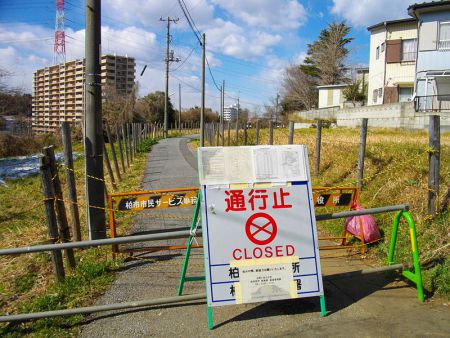
According to TRAFFIC, a lobby group, the street value of rhino horn is $60,000 per kilo—more than the price of gold. Gram for gram, bear-bile flakes or powder sell in Japan [slightly less] than cocaine in Asia. Booming demand from Asia’s growing middle classes is pushing some species close to extinction. As supply dwindles, prices rocket, which tempts criminal gangs to sink their claws in even further.

Elephant ivory is valued for aesthetic reasons. Demand for rhinoceros horns, the paws and bile of Asiatic black bears and sun bears, tiger bones and penises, and deer musk, is stimulated by the healing powers ascribed to them in traditional Chinese medicine. Rhino-horn shavings boiled in water are said to cool and to cure headaches; the brew is akin to fingernail clippings in water (both are mainly keratin, an indigestible protein). Bear bile does help with gallbladder and liver problems—but no more than the synthetic version of ursodeoxycholic acid, its main component.

In February 42 countries, including China and Japan, and the European Union signed a declaration against trade in illegal wildlife products. Chinese law punishes the purchase or consumption of endangered species with up to ten years in jail. But in May, when Philippine forces seized a Chinese vessel carrying sea turtles, giant clamshells and live sharks off the disputed Half Moon Shoal, China expressed outrage at the “provocative action”—not the illegal cargo.

The illegal trade in wild-animal products: Bitter pills, Economist, July 19, 2014, at 54

US Technology Firms and War

[N]imbler Silicon Valley outfits are beginning to invade the defence industry’s territory. “Warfare is going digital,” observes Tom Captain of Deloitte, a consulting firm. Tech firms have shown that they can supply robots, drones and intelligence software. SpaceX, founded by Elon Musk, a tech entrepreneur, is taking America’s air force to court to reopen bidding for a satellite-launch contract awarded to Boeing and Lockheed.

Excerpt, Weapons-makers: The case for defence, Economist, July 19, 2014, at 55

China in the North Pole

China is interested in the Arctic. On July 11th, 2014 its icebreaker, Xue Long (“Snow Dragon”), embarked on the country’s sixth Arctic expedition, with 65 scientists on board. A new 1.3 billion yuan ($210m) icebreaker will soon be launched, and last December  [2013] a China-Nordic research centre was opened in Shanghai.

New freight opportunities interest China along the Northern Sea Route (NSR) as ice recedes. In 2010 four ships took the route. Last summer 71 vessels did so. Each ship that takes the route must, at certain points, be accompanied by an ice-breaker, so it is unclear how soon the NSR will be suitable for mass transit, if at all.

Some climate models predict the Arctic Ocean could be ice-free in summer by the middle of this century. The route cuts the distance between Rotterdam and Shanghai by 22% and Yang Huigen of the Polar Research Institute of China has predicted that 5-15% of China’s international trade will use the NSR by 2020. But Linda Jakobson, of the US Studies Centre at the University of Sydney, says that is a “rather optimistic assessment” and that talk of the NSR as a new Suez Canal is overblown. Weather conditions and environmental sensitivities will make the route a difficult one.
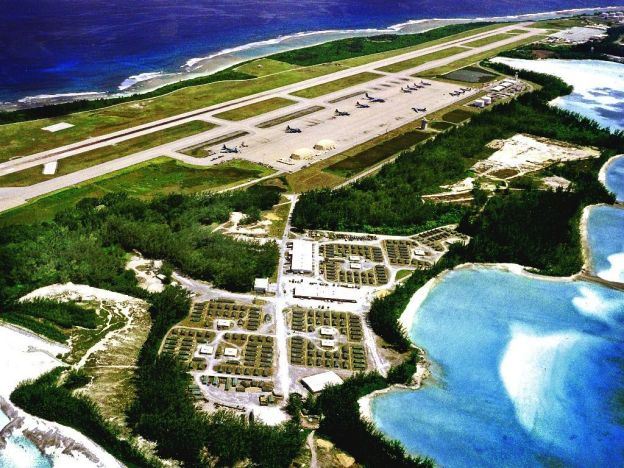
As for energy, China is one of the biggest investors in mining in Greenland. A deal with Rosneft, a state-controlled Russian company, will explore offshore Arctic fields for oil. But the undersea resources in the Arctic are largely within the Exclusive Economic Zones of the littoral states (notably Russia), so if China wants to look for energy it will have to do so jointly…

But the new Chinese presence is not without concerns. Huang Nubo, a tycoon, recently bought 100 hectares (250 acres) of land in northern Norway and has bid for a plot on the island of Svalbard, where China has a research station. He aims to develop a resort for Chinese tourists. Mr Huang had similar plans in Iceland in 2011, but local protests quashed them. A Norwegian newspaper has called him a “suspected imperialist”.

China and the Arctic: Polar bearings, Economist, July 12, 2014, at 39


Pirates and Free Trade

Ships navigating the lawless seas of the Gulf of Aden must keep a constant lookout for Somali pirates. The roots of Somalia’s maritime banditry lie in its desperately poor coastal villages, where the choice between fishing and piracy is an easy one for many.

Anja Shortland and Federico Varese mapped the locations of hijacked ships between 2005 and 2012. They found that hijacked vessels were always anchored far away from regional trading routes, and that big ports were not prone to piracy. There is a reason for that. Somali clans control local trade by issuing licences and charging informal taxes. The researchers reckon that communities which can tax imports and exports refuse to protect pirates because trade is a safer and more lucrative source of revenue than pirate earnings. Only clans that have no other income offer the pirates protection, in return for a share of their loot…..A… solution [to piracy] would be to build new roads and ports, which would allow remote areas to start trading. With alternative sources of income, fewer communities would be willing to harbour pirates….

A former president of Puntland repeatedly requested a road be built to Eyl, a rough-and-ready coastal town, as a quid pro quo for giving up piracy. His request was turned down, and piracy continued. Time for donors to rethink where they spend their pieces of eight.

Crime in Somalia: Pirates v economist, Economist, July 12, 2014, at 42

Interim Disposal of Fukushima Nuclear Waste

anti-nuclear protesters in Japan pushing fake nuclear waste

Fukushima Prefecture is set to accept the construction of an interim facility to store radioactive waste from cleanup work due to the nuclear disaster, advancing the stalled process of decontaminating the affected areas.  The prefectural government has decided to shoulder the difference between the appraised value of land in Okuma and Futaba, where the structure will be built, and the price it would have fetched before the 2011 accident at the Fukushima No. 1 nuclear power plant.

The decision came after landowners insisted that the land should be bought at a fair market value because the current appraisals are much lower than pre-disaster estimates.  Consent from local governments is expected to move forward the central government’s plan to start transporting radioactive soil and other contaminated waste to the storage site in January.

Okuma and Futaba host the crippled Fukushima No. 1 nuclear power plant. The residents of the two towns are still living as evacuees due to high levels of radiation in their hometowns. Talks between local officials and the central government over the planned facility reached an impasse after Environment Minister Nobuteru Ishihara enraged landowners with a comment in June.  “In the end, it will come down to money,” Ishihara said, referring to efforts to gain local approval for the storage facilities. Residents were angry because of the implication they could be easily bought.

The stalemate threatened to jeopardize the entire decontamination operation in the prefecture since the storage site is indispensable to advance the work to clean up and rebuild the affected communities.  In an effort to break the stalemate, the central government on Aug. 8 offered to double the funds to be provided to the local governments to 301 billion yen ($2.9 billion).

Fukushima Prefecture to accept intermediate storage facility for radioactive waste, THE ASAHI SHIMBUN, August 23, 2014