Category Archives: biodiversity

Where to Go? 1 Million Tons Radioactive Water at Fukushima

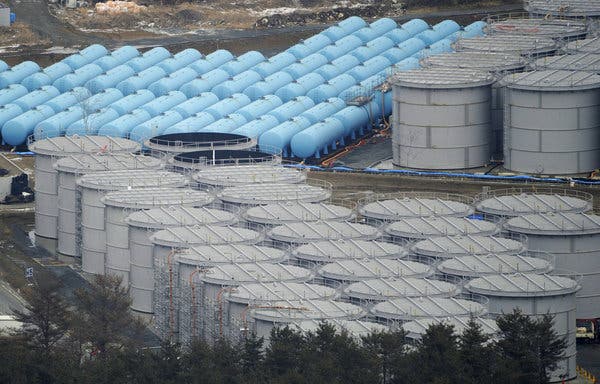
In August 2019, Tepco projected that storage of radioactive water at the Fukushima nuclear plant would reach full capacity by around summer 2022 even after the expansion — the first time it has issued such a precise estimate.  According to Tepco, the Fukushima No. 1 plant had 960 massive tanks containing 1.15 million tons of treated water as of July 18, 2019. Water that has touched the highly radioactive melted fuel debris has been cleaned up through water treatment machines and is stored in the tanks, but the high-tech treatment machines are able to remove most radionuclides except tritium. The plant currently sees an increase of contaminated water by 170 tons a day, Tepco says.

Releasing tritium-tainted water into the sea in a controlled manner is common practice at nuclear power plants around the world, and it was generally considered the most viable option as it could be done quickly and would cost the least.  The head of the Nuclear Regulation Authority, Toyoshi Fuketa, has long said that releasing the treated water into the sea is the most reasonable option, but people in Fukushima, especially fishermen, fear it will damage the region’s reputation.

Addressing those concerns, the government panel, launched in November 2016, has been looking for the best option in terms of guarding against reputational damage. Injecting it into the ground, discharging it as steam or hydrogen, or solidification followed by underground burial have all been on the table. Under the current plan, Tepco is set to increase the tank space to store 1.37 million tons of water a total, but estimates show that will only last until summer 2022.  But the more space it creates, the bigger the decommissioning headache becomes.

Excerpts from KAZUAKI NAGAT, Fukushima nuclear plant to run out of tanks to store tritium-laced water in three years, Tepco says, Japan Times, Aug. 9, 2019
BY KAZUAKI NAGATA

Low Risk-High Rewards: Killing Endangered Species

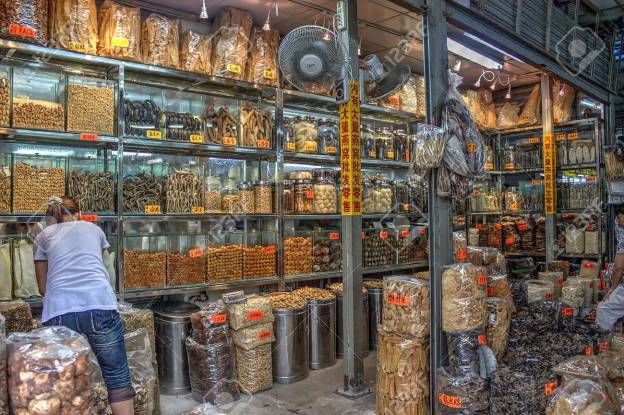
The animals’ meat, hides and, above all, tusks are money-spinners. East Asia is the biggest market for ivory and for many illegally traded products, such as animal parts used in traditional Chinese medicine (TCM)—tiger bones, rhino horns, pangolin scales—or in its cuisine—pangolin meat, for example. In July,  2019 the authorities in Singapore seized 8.8 tonnes, about 300 elephants’-worth, of ivory, along with 11.9 tonnes of pangolin scales, from some 2,000 of the anteaters, the world’s most widely trafficked endangered mammal. The annual profits of the trade in illegal wildlife products are estimated at between $7bn at the low end and $23bn. This makes it the fourth-most profitable criminal trafficking business, with links to others—slavery, narcotics and the arms trade..
Athough China is trying to curb illegal trade, it is also promoting TCM as one of its civilisation’s great contributions to the world. It has indeed made breakthroughs, such as artemisinin, now a widely used defence against malaria. Artemisinin is isolated from the plant Artemisia annua, sweet wormwood, a herb employed in TCM….Conservationists are alarmed that in 2019 the World Health Organisation (WHO) gave TCM respectability by including diagnoses for 400 conditions in its influential International Classification of Disease. 
The WHO approved in June 2019 a new version of its International Classification of Diseases, a highly influential document that categorizes and assigns codes to medical conditions, and is used internationally to decide how doctors diagnose conditions and whether insurance companies will pay to treat them. The latest version, ICD-11, is the first to include a chapter, chapter 26, on TCM.
Excerpts from How to curb the trade in endangered species: On the Horns, Economist, Aug. 10, 2019; The World Health Organization’s decision about traditional Chinese medicine could backfire, Nature, June 5, 2019
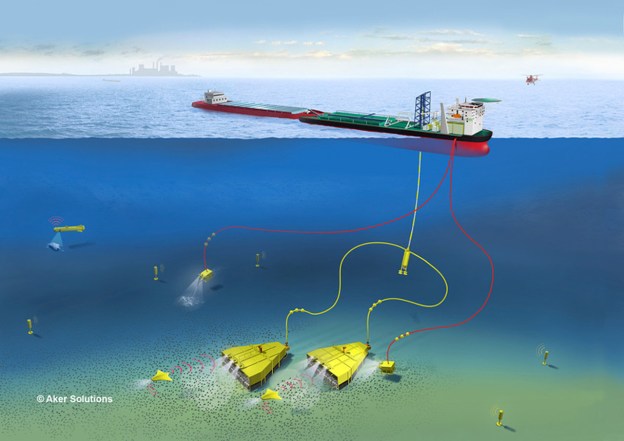
Mining the Ocean: the Fate of Sea Pangolin

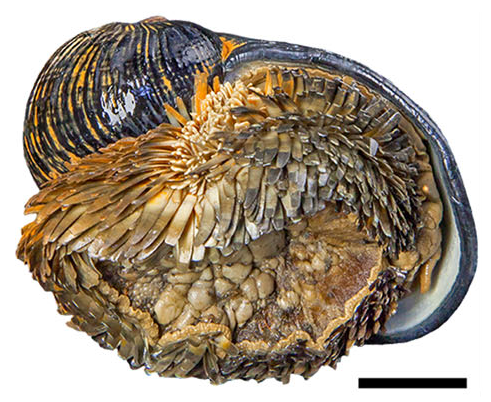
A snail that lives near hydrothermal vents on the ocean floor east of Madagascar has become the first deep-sea animal to be declared endangered because of the threat of mining.  The International Union for Conservation of Nature (IUCN) added the scaly-foot snail (Chrysomallon squamiferum) to its Red List of endangered species on 18 July, 2019 — amid a rush of companies applying for exploratory mining licenses…. The scaly-foot snail is found at only three hydrothermal vents in the Indian Ocean.  Two of those three vents are currently under mining exploration licences,…Even one exploratory mining foray into this habitat could destroy a population of these snails by damaging the vents or smothering the animals under clouds of sediment..
Full-scale mining of the deep seabed can’t begin in international waters until the International Seabed Authority (ISA) — a United Nations agency tasked with regulating sea-bed mining — finalizes a code of conduct, which it hopes to do by 2020….The biggest challenge to determining whether the scaly-foot snail warranted inclusion on the Red List was figuring out how to assess the extinction risk for animals that live in one of the weirdest habitats on Earth…

When the IUCN considers whether to include an organism on the Red List, researchers examine several factors that could contribute to its extinction. They include the size of a species’ range and how fragmented its habitat is…The IUCN settled on two criteria to assess the extinction risk for deep-sea species: the number of vents where they’re found, and the threat of mining.   In addition to the scaly-foot snail, the researchers are assessing at least 14 more hydrothermal vent species for possible inclusion on the Red List.

Excerpts from Ocean Snail is First Animal to be Officially Endangered by Deep-Sea Mining, Nature, July 22, 2019

On Sea Pangolins see YouTube video

Forest Fires in Africa Feed the Amazon Rainforest

The world’s largest rainforest and a crucial store of carbon dioxide gets most of its phosphorous, an important nutrient, from an unexpected source: fires in Africa.  Strange as it may seem, we thought that the Amazon got much of its phosphorus from dust whipped up from the Sahara Desert and transported across the Atlantic on the wind.

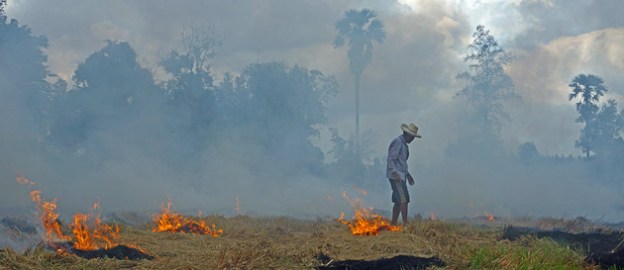
Cassandra Gaston at the University of Miami, US, and her colleagues had set out to quantify the effect of the phosphorous in Saharan dust on the Amazon’s growth. To do this, they collected and analysed particles caught in filters from a hilltop in French Guiana, at the northern edge of the Amazon Basin. But at the same time, they used satellites to track smoke from fires in Africa — both people burning wood and natural forest fires — drifting Westwards across the ocean. It turned out that the arrival of patches of smoke coincided with high levels of phosphorous being detected in the filters.  Gaston and her team then estimated how much of the phosphorus deposited on the Amazon Basin comes from African biomass burning. They found that, in Spring, smoke from the fires was responsible for most of the nutrient entering the Amazon Basin. …The findings suggest that people burning wood and other materials in Africa might have an impact on how much the Amazon grows and therefore how much carbon it stores in future.

Excerpt from The Amazon rainforest depends on fires in Africa for a vital nutrient, New Scientist, July 29, 2019

The Sand Industry: Opaque, Illegal, Unsustainable

Malaysia, Singapore’s biggest source for sea sand, has banned the export of the commodity, according to officials in Kuala Lumpur, a move that traders said could complicate the island-state’s ambitious expansion plans on reclaimed land.  Those plans include the development of the Tuas mega port, slated to be the world’s biggest container terminal. Singapore has increased its land area by a quarter since independence in 1965, mostly by using sand to reclaim coastal areas.

Malaysian Prime Minister Mohamad Mahathir, who came to power in a shock election last year, imposed a ban on all sea sand exports on October 3, 2018… Endie Shazlie Akbar, Mahathir’s press secretary, confirmed that the government had put a stop to sand exports last year. However, he denied that it was aimed at curbing Singapore’s expansion plans, saying it was a move to clamp down on illegal sand smuggling….Two traders importing sand to Singapore, who both asked not to be named, said the commodity is becoming scarcer and driving Singapore to source sand from as far as India, which would push up costs. Shipping is the biggest single cost in acquiring sand.The traders added Singapore has been stockpiling sand in recent years which could provide a buffer against any immediate bottleneck in supplies.

The sand industry is opaque with no international price index, making it difficult to gauge the financial impact of a ban by Malaysia.  Sea sand is mostly used for land reclamation, while river sand is a core component in constructions materials like cement.

Singapore imported 59 million tonnes of sand from Malaysia in 2018, at a cost of $347 million, according to United Nations Comtrade data, which is based on information provided by individual countries’ customs offices. That accounted for 97% of Singapore’s total sand imports in the year by volume, and 95% of Malaysia’s global sand sales.The data does not distinguish between types of sand.  When Indonesia banned exports to Singapore in 2007, citing environmental concerns, it caused a “sand crisis” in the city-state that saw building activity almost come to a halt. Singapore has since bolstered its stockpiles.

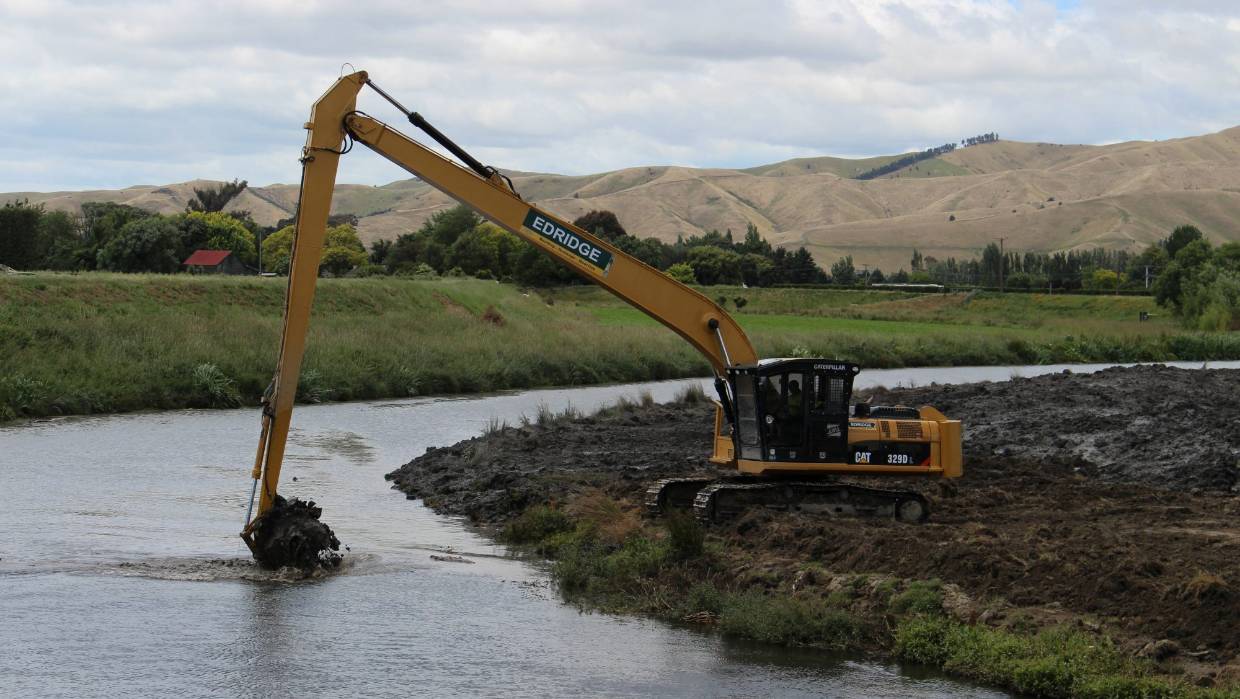
Unsustainable sand dredging disrupts sediment flows and fishing grounds, destroying livelihoods and polluting water sources in some of the poorest communities in Asia.  But Singapore criticized Indonesia for allegedly using the ban as leverage in negotiations over an extradition treaty and border delineation.

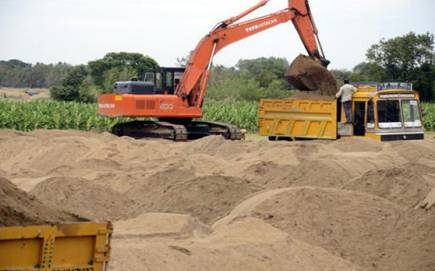
River Dredging for Extraction of Sand

Excerpts from Fathin Ungku, Rozanna Latiff , Exclusive: In blow to Singapore’s expansion, Malaysia bans sea sand exports, Reuters, July 2, 2019

What 200 Million Irradiated Mosquitoes Can Do

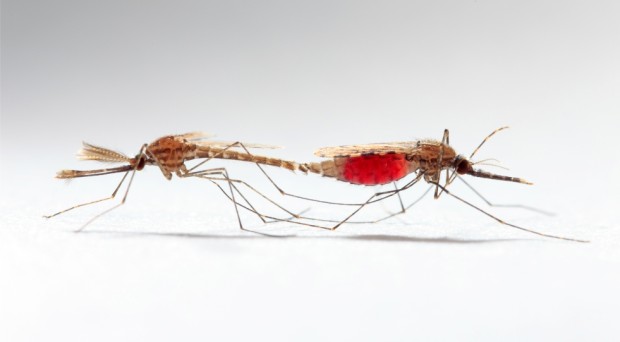
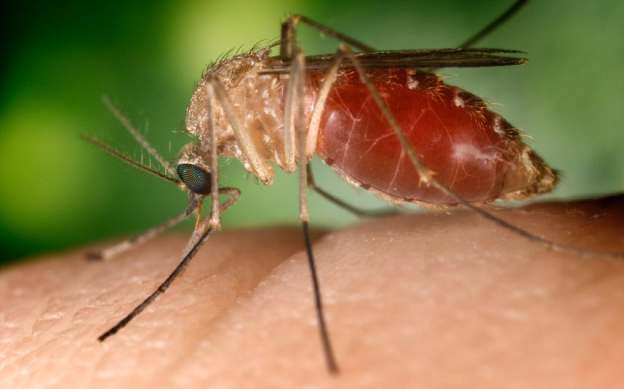
In July 2019, a combination of the nuclear sterile insect technique (SIT) with the incompatible insect technique (IIT) has led to the successful suppression of mosquito populations, a promising step in the control of mosquitoes that carry dengue, the Zika virus and many other devastating diseases. The results of the recent pilot trial in Guangzhou, China, carried out with the support of the IAEA in cooperation with the Food and Agriculture Organization of the United Nations (FAO), were published in Nature on 17 July 2019.

SIT is an environmentally-friendly insect pest control method involving the mass-rearing and sterilization of a target pest using radiation, followed by the systematic area-wide release of sterile males by air over defined areas. The sterile males mate with wild females, resulting in no offspring and a declining pest population over time. IIT involves exposing the mosquitoes to the Wolbachia bacteria. The bacteria partially sterilizes the mosquitoes, which means less radiation is needed for complete sterilization. This in turn better preserves the sterilized males’ competitiveness for mating.

The main obstacle in scaling up the use of SIT against various species of mosquitoes has been overcoming several technical challenges with producing and releasing enough sterile males to overwhelm the wild population. 

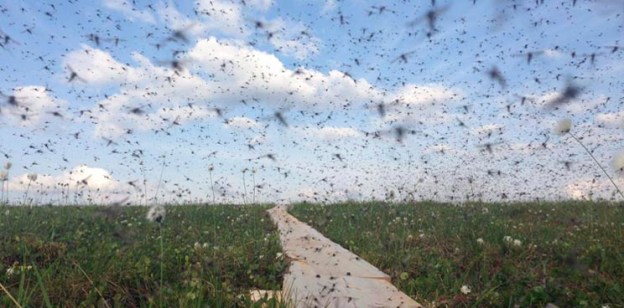
For example, the researchers used racks to rear over 500 000 mosquitoes per week that were constructed based on models developed at the Joint FAO/IAEA Division’s laboratories near Vienna, Austria. A specialized irradiator for treating batches of 150 000 mosquito pupae was also developed and validated with close collaboration between the Joint FAO/IAEA Division and the researchers…The results of this pilot trial, using SIT in combination with the IIT, demonstrate the successful near-elimination of field populations of the world’s most invasive mosquito species, Aedes albopictus (Asian tiger mosquito). The two-year trial (2016-2017) covered a 32.5-hectare area on two relatively isolated islands in the Pearl River in Guangzhou. It involved the release of about 200 million irradiated mass-reared adult male mosquitoes exposed to Wolbachia bacteria

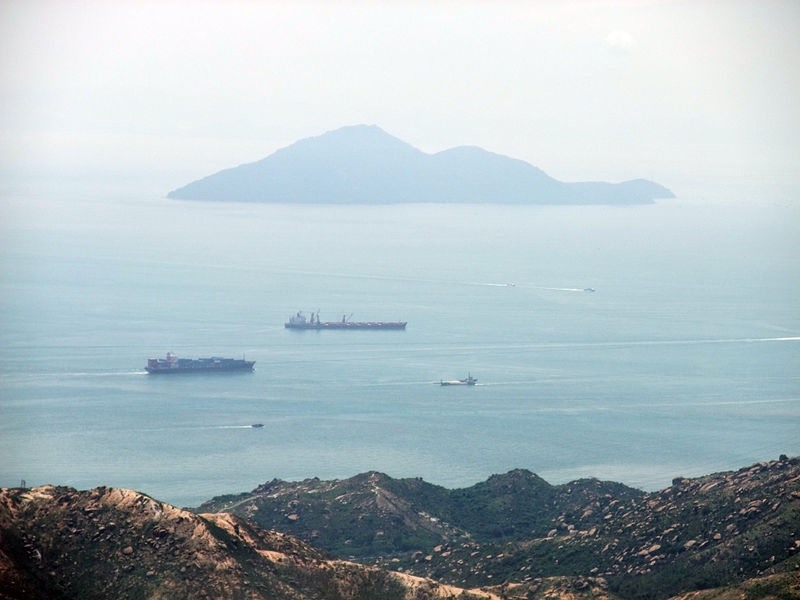
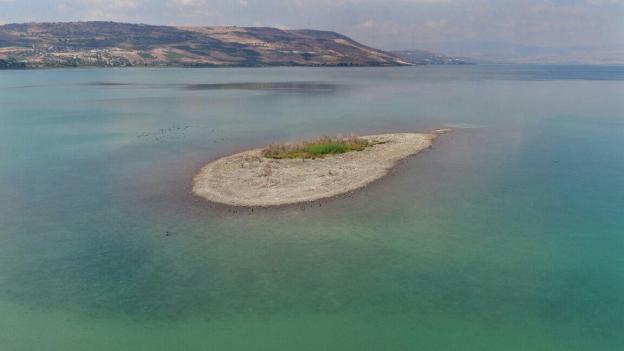
Nei Lingding island, China (view from Hong Kong)

Experts in China plan to test the technology in larger urban areas in the near future using sterile male mosquitoes from a mass-rearing facility in Guangzhou, said Zhiyong Xi, Director of Sun Yat-sen University-Michigan State University’s Joint Center of Vector Control for Tropical Diseases and Professor at Michigan State University in the United States

Excerpts from Miklos Gaspar & Jeremy Bouye, Mosquito Population Successfully Suppressed Through Pilot Study Using Nuclear Technique in China, IAEA Press Release, July 18, 2019
 

Free-For-All: Gold Mining and the Polluted Rivers of Central African Republic

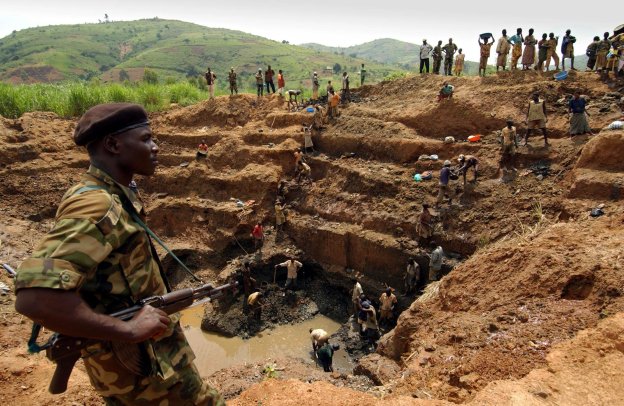
Four Chinese-run gold mines should be closed in the Central African Republic because of pollution threatening public health, a parliamentary panel said in a report published on July 14, 2019.  “Ecological disaster,” “polluted river,” “public health threatened,” were some of the phrases used in the report.  “Gold mining by the Chinese firms at Bozoum is not profitable for the state and harmful to the population and the environment,” the commission found after its investigation into mining in the northern town.  “The nature of the ecological disaster discovered onsite justifies the immediate, unconditional halt to these activities,” the report found.

Members of the commission spent four days in Bozoum a month ago in response to “multiple complaints from the population.”  There, they found a badly polluted River Ouham, shorn of several aquatic species following the excavation of its riverbed.  They discovered that a rising death rate in fishing villages as well as shrinking access to clean drinking water.

The investigators also voiced fears that the country’s “resources are being squandered with the complicity of certain ministry of mines officials.”  The CAR is rich in natural resources but riven by conflict which has forced around one in four of its 4.5 million population to flee their homes. Under those circumstances, exploitation of the country’s natural resources is difficult to monitor effectively given that the state only has partial control of its own territory.

Central African Republic Report Cites Ecological Disaster in Calling for Closing of 4 Chinese Gold MInes, Agence France Presse,  July 14, 2019

Who Owns the Riches of the Melting North Pole

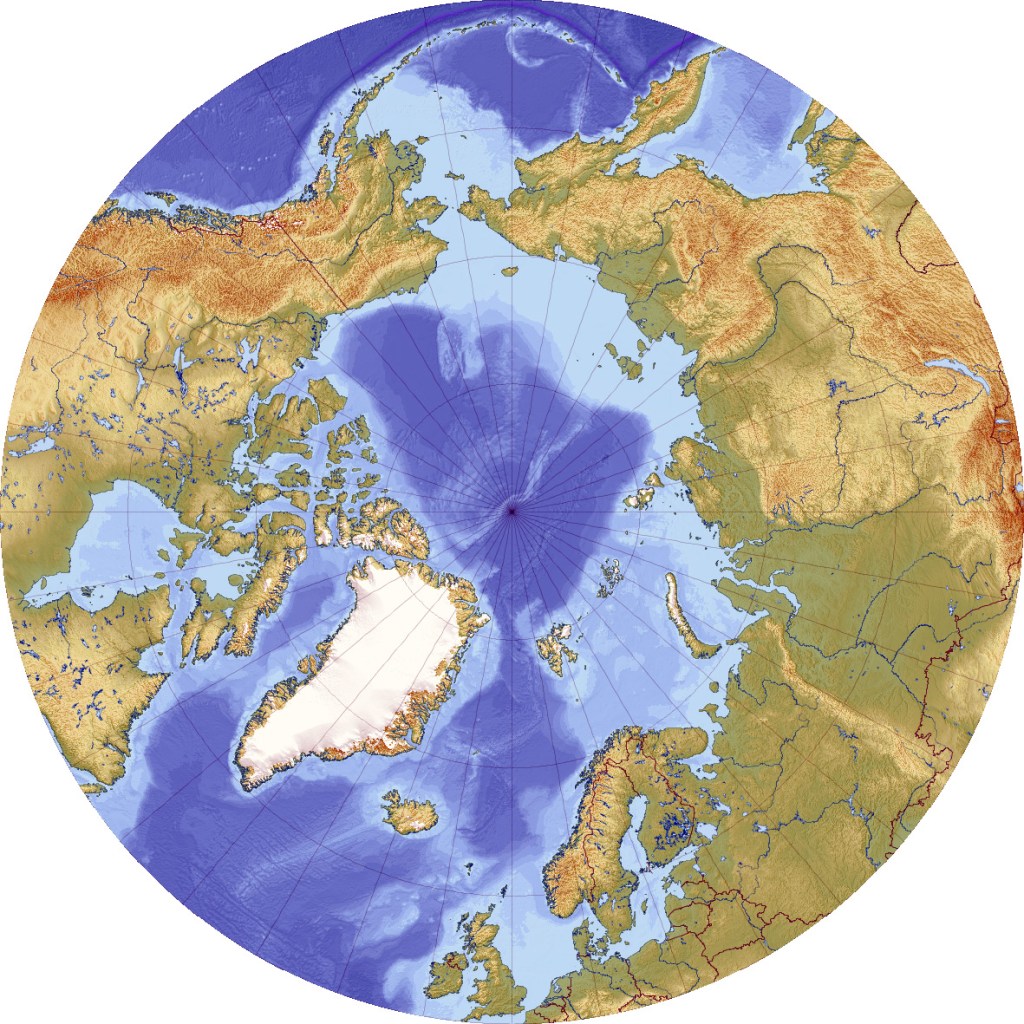
A competition for the North Pole heated up in May 2019, as Canada became the third country to claim—based on extensive scientific data—that it should have sovereignty over a large swath of the Arctic Ocean, including the pole. Canada’s bid, submitted to the United Nations’s Commission on the Limits of the Continental Shelf (CLCS), joins competing claims from Russia and Denmark. Like theirs, it is motivated by the prospect of mineral riches: the large oil reserves believed to lie under the Arctic Ocean, which will become more accessible as the polar ice retreats. And all three claims, along with dozens of similar claims in other oceans, rest on extensive seafloor mapping, which has proved to be a boon to science…

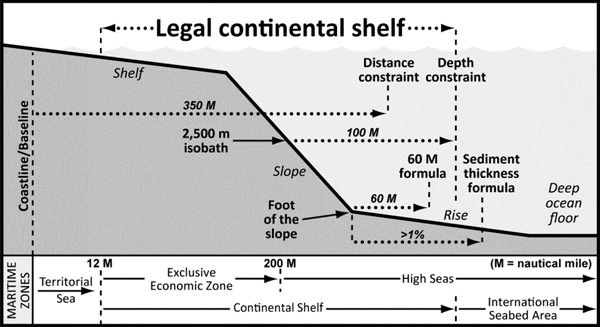
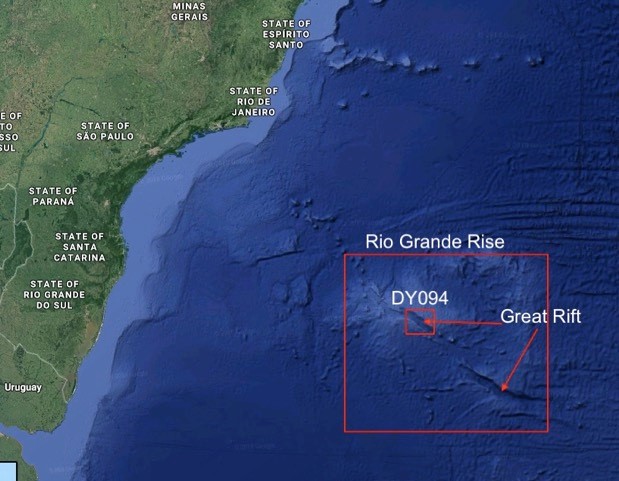
Coastal nations have sovereign rights over an exclusive economic zone (EEZ), extending by definition 200 nautical miles (370 kilometers) out from their coastline. But the 1982 United Nations Convention on the Law of the Sea opened up the possibility of expanding that zone if a country can convince CLCS that its continental shelf extends beyond the EEZ’s limits…..Most of the 84 submissions so far were driven by the prospect of oil and gas, although advances in deep-sea mining technology have added new reasons to apply. Brazil, for example, filed an application in December 2018 that included the Rio Grande Rise, a deep-ocean mountain range 1500 kilometers southeast of Rio De Janeiro that’s covered in cobalt-rich ferromanganese crusts.

The Rio Grande Rise, Brazil

To make a claim, a country has to submit detailed data on the shape of the sea floor and on its sediment, which is thicker on the shelf than in the deep ocean. …CLCS, composed of 21 scientists in fields such as geology and hydrography who are elected by member states, has accepted 24 of the 28 claims it has finished evaluating, some partially or with caveats; in several cases, it has asked for follow-up submissions with more data. Australia was the first country to succeed, adding 2.5 million square kilometers to its territory in 2008. New Zealand gained undersea territory six times larger than its terrestrial area. But CLCS only judges the merit of each individual scientific claim; it has no authority to decide boundaries when claims overlap. To do that, countries have to turn to diplomatic channels once the science is settled.

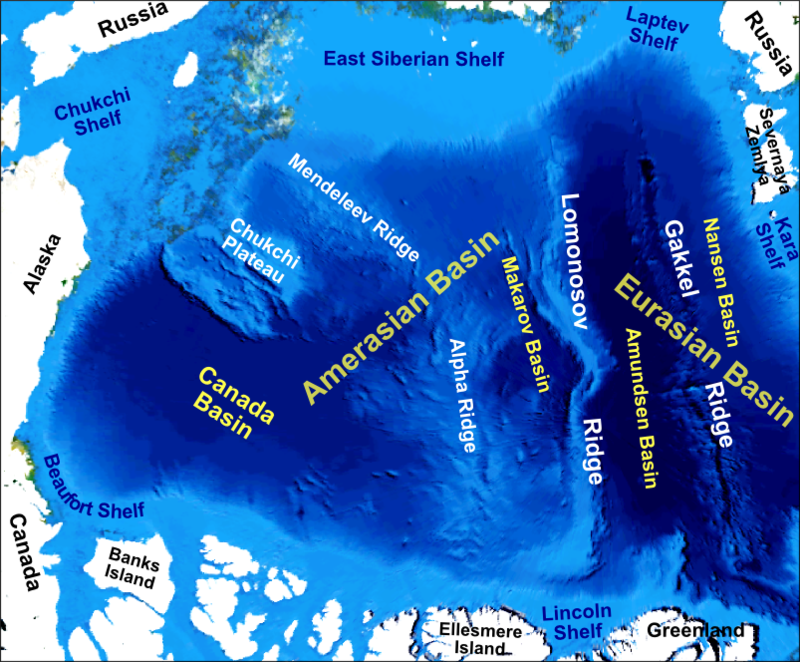
The three claims on the North Pole revolve around the Lomonosov Ridge, an underwater mountain system that runs from Ellesmere Island in Canada’s Qikiqtaaluk region to the New Siberian Islands of Russia, passing the North Pole. Both countries claim the ridge is geologically connected to their continent, whereas Denmark says it is also tied to Greenland, a Danish territory. As the ridge is thought to be continental crust, the territorial extensions could be extensive)

Lomonosov Ridge, Amerasian Basin

Tensions flared when Russia planted a titanium flag on the sea floor beneath the North Pole in 2007, after CLCS rejected its first claim, saying more data were needed. The Canadian foreign minister at the time likened the move to the land grabs of early European colonizers. Not that the North Pole has any material value: “The oil potential there is zip,” says geologist Henry Dick of the Woods Hole Oceanographic Institution in Massachusetts. “The real fight is over the Amerasian Basin” where large amounts of oil are thought to be locked up…

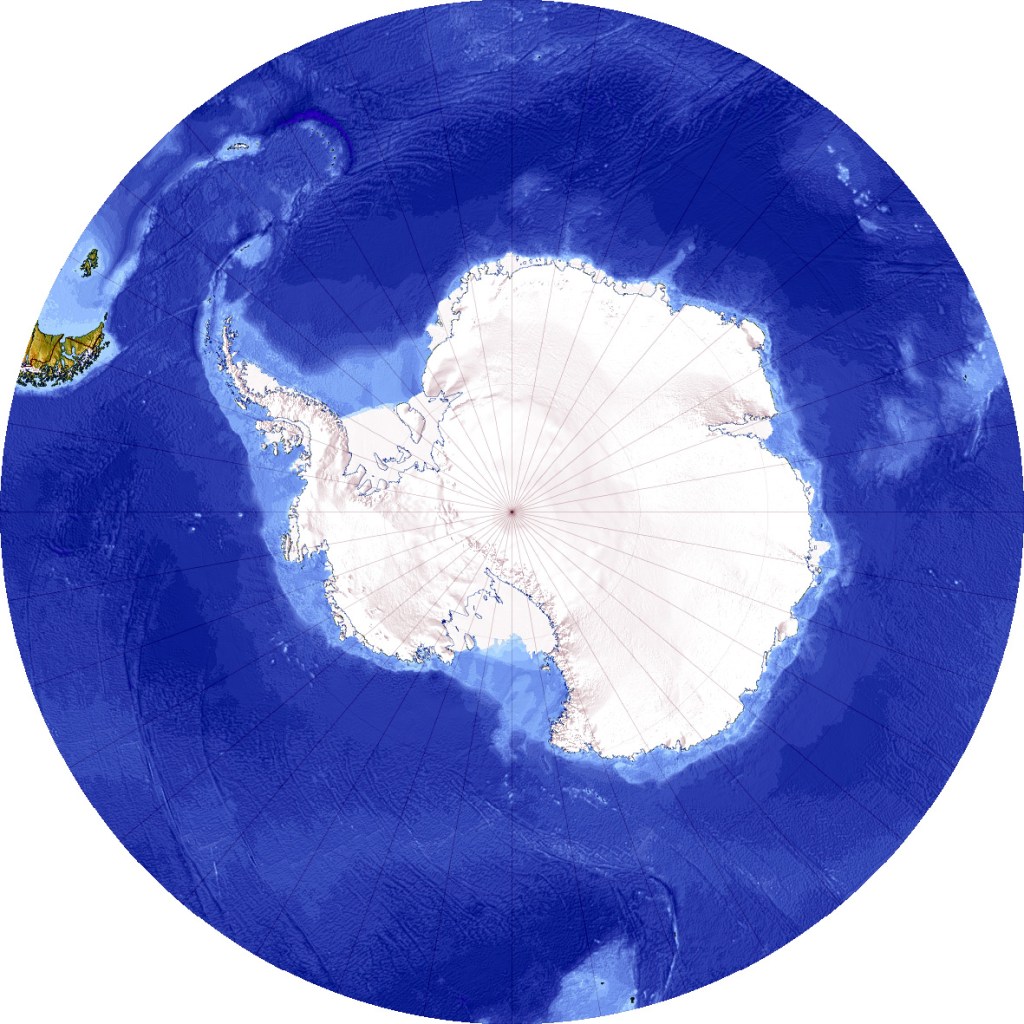
There’s also a proposal to make the North Pole international, like Antarctica (South Pole), as a sign of peace, says Oran Young, a political scientist at the University of California, Santa Barbara. “It seems a very sensible idea.”

Richard Kemeny, Fight for the Arctic Ocean is a boon for science, June 21, 2019

How Venom from Spiders Kills Malaria Mosquitoes

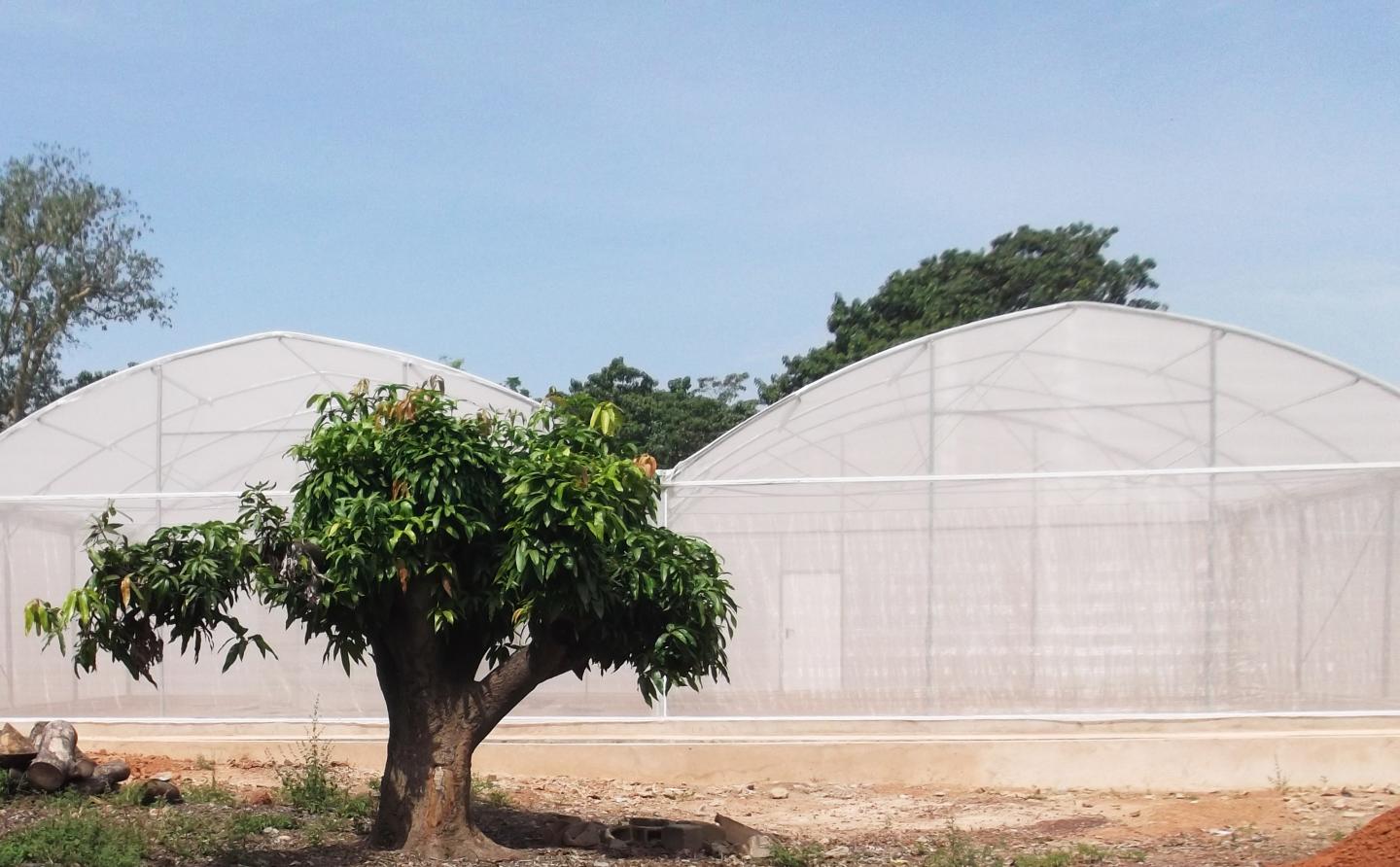
In the 1980s, the village of Soumousso in Burkina Faso helped launch one of the most powerful weapons against malaria: insecticide-treated bed nets, which had early field trials there and went on to save millions of lives. But as mosquitoes developed resistance to widely used insecticides, the nets lost some of their power. Now, researchers are hoping the village can help make history again by testing a new countermeasure: a genetically modified (GM) fungus that kills malaria-carrying mosquitoes. In tests in a 600-square-meter structure in Soumousso called the MosquitoSphere—built like greenhouse but with mosquito netting instead of glass—the fungus eliminated 99% of the mosquitoes within a month, scientists report in the  magazine Science.

MosquitoSphere, Burkina Faso

The fungus also has clear advantages, however: It spares insects other than mosquitoes, and because it doesn’t survive long in sunlight, it’s unlikely to spread outside the building interiors where it would be applied.  Fungi naturally infect a variety of insects, consuming the host’s tissues in order to reproduce, and they have been used for decades to control a wide variety of crop pests….Researchers have tested dozens of different fungal strains against disease-carrying mosquitoes, but none was effective enough to pass muster. So researchers from the University of Maryland (UMD) in College Park and the Research Institute of Health Sciences & Centre Muraz in Bobo-Dioulasso, Burkina Faso, endowed a strain called M. pingshaense with a gene for a toxin isolated from spider venom that turns on when it contacts hemolymph, the insect version of blood. In the lab, the team showed its creation could kill mosquitoes faster and that just one or two spores could cause a lethal infection. 

Burkina Faso was a promising place for a field test: Unlike many countries in Africa, it has an established system to evaluate and approve the use of GM organisms. It also has one of the highest rates of malaria in the world, and insecticide-resistant mosquitoes are widespread. For those and other reasons, the U.S. National Institutes of Health funded the MosquitoSphere, which is specifically designed to test GM organisms.

Excerpts fromGretchen Vogel  Fungus with a venom gene could be new mosquito killer, Science, May 31, 2019

How Companies Buy Social License: the ExxonMobil Example

The Mobil Foundation sought to use its tax-exempt grants to shape American laws and regulations on issues ranging from the climate crisis to toxic chemicals – with the explicit goal of benefiting Mobil, documents obtained by the Guardian newspaper show.  Recipients of Mobil Foundation grants included Ivy League universities, branches of the National Academies and well-known civic organizations and environmental researchers.  Benefits for Mobil included – in the foundation’s words – funding “a counterpoint to so-called ‘public interest’ groups”, helping Mobil obtain “early access” to scientific research, and offering the oil giant’s executives a forum to “challenge the US Environmental Protection Agency (EPA) behind-the-scenes”….

A third page reveals Mobil Foundation’s efforts to expand its audience inside environmental circles via a grant for the Environmental Law Institute, a half-century-old organization offering environmental law research and education to lawyers and judges.  “Institute publications are widely read in the environmental community and are helpful in communicating industry’s concerns to such organizations,” the entry says. “Mobil Foundation grants will enhance environmental organizations’ views of Mobil, enable us to reach through ELI activities many groups that we do not communicate with, and enable Mobil to participate in their dialogue groups.”

The documents also show Mobil Foundation closely examining the work of individual researchers at dozens of colleges and universities as they made their funding decisions, listing ways that foundation grants would help shape research interests to benefit Mobil, help the company recruit future employees, or help combat environmental and safety regulations that Mobil considered costly.  “It should be a wake-up call for university leaders, because what it says is that fossil fuel funding is not free,” said Geoffrey Supran, a postdoctoral researcher at Harvard and MIT.  “When you take it, you pay with your university’s social license,” Supran said. “You pay by helping facilitate these companies’ political and public relations tactics.”

In some cases, the foundation described how volunteer-staffed not-for-profits had saved Mobil money by doing work that would have otherwise been performed by Mobil’s paid staff, like cleaning birds coated in oil following a Mobil spill.  In 1987, the International Bird Rescue Research Center’s “rapid response and assistance to Mobil’s West Coast pipeline at a spill in Lebec, CA not only defused a potential public relations problem”, Mobil Foundation said, “but saved substantial costs by not requiring our department to fly cross country to respond”.d of trustees at the Woods Hole Oceanographic Institution (recipient of listed donations totalling over $200,000 from Mobil) and a part of UN efforts to study climate change.

Wise ultimately co-authored two UN Intergovernmental Panel on Climate Change reports, serving as a lead author on one. One report chapter Wise co-authored prominently recommended, among other things, burning natural gas (an ExxonMobil product) instead of coal as a way to combat climate change.

Excerpts from How Mobil pushed its oil agenda through ‘charitable giving’, Guardian, June 12, 2019

Who to Save? Forests or Farmers

Agriculture continues to present the biggest threat to forests worldwide. Some experts predict that crop production needs to be doubled by 2050 to feed the world at the current pace of population growth and dietary changes toward higher meat and dairy consumption. Scientists generally agree that productivity increase alone is not going to do the trick. Cropland expansion will be needed, most likely at the expense of large swathes of tropical forests – as much as 200 million hectares by some estimates. 

Nowhere is this competition for land between forests and agriculture more acute than in Africa. Its deforestation rate has surpassed those of Latin America and Southeast Asia. Sadly, the pace shows no sign of slowing down. Africa’s agriculture sector needs to feed its burgeoning populations- the fastest growing in the world…. What’s more, for the millions of unemployed African youth, a vibrant agriculture sector will deliver jobs and spur structural transformation of the rural economy. Taken together, the pressures on forests are immense. Unless interventions are made urgently, a large portion of Africa’s forests will be lost in the coming decades – one farm plot at a time.

The difficult question is: what interventions can protect forests and support farmers at the same time? 

To tackle these complex challenges, the Center for International Forestry Research (CIFOR) has launched a new initiative: The “Governing Multifunctional Landscapes (GML) in Sub-Saharan Africa: Managing Trade-Offs Between Social and Ecological Impacts”  Read more

Excerpts from XIAOXUE WENG et al Can forests and smallholders live in harmony in Africa?, CIFOR, June 3, 2019

The Sad Mismanagement of Sand

With the global demand for sand and gravel standing at 40 to 50 billion tonnes per year, a new report by UN Environment reveals that aggregate extraction in rivers has led to pollution, flooding, lowering of water aquifers and worsening drought occurrence.

The report Sand and sustainability: Finding new solutions for environmental governance of global sand resources presents how the demand for sand has increased  three-fold over the last two decades. Further to this, damming and extraction have reduced sediment delivery from rivers to many coastal areas, leading to reduced deposits in river deltas and accelerated beach erosion

Sand extraction is fast becoming a transboundary issue due to sand extraction bans, international sourcing of sand for land reclamation projects and impacts of uncontrolled sand extraction beyond national borders. International trade in sand and gravel is growing due to high demand in regions without local sand and gravel resources and is forecast to rise 5.5 per cent a year with urbanization and infrastructure development trends.

Unsustainable sand extraction does not only impact the environment but can also have far-reaching social implications. Sand removal from beaches can jeopardize the development of the local tourism industry, while removing sand from rivers and mangrove forests leads to a decrease of crab populations—negatively affecting women whose livelihood depends on the collection of crabs.

Excerpts from Rising demand for sand calls for resource governance, UNEP, May 7, 2019

How Nuclear Explosions Affect the Deep Ocean

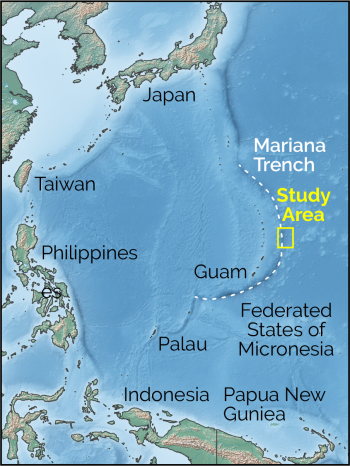
Radioactive carbon released into the atmosphere from 20th-century nuclear bomb tests has reached the deepest parts of the ocean, new research finds.  A new study in AGU’s journal Geophysical Research Letters finds the first evidence of radioactive carbon from nuclear bomb tests in muscle tissues of crustaceans that inhabit Earth’s ocean trenches, including the Mariana Trench, home to the deepest spot in the ocean.

Mariana Deep Ocean Trench

Organisms at the ocean surface have incorporated this “bomb carbon” into the molecules that make up their bodies since the late 1950s. Crustaceans in deep ocean trenches are feeding on organic matter from these organisms when it falls to the ocean floor. The results show human pollution can quickly enter the food web and make its way to the deep ocean, according to the study’s authors.


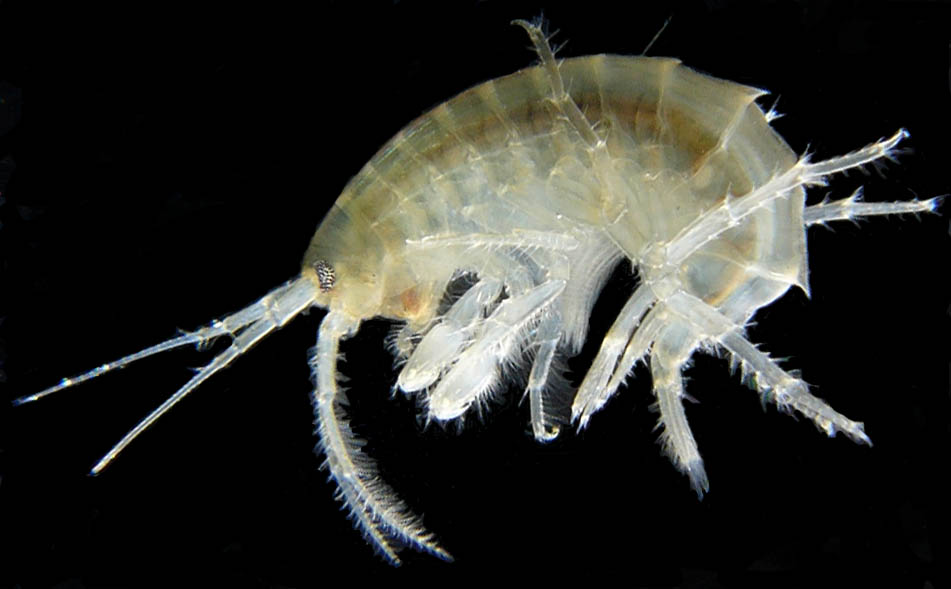
Crustacean

According to researchers, water containing carbon-14 can take centuries to circulate throughout the ocean, but the food web drastically accelerated the process. “There’s a very strong interaction between the surface and the bottom, in terms of biologic systems, and human activities can affect the biosystems even down to 11,000 meters,” said Weidong Sun, a coauthor of the study, “so we need to be careful about our future behaviors.”

RADIOACTIVE CARBON FROM NUCLEAR BOMB TESTS FOUND IN DEEP OCEAN TRENCHES
AGU Press Release, 8 May 2019

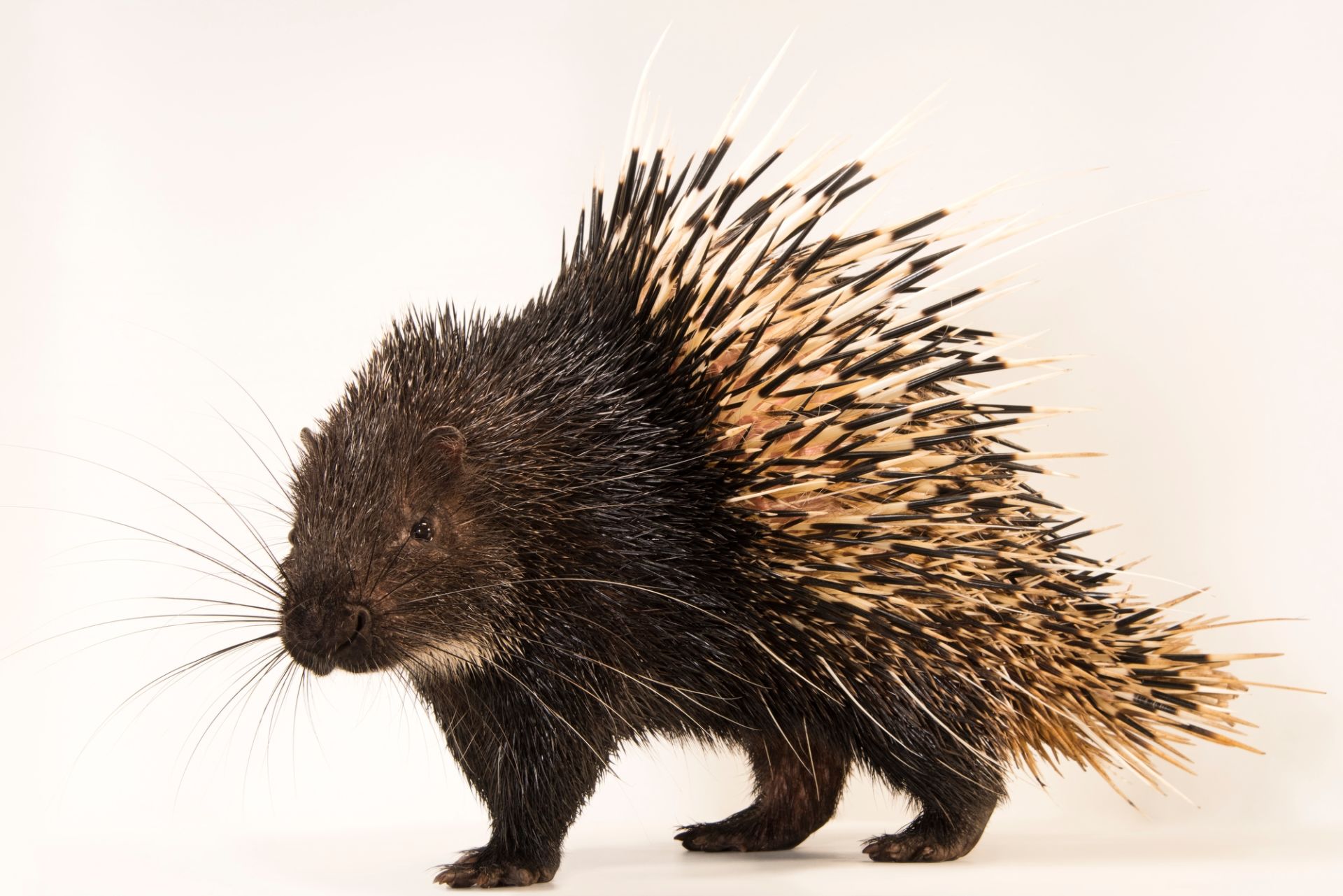
Killing Popcupines for their Bellies: endangered species

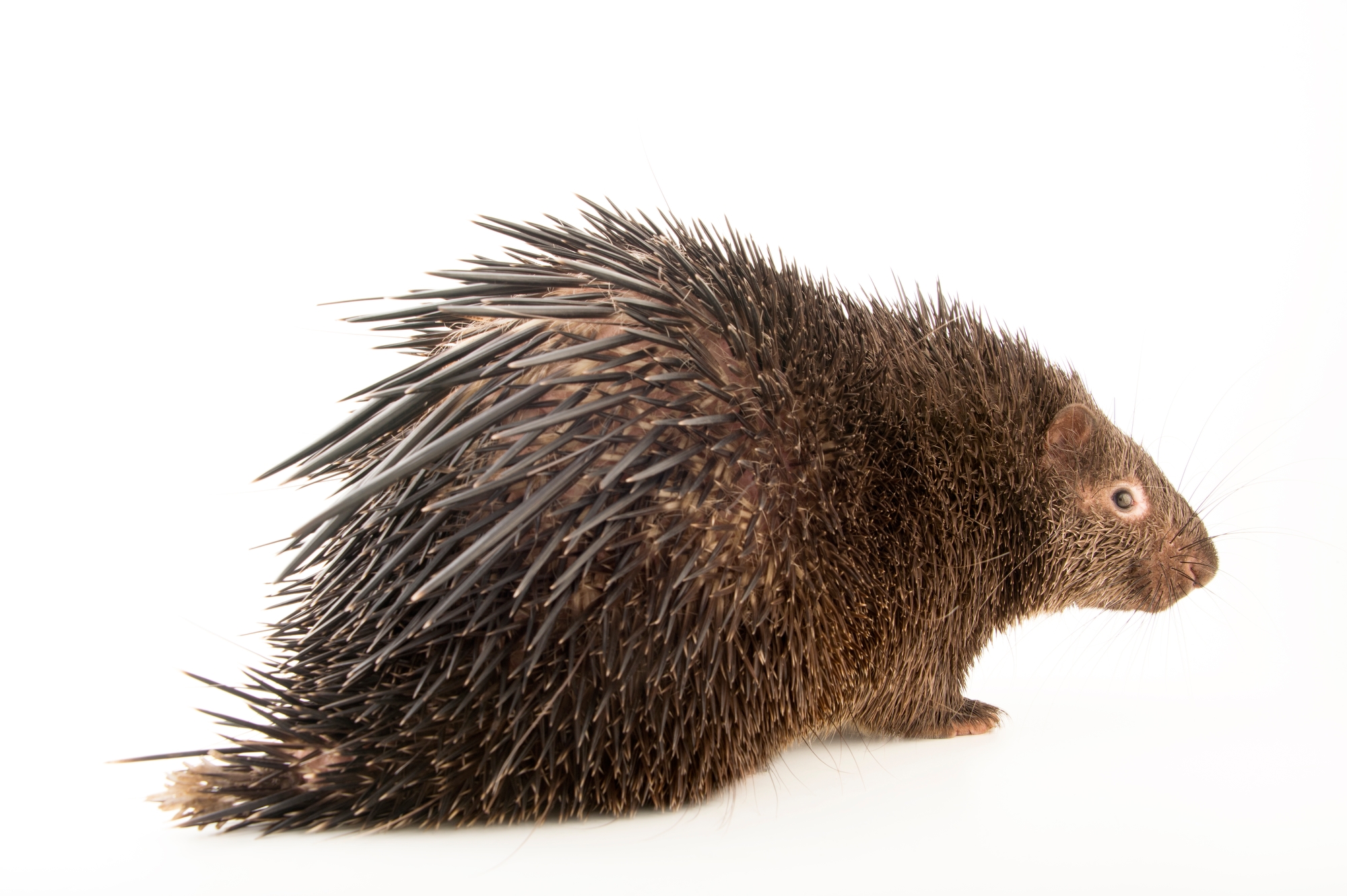
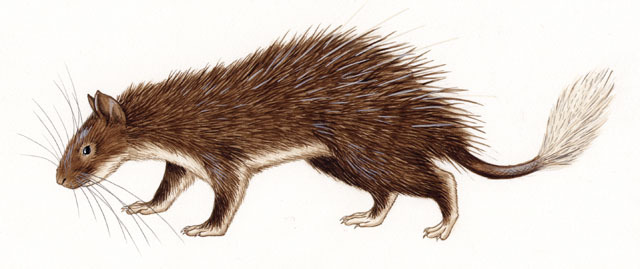
Porcupines  are been hunted for undigested plant material in their gut known as bezoars.


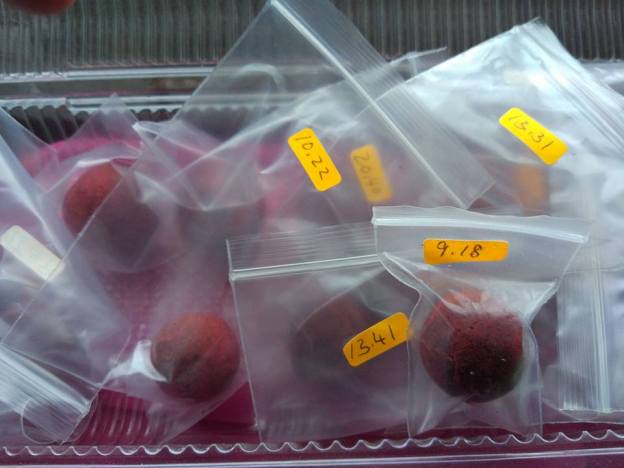
Varieties of porcupine bezoar

According to leading wildlife trafficking experts, the small, spiny rodents are at risk of becoming endangered across Southeast Asia.  Demand is predominantly driven by China, where some believe that bezoars, which accumulate in the digestive tract, have potent medicinal properties, including the ability to cure diabetes, dengue fever, and cancer. Bezoars are sold either raw or in powdered form and may be processed into capsules. A few ounces of the substance can command hundreds, even thousands, of dollars. Most sought after is the dark red “blood” bezoar, believed to be the most potent of the several varieties. Prices for bezoars have “increased exponentially during the past few years, following recent claims of their cancer-curing properties,” according to a 2015 report by the wildlife trade monitoring organization Traffic.

The Philippine porcupine, the Asiatic brush-tailed porcupine, and the Malayan porcupine, which live throughout Southeast Asia, are all flagged as threatened and declining in number by the International Union for Conservation of Nature, the body that sets the conservation status of wildlife species. None has yet been listed as endangered, which would bolster legal protection and international awareness.

Excerpts from Porcupines are being poached for their stomach content, National Geographic, Mar. 22, 2019

How to Strengthen the Immune System of Plants: biodiversity

In the past 150 years, the concentration of carbon dioxide in the atmosphere has risen from 280 parts per million (ppm) to 410 ppm. For farmers this is mixed news. Any change in familiar weather patterns caused by the atmospheric warming this rise is bringing is bound to be disruptive. But more carbon dioxide means more fuel for photosynthesis and therefore enhanced growth—sometimes by as much as 40%. And for those in temperate zones, rising temperatures may bring milder weather and a longer growing season. (In the tropics the effects are not so likely to be benign.) What is not clear, though, and not much investigated, is how rising CO2 levels will affect the relation between crops and the diseases that affect them…

Plant biology is altered substantially by a range of environmental factors. This makes it difficult to predict what effect a changing climate will have on particular bits of agriculture. Carbon dioxide is a case in point. It enhances growth of many plants but,  it also shifts the defences to favour some types of disease over others.

To make matters even more complicated, evidence is mounting that changes in temperature and water availability also shift plant immune responses. André Velásquez and Sheng Yang He, at Michigan State University, wrote an extensive review on the warfare between plants and diseases in Current Biology in 2018. They noted that though some valuable crops, such as potatoes and rice, experience less disease as moisture levels increase, this is not the case for most plants. High humidity, in general, favours the spread of botanical diseases. The same can be said for temperature—with some diseases, like papaya ringspot virus, thriving in rising temperatures while others, for example potato cyst, are weakened.

The problems are daunting, then, but there is a way to try to solve them… Genes which grant resistance to diseases that might become severe in the future need to be tracked down. Modern crops have been streamlined by artificial selection to be excellent at growing today. This means that they have the genes they need to flourish when faced with the challenges expected from current conditions, but nothing more. Such crops are thus vulnerable to changes in their environment.  One way to find genes that may alter this state of affairs is to look to crops’ wild relatives. Uncossetted by farmers, these plants must survive disease by themselves—and have been fitted out by evolution with genes to do so. Borrowing their dna makes sense. But that means collecting and cataloguing them. This is being done, but not fast enough. The International Centre for Tropical Agriculture, a charity which works in the area, reckons that about 30% of the wild relatives of modern crops are unrepresented in gene banks, and almost all of the rest are underrepresented….

[This is becuase] most countries are, rightly, protective of their genetic patrimony. If money is to be made by incorporating genes from their plants into crops, they want to have a share of it. It is therefore incumbent on rich countries to abide by rules that enable poor ones to participate in seed collecting without losing out financially. Poor, plant-rich countries are in any case those whose farmers are most likely to be hurt by global warming. It would be ironic if that were made worse because genes from those countries’ plants were unavailable to future-proof the world’s crops.

Excerpts from Blocking the Road to Rusty Death: Climate Change and Crop Disease, Economist,  Apr. 20, 2019

Suing and Wining: Indigenous People, Ecuador

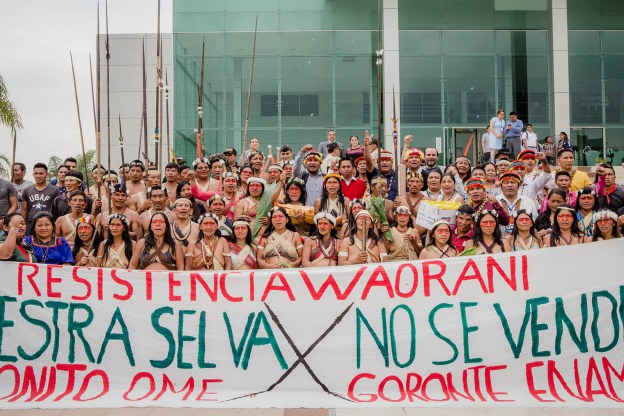
Hunter-gatherers in the Amazon sought in court on in April 2019 to stop Ecuador’s government auctioning their land to oil companies, as tension mounts over the future of the rainforest…The Waorani said the government did not properly consult them in 2012 over plans to auction their land to oil companies.

“We live on these lands and we want to continue to live there in harmony. We will defend them. Our fight is that our rights are respected,” said Nemonte Nenquimo, a leader of the 2,000-strong Waorani….Ecuador is pushing to open up more rainforest and develop its oil and gas reserves in the hope of improving its sluggish economy and cutting its high fiscal deficit and foreign debt…

The constitution gives the government the right to develop energy projects and extract minerals on any land, regardless of who owns it, but requires that communities are consulted first and are properly informed about any projects and their impact. Laws to regulate the consultation process have yet to be introduced – although the court case could push the government to do this, said Brian Parker, a lawyer with campaign group Amazon Frontlines, which is supporting the Waorani…

The government announced last year that it had divided swathes of forest up into blocs for auction, one of which – bloc 22 – covers the Waorani’s ancestral lands, raising the specter of pollution and an end to their way of life.  In two landmark cases in 2018, local courts sided with indigenous communities who said the government had failed to inform them before designating their land for mineral exploitation….The Inter-American Court of Human Rights also ruled in 2012 that Ecuador had violated its Sarayaku Amazonian community’s right to prior consultation before drillers started exploration on their lands in the late 1990s.

Excerpts Ecuador’s hunter-gatherers in court over oil drilling in Amazon, Reuters, Apr. 11, 2019

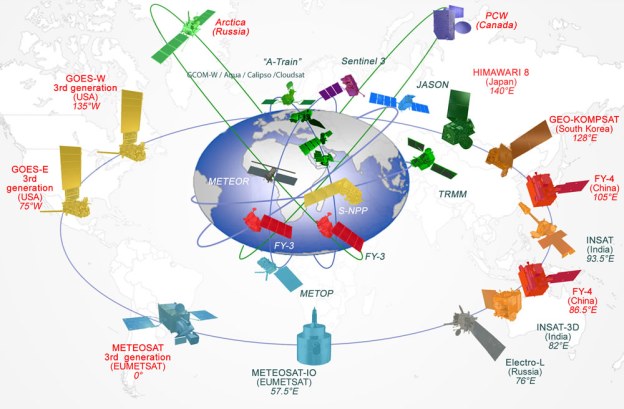
5,000 Eyes in the Sky: environmental monitoring

The most advanced satellite to ever launch from Africa will soon be patrolling South Africa’s coastal waters to crack down on oil spills and illegal dumping.  Data from another satellite, this one collecting images from the Texas portion of a sprawling oil and gas region known as the Permian Basin, recently delivered shocking news: Operators there are burning off nearly twice as much natural gas as they’ve been reporting to state officials.

With some 5,000 satellites now orbiting our planet on any given day…. They will help create a constantly innovating industry that will revolutionize environmental monitoring of our planet and hold polluters accountable…

A recent study by Environmental Defense Fund focused on natural gas flares from the wells in the Permian Basin, located in Western Texas and southeastern New Mexico. Our analysis proved that the region’s pollution problem was much larger than companies had revealed.  A second study about offshore gas flaring in the Gulf of Mexico, published by a group of scientists in the Geophysical Research Letters, showed that operators there burn off a whopping 40% of the natural gas they produce.

Soon a new satellite will be launching that is specifically designed not just to locate, but accurately measure methane emissions from human-made sources, starting with the global oil and gas industry.  MethaneSAT, a new EDF affiliate unveiled in 2018, will launch a future where sensors in space will find and measure pollution that today goes undetected. This compact orbital platform will map and quantify methane emissions from oil and gas operations almost anywhere on the planet at least weekly.

Excerpts from Mark Brownstein, These pollution-spotting satellites are just a taste of what’s to come, EDF, Apr. 4, 2019

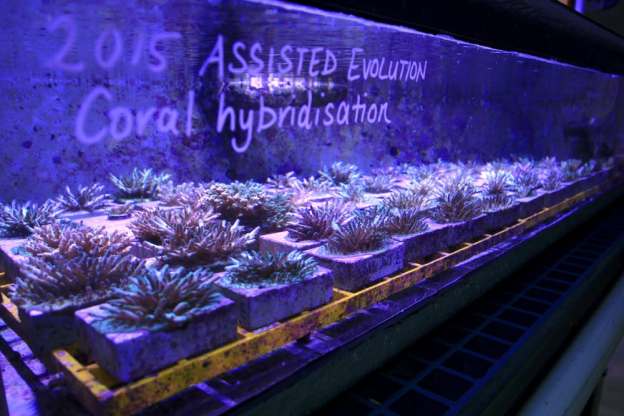
Assisted Evolution: Engineering Coral Reefs

Imagine ecologists cultivating whole new breeds of trees to restock a devastated wilderness…. Coral conservation has traditionally focused on minimizing damage from insults such as water pollution, invasive starfish, and destructive fishing or tourism. In the Caribbean, some conservationists have worked to “replant” damaged coral. But Gates and Van Oppen [two scientists]  have something more intrusive in mind. They want to try to alter the genetics of coral or the microbes that live on it. They dubb the effort “assisted evolution.”

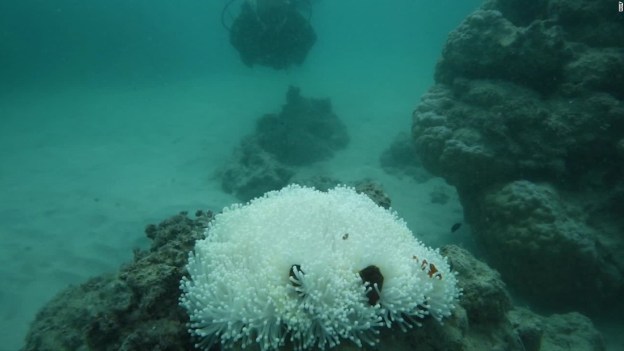
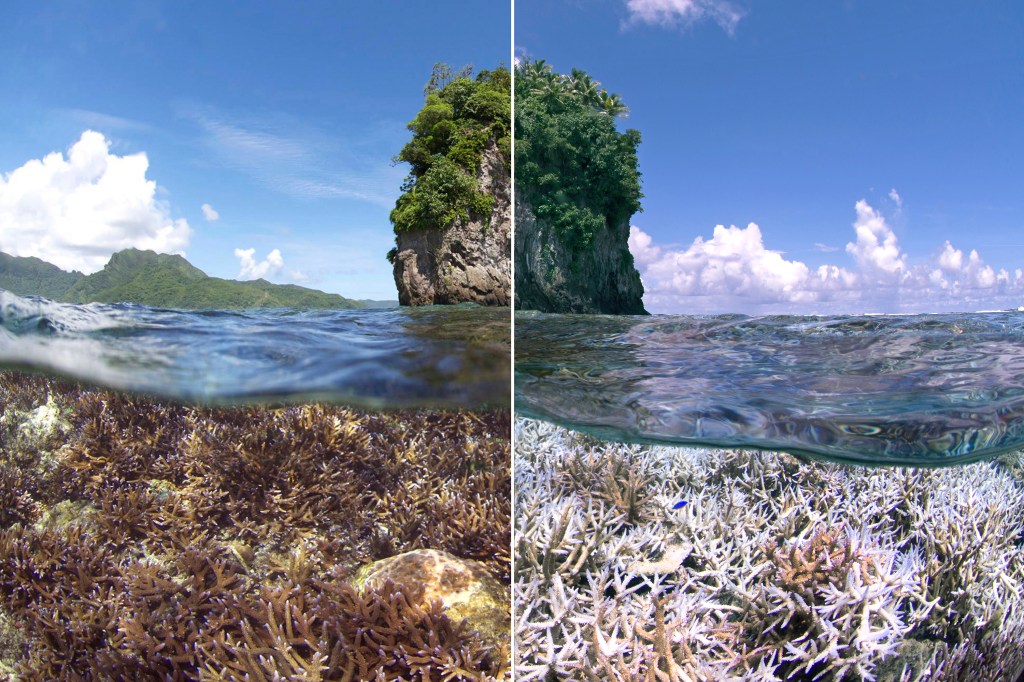
Coral’s most remarkable characteristic—being an animal that is part plant—is also its Achilles’ heel in a hotter world. Normally, coral polyps—the individual coral organisms, which resemble a sea anemone the size of a pinhead—live in harmony with their algal partners, which help feed the polyps and give corals their bright colors. But during heat waves, the relationship sours. Overheated polyps perceive the algae as an irritant and eject them like unwanted squatters. The coral is left bleached, bone-white and starving. If the heat persists, the coral won’t take in new algae and can die.  The bond between coral and algae is complicated, however, and still not fully understood. Just 25 years ago, for example, researchers believed that coral housed just one variety of symbiotic algae. Now, they have identified hundreds. And they are just beginning to examine the role played by the coral’s microbiome, the menagerie of bacteria that inhabit a coral polyp.

Coral bleaching right.

But the complexity also offers multiple paths for scientists trying to forge a less fragile bond between coral and algae. Today, four major lines of research exist: One involves cross-breeding corals to create heat-tolerant varieties, either by mixing strains within a species or by crossing two species that would not normally interbreed. The second enlists genetic engineering techniques to tweak coral or algae. A third tries to rapidly evolve hardier strains of coral and algae by rearing them for generations in overheated lab conditions. A fourth approach, the newest, seeks to manipulate the coral’s microbiome…

In 2018, Cleves [scientist] became the first to report successfully using the CRISPR-Cas9 gene-editing tool on coral. CRISPR is often touted as a method for making genetically modified species. But Cleves says he isn’t interested in creating new kinds of coral. Rather, he sees CRISPR as a tool for deciphering the inner workings of coral DNA by knocking out, or disabling, genes one by one. He hopes to identify genes that might serve as “master switches” controlling how coral copes with heat and stress—knowledge that could help researchers quickly identify corals in the wild or in the laboratory that are already adapted to heat.

Either way, such efforts to re-engineer coral reefs make people such as David Wachenfeld, chief scientist for the Great Barrier Reef Marine Park Authority here, uneasy. The authority is supposed to protect the reef and regulate activities there. In the past, that meant a hands-off approach. Now, he concedes that “it is almost inconceivable that we’re not going to need these tools.” But, he adds, “That doesn’t mean I’m happy about any of this. This is crisis management.”

He ticks off a list of potential difficulties. Scientists focused on breeding heat-loving coral have to avoid weakening other key traits, such as coping with cold. Introducing a new coral on the scale needed to make a dent on a network of 2900 reefs spanning an area half the size of Texas is a daunting challenge. Even in its damaged state, the Great Barrier Reef still contains hundreds of millions of corals—enough to swamp the genetic impact of new coral species…

Could some kind of “super coral,” as some researchers have dubbed them, also run amok in delicate coral ecosystems.

Excerpts from  The Reef Builders, Science, Mar. 22, 2019

Biodiversity and Respect for Human Rights

The instinctive response of many environmentalists  is to to fence off protected areas as rapidly and extensively as possible. That thought certainly dominates discussions of the Convention on Biological Diversity, the main relevant international treaty. An eight-year-old addendum to the pact calls for 17% of the world’s land surface and 10% of the ocean’s water column (that is, the water under 10% of the ocean’s surface) to be protected by 2020. Currently, those figures are 15% and 6%. Campaigners want the next set of targets, now under discussion, to aim for 30% by 2030—and even 50% by 2050. This last goal, biogeographers estimate, would preserve 85% of life’s richness in the long run.  As rallying cries go, “Nature needs half” has a ring to it, but not one that sounds so tuneful in the poor countries where much of the rhetorically required half will have to be found. Many people in such places already feel Cornered by Protected Areas.” (See also Biodiversity and Human Rights)

James Watson, chief scientist at the Wildlife Conservation Society (wcs), another American charity, has an additional worry about focusing on the fence-it-off approach. If you care about the presence of species rather than the absence of humans, he warns, “‘nature needs half’ could be a catastrophe—if you get the wrong half.” Many terrestrial protected areas are places that are mountainous or desert or both. Expanding them may not translate into saving more species. Moreover, in 2009 Lucas Joppa and Alexander Pfaff, both then at Duke University in North Carolina, showed that protected areas disproportionately occupy land that could well be fine even had it been left unprotected: agriculture-unfriendly slopes, areas remote from transport links or human settlements, and so on. Cordoning off more such places may have little practical effect.

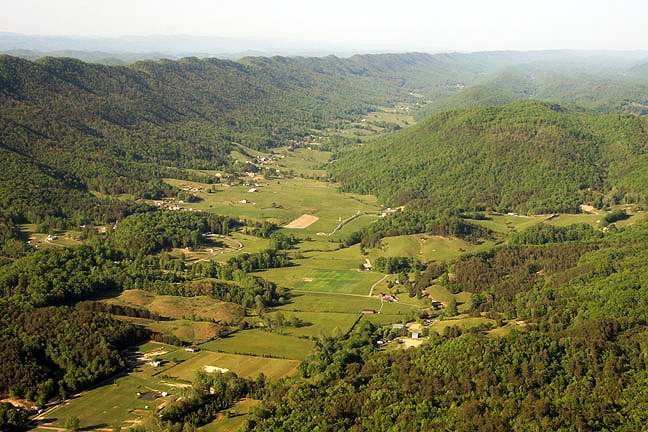
Southern Appalachians, Virginia. image from wikipedia

 In the United States it is the underprotected southern Appalachians, in the south-east of the country, that harbour the main biodiversity hotspots. The largest patches of ring-fenced wilderness, however, sit in the spectacular but barren mountain ranges of the west and north-west. In Brazil, the world’s most speciose country, the principal hotspots are not, as might naively be assumed, in the vast expanse of the Amazon basin, but rather in the few remaining patches of Atlantic rainforest that hug the south-eastern coast.

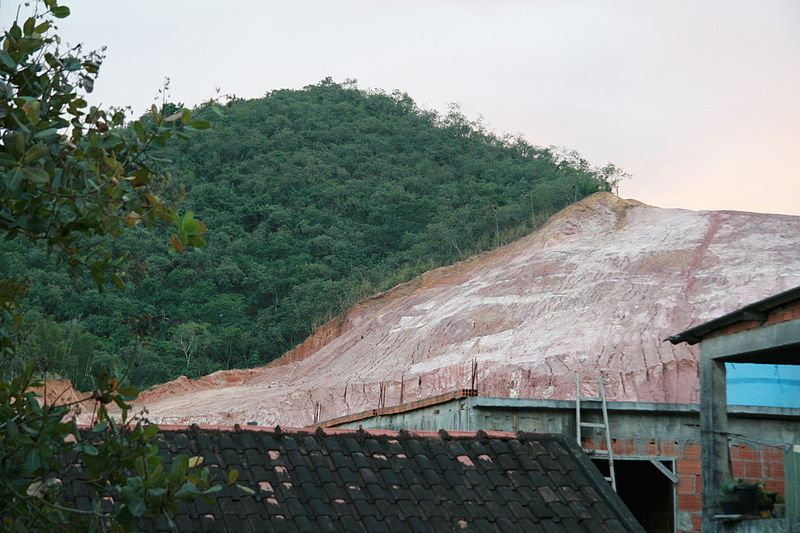
Deforestation Atlantic Rainforest in Rio de Janeiro. Image from wikipedia

Nor is speciosity the only consideration. So is risk-spreading. A team from the University of Queensland, in Australia, led by Ove Hoegh-Guldberg, has used a piece of financial mathematics called modern portfolio theory to select 50 coral reefs around the world as suitable, collectively, for preservation. Just as asset managers pick uncorrelated stocks and bonds in order to spread risk, Dr Hoegh-Guldberg and his colleagues picked reefs that have different exposures to rising water temperatures, wave damage from cyclones and so on. The resulting portfolio includes reefs in northern Sumatra and the southern Red Sea that have not previously registered on conservationists’ radar screens…

Another common finding—counterintuitive to those who take the “fence-it-all-off” approach—is that a mixed economy of conservation and exploitation can work. For example, rates of deforestation in a partly protected region of Peru, the Alto Mayo, declined by 78% between 2011 and 2017, even as coffee production increased from 20 tonnes a year to 500 tonnes.

Environmental groups can also draw on a growing body of academic research into the effective stewardship of particular species. For too long, says William Sutherland, of Cambridge University, conservationists have relied on gut feelings. Fed up with his fellow practitioners’ confident but unsubstantiated claims about their methods, and inspired by the idea of “evidence-based medicine”, he launched, in 2004, an online repository of relevant peer-reviewed literature called Conservation Evidence.  Today this repository contains more than 5,400 summaries of documented interventions. These are rated for effectiveness, certainty and harms. Want to conserve bird life threatened by farming, for example? The repository lists 27 interventions, ranging from leaving a mixture of seed for wild birds to peck (highly beneficial, based on 41 studies of various species in different countries) to marking bird nests during harvest (likely to be harmful or ineffective, based on a single study of lapwing in the Netherlands). The book version of their compendium, “What Works in Conservation”, runs to 662 pages. It has been downloaded 35,000 times.

Excerpts from How to preserve nature on a tight budget, Economist, Feb. 9, 2919

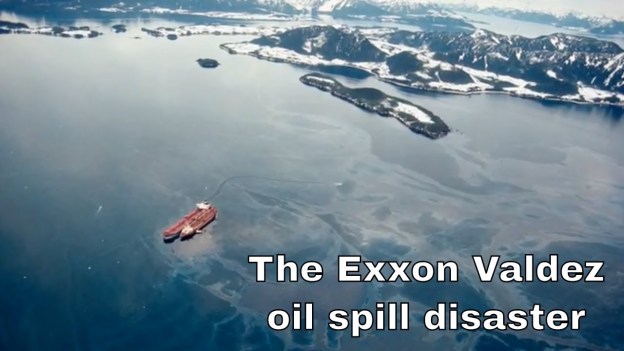
The Pristine Waters of Alaska and Big Oil: Exxon Valdez

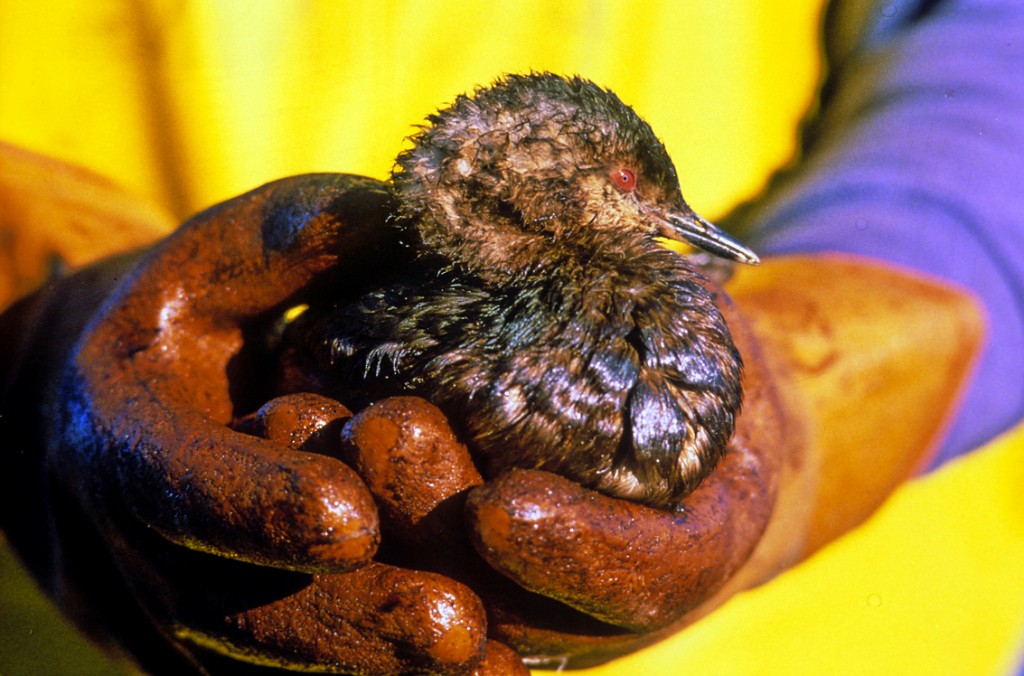
Thirty years ago this Sunday, at just after midnight on March 24, 1989, the Exxon Valdez supertanker ran aground in Prince William Sound off the south coast of Alaska. No-one was hurt, but the ship’s hull was ruptured, and of the 1.26m barrels of crude on board about 258,000 spilled into the water. The National Transportation Safety Board inquiry found that the causes of the accident included the failure of the ship’s master to provide a proper navigation watch “because of impairment from alcohol”, as well as inadequate personnel training and deficient management oversight.

In terms of volume released, the spill does not make the list of the world’s largest, but it was one of the worst in US waters. The harm caused by a spill is also not a direct function of the quantity of oil: a release in the cool waters of Prince William Sound, where oil breaks down more slowly, could be more damaging than a larger volume in the Gulf of Mexico, where temperatures are warmer and there are more plentiful microbes that thrive on natural oil seeps. The location of the spill also added to its emotional impact: the pictures of the oil fouling the pristine waters of Alaska shocked the world.

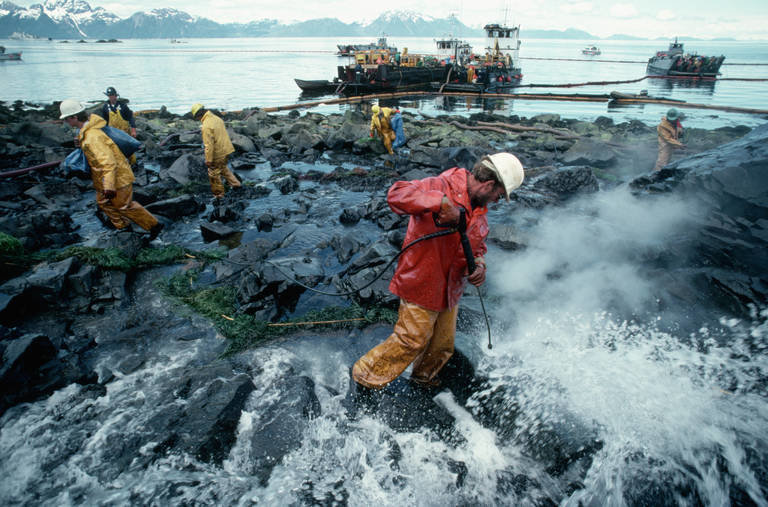
Exxon Valdez Clean up

Even decades after the spill, there was still evidence of the oil visible on some of the beaches in the region. Exxon agreed to pay $900m for restoration to settle damages claims from the state and federal governments, and the work of the Exxon Valdez Oil Spill Trustee Council, which oversees the use of that money, goes on. The Pacific herring population in Prince William Sound has collapsed since the early 1990s, although it is not clear whether the spill was responsible, and other wildlife such as sea ottershave recovered.

For the oil industry, the disaster was transformative. Single-hulled tankers began to be phased out, to be replaced by safer double hulls, first in the US and then worldwide. The process was accelerated after the sinking of the tanker Erika off the coast of Brittany in 1999, an accident that was considered one of France’s worst environmental disasters.

For Exxon in particular, the Valdez spill prompted a fundamental rethink of its safety culture and practices. The company developed what is called its Operations Integrity Management System, a framework that “puts safety at the center of everything we do”. By the time that Rex Tillerson ran ExxonMobil, in 2006-16, the company could rightly boast of having a safety record that was admired across the industry, and its OIMS was widely emulated….But any employer’s highest duty is to make sure workers can do their jobs safely and go home at the end of the day, and on that measure Exxon has performed better than its peers. Any workplace death is one too many, of course, but over the past decade Exxon has suffered significantly fewer than other leading oil companies.

Excerpts from Ed Crooks,  The Exxon Valdez spill 30 years on, Financial Times, Mar. 22, 2019

A Swamp of Oil Pollution: Ogoniland

Status of Cleaning up Oil Pollution in Ogoniland, Nigeria:

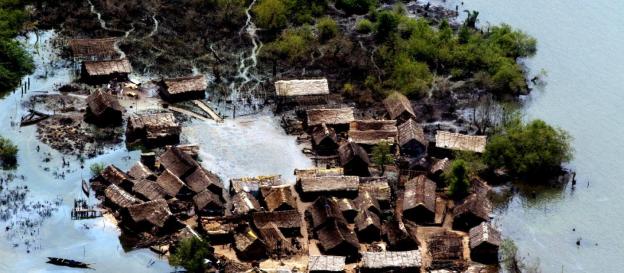
According to the Civil Society Legislative Advocacy Centre (CISLAC), the clean-up of Ogoniland is bugged with identity crisis, procedures, processes and overheads. Perception of corruption, lack of transparency and accountability, complex decision making, internal crisis of choice between Ogoni and the Niger Delta….The United Nations Environment Programme (UNEP) released its Environmental Assessment of Ogoniland in August 2011 after series of protests of oil spillage in the community that culminated to the death of Ken Sarowiwa and eight others.  The report  made recommendations to the government, the oil and gas industry and communities to begin a comprehensive cleanup of Ogoniland, restore polluted environments and put an end to all forms of ongoing oil contamination in the region…

Pollution of soil by petroleum hydrocarbons in Ogoniland is extensive in land areas, sediments and swampland.  In 49 cases, UNEP observed hydrocarbons in soil at depths of at least 5 metres. At 41 sites, the hydrocarbon pollution has reached the groundwater at levels in excess of the Nigerian standards permitted by National Laws..

Excerpts from Ogoni: Cleanup Exercise by Authorities Questioned by Civil Society Groups, UNPO, Mar. 12, 2019

How to Save the Rhino? Torture and Kill Civilians

In national parks across Asia and Africa, the beloved nonprofit WWF  with the cuddly panda logo funds, equips, and works directly with paramilitary forces that have been accused of beating, torturing, sexually assaulting, and murdering scores of people…WWF has provided high-tech enforcement equipment, cash, and weapons to forces implicated in atrocities against indigenous communities…Villagers have been whipped with belts, attacked with machetes, beaten unconscious with bamboo sticks, sexually assaulted, shot, and murdered by WWF-supported anti-poaching units, according to reports and document

 WWF has provided paramilitary forces with salaries, training, and supplies — including knives, night vision binoculars, riot gear, and batons — and funded raids on villages…The charity has operated like a global spymaster, organizing, financing, and running dangerous and secretive networks of informants motivated by “fear” and “revenge,” including within indigenous communities, to provide park officials with intelligence — all while publicly denying working with informants.

The charity funnels large sums of cash to its field offices in the developing world where staff work alongside national governments — including brutal dictatorships — to help maintain and police vast national parks that shelter endangered species. But many parks are magnets for poachers, and WWF expends much of its energy — and money — in a global battle against the organized criminal gangs that prey on the endangered species the charity was founded to protect.  It’s a crusade that WWF refers to in the hardened terms of war. Public statements speak of “boots on the ground,” partnerships with “elite military forces,” the creation of a “Jungle Brigade,” and the deployment of “conservation drones.”  WWF is not alone in its embrace of militarization: Other conservation charities have enlisted in the war on poaching in growing numbers over the past decade, recruiting veterans from the wars in Afghanistan and Iraq to teach forest rangers counterinsurgency techniques

The enemy is real, and dangerous. Poaching is a billion-dollar industry that terrorizes animals and threatens some species’ very existence. Poachers take advantage of regions ravaged by poverty and violence. And the work of forest rangers is indeed perilous: By one 2018 estimate, poachers killed nearly 50 rangers around the world in the previous year. But like any conflict, WWF’s war on poaching has civilian casualties.

Indigenous people living near one park in southeast Cameroon described a litany of horrors incuding dead-of-night break-ins by men wielding machetes, rifle butt bludgeonings, burn torture involving chilis ground into paste, and homes and camps torched to the ground. Their tormentors in these accounts were not poachers, but the park officials who police them. Although governments employ the rangers, they often rely on WWF to bankroll their work.  …Documents reveal WWF’s own staffers on the ground are often deeply entwined with the rangers’ work — coordinating their operations, jointly directing their raids and patrols alongside government officials, and turning a blind eye to their misdeeds.

Iindigenous groups — both small-fry hunters and innocent bystanders — say they suffer at the hands of the rangers.  Nepal’s park officials were given this free rein decades ago, shortly after WWF first arrived in Chitwan in 1967 to launch a rhinoceros conservation project in a lush lowland forest at the foot of the Himalayas. To clear the way, tens of thousands of indigenous people were evicted from their homes and moved to areas outside the park’s boundaries..

The park’s creation radically changed their way of life: Now they must scrape together money to buy tin for their roofs, pay hospital bills, and farm new crops. They also live in fear of the park’s wild animals, which, while rising in number thanks to anti-poaching efforts, have destroyed crops and mauled people to death.  Rhinoceros horns can sell for hundreds of thousands of dollars on the black market. Professional poachers offer a tiny portion to locals who assist them, which can be hard for impoverished residents of villages to turn down.

Chitwan’s forest rangers work alongside over 1,000 soldiers from the park’s army battalion. Nepalese law gives them special power to investigate wildlife-related crimes, make arrests without a warrant, and retain immunity in cases where an officer has “no alternative” but to shoot the offender, even if the suspect dies….. Indigenous groups living near Chitwan have long detailed a host of abuses by these forces. Villagers have reported beatings, torture, sexual assaults, and killings by the park’s guards. They’ve accused park officials of confiscating their firewood and vegetables, and forcing them into unpaid labor.

WWF’s work with violent partners spans the globe. In Central Africa, internal documents show the charity’s close involvement in military-style operations with both a repressive dictatorship and a notoriously fierce army. …The park’s management plan says WWF will help organize raids, known as “coup de poings,” on local villages suspected of harboring poachers. A confidential internal report found that such missions, frequently conducted in the dead of night with the help of police units, were often violent.

Excerpts from WWF Funds Guards Who Have Tortured And Killed People, BuzzFeed News

Who is Afraid of Bats?

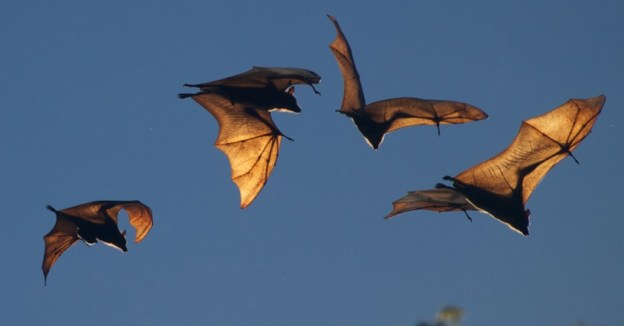
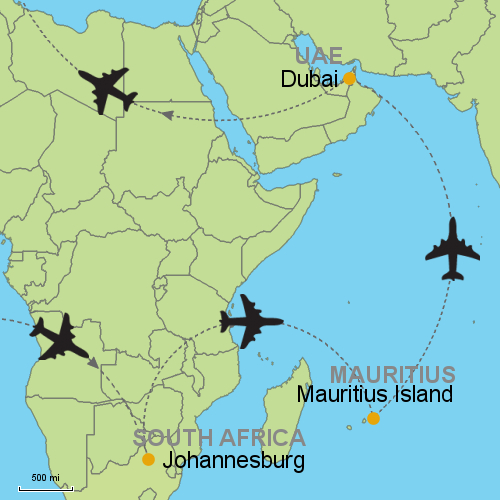
More than 50,000 of the fruit bats are thought to have been killed in Mauritius since 2015, in an attempt to protect fruit in orchards.  The bats – also known as flying foxes – are resorting to eating in orchards to survive because only 5 per cent of Mauritius’s native forests remain, animal experts warned.  Fruit bats are vital for biodiversity as they pollinate flowers and scatter seeds, enabling trees and plants to grow and spread, according to conservationists.  But populations of the flying foxes have fallen by more than 50 per cent in four years, said Vincent Florens, an ecologist at the University of Mauritius. Some believe fewer than 30,000 now remain.

The first cull, in 2015, killed 30,000, and in a second cull, the following year, 7,380 were targeted.  The latest cull involved 13,000.  Prof Florens said he believed the number killed is much higher than the 50,300 government figure.  “The culls took place late in the year, when many mothers were pregnant or had babies,” he told National Geographic. “You shoot one bat and basically kill two.” Others were likely to have been injured and died later, he said.

Scientists are supporting a lawsuit against the government on grounds of animal welfare violations to prevent any more culls…Mahen Seeruttun, Mauritius’s minister of agro-industry and food security, told FDI Spotlight: “We have a large population of bats who will eat fruit crops.

Excerpts from Endangered fruit bats ‘being driven to extinction’ in Mauritius after mass culls kill 50,000, Independent, Mar. 4, 2019

From Savior to Villain: Biofuel from Palm Oil

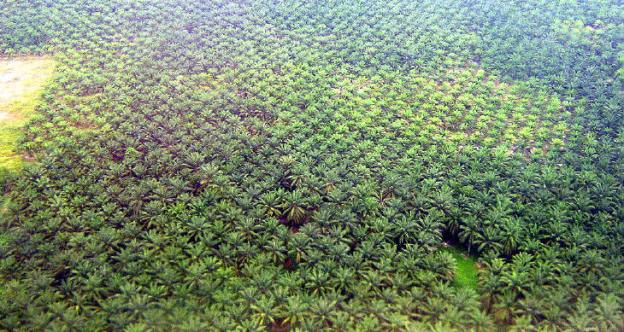
Globally, average palm oil yields have been more or less stagnant for the last 20  years, so the required increase in palm oil production to meet the  growing demand for biofuels  has come from deforestation and peat destruction in Indonesia.  Without fundamental changes in governance, we can expect at least a third of new palm oil  area to require peat drainage, and a half to result in deforestation.

Currently, biofuel policy results in 10.7  million tonnes of palm oil demand.  If the current biofuel policy continues we expect by 2030:
• 67 million tonnes palm oil demand due to biofuel policy.
• 4.5 million hectares deforestation.
• 2.9 million hectares peat loss.
• 7 billion tonnes of CO2 emissions over 20 years, more than total annual U.S. GHG emissions.
It must always be remembered that the primary purpose of biofuel policy in the EU and many  other countries is climate change mitigation. Fuel consumers in the European Union, Norway  and elsewhere cannot be asked to continue indefinitely to pay to support vegetable oil based
alternative fuels
that exacerbate rather than mitigate climate change.

The use of palm oil-based biofuel should be  reduced and ideally phased out entirely.  In Europe, the use of biodiesel other than that produced from approved waste or  by-product feedstocks should be reduced or eliminated.
In the United States, palm oil biodiesel should continue to be restricted from generating  advanced RINs under the Renewable Fuel Standard. Indonesia should reassess the relationship between biofuel mandate, and its  international climate commitments, and refocus its biofuel programme on advanced biofuels from wastes and residues. The aviation industry should focus on the development of advanced aviation biofuels  from wastes and residues, rather than hydrotreated fats and oils.

Excerpts from Dr Chris Malins,  Driving deforestation: The impact of expanding palm oil demand through biofuel policy, January 2018

In Feb. 28, 2019, Norway’s $1 trillion sovereign wealth fund, the world’s largest, pulled out of more than 33 palm oil companies over deforestation risks.

100 Ways to Finance Criminal Cartels Logging Forests

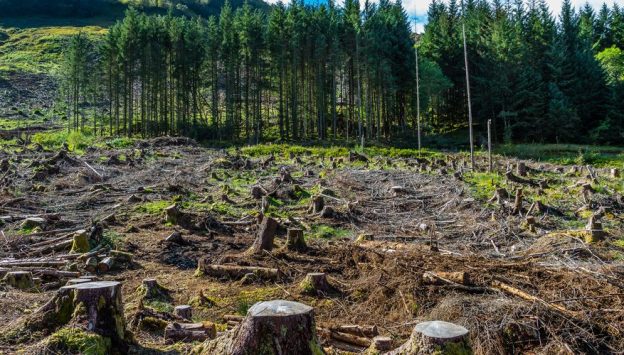
The report – Green Carbon, Black Trade (2012) – by UNEP and INTERPOL focuses on illegal logging and its impacts on the lives and livelihoods of often some of the poorest people in the world set aside the environmental damage. It underlines how criminals are combining old fashioned methods such as bribes with high tech methods such as computer hacking of government web sites to obtain transportation and other permits. The report spotlights the increasingly sophisticated tactics being deployed to launder illegal logs through a web of palm oil plantations, road networks and saw mills. Indeed it clearly spells out that illegal logging is not on the decline, rather it is becoming more advanced as cartels become better organized including shifting their illegal activities in order to avoid national or local police efforts. By some estimates, 15 per cent to 30 per cent of the volume of wood traded globally has been obtained illegally…

The much heralded decline of illegal logging in the mid- 2000s in some tropical regions was widely attributed to a short-term law enforcement effort. However, long-term trends in illegal logging and trade have shown that this was temporary, and illegal logging continues. More importantly, an apparent decline in illegal logging is due to more advanced laundering operations masking criminal activities, and notnecessarily due to an overall decline in illegal logging. In many cases a tripling in the volumes of timber “originating” from plantations in the five years following the law enforcement crack-down on illegal logging has come partly from cover operations by criminals to legalize and launder illegal logging operations….

Much of the laundering of illegal timber is only possible due to large flows of funding from investors based in Asia, the EU and the US, including investments through pension funds. As funds are made available to establish plantations operations to launder illegal timber and obtain permits illegally or pass bribes, investments, collusive corruption and tax fraud combined with low risk and high demand, make it a highly profitable illegal business, with revenues up to 5–10 fold higher than legal practices for all parties involved. This also undermines subsidized alternative livelihood incentives available in several countries.

[It is important to discourage] the use of timber from these regions and introducing a rating og companies based on the likelihood of their involvement in illegal practices to discourage investors and stock markets from funding them.

Excerpts from Nellemann, C., INTERPOL Environmental Crime Programme (eds). 2012.Green Carbon, Black Trade Illegal Logging, Tax Fraud and Laundering in the Worlds Tropical Forests. A Rapid Response Assessment United Nations Environment Programme

How Nuclear Technology Creates New Plants

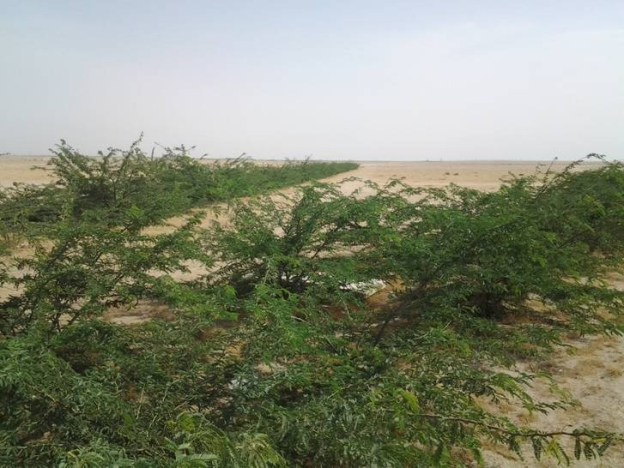
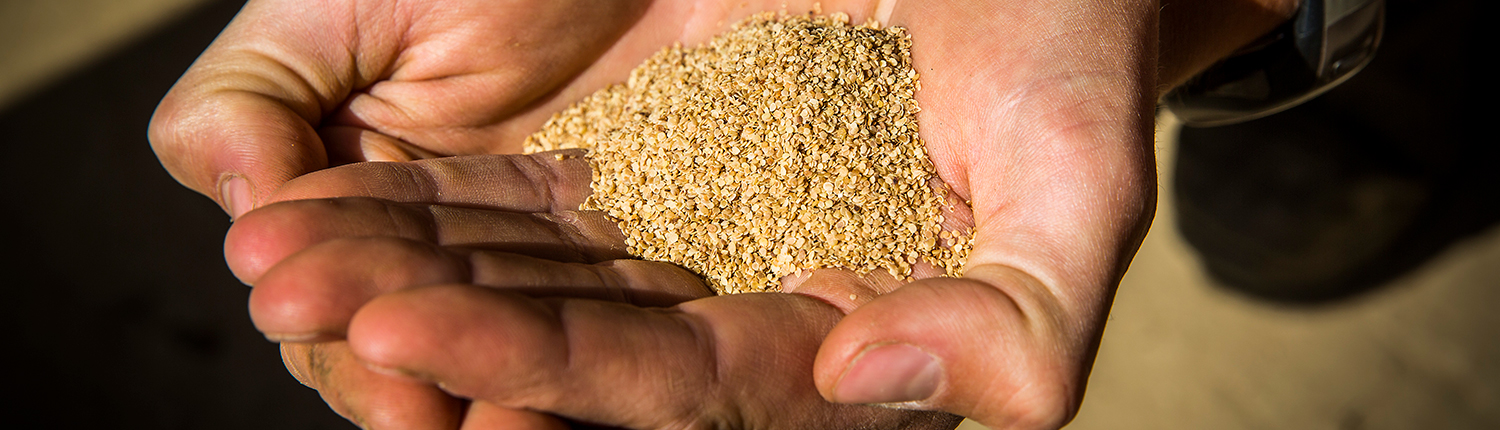
Joining the FAO/IAEA coordinated research projects in the area of mutation breeding has led to the development of several barley mutant lines with improved yield and quality under Kuwait’s environmental conditions.  As arable land is limited to small areas, 95% of the country’s food and animal fodder is imported. Barley is a preferred crop for cultivation, because it is relatively drought tolerant and therefore one of the most suitable crops for an arid country like Kuwait. Having high yielding home grown crops is among the key objectives of the country’s agricultural programme to enhance food security.

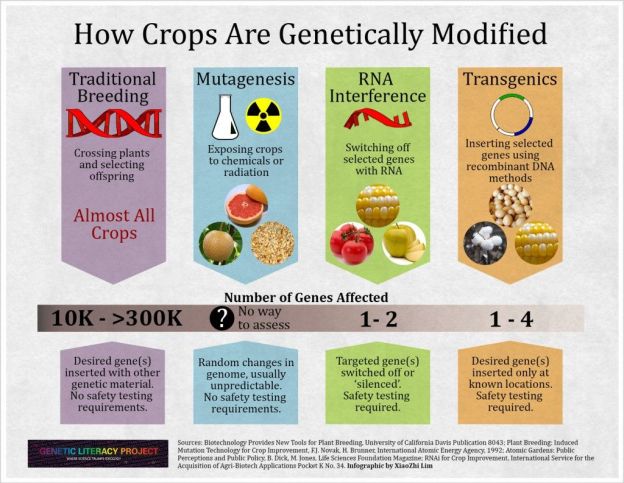
Drought, salinity and diseases have historically limited staple crop productivity in Kuwait.   Mutation induction by radiation rapidly increases the genetic diversity necessary to produce new and improved varieties and is thus advantageous over traditional breeding…The best adaptable varieties were identified, and the seeds were subjected to induced mutation using gamma rays.

New mutant lines have been generated and they are now examined for drought and salinity tolerance. The selected mutant lines will be advanced, which then can be multiplied for planting. …One of the major challenges was explaining to farmers the safety of the new mutated barley lines developed. “When they heard that ‘nuclear techniques’ were used to create improved barely seeds, they got scared….

Aabha Dixit , Nuclear Technology Helps Develop New Barley Variety in Kuwait, IAEA Press Release, Feb. 18, 2019

Radical New Potatoes

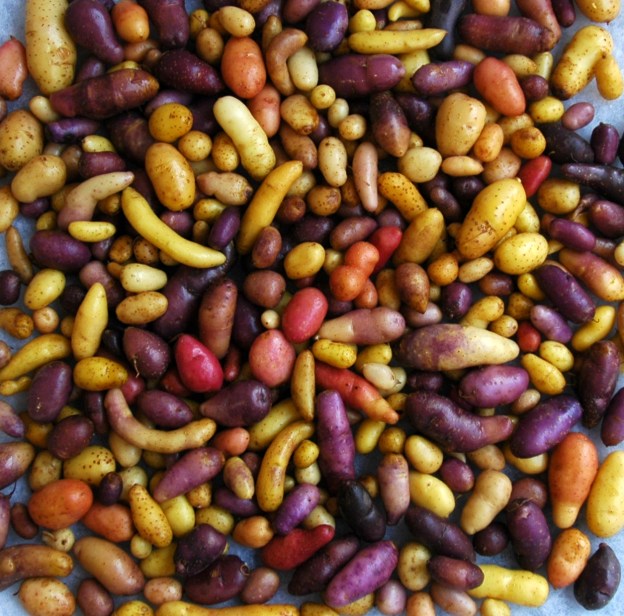
Potatoes are already a staple for 1.3 billion people… but unlike other major crops, however, the potato has not had a breeding breakthrough of the kind that helped dramatically boost yields during the Green Revolution of the 1950s and 1960s. The reason is that creating a new potato variety is slow and difficult, even by the patient standards of plant breeders…Readying a new potato variety for farm fields can take a decade or more.  Many countries continue to plant popular potato varieties that have remained essentially unchanged for decades. But new approaches, including genetic engineering, promise to add more options. Potato breeders are particularly excited about a radical new way of creating better varieties. This system, called hybrid diploid breeding, could cut the time required by more than half, make it easier to combine traits in one variety, and allow farmers to plant seeds instead of bulky chunks of tuber

Solynta Hybrid Potato Seeds

To breed a better potato, it helps to have plenty of genetic raw material on hand. But the world’s gene banks aren’t fully stocked with the richest source of valuable genes: the 107 potato species that grow in the wild. Habitat loss threatens many populations of those plants. In a bid to preserve that wild diversity before it vanishes, collectors have made their biggest push ever, part of a $50 million program coordinated by the Crop Trust, an intergovernmental organization based in Bonn, Germany.

The Crop Trust has provided grants and training to collectors around the world. The effort on wild potatoes, which wraps up this month, has yielded a collection representing 39 species from six nations: Peru, Brazil, Ecuador, Guatemala, Costa Rica, and Chile. Zorrilla’s team alone found 31 species in Peru, including one for which no seeds had ever been collected. They plan to continue to search for four other species still missing from gene banks. “We will not stop,” she says. The plants are being stored in each nation’s gene bank, CIP, and the Millennium Seed Bank at the Royal Botanic Gardens, Kew, in the United Kingdom. The stored seeds will be available to potato breeders worldwide.

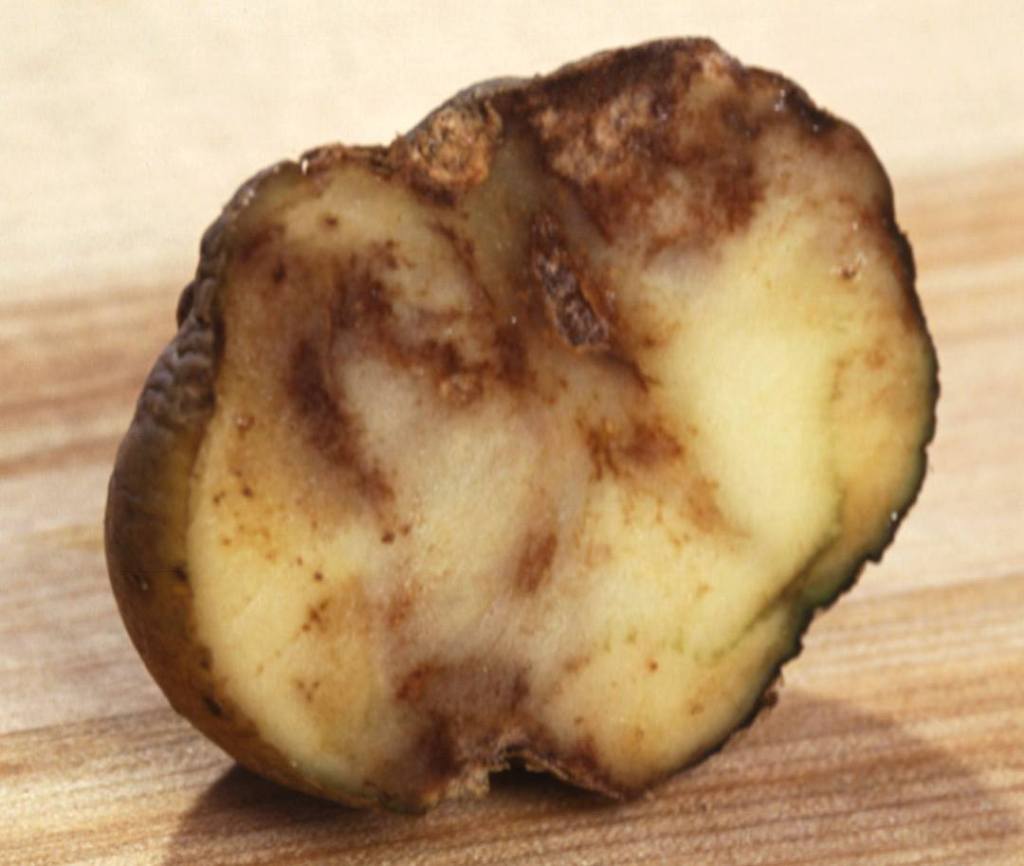
THE HARDEST PART comes next: getting desirable genes from wild species into cultivated potatoes….Other researchers are skirting the limitations of traditional breeding by using genetic engineering. CIP’s Marc Ghislain and colleagues, for example, have directly added genes to already successful potato varieties without altering the plants in any other way—an approach not possible with traditional breeding. They took three genes for resistance to late blight from wild relatives and added them to varieties of potato popular in East Africa.

Potato Blight , a disease affecting potatoes

The engineered varieties have proved successful in 3 years of field tests in Uganda and are undergoing final studies for regulators. Transgenic potatoes that resist late blight have already been commercialized in the United States and Canada….

Pim Lindhout has been plotting a revolution that would do away with much of that tedium and complexity. As head of R&D for Solynta, a startup company founded in 2006, he and his colleagues have been developing a new way to breed potatoes….Breeders reduce the complexity either by using species with only two sets of chromosomes (known as diploids) or by manipulating domesticated potatoes to cut the number of chromosomes in half. With persistence, diploid potatoes can be inbred. In 2011, Lindhout published the first report of inbred diploid lines that are vigorous and productive. More recently, Jansky and colleagues also created inbred diploid lines.

Such diploid inbred plants are at the heart of Solynta’s strategy to revolutionize potato breeding. Other firms, including large seed companies, are also working to develop hybrid potatoes. HZPC in Joure, the Netherlands, has begun field trials in Tanzania and in several countries in Asia.

Excerpt from Erik Stokstad, The new potato, Science, Feb. 8, 2019

Dragons v. Cattle in Indonesia

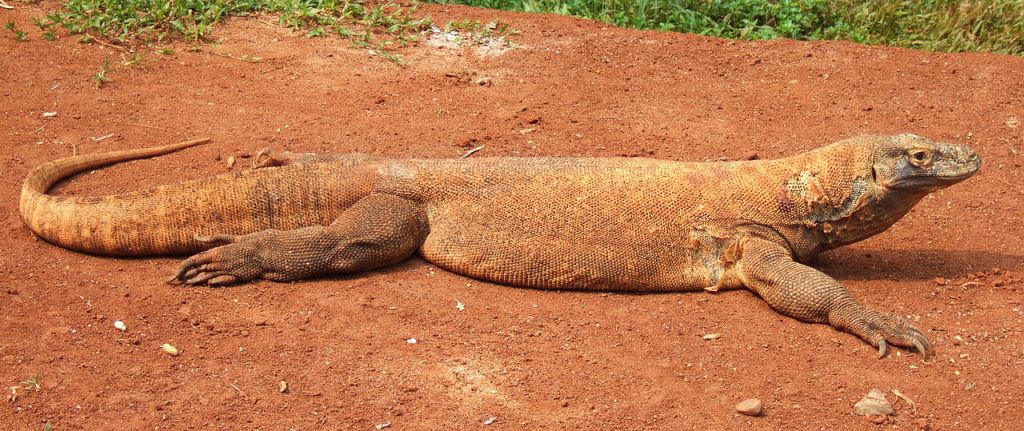
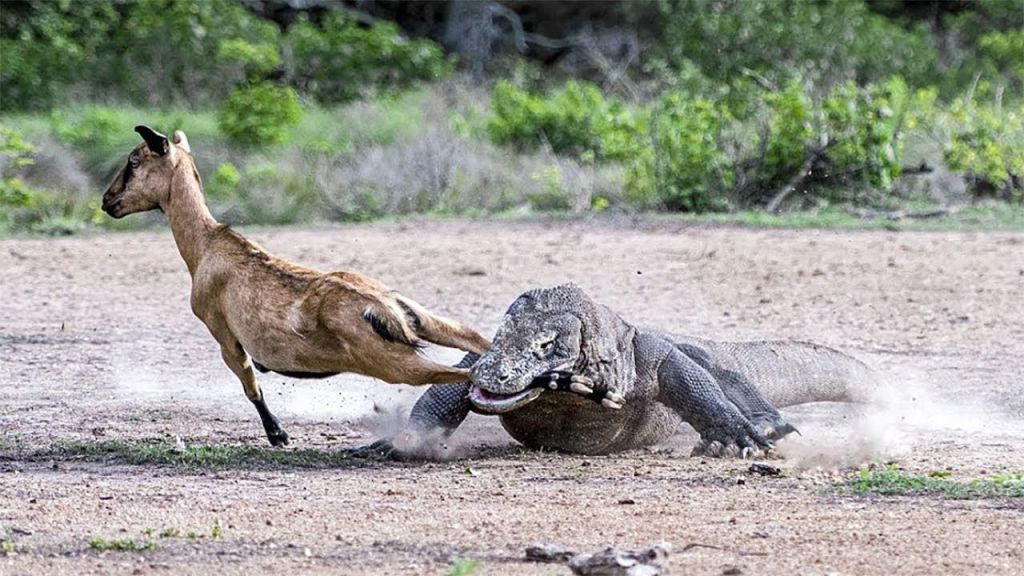
Is tourism endangering one of the world’s most iconic lizard species? It seemed that way after the unexpected announcement that Komodo National Park in Indonesia, home of the Komodo dragon (Varanus komodoensis) may be partly closed to visitors for a full year…

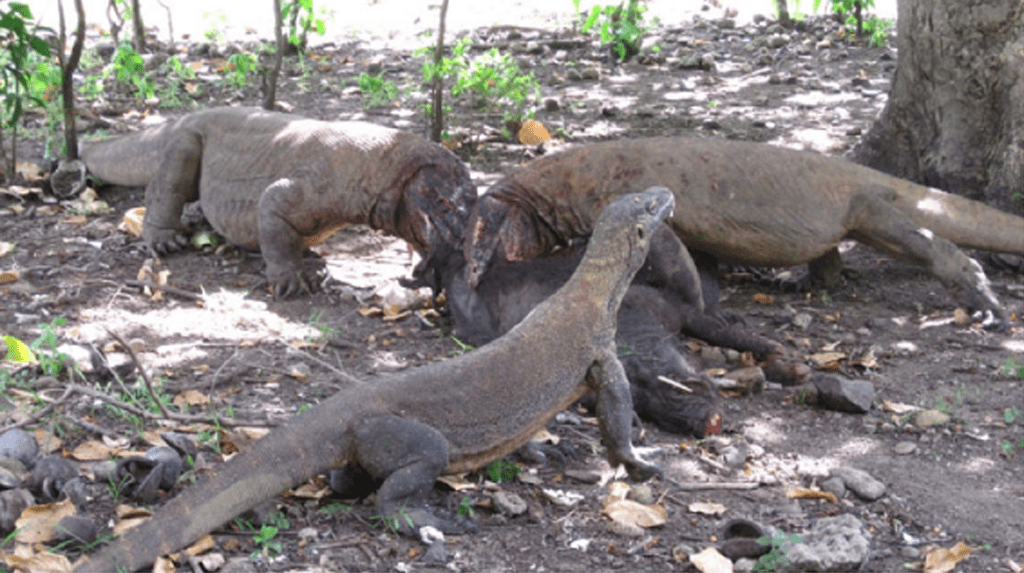
Komodo National Park consists of a group of islands with a total land area of 407 square kilometers. The two largest ones, Komodo and Rinca, are home to Komodo dragon populations and are open to visits by tourists; some 160,000 people came in 2018, most of them foreigners. Tourism has made the Komodo dragons “tame” and less inclined to hunt, according to Viktor Laiskodat, governor of the East Nusa Tenggara province, where the park is located. In addition, rampant poaching has reduced the number of Timor deer (Cervus timorensis), the dragon’s main prey; as a result, the dragons have become smaller in size, Laiskodat recently claimed. To “manage the Komodo dragon’s habitat,” Komodo Island should be closed to visitors for a year, Laiskodat said on 18 January.

And there is no need for the partial shutdown, says Maria Panggur, a scientist in charge of ecosystem monitoring at the park. According to government data, the park was home to a healthy population of more than 2700 Komodo dragons in 2017, more than 1000 of them living on Komodo Island…..Human activity does have some effects on the population. A 2018 study by Purwandana showed that animals exposed to tourism—which get fed—were bigger, healthier, less alert, and had higher chances of survival than dragons elsewhere. But tourists can only visit about 5 square kilometers of the park; 95% of the Komodo dragons are not in contact with them, so the impact is minimal, Panggur says…

“If the governor really wants to protect Komodo dragons, he should start looking at Flores,” the province’s main island, Panggur says. Northern Flores is home to a Komodo dragon population of unknown size that is “more sensitive to extinction,” because of its proximity to humans…There are several reports about people killing dragons because they attacked cattle.The Flores population is considered significant because “it has been historically isolated from the western populations,” Jessop says. A 2011 mitochondrial DNA study…confirmed that they are quite different genetically from the populations on Komodo and Rinca. “Retaining this diversity is extremely important” for the species’s ability to respond to climate and habitat changes, Jessop says.

Excerpts from Dyna Rochmyaningsih Is tourism endangering these giant lizards?, Science, Jan. 29, 2019

Enclosure of the Commons: High Seas

Sunken coral islands, floating rainforests, giant undersea volcanoes or even spires of rock resembling sunken cities: none of these sites can be inscribed on the World Heritage List because they are found in the High Seas, outside of any national jurisdiction. A report launched today by UNESCO’s World Heritage Centre and International Union for Conservation of Nature (IUCN) explores the different ways the World Heritage Convention may one day apply to these wonders of the open ocean, which covers more than half the planet.  Titled World Heritage in the High Seas: An Idea Whose Time has Come, the reportpresents five sites that illustrate different ecosystems, from biodiversity-rich areas to the natural phenomena that can only be found in the depths of the ocean. Each of these sites could be recognized as having outstanding universal value, a key principle of the World Heritage Convention, where spectacular qualities of certain sites are seen to transcend national boundaries.

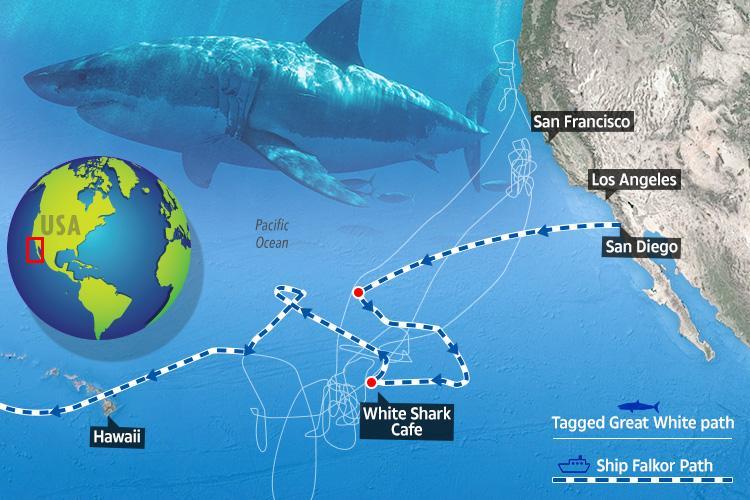
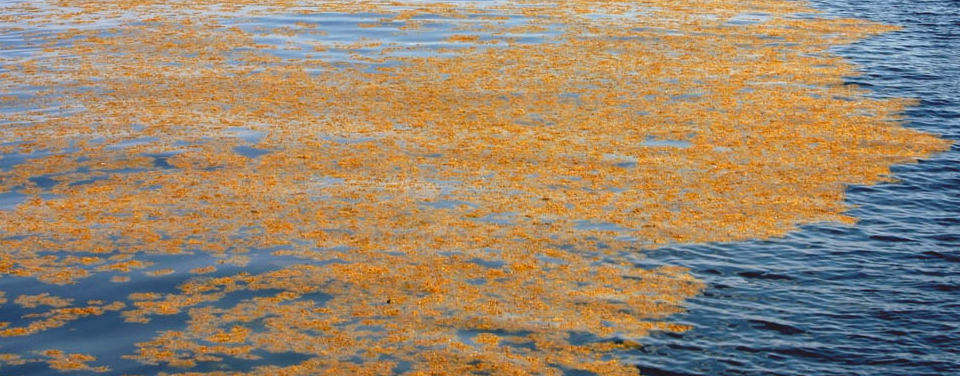
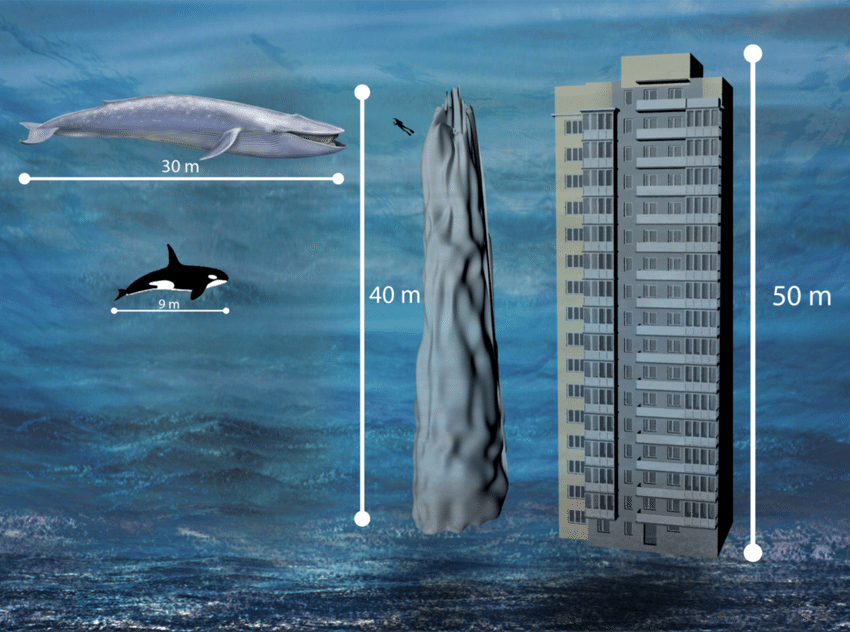
The five sites discussed are: the Costa Rica Thermal Dome (Pacific Ocean), a unique oceanic oasis, which provides critical habitat for a thriving marine life, including many endangered species; the White Shark Café (Pacific Ocean), the only known gathering point for white sharks in the north Pacific; the Sargasso Sea (Atlantic Ocean), home to an iconic ecosystem built around a concentration of floating algae; the Lost City Hydrothermal Field (Atlantic Ocean), an 800 meter-deep area dominated by carbonate monoliths up to 60 meters high; and the Atlantis Bank, a sunken fossil island in the subtropical waters of the Indian Ocean…

Although these sites are far from our shores, they are not safe from threats, whether it be climate change, deep seabed mining, navigation or plastic pollution…The report explores three ways in which the protection of the Convention could be expanded to protect these zones in the high seas.

How to Kill One Million Fish: Murray-Darling

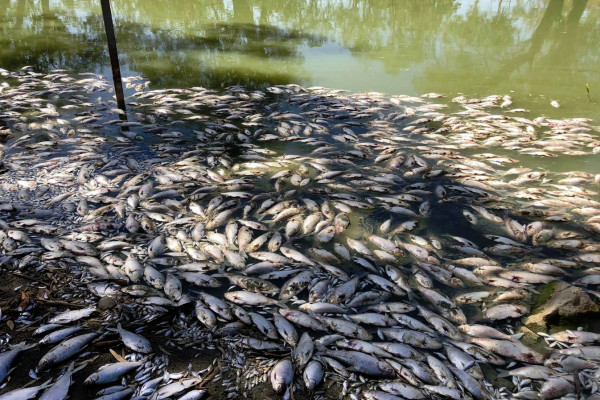
But it took a viral video posted on 8 January 2019 to drive home the ecological catastrophe that was unfolding in the Murray-Darling river system in Australia. In the footage, Rob McBride and Dick Arnold, identified as local residents, stand knee-deep among floating fish carcasses in the Darling River, near the town of Menindee. They scoff at authorities’ claims that the fish die-off is a result of the drought. Holding up an enormous, dead Murray cod, a freshwater predator he says is 100 years old, McBride says: “This has nothing to do with drought, this is a manmade disaster.” Arnold, sputtering with rage, adds: “You have to be bloody disgusted with yourselves, you politicians and cotton growers.”

Scientists say McBride probably overestimated the age of the fish. But they agree that the massive die-off was not the result of drought. “It’s about taking too much water upstream [to irrigate farms] so there is not enough for downstream users and the fish,” says Quentin Grafton, an economist specializing in water issues at Australian National University (ANU) in Canberra. The Australia Institute, a Canberra-based think tank, blamed “policy failure and mismanagement” in a 19 January 2019 report, but called drought a catalyst.

Excessive water use has left river flows too low to flush nutrients from farm runoff through the system, leading to large algal blooms, researchers say. A cold snap then killed the blooms, and bacteria feeding on the dead algae sucked oxygen out of the water,   This wasn’t supposed to happen. In 2012, the national government adopted the Murray-Darling Basin Plan, touted as a “historic” deal to ensure that enough water remained in the rivers to keep the ecosystem healthy even after farmers and households took their share.

In 2008, the federal government created the Murray-Darling Basin Authority to wrestle with the problem. In 2010, a study commissioned by the authority concluded that farmers and consumers would have to cut their use of river water by at least 3000 but preferably by 7600 gigaliters annually to ensure the health of the ecosystem. Farmers, who saw their livelihoods threatened, tossed the report into bonfires.  The final plan, adopted as national law in 2012, called for returning just 2750 gigaliters to the rivers, in part by buying water rights back from users. “It was a political compromise that has never been scientifically reviewed,” Williams says, adding that “climate change was never considered in the plan, which was a dreadful oversight.”..

Grafton says there are also suspicions of widespread water theft; up to 75% of the water taken by irrigators in the northern part of the system is not metered. Farmers are also now recapturing the runoff from irrigated fields that used to flow back into streams, and are increasing their use of ground water, leaving even less water in the system, says Mike Young, an environmental policy specialist at the University of Adelaide in Australia.

In February 2018, such issues prompted a group of 12 academics, including scientists and policy experts, to issue the Murray-Darling Declaration. It called for independent economic and scientific audits of completed and planned water recovery schemes to determine their effects on stream flows. The group, which included Williams and Grafton, also urged the creation of an independent, expert body to provide advice on basin water management. Young, who wasn’t on the declaration, wants to go further and give that body the power to manage the basin’s water, the way central banks manage a country’s money supply, using stream levels to determine weekly irrigation allocations and to set minimum flow levels for every river.

Excerpts from Dennis Normile, Massive fish die-off sparks outcry in Australia, Science, Jan. 22, 2019.

How to Discover an Illegal Logger

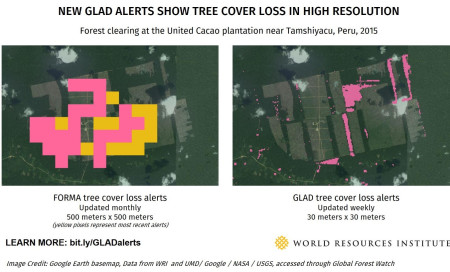
Tropical forests nearly the size of India are set to be destroyed by 2050 if current trends continue causing species loss, displacement and a major increase in climate-changing greenhouse gas emissions.  Prior to the launch of the Global Land Analysis and Discovery (GLAD) alerts, researchers would have to manually track images of logging in specific areas.

The new process, developed by scientists at the University of Maryland and Google, uses an algorithm to analyze weekly updates of satellite images and sends automatic notifications about new logging activity.”This is a game changer,” said Matt Finer from the Amazon Conservation Association, an environmental group.

His organization tracks illegal logging in Peru, sending images of deforestation to policymakers, environmentalists and government officials to try and protect the Amazon rainforest.  In the past, he would rely on tips from local people about encroachment by loggers, then look at older satellite images to try and corroborate the claims.

“With this new data we can focus on getting actionable information to policy makers,” Finer told the Thomson Reuters Foundation.  “We have seen how powerful these images can be,” he said, citing a case where his group brought pictures of illegal gold miners cutting down trees to the Peruvian government, who then removed the miners.

Excerpt from  CHRIS ARSENAULT, New satellite program aims to cut down illegal logging in real time, Reuters, Mar. 2, 2016

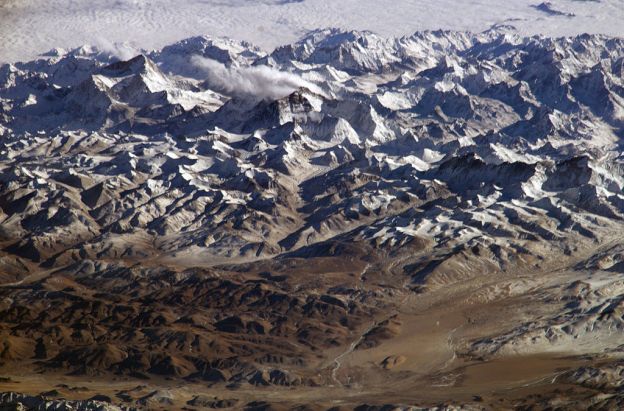
Caring for the Third Pole

The Tibetan Plateau and its surrounding mountains [the Himalayas], often termed the Third Pole, contain more ice than anywhere outside the Arctic and Antarctic. This region is also the source of the nine largest rivers in Asia, providing fresh water, food, and other ecosystem services to more than 1.5 billion people…In recent decades, air temperature at the Third Pole has warmed significantly faster than the global average…Meanwhile, intensive anthropogenic activities, such as overgrazing, deforestation, urbanization, and expansion of infrastructure projects such as construction of roads, dams, and electrical grids, are causing widespread landcover changes within the region.

Together, these changes are altering the Third Pole’s biogeochemical cycles and pushing the fragile ecosystem toward degradation and possible collapse, which would cause irreversible harm on a regional and global scale. To avoid this, all nations must meet the standards laid out in the Paris Agreement. At the regional level, we strongly urge the relevant nations (including Afghanistan, Bhutan, China, India, Kyrgyzstan, Myanmar, Nepal, Pakistan, and Tajikistan) to cooperate in addressing these impending threats through systematic changes to management policies. Rapid and unprecedented coordination will be necessary, including a regional cooperation treaty and formation of a cross-border biodiversity conservation plan for the Third Pole region. Meanwhile, any infrastructure projects undertaken must be environmentally sustainable, and a practicable grazing management policy should be adopted.

Excerpts from Jie Liu, Protect Third Pole’s Fragile Ecosystem, Science,  Dec. 21, 2018

Saving the Scarlet Macaw

“Apu Pauni” is the name for the scarlet macaw in the indigenous Miskitu language.  This brightly coloured parrot is the national bird of Honduras. It is said that it once traveled the skies throughout the country and that its song was heard by the ancient Mayans.

Today, the largest wild population of macaw in the country is believed to be in the eastern region of ​​La Moskitia, …The “Apu Prana” (“the beauty of the scarlet macaw” in theMiskitu language) Community Association responsible for the initiative and the centre received training in hospitality, eco-tourism and business management….Although most of the bird monitoring processes are carried out by men, who walk up to six hours into the forest on the edge of the community, it is the women are responsible for caring for the birds in the rehabilitation centre.  “This is where we bring the captured scarlet macaws*, those that do not have wings, those that are sick, even abandoned chicks.

The Mavita community has been recognized internationally by the Mesoamerican Society for Biology and Conservation for its efforts in the conservation….The “La Moskitia” project was implemented by the United Nations Development Programme (UNDP) and financed by the Global Environment Facility (GEF).

Excerpts from Guardians of the scarlet macaw, UN Development Program, Press Release,  May 9, 2018

*Poachers climb trees where the parrots nest and pinch the chicks before they learn to fly. People in China, Australia and Middle East pay $6 000 online. In 2014 not one newborn parrort reached adulthood in its native land, Economist, Jan. 12, 2019, at 30

The Bloody Hunt: Whale-Meat Hunger

Japan’s 26 December 2018 announcement that it will withdraw from the International Whaling Commission (IWC) and resume commercial whaling in its own waters and unabandon large-scale whaling ion the high seas under the mantle of scientific research triggered fierce criticism around the world.

In March 2014, the International Court of Justice sided with the critics in a suit brought by Australia, ordering Japan to halt its Antarctic whaling research. (The case did not address Japan’s North Pacific research programs.) Japan canceled its Antarctic research cruises for a year, then resumed them under new programs it deemed compliant with the court’s ruling.

In its scientific programs, Japan has harvested thousands of minke whales and smaller numbers of other species. Numbers have fallen, in part because demand for whale meat has dropped, and may fall further when whaling is limited to a commercial hunt in coastal waters.  The International Whaling Commission (IWC) concedes that the current population of several hundred thousand minke whales in the Antarctic is “clearly not endangered.” But the fight is no longer just about sustainability; whaling opponents say the bloody hunt for the majestic mammals is simply inhumane. IWC rejected the Japanese proposal, and the meeting adopted a resolution emphasizing that IWC’s purpose is to ensure the recovery of cetacean populations to preindustrial levels and reaffirming the moratorium on commercial whaling. That one-two punch triggered Japan’s December announcement.

Now Japan’s whaling efforts will shift to its own coastal waters and the 320-kilometer exclusive economic zone around them. Whether whales there will now be at risk is a subject of debate. The Northern Hemisphere minke population as a whole “is not threatened,” says Cooke, but waters near the Koreas and Japan are home to an “unusual and possibly unique” population, called the J-stock, that breeds in the summer instead of the winter, he says.  Japanese fishers already catch about 100 minke whales each year in these waters, Komatsu says. (Rather than the traditional harpoons, they use nets, which is allowed under the IWC moratorium.) But increasing the harvest with harpoon whaling could put pressure on the J-stock. Japan’s December  2018 announcement said catch limits will be set “to avoid negative impact on cetacean resources” but provided no details.

Shifting consumer tastes and a growing environmental awareness have already led to a steep decline in Japanese whale meat consumption, from 203,000 tons in 1965 to just 4000 tons in 2015. Three major fishing companies appear to have no interest in commercial whaling. Cooke suspects Japan will go the way of Norway, where “a niche operation is feeding a niche market but with decreasing interest in the market and decreasing interest in going whaling.”…Although Japan intends to continue to participate in IWC as an observer, it will no longer contribute to the group’s budget. (In 2017, it provided about 6% of IWC’s $2.7 million total income.)

Excerpts from , ennis NormileWhy Japan’s exit from international whaling treaty may actually benefit whales, Science, Jan. 10, 2018

Making a Fortune from Climate Change

Eleven years ago Dharsono Hartono, a former JPMorgan Chase & Co. banker, spotted what he thought was a new way to make a fortune: climate change.The plan was to snap up rainforest in Borneo, preserve it from logging and sell carbon credits to big polluting companies in the developed world. The earth’s temperature was rising, and this was a way to profit by confronting the problem.  Investors around the world have poured money into assets like once-frozen farmland in Canada and groundwater basins in California, betting that warming temperatures will raise their value.  Another bet has been on what some investors hope will be the most profitable outcome of a warming climate: government regulation of carbon emissions. Those who correctly anticipate future government responses to climate change are likely to reap profits.

Mr. Hartono went in big. His company’s rain forest, a humid and swampy expanse home to orangutans and clouded leopards, is twice the size of New York City and has one of the largest carbon stores of any such project in the world.  Mr. Hartono has sold just 20% of his credits to environmentally conscious corporations voluntarily buying credits, and has lost around $20 million, burning through $5 million to $10 million a year in recent years. Other investors in Indonesia and Latin America who made similar bets, including one backed by Australian bank Macquarie Group , failed to sell credits and abandoned their rain-forest projects…

Only after actor Harrison Ford visited the project to shoot a documentary on climate change, and raised the issue with Indonesia’s forestry minister, did final approval come for most of the concession in October 2013. For an initial payment of around $3 million to the Indonesian government, Mr. Hartono’s company gained the rights to the forestland for 60 years.  By then, however, some environmentalists were questioning private carbon-selling projects like Mr. Hartono’s. They argued that buying up and preserving rain forest to sell credits wouldn’t decrease net deforestation, since palm-oil barons would simply work around the few protected plots in the forest.  U.S. legislation that would have put a price on carbon failed during the Obama administration. The European Union’s carbon market doesn’t include tropical forests amid worry that low-cost credits generated there would make it affordable to pollute…

The Paris climate accords are expected to lead to an international carbon market after 2020, where countries that exceed emissions targets can purchase offset credits from countries that reduce emissions beyond their targets, potentially opening up new opportunities for Mr. Hartono.

Excerpts fom One Man’s Money Draining Bet on Climate Change, WSJ, Dec. 27, 2018

A Botanical Treasure: Congo

Situated along the banks of the Congo River, the Yangambi Research Station was in its heyday a booming scientific hub, revered for its invaluable work in the Congo Basin throughout the midcentury.

It wasn’t to last. War, political instability and budget cuts were to hamper the center’s survival after Democratic Republic of Congo (DRC) gained independence from its colonial ruler, Belgium, in 1960. The following decades would see skilled staff numbers dwindle, the jungle reclaim its buildings, and the center’s science work come to a stop.  But inside these crumbling walls lay a botanical treasure-trove. Yangambi’s herbarium holds Central Africa’s largest collection of dried plants. In fact, 15% of its 150,000 specimens are so rare, that they can only be found here….

Efforts from the Congolese Institute for Agronomy Research (INERA) could not keep the center running alone.   It was in 2017 that a ‘game changing’ opportunity arrived. INERA and the Meise Botanic Garden partnered with FORETS, a project coordinated by the Center for International Forestry Research (CIFOR)and financed by the European Union…Now, the herbarium has benefitted from a facelift – including a new roof, windows and doors, and a water cistern – soon its staff will be trained in modern preservation techniques and new technologies…Digitization of specimens will enable access to researchers around the world.

Excerpts from AHTZIRI GONZALEZ, Protecting Congo’s botanical treasures, CIFOR Press Release, Jan 11, 2019

Who to Blame for Climate Change? the Carbon Majors

 Whether the damage caused by extreme weather events can be linked to human emissions of greenhouse gases is one of the hottest topics in climate science. And that debate leads directly to another: if this link can be established, who bears the responsibility?  Both of these questions are at the center of an inquiry by the Philippine Commission on Human Rights, whose latest hearings took place in London in November 2018. It is the first time a human-rights commission has heard evidence on whether large emitters violate basic human rights by causing climate change

 Where the hearings become more unusual is in investigating the link between the damage caused by climate change and the behaviour of large industrial companies. This is predicated on recent efforts to trace greenhouse-gas emissions back to large corporate and state-owned producers of fossil fuels and cement, dubbed the “carbon majors”. The latest analysis by cdp (formerly the  Carbon Disclosure Project), a non-governmental organisation that works with companies, cities and states to measure their environmental impact, published in 2017, found that 100 of them had produced just over half of emissions since the Industrial Revolution.

The Philippine hearings will come to a close in December in Manila. The commission does not have the power to compensate victims of typhoons or to sanction emitters of carbon dioxide. According to Roberto Cadiz, one of the commissioners, that isn’t even the point. His wish is to open a dialogue about possible solutions to climate change that includes the industrial emitters. So far, however, only one side of the story is being heard. The emitters have declined to participate.

Excerpts from Climate Change: The Blame Game, Economist, Nov. 17, 2018

Saving the Sea of Galilee

The water level of the Sea of Galilee, on which Jesus supposedly walked, is a national obsession in Israel. Newspapers report its rise and fall next to the weather forecast. Lately the sea, which is actually a freshwater lake, has been falling. It is now a quarter empty. Small islands have emerged above its shrinking surface. 

For the past five years Israel has experienced its worst drought in nearly a century. That has reduced the flow of the Jordan river and other streams that feed into the Sea of Galilee. Less turnover in the lake’s water is leading to increased salinity and the spread of cyanobacteria (sometimes called “blue-green algae”, despite not being algae). As the pressure from fresh water eases, it allows in more salt water from subterranean streams. Climate change is expected to exacerbate these problems, perhaps one day making the lake water undrinkable.

Israel can probably cope. For most of its history the Sea of Galilee was its largest source of drinking water. But over the past decade the country has invested heavily in desalination plants and projects that allow it to reclaim effluents and brackish water. Since 2016 well over half of the water consumed by households, farms and industry has been “man-made”. Less than 70m cubic metres of water will be pumped out of the Sea of Galilee this year for consumption, down from 400m in the past. Some 50m will go to Jordan, which is also suffering from a severe drought.

In Jun 2018e the Israeli government authorised a billion-shekel ($270m) plan to pump desalinated sea water, mostly from the Mediterranean, into the Sea of Galilee. Work on a new pipeline began last month. A freshwater lake has never been replenished in this way, but the scientists monitoring the plan believe it will work similarly to rainfall and will not harm the lake’s unique ecosystem.  By 2020 the new pipeline is expected to pump enough desalinated water into the Sea of Galilee to stabilise its level. 

Excerpts from The Sea of Galilee: Walking on Desalinated Water, Economist,  Dec. 1, 2018

Genetically Modified Crops in Africa: opponents

According to the acting director, Andrew Kigundu,  of Uganda’s National Agricultural Research Organisation (NARO): “The idea of work on genetically engineered bananas is a result of many years of testing of Banana production.” The experiments started in 2005 and work is still ongoing to improve on the content of the fruit and resistance to parasites….The East African country is the first African country to turn toward GM to improve its production of bananas. An option which should make the country remain the first producer in the world .

The adoption of restrictive policies across Africa has been pursued under the pretext of protecting the environment and human health. So far there has been little evidence to support draconian biosafety rules. It is important that the risks of new products be assessed. But the restrictions should proportionate and consistent with needs of different countries.

Africa’s needs are different from those of the EU. There are certain uniquely African problems where GM should be considered as an option.   The Xanthomonas banana wilt bacterial disease causes early ripening and discoloration of bananas, a staple crop for Uganda. This costs the Great Lakes region nearly US $500m annually in losses. There is no treatment for the disease, which continues to undermine food security.  Ugandan scientists at Kawanda Agricultural Research Institute have developed a GM approach but their efforts to further their research in the technology are hampered by opposition to it. Those opposed to the technology advocate the adoption of an EU biosafety approach that would effectively stall the adoption of the technology. In fact, some of opponents using scare tactics against the technology are EU-based non-governmental organizations.

Genetically modified bananas solve Uganda’s productivity problems, AllAfricanews, May 24, 2016; See also Excerpt FromHow the EU starves Africa into submission,” by Calestous Juma, a professor of the practice of international development at the Harvard Kennedy School of Government:  “EU policy undermines African agricultural innovation …in the field of genetically modified (GM) crops. The EU exercises its right not to cultivate transgenic crops but only to import them as animal feed. However, its export of restrictive policies on GM crops has negatively affected Africa.”

The Most Highly Polluted Mammals: Killer Whales

Killer whales (Orcinus orca) are among the most highly polychlorinated biphenyl (PCB)–contaminated mammals in the world, raising concern about the health consequences of current PCB exposures.  Until they were recognized as highly toxic and carcinogenic, polychlorinated biphenyls (PCBs) were once used widely. Their production was banned in the United States in 1978, though they are still produced globally and persist in the environment. Persistent organic compounds, like PCBs, magnify across trophic levels, and thus apex predators are particularly susceptible to their ill effects. Desforges et al. looked at the continuing impact of PCBs on one of the largest marine predators, the killer whale. Using globally available data, the authors found high concentrations of PCBs within killer whale tissues. These are likely to precipitate declines across killer whale populations, particularly those that feed at high trophic levels and are the closest to industrialized areas.

Jean-Pierre Desforge, Predicting global killer whale population collapse from PCB pollution, Science, Sept. 28, 2018

By Hook or By Crook: Harvesting DNA of Indigenous Peoples

Tensions between Western scientists and Indigenous communities around the world. (“Indigenous” is an internationally inclusive term for the original inhabitants, and their descendants, of regions later colonized by other groups.) Scientists have used Indigenous samples without permission, disregarded their customs around the dead, and resisted returning samples, data, and human remains to those who claim them. Indigenous communities have often responded by severely restricting scientists’ sampling of their bodies and their ancestors, even as genomics has boomed, with increasing relevance for health….

The  Indigenous Peoples in Genomics (SING) aims to train Indigenous scientists in genomics so that they can introduce that field’s tools to their communities as well as bring a sorely needed Indigenous perspective to research. Since Malhi helped found it at UI in 2011, SING has trained more than 100 graduates and has expanded to New Zealand and Canada. The program has created a strong community of Indigenous scientists and non-Indigenous allies who are raising the profile of these ethical issues and developing ways to improve a historically fraught relationship…

Some Indigenous communities, such as the Navajo Nation, decline to participate in genetic research at all. And many tribes don’t permit research on their ancestors’ remains. Such opposition can feel like a hostile stumbling block to Western scientists, some of whom have gone to court to gain or maintain access to Indigenous samples. Not being able to study at least some early samples would “result in a world heritage disaster of unprecedented proportions,” the American Association of Physical Anthropologists said in 2007 in a debate over an amendment to the Native American Graves Protection and Repatriation Act.

To understand why so many Indigenous people distrust Western scientists, consider how intertwined science has been with colonialism, says SING co-founder Kim TallBear, an anthropologist at the University of Alberta in Edmonton, Canada, and a member of the Sisseton Wahpeton Oyate in North and South Dakota. “While the U.S. was moving westward, stealing land, and massacring Indians, you had contract grave robbers coming out onto the battlefields and immediately picking up the dead—Native people—and boiling them down to bone, and sending their bones back east,” she says. Many of those skeletons were displayed and studied in museums by researchers who used them to argue for the biological inferiority of Indigenous people. Some of those skeletons are still there.  “Science was there, always. It’s part of that power structure,”

Many Indigenous communities see echoes of this painful history reverberating in the 21st century. In 2003, the Havasupai Tribe in Arizona discovered that samples taken for a study on diabetes had been used for research projects they had never consented to, including on population genetics and schizophrenia. They sued Arizona State University in Tempe, which eventually returned the samples and paid $700,000 to the tribe (Science, 30 April 2010)…

Researchers working for the Human Genome Diversity Project (HGDP), a major international effort, were collecting samples from around the world to build a public database of global genetic variation. The project publicly emphasized the importance of collecting DNA from genetically isolated Indigenous populations before they “went extinct.”  That rationale “was offensive to Indigenous populations worldwide,” Gachupin says. “Resources for infrastructure and for the wellbeing of the community were not forthcoming, and yet now here were these millions and millions of dollars being invested to ‘save’ their DNA.” The message from the scientific establishment was, she says, “We don’t care about the person. We just want your DNA.” Some activists dubbed the HGDP “the Vampire Project,” believing the only beneficiaries would be Western scientists and people who could afford costly medical treatments.

Excerpts from Lizzie Wade, Bridging the Gap, Science,  Sept. 28, 2018

Amazon Turtles are Back! Thanks to Local Vigilantes

The historically over-exploited Giant South American Turtle is making a significant comeback on river beaches in the Brazilian Amazon thanks to local protection efforts, say researchers at the University of East Anglia.  Their results, published in Nature Sustainability, show that Giant Turtle populations are well on their way to full recovery on beaches guarded by local vigilantes. There are now over nine times more turtles hatching on these beaches than there were in 1977, equivalent to an annual increase of over 70,000 hatchlings.  The beach survey showed that, of over 2000 turtle nests monitored on protected beaches, only two per cent were attacked by poachers. In contrast, on unprotected beaches, poachers had harvested eggs from 99 per cent of the 202 nests surveyed.The beach protection programme along the Juruá river is part of the largest community-based conservation programme in the Brazilian Amazon. Beaches are guarded on a shoestring budget by local communities carrying out round-the-clock beach surveillance throughout the five-month turtle breeding season.

Prof Carlos Peres, from UEA’s School of Environmental Sciences and a senior author on the study, said: “This study clearly demonstrates the effectiveness of empowering local management action by stakeholders who have the largest stake and a 24/7 presence at key conservation sites. The beaches protected by local communities represent noisy islands of high biodiversity, surrounded by lifeless unprotected beaches, which are invariably empty and silent.”

Excerpts from Amazon turtle populations recovering well thanks to local action, Nov. 3, 2018

Sequencing All Species: the Earth BioGenome Project

In the first attempt of its kind, researchers plan to sequence all known species of eukaryotic life—66,000 species of animals, plants, fungi, and protozoa—in a single country, the United Kingdom. The announcement was made here today at the official launch of an even grander $4.7 billion global effort, called the Earth BioGenome Project (EBP), to sequence the genomes of all of Earth’s known 1.5 million species of eukaryotes within a decade.

In terms of genomes sequenced, the eukaryotes—the branch of complex life consisting of organisms with cells that have a nucleus inside a membrane—lag far behind the bacteria and archaea. Researchers have sequenced just about 3500 eukaryotic genomes, and only 100 at high quality.

The U.K. sequencing effort—dubbed The Darwin Tree of Life project—will now become part of the EBP mix…Also announced today was a memorandum of understanding for participating in EBP. It has been signed by 19 institutions, including BGI Shenzhen, China; the Royal Botanic Gardens, Kew; and Sanger. 

Excerpts from Erik Stokstad, Researchers launch plan to sequence 66,000 species in the United Kingdom. But that’s just a start, Science, Nov. 1, 2018

Eradicate Mosquitoes Forever: Gene Drives

The mosquitoes are being fitted with a piece of dna called a gene drive. Unlike the genes introduced into run-of-the-mill genetically modified organisms, gene drives do not just sit still once inserted into a chromosome. They actively spread themselves, thereby reaching more and more of the population with each generation. If their effect is damaging, they could in principle wipe out whole species.. If gene drives were to condemn to a similar fate the mosquitoes that spread malaria, a second of humankind’s great scourges might be consigned to history.

Gene drives can in principle be used against any creatures which reproduce sexually with short generations and aren’t too rooted to a single spot. The insects that spread leishmaniasis, Chagas disease, dengue fever, chikungunya, trypanosomiasis and Zika could all be potential targets. So could creatures which harm only humankind’s dominion, not people themselves. Biologists at the University of California, San Diego, have developed a gene-drive system for Drosophila suzukii, an Asian fruitfly which, as an invasive species, damages berry and fruit crops in America and Europe. Island Conservation, an international environmental ngo, thinks gene drives could offer a humane and effective way of reversing the damage done by invasive species such as rats and stoats to native ecosystems in New Zealand and Hawaii.

Such critics fear that the laudable aim of vastly reducing deaths from malaria—which the World Health Organisation puts at 445,000 a year, most of them children—will open the door to the use of gene drives for far less clear-cut benefits in ways that will entrench some interests, such as those of industrial farmers, at the expense of others. They also point to possible military applications: gene drives could in principle make creatures that used not to spread disease more dangerous… The ability to remove species by fiat—in effect, to get them to remove themselves—is, like the prospect of making new species from scratch, a power that goes beyond the past ambit of humankind.

Gene drives based on crispr-Cas9 could easily be engineered to target specific bits of the chromosome and insert themselves seamlessly into the gap, thus ensuring that every gamete gets a copy . By 2016, gene drives had been created in yeast, fruitflies and two species of mosquito. In work published in the journal Nature Biotechnology in September, Andrea Crisanti, Mr Burt and colleagues at Imperial showed that one of their gene drives could drive a small, caged population of the mosquito Anopheles gambiae to extinction—the first time a gene drive had shown itself capable of doing this. The next step is to try this in a larger caged population.

There are also worries about how gene drives might be used to create a weapon. …The need to find ways to guard against such attacks is one of the reasons that the Pentagon’s Defence Advanced Research Projects Agency (darpa) gives for its work on gene drives. Renee Wegrzyn, programme manager for darpa’s “Safe Genes” project, says the work is to prevent “technological surprise”, whether in the form of an unintended consequence or nefarious use. One of the academic teams she funds has made progress in developing anti-crispr enzyme systems that one day might be able to inhibit a drive’s operation.

Oversight needs not just to bring together a range of government agencies; it requires co-operation between governments, too. The Cartagena Protocol on Biosafety, which entered into force under the un Convention on Biological Diversity (cbd) in 2003, provides controls on the transfer of genetically modified organisms. But how it applies to gene drives is unclear—and besides, America has never ratified the convention. An attempt to ban gene-drive research through the cbd, which was backed by the etc Group and other ngos, failed at the convention’s biennial meeting in Cancún in 2016…Like the reintroduction of vanished species advocated by the rewilding movement, gene-drive technology will provide new arenas for the fight between those who wish to defend nature and those who wish to tame it.

Excerpts from Gene Drives: Extinction on Demand, Economist, Nov. 10, 2018, at 24

Meddling with Nature: Is it Right? Is it Fair?

Many envisioned environmental applications of newly developed gene-editing techniques such as CRISPR might provide profound benefits for ecosystems and society. But depending on the type and scale of the edit, gene-edited organisms intentionally released into the environment could also deliver off-target mutations, evolutionary resistance, ecological disturbance, and extinctions. Hence, there are ongoing conversations about the responsible application of CRISPR, especially relative to the limitations of current global governance structures to safeguard its use,   Largely missing from these conversations is attention to local communities in decision-making. Most policy discussions are instead occurring at the national or international level even though local communities will be the first to feel the context-dependent impacts of any release. ..

CRISPR gene editing and other related genetic technologies are groundbreaking in their ability to precisely and inexpensively alter the genome of any species. CRISPR-based gene drives hold particular import because they are designed to rapidly spread genetic changes—including detrimental traits such as infertility—through populations of sexually reproducing organisms, to potentially reach every member of a species. Villages in Burkina Faso are weighing the release of gene drive–bearing mosquitoes that could suppress malaria. Nantucket Island residents in the United States are considering the release of genetically engineered white-footed mice to deplete Lyme disease reservoirs. New Zealand communities are discussing the possibility of using genetic methods to eliminate exotic predators.

But what if a gene drive designed to suppress an invasive species escaped its release site and spread to a native population? Or if a coral species gene edited to better adapt to environmental stressors dominated reef ecosystems at the expense of a diversity of naturally evolving coral species and the fish that depend on them ? The gravity of these potential outcomes begs the question: Should humans even be meddling with the DNA of wild organisms? The absence of generally agreed on answers can be used to support calls for moratoria on developing and releasing genetically altered organisms, especially those with gene drives (6).

However, the promising benefits of environmental gene editing cannot be dismissed. Gene drives may provide a long-sought-after tool to control vectors of infectious disease and save millions of human lives. Projects to conserve ecosystems or promote species resilience are often intended to repair human-inflicted environmental damage. Put simply, either using this technology irresponsibly or not using it at all could prove damaging to humans, our welfare, and our planet.

At the international level, the Convention on Biological Diversity (CBD) has enlisted an expert technical panel to, in part, update its Cartagena Protocol (of which the United States is not a party) that oversees transboundary transport of living modified organisms to accommodate gene drive–bearing organisms. The International Union for the Conservation of Nature (IUCN) is also developing policy to address the release of gene-edited organisms. Although the CBD and the IUCN offer fora to engage diverse public feedback, a role largely fulfilled by civil society groups, none of these agencies currently use the broad and open deliberative process we advocate….

Different societal views about the human relationship to nature will therefore shape decision-making. Local community knowledge and perspectives must therefore be engaged to address these context-dependent, value-based considerations.  A special emphasis on local communities is also a matter of justice because the first and most closely affected individuals deserve a strong voice in the decision-making process…Compounding this challenge is that these decisions cannot be made in isolation. Organisms released into local environments may cross regional and even international borders. Hence, respect for and consideration of local knowledge and value systems are necessary, but insufficient, to anticipate the potentially ramifying global implications of environmental release of gene-edited organisms. What is needed is an approach that places great weight on local perspectives within a larger global vision…

The needs of ecosystems could also be given voice to inform deliberative outcomes through custodial human proxies. Inspired by legislative precedent set by New Zealand, in which the Whanganui River was granted legal “personhood,” human representatives, nominated by both an international body like the IUCN and the local community, would be responsible for upholding the health and interests of the ecosystems in question. Proposed gene-editing strategies would be placed in the larger context of alternative approaches to address the public health or environmental issue in question…

An online registry for all projects intending to release genetically engineered organisms into the environment must be created. Currently, no central database exists for environmental gene-editing applications or for decision-making outcomes associated with their deployment, and this potentially puts the global community at risk…A global coordination task force would be charged with coordinating multiple communities, nations, and regions to ensure successful deliberative outcomes. As a hypothetical example, genetic strategies to eliminate invasive possums from New Zealand must include representatives from Australia, the country likely to be affected should animals be transported outside the intended range. Similarly, the African Union is currently deliberating appropriate governance of gene drive–bearing mosquitoes to combat malaria on a regional scale. 

Excerpts from Natalie Kofl et al.,  Editing nature: Local roots of global governance, Science Magazine, Nov. 2, 2018

De-Extinction: Bring Back the Passenger Pigeon

The Crispr-Cas9 system consists of two main parts: an RNA guide, which scientists program to target specific locations on a genome, and the Cas9 protein, which acts as molecular scissors. The cuts trigger repairs, allowing scientists to edit DNA in the process. Think of Crispr as a cut-and-paste tool that can add or delete genetic information. Crispr can also edit the DNA of sperm, eggs and embryos—implementing changes that will be passed down to future generations. Proponents say it offers unprecedented power to direct the evolution of species.

The technology is widely used in animals. Crispr has produced disease-resistant chickens and hornless dairy cattle. Scientists around the world routinely edit the genes in mice for research, adding mutations for human diseases such as autism and Alzheimer’s in a search of possible cures. Crispr-edited pigs contain kidneys that scientists hope to test as transplants in humans.  Crispr has been discussed as a de-extinction tool since its earliest days. In March 2013 the conservation group Revive & Restore co-organized the first TedXDeExtinction conference in Washington, D.C. Revive & Restore was co-founded by Stewart Brand, the creator of the counterculture Whole Earth Catalog and a vocal advocate for a passenger pigeon revival.

The last known passenger pigeon—a bird named Martha—died in captivity at a Cincinnati zoo in 1914….The first step was to sequence the passenger pigeon genome…Sequencing an extinct species’ genome is no easy task. When an organism dies, the DNA in its cells begins to degrade, leaving scientists with what Shapiro describes as “a soup of trillions of tiny fragments” that require reassembly. For the passenger pigeon project, Shapiro and her team took tissue samples from the toe pads of stuffed birds in museum collections. DNA in the dead tissue left them with tantalizing clues but an incomplete picture. To fill in the gaps, they sequenced the genome of the band-tailed pigeon, the passenger pigeon’s closest living relative.

By comparing the genomes of the two birds, researchers began to understand which traits distinguished the passenger pigeon. In a paper published last year in “Science,” they reported finding 32 genes that made the species unique. Some of these allowed the birds to withstand stress and disease, essential traits for a species that lived in large flocks. They found no genes that might have led to extinction. “Passenger pigeons went extinct because people hunted them to death,” Shapiro says

.Revived passenger pigeons could also face re-extinction. The species thrived in the years before European settlement of North America, when vast forests supported billions of birds. Those forests have since been replaced by cities and farmland. “The habitat the passenger pigeons need to survive is also extinct,” Shapiro says.  But what does it mean to bring an extinct species back? Andre E.R. Soares, a scientist who helped sequence the passenger pigeon genome, says most people will accept a lookalike as proof of de-extinction. “If it looks like a passenger pigeon and flies like a passenger pigeon, if it has the same shape and color, they will consider it a passenger pigeon,” Soares says.

Shapiro says that’s not enough. Eventually, she says, gene-editing tools may be able to create a genetic copy of an extinct species, “but that doesn’t mean you are going to end up with an animal that behaves like a passenger pigeon or a woolly mammoth.” We can understand the nature of an extinct species through its genome, but nurture is another matter. 

After he determines how passenger pigeon DNA manifests in the rock pigeons, Novak hopes to edit the band-tailed pigeon, the passenger pigeon’s closest living relative, with as many of the extinct bird’s defining traits as possible. Eventually, he says, he’ll have a hybrid creature that looks and acts like a passenger pigeon (albeit with no parental training) but still contains band-tailed pigeon DNA. These new-old birds will need a name, which their human creator has already chosen: Patagioenas neoectopistes, or “new wandering pigeon of America.”

Excerpts from Amy Dockser Marcus, Meet the Scientists Bringing Extinct Species Back From the Dead, WSJ, the Future of Everything, Oct. 11, 2018

Sucking the Life out of Deep Sea

Those involved in deep-sea mining hope it will turn into a multi-billion dollar industry. Seabed nodules are dominated by compounds of iron (which is commonplace) and manganese (which is rarer, but not in short supply from mines on dry land). However, the nodules also contain copper, nickel and cobalt, and sometimes other metals such as molybdenum and vanadium. These are in sufficient demand that visiting the bottom of the ocean to acquire them looks a worthwhile enterprise. Moreover, these metals seldom co-occur in terrestrial mines. So, as Kris Van Nijen, who runs deep-sea mining operations at Global Sea Mineral Resources (gsr), a company interested in exploiting the nodules, observes: “For the same amount of effort, you get the same metals as two or three mines on land.”

Though their location several kilometres beneath the ocean surface makes the nodules hard to get at in one sense, in another they are easily accessible, because they sit invitingly on the seabed, almost begging to be collected. Most are found on parts of the ocean floor like the Clarion Clipperton Zone (ccz), outside the 200-nautical-mile exclusive economic zones of littoral countries. They thus fall under the purview of the International Seabed Authority (isa), which has issued 17 exploration licences for such resources. All but one of these licences pertain to the ccz, an area of about 6m square kilometres east-south-east of Hawaii.

The licensees include Belgium, Britain, China, France, Germany, India, Japan, Russia, Singapore and South Korea, as well as several small Pacific island states. America, which is not party to the United Nations Convention on the Law of the Sea that established the isa, is not involved directly, but at least one American firm, Lockheed Martin, has an interest in the matter through a British subsidiary, uk Seabed Resources. And people are getting busy. Surveying expeditions have already visited the concessions. On land, the required mining machines are being built and tested. What worries biologists is that if all this busyness does lead to mining, it will wreck habitats before they can be properly catalogued, let alone understood.

 Some of the ccz’s creatures stretch the imagination. There is the bizarre, gelatinous, yellow “gummy squirrel”, a 50cm-long sea cucumber with a tall, wide tail that may operate like a sail. There are galloping sea urchins that can scurry across the sea floor on long spines, at speeds of several centimetres a second. There are giant red shrimps, measuring up to 40cm long. And there are “Dumbo” octopuses, which have earlike fins above their eyes, giving them an eerie resemblance to a well-known cartoon elephant…Of 154 species of bristle worms the surveyors found, 70% were previously unknown. 

the Whale fossils, sea cucumbers and shrimps are just the stuff that is visible to the naked eye. Adrian Glover, one of Dr Amon’s colleagues at the Natural History Museum, and his collaborators spent weeks peering down microscopes, inspecting every nook and cranny of the surfaces of some of the nodules themselves. They discovered a miniature ecosystem composed of things that look, at first sight, like flecks of colour—but are, in fact, tiny corals, sponges, fan-like worms and bryozoans, all just millimetres tall. In total, the team logged 77 species of such creatures, probably an underestimate.

Inevitably, much of this life will be damaged by nodule mining. The impacts are likely be long-lasting. Deep-sea mining technology is still in development, but the general idea is that submersible craft equipped with giant vacuum cleaners will suck nodules from the seafloor. Those nodules will be carried up several kilometres of pipes back to the operations’ mother ships, to be washed and sent on their way.

The largest disturbance experiment so far was carried out in 1989 in the Peru Basin, a nodule field to the south of the Galapagos Islands. An eight-metre-wide metal frame fitted with ploughs and harrows was dragged back and forth repeatedly across the seabed, scouring it and wafting a plume of sediment into the water…. The big question was, 26 years after the event, would the sea floor have recovered? The answer was a resounding “no”. The robots brought back images of plough tracks that looked fresh, and of wildlife that had not recovered from the decades-old intrusion.

Conservation and seabed minerals: Mining the deep ocean will soon begin, Economist, Nov. 10, 2018

Preserving Snow Leopard for Eternity

The breeding of the highly-endangered snow leopard in the Himalayan nature park Himachal Pradesh resort (India) is set to begin with zoo authorities in Darjeeling agreeing to lend it a pair.  “The Padmaja Naidu Himalayan Zoological Park in Darjeeling is providing us a pair of snow leopards for conserving bloodlines of the highly endangered species in the participatory zoos,” state Chief Wildlife Warden S.S. Negi told IANS….

In 2004, snow leopard Subhash and his sibling Sapna were brought to Kufri, 15 km from the state capital Shimla, from Darjeeling under an exchange programme.Officials said the breeding programme couldn’t be initiated as they belonged to the same bloodline. Sapna died of disease in 2007…

The Darjeeling zoo is internationally recognised for its 33-year-old conservation breeding programme for the snow leopard, with 56 births.

Forest Minister Thakur Singh Bharmouri said the central government-funded Snow Leopard Conservation Project of Rs.5.15 crore ($758,000) is under way in the Spiti Valley, which lies in the state’s northernmost part and runs parallel to Tibet.The programme would take care of restoring the snow leopard’s habitat, he said. Studies by the state wildlife department show the presence of seven to eight snow leopards per 100 sq km in the Spiti Valley.The department is already monitoring the habitat, range and behaviour of snow leopards in the Valley through camera traps (automatic cameras).As per the information gleaned from these devices, the snow leopard population is estimated to be 28 in Spiti and its nearby areas, and 29 in the rest of the state.

“We will soon start radio-collaring five to six snow leopards in Spiti and other areas to monitor their behaviour and, of course, habitat and range,” an official of the state’s wildlife wing told IANS.  Each radio collar costs around Rs.300,000 and can send signals for at least 18 months. “But the cost of procuring data sent through radio collars is quite expensive,” he said.

The problem of starting the radio collar installations is the non-availability of tranquillising drugs in India as prescribed by our international partner, Snow Leopard Trust,

Excerpt from Himachal to begin breeding the highly-endangered snow leopards,  India Live Today, June 28, 2016

Restoring Species: ocean iron fertilization

Thought-Provoking Article by Randall S. Abate, Florida Agricultural and Mechanical University,Ocean iron fertilization (OIF) is a new and controversial climate change mitigation strategy that seeks to increase the carbon-absorbing capacity of ocean waters by depositing significant quantities of iron dust into the marine environment to stimulate the growth of phytoplankton blooms. The photosynthetic processes of these blooms absorb carbon from the atmosphere and sequester it to the ocean floor. OIF has been criticized on several grounds. including the foreseeable and unforeseeable adverse consequences it may cause to the marine environment….

Notwithstanding these challenges, OIF recently has produced a valuable benefit unrelated to its carbon sequestration purpose. In 2012, the Haida indigenous community in Canada conducted an OIF experiment that sought to restore its decimated supply of Pacific Northwest salmon stocks, upon which the Haida community relies for subsistence and self- determination. The experiment significantly increased salmon stocks within the span of one year. This Article addresses whether indigenous communities like the Haida in the U.S. Pacific Northwest region could assert a legal right to employ such a strategy in the future to help restore and maintain a cultural food source that has been depleted in part due to climate change impacts. 

Recommended Citation
Randall S. Abate, Ocean Iron Fertilization and Indigenous Peoples’ Right to Food: Leveraging International and Domestic Law Protections to Enhance Access to Salmon in the Pacific Northwest, 20 UCLA J. Int’l L. & For. Aff. 45 (2016).

See also the Haida Salmon Restoration Corporation

The 500 Cases of Marine Pollution

An international law enforcement operation against maritime pollution has revealed hundreds of violations and exposed serious cases of contamination worldwide.  Codenamed 30 Days at Sea, the month-long (1-31 October) operation saw some 276 law enforcement and environmental agencies across 58 countries detect more than 500 offences, including illegal discharges of oil and garbage from vessels, shipbreaking, breaches of ship emissions regulations, and pollution on rivers and land-based runoff to the sea.  More than 5200 inspections have resulted in at least 185 investigations, with arrests and prosecutions anticipated.

“Criminals believe marine pollution is a low-risk crime with no real victims.  This is a mistake and one which INTERPOL and our partners are addressing as demonstrated by this operation,” said INTERPOL Secretary General Jürgen Stock.  Cases of serious contamination included the dumping of animal farm waste in Philippine coastal waters where local communities collect shellfish and children play.  In Germany, a vessel discharged 600 litres of palm oil into the sea. Ghana uncovered gallons of waste oil in large bottles thought to be illegally dumped at sea.  Authorities prevented an environmental disaster in Albania by securing waters around a sinking vessel containing some 500 litres of oil. Similarly, the pollution threat resulting from the collision of two ships in French waters was contained thanks to preventive action during the operation.

Innovative technologies permitted authorities to detect offences, including the use of satellite images (in Argentina and Sweden), aerial surveillance (Canada and Italy), drones (Nigeria, Indonesia and Pakistan) and night vision cameras.

Excerpt from Marine pollution crime: first global multi-agency operation, Interpol Press Release, Nov. 13, 2018


Cryopreservation of Endangered Species

In paper in 2018 in Nature Plants, researchers at the Royal Botanic Gardens, Kew, detail for the first time the scale of threatened species that are unable to be conserved in seed banks. The paper reveals that when looking at threatened species, 36 per cent of ‘critically endangered species produce recalcitrant seeds . This means they can’t tolerate the drying process and therefore cannot be frozen, the key process they need to go through to be safely ‘banked’.

In the paper, Kew scientist Dr. John Dickie, former Kew scientist Dr. Sarah Wyse, and former Director of Science at Kew Prof. Kathy Willis, found that other threatened categories and global tree species list also contain high proportions of species that are unbankable including 35% of ‘vulnerable’ species, 27% of ‘endangered’ species and 33% of all tree species.

Among these species are important UK heritage trees such as oaks, horse chestnuts and sweet chestnuts, as well as worldwide food staples like avocado, cacao, and mango. This latest research reveals that the scale of plants unable to be conserved in seed banks is much higher for threatened species. The issue is particularly severe for tree species, especially those in tropical moist forests where a half of the canopy tree species can be unsuitable for banking…

Currently, seed banking is the most commonly practiced way of conserving plantsoutside of their natural habitats. Seed banking works as an ‘insurance policy’ against the extinction of plants in the world—especially for those that are rare, endemic and economically important—so that they can be protected and utilised for the future.

[The scientists proposed]cryopreservation—a form of preservation using liquid nitrogen which offers a potential long-term storage solution for recalcitrant seeds. In seed banks, seeds are dried and frozen at -20°C whereas cryopreservation involves removing the embryo from the seed and then using liquid nitrogen to freeze it at a much colder temperature of -196°C…As well as allowing ‘unbankable’ species to be stored, cryopreservation also helps to extend the lifespans of orthodox seeds that otherwise have storage lives that are too short at -20°C.

Excerpts from Seed banking not an option for over a third of threatened species
November 2, 2018, Royal Botanic Gardens, Kew

Fishing in the Arctic: Banned

The Agreement to Prevent Unregulated High Seas Fisheries in the Central Arctic Ocean (CAO) in Ilulissat, Greenland was adopted on October 3, 2018.  The historic agreement represents a collaborative and precautionary approach by ten countries to the management of high seas fish stocks in the Central Arctic Ocean. The agreement covers approximately 2.8 million square kilometers, an area roughly the size of the Mediterranean Sea.

Ice has traditionally covered the high seas of the central Arctic Ocean year-round. Recently, the melting of Arctic sea ice has left large areas of the high seas uncovered for much of the year. The Agreement bars unregulated fishing in the high seas of the central Arctic Ocean for 16 years and establishes a joint program of scientific research and monitoring to gain a better understanding of Arctic Ocean ecosystems. It also authorizes vessels to conduct commercial fishing in the CAO only after international mechanisms are in place to manage any such fishing. This effort marks the first time an international agreement of this magnitude has been proactively reached before any commercial fishing has taken place in a high seas area.

Signatories include the United States, Canada, the Kingdom of Denmark, the European Union, Iceland, Japan, the Republic of Korea, the Kingdom of Norway, the People’s Republic of China, and the Russian Federation.

Excerpt from U.S. Signs Agreement to Prevent Unregulated Commercial Fishing on the High Seas of the Central Arctic Ocean, NOAA Press Release, Oct. 3, 2018

Insect Biogeneering as a Biological Weapon: DARPA

According to Science Magazine, Agricultural genetic technologies typically achieve their agronomic aims by introducing laboratory-generated modifications into target species’ chromosomes. However, the speed and flexibility of this approach are limited, because modified chromosomes must be vertically inherited from one generation to the next. In an effort to remove this limitation, an ongoing research program funded by the U.S. Defense Advanced Research Projects Agency (DARPA) aims to disperse infectious genetically modified viruses that have been engineered to edit crop chromosomes directly in fields [through insects]. This is genetic engineering through horizontal transfer, as opposed to vertical inheritance. The regulatory, biological, economic, and societal implications of dispersing such horizontal environmental genetic alteration agents (HEGAAs)[eg leafhoppers, whiteflies and aphids) into ecosystems are profound. Further, this program stipulates that the means of delivery of these viral HEGAAs into the environment should be insect-based dispersion (Insect Allies Program). In the context of the stated aims of the DARPA program, it is our opinion that the knowledge to be gained from this program appears very limited in its capacity to enhance U.S. agriculture or respond to national emergencies (in either the short or long term). Furthermore, there has been an absence of adequate discussion regarding the major practical and regulatory impediments toward realizing the projected agricultural benefits. As a result, the program may be widely perceived as an effort to develop biological agents for hostile purposes and their means of delivery, which—if true—would constitute a breach of the Biological Weapons Convention (BWC).

Stop it: Illegal, Unreported and Unregulated Fishing

Large ships are supposed, by international agreement, to be fitted with what is known as the Automatic Identification System (AIS), and to keep it on all the time. Arrangements for small ones vary from country to country, but most require some sort of beacon to be fitted to craft sailing in their waters.

The beacons’ main purpose is to avoid collisions. But monitoring them can also give away who is fishing nefariously, if you develop the software to sift through masses of location data looking for patterns. Beacon-watching has also helped identify hot spots for the transfer of catches at sea from IUU fishing boats to refrigerated cargo vessels, a practice which conceals the origin of a catch. Transshipment hotspots have been identified in this way off west Africa and Russia, and in the tropical Pacific. But beacons can be (and are) switched off.

Global Fishing Watch—a collaboration between Oceana, a conservation group, Google, a division of Alphabet, and Sky Truth, a charity that uses remote sensing to monitor environmental problems—has turned to America’s National Oceanic and Atmospheric Administration for help. NOAA has long collected satellite data on clouds. These are available to outsiders at no cost. The agency’s Visible Infrared Imaging Radiometer Suite consists of two sensors, each mounted on a different satellite. Between them, these sensors photograph the entire planet every 24 hours. Though their target is cloud cover, they can also see small, bright sources of light. Some of these give away the activities of fishermen. Many marine species are attracted to light, so it is common practice to shine floodlights into the water.

To find those illegals who do not so conveniently illuminate their activities Global Fishing Watch turns to satellite radar data. These are gathered mainly by private companies for sale to customers who want to do things like monitor the logging of forests. Global Fishing Watch, too, has to pay for them. Radar data have proved themselves useful, though. In 2016, for example, radar turned up a fleet of ships off the coast of Chile that had their AIS turned off…. The European Union’s Sentinel satellites now provide radar data free of charge. Global Fishing Watch is working on an automated vessel-detection system that uses these data.

Better detection would certainly help limit IUU fishing. The Port State Measures Agreement, introduced in 2016 and now ratified by 55 countries, is supposed to stop vessels engaged in such fishing from landing their catches. But ports can act against a vessel only if they know what it has been up to. The technology being developed by Global Fishing Watch makes it possible to report offenders quickly, thus giving port authorities time to act.

The future, moreover, looks brighter still—or dimmer, if you are an illicit fisherman. CubeSats, satellites the size of a loaf of bread, are lowering the cost of Earth observation.  making it feasible to track all boats continuously.

Excerpts from Netting the Crooks: Curbing Illegal Fishing, Economist,  Sept. 8, 2018

Who Owns the Genes in the Seas?

It’s an eye-catching statistic: A single company, the multinational chemical giant BASF, owns nearly half of the patents issued on 13,000 DNA sequences from marine organisms. That number is now helping fuel high-stakes global negotiations on a contentious question: how to fairly regulate the growing exploitation of genes collected in the open ocean, beyond any nation’s jurisdiction.

The negotiations that took place at the UN in September 2018 aim, inter alia, to replace today’s free-for-all scramble for marine genetic resources with a more orderly and perhaps more just regime.  Many developed nations and industry groups are adamant that any new rules should not complicate efforts to discover and patent marine genes that may help create better chemicals, cosmetics, and crops. But many developing nations want rules that will ensure they, too, share in any benefits. Scientists are also watching. A regulatory regime that is too burdensome could have “a negative impact” on scientists engaged in “noncommercial ocean research,” warns Robert Blasiak, a marine policy specialist at the Stockholm Resilience Centre.  It is not the first time nations have wrangled over how to share genetic resources. Under another U.N. pact, the 2010 Nagoya Protocol, 105 countries have agreed to rules to prevent so-called biopiracy: the removal of biological resources—such as plant or animal DNA—from a nation’s habitats without proper permission or compensation.

Those rules don’t apply in international waters, which begin 200 nautical miles from shore and are attracting growing interest from researchers and companies searching for valuable genes. The first patent on DNA from a marine organism was granted in 1988 for a sequence from the European eel, which spends part of its life in freshwater. Since then, more than 300 companies, universities, and others have laid claim to sequences from 862 marine species, a team led by Blasiak reported in June in Science Advances. Extremophiles have been especially prized. Genes from worms found in deep-sea hydrothermal vents, for example, encode polymers used in cosmetics. And BASF has patented other worm DNA that the company believes could help improve crop yields. The conglomerate, based in Ludwigshafen, Germany, says it found most of its 5700 sequences in public databases…

It may take years for nations to agree on a marine biodiversity treaty; [A]n “ideological divide” between developing and developed countries has, so far, “led to stalemate” on how to handle marine genetic resources, says Harriet Harden-Davies, a policy expert at the University of Wollongong in Australia.

Most developing nations want to expand the “common heritage” philosophy embedded in the 1982 United Nations Convention on the Law of the Sea, which declares that resources found on or under the seabed, such as minerals, are the “common heritage of mankind.” Applying that principle to genetic resources would promote “solidarity in the preservation and conservation of a good we all share,” South Africa’s negotiating team said in a recent statement. Under such an approach, those who profit from marine genes could, for example, pay into a global fund that would be used to compensate other nations for the use of shared resources, possibly supporting scientific training or conservation.

But developed nations including the United States, Russia, and Japan oppose extending the “common heritage” language, fearing burdensome and unworkable regulations. They argue access to high seas genes should be guaranteed to all nations under the principle of the “freedom of the high seas,” also enshrined in the Law of the Sea. That approach essentially amounts to finders keepers, although countries traditionally have balanced unfettered access with other principles, such as the value of conservation, in developing rules for shipping, fishing, and research in international waters.

The European Union and other parties want to sidestep the debate and seek a middle ground. One influential proposal would allow nations to prospect for high seas genes, but require that they publish the sequences they uncover. Companies could also choose to keep sequences private temporarily, in order to be able to patent them, if they contribute to an international fund that would support marine research by poorer nations. “Researchers all around the world should be put all on a level playing field,” says Arianna Broggiato, a Brussels-based legal adviser for the consultancy eCoast, who co-authored a paper on the concept this year in The International Journal of Marine and Coastal Law.

Exceprts from Eli Kintisch U.N. tackles gene prospecting on the high seas, Science, Sept. 7, 2018

How Rivers Die

Kapuas, Indonesia’s longest river support somes 3m people…One reason that the water is so murky is deforestation. Since the 1970s logging has enriched locals while stripping away the vegetation that held the soil in place. The Centre for International Forestry Research (CIFOR) found that between 1973 and 2010 over 100,000 square kilometres of forest was lost on Kalimantan, or a third of the original coverage. A national moratorium that began in 2011 has done little to still the axes. As a result, torrential tropical rains wash lots of loose earth into the Kapuas.

Illegal gold-mining compounds the problem. Locals tear up the riverbed with diggers or blast the banks with high-pressure hoses, then sieve the mud for gold. Mercury, which the miners use to separate gold from sediment, but which is poisonous to humans and fish alike, leaks into the river.

The riverbank is punctuated with corrugated-iron towers, which emit birdsong from loudspeakers. These are designed to lure swiftlets, who make their nests with saliva. The nests of swiftlets  are considered a delicacy and aphrodisiac by many Chinese.* Deane, a shop owner, built his tower last December after seeing others do the same. He sells the nests to a wholesaler for about 15m rupiah ($1,025) a kilogram…

In Kapuas Hulu, an upstream district, half the population rely on the river for drinking water. A quarter have no toilet. Even where bathrooms do exist along the river, they are often floating cubicles with a hole in the floorboards. Cows and goats, living in wooden riverside cages, also defecate straight into the Kapuas

The Kapuas passes through seven districts. Midstream ones, such as Sintang and Sanggau, earn hefty tax revenues by encouraging palm-oil plantations. But downstream districts suffer from the resulting silt, traffic and run-off without receiving any of the benefits. The same problem occurs at a village level. Mr Hadi says that fishing by sprinkling poisonous leaves on the water (the stricken fish float to the surface) is forbidden but other village heads do not enforce the rules…

A study by CIFOR on the income of villagers living near the Kapuas river found that the best-paid palm-plantation workers earned 50% more than the most successful fishermen. (Gold miners made three times as much—and spent more on education.)…But the environmental damage is plain to see. The river here is brown, clouded by silt. A study published in 2016 found that levels of phosphates in the water, from fertilisers and villagers washing themselves with soap, are highest near urban areas and palm plantations.

Down in Pontianak, the river water is darker still, occasionally brightened by oil slicks. Water bottles and instant-noodle packets cling together to form plastic islands.

Excerpts from  Indonesia’s Longest River,  Economist, Aug. 25, 2018

*According to Wikipedia: Authentic bird’s-nest soup is made from nests of some species of swiftlet.  Instead of twigs, feathers and straw, these swiftlets make their nest only from strands of their gummy saliva, which hardens when exposed to air. Once the nests are harvested, they are cleaned and sold to restaurants. Eating swiftlet nest material is believed to help maintain skin tone, balance qi (“life energy”) and reinforce the immune system… (Dictionary of Traditional Chinese Medicine, The History of Chinese Medicine and the Nutrition Table).

How to Relocate Elephants

Diamond producer De Beers said on July 23, 2018 it was relocating 200 elephants from its private reserve in South Africa to neighboring Mozambique, part of wider efforts to restore wildlife populations ravaged by conflict there.  The Anglo American unit said its 32,000-hectare (80,000-acre) Venetia Limpopo Nature Reserve could support around 60 elephants but now had 270, causing “extensive damage to an ecosystem that must sustain a diverse wildlife population.”

The world’s largest land mammals have a jumbo-sized impact on their terrain and in many South African parks, which are fenced to contain them, populations have reached levels where the vegetation cannot support their numbers.  De Beers said the elephants would be moved 1,500 km (1,000 miles) to Mozambique’s Zinave National Park, which has over 400,000 hectares and an elephant population of only 60.  Mozambique’s wildlife numbers were badly hit by a 15-year civil war that ended in 1992. In more recent years, its remaining elephant populations have been targeted by ivory poachers.

The operation is being conducted with the Peace Parks Foundation (PPF) conservation group, and De Beers said it was providing it with $500,000 to support anti-poaching efforts…Elephants are extremely social animals and family groups will be kept together for the translocation, a huge logistical undertaking that will include darting operations and the movement of tranquilized animals over long distances by road.

Excerpts from De Beers to move 200 elephants from South Africa to Mozambique, Reuters, July 23, 2018

7 Frozen Embryos and the Resuscitation of Rhinos

SUDAN, the last male northern white rhinoceros on Earth, died in March 2018. He is survived by two females, Najin and her daughter Fatu, who live in a conservancy in Kenya. This pair are thus the only remaining members of the world’s most endangered subspecies of mammal. But all might not yet be lost. Thomas Hildebrandt of the Leibniz Institute for Zoo and Wildlife Research, in Berlin, in collaboration with Avantea, a biotechnology company in Cremona, Italy, is proposing heroic measures to keep the subspecies alive. In a paper published in Nature, he and his colleagues say that they have created, by in vitro fertilisation (IVF), apparently viable hybrid embryos of northern white rhinos and their cousins from the south. This, they hope, will pave the way for the creation of pure northern-white embryos.
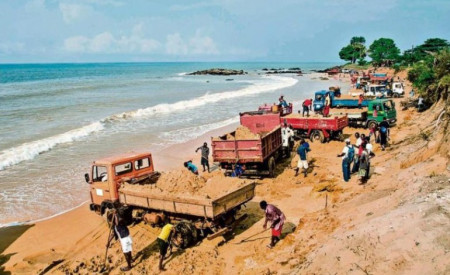
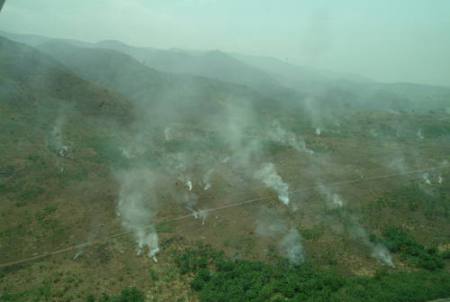
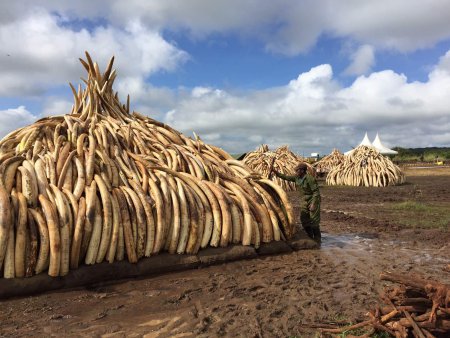
Though stored sperm from Sudan and several other males are available, both Najin and Fatu now seem unable to conceive. This means, if the subspecies is to be preserved, that one or both of them will have to have some eggs removed from their ovaries and combined with stored sperm in a Petri dish;… and subsenquently implanted in the uterus of a southern white, who would act as a surrogate mother, with a reasonable hope of success.  That has not yet happened. The seven embryos are now in a freezer awaiting the results of research on how best to transfer them to surrogates. In the meantime, having proved their technique with these hybrids, Dr Hildebrandt and his colleagues now hope to create more embryos, this time using eggs from the two remaining female northern whites.

Even if they succeed, though, it will be a long haul back for the northern white rhino. Members of any new generation resulting from IVF will have then to be bred with each other to create subsequent generations—with all the risks of reduced biological fitness which such incest entails. It is not so much a gene pool that Dr Hildebrandt is working with as a gene puddle.

Then there is the question of what to do with the resulting animals. Analysis of other rhinoceros species, both in Africa and Asia, points to a viable population in the wild needing to be at least 500 strong. Even if such a group could be created, and not collapse from lack of genetic diversity, releasing it into the tender mercies of what remains of Kenya’s savannah would be risky.

Excerpts from Animal Conservation: Drinking in the last-chance saloon, Economist, July 7, 2018, at 66.

Running out of Beaches: sand miners and builders

For a place that depends on sun-and-sand-seeking tourists, Fort Lauderdale, Florida has a big problem: Its beaches are disappearing.  The Florida city has been fighting a defensive battle against nature for decades. The sand that lines its shores is constantly being swept out to sea by wind, waves and tides. In the natural course of things, that sand would be replenished by grains carried by the Atlantic’s southward-moving currents. That’s what used to happen. Today, however, so many marinas, jetties and breakwaters have been built along the Atlantic coast that the flow of incoming sand has been blocked. The natural erosion continues, but the natural replenishment does not.

For many years, Broward County, in which Fort Lauderdale sits, solved its vanishing-beach problem by replacing the sand with grains dredged up from the nearby ocean floor. Nearly 12 million cubic yards of underwater grains have been stripped off the sea bottom and thrown onto the county’s shores. But by now, virtually all of the accessible undersea sand has been used up.  The same goes for Miami Beach, Palm Beach and many other beach-dependent Florida towns. In fact, according to the state’s Department of Environmental Protection, nearly half of the state’s beaches have suffered “critical erosion.” Florida isn’t an anomaly. Beaches are disappearing all across America and around the world, from South Africa to Japan to Western Europe. A 2017 study by the U.S. Geological Survey warned that unless something is done, as much as two-thirds of Southern California’s beaches may be completely eroded by 2100…

Massive coastal development blocks the flow of ocean-borne sand. In many countries, including the U.S., river dams also cut off sand that used to feed beaches. The widespread practice of dredging up river sand to use for making concrete makes the problem worse. Researchers at the South African Institute of International Affairs believe that sand mining has slashed by one-third the flow of river sand that feeds the beaches of Durban, South Africa; and in the San Francisco Bay, environmentalists warn that massive sand dredging may be starving nearby beaches.

In some places, outlaw sand miners are hauling away the beach itself. In Morocco, Algeria, Russian-occupied Crimea and elsewhere, illegal miners have stripped entire beaches for construction sand, leaving behind rocky moonscapes. Smugglers in Malaysia, Indonesia and Cambodia load beach sand onto small barges in the night to sell in Singapore.

Having thwarted the natural processes that used to feed beaches, people are now replacing them with artificial ones. The easiest and cheapest method is to suck up grains from offshore and blast them onto the beach through massive pipes. But having run out of offshore sand, many towns in southern Florida are left with no choice but to dig their sand from inland quarries and haul it to the coast one roaring, diesel-spewing truck at a time. Tourists and locals hate the noise and traffic, and county officials hate the extra cost, which can be easily double that of dredged sand. Desperate officials are even talking about importing sand from the Bahamas.

The costs add up fast. The price of renourishing a beach can reach $10 million per mile. Broward County alone has spent more than $100 million replenishing its beaches in a multiyear project launched in 2015. More than a few places, such as Atlantic City, have already racked up tabs of well over $100 million by themselves. All told, nearly $9 billion has been spent in the U.S. in recent decades on artificially rebuilding hundreds of miles of beach, according to researchers at Western Carolina University. Florida accounted for about a quarter of the total. Almost all of the costs are covered by taxpayers.

Dredging up ocean sand clouds the water with stirred-up grains and muck. Suspended in the water, those particles can block life-giving sunlight from reaching coral reefs. And when the grains settle, they can suffocate the reefs and whatever creatures are living on them.  Moreover, beach sands are themselves home to a multitude of creatures. Besides the obvious ones—clams, crabs, birds, plants—they shelter all kinds of nematodes, flatworms, bacteria and other organisms so small that they live on the surface of individual sand grains. Despite their tiny size, these creatures play an important role in the ecosystem, breaking down organic matter and providing food for other creatures. Dumping thousands of tons of imported sand on top of these organisms can obliterate whole colonies of them.

Beaches are bulwarks that can protect lives and property from storms and rising seas in our climatically imperiled world….The U.S.’s densely populated eastern seaboard is already getting a taste of what that means. When Hurricane Sandy hit in 2012, it killed 159 people and damaged or destroyed at least 650,000 homes. The storm struckhardest in areas where beaches had eroded, leaving little or no buffer between cities and the raging wind and waves. On the other hand, according to the U.S. Army Corps of Engineers, renourished beaches in New York and New Jersey prevented an estimated $1.3 billion in damages that Sandy otherwise would have inflicted.

Excerpts from Vince Beiser, The Battle for our Beaches, Wall Street Journal, July 19, 2018

See also The World in a Grain

The Game-Changers: oil, gas and geothermal

The Democratic Republic of the Congo (DRC) has decided to degazette parts of two UNESCO World Heritage Sites to allow for oil drilling. Environmentalists have reacted sharply to the decision to open up Virunga and Salonga national parks – a move that is likely to jeopardise a regional treaty on the protection of Africa’s most biodiverse wildlife habitat and the endangered mountain gorilla…The two national parks are home to mountain gorillas, bonobos and other rare species. Salonga covers 33 350 km2 (3,350,000 ha)of the Congo Basin, the world’s second largest rainforest, and contains bonobos, forest elephants, dwarf chimpanzees and Congo peacocks….

On 7 April, 2018, a council of ministers from the DRC, Rwanda and Uganda agreed to ratify the Treaty on the Greater Virunga Transboundary Collaboration (GVTC) on Wildlife Conservation and Tourism Development. The inaugural ministerial meeting set the deadline for September 2018 to finalise the national processes needed to ratify the treaty.

The Virunga National Park (790,000 ha, 7 900 km2)is part of the 13 800 km2 (1 3800 00 ha) Greater Virunga Landscape, which straddles the eastern DRC, north-western Rwanda and south-western Uganda.  The area boasts three UNESCO World Heritage Sites – Virunga, Rwenzori Mountains National Park and Bwindi Impenetrable National Park. It also boasts a Ramsar Site (Lake George and Lake Edward) and a Man and Biosphere Reserve (in Queen Elizabeth National Park). It is the most species-rich landscape in the Albertine Rift – home to more vertebrate species and more endemic and endangered species than any other region in Africa.

According to the Greater Virunga Landscape 2016 annual report, the number of elephant carcasses recorded in 2016 was half the yearly average for the preceding five years. The report also mentions a high rate of prosecution and seizures. It cites a case study on Uganda’s Queen Elizabeth National Park where 282 suspects involved in poaching were prosecuted, with over 230 sentenced….The GVTC has also helped to ease tensions between the countries by providing a platform where their military forces can collaborate in a transparent way. ..

Armed groups have reportedly killed more than 130 rangers in the park since 1996. Militias often kill animals such as elephants, hippos and buffaloes in the park for both meat and ivory. Wildlife products are then trafficked from the DRC through Uganda or Rwanda. The profits fund the armed groups’ operations.

Over 80% of the Greater Virunga Landscape is covered by oil concessions and this makes it a target for state resource exploitation purely for economic gain.


2015: Until recently, in GVL, extraction of highly valued minerals such as gold and coltan, were largely artisanal. The recent discovery of oil, gas and geothermal potential, however, is a game-changer. Countries are now moving ahead in the exploration and production of oil and gas, which if not properly managed, is likely to result in major negative environmental (and social) changes. Extractive industries are managed under each GVL partner state policy guidelines and legislation. Concessions for these industries cover the whole of the GVL, including the World Heritage Sites as well as national protected areas . Since 2006, Uganda discovered commercial quantities of oil in the Albertine Graben and production in Murchison will begin within the next few years. The effect of the extractive industries, similar to and contributing to that of the increase in urbanization is the increased demand for bush meat, timber and fuel wood from the GVL.

Excertps from Duncan E Omondi Gumba, DRC prioritises oil over conservation, ISS Africa,  July 11, 2018//GREATER VIRUNGA LANDSCAPE
ANNUAL CONSERVATION STATUS REPORT 2015


How to Market Freshly-Poached Ivory

In spite of a ban, illegal ivory trading still flourishes in the European Union, as traders use a loophole allowing exchange of very old pieces, an Oxford University study sponsored by a campaign group found.
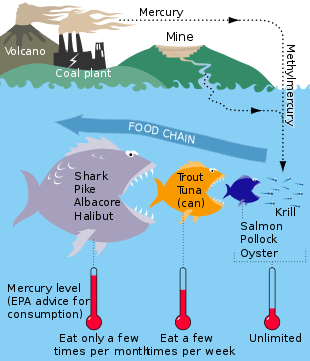
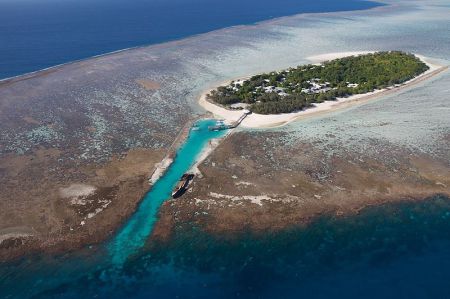
European law allows ivory obtained prior to 1947 to be traded freely. Ivory obtained after 1947 but before 1990 can be sold with a government certificate, while selling ivory obtained after the global ivory trade was banned is illegal.

Campaign organisation Avaaz purchased more than 100 pieces of ivory from 10 different EU countries to undergo carbon testing at Oxford University. Scientists concluded 75% of the ivory was from after 1947 and 20% was ivory obtained since 1989.  Many traders use the provision which allows free trade of old ivory to illegally trade newer ivory, fuelling the market and incentivising the killing of elephants, Avaaz said.

Exceprts, Illegal ivory breezes past EU law – campaign grou Reuters, Tuesday, July 10, 2018

Lead and Mercury in the Seas

The levels of lead and mercury in the sea reduce noticeably following concrete actions to limit their release, recent research at the IAEA using nuclear techniques has shown. The banning of leaded petrol and the closure of a mercury discharging plant have led to decreases in pollution levels over 10-15 years.

This is the case for lead, which when consumed by fish which is in turn eaten by people, can cause damage to the human nervous system and internal organs. Many different activities such as mining or smelting in metallurgy and the burning of coal as well as lead’s use in batteries, paint, ceramics and other everyday items can release it into the environment. The biggest source of lead pollution in the last century was related to the use of leaded petrol.

As part of efforts to develop new methods to determine the source and levels of lead pollution, researchers at the IAEA Environment Laboratories analysed sediments from the Baltic Sea and the Caribbean Sea. In mapping the pollution history in a sediment core from the Baltic coast of Germany, researchers could clearly observe that within 10 to 15 years of phasing out lead in petrol by 1996, lead pollution levels in the sea had decreased..

In addition, IAEA researchers have successfully developed methods to use lead isotope ratios to determine the source of lead pollution and assess whether it is naturally present or the result of anthropogenic activities, since natural and anthropogenic lead sources will show different isotopic fingerprints and isotope compositions….

IAEA scientists’ analysis of a dated sediment core in a Caribbean bay shows total mercury (Hg) levels rapidly decreased after the closure of a discharging plant…Mercury was used in an alkali plant there as a catalyser, and in the 1970s, high concentrations were found in water, sediments and marine organisms as a result of discharges from the plant.  Years later, after the plant had been closed, IAEA researchers showed, by analysing sediment core taken from the bay, that levels of total mercury had started to decrease.  While remnants of this pollution are still buried in the sediment, acute toxicity has been greatly reduced.

Excerpts from World Oceans Day 2018: Regulating Lead and Mercury Releases has Decreased Marine Pollution, IAEA Press Release, June 8, 2018

A Resurrection Story: the Great Barrier Reef

Great Barrier Reef, which runs for 2,300km along the coast of Queensland, is one of the icons of environmentalism. Conservationists constantly worry that human activity, particularly greenhouse-gas-induced global warming, will harm or even destroy it….Reef-forming corals prefer shallow water so, as the world’s sea levels have yo-yoed during the Ice Ages, the barrier reef has come and gone. The details of this have just been revealed in a paper published in Nature Geoscience by Jody Webster of the University of Sydney and her colleagues…. They discovered that it has died and then been reborn five times during the past 30,000 years. Two early reefs were destroyed by exposure as sea levels fell. Three more recent ones were overwhelmed by water too deep for them to live in, and also smothered by sediment from the mainland. The current reef is therefore the sixth of the period.

The barrier reef’s ability to resurrect itself is encouraging. But whether it could rise from the dead a sixth time is moot. The threat now is different. It is called bleaching and involves the tiny animals, known as polyps, which are the living part of a reef, ejecting their symbiotic algae. These algae provide much of a polyp’s food, but also generate toxins if the temperature gets too high, in which case the polyp throws them out. That causes the coral to lose its colour.  Polyps can tolerate occasional bleaching, but if it goes on too long, then they die. In the short term, therefore, global warming really does look a serious threat to the reef. It would, no doubt, return if and when the sea temperature dropped again. But when that would be, who knows?

Excerpts from Conservation: A Great Survivor, Economist, June 2, 2018, at 78

A Glimmer of Hope: protected areas

Globally, one-third of protected land is under intense pressure from road building, grazing, urbanization, and other human activities, according to a new study in the 18 May 2018 issue of Science…Nations around the world have committed to preserving biodiversity under the Convention on Biological Diversity (CBD), through protected status designations ranging from nature reserves with strict controls on human impact to regions where people can extract natural resources in a sustainable way. This study suggests that many of these nations are failing to meet their conservation goals.

James Watson, a researcher at the Wildlife Conservation Society and an author of the study, noted that 111 nations currently claim they have meet their obligations under the CBD based on the extent of their protected areas. “But if you only counted the land in protected areas that are not degraded, which play a role in conserving biodiversity, 77 of these nations don’t meet the bar. And it’s a low bar.”

Watson and a team of researchers decided to take advantage of a recently released human footprint map to look at the degradation of protected areas. “The results are quite staggering,” said Watson. “We found that 2.3 million square miles — twice the size of Alaska — was impacted by road building, grazing, logging, roads and urbanization. That is 32.8% of all protected land — the land set aside by nations for the purpose of biodiversity conservation — that] is highly degraded.”  Regions that were found to be particularly burdened by human activity include western Europe and southern Asia.

In terms of protected land that is free of any measurable human pressure, 42% could be classified as such; however, many of these areas are within remote regions of high-latitude nations, such as Russia and Canada.

Some conservation efforts have been fruitful, though. “We did see glimmers of hope,” said Watson…. (e.g., the Keo Seima Wildlife Sanctuary in Cambodia, and Niassa Reserve in Mozambique)

Protected areas designated after 1993 have a lower level of intense human pressure within their borders than those previously designated, the authors found. They suggest this may indicate that more recently designated areas were targeted as protected spaces because they were recognized as being under low human pressure.

Exceprts from Michelle Hampson, One-Third of World’s Protected Areas under Intense Human Pressure, American Association for the Advancement of Scicence,  May 16, 2018

Fish, Gas and Minerals: the Arctic

Mr Xi has been showing a growing interest in Arctic countries. In 2014 he revealed in a speech that China itself wanted to become a “polar great power”..,,In January 2018 the Chinese government published its first policy document outlining its Arctic strategy.
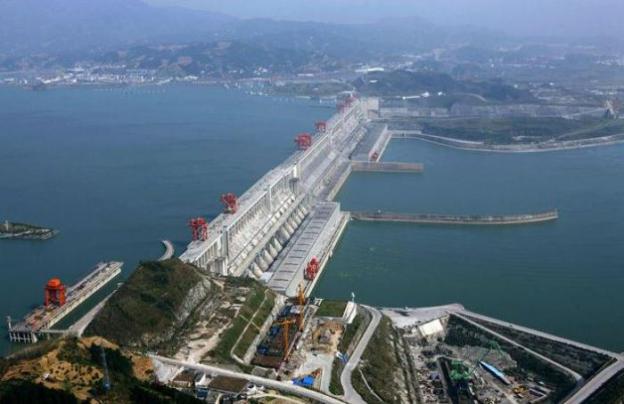
China is also keen to tap into the Arctic resources that will become easier to exploit as the ice cap retreats. They include fish, minerals, oil and gas. The region could hold a quarter of the world’s as-yet-undiscovered hydrocarbons, according to the United States Geological Survey. Chinese firms are interested in mining zinc, uranium and rare earths in Greenland.

As the ice melts, it may become more feasible for cargo ships to sail through Arctic waters. China is excited by this possibility (its media speak of an “ice silk road”). In the coming decades such routes could cut several thousand kilometres off journeys between Shanghai and Europe. Sending ships through the Arctic could also help to revive port cities in China’s north-eastern rustbelt… China is thinking of building ports and other infrastructure in the Arctic to facilitate shipping. State-linked firms in China talk of building an Arctic railway across Finland.

Chinese analysts believe that using Arctic routes would help China strategically, too. It could reduce the need to ship goods through the Malacca Strait, a choke-point connecting the Pacific and Indian oceans. Much of China’s global shipping passes through the strait. It worries endlessly about the strait’s vulnerability to blockade—for example, should war break out with America.

There are no heated territorial disputes in the Arctic, but there are sensitivities, including Canada’s claim to the North-West Passage, a trans-Arctic waterway that America regards as international—ie, belonging to no single state.

Plenty of non-Arctic countries, including European ones, have similar dreams. But China is “by far the outlier” in terms of the amount of money it has pledged or already poured into the region, says Marc Lanteigne of Massey University in New Zealand. Its biggest investments have been in Russia, including a gas plant that began operating in Siberia in December 2017. Russia was once deeply cynical about China’s intentions. But since the crisis in Ukraine it has had to look east for investment in its Arctic regions.

The interest shown by Chinese firms could be good news for many Arctic communities. Few other investors have shown themselves willing to stomach the high costs and slow pay-offs involved in developing the far north…. The main concern of Arctic countries is that China’s ambitions will result in a gradual rewiring of the region’s politics in ways that give China more influence in determining how the Arctic is managed. Greenland is a place to watch. Political elites there favour independence from Denmark but resist taking the plunge because the island’s economy is so dependent on Danish support. The prospect of Chinese investment could change that. Should Greenland become independent, China could use its clout there to help further its own interests at meetings of Arctic states, in the same way that it uses its influence over Cambodia and Laos to prevent the Association of South-East Asian Nations from criticising Chinese behaviour in their neighbourhood.

Excerpts from The Arctic: A Silk Road through Ice, Economist, Apr. 14, 2018, at 37

The Unquenchable Thirst: water mismanagement

Most of the drinking water consumed in Beijing has travelled 1,432km (895 miles), roughly the distance from New York to Orlando, Florida. Its journey begins in a remote and hilly part of central China at the Danjiangkou reservoir, on the bottom of which lies the drowned city of Junzhou. The water gushes north by canal and pipeline, crosses the Yellow river by burrowing under it, and arrives, 15 days later, in the water-treatment plants of Beijing. Two-thirds of the city’s tap water and a third of its total supply now comes from Danjiangkou.

This winter and spring, the reservoir was the capital’s lifeline. No rain or snow fell in Beijing between October 23rd 2017 and March 17th 2018—by far the longest drought on record. Yet the city suffered no supply disruptions, unlike Shanxi province to the west, where local governments rationed water. The central government is exultant, since the project which irrigates Beijing was built at vast cost and against some opposition.

The South-to-North Water Diversion Project—to give the structure its proper name—is the most expensive infrastructure enterprise in the world. It is the largest transfer of water between river basins in history, and China’s main response to its worst environmental threat, which is (despite all the pollution) lack of water.

The route between Beijing and Danjiangkou, which lies on a tributary of the Yangzi, opened in 2014. An eastern route opened in 2013 using the ancient Grand Canal between Hangzhou and the capital. (Jaw-dropping hydrological achievements are a feature of Chinese history.) A third link is planned on the Tibetan plateau, but since that area is prone to earthquakes and landslides, it has been postponed indefinitely…

Downstream from Danjiangkou, pollution has proved intractable. By diverting water from the Yangzi, the project has made the river more sluggish. It has become less able to wash away contaminants and unable to sustain wetlands, which act as sponges and reduce flooding. To compensate for water taken from their rivers, local governments are also building dams wherever they can to divert it back again. Shaanxi province, for example, is damming the Han river to transfer water to its depleted river Wei….Worst of all, the project diverts not only water but money and attention from China’s real water problem: waste and pollution.

Excerpts from Water: Massive Diversion, Economist, Apr. 7, 2018

Extreme Markets: the fascination for wild genitalia

Tomohon, in the highlands of North Sulawesi, Indonesia is …the “extreme market”. There is certainly something extreme about the serried carcasses, blackened by blow torches to burn off the fur, the faces charred in a rictus grin.   The pasar extrim speaks to Sulawesi’s striking biogeography. The Indonesian island straddles the boundary between Asiatic and Australian species—and boasts an extraordinary number of species found nowhere else. But the market also symbolises how Asia’s amazing biodiversity is under threat. Most of the species on sale in Tomohon have seen populations crash because of overhunting (habitat destruction has played a part too)…

An hour’s drive from Tomohon is Bitung, terminus for ferry traffic from the Moluccan archipelago and Papua, Indonesia’s easternmost province. These regions are even richer in wildlife, especially birds. Trade in wild birds is supposedly circumscribed. Yet the ferries are crammed with them: Indonesian soldiers returning from a tour in Papua typically pack a few wild cockatoos or lories to sell. One in five urban households in Indonesia keeps birds. Bitung feeds Java’s huge bird markets. The port is also a shipment point on a bird-smuggling route to the Philippines and then to China, Taiwan, even Europe. Crooked officials enable the racket.

The trade in animal parts used for traditional medicine or to denote high status, especially in China and Vietnam, is an even bigger racket. Many believe ground rhino horn to be effective against fever, as well as to make you, well, horny. Javan and Sumatran rhinos were not long ago widespread across South-East Asia, but poaching has confined them to a few tiny pockets of the islands after which they are named. Numbers of the South Asian rhinoceros are healthier, yet poachers in Kaziranga national park in north-east India have killed 74 in the past three years alone.

Name your charismatic species and measure decline. Between 2010 and 2017 over 2,700 of the ivory helmets of the helmeted hornbill, a striking bird from South-East Asia, were seized, with Hong Kong a notorious transshipment hub. It is critically endangered. As for the tiger, in China and Vietnam its bones and penis feature in traditional medicine, while tiger fangs and claws are emblems of status and power. Fewer than 4,000 tigers survive in the wild. The pressure from poachers is severe, especially in India. The parts of over 1,700 tigers have been seized since 2000.

Asia’s wildlife mafias have gone global. Owing to Asian demand for horns, the number of rhinos poached in South Africa leapt from 13 in 2007 to 1,028 last year. The new frontline is South America. A jaguar’s four fangs, ten claws, pelt and genitalia sell for $20,000 in AsiaSchemes to farm animals, which some said would undercut incentives to poach, have proved equally harmful. Lion parts from South African farms are sold in Asia as a cheaper substitute for tiger, or passed off as tiger—either way, stimulating demand. The farming of tigers in China, Laos, Thailand and Vietnam provides cover for the trafficking of wild tiger parts. Meanwhile, wild animals retain their cachet—consumers of rhino horn believe the wild rhino grazes only on medicinal plants.

Excerpts from  Wasting Wildlife, Economist, Apr. 21, 2018, at 36

Furthest from their Minds: greenhouse gases in Afirca

When sub-Saharan Africa comes up in discussions of climate change, it is almost invariably in the context of adapting to the consequences, such as worsening droughts. That makes sense. The region is responsible for just 7.1% of the world’s greenhouse-gas emissions, despite being home to 14% of its people. Most African countries do not emit much carbon dioxide. Yet there are some notable exceptions.
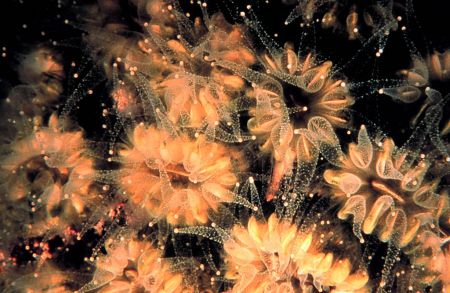
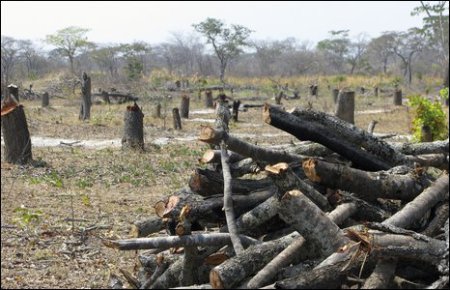
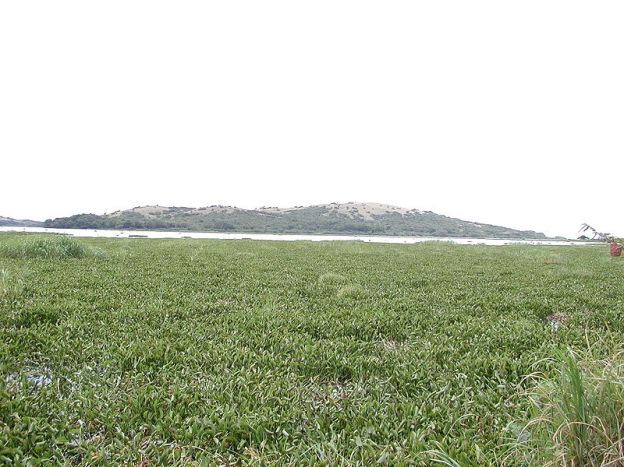
Start with coal-rich South Africa, which belches out more carbon dioxide than Britain, despite having 10m fewer people and an economy one-eighth the size. Like nearly all of its power plants, many of its vehicles depend on coal, which is used to make the country’s petrol (a technique that helped the old apartheid regime cope with sanctions). A petrochemical complex in the town of Secunda owned by Sasol, a big energy and chemicals firm, is one of the world’s largest localised sources of greenhouse gases.  Zambia is another exception. It burns so much vegetation that its land-use-related emissions surpass those of Brazil, a notorious—and much larger—deforester.

South Africa and Zambia may be extreme examples, but they are not the region’s only big emitters . Nigerian households and businesses rely on dirty diesel generators for 14GW of power, more than the country’s installed capacity of 10GW. Subsistence farmers from Angola to Kenya use slash-and-burn techniques to fertilise fields with ash and to make charcoal, which nearly 1bn Africans use to cook. This, plus the breakneck growth of extractive industries, explains why African forests are disappearing at a rate of 0.5% a year, faster than in South America. Because trees sequester carbon, cutting them counts as emissions in climate accounting.

Other African countries are following South Africa’s lead and embracing coal…A new coal-fired power plant ….Lamu in Kenya is one of many Chinese-backed coal projects in Africa…Africa’s sunny skies and long, blustery coastlines offer near-limitless solar- and wind-energy potential. But what African economies need now are “spinning reserves”, which can respond quickly to volatile demand, says Josh Agenbroad of the Rocky Mountain Institute, a think-tank in Colorado. Fossil fuels deliver this; renewables do not…. Several countries are intrigued by hybrid plants where most electricity is generated by solar panels, but diesel provides the spinning reserves…

Excerpts from  Africa and Climate Change: A Burning Issue, Economist,  Apr. 21, 2018, at 41.

The Super-Corals

By some estimates, half of the world’s coral has been lost since the 1980s. Corals are delicate animals, and are succumbing to pollution and sediment from coastal construction. Also to blame are sewage, farmland run-off and fishing, all of which favour the growth of the big, fleshy algae that are corals’ main competitors for space. (The first two encourage algal growth and the third removes animals that eat those algae.) But the biggest killer is warming seawater. Ocean heatwaves in 2015, 2016 and 2017 finished off an astonishing 20% of the coral on Earth. This is troubling, for countless critters depend on coral reefs for their survival. Indeed, such reefs, which take up just a thousandth of the ocean floor, are home, for at least part of their life cycles, to a quarter of marine species. Losing those reefs would cause huge disruption to the ocean’s ecosystem. So researchers are looking for ways to stop this happening.

A growing number of scientists reckon that an entirely different approach to saving coral is needed. If oceans are changing faster than coral can adapt via the normal processes of evolution, why not, these researchers argue, work out ways to speed up such evolution  One way to do this would be selective breeding. Most species of coral spawn on just one or two nights a year, a process regulated by the lunar cycle, the time of sunset and the temperature of the water. The sperm and eggs released during spawning meet and unite, and the results grow into larvae that search for places where they can settle down and metamorphose into the stone-encased sea-anemone-like polyps that are the adult form. In the wild, the meeting of sperm and egg is random. Some researchers, however, are trying to load the dice. By starting with wild specimens that have survived a period of heat which killed their neighbours, they hope to breed heat resistance into the offspring.

This is the tack taken, for example, by Christian Voolstra of the Red Sea Research Centre in Thuwal, Saudi Arabia. He describes it as “making sure super papa and super mama meet and reproduce”. Corals bred in this way at the Hawaii Institute of Marine Biology, on Oahu, survive in water that is warm enough to kill offspring resulting from normal, random reproduction.

The reason corals die when the surrounding water gets too hot is that the microscopic algae and bacteria which live on and in their tissue, and are their main food sources, are sensitive to small changes in temperature. When stressed by heat these symbionts start producing dangerous oxidants. This causes the polyps to eject them, to ensure short-term survival. The reef thus turns ghostly white—a process called bleaching. Bleached coral is not dead. But unless the temperature then drops, the polyps will not readmit the algae and bacteria, and so, eventually, they do die.

Polyps that survive one such ordeal will, however, fare better if temperatures rise again. The second time around they have acclimatised to the change. Some species, indeed, can pass this resilience on to their offspring by a process called intergenerational epigenesis. The Hawaii Institute’s efforts to develop hardier corals thus include administering a near-death experience to them. Ruth Gates, the institute’s director, says the goal is to create reefs “designed to withstand the future”. The institute’s first such reef will probably be grown inside Biosphere 2, an enclosed ecosystem run by the University of Arizona.

Another approach, taken by the Australian Institute of Marine Science (AIMS) in Queensland, is to crossbreed corals from different places, to create hybrid vigour. The results of such crosses are unpredictable, but some survive heat greater than either of their parents could cope with.

The artificial breeding of corals is, though, constrained by their cyclical breeding habits, so researchers at the Florida Aquarium, on Tampa Bay, are trying to speed the process up. The operators of the aquarium’s “coral ark” nursery stagger lighting and temperature patterns to fool the animals into releasing their gametes on a day of the researchers’ choosing. This also permits the co-mingling of sperm and eggs that would not normally meet, thus allowing new varieties to be created. According to Scott Graves, the aquarium’s boss, half a dozen such varieties show most promise of heat resistance, but the team is generating thousands more, “just like a seed bank”, as a backup.

A coral’s fate is tied so closely to the algae and bacteria which live in its tissues that, as Dr Gates puts it, it is best to think of the whole thing as “a consortium of organisms”. This is why scientists at AIMS are keen also to produce algae that withstand higher temperatures without releasing the oxidants that lead coral to kick them out. They are doing so using a process which Madeleine van Oppen, a researcher at the institute, calls “directed laboratory evolution”. In the past few years her team have grown more than 80 generations of algae, repeatedly culling those organisms most susceptible to heat stress and also to acidification, another curse of a world with more carbon dioxide around than previously. The resulting algae release fewer toxins and photosynthesise better in warm water than do their wild brethren..

[A]fter the trauma of bleaching, polyps do extend a preferential welcome to algae that have greater levels of heat tolerance. His team are thus now using special lights to bleach corals. Polyps “stress hardened” in this way will be planted on wild reefs in coming months…

This raises the question of whether the genomes of coral, algae and bacteria might be edited for greater robustness. According to Dr Voolstra, more than ten laboratories around the world are trying to do so. His own team has successfully inserted genetic material into about 30 larvae of a coral called Acropora millepora. Editing corals’ heat thresholds in this way is, he reckons, about five years away.

Whether they are created by selective breeding or genetic engineering, supercorals, the thinking goes, would not need to be placed on reefs in astronomical numbers… That thought, however, does not please everybody. Some object in principle to the idea of releasing human-modified creatures into the wild, or feel that amelioration of this sort is a distraction from the business of reducing carbon-dioxide emissions. Others have pragmatic concerns—that corals bred to survive warming seas might suffer handicapping trade-offs. So regulators have been cautious. The Great Barrier Reef Marine Park Authority, for example, will probably require that the hybrid organisms AIMS hopes to test in the open reef are removed before they begin spawning. …[T]he alternative, of doing nothing, is the equivalent of “ just throwing our hands up in the air and saying, ‘OK, we’re prepared now not to have coral’.” For the world’s oceans, that loss would be catastrophic.

Excerpts from Accelerating Evolution: Refreshing Reefs, Economist, Mar. 17, 2018, at 75

A Slow-Burning Tragedy

Charcoal is one of the biggest informal businesses in Africa. It is the fuel of choice for the continent’s fast-growing urban poor, who, in the absence of electricity or gas, use it to cook and heat water. According to the UN, Africa accounted for three-fifths of the world’s production in 2012—and this is the only region where the business is growing. It is, however, a slow-burning environmental disaster.

In Nyakweri forest, Kenya, the trees are ancient and rare. Samwel Naikada, a local activist, points at a blackened stump in a clearing cut by burners. It is perhaps 400 years old, he says. The effect of burning trees spreads far. During the dry season, the forest is a refuge for amorous elephants who come in from the plains nearby to breed. The trees store water, which is useful in such a parched region. It not only keeps the Mara river flowing—a draw for the tourists who provide most of the county government’s revenue. It also allows the Masai people to graze their cows and grow crops. “You cannot separate the Masai Mara and this forest,” says Mr Naikada….

Nyakweri is hardly the only forest at risk. The Mau forest, Kenya’s largest, which lies farther north in the Rift Valley, has also been hit by illegal logging. Protests against charcoal traders (!) broke out earlier this year, after rivers that usually flow throughout the dry season started to run dry. In late February a trader’s car was reportedly burned in Mwingi, in central Kenya, by a group of youngsters who demanded to see the trader’s permits. At the end of February 2018 the government announced an emergency 90-day ban on all logging, driving up retail prices of charcoal by 500%, to as much as 5,000 shillings a bag in some cities.

The problems caused by the charcoal trade have spread beyond Kenya. In southern Somalia, al-Shabab, a jihadist group, funds itself partly through the taxes it levies on the sale of charcoal (sometimes with the help of Kenyan soldiers, who take bribes for allowing the shipments out of a Somali port that Kenya controls). The logging also adds to desertification, which, in turn, causes conflict across the Sahel, an arid belt below the Sahara. It forces nomadic herders to range farther south with their animals, where they often clash with farmers over the most fertile land.

In the power vacuum of the eastern Democratic Republic of Congo, rampant charcoal logging has destroyed huge swathes of Virunga National Park. That threatens the rare gorillas which tourists currently pay as much as $400 a day to view, even as it fuels the conflict.

In theory, charcoal burning need not be so destructive. In Kenya the burners are meant to get a licence. To do so, they have to show they are replacing the trees they are cutting down and that they are using modern kilns that convert the trees efficiently into fuel. But, admits Clement Ngoriareng, an official at the Kenya Forest Service (KFS), the rules are laxly enforced. Some suspect that powerful politicians stymie efforts to police burners.

Excerpts from A Very Black Market: Illegal Charcoal, Economist, Mar. 31, 2018

Choked by Hyacinths: Lake Victoria

The report, Freshwater biodiversity in the Lake Victoria Basin (2018), assesses the global extinction risk of 651 freshwater species, including fishes, molluscs, dragonflies, crabs, shrimps and aquatic plants native to East Africa’s Lake Victoria Basin, finding that 20% of these are threatened with extinction. Of the freshwater species assessed, 204 are endemic to the Lake Victoria Basin and three-quarters (76%) of these endemics are at risk of extinction.

The African Lungfish (Protopterus aethiopicus), for example, is declining in the Lake Victoria Basin largely due to overfishing, poor fishing practices and environmental degradation as wetlands are converted to agricultural land. The lungfish is considered a delicacy for some local communities and is an important local medicinal product, used to boost the immune system and treat alcoholism. The lungfish is also traded at market, making it important to the local economy.

Lake Victoria is the world’s second largest freshwater lake by surface area. Its catchment area includes parts of Kenya, Tanzania, Uganda, Burundi and Rwanda. Also referred to as ‘Darwin’s Dreampond’, Lake Victoria is known for its high levels of unique biodiversity. The Lake Victoria Basin harbours immense natural resources including fisheries, forests, wetlands and rangelands….

Pollution from industrial and agricultural sources, over-harvesting of resources and land clearance are among the primary threats to biodiversity in this region. Invasive species also present an important threat to native biodiversity in the basin, affecting 31% of all species and 73% of threatened species. The purple flowered Water Hyacinth (Eichhornia crassipes) was accidentally introduced to Lake Victoria from South America in the 1980s, and at its peak covered close to 10% of the lake surface in dense floating mats. These mats reduce the oxygen and nutrient availability in the water column, which negatively affects native biodiversity. Opportunities for harvesting and exploiting the Water Hyacinth, for example by using the species as fuel in bio-digesters for energy production, are under investigation.

Excerpts from Livelihoods at risk as freshwater species in Africa’s largest lake face extinction – IUCN Report, IUCN Report, Apr. 30, 2018

Open-Ocean Farming

Ocean Farm 1 is the first of six experimental fish farms ordered by SalMar, a Norwegian firm, at a total cost of $300 million. InnovaSea, an American firm, makes large open-ocean aquaculture nets called SeaStations, which are currently used off the coast of Panama and Hawaii, but Ocean Farm 1 is “by far the largest open-ocean fish farm in the world,” says Thor Hukkelas, who leads research and development on aquaculture at Kongsberg Maritime, a Norwegian engineering company. Mr Hukkelas’s team provided Ocean Farm 1’s sensor system: 12 echo sounders mounted on the bottom of the frame, high-definition cameras dangled into the water at different depths, oxygen sensors and movable, submerged feeding tubes.

Fish farming plays an increasingly central role in the provision of sufficient amounts of protein to Earth’s population. People eat more fish globally than beef, and farmed fish account for almost half of that amount  Many wild fisheries are already at or past their sustainable capacity, so efforts to make fish farming more productive are vital.

Ocean Farm 1 aims to automate what is an expensive and difficult business, and to solve two key problems that occur in near-shore aquaculture: that there is not enough space and that it is too polluting. The excrement from millions of salmon can easily foul up Norway’s fjords, and their shallow, relatively still water is a breeding ground for sea lice. In the open ocean the water is deeper and better oxygenated. The currents are stronger and so better able to sweep away excrement.

Near-shore farms normally spread feed on the water’s surface and allow it to sink, but Ocean Farm 1 has 16 valves at varying depths, through which feed can be pushed. By putting it farther down in the cage it is able to keep the salmon in deeper water. The salmon are fine with this. The sea lice, which like the shallows, are not.

All of this means the number of fish can be increased. The Norwegian government wants to triple its aquaculture production by 2030 and quintuple it by 2050. “Scaling up of traditional aquaculture is not going to reach these high-growth ambitions,” says Mr Hukkelas.

Kongsberg is gathering data from all the sensors on the farm to build a machine-learning model, called SimSalma, which learns the behaviour of the salmon in order to optimise their feeding. Currently, human operators on the structure decide when and where to feed the fish by examining the data. By 2019 Kongsberg plans to have automated this, pushing feed at optimum times and places and reducing human involvement. The success and expansion of such projects would represent a major step towards maintaining global fish stocks.

Net gains: Open-ocean fish farming is becoming easier, Economist,  Mar. 10, 2018.

The Expoitation of Seabed

Patania One became in May 217the first robot in 40 years to be lowered to the sea floor in the Clarion Clipperton Zone (CCZ), about 5,000 metres beneath the Pacific ocean…There it gathered data about the seabed and how larger robots might move carefully across it, sucking up valuable minerals en route.

The CCZ is a 6m square-kilometre (2.3m square-mile) tract between two of the long, straight “fracture zones” which the stresses of plate tectonics have created in the crust beneath the Pacific. Scattered across it are trillions of fist-sized mineral nodules, each the result of tens of millions of years of slow agglomeration around a core of bone, shell or rock. Such nodules are quite common in the Pacific, but the CCZ is the only part of the basin where the International Seabed Authority (ISA), which regulates such matters beyond the Exclusive Economic Zones (EEZs) of individual countries, currently permits exploration. Companies from Japan, Russia, China and a couple of dozen other countries have been granted concessions to explore for minerals in the CCZ. The ISA is expected to approve the first actual mining in 2019 or 2020.

This could be big business. James Hein of the United States Geological Survey and colleagues estimated in a paper in 2012 that the CCZ holds more nickel, cobalt and manganese than all known terrestrial deposits of those metals put together. The World Bank expects the battery industry’s demand for these, and other, minerals to increase if the transition to clean energy speeds up enough to keep global temperatures below the limits set in the Paris agreement on climate.

One of the firms attracted by this vast potential market is DEME, a Belgian dredging company ….Korea, Japan and China all have state-run research projects looking to dredge nodules from the deep sea with robots: “It really is a race,” says Kris Van Nijen, who runs DEME’s deep-sea mining efforts…

[It was expected]that deep-sea mining would develop rapidly by the 1980s. A lack of demand (and thus investment), technological capacity and appropriate regulation kept that from happening. The UN Convention on the Law of the Sea (UNCLOS), which set up the ISA, was not signed until 1982. (America has still not ratified it, and thus cannot apply to the ISA for sea-floor-mining permits.)

Mr Van Nijen and his competitors think that now, at last, the time is right. DEME is currently building Patania Two, or P2… In order to satisfy the ISA, this new machine does not just have to show it can harvest nodules; it also has to show that it can do so in an environmentally sensitive way. Its harvesting will throw up plumes of silt which, in settling, could swamp the sea floor’s delicate ecosystem. A survey of CCZ life in 2016 found a surprising diversity of life. Of the 12 animal species collected, seven were new to science…

The CCZ is not the only sea floor that has found itself in miners’ sights. Nautilus, a Canadian firm, says it will soon start mining the seabed in Papua New Guinea’s EEZ for gold and copper, though at the time of writing the ship it had commissioned for the purpose sits unfinished in a Chinese yard. A Saudi Arabian firm called Manafai wants to mine the bed of the Red Sea, which is rich in metals from zinc to gold. There are projects to mine iron sands off the coast of New Zealand and manganese crusts off the coast of Japan. De Beers already mines a significant proportion of its diamonds from the sea floor off the coast of Namibia, although in just 150 metres of water this is far less of a technical challenge.

If the various precautions work out, the benefits of deep-sea mining might be felt above the water as well. Mining minerals on land can require clearing away forests and other ecosystems in order to gain access, and moving hundreds of millions of tonnes of rock to get down to the ores. Local and indigenous people have often come out poorly from the deals made between miners and governments. Deep-sea mining will probably produce lower grade ores, but it will do so without affecting human populations.

Undersea Mining: Race to the Bottom, Economist, Mar. 10, 2018

Target Practice on Orangutans

Estimating the number of orangutans is difficult. Researchers have to extrapolate from the number of nests observed. (The apes build new ones to sleep in each night.) A new study published in Current Biology finds that the number of orangutans on Borneo, an island divided between Indonesia and Malaysia, declined by some 148,000 between 1999 and 2015, leaving fewer than 100,000. Within the next 30 years, another 45,000 could disappear. The decline has been steepest, naturally, in areas where the jungle has been razed to plant palm-oil trees. But it is areas that are still forested that account for most of the fall in the orangutan population. This suggests that hunting and crueller activities—carcasses have been found maimed and riddled with airgun pellets—are also taking a bloody toll, says one of the study’s authors, Maria Voigt of the Max Planck Institute, a research organisation in Germany…

Local officials still push for more palm-oil plantations, mines and roads. But tourism in Sumatra’s Gunung-Leuser National Park shows the value of leaving the jungle, and its inhabitants, alone. A night and two days of climbing and crawling in search of orangutans can cost a visitor around $100…Eco-tourism can benefit orangutans, too, if controlled. But tourists often get too close to the animals, risking the transmission of disease, or leave rubbish in the forest…

Excerpts from Orangutans: Money Swinging from Trees, Economost, Feb. 24, at 2018, at 30

The Balding Forests of Australia

Most deforestation takes place in poor countries. In richer places, trees tend to multiply. Australia is an unhappy exception. Land clearance is rampant along its eastern coast, as farmers take advantage of lax laws to make room for cattle to feed Asia. WWF, a charity, now ranks Australia alongside Borneo and the Congo Basin as one of the world’s 11 worst “fronts” for deforestation.
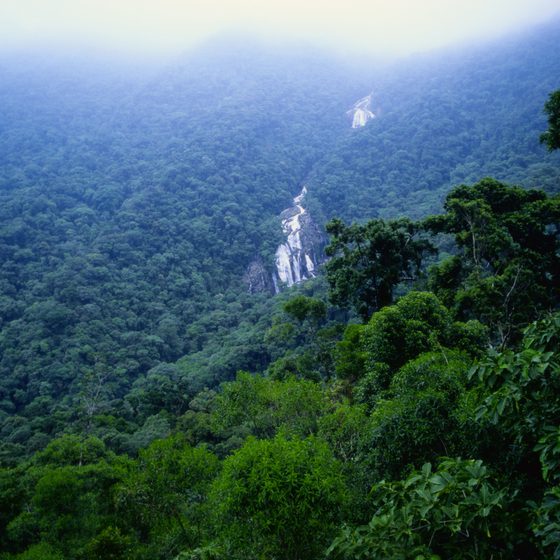
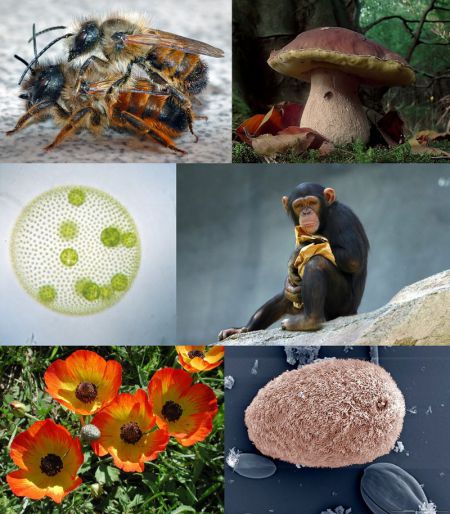
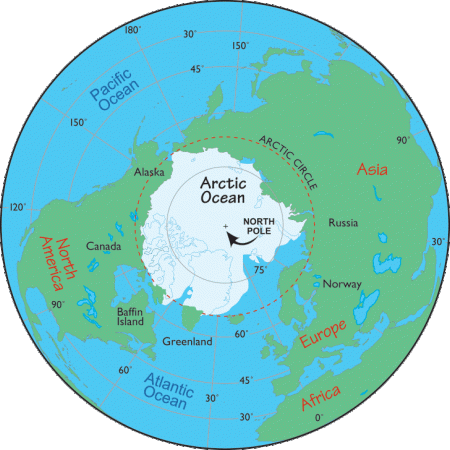
The worst damage occurs in the north-eastern state of Queensland, which has more trees left to fell than places to the south, where agriculture is more established… Its bulldozers are at present busier than they have been for a decade. They erased 395,000 hectares of forest, including huge tracts of ancient vegetation, between 2015 and 2016—the equivalent of 1,000 rugby pitches a day. As a share of its forested area, Queensland is mowing down trees twice as fast as Brazil.

Australia has lost almost half its native forest since British colonialists arrived, and much of what remains is degraded. For a time, it seemed that the clear-cutting might come to an end: in the early 2000s several state governments passed bills to reduce deforestation. But in the past decade these have been wound back in every state. Queensland’s land clearance has more than doubled since conservatives loosened its forestry law in 2013, allowing farmers to “thin” trees by up to 75% without a permit. Neighbouring New South Wales recently enacted a similar rule.

Conservationists blame powerful agricultural lobbies. These retort that controls on land clearance push up food prices and cost jobs. Family farmers lament that trees obstruct the big machinery needed to keep their land productive. … In 2014 a landowner in New South Wales murdered an environment officer who was investigating illegal bulldozing. (Authorities in the state are examining at least 300 cases of illegal tree-clearing.)

Yet clearing land eventually hurts farmers too because, without trees, soil erodes and grows saltier. Deforestation releases carbon dioxide into the atmosphere, spurring global warming, and reduces regional rainfall…. Loss of habitat has brought many species, including the koala, to the brink of extinction.

Chainsaw massacre: Deforestation in Australia, Economist, Feb. 24, 2018

Deforestation Tolerance: Amazon

Amazon generates approximately half of its own rainfall by recycling moisture 5 to 6 times as airmasses move from the Atlantic across the basin to the west.  From the start, the demonstration of the hydrological cycle of the Amazon raised the question of how much deforestation would be required to cause this hydrolological cycle to degrade to the point of being unable to support rain forest ecosystems.

High levels of evaporation and transpiration that forests produce throughout the year contribute to a wetter atmospheric boundary layer than would be the case with non-forest.This surface-atmosphere coupling is more important where large-scale factors for rainfall formation are weaker, such as in central and eastern Amazonia. Near the Andes, the impact of at least modest deforestation is less dramatic because the general ascending motion of airmasses in this area induces high levels of rainfall in addition to that expected from local evaporation and transpiration.

Where might the tipping point be for deforestation-generated degradation of the hydrological cycle? The very first model to examine this question  showed that at about 40% deforestation, central, southern and eastern Amazonia would experience diminished rainfall and a lengthier dry season, predicting a shift to savanna vegetation to the east.

Moisture from the Amazon is important to rainfall and human wellbeing because it contributes to winter rainfall for parts of the La Plata basin, especially southern Paraguay, southern Brazil, Uruguay and central-eastern Argentina; in other regions, the moisture passes over the area, but does not precipitate out. Although the amount contributing to rainfall in southeastern Brazil is smaller than in other areas, even small amounts can be a welcome addition to urban reservoirs…

In recent decades, new forcing factors have impinged on the hydrological cycle: climate change and widespread use of fire to eliminate felled trees and clear weedy vegetation. Many studies show that in the absence of other contributing factors, 4° Celsius of global warming would be the tipping point to degraded savannas in most of the central, southern, and eastern Amazon. Widespread use of fire leads to drying of surrounding forest and greater vulnerability to fire in the subsequent year.

We believe that negative synergies between deforestation, climate change, and widespread use of fire indicate a tipping point for the Amazon system to flip to non-forest ecosystems in eastern, southern and central Amazonia at 20-25% deforestation.

We believe that the sensible course is not only to strictly curb further deforestation, but also to build back a margin of safety against the Amazon tipping point, by reducing the deforested area to less than 20%, for the commonsense reason that there is no point in discovering the precise tipping point by tipping it. At the 2015 Paris Conference of the Parties, Brazil committed to 12 million ha of reforestation by 2030. Much or most of this reforestation should be in southern and eastern Amazonia.

Excerpts from Amazon Tipping Point  by Thomas E. Lovejoy and Carlos Nobre, Sciences Advances,  Feb. 21, 2018

An Earth Bank of Codes: who owns what in the biological world

A project with the scale and sweep of the original Human Genome Project…should be to gather DNA sequences from specimens of all complex life on Earth. They decided to call it the Earth BioGenome Project (EBP).

At around the same time as this meeting, a Peruvian entrepreneur living in São Paulo, Brazil, was formulating an audacious plan of his own. Juan Carlos Castilla Rubio wanted to shift the economy of the Amazon basin away from industries such as mining, logging and ranching, and towards one based on exploiting the region’s living organisms and the biological information they embody. At least twice in the past—with the businesses of rubber-tree plantations, and of blood-pressure drugs called ACE inhibitors, which are derived from snake venom—Amazonian organisms have helped create industries worth billions of dollars. ….

For the shift he had in mind to happen, though, he reasoned that both those who live in the Amazon basin and those who govern it would have to share in the profits of this putative new economy. And one part of ensuring this happened would be to devise a way to stop a repetition of what occurred with rubber and ACE inhibitors—namely, their appropriation by foreign firms, without royalties or tax revenues accruing to the locals.

Such thinking is not unique to Mr Castilla. An international agreement called the Nagoya protocol already gives legal rights to the country of origin of exploited biological material. What is unique, or at least unusual, about Mr Castilla’s approach, though, is that he also understands how regulations intended to enforce such rights can get in the way of the research needed to turn knowledge into profit. To that end he has been putting his mind to the question of how to create an open library of the Amazon’s biological data (particularly DNA sequences) in a way that can also track who does what with those data, and automatically distribute part of any commercial value that results from such activities to the country of origin. He calls his idea the Amazon Bank of Codes.

Now, under the auspices of the World Economic Forum’s annual meeting at Davos, a Swiss ski resort, these two ideas have come together. On January 23, 2018 it was announced that the EBP will help collect the data to be stored in the code bank. The EBP’s stated goal is to sequence, within a decade, the genomes of all 1.5m known species of eukaryotes. ..That is an ambitious timetable. The first part would require deciphering more than eight genomes a day; the second almost 140; the third, about 1,000. For comparison, the number of eukaryotic genomes sequenced so far is about 2,500…

Big sequencing centres like BGI in China, the Rockefeller University’s Genomic Resource Centre in America, and the Sanger Institute in Britain, as well as a host of smaller operations, are all eager for their share of this pot. For the later, cruder, stages of the project Complete Genomics, a Californian startup bought by BGI, thinks it can bring the cost of a rough-and-ready sequence down to $100. A hand-held sequencer made by Oxford Nanopore, a British company, may be able to match that and also make the technology portable…..It is an effort in danger of running into the Nagoya protocol. Permission will have to be sought from every government whose territory is sampled. That will be a bureaucratic nightmare. Indeed, John Kress of the Smithsonian, another of the EBP’s founders, says many previous sequencing ventures have foundered on the rock of such permission. And that is why those running the EBP are so keen to recruit Mr Castilla and his code bank.

The idea of the code bank is to build a database of biological information using a blockchain. Though blockchains are best known as the technology that underpins bitcoin and other crypto-currencies, they have other uses. In particular, they can be employed to create “smart contracts” that monitor and execute themselves. To obtain access to Mr Castilla’s code bank would mean entering into such a contract, which would track how the knowledge thus tapped was subsequently used. If such use was commercial, a payment would be transferred automatically to the designated owners of the downloaded data. Mr Castilla hopes for a proof-of-principle demonstration of his platform to be ready within a few months.

In theory, smart contracts of this sort would give governments wary of biopiracy peace of mind, while also encouraging people to experiment with the data. And genomic data are, in Mr Castilla’s vision, just the start. He sees the Amazon Bank of Codes eventually encompassing all manner of biological compounds—snake venoms of the sort used to create ACE inhibitors, for example—or even behavioural characteristics like the congestion-free movement of army-ant colonies, which has inspired algorithms for co-ordinating fleets of self-driving cars. His eventual goal is to venture beyond the Amazon itself, and combine his planned repository with similar ones in other parts of the world, creating an Earth Bank of Codes.

[I]f the EBP succeeds, be able to use the evolutionary connections between genomes to devise a definitive version of the tree of eukaryotic life. That would offer biologists what the periodic table offers chemists, namely a clear framework within which to operate. Mr Castilla, for his part, would have rewritten the rules of international trade by bringing the raw material of biotechnology into an orderly pattern of ownership. If, as many suspect, biology proves to be to future industries what physics and chemistry have been to industries past, that would be a feat of lasting value.

Excerpts from Genomics, Sequencing the World, Economist, Jan. 27, 2018

The Arctic through China’s Eyes

China on  January 25, 2018 outlined its ambitions to extend President Xi Jinping’s signature Belt and Road Initiative to the Arctic by developing shipping lanes opened up by global warming.  Releasing its first official Arctic policy white paper, China said it would encourage enterprises to build infrastructure and conduct commercial trial voyages, paving the way for Arctic shipping routes that would form a “Polar Silk Road”…China, despite being a non-Arctic state, is increasingly active in the polar region and became an observer member of the Arctic Council in 2013.
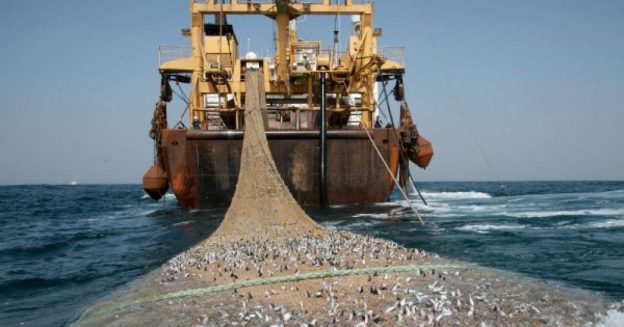
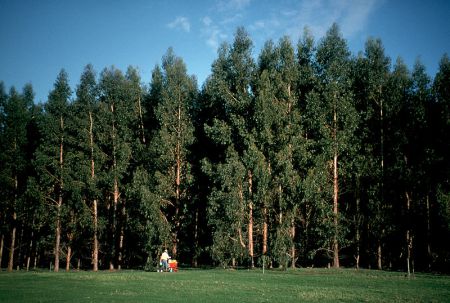
Among its increasing interests in the region is its major stake in Russia’s Yamal liquefied natural gas project which is expected to supply China with four million tonnes of LNG a year.

Shipping through the Northern Sea Route would shave almost 20 days off the regular time using the traditional route through the Suez Canal. COSCO Shipping has also previously sailed vessels through the Arctic’s northeast passage.

China’s increasing prominence in the region has prompted concerns from Arctic states over its long-term strategic objectives, including possible military deployment…The white paper said China also eyes development of oil, gas, mineral resources and other non-fossil energies, fishing and tourism in the region. China’s Belt and Road initiative aims to connect China to Europe, the Middle East and beyond via massive infrastructure projects across dozens of countries…

Excerpts from China unveils vision for ‘Polar Silk Road’ across Arctic, Reuters, Jan. 25, 2018

Turning Oceans into Muck

Oxygen is critical to the health of the planet. It affects the cycles of carbon, nitrogen and other key elements, and is a fundamental requirement for marine life from the seashore to the greatest depths of the ocean. Nevertheless, deoxygenation is worsening in the coastal and open ocean. This is mainly the result of human activities that are increasing global temperatures (CO2-induced warming) and increasing loads of nutrients from agriculture, sewage, and industrial waste, including pollution from power generation from fossil fuels and biomass.

Facts: During the past 50 years the area of low oxygen water in the open ocean has increased by 4.5 million km2. The world’ oceans are now losing approximately  1 gigaton of oxygen each year. The Millennium Ecosystem Assessment released by the UN in 2005 reported that nitrogen containing compounds (e.g. sewage, fertilizers) release into the oceans grew 80 percent from 1860 to 1990.  Increasing temperatures will reduce the capacity of the ocean to hold oxygen in the future. Oxygen deficiency is predicted to worsen in estuaries, coastal areas and oxygen minimum zones in the open ocean. The ocean’s capacity to produce oxygen will be reduced in the future.
Habitat loss is expected to worsen, leading to vertical and horizontal migration of species.

Oxygen deficiency will alter biogeochemical cycles and food webs. Lower oxygen concentrations are projected to result in a decrease in reproductive capacity and biodiversity loss. There are important local decreases of commercially important species and aquaculture production. Harmful Algal Blooms will be exacerbated from nutrients released in bottom waters due to hypoxia (e.g. in the Baltic Sea).Reduced ocean oxygen concentrations will lead to an increase in greenhouse gas emissions, thereby initiating feedbacks on climate change.

Excerpts from UNESCO, Jan. 2018

View Extensive Abstract

Background paper (pdf)

Global Ocean Oxygen Network: Through the participation of high level scientists from across the world, the IOC expert group, the Global Ocean Oxygen Network GO2NE, established in 2016, is committed to providing a global and multidisciplinary view of deoxygenation, with a focus on understanding its multiple aspects and impacts.

Fish Poachers in Africa

In Sierra Leone nearly half the population does not have enough to eat, and fish make up most of what little protein people get. But the country’s once-plentiful shoals, combined with its weak government, have lured a flotilla of unscrupulous foreign trawlers to its waters. Most of the trawlers fly Chinese flags, though dozens also sail from South Korea, Italy, Guinea and Russia. Their combined catch is pushing Sierra Leone’s fisheries to the brink of collapse.

Sierra Leone is not alone in facing this crisis. According to the UN’s Food and Agriculture Organisation, 90% of the world’s fisheries are dangerously overexploited. The Africa Centre for Strategic Studies, a think-tank funded by America’s defence department, reckons that about a quarter of fish caught off Africa’s shores are taken illegally.

Excerpt from Poachers afloat: Why Sierra Leone is running out of fish, Economist, Dec. 16, 2017

Old Continents, New Trees

In the 1920s, when Ireland became independent, it was thought to have just 220,000 acres (90,000 hectares) of woods, covering about 1% of the land. Once-extensive forests had been shrinking for centuries…In 2017, though, almost 11% of Ireland is covered with forest, and an unknown additional amount by small woods and scattered trees. The government’s target is to cover 18% of the land area with forests by 2046. Ireland is behind schedule. Still, about 6,000 hectares of new forest ought to be planted this year, while almost none will be lost. It is part of a broad trend: the foresting of the West.
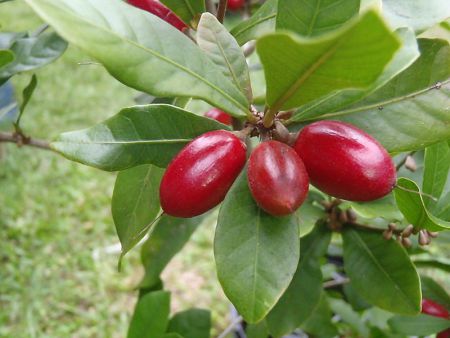
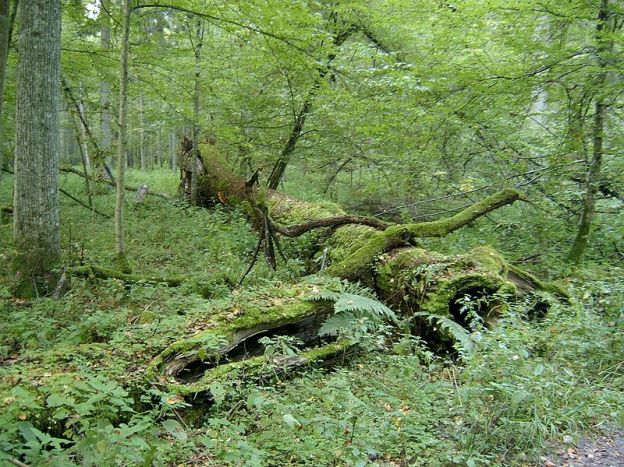
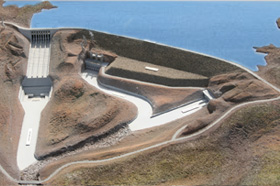
Trees are spreading in almost every European country. Because many of these forests are young, the quantity of wood in them is growing faster than their extent. Europe’s planted forests put on a little more than 1.1m cubic metres of wood per day. For comparison, the iron in the Eiffel Tower is about 930 cubic metres. Russia’s forests spread more slowly in percentage terms between 2005 and 2015, but, because Russia is so big, more than in the entire European Union in absolute terms. Forests now occupy a third of America’s land, having grown by 2% in the past decade. They are even expanding in Australia, following a long decline.

Deforestation in South America and Africa rightly gets most of conservationists’ attention. That loss is huge—equivalent to about 4.8m hectares a year, which far outweighs gains elsewhere. Yet the foresting of rich countries is still one of the world’s great land-use changes. It seems just as unstoppable as the deforestation of poorer places. It has plenty of critics, too.

The growth of forests is partly a result of changes to food markets. As the best farming areas have become more productive, and as rich countries have imported more of their food, marginal land has become unusable for ordinary agriculture…Forests are also growing because governments have favored them through laws and subsidies….Since the 1990s environmental considerations have weighed more heavily. Forests are increasingly valued as sponges for heavy rain, as wildlife habitats and as carbon sinks…

Planted forests are far from universally popular, though. Between June and October 2017, forest fires in Spain and Portugal killed more than 100 people and darkened Europe’s skies. The fires were partly blamed on the spread of non-native trees, especially eucalyptus. That Australian import, which was planted with support from the World Bank, among others, grows so quickly that trees can be harvested for pulp when less than ten years old. It also burns readily, scattering embers far afield. Portugal’s government has begun to restrict planting, in an effort to prevent the country from turning into what one green group calls “Eucalyptugal”.

The eucalyptus tree is a scapegoat for a bigger problem, argues Marc Castellnou, a fire analyst in Spain. The real trouble is that forests in Portugal and Spain have expanded quickly, with little thought for the consequences. Well-managed eucalyptus plantations are not the biggest danger—much worse are ill-managed ones with lots of underbrush and fallen wood, and the impromptu forests that grow on abandoned farms. The fires that get going in such forests jump to the treetops and burn so energetically that they cannot be stopped.

In Ireland, the criticisms are different. The country’s default tree is the sitka spruce, a fast-growing, damp-tolerant conifer from America’s Pacific Northwest. Spruce plantations are said to be devoid of life—vertical deserts of dark green. They are accused of wrecking rural communities and driving farmers off the land….

The first charge is false. Mark Wilson of the British Trust for Ornithology says that conifer plantations support more bird life per hectare than farmland, largely because they harbour more insects. Inevitably, some birds benefit more than others. The march of conifers across Britain and Ireland has increased the numbers of pine-loving birds such as siskins and crossbills. Conifers are also loved by crows—which is less obviously good, because crows raid the nests of rare birds such as curlews.

The second accusation, that trees push out other kinds of agriculture, is only partly true. Forestry subsidies and regulations have indeed distorted Ireland’s land market.

Excerpts from The Foresting of the West, Economist, Dec. 2, 2017,at 51

The Silent Environmentalists

Elephant ears are leafy vegetables. African locusts are tree-borne legumes. All are standard fare in various parts of Africa. What they also have in common is that they are, from the point of view of plant breeders, orphans. They are neglected by breeders because they are not cash crops. Conversely, they are not cash crops because they are neglected by breeders.

That neglect matters. The cereals which dominate human diets—rice, wheat and maize—have had their yields and nutritional values boosted over the years by scientific breeding programmes. In the modern era of genomics, they have had their DNA scrutinised down to the level of individual base pairs, the molecular letters in which genetic information is written. They are as far removed, nutritionally, from their ancestors of as little as two centuries ago as those ancestors were from the wild plants which begat them. Orphan crops have yet to undergo such a genetic revolution.

Even for adults, a lack of calories and essential nutrients is harmful. For children it can be devastating. Poor childhood nutrition leads to stunting—inadequate bodily development, including the development of the brain. A report published by the World Health Organisation on November 16th, 2017 suggests that almost a third of Africa’s children, nearly 60m of them, are stunted. And stunted children grow into adults unable to achieve their potential. Researchers at the World Bank reckon the effects of stunting have reduced Africa’s GDP by 9-10% from what it would otherwise be.

One way to reduce stunting would be to improve the crops that Africans, particularly those in the countryside, actually eat—in other words, orphan crops. Such improvement is the purpose of two recent, interrelated projects that are now getting into their strides. Both are based in Nairobi and are conducted under the auspices of the World Agroforestry Centre, an international non-governmental research organisation. One is the African Orphan Crops Consortium (AOCC). The other is the African Plant Breeding Academy. The AOCC’s task is to obtain complete sequences of the DNA of 101 neglected food crops

Breeding and disseminating new crops is a long-winded business, but a DNA-based approach has already shown promise. One scientist who is embracing it is Robert Mwanga of the International Potato Centre. Dr Mwanga was an early proponent of the scientific improvement of African crops. His own work, for which he was awarded the World Food prize in 2016, is on sweet potatoes. The varieties of these root-tubers that were popular in Uganda, his native land, and other parts of Africa in the mid-1980s, when he began his studies, are deficient in vitamin A. A lack of this vitamin damages children’s eyesight and opens them to infection by such things as measles. This is a disease that can kill, and, if it does not, it can cause brain damage.  Starting with Asian varieties that had more vitamin A in them, Dr Mwanga bred a dozen strains that are vitamin-A rich and have more dry matter (and thus more calorific value) than African landraces. He then led a campaign to encourage local farmers to adopt his novelties—which they did…

Julia Sibiya of the University of KwaZulu Natal, in Durban, meanwhile, is working on sorghum, another under-studied African crop. She is also working with Dr Achigan-Dako to set up MoBreed, a pan-African collaboration with the self-appointed task of improving ten orphan crops, including Kersting’s groundnut, the African custard apple and fonio, a type of millet.

Happiness Oselebe… is even more ambitious. Dr Oselebe works at Ebonyi State University in Nigeria. Not content with improving existing crops, she wants to create a new one by domesticating serendipity berries. These are wild vines that produce a protein 3,000 times as sweet as table sugar. That, she thinks, could be the starting-point not merely for something grown for local consumption, but of an industrial-scale cash crop.

Excerpts from Nutrition and Genetics in Africa, Economist, Nov 25, 2017

They Still Exist! Ancient Forests in Europe

The future of the the Bialowieza forest that straddles the frontier between Poland and Belarus pits competing visions of environmental stewardship and economic development, and of Poland’s path under the right-wing Law and Justice (PiS) party.

Last month the European Commission asked the European Court of Justice (ECJ) to fine Poland for ignoring an earlier order to halt logging in parts of the forest protected under EU law—in effect, nearly all of the 60,000 hectares of it that lie in Poland. In July 2017 UNESCO, the guardian of the planet’s human and natural wonders, urged the government to end logging or risk Bialowieza’s demotion from a world heritage site to one “in danger”, causing anger in Belarus, whose half of the forest would also be affected…[T] Bialowieza’s towering oaks, hornbeams and spruces, plus the European bison and other endangered species that roam beneath their canopies, offer a unique glimpse of the continent’s ecological past…

Today Poland’s forestry service insists that it, too, is being a responsible steward. The felling being condemned by Brussels was necessary, it argues, to prevent dead trunks from collapsing onto cyclists and walkers (the EU court decision exempts cutting on safety grounds, but argues that the Poles have gone much further)…

Many local residents shrug off such worries in any case. Those with ties to the long-declining lumber industry regard rotting wood as a wasted resource. The larger number engaged in tourism fret that rows of lifeless trunks put visitors off rather than lure them. “How many people will come to see dead trees?” huffs Jerzy Sirak, the mayor of Hajnowka, a town on the western edge of the forest…

Quite a few, reckons Wlodzimierz Cimoszewicz, who as prime minister in 1995-99 doubled the national park’s size to its current 10,500 hectares. Bialowieza’s value, he argues, lies in being a laboratory for natural processes, not a museum cabinet stacked with a preordained mix of species, much less a source of wood. Even with the recent uptick in revenues from logging, the forestry service spends a net 20m zlotys ($5.5m) a year on Bialowieza. Given low lumber prices, closing that deficit would require logging on a scale no one is willing to contemplate. Tourists, meanwhile, spend around 72m zlotys (20 million dollars) annually in the area, according to one study.

NGOs’ long-standing demand to place all of Bialowieza under full protection, as Belarus did with most of its part in 2012, faces opposition from local authorities that suspect eco-absolutism will curb growth. “We used to look to Poland as an example; now they look to us,” observes a Belarusian ecologist wryly.

PiS looks unmoved by environmental arguments. It dismisses protests by concerned scientists, NGOs and ordinary citizens—which range from signing open letters to chaining themselves to tree-harvesters—as political attacks by foreign and domestic opponents of its “Poland first” nationalism

Excerpt from Poland: Saving the Trees, Economist,  Oct. 7, 2017

Exploiting Chaos: water management in the Middle East

A water crisis rooted in wasteful irrigation, climate change and dam-building is imperiling [the wetlands of Iraq] again.

A weakened flow into the Tigris and Euphrates rivers means that salt water from the Persian Gulf can now seep upstream into the marshes. This, coupled with farming run-off that has boosted salinity,threatens wetland wildlife, vegetation and the local Marsh Arabs who have depended on them for millennia.  The problem is partly home-made. Iraq’s irrigation methods are often wasteful, and the equipment tends to be rickety. Many farmers rely on thirsty crops such as rice. Politicians have in the past secured extra water for their upstream districts at the marshes’ expense. Reform-minded technocrats are forced to contend with deep-rooted corruption, the distracting and costly fight against the Islamic State (IS) group, and low oil prices, all of which have drained state coffers.

But other problems lie beyond Iraq’s control. For decades dams built in Syria, Turkey and Iran have swallowed up the waters of the Tigris, Euphrates and other rivers feeding the marshes. New dams due to open in Turkey, including the 1,200-megawatt Ilisu Dam, could further restrict the flow of the Tigris.

Talks over these dams have been inconclusive, partly because the Syrian and Iraqi states barely function and partly because IS has controlled swathes of the Euphrates. Turkey may be tempted to exploit its upstream position.

Climate change is taking its toll, too. Last summer temperatures of about 54°C were recorded in southern Iraq, among the hottest ever.

If only Iran, Iraq, Syria and Turkey would share their waters as amicably as the Danube countries do… Dam levels should be calibrated during wet and dry years to ensure steadier flows. Iraqi officials might also ponder novel solutions, he says, such as renting storage at the Ilisu Dam for use when needed. Yet stronger countries have exploited their advantages rather than seek compromise

Excerpts from Iraq’s Wetlands: Drying Up Again,  Economist,  Sept. 16, 2017

Coercive Greening: debt-for-sea

The Seychelles is an archipelago of 115 mostly tiny islands, whose collective area, at 460 sq km, is only about a third of London’s. But the country’s granite islands and coral atolls sit within an exclusive economic zone of 1.4m sq km. It is here, in the ocean, that conservationists are working on a new way for small countries to protect their marine environment.

The Seychelles’ economy relies on tourism and tuna. These depend on healthy seas. But paying for conservation is a challenge, says Didier Dogley, the environment minister. So last year the country struck a deal with The Nature Conservancy (TNC), an American NGO. It promised to protect 30% of its waters by 2020—half of this area will be off-limits to fishing. In return, TNC bought up $21.6m of debt owed by the Seychelles to the Paris Club of international creditors. It will allow the country to pay it back at a lower interest rate over a longer period.

The complex deal took four years to thrash out. Still, not everyone is happy. Some fishermen worry that their favourite spots will become no-go zones….The blue economy is a new idea, but like the green economy it is catching on. The World Bank is backing a planned $15m “blue bond” for the Seychelles, which will fund sustainable fisheries. TNC is planning its own blue bonds, which would underpin deals similar to the one it agreed with the Seychelles. “I can see doing a billion dollars of these deals in a decade,” says Rob Weary, TNC’s financial guru…Already Mauritius is looking to copy parts of the Seychelles deal. Madagascar, Mozambique, Tanzania and the Comoro Islands have also shown interest.

Excerpts from The Seychelles: Debt Relief for Dolphins, Economist, Sept. 9, 2017

The Luxury of Swimmable Waters

Data published in 2013 suggested that it was not safe for people to submerge themselves in 60% of New Zealand’s waterways. “We used to swim in these rivers,” says Sam Mahon, the artist. “Now they’ve turned to crap… [T]he real villains behind New Zealand’s deteriorating water quality are still at large…intensive dairy farms…

The first concern is bovine urine, which is rich in nitrogen. Nitrogen can cause toxic algae to grow when it leaches into water. Nitrogen fertiliser, used to increase fodder yields so that more cows can be raised on less land, exacerbates the problem….

At many of the sites where the government tests the groundwater it contains too much nitrate to be safe to drink—a particular problem in New Zealand, since water in much of the country has long been considered clean enough that it is used as drinking water with only minimal treatment. In Canterbury, one of the most polluted areas, expectant mothers are told to test tap water to avoid “blue baby syndrome”, a potentially fatal ailment thought to be caused by nitrates. The poisonous blooms have killed dogs.

An even greater concern for human health comes from cow dung, which contains nasty bacteria such as E.coli….And then there is the damage to native flora and fauna. The algal blooms suck the oxygen from rivers. Sediment washed from farmland can also choke the life out of streams. Almost three-quarters of native species of freshwater fish are under threat.

…One recent tally suggested that just 2,000 of the thirstiest dairies suck up as much water as 60m people would—equivalent to the population of London, New York, Tokyo, Los Angeles and Rio de Janeiro combined. …

Dairies are trying to clean up their act. Farmers have fenced off thousands of kilometres of rivers to prevent livestock from wading in. Some have planted trees along waterways to curb erosion; others remove animals from muddy fields during winter. Some parts of the country are using more sophisticated techniques: around Lake Taupo, the country’s biggest lake, farmers can buy and sell nitrogen allowances in a cap-and-trade scheme. A technique called “precision irrigation” may curb both water consumption and the leaching of nitrogen.

Earlier this year the National Party launched a plan to make 90% of rivers “swimmable” by 2040. Yet it ignored several recommendations of a forum of scientists and agrarians established to thrash out water policy….Environmentalists argue that the national dairy herd should be cut to prevent further damage…And pollutants moving through groundwater can take decades to emerge in lakes. The worst may still be to come.

Excerpts from New Zealand’s Water, Economist, Nov. 18, 2017

Cocoa Production and Forest Loss

At the UN Climate Change Conference (COP23) in Bonn in November 2017 top cocoa-producing countries Côte d’Ivoire and Ghana with leading chocolate and cocoa companies have announced far-reaching Frameworks for Action to end deforestation and restore forest areas.  Central to the Frameworks is a commitment to no further conversion of any forest land for cocoa production.  The companies and governments pledged to eliminate illegal cocoa production in national parks, in line with stronger enforcement of national forest policies and development of alternative livelihoods for affected farmers. Côte d’Ivoire and Ghana combined produce nearly two-thirds of the world’s annual supply of cocoa, the main ingredient in chocolate and a range of other consumer products…

Up-to-date maps on forest cover and land-use, as well as socio-economic data on cocoa farmers and their communities will be developed and publicly shared by the governments. Chocolate and cocoa industry agree to put in place verifiable monitoring systems for traceability from farm to the first purchase point for their own purchases of cocoa, and will work with the governments of Côte d’Ivoire and Ghana to ensure an effective national framework for traceability for all traders in the supply chain.

The two governments and companies agree through the Frameworks to accelerate investment in long-term sustainable production of cocoa, with an emphasis on “growing more cocoa on less land,”. Key actions include provision of improved planting materials, training in good agricultural practices, and development and capacity-building of farmers’ organizations.  Sustainable livelihoods and income diversification for cocoa farmers will be accelerated through food crop diversification, agricultural inter-cropping, development of mixed agro-forestry systems, and other income generating activities designed to boost and diversify household income while protecting forests.

The governments and companies, which represent and estimated 80+ percent of global cocoa usage, commit to full and effective consultation and participation of cocoa farmers in the process…The governments and companies have committed to a comprehensive monitoring process, including a satellite-based monitoring system to track progress on the overall deforestation target, and annual publicly disclosed reporting on progress and outcomes related to the specific actions in each Framework.

Excerpts from Cocoa and Forests Initiative

Companies that have joined the initiative include; Cargill, General Mills, Godiva, Hershey, Mars, Mondelēz, and Nestlé.

Cash or CleanUp? life in the oil polluted swampland

Nearly a decade after two catastrophic oil spills in the Niger Delta, a comprehensive clean-up has been launched in 2017 in the southern Nigerian region.

Earlier this month, crews of young men equipped with high pressure hoses began to attack the crude oil blighting the creeks and mangrove swamps where they live.  Workers from Bodo in Rivers State are beginning a three-year project that claims to mark a new approach to cleaning up the delta, the vast polluted swampland pumping the oil vital to Africa’s largest economy.

Four hundred workers will clear dead foliage and spilled oil before planting new mangroves. Where they are working is small but organisers hope the anti-pollution drive can be repeated elsewhere in the delta.

Unlike clean-up operations run routinely by oil giant Royal Dutch Shell, this one is backed by local communities and teams of scientists who will take samples of water, mud and soil in each area to measure progress and determine the best cleaning method.  Funded by Shell and its joint venture partners, the clean-up is the culmination of years of legal wrangling and international pressure to overcome animosity and mutual suspicion that have divided locals, government and oil companies.

Shell declined to say how much it was spending, while leaders see it as a glimmer of hope in a benighted land where many wells are not safe to drink from and fishing and farming are devastated.

“The Niger Delta is at a crossroads,” said Inemo Samiama, chairman of the Bodo Mediation Initiative (BMI), managing the clean-up. “We have a lot of polluted sites. We need something we can refer to, some shining example.”

The work of BMI covers 10 sq km, a fraction of the 70,000 sq km Delta.  As workers walk through gnarled, dead mangrove roots in protective gear and masks, oil seeps into their footprints – remnants of spills for which Royal Dutch Shell admitted responsibility. Despite the optimism, environmentalists point out at BMI’s work rate, it will take 21,000 years to clean the entire delta and that’s not including the 10 years of legal battles it took to make it happen.  Communities in eight other Delta states are unhappy they have no clean-up plan, fuelling the resentment underpinning militant movements that hit production last year and helped tip Nigeria into its first recession in 25 years.  One group, the Niger Delta Avengers, has threatened a return to violence. They say government is not keeping its promises to clean up the delta and provide more jobs, money and infrastructure.

Bodo received support from British law firm Leigh Day, which negotiated a 55 million pound pollution settlement with Shell in 2015. Leigh Day said it agreed to freeze a separate case to force a clean-up via British courts in order to give the BMI a chance.  Ogoni, the wider area in which Bodo sits, was the subject of a 2011 UN Environment Programme report warning of catastrophic pollution in the soil and water.

King Emere Godwin Bebe Okpabi of the Ogale community is on the board of a wider Ogoni clean-up effort and is optimistic its own clean-up, due to start next year, will work. But he fears it will not be replicated elsewhere without another marathon battle in the London courts.“The only place you get legal success is the international courts,” he said.

Under Nigerian law, oil companies must begin cleaning up any spill within 24 hours. But the remoteness of spills and lax enforcement mean this rarely happens.  Ferdinand Giadom, a lecturer at the University of Port Harcourt and technical advisor to the Bodo cleanup, said communities often block clean-ups in the hopes of cash settlements. Even in Bodo, works were delayed by two years due to local infighting.

Shell said most oil spilled last year was due to sabotage or theft for illegal refining. It also said communities block access to sites, making cleaning more difficult.

Excerpts from Anger on the margins of historic clean-up in Nigeria’s Delta, Reuters, Nov. 9,  2017

Exporting Apes Alive

Daniel Stiles, a self-styled ape trafficking detective in Kenya, had been scouring Instagram, Facebook and WhatsApp for weeks, looking for pictures of gorillas, chimps or orangutans. He was hoping to chip away at an illicit global trade that has captured or killed tens of thousands of apes and pushed some endangered species to the brink of extinction.
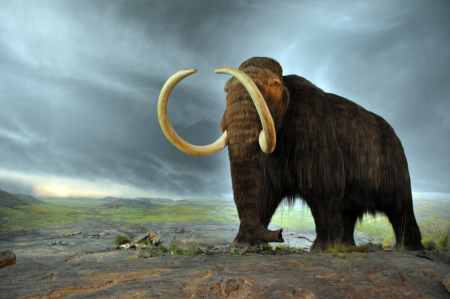
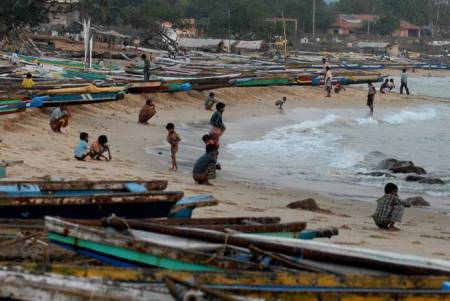
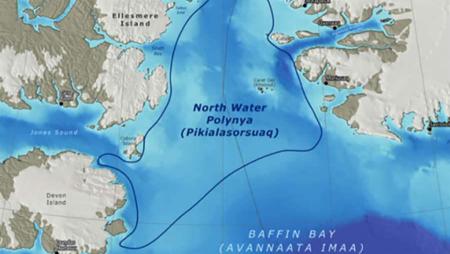
Malnourished and terrified apes have been seized across the world, in undercover busts or at border checkpoints, in countries as varied as France, Nepal, Thailand, the Democratic Republic of Congo and Kuwait. Two years ago, at Cairo’s international airport, the Egyptian authorities discovered a baby chimp curled up into a ball and stashed in a piece of hand luggage. Just this summer, the authorities in Cameroon stopped a smuggler at a roadblock who was trying to move 100 pounds of pangolin scales and a tiny chimp, not even a month old, hidden in a plastic sack…

Wildlife researchers say that a secret ape pipeline runs from the lush forests of central Africa and Southeast Asia, through loosely policed ports in the developing world, terminating in wealthy homes and unscrupulous zoos thousands of miles away. The pipeline, documents show, is lubricated by corrupt officials (several have been arrested for falsifying export permits) and run by transnational criminal gangs that have recently drawn the attention of Interpol, the international law enforcement network.

Apes are big business — a gorilla baby can cost as much as $250,000 — but who exactly is buying these animals is often as opaque as the traffickers’ identity.

Wildlife officials said that a handful of Western businessmen had also been arrested. But the majority of recent busts, they added, have been in Africa or Southeast Asia, usually of low-level traffickers or poorly paid underlings, not the bosses who control underground exports and travel abroad to make deals…

“They have consciousness, empathy and understanding,” said Jef Dupain, an ape specialist for the African Wildlife Foundation. “One day we will wonder how did we ever come up with the idea to keep them in cages.”…

But a baby was different, he said. There was a specific market for infant apes, so he would sell them alive, for at least $10 each, to local traders who would then smuggle them to Kinshasa and sell them to foreigners for many times that amount…

In Boende, a small town up another tributary of the Congo River, three hunters were recently caught with bonobo carcasses and sentenced to several years in a stifling colonial-era prison. The men said they were simply trying to feed their families by selling bonobo meat. But poaching an ape is a serious crime in Congo, and nonprofit wildlife groups have been assisting the Congolese authorities in prosecuting offenders.“There is a culture here to eat meat, meat from the forest,” said the town’s prosecutor, Willy Ndjoko Kesidi. “Me, I like fish.”  Mr. Kesidi expressed some sympathy for the hunters he had just jailed, saying that the prison where they were housed was a horrible place where many prisoners had died…

Many illegal wildlife transactions start online, specifically through Instagram or WhatsApp. Mr. Stiles has made several trips to the United Arab Emirates, which he considers a new hub for the illegal online wildlife business. Dealers in the Middle East have posted many pictures of apes for sale, sometimes advertising them as friendly pets for children…

Several years ago, the Indonesian police rescued a female orangutan who had been shaved and was being used as a prostitute at a brothel.

Excerpts from JEFFREY GETTLEMAN, Smuggled, Beaten and Drugged:
The Illicit Global Ape Trade, NY Times, Nov. 4, 2017

See also Stolen Apes (pdf)

Fixing the Earth: De-Extinction

Is extinction forever? Efforts are under way to use gene editing and other tools of biotechnology to “recreate” extinct species such as the woolly mammoth and the passenger pigeon. Could such “de-extinction” initiatives aid conservation by reviving species lost to habitat destruction and climate change?…. These are some of the questions addressed in Recreating the Wild: De-extinction, Technology, and the Ethics of Conservation, a new special report of the Hastings Center Report.

Advances in biology have revealed the ways the environment influences species’ genomes. Even if scientists could produce creatures with DNA identical to that of extinct species, different environmental pressures would alter their genomes in novel ways, raising the possibility that those creatures would differ from the extinct species…

Many scientists believe that although the maintenance of biodiversity benefits ecosystems, changes to the environment could make the reintroduction of extinct species difficult—possibly even ecologically disruptive. …Several commentators in the report raise the concern that the notion that extinct species might be “brought back” could weaken efforts to prevent extinctions. “By proposing that we can revive species through modern technology, we give the impression that species are ‘throwaway’ items,” write Robert DeSalle, a curator at the American Museum of Natural History’s Sackler Institute for Comparative Genomics, and George Amato, director of the conservation genomics program at the institute.

Excerpt from Recreating the wild: De-extinction, technology, and the ethics of conservation, https://phys.org/news/, Aug. 2017

Saving Iconic Rivers: Ganges

The Ganges, arguably the lifeline of India, has its origin in the Himalayas. Once it crosses Gangotri, it flows through Haridwar collecting industrial, agricultural and human waste on its way. Before it culminates in the Bay of Bengal, it passes through various towns and villages lacking sanitation. The Government of India is rolling up its sleeves to clean the 2525 KM long-Ganga and facilitate its flow as it is the source of water for more than 40 per cent of India’s population.

The Institution of Engineering and Technology (IET) is non-profit engineering organisation founded 145 years ago, the IET is one of the world’s leading professional societies for the engineering and technology community. The IET has more than 167,000 members across 150 countries. In India, the IET has over 13,000 members, eight Local Networks and focuses on Energy, Transport, Information & Communications, IoT and Education sectors.

In March 2017, a panel formed by the Institution of Engineering and Technology (IET) on IoT (Internet of Things) were invited to consult the Government of India’s National Mission for Clean Ganga (NMCG) to discuss the ways to clean the river. According to IET, the leaders discussed and tried to identify ways to improve the water flow in Ganga, better treatment of pollutants via sewage and effluent treatment plants, need for controlling unregulated sewage, open defecation,  and handling chemical runoff from agricultural lands (fertilisers and pesticides).

The IoT technology could be used in providing real-time information of pollution status and enabling the industries and societies to find alternate means of disposal of waste.   Other technologies being used to clean up the river Unmanned robotic water surface vehicle with drones: The vehicle can be programmed to collect all the pollutant waste through its arms and offload the same. It works 24X7 and under all weather conditions. More, it can actually submerge to clean up pollutants on even the riverbed. A set of drones is used with it to collect videos of the pollutants.

Gumps- Detectors for pipeline leaks: The Guided Ultrasonic Monitoring of Pipe Systems (GUMPS) can detect oil leakages from oil pipelines that are laid across the river bed of the Ganga River. They continuously monitor pipelines and alert any impending leaks, thus preventing loss of marine life and pollution due to oil leakages.

Excerpts, Alekhya Hanumanthu ,Using technology for clean Ganga, Telangana Today, Oct. 10, 2017

Jumping off the Edge into Ocean: Hydrazine

Europe’s space agency is defending plans to launch two satellites that would drop a rocket stage likely to contain highly toxic fuel in some of the most ecologically sensitive waters of the Canadian Arctic… North Water Polynya between Baffin Island and Greenland Inuit have said those plans treat seas…as a garbage dump.
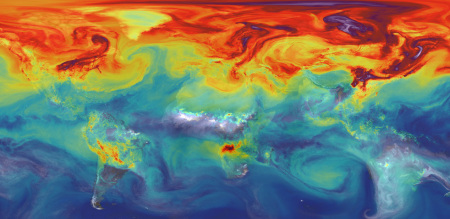
On October 13, 2017, the European Space Agency plans to launch the Sentinel 5P satellite, an environmental probe designed to monitor trace gases in the atmosphere. A second launch of a similar satellite is planned for 2018.  The second stage of both rockets are expected to splash down in water that is part of Canada’s exclusive economic zone.  Both will use Soviet-era rockets fuelled by hydrazine. The fuel is a carcinogen and causes convulsions, nervous system damage, kidney and liver failure in humans.

Hvistendahl, representative of European Space Agency, said unused fuel will be destroyed before it reaches the ocean. Re-entry temperatures are much higher than hydrazine’s boiling point, he said.  “The structural parts lose their integrity and, by melting, the destruction of the stage occurs. Six kilometres above ground the propellant components have completely burnt up.”

Michael Byers, a Canadian academic who has just published research on the launch in a top Arctic journal, questioned those assurances.  “The ESA is making lots of assumptions about what happens to the residual (fuel) in these returning rocket stages,” he said Friday in an email. “Unless they have real science that proves their assumptions, they should not be taking chances with Inuit lives and the Arctic environment.”  In his paper, published in Polar Record from Cambridge University, Byers cites extensive evidence suggesting that instead of burning, hydrazine forms fine droplets that settle on the Earth below.  Byers quotes a UN report that found “the products of combustion and non-combusted remains of fuel and oxidants falling from the height of 20–100 kilometre spread and land over thousands of square kilometres.”The rocket stage could be carrying up to a tonne of unused hydrazine as it falls, the paper says.  It will drop into the North Water Polynya, an 85,000-square-kilometre ocean that is free of ice year-round. It shelters most of the world’s narwhal, as well as about 14,000 beluga whales and 1,500 walrus, bowhead whales, polar bears, seals and tens of millions of seabirds…
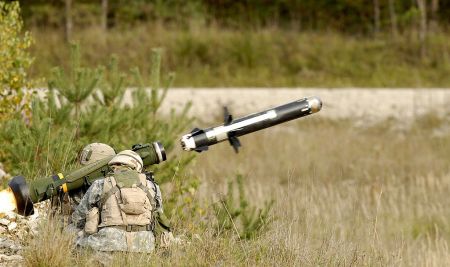
In his paper, Byers points out there have been 10 such launches dropping rocket stages into the North Water Polynya over the last 15 years.  Nearly every country in the world, including Russia, has stopped using hydrazine. He said Europe launched a very similar satellite earlier this year with a rocket using a much safer fuel.

Excerpts from European satellite splashdown in Canadian Arctic probably toxic, Canadian Press, Oct. 6, 2017.

Don’t Cut that Tree!

A revolutionary new approach to measuring changes in forest carbon density has helped scientists determine that the tropics now emit more carbon than they capture, countering their role as a net carbon “sink.”*

“These findings provide the world with a wakeup call on forests,” said scientist Alessandro Baccini, the report’s lead author….Forests are the only carbon capture and storage ‘technology’ we have in our grasp that is safe, proven, inexpensive, immediately available at scale, and capable of providing beneficial ripple effects—from regulating rainfall patterns to providing livelihoods to indigenous communities.”

Using 12 years (2003-2014) of satellite imagery, laser remote sensing technology and field measurements, Baccini and his team were able to capture losses in forest carbon from wholesale deforestation as well as from more difficult-to-measure fine-scale degradation and disturbance …from smallholder farmers removing individual trees for fuel wood. These losses can be relatively small in any one place, but added up across large areas they become considerable.

[T] he researchers discovered that tropics represent a net source of carbon to the atmosphere — about 425 teragrams of carbon annually – which is more than the annual emissions from all cars and trucks in the United States.

Excerpts from New approach to measuring forest carbon density shows tropics now emit more carbon than they capture, Woods Hole Research Institute Press Release, Sept. 28, 2017

*Tropical forests are a net carbon source based on aboveground measurements of gain and loss by A. Baccini et al., Science, Sept. 28, 2017

Unjustifiable Extinctions

The world’s botanic gardens contain at least 30% of all known plant species, including 41% of all those classed as ‘threatened’, according to the most comprehensive analysis to date of diversity in ‘ex situ’ collections: those plants conserved outside natural habitats.

The study, in September 2017 in the journal Nature Plants, found that the global network of botanic gardens conserves living plants representing almost two-thirds of plant genera and over 90% of plant families.  However, researchers from the University of Cambridge discovered a significant imbalance between temperate and tropical regions. The vast majority of all plants species grown ex situ are held in the northern hemisphere. Consequently, some 60% of temperate plant species were represented in botanic gardens but only 25% of tropical species, despite the fact that the majority of plant species are tropical.

For the study, researchers analysed datasets compiled by the Botanic Gardens Conservation International (BGCI)….

“The global network of botanic gardens is our best hope for saving some of the world’s most endangered plants,” said senior author Dr Samuel Brockington, a researcher at Cambridge’s Department of Plant Sciences as well as a curator at the University’s own Botanic Garden….“Currently, an estimated one fifth of plant diversity is under threat, yet there is no technical reason why any plant species should become extinct.   “If we do not conserve our plant diversity, humanity will struggle to solve the global challenges of food and fuel security, environmental degradation, and climate change.”

The plants not currently grown in botanic gardens are often more interesting than those that are, say the researchers. Hydrostachys polymorpha, for example, an African aquatic plant that only grows in fast flowing streams and waterfalls, or the tiny parasitic plant Pilostyles thurberi – only a few millimetres long, it lives completely within the stem tissue of desert shrubs.  Species from the most ancient plant lineages, termed ‘non-vascular’ plants, are currently almost undocumented in botanic gardens – with as few as 5% of all species stored in the global network. These include plants such as the liverworts and mosses.

“Non-vascular species are the living representatives of the first plants to colonise the land,” said Brockington. “Within these plants are captured key moments in the early evolutionary history of life on Earth, and they are essential for understanding the evolution of plants”

Excerpts from World’s botanic gardens contain a third of all known plant species, and help protect the most threatened, Press Release of Botanic Gardens Conservation International, Sept. 25, 2016

Salt Lakes of the World


Utah Great Salt Lake has shrunk to a depth of about 14 feet—nearly half its former average since it was settled by the Mormons 170 years ago. Under a controversial engineering plan, the lake would recede even further….State engineers want to siphon off some of the river water that flows into the lake and use it for the Salt Lake City area’s booming population. Proponents say the plan, which calls for lapping up a fifth of Bear River’s current unused flow, is essential for meeting the region’s needs.

But critics note that the diversion would cause the lake to drop by almost a foot, according to state estimates, eventually exposing 30 square miles of lake bed and potentially worsening the dust storms that regularly blanket the region and ruining a fragile wetlands habitat.

The debate echoes concerns heard in many other arid parts of the world. Salt lake ecology is especially delicate and requires a certain amount of fresh water to maintain a saline balance. Brine shrimp, for instance, could die off if the water becomes too salty.

In the Middle East, diversion of the Jordan and other rivers that feed the Dead Sea has shriveled the famous body of saltwater and its once robust tourism. The Aral Sea between Kazakhstan and Uzbekistan has shrunk to about 10% of its original size after diversions.

Critics, including environmental groups and affected businesses, say that under the new diversion plan lake-dependent businesses such as brine shrimp fishing would suffer, as would farmers whose land could be inundated upstream if existing dams are raised to retain more water. In all, the lake accounts for an estimated $1.3 billion in annual economic output, according to Utah State University, much of it from the shrimping industry, as well as mineral extraction and tourism.

The plan would also destroy wetlands along the lake shoreline that provide food and habitat for an estimated eight million birds, said Zach Frankel, executive director of Utah Rivers Council, an environmental group opposed to the project.

But proponents say the diversion of up to 72 billion gallons of water—enough to meet the needs of a city of one million for a year—is needed to forestall anticipated shortages for one of the fastest-growing regions in the country….“If Utah continues to grow, it’s not a matter of if but when we are going to need more water,” said state Sen. Stuart Adams, the Republican majority whip, who sponsored a bill to begin funding the estimated $1.5 billion project.

Excerpt from Utah Searches for Water Solution, Wall Street Journal, Sept. 14, 2017

Whale Wars and 2017 Armistice

Environmental activists are abandoning their annual anti-whaling campaign in the Southern Ocean near Antarctica, saying Japan’s threat to defend its fleet is too daunting.  Capt. Paul Watson, the founder of anti-whaling group Sea Shepherd, said Japan’s threat to dispatch its military was unprecedented.“For the first time ever, they have stated they may send their military to defend their illegal whaling activities,” Capt. Watson said in a statement Tuesday. “The Japanese whalers not only have all the resources and subsidies their government can provide, they also have the powerful political backing of a major economic superpower.”

The Japanese embassy in Canberra, Australia, didn’t immediately respond to Sea Shepherd’s announcement, but it previously accused the group of sabotage and “acts of violence which seriously endangered the safe navigation of vessels.”  Some of Sea Shepherd’s tactics include ramming whaling vessels and throwing stink bombs onto the decks of Japanese ships. In January 2010, one of Sea Shepherd’s boats sank after a collision with a whaling vessel.

The group’s decision to suspend its campaign after 12 years leaves Japan’s fleet free to resume whaling through the coming Antarctic summer without disruption. Japan’s whaling fleet reported in 2016 killing 333 minke whales, with plans to cull about 4,000 whales over the next 12 years under a quota set by the Institute of Cetacean Research in Tokyo.

The International Whaling Commission put in place a moratorium on commercial whaling in 1986. The next year, Japan embarked on a cull that it said was in the name of science, not commerce. Japan says it has a right to monitor whales’ impact on the fishing industry, though it also claims they are an important part of its cultural and culinary heritage.

Activists say scientific whaling is aimed at circumventing the 1986 ban.Last month, Japan’s Parliament passed a series of laws allowing for the protection of commercial whaling fleets. The International Court of Justice ruled against Japan in a scientific-whaling case in 2014.  Australia’s government condemned Japan’s new whaling laws in July 2017 saying they weren’t consistent with the 2014 ruling. Tokyo has withdrawn from the court’s jurisdiction with regard to whaling cases…

Capt. Watson said Sea Shepherd would resume anti-whaling efforts in the future, not only against the Japanese, but also in opposition to Norwegian, Danish and Icelandic whaling. “This is what we have been doing for 40 years,” he said.

Excerpts from  Foes of Whaling End Campaign, Wall Street Journal,  Aug. 30, 2017

Policing the Amazon Jungle

The small town of Apui sits at the new frontline of Brazil’s fight against advancing deforestation…  The home of 21,000 people in southern Amazonas state was long protected by its remote location from illegal loggers, ranchers and farmers who clear the forest.  Now those who would destroy the jungle are moving in from bordering states, following the Transamazon Highway, which is little more than a red-dirt track in this part of the rainforest.

First come the loggers, who illegally extract valued lumber sold in far-off cities. The cattle ranchers follow, burning the forest to clear land and plant green pasture that rapidly grows in the tropical heat and rain. After the pasture is worn out, soy farmers arrive, planting grain on immense tracts of land…

Roughly 7,989 square kilometres (3,085 square miles) of forest were destroyed in 2016, a 29 percent increase from the previous year and up from a low of 4,571 square kilometers in 2012, according to the PRODES satellite monitoring system.

Then there are the fires.  Apui ranked first in the country for forest fires in the first week of August 2017, according to the ministry.

At their best the environmental agents can slow but not stop the destruction. They raid illegal logging camps, levy large fines that are rarely collected and confiscate chainsaws to temporarily impede the cutting.  Costa acknowledges that the roughly 1,300 environmental field agents who police a jungle area the size of western Europe have a difficult task, at the very least.

Excerpt from Brazil’s agents of the Amazon fighting loggers, fires to stop deforestation, Reuters, Aug. 20, 2017

Unsafe Genes: DARPA

DARPA created the Safe Genes program to gain a fundamental understanding of how gene editing technologies function; devise means to safely, responsibly, and predictably harness them for beneficial ends; and address potential health and security concerns related to their accidental or intentional misuse. Today, DARPA announced awards to seven teams that will pursue that mission, led by: The Broad Institute of MIT and Harvard; Harvard Medical School; Massachusetts General Hospital; Massachusetts Institute of Technology; North Carolina State University; University of California, Berkeley; and University of California, Riverside. DARPA plans to invest $65 million in Safe Genes over the next four years as these teams work to collect empirical data and develop a suite of versatile tools that can be applied independently or in combination to support bio-innovation and combat bio-threats.

Gene editing technologies …[can] selectively disable cancerous cells in the body, control populations of disease-spreading mosquitos, and defend native flora and fauna against invasive species, among other uses. The potential national security applications and implications of these technologies are equally profound, including protection of troops against infectious disease, mitigation of threats posed by irresponsible or nefarious use of biological technologies, and enhanced development of new resources derived from synthetic biology, such as novel chemicals, materials, and coatings with useful, unique properties.

Achieving such ambitious goals, however, will require more complete knowledge about how gene editors, and derivative technologies including gene drives, function at various physical and temporal scales under different environmental conditions, across multiple generations of an organism. In parallel, demonstrating the ability to precisely control gene edits, turning them on and off under certain conditions or even reversing their effects entirely, will be paramount to translation of these tools to practical applications…

Each of the seven teams will pursue one or more of three technical objectives: develop genetic constructs—biomolecular “instructions”—that provide spatial, temporal, and reversible control of genome editors in living systems; devise new drug-based countermeasures that provide prophylactic and treatment options to limit genome editing in organisms and protect genome integrity in populations of organisms; and create a capability to eliminate unwanted engineered genes from systems and restore them to genetic baseline states. Safe Genes research will not involve any releases of organisms into the environment; however, the research—performed in contained facilities—could inform potential future applications, including safe, predictable, and reversible gene drives….

A Harvard Medical School team led by Dr. George Church seeks to develop systems to safeguard genomes by detecting, preventing, and ultimately reversing mutations that may arise from exposure to radiation. This work will involve creation of novel computational and molecular tools to enable the development of precise editors that can distinguish between highly similar genetic sequences. The team also plans to screen the effectiveness of natural and synthetic drugs to inhibit gene editing activity.

A North Carolina State University (NCSU) team led by Dr. John Godwin aims to develop and test a mammalian gene drive system in rodents. The team’s genetic technique targets population-specific genetic variants found only in particular invasive communities of animals. If successful, the work will expand the tools available to manage invasive species that threaten biodiversity and human food security, and that serve as potential reservoirs of infectious diseases affecting native animal and human populations….

A University of California, Berkeley team led by Dr. Jennifer Doudna will investigate the development of novel, safe gene editing tools for use as antiviral agents in animal models, targeting the Zika and Ebola viruses. The team will also aim to identify anti-CRISPR proteins capable of inhibiting unwanted genome-editing activity, while developing novel strategies for delivery of genome editors and inhibitors….

A University of California, Riverside team led by Dr. Omar Akbari seeks to develop robust and reversible gene drive systems for control of Aedes aegypti mosquito populations.

Excerpts from Building the Safe Genes Toolkit, DARPA Press Release, July 19, 2017

Data Against Fish Poachers

Australia is at the forefront of efforts to combat poaching. Its patrol ships have chased illegal trawlers almost as far as South Africa, a distance of 4,600 miles, to stop the plunder of prized Patagonian toothfish—sold in the U.S. as Chilean sea bass.  Australian government scientists and Vulcan Inc., Mr. Allen’s private company, have developed a notification system that alerts authorities when suspected pirate vessels from West Africa arrive at ports on remote Pacific islands and South America.

The system relies on anticollision transponders installed on nearly all oceangoing craft as a requirement under maritime law. These devices are detectable by satellite.  A statistical model helps identify vessels whose transponders have been intentionally shut off. Other data identifies fishing boats that are loitering in risk areas, such as near national maritime boundaries…

“On one hand you can’t see them [if their transponder is switched off], but on the other it means they’ve just flagged themselves as avoiding surveillance, and as a risk indicator, that’s at the top of the list,” he said…

And a third of all fish sold in the U.S. is believed to be caught illegally. Seafood consumption in wealthy nations has soared in recent decades, increasing reliance on imports. Between 1980 and 2014, U.S. seafood consumption rose 60%, with imports now meeting 90% of the demand, according to Global Fishing Watch and the World Wildlife Fund….

Illegal fishing causes commercial losses of up to $23 billion a year world-wide, according to the U.N….

The researchers’ satellite-based tracking tool will begin operating in October 2017 and will be free to access. It was set up in response to a treaty aimed at eradicating illegal fishing that came into force on June 2016.The Agreement on Port State Measures…

China is the world’s largest seafood producer, followed by Indonesia, the U.S. and Russia. The most critical area for poaching is off the coast of West Africa, where illegal, unauthorized and unregulated fishing accounts an estimated 40% of fish caught, according to the World Ocean Review. Other areas of concern include the western and southern Pacific and the southwest Atlantic. Illegal trawlers contribute to overfishing that threatens marine ecosystems and food security in some of the poorest countries.

Last year, Argentina’s coast guard opened fire on and sank a Chinese trawler that was fishing illegally in its waters. South Korea’s coast guard fired on Chinese poachers several months later.  Australian authorities have said geopolitical tensions in the South China Sea, a rich fishing ground, may be driving more illegal fishing vessels into the South Pacific from China, Taiwan and Vietnam.

Excerpts from Trawling Scientists Find a Better Way to Reel In Illegal Fishing, Wall Street Journal, June 26, 2017

Mad Killing Spree: Rhinos in South Africa 2017

According to news reports,  there appeared to be no letting up in the “relentless rhino poaching onslaught” in South Africa… The country…was on track to lose more than a thousand rhinos for the fifth straight year.  Unofficial kill figures show the country has lost 483 rhinos to poachers in the first five and a half months of 2017.

Excerpts from Poachers kill six rhino in one night in Hluhluwe-Imfolozi, DefenceWeb, July 5, 2017

National Parks: Benin

Benin is hiring scores of extra park rangers and bringing in conservation scientists to rehabilitate part of West Africa’s largest wildlife reserve, which contains big cats and thousands of elephants that have largely died out elsewhere in the region. The W-Arli-Pendjari (WAP) complex is the region’s biggest remaining expanse of savannah, covering more than 30,000 sq km of Benin, Niger and Burkina Faso.

The tiny nation has partnered with NGO African Parks for the 10-year project centred on the 4,800 sq km Pendjari National Park, part of WAP and seen as the most viable tourist hub for the area, officials involved told Reuters.

“Pendjari is an opportunity for Benin and the region,” Jose Pliya, director of Benin’s national tourism agency, told Reuters. “This partnership will help us make it a sustainable tourism destination and a lever for development and employment for Beninoise.”

Boosting ecotourism faces challenges, not least because jihadists are thought to have infiltrated parts of the wider reserve. France, former colonial master of the three nations straddling the park advised it citizens against all travel to the Burkina Faso side of the expanse.

To better police the park, the project will recruit 10 officers or specialists, train 90 guards, set up a satellite communications network and put a 190 km fence around it, a joint statement from African Parks and Benin said.

Excerpts from Moves to save part of west Africa’s last big wildlife refuge, Reuters, June 2, 2017

Waterbird Habitats Lacking

The spring of 2017 50 million waterbirds will move from their winter homes in South-East Asia, Australia and New Zealand to their breeding grounds in Russia, Mongolia, northern China, the Korean peninsula, Japan and even Alaska. They rely on intertidal flats teeming with nourishing molluscs, worms and crustaceans, as well as plants, to supply the food that fuels their journeys.  Of the eight big flyways, the East Asian-Australasian is also the one displaying the sharpest decline in the number of birds. Of its 155-odd waterbird species, at least 24 are now globally threatened. They include the diminutive spoon-billed sandpiper, a wader whose numbers are down to fewer than 200 pairs.

Transiting one of the world’s most dynamic industrial regions is clearly taking a toll. Asia’s migratory waterbirds face immense pressures, from hunting, pollution, ingested plastic and competition from aquaculture. But the biggest disaster is the destruction of coastal way-stations. Since 1950 China has lost over half its coastal wetlands to “reclamation”. According to the International Union for Conservation of Nature (IUCN), the Yellow Sea, into which the Yellow River flows, has lost over 35% of intertidal habitat since the early 1980s. An especially destructive moment was the run-up to the Beijing Olympics of 2008, for which a lot of heavy industry was moved from the capital to the coast.

Xianji Wen, who works for the WWF, describes the Yellow Sea as a “bottleneck” for the whole flyway: so many waders pass through it that the loss of habitat there is particularly consequential. Four-fifths of Asia’s red knots, having wintered in Australasia, stop on their way north at one spot, Luannan, east of Beijing. The bar-tailed godwit flies non-stop from New Zealand to the Yellow Sea—over 6,000km. After recovering there, the species flies non-stop again to its breeding grounds in the extreme north of Russia.  Populations of both species have crashed by over a third, probably because of coastal development…..

There is a silver lining, however. The vast middle class created by the region’s breakneck growth is becoming interested in conservation…In China several hundred birdwatchers gather for the spring migration by the Yellow Sea near the North Korean border. And Mr Wen says that local governments in China increasingly take pride in the acclaim they win for conservation schemes—several work with the WWF. In 2016 China and New Zealand even signed an agreement—an “air bridge” between the two countries—to protect the habitat of the bar-tailed godwits, whose annual departure, Maori mythology holds, is for the homeland of the ancestors who first colonised New Zealand.

South Korea’s conservation movement is feeble. But the government of North Korea, by failing to develop the country, has inadvertently preserved a greater share of valuable waterbird habitats. It recently agreed to designate one as a protected site under the “Ramsar” international convention on wetlands….

Excerpt from Canaries in the Coal Fumes, Economist, Apr. 22, 2017

Ecological Hooliganism: smashing the coral triangle

Giant clams are one of Buddhism’s “seven treasures”, along with gold and lapis lazuli. China’s new rich prize their shells as showy ornaments. Each can fetch as much as $3,000, so each haul was worth a fortune to the fishermen of Tanmen, a little fishing port on the island province of Hainan in Southern China.  But Chinese government banned the clam fishing…
The ban is surely welcome. [S]ome of the most biodiverse coral reefs on Earth have been destroyed in the South China Sea thanks to giant-clam poachers. In the shallow waters of the reefs, crews use the propellers of small boats launched from each mother-ship to smash the surrounding coral and thus free the clams anchored fast to the reef. Though the practice has received little attention, it is ecological hooliganism, and most of it has been perpetrated by boats from Tanmen.

The fishermen have not been the reefs’ only adversaries. China’s huge and (to its neighbours) controversial programme since late 2013 of building artificial islands around disputed rocks and reefs in the South China Sea has paved over another 22 square miles of coral. When the two activities are taken together, Mr McManus says, about 10% of the reefs in the vast Spratly archipelago to the south of Hainan, and 8% of those in the Paracel islands, between Hainan and Vietnam, have been destroyed. Given that Asia’s Coral Triangle, of which the South China Sea forms the apex, is a single, interconnected ecosystem, the repercussions of these activities, environmentalists say, will be huge…

But still..A few streets back from the waterfront in Tanmen, elegant boutiques sell jewellery and curios fashioned from the giant clams—and clam shells are still stacked outside. And the provincial money that is so clearly being lavished on Tanmen sits oddly with the illegality of its townsfolk’s way of life. .. [I] n 2013 President Xi Jinping himself showed up in Tanmen. Boarding one of the trawlers he declared to the crew, according to state media, “You guys do a great job!” The media did not report that a year earlier the trawler in question had been caught in the territorial waters of Palau, and in the confrontation with local police that followed one of the crew members had been shot dead. In Chinese propaganda, Tanmen’s fishermen are patriots and model workers.

Over the years Tanmen’s fishermen have become part of China’s power projection in the South China Sea, an unofficial but vital adjunct to the Chinese navy and coastguard. The biggest trawlers are organised into a maritime militia ready to fight a “people’s war” at sea. Though generally unarmed, they undergo training and take orders from the navy.

They are facts on the water, and have been involved in China’s growing aggression in the South China Sea. In 2012 boats from Tanmen were part of a navy-led operation to wrest control of Scarborough Shoal from the Philippines, chasing Philippine fishing vessels away. In 2014 they escorted a Chinese oil rig that was being towed provocatively into Vietnamese waters. On land, Vietnamese expressed their rage by ransacking factories they thought were Chinese-owned. At sea, boats from Tanmen rammed and sank one of the rickety Vietnamese vessels coming out to protest.

Mysteriously, though, the giant trawlers of the Tanmen militia are now rafted up, their crews sent home. Perhaps China is keen to lower tensions in the region….A policy introduced in January aims to cut the catch from China’s fishing fleet, the world’s largest, by a sixth, in the name of sustainability. That will hit Tanmen’s fishermen hard, making them less willing to defend China’s claims. Francis Drake would have understood: pirates are patriotic, but usually only when it pays.

Excerpts from Clamshell Phoneys, Economist, Mar. 25, 2017

Rivers as Legal Persons

The new law that declares the Whanganui river, New Zealand’s third-longest, a legal person, in the sense that it can own property, incur debts and petition the courts, is not unprecedented. Te Urewera, an area of forested hills in the north-east that used to be a national park, became a person for legal purposes in 2014….

The law, which was approved on March 15th, 2017 stems from disputes over the Treaty of Waitangi, by which New Zealand’s indigenous Maori ceded sovereignty to British colonialists in 1840. The treaty was supposed to have protected Maori rights and property; it was observed mainly in the breach. In recent years the government has tried to negotiate settlements for breaches of the treaty with different Maori iwi, or tribes. For the Whanganui iwi, the idea of the river as a person is nothing new. The iwi professes a deep spiritual connection to the Whanganui: as a local proverb has it, “I am the river and the river is me.” The law acknowledges the river as a “living whole”, rather than trying to carve it up, putting to rest an ownership dispute that has dragged on for 140 years. When it was passed, members of the iwi in the gallery of parliament broke into a ten-minute song of celebration.

In practice, two guardians will act for the river, one appointed by the government and one by the iwi. Mr Finlayson, the minister in charge of negotiations tied to the Treaty of Waitangi, hopes the change will help bring those who do environmental damage to the river to book. Under the settlement the government will also pay the iwi NZ$80m ($56m) as compensation for past abuses and set up a fund of NZ$30m to enhance the “health and well-being” of the river. It is one of 82 deals that aim to remedy breaches of the treaty, including one with the Tuhoe iwi that made Te Urewera into a person.

Days after the law passed, an Indian court declared two of the biggest and most sacred rivers in India, the Ganges and Yamuna, to be people too. Making explicit reference to the Whanganui settlement, the court assigned legal “parents” to protect and conserve their waters. Local lawyers think the ruling might help fight severe pollution: the rivers’ defenders will no longer have to prove that discharges into them harm anyone, since any sullying of the waters will now be a crime against the river itself. There is no doubt that of the 1.3bn-odd people in India, the Ganges and the Yamuna are among the most downtrodden.

Excerpts from Hydrological Jurisprudence: Try me River, Economist, Mar. 25, 2017

See also Do Trees have Standing? by Christopher Stone

Mining the Seabed

In the 1960s and 1970s, amid worries about dwindling natural resources, several big companies looked into the idea of mining the ocean floor. They proved the principle by collecting hundreds of tonnes of manganese nodules…rich in cobalt, copper and nickel. As a commercial proposition, though, the idea never caught on. Working underwater proved too expensive and prospectors discovered new mines on dry land.

The International Seabed Authority, which looks after those parts of the ocean floor beyond coastal countries’ 200 nautical-mile exclusive economic zones, has issued guidelines for the exploitation of submarine minerals.

One of the most advanced projects is that of Nautilus Minerals, a Canadian firm. In January 2016 Nautilus took delivery of three giant mining machines (two rock-cutters and an ore-collector) that move around the seabed on tracks, like tanks. It plans to start testing these this year. If all goes well the machines could then start operating commercially in Nautilus’s concession off the coast of Papua New Guinea, which prospecting shows contains ore with a copper concentration of 7%. (The average for terrestrially mined ore is 0.6%.) This ore also contains other valuable metals, including gold.

This approach (which is also that taken by firms such as Neptune Minerals, of Florida, and a Japanese consortium led by Mitsubishi Heavy Industries) is different from earlier efforts. It involves mining not manganese nodules, but rather a type of geological formation unknown at the time people were looking into those nodules—submarine hydrothermal vents. These rocky towers, the first of which was discovered in 1977, form in places where jets of superheated, mineral-rich water shoot out from beneath the sea floor. They are found near undersea volcanoes and along the ocean ridges that mark the boundaries between Earth’s tectonic plates. They generally lie in shallower waters than manganese nodules, and often contain more valuable substances, gold among them.

They are not, though, as abundant as manganese nodules, so if and when the technology for underwater mining is proved, it is to nodules that people are likely to turn eventually. These really are there in enormous numbers. According to Dr Hannington, the Clarion-Clipperton fracture zone, a nodule field that stretches from the west coast of Mexico almost to Hawaii, contains by itself enough nickel and copper to meet global demand for several decades, and enough cobalt to last a century.

Mining, whether on land or underwater, does come at an environmental cost, though… [T]he sediments the nodules are found in play host to microscopic critters that would be most upset by the process of trawling that is needed to bring the nodules to the surface. They might take decades to recover from it.

Excerpts from, Oceanography: Fruits de mer, Economist, Feb. 25, 2017


How to Kill Bacteria: Robo-Cells

Johns Hopkins University researchers are setting out to design and test self-directed microscopic warriors that can locate and neutralize dangerous strains of bacteria…[The goal] s to devise a prototype biocontrol system that can dispatch single-cell fighters to track down and engulf specific pathogens, rendering them harmless. The funding was awarded by the Defense Advanced Research Projects Agency, commonly called DARPA.

Possible first targets in this proof-of-concept project include Legionella, the bacteria that cause Legionnaire’s disease; and Pseudomonas aeruginosa, a bacterial strain that is the second-leading cause of infections found in hospitals. If the project succeeds, these tiny infection-fighters might one day be dispatched to curtail lethal microbes lurking in medical settings. Eventually, they could also be used to cleanse contaminated soil or possibly defend against bioterror attacks.

An important goal of the project is that each of the proposed soldier cells must carry out its own mission without relying on step-by-step commands from a remote human operator.

“Once you set up this biocontrol system inside a cell, it has to do its job autonomously, sort of like a self-driving car,” said Pablo A. Iglesias.”…In a similar way, the biocontrol systems we’re developing must be able to sense where the pathogens are, move their cells toward the bacterial targets, and then engulf them to prevent infections among people who might otherwise be exposed to the harmful microbes.”

These experts plan to biologically embed search-and-surround orders within a familiar type of amoeba cell called Dictyostelium discoideum [slime mold]. These widely studied microbes, commonly found in damp soil such as riverbeds, typically engulf and dine on bacteria, which are much smaller.  “These amoebas possess receptors that can detect the biochemical ‘scents’ emitted by bacteria,” Robinson said. “Our goal is to use concepts from control theory to design a ‘super amoeba’ that can recognize a particular bad guy—a specific type of disease-causing bacteria—and then move toward and attack these target cells.”  Robinson added: “The plan is to develop amoebas that are super-sensitive to these bacterial signals and home in on them as though they were a plate piled high with fresh chocolate chip cookies. The goal is to make these amoebas behave as though this is the most natural thing to do.”.. But if the project is successful, the researchers say the single-cell fighters could eventually be introduced into the cooling and ventilation system in a hospital, where they could feast on the bacteria that are currently causing dangerous infections. One possible method of introducing the infection fighters into such systems might be through use of a spray solution.

Iglesias noted that initial efforts will focus on bacteria lurking outside, not within the body.  “In this contract, we are not targeting bacteria in human blood,” he said, “but the hope is that the techniques we develop would ultimately be useful for that.”

Excerpts from Phil Sneiderman, Johns Hopkins researchers aim to design self-driving cells to pursue deadly bacteria, John Hopkins University, Feb. 2, 2016

Pollution 10,994 Metres Below Sea Level

Not far off the coast of Guam lies the deepest point on Earth’s surface, the Mariana trench. Its floor is 10,994 metres below sea level. If Mount Everest were flipped upside down into it, there would still be more than 2km of clear water between the mountain’s base and the top of the ocean. Such isolation has led many to assume that it and similar seabed trenches will be among the few remaining pristine places on the planet. However, a study led by Alan Jamieson of Newcastle University, in England, has shown that nothing could be further from the truth. As Dr Jamieson and his colleagues report this week in Nature Ecology and Evolution, trenches are actually loaded with pollutants….

No vents are known to exist below 5,000 metres, though, and no sunlight penetrates a trench. The organisms found in them thus depend entirely on dead organic material raining down upon them from far above.  Since these nutrients, having once flowed into a trench, never make their way out again, Dr Jamieson found the notion that trenches have somehow remained untouched by human activities questionable. He suspected that long-lived pollutants such as polychlorinated biphenyls (which were once used widely in electrical equipment) and polybrominated diphenyl ethers (employed in the past as flame retardants) might have made their way into the bodies of organisms living in trenches.

To test this idea out, he and his colleagues sent an unmanned lander to the bottom of the Mariana trench and also to the bottom of the Kermadec trench, near New Zealand. This lander fell to the seabed and spent between eight and 12 hours there, capturing amphipods (a type of crustacean,) using funnel traps baited with mackerel. At the end of its mission it jettisoned some ballast and floated back to the surface with its prey.
When the team looked for pollutants in the captured amphipods, they found that polybrominated diphenyl ethers were indeed present, but at moderate concentrations. Levels of polychlorinated biphenyls, however, were almost off the scale.

Exceprts Oceanic pollution: Entrenched, Economist, Feb. 18, 2017, at 67


Deforestation and Supply Chains

366 companies, worth $2.9 trillion, have committed to eliminating deforestation from their supply chains, according to the organization Supply Change. Groups such as the Tropical Forest Alliance 2020, the Consumer Goods Forum and Banking Environment Initiative aim to help them achieve these goals.  Around 70 percent of the world’s deforestation still occurs as a result of production of palm oil, soy, beef, cocoa and other agricultural commodities. These are complex supply chains.  A global company like Cargill, for example, sources tropical palm, soy and cocoa from almost 2,000 mills and silos, relying on hundreds of thousands of farmers. Also, many products are traded on spot markets, so supply chains can change on a daily basis. Such scale and complexity make it difficult for global corporations to trace individual suppliers and root out bad actors from supply chains.

Global Forest Watch (GFW), a WRI-convened partnership that uses satellites and algorithms to track tree cover loss in near-real time, is one example. Any individual with a cell phone and internet connection can now check if an area of forest as small as a soccer penalty box was cleared anywhere in the world since 2001. GFW is already working with companies like Mars, Unilever, Cargill and Mondelēz in order to assess deforestation risks in an area of land the size of Mexico.

Other companies are also employing technological advances to track and reduce deforestation. Walmart, Carrefour and McDonalds have been working together with their main beef suppliers to map forests around farms in the Amazon in order to identify risks and implement and monitor changes. Banco do Brasil and Rabobank are mapping the locations of their clients with a mobile-based application in order to comply with local legal requirements and corporate commitments. And Trase, a web tool, publicizes companies’ soy-sourcing areas by analyzing enormous amounts of available datasets, exposing the deforestation risks in those supply chains…

[C]ompanies need to incorporate the issue into their core business strategies by monitoring deforestation consistently – the same way they would track stock markets.

With those challenges in mind, WRI and a partnership of major traders, retailers, food processors, financial institutions and NGOs are building the go-to global decision-support system for monitoring and managing land-related sustainability performance, with a focus on deforestation commitments. Early partners include Bunge, Cargill, Walmart, Carrefour, Mars, Mondelēz, the Inter-American Investment Corporation, the Nature Conservancy, Rainforest Alliance and more.  Using the platform, a company will be able to plot the location of thousands of mills, farms or municipalities; access alerts and dashboards to track issues such as tree cover loss and fires occurring in those areas; and then take action. Similarly, a bank will be able to map the evolution of deforestation risk across its whole portfolio. This is information that investors are increasingly demanding.

Excerpt from Save the Forests? There’s Now an App for That, World Resources Institute, Jan. 18, 2017

Elephant Skin 4 dollars per square inch

“Elephant’s skin can cure skin diseases like eczema,” said one shop owner, who requested anonymity, alongside a counter brimming with porcupine quills and snake skins. “You burn pieces of skin by putting them in a clay pot. Then you get the ash and mix it with coconut oil to apply on the eczema.”  He broke off to talk to a potential buyer, who balked at the price tag of 5,000 kyat (US$3.65) per square inch (6.5 square centimetres) of elephant skin.

Elephant poaching in Myanmar has jumped tenfold in recent years, the government said this week, driven by growing demand for ivory, hide and body parts.Increasingly carcasses are being found stripped of their skin, the hide used for traditional medicine or reportedly turned into beads for jewellery. Some of it is sold in local markets but the vast majority goes to feed neighbouring China’s inexhaustible taste for exotic animals.  Myanmar’s wild elephant population is thought to have almost halved over the past decade to around 2,000-3,000. The animals are killed or smuggled alive to be used in the tourist industry in neighbouring Thailand.

“”Elephants are one of dozens of endangered species being trafficked through Myanmar, which has become a key hub in the US$20 billion a year global wildlife trade.  Watchdog TRAFFIC claims the country has “the largest unregulated open markets for tiger parts” in Southeast Asia, which experts say also sell everything from African rhino horn and clouded leopard skins to pangolins.  Much of the trade runs through the country’s lawless eastern periphery, controlled by a sophisticated network of criminals who are thought to be armed and funded by powerful “kingpins” in China.  It is lucrative business: in Mong La, on Myanmar’s eastern border, sales of ivory alone are thought to rake in tens of millions of dollars a year.

Excerpts from Skin care fad threatens Myanmar’s endangered elephants as demand from China drives trade in animal products, South China Morning Post, Jan. 21, 2016


Shooting to Death Poachers: conservation

A South African, 31 Zambians and seven Mozambicans were among 443 people arrested in Zimbabwe in 2016 for poaching, the national parks authority has said. [According to] the Zimbabwe Parks and Wildlife Management Authority (ZimParks) spokesperson Caroline Washaya-Moyo said there was an increase on arrests last year compared to 2015 when 317 were arrested.

Washaya-Moyo said locals, who constitute a majority of those arrested for poaching, are working mainly with colleagues from Zambia as well as Mozambique, targeting wildlife sanctuaries in the north-west and south-east of the country.  “Mozambican poaching groups target Gonarezhou National Park and Save Valley Conservancy, where they poach elephants. It has now emerged that most of the poaching taking place inland is being perpetrated by syndicate members of different groups, who are hired to form one larger organised gang,” Washaya-Moyo said.

However, the introduction of modern anti-poaching strategies, such as sniffer and tracker dogs as well as unmanned aerial vehicles (UAVs) she said, is likely to help boost anti-poaching activities. In September 2016 South Africa’s UAV and Drone Solutions (UDS) provided UAVs to Zimbabwe. The technology was deployed to Hwange National Park, Zimbabwe’s largest game park, to fight elephant and other wildlife poaching. Between 2013 and last year, poaching syndicates killed at least 300 elephants through cyanide poisoning in the park. “This silent poaching method has serious effects to the eco-system and is a potential threat to human life,” she said.

ZimParks released the 2016 report in a week it also announced the shooting to death of three suspected poachers in Hwange National Park and Hurungwe near Lake Kariba. Two were killed on 10 January in Hwange while one, believed to be a Zambian, was shot dead in Hurungwe on 11 January….

A Zimbabwean safari operator, Langton Masunda, blamed recurrent droughts, a difficult local economy and global restrictions in lion and elephant hunting for the high poaching cases in the country.  “Without money coming from hunting, communities derive little value from wildlife and when that happens they are tempted to poach. The economic conditions are pushing some to poach as well. So poaching at those low levels then escalate into wider scale and more organised poaching activities,” he said

Excerpts from Ian Nyathi,  Increase in number of poachers arrested in Zimbabwe as slaughter continues, http://www.defenceweb.co.za/, Jan. 16, 2017

Dams and Drought: the Amazon

The São Luiz do Tapajós (SLT) project… would dam one of the last big unobstructed tributaries of the Amazon. The project would provide about a third of the hydropower that Brazil plans for the forthcoming decade, but it would also flood 376 square km (145 square miles) of land where the Munduruku hunt, fish and farm. “The Tapajós valley is our supermarket, our church, our office, our school, our home, our life,” explained Mr Kabá.

The tussle over the Tapajós dam is part of a bigger fight about Brazil’s energy future. SLT is an example of a new sort of hydropower project, which floods a smaller area than traditional dams and therefore ought to cause less disruption and environmental damage. The massive Itaipu dam on the border with Paraguay inundated an area nearly four times as large. But critics of hydropower say “run of river” projects like SLT, which use a river’s natural flow to turn turbines, do not work as well as advertised. Though less destructive than conventional dams, which require bigger reservoirs, they still provoke opposition from people like the Munduruku. Other energy sources, such as gas and wind, are becoming more competitive. Brazil has “an opportunity” to rethink its energy policies, says Paulo Pedrosa, an energy official.

Hydropower has long been Brazil’s main way of generating electricity. Most forecasts suggest it will remain so. The government intends to build more than 30 dams in the Amazon over the next three decades. 

Climate change may worsen the problem. Some climate models predict that river flows in large parts of the Amazon will fall by 30% in coming decades. Deforestation is delaying the onset of the rainy season in some areas by six days a decade, according to research published in Global Change Biology, a journal.   Drought can be expensive. In 2014 power from conventional dams dipped because of a dry spell, forcing electricity companies to buy from gas- and coal-powered generators at high spot prices. The risk of such fluctuations rises with run-of-river dams. Carlos Nobre, a former chief of research at the ministry of science, technology and innovation, thinks more frequent droughts will make future hydropower projects in the Amazon unprofitable.

Brazil’s potential for solar and wind energy is among the highest in the world. The government has promoted them with lavish tax breaks. In the blustery north-east, wind power overtook hydropower this year; wind turbines now generate 36% of the region’s electricity, up from 22% in 2015. The Energy Research Company, a firm linked to the energy ministry, expects renewable generating capacity apart from hydropower to double by 2024.

Generators fuelled by natural gas have been hurt by the subsidies lavished on renewable energy. But, though less climate-friendly than hydropower, they are beginning to compete with it as a source of steady baseload electricity. Brazil now produces gas in abundance as a by-product of pumping oil from its offshore wells. Its marginal cost of production is nearly zero. The future of baseload energy is “hydro-thermal”, rather than hydro alone, says Adriano Pires of the Brazilian Infrastructure Centre, a think-tank in Rio de Janeiro.

Excerpts from Dams in the Amazon: Not in my valley, Economist,  Nov. 5, 2016

Owning and Trading Water

Rights regimes that are well designed and implemented are among the most effective tools for distributing water fairly and sustainably. Under one such system, Australian states began reforming water management in 1994. Few others have followed, though attempts at reform in Chile and Yemen have met with varying degrees of success.

To create tradable water rights, Australia first drew up a baseline for water use, taking into consideration past commercial, social and environmental needs. Next, old water rights were replaced with shares that granted holders (usually landowners) a proportion of any annual allocations. Clever formulae take account of the seniority of pre-existing rights. Different classes of shares determine who gets what and when to balance the competing claims of upstream farmers and downstream urbanites. After that a regulatory board makes sure that all users get as much as they are entitled to.

Allocations made to shareholders are tradable, but those receiving them can also store them for the future. This prevents any sudden wasting of water at the end of each year and encourages thrift during a drought. Issuing shares in perpetuity ensures that a holder can have more water only if someone else is prepared to have less. A centralised register holds everything together. Two markets for trading have been created: one in which shares are exchanged, and another for allocations of water in a given year. The idea is not a new one. In places such as Oman, aflaj systems involve villages trading in shares and in minutes of water flow.

Such regime change originally met strong resistance from farmers and other big users in Australia. But trading allocations reaped enormous rewards for shareholders. During the first decade of reform the annual internal rate of return from owning a water right was over 15%; those who held water shares saw the value of their rights double every five or so years. But following this example elsewhere will be tough. Even rich countries will struggle to unbundle rights that have accumulated over decades.

Excerpt from Liquidity Crisis, Economist, Nov. 5, 2016, at 17

Loss of Giraffes

Over 700 newly recognised bird species have been assessed for the latest update of The IUCN Red List of Threatened Species, and 11% of them are threatened with extinction. The update also reveals a devastating decline for the giraffe, driven by habitat loss, civil unrest and illegal hunting. The global giraffe population has plummeted by up to 40% over the last 30 years, and the species has been listed as Vulnerable on the IUCN Red List.

Today’s IUCN Red List update also includes the first assessments of wild oats, barley, mango and other crop wild relative plants. These species are increasingly critical to food security, as their genetic diversity can help improve crop resistance to disease, drought and salinity…Almost every species of plant that humans have domesticated and now cultivate has one or more crop wild relatives. However, these species have received little systematic conservation attention until now.

The update was released today at the 13th Conference of the Parties to the Convention on Biological Diversity (CBD COP13) in Cancun, Mexico. The IUCN Red List now includes 85,604 species of which 24,307 are threatened with extinction. “Many species are slipping away before we can even describe them,” says IUCN Director General Inger Andersen.

Excerpts from New bird species and giraffe under threat – IUCN Red List, News Release, Dec. 8, 2016 

Mining Rights on the Ocean Floor: phosphate

A persistent fear of diminishing phosphorus reserves has pushed mining companies to search far and wide for new sources. Companies identified phosphate deposits on the ocean floor and are fighting for mining rights around the world….

From April 2007 to August 2008, the price of phosphate, a necessary ingredient in fertilizer, increased nearly 950 percent, in part due to the idea that phosphate production had peaked and would begin diminishing. Before prices came back down, prospectors had already begun looking for deep sea phosphate reserves around the world.

Since then, the fledgling seabed phosphate industry has found minimal success. While several operations are proposed in the Pacific islands, New Zealand and Mexico rejected attempts at offshore phosphate mining in their territory.  This means southern African reserves – created in part by currents carrying phosphate-rich water from Antarctica – are the new center of debate.

Namibia owns identified seabed phosphate deposits, and the country has recently flip-flopped about whether to allow mining. A moratorium was in place since 2013, but in September 2016 the environmental minister made the controversial decision to grant the necessary licenses. Since then, public outcry forced him to set those aside…

Three companies, Green Flash Trading 251 (Pty) Ltd, Green Flash 257 (Pty) Ltd and Diamond Fields International Ltd., hold prospecting rights covering about 150,000 square kilometers, roughly 10 percent, of  South Africa’s marine exclusive economic zone…[G]reen Flash companies received drill samples, which showed current prices could not sustain seabed phosphate mining.

This leaves Diamond Fields as the only remaining player in South African waters. The company announced in a January 2014 press release that it received a 47,468 square kilometer prospecting right to search for phosphate.  According to information the company published summarising its environmental management plan, prospecting would use seismic testing to determine the benthic, or seafloor, geology. If mining commenced, it would take place on the seafloor between 180 and 500 meters below the surface.  “A vital and indisputable link exists between phosphate rock and world food supply,” the company stated, citing dwindling phosphate reserves…

Environmentalists argue that not only would phosphate mining destroy marine ecosystems, but it would also lead to continued overuse of fertilizers and associated pollution. They call for increased research into phosphate recapture technology instead of mining.“We could actually be solving the problem of too much phosphates in our water and recapturing it. Instead we’re going to destroy our ocean ecosystems,” John Duncan of WWF-SA said.

The act of offshore mining requires a vessel called a trailing suction hopper dredger, which takes up seafloor sediment and sends waste back into the water column.  “It amounts to a kind of bulldozer that operates on the seabed and excavates sediment down to a depth of two or three meters. Where it operates, it’s like opencast mining on land. It removes the entire substrate. That substrate become unavailable to fisheries for many years, if not forever,” Johann Augustyn, secretary of the South African Deep-Sea Trawling Industry Association, said….

Mining opponents also worry offshore mining would negatively impact food production and economic growth. Several thousand subsistence farmers live along South Africa’s coast, and the country’s large-scale fishing industry produces around 600,000 metric tonnes of catch per year.

“[Mining] may lead to large areas becoming deserts for the fish populations that were there. If they don’t die off, they won’t find food there, and they’ll probably migrate out of those areas,” Augustyn said.

South Africa is one of only three African nations – along with Namibia and Seychelles – implementing marine spatial planning. This growing movement toward organised marine economies balances competing uses such as oil exploration, marine protected areas and fisheries….[and mining.]

Excerpts from Mark Olalde, Phosphate Mining Firms Set Sights on Southern Africa’s Sea Floor, IPS, Nov. 17, 2016

Survival of Tropical Forests: bird predators

[T]he Amazon rainforest contains more than 1,500 bird species. Around a quarter of them are found nowhere else on Earth. Many of these birds have evolved to fill a specific role – whether that means eating particular types of insects, or scattering a certain size of seed….A new paper published in Proceedings of the Royal Society explores  the link between deforestation in the Amazon and local bird diversity…[B]ird data was collected in 330 different sites in the Brazilian state of Pará, including arable and pastoral farmland and both primary and secondary forests. Primary forests are the original native vegetation, now increasingly degraded by logging and wild fires. Secondary forests are those which grow back in areas, often farmland, which have been abandoned by people…

The study focused on seed dispersal and insect predation, two ecosystem processes where birds play important roles. Fruit-eating (or frugivorous) birds spread the seeds of forest trees. Insect-eating (insectivorous) birds ensure that any germinating saplings have a fighting chance at survival. ..[S]witching from primary tropical forests to farmland dramatically reduced the “services” birds were able to provide.

This may seem fairly intuitive so far, given that there is a world of difference between a forest and cattle pasture. However, more significantly it was found that the traits were only partially restored in regenerating secondary forests. These areas have been branded as the “forests of the future” but we found them coming up short. These “forests of the future” cannot conserve all the biological interactions realised in primary forests, undisturbed or otherwise, which are essential for biodiversity conservation.  Once large seed-dispersing birds such as guans or cotingas are lost in an area, trees species with large seeds find it harder to recover. Regeneration becomes unlikely or impossible. Research from Brazil’s coastal Atlantic Forest has shown that the loss of such key species is driving the evolution of palm trees with smaller seeds. Some of these links may have been lost before we even knew them….The sorts of generalist insect-eaters that come to dominate farmland aren’t generally able to capture the well-disguised insects found in adjacent patches of forest.

Excerpt from Without birds, tropical forests won’t bounce back from deforestation, the conversation.com, Nov. 8, 2016

The Manipulation of Insects: DARPA

DARPA’s Biological Technologies Office is working on new Insect Allies program. Insect Allies will seek to develop vector[insect]-mediated modification technologies for mature plants to rapidly counter environmental and biological threats to crops. Threats might include pathogens, pests, drought, and salinity, among others. DARPA believes that the high specificity of genetic modification coupled with quick plant gene uptake could allow crops to be protected from threats within a single growing season.The Proposers Day will be held on November 18, 2016

Excerpt from  DARPA Press Release Insect Allies Proposers Day, Nov. 2016

Drugs, Snakes and Skins: illegal wildlife trafficking

One of the most serious environmental crimes, wildlife trafficking encompasses all stages in the supply chain, from taking wild fauna from its habitat, to trading, importing, exporting, processing, possessing, obtaining and consuming of these species.  Driven by an extraordinary low-risk/high-profit ratio, the trafficking of endangered species is estimated to generate over EUR 4.4 billion in profits globally per year (2011).

Because the global demand for such commodities is high, whether as luxury items or for use in traditional medicine, this illicit trade attracts transnational organised crime networks.

While in its character and its scale this trade resembles other types of global criminal activities, such as trafficking in drugs, human beings, firearms and counterfeit goods, it benefits nonetheless from lower levels of awareness, lower risks of detection and lower sanction levels.
The EU is a major transit point for the illegal trade in wildlife, in particular between Africa and Asia. In 2013, 1468 seizures (more than half with an international dimension) were reported by 15 EU countries. The main types of commodities seized were medicines (derived from both plants and animals), ivory, corals and live reptiles. The European fashion industry accounts for 96% of the trade in python skins…

In 2015 Europol supported Operation COBRA III, the largest-ever coordinated international law-enforcement operation targeting the illegal trade in endangered species. The operation recovered a huge amount of wildlife contraband, including over 12 tonnes of elephant ivory and at least 119 rhino horns.

Excerpt from ILLICIT TRAFFICKING IN ENDANGERED ANIMAL SPECIES, Europol Press Release, Nov. 2016

Keep Forests Standing: the forests bond

Launched on November 1, 2016, the Forests Bond will provide investors the opportunity to invest in a traditional financial product that offers the unique option of receiving interest payments in the form of environmental impact — in this case, verified carbon credits generated through REDD, an initiative that rewards landholders for protecting forests, thereby reducing carbon emissions that worsen climate change. The development of the bond is a collaboration of the International Finance Corporation (IFC), a member of the World Bank Group, and BHP Billiton with technical support from Baker & McKenzie and Conservation International (CI).

REDD (short for Reducing Emissions from Deforestation and forest Degradation), which offers financial incentives to landholders in tropical countries to keep their forests standing, has met with mixed success since its launch in 2005, in part because the lack of a carbon market left it dependent on voluntary action and bereft of the certainty needed to attract private funding.

“If you look at the scale of the problem, roughly US$ 100 billion to 300 billion needed to cut deforestation by half over the next decade, it’s clear that we need to mobilize private institutional investors, who control vastly greater amounts than public or philanthropic aid can deliver,” said Agustin Silvani, Conservation International’s vice president of conservation finance. “The REDD mechanism has mostly excluded them because it required specific carbon expertise or a specific interest in forests to engage with it.”

The Forests Bond supports a REDD project in Kenya, and investors can choose between a cash or carbon credit coupon (the interest received from the bond), or a combination of both. This unique element of the bond is made possible by the price support that BHP Billiton**is providing, which means that investors can either 1) elect to take the carbon credits to offset corporate greenhouse gas emissions or 2) sell them on the carbon market, or 3) take a traditional financial return instead. This provides the certainty needed to attract institutional investors while still generating verified reductions in deforestation, in the form of REDD credits…

The REDD project that the Forests Bond will support takes place in the Kasigau Corridor in eastern Kenya….Forest protection activities include forest and biodiversity monitoring, funding for community wildlife scouts, forest patrols, social monitoring and carbon inventory monitoring. Community development activities include reforestation of Mount Kasigau; establishment of an eco-charcoal production facility; support to community-based organizations; and expanding an organic clothing facility.

The bond is listed on the London Stock Exchange and has raised US$152 million from institutional investors.

**BHP Billiton is providing a price support mechanism of US$12 million that ensures that the project can sell a pre-defined minimum quantity of carbon credits every year until the Bond matures, whether or not investors in the Bond elect to receive carbon credit coupons.

Excerpt from Bruno Vander Velde  New bond aims to unlock private investment to protect forest, Reuters, Nov. 1, 2016 and BHP Billiton and IFC collaborate on new Forests Bond, Press Release of BHP Billiton, Nov. 1, 2016

Survival of Bluefin Tuna

Japanese call bluefin tuna “the king of fish”. They eat about 40,000 tonnes of it a year—80% of the global catch. Demand is also growing rapidly elsewhere. Yet Pacific bluefin stocks are down by 97% from their peak in the early 1960s, according to a recent report from the International Scientific Committee, an intergovernmental panel of experts. (Japan disputes its findings.) In some places, fishing is three times the sustainable level, the committee says.

Aquaculture might seem to offer a way out of this impasse. But the bluefin is hard to breed in captivity. In the open sea, it can roam for thousands of miles and grow to over 400kg. It is highly sensitive to light, temperature and noise. Early attempts to farm it fizzled, but Kindai University persisted long after an initial research grant from the government ran out in the early 1970s. In 2002, funding itself from sales of other fish, it managed to rear adult tuna from eggs for the first time, rather than simply fattening up juveniles caught at sea. Now the chefs in Ginza can have a tuna zapped with an electric prod and yanked out of the university’s tanks on demand.

However, just 1% of the bluefin the university rears survive to adulthood. “We expect this to improve but it will take time,” predicts Shukei Masuma, the director of its Aquaculture Research Institute. Worse, the tuna gobble up lots of wild mackerel and squid. Scientists have experimented with soy-based meal and other alternatives. A company in south-western Japan said this month that it had managed to raise tuna using feed made of fishmeal, but it is costly and the fish are slow to thrive. Using wild fish for feed makes bluefin farming unsustainable, says Atsushi Ishii of Tohoku University. He sees aquaculture as a distraction from the thorny task of managing fisheries properly.

This debate is slowly seeping into the public consciousness. In 2014 the media made much of the decision of the International Union for Conservation of Nature, a conservation body, to put bluefin tuna on its “red list” of species threatened with extinction.

Excerpts from The Japanese Addiction to Tuna: Breeding Bluefin, Economist, Sept 24, 2016

Panda: Edge of Extinction

China has made huge efforts to promote panda-breeding over the past 30 years. But those efforts have nothing to do with the animal’s reclassification. They take place in captivity. The conservationists’ decision was based on the health of panda populations in the wild. The numbers there, according to government surveys, have increased from 1,114 in 1988 to 1,864 in the most recent panda census in 2013. This is five times as many as the number of captive pandas….Their increase in the wild reflects improvements in the pandas’ habitat, the dense bamboo forests of China’s south-west. After a period of chopping down everything in sight, the country now has 67 protected panda reserves, covering about half the animals’ range. Two-thirds of wild pandas live in them. The opportunity cost of such reservations is doubtless made lighter by the pandas’ earning power (foreign zoos pay $1m a year to rent a pair). But the government deserves credit for decades of conservation efforts…

The point of the captive breeding programme is to repopulate the wild. Pandas born in captivity undergo a two-year training process from teachers dressed in urine-soaked panda costumes, who teach them how to gather food and to be wary of people. But after years of effort only five captive-born pandas have been released. Two of those died. Two more are due to be introduced into the wild this winter.

Excerpts Giant pandas: Survival of the cutest, Economist, Sept. 10, 2016

Oil Barrels Spilled in Amazon: Peru

It’s been a bad year for Peru’s Amazon – 2016 has seen seven oil spills there so far. And it’s only September. Most of these occurred across the Northern Peruvian Pipeline, in operation since 1977, which transports crude from the Peruvian Amazon to the Pacific Coast along 854 kilometers (530 miles) and is under the control of state-owned Petroperu. After the first two spills leaked around 3,000 barrels, in January and February 2016, the pipeline was shuttered for repairs. However, five additional oil spills have happened since then.According to Peru’s environment regulator OEFA, at least five oil spills were due to poor pipeline conditions, and illegal use of it after the closure. However, the oil company is blaming the latest two spills on vandalism by locals.,,

[M]ore than 190 oil spills have been recorded in Peru since 1997, according to Peru’s energy and mining agency. But the situation appears to have worsened since the beginning of 2016. After the two oil spills leaked 3,000 barrels – polluting nearby rivers and destroying the livelihood of locals – protests against pipeline’s poor conditions in February 2016 forced its shutdown.

When a third oil spill occurred in June 2016 – of 600 barrels – then-Minister of Environment, Manuel Pulgar Vidal, accused Petroperu of pumping crude illegally through the pipeline. The president of Petroperu was ousted, and a $3.5-million (around 3-million-euro) fine was levied.

But the disaster continued: During August and September 2016, four additional oil spills were recorded in the area. The last two occurred while thousands of indigenous people were demonstrating for withdrawal of the oil companies. According to the Peruvian government, Petroperu is responsible for at least five of the seven oil spills – the company has already been penalized more than $7 million. Petroperu continues to insist, however, that the oil spills were a result of extreme weather or vandalism by the locals.

The amount of oil spilled 2016 in the Peruvian Amazon – less than 10,000 barrels in seven spills – is a relatively small amount, compared for instance to the 650,000 barrels of oil that have fouls parts of the Amazon of Ecuador since the 1960s.

Repeated oil spills threaten Peru’s Amazon, DW.com, Oct. 2, 2016

Industrial-Scale Hunting

Starting September 25, 2016,  thousands of conservationists and top government officials will be thrashing out international trade regulations aimed at protecting different species.A booming illegal wildlife trade has put huge pressure on an existing treaty signed by more than 180 countries — the Convention on International Trade in Endangered Species (CITES)….

[T]he plight of Africa’s elephants, targeted for their tusks, generated fierce debate as the talks kicked off.Zimbabwe, Zambia, South Africa and Namibia castigated Western-based animal charities, saying they “dictated” on how African resources should be managed.”Please leave us alone, don’t just come and dictate what we should be doing,” Zambian Tourism Minister Stephen Mwansa said.Fortune Charumbira, head of Zimbabwe’s traditional chiefs, blasted “elitist NGOs who are coming from countries where there are no animals”, describing them as “domineering”.

A coalition of 29 African countries is pressing for a total halt to the ivory trade to curb poaching of elephants, but other delegates believe it would only fuel illegal trading…CITES forbids trade in elephant ivory, but Namibia and Zimbabwe have made a proposal asking for permission to sell off stockpiles to raise funds for local communities that co-exist with the animals….

CITES’ secretary general John Scanlon… warned illegal wildlife trafficking was “occurring on an industrial scale, driven by transnational organised criminal groups”.

African countries lash out at Western charities at international wildlife conservation meeting, ABC News, Sept. 24, 2016

Water Scarcity: the case of Tasmania

Australia is the world’s driest continent. Climate change is expected to make its droughts even more frequent. The country is still paying for years of overexploitation of its biggest river system, the Murray-Darling basin. The federal government in Canberra is spending A$3.2 billion ($2.2 billion) buying up and cancelling farmers’ water entitlements in a bid to reduce salinity and repair other environmental damage stretching back a century.

While mainland farmers are being paid to give up water, those in wetter Tasmania are being enticed to buy more. The island state accounts for just 1% of Australia’s land mass and 2% of its population. Yet it receives 13% of the country’s rainfall. Tasmania may be blessed with water, but most of it falls in the mountains of the west, making it useless to farmers elsewhere.

So the island has embarked on a project to capture more water for its drier east and north, shifting it through pipes to these regions’ farms. Almost 800 farmers have already bought into ten irrigation schemes that are up and running. They will allow farmers to do more than graze sheep and cattle; they will be able to grow fruit and vegetables, including more of Tasmania’s exotic stuff: cherries, grapes for the island’s increasingly fashionable wines and even poppies (the island is a big opium supplier for legitimate pharmaceuticals).

If another five planned schemes involving 200 farmers go ahead, Tasmania’s investment in shifting its water around the island will be almost A$1 billion. The federal and Tasmanian governments are putting up some of the money. But that comes with conditions. Farmers and other investors must first agree to meet at least two-thirds of the costs of each irrigation project before governments commit the rest….

Tasmania’s new water market has already been kind to one of its biggest investors. David Williams, a Melbourne banker, owns no Tasmanian farms. But he put A$10m into two central Tasmania irrigation schemes after local farmers had bought in. Mr Williams likens the arrival of reliable water in such regions to technological change: “I punted that it would change the way land is used.” He calculates that trading his water entitlement with farmers in both schemes could turn his investment into A$16m….

Among the foreign tourists coming to sample Tasmanian Riesling, oysters and marbled beef are plenty of Chinese. When China’s president, Xi Jinping, visited Hobart in late 2014, he sent signals that China wanted more seafood, beef and other costlier food exports from Tasmania.

Excerpts from Tasmania charts a new course: Water into wine, Economist, Feb. 11, 2016

Animal Slaves: Militarization of conservation

The Bambuti people were the original inhabitants of Virunga National Park in the Democratic Republic of Congo, the oldest national park in Africa whose boundaries date back to 1925 when it was first carved out by King Albert of Belgium. But forbidden from living or hunting inside, the Bambuti now face repression from both park rangers and armed groups.

Other communities in the park accuse the DRC’s National Park Authority IICCN) of expropriating land without their consent and without providing compensation, but park authorities say that rangers must undertake “legitimate defense” and take action when people in the park “recruit armed groups to secure the land.”

Virunga National Park is considered a sensitive zone for the government because of potential oil exploration, mining and rebel groups.Compounding the difficult relationship between communities and conservationists is the park’s location. According to researchers, it lies at the epicenter of an ongoing conflict and is affected by cross-border dynamics between Rwanda and Uganda.

Patrick Kipalu, of the NGO Forest People’s Program, believes that the park and government’s exclusion of the Bambuti from conservation efforts is a waste of the immense amount of knowledge indigenous communities have about forest ecosystems. One solution, he said, would be to recruit them as rangers in protecting the park.

The ICCN’s Jean Claude Kyungu said that there are “specific criteria” for recruiting rangers, which the Bambuti do not fulfill, including having a diploma from the state.Norbert Mushenzi, the ICCN’s deputy director of the Virunga National Park, said that the Bambuti have an “intellectual deficiency” and one way for them to benefit from the park is to “sell their cultural products and dances to tourists.”

His view is not unusual; many people, including those directly involved in advocating for the Bambuti, believe that they are inferior to Bantu communities...Doufina Tabu, president of a human rights organization, the Association of Volunteers of Congo (ASVOCO), works with Bambuti communities living outside the park whose land has been stolen….While Tabu advocates for the Bambuti to secure land, he also believes that they must integrate into society, “so they can live like others.”“There are things in their culture that we must change. They can’t continue to stay in the forest like animals,” he said.

A report by Survival International states that forcing “development” on indigenous people has “disastrous” impacts and that the most important factor to their well being is whether or not their land rights are respected.According to Kipalu, the living conditions of the Bambuti are far worse now than when they were in the forest. “Being landless and living on the lands of other people means that they end up being treated almost as slaves,” he said…

Around Kahuzi-Biega National Park, which like Virunga, is classified as a World Heritage Site, the organization Environment, Natural Resources and Development, ERND, together with the Rainforest Foundation Norway, filed a legal complaint in 2010 for the Batwa, another indigenous group, to receive compensation for the loss of their lands inside the park.

The case landed at the Supreme Court in Kinshasa in 2013 where it has remained. In May 2016, the organizations submitted their complaint to the African Commission of Human and People’s Rights, but have yet to receive a response from the Congolese government…Although the DRC voted to adopt the UN Declaration on the Rights of Indigenous People in 2007, the country’s constitution, 1973 land law and the 2002 Forestry Code make no reference to the rights of indigenous people. The proposed law includes the protection of their traditional medicine and culture, as well as access to land and natural resources. Article 42 specifically states that indigenous people have the right to return to their ancestral lands and be fairly and adequately compensated if they have to relocate.

Excerpts from Zahra Moloo Militarised Conservation Threatens DRC’s Indigenous People – Part 2, IPS, Sept. 15, 2016

Fishing to Death

Under international law the high seas, which span 64% of the surface of the ocean, are defined as “the common heritage of mankind”. This definition might have provided enough protection if the high seas were still beyond mankind’s reach. But the arrival of better trawlers and whizzier mapping capabilities over the past six decades has ushered in a fishing free-for-all. Hauls from the high seas are worth $16 billion annually. Deprived of a chance to replenish themselves, stocks everywhere pay the price: almost 90% are fished either to sustainable limits or beyond. And high-seas fishing greatly disturbs the sea bed: the nets of bottom trawlers can shift boulders weighing as much as 25 tonnes….

A fresh approach is needed. Slashing fishing subsidies is the most urgent step. In total these come to $30 billion a year, 70% of which are doled out by richer countries. By reducing fuel costs, subsidies bring the high seas within reach for a few lucky trawlers, largely from the developed world. Just ten countries, including America, France and Spain, received the bulk of the bounty from high-seas catches between 2000 and 2010, even though Africa has more fishermen than Europe and the Americas combined. That is unfair and short-sighted.

The next step is to close off more areas to fishing. As of 2014 less than 1% of the high seas enjoyed a degree of legal protection. A review of 144 studies published since 1994 suggests that to preserve and restore ecosystems, 30% of the oceans should be designated as “marine protected areas” (MPAs). Individual countries can play their part, by creating reserves within territorial waters: last year Britain created the world’s largest MPA, an area bigger than California off the Pitcairn Islands in the South Pacific. But to get anywhere near that 30% share, mechanisms must be found to close off bits of the high seas, too. The UN’s members have rightly agreed to work out how to do so…

So in parallel with efforts to protect wild stocks, another push is needed: to encourage the development of aquaculture, the controlled farming of fish. In 2014, for the first time, more fish were farmed for human consumption than were caught in the wild; farmed-fish output now outstrips global beef production. Unfortunately, feedstocks are often poor and storage facilities inadequate. …Eventually, efficient fish-farming will be the best guardian of stocks on the high seas.

Marine Management: Net Positive,  Economist, July  16, 2016, at 13

Forest Fires and Haze

In 2015 a dry spell caused by the El Niño weather pattern made Indonesia’s forest fires especially severe. Smoke settled over Singapore for months and even reached Cambodia, Vietnam and the Philippines. At least 2m hectares of forest were burned. Dozens of people were killed and hundreds of thousands sickened. For much of October 2015 greenhouse gases released by those fires exceeded the emissions of the entire American economy. The losses over five months of fires amounted to around 2% of the country’s GDP…[The event has labeled  the 2015 Southeast Asian haze]

Between 2001 and 2014, Indonesia lost 18.5m hectares of tree cover—an area more than twice the size of Ireland. In 2014 Indonesia overtook Brazil to become the world’s biggest deforester.

One of the reasons for those forest fires is economic. The country produces well over half the world’s palm oil, a commodity used in cooking and cosmetics, as a food additive and as a biofuel. It accounts for around 4.5% of Indonesia’s GDP, and demand is still rising. To meet it, Indonesian farmers set fires to clear forest and make way for new plantations. Often these forests grow on peatlands, which store carbon from decayed organic matter; in tropical regions these hold up to ten times as much carbon as surface soil. Draining peatlands releases all of that carbon. The peat also becomes a fuel, so it is not just felled trees that are burning but the ground itself.

But politics also plays a part. … The president declared a moratorium on peatland-development licences and called for peat forests to be restored, even as his agriculture minister pointed out that burned peatland can be used for corn and soyabean planting….

Civil-society groups have had some success. At least 188 Indonesian palm-oil companies have made some sort of sustainability pledge, including five large multinational firms that in 2014 signed the Indonesian Palm Oil Pledge (IPOP), which commits them to avoiding deforestation and planting oil palms on peatland. Together those five firms account for 80% of Indonesia’s palm-oil exports.All the same, deforestation continues. Perversely, it may even have increased temporarily, as companies cleared as much land as they could before the agreement took effect. Besides, opaque supply chains allow companies to buy palm oil from suppliers not bound by IPOP.

Forests: A world on fire, Economist Special Report on Indonesia, Feb. 27, 2016

Bio-Materials: DARPA

Consider the benefits to be gained from a chimney that heals after damage, a roof that breathes to control airflow, surfaces that don’t flake or fade, and a driveway that eats oil to clean up after spills.–From the DARPA website

The structural materials that are currently used to construct homes, buildings, and infrastructure are expensive to produce and transport, wear out due to age and damage, and have limited ability to respond to changes in their immediate surroundings. Living biological materials—bone, skin, bark, and coral, for example—have attributes that provide advantages over the non-living materials people build with, in that they can be grown where needed, self-repair when damaged, and respond to changes in their surroundings. The inclusion of living materials in human-built environments could offer significant benefits; however, today scientists and engineers are unable to easily control the size and shape of living materials in ways that would make them useful for construction.

DARPA is launching the Engineered Living Materials (ELM) program with a goal of creating a new class of materials that combines the structural properties of traditional building materials with attributes of living systems. Living materials represent a new opportunity to leverage engineered biology to solve existing problems associated with the construction and maintenance of built environments, and to create new capabilities to craft smart infrastructure that dynamically responds to its surroundings.

“The vision of the ELM program is to grow materials on demand where they are needed,” said ELM program manager Justin Gallivan. “Imagine that instead of shipping finished materials, we can ship precursors and rapidly grow them on site using local resources. And, since the materials will be alive, they will be able to respond to changes in their environment and heal themselves in response to damage.”…

Scientists are making progress with three-dimensional printing of living tissues and organs, using scaffolding materials that sustain the long-term viability of the living cells. These cells are derived from existing natural tissues, however, and are not engineered to perform synthetic functions. And current cell-printing methods are too expensive to produce building materials at necessary scales.

ELM looks to merge the best features of these existing technologies and build on them to create hybrid materials composed of non-living scaffolds that give structure to and support the long-term viability of engineered living cells. DARPA intends to develop platform technologies that are scalable and generalizable to facilitate a quick transition from laboratory to commercial applications.

The long-term objective of the ELM program is to develop an ability to engineer structural properties directly into the genomes of biological systems so that neither scaffolds nor external development cues are needed for an organism to realize the desired shape and properties. ….

Work on ELM will be fundamental research carried out in controlled laboratory settings. DARPA does not anticipate environmental release during the program.

Excerpts from Living Structural Materials  Could Open New Horizons for Engineers and Architects, DARPA seeks to develop design tools and methods for creating programmable, self-healing, living building materials, OUTREACH@DARPA.MIL, Aug. 5, 2016

See also FBO.org

Water Shortage Mekong Basin

2016: Drought is plaguing much of mainland South-East Asia, including Myanmar, Laos and Cambodia. Thailand’s shortages are the worst for two decades,  Vietnam has been hit as hard as any. The Mekong basin is home to one-fifth of the population. It produces about half of the country’s rice. The government says the amount available for export in the three months to June will be 11% less than originally forecast. Drought in the country’s Central Highlands has affected a third of coffee plantations there and now endangers the region’s supply of drinking water. These woes are weighing on the economy. Growth in the first quarter slowed by half a percent year-on-year to 5.5%.

The immediate cause is El Niño…People living near the Mekong say there is another problem: hydroelectric dams built in China near the head of the river that are holding up its flow. Since March China has loosened some of the dam gates, ostensibly as a favour to its neighbours. But locals say the effect on water levels has been measly. The episode has only heightened fears that China (with which Vietnam has an enormous trade deficit and an intense territorial dispute) can use water flow to hold the country to ransom.

The dams are certainly stripping the Mekong of essential sediment. But many of Vietnam’s water woes are self-inflicted. In the delta, for example, a booming population has built more than 1m wells since the 1960s. These have made saline contamination worse, and are also causing subsidence. In 2014 an American study found that the delta, which mostly lies less than two metres above sea level, could be nearly a metre lower by 2050.

A related problem is the ruling Communist Party’s obsession with maximising rice production. Straining to hit absurd targets—inspired by memories of post-war food shortages—the government has pushed delta farmers to produce three rice crops per year.

This policy has caused the poisoning of paddies with pesticides and has discouraged farming of more profitable, less thirsty crops. It has also prompted the building of a massive network of dykes, canals and sluice gates, which spread pollution from fertilisers and pesticides and restrict the flow of sediment. Koos Neefjes, a climate-change expert in Hanoi, the capital, reckons all this infrastructure has done more to harm the delta than China’s dams.

Fixing this will mean taking on powerful state-owned rice traders and exporters, who benefit from intensive production.

Excerpts Vietnam’s drying delta: Salt of the earth, Economist, Apr. 30, 2016, at 37

The Eradication of Rosewood: deforestation

On May 13th, 2016 hoping to save his country’s dwindling forests, Thongloun Sisoulith, the new prime minister of Laos, banned all timber exports. A government representative says environmental protection is among its top priorities. But a report to be published on June 24th, 2016  by the Environmental Investigation Agency (EIA), an NGO, suggests the clampdown will not be implemented by local officials—and even if it is, may come too late to save Siamese rosewood from being eradicated in Laos and Cambodia.

Much like the trade in rhino horn and tiger skins, trade in rosewood is driven by demand from China’s burgeoning middle classes for goods once reserved for the rich: in this case, hongmu, or “redwood”, furniture made in the ornate Qing-dynasty style. Siamese rosewood is among the most highly prized of the 33 types of tree used to make hongmu.

Five years ago Thailand had roughly 90,000 Siamese rosewood trees—more than anywhere else in the world. But the EIA says “significant volumes, if not most” of those trees were illegally chopped down before trade in Siamese rosewood became regulated under the Convention on International Trade in Endangered Species (CITES), a treaty.

That grim history seems to be repeating itself in Laos and Cambodia. Between June 2013 and December 2014 Vietnam and China (including Hong Kong) imported more than 76,000 cubic metres of Siamese rosewood—more than the total amount growing in Thailand in 2011. Jago Wadley of the EIA says that Vietnam is a conduit through which the wood enters China. Of the total amount imported, 83% came from Laos and 16% from Cambodia.

Documentation accompanying the imported wood showed that 85% was harvested in the wild. Corrupt local officials have failed to enforce the restrictions imposed by the central Lao and Cambodian governments. Middlemen pay villagers to cut down the trees; they then sell the timber to Chinese or Vietnamese businessmen.

Excerpts Endangered species: No rosewood of such virtue, Economist, June 25, 2016

Endangered Fish as Delicacy

The most recent estimate puts the remaining numbers of vaquita, a porpoise found only in the waters of the Sea of Cortés, Mexico, at just 60, down from 100 two years ago…. The vaquita has been a victim of the shrimp and totoaba fisheries, showing up as bycatch in gillnets.

The totoaba is also an endangered species but its swim bladder is a delicacy in China, selling for as much as US $5,000 per kilogram in the U.S. and a great deal more in China. The matter has been taken up by Agriculture Secretary José Calzada Rovirosa with Chinese officials in an effort to stop the illegal consumption of the bladders.  Vaquitas are not only being killed by totoaba fishing. When illegal fishermen are pursued by the Mexican Navy, they often cut their nets and set them adrift, becoming an additional threat to the porpoise.

Removing these “ghost nets” will be one of the steps taken before the implementation of an assisted breeding program, said marine mammal expert Lorenzo Rojas Bracho from the National Institute of Ecology and Climate Change.

There are doubts about the feasibility of a breeding program as well as concerns about the risk. “We have no idea whether it is feasible to find, capture and maintain vaquitas in captivity much less whether they will reproduce,” said vaquita expert Barbara Taylor of the U.S. National Oceanic and Atmospheric Administration.

Excerpt from Assisted breeding for endangered vaquita?, Mexico News Daily, June 28, 2016

Rhino Parks and the US Military

A group of American military veterans plans to train rangers at private wildlife farms and reserves in South Africa where rhino poachers have been active.The US military publication, Stars and Stripes, reports that the “small conservation group Vetpaw had previously operated in Tanzania but was ordered to leave, partly because of a video in which a member spoke about killing poachers”.Former US Marine and head of Vetpaw, Ryan Tate, said the member did not speak for the organisation and since the incident he has sought to rebrand Vetpaw.

The name is an acronym of “Veterans Empowered to Protect African Wildlife” and the organisation has as its aim employment for skilled post 9/11 US military veterans….The majority of Vetpaw members have been deployed in Afghanistan and Iraq...They plan to offer training including marksmanship, field medicine and manoeuvring at night. “People are desperate and want to try any and everything they can,” Peaton told the publication in reference of owners and operators of “private wildlife parks” that lack the resources State-run parks receive.

Earlier this month Environmental Affairs Minister Edna Molewa met with the Private Rhino owners Association (PROA) to discuss rhino conservation in South Africa.PROA said rhino poaching had had “a detrimental effect” on private reserves which held more than a third of South Africa’s total rhino population.

Last week suspected poachers shot and killed a ranger at a private reserve in Bel-Bela before killing a rhino for its horn.Earlier this week two Kruger National Park field rangers were arrested on suspicion of involvement in rhino poaching activities.

US military veterans coming to help in the fight against rhino poaching,  defenceWeb, June  22, 2016

Illegal Genetically Modified Crops: China

In 2013 President Xi Jinping of China…recounted his own experience of hunger during China’s great famine in the early 1960s…..He said that guaranteeing China’s “food security” was still a serious worry. Hinting at what he saw as a possible remedy, he said China must “occupy the commanding heights of transgenic technology” and not yield that ground to “big foreign firms”….

Since then, however, Chinese policy had grown much more conservative, for two main reasons. The first is anxiety among some members of the public about the safety of GM foods. The other is a worry that China’s food market might become reliant on foreign GM technology. True, a large share of the soyabeans imported by China are genetically modified. So is the vast majority of the cotton it grows. In 2015 there were more than 6.6m farmers growing GM cotton, and a total of 3.7m hectares of GM crops under cultivation, including cotton and papaya, according to Randy Hautea of the International Service for the Acquisition of Agri-biotech Applications, an industry group. But the government has been reluctant to approve the growing of GM staples such as maize (corn) and rice.   …

Worries about foreign domination of GM technology may ease if a $43 billion deal reached in February 2016 goes ahead for the takeover of Syngenta, a Swiss agricultural firm, by a Chinese company, ChemChina. The acquisition must still be approved by regulators in several countries, but it could give China control of Syngenta’s valuable GM-seed patents.

China’s policymakers may be trying to bring belated order to what is already thought to be the widespread, illegal, growing of GM crops. Greenpeace, an NGO, reported in January 2016 that 93% of samples taken from maize fields in Liaoning province in the north-east tested positive for genetic modification, as did nearly all the seed samples and maize-based foods it gathered at supermarkets in the area.

Excerpts from Genetically Modified Crops: Gene-Policy Transfer, Economist,  Apr. 23, 2016


Killing Spree of Endangered Species

Laos’s biggest breeding facility, near Thakhek, reportedly holds around 400 tigers. Many are bred solely for their parts. The skins are prized as decorations. Farmed-tiger parts mostly move to China through the unruly Golden Triangle where Myanmar, Thailand and Laos converge. The region is a hotspot for trade in protected species: the Environmental Investigation Agency (EIA), an NGO based in UK  visited the Golden Triangle Special Economic Zone in Laos, popular with Chinese tourists. [It] found tiger-bone wine, bear-bile pills, pangolin scales and carvings from the beaks of helmeted hornbills openly on sale. Outside the God of Fortune restaurant was a caged bear-cub that could be killed and cooked to order.

Laos also offers a link to the most lucrative of all illegal wildlife enterprises: the trade in rhinoceros horn, which the UN Office on Drugs and Crime (UNODC) estimated six years ago was worth $8m a year. Since then the number of rhinos slaughtered annually by poachers in Africa has more than tripled (the poaching of Asia’s depleted stock of rhinos is modest). Poachers are sometimes caught; those higher up the chain rarely are. The only high-level trafficker in jail is a Thai, Chumlong Lemtongthai, who is serving a 13-year sentence in South Africa. He was charged in 2011 with bringing Thai prostitutes to South Africa so they could claim they had shot rhinos on legal hunts and were thus entitled under South African law to export horns as trophies. It was the most bizarre of several methods used to get hold of a substance that can fetch up to $70,000 a kilo—almost twice the price of gold.

Mr Chumlong has been linked to a man who has been described as the Pablo Escobar of wildlife-trafficking, Vixay Keosavang, a former soldier in the Lao People’s Army who operates from a walled compound far off the beaten track in the central province of Bolikhamxay. In 2013 the American government offered $1m for information that would help dismantle the network it believes that Mr Vixay heads, which it suspects of trading wild-animal parts across several countries. Mr Vixay has denied wrongdoing.

Some experts believe that the surge in rhino-poaching, which has cut the world’s population by a fifth since 2008, has been driven by a surge in demand in Vietnam. There, rhino-horn shavings are a supposed cure for hangovers; entire horns are given as gifts and displayed as ornaments. Others believe that much of the rhino-horn taken to Vietnam ends up in China.

As their country opened up in recent decades, “some enterprising Vietnamese citizens got residential status in South Africa and very quietly began trading,” says Tom Milliken of Traffic, an NGO. In at least two cases, professional South African hunters have been caught shooting rhino for Vietnamese clients and, in two others, Vietnamese nationals have been arrested trying to smuggle rhino-horns out of South Africa by air. Hunts have been arranged for citizens of the Czech Republic, which has had a large Vietnamese community since the cold war. Since that ruse was discovered, Slovaks, Poles, Ukrainians and Russians have been enlisted as bogus trophy-hunters. “Some Vietnamese residents have bought their own game ranches, so they are now able to buy rhinos at auction and organise sports hunts,” says Mr Milliken.

The international nature of the trade poses big problems for law-enforcement. Documents that would prove decisive in a prosecution for rhino-horn trafficking can sit in a South African office for months awaiting translation, says Mr Milliken; the situation is no better for other animal parts. “None of what we do for drugs do we do for wildlife trafficking,” an international official involved in the fight against organised crime laments. “Extraditions are rare. There are no controlled deliveries. Sophisticated investigative techniques are seldom deployed. We’re not doing any of the things we could be doing to stop it.”

Excerpts from The Trade in Wild Animals: Last Chance to See?, Economist, Apr. 18, 2016, at 49

How to Catch Illegal Fishers: port state measures

The Agreement on Port State Measures to Prevent, Deter and Eliminate Illegal, Unreported and Unregulated Fishing (the Agreement)  entered into force on June 5, 2016.  The main purpose of the Agreement is to prevent, deter and eliminate illegal, unreported and unregulated (IUU) fishing through the implementation of robust port State measures. The Agreement envisages that parties, in their capacities as port States, will apply the Agreement in an effective manner to foreign vessels when seeking entry to ports or while they are in port. …

The Agreement provides an opportunity for port States to check and verify that vessels not flying their flags and that seek permission to enter their ports, or that are already in their ports, have not engaged in IUU fishing.  The Agreement also enhances flag States control over vessels as the Agreement requires the flag State to take certain actions, at the request of the port State, or when vessels flying their flag are determined to have been involved in IUU fishing….

Furthermore, the Agreement’s seeks to prevent the occurrence of so-called ports of non-compliance (formerly known as ports of convenience). Countries operating ports of non compliance do not regulate effectively the fishing and fishing-related activities that take place in the ports, including determining whether IUU-caught fish are landed, transshipped, processed and sold in the ports. Ratifying and acceding to the Agreement and implementing its measures robustly will reduce the number of ports of non compliance and opportunities for vessels to dispose of IUU-caught fish with relative ease. Port state measures are a cost-effective tool in ensuring compliance with national law and regional conservation and management measures adopted by RFMOs. This is because port States do not have to expend time, effort and resources in monitoring, pursuing and inspecting vessels at sea. Port inspections and controls are very much cheaper and safer than alternative, more conventional air and surface compliance tools. Port State measures, if used in conjunction with catch documentation schemes, have the potential to be one of the most cost-effective and efficient means of combating IUU fishing.

The Agreement’s most potent effect in terms of its potential to curb IUU fishing is that through the implementation of its provisions, including those relating to denial of access to ports, port inspections, prohibition of landing, and detention and sanction, can prevent fish caught from IUU fishing activities from reaching national and international markets. By making it more difficult to market fish through the application of port State measures, the economic incentive to engage in IUU fishing is reduced. In addition, many countries have also decided to prohibit trade with countries that do not have port state measures in place.

Excerpt from Food and Agriculture Organization  FAO Website.

Tuna Boats in Mozambique

Mozambique’s tuna fishing fleet needs to be refitted to meet European Union standards, Finance Minister Adriano Maleiane said on May 23, 2016 piling more costs onto a project at the centre of a debt crisis.

The boats were paid for out of an $850 million loan arranged in 2013 by Credit Suisse and Russia’s VTB to finance “fishing infrastructure”. The cash came in the form of a government-backed bond to state tuna-fishing company Ematum.

Nearly three years later, the fishing project, initially touted as self-sustaining, has severely underperformed and added to a sovereign foreign debt mountain equal to 80 percent of GDP that could bankrupt the [country]….Not only did Ematum fall short of its targets but $500 million of the “tuna bond” was subsequently designated for “maritime security” and reallocated to the defence budget.The 24 boats, which were built in France, will now be modified in South Africa so they can export tuna to Europe…Mozambique’s government cannot afford to have them all upgraded at once. “The costs involved in refitting the boats are high, hence the work is being done in phases,” Maleiane was quoted by the state news agency as saying.

Deepening the mire, a further $1.35 billion of previously undisclosed government-backed debt emerged last month, prompting the International Monetary Fund and Western governments to suspend budgetary aid support.  The loans included $622 million for Proindicus, a state-owned company tasked with providing maritime security, and a $535 million for Mozambique Asset Management (MAM) to build a shipyard for gas projects…The hidden loans have exposed widespread government mismanagement that risks pushing a promising African economy, one that emerged from a ruinous 1976-92 civil war, into crisis.

Excerpts from Mozambique to refit tuna fleet, compounding debt crisis, Reuters, May 24, 2016

Justice 4 Fish

Hundreds of people have held a rare protest in Vietnam against the unexplained mass death of fish on the country’s central coast. Vast numbers of dead fish have appeared across some 200km (125 miles) of coastline since early April. A government investigation has so far found no links to a steel plant owned by Taiwanese firm Formosa Plastics.But many of the demonstrators in Hanoi blamed the company, and carried placards saying “Formosa Out”. Other signs read “Formosa destroying the environment is a crime” and “Who poisoned the central region’s waters?”

Environment Minister Tran Hong Ha said the die-off was “a very huge and serious environment disaster” and admitted that the government had been slow to react.He said Formosa Plastics had been ordered to dig up an illegal waste pipe at its plant.  Fishermen along the affected coastline are banned from selling their stocks, but seafood industry officials said exports, that bring in $6.6b a year, would not be affected.

Excerpt from Vietnam protest over mystery fish deaths, BBC, May 1, 2016

Crocodile Farms for Hermes Bags

Over 20 countries export crocodilian skins, according to statistics from the UN Environment Programme. More than half the global tally is from caimans and alligators farmed in Colombia and the United States. The skins are largely sold to tanners in Italy and France, and also in Singapore.The industry has grown apace since the late 1970s, when conservationists began loosening an export ban designed to defend the animals from hunting (the trade is still controlled under CITES, an intergovernmental effort to protect endangered creatures). Grahame Webb, a biologist, says that many of the 5,000 or so farms are tiny set-ups in Asian villages. The largest outfits, however, now boast as many as 70,000 crocs. Some are getting snapped up by big leather-buyers at fashion houses such as Hermès and Louis Vuitton.

Excerpt from  Crocodile Farming: Snapping Dressers, Economist, May 14, 2016, at 55

Defenses Against the Sea: Bangladesh

Facing the bleak prospect of millions of its citizens being displaced in coming years due to storms and sea level rise caused by climate change, Bangladesh is building up existing coastal embankments in a bid to protect coastal lands and people. On November 2015, the Bangladesh Water Development Board (BWDB) signed a deal with the Chinese firm First Engineering Bureau of Henan Water Conservancy to start work on the Coastal Embankment Improvement Project-1… And as per the agreement, the Chinese firm is helping rebuild four polders in two coastal districts – Khulna and Bagerhat.

Bangladesh is a low-lying delta, making it one of the most vulnerable countries to climate change. The coastal region adjoining the Bay of Bengal is characterised by a vast network of active tidal rivers. The strength of the tides and the flatness of the delta causes the tides to influence river processes a long way upstream in the southern estuaries. And climate change has intensified the tides in recent years.

“We will repair all 139 coastal polders considering the climate-induced changes presumed to take place by 2050 to protect coastal people from recurrent climatic disasters like cyclone and storm surge,” Water Resources Minister Anisul Islam Mahmud told IPS.  He said the water development board is currently working to rebuild 17 coastal embankments in its first phase, and the remaining polders will be repaired gradually.

The Coastal Embankment Improvement Project Phase-1 (CEIP-1) involving 400 million dollars to rebuild 17 polders in six coastal districts – Khulna, Satkhira, Begerhat, Pirojpur, Barguna and Patuakhali. The height of 200-kilometre-long embankments will be increased by one to two metres and 58 regulators will be set up in the first phase.

Since the 1960s, Bangladesh built 139 polders to protect about 1.2 million hectares of land from seawater…

Excerpts from Rafiqul Islam , Raising Walls Against the Sea, IPS News Service, May 12, 2016

Re-Creating the Rhino

A Sumatran rhinoceros born in Indonesia has given renewed hope to environmentalists looking to save the critically endangered species.  A rhino named Ratu gave birth to the female calf on May 12, 2015, at a rhino sanctuary in the Way Kambas National Park on the island of Sumatra.

The new arrival for 15-year-old Ratu, and her mate Andalas*, follows the couple’s first baby Andatu, who made history in 2012 as the first rhino born in captivity in Indonesia in more than a century.

* Andalas, was born at the Cincinnati Zoo in 2001…. In 2001 he was the first captive Sumatran rhino born in 112 years  He moved to the sanctuary in Indonesia in 2007.

Excerpts from Rare Sumatran rhino born in Indonesia, Reuters,  May 13, 2016

Blowing up Fishing Boats: illegal fishing

On April 5th, 2016, Indonesia’s maritime-affairs minister, Susi Pudjiastuti, watched live feed from seven different places as 23 Malaysian and Vietnamese trawlers, seized for illegal fishing in Indonesian waters, were blown to smithereens…

Indonesia is already seething with anger at China’s reaction to an incident last month in which a Chinese coastguard cutter rammed free a Chinese fishing boat as the Indonesian authorities were towing it to port, having just caught it poaching in waters off Indonesia’s Natuna islands…. In fact, it seems almost certain. Indonesia’s possession of the Natunas is undisputed, and under international law the Chinese were well inside its “exclusive economic zone”. Yet China defended the crew by claiming they were in waters that were “traditional Chinese fishing grounds”. The waters are inside the sweeping “nine-dash line” that China draws on its maps (and even passports) to mark its claim over almost the entire South China Sea.

Chinese fishermen have been detained in Japan, the Philippines, Taiwan and Vietnam, all of whose maritime claims overlap with or mirror China’s. But it is not just in contested waters that they get into trouble. Chinese have also been detained in the Russian Far East, North Korea and Sri Lanka in recent years. In 2011 a Chinese fisherman stabbed a South Korean coastguard to death. The next year one was killed by the police in Palau, a tiny Pacific republic. Farther afield, on December of 2015 two dozen African countries called on China to stop illegal fishing off west Africa. And on April 2016 our Chinese fishermen were freed from detention in Argentina.

China’s government sees food security as a priority and fishing as a good source of jobs (14m of them). In 2013 the president, Xi Jinping, visited Tanmen, a fishing port on the southern island of Hainan, and urged fishermen there to “build bigger ships and venture even farther into the oceans and catch bigger fish.” The government provides subsidies for new boats, fuel and navigation aids….Fishing can have strategic uses. Like China’s splurge on building artificial islands on reefs in the South China Sea, the habitual presence of big numbers of Chinese boats in disputed waters…underpins the notion that China has “traditional” claims. And at times fishermen have indeed been used to advance those claims. In 1974 armed fishing trawlers acted as China’s advance guard as it seized the southern part of the Paracel archipelago from the regime of the former South Vietnam. Similar tactics worked in driving the Philippines out of two other parts of the South China Sea: Mischief Reef in 1995 and Scarborough Shoal in 2012.

Giving state backing to poaching or to fishing in contested waters is a dangerous ploy, however. The grave rise in tension with Japan over the uninhabited Senkaku, or Diaoyu, islands in the East China Sea dates back to September 2010, when a Chinese trawler, apprehended for illegal fishing, rammed a Japanese coastguard vessel. As the seas become more militarised, the risks of clashes mount. To date, the Chinese navy has rarely been involved. But some Chinese fishing ports have expanded their “maritime militias”—ie, armed civilian vessels—and both China and other coastguards are becoming better armed.

Excerpts from Trawling for trouble: Why do Chinese fishermen keep getting arrested, Economist,  Apr. 16, 2016, at 34

Chernobyl Nuclear Accident: 1986 to 2016

A workforce of around 2,500 people is finishing a massive steel enclosure that will cover Chernobyl’s reactor 4, where the radioactive innards of the nuclear plant are encased in a concrete sarcophagus hastily built after the disaster.  If all goes to plan, the new structure—an arch more than 350 feet high and 500 feet long—will be slid into place late next year over the damaged reactor and its nuclear fuel, creating a leak-tight barrier designed to contain radioactive substances for at least the next 100 years.

The project, known as the New Safe Confinement,  is a feat of engineering.  [see also the Chernobyl Gallery] It will take two or three days to slide the 36,000-ton structure into place. The arch, which looks something like a dirigible hangar, is large enough to cover a dozen football fields. “You could put Wembley Stadium underneath here, with all the car parks,” said David Driscoll, the chief safety officer for the French consortium running the construction site.

Three decades ago, an army of workers scrambled to build a concrete sarcophagus around Chernobyl Reactor 4, which released a radioactive plume after a reactor fire and explosion on April 26, 1986.  At least 30 people died as an immediate result of the accident, which contaminated parts of Ukraine, Belarus and Russia and sent radioactive dust and debris over Europe. Pripyat, the company town of 50,000, was completely evacuated.

Emergency workers and evacuees received doses of radiation significantly above natural background levels, according to the World Health Organization. Researchers acknowledge high levels of thyroid cancer among people who were children at the time of the accident, from exposure to radioactive iodine…

Nicolas Caille, project director for Novarka, the consortium of Vinci SA and Bouygues SA, the French contractors running the project, said about 1,000 people work on a typical shift at the construction site, keeping to a schedule of 15 days in and 15 out….

A new facility to safely and securely store spent nuclear rods is being built at the nuclear power complex. The Interim Spent Fuel Storage Facility, or ISF2, is intended to store spent fuel rods for a minium of 100 years…..The Liquid Radioactive Waste Treatment Plant in Chernobyl…retrieves highly active liquids from their current tanks, processes them into a solid state and moves them to containers for long-term storage. …

Wildlife has flourished in the forest [surrounding Chernobyl], which is largely off limits to humans. Officials say species such as lynx, wild boar, wolves, elk, bear and European bison have rebounded.

Excerpts from Nathan Hodge, 30 Years After Chernobyl Disaster, an Arch Rises to Seal Melted Reactor, Wall Street Journal, Apr. 25, 2016

Monsanto in India, the royalties

Monsanto Co, the world’s biggest seed company, threatened to pull out of India on March 2016 if the government imposed a big cut in royalties that local firms pay for its genetically modified cotton seeds.

Mahyco Monsanto Biotech (India)(MMB), a joint venture with India’s Mahyco, licenses a gene that produces its own pesticide to a number of local seed companies in lieu of royalties and an upfront payment. MMB also markets the seeds directly, though the local licensees together command 90 percent of the market.  Acting on complaints of local seeds companies that MMB was charging high fees, the farm ministry last year formed a committee to look into the matter.

The committee has now recommended about a 70 percent cut in royalty, or trait fee, that the seed companies pay to MMB, government sources said. The farm ministry is yet to take a decision on the committee’s recommendation.  “If the committee recommends imposing a sharp, mandatory cut in the trait fees paid on Bt-cotton seeds, MMB will have no choice but to re-evaluate every aspect of our position in India,” Shilpa Divekar Nirula, Monsanto’s chief executive for the India region, said in a statement…

Separately, MMB has filed a case in a Delhi court, challenging the authority of the committee to determine the trade fee agreed upon by MMB and a number of Indian seed companiesIn a partnership with Mahyco, U.S.-based Monsanto launched a GM cotton variety in India in 2002 despite opposition from critics who questioned its safety, helping transform the country into the world’s top producer and second-largest exporter of the fiber.

In a ruling on Feburary 2016, the Competition Commission of India, the antitrust regulator, said there were indications that MMB had abused its dominant position in the country and asked its director general to complete an investigation within two months.  The government-appointed committee has also recommended cutting Bt cotton seed prices to about 800 rupees for a packet of 400 grams. Currently Bt cotton seeds are being sold between 830 and 1100 rupees in different parts of the country.

Excerpts from MAYANK BHARDWAJ, Monsanto threatens to exit India over GM royalty row, Reuters, Mar. 4, 2016

t

Deep Horizon Oil Spill: final settlement

U.S. District Judge Carl Barbier in New Orleans gave his final approval April 4, 2016 to an estimated $20 billion settlement over BP’s massive 2010 oil spill. On July 2015, BP reached the $20 billion settlement with the federal government and five gulf states. The Justice Department has called it the largest environmental settlement in U.S. history as well as the largest-ever civil settlement with a single entity.  Barbier presided over a multiphase trial for the spill litigation before last summer’s settlement agreement resolved the bulk of the remaining civil claims against BP. The judge heard testimony from rig workers who survived the blast and from company executives who worked on the ill-fated drilling project off Louisiana’s coast. Barbier set the stage for the settlement when he ruled BP acted with “gross negligencein the disaster….

In addition BP pleaded guilty in 2013 to manslaughter for the rig workers’ deaths and agreed to pay a record $4 billion in criminal fines and penalties.

In BP reached a multibillion-dollar settlement agreement with businesses and residents who claim the spill cost them money. That deal didn’t have a cap***, and a court-supervised claims administrator is still processing many of the claims.

***There is no limit on the total dollar amount of the Settlement, but BP will pay no more than $2.3 billion to compensate qualified claimants who are in the Seafood Compensation Program.

While BP has estimated that the total costs of the Settlement will be approximately $7.8 billion, there is no limit on the total amount of the Settlement (with the exception of the Seafood Compensation Program). The actual total amount paid out will depend on the number of qualified claims made, and could be higher or lower than BP’s estimate.***

Excerpts from Judge approves $20 billion settlement in gulf oil spill, Associated Press, April 4, 2016

Miners v. Indigenous Peoples: Canada

In 1849 the First Nation of Ojibways, a Canadian indigenous group, fired a cannon into a copper mine that had gone ahead without their approval.These days Canada’s aboriginal groups use public pressure, backed by legal action, to protect their lands against exploitation by outsiders. In February 2016 the government of British Columbia reached agreement with forest companies, environmental groups and 26 First Nations communities to protect from logging an area on the Pacific coast larger than Belgium—newly dubbed the Great Bear Rainforest. The deal, which allows logging and mining in areas aboriginals have agreed to, is the culmination of a long public-relations campaign (choosing the Kermode bear as its mascot was a masterstroke). It would have got nowhere without centuries of treaty-making and decades of case law to back it up….

The federal aboriginal affairs agency is party to 554 proceedings involving such rights (not all of which concern resource firms). That does not include disputes between aboriginal groups and firms. Projects as diverse as seismic testing for mineral deposits in Arctic waters and fracking in the west face challenges. Until 1951 such lawsuits were barred. They are expensive and can drag on for years; the outcome is never assured. The Tsilhqot’in, who filed suit in 1998 against logging on their ancestral lands in British Columbia, finally won in 2014 and now have title to 1,750 square km (1,100 square miles). But the Innu of Ekuanitshit in Quebec last year lost their bid to stop the Muskrat Falls hydropower project, which they say will affect caribou herds.

Some big projects are caught in legal limbo. The Northern Gateway pipeline, which is to bring crude oil from Alberta to Canada’s west coast, has been stalled for more than a decade, largely because of opposition from First Nations groups along its route, some of them parties to the Great Bear agreement. The Pacific Northwest liquefied natural gas project, backed by Petronas, a Malaysian state-owned firm, has offered C$1 billion ($726m) in benefits over 40 years to the Lax Kw’alaams nation of northern British Columbia. That has not allayed fears that the project would destroy salmon fisheries.

When such disputes are unresolved, the price can be high. The Northern Gateway pipeline would add C$300 billion to Canada’s GDP over 30 years.

Miners and aboriginals in Canada: I’ll see you in court, Economist, Feb. 6, 2016 at 33

Herbicides: safer than table salt

It’s been a tough year for glyphosate, the world’s most popular weedkiller. In 2015, the International Agency for Research on Cancer (IARC), an arm of the World Health Organization, declared that glyphosate—the key ingredient in Monsanto’s Roundup products—was probably carcinogenic to humans. In the months since, multiple lawsuits have been filed blaming the chemical for causing cancer and birth defects. In February, testing found traces of glyphosate in German beer and organic panty liners sold in France. Other tests have found chemical residue in British bread, as well as in the urine of people across Europe. In early March, the European Union put off a vote to renew a 15-year license for glyphosate after several member states balked.

Monsanto famously advertised Roundup, which was introduced in 1974, as safer than table salt. In 1996 the company stopped making the table salt claim after complaints from New York state….. In September 2016 state officials in California proposed adding the herbicide to a list of known carcinogens. The FDA said in February 2016 that it would begin testing for glyphosate residue in food in the U.S. The results aren’t yet available. The Environmental Protection Agency has been reviewing its use since 2009. The agency, which in 1985 temporarily classified glyphosate as “possibly carcinogenic,” was supposed to wrap up sometime last year; it now says a draft of its decision should be available for public comment sometime this year.

The herbicide industry has mounted an aggressive campaign to discredit the cancer finding and to convince regulators—and the public—that the herbicide should remain in use. …

Glyphosate works by blocking the production of certain amino acids that a plant needs to grow, and it’s nonselective, meaning it kills most plants. It began to dominate the herbicide market only after Monsanto genetically engineered crops to survive it, marketing them under its Roundup Ready brand. Global sales of glyphosate were about $7.8 billion in 2014, 30 percent of the herbicide market, according to Cropnosis, a market-research firm. Monsanto’s dominance of the glyphosate market has declined since the chemical went off patent in 2000. Some weeds have become resistant to glyphosate, triggering the need for other weedkillers. Nonetheless, Roundup remains the primary money-maker for Monsanto’s agricultural productivity segment, which brought in 32 percent of its revenue in fiscal 2015.

A rejection of glyphosate by either the U.S. or Europe would have “massive” ramifications on farming and food production, says Jason Miner, an analyst for Bloomberg Intelligence. “You could quickly take us two decades back in terms of farm yields,” he says. “The world doesn’t have capacity to produce all the alternatives.”

Monsanto’s Roundup Could Get Whacked by European Regulators, Bloomberg BusinessWeek, Mar. 10, 2016

Logging Wars: Tasmania

Bruny island, off south-eastern Tasmania, is a home to the swift parrot. Small and green, with patches of red and blue, it breeds only in Tasmania, feeding on nectar from the blue gum tree, a eucalypt, and migrating to south-eastern Australia for the winter. But the logging of Tasmanian forests has destroyed its habitat…Only 2,000 individuals may survive.  In November 2015  the state government stopped logging on Bruny Island after an outcry over the parrot’s plight. An earlier study by Dejan Stojanovic, of the Australian National University, and colleagues had revealed how logging and land-clearing for farms in Tasmania had left swifts, which breed in the trunks of old gum trees, vulnerable to predation by sugar gliders, an introduced possum…. UNESCO-listed world heritage wilderness area was expanded to embrace the Styx valley west of Hobart, thick with eucalyptus trees thought to be 600 years old. The listed region now covers almost a quarter of Tasmania.

But…On becoming premier two years ago, Will Hodgman of the conservative Liberal party said he was tearing up the deal, concerned that his state’s growth lagged the rest of Australia. He now proposes opening up some protected areas for logging.  UNESCO wants commercial logging in the listed forests banned.

Tasmania’s forests: Saving the swift parrot, Economist,  Feb. 13, 2016

Coral Reefs Preservation: Aichi Targets

In the past half-century, though, these beautiful, biodiverse structures have been put under pressure by human activity. About a quarter of all coral cover has died. The reefs that are in worst shape are those off the most crowded beaches. “People don’t leave enough time for their sun cream to soak in, so it gets in the water,” says one deckhand with Eo Wai’anae Tours, which organises boat trips off Oahu. More damage is caused by fertiliser-rich run-off from farms, leading to algal blooms which block light the corals need. Fishing near reefs cuts the number of herbivorous fish, allowing vegetation to grow out of control. Some fishing methods are particularly harmful: for example, blast fishermen in Colombia, Tanzania and elsewhere use dynamite to stun and kill fish without regard to the harm done to nearby reefs…In the South China Seaisland-building and fishing for giant clams are crushing some reefs beyond the possibility of recovery (seearticle)….

Tourism generated by the Great Barrier Reef is worth about $4.6 billion annually to nearby Queensland alone. Australian bigwigs bent over backwards last year to keep the UN from listing the reef, a World Heritage Site, as “in danger”. Estimates suggest that the economic value of Martinique and Saint Lucia’s corals comes to $50,000 per square km each year, thanks largely to tourism. But overdevelopment threatens the reefs the visitors come to gawp at. Sediment from construction clouds waters, burying corals and blocking the light they need. Hotels close to the shore may be convenient for tourists, but the process of building them can kill the reefs that snorkellers like to swim over…The three countries with the largest numbers of people who fish on reefs are all in the coral-triangle region: Indonesia, Papua New Guinea and the Philippines. In Indonesia and in the Philippines, up to 1m people’s livelihoods depend on reefs.

Averting a tragedy of the commons means agreeing which activities should be restricted and enforcing the rules. For coral reefs—and other biodiverse marine environments—the usual approach is to give ecologically sensitive areas special status under local or regional laws. In such “marine protected areas” (MPAs), activities that are deemed harmful, such as fishing, drilling and mining, can then be restricted or banned, with penalties for rule-breakers.

The Aichi targets, agreed in 2010 under the UN Convention on Biological Diversity, seek to reduce “anthropogenic pressures” on coral reefs to “maintain their integrity and function”. The aim is to have at least 17% of inland water and 10% of coastal and marine areas under conservation by 2020. Most countries have signed up. But the targets are far from being met. Less than 3% of the ocean’s surface is within an MPA.

The most urgent action is needed close to shore. The nearer humans are to reefs, the worse their effect on the fragile ecosystems. A global register of fishing vessels, long under discussion, would also help identify wrongdoers. And beefing up the UN law of the sea could inspire further action. Decades old, it has little to say about biodiversity.

But simply declaring an area protected does not make it so. In 2009 George Bush junior, then president of America, established three national marine monuments in the Pacific, including nearly 518,000 square km of coral islands and surrounding areas. Their remoteness makes it hard to stop vessels entering illegally; Hawaii’s coastguard is already stretched.

Satellites are sometimes used to police MPAs, but they pass over infrequently. In the future, sailing robots could play a larger role. America’s National Oceanic and Atmospheric Administration (NOAA) has been working with a private firm, Saildrone, on hardy models equipped with carbon-fibre fins. They cost less than $500,000 each and can roam remote ocean regions for months, making them far cheaper than manned boats.

Such drones could photograph rogue fishing vessels, obtaining hard-to-gather evidence for any criminal proceedings. And they could carry out other useful work at the same time, such as monitoring ocean temperature and acidity or tracking tagged members of endangered species. Saildrone plans to provide its robots as a service, so that universities and other cash-strapped organisations do not have to buy one outright…

Even if the right policies are adopted to keep corals healthy in the immediate future, longer-term threats loom. Neither oceanic warming nor acidification can be kept out by an MPA. And both may be happening too fast for corals to adapt, especially as recent global climate deals will not slow them much. Back slaps and handshakes accompanied the inclusion of an aim to limit global warming to just 1.5°C above pre-industrial levels in the Paris Agreement last year. But only an incorrigible optimist would bet on that aim being achieved.

So researchers are turning their attention to ways to help corals cope. Their global diversity, scientists hope, may hold the key. The same coral will grow differently under different conditions: corals of the western Pacific near Indonesia, for example, can withstand higher temperatures than the same species in the eastern Pacific near Hawaii….The characteristics that help some reefs survive unusual conditions could allow others to endure climate change. But tough corals from one place cannot simply be transplanted to another. So a team at the Hawaii Institute of Marine Biology is in the early stages of engineering reef ecosystems, with $4m from the Paul G. Allen Foundation, a charity set up by Bill Gates’s former business partner.

Organisms respond to environmental changes through both genetic processes (adaptation) and non-genetic ones (acclimatisation). With corals, the nature of their symbiotic relationships can also alter. So selectively breeding and conditioning them, and investigating whether certain types of algae confer resistance to heat or acidity, could create hardier varieties faster than they would develop naturally.

These could then be used to repopulate ravaged reefs—once more is known about how and where to transplant them. “We’re assisting evolution,” explains Ruth Gates, who leads the research.

Marine conservation: Rejuvenating reefs, Economist, Feb. 13, 2016, at 57

Trees Worth More Than Gold

To protect incense trees, the Convention on International Trade in Endangered Species of Wild Fauna and Flora restricts trading in agarwood. But Hong Kong does not single out those who destroy or damage the trees for harsh treatment. If an incense tree is on government-managed land, the maximum sentence for cutting it down is the same as it is for felling any other kind of tree on such property: a fine of HK$25,000 ($3,210) and a year in prison.  Such penalties do little to deter thieves from mainland China, who are encouraged by growing demand for exotic medicines among members of the mainland’s fast-growing middle class. Professor C.Y. Jim of the University of Hong Kong reckons that in 2013 high-grade agarwood was worth $1,600 a gram on the black market. That is more than gold. According to Mr Jim, Hong Kong may be the “last refuge” of the tree, so it has become a “honeypot” for tree-snatchers.

Most of the thieves work for criminal gangs based across the border in mainland China. In recent years a relaxation of restrictions on travel from the mainland to Hong Kong has made their work easier. They often pretend to be hikers, sometimes camping out for weeks while gathering the timber. A local NGO has produced a map showing about 200 sites from which it says around 500 trees were stolen in the past year.

Very few incense trees form agarwood, so they are often destroyed indiscriminately. On Lamma, a plaque marks a spot where three young trees were uprooted. A short scramble up a steep slope reveals a gorier scene: splintered woodchips are all that remain of an aged tree. Mr Yeung, the beekeeper, says “hunters” felled and butchered it in situ. As supplies diminish, the gangs are becoming more desperate. Thieves are raiding private gardens; some residents have begun organising patrols to frighten the thieves away. Alarms and monitoring cameras are being installed.

Excerpts from Trees in Hong Kong: Fragrant Arbour, Economist, Feb. 22, 2016, at 37

Fishermen + Farmers Against Shell

Tens of thousands of Nigerian fishermen and farmers are suing multinational oil giant Shell in two new lawsuits filed on March 2, 2016 in a British High Court, alleging that decades of uncleaned oil spills have destroyed their lives.  London law firm Leigh Day & Co. is representing them after winning an unprecedented $83.5 million in damages from Shell in a landmark ruling by the same court last year. Shell originally offered villagers $50,000.

In a statement on March 2, 2016 before the trial opened, Shell blamed sabotage and oil theft for the ongoing pollution and noted it had halted oil production in 1993 in Ogoniland, the area where the two communities are located in Nigeria’s oil-rich southern Niger Delta.  Shell said it will challenge the jurisdiction of the British court.

The Ogoni are among the most traumatized of millions of Nigerians suffering oil pollution since the late 1950s….

Excerpts from  MICHELLE FAUL, Nigerians sue Shell in UK court for oil spills contamination, Associated Press, Mar. 2, 2016

Why Illegal Logging Persists

The European Union (EU) adopted in 2010 Regulation (EU) No 995/2010 laying down the obligations of operators who place timber and timber products on the market (the Timber Regulation,, as part of the implementation of the Action Plan on Forest Law Enforcement, Governance and Trade……[The EU adopted the Regulation because] llegal logging is a pervasive problem of major international concern. It has a devastating impact on some of the world’s most valuable remaining forests as well as on the people who live in them and who rely on the resources that forests provide. It contributes to tropical deforestation and forest degradation, which may be responsible for 7 to 14%3 of total CO2 emissions from human activities; it threatens biodiversity and undermines sustainable forest management and has a negative impact on poverty reduction…..

The following major challenges to the effective application of the Timber Regulation have been identified in the evaluation process: insufficient human and financial resources allocated to the [authorities dealing with implementation], varying types and level of sanctions across EU states and a lack of uniform understanding and application of the Regulation throughout the EU. Those challenges have translated into uneven enforcement, which creates a non-level playing field for economic operators….

In order to address the shortcomings identified, EU states should significantly step up their implementation and enforcement efforts. The current level of technical capacity and resources (both human and financial) allocated to the [authorities dealing with implementation] does not match with the needs and must be reinforced in most of the Member States with the aim to increase the number and quality of compliance checks.

Excerpts from REPORT FROM THE COMMISSION TO THE EUROPEAN PARLIAMENT AND THE COUNCIL Regulation EU/995/2010 of the European Parliament and of the Council of 20 October 2010 laying down the obligations of operators who place timber and timber products on the market (the EU Timber Regulation, Feb. 18, 2016,  COM(2016) 74 final