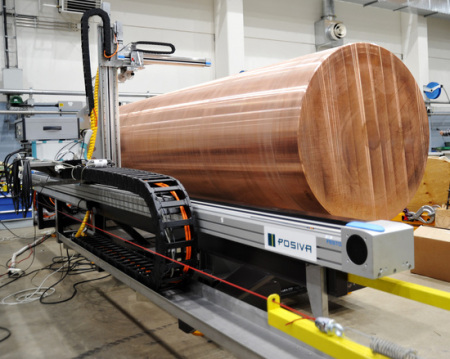
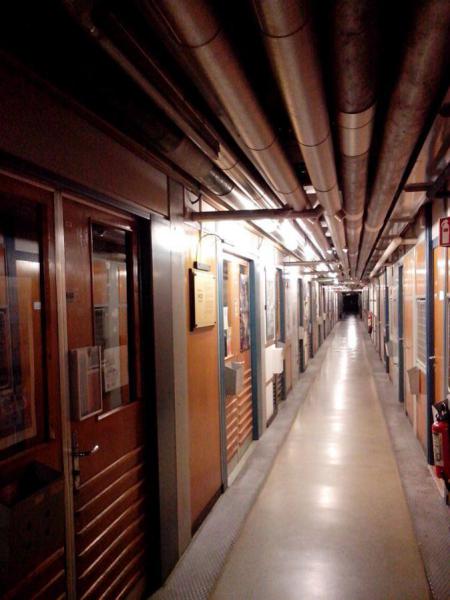
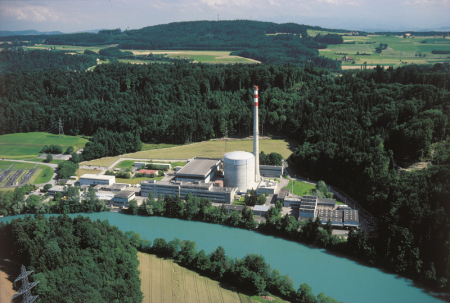
The Onkalo Nuclear Repository, Finland: Buried in holes in the floor will be copper canisters, 5.2 metres long, containing the remains of some of the world’s most radioactive nuclear waste. When the drilling is finished, in a century or so, 3,250 canisters each containing half a tonne of spent fuel will be buried in up to 70km of tunnels. Then the entire area will be sealed to make it safe for posterity.
The hundred-year timescale already means this is a megaproject. But that is just the beginning. The radioactive isotopes of plutonium used in nuclear-power plants must be stored for tens of thousands of years before they are safe. Finland aims to isolate its stockpile in the Onkalo repository, a burial chamber beneath the small forested island of Olkiluoto, home to one of its two nuclear-power plants, for at least 100,000 years.
In geological terms, that is a heartbeat; Finland’s bedrock is 1.9bn years old. But in human terms, 4,000 generations are almost inconceivable. As Mika Pohjonen, the managing director of Posiva, the utility-owned Finnish company overseeing the project, says, no one knows whether humans, creatures (or machines) will rule the Earth above by then—let alone whether they will be able to read today’s safety manuals. A hundred thousand years ago, Finland was under an ice sheet and Homo sapiens had not yet reached Europe….
But Posiva’s immediate priority is to create disposal caverns far enough from rock fissures and groundwater that Finland’s nuclear authorities allow it to start moving the canisters to their tomb in the early 2020s. “This is drilling with silk gloves on,” Mr Pohjonen says, as the machine pounds the rock with a deafening roar. “It has to be done gently.”
The disposal of nuclear fuel is among the most intractable of infrastructure projects. And there are already 266,000 tonnes of it in storage around the world, about 70,000 tonnes more than there were a decade ago. As Markku Lehtonen, a Finnish academic at the University of Sussex, puts it, the costs are high; the benefits are about avoiding harm rather than adding value; and evaluation is not about assessing risk, but about dealing with “uncertainty, ambiguity and ignorance” over a protracted timescale….
Finland began the search for a site in 1983, shortly after it began generating nuclear power, and chose Olkiluoto after reviewing 100 areas. It has mapped faults and fissures in the bedrock, and sited the repository in a seismic “quiet zone”. It says it will avoid burying canisters close to potential pressure points, to minimise the danger that rock movements would crush or tear the canisters and cause radioactive leakage. Finland’s Radiation and Nuclear Safety Authority (STUK) called Posiva’s analysis of the bedrock and groundwater “state of the art”…
But whether in crystalline granite, as in Finland and Sweden, or clay, as in France, or volcanic rock, as in Yucca Mountain, nuclear experts are confident that deep geological disposal can be safe. “There is a great deal of evidence that we can find many sites in the world with adequate geological properties for the required safety,” says Stefan Mayer, a waste-disposal expert at the IAEA.
Technology is the next hurdle. As well as 400-500 metres of bedrock between the canisters and the surface, there will be several man-made layers: steel, copper, water-absorbent bentonite clay around the canisters, and bentonite plugs sealing the caverns and, eventually, the access tunnel…. Some academics…are worried that the Finnish media have underplayed concerns about copper corrosion, compared with other countries with similar “multi-barrier” protection systems.
The trickiest challenge, though, is to build broader societal consent. Finland appears to have succeeded by starting early and sticking to its timetable. The decision to find a site and start disposing of nuclear waste in the 2020s was taken 40 years ago. In 1994 its parliament banned the import and export of spent nuclear fuel, which increased the pressure to find a home-grown solution. Few other countries have demonstrated the same determination. The good news is that, because waste needs to be cooled in tanks for 30-50 years before being disposed of, emerging nuclear powerhouses such as China have time to prepare.
Finns’ trust in their nuclear industry has remained high, despite accidents elsewhere, such as those at Chernobyl in 1986 and Fukushima in 2011. Finland’s four nuclear reactors operate at among the world’s highest utilisation rates, and supply 26% of its electricity. Its two nuclear utilities, TVO and Fortum, which co-own Posiva, are themselves part of an electricity system in which Finnish industries and many municipalities have a stake, bolstering public support. The Onkalo repository is situated next door to TVO’s two working Olkiluoto reactors, which means people nearby are—in the phrase of academics—“nuclearised”, that is, convinced of the benefits of nuclear power. Surveys suggest positive attitudes to nuclear power nationally exceed negative ones.
Some academics worry that Finland is taking waste disposal too much on faith. Any mishap could erode trust in an instant, as happened in Japan, another “high-trust” society, after the Fukushima disaster.,,
Other countries, including America and France, follow principles of reversibility or retrievability, meaning they can reverse the disposal process while it is under way or retrieve waste after burial, if technologies and social attitudes change. Finland’s model is more closed; it would take a huge amount of digging to recover the waste once it has been sealed. But analysts say there is no single correct approach. Britain, for instance, has done things by the book but still failed to find a place for a repository.
Finally, there is the matter of cost. Finland’s nuclear-waste kitty, collected from the utilities, currently stands at €2.5bn ($2.7bn). By the time it is closed, the price is expected to be €3.5bn. That is reassuringly modest for a 100-year project, partly reflecting the fact that Finland’s nuclear industry, even when the planned total of five reactors are up and running, is relatively small. Other countries have higher costs, and less discipline. Yucca Mountain, for instance, was once estimated to cost $96bn to complete. In 2012 America had $27bn in its disposal fund, collected from ratepayers, none of which has gone towards nuclear-waste management.
Excerpts Disposing Nuclear Waste: To the Next Ice Age and Beyond, Economist, Apr. 15, 2017


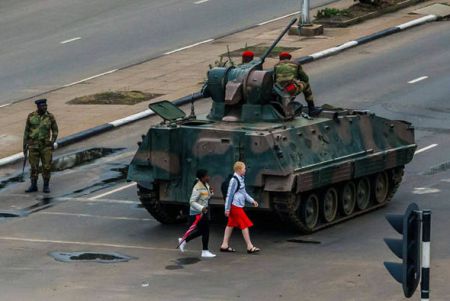
 As the overthrow of despot Robert Mugabe entered a stalemate on November 17, 2017, eyes turned to China — Zimbabwe’s largest foreign investor and a key ally — amid speculation over its role in the military coup.Source in Harare believe the Zimbabwean conflict within the ruling party Zanu PF is involving two rival camps has direct links to China and Russia with both countries trying to control and protect their own economic interests.
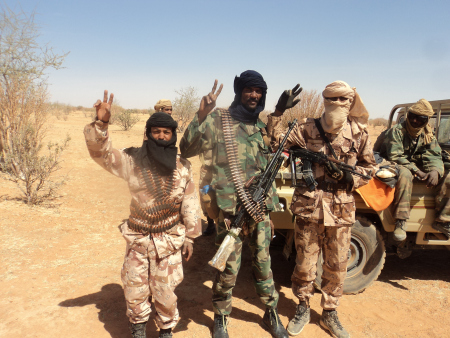
 When Doundou Chefou first took up arms as a youth a decade ago, it was for the same reason as other ethnic Fulani herders along the Niger-Mali border: to protect his livestock. He had nothing against the Republic of Niger, let alone the United States of America. His quarrel was with rival Tuareg cattle raiders.


 Daniel Stiles, a self-styled ape trafficking detective in Kenya, had been scouring Instagram, Facebook and WhatsApp for weeks, looking for pictures of gorillas, chimps or orangutans. He was hoping to chip away at an illicit global trade that has captured or killed tens of thousands of apes and pushed some endangered species to the brink of extinction.
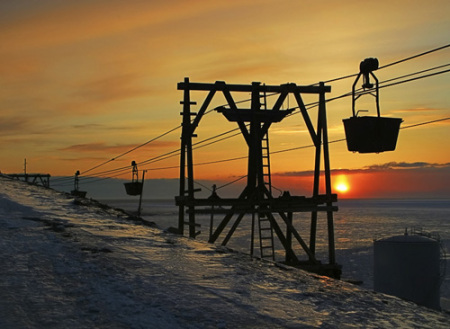
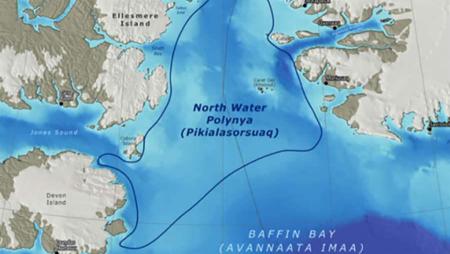
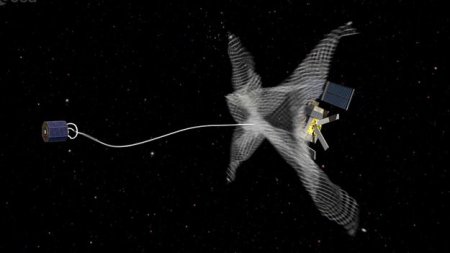
 Europe’s space agency is defending plans to launch two satellites that would drop a rocket stage likely to contain highly toxic fuel in some of the most ecologically sensitive waters of the Canadian Arctic…
 Two millivolts is enough to show that someone has seen something even before he knows he has seen it himself. The two millivolts in question are those associated with P300, a fleeting electrical signal produced by a human brain which has just recognised an object it has been seeking. Crucially, this signal is detectable by electrodes in contact with a person’s scalp before he is consciously aware of having recognised anything.
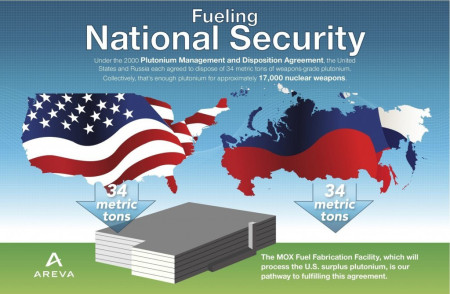
 South Carolina is suing the U.S. government to recover $100 million in fines it says the Department of Energy owes the state for failing to remove one metric ton of plutonium stored there. The lawsuit was filed on August 7, 2017.


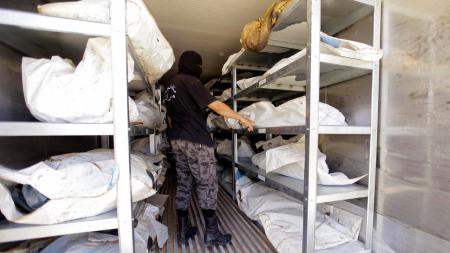
 Seven months after Libyan forces defeated Islamic State in Sirte, hundreds of bodies of foreign militants are still stored in freezers as authorities negotiate with other governments to decide what to do with them, local officials say. The corpses have been shipped to Misrata, a city further to the west whose forces led the fight to defeat Islamic State in Sirte in December 2016.


 On June 22nd 2017,

 U.S. District Judge Sue L. Robinson of Delaware on June 21,2017 sided with the federal government in blocking a $367 million merger between EnergySolutions and the radioactive site’s parent company. Waste Control Specialists calls the deal essential for its long-term viability.The details of Robinson’s opinion were sealed.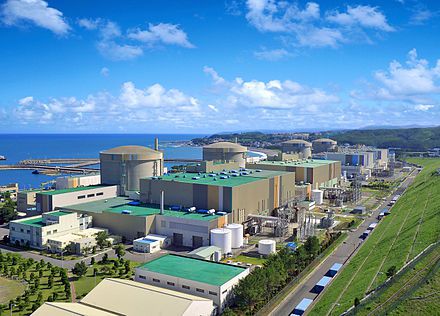
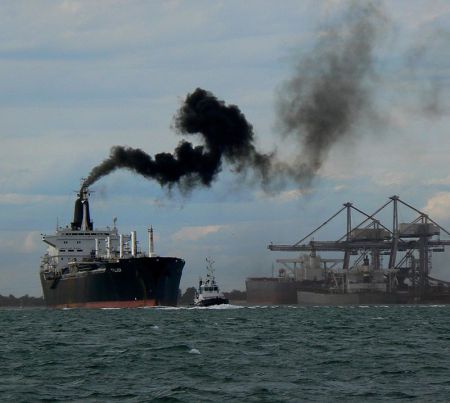
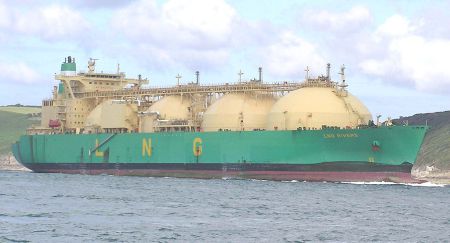
 One day in March 2017, he Rioja Knutsen tanker, filled with liquefied natural gas, was traveling from the U.S. to Portugal. Suddenly, Mexico’s power company lobbed in a higher bid for its cargo. At the Bahamas, the ship abruptly made a starboard turn and headed south. How natural gas is bought and sold in the world’s scattered regional markets for the fuel is changing rapidly. Ships such as the Rioja Knutsen are stitching those regions together and a single global market is emerging. This is already how nearly every other hydrocarbon, from crude oil to obscure petrochemicals, is sold. As gas joins the club, the effects will ripple through energy prices, company profits, the environment and geopolitics.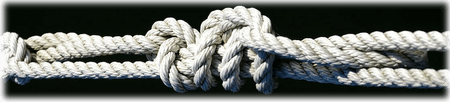
 Russia’s sale of one-fifth of its state-owned oil company to Qatar and commodities giant Glencore PLC last year had an unusual provision: Moscow and Doha agreed Russia would buy a stake back, people familiar with the matter said. Russian President Vladimir Putin hailed the $11.5 billion sale of the Rosneft stake in December 2016 as a sign of investor confidence in his country. But the people with knowledge of the deal say it functioned as an emergency loan to help Moscow through a budget squeeze.



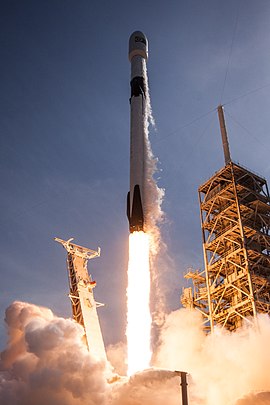
 A SpaceX Falcon rocket lifted off from the Kennedy Space Center in Florida on May , 2017 to boost a classified spy satellite into orbit for the U.S. military, then turned around and touched down at a nearby landing pad.
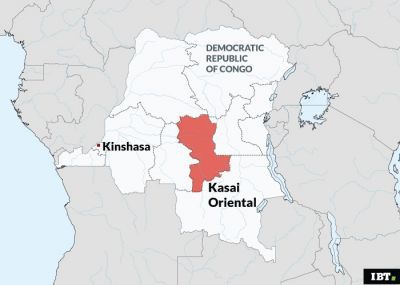
 Growing numbers of African migrants passing through Libya are traded in what they call slave markets before being held for ransom, forced labour or sexual exploitation, according to the UN migration agency.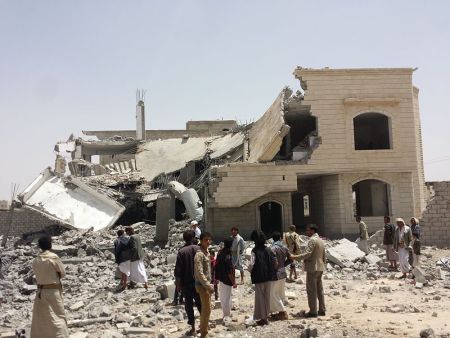

 Since their invention in the 1960s, disposable plastic bags have made lives easier for lazy shoppers the world over. But once used, they become a blight. This is particularly true in poor countries without good systems for disposing of them. They are not only unsightly. Filled with rainwater, they are a boon for malaria-carrying mosquitoes. Dumped in the ocean, they kill fish. They may take hundreds of years to degrade. On March 15th Kenya announced that it will become the second country in Africa to ban them. It follows Rwanda, a country with a dictatorial obsession with cleanliness, which outlawed them in 2008…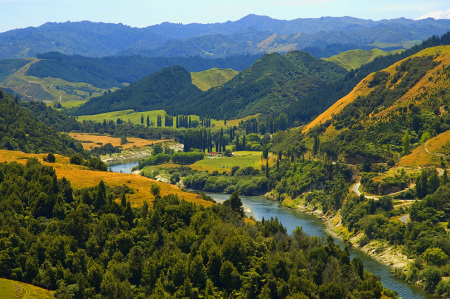
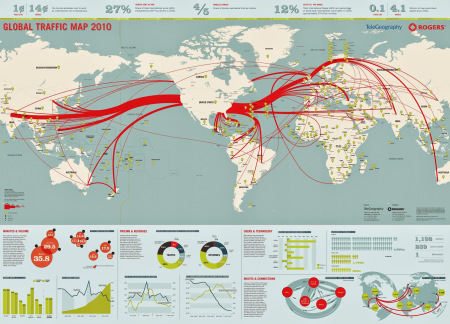
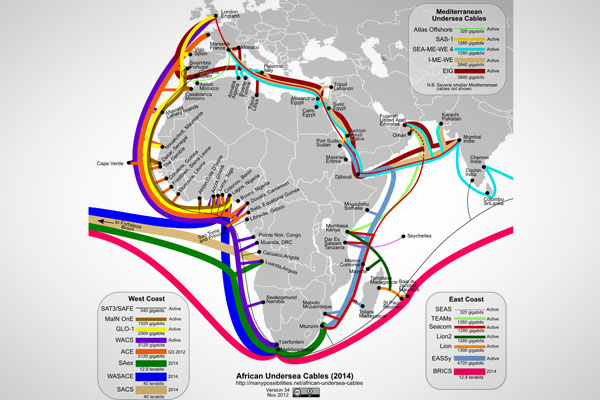
 A real-estate magnate is financing Google’s and Facebook Inc.’s new trans-Pacific internet cable, the first such project that will be majority-owned by a single Chinese company. Wei Junkang, 56, is the main financier of the cable between Los Angeles and Hong Kong, a reflection of growing interest from China’s investors in high-tech industries. It will be the world’s highest-capacity internet link between Asia and the U.S.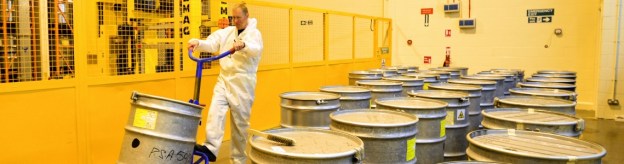
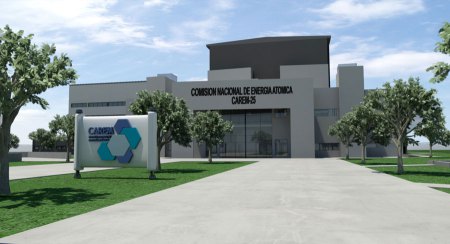
 Several options are available to immobilise waste resulting from nuclear fuel reprocessing. One of these is vitrification – a mature technology which has been used for high-level nuclear waste immobilization for over 50 years…Argentina is considering vitrification as a viable option for dealing with its high-level nuclear waste. The Argentine National Programme for Radioactive Waste Management aims to build capacities to implement vitrification processes for radioactive waste….

 On 7 March 2017, WikiLeaks began its new series of leaks on the U.S. Central Intelligence Agency…code-named “Vault 7” by WikiLeaks..






 Law-In-Action