Category Archives: Globalization

The New Opium War: How the World Got Addicted to China

 A fundamental axiom of economics is that when two individuals or countries trade, both are better off. In the decades after World War II, the U.S. was the world’s largest exporter and economy and as it grew, it imported more, helping its partners. As they grew, they bought more of what the U.S. made. Expanding trade helped everyone specialize, leading to more competition, innovation and choice, and lower costs.

China is now the world’s second-largest economy and its largest exporter, but its philosophy is quite different. It has never believed in balanced trade nor comparative advantage. Even as it imported critical technology from the West, its long-term goal was always self-sufficiency. In 2020, Chinese leader Xi Jinping codified this approach as “dual circulation.” This would, he said, “tighten the international industrial chain’s dependence” on China while ensuring China’s production was “independent” and “self-sustaining.”

And as China expands into high-end manufacturing such as aircraft and semiconductors, Xi has decreed it must not relinquish low-end production such as toys and clothes. Beijing has discouraged Chinese companies that invest abroad from transferring key know-how, such as in the production of iPhones and batteries. Xi has rejected fiscal reforms that would tilt its economy away from investment, exports and saving and toward household consumption and imports.

Excerpt from Greg Ip, World Pays a Price for China’s Growth, WSJ, Dec. 6, 2025

How Does it Feel to Beg China? Netherlands Knows

Dutch chipmaker Nexperia has publicly called on its China unit to help restore supply chain operations, warning in an open letter published on its website  on November 28, 2025 that customers across industries are reporting “imminent production outages.” Nexperia’s Dutch unit said that is open letter followed “repeated attempts to establish direct communication through conventional channels” but did not have “any meaningful response.” The letter marks the latest twist in a long-running saga that has threatened global automotive supply chains and stoked a bitter battle between Amsterdam and Beijing over technology transfer.

In a statement, Wingtech Technology, Nexperia’s Chinese parent stated that Nexperia’s true intent is to buy time ” to construct a ‘de-China-ized’ supply chain and permanently strip Wingtech of its shareholder rights.”

The situation began in September 2025, when the Dutch government invoked a Cold War-era law to effectively take control of Nexperia. The highly unusual move was reportedly made after the U.S. raised security concerns.

Beijing responded by moving to block its products from leaving China, which, in turn, raised the alarm among global automakers as they faced shortages of the chipmaker’s components.

In an apparent reprieve on November 19, 2025, however, the Dutch government said it had suspended its state intervention at Nexperia following talks with Chinese authorities…But while the measures to seize the Dutch Nexperia subsidiary have been lifted, the restoration of the corporate structure and relation with parent company Wingtech has yet to be accomplished.

Excerpt from Sam Meredith, What’s going on at Nexperia? China’s Wingtech escalates war of words with Dutch chipmaker, CNBC, Nov. 28, 2028

Having What Nobody Can Have: The Superiors

Travel has always been a key feature of wealthy people’s lives, and more than ever they prioritize privacy, efficiency and customization, industry specialists say. Lauren Beall, owner of Travel Couture in Miami Beach, specializes in arranging custom travel experiences for the ultrawealthy. She has booked private islands for clients and flown in Michelin-starred chefs, yoga instructors and performers.

One coveted offering is a suite above the Christian Dior flagship store in Paris that can be rented, and includes an after-hours shopping excursion and a private dinner at Monsieur Dior restaurant. An estate Beall has reserved in Scotland comes with private chefs, horses to explore the countryside and a helicopter to visit towns for the day.

“We’re into that exclusive access right now—things that other people can’t get,” Beall said. “There’s a huge price tag that goes with it.”

Excerpt from Arias Campo-Flores, The Ultrarich Pay Big for Extreme Privacy, WSJ, Nov. 15, 2025

Shut Up and Give Up: How to Deal with Environmental Disasters

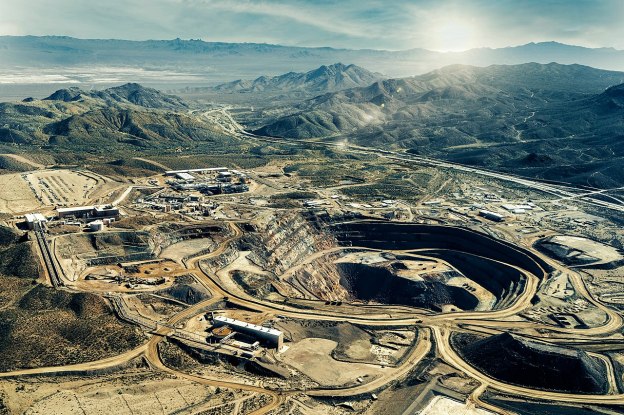
The worst day of Bathsheba Musole’s life was February 18, 2025. It started with a deafening crash when the 30-foot wall around a toxic-waste pool collapsed at the Chinese copper mine above her village. A poisonous river of a stinking yellow liquid rushed downhill, inundating homes and fields, including the one where she grew corn to feed her eight children. The floodwater, laden with cyanide and arsenic, rose chest-high. “I thought I would drown,” said Musole, 48 years old, in a recent interview.

In August 2025, months after the Feb. 18, 2025 disaster, officials from Sino Metals, a unit of the state-owned China Nonferrous Mining Corp., showed up at Musole’s half-acre farm, which the Zambian government says is too toxic to sustain crops for at least three years. They were there to make things right, she recalled them saying. Their offer was $150, but it came with a catch. To get the money, she would have to agree never to talk about the spill, take legal action against Sino Metals or even reveal the contents of the nondisclosure agreement itself…

Zambia’s government and economy.. have grown reliant on China. Zambia collects about $2 billion a year in mining taxes, mostly from Chinese mining companies. Half of the copper mined in Zambia, much of it by Chinese companies, is exported to China. In 2024, the Zambian government announced that Chinese miners would invest $5 billion in the country by 2031…

After months of investigation, Drizit Environmental, a South African firm contracted by Sino Metals, concluded that 1.5 million tons of toxic waste had overflowed into the Kafue valley, 30 times what the company had said. Sino Metals terminated the firm’s contract a day before the final report was due…

Excerpt from Nicholas Bariyo, China Pushes to Silence Victims of African Mining Disaster, WSJ, Oct. 27, 2025

Who is Afraid of China? the United States Army

China plans to ease the flow of rare earths and other restricted materials to the U.S. by designing a system that will exclude companies with ties to the U.S. military while fast-tracking export approvals for other firms…The “validated end-user” system, or VEU, would enable Chinese leader Xi Jinping to follow through on a pledge to President Trump to facilitate the export of such materials while ensuring that they don’t end up with U.S. military suppliers, a core concern for China…  The VEU mechanism that Beijing is considering is modeled on U.S. laws and procedures, as is much of Beijing’s export-control architecture.

Under the American version of the VEU system, which has been active since 2007, certain Chinese companies are cleared to buy sensitive goods under a general authorization—essentially a simplified export-approval mechanism—instead of needing individual licenses for each purchase. This makes it easier to import controlled goods such as chemicals or chip-making equipment, but requires companies to put up with U.S. government inspections of their facilities, among other steps, to verify compliance with the program…

Companies in the U.S. and Europe have complained of reduced access to rare-earth magnets from China. Though China has periodically agreed to relax magnet restrictions, Chinese rare-earth magnet exports to the U.S. declined 29% in September 2025 from the month before

Excerpt from Jon Emont et al, China Hatches Plan to Keep U.S. Military From Getting Its Rare-Earth Magnets, WSJ, Nov. 10, 20215

Let them Eat Data! Decolonizing Artificial Intelligence

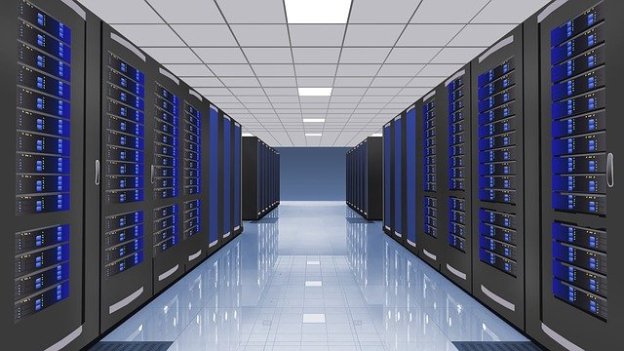
Tap water isn’t drinkable. Power outages are common. The national average annual wage is $2,200. Yet rising on Jakarta’s outskirts are giant, windowless buildings packed inside with Nvidia’s latest artificial-intelligence chips. They mark Indonesia’s surprising rise as an AI hot spot, a market estimated to grow 30% annually over the next five years to $2.4 billion.

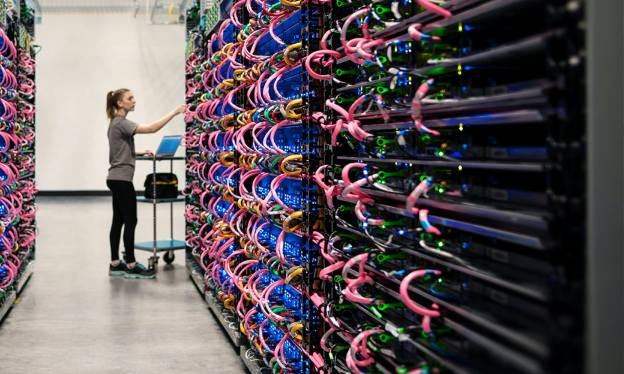
The multitrillion-dollar spending spree on AI has spread to the developing world. It is driven in part by a philosophy known in some academic circles as AI decolonization. The idea is simple. Foreign powers once extracted resources such as oil from colonies, offering minimal benefits to the locals. Today, developing nations aim to ensure that the AI boom enriches more than just Silicon Valley.  Regulations effectively require tech companies such as Google and Meta to process local data domestically. That pushes companies to build or rent data facilities onshore instead of relying on global infrastructure. These investments add up to billions of dollars and create jobs that foster national talent, or so developing nations hope.

AI decolonization is a twist on data sovereignty, a concept that gained traction after Edward Snowden revealed that American tech companies cooperated with U.S. government surveillance of foreign leaders. The European Union in 2018 pioneered data-protection laws that other nations have since mimicked.

Regulations vary by country and industry, but the principle is this: If a developing-nation bank wants an American tech giant to store customer data and analyze it with AI, the bank must hire a company with domestically located servers… Nvidia Chief Executive Jensen Huang championed “sovereign AI” during a visit to Jakarta in 2024

“No country can afford to have its natural resource—the data of its people—be extracted, transformed into intelligence and then imported back into the country,” Huang said…

Excerpt from Stu Woo, It’s Not Just Rich Countries. Tech’s Trillion-Dollar Bet on AI Is Everywhere, WSJ, Oct. 26, 2025

Nationalizing a Crown Jewel: the case of Nexperia

U.S. officials’ warning to their Dutch counterparts was stark: If they wanted a Netherlands-based chip maker to avoid being put on a trade blacklist, it would almost certainly have to remove its Chinese owner as CEO. “The fact that the company’s CEO is still that same Chinese owner is problematic,” American officials said in a June 2025 meeting on the topic. The Americans soon got their wish. In September 25, 2025, the Dutch economy ministry seized control of Nexperia from China’s Wingtech Technology. The next day, a Dutch court granted an emergency petition to suspend Wingtech founder Zhang Xuezheng as Nexperia’s CEO and put all but one of the semiconductor company’s shares under external management.

China quickly fired back at the seizure, ordering Wingtech in early October to suspend exports of Nexperia of chips that the company has long sent for packaging and testing in China…The Dutch economy minister said in a letter to parliament that he moved to seize control of Nexperia based on evidence that the CEO was moving quickly to shift production capacity, financial resources and intellectual property to China, not because of pressure from any other country… The Dutch government and Dutch and German executives of the company had tried for months to ringfence the company’s business from Chinese control to accommodate domestic concerns—and avoid being hit by the U.S. blacklist… Dutch officials told Nexperia that the coming expansion of U.S. trade restrictions could lead to restrictions on the business, unless measures were taken to limit the transfer of knowledge and capabilities to China.

In the past, Nexperia relied on its European factories and contract manufacturers in Taiwan to make chips for China. In 2020, Zhang set up a wafer factory in Shanghai. The business, called Wingskysemi, started production in 2023 and has become one of Nexperia’s key suppliers….

Excerpt from Sam Schechner et al, , How U.S. Pressured Netherlands to Oust CEO of Chinese-Owned Chip Maker, WSJ, Oct. 14, 2025

How China Plans to Destroy the U.S. AI Industry

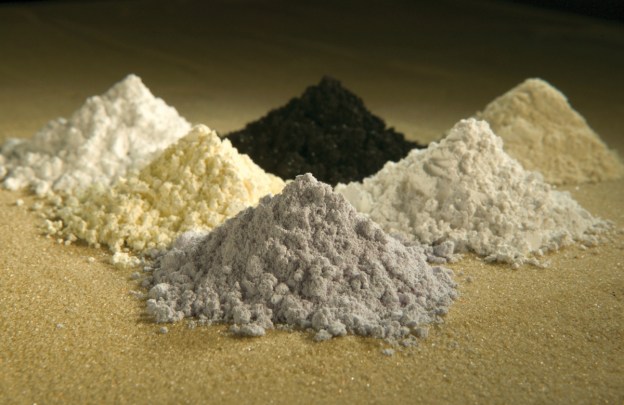
China’s restrictions on rare-earth materials announced on October 9, 2025 would mark a nearly unprecedented export control*** that stands to disrupt the global economy, giving Beijing more leverage in trade negotiations and ratcheting up pressure on the Trump administration to respond.

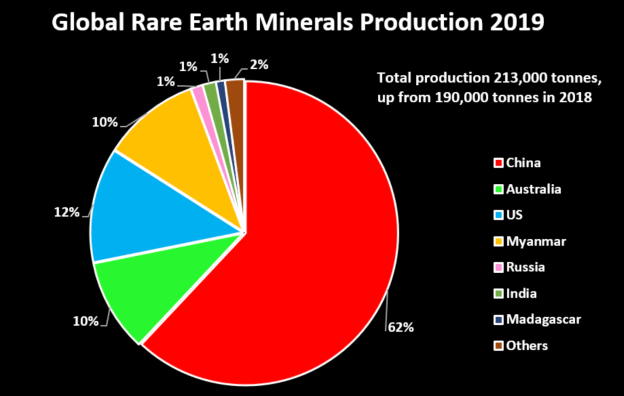
The rule, put out by China’s Commerce Ministry, is viewed as an escalation in the U.S.-China trade fight because it threatens the supply chain for semiconductors. Chips are the lifeblood of the economy, powering phones, computers and data centers needed to train artificial-intelligence models. The rule also would affect cars, solar panels and the equipment for making chips and other products, limiting the ability of other countries to support their own industries. China produces roughly 90% of the world’s rare-earth materials.

Global companies that sell goods with certain rare-earth materials sourced from China accounting for 0.1% or more of the product’s value would need permission from Beijing, under the new rule. Tech companies will probably find it extremely difficult to show that their chips, the equipment needed to make them and other components fall below the 0.1% threshold, industry experts said. The rules could cause a U.S. recession if implemented aggressively because of how important AI capital spending is to the economy… “It’s an economic equivalent of nuclear war—an intent to destroy the American AI industry,” said Dmitri Alperovitch, co-founder of the Silverado Policy Accelerator think tank.

Excerpt from Amrith Ramkumar,et al., China’s Rare-Earth Escalation Threatens Trade Talks—and the Global Economy, WSJ, Oct. 9, 2025

***The new export controls mark the first time China has applied the foreign direct product rule (FDPR)—a mechanism introduced in 1959 by the United States and long used United States to restrict semiconductor exports to China. The FDPR enables the United States to regulate the sale of foreign-made products if they incorporate U.S. technology, software, or equipment, even when produced by non-U.S. companies abroad. In effect, if U.S. technology appears anywhere in the supply chain, the United States can assert jurisdiction. See CSIS

While United States Sleeping, China Made Ships

A $16 billion merger of two state-controlled shipbuilders in China was set for completion the week of August 11, 2025 creating the world’s biggest shipbuilder while the U.S. searches for a path back into the business.  American shipbuilders are playing catch-up after decades of maritime-industry decline…but Trump’s threat to impose higher fees on ships made in China is giving South Korean and Japanese rivals an opening to win back market share.

The Chinese champion is called China State Shipbuilding, or CSSC. In August 2025, it is scheduled to absorb its merger partner, China Shipbuilding Industry, and take the sole listing on the Shanghai Stock Exchange… Beijing is currently looking to consolidate state-led companies in sensitive industries, particularly those connected with the military. CSSC’s main business is commercial, but it is also an important contractor for the Chinese navy. China Shipbuilding Industry designed and built China’s first homegrown aircraft carrier, the Shandong.

Beijing set its sights on dominating the shipbuilding industry decades ago, and now Chinese shipbuilders make up more than half of the global market. China-built ships accounted for about 55% of global tonnage in 2024, compared with less than 0.05% for the U.S. China possesses 232 times the shipbuilding capacity of the U.S., according to the U.S. Navy…


Meanwhile, smaller rivals in Japan are looking to reclaim market share after decades of being pushed into a corner by lower-cost Chinese and South Korean rivals. A proposal in June in 2025 from Japan’s ruling Liberal Democratic Party calls for extensive subsidies for local shipyards to protect national security, including a $6.7 billion public-private fund. “If we fail to act now, Japan risks losing its shipbuilding industry entirely, as Europe and the United States did,” the party said.

Excerpt from China Creates World’s No. 1 Shipbuilder, Driven by Rivalry With U.S., WSJ, Aug. 11, 2025

Out-of-Date: Academic Cooperation

Mr. Trump noted in the summer of 2025  that “the United States is in a race to achieve global dominance in artificial intelligence,” which Joe Biden called “a defining technology of our era.” Universities help drive that race. Meta’s chief AI officer, Alexandr Wang, has argued that the rate of AI progress may be such that “you need to prevent all of our secrets from going over to our adversaries and you need to lock down the labs.”

Thousands of Chinese citizens are working and studying in such labs….In AI specifically, nearly 40% of top-tier researchers at U.S. institutions are of Chinese origin. Beijing is aggressively cultivating American-educated and American-employed researchers via the Thousand Talents program.

Blindly embracing academic cooperation with a geopolitical rival is absurd. Nobody suggests we should train Iranian nuclear physicists or Russian ballistics engineers. The U.S. wouldn’t have been better off collaborating more with Nazi Germany in the 1930s or with the Soviet Union during the Cold War. Why make an exception for a nation dedicated to surpassing the U.S. in emerging technologies?

Excerpt from  Mike Gallagher, Send Harvard’s Chinese Students Home, WSJ, Aug. 19, 2025

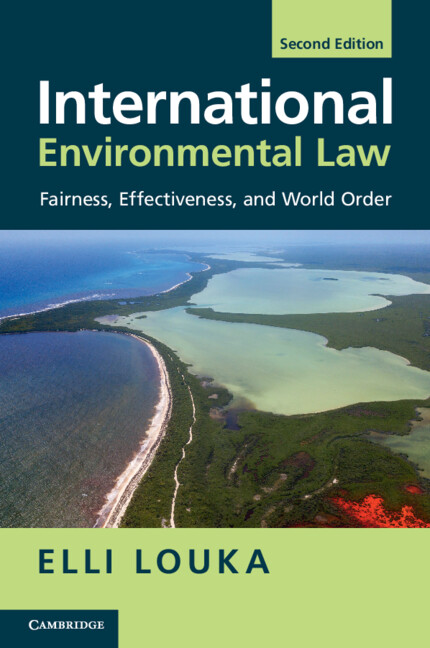
International Environmental Law: Fairness, Effectiveness and World Order

Second Edition (2025) will be out in October 2025

Check my blog on the Cambridge website

Fifty Years of International Environmental Law: Looking Back and Looking Ahead

Nvidia CEO Has a Magic Needle

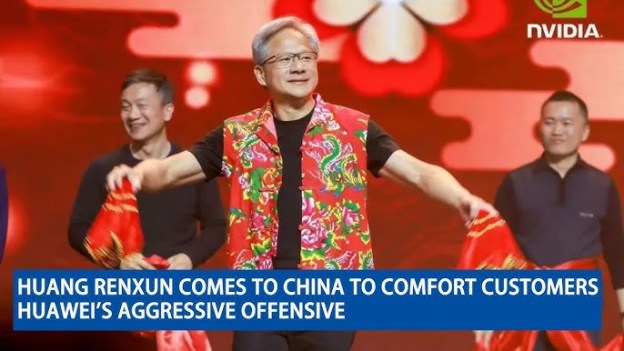
Nvidia’s market share in China fell to 50% from 95% over the past four years under U.S. restrictions, Huang, Nvidia’s CEO,  said in May 2025.  He visited China at least three times in 2025 to reassure Chinese tech executives and government officials that Nvidia was committed to the market…. Huang has met with top executives of Chinese cloud-computing leader Alibaba, smartphone and automaker Xiaomi and OpenAI challenger MiniMax.People in China’s tech industry said they appreciated Huang’s efforts to modify his chips so they could be sold in China. Engineers there nicknamed him “Magic Tailor” for his skill in designing chips to thread the needle of U.S. regulations.

Knowing the importance of the Chinese market to Nvidia, Beijing increased pressure on the company: China’s cybersecurity regulator recently summoned Nvidia representatives to discuss alleged security risks of the H20 chips, citing comments by U.S. lawmakers about the need for a bill to require tracking capabilities for advanced chips sold abroad….

Excerpt from Lingling Wei et al, With Billions at Risk, Nvidia CEO Buys His Way Out of the Trade Battle, WSJ, Aug. 11, 2025


Nvidia Geopolitical Games

Nvidia plans (in 2025) to open a research and development center in Shanghai to maintain its presence in China. The facility will help Nvidia understand Chinese customer demands and design products that are compliant with US export controls and sanctions. Chief Executive Jensen Huang visited China in April 2025 and discussed the plan with Shanghai’s mayor, who welcomed it and offered to provide support…Since 2022, Washington has required licenses for exports of Nvidia’s most advanced AI chips to China. That has reduced China sales, which accounted for 13% of revenue in its last fiscal year, down from 26% before the export restrictions.

The company is seeking to lease an office space in Shanghai for the new facility to accommodate existing employees and potential new hires, the people said. Officials in the city, where Tesla’s China plant is located, have told the company that it would offer tax breaks and reduce red tape for its new project, the people said. 

The company has repeatedly created downgraded variants of chips after Washington tightened its rules so that it could keep selling to China. The practice has angered some U.S. officials, who were upset the company wasn’t being more helpful in curbing China’s AI advances. Nvidia has said it follows U.S. export rules and has advocated for selling to Chinese customers rather than ceding the market to domestic companies such as Huawei Technologies, which are filling in the gap left by Nvidia and its American peers.

Excerpt from Raffaele Huang, Nvidia to Set Up Research Center in Shanghai, Maintaining Foothold in China, WSJ, May 16, 2025

The New Trump Doctrine: Kiss the Hand you Cannot Bite

Four US major automakers are racing to find workarounds to China’s stranglehold on rare-earth magnets, which they fear could force them to shut down some car production within weeks. Several traditional and electric-vehicle makers—and their suppliers—are considering shifting some auto-parts manufacturing to China to avoid looming factory shutdowns, people familiar with the situation said.

Ideas under review include producing electric motors in Chinese factories or shipping made-in-America motors to China to have magnets installed. Moving production to China as a way to get around the export controls on rare-earth magnets could work because the restrictions only cover magnets, not finished parts, the people said.

If automakers end up shifting some production to China, it would amount to a remarkable outcome from a trade war initiated by President Trump with the intention of bringing manufacturing back to the U.S.  “If you want to export a magnet [from China] they won’t let you do that. If you can demonstrate that the magnet is in a motor in China, you can do that,” said a supply-chain manager at one of the carmakers.

China in April 2025 began requiring companies to apply for permission to export magnets made with rare-earth metals, including dysprosium and terbium. The country controls roughly 90% of the world’s supply of these elements, which help magnets to operate at high temperatures. Much of the world’s modern technology, from smartphones to F-35 jet fighters, rely on these magnets….In May 2025, industry groups representing most major automakers and parts suppliers told the Trump administration that vehicle production could be reduced or shut down imminently without more rare-earth components from China.

Excerpt from Sean McLain et al., Automakers Race to Find Workaround to China’s Stranglehold on Rare-Earth Magnets, WSJ, June 4, 2025

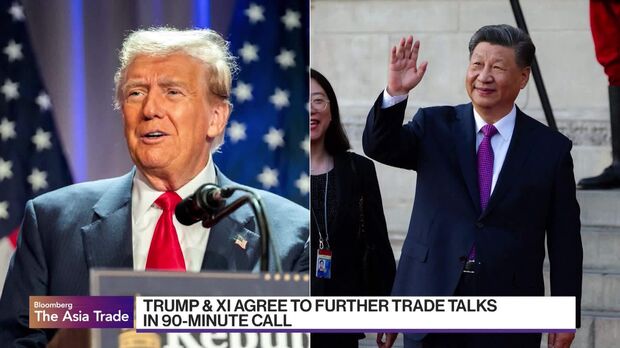
Two days after the publication of this WSJ article, Trump announced, on June 6, 2024, that Xi agreed to let rare earth minerals flow to US (in exchange of? not revoking Chinese student visas? what else?)

The Essence of Capitalism: Shelters

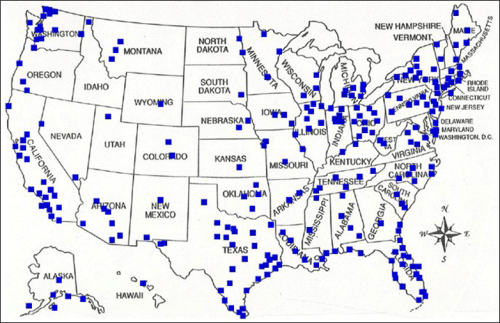
SKU Distribution in Mesa, Arizona., is experiencing rapid growth as companies seek to access foreign-trade zones and navigate rising U.S. tariffs. Companies can use foreign-trade zones to defer tariff payments until products are sold, which operators say helps them manage supply chains and avoid bottlenecks. The foreign-trade zone program dates back to the 1930s, with roughly 260 such facilities now in the U.S. In some, inquiries from companies have recently quadrupled.

SKU Distribution had just one customer in 2024 at its Mesa, Arizona, warehouse. In 2025, it is teeming with new business from companies storing items such as aluminum poles, ice picks, carabiners and firearm safes. That is because the warehouse is the ultimate U.S.-based tariff refuge

Arizona is the foreign-trade zone capital of America, its facilities employing more workers than those of any other state, Commerce Department data shows. Apple, Intel, Honeywell Aerospace, Sub-Zero and Ball Corp. all manufacture within the Arizona facilities, together processing more than $7.5 billion in merchandise in 2023. The program has helped turn this strip of the Phoenix-area desert into a chip-making hot spot. Now, Trump’s tariffs are drawing a clientele of smaller companies looking for refuge from the trade war.

Excerpt from Owen Tucker-Smith, Inside the Arizona Warehouse That Has Become Shelter in Tariff Storm, WSJ, May 12, 2025

See also United States as a Tax Haven

To Own Means Nothing-To Do Means More: Metals and Minerals of the World

Trump wants to secure the minerals the U.S. needs for everything from smartphones to jet fighters by striking deals in Ukraine, Greenland and even Russia. But even if the Trump administration secures more mines for American companies through agreements like the mineral-rights deal being discussed with Ukraine, it may have to send much of the minerals to China—its main geopolitical rival—to be processed…

In truth, the U.S. already has abundant supplies of rare earths, but it relies on China to refine them. That is because the U.S. has lost much of its capacity to process minerals, while China has become the world’s dominant refiner of rare earths, cobalt, copper and many other metals.

Until the 1990s, the U.S. was a major refiner of minerals and metals. But then China emerged as the dominant player, powered by its cheap labor force and looser environmental regulations of a sector that can be highly polluting. The voracious need of Chinese manufacturers for raw materials during the country’s years of explosive growth was also a boon for Chinese refiners. Today, the sheer scale of China’s refining industry makes it difficult for others to compete. According to industry estimates, the cost of building a refinery plant in China is a third of the cost in the U.S.

Excerpts from  Jon Emon, How China Beat Out the U.S. to Become the Top Player in Rare-Earths Refining, WSJ, Mar. 25, 2025

Appalling Human Rights Violations in South Africa Mining Sector

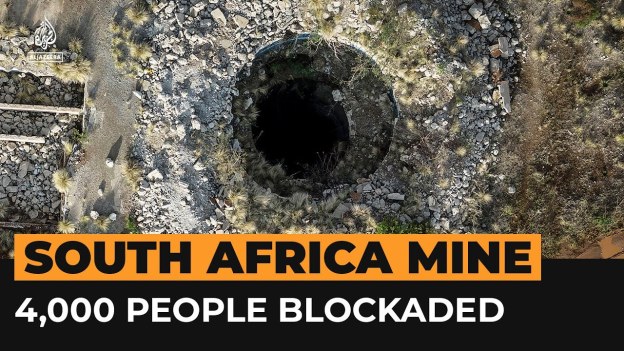
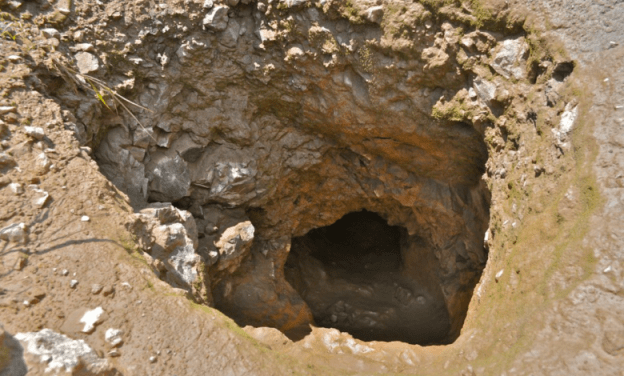
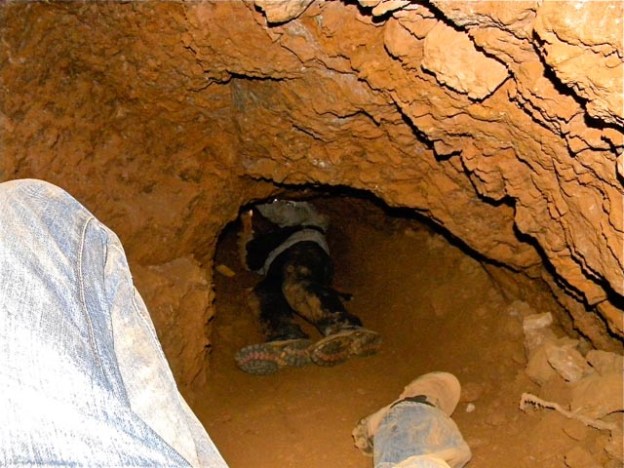
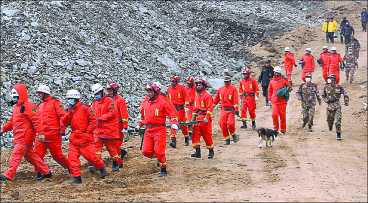
With hundreds of miners trapped below ground without food or water, two men from down the road volunteered to venture where no police, government officials or professional rescuers were willing to go.

On their first descent into the shaft this week, Mandla Charles and Mzwandile Mkwayi, wearing white hardhats, headlamps and T-shirts, stepped out of a red cage dangling on a cable from a crane on the surface 4,200 feet above them. Their lights illuminated a sea of emaciated faces, men crowded into a chamber who were crying and pleading to be saved from the pitch black of the abandoned Buffelsfontein gold mine. The miners’ lights had burned out weeks or months earlier. The volunteers made more than 30 round trips underground over the next three days, bringing up 246 living prospectors and the remains of 78 more. The cage, designed to hold six people in close confinement, lifted as many as 13 men to the surface on some trips.

“I can’t explain the smell down there,” Charles, 38, told The Wall Street Journal at the mine entrance in Stilfontein, 100 miles southwest of Johannesburg. “They told us they were eating human flesh and cockroaches. They had lost hope.” The rescue mission, which concluded January 16,2025 when no more survivors could be found, ended a monthslong standoff between miners who had been illegally digging for gold and a government determined to force them to the surface. The miners had been holed up since the police cut off their supplies of food and water in August 2024. 

For about five months, the informal workers were trapped underground as police tried to “smoke them out,” in the words of Khumbudzo Ntshavheni, minister in the South African presidency. The operation was part of the police’s “Close the Hole” plan to combat illegal mining, which has reached crisis levels here. A staggering 42% unemployment rate in South Africa has led to high levels of chronic poverty, leaving many men with little choice but to clamber down gold shafts closed by some of the world’s biggest mining companies, in order to feed their families. The zama zamas are often the lowest-level workers for larger criminal gangs that ultimately sell the gold abroad.

Excerpts from Alexandra Wexler, Hundreds of Miners Were Trapped for Months—Until an Extraordinary Two-Man Rescue Mission, WSJ, Jan. 17, 2025

Get Down and (Very) Dirty: How to Break Free from China’s Grip on Rare Earths and Minerals

The Biden administration held talks with three firms in the fall of 2024 about purchasing one of the world’s largest non-Chinese cobalt producers…The talks over Chemaf, a mining company based in the Democratic Republic of Congo, are part of a push by the administration to secure global supplies of a metal used in everything from jet fighters and drones to electric-vehicle batteries. For more than a decade, Chinese companies have spent billions of dollars buying out U.S. and European miners in Congo, which produces nearly 75% of the world’s cobalt supply. That has put China in a dominant position in both the production and processing of the mineral.

It has been difficult for the U.S. government to interest American investors in any sector in Congo because of the country’s poor infrastructure, limited skilled labor, resource nationalism and reputation for government corruption. U.S. government officials have spoken with mining and artificial-intelligence company KoBold Metals, copper miner First Quantum Minerals and investment firm Orion Resource Partners about participating in a deal to acquire Chemaf, either separately or jointly…

Chemaf, which says its mines could produce 20,000 tons of cobalt annually—making it one of the world’s largest cobalt producers—was put up for sale in 2023 by its founder, Shiraz Virji…When The Wall Street Journal visited Chemaf’s Mutoshi mine in 2018, freelance Congolese miners could be seen descending underground without helmets, shoes or safety equipment. Miners were using picks, shovels and bare hands to unearth rocks rich with the metal. Water sometimes rushed into holes and drowned people, and an earth mover buried one alive, said local workers and mine officials…

In June 2024, Chemaf agreed to sell itself to Chinese state-backed Norin Mining. Shortly after, U.S. pressure helped block the sale

Excerpts from  Alexandra Wexler and Julie Steinberg, How the U.S. Is Trying to Challenge China’s Cobalt Chokehold, WSJ, Oct. 15, 2024

Who Gets By and Who Throws and Thrives?

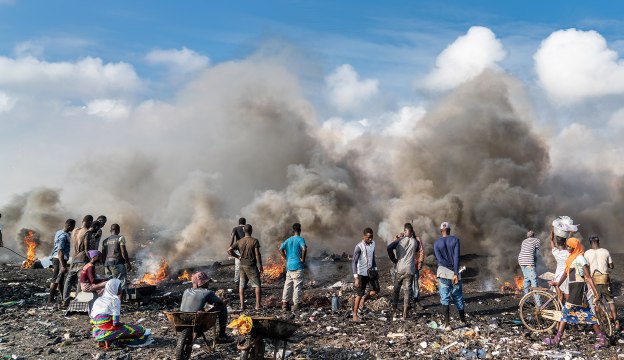
For years, a site called Agbogbloshie in Accra, Ghana was one of the largest e-waste processing sites in Africa, getting 15,000 tons of discarded phones, computers and other used electronics each year. Many Western media outlets depicted the site as a public health and environmental tragedy, rife with toxic chemicals that leach into the water and poison the air. While that’s undoubtedly true, it’s not the full story, according to a new collaborative photojournalism project. The project, called E-Waste in Ghana: Tracing Transboundary Flows, which won this year’s Fondation Carmignac photojournalism award, aims to capture both the positive and negative aspects of e-waste.

“The world cannot throw all its garbage here, it has truly negative consequences on the people,” says Anas Aremeyaw Anas, an investigative journalist in Ghana who co-led the project. “But there are positive aspects of sending us e-waste,” he says, as it’s sparked a dynamic, informal recycling economy in the country that, while often dangerous, can also help lift people out of poverty.

Globally, e-waste is an enormous problem. In 2022, humans discarded about 62 million tons of used electronics, enough to fill a line of trucks that spans the equator. But there’s opportunity too, as those trucks contain over $91 billion of valuable metals, the U.N. estimates….E-waste falls into two broad buckets: functional and non-functional. The line between them can be fuzzy, as what’s still usable or repairable to one person may not be to another, but the distinction is important. International laws prohibit trafficking of non-functional e-waste containing toxic substances, but the United Nations sees trading functional e-waste as beneficial, as it can lengthen the lifespan of a product…The project found that exporters often fail to separate functional from non-functional e-waste. “If you have a container full of TV screens, how on earth are you going to verify each and every one of them to make sure that they are functioning,” says photojournalist Bénédicte Kurzen, a co-author of the project. As a result, both kinds of e-waste get stuffed into container ships that make their way to low- and middle-income countries like Ghana.


Formally, Ghana prohibits the import of many forms of hazardous e-waste material. But the team found that a well-placed bribe can get port officials to look the other way. As a result, informal e-waste sites are growing across Ghana’s coast. There, both functional and non-functional e-waste get dumped into vast piles that are encroaching on residential areas. Thousands of “pickers” come to these sites, picking through the rubbish to separate items that might be repaired from waste that could contain valuable minerals.

It’s fraught, precarious work. To separate valuable minerals, like copper wire or iron, from useless plastic, pickers often burn the trash, producing noxious fumes. Burns, cuts and other injuries are common. E-waste workers — many of whom are children, the team found — are at risk of exposure to over 1,000 harmful chemicals, according to the World Health Organization, including lead, mercury and brominated flame retardants, which are linked to higher rates of diseases like cancer and diabetes.

A burgeoning recycling and repair industry has risen up alongside those harms. The team documented informal marketplaces, where vendors sell scores of busted cell phones to buyers looking to repair circuit boards or extract their precious metals. On Zongo Lane in Accra, the reporters say, hundreds of small, independent shops sell used or repaired equipment, ranging from televisions to computers….The most valuable minerals extracted from Ghana’s e-waste often don’t stay in Ghana. Many of the most valuable items get cherry picked and sent to more advanced smelters in Europe or Asia, the team found. “People are dismantling these items in toxic environments, and then the few piles that contain incredibly valuable minerals are going to be re-exported,” says Kurzen.

Excerpts from Jonathan Lambert, Stunning photos of a vast e-waste dumping ground — and those who make a living off it, NPR, Oct. 5, 2024

The Quick and Dirty AI Boom

Nowhere else on Earth has been physically reshaped by artificial intelligence as quickly as the Malaysian state of Johor. Three years ago, this region next to Singapore was a tech-industry backwater. Palm-oil plantations dotted the wetlands. Now rising next to those tropical trees 100 miles from the equator are cavernous rectangular buildings that, all together, make up one of the world’s biggest AI construction projects…

TikTok’s Chinese parent company, ByteDance, is spending $350 million on data centers in Johor. Microsoft just bought a 123-acre plot not far away for $95 million. Asset manager Blackstone recently paid $16 billion to buy AirTrunk, a data-center operator with Asia-wide locations including a Johor facility spanning an area the size of 19 football fields. Oracle last week announced a $6.5 billion investment in Malaysia’s data-center sector, though it didn’t specify where. In all, investments in data centers in Johor, which can be used for both AI and more conventional cloud computing, will reach $3.8 billion this year, estimates regional bank Maybank.

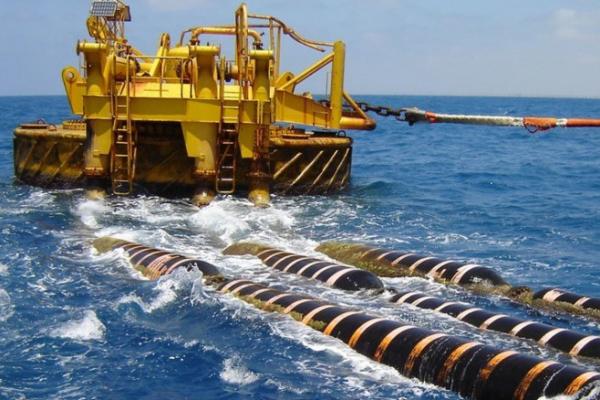
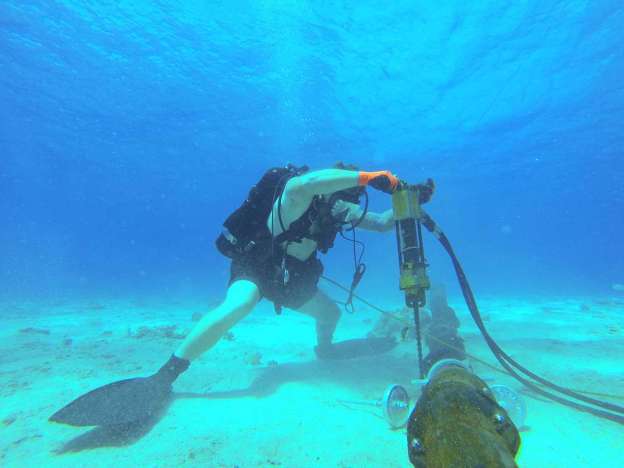
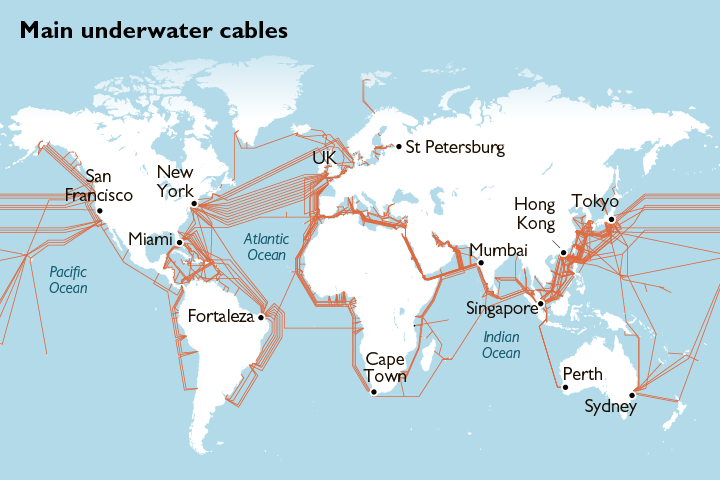
To understand how one of the first boomtowns of the AI era sprouted at the southern tip of the Malay Peninsula, consider the infrastructure behind AI. Tech giants want to train chatbots, driverless cars and other AI technology as quickly as possible. They do so in data centers with thousands of computer chips, which require a lot of power, as well as water for cooling…Northern Virginia became the world’s biggest data-center market because of available power, water and land. But supply is running low. Tech companies can’t build data centers fast enough in the U.S. alone. Enter Johor. It has plentiful land and power—largely from coal—and enough water. Malaysia enjoys generally friendly relations with the U.S. and China, reducing political risk for companies from the rival nations. The other important factor: location. Across the border is Singapore, which has one of the world’s densest intersections of undersea internet cables. Those are modern-age highways, enabling tech companies to sling mountains of data around the world.

Excerpt from Stu Woo, One of the Biggest AI Boomtowns Is Rising in a Tech-Industry Backwater, WSJ, Oct.  8, 2024

Why OpenAI Flirts with UAE and What Happened to Women’s Rights

In February 2024, OpenAI CEO Sam Altman said the UAE could serve as the world’s “regulatory sandbox” to test artificial intelligence. Emirati President Sheikh Mohammed bin Zayed Al Nahyan’s first official trip to the United States in September 2024 aimed to push the United Arab Emirates-U.S. relationship to a new “geo-economic phase” centered on economic growth and innovation..,

Microsoft has invested  $1.5 billion investment in the UAE’s top artificial intelligence firm, G42, in April.   BlackRock, Global Infrastructure Partners, Microsoft and the Mubadala-backed MGX investment company also recently announced the Global AI Infrastructure Investment Partnership, underscoring the UAE’s strategic focus on U.S. technology and AI to drive future economic growth…The United States and the UAE have a trade and investment partnership that spans more than five decades. In 2023, bilateral trade between the UAE and the U.S. was worth around $31.4 billion, with U.S. exports to the UAE exceeding $24.8 billion, according to the UAE Embassy in Washington, D.C. The UAE, which produces nearly 4% of the world’s oil supply, also has investments in the United States that total $1 trillion. The UAE sovereign wealth funds including the Abu Dhabi Investment Authority and Mubadala are major investors in American real estate, infrastructure and technology sectors.

The UAE has remained a key strategic defense and security partner to Washington, playing host to the American air base in Al Dhafra, while working as a key partner alongside the U.S. in Afghanistan and Iraq….

On the systemic discrimination against women at the UAE, see letter of Human Rights Watch. Human Rights Watch has documented numerous incidents of enforced disappearances by the UAE in recent years, including the case of three Emirati sisters who were forcibly disappeared in 2015 after posting comments critical of the government on social media. Human Rights Watch has also documented cases of denial of adequate medical care to women who have since died or attempted suicide

Excerpt from Emma Graham and Dan Murphy, UAE hoping to expand $1 trillion partnership with U.S. through AI, Investment, CNBC, Sept. 20, 2024

The Magic of Tether: Why the United States Tolerates Tether Land?

A giant unregulated currency is undermining America’s fight against arms dealers, sanctions busters and scammers. Almost as much money flowed through its network in 2024 as through Visa cards. And it has recently minted more profit than BlackRock, with a tiny fraction of the workforce. Its name: tether. The cryptocurrency has grown into an important cog in the global financial system, with as much as $190 billion changing hands daily. In essence, tether is a digital U.S. dollar—though one privately controlled in the British Virgin Islands by a secretive crew of owners, with its activities largely hidden from governments.  Known as a stablecoin for its 1:1 peg to the dollar, tether gained early use among crypto aficionados. But it has spread deep into the financial underworld, enabling a parallel economy that operates beyond the reach of U.S. law enforcement. Wherever the U.S. government has restricted access to the dollar financial system—Iran, Venezuela, Russia—tether thrives as a sort of incognito dollar used to move money across borders.

Russian oligarchs and weapons dealers shuttle tether abroad to buy property and pay suppliers for sanctioned goods. Venezuela’s sanctioned state oil firm takes payment in tether for cargoes. Drug cartels, fraud rings and terrorist groups such as Hamas use it to launder income. Yet in dysfunctional economies such as Argentina and Turkey, beset by hyperinflation and a shortage of hard currency, tether is also a lifeline for people who use it for quotidian payments and as a way to protect their savings.

Tether is arguably the first successful real-world product to emerge from the cryptocurrency revolution that began over a decade ago. It has made its owners immensely rich. Tether has $120 billion in assets, mostly risk-free U.S. Treasury bills, along with positions in bitcoin and gold. Last year it generated $6.2 billion in profit, out-earning BlackRock, the world’s largest asset manager, by $700 million.

The company behind tether, Tether Holdings, issues the virtual coins to a select group of direct customers, mostly trading firms, who wire real-world dollars in exchange. Tether uses those dollars to purchase assets, mostly U.S. Treasurys, that back the coin’s value. Once in the wider market, tether can be traded for other tokens or traditional currencies through exchanges and local brokerages. In Iran, for example, a crypto exchange called TetherLand allows Iranians to swap rials into tether. Tether vets the identities of its direct customers, but much of its vast secondary market goes unpoliced. The tokens can be pinged near-instantaneously along chains of digital wallets to obfuscate the source. A United Nations report in January 2024 said tether was “a preferred choice” for Southeast Asian money launderers. 

The company says it can track every transaction on public blockchain ledgers and can seize and destroy tether held in any wallet. But freezing wallets is a game of Whac-A-Mole. Between 2018 and this June, Tether blacklisted 2,713 wallets on its two most popular blockchains that had received a total of about $153 billion, according to crypto data provider ChainArgos. Of that massive sum, Tether could only freeze $1.4 billion because the rest of the funds had already been sent on.

Excerpts from Angus Berwick & Ben Foldy, The Shadow Dollar That’s Fueling the Financial Underworld, WSJ, Sept. 10, 2024

Cold War Tactics: Taunting America in its Backyard

In  June 2024, China renewed a multibillion-dollar portion of a currency swap, alleviating concerns that Argentina would need to pay back the funds from its depleted reserves. Argentine President Javier Milei, who often derided China during his presidential campaign, calling its leaders “assassins,” thanked Beijing, saying the extension provided financial relief. His office said mutual respect with China is vital to Argentina’s development and prosperity. Milei, an unshakable opponent of communism, has taken a more pragmatic approach to Beijing, saying Chinese investments and trade are essential to Argentina’s future, while maintaining closer relations with the U.S. China has deepened its ties with Argentina in key economic sectors, from the lithium mining companies in the arid north to the agricultural industry on the farm belt’s vast open plains… 

China is Argentina’s second biggest trade partner, after neighboring Brazil, racking up about $20 billion in commerce in 2023, compared with $14 billion for the U.S. Argentina’s exports to China have increased eightfold over the past two decades, as the Asian country invested in mining, oil and gas, finance and construction. China’s stock of foreign direct investments is up 500% since 2015, to more than $3 billion,

Argentina recently bought U.S.-made jet fighters, forgoing an offer to purchase Chinese ones. A Chinese company, Shaanxi Coal and Chemical Industry Group, reached a deal in 2022 with officials in the province of Tierra del Fuego to build a port in Argentina’s far south, giving Beijing a strategic location for accessing Antarctica and a crucial shipping route through the Strait of Magellan. That project has now been shelved, an adviser to the Milei government said….

Particularly worrisome to Washington has been a Chinese space station in the windswept plains of Neuquén that has little oversight from the Argentine government. U.S. military officials worry the remote base, which has a 35-meter-wide antenna, could be used for global surveillance by targeting U.S. satellites. 

Excerpt from Ryan Dubé, Argentina’s Milei Finds It Hard to Decouple From China, WSJ, Aug. 18, 2024

How Europe Gave In to Musk Space X

A new European rocket is poised to blast into space with a mission that officials here say is vitally important: reducing the region’s reliance on Elon Musk and SpaceX. Europe’s satellites and military intelligence have come to depend on the U.S. company after delays and malfunctions left the continent unable to get to orbit with its own rockets. Officials fear that dependence could extend to the battlefield: SpaceX’s Starlink internet service has been crucial for Ukraine to fight off Russia, fanning worries in Europe that its armies might also need Musk for satellite communications in a war.  Governments say the Ariane 6 rocket, operated by the European consortium Arianespace, will begin to change that equation. It is set to lift off from French Guiana on in July 2024, Europe’s first rocket to launch in a year.

“Clearly, we must deliver. We must restore autonomous access to space” for Europe, Stéphane Israël, chief executive of Arianespace, said in an interview.  With European rockets stuck on the ground, SpaceX stepped in to fill the void. Its Falcon 9 rocket has launched all of Europe’s most important satellites over the past year, including two that were supposed to be handled by Arianespace. The most recent blow came last month when Europe’s weather-satellite agency canceled a contract to launch in 2025 with Ariane 6 and hired SpaceX instead. The decision left European space officials crestfallen, with the head of the French space agency saying: “How far will we, Europeans, go in our naivety?”…

The rise of SpaceX has upended Europe’s rocket industry and its champion, Arianespace, which used to lead the world in commercial launch services. SpaceX’s mastery of reusable rocket technology has left Arianespace struggling to compete on price and more than a decade behind with its own reusable rocket.  The French government is the biggest backer of Arianespace and is aiming to keep the consortium in business amid doubts in Germany that it is still worth subsidizing. French officials say they fear the continent would be happy to let SpaceX keep launching for Europe. ArianeGroup, Arianespace’s parent company, is vital to what France calls its strategic autonomy because it has a military arm that provides the rocket technology for France’s nuclear arsenal.

Excerpts from Matthew Dalton, The Mission for Europe’s New Rocket: Challenge SpaceX, WSJ, July 8, 2024

How Boeing Maimed Itself and Killed 346 People

Spirit AeroSystems is going full circle, from part of Boeing till 2005 to independent supplier in 2005 (when Boeing sold to a private equity firm) and back to part of Boeing in 2024. It is the perfect example of a realization dawning on corporate America: Outsourcing isn’t all it was once cracked up to be. The deal’s logic of vertical reintegration makes sense in light of recent history, with air-travel safety likely benefiting from centralized supervision and a simpler workflow between plants. Yet it is also an indictment of what executives in most industries have been doing for almost three decades….’

At the core of the outsourcing trend that lasted 30 years was the idea that an “asset-light” firm focused on intellectual property and its “core” expertise would be better run. With this mindset, jettisoning aerostructures operations seemed like a no-brainer….
It wasn’t just aerostructures: In the 2000s, Boeing outsourced more than 70% of the 787 Dreamliner program. But the problems with becoming an assembler of planes, as opposed to a true manufacturer, gradually became apparent. The company lost control of supply, resulting in years of delays and cost overruns…

Aerospace isn’t the only industry to revive vertical integration. Intel is beefing up chip manufacturing in the U.S., General Motors is building battery plants and Sweden’s IKEA is acquiring containerships. One general flaw of the asset-light model is that, over time, firms can lose their innovative edge because a lot of “learning by doing” happens when production processes interact. Another is that low-margin bits of the supply chain get worn down to just a few sources. These may not have the financial muscle to make big investments in times of turmoil, or they may be geopolitically sensitive. Such risks were underscored by post-Covid shortages, particularly in the largely “fabless” U.S. microchip industry, which has outsourced chip making to foundries in East Asia in a way that echoes what happened to aerostructures.

Excerpts from Jon Sindreu, Boeing Calls Time on the Great American Outsourcing, July 2, 2024

What Ails the West: the Forgotten Art of Industrialization

For the past few years, the West has been trying to break China’s grip on minerals that are critical for defense and green technologies. Despite their efforts, Chinese companies are becoming more dominant, not less. They are expanding operations, supercharging supply and causing prices to drop. Their challengers can’t compete. Take nickel, which is needed for electric-vehicle batteries. Chinese processing plants that dot the Indonesian archipelago are pumping out vast quantities of the mineral from new and expanding facilities, jolting the market. Meanwhile, Switzerland-based mining giant Glencore is suspending operations at its nickel plant in New Caledonia, a French territory, concluding it can’t survive despite offers of financial help from Paris. The U.K.’s Horizonte Minerals, whose new Brazilian mine was expected to become a major Western source, said last month that investors had bailed, citing oversupply in the market. Lithium projects in the U.S. and Australia have been postponed or suspended after a surge in Chinese production at home and in sub-Saharan Africa. 

The only dedicated cobalt mine in the U.S. also suspended operations last year, five months after local dignitaries attended its opening ceremony. Its owners say they are struggling against a flood of Chinese-produced cobalt from Indonesia and the Democratic Republic of Congo.

Last year, non-Chinese production of refined cobalt declined to its lowest level in 15 years… The share of lithium mining done within China or by Chinese companies abroad has grown from 14% in 2018 to 35% this year… Over the same time, lithium processing done within China has risen from 63% in 2018 to 70%…China has many advantages in the race to lock up minerals. Its miners are deep-pocketed and aggressive, making bets in resource-rich countries that Western companies have long viewed as corrupt or unstable, such as Indonesia, Mali, Bolivia and Zimbabwe. State banks provide financing for power plants and industrial parks abroad, paving the way for further private Chinese investment.

China’s rapid industrial development also means its companies have spent decades fine-tuning the art of turning raw ore into metals. They can set up new facilities quickly and cheaply. A paper published in February by the Oxford Institute for Energy Studies pegs the costs of building a lithium refinery outside China as three to four times higher than building one within the country. In eastern Indonesia, Chinese companies have built a fleet of highly efficient nickel and cobalt plants over the past few years after mastering a technology Western miners long considered glitchy and expensive. The plants run on coal power, some of it new, at a time when the world is looking to phase out dirty energy. “It’s just a simple, straightforward engineering capability that the Chinese have that has been lost in the rest of the world,” said Jim Lennon, managing director for commodities strategy at Macquarie, an Australian bank. “The Chinese have this overwhelming competitive advantage now that can’t really be addressed.”….

Excerpts from Jon Emont, China Is Winning the Minerals War, WSJ, June 19, 2024

The Best Way to Ruin a Country is to Corrupt its Currency

The Reserve Bank of Zimbabwe, which gained global notoriety in 2008 for printing one-hundred-trillion-dollar notes, said in April 2024 that it was launching a new national currency, promising, once again, to end years of monetary turbulence. John Mushayavanhu, who took over as the central bank’s new governor in April 2024 said the new unit, Zimbabwe Gold, or ZiG, will replace the current Zimbabwe dollar, which has lost around three-fourths of its value this year.

The currency most recently traded at more than 30,674 Zimbabwean dollars to the U.S. dollar, according to the central bank. When the bank relaunched the local unit in 2019, $1 bought 2.50 Zimbabwean dollars. Mushayavanhu said the new currency would initially be valued at 13.56 ZiGs for $1 and later at a rate determined by the market.

To shore up confidence in the currency, Mushayavanhu said it would be fully backed by Zimbabwe’s reserves of U.S. dollars and precious metals, particularly gold. He also pledged to end a long-running practice of the bank issuing more money to finance government spending…

Zimbabwe abolished the Zimbabwe dollar in 2009, after a bout of hyperinflation that, by some estimates, saw prices rise by 500 billion percent. For nearly a decade, the country then operated on U.S. dollars and other foreign currencies. When the central bank was no longer able to pay out savings in cash dollars, it reintroduced the Zimbabwe dollar in 2019.

Excerpt from Gabriele Steinhauser, Zimbabwe Launches a New Currency…Again, WSJ, April 5, 2024

What Eats Alive the Global Banks of China

Eight years after Chinese leader Xi Jinping and his counterparts from Brazil, Russia, India and South Africa established the New Development Bank, with headquarters in Shanghai, it has all but stopped making new loans and is having trouble raising dollar funds to repay its debts…The New Development Bank is the lesser-known of two China-based multilateral lenders. Its larger cousin, the Asian Infrastructure Investment Bank (AIIB), in June 2023 landed in the middle of a public-relations crisis after a disgruntled executive accused it of being controlled by members of China’s Communist Party

Trouble at both banks, as well as at China’s giant Belt and Road infrastructure push, which has seen China spend $1 trillion to expand its influence across Asia, Africa and Latin America, spotlights growing difficulties for Beijing’s strategy to rearrange an international order it considers biased in favor of the West.  Both the AIIB and the New Development Bank were set up in large part to reduce developing countries’ dependence on dollar-based funding—alternatives to the International Monetary Fund that would help finance development in some of the world’s fastest-growing economies. 

The AIIB operates on a much larger scale than the New Development Bank, counting many Western countries such as the U.K. and Canada among its more than 100 members. The bank found itself in a political firestorm this week after its Canadian communications chief resigned and accused the bank’s management of being “dominated by the Communist Party,” allegations that the AIIB called baseless. Nonetheless, Canada’s government said it would halt all activity with the bank while it reviews the allegations, and the bank said it would conduct an internal review.

Meanwhile, the New Development Bank is fighting for its very survival, threatened by its own reliance on the U.S. currency. Two-thirds of the bank’s borrowings are dollar-denominated—hardly in line with the bank’s stated aim to break its members’ reliance on the dollar. 

Soon after Russian troops marched into Ukraine in February 2022, the bank froze all new lending to Russia to assure investors that it was complying with Western sanctions. However, Wall Street quickly became wary of lending to a bank nearly 20% owned by Russia. Xi’s deepening alignment with Russian President Vladimir Putin was another deterrent. Since then, the bank has had to take on increasingly expensive debt to service old borrowings and stay current with its own liquidity requirements. To bolster its resources, the bank is in talks with Saudi Arabia, Argentina and Honduras about becoming members…

Excerpts from Alexander Saeedy and Lingling Wei, A Bank China Built to Challenge the Dollar Now Needs the Dollar,  WSJ, June 17, 2023
 

Late Paranoia Better than None: US v. Chinese Cranes

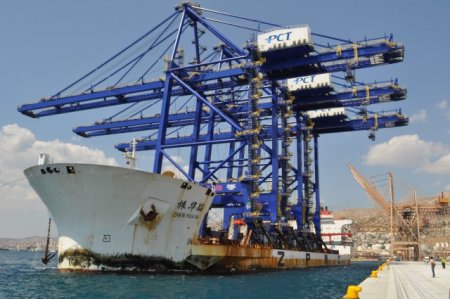
In recent years, U.S. national-security officials have pointed to a range of equipment manufactured in China that could facilitate either surveillance or disruptions in the U.S., including baggage-screening systems and electrical transformers, as well as broader concerns about China’s growing control of ports around the world through strategic investments. China makes almost all of the world’s new shipping containers and controls a shipping-data service. In that context, the giant ship-to-shore cranes have drawn new attention. The $850 billion defense policy bill lawmakers passed in December requires the Transportation Department’s maritime administrator, in consultation with the defense secretary and others, to produce an unclassified study by the end of this year on whether foreign-manufactured cranes pose cybersecurity or national-security threats at American ports.

ZPMC cranes entered the U.S. market around two decades ago, offering what industry executives described as good-quality cranes that were significantly cheaper than Western suppliers. In recent years, ZPMC has grown into a major player in the global automated-ports industry, working with Microsoft Corp. and others to connect equipment and analyze data in real time…Today, ZPMC says it controls around 70% of the global market for cranes and has sold its equipment in more than 100 countries. A U.S. official said the company makes nearly 80% of the ship-to-shore cranes in use at U.S. ports…

The huge cranes are generally delivered to U.S. ports fully assembled on ships and are operated through Chinese-made software. In some cases, U.S. officials said, they are supported by Chinese nationals working on two-year U.S. visas, factors they described as potential avenues through which intelligence could be collected…Early in the Trump administration, officials in the National Security Council’s strategic planning office came to consider cranes as a unique point of interest, said Sean Plankey, a former cybersecurity official who was involved in those discussions. “Where would someone attack first and how would they do it?” he asked, characterizing the discussion. He said the officials determined that if Beijing’s military could access the cranes, they could potentially shut down U.S. ports without drawing on their navy.

A National Maritime Cybersecurity Plan, released in December 2020, found that no single U.S. agency had responsibility for maritime network security, leaving port directors without enforceable standards on cybersecurity and generally free to buy equipment from any vendor.

Excerpts from Aruna Viswanatha, Pentagon Sees Giant Cargo Cranes as Possible Chinese Spying Tools, WSJ, Mar. 6, 2023.

Employers Kill: Knowing Your Place in Global Economy

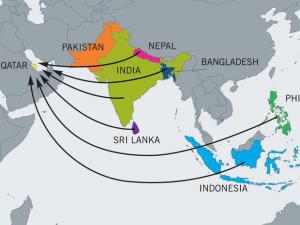
Most migrant workers in the Gulf are Asian, but a growing number of East Africans are joining them. Last year 87,000 Ugandans travelled to the Middle East under the government’s “labor externalization” program. About that many Kenyans made similar trips. Official routes to the Gulf are distinct from irregular migration… but they are not risk-free. Returning workers tell stories of racism, abuse and exploitation.

For African governments, exporting workers is easier than creating jobs for them at home. Remittances sent back to Uganda by workers from abroad generate more foreign exchange than coffee, the main export crop. Labor migration is good business for more than 200 recruitment firms, some of which are owned by army officers and close relatives of the president, Yoweri Museveni.

Employers in the Gulf want African labor because it is cheap. Under bilateral agreements a Ugandan maid in Saudi Arabia gets 900 riyals ($240) a month—much more than she could make at home, but less than the 1,500 riyals which most Filipinos earn…For most Africans, the Gulf means two years of drudgery, mixing long hours with grinding isolation. For some it is far worse. Jacky (not her real name) was raped by her boss in Saudi Arabia.

In a survey of Kenyan migrants to the Gulf by the Global Fund to End Modern Slavery, a campaign group, 99% said they had been abused. The most frequent complaints were the confiscation of passports or withholding of wages, but violence and rape were also depressingly common. Last year 28 Ugandans died while working in the Middle East. Activists suspect that some may have been killed by their bosses…The kafala system, prevalent in the Gulf,  ties migrant workers to the employers who sponsored their visas. “The minute you leave your workplace without the employer’s permission, you can be deported as a runaway,” says Vani Saraswathi of Migrant-Rights.org, an advocacy group based in the Gulf. 

Why then do Ugandans still migrate? Some may be naïve, but many are grimly realistic about their place in the world economy. This pragmatism is evident at a training session in Kampala, where a hundred recruits are learning how to make beds, wash a car and use a microwave. 

Excerpts from In the Gulf 99% of Kenyan migrant workers are abused, a poll finds, Economist, Sept. 17, 2022

Why China Fears Elon Musk More than the U.S.

Chinese military observers have been increasingly concerned about the potential of SpaceX’s Starlink satellite network in helping the US military dominate space, especially so, in the wake of the Ukraine war, where Elon Musk activated Starlink satellites to restore communications that had stopped because of shelling by the Russian troops…. 

“SpaceX has decided to increase the number of Starlink satellites from 12,000 to 42,000 – the program’s unchecked expansion and the company’s ambition to use it for military purposes should put the international community on high alert,” said the article on China Military Online, the official news website affiliated with the Central Military Commission (CMC), China’s highest national defense organization headed by President Xi Jinping himself.

The article notes the SpaceX Starlink’s role during the Russia-Ukraine war, where Elon Musk provided Starlink terminals to restore communications…However, there have also been reports of Starlink aiding the Ukrainian armed forces in precision strikes against Russian tanks and positions, which has not been unnoticed by Chinese military observers.

“In addition to supporting communication, Starlink, as experts estimated, could also interact with UAVs [Unmanned Aerial Vehicles] and, using big data and facial recognition technology, might have already played a part in Ukraine’s military operations against Russia,” said the China Military Online article…..Another remarkable event was SpaceX’s swift response to a Russian jamming effort targeting its Starlink Satellite service which was appreciated by the Pentagon’s Director for Electromagnetic Warfare. Elon Musk had claimed that Russia had jammed Starlink terminals in Ukraine for hours at a time, following which he also said that after a software update, Starlink was operating normally….“And suddenly that [Russian jamming attack] was not effective anymore. From [the] EW technologist’s perspective, that is fantastic … and how they did that was eye-watering to me,” said Dave Tremper, the Director of electronic warfare  (EW)for the Office of the Secretary of Defense.

The China Military Online commentary listed the numerous instances since 2019 when Starlink has cooperated with the US military, which also included the successful data transmission test conducted by the US Air Force (USAF) on March 3, 2022…It also raised a possibility that Starlink could form a second and independent internet that threatened states’ cyberspace sovereignty.

Another concern for Chinese military analysts has been the scarcity of frequency bands and orbital slots for satellites to operate, which they believe are being quickly acquired by other countries. “Orbital position and frequency are rare strategic resources in space,” said the article, while noting, “The LEO can accommodate about 50,000 satellites, over 80% of which would be taken by Starlink if the program were to launch 42,000 satellites as it has planned.” “SpaceX is undertaking an enclosure movement in space to take a vantage position and monopolize strategic resources,” the article further added.

Excerpts from Tanmay Kadam, China ‘Deeply Alarmed’ By SpaceX’s Starlink Capabilities That Is Helping US Military Achieve Total Space Dominance, EurAsian Times, May 9, 2022

The Lies Around Plastics

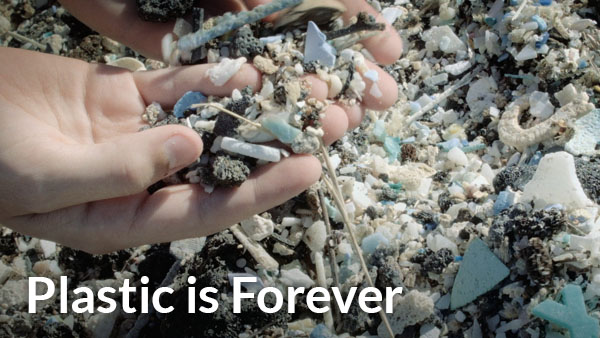
California’s attorney general is investigating Exxon Mobil C and other fossil-fuel and petrochemical companies, accusing them of misleading the public about the impact of plastic pollution. He said his office has issued a subpoena to Exxon seeking information about what he called an “an aggressive campaign to deceive the public, perpetuating a myth that recycling can solve the plastics crisis.” 

“The truth is: The vast majority of plastic cannot be recycled,” Mr. Bonta said. “This first-of-its-kind investigation will examine the fossil fuel industry’s role in creating and exacerbating the plastics pollution crisis—and what laws, if any, have been broken in the process.”

Plastics and other petrochemical products are ubiquitous features of modern life, used to fashion everything from car fenders and shampoo bottles to smartphones. The United Nations estimates that the world generates more than 400 million metric tons of plastic waste every year and that vast amounts of that end up in oceans and other waterways. Plastics take hundreds of years to decompose and first break down into tiny particles. Scientists have found these particles in drinking water and food, and some estimate many human beings will consume dozens of pounds of plastic in their lifetimes.

Driven by the shale drilling revolution, which unleashed massive volumes of oil and gas, the petrochemical industry has invested more than $200 billion in U.S. plastics-and-chemical-manufacturing plants over the past decade. Exxon has invested billions of dollars on such facilities and is one of the world’s largest producers of virgin plastic.

Petrochemical companies have recently promised to invest billions of dollars in recycling. Exxon said last year that it would build its first large recycling facility in Texas, which it said would initially have the capacity to recycle 30,000 metric tons of plastic waste a year. The Minderoo Foundation, an Australian philanthropic group, estimates that Exxon produced 5.9 million metric tons of single-use plastic in 2019. The Environmental Protection Agency estimates the U.S. typically recycles only about 9% of produced plastic.

Excerpts from Christopher M. Matthew, Exxon Subpoenaed in California’s Probe of Plastics Makers, Apr. 29, 2022

See also Inside the long war to protect plastic

Who Is Responsible for the Death of Birds?

Oil industry groups and wildlife conservation advocates are squaring off over Biden administration plans of 2022 to adopt new federal rules for the accidental killing of migratory birds…The measures being considered could include a permit process for new skyscrapers, power lines, wind turbines and other structures that birds fly into, often with fatal results. Businesses that secure a permit would limit exposure to steep fines for inadvertent bird killings under the Migratory Bird Treaty Act. Fish and Wildlife officials are also considering assessing a conservation fee as part of that permit process, with the money going to help mitigate habitat loss that has contributed to declining bird populations.

The agency said the rules are needed to protect declining populations of migratory birds, noting that nearly 10% of roughly 1,100 species protected by the Migratory Bird Treaty Act are threatened or endangered. While much of that is because of habitat loss from new development and agriculture, the agency says that “millions of birds are directly killed by human-caused sources such as collisions with man-made structures,” according to a Fish and Wildlife document.

Environmentalists are backing the effort, along with some businesses that say existing regulations are ambivalent and need clarification. But the permit system, even in its infancy, is being opposed by the American Exploration & Production Council and several other oil and gas production groups. They say no data exists to show that a permitting program will protect birds “over and above our industry’s operational practices and conservation measures.” Oil and gas drilling contributes to accidental deaths of birds in several ways, including when birds fly into the colorless flames as excess methane gas is being burned off from wells.

Pits used for disposal of mud, wastewater and other liquids in connection with oil drilling are estimated to kill hundreds of thousands of birds annually, according to a Fish and Wildlife report….The American Petroleum Institute, the industry’s top lobbying group, said the Biden administration should limit criminal punishments to intentional killings following court rulings that the law doesn’t apply to accidents. If regulators create a permit program, they said it should be general, not project specific, to minimize “undue administrative burdens or delay.”

The U.S. Chamber of Commerce and other business groups raised concerns that the permit process could obstruct projects funded by the bipartisan $1 trillion infrastructure plan—along with new wind and solar energy projects that the White House wants to reduce U.S. dependence on fossil fuels and help combat climate change…Wind turbines are estimated to kill between 140,000 and 500,000 birds a year, according to Fish and Wildlife, and a major expansion of those turbines could push bird deaths over 1 million annually, wildlife researchers have estimated.

Duke Energy Corp., whose subsidiary was fined $1 million in 2013 after dozens of birds died at a wind-turbine project in Wyoming, said it supports the new rule-making effort.

TOP THREATS TO BIRDS
Hazard type — Average annual deaths (est.)

Cats — 2,400,000,000
Building glass collisions — 599,000,000
Vehicle collisions — 214,500,000
Poison — 72,000,000
Power line collisions — 25,500,000
Communication tower collisions — 6,600,000
Electrocutions — 5,600,000
Oil Pits — 750,000
Wind-turbine collisions (land-based) — 234,012
Source: U.S. Fish and Wildlife Service, 2017

Excerpts from Katy Stech Ferek, Battle Looms Over Bird Protection, WSJ, Apr. 15, 2022

Loving Oil in Any Way, Shape or Form — Damn Climate Change!

Many oil assets are ending up in the hands of private-equity (PE) firms. In the past two years alone these bought $60bn-worth of oil, gas and coal assets, through 500 transactions… Some have been multibillion-dollar deals, with giants such as Blackstone, Carlyle and KKR carving out huge oilfields, coal-fired power plants or gas grids from energy groups, miners and utilities. Many other deals, sealed by smaller rivals, get little publicity. This sits uncomfortably with the credo of many pension funds, universities and other investors in private funds, 1,485 of which, representing $39trn in assets, have pledged to divest fossil fuels. But few seem ready to leave juicy returns on the table.

As demand for oil and gas persists while dwindling investment in production limits supply, prices are rising again, boosting producers’ profits….And discounts imposed on “brown” assets by the stock market, linked to sustainability factors rather than financial… create even more pockets of opportunity…The Economist has looked at 8 PE firms that have closed fossil-fuel deals in 2020-2021 The investors in some of their latest energy-flavored vehicles include 53 pension funds, 23 universities and 32 foundations. Many are from America, such as Teacher Retirement System of Texas, the University of San Francisco and the Pritzker Traubert Foundation, but that is partly because more institutions based there disclose pe commitments. The list also features Britain’s West Yorkshire Pension Fund and China Life. Over time, some investors may decide to opt out of funding their portion of fossil-fuel deals.

But a third, yet more opaque class stands ready to step in: state-owned firms and sovereign funds operating in the shadows. Last month Saudi Aramco, the Kingdom’s national oil company, acquired a 30% stake in a refinery in Poland, and Somoil, an Angolan group, bought offshore oil assets from France’s Total. In 2020 Singapore’s GIC was part of the group that paid $10bn for a stake in an Emirati pipeline.

Excerpts from Who buys the dirty energy assets public companies no longer want?, Economist, Feb. 12, 2022

Unparalleled Generosity: How China Won the Hearts and Minds of Africa

When  it comes to building big things in Africa, China is unrivalled. Beijing-backed firms have redrawn the continent’s transport map. Thanks to China’s engineers and bankers you can hop on a train in Lagos to beat the traffic to Ibadan, drive across parts of eastern Congo in hours rather than days or fly into any one of dozens of recently spruced-up airports from Zanzibar to Zambia. Throw in everything else from skyscrapers and bridges to dams and three dozen-odd ports and it all adds up to rather a lot of mortar.

It was not always so. In 1990 American and European companies scooped up more than 85% of construction contracts on the continent. Chinese firms did not even get a mention. Now Western firms are struggling to win business in a fast-growing market. (The World Bank predicts that demand for infrastructure spending alone will be more than $300bn a year by 2040.) Africa’s population is growing faster than that of any other continent, and Africans are moving to cities faster than people elsewhere. Both these trends will drive demand. The dragon’s share will be built by Chinese firms, which in 2020 were responsible for 31% of all infrastructure projects in Africa with a value of $50m or more, according to Deloitte, a consultancy. That was up from 12% in 2013. Western firms were directly responsible for just 12% or so (compared with 37% in 2013)…

Chinese lenders are pluckier than their Western rivals. Sometimes this borders on recklessness. When Uhuru Kenyatta, Kenya’s president, wanted $4.7bn to build a new railway which the World Bank warned would never turn a profit, Chinese lenders backed it. The railway has since lost more than $200m. Often, Chinese firms are tough negotiators. Several have struck resources-for-roads deals, such as those worth more than $1.1bn in Ghana and Guinea, where the loans are backed by bauxite… 

In 2021,  China said it would stump up its own cash to build smart new foreign ministries in Congo and Kenya. It has also picked up the tab for numerous other official buildings, from parliament complexes in Sierra Leone and Zimbabwe to presidential palaces in Burundi, Guinea-Bissau and Togo. Given such generosity, it is hardly surprising that some African governments are predisposed to favor Chinese firms…. 

Perhaps as important is that China is unwittingly crowding in Western money by stoking the geopolitical anxieties of Western leaders. Britain’s government recently said its development arm would invest $1bn in Kenyan infrastructure and that a British firm would build a new rail hub in central Nairobi. The G7 group of countries last year launched the Build Back Better World initiative, a shameless copy of China’s Belt and Road Initiative (BRI). All this should mean more opportunities for construction firms of all nationalities, whether Western, Chinese or, with a bit of luck, African, too.

Excerpts from Chasing the dragon: How Chinese firms have dominated African infrastructure, Economist,  Feb. 19, 2022

Living in the Russian Digital Bubble

Vladimir Putin, Russia’s president, has portrayed his aggression on the Ukrainian border as pushing back against Western advances. For some time he has been doing much the same online. He has long referred to the internet as a “CIA project”. His deep belief that the enemy within and the enemy without are in effect one and the same… Faced with such “aggression”, Mr Putin wants a Russian internet that is secure against external threat and internal opposition. He is trying to bring that about on a variety of fronts: through companies, the courts and technology itself.

In December 2021, VK, one of Russia’s online conglomerates, was taken over by two subsidiaries of Gazprom, the state-owned gas giant. In the same month a court in Moscow fined Alphabet, which owns Google, a record $98m for its repeated failure to delete content the state deems illegal. And Mr Putin’s regime began using hardware it has required internet service providers (ISPS) to install to block Tor, a tool widely used in Russia to mask online activity. All three actions were part of the country’s effort to assure itself of online independence by building what some scholars of geopolitics, borrowing from Silicon Valley, have begun calling a “stack”.

In technology, the stack is the sum of all the technologies and services on which a particular application relies, from silicon to operating system to network. In politics it means much the same, at the level of the state. The national stack is a sovereign digital space made up not only of software and hardware (increasingly in the form of computing clouds) but also infrastructure for payments, establishing online identities and controlling the flow of information

China built its sovereign digital space with censorship in mind. The Great Firewall, a deep-rooted collection of sophisticated digital checkpoints, allows traffic to be filtered with comparative ease. The size of the Chinese market means that indigenous companies, which are open to various forms of control, can successfully fulfil all of their users’ needs. And the state has the resources for a lot of both censorship and surveillance. Mr Putin and other autocrats covet such power. But they cannot get it. It is not just that they lack China’s combination of rigid state control, economic size, technological savoir-faire and stability of regime. They also failed to start 25 years ago. So they need ways to achieve what goals they can piecemeal, by retrofitting new controls, incentives and structures to an internet that has matured unsupervised and open to its Western begetters.

Russia’s efforts, which began as purely reactive attempts to lessen perceived harm, are becoming more systematic. Three stand out: (1) creating domestic technology, (2) controlling the information that flows across it and, perhaps most important, (3) building the foundational services that underpin the entire edifice.

Russian Technology

The government has made moves to restart a chipmaking plant in Zelenograd near Moscow, the site of a failed Soviet attempt to create a Silicon Valley. But it will not operate at the cutting edge. So although an increasing number of chips are being designed in Russia, they are almost all made by Samsung and TSMC, a South Korean and a Taiwanese contract manufacturer. This could make the designs vulnerable to sanctions….

For crucial applications such as mobile-phone networks Russia remains highly reliant on Western suppliers, such as Cisco, Ericsson and Nokia. Because this is seen as leaving Russia open to attacks from abroad, the industry ministry, supported by Rostec, a state-owned arms-and-technology giant, is pushing for next-generation 5g networks to be built with Russian-made equipment only. The country’s telecoms industry does not seem up to the task. And there are internecine impediments. Russia’s security elites, the siloviki, do not want to give up the wavelength bands best suited for 5g. But the only firm that could deliver cheap gear that works on alternative frequencies is Huawei, an allegedly state-linked Chinese electronics group which the siloviki distrust just as much as security hawks in the West do.

It is at the hardware level that Russia’s stack is most vulnerable. Sanctions imposed may treat the country, as a whole,  like Huawei is now treated by America’s government. Any chipmaker around the world that uses technology developed in America to design or make chips for Huawei needs an export license from the Commerce Department in Washington—which is usually not forthcoming. If the same rules are applied to Russian firms, anyone selling to them without a license could themselves risk becoming the target of sanctions. That would see the flow of chips into Russia slow to a trickle.

When it comes to software the Russian state is using its procurement power to amp up demand. Government institutions, from schools to ministries, have been encouraged to dump their American software, including Microsoft’s Office package and Oracle’s databases. It is also encouraging the creation of alternatives to foreign services for consumers, including TikTok, Wikipedia and YouTube. Here the push for indigenization has a sturdier base on which to build. Yandex, a Russian firm which splits the country’s search market with Alphabet’s Google, and VK, a social-media giant, together earned $1.8bn from advertising last year, more than half of the overall market. VK’s vKontakte and Odnoklassniki trade places with American apps (Facebook, Instagram) and Chinese ones (Likee, TikTok) on the top-ten downloads list.

This diverse system is obviously less vulnerable to sanctions—which are nothing like as appealing a source of leverage here as they are elsewhere in the stack. Making Alphabet and Meta stop offering YouTube and WhatsApp, respectively, in Russia would make it much harder for America to launch its own sorties into Russian cyberspace. So would disabling Russia’s internet at the deeper level of protocols and connectivity. All this may push Russians to use domestic offerings more, which would suit Mr Putin well.

As in China, Russia is seeing the rise of “super-apps”, bundles of digital services where being local makes sense. Yandex is not just a search engine. It offers ride-hailing, food delivery, music-streaming, a digital assistant, cloud computing and, someday, self-driving cars. Sber, Russia’s biggest lender, is eyeing a similar “ecosystem” of services, trying to turn the bank into a tech conglomerate. In the first half of 2021 alone it invested $1bn in the effort, on the order of what biggish European banks spend on information technology (IT). Structural changes in the IT industry are making some of this Russification easier. Take the cloud. Its data centres use cheap servers made of off-the-shelf parts and other easily procured commodity kit. Much of its software is open-source. Six of the ten biggest cloud-service providers in Russia are now Russian…The most successful ones are “moving away from proprietary technology” sold by Western firms (with the exception of chips)…

Information Flow

If technology is the first part of Russia’s stack, the “sovereign internet” is the second. It is code for how a state controls the flow of information online. In 2019 the government amended several laws to gain more control of the domestic data flow. In particular, these require ISPS to install “technical equipment for counteracting threats to stability, security and functional integrity”. This allows Roskomnadzor, Russia’s internet watchdog, to have “middle boxes” slipped into the gap between the public internet and an ISPS’ customers. Using “deep packet inspection” (DPI), a technology used at some Western ISPS to clamp down on pornography, these devices are able to throttle or block traffic from specific sources (and have been deployed in the campaign against Tor). DPI kit sits in rooms with restricted access within the ISPS’ facilities and is controlled directly from a command center at Roskomnadzor. This is a cheap but imperfect version of China’s Great Firewall.

Complementing the firewall are rules that make life tougher for firms. In the past five years Google has fielded 20,000-30,000 content-removal requests annually from the government in Russia, more than in any other country. From this year 13 leading firms—including Apple, TikTok and Twitter—must employ at least some content moderators inside Russia. This gives the authorities bodies to bully should firms prove recalcitrant. The ultimate goal may be to push foreign social media out of Russia altogether, creating a web of local content… But this Chinese level of control would be technically tricky. And it would make life more difficult for Russian influence operations, such as those of the Internet Research Agency, to use Western sites to spread propaganda, both domestically and abroad.

Infrastructure

Russia’s homegrown stack would still be incomplete without a third tier: the services that form the operating system of a digital state and thus provide its power. In its provision of both e-government and payment systems, Russia puts some Western countries to shame. Gosuslugi (“state services”) is one of the most-visited websites and most-downloaded apps in Russia. It hosts a shockingly comprehensive list of offerings, from passport application to weapons registration. Even critics of the Kremlin are impressed, not least because Russia’s offline bureaucracy is hopelessly inefficient and corrupt. The desire for control also motivated Russia’s leap in payment systems. In the wake of its annexation of Crimea, sanctions required MasterCard and Visa, which used to process most payments in Russia, to ban several banks close to the regime. In response, Mr Putin decreed the creation of a “National Payment Card System”, which was subsequently made mandatory for many transactions. Today it is considered one of the world’s most advanced such schemes. Russian banks use it to exchange funds. The “Mir” card which piggybacks on it has a market share of more than 25%, says GlobalData, an analytics firm.

Other moves are less visible. A national version of the internet’s domain name system, currently under construction, allows Russia’s network to function if cut off from the rest of the world (and gives the authorities a new way to render some sites inaccessible). Some are still at early stages. A biometric identity system, much like India’s Aadhaar, aims to make it easier for the state to keep track of citizens and collect data about them while offering new services. (Muscovites can now pay to take the city’s metro just by showing their face.) A national data platform would collect all sorts of information, from tax to health records—and could boost Russia’s efforts to catch up in artificial intelligence (AI).

Excerpt from Digital geopolitics: Russia is trying to build its own great firewall, Economist, Feb. 19, 2022

Q-Day: the Behind-The-Scenes Internet

In cybersecurity circles, they call it Q-day: the day when quantum computers will break the Internet. Almost everything we do online is made possible by the quiet, relentless hum of cryptographic algorithms. These are the systems that scramble data to protect our privacy, establish our identity and secure our payments. And they work well: even with the best supercomputers available today, breaking the codes that the online world currently runs on would be an almost hopeless task.

But machines that will exploit the quirks of quantum physics threaten that entire deal. If they reach their full scale, quantum computers would crack current encryption algorithms exponentially faster than even the best non-quantum machines can. “A real quantum computer would be extremely dangerous,” says Eric Rescorla, chief technology officer of the Firefox browser team at Mozilla in San Francisco, California.

As in a cheesy time-travel trope, the machines that don’t yet exist endanger not only our future communications, but also our current and past ones. Data thieves who eavesdrop on Internet traffic could already be accumulating encrypted data, which they could unlock once quantum computers become available, potentially viewing everything from our medical histories to our old banking records. “Let’s say that a quantum computer is deployed in 2024,” says Rescorla. “Everything you’ve done on the Internet before 2024 will be open for discussion.”

But the risk is real enough that the Internet is being readied for a makeover, to limit the damage if Q-day happens. That means switching to stronger cryptographic systems, or cryptosystems. Fortunately, decades of research in theoretical computer science has turned up plenty of candidates. These post-quantum algorithms seem impervious to attack: even using mathematical approaches that take quantum computing into account, programmers have not yet found ways to defeat them in a reasonable time.

Which of these algorithms will become standard could depend in large part on a decision soon to be announced by the US National Institute of Standards and Technology (NIST) in Gaithersburg, Maryland. In 2015, the US National Security Agency (NSA) announced that it considered current cryptosystems vulnerable, and advised US businesses and the government to replace them. The following year, NIST invited computer scientists globally to submit candidate post-quantum algorithms to a process in which the agency would test their quality, with the help of the entire crypto community. It has since winnowed down its list from 65 to 15. In the next couple of months, it will select a few winners, and then publish official versions of those algorithms. Similar organizations in other countries, from France to China, will make their own announcements…

Although NIST is a US government agency, the broader crypto community has been pitching in. “It is a worldwide effort,” says Philip Lafrance, a mathematician at computer-security firm ISARA Corporation in Waterloo, Canada. This means that, at the end of the process, the surviving algorithms will have gained wide acceptance. “The world is going to basically accept the NIST standards,” he says. He is part of a working group that is monitoring the NIST selection on behalf of the European Telecommunications Standards Institute, an umbrella organization for groups worldwide. “We do expect to see a lot of international adoption of the standard that we’ll create,” says Moody…

China is said to be planning its own selection process, to be managed by the Office of State Commercial Cryptography Administration... “The consensus among researchers in China seems to be that this competition will be an open international competition, so that the Chinese [post-quantum cryptography] standards will be of the highest international standards,” says Jintai Ding, a mathematician at Tsinghua University in Beijing. Meanwhile, an organization called the Chinese Association for Cryptologic Research has already run its own competition for post-quantum algorithms. Its results were announced in 2020, leading some researchers in other countries to mistakenly conclude that the Chinese government had already made an official choice…

Fully transitioning all technology to be quantum resistant will take a minimum of five years and whenever Q-day happens, there are likely to be gadgets hidden somewhere that will still be vulnerable, he says. “Even if we were to do the best we possibly can, a real quantum computer will be incredibly disruptive.”

Excerpts from Davide Castelvecchi, The race to save the Internet from quantum hackers, Nature, Feb. 8, 20202

Who Owns the Real Information System

In January 2022, the head of the UK’s armed forces has warned that Russia submarine activity is threatening underwater cables that are crucial to communication systems around the world. Admiral Sir Tony Radakin said undersea cables that transmit internet data are ‘the world’s real information system,’ and added that any attempt to damage then could be considered an act of war.

The internet seems like a post- physical environment where things like viral posts, virtual goods and metaverse concerts just sort of happen. But creating that illusion requires a truly gargantuan—and quickly-growing—web of physical connections. Fiber-optic cable, which carries 95% of the world’s international internet traffic, links up pretty much all of the world’s data centers…

Where those fiber-optic connections link up countries across the oceans, they consist almost entirely of cables running underwater—some 1.3 million kilometers (or more than 800,000 miles) of bundled glass threads that make up the actual, physical international internet. And until recently, the overwhelming majority of the undersea fiber-optic cable being installed was controlled and used by telecommunications companies and governments. Today, that’s no longer the case.

In less than a decade, four tech giants— Microsoft, Google parent Alphabet, Meta (formerly Facebook ) and Amazon —have become by far the dominant users of undersea-cable capacity. Before 2012, the share of the world’s undersea fiber-optic capacity being used by those companies was less than 10%. Today, that figure is about 66%.  In the next three years, they are on track to become primary financiers and owners of the web of undersea internet cables connecting the richest and most bandwidth-hungry countries on the shores of both the Atlantic and the Pacific.

By 2024, the four are projected to collectively have an ownership stake in more than 30 long-distance undersea cables, each up to thousands of miles long, connecting every continent on the globe save Antarctica. In 2010, these companies had an ownership stake in only one such cable—the Unity cable partly owned by Google, connecting Japan and the U.S. Traditional telecom companies have responded with suspicion and even hostility to tech companies’ increasingly rapacious demand for the world’s bandwidth. Industry analysts have raised concerns about whether we want the world’s most powerful providers of internet services and marketplaces to also own the infrastructure on which they are all delivered. This concern is understandable. Imagine if Amazon owned the roads on which it delivers packages.

But the involvement of these companies in the cable-laying industry also has driven down the cost of transmitting data across oceans for everyone, even their competitors….Undersea cables can cost hundreds of millions of dollars each. Installing and maintaining them requires a small fleet of ships, from surveying vessels to specialized cable-laying ships that deploy all manner of rugged undersea technology to bury cables beneath the seabed. At times they must lay the relatively fragile cable—at some points as thin as a garden hose—at depths of up to 4 miles.

All of this must be done while maintaining the right amount of tension in the cables, and avoiding hazards as varied as undersea mountains, oil-and-gas pipelines, high-voltage transmission lines for offshore wind farms, and even shipwrecks and unexploded bombs…In the past, trans-oceanic cable-laying often required the resources of governments and their national telecom companies. That’s all but pocket change to today’s tech titans. Combined, Microsoft, Alphabet, Meta and Amazon poured more than $90 billion into capital expenditures in 2020 alone…

Most of these Big Tech-funded cables are collaborations among rivals. The Marea cable, for example, which stretches approximately 4,100 miles between Virginia Beach in the U.S. and Bilbao, Spain, was completed in 2017 and is partly owned by Microsoft, Meta and Telxius, a subsidiary of Telefónica, the Spanish telecom.  Sharing bandwidth among competitors helps ensure that each company has capacity on more cables, redundancy that is essential for keeping the world’s internet humming when a cable is severed or damaged. That happens around 200 times a year, according to the International Cable Protection Committee, a nonprofit group. 

There is an exception to big tech companies collaborating with rivals on the underwater infrastructure of the internet. Google, alone among big tech companies, is already the sole owner of three different undersea cables

Excerpts from Christopher Mims, Google, Amazon, Meta and Microsoft Weave a Fiber-Optic Web of Power, WSJ, Jan. 15, 2022
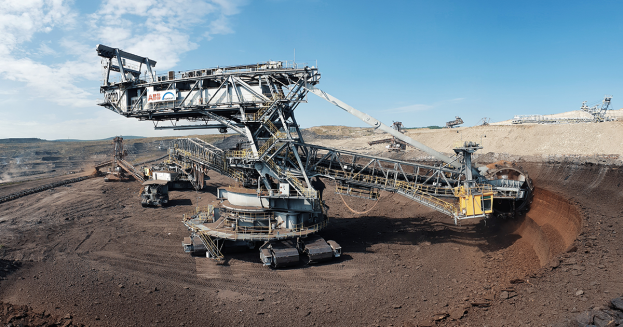
Another Wave of Colonization? Africa

Most of Africa’s data are currently stored elsewhere, zipping down undersea cables that often make landfall in the French city of Marseille….An upheaval is overdue. Africa has more internet users than America, but only as much data-center space as Switzerland.  The boom is partly driven by regulation. Two dozen African countries have passed data-protection laws, or are planning to do so. They often require certain data, such as personal information, to be kept in the country. Another boost comes from competition, says Jan Hnizdo of Teraco, a leading data center in South Africa, where liberalization of the telecoms industry created space for such firms to flourish.

Capital is pouring in. Teraco is building Africa’s largest stand-alone data center in Johannesburg, with backing from foreign funds. Actis, a private-equity firm, is putting $250m into the industry, starting with a majority stake in a Nigerian company, Rack Centre. American investors founded Raxio with an eye on less fashionable markets, from Uganda to Mozambique.

Data centers need power, and lots of it. Keeping their equipment cool consumes almost as much energy as running it, which is why centers are usually in chilly places such as Scandinavia or America’s Pacific north-west. Most of Africa is hot and has a lot of power cuts…To keep servers running, many centers use polluting and expensive diesel generators. Yet the potential gains from offering better connectivity and faster internet services in Africa outweigh the difficulties. Microsoft and Amazon are bringing their cloud services to the region, and have opened data centres of their own in South Africa. Huawei has helped build one for the government of Senegal. Google and Facebook are both involved in projects to lay new cables around Africa’s coasts

Excerpts from Seeding the cloud: Data centers are Taking root in Africa, Economist, Dec. 4, 2021

Conquering Virgin Digital Lands a Cable at a Time

Facebook  said it would back two new underwater cable projects—one in Africa and another in Asia in collaboration with Alphabet — that aim to give the Silicon Valley giants greater control of the global internet infrastructure that their businesses rely on.

The 2Africa project, a partnership between Facebook and several international telecom operators, said that it would add four new branches: the Seychelles, Comoro Islands, Angola and Nigeria. The project’s overall plan calls for 35 landings in 26 countries, with the goal of building an underwater ring of fiber-optic cables around Africa. It aims to begin operating in 2023… Separately, Facebook that it would participate in a 7,500-mile-long underwater cable system in Asia, called Apricot, that would connect Japan, Taiwan, Guam, the Philippines, Indonesia and Singapore. Google said that it would also join the initiative, which is scheduled to go live in 2024.

Driving the investments are costs and control. More than 400 commercially operated underwater cables, also known as submarine cables, carry almost all international voice and data traffic, making them critical for the economies and national security of most countries…Telecom companies own and operate many of these cables, charging fees to businesses that use them to ferry data. Facebook and Google used so much bandwidth that they decided about a decade ago that it would make sense to cut out the middleman and own some infrastructure directly.

Excerpts from Stu Woo, Facebook Backs Underwater Cable Projects to Boost Internet Connectivity, WSJ, Aug. 17, 2021

How to Spy on Your Own Country for $1.25 per day

San Francisco-based Premise Data Corp. pays users, many of them in the developing world, to complete basic tasks for small payments. Typical assignments involve snapping photos, filling out surveys or doing other basic data collection or observational reporting such as counting ATMs or reporting on the price of consumer goods like food.

About half of the company’s clients are private businesses seeking commercial information, Premise says. That can involve assignments like gathering market information on the footprint of competitors, scouting locations and other basic, public observational tasks. Premise in recent years has also started working with the U.S. military and foreign governments, marketing the capability of its flexible, global, gig-based workforce to do basic reconnaissance and gauge public opinion.

Premise is one of a growing number of companies that straddle the divide between consumer services and government surveillance and rely on the proliferation of mobile phones as a way to turn billions of devices into sensors that gather open-source information useful to government security services around the world.

Premise launched in 2013,, As of 2019, the company’s marketing materials said it has 600,000 contributors operating in 43 countries, including global hot spots such as Iraq, Afghanistan, Syria and Yemen. According to federal spending records, Premise has received at least $5 million since 2017 on military projects—including from contracts with the Air Force and the Army and as a subcontractor to other defense entities. In one pitch on its technology, prepared in 2019 for Combined Joint Special Operations Task Force-Afghanistan, Premise proposed three potential uses that could be carried out in a way that is “responsive to commander’s information requirements”: gauge the effectiveness of U.S. information operations; scout and map out key social structures such as mosques, banks and internet cafes; and covertly monitor cell-tower and Wi-Fi signals in a 100-square-kilometer area. The presentation said tasks needed to be designed to “safeguard true intent”—meaning contributors wouldn’t necessarily be aware they were participating in a government operation…

 Another Premise document says the company can design “proxy activities” such as counting bus stops, electricity lines or ATMs to provide incentives for contributors to move around as background data is gathered. Data from Wi-Fi networks, cell towers and mobile devices can be valuable to the military for situational awareness, target tracking and other intelligence purposes. There is also tracking potential in having a distributed network of phones acting as sensors, and knowing the signal strength of nearby cell towers and Wi-Fi access points can be useful when trying to jam communications during military operations. Nearby wireless-network names can also help identify where a device is, even if the GPS is off, communications experts say.

Mr. Blackman said gathering open-source data of that nature doesn’t constitute intelligence work. “Such data is available to anyone who has a cellphone,” he said. “It is not unique or secret.” Premise submitted a document last July to the British government describing its capabilities, saying it can capture more than 100 types of metadata from its contributors’ phones and provide them to paying customers—including the phone’s location, type, battery level and installed apps. 

Users of the Premise app aren’t told which entity has contracted with the company for the information they are tasked with gathering. The company’s privacy policy discloses that some clients may be governments and that it may collect certain types of data from the phone, according to a spokesman…Currently the app assigns about five tasks a day to its users in Afghanistan, according to interviews with users there, including taking photos of ATMs, money-exchange shops, supermarkets and hospitals. One user in Afghanistan said he and others there are typically paid 20 Afghani per task, or about 25 cents—income for phone and internet services. A few months ago, some of the tasks on the site struck him as potentially concerning. He said the app posted several tasks of identifying and photographing Shiite mosques in a part of western Kabul populated largely by members of the ethnic Hazara Shiite minority. The neighborhood was attacked several times by Islamic State over the past five years…. Because of the nature and location of the tasks in a hot spot for terrorism, the user said he thought those tasks could involve spying and didn’t take them on.

Excerpt from Byron Tau, App Users Unwittingly Collect Intelligence, WSJ,  June 25, 2010

Can the Switzerland of Chips Crush the Global Economy?

Taiwan Semiconductor Manufacturing Co (TSMC) has emerged over the past several years as the world’s most important semiconductor company, with enormous influence over the global economy. With a market cap of around $550 billion, it ranks as the world’s 11th most valuable company. Its dominance leaves the world in a vulnerable position, however. As more technologies require chips of mind-boggling complexity, more are coming from this one company, on an island that’s a focal point of tensions between the U.S. and China, which claims Taiwan as its own.

The situation is similar in some ways to the world’s past reliance on Middle Eastern oil, with any instability on the island threatening to echo across industries….Being dependent on Taiwanese chips “poses a threat to the global economy,” research firm Capital Economics recently wrote. Its technology is so advanced, Capital Economics said, that it now makes around 92% of the world’s most sophisticated chips, which have transistors that are less than one-thousandth the width of a human hair. Samsung Electronics Co. makes the rest. 

The U.S., Europe and China are scrambling to cut their reliance on Taiwanese chips. While the U.S. still leads the world in chip design and intellectual property with homegrown giants like Intel Corp. , Nvidia Corp. and Qualcomm, it now accounts for only 12% of the world’s chip manufacturing, down from 37% in 1990, according to Boston Consulting Group. President Biden’s infrastructure plan includes $50 billion to help boost domestic chip production. China has made semiconductor independence a major tenet of its national strategic plan. The European Union aims to produce at least 20% of the world’s next-generation chips in 2030 as part of a $150 billion digital industries scheme.

The Taiwanese maker has also faced calls from the U.S. and Germany to expand supply due to factory closures and lost revenues in the auto industry, which was the first to get hit by the current chip shortage.

Semiconductors have become so complex and capital-intensive that once a producer falls behind, it’s hard to catch up. Companies can spend billions of dollars and years trying, only to see the technological horizon recede further. A single semiconductor factory can cost as much as $20 billion. One key manufacturing tool for advanced chip-making that imprints intricate circuit patterns on silicon costs upward of $100 million, requiring multiple planes to deliver

Taiwanese leaders refer to the local chip industry as Taiwan’s “silicon shield,” helping protect it from such conflict. Taiwan’s government has showered subsidies on the local chip industry over the years, analysts say.

Excerpts from Yang Jie et al., The World Relies on One Chip Maker in Taiwan, Leaving Everyone Vulnerable, WSJ, June 19, 2021

When Others Do our Dirty Work: the Costs of Overdependence

China is tightening its grip on the global supply of processed manganese, rattling a range of companies world-wide that depend on the versatile metal—including the planet’s biggest electric-vehicle makers.

China produces more than 90% of the world’s manganese products, ranging from steel-strengthening additives to battery-grade compounds. Since October 2020, dozens of Chinese manganese processors accounting for most of global capacity have joined a state-backed campaign to establish a “manganese innovation alliance,” led by Ningxia Tianyuan Manganese Industry Group, setting out in planning documents goals and moves that others in the industry say are akin to a production cartel. They include centralizing control over supply of key products, coordinating prices, stockpiling and networks for mutual financial assistance.

The squeeze sent prices soaring in metal markets world-wide, snagging steelmakers and sharpening concern among car makers. China’s metal industries already dominate the global processing of most raw materials for rechargeable batteries, including cobalt and nickel. Three-quarters of the world’s lithium-ion batteries and half of its electric vehicles are made in China.  High-purity forms of manganese have increasingly become crucial for battery-powered automobiles, touted by Volkswagen AG and Tesla Inc. in recent months as a viable replacement for other, more-expensive battery ingredients….

While manganese ore is relatively abundant around the world, it is almost solely refined in China. Battery-grade manganese is traded mostly privately, and pricing can be opaque. Miners say a metric ton of the purified metal could cost up to $4,000—barely a 10th of the cost of cobalt, a widely used battery metal. By replacing cobalt, manganese could help auto makers produce 30% more cars with the same amount of nickel, analysts say.

Rival manganese projects outside China view the cartel-like activities as an opportunity to gain momentum for their own battery-grade developments…Still, analysts say such projects outside China might take years to start and heavy cost investments to develop. Viable bases of manganese ore are often located in remote regions, which require expensive infrastructure to ferry and process extracted ores.

Excerpt from Chuin-Wei Yap, China Hones Control Over Manganese, a Rising Star in Battery Metals, WSH, May 21, 2021

Shallow Your Tongue: The Giddy Western Plutocracy of Hong Kong

You might think the death of liberalism in Asia’s financial center, Hong Kong, which hosts $10trn of cross-border investments, would trigger panic, capital flight and a business exodus. Instead Hong Kong is enjoying a financial boom. Share offerings have soared as China’s leading companies list there. Western firms are in the thick of it: the top underwriters are Morgan Stanley and Goldman Sachs. In 2020, the value of us dollar payments cleared in Hong Kong, a hub for the world’s reserve currency, hit a record $11trn.

The same pattern of political oppression and commercial effervescence is to be found on the mainland…Yet when they talk to shareholders about China, global firms gloss over this brutal reality: “Very happy,” says Siemens; “Phenomenal,” reckons Apple; and “Remarkable,” says Starbucks…Tougher policing does not affect Westerners, says a mainland financier. His foreign clients in Hong Kong laugh about the anxious memos they receive from bosses at home, asking about political developments. “It doesn’t really affect their life, right? They’re not going on the street to try to demonstrate against the government.”

Mainland China attracted $163bn of fresh multinational investment in 2020, more than any other country. It is opening the mainland capital markets to foreigners, who have invested $900bn, in a landmark shift for global finance.

Moreover, the pull China exerts is no longer just a matter of size—although, with 18% of world GDP, it has that too. The country is also where firms discover consumer trends and innovations. It is increasingly where commodity prices and the cost of capital are set, and is becoming a source of regulations. Business is betting that, in Hong Kong and the mainland, China’s… government is capable of self-restraint in the commercial sphere, providing contractual certainty, despite the lack of fully independent courts and free speech. Though China’s best-known tycoon, Jack Ma, has fallen from political favor, foreign investors’ stakes in his empire are still worth over $500bn.

Excerpts from Dealing with China, The Way its Going to Be, Economist, Mar 20, 2021 

The Techno-spheres: Westerners against the Chinese

Lithuania’s government on Feb. 17 prohibited Chinese security-scanner maker Nuctech Co. from supplying equipment to the country’s two airports, saying a proposed deal was “not in line with national-security interests.” State-controlled Nuctech, which the U.S. government in December 2020 listed among Chinese entities banned from certain transactions with U.S. parties, had won a tender launched a year ago by state-owned Lithuanian Airports.

Canada last year also abandoned a plan to buy Nuctech scanners for its embassies following controversy around the announced deal. Norway, Croatia and an EU directorate in recent months have also stopped scanner tenders involving Nuctech, although none publicly linked the cancellations to security, as Lithuania did. Lithuania banned China’s Nuctech from supplying security-scanning equipment to its two airports.

“We are choosing the Western technosphere. We are not choosing the Chinese technosphere,” said Laurynas Kasciunas, chairman of the Lithuanian parliament’s national-security and defense committee, which oversees a national-security review board that had recommended banning Nuctech. Such policy reversals remain a minority amid extensive Chinese business activity across the EU. 

Excerpt from Daniel Michaels and Valentina Pop, China Faces European Obstacles as Some Countries Heed U.S. Pressure, WSJ, Feb. 23, 2021

Designers Not Doers: Who’s Gonna Save the Chip Industry?

Although designing chips for electronic devices is now easier than ever, making them has never been harder requiring spending vast—and growing—sums on factories (called fabs) stuffed with ultra-advanced equipment.

At the turn of the millennium, a cutting-edge factory might have cost $1bn… More recently, a TSMC factory that produces 3 nm (nanometer) chips, completed in 2020, in southern Taiwan, cost $19.5bn. The firm is already pondering another for factory for 2nm chips, which will almost certainly be more. ..Asia’s nanoscale manufacturing duopoly remains fiercely competitive, as Samsung and TSMC keep each other on their toes… At some point, one company, in all likelihood TSMC, could be the last advanced fab standing. For years, says an industry veteran, tech bosses mostly ignored the problem in the hope it would go away. It has not…

The other big industry rupture is taking place in China. As America has lost ground in making chips, it has sought to ensure that China lags behind, too. The American tech embargo began as a narrow effort against Huawei over national security, but bans and restrictions now affect at least 60 firms, including many involved in chips. SMIC, China’s chip champion, has just been put on a blacklist, as has Xiaomi, a smartphone firm.

Excerpts from Betting All Chips, Economist, Jan. 23, 2021 and Semiconductors: A New Architecture, Economist, Jan. 23, 2021

Living in the World of Tesla: Cobalt, Congo and China

 A 20% rise in the price of cobalt since the beginning of 2021 shows how the rush to build more electric vehicles is stressing global supply chains. 

A majority of the world’s cobalt is mined in the Democratic Republic of the Congo in central Africa. It typically is carried overland to South Africa, shipped out from the port of Durban, South Africa, and processed in China before the material goes to battery makers—meaning the supply chain has several choke points that make it vulnerable to disruption…

Car and battery makers have been looking for more control over their cobalt supply and ways to avoid the metal altogether. Honda Motor Co. last year formed an alliance with a leading Chinese car-battery maker, Contemporary Amperex Technology Ltd. , hoping that CATL’s supply-chain clout would help stabilize Honda’s battery supply..

Meanwhile, China plays a critical role even though it doesn’t have significant reserves of cobalt itself. Chinese companies control more than 40% of Congo’s cobalt-mining capacity, according to an estimate by Roskill, the London research firm…China’s ambassador to Congo was quoted in state media last year as saying more than 80 Chinese enterprises have invested in Congo and created nearly 50,000 local jobs…

To break China’s stronghold, auto makers and suppliers are trying to recycle more cobalt from old batteries and exploring other nations for alternative supplies of the material.  Another reason to look for alternatives is instability in Congo and continuing ethical concerns about miners working in sometimes-harsh conditions with rudimentary tools and no safety equipment.

Excerpt from Yang Jie, EV Surge Sends Cobalt Prices Soaring, WSJ, Jan. 23, 2021

The Geo-Economics of Rare Earth Minerals

Greenland is rich in rare-earth minerals, and the superpowers want them…These 17 elements are used in  all things electronic. The renewable-energy revolution will also rely on them for power storage and transmission. On the darker side, weapons—including nuclear ones—need them too.

A new open-pit mine at the top of Kuannersuit, a cloud-rimmed mountain near the settlement of Narsaq in the south of Greenland may be rich in rare earth. So believes Greenland Minerals, an Australia-based company, which has been angling for the excavation rights for the past decade.

Greenland’s environment ministry has given a tentative go-ahead. A majority of parliamentarians have already declared themselves in favor of digging. In early February 2020, the townsfolk of Narsaq will hear representations from the island’s government. In Greenland, Urani Naamik (“No to Uranium”), a community lobby, has strong support. Nobody wants (mildly) radioactive dust, an inevitable by-product of mining. Many worry about the waste—a sludge of chemicals and discarded rock fragments—that mining would leave on top of the mountain.

The bigger long-term issue is who gets the mine’s spoils. Shenghe, a Chinese conglomerate, is the largest shareholder in Greenland Minerals. The Danish government, in a frenzy of Atlanticism, earlier managed to stop Chinese companies from investing in the expansion of two airports on the island. Will it preserve Greenland’s rare earths for NATO?

Cloud mining: In search of Greenland’s rare earths, Economist, Jan. 16, 2021, at 41

Satellites Shed Light on Modern Slavery in Fishing

While forced labor, a form of modern slavery, in the world’s fishing fleet has been widely documented, its extent remains unknown. No methods previously existed for remotely identifying individual fishing vessels potentially engaged in these abuses on a global scale. By combining expertise from human rights practitioners and satellite vessel monitoring data, scientists have showed in an recent study that vessels reported to use forced labor behave in systematically different ways from other vessels. Scientists used machine learning to identify high-risk vessels from among 16,000 industrial longliner, squid jigger, and trawler fishing vessels.

The study concluded that 14% and 26% of vessels were high-risk. It also revealed patterns of where these vessels fished and which ports they visited. Between 57,000 and 100,000 individuals worked on these vessels, many of whom may have been forced labor victims. This information provides unprecedented opportunities for novel interventions to combat this humanitarian tragedy….

The study found, inter alia, that longliners and trawlers using forced labor travel further from port and shore, fish more hours per day than other vessels, and have fewer voyages and longer voyage durations…  Taiwanese longliners, Chinese squid jiggers, and Chinese, Japanese, and South Korean longliners are consistently the five fisheries with the largest number of unique high-risk vessels. This pattern is consistent with reports on the abuses seen within distant water fleets that receive little legal oversight and often use marginalized migrant workers .

Excerpts from Gavin G. McDonald et, al, Satellites can reveal global extent of forced labor in the world’s fishing fleet, Dec. 21, 2020

Winning Strategy: How China Uses US Firms to Get What it Wants

Xi Jinping, China’s leader, has described the creation of fully domestic supply chains as a matter of national security. The question is how to build them. Chinese officials know that they cannot turn their backs on the world. Exports are still an important source of revenue for many firms. And China must attract technology and investment from abroad. Pushing too transparently for “indigenous innovation”, a term once bandied about by the government, only makes foreigners wary. Striking the right balance is tough.

Enter the newest of China’s big economic policies: the “dual-circulation” strategy. At its most basic it refers to keeping China open to the world (the “great international circulation”), while reinforcing its own market (the “great domestic circulation”). If that sounds rather vague, it is: the government has not spelled out the details.  In May 2020, at a meeting of the Politburo, Mr Xi described dual circulation as the framework for economic policy… More recent comments by Mr Xi on the economy have been less about promoting consumption and more about bolstering China’s defences. China needs “self-developed, controllable” supply chains, with at least one alternative source for vital products, he said in a speech published on October 3, 2020.

Even more striking was his inversion of the idea of international circulation. Instead of talking about it in terms of the economic benefits China reaps from globalisation, he emphasized only the strategic purpose of opening China’s doors to foreign firms, ie that making them more dependent on the Chinese market would deter foreign powers from putting pressure on the country.

Excerpts from Economic Policy: Circling Back, Economist, Nov. 7, 2020

See also China Has One Powerful Friend Left in the U.S.: Wall Street—Trade deal left many U.S. industries disappointed, but financial firms such as BlackRock see a potential windfall

The Industrial Chicken and the US-China Rivalry

Animal diseases, the US-China trade war and covid-19 have all disrupted, or threatened to disrupt, industrial chicken supplies and supply chains…The unsentimental logic of high-performance poultry-rearing is easy to grasp. “White-feather meat chickens”, as they are known in China, grow to 2.5kg in 40 days. Homegrown varieties of “yellow-feather chicken”, descended from backyard fowl, take twice as long to mature and will only ever weigh half as much…

Half a century ago meat in China was a rare luxury. Now, many see it as a daily necessity. In the meantime, the country’s supplies of farmland and clean water have not grown. Agriculture remains blighted by food-safety scandals, the rampant use of fake or illegal animal medicines, and disease outbreaks. Small surprise, then, that Chinese leaders give frequent speeches about food security. A puzzle lurks, though. Leaders also call for self-reliance in key technologies. And in the case of broiler chickens, those two ambitions—rearing meat efficiently and avoiding dependence on imports—are in tension.

The chicken imported into China are the fifth-generation descendants of pedigree birds whose bloodlines represent 80 years of selection for such traits as efficient food-to-meat conversion, rapid growth, strong leg bones and disease resistance. After waves of consolidation, the industry is dominated by two firms, Aviagen (based in Alabama and owned by the ew Group of Germany) and Cobb (owned by Tyson, an American poultry giant).

The most valuable pedigree birds never leave maximum-security farms in America and Britain: a single pedigree hen may generate 4m direct descendants. Their second-generation offspring are flown to breeding sites dispersed between such places as Brazil, Britain and New Zealand, in part to hedge against supply shocks when avian influenzas and other diseases close borders. Day-old third-generation chicks are air-freighted to Jinghai Poultry, a company in China, and other places, which spend six months growing them and breeding them in climate-controlled, artificially lit indoor facilities. In all, China imports 1.6m third-generation white-feather chicks a year.

Jinghai  Poultry hatches 8m fourth-generation, “parent stock” chickens annually. The company sells some to other agri-businesses. It breeds from the rest to produce fifth-generation chicks. These are “meat chickens”, consumed in fast-food outlets, schools and factory canteens, or as chicken parts sold in supermarkets. Yellow-feather chickens, deemed tastier by Chinese cooks, account for most whole birds sold in markets.

Chinese breeders have long tried to create local varieties with bloodlines available in-country… In September 2019, the State Council, China’s cabinet, issued a paper on livestock-rearing that set self-sufficiency in poultry as a goal, calling meat-chicken breeding a priority. Big foreign firms have resisted appeals from officials to send second-generation stock to China….Dependence on foreign bloodlines does carry risks. For several months recently New Zealand was one of the only countries able to send third-generation chicks to China, after other exporters suffered bird-flu outbreaks.

Li Jinghui, president of the China Broiler Alliance, an industry association, calls conditions ripe for China’s “brilliant” scientists to develop local birds… But to develop a domestic breed from scratch would take years, and if it does not meet market needs, a firm could spend a fortune “without much to show for it”…Without a stronger animal-health system and environmental controls, biotechnology alone cannot help China to develop world-class agriculture. Moreover, a long-standing Chinese strategy—bullying foreign firms to hand over intellectual property—is counter-productive now.

Excerpts from High-tech chickens are a case study of why self-reliance is so hard, Economist, Oct. 31, 2020

A Perpetual State of Competition: US-China-Russia

The US Secretary of Defense stated in September 2020 that America’s air, space and cyber warriors “will be at the forefront of tomorrow’s high-end fight.” That means confronting near-peer competitors China and Russia. That means shifting the focus from defeating violent extremist groups to deterring great power competitors. It means fighting a high-intensity battle that combines all domains of warfare. “In this era of great power competition, we cannot take for granted the United States’ long-held advantages,” Esper said. 

The last time an enemy force dropped a bomb on American troops was in the Korean War. “China and Russia, seek to erode our longstanding dominance in air power through long-range fires, anti-access/area-denial systems and other asymmetric capabilities designed to counter our strengths,” he said. “Meanwhile, in space, Moscow and Beijing have turned a once peaceful arena into a warfighting domain.” China and Russia have placed weapons on satellites and are developing directed energy weapons to exploit U.S. systems “and chip away at our military advantage,” he said.

Russia, China, North Korea, Iran and some violent extremist groups also look to exploit cyberspace to undermine U.S. security without confronting American conventional overmatch. “They do this all in an increasingly ‘gray zone’ of engagement that keeps us in a perpetual state of competition,’ the secretary said…The fiscal 2020 Defense Department research and development budget is the largest in history, he said, and it concentrates on critical technologies such as hypersonic weapons, directed energy and autonomous systems. 

“In the Air Force, specifically, we are modernizing our force for the 21st century with aircraft such as the B-21, the X-37 and the Next Generation Air Dominance platform,” Esper said. “Equally important, we are transforming the way we fight through the implementation of novel concepts such as Dynamic Force Employment, which provides scalable options to employ the joint force while preserving our capabilities for major combat.”

To realize the full potential of new concepts the department must be able to exchange and synchronize information across systems, services and platforms, seamlessly across all domains, he said. “The Department of the Air Force is leading on this front with the advancement of Joint All-Domain Command and Control,” Esper said.  This concept is part of the development of a Joint Warfighting concept that will drive transition to all-domain operations, he said. “

For these breakthroughs to succeed in any future conflict … we must maintain superiority in the ultimate high ground — space,” Esper said…In collaboration with academia and industry, the Air Force’s AI Accelerator program is able to rapidly prototype cutting-edge innovation,” Esper said. One example of this was the AI technology used to speed-up the development of  F-15EX.


F-15EX

Excerpts from Esper: Air Force, Space Force Leading Charge to New Technologies, DOD News, Sept. 16, 2020

Severe Damage to Beliefs Lasting a Lifetime: covid-19

According to a new study  “Scarring Body and Mind: The Long-Term Belief-Scarring
Effects of COVID-19
” the largest economic cost of the COVID-19 pandemic could arise from changes in behavior long after the immediate health crisis is resolved. A potential source of such a long-lived change is scarring of beliefs, a persistent change in the perceived probability of an extreme, negative shock in the future. Even if a vaccine cures everyone in a year, the COVID-19 crisis will leave its mark on the US economy for many years to come because of the mass revision of beliefs that lasts through a lifetime. Even before the COVID-19 pandemic, people were aware of the disruptive impacts that a pandemic could theoretically have on their lives and the economy. But the tangible, persistent and severe harms associated with an actual pandemic change beliefs about the probability of another similar shock in ways that abstract knowledge cannot.

Excerpts from Free Exchange: Razing Hopes, Economist, Aug. 29, 2020 [adapted]

New Loan Sharks? Microfinance

Bangladesh may be the homeland of microcredit, but no country is keener on it than Cambodia. According to its central bank, there were some 160,000 branches of microfinance institutions around the country in 2016—one for almost every square kilometre of Cambodian territory. Almost 2.2m of Cambodia’s 10m-odd adults have a microcredit loan outstanding, according to the Cambodian Microfinance Association (CMA), an industry group. The average debt is $3,320—roughly twice the country’s annual gdp per person. Credit is growing by 40% a year.

The microfinance boom has brought many benefits. An obvious one is a decline in the use of loan sharks….But the industry’s breakneck growth may not be sustainable. Household debt has swollen as the size of loans has ballooned. According to the World Bank, the average loan grew “more than tenfold” over the past five years. …“[Cambodia] probably should have had a crisis by now,” admits Daniel Rozas, an adviser to the cma, “but somehow it hasn’t.”

That may be in part thanks to the efforts of the National Bank of Cambodia, the central bank, to tame the industry…Some regulations, however, may be exacerbating the industry’s excesses. The central bank’s introduction of an interest-rate cap of 18% a year in 2017 seems to have backfired. Because of the cap, the CMA says, microfinance institutions can turn a profit only by lending more than $2,000. The number of loans of $500 or less declined by 48% after the rule’s introduction, the World Bank estimates. Some fees rose, too.

The CMA says defaults are minimal, with only 1% of loans in serious arrears at the beginning of the year. But there are hints that borrowers are getting into difficulty. The typical loan uses land as collateral... Lenders seldom take borrowers to court to repossess land; it is not worth the time and expense for a loan of just a few thousand dollars. But many conscientious borrowers appear to sell their land voluntarily to pay up. Government surveys show that the proportion of people who are landless rose from 32% in 2009 to 51% in 2016. Among the many reasons given for selling land, one of the most common was to repay debts. Given that the government does little to monitor the conduct of lenders, and many land sales are informal, it is hard to tell how voluntary such transactions really are.

Excerpts from Service Economy: Development in Cambodia, Economist, Aug. 15, 2020

Forest Infernos and Food Self-Sufficiency

The Mega-Rice Project (MRP) — the conversion of 10,000 square km of peat forest into rice paddies — that was adopted in Indonesia in 1997, was a mega-failure. It produced hardly any rice because the peaty soil lacks the requisite minerals. Instead of spurring farming, the draining of the waterlogged forest with a 6,000km network of canals fuelled fire…. It was the biggest environmental disaster in Indonesia’s history.  Burning peat in 1997 on Kalimantan and the nearby island of Sumatra generated the equivalent of 13-40% of the average annual global emissions from fossil fuels. The MRP was abandoned in 1999 but its legacy endures in the infernos that have ravaged Kalimantan almost every year since.

As work begins in 2020 on the new plantation, is history poised to repeat itself? The government says it has learned from the past. Nazir Foead of the Peatland Restoration Agency says that tractors will steer clear of what remains of Central Kalimantan’s pristine peatlands…but the rest is covered in “shallow peat”, no more than 50cm deep, and so can be cultivated without cataclysm, he says.  Environmentalists are not convinced… Smouldering swamps belch vast amounts of carbon. In 2019, the fires that swept Indonesia emitted 22% more carbon than the conflagration in the Amazon rainforest did. 

But the government argues it must go ahead with the plantation, and quickly, in case covid-19 brings about food shortages… For decades the political elites “have been chasing this ideal of food self-sufficiency”, says Jenny Goldstein of Cornell University. Prabowo Subianto, the defence minister, is one of its greatest champions.

Excerpts from For Peat’s Sake: Indonesia’s Environment, Economist, Aug. 15, 2020

The Global Gold Rush and Plunder of Congo

Since March 2020, record amounts of gold dug from artisanal mines in the conflict zones of Eastern Congo have been smuggled across the porous border with Uganda, where it is being stamped with fake certifications before being shipped to international markets in Dubai, Mumbai and Antwerp, according to Ugandan security officials, smugglers and traders. Much of the gold is reaching these overseas markets using cargo planes returning from Uganda after delivering Covid-19 aid and other essential supplies, according to plane manifests seen by The Wall Street Journal.

The trade in conflict gold isn’t new, but it has perhaps never been more lucrative: Gold prices at illegal and unregulated Congolese mines, where supply chains have been disrupted by coronavirus shutdowns and renewed violence between militant groups, have dropped over 40% since April 2020, according to local traders, while on global markets, prices are up by almost a third…Activists and U.N. investigators have long accused Uganda and several of Congo’s neighbors of being complicit in the plunder of Congolese gold…The calls to end the illicit trade grew louder last year after Uganda’s gold exports overtook coffee to become the leading export commodity for the first time—despite the country producing very little bullion.

U.N. investigators estimate that each month between 2 tons and 3 tons of Congo’s conflict gold—with a market value of over $100 million—is crossing the Ugandan frontier, passing border crossings patrolled by heavily armed guards, with metal fencing and razor wire erected to reduce the flow of people due to coronavirus fears…

Smugglers and police say the gold is secreted in trucks that are allowed to bypass coronavirus restrictions to deliver “essential goods” from fuel to food supplies. The yellow bars, weighing between 5 to 20 kilograms, are stuffed underneath truck cabins, inside battery compartments and emptied gasoline tankers. Once inside Uganda, the truckers sell the bars to traders who purchase forged documents in Kampala that disguise the gold’s origin.

The scramble is fueling violence in the eastern Congolese province of Ituri…Fresh spasms of violence have left more than 1,300 civilians dead since March 2020, in what the U.N. says may amount to war crimes. Some six million people are displaced. Armed groups are carrying out predatory raids on mines in search of gold.

In the meantime on Wall Street, on July 24, 2020, gold futures were priced at $1,897.50 a troy ounce eclipsing their August 2011 peak of $1,891.90. The coronavirus has ignited a global gold rush, with physical traders around the world trying to get their hands on more metal and individuals around the world ordering bars and coins.

Excerpts from Nicholas Bariyo and Joe Parkinson, Under Cover of Coronavirus Lockdown, a Booming Trade in Conflict Gold, WSJ, July 9, 2020, Gold Climbs to a High, Topping Its 2011 Record, WSJ, July 24, 2020

How to Make Friends: Load Them Up with Debt

“It’s no secret…China is by far the largest bilateral creditor to African governments,” said Mike Pompeo, America’s secretary of state, in June 2020, blaming it for creating an unsustainable debt burden. The World Bank disclosed ib July 2020, how much governments owe to China (and other lenders). The World Bank report revealed that developing countries owed $104 billion to China at the end of 2018. The total includes soft loans from China’s government, semi-soft loans from “policy banks”, such as China Development Bank, and profit-seeking loans from state-owned commercial lenders. The same countries owed $106bn to the World Bank and $60bn to bondholders…

The new figures confirm Mr Pompeo’s observation that China is by far the biggest bilateral creditor to Africa, and in many poor countries elsewhere. It accounts for about 20% of the total foreign debt owed by the 73 governments eligible for the G-20 moratorium on debt payments due to the COVID-19 pandemic (the Debt Service Suspension Initiative (DSSI)). That is more than all of the Paris Club lenders, including America, Britain and Japan, combined.

Excerpts from Public Finance: The Debt Toll, Economist, July 4, 2020

I Can’t Imagine Germany without China

Germany is struggling to pick sides in the escalating dispute between the U.S. and China over issues including trade and human rights, amid mounting American pressure and Beijing’s authoritarian drift. Of all advanced economies outside Asia, Germany has the deepest economic ties in both camps and would have the most to lose from a Cold War between Washington and Beijing.

Berlin’s snaking trade links with China and the U.S. have served Germany well in the past two decades, providing it with steady growth, near full employment and full public coffers that have allowed the deployment of more than €1 trillion ($1.13 trillion) in measures to support its economy during the pandemic.  Now, Germany’s reluctance to take sides is diluting Europe’s broader efforts to present a united front to China, undermining the bloc’s power to shape a new global architecture…

Germany’s export-oriented economic model means it can’t really choose at all. It needs both the US and China.  China is Germany’s largest trading partner; the U.S. its biggest export market. And they stand neck-and-neck: Last year, Germany exported €119 billion of goods to the U.S. and €96 billion to China….Around 28% of jobs in Germany are directly or indirectly linked to exports, and in manufacturing that figure is 56%, according to the German Ministry for Economic Affairs. Germany exports nearly as much as the U.S. despite having only one-quarter the population.

Germany’s world-beating engineering companies supplied the factory equipment and the infrastructure that powered China’s transformation into the world’s top manufacturer. Harnessed to the fast-growing giant, Germany rebounded strongly after the financial crisis and weathered the eurozone debt crisis…

“I can’t imagine Volkswagen without China,” said Ferdinand Dudenhoeffer, director of the Center Automotive Research at the University of Duisburg-Essen.  Volkswagen CEO Herbert Diess, who refers to China as his company’s “second home,” has recently praised China’s handling of the coronavirus pandemic. The company in May said it would pour $2 billion into China’s electric-car market….

Excerpts from Tom Fairless et al., U.S.-China Tensions Leave Germany Squirming in the Middle, WSJ, June 24, 2020

Everyone for Themselves: COVID-19 Drug Reserved for U.S.

On June 29, 2020 the US Department of Health and Human Services (HHS) announced an agreement to secure large supplies of the drug remdesivir for the United States from Gilead Sciences through September, allowing American hospitals to purchase the drug in amounts allocated by HHS and state health departments….HHS has secured more than 500,000 treatment courses of the drug for American hospitals through September. This represents 100% of Gilead’s projected production for July (94,200 treatment courses), 90% of production in August (174,900 treatment courses), and 90% of production in September (232,800 treatment courses), in addition to an allocation for clinical trials. A treatment course of remdesivir is, on average, 6.25 vials.

Hospitals will receive the product shipped by AmerisourceBergen and will pay no more than Gilead’s Wholesale Acquisition Price (WAC), which amounts to approximately $3,200 per treatment course.

Excerpts from Trump Administration Secures New Supplies of Remdesivir for the United States, June 29, 2020

Your Death, My Life: Ericsson versus Huawei

The Trump administration’s increasingly aggressive effort to cripple China’s Huawei has presented Ericsson the opportunity to lead the rollout of 5G technology around the world.  The Swedish company is emerging as the steadiest player in the $80-billion-a-year cellular-equipment industry, telecommunications executives and analysts say, because it makes a technically advanced product that one rival, Nokia,was late to develop and that Huawei may not be able to make in the future because of recent U.S. measures.

The Trump administration last month stepped up efforts to hamper Huawei by imposing export restrictions that make it harder for the company to buy computer chips that are produced using U.S.-designed equipment —a move that could prevent it from manufacturing advanced 5G hardware. The U.S. has also sought to boost Huawei’s rivals by providing loans to wireless carriers in developing countries so they can buy equipment from non-Chinese suppliers, among other moves.

U.S. Attorney General William Barr in February suggested that the U.S. government take a financial stake in Ericsson or Nokia, or both, to “make it a more formidable competitor and eliminate concerns over its staying power.”

The White House quickly backed away from the idea….Ericsson provides equipment for all three major U.S. carriers: AT&T Inc., Verizon Communications Inc. and T-Mobile US Inc….

Ericsson struggled in the cellular-equipment industry against China’s Huawei and ZTE Corp., which sold comparable products, often at lower prices. Among Ericsson’s key innovations are cellular antennas. Ericsson’s use a new technology, called massive multiple-input multiple-output, or massive MIMO, that sends wireless signals in strong jets to different devices. Typical cellular antennas, which sit on steel towers or rooftops, send wireless signals in a wide cone, similar to the way a garden hose sprays water.

Wireless carriers want Ericsson’s concentrated wireless technology because it enables fast connections and allows them to serve more customers using existing cellular towers. Building new towers is unattractive because it is a bureaucratic process that can cost tens of thousands of dollars….Ericsson notched a victory the spring of 2020 when it joined Huawei in winning 5G contracts to supply all three major wireless carriers in China, the world’s second-biggest telecom-equipment market

The big question for wireless carriers and equipment makers is whether Huawei can continue making massive MIMO 5G equipment with the quality that wireless carriers have come to expect. The technology requires supplies from the world’s top semiconductor companies, but the Trump administration’s recent actions may mean even foreign chip suppliers must seek Washington’s approval to sell to Huawei. For now, Ericsson is assuming China has advanced its own semiconductor industry enough to continue supplying Huawei.

Excerpts from Stu Woo, Ericsson Emerges as 5G Leader After U.S. Bruises Huawei, WSJ,  June 2, 2020

Strangling China with Hong Kong: the Politics of Fear

The U.S. determination  that Hong Kong is no longer autonomous from mainland China, under the Hong Kong Policy Act of 1992, will have significant implications for the city’s exporters and businesses.  Sensitive U.S. technologies could no longer be imported into Hong Kong, and the city’s exports might be hit with the same tariffs levied on Chinese trade.

But the act doesn’t cover the far more extensive role Hong Kong plays as China’s main point of access to global finance.  As of 2019, mainland Chinese banks held 8,816 trillion Hong Kong dollars ($1.137 trillion) in assets in the semiautonomous city, an amount that has risen 373% in the last decade…. China’s banks do much of their international business, mostly conducted in U.S. dollars, from Hong Kong. With Shanghai inside China’s walled garden of capital controls, there is no obvious replacement.

While the U.S. doesn’t directly control Hong Kong’s status as a financial center, Washington has demonstrated its extensive reach over the dollar system, with penalties against Korean, French and Lebanese financiers for dealing with sanctioned parties. The U.S. recently threatened Iraq’s access to the New York Federal Reserve, demonstrating a growing willingness to use financial infrastructure as a tool of foreign policy.  Even though the U.S. can’t legislate Hong Kong’s ability to support Chinese banks out of existence, the role of an international funding hub is greatly reduced if your counterparties are too fearful to do business with you.

Putting the ability of Chinese banks to conduct dollar-denominated activities at risk would be deleterious to China’s ability to operate financially overseas, posing a challenge for the largely dollar-denominated Belt and Road global infrastructure initiative. It would also put the more financially fragile parts of the country, like its debt-laden property developers, under strain.  China’s hope to develop yuan into an influential currency also centers on Hong Kong’s remaining a viable global financial center—more than 70% of international trade in the yuan is done in the city.

Excerpts from Mike Bird, How the US Could Really Hurt China, WSJ, May 290, 2020

Will Saudi Arabia Own the United States?

In the coronavirus pandemic’s financial fallout, Saudi Arabia’s $300 billion sovereign-wealth fund has emerged as one of the world’s biggest bargain hunters, taking minority stakes worth billions of dollars in American corporations.  Saudi Arabia’s Public Investment Fund  (PIF)  in the first quarter of 2020 bought shares valued at about half a billion dollars each in Facebook, Walt Disney,  Marriott International,  and Cisco Systems.  The fund bought financial stocks, investing $522 million in Citigroup, and $488 million in Bank of America while also spending $714 million on a stake in Boeing…Crown Prince Mohammed bin Salman, the kingdom’s day-to-day ruler, tasked the sovereign-wealth fund in 2015 with diversifying the country’s economy away from oil by investing in companies and industries untethered to hydrocarbons.

PIF’s recent buying spree highlights a bold strategy of piling into global stocks even as the novel coronavirus and a crash in oil prices mean that Saudi Arabia’s financial position is now the most precarious in a decade. The Saudi government in May 2020 tripled its value-added tax rate and cut subsidies to state employees as it contends with lower oil revenue and an economy weakening under coronavirus lockdown.

Many of the stocks that PIF has targeted are trading at historic lows, bruised by the fallout from the coronavirus and rock-bottom oil prices that have battered stocks of energy companies in 2020. Teh PIF bought in 2020 undisclosed stakes in a bevy of energy companies, including Equinor (Norway), Royal Dutch Shell, Total (France) and Eni (France). The PIF invested $484 million in Shell, $222 million in Total and previously unreported stakes of $828 million in BP $481 million in Suncor Energy and $408 million in Canadian Natural Resources.

It also purchased shares valued at roughly $80 million each in: Warren Buffett’s Berkshire Hathaway; chipmakers Broadcom and Qualcom ; IBM; drugmaker Pfizer;  Starbucks; railroad company Union Pacific; outsourcer Automatic Data Processing; and Booking.com….On top of the stakes in public companies, PIF is also awaiting regulatory approval for a roughly £300 million ($363 million) buyout of U.K. Premier League soccer team Newcastle United.

Excerpts from Rory Jones and Summer Said, Saudi Sovereign-Wealth Fund Buys Stakes in Facebook, Boeing, Cisco Systems, WSJ, May 18, 2020

Our Cold War Roots: Weaponizing China’s One Child Policy

The elite US special operations forces are ill-equipped for high-tech warfare with China and Russia, experts warn, as the Trump administration pivots from the “war on terror” to a struggle with geopolitical rivals. Special operations, known for kicking down doors and eliminating high-value targets, number 70,000 personnel, cost $13bn a year and have carried much of the burden of the war on terror. But it is unclear what role they will play as the Pentagon moves to redeploy troops from Afghanistan to the Indo-Pacific to counter China’s regional ambitions.

General Richard Clarke, commander of special operations command (Socom), told an industry conference this week that the US needed to develop new capabilities to “compete and win” with Russia and China. He added that Socom must develop cyber skills and focus on influence campaigns rather than “the kill-capture missions” that characterised his own time in Afghanistan after the September 11 2001 attacks. Socom’s fighters include US Navy Seals, Army Green Berets and Marine Corps Raiders. Defence officials say China has raised military spending and research with the aim of exploiting American vulnerabilities, while Russia has tested out new technology during combat in Syria. “Maybe we are further behind than we know,” Colonel Michael McGuire told the annual Special Operations Industry Conference

McGuire highlighted US vulnerabilities in cyber security, and soft-power tactics by America’s enemies that could “drive fissures through some of our alliances”. He proposed shifting focus to defence over attack.   “You could have hundreds and thousands of engagements every single day in a fight against China. We are just not fast enough, dynamic enough or scaleable enough to handle that challenge,” said Chris Brose, chief strategy officer at Anduril…. He added “Most of the US-China competition is not going to be fighting world war three,” he said. “It’s going to be kicking each other under the table.”….

US special operators have for years had the run of the battlefield. But they face very different conditions in any fight against China, which has developed an arsenal of missiles, fighter jets, spy planes and other eavesdropping and jamming techniques that would make it hard for America to conceal troops, transport and communications. Special operations forces are not ready for operations against a near-peer foe, such as China, in a direct engagement… He called for a return to their cold war roots. “Vintage special operations forces is about stealth, cunning and being able to blend in — they were triathletes rather than muscle-bound infantrymen with tattoos,” said the former officer. 

David Maxwell, a former Green Beret and military analyst, is among those who favour a shift towards political warfare.One such idea of his would involve a popular writer being commissioned to pen fictionalised war stories based in Taiwan intended to discourage Beijing from invading the self-governing island. He told a gathering of Pacific special forces operators in February 2020 that fictional losses could “tell the stories of the demise of Chinese soldiers who are the end of their parents’ bloodline”. He argued that Beijing’s former one-child policy could be weaponised to convince China that war would be too costly. But Mr Maxwell said such ideas have yet to catch on. He added that psyops officers lamented to him that it was “easier to get permission to put a hellfire missile on the forehead of a terrorist than it is to get permission to put an idea between his ears”.

Excerpts from Katrina Manson , US elite forces ill-equipped for cold war with China, FT, May 16, 2020

Made in China, Always? COVID-19, the Survival of Resilience

As they walk through the valley of the shadow of death brought by COVID-19 chief executives and corporate strategists are beginning to look to the post-covid world to come. What they think they see, for good or ill, is an acceleration. Three existing trends—the deglobalisation unpicking the business world that grew up in the 2000s; the infusion of data-enabled services into ever more aspects of life; a consolidation of economic power into the hands of giant corporations—look likely to proceed at a faster rate than before, and perhaps to go further, too…

China’s government may encourage its state-owned firms to go global by buying distressed car companies in Europe. The share price of Daimler is less than half what it was when Geely, a Chinese carmaker, bought a 10% stake in 2018. Car companies may also see offers from technology giants keen to improve co-operation between metal bashers and the engineers of autonomy—currently wary at best. The healthier airlines, such as Qantas and IAG, owner of British Airways, will snap up airport slots from their bankrupt rivals and may try to acquire others only just staying aloft. Private-equity firms, which have mountains of committed investor cash, may start buying up fundamentally sound but impecunious suppliers in various industries, aware that when demand returns such companies will see its first fruits…

In 2019 many global firms sought to reduce their dependency on China. One of their favoured strategies was to put more business into factories elsewhere in Asia.  But the acute stage of China’s covid-19 crisis made it clear how essential China remains as a provider of inputs to such factories elsewhere in Asia and around the world. “What people thought was a global supply chain was a Chinese supply chain,”…

Joerg Wuttke, president of the EU Chamber of Commerce in China, says that if there is one lesson people are drawing from the pandemic in this regard it is that “single source is out and diversification is in.” In other words, companies do not just need suppliers outside China. They need to build out their choice of suppliers, even if doing so raises costs and reduces efficiency

Excerpts from Sinking, Swimming and Surfing, Economist,  Apr. 11, 2020, at 13

U.S. Desperation for Face Masks: Wild West or Piracy?

From Europe to South America, U.S. allies are complaining about the superpower’s “Wild West” tactics in outbidding or blocking shipments to buyers who have already signed deals for vital medical supplies. …”Money is irrelevant. They pay any price because they are desperate,” one high-level official in German Chancellor Angela Merkel’s ruling CDU/CSU group told Reuters….In April 5, 2020, US President Trump said he was signing a directive to stop the export of N95 respirator masks, which provide essential protection for health-care workers, and other U.S. medical equipment. Furthermore, 3M, a US company, said that the White House had ordered it to stop all shipments to Canada and Latin America of respirators that it manufactures in the U.S., despite what 3M called “significant humanitarian implications.”

In another case, an order of 200,000 masks bound for Germany was diverted to the U.S….Germany’s Secretary of Interior Andreas Geisel called it an “act of modern piracy.” He stated that: “even in times of global crisis, you shouldn’t use Wild West methods.”

U.S. allies complain of ‘Wild West’ tactics in race for medical supplies, Reuters, April 56, 2020

Human and Environmental Costs of Low-Carbon Technologies

Substantial amounts of raw materials will be required to build new low-carbon energy devices and infrastructure.  Such materials include cobalt, copper, lithium, cadmium, and rare earth elements (REEs)—needed for technologies such as solar photovoltaics, batteries, electric vehicle (EV) motors, wind turbines, fuel cells, and nuclear reactors…  A majority of the world’s cobalt is mined in the Democratic Republic of Congo (DRC), a country struggling to recover from years of armed conflict…Owing to a lack of preventative strategies and measures such as drilling with water and proper exhaust ventilation, many cobalt miners have extremely high levels of toxic metals in their body and are at risk of developing respiratory illness, heart disease, or cancer.

In addition, mining frequently results in severe environmental impacts and community dislocation. Moreover, metal production itself is energy intensive and difficult to decarbonize. Mining for copper,and mining for lithium has been criticized in Chile for depleting local groundwater resources across the Atacama Desert, destroying fragile ecosystems, and converting meadows and lagoons into salt flats. The extraction, crushing, refining, and processing of cadmium can pose risks such as groundwater or food contamination or worker exposure to hazardous chemicals. REE extraction in China has resulted  threatens rural groundwater aquifers as well as rivers and streams.

Although large-scale mining is often economically efficient, it has limited employment potential, only set to worsen with the recent arrival of fully automated mines. Even where there is relative political stability and stricter regulatory regimes in place, there can still be serious environmental failures, as exemplified by the recent global rise in dam failures at settling ponds for mine tailings. The level of distrust of extractive industries has even led to countrywide moratoria on all new mining projects, such as in El Salvador and the Philippines.

Traditional labor-intensive mechanisms of mining that involve less mechanization are called artisanal and small-scale mining (ASM). Although ASM is not immune from poor governance or environmental harm, it provides livelihood potential for at least 40 million people worldwide…. It is also usually more strongly embedded in local and national economies than foreign-owned, large-scale mining, with a greater level of value retained and distributed within the country. Diversifying mineral supply chains to allow for greater coexistence of small- and large-scale operations is needed. Yet, efforts to incorporate artisanal miners into the formal economy have often resulted in a scarcity of permits awarded, exorbitant costs for miners to legalize their operations, and extremely lengthy and bureaucratic processes for registration….There needs to be a focus on policies that recognize ASM’s livelihood potential in areas of extreme poverty. The recent decision of the London Metals Exchange to have a policy of “nondiscrimination” toward ASM is a positive sign in this regard.

A great deal of attention has focused on fostering transparency and accountability of mineral mining by means of voluntary traceability or even “ethical minerals” schemes. International groups, including Amnesty International, the United Nations, and the Organisation for Economic Co-operation and Development, have all called on mining companies to ensure that supply chains are not sourced from mines that involve illegal labor and/or child labor.

Traceability schemes, however, may be impossible to fully enforce in practice and could, in the extreme, merely become an exercise in public relations rather than improved governance and outcomes for miners…. Paramount among these is an acknowledgment that traceability schemes offer a largely technical solution to profoundly political problems and that these political issues cannot be circumvented or ignored if meaningful solutions for workers are to be found. Traceability schemes ultimately will have value if the market and consumers trust their authenticity and there are few potential opportunities for leakage in the system…

Extended producer responsibility (EPR) is a framework that stipulates that producers are responsible for the entire lifespan of a product, including at the end of its usefulness. EPR would, in particular, shift responsibility for collecting the valuable resource streams and materials inside used electronics from users or waste managers to the companies that produce the devices. EPR holds producers responsible for their products at the end of their useful life and encourages durability, extended product lifetimes, and designs that are easy to reuse, repair, or recover materials from. A successful EPR program known as PV Cycle has been in place in Europe for photovoltaics for about a decade and has helped drive a new market in used photovoltaics that has seen 30,000 metric tons of material recycled.

Benjamin K. Sovacool et al., Sustainable minerals and metals for a low-carbon future, Science, Jan. 3, 2020

Over Your Dead Body: the Creation of Internet Companies

Jeff Kosseff’s “The Twenty-Six Words That Created the Internet” (2019) explains how the internet was created. The 26 words are these: “No provider or user of an interactive computer service shall be treated as the publisher or speaker of any information provided by another information content provider.” They form Section 230 of the Communications Decency Act, itself a part of the Telecommunications Act of 1996.   Section 230 shields online platforms from legal liability for content generated by third-party users. Put simply: If you’re harassed by a Facebook user, or if your business is defamed by a Yelp reviewer, you might be able to sue the harasser or the reviewer, assuming you know his or her identity, but don’t bother suing Facebook or Yelp. They’re probably immune. That immunity is what enabled American tech firms to become far more than producers of content (the online versions of newspapers, say, or company websites) and to harness the energy and creativity of hundreds of millions of individual users. The most popular sites on the web—YouTube, Twitter, Facebook, eBay, Reddit, Wikipedia, Amazon—depend in part or in whole on user-generated content…

Because of section 230, the U.S. was able to cultivate online companies in ways that other countries—even countries in the developed world—could not….American law’s “internet exceptionalism,” as it’s known, is the source of mind-blowing technological innovation, unprecedented economic opportunity and, a great deal of human pain. The book chronicles the plights of several people who found themselves targeted or terrorized by mostly anonymous users… Each of them sued the internet service providers or websites that facilitated these acts of malice and failed to do anything about them when alerted. And each lost—thanks to the immunity afforded to providers by Section 230.

Has the time come to delete the section?

Excerpt from Barton Swaim, ‘The Twenty-Six Words That Created the Internet’ Review: Protecting the Providers, WSJ, Aug. 19, 2019

Out-of-Fashion: Aggressive Tax Planning

In December 2019, Royal Dutch Shell voluntarily published its revenue, profit, taxes and other business details in each of 98 countries. The disclosure aligns with a drive by the energy company, which often attracts criticism from environmental activists, to present itself as forward-thinking, transparent and socially-minded.  That didn’t stop the information feeding a predictable host of headlines in the U.K., where the company is partly based, that it didn’t pay taxes in the country (because of losses carried forward and tax refunds). In the U.S., Shell accrued $137 million of tax—a rate of 8%.  This kind of detailed reporting is required by tax authorities in about 100 countries including the U.S. since 2017, based on rules agreed by the Organisation for Economic Cooperation and Development, but it is rarely made public.

Companies that don’t jump may soon be pushed. Economy ministers from European Union countries are considering a proposal that would require all large companies with total revenue of more than €750 million ($834 million) operating in the bloc to publish the information annually. The Global Reporting Initiative, an organization that establishes sustainability standards, recently agreed to include a similar requirement. Greater transparency could also spur reform efforts and reduce incentives for complex tax arrangements. Companies, investors and states all agree that it is best to find a global solution to the problem of aggressive tax planning.

Excerpts from Rochelle Toplensky, Beginning of the End of Tax Secrecy, WSJ, Dec. 20, 2019

How to Pull off an Economic Coup: China in Guinea

The Simandou mine is a large iron mine located in the Simandou mountain range of southern Guinea, Simandou represents one of the largest iron ore reserves in Guinea and in the world, having estimated reserves of 2.4 billion tonnes of ore grading 65% iron meta. Since November 2019, Simandou is owned by a Chinese consortium: SMB, a joint-venture which includes Winning Shipping, a Singaporean maritime firm, UMS, a Guinean-French logistics company, and Shandong Weiqiao, a big Chinese aluminium producer. The entity, in which Guinea’s government holds a 10% stake, will pay $15bn to develop the site, build a new deepwater port and a 650km railway to link the two.

The successful bid is a coup for SMB, which is barely known outside the west African nation. The private joint-venture keeps its finances close to its chest but Bob Adam, an expert on mining in Guinea, reckons that after taxes, royalties and operating costs smb is making about $800m profit a year. “They are now the most significant economic enterprise in Guinea,” he says—and the only one among the world’s biggest bauxite producers with a direct link to China.

A shift into iron ore presents challenges. Building a port and a railway through the country’s malaria-infested forest will take years and could cost much more than the estimated $10bn. Also, the Boké region has been plagued by riots. Many local residents are angered by lack of access to clean water or health care. But China is keen on Simandou’s high-grade iron ore, which emits less pollution when processed.It also wants to lock in supply

Galvanised:  SMB Winning pays $15bn for rights to Guinea’s iron mountain, Economist, Dec. 7, 2019

.

How Un-American: Attacking Private Companies because they are Chinese

America is no fan of Huawei. Its officials have spent months warning that the Chinese giant’s smartphones and networking gear could be Trojan horses for Chinese spies (something Huawei has repeatedly denied). They have threatened to withhold intelligence from any ally that allows the firm in.

On May 15th, 2019  they raised the stakes. President Donald Trump barred American firms from using telecoms equipment made by firms posing a “risk to national security”. His order named no names. But its target was plain.  More significant was the announcement by the Commerce Department, on the same day, that it was adding Huawei to a list of firms with which American companies cannot do business without official permission. That amounts to a prohibition on exports of American technology to Huawei.  It is a seismic decision, for no technology firm is an island. Supply chains are highly specialised and globally connected. Cutting them off—“weaponising interdependence”, in the jargon—can cause serious disruption. When ZTE, another Chinese technology company, received the same treatment in 2018 for violating American sanctions on Iran, it was brought to the brink of ruin. It survived only because Mr Trump intervened, claiming it was a favour to Xi Jinping, China’s president.

By May 20th, 2019  the impact of the ban was becoming clear. Google said it had stopped supplying the proprietary components of its Android mobile operating system to Huawei. A string of American chipmakers, including Intel, Qualcomm and Micron, have also ceased sales. Later that day the Commerce Department softened its line slightly, saying that firms could continue to supply Huawei for 90 days, but for existing products—for instance, with software updates for Huawei phones already in use. New sales, on which Huawei’s future revenue depends, remain banned…

 Without Google’s co-operation, new Huawei phones will lack the latest versions of Android, and popular apps such as Gmail or Maps. That may not matter in China, where Google’s apps are forbidden. But it could be crippling in Europe, Huawei’s second-biggest market. Its telecoms business needs beefy server chips from Intel. The supply of software to manage those networks could dry up too. Huawei is developing replacements for all three, but they are far from ready….Accrording to Paul Triolo of Eurasia Group, the Huawei ban as “the logical end-game of the US campaign to take down Huawei”. A long-lasting ban would force the firm to look for alternative chips and software that Chinese suppliers would struggle to provide.

The second question concerns the reach of American power. The tangled nature of chip-industry supply chains means that many non-American companies make use of American parts or intellectual property. They may therefore consider themselves covered, wholly or partially, by the ban. Take Arm, a Britain-based firm whose technology powers chips in virtually every phone in the world, including those made by HiSilicon. Arm says that it will comply with the Commerce Department’s rules. That suggests that Arm will not grant Huawei new licences. It is unclear if Arm will offer support for existing licences, however. As Arm’s technology advances, Huawei risks being left behind.

Other non-American companies are as important. One industry insider with contacts in Taiwan says that American officials are pressing Taiwan Semiconductor Manufacturing Company (tsmc), a big and cutting-edge chipmaker, to drop Huawei, which is its third-biggest customer. That would be a crushing blow, for Chinese chip factories are not up to the task of manufacturing HiSilicon’s sophisticated designs. tsmc’s only peer is Samsung—and South Korea is another of America’s allies. tsmc said on May 23rd that it would continue supplying Huawei for now.

Even if the optimists are right, and the ban is lifted in exchange for trade concessions, a return to business as usual seems unlikely. America has twice demonstrated a willingness to throttle big Chinese companies. Trust in American technology firms has been eroded, says Mr Triolo. China has already committed billions of dollars to efforts to boost its domestic capabilities in chipmaking and technology. For its rulers, America’s bans highlight the urgency of that policy. Catching up will not be easy, believes Mr Ernst, for chips and software are the most complicated products that humans make. But, he says, if you talk to people in China’s tech industry they all say the same thing: “We no longer have any other option.”

Excerpts from Huawei has been cut off from American technology, Economist, May 25,  2019.

US v. China: The Slow and Sure Conquest of Internet Infrastructure


A new front has opened in the battle between the U.S. and China over control of global networks that deliver the internet. This one is beneath the ocean. While the U.S. wages a high-profile campaign to exclude China’s Huawei Technologies Co. from next-generation mobile networks over fears of espionage, the company is embedding itself into undersea cable networks that ferry nearly all of the world’s internet data.

About 380 active submarine cables—bundles of fiber-optic lines that travel oceans on the seabed—carry about 95% of intercontinental voice and data traffic, making them critical for the economies and national security of most countries. 

The Huawei Marine’s Undersea Cable Network majority owned by Huawei Technologies, has worked on some 90 projects to build or upgrade submarine cables around the world…US o fficials say the company’s knowledge of and access to undersea cables could allow China to attach devices that divert or monitor data traffic—or, in a conflict, to sever links to entire nations.  Such interference could be done remotely, via Huawei network management software and other equipment at coastal landing stations, where submarine cables join land-based networks, these officials say.

Huawei Marine said in an email that no customer, industry player or government has directly raised security concerns about its products and operations.Joe Kelly, a Huawei spokesman, said the company is privately owned and has never been asked by any government to do anything that would jeopardize its customers or business. “If asked to do so,” he said, “we would refuse.”

The U.S. has sought to block Huawei from its own telecom infrastructure, including undersea cables, since at least 2012. American concerns about subsea links have since deepened—and spread to allies—as China moves to erode U.S. dominance of the world’s internet infrastructure…..Undersea cables are owned mainly by telecom operators and, in recent years, by such content providers as Facebook and Google. Smaller players rent bandwidth.Most users can’t control which cable systems carry their data between continents. A handful of switches typically route traffic along the path considered best, based on available capacity and agreements between cable operators.

In June 2017, Nick Warner, then head of Australia’s Secret Intelligence Service, traveled to the Solomon Islands, a strategically located South Pacific archipelago. His mission, according to people familiar with the visit, was to block a 2016 deal with Huawei Marine to build a 2,500-mile cable connecting Sydney to the Solomons.  Mr. Warner told the Solomons’ prime minister the deal would give China a connection to Australia’s internet grid through a Sydney landing point, creating a cyber risk, these people said. Australia later announced it would finance the cable link and steered the contract to an Australian company.  In another recent clash, the U.S., Australia and Japan tried unsuccessfully in September 2018 to quash an undersea-cable deal between Huawei Marine and Papua New Guinea.

U.S. and allied officials point to China’s record of cyber intrusions, growing Communist Party influence inside Chinese firms and a recent Chinese law requiring companies to assist intelligence operations. Landing stations are more exposed in poorer countries where cyber defenses tend to be weakest, U.S. and allied officials said. And network management systems are generally operated using computer servers at risk of cyber intrusion. Undersea cables are vulnerable, officials said, because large segments lie in international waters, where physical tampering can go undetected. At least one U.S. submarine can hack into seabed cables, defense experts said. In 2013, former National Security Agency contractor Edward Snowden alleged that Britain and the U.S. monitored submarine cable data. The U.S. and its allies now fear such tactics could be used against them. American and British military commanders warned recently that Russian submarines were operating near undersea cables. In 2018, the U.S. sanctioned a Russian company for supplying Russian spies with diving equipment to help tap seabed cables.


The Ionian Sea Submarine Cable Project (Greece) 

China seeks to build a Digital Silk Road, including undersea cables, terrestrial and satellite links, as part of its Belt and Road plan to finance a new global infrastructure network. Chinese government strategy papers on the Digital Silk Road cite the importance of undersea cables, as well as Huawei’s role in them. A research institute attached to China’s Ministry of Industry and Information Technology, in a paper published in September, praised Huawei’s technical prowess in undersea cable transmission and said China was poised to become “one of the world’s most important international submarine cable communication centers within a decade or two.” China’s foreign and technology ministries didn’t respond to requests for comment…

Huawei Marine Networks

Bjarni Thorvardarson, then chief executive of the cable’s Ireland-based operator, said U.S. authorities raised no objections until 2012, when a congressional report declared Huawei Technologies a national security threat. Mr. Thorvardarson wasn’t convinced. “It was camouflaged as a security risk, but it was mostly about a preference for using U.S. technology,” he said. Under pressure, Mr. Thorvardarson dropped Huawei Marine from Project Express in 2013. The older cable network continued to use Huawei equipment.

The company is now the fourth-biggest player in an industry long dominated by U.S.-based SubCom and Finnish-owned Alcatel Submarine Networks. Japan’s NEC Corp is in third place.Huawei Marine is expected to complete 28 cables between 2015 and 2020—nearly a quarter of all those built globally—and it has upgraded many more, according to TeleGeography, a research company.

Excerpts from America’s Undersea Battle With China for Control of the Global Internet Grid , WSJ, Mar. 12, 2019

Natural Gas and Freedom

[A] tanker chartered by Cheniere Energy, an American company, left a Louisiana port this week with the first major exports of U.S. liquefied natural gas, or LNG. This shipment isn’t going to Europe, but others are expected to arrive by spring.  “Like shale gas was a game changer in the U.S., American gas exports could be a game changer for Europe,” said Maros Sefcovic, the European Union’s energy chief.

Many in Europe see U.S. entry into the market as part of a broader effort to challenge Russian domination of energy supplies and prices in this part of the world. Moscow has for years used its giant energy reserves as a strategic tool to influence former satellite countries, including Lithuania, one of the countries on the fringes of Russia that now see a chance to break away.

Some are building the capacity to handle seaborne LNG, including Poland, which opened its first import terminal in 2015. In Bulgaria, which buys about 90% of its gas from Russia, Prime Minister Boyko Borissov said last month that supplies of U.S. gas could arrive via Greek LNG facilities, “God willing.”… Deutsche Bank estimates the U.S. could catch up with Russia as Europe’s biggest gas supplier within a decade, with each nation controlling around a fifth of the market. Russia supplies about a third of Europe’s gas via pipeline….The U.S. will compete with Russia, Norway, U.K., Australia and others in Europe’s gas market. Germany, for example, gets half its gas and Italy a third from Russia.Low prices also mean natural gas could compete with coal and help Europe achieve its commitment to reducing greenhouse gas emissions .In Lithuania, officials have accused Moscow of engaging in a campaign of espionage and cyberwarfare to keep its share of the lucrative energy market….

Bulgarian officials allege Russia bankrolled a wave of street protests in 2012 that forced the government to impose a moratorium on shale gas exploration. In 2014, Anders Fogh Rasmussen, then-head of NATO, told reporters that Russia was covertly funding European environmental organizations to campaign against shale gas to help maintain dependence on Russian gas.

Until 2014, Gazprom owned 37% of Lithuania’s national gas company, Lietuvos Dujos, and dominated its boardroom, said current and former officials.“There was no negotiation about gas prices,” said Jaroslav Neverovic, Lithuania’s energy minister from 2012 to 2014. He said Gazprom would send Lietuvos Dujos a list of gas prices, which the board automatically approved..  In 2015,  [though] Lithuania began receiving Norwegian LNG, reducing Gazprom’s gas monopoly to a market share of less than 80%. In the months before the terminal opened, Gazprom lowered Lithuanian gas prices by 23% and it remained cheaper than Norwegian gas. Still, Lithuania plans to increase its purchase of Norwegian gas this year. The U.S. is next….

Klaipeda’s mayor, Mr. Grubliauskas, said during a recent interview at his office, decorated with photographs of U.S. naval drills in the port: “U.S. LNG is more than just about gas. It’s about freedom.”

Excerpts With U.S. Gas, Europe Seeks Escape From Russia’s Energy Grip, WSJ, Feb. 26, 2016

Shut-out, Cut-off and Suicidal: Aliens v. America

The United States leads the world in punishing corruption, money-laundering and sanctions violations. In the past decade it has increasingly punished foreign firms for misconduct that happens outside America. Scores of banks have paid tens of billions of dollars in fines. In the past 12 months several multinationals, including Glencore and ZTE, have been put through the legal wringer. The diplomatic row over Huawei, a Chinese telecoms-equipment firm, centres on the legitimacy of America’s extraterritorial reach.

America has taken it upon itself to become the business world’s policeman, judge and jury. It can do this because of its privileged role in the world economy. Companies that refuse to yield to its global jurisdiction can find themselves shut out of its giant domestic market, or cut off from using the dollar payments system and by extension from using mainstream banks. For most big companies that would be suicidal.

But as the full extent of extraterritorial legal activity has become clearer, so have three glaring problems.  First, the process is disturbingly improvised and opaque. Cases rarely go to court and, when they are settled instead, executives are hit with gagging orders. Facing little scrutiny, prosecutors have applied ever more expansive interpretations of what counts as the sort of link to America that makes an alleged crime punishable there; indirect contact with foreign banks with branches in America, or using Gmail, now seems to be enough. Imagine if China fined Amazon $5bn and jailed its executives for conducting business in Africa that did not break American law, but did offend Chinese rules and was discussed on WeChat.

Second, the punishments can be disproportionate. In 2014 bnp Paribas, a French bank, was hit with a sanctions-related fine of $8.9bn, enough to threaten its stability. In April ZTE, a Chinese tech firm with 80,000 employees, was banned by the Trump administration from dealing with American firms; it almost went out of business. The ban has since been reversed, underlining the impression that the rules are being applied on the hoof.

Third, America’s legal actions can often become intertwined with its commercial interests. As our investigation this week explains, a protracted bribery probe into Alstom, a French champion, helped push it into the arms of General Electric, an American industrial icon. American banks have picked up business from European rivals left punch-drunk by fines. Sometimes American firms are in the line of fire—Goldman Sachs is being investigated by the doj for its role in the 1mdb scandal in Malaysia. But many foreign executives suspect that American firms get special treatment and are wilier about navigating the rules.

America has much to be proud of as a corruption-fighter. But, for its own good as well as that of others, it needs to find an approach that is more transparent, more proportionate and more respectful of borders. If it does not, its escalating use of extraterritorial legal actions will ultimately backfire. It will discourage foreign firms from tapping American capital markets. It will encourage China and Europe to promote their currencies as rivals to the dollar and to develop global payments systems that bypass Uncle Sam…. Far from expressing geopolitical might, America’s legal overreach would then end up diminishing American power.

Excerpts from Tackling Corruption: Judge Dread, Economist, Jan. 19, 2019

The Internet Was Never Open

Rarely has a manifesto been so wrong. “A Declaration of the Independence of Cyberspace”, written 20 years ago by John Perry Barlow, a digital civil-libertarian, begins thus: “Governments of the Industrial World, you weary giants of flesh and steel, I come from Cyberspace, the new home of Mind. On behalf of the future, I ask you of the past to leave us alone. You are not welcome among us. You have no sovereignty where we gather.”

At the turn of the century, it seemed as though this techno-Utopian vision of the world could indeed be a reality. It didn’t last… Autocratic governments around the world…have invested in online-surveillance gear. Filtering systems restrict access: to porn in Britain, to Facebook and Google in China, to dissent in Russia.

Competing operating systems and networks offer inducements to keep their users within the fold, consolidating their power. Their algorithms personalise the web so that no two people get the same search results or social media feeds, betraying the idea of a digital commons. Five companies account for nearly two-thirds of revenue from advertising, the dominant business model of the web.

The open internet accounts for barely 20% of the entire web. The rest of it is hidden away in unsearchable “walled gardens” such as Facebook, whose algorithms are opaque, or on the “dark web”, a shady parallel world wide web. Data gathered from the activities of internet users are being concentrated in fewer hands. And big hands they are too. BCG, a consultancy, reckons that the internet will account for 5.3% of GDP of the world’s 20 big economies this year, or $4.2 trillion.

How did this come to pass? The simple reply is that the free, open, democratic internet dreamed up by the optimists of Silicon Valley was never more than a brief interlude. The more nuanced answer is that the open internet never really existed.

[T]e internet, it was developed “by the US military to serve US military purposes”… The decentralised, packet-based system of communication that forms the basis of the internet originated in America’s need to withstand a massive attack on its soil. Even the much-ballyhooed Silicon Valley model of venture capital as a way to place bets on risky new businesses has military origins.

In the 1980s the American military began to lose interest in the internet…. The time had come for the hackers and geeks who had been experimenting with early computers and phone lines.  Today they are the giants. Google, Apple, Facebook, Amazon and Microsoft—together with some telecoms operators—help set policy in Europe and America on everything from privacy rights and copyright law to child protection and national security. As these companies grow more powerful, the state is pushing back…

The other big risk is that the tension between states and companies resolves into a symbiotic relationship. A leaked e-mail shows a Google executive communicating with Hillary Clinton’s state department about an online tool that would be “important in encouraging more [Syrians] to defect and giving confidence to the opposition.”+++ If technology firms with global reach quietly promote the foreign-policy interests of one country, that can only increase suspicion and accelerate the fracturing of the web into regional internets….

Mr Malcomson describes the internet as a “global private marketplace built on a government platform, not unlike the global airport system”.

Excerpts from Evolution of the internet: Growing up, Economist, Mar. 26, 2016

+++The email said Google would be “partnering with Al Jazeera” who would take “primary ownership” of the tool, maintaining it and publicizing it in Syria.  It was eventually published by Al Jazeera in English and Arabic.

Can’t Touch This! America FANG v. China BATX

The Economist magazine has considered four measures of Chinese corporate unfairness, using data from Morgan Stanley and Bloomberg. The first is the weight of China in the foreign sales that American firms bring in. It stands at 15%; if it was in line with China’s share of world GDP, it would be 20%. This shortfall amounts to a small 1% of American firms’ global sales (both foreign and domestic). America Inc is similarly underweight in the rest of Asia, but there is much less fighting talk about South Korea or Japan.

The second test is whether there is parity in the commercial relationship. Firms based in China make sales to America almost exclusively through goods exports, which were worth $506bn last year. American companies make their sales to China both through exports and through their subsidiaries there, which together delivered about $450bn-500bn in revenue. Again, there is not much of a gap. American firms’ aggregate market share in China, of 6%, is almost double Chinese firms’ share in America, based on the sales of all listed firms.

The third yardstick is whether American firms underperform other multinationals and local firms. In some cases failure is not China-specific. Walmart has had a tough time in China, but has also struggled in Brazil and Britain. Uber sold out to a competitor in China, but has done the same in South-East Asia. American consumer and industrial blue chips are typically of a similar scale in China to their nearest rivals. Thus the sales of Boeing and Airbus, Nike and Adidas, and General Electric and Siemens are all broadly in line with each other. Where America has a comparative advantage—tech—it leads (Facebook, Amazon, Netflix, Google (FANG)). Over half of USA Inc’s sales in China are from tech firms, led by Apple, Intel and Qualcomm. Overall, American firms outperform. For the top 50 that reveal data, sales in China have risen at a compound annual rate of 12% since 2012. That is higher than local firms (9%) and European ones (5%).

The final measure is whether American firms are shut out of some sectors. This is important as China shifts towards services and as the smartphone market, a goldmine, matures. The answer is clearly “yes”. Alphabet, Facebook and Netflix are nowhere, and Wall Street firms are all but excluded from the mainland. Chinese firms, however, can make a similar complaint. The market share of all foreign firms (incuding China’s Baidu, Alibaba,Tencent and Xiaomi popularly called BATX) in Silicon Valley’s software and internet activities, and on Wall Street, is probably below 20%. America’s national-security rules, thickets of regulation, lobbying culture and political climate make it inconceivable that a Chinese firm could play a big role in the internet or in finance there.

Far-sighted bosses know their stance on China must reflect a balanced assessment, not a delusional vision of globalisation in which anything less than a triumph is considered a travesty. But their voices are being drowned out. The shift of the business establishment to hawkishness on China has probably emboldened the White House and also led the Treasury and Department of Commerce to be more combative. Most big firms are blasé about tariffs; they can pass on the cost to clients. Few export lots to China. But soon China will run out of American imports to subject to retaliatory tariffs; in a tit-for-tar war, beating up American firms’ Chinese subsidiaries is a logical next step. USA Inc’s Sino-strop would then end up enabling the opposite of what it wants.

Excerpts from Raging Against Beijing, Economist,  June 30, 2018, at 58

Who Controls Peoples’ Data?

The McKinsey Global Institute estimates that cross-border flows of goods, services and data added 10 per cent to global gross domestic product in the decade to 2015, with data providing a third of that increase. That share of the contribution seems likely to rise: conventional trade has slowed sharply, while digital flows have surged. Yet as the whole economy becomes more information-intensive — even heavy industries such as oil and gas are becoming data-driven — the cost of blocking those flows increases…

Yet that is precisely what is happening. Governments have sharply increased “data localisation” measures requiring information to be held in servers inside individual countries. The European Centre for International Political Economy, a think-tank, calculates that in the decade to 2016, the number of significant data localisation measures in the world’s large economies nearly tripled from 31 to 84.

Even in advanced economies, exporting data on individuals is heavily restricted because of privacy concerns, which have been highlighted by the Facebook/ Cambridge Analytica scandal. Many EU countries have curbs on moving personal data even to other member states. Studies for the Global Commission on Internet Governance, an independent research project, estimates that current constraints — such as restrictions on moving data on banking, gambling and tax records — reduces EU GDP by half a per cent.

In China, the champion data localiser, restrictions are even more severe. As well as long-established controls over technology transfer and state surveillance of the population, such measures form part of its interventionist “ Made in China 2025 ” industrial strategy, designed to make it a world leader in tech-heavy sectors such as artificial intelligence and robotics.

China’s Great Firewall has long blocked most foreign web applications, and a cyber security law passed in 2016 also imposed rules against exporting personal information, forcing companies including Apple and LinkedIn to hold information on Chinese users on local servers. Beijing has also given itself a variety of powers to block the export of “important data” on grounds of reducing vaguely defined economic, scientific or technological risks to national security or the public interest.   “The likelihood that any company operating in China will find itself in a legal blind spot where it can freely transfer commercial or business data outside the country is less than 1 per cent,” says ECIPE director Hosuk Lee-Makiyama….

Other emerging markets, such as Russia, India, Indonesia and Vietnam, are also leading data localisers. Russia has blocked LinkedIn from operating there after it refused to transfer data on Russian users to local servers.

Business organisations including the US Chamber of Commerce want rules to restrain what they call “digital protectionism”. But data trade experts point to a serious hole in global governance, with a coherent approach prevented by different philosophies between the big trading powers. Susan Aaronson, a trade academic at George Washington University in Washington, DC, says: “There are currently three powers — the EU, the US and China — in the process of creating separate data realms.”

The most obvious way to protect international flows of data is in trade deals — whether multilateral, regional or bilateral. Yet only the World Trade Organization laws governing data flows predate the internet and have not been thoroughly tested through litigation. It recently recruited Alibaba co-founder Jack Ma to front an ecommerce initiative, but officials involved admit it is unlikely to produce anything concrete for a long time. In any case, Prof Aaronson says: “While data has traditionally been addressed in trade deals as an ecommerce issue, it goes far wider than that.”

The internet has always been regarded by pioneers and campaigners as a decentralised, self-regulating community. Activists have tended to regard government intervention with suspicion, except for its role in protecting personal data, and many are wary of legislation to enable data flows.  “While we support the approach of preventing data localisation, we need to balance that against other rights such as data protection, cyber security and consumer rights,” says Jeremy Malcolm, senior global policy analyst at the Electronic Frontier Foundation, a campaign for internet freedom…

Europe has traditionally had a very different philosophy towards data and privacy than the US. In Germany, for instance, public opinion tends to support strict privacy laws — usually attributed to lingering memories of surveillance by the Stasi secret police in East Germany. The EU’s new General Data Protection Regulation (GDPR), which comes into force on May 25, 2018 imposes a long list of requirements on companies processing personal data on pain of fines that could total as much as 4 per cent of annual turnover….But trade experts warn that the GDPR is very cautiously written, with a blanket exemption for measures claiming to protect privacy. Mr Lee-Makiyama says: “The EU text will essentially provide no meaningful restriction on countries wanting to practice data localisation.”

Against this political backdrop, the prospects for broad and binding international rules on data flow are dim. …In the battle for dominance over setting rules for commerce, the EU and US often adopt contrasting approaches.  While the US often tries to export its product standards in trade diplomacy, the EU tends to write rules for itself and let the gravity of its huge market pull other economies into its regulatory orbit. Businesses faced with multiple regulatory regimes will tend to work to the highest standard, known widely as the “Brussels effect”.  Companies such as Facebook have promised to follow GDPR throughout their global operations as the price of operating in Europe.

Excerpts from   Data protectionism: the growing menace to global business, Financial Times, May 13, 2018

It’s the Democracy, Stupid

Cambridge Analytica, the UK political consultancy at the centre of Facebook’s election manipulation scandal, ran the campaigns of President Uhuru Kenyatta in the 2013 and 2017 Kenyan elections, according to video secretly recorded and broadcast by Britain’s Channel 4 News.

The news channel said it mounted a “sting operation” in which it said had secretly recorded top Cambridge Analytica executives saying they could use bribes, former spies and Ukrainian sex workers to entrap politicians around the world.  The New York Times and the British Observer newspaper reported on Saturday that Cambridge Analytica had acquired private data harvested from more than 50 million Facebook users to support Donald Trump’s 2016 presidential election campaign. Cambridge Analytica and sister company SCL Elections, told Channel 4’s undercover investigative reporting team that his firm secretly stage-managed Kenyatta’s hotly contested campaigns to run the East African nation…

Turnbull of Cambridge Analytica said: “We have rebranded the entire party twice, written the manifesto, done research, analysis, messaging. I think we wrote all the speeches and we staged the whole thing – so just about every element of this candidate,” Turnbull said of his firm’s work for Kenyatta’s political party, known as the National Alliance until 2016, and subsequently as the Jubilee Party…

At a prior meeting, Turnbull of Cambridge Analytica told the reporters: “Our job is to really drop the bucket further down the well than anybody else to understand what are these really deep-seated fears, concerns. “It is no good fighting an election campaign on the facts, because actually it is all about emotion.”  Cambridge Analytica officials were recorded saying they have used a web of shell companies to disguise their activities in elections in Mexico, Malaysia and Brazil, among various countries where they have worked to sway election outcomes.

Excerpts from Cambridge Analytica stage-managed Kenyan president’s campaigns – UK TV, Reuters, Mar. 19, 2018

Controlling Submarine Cables

September 21, 2017: the completion of another trans-Atlantic cable…dubbed Marea, Spanish for “tide”, the 6,600km bundle of eight fibre-optic threads, roughly the size of a garden hose, is the highest-capacity connection across the ocean. Stretching from Virginia Beach, Virginia, to Bilbao, Spain, it is capable of transferring 160 terabits of data every second, the equivalent of more than 5,000 high-resolution movies. Facebook and Microsoft each own 25% of Marea, and the rest is owned by Telxius, a telecom infrastructure firm that is controlled by Spain’s Telefónica….

Such ultra-fast fibre networks are needed to keep up with the torrent of data flowing around the world. In 2016 traffic reached 3,544 terabits per second, roughly double the figure in 2014, according to TeleGeography, a market-research firm. And demand for international bandwidth is growing by 45% annually. Much traffic still comes from internet users, but a large and growing share is generated by big internet and cloud-computing companies syncing data across their networks of data centres around the world.

These firms used to lease all of their bandwidth from carriers such as BT and Level 3. But now they need so much network capacity that it makes more sense to lay their own dedicated pipes, particularly on long routes between their data centres. The Submarine Telecoms Forum, an industry body, reckons that 100,000km of submarine cable was laid in 2016, up from just 16,000km in 2015. TeleGeography predicts that a total of $9.2bn will be spent on such cable projects between 2016 and 2018, five times as much as in the previous three years.

Owning a private subsea fibre-optic network has several advantages, including more bandwidth, lower costs, and reduced delay, or “latency”. Having access to multiple cables on different routes also provides redundancy. If a cable is severed—by fishing nets, sharks, or an earthquake, among other things—traffic can be rerouted to another line. Most important, however, owning cables gives companies greater say over how their data traffic is managed and how equipment is upgraded. “The motivation is not so much saving money. It’s more about control,” says Julian Rawle, a submarine cable-industry expert…

“Within the next 20 years,” predicts Mr Rawle, “the whole concept of the telecom carrier as the provider of the network is going to disappear.”

Excerpts from Internet Infrastructure: Pipe Dreams, Economist, Oct. 7, 2017

Internet Cables and US Security

A real-estate magnate is financing Google’s and Facebook Inc.’s new trans-Pacific internet cable, the first such project that will be majority-owned by a single Chinese company.  Wei Junkang, 56, is the main financier of the cable between Los Angeles and Hong Kong, a reflection of growing interest from China’s investors in high-tech industries.   It will be the world’s highest-capacity internet link between Asia and the U.S.

For Alphabet Inc.’s Google and Facebook, the undersea cable provides a new data highway to the booming market in Southeast Asia. Google and Facebook, which are blocked in China but seeking ways back in, declined to comment on market possibilities in China. Google said the project, called the Pacific Light Cable Network, will be its sixth cable investment and will help it provide faster service to Asian customers…

Backers hope to have Pacific Light operating in late 2018. The elder Mr. Wei’s company, Pacific Light Data Communication Co., will own 60%, Eric Wei said, and Google and Facebook will each own 20%. The project cost is estimated at $500 million, and the Chinese company hired U.S. contractor TE SubCom to manufacture and lay the 17-millimeter wide, 7,954-mile long cable…

The cable project requires U.S. government approval, including a landing license from the Federal Communications Commission and a review by Team Telecom, a committee of officials from the departments of defense, homeland security and justice….

Pacific Light will likely face higher scrutiny from Team Telecom due to the controlling interest by a foreign investor, said Bruce McConnell, global vice president of the EastWest Institute and a former senior cybersecurity official with the Department of Homeland Security.

Team Telecom rarely rejects a landing license application, Mr. McConnell said, but cable operators must agree to security terms.“The agreement is usually heavily conditioned to ensure that (U.S.) security concerns are met,” he said.

The terms often require an American operator of the cable to assist U.S. authorities in legal electronic surveillance, including alerting regulators if foreign governments are believed to have accessed domestic data, according to copies of agreements filed with the FCC. The U.S. landing party usually must also be able to cut off U.S. data from the international network if asked…

More than 99% of the world’s internet and phone communications rely on fiber-optic cables crisscrossing continents and ocean floors. That makes these cables critical infrastructure to governments and a target for espionage.

One of the Eric Wei’s businesses is a Chinese alternative to the QR code called a D9 code, which the company promotes as a “safe” alternative to foreign technology.

Excerpts from  China Firm Backs Asia-US Cable, Wall Street Journal, Mar. 16, 2017

The Power of Data Pipelines: google, facebook and co.

The ships that lay electronic cables across the ocean floor look like cargo vessels with a giant fishing reel on one end. They move ponderously across the open water, lowering insulated wire into shallow trenches in the seabed as they go. This low-tech process hasn’t changed much since 1866, when the SS Great Eastern laid the first reliable trans-Atlantic telegraph cable, capable of transmitting eight words per minute. These days, the cables are made of optical fiber, can carry 100 terabits of data or more in a second, and aren’t owned only by telephone companies.

Among the newcomers are a few of the world’s leading internet companies, which have concluded that, given the cost of renting bandwidth, they may as well make their own connections. Facebook and Microsoft have joined with Spanish broadband provider Telefónica to lay a private trans-Atlantic fiber cable known as Marea. The three companies will divide up the cable’s eight fiber strands, with Facebook and Microsoft each getting two. The project, slated to be completed by the end of 2017, marks the first time Facebook has taken an active role in building a cable, rather than investing in existing projects or routing data through pipes controlled by traditional carriers. Marea will be Microsoft’s second private cable; a trans-Pacific one is scheduled to come online in 2017.

In June 2016, Google said it had finished a data pipeline running from Oregon to Taiwan, and it has at least two more coming: one from the U.S. to Brazil; the other, a joint project with Facebook, will connect Los Angeles and Hong Kong. Amazon.com made its first cable investment in May, announcing plans for a link between Australia and New Zealand and the U.S. Worldwide, 33 cable projects worth an estimated $8.1 billion are scheduled to be online by 2018, according to TeleGeography. That’s up from $1.6 billion worth of cables in the previous three years. And bandwidth demand is expected to double every two years. ..

Cables are just one way to increase the supply of bandwidth and cut costs, says Chetan Sharma, an analyst and telecom consultant. Facebook is also working on satellites, lasers, and drones to deliver internet access to remote places, and Google has experimented with hot air balloons. So far, undersea cables remain the best option for crossing oceans—they’re cheaper, far more reliable, and largely unregulated. The United Nations treats ocean cables in much the same manner as boat traffic, meaning companies can lay and repair cables in international waters pretty much wherever they please, provided they don’t damage existing ones.So Silicon Valley will continue to pour money into technology pioneered in the telegraph era. “It’s about taking control of our destiny,” says Mark Russinovich, chief technology officer for Microsoft’s cloud services division, Azure. “We’re nowhere near being built out.”

Excerpt from Bet you Own Broadband, Bloomberg, Oct. 20, 2016

The Internet: from Subversive to Submissive

Free-Speech advocates were aghast—and data-privacy campaigners were delighted—when the European Court of Justice (ECJ) embraced the idea of a digital “right to be forgotten” in May 2014. It ruled that search engines such as Google must not display links to “inadequate, irrelevant or no longer relevant” information about people if they request that they be removed, even if the information is correct and was published legally.

The uproar will be even louder should France’s highest administrative court, the Conseil d’État, soon decide against Google. The firm currently removes search results only for users in the European Union. But France’s data-protection authority, CNIL, says this is not enough: it wants Google to delete search links everywhere. Europe’s much-contested right to be forgotten would thus be given global reach. The court… may hand down a verdict by January.

The spread of the right to be forgotten is part of a wider trend towards the fragmentation of the internet. Courts and governments have embarked on what some call a “legal arms race” to impose a maze of national or regional rules, often conflicting, in the digital realm
The internet has always been something of a subversive undertaking. As a ubiquitous, cross-border commons, it often defies notions of state sovereignty. A country might decide to outlaw a certain kind of service—a porn site or digital currency, say—only to see it continue to operate from other, more tolerant jurisdictions.

As long as cyberspace was a sideshow, governments did not much care. But as it has penetrated every facet of life, they feel compelled to control it. The internet—and even more so cloud computing, ie, the storage of vast amounts of data and the supply of myriad services online—has become the world’s über-infrastructure. It is creating great riches: according to the Boston Consulting Group, the internet economy (e-commerce, online services and data networks, among other things) will make up 5.3% of GDP this year in G20 countries. But it also comes with costs beyond the erosion of sovereignty. These include such evils as copyright infringement, cybercrime, the invasion of privacy, hate speech, espionage—and perhaps cyberwar.

IIn response, governments are trying to impose their laws across the whole of cyberspace. The virtual and real worlds are not entirely separate. The term “cloud computing” is misleading: at its core are data centres the size of football fields which have to be based somewhere….

New laws often include clauses with extraterritorial reach. The EU’s General Data Protection Regulation will apply from 2018 to all personal information on European citizens, even if the company holding it is based abroad.

In many cases, laws seek to keep data within, or without, national borders. China has pioneered the blocking of internet addresses with its Great Firewall, but the practice has spread to the likes of Iran and Russia. Another approach is “data localisation” requirements, which mandate that certain types of digital information must be stored locally or remain in the country. A new law in Russia, for instance, requires that the personal information of Russian citizens is kept in national databases…Elsewhere, though, data-localisation polices are meant to protect citizens from snooping by foreign powers. Germany has particularly stringent data-protection laws which hamper attempts by the European Commission, the EU’s civil service, to reduce regulatory barriers to the free flow of data between member-states.

Fragmentation caused by government action would be less of a concern if other factors were not also pushing in the same direction–new technologies, such as firewalls and a separate “dark web”, which is only accessible using a special browser. Commercial interests, too, are a dividing force. Apple, Facebook, Google and other tech giants try to keep users in their own “walled gardens”. Many online firms “geo-block” their services, so that they cannot be used abroad….

Internet experts distinguish between governance “of” the internet (all of the underlying technical rules that make it tick) and regulation “on” the internet (how it is used and by whom). The former has produced a collection of “multi-stakeholder” organisations, the best-known of which are ICANN, which oversees the internet’s address system, and the Internet Engineering Task Force, which comes up with technical standards…..

Finding consensus on technical problems, where one solution often is clearly better than another, is easier than on legal and political matters. One useful concept might be “interoperability”: the internet is a network of networks that follow the same communication protocols, even if the structure of each may differ markedly.

Excerpts from Online governance: Lost in the splinternet, Economist, Nov. 5, 2016

Data Mining: CIA, Facebook, Instagram and Twitter

Among the 38 previously undisclosed companies receiving In-Q-Tel funding, the research focus that stands out is social media mining and surveillance; the portfolio document lists several tech companies pursuing work in this area, including Dataminr, Geofeedia, PATHAR, and TransVoyant….The investments appear to reflect the CIA’s increasing focus on monitoring social media. In September 2015, David Cohen, the CIA’s second-highest ranking official, spoke at length at Cornell University about a litany of challenges stemming from the new media landscape. The Islamic State’s “sophisticated use of Twitter and other social media platforms is a perfect example of the malign use of these technologies,” he said…

The latest round of In-Q-Tel investments comes as the CIA has revamped its outreach to Silicon Valley, establishing a new wing, the Directorate of Digital Innovation…

Dataminr directly licenses a stream of data from Twitter to visualize and quickly spot trends on behalf of law enforcement agencies and hedge funds, among other clients.  Geofeedia collects geotagged social media messages to monitor breaking news events in real time.Geofeedia specializes in collecting geotagged social media messages, from platforms such as Twitter and Instagram, to monitor breaking news events in real time. The company, which counts dozens of local law enforcement agencies as clients, markets its ability to track activist protests on behalf of both corporate interests and police departments.PATHAR mines social media to determine networks of association…

PATHAR’s product, Dunami, is used by the Federal Bureau of Investigation to “mine Twitter, Facebook, Instagram and other social media to determine networks of association, centers of influence and potential signs of radicalization,” according to an investigation by Reveal.

TransVoyant analyzes data points to deliver insights and predictions about global events.  TransVoyant, founded by former Lockheed Martin Vice President Dennis Groseclose, provides a similar service by analyzing multiple data points for so-called decision-makers. The firm touts its ability to monitor Twitter to spot “gang incidents” and threats to journalists. A team from TransVoyant has worked with the U.S. military in Afghanistan to integrate data from satellites, radar, reconnaissance aircraft, and drones….

The recent wave of investments in social media-related companies suggests the CIA has accelerated the drive to make collection of user-generated online data a priority. Alongside its investments in start-ups, In-Q-Tel has also developed a special technology laboratory in Silicon Valley, called Lab41, to provide tools for the intelligence community to connect the dots in large sets of data.  In February, Lab41 published an article exploring the ways in which a Twitter user’s location could be predicted with a degree of certainty through the location of the user’s friends. On Github, an open source website for developers, Lab41 currently has a project to ascertain the “feasibility of using architectures such as Convolutional and Recurrent Neural Networks to classify the positive, negative, or neutral sentiment of Twitter messages towards a specific topic.”

Collecting intelligence on foreign adversaries has potential benefits for counterterrorism, but such CIA-supported surveillance technology is also used for domestic law enforcement and by the private sector to spy on activist groups.

Palantir, one of In-Q-Tel’s earliest investments in the social media analytics realm, was exposed in 2011 by the hacker group LulzSec to be innegotiation for a proposal to track labor union activists and other critics of the U.S. Chamber of Commerce, the largest business lobbying group in Washington. The company, now celebrated as a “tech unicorn” …

Geofeedia, for instance, promotes its research into Greenpeace activists, student demonstrations, minimum wage advocates, and other political movements. Police departments in Oakland, Chicago, Detroit, and other major municipalities havecontracted with Geofeedia, as well as private firms such as the Mall of America and McDonald’s.

Lee Guthman, an executive at Geofeedia, told reporter John Knefel that his company could predict the potential for violence at Black Lives Matter protests just by using the location and sentiment of tweets. Guthman said the technology could gauge sentiment by attaching “positive and negative points” to certain phrases, while measuring “proximity of words to certain words.”

Privacy advocates, however, have expressed concern about these sorts of automated judgments.“When you have private companies deciding which algorithms get you a so-called threat score, or make you a person of interest, there’s obviously room for targeting people based on viewpoints or even unlawfully targeting people based on race or religion,” said Lee Rowland, a senior staff attorney with the American Civil Liberties Union.”

Excerpt from Lee Fang, THE CIA IS INVESTING IN FIRMS THAT MINE YOUR TWEETS AND INSTAGRAM PHOTOS, Intercept, Apr. 14, 2016

Micro-States as Sacrificial Lambs

On March 2015 Financial Crimes Enforcement Network (FinCEN), part of America’s Treasury branded Banca Privada d’Andorra (BPA) as a “primary money-laundering concern”, saying its top managers had moved cash for criminal groups. This so-called “311” measure (after the relevant section of the Patriot Act of 2001) is usually crippling for the bank concerned, because in effect it cuts it off from the American financial system and any banks that participate in it. BPA was no exception: the government of Andorra, a mountainous financial haven nestled between France and Spain, ended up taking over the bank despite objections from its majority shareholders, the Cierco family; its Madrid-based wealth-management arm was liquidated. The Ciercos, insisting there was no legal basis for FinCEN’s move, sued in the American courts.

On February 19, 2016, the FinCEN withdrew its designation of BPA as a money-laundering concern….FinCEN’s explanation for its reversal was that Andorra had taken steps to protect BPA from money-laundering risks, and the bank therefore no longer poses a threat. The Ciercos are having none of this. They argue that it was instead a “blatant effort to avoid judicial scrutiny” of the 311 measure. They point to the timing: the court was to hear a motion to dismiss the case next month. That would have required much more detailed evidence to be aired in support of the 311 action.

The Americans wanted to avoid this because their case was flimsy, critics say. The Ciercos have argued from the start that it was based on cases of suspected money-laundering which the bank itself had reported to Andorran regulators and had brought in KPMG, an accounting firm, to investigate.

If BPA was already cleaning up its act, why go after it at all? Some suspect the bank was a pawn in a tussle between governments: miffed that Andorra was slow to adopt American-style anti-money-laundering rules, including limits on cash transactions, America decided to show who was boss by selecting a bank to pick on. There is some evidence to support this sacrificial-lamb theory. In unscripted comments last year, for instance, an American diplomat suggested that America chose to “use the hammer” on BPA as a way of resolving wider concerns about Andorra.

The Treasury has been challenged in another 311-designation case. FBME Bank of Tanzania sued it after being accused of servicing all manner of bad guys. In the fall of 2015  an American court issued an injunction blocking the government’s action until the bank received more information about why it was deemed a threat to the financial system. The case continues. Meanwhile, FBME’s operations have been severely disrupted: it has sought an injunction to stop the authorities closing an important subsidiary in Cyprus.

These cases highlight two problems with FinCEN’s money-laundering cudgel. The first is double-standards. It tends to go after only small banks in strategically unimportant countries; its use of 311 has been likened to using a sledgehammer to crack nuts. The second is its lack of openness. It faces no requirement to make detailed evidence public, or even available to a court, at the time of action. By the time any challenge is heard, it may be too late for the bank in question.

Whoops Apocalypse, Banks and Money Laundering, Economist, Feb. 27, 2016, at 60

Nuclear Power to Relish: China

On February 23, 2016, China General Nuclear Power Group, hosted dozens of business executives from Kenya, Russia, Indonesia and elsewhere, as well as diplomats and journalists, at its Daya Bay nuclear-power station to promote the Hualong One for export.  Asked how much of the global market share for new nuclear reactors CGN wants Hualong One to win, Zheng Dongshan, CGN’s deputy general manager in charge of international business, said: “The more the better.”

The move marks a turnaround for China and the nuclear-power industry. For three decades, China served as a big market for nuclear giants including U.S.-based, Japanese-owned Westinghouse Electric Co. and France’s Areva SA. More than 30 reactors have been built across China since the 1990s with reliance on foreign design and technology.

China’s push into nuclear power comes as many nations have been re-examining the risks of nuclear energy and its costs compared with natural gas and other fuels. Two dozen reactors are under construction across China today, representing more than one-third of all reactors being built globally, according to the International Atomic Energy Agency.

The scale and pace of building has given CGN and other Chinese companies opportunities to bulk up on experience in the home market and gain skills in developing reactor parts, technologies and systems. That experience, combined with China’s lower costs of labor and capital, makes the new Chinese reactor potentially attractive to international customers, industry experts said…

[T]he first of Hualong One model reactor won’t enter service in China for several more years.  But the Hualong One reactor marks a big leap by China’s national nuclear champions to move up the export value chain. Jointly designed by CGN and China National Nuclear Corp., the reactor, also known as the HPR1000, has similar specifications to other so-called Generation 3 reactors such as Westinghouse’s AP1000, like advanced so-called passive safety systems.

China Inc’s Nuclear Power Push, Wall Street Journal, Feb. 24, 2016

Airstrikes on Money Vaults: Monsul

More than a year of U.S.-led airstrikes and financial sanctions haven’t stopped Islamic State from ordering supplies for its fighters, importing food for its subjects or making quick profits in currency arbitrage.  This is because of men such as Abu Omar, one of the militant group’s de facto bankers. The Iraqi businessman is part of a network of financiers stretching across northern and central Iraq who for decades have provided money transfers and trade finance for the many local merchants who shun conventional banks….

U.S. Assistant Secretary for Terrorist Financing Daniel Glaser said these businesses—there are more than 1,600 in Iraq alone—serve as a worrisome portal for Islamic State, also known as ISIS or ISIL, to connect with the world outside its declared caliphate…..People pay cash in one office and a recipient draws the equivalent funds at a distant locale, a Middle Eastern practice known as hawala that predates the modern banking system.  Three Iraqi money-exchange operators say they pay Shiite militias, who are at war with Islamic State, to guard cash shipments that travel the road from Baghdad across their front lines to militant-controlled territory in Anbar province. Iraqi Kurdish fighters, also at war with Islamic State, are bribed to grant passage of cash shipments across their front lines into militant-held areas around Mosul. Both Shiite and Kurdish commanders negotiate flat fees from $1,000 to $10,000, the money changers said.

Islamic State imposes a 2% tax on cash shipments entering its territory, which buys the smuggler protection on the final leg to the exchange houses….

The Cash Routes:  One begins in the narrow streets behind Istanbul’s Grand Bazaar and, via Iraqi Kurdish towns, reaches Mosul, the largest city under Islamic State control. Another connects Jordan’s capital of Amman with Baghdad and Islamic State-controlled parts of Iraq’s Anbar province. A third links the city of Gaziantep in southern Turkey with Syrian regions around Raqqa, the administrative capital of Islamic State…

The US financial containment effort is one element of a campaign that includes U.S. airstrikes against Islamic State oil wells. There have also been strikes on vaults in downtown Mosul, which U.S. officials suspect store cash to pay fighters….The Central Bank of Iraq named 142 currency-exchange houses in December that the U.S. suspected of moving funds for Islamic State. The central bank banned them from its twice-monthly dollar auctions, hoping to keep U.S. bank notes from the terror group, which, like much of Iraq, operates as a cash economy….

Before Islamic State seized Mosul, the city of nearly two million people had 40 banks and around 120 licensed money changers and remittance facilities, according to Iraq’s central bank and money changers.Only banks and remittance facilities are licensed to transfer money domestically or abroad. But money changers have long flouted these rules and provided such services in Mosul, the economic powerhouse of northern Iraq.  Islamic State’s takeover of Mosul in June 2014, followed by other cities in Iraq and eastern Syria, swiftly shut down local banks. The terror group looted bank vaults of hundreds of millions of dollars, according to U.S. estimates.  The U.S. and regional governments took immediate steps to sever bank branches in Islamic State territory from the international banking network, declaring off-limits transactions with the identification code of seized branches.That left money changers as the sole providers for a region covering several million people. A currency office owner from Anbar province said in late summer of 2014 his offices were handling $500,000 a week in money transfers in and out of Islamic State. Fees for such services were 10%, he said. Before the Islamic State takeover, fees were between 3% and 5%….

ISIS  in 2015 banned exchange houses from approving the transfer of funds outside of Islamic State without a receipt showing the client had paid a 10% religious tax, known as “zakat.”..

For years, participants in the twice-monthly dollar auction by the central bank included money-exchange houses that would buy dollars at the official rate and sell them for a profit on the street. The rate difference in the past year was as much as 7 percentage points….

The Central Bank of Iraq has an account at the Fed, funded largely by oil reserves, and regularly withdraws large shipments of new $100 bills from a Fed facility in Rutherford, N.J. They travel by chartered plane to Baghdad.The Fed last summer (2015) temporarily shut off deliveries over concerns the notes were going to Islamic State through the exchange houses. A cash crisis loomed until shipments resumed in August, 2015 when Iraq agreed to turn over more records.

Many exchange companies based in Islamic State territory—or their correspondent offices elsewhere in Iraq—participated in the auctions until mid-December 2015, when the U.S. pressured Iraq to ban dozens of companies believed to be working with the terror group.Money changers who still participate in the currency auction doubt the effectiveness of the black list. Iraq has no mechanism to ensure that the owners of banned companies don’t get around the restrictions by simply opening new firms or by hidden ownership stakes in other exchange firms.“Iraq doesn’t have investigators or auditors,” said Abu Omar, the money-exchange owner. “Iraq has officials who expect bribes.”

Excerpts from Local Cash Network Fuels Islamic State Finances, Wall Street Journal , Feb. 25, 2016

The Biggest Flaw of Africa

Investors are yanking their cash from African assets, until recently a popular play for the adventurous, as a toxic confluence of factors overhangs the continent.Crashing commodity prices, a Chinese slowdown and a string of policy failures are forcing investors to reassess the risk of investing in Africa after years of optimism about its growth prospects.Stock markets and currencies have been selling off across the continent, especially in commodity-dependent economies. Nigeria, the continent’s largest economy and longtime investor darling, has one of the world’s worst-performing stock indexes this year, down by 14% since the start of 2016. The S&P Zambia Index has fared even worse over the past year, plunging 45% as the country’s copper exports tumbled on softening Chinese demand. President Edgar Lungu last September called for a day of national prayer to petition God to shore up Zambia’s currency, the kwacha. At the time, the kwacha had lost 45% of its value against the dollar in 2015.  The declines mean African equities are performing worse than any other frontier markets. The MSCI Africa index tumbled 19% last year, significantly more than the overall MSCI Frontier Markets index….The upshot is that frontier investors are moving their money from Africa to Asian countries like Pakistan, Bangladesh and Vietnam; net energy and commodity importers which have shown more commitment to industrialization….

The shift has also pushed up the costs of sovereign borrowing, even as African countries slow down their issuance of bonds in international capital markets. In 2014, African sovereigns issued $12 billion worth of bonds in international capital markets; last year it was half that, according to Deutsche Bank.Ghana, mired in an economic crisis, issued the most expensive African Eurobond in history late last year, paying a whopping 10.75% for $1 billion; far higher than the single-digit interest rates the government had become accustomed to paying for international bonds in recent years….

[T]here are important exceptions to the rule: Kenya, which has a more diversified economy, and Ivory Coast, the world’s top producer of cocoa, are still attracting frontier investors…..

“One of the biggest flaws when investors look at Africa is that they think of it as a country and not a continent composed of very unique countries and companies,” says Laura Geritz, who runs U.S.-based Wasatch Frontier Emerging Small Countries with $1.1 billion under management.

Excerpts from  Africa Bruised by Investor Exodus, Wall Street Journal, Feb. 26, 2016

Facebook Grabs Land: India

And then there’s Free Basics, the two-year-old project Chief Executive Officer Mark Zuckerberg has called an online 911. In about three dozen developing countries so far, Free Basics—also known as Internet.org—includes a stripped-down version of Facebook and a handful of sites that provide news, weather, nearby health-care options, and other info. One or two carriers in a given country offer the package for free at slow speeds, betting that it will help attract new customers who’ll later upgrade to pricier data plans…

Facebook says Free Basics is meant to make the world more open and connected, not to boost the company’s growth….On Dec. 21, 2016,  the Indian government suspended the program, offered in the country by carrier Reliance Communications….“Who could possibly be against this?”

Opponents, including some journalists and businesspeople, say Free Basics is dangerous because it fundamentally changes the online economy. If companies are allowed to buy preferential treatment from carriers, the Internet is no longer a level playing field, says Vijay Shekhar Sharma, founder of Indian mobile-payment company Paytm....“We don’t see Free Basics as philanthropy. We see it as a land grab,” says Pahwa.

[On Feb. 8, 2016, the Telecom Regulatory Authority of India ruled against Facebook’s scheme.]

Adi Narayan, Facebook’s Fight to Be Free, Bloomberg Business Week, Jan. 14, 2016

Big Brothers of Pacific Islands

Australia and New Zealand have never found it easy to corral Pacific-island leaders into supporting their initiatives. It is getting harder….[The Pacific Island Forum (PIF) was held in September 2015].  It was attended by both Australia’s prime minister, Tony Abbott, and New Zealand’s, John Key. They were probably relieved not to be joined by Frank Bainimarama, the former military commander who led a coup in Fiji in 2006. Fiji was suspended from the forum in 2009, but readmitted after Mr Bainimarama won a general elections in 2014. Some of his officials attended, but he himself is boycotting PIF meetings until the forum is reformed—and Australia and New Zealand are expelled. Other Pacific nations are less strident. But they too want to reshape the PIF’s agenda, particularly on climate change.

Mr Bainimarama has launched a rival group, the Pacific Island Development Forum, which held its third annual meeting in Fiji from September 2nd to 4th, 2015. The resultant communiqué endorsed the goal of keeping global average temperatures no more than 1.5˚Celsius above pre-industrial levels (the existing goal agreed among developed countries is 2˚). It is part of a strategy of “deep decarbonisation” that Mr Bainimarama hopes to take to the UN’s climate-change conference to be held in Paris in December. Tony De Brum, the Marshall Islands’ foreign minister, says Australia’s proposed 26-28% cut in emissions from 2005 levels is far too low to stop the atoll states from disappearing beneath the waves. He wants much bolder targets. Anote Tong, president of Kiribati, said that island leaders might ask Australia to leave the PIF; or they might stage a walkout if it refuses to sign up to the 1.5˚ target.

Australia’s moral authority in the region has been dented. It has cut its foreign-aid budget and disbanded its specialised aid agency, AusAID, with greater aid emphasis now on Australia’s commercial interests. And the shunting of Australia’s unwanted refugees to “Offshore Processing Centres” on Nauru and in PNG has looked mean-minded, despite sweeteners such as refurbished hospitals, roads and local jobs for the host countries.

On tiny Nauru, with a population of only 10,000, the refugee centres have supplanted phosphates as the biggest source of earnings. Electoral self-interest means no politician dares oppose the centres. Nauru’s politics are troubled. An authoritarian government, led by Baron Waqa, has removed most opposition MPs from parliament. One MP, Roland Kun, has had his passport seized and been prevented from rejoining his family in New Zealand. The Australian government has refrained from criticising its island ally. But, in a rare Pacific-policy split with Australia, New Zealand suspended its aid to Nauru’s judicial sector in early September 2015.

Unlike Nauru, Papua New Guinea, which, with 7.2m people is the largest Pacific Island state, has other sources of foreign exchange, including a $19 billion ExxonMobil liquefied-natural-gas project. But PNG’s politicians are more likely to turn on the unpopular detention centre on Manus island. Relations with Australia are often frosty. In July 2015 the prime minister, Peter O’Neill, announced a ban on foreign (mostly Australian) consultants. Then PNG stopped Australian vegetable imports.

New donors, such as Indonesia and, most noticeably, China, are offering money to the island states. So island leaders have greater leeway to pursue independent foreign policies.

Excerpts from The Pacific Islands Forum: Australasia feels the heat, Economist, Sept. 12, 2015, at 39.

Subsidize Exports: US Export-Import Bank

[T]he Export-Import Bank of the U.S., which was so successful at expanding exports that scores of other nations have copied the model. Now — for the second time in a year — small-government advocates are trying to abolish the bank, saying it distorts the free market by using tax dollars to pick business winners and losers. …

Unless Congress acts, the Export-Import Bank’s lending authority will expire June 30, 2015. Tea Party Republicans, who want to limit government intervention in the free market, say the bank provides a form of corporate welfare. Some airlines, including Delta, say the bank’s loan guarantees for Boeing jets unfairly subsidize its international competitors. Congress is now considering four bills that would reauthorize the lender with some reforms. But Republican Representative Jeb Hensarling, head of the House committee that oversees the bank, is still calling for its abolition.

The Export-Import Bank was started by President Franklin D. Roosevelt in 1934 as a New Deal program to boost exports….It provides loan guarantees, loans and insurance to help foreign companies — sometimes those with less-than-perfect credit — buy U.S. goods when private banks can’t or won’t make loans in industries including aerospace, energy and manufacturing. Though Democrats widely support Ex-Im, Barack Obama criticized it while campaigning for president in 2008, calling it “little more than a fund for corporate welfare” at a time when opposition to government spending, triggered by the bailouts that year, was growing. Ex-Im authorizationssoared, reaching a peak of $114 billion in total outstanding financial commitments at the end of fiscal 2013, from $58 billion in 2008. President Obama now supports Ex-Im reauthorization.

In May 2015, the U.S. Chamber of Commerce began a national ad campaign in favor of the bank, arguing that without it, jobs might be lost to competitors in China or Russia. …[Another issue] is “corruption” at Ex-Im, after a former bank employee pleaded guilty to accepting over $78,000 in bribes between 2006 and 2013. While about 90 percent of Ex-Im’s deals help U.S. small businesses, an analysis by Veronique de Rugy, a bank critic at George Mason University, found that Boeing benefited from about 30 percent of the bank’s authorizations in 2013.

Excerpt from : Brian Wingfield, U.S. Export-Import Bank: From Apple Pie to Endangered Species, Bloomberg, June 25, 2015

Scramble for Africa II – Secret Cables

Africa emerges as the 21st century theatre of espionage, with South Africa as its gateway, in the cache of secret intelligence documents and cables seen by the Guardian. “Africa is now the El Dorado of espionage,” said one serving foreign intelligence officer.

The continent has increasingly become the focus of international spying as the battle for its resources has intensified, China’s economic role has grown dramatically, and the US and other western states have rapidly expanded their military presence and operations in a new international struggle for Africa…. The leaked documents obtained by al-Jazeera and shared with the Guardian contain the names of 78 foreign spies working in Pretoria, along with their photographs, addresses and mobile phone numbers – as well as 65 foreign intelligence agents identified by the South Africans as working undercover. Among the countries sending spies are the US, India, Britain and Senegal.

The United States, along with its French and British allies, is the major military and diplomatic power on the continent. South Africa spends a disproportionate amount of time focused on Iran and jihadi groups, in spite of internal documents showing its intelligence service does not regard either as a major threat to South Africa. “The Americans get what they want,” an intelligence source said…

Chinese intelligence is identified in one secret South African cable as the suspect in a nuclear break-in. A file dating from December 2009 on South Africa’s counter-intelligence effort says that foreign agencies had been “working frantically to influence” the country’s nuclear energy expansion programme, identifying US and French intelligence as the main players. But due to the “sophistication of their covert operations”, it had not been possible to “neutralise” their activities.

However, a 2007 break-in at the Pelindaba nuclear research centre – where apartheid South Africa developed nuclear weapons in the 1970s – by four armed and “technologically sophisticated criminals” was attributed by South African intelligence to an act of state espionage. At the time officials publicly dismissed the break-in as a burglary.

Several espionage agencies were reported to have shown interest in the progress of South Africa’s Pebble Bed Modular Reactor. According to the file, thefts and break-ins at the PBMR site were suspected to have been carried out to “advance China’s rival project”. It added that China was “now one year ahead … though they started several years after PBMR launch”.

In an October 2009 report by South Africa’s intelligence service, the National Intelligence Agency (NIA), on operations in Africa, Israel is said to be “working assiduously to encircle and isolate Sudan from the outside, and to fuel insurrection inside Sudan”. Israel “has long been keen to capitalise on Africa’s mineral wealth”, the South African spying agency says, and “plans to appropriate African diamonds and process them in Israel, which is already the world’s second largest processor of diamonds”.  The document reports that members of a delegation led by then foreign minister Avigdor Lieberman had been “facilitating contracts for Israelis to train various militias” in Africa…

[According to leaked documents]: “Foreign governments and their intelligence services strive to weaken the state and undermine South Africa’s sovereignty. Continuing lack of an acceptable standard of security … increases the risk.” It lists theft of laptop computers, insufficient lock-up facilities, limited vetting of senior officials in sensitive institutions, no approved encryption on landlines or mobiles, total disregard by foreign diplomats for existing regulations, ease of access to government departments allowed to foreign diplomats, and the lack of proper screening for foreigners applying for sensitive jobs.  According to one intelligence officer with extensive experience in South Africa, the NIA is politically factionalised and “totally penetrated” by foreign agencies: “Everyone is working for someone else.” The former head of the South African secret service, Mo Shaik, a close ally of the president, Jacob Zuma, was described as a US confidant and key source of information on “the Zuma camp” in a leaked 2008 Wikileaks cable from the American embassy in Pretoria.

Excerpts Seumas Milne and Ewen MacAskill Africa is new ‘El Dorado of espionage’, leaked intelligence files , Guardian, Feb. 23, 2015

Amazon Indigenous Peoples – culture commerce

[T]he Tupe reserve, home to 40 members of the Dessana tribe, and located 15 miles (24km) up the Rio Negro river from Manaus, the capital of Brazil’s vast Amazon region.The tribe originates from more than 600 miles further upstream, in remote north-western Brazil, but three decades ago nine members moved down river to Tupe, to be near Manaus, a modern city of two million people.  Eventually they chose to go into tourism, and commercialising their culture.

Yet while they continue to be successful in doing this, some commentators remain concerned that the Tupe villagers, and other such tribal groups which have gone into tourism, are at risk of being exploited.  Former farmersToday the residents of Tupe put on traditional music and dance performances for tourists and sell their homemade jewellery to visitors….

With most visitors paying a fixed fee of around £55 per person for a package tour, the problem for the tribal people – and authorities wishing to help project them – is that thereis no industry-wide agreement on what share of the money the villagers should be paid.   Some of the 196 tourism agencies don’t pay the tribal groups at all, instead forcing them to rely on selling jewellery, with pieces typically retailing for between four reals ($1.50; £1) and 20 reals ($7.60; £5), or asking for donations….A Brazilian government agency, the National Indian Foundation, which aims to protect and further the needs of indigenous groups, is indeed now looking at whether such regulations should be enforced.In the meantime, to help tribal villages better handle business negotiations with tour firms, a non-government organisation called the Amazonas Sustainable Foundation (ASF) runs entrepreneurial programmes for members of such communities.

Excerpt from  Donna Bowater, Helping Brazil’s tribal groups benefit more from tourism, BBC, Jan. 21, 2015

Iceland as a Privacy Haven

A former NATO airbase in Iceland  looks  like nothing more than a huge warehouse from the outside.  But the barbed-wire fence surrounding it and surveillance cameras atop its gates betray  its importance.  This facility, which began operating in February 2012, is one of several data centres in Iceland. It’s run by Verne Global, a company that allows its customers to store data on servers here.

Tate Cantrell, the company’s chief technical officer, explained why Verne Global favoured this tiny Nordic nation of all places. “In Iceland, you’ve got this ideal situation: energy, excellent connectivity for data, and a constant cool climate. So Iceland was an obvious choice.”  Iceland’s abundant renewable energy from geothermal and hydroelectric plants means the costs of running these data centres are low. And the Gulf Stream current keeps the temperature in Iceland more or less stable throughout the year, avoiding the need to provide cooling for the servers and computers.

Data centres based here have another advantage, too: Iceland is in the initial stage of implementing the most progressive data-privacy laws in the world, a major selling point especially after whistleblower Edward Snowden’s revelations regarding widespread surveillance by the United States’ National Security Agency (NSA).  A recent paper published by Verne Global stated that Iceland was “uniquely positioned as a data privacy haven” because of the new regulations.

The International Modern Media Institute (IMMI), a non-profit organisation, has played an instrumental role in designing and promoting the legal framework for Iceland’s new data privacy laws….Birgitta Jónsdóttir is IMMI’s spokeswoman and now represents the Pirate Party in the Icelandic parliament.  In 2010, the IMMI, then known as the Icelandic Modern Media Initiative, proposed a resolution to change Icelandic law to ensure data privacy and freedom of speech. The proposal includes protection for whistleblowers and journalists’ sources, as well as an “ultra-modern Freedom of Information Act” based on elements from existing laws in Estonia, the United Kingdom, and Norway.

The data centres would benefit from a clause in the law that ensures the protection of intermediaries such as internet service providers and telecommunications carriers.The resolution was passed by the Icelandic parliament that same year, and is now being implemented into law, piece by piece.  “A bit more than half of what IMMI proposed has been made into law – somewhere between 50 and 70 percent,” Jonsdottir said…

Despite the new measures, Icelandic journalist Jón Bjarki Magnusson said he thinks his country still has a long way to go when it comes to media freedom.  “IMMI for me is a bit like a fairy tale, reality on the ground is different from the idea,” he told Al Jazeera at a café in downtown Reykjavik. “I like the idea but Iceland is far from being a haven for free journalism.”Earlier this year, Magnusson worked on an investigative story for DV newspaper, in which he wrongly identified an assistant to Iceland’s interior minister as being under police investigation.  Magnusson and his colleagues quickly realised their mistake and issued an apology within a few hours of publishing. But that didn’t stop the official from pressing criminal libel charges against Magnusson and a colleague of his, Johann Pall Johannsson, demanding a sentence of up to two years in prison.

Watchdog group Reporters Without Borders (RSF) has issued a statement condemning the steps against the reporters as disproportionate. The group said that freedom of information in Iceland has declined over the past two years, citing the libel case and budget cuts for public broadcasters.

Excerpt from Felix Gaedtke, Can Iceland become the ‘Switzerland of data’?, Al Jazeera, Dec. 28, 2014

Who is Afraid of China? the Silk Road

Xi Jinping, China’s president, is leading the new charge. In September 2013 he outlined plans to reinvigorate the ancient Silk Road with a modern network of high-speed rail, motorways, pipelines, ports and fibre-optic cables stretching across the region. The economic highway he envisages follows three routes: one running from central China through Central Asia and the Middle East; a maritime route extending from the southern coast; and a third branching out from Yunna…

Countries bordering on China are wary of its ambitions. They are concerned partly about China’s economic clout, fretting that it will derive disproportionate benefits from the links. (Many of the goods, such as drugs and guns, which Laos and Myanmar have to trade are illegal.) Chinese goods, they worry, may flood their markets and drown their own nascent industries. China enjoys the electricity generated by dams that raise the risk of flash floods downstream. Neighbours grumble that China’s emphasis is on laying tarmac and iron rather than sharing technical know-how, and that it often uses Chinese workers rather than their own citizens.

Stretching the Threads: The New Silk Road, Economist,  Nov. 29, 2014, at 41

Old and New Colonialists in Africa

External [states]…often come with predefined programmes and they tend to interfere when things do not develop as they would like to see it….Analysis of the security activities of seven major actors in Africa—China, France, Russia, the United Kingdom, the United States, the European Union and the United Nations—shows an increasing use of multilateral approaches, support for the ‘Africanization’ of African security, and the privatization of external security support. These are the main findings of a new SIPRI monograph edited by Olawale Ismail and Elisabeth Sköns and supported by the Open Society Foundation.

Data on Chinese security activities in Africa are difficult to obtain. UN data on peace operations show a strong growth in Chinese contributions to UN peace operations in Africa since 2000. SIPRI data on transfers of major weapons show that China’s arms transfers have focused on a few large deliveries to 2–3 countries at a time (e.g. Namibia, Sudan and Zimbabwe in 2004-2008; and Tanzania, Nigeria and Ghana in 2009–13) and have increased significantly since the early 2000s…. China’s arms sales to some  countries, such as the Democratic Republic of the Congo (DRC), Sudan and Zimbabwe, have come under scrutiny from human rights advocacy groups and Western governments…

France has a long-term engagement in African security affairs, especially in the countries it previously colonized….  France still retains significant military capacities in sub-Saharan Africa. It is a major contributor of troops and logistical support for military operations in Africa and a trainer of African military and security forces. Rather than renouncing its role as a key actor in Africa’s security, France has found alternative and more cost-effective ways to remain influential.

Russian security-related activities in sub-Saharan Africa seem to have intensified in recent years. These include arms transfers, military training, peacekeeping and anti-piracy operations, and are primarily undertaken in areas that developed strong links with the Soviet Union in the 1970s and 1980s (i.e. the Horn of Africa and southern Africa). However, there are also signs of intensified security relations with states across subSaharan Africa that have relations with Russian firms involved in mineral exploration and exploitation.  Russia is the largest supplier of major weapons to sub-Saharan Africa apart from South Africa, accounting for 30 per cent of the total in 2009-2013.

British security activities in Africa have been placed within a security and development framework and pursued at arms length: the UK has provided training for African forces and support for security sector reform (SSR) and peacebuilding efforts, while committing few troops to peace operations.  The main exception to direct British military involvement in Africa during the 2000s is the UK’s bilateral intervention in Sierra Leone in 2000, which involved a total of 2500 British troops, backed by a naval force. The UK has also participated in EU NAVFOR, the multilateral anti-piracy operation that was launched under the auspices of the EU in 2008. While the SSR agenda is relatively new, British involvement in training African armed forces has been ongoing since the colonial era.

US policies  have included the initiation of counter-terrorism programmes in east Africa and the Sahel in 2001 and of maritime security programmes in east and west Africa during the 2000s; the establishment of a military base in Djibouti in 2002 and the gradual implementation since the early 2000s of a basing system providing access to African military facilities.  The increased US strategic view of Africa is reflected in the establishment in 2008 of AFRICOM, a separate unified military command for Africa,…

Excerpts from SECURITY ACTIVITIES OF EXTERNAL ACTORS IN AFRICA, Stockholm International Peace Research Institute (SIPRI), Nov. 25, 2014

China in Tanzania: Modern Colonization

China and Tanzania have concluded (November 2014) a month-long naval training exercise, the first joint training exercise in the history of bilateral military relations between the two countries. The closing ceremony of exercise Beyond/Transcend 2014 was held on November 14 at Kigamboni Naval Base, Tanzania  and attended by guests that included China’s ambassador to Tanzania, the chief of the Tanzanian military and heads of the navy and air force.

The exercise between the Chinese People’s Liberation Army Navy (PLAN) and Tanzanian People’s Defence Force (TPDF) kicked off on October 16 in Tanzania’s capital Dar es Salaam, with more than 100 navy officers and seamen participating, although the official opening ceremony was held on October 21….

Tanzanian has emerged as a key ally to the PLAN as it intensifies partnerships and operational deployments in the Indian Ocean Region (IOR) and conducts anti-piracy patrols in the area. In December last year the 15th Chinese naval task force charged with escorting ships and patrolling for pirates visited Dar es Salaam on its way back to China.

China’s strong relationship with Tanzanian can be seen in its support for the military. China has recently sold the East African country 24 Type 63A light amphibious tanks, 12 Type 07PA 120 mm self-propelled mortars, FB-6A mobile short-range air defence systems and A100 300 mm multiple rocket launchers. This follows military hardware delivered earlier in the decade, including tanks, armoured personnel carriers and combat aircraft.

The Chinese government also built the Tanzanian Military Academy (TMA) and the Shanghai Construction Group has been contracted by the Tanzanian Ministry of Defence and National Service to construct 12 000 housing units financed by a $550 million loan from the Exim Bank of China.

On the economic side, China has invested in various Tanzanian projects and late last month signed investment deals worth more than $1.7 billion, including one to build a satellite city to ease congestion in Dar es Salaam. The money will be used to develop infrastructure, power distribution and business cooperation. Tanzania also announced $85 million in grants and zero-interest loans from China, Reuters reports.  In recent years, Chinese companies have signed deals to build a rail network and a 532 km (330 mile) natural gas pipeline. Between July and September 2014, Chinese investments totalled $534 million, compared to $124 million during the same period last year.

China says it will “speed up the construction” of the Bagamoyo port, a new Indian Ocean project being built north of Dar es Salaam, and begin offshore oil and gas exploration off Tanzania.  China’s exports to Tanzania, which totalled $1.099 billion from 2012 to 2013, were roughly double the $495.74 million worth of goods China imported from Tanzania.

China and Tanzania conclude historic naval exercise, defenceWeb, Nov. 18, 2014

China in the North Pole

China is interested in the Arctic. On July 11th, 2014 its icebreaker, Xue Long (“Snow Dragon”), embarked on the country’s sixth Arctic expedition, with 65 scientists on board. A new 1.3 billion yuan ($210m) icebreaker will soon be launched, and last December  [2013] a China-Nordic research centre was opened in Shanghai.

New freight opportunities interest China along the Northern Sea Route (NSR) as ice recedes. In 2010 four ships took the route. Last summer 71 vessels did so. Each ship that takes the route must, at certain points, be accompanied by an ice-breaker, so it is unclear how soon the NSR will be suitable for mass transit, if at all.

Some climate models predict the Arctic Ocean could be ice-free in summer by the middle of this century. The route cuts the distance between Rotterdam and Shanghai by 22% and Yang Huigen of the Polar Research Institute of China has predicted that 5-15% of China’s international trade will use the NSR by 2020. But Linda Jakobson, of the US Studies Centre at the University of Sydney, says that is a “rather optimistic assessment” and that talk of the NSR as a new Suez Canal is overblown. Weather conditions and environmental sensitivities will make the route a difficult one.

As for energy, China is one of the biggest investors in mining in Greenland. A deal with Rosneft, a state-controlled Russian company, will explore offshore Arctic fields for oil. But the undersea resources in the Arctic are largely within the Exclusive Economic Zones of the littoral states (notably Russia), so if China wants to look for energy it will have to do so jointly…

But the new Chinese presence is not without concerns. Huang Nubo, a tycoon, recently bought 100 hectares (250 acres) of land in northern Norway and has bid for a plot on the island of Svalbard, where China has a research station. He aims to develop a resort for Chinese tourists. Mr Huang had similar plans in Iceland in 2011, but local protests quashed them. A Norwegian newspaper has called him a “suspected imperialist”.

China and the Arctic: Polar bearings, Economist, July 12, 2014, at 39


Pirates and Free Trade

Ships navigating the lawless seas of the Gulf of Aden must keep a constant lookout for Somali pirates. The roots of Somalia’s maritime banditry lie in its desperately poor coastal villages, where the choice between fishing and piracy is an easy one for many.

Anja Shortland and Federico Varese mapped the locations of hijacked ships between 2005 and 2012. They found that hijacked vessels were always anchored far away from regional trading routes, and that big ports were not prone to piracy. There is a reason for that. Somali clans control local trade by issuing licences and charging informal taxes. The researchers reckon that communities which can tax imports and exports refuse to protect pirates because trade is a safer and more lucrative source of revenue than pirate earnings. Only clans that have no other income offer the pirates protection, in return for a share of their loot…..A… solution [to piracy] would be to build new roads and ports, which would allow remote areas to start trading. With alternative sources of income, fewer communities would be willing to harbour pirates….

A former president of Puntland repeatedly requested a road be built to Eyl, a rough-and-ready coastal town, as a quid pro quo for giving up piracy. His request was turned down, and piracy continued. Time for donors to rethink where they spend their pieces of eight.

Crime in Somalia: Pirates v economist, Economist, July 12, 2014, at 42

The Rights of Migrant Workers

In September 2013 reports of the abuse of Nepalese migrants working on stadiums for the 2022 football World Cup in Qatar, and the deaths of at least 44 of them, appeared in the Guardian, a British newspaper. The Nepalese government’s first response was to recall its ambassador to Qatar: the Guardian had quoted her describing the Gulf state as an “open jail”. Shortly afterwards, Nepalese and Qatari officials held a joint press conference in Doha at which they insisted Nepalese workers were “safe and fully respected”. Reports to the contrary were false and driven by “inappropriate targets and agendas”.
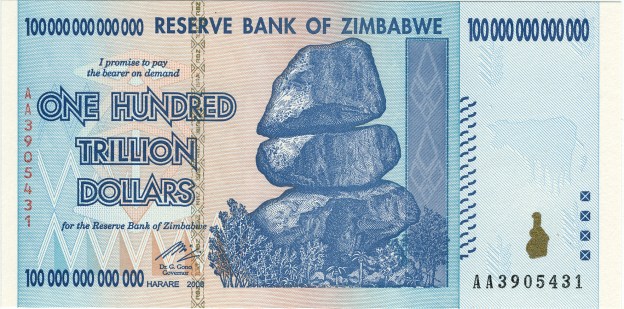
According to Martin Ruhs of Oxford University, the Nepalese government’s apparent lack of concern can be explained by looking at the interests of those involved. For all the mistreatment, Nepalese workers earn far more in Qatar than they could at home. Remittances make up a quarter of Nepalese GDP. If the Nepalese government were to insist that rules protecting migrant workers in Qatar should be enforced, Qatari employers might look for workers elsewhere.

In Gulf states and Singapore, where migrants have few rights on paper, the foreign workforce is huge: 94% of workers in Qatar were born abroad. Sweden and Norway, where migrants can use public services, claim welfare benefits and bring in dependents, admit relatively few purely economic migrants.

This trade-off is visible even within the European Union, where the recent accession of 12 relatively poor eastern European countries has sparked a debate about migrants’ rights to welfare. In January David Cameron, Britain’s prime minister, clashed with his Oxford contemporary, Radek Sikorski, Poland’s foreign minister. Mr Cameron wants to be able to exclude recently arrived European immigrants from welfare and public housing. “If Britain gets our taxpayers, shouldn’t it also pay their benefits?” Mr Sikorski responded….
A UN convention on migrant workers’ rights which came into force in 2003 has been ratified by only 47 countries, most of which are net senders of migrants.

The abuse of migrants: And still they come, Economist,  Apr. 19, at 54

Internet or Equinet?

“The Internet governance should be multilateral, transparent, democratic,and representative, with the participation of governments, private sector, civil society, and international organizations, in their respective roles. This should be one of the foundational principles of Internet governance,” the external affairs ministry says in its initial submission to the April 23-24 Global Multistakeholder Meeting on the Future of Internet Governance, also referred as NETmundial, in Sao Paulo, Brazil.  The proposal for a decentralised Internet is significant in view of Edward Snowden’s Wikileaks revelations of mass surveillance in recent months.

“The structures that manage and regulate the core Internet resources need to be internationalized, and made representative and democratic. The governance of the Internet should also be sensitive to the cultures and national interests of all nations.”The mechanism for governance of the Internet should therefore be transparent and should address all related issues. The Internet must be owned by the global community for mutual benefit and be rendered impervious to possible manipulation or misuse by any particular stake holder, whether state or non-state,” the ministry note says.  NETmundial will see representatives from nearly 180 countries participating to debate the future of Internet…

The US announced last month of its intent to relinquish control of a vital part of Internet Corporation for Assigned Names and Numbers (ICANN) – the Internet Assigned Numbers Authority (IANA).  “Many nations still think that a multilateral role might be more suitable than a multistakeholder approach and two years back India had proposed a 50-nation ‘Committee of Internet Related Policies’ (CIRP) for global internet governance,” Bhattacharjee added.

The concept of Equinet was first floated by Communications Minister Kapil Sibal in 2012 at the Internet Governance Forum in Baku, Azerbaijan.  Dr. Govind, chief executive officer, National Internet Exchange of India, is hopeful that Equinet is achievable. “Equinet is a concept of the Internet as a powerful medium benefiting people across the spectrum.It is all the more significant for India as we have 220 million Internet users, standing third globally after China and the US.””Moreover, by the year-end India’s number of Internet users are expected to surpass that of the US. The word Equinet means an equitable Internet which plays the role of an equaliser in the society and not limited only to the privileged people.”

He said the role of government in Internet management is important as far as policy, security and privacy of the cyber space is concerned, but the roles of the private sector, civil society and other stakeholders are no less. “Internet needs to be managed in a more collaborative, cooperative, consultative and consensual manner.”  Talking about the global strategy of renaming Internet as Equinet, he said: “Globally the US has the largest control over the management of the Internet, which is understandable since everything about Internet started there. Developing countries have still not much say over the global management of the Internet. But it is important that the Internet management be more decentralised and globalised so that the developing countries have more participation, have a say in the management where their consent be taken as well.”  The ministry note said: “A mechanism for accountability should be put in place in respect of crimes committed in cyberspace, such that the Internet is a free and secure space for universal benefaction. A ‘new cyber jurisprudence’ needs to be evolved to deal with cyber crime, without being limited by political boundaries and cyber-justice can be delivered in near real time.”

But other experts doubt the possibility of an Equinet or equalising the Internet globally.  Sivasubramanian Muthusamy, president, Internet Society India, Chennai, who is also a participant in the NETmundial, told IANS that the idea of Equinet is not achievable.  “Totally wrong idea. Internet provides a level playing field already. It is designed and operated to be universally accessible, free and open. Internet as it is operated today offers the greatest hope for developing countries to access global markets and prosper.”  “The idea of proposing to rename the Internet as Equinet has a political motive, that would pave way for telecom companies to have a bigger role to bring in harmful commercial models that would destabilize the open architecture of the Internet. If India is considering such a proposal, it would be severely criticized. The proposal does not make any sense. It is wrong advice or misplaced input that must have prompted the government of India to think of such a strange idea,” he said.

Excerpt from India wants Internet to become Equinet, Business Standard, Apr. 20, 2014

Satellites for Africa

Africa’s demand for bandwidth is doubling every year, outpacing the laying of terrestrial telecom fibre links and encouraging commercial satellite operators to launch more units into orbit.   The arrival of submarine cables on Africa’s eastern shore just five years ago (see e.g. Eastern Africa Submarine Cable System (EASSy)) was largely expected to herald the end of satellite connections, which had been the region’s only link to the outside world for decades.  But the opposite is happening with Africa’s political geography – notably its many landlocked countries, such as Zambia, South Sudan and Rwanda – bringing undersea cable plans back to earth.

“If you are to provide connectivity to the masses, fibre is not the way to do it. Do you think that it would make economical sense to take fibre to every village in Kenya?” said Ibrahima Guimba-Saidou, a senior executive for Africa at Luxembourg-based satellite operator SES SA “Satellite is still around and will continue to be around because it’s the best medium to extend connectivity to the masses.”  Hundreds of millions of people on the continent still have no access to the Internet, he said….

SES, one of the world’s largest commercial satellite operators, expects to launch its Astra2G satellite in 2014 after sending three others dedicated to Africa into orbit in the last year. Nine of its 56 satellites orbiting the earth are allocated for Africa.  Europe’s biggest satellite operator Eutelsat plans to fire off its tri-band EUTELSAT 3B this month after launching another to extend sub-Saharan Africa coverage in 2013.

The demand for Internet and data services in Africa has been driven by affordable mobile broadband connections. Mobile broadband users could grow by nearly eight times to 806 million by the end of 2018, according to Informa estimates.  New services such as digital television, onboard Internet connection for passenger aircraft, and delivering education and health services electronically will also drive demand.

The private sector has several initiatives to extend the capacity from submarine cables inland using terrestrial cables, but until that bottleneck is addressed, satellite operators are innovating to plug that black hole. One operator, O3B, or Other 3 Billion, has launched four of the next-generation medium earth orbit (MEO) satellites and plans two other launches in 2014 to make an orbital constellation of 12.  At a height of 8,000 kms (5,000 miles), the MEO units allow for faster speeds than traditional stationary satellites at 36,000 kms.  O3B’s tests have delivered capacity five times better than what traditional satellites can manage, making its technology suitable for both voice and interactive applications, said Omar Trujillo, vice president for Africa and Latin America….”A lot of applications for mining, oil and gas, will continue to be done by satellite,” he said. “The main market may not be international links for Nairobi or Johannesburg but will be communication for some of these remote areas that have had very low demand before, but now have fast-growing demand.

Excerpts from Helen Nyambura-Mwaura AFRICA INVESTMENT-Africa’s hunger for data sends satellites into orbit, Reuters, Apr. 17, 2014

The Kazakh Dream

A few protesters brandishing lacy underwear may not look like a threat to the stability of the state. But the authorities of oil-rich Kazakhstan took no chances on February 16th when a group of demonstrators waving their knickers appeared on the streets of the financial capital, Almaty. The “pantie protesters” were rounded up and led away.  Their demonstration was ostensibly prompted by a rule regulating synthetic underwear due to come into force this summer under a new customs union between Kazakhstan, Russia and Belarus…  [But the real] source of anger was the devaluation of the Kazakh currency, the tenge, on February 11th. It plunged by 19%, causing fears of a spike in inflation and a dip in living standards in a country that imports many consumer goods….

The protests are small but they hint that Mr Nazarbayev’s unspoken social contract—in which citizens trade political freedoms for relative prosperity and social stability—is becoming fragile. Tensions surfaced in 2011, when 15 people were shot dead as striking oil workers clashed with police in Zhanaozhen in the west of the country. Now the devaluation has reminded many ordinary people—maxed out on credit and exasperated by the growing rich-poor divide—that they are not living the “Kazakh dream”.

Kazakhstan’s economy: Tenge fever, Economist,  Feb. 22, 2014, at 35


Capital – Torrents of Data

During the financial crisis regulators discovered the hard way how little they knew about the risky derivatives portfolios built up by large financial institutions. Lehman Brothers, for example, was thought to have been a counterparty to about $5 trillion of credit default swaps. When they turned sour in 2008, it brought the financial system to its knees. In response leaders of the world’s main economies demanded in 2009 that derivatives deals should all be reported to “trade repositories”—vast central databases—to make it easier to identify and then reduce systemic risks.

On February 12th, 2014 European rules came into force requiring the reporting of all derivatives to one of six approved repositories. Similar rules have already been in place in America for about a year. But the effort, although concerted, is not consistent: the American and European reforms differ, making awkward transactions spanning the two jurisdictions. Moreover, even if these data can be reconciled, it is not clear what regulators will do with it.

The American regulations allow the reporting to be taken care of by one party to the trade. Yet Europe requires both parties to report. That means every fund manager or corporate treasurer trading derivatives has had to follow cumbersome rules, not just the banks that peddle most deals.  Getting both sides to report was originally seen as a means to ensure that every entity’s exposure could be rigorously monitored. But the complexities of obliging both parties to report trades, which then have to be reconciled with one another, have led many to question whether the additional burden is really worthwhile. “Dual reporting was required to avoid omissions in the data,” says Stewart Macbeth of the Depository Trust & Clearing Corporation, one of the approved repositories. But it “captures a lot of companies in the real economy that probably do not pose a systemic risk”.

The European rules differ from the American ones in other ways too. America staggered implementation of its rules over the course of several months as different sorts of contracts and counterparties were gradually brought within their scope. European regulators chose instead to have everyone start reporting everything on a single day. That created a bottleneck as participants rushed to put the necessary procedures and agreements in place.

Now that the deadline has passed, responsibility shifts to regulators, whose duty it will be to make sense of the torrents of data that are now flooding in. In America the Commodity Futures Trading Commission has openly acknowledged the problems it has already encountered coping with the deluge, with one commissioner blaming “inconsistencies and errors” in the rules. In Europe the problems are likely to be even worse as so many more counterparties are reporting data to multiple repositories. That will create an unfortunate opportunity for both omissions and duplications of data. In time the new reporting rules should reduce risks, but much work still needs to be done.

A paper published on February 4th by the Financial Stability Board (FSB) offers a solution. It proposes aggregating data from multiple repositories into one central one. That may iron out inconsistencies in the data—but it will not necessarily make it any more digestible.

Derivatives:  Data dump, Economist, Feb. 22, 2013, at 65

Food Security Strategies: the Gulf

Feliance on food imports is problematic when countries such as Argentina suddenly restrict their exports in response to rising prices. Buying farmland in countries such as Sudan, Tanzania and Pakistan is another Gulf ploy. The UAE and Saudi Arabia are among the top ten investors in land abroad, according to Land Matrix, a body that tracks such deals. But this has drawbacks, too. Getting big projects off the ground in places that lack infrastructure is tricky. And Gulf states who fund them have sometimes been accused of being neocolonial.

Many of the region’s rulers are now considering investing in food companies abroad, often in more developed countries. The UAE’s Al Dahra Agriculture, which works closely with the government and owns land abroad, recently bought eight farm companies in Serbia for $400m. It has also invested in an Indian rice producer. In addition, countries like Saudi Arabia are looking at ways of keeping strategic food reserves.

Gulf rulers may end up following a mixture of such strategies to fill their peoples’ stomachs. They should at least be commended for grappling with the problem, says a regional food expert. Poorer and hungrier Arab countries, like Egypt and Yemen, are far less willing to address it.

Food security in the Gulf: How to keep stomachs full, Economist,  Feb. 22, 2014

How to Evade Capital Controls: China

Is capital fleeing China? The recent crackdown on official corruption might suggest that fat cats are busy whisking their money out of the country to avoid scrutiny. That impression is strengthened by the apparently endless flow of Chinese money into luxury goods, penthouses and other trophies in London, New York and Paris.  Lots of money is undoubtedly leaving China, despite the country’s strict currency controls. However, a close look at the official figures suggests that, on balance, more hot money… has been flowing in.

A new study by Global Financial Integrity (GFI), a research firm, highlights one popular way illicit flows enter the mainland.   It claims that well over $400 billion has poured into China since 2006 outside the official channels, with inflows in the first quarter of 2013 alone topping $50 billion. GFI believes exporters on the mainland exaggerate the prices of goods sent to Hong Kong in order to evade China’s strict currency controls and bring back pots of cash.  Why would they bring money into China? One reason is to take advantage of a steadily appreciating yuan. Once punters sneak money into China, eye-catching if risky investments beckon in the overheated property market and poorly regulated shadow-banking sector.

Another explanation relates to the prolonged period of low interest rates in America. GFI notes that flows of hot money into China surged when the Federal Reserve began trying to suppress rates by buying up government bonds and other securities. Now that the Fed is “tapering” its asset purchases, it is reasonable to ask if the flow of hot money will slow or even reverse.  Chinese regulators have noisily complained about the illicit inflows. In December they promised a crackdown on over-invoicing and other such scams.

Chinese capital flows: Hot and hidden, Economist, Jan 18, 2014, at  73

BlackRock Owns Almost Everything

BlackRock, an investment manager, owns a stake in almost every listed company not just in America but globally. (Indeed, it is the biggest shareholder in Pearson, in turn the biggest shareholder in The Economist magazine.) Its reach extends further: to corporate bonds, sovereign debt, commodities, hedge funds and beyond. It is easily the biggest investor in the world, with $4.1 trillion of directly controlled assets (almost as much as all private-equity and hedge funds put together) and another $11 trillion it oversees through its trading platform, Aladdin.

Established in 1988 by a group of Wall Streeters led by Larry Fink, BlackRock succeeded in part by offering “passive” investment products, such as exchange-traded funds, which aim to track indices such as the S&P 500. These are cheap alternatives to traditional mutual funds, which often do more to enrich money managers than clients (though BlackRock offers plenty of those, too). The sector continues to grow fast, and BlackRock, partly through its iShares brand, is the largest competitor in an industry where scale brings benefits. Its clients, ranging from Arab sovereign-wealth funds to mom-and-pop investors, save billions in fees as a result.

The other reason for its success is its management of risk in its actively managed portfolio. Early on, for instance, it was a leader in mortgage-backed securities. But because it analysed their riskiness zipcode by zipcode, it not only avoided a bail-out in the chaos that followed the collapse of Lehman, but also advised the American government and others on how to keep the financial system ticking in the darkest days of 2008, and picked up profitable money-management units from struggling financial institutions in the aftermath of the crisis.

Compared with the many banks which are flourishing only thanks to state largesse, BlackRock’s success—based on providing value to customers and paying attention to detail—is well-deserved. Yet when taxpayers have spent billions rescuing financial institutions deemed too big to fail, a 25-year-old company that has grown so vast so quickly sets nerves jangling. American regulators are therefore thinking about designating BlackRock and some of its rivals as “systemically important”. The tag might land them with hefty regulatory requirements.

If the regulators’ concern is to avoid a repeat of the last crisis, they are barking up the wrong tree. Unlike banks, whose loans and deposits go on their balance-sheets as assets and liabilities, BlackRock is a mere manager of other people’s money. It has control over investments it holds on behalf of others—which gives it great influence—but it neither keeps the profits nor suffers the losses on them. Whereas banks tumble if their assets lose even a fraction of their value, BlackRock can pass on any shortfalls to its clients, and withstand far greater shocks. In fact, by being on hand to pick up assets cheaply from distressed sellers, an unleveraged asset manager arguably stabilises markets rather than disrupting them.

But for regulators that want not merely to prevent a repeat of the last blow-up but also to identify the sources of future systemic perils, BlackRock raises another, subtler issue, concerning not the ownership of assets but the way buying and selling decisions are made. The $15 trillion of assets managed on its Aladdin platform amount to around 7% of all the shares, bonds and loans in the world. As a result, those who oversee many of the world’s biggest pools of money are looking at the financial world, at least in part, through a lens crafted by BlackRock. Some 17,000 traders in banks, insurance companies, sovereign-wealth funds and others rely in part on BlackRock’s analytical models to guide their investing.

That is a tribute to BlackRock’s elaborate risk-management models, but it is also discomfiting. A principle of healthy markets is that a cacophony of diverse actors come to different conclusions on the price of things, based on their own idiosyncratic analyses. The value of any asset is discovered by melding all these different opinions into a single price. An ecosystem which is dominated by a single line of thinking is not healthy,

The rise of BlackRock, Ecomomist, Dec. 7, 2013, at 13

Private Military Firms: business in Africa

But Blackwater’s demise created space for two rivals: DynCorp International, a 60-year-old firm that diversified into military security, and Triple Canopy, founded in 2003 with a similar business model to Blackwater’s.  Groups such as Human Rights First campaign against governments’ use of private military contractors…Post-Blackwater, two trends have dominated the new industry...globalisation and indigenisation. On the supply side, there are a growing number of private military firms, and not all of the new ones were formed by former special forces from Western powers, such as Aegis and Blue Mountain, two British firms. Warlords in places such as Afghanistan and Somalia ainre creating contracting firms that they staff with local talent. Their embattled national governments are seeing the merits in contracting out security. So America is no longer the only big buyer of private force…

One thing that would greatly improve the industry’s prospects is if the United Nations began using private contractors for peacekeeping missions, as it is said to be considering. Today, such missions are staffed by soldiers from poorer countries, who are often badly trained. Mr Prince thinks that private contracting would make the UN more effective, but he has no intention of going after that business. For him, the new promised land is Africa, where he is investing in firms providing services to the oil and gas industry, in places where he thinks his expertise in providing logistics and security can give him a competitive edge.

Private military contractors: Beyond Blackwater, Economist, Nov. 23, 2013, at  65

How to Make Money in Frontier Markets

A desperate search for bonds that pay a decent rate of interest and a keen desire for exposure to economies that are still growing quickly have taken rich-world investors to some exotic places. The raciest bets are made in so-called frontier markets, poorer places with even less mature financial sectors than emerging markets. Africa is full of them. Rwanda and Tanzania, for example, have found willing buyers this year for their debut issues of dollar-denominated bonds. The farthest edge of the investing frontier has now reached Mozambique.

In September Credit Suisse and BNP Paribas raised $500m on behalf of EMATUM, a state-owned company in Mozambique. Credit Suisse advanced the $500m; slices of the debt were then sold as loan-participation notes, maturing in 2020, at a yield of 8.5%. VTB, a Russian bank, raised a further $350m for EMATUM shortly afterwards. Such a deal can be done more quickly and with less fuss than a typical bond issue. VTB had already raised $1 billion for Angola in a similar fashion. Those notes are included in J.P. Morgan’s emerging-market bond index, an industry benchmark.

The concern is less about the way the money was raised than how it will be used. Mozambique is poor. Its budget is part-funded by grants and low-interest loans from rich countries. Its public finances were solid in part because it has been granted extensive debt relief. When such countries borrow in private markets, it is usually to fund projects, such as toll roads, airports or power stations, which might have broad enough benefits to justify the expense. But EMATUM is a tuna-fishing venture that came into being just a few weeks before the $850m was raised in its name.

It is not obvious that a state-run fishing startup is a compelling business proposition. But investors know there are huge gas reserves off the shores of Mozambique that will eventually bring in lots of foreign exchange, even if tuna does not. The bonds come with a guarantee from the finance ministry. And the handsome yield (far higher than the rate on comparable Treasury bonds) is some reward for the risks.

A French shipyard has received orders worth about $300m for two dozen fishing vessels and a handful of patrol boats. It is not yet clear what the rest of the money, which is accruing hefty interest, will be used for. What is clear is that the temptation to grab at easy money offered by yield-hungry investors is proving too great to resist for some countries. As usual, the role of party-pooper has fallen to the IMF. It has called for the cost of the guarantee and for “possible non-commercial activities” related to the EMATUM bond to be clarified in the next budget.

Investing in frontier markets: Fishy tale, Economist, Nov. 23, 2013, at 73

Why Chinese Banks Love the UK

Britain’s banks, heirs to empire, have long coveted the riches of China. On October 15, 2013 their hopes of reaping them rose greatly when the chancellor of the exchequer, George Osborne, announced a deal with China that is intended to make Britain the main offshore hub for trading in China’s currency and bonds and for foreign institutions investing in China’s fast-growing economy.But there was a price. Mr Osborne conceded that British regulators would “consider” (which tends to mean “approve”) applications from Chinese banks wanting to enter Britain as branches of their parent banks rather than as subsidiaries. The difference may seem arcane but in the world of banking regulation it is hugely important. Branches are overseen by their parents’ bank supervisors at home. They are not required to have thick cushions of capital to absorb losses or large chunks of cash to see them through hard times. Instead they are expected to call on their parents for help if they run into difficulties. This makes branches much cheaper and more attractive for banks than subsidiaries.

It also explains why regulators generally dislike them. The laxer rules on branches leave them more vulnerable if they or their parent banks get into difficulties. In allowing Chinese banks to use branches, British authorities are in effect betting that if anything goes wrong the Chinese government will bail them out, says Simon Gleeson of Clifford Chance, a law firm.

The chancellor’s decision has raised eyebrows in London’s financial district. Some worry that a supposedly independent regulator has been subjected to political interference and has been forced to lower its standards. Yet critics of the deal overlook two important points. The first is that there is an inevitable tension between a bank regulator’s mission of maintaining financial stability and the wider aim of promoting economic growth. Tension between a regulator and elected officials is not just inevitable but healthy.

Just as important is the tricky balance regulators must find between protecting their own banking systems and encouraging the smooth functioning of global capital markets. Letting banks use branches allows capital to flow more easily around the world. Forcing them into subsidiaries can lead to the creation of stagnant pools of cash and capital.  Although Britain has cast a more sceptical eye over branches of foreign banks since the crisis—particularly after its taxpayers were left out of pocket by the collapse of Icelandic banks and their British branches—it has generally stood on the side of financial globalisation. In this it is increasingly lonely. American regulators are likely soon to force foreign banks to establish fully-capitalised units. EU officials are threatening to do the same. Given this trend, Britain’s stance looks less like an opportunistic grab for Chinese business and more like a last, probably hopeless, stab at keeping alive the dream of a seamless global financial market.

Chinese banks: Open for business, Economist, Oct. 19, 2013, at 62

Ports for Sale – China Buys

The old port of Colombo, Sri Lanka took centuries to reach its present capacity. China will have almost doubled it in under 30 months. Operated at full capacity, it would make Colombo one of the world’s 20 biggest container ports.  In the eyes of some Indians, Colombo is part of a “string of pearls”—an American-coined phrase that suggests the deliberate construction of a network of Chinese built, owned or influenced ports that could threaten India. These include a facility in Gwadar and a port in Karachi (both in Pakistan); a container facility in Chittagong (Bangladesh); and ports in Myanmar.

Is this string theory convincing? Even if the policy exists, it might not work. Were China able to somehow turn ports into naval bases, it might struggle to keep control of a series of Gibraltars so far from home. And host countries have mood swings. Since Myanmar opened up in 2012, China’s influence there has decreased. China love-bombed the Seychelles and Mauritius with presidential visits in 2007 and 2009 respectively. But since then India has successfully buttered up these island states and reasserted its role in the Maldives. Besides, China’s main motive may be commerce. C. Raja Mohan, the author of “Samudra Manthan”, a book on Sino-Indian rivalry in the Indian and Pacific Oceans, argues that China’s port bases partly reflect a desire to get easier sea access for trade to and from west China.

State-owned firms are in charge of most of China’s maritime activity, and their motives are at least partly commercial…China’s maritime interests already reflect its status as the world’s largest exporter and second-largest importer. Many of the world’s biggest container ports are in China. It controls a fifth of the world’s container fleet mainly through giant state-owned lines. By weight, 41% of ships built in 2012 were made in China.

The next step is to own and run ports. Hutchison Whampoa, a buccaneering, privately owned Hong Kong conglomerate, has long had a global network of ports. The pioneer among mainland firms was Cosco Pacific, an affiliate of state-owned Cosco, China’s biggest shipping line. In 2003-07 it took minority stakes in terminals in Antwerp, Suez and Singapore. In 2009 it took charge of half of Piraeus Port in Greece. It has invested about $1 billion abroad. China Merchants Holdings International, a newcomer, has spent double that. It invested in Nigeria, as well as Colombo, in 2010. Last year it took stakes in ports in Togo and Djibouti. In January it bought 49% of Terminal Link, a global portfolio of terminals run by CMA CGM, an indebted French container line.

The pace is quickening. In March another firm, China Shipping Terminal, bought a stake in a terminal in Zeebrugge in Belgium. On May 30th China Merchants struck a multi-billion deal to create a port in Tanzania. Even the more cautious Cosco Pacific is thinking about deals in South-East Asia and investing more in Greece.

China Shipping Terminal has small stakes in facilities in Seattle and Los Angeles, according to Drewry, a consultancy. But the experience of Dubai’s DP World suggests that America would not roll out a red carpet. In 2006 DP abandoned plans to buy American ports after a political backlash. Some Americans worry that China wants to take over the Panama canal.

Chinese firms may also subscribe to a supersized vision of the industry in which an elite group of ports caters to a new generation of mega-vessels. These will be more fuel-efficient and link Asia and Europe (they can just squeeze through the Suez Canal). After a decade of hype these behemoths are now afloat. In May CMA CGM received the Jules Verne, the world’s largest container ship. It can handle 16,000 containers and has a 16-metre (52-feet) draft. In July Maersk, a Danish line, will launch an 18,000-container monster. It has ordered 20 from Daewoo, in Korea. China Shipping Container Lines, the country’s second biggest firm, has just ordered five 18,400-container vessels from Hyundai.  Some ports may struggle to cater to these ships. Some of China’s new terminals may try to exploit that. Cosco Pacific is building a dock at Piraeus that can handle mega-ships. Colombo is deep enough for ships with an 18-metre draft. Its cranes can cope with ships 24 containers wide. Nothing in India compares with that…

After political tensions in the South China Sea, China Merchants has withdrawn from a port project in Vietnam. But Cosco’s Piraeus investment, once controversial, is a success, with profits rising and the firm winning plaudits for investing and creating jobs for Greeks.

China’s port strategy is mainly motivated by commercial impulses. It is natural that a country of its clout has a global shipping and ports industry. But it could become a flashpoint for diplomatic tensions. That is the pessimistic view. The optimistic one is that the more it invests, the more incentive China has to rub along better with its trading partners. This, not deliberate expansionism, is what the locals are betting on in Colombo.

China’s foreign ports: The new masters and commanders, Economist,  June 8, 2013

The Rape of Europe by Internet Giants: tax avoiding, data mining

The raid by the European Commission’s antitrust gumshoes this month on Orange (formerly France Telecom), Deutsche Telekom and Telefónica of Spain seemed to come out of the blue. The companies professed a surprise verging on stupefaction. Even some Brussels insiders were caught on the hop.  Naming no names, the commission said the inquiry involved internet connectivity. The question is whether entrenched telecoms firms are abusing their strength in the market for internet traffic to deny video-streaming websites and other content providers full access to their networks to reach consumers. Besides the content providers themselves, the other potential plaintiffs are the “wholesalers” that the content providers use to ship their data across borders (and usually the Atlantic). These rely on incumbent internet-service providers (ISPs) such as Orange to take the data the last bit of the way to subscribers’ screens and mobiles.

All eyes turned to Cogent Communications, an American wholesaler which handles data for the likes of YouTube. Cogent has complained, fruitlessly, to French and German regulators that their former monopolies were asking too much to handle data, and throttling the flow to consumers when bigger fees were not forthcoming. It is appealing against the French decision.  In theory Orange and the other network providers might simply pass on to their customers the cost of all their streaming and downloading… But Europe’s market is fiercely competitive; and regulators place all sorts of constraints on how networks can charge for their services, while haranguing them to invest in new technology and new capacity to keep up with rising traffic. Though there are similar spats in America (for instance between Cogent and Verizon, a big network operator), it looks to some Europeans like another example of the rape of the old continent by America’s data-mining, tax-avoiding internet giants.

The broader issue—and the reason, perhaps, why the antitrust watchdogs chose to weigh in—is that Europe is on the brink of big regulatory change. A draft law to be published in September will subtly alter the principle of “net neutrality”, the idea that companies which own the infrastructure cannot give priority to some traffic (eg, from their own websites) over that of others.;”

Internet access: Congestion on the line, Economist, July 20, 2013

Shadow Oil Deals and Safe-Sex Transactions: Nigeria

Deals for oilfields can be as opaque as the stuff that is pumped from them. But when partners fall out and go to court, light is sometimes shed on the bargaining process—and what it exposes is not always pretty. That is certainly true in the tangled case of OPL245, a massive Nigerian offshore block with as much as 9 billion barrels of oil—enough to keep all of Africa supplied for seven years.

After years of legal tussles, in 2011 Shell, in partnership with ENI of Italy, paid a total of $1.3 billion for the block. The Nigerian government acted as a conduit for directing most of that money to the block’s original owner, a shadowy local company called Malabu Oil and Gas. Two middlemen hired by Malabu, one Nigerian, one Azerbaijani, then sued the firm separately in London—in the High Court and in an arbitration tribunal, respectively—claiming unpaid fees for brokering the deal.

The resulting testimony and filings make fascinating reading for anyone interested in the uses and abuses of anonymous shell companies, the dilemmas that oil firms face when operating in ill-governed countries and the tactics they feel compelled to employ to obfuscate their dealings with corrupt bigwigs. They also demonstrate the importance of the efforts the G8 countries will pledge to make, at their summit next week, to put a stop to hidden company ownership and to make energy and mining companies disclose more about the payments they make to win concessions. On June 12th the European Parliament voted to make EU-based resources companies disclose all payments of at least €100,000 ($130,000) on any project.

The saga of block OPL245 began in 1998 when Nigeria’s then petroleum minister, Dan Etete, awarded it to Malabu, which had been established just days before and had no employees or assets. The price was a “signature bonus” of $20m (of which Malabu only ever paid $2m).

The firm intended to bring in Shell as a 40% partner, but in 1999 a new government took power and two years later it cried foul and cancelled the deal. The block was put out to bid and Shell won the right to operate it, in a production-sharing contract with the national petroleum company, subject to payment of an enlarged signature bonus of $210m. Shell did not immediately pay this, for reasons it declines to explain, but began spending heavily on exploration in the block.

Malabu then sued the government. After much legal wrangling, they reached a deal in 2006 that reinstated the firm as the block’s owner. This caught Shell unawares, even though it had conducted extensive due diligence and had a keen understanding of the Nigerian operating climate thanks to its long and often bumpy history in the country. It responded by launching various legal actions, including taking the government to the World Bank’s International Centre for the Settlement of Investment Disputes.

Malabu ploughed on, hiring Ednan Agaev, a former Soviet diplomat, to find other investors. Rosneft of Russia and Total of France, among others, showed interest but were put off by Malabu’s disputes with Shell and the government. Things moved forward again when Emeka Obi, a Nigerian subcontracted by Mr Agaev, brought in ENI (which already owned a nearby oil block). After further toing and froing—and no end of meetings in swanky European hotels—ENI and Shell agreed in 2011 to pay $1.3 billion for the block. Malabu gave up its rights to OPL245 and Shell dropped its legal actions (see timeline).

The deal was apparently split into two transactions. Shell and ENI paid $1.3 billion to the Nigerian government. Then, once Malabu had signed away its rights to the block, the government clipped off its $210m unpaid signature bonus and transferred just under $1.1 billion to Malabu.  Tom Mayne of Global Witness, an NGO, has followed the case closely; he believes things were structured this way so that Shell and ENI could obscure their deal with Malabu by inserting a layer between them. Mr Agaev, Malabu’s former fixer, lends weight to this interpretation. It was, he says, structured to be a “safe-sex transaction”, with the government acting as a “condom” between the buyers and seller.

Oil companies in emerging markets: Safe sex in Nigeria, Economist, June 15, 2013, at 63

The Role Military/Industrial Complex in Industrializing Nations

In the last year, a total of 1,653 suspects were arrested and 3,778 illegal refineries destroyed in the in the ongoing anti-illegal bunkering patrols by the Joint Task Force (Operation PULO SHIELD) in the Niger Delta, according to Minister of State for Defence, Dr Olusola Obada.  In addition, 120 barges, 878 Cotonou boats, 161 tanker trucks, 178 illegal fuel dumps and 5,238 surface tanks were also destroyed by the Task Force within the same period.

Obada also said that the Defence Industries Corporation of Nigeria (DICON) will collaborate with the private sector under the Public Private Partnership (PPP) in the production of Armoured Personnel Carriers (APCs).  Obada said on Friday, while featuring in the ongoing ministerial press briefing in Abuja, that the nation’s military has “enhanced protection of oil and gas facilities through air and ground patrols of pipeline networks to deter vandals from sabotage activities. Troops were deployed on most critical platforms on a 24/7 basis to enhance their security. While criminalities in the industry have not been completely eliminated, efforts of the Joint Task Force have reduced the level crude oil theft drastically.”

She stated that towards industrialising Nigeria through the military-industrial complex, “the Federal Government in 2012 set up a high powered committee headed by the Vice President to reposition the Defence Industries Corporation of Nigeria (DICON) for greater efficiency. The report of the committee had been submitted to the President and it is expected that the recommendations would help initiate a transformation in the local production of military equipment.”

Already, Obada noted, DICON has entered into partnership with foreign companies for the manufacture of weapons, bulletproof vests and other equipment.  She also disclosed that under the Ministry of Defence’s health initiatives, 25,000 people had been place on retroviral therapy in the last one year under the Ministry of Defence HIV programme.

Special Task Force Arrest 1,653 Suspects, Destroy 3,778 Illegal Refineries Saturday, The Guardian (Nigeria), June 29, 2013

Why Colonies Need Empires

On May 17th, 2013 the territory of French Polynesia…was reinscribed on the UN’s disapproving list of “non-self-governing territories”. The UN resolution requires France to move swiftly towards setting French Polynesia on the path to self-determination.   France boycotted the proceedings. But only 12 days earlier, elections in its scattered French Polynesian imperial outpost brought a heavy defeat for the territory’s long-standing pro-independence leader, Oscar Temaru, and victory for his arch-rival, Gaston Flosse, who vows never to let another flag fly over the presidential palace. Self-determination, the French government sniffed, “cannot be

The UN’s “non-self-governing” list dates back to 1946 and originally consisted of territories reported as dependencies by the colonial powers themselves. In the decades that followed, most became independent, or were annexed, or were officially acknowledged as, in effect, enjoying political autonomy. But 16 territories around the globe, mostly minute islands in the Caribbean, Atlantic or Pacific Oceans, remain officially in the queue for decolonisation. In the Pacific they include Tokelau, Pitcairn Islands, American Samoa, Guam and New Caledonia. Each year, a UN committee meets to deliberate on their status, and to pronounce its verdict on the appropriate steps towards decolonisation.

Yet, when consulted, independence has not been the preferred option for many Pacific islanders. In two UN-supervised referendums, held in 2006 and 2007, Tokelau (population: 1,411) narrowly failed to obtain the required two-thirds majority to end its status as a New Zealand dependency, though the results were close. The 47 inhabitants of Pitcairn, still home to descendants of the Bounty’s mutineers, have no desire to end British rule. Politicians from American Samoa repeatedly ask to be removed from the UN list.

The Pacific territory with the most realistic chance of decolonisation is nickel-rich New Caledonia, a French colony since 1853. In the 1980s indigenous Kanak leaders pushing for independence managed to get their islands relisted as “non-self-governing”. Violent conflict on the island, which has a substantial French settler population, ended in 1988 only after the authorities in Paris agreed to a referendum on independence to be held ten years later. When that time came, in 1998, Kanak leaders agreed to a further delay of 15-20 years, meaning that the scheduled referendum must be held at some point before 2019—and perhaps as early as next year. Many of the French settler politicians, who remain loyal to the motherland, hope that some further compromise can again avoid a potentially polarising electoral contest.

Mr Temaru’s successful bid to have French Polynesia officially listed as still a colony was inspired by the New Caledonian experience. In the past Paris has threatened to pull the economic plug on any territory that chooses independence, explaining why many Tahitians prefer some form of loose autonomy while remaining under the French umbrella. Yet at times the government in Paris has shown signs of growing weary of its costly Pacific dependencies.

The Pacific’s colonies: Ends of empire, Economist, May 25, 2013, at 41

Mining Companies Love Least Developed Countries

An expert panel led by Kofi Annan, a former UN secretary-general, looked at five deals struck between 2010 and 2012, and compared the sums for which government-owned mines were sold with independent assessments of their value. It found a gap of $1.36 billion, double the state’s annual budget for health and education. And these deals are just a small subset of all the bargains struck, says the report, which Mr Annan presented in Cape Town, South Africa, on May 10th.

The report highlights some puzzling details. For instance ENRC, a London-listed Kazakh mining firm, waived its rights to buy out a stake in a mining enterprise owned by Gécamines, Congo’s state miner, only to acquire it for $75m from a company owned by Dan Gertler, an Israeli businessman, which had paid $15m for it just months earlier. Mr Gertler is close to Joseph Kabila, Congo’s president. ENRC, which is being investigated by the Serious Fraud Office in Britain, was Congo’s third-largest copper producer last year. Both ENRC and Mr Gertler deny wrongdoing.

African countries often fail to collect reasonable taxes on mining, says Mr Annan’s panel. For example, Zambia’s copper exports were worth $10 billion in 2011, but its tax receipts from mining were a meagre $240m. The widespread use by mining firms of offshore investment vehicles as conduits for profits creates scope for tax avoidance. Their use is not restricted to rich-world companies. Much of the oil that Angola ships to China is via a company called the China International Fund. Its trading prices are not made public…

Congo’s prime minister, Matata Ponyo Mapon, promises change. In January 2013… Mr Ponyo said he would rein in the state-owned mining companies and increase transparency in the industry. “We must avoid situations where we’re not publishing our mining contracts, where our state assets are undervalued, and where the government doesn’t know what its state mining companies are doing,” he told miners and officials at a conference in January….

Last year miners in Congo, which include Freeport-McMoRan and Glencore Xstrata, shipped $6.7 billion-worth of copper and cobalt from the country.

Business in the Democratic Republic of Congo: Murky minerals, Economist, May 18, 2013, at 74


Bay of Bengal: fishermen v. port builders

Bangladesh’s Chittagong, has… become a bottleneck. The Bangladeshis are modernising it… China is putting $200m towards upgrading the airport at Cox’s Bazar, the country’s southernmost tip, to attract investment and tourists.  Myanmar’s …new government, keen for foreign inflows to help rebuild the economy, has been approving projects that sat idle for years. Sittwe is one, but it looks small compared with the Dawei project on Myanmar’s Tenasserim coast… a deepwater port, industrial zone and highways to connect it with distant Bangkok, estimated to cost $8.5 billion.Thailand’s rulers dabbled for centuries with the idea of building a canal across the Kra isthmus, which would link their own gulf directly to the Andaman Sea and save days of costly shipping through the Strait of Malacca. Dawei should do the trick…. The Japanese are taking advantage of Myanmar’s opening to build a riverine port called Thilawa, south of Yangon.

The Chinese are exploring ways round their own Malacca-strait dilemma. They have been building new oil and gas pipelines across the whole of Myanmar starting from a new port-terminal at Kyaukphyu, near Sittwe….China’s activity in the Bay of Bengal is purely “defensive” [some say] but Indians versed in the “string of pearls” theory, which sees Chinese-built ports encircling India, will not be much comforted.

Amid the sometimes airy speculation, it is relatively easy to predict the effects on the repurposed waters of the bay. Yugraj Yadava, the director of an environmental watchdog in Chennai, says increased shipping is already eroding traditional livelihoods and polluting the sea. About 31% of the world’s coastal fishermen live and work on the Bay of Bengal, and they stand to lose huge tracts to the port-builders (and to rising sea levels, too). Mr Yadava says the bay still has some of the world’s healthiest natural fisheries, but they are under threat, not least from non-native species that stow away in long-haulers’ ballast.

Collisions between fishing vessels and commercial ships are becoming more frequent, as are snagged nets. All this will probably accelerate in the next few years. Before the Bay of Bengal falls victim to its new-found popularity, it might be good if some of its beneficiaries were to build a transnational maritime authority, to limit the damage.

Excerpts, The Bay of Bengal: New bay dawning, Economist,Apr. 27, 2013, at 40

China – Australia Dependency

China’s demand for iron and coal has helped to turn it into Australia’s biggest trading partner and to keep Australia more economically robust than most other rich countries. But in some parts of the country the new relationship with China came as a reminder of the unwelcome side-effects of the boom… Chinese trade not only helped Australia survive the global downturn. It has also boosted the currency’s strength, and made it harder for manufacturers to find markets for their exports. The problem is unevenly distributed around the country. ‘

South Australia has suffered the greatest pain: in no other state does manufacturing account for such a big share of the economy…. Five years ago, Mitsubishi closed its plant in Adelaide. Australia’s remaining carmakers, Holden, Ford and Toyota, have shed jobs steadily since then. Australians are buying imported cars more cheaply than ever, especially from Japan; their dollar has risen by 26% against the yen since October.  Even wine, South Australia’s third-biggest export, has suffered: exports in fiscal 2012 dropped in value by A$62m ($65m), or 2%. Codan, an electronics company based in Adelaide, has done better. By making many high-tech products in Malaysia, it has been able to protect itself from the strong Aussie dollar.

The Australian dollar: Resources boomerang, Economist, Apr. 20, 2013, at 44

Multinational Corporations in US Courts: Kiobel v. Shell

The Alien Tort Statute (ATS)… grants American district courts jurisdiction over “any civil action by an alien for a tort only, committed in violation of the law of nations or of a treaty of the United States”. At the age of 190 it sprang back to life on April 6th 1979, when it was used to allow two Paraguayans to sue a former Paraguayan policeman in an American court for acts of torture committed in Paraguay.Since then, roughly 150 lawsuits have been filed against American and foreign corporations for actions committed around the world. Four local plaintiffs used the ATS to sue Unocal in a federal court in Los Angeles for human-rights violations allegedly committed during the construction of an oil pipeline in Myanmar. A human-rights organisation used it to sue Yahoo on behalf of two Chinese democracy activists for actions committed in China by a subsidiary. ATS suits against DaimlerChrysler and Rio Tinto, among others, are pending. Though most ATS cases have been dismissed or settled, the costs of settlements can be high and the negative publicity damaging.

Multinational companies will therefore cheer the Supreme Court’s unanimous decision in Kiobel v Royal Dutch Petroleum (Shell), released on April 17th, 2013. It dramatically limits the ability of plaintiffs to file suit against corporations in American courts for actions committed abroad.  The ruling stems from a case brought in New York by 12 Nigerian plaintiffs living in America. They allege that Shell was complicit in human-rights violations—including murder, rape, theft and destruction of property—committed by Nigeria’s armed forces in the region of Ogoniland. A federal appeals court dismissed their suit, arguing that the ATS provides no grounds for corporate-liability lawsuits. But as the 150 ATS suits show, other courts have disagreed. The Supreme Court agreed to hear the case in order to settle the question.

In an earlier ruling, in 2004, the court cautiously ruled that the ATS permitted lawsuits for “a modest number of international law violations”, such as piracy and crimes involving ambassadors, which would have been recognised when it was adopted. The court’s Kiobel ruling goes much further. It holds that the ATS does not apply to actions committed by foreign companies, and noted a strong presumption against applying American law outside the United States, “There is no indication,” wrote John Roberts, the chief justice, “that the ATS was passed to make the United States a uniquely hospitable forum for the enforcement of international norms”.  In a separate concurrence, four of the court’s liberals took a slightly softer tack, arguing that the ATS should allow suits that prevent America from becoming “a safe harbour…for a torturer or other common enemy of mankind”. But that reasoning still does not permit foreign nationals to use American courts to sue foreign companies for acts committed on foreign soil.

Extraterritoriality: The Shell game ends, Economist, Apr. 20, 2013, at 34

Tibet – Mineral Resources, Fragile Ecology

The ecology of the Tibetan plateau, noted the Ministry of Land and Resources two years ago, is “extremely fragile”. Any damage, it warned, would be difficult or impossible to reverse. But, it went on, the China National Gold Group, a state-owned company, had achieved “astonishing results” in working to protect the environment around its mine near the region’s capital, Lhasa. On March 29th at least 83 of the mine’s workers lay buried under a colossal landslide. Its cause is not yet certain, but critics of Tibet’s mining frenzy feel vindicated.

The disaster at the Jiama copper and gold mine, about 70km (45 miles) north-west of Lhasa, has clearly embarrassed the government in Beijing. According to China Digital Times, a California-based media-monitoring website, the Communist Party ordered newspapers to stick to reports issued by the government and the state-owned news agency, Xinhua.

Foreign reporters are rarely allowed into Tibet, least of all to cover sensitive incidents. The official media have avoided speculation about any possible link between the landslide and mining activities in the area. They say the landslide covered a large area with 2m cubic metres of rubble. By the time The Economist went to press, 66 bodies had been pulled out by teams of rescuers with sniffer dogs. The high altitude and lack of oxygen made rescue work hard. A deputy minister of land and resources, Xu Deming, said preliminary investigations had shown that the landslide was caused by a “natural geological disaster”. Fragments of rock left behind by receding glaciers are being blamed, though officials do not explain why the workers’ camp was set up so close to such an apparent hazard.

The Tibetan government-in-exile based in India says it fears the disaster was caused by work related to the mine, which appears to have grown rapidly since construction began in 2008. It was formally opened two years later, at a ceremony attended by Tibet’s most senior officials. The $520m investment was described at the time as the biggest in Tibet’s mining industry by a firm belonging to the central government. The mine is owned by China Gold International Resources, a company listed in Hong Kong and Toronto. China National Gold Group is the controlling shareholder.

Tibet has been trying hard in recent years to encourage such companies to dig up the plateau’s metals and minerals. It has a lot of them to offer: China’s biggest reserves of copper and chromite (used in steel production), among the world’s biggest of lithium (used to make batteries), as well as abundant reserves of uranium, gold, borax (a component of ceramics and glass) and oil. Extracting these, however, often involves boring into a landscape considered sacred by Tibetans.

The Jiama mine, in a valley known to Tibetans as Gyama and revered as the birthplace of a seventh-century Tibetan king, has been the focus of protests by locals angered by environmental and other issues. Water from the valley flows into the Lhasa river. Woeser, a Tibetan activist based in Beijing, has blogged about locals’ fear that their water supplies will be polluted.

Tibetan resentment has been fuelled by the mining industry’s failure to provide much direct employment.

Excerpts, Mining in Tibet: The price of gold, Economist, April 6, 2013, at 54

Icesave Case: winners & losers of bank failures

In 2008 Britain’s former prime minister Gordon Brown chose to invoke anti-terrorism laws to freeze the assets of a failed Icelandic bank…In January 28, 2013 a ruling delivered in Luxembourg by the European Free-Trade Association Court, dealt with the collapse of Icesave, an online subsidiary of Iceland’s Landsbanki. Before the crisis Icesave had used a European “passport” to open branches abroad and collected deposits in Britain and the Netherlands with almost no oversight from regulators in those countries. One condition of its passport was that it promised that its deposits were backed by a national deposit-insurance scheme in Iceland. Yet when the bank collapsed Iceland’s deposit scheme was overwhelmed. Icelandic depositors in the bank ended up getting their money back; the British and Dutch governments both had to step in to compensate depositors in their countries.

Many observers had expected the court to rule that Iceland was obliged to stand behind its national deposit-protection plan and not to discriminate against foreign depositors. Instead the court found that Iceland was obliged only to make sure that it had a deposit-insurance scheme. The state was not required to pay out if the scheme had no money because of a banking crisis. Oddly, the court also found that Iceland had not breached an obligation not to discriminate between domestic and foreign depositors, even though it made only the domestic ones whole.

The questions addressed by the court may seem anachronistic: European law on deposit protection has been extensively rewritten since the crisis. Yet the ruling is another warning to those who hope that regulators can strike binding agreements on how they will share the costs of a future banking crisis. Supervisors in America are already trying to ensure that foreign banks there operate as separately capitalised subsidiaries, so they do not have to rely on the vigilance of foreign regulators. Hopes that Europe’s banking union will include a mutual deposit-guarantee scheme are in any case faint. This week’s ruling will only weaken confidence in the willingness of countries to bail out foreign creditor

The Icesave ruling: In the cooler, Economist, Feb. 2, 2013, at 64

Nigeria and the Oil Companies: the ECOWAS Judgment

Amnesty International and Socio-Economic Rights and Accountability Project (SERAP) have hailed last [Economic Community of West African States] ECOWAS Court of Justice ground-breaking judgment as a “key moment in holding governments and companies to account for pollution.”  In the case, SERAP v. Nigeria, the Court unanimously found the Nigerian government responsible for abuses by oil companies and makes it clear that the government must hold the companies and other perpetrators to account.

The Court also found that Nigeria violated articles 21 (on the right to natural wealth and resources) and 24 (on the right to a general satisfactory environment) of the African Charter on Human and Peoples’ Rights by failing to protect the Niger Delta and its people from the operations of oil companies that have for many years devastated the region.  According to the Court, the right to food and social life of the people of Niger Delta was violated by destroying their environment, and thus destroying their opportunity to earn a living and enjoy a healthy and adequate standard of living. The Court also said that both the government and the oil companies violate the human and cultural rights of the people in the region.

The Court ruled that the government’s failure to enact effective laws and establish effective institutions to regulate the activities of the companies coupled with its failure to bring perpetrators of pollution “to book” amount to a breach of Nigeria’s international human rights obligations and commitments.  The Court emphasized that “the quality of life of people is determined by the quality of the environment. But the government has failed in its duty to maintain a general satisfactory environment conducive to the development of the Niger Delta region”.

“This judgment confirms the persistent failure of the Nigerian government to properly and effectively punish oil companies that have caused pollution and perpetrated serious human rights abuses, and is an important step towards accountability for government and oil companies that continue to prioritise profit-making over and above the well-being of the people of the region,” said Femi Falana SAN, and Adetokunbo Mumuni for SERAP.  “This is a crucial precedent that vindicates the human right to a healthy environment and affirms the human right of the Nigerian people to live a life free from pollution. It also makes it clear that the government must hold the oil companies to account,” said Michael Bochenek, Director of Law and Policy at Amnesty International.  “The judgment makes it clear that the Nigerian government has failed to prevent the oil companies causing pollution. It is a major step forward in holding the government and oil companies accountable for years of devastation and deprivation.” said Bochenek.

The court affirmed that the government must now move swiftly to fully implement the judgment and restore the dignity and humanity of the people of the region.

“The judgment has also come at a time when oil is being discovered in the majority of the member states of the ECOWAS. It is vital that other states take heed of this judgement, which has laid down minimum standards of operations for government and oil companies involved in the exploitation of oil and gas in the region,” Falana and Mumuni also said.  “The time has come for the Nigerian government to stand up to powerful oil companies that have abused the human rights of the people of the Niger Delta with impunity for decades,” said Bochenek.  “We commend the ECOWAS Court for standing up for the rights and dignity of the people of the Niger Delta. We also acknowledge the important legal contribution of Dr Kolawole Olaniyan of Amnesty International, to the case,” said Falana and Mumuni.

he case was filed against the Federal Government and six oil companies over alleged violation of human rights and associated oil pollution in the Niger Delta. Specifically, the plaintiff alleged: “Violations of the right to an adequate standard of living, including the right to food, to work, to health, to water, to life and human dignity, to a clean and healthy environment; and to economic and social development – as a consequence of: the impact of oil-related pollution and environmental damage on agriculture and fisheries.”  SERAP also alleged “oil spills and waste materials polluting water used for drinking and other domestic purposes; failure to secure the underlying determinants of health, including a healthy environment, and failure to enforce laws and regulations to protect the environment and prevent pollution.”

The Court dismissed the government’s objections that SERAP had no locus standi to institute the case; that the ECOWAS Court had no jurisdiction to entertain it; and that the case was statute-barred. The Court also rejected efforts by the government to exclude a 2009  Amnesty International report on oil pollution from being considered. The report was based on an in-depth investigation into pollution caused by the international oil companies, in particular Shell, and the failure of the government of Nigeria to prevent pollution or sanction the companies.

The suit number ECW/CCJ/APP/08/09 was argued by SERAP counsel, Femi Falana SAN, Adetokunbo Mumuni and Sola Egbeyinka.  The judgment was delivered by a panel of 6 judges: Justice Awa Nana Daboya, Justice Benefeito Mosso Ramos, Justice Hansine Donli, Justice Alfred Benin, Justice Clotilde Medegan and Justice Eliam Potey.

Article 15(4) of the ECOWAS Treaty makes the Judgment of the Court binding on Member States, including Nigeria. Also, Article 19(2) of the 1991 Protocol provides that the decisions of the Court shall be final and immediately enforceable. Furthermore, non-compliance with the judgment of the Court can be sanctioned under Article 24 of the Supplementary Protocol of the ECOWAS Court of Justice, and Article 77 of the ECOWAS Treaty.

SERAP Press Release, December 2012

See also decision of the ECOWAS Community Court on Jurisdiction

The Flight of Gold: what Afghanistan, China and Iran have in common

Packed into hand luggage and tucked into jacket pockets, roughly hewed bars of gold are being flown out of Kabul with increasing regularity, confounding Afghan and American officials who fear money launderers have found a new way to spirit funds from the country.  Most of the gold is being carried on commercial flights destined for Dubai, according to airport security reports and officials. The amounts carried by single couriers are often heavy enough that passengers flying from Kabul to the Persian Gulf emirate would be well advised to heed warnings about the danger of bags falling from overhead compartments. One courier, for instance, carried nearly 60 pounds of gold bars, each about the size of an iPhone, aboard an early morning flight in mid-October, according to an airport security report. The load was worth more than $1.5 million.

The gold is fully declared and legal to fly. Some, if not most, is legitimately being sent by gold dealers seeking to have old and damaged jewelry refashioned into new pieces by skilled craftsmen in the Persian Gulf, said Afghan officials and gold dealers.  But gold dealers in Kabul and current and former Kabul airport officials say there has been a surge in shipments since early summer. The talk of a growing exodus of gold from Afghanistan has been spreading among the business community here, and in recent weeks has caught the attention of Afghan and American officials. The officials are now puzzling over the origin of the gold — very little is mined in Afghanistan, although larger mines are planned — and why so much appears to be heading for Dubai.

“We are investigating it, and if we find this is a way of laundering money, we will intervene,” said Noorullah Delawari, the governor of Afghanistan’s central bank. Yet he acknowledged that there were more questions than answers at this point. “I don’t know where so much gold would come from, unless you can tell me something about it,” he said in an interview. Or, as a European official who tracks the Afghan economy put it, “new mysteries abound” as the war appears to be drawing to a close.

Figuring out what precisely is happening in the Afghan economy remains as confounding as ever. Nearly 90 percent of the financial activity takes place outside formal banks. Written contracts are the exception, receipts are rare and statistics are often unreliable. Money laundering is commonplace, say Western and Afghan officials.  As a result, with the gold, “right now you’re stuck in that situation we usually are: is there something bad going on here or is this just the Afghan way of commerce?” said a senior American official who tracks illicit financial networks.

There is reason to be suspicious: the gold shipments track with the far larger problem of cash smuggling. For years, flights have left Kabul almost every day carrying thick wads of bank notes — dollars, euros, Norwegian kroner, Saudi Arabian riyals and other currencies — stuffed into suitcases, packed into boxes and shrink-wrapped onto pallets. At one point, cash was even being hidden in food trays aboard now-defunct Pamir Airways flights to Dubai.

Last year alone, Afghanistan’s central bank says, roughly $4.5 billion in cash was spirited out through the airport. Efforts to stanch the flow have had limited impact, and concerns about money laundering persist, according to a report released last week by the United States Special Inspector General for Afghanistan Reconstruction.  The unimpeded “bulk cash flows raise the risk of money laundering and bulk cash smuggling — tools often used to finance terrorist, narcotics and other illicit operations,” the report said. The cash, and now the gold, is most often taken to Dubai, where officials are known for asking few questions. Many wealthy Afghans park their money and families in the emirate, and gold dealers say more middle-class Afghans are sending money and gold — seen as a safeguard against economic ruin — to Dubai as talk of a postwar economic collapse grows louder. But given Dubai’s reputation as a haven for laundered money, an Afghan official said that the “obvious suspicion” is that at least some of the apparent growth in gold shipments to Dubai is tied to the myriad illicit activities — opium smuggling, corruption, Taliban taxation schemes — that have come to define Afghanistan’s economy.

There are also indications that Iran could be dipping into the Afghan gold trade. It is already buying up dollars and euros here to circumvent American and European sanctions, and it may be using gold for the same purpose.  Yahya, a dealer in Kabul, said other gold traders were helping Iran buy the precious metal here. Payment was being made in oil or with Iranian rials, which readily circulate in western Afghanistan. The Afghan dealers are then taking it to Dubai, where the gold is sold for dollars. The money is then moved to China, where it was used to buy needed goods or simply funneled back to Iran, said Yahya, who like many Afghans uses a single name.

Excerpt, MATTHEW ROSENBERG, An Afghan Mystery: Why Are Large Shipments of Gold Leaving the Country?, NY Times, Dec. 15, 2012

An Independent Kurdistan? Ask the Oil Companies

Iraq is blessed with abundant oil that is cheap to extract and close to newly built export terminals. Production has hit a three-decade high and continues to rise steadily. By 2035, predicts the International Energy Agency (IEA) Iraqi output could more than double, to 8.3m barrels per day (b/d).  But Western oil firms are increasingly reluctant to play a part in this boom. ExxonMobil appears keen to sell its stake in West Qurna, one of the giant fields in southern Iraq that will provide much of the production growth. Royal Dutch Shell and BP are both still working in the south, but unhappily so. Suffocating bureaucracy and onerous contract terms make life difficult. Heavier-than-expected costs and delays to infrastructure undercut profits.

Three years ago when they signed contracts with the Iraqi government, the oil majors were prepared to accept hiccups. But their patience has thinned with the arrival of an alternative source of Iraqi oil. Kurdistan, the semi-autonomous province in the country’s north, has been offering competing and much more lucrative deals. ExxonMobil’s decision last year to acquire six blocks in the region angered the central government, which considers the deal illegal and lays claim to Kurdish oil. But the world’s largest oil company started a trend. In July Total, Chevron and Gazprom all signed contracts with the Kurdistan regional government, potentially dooming their chances of winning future business in the south. BG, a British firm, was in Erbil, the Kurdish capital, on a scouting mission in late October.

“Kurdistan is 11 years ahead of the rest of Iraq in terms of political and commercial development,” says Luay al-Khatteeb, head of the Iraq Energy Institute, a London-based think-tank. Kurdistan’s potential oil reserves of around 45 billion barrels are less than a third of those in southern Iraq. Still, the Kurdish oil minister, Ashti Hawrami, believes output of 1m b/d is possible within three years.

The tricky part is getting the oil to market. The Kurds today export around 200,000 b/d through pipelines controlled by the central government. Mr Hawrami wants to build a new Kurdish-owned pipe to Turkey, feeding long-held dreams of Kurdish independence. That unnerves Turkey which is fighting Kurdish separatists in its south-east. Some Turkish officials seem to acknowledge the possibility of an eventual Kurdish state in northern Iraq and seek to make it commercially dependent on Turkey. Co-operating with the Iraqi Kurds would also generate lucrative transit fees and offer Turkey an alternative to oil from Russia and Iran.

The Iraqi government is pondering how to respond. It could sweeten the terms of its contracts with the oil firms in the south. That might staunch the flow of Western capital to Kurdistan. In the meantime, the main beneficiaries of the majors’ receding interest in southern Iraq are Asian oil firms. Chinese will account for about 2m b/d of Iraq’s production by 2020. Fatih Birol, the IEA’s chief economist, talks of a “Baghdad-to-Beijing” axis.

Iraq’s oil: The Kurdish opening, Economist,Nov. 3, at 49

Bankers with Chainsaws – logging companies and their banks

Some big banks do little more than pay lip service to environmental issues. HSBC likes to think of itself as different. It has signed up to many initiatives, including the Equator Principles, a set of social and environmental standards launched in 2003 for project financiers….

Sarawak (Malaysia) has lost more than 90% of its “primary” forests to logging and has the fastest rate of deforestation in Asia. Sarawak has only 0.5% of the world’s tropical forest but accounted for 25% of tropical-log exports in 2010. As timber stocks have become depleted, the loggers have moved into the palm-oil business, clearing peat-swamp forests to make way for plantations. The deforestation has been accompanied by abuses against indigenous groups, including harassment and illegal evictions. Allegations of corruption and abuse of public office dog Abdul Taib Mahmud, Sarawak’s chief minister, finance minister and planning-and-resources minister, who is believed to have firm control over the granting of logging licences. Mr Taib has long denied being corrupt.

Global Witness, a campaigning group, has analysed the publicly available financial records of seven of Sarawak’s largest logging and plantation companies.  It identified loans and other financial services from HSBC that it estimates have generated at least $116m in interest payments and $13.6m in fees for the bank since 1977. Although lending has declined over the past decade, HSBC continues to list Sarawak loggers among its clients, in apparent violation of its own Forest Land and Forest Products Sector Policy.

On paper HSBC’s forest policy gets high marks, including from BankTrack, a network of NGOs that monitors lenders. When it was drawn up in 2004, the policy required clients to have 70% of their activities certified by the Forest Stewardship Council (FSC), or equivalent, by 2009, with evidence that the remainder was legal. (The FSC is a global non-profit body that sets standards and does independent certification for logging and forest products.)

Not only did the seven firms analysed fail to meet that deadline, but none has any FSC-certified operations today. Ta Ann Holdings, for example, listed HSBC as a “principal banker” in its 2011 annual report. Ta Ann does not have FSC certification, and has failed to obtain full verification of the legality of its Sarawak concession under the independent “Verified Legal Origin” scheme. The firm has been accused of clear-felling rainforest that is home to endangered orangutan and of cutting down conservation forest for plantations. Ta Ann told Global Witness it is “collaborating closely with HSBC towards achieving full compliance” with its forest policy.

Another forestry conglomerate that is still banking with HSBC, according to its annual report, is WTK Holdings, whose intensive logging is widely believed by pressure groups to have caused landslides that ended up blocking a 50km (31-mile) stretch of river in 2010. None of WTK’s operations is FSC-certified.

In all, Global Witness identified six loans, totalling $25m, made by HSBC to non-compliant Sarawak loggers since the bank introduced its forest policy. HSBC said in 2004 that it would stop doing business with clients that failed to make a reasonable effort to comply by 2009.  The Economist asked HSBC to comment. The bank declined to discuss its clients because of confidentiality, but said it is “not accurate” to state that its clients are in violation of its forestland and forest-products policy. It said current data show that 99% of its forest-sector clients worldwide (by size of lending) are “compliant” or “near-compliant” with its policy. What precisely it means by “near-compliant” is unclear…..HSBC’s  continued involvement, however modest, allows logging firms to claim credentials they don’t deserve. Ta Ann, for instance, has run adverts saying it holds forest-policy certification from HSBC. That looks like a figleaf.

Deforestation in Sarawak: Log tale, Economist, Nov. 3, 2012, at 75

Top Five Worst Polluters in Gas Flaring

An international coalition led by the World Bank is calling for state-backed and private oil producers to reduce “gas flaring” by an additional 30 percent over the next five years, saying that doing so would be equivalent to taking 60 million cars off of the roads.  Analysts widely characterised the goal as both ambitious and significant, though it follows on an apparent levelling out in flaring reductions in recent years.

Since a major new push began in 2005, the World Bank-led Global Gas Flaring Reduction (GGFR)* partnership estimates that, through 2011, its actions have brought down gas flaring by 20 percent, eliminating around 274 million tonnes of carbon dioxide emissions.  But according to the GGFR – a coalition of 20 major oil companies and 19 countries..both the economic and environmental impacts of gas flaring require far greater reductions.  “A 30 percent cut in five years is a realistic goal,” Rachel Kyte, the World Bank’s vice-president for sustainable development, said…

Oil producers resort to flaring when gas, a by-product of oil, is brought up to the surface but cannot easily be repurposed for consumers. Instead, producers simply burn off the product, the value of which the World Bank, based here in Washington, puts at some 50 billion dollars a year.  The total amount of gas estimated to have been flared last year, about five trillion cubic feet, is said to equal the amount of natural gas used in the United States over a full year.

Environmentalists have long called for the outright banning of the practice, though flaring does in fact release far lower levels of greenhouse gases than simply allowing the gas to evaporate. However, the process does not deal with one notorious pollutant, nitrogen oxide, and still releases significant carbon dioxide, and thus significant greenhouse gas-related worries remain.

Alternative uses for this gas range from producing power, refining it for use in local markets, or even putting it back into the ground. But analysts say the economic benefits for companies in doing so are low.  Nonetheless, the World Bank reports slow but steady success in reductions, particularly since 2005. According to data released Mexico has cut its flaring by two-thirds and Azerbaijan by half in just two years, while Kuwait gotten its flaring down to just one percent of previous levels.  In addition, Qatar and Congo have been singled out for using the gas to make electricity.

Significant improvements have also been seen in many of the world’s worst flaring offenders. “Huge investments” by GGFR partners have reportedly helped Nigeria to reduce its flaring by nearly a quarter through 2011, while Russia, the most significant culprit in this regard, has reduced flaring by around 40 percent, though those figures rose last year.  Still, the World Bank warned that both of these countries, particularly Russia, in addition to Mexico, Iraq and Kazakhstan, need to make significant improvements.

Missing from this list, however, is one of the most significant outliers in the global push against gas flaring: the United States, which has increased its gas flaring by more than three times since 2007, more than any other country.  The U.S. is currently in the midst of a sea-changing boom in natural gas production, thanks almost entirely to new technologies (so-called hydraulic fracturing or “fracking”) that have allowed for the exploitation of previously off-limits gas deposits in shale and other geological formations.

Against the promising country-by-country numbers, total global gas flaring actually increased last year by around two billion cubic metres, which World Bank analysts have put down to output from Russia and, specifically, the U.S. state of North Dakota.  “The small increase underlines the importance for countries and companies to sustain and even accelerate efforts to reduce flaring of gas associated with oil production,” Bent Svensson, manager of the GGFR partnership, said when the 2011 figures became available in July. “It is a warning sign that major gains over the past few years could be lost if oil-producing countries and companies don’t step up their efforts.”

The U.S. is now the fifth-largest flarer, behind Russia, Nigeria, Iran and Iraq. While part of this is due to the multifold increase in production in recent years, it also appears to be due to a lag in implementing the necessary infrastructure.  “Due to insufficient natural gas pipeline capacity and processing facilities … over 35% of North Dakota’s natural gas production … has been flared or otherwise not marketed,” the U.S. government reported in late 2011. “The percentage of flared gas in North Dakota is considerably higher than the national average; in 2009, less than 1% of natural gas produced in the United States was vented or flared.”…But based on new EPA rules, “the U.S. is going to have 100 percent no-flaring by 2015, which will be pretty good in terms of the rest of the world,” Kyle Ash, a Washington-based legislative analyst with Greenpeace, an advocacy group, told IPS.

Excerpts, By Carey L. Biron, U.S. Outlier in New Push to Reduce Gas Flaring,Inter Press Service,Oct. 24, 2012

*The GGFR partners include: Algeria (Sonatrach), Angola (Sonangol), Azerbaijan, Cameroon (SNH), Ecuador (PetroEcuador), Equatorial Guinea, European Bank for Reconstruction and Development (EBRD), France, Gabon, Indonesia, Iraq, Kazakhstan, Khanty-Mansijsysk (Russia), Mexico (SENER), Nigeria, Norway, Qatar, the United States (DOE) and Uzbekistan; BP, Chevron, ConocoPhillips, ENI, ExxonMobil, Marathon Oil, Maersk Oil & Gas, Pemex, Qatar Petroleum, Shell, Statoil, TOTAL; European Union, the World Bank Group; Associated partner: Wärtsilä.

Private Military Firms and their Bonanzas

The past decade – particularly the U.S.-led wars in Iraq and Afghanistan – provided rich pickings for firms providing private armed guards, drivers and other services that would once have been performed by uniformed soldiers.  But as the conflicts that helped create the modern industry wind down, firms are having to adapt to survive. They must also, industry insiders say, work to banish the controversial image of mercenary “dogs of war” that bedevil many firms, particularly in Iraq, Reuters reports. “This industry has always gone up and down,” Doug Brooks, president of the International Stability Operations Association (ISOA), told Reuters on the sidelines of its annual conference in Washington. “What we’re seeing now is that it is becoming much more mature – and much more responsible.”

The free-for-all atmosphere that pervaded the industry, particularly in the early years of the war in Iraq, insiders say, appears gone for good. A string of high profile incidents – often involving armed private guards firing on sometimes unarmed Iraqis – trashed the reputation of firms such as Blackwater, a Virginia-based firm since renamed several times, as well as the wider industry.  Members of the ISOA – which include some but not all of the major contracting firms as well as smaller players – subscribe to a code of conduct that they say helps identify responsible firms.

Despite these efforts, industry insiders and other observers say quality remains mixed. Some firms providing armed guards for merchant ships passing through the Somali pirate-infested Indian Ocean, for example, only hire elite personnel who have served in the Marines or special forces. Others, however, have a reputation for being less discriminating and for unreliable staff and weapons.  In the aftermath of last month’s attack on the U.S. diplomatic mission in Benghazi, which killed the U.S. ambassador to Libya and three other Americans, critics have seized on the hiring of a little-known British private security firm now accused of providing inadequate protection at the mission….

The most vulnerable firms, many in industry say, may be those who have relied on ongoing U.S. military work that is now drying up as the Pentagon “Operational Contingency Allowance” – the additional funding earmarked for the wars – tapers off.  At its peak, the U.S. Commission on Wartime Contracting, a bipartisan legislative commission established to study wartime contracting in Iraq and Afghanistan, estimated there might have been as many as 260,000 contractors in the two countries.
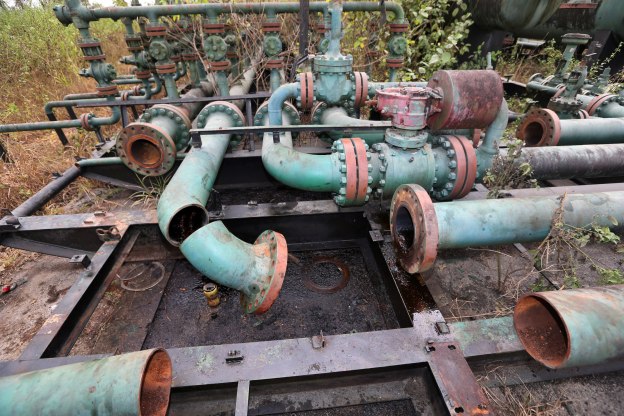
“At the moment, everyone is looking for work that is not OCA-funded,” one industry executive told Reuters on condition of anonymity, saying he expected an era of mergers and even bankruptcies. “It’s going to be like when the tide goes out at the beach and you suddenly find out who has been naked.”  New Pentagon priorities, many believe, will provide fewer openings for traditional private military contractors. Washington’s strategic “pivot” to the Asia-Pacific region will involve mainly warships or uniformed Marines, with little need for extra hired muscle.  Companies that take a broader approach and also provide logistic, intelligence and other functions, however, could have a much better decade.  “If your definition of a private security contractor is only someone with a gun at a checkpoint in Afghanistan, then yes, you may be seeing a decline,” says David Isenberg, an adjunct scholar at the Cato Institute in Washington.  “But if your definition is of private contractors performing tasks that would once have been done almost exclusively by government and military, it’s a very different picture.”

When it comes to conventional security, many in the industry believe the real growth will come from serving the private sector – particularly the oil, gas and mining industries.  Even with U.S. troops gone from Iraq and the number of government contractors down, some companies say they are finding strong demand from energy firms for protection, particularly around Basra in southern Iraq.  “We are as busy as ever and the need has never been greater,” said Pete Dordal, senior vice president at GardaWorld, a global risk management and security services firm. “I don’t want to say it’s a gold rush, but business is very good.”
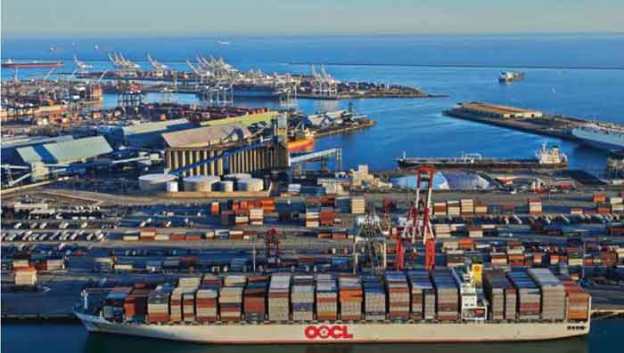
Private security firms, insiders say, evacuated the vast majority of the thousands of foreign nationals plucked from Libya as its civil war erupted early last year. Most were contracted by other private firms, although governments also used them heavily. London-based Control Risks told Reuters last year that China hired it directly to fly hundreds of its nationals out by airliner.

Some in the industry believe the number of contractors in Afghanistan could even rise with the planned departure of all U.S. combat troops in 2014, as mining companies exploit largely untapped mineral resources.  It’s a similar picture in Africa, where even in war-torn Somalia, a handful of companies are setting up shop. They often work with local tribes and other groups to safeguard visiting journalists, business representatives and prospectors.  Focusing on finding reliable local staff, some say, may ultimately prove both cheaper and more reliable than foreign hired guns. In Libya, some energy firms long turned to local desert tribes to protect their facilities – a tactic that proved remarkably effective during last year’s civil war after foreign security staff were swiftly withdrawn.
The trick may be to avoid having grandiose ambitions.  A handful of British firms in particular have made millions from providing on-board protection teams for Indian Ocean shipping. But those who have tried to go a step further and start their own private navies – hoping to escort merchant ships for cash – have struggled to find sufficient funding.

Within Somalia some credit the hiring of private contractors with Gulf state money to bolster the Coast Guard of the independent enclave of Puntland as being behind recent drops in pirate attacks. But it proved so controversial that funding was eventually pulled, leaving behind half-trained local fighters that some worry could prove a regional security threat in their own right.

Private contractors are increasingly central to operations such as the African Union’s AMISOM peacekeeping mission in Somalia, performing roles such as bomb disposal, logistics and technical support. ISOA and some experts argued they could do much, much more.  The few dozen foreign contractors from the now-defunct British firm “Executive Outcomes,” together with the hundreds of local fighters they trained, are often credited with turning the tide in Sierra Leone’s 2001 civil war.  But after years of discussions at the United Nations, few of the world’s governments appear enthusiastic about the idea of private security firms becoming the norm.  “In some places, contractors might be more effective than some of the troops from contributing nations,” said Edmond Mulet, U.N. Assistant Secretary General for Peacekeeping Operations.  “But the U.N. is simply the sum of its member states and some of them are opposed to the use of contractors in some roles,” he told the conference.

As Iraq and Afghan wars end, private security firms adapt, Reuters, Oct. 22, 2012

WTO and the Level Playing Field: Europe v. Russia

Europe’s trade chief threatened to take Russia to the World Trade Organization over a string of restrictive practices saying Moscow needed to play by the rules now it was a member of the global body.  Trade Commissioner Karel De Gucht singled out Russia’s ban on European live animal imports, plans to levy fees on imported vehicles, two anti-dumping cases and another trade defense case launched by Moscow against Europe in recent months.  In the same week that the European Commission opened an investigation into Russia’s Gazprom and China’s solar panel exports, De Gucht said the measures sent “the wrong signal”, Reuters reports.

“Membership of the WTO means a country is subject to the dispute settlement mechanism of that organization,” he told an EU-Russia seminar in Helsinki. “Russia should understand that Europe takes that mechanism very seriously and that we will not hesitate to enforce our rights where they are violated,” he added.

Russia joined the WTO last month after an 18-year wait. President Vladimir Putin said on Wednesday the country would use its membership to try to develop freer trade across the world, but he’ll also be hoping it will further boost the energy-driven $1.9 trillion economy.  De Gucht said Russia was violating WTO rules by keeping its markets closed to competitors.  “What these and other measures … have in common is that they affect products where significant market opening is due to take place under Russia’s WTO commitments,” De Gucht said.  “This is the wrong signal to send at a time when liberalization is supposed to be moving forward.”

Russia and the EU are deeply intertwined, with Europe relying heavily on Russian energy exports and Russians hungry for EU products and access to its 500 million consumers.  But the two sides argue over issues ranging from energy supplies, trade and market access to human rights. While relations are at times frosty, both refer to each other as “strategic partners” and meet for twice-yearly summits.  Negotiations between Russia and the EU towards closer economic and political ties have also stalled, and Brussels is concerned by Putin’s plan to develop a “Eurasian union” of ex-Soviet states, including Kazakhstan and Belarus.

EU warns Russia to play by WTO rules or face action, Reuters, Sept. 7, 2012

Russian President Vladimir Putin signed a decree giving the government the right to protect its natural gas-export monopoly, OAO Gazprom (GAZP), from an anti-trust inquiry by the European Union.  Putin’s measure bans strategic companies from disclosing information, disposing of assets or amending contracts without government approval in case claims are made by foreign states or entities, the president’s office said in an e-mailed statement from Moscow today. The Russian leader on Sept. 9 warned the EU, which relies on Russia for a quarter of its gas needs, that there would be “losses on both sides” if the issue isn’t resolved. He accused the 27-nation bloc of trying to shift responsibility for subsidizing former communist EU members onto Russia by forcing Gazprom to cut prices for customers in eastern and central Europe.

Excerpt, By Henry Meyer, Putin Moves to Protect Gazprom From EU Pricing Dispute, Bloomberg, Sept. 11, 2012

Nuclear Protests in India and Foreign-Funded NGOs

This week police in Kudankulam, in southern Tamil Nadu, fired at thousands of anti-nuclear protesters on the beach, killing a fisherman. The locals were opposing a new, Russian-designed, 2,000MW nuclear plant, India’s biggest, which is now being filled with fuel. The 2004 Indian Ocean tsunami killed over 10,000 Indians. Now fears grow of another big wave that could bring a Fukushima-style disaster.  Protesters also claim harassment, saying officials have slapped sedition notices against 8,000 who have dared speak out. Opposition has flared before. The state’s chief minister, Jayaram Jayalalitha, once backed the protests but has now swung in favour of the plant—perhaps betting that anger over power shortages trumps anti-nuclear outbursts.

The reaction of the national government, under the prime minister, Manmohan Singh, has been mixed. Committees of investigation called the plant safe. The High Court in Chennai heard, and ruled against, a petition by locals over safety. The Supreme Court will hear an appeal.  The government’s argument that politicians not protesters should decide the country’s energy mix is reasonable. But, twitchy at criticism, it veered off in suggesting opponents merely did the bidding of a foreign hand. Mr Singh, in an interview with a science magazine in February, blamed protests on NGOs, “mostly I think based in the United States”. A tough new law is in force, severely restricting foreign money going to local NGOs.  Mr Singh’s frostiness is best understood in the context of America’s moans that a civil-nuclear deal signed with India has not led to American investors getting energy contracts. Strict liability laws scare its private investors, whereas government-backed ones, such as Russians, feel more secure. Could Mr Singh be implying that American activists are stirring the trouble in Kudankulam because the plant is Russian-built?

Nuclear Power in India: The Kudankulam conundrum, Economist, Sept. 15,2012, at 39

Oil, Somalia and the Fnal Frontier

Canadian oil and gas exploration company Horn Petroleum said  it had encountered only water in a well it drilled in Somalia’s semi-autonomous Puntland region earlier this year, the first to be sunk in the country since civil war erupted two decades ago.  The well, Shabeel North-1, reached a total depth of 3,945 metres and is now being plugged, Horn said.  Because there were no shows of oil and gas, Horn Petroleum determined a second well it drilled earlier in the year, Shabeel-1, also was dry and said the company would not test it further for hydrocarbon potential

“While we were disappointed that we were not able to flow oil from the first two exploration wells in our Puntland (Somalia) drilling campaign, we remain highly encouraged that all of the critical elements exist for oil accumulations, namely a working petroleum system,” Horn’s chairman Keith Hill said in a statement.  While there has been speculation about finding oil in the anarchic Horn of Africa country for decades, it has no proven hydrocarbon reserves. The prospect of oil beneath Dharoor’s sandy, arid plains has elicited excitement among officials of the impoverished region. The companies estimated there could be as much as 300 million barrels of recoverable oil in the northern part of Somalia.  Somalia, mired in conflict since warlords in the early 1990s and then Islamist militants reduced the government to impotence, represents one of the final frontiers in Africa to be explored.

Horn Petroleum’s Somali wells come up dry, Reuters, Aug. 28, 2012

The Essence of Imperialism: Australia in the Pacific

Nor is it the first time Vanuatu has clashed with the Australian Federal Police (AFP). In 2004 its government closed down the AFP offices in the capital, Port Vila, and expelled officers, after allegations that they were spying and interfering with domestic politics. The AFP’s main concerns in Vanuatu have been over the country marketing itself vigorously as an international tax haven, and over the risk posed by the volatile Vanuatu Mobile Force, the paramilitary wing of the local police force. Protecting Australia’s national interests under the guise of so-called capacity-building can quickly lead to tensions.

The AFP’s activities in Vanuatu have been part of a broader expansion over the past decade of Australian policing across the Pacific. Peacekeeping missions to Timor-Leste since 1999 and to the Solomon Islands, beginning in 2003, boosted police numbers. In the past decade, the AFP has trebled in size and increased its budget fivefold. The AFP commissioner now has an influential role on the Australian cabinet’s national-security committee. In Australia most domestic policing is carried out by state police forces, leaving the federal force largely free, outside aboriginal communities in the Northern Territory, to focus on international deployments.

Their efforts have often led to accusations of heavy-handedness. In 2005 a mission to Papua New Guinea was abandoned after that country’s Supreme Court ruled that legal immunities granted to AFP officers were unconstitutional. In 2006 the Solomon Islands’ police chief, Shane Castles, an Australian, was sacked and declared an “undesirable immigrant” after a raid by his police officers on the office of the prime minister. That raid was connected with the AFP’s long-standing pursuit of the Solomon Islands’ then attorney-general, Julian Moti, on charges of sex with an underage girl. Mr Moti was deported to Australia in 2007, arrested and brought before the courts. In December 2011 the High Court threw the case out, finding that Australian officials had colluded in Mr Moti’s illegal deportation.

The Australian Federal Police in the Pacific: Booting out big brother, Economist, May 19, 2012, at 49