Despite a UN treaty banning mercenaries, their day is far from over. Some analysts think there are now more of them in Africa than ever. But can they ever be a force for good? ….In the years after most African countries gained independence, mercenaries were notorious for supporting secessionist movements and mounting coups.
Western governments have in the past winked at mercenary activity that served their commercial interests. But nowadays Russia is seen as the leading country egging on mercenaries to help it wield influence. It does so mainly through Wagner, ***whose founder, Yevgeny Prigozhin, is close to President Vladimir Putin.
Wagner has been hired to prop up a number of shaky African regimes. In Sudan it tried to sustain the blood-drenched dictatorship of Omar al-Bashir. He was ousted last year after big protests. In 2018 hundreds of Wagner men arrived in the Central African Republic to guard diamond mines, train the army and provide bodyguards for an embattled president, Faustin-Archange Touadéra. In Guinea, where Rusal, a Russian aluminium giant, has a big stake, Wagner has cosied up to President Alpha Condé, who has bloodily faced down protests against a new constitution that lets him have a third term in office. In Libya, despite a un arms embargo, Wagner is reported to have deployed 800-1,200 operatives in support of a rebel general, Khalifar Haftar, who has been trying to defeat the UN-recognised government….
Mercenaries have three main advantages over regular armies. First, they give plausible deniability. Using them, a government such as Russia’s can sponsor military action abroad while pretending not to. Second, they tend to be efficient, experienced, nimble and flexible. Third, they are cheaper than regular armies. Whereas soldiers receive lifelong contracts and pensions, mercenaries are often paid by the job..
Armed ecoguards partly funded by the conservation group WWF to protect wildlife in the Republic of the Congo beat up and intimidated hundreds of Baka pygmies living deep in the rainforests, according to a UNDP investigation. A team of investigators sent to northern Congo by the UN Development Programme (UNDP) to assess allegations of human rights abuses gathered “credible” evidence from different sources that hunter-gatherer Baka tribespeople living close to a proposed national park had been subjected to violence and physical abuse from the guards over years, according to a leaked draft of the report obtain by the Guardian in February 2020.
The allegations, reported to the UN in 2019, included Baka tribespeople being beaten by the ecoguards, the criminalisation and illegal imprisonment of Baka men, summary evictions from the forest, the burning and destruction of property, and the confiscation of food. In addition, the UNDP’s social and environmental compliance unit heard how the ecoguards allegedly treated the Baka men as “sub-human” and humiliated some Baka women by forcing them to take off their clothes and “be like naked children”.
The report says: “These beatings occur when the Baka are in their camps along the road as well as when they are in the forest. They affect men, women and children. Other reports refer to ecoguards pointing a gun at one Baka to force him to beat another and guards taking away the machetes of the Baka, then beating them with those machetes.
“There are reports of Baka men having been taken to prison and of torture and rape inside prison. The widow of one Baka man spoke about her husband being so ill-treated in prison that he died shortly after his release. He had been transported to the prison in a WWF-marked vehicle.”
The draft report, dated 6 January 2020, adds: “The violence and threats are leading to trauma and suffering in the Baka communities. It is also preventing the Baka from pursuing their customary livelihoods, which in turn is contributing to their further marginalisation and impoverishment.”
The $21.4m (£16.6m) flagship Tridom 11 project in northern Congo set up in 2017 with money from the WWF, UNDP, the European commission, US and Congolese governments and the Global Environment Facility, as well as logging and palm oil conglomerates, includes as its centrepiece a 1,456 sq km area of forest known as Messok Dja.
This global biodiversity hotspot is rich in wildlife, including elephants, gorillas and chimpanzees, and has been lived in and used for the hunting of small game by the semi-nomadic Baka tribes for millennia. The WWF has pressed for it to be designated a protected area, or national park, for 10 years, on the grounds that it will reduce wildlife crime and act as an ecological corridor linking national parks in neighbouring Cameroon.
The WWF says the ecoguards were employed by the Congolese government, but admits contributing to their training and wages along with other funders through the Tridom interzone project (ETIC), a Congo government collaboration with WWF. It adds that there are no legal restrictions preventing Baka using the forests….The investigators also identified multiple failures of the UNDP to adhere to human rights policies and standards, and said little consideration had been given to the impact of the project on the Baka peoples….Investigators also said they found no evidence that the UNDP had taken into account the risk of co-financing the project with palm oil and logging companies whose work by its nature threatens large-scale biodiversity loss.
The report strongly criticises the way conservation is practised in central Africa. “The goal of establishing Messok Dja as a protected area was pursued by following the established patterns of conservation projects in the Congo Basin, which largely exclude indigenous peoples and treat them as threats rather than partners,” it says.
Excerpts from John Vidal, Armed ecoguards funded by WWF ‘beat up Congo tribespeople’, Guardian, Feb, 3, 2020
During the Gulf war of 1991, no fewer than 117,000 landmines were showered over Kuwait and Iraq by American planes. This barely dented the Pentagon’s vast stockpile of 19m. Just under a quarter of the devices scattered in the path of Saddam Hussein’s army were anti-personnel landmines (APLs), the sort that would soon be banned by the Anti-Personnel Mine Ban Convention of 1997, widely known as the Ottawa treaty. The Ottawa treaty has 164 parties, all of which ban the production and use of APL (anti-vehicle mines, among others, are still allowed). America is not among them. When the treaty was finalised, America declined to join (other holdouts include China, Cuba, Iran, Russia and Syria).
Landmines have a number of military uses. They are typically used to channel opposing armies away from particular areas and into others. A minefield can force an enemy to turn, which exposes their flank and makes them especially vulnerable, says Vincent Brooks, a retired general who commanded American forces in South Korea in 2016-18. They can also be used to “canalise” the enemy, channelling attackers into unfavourable terrain, where they may be more exposed to concentrated artillery fire. …But landmines are reviled weapons, and not without good reason. “They’re indiscriminate,”… Landmine casualties have fallen sharply over the years, but at least 2,000 people were killed or wounded by manufactured or improvised APLS in 2018, according to data collected by the Landmine and Cluster Munition Monitor, a research group. Laying a mine can cost a few dollars; clearing one can require $1,000.
The Pentagon has an answer to this. It says that it only possesses, would only produce and would only use “non-persistent” landmines with the capacity to self-destruct or, failing that, to self-deactivate, with a battery losing its charge, within 30 days (some models can blow themselves up in as little as a few hours). It claims that such features are remarkably reliable. …“When the technology is brought into the battlefield, we see that the actual data doesn’t match with the promises,” says Erik Tollefsen, head of Weapons Contamination for the International Committee of the Red Cross. He says that impressive reliability rates are usually derived from tests in sterile conditions, and prove wildly exaggerated in practice. In 2002 a report by the Government Accountability Office, an agency that audits the federal government, noted that during the Gulf war one in 10,000 mines were expected to remain active, which would have produced 12 duds. The actual figure was almost 2,000.
Others argue that there are perfectly viable alternatives to APLs….In particular, remotely activated mines (rather than victim-activated ones) are allowed under the treaty if the person triggering the device has the would-be victim in sight, although this makes them harder to use at range and hostage to a breakdown of communications. In 2018 Finland—a late and reluctant signatory to Ottawa, given its long border with Russia—said it was developing a new, remote-controlled variety of anti-personnel “bounding” mine that leaps into the air and fires metal bullets downward.
Excerpts from Ethical Landmines: Watch Your Step, Economist, Feb. 15, 2020
It is not just DNA that people scatter to the wind as they go about their business. They shed a whole range of other chemicals as well, in their breath, their urine, their faeces and their sweat. Collectively, these molecules are referred to as metabolites….
The most common way of analysing metabolite content is gas chromatography-mass spectrometry. This technique sorts molecules by their weight, producing a pattern of peaks that correspond to different substances….There are, however, a lot of information sources out there, in the form of publicly available metabolite databases. The databases themselves are getting better, too…. A study just published by Feliciano Priego-Capote at University of Cordoba, in Spain, for example, shows it is possible to extract much meaningful information from even a dried-up drop of sweat. “The day is coming soon”, observes Cecil Lewis, a molecular anthropologist at University of Oklahoma, who is studying the matter, “when it will be possible to swab a person’s desk, steering wheel or phone and determine a wide range of incredibly private things about them….
The police may be tempted to push the boundaries as well. The fourth amendment to America’s constitution protects against unwarranted searches and seizure of evidence. This means it is hard to force someone to give a sample. But if obtaining such merely requires taking a swab of a surface in a public place—perhaps a keyboard someone has just used—the 4th amendment is unlikely to apply.
That is not necessarily wrong, if it means more criminals are caught and convicted. But it needs to be thought about carefully, because many metabolites are sticky. Cocaine is a case in point. Studies have shown that as many as two-thirds of the dollar bills in circulation in America carry traces of this substance, which might thus end up on the fingertips of the innocent, as well as the guilty.
Excerpts from Metabolites and You, Economist, Feb. 15, 2019
Shrimp farms tend to occupy coastal land that used to be covered in mangroves. Draining mangrove swamps to make way for aquaculture is even more harmful to the atmosphere than felling rainforest to provide pasture for cattle. A study conducted in 2017 by cifor, a research institute, found that in both these instances, by far the biggest contribution to the carbon footprint of the resulting beef or shrimp came from the clearing of the land. As a result, CIFOR concluded, a kilo of farmed shrimp was responsible for almost four times the greenhouse-gas emissions of a kilo of beef.
Eating wild shrimp is not much better: catches are declining around the world as a result of overfishing. Trawlers can pull as much as 20kg of by-catch from the sea for every kilo of shrimp. And reports abound of the appalling treatment of workers on shrimp-fishing vessels, including human-trafficking and child labour. When UN investigators interviewed a sample of Cambodians who had escaped virtual slavery on Thai fishing boats, 59% of them reported seeing fellow crew-members murdered by the captain.
Most of the world’s shrimp and prawns come from Asia. The continent accounts for 85% of the farmed sort and 74% of the wild catch. Global sales were around $45bn in 2018 and are thought to be growing by about 5% a year. But the industry is controversial, not just because of its part in global warming. Razing mangroves also leaves coastal regions vulnerable to flooding. Many shrimp farms are unsanitary; ponds often have to be abandoned after a few years because of problems with disease and pollution.
All this has given one Singaporean company a brain wave. “Farmed shrimps are often bred in overcrowded conditions and literally swimming in sewage water. We want to disrupt that—to empower farmers with technology that is cleaner and more efficient,” says Sandhya Sriram, one of the founders of Shiok Meats. The firm aims to grow artificial shrimp, much as some Western firms are seeking to create beef without cows. The process involves propagating shrimp cells in a nutrient-rich solution. Ms Sriram likens it to a brewery, disdaining the phrase “lab-grown”….The hitch is that producing shrimp in this way currently costs $5,000 a kilo.
Excerpts from How artificial shrimps could change the world, Economist, Feb. 28, 2020
Before pulling the trigger, a sniper planning to assassinate an enemy operative must be sure the right person is in the cross-hairs. Western forces commonly use software that compares a suspect’s facial features or gait with those recorded in libraries of biometric data compiled by police and intelligence agencies. Such technology can, however, be foiled by a disguise, head-covering or even an affected limp. For this reason America’s Special Operations Command (SOC), which oversees the units responsible for such operations in the various arms of America’s forces, has long wanted extra ways to confirm a potential target’s identity. Responding to a request from soc, the Combating Terrorism Technical Support Office (CTTSO), an agency of the defence department, has now developed a new tool for the job.
This system, dubbed Jetson, is able to measure, from up to 200 metres away, the minute vibrations induced in clothing by someone’s heartbeat. Since hearts differ in both shape and contraction pattern, the details of heartbeats differ, too. The effect of this on the fabric of garments produces what Ideal Innovations, a firm involved in the Jetson project, calls a “heartprint”—a pattern reckoned sufficiently distinctive to confirm someone’s identity.
To measure heartprints remotely Jetson employs gadgets called laser vibrometers. These work by detecting minute variations in a laser beam that has been reflected off an object of interest. They have been used for decades to study things like bridges, aircraft bodies, warship cannons and wind turbines—searching for otherwise-invisible cracks, air pockets and other dangerous defects in materials. However, only in the past five years or so has laser vibrometry become good enough to distinguish the vibrations induced in fabric by heartprints….
Candice Tresch, a spokeswoman for the cttso…. cannot discuss the process by which heartprint libraries might be built up in the first place. One starting point, presumably, would be to catalogue the heartbeats of detainees in the way that fingerprints and dna samples are now taken routinely.
Excerpts from Personal identificationPeople can now be identified at a distance by their heartbeat, Economist, Jan 23, 2020
Substantial amounts of raw materials will be required to build new low-carbon energy devices and infrastructure. Such materials include cobalt, copper, lithium, cadmium, and rare earth elements (REEs)—needed for technologies such as solar photovoltaics, batteries, electric vehicle (EV) motors, wind turbines, fuel cells, and nuclear reactors…A majority of the world’s cobalt is mined in the Democratic Republic of Congo (DRC), a country struggling to recover from years of armed conflict…Owing to a lack of preventative strategies and measures such as drilling with water and proper exhaust ventilation, many cobalt miners have extremely high levels of toxic metals in their body and are at risk of developing respiratory illness, heart disease, or cancer.
In addition, mining frequently results in severe environmental impacts and community dislocation. Moreover, metal production itself is energy intensive and difficult to decarbonize. Mining for copper,and mining for lithium has been criticized in Chile for depleting local groundwater resources across the Atacama Desert, destroying fragile ecosystems, and converting meadows and lagoons into salt flats. The extraction, crushing, refining, and processing of cadmium can pose risks such as groundwater or food contamination or worker exposure to hazardous chemicals. REE extraction in China has resulted threatens rural groundwater aquifers as well as rivers and streams.
Although large-scale mining is often economically efficient, it has limited employment potential, only set to worsen with the recent arrival of fully automated mines. Even where there is relative political stability and stricter regulatory regimes in place, there can still be serious environmental failures, as exemplified by the recent global rise in dam failures at settling ponds for mine tailings. The level of distrust of extractive industries has even led to countrywide moratoria on all new mining projects, such as in El Salvador and the Philippines.
Traditional labor-intensive mechanisms of mining that involve less mechanization are called artisanal and small-scale mining (ASM). Although ASM is not immune from poor governance or environmental harm, it provides livelihood potential for at least 40 million people worldwide…. It is also usually more strongly embedded in local and national economies than foreign-owned, large-scale mining, with a greater level of value retained and distributed within the country. Diversifying mineral supply chains to allow for greater coexistence of small- and large-scale operations is needed. Yet, efforts to incorporate artisanal miners into the formal economy have often resulted in a scarcity of permits awarded, exorbitant costs for miners to legalize their operations, and extremely lengthy and bureaucratic processes for registration….There needs to be a focus on policies that recognize ASM’s livelihood potential in areas of extreme poverty. The recent decision of the London Metals Exchange to have a policy of “nondiscrimination” toward ASM is a positive sign in this regard.
A great deal of attention has focused on fostering transparency and accountability of mineral mining by means of voluntary traceability or even “ethical minerals” schemes. International groups, including Amnesty International, the United Nations, and the Organisation for Economic Co-operation and Development, have all called on mining companies to ensure that supply chains are not sourced from mines that involve illegal labor and/or child labor.
Traceability schemes, however, may be impossible to fully enforce in practice and could, in the extreme, merely become an exercise in public relations rather than improved governance and outcomes for miners…. Paramount among these is an acknowledgment that traceability schemes offer a largely technical solution to profoundly political problems and that these political issues cannot be circumvented or ignored if meaningful solutions for workers are to be found. Traceability schemes ultimately will have value if the market and consumers trust their authenticity and there are few potential opportunities for leakage in the system…
Extended producer responsibility (EPR) is a framework that stipulates that producers are responsible for the entire lifespan of a product, including at the end of its usefulness. EPR would, in particular, shift responsibility for collecting the valuable resource streams and materials inside used electronics from users or waste managers to the companies that produce the devices. EPR holds producers responsible for their products at the end of their useful life and encourages durability, extended product lifetimes, and designs that are easy to reuse, repair, or recover materials from. A successful EPR program known as PV Cycle has been in place in Europe for photovoltaics for about a decade and has helped drive a new market in used photovoltaics that has seen 30,000 metric tons of material recycled.
Benjamin K. Sovacool et al., Sustainable minerals and metals for a low-carbon future, Science, Jan. 3, 2020
The decades-overdue clean-up of Ogoniland, after years of oil spills from the pipelines that criss-cross the region, is finally under way. But the billion-dollar project — funded by Nigeria’s national oil company and Royal Dutch Shell — is mired in allegations of corruption and mismanagement. “We are not pleased with what is going on,” said Mike Karikpo, an attorney with Friends of the Earth International and a member of the Ogoniland team that negotiated the creation of the Hydrocarbon Pollution Remediation Project (Hyprep), the government body running the clean-up…
Nigeria is Africa’s biggest oil producer, pumping out about 1.8m barrels per day. It provides roughly 90 per cent of the country’s foreign exchange and more than half of government revenues. The clean-up began only the summer 2019, about a year after the first of an expected five tranches of $180m in funding was released to Hyprep. Mr Karikpo complains of a lack of transparency, alleging that planning, budgeting and awarding of contracts took place behind closed doors. Work started at the height of the rainy season, washing away much of the progress as contaminated soil collected for treatment was swept back into the environment…
Ogoniland, like the broader Niger Delta, has become more polluted and development has stalled, with little to show for the billions of dollars in crude that has been extracted. Critics have now accused Hyprep of being, like much of Nigeria’s oil sector, a vehicle for political patronage and graft. This year 16 companies were awarded contracts for the first phase of the clean-up, which — to the consternation of critics — focuses on the least contaminated parts of Ogoniland.
An investigation by the news site Premium Times found that almost all the companies were set up for other purposes, including poultry farming, car sales and construction, and had no experience of tackling oil pollution. Meanwhile, insiders have questioned Hyprep’s capacity to handle such a massive project…
Shell and Hyprep have rejected the criticism. Shell, which closed its Ogoniland operations in 1993, said it accepted responsibility “for spills arising from its operations”, but that some of the blame for the pollution must go to thieves who illegally tapped into pipelines and makeshift refining operations in the Delta’s creeks
Excerpts from Craft and Mismanagement Taint Nigeria’s Oil CleanUp, Financial Times, Dec. 29, 2019
Jeff Kosseff’s “The Twenty-Six Words That Created the Internet” (2019) explains how the internet was created. The 26 words are these: “No provider or user of an interactive computer service shall be treated as the publisher or speaker of any information provided by another information content provider.” They form Section 230 of the Communications Decency Act, itself a part of the Telecommunications Act of 1996. Section 230 shields online platforms from legal liability for content generated by third-party users. Put simply: If you’re harassed by a Facebook user, or if your business is defamed by a Yelp reviewer, you might be able to sue the harasser or the reviewer, assuming you know his or her identity, but don’t bother suing Facebook or Yelp. They’re probably immune. That immunity is what enabled American tech firms to become far more than producers of content (the online versions of newspapers, say, or company websites) and to harness the energy and creativity of hundreds of millions of individual users. The most popular sites on the web—YouTube, Twitter, Facebook, eBay, Reddit, Wikipedia, Amazon—depend in part or in whole on user-generated content…
Because of section 230, the U.S. was able to cultivate online companies in ways that other countries—even countries in the developed world—could not….American law’s “internet exceptionalism,” as it’s known, is the source of mind-blowing technological innovation, unprecedented economic opportunity and, a great deal of human pain. The book chronicles the plights of several people who found themselves targeted or terrorized by mostly anonymous users… Each of them sued the internet service providers or websites that facilitated these acts of malice and failed to do anything about them when alerted. And each lost—thanks to the immunity afforded to providers by Section 230.
Has the time come to delete the section?
Excerpt from Barton Swaim, ‘The Twenty-Six Words That Created the Internet’ Review: Protecting the Providers, WSJ, Aug. 19, 2019
The internet is the “spiritual home” of hundreds of millions of Chinese people. So China’s leader, Xi Jinping, described it in 2016. He said he expected citizens to help keep the place tidy. Many have taken up the challenge. In December 2019 netizens reported 12.2m pieces of “inappropriate” content to the authorities—four times as many as in the same month of 2015. The surge does not indicate that the internet in China is becoming more unruly. Rather, censorship is becoming more bottom-up.
Officials have been mobilising people to join the fight in this “drawn-out war”, as a magazine editor called it in a speech in September to Shanghai’s first group of city-appointed volunteer censors. “Internet governance requires that every netizen take part,” an official told the gathering. It was arranged by the city’s cyber-administration during its first “propaganda month” promoting citizen censorship. The 140 people there swore to report any online “disorder”…
Information-technology rules, which took effect on December 1st, 2019 oblige new subscribers to mobile-phone services not only to prove their identities, as has long been required, but also to have their faces scanned. That, presumably, will make it easier for police to catch the people who post the bad stuff online.
Excerpt from The Year of the Rat-fink: Online Censorship, Economist, Jan 18, 2020
A salty substance called “brine,” is a naturally occurring waste product that gushes out of America’s oil-and-gas wells to the tune of nearly 1 trillion gallons a year, enough to flood Manhattan, almost shin-high, every single day. At most wells, far more brine is produced than oil or gas, as much as 10 times more. Brine collects in tanks, and workers pick it up and haul it off to treatment plants or injection wells, where it’s disposed of by being shot back into the earth…
The Earth’s crust is in fact peppered with radioactive elements that concentrate deep underground in oil-and-gas-bearing layers. This radioactivity is often pulled to the surface when oil and gas is extracted — carried largely in the brine…
Radium, typically the most abundant radionuclide in brine, is often measured in picocuries per liter of substance and is so dangerous it’s subject to tight restrictions even at hazardous-waste sites. The most common isotopes are radium-226 and radium-228, and the Nuclear Regulatory Commission requires industrial discharges to remain below 60 for each. Some brine samples registered combined radium levels above 3,500, and one was more than 8,500. “It’s ridiculous that those who haul brine are not being told what’s in their trucks,” says John Stolz, Duquesne’s environmental-center director. “And this stuff is on every corner — it is in neighborhoods. Truckers don’t know they’re being exposed to radioactive waste, nor are they being provided with protective clothing.
“Breathing in this stuff and ingesting it are the worst types of exposure,” Stolz continues. “You are irradiating your tissues from the inside out.” The radioactive particles fired off by radium can be blocked by the skin, but radium readily attaches to dust, making it easy to accidentally inhale or ingest. Once inside the body, its insidious effects accumulate with each exposure. It is known as a “bone seeker” because it can be incorporated into the skeleton and cause bone cancers called sarcomas. It also decays into a series of other radioactive elements, called “daughters.” The first one for radium-226 is radon, a radioactive gas and the second-leading cause of lung cancer in the U.S. Radon has also been linked to chronic lymphocytic leukemia.
Oil fields across the country — from the Bakken in North Dakota to the Permian in Texas — have been found to produce brine that is highly radioactive. “All oil-field workers,” says Fairlie, “are radiation workers.” But they don’t necessarily know it.
The advent of the fracking boom in the early 2000s expanded the danger, saddling the industry with an even larger tidal wave of waste to dispose of, and creating new exposure risks as drilling moved into people’s backyards. “In the old days, wells weren’t really close to population centers. Now, there is no separation,” says City University of New York public-health expert Elizabeth Geltman. In the eastern U.S. “we are seeing astronomically more wells going up,” she says, “and we can drill closer to populations because regulations allow it.” As of 2016, fracking accounted for more than two-thirds of all new U.S. wells, according to the Energy Information Administration. There are about 1 million active oil-and-gas wells, across 33 states, with some of the biggest growth happening in the most radioactive formation — the Marcellus. …
There is little public awareness of this enormous waste stream, the disposal of which could present dangers at every step — from being transported along America’s highways in unmarked trucks; handled by workers who are often misinformed and underprotected; leaked into waterways; and stored in dumps that are not equipped to contain the toxicity. Brine has even been used in commercial products sold at hardware stores and is spread on local roads as a de-icer…
But a set of recent legal cases argues a direct connection to occupational exposure can be made… Pipe cleaners, welders, roughnecks, roustabouts, derrickmen, and truck drivers hauling dirty pipes and sludge all were exposed to radioactivity without their knowledge and suffered a litany of lethal cancers. An analysis program developed by the Centers for Disease Control and Prevention determined with up to 99 percent certainty that the cancers came from exposure to radioactivity on the job, including inhaling dust and radioactivity accumulated on the workplace floor, known as “groundshine.”
“Almost all materials of interest and use to the petroleum industry contain measurable quantities of radionuclides,” states a never-publicly released 1982 report by the American Petroleum Institute, the industry’s principal trade group, passed to Rolling Stone by a former state regulator. Rolling Stone discovered a handful of other industry reports and articles that raised concerns about liability for workers’ health. A 1950 document from Shell Oil warned of a potential connection between radioactive substances and cancer of the “bone and bone marrow.” In a 1991 paper, scientists with Chevron said, “Issues such as risk to workers or the general public…must be addressed.”
“There is no one federal agency that specifically regulates the radioactivity brought to the surface by oil-and-gas development,” an EPA representative says. In fact, thanks to a single exemption the industry received from the EPA in 1980, the streams of waste generated at oil-and-gas wells — all of which could be radioactive and hazardous to humans — are not required to be handled as hazardous waste. In 1988, the EPA assessed the exemption — called the Bentsen and Bevill amendments, part of the Resource Conservation and Recovery Act — and claimed that “potential risk to human health and the environment were small,” even though the agency found concerning levels of lead, arsenic, barium, and uranium, and admitted that it did not assess many of the major potential risks. Instead, the report focused on the financial and regulatory burdens, determining that formally labeling the “billions of barrels of waste” as hazardous would “cause a severe economic impact on the industry.”…
There is a perception that because the radioactivity is naturally occurring it’s less harmful (the industry and regulators almost exclusively call oil-and-gas waste NORM — naturally occurring radioactive material, or TENORM for the “technologically enhanced” concentrations of radioactivity that accumulate in equipment like pipes and trucks.”…
In Pennsylvania, regulators revealed in 2012 that for at least six years one hauling company had been dumping brine into abandoned mine shafts. In 2014, Benedict Lupo, owner of a Youngstown, Ohio, company that hauled fracking waste, was sentenced to 28 months in prison for directing his employees to dump tens of thousands of gallons of brine into a storm drain that emptied into a creek that feeds into the Mahoning River. While large bodies of water like lakes and rivers can dilute radium, Penn State researchers have shown that in streams and creeks, radium can build up in sediment to levels that are hundreds of times more radioactive than the limit for topsoil at Superfund sites. Texas-based researcher Zac Hildenbrand has shown that brine also contains volatile organics such as the carcinogen benzene, heavy metals, and toxic levels of salt, while fracked brine contains a host of additional hazardous chemicals. “It is one of the most complex mixtures on the planet,” he says…
“There is nothing to remediate it with,” says Avner Vengosh, a Duke University geochemist. “The high radioactivity in the soil at some of these sites will stay forever.” Radium-226 has a half-life of 1,600 years. The level of uptake into agricultural crops grown in contaminated soil is unknown because it hasn’t been adequately studied.
“Not much research has been done on this,” says Bill Burgos, an environmental engineer at Penn State who co-authored a bombshell 2018 paper in Environmental Science & Technology that examined the health effects of applying oil-field brine to roads. Regulators defend the practice by pointing out that only brine from conventional wells is spread on roads, as opposed to fracked wells. But conventional-well brine can be every bit as radioactive, and Burgos’ paper found it contained not just radium, but cadmium, benzene, and arsenic, all known human carcinogens, along with lead, which can cause kidney and brain damage.
Brine as dust suppressant
Ohio, because of its geology, favorable regulations, and nearness to drilling hot spots in the Marcellus, has become a preferred location for injection wells. Pennsylvania has about a dozen wells; West Virginia has just over 50. Ohio has 225. About 95 percent of brine was disposed of through injection as of 2014. Government scientists have increasingly linked the practice to earthquakes, and the public has become more and more suspicious of the sites. Still, the relentless waste stream means new permits are issued all the time, and the industry is also hauling brine to treatment plants that attempt to remove the toxic and radioactive elements so the liquid can be used to frack new wells.
Excerpts from America’s Radioactive Secret, Rolling Stone Magazine, Jan. 21, 2020
Thirty years in the making, RTS,S, the malaria vaccine, also known by its brand name, Mosquirix, targets Plasmodium falciparum, the most common and most lethal of four malaria parasite species. It is an answer to a dire need. After decades of declining numbers of cases and deaths, the fight against malaria has stalled. Parasites resistant to the most widely used treatment, called artemisinin-based combination therapy, are spreading, while malaria mosquitoes are increasingly resistant to insecticides. And yet the rollout in Malawi and in two other African countries, isn’t quite the breakthrough the field has been waiting for. Mosquirix’s efficacy and durability are mediocre: Four doses offer only 30% protection against severe malaria, for no more than 4 years. Some experts question whether that is worth the cost and effort.
The biggest concerns, however, are about the vaccine’s safety. In the largest trial, children who received Mosquirix had a risk of meningitis 10 times higher than those who received a control vaccine. Mosquirix may not have triggered the meningitis cases—there are other possible explanations—but the possible risk worried the global health community so much that, rather than rolling out the vaccine across Africa, the World Health Organization (WHO) has decided to set up a pilot in Malawi, Ghana, and Kenya in which the vaccine will be given to hundreds of thousands of children.
The Malaria parasite is a challenging target for a vaccine. It has a complex life cycle that begins when an infected female mosquito bites a human and spits Plasmodium cells called sporozoites into the bloodstream. They multiply in the liver, emerge as another cell type named merozoites, invade red blood cells, and continue to multiply. The blood cells burst, causing fever, headache, chills, muscle aches, and often anemia. (They also flood the blood with gametocytes—the parasite’s reproductive cells—ready to be picked up by the next mosquito.) Along the way, the parasite frequently changes its surface proteins. That makes it an elusive target for the immune system, and for a vaccine.
Mosquirix, developed in the 1980s by a team in Belgium at SmithKline-RIT, now part of GlaxoSmithKline (GSK), stimulates an immune response against a protein that occurs only on the sporozoites’ surface. To bolster the response, the research team fused the vaccine protein with a hepatitis B surface protein and added an adjuvant….
A relative outside, Danish anthropologist and vaccine researcher Peter Aaby of the Bandim Health Project in Guinea-Bissau, offered another argument against introduction. After reanalyzing the data from the biggest trial, Aaby discovered that although the vaccinated children had malaria less often, they did not die less often. Among girls, overall mortality was almost doubled, Aaby told his colleagues at the meeting. “This vaccine is killing girls,” he recalls saying. Whereas WHO expects the vaccine to save one life per 200 children vaccinated, Aaby believes one in 200 will die as a result of it; he predicts “a nightmare.”
Aaby and Christine Stabell Benn, a global health professor at the University of Southern Denmark, have an explanation. The married couple has studied routine vaccinations in Africa for decades and believes vaccines can “train” the immune system in ways that don’t affect just the target disease. Vaccines that contain a living, weakened pathogen—such as the vaccines against measles and tuberculosis—strengthen the immune system generally, Aaby and Stabell Benn say, making recipients better able to fight off other infections. But vaccines that contain a killed pathogen or only bits of it weaken the immune system, their theory goes—especially in girls, because their immune systems seem to respond more strongly to vaccines in general.
Excerpts from Jop de Vrieze, A Shot of Hope, Science Magazine, Nov. 29, 2019, at 1063
An increase in the number of teens and young adults diagnosed with a rare cancer in the southwest corner of Pennsylvania has caused the state to look for a link between fracking and the disease.The investigation was sparked by a spate of Ewing’s sarcoma cases in and around Washington County, which has more Marcellus Shale gas wells than any other county in the state. In April 2019 state Department of Health found that the cases didn’t constitute a statistically significant cancer cluster. But affected families and other residents lobbied the governor for an investigation.
The region is home to coal mining, oil drilling, chemical plants and a former uranium-processing facility. Each year, about 250 children in the U.S. are diagnosed with Ewing’s sarcoma, a rare cancer of the bone or surrounding soft tissue, according to the National Institutes of Health. In four counties in southwest Pennsylvania, 31 people were diagnosed with Ewing’s sarcoma from 2006 through 2017, according to state cancer data. That is a roughly 40% increase from the period from 1995 through 2005, when 22 people in the same area were diagnosed, according to state data. Residents point to two additional cases in 2018. Most troubling to many local residents is that the six cases in Washington County since 2008 occurred in one school district.
Other communities are studying potential health risks of fracking. In October 2019, Colorado regulators said they would tighten regulation of drilling after a state-funded study found that people living within 2,000 feet of oil-and-gas wells could have, in worst-case scenarios, an elevated risk for infrequent, short-term health effects such as nosebleeds and headaches from emissions.
Evelyn Talbott, a professor of epidemiology at the University of Pittsburgh, said Pennsylvania investigators should look at residents’ potential exposures to chemicals and to radiation from natural-gas sites. She said they also should look at the sealed waste site of the defunct uranium-processing plant…Since Pennsylvania’s first Marcellus Shale well was drilled in Washington County in 2003, more than 1,800 wells have been fracked there. Compressor stations, processing plants and pipelines have followed. Some residents worry that pollutants such as benzene from air emissions or radium from wastewater could affect people’s health.
According to a report, published on December 4th, 2019 by the World Health Organization, there were 228 million cases of malaria in 2018, which resulted in 400,000 deaths. Most victims were young children in Africa. That is a far cry from targets set in 2015 for the near-elimination of malaria by 2030. These targets depended on a $6 billion a year being poured into malaria-control efforts. Funding in recent years, however, has been about $3 billion a year. More money would surely help. But substantial gains can be made by doing things more efficiently—something at which malaria programmes have been dismal.
Stopping malaria relies on three things: insecticide-treated bed nets to prevent nocturnal mosquito bites; the spraying of homes with insecticides; and the treating of pregnant women and children with rounds of preventive medication. These are all “imperfect tools, often used imperfectly”, says Pedro Alonso, head of the malaria programme at the World Health Organisation. Countries usually deploy the same package of measures everywhere, even though infection rates and their seasonal patterns vary a lot between regions, and particularly between cities and the countryside. Transmission reaches a peak in the rainy season, when mosquitoes are abundant, so preventive mass-treatment of children then can make a huge difference. Regional variations are particularly pronounced in large countries like Nigeria—a place that, by itself, accounts for a quarter of the world’s malaria cases.
The typical approach of a malaria-control programme is to bombard a country with bed nets and then use whatever cash remains for sporadic rounds of preventive medication. But in many big cities, such as Dar es Salaam and Nairobi, cases are few and far between, so deploying nets there is a waste. Overspending on nets at the expense of other things happens partly because nets are easy to count—a feature that aid programmes are particularly fond of. Results which cannot be attributed directly to money a donor spends tend to fall further down that donor’s list of priorities. This kind of reasoning tips the scales, because foreign aid accounts for two-thirds of the money spent on malaria.
Excerpts from Tropical disease: Malaria infections have stopped falling, Economist, Dec. 7, 2019
Many African governments have unwisely bought biometric proprietary systems of private companies, meaning that they are forced to go back to the seller for maintenance, upgrades and new components. That can be expensive. When Nigeria wanted to use its own card-printing machines, the firm that had sold it software tried to insist that Nigeria buy its machines as well… They eventually got help from Pakistan, which had software that worked on any machine.
But there are signs of change coming from within the industry itself, spurred by developments in an entirely different part of the world: India. Like Africa, it is vast, poor and home to more than a billion people. Yet as a single country India has tremendous negotiating power. When India developed its “Aadhaar” identity programme it invited leading firms to bid—but with the caveat that they provide open-source software, or code that can be examined and changed by others. This allowed engineers to knit together different bits of a system such as databases, enrollment software, fingerprint scanners and so on. The suppliers agreed because they did not want to miss out on the biggest identity bonanza the world had ever seen. Moreover, India’s spending led to a big increase in production, which caused prices to fall across the industry.
Even as governments think about the technical problems of recording identity, they also need to grapple with the far more consequential ones around rights, governance and privacy. The starkest warning of the misuse of identity was in the Rwandan genocide, where ID papers listed ethnicity, making it easy to target Tutsis. Since data on religion and ethnicity are not needed to provide services, governments should not be hoovering it up.
States should also be wary of denying people their rights by creating a class of citizens without papers. In Kenya, for example, the government wants everyone to register for ID cards, but it discriminates against members of the Nubian minority by forcing them to appear before a security panel to prove their nationality. Modern identity systems promise to bring many benefits to Africa. But as they proliferate, so too will the temptation for politicians to misuse them
Excerpts from Identity Documentation in Africa: Papers Please, Economist, Dec. 7, 2019
Having fallen during the global financial crisis, production of hard drugs is now as high as it has ever been… In the rich world, too, drug use is climbing again… And in countries from eastern Europe to Asia, demand for recreational drugs is growing with incomes. Most of these drugs have to be smuggled from places such as Afghanistan and Colombia to users, mostly in America and Europe.
Police from Britain and the Netherlands have cracked down on shipments through the Caribbean, so traffickers are moving their product through west Africa instead. That means that the violence and corruption that has long afflicted Latin America is spreading….The increase in production of drugs “probably affects Africa more than anywhere else”, says Mark Shaw of the Global Initiative against Transnational Organised Crime, a think-tank, because many African states are fragile. Smugglers easily bypass or co-opt their institutions and officials. Drug markets, like other forms of organised crime, thrive best in places where the governments cannot or will not resist them. Trafficking then makes weak, dirty institutions even weaker and dirtier.
Guinea-Bissau’s appeal is partly geographic. The country is a mere 3,000km from Brazil—about as close as Africa and South America get—and reachable by small aircraft fitted with fuel bladders. With over 80 islands, most uninhabited, it is easy to drop off drugs undetected, or to smuggle them in from boats. In the early days of the trade, when cocaine washed up on beaches, locals did not know what it was and used it as detergent or make-up. Now they know. Guinea-Bissau’s politics are ideal for drug barons. Politicians need money and violence to gain and hold high office. Cocaine can pay for both. Electoral campaigns involve hundreds of cars, huge wodges of cash and even helicopters, none of which is readily available in a poor country.
Guinea-Bissau is not the only place in west Africa to be afflicted by cocaine. In February 2019, nine tonnes were found in a ship in Cape Verde. In June police in Senegal seized 800kg hidden in cars on a boat from Brazil. East Africa is plagued by heroin.
What are the consequences of the shift in smuggling routes? Drugs need not cause wars—if they did, the Netherlands, which produces much of the world’s ecstasy, would be a hellhole. But they do give people something to fight over, and bankroll armed groups that were already fighting for other reasons….Being a transit country has other downsides. Smugglers often pay their contacts in drugs to sell locally. The world’s second-biggest market for cocaine is Brazil, a major transit country. Heroin is a scourge in east Africa; crack cocaine bedevils west Africa….Mexico offers a glimpse of how drug-trafficking may further evolve. As demand in the United States has changed, due to the partial legalisation of cannabis and a surge in opioid use, traffickers have diversified. Tighter security on the border also favours heroin and fentanyl, which are less bulky. A truckload of marijuana is worth about $10m, says Everard Meade of the University of San Diego. $10m of cocaine would fill the boots of several cars. But $10m of heroin can be smuggled inside two briefcases.
So long as drugs are illegal, criminals will profit from them. Whatever the police do, cartels will adapt…In Britain some Colombians now run vertically integrated businesses—controlling supply at every level from production in the Amazon down to distribution in British cities… Italian traffickers have hired divers in Brazil to attach magnetic boxes filled with drugs to the bottom of ships, to be removed by a second set of divers when the ships arrive in Europe.
Excerpts from Drug Trafficking: Changing Gear, Economist, Nov. 23, 2019
Nile has become a battleground. Countries that sit upriver and wealthy Gulf states are starting to use the Nile more than ever for water and electricity. That means less water for the 250 million-plus small farmers, herders and city dwellers in the Nile basin. Dams funded by foreign countries including China and oil-rich neighbors like Saudi Arabia and other Gulf states are tapping the river to irrigate industrial farms and generate electricity. Crops grown using Nile water are increasingly shipped out of Africa to the Middle East, often to feed livestock such as dairy cows…
Exporting crops to feed foreign animals while borrowing money to import wheat is “almost insane,” Sudan’s new prime minister, Abdalla Hamdok, said in an interview. “It’s exporting water, basically. We could be growing wheat and getting rid of half our import bill,” he said. Mr. Hamdok’s predecessor, dictator Omar al-Bashir, is in prison after an uprising sparked by rising prices for food….
The most dramatic change to the Nile in decades is rising in Ethiopia, where the Blue Nile originates. Ethiopia, which has one of the world’s fastest-growing economies, turned to China to help finance the $4.2 billion Grand Ethiopian Renaissance Dam project to generate electricity. While the dam, located just miles from the Sudan border, won’t supply water for farms and cities, its massive reservoir will affect the flow of water.
Downstream, Egypt is worried that Ethiopia will try to quickly fill the reservoir beginning in 2020. The issue is “a matter of life and death for the nation,” Egyptian President Abdel Fattah Al Sisi said in televised remarks in 2017. “No one can touch Egypt’s share of water.” A spokesman for Ethiopia’s Ministry of Foreign Affairs said in a September press conference that “any move that does not respect Ethiopia’s sovereignty and its right to use the Nile dam has no acceptance.” Sharing of the Nile’s waters has long been governed by international treaties, with Egypt claiming the vast majority. Since Ethiopia wasn’t included in those treaties, it was never provided an allotment of water. Ethiopia’s massive dam has thrown a wrench into past agreements…
Sudan is stuck in the middle. Much of the water that flows through the country is already allocated. “Sudan actually doesn’t have that much free water available,” says Harry Verhoeven, author of “Water, Civilisation and Power in Sudan.” By early 2015, Saudi Arabia doubled its investment in Sudan’s agriculture sector to $13 billion, equaling about one-third of all foreign investment in Sudanese industry….The contrast between verdant export crops watered by the Nile and parched villages was visible in the area where protests started in December 2019, during a nationwide wheat shortage. The protesters were angry about food prices, poor job prospects, social strictures and Sudan’s moribund economy, Mr. Alsir says. “We’re surrounded by farms,” he says. “But we’re not getting any of it.
Past a rocky expanse next to the village flows a deep canal, green with weeds, dug a decade ago by a Saudi-owned company called Tala Investment Co. It runs from the Nile about 10 miles to Tala’s farm, which leases its land from the government. Tala grows crops for export and maximizes profits using Sudan’s “cheap manpower,” the company’s website says….The alfalfa is shipped 400 miles overland to Port Sudan and then across a nearly 200-mile stretch of the Red Sea to Jeddah in Saudi Arabia, then is used for animal feed….
The Aswan dam In Egypt is primarily used to generate electricity. But a sprawling desert farm, the Toshka project to the west, taps the reservoir. That is where Saudi Arabia and the U.A.E. have made some of their biggest agricultural investments in Egypt in the past decade. The strategy there is straightforward, says Turki Faisal Al Rasheed, founder of Saudi agriculture company Golden Grass Inc., which has explored purchasing farms in Egypt and Sudan. “When you talk about buying land, you’re not really buying land,” he says. “You’re buying water.”
Even with all that water dedicated to growing crops, Egypt is rapidly outstripping its resources. This is because he country’s population is forecast to grow 20% to 120 million by 2030, and to 150 million by 2050. Access to water in Egypt is increasingly uncertain. The country’s annual per capita water use dipped below 24,000 cubic feet in recent years and is expected to fall below 18,000 cubic feet by 2030, a level defined as “absolute water scarcity,” according to the United Nations. The comparable figure in the U.S. is 100,000 cubic feet, enough to fill an Olympic swimming pool. Saudi Arabia and the U.A.E. control about 383,000 acres of land in Egypt, an expanse nearly twice the size of New York City, according to Land Matrix. The main crops are corn, potatoes, wheat, alfalfa, barley and fruit such as grapes that are exported back home.
Mr. Sisi is now looking for new places to grow food. In 2015 he launched a program to expand arable land by more than 1.5 million acres in the country, part of which will tap into the Nubian aquifer, an irreplaceable ancient store of water beneath the Sahara. Saudi and U.A.E. companies have bid for lands in the project, according to the New Egyptian Countryside Development Co., which is managing the project. Mr. Al Rasheed, the Saudi farm owner in Egypt, says that for him and others from the Gulf, farming along the Nile is about building regional influence as much as ensuring food supplies. “Food is the ultimate power,” he says.
Excerpts from Justin Scheck &Scott Patterson, ‘Food Is the Ultimate Power’: Parched Countries Tap the Nile River Through Farms, WSJ, Nov. 25, 2019
Burkina Faso is struggling to contain a fast-growing jihadist insurgency. Along with Mali and Niger, it has become the main front line against terrorists in the Sahel, a dry strip of land that runs along the edge of the Sahara. This year alone the conflict has killed more than 1,600 people and forced half a million from their homes in Burkina Faso….A worrying new trend is a battle by jihadists and other armed groups to take control of the region’s gold rush.
Although gold has long been mined in the region…it has boomed in recent years with the discovery of shallow deposits that stretch from Sudan to Mauritania. International mining companies have invested as much as $5bn in west African production over the past decade, but the rush has also lured hundreds of thousands of unsophisticated “artisanal” miners. The International Crisis Group (ICG), an NGO, reckons that more than 2m people are involved in small-scale mining in Burkina Faso, Mali and Niger. In total they dig up 40-95 tonnes of gold a year, worth some $1.9bn-4.5bn.
Artisanal Mining’s Claustrophobic Conditions
This rush—in a region where states are already weak and unable to provide security—has sucked in a variety of armed groups and jihadists, including the likes of Ansar Dine and Islamic State in the Greater Sahara…The jihadists probably have direct control of fewer than ten mines…But they have influence over many more. In some areas artisanal miners are forced to pay “taxes” to the jihadists. In others, such as Burkina Faso’s Soum province, the miners hire jihadists to provide security… Other armed groups such as ethnic militias are also in on the bonanza and collect cash to guard mines. International mining firms may also be funding the jihadists by paying ransoms for abducted employees or “protection” money to keep mining, according to a study published by the OECD, a club of mostly rich countries.
For the moment much of Burkina Faso’s artisanal production is sneaked into Togo… Togo does not produce much gold domestically but it sent more than 12 tonnes of gold to Dubai in 2016. Gold is also taken out of the Sahel through major airports in hand luggage.
The resource curse: How west Africa’s gold rush is funding jihadists, Economist, Nov. 16, 2019
Whistleblowers who formerly worked at the Cambridge-based Wellcome Sanger Institute claimed in October 2019 the institute wanted to use the DNA samples it obtained from universities across Africa to make money. They said staff there planned to build a medical research tool, gene chips , based on the DNA, which it could then have sold commercially.
As a result the Stellenbosch University in Western Cape has called for the Sanger Institute to return the DNA samples to the African universities it got them from. Critics argued the people who donated the samples – members of indigenous communities such as the Nama people – did not consent to it being used this way. The DNA samples were collected by various African universities and the Lebanese American University in Beirutl. The samples were shared under so-called ‘material transfer arrangements.’ DNA donors included members of indigenous communities — such as the Nama people of Botswana, Namibia, Uganda, and South Africa.
Participants were reportedly told samples would only be used to study ‘population history and human evolution.’… The Stellenbosch University in South Africa reportedly wrote that it had provided DNA samples from the Nama people ‘to be used solely for research purposes.’ ‘It was recently brought to [the university’s] attention that […] the Wellcome Sanger Institute intends to proceed with commercialisation of the research, data and Nama DNA,’ they continued. ‘This conduct of the Wellcome Sanger Institute raises serious legal and ethical consequences.
South African scientists demand the return of hundreds of tribal DNA samples after a British institute was accused of trying to use them to make money, Daily Mail, Oct. 14, 2019
A proposal for New Mexico to house one of the world’s largest nuclear waste storage facilities has drawn opposition from nearly every indigenous nation in the state. Nuclear Issues Study Group co-founder and Diné organizer Leona Morgan told state legislators in November 2019 the project, if approved, would perpetuate a legacy of nuclear colonialism against New Mexico’s indigenous communities and people of color.
Holtec International, a private company specializing in spent nuclear fuel storage and management, applied for a license from the federal Nuclear Regulatory Commission to construct and operate the facility in southeastern New Mexico. Holtec’s proposal would see the majority of high-level nuclear waste in the U.S. transported to a consolidated interim storage facility located in southeastern New Mexico. If licensed, the facility would house up to 100,000 metric tons of high-level waste at capacity — more nuclear waste than currently exists in the country — for up to 40 years, while the federal government either re-opens Yucca Mountain or establishes a new deep repository to permanently store the waste.
The proposal, which has been in the works since 2011, would see high-level waste generated at nuclear power plants across the country transported to New Mexico for storage at the proposed facility along the Lea-Eddy county line between Hobbs and Carlsbad. Holtec representatives say the facility would be a temporary solution to the nation’s growing nuclear waste problem, but currently there is no federal plan to build a permanent repository for the waste.
Legislators, activists and residents alike share concerns about the proposals. Some fear the “interim” storage facility could become a de facto permanent storage facility if no other repository is built; others question the site selection for a nuclear facility so close to oil and gas activity in the Permian Basin. Increased transport of high-level radioactive waste across the state could also lead to potentially dangerous nuclear releases, leaving impacted communities responsible for emergency responses.
“New Mexico doesn’t make the waste, why should we take the waste?” Morgan said. “What we’re advocating for is not a temporary, band-aid solution, but something more scientifically sound. The waste does have to go somewhere. However, storing it in New Mexico temporarily is not the right idea. It’s not safe; it’s not supported by the local communities; and New Mexico does not want it.” “We see this as environmental racism and perpetuating nuclear colonialism that is going to result in a continuation of a slow genocide,” she said….
Meanwhile, nuclear power utilities across the country have sued the federal government over a breach of contract for failing to establish a permanent repository for the waste.
Nuclear colonialism, a term first coined by environmentalist Winona LaDuke and activist Ward Churchill, describes a systematic dispossession of indigenous lands, the exploitation of cultural resources, and a history of subjugation and oppression of indigenous peoples by a government to further nuclear production of energy and proliferation of weapons. “All of the impacts from nuclear colonialism can be simplified by explaining it as environmental racism,” Morgan told state legislators last week. She pointed to the health and environmental consequences of uranium mining on the Navajo Nation during the last century. “My family lives in areas where there was past uranium mining. We’re still dealing with the legacy of all of the mining that fuelled World War II and the Cold War,” Morgan said. “This legacy is still unaddressed — not just in New Mexico, but in the entire country. For that reason, my concern is the health of our people, our environment.”
Cleaning Abandoned Uranium Mines New Mexico
“We do not believe we are separate from the environment,” Morgan said. “We are not here to protect the environment as land and as mountains, but as living, breathing entities.” Similar beliefs, sometimes referred to in policy discussions as “environmental personhood,” have gained recognition among regulators in countries across the world in recent years.
Excerpts from Kendra Chamberlain, Nuclear Colonialism: Indigenous opposition grows against proposal for nation’s largest nuclear storage facility in NM, https://nmpoliticalreport.com/, Nov. 14, 2019
A biological remediation pilot project seeking to enhance nature’s own ability to clear up oil spills in Iraq’s conflict-affected areas has been launched in Kirkuk, Iraq…This UNEP initiative seeks to harness naturally occurring soil bacteria as a powerful natural ally to decontaminate poisoned land. Over three years ago in summer 2016, the residents of Qayyarah—a small town of around 25,000 people, some 60 km south of Mosul—were caught in the line of fire as so-called Islamic State fighters torched nineteen nearby oil wells. So thick were the clouds of smoke, that people could not distinguish day from night for weeks in what infamously came to be known as the “Daesh winter”. Rivers of crude oil flowed through Qayyarah’s streets and into seasonal wadis as oil wells spewed tens of thousands of barrels of oil relentlessly for months. The specter of an even worse environmental catastrophe was heightened as the oil slick migrated to less than three kilometers from the Tigris River, Iraq’s water lifeline.
Following an epic battle to control the oil fires that took nearly a year, North Oil Company, which manages the oil fields of northern Iraq, is currently collecting an estimated 20,000 tonnes of remaining oil waste in Qayyarah into around a dozen large pits. Progress, however, has been slow and pools of heavy viscous oil remain on the doorsteps of entire neighborhoods and households, who complain about the impacts of noxious fumes on their children’s health.
“In some places, the layer of heavy oil is two to three meters thick, and long stretches of wadi channels are now effectively tarmac roads on which cars can be driven,” observed Mohammed Dawood, head of Qayarrah oil refinery’s environmental unit. Furthermore, Environment Ministry officials expressed concern that exceptionally heavy rains and flash floods of the 2018/19 winter season washed out oil from the holding pits into the Tigris River.
While oil production restarted in Qayyarah immediately after the conflict ended in June 2017, reaching currently an estimated 40,000 barrels per day, little has been done to clean up the conflict’s toxic aftermath… The UN Environment Programme in collaboration with the UN Assistance Mission in Iraq delivered a four-day hands-on training workshop on remediation of oil spills by the use of bacteria in September 2019. “By adding nutrients from manure, bulking agents like wood chips and water, we are simply creating the ideal conditions for bacteria to thrive and speeding up the natural process of breaking down the oil,”
Excerpts from Microbes offer hope of cleaning up Iraq conflict’s pollution legacy, UNEP Press Release, Oct. 23, 2019
Powered by advances in artificial intelligence (AI), face-recognition systems are spreading like knotweed. Facebook, a social network, uses the technology to label people in uploaded photographs. Modern smartphones can be unlocked with it… America’s Department of Homeland Security reckons face recognition will scrutinise 97% of outbound airline passengers by 2023. Networks of face-recognition cameras are part of the police state China has built in Xinjiang, in the country’s far west. And a number of British police forces have tested the technology as a tool of mass surveillance in trials designed to spot criminals on the street. A backlash, though, is brewing.
Refuseniks can also take matters into their own hands by trying to hide their faces from the cameras or, as has happened recently during protests in Hong Kong, by pointing hand-held lasers at cctv cameras. to dazzle them. Meanwhile, a small but growing group of privacy campaigners and academics are looking at ways to subvert the underlying technology directly…
Laser Pointers Used to Blind CCTV cameras during the Hong Kong Protests 2019
In 2010… an American researcher and artist named Adam Harvey created “cv [computer vision] Dazzle”, a style of make-up designed to fool face recognisers. It uses bright colours, high contrast, graded shading and asymmetric stylings to confound an algorithm’s assumptions about what a face looks like. To a human being, the result is still clearly a face. But a computer—or, at least, the specific algorithm Mr Harvey was aiming at—is baffled….
Modern Make-Up to Hide from CCTV cameras
HyperFace is a newer project of Mr Harvey’s. Where cv Dazzle aims to alter faces, HyperFace aims to hide them among dozens of fakes. It uses blocky, semi-abstract and comparatively innocent-looking patterns that are designed to appeal as strongly as possible to face classifiers. The idea is to disguise the real thing among a sea of false positives. Clothes with the pattern, which features lines and sets of dark spots vaguely reminiscent of mouths and pairs of eyes are available…
Hyperface Clothing for Camouflage
Even in China, says Mr Harvey, only a fraction of cctv cameras collect pictures sharp enough for face recognition to work. Low-tech approaches can help, too. “Even small things like wearing turtlenecks, wearing sunglasses, looking at your phone [and therefore not at the cameras]—together these have some protective effect”.
Excerpts from As face-recognition technology spreads, so do ideas for subverting it: Fooling Big Brother, Economist, Aug. 17, 2019
Increasingly sophisticated technology that detects nuances in sound inaudible to humans is capturing clues about people’s likely locations, medical conditions and even physical features.Law-enforcement agencies are turning to those clues from the human voice to help sketch the faces of suspects. Banks are using them to catch scammers trying to imitate their customers on the phone, and doctors are using such data to detect the onset of dementia or depression. That has… raised fresh privacy concerns, as consumers’ biometric data is harnessed in novel ways.
“People have known that voice carries information for centuries,” said Rita Singh, a voice and machine-learning researcher at Carnegie Mellon University who receives funding from the Department of Homeland Security…Ms. Singh measures dozens of voice-quality features—such as raspiness or tremor—that relate to the inside of a person’s vocal tract and how an individual voice is produced. She detects so-called microvolumes of air that help create the sound waves that make up the human voice. The way they resonate in the vocal tract, along with other voice characteristics, provides clues on a person’s skull structure, height, weight and physical surroundings, she said.
Nuance’s voice-biometric and recognition software is designed to detect the gender, age and linguistic background of callers and whether a voice is synthetic or recorded. It helped one bank determine that a single person was responsible for tens of millions of dollars of theft, or 18% of the fraud the firm encountered in a year, said Brett Beranek, general manager of Nuance’s security and biometrics business.
Audio data from customer-service calls is also combined with information on how consumers typically interact with mobile apps and devices, said Howard Edelstein, chairman of behavioral biometric company Biocatch. The company can detect the cadence and pressure of swipes and taps on a smartphone. How a person holds a smartphone gives clues about their age, for example, allowing a financial firm to compare the age of the normal account user to the age of the caller…
If such data collected by a company were improperly sold or hacked, some fear recovering from identity theft could be even harder because physical features are innate and irreplaceable.
Sarah Krouse, What Your Voice Reveals About You, WSJ, Aug. 13, 2019
The animals’ meat, hides and, above all, tusks are money-spinners. East Asia is the biggest market for ivory and for many illegally traded products, such as animal parts used in traditional Chinese medicine (TCM)—tiger bones, rhino horns, pangolin scales—or in its cuisine—pangolin meat, for example. In July, 2019 the authorities in Singapore seized 8.8 tonnes, about 300 elephants’-worth, of ivory, along with 11.9 tonnes of pangolin scales, from some 2,000 of the anteaters, the world’s most widely trafficked endangered mammal. The annual profits of the trade in illegal wildlife products are estimated at between $7bn at the low end and $23bn. This makes it the fourth-most profitable criminal trafficking business, with links to others—slavery, narcotics and the arms trade..
Athough China is trying to curb illegal trade, it is also promoting TCM as one of its civilisation’s great contributions to the world. It has indeed made breakthroughs, such as artemisinin, now a widely used defence against malaria. Artemisinin is isolated from the plant Artemisia annua, sweet wormwood, a herb employed in TCM….Conservationists are alarmed that in 2019 the World Health Organisation (WHO) gave TCM respectability by including diagnoses for 400 conditions in its influential International Classification of Disease.
The WHO approved in June 2019 a new version of its International Classification of Diseases, a highly influential document that categorizes and assigns codes to medical conditions, and is used internationally to decide how doctors diagnose conditions and whether insurance companies will pay to treat them. The latest version, ICD-11, is the first to include a chapter, chapter 26, on TCM.
Excerpts from How to curb the trade in endangered species: On the Horns, Economist, Aug. 10, 2019; The World Health Organization’s decision about traditional Chinese medicine could backfire, Nature, June 5, 2019
Across India, from poor villages to expensive residential areas of cities, millions of trash pickers are at work to collect what other people dispose. They are called raddiwalas, ragpickers, scavengers and waste managers. Some go door-to-door, others gather iron rebar and used bricks on construction sites, still others clean parks and city streets. There are even specialists who gather hair, which is exported in bulk for wigs. They’re the starting point of a multilayered, $25 billion industry in India that advances through increasingly specialized middlemen and industrialists to eventually turn garbage into new objects. The work is a moneymaker for conglomerates as well as a route out of poverty for some of India’s poorest people.
All of that has been upended by a crash in a global garbage market dominated by two players: China, which buys most of the world’s garbage, and the U.S., which sells the most. Last year, China dramatically cut the amount of garbage it buys. The reduced demand from China and continued supply from the U.S. flooded the world trash market and drove down the price of garbage everywhere….Indian recycling companies took advantage of the deep discounts and started importing more trash from the U.S. and elsewhere. In 2018, the imports of mixed scrap plastic to India rose 33%. The jump in supply pushed prices down for the low-end Indian workers who pick through mountains of locally produced trash for raw materials to sell.
That’s impacting an Indian trash economy powerful enough to have prompted its own migration pattern: thousands of families left their rural villages to collect garbage in cities. Now, with their garbage hauls worth less, many are returning home. For the pickers, the going price for a kilo, or 2.2 pounds, of plastic water bottles, which used to bring around 45 rupees—roughly 65 cents—is now worth only about 25 rupees—or 36 cents.The trash glut also lowered profits for industrial recycling companies who turn the trash into usable materials. Plastic pellets, the end-product after processing some plastic scrap, went from 80 rupees to 45 rupees a kilo.
China ratcheted up restrictions on imports of recyclable materials to force its recycling industry to absorb more of the waste generated within the country. China also is nudging the country away from the role of accepting others’ garbage, which is viewed as a dirty industry. The global trash glut means India’s own trash is worth less to its domestic recyclers.
Excerpts from By Eric Bellman and Vibhuti Agarwal, ‘We Are Swamped’: How a Global Trash Glut Hurt a $25 Billion Industry, July 28, 2019
On Ju;ly 28, 2019, heavily armed gold miners invaded a remote indigenous reserve in northern Brazil and stabbed to death one of its leaders, officials say. Residents of the village in Amapá state fled in fear and there were concerns violent clashes could erupt if they tried to reclaim the gold-rich land.
Tensions in the Amazon region are on the rise as far-right President Jair Bolsonaro, who is against the reserves, vows to open some of them to mining. Mr Bolsonaro says the indigenous territories are too big given the number of people living there, and critics accuse him of encouraging illegal mining and invasions of reserves. The group of 10 to 15 heavily armed miners overran the village Yvytotõ of the Wajãpi community and “tensions were high”, according to Brazil’s indigenous rights agency, Funai. The residents fled to the Mariry village, some 40 minutes away by foot, and have been warned not to try to come into any contact with the invaders.
Based on accounts from the Wajãpi, Funai said the miners had killed 68-year-old Emyra Wajãpi, whose body was found with stab marks in a river near Mariry…”This is the first violent invasion in 30 years since the demarcation of the indigenous reserves in Amapá,” Senator Rodolfe Rodrigues told local newspaper Diário do Amapá (in Portuguese), warning of a “blood bath”…. Bolsonaro, who took office in January 2019, has promised to integrate indigenous people into the rest of the population and questioned the existence of their protected territories, which are rights guaranteed in the country’s Constitution.The president has also criticised the environmental protection agency, Ibama, and accused the national space institute, Inpe, of lying about the scale of deforestation in the Amazon.
Excerpts from Brazil’s indigenous people: Miners kill one in invasion of protected reserve, BBC, July 28, 2019
Agitations against the Kudankulam nuclear plant broke out in June 2019. Villages around the contentious reactors moved a resolution to put a stop to the government’s plans to construct an Away From Reactor (AFR) facility on the premises of the nuclear power plant. The AFR is a storage unit meant to store spent fuel generated at the two nuclear plants in Kudankulam… While resolutions passed at four villages – Kavalkinar, Vadakankulam, Perumanal and Kudankulam were recorded by district authorities, a similar move in the village of Vijayapathi was stopped. The decision led to protests in the village and was forcefully dispersed by the police. …
A public hearing regarding the AFR scheduled for July 10, 2019 was recently postponed indefinitely. A look at the circular shows that only two villages were invited – Kudankulam and Vijayapathi. Activists allege that this was an intentional attempt to shut down dissent against the proposed facility.
The resolutions included – opposition to collection of nuclear waste in Kudankulam, demand to stop construction of an AFR facility and demand to permanently shut down the plant. Opposition parties and activists had urged the Centre to come out with a detailed plan for setting up a permanent deep geological repository and drop the plan of a proposed Away From Reactor facility. “This entire exercise is meant to create storage for spent fuel and an AFR is only a temporary solution till the government finds land to build a deep geological repository,” explains Sundarrajan. “But across the country, no state is ready to risk giving land for permanent disposal of nuclear waste. So, residents fear that this will used as an excuse by the government to make the AFR a permanent storage space.”
Excerpts from Priyanka Thirumurthy , Protests break out in TN village over proposed facility in Kudankulam nuclear plant, the newsminute.com, June 29, 2019
In a bustling market in Tengchong, China, vendors hawk globs of amber, some the size of cantaloupes, with astonishingly pristine fossils inside. Mined across the border in Myanmar, the amber has yielded extraordinary finds—the hatchlings of primitive birds, the feathered tail of a dinosaur, frogs, snakes, a host of insects, and more—allowing scientists to build a detailed chronicle of life in a tropical forest 100 million years ago.
In 2018, scientists reported 321 new species immaculately preserved in Burmese amber, bringing the cumulative total to 1195. One team recently argued that Burmese amber may boast more biodiversity than any other fossil deposit from the entire reign of the dinosaurs. “You think this can’t even be possible,” says Philip Currie, a paleontologist at the University of Alberta in Edmonton, Canada, “but it’s happening.”
But as much as Burmese amber is a scientist’s dream, it’s also an ethical minefield. The fossils come from conflict-ridden Kachin state in Myanmar… In Kachin, rival political factions compete for the profit yielded by amber and other natural resources. The amber comes from mines near Tanai township in Kachin, where for decades Myanmar’s army and the local Kachin Independence Army, an ethnic insurgency, have battled over control of lucrative resources such as jade, timber, and, most recently, amber. “These commodities are fueling the conflict,” says Paul Donowitz, the Washington, D.C.–based campaign leader for Myanmar at Global Witness, a nongovernmental organization. “They are providing revenue for arms and conflict actors, and the government is launching attacks and killing people and committing human rights abuses to cut off those resources.”
Visitors to the mines describe a lush terrain transformed into barren hillsides. Tents cover claustrophobic holes up to 100 meters deep but only wide enough for skinny workers, who say they are responsible for their own medical care after accidents. The miners dig down and, when they hit layers of amber, tunnel horizontally with hand tools to dig it out. They sort finds at night, to avoid publicizing valuable discoveries. Amber with fossil inclusions is the most precious, proof after weeks of uncertainty that a mine will be profitable. Reached by phone through an interpreter, miners say both warring sides demand bribes for the rights to an area and equipment—and then tax 10% of the profit.
The amber is then smuggled into China and sold to the highest bidder. Yet if scientists don’t engage in the amber trade, specimens are lost to science.
Exerpts from Joshua Sokol, Troubled Treasure, Science, May 24, 2019
Behavioural biometrics make it possible to identify an individual’s “unique motion fingerprint”,… With the right software, data from a phone’s sensors can reveal details as personal as which part of someone’s foot strikes the pavement first, and how hard; the length of a walker’s stride; the number of strides per minute; and the swing and spring in the walker’s hips and step. It can also work out whether the phone in question is in a handbag, a pocket or held in a hand.
Using these variables, Unifyid, a private company, sorts gaits into about 50,000 distinct types. When coupled with information about a user’s finger pressure and speed on the touchscreen, as well as a device’s regular places of use—as revealed by its gps unit—that user’s identity can be pretty well determined, ction….Behavioural biometrics can, moreover, go beyond verifying a user’s identity. It can also detect circumstances in which it is likely that a fraud is being committed. On a device with a keyboard, for instance, a warning sign is when the typing takes on a staccato style, with a longer-than-usual finger “flight time” between keystrokes. This, according to Aleksander Kijek, head of product at Nethone, a firm in Warsaw that works out behavioural biometrics for companies that sell things online, is an indication that the device has been hijacked and is under the remote control of a computer program rather than a human typist…
Used wisely, behavioural biometrics could be a boon…Used unwisely, however, the system could become yet another electronic spy on people’s privacy, permitting complete strangers to monitor your every action, from the moment you reach for your phone in the morning, to when you fling it on the floor at night.
Excerpts from Behavioural biometrics: Online identification is getting more and more intrusive, Economist, May 23, 2019
In Malawi, ritual human sacrifice is till practiced. Murders are not uncommon. Women and children are killed for their breasts and genitals. Albinos, who number no more than 10,000 in Malawi, are said to carry the most powerful magic and are thus most at risk. Albino body parts can cost tens of thousands of dollars. The Association for Persons with Albinism in Malawi (APAM) says it began documenting attacks in 2014 after a surge before an election that year. Since then it has recorded 25 murders, 15 disappearances and 122 other crimes, including attempted abductions and exhumations.
In 2019, as Malawians prepare to vote in a general election on May 21st, there has been another rise in attacks. An albino man was killed and dismembered in front of his nine-year-old son. Three weeks later an 18-month-old girl was kidnapped. In February, a machete-wielding gang carried away Goodson Makanjira, aged 14. Another 11 attempted attacks were thwarted by neighbours, AAPM says. Activists suspect politicians are involved. Though evidence remains circumstantial, suspicions have been fuelled by the mysterious deaths (one in police custody) of two suspects who may have held clues about who is behind recent attacks…The scandal has only deepened since, with the parties of Mr Mutharika and his two chief rivals blaming each other for the killings. Mr Kalindo says that, while in custody earlier this year for insulting the president in song, he met suspects held for the murder of an albino in 2014. Lurid recordings of the men purportedly implicating one of the president’s senior advisers have been circulated widely on social media….Malawi’s albinos would rather their politicians stopped trading accusations and worked together to protect them…
Kenya has an albino senator and holds albino beauty pageants, which helps demystify the condition. Tanzania has created an island refuge for albinos.
White magicThe killing of albinos is overshadowing Malawi’s election, Economist, May 11, 2019
Visa and Mastercard’s partner company in Iceland, Valitor was found guilty by the Reykjavik District Court for illegally blocking payments to the controversial international nonprofit WikiLeaks – a media outlet that publishes classified documents provided by anonymous sources The case against Valitor began sometime in 2010 when a data hosting company named DataCell was given the responsibility to handle donations sent to WikiLeaks.The year 2010 was a particularly important one for the publishing company as its famous Chelsea Manning leaks made rounds in media houses across the world. However, soon after the leaks, Valitor blocked transactions from Visa card holders in Iceland to WikiLeaks, thus starting a legal tug-of-war that would last for years.
Fast forward to 2019, DataCell has finally won the legal battle against Valitor which has now been ordered to pay approximately $9.85 million to both DataCell and Wikileaks’ publishing firm, Sunshine Press Productions.
Excerpts from Iceland: Debit Card Company Fined $9.85 Million for Blocking WikiLeaks Payment, April 30, 2019
Hunter-gatherers in the Amazon sought in court on in April 2019 to stop Ecuador’s government auctioning their land to oil companies, as tension mounts over the future of the rainforest…The Waorani said the government did not properly consult them in 2012 over plans to auction their land to oil companies.
“We live on these lands and we want to continue to live there in harmony. We will defend them. Our fight is that our rights are respected,” said Nemonte Nenquimo, a leader of the 2,000-strong Waorani….Ecuador is pushing to open up more rainforest and develop its oil and gas reserves in the hope of improving its sluggish economy and cutting its high fiscal deficit and foreign debt…
The constitution gives the government the right to develop energy projects and extract minerals on any land, regardless of who owns it, but requires that communities are consulted first and are properly informed about any projects and their impact. Laws to regulate the consultation process have yet to be introduced – although the court case could push the government to do this, said Brian Parker, a lawyer with campaign group Amazon Frontlines, which is supporting the Waorani…
The government announced last year that it had divided swathes of forest up into blocs for auction, one of which – bloc 22 – covers the Waorani’s ancestral lands, raising the specter of pollution and an end to their way of life. In two landmark cases in 2018, local courts sided with indigenous communities who said the government had failed to inform them before designating their land for mineral exploitation….The Inter-American Court of Human Rights also ruled in 2012 that Ecuador had violated its Sarayaku Amazonian community’s right to prior consultation before drillers started exploration on their lands in the late 1990s.
Excerpts Ecuador’s hunter-gatherers in court over oil drilling in Amazon, Reuters, Apr. 11, 2019
The European Union’s (EU) approach to regulating the big tech companies draws on its members’ cultures tend to protect individual privacy. The other uses the eu’s legal powers to boost competition. The first leads to the assertion that you have sovereignty over data about you: you should have the right to access them, amend them and determine who can use them. This is the essence of the General Data Protection Regulation (GDPR), whose principles are already being copied by many countries across the world. The next step is to allow interoperability between services, so that users can easily switch between providers, shifting to firms that offer better financial terms or treat customers more ethically. (Imagine if you could move all your friends and posts to Acebook, a firm with higher privacy standards than Facebook and which gave you a cut of its advertising revenues.)
Europe’s second principle is that firms cannot lock out competition. That means equal treatment for rivals who use their platforms. The EU has blocked Google from competing unfairly with shopping sites that appear in its search results or with rival browsers that use its Android operating system. A German proposal says that a dominant firm must share bulk, anonymised data with competitors, so that the economy can function properly instead of being ruled by a few data-hoarding giants. (For example, all transport firms should have access to Uber’s information about traffic patterns.) Germany has changed its laws to stop tech giants buying up scores of startups that might one day pose a threat.
Ms Vestager has explained, popular services like Facebook use their customers as part of the “production machinery”. …The logical step beyond limiting the accrual of data is demanding their disbursement. If tech companies are dominant by virtue of their data troves, competition authorities working with privacy regulators may feel justified in demanding they share those data, either with the people who generate them or with other companies in the market. That could whittle away a big chunk of what makes big tech so valuable, both because Europe is a large market, and because regulators elsewhere may see Europe’s actions as a model to copy. It could also open up new paths to innovation.
In recent decades, American antitrust policy has been dominated by free-marketeers of the so-called Chicago School, deeply sceptical of the government’s role in any but the most egregious cases. Dominant firms are frequently left unmolested in the belief they will soon lose their perch anyway…By contrast, “Europe is philosophically more sceptical of firms that have market power.” ..
Tech lobbyists in Brussels worry that Ms Vestager agrees with those who believe that their data empires make Google and its like natural monopolies, in that no one else can replicate Google’s knowledge of what users have searched for, or Amazon’s of what they have bought. She sent shivers through the business in January when she compared such companies to water and electricity utilities, which because of their irreproducible networks of pipes and power lines are stringently regulated….
The idea is for consumers to be able to move data about their Google searches, Amazon purchasing history or Uber rides to a rival service. So, for example, social-media users could post messages to Facebook from other platforms with approaches to privacy that they prefer…
Excerpts from Why Big Tech Should Fear Europe, Economist, Mar. 3, 2019; The Power of Privacy, Economist, Mar. 3, 2019
The instinctive response of many environmentalists is to to fence off protected areas as rapidly and extensively as possible. That thought certainly dominates discussions of the Convention on Biological Diversity, the main relevant international treaty. An eight-year-old addendum to the pact calls for 17% of the world’s land surface and 10% of the ocean’s water column (that is, the water under 10% of the ocean’s surface) to be protected by 2020. Currently, those figures are 15% and 6%. Campaigners want the next set of targets, now under discussion, to aim for 30% by 2030—and even 50% by 2050. This last goal, biogeographers estimate, would preserve 85% of life’s richness in the long run. As rallying cries go, “Nature needs half” has a ring to it, but not one that sounds so tuneful in the poor countries where much of the rhetorically required half will have to be found. Many people in such places already feel “Cornered by Protected Areas.” (See also Biodiversity and Human Rights)
James Watson, chief scientist at the Wildlife Conservation Society (wcs), another American charity, has an additional worry about focusing on the fence-it-off approach. If you care about the presence of species rather than the absence of humans, he warns, “‘nature needs half’ could be a catastrophe—if you get the wrong half.” Many terrestrial protected areas are places that are mountainous or desert or both. Expanding them may not translate into saving more species. Moreover, in 2009 Lucas Joppa and Alexander Pfaff, both then at Duke University in North Carolina, showed that protected areas disproportionately occupy land that could well be fine even had it been left unprotected: agriculture-unfriendly slopes, areas remote from transport links or human settlements, and so on. Cordoning off more such places may have little practical effect.
Southern Appalachians, Virginia. image from wikipedia
In the United States it is the underprotected southern Appalachians, in the south-east of the country, that harbour the main biodiversity hotspots. The largest patches of ring-fenced wilderness, however, sit in the spectacular but barren mountain ranges of the west and north-west. In Brazil, the world’s most speciose country, the principal hotspots are not, as might naively be assumed, in the vast expanse of the Amazon basin, but rather in the few remaining patches of Atlantic rainforest that hug the south-eastern coast.
Deforestation Atlantic Rainforest in Rio de Janeiro. Image from wikipedia
Nor is speciosity the only consideration. So is risk-spreading. A team from the University of Queensland, in Australia, led by Ove Hoegh-Guldberg, has used a piece of financial mathematics called modern portfolio theory to select 50 coral reefs around the world as suitable, collectively, for preservation. Just as asset managers pick uncorrelated stocks and bonds in order to spread risk, Dr Hoegh-Guldberg and his colleagues picked reefs that have different exposures to rising water temperatures, wave damage from cyclones and so on. The resulting portfolio includes reefs in northern Sumatra and the southern Red Sea that have not previously registered on conservationists’ radar screens…
Another common finding—counterintuitive to those who take the “fence-it-all-off” approach—is that a mixed economy of conservation and exploitation can work. For example, rates of deforestation in a partly protected region of Peru, the Alto Mayo, declined by 78% between 2011 and 2017, even as coffee production increased from 20 tonnes a year to 500 tonnes.
Environmental groups can also draw on a growing body of academic research into the effective stewardship of particular species. For too long, says William Sutherland, of Cambridge University, conservationists have relied on gut feelings. Fed up with his fellow practitioners’ confident but unsubstantiated claims about their methods, and inspired by the idea of “evidence-based medicine”, he launched, in 2004, an online repository of relevant peer-reviewed literature called Conservation Evidence. Today this repository contains more than 5,400 summaries of documented interventions. These are rated for effectiveness, certainty and harms. Want to conserve bird life threatened by farming, for example? The repository lists 27 interventions, ranging from leaving a mixture of seed for wild birds to peck (highly beneficial, based on 41 studies of various species in different countries) to marking bird nests during harvest (likely to be harmful or ineffective, based on a single study of lapwing in the Netherlands). The book version of their compendium, “What Works in Conservation”, runs to 662 pages. It has been downloaded 35,000 times.
Excerpts from How to preserve nature on a tight budget, Economist, Feb. 9, 2919
How do you make a 10,000-tonne container ship disappear? At Alang, a small town in Gujarat, on the western coast of India is the world’s biggest ship-breaking town. Almost a third of all retired vessels—at least 200 each year—are sent to be broken up here, at over 100 different yards stretching along 10km of sand. The industry employs some 20,000 people, almost all men who migrate from the poorer states of India’s northern Hindi-speaking belt. Taxes paid by breakers generate huge sums for the state government. Yet it is a dangerous industry for its workers and a filthy one in environmental terms.
Of 744 ships that were pulled apart worldwide last year, 518 were dismantled on beaches. Only 226 were processed “off the beach” at industrial sites designed for the purpose, according to the Shipbreaking Platform, an ngo which campaigns against beach-breaking. The majority of big shipping firms use beaches, except a tiny few such as Hapag Lloyd of Germany and Boskalis of the Netherlands.
A typical operation involves a ship being beached at low tide. Once her fittings and other resaleable parts are removed, hundreds of workers with gas blowtorches clamber over the vessel’s hull, cutting it into huge steel blocks. These are then dropped onto the beach, where they are cut up again before being sold, then rerolled for use in construction.
Apart from the danger of dropping tens of tonnes of steel from a great height, the method is immensely polluting. A review in 2015 by Litehauz, a Danish marine environmental consultancy, found that in the process of scrapping a 10,000-tonne ship at least 120 tonnes of steel becomes molten and is lost in the sea. Levels of mercury and lead, as well as oil, in Alang’s water are at least 100 times higher than at other beaches. Workers must handle asbestos and dangerous chemicals. Accidents are common. Last year 14 workers died at Alang.Alang is just one of many ship-breaking centres in South Asia. Among the others are beaches in Bangladesh (where workers reportedly include children) and Pakistan. Last year the subcontinent recycled around 90% of the world’s ships by tonnage.
Ship-breaking is concentrated in the region for three reasons. Prices for scrap steel are higher than elsewhere (90% of a ship is typically steel), thanks to demand for rerolled steel for construction. Labour costs are lower than at yards in Europe, America or Turkey (workers at Alang make up to 800 rupees, or $11, per day, and usually less) and safety and environmental regulations are much weaker. Most sellers scrap their ships in South Asia because they get better prices for them.
Shipowners, in particular Maersk, a Danish company which is the world’s biggest shipper, are preparing to comply with them…At the Baijnath Melaram shipyard a huge crane barge sits in the water next to a stretch of “impermeable” concrete. “We used to have to winch the blocks up the beach,” says Siddharth Jain, the firm’s business manager. Now, the crane lifts blocks of steel down from the ships directly to the concrete, so that they need never touch the sand. In contrast to the yards nearby, where men in simple work clothes and no safety goggles operate blowtorches, the workers scuttling around Baijnath Melaram wear boiler suits, face masks and helmets.
Blocks of steel from recycled ships
The changes are largely down to Maersk… Around 70 more are upgrading in order to meet standards set by the Hong Kong International Convention for the Safe and Environmentally Sound Recycling of Ships, an unratified treaty on ship recycling. Maersk’s campaign is in response to new regulations in force since December 31st 2018 that require all European-flagged vessels to be recycled at shipyards approved by Brussels. Just over a third of the world’s ships fall in this category. Maersk, whose fleet is roughly 40% European-flagged, hopes that the best yards at Alang will be able to comply with the new rules. Two Indian yards have already been audited for the European certification; 11 more have applied. “If we sustain that momentum, in five, six or seven years all of Alang could be really responsible,” says John Kornerup Bang, Maersk’s sustainability chief.
But on January 30, 2019 the eu announced that the Indian yards audited will not make the list,… Ingvild Jenssen of the Shipbreaking Platform says that even Alang’s best yards are not clean enough. She argues that Maersk’s efforts merely “greenwash” a model that needs to change completely…. Not clean enough for Europe; but too expensive to compete with breakers in Bangladesh or Pakistan which have not changed at all. If that happens, the industry in Alang—and the jobs and revenue it generates—could disappear almost as quickly as the ships it dismantles.
Gadani, Pakistan
Excerpt from HIgh by the Beach: Ship Recycling, Economist, Mar. 9, 2019
Status of Cleaning up Oil Pollution in Ogoniland, Nigeria:
According to the Civil Society Legislative Advocacy Centre (CISLAC), the clean-up of Ogoniland is bugged with identity crisis, procedures, processes and overheads. Perception of corruption, lack of transparency and accountability, complex decision making, internal crisis of choice between Ogoni and the Niger Delta….The United Nations Environment Programme (UNEP) released its Environmental Assessment of Ogoniland in August 2011 after series of protests of oil spillage in the community that culminated to the death of Ken Sarowiwa and eight others. The report made recommendations to the government, the oil and gas industry and communities to begin a comprehensive cleanup of Ogoniland, restore polluted environments and put an end to all forms of ongoing oil contamination in the region…
Pollution of soil by petroleum hydrocarbons in Ogoniland is extensive in land areas, sediments and swampland. In 49 cases, UNEP observed hydrocarbons in soil at depths of at least 5 metres. At 41 sites, the hydrocarbon pollution has reached the groundwater at levels in excess of the Nigerian standards permitted by National Laws..
Excerpts from Ogoni: Cleanup Exercise by Authorities Questioned by Civil Society Groups, UNPO, Mar. 12, 2019
In national parks across Asia and Africa, the beloved nonprofit WWF with the cuddly panda logo funds, equips, and works directly with paramilitary forces that have been accused of beating, torturing, sexually assaulting, and murdering scores of people…WWF has provided high-tech enforcement equipment, cash, and weapons to forces implicated in atrocities against indigenous communities…Villagers have been whipped with belts, attacked with machetes, beaten unconscious with bamboo sticks, sexually assaulted, shot, and murdered by WWF-supported anti-poaching units, according to reports and document
WWF has provided paramilitary forces with salaries, training, and supplies — including knives, night vision binoculars, riot gear, and batons — and funded raids on villages…The charity has operated like a global spymaster, organizing, financing, and running dangerous and secretive networks of informants motivated by “fear” and “revenge,” including within indigenous communities, to provide park officials with intelligence — all while publicly denying working with informants.
The charity funnels large sums of cash to its field offices in the developing world where staff work alongside national governments — including brutal dictatorships — to help maintain and police vast national parks that shelter endangered species. But many parks are magnets for poachers, and WWF expends much of its energy — and money — in a global battle against the organized criminal gangs that prey on the endangered species the charity was founded to protect. It’s a crusade that WWF refers to in the hardened terms of war. Public statements speak of “boots on the ground,” partnerships with “elite military forces,” the creation of a “Jungle Brigade,” and the deployment of “conservation drones.” WWF is not alone in its embrace of militarization: Other conservation charities have enlisted in the war on poaching in growing numbers over the past decade, recruiting veterans from the wars in Afghanistan and Iraq to teach forest rangers counterinsurgency techniques…
The enemy is real, and dangerous. Poaching is a billion-dollar industry that terrorizes animals and threatens some species’ very existence. Poachers take advantage of regions ravaged by poverty and violence. And the work of forest rangers is indeed perilous: By one 2018 estimate, poachers killed nearly 50 rangers around the world in the previous year. But like any conflict, WWF’s war on poaching has civilian casualties.
Indigenous people living near one park in southeast Cameroon described a litany of horrors incuding dead-of-night break-ins by men wielding machetes, rifle butt bludgeonings, burn torture involving chilis ground into paste, and homes and camps torched to the ground. Their tormentors in these accounts were not poachers, but the park officials who police them. Although governments employ the rangers, they often rely on WWF to bankroll their work. …Documents reveal WWF’s own staffers on the ground are often deeply entwined with the rangers’ work — coordinating their operations, jointly directing their raids and patrols alongside government officials, and turning a blind eye to their misdeeds.
Iindigenous groups — both small-fry hunters and innocent bystanders — say they suffer at the hands of the rangers. Nepal’s park officials were given this free rein decades ago, shortly after WWF first arrived in Chitwan in 1967 to launch a rhinoceros conservation project in a lush lowland forest at the foot of the Himalayas. To clear the way, tens of thousands of indigenous people were evicted from their homes and moved to areas outside the park’s boundaries..
The park’s creation radically changed their way of life: Now they must scrape together money to buy tin for their roofs, pay hospital bills, and farm new crops. They also live in fear of the park’s wild animals, which, while rising in number thanks to anti-poaching efforts, have destroyed crops and mauled people to death. Rhinoceros horns can sell for hundreds of thousands of dollars on the black market. Professional poachers offer a tiny portion to locals who assist them, which can be hard for impoverished residents of villages to turn down.
Chitwan’s forest rangers work alongside over 1,000 soldiers from the park’s army battalion. Nepalese law gives them special power to investigate wildlife-related crimes, make arrests without a warrant, and retain immunity in cases where an officer has “no alternative” but to shoot the offender, even if the suspect dies….. Indigenous groups living near Chitwan have long detailed a host of abuses by these forces. Villagers have reported beatings, torture, sexual assaults, and killings by the park’s guards. They’ve accused park officials of confiscating their firewood and vegetables, and forcing them into unpaid labor.
WWF’s work with violent partners spans the globe. In Central Africa, internal documents show the charity’s close involvement in military-style operations with both a repressive dictatorship and a notoriously fierce army. …The park’s management plan says WWF will help organize raids, known as “coup de poings,” on local villages suspected of harboring poachers. A confidential internal report found that such missions, frequently conducted in the dead of night with the help of police units, were often violent.
More than 50,000 of the fruit bats are thought to have been killed in Mauritius since 2015, in an attempt to protect fruit in orchards. The bats – also known as flying foxes – are resorting to eating in orchards to survive because only 5 per cent of Mauritius’s native forests remain, animal experts warned. Fruit bats are vital for biodiversity as they pollinate flowers and scatter seeds, enabling trees and plants to grow and spread, according to conservationists. But populations of the flying foxes have fallen by more than 50 per cent in four years, said Vincent Florens, an ecologist at the University of Mauritius. Some believe fewer than 30,000 now remain.
The first cull, in 2015, killed 30,000, and in a second cull, the following year, 7,380 were targeted. The latest cull involved 13,000. Prof Florens said he believed the number killed is much higher than the 50,300 government figure. “The culls took place late in the year, when many mothers were pregnant or had babies,” he told National Geographic. “You shoot one bat and basically kill two.” Others were likely to have been injured and died later, he said.
Scientists are supporting a lawsuit against the government on grounds of animal welfare violations to prevent any more culls…Mahen Seeruttun, Mauritius’s minister of agro-industry and food security, told FDI Spotlight: “We have a large population of bats who will eat fruit crops.
Excerpts from Endangered fruit bats ‘being driven to extinction’ in Mauritius after mass culls kill 50,000, Independent, Mar. 4, 2019
The number of attacks in Burkina Faso have increased as al Qaeda- and ISIS-linked groups have established a presence there, attacking remote gendarmerie outposts and expanding their reach from Mali and Niger in attempt to take advantage of what they see as a permissible environment. The number of violent incidents in Burkina Faso linked to the local affiliates of al Qaeda JNIM* and ISIS (Greater Sahara) rose from 24 in 2017 to 136 in 2018, according to a report by the Africa Center for Strategic Studies.
US Special Forces that train the Burkina Faso military told CNN in March 2019 that the US was considering deploying surveillance drones to Burkina Faso in order to help the country better monitor threats…The Burkina Faso, Mali, Niger, Mauritania and Chad, make up the G-5 Sahel, a multinational task force charged with combating transnational terrorists….A Burkinabe officer told CNN on Monday that terror groups had managed to recruit locals in the north of the country by exploiting the economic situation in the region, where many live in povert
**the local branch of al Qaeda, Jama’at Nasr al-Islam wal Muslimin (JNIM), commands over 800 fighters while ISIS in the Greater Sahara has approximately 300 members.
Excerpts from US Forces Train in African Nation Facing Twin Terror Threat, CNN, Mar. 2, 2019
Brick kilns, tens of thousands across South Asia are often run on forced labor. Satellite imagery of such kilns can help tally the kilns, enabling organizations on the ground to target slaveholders at the sites…
Some 40.3 million people are held in bondage today, according to the latest estimates from the International Labor Organization, headquartered in Geneva, Switzerland. But finding them is hard… Boyd who works for the Rights Lab estimates, however, that one-third of all slavery is visible from space, whether in the scars of kilns or illegal mines or the outlines of transient fish-processing camps.
Boyd is now using artificial intelligence to speed up the search. As a pilot project, she and her colleagues at the Rights Lab used crowdsourced visual searchers to identify brick kilns. The oval shape of the large ovens, sometimes 150 meters long, and their chimneys are distinctive, even from space. “You cannot mix them up with something else,” Boyd says.
Since then, Boyd has turned to machine-learning algorithms that recognize the kilns after being trained on the human-tagged examples. Last month, in the journal Remote Sensing, she and her colleagues reported that the algorithms could correctly identify 169 of 178 kilns in Google Earth data on one area of Rajasthan, although it also output nine false positives…
Another company, called Planet, has about 150 small satellites that snap images of the globe’s entire landmass daily. The images are lower-resolution than DigitalGlobe’s, but their frequency opens up opportunities to identify changes over time.With Planet data, Boyd and the Rights Lab plan to investigate fast moving signatures of slavery. From space, you can watch a harvest in Turkmenistan and, based on how quickly the cotton disappears, you can tell whether machines or hands picked it. In the Sundarbans, an area spanning India and Bangladesh, shrimp farms and fish-processing camps employ slave labor to clear mangrove trees—a process satellites can capture.
Excerpts from Sarah Scoles, Researchers Spy Signs of Slavery from Space, Science, Feb. 21, 2018
UNICEF reports that 25 per cent of those targeted by sexual violence are children, including the rapes of girls as young as 7. Elderly and pregnant women have also been raped. The Commission also received reports of male victims of sexual violence. Sexual and gender-based violence against men and boys is even more underreported than that against women and girls as there is a greater level of stigma. There are even reports of raping and killing of the young and the elderly.
The Commission has also looked at the allegations of sexual exploitation and abuse by peacekeepers of the United Nations Mission in South Sudan (UNMISS). From January 2018 to 2019, seven such cases involving 18 alleged UNMISS perpetrators were registered in the UN Sexual Exploitation and Abuse Database.
The oil producing areas of the country have become increasingly militarized by Government forces, including by the National Security Services, which have expanded their involvement in the oil sector. The state-owned Nilepet oil company’s operations have been characterized by a total lack of transparency and independent oversight, allegedly diverting oil revenues into the coffers of elites in the government. Furthermore, oil revenues, and income from other natural resources such as illegal teak logging, have continued to fund the war, enabling its continuation and the resulting human rights violations.
Outraged by renewed fighting and continuing human rights violations in South Sudan, UN Human Rights Experts urge all parties to stop conflict, end impunity and respect provisions of the revitalized peace agreement, UN Human Rights Council, Press Release, Feb. 20, 2019
The harop, a kamikaze drone, bolts from its launcher like a horse out of the gates. But it is not built for speed, nor for a jockey. Instead it just loiters, unsupervised, too high for those on the battlefield below to hear the thin old-fashioned whine of its propeller, waiting for its chance.
Israeli Aerospace Industries (IAI) has been selling the Harop for more than a decade. A number of countries have bought the drone, including India and Germany. …In 2017, according to a report by the Stockholm International Peace Research Institute (sipri), a think-tank, the Harop was one of 49 deployed systems which could detect possible targets and attack them without human intervention. It is thus very much the sort of thing which disturbs the coalition of 89 non-governmental organisations (ngos) in 50 countries that has come together under the banner of the “Campaign to Stop Killer Robots”.
The Phalanx guns used by the navies of America and its allies. Once switched on, the Phalanx will fire on anything it sees heading towards the ship it is mounted on. And in the case of a ship at sea that knows itself to be under attack by missiles too fast for any human trigger finger, that seems fair enough. Similar arguments can be made for the robot sentry guns in the demilitarised zone (dmz) between North and South Korea.
Autonomous vehicles do not have to become autonomous weapons, even when capable of deadly force. The Reaper drones with which America assassinates enemies are under firm human control when it comes to acts of violence, even though they can fly autonomously…. One of the advantages that MDBA, a European missile-maker, boasts for its air-to-ground Brimstones is that they can “self-sort” based on firing order. If different planes launch volleys of Brimstones into the same “kill box”, where they are free to do their worst, the missiles will keep tabs on each other to reduce the chance that two strike the same target.
Cost is also a factor in armies where trained personnel are pricey. “The thing about robots is that they don’t have pensions,”…If keeping a human in the loop was merely a matter of spending more, it might be deemed worthwhile regardless. But human control creates vulnerabilities. It means that you must pump a lot of encrypted data back and forth. What if the necessary data links are attacked physically—for example with anti-satellite weapons—jammed electronically or subverted through cyberwarfare? Future wars are likely to be fought in what America’s armed forces call “contested electromagnetic environments”. The Royal Air Force is confident that encrypted data links would survive such environments. But air forces have an interest in making sure there are still jobs for pilots; this may leave them prey to unconscious bias.
The vulnerability of communication links to interference is an argument for greater autonomy. But autonomous systems can be interfered with, too. The sensors for weapons like Brimstone need to be a lot more fly than those required by, say, self-driving cars, not just because battlefields are chaotic, but also because the other side will be trying to disorient them. Just as some activists use asymmetric make-up to try to confuse face-recognition systems, so military targets will try to distort the signatures which autonomous weapons seek to discern. Paul Scharre, author of “Army of None: Autonomous Weapons and the Future of War”, warns that the neural networks used in machine learning are intrinsically vulnerable to spoofing.
The2017 UN Convention on Certain Conventional Weaponshas put together a group of governmental experts to study the finer points of autonomy. As well as trying to develop a common understanding of what weapons should be considered fully autonomous, it is considering both a blanket ban and other options for dealing with the humanitarian and security challenges that they create. Most states involved in the convention’s discussions agree on the importance of human control. But they differ on what this actually means. In a paper for Article 36, an advocacy group named after a provision of the Geneva conventions that calls for legal reviews on new methods of warfare, Heather Roff and Richard Moyes argue that “a human simply pressing a ‘fire’ button in response to indications from a computer, without cognitive clarity or awareness” is not really in control. “Meaningful control”, they say, requires an understanding of the context in which the weapon is being used as well as capacity for timely and reasoned intervention. It also requires accountability…
The two dozen states that want a legally binding ban on fully autonomous weapons are mostly military minnows like Djibouti and Peru, but some members, such as Austria, have diplomatic sway. None of them has the sort of arms industry that stands to profit from autonomous weapons. They ground their argument in part on International Humanitarian Law (IHL), a corpus built around the rules of war laid down in the Hague and Geneva conventions. This demands that armies distinguish between combatants and civilians, refrain from attacks where the risk to civilians outweighs the military advantage, use no more force than is proportional to the objective and avoid unnecessary suffering…Beyond the core group advocating a ban there is a range of opinions. China has indicated that it supports a ban in principle; but on use, not development. France and Germany oppose a ban, for now; but they want states to agree a code of conduct with wriggle room “for national interpretations”. India is reserving its position. It is eager to avoid a repeat of nuclear history, in which technological have-nots were locked out of game-changing weaponry by a discriminatory treaty.
At the far end of the spectrum a group of states, including America, Britain and Russia, explicitly opposes the ban. These countries insist that existing international law provides a sufficient check on all future systems….States are likely to sacrifice human control for self-preservation, says General Barrons. “You can send your children to fight this war and do terrible things, or you can send machines and hang on to your children.” Other people’s children are other people’s concern.
Excerpts from Briefing Autonomous Weapons: Trying to Restrain the Robots, Economist, Jan. 19, 2019, at 22
A federal judge has dismissed a class action lawsuit against Facebook after the California-based social media site claimed there was a lack of personal jurisdiction in Illinois.The plaintiff in the case, Fredrick William Gullen, filed the complaint alleging violations of the Illinois Biometric Information Privacy Act. Gullen is not a Facebook user, but he alleged that his image was uploaded to the site and that his biometric identifiers and biometric information was collected, stored and used by Facebook without his consent. The Illinois Biometric Information Privacy Act, implemented in 2008, regulates the collection, use, and storage of biometric identifiers and biometric information such as scans of face or hand geometry. The act specifically excludes photographs, demographic information, and physical descriptions….
In the Facebook case, no ruling has been made on whether the information on Facebook counts as biometric identifiers and biometric information under the Illinois Biometric Information Privacy Act. Instead, the judge agreed with Facebook that the case could not be tried in Illinois.
However, the company is currently facing a proposed class action in California relating to some of the same questions….How the California class action will play out remains to be seen. California does not yet have a clear policy on biometric privacy.A bill pending in the state’s legislature would extend the scope of the data security law to include biometric data as well as geophysical location, but it has not yet become law. The question of privacy in regards to biometric information is one that has garnered increasing attention in recent months. On Feb. 4, 2016 the Biomterics Institute, an independent research and analysis organization, released revised guidelines comprising 16 privacy principles for companies that gather and use biometrics data.
Excerpts from Emma Gallimore, Federal judge boots Illinois biometrics class action against Facebook, Legal Newswire, Feb. 22, 2016, 12:15pm
Whether the damage caused by extreme weather events can be linked to human emissions of greenhouse gases is one of the hottest topics in climate science. And that debate leads directly to another: if this link can be established, who bears the responsibility? Both of these questions are at the center of an inquiry by the Philippine Commission on Human Rights, whose latest hearings took place in London in November 2018. It is the first time a human-rights commission has heard evidence on whether large emitters violate basic human rights by causing climate change…
Where the hearings become more unusual is in investigating the link between the damage caused by climate change and the behaviour of large industrial companies. This is predicated on recent efforts to trace greenhouse-gas emissions back to large corporate and state-owned producers of fossil fuels and cement, dubbed the “carbon majors”. The latest analysis by cdp (formerly the Carbon Disclosure Project), a non-governmental organisation that works with companies, cities and states to measure their environmental impact, published in 2017, found that 100 of them had produced just over half of emissions since the Industrial Revolution.
The Philippine hearings will come to a close in December in Manila. The commission does not have the power to compensate victims of typhoons or to sanction emitters of carbon dioxide. According to Roberto Cadiz, one of the commissioners, that isn’t even the point. His wish is to open a dialogue about possible solutions to climate change that includes the industrial emitters. So far, however, only one side of the story is being heard. The emitters have declined to participate.
Excerpts from Climate Change: The Blame Game, Economist, Nov. 17, 2018
Stark illustrations of the dangers from chemical weapons can be seen in attacks using toxic industrial chemicals and sarin against civilians and combatants in Syria and toxic industrial chemicals in Iraq, as well as more targeted assassination operations in Malaysia and the United Kingdom, employing VX and novichok nerve agents, respectively. . With the parties to the Chemical Weapons Convention (CWC) convening a Review Conference to address such issues beginning 21 November 2018, we highlight important scientific aspects .
The Chemical Weapons Convention (CWC) is a multilateral treaty in effect since 1997 that proscribes the development, production, stockpiling, transfer, and use of chemical weapons “under any circumstances” and requires their destruction within a specified time period. The CWC allows the use of toxic chemicals for a range of industrial, agricultural, research, medical, pharmaceutical, or other peaceful purposes, including law enforcement, as long as the “types and quantities” of chemicals employed are “consistent with such purposes.” …The Organisation for the Prohibition of Chemical Weapons (OPCW), which is the implementing body of the CWC, comprises the 193 State Parties and a Technical Secretariat that provides technical assistance to States, routinely inspects relevant State and commercial industrial facilities, and monitors activities to ensure compliance. It was awarded the Nobel Peace Prize in 2013 for overseeing and facilitating the verified destruction of most of the declared chemical weapons stocks produced in the last century—to date totaling more than 96% (69,750 metric tons) of the declared stockpiles of chemical agents.
Although the CWC includes three schedules of toxic chemicals for the application of verification measures, the scope of the CWC is not constrained to these schedules but by its General Purpose Criterion (GPC), which prohibits misuse of toxic chemicals based on intent rather than on this limited list of chemicals. [This GPC makes it possible to widen the authority of the OPCW. More, specifically issues to consider include]:
1) Riot control agents (RCAs). The CWC defines RCAs—such as tear gas and pepper spray—as “any chemical not listed” in one of its three schedules that can produce “rapidly in humans sensory irritation or disabling physical effects which disappear within a short time following termination of exposure.”…However, a recurring concern documented by the medical community and human rights monitors has been the widespread misuse of RCAs by police and security forces in excessive quantities, including in hospitals, prisons, homes, and automobiles, where targeted individuals cannot disperse. In such situations, serious injury or death can result from toxic properties of chemicals or from asphyxiation… [It is important to clarify] the nature and scope of “law enforcement” activities and develop guidance as to “types and quantities” of RCAs that can legitimately be used in such circumstances
2) Delivery systems… capable of delivering far greater amounts of RCAs (and potentially other toxic chemicals) over wider areas or more extended distances than current standard law enforcement delivery mechanisms, such as handheld sprays, grenades, and single launched projectiles. Such new systems include large-capacity spraying devices, automatic grenade launchers, multibarrel projectile launchers, large-caliber RCA projectiles, and unmanned ground or aerial vehicles capable of carrying spraying devices or projectile launchers. ..
3) Incapacitating chemical agent (ICA) weapons. Although the CWC permits use of appropriate types and quantities of RCAs for law enforcement, certain countries have conducted research into weapons employing other distinct toxic chemicals, so-called ICAs. Not separately defined under the CWC, ICAs can be considered as a range of toxic chemicals—only one of which [3-quinuclidinyl benzilate (BZ) and two of its immediate precursors] is currently scheduled—including anesthetics and other pharmaceutical chemicals that are purportedly intended to act on the body’s core biochemical and physiological systems, notably the central nervous system (CNS), to cause prolonged but nonpermanent disability. Such CNS-acting chemicals can produce unconsciousness, sedation, hallucination, incoherence, disorientation, or paralysis…An aerosolized mixture of two anesthetics—carfentanil and remifentanil—employed by Russian security forces to end the Moscow theatre siege of October 2002 caused the deaths of 125 of the 900 hostages…
Other chemical production facilities (OCPFs) are chemical plants that do not currently produce, but are capable of manufacturing, chemical warfare agents or precursors. At present, a small fraction of declared OCPFs are selected for verification by the OPCW; the Review Conference should consider authorizing a substantial increase in OCPF inspections per year. …Biological and biologically mediated processes for production of discrete organic chemicals Some products and processes used by the biomanufacturing industry are as relevant to the CWC as those used by other OCPF facilities The OPCW should build on the considerable progress made toward developing a network of designated laboratories for the analysis of biomedical and biological samples. Advances in other fields could also facilitate more effective evidence collection, for example, exploring the potential of unmanned aerial vehicles to support reconnaissance, detection, and chain of custody.
Excerpts from Michael Crowley at al., Preventing Chemical Weapons as Sciences Converge, Science, Nov. 16, 2018
Tensions between Western scientists and Indigenous communities around the world. (“Indigenous” is an internationally inclusive term for the original inhabitants, and their descendants, of regions later colonized by other groups.) Scientists have used Indigenous samples without permission, disregarded their customs around the dead, and resisted returning samples, data, and human remains to those who claim them. Indigenous communities have often responded by severely restricting scientists’ sampling of their bodies and their ancestors, even as genomics has boomed, with increasing relevance for health….
The Indigenous Peoples in Genomics (SING) aims to train Indigenous scientists in genomics so that they can introduce that field’s tools to their communities as well as bring a sorely needed Indigenous perspective to research. Since Malhi helped found it at UI in 2011, SING has trained more than 100 graduates and has expanded to New Zealand and Canada. The program has created a strong community of Indigenous scientists and non-Indigenous allies who are raising the profile of these ethical issues and developing ways to improve a historically fraught relationship…
Some Indigenous communities, such as the Navajo Nation, decline to participate in genetic research at all. And many tribes don’t permit research on their ancestors’ remains. Such opposition can feel like a hostile stumbling block to Western scientists, some of whom have gone to court to gain or maintain access to Indigenous samples. Not being able to study at least some early samples would “result in a world heritage disaster of unprecedented proportions,” the American Association of Physical Anthropologists said in 2007 in a debate over an amendment to the Native American Graves Protection and Repatriation Act.
To understand why so many Indigenous people distrust Western scientists, consider how intertwined science has been with colonialism, says SING co-founder Kim TallBear, an anthropologist at the University of Alberta in Edmonton, Canada, and a member of the Sisseton Wahpeton Oyate in North and South Dakota. “While the U.S. was moving westward, stealing land, and massacring Indians, you had contract grave robbers coming out onto the battlefields and immediately picking up the dead—Native people—and boiling them down to bone, and sending their bones back east,” she says. Many of those skeletons were displayed and studied in museums by researchers who used them to argue for the biological inferiority of Indigenous people. Some of those skeletons are still there. “Science was there, always. It’s part of that power structure,”
Many Indigenous communities see echoes of this painful history reverberating in the 21st century. In 2003, the Havasupai Tribe in Arizona discovered that samples taken for a study on diabetes had been used for research projects they had never consented to, including on population genetics and schizophrenia. They sued Arizona State University in Tempe, which eventually returned the samples and paid $700,000 to the tribe (Science, 30 April 2010)…
Researchers working for the Human Genome Diversity Project (HGDP), a major international effort, were collecting samples from around the world to build a public database of global genetic variation. The project publicly emphasized the importance of collecting DNA from genetically isolated Indigenous populations before they “went extinct.” That rationale “was offensive to Indigenous populations worldwide,” Gachupin says. “Resources for infrastructure and for the wellbeing of the community were not forthcoming, and yet now here were these millions and millions of dollars being invested to ‘save’ their DNA.” The message from the scientific establishment was, she says, “We don’t care about the person. We just want your DNA.” Some activists dubbed the HGDP “the Vampire Project,” believing the only beneficiaries would be Western scientists and people who could afford costly medical treatments.
Excerpts from Lizzie Wade, Bridging the Gap, Science, Sept. 28, 2018
Rarely has a manifesto been so wrong. “A Declaration of the Independence of Cyberspace”, written 20 years ago by John Perry Barlow, a digital civil-libertarian, begins thus: “Governments of the Industrial World, you weary giants of flesh and steel, I come from Cyberspace, the new home of Mind. On behalf of the future, I ask you of the past to leave us alone. You are not welcome among us. You have no sovereignty where we gather.”
At the turn of the century, it seemed as though this techno-Utopian vision of the world could indeed be a reality. It didn’t last… Autocratic governments around the world…have invested in online-surveillance gear. Filtering systems restrict access: to porn in Britain, to Facebook and Google in China, to dissent in Russia.
Competing operating systems and networks offer inducements to keep their users within the fold, consolidating their power. Their algorithms personalise the web so that no two people get the same search results or social media feeds, betraying the idea of a digital commons. Five companies account for nearly two-thirds of revenue from advertising, the dominant business model of the web.
The open internet accounts for barely 20% of the entire web. The rest of it is hidden away in unsearchable “walled gardens” such as Facebook, whose algorithms are opaque, or on the “dark web”, a shady parallel world wide web. Data gathered from the activities of internet users are being concentrated in fewer hands. And big hands they are too. BCG, a consultancy, reckons that the internet will account for 5.3% of GDP of the world’s 20 big economies this year, or $4.2 trillion.
How did this come to pass? The simple reply is that the free, open, democratic internet dreamed up by the optimists of Silicon Valley was never more than a brief interlude. The more nuanced answer is that the open internet never really existed.
[T]e internet, it was developed “by the US military to serve US military purposes”… The decentralised, packet-based system of communication that forms the basis of the internet originated in America’s need to withstand a massive attack on its soil. Even the much-ballyhooed Silicon Valley model of venture capital as a way to place bets on risky new businesses has military origins.
In the 1980s the American military began to lose interest in the internet…. The time had come for the hackers and geeks who had been experimenting with early computers and phone lines. Today they are the giants. Google, Apple, Facebook, Amazon and Microsoft—together with some telecoms operators—help set policy in Europe and America on everything from privacy rights and copyright law to child protection and national security. As these companies grow more powerful, the state is pushing back…
The other big risk is that the tension between states and companies resolves into a symbiotic relationship. A leaked e-mail shows a Google executive communicating with Hillary Clinton’s state department about an online tool that would be “important in encouraging more [Syrians] to defect and giving confidence to the opposition.”+++ If technology firms with global reach quietly promote the foreign-policy interests of one country, that can only increase suspicion and accelerate the fracturing of the web into regional internets….
Mr Malcomson describes the internet as a “global private marketplace built on a government platform, not unlike the global airport system”.
Excerpts from Evolution of the internet: Growing up, Economist, Mar. 26, 2016
Data breaches at Facebook and Google—and along with Amazon, those firms’ online dominance—crest a growing wave of anxiety around the internet’s evolving structure and its impact on humanity…The runaway success of a few startups has created new, proprietized one-stop platforms. Many people are not really using the web at all, but rather flitting among a small handful of totalizing apps like Facebook and Google. And those application-layer providers have dabbled in providing physical-layer internet access. Facebook’s Free Basics program has been one of several experiments that use broadband data cap exceptions to promote some sites and services over others.
What to do? Columbia University law professor Tim Wu has called upon regulators to break up giants like Facebook, but more subtle interventions should be tried first…Firms that do leverage users’ data should be “information fiduciaries,” obliged to use what they learn in ways that reflect a loyalty to users’ interests…The internet was designed to be resilient and flexible, without need for drastic intervention. But its trends toward centralization, and exploitation of its users, call for action
Excerpts from Jonathan Zittrain, Fixing the internet, Science, Nov. 23, 2018
Thought-Provoking Article by Randall S. Abate, Florida Agricultural and Mechanical University,Ocean iron fertilization (OIF) is a new and controversial climate change mitigation strategy that seeks to increase the carbon-absorbing capacity of ocean waters by depositing significant quantities of iron dust into the marine environment to stimulate the growth of phytoplankton blooms. The photosynthetic processes of these blooms absorb carbon from the atmosphere and sequester it to the ocean floor. OIF has been criticized on several grounds. including the foreseeable and unforeseeable adverse consequences it may cause to the marine environment….
Notwithstanding these challenges, OIF recently has produced a valuable benefit unrelated to its carbon sequestration purpose. In 2012, the Haida indigenous community in Canada conducted an OIF experiment that sought to restore its decimated supply of Pacific Northwest salmon stocks, upon which the Haida community relies for subsistence and self- determination. The experiment significantly increased salmon stocks within the span of one year. This Article addresses whether indigenous communities like the Haida in the U.S. Pacific Northwest region could assert a legal right to employ such a strategy in the future to help restore and maintain a cultural food source that has been depleted in part due to climate change impacts.
Recommended Citation
Randall S. Abate, Ocean Iron Fertilization and Indigenous Peoples’ Right to Food: Leveraging International and Domestic Law Protections to Enhance Access to Salmon in the Pacific Northwest, 20 UCLA J. Int’l L. & For. Aff. 45 (2016).
Gray zone security challenges…that fall between the traditional war and peace duality, are characterized by ambiguity about the nature of the conflict, opacity of the parties involved, or uncertainty about the relevant policy and legal frameworks….
The U.S. already possesses the right mix of tools to prevail in the gray zone, but it must think, organize and act differently. Gray zone challenges are not new. Monikers such as irregular warfare, low-intensity conflict, asymmetric warfare, military operations other than war and small wars were employed to describe this phenomenon in the past. …
America spends roughly $600 billion every year on defense, and it is the dominant global power by every objective measure. Yet state and non-state actors (e.g., Russia and Daesh) are increasingly undeterred from acting in ways inimical to the global common good.
State actors like Russia and China reasonably believe we will not use nuclear or conventional military force to thwart their ambitions if they craft their aggressive actions to avoid clear-cut military triggers. Despite their inherent ambiguity, the United States should not be frustrated by gray zone challenges. Rather, we should aim to achieve favorable outcomes by taking some practical steps to improve our ability to address them.
Our responses to gray zone challenges display several clear deficiencies. As separate U.S. government agencies strive to achieve their individual organizational goals, they seldom act in integrated ways to support wider government objectives….We also need to grow our non-military capabilities. Our gray zone actions are often overly militarized because the Department of Defense has the most capability and resources, and thus is often the default U.S. government answer…. Our counter-Daesh campaign is a perfect example. Thousands of airstrikes helped to check their rapid expansion, but the decisive effort against them will require discrediting their narrative and connecting the people to legitimate governing structures — areas where DoD should not have primacy.
Root Causes: Prudent strategies recognize root causes and address them. Daesh, for example, is merely symptomatic of the much larger problems of massive populations of disaffected Sunnis estranged from legitimate governance and a breakdown in the social order across much of Africa and the Middle East, which will worsen in coming years by economic and demographic trends. Daesh is also a prime example of gray zone challenges, since the legal and policy framework of how to attack a proto-state is highly ambiguous. Coalition aircraft started bombing Daesh in August of 2014, although the authorization for use of military force is still under debate a year later, highlighting the confusion on how to proceed.
[Develop and Nurture Surrogates to Fight China]
For example, China is both antagonistically asserting its questionable claims to specific islands and atolls in the South China Sea while simultaneously expanding its import of raw materials from Africa. Instead of confronting China in the South China Sea directly, surrogates could, theoretically, be used to hold China’s African interests at risk in order to compel a more favorable outcome of South China Sea disputes. Thus, the point of action (e.g., Africa) might be far removed from the point of effect (e.g., Asia), but the intent would be to alter the decision-making calculus regardless of geography. To be credible, such an approach requires prep work every bit as important as the infrastructure behind our nuclear and conventional capabilities. Capable and trustworthy surrogates are the result of years of purposeful relationship nurturing,and the vast majority of the work should take place pre-crisis….
Changing our vocabulary could help yield better decisions in the gray zone. Adopting a business vocabulary and a “SWOT” model (strength, weakness, opportunity and threat) would open other opportunities not available in military decision-making models. Similar to the way businesses decide how to allocate capital, we would necessarily distinguish between opportunities and threats and have at least an estimate of our expected return on investment. Talking and thinking differently about national security in the gray zone would help us measure the oft-ignored opportunity costs and come up with some metric, however imperfect initially, to measure our expected return on investment for defense dollars.
Cost should be a significant up front consideration. For example, we famously refused to provide a cost estimate for Operation Iraqi Freedom, other than to know that $200 billion was ar too high. Assuming we established $200 billion as the top end to “invest” in
Iraq, it would at least force us to review our actions and evaluate our return on investment as we blew through initial estimates on our way to spending in excess of $2 trillion.
Excerpts from the Gray Zone, Special Warfare, Oct-Dec. 2015, Volume 28, Issue 4
Australia has one of the world’s most sophisticated water-trading systems, and officials in other water-challenged places—notably California and China—are drawing on its experience to manage what the World Bank has called world’s “most precious resource.” The system here, set up after a catastrophic drought in the 2000s saw the country’s most important river system almost run dry, aims to make sure each gallon of river water goes to higher-value activities.
But the return of severe drought to an area of eastern Australia more than twice the size of Texas is testing the system…Putting a price on water is politically unacceptable in many countries, where access to lakes and rivers is considered a basic right and water is often allocated under administrative rules instead of by markets.
Many water markets that do exist only allow landowners to buy and sell water rights. Australia since 2007 has allowed anyone to trade water parcels, putting supply under the influence of market forces in a system now valued at about $21 billion. Water may be freely bought and sold by irrigators, farmers, water brokers or investors through four exchanges—H2OX, Waterfind,Water Exchange and Ruralco—which allow real-time pricing…
As Australia rewrote the rules of its water market over the last decade to deal with its own drought crises, many farmers chose to sell their water licenses and rely on one-off purchases to keep farming. The tactic worked until winter rains failed to arrive this year, turning fertile areas into dust bowls. Where a megaliter of water in June last year, before the drought took hold, cost around 3,000 Australian dollars (U.S. $2,166), the price is now closer to A$5,000, according to Aither Water, an advisory firm. The high cost has left smaller farmers praying for rain…
Australia’s drought is splitting agriculture-producing regions into those who have water and those who don’t. Large investors—including Canadian and U.S. funds—bought high-price water licenses to set up agribusiness ventures in profitable almonds, cotton and citrus, with an eye to growing Asian markets. Others have set up dedicated water investment funds, with prices at the highest levels seen since the drought last decade.
In a country where boom-and-bust cycles, through drought and flood, have historically made water a political flashpoint, some rural Australian lawmakers and farmers want the government to divert water to help parched farms…In August 2018, Victoria state auctioned 20 gigaliters of water that had been earmarked for the environment, putting it on the market for dairy and fruit regions around Cohuna…Some water traders and environmentalists criticized the move as political interference—and said it risked undermining the water market by giving priority to farmers and disrupting forward trades and planning by other irrigators….Euan Friday, a water manager for farm and water investment company Kilter Rural, said the market is doing what it is supposed to do, and warned that the country’s fragile rivers—much smaller than the major rivers of North America—would be facing a dire situation without it. Supported by Australian pension funds, Kilter Rural has invested $130 million in buying water rights and redeveloping farmland.
Excerpt from Australia Model Water Market Struggles with Drought, WSJ, Nov. 8, 2018
On September 15, 2018 indigenous federations from the Amazonian Loreto region of northern Peru scored a small victory in the fight for community rights. Representatives from four federations signed an agreement with the Peruvian government and the state-owned enterprise PetroPerú that acknowledges prior consultation as part of the new contracting process for petroleum Block 192. Under the new agreement, Block 192 will undergo a community consultation process before PetroPerú awards a new contract for operating the oil field…
Under the formal resolution with Prime Minister César Villanueva, the Ministry of Energy and Mining, and PetroPerú, the government will complete the community consultation for Block 192 between December 2018 and March 2019.
Extending across the Tigre, Corrientes, Pastaza and Marañón river basins in Peru’s remote Loreto province, Block 192 is the largest-yielding oil field in Peru, accounting for 17 percent of the country’s production. The government plans to continue production of oil at the block for another 30 years, adding to the almost 50 years of oil activity in the region. The oil field is currently operated by Canadian-based Frontera Energy, whose contract with PetroPerú is set to expire in September 2019.
American-based Occidental Petroleum discovered oil in the region in 1972 and a succession of companies, including the Dutch-Argentinian conglomerate Pluspetrol, left Block 192 (previously Block 1-AB) heavily polluted. While Peru’s Agency for Environmental Assessment and Enforcement fined Pluspetrol for violations, the Peruvian government remains in a protracted legal fight with the oil giant. A majority of the fines are outstanding and Pluspetrol denies any wrongdoing, despite settling with a local community in 2015.
For over 40 years, the indigenous Kichwa, Quechua, Achuar, and Urarina peoples who live near the oil field have been exposed to salts, heavy metals and hydrocarbons. According to a 2018 toxicology study by Peru’s National Center for Occupational Health and Environmental Protection for Health, over half of the indigenous residents in the region’s four basins have blood lead levels that surpass international recommended limits. A third have levels of arsenic and mercury above the levels recommended by Peru’s Ministry of Health…
The actual cost of cleaning up Block 192, along with neighboring Block 8, would approach $1 billion. To make matters more challenging, the $15 million fund of Peruvian government is almost exhausted..”
The Agreement to Prevent Unregulated High Seas Fisheries in the Central Arctic Ocean (CAO) in Ilulissat, Greenland was adopted on October 3, 2018. The historic agreement represents a collaborative and precautionary approach by ten countries to the management of high seas fish stocks in the Central Arctic Ocean. The agreement covers approximately 2.8 million square kilometers, an area roughly the size of the Mediterranean Sea.
Ice has traditionally covered the high seas of the central Arctic Ocean year-round. Recently, the melting of Arctic sea ice has left large areas of the high seas uncovered for much of the year. The Agreement bars unregulated fishing in the high seas of the central Arctic Ocean for 16 years and establishes a joint program of scientific research and monitoring to gain a better understanding of Arctic Ocean ecosystems. It also authorizes vessels to conduct commercial fishing in the CAO only after international mechanisms are in place to manage any such fishing. This effort marks the first time an international agreement of this magnitude has been proactively reached before any commercial fishing has taken place in a high seas area.
Signatories include the United States, Canada, the Kingdom of Denmark, the European Union, Iceland, Japan, the Republic of Korea, the Kingdom of Norway, the People’s Republic of China, and the Russian Federation.
Excerpt from U.S. Signs Agreement to Prevent Unregulated Commercial Fishing on the High Seas of the Central Arctic Ocean, NOAA Press Release, Oct. 3, 2018
The installation of large-scale wind and solar power generation facilities in the Sahara could cause more local rainfall, particularly in the neighboring Sahel region. This effect, could increase coverage by vegetation, creating a positive feedback that would further increase rainfall.
Wind and solar farms offer a major pathway to clean, renewable energies. However, these farms would significantly change land surface properties, and, if sufficiently large, the farms may lead to unintended climate consequences. In this study, we used a climate model with dynamic vegetation to show that large-scale installations of wind and solar farms covering the Sahara lead to a local temperature increase and more than a twofold precipitation increase, especially in the Sahel, through increased surface friction and reduced albedo. The resulting increase in vegetation further enhances precipitation, creating a positive albedo–precipitation–vegetation feedback that contributes ~80% of the precipitation increase for wind farms…
This highlights that, in addition to avoiding anthropogenic greenhouse gas emissions from fossil fuels and the resulting warming, wind and solar energy could have other unexpected beneficial climate impacts when deployed at a large scale in the Sahara, where conditions are especially favorable for these impacts. Efforts to build such large-scale wind and solar farms for electricity generation may still face many technological (e.g., transmission, efficiency), socioeconomic (e.g., cost, politics), and environmental challenges, but this goal has become increasingly achievable and cost-effective
Exceprts from Yan Li, Climate model shows large-scale wind and solar farms in the Sahara increase rain and vegetation, Science, Sept. 7, 2018
It’s an eye-catching statistic: A single company, the multinational chemical giant BASF, owns nearly half of the patents issued on 13,000 DNA sequences from marine organisms. That number is now helping fuel high-stakes global negotiations on a contentious question: how to fairly regulate the growing exploitation of genes collected in the open ocean, beyond any nation’s jurisdiction.
The negotiations that took place at the UN in September 2018 aim, inter alia, to replace today’s free-for-all scramble for marine genetic resources with a more orderly and perhaps more just regime. Many developed nations and industry groups are adamant that any new rules should not complicate efforts to discover and patent marine genes that may help create better chemicals, cosmetics, and crops. But many developing nations want rules that will ensure they, too, share in any benefits. Scientists are also watching. A regulatory regime that is too burdensome could have “a negative impact” on scientists engaged in “noncommercial ocean research,” warns Robert Blasiak, a marine policy specialist at the Stockholm Resilience Centre. It is not the first time nations have wrangled over how to share genetic resources. Under another U.N. pact, the 2010 Nagoya Protocol, 105 countries have agreed to rules to prevent so-called biopiracy: the removal of biological resources—such as plant or animal DNA—from a nation’s habitats without proper permission or compensation.
Those rules don’t apply in international waters, which begin 200 nautical miles from shore and are attracting growing interest from researchers and companies searching for valuable genes. The first patent on DNA from a marine organism was granted in 1988 for a sequence from the European eel, which spends part of its life in freshwater. Since then, more than 300 companies, universities, and others have laid claim to sequences from 862 marine species, a team led by Blasiak reported in June in Science Advances. Extremophiles have been especially prized. Genes from worms found in deep-sea hydrothermal vents, for example, encode polymers used in cosmetics. And BASF has patented other worm DNA that the company believes could help improve crop yields. The conglomerate, based in Ludwigshafen, Germany, says it found most of its 5700 sequences in public databases…
It may take years for nations to agree on a marine biodiversity treaty; [A]n “ideological divide” between developing and developed countries has, so far, “led to stalemate” on how to handle marine genetic resources, says Harriet Harden-Davies, a policy expert at the University of Wollongong in Australia.
Most developing nations want to expand the “common heritage” philosophy embedded in the 1982 United Nations Convention on the Law of the Sea, which declares that resources found on or under the seabed, such as minerals, are the “common heritage of mankind.” Applying that principle to genetic resources would promote “solidarity in the preservation and conservation of a good we all share,” South Africa’s negotiating team said in a recent statement. Under such an approach, those who profit from marine genes could, for example, pay into a global fund that would be used to compensate other nations for the use of shared resources, possibly supporting scientific training or conservation.
But developed nations including the United States, Russia, and Japan oppose extending the “common heritage” language, fearing burdensome and unworkable regulations. They argue access to high seas genes should be guaranteed to all nations under the principle of the “freedom of the high seas,” also enshrined in the Law of the Sea. That approach essentially amounts to finders keepers, although countries traditionally have balanced unfettered access with other principles, such as the value of conservation, in developing rules for shipping, fishing, and research in international waters.
The European Union and other parties want to sidestep the debate and seek a middle ground. One influential proposal would allow nations to prospect for high seas genes, but require that they publish the sequences they uncover. Companies could also choose to keep sequences private temporarily, in order to be able to patent them, if they contribute to an international fund that would support marine research by poorer nations. “Researchers all around the world should be put all on a level playing field,” says Arianna Broggiato, a Brussels-based legal adviser for the consultancy eCoast, who co-authored a paper on the concept this year in The International Journal of Marine and Coastal Law.
Exceprts from Eli Kintisch U.N. tackles gene prospecting on the high seas, Science, Sept. 7, 2018
Niger, a poverty-stricken nation perched on the southern belt of the Sahara, is rapidly being transformed into one of the world’s most strategic security hubs….“This place is a nest of spies,” said one contractor … “Below the radar, it’s become a key country for the West.” A surge in financial assistance from European nations seeking to stem the flow of African migrants has made Niger the world’s largest per capita recipient of European Union aid…Western military forces operate from at least nine bases in Niger, government officials said…. The U.S. is finishing a large air base in Agadez, while the Central Intelligence Agency has begun flying armed drones from an airstrip outside the northern town of Dirkou, Nigerien officials said.
U.S. and European policy makers praise the government as a good partner that has welcomed foreign military personnel and slashed the migrant flow by almost 90% from 2015 highs. …Locals, nongovernmental organizations and opposition activists say the government is using international backing to neutralize dissent and embezzle millions of dollars in aid, charges the government denies. The opposition—backed by rights group Amnesty International—says President Mahamadou Idriss Issoufou, in power since 2011, is arbitrarily jailing activists and spending Western aid on bolstering his elite Presidential Guard…
Swaths of the nation’s centuries-old transportation economy—the movement of people and goods from West Africa through the Sahara—has essentially been criminalized by the EU crackdown on migration. Some of the desert-dwelling Tuareg people, who have transported goods for centuries, are now smuggling weapons, men and money for cash-rich jihadist insurgencies. Migrants are dying in the desert in failed attempts to find new routes.
“The West is pleased because Niger’s government is a willing partner,but as Niger’s security chief, Mohammed Bazoum, says “We have become a hinge country, a geostrategic hub, but it is a disaster for us. We are known as a land of terrorism and migrant traffic.”
Across Niger’s western border with Mali, jihadist groups including Islamic State and al Qaeda franchises control stretches of territory around the northern city of Gao. Along the southern frontier with Nigeria, a rejuvenated Boko Haram is mounting intensifying attacks against security forces, including around the city of Diffa, where the U.S. has dozens of troops stationed. To the north lies Libya, which has become a hotbed of instability, weapons and radicalization.
The European Development Fund last year awarded $1 billion to Niger through 2020, and unusually for a country governance watchdogs deem chronically corrupt, 75% is now infused directly into the Nigerien budget instead of through nongovernmental organizations.The money funds hundreds of off-road vehicles, motorcycles and satellite phones for Nigerien security forces as well as new infrastructure and technology along the borders and countrywide development programs.
In Niamey’s central Plateau district, tall black screens block the soaring new U.S. Embassy headquarters, which will be one of the largest in West Africa. Saudi Arabia has broken ground on its own huge mission, while buildings belonging to EU agencies occupy whole city blocks. Hotels and conference centers are rising in tandem, reconfiguring the economic and political landscape of a nation ranked the world’s second-poorest behind the Central African Republic.
The government says the building boom is creating jobs. Locals say it has stoked runaway inflation and priced them out of their neighborhoods. In the past year, the cost of a kilogram of rice has risen 29%, sending shock waves through homes where the average wage is $2.66 a day.
“The cost to live here rises with each new European coming,” lamented Abdulraham Mamoudou, repairing his motor scooter on a dusty corner near the expanding U.S. Embassy compound.
A similar pattern is playing out further north in the smuggling hub of Agadez, where the EU-coordinated migration crackdown has transformed a boomtown into a simmering bust. The city’s jails are bursting with men who have been convicted of smuggling. Vast depots on the town’s outskirts house hundreds of trucks confiscated by authorities…“This place is now for the Americans and French,” said Sadiq, a former migrant smuggler who evaded arrest and is now unemployed. “They took our livelihood and don’t give us anything in return.”
Excerpts from ‘A Nest of Spies’: Niger’s Deserts Become Front Line of Fight Against Jihadis, Wall Street Journal, Sept. 12, 2018
Somalia’s Attorney General Ahmed Ali Dahir announced the country’s first ever prosecution in July 2018 against female genital mutilation (FGM) following the death of a 10-year-old girl, a government adviser said…[T]he girl, Deeqa, who suffered severe bleeding after her mother took her to a traditional cutter. …Deeqa’s death prompted campaigners to renew calls for Somalia to pass a law on FGM, which affects 98% of women in the east African country – the highest rate in the world, according to UN data.
Somalia’s constitution prohibits FGM, but efforts to pass legislation to punish offenders have been stalled by parliamentarians afraid of losing votes.Global campaigners against FGM, which affects around 200 million girls and women worldwide, welcomed the news. Many girls in Somalia undergo the most extreme form of the ancient ritual in which external genitalia are removed and the vaginal opening is sewn up.
Deeqa was taken by her mother to a traditional circumciser on July 14, 2018 in central Somalia’s Galmudug state and died in hospital two days later. Her father was quoted by international media as defending the practice, saying he believed his daughter was “taken by Allah”.
Excepts from First prosecution for female genital mutilation in Somalia, Reuters, July 26, 2018
The Democratic Republic of the Congo (DRC) has decided to degazette parts of two UNESCO World Heritage Sites to allow for oil drilling. Environmentalists have reacted sharply to the decision to open up Virunga and Salonga national parks – a move that is likely to jeopardise a regional treaty on the protection of Africa’s most biodiverse wildlife habitat and the endangered mountain gorilla…The two national parks are home to mountain gorillas, bonobos and other rare species. Salonga covers 33 350 km2 (3,350,000 ha)of the Congo Basin, the world’s second largest rainforest, and contains bonobos, forest elephants, dwarf chimpanzees and Congo peacocks….
The Virunga National Park (790,000 ha, 7 900 km2)is part of the 13 800 km2 (1 3800 00 ha) Greater Virunga Landscape, which straddles the eastern DRC, north-western Rwanda and south-western Uganda. The area boasts three UNESCO World Heritage Sites – Virunga, Rwenzori Mountains National Park and Bwindi Impenetrable National Park. It also boasts a Ramsar Site (Lake George and Lake Edward) and a Man and Biosphere Reserve (in Queen Elizabeth National Park). It is the most species-rich landscape in the Albertine Rift – home to more vertebrate species and more endemic and endangered species than any other region in Africa.
According to the Greater Virunga Landscape 2016 annual report, the number of elephant carcasses recorded in 2016 was half the yearly average for the preceding five years. The report also mentions a high rate of prosecution and seizures. It cites a case study on Uganda’s Queen Elizabeth National Park where 282 suspects involved in poaching were prosecuted, with over 230 sentenced….The GVTC has also helped to ease tensions between the countries by providing a platform where their military forces can collaborate in a transparent way. ..
Armed groups have reportedly killed more than 130 rangers in the park since 1996. Militias often kill animals such as elephants, hippos and buffaloes in the park for both meat and ivory. Wildlife products are then trafficked from the DRC through Uganda or Rwanda. The profits fund the armed groups’ operations.
Over 80% of the Greater Virunga Landscape is covered by oil concessions and this makes it a target for state resource exploitation purely for economic gain.
2015: Until recently, in GVL, extraction of highly valued minerals such as gold and coltan, were largely artisanal. The recent discovery of oil, gas and geothermal potential, however, is a game-changer. Countries are now moving ahead in the exploration and production of oil and gas, which if not properly managed, is likely to result in major negative environmental (and social) changes. Extractive industries are managed under each GVL partner state policy guidelines and legislation. Concessions for these industries cover the whole of the GVL, including the World Heritage Sites as well as national protected areas . Since 2006, Uganda discovered commercial quantities of oil in the Albertine Graben and production in Murchison will begin within the next few years. The effect of the extractive industries, similar to and contributing to that of the increase in urbanizationis the increased demand for bush meat, timber and fuel wood from the GVL.
Excertps from Duncan E Omondi Gumba, DRC prioritises oil over conservation, ISS Africa, July 11, 2018//GREATER VIRUNGA LANDSCAPE
ANNUAL CONSERVATION STATUS REPORT 2015
Rebels and government troops in Congo committed atrocities including mass rape, cannibalism and dismembering civilians, according to testimony published by a team of UN human rights experts who said the world must pay heed.
The team investigating conflict in the Kasai region of Democratic Republic of Congo told the UN Human Rights Council they suspected all sides were guilty of war crimes and crimes against humanity. Their detailed 126-page report catalogued gruesome attacks committed in the conflict, which erupted in late 2016, involving Kamuina Nsapu and Bana Mura militias and Congo’s armed forces, the FARDC.
The testimony included boys forced to rape their mothers, little girls told witchcraft would allow them to catch bullets, and women forced to choose gang-rape or death. “One victim told us in May 2017 she saw a group of Kamuina Nsapu militia, some sporting female genitals (clitorises and vaginas) as medals,” the report said. “Some witnesses recalled seeing people cutting up, cooking and eating human flesh, including penises cut from men who were still alive and from corpses, especially FARDC and drinking human blood.”
Lead investigator Bacre Waly Ndiaye told the Council in one incident, at least 186 men and boys from a single village were beheaded by Kamuina Nsapu, many of whose members were children forced to fight, unarmed or wielding sticks and were convinced magic made them invulnerable. Many child soldiers were killed when FARDC soldiers machine-gunned them indiscriminately, he said. “The bodies were often buried in mass graves or were sometimes piled in trucks by soldiers to be buried elsewhere.” There were initially thought to be about 86 mass graves, but after investigating the team suspects there may be hundreds, he said.
Excerpts from DR Congo war atrocities, Reuters, July 4, 2018
Amnesty International researchers visited 42 Coalition air strike sites across the ruined city of Raqqa, Syria and interviewed 112 civilian residents who had survived the carnage and lost loved ones. The accounts detailed in the report, ‘War of annihilation’: Devastating Toll on Civilians, Raqqa – Syria, leave gaping holes in the Coalition’s insistence that their forces did enough to minimize civilian harm….
“IS’s brutal four-year rule in Raqqa was rife with war crimes. But the violations of IS, including the use of civilians as human shields, do not relieve the Coalition of their obligations to take all feasible precautions to minimize harm to civilians. What levelled the city and killed and injured so many civilians was the US-led Coalition’s repeated use of explosive weapons in populated areas where they knew civilians were trapped. Even precision weapons are only as precise as their choice of targets.”
Shortly before the military campaign, US Defence Secretary James Mattis promised a “war of annihilation” against IS. From 6 June to 17 October 2017, the US-led Coalition operation to oust IS from its so-called “capital” Raqqa killed and injured thousands of civilians and destroyed much of the city….Residents were trapped as fighting raged in Raqqa’s streets between IS militants and Kurdish-led Syrian Democratic Forces (SDF) fighters, supported by the Coalition’s relentless air and artillery strikes. IS mined the escape routes and shot at civilians trying to flee. Hundreds of civilians were killed: some in their homes; some in the very places where they had sought refuge; and others as they tried to flee.
US, British and French Coalition forces carried out tens of thousands of air strikes and US forces admitted to firing 30,000 artillery rounds during the offensive on Raqqa. US forces were responsible for more than 90% of the air strikes…
Amnesty International is urging Coalition members to investigate impartially and thoroughly allegations of violations and civilian casualties, and to publicly acknowledge the scale and gravity of the loss of civilian lives and destruction of civilian property in Raqqa…They must disclose the findings of their investigations, as well as key information about the strikes necessary for assessing their compliance with international humanitarian law. They must review the procedures by which they decide the credibility of civilian casualty allegations and they must ensure justice and reparation for victims of violations. They also have a responsibility to assist with gruelling demining and reconstruction work under way in Raqqa in a more meaningful way than at present.
Excerpts Syria: Raqqa in ruins and civilians devastated after US-led ‘war of annihilation’, Amnesty International, June 5, 2018
In 2009, coalition casualties in Afghanistan had as much as doubled in the space of a year. Civilian casualties climbed to 2412. It was 2009. Coalition forces had been there since 2001 with no end and, to this point, no real campaign plan in sight…
Chris Masters, who was the only journalist to have been embedded with Australian special forces soldiers (SASR) in Afghanistan, believes a desensitisation occurred within the forces that allegedly allowed a “kill count mentality to develop”…SASR’s sabre squadrons are the tips of a trident of land, air and water operators, with the “wateries” an elite within an elite. And like their US counterparts, the Navy SEALs, unquestionable ability can come tinged with arrogance. In SASR, their rock-star persona did not sit easily with everyone when modesty was supposed to be a core value…
The most prominent allegation is traced to an assault on a compound codenamed Whiskey 108 at Kakarak in Oruzgan on Easter Sunday 2009…As shooting erupted, one operator remembers thinking: “I am going to die today.” Instead, methodically, they closed in on the remaining enemy, killing them one by one. At this time Australian weapons were again heard firing and soldiers entering the compound saw something hurled from a window. It was an older man with a prosthetic leg, shot and now lying dead. The prosthetic leg was souvenired and returned to Perth to be fashioned into a drinking vessel. What troubled a range of witnesses was not so much the killing of the men, who whether armed or unarmed were considered Taliban. It was more that the grim task of pulling the trigger had been pushed onto a “rookie”. As one operator told me: “If s— needs to be done, do it yourself.”
In rotations to come, the concept of blooding became well known. What became more disturbing was a suspicion the practise was not only about a first kill but also executing prisoners. ..What was not thought through was how many of the “blooded rookies” would be haunted well into the future by what was done…Soldiers began to refer to some of their members having gone “up the Congo”, into the moral wilderness of novelist Joseph Conrad’s Heart of Darkness. Numerous witnesses have spoken of one SASR team posting a kill board on their door. The patrol commander was heard talking about needing more kills and subsequently of the goal being met….
As the mission wore on, further alleged breaches of the rules of armed conflict began to emerge, conspicuously contained to Special Forces and most particularly to SASR. The “Who Dares Wins” ethos of the regiment encourages the testing of boundaries. As they often tell themselves, “you break the rules but not the law”.
Exceprts from Chris Masters, Australia’s ugly turn in Afghanistan, Sydney Morning Herald, June 8, 2018
May 2018: The environmental damage around the site of two Royal Dutch Shell oil spills in Nigeria a decade ago has worsened significantly after years of delay to cleanup efforts, according to a report that the oil giant has been accused of trying to shield from public view. The spills from a ruptured Shell pipeline spewed thousands of barrels of oil over parts of the Bodo fishing community in the crude-rich Niger Delta. Although the company in 2015 reached an out-of-court settlement with the local community, admitting to liability and agreeing to pay £55 million, or around $80 million at the time, in compensation, controversy around the case has remained.
A United Nations body, in a 2011 report, found extensive environmental damage around Bodo. Four years later, an assessment to prepare the cleanup found soil contamination had worsened while cleanup efforts languished and illegal refining and oil theft added to pollution in the area, according to an academic paper published last month. That has left the community facing potentially toxic pollution and “catastrophic” damage to the environment, the paper said. The 2015 analysis was commissioned by the Bodo Mediation Initiative, a consortium established to oversee the cleanup in the area. Shell is a member of the group along with local stakeholders.
At least one of the authors urged the findings to be widely distributed because they pointed to significant health risks to the local community. Kay Holtzmann, the cleanup project’s former director, said in a letter reviewed by the Journal that Shell had denied him permission to publish the study’s results in a scientific journal.
But the academic paper* said the site survey contained new facts. The average surface soil contamination in Bodo had tripled since the original U.N. probe,the paper said. Out of 32 samples taken from the top two inches of soil in the area around Bodo, only one was within Nigeria’s legally acceptable limit for oil contamination, the paper added.
Excerpts from Pollution Worsens Around Shell Oil Spills in Nigeria, Wall Street Journal, May 26, 2018.
Most of the drinking water consumed in Beijing has travelled 1,432km (895 miles), roughly the distance from New York to Orlando, Florida. Its journey begins in a remote and hilly part of central China at the Danjiangkou reservoir, on the bottom of which lies the drowned city of Junzhou. The water gushes north by canal and pipeline, crosses the Yellow river by burrowing under it, and arrives, 15 days later, in the water-treatment plants of Beijing. Two-thirds of the city’s tap water and a third of its total supply now comes from Danjiangkou.
This winter and spring, the reservoir was the capital’s lifeline. No rain or snow fell in Beijing between October 23rd 2017 and March 17th 2018—by far the longest drought on record. Yet the city suffered no supply disruptions, unlike Shanxi province to the west, where local governments rationed water. The central government is exultant, since the project which irrigates Beijing was built at vast cost and against some opposition.
The South-to-North Water Diversion Project—to give the structure its proper name—is the most expensive infrastructure enterprise in the world. It is the largest transfer of water between river basins in history, and China’s main response to its worst environmental threat, which is (despite all the pollution) lack of water.
The route between Beijing and Danjiangkou, which lies on a tributary of the Yangzi, opened in 2014. An eastern route opened in 2013 using the ancient Grand Canal between Hangzhou and the capital. (Jaw-dropping hydrological achievements are a feature of Chinese history.) A third link is planned on the Tibetan plateau, but since that area is prone to earthquakes and landslides, it has been postponed indefinitely…
Downstream from Danjiangkou, pollution has proved intractable. By diverting water from the Yangzi, the project has made the river more sluggish. It has become less able to wash away contaminants and unable to sustain wetlands, which act as sponges and reduce flooding. To compensate for water taken from their rivers, local governments are also building dams wherever they can to divert it back again. Shaanxi province, for example, is damming the Han river to transfer water to its depleted river Wei….Worst of all, the project diverts not only water but money and attention from China’s real water problem: waste and pollution.
Excerpts from Water: Massive Diversion, Economist, Apr. 7, 2018
The McKinsey Global Institute estimates that cross-border flows of goods, services and data added 10 per cent to global gross domestic product in the decade to 2015, with data providing a third of that increase. That share of the contribution seems likely to rise: conventional trade has slowed sharply, while digital flows have surged. Yet as the whole economy becomes more information-intensive — even heavy industries such as oil and gas are becoming data-driven — the cost of blocking those flows increases…
Yet that is precisely what is happening. Governments have sharply increased “data localisation” measures requiring information to be held in servers inside individual countries. The European Centre for International Political Economy, a think-tank, calculates that in the decade to 2016, the number of significant data localisation measures in the world’s large economies nearly tripled from 31 to 84.
Even in advanced economies, exporting data on individuals is heavily restricted because of privacy concerns, which have been highlighted by the Facebook/ Cambridge Analytica scandal. Many EU countries have curbs on moving personal data even to other member states. Studies for the Global Commission on Internet Governance, an independent research project, estimates that current constraints — such as restrictions on moving data on banking, gambling and tax records — reduces EU GDP by half a per cent.
In China, the champion data localiser, restrictions are even more severe. As well as long-established controls over technology transfer and state surveillance of the population, such measures form part of its interventionist “ Made in China 2025 ” industrial strategy, designed to make it a world leader in tech-heavy sectors such as artificial intelligence and robotics.
China’s Great Firewall has long blocked most foreign web applications, and a cyber security law passed in 2016 also imposed rules against exporting personal information, forcing companies including Apple and LinkedIn to hold information on Chinese users on local servers. Beijing has also given itself a variety of powers to block the export of “important data” on grounds of reducing vaguely defined economic, scientific or technological risks to national security or the public interest. “The likelihood that any company operating in China will find itself in a legal blind spot where it can freely transfer commercial or business data outside the country is less than 1 per cent,” says ECIPE director Hosuk Lee-Makiyama….
Other emerging markets, such as Russia, India, Indonesia and Vietnam, are also leading data localisers. Russia has blocked LinkedIn from operating there after it refused to transfer data on Russian users to local servers.
Business organisations including the US Chamber of Commerce want rules to restrain what they call “digital protectionism”. But data trade experts point to a serious hole in global governance, with a coherent approach prevented by different philosophies between the big trading powers. Susan Aaronson, a trade academic at George Washington University in Washington, DC, says: “There are currently three powers — the EU, the US and China — in the process of creating separate data realms.”
The most obvious way to protect international flows of data is in trade deals — whether multilateral, regional or bilateral. Yet only the World Trade Organization laws governing data flows predate the internet and have not been thoroughly tested through litigation. It recently recruited Alibaba co-founder Jack Ma to front an ecommerce initiative, but officials involved admit it is unlikely to produce anything concrete for a long time. In any case, Prof Aaronson says: “While data has traditionally been addressed in trade deals as an ecommerce issue, it goes far wider than that.”
The internet has always been regarded by pioneers and campaigners as a decentralised, self-regulating community. Activists have tended to regard government intervention with suspicion, except for its role in protecting personal data, and many are wary of legislation to enable data flows. “While we support the approach of preventing data localisation, we need to balance that against other rights such as data protection, cyber security and consumer rights,” says Jeremy Malcolm, senior global policy analyst at the Electronic Frontier Foundation, a campaign for internet freedom…
Europe has traditionally had a very different philosophy towards data and privacy than the US. In Germany, for instance, public opinion tends to support strict privacy laws — usually attributed to lingering memories of surveillance by the Stasi secret police in East Germany. The EU’s new General Data Protection Regulation (GDPR), which comes into force on May 25, 2018 imposes a long list of requirements on companies processing personal data on pain of fines that could total as much as 4 per cent of annual turnover….But trade experts warn that the GDPR is very cautiously written, with a blanket exemption for measures claiming to protect privacy. Mr Lee-Makiyama says: “The EU text will essentially provide no meaningful restriction on countries wanting to practice data localisation.”
Against this political backdrop, the prospects for broad and binding international rules on data flow are dim. …In the battle for dominance over setting rules for commerce, the EU and US often adopt contrasting approaches. While the US often tries to export its product standards in trade diplomacy, the EU tends to write rules for itself and let the gravity of its huge market pull other economies into its regulatory orbit. Businesses faced with multiple regulatory regimes will tend to work to the highest standard, known widely as the “Brussels effect”. Companies such as Facebook have promised to follow GDPR throughout their global operations as the price of operating in Europe.
Excerpts from Data protectionism: the growing menace to global business, Financial Times, May 13, 2018
Inongo is the provincial capital of the Mai-Ndombe Province, a 13-million-hectare area located some 650 km northeast of Kinshasa, Demoractic Republic of Conglo, DRC.
The forests of Mai-Ndombe… are rich in rare and precious woods (red wood, black wood, blue wood, tola, kambala, lifake, among others). It is also home to about 7,500 bonobos, an endangered primate…The forests constitute a vital platform providing livelihoods for some 73,000 indigenous individuals, mostly Batwa (Pygmies), who live here alongside the province’s 1.8 million population, many of whom with no secure land rights. Recent studies also have revealed that the province – and indeed the forests – boasts significant reserves of diamond of precious metals nickel, copper, oil and coal, and vast quantities of uranium lying deep inside the Lake Mai-Ndombe.
In an effort to save these precious forests, the World Bank in 2016 approved DRC’s REDD+ programmes aimed at reducing greenhouse gas emissions and fight forest’s deforestation and degradation, which it would fund to the tune of 90 million dollars annually. The projects, which are currently estimated at 20, have since transformed the Mai-Ndombe Province into a testing ground for international climate schemes. And as part of the projects, indigenous and other local people caring for the forests and depending on them for their livelihoods were supposed to be rewarded for their efforts.
However, Marine Gauthier, a Paris-based expert who authored a report on the sorry state of the Mai-Ndombe forest, seems to have found serious flaws in these ambitious programmes. The report, released a few days before the International Day of Forests on March 21, 2018 by the Rights and Resources’ Initiative (RRI), cited weak recognition of communities’ land rights, and recommended that key prerequisites should be addressed before any other REDD+ funds are invested. In the interim, it said, REDD+ investments should be put on hold…..
Under the DRC’s 2014 Forest Code, indigenous people and local communities have the legal right to own forest covering an area of up to 50,000 hectares.Thirteen communities in the territories of Mushie and Bolobo in the Mai-Ndombe province have since asked for formal title of a total of 65,308 hectares of land, reports said, adding that only 300 hectares have been legally recognised for each community – a total of only 3,900 hectares.
Pretoria-based Donnenfeld added: “My guess is that the government is more interested in selling these resources to multinationals than it in seeing it benefit the community….Gauthier pointed out that…“REDD+ opens the door to more land-grabbing by external stakeholders appealed…. Local communities’ land rights should be recognised through existing legal possibilities such as local community forest concessions so that they can keep protecting the forest, hence achieving REDD+ objectives.”
Excerpts from DR Congo’s Mai-Ndombe Forest ‘Savaged’ As Landless Communities Struggle, IPS, Apr. 17, 2018
Cambridge Analytica, the UK political consultancy at the centre of Facebook’s election manipulation scandal, ran the campaigns of President Uhuru Kenyatta in the 2013 and 2017 Kenyan elections, according to video secretly recorded and broadcast by Britain’s Channel 4 News.
The news channel said it mounted a “sting operation” in which it said had secretly recorded top Cambridge Analytica executives saying they could use bribes, former spies and Ukrainian sex workers to entrap politicians around the world. The New York Times and the British Observer newspaper reported on Saturday that Cambridge Analytica had acquired private data harvested from more than 50 million Facebook users to support Donald Trump’s 2016 presidential election campaign. Cambridge Analytica and sister company SCL Elections, told Channel 4’s undercover investigative reporting team that his firm secretly stage-managed Kenyatta’s hotly contested campaigns to run the East African nation…
Turnbull of Cambridge Analytica said: “We have rebranded the entire party twice, written the manifesto, done research, analysis, messaging. I think we wrote all the speeches and we staged the whole thing – so just about every element of this candidate,” Turnbull said of his firm’s work for Kenyatta’s political party, known as the National Alliance until 2016, and subsequently as the Jubilee Party…
At a prior meeting, Turnbull of Cambridge Analytica told the reporters: “Our job is to really drop the bucket further down the well than anybody else to understand what are these really deep-seated fears, concerns. “It is no good fighting an election campaign on the facts, because actually it is all about emotion.” Cambridge Analytica officials were recorded saying they have used a web of shell companies to disguise their activities in elections in Mexico, Malaysia and Brazil, among various countries where they have worked to sway election outcomes.
Excerpts from Cambridge Analytica stage-managed Kenyan president’s campaigns – UK TV, Reuters, Mar. 19, 2018
A project with the scale and sweep of the original Human Genome Project…should be to gather DNA sequences from specimens of all complex life on Earth. They decided to call it the Earth BioGenome Project (EBP).
At around the same time as this meeting, a Peruvian entrepreneur living in São Paulo, Brazil, was formulating an audacious plan of his own. Juan Carlos Castilla Rubio wanted to shift the economy of the Amazon basin away from industries such as mining, logging and ranching, and towards one based on exploiting the region’s living organisms and the biological information they embody. At least twice in the past—with the businesses of rubber-tree plantations, and of blood-pressure drugs called ACE inhibitors, which are derived from snake venom—Amazonian organisms have helped create industries worth billions of dollars. ….
For the shift he had in mind to happen, though, he reasoned that both those who live in the Amazon basin and those who govern it would have to share in the profits of this putative new economy. And one part of ensuring this happened would be to devise a way to stop a repetition of what occurred with rubber and ACE inhibitors—namely, their appropriation by foreign firms, without royalties or tax revenues accruing to the locals.
Such thinking is not unique to Mr Castilla. An international agreement called the Nagoya protocol already gives legal rights to the country of origin of exploited biological material. What is unique, or at least unusual, about Mr Castilla’s approach, though, is that he also understands how regulations intended to enforce such rights can get in the way of the research needed to turn knowledge into profit. To that end he has been putting his mind to the question of how to create an open library of the Amazon’s biological data (particularly DNA sequences) in a way that can also track who does what with those data, and automatically distribute part of any commercial value that results from such activities to the country of origin. He calls his idea the Amazon Bank of Codes.
Now, under the auspices of the World Economic Forum’s annual meeting at Davos, a Swiss ski resort, these two ideas have come together. On January 23, 2018 it was announced that the EBP will help collect the data to be stored in the code bank. The EBP’s stated goal is to sequence, within a decade, the genomes of all 1.5m known species of eukaryotes. ..That is an ambitious timetable. The first part would require deciphering more than eight genomes a day; the second almost 140; the third, about 1,000. For comparison, the number of eukaryotic genomes sequenced so far is about 2,500…
Big sequencing centres like BGI in China, the Rockefeller University’s Genomic Resource Centre in America, and the Sanger Institute in Britain, as well as a host of smaller operations, are all eager for their share of this pot. For the later, cruder, stages of the project Complete Genomics, a Californian startup bought by BGI, thinks it can bring the cost of a rough-and-ready sequence down to $100. A hand-held sequencer made by Oxford Nanopore, a British company, may be able to match that and also make the technology portable…..It is an effort in danger of running into the Nagoya protocol. Permission will have to be sought from every government whose territory is sampled. That will be a bureaucratic nightmare. Indeed, John Kress of the Smithsonian, another of the EBP’s founders, says many previous sequencing ventures have foundered on the rock of such permission. And that is why those running the EBP are so keen to recruit Mr Castilla and his code bank.
The idea of the code bank is to build a database of biological information using a blockchain. Though blockchains are best known as the technology that underpins bitcoin and other crypto-currencies, they have other uses. In particular, they can be employed to create “smart contracts” that monitor and execute themselves. To obtain access to Mr Castilla’s code bank would mean entering into such a contract, which would track how the knowledge thus tapped was subsequently used. If such use was commercial, a payment would be transferred automatically to the designated owners of the downloaded data. Mr Castilla hopes for a proof-of-principle demonstration of his platform to be ready within a few months.
In theory, smart contracts of this sort would give governments wary of biopiracy peace of mind, while also encouraging people to experiment with the data. And genomic data are, in Mr Castilla’s vision, just the start. He sees the Amazon Bank of Codes eventually encompassing all manner of biological compounds—snake venoms of the sort used to create ACE inhibitors, for example—or even behavioural characteristics like the congestion-free movement of army-ant colonies, which has inspired algorithms for co-ordinating fleets of self-driving cars. His eventual goal is to venture beyond the Amazon itself, and combine his planned repository with similar ones in other parts of the world, creating an Earth Bank of Codes.
[I]f the EBP succeeds, be able to use the evolutionary connections between genomes to devise a definitive version of the tree of eukaryotic life. That would offer biologists what the periodic table offers chemists, namely a clear framework within which to operate. Mr Castilla, for his part, would have rewritten the rules of international trade by bringing the raw material of biotechnology into an orderly pattern of ownership. If, as many suspect, biology proves to be to future industries what physics and chemistry have been to industries past, that would be a feat of lasting value.
Excerpts from Genomics, Sequencing the World, Economist, Jan. 27, 2018
American military engagement in Niger is a $110 million drone base the U.S. is building about 450 miles northeast of Niamey in Agadez…Its existence was partially confirmed in February 2018, inadvertently, when it was discovered that Strava, a fitness app used mostly by westerners, had released location data that showed the global movements of the users of workout trackers like Fitbit — and the data showed unusual activity in far-off Aguelal, Agadez, Niger.
On the southeast edge of the civilian airport, accessible by tracks in the sand used mainly to exit the town, is Nigerien Air Base 201, or in common parlance “the American base.” The base, scheduled for completion in late 2018, is technically the property of the Nigerien military, though it is paid for, built, and operated by Americans. It is being constructed on land formerly used by Tuareg cattle-herders. … The U.S. currently flies drones out of an airport in Niamey, but those operations will be shifted to Agadez once the new base is completed.
When asked to confirm the American presence in those areas of Niger, U.S. Africa Command spokesperson Samantha Reho replied, “I can confirm there are approximately 800 Department of Defense personnel (military, civilian, and contractor) currently working in Niger, making that country the second-highest concentration of DoD people across the continent, with the first being in Djibouti at Combined Joint Task Force-Horn of Africa.”
The U.S. is just one of several Western militaries that have established and strengthened military ties to Niger over the past few years. France has had soldiers in the country since 2013, when it launched Opération Serval in neighboring Mali. In 2015, France reopened a colonial fort in Madama, close to the border with Libya — unthinkable during the times of Moammar Gadhafi; the Libyan leader maintained a sphere of influence in the region that would have been at odds with a French military presence. Germany sent its own troops in Niger to support the United Nations peacekeeping mission across the border in Mali, and German Chancellor Angela Merkel even visited Niger in 2017. And Italy recently announced it would send 470 troops to a French base in the north of Niger to fight migrant transporters….
The base in Agadez is about 6 square kilometers, though most of the land is yet to be developed. ….. The base is tucked away and hidden from Agadez first by the 8-to-10-foot wall that separates the city of 125,000 from the airport, and it is surrounded by a barbed wire fence with sandbags, so despite there being a few hundred Americans in Agadez, you would hardly know they were there unless you went looking. Both the Nigerien and the American governments prefer to keep it this way…
The man the middle is Mahamadou Issoufou, the president of Niger. In power for six years, he has adopted a clear strategy for trying to keep control of things – by aligning himself closely with Europe and the United States, while presiding over an electoral system that his opponents describe as rigged. This is not a recipe for stability in a country that has had little of it since its founding in 1960, at the end of French colonial rule.
Issoufou is a trained engineer and a former secretary-general of Somaïr, a uranium mine that was run by the French company Areva. Until migration and terrorism, uranium was the focal point of outside, particularly French, interest in Niger. France’s electricity grid is powered by nuclear energy, and Areva’s uranium concessions in Niger provide up to one-fifth of the uranium necessary to power that grid. Issoufou’s predecessor, Mamadou Tandja, had sparred with the French over the concession, and in 2009, then-French President Nicholas Sarkozy visited Niger to negotiate a deal on opening a new mine called Imouraren. After a $1.2 billion deal was struck, Tandja tried to reverse the constitution to stay in power for a third term, and after street protests, a group of low-ranking army officers carried out a coup d’état.
When the transition period ended with Issoufou’s election in 2011, the Fukushima nuclear disaster in Japan caused a sharp downturn in global uranium prices. Areva dropped its plans for Imouraren, and Issoufouacquiesced to the French firm’s plans for delaying the mine until prices rose, denting economic growth prospects for the country. But despite losing out on Imouraren, Issoufou quickly became a donor darling and found that the closer he was to France and the West, the better his image and the more firm his hold on political power. Issoufou was criticized heavily for going to Paris to attend the “Je Suis Charlie” march in January 2015, and some human rights organizations view him as a lackey of the West. He works with Image Sept, a French firm with close ties to the Parisian political elite, to manage his image.A couple of months before his re-election in 2016, Issoufou jailed his main political opponent and former close ally, Hama Amadou of the Moden Lumana party….
Many people I spoke to in Niger feel their country has had its autonomy usurped by Westerners. “The reality is that Niger is not at a level where it can say yes or no to the French or Americans. … We only have sovereignty on paper,” said Djibril Abarché, president of the Nigerien Human Rights Association.
Exceprts from Joe Penny, Drones in the Sahara, the Intercept, Feb. 18, 2018
The African Union on Friday urged Mauritania to make a greater effort to eliminate slavery after the country handed out lenient sentences to a family of slave owners in a landmark conviction….In a statement published online, the African Union (AU)’s Committee of Experts on the Rights and Welfare of the Child said that…Mauritania should also “give due regard to the issue of slavery and make the elimination… one of its priorities,” the pan-African body said…
Mauritania was the last country in the world to abolish slavery in 1981, and has one of the highest rates of slavery in the world, with 1 in 100 people living as slaves, according to the 2016 Global Slavery Index. Slavery is a historical practice in Mauritania, where dark-skinned ethnic groups make up the main “slave caste”, often working as domestic servants and cattle herders. A new anti-slavery law in 2015 doubled the prison term for perpetrators to 20 years, but in its second prosecution a year later Mauritania gave two slave owners only five-year sentences.
Exceprts from African Union urges Mauritania to crack down on slavery, Reuters, Jan. 26, 2018
China on January 25, 2018 outlined its ambitions to extend President Xi Jinping’s signature Belt and Road Initiative to the Arctic by developing shipping lanes opened up by global warming. Releasing its first official Arctic policy white paper, China said it would encourage enterprises to build infrastructure and conduct commercial trial voyages, paving the way for Arctic shipping routes that would form a “Polar Silk Road”…China, despite being a non-Arctic state, is increasingly active in the polar region and became an observer member of the Arctic Council in 2013.
Among its increasing interests in the region is its major stake in Russia’s Yamal liquefied natural gas project which is expected to supply China with four million tonnes of LNG a year.
Shipping through the Northern Sea Route would shave almost 20 days off the regular time using the traditional route through the Suez Canal. COSCO Shipping has also previously sailed vessels through the Arctic’s northeast passage.
China’s increasing prominence in the region has prompted concerns from Arctic states over its long-term strategic objectives, including possible military deployment…The white paper said China also eyes development of oil, gas, mineral resources and other non-fossil energies, fishing and tourism in the region. China’s Belt and Road initiative aims to connect China to Europe, the Middle East and beyond via massive infrastructure projects across dozens of countries…
Excerpts from China unveils vision for ‘Polar Silk Road’ across Arctic, Reuters, Jan. 25, 2018
Pope Francis on Janurary 19, 2018 criticized sterilization campaigns that have targeted indigenous people during a speech to Amazonian communities in Peru. It’s a topic likely to strike a chord in a country where more than 300,000 women were sterilized during the 1990-2000 government of former President Alberto Fujimori. ..The pontiff decried organizations that promote “reproductive policies favoring infertility” and said some continue to advocate for the sterilization of women — even without consent. Many of the women sterilized during Fujimori’s administration were illiterate and came from poor, indigenous communities. More than 2,000 later came forward to complain that they had been forcibly sterilized…In 1996 there were, according to official statistics, 81,762 tubal ligations performed on women, with a peak being reached the following year, with 109,689 ligatures, then only 25,995 in 1998 (bbc).
Pope Francis denounced sexual enslavement of women in the Amazon who are trafficked and forced into prostitution, saying the “machismo” culture cannot stand. …It is painful how “so many women are devalued, denigrated and exposed to endless violence.” Many women work as prostitutes in the region’s bars, servicing clients who often work in gold mines and other extraction industries….
Excerpts from The Latest: Pope decries sterilization campaigns in Peru, Associated Press, Jan. 19, 2018
Case: In 1996, Peruvian public health officials threatened Maria Mamerita Mestanza Chávez with criminal sanctions if she did not undergo a sterilization surgery. Her partner ultimately agreed to the surgery. She was never examined prior to the procedure. After complications ensued, she was refused medical treatment and died at home nine days later. After domestic remedies failed, the Latin American and Caribbean Committee for the Defense of Women’s Rights (CLADEM) and two other Peruvian human rights group filed a petition with the Inter-American Commission on Human Rights (IACHR) in 1999and were later joined by the Center and the Center for Justice and International Law (CEJIL). In 2002, the Peruvian government agreed in principle to settle the case. An agreement was signed in 2003 in which the government acknowledged international legal responsibility, agreed to compensate Mestanza’s surviving husband and children, and agreed to modify and implement recommendations made by Peru’s Human Rights Ombudsman concerning sterilization procedures in Peru’s government facilities. (see center for reproductive rights)
[T]he uranium mining industry in the United States is renewing a push into the areas adjacent to Navajo Nation, Utah: the Grand Canyon watershed to the west, where a new uranium mine is preparing to open, and the Bears Ears National Monument to the north.
The Trump administration is set to shrink Bears Ears National Monument by 85 percent in February 2018, potentially opening more than a million acres to mining, drilling and other industrial activity….[T]here were more than 300 uranium mining claims inside the monument, according to data from Utah’s Bureau of Land Management (B.L.M.) office that was reviewed by The New York Times. The vast majority of those claims fall neatly outside the new boundaries of Bears Ears set by the [Trump] administration. And an examination of local B.L.M. records, including those not yet entered into the agency’s land and mineral use authorizations database, shows that about a third of the claims are linked to Energy Fuels, a Canadian uranium producer. Energy Fuelsalso owns the Grand Canyon mine, where groundwater has already flooded the main shaft.
Energy Fuels, together with other mining groups, lobbied extensively for a reduction of Bears Ears, preparing maps that marked the areas it wanted removed from the monument and distributing them during a visit to the monument by Mr. Zinke, Energy Secretary, in May 2017.
The Uranium Producers of America, an industry group, is pushing the Environmental Protection Agency to withdraw regulations proposed by the Obama administration to strengthen groundwater protections at uranium mines. Mining groups have also waged a six-year legal battle against a moratorium on new uranium mining on more than a million acres of land adjacent to the Grand Canyon…
Supporters of the mining say that a revival of domestic uranium production, which has declined by 90 percent since 1980 amid slumping prices and foreign competition, will make the United States a larger player in the global uranium market. It would expand the country’s energy independence, they say, and give a lift to nuclear power, still a pillar of carbon-free power generation. Canada, Kazakhstan, Australia, Russia and a few other countries now supply most of America’s nuclear fuel.
The dwindling domestic market was thrust into the spotlight by the contentious 2010 decision under the Obama administrationthat allowed Russia’s nuclear agency to buy Uranium One, a company that has amassed production facilities in the United States. The Justice Department is examining allegations that donations to the Clinton Foundation were tied to that decision.
“If we consider nuclear a clean energy, if people are serious about that, domestic uranium has to be in the equation,” said Jon J. Indall, a lawyer for Uranium Producers of America. “But the proposed regulations would have had a devastating impact on our industry.” “Countries like Kazakhstan, they’re not under the same environmental standards. We want a level playing field.”…
In Sanders, Arizona, hundreds of people were exposed to potentially dangerous levels of uranium in their drinking water for years, until testing by a doctoral researcher at Northern Arizona University named Tommy Rock exposed the contamination. “I was shocked,” Mr. Rock said. “I wasn’t expecting that reading at all.”
Mr. Rock and other scientists say they suspect a link to the 1979 breach of a wastewater pond at a uranium mill in Church Rock, N.M., now a Superfund site. That accident is considered the single largest release of radioactive material in American history, surpassing the crisis at Three Mile Island.
It wasn’t until 2003, however, that testing by state regulators picked up uranium levels in Sanders’s tap water. Still, the community was not told. Erin Jordan, a spokeswoman for the Arizona Department of Environmental Quality, said the department had urged the now-defunct local water company for years to address the contamination, but it had been up to that company to notify its customers….The town’s school district, whose wells were also contaminated with uranium, received little state or federal assistance. It shut off its water fountains and handed out bottled water to its 800 elementary and middle-school students. “I still don’t trust the water,” said Shanon Sangster, who still sends her 10-year-old daughter, Shania, to school with bottled water. “It’s like we are all scarred by it, by the uranium.”
Excerpts from HIROKO TABUCHIJAN, Uranium Miners Pushed Hard for a Comeback. They Got Their Wish, NY Times, Jan. 13, 2018
Peace-keeping mission of United Nations is need the consent of the host governments to operate; the UN cannot invade. But too often agencies and blue helmets (as in the headgear worn by peacekeepers) are lackeys of autocrats, forming “abusive” relationships with those in power, according to Richard Gowan of Columbia University. This undermines the UN’s claim to moral authority.
The operation in the Democratic Republic of Congo (DRC) is a case in point. The UN has deployed peacekeepers there since 1999, and MONUSCO, the French acronym by which the mission is known, now has about 16,000 troops, and costs more than $1bn a year. Since 2016, the UN has failed to prevent violence that has forced over 1m people to flee their homes. Troops get away with defining their operating boundaries conservatively. Perversely, they are rewarded for not using their kit, as they are reimbursed for equipment returned in good condition. Meanwhile MONUSCO cannot easily get rid of underperforming civilian staff, partly because of pressure from trade unions but also because of the complex way in which UN headquarters imposes its choice of recruits on the mission.
Another $1bn-per-year mission, UNMISS, has done almost nothing to prevent the descent into civil war and famine since South Sudan gained independence from Sudan in 2011. The 12,500 peacekeepers have a mandate to protect civilians, but have failed to do so. In August 2016 aid workers were raped, beaten and robbed by South Sudanese government troops just minutes away from the main UN compound in Juba, the capital. Despite desperate phone and text messages from the victims, the 2,000 or so troops never stirred. “[The blue helmets] are supposed to protect civilians,” admits a UN official in South Sudan. “But they don’t. Something is upside down. It’s not working.” One reason for the failure is that the mission asks permission from the government before it sends out troops…But since it is often the government carrying out the massacres, permission is often refused or delayed…
Excerpt from The UN in Conflict Areas: Looking the Other Way, Economist, Oct. 28, 2017
At the UN Climate Change Conference (COP23) in Bonn in November 2017 top cocoa-producing countries Côte d’Ivoire and Ghana with leading chocolate and cocoa companies have announced far-reaching Frameworks for Action to end deforestation and restore forest areas. Central to the Frameworks is a commitment to no further conversion of any forest land for cocoa production. The companies and governments pledged to eliminate illegal cocoa production in national parks, in line with stronger enforcement of national forest policies and development of alternative livelihoods for affected farmers. Côte d’Ivoire and Ghana combined produce nearly two-thirds of the world’s annual supply of cocoa, the main ingredient in chocolate and a range of other consumer products…
Up-to-date maps on forest cover and land-use, as well as socio-economic data on cocoa farmers and their communities will be developed and publicly shared by the governments. Chocolate and cocoa industry agree to put in place verifiable monitoring systems for traceability from farm to the first purchase point for their own purchases of cocoa, and will work with the governments of Côte d’Ivoire and Ghana to ensure an effective national framework for traceability for all traders in the supply chain.
The two governments and companies agree through the Frameworks to accelerate investment in long-term sustainable production of cocoa, with an emphasis on “growing more cocoa on less land,”. Key actions include provision of improved planting materials, training in good agricultural practices, and development and capacity-building of farmers’ organizations. Sustainable livelihoods and income diversification for cocoa farmers will be accelerated through food crop diversification, agricultural inter-cropping, development of mixed agro-forestry systems, and other income generating activities designed to boost and diversify household income while protecting forests.
The governments and companies, which represent and estimated 80+ percent of global cocoa usage, commit to full and effective consultation and participation of cocoa farmers in the process…The governments and companies have committed to a comprehensive monitoring process, including a satellite-based monitoring system to track progress on the overall deforestation target, and annual publicly disclosed reporting on progress and outcomes related to the specific actions in each Framework.
Nearly a decade after two catastrophic oil spills in the Niger Delta, a comprehensive clean-up has been launched in 2017 in the southern Nigerian region.
Earlier this month, crews of young men equipped with high pressure hoses began to attack the crude oil blighting the creeks and mangrove swamps where they live. Workers from Bodo in Rivers State are beginning a three-year project that claims to mark a new approach to cleaning up the delta, the vast polluted swampland pumping the oil vital to Africa’s largest economy.
Four hundred workers will clear dead foliage and spilled oil before planting new mangroves. Where they are working is small but organisers hope the anti-pollution drive can be repeated elsewhere in the delta.
Unlike clean-up operations run routinely by oil giant Royal Dutch Shell, this one is backed by local communities and teams of scientists who will take samples of water, mud and soil in each area to measure progress and determine the best cleaning method. Funded by Shell and its joint venture partners, the clean-up is the culmination of years of legal wrangling and international pressure to overcome animosity and mutual suspicion that have divided locals, government and oil companies.
Shell declined to say how much it was spending, while leaders see it as a glimmer of hope in a benighted land where many wells are not safe to drink from and fishing and farming are devastated.
“The Niger Delta is at a crossroads,” said Inemo Samiama, chairman of the Bodo Mediation Initiative (BMI), managing the clean-up. “We have a lot of polluted sites. We need something we can refer to, some shining example.”
The work of BMI covers 10 sq km, a fraction of the 70,000 sq km Delta. As workers walk through gnarled, dead mangrove roots in protective gear and masks, oil seeps into their footprints – remnants of spills for which Royal Dutch Shell admitted responsibility. Despite the optimism, environmentalists point out at BMI’s work rate, it will take 21,000 years to clean the entire delta and that’s not including the 10 years of legal battles it took to make it happen. Communities in eight other Delta states are unhappy they have no clean-up plan, fuelling the resentment underpinning militant movements that hit production last year and helped tip Nigeria into its first recession in 25 years. One group, the Niger Delta Avengers, has threatened a return to violence. They say government is not keeping its promises to clean up the delta and provide more jobs, money and infrastructure.
Bodo received support from British law firm Leigh Day, which negotiated a 55 million pound pollution settlement with Shell in 2015. Leigh Day said it agreed to freeze a separate case to force a clean-up via British courts in order to give the BMI a chance. Ogoni, the wider area in which Bodo sits, was the subject of a 2011 UN Environment Programme report warning of catastrophic pollution in the soil and water.
King Emere Godwin Bebe Okpabi of the Ogale community is on the board of a wider Ogoni clean-up effort and is optimistic its own clean-up, due to start next year, will work. But he fears it will not be replicated elsewhere without another marathon battle in the London courts.“The only place you get legal success is the international courts,” he said.
Under Nigerian law, oil companies must begin cleaning up any spill within 24 hours. But the remoteness of spills and lax enforcement mean this rarely happens. Ferdinand Giadom, a lecturer at the University of Port Harcourt and technical advisor to the Bodo cleanup, said communities often block clean-ups in the hopes of cash settlements. Even in Bodo, works were delayed by two years due to local infighting.
Shell said most oil spilled last year was due to sabotage or theft for illegal refining. It also said communities block access to sites, making cleaning more difficult.
Excerpts from Anger on the margins of historic clean-up in Nigeria’s Delta, Reuters, Nov. 9, 2017
U.S. special forces who accompanied Niger’s military at a meeting of village leaders in Tongo Tongo on Oct. 4, 2017were working in the country’s treacherous western borderlands, a region of shifting tribal allegiances, opaque motives and ethnic grudges going back decades, all feeding into a growing jihadi problem. Four Americans and five Nigerien troops died after leaving Tongo Tongo and being ambushed and heavily outgunned by fighters armed with automatic weapons and rocket-propelled grenades. The militants are believed to be from a Malian-led militia, Islamic State in the Greater Sahel, which declared allegiance to the overall militant organization in 2015.
One error appears to have been downplaying the danger. The Tillaberi and Tahoua regions in western Niger have been under a state of emergency since March 2017, as Niger has confronted the Islamic State offshoot, led by Malian extremist Abu Walid Sahrawi. U.S. forces have been present in the region to advise and assist Nigerien forces.
The United Nations has cataloged 46 attacks by extremists in western Niger since February 2016, including a February 2017 attack that killed 15 Nigerien soldiers and one a year ago that killed 22 Nigerien forces at a refugee camp.,,
Niger’s interior minister, Mohamed Bazoum, said intelligence failures were to blame for the nine deaths. He said Islamic State in the Greater Sahel is more entrenched in local communities than are government forces.
Adam Sandor, an analyst on violent extremism in the Sahel at the University of Ottawa, said….“Essentially, the attackers are believed to have been scoping out and planning the attack and must have a knowledge of local communities in the area. Local communities most likely shared with them the information regarding the Nigerien Armed Forces operating with foreigners or military advisors in this space,” he said. Leaders of Tongo Tongo village have been arrested, amid suspicions they were delaying the departure of the Nigerien and U.S. forces to pave the way for the attackers.
America has 6,000 troops in 50 countries across the continent, according to the Department of Defense, although many of the missions are charged with guarding U.S. embassies. The counter-terrorism deployments include an estimated 1,000 special operations forces, many posted in high-risk locations such as Somalia, Mali and Nigeria. An estimated 800 troops are in Niger. The U.S. also operates a string of drone bases throughout Africa, including one in Niger.
The Shabab is the deadliest of Africa’s terrorist groups and is believed to be responsible for the country’s worst terrorist attack: At least 358 people were killed Oct. 14, 2017 and 56 are still missing. The attack came weeks after a U.S. drone strike killed 10 civilians, including three children, in Bariire, west of Mogadishu. The U.S. has carried out at least 60 drone strikes in Somalia since January 2017, according to the Bureau of Investigative Journalism, killing up to 510 people, including at least 38 civilians. The Shabab has killed 2,745 people in 2017, carrying out 987 of the continent’s 1,827 incidents of violent extremism in the first nine months of the year, according to the analytical group African Center for Strategic Studies.
The Shabab also has a presence in Kenya, where it launches regular attacks, including the 2013 Westgate shopping mall massacre that killed at least 67 people, and the 2015 Garissa University College attack, where 147 people — mainly university students — were killed. The terrorist group is believed to have a presence across East Africa.
Boko Haram, operating in Nigeria, Cameroon, Chad and southeastern Niger, was responsible for 2,232 deaths in the first nine months of the year, according to the Bureau of Investigative Journalism.
In Mali, myriad armed extremists operate, including Islamic State in the Greater Sahel and its rival the Group for the Support of Islam and Muslims, formed in March 2017 from several Al Qaeda-linked extremist groups, including Al Qaeda in the Islamic Maghreb. In 2012, Islamist militias took over half of the country before the French military drove them out of major cities.
The militias range freely across rural areas, crossing borders at will, launching operations in Mauritania, Ivory Coast and Burkina Faso, including attacks on hotels and resorts popular with foreigners. In the Democratic Republic of Congo, where myriad rebel groups vie for control over mineral resources, a new organization emerged recently declaring fealty to Islamic State. By comparison, Niger is one of the more stable countries in the region, making it the U.S. choice for a drone base being built outside Agadez, in central Niger, that will launch strikes across the region.
The Tongo Tongo attack has focused attention on Sahel leader Sahrawi…. He has a history of swapping sides and financing his operations through kidnappings. He has recruited fighters from among the Fulani nomads in western Niger, exploiting ethnic rivalries with the Daoussahak people in the region, some of whom have formed a militia called the National Movement for the Liberation of Azawad. Both Niger and France have used the group as a proxy force to fight Islamic State in the Great Sahel, deepening ethnic animosities.
Excerpts from After Niger attack, a look at clandestine jihadis posing a growing danger to U.S. forces in Africa, L.A. Times, Oct. 21, 2017
Europe’s space agency is defending plans to launch two satellites that would drop a rocket stage likely to contain highly toxic fuel in some of the most ecologically sensitive waters of the Canadian Arctic… North Water Polynya between Baffin Island and Greenland. Inuit have said those plans treat seas…as a garbage dump.
On October 13, 2017, the European Space Agency plans to launch the Sentinel 5P satellite, an environmental probe designed to monitor trace gases in the atmosphere. A second launch of a similar satellite is planned for 2018. The second stage of both rockets are expected to splash down in water that is part of Canada’s exclusive economic zone. Both will use Soviet-era rockets fuelled by hydrazine. The fuel is a carcinogen and causes convulsions, nervous system damage, kidney and liver failure in humans.
Hvistendahl, representative of European Space Agency, said unused fuel will be destroyed before it reaches the ocean. Re-entry temperatures are much higher than hydrazine’s boiling point, he said. “The structural parts lose their integrity and, by melting, the destruction of the stage occurs. Six kilometres above ground the propellant components have completely burnt up.”
Michael Byers, a Canadian academic who has just published research on the launch in a top Arctic journal, questioned those assurances. “The ESA is making lots of assumptions about what happens to the residual (fuel) in these returning rocket stages,” he said Friday in an email. “Unless they have real science that proves their assumptions, they should not be taking chances with Inuit lives and the Arctic environment.” In his paper, published in Polar Record from Cambridge University, Byers cites extensive evidence suggesting that instead of burning, hydrazine forms fine droplets that settle on the Earth below. Byers quotes a UN report that found “the products of combustion and non-combusted remains of fuel and oxidants falling from the height of 20–100 kilometre spread and land over thousands of square kilometres.”The rocket stage could be carrying up to a tonne of unused hydrazine as it falls, the paper says. It will drop into the North Water Polynya, an 85,000-square-kilometre ocean that is free of ice year-round. It shelters most of the world’s narwhal, as well as about 14,000 beluga whales and 1,500 walrus, bowhead whales, polar bears, seals and tens of millions of seabirds…
In his paper, Byers points out there have been 10 such launches dropping rocket stages into the North Water Polynya over the last 15 years. Nearly every country in the world, including Russia, has stopped using hydrazine. He said Europe launched a very similar satellite earlier this year with a rocket using a much safer fuel.
Excerpts from European satellite splashdown in Canadian Arctic probably toxic, Canadian Press, Oct. 6, 2017.
By the start of 2017 the Taliban was pushing hard to take Sangin city’s district centre, Afghanistan, a fortified compound which housed the local security and administrative officials, just a few miles from Hamid Gul’s family home. The compound was the only thing stopping the Taliban from claiming the whole district as their own. The US, which had lost at least 70 of its own troops keeping Sangin out of insurgent hands over the years, scrambled to respond with scores of airstrikes. Hamid was convinced that his family were still safer behind Taliban lines than in Laskhar Gah, one of the Taliban’s prime targets. But on the morning of February 10 2017, he got an unexpected phone call from a neighbour in Sangin: the family’s house had been flattened. In that one night Hamid Gul lost his 50 year-old mother, Bibi Bakhtawara, six brothers and a sister. All seven children were under 16 years of age. Bibi Rahmania, his niece, also died. She was just two years old.
By the end of those three days, five women and 19 children were dead
Hamid was not the only person given devastating news on that day. On the same night, a few hours later, a second civilian house, just a few miles away from his own, was also hit. The following night a third one was struck.
To this day, there is no consensus about what happened to those three houses and why. What is clear, however, is that by the end of those three days in early February five women and 19 children were dead, among a full toll of 26 civilians, a Bureau investigation has established.
Three local officials interviewed by Bureau reporters on the ground claimed US airstrikes had destroyed the houses and killed their inhabitants. The United Nations (UN) said the same, in its biannual accounting of Afghan civilians killed in the war, released in July 2017, adding that there appeared to have been no fighting in the area at the time, meaning the attacks may have been pre-planned.
A spokesperson for Resolute Support, the US-led Nato mission in Afghanistan, told the Bureau that after four investigations the organisation could not confirm or deny responsibility for killing the civilians, though he pushed back strongly against the UN’s claims that there was no fighting in the villages at the time. Resolute Support has officially concluded the case as “disputed”, one of four categories for recording allegations of civilian casualties. It was used in this case because Resolute Support cannot decide if insurgents or the Afghan National Security Forces (ANSF) were responsible for the casualties, the spokesperson told the Bureau.
The fact that no-one has taken responsibility for the deaths of 24 women and children offers an insight into the lack of accountability of America’s longest-running conflict, which it now fights largely from the air under opaque rules of engagement against 20-odd armed groups.
UK Foreign Minister Michael Fallon cemented a raft of military agreements with Oman in August 2017, including the use of an Arabian Sea port for British naval ships. Fallon visited the sultanate on August 28, 2017 to sign agreements with his counterpart and strengthen the already close military ties between the two countries. A memorandum of understanding was signed between the two defence ministers to allow British naval ships to the use facilities at Duqm port before the establishment of the UK Joint Logistics Support Base. “This agreement ensures British engineering expertise will be involved in developing Duqm as a strategic port for the Middle East, benefiting the Royal Navy and others,” Fallon said….Among the craft that will be allowed to dock in Duqm is the HMS Queen Elizabeth aircraft carrier, the largest ship in the British navy. From Duqm, the supercarrier will be able to “project influence across an important region” the UK foreign office said.
The Joint Logistics Support Base*** will give the UK a “permanent” military presence in Oman, serving as a naval base, training facility, and key logistics centre, the foreign office said on its website.
Also finalised were joint exercises between the two countries, including “Saif Sareea 3” due to take place next year in Duqm. Oman and the UK have some of the strongest military relations in the Gulf, strengthened after Sultan Qaboos bin Said took to the throne in 1970. The UK was a key ally in the sultan’s war against communist separatists in the south of the country. British military officers have traditionally trained the Omani armed forces, while the UK has been a notable arms supplier including the sale of 12 Typhoon “Eurofighters” with the first jets delivered in May
Excerpts from UK secures use of Oman naval base in Duqm, The New Arab, Aug. 29, 2017
***Once completed, the UK Joint Logistics Support Base, a multi-million pound joint venture between British defence company Babcock International and the Oman Drydock Company, will provide the UK a permanent training facility in addition to a key military logistics centre in the Gulf. It will also be connected to other Gulf countries by the Gulf Rail Project.
On June 22nd, 2017 the UN weighed in on a dispute between Britain and Mauritius over the Chagos islands, a tiny but strategically important archipelago in the Indian Ocean. Ninety-four countries sided with Mauritius; just 15 backed Britain… Only four members of the EU voted with Britain; one, Cyprus, voted with Mauritius and 22 abstained, including usually reliable allies France, Germany, Italy, the Netherlands and Spain.
The roots of the dispute go back to 1965, when Britain lopped off the Chagos islands from Mauritius, at the time a British colony. It loaned the largest island, Diego Garcia, to America to use as a military base. Since then the atoll, which is within striking distance of east Africa, the Middle East and South-East Asia, has become indispensable for America’s armed forces, who nickname it “the footprint of freedom”. It gives them control over the Indian Ocean and has served as a base for long-range bombers to pummel Afghanistan and Iraq. The CIA used it as a “black site” in its rendition programme.
But taking over Diego Garcia for military use meant deporting some 1,500 Chagossians, mostly to Mauritius and the Seychelles. They have never been allowed to return; many moved to Britain. (After landing at Gatwick airport, they were given temporary accommodation nearby in Crawley, where most of them still live.)
The importance of the vote should not be exaggerated. It refers the case to the ICJ, whose opinion will be non-binding….The ICJ will probably offer an advisory opinion on the matter, but not before the spring of 2019.
Excerpt from: Britain and Diego Garcia: Tropical Storm, Economist, July 1, 2017
Was the Central Intelligence Agency’s post-9/11 “enhanced interrogation” program an instance of human experimentation?
Recently declassified documents raise this explosive question. The documents were obtained by the American Civil Liberties Union in connection with a federal lawsuit scheduled for trial on September 2017. The case was brought on behalf of three former detainees against two psychologists who developed the C.I.A.’s program..[T]he C.I.A. paid the psychologists to develop a research methodology and instructed physicians and other medical staff members at clandestine detention sites to monitor and chart the health conditions of detainees.
In response, the advocacy group Physicians for Human Rights has charged that the program was an unlawful experiment on human beings. It calls the program “one of the gravest breaches of medical ethics by United States health professionals since the Nuremberg Code,” the ethical principles written to protect people from human experimentation after World War II. In its lawsuit, the A.C.L.U. is pressing a similar claim….
To some degree, the documents suggest, the two psychologists resisted pressure within the C.I.A. for rigorous assessment of the program’s efficacy. They argued that interrogation strategies can’t be standardized and therefore can’t be compared, like medical treatments, in randomized, prospective fashion. But backers of more systematic assessment seem to have won out. In an undated document, the C.I.A.’s chief of medical services chided Dr. Mitchell and Dr. Jessen for treating the torture program as an “art form” that “could not be objectively analyzed,” then pressed the “need to look more objectively for the least intrusive way to gain cooperation.”…
Given that, in the words of President Barack Obama, “we tortured some folks,” isn’t it better to have learned something about the toll on bodies and minds?… Here’s why it may be….Prohibiting data collection as an adjunct to torture makes it harder for perpetrators to hone their technique. It stands in the way of efforts to make torture, like some medical procedure, “safe and effective.” And it keeps apologists from rationalizing that abuse is acceptable since researchers are making improvements. Observational studies of the torturer’s craft victimize people by legitimizing it. And they put future captives at greater risk for becoming victims.
Excerpts from M. GREGG BLOCHE , When Torture Becomes Science, New York Times, Aug. 12, 2017 full article
On August 11, 2015 WikiLeaks has launched a campaign to crowd-source a €100,000 reward for Europe’s most wanted secret: the Transatlantic Trade and Investment Partnership (TTIP).
Starting pledges have already been made by a number of high profile activists and luminaries from Europe and the United States….Since it began to face opposition from BRICS countries at the World Trade Organisation, US policy has been to push through a triad of international “trade agreements” outside of the WTO framework, aimed at radically restructuring the economies of negotiating countries, and cutting out the rising economies of Brazil, Russia, India, China and South Africa (BRICS).
The three treaties, the “Three Big T’s”, aim to create a new international legal regime that will allow transnational corporations to bypass domestic courts, evade environmental protections, police the internet on behalf of the content industry, limit the availability of affordable generic medicines, and drastically curtail each country’s legislative sovereignty. Two of these super-secret trade deals have already been published in large part by WikiLeaks – the Transpacific Partnership Agreement (TPP) and the Trade in Services Agreement (TISA) – defeating unprecedented efforts by negotiating governments to keep them under wraps.
But for Europeans the most significant of these agreements remains shrouded in almost complete secrecy. The Transatlantic Trade and Investment Partnership (TTIP), which is currently under negotiation between the US and the European Union, remains closely guarded by negotiators and big corporations have been given privileged access. The public cannot read it.
Today WikiLeaks is taking steps to ensure that Europeans can finally read the monster trade deal, which has been dubbed an “economic NATO” by former US Secretary of State Hillary Clinton. Using the new WikiLeaks pledge system everyone can help raise the bounty for Europe’s most wanted leak. The system was deployed in June to raise a $100,000 bounty for the TTIP’s sister-treaty for the Pacific Rim, the TPP.
The pledge system has been hailed by the New York Times as “a great disrupter”, which gives “millions of citizens… the ability to debate a major piece of public policy,” and which “may be the best shot we have at transforming the [treaty negotiation] process from a back-room deal to an open debate.”
WikiLeaks founder Julian Assange said,
“The secrecy of the TTIP casts a shadow on the future of European democracy. Under this cover, special interests are running wild, much as we saw with the recent financial siege against the people of Greece. The TTIP affects the life of every European and draws Europe into long term conflict with Asia. The time for its secrecy to end is now.”
From 13 to 23 June 2017, the High Commissioner for Human Rights deployed a team of human rights officers to Angola to interview refugees who had fled violent attacks launched between 12 March and 19 June 2017, on different villages of Kamonia territory, Kasai province, in the context of the ongoing crisis in the Greater Kasai region, in the Democratic Republic of the Congo (DRC).
Human rights violations and abuses were committed against civilians by DRC Government armed forces and pro-Government militia – the Bana Mura – and by an anti-Government militia – the Kamuina Nsapu – during attacks on villages, that were often launched along ethnic lines. The violence has caused thousands of victims since August 2016 and MONUSCO identified at least 80 mass graves as of July 2017. According to the office of the United Nations High Commissioner for Human Rights (UNHCR), approximately 30,000 people fled the Kasai to Angola between April and 22 June 2017 while 1.3 million people were internally displaced.
In all incidents documented by the team, the Kamuina Nsapu were reported to have used boys and girls, many aged between seven and 13, as fighters. Witnesses also said groups of girls called “Lamama” accompanied the militia, shaking their straw skirts and drinking victims’ blood as part of a magic ritual that was supposed to render the group invincible. All the refugees interviewed by the team said they were convinced of the magical powers of the Kamuina Nsapu.
“This generalised belief, and resulting fear, by segments of the population in the Kasais may partly explain why a poorly armed militia, composed to a large extent of children, has been able to resist offensives by a national army for over a year,”
Three non-government organisations (NGOs) filed a lawsuit in Paris against French bank BNP Paribas, alleging it knowingly approved a transfer of $1.3 million from the Rwandan central bank to an arms dealer during the Rwandan genocide in 1994.
More than 800,000 ethnic Tutsis and moderate Hutus were slaughtered during a three-month killing spree by Hutu extremists after a plane carrying the president, Juvenal Habyarimana, was shot down. The three groups – Sherpa, CPCR (Collective of Civil Parties for Rwanda) and Ibuka France – said their suit accused BNP Paribas of complicity in genocide, crimes against humanity and war crimes. They said a UN arms embargo on Rwanda was in effect at the time of the transfer.
The statement from the NGOs said Hutu colonel Théoneste Bagosora agreed the purchase of 80 tonnes of arms with a dealer on June 17, 1994 and these were delivered to Gisenyi in Rwanda via Goma, a city in the Democratic Republic of Congo. The UN Security Council put an arms embargo in place the previous month. Bagosora (70) is serving a 35-year sentence for crimes against humanity in connection with the Rwandan genocide.
The NGOs said BNP’s predecessor, Banque Nationale de Paris, which merged with Paribas in 2000 to create BNP Paribas, knowingly accepted the transfer of $1.3 million from its client, the Rwandan central bank, to the arms dealer’s Swiss account.
Excerpts from NGOs file suit alleging BNP Paribas complicity in Rwanda genocide, Reuters, June 30, 2017
Fuel shortages have paralysed the small central African nation of Burundi, threatening further damage to an economy already moribund after years of political violence and raising questions about the role of the country’s only oil importer….
The shortages, which forced government to introduce rationing on May 16, have paralysed commerce and caused food prices to jump, raising the prospect of economic migration. More than 400,000 people have already fled Burundi into the volatile central African region. Anti-corruption campaigners said fuel shortages became severe after Burundian company Interpetrol Trading Ltd. received the lions’ share of dollars allocated by the central bank to import fuel.
“The oil sector is undermined by favouritism and lack of transparency, because the rare hard currency available in the central bank reserves is given to one oil importer,” The central bank declined to answer Reuters’ questions….
Interpetrol is now the sole oil importer and runs all fuel storage tanks in the country, said an industry source. Banzubaze said there was “no link” between Interpetrol’s shareholders and any member of government.
A 2011 US State Department report described attempts by senior government officials to pressurise judges into dropping a corruption case against the company, owned by brothers Munir and Tariq Bashir. …Government officials blame dollar shortages on aid cuts donors imposed after President Pierre Nkurunziza ran for a third term in 2015, triggering a wave of political violence.
“These days, fuel importers don’t get enough dollars to bring in petroleum products,” said Daniel Mpitabakana, government’s director of fuel management….The street exchange rate is 2,600 francs to the dollar, although it is just over 1,700 to the dollar at the central bank. Only the central bank can receive dollar deposits and allocate dollars to businesses…
Burundi has also been battered by drought and almost two years of political instability. Hundreds of people were killed and hundreds of thousands were forced to flee during political violence, which sometimes still erupts in low-level clashes.
Burundi paralysed by fuel shortages, Reuters, Wednesday, 31 May 2017
People smugglers make about $35 billion a year worldwide and are driving the tragedy of migrants who die trying to cross the Mediterranean to reach Europe, the head of the International Organisation for Migration (IOM) told Reuters. Increasing numbers of desperate migrants fleeing from Africa and elsewhere due to conflicts and humanitarian crises are dying as they attempt to reach Europe via Libya, coaxed to do so by smugglers as they wait in detention centres.
The death toll of people crossing the Mediterranean has reached 1,700 so far this year before the summer when many more make the journey, compared to 3,700 for all of 2015 and 5,000 last year, said IOM head William Lacy Swing.
“Let’s be careful because those are the people we know died, how many other bodies are submerged in the Mediterranean or buried in the sands of the Sahara?” he said in an interview on the sidelines of a conference on migration.
People smuggling now represents the third-largest business for international criminals, after gun and drug trafficking, he said.Libya is a major point of departure for migrants from Africa, where lawlessness is spreading six years after the fall of strongman Muammar Gaddafi and migrants say conditions at government-run migrant centres are terrible…
Excerpts from Migrant crisis worth $35 billion a year to people smugglers. Reuters, June 2, 2017
While India, Pakistan and China have all developed massive hydropower plants along the Himalayan mountains, Nepal’s civil war and political instability scared off investment for decades. Now, thanks to an inclusive peace process that allowed the country’s main rebel leader to be elected prime minister twice, the focus is shifting to Nepal. Hydropower projects worth billions of dollars are in progress, with geologists and investors scouring the landscape for more.
Government surveys show Nepal’s abundant water resources can feasibly yield hydropower equal to more than 40% of U.S. output, a 40-fold increase from today. Officials project almost a third more hydropower capacity will come online this year. More than 100 projects under construction—over 40 since last year—and others in development will yield at least a tenfold increase in the next decade to 10 gigawatts of power, they say.
Nepal is ramping up its development of hydroelectric power plants in the Himalayas, but building in the region can be risky work. Photo: Brian Sokol for The Wall Street Journal “There’s such an energy shortage that any project you build will find a market,” said Allard Nooy, CEO of InfraCo Asia, a development body funded by the U.K., Swiss and Australian governments that is financing one hydro project and seeking to develop two more.
Still, power companies don’t face an easy ride. Among the hurdles are natural ones: earthquakes, landslides and inland tsunamis from glacial lakes as warmer temperatures prompt ice melt. Two years ago a series of massive quakes killed 9,000 people and shattered the country.
Opposition from environmental groups is another difficulty, especially for a new generation of dam projects. In the past, the World Bank and Japan’s Asian Development Bank have withdrawn support for projects amid opposition from environmental groups that say large dams can damage natural habitats like wetlands, threaten migratory fish stocks, and displace traditional farming communities.
Activists are concerned over the effects hydropower projects have on the environment and communities. Here are some of their top worries.
Displacement Dams flood valleys and in many cases require communities to abandon their land. A number of dam projects under consideration in Nepal would require whole villages to relocate. Earthquakes A growing body of research suggests large dams can trigger quakes by adding pressure to areas near fault lines, a phenomenon known as “reservoir-induced seismicity.” Wildlife Projects can disrupt the natural migration of fish and other river life. Environmentalists in Nepal are particularly concerned about the country’s small population of endangered Ganges River Dolphins. Seasonal River-based hydropower projects, which are popular in Nepal, only generate electricity when water is flowing, making them less effective in the dry season. Dams can generate power in any season.
The greater stability has boosted momentum for rising investment in the Himalayas—a region dominated by Nepal, India and Bhutan that is considered the final development frontier in South Asia. Hydro energy projects are the biggest focus. “The only resource we have, like the Arabian countries have oil, is water,” said Chhabi Gaire, project manager at the Rasuwagadhi Hydroelectric Project, a 1f11-megawatt plant under construction near China’s border.
Funding for projects is increasingly coming from Nepalese working abroad, says the Nepal Electricity Authority. Their remittances reached $6.7 billion in 2015, according to the World Bank, more than even Thai and South Korean workers abroad sent to their own countries. Meanwhile, India’s cabinet approved $850 million in February to build a plant on Nepal’s Arun River that would export most of its energy to India. A month earlier, the Chinese-state owned China Three Gorges Company agreed to a joint venture with Nepal’s government to build a $1.6 billion hydropower plant on Nepal’s Seti River, also mainly for electricity export to India…
Workers on Nepal’s hydropower projects face sometimes deadly risks in the steep mountain valleys of the Himalayas such as landslides, falling boulders and flash floods… [T] he 456-megawatt Upper Tamakoshi project, funded by a group of Nepal’s major banks and pension funds, is now under construction and set to open in mid-2018 with a reservoir to enable energy generation in the dry season. It’s is also a risky project.
To the East the dangerous glacial lake Tsho Rolpa threatens to burst its banks. To the West, the Gongar river routinely spits boulders the size of two-story buildings over the valley wall. A bridge the developers built over the Gongar was swept away in a flash flood during monsoon season. Landslides triggered by quakes swept away swaths of the access road. To keep working, project developers built a steel truss bridge and drilled a new road tunnel through a collapsed valley wall. Moreover, the project is built on such volatile terrain that the turbines and delicate transmission equipment were buried 460 feet beneath the surface.
Excerpts from In the Himalayas, a New Power Rises: Water, Wall Street Journal, May 18, 2017
Understanding and assessing the readiness of the warfighter is complex, intrusive, done relatively infrequently, and relies heavily on self-reporting. Readiness is determined through medical intervention with the help of advanced equipment, such as electrocardiographs (EKGs) and otherspecialized medical devices that are too expensive and cumbersome to employ continuously without supervision in non-controlled environments. On the other hand, currently 92% of adults in the United States own a cell phone, which could be used as the basis for continuous, passive health and readiness assessment. The WASH program will use data collected from cellphone sensors to enable novel algorithms that conduct passive, continuous, real-time assessment of the warfighter.
DARPA’s WASH [Warfighter Analytics using Smartphones for Health] will extract physiological signals, which may be weak and noisy, that are embedded in the data obtained through existing mobile device sensors (e.g., accelerometer, screen, microphone). Such extraction and analysis, done on a continuous basis, will be used to determine current health status and identify latent or developing health disorders. WASH will develop algorithms and techniques for identifying both known indicators of physiological problems (such as disease, illness, and/or injury) and deviations from the warfighter’s micro-behaviors that could indicate such problems.
Excerpt from Warfighter Analytics using Smartphones for Health (WASH)
Solicitation Number: DARPA-SN-17-4, May, 2, 2018
The Kamwina Nsapu rebellion is an ongoing rebellion instigated by the Kamwina Nsapu militia against state security forces in the Democratic Republic of the Congo (DRC). The ilitia are named after Kamwina Nsapu [translating black ant], the tribal chief in the region. The rebellion takes place in the provinces of Kasaï-Central, Kasaï, Kasai-Oriental and Lomami. This region supported the opposition in the last presidential election against the current President Joseph Kabila who refused to step down at the end of his final term in office in December 2016, Tensions flared when the government appointed those close to them rather than tribal chiefs into powerful positions in the local government. In June 2016, Kamwina Nsapu contested the central government’s power and began calling for an insurrection and attacked local police. On 12 August 2016, he was killed alongside eight other militiamen and 11 policemen in Tshimbulu. Upon his death, the Congolese Observatory for Human Rights condemned his killing and suggested he should have been arrested instead. There is an ethnic nature to the conflict with the militia mostly made up of Luba people and they have selectively killed non-Luba people.
On 9 February 2017, fighting erupted in Tshimbulu between 300 militiamen and the armed forces in a reprisal attack by the militia…On 14 February, the United Nations human rights spokeswoman Liz Throssell announced that at least 101 people had been killed by government forces between 9 and 13 February, with 39 women confirmed to be among them. A few days later, a video showing members of the Congolese military killing civilians in the village of Mwanza Lomba was leaked.’
Investigators working for the United Nations have discovered 17 mass graves in the Central Democratic Republic of Congo, adding to the 23 graves that were recently discovered in the area.
“The discovery of yet more mass graves and the reports of continued violations and abuses highlight the horror that has been unfolding in the Kasais over the last nine months,” UN High Commissioner for Human Rights Zeid Ra’ad Al Hussein said. The discovery of the graves warrants an investigation by an international body, such as the International Criminal court (ICC). It has also been reported that at least two women and three girls were raped by government soldiers during the operation.
The Kamuina Nsapu militia group has also been accused of carrying out a series of criminal activities against locals in Central DRC, including killings, abductions, and the recruitment of child soldiers.
Excerpts from Wikipedia and UN Discovers 17 Mass Graves in Central Congo, FacetoFace Africa, Apr. 20, 2017 https://face2faceafrica.com/article/mass-grave-d.
Nigeria’s military said on April 13, 2017 that it had destroyed 13 illegal refineries in the restive Niger Delta oil hub, in an operation in which two soldiers died in clashes with “sea robbers”. Military authorities say there are hundreds of illegal refineries in the region, which process stolen crude from oil company pipelines. The Nigerian government said last week that it plans to legalise illicit refineries as part of an attempt to bring peace to the production heartland of crude oil, but it is unclear when it will put the plan into action. Major Abubakar Abdullahi, a military spokesman, said troops “discovered and destroyed 13 illegal refineries” on April 12, 2017 while on patrol in the Iyalama Adama axis of Rivers state. The two soldiers were killed in the Ijawkiri general area, in Rivers state, he said.Makeshift refineries, usually hidden in oil-soaked clearings, support tens of thousands of people locally.
Nigeria’s navy chief has said that 181 illegal refineries were destroyed in 2016, 748 suspects were arrested, and crude oil and diesel worth 420 billion naira ($1.3 billion) was confiscated. The military shut down around 50 bush refineries in the first few weeks of 2017.
Growing numbers of African migrants passing through Libya are traded in what they call slave markets before being held for ransom, forced labour or sexual exploitation, according to the UN migration agency.
West African migrants interviewed by the International Organisation for Migration (IOM) recounted being bought and sold in garages and car parks in the southern city of Sabha, one of Libya’s main migrant smuggling hubs. Migrants are traded for between $200 and $500 and are held on average for two or three months, Othman Belbeisi, head of the IOM Libya mission, told journalists in Geneva.
The IOM said it spoke to a Senegalese migrant who was held in a Libyan’s private house in Sabha with about 100 others. They were beaten as they called their families to ask for money for their captors. He was then bought by another Libyan, who set a new price for his release. Some migrants who cannot pay their captors are reportedly killed or left to starve to death and when migrants die or are released, others are purchased to replace them, the IOM said. Migrants are buried without identification, with families back home uncertain of their fate.
“What we know is migrants who fall into the hands of smugglers face systematic malnutrition, sexual abuse and even murder,” Mohammed Abdiker, IOM’s Director of Operations and Emergencies, said in a statement. “We are hearing about mass graves in the desert.” Libya is the main gateway for migrants attempting to reach Europe by sea, with more than 150,000 people making the crossing in each of the past three years.
So far this year an estimated 26,886 migrants have crossed to Italy, over 7,000 more than during the same period in 2016. More than 600 are known to have died at sea, while an unknown number perish during their journey north through the desert.
As Yemen’s formal economy collapses, a war economy has taken its place. For a fee, any truck can pass checkpoints without inspection, no matter what it carries. Weapons-smuggling is rife; particularly, says a diplomat, of Saudi-supplied arms. So cheap and plentiful are hand-grenades that Yemenis throw them to celebrate weddings. Sheikhs offer their tribesmen as fighters for neighbouring countries willing to pay for regional influence….
Outsiders have added greatly to the fragmentation of Yemen. Iran has long backed the Houthis with weapons, but ideas are just as lethal an export…Saudi Arabia countered by exporting its own Wahhabi version of Sunni Islam. Radical preachers, such as Muqbil al-Waddai, opened retreats in the desert, where at prayer-time trainees bowed down to Kalashnikovs laid in front of them. With Sunnis concentrated on the coast and in the east, and Shias predominating in the highlands of the north-west, their rival creeds prised the country apart.
Such are the animosities that Yemen, stitched together in 1990, is now disintegrating. The south seethes at the northern bullies who bombarded their roads and sniped at their citizens when they briefly conquered Aden in the early months of the war. The north decries the southern traitors who invited Saudi and Emirati forces to drop bombs on them and isolate them by land, air and sea after the outsiders joined the war in March 2015…
Reluctant to take risks, Saudi pilots fly high, out of range of anti-aircraft fire. That spares Saudi lives, but imprecise bombing increases Yemeni civilian casualties. The UN says over 7,000 Yemenis have been killed in the two years of war. Hospitals were attacked 18 times in 2016.
Hunger is also taking a toll. Yemen imports 90% of its food, so the warring parties control its supply as yet another weapon. Without electricity to keep it cool, much of what gets through perishes. Of some 27m Yemenis, 7m are going hungry, says the UN, almost double the figure in January. Some 3m people have fled their homes, but of Yemen’s neighbours, only Djibouti accepts refugees. Yemen, says the UN, is the world’s largest humanitarian crisis.
Saudi Arabia insists all this is a price worth paying for reinstating the president the Houthis chased out of the capital in 2015…Vowing to push Iran back, the new Saudi king’s impulsive son and defence minister, Muhammad bin Salman, saw a chance to prove his mettle.
But even if the diagnosis was accurate, the prince’s response has been fatally flawed. War has only exacerbated the manageable threat that Saudi Arabia faced at the start. No matter how often its loyal press report victorious advances, the front lines have in fact changed very little. But Saudi Arabia now looks more vulnerable and Iran looms larger than ever. The Houthis mount regular raids dozens of kilometres into Saudi Arabia, often unopposed. Missiles land as far north as Riyadh, most recently striking an airbase there on March 18th, and disable coalition naval vessels in the Red Sea. Scores of Saudi and UAE tanks have been struck. As always, al-Qaeda and Islamic State fill the copious ungoverned spaces, perhaps offering a refuge for fighters fleeing Iraq and Syria. As a war it predicted would quickly end enters its third year, Saudi Arabia seems without an exit strategy. “Yemen [is] in danger of fracturing beyond the point of no return,” said a recent UN report.
“All permanent members of the UN Security Council are against the war, but they are all ready to sell Yemen for arms,” says an ex-UN official who worked on Yemen. By night Saudi Arabia launches American-made Reaper combat drones from an American base in Djibouti. In order to buy silence, King Salman promised China $65bn of investment on a visit this month….
Beggar thy neighbourYemen’s war enters its third bloody year, Economist, Mar. 25, 2017
The new law that declares the Whanganui river, New Zealand’s third-longest, a legal person, in the sense that it can own property, incur debts and petition the courts, is not unprecedented. Te Urewera, an area of forested hills in the north-east that used to be a national park, became a person for legal purposes in 2014….
The law, which was approved on March 15th, 2017 stems from disputes over the Treaty of Waitangi, by which New Zealand’s indigenous Maori ceded sovereignty to British colonialists in 1840. The treaty was supposed to have protected Maori rights and property; it was observed mainly in the breach. In recent years the government has tried to negotiate settlements for breaches of the treaty with different Maori iwi, or tribes. For the Whanganui iwi, the idea of the river as a person is nothing new. The iwi professes a deep spiritual connection to the Whanganui: as a local proverb has it, “I am the river and the river is me.” The law acknowledges the river as a “living whole”, rather than trying to carve it up, putting to rest an ownership dispute that has dragged on for 140 years. When it was passed, members of the iwi in the gallery of parliament broke into a ten-minute song of celebration.
In practice, two guardians will act for the river, one appointed by the government and one by the iwi. Mr Finlayson, the minister in charge of negotiations tied to the Treaty of Waitangi, hopes the change will help bring those who do environmental damage to the river to book. Under the settlement the government will also pay the iwi NZ$80m ($56m) as compensation for past abuses and set up a fund of NZ$30m to enhance the “health and well-being” of the river. It is one of 82 deals that aim to remedy breaches of the treaty, including one with the Tuhoe iwi that made Te Urewera into a person.
Days after the law passed, an Indian court declared two of the biggest and most sacred rivers in India, the Ganges and Yamuna, to be people too. Making explicit reference to the Whanganui settlement, the court assigned legal “parents” to protect and conserve their waters. Local lawyers think the ruling might help fight severe pollution: the rivers’ defenders will no longer have to prove that discharges into them harm anyone, since any sullying of the waters will now be a crime against the river itself. There is no doubt that of the 1.3bn-odd people in India, the Ganges and the Yamuna are among the most downtrodden.
Excerpts from Hydrological Jurisprudence: Try me River, Economist, Mar. 25, 2017
See also Do Trees have Standing? by Christopher Stone
Yemen to Syria to Central Africa, the Trump administration is relying on Special Operations forces to intensify its promised fight against the Islamic State and other terrorist groups as senior officials embrace an Obama-era strategy to minimize the American military’s footprint overseas.
In Africa, President Trump is expected to soon approve a Pentagon proposal to remove constraints on Special Operations airstrikes and raids in parts of Somalia to target suspected militants with the Shabab, an extremist group linked to Al Qaeda. Critics say that the change — in one of the few rejections of President Barack Obama’s guidelines for the elite forces — would bypass rules that seek to prevent civilian deaths from drone attacks and commando operations.
The global reach of special operators is widening. During the peak of the conflicts in Iraq and Afghanistan, nearly 13,000 Special Operations forces were deployed on missions across the globe, but a large majority were assigned to those two countries. Now, March 2017, more than half of the 8,600 elite troops overseas are posted outside the Middle East or South Asia, operating in 97 countries, according to the Special Operations Command. Still, about one-third of the 6,000 American troops currently in Iraq and Syria are special operators, many of whom are advising local troops and militias on the front lines. About a quarter of the 8,400 American troops in Afghanistan are special operators.
In Africa, about one-third of the nearly 6,000 overall troops are Special Operations forces. The only permanent American installation on the continent is Camp Lemonnier [Djibouti], a sprawling base of 4,000 United States service members and civilians in Djibouti that serves as a hub for counterterrorism operations and training. The United States Air Force flies surveillance drones from small bases in Niger and Cameroon.
Elsewhere in Africa, the roles of special operators are varied, and their ranks are small, typically measured in the low dozens for specific missions. Between 200 and 300 Navy SEALs and other special operators work with African allies to hunt shadowy Shabab terrorists in Somalia. As many as 100 Special Forces soldiers help African troops pursue the notorious leader of the Lord’s Resistance Army, Joseph Kony. And Navy SEALs are training Nigerian commandos for action in the oil-rich delta.
The United States is building a $50 million drone base in Agadez, Niger, that is likely to open sometime in 2018 to monitor Islamic State insurgents in a vast area on the southern flank of the Sahara that stretches from Senegal to Chad. Mr. Trump’s tough talk on terrorism has been well received in Chad, where American Special Operations and military instructors from several Western nations finished an annual three-week counterterrorism training exercise last week.
Excerpts from AERIC SCHMITT, Using Special Forces Against Terrorism, Trump Seeks to Avoid Big Ground Wars, Mar. 19, 2017
China provides military aid to Cambodia: uniforms, vehicles, loans to buy helicopters and a training facility in southern Cambodia. Between 2011 and 2015 Chinese firms funnelled nearly $5bn in loans and investment to Cambodia, accounting for around 70% of the total industrial investment in the country. Chinese firms run garment and food-processing factories and are also heavily involved in construction, mining, infrastructure and hydropower. Others hold at least 369,000 hectares of land concessions on which they grow sugar, rubber, paper and other crops.
The government is often willing to bend the rules for Chinese firms. One is developing a luxury resort inside a national park on the edges of Sihanoukville, the country’s main port. Another has won development rights over some 20% of Cambodia’s coastline. Human-rights groups allege that fishermen who had lived in the area for generations were summarily evicted, taken inland and told that they were now farmers.
Each side gets something out of the relationship. For Cambodia, the most obvious benefit is economic: it is poor and aid-dependent; Chinese money lets it buy and build things it could not otherwise afford. Phay Siphan, a government spokesman, said last year: “Without Chinese aid, we go nowhere.” But there are also two strategic benefits. First, Cambodia uses China as a counterweight to Vietnam. Among ordinary Cambodians, anti-Vietnamese sentiment runs deep. Cambodia also uses China as a hedge against the West. Chinese money comes with no strings attached, unlike most Western donations, which are often linked to the government’s conduct….
As for China, it gets a proxy within the ten-country Association of South-East Asian Nations (ASEAN). Cambodia has repeatedly blocked ASEAN from making statements that criticise China’s expansive territorial claims in the South China Sea, even though they conflict with those of several other ASEAN members. In 2016, less than a week after Cambodia endorsed China’s stance that competing maritime claims should be solved bilaterally, China gave Cambodia an aid package worth around $600m.
China also seems to be eroding America’s clout in the region. ASEAN’s long-standing complaint, that Chinese influence on Cambodia hinders regional unity, is growing moot: over the South China Sea, at least, that unity appears to have disintegrated anyway. The Philippines, which took China to an international tribunal over its maritime claims, has reversed course. Its new president, Rodrigo Duterte, expresses contempt for America and affection for China. Vietnam, China’s other main adversary in the sea, recently pledged to resolve its maritime dispute bilaterally. Nobody yet knows what America’s policy on the South China Sea will be under Donald Trump, but increasingly it looks as if Cambodia has picked the winning side.
Excerpts, Chinese Influence in South-East Asia: The Giant’s Client, Economist, Jan. 21, 2017
A South African, 31 Zambians and seven Mozambicans were among 443 people arrested in Zimbabwe in 2016 for poaching, the national parks authority has said. [According to] the Zimbabwe Parks and Wildlife Management Authority (ZimParks) spokesperson Caroline Washaya-Moyo said there was an increase on arrests last year compared to 2015 when 317 were arrested.
Washaya-Moyo said locals, who constitute a majority of those arrested for poaching, are working mainly with colleagues from Zambia as well as Mozambique, targeting wildlife sanctuaries in the north-west and south-east of the country. “Mozambican poaching groups target Gonarezhou National Park and Save Valley Conservancy, where they poach elephants. It has now emerged that most of the poaching taking place inland is being perpetrated by syndicate members of different groups, who are hired to form one larger organised gang,” Washaya-Moyo said.
However, the introduction of modern anti-poaching strategies, such as sniffer and tracker dogs as well as unmanned aerial vehicles (UAVs) she said, is likely to help boost anti-poaching activities. In September 2016 South Africa’s UAV and Drone Solutions (UDS) provided UAVs to Zimbabwe. The technology was deployed to Hwange National Park, Zimbabwe’s largest game park, to fight elephant and other wildlife poaching. Between 2013 and last year, poaching syndicates killed at least 300 elephants through cyanide poisoning in the park. “This silent poaching method has serious effects to the eco-system and is a potential threat to human life,” she said.
ZimParks released the 2016 report in a week it also announced the shooting to death of three suspected poachers in Hwange National Park and Hurungwe near Lake Kariba. Two were killed on 10 January in Hwange while one, believed to be a Zambian, was shot dead in Hurungwe on 11 January….
A Zimbabwean safari operator, Langton Masunda, blamed recurrent droughts, a difficult local economy and global restrictions in lion and elephant hunting for the high poaching cases in the country. “Without money coming from hunting, communities derive little value from wildlife and when that happens they are tempted to poach. The economic conditions are pushing some to poach as well. So poaching at those low levels then escalate into wider scale and more organised poaching activities,” he said
Excerpts from Ian Nyathi, Increase in number of poachers arrested in Zimbabwe as slaughter continues, http://www.defenceweb.co.za/, Jan. 16, 2017
According to a complaint filed with the US District Court in Manhattan, Germany has excluded the plaintiffs from talks with Namibia regarding what occurred and has publicly said any settlement will not include reparations to victims, even if compensation is awarded to Namibia itself.
“There is no assurance that any of the proposed foreign aid by Germany will actually reach or assist the minority indigenous communities that were directly harmed,” the plaintiffs’ lawyer Ken McCallion said in an email. “There can be no negotiations or settlement about them that is made without them.” The proposed class-action lawsuit seeks unspecified sums for thousands of descendants of the victims, for the “incalculable damages” caused.
The slaughter took place from roughly 1904 to 1908, when Namibia was a German colony known as South West Africa, after the Herero and Nama groups rebelled against German rule.According to published reports, victims were also subjected to harsh conditions in concentration camps and some had their skulls sent to Germany for scientific experiments.Some historians view what occurred as the 20th century’s first genocide, and a 1985 United Nations report said the “massacre” of Hereros qualified as genocide…
The plaintiffs…sued under the Alien Tort Statute, a 1789 US law often invoked in human rights cases.
The US Supreme Court narrowed the law’s reach in a 2013 decision, Kiobel v. Royal Dutch Petroleum Co, saying it was presumed not to cover foreign conduct unless the claims sufficiently “touch and concern” the United States. McCallion said Kiobel and later rulings “leave the door open” for US courts to assert jurisdiction in genocide cases. The plaintiffs, including some from New York, also brought federal common law and New York state law claims.
Germany sued over early 1900s Namibia slaughter, Reuters, Jan. 6, 2017
The São Luiz do Tapajós (SLT) project… would dam one of the last big unobstructed tributaries of the Amazon. The project would provide about a third of the hydropower that Brazil plans for the forthcoming decade, but it would also flood 376 square km (145 square miles) of land where the Munduruku hunt, fish and farm. “The Tapajós valley is our supermarket, our church, our office, our school, our home, our life,” explained Mr Kabá.
The tussle over the Tapajós dam is part of a bigger fight about Brazil’s energy future. SLT is an example of a new sort of hydropower project, which floods a smaller area than traditional dams and therefore ought to cause less disruption and environmental damage. The massive Itaipu dam on the border with Paraguay inundated an area nearly four times as large. But critics of hydropower say “run of river” projects like SLT, which use a river’s natural flow to turn turbines, do not work as well as advertised. Though less destructive than conventional dams, which require bigger reservoirs, they still provoke opposition from people like the Munduruku. Other energy sources, such as gas and wind, are becoming more competitive. Brazil has “an opportunity” to rethink its energy policies, says Paulo Pedrosa, an energy official.
Hydropower has long been Brazil’s main way of generating electricity. Most forecasts suggest it will remain so. The government intends to build more than 30 dams in the Amazon over the next three decades.
Climate change may worsen the problem. Some climate models predict that river flows in large parts of the Amazon will fall by 30% in coming decades. Deforestation is delaying the onset of the rainy season in some areas by six days a decade, according to research published in Global Change Biology, a journal. Drought can be expensive. In 2014 power from conventional dams dipped because of a dry spell, forcing electricity companies to buy from gas- and coal-powered generators at high spot prices. The risk of such fluctuations rises with run-of-river dams. Carlos Nobre, a former chief of research at the ministry of science, technology and innovation, thinks more frequent droughts will make future hydropower projects in the Amazon unprofitable.
Brazil’s potential for solar and wind energy is among the highest in the world. The government has promoted them with lavish tax breaks. In the blustery north-east, wind power overtook hydropower this year; wind turbines now generate 36% of the region’s electricity, up from 22% in 2015. The Energy Research Company, a firm linked to the energy ministry, expects renewable generating capacity apart from hydropower to double by 2024.
Generators fuelled by natural gas have been hurt by the subsidies lavished on renewable energy. But, though less climate-friendly than hydropower, they are beginning to compete with it as a source of steady baseload electricity. Brazil now produces gas in abundance as a by-product of pumping oil from its offshore wells. Its marginal cost of production is nearly zero. The future of baseload energy is “hydro-thermal”, rather than hydro alone, says Adriano Pires of the Brazilian Infrastructure Centre, a think-tank in Rio de Janeiro.
Excerpts from Dams in the Amazon: Not in my valley, Economist, Nov. 5, 2016
Free-Speech advocates were aghast—and data-privacy campaigners were delighted—when the European Court of Justice (ECJ) embraced the idea of a digital “right to be forgotten” in May 2014. It ruled that search engines such as Google must not display links to “inadequate, irrelevant or no longer relevant” information about people if they request that they be removed, even if the information is correct and was published legally.
The uproar will be even louder should France’s highest administrative court, the Conseil d’État, soon decide against Google. The firm currently removes search results only for users in the European Union. But France’s data-protection authority, CNIL, says this is not enough: it wants Google to delete search links everywhere. Europe’s much-contested right to be forgotten would thus be given global reach. The court… may hand down a verdict by January.
The spread of the right to be forgotten is part of a wider trend towards the fragmentation of the internet. Courts and governments have embarked on what some call a “legal arms race” to impose a maze of national or regional rules, often conflicting, in the digital realm
The internet has always been something of a subversive undertaking. As a ubiquitous, cross-border commons, it often defies notions of state sovereignty. A country might decide to outlaw a certain kind of service—a porn site or digital currency, say—only to see it continue to operate from other, more tolerant jurisdictions.
As long as cyberspace was a sideshow, governments did not much care. But as it has penetrated every facet of life, they feel compelled to control it. The internet—and even more so cloud computing, ie, the storage of vast amounts of data and the supply of myriad services online—has become the world’s über-infrastructure. It is creating great riches: according to the Boston Consulting Group, the internet economy (e-commerce, online services and data networks, among other things) will make up 5.3% of GDP this year in G20 countries. But it also comes with costs beyond the erosion of sovereignty. These include such evils as copyright infringement, cybercrime, the invasion of privacy, hate speech, espionage—and perhaps cyberwar.
IIn response, governments are trying to impose their laws across the whole of cyberspace. The virtual and real worlds are not entirely separate. The term “cloud computing” is misleading: at its core are data centres the size of football fields which have to be based somewhere….
New laws often include clauses with extraterritorial reach. The EU’s General Data Protection Regulation will apply from 2018 to all personal information on European citizens, even if the company holding it is based abroad.
In many cases, laws seek to keep data within, or without, national borders. China has pioneered the blocking of internet addresses with its Great Firewall, but the practice has spread to the likes of Iran and Russia. Another approach is “data localisation” requirements, which mandate that certain types of digital information must be stored locally or remain in the country. A new law in Russia, for instance, requires that the personal information of Russian citizens is kept in national databases…Elsewhere, though, data-localisation polices are meant to protect citizens from snooping by foreign powers. Germany has particularly stringent data-protection laws which hamper attempts by the European Commission, the EU’s civil service, to reduce regulatory barriers to the free flow of data between member-states.
Fragmentation caused by government action would be less of a concern if other factors were not also pushing in the same direction–new technologies, such as firewalls and a separate “dark web”, which is only accessible using a special browser. Commercial interests, too, are a dividing force. Apple, Facebook, Google and other tech giants try to keep users in their own “walled gardens”. Many online firms “geo-block” their services, so that they cannot be used abroad….
Internet experts distinguish between governance “of” the internet (all of the underlying technical rules that make it tick) and regulation “on” the internet (how it is used and by whom). The former has produced a collection of “multi-stakeholder” organisations, the best-known of which are ICANN, which oversees the internet’s address system, and the Internet Engineering Task Force, which comes up with technical standards…..
Finding consensus on technical problems, where one solution often is clearly better than another, is easier than on legal and political matters. One useful concept might be “interoperability”: the internet is a network of networks that follow the same communication protocols, even if the structure of each may differ markedly.
Excerpts from Online governance: Lost in the splinternet, Economist, Nov. 5, 2016
Evictions are almost routine for the Ogiek, a group of around 80,000 indigenous hunter-gatherers who have suffered repeated expulsions since being moved by the British colonial government in the 1930s. Yet this one still came as a surprise: the community is in the middle of negotiating a settlement with the local government that should see formal recognition of its right to live, graze livestock and forage on land it has inhabited for centuries.
In all rich countries, property rights are secure. Formal, legal title makes it easier to buy, sell and develop land. Buyers can be confident that the seller really has the right to sell what he is selling. Owners can use their property as collateral, perhaps borrowing money to buy fertiliser and better seeds. Legally recognising land ownership has boosted farmers’ income and productivity in Latin America and Asia.
But not yet in Africa. More than two-thirds of Africa’s land is still under customary tenure, with rights to land rooted in communities and typically neither written down nor legally recognised. In 31 of Africa’s 54 countries, less than 5% of rural land is privately owned. So giving peasants title to their land seems like an obvious first step towards easing African rural poverty.
However, it has proven extremely hard. Rwanda, for example, rolled out a programme over three years, whereby local surveyors worked with land owners and their neighbours to demarcate and register 10.3m parcels of land…But even a relatively well-organised place like Rwanda has had problems keeping records up to date when land is sold or inherited.
In Kenya a large-scale titling programme was carried out in colonial times and carried over to independence. The first president, Jomo Kenyatta, and his cronies bought the huge estates of white settlers who left. But the system is costly and ill-run. Most Kenyans cannot afford to update titles, and the government has not maintained the registry. Recognising land rights, whether customary or titled, needs to be done as cheaply and simply as possible, says Ruth Meinzen-Dick of the International Food Policy Research Institute (IFPRI). “The more you increase the cost, the more likely it is that urban elites and men with more ed
Being able to prove you own your land may be a necessary condition for using it as collateral, but a title deed does not guarantee that anyone will lend you money. As Abhijit Banerjee and Esther Duflo, two economists, observe in their book “Poor Economics” (2011), banks need a lot more information to judge borrowers’ creditworthiness and be sure of repayment. And the administrative costs of offering very small loans to very small farmers, even those with collateral, are often prohibitive.
And legal property rights offer less protection in countries where big men can flout the law with impunity—a particular problem in Africa. In recent years land grabs have sometimes made a mockery of customary ownership.
Excerpt from Land ownership: Title to come, Economist, July 16, 2016
Rights regimes that are well designed and implemented are among the most effective tools for distributing water fairly and sustainably. Under one such system, Australian states began reforming water management in 1994. Few others have followed, though attempts at reform in Chile and Yemen have met with varying degrees of success.
To create tradable water rights, Australia first drew up a baseline for water use, taking into consideration past commercial, social and environmental needs. Next, old water rights were replaced with shares that granted holders (usually landowners) a proportion of any annual allocations. Clever formulae take account of the seniority of pre-existing rights. Different classes of shares determine who gets what and when to balance the competing claims of upstream farmers and downstream urbanites. After that a regulatory board makes sure that all users get as much as they are entitled to.
Allocations made to shareholders are tradable, but those receiving them can also store them for the future. This prevents any sudden wasting of water at the end of each year and encourages thrift during a drought. Issuing shares in perpetuity ensures that a holder can have more water only if someone else is prepared to have less. A centralised register holds everything together. Two markets for trading have been created: one in which shares are exchanged, and another for allocations of water in a given year. The idea is not a new one. In places such as Oman, aflaj systems involve villages trading in shares and in minutes of water flow.
Such regime change originally met strong resistance from farmers and other big users in Australia. But trading allocations reaped enormous rewards for shareholders. During the first decade of reform the annual internal rate of return from owning a water right was over 15%; those who held water shares saw the value of their rights double every five or so years. But following this example elsewhere will be tough. Even rich countries will struggle to unbundle rights that have accumulated over decades.
Excerpt from Liquidity Crisis, Economist, Nov. 5, 2016, at 17
A Saudi-led Arab coalition will halt its use of British-made cluster munitions in Yemen, the Saudi government said on on December 19, 2016, after 20 months of war in which thousands of civilians have been killed and injured in airstrikes. In London, Britain’s defense minister, Michael Fallon, confirmed in Parliament that the coalition had dropped “a limited number” of British-supplied cluster munitions in Yemen. Britain, a signatory to an international convention that prohibits use of the munitions, has been investigating whether the coalition dropped the munitions, BL-755 bombs, in Yemen after a report in May 2016 by the rights group Amnesty International…Mr. Fallon stressed that Britain had sold the munitions to Riyadh in the 1980s, long before the convention in 2008.
They pose a particular risk to children, who can be attracted by their toylike appearance and bright colors. Amnesty International said in May 2016 that civilians returning home in northern Yemen risked injury and death from “minefields” of deadly cluster bombs.
Excerpt from Saudi Arabia Says It Will Stop Using British-Made Cluster Bombs in Yemen, Reuters, Dec. 19, 2016
Leaders from Nigeria’s Niger Delta called on President Muhammadu Buhari to pull the army out from the oil hub, order oil firms to move headquarters there and spend more on development to end militancy in the region. Buhari met leaders from the southern swampland for the first time since militants started a wave of attacks on oil pipelines in January 2016 to push for a greater share of oil revenues.
At the meeting in the presidential villa in Abuja, Niger Delta leaders, joined by representatives of militant groups, gave Buhari a list of 16 demands to pacify the impoverished region where many say they do not benefit from the oil wealth…
The delegation leader said oil firms should move headquarters to the region so unemployed youths – who often work for militants – could get more jobs. Foreign firms active in Nigeria are often based in the commercial capital Lagos. The Niger Delta leaders also asked for more funds for the development and an amnesty plan for former fighters which Buhari had planned to cut.
The attacks, which put four key export streams under force majeure, had led production to plunge to 1.37 million barrels per day in May, the lowest level since July 1988, according to the International Energy Agency (IEA), from 2.2 million barrels in January 2016.
Nigeria agreed on a ceasefire with major militant groups in 2009 to end an earlier insurgency. But previously unknown groups have since taken up arms after authorities tried to arrest a former militant leader on corruption charges. Under a 2009 amnesty, fighters who lay down arms receive training and employment. However, of the $300 million annual funding set aside for this, much ends up in the pockets of “generals” or officials, analysts say – an endemic problem in a country famous for graft.
Any ceasefire would be difficult to enforce as militants are splintered into small groups of angry, young unemployed men even their leaders struggle to control.
A major group, the Niger Delta Avengers, had initially declared a ceasefire in August 2016 but then claimed another attack in October 2016 .
Excerpts from Niger Delta leaders want army out, Reuters, Nov. 2, 2016
WikiLeaks founder Julian Assange first outlined the hypothesis nearly a decade ago: Can total transparency defeat an entrenched group of insiders?“Consider what would happen,” Assange wrote in 2006, if one of America’s two major parties had their emails, faxes, campaign briefings, internal polls and donor data all exposed to public scrutiny.”They would immediately fall into an organizational stupor,” he predicted, “and lose to the other.”
A decade later, various organs of the Democratic Party have been hacked; several staffers have resigned and Democratic presidential candidate Hillary Clinton has seen the inner workings of her campaign exposed to the public, including disclosures calling into question her positions on trade and Wall Street and her relationship with the party’s left . Many of these emails have been released into the public domain by WikiLeaks.
Some see the leaks as a sign that Assange has thrown his lot in with Republican rival Donald Trump or even with Russia. But others who’ve followed Assange over the years say he’s less interested in who wins high office than in exposing — and wearing down — the gears of political power that grind away behind the scenes. “He tends not to think about people, he thinks about systems,” said Finn Brunton, an assistant professor at New York University who has tracked WikiLeaks for years. “What he wants to do is interfere with the machinery of government regardless of who is in charge.”WikiLeaks’ mission was foreshadowed 10 years ago in “Conspiracy as Governance,” a six-page essay Assange posted to his now-defunct blog.
In the essay, Assange described authoritarian governments, corporations, terrorist organizations and political parties as “conspiracies” — groups that hoard secret information to win a competitive advantage over the general public. Leaks cut these groups open like a double-edged knife, empowering the public with privileged information while spreading confusion among the conspirators themselves, he said. If leaking were made easy, Assange argued, conspiratorial organizations would be gripped by paranoia, leaving transparent groups to flourish…
It’s possible that malicious sources are using WikiLeaks for their own ends, said Lisa Lynch, an associate professor at Drew University who has also followed Assange’s career. But she noted that a lifetime far from public service and an aversion to email make Trump a more difficult target.”If Trump had a political career, he’d be more available for Wikileaking,” she said…
He has targeted Republican politicians in the past; in the run-up to the 2008 election his group published the contents of vice presidential candidate Sarah Palin’s inbox. Her reaction at the time anticipated the Democrats’ outrage today. “What kind of a creep would break into a person’s files, steal them, read them, then give them to the press to broadcast all over the world to influence a presidential campaign?” Palin wrote in her autobiography, “Going Rogue.”
Excerpt fro RAPHAEL SATTER,With email dumps, WikiLeaks tests power of full transparency, Associated Press, Oct. 24, 2016
The widow of a Nigerian activist is planning to sue Royal Dutch Shell in the Dutch courts alleging the oil company was complicit in the execution of her husband by the Nigerian military in 1995, court documents filed in the United States/Esther Kiobel has filed an application in New York to secure documents from Shell’s US lawyers, which she could use in the Dutch action.
The filings with the US District Court for the Southern District Court of New York said she planned to begin the action before the end of the year.“Ms. Kiobel will demonstrate that Shell encouraged, facilitated, and conspired with the Nigerian government to commit human rights violations against the Ogoni people,” a memorandum in the application filed last week said. Kiobel previously took her lawsuit to the United States but the US Supreme Court ruled in 2013 the case could not be heard because the alleged activities took place outside the country.
In 2009 prior to that ruling Shell had agreed in the United States to pay $15.5 million to settle lawsuits related to other activists executed at the same time as Barinem Kiobel, including author and environmental activist Ken Saro-Wiwa. [three separate lawsuits were brought by the family of Ken Saro-Wiwa].
The Nigerian military cracked down heavily on local opposition to oil production by a Shell joint venture in the Niger Delta in the early 1990s. Kiobel alleges that Shell provided support to the military in its crackdown. A Dutch court ruled in December that Shell may be sued in the Netherlands for oil spills at its subsidiary in Nigeria, although it did not say Shell was responsible..
Excerpts from Shell faces possible Dutch lawsuit over Nigerian activist’s execution, Reuters, Oct. 18, 2016
A warehouse in a tiny Lithuanian village.. not far from the Lithuanian capital city of Vilnius, is thought to be where the alleged 9/11 mastermind Khaled Sheikh Mohamed was held, as well as other prisoners who were subjected to secret confinement by the CIA. It was established in 2004 at the height of the US-led “rendition, detention, interrogation” programme, which saw terror suspects clandestinely captured and transported around the world.
They take the form of dozens of pages of interview summaries gathered during a 2010 investigation by the Lithuanian state prosecutor which looked at allegations state officials had helped US agents set up a secret prison. The cache, which has been secret up until now, forms part of several hundred pages of material disclosed by the Lithuanian government to the European Court of Human Rights (ECHR) in 2015…
On several occasions, SSD officers describe helping the CIA transfer boxes – which they described as “cargo” – in and out of the facility. The dates of these transfers match those on which lawyers believe that al Qaeda suspects were brought in and out of Lithuania. The boxes were each more than a metre long and needed two people to carry them, the documents say. Lithuanian officials told prosecutors they did not know what was in the boxes they helped transport, and that although they had access to the building, they did not see all of it.
In shutting down their investigation, Lithuanian prosecutors stated that they had “no data” concerning the “precise purpose of the cargo”. It “could have been communications equipment,” the office concluded. The country has long denied that CIA prisoners were held on its territory,…But details in the interview summaries correspond closely with findings in a 2014 Senate Intelligence Committee report on CIA secret prisons, which describes how two facilities were set up in the same country. One of them, known as “site Violet”, was used to hold prisoners in 2005 and 2006…
Abu Zubaydah is believed to have been held in Lithuania during 2005-6, and is suing the country for its alleged role in his detention at the ECHR.
Documents declassified by the CIA in June this year suggeLithuania cooperated with the CIA to secretly transfer prisoners and detain them on Lithuanian territory…
Excerpts from Crofton Black, “Site Violet”: How Lithuania helped run a secret CIA prison, Bureau of Investigative Journalism, Oct. 10, 2016
Tensions between Russia and the United States are coming to a head over the civil war in Syria. Washington has suspended bilateral talks with Russia to end the five-year old war. Moscow has suspended an agreement to destroy 34 tons of weapons-grade plutonium that was reached during the year 2000, using especially harsh rhetoric. Meanwhile, Syrian regime forces—with the backing of Russian airpower—are continuing to mount a fierce attack on the partially rebel-held city of Aleppo with Washington seemingly powerless to influence events on the ground….Among the four options that may be under consideration [in the United States] are a no-fly-zone, safe zones, attacking the Syrian air force and arming the Syrian rebels with additional weaponry. But each option carries with it significant risk of escalation or blowback.
While the United States has the capability to defeat Russian and Syrian regime air forces and air defenses, which is necessary to establish a no-fly zone or safe-zone, or to destroy the regime’s airpower, there are several risks from a legal and military standpoint. The legal problem comes from the fact that the United States is not technically at war with the Syria, nor is there a UN resolution authorizing American forces to operate inside that nation… [On the contrary] Russia is invited in by the legitimate regime.
A no-fly zone or safe zone would require U.S. combat aircraft to intercept and possibly shoot down Russian and Syrian warplanes entering into the area designated by Washington and its allies…. [But] It is highly unlikely that any U.S. President would be willing to risk war against a nuclear-armed power with only four months left in office in a conflict with few—if any—vital American interests at stake. The Russians know that and might not be willing to back down in the event of an air-to-air confrontation with American forces because too much national prestige—and even Mr. Putin’s personal prestige—would be on the line. Thus, such an encounter could escalate in unpredictable ways…
A worse option still would be for the U.S. military to attack the Syrian air force and its bases directly since it would an overt act of war against Syria—even more so than a no-fly or safe zone. As Secretary Kerry pointed out, without a U.N. Security Council resolution, the United States does not have legal grounds to go to war. But moreover, the military difficulties with directly attacking Syrian forces are more problematic.
The United States Air Force, Navy and Marine Corps could easily annihilate Syrian and even Russian air defenses—and airpower—inside Syria. Moscow—even with the fearsome capabilities of its S-400 air and missile defense system—is not able to defeat the U.S. Air Force’s fleet of stealthy Lockheed Martin F-22 Raptors, which are able to fly inside zones protected by those system and defeat them. In fact, defeating advanced air defenses is one of the Raptor’s primary missions. Nor would Russian Su-30SM or Su-35S Flankers survive long against the Raptor, which was specifically designed to counter advanced next-generation Soviet fighters that ultimately never materialized….
[But] Russia might not limit its retaliation to just American and NATO forces in Syria. Given Moscow’s arsenal of Kaliber-NK cruise missiles and long-range bombers and submarines, the Kremlin has options to strike back across a huge geographic range. It is not outside realm of the possible that Russia would hit back at U.S. bases in Qatar, United Arab Emirates or Turkey using long-range precision-guided cruise missiles. The Russian Black Sea fleet and the Caspian Sea flotilla can easily hit such targets. Then there is Moscow’s formidable bomber fleet which can target the continental United States itself….
It might be prudent to exercise restraint before launching a new war—against a nuclear-armed power—that the American people don’t necessarily want to fight. That’s especially true in a conflict where the lines are blurry and there are no clear-cut good guys—where even so-called “moderate” rebels backed by the U.S. government are beheading children. Under such circumstances, the best policy for the United States might simply be to leave well enough alone—there is simply no need to stick our fingers into yet another hornet’s nest.
Excerpts from Dave Majumdar, Why the United States Should Exercise Restraint Before Launching A New War in Syria, National Interest, Oct. 3, 2016
A federal court hearing set for October 2016 could reshape safety rules at the federal government’s Hanford nuclear-weapons-production complex in south central Washington state, where critics contend noxious vapors from underground tanks have harmed workers.At the hearing in Spokane, Wash., Judge Thomas O. Rice plans to consider motions filed by the Washington attorney general and private parties for a preliminary injunction requiring that certain safety measures be taken, including greater use of portable breathing apparatuses.
The parties say workers were exposed to vapors from the underground tanks, which hold more than 50 million gallons of radioactive and chemical waste. The waste was created when Hanford, which closed in the late 1980s, produced plutonium for the atomic-weapons program.
The injunction requests are part of litigation filed last year over the vapor issue against the Energy Department and one of its major Hanford contractors by the state, as well as an environmental and workers-advocacy group and a local labor union.
Earlier in 2016 “over 50 Hanford tank farm workers were sickened by toxic vapors spewed into the air,” said a court filing by the attorney general’s office. Over the years, hundreds or more workers have suffered problems ranging from nosebleeds and headaches to long-term lung and brain damage, the plaintiffs contend….
The Energy Department, which oversees the cleanup, in a court filing called the injunction motions “an unwarranted intrusion into DOE’s ongoing cleanup operations, including the world-class worker-safety and industrial-hygiene measures” the agency has put in place….Granting the preliminary injunction could also delay by up to five years efforts to comply with a separate court-mandated schedule for emptying tanks as part of a long-term plan to treat and dispose of the waste, the filing said. Among other things, workers using supplied-air packs “generally move more slowly,” it added.
Excerpts from At Hanford Nuclear Site, Hearing on Tap After Workers Complain of Noxious Vapors, WSJ, Oct. 1, 2016
[Italy, Sicily, September 2016] Young, exhausted and vulnerable, many victims report being told prostitution is the only way to repay hefty debts ranging from 25,000 to 100,000 euros ($28,000-$112,000) to their traffickers, Italian charities say. Fear plays a large part in the juju rituals, with pubic hair, fingernails and blood collected from the victim as she is made to swear never to report her situation to the authorities, rights groups say. In some cases, fearing the juju “spell” may be turned on them and they may die, Nigerian parents insist their daughters obey their traffickers, testimony from Italian court documents shows…With numbers of Nigerians rising in Sicily, prostitution is a thriving business, campaigners say – though nobody knows exactly how many women end up plying their trade on the streets…
The new arrivals are also stretching the workload of the International Organization for Migration [IOM}, the UN refugee agency (UNHCR) and local charities, aid workers say. “It is reaching a stage where it is out of control,” said Margherita Limoni, a legal advisor with the IOM in Catania. The number of Nigerian women arriving in Italy has almost doubled in the past year, surpassing 6,300 in the first eight months of 2016, up from 3,400 for the same period last year, according to the IOM.
Excerpts Rise in Nigerian sex slavery in Italy fuelled by violence and juju magic, Reuters, Sept. 29, 2016
It’s been a bad year for Peru’s Amazon – 2016 has seen seven oil spills there so far. And it’s only September. Most of these occurred across the Northern Peruvian Pipeline, in operation since 1977, which transports crude from the Peruvian Amazon to the Pacific Coast along 854 kilometers (530 miles) and is under the control of state-owned Petroperu. After the first two spills leaked around 3,000 barrels, in January and February 2016, the pipeline was shuttered for repairs. However, five additional oil spills have happened since then.According to Peru’s environment regulator OEFA, at least five oil spills were due to poor pipeline conditions, and illegal use of it after the closure. However, the oil company is blaming the latest two spills on vandalism by locals.,,
[M]ore than 190 oil spills have been recorded in Peru since 1997, according to Peru’s energy and mining agency. But the situation appears to have worsened since the beginning of 2016. After the two oil spills leaked 3,000 barrels – polluting nearby rivers and destroying the livelihood of locals – protests against pipeline’s poor conditions in February 2016 forced its shutdown.
When a third oil spill occurred in June 2016 – of 600 barrels – then-Minister of Environment, Manuel Pulgar Vidal, accused Petroperu of pumping crude illegally through the pipeline. The president of Petroperu was ousted, and a $3.5-million (around 3-million-euro) fine was levied.
But the disaster continued: During August and September 2016, four additional oil spills were recorded in the area. The last two occurred while thousands of indigenous people were demonstrating for withdrawal of the oil companies. According to the Peruvian government, Petroperu is responsible for at least five of the seven oil spills – the company has already been penalized more than $7 million. Petroperu continues to insist, however, that the oil spills were a result of extreme weather or vandalism by the locals.
The amount of oil spilled 2016 in the Peruvian Amazon – less than 10,000 barrels in seven spills – is a relatively small amount, compared for instance to the 650,000 barrels of oil that have fouls parts of the Amazon of Ecuador since the 1960s.
[T]he long list of errant airstrikes carried out by American warplanes: Weddings, funerals, hospitals and friendly forces have been mistakenly attacked, with each strike prompting fresh outrage.
While most of those killed have been civilians — in Afghanistan alone, the United Nations recorded 1,243 civilians killed in airstrikes between 2009 and 2015 — American-led forces have repeatedly struck friendly forces. It is a pattern that was repeated last weekend with a pair of separate airstrikes in Syria and Afghanistan that have again cast a harsh spotlight on the seeming inability of the United States to avoid hitting the wrong targets in its air campaigns.
[A]lmost all the mistaken strikes over the years have come down to two main reasons: Faulty intelligence, and what military strategists call “the fog of war,” referring to the confusion of the battlefield.
WRONG TARGETS
Many of the deadliest American airstrikes to hit civilians in the last 15 years have taken place in Afghanistan.
· JULY 1, 2002
An American AC-130 gunship struck an engagement party in the village of Kakrak in Uruzgan Province, killing 48 people.
· MAY 4, 2009
American airstrikes in the village of Granai in Farah Province killed 147 civilians, the Afghan government said. The United States estimated that 20 to 30 civilians and as many as 65 Taliban fighters had been killed.
· SEPT. 4, 2009
An American F-15E fighter jet, acting on orders from a German commander, dropped a 500-pound bomb on a tanker truck outside the village of Haji Sakhi Dedby in Kunduz Province, killing at least 70 people, and possibly dozens more.
· OCT. 3, 2015
An American AC-130 gunship, called in by American Special Forces, struck a hospital run by Doctors Without Borders in Kunduz, killing 42 people…
No matter what the intent, killing civilians by mistake can amount to a war crime, though the military almost never brings criminal charges against those involved. That was the case with the strike on a hospital run by Doctors Without Borders in Kunduz, in northern Afghanistan, in 2015, that killed 42 people. The military’s own investigation found that those who took part in the attack “failed to comply with the” laws of armed conflict, and though 12 service members were disciplined, none faced criminal charges…
One of the issues, experts say, is the culture of the Air Force itself….“One of the core aspects of air power theory is this idea that with enough reconnaissance, with enough data with enough data crunching, we can paint an extremely hyper-accurate picture of the battlefield that is going to not only eliminate accidental strikes, but it’s going to make it so we can strike directly and precisely,” Mr. Farley said.“So in some sense, that kind of extreme optimism about air-power targeting is baked into Air Force culture, is baked into the Air Force cake,” he added.
But bad information leads to bad outcomes. Faulty readings of surveillance from drones and other sources appear to have been involved in the strike in Syria, which infuriated the Syrian government and its Russian backers, further undermining an already shaky cease-fire there.
The attack occurred on September 17, 2016 when fighter jets from the American-led coalition struck what the military believed was an Islamic State position. The attack was methodical and merciless — the jets took run after run over the camp in an effort destroy it, cutting down men as they fled.But about 20 minutes into the strike, Russia notified the United States that the jets were hitting troops loyal to the Syrian government, not the Islamic State. Russia and Syria have since said that more than 60 Syrian troops were killed.
Excerpts from MATTHEW ROSENBERG,It’s Not Like Hollywood: Why U.S. Airstrikes Go Awry 20, NY Times Sept. 20, 2016
Congo’s tin, tantalum and tungsten are used in electronics around the world. Although some of these minerals come from big industrial copper mines in Katanga, Congo’s south, and a gold mine in South Kivu, there is not yet a single modern mine in North Kivu.
Until now the province’s metal has been dug out almost entirely by hand. Yet Alphamin hopes to show that it can run a modern industrial mine in a part of the world that scares other modern miners away.
Alphamin says that the investment is attractive—even at a time of low commodity prices—because the ore that it plans to extract is richer than that found anywhere else in the world. Behind the company’s camp on the hill are stacks of carefully ordered cylinders of rock drilled out to map the riches beneath the mountain. (Like almost everything else in the camp, the drill rig had to be lifted in by helicopter.) The ore they contain is 4.5% grade. That means that for every 100 tonnes of ore extracted, the firm will be able to sell 3.25 tonnes of tin (not all the tin can be extracted from the rock). Most other mines would be happy to produce 0.7 tonnes…..
If the gamble pays off Alphamin’s investors will make juicy returns. But to do so they may have to convince locals that the project is in their interest. If not, they risk protests and sabotage .In 2007 some 18,000 people lived at Bisie, working the site with pickaxes and shovels. They produced some 14,000 tonnes of tin that year—or perhaps 5% of world production. To get it to market people carried concentrated ore on their heads through the jungle to an airstrip where small planes could land to carry it out. It was back-breaking work but lucrative for many Congolese. That era began to come to an end in 2011, thanks in part to an American law.
Under the Dodd-Frank act, a law aimed mainly at tightening bank regulation, firms operating in the United States must be able to show where the minerals used in their products came from. The idea was to stop rebels in poor countries from selling gold and diamonds to fund wars. The law all but shut down artisanal mining in much of eastern Congo.
Elsewhere in eastern Congo artisanal mines have gradually reopened thanks to a verification scheme under which the UN and the government check mines and allow certified ones to “tag and bag” minerals. The site at Bisie has, however, never been certified. And although Alphamin will provide some well-paid jobs to locals, as well as pay taxes to the central government, its mechanised operations will never employ anything like the thousands of people who once toiled there with pick and shovel. Alphamin has promised to fund local projects, such as a new school, that are intended to benefit 44 villages.
Excerpts from Mining in the Democratic Republic of Congo: The richest, riskiest tin mine on Earth, Economist, Aug. 27, 2016
The Bambuti people were the original inhabitants of Virunga National Park in the Democratic Republic of Congo, the oldest national park in Africa whose boundaries date back to 1925 when it was first carved out by King Albert of Belgium. But forbidden from living or hunting inside, the Bambuti now face repression from both park rangers and armed groups.
Other communities in the park accuse the DRC’s National Park Authority IICCN) of expropriating land without their consent and without providing compensation, but park authorities say that rangers must undertake “legitimate defense” and take action when people in the park “recruit armed groups to secure the land.”
Virunga National Park is considered a sensitive zone for the government because of potential oil exploration, mining and rebel groups.Compounding the difficult relationship between communities and conservationists is the park’s location. According to researchers, it lies at the epicenter of an ongoing conflict and is affected by cross-border dynamics between Rwanda and Uganda.
Patrick Kipalu, of the NGO Forest People’s Program, believes that the park and government’s exclusion of the Bambuti from conservation efforts is a waste of the immense amount of knowledge indigenous communities have about forest ecosystems. One solution, he said, would be to recruit them as rangers in protecting the park.
The ICCN’s Jean Claude Kyungu said that there are “specific criteria” for recruiting rangers, which the Bambuti do not fulfill, including having a diploma from the state.Norbert Mushenzi, the ICCN’s deputy director of the Virunga National Park, said that the Bambuti have an “intellectual deficiency” and one way for them to benefit from the park is to “sell their cultural products and dances to tourists.”
His view is not unusual; many people, including those directly involved in advocating for the Bambuti, believe that they are inferior to Bantu communities...Doufina Tabu, president of a human rights organization, the Association of Volunteers of Congo (ASVOCO), works with Bambuti communities living outside the park whose land has been stolen….While Tabu advocates for the Bambuti to secure land, he also believes that they must integrate into society, “so they can live like others.”“There are things in their culture that we must change. They can’t continue to stay in the forest like animals,” he said.
A report by Survival International states that forcing “development” on indigenous people has “disastrous” impacts and that the most important factor to their well being is whether or not their land rights are respected.According to Kipalu, the living conditions of the Bambuti are far worse now than when they were in the forest. “Being landless and living on the lands of other people means that they end up being treated almost as slaves,” he said…
Around Kahuzi-Biega National Park, which like Virunga, is classified as a World Heritage Site, the organization Environment, Natural Resources and Development, ERND, together with the Rainforest Foundation Norway, filed a legal complaint in 2010 for the Batwa, another indigenous group, to receive compensation for the loss of their lands inside the park.
The case landed at the Supreme Court in Kinshasa in 2013 where it has remained. In May 2016, the organizations submitted their complaint to the African Commission of Human and People’s Rights, but have yet to receive a response from the Congolese government…Although the DRC voted to adopt the UN Declaration on the Rights of Indigenous People in 2007, the country’s constitution, 1973 land law and the 2002 Forestry Code make no reference to the rights of indigenous people. The proposed law includes the protection of their traditional medicine and culture, as well as access to land and natural resources. Article 42 specifically states that indigenous people have the right to return to their ancestral lands and be fairly and adequately compensated if they have to relocate.
Excerpts from Zahra Moloo Militarised Conservation Threatens DRC’s Indigenous People – Part 2, IPS, Sept. 15, 2016
“There is no evidence to suggest that more weapons are required in South Sudan for the government to achieve a stable security environment,” the UN monitors said. “Rather, the continued influx of weapons … contributes to spreading instability and the continuation of the conflict.”
They said while Sudan had provided small arms, bullets and logistical support to opposition troops, they “found no evidence to date that Sudan – or any other neighbouring country – has provided heavy weapons … which has limited the opposition’s ability to mount large-scale operations.”
Two truckloads of ammunition were transferred to the capital Juba from Uganda in June 2016, while in 2015 South Sudanese army chief Paul Malong asked a Lebanese company to begin developing a small ‘arms ammunition manufacturing facility in Juba, the monitors said.
A UN peacekeeping mission (UNMISS) has been in South Sudan since the country gained independence from Sudan in 2011.The UN monitors said that in rhetoric and action, government-affiliated forces “have actively threatened the operations and personnel of UNMISS and other UN agencies, and both parties have continued to target humanitarian workers.”
During the violence in July 2016, between 80 and 100 uniformed soldiers overran Juba’s Hotel Terrain compound, home to the staff of international organizations, and in four hours killed an ethnic Nuer journalist and raped at least five foreign aid workers and other staff working at the compound, the monitors said.The monitors said given the number of soldiers involved, the number of items stolen and the systematic damage inflicted, “this attack was well co-ordinated and cannot be considered as an opportunistic act of violence and robbery.”,,,
A political rivalry between President Salva Kiir, an ethnic Dinka, and opposition leader Riek Machar, a Nuer, sparked the civil war. The pair signed a shaky peace deal a year ago, but fighting has continued. Machar fled the country after the violence between their troops erupted in July 2016
Excerpts South Sudan buying arms as economy collapses – UN panel, Reuters, Sept, 9 2016
The 2016 Global Slavery Index estimates that 45.8 million people are subject to some form ofmodern slavery in the world today. The Index presents a ranking of 167 countries based on the proportion of the population that is estimated to be in modern slavery. 58%
Of those living in slavery are in 5 countries India* China Pakistan* Bangladesh*
Uzbekistan (* Based on nationally representative Gallup survey data)
The countries with the highest estimated prevalence of modern slavery by the proportion of their population are North Korea, Uzbekistan, Cambodia, India, and Qatar. In North Korea, there is pervasive evidence that government-sanctioned forced labour occurs in an extensive system of prison labour camps while North Korean women are subjected to forced marriage and commercial sexual exploitation in China and other neighbouring states. In Uzbekistan, the government continues to subject its citizens to forced labour in the annual cotton harvest.
Those countries with the highest absolute numbers of people in modern slavery are India, China, Pakistan, Bangladesh, and Uzbekistan. Several of these countries provide the low-cost labour that produces consumer goods for markets in Western Europe, Japan, North America and Australia.
Muslim herdsmen fleeing Boko Haram jihadists and fast-spreading desertification in the north of Nigeria are clashing with Christian farmers in the south, adding a dangerous new dimension to the sectarian tensions and militancy plaguing the country.
Thousands of people from Muslim Fulani tribes have moved southwards this year, leading to a series of clashes over land that have killed more than 350 people, most of them Christian crop farmers, according to residents and rights activists.
The fighting threatens to fracture the country further by bolstering support for a Christian secessionist movement in the south-east, which has been lingering for decades but gained fresh momentum late last year when resentment over poverty and the arrest of one of its leaders spilled over into street protests… [The Christian South] is campaigning for an independent Biafra. They say they want to stop the Muslim north from dominating the Christian south…..The population of poverty-stricken Nigeria is expected to more than double to almost 400 million by 2050, according to the United Nations.y.
In one of the deadliest clashes, about 50 people were killed in April when Fulanis attacked the village of Nimbo in the south-eastern state of Biafra, according to residents, rights groups and lawmakers who visited Nimbo after the violence.
Excerpts from, Nigeria riven by new battles over scarce fertile land, Reuters, August 12, 2016
Of all the ways in which women and girls are made to suffer because of their sex, infibulation is perhaps the worst. Each year 400,000 are subjected to this atrocity in which the external genitals are excised and the vagina stitched almost completely closed. More than 4m undergo some form of female genital mutilation (FGM) each year—a range of practices, from infibulation at one end, through incisions or pricks that hurt but cause no lasting damage, to the merely symbolic, such as rubbing the genitals with herbs.
For three decades campaigners, led by the UN, have tried to end all FGM. They have pushed for bans and prosecutions; trained medical practitioners to refuse requests for it; lobbied religious leaders to oppose it (though FGM is not mentioned in the Koran, many Muslims regard it as part of their faith); and tried to persuade parents of its dangers. They have had some success. Between 1985 and 2015 the countries where FGM is most common saw the share of girls cut fall from 51% to 37%.
There are good arguments for a blanket ban on FGM. One is that medical procedures with no possible benefit are unethical—especially when inflicted without consent, on children. Another is revulsion at FGM’s misogynist roots: the motive is generally to cleanse the girl of some supposed impurity and tame her sexual desires, thus ensuring her virginity until marriage and fidelity thereafter. But progress has been slow, especially in the African countries where the worst forms are common. On current trends, most girls in Somalia and Djibouti will see their own daughters mutilated, too.
Excerpt from , Female genital mutilation: An agonising choice, Economist, June 18, 2016
Now a virtual version of this scramble for Africa is taking place in a court in California, over ownership of the continent’s internet address, or technically its “generic top-level domain” (gTLD).The .africa name, which would grace the end of web and e-mail addresses, was meant to have joined existing ones such as .com about two years ago…But a dispute over who should control the .africa address has dragged on for years and been further delayed by a recent ruling.
At issue was a decision by the Internet Corporation for Assigned Names and Numbers (ICANN), a non-profit organisation that manages the web’s address book, to give control of the name to ZA Central Registry (ZACR), a South African non-profit that was one of two applicants for the name. ZACR’s ace was not just that it had the support of almost three-quarters of African countries (it needed 60%) but that it had been chosen by the African Union to look after the address book for the continent.The other applicant, DotConnectAfrica (DCA), a Mauritius-registered non-profit, was turned down because, among other things, it could not prove that it had enough support and because several African governments objected to it. Although it was clearly the weaker of the two applicants, DCA was thrown a legal lifeline when ICANN blundered, failing to halt its selection process when DCA appealed against the decision. Instead it went ahead and gave the rights to ZACR, opening the way to a further string of appeals and reconsiderations that have finally landed before a court in America. Judges there ordered ICANN not to hand out the name to anyone while the case drags tortuously on.
At stake is more than the money that would flow to whoever gets the right to sell .africa website addresses, but also an important principle over who should control regional names that are, in a sense, a virtual commons.African states have every right to feel aggrieved that, having decided who should control the web address of the continent, they are as powerless to enforce their wishes as they were in Berlin in 1884.
Excerpts from A virtual turf war: The scramble for .africa, Economist, June 10, 2016
One bank with 114 branches in war-torn country; defrauded out of almost all its money; occasional target of terrorists. Ready to bid? That’s what Ashraf Ghani, president of Afghanistan, is hoping. He’s seeking a buyer for Kabul Bank, once the country’s largest. The government took it over in 2010 after its owners were accused of embezzling $825 million using fake loans and spending it on, among other things, 11 villas in Dubai and an airline they used to smuggle cash there. The privatization is a test for Ghani, who wants to show the foreign donors who provide most of his budget that he’s committed to fighting corruption.
New Kabul Bank, as it’s now called, isn’t exactly thriving. The bank has been barred from making loans since the scandal. .. On a recent morning, a branch in Kabul’s Baharistan neighborhood was guarded by five men in military uniforms armed with AK-47 assault rifles. Some of the dust-covered computers weren’t working. A customer trying to make a withdrawal waited for an hour and then was turned away. “I keep hearing about their system failures,” said the customer, Atiqullah Wali. “It’s better to keep our cash inside our pillows like before.”
When the Taliban was driven out of Kabul in 2001, they left the financial system in disarray, fleeing with all but $30,000 of the central bank’s cash. Into the void stepped Sherkhan Farnood, who was wanted by Russian authorities for allegedly running an illegal money-transfer business. He founded Kabul Bank in 2004 and hired Khalil Ferozi as chief executive officer.
The banking industry boomed as foreign aid poured into Afghanistan, with assets expanding by more than 50 percent a year….Farnood amassed property in Dubai and competed in high-stakes poker tournaments in Europe.
The scheme unraveled in 2010, when the central bank learned of the fraud, ordered Farnood and Ferozi to resign and guaranteed the bank’s deposits to stop a run. An investigation by an independent anti-corruption committee commissioned by the Afghan government found that the executives had stolen an amount equivalent to about one-twelfth of the country’s GDP, mainly by giving loans to themselves and their friends that didn’t have to be repaid. One of the alleged beneficiaries was Mahmood Karzai, brother of then-President Hamid Karzai, who wasn’t charged and said he did nothing wrong.
Excerpt from Looted Lender for Sale as Afghanistan Seeks Buyer for Kabul Bank, Bloomberg BusinessWeek, Mar. 4, 2016
Despite their huge potential, artificial intelligence and biometrics still very much need human input for accurate identification, according to the director of the Defense Advanced Research Projects Agency. Speaking at an Atlantic Council event, Arati Prabhakar said that while the best facial recognition systems out there are statistically better than most humans at image identification, that when they’re wrong, “they are wrong in ways that no human would ever be wrong”….
“You want to embrace the power of these new technologies but be completely clear-eyed about what their limitations are so that they don’t mislead us,” Prabhakar said. That’s a stance humans must take with technology writ large, she said, explaining her hesitance to take for granted what many of her friends in Silicon Valley often assume — that more data is always a good thing. More data could just mean that you have so much data that whatever hypothesis you have you can find something that supports it,” Prabhakar said
DARPA director cautious over AI, biometrics, Planet Biometrics, May 4, 2016
Malicious actors in cyberspace currently operate with little fear of being caught due to the fact that it is extremely difficult, in some cases perhaps even impossible, to reliably and confidently attribute actions in cyberspace to individuals. The reason cyber attribution is difficult stems at least in part from a lack of end-to-end accountability in the current Internet infrastructure…..The identities of malicious cyber operators are largely obstructed by the use of multiple layers of indirection… The lack of detailed information about the actions and identities of the adversary cyber operators inhibits policymaker considerations and decisions for both cyber and non-cyber response options (e.g., economic sanctions under EO-13694).
The DARPA’s Enhanced Attribution program aims to make currently opaque malicious cyber adversary actions and individual cyber operator attribution transparent by providing high-fidelity visibility into all aspects of malicious cyber operator actions and to increase the Government’s ability to publicly reveal the actions of individual malicious cyber operators without damaging sources and methods….
The program seeks to develop:
–technologies to extract behavioral and physical biometrics from a range of devices and
vantage points to consistently identify virtual personas and individual malicious cyber
operators over time and across different endpoint devices and C2 infrastructures;
–techniques to decompose the software tools and actions of malicious cyber operators into semantically rich and compressed knowledge representations;
–scalable techniques to fuse, manage, and project such ground-truth information over time,toward developing a full historical and current picture of malicious activity;
–algorithms for developing predictive behavioral profiles within the context of cyber campaigns; and
–technologies for validating and perhaps enriching this knowledge base with other sources of data, including public and commercial sources of information.
Excerpts from Enhanced Attribution, Solicitation Number: DARPA-BAA-16-34, April 22, 2016
Among the 38 previously undisclosed companies receiving In-Q-Tel funding, the research focus that stands out is social media mining and surveillance; the portfolio document lists several tech companies pursuing work in this area, including Dataminr, Geofeedia, PATHAR, and TransVoyant….The investments appear to reflect the CIA’s increasing focus on monitoring social media. In September 2015, David Cohen, the CIA’s second-highest ranking official, spoke at length at Cornell University about a litany of challenges stemming from the new media landscape. The Islamic State’s “sophisticated use of Twitter and other social media platforms is a perfect example of the malign use of these technologies,” he said…
The latest round of In-Q-Tel investments comes as the CIA has revamped its outreach to Silicon Valley, establishing a new wing, the Directorate of Digital Innovation…
Dataminr directly licenses a stream of data from Twitter to visualize and quickly spot trends on behalf of law enforcement agencies and hedge funds, among other clients. Geofeedia collects geotagged social media messages to monitor breaking news events in real time.Geofeedia specializes in collecting geotagged social media messages, from platforms such as Twitter and Instagram, to monitor breaking news events in real time. The company, which counts dozens of local law enforcement agencies as clients, markets its ability to track activist protests on behalf of both corporate interests and police departments.PATHAR mines social media to determine networks of association…
PATHAR’s product, Dunami, is used by the Federal Bureau of Investigation to “mine Twitter, Facebook, Instagram and other social media to determine networks of association, centers of influence and potential signs of radicalization,” according to an investigation by Reveal.
TransVoyant analyzes data points to deliver insights and predictions about global events. TransVoyant, founded by former Lockheed Martin Vice President Dennis Groseclose, provides a similar service by analyzing multiple data points for so-called decision-makers. The firm touts its ability to monitor Twitter to spot “gang incidents” and threats to journalists. A team from TransVoyant has worked with the U.S. military in Afghanistan to integrate data from satellites, radar, reconnaissance aircraft, and drones….
The recent wave of investments in social media-related companies suggests the CIA has accelerated the drive to make collection of user-generated online data a priority. Alongside its investments in start-ups, In-Q-Tel has also developed a special technology laboratory in Silicon Valley, called Lab41, to provide tools for the intelligence community to connect the dots in large sets of data. In February, Lab41 published an article exploring the ways in which a Twitter user’s location could be predicted with a degree of certainty through the location of the user’s friends. On Github, an open source website for developers, Lab41 currently has a project to ascertain the “feasibility of using architectures such as Convolutional and Recurrent Neural Networks to classify the positive, negative, or neutral sentiment of Twitter messages towards a specific topic.”
Collecting intelligence on foreign adversaries has potential benefits for counterterrorism, but such CIA-supported surveillance technology is also used for domestic law enforcement and by the private sector to spy on activist groups.
Palantir, one of In-Q-Tel’s earliest investments in the social media analytics realm, was exposed in 2011 by the hacker group LulzSec to be innegotiation for a proposal to track labor union activists and other critics of the U.S. Chamber of Commerce, the largest business lobbying group in Washington. The company, now celebrated as a “tech unicorn” …
Geofeedia, for instance, promotes its research into Greenpeace activists, student demonstrations, minimum wage advocates, and other political movements. Police departments in Oakland, Chicago, Detroit, and other major municipalities havecontracted with Geofeedia, as well as private firms such as the Mall of America and McDonald’s.
Lee Guthman, an executive at Geofeedia, told reporter John Knefel that his company could predict the potential for violence at Black Lives Matter protests just by using the location and sentiment of tweets. Guthman said the technology could gauge sentiment by attaching “positive and negative points” to certain phrases, while measuring “proximity of words to certain words.”
Privacy advocates, however, have expressed concern about these sorts of automated judgments.“When you have private companies deciding which algorithms get you a so-called threat score, or make you a person of interest, there’s obviously room for targeting people based on viewpoints or even unlawfully targeting people based on race or religion,” said Lee Rowland, a senior staff attorney with the American Civil Liberties Union.”
Excerpt from Lee Fang, THE CIA IS INVESTING IN FIRMS THAT MINE YOUR TWEETS AND INSTAGRAM PHOTOS, Intercept, Apr. 14, 2016
In 1849 the First Nation of Ojibways, a Canadian indigenous group, fired a cannon into a copper mine that had gone ahead without their approval.These days Canada’s aboriginal groups use public pressure, backed by legal action, to protect their lands against exploitation by outsiders. In February 2016 the government of British Columbia reached agreement with forest companies, environmental groups and 26 First Nations communities to protect from logging an area on the Pacific coast larger than Belgium—newly dubbed the Great Bear Rainforest. The deal, which allows logging and mining in areas aboriginals have agreed to, is the culmination of a long public-relations campaign (choosing the Kermode bear as its mascot was a masterstroke). It would have got nowhere without centuries of treaty-making and decades of case law to back it up….
The federal aboriginal affairs agency is party to 554 proceedings involving such rights (not all of which concern resource firms). That does not include disputes between aboriginal groups and firms. Projects as diverse as seismic testing for mineral deposits in Arctic waters and fracking in the west face challenges. Until 1951 such lawsuits were barred. They are expensive and can drag on for years; the outcome is never assured. The Tsilhqot’in, who filed suit in 1998 against logging on their ancestral lands in British Columbia, finally won in 2014 and now have title to 1,750 square km (1,100 square miles). But the Innu of Ekuanitshit in Quebec last year lost their bid to stop the Muskrat Falls hydropower project, which they say will affect caribou herds.
Some big projects are caught in legal limbo. The Northern Gateway pipeline, which is to bring crude oil from Alberta to Canada’s west coast, has been stalled for more than a decade, largely because of opposition from First Nations groups along its route, some of them parties to the Great Bear agreement. The Pacific Northwest liquefied natural gas project, backed by Petronas, a Malaysian state-owned firm, has offered C$1 billion ($726m) in benefits over 40 years to the Lax Kw’alaams nation of northern British Columbia. That has not allayed fears that the project would destroy salmon fisheries.
When such disputes are unresolved, the price can be high. The Northern Gateway pipeline would add C$300 billion to Canada’s GDP over 30 years.
Miners and aboriginals in Canada: I’ll see you in court, Economist, Feb. 6, 2016 at 33
Tens of thousands of Nigerian fishermen and farmers are suing multinational oil giant Shell in two new lawsuits filed on March 2, 2016 in a British High Court, alleging that decades of uncleaned oil spills have destroyed their lives. London law firm Leigh Day & Co. is representing them after winning an unprecedented $83.5 million in damages from Shell in a landmark ruling by the same court last year. Shell originally offered villagers $50,000.
In a statement on March 2, 2016 before the trial opened, Shell blamed sabotage and oil theft for the ongoing pollution and noted it had halted oil production in 1993 in Ogoniland, the area where the two communities are located in Nigeria’s oil-rich southern Niger Delta. Shell said it will challenge the jurisdiction of the British court.
The Ogoni are among the most traumatized of millions of Nigerians suffering oil pollution since the late 1950s….
Excerpts from MICHELLE FAUL, Nigerians sue Shell in UK court for oil spills contamination, Associated Press, Mar. 2, 2016
Guerrillas and terrorists are not fools. They are aware they may be under surveillance, and take what they hope are appropriate counter-measures. They are unlikely, for example, to make calls from inside a safe house in which they are living. Instead, they typically make calls from roughly spaced out nearby locations, taking care not to call too often from the same spot. They hope, thereby, that if their activity is being monitored, it will appear random and therefore meaningless.
Spacing things out like this is, in mathematical fact, anything but random: that, in itself, is suspicious. But true randomness would also be odd. As Ian Laverty, the boss of ECRI, a geoprofiling-software firm in Vancouver, observes, innocent phone calls have geographical patterns, because people have routines. Those who take steps to elude the authorities thus often end up unwittingly creating a profile of where their home base is—a profile that a piece of ECRI’s software called Rigel Analystcan spot. This software is used by more than 90 intelligence agencies around the world. Its applications include searching for Taliban rocket caches in Afghanistan.
Geoprofiling is thus already an important counter-insurgency tool…according to a geoprofiler in Denmark’s intelligence apparatus who prefers to remain anonymous. This operative uses geoprofiling software called ArcGIS that analyses Global Positioning System (GPS) data provided unwittingly by insurgents’ growing use of smartphones and other gadgets that are equipped, by default, with GPS kit. For example, simply right-clicking on propaganda images posted online often obtains a GPS “geocode” that reveals where the picture was taken.
Excerpts from Counter-Terrorism, Shrinking the Haystack, /Economist,Jan. 16, 2016, at 86
And then there’s Free Basics, the two-year-old project Chief Executive Officer Mark Zuckerberg has called an online 911. In about three dozen developing countries so far, Free Basics—also known as Internet.org—includes a stripped-down version of Facebook and a handful of sites that provide news, weather, nearby health-care options, and other info. One or two carriers in a given country offer the package for free at slow speeds, betting that it will help attract new customers who’ll later upgrade to pricier data plans…
Facebook says Free Basics is meant to make the world more open and connected, not to boost the company’s growth….On Dec. 21, 2016, the Indian government suspended the program, offered in the country by carrier Reliance Communications….“Who could possibly be against this?”
Opponents, including some journalists and businesspeople, say Free Basics is dangerous because it fundamentally changes the online economy. If companies are allowed to buy preferential treatment from carriers, the Internet is no longer a level playing field, says Vijay Shekhar Sharma, founder of Indian mobile-payment company Paytm....“We don’t see Free Basics as philanthropy. We see it as a land grab,” says Pahwa.
[On Feb. 8, 2016, the Telecom Regulatory Authority of India ruled against Facebook’s scheme.]
Adi Narayan, Facebook’s Fight to Be Free, Bloomberg Business Week, Jan. 14, 2016
UN High Commissioner for Human Rights Zeid Ra’ad Al Hussein warned on January 15, 2016 that deeply worrying new trends are emerging in Burundi, including cases of sexual violence by security forces and a sharp increase in enforced disappearances and torture cases. He also called for an urgent investigation into the events that took place in Bujumbura on 11-12 December,2015 including the reported existence of at least nine mass graves.
“We have documented 13 cases of sexual violence against women, which began during the search and arrest operations that took place after the December events in the neighbourhoods perceived as supportive of the opposition. The pattern was similar in all cases: security forces allegedly entered the victims’ houses, separated the women from their families, and raped – in some cases gang-raped – them,” Zeid said…
“Despite these allegations of large-scale arrests, my Office is finding that only a small proportion of them appear to be in official places of detention,” said the High Commissioner. “The increasing number of enforced disappearances, coupled with allegations of secret detention facilities and mass graves is extremely alarming,” he said……In addition, he said, witnesses had reported the existence of at least nine mass graves in Bujumbura and its surroundings – including one in a military camp –containing more than 100 bodies in total, all of them allegedly killed on 11 December 2015. …“My Office is analysing satellite images in an effort to shed more light on these extremely serious allegations,” Zeid said. “All the alarm signals, including the increasing ethnic dimension of the crisis, are flashing red,” he added.
According to information gathered from inhabitants of various neighbourhoods, some of the victims of human rights violations during the search operations that followed the 11 December, 2015 events were targeted because they were Tutsis.
Excerpts from Press Release, Alarming new patterns of violations emerging in Burundi – Zeid , Jan. 15, 2016
In an extremely unusual airstrike, the U.S. dropped bombs on January 10, 2016 in central Mosul, Iraq, destroying a building containing huge amounts of cash ISIS was using to pay its troops and for ongoing operations, two U.S. defense officials told CNN. The officials could not say exactly how much money was there or in what currency, but one described it as “millions.”Two 2,000-pound bombs destroyed the site quickly. But the longstanding impact may be even more significant. The officials said the U.S. plans to strike more financial targets like this one to take away ISIS’s ability to function as a state-like entity. This is a similar expansion to the target list as happened several weeks ago, when U.S. warplanes began hitting ISIS oil trucks…U.S. aircraft and drones watched the site for days trying to determine when the fewest number of civilians would be in the area. Because civilians were nearby during the daylight hours, and ISIS personnel were working there at night, the decision was made to strike at dawn on Sunday.
U.S. commanders had been willing to consider up to 50 civilian casualties from the airstrike due to the importance of the target. But the initial post-attack assessment indicated that perhaps five to seven people were killed. In recent weeks, the U.S. has said it will assess all targets on a case-by-case basis and may be more willing to tolerate civilians casualties for more significant targets.
Excerpts from U.S. bombs ‘millions’ in ISIS currency holdings, CNN, January 11, 2016
A Dutch appeals court ruled on December 18, 2015 that Royal Dutch Shell can be held liable for oil spills at its subsidiary in Nigeria, potentially opening the way for other compensation claims against the multinational. Judges in The Hague ordered Shell to make available to the court documents that might shed light on the cause of the oil spills and whether leading managers were aware of them. This ruling overturned a 2013 finding by a lower Dutch court that Shell’s Dutch-based parent company could not be held liable for spills at its Nigerian subsidiary.
The legal dispute dates back to 2008, when four Nigerian farmers and the campaign group Friends of the Earth filed a suit against the oil company in the Netherlands, where its global headquarters is based. “Shell can be taken to court in the Netherlands for the effects of the oil spills,” the court ruling stated on Friday. “Shell is also ordered to provide access to documents that could shed more light on the cause of the leaks.” The case will continue to be heard in March 2016. Judge Hans van der Klooster said the court had found that it “has jurisdiction in the case against Shell and its subsidiary in Nigeria”….
“There are 6,000km of Shell pipelines and thousands of people living along them in the Niger Delta,” he said. “Other people in Nigeria can bring cases and that could be tens of billions of euros in damages.” In a separate case, Shell agreed in January to pay out £55m ($82 million) in out-of-court compensation for two oil spills in Nigeria in 2008, after agreeing a settlement with the affected community in the Delta.
Excerpt from Dutch appeals court says Shell may be held liable for oil spills in Nigeria, Guardian, Dec. 18, 2015.
So while Islamic State probably maintains some refining capacity, the majority of the oil in IS territory is refined by locals who operate thousands of rudimentary, roadside furnaces that dot the Syrian desert. Pentagon officials also acknowledge that for more than a year they avoided striking tanker trucks to limit civilian casualties. “None of these guys are ISIS. We don’t feel right vaporizing them, so we have been watching ISIS oil flowing around for a year,” says Knights. That changed on Nov. 16, 2015 when four U.S. attack planes and two gunships destroyed 116 oil trucks. A Pentagon spokesman says the U.S. first dropped leaflets warning drivers to scatter.
Beyond oil, the caliphate is believed by U.S. officials to have assets including $500 million to $1 billion that it seized from Iraqi bank branches last year, untold “hundreds of millions” of dollars that U.S. officials say are extorted and taxed out of populations under the group’s control, and tens of millions of dollars more earned from looted antiquities and ransoms paid to free kidnap victims….
Arguably the least appreciated resource for Islamic State is its fertile farms. Before even starting the engine of a single tractor, the group is believed to have grabbed as much as $200 million in wheat from Iraqi silos alone. paid on black markets. And how do you conduct airstrikes on farm fields? For his part, Bahney contends that the group’s real financial strength is its fanatical spending discipline. Rand estimates the biggest and most important drain on Islamic State’s budget is the salary line for up to 100,000 fighters. But the oil revenue alone could likely pay those salaries almost two times over, Bahney says.
Excerpts from Cam Simpson, Why U.S. Efforts to Cut Off Islamic State’s Funds Have Failed: It’s more than just oil, WSJ, Nov. 19, 2015
During the country’s previous general-election campaign November 2014, Moldova was hit by a bombshell. A leaked report revealed that up to $1 billion, equivalent to more than one-eighth of the country’s GDP, had been stolen from three banks. It named the 28-year-old Mr Shor, an Israeli-born financier who is one of Moldova’s richest men, as being at the centre of a web of companies connected to the heist. Mr Shor denies any involvement. The government, trying and failing to stave off the banks’ collapse, pumped in money, leaving Moldovans, whose average salary is $200 a month, to foot the bill. According to the Organised Crime and Corruption Reporting Project, a watchdog, the banks were part of a scheme which, in the seven years up to 2014, laundered $20 billion of Russian money using a British shell company and a Latvian bank account.
Although nobody has been convicted of any crime, Moldovans are seething with rage that their political leaders did not see fit to police the banking system better….Under the leadership of the purportedly pro-European parties, Moldova has inched forward on some fronts. It secured visa-free entry to Europe’s passportless Schengen zone and signed a key integration deal with the European Union in 2013. Now the banking scandal has discredited both the politicians and their cause. Igor Botan, an analyst, says they are “blackmailing” Moldovans. “They say, ‘We are pro-European thieves, but if you don’t like us the pro-Russians will come’.”
Excerpt from Moldova on the edge: Small enough to fail, Economist, Nov. 21, 2015, at 50
Basra should be Iraq’s most successful province. It lies furthest from IS’s front lines and has a tradition as the country’s most cosmopolitan city. It remains the country’s dynamo. It has Iraq’s only ports, and oil production that generates around 95% of the government’s oil revenues. But four decades of war, sanctions, occupation, neglect and Shia infighting have rendered it decrepit and dysfunctional. Its utilities are worse than those of Mosul, Iraq’s second city, which is controlled by IS. Power cuts last most of the day. The water is stickily saline. The air is acrid from oil plumes and from sewage that dribbles into collapsed canals which once saw Basra called “the Venice of the East”. Cholera is back. “Our health was better under sanctions and Saddam Hussein,” says a local councillor.
With nothing to do, the city’s youth turn to militias for jobs. They are probably the province’s largest employer...International oil companies might have kick-started the economy, but chose to locate all but essential operations abroad. Though local hire is cheaper, under their oil contracts, whoever they hire the Iraqi government pays. Such are the inflated costs that producing a barrel of Iraqi oil costs twice as much as in Saudi Arabia.
The oil companies argue that foreign labour is more reliable. But had the security environment been better and had Iraq paid its dues, they might have established training centres and universities in Iraq just as they did in Saudi Arabia. By sealing themselves off from Iraq, they are creating a vicious circle. As the gap between them and the locals widen, grievances mount. Worried about the prospects, Occidental Petroleum Corp, America’s fourth-largest producer, asked the government to buy back its stake in Zubair, a large southern oilfield, last month.
Iraqi politics compounds the lack of opportunity. The ruling parties in Baghdad divvy up the oil revenues before they trickle south. Their local representatives immobilise the rest. Basra’s governor, council head and mayor all belong to rival religious Shia parties. Each vetoes the others’ decisions and projects. Their militiamen jostle for control on the streets. In October 2014 Badr, the most powerful militia group, took over Saddam’s palace, from where the British ran their occupation in 2003, and pinned portraits of Iran’s supreme leader, Ali Khamenei, and Shia Iraq’s own religious leader, Ali al-Sistani, on its walls. Posters of their martyrs line Basra’s highways. The limited political freedoms gained since Saddam’s fall are receding…
“The middle class are selling what assets they still have and are fleeing the country,” says a local journalist, who is toying with following them. Flights bound for Istanbul leave full and return half empty. But the numbers in Basra are quickly replenished. Land clearance for oilfields has triggered a rural flight, ringing the city in shantytowns. More arrive from poorer neighbouring provinces with no oil. As an urban middle class is replaced by more conservative, poorer people from the countryside, Basra’s character is changing…. Restoration of the city’s grand old Jewish and Greek palaces stopped when Saddam was overthrown.
An hour’s drive north of Basra, the city of Amara shows what could be possible. There, the Shia religious parties co-operate, holding each other to account rather than blocking each others’ projects. The province has revamped its roads and sewage system and sports flashy government buildings. Chinese contractors shop in the markets without their security escorts. Two new gas-powered plants are set to fire up next year. But much worse can happen, too. In 2013 Iraqis in the disenfranchised north-west staged months of protests, which the authorities ignored and then fiercely repressed. Islamic State took their place, offering another way.
Excerpts from Iraq: The blighted city, Economist, Nov. 21, 2015, at 48.
The CIA continues to run a shadow war in the eastern part of Afghanistan, overseeing an Afghan proxy called the Khost Protection Force (KPF), according to local officials, former commanders of that militia and Western advisers. The highly secretive paramilitary unit has been implicated in civilian killings, torture, questionable detentions, arbitrary arrests and use of excessive force in controversial night raids, abuses that have mostly not been previously disclosed.
Here in Khost–the strategic eastern border province, which has long served as a key gateway for militants entering from Pakistan, the KPF fights in conjunction with the CIA out of Forward Operating Base Chapman.In Khost, the KPF is more influential than the Afghan army and police, and is unaccountable to the provincial government, often acting outside normal chains of command. Locally, militias such as the KPF are called “campaign forces,” an informal name Afghans use for pro-government armed groups….
But a visit to Khost last month revealed that although there is coordination with the security directorate — the NDS — the CIA is still directing the KPF’s operations, paying fighters’ salaries, and training and equipping them. American personnel were gathering biometric data of alleged suspects, according to witnesses, former KPF commanders and local officials who regularly meet with the force and their American overseers.
The KPF was one of several large paramilitary forces created by the CIA in the months after the Taliban was ousted following the 9/11 attacks. Recruits were drawn from local tribes in Khost with promises of salaries, equipment and conditions that were better than in the Afghan military.The force largely operates along the border with North Waziristan, the Pakistani tribal region that is a nerve center for the Taliban, its ally, the Haqqani Network, and al-Qaeda. Fighters receive as much as $400 a month in salary, twice what a soldier in the Afghan security forces earns. Commanders earn $1,000 or more a month, as much as an Afghan army general. Equipped with night-vision goggles, they drive tan Humvees and armored trucks mounted with machine guns.CIA operatives often travel along on raids with the KPF in order to call in airstrikes, from U.S. warplanes or drones, if needed, said Sardar Khan Zadran, a former top KPF commander who still maintains close links to the force. “They are accountable to no one but the Americans,” Zadran said…
On Nov. 7, 2015 hundreds of angry villagers took to the streets of Khost city. There had been another night raid in which the KPF killed two people, described by the protesters as civilians. The corpses were placed in pickup trucks, and the crowd moved toward Camp Chapman. Some clutched sticks and tree branches. Others carried white Taliban flags.“Death to Americans,” they chanted. “Death to American slaves.”
It was the latest sign of a growing backlash against the CIA and its proxy.The provincial council, several of its members said, has received thousands of complaints about the KPF, not just about the deadly night raids, but also about strict roadblocks that can last for hours. “If their problems are not solved, those people might start cooperating with the insurgents,” said Bostan Walizai, a human rights activist.
Excerpts from Sudarsan Raghavan, CIA runs shadow war with Afghan militia implicated in civilian killings, Washington Post, Dec. 3, 2015
TrackingPoint, a Texan firm has a system that collects and crunches almost all the variables (distance to target; air temperature and pressure; compass bearing, to allow for the Earth’s spin; and even the size of the area on the target that will produce a kill) which might cause a dumb round to miss. The sniper has only to add wind speed and direction, and then pull the trigger. The gun waits until its calculations suggest all is well before firing the bullet. According to John McHale, TrackingPoint’s boss, a marksman can “close his eyes at this point and just wiggle his gun” until it fires….TrackingPoint’s system is now available—and more than 45 of the world’s defence ministries would, indeed, like to avail themselves of it. At the moment, unless their address is in Arlington, Virginia, they cannot; the American government has forbidden the system’s export. This, though, has not stopped people trying. TrackingPoint has suffered so many cyber attacks that details are now kept strictly offline. Yet sooner or later, the secret will out. When it does, the mystique of the sniper may simply evaporate, as every infantry grunt in an army that can afford it becomes a sharpshooter in his own right.
Excerpt, The Future of Sniping: Enemy at the Gates, Economist, Nov. 21, 2015 at 73
In 2012, Australia’s Human Rights Commission concluded that the country’s “system of mandatory detention breaches fundamental human rights.” Christmas Island, which the commission found “is not an appropriate place in which to hold people in immigration detention“, is at the centre of that system.
While little is known about what actually happened during the November 2015 riots, and after them, what preceded them is revealing. Fazel Chegeni, an Iranian Kurd who’d been tortured in Iran and granted refugee status in Australia, still found himself in the immigration detention system. Over four years, in which, as Fairfax Media discovered, five immigration ministers “defied repeated advice that this was the last place he should be”, the damaged and vulnerable asylum-seeker was incarcerated beyond hope and understanding. Fazel Chegeni escaped the centre. But escaping here is not really escaping. There’s nowhere to go, and no way to get there.
His body was found two days later. How did he die? No one has said. But his death appears to have triggered a furious reaction from some of the men he was incarcerated with. Riots. $10 million worth of damage. Seven detainees, including New Zealanders, handcuffed and flown out to a maximum security prison in Perth. And then the clean-up, and the consequences, including reports of men who hadn’t rioted, but couldn’t escape the riots, being held in cages…
Back in New Zealand, United Future leader Peter Dunne wrote: “The modern concentration camp approach Australia has taken is simply wrong. It was wrong when the British tried it in Northern Ireland in the 1970s; it is wrong in Guantanamo Bay, or in Israel today. Australia is no different.”
His words have had widespread coverage in Australia, with a surprising amount of agreement. But, Gordon Thomson (head of the local government at Christmas island) who wants the centre gone from his beloved island, said: “That’s the whole purpose of it. The remote location is ideal for the government’s purposes – that’s to have a secret, the most secretive regime that they can possibly achieve within our legal system, and Christmas Island is the place they can do that best.”
Excerpts from John Campbell, Unlocking Christmas Island’s secrets, Radio New Zealand News, Nov. 16, 2015
Crowdsourcing project Tomnod (part of the DigitalGlobe company) is working with the public-private partnership The Global Fund to End Slavery to produce accurate and public data on slavery.More than 20,000 children are forced into slavery on Lake Volta, Ghana, the International Labour Organization estimates.They work 19-hour days and carry out dangerous tasks which leave many disabled, disfigured or even dead, campaigners say. Yet the size of the lake, 8,500 square kilometres (3,280 sq miles), makes it difficult to map from the ground and provide an exact figure of the number of child slaves, said Caitlyn Milton at Tomnod, part of the satellite company DigitalGlobe.. More than 10,000 volunteers have contributed to the campaign since it launched in mid-October 2015.
Although child labour is illegal in Ghana, thousands of children are sent away by parents who believe traffickers’ promises of an education and a better life. In reality, children as young as four years old risk their lives diving into the lake’s murky waters to untangle nets, and end up working in such horrendous conditions that many die. For other parents, selling some of their children into slavery is the only way to feed the rest of their family. The average couple in the Lake Volta region earns little over $2,000 a year, meaning that a family with eight children will have only $2 a week – the price of a loaf of bread – to feed each child, according to The Global Fund to End Slavery….
“Unfortunately you don’t have to look hard to find children working on the lake, but it takes a lot to mount rescue operations that are backed up by the long-term support necessary to ensure children are not retrafficked,” Kofi Annan said. Yet hard data could increase the government’s efforts to end slavery, by prosecuting traffickers and providing social support so that there is somewhere for children to escape to, he added.
Tomnod has run other projects including monitoring illegal fishing in Costa Rica and locating elephant poachers in the Democratic Republic of Congo…
Excerpts from Eyes in the sky: online “mappers” track child slavery in Ghana, Reuters, Oct. 28, 2015
The African Union Commission of Inquiry on South Sudan, Excerpt on Human Rights Violations, released October 27,2015
The Commission found cases of sexual and gender based violence committed by both parties against women. It also documented extreme cruelty exercised through mutilation of bodies, burning of bodies, draining human blood from people who had just been killed and forcing others from one ethnic community to drink the blood or eat burnt human flesh. Such claims were registered during interviews of witnesses of crimes committed in Juba.
Elsewhere, witnesses of crimes committed in Bor Town, also provided evidence of brutal killings and cruel mutilations of dead bodies. In Malakal town, reports of abduction and disappearance of women from churches and the hospital where communities had sought refuge during the hostilities that began in December 2013 were rife. In Unity State, Bentiu, the capital has been the focus of much of the fighting, having changed hands several times between government and opposition soldiers during the course of the conflict. Bentiu town is largely destroyed. In Leer county, the Commission heard testimony of civilians, including children and teenagers killed, houses, farms and cattle burned, and of sexual violence.
The Commission found that most of the atrocities were carried out against civilian populations taking no active part in the hostilities. Places of religion and hospitals were attacked, humanitarian assistance was impeded, towns pillaged and destroyed, places of protection were attacked and there was testimony of possible conscription of children under 15 years old….
The Commission also found that civilians were targeted in Malakal, which was under the control of both parties at different times during the conflict. Serious violations were committed in Malakal Teaching Hospital through the killings of civilians and women were raped at the Malakal Catholic Church between 18th and 27th February 2014. In Bentiu the Commission heard testimony of the extremely violent nature of the rape of women and girls – that in some instances involved maiming and dismemberment of limbs. Testimony from women in UNMISS PoC Site in Unity State detailed killings, abductions, disappearances, rapes, beatings, stealing by forces and being forced to eat dead human flesh.
Private security is big business in Nigeria. The country suffers bombings in the north, sectarian violence in the centre and simmering insecurity in the oil-producing south-east. Red24, a Scottish security firm, says more than 600 people are kidnapped in the country every year, putting it among the five worst for that sort of crime… [There are] 1,500 and 2,000 private security companies in Nigeria. Because they cannot legally carry weapons, armed units must be hired from national forces….Private companies pay the security forces handsomely. But that also encourages commanders to hire out their men. The result is a privatisation of public security, reckons Rita Abrahamsen, a professor at the University of Ottawa. In 2011 a retired deputy inspector-general estimated that up to 100,000 police officers (about a third of the country’s total) were working for “a few fortunate individuals”, and questioned what that meant for regular Nigerians. Martin Ewence, a British naval commander turned consultant, reckons that the navy in effect has “given over its maritime security responsibilities”.
In the worst cases, the private-security culture fuels conflict. Oil companies in the Niger delta have been criticised for arming Nigeria’s Joint Task Force in a bid to secure their assets. The task-force’s combination of police, army and naval personnel, whose houseboats are moored in the delta’s greasy creeks to “tax” passing barges, are accused of human-rights abuses and involvement in the theft of oil.
Private security in Nigeria: Rent-a-cop, Economist, Oct. 17, 2015, at 54
Finance Minister Alonso Segura said in an interview in 2015 that Peru is in good shape to weather the biggest flight of capital from emerging markets in a quarter century. It has foreign exchange reserves of more than $60 billion, or about 30 percent of gross domestic product. With 2.4 percent growth forecast this year, the Peruvian economy will still easily outperform Latin America, whose overall output the IMF expects to shrink by 0.3 percent… What Peru lacks is both strong innovation and public institutions. The World Economic Forum ranks Peru in the bottom fifth globally in both.And so it remains heavily dependent on wooing mining investment with incentives including comparatively lax regulation. In June 2014, Peru enacted a law further easing environmental rules.
Carlos Monge, Latin America director for the New York-based nonprofit Natural Resource Governance Institute, blames that law for triggering a protest last month in which four people were killed by police bullets at a $7.4 billion Chinese-owned copper mining project. Protest leaders complained that Las Bambas’ mine owner, China Minmetals Corp., altered the project’s plans without local consent, eliminating plans for a mineral pipeline. Instead, instead crushed ore was to be trucked through communities, increasing contamination. In May, 2015 five people were killed as farmers in a rice-growing valley mobilized against another copper-mining project, this one Mexican-owned. In both disputes, the government declared states of emergency and suspended civil liberties locally. Said Monge: “More conflicts is a very possible scenario, as the government is seeking mining projects at all costs.”
Excerpts from Celebration of Peru’s economic boom comes late, Associated Press, Oct. 9, 2015
The U.N. Security Council is urging the use of unarmed drones in the peacekeeping mission in South Sudan, but the government there says that could cause “disagreement and hostility” as a peace deal tries to take hold. The council on October 9, 2015 adopted a U.S.-drafted resolution requesting the U.N. secretary-general to “prioritize” the deployment of remaining troops, plus military helicopters and drones. The U.N. is exploring the use of drones in a growing number of peacekeeping missions after first using them in Congo in 2013. But deploying the drones — even getting them into South Sudan — needs government consent. “The mission requires the collaboration and cooperation from the host authorities for its operations, including air and aviation ones,” a U.N. official said. The official spoke on condition of anonymity because they were not authorized to speak publicly. Ambassador Francis Deng told the council that requesting drones without consulting his government is “to invite controversy.”
South Sudan’s rival sides signed a peace deal in August 2015, but numerous cease-fire violations have been reported. Each side blames the other for the violations. Meanwhile, more than 100,000 civilians remain sheltered in U.N. bases throughout the country. Thousands have been killed in the conflict fueled by the rivalry between President Salva Kiir and former vice president Riek Machar. The council resolution also extends the peacekeeping mission’s mandate until Dec. 15 while supporting the implementation of the peace deal. The mission has more than 12,500 uniformed personnel on the ground.
Excerpts from UN Wants Peacekeeping Drones in South Sudan, Which Objects, Associated Press, Oct. 10, 2015
Australia and New Zealand have never found it easy to corral Pacific-island leaders into supporting their initiatives. It is getting harder….[The Pacific Island Forum (PIF) was held in September 2015]. It was attended by both Australia’s prime minister, Tony Abbott, and New Zealand’s, John Key. They were probably relieved not to be joined by Frank Bainimarama, the former military commander who led a coup in Fiji in 2006. Fiji was suspended from the forum in 2009, but readmitted after Mr Bainimarama won a general elections in 2014. Some of his officials attended, but he himself is boycotting PIF meetings until the forum is reformed—and Australia and New Zealand are expelled. Other Pacific nations are less strident. But they too want to reshape the PIF’s agenda, particularly on climate change.
Mr Bainimarama has launched a rival group, the Pacific Island Development Forum, which held its third annual meeting in Fiji from September 2nd to 4th, 2015. The resultant communiqué endorsed the goal of keeping global average temperatures no more than 1.5˚Celsius above pre-industrial levels (the existing goal agreed among developed countries is 2˚). It is part of a strategy of “deep decarbonisation” that Mr Bainimarama hopes to take to the UN’s climate-change conference to be held in Paris in December. Tony De Brum, the Marshall Islands’ foreign minister, says Australia’s proposed 26-28% cut in emissions from 2005 levels is far too low to stop the atoll states from disappearing beneath the waves. He wants much bolder targets. Anote Tong, president of Kiribati, said that island leaders might ask Australia to leave the PIF; or they might stage a walkout if it refuses to sign up to the 1.5˚ target.
Australia’s moral authority in the region has been dented. It has cut its foreign-aid budget and disbanded its specialised aid agency, AusAID, with greater aid emphasis now on Australia’s commercial interests. And the shunting of Australia’s unwanted refugees to “Offshore Processing Centres” on Nauru and in PNG has looked mean-minded, despite sweeteners such as refurbished hospitals, roads and local jobs for the host countries.
On tiny Nauru, with a population of only 10,000, the refugee centres have supplanted phosphates as the biggest source of earnings. Electoral self-interest means no politician dares oppose the centres. Nauru’s politics are troubled. An authoritarian government, led by Baron Waqa, has removed most opposition MPs from parliament. One MP, Roland Kun, has had his passport seized and been prevented from rejoining his family in New Zealand. The Australian government has refrained from criticising its island ally. But, in a rare Pacific-policy split with Australia, New Zealand suspended its aid to Nauru’s judicial sector in early September 2015.
Unlike Nauru, Papua New Guinea, which, with 7.2m people is the largest Pacific Island state, has other sources of foreign exchange, including a $19 billion ExxonMobil liquefied-natural-gas project. But PNG’s politicians are more likely to turn on the unpopular detention centre on Manus island. Relations with Australia are often frosty. In July 2015 the prime minister, Peter O’Neill, announced a ban on foreign (mostly Australian) consultants. Then PNG stopped Australian vegetable imports.
New donors, such as Indonesia and, most noticeably, China, are offering money to the island states. So island leaders have greater leeway to pursue independent foreign policies.
Excerpts from The Pacific Islands Forum: Australasia feels the heat, Economist, Sept. 12, 2015, at 39.
Kyrgyzstan: Dr Osekeeva’s 38 years practising family medicine in this idyllic-looking valley in southern Kyrgyzstan make her a cataloguer of death. Cancer rates are rising, she says, and she thinks she knows the culprit. Buried along the river in and around Mailuu-Suu, a town of some 20,000 people, lurks the poisonous legacy of the Soviet Union’s first atom bombs: 2m cubic metres of radioactive waste leaching into the water supply. Mailuu-Suu was once closed to outsiders. Its well-paid workers were treated as members of the elite: they received perks such as handouts of beer and beach vacations in Crimea. Over the years, they mined and milled 10,000 tonnes of uranium ore into yellowcake, ready for conversion into bomb material. Uranium was also sent from as far as East Germany and Czechoslovakia to be processed here.
With the collapse of the Soviet Union and local industry in 1991, the specialists left. Supervision of the town’s 23 tailings sites—dumps containing the hazardous leftovers—became sporadic. Fences and warning signs have been looted for scrap metal. Today, cows graze atop the invisible menace. Goats sleep inside an abandoned uranium mineshaft. Local dairy products and meat are often unsafe; kitchen taps spew silty river water laced with heavy metals.
Neighbouring countries worry. The river through Mailuu-Suu is prone to earthquakes and floods. It is only about 15 miles (25km) upstream from Central Asia’s breadbasket, the Fergana Valley, which is home to over 10m people. Every few years landslides block the flow, threatening to flood the dumps and wash radionuclides over the melon patches and cornfields downstream. A European aid official warns of a “creeping environmental disaster”.
Mailuu-Suu is only a small part of the picture. Dotting hills above the Fergana—straddling the post-Soviet republics of Kyrgyzstan, Tajikistan and Uzbekistan—lie dozens of other tailings dumps. Many also contain other heavy metals such as lead, arsenic and cadmium, which can be more dangerous to the body than radiation. Few are secured or monitored.
The three countries are hardly on speaking terms, so cross-border co-operation is non-existent. …Kyrgyzstan, however, has made a little progress. Between 2010 and 2012, an $8.4m World Bank-led project moved 150,000 cubic metres of waste from one of the most accident-prone tailings dumps in Mailuu-Suu to a safer spot up the hill. But locals complain they were not briefed properly about this. They say workers stirred up radioactive dust; many claim cancers have grown more frequent since the transfer.
The government is appealing to the European Union for $50m to deal with ten sites at Mailuu-Suu it says are in need of “urgent” relocation. Others estimate that even this relatively small project would cost hundreds of millions. Kyrgyz officials grumble that donors are slow to make decisions, spending millions on assessments that take years.
The International Atomic Energy Agency says the landslides and flooding make Mailuu-Suu “high risk” and a top priority. But donors can be forgiven for hesitating. Corruption and inertia have eroded many government institutions in Kyrgyzstan and its neighbours.
Uranium in Central Asia: Poisoned legacy, Economist, July 11, at 40
The Sierra del Divisor region in the Peruvian Amazon was identified as a biodiversity conservation priority back in the early 1990s. More than 20 years later and Peruvians are still waiting – some more desperately than others given all the narco-traffickers, illegal loggers and gold-miners in or near the region.
What’s so special about the Sierra del Divisor? It’s the “only mountainous region” anywhere in the lowland rainforest, according to Peruvian NGO Instituto del Bien Comun (IBC), while The Field Museum, in the US, describes it as “a mountain range” rising up “dramatically from the lowlands of central Amazonian Peru” and boasting “rare and diverse geological formations that occur nowhere else in Amazonia.” Its most iconic topographical feature is “El Cono”, an extraordinary peak visible from the Andes on a clear day.
Sierra del Divisor is home to numerous river headwaters feeding into key Amazon tributaries, eco-systems, and a tremendous range of flora and fauna, some of which are endemic, some endangered or threatened – and some with the most wonderful names. Giant armadillos, jaguars, cougars, Acre antshrikes, curl-crested aracaris, blue-throated piping guans and various kinds of monkeys, including the bald – but very red-faced – uakari, all populate the region. Effectively, it forms part of a vast “ecological corridor” running all the way from the Madidi National Park in Bolivia in a north-westerly direction along much of the Peru-Brazil border.
21 indigenous communities and 42 other settlements would benefit from the Sierra del Divisor being properly protected, states the Environment Ministry, while ultimately over 230,000 people in Peru depend on the region for food and water, according to the IBC. In addition, in the absolute remotest parts, it is home to various groups of indigenous peoples living in what Peruvian law calls “isolation.”
In 2006 Peru’s government established a 1.4 million hectare temporary “protected natural area” in this region called the Sierra del Divisor Reserved Zone. Six years later a government commission agreed it would be converted into a national park, and, all that remains now, after a painful administrative process, several key advances made this year and indigenous leaders lobbying various ministries, is for Peru’s Cabinet to approve it and the president, Ollanta Humala, to sign off on it. That is how it has stood since early May 2015 – and still nothing….
Why such a delay indeed, this year or in the past? Might it have something to do with the infrastructure integration plans for the region, such as the proposed – and effectively already underway – road between Pucallpa, the Peruvian Amazon’s current boom city, and Cruzeiro do Sul across the border in Brazil? Or the proposed railway between the same two cities ultimately connecting to Peru’s northern Pacific coast, declared in the “national interest” some years ago? Or the proposed railway running all the way across South America from Peru’s Pacific coast to Brazil’s Atlantic coast, a long-mooted project which has received so much media coverage recently because of Chinese interest in financing it and the visit by China’s premier, Li Keqiang, to Brazil and Peru in May?
Or might the delay be explained by oil and gas industry interests? Perupetro, the state company promoting oil and gas operations, tried to open up what would be the entire southern part of the park for exploration before backtracking in 2008, while the London Stock Exchange-Alternative Investment Market-listed company Maple Energy has been pumping oil for years in a concession just overlapping the west of the proposed park. More significantly, Canadian-headquartered company Pacific Rubiales Energy runs a one million hectare oil concession that would overlap the entire northern part of the park if it was established, and conducted its first phase of exploratory drilling and seismic tests in late 2012 and 2013 in what would be the park’s far north. Clearly, it wouldn’t be good PR for either Pacific or Peru to explore for oil in, or exploit oil from, a national park, although it wouldn’t be the first time a concession and park have overlapped. Indeed, according to the IBC, it has been agreed that Pacific’s “rights” to operate will be respected if the park is created.
Excerpts from David Hill Peru stalling new national park for unique Amazon mountain range, Guardian, July 29, 2015
The Maori claim a special relationship with New Zealand’s fresh water, based on their historical use of its rivers for drinking water, spiritual beliefs, fishing and shellfish harvest, transport and trade, among other things. Their case goes back to 1840, when the British Crown and most of the Maori tribes signed the Waitangi treaty, which first formalised the colonists’ settling of the islands. Maori rights were enshrined in the treaty. An interim ruling by the Waitangi tribunal, set up in 1975 to deal with Maori grievances about land and related issues, says that the Maori have freshwater rights “for which full ownership was the closest cultural equivalent in 1840.”
Although the government has been willing to discuss water rights with some Maori groups, John Key, the prime minister, says that “full ownership” will not be ceded. In 2012 the government sought to part-privatise Mighty River Power, an electricity company with dams on the longest river, the Waikato, which has particular spiritual value for the Tainui tribe. The Maori Council, with representatives from each Maori district, tried to have the sale stopped or postponed. But in 2013 the high court ruled in the government’s favour….
One proposal is that the Maori get a specified water allocation from regional councils, just as farms do. But Federated Farmers, a lobby group, argues that all available water has already been allocated and that specifying a share for the Maori would mean others losing out. New Zealand’s farms rely heavily on water—especially in the dairy sector, which is now the country’s biggest export earner, worth $10 billion a year.
Growing Chinese demand for milk powder means farmers are increasingly switching from meat production to dairy, thereby increasing their water use. Dairy farming is also polluting freshwater supplies, as phosphates and nitrates seep into groundwater. This has become a political issue, not just for the Maori: many of the rivers and lakes loved by all Kiwis are no longer safe to swim in. The most likely outcome is a fudge that avoids saying anyone owns New Zealand’s fresh water. But the Maori may get more influence over some water, or even an allocation.
Excerpts from Maori rights in New Zealand Water, water everywhere, Economist, May 9, 2015 at 34.
Yemen: Local militias backed by Saudi Arabia, special forces from the United Arab Emirates and Al Qaeda Arabian Peninsula (AQAP) militants all fought on the same side this week to wrest back control over most of Yemen’s second city, Aden, from pro-Iranian Houthi rebels, according to local residents and Houthi forces.
The U.S. has backed a Saudi-led coalition that launched airstrikes against the Houthis…. [But at the same time], the U.S. continues to conduct separate airstrikes targeting AQAP militants in Yemen. Meanwhile, Saudi-backed militias are spearheading efforts to roll back Houthi gains and reinstate the government that the rebels drove into exile in neighboring Saudi Arabia. But they have turned to Yemen-based al Qaeda in the Arabian Peninsula, or AQAP, for help, according to local residents and a senior Western diplomat. This puts the U.S.-allied Gulf kingdom on the same side as one of the world’s most notorious extremist groups…
The AQAP militants are exploiting the chaos to expand across Yemen, according to Western officials. At the same time, the regional coalition has been criticized for ignoring the group’s territorial gains since the onset of the conflict, while relentlessly targeting Houthi rebels.
The local militias used trucks and weapons supplied by the Saudi-led military coalition to finally push the Houthis out of the Aden ports after a five-month battle, local residents said. AQAP militants celebrated the victory alongside the militias, parading cadavers of Houthis on a main commercial street in the city to a cheering crowd, according to residents and video posted online.
Aden wasn’t the first victory for AQAP in this conflict. In April, the group captured al-Mukalla, the country’s largest eastern seaport. The Saudi-backed militias have also acknowledged that they fought with AQAP against the Houthis in Ataq, the capital of Shabwa province, earlier this year.
Since 2011, the U.S. has spent nearly $500 million to train and equip Yemen’s security forces to battle AQAP. The U.S. has also backed the Saudi-led regional coalition with intelligence and logistical support since it formed in March 2015, imposing a crippling aerial and naval blockade across Yemen. American officials acknowledge that AQAP is one of the war’s biggest benefactor…
Excerpts from Al Qaeda Helps Saudi-Backed Forces in Yemen, Dow Jones Business News, July 16, 2015.
South Korea: After a medical checkup, Hwang, 67, a resident of Gyeongju, was diagnosed with thyroid cancer and had to have immediate surgery to remove the tumor. Several other people from her village, which is the closest human settlement to the Wolseong nuclear power plant, were also diagnosed with thyroid cancer. Hwang is among an increasing number of South Koreans who live near the country’s four nuclear power plants and are joining civil suits against the operator of the plants, demanding compensation for cancer and other adverse health effects.
The citizen’s legal actions were prompted by a landmark ruling by the Busan[where the Kori Nuclear Plant is located] district court October 2014, which ordered Korea Electric Power Corp., the government-owned operator of the nuclear plants, to pay 15 million won (1.68 million yen, or $13,500) in damages to a thyroid cancer patient. The number of plaintiffs seeking compensation from KEPCO for health damages incurred by radioactive emissions from the plants has now swelled to more than 2,500. In demanding compensation from KEPCO, she argues that radioactive emissions from the Wolseong nuclear power plant in Gyeongju, with its five reactors, have caused her thyroid cancer.
Lawyer Kim Yeong-hui, who has encouraged residents living near nuclear plants to join the litigation, said that epidemiological surveys in South Korea have shown that residents living 5 to 30 km from nuclear power plants have 1.8 times a higher incidence of thyroid cancer than people from other areas.
Excerpt from AKIRA NAKANO, More residents joining lawsuits seeking damages from South Korean nuclear plants, Asahi Shimbum, July 15, 2015
Saudi Arabia controls its image by monitoring media and buying loyalties from Australia to Canada and everywhere in between. Documents reveal the extensive efforts to monitor and co-opt Arab media, making sure to correct any deviations in regional coverage of Saudi Arabia and Saudi-related matters. Saudi Arabia’s strategy for co-opting Arab media takes two forms, corresponding to the “carrot and stick” approach, referred to in the documents as “neutralisation” and “containment”. The approach is customised depending on the market and the media in question.
The initial reaction to any negative coverage in the regional media is to “neutralise” it. The term is used frequently in the cables and it pertains to individual journalists and media institutions whose silence and co-operation has been bought. “Neutralised” journalists and media institutions are not expected to praise and defend the Kingdom, only to refrain from publishing news that reflects negatively on the Kingdom, or any criticism of its policies. The “containment” approach is used when a more active propaganda effort is required. Journalists and media institutions relied upon for “containment” are expected not only to sing the Kingdom’s praises, but to lead attacks on any party that dares to air criticisms of the powerful Gulf state.
One of the ways “neutralisation” and “containment” are ensured is by purchasing hundreds or thousands of subscriptions in targeted publications. These publications are then expected to return the favour by becoming an “asset” in the Kingdom’s propaganda strategy. A document listing the subscriptions that needed renewal by 1 January 2010 details a series of contributory sums meant for two dozen publications in Damascus, Abu Dhabi, Beirut, Kuwait, Amman and Nouakchott. The sums range from $500 to 9,750 Kuwaiti Dinars ($33,000). The Kingdom effectively buys reverse “shares” in the media outlets, where the cash “dividends” flow the opposite way, from the shareholder to the media outlet. In return Saudi Arabia gets political “dividends” – an obliging press.
An example of these co-optive practices in action can be seen in an exchange between the Saudi Foreign Ministry and its Embassy in Cairo. On 24 November 2011 Egypt’s Arabic-language broadcast station ONTV hosted the Saudi opposition figure Saad al-Faqih, which prompted the Foreign Ministry to task the embassy with inquiring into the channel. The Ministry asked the embassy to find out how “to co-opt it or else we must consider it standing in the line opposed to the Kingdom’s policies”. The document reports that the billionaire owner of the station, Naguib Sawiris, did not want to be “opposed to the Kingdom’s policies” and that he scolded the channel director, asking him “never to host al-Faqih again”. He also asked the Ambassador if he’d like to be “a guest on the show”.
The Saudi Cables are rife with similar examples, some detailing the figures and the methods of payment. These range from small but vital sums of around $2000/year to developing country media outlets – a figure the Guinean News Agency “urgently needs” as “it would solve many problems that the agency is facing” – to millions of dollars, as in the case of Lebanese right-wing television station MTV.
The “neutralisation” and “containment” approaches are not the only techniques the Saudi Ministry is willing to employ. In cases where “containment” fails to produce the desired effect, the Kingdom moves on to confrontation. In one example, the Foreign Minister was following a Royal Decree dated 20 January 2010 to remove Iran’s new Arabic-language news network, Al-Alam, from the main Riyadh-based regional communications satellite operator, Arabsat. After the plan failed, Saud Al Faisal sought to “weaken its broadcast signal”.
The documents show concerns within the Saudi administration over the social upheavals of 2011, which became known in the international media as the “Arab Spring”. The cables note with concern that after the fall of Mubarak, coverage of the upheavals in Egyptian media was “being driven by public opinion instead of driving public opinion”. The Ministry resolved “to give financial support to influential media institutions in Tunisia”, the birthplace of the “Arab Spring”.
U.S. efforts to develop the rule of law in Afghanistan have been impaired by four significant factors. First, U.S agencies lack a comprehensive rule of law strategy to help plan and guide their efforts. Second, DOD [US Department of Defense] is unable to account for the total amount of funds it spent to support rule of law development. Third, DOD, DOJ [US Department of Justice], State Department, and USAID all have had problems measuring the performance of their respective rule of law programs.
Fourth, U.S. efforts are undermined by significant challenges from pervasive corruption in Afghanistan’s justice sector and the uncertainty regarding whether the Afghan government can or will sustain U.S. program activities and reforms.
U.S. agencies—led by DOD, DOJ, State, and USAID—lack a current, comprehensive interagency rule of law strategy to help plan and guide U.S. rule of law development efforts in Afghanistan….SIGAR determined that DOD, DOJ, State, and USAID have spent more than $1 billion on at least 66 programs since 2003 to develop the rule of law in Afghanistan.
[The debris left by the United States nuclear testing at the Marshall islands were buried under] a vast structure is known as the Runit Dome. Locals call it The Tomb. Below the 18-inch concrete cap rests the United States’ cold war legacy to this remote corner of the Pacific Ocean: 111,000 cubic yards of radioactive debris left behind after 12 years of nuclear tests. Brackish water pools around the edge of the dome, where sections of concrete have started to crack away. Underground, radioactive waste has already started to leach out of the crater: according to a 2013 report by the US Department of Energy, soil around the dome is already more contaminated than its contents. Now locals, scientists and environmental activists fear that a storm surge, typhoon or other cataclysmic event brought on by climate change could tear the concrete mantel wide open, releasing its contents into the Pacific Ocean….
Enewetak Atoll, and the much better-known Bikini Atoll, were the main sites of the United States Pacific Proving Grounds, the setting for dozens of atomic explosions during the early years of the cold war. The remote islands – roughly halfway between Australia and Hawaii – were deemed sufficiently distant from major population centres and shipping lanes, and in 1948, the local population of Micronesian fishermen and subsistence farmers were evacuated to another atoll 200 km away. In total, 67 nuclear and atmospheric bombs were detonated on Enewetak and Bikini between 1946 and 1958 – an explosive yield equivalent to 1.6 Hiroshima bombs detonated every day over the course of 12 years.
The detonations blanketed the islands with irradiated debris, including Plutonium-239, the fissile isotope used in nuclear warheads, which has a half-life of 24,000 years. When the testing came to an end, the US Defence Nuclear Agency carried out an eight-year cleanup, but Congress refused to fund a comprehensive decontamination programme to make the entire atoll fit for human settlement again.
The DNA’s preferred option – deep ocean dumping – was prohibited by international treaties and hazardous waste regulations, and there was little appetite for transporting the irradiated refuse back to the US. In the end, US servicemen simply scraped off the islands’ contaminated topsoil and mixed it with radioactive debris. The resulting radioactive slurry was then dumped in an unlined 350-foot crater on Runit Island’s northern tip, and sealed under 358 concrete panels.
But the dome was never meant to last. According to the World Health Organization, the $218m plan was designed as temporary fix: a way to store contaminated material until a permanent decontamination plan was devised. Meanwhile, only three of the atoll’s 40 islands were cleaned up, but not Enjebi, where half of Enewetak’s population had traditionally lived. And as costs spiralled, resettlement efforts of the northern part of the atoll stalled indefinitely. Nevertheless, in 1980, as the Americans prepared their own departure, the dri-Enewetak (“people of Enewetak”) were allowed to return to the atoll after 33 years.
Three years later, the Marshall Islands signed a compact of free association with the US, granting its people certain privileges, but not full citizenship. The deal also settled of “all claims, past, present and future” related to the US Nuclear Testing Program – and left the Runit Dome under the responsibility of the Marshallese government. Today, the US government insists that it has honoured all its obligations, and that the jurisdiction for the dome and its toxic contents lies with the Marshall Islands. The Marshallese, meanwhile, say that a country with a population of 53,000 people and a GDP of $190m – most of it from US aid programs – is simply incapable of dealing with the potential radioactive catastrophe left behind by the Americans.
Today, Runitis still uninhabited, but it receives regular stream of visitors heading from neighboring islands to its abundant fishing grounds or searching for scrap metal to salvage.…Three decades after the Americans’ departure, abandoned bunkers dot the shoreline, and electric cables encased in black rubber snake across the sand.Nowhere on the beaches or the dome itself is there a warning to stay away – or even an indication of radioactivity.
The US has yet to fully compensate the dri-Enewetak for the irreversible damage to their homeland, a total amounting to roughly $244m as appraised by the Nuclear Claims Tribunal.+++ Many locals are deeply in debt, and dependent on a supplemental food program funded by the US Department of Agriculture, which delivers shipments of process foods such as Spam, flour and canned goods. The destruction a centuries-old lifestyle have lead to both a diabetes epidemic and regular bouts of starvation on the island….
Other – and more worrying – traces of Enewetak’s history have also reached China: according to a 2014 study published in Environmental Science & Technology, plutonium isotopes from the nuclear tests have been found as far a the Pearl River Estuary in Guangdong province.
Many people in Enewetak fear that one day the dome will break open, further spreading highly radioactive debris. As catastrophic weather events become more frequent, recent studies – including 2013 study of the Runit Dome’s structural integrity carried out by the DoE – have warned that typhoons could destroy or damage the cement panels, or inundate the island. A 2013 report commissioned by the US Department of Energy to the Lawrence Livermore National Laboratory acknowledged that radioactive materials are already leaching out of the dome, but downplays the possibility of serious environmental damage or health risks….
Independent scientists say that salvaging Runit’s scrap metal may expose locals to much higher risks.“Those guys are digging in the dirt breathing in stuff in hot spots. That has to be hundreds of thousands times higher doses of potential health effects than swimming,” said Ken Buessler, a senior scientist and marine chemist at the Woods Hole Oceanographic Institution, who visited Runit and gathered samples of sediment in the lagoon earlier this year…
“Why Enewetak?” asked Ading, Enewetak’s exiled senator during an interview in the nation’s capital. “Every day, I have that same question. Why not go to some other atoll in the world? Or why not do it in Nevada, their backyard? I know why. Because they don’t want the burden of having nuclear waste in their backyard. They want the nuclear waste hundreds of thousands miles away. That’s why they picked the Marshall Islands.” “The least they could’ve done is correct their mistakes.”
Excerpts from Coleen Jose et al., The radioactive dome on Enewetak atoll, Guardian, July 3, 2015
The existence of the approximately 14,000 photographs will probably cause yet another delay in the military commissions at Guantanamo Bay, Cuba, as attorneys for the defendants demand all of the images be turned over to them and the government wades through the material to decide what it thinks is relevant to the proceedings. Defence attorneys said they have not yet been informed about the photographs and said it is unacceptable that they should come to light only now, more than three years after the arraignment of Khalid Sheik Mohammed and four other defendants accused of planing the September 11 attacks.
The electronic images depict external and internal shots of facilities where the CIA held al-Qaeda suspects after 9/11…They do include images of naked detainees during transport, …The pictures also show CIA personnel and members of foreign intelligence services, as well as psychologists Bruce Jessen and James Mitchell, among the architects of the interrogation program. …Among the images are those of cells and bathrooms at the detention sites, including a facility in Afghanistan known as “Salt Pit“, where the waterboard was photographed.
A US official described the photographs of the Salt Pit as looking like a dungeon. The official added that many of the pictures appear to have been taken for budgetary reasons to document how money was being spent. The bulk of the photographs depict black sites in Thailand, Afghanistan and Poland. There are fewer shots of prisons in Romania and Lithuania, which were among the last to be used before they were closed in 2006. A US official said there are also photographs of confinement boxes where detainees such as Abu Zubaydah, who is now at Guantanamo, were forced into for hours.
Also among the photographs are images of Zubaydah shortly after he was captured in 2002; he was wounded in the leg during a shootout with Pakistani security forces. The pictures show his injury. Later shots show him wearing an eye patch. A former CIA official said Zubaydah had a pre-existing eye injury that was infected when the agency captured him. The eye was later removed.
Excerpts from Adam Goldman ,Photos of CIA ‘black sites’ come to light, Washington Post, June 28, 2015
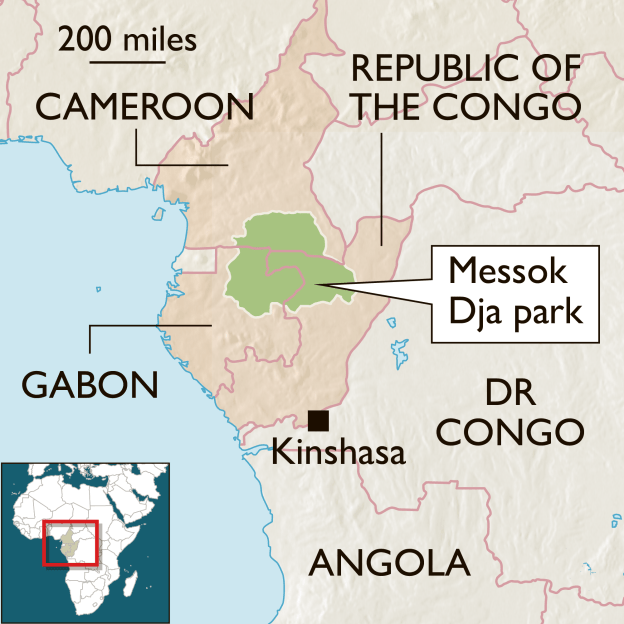
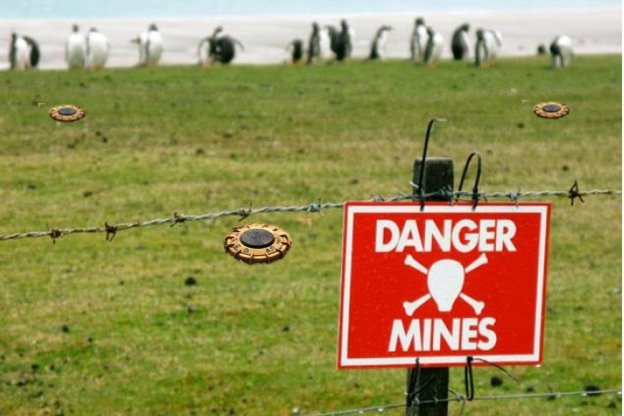

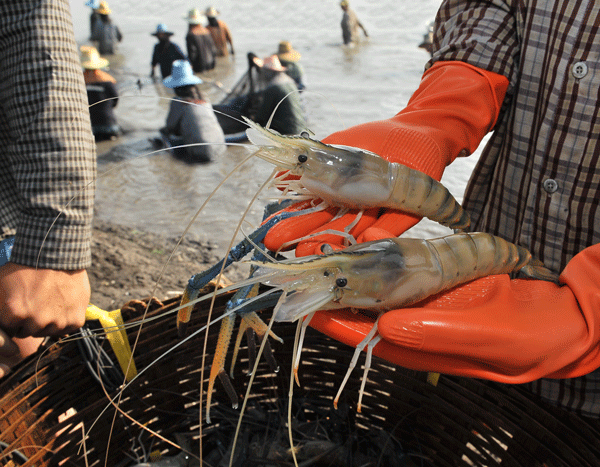

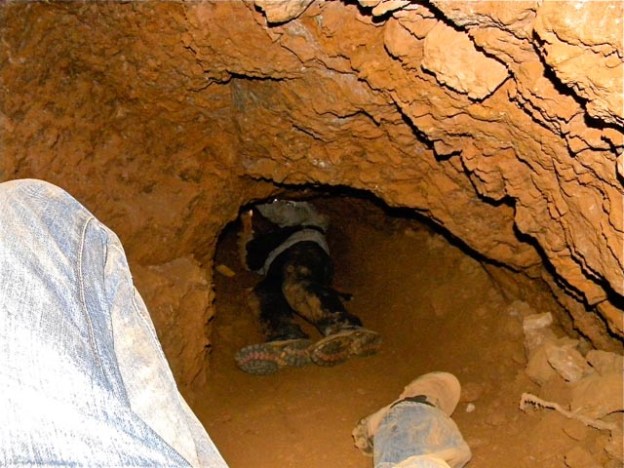
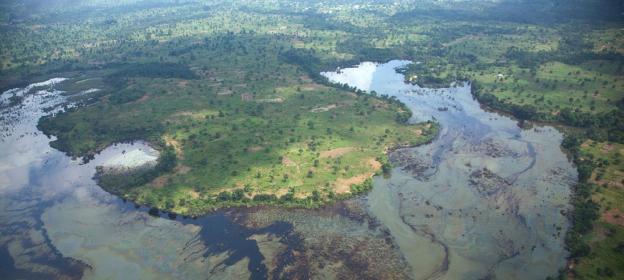


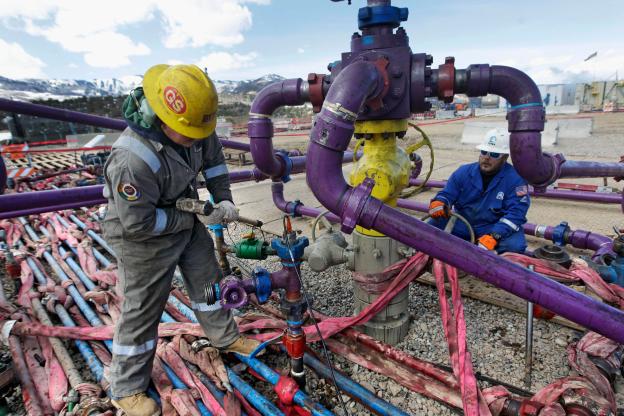
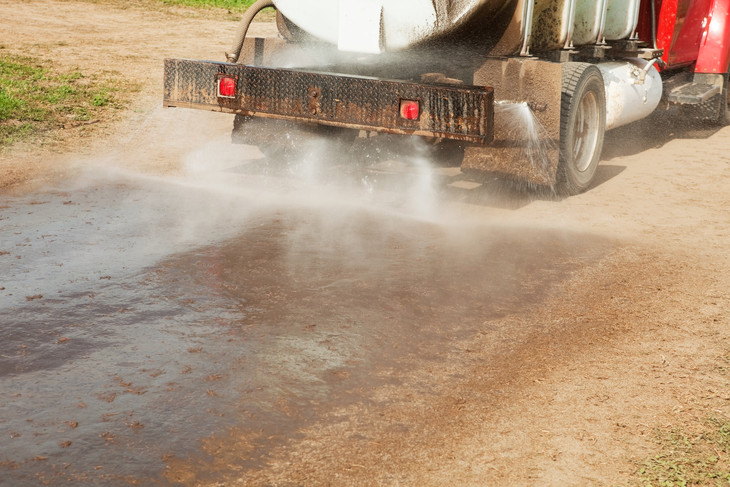
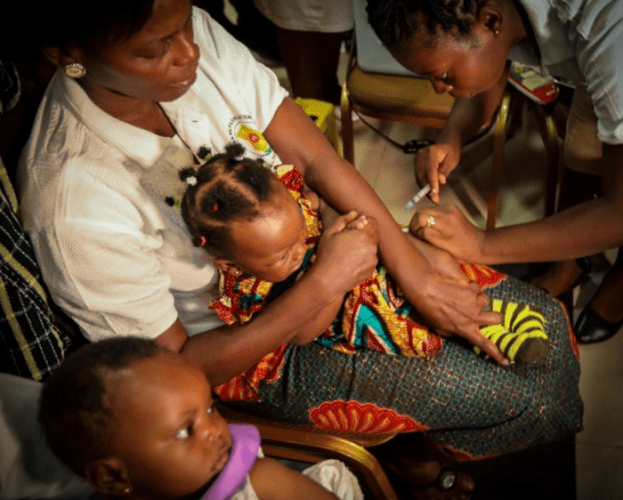
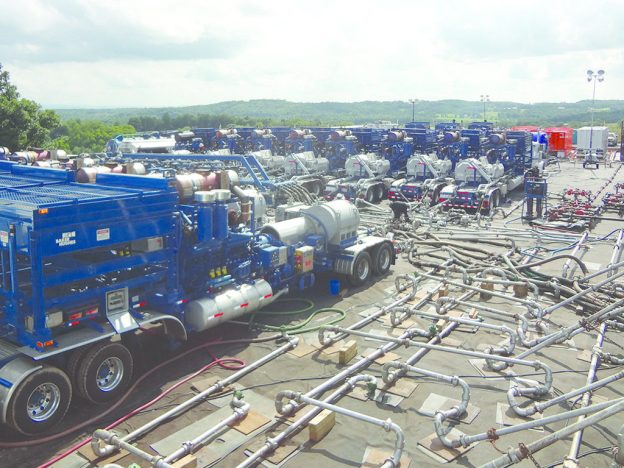
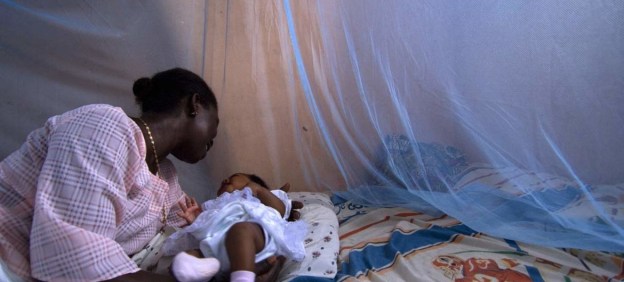
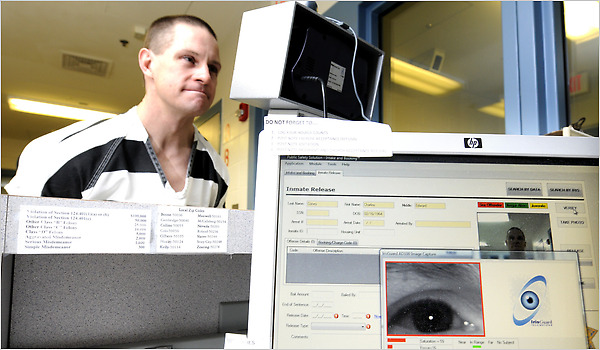
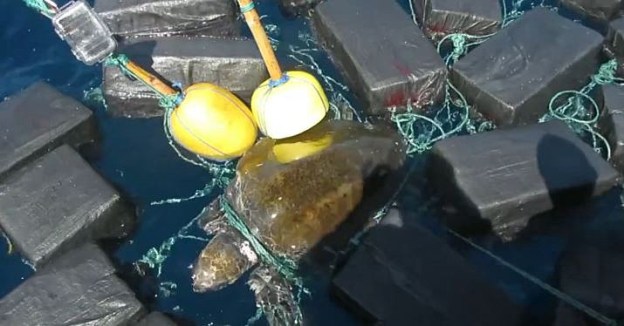
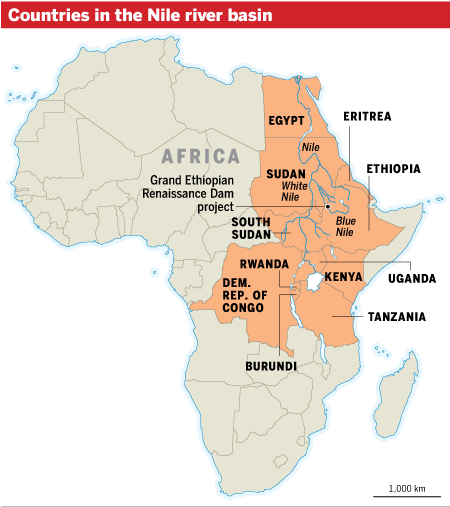
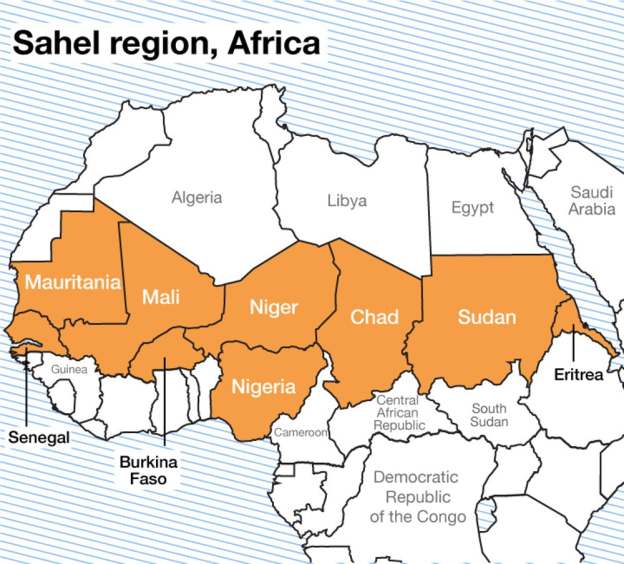
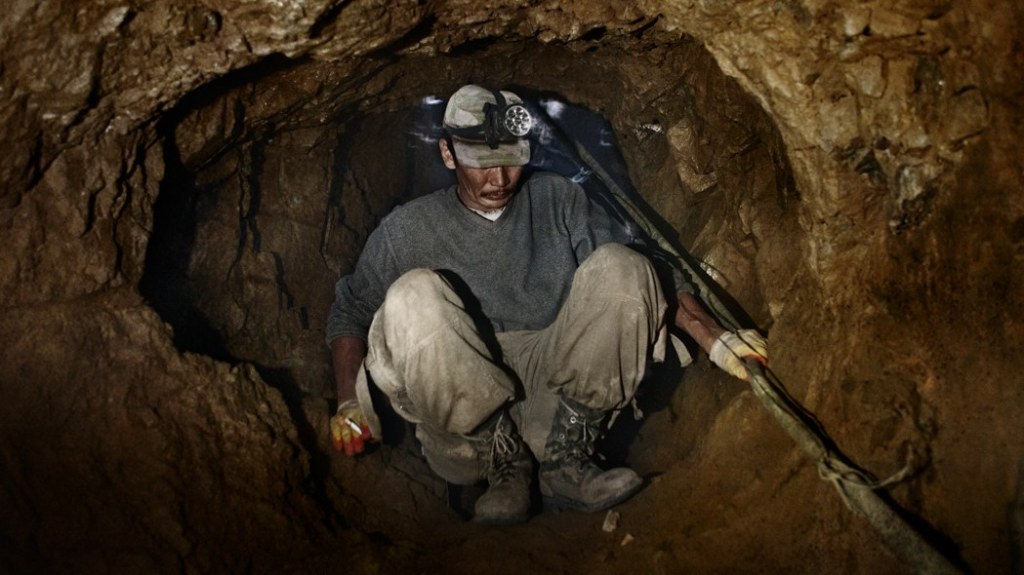

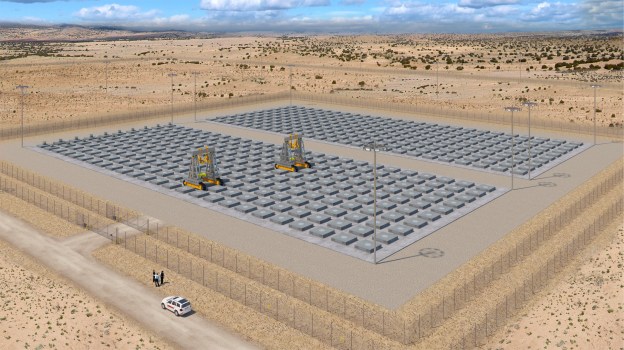
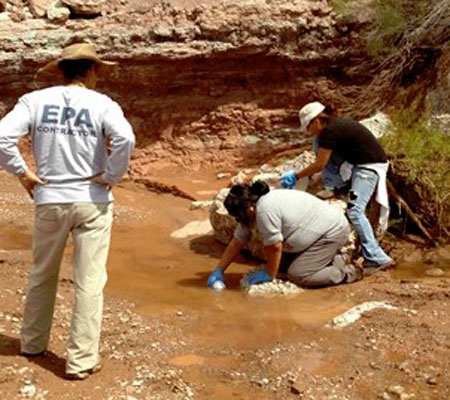
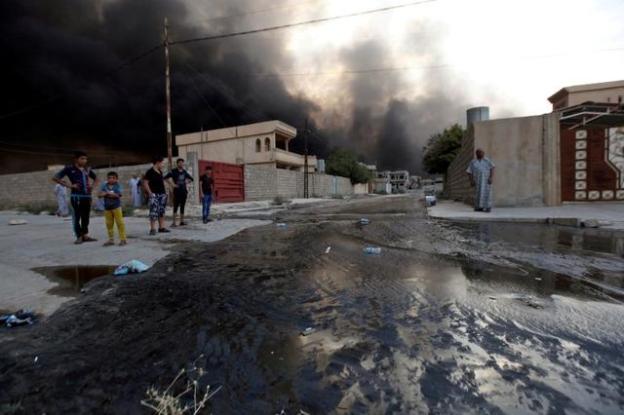
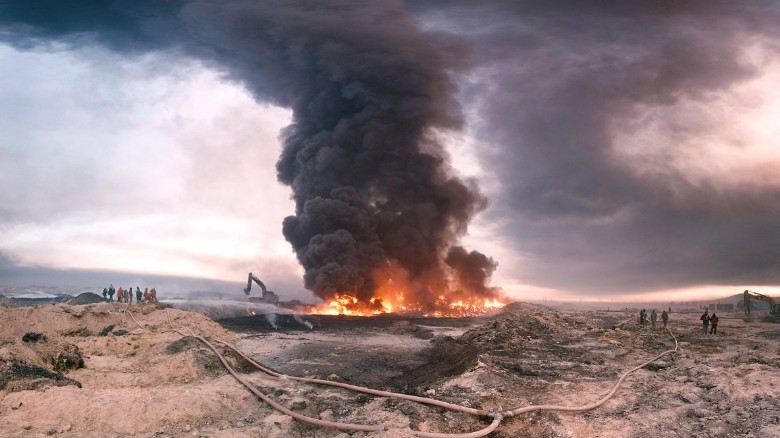
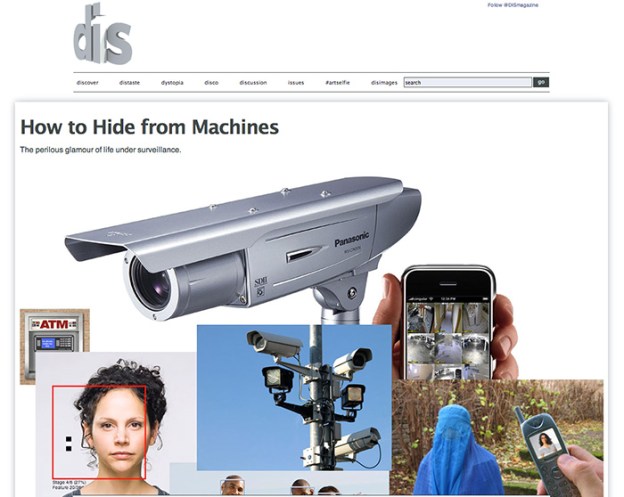




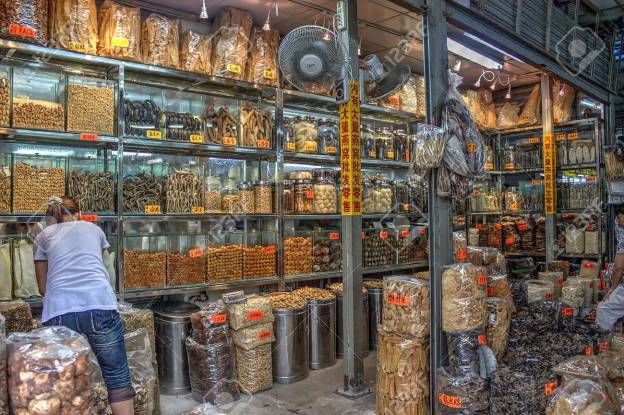
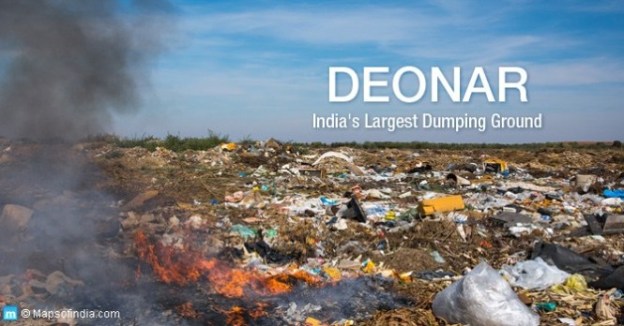
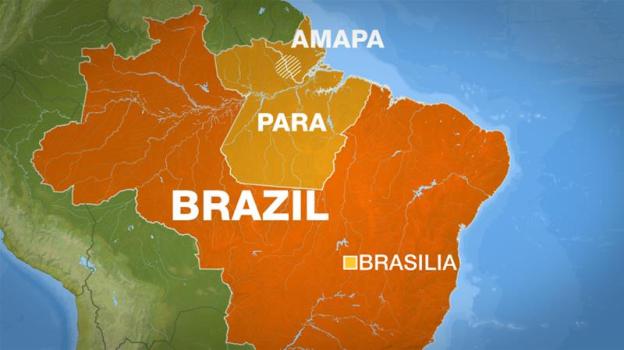
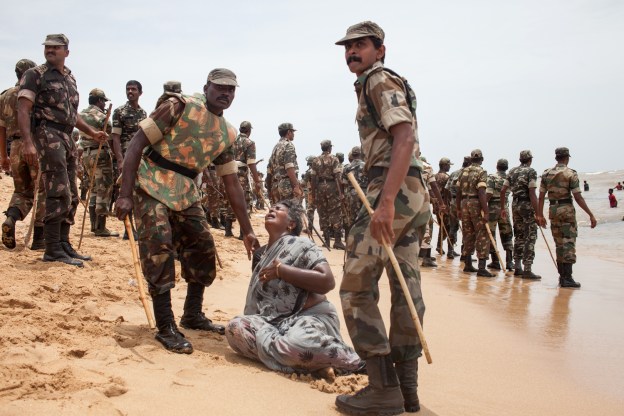

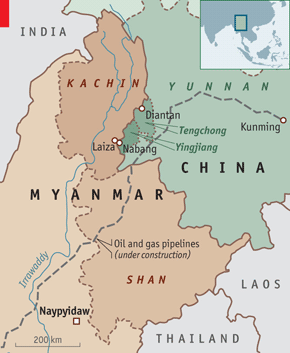
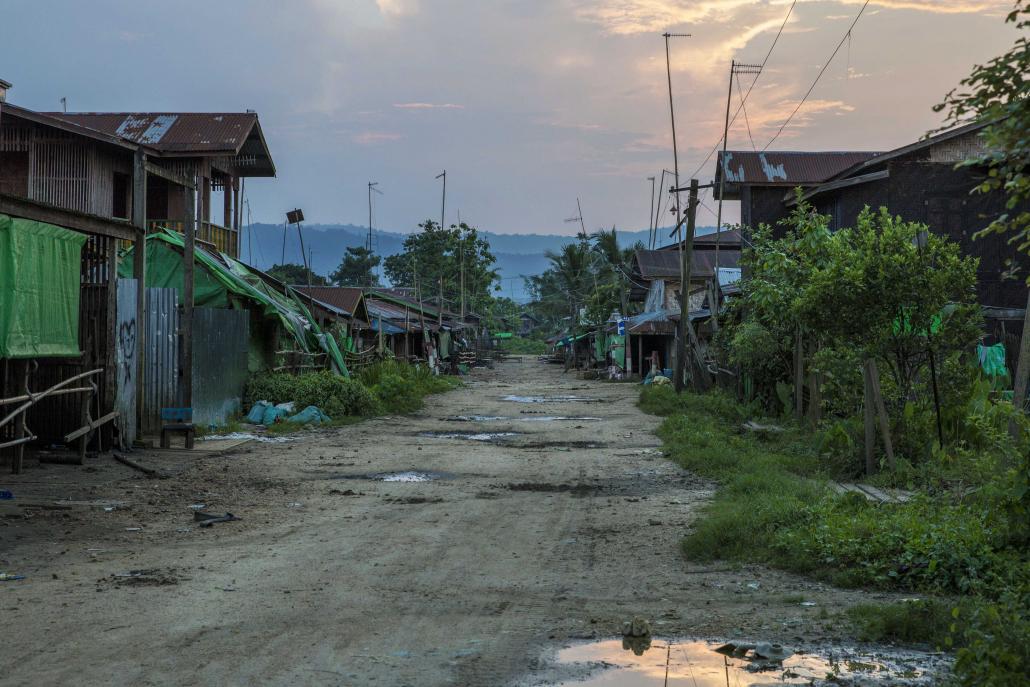

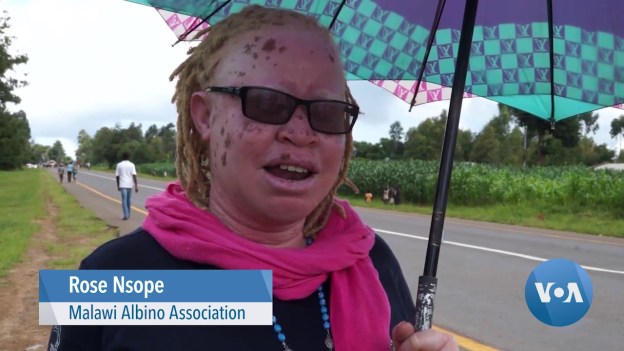
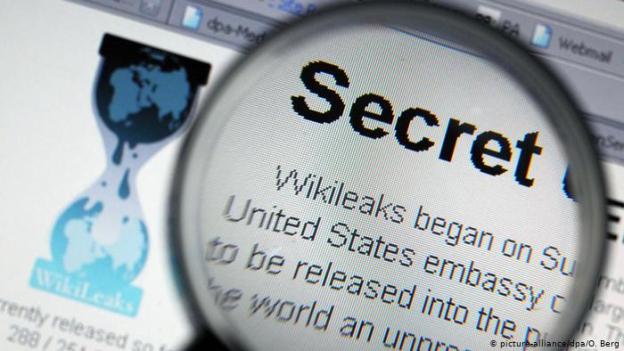
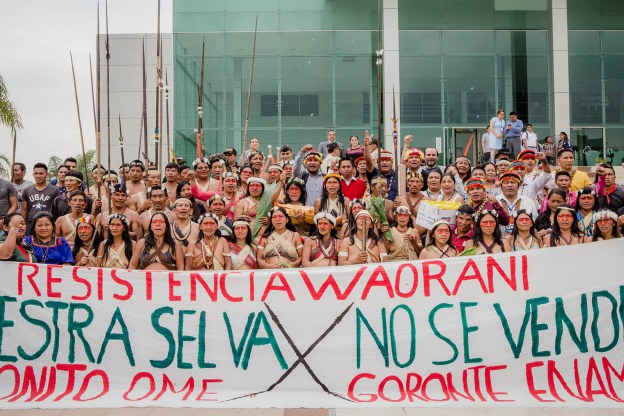

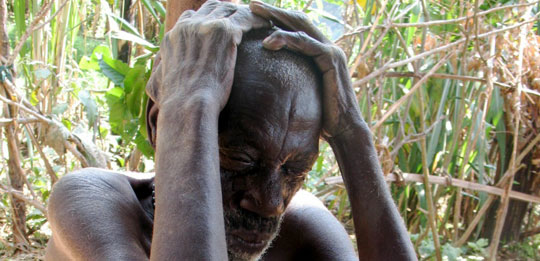
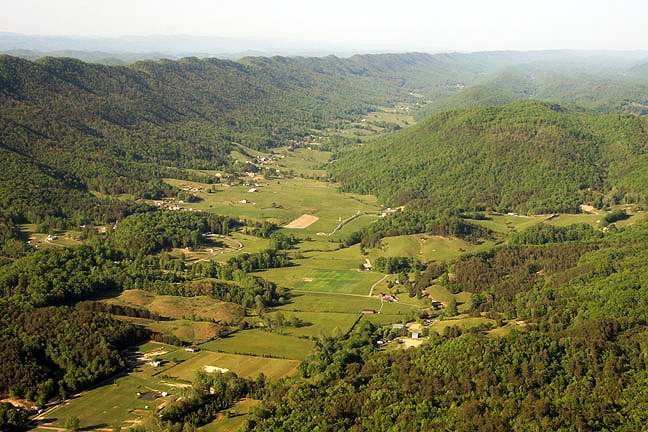
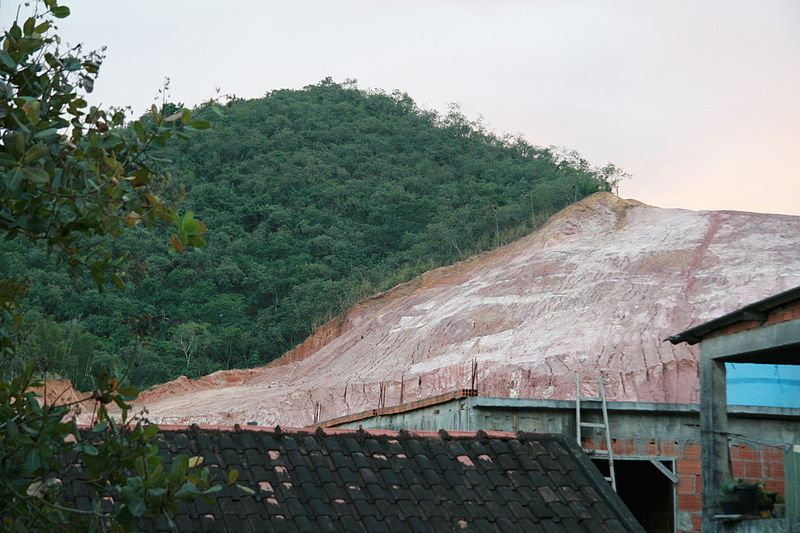


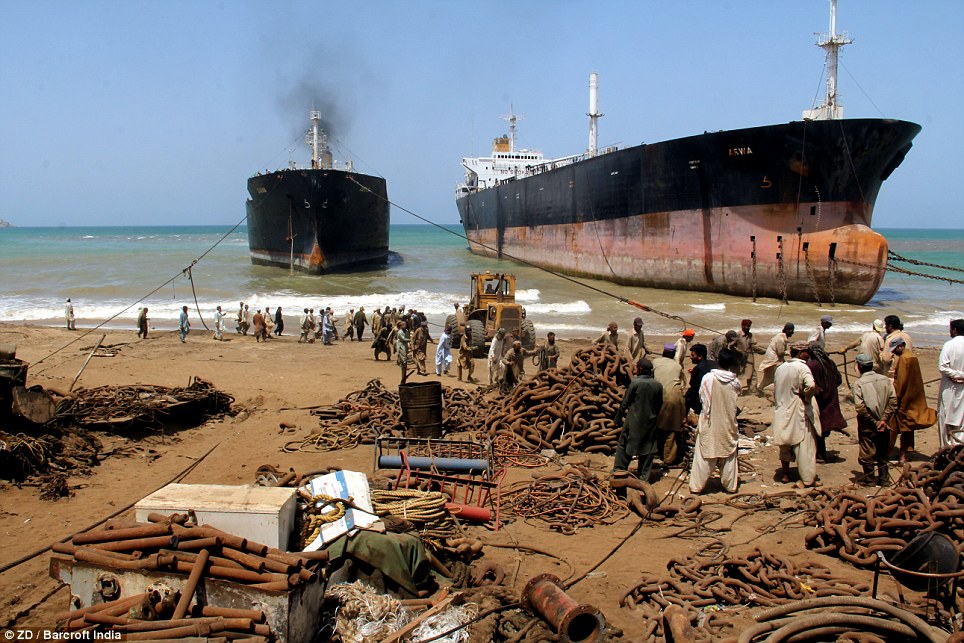
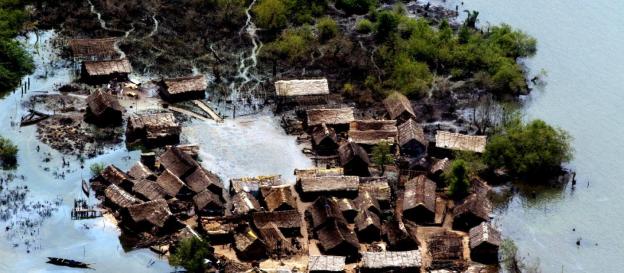


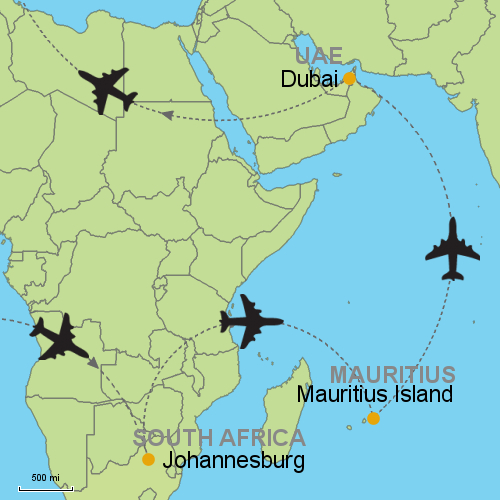
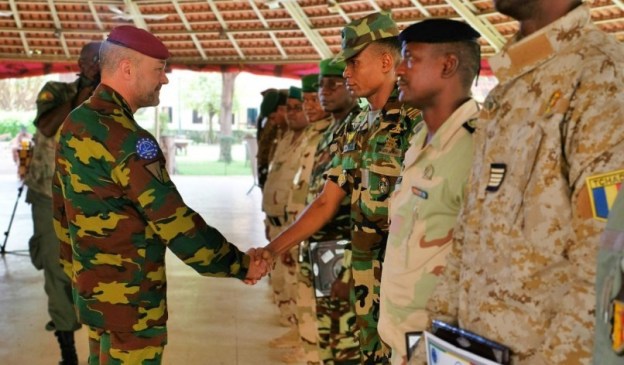
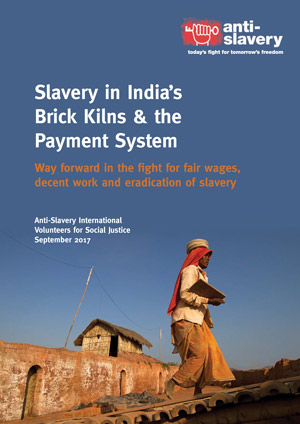
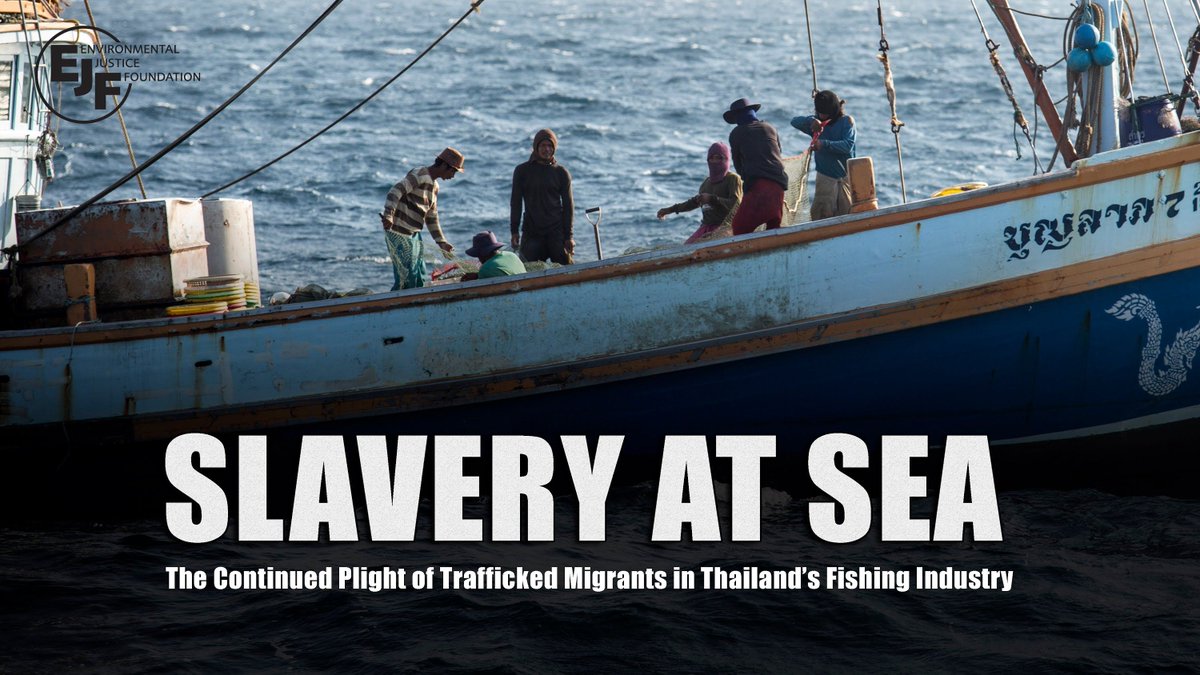
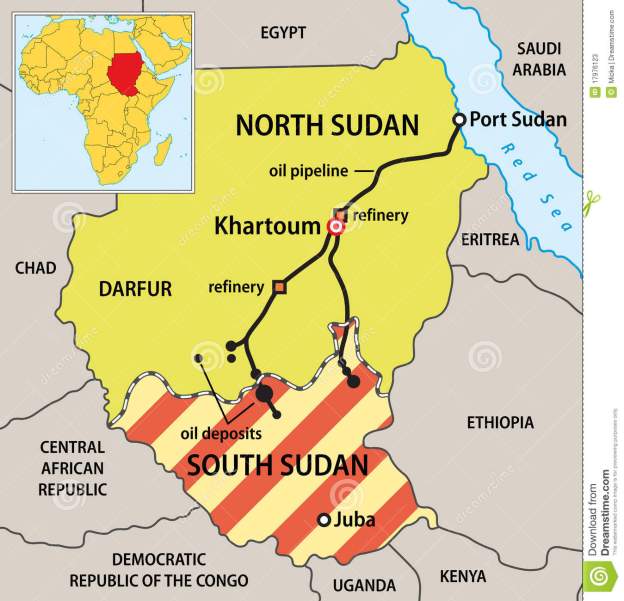



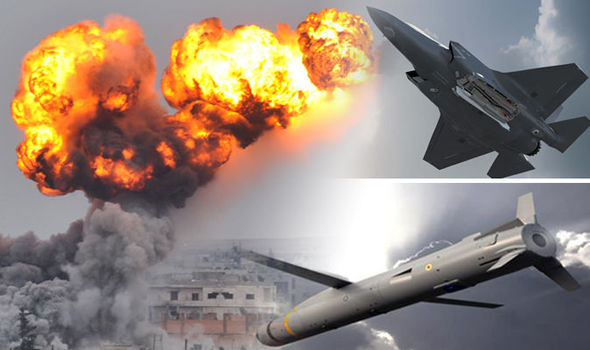

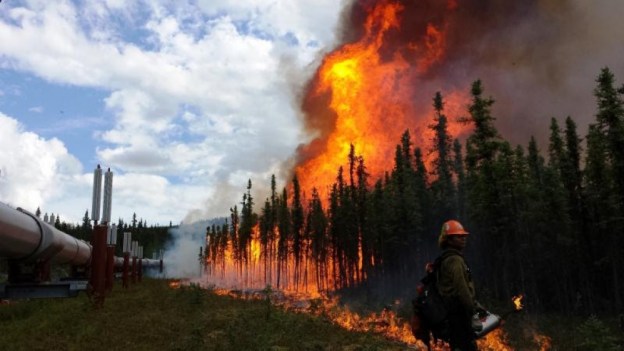
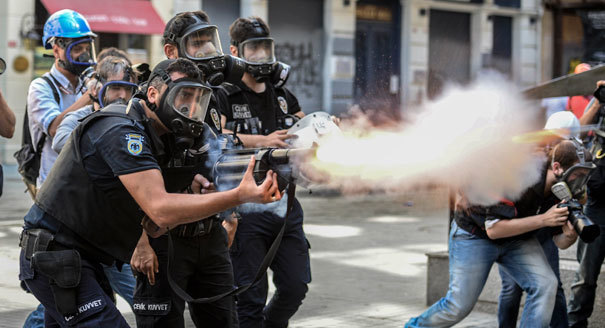




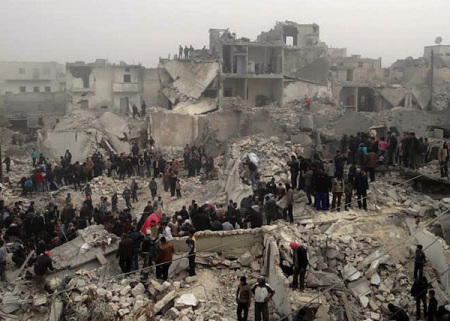
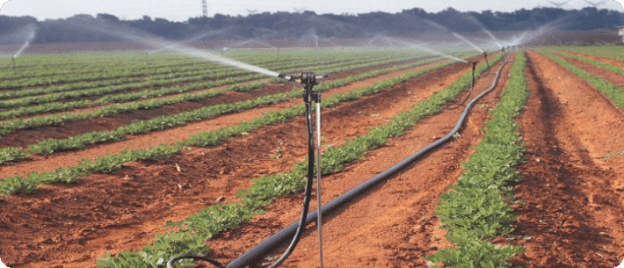
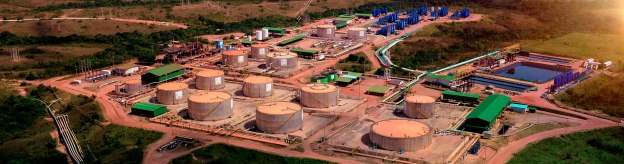
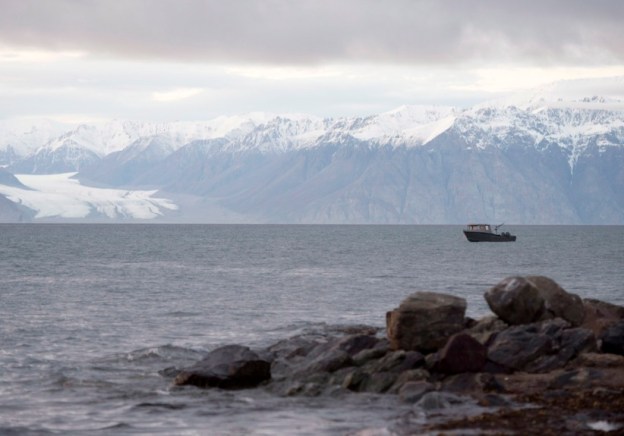
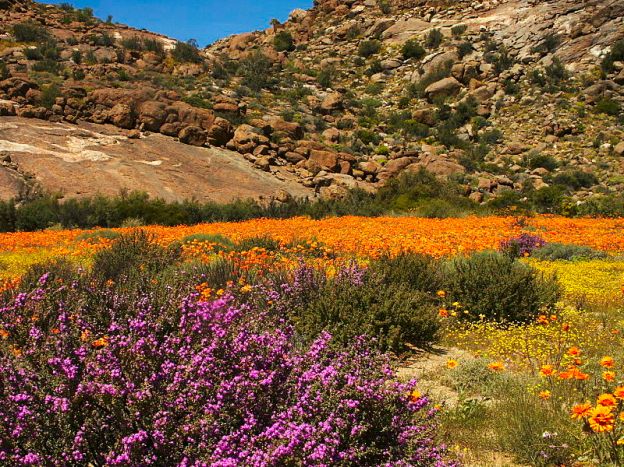
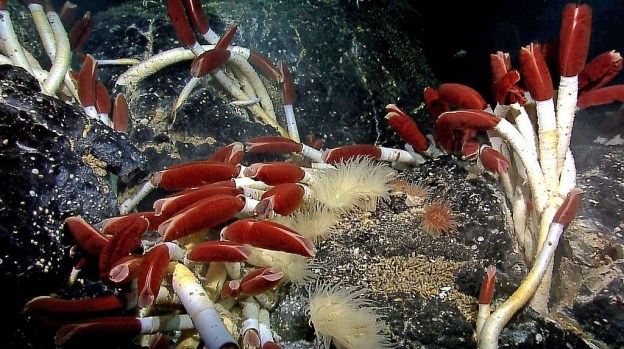
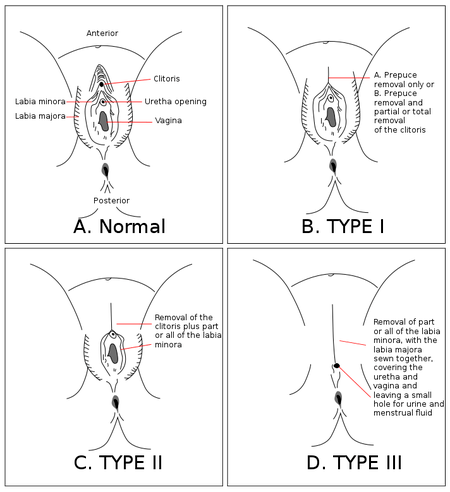
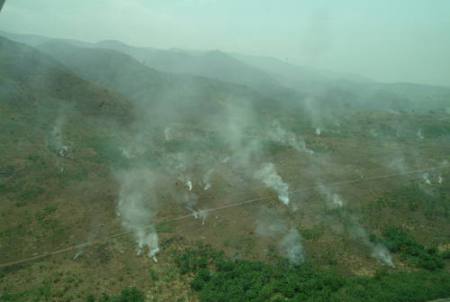
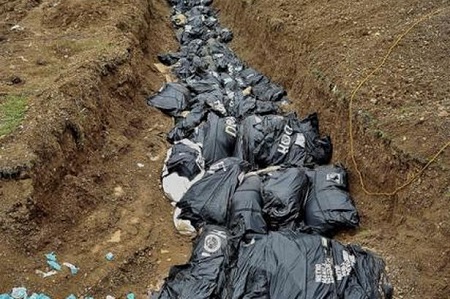
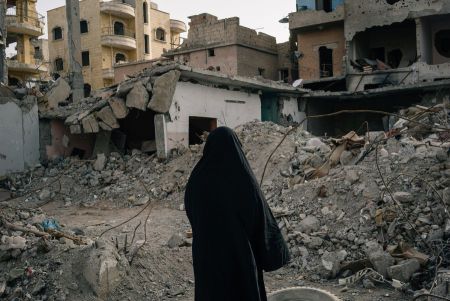
 Amnesty International researchers visited 42 Coalition air strike sites across the ruined city of Raqqa, Syria and interviewed 112 civilian residents who had survived the carnage and lost loved ones. The accounts detailed in the report,
 In 2009, coalition casualties in Afghanistan had as much as doubled in the space of a year. Civilian casualties climbed to 2412. It was 2009. Coalition forces had been there since 2001 with no end and, to this point, no real campaign plan in sight…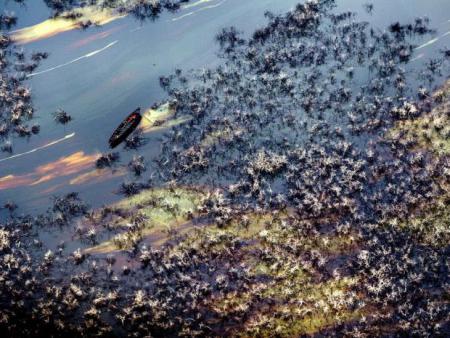
 May 2018: The environmental damage around the site of two Royal Dutch Shell oil spills in Nigeria a decade ago has worsened significantly after years of delay to cleanup efforts, according to a report that the oil giant has been accused of trying to shield from public view. The spills from a ruptured Shell pipeline spewed thousands of barrels of oil over parts of the Bodo fishing community in the crude-rich Niger Delta. Although the company in 2015 reached an out-of-court settlement with the local community, admitting to liability and agreeing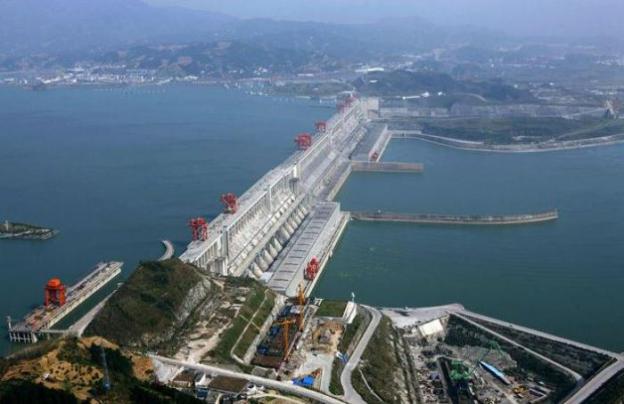
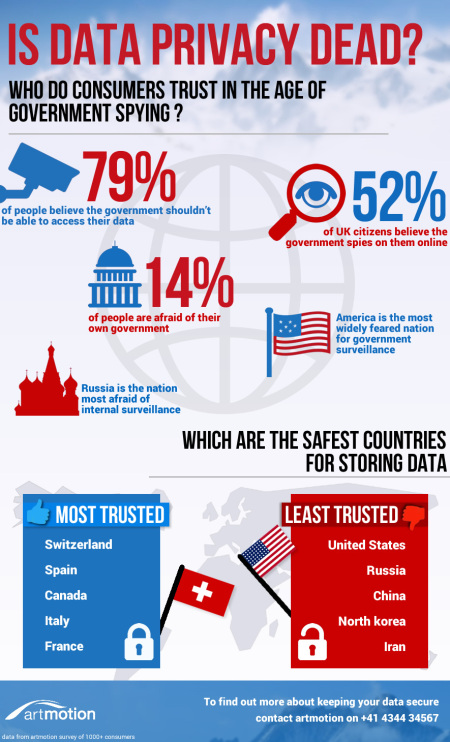
 The
The

 Cambridge Analytica, the UK political consultancy at the centre of Facebook’s election manipulation scandal, ran the campaigns of President Uhuru Kenyatta in the 2013 and 2017 Kenyan elections, according to video secretly recorded and broadcast by Britain’s Channel 4 News.
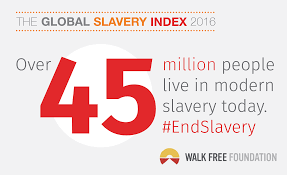
 The African Union on Friday urged Mauritania to make a greater effort to eliminate slavery after the country handed out lenient sentences to a family of slave owners in a landmark conviction….In a statement published online, the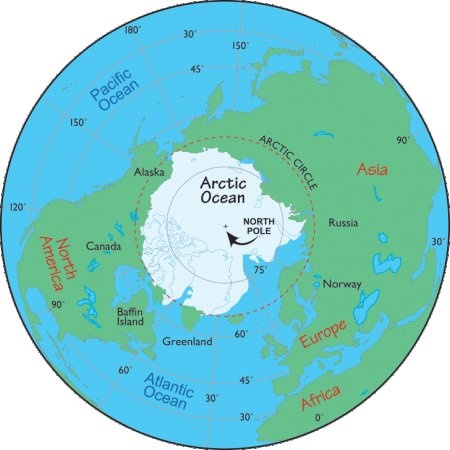
 China on January 25, 2018 outlined its ambitions to extend President Xi Jinping’s signature Belt and Road Initiative to the Arctic by developing shipping lanes opened up by global warming. Releasing its first official Arctic policy white paper, China said it would encourage enterprises to build infrastructure and conduct commercial trial voyages, paving the way for Arctic shipping routes that would form a “Polar Silk Road”…China, despite being a non-Arctic state, is increasingly active in the polar region and became an observer member of the Arctic Council in 2013.
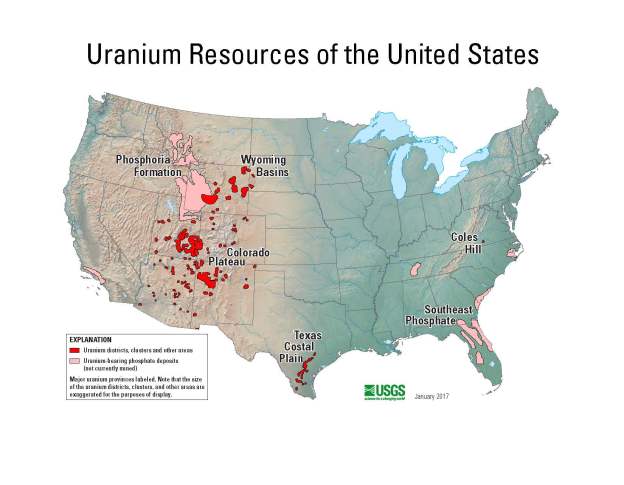
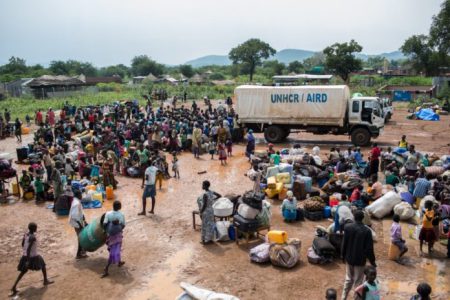


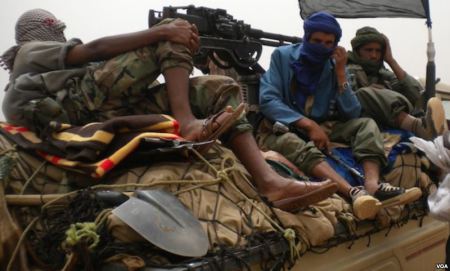
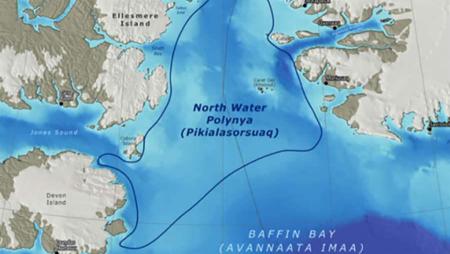
 Europe’s space agency is defending plans to launch two satellites that would drop a rocket stage likely to contain highly toxic fuel in some of the most ecologically sensitive waters of the Canadian Arctic…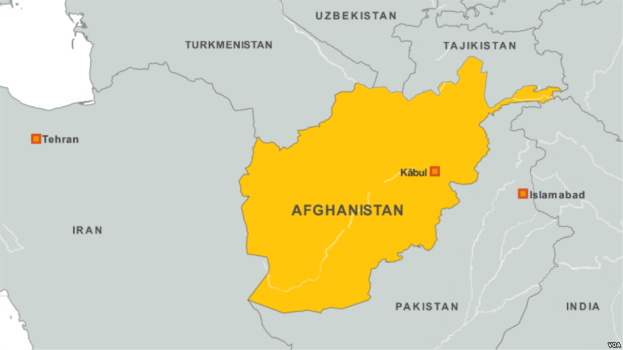
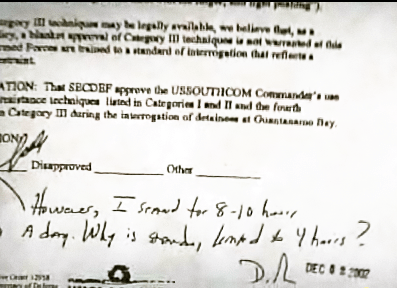

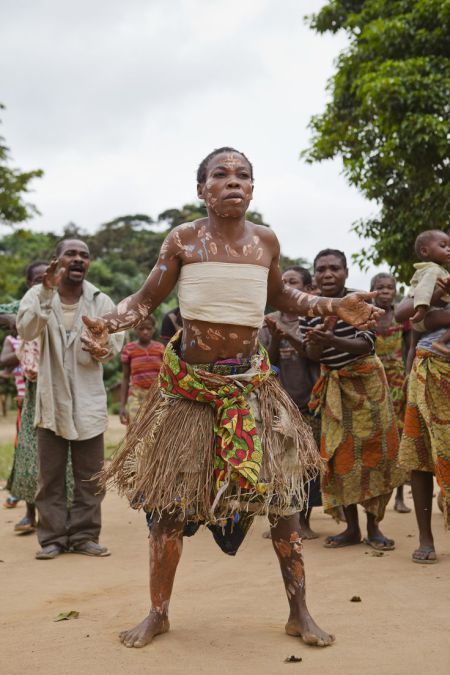

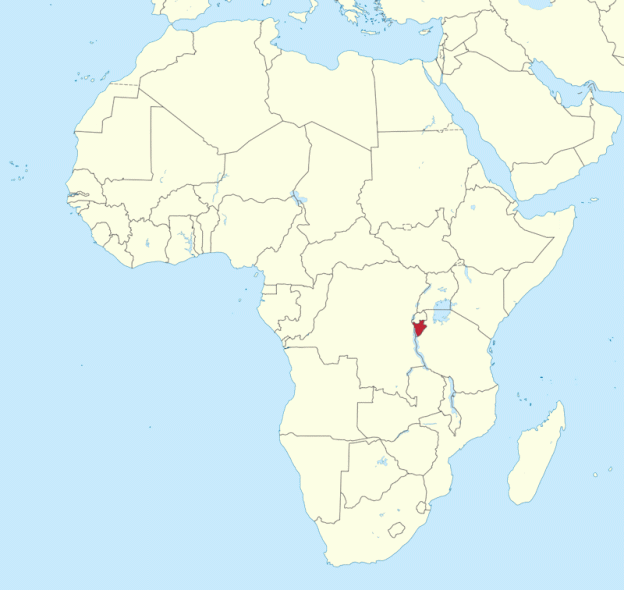
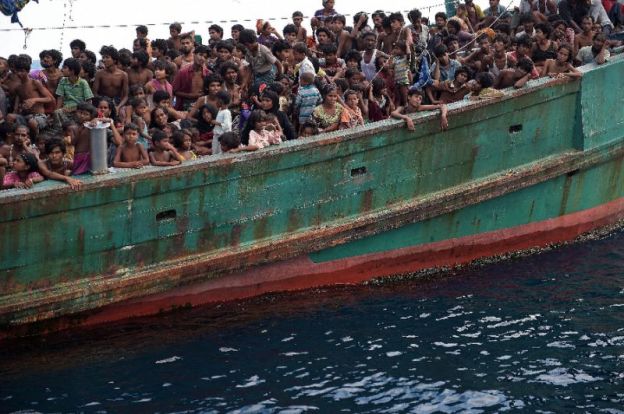

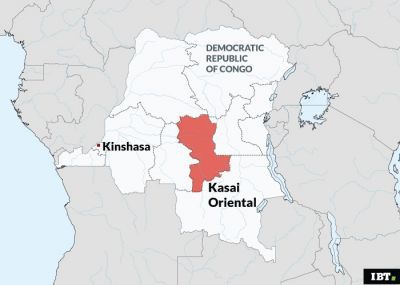
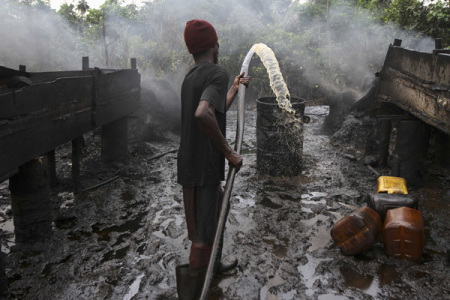
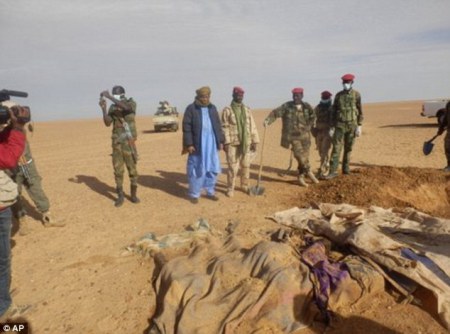
 Growing numbers of African migrants passing through Libya are traded in what they call slave markets before being held for ransom, forced labour or sexual exploitation, according to the UN migration agency.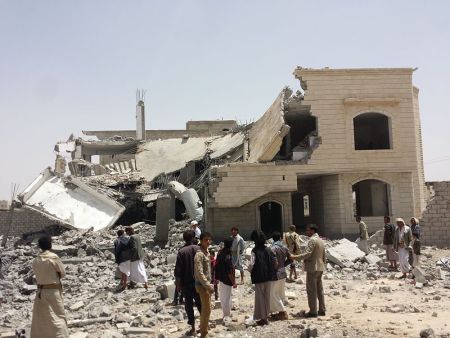
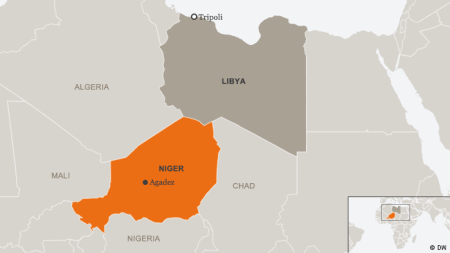
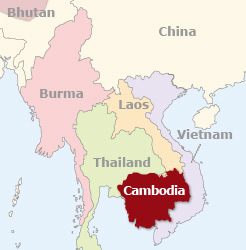
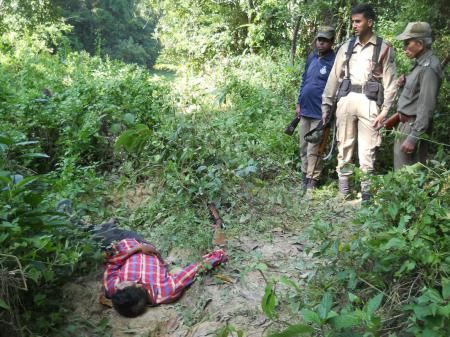
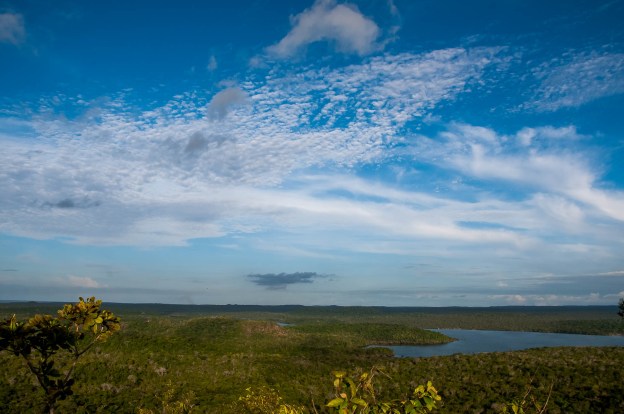


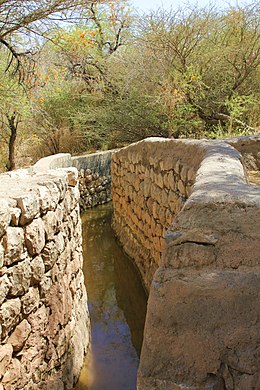
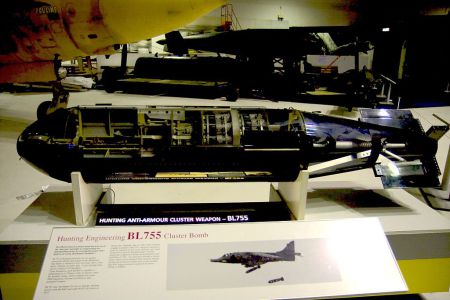
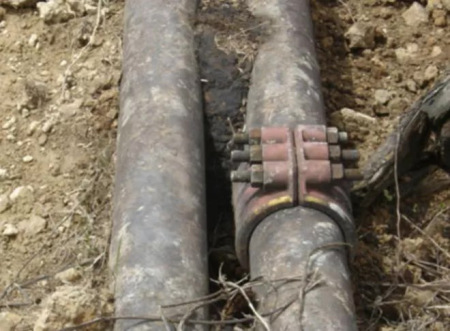
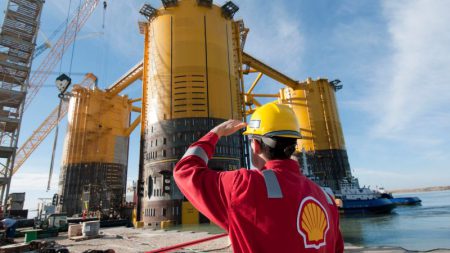

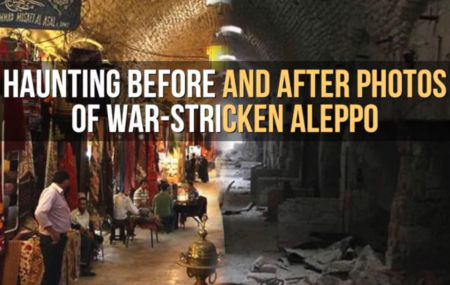
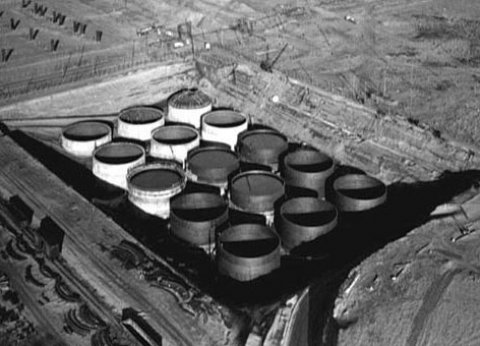
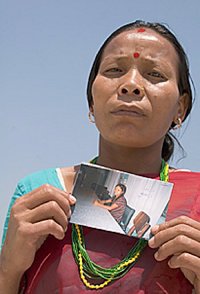
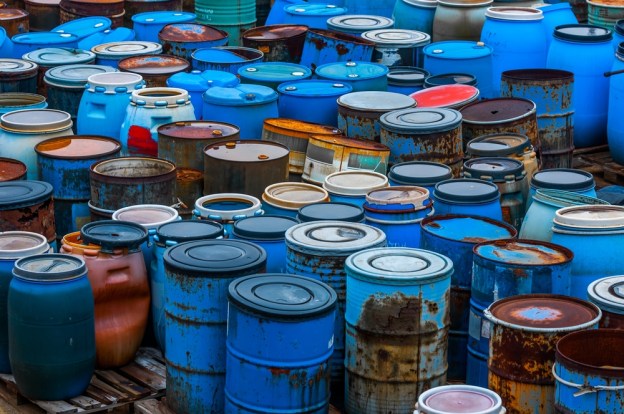
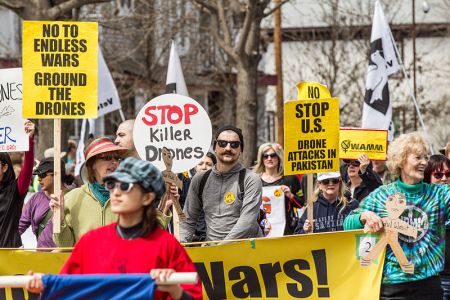
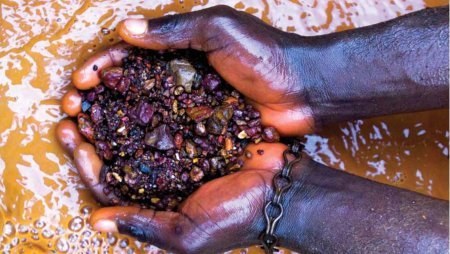

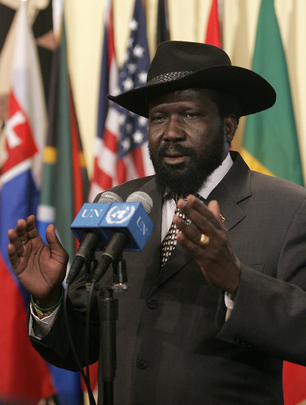
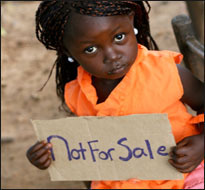
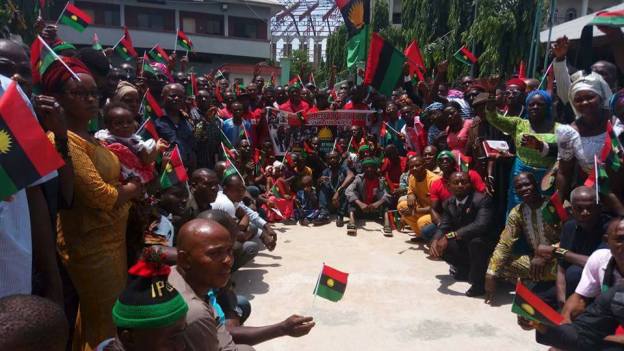
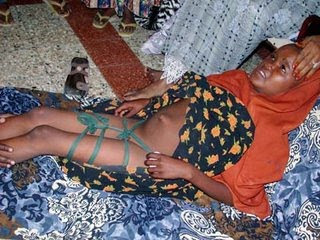


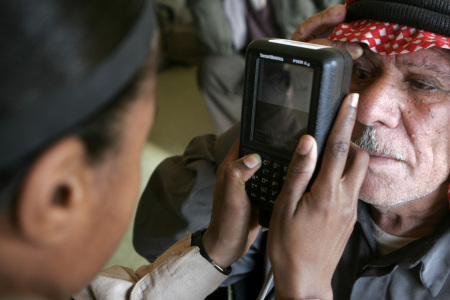

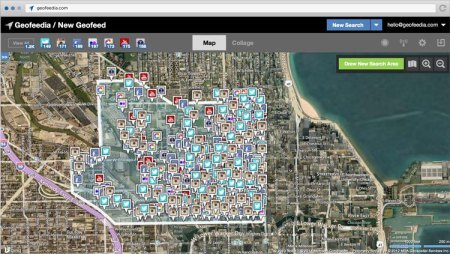
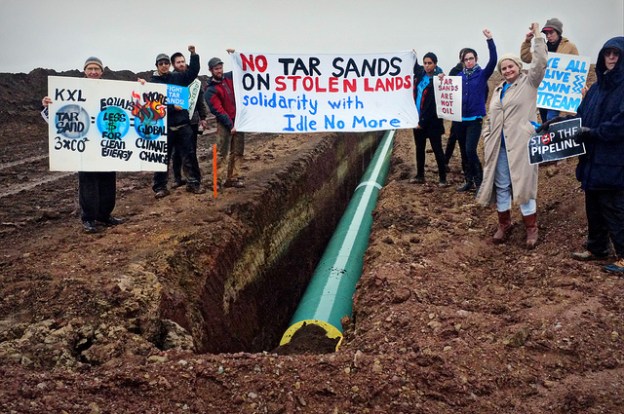

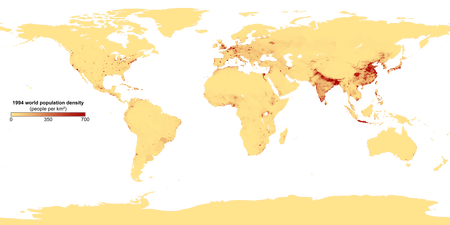

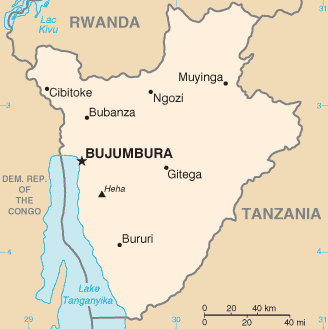
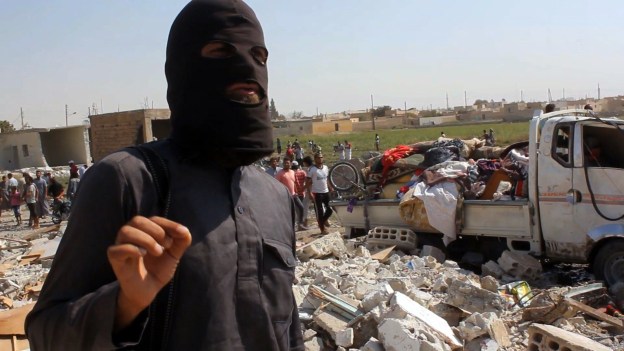


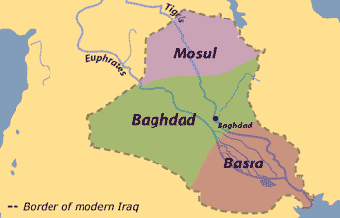
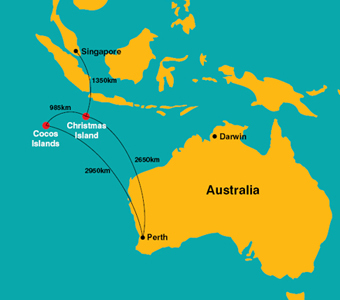
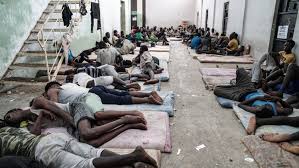
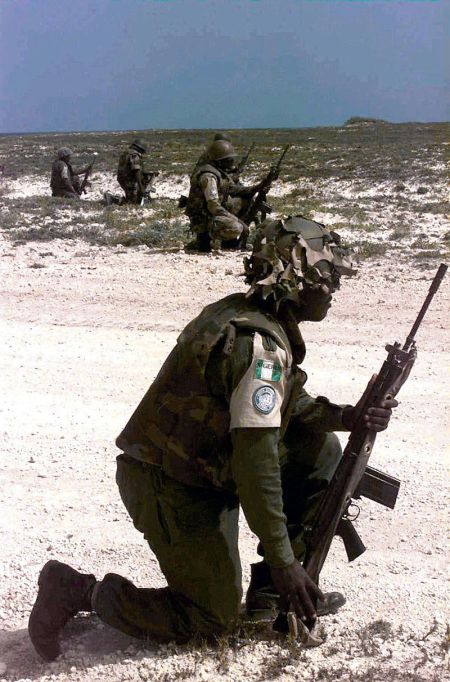
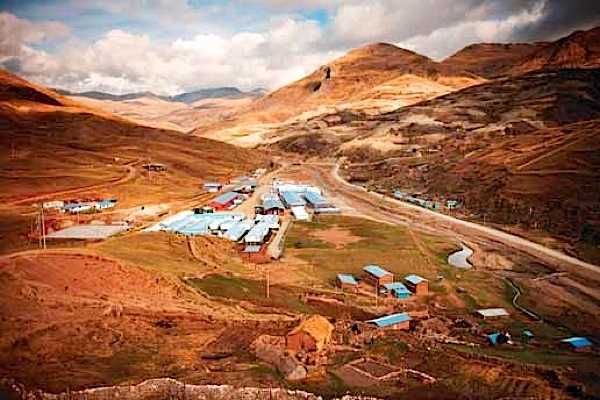
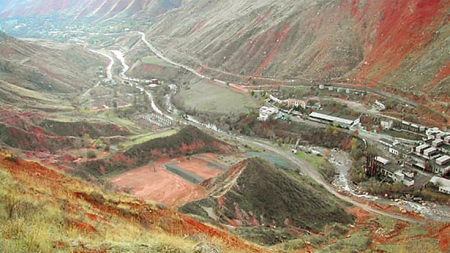
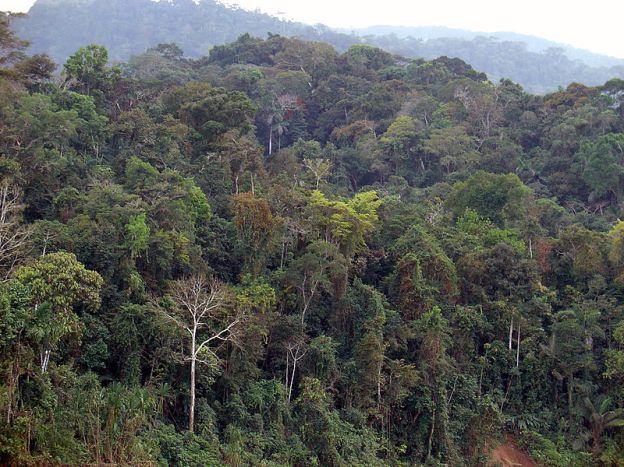
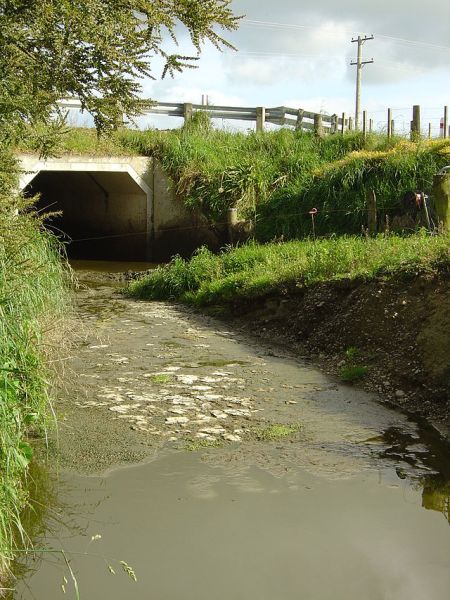
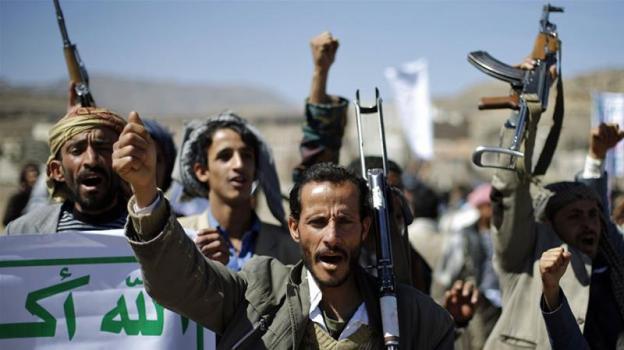


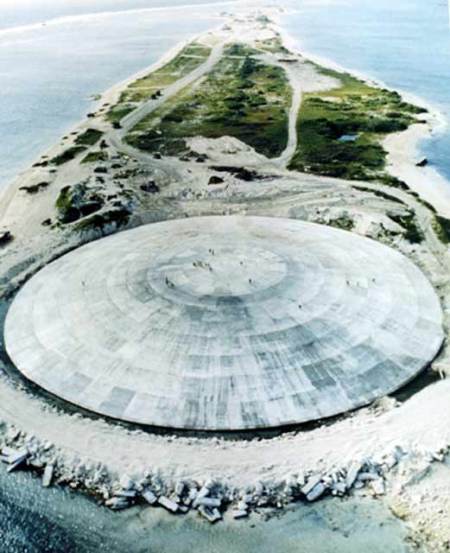
 Law-In-Action