Author Archives: Stoa

The New Opium War: How the World Got Addicted to China

 A fundamental axiom of economics is that when two individuals or countries trade, both are better off. In the decades after World War II, the U.S. was the world’s largest exporter and economy and as it grew, it imported more, helping its partners. As they grew, they bought more of what the U.S. made. Expanding trade helped everyone specialize, leading to more competition, innovation and choice, and lower costs.

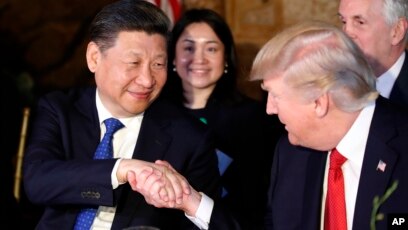
China is now the world’s second-largest economy and its largest exporter, but its philosophy is quite different. It has never believed in balanced trade nor comparative advantage. Even as it imported critical technology from the West, its long-term goal was always self-sufficiency. In 2020, Chinese leader Xi Jinping codified this approach as “dual circulation.” This would, he said, “tighten the international industrial chain’s dependence” on China while ensuring China’s production was “independent” and “self-sustaining.”

And as China expands into high-end manufacturing such as aircraft and semiconductors, Xi has decreed it must not relinquish low-end production such as toys and clothes. Beijing has discouraged Chinese companies that invest abroad from transferring key know-how, such as in the production of iPhones and batteries. Xi has rejected fiscal reforms that would tilt its economy away from investment, exports and saving and toward household consumption and imports.

Excerpt from Greg Ip, World Pays a Price for China’s Growth, WSJ, Dec. 6, 2025

The Silent Spying Device in Your Pocket: Who is Afraid of Pegasus?

NSO Group, the Israeli company behind Pegasus spyware, says a group of investors led by Hollywood producer Robert Simonds has acquired a controlling stake in the firm, which has named a former Trump official to lead an effort to restore its battered reputation. The company, which has faced lawsuits and U.S. government sanctions since revelations that its technology was used to spy on political dissidents, human-rights advocates, journalists and American officials, declined to disclose the purchase price.

NSO’s new executive chairman, David Friedman, a former U.S. ambassador to Israel and onetime bankruptcy lawyer for President Trump, said he wants to use his ties to the Trump administration to help rebuild the company’s spyware business in the U.S…NSO’s flagship product, Pegasus, has used WhatsApp to infiltrate phones without the target having to do or tap on anything. The spyware has also been sent to phones via links in messages, according to security researchers. Pegasus can turn a smartphone into a silent spying device by gaining access to its files, messages, microphone and camera, they say.

In 2021, the Biden administration placed NSO on an export-prohibition list that restricted the firm from obtaining some types of technology from the U.S. In 2023, President Biden signed an executive order banning government agencies and departments from using commercial spyware that “poses risks to national security or has been misused by foreign actors to enable human rights abuses around the world.” Unless Biden’s executive order is rescinded, it is unlikely U.S. government agencies would do business with NSO.

Intelligence agencies such as the U.S. National Security Agency and the U.K.’s Government Communications Headquarters routinely use hacking tools. NSO often sells such cyber capabilities to countries that don’t have their own. Friedman said his pitch to the U.S. government is that NSO’s products will make America safer. NSO says its products can be used by government agencies to fight terrorism and crime by allowing them access to encrypted messaging systems such as WhatsApp….

In 2019, WhatsApp’s parent company, now called Meta, sued NSO over what it alleged was a breach of its servers to install NSO’s malware on target devices. In July 2025, the six-year trial came to an end, with a federal jury in California ordering NSO to pay Meta $168 million in damages. In October 2025, the U.S. District Court for the Northern District of California reduced the fine NSO was ordered to pay Meta down to $4 million. But in the same ruling, the judge ordered NSO to stop targeting WhatsApp, in a move that the company said during its defense could put it out of business. NSO is appealing the decision against targeting WhatsApp, and is filing for a stay.

Excerpt from Dov Lieber, Israeli Spyware Maker NSO Gets New Owners, Leadership and Seeks to Mend Reputation, WSJ, Nov. 9, 2025

The Underground War

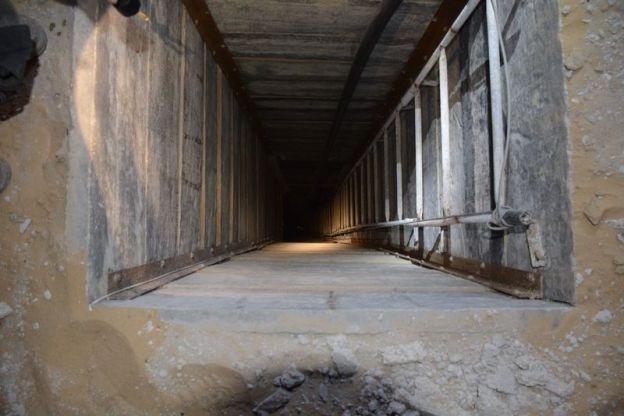
Israeli troops are mapping out the tunnels of eastern Rafah [December 2025], where the local Hamas brigade is trapped, and using massive drills to dig into the underground system and destroy it with explosives, according to Israeli military statements. Israel estimates there were around 100 to 200 fighters in the tunnels when the cease-fire began in October 2025…In some areas, Israel is flooding tunnels with water to push out the trapped fighters…

Rafah, where Hamas first began digging tunnels around two decades ago, has a particularly complicated underground system. Despite having full control above ground in Rafah, Israel’s military is still struggling to fully map out the underground network where the Hamas fighters are hiding…

Excerpt from Summer Said, srael Closes In on Hamas Fighters Trapped in Tunnels, Testing Cease-Fire, WSJ, Dec. 7, 2025

When Do You Know You Are a Clown? the case of Anduril

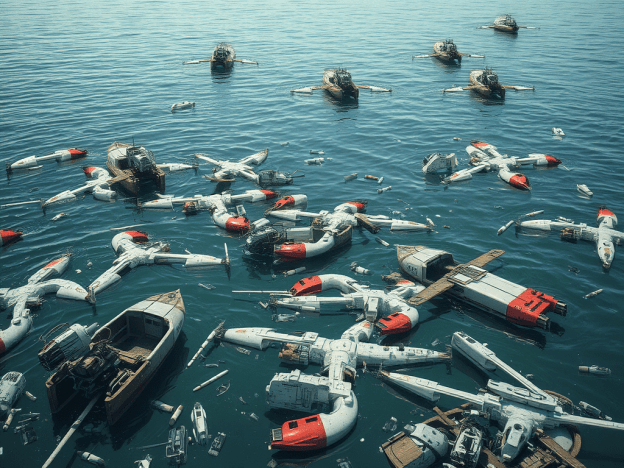
Anduril Industries, a U.S. company, has promised to deliver hardware and software that will usher in a new era of autonomous warfare with the speed that only a startup can offer…But…As the U.S. Navy was attempting to launch 30 drone boats in May 2025, the boats rejected their inputs and automatically idled, making them “dead” in the water. The botched experiment quickly became a potential hazard to other vessels in the exercise. Military personnel scrambled overnight to clean up the mess, towing the boats to shore until 9 a.m. the next day. 

The drone boats were relying on autonomy software called Lattice made Anduril Industries. The Navy said the exercise was handled safely, but the incident alarmed Navy personnel, who said in a routine follow-up report that company representatives had misguided the military. In comments that were unusual for such a report, which was viewed by The Wall Street Journal, four sailors warned of “continuous operational security violations, safety violations, and contracting performer misguidances (Anduril Industries).” If the software configuration wasn’t immediately corrected and vetted, they wrote, there would be “extreme risk to force and potential for loss of life.”

Excerpt from Shelby Holliday et al., ‘We Do Fail … a Lot’: Defense Startup Anduril Hits Setbacks With Weapons Tech, WSJ, Nov. 27, 2025

How Does it Feel to Beg China? Netherlands Knows

Dutch chipmaker Nexperia has publicly called on its China unit to help restore supply chain operations, warning in an open letter published on its website  on November 28, 2025 that customers across industries are reporting “imminent production outages.” Nexperia’s Dutch unit said that is open letter followed “repeated attempts to establish direct communication through conventional channels” but did not have “any meaningful response.” The letter marks the latest twist in a long-running saga that has threatened global automotive supply chains and stoked a bitter battle between Amsterdam and Beijing over technology transfer.

In a statement, Wingtech Technology, Nexperia’s Chinese parent stated that Nexperia’s true intent is to buy time ” to construct a ‘de-China-ized’ supply chain and permanently strip Wingtech of its shareholder rights.”

The situation began in September 2025, when the Dutch government invoked a Cold War-era law to effectively take control of Nexperia. The highly unusual move was reportedly made after the U.S. raised security concerns.

Beijing responded by moving to block its products from leaving China, which, in turn, raised the alarm among global automakers as they faced shortages of the chipmaker’s components.

In an apparent reprieve on November 19, 2025, however, the Dutch government said it had suspended its state intervention at Nexperia following talks with Chinese authorities…But while the measures to seize the Dutch Nexperia subsidiary have been lifted, the restoration of the corporate structure and relation with parent company Wingtech has yet to be accomplished.

Excerpt from Sam Meredith, What’s going on at Nexperia? China’s Wingtech escalates war of words with Dutch chipmaker, CNBC, Nov. 28, 2028

Back to 2030: Nuclear Race is Hot Again

The new nuclear race has begun. But unlike during the Cold War, the U.S. must prepare for two peer rivals rather than one—at a time when it has lost its clear industrial and economic edge. China, which long possessed just a small nuclear force, is catching up fast, while Russia is developing a variety of new-generation systems aimed at American cities…Russian President Vladimir Putin has already used nuclear saber-rattling to throttle American support for Ukraine. He has deployed nuclear weapons to Belarus and, in 2025, tested a nuclear-powered missile and a nuclear-powered submarine drone that he claims are impervious to American defenses.

While Russia and the U.S. are still abiding by some arms-controls limit…China, unconstrained by any commitments, is quietly but rapidly leaping ahead. According to American estimates, Beijing will reach rough parity with the U.S. in deployed nuclear warheads by the mid-2030s.

Chinese leader Xi Jinping for the first time showcased China’s nuclear triad—its land, sea and air-launched ballistic nuclear missiles—at a Beijing parade honoring the 80th anniversary of victory over Japan in September 2025. Putin, sitting to his right atop the Gate of Heavenly Peace, took note. So did North Korea’s Kim Jong Un, sitting to his left.

Excerpt from Yaroslav Trofimov, The Nuclear-Arms Race Is Now a Three-Way Contest, WSJ, Nov. 16, 2025

Having What Nobody Can Have: The Superiors

Travel has always been a key feature of wealthy people’s lives, and more than ever they prioritize privacy, efficiency and customization, industry specialists say. Lauren Beall, owner of Travel Couture in Miami Beach, specializes in arranging custom travel experiences for the ultrawealthy. She has booked private islands for clients and flown in Michelin-starred chefs, yoga instructors and performers.

One coveted offering is a suite above the Christian Dior flagship store in Paris that can be rented, and includes an after-hours shopping excursion and a private dinner at Monsieur Dior restaurant. An estate Beall has reserved in Scotland comes with private chefs, horses to explore the countryside and a helicopter to visit towns for the day.

“We’re into that exclusive access right now—things that other people can’t get,” Beall said. “There’s a huge price tag that goes with it.”

Excerpt from Arias Campo-Flores, The Ultrarich Pay Big for Extreme Privacy, WSJ, Nov. 15, 2025

Mining Giants and Little People: Mariana Dam Disaster

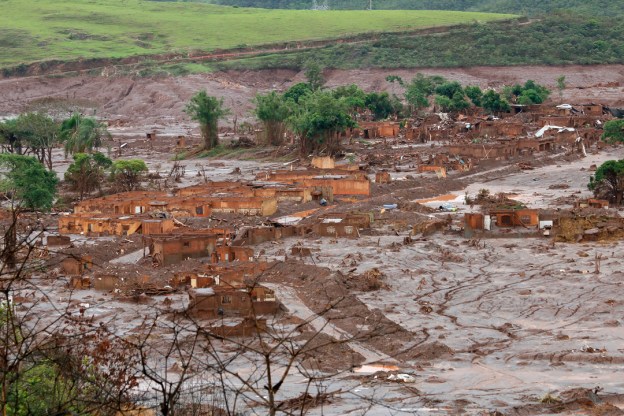
Mining company BHP has been found liable on November 13, 2025 for a 2015 dam collapse in Brazil,….[Note that this disaster was followed by yet another disaster in 2019 the Brumadinho dam disaster] The dam collapse killed 19 people, polluted the river and destroyed hundreds of homes. The civil lawsuit, representing more than 600,000 people including civilians, local governments and businesses, had been valued at up to £36bn ($48bn).

The dam in Mariana, southeastern Brazil, was owned by Samarco, a joint venture between the mining giants Vale and BHP. The claimants’ lawyers argued successfully that the trial should be held in London because BHP headquarters “were in the UK at the time of the dam collapse”. A separate claim against Samarco’s second parent company, Brazilian mining company Vale, was filed in the Netherlands, with more than 70,000 plaintiffs.

The dam was used to store waste from iron ore mining. When it burst, it unleashed tens of millions of cubic metres of toxic waste and mud. The sludge swept through communities, destroying hundreds of people’s homes and poisoning the river. Judge Finola O’Farrell said in her High Court ruling that continuing to raise the height of the dam when it was not safe to do so was the “direct and immediate cause” of the dam’s collapse, meaning BHP was liable under Brazilian law.

Excerpt from Ione Wells, UK court finds mining firm liable for Brazil’s worst environmental disaster, BBC, Nov. 14, 2025

———-

According to the UN Special Rapporteur who visited Brazil in 2019 and met BHP and Vale on numerous occasions, ” BHP and Vale rushed to create the Renova Foundation to provide the communities [affected by the collapse of the dam] an effective remedy. Unfortunately, the true purpose of the Renova Foundation appeared to be limit liability of BHP and Vale, rather than provide any semblance of an effective remedy

Furthermore, inadequate information was available about the toxicity of the waste after the Mariana disaster, the companies insisted that it was non-toxic, and rejected calls for precaution. Only three weeks after concerns were raised was information availed. When health impacts in Barra Longa emerged years later, Renova sought to exert ownership of epidemiological and toxicological studies by Ambios to suppress disclosure. Read the full report of the Special Rapporteur here.

Shut Up and Give Up: How to Deal with Environmental Disasters

The worst day of Bathsheba Musole’s life was February 18, 2025. It started with a deafening crash when the 30-foot wall around a toxic-waste pool collapsed at the Chinese copper mine above her village. A poisonous river of a stinking yellow liquid rushed downhill, inundating homes and fields, including the one where she grew corn to feed her eight children. The floodwater, laden with cyanide and arsenic, rose chest-high. “I thought I would drown,” said Musole, 48 years old, in a recent interview.

In August 2025, months after the Feb. 18, 2025 disaster, officials from Sino Metals, a unit of the state-owned China Nonferrous Mining Corp., showed up at Musole’s half-acre farm, which the Zambian government says is too toxic to sustain crops for at least three years. They were there to make things right, she recalled them saying. Their offer was $150, but it came with a catch. To get the money, she would have to agree never to talk about the spill, take legal action against Sino Metals or even reveal the contents of the nondisclosure agreement itself…

Zambia’s government and economy.. have grown reliant on China. Zambia collects about $2 billion a year in mining taxes, mostly from Chinese mining companies. Half of the copper mined in Zambia, much of it by Chinese companies, is exported to China. In 2024, the Zambian government announced that Chinese miners would invest $5 billion in the country by 2031…

After months of investigation, Drizit Environmental, a South African firm contracted by Sino Metals, concluded that 1.5 million tons of toxic waste had overflowed into the Kafue valley, 30 times what the company had said. Sino Metals terminated the firm’s contract a day before the final report was due…

Excerpt from Nicholas Bariyo, China Pushes to Silence Victims of African Mining Disaster, WSJ, Oct. 27, 2025

Next Wild West: Monetizing Mental Data

Some  brain–computer interfaces (BCI) are capable not only to record conscious thoughts but also the impulses of the preconscious. Most BCIs are connected the brain’s motor cortex, the part of the brain that initiates and controls voluntary movements by sending signals to the body’s muscles. But some people have volunteered to have an extra interface implanted in their posterior parietal cortex, a brain region associated with reasoning, attention and planning…The ability of these devices to access aspects of a person’s innermost life, including preconscious thought, raises the stakes on concerns about how to keep neural data private. It also poses ethical questions about how neurotechnologies might shape people’s thoughts and actions — especially when paired with artificial intelligence…

Consumer neurotech products capture less-sophisticated data than implanted BCIs do. Unlike implanted BCIs, which rely on the firings of specific collections of neurons, most consumer products rely on electroencephalography (EEG). This measures ripples of electrical activity that arise from the averaged firing of huge neuronal populations and are detectable on the scalp. Rather than being created to capture the best recording possible, consumer devices are designed to be stylish (such as in sleek headbands) or unobtrusive (with electrodes hidden inside headphones or headsets for augmented or virtual reality).

Still, EEG can reveal overall brain states, such as alertness, focus, tiredness and anxiety levels. Companies already offer headsets and software that give customers real-time scores relating to these states, with the intention of helping them to improve their sports performance, meditate more effectively or become more productive, for example. AI has helped to turn noisy signals from suboptimal recording systems into reliable data, explains Ramses Alcaide, chief executive of Neurable, a neurotech company in Boston, Massachusetts, that specializes in EEG signal processing and sells a headphone-based headset for this purpose…

With regard to EEG, “There’s a wild west when it comes to the regulatory standards”… A 2024 analysis of the data policies of 30 consumer neurotech companies by the Neurorights Foundation, a non-profit organization in New York City, showed that nearly all had complete control over the data users provided. That means most firms can use the information as they please, including selling it.

The government of Chile and the legislators of four US states have passed laws that give direct recordings of any form of nerve activity protected status. But ethicists fear that such laws are insufficient because they focus on the raw data and not on the inferences that companies can make by combining neural information with parallel streams of digital data. Inferences about a person’s mental health, say, or their political allegiances could still be sold to third parties and used to discriminate against or manipulate a person.

“The data economy, in my view, is already quite privacy-violating and cognitive- liberty-violating,” Ienca says. Adding neural data, he says, “is like giving steroids to the existing data economy”.

Excerpt from Liam Drew, Mind-reading devices can now predict preconscious thoughts: is it time to worry?, Nature, Nov. 19, 2025

Who is Afraid of China? the United States Army

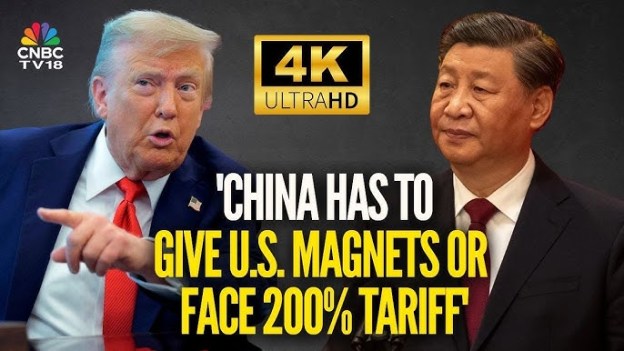
China plans to ease the flow of rare earths and other restricted materials to the U.S. by designing a system that will exclude companies with ties to the U.S. military while fast-tracking export approvals for other firms…The “validated end-user” system, or VEU, would enable Chinese leader Xi Jinping to follow through on a pledge to President Trump to facilitate the export of such materials while ensuring that they don’t end up with U.S. military suppliers, a core concern for China…  The VEU mechanism that Beijing is considering is modeled on U.S. laws and procedures, as is much of Beijing’s export-control architecture.

Under the American version of the VEU system, which has been active since 2007, certain Chinese companies are cleared to buy sensitive goods under a general authorization—essentially a simplified export-approval mechanism—instead of needing individual licenses for each purchase. This makes it easier to import controlled goods such as chemicals or chip-making equipment, but requires companies to put up with U.S. government inspections of their facilities, among other steps, to verify compliance with the program…

Companies in the U.S. and Europe have complained of reduced access to rare-earth magnets from China. Though China has periodically agreed to relax magnet restrictions, Chinese rare-earth magnet exports to the U.S. declined 29% in September 2025 from the month before

Excerpt from Jon Emont et al, China Hatches Plan to Keep U.S. Military From Getting Its Rare-Earth Magnets, WSJ, Nov. 10, 20215

Let them Eat Data! Decolonizing Artificial Intelligence

Tap water isn’t drinkable. Power outages are common. The national average annual wage is $2,200. Yet rising on Jakarta’s outskirts are giant, windowless buildings packed inside with Nvidia’s latest artificial-intelligence chips. They mark Indonesia’s surprising rise as an AI hot spot, a market estimated to grow 30% annually over the next five years to $2.4 billion.

The multitrillion-dollar spending spree on AI has spread to the developing world. It is driven in part by a philosophy known in some academic circles as AI decolonization. The idea is simple. Foreign powers once extracted resources such as oil from colonies, offering minimal benefits to the locals. Today, developing nations aim to ensure that the AI boom enriches more than just Silicon Valley.  Regulations effectively require tech companies such as Google and Meta to process local data domestically. That pushes companies to build or rent data facilities onshore instead of relying on global infrastructure. These investments add up to billions of dollars and create jobs that foster national talent, or so developing nations hope.

AI decolonization is a twist on data sovereignty, a concept that gained traction after Edward Snowden revealed that American tech companies cooperated with U.S. government surveillance of foreign leaders. The European Union in 2018 pioneered data-protection laws that other nations have since mimicked.

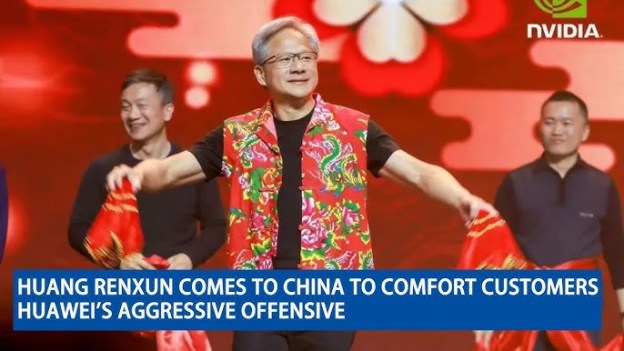
Regulations vary by country and industry, but the principle is this: If a developing-nation bank wants an American tech giant to store customer data and analyze it with AI, the bank must hire a company with domestically located servers… Nvidia Chief Executive Jensen Huang championed “sovereign AI” during a visit to Jakarta in 2024

“No country can afford to have its natural resource—the data of its people—be extracted, transformed into intelligence and then imported back into the country,” Huang said…

Excerpt from Stu Woo, It’s Not Just Rich Countries. Tech’s Trillion-Dollar Bet on AI Is Everywhere, WSJ, Oct. 26, 2025

Can the United States Drown in Disease? China has the Answer

While drugs sold in U.S. pharmacies or over the counter typically don’t say “made in China,” the country often supplies active pharmaceutical ingredients in the drugs or precursor chemicals used to make those active ingredients. Most of the acetaminophen and ibuprofen imported into the U.S. comes from China. Those are the active ingredients in Tylenol and Advil, respectively. China is also a significant producer of antibiotic ingredients. The U.S. imports many branded drugs from Europe, while for generics, it relies heavily on India. Still, a significant amount of the active ingredients used in India-made generics originates in China.

Perhaps aware of the sensitivity of turning medicine into a political tool, China hasn’t often threatened to cut off drug supplies to the U.S. Still, it signaled awareness of its leverage early in the Covid-19 pandemic, when the world faced shortages of masks and personal protection equipment owing to supply disruptions from China. In March 2020, the official Xinhua News Agency said that if China were to restrict exports of medical goods, the “U.S. will be plunged into the vast ocean of coronavirus.”

Excerpt from Yoko Kubota, How China’s Chokehold on Drugs, Chips and More Threatens the U.S., WSJ, Nov.  4, 2025

The Right to Mental Privacy: How AI Can Read You Like a Book

A technique called ‘mind captioning’ described in a scientific paper published on November 5, 2025 generates descriptive sentences of what a person is seeing or picturing in their mind using scans of their brain activity. It is based 1) on artificial intelligence models trained on the text captions of thousands of videos,0 and 2) brain scans of people watching them. The technique could help those with language difficulties to communicate better… But it raises concerns of mental privacy…

Excerpt from Max Kozlov, Mind-captioning’ AI decodes brain activity to turn thoughts into text, Nature, Nov. 5, 2025

First Pollute: Then, Fire the Clouds to Make Rain

Authorities in Indian capital Delhi unsuccessfully carried out in October 2025 a cloud seeding trial, which is the technique of altering clouds to make rain, to tackle the city’s worsening air pollution.

[What is Cloud Seeding?] Cloud seeding is done by firing small particles – usually silver iodide – into clouds to produce rain. The technique is used around the world, but experts doubt its efficacy as a long-term air pollution control measure. A team of the Indian Institute of Technology (IIT) Kanpur and the Delhi government carried out the trial over several neighbourhoods, as thick smog enveloped the city. But the attempt – the first in 53 years – was “not completely successful” due to the lack of moisture in the air. As a result, Delhi’s Air Quality Index (AQI) – which measures the level of PM 2.5 or fine particulate matter in the air that can clog lungs – is still hovering between 300 and 400, which is nearly 20 times the acceptable limit…

Delhi’s first cloud-seeding experiment was carried out in 1957, followed by another attempt in 1972, according to the Indian Institute of Tropical Meteorology. While those experiments were aimed at drought management, this was the first indigenous effort at cloud seeding to control pollution.

China has boasted about its success to manage rains before hosting the Olympics, with Beijing using rockets, cannons and drones to do cloud seeding. However, in the United Arab Emirates, questions over the technique were raised, following floods in Dubai in 2024.

Excerpt from Abhishek Dey, Why Delhi’s experiment to fix toxic smog with artificial rain failed, BBC, Oct. 29, 2025

First French Village to Relocate due to Climate Change

[T]he village of Miquelon sits only 2 meters above sea level on the archipelago of Saint-Pierre and Miquelon. Situated off the Canadian coast to the south of Newfoundland, it is an “overseas collectivity” of France, and the country’s last foothold in North America…’

But it was not until 2022 that the local government started thinking in earnest about relocating after the village narrowly missed being hit by Hurricane Fiona, one of the most expensive weather events ever in Canada. The move, when it is complete, will give Miquelon the unenviable title of the first French village to relocate because of the climate emergency. ..For now, relocation is voluntary, and nearly 50 people have signed up to move…At the same time, workers started to extend Miquelon’s water and electricity supplies to the new site. The goal is to keep the two sites connected as people move across the bridge between them.

Even though the signs of the climate crisis are obvious on the island – the ocean is slowly eating away at the isthmus that connects the parts of the island – many believe they have more time…

Excerpt from Sara Hashemi, How do you move a village? Residents of France’s last outpost in North America try to outrun the sea, Guardian, Oct. 28, 2025

Transparency against Free Speech? Exxon v. California, the Climate Risks

Exxon Mobil says rules requiring it to disclose climate risks infringe on the company’s right to free speech. The oil-and-gas giant made the argument in a suit filed October 24, 2025 (pdf) against the state of California, which is rolling out requirements for businesses to report ton their greenhouse gas emissions and climate-related financial risks. Exxon Mobil asked the court to halt the rules, arguing that they would violate free speech protections by forcing the business to use frameworks that put “disproportionate blame on large companies” such as the energy producer itself. The rules would require Exxon Mobil “to serve as a mouthpiece for ideas with which it disagrees,” the company said in the complaint, which was submitted to the U.S. District Court for the Eastern District of California.

The California regulations were set up by state laws SB 253 and SB 261: the Climate Corporate Data Accountability Act and the Climate-Related Financial Act. The first requires companies to disclose their greenhouse gas emissions, while the second mandates disclosures of climate-related financial risks.

The rules are specific to California but their oversight reaches businesses across the globe. Under SB 253, companies doing business in the state with an annual total revenue exceeding $1 billion, be they public or private, will have to disclose their greenhouse gas emissions—the ones from their immediate operations, such as electricity intake, and those from their… supply chain. Even if they are based elsewhere in the U.S. or overseas, the rules will apply.

The climate risk reporting rule, SB 261, will affect more companies. It requires public and private firms doing business in California with annual revenue of more than $500 million to disclose climate-related financial risks, along with the measures they are taking to mitigate and adapt to such risks, starting Jan. 1, 2026
Companies are also preparing for coming climate reporting rules in Europe known as the Corporate Sustainability Due Diligence Directive.

Excerpt from Clara Hudson, Exxon Mobil Sues California Over Looming Climate Disclosure Rules, WSJ, Oct. 27, 2025

Why and How Dubai Conquered Sudan

U.S. intelligence agencies say the United Arab Emirates sent increasing supplies of weapons including sophisticated Chinese drones to a major Sudanese militia in 2025 bolstering a group that has been accused of genocide and pouring fuel on a conflict that has created one of the world’s worst humanitarian crises…It is the latest example of how the wealthy Gulf state is quietly projecting power to influence the course of conflicts and assert its interests in a region dominated by much larger power brokers, from Saudi Arabia to Turkey and Iran.

A key U.S. partner, the U.A.E. has shipped arms into Sudan to shore up the Rapid Support Forces (RSF) of Sudan after a string of setbacks that culminated with the militia losing control of the capital, Khartoum, in March 2025. Rearmed, the militia survived that potential turning point in the war and launched a renewed offensive against the government that triggered some of the worst destruction of the two-year war. The RSF’s campaign included an expanded assault on North Darfur state, where the militia tightened an 18-month siege of the regional capital of El Fasher, cutting off tens of thousands of people from adequate food and medicine…“The war would be over if not for the U.A.E.,” said Cameron Hudson, a former chief of staff to successive U.S. presidential special envoys for Sudan. “The only thing that is keeping them in this war is the overwhelming amount of military support that they’re receiving from the U.A.E.,” he said of the RSF…The U.A.E. is betting on the RSF to help protect Emirati interests in Sudan. The country is strategically located on the Red Sea, where the Sudanese government canceled a $6 billion Emirati port deal in 2024, and has vast resources of gold, much of which has historically been exported to Dubai. The U.A.E. has invested billions of dollars in the country.
Excerpt from Jared Malsin at al., How U.A.E. Arms Bolstered a Sudanese Militia Accused of Genocide, WSJ, Oct. 28, 2025

Why Arab Men Rape Black Women in Darfur

Sudan’s civil war is taking a jarring turn in Darfur, where an Arab-led militia is now using state-of-the-art drones and execution squads to dominate the region’s Black population. Rights researchers already are warning that the killings have the potential to surpass the genocide that played out in Rwanda just over 30 years ago. The group behind the violence, the Rapid Support Forces (RSF), led by Lt. Gen. Mohamed Hamdan Dagalo, has previously been accused by the U.S. of pursuing a genocide of Darfur’s Black population. Two decades ago, its predecessor was involved in the killing of more than 200,000 people in Darfur.

This time, the killings are the work of a closely-drilled and well-armed rebel force that already has established a parallel government to run Darfur, an expanse of western Sudan roughly the size of Spain. RSF fighters are armed with bomb-carrying Wing Loong II and FeiHong-95 drones, made in China, and supplied by the United Arab Emirates to help expand its own interests in the region.

The RSF have been conducting door-to-door searches, picking out non-Arab men and boys before executing them… Witnesses and residents say militia members swept through the city, raping Black women, detaining aid workers and forcing the last remaining residents to leave… Black women with long hair are systematically separated and raped, according to interviews with multiple aid workers and victims.

According to Eric Reeves, a fellow with the Nairobi-based Rift Valley Institute: “The fierce ethnic animus of the RSF toward non-Arab civilians is equal to that of the Hutus toward the Tutsis in Rwanda. The obscene violence is clearly comparable.”

Excerpt from Nicholas Bariyo, Sudan Militia, Armed With Drones, Hunts Down Black Population of Darfur, WSJ, Oct. 31, 2025

Emit all the Carbon You Want; But Please! Don’t Greenwash

A French court, October 23, 2025 ruled oil and gas giant TotalEnergies had engaged in “misleading commercial practices” by overstating its climate pledges—the first such ruling worldwide against a major oil company for climate misinformation. The ruling is the first conviction in the world against an oil company, and a great win against greenwashing the act of claiming to be more environmentally responsible than in reality.

Find here a machine-translated pdf of ruling.

While United States Hibernated, China Salivated

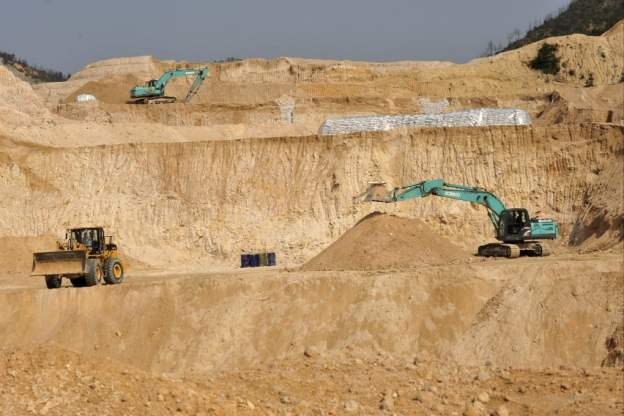
When China tightened restrictions on rare-earth exports in October 2025, stunning the United States, it was the latest reminder of Beijing’s control over an industry vital to the world economy. China’s dominance was decades in the making. Since the 1990s, China has used aggressive tactics to build up and maintain its lock over rare-earth minerals, which are essential to making magnets needed for cars, wind turbines, jet fighters and other products. Beijing provided financial support to the country’s leading companies, encouraged them to snap up rare-earth assets abroad, and passed laws preventing foreign companies from buying rare-earth mines in China. It eventually consolidated its domestic industry from hundreds of businesses into a few giant players, giving it further leverage over prices…

In 1995, Chinese state-linked companies received U.S. government approval to buy the rare-earth materials and magnet business started by General Motors, called Magnequench. In the following years, the Chinese ownership shut down all its rare-earth plants in the U.S. and shipped the equipment to China. Top American engineers were offered opportunities to go to China and set up new plants there.  “There were some colleagues that were dead set against it, saying they would never help China learn our technology,” said one magnet expert who ultimately agreed to go to China. “When I arrived, I could not believe what I was seeing. The number of new factories being built, and the rate at which they were being built, was mind-blowing,” he said….  By the mid-2000s, the U.S. rare-earth industry had been all but wiped out. Mountain Pass, America’s major rare-earth mine, had been shut down, as had virtually all American facilities that processed rare earths and turned them into magnets. China produced around 97% of the world’s rare earths, giving it what was effectively a global monopoly…

By 2021, the U.S. government was growing more worried about China’s ability to weaponize rare earths, causing prices to jump. Washington began offering large-scale funding for new rare-earth plants, including a refinery in Texas to be built by Lynas, an Australian rare-earth company. But in 2021, the Association of China Rare Earth Industry issued a warning: to China’s leadership If Beijing wanted to maintain “China’s absolute dominant position,” the country needed to relax state production quotas. Beijing responded in 2022 by pushing up output by 25%, the most in years, with another large increase the following year. Prices tanked, hitting the bottom lines of Western producers and leading some to unload assets…Beijing also introduced new measures preventing the transfer of its rare-earth processing technology abroad.

Excerpt from Jon Emont, How China Took Over the World’s Rare-Earths Industry, WSJ. Oct. 19, 2025

Why AI Industry is Like the Nuclear Industry

According to the Anthropic’s CEO  Jack Clark, governments ” should think of AI systems as kind of like countries that are arriving into the world, and misaligned AI systems as like rogue states.” He isn’t advocating for the end of AI but rather pushing for openness so these potential monsters aren’t created in the dark. He’s worried about a crisis—like what happened with the nuclear industry—that sparks drastic policy changes that derails development.

Excerpt from Tim Higgins, The Fight Over Whose AI Monster Is Scariest, WSJ, Oct. 18, 2025

Nationalizing a Crown Jewel: the case of Nexperia

U.S. officials’ warning to their Dutch counterparts was stark: If they wanted a Netherlands-based chip maker to avoid being put on a trade blacklist, it would almost certainly have to remove its Chinese owner as CEO. “The fact that the company’s CEO is still that same Chinese owner is problematic,” American officials said in a June 2025 meeting on the topic. The Americans soon got their wish. In September 25, 2025, the Dutch economy ministry seized control of Nexperia from China’s Wingtech Technology. The next day, a Dutch court granted an emergency petition to suspend Wingtech founder Zhang Xuezheng as Nexperia’s CEO and put all but one of the semiconductor company’s shares under external management.

China quickly fired back at the seizure, ordering Wingtech in early October to suspend exports of Nexperia of chips that the company has long sent for packaging and testing in China…The Dutch economy minister said in a letter to parliament that he moved to seize control of Nexperia based on evidence that the CEO was moving quickly to shift production capacity, financial resources and intellectual property to China, not because of pressure from any other country… The Dutch government and Dutch and German executives of the company had tried for months to ringfence the company’s business from Chinese control to accommodate domestic concerns—and avoid being hit by the U.S. blacklist… Dutch officials told Nexperia that the coming expansion of U.S. trade restrictions could lead to restrictions on the business, unless measures were taken to limit the transfer of knowledge and capabilities to China.

In the past, Nexperia relied on its European factories and contract manufacturers in Taiwan to make chips for China. In 2020, Zhang set up a wafer factory in Shanghai. The business, called Wingskysemi, started production in 2023 and has become one of Nexperia’s key suppliers….

Excerpt from Sam Schechner et al, , How U.S. Pressured Netherlands to Oust CEO of Chinese-Owned Chip Maker, WSJ, Oct. 14, 2025

Overlords of the Internet: Botnet Warfare

U.S. Federal authorities disrupted in August 2025 a network of hacked devices used by criminals in some of the largest online attacks yet seen… Law-enforcement agencies and technology companies are waging a war against increasingly powerful networks of hacked devices, called botnets, that can knock websites offline for a fee. They are used for extortion and by disreputable companies to knock rivals offline… These botnets are leveraging new types of internet-connected devices with faster processors and more network bandwidth, offering them immense power. The criminals controlling the botnets now have the capabilities to move beyond website takedowns to target internet connectivity and disrupt very large swaths of the internet.“Before the concern was websites; now the concern is countries,” said Craig Labovitz, head of technology with Nokia’s Deepfield division. 

Apprehending botnet criminals in August 2025 appeared to have an unwanted consequence: freeing up as many as 95,000 devices to be taken over by new botnet overlords. That led to a free-for-all to take over the machines “as fast as possible,” said Damian Menscher, a Google engineer. The operators of a rival botnet, called Aisuru, seized control of more than one-fourth of them and immediately started launching attacks that are “breaking records,” he said.

On Sept. 1, 2025 the network services company Cloudflare said it had measured an attack that clogged up computer networks with 11.5 trillion bits of junk information per second. That is enough to consume the download bandwidth of more than 50,000 consumer internet connections. Cloudflare declared this attack, known as a distributed denial of service, or DDoS, a “world record” in terms of intensity. Some analysts see it almost as an advertisement of the botnet’s capabilities…

Botnets such as Aisuru are made up of a range of internet-connected devices—routers or security cameras, for example—rather than PCs, and often these machines can only join one botnet at a time. Their attacks can typically be fended off by the largest cloud-computing providers. One massive network that Google disrupted in 2025 had mushroomed from at least 74,000 Android devices in 2023 to more than 10 million devices in two years. That made it the “largest known botnet of internet-connected TV devices,” according to a July 2025 Google court filing.

Excerpts from Robert McMillan, The Feds Destroyed an Internet Weapon, but Criminals Picked Up the Pieces, WSJ, Sept. 15, 2025

Which Tech Companies Work for the Military? All

Companies including Nokia, Dell, and Oracle are eager to apply decades of experience in civilian technology to the rapidly evolving battlefield. Drones, bodycams and digital sensors now stream real-time intelligence in volumes no human can digest. Military headquarters are crunching through that using artificial intelligence and pumping back to troops situational updates, tactical guidance and battle plans, constantly updated on computer screens and hand-held devices.  “We understand that the future weapon is data,” said Giorgi Tskhakaia, an adviser to Ukraine’s minister of digital transformation 

The first step is connectivity….Nokia is packaging 5G technology for ultra-secure use on battlefields and in national-security applications. It has developed backpacks with small 5G nodes and vehicle-based systems that can handle up to 1,000 users for a sort of tactical communications bubble. In 2025, it announced partnerships with military-equipment giants Lockheed Martin and Rheinmetall to integrate 5G communications into their systems.

Ericsson, the West’s only other maker of 5G networks and a producer of military radios going back to World War II, is also pushing into digital defense applications.

NATO is now working to adopt 5G as a military-communications standard across its 32 members. Alliance experts say the volume of military data is so great that 5G is best for transmission because the standard has at least 10 times the data capacity of earlier systems. It is also much more resilient against jamming

The second step is the extraction of data….Ukraine has spent three years developing AI systems to churn through all it collects… The Pentagon in 2017 launched a significant effort to adopt AI, Project Maven, tapping machine learning to digest mountains of data. Google’s role in the work sparked employee protests at the time…

Oracle, like many of its rivals, is no stranger to working with governments and militaries. The company began in 1977 out of a Central Intelligence Agency program—Project Oracle. But for decades it focused on corporate customers. Now, it and other cloud providers including Google, Amazon.com and IBM are applying to government and national-security work many lessons from their fierce commercial competition to move and process data fastest.

The final step in exploiting battlefield data is delivering it to fighters via gear that can handle combat conditions. Screens are proliferating on the battlefield, just as they did in offices and homes several decades ago, but warfare puts demands on equipment unlike any other environment…One Dell laptop is built to Pentagon standards for resistance to shocks, dust, sand, water and “explosive atmosphere,” meaning it won’t ignite flammable vapor. It can handle temperatures between minus 20 degrees and 145 degrees Fahrenheit.

Excerpt from Daniel Michaels, That 1990s Tech Brand? Its New Gig Is in Battlefield Data, WSJ, Sept. 9, 2025

Big Tech and Military: Microsoft – Israel Force

Microsoft terminated in September 2025 the Israeli military’s access to technology it used to operate a powerful surveillance system that collected millions of Palestinian civilian phone calls made each day in Gaza and the West Bank, according to Guardian. Microsoft told Israeli officials that Unit 8200, the military’s elite spy agency, had violated the company’s terms of service by storing the vast trove of surveillance data in its Azure cloud platform.

Equipped with Azure’s near-limitless storage capacity and computing power, Unit 8200 had built an indiscriminate new system allowing its intelligence officers to collect, play back and analyze the content of cellular calls of an entire population.

The project was so expansive that, according to sources from Unit 8200 – which is equivalent in its remit to the US National Security Agency – a mantra emerged internally that captured its scale and ambition: “A million calls an hour.

The enormous repository of intercepted calls – which amounted to as much as 8,000 terabytes of data – was held in a Microsoft data center in the Netherlands. Within days of the Guardian publishing, Unit 8200 appears to have swiftly moved the surveillance data out of the country.

Excerpt from Harry Davies and Yuval Abraham, Microsoft blocks Israel’s use of its technology in mass surveillance of Palestinians, Guardian, Sept. 25, 2025

The New Underworld Order: Invincible Cartels

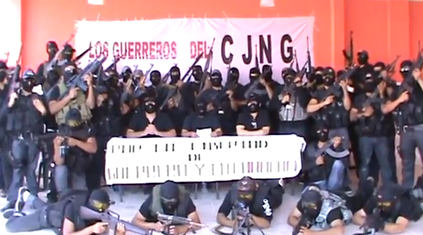
Nemesio “Mencho” Oseguera spent decades building his Jalisco New Generation Cartel into a transnational criminal organization fierce enough to forge a new underworld order in Mexico, displacing the Sinaloa cartel, torn by warring factions, as the world’s biggest drug pusher. The Sinaloans, Mexico’s top fentanyl traffickers, got caught in the crosshairs of the Trump administration, which promised to eradicate the synthetic opioid. The crackdown has left an open field for Jalisco and its lucrative cocaine trade, elevating Oseguera to No. 1.

The Jalisco cartel transports the cocaine by the ton from Colombia to Ecuador and then north to Mexico’s Pacific coast via speedboats and so-called narco subs…The U.S. has a $15 million bounty on Oseguera, but he rarely leaves his mountain compound, according to authorities. Few photos of him circulate. The cadre of men protecting Oseguera, known as the Special Force of the High Command, carry RPG 7 heat-seeking, shoulder-fired rocket launchers capable of piercing a tank, people familiar with cartel operations said. Visitors to the drug lord’s stronghold are hooded before they embark on the six-hour car trip through terrain sown with land mines, those people said. Locations of the pressure-activated explosives are known only by members of Oseguera’s inner circle.

The Jalisco cartel, which controls ports on Mexico’s Pacific coast, now uses routes and tunnels into the U.S. that are controlled by the sons of imprisoned drug kingpin Joaquín “El Chapo” Guzmán….
 
The cartel acts as a parallel government in the southwestern state of Jalisco and other parts of Mexico, taxing such goods as tortillas, chicken, cigarettes and beer, security experts said. It controls construction companies that build roads, schools and sewers for the municipal governments under cartel control.  A booming black market for fuel is another cash cow. Gasoline and diesel stolen from Mexican refineries and pipelines—or smuggled into Mexico from the U.S. without paying taxes—is sold at below market prices to small and large businesses.. The head of the Jalisco cartel’s fuel division is nicknamed “Tank” for his prowess at stealing and storing millions of gallons of fuel. 

Excerpst from Steve Fisher et al., America Loves Cocaine Again—Mexico’s New Drug King Cashes In, WSJ, Sept. 16, 2025

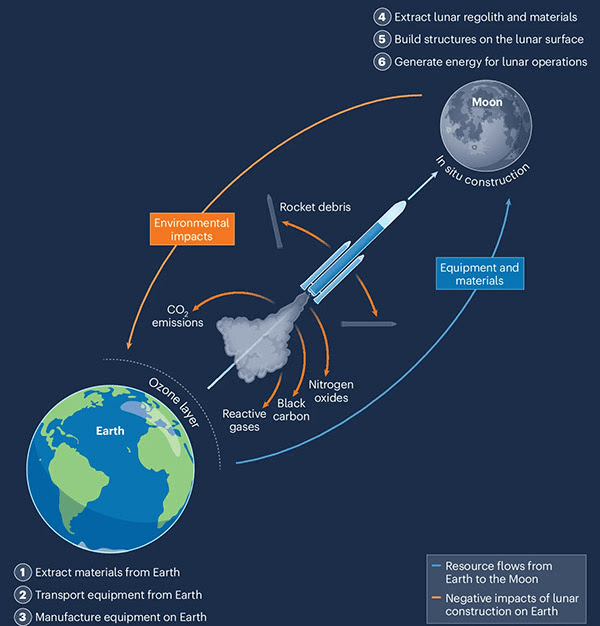
Building on the Moon: the Environmental Impact

The Environmental Burden of Building on the Moon

Is Violence Necessary for the Protection of Environment?

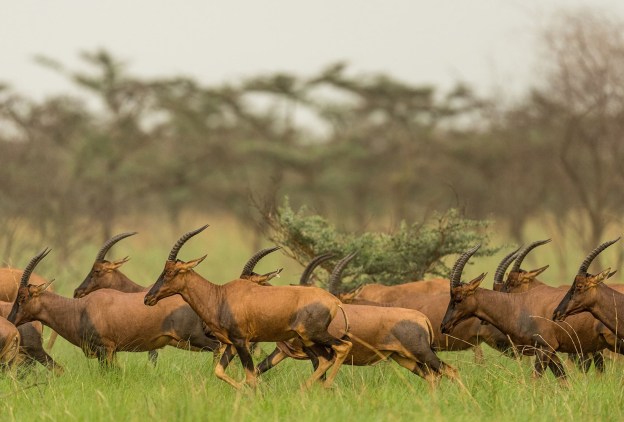
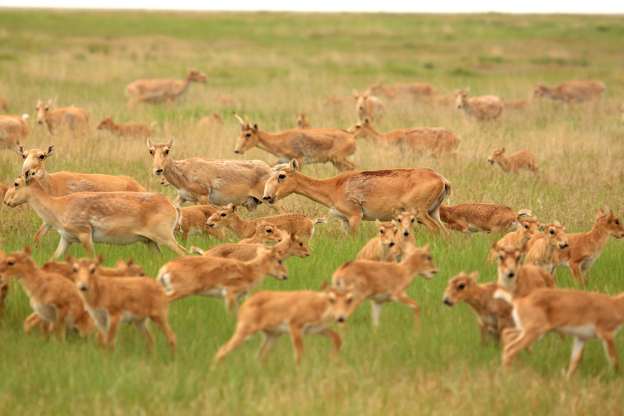
Six million antelope swarm across an area the size of Illinois,in Sough Sudan, a mass movement of mammals…African Parks, the Johannesburg-based conservation group that manages natural areas on behalf of South Sudan’s government, allowed The Wall Street Journal access to the 58,000-square-mile wilderness on the eastern bank of the White Nile….Although scientists and, of course, locals have known about the migration for years, only recently have researchers understood its staggering dimensions. In 2023, African Parks conducted an aerial survey revealing the movement included some 5.1 million white-eared kob, which generally move in a U shape in and around Boma National Park, sometimes crossing into Ethiopia’s Gambella National Park…

The interethnic violence that plagues South Sudan has, to a degree, helped protect the animal migration…South Sudanese rebels fought for decades to break away from Sudan. The South, mostly animist and Christian, finally won independence from the largely Muslim North in 2011, but quickly descended into civil war along ethnic lines. The war ended in 2020, but fighting in 2025 suggests stability remains a distant hope.

Among the region’s ethnic groups, the heavily armed Murle people in and around Boma National Park are known for stealing cattle and children from the Dinka and Anuak. Fighting is a way of life for Murle men, who divide themselves into age sets. Younger men gain status by taking on the men above them, with sticks and AK-47s, sometimes with lethal effect. Their torsos sometimes bear decorative scars resembling assault rifles…The Murle are so intimidating that other ethnic groups keep their distance to the extent possible. That has created a sort of no-man’s-land both in the parks and the places in between. “You’ve got this massive space that has allowed the migration to flourish,” says John Vogel, manager of Badingilo park.

With war, however, have come guns, and the temptation to poach is strong. Increasingly, hunters armed with military-grade weapons have been mowing down entire herds of antelope and just taking what they can carry to market on motorcycles. In a single month this year, African Parks counted 14,000 antelope carcasses passing through the town of Bor, where each animal sells for about $50, a vast amount to a poor rural family…

Excerpt from Michael M. Phillips, Researchers Track World’s Biggest Animal Migration, WSJ, Sept. 6, 2025

How China Plans to Destroy the U.S. AI Industry

China’s restrictions on rare-earth materials announced on October 9, 2025 would mark a nearly unprecedented export control*** that stands to disrupt the global economy, giving Beijing more leverage in trade negotiations and ratcheting up pressure on the Trump administration to respond.

The rule, put out by China’s Commerce Ministry, is viewed as an escalation in the U.S.-China trade fight because it threatens the supply chain for semiconductors. Chips are the lifeblood of the economy, powering phones, computers and data centers needed to train artificial-intelligence models. The rule also would affect cars, solar panels and the equipment for making chips and other products, limiting the ability of other countries to support their own industries. China produces roughly 90% of the world’s rare-earth materials.

Global companies that sell goods with certain rare-earth materials sourced from China accounting for 0.1% or more of the product’s value would need permission from Beijing, under the new rule. Tech companies will probably find it extremely difficult to show that their chips, the equipment needed to make them and other components fall below the 0.1% threshold, industry experts said. The rules could cause a U.S. recession if implemented aggressively because of how important AI capital spending is to the economy… “It’s an economic equivalent of nuclear war—an intent to destroy the American AI industry,” said Dmitri Alperovitch, co-founder of the Silverado Policy Accelerator think tank.

Excerpt from Amrith Ramkumar,et al., China’s Rare-Earth Escalation Threatens Trade Talks—and the Global Economy, WSJ, Oct. 9, 2025

***The new export controls mark the first time China has applied the foreign direct product rule (FDPR)—a mechanism introduced in 1959 by the United States and long used United States to restrict semiconductor exports to China. The FDPR enables the United States to regulate the sale of foreign-made products if they incorporate U.S. technology, software, or equipment, even when produced by non-U.S. companies abroad. In effect, if U.S. technology appears anywhere in the supply chain, the United States can assert jurisdiction. See CSIS

Blackmail and Espionage: rogue AI

Today I am reading on how AI models can blackmail and spy.

See How LLMs could be insider threats

DECEPTION IN LLMS: SELF-PRESERVATION AND AUTONOMOUS GOALS IN LARGE LANGUAGE MODELS

Chilling…

A Pipe Dream: Carbon Capture and Storage

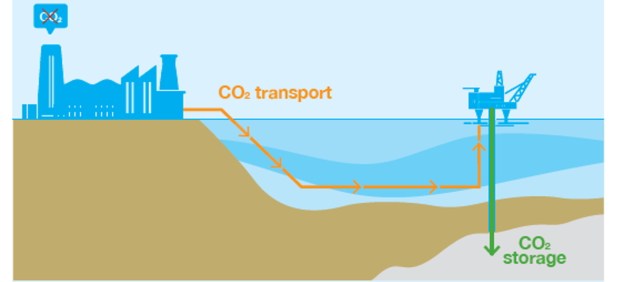
Drawing down carbon from the air and stashing it in underground rock formations has been framed as an essential way to slow and reverse global warming. But new research published in the journal Nature finds there are far fewer suitable places to do this than previously thought.

After screening out “risky” areas, like those that are vulnerable to earthquakes, a team of researchers from Europe and the U.S. found that the Earth can only safely store about 1,460 gigatons of injected carbon in its sedimentary basins. This is an order of magnitude less than previous estimates… 

Carbon storage “can no longer be considered an unlimited solution to bring our climate back to a safe level,” one of the study’s co-authors, Joeri Rogelj, said in a statement. “Geological storage space needs to be thought of as a scarce resource that should be managed responsibly to allow a safe climate future for humanity.” Rogelj is director of research at the Grantham Institute on climate change and the environment at Imperial College London.

Carbon storage refers to the injection of carbon dioxide into underground reservoirs where it theoretically can’t contribute to climate change.

According to the study’s authors, no previous global or regional estimate of the Earth’s technical carbon storage potential has taken into account key risk factors that would make some areas undesirable for storage. Starting from an estimate of all potentially available storage sites, their analysis cuts out areas that are too shallow, too deep, and too prone to earthquakes, as well as environmentally protected areas and areas near where people live. This reduces the total available capacity for carbon storage from 11,780 gigatons to just 1,460 gigatons of CO2, 70 percent of it on land and 30 percent on the seafloor.

They also noted some geographical disparities in the potential for carbon storage: While some historical climate polluters such as the U.S. and Canada have lots of space to safely stash carbon, others in Europe don’t. If those countries intend to make carbon storage a significant piece of their climate mitigation plans, they will likely have to look for locations in countries that have done little to contribute to climate change, potentially in Africa.

Except  from Joseph Winters, How much carbon can we safely store underground? Much less than previously thought, Yale Climate Connections, Sept. 10, 2025

How to Save Rhinos? Make them Radioactive

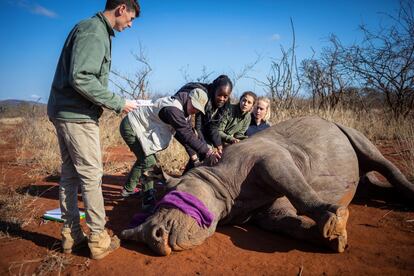
In a pioneering effort to combat wildlife trafficking of the threatened rhinoceros, a South African University began implementing a project supported by the International Atomic Energy Agency (IAEA). The project combines the safe insertion of radioactive isotopes into rhino horns… to deter and detect illegal poaching.

With over 10,000 rhinos lost to poaching in the past decade, South Africa – home to the world’s largest population of rhinos – remains a target for criminals driven by the illegal trade of rhino horn. In the first quarter of 2025 alone, the South African Ministry of Forestry, Fisheries and the Environment reported 103 rhinos poached. In response, this project run by the University of the Witwatersrand is using radiation to support conservation and enforcement efforts.

The Rhisotope Project was created in 2021 with the idea to tag rhino horns with radioactive material. This makes the horns detectable by radiation portal monitors (RPMs) already deployed at borders, ports and airports worldwide. These RPMs, commonly used to detect nuclear and other radioactive material, can now be harnessed against wildlife crime.

Excerpt from Nuclear Science and Nuclear Security Infrastructure to Protect Rare Rhinos: IAEA-Supported Project Marks a Milestone, IAEA News, July 2025

What is Mosquito Factory?

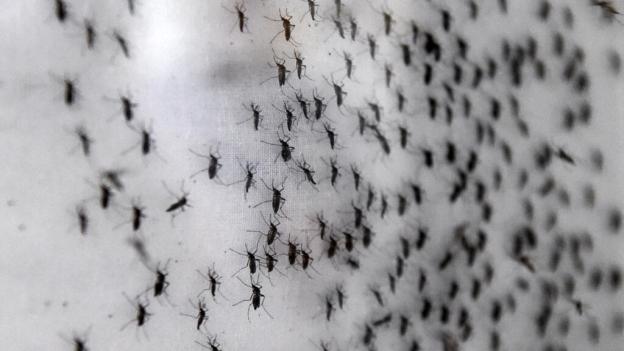
Launched in July 2025, a Brazilian mosquito factory is expected to produce 100 million eggs a week from the mosquito Aedes aegypti. However, unlike wild A. aegypti, the main transmitter of dengue virus, those churned out by the factory carry a harmless Wolbachia bacterium that curbs the insects’ ability to spread viruses including dengue and Zika. The idea is to release the modified mosquitoes, which researchers call wolbitos, into cities in Brazil, where they will mate with their wild counterparts and the females will pass the bacterium on to their offspring, gradually converting the local population.

The wolbito strategy, which is being spearheaded by the non-profit World Mosquito Program (WMP), has already shown success in Colombia, Indonesia and at home: in the Brazilian city of Niterói in the southeast, dengue cases dropped by 69% in areas where Wolbachia-carrying mosquitoes were released, compared with areas where they weren’t. Brazil’s federal government has adopted the approach to fight dengue infections — which surged to a record 6.5 million confirmed cases in the country in 2024 — alongside other preventive measures such as vaccines.

Excerpt from Mariana Lenharo, This is the world’s largest ‘mosquito factory’: its goal is to stop dengue, Nature, Sept. 3, 2025

Clouds! and Climate Change

Clouds are not just poetic. They’re pivotal in helping to regulate Earth’s temperature. And their influence on the climate is evolving in ways we’re only beginning to understand.

How exactly cloud cover will shift in a warming world is anyone’s guess; it’s one of the largest sources of uncertainty in climate science. But it should also be everyone’s concern. What happens to our clouds as the planet warms is so important that we need a renaissance in the study of clouds.

Excerpt from Gavin Pretor-Pinney, We Take Clouds for Granted, NYT, Sept. 10, 2025

Read here his beautiful essay!

For more, see Cloud Appreciation Society

Another Laughingstock: Carbon Offsets

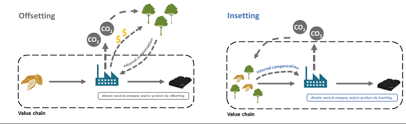
Carbon credits feature prominently in corporate climate strategies and have sparked public debate about their potential to delay companies’ internal decarbonisation. While industry reports claim that credit purchasers decarbonize faster, rigorous evidence is missing. This study (see below) provides an in-depth analysis of 89 multinational companies’ historical emission reductions and climate target ambitions. Based on self-reported environmental data and more than 400 sustainability reports, we find no significant difference between the climate strategies of companies that purchased credits and those that did not. Voluntary offsetting is not a central part of most companies’ climate strategies, and many pass credit costs directly onto their customers. While the companies within our sample retired one-fourth of all carbon credits in 2022, the top five offsetters’ expenditures on voluntary emission offsetting are, on average, only 1 percent relative to their capital expenditures.

Abstract from Niklas Stolz &  Benedict S. Probst, The negligible role of carbon offsetting in corporate climate strategies, Nature Communications,  Sept. 10, 2025

Individual Companies Can be Held Liable for Gross Contribution to Heatwaves

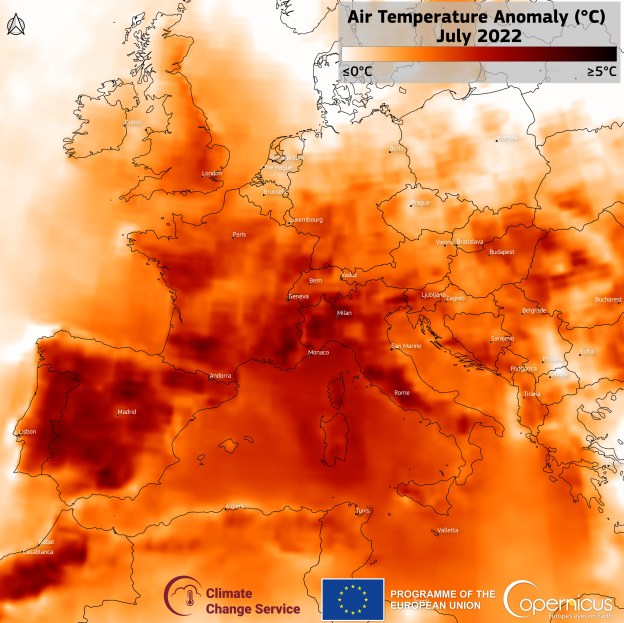
Climate scientists have been attributing storms, droughts and heatwaves to global warming for two decades. Now, they are tracing the chain of responsibility all the way back to the producers of fossil fuels. A study published in Nature in September 2025 shows that around one-quarter of the heatwaves recorded over 2000–23 can be directly linked to greenhouse-gas emissions from individual energy giants…some of whom include (the former Soviet Union, China (coal), Gazprom, Exxon Mobile, Chevron, National Iranian Oil Company, Saudi Aramco, BP, Shell, India (Coal)) The findings could provide fresh evidence to support lawsuits seeking to hold companies accountable for their impacts on the climate.

More than one-quarter of the 213 events recorded would have been “virtually impossible” without human-induced global warming, the study found. The emissions linked to energy companies and other major carbon emitters increased the likelihood of some 53 heatwaves by a factor of more than 10,000.

This is not the first time that climate impacts have been attributed to fossil-fuel producers, but this study go one step further than its predecessors and link individual companies directly to specific heatwaves. Legal experts say it’s a line of evidence that could feed into climate litigation that focuses on specific events, such as the 2021 heatwave that hammered the US Pacific Northwest in 2021. Already, a county government in Oregon has filed a US$52-billion civil lawsuit against fossil-fuel companies for contributing to that event.

Excerpts from Jeff Tollefson, Heatwaves linked to carbon emissions from specific companies, Nature, Sept. 10, 2025

AI Eats Up Crazy Amounts of Electricity

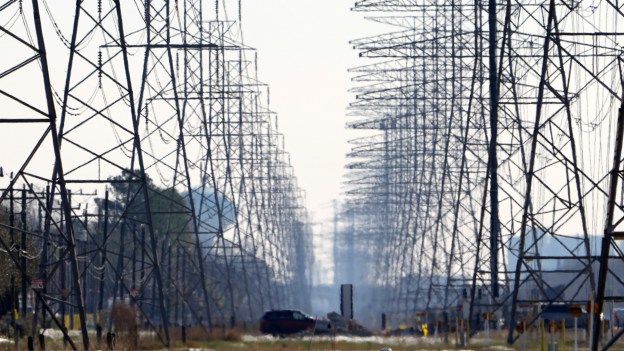
Global demand for AI is ramping up rapidly. Electricity demand from data centers worldwide is set to more than double by 2030 to about 945 terawatt-hours, which is more than Japan’s total electricity consumption, according to the International Energy Agency. “A single AI-focused data center can use as much electricity as a small city and as much water as a large neighborhood,” according to the Union of Concerned Scientists….A data center that fuels AI can consume as much electricity as 100,000 households, but the largest ones that haven’t been completed yet could consume 20 times as much. It’s a particular problem in the U.S., with data centers making up nearly half of its electricity demand growth over the next five years, according to the IEA.

There’s also been heightened concern recently about the amount of water that is required to cool electrical equipment in data centers. Just a few weeks ago, French company Mistral AI released a report detailing the environmental footprint of training its language model Mistral Large 2, including the amount of water it consumes. The water consumption from generating one page of text is 0.05 liter, enough to grow a small radish, the report says…

Excerpt from Clara Hudson, Google Wants You to Know the Environmental Cost of Quizzing Its AI. WSJ, Aug. 21, 2025

While United States Sleeping, China Made Ships

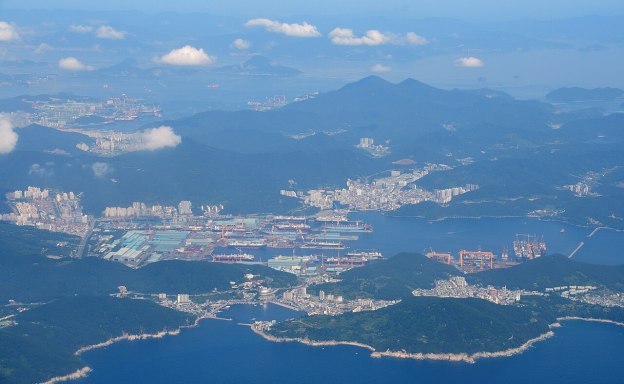
A $16 billion merger of two state-controlled shipbuilders in China was set for completion the week of August 11, 2025 creating the world’s biggest shipbuilder while the U.S. searches for a path back into the business.  American shipbuilders are playing catch-up after decades of maritime-industry decline…but Trump’s threat to impose higher fees on ships made in China is giving South Korean and Japanese rivals an opening to win back market share.

The Chinese champion is called China State Shipbuilding, or CSSC. In August 2025, it is scheduled to absorb its merger partner, China Shipbuilding Industry, and take the sole listing on the Shanghai Stock Exchange… Beijing is currently looking to consolidate state-led companies in sensitive industries, particularly those connected with the military. CSSC’s main business is commercial, but it is also an important contractor for the Chinese navy. China Shipbuilding Industry designed and built China’s first homegrown aircraft carrier, the Shandong.

Beijing set its sights on dominating the shipbuilding industry decades ago, and now Chinese shipbuilders make up more than half of the global market. China-built ships accounted for about 55% of global tonnage in 2024, compared with less than 0.05% for the U.S. China possesses 232 times the shipbuilding capacity of the U.S., according to the U.S. Navy…


Meanwhile, smaller rivals in Japan are looking to reclaim market share after decades of being pushed into a corner by lower-cost Chinese and South Korean rivals. A proposal in June in 2025 from Japan’s ruling Liberal Democratic Party calls for extensive subsidies for local shipyards to protect national security, including a $6.7 billion public-private fund. “If we fail to act now, Japan risks losing its shipbuilding industry entirely, as Europe and the United States did,” the party said.

Excerpt from China Creates World’s No. 1 Shipbuilder, Driven by Rivalry With U.S., WSJ, Aug. 11, 2025

Secrecy in Space

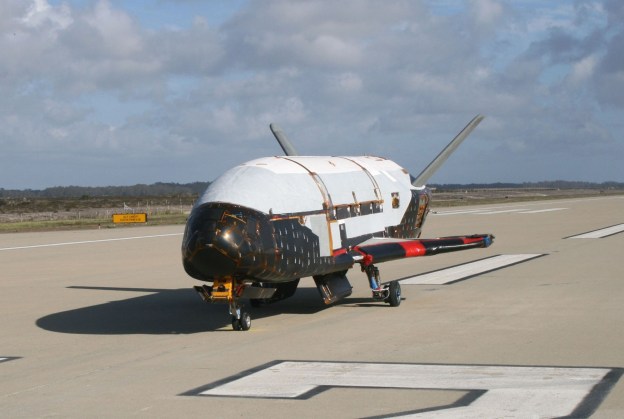
A Pentagon spaceplane called X-37B zoomed into orbit this week for its eighth mission. When it will come back is a secret. The uncrewed vehicle can spend months or years in space before it re-enters the atmosphere.. That combination of flexibility and endurance has made it a favorite tool for military officials looking to quickly deploy new technologies on the final frontier. A SpaceX rocket launched X-37B on August 21, 2025 from Florida’s Kennedy Space Center. Government and commercial engineers have spent years experimenting with lasers that allow satellites to share large amounts of data in space. The Pentagon is also testing tools like the inertial sensor, which could help improve navigation in situations where Global Positioning System signals aren’t available.

The spacecraft has spent the last five months on Earth after a 434-day mission that included tests of orbital maneuvers known as “aerobraking.” The move helps the vehicle use the drag from the planet’s atmosphere to change its orbit without using much fuel.  Military officials haven’t disclosed many details about the payloads that X-37B carries, but past missions included testing different materials in orbit and an experiment that transmitted solar energy to the ground. Its fifth flight released three small satellites that government officials didn’t acknowledge until they had fallen back to Earth. There’s a global strategic interest in saying what you’re putting in space,” said Jonathan McDowell, a researcher at the Harvard-Smithsonian Center for Astrophysics. If the U.S. hides its satellites, “then the Chinese are going to start doing it too, and that’s not in our interest.”

China now fields more than 1,000 satellites and has developed a range of radio jammers, antisatellite missiles and other weapons capable of targeting Pentagon assets, according to a U.S. Air Force document released in May 2025. It also operates a competing spaceplane, called Shenlong, that has flown several missions.]

Excerpt from Drew FitzGerald, The Pentagon’s Mysterious X-37B Space Plane Embarks on New Mission, WSJ, Aug. 22, 205

Out-of-Date: Academic Cooperation

Mr. Trump noted in the summer of 2025  that “the United States is in a race to achieve global dominance in artificial intelligence,” which Joe Biden called “a defining technology of our era.” Universities help drive that race. Meta’s chief AI officer, Alexandr Wang, has argued that the rate of AI progress may be such that “you need to prevent all of our secrets from going over to our adversaries and you need to lock down the labs.”

Thousands of Chinese citizens are working and studying in such labs….In AI specifically, nearly 40% of top-tier researchers at U.S. institutions are of Chinese origin. Beijing is aggressively cultivating American-educated and American-employed researchers via the Thousand Talents program.

Blindly embracing academic cooperation with a geopolitical rival is absurd. Nobody suggests we should train Iranian nuclear physicists or Russian ballistics engineers. The U.S. wouldn’t have been better off collaborating more with Nazi Germany in the 1930s or with the Soviet Union during the Cold War. Why make an exception for a nation dedicated to surpassing the U.S. in emerging technologies?

Excerpt from  Mike Gallagher, Send Harvard’s Chinese Students Home, WSJ, Aug. 19, 2025

The End of Taiwan? The End of U.S. and Europe Combined

Prosecutors in Taiwan indicted  in August 2025 three people in a case about sensitive chip technology, alleging they stole information from Taiwan Semiconductor Manufacturing (TSMC) to help one of TSMC’s top equipment suppliers, Tokyo Electron, win more orders…Taiwanese officials say the theft of trade secrets has grown over the past decade and point most of the blame at China. Over the past couple of years, Taiwan’s investigation bureau has probed more than 120 cases involving trade-secret theft. “If Taiwan’s technology hub falls or its technologies are lost, the impact will extend beyond Taiwan to the U.S., Europe and the rest of the world,” Sun Chen-yi, deputy director general of the investigation bureau at Taiwan’s Ministry of Justice, said in an interview before his retirement in July 2025.

Excerpt from Yang Jie et al., Three Accused of Stealing TSMC Chip Secrets to Aid Japanese Supplier, WSJ, Aug. 28, 2025

Laughingstock: The Net-Zero Banking Alliance

The Net-Zero Banking Alliance (NZBA) said in August 2025 that it was pausing operations and initiating a vote to decide on whether to continue working as a membership-based alliance or operate as a framework initiative…The move by the NZBA to suspend activities comes after numerous banks from the U.S. and Europe left the alliance. Those banks said that being part of such an organization was no longer necessary and that their business practices now incorporated the ESG principles learned over the past five years…Shortly after President Trump’s electoral win, major banks including JPMorgan, Citi and Morgan Stanley exited the alliance that they had proudly been a member of for years. The departure of the banks came as many faced strong pressure from the Trump administration and Republican attorneys generals to oppose climate groups and ESG investing more generally…

A sister organization, the Net Zero Asset Managers initiative was also set up, with a similar remit but instead focused on the activities of asset managers. It suspended activities in January 2025 after a wave of departures from the likes of BlackRock and Vanguard…. BlackRock, State Street and Vanguard were sued in November2024 by Texas Attorney General Ken Paxton, who alleged that the asset managers were violating antitrust law by being part of alliances like the NZAM initiative, which worked to move investments away from fossil fuels, especially coal. Paxton said this raised energy costs for consumers by not providing the full remit of energy sources.

In August 2025, a federal-district court judge denied the asset manager’s motion to dismiss the case, allowing litigation to continue under Texas and federal antitrust laws. “Today’s victory represents a major step in holding them accountable. I will continue fighting to protect Texas and defend America’s energy independence from this unlawful conspiracy,” Paxton said…

Excerpt from Yusuf Khan,, Net-Zero Banking Alliance Suspends Activities Amid Wave of Departures, WSJ, Aug. 27, 2025

Silicon Valley Has Best Genes for Embryos

In 2025, parents here are paying up to $50,000 for new genetic-testing services that include promises to screen embryos for IQ. The fascination with what some call “genetic optimization” reflects deeper Silicon Valley beliefs about merit and success. “I think they have a perception that they are smart and they are accomplished, and they deserve to be where they are because they have ‘good genes,’” said Sasha Gusev, a statistical geneticist at Harvard Medical School. “Now they have a tool where they think that they can do the same thing in their kids as well, right?”…

The growing IQ fetish is sparking debate, with bioethicists raising alarms about the new genetic-screening services. “Is it fair? This is something a lot of people worry about,” said Hank Greely, director of the Center for Law and the Biosciences at Stanford University. “It is a great science fiction plot: The rich people create a genetically super caste that takes over and the rest of us are proles.” Yet in Silicon Valley, where top preschools require IQ tests and openness to novelty runs high, parents aren’t burdened by moral quandaries of using technology to select for their children’s intelligence before birth…

The most unusual motive for making smarter babies is emerging from a brainy group of computer scientists in Berkeley. Known as the rationalists, they fear that AI poses an existential risk to humanity. “They think one of the ways that possibly we could make safe AI is if we had smarter humans building them,” said Hsu, the Genomic Prediction co-founder. “Some of these guys are committed to a long-term eugenics program where they create smarter humans, and the smarter humans are the ones that make AI safe.”  

Excerpt from Zusha Elinson, Inside Silicon Valley’s Growing Obsession With Having Smarter Babies

Paranoia: What Happens When the Enemy Can See You Naked

During the 2025 Israel/U.S. war against Iran, Israeli authorities, and a pro-Israeli hacking group called Predatory Sparrow, targeted financial organizations that Iranians use to move money and sidestep the U.S.-led economic blockade…Predatory Sparrow…crippled Iran’s state-owned Bank Sepah, which services Iran’s armed forces and helps them pay suppliers abroad, knocking out its online banking services and cash machines…The group also breached Nobitex, Iran’s largest cryptocurrency exchange, popular with locals for transferring money overseas. The hackers extracted about $100 million in funds and forced the platform to shut down, according to the exchange.

Iran’s government pulled the plug on much of the country’s online activities to prevent further attacks… Non-Iranian websites were blocked. Citizens were warned against using foreign phones or messaging platforms that it claimed could collect audio and location data for Israeli spies. Government officials were banned from using laptops and smartwatches.

Paranoia swept through the Iranian population as the attacks, both physical and cyber, mounted. “It’s better to cut [the internet] off. Israel can see everything,” said Mohammad Ghorbaniyan, a Tehran-based money changer whom the U.S. sanctioned several years ago for allegedly aiding Iranian hackers…Predatory Sparrow has been wreaking havoc on Iran since at least 2021. In earlier hacks, the group disabled gas-station payment systems across the country and triggered a fire at an Iranian steel plant. 

For their operation against Nobitex, the hackers managed to obtain the keys for the exchange’s cryptocurrency wallets, which were held by key personnel within the company…Predatory Sparrow then “burned” the stolen $100 million by sending the tokens to other digital wallets the group itself couldn’t access. These wallets’ addresses, which are made up of long strings of numbers and letters, contained profane phrases like “F—IRGCterrorists.”

Excerpt from Angus Berwick, How Israel-Aligned Hackers Hobbled Iran’s Financial System, WSJ, June 29, 2025

Password Prevents Spilling out Private Thoughts

A brain–computer interface (BCI) can decipher the imagined sentences of people who have conditions that interfere with speech — and it comes with password protection to avoid revealing private thoughts. The system begins decoding users’ internal speech only after they think of a specific keyword. This internally spoken “keyword” can enable a user to “lock” and “unlock” the BCI to prevent the broadcasting of their private thoughts or spontaneous ‘self-talk’.

Excerpt from Gemma Conroy, A mind-reading brain implant that comes with password protection, Nature, Aug. 14, 2025

International Environmental Law: Fairness, Effectiveness and World Order

Second Edition (2025) will be out in October 2025

Check my blog on the Cambridge website

Fifty Years of International Environmental Law: Looking Back and Looking Ahead

Climate Change Can Wait: China’s Greed for Oil

China’s thirst for oil drove global demand for decades…Chinese officials have long worried that the U.S. and its allies could hamstring the nation’s economy by choking off its supply of foreign oil. So China has poured hundreds of billions of dollars into weaning itself off the imported stuff by reviving domestic production and swiftly building the world’s leading electric-vehicle industry. “The energy rice bowl must be held in our own hands,” Chinese leader Xi Jinping has said.

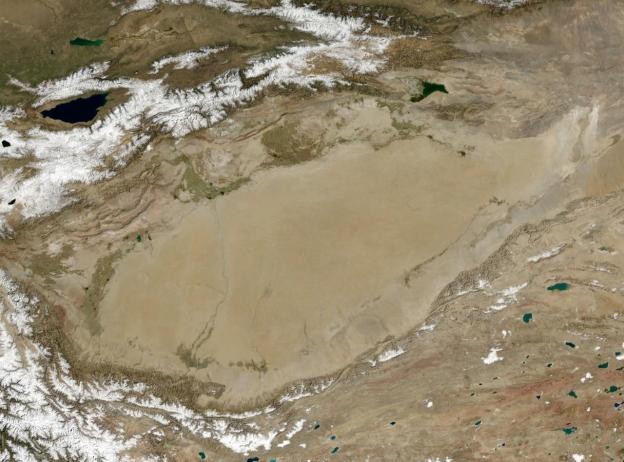
In a remote corner of China. the Tarim Basin, called the “sea of death” for its harsh conditions, oil workers are trying to coax more crude out of the ground by drilling holes as deep as Mt. Everest is high. State-owned PetroChina reported $38 billion of capital expenditures in 2024, nearly as much as Exxon Mobil’s and Chevron’s combined. China’s desire for energy independence dates all the way back to former leader Mao Zedong, who once dispatched tens of thousands of workers to search for oil in China’s northeast to ensure China wouldn’t be dependent on imports…

In July 2018, Xi personally ordered state-owned companies to revive domestic oil production to safeguard national security. Three state-owned oil majors invested an additional $10 billion the following year in exploration and production. They zeroed in on offshore areas such as the South China Sea and the Bohai Sea off the country’s northeast coast, as well as remote reserves near China’s western border with Kyrgyzstan, in a region called the Tarim Basin

In the deserts of the Tarim Basin crews are exploring some of the nation’s deepest reserves. Summer temperatures can top 120 degrees, and in the winter they can hit minus 20. Such ultradeep exploration is expensive, with some wells costing three times as much as shallower traditional wells, a Chinese oil executive told state media.  In 2023, Xi held a video call with Tarim Basin oil workers, praising their “indispensable contributions” to the nation. About 5% of China’s total oil and gas output in 2024 came from the basin’s deep reservoirs, a number Chinese oil executives intend to increase.

As of May 2024, PetroChina’s parent company, China National Petroleum, said it had drilled 193 wells in the Tarim Oilfield at least 5 miles deep. In the U.S., many wells are a mile or two deep.

Excerpt from Brian Spegele, How China Curbed Its Oil Addiction—and Blunted a U.S. Pressure Point, WSJ, July 21,2025

The Trump-China Hidden Romance: the companies behind USD1

The Trump family’s crypto venture has generated more wealth since the election—some $4.5 billion—than any other part of the president’s business empire.

A major reason for the success is a partnership with an under-the-radar trading platform quietly administered by Binance, the world’s largest crypto exchange, whose founder is seeking a pardon from President Trump…The online trading platform, PancakeSwap, serves as an incubator of sorts, drumming up interest among traders to use coins issued by the Trump family’s main crypto company, World Liberty Financial.  The more World Liberty’s flagship coin, USD1, is used, the greater demand to increase its circulation, and the greater the profit for World Liberty and its owners, including the Trump family. 

Crypto trading platforms, like PancakeSwap, often offer rewards or prizes to drum up interest in new coins, similar to the way brokerages offer free trades or casinos give first-time customers free chips…

Binance’s majority owner and founder, Changpeng Zhao, spent four months in jail in the U.S. last year after Binance agreed to pay a $4.3 billion fine for becoming a global money-laundering hub for criminals, terrorists and sanctions evaders. His company has deepened its relationship with World Liberty at the same time Zhao has ramped up efforts to secure a pardon from Trump…Zhao—considered the richest person in the crypto industry and worth over $70 billion.

USD1 got its first big break when Binance accepted a $2 billion investment from an outside investor paid in the World Liberty coin. The deal caused the amount of the cryptocurrency in circulation to erupt 15-fold and overnight become one of the world’s largest.  USD1 is what is known as a stablecoin, a privately invented digital currency that is backed 1:1 with U.S. dollars. World Liberty invests the money backing the coin in government bonds and money-market funds, without paying interest to users of the coin. With more than $2 billion of USD1 in circulation, it can earn around $80 million a year based on current interest rates. Binance has been holding the $2 billion in USD1 on its platform…By not cashing in the stablecoin, this ensures that World Liberty continues to earn money from investing the dollars that back them.

World Liberty’s relationship with PancakeSwap, whose website was registered in Shanghai, and Binance is one of several in which entities and individuals with strong ties to China have supported the Trump family crypto business. One of World Liberty’s largest investors is Justin Sun, the Hong Kong-based billionaire…This comes even as the White House pushes a trade war against China and seeks to curtail U.S. corporations’ ties to the country over national-security fears…

China is Binance’s largest market by trading volume. It has been a main base for its software developers, with hundreds of coders…Binance has long maintained that it isn’t a Chinese company, saying it left Shanghai shortly after its 2017 launch. Zhao… has said he is no longer a Chinese citizen, and holds Canadian and United Arab Emirates citizenship. The company, which has employees around the world, doesn’t have an official headquarters…

PancakeSwap doesn’t disclose its ownership…According to former Binance employees, Binance staff created PancakeSwap in-house in 2020 because the exchange wanted to establish a foothold in crypto’s so-called decentralized finance craze. The platform has remained under Binance’s supervision…

Excerpt from Angus Berwick et al., The Recipe Behind the Trump Family’s Crypto Riches: PancakeSwap, WSJ, Aug. 12, 2025

ChatGPT as a Confessor

ChatGPT users are unloading personal thoughts and feelings to the chatbot in detailed terms. So much so that Altman, OpenAI’s chief executive, has been warning that they shouldn’t expect the same sorts of privacy protections that come with intimate conversations with psychologists or lawyers. 

“People talk about the most personal s— in their lives to ChatGPT,” Altman said during a podcast appearance in July 2025. “If you go talk to ChatGPT about your most sensitive stuff and then there’s like a lawsuit or whatever, like we could be required to produce that and I think that’s very screwed up. I think we should have like the same concept of privacy for your conversations with AI that we do with a therapist or whatever.”

Excerpt from Tim Higgins, Why Apple’s Tim Cook Is the Odd Man Out in the AI Race, WSJ, Aug. 2025

Unbelievable! The Astonishing Underworld of Seafloor

A scientific expedition into a region of the Pacific Ocean named for Hades, Greek god of the underworld, has uncovered an other-worldly ecosystem 30,000 feet deep. “It’s a totally new thing that has not been seen before,” said Dominic Papineau, an exobiologist at China’s State Key Laboratory of Deep-sea Science and Intelligence Technology in Sanya.

Papineau is co-author of a groundbreaking research paper published in the journal Nature, describing the astonishing array of creatures who live in this daunting and dark environment, sustained by chemicals that leach from the ocean floor. Researcher Mengran Du told The Washington Post she wasn’t sure what expect when she descended in a three-person submersible into one of the deepest trenches in the Pacific. What she and others from China’s Institute of Deep-sea Science and Engineering saw when they got there was, she said, “unbelievable.”

Like skyscrapers, thick clusters of tubeworms with red-tinged tentacles jutted from the ocean floor, phosphorescent snails scaling them like window washers, she said. In between, white bristly creatures wriggled and writhed…

Scientists have long studied organisms that thrive around hydrothermal vents. But those native to areas known as cold seeps — where gases like methane and hydrogen sulfite leach from the seafloor at near-freezing temperatures — have been little studied. 

“Flourishing chemosynthetic communities had long been postulated to exist in the trenches, but this is the first paper that documents their existence below 9 kilometers and at multiple locations,” she said.  The adaptability of organizations in those trenches is a shot in the arm for scientists searching for evidence of life in oceans on other celestial bodies, including Europa, a moon of Jupiter.

Excerpt from Scientists Find New Ecosystem in Deepest Trenches of Pacific Ocean, US News and World Report, Aug. 4, 2025
 

Who Trusts Microsoft? The Locked-In

In 2024, the Department of Homeland Security released a scathing report detailing Microsoft’s mistakes during a 2023 hack in which China stole thousands of emails from top government officials. Two years before that, China-linked cyberattackers compromised more than 250,000 Microsoft Exchange servers. In response to the 2024 report, Nadella, the CEO of Microsoft, promised to rededicate Microsoft to protecting its products and its customers from bad actors…

Shortly after Nadella took the reins, Microsoft eliminated the group that had companywide responsibility for Microsoft’s security work, pushing security decisions to the individual business units. Around the same time, Microsoft changed the way it developed software, laying off many of the test engineers charged with uncovering bugs before products ship to customers…

With regard to the July 2025 Microsoft hack, researchers said more than 400 SharePoint servers had been hacked—many of them belonging to government entities—and Microsoft had linked some of the attacks to the Chinese government

In previous episodes, such as the massive 2021 hack of the Microsoft Exchange email system, China pulled off impressive technical feats before being caught…

Regarding the 2025 SharePoint cyberattack, Eye Security researchers discovered, on July 18, 2025 an unauthorized script on a SharePoint server belonging to one of their customers. As the Eye team dug in, they started finding the same script on about 150 other SharePoint servers all over the internet…The script opened a back door to the SharePoint servers, creating an encryption key that could be used later to run commands on the machine. “It was just like a door key left on the street,” said Kerkhofs. “It was accessible for everybody. We just started scanning and we grabbed all the keys.”…Microsoft, learning that hackers were exploiting the bugs, called in its security team.

Eventually the Eye team discovered 80 infected organizations. European government agencies were compromised, as were U.S. federal agencies, municipalities and universities…

On July 20, 2025, the Energy Department confirmed that it was a victim… News of the compromise was reported by Bloomberg, which said that the National Nuclear Security Administration was specifically victimized.

Excerpt from Robert McMillan, A Failed Microsoft Security Patch Is the Latest Win for Chinese Hackers, WSJ, July 25, 2025

How to Kill Scientists and Get Away with It

When Israel’s attacks on Iran began before dawn on June 13, 2025 explosions shattered the homes of some of Iran’s top scientists… All nine were killed in near-simultaneous attacks to prevent them from going into hiding…The attack on the scientists was considered so fantastical by even its planners that it was called “Operation Narnia,” after the fictional C.S. Lewis series…A week after the June 13 attacks, Israel used a drone to kill another scientist who was being kept in what was supposed to be a safe house in Tehran. The person hasn’t been named…The deadly airstrikes were the first to target Iran’s nuclear scientists since 2020, when Mohsen Fakhrizadeh was gunned down with a remote-controlled weapon. Israel has never denied or confirmed its role in the deaths of five Iranian scientists between 2010 and 2020.

Among the most important targets was Fereydoon Abbasi-Devani, the former head of the Atomic Agency of Iran and one of the founders of Iran’s nuclear weapons-related work…Another killed scientist was Mohammad Mehdi Teranchi, who led a unit under Fakhrizadeh focusing on high explosives, which are needed to detonate a nuclear weapon…

Iran has used universities like Shahid Beheshti, the Sharif University of Technology and Malek Ashtar University to keep alive its nuclear-weapons expertise over the past two decades….At these universities, Iran often matches up its nuclear scientists on experiments and other studies with younger students. Two of the scientists killed on June 13, Ahmadreza Zolfaghari and Abdulhamid Minouchehr, published an article in the Annals of Nuclear Energy in June 2024 that used advanced computer modeling to show how neutron sources behave in a chain reaction. That information can be used for civilian purposes, like building a nuclear reactor, or to help trigger a chain reaction in a nuclear weapon. 

Excerpt from Laurence Norman, How Israel Killed Iran’s Top Nuclear Scientists, WSJ, June 29, 2025

Nvidia CEO Has a Magic Needle

Nvidia’s market share in China fell to 50% from 95% over the past four years under U.S. restrictions, Huang, Nvidia’s CEO,  said in May 2025.  He visited China at least three times in 2025 to reassure Chinese tech executives and government officials that Nvidia was committed to the market…. Huang has met with top executives of Chinese cloud-computing leader Alibaba, smartphone and automaker Xiaomi and OpenAI challenger MiniMax.People in China’s tech industry said they appreciated Huang’s efforts to modify his chips so they could be sold in China. Engineers there nicknamed him “Magic Tailor” for his skill in designing chips to thread the needle of U.S. regulations.

Knowing the importance of the Chinese market to Nvidia, Beijing increased pressure on the company: China’s cybersecurity regulator recently summoned Nvidia representatives to discuss alleged security risks of the H20 chips, citing comments by U.S. lawmakers about the need for a bill to require tracking capabilities for advanced chips sold abroad….

Excerpt from Lingling Wei et al, With Billions at Risk, Nvidia CEO Buys His Way Out of the Trade Battle, WSJ, Aug. 11, 2025


McKinsey Loves its Bots and Proud of It

Companies have paid dearly for McKinsey’s human expertise for nearly a century, relying on the firm’s armies of consultants to synthesize complex information, crunch huge amounts of data and map out solutions to thorny business challenges. But what happens now that AI can do much of that analysis in a matter of minutes—and deliver a slick PowerPoint deck to boot?… McKinsey has reduced its head count…and rolled out roughly 12,000 AI agents. These bots now assist consultants in building PowerPoint decks, taking notes and summing up interviews and research documents for clients.

Traditionally, a strategy project might have required a project leader, four consultants and a partner. Today, it might need a leader and two or three consultants—alongside a few AI agents and access to “deep research” capabilities. Bob Sternfels, head of McKinsey, said he sees a day in the not-too-distant future when McKinsey has one AI agent for every human it employs. “We’re going to continue to hire, but we’re also going to continue to build AI agents,” he said. 

Excerpt from Conor Grant, AI Comes for Consulting, McKinsey Faces an “Existential” Shift, WSJ, Aug. 8, 2025

Getting Raped as a Way of Life

Kanzira Kihanga, a woman who lives in Congo, says she wasn’t surprised to learn in May 2025 that she was infected by the virus that causes AIDS. The 21-year-old believes she contracted the virus after back-to-back rapes by armed men. After the first attack, she went to a clinic but was only given half a dose of the PEP medication.* Two weeks later, she was raped again as she walked to the clinic to pick up the remainder of the dosage.

*Post-exposure prophylaxis (PEP) refers to HIV medicines that are taken after a possible exposure to prevent HIV infection.

Excerpt from Nicholas Bariyo, Congo Braces for HIV Surge After U.S. Funding Stops, WSJ, July 4, 2025

If There is Hell, it Must Be Like This

On 6 August 1945, the United States dropped an atomic bomb on the Japanese city of Hiroshima, killing 80,000 people in a single day, and tens of thousands more in the subsequent months. “If there is a hell,” survivor Ōiwa Kōhei recalled thinking of the aftermath, “it must be just like this.” Kōhei, 13-years-old at the time, was plagued for months by radiation poisoning, and forever by the psychological trauma. The hibakusha — the Japanese term for atomic-bomb survivors — “will not be with us for much longer, so it is essential that their irreplaceable living testimony should continue to be diligently and accurately recorded while it is still available”, writes historian Mordecai Sheftall. Their testimony must be preserved not for historical record, but so that current and future generations will take the lessons of their experiences to heart, says Sheftall.

Excerpt from Mordecai Sheftall, The Sun had fallen to Earth’ — a survivor’s recollection of the Hiroshima bombing, Nature, August 5, 2025

Malaysia Says No to Plastics from U.S.

Malaysia emerged as a major destination for U.S. waste after China banned American waste imports in 2018. California shipped 864 shipping containers, or more than 10 million pounds of plastic waste, to Malaysia in 2024, according to the Basel Action Network, an advocacy group…

Under Malaysian waste guidelines announced recently, the country is no longer accepting plastic waste and hazardous waste from nations that didn’t ratify the Basel Convention, the international treaty designed to reduce the international movement of hazardous and other waste. The U.S. is one of just a handful of countries, including Fiji and Haiti, that hasn’t signed the pact….The coming ban has already disrupted trash export routes significantly, particularly for the plastics used in grocery bags, trash can liners and food wrap.

According to California’s waste agency, CalRecycle, the state exported 11.3 million tons of recyclable materials overseas to places such as Malaysia, Thailand, Vietnam, China, Taiwan, South Korea, Mexico and Canada — in 2022. That number includes 100 million pounds of scrap plastic…

Excerpt from Susanne Rust, Malaysia no longer takes U.S. plastic waste, creating a dilemma for California, Los Angeles Times, July 3, 2025

When a State Collapses, Who Survives: the case of Iran

In mid-June 2025, Iran flew at least four civilian aircraft to the Omani capital of Muscat for safekeeping. One of the planes included Iran’s presidential Airbus A340, which landed in Muscat on June 18, 2025 according to flight trackers. 

Arab officials were surprised to learn the planes were empty of passengers. Instead, they said, they carried cash and assets, which Iranians weren’t allowed to offload because of sanctions. The planes themselves were also valuable as emergency exits for top officials. The precautions show the level of pressure on Iran’s rulers during the war (Israel-Iran war of 2025). They had to find a way forward with no control of their own airspace and no help from their militias

Excerpt from S. Raghavan et al., Life in Iran After the Strikes: Executions, Arrests and Paranoia, WSJ, June 28, 2025

Can AI Do That? Knowledge Impossible to Copy

Zuckerberg hasn’t had much success in his efforts to hire the field’s biggest stars, including OpenAI’s co-founder Ilya Sutskever and its chief research officer, Mark Chen. Many candidates are happy to take a meeting at Zuckerberg’s homes in Palo Alto and Lake Tahoe. In private, they are comparing gossip and calculating Meta’s chances of winning the AI race.

The handful of researchers who are smartest about AI have built up what one described as “tribal knowledge” that is almost impossible to replicate. Rival researchers have lived in the same group houses in San Francisco, where they discuss papers that might provide clues for achieving the next great breakthrough. 

Excerpt from Ben Coen et al, It’s Known as ‘The List’—and It’s a Secret File of AI Geniuses, WSJ, June 27, 2025

Israel’s Killing Machine and the Enemies Within

Israel stunned and hobbled Iran starting on June 13, 2025 when it pulled off an intelligence and military operation years in the making that struck high-level targets with precision. Guided by spies and artificial intelligence, the Israeli military unleashed a nighttime fusillade of warplanes and armed drones smuggled into Iran to quickly incapacitate many of its air defenses and missile systems. With greater freedom to fly over Iran, Israel bombarded key nuclear sites and killed top generals and scientists. By the time Iran mustered a response hours later, its ability to retaliate — already weakened by past Israeli strikes — was greatly diminished.

The Mossad and the military worked together for at least three years to lay the operational groundwork…To further diminish Iranian air defenses and missile systems, Mossad agents had smuggled precision weapons into Iran that were prepositioned to strike from close range…Those weapons included small, armed drones, which agents snuck into the country in vehicles…Mossad agents stationed weapons close to Iranian surface-to-air missile sites…To analyze information gathered from various sources, Israel used the latest artificial-intelligence…AI was used to help Israelis quickly sift through troves of data they had obtained….An investigation by The Associated Press conducted in early 2025 uncovered that the Israeli military uses U.S.-made AI models in war to sift through intelligence and intercept communications to learn the movements of its enemies. It’s been used in the wars with Hamas in Gaza and with Hezbollah in Lebanon.

In addition to AI, the Mossad relied on spies to identify top nuclear scientists and members of Iran’s Revolutionary Guard… At least eight members of the Guard, including the head of its missile program, were killed in a single Israeli strike on an underground bunker.

Another facet of the attack was to strike Iranian vehicles used to transport and launch missiles. The strategy was similar to a Ukrainian operation earlier this month in Russia. In that operation, nearly a third of Moscow’s strategic bomber fleet was destroyed or damaged with cheaply made drones snuck into Russian territory…In an interview with Iranian state-run television, the country’s police chief, Gen. Ahmadreza Radan, said “several vehicles carrying mini-drones and some tactical drones have been discovered.” ….

In the 2000s, Iranian centrifuges used for enriching uranium were destroyed by the so-called Stuxnet computer virus, believed to be an Israeli and American creation….In 2018, Israel stole an archive of Iranian nuclear research that included tens of thousands of pages of records…In July 2024, Israel killed a senior leader of Hamas, Ismail Haniyeh, with a bomb in a bedroom of a government guesthouse in Tehran.

Excerpts from JULIA FRANKEL and SAM MEDNICK, How Israel used spies, smuggled drones and AI to stun and hobble Iran, AP, June 17, 2025

Why U.S. Government Invented the UFOs

Evidence is emerging in June 2025 that US  government efforts to propagate UFO disinformation date back all the way to the 1950s. The WSJ account is based on interviews with two dozen current and former U.S. officials, scientists and military contractors involved in the inquiry, as well as thousands of pages of documents, recordings, emails and text messages.  At times, military officers spread false documents to create a smokescreen [of flying extraterrestrial saucers] for real secret-weapons programs. In other cases, officials allowed UFO myths to take root in the interest of national security—for instance, to prevent the Soviet Union from detecting vulnerabilities in the systems protecting nuclear installations…

Investigators are still trying to determine whether the spread of disinformation was the act of local commanders and officers or a more centralized, institutional program. The Pentagon omitted key facts in the public version of the 2024 report it released about UFOS that could have helped put some UFO rumors to rest, both to protect classified secrets and to avoid embarrassment… The Air Force in particular pushed to omit some details it believed could jeopardize secret programs and damage careers…

As Sean Kirkpatrick head of the All-domain Anomaly Resolution Office (AARO) pursued his investigation between 2022 and 2023, he started to uncover a hall of mirrors within the Pentagon, cloaked in official and nonofficial cover. On one level, the secrecy was understandable. The U.S., after all, had been locked in an existential battle with the Soviet Union for decades, each side determined to win the upper hand in the race for ever-more-exotic weapons….But Kirkpatrick soon discovered that some of the obsession with secrecy verged on the farcical. A former Air Force officer was visibly terrified when he told Kirkpatrick’s investigators that he had been briefed on a secret alien project decades earlier, and was warned that if he ever repeated the secret he could be jailed or executed. The claim would be repeated to investigators by other men who had never spoken of the matter, even with their spouses. It turned out the witnesses had been victims of a bizarre hazing ritual.  For decades, certain new commanders of the Air Force’s most classified programs, as part of their induction briefings, would be handed a piece of paper with a photo of what looked like a flying saucer. The craft was described as an antigravity maneuvering vehicle. …Many never learned it was fake.

Kirkpatrick found the practice had begun decades before, and appeared to continue still. The defense secretary’s office sent a memo out across the service in the spring of 2023 ordering the practice to stop immediately, but the damage was done. 

Excerpt from Joel Schectman et al., The Pentagon Disinformation That Fueled America’s UFO Mythology, WSJ, June 6, 2025

Green Frenzy Is Not Environmental Protection

Since 1960, Singapore has reclaimed around 150 square kilometres of land from the sea. In part, this is to meet demand for homes: around 80% of Singaporeans live in government-provided housing, nicknamed HDBs, after the Housing and Development Board, and many of those are in high-density skyscrapers. Singapore is the third most densely populated territory in the world, after Macau and the city-state of Monaco. Alongside this, the country’s economic success is buttressed by being the world’s busiest port outside China, hosting more than 3.11 billion tonnes in traffic in 2024.

This urban development and economic success has come at a cost for the natural environment: where once there was jungle, there is now city. Singapore has lost almost all of its primary rainforest, except for a small tract of land in the Central Catchment Nature Reserve, which sits in the middle of the island and is part of one of the two main water catchment areas. Although some of the country’s remaining non-primary rainforests, including in the Central Catchment, are protected from development, their long-term fate is a concern for environmentalists…

In a bid to achieve its sustainability goals, the government has pledged to plant one million trees by 2030 and transplant 100,000 corals into its marine waters, which NParks said in 2024 would take at least 10 years to complete. Neither project is without controversy. “Nobody is tracking how many trees we are cutting down while we are planting a million trees,”…“How about those century-old trees that are being cut down for development?”… Academics and civil-society groups say that they cannot access the same data that are available to government agencies…

Excerpts from Jack Leeming, Singapore’s fight to save its green spaces from development, Nature, May 28, 2025

De-Chinafication of Rare Earths: an Uphill Battle

China mines some 70% of the world’s rare earths, the 17 metallic elements primarily used in magnets needed for civilian and military technologies. But its 90% share of processing for rare earths mined around the world is what really concerns officials from other countries working to secure their supply.

“China is a formidable competitor,” said Ramón Barúa, chief executive of Canada’s Aclara Resources, which is opening a rare-earths mine in Brazil to supply a processing plant it plans to build in the U.S. Aclara said it plans by August to decide where in the U.S. to build its plant for separating rare-earths deposits into individual elements. Aclara signed an agreement in 2024 to supply rare earths to VAC, a German company that is building a factory in South Carolina with $94 million in Pentagon funding to make magnets for clients including General Motors…

Brazil has the world’s second-largest rare-earth reserves after China, some 21 million tons, according to the U.S. Geological Survey. That represents more than a fifth of known global reserves—and more than 10 times those in the U.S…Despite its huge reserves, Brazil has been a small player in rare earths because of its complex mining regulations and the difficulty of attracting financing from companies willing to confront entrenched Chinese competitors. Costs to mine and process Brazilian rare earths are estimated to be around three times China’s, meaning Western buyers would likely pay a substantial premium for Brazilian minerals. Only a few companies outside China have mastered rare-earth processing, and the learning curve is steep

Brazil’s first big rare-earths mine opened in 2024 by a US private equity company some 90 miles west of the town of Nova Roma…but the mine is contracted to ship most of its production to China !…Aclara plans to invest some $600 million to complete work on a larger plant next to the mine in Nova Roma to start full production in 2028.

Excerpt from Samantha Pearson, Rare-Earths Plants Are Popping Up Outside China, WSJ, May 18, 2025

Nvidia Geopolitical Games

Nvidia plans (in 2025) to open a research and development center in Shanghai to maintain its presence in China. The facility will help Nvidia understand Chinese customer demands and design products that are compliant with US export controls and sanctions. Chief Executive Jensen Huang visited China in April 2025 and discussed the plan with Shanghai’s mayor, who welcomed it and offered to provide support…Since 2022, Washington has required licenses for exports of Nvidia’s most advanced AI chips to China. That has reduced China sales, which accounted for 13% of revenue in its last fiscal year, down from 26% before the export restrictions.

The company is seeking to lease an office space in Shanghai for the new facility to accommodate existing employees and potential new hires, the people said. Officials in the city, where Tesla’s China plant is located, have told the company that it would offer tax breaks and reduce red tape for its new project, the people said. 

The company has repeatedly created downgraded variants of chips after Washington tightened its rules so that it could keep selling to China. The practice has angered some U.S. officials, who were upset the company wasn’t being more helpful in curbing China’s AI advances. Nvidia has said it follows U.S. export rules and has advocated for selling to Chinese customers rather than ceding the market to domestic companies such as Huawei Technologies, which are filling in the gap left by Nvidia and its American peers.

Excerpt from Raffaele Huang, Nvidia to Set Up Research Center in Shanghai, Maintaining Foothold in China, WSJ, May 16, 2025

The New Trump Doctrine: Kiss the Hand you Cannot Bite

Four US major automakers are racing to find workarounds to China’s stranglehold on rare-earth magnets, which they fear could force them to shut down some car production within weeks. Several traditional and electric-vehicle makers—and their suppliers—are considering shifting some auto-parts manufacturing to China to avoid looming factory shutdowns, people familiar with the situation said.

Ideas under review include producing electric motors in Chinese factories or shipping made-in-America motors to China to have magnets installed. Moving production to China as a way to get around the export controls on rare-earth magnets could work because the restrictions only cover magnets, not finished parts, the people said.

If automakers end up shifting some production to China, it would amount to a remarkable outcome from a trade war initiated by President Trump with the intention of bringing manufacturing back to the U.S.  “If you want to export a magnet [from China] they won’t let you do that. If you can demonstrate that the magnet is in a motor in China, you can do that,” said a supply-chain manager at one of the carmakers.

China in April 2025 began requiring companies to apply for permission to export magnets made with rare-earth metals, including dysprosium and terbium. The country controls roughly 90% of the world’s supply of these elements, which help magnets to operate at high temperatures. Much of the world’s modern technology, from smartphones to F-35 jet fighters, rely on these magnets….In May 2025, industry groups representing most major automakers and parts suppliers told the Trump administration that vehicle production could be reduced or shut down imminently without more rare-earth components from China.

Excerpt from Sean McLain et al., Automakers Race to Find Workaround to China’s Stranglehold on Rare-Earth Magnets, WSJ, June 4, 2025

Two days after the publication of this WSJ article, Trump announced, on June 6, 2024, that Xi agreed to let rare earth minerals flow to US (in exchange of? not revoking Chinese student visas? what else?)

The Elite of the Elite: Musk, Thiel, Andreessen, Luckey

Since January 2025, more than three dozen employees and associates of Musk and fellow tech titans Peter ThielMarc Andreessen and Palmer Luckey have been tapped for roles at federal agencies critical to their businesses, a Wall Street Journal analysis found. The roles put them in departments that oversee, regulate and award business to the four men’s companies, according to personnel appointments, lawsuits, ethics disclosures and contract data, creating a web of potential conflicts that ethics experts call unprecedented.

The group includes current and former employees as well as lawyers, investors and financial advisers of the tech executives. They make up most of the identified people working for the Department of Government Efficiency, the powerful cost-cutting task force created to streamline federal bureaucracy… Others have been appointed to key roles across the government.

Companies founded, owned or invested in by Musk, Thiel, Andreessen and Luckey have won more than a dozen federal contracts totaling about $6 billion since President Trump’s inauguration, and are pursuing billions more… Their business interests are often intertwined: Musk’s SpaceX was backed by Thiel’s Founders Fund and Andreessen’s a16z; both venture funds also backed Anduril Industries, a defense-tech startup co-founded by Luckey.

Excerpt from Shane Shifflett et al., Silicon Valley’s New Hold on Washington, WSJ, May, 16, 2025

The Road to Success is Paved with Dirty Secrets

Amazon.com is the latest to face possible sanctions over allegations it improperly withheld tens of thousands of business records—including some unflattering to founder Jeff Bezos—in defending against an action by the Federal Trade Commission. At Google, a federal judge in San Francisco has ruled the company didn’t properly save evidence in a case brought by Epic Games, and its behavior has become a yoke as the Justice Department seeks to break up the search giant after winning two landmark antitrust cases. A different federal judge recently referred the behavior of Apple to the Justice Department, in part because of alleged efforts to hide documents from legal scrutiny…

Each company is accused of being overly aggressive in holding back internal documents under special legal standing—known as privilege—that should have, in fact, been turned over to the government or lawyers…Maybe it isn’t surprising the companies can’t help themselves in pushing the limits. It is, after all, what has made them so successful as disrupters turned conquerors. In their minds, they are the underdogs, whether they are facing the rise of AI, China or the next Big Thing lurking beyond the horizon. 

Excerpt from Tim Higgins, What Is Big Tech Trying to Hide?, WSJ, May 17, 2025

The Essence of Capitalism: Shelters

SKU Distribution in Mesa, Arizona., is experiencing rapid growth as companies seek to access foreign-trade zones and navigate rising U.S. tariffs. Companies can use foreign-trade zones to defer tariff payments until products are sold, which operators say helps them manage supply chains and avoid bottlenecks. The foreign-trade zone program dates back to the 1930s, with roughly 260 such facilities now in the U.S. In some, inquiries from companies have recently quadrupled.

SKU Distribution had just one customer in 2024 at its Mesa, Arizona, warehouse. In 2025, it is teeming with new business from companies storing items such as aluminum poles, ice picks, carabiners and firearm safes. That is because the warehouse is the ultimate U.S.-based tariff refuge

Arizona is the foreign-trade zone capital of America, its facilities employing more workers than those of any other state, Commerce Department data shows. Apple, Intel, Honeywell Aerospace, Sub-Zero and Ball Corp. all manufacture within the Arizona facilities, together processing more than $7.5 billion in merchandise in 2023. The program has helped turn this strip of the Phoenix-area desert into a chip-making hot spot. Now, Trump’s tariffs are drawing a clientele of smaller companies looking for refuge from the trade war.

Excerpt from Owen Tucker-Smith, Inside the Arizona Warehouse That Has Become Shelter in Tariff Storm, WSJ, May 12, 2025

See also United States as a Tax Haven

Are Banks Responsible for Climate Change? the Lawsuit Against ING

Friends of the Earth Netherlands, together with 30,000 co-plaintiffs, have started a lawsuit against ING to bring the bank’s climate goals in line with the Paris Agreement…Milieudefensie is demanding that ING halves its emissions in 2030 and ceases financing companies that still develop new oil and gas projects…Milieudefensie has gathered almost 10,000 pages of evidence that substantiate the harmful effects of ING’s policy. ..Nicky van Dijk, research coordinator, adds: “ING’s own annual report states that ING is currently financing fossil fuel energy with 30 billion euro… 

Excerpt from Milieudefensie and more than 30,000 co-plaintiffs take ING to court, Milieudefensie Press Release, Mar. 28, 2025

To Pollute is to Own: U.S. and Greenland

 NASA scientists discovered in 2024 remnants of Camp Century, a Cold War-era U.S. military base, under Greenland’s ice sheet. Project Iceworm, a clandestine Pentagon plan, aimed to build nuclear-missile launch sites beneath the Arctic ice. The underground site, which was designed to store 600 medium-range ballistic missiles, reveals the extent of U.S. involvement in Greenland going back over half a century. 

Camp Century, as the outpost was called, was partially constructed in 1959, and abandoned in 1967 after the ice sheet was deemed too unstable to support the proposed missile-launch network. Over the years, ice accumulated and the facility is now buried under at least 100 feet of ice…

The presence of U.S. nuclear weapons has historically been a source of friction with Denmark. The U.S. military at the time didn’t disclose Camp Century’s nuclear-related purpose to Copenhagen, a self-declared nuclear-free zone…In 1968, a nuclear-armed B-52 bomber crashed near the Thule Air Base, causing the payload to rupture and disperse, leading to radioactive contamination of the sea ice. The incident led to public controversy in Denmark, as did the revelation that the U.S. stored nuclear weapons at the Thule Air Base without informing Copenhagen or Greenland.

Excerpt from Sune Engel, The U.S. Nuclear Base Hidden Under Greenland’s Ice, WSJ, May 14, 2025

New Climate Lawsuit Against Shell, 2025

Shell is under intensifying legal scrutiny as environmental organization Milieudefensie, the Dutch branch of Friends of the Earth, announces fresh legal action. The NGO, based in Netherlands, claims that by investing in new oil and gas projects despite a previous court decision requiring emissions reductions, the oil and gas company violated its duty of care under Dutch law. This case could escalate tensions between fossil fuel corporations and climate activists pressing for stricter adherence to international climate goals.

The foundation of this new lawsuit lies in a historic 2021 court decision, upheld in part during a 2023 appeal, which found Shell partially liable for climate change. The appeal acknowledged Shell’s obligation to reduce CO2 emissions, citing its substantial role in contributing to the climate crisis. However, it stopped short of specifying a target percentage for reductions. Milieudefensie now argues that Shell’s ongoing fossil fuel investments clearly violate the legal duties affirmed by that judgment. “Companies like Shell have it within their power to combat the climate problem and therefore have a legal obligation to reduce emissions,” stated the Dutch Court of Appeal.

Shell has stated  that it plans to expand fossil fuel operations, particularly in the sectors of liquefied natural gas and oil production through 2040. This strategy directly conflicts with climate science, which indicates that new fossil fuel development must be halted to limit global warming to 1.5°C.  More than 700 new oil and gas fields are presently under development by Shell, per a thorough report by Milieudefensie and Global Witness. Since May 2021, Shell has finalized investment decisions for 32 new projects, potentially resulting in 972 million tons of CO2 emissions, an amount nearly equivalent to the annual emissions of the entire European Union.

Excerpt from Shell Faces Renewed Legal Pressure on Fossil Fuel Expansion, Zacks, May 14, 2025


Mines and the Meaning of Eternity

There are 237,000 metric tons of arsenic trioxide locked in the subterranean caverns of Giant Mine on the edge of Yellowknife, an unwanted byproduct from what was once one of the largest gold mines in Canada’s Northwest Territories. Consider that it only takes 140 milligrams of arsenic trioxide to kill a person; there’s enough of the poison here to kill 1.7 trillion people. The local indigenous people refer to the arsenic as a sleeping monster. Company and government officials hoped the arsenic would remain frozen underground forever. But mining operations and climate change caused the permafrost to melt, raising fears in the city of 20,000 people that toxic material could mix with the runoff and slither into the nearby waters of Great Slave Lake, the world’s 10th-largest freshwater body. From there, it could snake 1,000 miles along the Mackenzie River to the Beaufort Sea in the Arctic Ocean, poisoning the wildlife, the land and the water along its path.

The gold mine was one of the largest in Canada’s Northwest Territories, producing 7.6 million ounces of gold between 1948 and 2004—and leaving behind a toxic legacy.
But extracting minerals from the North carries high, and enduring, risks and costs. Current estimates put the cost of cleaning up Giant Mine at $3.2 billion, making it the most expensive mine remediation in Canadian history. The last owner, Royal Oak Mines, went bankrupt and left the bill to the government…

Canada’s government estimates there are roughly 24,000 contaminated sites across the country, which will cost 10 billion Canadian dollars—or $7.25 billion—to clean up. “Mining is a necessary evil. Fundamentally, it’s a license to pollute,” said David Livingstone, former chairman of the Giant Mine Oversight Board, an independent advisory body that monitors the Giant Mine cleanup. 

The arsenic at Giant Mine is the legacy of five decades of gold mining. Between 1948 and 2004, the mine produced 7.6 million ounces of gold, worth roughly $20 billion at today’s prices. There was so much gold that local indigenous people named Yellowknife “Somba K’e,” which means Money Place…But the precious metal was embedded in arsenopyrite, a mineral containing iron, sulfur and arsenic. To get to the gold, miners had to roast the rock, a process that also transformed the once-stable arsenic into toxic gas.

In the early years, miners ejected the arsenic out of a smokestack, believing the poison would be diluted in the air. Instead, the smoke condensed and fell to earth as a fine dust. It collected in the water and on the land. Cows and other livestock sickened and died. In 1951, an indigenous toddler died after eating arsenic-laden snow. After that, miners collected the dust and pumped it back underground, theorizing the arsenic would remain frozen in permafrost. For decades, the system worked. But the Canadian North is warming at a rate four times faster than the rest of the world, and the once-frozen ground is thawing.  Water is trickling into Giant Mine, a potentially catastrophic situation because the highly soluble arsenic trioxide could get carried into Baker Creek.
The creek runs through the mine site, and then into Yellowknife Bay in Great Slave Lake.
The headwaters for the Mackenzie River originate at Great Slave Lake. The river travels more than 1,000 miles to the Beaufort Sea in the Arctic Ocean…

Today, maintenance of the mine is an ongoing task. Waste materials, called tailings, are kept in large reservoirs around the mine. To stop dust contaminated with arsenic and cyanide from flying downwind, workers spray the tailings with a chemical mix called Rhino Snot, a blue-green dust suppressant developed by the U.S. military. But there are still times when wind carries dust southeast toward Ndilǫ, an indigenous community located on the west side of Great Slave Lake’s Yellowknife Bay, less than 2 miles from the mine as the crow flies. When the clouds of dust descend, the Yellowknives Dene council calls residents to warn them to shut their windows and stay indoors, said Ndilǫ Chief Fred Sangris, one of two chiefs of the Yellowknives Dene. “We tell them the mine is coming,” he said.

Sangris is so angry about what Giant Mine has done to the Dene’s traditional hunting grounds that he can’t even look at it. “It’s a poison place,” he said. “It’s a place to avoid.”…“They say forever, and they mean 100 years,” he said. “They don’t know what forever is.” 

Excerpt from Vipal Monga et al., Deep in an Abandoned Gold Mine, a Toxic Legacy Lurks, WSJ, May 5, 2025

The Nasty Fight over Satellite Spectrum

Telecom mogul Charlie Ergen’s war chest is at risk after a U.S. regulator questioned his company’s use of cellular and satellite spectrum licenses—including a chunk of airwaves long sought by Elon Musk’s SpaceX. The Federal Communications Commission told Ergen, the chairman and co-founder of network operator EchoStar that the agency’s staff would investigate the company’s compliance with federal requirements to build a nationwide 5G network. EchoStar owns both the Dish Network pay-TV brand and Boost Mobile’s wireless service. 

The U.S. government in 2019 set several construction milestones for Dish to maintain cellular licenses worth billions of dollars. The company has spent years wiring thousands of cellphone towers to help Boost become a wireless operator that could rival AT&T, Verizon and T-Mobile, but the project has been slow-going. Boost’s subscriber base has shrunk in the five years since Ergen bought the brand from Sprint.

“The terms of the deal were clear,” FCC Chairman Brendan Carr wrote to Ergen in a letter viewed by The Wall Street Journal. “The FCC structured the buildout obligations to prevent spectrum warehousing and to ensure that Americans would gain broader access to high-speed wireless services, including in underserved and rural areas.”…

Ergen and Musk have been sparring for years in regulatory filings over spectrum rights. The battle has intensified as Apple and other big technology companies press for an edge in orbit….SpaceX said in an April 2025 letter that EchoStar’s spectrum in the 2 gigahertz band “remains ripe for sharing among next-generation satellite systems.” EchoStar accused SpaceX of seeking to “cloak another land grab for even more free spectrum.”

Excerpts from Drew FitzGerald, FCC Threatens Charlie Ergen’s Hold on Satellite, 5G Spectrum Licenses, May 14, 2025

Indigenous Peoples against Netflix and Meta: Northern Kenya Rangelands Carbon Project

The Northern Kenya Rangelands Carbon Project managed by the Northern Rangelands Trust, a Kenyan nonprofit, is the world’s largest soil-carbon plan, its boosters say. Launched in 2012, it was designed to preserve some 4.7 million acres of grasslands to lock in carbon on land communally owned by the Maasai, Borana and other pastoralist groups, which is part of a network of protected areas hosting threatened species such as cheetahs, black rhinos and… giraffes.

On May 13, 2025, an international nonprofit , Verra, that certifies carbon credits suspended approval for the project, adding to the questions about the credibility of similar carbon-capture projects and whether they actually benefit the people who live off the land….A spokesperson for the group, Verra, said credits are now on hold as it reviews the program after a long-running dispute between the conservationists who created the rangelands project and local herders, who say the project disrupts grazing patterns built over the course of centuries…

The dispute reached a flashpoint in 2021, when 165 pastoralists from two conservation areas sued the Northern Rangelands Trust in Kenyan court for allegedly using their land without consent. The plaintiffs accused the trust of creating the conservancies—which acted as the herders’ representatives in the carbon deal—through pressure and intimidation rather than informed consent. The court ruled in their favor in January 2025.

Lawyers and rights groups representing pastoralists say the ruling, which applies to one of the biggest conservancies, invalidates around 20% of the entire project’s credits. They say credits in around half of the project’s 14 wildlife conservancies could be vulnerable to similar lawsuits. That could leave big corporations holding invalid offsets and open to charges from rights groups that they overstate their commitment to environmentally friendly practices.

The trust has sold over six million carbon credits, worth between $42 million and $90 million depending on market prices, to buyers including Netflix and Facebook parent Meta. Tech companies use credits to offset emissions from their energy-intensive operations, such as producing movies, running data centers to stream video, powering social media and training cutting-edge artificial-intelligence models, as well as from employee travel. Meta became carbon neutral—that is, it purchased enough credits to compensate for all of its emissions—in 2020, and Netflix followed suit two years later.

Excerpts from Caroline Kimeu, Netflix and Meta’s Carbon Credits Snared in Dispute With Maasai Herders, WSJ, May 13, 2025

See also Kenya: Landmark court ruling delivers devastating blow to flagship carbon offset project

Musk’s Own Town–Starbase Texas

On May 3, 2025, Elon Musk’s SpaceX prevailed in an election over the weekend to turn Starbase, his launch site in Texas, into a city. Starbase was victorious in becoming a type C city, which in Texas applies to a previously unincorporated city, town or village of between 201 and 4,999 inhabitants. The city includes the SpaceX launch facility and company-owned land covering a 1.6 square-mile area.

What is a Company Town from Wikipedia

The mayor is 36-year-old Bobby Peden, who has spent more than 12 years working for SpaceX and is currently vice president for Texas test and launch operations. Starbase has two commissioners, both from the SpaceX employee ranks….Musk, who has assumed a central role in President Donald Trump’s administration responsible for slashing the size of the federal government, began acquiring land for SpaceX in Boca Chica, Texas, about a decade ago. The first integrated Starship vehicle launched from the site, known as Starbase, in April 2023, and exploded in mid-flight. The U.S. Fish and Wildlife Service soon disclosed details about the aftermath of the explosion, including that a “3.5-acre fire started south of the pad site on Boca Chica State Park land,” following the test flight.

State and federal regulators have fined SpaceX for violations of the Clean Water Act, and said the company had repeatedly polluted waters in the Boca Chica area. Environmental advocates and indigenous groups have also sued both the Federal Aviation Administration and SpaceX over the company’s flight tests and launch activity in the area.

Those groups said in legal filings that SpaceX caused harm to local habitat and endangered species due to vehicle traffic, noise, heat, explosions and fragmentation caused by the company’s construction, rocket testing and launch practices.

Excerpts from Lora Kolodny, Here are the SpaceX employees who were elected to run Musk’s new company town of Starbase, CNBC, May 5, 2025

What is the Real Trump Card of China

Chinese officials acknowledged in a secret December 2024 meeting that Beijing was behind a widespread series of alarming cyberattacks on U.S. infrastructure, according to people familiar with the matter, underscoring how hostilities between the two superpowers are continuing to escalate. The Chinese delegation linked years of intrusions into computer networks at U.S. ports, water utilities, airports and other targets, to increasing U.S. policy support for Taiwan, the people, who declined to be named, said.  …The Chinese official’s remarks at the December meeting were indirect and somewhat ambiguous, but most of the American delegation in the room interpreted it as a tacit admission and a warning to the U.S. about Taiwan, a former U.S. official familiar with the meeting said.

Excerpts from Dustin Volz, In Secret Meeting, China Acknowledged Role in U.S. Infrastructure Hacks, WSJ, Apr. 10, 2025

How Microplastics Enter Plants

Plastic production is increasing sharply. This has raised concerns about the effects of microplastics (typically defined as plastic particles smaller than 5 millimetres in diameter) and nanoplastics (smaller plastic particles that are less than 1,000 nanometres in diameter) on human health. These concerns are partly influenced by alarming findings of the presence of microplastics in various human tissues, including the brain and placenta.

Most attention is focused on soil and water as common sources of plastics that enter the food chain. However, writing in Nature, Li et al. provide strong evidence supporting the air as being a major route for plastics to enter plants. Plants can absorb plastic particles directly from the air. Particles in the air can enter leaves through various pathways, such as through structures on the leaf surface called the stomata and through the cuticle. Stomata are small openings made of cells, and the cuticle is a membrane, covered in insoluble wax, that is well suited for absorbing microplastics…

Microplastics can also travel to and enter the plant’s water- and nutrient-transporting system (called the vascular bundle) and from there reach other tissues… Given that leaves are a key part of the food chain, microplastic particles that accumulate here can easily pass to herbivores and crop leaves, both of which can be directly consumed by humans.

Excerpt from Willie Peijnenburg, Plant Leaves Absorb Microplastics—And They End Up in Our Food, Scientific American, Apr. 18, 2025

Illegal Trafficking of Endangered Ants: Ants as Pets

Four suspects – two Belgians, a Vietnamese and a Kenyan – were arrested in April 2025 in Kenya  with live ants suspected to have been destined for collectors in Europe and Asia…Delivering the sentence on May 7, 2025, the judge said the particular species of ants collected was valuable and they had thousands of them — not just a few.

“While collecting a few ants might be considered a hobby, being found with 5,000 queen ants is beyond a hobby,” said Magistrate Njeri Thuku….The ants were packed in more than 2,000 test tubes filled with cotton wool to help them survive for months, authorities said.

Nguyen, 23, was described by the court as a “mule or courier” as he was just sent to pick up the ants and the person who sent him paid for his ticket. The court said Ng’ang’a, 26, acted as a “broker” due to his knowledge of the ants that are found in his rural home. David, an ant enthusiast with 10 colonies of ants at home in Belgium, belongs to a Facebook group called “Ant Gang”, the court heard.

Excerpts Akisa Wandera & Wycliffe Muia, Gang who smuggled thousands of queen ants sentenced in Kenya, BBC, May 7, 2025

Saving the Smiling Salamander

A homely aquatic salamander with a cartoonish smile and the ability to regenerate lost body parts has become a global phenomenon, appearing as characters in Minecraft, Fortnite and Pokémon and inspiring a McDonald’s Happy Meal toy. Where the axolotl can barely be found: in its natural habitat in Mexico. 

The axolotl (pronounced ah-SHO-lohtl) is hurtling toward extinction, just as it becomes globally familiar with a cottage industry using its image to sell beer, T-shirts and videogames. Scientists estimate that no more than 1,000—and perhaps as few as 50—are left in the wild in their last natural habitat, a Venice-like system of canals and islands built by the Aztecs that still exists in the Mexico City borough of Xochimilco.

Excerpt from The Race to Save a Salamander That Spawned a Global Cottage Industry, WSJ, Mar. 29, 2025

The Scramble for Congo 21st Century Style

During the 19th century’s Scramble for Africa, European countries raced to secure territory and wealth across the continent. Now, African powers are grabbing resources from a neighbor crippled by infighting and ill-equipped to defend itself. Caught in the middle is the Democratic Republic of Congo, a country the size of Western Europe whose forests conceal a wealth of gold, diamonds and coltan, a key component in smartphones and computers. These mineral riches are turning what was already a region plagued by militia violence into a battleground, as Rwanda and its local allies seize coltan supplies while Uganda and its proxies move to take over gold mines to the northeast, according to United Nations and Ugandan officials…Ugandan President Yoweri Museveni and Rwandan President Paul Kagame are pouring troops and weapons into Congo, while their Congolese allies, who control strategic border crossings, secure smuggling routes to move more minerals to the global markets.

In 2024, Rwanda-backed M23 rebels seized the coltan-mining town of Rubaya, where fighters bring in around $800,000 each month by taxing traders. Rebel fighters have doubled diggers’ wages to encourage them to keep working, and they rely on forced labor to widen roads to accommodate trucks transporting coltan into Rwanda along with gold. According to the U.N., some 4,000 Rwandan soldiers are fighting inside Congo, a report that Rwandan authorities have denied.

Excerpt from While War Rages, Congo’s Neighbors Smuggle Out Its Gold and Mineral Wealth, WSJ, Apr. 7, 2025

Plastics Effects on Brain

The damage caused by plastic pollution goes far beyond the digestive system.

Beneath the skin of seemingly healthy seabirds, new research has revealed the widespread effect of plastics on crucial proteins made by the liver, kidneys and even the brain. Samples taken on Lord Howe Island, which lies between Australia and New Zealand, showed that young birds which appeared healthy were suffering from severe damage to multiple organs. Seabirds which had only eaten less than a gram of plastic were already suffering serious consequences. These impacts extended to the brain, where declines in a crucial protein known as brain-derived neurotrophic factor (BDNF) were similar to levels associated with conditions like Alzheimer’s disease, Parkinson’s disease and dementia in other animals…Sable shearwaters, a type of seabird, feed this plastic to their chicks, where it clogs their digestive system so there’s less space left for food. The team even named a specific disease, plasticosis, to describe the scarring that plastic causes inside the stomachs of these seabirds.

Beyond these more obvious impacts, plastic also sheds minute fragments that can travel even deeper into the body. These are known as microplastics if they’re less than five millimetres in size, or nanoplastics if they’re less than a micron….

These tiny plastics have been found in every environment, even inside our own bodies. Recent research suggests that our brains contain around a spoon’s worth of micro- and nanoplastics, but the health impacts of this are still not entirely understood.

Excerpt James Ashworth, Natural History Museum (UK) Plastic pollution causing dementia-like signs in seabird chicks, Mar. 12, 2025

The Monetizers: Cook versus Musk

Apple is clashing with Elon Musk in its push to eliminate cellphone dead spots with satellite technology. The iPhone maker is investing heavily in satellite-based communications that keep users connected in places where traditional wireless signals aren’t available. Musk’s SpaceX, meanwhile, has launched more than 550 satellites that provide cellphone connectivity via its Starlink service. To build capacity, the companies are competing for valuable spectrum rights—airwaves to carry their signals—which are in limited supply. Apple’s outer-space investments have drawn Musk’s ire, people familiar with the matter said. SpaceX has pushed federal regulators to stall an Apple-funded satellite expansion effort. SpaceX recently asked the Federal Communications Commission to dismiss a Globalstar application seeking permission to use certain spectrum for the new network of Apple-financed satellites.. It called the airwaves it uses to carry Apple users’ emergency signals an underused resource.

Excerpts from Drew FitzGerald, Apple and Musk Clash Over Satellite Expansion Plans, WSJ, Mar. 30, 2025

Mining the Seabed: By hook or by crook

The Trump administration is reportedly considering an executive order that would accelerate deep-sea mining in international waters by allowing companies to bypass a United Nations-backed review process. The order would affirm the United States’ right to extract critical minerals from the ocean floor, enabling companies to seek permits directly from the National Oceanic and Atmospheric Administration (NOAA).

The International Seabed Authority (ISA), established in 1982 under the UN Convention on the Law of the Sea (UNCLOS)—which the U.S. has not ratified—has spent years developing regulations for deep-sea mining.  In 2021, the island nation of Nauru sponsored Canada’s The Metals Company (TMC) to begin deep-sea mining, forcing the ISA to draft rules before any company could start extracting minerals in international waters. The 36-member ISA council has since met repeatedly to finalize regulations. In March 2025, officials gathered in Jamaica to review hundreds of proposed amendments to a 256-page draft mining code, but the session ended without a resolution.

Frustrated by the ISA’s slow progress, TMC in March 2025 formally urged the Trump administration to issue deep-sea mining permits, arguing that “commercial industry is not welcome at the ISA.” “The Authority is being influenced by a faction of States allied with environmental NGOs who see the deep-sea mining industry as their ‘last green trophy,’” TMC chairman and chief executive, Gerard Barron. “They have worked tirelessly to continuously delay the adoption of the Exploitation Regulations with the explicit intent of killing commercial industry.”

Governments interested in developing deep-sea mining within their territorial waters — typically 200 nautical miles from shore — include the Cook Islands, Norway and Japan.

Proponents of seabed mining contend that its environmental impact is lower than land-based extraction. Critics warn that the long-term consequences remain uncertain and advocate for further research before large-scale operations begin.

Excerpt from Cecilia Jamasmie, Trump eyes executive order to fast-track deep-sea mining, Mining.com, Apr. 1, 2025

North Korea: Hacking Superpower — Crypto Billionaire

At 11:49 a.m. on July 18, 2024, North Korean hackers pounced on a major cryptocurrency exchange handling hundreds of millions of dollars. The hackers slipped into the exchange’s virtual vault, took control and then started pilfering cryptocurrency tokens. Within a little more than an hour, the hackers had disappeared—and with them, more than $200 million for the Kim Jong Un regime. 

The shocking theft at WazirX, India’s largest cryptocurrency exchange, along with several other major recent heists, has made it clear: North Korea is now the world’s most dangerous crypto thief. It has swiped more than $6 billion in cryptocurrency over the past decade—a sum so large that no one else compares. The country’s hackers are both patient and brazen, according to investigators. To get into companies’ computers, they comb through employees’ Facebook and Instagram pages and invent tailor-made stories to trick them into clicking on links with viruses. Some North Korean hackers have even become employees themselves, fooling U.S. companies into hiring them as remote IT workers and gaining access to their networks.

After grabbing their bounty, North Korean hackers are masters at escaping. At WazirX, investigators believe they used algorithms to spread funds through global crypto networks faster than any human could, making it almost impossible for authorities to catch up. Once the crypto is dispersed, North Koreans often lie low until investigators lose interest and move on, waiting months or years to convert their haul into traditional money that can be spent….Pyongyang’s crowning achievement came in February with a $1.5 billion raid of Bybit, one of the world’s biggest cryptocurrency exchanges, in the largest-ever such heist. That followed several hackings in 2024, when North Korea stole more than $6 out of every $10 lost by the cryptocurrency industry, according to Chainalysis, which tracks crypto theft.

North Korea’s success reflects the major resources dedicated to the task. The regime commands more than 8,000 hackers as though they were in a military unit, with the country’s brightest minds. State support means its hackers can wait months or years to exploit a single slip in a company’s digital security. Pyongyang’s desperation for cash, and its lack of concern for diplomatic blowback, have fueled its drive to be better than anyone else. 

Excerpts from How North Korea Cheated Its Way to Crypto Billions, WSJ, Apr. 3, 2025

The Undeclared War in the Baltic

In January 2025, NATO launched the operation, dubbed Baltic Sentry, after a string of undersea cables and pipelines were damaged by ships—many with links to Russia—that had dragged their anchors.  “We are functioning as security cameras at sea,” said Kockx, the Belgian commander, whose usual duty is clearing unexploded mines from the busy waterway… New undersea drones are keeping a watchful eye on pipes and cables. NATO surveillance planes from the U.S., France, Germany and occasionally the U.K. take turns scanning the seaway from high above. NATO has also strengthened its military presence on the Baltic…NATO’s goal is to prevent more damage to subsea infrastructure and respond faster if something occurs…

The Baltic, a central theater in two world wars, is littered with wrecks and explosives that still pose danger. Surrounding NATO members are world leaders in finding and disposing of sea mines, officials say….Commercial traffic on the Baltic ranks among the world’s densest, with more than 1,500 ships plying its waves on any day, so policing it all is difficult. Further complicating NATO’s sentry duty initially was a lack of comprehensive information about all the critical infrastructure snaking across the sea’s muddy bottom. Details of pipes and cables have traditionally been kept by national governments or private companies. Nobody had a picture of everything...NATO’s new undersea infrastructure center in 2024 assembled the first unified map of the Baltic’s floor.

Excerpt from Daniel Michaels, How NATO Patrols the Sea for Suspected Russian Sabotage, Mar. 31, 2025

The Cat-and-Mouse Game: US-China, Chip Giants

The U.S. on March 28 2025 added dozens of Chinese companies to a trade blacklist over national security concerns. American businesses seeking to sell technology to these companies will need approval from the government. Among those added were subsidiaries of Inspur Group, China’s largest server maker and a major customer for U.S. chip makers such as Nvidia, Intel and Advanced Micro Devices. Companies linked to China’s largest supercomputer maker, Sugon, were also added…

Nearly 80 companies were put on the Commerce Department’s blacklist, known as the entity list…including the U.S. server maker Aivres Systems that is wholly owned by Inspur Electronic. The latter is one-third owned by Inspur Group, according to corporate records. Aivres has been assembling high-end artificial-intelligence equipment for Nvidia. The AI-chip giant has said that Aivres will make servers using chips in the Blackwell family, Nvidia’s newest and most powerful processors.  Aivres advertises on its website that it sells servers and infrastructure powered by Blackwell chips, which are banned from sale into China…About two months after Inspur Group was added to the trade blacklist in March 2023, California-based Inspur Systems changed its name to Aivres Systems.

Excerpts from Liza Lin, Trump Takes Tough Approach to Choking Off China’s Access to U.S. Tech, WSJ, Mar. 26, 2025

Mapping the Seafloor: Why Is It Important for War?

China’s fleet has triggered protests from Japan, India and others, but that hasn’t stopped Beijing from launching long missions to map the sea floor. The data they obtain has numerous applications, from science to the emerging industry of deep-sea mining, but it is the Chinese government’s commandeering of civilian research for military use that threatens American allies.

India’s navy drove a Chinese research ship away in 2019, but more have returned. In recent weeks, two of China’s most advanced research vessels, the Xiang Yang Hong 01 and the newer Dong Fang Hong 3 have conducted lawnmower-style sweeps across vast stretches of the eastern Indian Ocean.

Chinese civilian vessels are pursuing expeditions around the world—there are as many as a dozen or so active at any given time. The data they gather, including on currents, temperature and salinity, can have an array of applications. Detailed scanning of the seabed, for instance, can provide information about the visibility of naval mines and the accuracy of sonar.  The surveys can also help determine what minerals could be extracted…Recent missions have spurred complaints by at least half a dozen governments. China says its marine research activities fully comply with the United Nations Convention on the Law of the Sea, the international treaty that established the legal regime for the world’s oceans….

The U.S. Navy also carries out maritime surveys for military purposes…. Under the U.N. convention, coastal states have jurisdiction over research in their exclusive economic zones, which extend 200 miles from the coast. The U.S., which recognizes but hasn’t ratified the convention, argues that military surveys are exempt and U.S. Navy oceanographic ships regularly conduct studies near China. China appears to be moving closer to the American stance, “as they’re doing more oceanographic research without the permission of coastal states.”

Excerpts from Austin Ramzy, China Is Mapping the Seabed to Unlock New Edge in Warfare, WSJ, Mar. 12, 2025

Mourning the Loss of Dark and Quiet Sky

The number of working satellites has soared in the past five years to around 11,000, mostly because of constellations of orbiters that provide Internet connectivity around the globe. Just one company, SpaceX in Hawthorne, California, has more than 7,000 operational Starlink satellites, all launched since 2019; OneWeb, a space communications company in London, has more than 630 satellites in its constellation. On paper, tens to hundreds of thousands more are planned from a variety of companies and nations, although probably not all of these will be launched.

Satellites interfere with ground-based astronomical observations, by creating bright streaks on images and electromagnetic interference with radio telescopes. The satellite boom also poses other threats, including adding pollution to the atmosphere…

Before the launch of Starlinks, astronomers had no centralized reference for tracking satellites. Now, the International Astronomical Union (IAU) has a virtual Centre for the Protection of the Dark and Quiet Sky from Satellite Constellation Interference (CPS), which serves as an information hub…One of the centre’s tools, called SatChecker, draws on a public database of satellite orbits, fed by information from observers and companies that track objects in space. Astronomers can use SatChecker to confirm what satellite is passing overhead during their observations…Tools such as SatChecker help telescope operators avoid problems by allowing them to target a different part of the sky when a satellite passes overhead or by simply pausing observations as it flies by. It would aid astronomers if SatChecker had even more accurate information about satellite positions, but there are constraints on improving the system. SatChecker data come from the US Space Force, which draws on a global network of sensors that tracks objects in orbit and issues updates on satellite locations as often as several times a day. The frequency of these updates is limited by factors such as how often a sensor can observe an object and whether the sensor can distinguish what it’s looking at.

Excerpts from   Alexandra Witze, Swarms of satellites are harming astronomy. Here’s how researchers are fighting back, Nature, Mar. 18, 2025


World Reeling, Trump Mining

The two oldest sons of President Trump are investing in a bitcoin-mining company, adding to the Trump family’s expanding portfolio of cryptocurrency businesses.   Eric Trump and Donald Trump Jr.’s American Data Centers will merge with and take a 20% stake in American Bitcoin, a mining operation majority-owned by Hut. Together, they aim to create the world’s largest miner of the digital currency, with designs on building its own “bitcoin reserve.”

In a matter of months, the Trumps started a decentralized-finance, or DeFi, project called World Liberty Financial, said their social-media company would invest in bitcoin and other digital assets, launched meme coins to capitalize on the popularity of the president and his wife and announced plans to issue a World Liberty dollar-backed stablecoin. And in his return to the White House, President Trump has said he aims to make the U.S. the “crypto capital of the world.” …As part of the deal, Hut 8 will shift nearly 61,000 of its specialized bitcoin-mining machines to American Bitcoin in exchange for an 80% ownership in the new entity. The companies said no cash changed hands in the deal…

The business of mining new bitcoin has grown more challenging as new companies have sprung up to capitalize on rising prices and the number of unmined tokens has dwindled. Bitcoin’s pseudonymous creator, Satoshi Nakamoto, capped the digital currency’s supply at 21 million, and more than 90% of those tokens have already been released. Critics also raised concerns about the environmental impact of bitcoin mining, pointing to the massive amounts of energy required to run mining operations.

Excerpt from The Trump Family Advances Its All-Out Crypto Blitz, This Time With Bitcoin Mining, WSJ, Mar. 31, 2025

Rich get Richer while “the Others” Hit the Floor

The potential for capital markets to expand prosperity is the theme of 72-year-old Fink’s latest annual letter to shareholders, which touches on topics ranging from retirement policy to building out the electrical grid. He details two approaches to broadening access: helping current investors reach parts of the market previously restricted to them, and enabling more people to become investors in the first place.

“The country focuses heavily on preventing people from hitting the floor, as we should. But the U.S. needs to put just as much effort into helping people climb to the ceiling—through investing,” Fink wrote….“Assets that will define the future—data centers, ports, power grids, the world’s fastest-growing private companies—aren’t available to most investors,” he wrote. “They’re in private markets, locked behind high walls, with gates that open only for the wealthiest or largest market participants.”

Excerpt from Jack Pitcher, Larry Fink Says Regular Americans Need Private Assets Too, WSJ, Mar. 31, 2025

Will Bacteria Save the Earth?

Microorganisms have shaped Earth for almost four billion years. At least a trillion microbial species sustain the biosphere — for instance, by producing oxygen or sequestering carbon. Microbes thrive in extreme environments and use diverse energy sources, from methane to metals. And they can catalyse complex reactions under ambient temperatures and pressures with remarkable efficiency.

And bacteria or fungi are already being used to produce materials, fuels and fertilizers in ways that reduce energy consumption and the use of fossil-fuel feedstocks, as well as to clean up waste water and contaminants…For instance, a start-up firm called Carbios, based in Clermont-Ferrand, France, has developed a modified bacterial enzyme that breaks down and recycles polyethylene terephthalate (PET), one of the most common single-use plastics. Another company — Oil Spill Eater International in Dallas, Texas — uses microbes to clean up oil spills, and large waste-management corporations in North America are using bacteria called methanotrophs to convert the methane produced from landfill (a more potent greenhouse gas than CO2) into ethanol, biofuels, polymers, biodegradable plastics and industrial chemicals….The company Floating Island International in Shepherd, Montana, is even building artificial floating islands on lakes and reservoirs that have been polluted by excessive nutrient run-off, so that methane-metabolizing microbes (which colonize the underside of the islands) can remove methane originating from lake sediments. The goal in this case is to transform inland lakes and reservoirs from net methane sources into carbon sinks…

Finally, microbes could be used to make food production less reliant on chemical fertilizers and so more sustainable. Many bacteria and archaea can be used to produce nitrogen fertilizer with much lower greenhouse-gas emissions than synthetic fertilizers…Several companies are now selling biofertilizers, which are formulations containing bacteria called rhizobia or other microbes that can increase the availability of nutrients to plants. A growing number of microbial biopesticides are also offering food producers a way to control crop pests without harming human or animal health or releasing greenhouse gases into the atmosphere8..

Many solutions, such as using bacteria to degrade crude oil or plastics, have been shown to be effective and safe in a laboratory setting. Yet scaling up their use to the levels needed to reduce global emissions or global biodiversity loss could lead to unforeseen complications. Certain safeguards — designing bacteria that can persist in an ecosystem for only a short time or that can exist under only specific environmental conditions — are already being developed and applied. 

Excerpts from Rino Rappuoli, et al., Microbes can capture carbon and degrade plastic — why aren’t we using them more?, Nature, Mar. 25, 2025

The Drone Experiment of Ukraine

U.S. startups have spent billions of venture-capital dollars in hopes of developing the small drones that the Pentagon says it needs for future conflicts, but many have produced only expensive aircraft that don’t fly very well. Ukrainian drone makers, meanwhile, have mastered mass-producing drones despite limited resources and are looking for new customers and capital…

“No U.S. company is keeping up with Ukraine,” said CX2 co-founder Nathan Mintz. “You know their stuff works. They’ve got the ultimate high-stakes laboratory meant to battle-proof all this stuff.”

The U.S. has the capacity to build up to 100,000 drones a year, according to one Defense Department estimate. In 2024, Ukraine built more than two million drones. Some of the Ukraine-built drones that the Defense Department wants can fly hundreds of miles with explosives and have been used in attacks inside Russia…“Ukraine has made it pretty clear that they intend on being the drone capital of the planet once this war is over,” said Derek Whitley, co-founder of startup Vivum, which sells its AI software for autonomous systems to the Defense Department.

Ukrainian drones often sell for one-tenth the price of American options. They have proven on the battlefield that they can work when radio and satellite communication is blocked by electronic jamming…American startups are slower to build, deliver and update their drones, which also have often failed to weather severe electronic warfare. Many U.S. companies that brought their drones to Ukraine watched them fall out of the sky or fail to complete missions.

Excerpt from Heather Somerville, America Turns to Ukraine to Build Better Drones, WSJ, Mar. 11, 2025


To Own Means Nothing-To Do Means More: Metals and Minerals of the World

Trump wants to secure the minerals the U.S. needs for everything from smartphones to jet fighters by striking deals in Ukraine, Greenland and even Russia. But even if the Trump administration secures more mines for American companies through agreements like the mineral-rights deal being discussed with Ukraine, it may have to send much of the minerals to China—its main geopolitical rival—to be processed…

In truth, the U.S. already has abundant supplies of rare earths, but it relies on China to refine them. That is because the U.S. has lost much of its capacity to process minerals, while China has become the world’s dominant refiner of rare earths, cobalt, copper and many other metals.

Until the 1990s, the U.S. was a major refiner of minerals and metals. But then China emerged as the dominant player, powered by its cheap labor force and looser environmental regulations of a sector that can be highly polluting. The voracious need of Chinese manufacturers for raw materials during the country’s years of explosive growth was also a boon for Chinese refiners. Today, the sheer scale of China’s refining industry makes it difficult for others to compete. According to industry estimates, the cost of building a refinery plant in China is a third of the cost in the U.S.

Excerpts from  Jon Emon, How China Beat Out the U.S. to Become the Top Player in Rare-Earths Refining, WSJ, Mar. 25, 2025

The Malicious Misuse of Nuclear Materials

According to IAEA (International Atomic Energy Agency) report, in 2024, 147 incidents of illegal or unauthorized activities involving nuclear and other radioactive material were reported to the Incident and Trafficking Database (ITDB), a number aligned with the historical average…Out of 147, three incidents reported in 2024 were likely related to trafficking or malicious use, and there was insufficient information to determine the intent of 21 other incidents. Furthermore, 123 incidents were not connected to trafficking or malicious use but most likely resulted from unauthorized disposal, unauthorized shipment or the discovery of radioactive material. The ITDB receives information on incidents involving illegal possession, attempted sale and smuggling of nuclear and other radioactive material, as well as unauthorized disposal and the discovery of lost radioactive sources. A total of 4390 incidents have been reported since 1993. 

Excerpt More than 145 Reports Added to IAEA Incident and Trafficking Database in 2024, IAEA, Feb. 28, 2025

The Nuclear Waste Problem of Power-Hungry AI

A nuclear power renaissance—driven in part by power-hungry AI data centers—has revived a thorny problem: what to do with the radioactive waste left behind. Already, more than 90,000 metric tons of spent nuclear fuel is being stored at sites in 39 states. These include 73 commercial nuclear power plants and more than three dozen university and government facilities, according to a 2024 report by the Pacific Northwest National Laboratory…Meanwhile, nuclear reactors continue to provide almost 20% of U.S. electricity and produce about 2,000 metric tons of waste each year. As additional plants become available to meet the demands of data centers, industrial plants, homes and electric vehicles, the waste pile is poised to grow even more.  The US first new reactors in three decades were completed last year in Georgia. Plans are in the works to reopen closed reactors in Michigan, Iowa, Pennsylvania and South Carolina…

France generates 70% of its electricity from nuclear energy, recycles about 96% of its waste into new fuel and stores the remainder in a centralized cooling pool in Normandy. French officials expect to start construction in 2027 on a permanent underground repository in northeastern France to open by 2035.  In November 2025, Canadian officials selected a permanent site for nuclear waste to be dug out of bedrock in northwestern Ontario. But U.S. efforts stalled decades ago, when a $15 billion project to build a permanent, underground storage facility at Yucca Mountain, Nevada, was halted amid opposition by elected officials in the state. The Yucca Mountain failure cast a shadow over efforts to build a permanent disposal site, according to interviews with nuclear experts, policymakers and elected officials. 

Excerpts Eric Niiler, Nuclear Power’s Revival Is Here. What Do You Do With All the Radioactive Waste?, WSJ, Mar. 5, 2025

The Conquest of Greenland–Not for the Faint Heart

Teeming with underground riches, Greenland might set the scene for a modern gold rush. President Trump, for one, covets Greenland’s deposits of critical minerals, some of the largest in the Western Hemisphere. But as the visiting Australian company, Energy Transition Minerals, has discovered, securing them is a daunting task. 

Kvanefjeld, the site of the billion-year-old solidified magma in the mountains above the town of Narsaq, contains an estimated 1 billion tons of minerals, enough to potentially transform the global market for rare-earth elements, used in such things as electric vehicles, jet fighters, wind turbines and headphones. 

Mining companies in Greenland operate in one of the most challenging environments in the world because of the Danish territory’s sparse infrastructure, hostile weather and a tricky political climate. Mining here is expensive, and few investors are willing to pay for it given the uncertainties.   Despite its extraordinary mineral wealth, Greenland has only two active mines: a gold mine in commissioning phase and a mine producing anorthosite, used in fiberglass, paints and other construction materials…“Investing in Greenland is not for the faint of heart,” said Brian Hanrahan, chief executive officer of Lumina Sustainable Materials, which operates the anorthosite mine on the west coast of Greenland. “The local logistics are incredibly complex.” Building a mine involves high startup costs, and has to be done from scratch in rugged terrain. Greenland is nearly one-fourth the size of the U.S., and about 80% of it is covered by ice, with deep fjords and ice sheets up to a mile thick. There are no roads between settlements, and shipping is treacherous because of floating ice off the coast.

Bureaucracy is a hindrance, too. The process of granting licenses to foreign companies to mine is lengthy and cumbersome. While applying for licenses, companies need to keep employees on payroll with benefits. With a population of 57,000, Greenland’s labor market is tight…Extracting Greenland’s minerals is about more than profit; it is about resource control. Western governments are eager to break China’s dominance of the global market for rare earths and other minerals, which it could wield as a weapon in a trade war…“Greenland is host to some of the largest rare-earth resources known to exist globally, which have potential to supply virtually all the foreseeable needs of North America and Europe for decades to come,” said Ryan Castilloux, managing director of Adamas Intelligence… ‘

But when directors from Energy Transition Minerals visited Narsaq in February 2025, they were met near the icy helipad by protesters in brightly colored vests emblazoned with a logo spelling “Uranium? No, Thank You” in Greenlandic…Many among the Inuit population of Narsaq are concerned about contamination of drinking water, plants and wildlife. “We live off nature as our forefathers have done for generations. We will be forced to move,” said Avaaraq Bendtsen, a 25-year-old archaeology student. “Think about the indigenous people as well. This is our land. It is our mountain.”

Excerpts from Sune Engel Rasmussen, Greenland Has the Makings of a Mining Boom. So Where Is Everyone?, WSJ, Mar. 4, 2025

The Real Green Energy Transition: Mining Minerals from Plants

Worries about China’s domination of critical minerals are driving Western scientists and companies to embark on increasingly novel ways to develop alternative sources. One such effort seeks to exploit a quirk of nature: Certain plants, called hyperaccumulators, absorb large quantities of minerals, like nickel and zinc, from the soil. Cultivating these plants, and then incinerating them for their metal, could provide U.S. companies with a small stream of domestically sourced minerals—without the expense and environmental destructiveness of conventional mining….At a greenhouse in Amherst, MA, scientists undertake gene editing to build a new fast-growing, nickel-absorbing oilseed plant. If successful, the plant could be used to harvest the metal from mineral-rich soils in states such as Maryland and Oregon…

Some 10 million acres of barren, nickel-rich soil are scattered around the U.S. In such areas, concentrations of minerals are generally too low to justify large-scale mining, but could offer opportunity for inexpensive nickel farming. In the case of nickel phyto-mining, as such efforts are known, the plants are dried and incinerated, leaving an ashy nickel concentrate. This concentrate can then be further purified and turned into battery-grade material.

To be sure, phytomining is small in scale. Companies in the field are targeting harvests of around 300 pounds of nickel per acre per year, roughly enough for six EV batteries. But the funding for nickel-farming plants is one small piece of a broad effort by the U.S. government to develop secure supplies of the minerals that are needed for defense and cutting-edge industry, and are an area where China is dominant.

Excerpt from Jon Emont, The New Weapon Against China’s Mineral Dominance: Plants, WSJ,  Jan. 25, 2025

The Shadow War: Cutting Underwater Data Cables

The North Atlantic Treaty Organization (NATO) mounted its first coordinated response to the suspected sabotage campaign against critical infrastructure, after another underwater data cable was severed in the Baltic Sea in 2025. NATO vessels raced to the site of a damaged fiber-optic cable in Swedish waters on January 26, 2025 where a trio of ships carrying Russian cargo, including one recently sanctioned by the U.S., were nearby. All three vessels are now being investigated as part of a probe into suspected sabotage of the fiber optic cable.

The incident is the latest in a string of alleged underwater attacks in the region that prompted NATO to announce earlier this month the formation of a surveillance mission called Baltic Sentry. It includes regular naval patrols, as well as enhanced drone, satellite and electronic surveillance of Baltic areas that are crisscrossed by critical infrastructure such as data and power cables, along with gas pipelines and offshore wind farms…Under international maritime law, a ship in international waters is under the jurisdiction of the country of its registration and can be boarded by foreign enforcement officials only with explicit permission of its owner or flag country. The captain of the Pskov, one of the ships suspected to have cut the undersea cables, cited the international law of the sea when he argued against an official request to steer his ship into a port in Finland…

In December 2024, Finland detained a vessel called Eagle S, an oil tanker belonging to Russia’s shadow fleet that is registered in the Cook Islands, on suspicion that it had deliberately used its anchor to cut a power cable connecting Finland and Estonia. In a midnight raid, Finnish special forces dropped from a helicopter onto the deck of Eagle S and captured the ship and its crew, which have since been detained in a Finnish port. 

In November 2024, an investigation was launched against a Chinese bulk carrier called Yi Peng 3, which cut two data cables in the Baltic after dragging its anchor for several hours, according to investigators. The vessel was loaded with Russian fertilizer. The probe continues. 

Excerpt from Bojan Pancevski, Suspected Sabotage of Deep-Sea Cable Triggers First NATO-Led Response, WSJ, Jan. 27, 2025

Bureaucracy Against Biodiversity

Botanic gardens around the world are struggling to find the space to conserve rare plants and save endangered species. “They can’t all fit,” said Brockington. Cambridge University Botanic Garden, for example, is home to more than 8,000 species. “That’s more than a tropical country like Vietnam, growing in a tiny little acreage of Cambridge.”…Threatened plants must compete for space in botanic gardens with beautiful, famous – but less endangered – flowers, trees and landscapes that will attract visitors and inspire people to learn about gardening and the natural world….The first botanic gardens were founded during the colonial era, and almost all are located in the west. In the past, botanists from these gardens would engage in “extractive, colonial-type practices”, visiting poorer nations to “pull out whatever plants they or their rich patrons were interested in, bring them back and cultivate them,” Brockington said.

In 1993, a United Nations Convention on Biological Diversity attempted to stop this by assigning sovereignty over biodiversity to national governments, enabling states to “own” the genetic material within their geopolitical boundaries…But this is hampering efforts of gardens to collect endangered plants in the wild, and exchange seeds and plant material to protect threatened species from extinction. To maintain diversity and preserve the world’s living collections, plants must be regularly replaced or propagated. But since the convention was introduced in 1993, the number of plants in botanic gardens collected from the wild has halved.

“Political boundaries do not help us share material and collectively steward the world’s most threatened biodiversity,” Brockington said. Brexit, for example, has been “catastrophic” for exchanges of plant material between European botanic gardens, he said. “The bureaucracy of seed exchange can be so costly now, it would be cheaper for our staff to personally fly to somewhere like Sweden, with a legal amount of seed, than send it by post.”…Brockington wants the world’s botanic gardens to collaborate to safeguard plant populations by creating one big “meta collection”, where individual specimens of an endangered wild species are extensively cultivated in multiple institutions.

Excepts from  Donna Ferguson, The risk of extinction is accelerating’: world’s botanic gardens raise alarm with space to protect endangered plants running out, Guardian, Jan. 25, 2025

Like a Lamb to the Slaughter: DeepSeek Collects Personal Data–Nobody Cares

Amid ongoing fears over TikTok, Chinese generative AI platform DeepSeek says it’s sending heaps of US user data straight to its home country, potentially setting the stage for greater scrutiny. The United States’ recent regulatory action against the Chinese-owned social video platform TikTok prompted mass migration to another Chinese app, the social platform “Rednote.” Now, a generative artificial intelligence platform from the Chinese developer DeepSeek is exploding in popularity, posing a potential threat to US AI dominance and offering the latest evidence that moratoriums like the TikTok ban will not stop Americans from using Chinese-owned digital services…In many ways, DeepSeek is likely sending more data back to China than TikTok has in recent years, since the social media company moved to US cloud hosting to try to deflect US security concerns “It shouldn’t take a panic over Chinese AI to remind people that most companies set the terms for how they use your private data” says John Scott-Railton, a senior researcher at the University of Toronto’s Citizen Lab. “And that when you use their services, you’re doing work for them, not the other way around.”To be clear, DeepSeek is sending your data to China. The English-language DeepSeek privacy policy, which lays out how the company handles user data, is unequivocal: “We store the information we collect in secure servers located in the People’s Republic of China.”

In other words, all the conversations and questions you send to DeepSeek, along with the answers that it generates, are being sent to China or can be. DeepSeek’s privacy policies also outline the information it collects about you, which falls into three sweeping categories: information that you share with DeepSeek, information that it automatically collects, and information that it can get from other source…DeepSeek is largely free… “So what do we pay with? What… do we usually pay with: data, knowledge, content, information.” …

As with all digital platforms—from websites to apps—there can also be a large amount of data that is collected automatically and silently when you use the services. DeepSeek says it will collect information about what device you are using, your operating system, IP address, and information such as crash reports. It can also record your “keystroke patterns or rhythm.”…

Excerpts from John Scott-Railton, DeepSeek’s Popular AI App Is Explicitly Sending US Data to China, Wired, Jan. 27, 2025


The Under-the-Hood Cyberattacks

The Biden administration sanctioned a Chinese company in January 2025  it said was behind the vast cyber intrusions into U.S. telecommunications networks that swept up phone calls of scores of U.S. government officials as well as those of incoming President Donald Trump.

The U.S. Treasury Department said that Sichuan Juxinhe Network Technology Co. was directly involved in the deep compromises of the telecommunications firms, which U.S. officials and lawmakers have said is a historically damaging espionage campaign carried out on behalf of the Chinese government. The firm is based in the Sichuan province of China and advertises itself as a technology-services and cybersecurity company.

Separately, U.S. authorities sanctioned a Shanghai-based hacker, Yin Kecheng, whom they allege was involved in an unrelated breach of sensitive systems within the Treasury Department itself. Neither Sichuan Juxinhe nor Yin Kecheng could immediately be reached for comment.

The sanctions… are the most direct public response to the telecom hacks, which were first revealed by The Wall Street Journal in 2024 and have been attributed to a hacking group dubbed Salt Typhoon. The sanctions will block U.S. transactions with Sichuan Juxinhe and allow for the seizure of any property or interests the firm has within the U.S. It couldn’t be immediately established whether the firm, for which little information was available online, had any U.S.-held assets or property.

Hackers compromised at least nine American telecommunications firms, scooping up enormous amounts of call-log data and the unencrypted texts and call audio from several dozen specific high-value targets. They also accessed wiretap-surveillance systems at victim companies Verizon Communications and AT&T in an apparent effort to learn how much the FBI and others understood about Beijing’s spies operating in the U.S. and internationally, according to investigators.

In the Treasury Department hack, China is believed to have accessed unclassified files located on compromised work computers of a range of senior officials, including Secretary Janet Yellen… The intrusion occurred through a hacked third-party software vendor called BeyondTrust, which was able to remotely access virtually any Treasury work computer, the people said. The department’s sanctions office itself—the same one that imposed penalties—was breached in the hack, as were other offices that possess sensitive nonpublic information. 

Excerpt from The U.S. Sanctions Beijing Firm Behind Major ‘Salt Typhoon’ Telecom Hacks, WSJ, Jan. 17, 2025

The Battle to Block Access to AI

The U.S. is imposing some of its strongest measures yet to limit Chinese advances in artificial intelligence, requiring companies to get government approval to export certain information about their AI models and set up large AI computing facilities overseas.

The rules, in January 2025, are a final push by the Biden administration in a yearslong effort to use export controls to stem China’s advances in chip-making and AI, and they have sparked a backlash from companies including Nvidia. The rules impose caps on how many advanced AI chips can be exported to certain countries and require a license to export the data that underpins the most sophisticated AI systems.

Strict sales restrictions on these chips are already in place for China, Iran and other U.S. adversaries, and the new rules carve out exemptions for a group of 18 close U.S. allies and partners. These include countries such as the U.K., France and Germany, a senior administration official said. But a broad category of more than 120 other countries, including U.S. allies in the Middle East and Asia, are set to face new hurdles in setting up huge AI computing facilities.

While the impact of the rules isn’t yet clear, they threatened to limit sales of AI chips from Nvidia, which has built a large business out of satisfying demand for AI infrastructure in countries such as the United Arab Emirates and Saudi Arabia. Company officials said they expected to bring in almost $10 billion of revenue last year from so-called “sovereign AI,” where countries around the world increasingly see AI computing facilities as national assets.

Under the new rules, companies that produce AI models—the likes of OpenAI and Google—would need export licenses to send the “weights” attached to those models to many foreign countries. Model weights are the secret sauce in advanced AI systems like ChatGPT, a series of digital knobs that fine-tune their performance.

Excerpts from Asa Fitch and Liza Lin U.S. Targets China With New AI Curbs, Overriding Nvidia’s Objections, WSJ, Jan. 13, 2025

Appalling Human Rights Violations in South Africa Mining Sector

With hundreds of miners trapped below ground without food or water, two men from down the road volunteered to venture where no police, government officials or professional rescuers were willing to go.

On their first descent into the shaft this week, Mandla Charles and Mzwandile Mkwayi, wearing white hardhats, headlamps and T-shirts, stepped out of a red cage dangling on a cable from a crane on the surface 4,200 feet above them. Their lights illuminated a sea of emaciated faces, men crowded into a chamber who were crying and pleading to be saved from the pitch black of the abandoned Buffelsfontein gold mine. The miners’ lights had burned out weeks or months earlier. The volunteers made more than 30 round trips underground over the next three days, bringing up 246 living prospectors and the remains of 78 more. The cage, designed to hold six people in close confinement, lifted as many as 13 men to the surface on some trips.

“I can’t explain the smell down there,” Charles, 38, told The Wall Street Journal at the mine entrance in Stilfontein, 100 miles southwest of Johannesburg. “They told us they were eating human flesh and cockroaches. They had lost hope.” The rescue mission, which concluded January 16,2025 when no more survivors could be found, ended a monthslong standoff between miners who had been illegally digging for gold and a government determined to force them to the surface. The miners had been holed up since the police cut off their supplies of food and water in August 2024. 

For about five months, the informal workers were trapped underground as police tried to “smoke them out,” in the words of Khumbudzo Ntshavheni, minister in the South African presidency. The operation was part of the police’s “Close the Hole” plan to combat illegal mining, which has reached crisis levels here. A staggering 42% unemployment rate in South Africa has led to high levels of chronic poverty, leaving many men with little choice but to clamber down gold shafts closed by some of the world’s biggest mining companies, in order to feed their families. The zama zamas are often the lowest-level workers for larger criminal gangs that ultimately sell the gold abroad.

Excerpts from Alexandra Wexler, Hundreds of Miners Were Trapped for Months—Until an Extraordinary Two-Man Rescue Mission, WSJ, Jan. 17, 2025

Why Plastic is the Salvation of Oil Industry

As people switch to electric cars, or at least buy more fuel-efficient versions of traditional vehicles, energy companies will have too much oil on their hands. ..Energy companies hope consumers will soak up the glut through their clothing, food and electronic goods. Exxon Mobil expects demand for products that have fossil fuel-derived components and shells like “cellphones and medical supplies, as well as products necessary to preserve food and improve hygiene” to increase.

Crude oil and natural gas are turned into petrochemical feedstocks such as naphtha or natural gas liquids in a gas-processing plant or at an oil refinery. They are then “cracked” into the building blocks of common plastics. Ethylene is processed into polyethylene, which winds up in plastic bags, shampoo bottles and children’s toys. Polypropylene is used for everything from car bumpers to carpets. ..Today, 15.4% of global oil demand is driven by petrochemicals, according to data from Wood Mackenzie. The share is expected to rise to 19.1% by 2035 as emerging markets become wealthier and swelling middle classes spend more on synthetic clothing and do their grocery shopping at big supermarket chains, where food is more likely to be wrapped in plastic to prolong its shelf life.  Advanced economies like the U.S. use up to 20 times more plastic than developing nations on a per capita basis, according to the IEA. Big Oil’s bet is that shoppers in emerging markets will close at least part of that gap.

Energy companies are pouring billions of dollars into petrochemical facilities, notably in China where ethylene capacity has almost doubled since 2019. Capacity is also rising in the U.S. and Middle East. Saudi Arabia wants to invest $600 billion into petrochemicals by the end of the decade to secure nonfuel uses of its crude oil. 

But the global petrochemical industry is already saturated and capacity is expected to outstrip demand until at least 2030. This points to weak profit margins and less-than-ideal utilization rates at petrochemical facilities.  Plants in high-cost regions are shutting down. Exxon Mobil sold refineries in Italy last year and plans to close an ethylene cracker in Normandy, France…Pumping money into petrochemicals as governments are trying to solve the problem of plastic waste feels risky…. A worldwide ban on single-use plastic would wipe out a third of global plastic demand that comes from things like mini hotel toiletries, fast-food packaging and disposable cutlery, although there would probably be exemptions for categories like medical intravenous bags that are hard to substitute. 

Excerpts from Carol Ryan, Driving an EV? Big Oil Hopes You Don’t Cut Down on Plastic Too, WSJ, Dec. 24, 2024

Ousting Indigenous Peoples is a Brutal Way to Protect the Environment

The government of Tanzania claims that the Maasai, the indigenous people of Tanzania,  present a threat to the ecosystem of the Serengeti National Park. The government says the seminomadic cattle farmers are a threat to the savannas and watering holes in an area that sustains the country’s money-spinning safari resorts and hunting reserves and, more recently, a swath of new carbon-credit projects.

To protect these areas, President Samia Suluhu Hassan’s government has outlawed human settlement there and begun evicting some of the more than 110,000 Maasai from the Ngorongoro Conservation Area—the vast zone of grass-, wood- and wetlands adjacent to the Serengeti that the Maasai have used for both herding and tourism for the past 65 years.

The area includes the famous Ngorongoro Crater, the world’s largest, fully-intact caldera and home of one of Africa’s densest populations of zebras, gazelles and other large mammals…The government argues that the number of Maasai living in Ngorongoro has expanded from just 8,000 in 1959, outpacing Tanzania’s overall population growth. The herders, along with their cattle, are overwhelming the area’s fragile ecosystem, it says. Similar warnings have been issued by the United Nations Educational, Scientific and Cultural Organization, or Unesco, which declared the Ngorongoro Conservation Area a World Heritage site in 1979.


But for the Maasai, the evictions are endangering a centuries-old way of life they say is much closer to nature than the rest of rapidly urbanizing Tanzania. They accuse the government of giving priority to revenue from foreign tourists, investors and conservation groups over the lives and livelihoods of some of its own citizens. ..Experts and activists focused on the rights of indigenous people say the Maasai are the latest group caught in the murky intersection of tourism, biodiversity protection and global climate goals. Similar conservation-related evictions have also targeted indigenous communities in the Brazilian Amazon and the Nouabalé-Ndoki rainforest in the Republic of Congo.

Revenue from tourism jumped 40% to $3.5 billion in 2023, about 17% of Tanzania’s gross domestic product, and according to government projections could reach $6 billion by 2025. The government has already set aside swaths of land around the Ngorongoro Crater previously reserved for the Maasai for the construction of a China-funded geological park, where tourists and researchers can explore fossils, rock paintings and other archaeological artifacts dating as far back as 4 million years ago. To the south of the Ngorongoro Conservation Area, a local company called Carbon Tanzania is selling carbon credits linked to about 273,000 acres of land that the Maasai have also used for grazing and limited cultivation. The project restricts the cutting down of trees but allows cultivation in some zones…

One of the most violent standoffs between the Maasai and Tanzanian authorities took place in mid-2022 in the grassy plains of Loliondo, about 100 miles west of Serengeti. Heavily armed police and rangers stormed Maasai villages, fired tear gas and live rounds, and bulldozed hundreds of houses as they sought to seize some 37,000 acres of land for a new game reserve. One police officer was killed by an arrow shot by the Maasai, authorities said. Many Maasai were wounded in the clashes, and thousands fled into neighboring Kenya to seek medical treatment. Dozens of others were arrested. After the mayhem in Loliondo, authorities appeared to have opted for a more tactical approach in neighboring Ngorongoro, closing down schools, water sources and hospitals to force residents out of homes, Maasai activists say.

Excerpts from Nicholas Bariyo, The Safaris and Carbon-Credit Projects Threatening the Serengeti’s Maasai, WSJ, Dec. 22, 2024

Environmental Victories of 2024

End of Fossil Fuels? The year 2024 r saw some extraordinary breakthroughs for climate and nature. The UK closed its last coal-fired power plant in 2024….As countries aim to rapidly decarbonise their economies, many former fossil fuel power plants are proving to be promising sites for industrial-scale batteries.…Renewable energy sources are growing rapidly around the world. In the US, wind energy generation hit a record in April 2024, exceeding coal-fired generation….By the end of this decade, renewable energy sources are set to meet almost half of all electricity.  The lion’s share of this growth comes from just one country:

The rivers, mountains, waves and whales given legal personhood
Back in 2021, the Ecuadorian government issued a landmark ruling stating that mining in its Los Cedros cloud forest violated the rights of nature. Another ruling in Ecuador stated that pollution had violated the rights of the Machángara River that runs through the capital, Quito. Beyond Ecuador, a growing number of natural features and spaces were granted legal personhood in 2024. In New Zealand, the peaks of Egmont National Park – renamed Te Papakura o Taranaki – were recognised as ancestral mountains and jointly became a legal person, known as Te Kāhui Tupua.] In Brazil, part of the ocean was given legal personhood – with the coastal city of Linhares recognising its waves as living beings, granting them the right to existence, regeneration and restoration. Meanwhile, a new treaty formed by Pacific Indigenous leaders saw whales and dolphins officially recognised as “legal persons”.

New ocean protections for the Azores
The North Atlantic saw a new marine protected area (MPA) announced by the Azores. When established, it will be the largest in the region, spanning 30% of the sea around the Portuguese archipelago. Half of the 111,000 sq miles (287,000 sq km) protected area will be “fully protected”, with no fishing or other natural resource extraction, according to the initiative behind the MPA. The other half will be “highly protected”.
The area contains nine hydrothermal vents, 28 species of marine mammals and 560 species of fish, among many others. 

Deforestation in the Brazilian Amazon
dropped to a nine-year low in 2024, falling by more than 30% in the 12 months to July, 2024 according to data released by Brazil’s national space research institute, INPE. nt

The Altyn Dala Conservation Initiative saved the critically endangered in the Golden Steppe grassland from extinction. The project used careful, science-based monitoring, tagging and habitat protection and restoration to ensure the best recovery for the Saiga Antelope, which numbered just 20,000 in 2003. Today, 2.86 million of the antelope roam the Golden Steppe, and it has been moved from “critically endangered” to “near threatened” status on the International Union for Conservation of Nature’s Red List.

After a 100-year hiatus, salmon were spotted in Oregon’s Klamath River basin, following an historic dam removal further downstream in the California stretch of the Klamath. In August 2024, the final of four dams were removed – in what was America’s biggest dam removal project – following pressure from environmentalists and tribes.

Excerpts from Isabelle Gerretsen et al., Seven quiet breakthroughs for climate and nature in 2024 you might have missed, BBC, Dec. 16, 2024

Satellites Reveal Depth of Destruction Vietnam War

During the Vietnam War, the United States dropped more than 8 million tons of bombs and sprayed 74 million liters of Agent Orange and other herbicides in Vietnam, Cambodia, and Laos. Nearly 50 years after the war’s end, the deadly impacts of these campaigns persist: Unexploded ordnance continues to maim and kill, while hot spots of dioxin, a potent toxin in the herbicides, might still be contributing to cancers and birth defects today. Now, using declassified military satellite photos, scientists have identified the likely locations of these hidden dangers, which could help direct remediation and cleanup efforts based on research, presented on December 11, 2024 at the annual conference of the American Geophysical Union (AGU)

Identifying these risky areas in the modern landscape is challenging. Tenacious vegetation growth has long since hidden the scars of war, and historical records of bombing and herbicide spraying are both incomplete and imprecise. That’s why Philipp Barthelme, a graduate student in geoscience at the University of Edinburgh, and his colleagues turned to declassified satellite photos from the KH-9 HEXAGON and KH-4a/b CORONA missions, which were sharp enough to reveal details as small as 0.6 meters.

Although the satellite data alone cannot identify unexploded bombs, the researchers surmised they are most likely to be found in regions that were heavily bombarded. The craters from the exploded bombs stand out in the satellite images as bright white splotches. The researchers used machine learning, a kind of artificial intelligence, to pinpoint more than 500,000 such craters in Vietnam’s Quang Tri province, which was the most heavily bombed during the war, as well as a region near the borders of Vietnam, Laos, and Cambodia.

In collaboration with the nonprofit Conflict and Environment Observatory, Barthelme also used satellite data to study herbicide spraying in southern Laos. The U.S. sprayed these compounds in secretive wartime campaigns to destroy crops and improve visibility by defoliating the lush jungles. However, the dioxin in the herbicides killed and debilitated hundreds of thousands of people…The zones of defoliation from the herbicides appear in satellite data as bright, sinuous lines….

Excerpts from Maya Wei-Haas, Declassified satellite photos reveal impacts of Vietnam War, Science, Dec. 14, 2024

How the Drug War has Fueled Sudan’s Conflict

The war in Sudan between the country’s military and the rebel Rapid Support Forces (RSF) has turned in 2024 into a battleground for more foreign powers, drawing in fighters and weapons from as far as Latin America and Europe. Several regional governments are vying to assert their influence as the fighting escalates, led by the United Arab Emirates on one side and Egypt on the other—with devastating consequences for Sudan’s 48 million people, some of whom are now in the grip of famine. At stake is control of Red Sea shipping lanes, some of Africa’s largest gold reserves and the contested waters of the Nile.

The Colombian fighters seized in November 2024 in Darfur were hired earlier this year by an Abu Dhabi-based company called Global Security Services Group (GSSC)…The company describes itself as the only armed private security provider to the Emirati government and lists as its clients the Gulf state’s ministries of presidential affairs, interior and foreign affairs.  In Uganda, where GSSG has trained local troops in counterterrorism operations and VIP protection, the company presented itself as acting on behalf of the Emirati government, an army spokesman said. 

With its large stock of drug-war veterans trained on American weapons, Colombia has long been a target for recruiters from overseas security and mercenary groups. A decade ago, the U.A.E., through military contractors, sent Colombians to fight in the civil war in Yemen. In September 2024, a Bogotá, Colombia-registered recruitment company called International Services Agency, or A4SI, began posting ads on its website looking for drone operators, cybersecurity specialists and bodyguards to deploy in Africa…

By some estimates, as many as 150,000 people have been killed in Sudan. About 25 million, more than half of the population, are suffering crisis levels of hunger and one in four Sudanese have been forced from their homes. Famine has been declared in a Darfur camp hosting between 500,000 and a million displaced people.

Excerpts from Benoit Faucon and Gabriele Stein, The Global War Machine Supplying Colombian Mercenaries to Fight in Sudan, WSJ, Dec. 11, 2024

People are Still Assassinated for Witchcraft

More than 180 people were killed in Haiti’s capital on December 7 and 8, 2024 as a powerful warlord ordered the slaying of elderly slum residents he suspected of giving his son a severe illness through witchcraft, the United Nations and Haitian human-rights groups said Monday.  Gang boss Monel Felix directed his followers to kill residents with guns, knives and machetes after he was advised by a voodoo priest that elderly people practicing sorcery had caused his son to be stricken with a fatal sickness, the National Human Rights Defense Network, a Haitian rights group, said in a report. The ill child died Saturday December 8  as Felix’s gang carried out the killings, the group said. 

Excerpt from Kejal Vyas, Haiti Gangs Kill More Than 180 Mostly Elderly People in Capital, WSJ, Dec. 9, 2024

How to Kill People 8 000 Feet Below Ground

The South Africa’ government has been trying to starve out 1,000 informal prospectors so as to force them out of the Buffelsfontein mine, which extends some 8,000 feet below ground. For months in 2024, police have been sealing most entrances to the tunnels, blocking food and water deliveries and stationing guards at remaining exits to arrest any miners who make their way to the surface. In recent days, nearly 1,200 have surrendered. Police estimate that hundreds of men remain below, but it isn’t clear if they are unwilling or unable to reach the surface.

The operation is part of what police call their “Close the Hole” plan to combat illegal mining, an acute problem in what was once the gold-mining capital of the world. The South African government estimates that illegal gold mining costs the country the equivalent of over $3.8 billion a year in lost revenue, and is often associated with a jump in violent crime in nearby communities and an influx of migrants from neighboring countries… Facing a 42% unemployment rate, impoverished South Africans and migrants from nearby countries pry open sealed entrances and venture thousands of feet underground to try their luck. Locals call the men zama zamas, a Zulu phrase meaning “take a chance.”

Whole ecosystems exist below ground, with entrepreneurs selling miners everything from soda to toothpaste to sex.  The miners in Stilfontein, 100 miles southwest of Johannesburg, are suffering from hunger and dehydration, according to police. Industry experts say the zama zamas are often the lowest-level workers for larger criminal gangs that ultimately sell the gold abroad. Those who have migrated from elsewhere are sometimes victims of abuse, forced to work underground to pay off debts. Police said most miners who emerge will be charged with crimes and imprisoned or deported. 

Excerpt from Alexandra Wexler, The Standoff Deep Inside an Abandoned South African Gold Mine, WSJ, Nov. 15, 2024

The Dirty Environmental Tricks of Elon Musk

Elon Musk made big promises to Wall Street about Tesla’s Model Y SUV in 2022, and the company was ramping up its production in Austin, Texas, when environmental problems threatened to derail his plans. The door to the plant’s giant casting furnace, which melts metal to be molded into the Model Y’s parts, wouldn’t shut, spewing toxins into the air and raising temperatures for workers on the floor to as high as 100 degrees. Hazardous wastewater from production—containing paint, oil and other chemicals—was also flowing untreated into the city’s sewer, in violation of state guidelines. Tesla left the costly problems largely unaddressed during the critical ramp-up. As a result, the company’s 10 million-plus square foot plant—among the largest car factories in the world—dumped toxic pollutants into the environment near Austin for months.

This account of the Austin plant’s environmental problems, which haven’t been reported previously, comes from emails between Texas regulators and the company obtained by The Wall Street Journal in response to public-records requests, as well as interviews with former employees and other documents, including a memo sent by a whistleblower to the Environmental Protection Agency….Former employees said they feared they might lose their job if they drew attention internally to potential environmental hazards, because senior managers didn’t consider such issues to be mission critical. As head of the company, Musk set the tone, these people said, pushing employees to move fast and complaining frequently in public statements that unnecessary regulations are strangling the U.S.

Musk is considered a champion of the environment for his role in pioneering the electric car industry. He has said the mission of Tesla, which is the largest maker of electric cars in the U.S., is to “protect life on Earth.” Yet across his business empire, Musk’s companies show a pattern of breaking environmental rules again and again, federal and state government filings and documents show.

Tesla’s Fremont, Calif., facility has accumulated more warnings for violations of air pollution rules over the past five years than almost any other company’s plant in California, according to a Journal analysis of informal enforcement actions in the EPA’s compliance database. It is second only to a refinery owned by oil-and-gas behemoth Chevron, which is in nearby Richmond.

In 2024, California regulators said Tesla violated air-pollution permits at its Fremont factory 112 times over the past five years and alleged it repeatedly failed to fix equipment designed to reduce emissions, releasing thousands of pounds of toxic chemicals in excess of permissible limits into the surrounding communities.

Musk’s rocket company, SpaceX, has also had run-ins with regulators in Texas and community pushback in Florida, including over the impact of its launches on local plants and animals. Federal regulators recently fined the company for dumping about 262,000 gallons of wastewater from launches into wetlands in Texas without a permit. SpaceX has denied the allegations. 

Excerpt from Susan Pulliam and Emily Glazer,  Musk Says He Wants to Save the Planet. Tesla’s Factories Are Making It Dirtier, WSJ, Nov. 25, 2024

Who Knew that UFOs are Real? Many

Unidentified flying objects (UFOs) are called today unidentified anomalous phenomena (UAP).  

It seems that have have been thousands of UAP and efforts to intimidate whistleblowers that report UAP in what seems to be a  government disinformation campaign.  Here is an excerpt of the testimony of Dr. Tim Gallaudet,  Rear Admiral, US Navy, before the Committee on Oversight & Accountability, US Congress 

According to Dr. Gallaudet: “We know from [the 2023 UAP Hearing before Congress] and recent statements and publications by credible whistleblowers that UAP…and their technology of unknown origin (TUO) represent a new realization that we are not the only advanced intelligence in the universe. Unelected officials in the U.S. government do not have an exclusive right to this knowledge about the nature of reality. The American people have a right to that knowledge. There is a public safety requirement for more government UAP transparency. 

There is a national security need for more UAP transparency as well.  In 2025, the U.S. will spend over $900 billion on national defense, yet we still have an incomplete understanding of what is in our airspace and water space. I add the term “water space” because UAP have been observed in the ocean and are known to exhibit transmedium travel through the air-sea interface. These are often referred to as unidentified submerged objects (USOs). Whether aerial or undersea, UAP are operating unhindered in our seas and skies and American taxpayers have a right to know why our military’s massive budget is inadequately addressing this national defense deficiency.”

What is the Purpose of Graveyards in Space

Launched in 1969, just a few months after humans first set foot on the Moon, Skynet-1A was put high above Africa’s east coast to relay communications for British forces. When the spacecraft ceased working a few years later, gravity might have been expected to pull it even further to the east, out over the Indian Ocean. But today, curiously, Skynet-1A is actually half a planet away, in a position 22,369 miles (36,000km) above the Americas. Orbital mechanics mean it’s unlikely the half-tonne military spacecraft simply drifted to its current location. Almost certainly, it was commanded to fire its thrusters in the mid-1970s to take it westwards. The question is who that was and with what authority and purpose?…

You might also reasonably ask why it still matters. After all, we’re talking about some discarded space junk from 50 years ago…No matter how Skynet-1A  got shifted to its present position, it was ultimately allowed to die in an awkward place when really it should have been put in an “orbital graveyard“. This refers to a region even higher in the sky where old space junk runs zero risk of running into active telecommunications satellites. Graveyarding is now standard practice, but back in the 1970s no-one gave much thought to space sustainability.

Attitudes have since changed because the space domain is getting congested and  collisions between defunct satellites  generate large amounts of space debris or space junk…”We need to avoid…super-spreader events. When these things explode or something collides with them, it generates thousands of pieces of debris that then become a hazard to something else that we care about.”

Excerpt from Jonathan Amos, Somebody moved UK’s oldest satellite, and no-one knows who or why, Science, Nov. 8, 2024

The Disempowering Effects of Experimentation on Humans

Whenever we go online, we might find ourselves part of an experiment — without knowing it. Digital platforms track what users do and how they respond to features. Increasingly, these tests are having real-world consequences for its participants.

In a paper published in the Journal Academy of Management, it was reported that platforms that offer paid tasks and jobs to freelancers (H. A. Rahman et al. Acad. Mgmt. J. 66, 1803–1830; 2023) are experimenting  with using different methods for scoring people’s work, as well as changing how their skills would be listed on their profile page and how they could interact with their contractors. These changes affected people’s ratings and the amount of work they received. Twenty years ago, such experimentation was transparent. Gig workers could opt in or out of tests. But today, these experiments are done covertly. Gig workers waive their rights when they create an account.

Being experimented on can be disconcerting and disempowering. Imagine that, every time you enter your office, it has been redesigned. So has how you are evaluated, and how you can speak with your superiors, but without your knowledge or consent. Such continual changes affect how you do and feel about your job.

Gig workers expressed that, after noticing frequent changes on the listing platforms that were made without their consent, they started to see themselves as laboratory rats rather than valued users. Because their messages were blocked by chatbots, they were unable to speak to the platform to complain or opt out of the changes. Frustration flared and apathy set in. Their income and well-being declined.

This is concerning, not only because of how it affects gig workers, but also because academics are increasingly becoming involved in designing digital experiments. Social scientists follow strict Institutional Review Board (IRB) procedures that govern the ethics of experiments involving people — such as informing them and requiring consent — but these rules don’t apply to technology companies. And that’s leading to questionable practices and potentially unreliable results.

Excerpt from Tim Weiss, Why we are all lab rats in the digital world, Nature, Nov. 12, 2024

Crossing the Pacific: the Logistics of War

Every two weeks since 2023, US officers convene a classified intelligence briefing about fighting in the Red Sea. The attendees aren’t politicians, policymakers or spies. They are private shipping executives. The meetings are part of a push by the Pentagon’s Transportation Command, or Transcom, to integrate shipping lines as crisis supply lines. The policy stems from a dire need in an unloved but vital corner of America’s military behemoth. A House select committee in February 2024 called Transcom’s sea-cargo capacity “woefully inadequate.” The U.S. is investing heavily in new weapons systems, but missiles, warships and jet fighters are only a fraction of what the military worries about. Troops sent to battle also need food and water. Their equipment devours fuel and spare parts. Guns without ammunition are dead weight. Wounded fighters require evacuation.

Moving all of that—and keeping supplies flowing for months or years—demands vast and complex support infrastructure, broadly termed logistics. If it doesn’t function, even a battle-proven force will grind to a halt…China’s rise has exposed America’s shipping weakness. Beijing isn’t just Washington’s biggest military rival. It is also by far the world’s biggest logistics operation. Within China’s centrally directed economy, the government controls commercial shippers, foreign port facilities and a globe-spanning cargo-data network that in a conflict could be repurposed for military aims or to undermine the U.S., including on home soil. Transcom’s fleet of planes and cargo ships, meanwhile, is aging and insufficient.

In conflict with China, the Pentagon would send roughly 90% of its provisions by sea. Among 44 government-owned ships for moving vehicles that Transcom can tap, 28 will retire within eight years. Replacements have faced repeated delays. But military logistics isn’t “just logistics” because in wartime, supply lines are prime targets. During Russia’s assault on Kyiv in 2022, Ukrainians crippled Moscow’s forces by destroying their provisions.

Robust logistics, in contrast, can deter attacks. If adversaries believe the U.S. can quickly mobilize a massive response, they are less likely to initiate hostilities. During the Cold War, North Atlantic Treaty Organization allies routinely made a show of flooding Europe with American troops and gear before exercises.

The U.S. has decades of experience working with NATO allies to send military supplies to Europe for a potential conflict with Russia. Cargo ships generally need about two weeks to cross the Atlantic. For a conflict with China, logistics would be more complicated because distances are far greater. Crossing the Pacific takes much longer than the Atlantic, and shipping routes could face greater danger of attack.

In 1990, at the Cold War’s end, the U.S. had roughly 600 available merchant ships. In 1960, it had more than 3,000. China today has more than 7,000 commercial ships. Chinese entities own every sixth commercial vessel on the seas—including ships flying other countries’ flags—a share comparable only to Greece.

Excerpts from Daniel Michaels and Nancy A. Youssef, Pentagon’s limited capacity to support a potential China conflict forces planners to tap private cargo companies, WSJ, Nov. 1, 2024

When Phones Become Useless: the Attack on US Telecommunications Infrastructure

The Consumer Financial Protection Bureau  has issued a directive to employees to reduce the use of their phones for work matters because of China’s recent hack of U.S. telecommunications infrastructure. In an email to staff sent November 7, 2024, the chief information officer at the Consumer Financial Protection Bureau warned that internal and external work-related meetings and conversations that involve nonpublic data should only be held on platforms such as Microsoft Teams and Cisco WebEx and not on work-issued or personal phones.

“Do NOT conduct CFPB work using mobile voice calls or text messages,” the email said, while referencing a recent government statement acknowledging the telecommunications infrastructure attack. “While there is no evidence that CFPB has been targeted by this unauthorized access, I ask for your compliance with these directives so we reduce the risk that we will be compromised,” said the email, which was sent to all CFPB employees and contractors.

The alert is the latest demonstration of concerns within the federal government about the scale and scope of the hack, which investigators are still endeavoring to fully understand and have attributed to a group dubbed Salt Typhoon.  The hackers are said to have compromised data about calls and in some cases recorded phone audio from certain high-value targets, including individuals affiliated with both the Trump and Harris presidential campaigns… A directive to avoid cellphone use in response to a specific threat is rare for a government agency and reflects the level of concern among investigators about the severity of the breaches of telecommunications companies, including Verizon and AT&T…U.S. investigators believe hackers tied to a Chinese intelligence agency are responsible for the breaches and that they have targeted an array of senior national security and policy officials across the U.S. government in addition to politicians.

Excerpts from Anna Maria Andriotis and Dustin Vole, US Agency Warns About Chinese Phone Hacks, WSJ, Nov. 8, 2024

Under the Radar: How the U.A.E. is Colonizing Africa

The petrostate, United Arab Emirates, has invested billions of dollars on the other side of the Arabian peninsula, in Africa, where it is now emerging as a significant player, at times muscling out China and annoying the U.S. and others. It has taken sides in local wars and spent heavily on buying farmland, ports and other projects that could help reduce its own dependence on oil in the decades to come.

The U.A.E. government says investments in Africa amounted to about $110 billion over the past decade….Its portfolio includes renewable-energy projects in Egypt, leased rice and wheat farmlands in the muddy plains of northern Angola and a majority stake in one of Zambia’s largest copper mines. U.A.E.-backed port projects are dotted around the coasts of the Atlantic, the Red Sea and the Indian Ocean. The Gulf state is also trying to become a key supplier of the minerals used in a new generation of batteries.  

The Wall Street Journal has reported that the U.A.E. shipped weapons including antiaircraft missiles and drones, to Sudan’s Rapid Support Forces, which is waging a civil war against the Iran-backed Sudanese military and has perpetrated a series of well-documented atrocities against civilian populations, especially in Darfur. It also sold armed drones to Ethiopia’s government, while the U.S. was pushing for a peace deal with Ethiopian rebel groups. Before that, U.N. investigators say it transferred arms to Libyan militia leader Khalifa Haftar in violation of a United Nations Security Council arms embargo…

There are signs of pushback in parts of Africa, too. In Chad, local Zaghawa communities have repeatedly staged protests against the U.A.E.’s use of Amdjarass airport in the east of the country to ship supplies to the RSF, according to activists and videos shared online. .

Excerpts from Nicholas Bariyo, The New Investment Superpower Outflanking China and the U.S. in Africa, WSJ, Nov. 6, 2024

The Never-Ending Nuclear Arms Race

The United States Los Alamos National Laboratory (LANL) announced in October 2024 it had manufactured its first plutonium “pit”—used in the core of a thermonuclear warhead to initiate an nuclear explosion—since the United States largely halted such production in 1989. Under a nuclear arsenal modernization plan launched in 2008, the lab will scale up production to 30 pits per year, with an additional 50 to be produced annually starting in the mid-2030s at the Savannah River Site in South Carolina. But the work faces opposition from critics who say it could help fuel a new international nuclear arms race and also risks the health of workers and the environment. In September 30 2024, opponents won a ruling in federal district court in South Carolina when a judge ruled the U.S. Department of Energy failed to adequately consider other options for locating the production facilities. The judge is considering a request to pause production at LANL. The United States halted pit manufacturing in 1989 at the Rocky Flats Plant, near Denver, after an inspection revealed hazardous waste contamination.

Excerpt from U.S. resumes making nuke triggers, Science, Oct. 11, 2024

Colossal Efforts to Bring Back Species on the Brink of Extinction

Colossal Biosciences, the world’s first de-extinction company, announced on October 1, 2024 the formation of The Colossal Foundation…The Foundation is launching with three core programmatic focuses.

Saving today’s at-risk species: Colossal Foundation plans to build a model for integrating cutting-edge biotechnology with conservation efforts to bring back species that have been driven to the brink of extinction. The long term goal is to create a toolkit approach to simplify genetic rescue for conservationists. Initial projects include efforts focused on the Vaquita, Northern White and Sumatran Rhinos, Red Wolf, Northern Quoll, Ivory Billed Woodpecker, and Pink Pigeon.

R&D for Conservation: Colossal will partner to fund and deploy technologies that leverage artificial intelligence…Current projects include the Colossal drone-based anomaly detection system used by Save the Elephants, a vaquita acoustic monitoring program, and an AI-enabled orphaned elephant monitoring system leveraged by Elephant Havens in Botswana.

Ensuring Tomorrow’s Biodiversity: Developing a distributed genetic repository of species (a biobank) which can act as an insurance policy against unforeseen threats to biodiversity and provide a safety net for species facing extinction. The focus will be on those species closest to extinction to ensure their genetic diversity is not lost and the potential to bring them back, should the worst happen, remains. 

Vaquitas, a porpoise endemic to the Sea of Cortez/Gulf of California in Baja California, Mexico and the smallest of all living cetaceans, is on the brink of extinction. As of May 2023, only between 10 and 13 vaquitas remain. The loss of the vaquita could be a harbinger of further declines in the Gulf’s marine ecosystems, and the extinction of the vaquita would represent a cultural and symbolic loss. Colossal, in partnership with the Vaquita Monitoring Group and in support of the Mexican government’s La Comisión Nacional de Áreas Naturales Protegidas (CONANP) believes that there are low-impact technical solutions that can be used to safely biobank the existing animals while also helping to grow the vaquita population. …

Fewer than 80 Sumatran rhinos survive in tiny fragmented populations across the Indonesian islands of Sumatra and Borneo…Colossal Foundation will  supporting the Indonesian government’s work to breed Sumatran rhinos under their national conservation breeding program…in collaboration with Global Experts on the advance Assisted Reproductive Technology (a-ART) and Biobank program for the species…

The Colossal BioVault is an initiative, in partnership with Re:wild and others, to collect the primary materials needed to prevent extinction. By collecting tissue samples of the world’s most imperiled species in the Colossal BioVault, the Foundation intends to preserve and store biodiversity. 

Excerpts from Colossal Launches The Colossal Foundation, Business Wire, Oct. 1, 2024

How Not To Get Raped: Lessons from India

When Ajita Topo, a cook in an affluent neighborhood in Delhi, leaves work in the evening, she holds her bag like a shield against her chest, keeps her fists clenched and carries a black umbrella with a very sharp end to ward off a possible attack. She makes sure to wear lots of layers—no matter how hot it is—to deter someone from trying to grope her chest, and secures her bun with a sharp metal stick as an additional weapon.  Topo isn’t being paranoid. Last year, she was followed by two men when she left work after 10 p.m. She managed to scare them away by shouting as she passed homes with guards outside. “Workplace, public transport, public places, we feel safe nowhere,” said Topo, the sole breadwinner for her two children. “The only solution is to stay alert at all times.” For many women in India, taking steps to ward off a violent attack—and reassuring their families they are safe while at work and on their commutes—is an invisible form of labor that is a central element of their work life. 

The killing and rape of a trainee doctor in the city of Kolkata in August  2024 was a fresh reminder for Indian women who work of the dangers lurking in public spaces where women are far less visible than men, from the deserted corners of a hospital or corporate park, in public transport or on city streets. The 31-year-old was found dead in a seminar hall of the state-run hospital after she went on break during a night shift. A volunteer at the hospital has been arrested as a suspect. The killing prompted protests by women across the country. 

A decade ago, Indian laws dealing with crimes against women were overhauled in the wake of the gang-rape of a 23-year-old woman on a moving bus. But women’s rights advocates say that entrenched patriarchal attitudes haven’t budged significantly, and are at the root of frequent violence against women, both in the home and outside it. In other widely publicized incidents, female call-center workers have been assaulted and killed as they commuted to or from night shifts. Last year, a receptionist disappeared from the hotel where she worked and was found dead days later. Each time such a crime takes place, women experience another jolt of fear for their own safety

Vidhi Pandey, a digital-marketing professional, has an almost 90-minute commute between her home in Gurgaon and her office in the Indian capital, and frequently attends evening events. If an international client is involved, her day can end at 2 a.m. When she books a cab, she makes sure to look at the driver’s performance rating and reads riders’ feedback regarding his behavior. If she is wearing a skirt, she changes into something more covered up before getting into a taxi for her ride home. On her phone, she keeps the Delhi Police panic button app open throughout the ride. The app, developed after the 2012 bus attack and called “Himmat” or “courage,” allows the user to quickly send an alert to the Delhi Police, with a link to the user’s location on Google Maps, as well as notifications to family and friends. She makes sure to share her live location and trip status with her husband and at least one friend. Sometimes she keeps a phone call going with her mother or a friend throughout the car ride. “I keep thinking about how to escape if something goes wrong,” said Pandey. “I dream of a day when our society is safe enough for me to travel alone anytime, anywhere without any fear or worry.”

Excerpts from  Vibhuti Agarwal and Tripti Lahiri, For Working Women in India Staying Safe Can Feel Like a Full Time Job, WSJ, Oct. 16, 2024

Get Down and (Very) Dirty: How to Break Free from China’s Grip on Rare Earths and Minerals

The Biden administration held talks with three firms in the fall of 2024 about purchasing one of the world’s largest non-Chinese cobalt producers…The talks over Chemaf, a mining company based in the Democratic Republic of Congo, are part of a push by the administration to secure global supplies of a metal used in everything from jet fighters and drones to electric-vehicle batteries. For more than a decade, Chinese companies have spent billions of dollars buying out U.S. and European miners in Congo, which produces nearly 75% of the world’s cobalt supply. That has put China in a dominant position in both the production and processing of the mineral.

It has been difficult for the U.S. government to interest American investors in any sector in Congo because of the country’s poor infrastructure, limited skilled labor, resource nationalism and reputation for government corruption. U.S. government officials have spoken with mining and artificial-intelligence company KoBold Metals, copper miner First Quantum Minerals and investment firm Orion Resource Partners about participating in a deal to acquire Chemaf, either separately or jointly…

Chemaf, which says its mines could produce 20,000 tons of cobalt annually—making it one of the world’s largest cobalt producers—was put up for sale in 2023 by its founder, Shiraz Virji…When The Wall Street Journal visited Chemaf’s Mutoshi mine in 2018, freelance Congolese miners could be seen descending underground without helmets, shoes or safety equipment. Miners were using picks, shovels and bare hands to unearth rocks rich with the metal. Water sometimes rushed into holes and drowned people, and an earth mover buried one alive, said local workers and mine officials…

In June 2024, Chemaf agreed to sell itself to Chinese state-backed Norin Mining. Shortly after, U.S. pressure helped block the sale

Excerpts from  Alexandra Wexler and Julie Steinberg, How the U.S. Is Trying to Challenge China’s Cobalt Chokehold, WSJ, Oct. 15, 2024

Who is Ready for Q-Day?

It isn’t certain when quantum computers will be able to break the encryption used to protect the world’s most sensitive data, but corporate technology leaders need to assess the risks of this scenario now…Even the most powerful traditional computers use binary digits, or bits, which can either be 0s or 1s. Quantum computers use quantum bits, or qubits, which represent and store information in both 0s and 1s simultaneously, known as superposition. Such machines have the potential to sort through a vast number of possible solutions to a problem within a fraction of a second to come up with a likely answer…

A fault tolerant quantum computer will be able to hammer away at problems indefinitely, giving them wherewithal to break encryption algorithms that companies and governments use to protect their most price-sensitive and important information… That moment might reasonably occur by around 2035

Why worry about a scenario that’s looming perhaps a decade or more in the future? Because of a scenario some call “harvest now, decrypt later.” It envisions hackers stealing encrypted data today and sitting on it for years, hoping to realize its value at some point in the future when quantum computers are able to decrypt the information…Quantum computing has already progressed enough that companies can begin strategizing now for Q Day, the point at which quantum computers can break classic encryption…In August 2024, the National Institute of Standards and Technology (NIST), an agency of the Commerce Department, published three new algorithms for post-quantum encryption. Some companies are already moving ahead, including IBM and Apple….

Excerpts from Steven Rosenbush, Q Day’ Is Coming. It’s Time to Worry About Quantum Security, WSJ, Oct. 9, 2024

Who Gets By and Who Throws and Thrives?

For years, a site called Agbogbloshie in Accra, Ghana was one of the largest e-waste processing sites in Africa, getting 15,000 tons of discarded phones, computers and other used electronics each year. Many Western media outlets depicted the site as a public health and environmental tragedy, rife with toxic chemicals that leach into the water and poison the air. While that’s undoubtedly true, it’s not the full story, according to a new collaborative photojournalism project. The project, called E-Waste in Ghana: Tracing Transboundary Flows, which won this year’s Fondation Carmignac photojournalism award, aims to capture both the positive and negative aspects of e-waste.

“The world cannot throw all its garbage here, it has truly negative consequences on the people,” says Anas Aremeyaw Anas, an investigative journalist in Ghana who co-led the project. “But there are positive aspects of sending us e-waste,” he says, as it’s sparked a dynamic, informal recycling economy in the country that, while often dangerous, can also help lift people out of poverty.

Globally, e-waste is an enormous problem. In 2022, humans discarded about 62 million tons of used electronics, enough to fill a line of trucks that spans the equator. But there’s opportunity too, as those trucks contain over $91 billion of valuable metals, the U.N. estimates….E-waste falls into two broad buckets: functional and non-functional. The line between them can be fuzzy, as what’s still usable or repairable to one person may not be to another, but the distinction is important. International laws prohibit trafficking of non-functional e-waste containing toxic substances, but the United Nations sees trading functional e-waste as beneficial, as it can lengthen the lifespan of a product…The project found that exporters often fail to separate functional from non-functional e-waste. “If you have a container full of TV screens, how on earth are you going to verify each and every one of them to make sure that they are functioning,” says photojournalist Bénédicte Kurzen, a co-author of the project. As a result, both kinds of e-waste get stuffed into container ships that make their way to low- and middle-income countries like Ghana.


Formally, Ghana prohibits the import of many forms of hazardous e-waste material. But the team found that a well-placed bribe can get port officials to look the other way. As a result, informal e-waste sites are growing across Ghana’s coast. There, both functional and non-functional e-waste get dumped into vast piles that are encroaching on residential areas. Thousands of “pickers” come to these sites, picking through the rubbish to separate items that might be repaired from waste that could contain valuable minerals.

It’s fraught, precarious work. To separate valuable minerals, like copper wire or iron, from useless plastic, pickers often burn the trash, producing noxious fumes. Burns, cuts and other injuries are common. E-waste workers — many of whom are children, the team found — are at risk of exposure to over 1,000 harmful chemicals, according to the World Health Organization, including lead, mercury and brominated flame retardants, which are linked to higher rates of diseases like cancer and diabetes.

A burgeoning recycling and repair industry has risen up alongside those harms. The team documented informal marketplaces, where vendors sell scores of busted cell phones to buyers looking to repair circuit boards or extract their precious metals. On Zongo Lane in Accra, the reporters say, hundreds of small, independent shops sell used or repaired equipment, ranging from televisions to computers….The most valuable minerals extracted from Ghana’s e-waste often don’t stay in Ghana. Many of the most valuable items get cherry picked and sent to more advanced smelters in Europe or Asia, the team found. “People are dismantling these items in toxic environments, and then the few piles that contain incredibly valuable minerals are going to be re-exported,” says Kurzen.

Excerpts from Jonathan Lambert, Stunning photos of a vast e-waste dumping ground — and those who make a living off it, NPR, Oct. 5, 2024

The Quick and Dirty AI Boom

Nowhere else on Earth has been physically reshaped by artificial intelligence as quickly as the Malaysian state of Johor. Three years ago, this region next to Singapore was a tech-industry backwater. Palm-oil plantations dotted the wetlands. Now rising next to those tropical trees 100 miles from the equator are cavernous rectangular buildings that, all together, make up one of the world’s biggest AI construction projects…

TikTok’s Chinese parent company, ByteDance, is spending $350 million on data centers in Johor. Microsoft just bought a 123-acre plot not far away for $95 million. Asset manager Blackstone recently paid $16 billion to buy AirTrunk, a data-center operator with Asia-wide locations including a Johor facility spanning an area the size of 19 football fields. Oracle last week announced a $6.5 billion investment in Malaysia’s data-center sector, though it didn’t specify where. In all, investments in data centers in Johor, which can be used for both AI and more conventional cloud computing, will reach $3.8 billion this year, estimates regional bank Maybank.

To understand how one of the first boomtowns of the AI era sprouted at the southern tip of the Malay Peninsula, consider the infrastructure behind AI. Tech giants want to train chatbots, driverless cars and other AI technology as quickly as possible. They do so in data centers with thousands of computer chips, which require a lot of power, as well as water for cooling…Northern Virginia became the world’s biggest data-center market because of available power, water and land. But supply is running low. Tech companies can’t build data centers fast enough in the U.S. alone. Enter Johor. It has plentiful land and power—largely from coal—and enough water. Malaysia enjoys generally friendly relations with the U.S. and China, reducing political risk for companies from the rival nations. The other important factor: location. Across the border is Singapore, which has one of the world’s densest intersections of undersea internet cables. Those are modern-age highways, enabling tech companies to sling mountains of data around the world.

Excerpt from Stu Woo, One of the Biggest AI Boomtowns Is Rising in a Tech-Industry Backwater, WSJ, Oct.  8, 2024

How Murder, Torture and Rape Fuel the Technological Revolution

Congo is the world’s leading producer of coltan, from which tantalum is extracted. Tantalum is in hot demand because of its growing use in consumer products, from smartphones to laptops and it is critical for the defense industry (e.g., Apple iPhones, SpaceX rockets, IBM computers).

Coltan is mined in the country’s restive east, a region that has been engulfed in a decadeslong war between rebel groups and the Congolese army…A powerful militia backed by neighboring Rwanda has taken over swaths of eastern Congo, driving some two million people from their homes as fighters kill, torture and rape civilians. The militia, known as M23, has also seized control of Congo’s coltan production and transport, according to United Nations investigators, supply-chain experts, researchers and local traders. 

Now, a network of smuggling routes is increasingly being used to move ore illegally from militia-controlled mines in eastern Congo to neighboring Rwanda. From there, it is sold as Rwandan, and hence “conflict-free,” to smelters around the world, but primarily in China. 

M23 fighters levy taxes on informal coltan miners, who dig the ore from the ground, mostly by hand. The fighters also tax the movement of coltan, providing the militia with revenue to purchase weapons and other supplies. Overall, the trade generates around $300,000 a month for the fighters, according to Bintou Keita, the head of the U.N. mission in Congo….U.S. lawmakers have sought to prevent minerals commonly mined in eastern Congo—tin, tungsten, tantalum and gold—from financing conflict in the region. Legislation embedded in the 2010 Dodd-Frank Act requires U.S.-listed companies to disclose their use of the minerals, known as the 3TGs, as well as steps they are taking to prevent inadvertently financing armed groups. It doesn’t, however, oblige companies to remove potentially tainted materials from their supply chains…

Other armed groups are also profiting from the illegal coltan trade, including an alliance of militias that is helping the Congolese military fight M23, according to rights groups and U.N. researchers. The alliance, known as the Wazalendo, which U.N. investigators say is armed by Congo’s military, includes groups that are under international sanctions for war crimes. M23 and the Wazalendo are both recruiting child soldiers, raping women and girls, looting, murdering civilians and committing other atrocities, according to rights groups and U.N. investigators. Like M23, the Wazalendo are collecting illegal taxes on coltan at roadblocks along transportation routes, as well as from some mining sites. 

Excerpt from Alexandra Wexler, How This Conflict Mineral Gets Smuggled Into Everyday Tech,  WSJ, Oct. 6, 2024

How to Become Biosecure

A bill approved by the House of Representatives in September 2024 would make it difficult for U.S. drug companies to contract with five major Chinese biotechnology companies. Academic researchers say they, too, would be hampered. The new rules could threaten projects that rely on sequencing in China or involve Chinese scientists who use services or machines from the companies. It would also cut off one source of genome sequencers used in U.S. labs. The Senate is considering a similar measure, raising the odds the rule could become law. “It could have a chilling effect on science,” says Gene Robinson, director of the Carl R. Woese Institute for Genomic Biology at the University of Illinois Urbana-Champaign.

Known as the Biosecure Act, the legislation would prevent federal funds from going to biotech companies linked to five “foreign adversaries”: China, Russia, Iran, North Korea, and Cuba. It bans purchases from five specific Chinese companies—BGI, MGI, WuXi Biologics, Wu Xi AppTec, and Complete Genomics—beginning in 2032. It would also prevent federal funds from going to other organizations that use services and equipment from the companies. The White House Office of Management and Budget would update the list of companies of concern at least once a year.

The act’s proponents argue that the named biotech companies are stealing intellectual property from U.S. biotech equipment makers or are directing health and genetic data to centers affiliated with the Chinese Communist Party (CCP) and other adversaries. “This bill is a necessary step towards protecting Americans’ sensitive health care data from the CCP before these companies become more embedded in the U.S. economy, university systems, and federal contracting base,” said Representative James Comer (R–KY) on the House floor before the bill passed 306 to 81 with broad bipartisan support.

The biggest impact, says Aaron Cummings, a lobbyist with Crowell & Moring, is likely to be felt by U.S. biotech and pharmaceutical companies. Beyond genome sequencing, Chinese firms such as WuXi AppTec provide services that support clinical research, such as manufacturing pharmaceutical ingredients and cell therapies, as well as providing research cell lines. According to a survey released in May by BIO, a biotech industry trade group, 79% of 124 biopharma companies surveyed have at least one Chinese biotech contractor. Academic scientists, for their part, worry they will be forced to sever valuable research collaborations with Chinese scientists at the companies of concern or with academic groups that use their equipment or services.

Excerpts Robert F. Service from Bill Targeting Chinese Firms Worries US Researchers, Science, Sept. 13, 2024


What Happens When 48 Women are Raped Every Hour?

Congo is considered the rape capital of the world. On average, 48 women are raped every hour. Gang rapes, genital mutilation, and sexual violence are committed by armed groups, gangs, and government and police forces. Many of the victims are children and babies. Rape victims and children born of rape are often rejected by their families. HIV is rampant, and cases often go untested and untreated. Rapists almost always go unpunished.

Who Knew? Weed Killer Roundup Found in GM Foods

A highly influential organization of pediatricians is facing blowback over advice it published earlier this year urging parents to avoid foods with ingredients from genetically modified organisms (GMOs). Guidelines from the American Academy of Pediatrics (AAP) are a go-to source for practicing pediatricians and for some parents. But critics say the advice ignores a wide body of evidence supporting GMOs’ safety. They add that AAP is raising unfounded fears that will drive parents to assume they must buy only organic products, which by definition are not genetically engineered—an option that’s financially out of reach for many families…

The guidelines, published in Pediatrics in January in 2024, were accompanied by a parent newsletter that included “tips for limiting GMOs on your family plate” and referred to “news stories [that] may shrug off the dangers of GMOs.” The Pediatrics paper, whose senior author is Boston College pediatrician and epidemiologist Philip Landrigan, cautioned about potential health harms, especially to infants and children, of residues in food from the weed killer glyphosate, which is widely used on genetically engineered crops.

The AAP guidelines had an impact almost immediately; by March 2024, Mexico was citing them in a trade dispute with the United States, which is challenging Mexico’s ban on imports of genetically modified corn grown in the U.S. But the Pediatrics paper did not mention that regulators in the U.S. and Europe have judged glyphosate at the levels currently found in food to be safe….

The AAP report authors focus on glyphosate, sold commercially by Bayer as Roundup, because its use has exploded in recent decades: Ninety percent of the corn and 96% of the soybeans planted in the U.S. this year were genetically modified, much of it to be resistant to destruction by glyphosate, which instead kills all the weeds around the crops. The herbicide is often sprayed on genetically modified canola and sugar beets as well. As a result, glyphosate residues are in foods made with ingredients such as high fructose corn syrup, sugar, and canola oil, among them children’s favorites from hot dogs and chicken nuggets to sweetened cereal and potato chips.

The AAP report notes a 2015 finding from an arm of the World Health Organization that glyphosate is “probably carcinogenic to humans.” It also cites one meta-analysis that found an elevated risk of non-Hodgkin lymphoma in people with high exposure to glyphosate from years of applying it to crops.

But the U.S. National Academies of Sciences, Engineering, and Medicine found no evidence of adverse health effects in humans from genetically engineered foods or from glyphosate residues in them. The U.S. Food and Drug Administration tests foods for glyphosate residues and has rarely found levels exceeding those determined safe for consumption by the U.S. Environmental Protection Agency (EPA). Numerous other agencies worldwide have similar positions.

Excerpts from Meredith Wadman, Pediatrics academy accused of ‘fearmongering’ over GMO ingredients in kids’ diets, Science, Sept. 17, 2024

Why OpenAI Flirts with UAE and What Happened to Women’s Rights

In February 2024, OpenAI CEO Sam Altman said the UAE could serve as the world’s “regulatory sandbox” to test artificial intelligence. Emirati President Sheikh Mohammed bin Zayed Al Nahyan’s first official trip to the United States in September 2024 aimed to push the United Arab Emirates-U.S. relationship to a new “geo-economic phase” centered on economic growth and innovation..,

Microsoft has invested  $1.5 billion investment in the UAE’s top artificial intelligence firm, G42, in April.   BlackRock, Global Infrastructure Partners, Microsoft and the Mubadala-backed MGX investment company also recently announced the Global AI Infrastructure Investment Partnership, underscoring the UAE’s strategic focus on U.S. technology and AI to drive future economic growth…The United States and the UAE have a trade and investment partnership that spans more than five decades. In 2023, bilateral trade between the UAE and the U.S. was worth around $31.4 billion, with U.S. exports to the UAE exceeding $24.8 billion, according to the UAE Embassy in Washington, D.C. The UAE, which produces nearly 4% of the world’s oil supply, also has investments in the United States that total $1 trillion. The UAE sovereign wealth funds including the Abu Dhabi Investment Authority and Mubadala are major investors in American real estate, infrastructure and technology sectors.

The UAE has remained a key strategic defense and security partner to Washington, playing host to the American air base in Al Dhafra, while working as a key partner alongside the U.S. in Afghanistan and Iraq….

On the systemic discrimination against women at the UAE, see letter of Human Rights Watch. Human Rights Watch has documented numerous incidents of enforced disappearances by the UAE in recent years, including the case of three Emirati sisters who were forcibly disappeared in 2015 after posting comments critical of the government on social media. Human Rights Watch has also documented cases of denial of adequate medical care to women who have since died or attempted suicide

Excerpt from Emma Graham and Dan Murphy, UAE hoping to expand $1 trillion partnership with U.S. through AI, Investment, CNBC, Sept. 20, 2024

The Communist Chinese Party and the Protection of the Ocean Seabed

A disagreement between deep-sea miner The Metals Company (TMC) and researchers over a new scientific study is threatening efforts to mine the ocean bed for metals critical to supporting the green-energy transition. A study in the journal Nature Geoscience suggested that deep-sea nodules, which contain metals such as nickel critical for electric-vehicle batteries, produce oxygen despite the absence of light at the bottom of the ocean. The researchers making the claim called for further studies into how oxygen is produced on the ocean floor while environmental groups called for a halt to disrupting the seafloor and mining of nodules. TMC and some scientists are questioning the claim and accusing the lead authors of the study of plagiarism… The study comes at a time of troubled waters for the deep-sea mining industry, with political uncertainty and TMC struggling for new sources of investment.

In the U.S., the outlook for the industry has improved recently. On the corporate side, both Tesla and General Motors shareholders have said they wouldn’t back a moratorium on deep-sea mining. Ocean-floor minerals are seen as key to making electric-vehicle batteries because of the presence of cobalt, nickel and manganese in nodules. In Washington in September 2024, a House hearing was held on the subject of deep-sea and critical minerals, as many see the metals found on the ocean floor as important for defense purposes. In a meeting co-chaired by Democrat Kathy Castor of Florida and Republican Robert Wittman of Virginia as part of the Select Committee on the Chinese Communist Party, Barron made the case for deep-sea nodules to become part of the U.S.’s critical mineral supply chain.

Meanwhile, industry leaders have gathered in the Cook Islands in September 2024 where a conference on deep-sea mining is taking place. The Pacific nation is home to thousands of tons of nodules, which are also rich in copper.

Excerpts from Yusuf Khan, Deep-Sea Mining Hits Crunch Point Amid Academic Battle Over Ocean-Floor Resources, WSJ, Sept 24, 2024

How to Create Panic? China’s Typhoons

Hackers linked to the Chinese government have broken into a handful of U.S. internet-service providers in 2024 in pursuit of sensitive information…The hacking campaign, called Salt Typhoon by investigators, hasn’t previously been publicly disclosed and is the latest in a series of incursions that U.S. investigators have linked to China in recent years. The intrusion is a sign of the stealthy success Beijing’s massive digital army of cyberspies has had breaking into valuable computer networks in the U.S. and around the globe.

In Salt Typhoon, the actors linked to China burrowed into America’s broadband networks. In this type of intrusion, bad actors aim to establish a foothold within the infrastructure of cable and broadband providers that would allow them to access data stored by telecommunications companies or launch a damaging cyberattack…Investigators are exploring whether the intruders gained access to Cisco Systems routers, core network components that route much of the traffic on the internet, according to people familiar with the matter. Microsoft is investigating the intrusion and what sensitive information may have been accessed, people familiar with the matter said.

China has made a practice of gaining access to internet-service providers around the world. But if hackers gained access to service providers’ core routers, it would leave them in a powerful position to steal information, redirect internet traffic, install malicious software or pivot to new attacks.

In September 2024, U.S. officials said they had disrupted a network of more than 200,000 routers, cameras and other internet-connected consumer devices that served as an entry point into U.S. networks for a China-based hacking group called Flax Typhoon. And in January 2024, federal officials disrupted Volt Typhoon, yet another China-linked campaign that has sought to quietly infiltrate a swath of U.S. critical infrastructure. “The cyber threat posed by the Chinese government is massive,” said Christopher Wray, the Federal Bureau of Investigation’s director, speaking earlier this year at a security conference in Germany. “China’s hacking program is larger than that of every other major nation, combined.”

U.S. security officials allege that Beijing has tried and at times succeeded in burrowing deep into U.S. critical infrastructure networks ranging from water-treatment systems to airports and oil and gas pipelines. Top Biden administration officials have issued public warnings over the past year that China’s actions could threaten American lives and are intended to cause societal panic. The hackers could also disrupt the U.S.’s ability to mobilize support for Taiwan in the event that Chinese leader Xi Jinping orders his military to invade the island….

Excerpts from Sarah Krouse et al., China-Linked Hackers Breach U.S. Internet Providers in New ‘Salt Typhoon’ Cyberattack, WSJ, Sept. 26, 2024

The Magic of Tether: Why the United States Tolerates Tether Land?

A giant unregulated currency is undermining America’s fight against arms dealers, sanctions busters and scammers. Almost as much money flowed through its network in 2024 as through Visa cards. And it has recently minted more profit than BlackRock, with a tiny fraction of the workforce. Its name: tether. The cryptocurrency has grown into an important cog in the global financial system, with as much as $190 billion changing hands daily. In essence, tether is a digital U.S. dollar—though one privately controlled in the British Virgin Islands by a secretive crew of owners, with its activities largely hidden from governments.  Known as a stablecoin for its 1:1 peg to the dollar, tether gained early use among crypto aficionados. But it has spread deep into the financial underworld, enabling a parallel economy that operates beyond the reach of U.S. law enforcement. Wherever the U.S. government has restricted access to the dollar financial system—Iran, Venezuela, Russia—tether thrives as a sort of incognito dollar used to move money across borders.

Russian oligarchs and weapons dealers shuttle tether abroad to buy property and pay suppliers for sanctioned goods. Venezuela’s sanctioned state oil firm takes payment in tether for cargoes. Drug cartels, fraud rings and terrorist groups such as Hamas use it to launder income. Yet in dysfunctional economies such as Argentina and Turkey, beset by hyperinflation and a shortage of hard currency, tether is also a lifeline for people who use it for quotidian payments and as a way to protect their savings.

Tether is arguably the first successful real-world product to emerge from the cryptocurrency revolution that began over a decade ago. It has made its owners immensely rich. Tether has $120 billion in assets, mostly risk-free U.S. Treasury bills, along with positions in bitcoin and gold. Last year it generated $6.2 billion in profit, out-earning BlackRock, the world’s largest asset manager, by $700 million.

The company behind tether, Tether Holdings, issues the virtual coins to a select group of direct customers, mostly trading firms, who wire real-world dollars in exchange. Tether uses those dollars to purchase assets, mostly U.S. Treasurys, that back the coin’s value. Once in the wider market, tether can be traded for other tokens or traditional currencies through exchanges and local brokerages. In Iran, for example, a crypto exchange called TetherLand allows Iranians to swap rials into tether. Tether vets the identities of its direct customers, but much of its vast secondary market goes unpoliced. The tokens can be pinged near-instantaneously along chains of digital wallets to obfuscate the source. A United Nations report in January 2024 said tether was “a preferred choice” for Southeast Asian money launderers. 

The company says it can track every transaction on public blockchain ledgers and can seize and destroy tether held in any wallet. But freezing wallets is a game of Whac-A-Mole. Between 2018 and this June, Tether blacklisted 2,713 wallets on its two most popular blockchains that had received a total of about $153 billion, according to crypto data provider ChainArgos. Of that massive sum, Tether could only freeze $1.4 billion because the rest of the funds had already been sent on.

Excerpts from Angus Berwick & Ben Foldy, The Shadow Dollar That’s Fueling the Financial Underworld, WSJ, Sept. 10, 2024

What to Do With 13 Million Cubic Meters of Nuclear Soil?

Japan’s approach for recycling and disposing of soil and radioactive waste from decontamination activities after the 2011 Fukushima Daiichi Nuclear Power Station (FDNPS) accident as currently planned is consistent with IAEA Safety Standards, an International Atomic Energy Agency (IAEA) report released on September 10, 2024.

About 13 million cubic meters of soil and about 300,000 cubic meters of ash from incineration of organic material was removed as part of decontamination activities in Fukushima Prefecture and stored at an Interim Storage Facility (ISF) covering an area of 16 square kilometres, spanning across the Okuma Town and Futaba Town…Japan plans to recycle roughly 75% of the removed soil – the soil which has low levels of radioactivity – by using it, if demonstrated safe, for civil engineering structures including embankments for roads, railways, seawalls, waste treatment sites, coastal protection, agricultural land, and land reclamation. The remaining soil which cannot be recycled will be disposed of permanently and Japan intends to confirm the site selection and disposal process in 2025.

Excerpt from Japan’s Fukushima Soil Recycling and Disposal Plan Meets Safety Standards, IAEA Says, Press Release, Sept. 10, 2024

Can Your Smartphone Kill You? You Bet.

On September 17, 2024, nine people, including a child, have been killed after handheld pagers used by members of the armed group Hezbollah to communicate exploded across Lebanon, the country’s health minister says. Iran’s ambassador to Lebanon was among 2,800 other people who were wounded by the simultaneous blasts in Beirut and several other regions. Hezbollah, which is backed by Iran, said the pagers belonged “to employees of various Hezbollah units and institutions” and confirmed the deaths of eight fighters…Hours before the explosions, Israel’s security cabinet said stopping Hezbollah attacks on the north of the country to allow the safe return of displaced residents was an official war goal.

Hezbollah said an unspecified number of pagers – which the group relies on heavily for communications due to the risk of mobile phones being hacked or tracked – exploded at around 15:30 local time (12:30 GMT) (September 17, 2024) in the capital Beirut and many other areas. One CCTV video showed an explosion in a man’s bag or pocket at a supermarket. He is then seen falling backwards to the ground and crying out in pain as other shoppers run for cover. Hours later, ambulances were still rushing to hospitals overwhelmed with the number of casualties, 200 of whom the health minister said were in a critical condition. Most of the wounds were at the level of the waist, face, eyes and hands, he said, adding: “A lot of casualties have lost fingers, in some cases all of them.”

Overheated lithium-ion batteries can catch fire, but experts said hacking into the pagers and making them overheat would not usually cause such explosions. A former British Army munitions expert, who asked not to be named, told the BBC the pagers would have likely been packed with between 10g and 20g of military-grade high explosive, hidden inside a fake electronic component. Once armed by a signal, called an alphanumeric text message, the next person to use the device would have triggered the explosive, the expert said.

On September 18, 2024, walkie-talkies detonated in Lebanon, killing at least 20 people and wounding 450 in a fresh attack targeting Hezbollah, a day after pager blasts killed at least 12 people, including children, and injured thousands across the country

Excerpt from David Gritten, Hezbollah blames Israel after pager explosions kill nine and injure thousands in Lebanon, BBC, Sept. 18, 2024

What does Silicon Valley and the Israeli Army have In Common

Members of Unit 8200 of the Israeli Army, known for its advanced cybersecurity and cyberwarfare capabilities, have founded dozens of cybersecurity companies in the United States. Others have become influential venture capitalists in their own rights and are mentors to entrepreneurial graduates.  There are at least five tech companies started by Unit 8200 alumni publicly traded in the U.S., together worth around $160 billion. Private companies started by ex-8200 soldiers are worth billions more.  The largest, cloud-security company Wiz, in July 2024 came close to signing a $23 billion deal to be bought by Google. It would have been Google’s biggest acquisition ever. After the talks fell apart, Wiz Chief Executive and 8200 veteran Assaf Rappaport told employees he wants to hit $1 billion in revenue before planning a public-market listing. 

Wiz and the 8200 alumni are targeting a massive business problem—how to keep big companies secure—with skills and an intensity they learned from their time in the military. They and the companies they’ve built have become hot commodities as more industries move huge amounts of business documents to the cloud—which is constantly under attack from opportunistic hackers. While Unit 8200 alumni once talked about their service in hushed tones, they now tout it in press releases to attract clients and investment money for their startups.

Palo Alto Networks, the biggest publicly traded cybersecurity company, and itself a product of the 8200 pipeline, has purchased several companies led by alumni of the unit in recent years. Greylock Partners and Sequoia Capital, two of Silicon Valley’s most storied venture-capital firms, have recently hired Israel-based partners…

Elsewhere, alumni of other Israeli military units founded cybersecurity company NSO Group. It created software called Pegasus, which has been used by governments to access the devices of journalists and embassy workers, according to the U.S. Department of Commerce. The department put NSO Group on an export prohibition list three years ago, a decision its executives are working to reverse. This means exports from the U.S. to the company of both hardware and software will be blocked, unless the Commerce Department grants a license for a transaction.  

Excerpt from Miles Kruppa and Alex Perry, Silicon Valley in Love with Israeli Army, WSJ, Aug. 31, 2024

The Role of Telegram in the Russia-Ukraine War

Russian authorities have reacted with unusual fury to the arrest of Telegram founder Pavel Durov by French authorities on August 2024. Telegram is more than a mere social-media app to Moscow. Russian soldiers and spies depend on it for battlefield communications, including the guidance of artillery, the coordination of movements and intelligence gathering. “Many are joking that the arrest of Pavel Durov is essentially the arrest of the chief signals officer of the Russian armed forces,” said Aleksey Rogozin, a Russian parliament adviser and former senior military industry executive.

“As wild as it sounds, the transmission of intelligence, the targeting of artillery, the broadcasting of drone feeds and many other things are currently very frequently done via Telegram,” Rogozin said on Telegram… 

Both the Russian and the Ukrainian militaries started relying on commercial platforms. While the Ukrainians prefer Western providers such as Signal or Discord, the Russians chose Telegram because it is based in the United Arab Emirates, which maintains good relations with Moscow. They think the app is more impervious to Western signals intelligence.

Russian volunteers who supply drones, night-vision scopes, vehicles and other aid to military units operate almost exclusively through Telegram. The service also has offered a lucrative social-media platform to Russian war propagandists, with millions of subscribers, who work in close cooperation with the Russian Ministry of Defense.

“The detention of Durov, by itself, wouldn’t have necessarily caused such a resonance in Russia, except for one circumstance. De facto, it is the main messenger of this war, an alternative to the classified military network,” Andrey Medvedev, a correspondent for Russian state TV and a deputy chair of the Moscow city council, wrote on Telegram…

The Russian government has reacted to Durov’s detention in France with far more outrage and fury than would be expected given the circumstances of the entrepreneur’s departure from Russia in 2014…The director of Russia’s SVR external intelligence service, Sergey Naryshkin, said recently that he expects Durov not to share with French and other Western governments any information that would harm the Russian state. “I very much count on him not to allow it,” the Russian spymaster said in an interview with TASS news agency.

Excerpt from Yaroslav Trofimov, Telegram Arrest Sows Russian War Worries, WSJ, Aug. 31, 2024

Rockets Create Holes in Earth’s Ionosphere

A rocket launch has ripped a hole in the Earth’s ionosphere as it accelerated into space. The rocket, belonging to Firefly Aerospace, was carrying the Space Force Victus Nox satellite into orbit as it launched on September 14, 2024 from Vandenberg Space Force Base in California…The ionosphere is a layer of the atmosphere around 50 to 400 miles above, filled with charged atoms (ions). These ions reflect and refract radio signals, making the ionosphere essential to radio communications, which is why radio blackouts occur during solar flares, as the ionosphere is disrupted.

Rockets release exhaust as they ascend, mostly containing water and carbon dioxide, which reacts with the ions in the ionosphere. If the chemistry of the upper atmosphere is disturbed, such as when a rocket flies through it, the carbon dioxide and water molecules from the rocket exhaust change the chemical balance in the atmosphere. This temporarily makes it much easier for the ionization to recombine into neutral atoms, weakening the ionosphere and causing the red glow to be seen…This can lead to a 70 percent drop in ionization in the area that the rocket passes through, particularly in the F-layer at the top of the ionosphere. The red glow in particular comes from oxygen ions, which also glow during the northern and southern lights.

Several recent rocket launches have resulted in a similar phenomenon, including two SpaceX rockets in July and August 2024. The consequences of these holes in the ionosphere are disruptions to radio communication and satellite navigation systems.

The ionosphere absorbs ultraviolet and X-rays from the sun, which is what ionizes the gas atoms in the layer. This prevents these harmful rays from reaching the ground. The holes made by rocket launches do not affect the ionosphere’s ability to filter out this radiation. “While the number of rocket launches is increasing dramatically in recent years, this still constitutes a small amount of gas in comparison with the volume of the upper atmosphere. But if the rate at which rocket exhausts transport water to the upper atmosphere exceeds the rate at which it is removed then the cumulative effect will be a weaker ionosphere.”

Excerpts from Jess Thomson, Rocket Carrying Space Force Satellite Punches Hole In Ionosphere, Newsweek, Sept. 22, 2024

Cold War Tactics: Taunting America in its Backyard

In  June 2024, China renewed a multibillion-dollar portion of a currency swap, alleviating concerns that Argentina would need to pay back the funds from its depleted reserves. Argentine President Javier Milei, who often derided China during his presidential campaign, calling its leaders “assassins,” thanked Beijing, saying the extension provided financial relief. His office said mutual respect with China is vital to Argentina’s development and prosperity. Milei, an unshakable opponent of communism, has taken a more pragmatic approach to Beijing, saying Chinese investments and trade are essential to Argentina’s future, while maintaining closer relations with the U.S. China has deepened its ties with Argentina in key economic sectors, from the lithium mining companies in the arid north to the agricultural industry on the farm belt’s vast open plains… 

China is Argentina’s second biggest trade partner, after neighboring Brazil, racking up about $20 billion in commerce in 2023, compared with $14 billion for the U.S. Argentina’s exports to China have increased eightfold over the past two decades, as the Asian country invested in mining, oil and gas, finance and construction. China’s stock of foreign direct investments is up 500% since 2015, to more than $3 billion,

Argentina recently bought U.S.-made jet fighters, forgoing an offer to purchase Chinese ones. A Chinese company, Shaanxi Coal and Chemical Industry Group, reached a deal in 2022 with officials in the province of Tierra del Fuego to build a port in Argentina’s far south, giving Beijing a strategic location for accessing Antarctica and a crucial shipping route through the Strait of Magellan. That project has now been shelved, an adviser to the Milei government said….

Particularly worrisome to Washington has been a Chinese space station in the windswept plains of Neuquén that has little oversight from the Argentine government. U.S. military officials worry the remote base, which has a 35-meter-wide antenna, could be used for global surveillance by targeting U.S. satellites. 

Excerpt from Ryan Dubé, Argentina’s Milei Finds It Hard to Decouple From China, WSJ, Aug. 18, 2024

US-China Locked in Perpetual Cat and Mouse Game

Chinese artificial-intelligence developers have found a way to use the most advanced American chips without bringing them to China. They are working with brokers to access computing power overseas, sometimes masking their identity using techniques from the cryptocurrency world. The tactic comes in response to U.S. export controls that have prevented Chinese companies from directly importing sought after AI chips developed by U.S.-based Nvidia. While it is still possible for Chinese users to physically bring Nvidia’s chips to China by tapping a network of gray-market sellers, the process is cumbersome and can’t supply all the needs of big users.

One entrepreneur helping Chinese companies overcome the hurdles is Derek Aw, a former bitcoin miner. He persuaded investors in Dubai and the U.S. to fund the purchase of AI servers housing Nvidia’s powerful H100 chips. In June 2024, Aw’s company loaded more than 300 servers with the chips into a data center in Brisbane, Australia. Three weeks later, the servers began processing AI algorithms for a company in Beijing. “There is demand. There is profit. Naturally someone will provide the supply,” Aw said.

Renting far away computing power is nothing new, and many global companies shuffle data around the world using U.S. companies’ services such as Google Cloud, Microsoft Azure and Amazon Web Services. However, those companies, like banks, have “Know Your Customer” policies that may make it difficult for some Chinese customers to obtain the most advanced computing power.

The buyers and sellers of computing power and the middlemen connecting them aren’t breaking any laws, lawyers familiar with U.S. sanctions say. Washington has targeted exports of advanced chips, equipment and technology, but cloud companies say the export rules don’t restrict Chinese companies or their foreign affiliates from accessing U.S. cloud services using Nvidia chips. The Commerce Department in January 2014 proposed a rule that seeks to prevent malicious foreign entities from using U.S. cloud computing services for activities including training large AI models. U.S. cloud companies argue that the rule won’t prevent abuse and could instead undermine customer trust and weaken their competitiveness.

In platforms used by Aw and others, the billing and payment methods are designed to give the participants a high degree of anonymity. Buyers and sellers of computing power use a “smart contract” in which the terms are set in a publicly accessible digital record book. The parties to the contract are identified only by a series of letters and numbers and the buyer pays with cryptocurrency. The process extends the anonymity of cryptocurrency to the contract itself, with both using the digital record-keeping technology known as blockchain. Aw said even he might not know the real identity of the buyer. As a further mask, he and others said Chinese AI companies often make transactions through subsidiaries in Singapore or elsewhere.

The service of selling scattered computing power is called a decentralized GPU model.

Excerpts from Raffaele Huang, China’s AI Engineers Are Secretly Accessing Banned Nvidia Chips, WSJ, Aug. 26, 2024

The Devil’s Scenario: Drone Striking Nuclear Power Plant

The International Atomic Energy Agency (IAEA) was informed on August 22, 2024 by Russia that the remains of a drone had been found within the Kursk nuclear power plant. Russian President Vladimir Putin on Thursday accused Ukraine of trying to strike the Kursk nuclear power plant in an overnight attack. The nuclear plant is located in western Russia, where fighting is raging between Russian and Ukrainian forces, is especially vulnerable to a serious accident because it lacks a protective dome that could shield it from missiles, drones or artillery, the head of IAEA said on August 27, 2024.

The nuclear plant– the same model as the Chernobyl plant in Ukraine that witnessed the world’s worst civilian nuclear disaster in 1986 – lacks the containment dome and protective structure that is typical of modern nuclear power stations. According to Grossi, director-general of the IAEA: “This means that the core of the reactor containing nuclear material is protected just by a normal roof. This makes it extremely exposed and fragile, for example, to an artillery impact or a drone or a missile,” So this is why we believe that a nuclear power plant of this type, so close to a point of contact or a military front, is an extremely serious fact that we take very seriously.”

Excerpt from UN watchdog says Russian nuclear plant ‘extremely exposed’ if attacked, Reuters, Aug. 27, 2024

Who is Ready for War with China in 2027: Venture Capitalists

Anduril Industries—named after a magical sword from J.R.R. Tolkien’s “Lord of the Rings” novels—is central to Silicon Valley’s quest to take on weapons makers like Lockheed Martin and Northrop Grumman. Since its founding in 2017, Anduril has raised $3.7 billion in venture funding, incl The newcomers’ hope is that the Pentagon will eventually kill off what Luckey, the CEO of Anduril, calls “old legacy zombie programs,” like expensive jet fighters and attack helicopters, and instead buy autonomous weapons, like drones and uncrewed submarines. The U.S. military, Luckey and others say, needs large numbers of cheaper and more intelligent systems that can be effective over long stretches of ocean and against a manufacturing and technological power like China. 

Many teams inside Anduril are building only weapons that can be completed by 2027—the year Chinese President Xi Jinping has said his country should be prepared to invade Taiwan. The fictional sword for which Anduril is named is also called the “Flame of the West.” For decades, the U.S. government funded defense companies, like Lockheed Martin, to develop new weapons, ranging from stealth aircraft to spy satellites. But as the private-sector money available for research and development has outstripped federal-government spending, particularly in areas like AI, a new cohort of defense startups is using private capital to develop technology for the Pentagon. The amount of private capital flowing into the venture-backed defense-tech industry has ballooned, with investors spending at least 70% more on the sector each of the past three years than any prior year. From 2021 through mid-June 2024, venture capitalists invested a total of $130 billion in defense-tech startups, according to data firm PitchBook. The Pentagon spends about $90 billion on R&D annually.

The Pentagon is credited with helping to create Silicon Valley by plowing money into tech companies in the 1950s and ’60s, investing in electronics and buying microchips used in nuclear-missile guidance systems, satellites, and computers. That investment, says Paul Bracken, an emeritus professor of management and political science at Yale University, led the Defense Department to become, in effect, the “mother of all venture-capital firms.

Excerpt from Sharon Weinberger, Tech Bros Are Betting They Can Help Win a War With China, WSJ, Aug. 9, 2024

Worldcoins for Your Eyes: How Sam Altman is Saving us from the Robots

Sam Altman wants to save us from the AI-dominated world he is building. The trouble is, governments aren’t buying his plan, which involves an attempt to scan the eyeballs of every person on Earth and pay them with his own cryptocurrency-the Worldcoin. But Worldcoin has come under assault by authorities over its mission. It has been raided in Hong Kong, blocked in Spain, fined in Argentina and criminally investigated in Kenya. A ruling looms on whether it can keep operating in the European Union….Among the concerns: How does the Cayman Islands-registered Worldcoin Foundation handle user data, train its algorithms and avoid scanning children? 

Worldcoin verifies “humanness” by scanning irises using a basketball-sized chrome device called the Orb. Worldcoin says irises, which are complex and relatively unchanging in adults, can better distinguish humans than fingerprints or faces. Users receive immutable codes held in an online “World ID” passport, to use on other platforms to prove they are human, plus payouts in Worldcoin’s WLD cryptocurrency. Worldcoin launched in 2023 and says it has verified more than six million people across almost 40 countries. Based on recent trading prices, the total pool of WLD is theoretically worth some $15 billion.

Altman says his technology is completely private: Orbs delete all images after verification, and iris codes contain no personal information—unless users permit Worldcoin to train its algorithms with their scans. Encrypted servers hold the anonymized codes and images. However, several authorities have accused Worldcoin of telling Orb operators, typically independent contractors, to encourage users to hand over iris images. Privacy advocates say these could be used to build a global biometric database with little oversight.

Excerpt from Angus Berwick, Sam Altman’s Worldcoin Is Battling With Governments Over Your Eyes, WSJ, Aug. 18, 2024

Back from the Dead but Wobbling: Nuclear Deterrence

The Pentagon has revised the projected cost of refurbishing hundreds of nuclear missile silos to $141 billion, a $30 billion increase from an estimate provided in January. The U.S. Air Force project, known as Sentinel, includes replacing the Cold War-era intercontinental ballistic missiles inside the silos with newer models…Sentinel is part of a long-delayed nuclear-arms refresh that the Congressional Budget Office estimates will cost at least $1.5 trillion over the next 30 years…The missiles sitting inside some 450 silos are decades past their projected lifespan of 10 years. The underground silos require thousands of miles of new fiber-optic cabling. Underground command centers that control the missiles need to be rebuilt. Maintenance jobs that used to take two or three hours now take twice as long, and parts are more difficult to obtain, Air Force officials said.

“Its scale, scope and complexity are something we haven’t attempted as a nation for over 60 years,” Bill LaPlante, the Pentagon’s chief weapons buyer, told reporters in July 2024 as he cleared Sentinel to continue as a must-do program despite the surging costs. The Pentagon hired Northrop Grumman in 2020 to oversee the Sentinel program and do the initial engineering and design work. Northrop, aided by construction giant Bechtel, was the only bidder for the initial $13.3 billion contract after Boeing dropped out

Most of the people who did it the last time aren’t even around anymore. So re-creating all of this has turned out to be a huge problem,” said Madelyn Creedon, a former senior Energy Department and Pentagon official who chaired a congressionally mandated panel on future U.S. nuclear and conventional forces…

Excerpt from Doug Cameron U.S. Nuclear Missile Silos Need Modernizing, but Fixes Aren’t Coming Soon, WSJ, Aug. 26, 2024

Can a Wind Turbine Accident Be Worse than a Oil Spill?

The operations of offshore wind farm, Vineyard Wind 1, were halted in July 2024 after part of a blade on one of the offshore turbines broke off and fell into the ocean. The offshore wind farm is about 15 miles south of Martha’s Vineyard, and debris from the blade has washed up on Nantucket’s southern-facing beaches, as well as Tuckernuck and Muskeget islands. The turbine the blade was attached to, designated AW 38, was in its commissioning phase and was still undergoing testing. No employees, contractors or fishing vessels were in the vicinity of the turbine at the time. The beaches on Nantucket were closed to swimming on Tuesday as large quantities of insulation foam and non-toxic pieces of fiberglass washed ashore.

Excerpt from, Heather McCarron, Wind turbine blade 15 miles off Martha’s Vineyard breaks, pieces fall into ocean, Cape Cod Times, July 18, 2024

How to Celebrate a Kid’s Birthday: the ISIS approach

In Syria, in 2024, American commandos are scrambling to contain a resurgence of Islamic State where the militant group once imposed its violent religious fervor on vast territories and millions of people. Islamic State is mustering forces in Syria’s Badiya desert, training young recruits to become suicide bombers, directing attacks on allied troops and preparing to resurrect its dream of ruling an Islamist caliphate, according to officers from the U.S. and the Syrian Democratic Forces (SDF), Kurdish-led troops whom the U.S. helped to defeat the militant group five years ago.

Militant fighters have doubled their pace of attacks in Syria and Iraq in 2024. They have targeted security checkpoints, detonated car bombs and plotted to free thousands of comrades jailed since the SDF and a U.S.-headed Western coalition recaptured the last Islamic State-held town. In a little-publicized campaign, American aircraft conduct airstrikes and provide live aerial surveillance to SDF ground forces who conduct raids on suspected Islamic State cells. While they usually stay a safe distance from the fighting, elite U.S. troops sometimes conduct missions on their own to kill or capture senior Islamic State leaders…

During the first six months of 2024, Islamic State claimed responsibility for 153 attacks in Syria and Iraq. It is building its ranks by surreptitiously indoctrinating youngsters in camps that hold thousands of wives and children of detained Islamic State fighters…

Some 9,000 Islamic State fighters remain in jails across northeastern Syria, however, and the group has made no secret of its intention to free its comrades so they can return to the battlefield…There are also some 43,000 Syrian, Iraqi and other displaced people living in camps in northeastern Syria, including many wives and children of jailed Islamic State fighters whom the SDF and U.S. see as potential recruits for the next generation of militants.

At the al-Hol camp, children draw in coloring books with images of hand grenades, AK-47 rifles and explosive suicide vests. U.S. soldiers have obtained photos of Islamic State-themed children’s birthday parties, the militants’ black-and-white flag hung on the wall amid the balloons. 

Excerpt from Michael M. Phillips, In Syria’s Hinterlands, the U.S. Wages a Hidden Campaign Against a Resurgent Islamic State, WSJ, Aug. 13, 2024

The Billionaires Who Conquer the World One Country at a Time

Elon Musk is so popular in this farming region of Brazil that his face is plastered in stores alongside herds of cows, and local magazines depict him as a superhero. The billionaire’s appeal is simple: His satellite company Starlink has connected Brazil’s vast rural and jungle expanses to the internet.  “We were all rooting for Starlink to come to Brazil…we knew what a big change it would make,” said Arthur Cursino, a ginger farmer here who once had to climb a tree to get a cellphone signal and now, thanks to Starlink, runs one of Brazil’s most popular YouTube channels on farming.

But Starlink’s rapid expansion has come as officials in the administration of leftist President Luiz Inácio Lula da Silva have raised concerns about Musk’s growing influence over the country. After getting regulatory approval two years ago, Starlink eclipsed competitors in May 2024 to become the country’s biggest satellite internet provider.  Musk, a billionaire whose companies include social-media platform X and electric-car maker Tesla, has courted right-wing leaders around the world, including da Silva’s predecessor and rival, Jair Bolsonaro. Musk threw his support behind the candidacy of former President Donald Trump.

The regions where Starlink has become popular—Brazil’s agricultural heartland and the Amazon rainforest—are Bolsonaro strongholds where da Silva faces deep political opposition. Now, Brazil’s federal audit court is investigating Starlink’s use by public authorities in the country, threatening to place restrictions on the service. Anatel, the telecoms regulator, has opened a separate inquiry into Starlink, saying that its rapid growth in subscribers of more than 20% a month could crowd out new players.

Excerpt from Samantha Pearson, Brazil Sees Elon Musk’s Starlink as a Political Threat, July 26, 2024

Why Americans Love Chinese Drones

China’s DJI drones  have been labeled a national-security risk by Republicans and Democrats, military officials and federal regulators. The U.S. government has placed tariffs on the drones and largely prohibited federal agencies from using DJIs. 

Yet DJI accounts for around 70% to 90% of the American commercial, local government and hobbyist drone market. Real-estate agents, movie producers, firefighters, roof inspectors, utilities and law enforcement have all come to depend on the brand. The Secret Service bought more than 20 of them in 2022 just before restrictions were put in place, according to federal purchasing records…Small drones have become essential tools in U.S. commerce and emerged as critical weapons in modern combat, handing the world’s largest supplier—DJI—enormous power. National-security experts say reliance on Chinese drones creates a dangerous dependency that China could exploit in a conflict.  Ukrainians have relied on DJI, while American models have often failed on the front lines—although soldiers have had to contend with security vulnerabilities…

American drones are in short supply with long wait times. Drone buyers say they sometimes have to wait close to five months for a U.S. drone, while DJIs are available immediately. “Are American drone companies ready to fill the void?” said Trevor Perrott, chief executive of Florida drone maker Censys Technologies. “No, we’re not ready. But DJI may very well be a Band-Aid we need to rip off for long-term gain.” 

Excerpts from Heather Somerville, Why First Responders Don’t Want the U.S. to Ban Chinese Drones, WSJ, Aug. 8, 2024

How to Categorize Individuals: Surveillance Pricing

The United States Federal Trade Commission issued orders to eight companies offering surveillance pricing products and services that incorporate data about consumers’ characteristics and behavior. The orders seek information about the potential impact these practices have on privacy, competition, and consumer protection.

The orders are aimed at helping the FTC better understand the opaque market for products by third-party intermediaries that claim to use advanced algorithms, artificial intelligence and other technologies, along with personal information about consumers—such as their location, demographics, credit history, and browsing or shopping history—to categorize individuals and set a targeted price for a product or service. The study is aimed at helping the FTC better understand how surveillance pricing is affecting consumers, especially when the pricing is based on surveillance of an individual’s personal characteristics and behavior.

“Firms that harvest Americans’ personal data can put people’s privacy at risk. Now firms could be exploiting this vast trove of personal information to charge people higher prices,” said FTC Chair Lina M. Khan. “Americans deserve to know whether businesses are using detailed consumer data to deploy surveillance pricing, and the FTC’s inquiry will shed light on this shadowy ecosystem of pricing middlemen.”

The FTC is using its 6(b) authority, which authorizes the Commission to conduct wide-ranging studies that do not have a specific law enforcement purpose, to obtain information from eight firms that advertise their use of AI and other technologies along with historical and real-time customer information to target prices for individual consumers. The orders were sent to: Mastercard, Revionics, Bloomreach, JPMorgan Chase, Task Software, PROS, Accenture, and McKinsey & Co.

FTC Issues Orders to Eight Companies Seeking Information on Surveillance Pricing, Press Release, July 23, 2024

The US-China Supercomputer Rivalry

For decades, American and Chinese scientists collaborated on supercomputers, tennis-court-size machines essential to improving artificial intelligence, developing vaccines and predicting hurricanes. But Chinese scientists have become more secretive as the U.S. has tried to hinder China’s technological progress, and they have stopped participating altogether in a prominent international supercomputing forum.

The new secrecy also makes it harder for the U.S. government to answer a question it deems essential to national security: Does the U.S. or China have faster supercomputers? Some academics have taken it upon themselves to hunt for clues about China’s supercomputing progress, scrutinizing research papers and cornering Chinese peers at conferences.

Supercomputers have become central to the U.S.-China technological Cold War because the country with the faster supercomputers can also hold an advantage in developing nuclear weapons and other military technology. “If the other guy can use a supercomputer to simulate and develop a fighter jet or weapon 20% or even 1% better than yours in terms of range, speed and accuracy, it’s going to target you first, and then it’s checkmate,” said Jimmy Goodrich, a senior adviser for technology analysis to Rand Corp., a think tank.

The forum that China recently stopped participating in is called the Top500, which ranks the world’s 500 fastest supercomputers. While the latest ranking, released in June 2024, says the world’s three fastest computers are in the U.S., the reality is probably different. Officially, the fastest computer on the Top500 sits at the Energy Department-sponsored Oak Ridge National Laboratory, in Tennessee. Called Frontier, it is about the size of two tennis courts, cost $600 million to construct and has an electricity bill of about $20 million a year, said Dongarra, who also works at Oak Ridge. It uses tens of thousands of computer chips.

Dongarra doesn’t think Frontier is actually the world’s fastest supercomputer. Scientific papers suggest that certain Chinese machines are better. One has been referred to in state media as a prototype Tianhe-3, after a Chinese term for the Milky Way galaxy, while the other is a model in the Sunway series of supercomputers.

Excerpts from Stu Woo ,US China Rift Hits Supercomputer Ties, WSJ, July 24, 2024