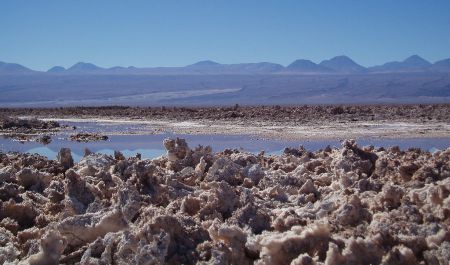
Lithium is a coveted commodity. Lithium-ion batteries store energy that powers mobile phones, electric cars and electricity grids (when attached to wind turbines and photovoltaic cells). Joe Lowry, an expert on the lightest metal, expects demand to nearly triple by 2025. Supply is lagging, which has pushed up the price. Annual contract prices for lithium carbonate and lithium hydroxide doubled in 2017, according to Industrial Minerals, a journal. That is attracting investors to the “lithium triangle” that overlays Argentina, Bolivia and Chile . The region holds 54% of the world’s “lithium resources”, an initial indication of potential supply before assessing proven reserves.
Chile dominated the world lithium markets for decades. The Atacama salt flat has the largest and highest-quality proven reserves. The desert’s blazing sun, scarce rainfall and mineral-rich brines make Chile’s production costs the world’s lowest. Allied to this is the region’s most benign investment climate. Chile is far ahead in rankings of ease of doing business, levels of corruption, and the quality of its bureaucracy and courts (see charts). Its lithium deposits are close to Antofagasta and other Chilean ports;
But growth has flattened, allowing Australia to threaten Chile’s position as the world’s top producer…Laws enacted in the 1970s and 1980s classify lithium as a “strategic” material on the ground that it can be used in future nuclear-fusion power plants. There is little prospect that Chile will soon build one of these, but controls on lithium production remain as a way of protecting the desert’s fragile ecosystem.
Just two companies, Chile’s SQM and Albemarle of the United States, are allowed to extract brine under leases that were signed in the 1980s. In addition, they are subject to quotas on the lithium they can produce from the brine, which also yields other minerals
Argentina: Under the constitution, provinces, not the federal government, own the country’s minerals. Mining firms had to find their way through a confusion of provincial rules and regulations. “It was like the Tower of Babel,” says Daniel Meilán, the country’s current mining secretary. I Argentina’s newish president, Mauricio Macri, has tried to unblock investment, including that in lithium…. The federal government is trying to harmonise provincial regulations. It has hammered out agreement on a standard royalty (3% of revenue, plus 1.5% to improve local infrastructure)…
These advances have started to unfreeze investment in lithium. In 2016 the sector attracted $1.5bn; production rose by nearly 60%……..Ending the metal’s strategic status and getting rid of quotas would make still more sense. So would improving Chile’s institutions and infrastructure.
Under the left-wing government led by President Evo Morales since 2006, Bolivia has pulled out of numerous bilateral investment treaties, denying investors access to international arbitration. His government has nationalised parts of the oil and gas industries, along with the biggest telecoms company and most of the electricity sector. The government keeps an even tighter grip on lithium than it does on gas, its biggest export. YPFB, the state-owned natural-gas company, at least enters into joint ventures with private-sector firms. Since 2010 the right to extract lithium brine has been reserved for the state. Private firms can now do no more than gaze longingly upon the Uyuni salt flat near Potosí, the largest in the world…
Like Chile, Bolivia hopes to form partnerships with private firms to make value-added products, including batteries and electric cars, through a new lithium enterprise, Yacimientos de Litio Bolivianos. But the government’s insistence on keeping a controlling stake is discouraging potential investors. In 2016 Bolivia sold 25 tonnes of lithium carbonate to China, pocketing a princely $208,000.
The white gold rush: The lithium triangle, Economist, June 17, 2017

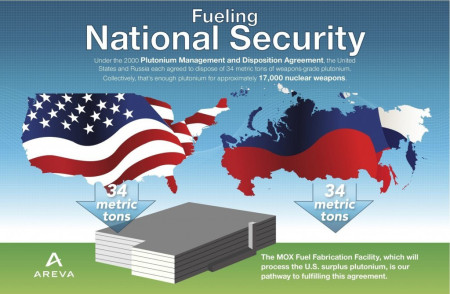
 South Carolina is suing the U.S. government to recover $100 million in fines it says the Department of Energy owes the state for failing to remove one metric ton of plutonium stored there. The lawsuit was filed on August 7, 2017.

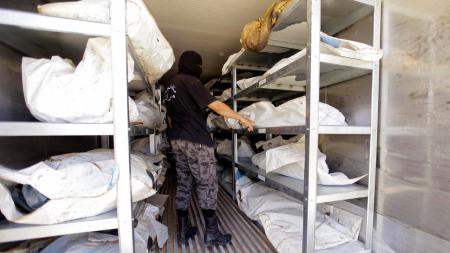
 Seven months after Libyan forces defeated Islamic State in Sirte, hundreds of bodies of foreign militants are still stored in freezers as authorities negotiate with other governments to decide what to do with them, local officials say. The corpses have been shipped to Misrata, a city further to the west whose forces led the fight to defeat Islamic State in Sirte in December 2016.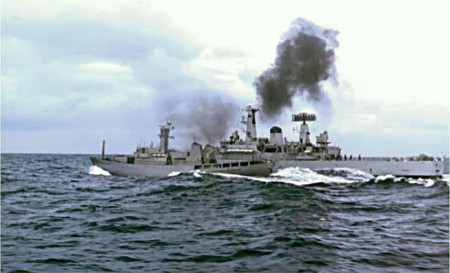
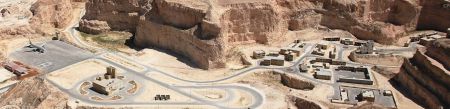
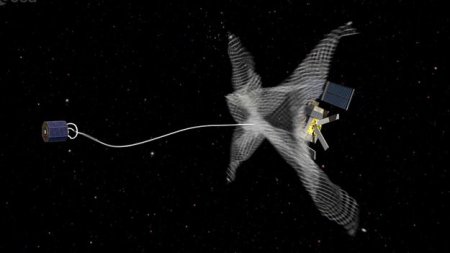

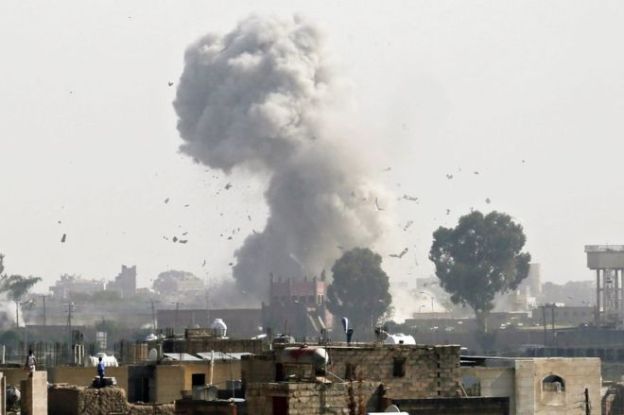

 On June 22nd 2017,

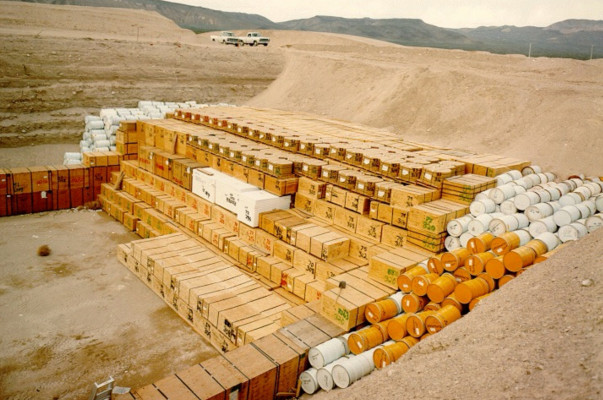
 U.S. District Judge Sue L. Robinson of Delaware on June 21,2017 sided with the federal government in blocking a $367 million merger between EnergySolutions and the radioactive site’s parent company. Waste Control Specialists calls the deal essential for its long-term viability.The details of Robinson’s opinion were sealed.
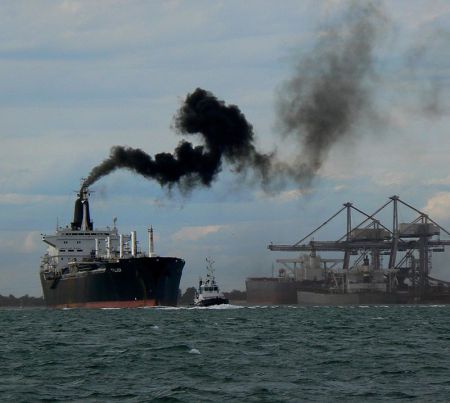
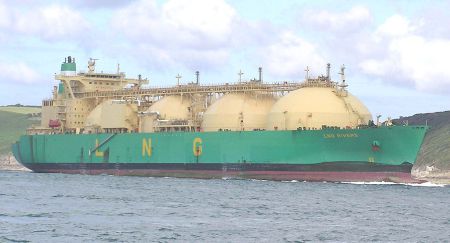
 One day in March 2017, he Rioja Knutsen tanker, filled with liquefied natural gas, was traveling from the U.S. to Portugal. Suddenly, Mexico’s power company lobbed in a higher bid for its cargo. At the Bahamas, the ship abruptly made a starboard turn and headed south. How natural gas is bought and sold in the world’s scattered regional markets for the fuel is changing rapidly. Ships such as the Rioja Knutsen are stitching those regions together and a single global market is emerging. This is already how nearly every other hydrocarbon, from crude oil to obscure petrochemicals, is sold. As gas joins the club, the effects will ripple through energy prices, company profits, the environment and geopolitics.
 Russia’s sale of one-fifth of its state-owned oil company to Qatar and commodities giant Glencore PLC last year had an unusual provision: Moscow and Doha agreed Russia would buy a stake back, people familiar with the matter said. Russian President Vladimir Putin hailed the $11.5 billion sale of the Rosneft stake in December 2016 as a sign of investor confidence in his country. But the people with knowledge of the deal say it functioned as an emergency loan to help Moscow through a budget squeeze.



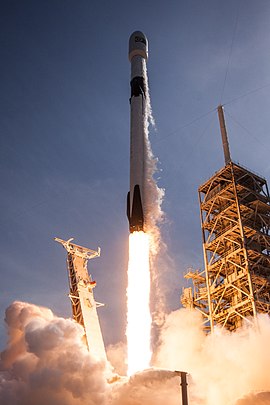
 A SpaceX Falcon rocket lifted off from the Kennedy Space Center in Florida on May , 2017 to boost a classified spy satellite into orbit for the U.S. military, then turned around and touched down at a nearby landing pad.
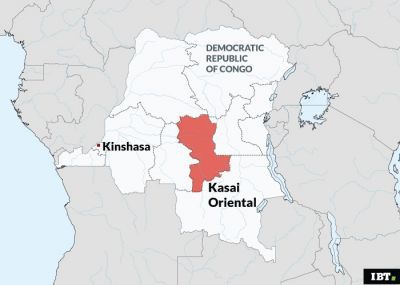
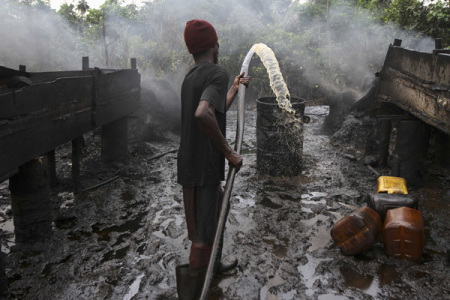
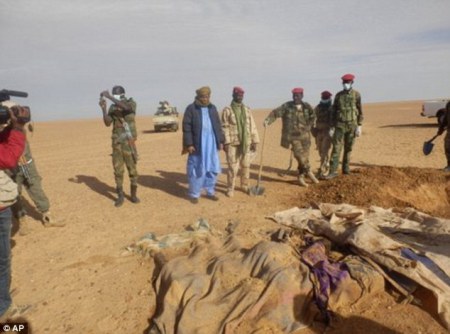
 Growing numbers of African migrants passing through Libya are traded in what they call slave markets before being held for ransom, forced labour or sexual exploitation, according to the UN migration agency.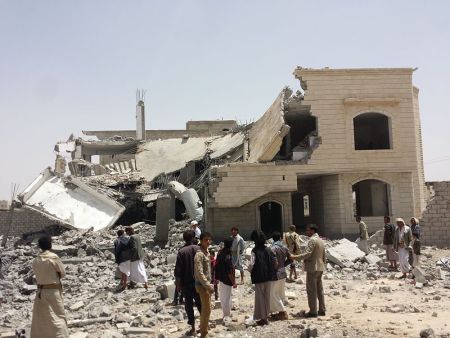

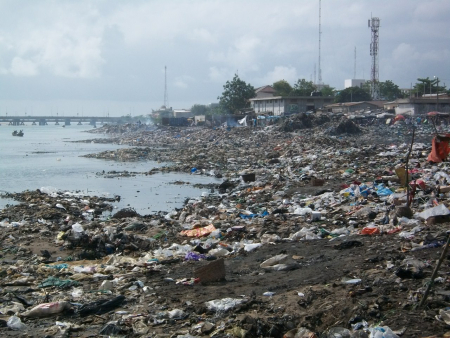
 Since their invention in the 1960s, disposable plastic bags have made lives easier for lazy shoppers the world over. But once used, they become a blight. This is particularly true in poor countries without good systems for disposing of them. They are not only unsightly. Filled with rainwater, they are a boon for malaria-carrying mosquitoes. Dumped in the ocean, they kill fish. They may take hundreds of years to degrade. On March 15th Kenya announced that it will become the second country in Africa to ban them. It follows Rwanda, a country with a dictatorial obsession with cleanliness, which outlawed them in 2008…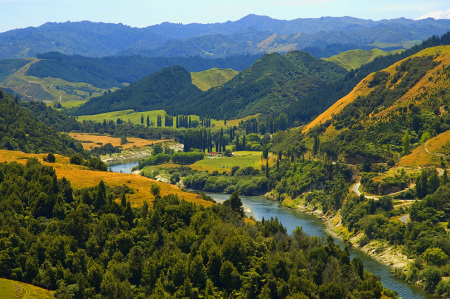
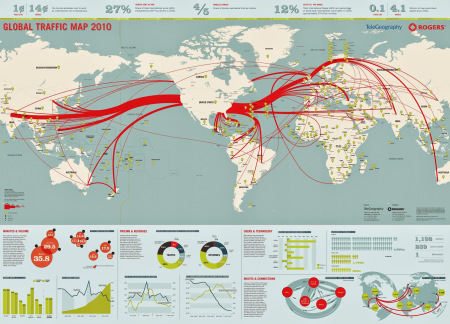
 A real-estate magnate is financing Google’s and Facebook Inc.’s new trans-Pacific internet cable, the first such project that will be majority-owned by a single Chinese company. Wei Junkang, 56, is the main financier of the cable between Los Angeles and Hong Kong, a reflection of growing interest from China’s investors in high-tech industries. It will be the world’s highest-capacity internet link between Asia and the U.S.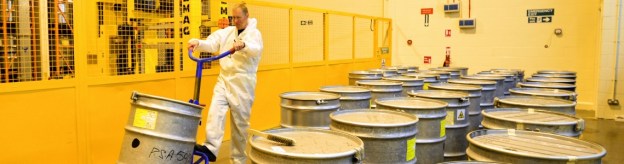
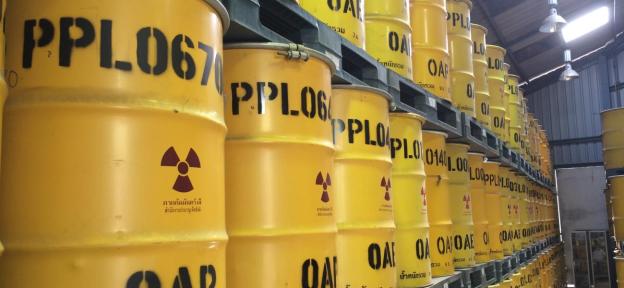
 Several options are available to immobilise waste resulting from nuclear fuel reprocessing. One of these is vitrification – a mature technology which has been used for high-level nuclear waste immobilization for over 50 years…Argentina is considering vitrification as a viable option for dealing with its high-level nuclear waste. The Argentine National Programme for Radioactive Waste Management aims to build capacities to implement vitrification processes for radioactive waste….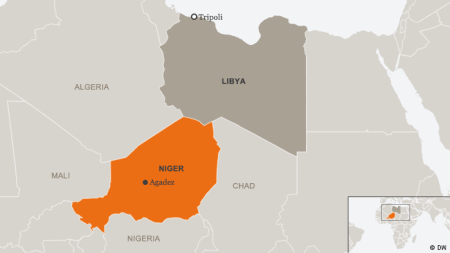


 On 7 March 2017, WikiLeaks began its new series of leaks on the U.S. Central Intelligence Agency…code-named “Vault 7” by WikiLeaks..














 Law-In-Action