Category Archives: Markets

Cocoa Production and Forest Loss

At the UN Climate Change Conference (COP23) in Bonn in November 2017 top cocoa-producing countries Côte d’Ivoire and Ghana with leading chocolate and cocoa companies have announced far-reaching Frameworks for Action to end deforestation and restore forest areas.  Central to the Frameworks is a commitment to no further conversion of any forest land for cocoa production.  The companies and governments pledged to eliminate illegal cocoa production in national parks, in line with stronger enforcement of national forest policies and development of alternative livelihoods for affected farmers. Côte d’Ivoire and Ghana combined produce nearly two-thirds of the world’s annual supply of cocoa, the main ingredient in chocolate and a range of other consumer products…

Up-to-date maps on forest cover and land-use, as well as socio-economic data on cocoa farmers and their communities will be developed and publicly shared by the governments. Chocolate and cocoa industry agree to put in place verifiable monitoring systems for traceability from farm to the first purchase point for their own purchases of cocoa, and will work with the governments of Côte d’Ivoire and Ghana to ensure an effective national framework for traceability for all traders in the supply chain.

The two governments and companies agree through the Frameworks to accelerate investment in long-term sustainable production of cocoa, with an emphasis on “growing more cocoa on less land,”. Key actions include provision of improved planting materials, training in good agricultural practices, and development and capacity-building of farmers’ organizations.  Sustainable livelihoods and income diversification for cocoa farmers will be accelerated through food crop diversification, agricultural inter-cropping, development of mixed agro-forestry systems, and other income generating activities designed to boost and diversify household income while protecting forests.

The governments and companies, which represent and estimated 80+ percent of global cocoa usage, commit to full and effective consultation and participation of cocoa farmers in the process…The governments and companies have committed to a comprehensive monitoring process, including a satellite-based monitoring system to track progress on the overall deforestation target, and annual publicly disclosed reporting on progress and outcomes related to the specific actions in each Framework.

Excerpts from Cocoa and Forests Initiative

Companies that have joined the initiative include; Cargill, General Mills, Godiva, Hershey, Mars, Mondelēz, and Nestlé.

The Power Plays in Africa

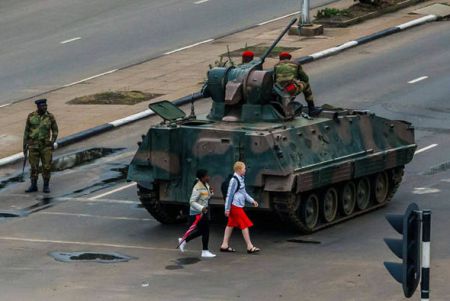
As the overthrow of despot Robert Mugabe entered a stalemate on November 17,  2017, eyes turned to China — Zimbabwe’s largest foreign investor and a key ally — amid speculation over its role in the military coup.Source in Harare believe the Zimbabwean conflict within the ruling party Zanu PF is involving two rival camps has direct links to China and Russia with both countries trying to control and protect their own economic interests.

The army chief General Constantino Chiwenga, visited Beijing l — just days before tanks rolled into the streets of Harare. President Mugabe has been been hostile to the Chinese in recent years accusing them of plundering the countries diamonds worth $15 billion.  On October 2017 First Lady Grace Mugabe was in Russia where she represented her 93-year-old husband at a function where he was honoured with some accolade in Russia at the World Federation of Democratic Youth (WFDY) in Moscow.

“It is a BRICS internal rivalry with both Russia and South Africa on one side trying to protect their economic interests and China on the other side,” a regional think-tank in London said on November 17, 2017… Russia has been investing in several projects in southern African nations, for example, the ALROSA group of diamond mining companies is engaged in several projects in Zimbabwe, while mining and steelmaking company Evraz and Severstal steel and steel-related mining company conduct their business in South Africa.

Russia and South Africa, which together control about 80% of the world’s reserves of platinum group metals, have created a trading bloc similar to OPEC to control the flow of exports according to Bloomberg.

Zimbabwe, Canada, and the U.S. are among other major platinum group metals producers.

Russian and South African officials signed a memorandum of understanding today to cooperate in the industry.South Africa mines about 70 percent of the world’s platinum, while Russia leads in palladium, a platinum group metal used in autocatalysts, with about 40% of output, according to a 2012 report by Johnson Matthey Plc.

According to the Chamber of Mines of Zimbabwe (CMZ) and geologists, Zimbabwe has far bigger platinum reserves than Russia. The country currently has the second known largest platinum reserves after South Africa. Experts say underfunding and limited exploration has over the years stifled growth of the mining sector.

The Zimbabwe chamber is on record saying it seeks to increase production to the targeted 500 000 ounces per annum requires the setting up of base and precious metal smelters and refineries, investment of $2,8 billion in mines, $2 billion in processing plants and between $200 and $500 million to ensure adequate power supply. Already, the country’s major platinum miners – Zimplats, Unki and Mimosa who are currently processing the metal in neighbouring South Africa – have undertaken to construct the refinery….

Miles Blessing Tendi, a lecturer in African history and politics at the University of Oxford, says there is no way to be certain if China knew about Mugabe’s fate but believes China’s respect for sovereignty would make their involvement uncharacteristic.

Excerpt, It gets ugly as Russia and South Africa gang-up against China over Zimbabwe coup, http://www.thezimbabwemail.com/, November 17, 2017

Cash or CleanUp? life in the oil polluted swampland

Nearly a decade after two catastrophic oil spills in the Niger Delta, a comprehensive clean-up has been launched in 2017 in the southern Nigerian region.

Earlier this month, crews of young men equipped with high pressure hoses began to attack the crude oil blighting the creeks and mangrove swamps where they live.  Workers from Bodo in Rivers State are beginning a three-year project that claims to mark a new approach to cleaning up the delta, the vast polluted swampland pumping the oil vital to Africa’s largest economy.

Four hundred workers will clear dead foliage and spilled oil before planting new mangroves. Where they are working is small but organisers hope the anti-pollution drive can be repeated elsewhere in the delta.

Unlike clean-up operations run routinely by oil giant Royal Dutch Shell, this one is backed by local communities and teams of scientists who will take samples of water, mud and soil in each area to measure progress and determine the best cleaning method.  Funded by Shell and its joint venture partners, the clean-up is the culmination of years of legal wrangling and international pressure to overcome animosity and mutual suspicion that have divided locals, government and oil companies.

Shell declined to say how much it was spending, while leaders see it as a glimmer of hope in a benighted land where many wells are not safe to drink from and fishing and farming are devastated.

“The Niger Delta is at a crossroads,” said Inemo Samiama, chairman of the Bodo Mediation Initiative (BMI), managing the clean-up. “We have a lot of polluted sites. We need something we can refer to, some shining example.”

The work of BMI covers 10 sq km, a fraction of the 70,000 sq km Delta.  As workers walk through gnarled, dead mangrove roots in protective gear and masks, oil seeps into their footprints – remnants of spills for which Royal Dutch Shell admitted responsibility. Despite the optimism, environmentalists point out at BMI’s work rate, it will take 21,000 years to clean the entire delta and that’s not including the 10 years of legal battles it took to make it happen.  Communities in eight other Delta states are unhappy they have no clean-up plan, fuelling the resentment underpinning militant movements that hit production last year and helped tip Nigeria into its first recession in 25 years.  One group, the Niger Delta Avengers, has threatened a return to violence. They say government is not keeping its promises to clean up the delta and provide more jobs, money and infrastructure.

Bodo received support from British law firm Leigh Day, which negotiated a 55 million pound pollution settlement with Shell in 2015. Leigh Day said it agreed to freeze a separate case to force a clean-up via British courts in order to give the BMI a chance.  Ogoni, the wider area in which Bodo sits, was the subject of a 2011 UN Environment Programme report warning of catastrophic pollution in the soil and water.

King Emere Godwin Bebe Okpabi of the Ogale community is on the board of a wider Ogoni clean-up effort and is optimistic its own clean-up, due to start next year, will work. But he fears it will not be replicated elsewhere without another marathon battle in the London courts.“The only place you get legal success is the international courts,” he said.

Under Nigerian law, oil companies must begin cleaning up any spill within 24 hours. But the remoteness of spills and lax enforcement mean this rarely happens.  Ferdinand Giadom, a lecturer at the University of Port Harcourt and technical advisor to the Bodo cleanup, said communities often block clean-ups in the hopes of cash settlements. Even in Bodo, works were delayed by two years due to local infighting.

Shell said most oil spilled last year was due to sabotage or theft for illegal refining. It also said communities block access to sites, making cleaning more difficult.

Excerpts from Anger on the margins of historic clean-up in Nigeria’s Delta, Reuters, Nov. 9,  2017

Leveling: How a 5,000 km/h Speed Feels on Earthlings

Hypersonic missiles [weapons faster than the speed of sound]— specifically hypersonic glide vehicles and hypersonic cruise missiles — are a new class of threat because they are capable both of maneuvering and of flying faster than 5,000 kilometers per hour. These features enable such missiles to penetrate most missile defenses and to further compress the timelines for a response by a nation under attack.

Hypersonic missiles are being developed by the United States, Russia, and China. Their proliferation beyond these three could result in other powers setting their strategic forces on hair-trigger states of readiness. And such proliferation could enable other powers to more credibly threaten attacks on major powers.  The diffusion of hypersonic technology is under way in Europe, Japan, Australia, and India — with other nations beginning to explore such technology. Proliferation could cross multiple borders if hypersonic technology is offered on world markets.

There is probably less than a decade available to substantially hinder the potential proliferation of hypersonic missiles and associated technologies. To this end, the report recommends that (1) the United States, Russia, and China should agree not to export complete hypersonic missile systems or their major components and (2) the broader international community should establish controls on a wider range of hypersonic missile hardware and technology.rs.

The unavoidable requirement is for the United States, Russia, and China to agree on a nonproliferation policy. France could play a key role in bringing other governments into agreement on a broader control policy.

The technical and economic barriers to developing hypersonic technology are great enough to add to the effectiveness of a nonproliferation policy.

A two-tiered approach to containing the spread of hypersonic systems and components appears to be the most promising.

First, we recommend a policy of export denial for complete hypersonic delivery vehicles and enough major subsystems to effectively provide access to complete hypersonic missiles.

Second, given dual-use concerns, we also recommend a policy of case-by-case export reviews for scramjets and other hypersonic engines and components, fuels for hypersonic use, sensors, navigation, and communication items for hypersonic flight, hypersonic flight controls, design tools and modeling for such uses, and ground simulation and testing for hypersonic systems.

The necessary first step is for the United States, Russia, and China to agree not to export complete hypersonic missiles or their major subsystems.

Excerpts from Richard H. Speier et al., Hindering the Spread of a New Class of Weapons, Rand Corporation, Sept. 2017

Exporting Apes Alive

Daniel Stiles, a self-styled ape trafficking detective in Kenya, had been scouring Instagram, Facebook and WhatsApp for weeks, looking for pictures of gorillas, chimps or orangutans. He was hoping to chip away at an illicit global trade that has captured or killed tens of thousands of apes and pushed some endangered species to the brink of extinction.

Malnourished and terrified apes have been seized across the world, in undercover busts or at border checkpoints, in countries as varied as France, Nepal, Thailand, the Democratic Republic of Congo and Kuwait. Two years ago, at Cairo’s international airport, the Egyptian authorities discovered a baby chimp curled up into a ball and stashed in a piece of hand luggage. Just this summer, the authorities in Cameroon stopped a smuggler at a roadblock who was trying to move 100 pounds of pangolin scales and a tiny chimp, not even a month old, hidden in a plastic sack…

Wildlife researchers say that a secret ape pipeline runs from the lush forests of central Africa and Southeast Asia, through loosely policed ports in the developing world, terminating in wealthy homes and unscrupulous zoos thousands of miles away. The pipeline, documents show, is lubricated by corrupt officials (several have been arrested for falsifying export permits) and run by transnational criminal gangs that have recently drawn the attention of Interpol, the international law enforcement network.

Apes are big business — a gorilla baby can cost as much as $250,000 — but who exactly is buying these animals is often as opaque as the traffickers’ identity.

Wildlife officials said that a handful of Western businessmen had also been arrested. But the majority of recent busts, they added, have been in Africa or Southeast Asia, usually of low-level traffickers or poorly paid underlings, not the bosses who control underground exports and travel abroad to make deals…

“They have consciousness, empathy and understanding,” said Jef Dupain, an ape specialist for the African Wildlife Foundation. “One day we will wonder how did we ever come up with the idea to keep them in cages.”…

But a baby was different, he said. There was a specific market for infant apes, so he would sell them alive, for at least $10 each, to local traders who would then smuggle them to Kinshasa and sell them to foreigners for many times that amount…

In Boende, a small town up another tributary of the Congo River, three hunters were recently caught with bonobo carcasses and sentenced to several years in a stifling colonial-era prison. The men said they were simply trying to feed their families by selling bonobo meat. But poaching an ape is a serious crime in Congo, and nonprofit wildlife groups have been assisting the Congolese authorities in prosecuting offenders.“There is a culture here to eat meat, meat from the forest,” said the town’s prosecutor, Willy Ndjoko Kesidi. “Me, I like fish.”  Mr. Kesidi expressed some sympathy for the hunters he had just jailed, saying that the prison where they were housed was a horrible place where many prisoners had died…

Many illegal wildlife transactions start online, specifically through Instagram or WhatsApp. Mr. Stiles has made several trips to the United Arab Emirates, which he considers a new hub for the illegal online wildlife business. Dealers in the Middle East have posted many pictures of apes for sale, sometimes advertising them as friendly pets for children…

Several years ago, the Indonesian police rescued a female orangutan who had been shaved and was being used as a prostitute at a brothel.

Excerpts from JEFFREY GETTLEMAN, Smuggled, Beaten and Drugged:
The Illicit Global Ape Trade, NY Times, Nov. 4, 2017

See also Stolen Apes (pdf)

Staying in Svalbard

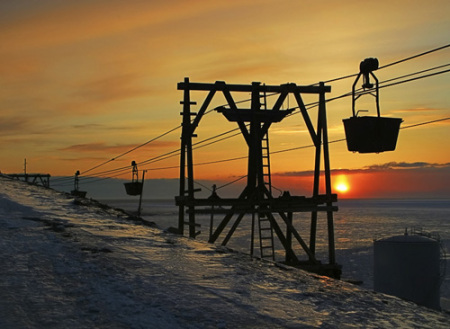
Svalbard has an unusual status that makes it a flashpoint of an escalating face-off in the Arctic between Russia and the West.  Norway, a member of the North Atlantic Treaty Organization, and Russia subsidize unprofitable mines to keep a strategic footprint on an icy group of islands where Oslo and Moscow have been the main players since a 1920 treaty among multiple nations recognized Norwegian sovereignty but allowed other nations to develop some commercial interests. (pdf).

NATO has described its lack of maritime resources in the region as a weakness.  “Svalbard is part of Norway and therefore it’s part of NATO,” Secretary-General Jens Stoltenberg. “So, of course, all the NATO security guarantees apply to Svalbard. When it comes to the question of coal mining, that’s for the Norwegian authorities to decide.”…

Oslo is planning to buy new submarines and has increased the number of troops on its border with Russia.  But Norway, one of the world’s richest countries on a per capita basis, is debating whether to keep financing coal mining on Svalbard. A renewed commitment to mining would be controversial, not just for the cost but also because of Norwegians’ vision of themselves as champions of environmental causes…

“It’s a question of how much are we going to spend doing something irrational versus how great do we feel the need to counter Russian Arctic activity,” said Indra Overland, head of energy at the Norwegian Institute of International Affairs, a think tank that is partially funded by the state…

Some 800 miles from the North Pole, the islands are barren, with temperatures that dip to minus-20 degrees Celsius (minus-4 degrees Fahrenheit) in winter months when the sun doesn’t rise.  Miners on both sides are attracted by relatively high salaries. Barentsburg’s 400 inhabitants are also provided with health care, a school and low-cost housing.Russia, which started mining here in the 1930s, focused on Barentsburg and another settlement called Pyramiden. The towns housed swimming pools, 24-hour canteens and food products that were then largely unavailable elsewhere in the Soviet Union…

Russia’s government has ordered coal production to slow to stretch reserves out until 2032, and will then face a decision similar to Norway’s on whether to invest in a new mine…

Both countries are turning to tourism.  In Russia’s settlements, visitor numbers have doubled in the past four years, and income from tourism stood at $2.4 million last year, more than from mining. Arktikugol received $8 million in government subsidies in 2016….Norway has opened a university, and one closed coal mine has become a museum and film archive. Old miners’ cabins have been renovated for holiday accommodation and a warehouse is now a restaurant.

But Norwegian politicians and academics admit that without a coal mine, their country’s presence will diminish, in part because tourism is so seasonal.  “To put it bluntly, the purpose of the Norwegian settlements is to assert Norwegian sovereignty over Svalbard,” said Torbjørn Pedersen, a political scientist at Nord University in Bodø, Norway

Excerpts from A New Cold War Grip Arctic Enclave, Wall Street Journal, Oct. 11, 2017

Nuclear States in the Making: Argentina

When we say Argentina is a nuclear power we are not referring to the club of those armed with bombs but rather the similarly small group of countries that generate electricity from nuclear power. Moreover unlike many of those in retreat from an activity they hate to need, Argentina without any fanfare has added a third reactor to its existing two reactors.

Argentina has also been active in nuclear power generation & research and uranium mining since the middle of last century. Some 10% of current electricity needs are met from nuclear power stations in the country. The Comisión Nacional de Energía Atómica (CNEA – Atomic Energy Commission) was set up in 1950 to oversee nuclear R&D, including construction of several research reactors. Currently, five research reactors are operated by CNEA and others.

Another is planned, similar to the Opal reactor built in Australia by Argentina’s INVAP. An example of the country’s membership of the front ranks of nuclear technology nations is that Argentina’s CAREM small modular reactor design is under consideration for massive desalination projects in Saudi Arabia.

The goal of Argentina’s government…is for nuclear power to be part of an expansion in generating capacity to meet rising demand. The government signed co-operation agreements with China and UAE and Argentina received a $240m loan from the development bank of Latin America to extend the life of an existing reactor.

Excerpts from Nuclear Energy and Uranium in Argentina, BNamericas.com, Oct. 13, 2017

Salt Lakes of the World


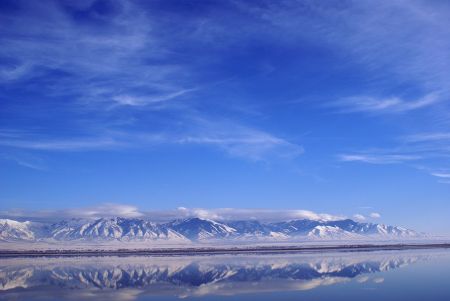
Utah Great Salt Lake has shrunk to a depth of about 14 feet—nearly half its former average since it was settled by the Mormons 170 years ago. Under a controversial engineering plan, the lake would recede even further….State engineers want to siphon off some of the river water that flows into the lake and use it for the Salt Lake City area’s booming population. Proponents say the plan, which calls for lapping up a fifth of Bear River’s current unused flow, is essential for meeting the region’s needs.

But critics note that the diversion would cause the lake to drop by almost a foot, according to state estimates, eventually exposing 30 square miles of lake bed and potentially worsening the dust storms that regularly blanket the region and ruining a fragile wetlands habitat.

The debate echoes concerns heard in many other arid parts of the world. Salt lake ecology is especially delicate and requires a certain amount of fresh water to maintain a saline balance. Brine shrimp, for instance, could die off if the water becomes too salty.

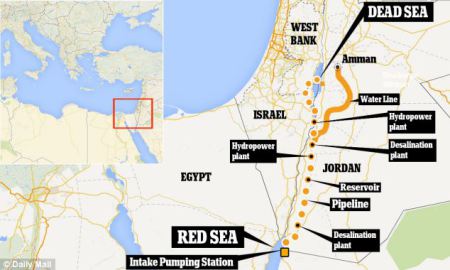
In the Middle East, diversion of the Jordan and other rivers that feed the Dead Sea has shriveled the famous body of saltwater and its once robust tourism. The Aral Sea between Kazakhstan and Uzbekistan has shrunk to about 10% of its original size after diversions.

Critics, including environmental groups and affected businesses, say that under the new diversion plan lake-dependent businesses such as brine shrimp fishing would suffer, as would farmers whose land could be inundated upstream if existing dams are raised to retain more water. In all, the lake accounts for an estimated $1.3 billion in annual economic output, according to Utah State University, much of it from the shrimping industry, as well as mineral extraction and tourism.

The plan would also destroy wetlands along the lake shoreline that provide food and habitat for an estimated eight million birds, said Zach Frankel, executive director of Utah Rivers Council, an environmental group opposed to the project.

But proponents say the diversion of up to 72 billion gallons of water—enough to meet the needs of a city of one million for a year—is needed to forestall anticipated shortages for one of the fastest-growing regions in the country….“If Utah continues to grow, it’s not a matter of if but when we are going to need more water,” said state Sen. Stuart Adams, the Republican majority whip, who sponsored a bill to begin funding the estimated $1.5 billion project.

Excerpt from Utah Searches for Water Solution, Wall Street Journal, Sept. 14, 2017

How to Spend $18 billion on Foreign Garbage

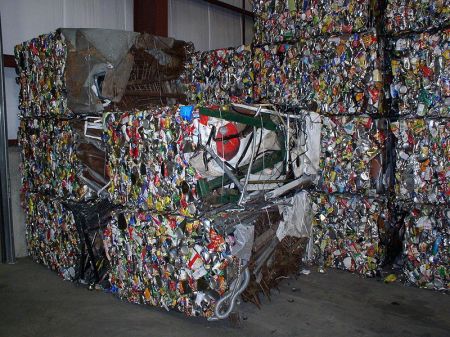
China sucked in more than half the world’s exports of scrap copper and waste paper in 2016, and half of its used plastic. All in all, China spent over $18bn on imports of rubbish in 2016. America, meanwhile, is an eager supplier. In 2016 nearly a quarter of America’s biggest exporters by volume were recyclers of paper, plastic or metal. Topping the list was America Chung Nam, a California-based supplier of waste paper which last year exported a whopping 333,900 containers, almost all of them to China.

This may soon change. On July 18, 2017 China told the World Trade Organisation that by the end of the year, it will no longer accept imports of 24 categories of solid waste as part of a government campaign against yang laji or “foreign garbage”. The Ministry of Environmental Protection says restricting such imports will protect the environment and improve public health. But the proposed import ban will disrupt billions of dollars in trade. Recyclers worry that other categories of waste may soon receive the same treatment.

It is often cheaper to recycle scrap copper, iron and steel, as well as waste paper and plastic, than to make such materials from scratch, especially when commodity prices are high. So as commodity prices rose during the 2000s, the burgeoning trade in waste benefited both exporters, who made money from previously worthless trash, and importers, who gained access to a reliable stream of precious feedstock. Between 1995 and 2016 Chinese imports of waste grew tenfold, from 4.5m to 45m tonnes.

But imports of recyclable waste are often dirty, poorly sorted or contaminated with hazardous substances such as lead or mercury. In 1996 factories in Xinjiang inadvertently imported more than 100 tonnes of radioactive metal from Kazakhstan. The following year an American businessman was convicted of smuggling over 200 tonnes of unsorted rubbish labelled as waste paper. Even when the intended material is imported, it is often recycled improperly. In 2002 the authorities faced widespread criticism after a documentary showed workers in Guangdong province crudely dismantling discarded electronic devices and dumping the toxic remains into a river. Officials may have been spurred into the latest restrictions by the release of Plastic China, an unflattering documentary about the plastic-recycling industry which was screened at Sundance, a grand American film festival, in January 2017,

The government had already been campaigning to block imports of illegal and low-quality waste under a crackdown called Operation Green Fence launched in 2013….Whereas Green Fence was aimed at improving the quality of imported waste, the government’s latest move bans several types of waste outright, threatening some $5bn in trade. But…. recyclers who rely on imports may now switch to grubbier domestic stock.

Excerpts from Waste Management: Anti-Dumping, Economist, Aug. 5, 2017, at 32

When Price is Not the Issue: nuclear power

Georgia Power Co. Thursday told state regulators it wants to continue the Vogtle nuclear power plant expansion in spite of sharply higher estimates of the cost to complete the project.

The recommendation from the Southern Co. subsidiary to the Georgia Public Service Commission means that at least part of the new wave of nuclear construction in the U.S. might be salvaged. Recently, owners of a plant in South Carolina abruptly halted construction of two new nuclear reactors due to cost overruns.

Georgia Power said that the total capital cost of the project is now expected to be about $19 billion, compared with an estimate of $9.7 billion in 2008. That figure doesn’t include financing costs.

Georgia Power Chief Executive Paul Bowers said the company took the long view…Once complete, the two new nuclear units will be in service for 60 to 80 years, he said. “There are naysayers in the marketplace but they are looking at it in the short-term perspective,” Mr. Bowers said. ..

Plant Vogtle in Georgia and V.C. Summer in South Carolina were supposed to be the leading edge of the next generation of nuclear reactors in the aging U.S. nuclear power fleet. They are years behind schedule and billions of dollars over budget, and main contractor Westinghouse Electric Co. has filed for bankruptcy. In July 2017, owners abandoned work on the half-built South Carolina project, due to swelling costs.

Excerpts from  Georgia Power Persist in Project, Wall Street Journal, Sept. 1, 2017

Whale Wars and 2017 Armistice

Environmental activists are abandoning their annual anti-whaling campaign in the Southern Ocean near Antarctica, saying Japan’s threat to defend its fleet is too daunting.  Capt. Paul Watson, the founder of anti-whaling group Sea Shepherd, said Japan’s threat to dispatch its military was unprecedented.“For the first time ever, they have stated they may send their military to defend their illegal whaling activities,” Capt. Watson said in a statement Tuesday. “The Japanese whalers not only have all the resources and subsidies their government can provide, they also have the powerful political backing of a major economic superpower.”

The Japanese embassy in Canberra, Australia, didn’t immediately respond to Sea Shepherd’s announcement, but it previously accused the group of sabotage and “acts of violence which seriously endangered the safe navigation of vessels.”  Some of Sea Shepherd’s tactics include ramming whaling vessels and throwing stink bombs onto the decks of Japanese ships. In January 2010, one of Sea Shepherd’s boats sank after a collision with a whaling vessel.

The group’s decision to suspend its campaign after 12 years leaves Japan’s fleet free to resume whaling through the coming Antarctic summer without disruption. Japan’s whaling fleet reported in 2016 killing 333 minke whales, with plans to cull about 4,000 whales over the next 12 years under a quota set by the Institute of Cetacean Research in Tokyo.

The International Whaling Commission put in place a moratorium on commercial whaling in 1986. The next year, Japan embarked on a cull that it said was in the name of science, not commerce. Japan says it has a right to monitor whales’ impact on the fishing industry, though it also claims they are an important part of its cultural and culinary heritage.

Activists say scientific whaling is aimed at circumventing the 1986 ban.Last month, Japan’s Parliament passed a series of laws allowing for the protection of commercial whaling fleets. The International Court of Justice ruled against Japan in a scientific-whaling case in 2014.  Australia’s government condemned Japan’s new whaling laws in July 2017 saying they weren’t consistent with the 2014 ruling. Tokyo has withdrawn from the court’s jurisdiction with regard to whaling cases…

Capt. Watson said Sea Shepherd would resume anti-whaling efforts in the future, not only against the Japanese, but also in opposition to Norwegian, Danish and Icelandic whaling. “This is what we have been doing for 40 years,” he said.

Excerpts from  Foes of Whaling End Campaign, Wall Street Journal,  Aug. 30, 2017

Lithium Resources and Markets

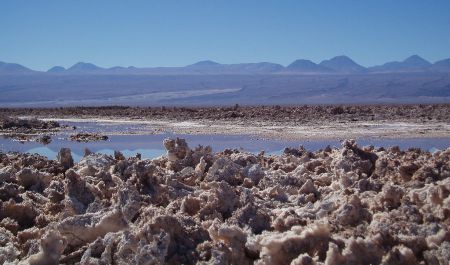
Lithium is a coveted commodity. Lithium-ion batteries store energy that powers mobile phones, electric cars and electricity grids (when attached to wind turbines and photovoltaic cells). Joe Lowry, an expert on the lightest metal, expects demand to nearly triple by 2025. Supply is lagging, which has pushed up the price. Annual contract prices for lithium carbonate and lithium hydroxide doubled in 2017, according to Industrial Minerals, a journal. That is attracting investors to the “lithium triangle” that overlays Argentina, Bolivia and Chile .  The region holds 54% of the world’s “lithium resources”, an initial indication of potential supply before assessing proven reserves.

Chile dominated the world lithium markets for decades. The Atacama salt flat has the largest and highest-quality proven reserves. The desert’s blazing sun, scarce rainfall and mineral-rich brines make Chile’s production costs the world’s lowest. Allied to this is the region’s most benign investment climate. Chile is far ahead in rankings of ease of doing business, levels of corruption, and the quality of its bureaucracy and courts (see charts). Its lithium deposits are close to Antofagasta and other Chilean ports;

But growth has flattened, allowing Australia to threaten Chile’s position as the world’s top producer…Laws enacted in the 1970s and 1980s classify lithium as a “strategic” material on the ground that it can be used in future nuclear-fusion power plants. There is little prospect that Chile will soon build one of these, but controls on lithium production remain as a way of protecting the desert’s fragile ecosystem.

Just two companies, Chile’s SQM and Albemarle of the United States, are allowed to extract brine under leases that were signed in the 1980s. In addition, they are subject to quotas on the lithium they can produce from the brine, which also yields other minerals

Argentina: Under the constitution, provinces, not the federal government, own the country’s minerals. Mining firms had to find their way through a confusion of provincial rules and regulations. “It was like the Tower of Babel,” says Daniel Meilán, the country’s current mining secretary. I Argentina’s newish president, Mauricio Macri, has tried to unblock investment, including that in lithium….  The federal government is trying to harmonise provincial regulations. It has hammered out agreement on a standard royalty (3% of revenue, plus 1.5% to improve local infrastructure)…

These advances have started to unfreeze investment in lithium. In 2016 the sector attracted $1.5bn; production rose by nearly 60%……..Ending the metal’s strategic status and getting rid of quotas would make still more sense. So would improving Chile’s institutions and infrastructure.

Under the left-wing government led by President Evo Morales since 2006, Bolivia has pulled out of numerous bilateral investment treaties, denying investors access to international arbitration. His government has nationalised parts of the oil and gas industries, along with the biggest telecoms company and most of the electricity sector.  The government keeps an even tighter grip on lithium than it does on gas, its biggest export. YPFB, the state-owned natural-gas company, at least enters into joint ventures with private-sector firms. Since 2010 the right to extract lithium brine has been reserved for the state. Private firms can now do no more than gaze longingly upon the Uyuni salt flat near Potosí, the largest in the world…

Like Chile, Bolivia hopes to form partnerships with private firms to make value-added products, including batteries and electric cars, through a new lithium enterprise, Yacimientos de Litio Bolivianos. But the government’s insistence on keeping a controlling stake is discouraging potential investors. In 2016 Bolivia sold 25 tonnes of lithium carbonate to China, pocketing a princely $208,000.

The white gold rush: The lithium triangle, Economist, June 17, 2017

The Nuclear Fuel Bank in Kazakhstan

Kazakhstan has chosen August 29, 2017 for the opening ceremony of the first Low Enriched Uranium Bank (LEU Bank), being established in Kazakhstan under the auspices of the International Atomic Energy Agency (IAEA).

The idea to establish the LEU bank was initially put forward in 2006 by Sam Nunn, co-founder of the Nuclear Threat Initiative (NTI), a non-profit organization… The IAEA authorised the initiative in 2010 and Kazakhstan volunteered the following year to host the bank.

Previously Kazakhstan voluntarily had destroyed the 1,400 nuclear weapons it inherited from the collapse of the Soviet Union in 1991….Kazakhstan was the first to close, at the end of Soviet days, the largest nuclear test site in the world, the Semipalatinsk test site, where 500 nuclear explosions took place,” he said, adding the LEU Bank is another example of Kazakh efforts to address the nuclear weapons issue.

The LEU bank will operate as a mechanism of last resort; in case of unforeseen disruption in a commercial market of uranium, countries that are unable to procure uranium for their nuclear power plants can request LEU from the bank under certain conditions. Thus, it will ensure a global nuclear fuel supply and facilitate nuclear non-proliferation efforts.The bank will be based at the Ulba Metallurgy Plant in Ust-Kamenogorsk in eastern Kazakhstan. The plant has dealt with and stored nuclear materials for more than 60 years without any incidents.  The funding is based on voluntary contributions from the NTI, the U.S., the European Union, the United Arab Emirates, Norway, Kuwait, and Kazakhstan, which in total equals to $150 million, believed to be enough to procure 90 tonnes of low enriched uranium.

Excerpt from  Colin Stevens, 29 August opening of Kazakhstan Low Enriched Uranium Bank, EU Report, July 24, 2017

Policing the Amazon Jungle

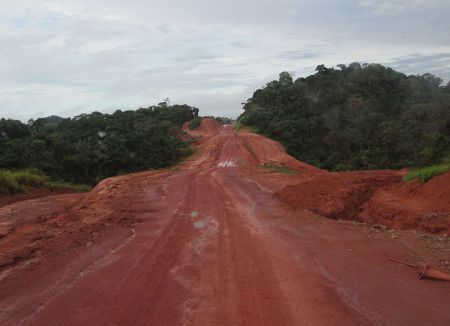
The small town of Apui sits at the new frontline of Brazil’s fight against advancing deforestation…  The home of 21,000 people in southern Amazonas state was long protected by its remote location from illegal loggers, ranchers and farmers who clear the forest.  Now those who would destroy the jungle are moving in from bordering states, following the Transamazon Highway, which is little more than a red-dirt track in this part of the rainforest.

First come the loggers, who illegally extract valued lumber sold in far-off cities. The cattle ranchers follow, burning the forest to clear land and plant green pasture that rapidly grows in the tropical heat and rain. After the pasture is worn out, soy farmers arrive, planting grain on immense tracts of land…

Roughly 7,989 square kilometres (3,085 square miles) of forest were destroyed in 2016, a 29 percent increase from the previous year and up from a low of 4,571 square kilometers in 2012, according to the PRODES satellite monitoring system.

Then there are the fires.  Apui ranked first in the country for forest fires in the first week of August 2017, according to the ministry.

At their best the environmental agents can slow but not stop the destruction. They raid illegal logging camps, levy large fines that are rarely collected and confiscate chainsaws to temporarily impede the cutting.  Costa acknowledges that the roughly 1,300 environmental field agents who police a jungle area the size of western Europe have a difficult task, at the very least.

Excerpt from Brazil’s agents of the Amazon fighting loggers, fires to stop deforestation, Reuters, Aug. 20, 2017

The Nuclear Supply Chain

The report from the Energy Futures Initiative released on August 15, 2017 by former Energy Secretary Ernest Moniz calls for greater federal investment in the US huclear-power industry. The report calls for expanded government loan guarantees, tax incentives and research on nuclear technology.

Nuclear power makes up about 20 percent of U.S. electricity generation, but the industry has been struggling.  Five nuclear plants, with a combined capacity of 5 gigawatts, have closed early since 2013, and an additional six plants are scheduled to shutter early over the next nine years. Of the two new nuclear plants under construction in the U.S., one was halted by Scana Corp. in July 2017 and backers of the other, Southern Co.’s Vogtle plant in Georgia, are seeking additional aid from the federal government.

Westinghouse Electric Co., the nuclear technology pioneer that is part of Toshiba Corp., went bankrupt in March, after it hit delays with its AP1000 reactors at each of those plants. After it declared bankruptcy, Westinghouse — whose technology is used in more than half the world’s nuclear power plants — said it shifted its focus from building reactors to helping dismantle them.

The U.S. needs companies and engineers that can both build and run nuclear enterprises…. The U.S. Navy’s reactors require supplies and qualified engineers, and American nuclear scientists fill vital national security roles, it said.  Companies, such as BWX Technologies Inc. of Lynchburg, Virginia manufacture nuclear components for both the commercial nuclear industry and naval reactors. If the commercial business collapses, that may mean one less company able to process highly enriched uranium, according to the report.

“A shrinking commercial enterprise will have long term spillover effects on the Navy supply chain, including by lessened enthusiasm among American citizens to pursue nuclear technology careers,” according to the report.

In addition to extending a tax credit for new nuclear power and the Energy Department’s loan guarantee program, the report says the federal government could also direct the Federal Energy Regulatory Commission to “place a greater emphasis on the national security importance of nuclear power and its associated supply chain.”

Excerpts from Moniz: Nuclear Power’s Woes Imperil US National Security, Bloomberg, Aug. 15, 2017


Mosaic Warfare: how to fight like a network

DARPA’s Strategic Technology Office (STO) on August 4, 2017 unveiled its updated approach to winning or deterring future conflicts. The foundation of STO’s new strategy rests on the recognition that traditional U.S. asymmetric technology advantage—such as highly advanced satellites, stealth aircraft, or precision munitions—today offer a reduced strategic value because of growing global access to comparable high-tech systems and components, many of which are now commercially available. Additionally, the high cost and sometimes decades-long development timelines for new military systems can’t compete with the fast refresh rate of electronics component technology on the commercial market, which can make new military systems obsolete before they’re delivered.

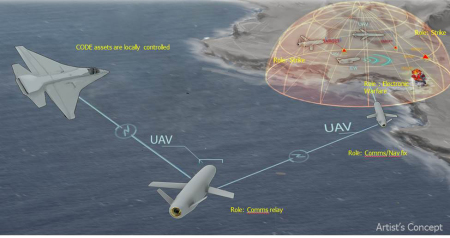
STO’s updated strategy seeks a new asymmetric advantage—one that imposes complexity on adversaries by harnessing the power of dynamic, coordinated, and highly autonomous composable systems.

“We’ve developed a technology-based vision that would enable highly complex, strategic moves by composing multiple contributing systems to enable what might be thought of as ‘mosaic warfare,’ in which individual components can respond to needs in real time to create desired outcomes,” said Tom Burns, director of STO. “The goal is to fight as a network to create a chain of effects—or, more accurately because these effects are not linear, ‘effects webs’—to deter and defeat adversaries across multiple scales of conflict intensity. This could be anything from conventional force-on-force battles to more nebulous ‘Gray Zone’ conflicts, which don’t reach the threshold of traditional military engagements but can be equally disruptive and subversive.”

U.S. military power has traditionally relied upon monolithic military systems where one type of aircraft, for example, is designed to provide a single end-to-end capability tailored to a very specific warfighting context—and be a significant loss if shot down. In contrast, the composable effects webs concept seeks a mosaic-like flexibility in designing effects for any threat scenario. By using less expensive systems brought together on demand as the conflict unfolds, these effects webs would enable diverse, agile applications—from a kinetic engagement in a remote desert setting, to multiple small strike teams operating in a bustling megacity, or an information operation to counter an adversary spreading false information in a population threatening friendly forces and strategic objectives. Mosiacs can rapidly be tailored to accommodate available resources, adapt to dynamic threats, and be resilient to losses and attrition.

This means that even if an adversary can neutralize a number of pieces of the mosaic, the collective can instantly respond as needed to still achieve the desired, overall effect.”…The mosaic strategy is also anticipated to change the way the military thinks about designing and buying future systems. Instead of spending years or even decades building exquisite, monolithic systems to rigid requirements, future acquisition programs would be able to buy mosaic “tiles” at a rapid, continuous pace. The true power of the new capabilities will come from the composite mosaic effects.

The approach will draw in part on a number of existing DARPA programs that are developing enabling technologies to achieve the challenging mosaic warfare architecture, including: The Complex Adaptive System Composition And Design Environment (CASCADE) program is addressing composition of existing and new systems; the System of Systems Integration Technology and Experimentation (SoSITE) program is focused on integrating the various systems to work together; Distributed Battle Management (DBM) and Resilient Synchronized Planning and Assessment for the Contested Environment (RSPACE) are addressing battle management command and control; and Communications in Contested Environments (C2E) and Dynamic Network Adaptation for Mission Optimization (DyNAMO) are focused on seamless, adaptable communications and networking.

Excerpts from Strategic Technology Office Outlines Vision for “Mosaic Warfare”, DARPA Press Release, Aug. 4, 2017

The Fight for the California Aquifer

Deep beneath the desert east of Los Angeles is a Southern California treasure: a massive basin filled with fresh water.

The aquifer has spurred development of the popular resort towns in the Coachella Valley, such as Palm Springs, Palm Desert and Rancho Mirage. But it also lies underneath the reservation of a small Native American tribe that owns golf courses and casinos in the area.

The Agua Caliente Band of Cahuilla Indians say the drinking water is partly theirs, and wants a stake in how it is used by public utilities. A yearslong legal battle over the issue could end up being taken up by the U.S. Supreme Court this fall.  The high court’s action could affect groundwater rights across the arid West, where utilities now deliver the water to tribes as another customer, along with farmers, cities and businesses.

The 480-member tribe contends the local water agencies—the Desert Water Agency and Coachella Valley Water District—have mismanaged the groundwater by allowing too much to be pumped out and by replenishing the source with untreated water from the Colorado River that they consider subpar.  The water agencies, however, say the tribe appears to be making a water grab, potentially setting a dangerous precedent where control of a municipal resource is partially ceded from a public utility.

They also say the tribe, which has built two casino resorts and two 18-hole championship-caliber golf courses on its 31,500 acres, has little experience in managing water, and could potentially sell some of it.  “They’re in the money business,” said James Cioffi, board president of the Desert Water Agency. The tribe says its only interest is in preserving the quality of the water.

Agua Caliente in 2013 took its case to federal court, winning in the first round on the issue of whether it has federal reserved rights to groundwater. That ruling was upheld in March by the Ninth Circuit Court of Appeals in San Francisco. The water agencies appealed to the Supreme Court, which is expected to decide whether to hear the case this fall….If it lets the lower court rulings stand, more tribes could seek groundwater rights—triggering more litigation….Other tribes have already filed friend-of-the-court briefs on behalf of Agua Caliente’s litigation, including the Spokane in Washington and Paiutes in Nevada.

Tribal rights over rivers and other surface water supplies are well established in the West, but less so when it comes to groundwater—one of the most important drinking water sources in many desert areas.

Excertp from In Palm Springs, a Fight Over Who Controls the Drinking Water, Wall Street Journal,  Aug. 2, 2017

The Bloody Battle for Chip Hegemony

China’s Tsinghua Unigroup Ltd., a state-owned firm is spending $24 billion to build the country’s first advanced memory-chip factories. It’s part of the Chinese government’s plan to become a major player in the global chip market and the move is setting off alarms in Washington.  When Unigroup tried to buy U.S. semiconductor firms in 2015 and 2016, Washington shot down the bids. It is considering other moves to counter Beijing’s push.

China is aiming “to take over more and more segments of the semiconductor market,” says White House trade adviser Peter Navarro, who fears Beijing will flood the market with inexpensive products and bankrupt U.S. companies.  Unigroup’s CEO Zhao Weiguo says he is only building his own factories due to Washington’s refusal to let him invest in the U.S. “Chinese companies have faced discrimination in many areas,” of technology, he says. “Abnormal discrimination.”

Semiconductors—the computer chips that enabled the digital age and power the international economy—have long been among the most globalized of industries, with design and manufacturing spread across dozens of countries.

Today, the industry is riven by a nationalist battle between China and the U.S., one that reflects broad currents reshaping the path of globalization. Washington accuses Beijing of using government financing and subsidies to try to dominate semiconductors as it did earlier with steel, aluminum, and solar power. China claims U.S. complaints are a poorly disguised attempt to hobble China’s development. Big U.S. players like Intel Corp. and Micron Technology Inc. find themselves in a bind—eager to expand in China but wary of losing out to state-sponsored rivals…

The new semiconductor battle marks a shift toward nationalism, trade battles and protected markets…The U.S. estimates China will eventually spend $150 billion [on developing s its indigenous semiconductor industry]  a figure equal to about half of global semiconductor sales annually.

Though Republicans and Democrats are at odds on many economic policy issues, they’re unified on this. An interagency working group on semiconductors, started by the Obama administration in 2015, has continued meeting under President Donald Trump. The group is weighing policies to make it more difficult for China to scoop up U.S. technology, according to people involved in the discussions.

One idea is tightening the rules covering U.S. approval of foreign investments to make it tougher for Chinese firms seen as security risks. Other options include trade sanctions, stricter export controls and added federal research spending

The U.S. views China as its biggest semiconductor challenge since Japan in the late 1980s. The U.S. triumphed then through trade sanctions and technological advances. Japanese firms couldn’t match U.S. microprocessor technology, which powered the personal computer revolution, and fell behind South Korea in low-margin memory chips.

China has advantages Japan didn’t. It is the world’s biggest chip market, consuming 58.5% of the global $354 billion semiconductor sales in 2015 according to PricewaterhouseCoopers LLP. That gives Beijing power to discriminate, if it wants, against overseas suppliers…Beijing’s semiconductor program shifted into high gear in 2012, when the value of its chip imports surged past its bill for crude oil for the first time…

Nearly 90% of the $190 billion worth of chips used in China are imported or produced in China by foreign-owned firms…The top 10 chip vendors in China by revenue are foreign.

“We cannot be reliant on foreign chips,” said China’s vice premier, Ma Kai in 2017…Beijing created a $20 billion national chip financing fund—dubbed the “Big Fund”— and set goals for China to become internationally competitive by 2030, with some companies becoming market leaders.  Local governments created at least 30 additional semiconductor funds, with announced financing of more than $100 billion. If all these projects are realized, the global supply of memory chips would outstrip demand by about 25% in 2020, estimates Bernstein Research, pushing prices down and battering profits of semiconductor companies globally… Beijing has been consolidating 600 small Chinese chip makers, many unprofitable, into a handful of larger companies China wants to compete internationally.

When the Big Fund financed an acquisition blitz, Unigroup was in the lead, bidding in 2015 for memory-chip maker Micron Technology, and then for a 15% stake in data storage firm Western Digital Corp.Some bids were so overvalued U.S. government officials joked the Chinese were willing to pay an “espionage premium.”  After a Chinese plan to buy a Royal Philips NV semiconductor-material unit fell apart, Phillips sold the unit to a U.S. private-equity group for about half the earlier price. Philips declined to comment.

The bids spooked Washington and the industry. In private meetings, Micron, Intel and others warned they faced an “existential threat” from China, say industry and government officials. The companies feared they were trapped in a prisoner’s dilemma. Each company was under pressure to sell to China for fear its competitors would sell if it didn’t.

In July 2017, Germany approved restrictions on foreign technology purchases, aimed at China, and the European Union also is considering barriers… The U.S. Committee on Foreign Investment in the U.S (CFIUS), an interagency review group, made clear most proposed acquisitions wouldn’t pass muster.

According to Rhodium Group, only about $4.4 billion in Chinese semiconductor acquisitions were completed since 2015. Unigroup’s bid for Micron fell apart. South Korea, Taiwan and Japan also blocked Chinese acquisition bids…

Mr. Trump proposed a 13% decrease in federal funding for basic research to $28.9 billion in fiscal year 2018, but semiconductor lobbyists say they hope to eke out an increase for chip-related research.

Chinese chip executives argue South Korea is a bigger threat to the U.S. chip industry due to its advanced technology.

After Unigroup’s plan to acquire Micron fell apart, it hired Charles Kau, the former head of Micron’s Taiwan joint-venture, and other experts from the island. It announced it would build its own memory chip facility—the mammoth Wuhan factories—at about the same price it would have paid for Micron.  Unigroup now has a new plan for Micron. It says it no longer wants to buy the firm, recognizing the chances of regulatory approval in the U.S. are nil, but says the two should work together to battle market leader Samsung Electronics Co. The combination of Micron technology and Chinese capital would help both companies take on the South Koreans, says Mr. Zhao, the Unigroup CEO.

Micron says the Federal Bureau of Investigation has begun investigating whether Micron employees in Taiwan who went to work for other firms, including Unigroup, have taken Micron technology with them.”

Excerpts from Bob Davis and Eva Dou, CHINA’S NEXT TARGET: U.S. MICROCHIP HEGEMONY, Wall Street Journal, July 28, 2017

Data Against Fish Poachers

Australia is at the forefront of efforts to combat poaching. Its patrol ships have chased illegal trawlers almost as far as South Africa, a distance of 4,600 miles, to stop the plunder of prized Patagonian toothfish—sold in the U.S. as Chilean sea bass.  Australian government scientists and Vulcan Inc., Mr. Allen’s private company, have developed a notification system that alerts authorities when suspected pirate vessels from West Africa arrive at ports on remote Pacific islands and South America.

The system relies on anticollision transponders installed on nearly all oceangoing craft as a requirement under maritime law. These devices are detectable by satellite.  A statistical model helps identify vessels whose transponders have been intentionally shut off. Other data identifies fishing boats that are loitering in risk areas, such as near national maritime boundaries…

“On one hand you can’t see them [if their transponder is switched off], but on the other it means they’ve just flagged themselves as avoiding surveillance, and as a risk indicator, that’s at the top of the list,” he said…

And a third of all fish sold in the U.S. is believed to be caught illegally. Seafood consumption in wealthy nations has soared in recent decades, increasing reliance on imports. Between 1980 and 2014, U.S. seafood consumption rose 60%, with imports now meeting 90% of the demand, according to Global Fishing Watch and the World Wildlife Fund….

Illegal fishing causes commercial losses of up to $23 billion a year world-wide, according to the U.N….

The researchers’ satellite-based tracking tool will begin operating in October 2017 and will be free to access. It was set up in response to a treaty aimed at eradicating illegal fishing that came into force on June 2016.The Agreement on Port State Measures…

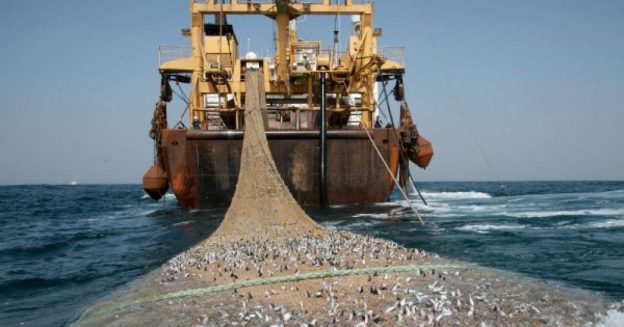
China is the world’s largest seafood producer, followed by Indonesia, the U.S. and Russia. The most critical area for poaching is off the coast of West Africa, where illegal, unauthorized and unregulated fishing accounts an estimated 40% of fish caught, according to the World Ocean Review. Other areas of concern include the western and southern Pacific and the southwest Atlantic. Illegal trawlers contribute to overfishing that threatens marine ecosystems and food security in some of the poorest countries.

Last year, Argentina’s coast guard opened fire on and sank a Chinese trawler that was fishing illegally in its waters. South Korea’s coast guard fired on Chinese poachers several months later.  Australian authorities have said geopolitical tensions in the South China Sea, a rich fishing ground, may be driving more illegal fishing vessels into the South Pacific from China, Taiwan and Vietnam.

Excerpts from Trawling Scientists Find a Better Way to Reel In Illegal Fishing, Wall Street Journal, June 26, 2017

A Vacuum Cleaner for Space

A Singapore-based venture company aspiring to enter the space business unveiled a life-sized model of a satellite that would retrieve space debris, with which the company plans to conduct a test run in orbit in 2019 and to make commercially viable by 2020.  “Space is filled with trash, and if things continue as they have, space exploration will no longer be sustainable. …

Most orbital debris is old satellites and satellite components. Around 750,000 pieces of space debris at least 1 centimeter in diameter are said to be in near-Earth orbit, and are interfering with countries’ and companies’ efforts to place new satellites. Astroscale’s debris retrieval satellite closes in on dead satellites, and uses magnets to draw them in. The device then enters the atmosphere, bringing the out-of-commission satellite with it, and burns up on re-entry.

For example, in 2009 an out-of-commission Russian military satellite and a satellite launched by a U.S. corporation collided. The International Space Station (ISS) is frequently forced to change course or have its crew members evacuate from their posts. In 2007, China destroyed one of its own satellites with a missile, producing large volumes of orbital shrapnel and triggering international criticism.

Also in 2007, the United Nations Committee on the Peaceful Uses of Outer Space (COPUOS) drafted the Space Debris Mitigation Guidelines, which recommends that satellites that are past their usefulness promptly leave their orbits. However, satellites and satellite parts that have already become space debris have uncoordinated trajectories, and because there is no established method of retrieving such litter, various countries and companies have been searching for a solution.

The Japan Aerospace Exploration Agency (JAXA) is working on a plan to attach metallic string to space debris, through which it would pass electric currents and use the Earth’s magnetic field to slow down the debris, and then drop them into the atmosphere. Meanwhile, the RIKEN research institute announced in 2015 that it had devised a method of using high-intensity lasers to slow down “drifting” litter so that they would hurtle into the atmosphere.  Researchers both within and outside Japan have proposed various other ideas, including making space debris attach to operating satellites and catching space debris with nets.

Company to test space-debris-retrieval satellite in 2019, aim to commercialize by 2020, Mainichi Japan, July 15, 2017

Mad Killing Spree: Rhinos in South Africa 2017

According to news reports,  there appeared to be no letting up in the “relentless rhino poaching onslaught” in South Africa… The country…was on track to lose more than a thousand rhinos for the fifth straight year.  Unofficial kill figures show the country has lost 483 rhinos to poachers in the first five and a half months of 2017.

Excerpts from Poachers kill six rhino in one night in Hluhluwe-Imfolozi, DefenceWeb, July 5, 2017

Piracy Alive and Well

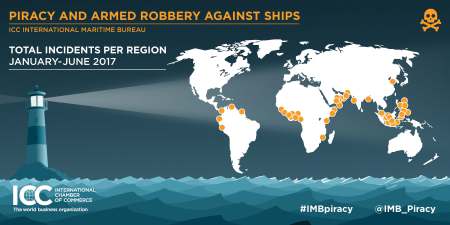
Continuing decline in the number of reported incidents of maritime piracy and armed robbery against ships has been revealed in the second quarter piracy report of the International Chamber of Commerce (ICC) International Maritime Bureau (IMB), published today. According to the report, the first half of 2017 saw a total of 87 incidents reported to the IMB Piracy Reporting Centre compared with 97 for the same period in 2016…

[I]n the first six-months of 2017, 63 vessels were boarded, 12 fired upon, four were hijacked and attacks were attempted on another eight vessels. A total of 63 crew have been taken hostage so far, this year while 41 have been kidnapped from their vessels, three injured and two killed.

The encouraging downward trend has been marred however by the hijacking of a small Thai product tanker en route from Singapore to Songkhla, Thailand. The hijacking, at the end of June 2017, was conducted by six heavily armed pirates who transferred 1,500 MT of gas oil to another vessel. The incident followed a similar pattern to a series of product tanker hijackings in the region which occurred approximately every two weeks between April 2014 and August 2015….

Cooperation between Indonesia, Malaysia and Philippines has been recognised as the fundamental reason for the overall decline in the number of reported incidents in and around the Philippines…

Somali pirates still retain the skills and capacity to attack merchant ships far from coastal waters. Pirates in Nigeria continue to dominate when it comes to reports of kidnappings

Excerpts from Second quarter report reveals 87 incidents of maritime piracy in first half of year,  ICC Commercial Crime Services, Press Release, July 4, 2017.

The Power of Submarine Cables

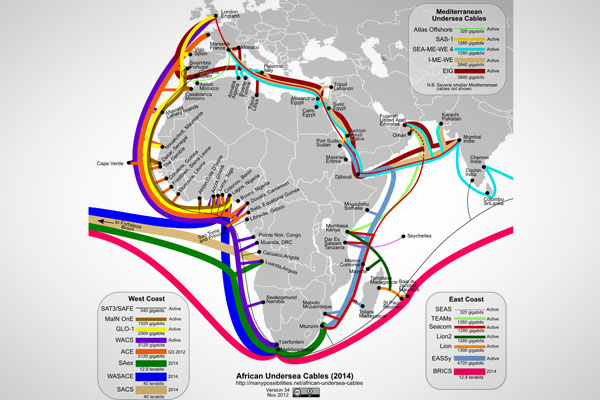
Access to ultra-fast internet cables in London is likely to make financial firms reluctant to move out of London even after Britain leaves the European Union, a study by the European Central Bank has found.

But an ECB study found that any withdrawal from London would likely be gradual as firms would be loath to give up on Britain’s fibre-optic cables, crucial for ultra-fast electronic trading.

“The UK’s advantage as a hub for trading using fibre-optic cables, combined with institutional inertia, suggest that any relocation of trading after Brexit, if at all, would likely be gradual,” the ECB said in its study.  Around 84 percent of transactions in euro are initiated outside the euro area, with Britain taking the lion’s share at 43 percent, according to a survey by the Bank for International Settlement cited in the ECB study.

“Technology has economically important implications for the distribution of foreign exchange transactions across financial centres, as a result,” the ECB said.   “Undersea fibre-optic cables provide a competitive advantage to financial centres located near oceans, like Singapore, because they are directly connected to the internet backbone, at the expense of landlocked cities like Zurich,” it added.

Excerpts from Fast Internet Likely to Keep Trading in London After Brexit: ECB, Reuters, July 5, 2017.

Weather Modification: South Korea

Amid rising concerns over climate change all over the world, Korea’s Rural Development Administration opened the country’s first weather modification facility for crop research and development.  The facility functions as a control tower where meteorological conditions affecting the growth of crops can be manipulated artificially.
Temperatures can be set from minus 10 degrees Celsius to up to 40 degrees, and carbon dioxide levels can be maximized up to 1,500 ppm.
In particular, the facility can create up to 50mm of artificial rain per hour, a feature that no other cloud-seeding system in the world has been able to achieve…

The local farm industry has been widely affected by rising temperatures. In particular, Napa cabbages and chili peppers, two main ingredients for making kimchi, have been found to respectively rot quicker and be highly susceptible to anthracnose outbreaks. At this pace, it is forecast that it will no longer be possible to cultivate chili peppers by 2050. Even rice production is expected to dip by 20 percent in the next 30 years.

Excerpts from Cho Sung-min, Korea establishes first weather modification facility for crop research and developmen, Arirang News, June 29, 2017

Firing Back with Vengeance: the NSA Weapons

The strike on IDT, a conglomerate,… was similar to WannaCry in one way: Hackers locked up IDT data and demanded a ransom to unlock it.  But the ransom demand was just a smoke screen for a far more invasive attack that stole employee credentials. With those credentials in hand, hackers could have run free through the company’s computer network, taking confidential information or destroying machines….Were it not for a digital black box that recorded everything on IDT’s network, …the attack might have gone unnoticed.

Scans for the two hacking tools used against IDT indicate that the company is not alone. In fact, tens of thousands of computer systems all over the world have been “backdoored” by the same N.S.A. weapons. Mr. Ben-Oni and other security researchers worry that many of those other infected computers are connected to transportation networks, hospitals, water treatment plants and other utilities…

Both WannaCry and the IDT attack used a hacking tool the agency had code-named EternalBlue. The tool took advantage of unpatched Microsoft servers to automatically spread malware from one server to another, so that within 24 hours… hackers had spread their ransomware to more than 200,000 servers around the globe. The attack on IDT went a step further with another stolen N.S.A. cyberweapon, called DoublePulsar. The N.S.A. used DoublePulsar to penetrate computer systems without tripping security alarms. It allowed N.S.A. spies to inject their tools into the nerve center of a target’s computer system, called the kernel, which manages communications between a computer’s hardware and its software.

In the pecking order of a computer system, the kernel is at the very top, allowing anyone with secret access to it to take full control of a machine. It is also a dangerous blind spot for most security software, allowing attackers to do what they want and go unnoticed. In IDT’s case, attackers used DoublePulsar to steal an IDT contractor’s credentials. Then they deployed ransomware in what appears to be a cover for their real motive: broader access to IDT’s businesses…

But the attack struck Mr. Ben-Oni as unique. For one thing, it was timed perfectly to the Sabbath. Attackers entered IDT’s network at 6 p.m. on Saturday on the dot, two and a half hours before the Sabbath would end and when most of IDT’s employees — 40 percent of whom identify as Orthodox Jews — would be off the clock. For another, the attackers compromised the contractor’s computer through her home modem — strange.

The black box of sorts, a network recording device made by the Israeli security company Secdo, shows that the ransomware was installed after the attackers had made off with the contractor’s credentials. And they managed to bypass every major security detection mechanism along the way. Finally, before they left, they encrypted her computer with ransomware, demanding $130 to unlock it, to cover up the more invasive attack on her computer.

A month earlier, Microsoft had issued a software patch to defend against the N.S.A. hacking tools — suggesting that the agency tipped the company off to what was coming. Microsoft regularly credits those who point out vulnerabilities in its products, but in this case the company made no mention of the tipster. Later, when the WannaCry attack hit hundreds of thousands of Microsoft customers, Microsoft’s president, Brad Smith, slammed the government in a blog post for hoarding and stockpiling security vulnerabilities.  For his part, Mr. Ben-Oni said he had rolled out Microsoft’s patches as soon as they became available, but attackers still managed to get in through the IDT contractor’s home modem.

There are now YouTube videos showing criminals how to attack systems using the very same N.S.A. tools used against IDT, and Metasploit, an automated hacking tool, now allows anyone to carry out these attacks with the click of a button….

“Once DoublePulsar is on the machine, there’s nothing stopping anyone else from coming along and using the back door,” Mr. Dillon said.More distressing, Mr. Dillon tested all the major antivirus products against the DoublePulsar infection and a demoralizing 99 percent failed to detect it.  “We’ve seen the same computers infected with DoublePulsar for two months and there is no telling how much malware is on those systems,” Mr. Dillon said. “Right now we have no idea what’s gotten into these organizations.”..

Could that attack be coming? The Shadow Brokers resurfaced last month, promising a fresh load of N.S.A. attack tools, even offering to supply them for monthly paying subscribers — like a wine-of-the-month club for cyberweapon enthusiasts.

Excerpts from NICOLE PERLROTHJUNE, A Cyberattack ‘the World Isn’t Ready For’,  New York Times, June 20, 2017

Nuclear Waste Specialists

U.S. District Judge Sue L. Robinson of Delaware on June 21,2017 sided with the federal government in blocking a $367 million merger between EnergySolutions and the radioactive site’s parent company. Waste Control Specialists calls the deal essential for its long-term viability.The details of Robinson’s opinion were sealed.


The U.S. Department of Justice sued in November 2017 to block the merger of rival companies, arguing it would essentially create a monopoly on radioactive waste disposal.  “Substantial evidence showed that head-to-head competition between EnergySolutions and Waste Control Specialists led to better disposal services at lower prices,” Acting Assistant Attorney General Andrew Finch of the Justice Department’s Antitrust Division said in a statement. “Today’s decision protects competition in an industry that is incredibly difficult to enter.”…

Waste Control Specialists, which currently stores low-level radioactive waste in Andrews County*** has a pending application with the U.S. Nuclear Regulatory Commission to store tens of thousands of metric tons of spent nuclear fuel currently filling up reactor sites across the country. The company has pitched the massive expansion as a solution to a problem that has bedeviled policymakers for decades….

“The WCS site is not a safe place to store deadly high-level radioactive waste,” Karen Hadden, executive director of the Sustainable Energy and Economic Development Coalition, said in a statement. “Texans and those along transport routes shouldn’t have to suffer the health, safety, security, financial and environmental risks that transport and storage of the nation’s most dangerous radioactive waste would bring.”

Critics allege that millions in donations by Harold Simmons, owner of Waste Control Specialists, to Texas Governor Rick Perry and other politicians influenced political support for the controversial project…..Critics also cite WCS’ safety record. One 22-ton shipment of low-level radioactive material from a diffusion plant in Illinois failed to arrive at the WCS Andrews facility in late July 2001. Lost for almost a month, the material turned up dumped on a cattle ranch north of Dallas.

Excerpts from  JIM MALEWITZ, Amid Texas nuclear waste site’s financial woes, judge blocks merger,  The Texas Tribune, June 21, 2017 + Wikipedia

***The plant is located 5 miles east of Eunice, New Mexico, and 35 miles west of Andrews. The surrounding area on both sides of the state border, “nuclear alley”, also includes:

–the National Enrichment Facility (owned and operated by the Urenco Group) in Eunice
–the deep geological repository Waste Isolation Pilot Plant (WIPP; managed by the United States Department of Energy), and
–the proposed first commercial uranium de-conversion facility in the United States, a project of International Isotopes, Inc.

Nuclear Power in South Korea

South Korea, one of the world’s largest nuclear electricity producers, will scrap plans to add nuclear power plants, its president said on June 19, 2017, signaling a shift in decades of reliance on nuclear energy.  President Moon Jae-in said South Korea will move away from nuclear energy and will not seek to extend the life of existing plants.  He also vowed to cut South Korea’s reliance on coal. South Korea will shut 10 old coal power plants and stop building more coal power plants.

“So far South Korea’s energy policy pursued cheap prices and efficiency. Cheap production prices were considered the priority while the public’s life and safety took a backseat,” Moon said at a ceremony marking the shutdown of the country’s oldest power plant, Kori 1, in Busan, home to South Korea’s largest cluster of nuclear power plants. “But it’s time for a change.”

The speech was Moon’s followup on his presidential campaigns to cut coal and nuclear power. Greenpeace and other environmental groups welcomed Moon’s announcement.

Since the Kori 1 reactor went online in 1978, the resource poor-country added 24 nuclear power plants to meet rising demand for electricity from rapid industrialization and economic development. In 2016, a third of electricity in South Korea was produced from nuclear power plants. Its nuclear power production from 25 nuclear plants in 2016 was the fifth-largest in the world, according to the World Nuclear Association.

South Korea is also one of the few countries that have exported its nuclear reactor technology… building a nuclear reactor in United Arab Emirates.

But South Koreans’ enthusiasm for nuclear energy quickly waned following the 2011 Fukushima meltdowns in its neighbor Japan. In the following year, fake parts scandals prompted an investigation and spread fear over nuclear plants’ safety. Recent earthquakes in southeastern South Korea also dented public support in the country that was long believed to be safe from earthquakes. South Korea is also searching for answers on how and where to store spent nuclear fuels permanently.

To decommission the Kori 1 reactor, South Korea plans to invest developing its own decommissioning technology and experts in the area. The decommissioning will take at least 15 years and cost 643.7 billion won ($569 million or 64 billion yen), the energy ministry said.

Engineering Revolutions: the CIA

There’s the extremely odd tale of how the CIA imported significant amounts of LSD from its Swiss manufacturer in hopes that it could used for successful mind control. Instead, by dosing thousands of young volunteers including Ken Kesey, Whitey Bulger, and Grateful Dead lyricist Robert Hunter, the Agency accidentally helped popularize acid and generate the 1960s counter-culture of psychedelia.

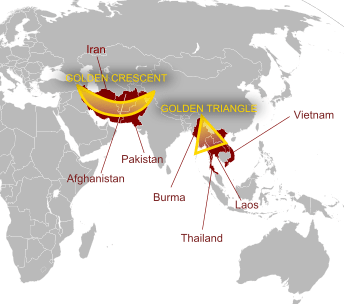
During the Vietnam War, the U.S. allied with anti-communist forces in Laos that leveraged our support to become some of the largest suppliers of opium on earth. Air America, a CIA front, flew supplies for the guerrillas into Laos and then flew drugs out, all with the knowledge and protection of U.S. operatives.  The same dynamic developed in the 1980s as the Reagan administration tried to overthrow the Sandinista government in Nicaragua. The planes that secretly brought arms to the contras turned around and brought cocaine back to America, again shielded from U.S. law enforcement by the CIA.

Most recently, there’s our 16-year-long war in Afghanistan. While less has been uncovered about the CIA’s machinations here, it’s hard not to notice that we installed Hamid Karzai as president while his brother apparently was on the CIA payroll and, simultaneously, one of the country’s biggest opium dealers. Afghanistan now supplies about 90 percent of the world’s heroin.

The documentary ‘America’s War on Drugs’ on the History Channel makes clear that this is not part of a secret government plot to turn Americans into drug addicts. But, as Moran puts it, “When the CIA is focused on a mission, on a particular end, they’re not going to sit down and pontificate about ‘What are the long-term, global consequences of our actions going to be?’” Winning their secret wars will always be their top priority, and if that requires cooperation with drug cartels which are flooding the U.S. with their product, so be it. “A lot of these patterns that have their origins in the 1960s become cyclical,” Moran adds. “Those relationships develop again and again throughout the war on drugs.”

Excerpt from Jon Schwarz, THE HISTORY CHANNEL IS FINALLY TELLING THE STUNNING SECRET STORY OF THE WAR ON DRUGS,  the Intercept, June 18, 2017

The 2020 Deadline for Fuel Oil

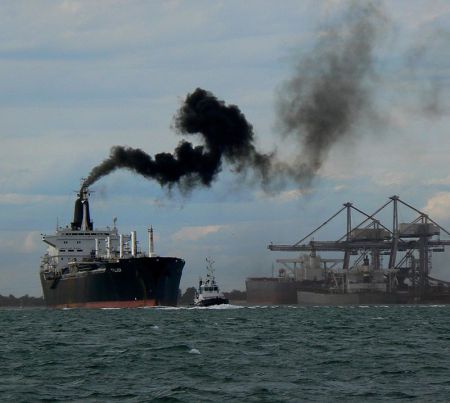
Circle January 2020 on your calendar for what could be a major disruption to the energy market and a jolt to the global economy.The origin of the problem isn’t some oil cartel’s machinations, a looming war or even a technological shift — it is a bureaucratic body that few people have heard of: the International Maritime Organization. Just 30 months from now the cargo vessels that are the lifeblood of global trade will be required to cut the sulfur content in their fuel from 3.5% to 0.5%.

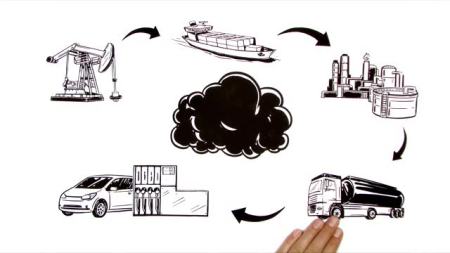
Ships move more than 10 billion tons of cargo a year and do it far more efficiently than road or rail, but it comes at a high cost in terms of overall pollution because ships use fuel oil, which is just about the cheapest, dirtiest stuff to come out of refineries. About 9% of all sulfur dioxide emitted globally comes from ships, contributing to acid rain and many premature deaths annually. Even the new cap is 500 times the sulfur content of most road diesel.

Even with significant investment, refiners may not be ready and ships may have to burn more expensive marine diesel.”Marine diesel affects land diesel which affects jet fuel which affects gasoline,” explains Mr. Tallett. That could cause the prices of those fuels to go up by 10% to 20%.

The only solution may be to simply refine more oil, which means increasing overall demand, to get enough low-sulfur fuel out of the world’s refineries. The International Energy Agency worried about the impact in a February 2017 report, yet it assumes many ships will install marine scrubbers to clean the dirty fuel and that refiners will add units to reduce sulfur content — both expensive propositions.

Excerpts from High Seas are to Deliver a Shock to Energy Sector, Wall Street Journal, June 7, 2017

Seaborne Gas: LNG

One day in March 2017, he Rioja Knutsen tanker, filled with liquefied natural gas, was traveling from the U.S. to Portugal. Suddenly, Mexico’s power company lobbed in a higher bid for its cargo. At the Bahamas, the ship abruptly made a starboard turn and headed south.  How natural gas is bought and sold in the world’s scattered regional markets for the fuel is changing rapidly. Ships such as the Rioja Knutsen are stitching those regions together and a single global market is emerging.  This is already how nearly every other hydrocarbon, from crude oil to obscure petrochemicals, is sold. As gas joins the club, the effects will ripple through energy prices, company profits, the environment and geopolitics.

Behind the evolution is improving technology for moving gas as a liquid, which means it can go to many more places rather than simply where a pipeline runs. …The share of gas moving by sea reached 40% of total trades in 2015, and the International Energy Agency forecasts that seaborne gas will account for a bigger share of trading than pipelines by 2040.

Thirty-nine countries now import LNG, up from 17 a decade ago, according to data and analytics firm IHS Markit. Several more, among them Uruguay, Bahrain and Bangladesh, are expected to lift the total to 46 in the next couple of years.

In one sign of how gas is going global, the U.S. and China are working on a trade deal that could send vast quantities of gas pumped in Texas and Pennsylvania to factories in Shanghai and Guangdong. Improved access for U.S. exporters to China’s giant energy markets could boost overall global shipments…

As LNG import terminals open in more locations, gas pricing and trading mechanisms are developing as well. Some investors are increasingly using the gas price at a pipeline intersection in Louisiana, called the Henry Hub, as a global benchmark.  Trading in the New York Mercantile Exchange’s Henry Hub gas futures contract is becoming more global, said Peter Keavey, global head of energy at Nymex owner CME Group . In May, Standard & Poor’s and the Intercontinental Exchange launched the first futures contract based on LNG produced in the U.S.

Seaborne gas is reducing some countries’ historic dependence on pipelines that run through potentially unfriendly territory. Poland, for instance, opened its first import terminal a year ago, lessening its reliance on gas piped from Russia.

When global trade in LNG began in the 1960s, the cost of liquefying gas was so high it was a niche product, affordable only by developed countries such as Japan.  As the technology proved reliable, trade in LNG became more common, but contracts to deliver the fuel by ship were decades long and had ironclad destination clauses. Gas contracted for Tokyo couldn’t be rerouted to Seoul. Traders called gas tankers “pipelines at sea.Now, contracts are getting shorter and starting to allow gas to be diverted to where demand is greatest. Earlier this year, three large LNG buyers in Japan, China and South Korea agreed to work together to push sellers for more contract flexibility and fewer onerous restrictions.

At any given time, there are about 170 tankers filled with LNG on the world’s oceans,… At the heart of the changes is supply. Huge new discoveries in the U.S., Middle East, East Africa and Australia, along with recovery techniques such as fracking, have expanded the amount of gas available for export….One pioneer is Houston-based Cheniere Energy Inc. FBy next year, Sabine Pass and other LNG terminals are expected to turn the U.S. into a net gas exporter….In a quest for customers, Cheniere has invested in a Chilean project to build a power plant, LNG terminal, storage facility and pipeline.   Oil titans Total SA and Royal Dutch Shell PLC also are offering to build facilities to burn gas. The two and their partners are building an import terminal and pipeline for an estimated $200 million in Ivory Coast, which will feed a power plant in the West African country’s economic hub of Abidjan. Qatar, the longtime LNG leader, recently lifted a self-imposed moratorium on the development of its North Field, the single largest gas reservoir in the world. So far there is little indication Qatar’s diplomatic spat with Arab neighbors will affect the gas market.

Helping make gas more accessible is a relatively new technology—floating LNG facilities. ..The first floating terminal was christened in 2005. Today there are 25….Excelerate Energy, a Houston company that developed this technology, is working on new floating terminals in Namibia, Bangladesh, Pakistan and elsewhere. The equipment to liquefy gas can also now be put on a large vessel that can be anchored offshore.

Excerpts from Long Promised, the Global Market for Natural Gas Has Finally Arrived, Wall Street Journal, June 7, 2017

Qatar-Russia Financial Alliance

Russia’s sale of one-fifth of its state-owned oil company to Qatar and commodities giant Glencore PLC last year had an unusual provision: Moscow and Doha agreed Russia would buy a stake back, people familiar with the matter said.  Russian President Vladimir Putin hailed the $11.5 billion sale of the Rosneft stake in December 2016 as a sign of investor confidence in his country. But the people with knowledge of the deal say it functioned as an emergency loan to help Moscow through a budget squeeze.
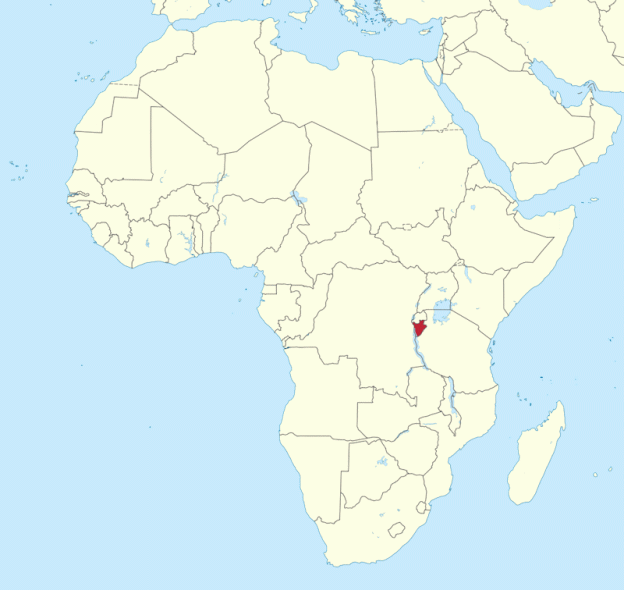
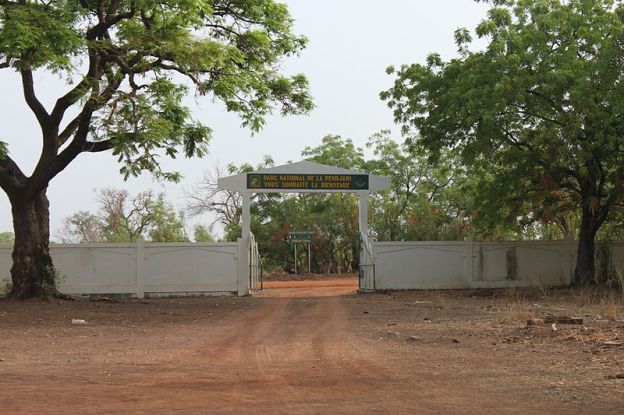
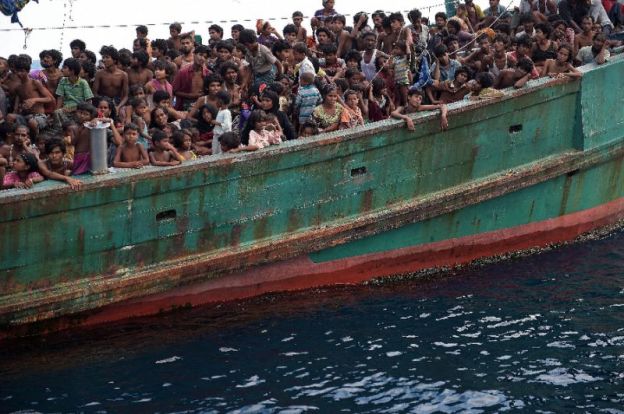
Moscow agreed with Qatar that Russia would buy back at least a portion of the stake from the rich Persian Gulf emirate, the people said. The Qatar Investment Authority and Glencore, the Swiss-based commodities giant, formed a partnership to buy the 19.5% stake in Russia’s energy jewel at a time when Mr. Putin’s government needed cash. The people with knowledge of the deal say the buyback arrangement was negotiated with involvement from Mr. Putin and the emir of Qatar, Sheikh Tamim bin Hamad Al Thani. Russia and Qatar saw it as an opportunity to build a bridge between countries that had taken up opposite sides in the Syrian civil war, the people said. One of the people said the buyback would happen in the next 10 years…

Rosneft, the world’s largest listed oil producer, is traded publicly in Moscow, but it isn’t easy to buy and sell large pieces of the company because it remains majority-owned by the Russian state and is an instrument of economic power for Mr. Putin.  The people familiar with the deal said a time-limited structure and a buyback agreement for the deal worked for both Qatar and Russia.

Qatar wanted its Rosneft stake to be temporary, the people said. The emirate believes it will profit from selling the shares back to Russia at a later date, the people said, betting that oil prices will rise and push up Rosneft’s share price. Qatar saw the political benefits of giving Russia access to quick cash as a sort of loan to address a budget deficit that had widened due to lower oil prices, the people said.  After the deal, a range of talks opened between Russian and Qatari businesses on a scale not seen before, Russian news agencies have reported….The deal was called the largest-ever foreign investment in a Russian company.

In an unusual arrangement, the rest of the financing was provided by Russian banks, which contributed EUR2.2 billion, and Italian bank Intesa Sanpaolo SpA, which lent EUR5.2 billion to the Glencore-Qatar consortium, according to a Dec. 10, 2016 new release issued by Glencore. The financing is “non-recourse,” Glencore said in the release, meaning the lenders couldn’t pursue Glencore and the Qatar Investment Authority if they weren’t repaid….Under the deal, the Rosneft shares aren’t held directly by Glencore and Qatar but by a U.K. limited liability partnership, according to British corporate records….

After the deal was announced, Mr. Putin awarded one of Russia’s top honors for foreigners — the Order of Friendship — to Qatar Investment Authority’s chief executive, Sheikh Abdullah bin Mohammed bin Saud Al-Thani, Intesa’s chief executive, Carlo Messina, and Glencore’s chief executive, Ivan Glasenberg.

Excepts from Russia’s Rosneft Stake Sale Had a Twist , Wall Street Journal, June 8, 2017


Collapsing States: Burundi

Fuel shortages have paralysed the small central African nation of Burundi, threatening further damage to an economy already moribund after years of political violence and raising questions about the role of the country’s only oil importer….

The shortages, which forced government to introduce rationing on May 16, have paralysed commerce and caused food prices to jump, raising the prospect of economic migration. More than 400,000 people have already fled Burundi into the volatile central African region.  Anti-corruption campaigners said fuel shortages became severe after Burundian company Interpetrol Trading Ltd. received the lions’ share of dollars allocated by the central bank to import fuel.

“The oil sector is undermined by favouritism and lack of transparency, because the rare hard currency available in the central bank reserves is given to one oil importer,”   The central bank declined to answer Reuters’ questions….

Interpetrol is now the sole oil importer and runs all fuel storage tanks in the country, said an industry source.  Banzubaze said there was “no link” between Interpetrol’s shareholders and any member of government.

A 2011 US State Department report described attempts by senior government officials to pressurise judges into dropping a corruption case against the company, owned by brothers Munir and Tariq Bashir. …Government officials blame dollar shortages on aid cuts donors imposed after President Pierre Nkurunziza ran for a third term in 2015, triggering a wave of political violence.

“These days, fuel importers don’t get enough dollars to bring in petroleum products,” said Daniel Mpitabakana, government’s director of fuel management….The street exchange rate is 2,600 francs to the dollar, although it is just over 1,700 to the dollar at the central bank. Only the central bank can receive dollar deposits and allocate dollars to businesses…

Burundi has also been battered by drought and almost two years of political instability. Hundreds of people were killed and hundreds of thousands were forced to flee during political violence, which sometimes still erupts in low-level clashes.

Burundi paralysed by fuel shortages, Reuters, Wednesday, 31 May 2017

National Parks: Benin

Benin is hiring scores of extra park rangers and bringing in conservation scientists to rehabilitate part of West Africa’s largest wildlife reserve, which contains big cats and thousands of elephants that have largely died out elsewhere in the region. The W-Arli-Pendjari (WAP) complex is the region’s biggest remaining expanse of savannah, covering more than 30,000 sq km of Benin, Niger and Burkina Faso.

The tiny nation has partnered with NGO African Parks for the 10-year project centred on the 4,800 sq km Pendjari National Park, part of WAP and seen as the most viable tourist hub for the area, officials involved told Reuters.

“Pendjari is an opportunity for Benin and the region,” Jose Pliya, director of Benin’s national tourism agency, told Reuters. “This partnership will help us make it a sustainable tourism destination and a lever for development and employment for Beninoise.”

Boosting ecotourism faces challenges, not least because jihadists are thought to have infiltrated parts of the wider reserve. France, former colonial master of the three nations straddling the park advised it citizens against all travel to the Burkina Faso side of the expanse.

To better police the park, the project will recruit 10 officers or specialists, train 90 guards, set up a satellite communications network and put a 190 km fence around it, a joint statement from African Parks and Benin said.

Excerpts from Moves to save part of west Africa’s last big wildlife refuge, Reuters, June 2, 2017

People Smuggling as a Business

People smugglers make about $35 billion a year worldwide and are driving the tragedy of migrants who die trying to cross the Mediterranean to reach Europe, the head of the International Organisation for Migration (IOM) told Reuters.  Increasing numbers of desperate migrants fleeing from Africa and elsewhere due to conflicts and humanitarian crises are dying as they attempt to reach Europe via Libya, coaxed to do so by smugglers as they wait in detention centres.

The death toll of people crossing the Mediterranean has reached 1,700 so far this year before the summer when many more make the journey, compared to 3,700 for all of 2015 and 5,000 last year, said IOM head William Lacy Swing.

“Let’s be careful because those are the people we know died, how many other bodies are submerged in the Mediterranean or buried in the sands of the Sahara?” he said in an interview on the sidelines of a conference on migration.

People smuggling now represents the third-largest business for international criminals, after gun and drug trafficking, he said.Libya is a major point of departure for migrants from Africa, where lawlessness is spreading six years after the fall of strongman Muammar Gaddafi and migrants say conditions at government-run migrant centres are terrible…

Excerpts from Migrant crisis worth $35 billion a year to people smugglers. Reuters, June 2, 2017

Final Development Frontier in Nepal

While India, Pakistan and China have all developed massive hydropower plants along the Himalayan mountains, Nepal’s civil war and political instability scared off investment for decades.  Now, thanks to an inclusive peace process that allowed the country’s main rebel leader to be elected prime minister twice, the focus is shifting to Nepal. Hydropower projects worth billions of dollars are in progress, with geologists and investors scouring the landscape for more.

Government surveys show Nepal’s abundant water resources can feasibly yield hydropower equal to more than 40% of U.S. output, a 40-fold increase from today. Officials project almost a third more hydropower capacity will come online this year. More than 100 projects under construction—over 40 since last year—and others in development will yield at least a tenfold increase in the next decade to 10 gigawatts of power, they say.

Nepal is ramping up its development of hydroelectric power plants in the Himalayas, but building in the region can be risky work. Photo: Brian Sokol for The Wall Street Journal  “There’s such an energy shortage that any project you build will find a market,” said Allard Nooy, CEO of InfraCo Asia, a development body funded by the U.K., Swiss and Australian governments that is financing one hydro project and seeking to develop two more.

Still, power companies don’t face an easy ride.  Among the hurdles are natural ones: earthquakes, landslides and inland tsunamis from glacial lakes as warmer temperatures prompt ice melt. Two years ago a series of massive quakes killed 9,000 people and shattered the country.

Opposition from environmental groups is another difficulty, especially for a new generation of dam projects. In the past, the World Bank and Japan’s Asian Development Bank have withdrawn support for projects amid opposition from environmental groups that say large dams can damage natural habitats like wetlands, threaten migratory fish stocks, and displace traditional farming communities.

Activists are concerned over the effects hydropower projects have on the environment and communities. Here are some of their top worries.

Displacement Dams flood valleys and in many cases require communities to abandon their land. A number of dam projects under consideration in Nepal would require whole villages to relocate.
Earthquakes A growing body of research suggests large dams can trigger quakes by adding pressure to areas near fault lines, a phenomenon known as “reservoir-induced seismicity.”
Wildlife Projects can disrupt the natural migration of fish and other river life. Environmentalists in Nepal are particularly concerned about the country’s small population of endangered Ganges River Dolphins.
Seasonal River-based hydropower projects, which are popular in Nepal, only generate electricity when water is flowing, making them less effective in the dry season. Dams can generate power in any season.

The greater stability has boosted momentum for rising investment in the Himalayas—a region dominated by Nepal, India and Bhutan that is considered the final development frontier in South Asia. Hydro energy projects are the biggest focus.  “The only resource we have, like the Arabian countries have oil, is water,” said Chhabi Gaire, project manager at the Rasuwagadhi Hydroelectric Project, a 1f11-megawatt plant under construction near China’s border.

Funding for projects is increasingly coming from Nepalese working abroad, says the Nepal Electricity Authority. Their remittances reached $6.7 billion in 2015, according to the World Bank, more than even Thai and South Korean workers abroad sent to their own countries.  Meanwhile, India’s cabinet approved $850 million in February to build a plant on Nepal’s Arun River that would export most of its energy to India. A month earlier, the Chinese-state owned China Three Gorges Company agreed to a joint venture with Nepal’s government to build a $1.6 billion hydropower plant on Nepal’s Seti River, also mainly for electricity export to India…

Workers on Nepal’s hydropower projects face sometimes deadly risks in the steep mountain valleys of the Himalayas such as landslides, falling boulders and flash floods…  [T] he 456-megawatt Upper Tamakoshi project, funded by a group of Nepal’s major banks and pension funds, is now under construction and set to open in mid-2018 with a reservoir to enable energy generation in the dry season.  It’s is also a risky project.

To the East the dangerous glacial lake Tsho Rolpa threatens to burst its banks. To the West, the Gongar river routinely spits boulders the size of two-story buildings over the valley wall. A bridge the developers built over the Gongar was swept away in a flash flood during monsoon season. Landslides triggered by quakes swept away swaths of the access road. To keep working, project developers built a steel truss bridge and drilled a new road tunnel through a collapsed valley wall.  Moreover, the project is built on such volatile terrain that the turbines and delicate transmission equipment were buried 460 feet beneath the surface.

Excerpts from In the Himalayas, a New Power Rises: Water, Wall Street Journal, May 18, 2017


Nuclear Power in the United States: Westinghouse bankruptcy

Westinghouse founded in 1886 is the company that brought electricity to the masses.  Its AP1000 pressurised water reactor was supposed to make nuclear plants simpler and cheaper to build, helping to jump-start projects in America and around the world.  But those nuclear ambitions have gone awry. On March 29th the firm filed for Chapter 11 bankruptcy in New York. Its troubles have been a running sore at Toshiba, its Japanese parent, a headache for its creditors, and the latest bad tidings for a nuclear industry beset with problems.

Toshiba was triumphant in 2006 when it paid $5.4bn for Westinghouse after a bidding war, beating out General Electric. Around the same time, Southern and SCANA, two big utilities based in Georgia and South Carolina, respectively, chose the AP1000 design for new nuclear plants.But these American projects soon faced the problems that have long plagued nuclear construction. In Westinghouse’s bankruptcy filing, the company explains a dismal chain reaction. Unexpected new safety and other requirements from American regulators caused delays and additional costs. That sparked a fight between the utilities, Westinghouse and its construction contractor, a subsidiary of Chicago Bridge & Iron (CB&I), about who should bear them. The brawl exacerbated delays…

There have been rumours that Korea Electric Power, a state-controlled utility, might take over, but Westinghouse’s steep losses may keep it away. “This has bankrupted Westinghouse,” says Mr Byrd. “Why would another firm step into that situation?”

The future for other AP1000 reactors looks bleak. A plant in China is years behind schedule. In America, the troubles in Georgia and South Carolina may bolster support for more modest nuclear projects, says Tyson Smith, a nuclear-energy expert at Winston & Strawn, a law firm. On March 15th, 2017 the country’s nuclear regulator said it would review an application for America’s first small modular nuclear reactor (SMR), from a company called NuScale, in Oregon. The SMR technology has been touted as a cheaper, easier way to build nuclear capacity. But it will have to compete with inexpensive natural gas, wind farms and solar plants. Those hoping for an American nuclear resurgence may have to wait a long time yet.

Excerpts Fallout Westinghouse files for bankruptcy, Economist, Apr. 1, 2017

SpaceX Falcon

A SpaceX Falcon rocket lifted off from the Kennedy Space Center in Florida on May , 2017 to boost a classified spy satellite into orbit for the U.S. military, then turned around and touched down at a nearby landing pad.
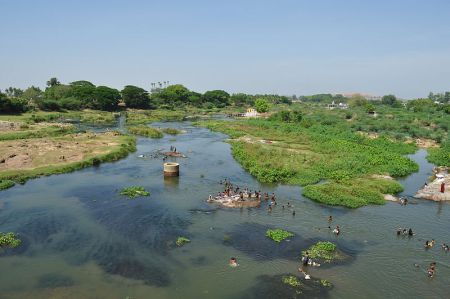
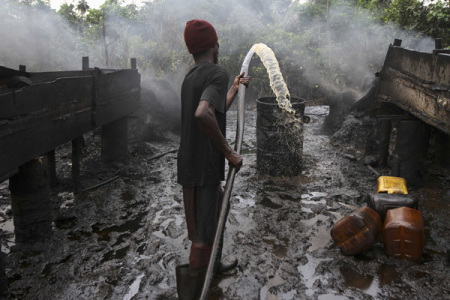
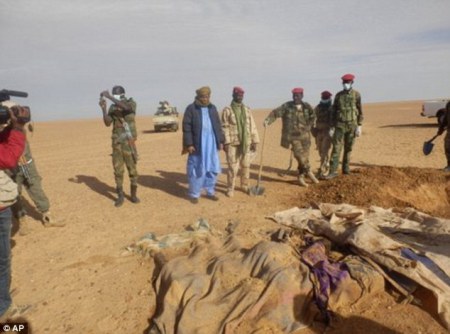
It was the 34th mission for SpaceX, but its first flight for the Department of Defense, a customer long-pursued by company founder Elon Musk. The privately owned SpaceX once sued the Air Force over its exclusive launch services contract with United Launch Alliance (ULA), a partnership of Lockheed-Martin and Boeing.)  The liftoff of a classified satellite for the National Reconnaissance Office (NRO) officially broke ULA’s 10-year monopoly on launching U.S. military and national security satellites.

In addition to the NRO’s business, SpaceX has won two Air Force contracts to launch Global Positioning System satellites in 2018 and 2019.  For now, the military’s business is a fraction of more than 70 missions, worth more than $10 billion, slated to fly on SpaceX rockets. But with up to 13 more military satellite launches open for competitive bidding in the next few years and ULA’s lucrative sole-source contract due to end in 2019, SpaceX is angling to become a majo launch service provider to the Department of Defense.

A month ago, SpaceX for the first time launched one of its previously flown rockets to send an SES communications satellite into orbit, a key step in Musk’s quest to demonstrate reusability and slash launch costs.

Excertps, SpaceX Launches US Spy Satellite on Secret Mission, Nails Rocket Landing, Space.com, May 1, 2017

Coke as a Scapegoat

A potent blend of pride, economic nationalism and mounting concern over water security have the world’s two biggest cola brands in a bind in southern India.  Shopkeepers in drought-hit Kerala state decided on March 15, 2017 to promote local brands over Coca-Cola Co. and PepsiCo Inc. beverages after counterparts in neighboring Tamil Nadu boycotted the multinational drinks. While retail groups claim the companies are siphoning off groundwater and selling products tainted with pesticides, academics and analysts say the soda giants have become scapegoats for a water crisis that’s become mired in politics and patriotism.

India is one of the most water-challenged nations, and fights over water have erupted between users periodically for decades. Failed monsoon rains over as many as the past three years in some states have parched rivers and dams, forcing farmers, manufacturers and municipal water suppliers to rely more on wells to meet their needs. Problem is, those too are drying up, and that’s hurting farmers, India’s economic mainstay.

“The root cause for the boycott isn’t the multinational companies, but the enduring fight between industrial users and farmers, especially in several drought-hit states,” said P.L. Beena, an associate professor with the Centre for Development Studies in Thiruvananthapuram, Kerala.  On top of that, Prime Minister Narendra Modi’s call to companies to “make in India” has given rise to a pro-India push — and, in some cases, an anti-foreigner backlash — that’s supporting local brands….

The latest action means drinks from Coca-Cola and PepsiCo, which together have a 96 percent hold on India’s $4.9 billion soda market, will be kept off the shelves of more than 1 million shops.  Vendors would rather lose business than sell the products, said A. M. Vikrama Raja, president of a retailers’ association in Tamil Nadu with about 1.5 million members. The boycott started March 1, 2017 a day before the Madras High Court dismissed a petition seeking a ban on the American soda-makers drawing water from the local Thamirabarani river.

“Instead of foreign sodas, we will promote local beverages,” said T. Naseeruddin, president of a retailers’ group that says it has more than 700,000 retailers in Kerala, which is facing its worst drought in 115 years.

The group stopped short of joining the boycott in Tamil Nadu after a meeting Wednesday with Kerala Chief Minister Pinarayi Vijayan, a spokesman said. Instead, retailers will pursue “sensitization against multinational products” via a state-level conference, and seek a policy response from the state government.  India has at least 50 local drink brands, which are typically 20 percent cheaper than the global cola brands, brokerage Kotak Securities Ltd. said in a Feb. 23 report.  Manpasand Beverages Ltd., based in Vadodara, Gujarat state’s cultural capital, is “aggressively expanding its reach in Tamil Nadu to take advantage of the ongoing cola ban,”….

Excerpts from PepsiCo, Coca-Cola Fight Patriotism in Parched Indian State, Bloomberg Business Week, Mar. 15, 2017

Illegal Refineries in Nigeria

Nigeria’s military said on April 13, 2017 that it had destroyed 13 illegal refineries in the restive Niger Delta oil hub, in an operation in which two soldiers died in clashes with “sea robbers”.  Military authorities say there are hundreds of illegal refineries in the region, which process stolen crude from oil company pipelines.  The Nigerian government said last week that it plans to legalise illicit refineries as part of an attempt to bring peace to the production heartland of crude oil, but it is unclear when it will put the plan into action.  Major Abubakar Abdullahi, a military spokesman, said troops “discovered and destroyed 13 illegal refineries” on April 12, 2017 while on patrol in the Iyalama Adama axis of Rivers state. The two soldiers were killed in the Ijawkiri general area, in Rivers state, he said.Makeshift refineries, usually hidden in oil-soaked clearings, support tens of thousands of people locally.

Nigeria’s navy chief has said that 181 illegal refineries were destroyed in 2016, 748 suspects were arrested, and crude oil and diesel worth 420 billion naira ($1.3 billion) was confiscated. The military shut down around 50 bush refineries in the first few weeks of 2017.

Nigeria’s military destroys 13 illegal oil refineries, Reuters, Apr. 13, 2017

Mass Graves in the Libyan Desert

Growing numbers of African migrants passing through Libya are traded in what they call slave markets before being held for ransom, forced labour or sexual exploitation, according to the UN migration agency.
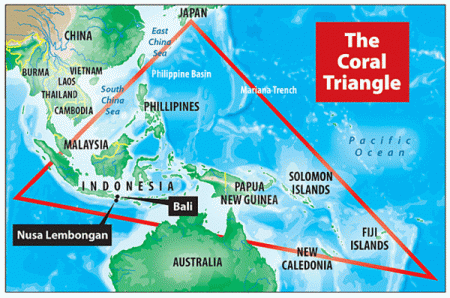

West African migrants interviewed by the International Organisation for Migration (IOM) recounted being bought and sold in garages and car parks in the southern city of Sabha, one of Libya’s main migrant smuggling hubs. Migrants are traded for between $200 and $500 and are held on average for two or three months, Othman Belbeisi, head of the IOM Libya mission, told journalists in Geneva.

The IOM said it spoke to a Senegalese migrant who was held in a Libyan’s private house in Sabha with about 100 others. They were beaten as they called their families to ask for money for their captors. He was then bought by another Libyan, who set a new price for his release. Some migrants who cannot pay their captors are reportedly killed or left to starve to death and when migrants die or are released, others are purchased to replace them, the IOM said. Migrants are buried without identification, with families back home uncertain of their fate.

“What we know is migrants who fall into the hands of smugglers face systematic malnutrition, sexual abuse and even murder,” Mohammed Abdiker, IOM’s Director of Operations and Emergencies, said in a statement. “We are hearing about mass graves in the desert.”  Libya is the main gateway for migrants attempting to reach Europe by sea, with more than 150,000 people making the crossing in each of the past three years.

So far this year an estimated 26,886 migrants have crossed to Italy, over 7,000 more than during the same period in 2016. More than 600 are known to have died at sea, while an unknown number perish during their journey north through the desert.

Excerpts from: Migrants traded in Libyan “slave markets”, Reuters, Apr. 12, 2017

Ecological Hooliganism: smashing the coral triangle

Giant clams are one of Buddhism’s “seven treasures”, along with gold and lapis lazuli. China’s new rich prize their shells as showy ornaments. Each can fetch as much as $3,000, so each haul was worth a fortune to the fishermen of Tanmen, a little fishing port on the island province of Hainan in Southern China.  But Chinese government banned the clam fishing…
The ban is surely welcome. [S]ome of the most biodiverse coral reefs on Earth have been destroyed in the South China Sea thanks to giant-clam poachers. In the shallow waters of the reefs, crews use the propellers of small boats launched from each mother-ship to smash the surrounding coral and thus free the clams anchored fast to the reef. Though the practice has received little attention, it is ecological hooliganism, and most of it has been perpetrated by boats from Tanmen.

The fishermen have not been the reefs’ only adversaries. China’s huge and (to its neighbours) controversial programme since late 2013 of building artificial islands around disputed rocks and reefs in the South China Sea has paved over another 22 square miles of coral. When the two activities are taken together, Mr McManus says, about 10% of the reefs in the vast Spratly archipelago to the south of Hainan, and 8% of those in the Paracel islands, between Hainan and Vietnam, have been destroyed. Given that Asia’s Coral Triangle, of which the South China Sea forms the apex, is a single, interconnected ecosystem, the repercussions of these activities, environmentalists say, will be huge…

But still..A few streets back from the waterfront in Tanmen, elegant boutiques sell jewellery and curios fashioned from the giant clams—and clam shells are still stacked outside. And the provincial money that is so clearly being lavished on Tanmen sits oddly with the illegality of its townsfolk’s way of life. .. [I] n 2013 President Xi Jinping himself showed up in Tanmen. Boarding one of the trawlers he declared to the crew, according to state media, “You guys do a great job!” The media did not report that a year earlier the trawler in question had been caught in the territorial waters of Palau, and in the confrontation with local police that followed one of the crew members had been shot dead. In Chinese propaganda, Tanmen’s fishermen are patriots and model workers.

Over the years Tanmen’s fishermen have become part of China’s power projection in the South China Sea, an unofficial but vital adjunct to the Chinese navy and coastguard. The biggest trawlers are organised into a maritime militia ready to fight a “people’s war” at sea. Though generally unarmed, they undergo training and take orders from the navy.

They are facts on the water, and have been involved in China’s growing aggression in the South China Sea. In 2012 boats from Tanmen were part of a navy-led operation to wrest control of Scarborough Shoal from the Philippines, chasing Philippine fishing vessels away. In 2014 they escorted a Chinese oil rig that was being towed provocatively into Vietnamese waters. On land, Vietnamese expressed their rage by ransacking factories they thought were Chinese-owned. At sea, boats from Tanmen rammed and sank one of the rickety Vietnamese vessels coming out to protest.

Mysteriously, though, the giant trawlers of the Tanmen militia are now rafted up, their crews sent home. Perhaps China is keen to lower tensions in the region….A policy introduced in January aims to cut the catch from China’s fishing fleet, the world’s largest, by a sixth, in the name of sustainability. That will hit Tanmen’s fishermen hard, making them less willing to defend China’s claims. Francis Drake would have understood: pirates are patriotic, but usually only when it pays.

Excerpts from Clamshell Phoneys, Economist, Mar. 25, 2017

The Love for Plastic Bags

Since their invention in the 1960s, disposable plastic bags have made lives easier for lazy shoppers the world over. But once used, they become a blight. This is particularly true in poor countries without good systems for disposing of them. They are not only unsightly. Filled with rainwater, they are a boon for malaria-carrying mosquitoes. Dumped in the ocean, they kill fish. They may take hundreds of years to degrade. On March 15th Kenya announced that it will become the second country in Africa to ban them. It follows Rwanda, a country with a dictatorial obsession with cleanliness, which outlawed them in 2008…
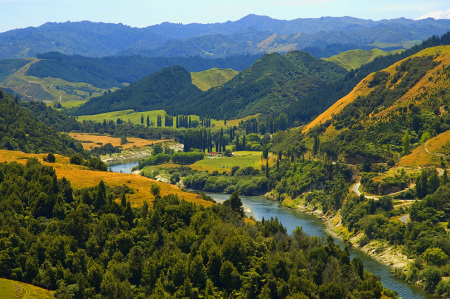
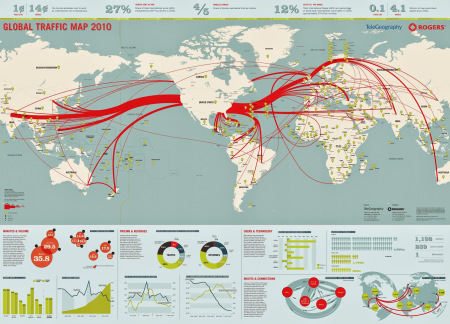
As Kenyans get richer and move to cities, the amount of plastic they use is growing. By one estimate, Kenya gets through 24m bags a month, or two per person. (Americans, by comparison, use roughly three per person.) Between 2010 and 2014 annual plastic production in Kenya expanded by a third, to 400,000 tonnes. Bags made up a large part of the growth.

Kenya has tried to ban polythene bags twice before, in 2007 and 2011, without much success. This latest measure is broader, but few are ready for it. The Kenyan Association of Manufacturers says it will cost thousands of jobs. Some worry that supermarkets will simply switch to paper bags, which could add to deforestation. And then there is the question of whether Kenyan consumers will accept it. In Rwanda, since its ban was imposed, a thriving underground industry has emerged smuggling the bags from neighbouring Congo.

Excerpts African Rubbish: Plastic Bantastic, Economist, Mar. 25, 2016

Rivers as Legal Persons

The new law that declares the Whanganui river, New Zealand’s third-longest, a legal person, in the sense that it can own property, incur debts and petition the courts, is not unprecedented. Te Urewera, an area of forested hills in the north-east that used to be a national park, became a person for legal purposes in 2014….

The law, which was approved on March 15th, 2017 stems from disputes over the Treaty of Waitangi, by which New Zealand’s indigenous Maori ceded sovereignty to British colonialists in 1840. The treaty was supposed to have protected Maori rights and property; it was observed mainly in the breach. In recent years the government has tried to negotiate settlements for breaches of the treaty with different Maori iwi, or tribes. For the Whanganui iwi, the idea of the river as a person is nothing new. The iwi professes a deep spiritual connection to the Whanganui: as a local proverb has it, “I am the river and the river is me.” The law acknowledges the river as a “living whole”, rather than trying to carve it up, putting to rest an ownership dispute that has dragged on for 140 years. When it was passed, members of the iwi in the gallery of parliament broke into a ten-minute song of celebration.

In practice, two guardians will act for the river, one appointed by the government and one by the iwi. Mr Finlayson, the minister in charge of negotiations tied to the Treaty of Waitangi, hopes the change will help bring those who do environmental damage to the river to book. Under the settlement the government will also pay the iwi NZ$80m ($56m) as compensation for past abuses and set up a fund of NZ$30m to enhance the “health and well-being” of the river. It is one of 82 deals that aim to remedy breaches of the treaty, including one with the Tuhoe iwi that made Te Urewera into a person.

Days after the law passed, an Indian court declared two of the biggest and most sacred rivers in India, the Ganges and Yamuna, to be people too. Making explicit reference to the Whanganui settlement, the court assigned legal “parents” to protect and conserve their waters. Local lawyers think the ruling might help fight severe pollution: the rivers’ defenders will no longer have to prove that discharges into them harm anyone, since any sullying of the waters will now be a crime against the river itself. There is no doubt that of the 1.3bn-odd people in India, the Ganges and the Yamuna are among the most downtrodden.

Excerpts from Hydrological Jurisprudence: Try me River, Economist, Mar. 25, 2017

See also Do Trees have Standing? by Christopher Stone

Internet Cables and US Security

A real-estate magnate is financing Google’s and Facebook Inc.’s new trans-Pacific internet cable, the first such project that will be majority-owned by a single Chinese company.  Wei Junkang, 56, is the main financier of the cable between Los Angeles and Hong Kong, a reflection of growing interest from China’s investors in high-tech industries.   It will be the world’s highest-capacity internet link between Asia and the U.S.
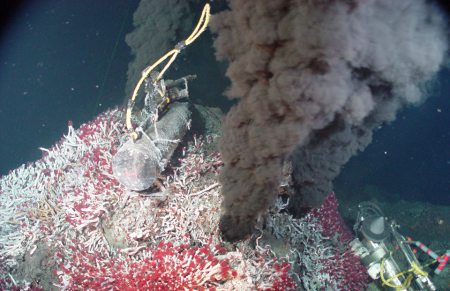

For Alphabet Inc.’s Google and Facebook, the undersea cable provides a new data highway to the booming market in Southeast Asia. Google and Facebook, which are blocked in China but seeking ways back in, declined to comment on market possibilities in China. Google said the project, called the Pacific Light Cable Network, will be its sixth cable investment and will help it provide faster service to Asian customers…

Backers hope to have Pacific Light operating in late 2018. The elder Mr. Wei’s company, Pacific Light Data Communication Co., will own 60%, Eric Wei said, and Google and Facebook will each own 20%. The project cost is estimated at $500 million, and the Chinese company hired U.S. contractor TE SubCom to manufacture and lay the 17-millimeter wide, 7,954-mile long cable…

The cable project requires U.S. government approval, including a landing license from the Federal Communications Commission and a review by Team Telecom, a committee of officials from the departments of defense, homeland security and justice….

Pacific Light will likely face higher scrutiny from Team Telecom due to the controlling interest by a foreign investor, said Bruce McConnell, global vice president of the EastWest Institute and a former senior cybersecurity official with the Department of Homeland Security.

Team Telecom rarely rejects a landing license application, Mr. McConnell said, but cable operators must agree to security terms.“The agreement is usually heavily conditioned to ensure that (U.S.) security concerns are met,” he said.

The terms often require an American operator of the cable to assist U.S. authorities in legal electronic surveillance, including alerting regulators if foreign governments are believed to have accessed domestic data, according to copies of agreements filed with the FCC. The U.S. landing party usually must also be able to cut off U.S. data from the international network if asked…

More than 99% of the world’s internet and phone communications rely on fiber-optic cables crisscrossing continents and ocean floors. That makes these cables critical infrastructure to governments and a target for espionage.

One of the Eric Wei’s businesses is a Chinese alternative to the QR code called a D9 code, which the company promotes as a “safe” alternative to foreign technology.

Excerpts from  China Firm Backs Asia-US Cable, Wall Street Journal, Mar. 16, 2017

Mining the Seabed

In the 1960s and 1970s, amid worries about dwindling natural resources, several big companies looked into the idea of mining the ocean floor. They proved the principle by collecting hundreds of tonnes of manganese nodules…rich in cobalt, copper and nickel. As a commercial proposition, though, the idea never caught on. Working underwater proved too expensive and prospectors discovered new mines on dry land.

The International Seabed Authority, which looks after those parts of the ocean floor beyond coastal countries’ 200 nautical-mile exclusive economic zones, has issued guidelines for the exploitation of submarine minerals.

One of the most advanced projects is that of Nautilus Minerals, a Canadian firm. In January 2016 Nautilus took delivery of three giant mining machines (two rock-cutters and an ore-collector) that move around the seabed on tracks, like tanks. It plans to start testing these this year. If all goes well the machines could then start operating commercially in Nautilus’s concession off the coast of Papua New Guinea, which prospecting shows contains ore with a copper concentration of 7%. (The average for terrestrially mined ore is 0.6%.) This ore also contains other valuable metals, including gold.

This approach (which is also that taken by firms such as Neptune Minerals, of Florida, and a Japanese consortium led by Mitsubishi Heavy Industries) is different from earlier efforts. It involves mining not manganese nodules, but rather a type of geological formation unknown at the time people were looking into those nodules—submarine hydrothermal vents. These rocky towers, the first of which was discovered in 1977, form in places where jets of superheated, mineral-rich water shoot out from beneath the sea floor. They are found near undersea volcanoes and along the ocean ridges that mark the boundaries between Earth’s tectonic plates. They generally lie in shallower waters than manganese nodules, and often contain more valuable substances, gold among them.

They are not, though, as abundant as manganese nodules, so if and when the technology for underwater mining is proved, it is to nodules that people are likely to turn eventually. These really are there in enormous numbers. According to Dr Hannington, the Clarion-Clipperton fracture zone, a nodule field that stretches from the west coast of Mexico almost to Hawaii, contains by itself enough nickel and copper to meet global demand for several decades, and enough cobalt to last a century.

Mining, whether on land or underwater, does come at an environmental cost, though… [T]he sediments the nodules are found in play host to microscopic critters that would be most upset by the process of trawling that is needed to bring the nodules to the surface. They might take decades to recover from it.

Excerpts from, Oceanography: Fruits de mer, Economist, Feb. 25, 2017


Small Satellites-Big Data

Built by the Indian Space Research Organisation, the Polar Satellite Launch Vehicle threw itself into the sky at 3.58am GMT on February 15th, 2017 It took with it a record-breaking 104 satellites—88 of which belonged to a single company, Planet, a remote sensing business based in San Francisco. Planet now has 149 satellites in orbit—enough for it to provide its customers with new moderately detailed images of all the Earth’s land surface every single day.  The satellites Planet makes—it calls them “doves”—measure 10cm by 10cm by 30cm.

Providing daily updated images of the earth is not enough… Processing the images to answer pressing questions: what has changed since yesterday? Is that illegal logging? What does the number of containers in these ports suggest about trade balances? Planet will be providing more such analysis itself, but there are also third parties eager to play. SpaceKnow, a startup which focuses on turning satellite data into analysis the financial community will pay for, has just raised $4m….

Planet is not the only company using small satellites to produce big data; the launch on February 15th also carried up eight ship-tracking satellites owned by Spire, just a couple of streets away from Planet. The companies hope that, as more and more customers come to see the value of an endlessly updated, easily searchable view of the world, insights from satellites will become ever more vital to the data-analysis market. The more normal their wares start to seem, the more spectacular their future may be

Excerpts from  Space Firms: Eyes on Earth ,Economist, Feb. 18, 2017

The Future of Recycling

About 90 percent of the 8 billion soda cans sold in California every year get turned in for recycling and a 5¢ refund. But cheaper commodity prices, plus lower Chinese demand for America’s used bottles and cans, have upended the economics of the state’s recycling industry. Over the past two years, California’s recycling rate has fallen enough to relegate more than 2 billion containers a year to landfills.  About 700 of the 2,400 redemption centers California had in 2011 have closed, according to CalRecycle, the state’s recycling agency, the majority in the past year. The mostly small companies that run the shedlike centers in parking lots outside grocery stores are being squeezed by a commodity bust that’s lowered the price they receive for recycled glass, plastic, and aluminum. The price they have to pay consumers for this detritus has stayed fairly high. A state subsidy program that was supposed to help make up the difference hasn’t kept up.,,

The decline in the value of scrap is draining California’s Beverage Container Recycling Fund, which relies on the proceeds from bottle deposits consumers pay upfront to reimburse redemption centers. As of June 30, it had $195 million, down from $246 million a year earlier. At this rate, it’s expected to run out of money in the first half of 2018.

“There’s been a massive crisis and a massive failure to respond to that crisis,” says Susan Collins, president of the Container Recycling Institute, an advocacy group in Southern California. Collins says the state needs to boost its “outdated” payment formula by as much as $1 million a month or follow other states, where bottling companies pay recycling centers a fixed amount per container. A spokesman for CalRecycle says the state is looking at all options.

China is the largest destination for U.S. scrap exports, taking about 11 percent by volume in 2015. Since 2013, under a government program called Operation Green Fence, China has been aggressively inspecting and in some cases turning away bottles and cans that are mixed in with food waste or other nonrecyclable scrap. The policy has forced waste processors in the U.S. to screen discarded containers more carefully, driving up costs and diminishing the value of some waste.

Excerpts from California’s Recycling Industry is in the Dumps, Bloomberg Business Week, Oct. 6, 2016

Power Grid: smart and sensitive

Raytheon Company  and Utilidata have formed a strategic alliance to help power utilities proactively detect, defend against and respond to cyber threats.  The effort will combine Utilidata’s experience in the use of real-time data from the electrical grid to detect and respond to cyber attacks and Raytheon’s expertise in proactive cyber threat hunting, automation and managed security services to provide world-class cybersecurity, analytics and other innovative technologies….

[According to] Scott DePasquale, chairman and CEO of Utilidata. “With more and more devices and systems connected to the internet, and all of them needing electrical power, these challenges are increasing exponentially. This new alliance will help define the future of cybersecurity in the power utilities sector.”  In December 2015, a cyber attack shut down a large section of the Ukrainian power grid – an incident that the Department of Energy identified in the 2017 installment of the Quadrennial Energy Review as an ‘indicator of what is possible.’

Excerpts from  Raytheon, Utilidata to deliver defense-grade cybersecurity for utilities, PRNewswire, Feb. 8, 2017

Client States: China-Cambodia

China provides military aid to Cambodia:  uniforms, vehicles, loans to buy helicopters and a training facility in southern Cambodia. Between 2011 and 2015 Chinese firms funnelled nearly $5bn in loans and investment to Cambodia, accounting for around 70% of the total industrial investment in the country. Chinese firms run garment and food-processing factories and are also heavily involved in construction, mining, infrastructure and hydropower. Others hold at least 369,000 hectares of land concessions on which they grow sugar, rubber, paper and other crops.

The government is often willing to bend the rules for Chinese firms. One is developing a luxury resort inside a national park on the edges of Sihanoukville, the country’s main port. Another has won development rights over some 20% of Cambodia’s coastline. Human-rights groups allege that fishermen who had lived in the area for generations were summarily evicted, taken inland and told that they were now farmers.

Each side gets something out of the relationship. For Cambodia, the most obvious benefit is economic: it is poor and aid-dependent; Chinese money lets it buy and build things it could not otherwise afford. Phay Siphan, a government spokesman, said last year: “Without Chinese aid, we go nowhere.”  But there are also two strategic benefits. First, Cambodia uses China as a counterweight to Vietnam. Among ordinary Cambodians, anti-Vietnamese sentiment runs deep.   Cambodia also uses China as a hedge against the West. Chinese money comes with no strings attached, unlike most Western donations, which are often linked to the government’s conduct….

As for China, it gets a proxy within the ten-country Association of South-East Asian Nations (ASEAN). Cambodia has repeatedly blocked ASEAN from making statements that criticise China’s expansive territorial claims in the South China Sea, even though they conflict with those of several other ASEAN members. In 2016, less than a week after Cambodia endorsed China’s stance that competing maritime claims should be solved bilaterally, China gave Cambodia an aid package worth around $600m.

China also seems to be eroding America’s clout in the region.  ASEAN’s long-standing complaint, that Chinese influence on Cambodia hinders regional unity, is growing moot: over the South China Sea, at least, that unity appears to have disintegrated anyway. The Philippines, which took China to an international tribunal over its maritime claims, has reversed course. Its new president, Rodrigo Duterte, expresses contempt for America and affection for China. Vietnam, China’s other main adversary in the sea, recently pledged to resolve its maritime dispute bilaterally. Nobody yet knows what America’s policy on the South China Sea will be under Donald Trump, but increasingly it looks as if Cambodia has picked the winning side.

Excerpts, Chinese Influence in South-East Asia: The Giant’s Client,  Economist, Jan. 21, 2017

Debt and Coal: China-Mongolia friendship

Mongolia recently reached a new deal to sell coal to China, helping it boost its faltering economy and start repaying billions of dollars it owes Wall Street lenders.  Under the landmark agreement completed late 2016, Mongolia’s state-owned mining company will sell coal to China at roughly double the previously agreed-upon rate.  The deal follows a devastating four-year period when Mongolian miners exported coal to China at deeply-discounted prices, sometimes for as little as 11% of the global benchmark price, undercutting Mongolia’s economic growth. Mongolia agreed to those punitive terms to get the loan from China and has been struggling to repay it.

The new export agreement will help Mongolia pay its mounting debt, including bonds held by BlackRock Inc., Fidelity Investments, UBS Global Asset Management and other global investors that bought the debt for its double-digit yields, according to bond investors.

But the export deal has a downside for Mongolia: It effectively transfers much coal production from China, which is bent on cleaning up its environment, to its poorer neighbor…  Trucks carrying coal are backed up for nearly 40 miles at Mongolia’s southern border with China, in what some analysts call the world’s largest traffic jam…Yet Mongolia seems willing to make that trade-off, with coal prices soaring since China has begun cutting production, analysts say. Market prices for the type of coal produced in Mongolia, which is used in steel- and iron-making operations, skyrocketed 200% in 2016 to $225 a ton.

Mongolia is also in talks with some Asian firms to develop its Tavan Tolgoi coal reserves, analysts say. The Gobi desert site is one of the world’s largest untapped coal mines, with more than six billion tons of coal deposits.

Excerpts from the New China-Mongolia Mining Deal: Economic Windfall or Environmental Threat?, Wall Street Journal, Jan. 21, 2017

Deforestation and Supply Chains

366 companies, worth $2.9 trillion, have committed to eliminating deforestation from their supply chains, according to the organization Supply Change. Groups such as the Tropical Forest Alliance 2020, the Consumer Goods Forum and Banking Environment Initiative aim to help them achieve these goals.  Around 70 percent of the world’s deforestation still occurs as a result of production of palm oil, soy, beef, cocoa and other agricultural commodities. These are complex supply chains.  A global company like Cargill, for example, sources tropical palm, soy and cocoa from almost 2,000 mills and silos, relying on hundreds of thousands of farmers. Also, many products are traded on spot markets, so supply chains can change on a daily basis. Such scale and complexity make it difficult for global corporations to trace individual suppliers and root out bad actors from supply chains.

Global Forest Watch (GFW), a WRI-convened partnership that uses satellites and algorithms to track tree cover loss in near-real time, is one example. Any individual with a cell phone and internet connection can now check if an area of forest as small as a soccer penalty box was cleared anywhere in the world since 2001. GFW is already working with companies like Mars, Unilever, Cargill and Mondelēz in order to assess deforestation risks in an area of land the size of Mexico.

Other companies are also employing technological advances to track and reduce deforestation. Walmart, Carrefour and McDonalds have been working together with their main beef suppliers to map forests around farms in the Amazon in order to identify risks and implement and monitor changes. Banco do Brasil and Rabobank are mapping the locations of their clients with a mobile-based application in order to comply with local legal requirements and corporate commitments. And Trase, a web tool, publicizes companies’ soy-sourcing areas by analyzing enormous amounts of available datasets, exposing the deforestation risks in those supply chains…

[C]ompanies need to incorporate the issue into their core business strategies by monitoring deforestation consistently – the same way they would track stock markets.

With those challenges in mind, WRI and a partnership of major traders, retailers, food processors, financial institutions and NGOs are building the go-to global decision-support system for monitoring and managing land-related sustainability performance, with a focus on deforestation commitments. Early partners include Bunge, Cargill, Walmart, Carrefour, Mars, Mondelēz, the Inter-American Investment Corporation, the Nature Conservancy, Rainforest Alliance and more.  Using the platform, a company will be able to plot the location of thousands of mills, farms or municipalities; access alerts and dashboards to track issues such as tree cover loss and fires occurring in those areas; and then take action. Similarly, a bank will be able to map the evolution of deforestation risk across its whole portfolio. This is information that investors are increasingly demanding.

Excerpt from Save the Forests? There’s Now an App for That, World Resources Institute, Jan. 18, 2017

Elephant Skin 4 dollars per square inch

“Elephant’s skin can cure skin diseases like eczema,” said one shop owner, who requested anonymity, alongside a counter brimming with porcupine quills and snake skins. “You burn pieces of skin by putting them in a clay pot. Then you get the ash and mix it with coconut oil to apply on the eczema.”  He broke off to talk to a potential buyer, who balked at the price tag of 5,000 kyat (US$3.65) per square inch (6.5 square centimetres) of elephant skin.

Elephant poaching in Myanmar has jumped tenfold in recent years, the government said this week, driven by growing demand for ivory, hide and body parts.Increasingly carcasses are being found stripped of their skin, the hide used for traditional medicine or reportedly turned into beads for jewellery. Some of it is sold in local markets but the vast majority goes to feed neighbouring China’s inexhaustible taste for exotic animals.  Myanmar’s wild elephant population is thought to have almost halved over the past decade to around 2,000-3,000. The animals are killed or smuggled alive to be used in the tourist industry in neighbouring Thailand.

“”Elephants are one of dozens of endangered species being trafficked through Myanmar, which has become a key hub in the US$20 billion a year global wildlife trade.  Watchdog TRAFFIC claims the country has “the largest unregulated open markets for tiger parts” in Southeast Asia, which experts say also sell everything from African rhino horn and clouded leopard skins to pangolins.  Much of the trade runs through the country’s lawless eastern periphery, controlled by a sophisticated network of criminals who are thought to be armed and funded by powerful “kingpins” in China.  It is lucrative business: in Mong La, on Myanmar’s eastern border, sales of ivory alone are thought to rake in tens of millions of dollars a year.

Excerpts from Skin care fad threatens Myanmar’s endangered elephants as demand from China drives trade in animal products, South China Morning Post, Jan. 21, 2016


Shooting to Death Poachers: conservation

A South African, 31 Zambians and seven Mozambicans were among 443 people arrested in Zimbabwe in 2016 for poaching, the national parks authority has said. [According to] the Zimbabwe Parks and Wildlife Management Authority (ZimParks) spokesperson Caroline Washaya-Moyo said there was an increase on arrests last year compared to 2015 when 317 were arrested.

Washaya-Moyo said locals, who constitute a majority of those arrested for poaching, are working mainly with colleagues from Zambia as well as Mozambique, targeting wildlife sanctuaries in the north-west and south-east of the country.  “Mozambican poaching groups target Gonarezhou National Park and Save Valley Conservancy, where they poach elephants. It has now emerged that most of the poaching taking place inland is being perpetrated by syndicate members of different groups, who are hired to form one larger organised gang,” Washaya-Moyo said.

However, the introduction of modern anti-poaching strategies, such as sniffer and tracker dogs as well as unmanned aerial vehicles (UAVs) she said, is likely to help boost anti-poaching activities. In September 2016 South Africa’s UAV and Drone Solutions (UDS) provided UAVs to Zimbabwe. The technology was deployed to Hwange National Park, Zimbabwe’s largest game park, to fight elephant and other wildlife poaching. Between 2013 and last year, poaching syndicates killed at least 300 elephants through cyanide poisoning in the park. “This silent poaching method has serious effects to the eco-system and is a potential threat to human life,” she said.

ZimParks released the 2016 report in a week it also announced the shooting to death of three suspected poachers in Hwange National Park and Hurungwe near Lake Kariba. Two were killed on 10 January in Hwange while one, believed to be a Zambian, was shot dead in Hurungwe on 11 January….

A Zimbabwean safari operator, Langton Masunda, blamed recurrent droughts, a difficult local economy and global restrictions in lion and elephant hunting for the high poaching cases in the country.  “Without money coming from hunting, communities derive little value from wildlife and when that happens they are tempted to poach. The economic conditions are pushing some to poach as well. So poaching at those low levels then escalate into wider scale and more organised poaching activities,” he said

Excerpts from Ian Nyathi,  Increase in number of poachers arrested in Zimbabwe as slaughter continues, http://www.defenceweb.co.za/, Jan. 16, 2017

The Power of Data Pipelines: google, facebook and co.

The ships that lay electronic cables across the ocean floor look like cargo vessels with a giant fishing reel on one end. They move ponderously across the open water, lowering insulated wire into shallow trenches in the seabed as they go. This low-tech process hasn’t changed much since 1866, when the SS Great Eastern laid the first reliable trans-Atlantic telegraph cable, capable of transmitting eight words per minute. These days, the cables are made of optical fiber, can carry 100 terabits of data or more in a second, and aren’t owned only by telephone companies.

Among the newcomers are a few of the world’s leading internet companies, which have concluded that, given the cost of renting bandwidth, they may as well make their own connections. Facebook and Microsoft have joined with Spanish broadband provider Telefónica to lay a private trans-Atlantic fiber cable known as Marea. The three companies will divide up the cable’s eight fiber strands, with Facebook and Microsoft each getting two. The project, slated to be completed by the end of 2017, marks the first time Facebook has taken an active role in building a cable, rather than investing in existing projects or routing data through pipes controlled by traditional carriers. Marea will be Microsoft’s second private cable; a trans-Pacific one is scheduled to come online in 2017.

In June 2016, Google said it had finished a data pipeline running from Oregon to Taiwan, and it has at least two more coming: one from the U.S. to Brazil; the other, a joint project with Facebook, will connect Los Angeles and Hong Kong. Amazon.com made its first cable investment in May, announcing plans for a link between Australia and New Zealand and the U.S. Worldwide, 33 cable projects worth an estimated $8.1 billion are scheduled to be online by 2018, according to TeleGeography. That’s up from $1.6 billion worth of cables in the previous three years. And bandwidth demand is expected to double every two years. ..

Cables are just one way to increase the supply of bandwidth and cut costs, says Chetan Sharma, an analyst and telecom consultant. Facebook is also working on satellites, lasers, and drones to deliver internet access to remote places, and Google has experimented with hot air balloons. So far, undersea cables remain the best option for crossing oceans—they’re cheaper, far more reliable, and largely unregulated. The United Nations treats ocean cables in much the same manner as boat traffic, meaning companies can lay and repair cables in international waters pretty much wherever they please, provided they don’t damage existing ones.So Silicon Valley will continue to pour money into technology pioneered in the telegraph era. “It’s about taking control of our destiny,” says Mark Russinovich, chief technology officer for Microsoft’s cloud services division, Azure. “We’re nowhere near being built out.”

Excerpt from Bet you Own Broadband, Bloomberg, Oct. 20, 2016

Dams and Drought: the Amazon

The São Luiz do Tapajós (SLT) project… would dam one of the last big unobstructed tributaries of the Amazon. The project would provide about a third of the hydropower that Brazil plans for the forthcoming decade, but it would also flood 376 square km (145 square miles) of land where the Munduruku hunt, fish and farm. “The Tapajós valley is our supermarket, our church, our office, our school, our home, our life,” explained Mr Kabá.

The tussle over the Tapajós dam is part of a bigger fight about Brazil’s energy future. SLT is an example of a new sort of hydropower project, which floods a smaller area than traditional dams and therefore ought to cause less disruption and environmental damage. The massive Itaipu dam on the border with Paraguay inundated an area nearly four times as large. But critics of hydropower say “run of river” projects like SLT, which use a river’s natural flow to turn turbines, do not work as well as advertised. Though less destructive than conventional dams, which require bigger reservoirs, they still provoke opposition from people like the Munduruku. Other energy sources, such as gas and wind, are becoming more competitive. Brazil has “an opportunity” to rethink its energy policies, says Paulo Pedrosa, an energy official.

Hydropower has long been Brazil’s main way of generating electricity. Most forecasts suggest it will remain so. The government intends to build more than 30 dams in the Amazon over the next three decades. 

Climate change may worsen the problem. Some climate models predict that river flows in large parts of the Amazon will fall by 30% in coming decades. Deforestation is delaying the onset of the rainy season in some areas by six days a decade, according to research published in Global Change Biology, a journal.   Drought can be expensive. In 2014 power from conventional dams dipped because of a dry spell, forcing electricity companies to buy from gas- and coal-powered generators at high spot prices. The risk of such fluctuations rises with run-of-river dams. Carlos Nobre, a former chief of research at the ministry of science, technology and innovation, thinks more frequent droughts will make future hydropower projects in the Amazon unprofitable.

Brazil’s potential for solar and wind energy is among the highest in the world. The government has promoted them with lavish tax breaks. In the blustery north-east, wind power overtook hydropower this year; wind turbines now generate 36% of the region’s electricity, up from 22% in 2015. The Energy Research Company, a firm linked to the energy ministry, expects renewable generating capacity apart from hydropower to double by 2024.

Generators fuelled by natural gas have been hurt by the subsidies lavished on renewable energy. But, though less climate-friendly than hydropower, they are beginning to compete with it as a source of steady baseload electricity. Brazil now produces gas in abundance as a by-product of pumping oil from its offshore wells. Its marginal cost of production is nearly zero. The future of baseload energy is “hydro-thermal”, rather than hydro alone, says Adriano Pires of the Brazilian Infrastructure Centre, a think-tank in Rio de Janeiro.

Excerpts from Dams in the Amazon: Not in my valley, Economist,  Nov. 5, 2016

The Internet: from Subversive to Submissive

Free-Speech advocates were aghast—and data-privacy campaigners were delighted—when the European Court of Justice (ECJ) embraced the idea of a digital “right to be forgotten” in May 2014. It ruled that search engines such as Google must not display links to “inadequate, irrelevant or no longer relevant” information about people if they request that they be removed, even if the information is correct and was published legally.

The uproar will be even louder should France’s highest administrative court, the Conseil d’État, soon decide against Google. The firm currently removes search results only for users in the European Union. But France’s data-protection authority, CNIL, says this is not enough: it wants Google to delete search links everywhere. Europe’s much-contested right to be forgotten would thus be given global reach. The court… may hand down a verdict by January.

The spread of the right to be forgotten is part of a wider trend towards the fragmentation of the internet. Courts and governments have embarked on what some call a “legal arms race” to impose a maze of national or regional rules, often conflicting, in the digital realm
The internet has always been something of a subversive undertaking. As a ubiquitous, cross-border commons, it often defies notions of state sovereignty. A country might decide to outlaw a certain kind of service—a porn site or digital currency, say—only to see it continue to operate from other, more tolerant jurisdictions.

As long as cyberspace was a sideshow, governments did not much care. But as it has penetrated every facet of life, they feel compelled to control it. The internet—and even more so cloud computing, ie, the storage of vast amounts of data and the supply of myriad services online—has become the world’s über-infrastructure. It is creating great riches: according to the Boston Consulting Group, the internet economy (e-commerce, online services and data networks, among other things) will make up 5.3% of GDP this year in G20 countries. But it also comes with costs beyond the erosion of sovereignty. These include such evils as copyright infringement, cybercrime, the invasion of privacy, hate speech, espionage—and perhaps cyberwar.

IIn response, governments are trying to impose their laws across the whole of cyberspace. The virtual and real worlds are not entirely separate. The term “cloud computing” is misleading: at its core are data centres the size of football fields which have to be based somewhere….

New laws often include clauses with extraterritorial reach. The EU’s General Data Protection Regulation will apply from 2018 to all personal information on European citizens, even if the company holding it is based abroad.

In many cases, laws seek to keep data within, or without, national borders. China has pioneered the blocking of internet addresses with its Great Firewall, but the practice has spread to the likes of Iran and Russia. Another approach is “data localisation” requirements, which mandate that certain types of digital information must be stored locally or remain in the country. A new law in Russia, for instance, requires that the personal information of Russian citizens is kept in national databases…Elsewhere, though, data-localisation polices are meant to protect citizens from snooping by foreign powers. Germany has particularly stringent data-protection laws which hamper attempts by the European Commission, the EU’s civil service, to reduce regulatory barriers to the free flow of data between member-states.

Fragmentation caused by government action would be less of a concern if other factors were not also pushing in the same direction–new technologies, such as firewalls and a separate “dark web”, which is only accessible using a special browser. Commercial interests, too, are a dividing force. Apple, Facebook, Google and other tech giants try to keep users in their own “walled gardens”. Many online firms “geo-block” their services, so that they cannot be used abroad….

Internet experts distinguish between governance “of” the internet (all of the underlying technical rules that make it tick) and regulation “on” the internet (how it is used and by whom). The former has produced a collection of “multi-stakeholder” organisations, the best-known of which are ICANN, which oversees the internet’s address system, and the Internet Engineering Task Force, which comes up with technical standards…..

Finding consensus on technical problems, where one solution often is clearly better than another, is easier than on legal and political matters. One useful concept might be “interoperability”: the internet is a network of networks that follow the same communication protocols, even if the structure of each may differ markedly.

Excerpts from Online governance: Lost in the splinternet, Economist, Nov. 5, 2016

Secrets of the Ocean Floor

Three billion dollars sounds a lot to spend on a map. But if it is a map of two-thirds of Earth’s surface, then the cost per square kilometre, about $8.30, is not, perhaps, too bad. And making such a map at such a cost is just what an organisation called the General Bathymetric Chart of the Oceans (GEBCO) is proposing to do. GEBCO, based in Monaco, has been around since 1903. Its remit, as its name suggests, is to chart the seabed completely. Until now, it has managed less than a fifth of that task in detail. But means of mapping the depths have improved by leaps and bounds over recent decades. So, with the aid of the Nippon Foundation, a large, Japanese philanthropic outfit, GEBCO now proposes to do the job properly. It plans to complete its mission by 2030….

Despite water’s apparent transparency, the sea absorbs light so well that anywhere below 200 metres is in pitch darkness. Radio waves (and thus radar) are similarly absorbed. Sound waves do not suffer from this problem, which is why sonar works for things like hunting submarines. But you cannot make sonic maps from a satellite. For that, you have to use the old-fashioned method of pinging sonar from a ship. Which is just what GEBCO plans to do.,,,

[The technique used to map the sea floor] is “echo sounding”, using sonar reflected from the seabed. Marie Tharp and Bruce Heezen of Columbia University, in New York, pioneered the technique in the 1950s and 1960s by using technology developed during the second world war. With it, they mapped part of the Mid Atlantic Ridge, an underwater mountain chain…

Cable-laying companies, oil firms, academic oceanography laboratories, national hydrographic surveys and the world’s navies all have oodles of sounding data. One of GEBCO’s jobs is to gather this existing information together and sew it into a new database, to create a coherent portrayal of the known ocean floor.  The organisation is also keen to include data collected by helpful volunteers. A new digital platform overseen by America’s National Oceanic and Atmospheric Administration encourages the crowdsourcing of bathymetric data, letting mariners upload their findings easily. Recent political initiatives, such as a deal made in Galway in 2013 between America, Canada and the European Union to support transatlantic floor-mapping, will also boost efforts. National icebreakers are gathering information in parts of the ocean too frozen for other vessels to reach. And GEBCO is trying to persuade governments and companies with proprietary data on the sea floor to share them. One such firm, a cable-laying outfit called Quintillion, has already agreed to do so…

[A] accurate map of the seabed may help open this unknown two-thirds of Earth’s surface to economic activity. ..[T]he world’s navies (or, at least, those among them with submarine capability) will also take an interest—for an accurate seabed map will both show good places for their boats to hide and suggest where their rivals’ vessels might be secreted. Whether they will welcome GEBCO making this information public is a different question

Excerpt from Bathymetry: In an octopus’s garden, Economist,  Oct. 29, 2016

Eviction and Property Rights in Africa

Evictions are almost routine for the Ogiek,  a group of around 80,000 indigenous hunter-gatherers who have suffered repeated expulsions since being moved by the British colonial government in the 1930s. Yet this one still came as a surprise: the community is in the middle of negotiating a settlement with the local government that should see formal recognition of its right to live, graze livestock and forage on land it has inhabited for centuries.

In all rich countries, property rights are secure. Formal, legal title makes it easier to buy, sell and develop land. Buyers can be confident that the seller really has the right to sell what he is selling. Owners can use their property as collateral, perhaps borrowing money to buy fertiliser and better seeds. Legally recognising land ownership has boosted farmers’ income and productivity in Latin America and Asia.

But not yet in Africa. More than two-thirds of Africa’s land is still under customary tenure, with rights to land rooted in communities and typically neither written down nor legally recognised. In 31 of Africa’s 54 countries, less than 5% of rural land is privately owned. So giving peasants title to their land seems like an obvious first step towards easing African rural poverty.

However, it has proven extremely hard. Rwanda, for example, rolled out a programme over three years, whereby local surveyors worked with land owners and their neighbours to demarcate and register 10.3m parcels of land…But even a relatively well-organised place like Rwanda has had problems keeping records up to date when land is sold or inherited.

In Kenya a large-scale titling programme was carried out in colonial times and carried over to independence. The first president, Jomo Kenyatta, and his cronies bought the huge estates of white settlers who left. But the system is costly and ill-run. Most Kenyans cannot afford to update titles, and the government has not maintained the registry. Recognising land rights, whether customary or titled, needs to be done as cheaply and simply as possible, says Ruth Meinzen-Dick of the International Food Policy Research Institute (IFPRI). “The more you increase the cost, the more likely it is that urban elites and men with more ed

Being able to prove you own your land may be a necessary condition for using it as collateral, but a title deed does not guarantee that anyone will lend you money. As Abhijit Banerjee and Esther Duflo, two economists, observe in their book “Poor Economics” (2011), banks need a lot more information to judge borrowers’ creditworthiness and be sure of repayment. And the administrative costs of offering very small loans to very small farmers, even those with collateral, are often prohibitive.

And legal property rights offer less protection in countries where big men can flout the law with impunity—a particular problem in Africa.  In recent years land grabs have sometimes made a mockery of customary ownership.

Excerpt from Land ownership: Title to come, Economist, July 16, 2016


Owning and Trading Water

Rights regimes that are well designed and implemented are among the most effective tools for distributing water fairly and sustainably. Under one such system, Australian states began reforming water management in 1994. Few others have followed, though attempts at reform in Chile and Yemen have met with varying degrees of success.

To create tradable water rights, Australia first drew up a baseline for water use, taking into consideration past commercial, social and environmental needs. Next, old water rights were replaced with shares that granted holders (usually landowners) a proportion of any annual allocations. Clever formulae take account of the seniority of pre-existing rights. Different classes of shares determine who gets what and when to balance the competing claims of upstream farmers and downstream urbanites. After that a regulatory board makes sure that all users get as much as they are entitled to.

Allocations made to shareholders are tradable, but those receiving them can also store them for the future. This prevents any sudden wasting of water at the end of each year and encourages thrift during a drought. Issuing shares in perpetuity ensures that a holder can have more water only if someone else is prepared to have less. A centralised register holds everything together. Two markets for trading have been created: one in which shares are exchanged, and another for allocations of water in a given year. The idea is not a new one. In places such as Oman, aflaj systems involve villages trading in shares and in minutes of water flow.

Such regime change originally met strong resistance from farmers and other big users in Australia. But trading allocations reaped enormous rewards for shareholders. During the first decade of reform the annual internal rate of return from owning a water right was over 15%; those who held water shares saw the value of their rights double every five or so years. But following this example elsewhere will be tough. Even rich countries will struggle to unbundle rights that have accumulated over decades.

Excerpt from Liquidity Crisis, Economist, Nov. 5, 2016, at 17

Nuclear Self-Sufficiency: Monju Reactor, Japan

Japan on December 21, 2016 formally pulled the plug on an $8.5 billion nuclear power project designed to realize a long-term aim for energy self-sufficiency after decades of development that yielded little electricity but plenty of controversy.  The move to shut the Monju prototype fast breeder reactor in Fukui prefecture west of Tokyo adds to a list of failed attempts around the world to make the technology commercially viable and potentially cut stockpiles of dangerous nuclear waste.

“We do not accept this,” Fukui Governor Issei Nishikawa told ministers involved in the decision.”…Nishikawa strongly backed the project because of the jobs and revenue it brought to a prefecture that relies heavily on nuclear installations. He said decommissioning work for Monju would not start without local government approval.  Four conventional commercial nuclear stations lie in close proximity to Monju, earning Fukui the nickname “nuclear alley.”

The Fukushima crisis sparked strong anti-nuclear sentiment in Japan, making it harder to pursue projects like the Monju facility which has faced accidents, cover-ups and regulatory breaches since construction began in 1985.  The plant was built to burn plutonium derived from the waste of reactors at Japan’s conventional nuclear plants and create more fuel than it used, closing the so-called nuclear fuel cycle and giving a country that relies on overseas supplies for most of its energy needs a home-grown electricity source.

Excerpts from  Japan pulls plug on Monju, ending $8.5 bln nuclear self-sufficiency push, Reuters, Dec. 21, 2016

Nationalizing the Internet

Seeking to cut dependence on companies such as Google, Microsoft, and LinkedIn, Putin in recent years has urged the creation of domestic versions of everything from operating systems and e-mail to microchips and payment processing. Putin’s government says Russia needs protection from U.S. sanctions, bugs, and any backdoors built into hardware or software. “It’s a matter of national security,” says Andrey Chernogorov, executive secretary of the State Duma’s commission on strategic information systems. “Not replacing foreign IT would be equivalent to dismissing the army.”

Since last year, Russia has required foreign internet companies to store Russian clients’ data on servers in the country. In January 2016 the Kremlin ordered government agencies to use programs for office applications, database management, and cloud storage from an approved list of Russian suppliers or explain why they can’t—a blow to Microsoft, IBM, and Oracle. Google last year was ordered to allow Android phone makers to offer a Russian search engine. All four U.S. companies declined to comment.

And a state-backed group called the Institute of Internet Development is holding a public contest for a messenger service to compete with text and voice apps like WhatsApp and Viber. Russia’s Security Council has criticized the use of those services by state employees over concerns that U.S. spies could monitor the encrypted communications while Russian agencies can’t,,

On Nov. 10, 2016, Russia’s communications watchdog said LinkedIn would be blocked for not following the data-storage rules….. That same day, the Communications Ministry published draft legislation that would create a state-controlled body to monitor .ru domains and associated IP addresses. The proposal would also mandate that Russian internet infrastructure be owned by local companies and that cross-border communication lines be operated only by carriers subject to Russian regulation…

The biggest effect of the Kremlin’s internet campaign can be seen in the Moscow city administration, which is testing Russian-made e-mail and calendar software MyOffice Mail on 6,000 machines at City Hall. The city aims to replace Microsoft Outlook with the homegrown alternative, from Moscow-based New Cloud Technologies, on as many as 600,000 computers in schools, hospitals, and local agencies….“Money from Russian taxpayers and state-controlled companies should be spent primarily on domestic software,” Communications Minister Nikolay Nikiforov told reporters in September. “It’s a matter of jobs, of information security, and of our strategic leadership in IT.”

Excerpts from Microsoft Isn’t Feeling Any Russian Thaw, Bloomberg, Nov. 17, 2016

Nuclear Power Companies in Germany

Germany aims to phase out its nine remaining reactors by 2022, faster than almost any country

On  December 12, 2016 , it cut a deal with the nuclear power companies operating in the country that would guarantee them a ceiling on costs related to radioactive waste, lawmakers said  on December 12, 2016  Germany’s E.ON SE, RWE AG, EnBW AG and Sweden’s Vattenfall AB already set aside about €17 billion ($18 billion) to finance the disposal of radioactive waste after the government moved to ban nuclear power five years ago. Now  they would pay an additional €6 billion into a public fund but be off the hook for any further payments if the cost of processing the radioactive material were to balloon out of control in the decades to come, as many experts fear.  The companies have also agreed to drop some of the lawsuits they filed against the government after the nuclear ban….

The government and the power companies are moving toward “legal certainty,” said Oliver Krischer, a lawmaker with the Greens on Monday. But “to bring a lasting peace to the topic, the nuclear power plant companies should drop their remaining disputes at the national level and in international tribunals,” he said. Vattenfall is suing Germany for around €5 billion in arbitration at Washington’s International Centre for Settlement of Investment Disputes.

Excerpt Germany Cuts Deal With Nuclear Power Companies Over Waste Costs, Wall Street Journal, Dec. 12, 2016

Loss of Giraffes

Over 700 newly recognised bird species have been assessed for the latest update of The IUCN Red List of Threatened Species, and 11% of them are threatened with extinction. The update also reveals a devastating decline for the giraffe, driven by habitat loss, civil unrest and illegal hunting. The global giraffe population has plummeted by up to 40% over the last 30 years, and the species has been listed as Vulnerable on the IUCN Red List.

Today’s IUCN Red List update also includes the first assessments of wild oats, barley, mango and other crop wild relative plants. These species are increasingly critical to food security, as their genetic diversity can help improve crop resistance to disease, drought and salinity…Almost every species of plant that humans have domesticated and now cultivate has one or more crop wild relatives. However, these species have received little systematic conservation attention until now.

The update was released today at the 13th Conference of the Parties to the Convention on Biological Diversity (CBD COP13) in Cancun, Mexico. The IUCN Red List now includes 85,604 species of which 24,307 are threatened with extinction. “Many species are slipping away before we can even describe them,” says IUCN Director General Inger Andersen.

Excerpts from New bird species and giraffe under threat – IUCN Red List, News Release, Dec. 8, 2016 

Disputes between States and Foreign Investors

Investor-state dispute settlement (ISDS)cases*are decided by extrajudicial tribunals composed of three corporate lawyers. Although ISDS has existed for decades, its scope and impact has grown sharply in the last decade. As ISDS has been written into over 3,000 Bilateral Investment Treaties (BITs) and numerous Free Trade Agreements (FTAs), the opportunities for ISDS claims are huge and growing.

Originally justified as necessary to protect foreign corporate investments abroad from nationalization or expropriation by governments controlling national judiciaries, [it is claimed that] foreign corporations have used ISDS to change sovereign laws and undermine national regulations...Already, India, Indonesia and Ecuador have advised their treaty partners that they are considering ending their BITs because of ISDS. To reduce abuses, investors could be required to first prove discrimination in national courts before being allowed to proceed to ISDS arbitration. Alternatively, national courts could exercise judicial review over ISDS awards. Also, arbitrators could be required to be independent of the ISDS process, with set salaries, security of tenure and no financial ties to litigants while investor status for ISDS claims could be defined more strictly.

Excerpts from Jomo Kwame Sundaram ISDS Corporate Rule of Law, IPS, Dec. 1, 2016

*While ISDS is often associated with international arbitration under the rules of ICSID (the International Centre for Settlement of Investment Disputes of the World Bank), it often takes place under the auspices of international arbitral tribunals governed by different rules or institutions, such as the London Court of International Arbitration, the International Chamber of Commerce, the Hong Kong International Arbitration Centre or the UNCITRAL Arbitration Rules. ISDS has been criticized because the United States has never lost any of its ISDS cases. Some say the system is biased to favor American companies and American trade over other Western countries, and Western countries over the rest of the world (wikipedia)

Kidnapper Satellites: war in space

It was May 2014 when a small team of American airmen monitoring a Russian satellite launch saw something they had never seen before. An object the team thought was a piece of debris from the launch suddenly came to life.  “The one object that we assumed was a piece of debris started to maneuver in close proximity to the (rocket) booster,” recalled Lt. Gen. David Buck …at Vandenberg Air Force Base in California. Buck… said the deliberate maneuvers the mystery object made close to the rocket’s booster were a red flag. Getting that close to another object in space is a complex feat, as objects can move as fast as 17,500 miles per hour….[W]hat the US military was witnessing was not debris at all, but instead a satellite with a dangerous capability, one that could allow it to cozy up next to another satellite and potentially destroy it….

The Russian satellite is officially known as Kosmos 2499 but it has been given a more daunting nickname: “kamikaze,” a spacecraft expressly designed to maneuver up close to another satellite to disable or destroy it. In other words, it’s a satellite that could go on the attack.Retired Gen. William Shelton, the former commander of Air Force space command, likened the satellite to a space Trojan horse. “You could have something on orbit that, for all intents and purposes, looks like a communications satellite, when in actuality, it is also a weapon,” said Shelton.

Kosmos 2499 is far from the only threat. In September 2014, just a few months after Kosmos was placed in orbit, Russia launched an additional satellite named Luch with both maneuvering and spying capabilities.  “This satellite has been maneuvering through geosynchronous space … cozying up close to various communications satellites, listening to what traffic is flowing over those,” said Paul Graziani, CEO of civilian satellite tracker Analytical Graphics, Inc. (AGI).

Over the course of a year, Graziani’s team has watched as Luch parked itself next to three US commercial satellites and one European satellite. The Russians flew the satellite close enough to collect both civilian and, possibly, sensitive military information.  Graziani was charged with delivering the bad news to US-owned commercial satellite company Intelsat…

“If the operators of this spacecraft so chose, they could direct it to actually hit another spacecraft,” said Graziani.  Like Kosmos, Luch’s ability to maneuver has the potential to make it into a satellite killer.

 Launched in 2013, the Shiyan, meaning “experiment” in Chinese, was “experimenting” shadowing the smaller satellite, according to AGI. But then something unexpected happened: The smaller satellite repeatedly disappeared and then reappeared on their screens.“We saw the approach, we saw the larger spacecraft come close to the smaller spacecraft, and then we no longer saw the smaller spacecraft,” said Graziani.

The only reasonable explanation, experts say, is that the Shiyan has a robotic arm that was repeatedly grabbing and then releasing its smaller partner.  The Chinese government acknowledged the satellite’s robotic arm, saying the satellite is “mainly used in space debris observation,” according to the state-run Xinhua News Agency.

But space watchers like Graziani see a more sinister application.  “You could grab and hold of a satellite and maneuver it out of its mission,” said Graziani  If true, it would be a new threatening capability, allowing the Shiyan to essentially kidnap another satellite….

Lasers:  “You can aim a laser at a satellite’s sensor and try to make it hard to see,” said Laura Grego, a scientist with the Union of Concerned Scientists. “Like someone shining a flashlight in your eyes.”With power dialed up high that same laser could permanently fry the satellite’s sensor. But “very expensive and important satellites should have shutters” to block this kind of threat, said Grego, who considers these types of activities more of a nuisance than a space attack.

Space drone: Moving further into the realm of science fiction, the US military has developed the first space drone, the X-37B. Bearing a striking resemblance to the space shuttle, the drone is officially a reusable spacecraft for carrying payloads into space…Its other missions are classified, but the drone’s maneuverability, payload space and ability to stay in orbit for hundreds of days have space watchers and countries like Russia and China wondering whether the X-37B would one day be used as a space fighter jet,

Excerpts from Jim Sciutto and Jennifer Rizzo War in space: Kamikazes, kidnapper satellites and lasers, CNN, Nov. 29, 2016

The Yemen Files

On November 25, 2016,  WikiLeaks released the Yemen Files.The Yemen Files are a collection of more than 500 documents from the United States embassy in Sana’a, Yemen. Comprising more than 200 emails and 300 PDFs, the collection details official documents and correspondence pertaining to the Office for Military Cooperation (OMC) located at the US embassy. The collection spans the period from 2009 until just before the war in Yemen broke out in earnest during March 2015.

Julian Assange said: “The war in Yemen has produced 3.15 million internally displaced persons. Although the United States… is deeply involved in the conduct of the war itself reportage on the war in English is conspicuously rare.”

Yemen is of significant strategic interest as Yemen controls a narrow choke-point to the Red Sea and the Suez Canal through which 11% of the world’s petroleum passes each day. In addition, Yemen borders Saudi Arabia (to the north) and Oman (to the east) and has access to the Arabian Sea, through which another 20% of the world’s petroleum passes from the Strait of Hormuz (including the oil of Saudi Arabia and Iran). Saudi Arabia seeks to control a port in Yemen to avoid the potential constriction of its oil shipments byIran along the Strait of Hormuz or by countries which can control its other oil shipment path along the Red Sea.The Yemen Files offer documentary evidence of the US arming, training and funding of Yemeni forces in the years building up to the war. The documents reveal, among other things, procurement of many different weapon types: aircraft, vessels, vehicles, proposals for maritime border security control and Yemeni procurement of US biometric systems.

See also Yemen File


Trapping and Killing Drones

The rapid evolution of small unmanned air systems (sUAS) technologies fueled by the exponential growth of the commercial drone sector, has created new asymmetric threats for [conventional armies]…[There is is a need to] identify, track, and neutralize these sUASs while mitigating collateral damage.

DARPA is soliciting proposals for award for the Mobile Force Protection (MFP) program … The MFP program [seeks to develop a system] capable of defeating a raid of self-guided, small Unmanned Aircraft Systems attacking a high value asset on the move. The program …seeks to develop an integrated system capable of providing protection to ground or naval convoys against self-guided sUAS and, to the extent possible, other asymmetric threats… By focusing on protecting mobile assets, the program plans to emphasize low-footprint solutions in terms of size, weight, power (SWaP),and manning….The Mobile Force Protection program has selected the U.S. Army Maneuver Aviation and Fires Integration Application (MAFIA) as the software architecture…(www.fbo.org)

Note that In 2016 the Islamic State tried to use small commercial drones to launch attacks, prompting American commanders in Iraq to issue a warning to forces fighting the group to treat any type of small flying aircraft as a potential explosive device.  (NY Times).

Mining Rights on the Ocean Floor: phosphate

A persistent fear of diminishing phosphorus reserves has pushed mining companies to search far and wide for new sources. Companies identified phosphate deposits on the ocean floor and are fighting for mining rights around the world….

From April 2007 to August 2008, the price of phosphate, a necessary ingredient in fertilizer, increased nearly 950 percent, in part due to the idea that phosphate production had peaked and would begin diminishing. Before prices came back down, prospectors had already begun looking for deep sea phosphate reserves around the world.

Since then, the fledgling seabed phosphate industry has found minimal success. While several operations are proposed in the Pacific islands, New Zealand and Mexico rejected attempts at offshore phosphate mining in their territory.  This means southern African reserves – created in part by currents carrying phosphate-rich water from Antarctica – are the new center of debate.

Namibia owns identified seabed phosphate deposits, and the country has recently flip-flopped about whether to allow mining. A moratorium was in place since 2013, but in September 2016 the environmental minister made the controversial decision to grant the necessary licenses. Since then, public outcry forced him to set those aside…

Three companies, Green Flash Trading 251 (Pty) Ltd, Green Flash 257 (Pty) Ltd and Diamond Fields International Ltd., hold prospecting rights covering about 150,000 square kilometers, roughly 10 percent, of  South Africa’s marine exclusive economic zone…[G]reen Flash companies received drill samples, which showed current prices could not sustain seabed phosphate mining.

This leaves Diamond Fields as the only remaining player in South African waters. The company announced in a January 2014 press release that it received a 47,468 square kilometer prospecting right to search for phosphate.  According to information the company published summarising its environmental management plan, prospecting would use seismic testing to determine the benthic, or seafloor, geology. If mining commenced, it would take place on the seafloor between 180 and 500 meters below the surface.  “A vital and indisputable link exists between phosphate rock and world food supply,” the company stated, citing dwindling phosphate reserves…

Environmentalists argue that not only would phosphate mining destroy marine ecosystems, but it would also lead to continued overuse of fertilizers and associated pollution. They call for increased research into phosphate recapture technology instead of mining.“We could actually be solving the problem of too much phosphates in our water and recapturing it. Instead we’re going to destroy our ocean ecosystems,” John Duncan of WWF-SA said.

The act of offshore mining requires a vessel called a trailing suction hopper dredger, which takes up seafloor sediment and sends waste back into the water column.  “It amounts to a kind of bulldozer that operates on the seabed and excavates sediment down to a depth of two or three meters. Where it operates, it’s like opencast mining on land. It removes the entire substrate. That substrate become unavailable to fisheries for many years, if not forever,” Johann Augustyn, secretary of the South African Deep-Sea Trawling Industry Association, said….

Mining opponents also worry offshore mining would negatively impact food production and economic growth. Several thousand subsistence farmers live along South Africa’s coast, and the country’s large-scale fishing industry produces around 600,000 metric tonnes of catch per year.

“[Mining] may lead to large areas becoming deserts for the fish populations that were there. If they don’t die off, they won’t find food there, and they’ll probably migrate out of those areas,” Augustyn said.

South Africa is one of only three African nations – along with Namibia and Seychelles – implementing marine spatial planning. This growing movement toward organised marine economies balances competing uses such as oil exploration, marine protected areas and fisheries….[and mining.]

Excerpts from Mark Olalde, Phosphate Mining Firms Set Sights on Southern Africa’s Sea Floor, IPS, Nov. 17, 2016

Swiss Nuclear Waste Disposal

On November 27, 2016 Swiss voters will decide whether to turn off the country’s nuclear power stations after 45 years of activity. But what does dismantling a nuclear power plant involve? ….

On December 20, 2019, the Mühleberg nuclear power plant in canton Bern will definitely be disconnected from the grid. A new chapter in the history of Swiss nuclear energy will thus begin: the complete dismantling of a power plant…Situated around 15 kilometres from the Swiss capital Bern, the reactor has been in service since 1972 and provides 5% of the electricity used in Switzerland….

Once the fuel is extracted from the reactor core, it will be submerged in the so-called deactivation pool, where it will stay for several years.  Around 2024, the cooled uranium will be transported by lorry to the interim storage facility at Würelingen, canton Aargau.

It will then be possible to begin the real disassembly of the cement and steel structure, starting with the reactor core. This is the most complex phase…“Fifty years ago, when a power station was built, no one thought about dismantling it. The old plants were made in an extremely compact manner for reasons of cost and safety. Therefore there isn’t much space for the dismantling and decontamination,” …[D]eveloping robots.. [is one way] of improving efficiency and staff safety.

At Mühleberg, unlike what has been done in the United States for example, the so-called “fast” version will be used.“Dismantling this [boiling water] type of reactor is well-known and therefore we’ll be able to begin directly,” said Stefan Klute. “In other places the preference is to seal the plant for 40-50 years and wait for some of the residual radioactivity to decay naturally.”

In his opinion, there are many advantages to the more rapid option. “We don’t have to second-guess what the political situation will be in half a century – an impossible prediction in any case.

Dismantling the Mühleberg nuclear power station will generate around 200,000 tonnes of waste. Most of the material will be decontaminated directly in situ and recycled or disposed of in appropriate landfills.The whole operation should finish around 2034.

Excerpts from  Luigi Jorio The end of a Swiss nuclear power plant, Swissinfo.ch,  Nov. 17, 2016

The Manipulation of Insects: DARPA

DARPA’s Biological Technologies Office is working on new Insect Allies program. Insect Allies will seek to develop vector[insect]-mediated modification technologies for mature plants to rapidly counter environmental and biological threats to crops. Threats might include pathogens, pests, drought, and salinity, among others. DARPA believes that the high specificity of genetic modification coupled with quick plant gene uptake could allow crops to be protected from threats within a single growing season.The Proposers Day will be held on November 18, 2016

Excerpt from  DARPA Press Release Insect Allies Proposers Day, Nov. 2016

Drugs, Snakes and Skins: illegal wildlife trafficking

One of the most serious environmental crimes, wildlife trafficking encompasses all stages in the supply chain, from taking wild fauna from its habitat, to trading, importing, exporting, processing, possessing, obtaining and consuming of these species.  Driven by an extraordinary low-risk/high-profit ratio, the trafficking of endangered species is estimated to generate over EUR 4.4 billion in profits globally per year (2011).

Because the global demand for such commodities is high, whether as luxury items or for use in traditional medicine, this illicit trade attracts transnational organised crime networks.

While in its character and its scale this trade resembles other types of global criminal activities, such as trafficking in drugs, human beings, firearms and counterfeit goods, it benefits nonetheless from lower levels of awareness, lower risks of detection and lower sanction levels.
The EU is a major transit point for the illegal trade in wildlife, in particular between Africa and Asia. In 2013, 1468 seizures (more than half with an international dimension) were reported by 15 EU countries. The main types of commodities seized were medicines (derived from both plants and animals), ivory, corals and live reptiles. The European fashion industry accounts for 96% of the trade in python skins…

In 2015 Europol supported Operation COBRA III, the largest-ever coordinated international law-enforcement operation targeting the illegal trade in endangered species. The operation recovered a huge amount of wildlife contraband, including over 12 tonnes of elephant ivory and at least 119 rhino horns.

Excerpt from ILLICIT TRAFFICKING IN ENDANGERED ANIMAL SPECIES, Europol Press Release, Nov. 2016

Keep Forests Standing: the forests bond

Launched on November 1, 2016, the Forests Bond will provide investors the opportunity to invest in a traditional financial product that offers the unique option of receiving interest payments in the form of environmental impact — in this case, verified carbon credits generated through REDD, an initiative that rewards landholders for protecting forests, thereby reducing carbon emissions that worsen climate change. The development of the bond is a collaboration of the International Finance Corporation (IFC), a member of the World Bank Group, and BHP Billiton with technical support from Baker & McKenzie and Conservation International (CI).

REDD (short for Reducing Emissions from Deforestation and forest Degradation), which offers financial incentives to landholders in tropical countries to keep their forests standing, has met with mixed success since its launch in 2005, in part because the lack of a carbon market left it dependent on voluntary action and bereft of the certainty needed to attract private funding.

“If you look at the scale of the problem, roughly US$ 100 billion to 300 billion needed to cut deforestation by half over the next decade, it’s clear that we need to mobilize private institutional investors, who control vastly greater amounts than public or philanthropic aid can deliver,” said Agustin Silvani, Conservation International’s vice president of conservation finance. “The REDD mechanism has mostly excluded them because it required specific carbon expertise or a specific interest in forests to engage with it.”

The Forests Bond supports a REDD project in Kenya, and investors can choose between a cash or carbon credit coupon (the interest received from the bond), or a combination of both. This unique element of the bond is made possible by the price support that BHP Billiton**is providing, which means that investors can either 1) elect to take the carbon credits to offset corporate greenhouse gas emissions or 2) sell them on the carbon market, or 3) take a traditional financial return instead. This provides the certainty needed to attract institutional investors while still generating verified reductions in deforestation, in the form of REDD credits…

The REDD project that the Forests Bond will support takes place in the Kasigau Corridor in eastern Kenya….Forest protection activities include forest and biodiversity monitoring, funding for community wildlife scouts, forest patrols, social monitoring and carbon inventory monitoring. Community development activities include reforestation of Mount Kasigau; establishment of an eco-charcoal production facility; support to community-based organizations; and expanding an organic clothing facility.

The bond is listed on the London Stock Exchange and has raised US$152 million from institutional investors.

**BHP Billiton is providing a price support mechanism of US$12 million that ensures that the project can sell a pre-defined minimum quantity of carbon credits every year until the Bond matures, whether or not investors in the Bond elect to receive carbon credit coupons.

Excerpt from Bruno Vander Velde  New bond aims to unlock private investment to protect forest, Reuters, Nov. 1, 2016 and BHP Billiton and IFC collaborate on new Forests Bond, Press Release of BHP Billiton, Nov. 1, 2016

The Niger Delta Avengers

Leaders from Nigeria’s Niger Delta called on President Muhammadu Buhari to pull the army out from the oil hub, order oil firms to move headquarters there and spend more on development to end militancy in the region.  Buhari met leaders from the southern swampland for the first time since militants started a wave of attacks on oil pipelines in January 2016 to push for a greater share of oil revenues.

At the meeting in the presidential villa in Abuja, Niger Delta leaders, joined by representatives of militant groups, gave Buhari a list of 16 demands to pacify the impoverished region where many say they do not benefit from the oil wealth…

The delegation leader said oil firms should move headquarters to the region so unemployed youths – who often work for militants – could get more jobs. Foreign firms active in Nigeria are often based in the commercial capital Lagos.  The Niger Delta leaders also asked for more funds for the development and an amnesty plan for former fighters which Buhari had planned to cut.

The attacks, which put four key export streams under force majeure, had led production to plunge to 1.37 million barrels per day in May, the lowest level since July 1988, according to the International Energy Agency (IEA), from 2.2 million barrels in January 2016.

Nigeria agreed on a ceasefire with major militant groups in 2009 to end an earlier insurgency. But previously unknown groups have since taken up arms after authorities tried to arrest a former militant leader on corruption charges.  Under a 2009 amnesty, fighters who lay down arms receive training and employment. However, of the $300 million annual funding set aside for this, much ends up in the pockets of “generals” or officials, analysts say – an endemic problem in a country famous for graft.

Any ceasefire would be difficult to enforce as militants are splintered into small groups of angry, young unemployed men even their leaders struggle to control.

A major group, the Niger Delta Avengers, had initially declared a ceasefire in August 2016 but then claimed another attack in October 2016 .

Excerpts from Niger Delta leaders want army out, Reuters, Nov. 2, 2016

Nuclear Waste at Hinkley Point: worst case scenario

Taxpayers will pick up the bill should the cost of storing radioactive waste produced by Britain’s newest nuclear power station soar, according to confidential documents which the government has battled to keep secret for more than a year.The papers confirm the steps the government took to reassure French energy firm EDF and Chinese investors behind the £24bn Hinkley Point C plant that the amount they would have to pay for the storage would be capped…

[The government]  released a “Nuclear Waste Transfer Pricing Methodology Notification Paper”. Marked “commercial in confidence”, it states that “unlimited exposure to risks relating to the costs of disposing of their waste in a GDF [geological disposal facility], could not be accepted by the operator as they would prevent the operator from securing the finance necessary to undertake the project”.

Instead the document explains that there will be a “cap on the liability of the operator of the nuclear power station which would apply in a worst-case scenario”. It adds: “The UK government accepts that, in setting a cap, the residual risk, of the very worst-case scenarios where actual cost might exceed the cap, is being borne by the government.”Separate documents confirm that the cap also applies should the cost of decommissioning the reactor at the end of its life balloo….Hinkley Point C developers face £7.2bn cleanup bill at end of nuclear plant’s life

Excerpt from Secret government papers show taxpayers will pick up costs of Hinkley nuclear waste storage, The Guardian, Oct. 30, 2016

Mega Data to Uncover Terrorists

DARPA is soliciting research proposals in the area of modeling adversarial activity for the purpose of producing high-confidence indications and warnings of efforts to acquire, fabricate, proliferate, and/or deploy weapons of mass terrorism (WMT)….

The goal of the Modeling Adversarial Activity (MAA) program is  to develop mathematical and computational techniques for the integration and analysis of multiple sources of transaction data … Currently, transaction data is used as a means to validate leads developed from traditional sources such as Signals Intelligence (SIGINT). MAA assumes that an adversary’s WMT activities will result in observable transactions. …

MAA may draw on related domains, including human trafficking, smuggling of drugs, antiquities or rare wildlife species, and illegal arms dealing, during the creation of synthetic data sets to meet the need for a large amount and diverse types of synthetic data….

Excerpt from Broad Agency Announcement Modeling Adversarial Activity (MAA) DARPA-BAA-16-61, September 30, 2016

Ozone Layer at 2016

In 1974 scientists discovered that chlorofluorocarbons (CFCs), chemicals used in refrigeration and as propellants in products such as hairsprays, release chlorine into the stratosphere as they decompose. This depletes the ozone that protects Earth from ultraviolet radiation. CFCs are also powerful greenhouse gases, which absorb solar radiation reflected back from the planet’s surface and so trap heat in the atmosphere.

Initially, the consequences for the ozone layer caused most concern. In 1985 a gaping hole in it was found above Antarctica. Two years later, leaders from around the world acted decisively. They signed a deal, the Montreal protocol, to phase out CFCs. Now ratified by 197 countries, it has prevented the equivalent of more than 135 billion tonnes of carbon-dioxide emissions, and averted complete collapse of the ozone layer by the middle of the century. Instead, by that point the ozone hole may even have closed up….

In order to manage without CFCs, firms replaced them in applications such as refrigeration, air-conditioning and insulation with man-made hydrofluorocarbons (HFCs). These substances do not deplete ozone and last in the atmosphere for just a short time. However, they still contribute hugely to global warming.  The average atmospheric lifetime for most commercially used HFCs is 15 years or less; carbon dioxide can stay in the atmosphere for more than 500 years. But, like CFCs, HFCs cause a greenhouse effect between hundreds and thousands of times as powerful as carbon dioxide while they linger. Total emissions are still relatively low, but are rising by 7-15% a year. Controlling HFC emissions has been under discussion for the past decade; America and China, the world’s two biggest polluters, made a deal on the issue in 2013, which paved the way for co-operation on limiting carbon emissions ahead of UN-sponsored climate talks in Paris last year. There leaders agreed to keep warming “well below” levels expected to be catastrophic.

Average global temperatures are already 1°C higher than in pre-industrial times….America wants action on HFCs speedy enough that emissions will peak in 2021 and then start to fall; after recent talks in Hangzhou between Mr Obama and Mr Xi China may be ready to commit to reaching that point by 2023. Brazil, Indonesia and Malaysia lean towards 2025, and India has lobbied for a later date, closer to 2030.

Some sectors firms are already preparing to move away from HFCs: in 2015 the Consumer Goods Forum, an international industry group whose members include Walmart and Tesco, began enacting a plan to phase out the substances.

A big question is what to use instead….Some HFCs commonly used in refrigeration could be replaced by others that would have an impact more than 1,000 times smaller. Honeywell, an electronics giant, already makes these less-damaging alternatives. But patents covering such substances have been a sticking point in past discussions, says Achim Steiner, until recently the head of the UN Environment Programme….Other possible replacements include isobutane, propane and propylene, all of which occur naturally. These hydrocarbons are cheap and non-toxic, and can be used as coolants without the same harm to the ozone layer….

Excerpts from The Montreal protocol, Economist, Sept. 24, 2016,at 58

Survival of Bluefin Tuna

Japanese call bluefin tuna “the king of fish”. They eat about 40,000 tonnes of it a year—80% of the global catch. Demand is also growing rapidly elsewhere. Yet Pacific bluefin stocks are down by 97% from their peak in the early 1960s, according to a recent report from the International Scientific Committee, an intergovernmental panel of experts. (Japan disputes its findings.) In some places, fishing is three times the sustainable level, the committee says.

Aquaculture might seem to offer a way out of this impasse. But the bluefin is hard to breed in captivity. In the open sea, it can roam for thousands of miles and grow to over 400kg. It is highly sensitive to light, temperature and noise. Early attempts to farm it fizzled, but Kindai University persisted long after an initial research grant from the government ran out in the early 1970s. In 2002, funding itself from sales of other fish, it managed to rear adult tuna from eggs for the first time, rather than simply fattening up juveniles caught at sea. Now the chefs in Ginza can have a tuna zapped with an electric prod and yanked out of the university’s tanks on demand.

However, just 1% of the bluefin the university rears survive to adulthood. “We expect this to improve but it will take time,” predicts Shukei Masuma, the director of its Aquaculture Research Institute. Worse, the tuna gobble up lots of wild mackerel and squid. Scientists have experimented with soy-based meal and other alternatives. A company in south-western Japan said this month that it had managed to raise tuna using feed made of fishmeal, but it is costly and the fish are slow to thrive. Using wild fish for feed makes bluefin farming unsustainable, says Atsushi Ishii of Tohoku University. He sees aquaculture as a distraction from the thorny task of managing fisheries properly.

This debate is slowly seeping into the public consciousness. In 2014 the media made much of the decision of the International Union for Conservation of Nature, a conservation body, to put bluefin tuna on its “red list” of species threatened with extinction.

Excerpts from The Japanese Addiction to Tuna: Breeding Bluefin, Economist, Sept 24, 2016

Panda: Edge of Extinction

China has made huge efforts to promote panda-breeding over the past 30 years. But those efforts have nothing to do with the animal’s reclassification. They take place in captivity. The conservationists’ decision was based on the health of panda populations in the wild. The numbers there, according to government surveys, have increased from 1,114 in 1988 to 1,864 in the most recent panda census in 2013. This is five times as many as the number of captive pandas….Their increase in the wild reflects improvements in the pandas’ habitat, the dense bamboo forests of China’s south-west. After a period of chopping down everything in sight, the country now has 67 protected panda reserves, covering about half the animals’ range. Two-thirds of wild pandas live in them. The opportunity cost of such reservations is doubtless made lighter by the pandas’ earning power (foreign zoos pay $1m a year to rent a pair). But the government deserves credit for decades of conservation efforts…

The point of the captive breeding programme is to repopulate the wild. Pandas born in captivity undergo a two-year training process from teachers dressed in urine-soaked panda costumes, who teach them how to gather food and to be wary of people. But after years of effort only five captive-born pandas have been released. Two of those died. Two more are due to be introduced into the wild this winter.

Excerpts Giant pandas: Survival of the cutest, Economist, Sept. 10, 2016

Oil Barrels Spilled in Amazon: Peru

It’s been a bad year for Peru’s Amazon – 2016 has seen seven oil spills there so far. And it’s only September. Most of these occurred across the Northern Peruvian Pipeline, in operation since 1977, which transports crude from the Peruvian Amazon to the Pacific Coast along 854 kilometers (530 miles) and is under the control of state-owned Petroperu. After the first two spills leaked around 3,000 barrels, in January and February 2016, the pipeline was shuttered for repairs. However, five additional oil spills have happened since then.According to Peru’s environment regulator OEFA, at least five oil spills were due to poor pipeline conditions, and illegal use of it after the closure. However, the oil company is blaming the latest two spills on vandalism by locals.,,

[M]ore than 190 oil spills have been recorded in Peru since 1997, according to Peru’s energy and mining agency. But the situation appears to have worsened since the beginning of 2016. After the two oil spills leaked 3,000 barrels – polluting nearby rivers and destroying the livelihood of locals – protests against pipeline’s poor conditions in February 2016 forced its shutdown.

When a third oil spill occurred in June 2016 – of 600 barrels – then-Minister of Environment, Manuel Pulgar Vidal, accused Petroperu of pumping crude illegally through the pipeline. The president of Petroperu was ousted, and a $3.5-million (around 3-million-euro) fine was levied.

But the disaster continued: During August and September 2016, four additional oil spills were recorded in the area. The last two occurred while thousands of indigenous people were demonstrating for withdrawal of the oil companies. According to the Peruvian government, Petroperu is responsible for at least five of the seven oil spills – the company has already been penalized more than $7 million. Petroperu continues to insist, however, that the oil spills were a result of extreme weather or vandalism by the locals.

The amount of oil spilled 2016 in the Peruvian Amazon – less than 10,000 barrels in seven spills – is a relatively small amount, compared for instance to the 650,000 barrels of oil that have fouls parts of the Amazon of Ecuador since the 1960s.

Repeated oil spills threaten Peru’s Amazon, DW.com, Oct. 2, 2016

Industrial-Scale Hunting

Starting September 25, 2016,  thousands of conservationists and top government officials will be thrashing out international trade regulations aimed at protecting different species.A booming illegal wildlife trade has put huge pressure on an existing treaty signed by more than 180 countries — the Convention on International Trade in Endangered Species (CITES)….

[T]he plight of Africa’s elephants, targeted for their tusks, generated fierce debate as the talks kicked off.Zimbabwe, Zambia, South Africa and Namibia castigated Western-based animal charities, saying they “dictated” on how African resources should be managed.”Please leave us alone, don’t just come and dictate what we should be doing,” Zambian Tourism Minister Stephen Mwansa said.Fortune Charumbira, head of Zimbabwe’s traditional chiefs, blasted “elitist NGOs who are coming from countries where there are no animals”, describing them as “domineering”.

A coalition of 29 African countries is pressing for a total halt to the ivory trade to curb poaching of elephants, but other delegates believe it would only fuel illegal trading…CITES forbids trade in elephant ivory, but Namibia and Zimbabwe have made a proposal asking for permission to sell off stockpiles to raise funds for local communities that co-exist with the animals….

CITES’ secretary general John Scanlon… warned illegal wildlife trafficking was “occurring on an industrial scale, driven by transnational organised criminal groups”.

African countries lash out at Western charities at international wildlife conservation meeting, ABC News, Sept. 24, 2016

Water Scarcity: the case of Tasmania

Australia is the world’s driest continent. Climate change is expected to make its droughts even more frequent. The country is still paying for years of overexploitation of its biggest river system, the Murray-Darling basin. The federal government in Canberra is spending A$3.2 billion ($2.2 billion) buying up and cancelling farmers’ water entitlements in a bid to reduce salinity and repair other environmental damage stretching back a century.

While mainland farmers are being paid to give up water, those in wetter Tasmania are being enticed to buy more. The island state accounts for just 1% of Australia’s land mass and 2% of its population. Yet it receives 13% of the country’s rainfall. Tasmania may be blessed with water, but most of it falls in the mountains of the west, making it useless to farmers elsewhere.

So the island has embarked on a project to capture more water for its drier east and north, shifting it through pipes to these regions’ farms. Almost 800 farmers have already bought into ten irrigation schemes that are up and running. They will allow farmers to do more than graze sheep and cattle; they will be able to grow fruit and vegetables, including more of Tasmania’s exotic stuff: cherries, grapes for the island’s increasingly fashionable wines and even poppies (the island is a big opium supplier for legitimate pharmaceuticals).

If another five planned schemes involving 200 farmers go ahead, Tasmania’s investment in shifting its water around the island will be almost A$1 billion. The federal and Tasmanian governments are putting up some of the money. But that comes with conditions. Farmers and other investors must first agree to meet at least two-thirds of the costs of each irrigation project before governments commit the rest….

Tasmania’s new water market has already been kind to one of its biggest investors. David Williams, a Melbourne banker, owns no Tasmanian farms. But he put A$10m into two central Tasmania irrigation schemes after local farmers had bought in. Mr Williams likens the arrival of reliable water in such regions to technological change: “I punted that it would change the way land is used.” He calculates that trading his water entitlement with farmers in both schemes could turn his investment into A$16m….

Among the foreign tourists coming to sample Tasmanian Riesling, oysters and marbled beef are plenty of Chinese. When China’s president, Xi Jinping, visited Hobart in late 2014, he sent signals that China wanted more seafood, beef and other costlier food exports from Tasmania.

Excerpts from Tasmania charts a new course: Water into wine, Economist, Feb. 11, 2016

Tin, Tantalum and Tungsten: Congo

Congo’s tin, tantalum and tungsten are used in electronics around the world. Although some of these minerals come from big industrial copper mines in Katanga, Congo’s south, and a gold mine in South Kivu, there is not yet a single modern mine in North Kivu.

Until now the province’s metal has been dug out almost entirely by hand. Yet Alphamin hopes to show that it can run a modern industrial mine in a part of the world that scares other modern miners away.

Alphamin says that the investment is attractive—even at a time of low commodity prices—because the ore that it plans to extract is richer than that found anywhere else in the world. Behind the company’s camp on the hill are stacks of carefully ordered cylinders of rock drilled out to map the riches beneath the mountain. (Like almost everything else in the camp, the drill rig had to be lifted in by helicopter.) The ore they contain is 4.5% grade. That means that for every 100 tonnes of ore extracted, the firm will be able to sell 3.25 tonnes of tin (not all the tin can be extracted from the rock). Most other mines would be happy to produce 0.7 tonnes…..

If the gamble pays off Alphamin’s investors will make juicy returns. But to do so they may have to convince locals that the project is in their interest. If not, they risk protests and sabotage  .In 2007 some 18,000 people lived at Bisie, working the site with pickaxes and shovels. They produced some 14,000 tonnes of tin that year—or perhaps 5% of world production. To get it to market people carried concentrated ore on their heads through the jungle to an airstrip where small planes could land to carry it out. It was back-breaking work but lucrative for many Congolese. That era began to come to an end in 2011, thanks in part to an American law.

Under the Dodd-Frank act, a law aimed mainly at tightening bank regulation, firms operating in the United States must be able to show where the minerals used in their products came from. The idea was to stop rebels in poor countries from selling gold and diamonds to fund wars. The law all but shut down artisanal mining in much of eastern Congo.

Elsewhere in eastern Congo artisanal mines have gradually reopened thanks to a verification scheme under which the UN and the government check mines and allow certified ones to “tag and bag” minerals. The site at Bisie has, however, never been certified. And although Alphamin will provide some well-paid jobs to locals, as well as pay taxes to the central government, its mechanised operations will never employ anything like the thousands of people who once toiled there with pick and shovel. Alphamin has promised to fund local projects, such as a new school, that are intended to benefit 44 villages.

Excerpts from Mining in the Democratic Republic of Congo: The richest, riskiest tin mine on Earth, Economist, Aug. 27, 2016

The Nuts and Bolts of Oil Spills

US regulators warned subsea oil drillers and equipment makers that bolt failures in the Gulf of Mexico could result in an oil spill on the scale of the Deepwater Horizon disaster.

“Fortunately, as of today we’ve had no major catastrophes from bolt failures,” said Brian Salerno, director of the Bureau of Safety and Environmental Enforcement  (BSEE) at the Department of the Interior, which oversees the offshore oil industry. “We believe it may only be a matter of time before our luck runs out….. The agency’s working group and a parallel task force set up by an oil industry trade group are trying to determine why critical metal fasteners have corroded and failed in recent years.

Regulators and makers of oil production equipment, including General Electric Co., Schlumberger Ltd. and National Oilwell Varco Inc., are trying to determine what is causing the failures, which have included premature corroding, stripping of threads or snapping outright. The problems have been found over the past four years on safety equipment in underwater oil production, including on blowout preventers, which are designed as a last defense against a major oil spill like the Deepwater Horizon incident in the Gulf of Mexico….

In 2013, GE recalled more than 10,000 bolts after a failure on one of its components, a blowout preventer connector, which led to a spill of more than 400 barrels of drilling fluid in the Gulf of Mexico…. Troy Trosclair, a BSEE supervisor for the Gulf of Mexico region, said Brazilian officials reported that 56 rigs working for Petróleo Brasileiro SA, or Petrobras, that country’s biggest oil producer, were affected by the 2013 GE recall

Excerpts from Ted Mann,U.S. Regulators Warn Drillers to Find Solution to Subsea Bolt Failures, Wall Street Journal,  Aug. 30, 2016

Forest Fires and Haze

In 2015 a dry spell caused by the El Niño weather pattern made Indonesia’s forest fires especially severe. Smoke settled over Singapore for months and even reached Cambodia, Vietnam and the Philippines. At least 2m hectares of forest were burned. Dozens of people were killed and hundreds of thousands sickened. For much of October 2015 greenhouse gases released by those fires exceeded the emissions of the entire American economy. The losses over five months of fires amounted to around 2% of the country’s GDP…[The event has labeled  the 2015 Southeast Asian haze]

Between 2001 and 2014, Indonesia lost 18.5m hectares of tree cover—an area more than twice the size of Ireland. In 2014 Indonesia overtook Brazil to become the world’s biggest deforester.

One of the reasons for those forest fires is economic. The country produces well over half the world’s palm oil, a commodity used in cooking and cosmetics, as a food additive and as a biofuel. It accounts for around 4.5% of Indonesia’s GDP, and demand is still rising. To meet it, Indonesian farmers set fires to clear forest and make way for new plantations. Often these forests grow on peatlands, which store carbon from decayed organic matter; in tropical regions these hold up to ten times as much carbon as surface soil. Draining peatlands releases all of that carbon. The peat also becomes a fuel, so it is not just felled trees that are burning but the ground itself.

But politics also plays a part. … The president declared a moratorium on peatland-development licences and called for peat forests to be restored, even as his agriculture minister pointed out that burned peatland can be used for corn and soyabean planting….

Civil-society groups have had some success. At least 188 Indonesian palm-oil companies have made some sort of sustainability pledge, including five large multinational firms that in 2014 signed the Indonesian Palm Oil Pledge (IPOP), which commits them to avoiding deforestation and planting oil palms on peatland. Together those five firms account for 80% of Indonesia’s palm-oil exports.All the same, deforestation continues. Perversely, it may even have increased temporarily, as companies cleared as much land as they could before the agreement took effect. Besides, opaque supply chains allow companies to buy palm oil from suppliers not bound by IPOP.

Forests: A world on fire, Economist Special Report on Indonesia, Feb. 27, 2016

For Sale: 46 Million Slaves

The 2016 Global Slavery Index estimates that 45.8 million people are subject to some form ofmodern slavery in the world today. The Index presents a ranking of 167 countries based on the proportion of the population that is estimated to be in modern slavery. 58%
Of those living in slavery are in 5 countries India* China Pakistan* Bangladesh*
Uzbekistan (* Based on nationally representative Gallup survey data)

The countries with the highest estimated prevalence of modern slavery by the proportion of their population are North Korea, Uzbekistan, Cambodia, India, and Qatar. In North Korea, there is pervasive evidence that government-sanctioned forced labour occurs in an extensive system of prison labour camps while North Korean women are subjected to forced marriage and commercial sexual exploitation in China and other neighbouring states. In Uzbekistan, the government continues to subject its citizens to forced labour in the annual cotton harvest.

Those countries with the highest absolute numbers of people in modern slavery are India, China, Pakistan, Bangladesh, and Uzbekistan. Several of these countries provide the low-cost labour that produces consumer goods for markets in Western Europe, Japan, North America and Australia.

Data from the Global Slavery Index

Bio-Materials: DARPA

Consider the benefits to be gained from a chimney that heals after damage, a roof that breathes to control airflow, surfaces that don’t flake or fade, and a driveway that eats oil to clean up after spills.–From the DARPA website

The structural materials that are currently used to construct homes, buildings, and infrastructure are expensive to produce and transport, wear out due to age and damage, and have limited ability to respond to changes in their immediate surroundings. Living biological materials—bone, skin, bark, and coral, for example—have attributes that provide advantages over the non-living materials people build with, in that they can be grown where needed, self-repair when damaged, and respond to changes in their surroundings. The inclusion of living materials in human-built environments could offer significant benefits; however, today scientists and engineers are unable to easily control the size and shape of living materials in ways that would make them useful for construction.

DARPA is launching the Engineered Living Materials (ELM) program with a goal of creating a new class of materials that combines the structural properties of traditional building materials with attributes of living systems. Living materials represent a new opportunity to leverage engineered biology to solve existing problems associated with the construction and maintenance of built environments, and to create new capabilities to craft smart infrastructure that dynamically responds to its surroundings.

“The vision of the ELM program is to grow materials on demand where they are needed,” said ELM program manager Justin Gallivan. “Imagine that instead of shipping finished materials, we can ship precursors and rapidly grow them on site using local resources. And, since the materials will be alive, they will be able to respond to changes in their environment and heal themselves in response to damage.”…

Scientists are making progress with three-dimensional printing of living tissues and organs, using scaffolding materials that sustain the long-term viability of the living cells. These cells are derived from existing natural tissues, however, and are not engineered to perform synthetic functions. And current cell-printing methods are too expensive to produce building materials at necessary scales.

ELM looks to merge the best features of these existing technologies and build on them to create hybrid materials composed of non-living scaffolds that give structure to and support the long-term viability of engineered living cells. DARPA intends to develop platform technologies that are scalable and generalizable to facilitate a quick transition from laboratory to commercial applications.

The long-term objective of the ELM program is to develop an ability to engineer structural properties directly into the genomes of biological systems so that neither scaffolds nor external development cues are needed for an organism to realize the desired shape and properties. ….

Work on ELM will be fundamental research carried out in controlled laboratory settings. DARPA does not anticipate environmental release during the program.

Excerpts from Living Structural Materials  Could Open New Horizons for Engineers and Architects, DARPA seeks to develop design tools and methods for creating programmable, self-healing, living building materials, OUTREACH@DARPA.MIL, Aug. 5, 2016

See also FBO.org

The Carbon Bubble

Regulators around the globe are researching potential risks to financial stability from a failure to contain climate change or a sudden collapse in the value of fossil-fuel assets.  Institutions such as the Bank of England, the Financial Stability Board and the European Systemic Risk Board are examining how banks, insurers and pension funds would cope if policies designed to reduce carbon-dioxide emissions led to a sharp drop in the share price of oil, gas and coal companies.They are looking at new rules to disclose exposures to both stocks and bonds in such companies, conducting stress tests based on different climate scenarios or even requiring additional capital buffers.

The regulators’ concerns rest on scientific assessments that much of the world’s known fossil-fuel reserves would have to stay underground if governments want to limit global warming to 2 degrees Celsius above preindustrial levels. If they aim to contain average temperature increases to 1.5 degrees, as set out in an international climate deal sealed in Paris in December 2015, the so-called carbon budget would shrink even more.

That…cause selloffs of fossil-fuel companies and broader economic problems caused by energy shortages. In 2015, the Group of 20 major economies asked the FSB to scope out potential vulnerabilities in the financial system linked to climate change.

Not everyone agrees with the regulators’ new focus….Spencer Dale, chief economist of BP PLC and a former executive director for financial stability at the Bank of England says only around 2% to 3% of proven fossil-fuel reserves are actually featured on energy majors’ balance sheets, limiting the danger of a sudden drop in the companies’ value due to climate-change policies. “The idea that somehow that we have a carbon bubble—in the sense that the assets that are currently on oil companies’ balance sheets are overpriced, because they won’t be able to use them—I don’t think makes any economic sense,” he says.

Instead, energy companies should provide more information on how climate change and climate-change policies will affect their businesses and allow investors to make their own assessment, says Mr. Dale. BP and Royal Dutch Shell PLC both backed shareholder resolutions to that effect last year.

Excerpts from  Climate Financial Risks Examined, Wall Street Journal, Apr. 1, 2016

Carbon budget

Weapons for the Underdogs

The modern equivalents  of  [improvised weapons] are more high-tech and, like Aleppo’s hell cannons, far deadlier...Any side that begins with a technological advantage will see it erode quickly as the underdogs improve their improvisation capabilities… [H]ell cannons are being mounted on vehicles and fitted with recoil springs to absorb the launch explosion. This improves stability, which in turn enables greater accuracy with follow-up shots. Some designs are no longer fired by lighting a fuse, but at a safe distance with a car battery wired to the propellant charge. Bigger cannons heave oxygen cylinders and, astonishingly, even large household water-heaters packed with enough explosives to destroy a cluster of buildings.

The ominous consequences have led America’s Defence Advanced Research Projects Agency (DARPA), an arm of the Pentagon, to try to keep up with developments by soliciting worldwide for new ways to make weapons using commercially available materials and technologies. More than 20 experts are now reviewing hundreds of submissions. To better assess the risks, some of the most promising designs will be built as prototypes and tested…[DARPA Improv]

Improvised weaponry typically is not as fearsome as that made by defence companies. But it is a lot cheaper and often effective enough… Despite receiving arms shipments from Iran and Russia, Syria’s regime still uses its own improvised “barrel bombs”—devastating devices made by filling oil drums with explosives and scrap metal….

Even defence firms are turning to more commercially available equipment to make weapons. Lasers used to cut and weld materials in industry, for example, are now so powerful that Boeing bought a 10kW model to put into its High Energy Laser Mobile Demonstrator (HEL MD), a system it has assembled for the American army to shoot down drones and incoming mortar shells by firing a laser beam at them. Just think of HEL MD as “a welding torch” with a reach of kilometres, says David DeYoung, head of the Boeing unit that built it. While the off-the-shelf laser is powerful enough for its role, IPG Photonics of Massachusetts is now selling a 20kW laser.

Smartphones are useful in making weapons. They contain GPS navigation and frequency-hopping technology, which transmits signals that are hard to intercept or jam (both were military developments). Other useful things inside include accelerometers, compasses, gyroscopes, motion detectors and sensors for orientation, measuring magnetic fields and capturing reflected infra-red light (to turn off the screen when it detects the phone is close to the ear, saving battery power and preventing inadvertent touches). All of that can be used for missile guidance and communications, adds Mr Shapir. The guidance and remote-control systems sold with consumer drones offer additional capabilities…

Part of the problem is that anyone can buy not just sophisticated hardware but also a 3D printer to make basic weapon components, says Rear-Admiral Brian Brakke, deputy director of operations at the Pentagon’s Joint Improvised-Threat Defeat Agency. In Iraq and Syria, Islamic State has been working on dropping improvised bombs from remotely controlled model aircraft. These might carry bigger payloads than the small quadcopters widely sold as drones to hobbyists and commercial operators. The jihadist group has also begun developing remote-control systems for driverless vehicles to deliver huge improvised explosive devices without suicide-volunteers, Mr Brakke believes….

Recent developments in biotechnology have moved the boundaries as well. So-called “biohacking” groups have begun experimenting with homespun processes, much as early computer hackers did with information technology. The biohackers see DNA as a form of software that can be manipulated to design new biological processes and devices. Some of the amateur labs are still relatively crude, but nevertheless there is concern that they could be used to create killer bugs or provide training for bioterrorists. America’s FBI has been watching developments and even organising some biohacker gatherings. That may seem reckless, but the idea is to encourage responsible behaviour and self-policing rather than risk a crackdown that drives the movement underground.

Excerpts from  Improvised Weapons, Hell’s Kitchen, Economist,  May 21, at 2016

The Eradication of Rosewood: deforestation

On May 13th, 2016 hoping to save his country’s dwindling forests, Thongloun Sisoulith, the new prime minister of Laos, banned all timber exports. A government representative says environmental protection is among its top priorities. But a report to be published on June 24th, 2016  by the Environmental Investigation Agency (EIA), an NGO, suggests the clampdown will not be implemented by local officials—and even if it is, may come too late to save Siamese rosewood from being eradicated in Laos and Cambodia.

Much like the trade in rhino horn and tiger skins, trade in rosewood is driven by demand from China’s burgeoning middle classes for goods once reserved for the rich: in this case, hongmu, or “redwood”, furniture made in the ornate Qing-dynasty style. Siamese rosewood is among the most highly prized of the 33 types of tree used to make hongmu.

Five years ago Thailand had roughly 90,000 Siamese rosewood trees—more than anywhere else in the world. But the EIA says “significant volumes, if not most” of those trees were illegally chopped down before trade in Siamese rosewood became regulated under the Convention on International Trade in Endangered Species (CITES), a treaty.

That grim history seems to be repeating itself in Laos and Cambodia. Between June 2013 and December 2014 Vietnam and China (including Hong Kong) imported more than 76,000 cubic metres of Siamese rosewood—more than the total amount growing in Thailand in 2011. Jago Wadley of the EIA says that Vietnam is a conduit through which the wood enters China. Of the total amount imported, 83% came from Laos and 16% from Cambodia.

Documentation accompanying the imported wood showed that 85% was harvested in the wild. Corrupt local officials have failed to enforce the restrictions imposed by the central Lao and Cambodian governments. Middlemen pay villagers to cut down the trees; they then sell the timber to Chinese or Vietnamese businessmen.

Excerpts Endangered species: No rosewood of such virtue, Economist, June 25, 2016

China’s Infrastructure Investment Bank

The Asian Infrastructure Investment Bank (AIIB ) reflects China’s new eagerness to institutionalise its official lending abroad, which has been generous but contentious….It is billed as China’s “21st-century” answer to lenders like the World Bank (always led by Americans) and the Asian Development Bank (dominated by Japan)…

China’s financial commitment to the AIIB is equivalent to less than one percent of its remaining reserves. Almost 70% of the institution’s $100 billion of capital is drawn from its other 56 participants. It will also raise money by issuing bonds of its own. Far from being a fair-weather folly, the AIIB appears well-timed. Global capital has retreated from emerging markets, leaving a gap the AIIB will help fill. By the same token, the retreating dollars are sheltering in safe assets, such as the highly rated bonds the AIIB proposes to sell.

Unlike the World Bank, which is pulled hither and thither by its members, the AIIB will keep a tighter focus on infrastructure. It has no sitting board or permanent branch offices in borrowing countries. It is also quick, approving four projects within six months of its launch date. More established multilateral lenders can take a year or two to do the same. Some fear the AIIB will deviate from prevailing norms in other, more troubling ways—undercutting environmental standards, say. But of its first four projects, three are joint ventures with existing institutions, subject to their protocols. Its $217m project to improve slum-life in 154 Indonesian cities, led by a veteran of the World Bank, seems alert to the dangers of soil erosion and groundwater pollution. Likewise, its road-improvement plan in Tajikistan, administered by the European Bank for Reconstruction and Development, will tactfully relocate a monument to Avicenna, a Persian polymath who memorised the Koran by the age of ten….

If international financial institutions make room for China, it may bypass them anyway, but if they do not, it definitely will. The AIIB’s first solo venture will bring electricity to 2.5m rural homes in Bangladesh. That is not the only kind of power distribution that needs modernising.

Excerpt from The AIIB: The infrastructure of power, Economist, July 2, 2016

Predators: Tax Avoidance in Luxembourg

Antoine Deltour and Raphaël Halet, two ex-employees of PwC, an accounting firm, and Edouard Perrin, a French journalist, had been tried in Luxembourg for their role in leaking documents that revealed sweetheart tax deals the Grand Duchy had offered to dozens of multinationals. ..The whistle-blowers faced up to ten years behind bars. However, the prosecutor—perhaps sensitive to the strong public and, in some places, political support for them abroad—called for suspended sentences of 18 months. In the end the judge handed Messrs Deltour and Halet suspended sentences of 12 months and nine months, respectively. But a conviction is a conviction; Transparency International, an anti-corruption group, called it “appalling”. Mr Perrin, who had published an article that drew on the leaked documents, was acquitted.

The “LuxLeaks” affair has highlighted the role played by certain European Union countries, including Ireland and the Netherlands as well as Luxembourg, in facilitating tax avoidance. Luxembourg is not a typical tax haven levying no or minimal income tax; its statutory rate is 29%. Instead, it is a haven “by administrative practice”, argues Omri Marian of the University of California, Irvine, who has studied LuxLeaks in detail. Luxembourg’s tax authority in effect sold tax-avoidance services to large firms by rubber-stamping opaque arrangements that helped them to cut their tax bills dramatically in both their countries of residence and their countries of operation.]

Excerpt from Tax avoidance: Grand dodgy, Economist, July 2, 2016

Tracking the Oil

The oil he industry counts on a small group of little-known companies whose main job is to count the number of tankers leaving ports, at best using data gathered from satellites, at worst using simple binoculars. They then guess how much crude is being carried by measuring the depth of the vessels in the water.

Swiss-based Petro-Logistics S.A., one of those companies, calls its work “the art and science of tanker tracking,” with the aim being to discover what oil producers “are really doing as distinct to what they say they are doing,” according to a statement on its website. While the information produced by companies such as Petro-Logistics and U.K.-based Oil Movements serves as a main input for estimates by consultants, traders and official bodies, it’s not the only measurement stick in use.

The matter becomes even more complex for oil moved within pipelines. Russia, for instance, exports roughly 30 percent of its crude via pipeline, according to official data. That flow is most often measured by independent groups using infra-red photography, which provides only a rough approximation of output.

The Organization of Petroleum Exporting Countries traditionally has published a measure of production based on what the group calls “secondary sources,” in effect consultants who calculate flows from a variety of sources, including tanker tracking data. The cartel also publishes production figures based on what OPEC countries release publicly.

The IEA and the U.S. government also publish estimates, as do many news organizations, including Bloomberg. The most recent addition to this flood of information is the Joint Organisations Data Initiative (JODI), a project begun in 2002 that’s backed by some of the world’s richest countries.Although all of these sources rely on tanker-tracking data as a base of their data, each group also incorporates its own market intelligence and different methodologies to come up with their data
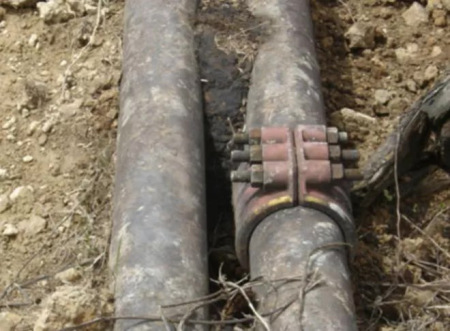
Excerpt from the Art and Science of Tanker Tracking, Bloomberg, Mar. 14, 2016

Who Controls dot.Africa?

Now a virtual version of this scramble for Africa is taking place in a court in California, over ownership of the continent’s internet address, or technically its “generic top-level domain” (gTLD).The .africa name, which would grace the end of web and e-mail addresses, was meant to have joined existing ones such as .com about two years ago…But a dispute over who should control the .africa address has dragged on for years and been further delayed by a recent ruling.

At issue was a decision by the Internet Corporation for Assigned Names and Numbers (ICANN), a non-profit organisation that manages the web’s address book, to give control of the name to ZA Central Registry (ZACR), a South African non-profit that was one of two applicants for the name. ZACR’s ace was not just that it had the support of almost three-quarters of African countries (it needed 60%) but that it had been chosen by the African Union to look after the address book for the continent.The other applicant, DotConnectAfrica (DCA), a Mauritius-registered non-profit, was turned down because, among other things, it could not prove that it had enough support and because several African governments objected to it. Although it was clearly the weaker of the two applicants, DCA was thrown a legal lifeline when ICANN blundered, failing to halt its selection process when DCA appealed against the decision. Instead it went ahead and gave the rights to ZACR, opening the way to a further string of appeals and reconsiderations that have finally landed before a court in America. Judges there ordered ICANN not to hand out the name to anyone while the case drags tortuously on.

At stake is more than the money that would flow to whoever gets the right to sell .africa website addresses, but also an important principle over who should control regional names that are, in a sense, a virtual commons. African states have every right to feel aggrieved that, having decided who should control the web address of the continent, they are as powerless to enforce their wishes as they were in Berlin in 1884.

Excerpts from A virtual turf war: The scramble for .africa, Economist, June 10, 2016

Banking in Afghanistan

One bank with 114 branches in war-torn country; defrauded out of almost all its money; occasional target of terrorists. Ready to bid? That’s what Ashraf Ghani, president of Afghanistan, is hoping. He’s seeking a buyer for Kabul Bank, once the country’s largest. The government took it over in 2010 after its owners were accused of embezzling $825 million using fake loans and spending it on, among other things, 11 villas in Dubai and an airline they used to smuggle cash there. The privatization is a test for Ghani, who wants to show the foreign donors who provide most of his budget that he’s committed to fighting corruption.

New Kabul Bank, as it’s now called, isn’t exactly thriving. The bank has been barred from making loans since the scandal. .. On a recent morning, a branch in Kabul’s Baharistan neighborhood was guarded by five men in military uniforms armed with AK-47 assault rifles. Some of the dust-covered computers weren’t working. A customer trying to make a withdrawal waited for an hour and then was turned away.  “I keep hearing about their system failures,” said the customer, Atiqullah Wali. “It’s better to keep our cash inside our pillows like before.”

When the Taliban was driven out of Kabul in 2001, they left the financial system in disarray, fleeing with all but $30,000 of the central bank’s cash. Into the void stepped Sherkhan Farnood, who was wanted by Russian authorities for allegedly running an illegal money-transfer business. He founded Kabul Bank in 2004 and hired Khalil Ferozi as chief executive officer.

The banking industry boomed as foreign aid poured into Afghanistan, with assets expanding by more than 50 percent a year….Farnood amassed property in Dubai and competed in high-stakes poker tournaments in Europe.

The scheme unraveled in 2010, when the central bank learned of the fraud, ordered Farnood and Ferozi to resign and guaranteed the bank’s deposits to stop a run. An investigation by an independent anti-corruption committee commissioned by the Afghan government found that the executives had stolen an amount equivalent to about one-twelfth of the country’s GDP, mainly by giving loans to themselves and their friends that didn’t have to be repaid. One of the alleged beneficiaries was Mahmood Karzai, brother of then-President Hamid Karzai, who wasn’t charged and said he did nothing wrong.

Excerpt from Looted Lender for Sale as Afghanistan Seeks Buyer for Kabul Bank, Bloomberg BusinessWeek, Mar. 4, 2016

Endangered Fish as Delicacy

The most recent estimate puts the remaining numbers of vaquita, a porpoise found only in the waters of the Sea of Cortés, Mexico, at just 60, down from 100 two years ago…. The vaquita has been a victim of the shrimp and totoaba fisheries, showing up as bycatch in gillnets.

The totoaba is also an endangered species but its swim bladder is a delicacy in China, selling for as much as US $5,000 per kilogram in the U.S. and a great deal more in China. The matter has been taken up by Agriculture Secretary José Calzada Rovirosa with Chinese officials in an effort to stop the illegal consumption of the bladders.  Vaquitas are not only being killed by totoaba fishing. When illegal fishermen are pursued by the Mexican Navy, they often cut their nets and set them adrift, becoming an additional threat to the porpoise.

Removing these “ghost nets” will be one of the steps taken before the implementation of an assisted breeding program, said marine mammal expert Lorenzo Rojas Bracho from the National Institute of Ecology and Climate Change.

There are doubts about the feasibility of a breeding program as well as concerns about the risk. “We have no idea whether it is feasible to find, capture and maintain vaquitas in captivity much less whether they will reproduce,” said vaquita expert Barbara Taylor of the U.S. National Oceanic and Atmospheric Administration.
Excerpt from Assisted breeding for endangered vaquita?, Mexico News Daily, June 28, 2016

How to Make Space Friendly for Military Use

From the DARPA website

The volume of Earth’s operational space domain is hundreds of thousands times larger than the Earth’s oceans. It contains thousands of objects hurtling at tens of thousands of miles per hour. The scales and speeds in this extreme environment are difficult enough to grasp conceptually, let alone operationally, as is required for commanders overseeing the nation’s increasingly critical space assets.

Current [US] space domain awareness tools and technologies were developed when there were many fewer objects in space. Only a few nations could even place satellites in orbit, and those orbits were easily predictable without advanced software tools. That situation has changed dramatically in the past decade with a developing space industry flooding once lonely orbits with volleys of satellite constellations. Despite this much more complex and chaotic environment, commanders with responsibility for space domain awareness often rely on outdated tools and processes—and thus incomplete information—as they plan, assess, and execute U.S. military operations in space.

To help address these technical and strategic challenges, DARPA is launching the first of two planned efforts under the Agency’s new Hallmark program, which has the overarching goal to provide breakthrough capabilities in U.S. space command and control. This first effort, the Hallmark Software Testbed (Hallmark-ST), has as its primary goal the creation of an advanced enterprise software architecture for a testbed for tools that will integrate a full spectrum of real-time space-domain systems and capabilities. The testbed would be used to expedite the creation and assessment of a comprehensive set of new and improved tools and technologies that could be spun off into near-term operational use for the Defense Department’s Joint Space Operations Center (JSpOC) and Joint Interagency Combined Space Operations Center (JICSpOC).

“For example, an intuitive user interface incorporating 3-D visualization technology would present complex information in novel ways and provide commanders with unprecedented awareness and comprehension. An advanced testbed featuring playback and simulation capabilities would significantly facilitate research and development activities, experiments, and exercises to evaluate new technologies for their impact on space command and control capabilities.”

The enterprise architecture would be the backbone of a long-term testbed, the Hallmark Space Evaluation and Analysis Capability (SEAC), anticipated to be located in Northern Virginia.

Excerpts from Hallmark Envisions Real-Time Space Command and Control,  www. darpa. mil, June 17, 2016

See also Hallmark Software Testbed (Hallmark-ST)/Solicitation Number: DARPA-BAA-16-40, June 17, 2016 Federal Business Opportunities

Rhino Parks and the US Military

A group of American military veterans plans to train rangers at private wildlife farms and reserves in South Africa where rhino poachers have been active.The US military publication, Stars and Stripes, reports that the “small conservation group Vetpaw had previously operated in Tanzania but was ordered to leave, partly because of a video in which a member spoke about killing poachers”.Former US Marine and head of Vetpaw, Ryan Tate, said the member did not speak for the organisation and since the incident he has sought to rebrand Vetpaw.

The name is an acronym of “Veterans Empowered to Protect African Wildlife” and the organisation has as its aim employment for skilled post 9/11 US military veterans….The majority of Vetpaw members have been deployed in Afghanistan and Iraq...They plan to offer training including marksmanship, field medicine and manoeuvring at night. “People are desperate and want to try any and everything they can,” Peaton told the publication in reference of owners and operators of “private wildlife parks” that lack the resources State-run parks receive.

Earlier this month Environmental Affairs Minister Edna Molewa met with the Private Rhino owners Association (PROA) to discuss rhino conservation in South Africa.PROA said rhino poaching had had “a detrimental effect” on private reserves which held more than a third of South Africa’s total rhino population.

Last week suspected poachers shot and killed a ranger at a private reserve in Bel-Bela before killing a rhino for its horn.Earlier this week two Kruger National Park field rangers were arrested on suspicion of involvement in rhino poaching activities.

US military veterans coming to help in the fight against rhino poaching,  defenceWeb, June  22, 2016

Electronic Waste: reincarnation

In the electronics recycling business, the benchmark is to try to collect and recycle 70 percent, by weight, of the devices produced seven years earlier…. Apple exceeds that, typically reaching 85 percent, including recycling some non-Apple products that customers bring in.

That means Apple will have to get hold of and destroy the equivalent of more than 9 million of 2009’s iPhone 3GS models this year around the world. With iPhone sales climbing to 155 million units in 2015, grinding up Apple products is a growth business.  Apple said it collected more than 40,000 tons of e-waste in 2014 from recycled devices, including enough steel to build 100 miles of railway track.

Brightstar Corp., based in Miami, Florida, TES-AMM in Singapore, Hong-Kong’s Li Tong and Foxconn Technology Group, the most famous manufacturer of iPhones, are part of a global network of recyclers that agreed to more than 50 rules, ranging from security, to insurance, to auditing, in the destruction of the phones.

The process starts at hundreds of Apple stores globally, or online, where the company offers gift certificates to lure iPhone owners to sell back their devices….Once Apple’s partners decide a phone must be scrapped, a deconstruction process begins that is remarkably similar to Apple’s production model, only in reverse.
Apple pays for the service and owns every gram, from the used phone at the start to the pile of dust at the end, said Linda Li, chief strategy officer for Li Tong. The journey, consisting of about 10 steps, is controlled, measured and scripted through vacuum-sealed rooms that are designed to capture 100 percent of the chemicals and gasses released during the process, she said…

While some brands salvage components such as chips that can be used to repair faulty phones, Apple has a full-destruction policy.“Shredding components takes more energy than repurposing,” Li said. Li Tong works with other customers to advise on how to design products that are easier to deconstruct, taking cameras from smartphones for reuse in toy drones, and adapting screens from Microsoft Surface tablets to use in New York taxis, she said.  Apple shreds its devices to avoid having fake Apple products appearing on the secondary market.
And once it’s ground into shreds, what becomes of your old iPhone? Hazardous waste is stored at a licensed facility and the recycling partners can take a commission on other extracted materials such as gold and copper. The rest is reincarnated as aluminum window frames and furniture, or glass tiles.

Where iPhones Go To Die ( and Be Reborn), Bloomberg,  Mar. 13, 2016

Drones Talk Like Wolves

From the DARPA website:

CODE intends to focus on developing and demonstrating improvements in collaborative autonomy—the capability of groups of UAS to work together under a single person’s supervisory control. The unmanned vehicles would continuously evaluate their own states and environments and present recommendations for coordinated UAS actions to a mission supervisor, who would approve or disapprove such team actions and direct any mission changes. Using collaborative autonomy,

CODE’s envisioned improvements to collaborative autonomy would help transform UAS operations from requiring multiple operators for each UAS to having one mission commander simultaneously directing all of the unmanned vehicles required for the mission. …

CODE’s prototype human-system interface (HSI) is designed to allow a single person to visualize, supervise, and command a team of unmanned systems in an intuitive manner. Mission commanders can know their team’s status and tactical situation, see pre-planned and alternative courses of action, and alter the UASs’ activities in real time.  For example, the mission commander could pick certain individual UASs from a team, circle them on the command station display, say “This is Group 1,” circle another part of the map, and say “Group 1 search this area.”

Companies involved Lockheed Martin Corporation (Orlando, Fla.) and the Raytheon Company (Tucson, Ariz.).  Also:

  • Daniel H. Wagner Associates (Hampton, Va.)
  • Smart Information Flow Technologies, LLC (Minneapolis, Minn.)
  • Soar Technology, Inc. (Ann Arbor, Mich.)
  • SRI International (Menlo Park, Calif.)
  • Vencore Labs dba Applied Communication Sciences (Basking Ridge, N.J.)


Excerpts from CODE Takes Next Steps toward More Sophisticated, Resilient, and Collaborative Unmanned Air Systems

Illegal Genetically Modified Crops: China

In 2013 President Xi Jinping of China…recounted his own experience of hunger during China’s great famine in the early 1960s…..He said that guaranteeing China’s “food security” was still a serious worry. Hinting at what he saw as a possible remedy, he said China must “occupy the commanding heights of transgenic technology” and not yield that ground to “big foreign firms”….

Since then, however, Chinese policy had grown much more conservative, for two main reasons. The first is anxiety among some members of the public about the safety of GM foods. The other is a worry that China’s food market might become reliant on foreign GM technology. True, a large share of the soyabeans imported by China are genetically modified. So is the vast majority of the cotton it grows. In 2015 there were more than 6.6m farmers growing GM cotton, and a total of 3.7m hectares of GM crops under cultivation, including cotton and papaya, according to Randy Hautea of the International Service for the Acquisition of Agri-biotech Applications, an industry group. But the government has been reluctant to approve the growing of GM staples such as maize (corn) and rice.   …

Worries about foreign domination of GM technology may ease if a $43 billion deal reached in February 2016 goes ahead for the takeover of Syngenta, a Swiss agricultural firm, by a Chinese company, ChemChina. The acquisition must still be approved by regulators in several countries, but it could give China control of Syngenta’s valuable GM-seed patents.

China’s policymakers may be trying to bring belated order to what is already thought to be the widespread, illegal, growing of GM crops. Greenpeace, an NGO, reported in January 2016 that 93% of samples taken from maize fields in Liaoning province in the north-east tested positive for genetic modification, as did nearly all the seed samples and maize-based foods it gathered at supermarkets in the area.

Excerpts from Genetically Modified Crops: Gene-Policy Transfer, Economist,  Apr. 23, 2016


Killing Spree of Endangered Species

Laos’s biggest breeding facility, near Thakhek, reportedly holds around 400 tigers. Many are bred solely for their parts. The skins are prized as decorations. Farmed-tiger parts mostly move to China through the unruly Golden Triangle where Myanmar, Thailand and Laos converge. The region is a hotspot for trade in protected species: the Environmental Investigation Agency (EIA), an NGO based in UK  visited the Golden Triangle Special Economic Zone in Laos, popular with Chinese tourists. [It] found tiger-bone wine, bear-bile pills, pangolin scales and carvings from the beaks of helmeted hornbills openly on sale. Outside the God of Fortune restaurant was a caged bear-cub that could be killed and cooked to order.

Laos also offers a link to the most lucrative of all illegal wildlife enterprises: the trade in rhinoceros horn, which the UN Office on Drugs and Crime (UNODC) estimated six years ago was worth $8m a year. Since then the number of rhinos slaughtered annually by poachers in Africa has more than tripled (the poaching of Asia’s depleted stock of rhinos is modest). Poachers are sometimes caught; those higher up the chain rarely are. The only high-level trafficker in jail is a Thai, Chumlong Lemtongthai, who is serving a 13-year sentence in South Africa. He was charged in 2011 with bringing Thai prostitutes to South Africa so they could claim they had shot rhinos on legal hunts and were thus entitled under South African law to export horns as trophies. It was the most bizarre of several methods used to get hold of a substance that can fetch up to $70,000 a kilo—almost twice the price of gold.

Mr Chumlong has been linked to a man who has been described as the Pablo Escobar of wildlife-trafficking, Vixay Keosavang, a former soldier in the Lao People’s Army who operates from a walled compound far off the beaten track in the central province of Bolikhamxay. In 2013 the American government offered $1m for information that would help dismantle the network it believes that Mr Vixay heads, which it suspects of trading wild-animal parts across several countries. Mr Vixay has denied wrongdoing.

Some experts believe that the surge in rhino-poaching, which has cut the world’s population by a fifth since 2008, has been driven by a surge in demand in Vietnam. There, rhino-horn shavings are a supposed cure for hangovers; entire horns are given as gifts and displayed as ornaments. Others believe that much of the rhino-horn taken to Vietnam ends up in China.

As their country opened up in recent decades, “some enterprising Vietnamese citizens got residential status in South Africa and very quietly began trading,” says Tom Milliken of Traffic, an NGO. In at least two cases, professional South African hunters have been caught shooting rhino for Vietnamese clients and, in two others, Vietnamese nationals have been arrested trying to smuggle rhino-horns out of South Africa by air. Hunts have been arranged for citizens of the Czech Republic, which has had a large Vietnamese community since the cold war. Since that ruse was discovered, Slovaks, Poles, Ukrainians and Russians have been enlisted as bogus trophy-hunters. “Some Vietnamese residents have bought their own game ranches, so they are now able to buy rhinos at auction and organise sports hunts,” says Mr Milliken.

The international nature of the trade poses big problems for law-enforcement. Documents that would prove decisive in a prosecution for rhino-horn trafficking can sit in a South African office for months awaiting translation, says Mr Milliken; the situation is no better for other animal parts. “None of what we do for drugs do we do for wildlife trafficking,” an international official involved in the fight against organised crime laments. “Extraditions are rare. There are no controlled deliveries. Sophisticated investigative techniques are seldom deployed. We’re not doing any of the things we could be doing to stop it.”

Excerpts from The Trade in Wild Animals: Last Chance to See?, Economist, Apr. 18, 2016, at 49

How to Catch Illegal Fishers: port state measures

The Agreement on Port State Measures to Prevent, Deter and Eliminate Illegal, Unreported and Unregulated Fishing (the Agreement)  entered into force on June 5, 2016.  The main purpose of the Agreement is to prevent, deter and eliminate illegal, unreported and unregulated (IUU) fishing through the implementation of robust port State measures. The Agreement envisages that parties, in their capacities as port States, will apply the Agreement in an effective manner to foreign vessels when seeking entry to ports or while they are in port. …

The Agreement provides an opportunity for port States to check and verify that vessels not flying their flags and that seek permission to enter their ports, or that are already in their ports, have not engaged in IUU fishing.  The Agreement also enhances flag States control over vessels as the Agreement requires the flag State to take certain actions, at the request of the port State, or when vessels flying their flag are determined to have been involved in IUU fishing….

Furthermore, the Agreement’s seeks to prevent the occurrence of so-called ports of non-compliance (formerly known as ports of convenience). Countries operating ports of non compliance do not regulate effectively the fishing and fishing-related activities that take place in the ports, including determining whether IUU-caught fish are landed, transshipped, processed and sold in the ports. Ratifying and acceding to the Agreement and implementing its measures robustly will reduce the number of ports of non compliance and opportunities for vessels to dispose of IUU-caught fish with relative ease. Port state measures are a cost-effective tool in ensuring compliance with national law and regional conservation and management measures adopted by RFMOs. This is because port States do not have to expend time, effort and resources in monitoring, pursuing and inspecting vessels at sea. Port inspections and controls are very much cheaper and safer than alternative, more conventional air and surface compliance tools. Port State measures, if used in conjunction with catch documentation schemes, have the potential to be one of the most cost-effective and efficient means of combating IUU fishing.

The Agreement’s most potent effect in terms of its potential to curb IUU fishing is that through the implementation of its provisions, including those relating to denial of access to ports, port inspections, prohibition of landing, and detention and sanction, can prevent fish caught from IUU fishing activities from reaching national and international markets. By making it more difficult to market fish through the application of port State measures, the economic incentive to engage in IUU fishing is reduced. In addition, many countries have also decided to prohibit trade with countries that do not have port state measures in place.

Excerpt from Food and Agriculture Organization  FAO Website.

How to Make a Buck like Goldman Sachs

Three years ago, your can of Coke suddenly cost a few pennies more. The culprits? The clever bankers at Goldman Sachs. According to a Senate panel, they gamed the global aluminum market, warehousing tens of thousands of tons of the metal in Detroit and delaying delivery to customers like Coca-Cola. The bank was able to ratchet up the price on its supply, netting several billion dollars in the process. The best part: Goldman didn’t do it as a hedge against other investments. The bank did it to make money for itself, at the expense of everyone else.Maneuvers like this are legal, but they’ve become more distasteful in the wake of the 2008 collapse, giving birth to the coinage of a term financialization…

Excerpts from David Sax  How Finance Ruined Business, Makers and Takers adds up the ill effects of Wall Street’s zero-sum game, Bloomberg BusinessWeek, May 19, 2016

Data Security: Real Fear

On its website, ProfitBricks touts what it calls “100 percent German data protection,” underneath the black, red, and gold colors of the German flag. “Having a German cloud helps tremendously,” says Markus Schaffrin, an IT security expert at Eco, a lobbying group for Internet companies. “Germany has some of the most stringent data-protection laws, and cloud-service providers with domestic data centers are of course highlighting that.”

The companies known as the Mittelstand—the small and midsize enterprises that form the backbone of the German economy—are rapidly embracing the idea of the networked factory. Yet they remain wary of entrusting intellectual property to a cloud controlled by global technology behemoths and possibly subject to government snooping. “Small and medium enterprises are afraid that those monsters we sometimes call Internet companies will suck out the brain of innovation,” says Joe Kaeser, chief executive officer of Siemens, which in March began offering cloud services using a network managed by German software powerhouse SAP.

In a case being closely watched in Germany, the U.S. Department of Justice has demanded that Microsoft hand over e-mails stored on a data server in Ireland. The software maker argues that the U.S. has no jurisdiction there; the U.S. government says it does, because Microsoft is an American company. …

U.S. companies aren’t ceding the market. Microsoft will offer its Azure public cloud infrastructure in German data centers, with T-Systems acting as a trustee of customer data. The companies say the arrangement will keep information away from non-German authorities. And IBM in December opened a research and sales hub for Watson, its cloud-based cognitive computing platform, in Munich—a move intended to reassure Mittelstand buyers about the security of their data. “If a customer wants data never to leave Bavaria, then it won’t,” says Harriet Green, IBM’s general manager for Watson. “I’m being invited in by many, many customers in Germany, because fear about security is very, very real.”
Excerpts from Building a National Fortress in the Cloud, Bloomberg, May 19, 2016

Tuna Boats in Mozambique

Mozambique’s tuna fishing fleet needs to be refitted to meet European Union standards, Finance Minister Adriano Maleiane said on May 23, 2016 piling more costs onto a project at the centre of a debt crisis.

The boats were paid for out of an $850 million loan arranged in 2013 by Credit Suisse and Russia’s VTB to finance “fishing infrastructure”. The cash came in the form of a government-backed bond to state tuna-fishing company Ematum.

Nearly three years later, the fishing project, initially touted as self-sustaining, has severely underperformed and added to a sovereign foreign debt mountain equal to 80 percent of GDP that could bankrupt the [country]….Not only did Ematum fall short of its targets but $500 million of the “tuna bond” was subsequently designated for “maritime security” and reallocated to the defence budget.The 24 boats, which were built in France, will now be modified in South Africa so they can export tuna to Europe…Mozambique’s government cannot afford to have them all upgraded at once. “The costs involved in refitting the boats are high, hence the work is being done in phases,” Maleiane was quoted by the state news agency as saying.

Deepening the mire, a further $1.35 billion of previously undisclosed government-backed debt emerged last month, prompting the International Monetary Fund and Western governments to suspend budgetary aid support.  The loans included $622 million for Proindicus, a state-owned company tasked with providing maritime security, and a $535 million for Mozambique Asset Management (MAM) to build a shipyard for gas projects…The hidden loans have exposed widespread government mismanagement that risks pushing a promising African economy, one that emerged from a ruinous 1976-92 civil war, into crisis.

Excerpts from Mozambique to refit tuna fleet, compounding debt crisis, Reuters, May 24, 2016

Crocodile Farms for Hermes Bags

Over 20 countries export crocodilian skins, according to statistics from the UN Environment Programme. More than half the global tally is from caimans and alligators farmed in Colombia and the United States. The skins are largely sold to tanners in Italy and France, and also in Singapore.The industry has grown apace since the late 1970s, when conservationists began loosening an export ban designed to defend the animals from hunting (the trade is still controlled under CITES, an intergovernmental effort to protect endangered creatures). Grahame Webb, a biologist, says that many of the 5,000 or so farms are tiny set-ups in Asian villages. The largest outfits, however, now boast as many as 70,000 crocs. Some are getting snapped up by big leather-buyers at fashion houses such as Hermès and Louis Vuitton.

Excerpt from  Crocodile Farming: Snapping Dressers, Economist, May 14, 2016, at 55

Stealing from Central Banks: hacking attacks

A little-noticed lawsuit details a hacking attack similar to one that stole $81 million from Bangladesh’s central bank, saying cybercriminals stole about $9 million in 2015 from a bank in Ecuador…..…A third attack, from December 2015 at a commercial bank in Vietnam, was detailed last week by the Society for Worldwide Interbank Financial Telecommunication, or Swift. That bank detected the fraudulent requests and stopped the movement of funds, the central bank in Vietnam said.  In the January 2015 Ecuador hack, as with the Bangladesh case, hackers managed to get the bank’s codes for using Swift, the global bank messaging service, to procure funds from another bank, according to court papers.

The Ecuadorean bank, Banco del Austro, filed a lawsuit in New York federal court in 2016 accusing Wells Fargo & Co. of failing to notice “red flags’’ in a dozen January 2015 transactions and to stop them before the thieves transferred about $12 million, most of it to banks in Hong Kong.  Lawyers for the two banks didn’t immediately return phone calls asking to comment about the case and Swift’s complaints that they had failed to notify the messaging network….

There are similarities in method, including thieves accessing the bank’s system to log on to the Swift network through customer sites, and doing so after bankers’ hours, apparently to reduce the likelihood someone would ask questions about specific transactions…

According to that filing on behalf of Banco del Austro, or BDA, “For each of the unauthorized transfers, an unauthorized user, using the Internet, hacked into BDA’s computer system after hours using malware that allowed remote access, logged onto the Swift network purporting to be BDA, and redirected transactions to new beneficiaries with new amounts.” Using that method, just before midnight on Jan. 14, 2015, a payment order made to a Miami company for less than $3,000 was altered to send $1.4 million to an account in Hong Kong, according to the court filing. There were 12 suspect transfers carried out over a 10-day period in January 2015, according to the lawsuit.  BDA’s lawsuit argues Wells Fargo should have noticed several anomalies in the transfers and, at a minimum, asked questions about them.  “The unauthorized transfers were made in unusual times of the day, in unusual amounts, to unusual beneficiaries in unusual geographic locations,’’ the bank’s lawyers argued in the filing. “Despite the numerous anomalies in the unauthorized transfers, [Wells Fargo] inexplicably failed to block them and/or alert BDA of the suspicious activity.’’

Excerpts from DEVLIN BARRETT and KATY BURNE, Now It’s Three: Ecuador Bank Hacked via Swift, Wall Street Journal, May 19, 2016

Nuclear-Powered Aircraft Carrier, India

India’s navy has finalised plans for a nuclear-powered super-carrier, which is scheduled to be built in Kochi with US help.  In preparation for the long-gestation project, estimated for the year 2028, the navy is setting up the building blocks that will identify the aircraft to be based on the carrier.  The carrier is  to be called the INS-Vishal.

Nuclear energy enables a carrier to sail for months without needing to dock for refuelling. The navy wants a nuclear-powered carrier….to enhance its reach beyond territorial waters.  It has determined that the carrier will need a nuclear reactor generating 180MW for propulsion, and may go for two reactors of 90MW each. Talks with the Bhabha Atomic Research Centre (Barc) are at an advanced stage.

The navy has bolstered its case for a nuclear-powered carrier by citing the nuclear deals India has signed not only with the US but also with Japan and Germany, albeit for peaceful uses of nuclear technology…The navy had invited preliminary inquiries from foreign entities for the design and development of the Vishal: DCNS of France, Rosoboronexport of Russia, Lockheed Martin of the US. Within the top brass, however, there is now a congealing of opinion that the US option may be the one to go after.

This is as much because of the technology regime that India promises to enter following the nuclear deals as because the US is actually operating carriers and building them, the latest being the Gerald R Ford class

“In the Arihant (the Indian nuclear submarine now in sea trials) we have gained, with some Russian help, the ability to develop a reactor for our purpose. Barc is confident that it can build for the carrier too,” the officer said…The only Indian operational carrier now is the Vikramaditya. At 45,000 tonnes it has a flight deck that is still too small for the new dimensions of carrier operations the navy is envisaging from the Vishal, the officer said.

Excerpts from Plan for nuclear-driven carrier with US help, the Telegraph (Calcutta) May 16, 2016


Messaging Secrecy: US Military

The United States Department of Defense and DARPA [seek to establish] a secure messaging system that can provide repudiation or deniability, perfect forward and backward secrecy, time to live/self delete for messages, one time eyes only messages, a decentralized infrastructure to be resilient to cyber-attacks, and ease of use for individuals in less than ideal situations….The messaging platform will transfer messages via a secure decentralized protocol that will be secured across multiple channels, including but not limited to: 1) Transport protocol, 2) Encryption of messages via various application protocols, 3) Customized blockchain implementation of message deconstruction and reconstruction, and decentralized ledger implementation

Excerpts from SBIR.defense business. org

A Barbed Wire for Outer Space

In 2007 a missile launch by the Chinese in 2007 blew up a dead satellite and littered space with thousands of pieces of debris. But it was another Chinese launch  in 2013 that made the Pentagon really snap to attention, opening up the possibility that outer space would become a new front in modern warfare.  This time, the rocket reached close to a far more distant orbit — one that’s more than 22,000 miles away — and just happens to be where the United States parks its most sensitive national security satellites, used for tasks such as guiding precision bombs and spying on adversaries.

The flyby served as a wake-up call and prompted the Defense Department and intelligence agencies to begin spending billions of dollars to protect what Air Force Gen. John Hyten in an interview called the “most valuable real estate in space.”..[I]nstead of relying only on large and expensive systems, defense officials plan to send swarms of small satellites into orbit that are much more difficult to target–GPS III is the next generation of GPS satellites..

At the same time..[a]gencies have begun participating in war-game scenarios involving space combat at the recently activated Joint Interagency Combined Space Operations Center. The Pentagon is even developing what is known as the “Space Fence,” which would allow it to better track debris in space.

National security officials are not only concerned that missiles could take out their satellites but also that a craft’s equipment could be easily jammed. Potential enemies could “dazzle” sensors, temporarily blinding them, or deploy tiny “parasitic satellites” that attach to host satellites and do their worst. That could lead to soldiers stranded on the battlefield with little means of communication or missiles that would not be able to find their targets.  “We have considered space a sanctuary for quite some time. And therefore a lot of our systems are big, expensive, enormously capable, but enormously vulnerable,” said Deputy Defense Secretary Robert O. Work.

Pentagon officials say that Russia and China have been developing the capability to attack the United States in space…Pentagon officials fear its satellites could be sitting ducks. Navy Adm. Cecil Haney, commander of the U.S. Strategic Command, said recently that North Korea has successfully jammed GPS satellites, that Iran was busy building a space program and that “violent extremist organizations” were able to access space-based technologies to help them encrypt communications, among other things.
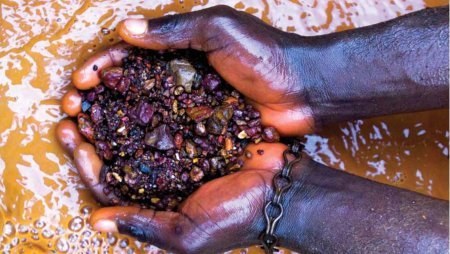
The Pentagon spends $22 billion on space programs and is investing an additional $5 billion in space efforts this year, including $2 billion for what is known as “space control,” which includes its highly classified offensive programs. Hyten declined to discuss the ways in which the United States is preparing to attack other countries in space. But the United States has had the capability to blow up satellites since 1985, when an F-15 fighter pilot fired a missile into space that took out an old military observation satellite.

Excerpts from  Christian Davenport: A fight to protect ‘the most valuable real estate in space, Washington Post, May 9, 2016

Biometrics Gone Wrong

Despite their huge potential, artificial intelligence and biometrics still very much need human input for accurate identification, according to the director of the Defense Advanced Research Projects Agency.  Speaking at  an Atlantic Council event, Arati Prabhakar said that while the best facial recognition systems out there are statistically better than most humans at image identification, that when they’re wrong, “they are wrong in ways that no human would ever be wrong”….

“You want to embrace the power of these new technologies but be completely clear-eyed about what their limitations are so that they don’t mislead us,” Prabhakar said. That’s a stance humans must take with technology writ large, she said, explaining her hesitance to take for granted what many of her friends in Silicon Valley often assume  — that more data is always a good thing.  More data could just mean that you have so much data that whatever hypothesis you have you can find something that supports it,” Prabhakar said

DARPA director cautious over AI, biometrics, Planet Biometrics, May 4, 2016

Unhackable GPS

South Korea has revived a project to build a backup ship navigation system that would be difficult to hack after a recent wave of GPS signal jamming attacks it blamed on North Korea disrupted fishing vessel operations, officials say.Global Positioning System (GPS) and other electronic navigation aids are vulnerable to signal loss from solar weather effects, radio and satellite interference and deliberate jamming.

South Korea, which says it has faced repeated attempts by the rival North to interfere with satellite signals, will award a 15 billion won ($13 million) contract this month to secure technology required to build an alternative land-based radio system called eLoran (enhanced LOng-RAnge Navigation), which it hopes will provide reliable alternative position and timing signals for navigation….

GPS vulnerability poses security and commercial risks, especially for ships whose crews are not familiar with traditional navigation techniques or using paper charts.The General Lighthouse Authorities of the UK and Ireland, which tried to pioneer an eLoran system in Europe, conducted simulated communications attacks on ships at sea and said the results “demonstrated the devastating effects of jamming on the ships’ electronic bridge systems”.The United States, Russia and India are all looking into deploying versions of eLoran, which sends a much stronger signal and is harder to jam, as backup.

Installing an eLoran receiver and antenna on a ship would cost thousands of dollars, although cheaper options could include incorporating eLoran systems into satnav devices, according to technical specialists.

Excerpts from South Korea Revives GPS Backup After Cyber Attack  , euters, May 1, 2016

Water: the White Gold

Considered as the “white gold” –as opposed to the “black gold”—oil, water scarcity has become one of the major concerns of Bahrain in spite of the fact that it has a high Human Development Index and was recognized by the World Bank as a high-income economy.  It’s Gross Domestic Product (GDP) per capita amounts to 29,140 US Dollars. And it is home to the headquarters for the United States Naval Forces Central Command/United States Fifth Fleet.

All the above does not suffice to make Bahrainis happy. In fact, their country leads the list of 14 out of the 33 countries most likely to be water-stressed in 2040 –all of them situated in the Middle East– including nine considered extremely highly stressed according to the World Resources Institute (WRI).  After Bahrain comes Kuwait, Lebanon, Palestine, Oman, Qatar, Saudi Arabia, and the United Arab Emirates.  Other Middle East Arab countries more or less share with Bahrain this front line position of water-stressed states. These are Algeria, Iraq, Jordan, Libya, Morocco, Syria, Tunisia and Yemen. All of them hold a very close second position in the region’ s water-stress ranking. The total represents two thirds of the 22 Arab countries. Not that the remaining Arab states are water-safe. Not at all: Mauritania, in the far Maghreb West, and Egypt, at the opposite end, are already under heavy threat as well.

The whole region, already arguably the least water-secure in the world, draws heavily on groundwater and desalinated sea water, and faces exceptional water-related challenges for the foreseeable future, says the WRI’s report: Ranking the World’s Most Water-Stressed Countries in 2040. The report’s authors Andrew Maddocks, Robert Samuel Young and Paul Reig foresee that world’s demand for water, including of course the Middle East, is likely to surge in the next few decades…This comes at a time when the Arab region has not taken advantage of its water resources of about 340 billion cubic meters, using only 50 per cent. The rest is lost and wasted.

Regarding the North of Africa, the Egyptian Ministry for Environment has recently admitted that large extensions of the country’s Northern area of the Nile Delta, which represents the most important and extensive agricultural region in Egypt, is already heavily exposed to two dangerous effects: salinasation and flooding. This is due to the rise of the Mediterranean Sea water levels and the land depression.

The impact of global warming and growing heat waves is particularly worrying the Egyptian authorities as it might reduce the flow of the Nile water in up to 80 per cent according to latest estimates

Excerpts from Baher Kamal, Climate Change and the Middle East (II), No Water in the Kingdom of the Two Seas—Nor Elsewhere, IPS, Apr. 18, 2016

Nuclear Power Crossing Borders: Belgium-Germany

Germany asked Belgium to take Engie SA’s Tihange-2 and Doel-3 atomic plants offline until the safety concerns can be addressed, Environment Minister Barbara Hendricks said on April 20, 2016 in an emailed statement. The two facilities, which were shut for investigations for 20 months, are safe to operate, Belgium’s nuclear regulator AFCN said in response to the request…

Engie’s Belgian unit Electrabel operates the two reactors. AFCN decided Nov. 17, 2015 that the reactors were safe to restart after investigations of the steel walls of the reactor vessels. With the approval, AFCN concluded the defects don’t affect safety. The two units account for about 14 percent of the nation’s installed power capacity…

Germany is phasing out nuclear energy in the wake of the Fukushima meltdowns in Japan in 2011, instead developing an energy market built on wind and solar power. The nation is set to close down its remaining eight reactors by 2022.

The plants resumed output by the end of last year. Germany wasn’t satisfied with AFCN’s assessment and called for a Belgium-German working group and for the national independent reactor safety commission, known as RSK, to examine the security issue. The commission concluded that in case of an incident it is unclear that safety provisions are adequate….Doel-3 has a capacity of 1,006 megawatts, while Tihange-2 has a capacity of 1,008 megawatts. The units have permission to operate until their retirement on Oct. 1, 2022, and Feb. 1, 2023, respectively, according to AFCN’s website

Excerpts In unprecedented move, Germany asks Belgium to halt two reactors over safety concerns, Bloomberg, Apr. 20, 2016

Monsanto in India, the royalties

Monsanto Co, the world’s biggest seed company, threatened to pull out of India on March 2016 if the government imposed a big cut in royalties that local firms pay for its genetically modified cotton seeds.

Mahyco Monsanto Biotech (India)(MMB), a joint venture with India’s Mahyco, licenses a gene that produces its own pesticide to a number of local seed companies in lieu of royalties and an upfront payment. MMB also markets the seeds directly, though the local licensees together command 90 percent of the market.  Acting on complaints of local seeds companies that MMB was charging high fees, the farm ministry last year formed a committee to look into the matter.

The committee has now recommended about a 70 percent cut in royalty, or trait fee, that the seed companies pay to MMB, government sources said. The farm ministry is yet to take a decision on the committee’s recommendation.  “If the committee recommends imposing a sharp, mandatory cut in the trait fees paid on Bt-cotton seeds, MMB will have no choice but to re-evaluate every aspect of our position in India,” Shilpa Divekar Nirula, Monsanto’s chief executive for the India region, said in a statement…

Separately, MMB has filed a case in a Delhi court, challenging the authority of the committee to determine the trade fee agreed upon by MMB and a number of Indian seed companiesIn a partnership with Mahyco, U.S.-based Monsanto launched a GM cotton variety in India in 2002 despite opposition from critics who questioned its safety, helping transform the country into the world’s top producer and second-largest exporter of the fiber.

In a ruling on Feburary 2016, the Competition Commission of India, the antitrust regulator, said there were indications that MMB had abused its dominant position in the country and asked its director general to complete an investigation within two months.  The government-appointed committee has also recommended cutting Bt cotton seed prices to about 800 rupees for a packet of 400 grams. Currently Bt cotton seeds are being sold between 830 and 1100 rupees in different parts of the country.

Excerpts from MAYANK BHARDWAJ, Monsanto threatens to exit India over GM royalty row, Reuters, Mar. 4, 2016

t

Data Mining: CIA, Facebook, Instagram and Twitter

Among the 38 previously undisclosed companies receiving In-Q-Tel funding, the research focus that stands out is social media mining and surveillance; the portfolio document lists several tech companies pursuing work in this area, including Dataminr, Geofeedia, PATHAR, and TransVoyant….The investments appear to reflect the CIA’s increasing focus on monitoring social media. In September 2015, David Cohen, the CIA’s second-highest ranking official, spoke at length at Cornell University about a litany of challenges stemming from the new media landscape. The Islamic State’s “sophisticated use of Twitter and other social media platforms is a perfect example of the malign use of these technologies,” he said…

The latest round of In-Q-Tel investments comes as the CIA has revamped its outreach to Silicon Valley, establishing a new wing, the Directorate of Digital Innovation…

Dataminr directly licenses a stream of data from Twitter to visualize and quickly spot trends on behalf of law enforcement agencies and hedge funds, among other clients.  Geofeedia collects geotagged social media messages to monitor breaking news events in real time.Geofeedia specializes in collecting geotagged social media messages, from platforms such as Twitter and Instagram, to monitor breaking news events in real time. The company, which counts dozens of local law enforcement agencies as clients, markets its ability to track activist protests on behalf of both corporate interests and police departments.PATHAR mines social media to determine networks of association…

PATHAR’s product, Dunami, is used by the Federal Bureau of Investigation to “mine Twitter, Facebook, Instagram and other social media to determine networks of association, centers of influence and potential signs of radicalization,” according to an investigation by Reveal.

TransVoyant analyzes data points to deliver insights and predictions about global events.  TransVoyant, founded by former Lockheed Martin Vice President Dennis Groseclose, provides a similar service by analyzing multiple data points for so-called decision-makers. The firm touts its ability to monitor Twitter to spot “gang incidents” and threats to journalists. A team from TransVoyant has worked with the U.S. military in Afghanistan to integrate data from satellites, radar, reconnaissance aircraft, and drones….
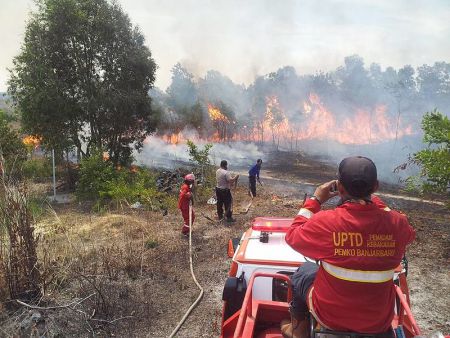
The recent wave of investments in social media-related companies suggests the CIA has accelerated the drive to make collection of user-generated online data a priority. Alongside its investments in start-ups, In-Q-Tel has also developed a special technology laboratory in Silicon Valley, called Lab41, to provide tools for the intelligence community to connect the dots in large sets of data.  In February, Lab41 published an article exploring the ways in which a Twitter user’s location could be predicted with a degree of certainty through the location of the user’s friends. On Github, an open source website for developers, Lab41 currently has a project to ascertain the “feasibility of using architectures such as Convolutional and Recurrent Neural Networks to classify the positive, negative, or neutral sentiment of Twitter messages towards a specific topic.”

Collecting intelligence on foreign adversaries has potential benefits for counterterrorism, but such CIA-supported surveillance technology is also used for domestic law enforcement and by the private sector to spy on activist groups.

Palantir, one of In-Q-Tel’s earliest investments in the social media analytics realm, was exposed in 2011 by the hacker group LulzSec to be innegotiation for a proposal to track labor union activists and other critics of the U.S. Chamber of Commerce, the largest business lobbying group in Washington. The company, now celebrated as a “tech unicorn” …

Geofeedia, for instance, promotes its research into Greenpeace activists, student demonstrations, minimum wage advocates, and other political movements. Police departments in Oakland, Chicago, Detroit, and other major municipalities havecontracted with Geofeedia, as well as private firms such as the Mall of America and McDonald’s.

Lee Guthman, an executive at Geofeedia, told reporter John Knefel that his company could predict the potential for violence at Black Lives Matter protests just by using the location and sentiment of tweets. Guthman said the technology could gauge sentiment by attaching “positive and negative points” to certain phrases, while measuring “proximity of words to certain words.”

Privacy advocates, however, have expressed concern about these sorts of automated judgments.“When you have private companies deciding which algorithms get you a so-called threat score, or make you a person of interest, there’s obviously room for targeting people based on viewpoints or even unlawfully targeting people based on race or religion,” said Lee Rowland, a senior staff attorney with the American Civil Liberties Union.”

Excerpt from Lee Fang, THE CIA IS INVESTING IN FIRMS THAT MINE YOUR TWEETS AND INSTAGRAM PHOTOS, Intercept, Apr. 14, 2016

Nuclear Reactors: Small + Modular

Small Modular Reactors (SMRs) are nuclear power plants that are smaller in size (300 MWe or less) than current generation base load plants (1,000 MWe or higher). These smaller, compact designs are factory-fabricated reactors that can be transported by truck or rail to a nuclear power site. SMRs will play an important role in addressing the energy security, economic and climate goals of the U.S. if they can be commercially deployed within the next decade….
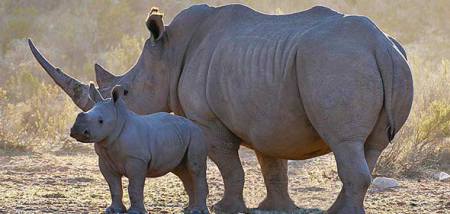
Because of their smaller size, they also can use passive safety systems and be built underground to limit the dangers of radioactive leaks. The modular design could allow parts of the plant to be made in a factory to ensure consistent design and cheaper costs.

Tennessee Valley Authority (TVA) is in a joint pilot project with the U.S. Department of Energy to help test the new technology. Dan Stout, senior manager of SMR technology at TVA, said working with DOE to test the new power plant “is part of TVA’s mission,” although he said any final decision will require that the power source is also cost effective. “We’re focused on providing an option that provides reliable, affordable and carbon-free energy, and so we want to pursue this early site permit to give us the option for possibly locating SMRs on the site for 10 to 20 years,” Stout said.

Excerpts from US Department of Energy

and Oak Ridge could take lead in new TVA nuclear design, but critics question secrecy, need

Miners v. Indigenous Peoples: Canada

In 1849 the First Nation of Ojibways, a Canadian indigenous group, fired a cannon into a copper mine that had gone ahead without their approval.These days Canada’s aboriginal groups use public pressure, backed by legal action, to protect their lands against exploitation by outsiders. In February 2016 the government of British Columbia reached agreement with forest companies, environmental groups and 26 First Nations communities to protect from logging an area on the Pacific coast larger than Belgium—newly dubbed the Great Bear Rainforest. The deal, which allows logging and mining in areas aboriginals have agreed to, is the culmination of a long public-relations campaign (choosing the Kermode bear as its mascot was a masterstroke). It would have got nowhere without centuries of treaty-making and decades of case law to back it up….

The federal aboriginal affairs agency is party to 554 proceedings involving such rights (not all of which concern resource firms). That does not include disputes between aboriginal groups and firms. Projects as diverse as seismic testing for mineral deposits in Arctic waters and fracking in the west face challenges. Until 1951 such lawsuits were barred. They are expensive and can drag on for years; the outcome is never assured. The Tsilhqot’in, who filed suit in 1998 against logging on their ancestral lands in British Columbia, finally won in 2014 and now have title to 1,750 square km (1,100 square miles). But the Innu of Ekuanitshit in Quebec last year lost their bid to stop the Muskrat Falls hydropower project, which they say will affect caribou herds.

Some big projects are caught in legal limbo. The Northern Gateway pipeline, which is to bring crude oil from Alberta to Canada’s west coast, has been stalled for more than a decade, largely because of opposition from First Nations groups along its route, some of them parties to the Great Bear agreement. The Pacific Northwest liquefied natural gas project, backed by Petronas, a Malaysian state-owned firm, has offered C$1 billion ($726m) in benefits over 40 years to the Lax Kw’alaams nation of northern British Columbia. That has not allayed fears that the project would destroy salmon fisheries.

When such disputes are unresolved, the price can be high. The Northern Gateway pipeline would add C$300 billion to Canada’s GDP over 30 years.

Miners and aboriginals in Canada: I’ll see you in court, Economist, Feb. 6, 2016 at 33

Herbicides: safer than table salt

It’s been a tough year for glyphosate, the world’s most popular weedkiller. In 2015, the International Agency for Research on Cancer (IARC), an arm of the World Health Organization, declared that glyphosate—the key ingredient in Monsanto’s Roundup products—was probably carcinogenic to humans. In the months since, multiple lawsuits have been filed blaming the chemical for causing cancer and birth defects. In February, testing found traces of glyphosate in German beer and organic panty liners sold in France. Other tests have found chemical residue in British bread, as well as in the urine of people across Europe. In early March, the European Union put off a vote to renew a 15-year license for glyphosate after several member states balked.

Monsanto famously advertised Roundup, which was introduced in 1974, as safer than table salt. In 1996 the company stopped making the table salt claim after complaints from New York state….. In September 2016 state officials in California proposed adding the herbicide to a list of known carcinogens. The FDA said in February 2016 that it would begin testing for glyphosate residue in food in the U.S. The results aren’t yet available. The Environmental Protection Agency has been reviewing its use since 2009. The agency, which in 1985 temporarily classified glyphosate as “possibly carcinogenic,” was supposed to wrap up sometime last year; it now says a draft of its decision should be available for public comment sometime this year.
The herbicide industry has mounted an aggressive campaign to discredit the cancer finding and to convince regulators—and the public—that the herbicide should remain in use. …

Glyphosate works by blocking the production of certain amino acids that a plant needs to grow, and it’s nonselective, meaning it kills most plants. It began to dominate the herbicide market only after Monsanto genetically engineered crops to survive it, marketing them under its Roundup Ready brand. Global sales of glyphosate were about $7.8 billion in 2014, 30 percent of the herbicide market, according to Cropnosis, a market-research firm. Monsanto’s dominance of the glyphosate market has declined since the chemical went off patent in 2000. Some weeds have become resistant to glyphosate, triggering the need for other weedkillers. Nonetheless, Roundup remains the primary money-maker for Monsanto’s agricultural productivity segment, which brought in 32 percent of its revenue in fiscal 2015.

A rejection of glyphosate by either the U.S. or Europe would have “massive” ramifications on farming and food production, says Jason Miner, an analyst for Bloomberg Intelligence. “You could quickly take us two decades back in terms of farm yields,” he says. “The world doesn’t have capacity to produce all the alternatives.”

Monsanto’s Roundup Could Get Whacked by European Regulators, Bloomberg BusinessWeek, Mar. 10, 2016

Micro-States as Sacrificial Lambs

On March 2015 Financial Crimes Enforcement Network (FinCEN), part of America’s Treasury branded Banca Privada d’Andorra (BPA) as a “primary money-laundering concern”, saying its top managers had moved cash for criminal groups. This so-called “311” measure (after the relevant section of the Patriot Act of 2001) is usually crippling for the bank concerned, because in effect it cuts it off from the American financial system and any banks that participate in it. BPA was no exception: the government of Andorra, a mountainous financial haven nestled between France and Spain, ended up taking over the bank despite objections from its majority shareholders, the Cierco family; its Madrid-based wealth-management arm was liquidated. The Ciercos, insisting there was no legal basis for FinCEN’s move, sued in the American courts.

On February 19, 2016, the FinCEN withdrew its designation of BPA as a money-laundering concern….FinCEN’s explanation for its reversal was that Andorra had taken steps to protect BPA from money-laundering risks, and the bank therefore no longer poses a threat. The Ciercos are having none of this. They argue that it was instead a “blatant effort to avoid judicial scrutiny” of the 311 measure. They point to the timing: the court was to hear a motion to dismiss the case next month. That would have required much more detailed evidence to be aired in support of the 311 action.

The Americans wanted to avoid this because their case was flimsy, critics say. The Ciercos have argued from the start that it was based on cases of suspected money-laundering which the bank itself had reported to Andorran regulators and had brought in KPMG, an accounting firm, to investigate.

If BPA was already cleaning up its act, why go after it at all? Some suspect the bank was a pawn in a tussle between governments: miffed that Andorra was slow to adopt American-style anti-money-laundering rules, including limits on cash transactions, America decided to show who was boss by selecting a bank to pick on. There is some evidence to support this sacrificial-lamb theory. In unscripted comments last year, for instance, an American diplomat suggested that America chose to “use the hammer” on BPA as a way of resolving wider concerns about Andorra.

The Treasury has been challenged in another 311-designation case. FBME Bank of Tanzania sued it after being accused of servicing all manner of bad guys. In the fall of 2015  an American court issued an injunction blocking the government’s action until the bank received more information about why it was deemed a threat to the financial system. The case continues. Meanwhile, FBME’s operations have been severely disrupted: it has sought an injunction to stop the authorities closing an important subsidiary in Cyprus.

These cases highlight two problems with FinCEN’s money-laundering cudgel. The first is double-standards. It tends to go after only small banks in strategically unimportant countries; its use of 311 has been likened to using a sledgehammer to crack nuts. The second is its lack of openness. It faces no requirement to make detailed evidence public, or even available to a court, at the time of action. By the time any challenge is heard, it may be too late for the bank in question.

Whoops Apocalypse, Banks and Money Laundering, Economist, Feb. 27, 2016, at 60

The Illusion of Transparent Markets

Investors worry that, in many cases, competition has brought down the visible price of trading by adding hidden costs. Two anxieties stand out. One is the worry that the current set-up of the markets allows high-speed traders to anticipate big orders and “front-run” them, moving prices in an unfavourable direction before an order can be executed. The other is the question of how robust the system is, with regulators still unable fully to explain events like the “flash crash” of 2010, when the Dow Jones Industrial Average plunged by 9% in minutes before rebounding.

Start with fears of front-running. Many institutional investors complain that ultra-fast traders spot big orders entering the market, and race ahead of them to adjust their prices accordingly. Attempts to hide from the speedsters can go awry. In January Credit Suisse and Barclays, two big banks, agreed to pay $154m in fines for misleading clients about the workings of their “dark pools”, where offers to sell and bids to buy are not published. In theory, that protects investors from front-running; in practice, several of the firms running such venues had concealed the central role that high-frequency traders played on them. (Credit Suisse didn’t admit or deny wrongdoing in the settlement.)

There is another, less-often-told side to the story. Speed is necessary to knit together a dispersed set of exchanges, so that investors are immediately routed towards the best price available and so that their orders are the first to get filled. And plenty of high-frequency traders are market-makers; it is their job to adjust prices in response to new information. Nonetheless, the idea that markets are rigged is widespread, not least thanks to the publication of “Flash Boys”, a book by Michael Lewis on the evils of high-speed trading.

One proferred solution is to level the field by slowing things down deliberately. IEX, whose founder is the hero of Mr Lewis’s book, is a trading platform that has applied to the SEC to become an exchange. It uses miles of coiled cable to create a “speed bump” that delays trades to the advantage of institutional investors. The SEC has received more than 400 letters in support of its application, but there is a vigorous debate about whether IEX’s system complies with the requirements of Regulation National Market System (Reg NMS). Some think that the better solution would be to get rid of Rule 611, which in effect requires orders to be sent to the exchange showing the best price, even though such quotes can sometimes be unobtainable in practice. The SEC will vote on IEX’s application by March 21st.

Share Trading, Complicate, then Prevaricate, Economist, Feb. 27, 2016

Logging Wars: Tasmania

Bruny island, off south-eastern Tasmania, is a home to the swift parrot. Small and green, with patches of red and blue, it breeds only in Tasmania, feeding on nectar from the blue gum tree, a eucalypt, and migrating to south-eastern Australia for the winter. But the logging of Tasmanian forests has destroyed its habitat…Only 2,000 individuals may survive.  In November 2015  the state government stopped logging on Bruny Island after an outcry over the parrot’s plight. An earlier study by Dejan Stojanovic, of the Australian National University, and colleagues had revealed how logging and land-clearing for farms in Tasmania had left swifts, which breed in the trunks of old gum trees, vulnerable to predation by sugar gliders, an introduced possum…. UNESCO-listed world heritage wilderness area was expanded to embrace the Styx valley west of Hobart, thick with eucalyptus trees thought to be 600 years old. The listed region now covers almost a quarter of Tasmania.

But…On becoming premier two years ago, Will Hodgman of the conservative Liberal party said he was tearing up the deal, concerned that his state’s growth lagged the rest of Australia. He now proposes opening up some protected areas for logging.  UNESCO wants commercial logging in the listed forests banned.

Tasmania’s forests: Saving the swift parrot, Economist,  Feb. 13, 2016

Trees Worth More Than Gold

To protect incense trees, the Convention on International Trade in Endangered Species of Wild Fauna and Flora restricts trading in agarwood. But Hong Kong does not single out those who destroy or damage the trees for harsh treatment. If an incense tree is on government-managed land, the maximum sentence for cutting it down is the same as it is for felling any other kind of tree on such property: a fine of HK$25,000 ($3,210) and a year in prison.  Such penalties do little to deter thieves from mainland China, who are encouraged by growing demand for exotic medicines among members of the mainland’s fast-growing middle class. Professor C.Y. Jim of the University of Hong Kong reckons that in 2013 high-grade agarwood was worth $1,600 a gram on the black market. That is more than gold. According to Mr Jim, Hong Kong may be the “last refuge” of the tree, so it has become a “honeypot” for tree-snatchers.

Most of the thieves work for criminal gangs based across the border in mainland China. In recent years a relaxation of restrictions on travel from the mainland to Hong Kong has made their work easier. They often pretend to be hikers, sometimes camping out for weeks while gathering the timber. A local NGO has produced a map showing about 200 sites from which it says around 500 trees were stolen in the past year.

Very few incense trees form agarwood, so they are often destroyed indiscriminately. On Lamma, a plaque marks a spot where three young trees were uprooted. A short scramble up a steep slope reveals a gorier scene: splintered woodchips are all that remain of an aged tree. Mr Yeung, the beekeeper, says “hunters” felled and butchered it in situ. As supplies diminish, the gangs are becoming more desperate. Thieves are raiding private gardens; some residents have begun organising patrols to frighten the thieves away. Alarms and monitoring cameras are being installed.

Excerpts from Trees in Hong Kong: Fragrant Arbour, Economist, Feb. 22, 2016, at 37

Airstrikes on Money Vaults: Monsul

More than a year of U.S.-led airstrikes and financial sanctions haven’t stopped Islamic State from ordering supplies for its fighters, importing food for its subjects or making quick profits in currency arbitrage.  This is because of men such as Abu Omar, one of the militant group’s de facto bankers. The Iraqi businessman is part of a network of financiers stretching across northern and central Iraq who for decades have provided money transfers and trade finance for the many local merchants who shun conventional banks….

U.S. Assistant Secretary for Terrorist Financing Daniel Glaser said these businesses—there are more than 1,600 in Iraq alone—serve as a worrisome portal for Islamic State, also known as ISIS or ISIL, to connect with the world outside its declared caliphate…..People pay cash in one office and a recipient draws the equivalent funds at a distant locale, a Middle Eastern practice known as hawala that predates the modern banking system.  Three Iraqi money-exchange operators say they pay Shiite militias, who are at war with Islamic State, to guard cash shipments that travel the road from Baghdad across their front lines to militant-controlled territory in Anbar province. Iraqi Kurdish fighters, also at war with Islamic State, are bribed to grant passage of cash shipments across their front lines into militant-held areas around Mosul. Both Shiite and Kurdish commanders negotiate flat fees from $1,000 to $10,000, the money changers said.

Islamic State imposes a 2% tax on cash shipments entering its territory, which buys the smuggler protection on the final leg to the exchange houses….

The Cash Routes:  One begins in the narrow streets behind Istanbul’s Grand Bazaar and, via Iraqi Kurdish towns, reaches Mosul, the largest city under Islamic State control. Another connects Jordan’s capital of Amman with Baghdad and Islamic State-controlled parts of Iraq’s Anbar province. A third links the city of Gaziantep in southern Turkey with Syrian regions around Raqqa, the administrative capital of Islamic State…

The US financial containment effort is one element of a campaign that includes U.S. airstrikes against Islamic State oil wells. There have also been strikes on vaults in downtown Mosul, which U.S. officials suspect store cash to pay fighters….The Central Bank of Iraq named 142 currency-exchange houses in December that the U.S. suspected of moving funds for Islamic State. The central bank banned them from its twice-monthly dollar auctions, hoping to keep U.S. bank notes from the terror group, which, like much of Iraq, operates as a cash economy….

Before Islamic State seized Mosul, the city of nearly two million people had 40 banks and around 120 licensed money changers and remittance facilities, according to Iraq’s central bank and money changers.Only banks and remittance facilities are licensed to transfer money domestically or abroad. But money changers have long flouted these rules and provided such services in Mosul, the economic powerhouse of northern Iraq.  Islamic State’s takeover of Mosul in June 2014, followed by other cities in Iraq and eastern Syria, swiftly shut down local banks. The terror group looted bank vaults of hundreds of millions of dollars, according to U.S. estimates.  The U.S. and regional governments took immediate steps to sever bank branches in Islamic State territory from the international banking network, declaring off-limits transactions with the identification code of seized branches.That left money changers as the sole providers for a region covering several million people. A currency office owner from Anbar province said in late summer of 2014 his offices were handling $500,000 a week in money transfers in and out of Islamic State. Fees for such services were 10%, he said. Before the Islamic State takeover, fees were between 3% and 5%….

ISIS  in 2015 banned exchange houses from approving the transfer of funds outside of Islamic State without a receipt showing the client had paid a 10% religious tax, known as “zakat.”..

For years, participants in the twice-monthly dollar auction by the central bank included money-exchange houses that would buy dollars at the official rate and sell them for a profit on the street. The rate difference in the past year was as much as 7 percentage points….

The Central Bank of Iraq has an account at the Fed, funded largely by oil reserves, and regularly withdraws large shipments of new $100 bills from a Fed facility in Rutherford, N.J. They travel by chartered plane to Baghdad.The Fed last summer (2015) temporarily shut off deliveries over concerns the notes were going to Islamic State through the exchange houses. A cash crisis loomed until shipments resumed in August, 2015 when Iraq agreed to turn over more records.

Many exchange companies based in Islamic State territory—or their correspondent offices elsewhere in Iraq—participated in the auctions until mid-December 2015, when the U.S. pressured Iraq to ban dozens of companies believed to be working with the terror group.Money changers who still participate in the currency auction doubt the effectiveness of the black list. Iraq has no mechanism to ensure that the owners of banned companies don’t get around the restrictions by simply opening new firms or by hidden ownership stakes in other exchange firms.“Iraq doesn’t have investigators or auditors,” said Abu Omar, the money-exchange owner. “Iraq has officials who expect bribes.”

Excerpts from Local Cash Network Fuels Islamic State Finances, Wall Street Journal , Feb. 25, 2016

The Biggest Flaw of Africa

Investors are yanking their cash from African assets, until recently a popular play for the adventurous, as a toxic confluence of factors overhangs the continent.Crashing commodity prices, a Chinese slowdown and a string of policy failures are forcing investors to reassess the risk of investing in Africa after years of optimism about its growth prospects.Stock markets and currencies have been selling off across the continent, especially in commodity-dependent economies. Nigeria, the continent’s largest economy and longtime investor darling, has one of the world’s worst-performing stock indexes this year, down by 14% since the start of 2016. The S&P Zambia Index has fared even worse over the past year, plunging 45% as the country’s copper exports tumbled on softening Chinese demand. President Edgar Lungu last September called for a day of national prayer to petition God to shore up Zambia’s currency, the kwacha. At the time, the kwacha had lost 45% of its value against the dollar in 2015.  The declines mean African equities are performing worse than any other frontier markets. The MSCI Africa index tumbled 19% last year, significantly more than the overall MSCI Frontier Markets index….The upshot is that frontier investors are moving their money from Africa to Asian countries like Pakistan, Bangladesh and Vietnam; net energy and commodity importers which have shown more commitment to industrialization….

The shift has also pushed up the costs of sovereign borrowing, even as African countries slow down their issuance of bonds in international capital markets. In 2014, African sovereigns issued $12 billion worth of bonds in international capital markets; last year it was half that, according to Deutsche Bank.Ghana, mired in an economic crisis, issued the most expensive African Eurobond in history late last year, paying a whopping 10.75% for $1 billion; far higher than the single-digit interest rates the government had become accustomed to paying for international bonds in recent years….

[T]here are important exceptions to the rule: Kenya, which has a more diversified economy, and Ivory Coast, the world’s top producer of cocoa, are still attracting frontier investors…..

“One of the biggest flaws when investors look at Africa is that they think of it as a country and not a continent composed of very unique countries and companies,” says Laura Geritz, who runs U.S.-based Wasatch Frontier Emerging Small Countries with $1.1 billion under management.

Excerpts from  Africa Bruised by Investor Exodus, Wall Street Journal, Feb. 26, 2016

Why Illegal Logging Persists

The European Union (EU) adopted in 2010 Regulation (EU) No 995/2010 laying down the obligations of operators who place timber and timber products on the market (the Timber Regulation,, as part of the implementation of the Action Plan on Forest Law Enforcement, Governance and Trade……[The EU adopted the Regulation because] llegal logging is a pervasive problem of major international concern. It has a devastating impact on some of the world’s most valuable remaining forests as well as on the people who live in them and who rely on the resources that forests provide. It contributes to tropical deforestation and forest degradation, which may be responsible for 7 to 14%3 of total CO2 emissions from human activities; it threatens biodiversity and undermines sustainable forest management and has a negative impact on poverty reduction…..

The following major challenges to the effective application of the Timber Regulation have been identified in the evaluation process: insufficient human and financial resources allocated to the [authorities dealing with implementation], varying types and level of sanctions across EU states and a lack of uniform understanding and application of the Regulation throughout the EU. Those challenges have translated into uneven enforcement, which creates a non-level playing field for economic operators….

In order to address the shortcomings identified, EU states should significantly step up their implementation and enforcement efforts. The current level of technical capacity and resources (both human and financial) allocated to the [authorities dealing with implementation] does not match with the needs and must be reinforced in most of the Member States with the aim to increase the number and quality of compliance checks.

Excerpts from REPORT FROM THE COMMISSION TO THE EUROPEAN PARLIAMENT AND THE COUNCIL Regulation EU/995/2010 of the European Parliament and of the Council of 20 October 2010 laying down the obligations of operators who place timber and timber products on the market (the EU Timber Regulation, Feb. 18, 2016,  COM(2016) 74 final


Foreign Nuclear Waste: the benefits

The storage and disposal of used nuclear fuel from other countries is likely to deliver substantial economic benefits for South Australia, a royal commission into the nuclear fuel cycle has found.  On Monday, the South Australian royal commission released its tentative findings, which backed nuclear fuel storage and left the door open to further uranium mining and processing but came down against the use of nuclear power for electricity generation.

The findings said a nuclear storage and disposal facility would be commercially viable and South Australia could store nuclear waste as early as the late 2020s. It suggested the state set up a sovereign wealth fund “to accumulate and equitably share the profits from the storage and disposal of waste”.  The royal commission noted the main hazard from developing an industry storing other countries’ used fuel rods was emission of radiation into the natural environment, including that particles emitting radiation could be inhaled or ingested by humans and other organisms.  But it said Finland and Sweden had both developed safe facilities for long-term disposal of nuclear waste. Risks could be mitigated by storing waste in solid form in geologically stable areas, and several layers of packaging and containers to prevent waste contaminating groundwater.  South Australia was suitable because of its low levels of seismic activity, arid environment in many parts of the state, stable political structure and frameworks for securing long-term agreement with landowners and the community.

The draft findings were that nuclear waste storage and disposal could generate $5bn a year for the first 30 years of operation and about $2bn a year until waste receipts conclude. This would result in $51bn profit over the life of the project, it said.  The report predicted nuclear storage would create approximately 1,500 full-time jobs during a construction period of about 25 years, peaking at 4,500, and leaving more than 600 jobs once operations begin.

The report also said expansion of uranium mining could be economically beneficial but “it is not the most significant opportunity”.  The royal commission said uranium processing could not be developed in the next decade as a standalone industry as the market was already oversupplied and uncertain, but uranium leasing, which links uranium processing with its eventual return for disposal, is more likely to be commercially attractive….

Federal minister for resources and energy Josh Frydenberg …the federal government’s proposed national nuclear waste facility would only store low and intermediate level waste. “It cannot and will not be built to store radioactive waste generated overseas or high level waste,” he said.

Excerpts Paul Karp,  Inquiry backs plan to store world’s nuclear waste in outback Australia, Guardian, Feb. 14, 2016

The Sea Hunter Drone

The Anti-Submarine Warfare (ASW) Continuous Trail Unmanned Vessel (ACTUV) is developing an unmanned vessel optimized to robustly track quiet diesel electric submarines. … capable of missions spanning thousands of kilometers of range and months of endurance under a sparse remote supervisory control model. This includes…autonomous interactions with an intelligent adversary.
Excerpts from Anti-Submarine Warfare (ASW) Continuous Trail Unmanned Vessel (ASW Continuous Trail Unmanned Vessel (ACTUV))


Stolen Nuclear Materials: Iraq

Iraq is searching for “highly dangerous” radioactive material stolen in 2015, according to an environment ministry document and seven security, environmental and provincial officials who fear it could be used as a weapon if acquired by Islamic State.

The material, stored in a protective case the size of a laptop computer, went missing in November 2015 from a storage facility near the southern city of Basra belonging to U.S. oilfield services company Weatherford WFT.N, the document seen by Reuters showed and officials confirmed…

The material, which uses gamma rays to test flaws in materials used for oil and gas pipelines in a process called industrial gamma radiography, is owned by Istanbul-based SGS Turkey, according to the document and officials.  A U.S. official said separately that Iraq had reported a missing specialized camera containing highly radioactive Iridium-192 to the International Atomic Energy Agency (IAEA), the Vienna-based U.N. nuclear watchdog, in November 2015….The environment ministry document, dated Nov. 30 and addressed to the ministry’s Centre for Prevention of Radiation, describes “the theft of a highly dangerous radioactive source of Ir-192 with highly radioactive activity belonging to SGS from a depot belonging to Weatherford in the Rafidhia area of Basra province”…

A senior environment ministry official based in Basra, who declined to be named as he is not authorised to speak publicly, told Reuters the device contained up to 10 grams (0.35 ounces) of Ir-192 “capsules”, a radioactive isotope of iridium also used to treat cancer.

The material is classed as a Category 2 radioactive source by the IAEA, meaning that if not managed properly it could cause permanent injury to a person in close proximity to it for minutes or hours, and could be fatal to someone exposed for a period of hours to days….

Large quantities of Ir-192 have gone missing before in the United States, Britain and other countries, stoking fears among security officials that it could be used to make a dirty bomb…..“They could simply attach it to explosives to make a dirty bomb,” said the official, who works at the interior ministry…But the official said the initial inquiry suggested the perpetrators had specific knowledge of the material and the facility. “No broken locks, no smashed doors and no evidence of forced entry,” he said….

Besides the risk of a dirty bomb, the radioactive material could cause harm simply by being left exposed in a public place for several days, said David Albright, a physicist and president of the Washington-based Institute for Science and International Security…The senior environmental official said authorities were worried that whoever stole the material would mishandle it, leading to radioactive pollution of “catastrophic proportions”.

Excerpts from Exclusive: Radioactive material stolen in Iraq raises security fears, Reuters, Feb. 17, 2016


Super Semiconductor Chips: Military

Competition for scarce electromagnetic (EM) spectrum is increasing, driven by a growing military and civilian demand for connected devices. As the spectrum becomes more congested, the Department of Defense (DoD) will need better tools for managing the EM environment and for avoiding interference from competing signals. One recent DARPA-funded advance, an exceptionally high-speed analog-to-digital converter (ADC), represents a major step forward. The ADC could help ensure the uninterrupted operation of spectrum-dependent military capabilities, including communications and radar, in contested EM environments. The advance was enabled by 32 nm silicon-on-insulator (SOI) semiconductor technologies available through DARPA’s ongoing partnership with GlobalFoundries, a manufacturer of highly-advanced semiconductor chips.

The EM spectrum, whose component energy waves include trillionth-of-a-meter-wavelength gamma rays to multi-kilometer-wavelength radio waves, is an inherently physical phenomenon. ADCs convert physical data—that is, analog data—on the spectrum into numbers that a digital computer can analyze and manipulate, an important capability for understanding and adapting to dynamic EM environments. Today’s ADCs, however, only process data within a limited portion of the spectrum at a given time. As a result, they can temporarily overlook critical information about radar, jamming, communications, and other potentially problematic EM signals. DARPA’s Arrays at Commercial Timescales (ACT) program addressed this challenge by supporting the development of an ADC with a processing speed nearly ten times that of commercially available, state-of-the-art alternatives. By leveraging this increased speed, the resulting ADC can analyze data from across a much wider spectrum range, allowing DoD systems to better operate in congested spectrum bands and to more rapidly react to spectrum-based threats.

How fast is fast? The new ADC samples and digitizes spectrum signals at a rate of over 60 billion times per second (60 GigaSamples/sec). …The new ADC can provide a “one-stop shop” for processing radar, communications and electronic warfare signals.

Desirable as these blazing sampling speeds are, they also pose challenges. The amount of data generated is staggering, reaching nearly a terabyte per second. This high data rate requires on-chip data-management circuitry that allows signals to be processed locally on the ADC, reducing the amount of data that must be communicated to neighboring electronics. This on-board digital signal processing burns quite a bit of power and also demands state-of-the-art transistors. The 32 nm SOI technology offered by Global Foundries, the only certified DoD supplier of this circuit technology, provided ACT with the leading-edge transistors needed to sample and process the RF spectrum without exceeding power or data-transfer limitations.

Upcoming ACT designs will go further. By using GlobalFoundries’ even more advanced 14 nm technology, ACT’s next generation of ADCs aim to reduce power requirements by an additional 50 percent and enable yet smaller and lighter systems that can sample even greater swaths of the spectrum.

Excerpts from New Chips Ease Operations In Electromagnetic Environs, Jan. 11, 2016

Underwater Robots against Pollution

Subcultron is a swarm of at least 120 self-directing, underwater robots being developed by scientists in six countries to monitor Venice’s polluted waterways and transmit environmental data to government officials.The robots, shaped like fish, mussels, and lily pads to mimic the species’ hydrodynamics, carry sensors to monitor water conditions like temperature and chemical composition…The swarm communicates via the Internet-capable lily pads…
The robots use lithium ion batteries and solar cells for power. (Yes, enough sunlight gets through.)Some of the robots carry cameras. Others have electrodes that allow them to “see” by measuring objects crossing the electric fields they generate.Using wireless signals, human monitors can take over from the swarm’s AI software if something goes wrong. The European Commission has granted the project €4 million ($4.4 million).
Thomas Schmickl, the inventor, …..plans to build robot swarms that can monitor the oceans or even faraway moons that have water.

Excerpts from Innovation Subcultron, Bloomberg Business Week, Jan. 28, 2016

GeoProfile as a Surveillance Tool

Guerrillas and terrorists are not fools. They are aware they may be under surveillance, and take what they hope are appropriate counter-measures. They are unlikely, for example, to make calls from inside a safe house in which they are living. Instead, they typically make calls from roughly spaced out nearby locations, taking care not to call too often from the same spot. They hope, thereby, that if their activity is being monitored, it will appear random and therefore meaningless.

Spacing things out like this is, in mathematical fact, anything but random: that, in itself, is suspicious. But true randomness would also be odd. As Ian Laverty, the boss of ECRI, a geoprofiling-software firm in Vancouver, observes, innocent phone calls have geographical patterns, because people have routines. Those who take steps to elude the authorities thus often end up unwittingly creating a profile of where their home base is—a profile that a piece of ECRI’s software called Rigel Analyst can spot. This software is used by more than 90 intelligence agencies around the world. Its applications include searching for Taliban rocket caches in Afghanistan.

Geoprofiling is thus already an important counter-insurgency tool…according to a geoprofiler in Denmark’s intelligence apparatus who prefers to remain anonymous. This operative uses geoprofiling software called ArcGIS that analyses Global Positioning System (GPS) data provided unwittingly by insurgents’ growing use of smartphones and other gadgets that are equipped, by default, with GPS kit. For example, simply right-clicking on propaganda images posted online often obtains a GPS “geocode” that reveals where the picture was taken.

Excerpts from Counter-Terrorism, Shrinking the Haystack,  /Economist,Jan. 16, 2016, at 86

Eco-Peace for the Middle East?

EcoPeace, a joint Israeli, Jordanian and Palestinian NGO thinks it just might. In December it presented an ambitious, if far from fully developed, $30 billion plan to build a number of desalination plants on the Mediterranean shore of Israel and the Gaza Strip. At the same time, large areas in Jordan’s eastern desert would host a 200 square km (75 square mile) solar-energy plant, which would provide power for desalination (and for Jordan) in exchange for water from the coast. “A new peaceful economy can be built in our region around water and energy” says Gidon Bromberg, EcoPeace’s Israeli director. Jordan and the Palestinian Authority are already entitled to 120 million cubic meters of water a year from the Jordan river and West Bank aquifers but this is not enough to meet demand, particularly in Jordan, which regularly suffers from shortages….

The main drawback to making fresh water from the sea is that it takes lots of energy. Around 25% of Jordan’s electricity and 10% of Israel’s goes on treating and transporting water. Using power from the sun could fill a sizeable gap, and make Palestinians less dependent on Israeli power. Renewables supply just 2% of Israel’s electricity needs, but the government is committed to increasing that share to 17% by 2030. Jordan, which has long relied on oil supplies from Arab benefactors, is striving for 10% by 2020.,,, Over the past 40 years there has been a series of plans to build a Red Sea-Dead Sea canal that would have irrigated the Jordan Valley and generated power, none of which have been built.

Beyond many logistical and financial obstacles, the plan’s boosters also have to navigate a political minefield.

Excerpts from Utilities in the Middle East: Sun and Sea, Economist, Jan. 16, 2016, at 54

Facebook Grabs Land: India

And then there’s Free Basics, the two-year-old project Chief Executive Officer Mark Zuckerberg has called an online 911. In about three dozen developing countries so far, Free Basics—also known as Internet.org—includes a stripped-down version of Facebook and a handful of sites that provide news, weather, nearby health-care options, and other info. One or two carriers in a given country offer the package for free at slow speeds, betting that it will help attract new customers who’ll later upgrade to pricier data plans…

Facebook says Free Basics is meant to make the world more open and connected, not to boost the company’s growth….On Dec. 21, 2016,  the Indian government suspended the program, offered in the country by carrier Reliance Communications….“Who could possibly be against this?”

Opponents, including some journalists and businesspeople, say Free Basics is dangerous because it fundamentally changes the online economy. If companies are allowed to buy preferential treatment from carriers, the Internet is no longer a level playing field, says Vijay Shekhar Sharma, founder of Indian mobile-payment company Paytm....“We don’t see Free Basics as philanthropy. We see it as a land grab,” says Pahwa.

[On Feb. 8, 2016, the Telecom Regulatory Authority of India ruled against Facebook’s scheme.]

Adi Narayan, Facebook’s Fight to Be Free, Bloomberg Business Week, Jan. 14, 2016

Tax Havens in the USA

After years of lambasting other countries for helping rich Americans hide their money offshore, the U.S. is emerging as a leading tax and secrecy haven for rich foreigners. By resisting new global disclosure standards, the U.S. is creating a hot new market, becoming the go-to place to stash foreign wealth. Everyone from London lawyers to Swiss trust companies is getting in on the act, helping the world’s rich move accounts from places like the Bahamas and the British Virgin Islands to Nevada, Wyoming, and South Dakota.

Rothschild, the centuries-old European financial institution, has opened a trust company in Reno, Nevada a few blocks from the Harrah’s and Eldorado casinos. It is now moving the fortunes of wealthy foreign clients out of offshore havens such as Bermuda, subject to the new international disclosure requirements, and into Rothschild-run trusts in Nevada, which are exempt.  Others are also jumping in: Geneva-based Cisa Trust Co. SA, which advises wealthy Latin Americans, is applying to open in Pierre, S.D., to “serve the needs of our foreign clients,” said John J. Ryan Jr., Cisa’s president.  Trident Trust Co., one of the world’s biggest providers of offshore trusts, moved dozens of accounts out of Switzerland, Grand Cayman, and other locales and into Sioux Falls, S.D., in December, ahead of a Jan. 1 disclosure deadline….

No one expects offshore havens to disappear anytime soon. Swiss banks still hold about $1.9 trillion in assets not reported by account holders in their home countries, … Still, the U.S. is one of the few places left where advisers are actively promoting accounts that will remain secret from overseas authorities….The offices of Rothschild Trust North America LLC aren’t easy to find. They’re on the 12th floor of Porsche’s former North American headquarters building, a few blocks from the casinos. (The U.S. attorney’s office is on the sixth floor.) Yet the lobby directory does not list Rothschild. Instead, visitors must go to the 10th floor, the offices of McDonald Carano Wilson LLP, a politically connected law firm. Several former high-ranking Nevada state officials work there, as well as the owner of some of Reno’s biggest casinos and numerous registered lobbyists. One of the firm’s tax lobbyists is Robert Armstrong, viewed as the state’s top trusts and estates attorney, and a manager of Rothschild Trust North America.

“There’s a lot of people that are going to do it,” said Cripps. “This added layer of privacy is kicking them over the hurdle” to move their assets into the U.S. For wealthy overseas clients, “privacy is huge, especially in countries where there is corruption.”….

Rothschild’s Penney wrote that the U.S. “is effectively the biggest tax haven in the world.” The U.S., he added in language later excised from his prepared remarks, lacks “the resources to enforce foreign tax laws and has little appetite to do so.”….The U.S. failure to sign onto the OECD information-sharing standard is “proving to be a strong driver of growth for our business” …

In a section originally titled “U.S. Trusts to Preserve Privacy,” he included the hypothetical example of an Internet investor named “Wang, a Hong Kong resident,” originally from the People’s Republic of China, concerned that information about his wealth could be shared with Chinese authorities.  Putting his assets into a Nevada LLC, in turn owned by a Nevada trust, would generate no U.S. tax returns, Penney wrote. Any forms the IRS would receive would result in “no meaningful information to exchange under” agreements between Hong Kong and the U.S., according to Penney’s PowerPoint presentation reviewed by Bloomberg.  Penney offered a disclaimer: At least one government, the U.K., intends to make it a criminal offense for any U.K. firm to facilitate tax evasion.

Excerpt from Jesse Drucker, The World’s Favorite New Tax Haven Is the United States, Bloombert, Jan. 27, 2016

The Hunger for Rare Metals

Indium, part of an iPhone’s screen, is an “invisible link…between the phone and your finger”. Just a pinch of niobium, a soft, granite-grey metal mined mostly in Brazil, greatly strengthens a tonne of steel used in bridges and pipelines. Lithium is so light that it has become essential for rechargeable car-batteries. Dysprosium, as well as making an electric toothbrush whirr, helps power wind turbines. Military technology depends on numerous rare metals. Tungsten, for instance, is crucial for armour-piercing bullets. America’s forthcoming F-35 fighter planes are “flying periodic tables”, Mr Abraham writes….[T]he “long tailpipe” of pollution left in the wake of mining and refining, rare metals..

Supplies are also a worry. In 2010 a Chinese trawler rammed Japanese coastguard vessels in waters near islands called the Senkakus in Japanese and the Diaoyu in Chinese (their ownership is disputed by both countries). After the Chinese captain was detained, supplies of rare metals from the mainland to Japan suspiciously dried up. Though China never acknowledged an export ban, the incident caused rare-metal prices to spike, and unsettled manufacturers around the world. …

[The business of rare metals] generates $4 billion of revenues a year and also plays a critical role in systems worth about $4 trillion. China, which develops more rare metals than any other country, understands the calculus. The West, his book suggests, does not.

Excerpts from Rare metals: Unobtainiums, Economist, Jan. 16,  2016 (Book Review of ‘The Elements of Power by  D. Abraham]

Rhino Poachers Hide in Villages

Lieutenant General Berning Ntlemeza, head of the Directorate for Priority Crime Investigation (better known as the Hawks), of South Africa wants community involvement with poachers stopped.He told the Police Parliamentary Portfolio Committee that impoverished communities on the borders of the Kruger National Park were  “Heavily armed, wealthy poachers avoid hotels and hide in villages, waiting for night to fall before they sneak into the park to kill rhino and harvest horn,…. If communities don’t own or benefit from the park we are not going to win the fight against poaching,” he said.

Excerpts Communities supporting poachers must be targeted – Hawks boss, defenceWeb.com, Feb. 1, 2016

Stealing Patent-Protected Seeds

A Chinese man pleaded guilty in a US court on January 27, 2016 to stealing patent-protected corn seed from agribusiness giants Monsanto and DuPont to take back to China for commercial use.  Mo Hailong, 46, participated in a plot to steal inbred corn seeds from the two US companies so that his then employer, Beijing Dabeinong Technology Group, could use them in its own seed business, the US Department of Justice said.Mo “admitted to participating in the theft of inbred – or parent – corn seeds from fields in the southern district of Iowa for the purpose of transporting those seeds to China,” the department said in a statement.“The stolen inbred seeds constitute the valuable intellectual property of DuPont Pioneer and Monsanto.”..

Man admits stealing patented corn seeds from US fields to take to China, Guardian, Jan. 27, 2016

Currency Wars: the Yuan

A handful of mainly U.S.-based macro hedge funds have led bets against China’s yuan since late last year (2015) and the coming weeks should tell how right they are in predicting a devaluation of between 20 and 50 percent. Texas-based Corriente Partners… [bets against the yuan].The firm reckons rush by domestic savers and businesses to withdraw money from China will prove too strong for authorities to resist and control, even with $3.3 trillion in FX reserves, the biggest ever accumulated.  London-based Omni Macro Fund has been betting against the yuan since the start of 2014. Several London-based traders said U.S. funds, including the $4.6 billion Moore Capital Macro Fund, have also swung behind the move.  Data from Citi, meanwhile, shows leveraged funds have taken money off the table since offshore rates hit 6.76 yuan per dollar three weeks ago…

That has prompted comparisons with the victories of George Soros-led funds over European governments in the early 1990s. Chinese state media on Tuesday warned Soros and other “vicious” speculators against betting on yuan falls.

“China has an opportunity now to allow a very sharp devaluation. The wise move would be to do it quickly,” Corriente chief Mark Hart said on Real Vision TV this month.”If they wait to see if things change, they will be doing it increasingly from a position of weakness. That’s how you invite the speculators. Every month that they hemorrhage cash, people look at it and say, ‘well now if they weren’t able to defend the currency last month, now they’re even weaker’.”

“It’s a popular trade. I can’t imagine a single western hedge fund has got short dollar-(yuan),” Omni’s Chris Morrison said.Derivatives traders say large bets have been placed in the options market on the yuan reaching 8.0 per dollar and data shows a raft of strikes between 7.20 and 7.60. The big division is over pace and scale.  Corriente and Omni both say if China continues to resist, it may be forced this year into a large one-off devaluation as reserves dwindle….

China’s response to yuan pressure has underlined a difference with earlier currency crises: Beijing has an offshore market separate from “onshore” China into which it can pump up interest rates at minimal harm to the mainland economy.  Earlier this month, it raised offshore interest rates, making it prohibitively expensive for funds to leverage overnight positions against the yuan. That sent many reaching for China proxies, including for the first time in years, the Hong Kong dollar.“We have a direct position in the (yuan) but it’s much easier to trade second-round effects of China,” said Mark Farrington, portfolio manager with Macro Currency Group in London. “The Korean won, Malaysia, Taiwan, are all easier plays.” … [Hedge funds] say Beijing may have spent another $200 billion of its reserves in January 2015; at that rate, most of its war chest would evaporate this year and the yuan weaken by a further 18-20 percent. Omni’s Morrison states “That is a fundamental misconception [to believe that Chinese authorities control the yuan]. They’re not making the tide, they’re just desperately holding it back.”

Excerpts from PATRICK GRAHAM, Hedge funds betting against China eye ‘Soros moment, Reuters, Jan. 26, 2016

Tax Havens Europe Love Stolen Cash

Authorities in Switzerland are in talks to arrange the return to Nigeria of $300 million confiscated from the family of its former military ruler, Sani Abacha, Nigeria’s foreign minister said.  The corruption watchdog Transparency International has accused Abacha of stealing up to $5 billion of public money during his five years running the oil-rich nation, from 1993 until his death in 1998.  Foreign Minister Geoffrey Onyeama said $700 million had already been repatriated from Switzerland, adding that he met Swiss representatives last week for further talks.  “They have also now recovered, in the same context, another $300 million of which there is ongoing discussion to have that repatriated as well,” he told journalists on Monday.
In 2014, Nigeria and the Abacha family reached an agreement for the West African country to get back the funds, which had been frozen, in return for dropping a complaint against Abba Abacha, the son of the former military ruler.  He was charged by a Swiss court with money-laundering, fraud and forgery in April 2005, after being extradited from Germany, and subsequently spent 561 days in custody. In 2006, Luxembourg ordered that funds held by the younger Abacha be frozen….He has asked the Britain and the United States for help recovering money stolen from Africa’s biggest economy by some of the country’s elite over several years.

Switzerland and Nigeria discuss return of $300 million stolen by Abacha, Reuters, Jan. 13, 2016

Lawsuits Against Shell, Nigeria

A Dutch appeals court ruled on December 18, 2015 that Royal Dutch Shell can be held liable for oil spills at its subsidiary in Nigeria, potentially opening the way for other compensation claims against the multinational. Judges in The Hague ordered Shell to make available to the court documents that might shed light on the cause of the oil spills and whether leading managers were aware of them.  This ruling overturned a 2013 finding by a lower Dutch court that Shell’s Dutch-based parent company could not be held liable for spills at its Nigerian subsidiary.

The legal dispute dates back to 2008, when four Nigerian farmers and the campaign group Friends of the Earth filed a suit against the oil company in the Netherlands, where its global headquarters is based.  “Shell can be taken to court in the Netherlands for the effects of the oil spills,” the court ruling stated on Friday. “Shell is also ordered to provide access to documents that could shed more light on the cause of the leaks.”  The case will continue to be heard in March 2016.  Judge Hans van der Klooster said the court had found that it “has jurisdiction in the case against Shell and its subsidiary in Nigeria”….

“There are 6,000km of Shell pipelines and thousands of people living along them in the Niger Delta,” he said. “Other people in Nigeria can bring cases and that could be tens of billions of euros in damages.”  In a separate case, Shell agreed in January to pay out £55m ($82 million) in out-of-court compensation for two oil spills in Nigeria in 2008, after agreeing a settlement with the affected community in the Delta.

Excerpt from Dutch appeals court says Shell may be held liable for oil spills in Nigeria, Guardian, Dec. 18, 2015.


ISIS Money

So while Islamic State probably maintains some refining capacity, the majority of the oil in IS territory is refined by locals who operate thousands of rudimentary, roadside furnaces that dot the Syrian desert.  Pentagon officials also acknowledge that for more than a year they avoided striking tanker trucks to limit civilian casualties. “None of these guys are ISIS. We don’t feel right vaporizing them, so we have been watching ISIS oil flowing around for a year,” says Knights. That changed on Nov. 16, 2015 when four U.S. attack planes and two gunships destroyed 116 oil trucks. A Pentagon spokesman says the U.S. first dropped leaflets warning drivers to scatter.

Beyond oil, the caliphate is believed by U.S. officials to have assets including $500 million to $1 billion that it seized from Iraqi bank branches last year, untold “hundreds of millions” of dollars that U.S. officials say are extorted and taxed out of populations under the group’s control, and tens of millions of dollars more earned from looted antiquities and ransoms paid to free kidnap victims….

Arguably the least appreciated resource for Islamic State is its fertile farms. Before even starting the engine of a single tractor, the group is believed to have grabbed as much as $200 million in wheat from Iraqi silos alone.  paid on black markets. And how do you conduct airstrikes on farm fields?  For his part, Bahney contends that the group’s real financial strength is its fanatical spending discipline. Rand estimates the biggest and most important drain on Islamic State’s budget is the salary line for up to 100,000 fighters. But the oil revenue alone could likely pay those salaries almost two times over, Bahney says.

Excerpts from Cam Simpson, Why U.S. Efforts to Cut Off Islamic State’s Funds Have Failed: It’s more than just oil, WSJ, Nov. 19, 2015

Gene Banks: saving world’s crops

Syria’s civil war has forced scientists to request the first-ever withdrawal of seeds from a Doomsday vault built in the Arctic to safeguard the world’s food supplies…The International Center for Agricultural Research in the Dry Areas (ICARDA) said it has made a request to take back some of its samples from the Svalbard Global Seed Vault. The vault was created by the Norwegian government in 2008 to protect vital crops such as wheat against global disasters, war or disease.

It will be the first time seeds have been withdrawn from the facility, which lies more than 800 miles inside Arctic Circle — midway between Norway and the North Pole — and is the largest vault of its kind in the world. Built into the mountainside on the Svalbard archipelago, it relies on permafrost and thick rock to ensure that the seed samples will remain frozen even without power..,ICARDA has requested approximately 16,500 of its seed samples — one seventh of the total it has stored in Svalbard — and hopes to reproduce them at its other facilities in Morocco and the American University in Beirut, Lebanon. Eventually it will send new samples back to Norway…

He said some scientists were still present at the Aleppo facility but that its one-time headquarters had been occupied by armed groups.  “Fortunately it is not ISIS, they are some fundamentalist groups,” he said. “They seem to co-exist. They are using the land for their own benefit, for example to grow legumes, but we have no control of it…..The Svalbard seed bank has exactly 865,871 samples from every country in the world, Asdal said.  “In fact, we have seeds from more countries than now exist,” he explained, since some of the older seeds are from now-defunct nations such as Czechoslovakia. Syria’s civil war has killed a quarter of a million people since 2011, according to United Nations estimates, and driven 11 million more from their homes.

Excerpts from ALASTAIR JAMIESON, Syria War Forces First Withdrawal from Svalbard Global Seed Vault,NBC News, Sept. 25, 2015

Platform Capitalism: FANG

Hardly a day goes by without some tech company proclaiming that it wants to reinvent itself as a platform. …Some prominent critics even speak of “platform capitalism” – a broader transformation of how goods and services are produced, shared and delivered.   Such is the transformation we are witnessing across many sectors of the economy: taxi companies used to transport passengers, but Uber just connects drivers with passengers. Hotels used to offer hospitality services; Airbnb just connects hosts with guests. And this list goes on: even Amazon connects booksellers with buyers of used books.d innovation, the latter invariably wins….

But Uber’s offer to drivers in Seoul does raise some genuinely interesting questions. What is it that Uber’s platform offers that traditional cabs can’t get elsewhere? It’s mostly three things: payment infrastructure to make transactions smoother; identity infrastructure to screen out any unwanted passengers; and sensor infrastructure, present on our smartphones, which traces the location of the car and the customer in real time. This list has hardly anything to do with transport; they are the kind of peripheral activity that traditional taxi companies have always ignored.

However, with the transition to knowledge-based economy, these peripherals are no longer really peripherals – they are at the very centre of service provision.There’s a good reason why so many platforms are based in Silicon Valley: the main peripherals today are data, algorithms and server power. And this explains why so many renowned publishers would team up with Facebook to have their stories published there in a new feature called Instant Articles. Most of them simply do not have the know-how and the infrastructure to be as nimble, resourceful and impressive as Facebook when it comes to presenting the right articles to the right people at the right time – and doing it faster than any other platform.

Few industries could remain unaffected by the platform fever. The unspoken truth, though, is that most of the current big-name platforms are monopolies, riding on the network effects of operating a service that becomes more valuable as more people join it. This is why they can muster so much power; Amazon is in constant power struggles with publishers – but there is no second Amazon they can turn to.

Venture capitalists such as Peter Thiel want us to believe that this monopoly status is a feature, not a bug: if these companies weren’t monopolies, they would never have so much cash to spend on innovation.  This, however, still doesn’t address the question of just how much power we should surrender to these companies.

Making sure that we can move our reputation – as well as our browsing history and a map of our social connections – between platforms would be a good start. It’s also important to treat other, more technical parts of the emerging platform landscape – from services that can verify our identity to new payment systems to geolocational sensors – as actual infrastructure (and thus ensuring that everybody can access it on the same, nondiscriminatory terms) is also badly needed.

Most platforms are parasitic: feeding off existing social and economic relations. They don’t produce anything on their own – they only rearrange bits and pieces developed by someone else. Given the enormous – and mostly untaxed – profits made by such corporations, the world of “platform capitalism”, for all its heady rhetoric, is not so different from its predecessor. The only thing that’s changed is who pockets the money.

Excerpt from Evgeny Morozov, Where Uber and Amazon rule: welcome to the world of the platform, Guardian, Nov. 15, 2015

Organized Corruption: Moldova

During the country’s previous general-election campaign November 2014, Moldova was hit by a bombshell. A leaked report revealed that up to $1 billion, equivalent to more than one-eighth of the country’s GDP, had been stolen from three banks. It named the 28-year-old Mr Shor, an Israeli-born financier who is one of Moldova’s richest men, as being at the centre of a web of companies connected to the heist. Mr Shor denies any involvement. The government, trying and failing to stave off the banks’ collapse, pumped in money, leaving Moldovans, whose average salary is $200 a month, to foot the bill. According to the Organised Crime and Corruption Reporting Project, a watchdog, the banks were part of a scheme which, in the seven years up to 2014, laundered $20 billion of Russian money using a British shell company and a Latvian bank account.

Although nobody has been convicted of any crime, Moldovans are seething with rage that their political leaders did not see fit to police the banking system better….Under the leadership of the purportedly pro-European parties, Moldova has inched forward on some fronts. It secured visa-free entry to Europe’s passportless Schengen zone and signed a key integration deal with the European Union in 2013. Now the banking scandal has discredited both the politicians and their cause. Igor Botan, an analyst, says they are “blackmailing” Moldovans. “They say, ‘We are pro-European thieves, but if you don’t like us the pro-Russians will come’.”

Excerpt from Moldova on the edge: Small enough to fail, Economist,  Nov. 21, 2015, at 50

From Cities to Shantytowns: Basra, Iraq

Basra should be Iraq’s most successful province. It lies furthest from IS’s front lines and has a tradition as the country’s most cosmopolitan city. It remains the country’s dynamo. It has Iraq’s only ports, and oil production that generates around 95% of the government’s oil revenues. But four decades of war, sanctions, occupation, neglect and Shia infighting have rendered it decrepit and dysfunctional. Its utilities are worse than those of Mosul, Iraq’s second city, which is controlled by IS. Power cuts last most of the day. The water is stickily saline. The air is acrid from oil plumes and from sewage that dribbles into collapsed canals which once saw Basra called “the Venice of the East”. Cholera is back. “Our health was better under sanctions and Saddam Hussein,” says a local councillor.

With nothing to do, the city’s youth turn to militias for jobs. They are probably the province’s largest employer...International oil companies might have kick-started the economy, but chose to locate all but essential operations abroad. Though local hire is cheaper, under their oil contracts, whoever they hire the Iraqi government pays. Such are the inflated costs that producing a barrel of Iraqi oil costs twice as much as in Saudi Arabia.

The oil companies argue that foreign labour is more reliable. But had the security environment been better and had Iraq paid its dues, they might have established training centres and universities in Iraq just as they did in Saudi Arabia. By sealing themselves off from Iraq, they are creating a vicious circle. As the gap between them and the locals widen, grievances mount. Worried about the prospects, Occidental Petroleum Corp, America’s fourth-largest producer, asked the government to buy back its stake in Zubair, a large southern oilfield, last month.

Iraqi politics compounds the lack of opportunity. The ruling parties in Baghdad divvy up the oil revenues before they trickle south. Their local representatives immobilise the rest. Basra’s governor, council head and mayor all belong to rival religious Shia parties. Each vetoes the others’ decisions and projects. Their militiamen jostle for control on the streets. In October 2014 Badr, the most powerful militia group, took over Saddam’s palace, from where the British ran their occupation in 2003, and pinned portraits of Iran’s supreme leader, Ali Khamenei, and Shia Iraq’s own religious leader, Ali al-Sistani, on its walls. Posters of their martyrs line Basra’s highways. The limited political freedoms gained since Saddam’s fall are receding…

“The middle class are selling what assets they still have and are fleeing the country,” says a local journalist, who is toying with following them. Flights bound for Istanbul leave full and return half empty. But the numbers in Basra are quickly replenished. Land clearance for oilfields has triggered a rural flight, ringing the city in shantytowns. More arrive from poorer neighbouring provinces with no oil. As an urban middle class is replaced by more conservative, poorer people from the countryside, Basra’s character is changing…. Restoration of the city’s grand old Jewish and Greek palaces stopped when Saddam was overthrown.

An hour’s drive north of Basra, the city of Amara shows what could be possible. There, the Shia religious parties co-operate, holding each other to account rather than blocking each others’ projects. The province has revamped its roads and sewage system and sports flashy government buildings. Chinese contractors shop in the markets without their security escorts. Two new gas-powered plants are set to fire up next year. But much worse can happen, too. In 2013 Iraqis in the disenfranchised north-west staged months of protests, which the authorities ignored and then fiercely repressed. Islamic State took their place, offering another way.

Excerpts from Iraq: The blighted city, Economist,  Nov. 21, 2015, at 48.

When the Buying Stops the Killing Can too: Endangered Species

[O]n October 15th, 2015 China announced a one-year ban on the import of ivory hunting trophies from Africa, closing a big loophole. Wildlife activists are delighted….The world’s elephant population has dived from 1.2m in 1980 to under 500,000 today. In 1989 the sale of ivory was banned worldwide. But in 1999 and again in 2008, the Convention on International Trade in Endangered Species (CITES), a conservation pact, allowed the sale of stockpiles of ivory from southern Africa to China. The countries vowed to use the proceeds for conservation; China claimed it had a robust registration system that would keep illegal ivory out. But conservationists rightly predicted the concession would fuel more smuggling and so more killing.  Permitted sales became a cover for illegal ones. In 2010-12 about 100,000 elephants were slain for their tusks. In the past five years, Mozambique and Tanzania have lost half their elephants to poaching…

Despite strong demand for ivory among China’s rising middle class, attitudes may gradually be changing. As of 2012, nearly half of Chinese people saw elephant poaching as a problem, according to a survey by WildAid. The figure has been boosted by the support of celebrities. Yao Ming, a basketball player, and Jackie Chan, an actor, appear on posters everywhere with the message: “When the buying stops, the killing can too.” The government has donated $200m worth of media space every year since 2008.

Opinion on ivory has shifted fast, says Mr Knights, partly because of the success of another campaign, to protect sharks. In the markets of Guangzhou, the global centre for the trade, dried shark fins have fallen from 3,000 yuan ($470) per kilo five years ago to 1,000 yuan today, as Chinese people abjure shark-fin soup, a delicacy.  WildAid raised its voice over that issue, too, but more important was the Communist Party’s ban in 2013 of shark-fin soup at official banquets, part of a drive against corruption and excess. The Hong Kong government followed, as did airlines and hotels. A survey in 2013 found 85% of people said they had stopped eating shark-fin soup in the past three years.

One scourge is untouched by all this: the illegal trade in rhinoceros horn. More than 1,200 rhinos were killed for their horns in 2014 in South Africa alone, up from just 13 killed in 2007. This partly reflects a huge rise in demand in Vietnam, but China is also a consumer. Ground rhino horn is believed to cure fever and improve sexual performance. One kilo can cost up to $70,000.

Ominously, some African nations now want a one-off sale of rhino-horn stocks, as happened twice with ivory. To secure this, South Africa must win two-thirds of the member states at the next CITES conference…

Excerpts from Animal conservation: The elephants fight back, Economist, Nov. 21, 2015, at 44

The Science of Killing: snipers


TrackingPoint, a Texan firm has a system that collects and crunches almost all the variables (distance to target; air temperature and pressure; compass bearing, to allow for the Earth’s spin; and even the size of the area on the target that will produce a kill) which might cause a dumb round to miss. The sniper has only to add wind speed and direction, and then pull the trigger. The gun waits until its calculations suggest all is well before firing the bullet. According to John McHale, TrackingPoint’s boss, a marksman can “close his eyes at this point and just wiggle his gun” until it fires….TrackingPoint’s system is now available—and more than 45 of the world’s defence ministries would, indeed, like to avail themselves of it. At the moment, unless their address is in Arlington, Virginia, they cannot; the American government has forbidden the system’s export. This, though, has not stopped people trying. TrackingPoint has suffered so many cyber attacks that details are now kept strictly offline. Yet sooner or later, the secret will out. When it does, the mystique of the sniper may simply evaporate, as every infantry grunt in an army that can afford it becomes a sharpshooter in his own right.

Excerpt, The Future of Sniping: Enemy at the Gates, Economist, Nov. 21, 2015 at 73

Demand for Carbon Tax

“You can argue that Big Oil is becoming Big Gas,” says Occo Roelofsen of McKinsey, a consulting firm. Others are going in for renewables. Total of France has a majority stake in SunPower, one of the world’s biggest solar-power firms. Eldar Saetre, the boss of Statoil, Norway’s state-run oil company, says that in 15 years there may be more opportunities outside oil and gas than within.

Plenty of oil firms (Exxon among them) are also calling for governments to enact a “carbon tax” on emitters of greenhouse gases. Their critics argue that this is less altruistic than it appears. For one thing, such a tax would hurt the coal industry especially, thereby boosting the oil firms’ gas businesses. And governments, especially in the developing world, where fossil-fuel demand is still surging, may find such a tax politically impossible anyway; the oilmen are calling for it, opponents say, in the knowledge that such countries will never introduce it….

On November 4th New York’s attorney-general, Eric Schneiderman, subpoenaed documents from Exxon to investigate how much it has known since the 1970s about the effects of fossil fuels on the climate. Exxon is reportedly being investigated under the Martin Act, dating back to 1921, which gives prosecutors wide-ranging powers to investigate securities fraud. Exxon says it has long disclosed information about the risks to its business from climate change, and from action to prevent it, in reports to its shareholders. But the firm’s run-in with the New York justice department may be a portent of what is to come.

Another worry for oil executives is pressure from investors spooked by the financial risks of climate change. Policymakers, such as Mark Carney, governor of the Bank of England, talk about the possibility of many oilfields turning into “stranded assets”, or “unburnable carbon”, if governments get serious about climate-change action. Anthony Hobley of Carbon Tracker, a climate-advisory firm, says that if the Paris pledges are taken at all seriously, the oil and gas industry may become “ex-growth”. Oil executives dispute that. But shareholders, if motivated, could force the industry to shrink just by limiting the funds they provide for new oil discoveries.

Curiously, the present situation may provide a foretaste of this—though cyclically, because of falling oil prices, rather than structurally, because of rising temperatures. Faced with a world awash in crude, oil majors are abandoning high-cost reserves in the Arctic, Canada, North Sea and Gulf of Mexico. One oil executive ruefully calls it a “practice run” for the day in the distant future when fears of global warming, or the emergence of cheap, clean alternative technologies, mean that demand for fossil fuels starts to wane.

Excerpt from Oil Companies and Climate Change: Nodding Donkeys, Economist, Nov. 14, 2015, at 61

Chinese Drones

China has displayed its latest and biggest military unmanned aircraft at an industry expo in Shenzhen, Guangdong province…Considering the rule that China’s defence sector never publicly displays advanced weapons solely designed for the People’s Liberation Army (PLA), the public debut of CH-5 at the China (Shenzhen) International Unmanned Vehicle Systems Trade Fair has an unmistakable indication: China is eager to sell it.  “We have sold the CH-3 to several foreign nations and now we plan to launch the export version of the CH-5 to the international market. It can perform air-to-ground strike, reconnaissance and transport operations,” said Shi Wen, chief designer of the CH series at China Academy of Aerospace Aerodynamics..  They did not disclose which countries have introduced the CH series, but earlier reports quoted Vasily Kashin, a senior analyst with the Moscow-based Centre for Analysis of Strategies and Technologies, as saying Egypt, Saudi Arabia and Iraq have deployed drones from the CH family.…[T]he drone can stay in the air for as long as about 40 hours and operate at an altitude of up to 10 km.  Compared with other military drones that usually have a maximum take-off weight of less than 1,500 kg, the CH-5 is much more powerful-it is able to fly with a weight of 3,000 kg and carry 900 kg of equipment and weapons.

Excerpt from China displays biggest drone, The Hindu, Nov. 21, 2015