Category Archives: biodiversity

Shut Up and Give Up: How to Deal with Environmental Disasters

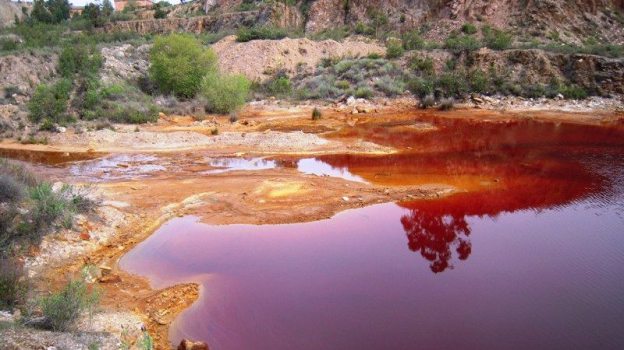
The worst day of Bathsheba Musole’s life was February 18, 2025. It started with a deafening crash when the 30-foot wall around a toxic-waste pool collapsed at the Chinese copper mine above her village. A poisonous river of a stinking yellow liquid rushed downhill, inundating homes and fields, including the one where she grew corn to feed her eight children. The floodwater, laden with cyanide and arsenic, rose chest-high. “I thought I would drown,” said Musole, 48 years old, in a recent interview.

In August 2025, months after the Feb. 18, 2025 disaster, officials from Sino Metals, a unit of the state-owned China Nonferrous Mining Corp., showed up at Musole’s half-acre farm, which the Zambian government says is too toxic to sustain crops for at least three years. They were there to make things right, she recalled them saying. Their offer was $150, but it came with a catch. To get the money, she would have to agree never to talk about the spill, take legal action against Sino Metals or even reveal the contents of the nondisclosure agreement itself…

Zambia’s government and economy.. have grown reliant on China. Zambia collects about $2 billion a year in mining taxes, mostly from Chinese mining companies. Half of the copper mined in Zambia, much of it by Chinese companies, is exported to China. In 2024, the Zambian government announced that Chinese miners would invest $5 billion in the country by 2031…

After months of investigation, Drizit Environmental, a South African firm contracted by Sino Metals, concluded that 1.5 million tons of toxic waste had overflowed into the Kafue valley, 30 times what the company had said. Sino Metals terminated the firm’s contract a day before the final report was due…

Excerpt from Nicholas Bariyo, China Pushes to Silence Victims of African Mining Disaster, WSJ, Oct. 27, 2025

Transparency against Free Speech? Exxon v. California, the Climate Risks

Exxon Mobil says rules requiring it to disclose climate risks infringe on the company’s right to free speech. The oil-and-gas giant made the argument in a suit filed October 24, 2025 (pdf) against the state of California, which is rolling out requirements for businesses to report ton their greenhouse gas emissions and climate-related financial risks. Exxon Mobil asked the court to halt the rules, arguing that they would violate free speech protections by forcing the business to use frameworks that put “disproportionate blame on large companies” such as the energy producer itself. The rules would require Exxon Mobil “to serve as a mouthpiece for ideas with which it disagrees,” the company said in the complaint, which was submitted to the U.S. District Court for the Eastern District of California.

The California regulations were set up by state laws SB 253 and SB 261: the Climate Corporate Data Accountability Act and the Climate-Related Financial Act. The first requires companies to disclose their greenhouse gas emissions, while the second mandates disclosures of climate-related financial risks.

The rules are specific to California but their oversight reaches businesses across the globe. Under SB 253, companies doing business in the state with an annual total revenue exceeding $1 billion, be they public or private, will have to disclose their greenhouse gas emissions—the ones from their immediate operations, such as electricity intake, and those from their… supply chain. Even if they are based elsewhere in the U.S. or overseas, the rules will apply.

The climate risk reporting rule, SB 261, will affect more companies. It requires public and private firms doing business in California with annual revenue of more than $500 million to disclose climate-related financial risks, along with the measures they are taking to mitigate and adapt to such risks, starting Jan. 1, 2026

Companies are also preparing for coming climate reporting rules in Europe known as the Corporate Sustainability Due Diligence Directive.

Excerpt from Clara Hudson, Exxon Mobil Sues California Over Looming Climate Disclosure Rules, WSJ, Oct. 27, 2025

Is Violence Necessary for the Protection of Environment?

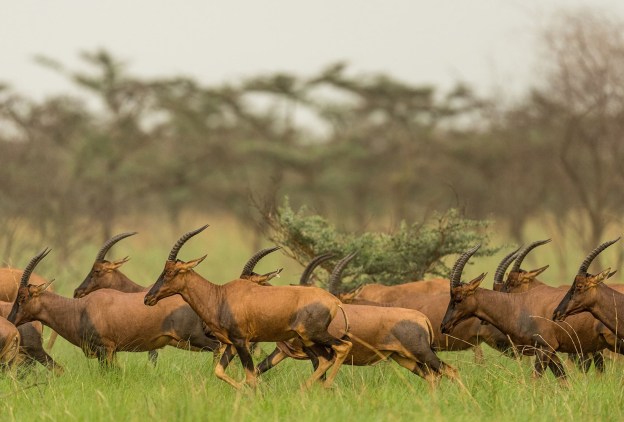
Six million antelope swarm across an area the size of Illinois,in Sough Sudan, a mass movement of mammals…African Parks, the Johannesburg-based conservation group that manages natural areas on behalf of South Sudan’s government, allowed The Wall Street Journal access to the 58,000-square-mile wilderness on the eastern bank of the White Nile….Although scientists and, of course, locals have known about the migration for years, only recently have researchers understood its staggering dimensions. In 2023, African Parks conducted an aerial survey revealing the movement included some 5.1 million white-eared kob, which generally move in a U shape in and around Boma National Park, sometimes crossing into Ethiopia’s Gambella National Park…

The interethnic violence that plagues South Sudan has, to a degree, helped protect the animal migration…South Sudanese rebels fought for decades to break away from Sudan. The South, mostly animist and Christian, finally won independence from the largely Muslim North in 2011, but quickly descended into civil war along ethnic lines. The war ended in 2020, but fighting in 2025 suggests stability remains a distant hope.

Among the region’s ethnic groups, the heavily armed Murle people in and around Boma National Park are known for stealing cattle and children from the Dinka and Anuak. Fighting is a way of life for Murle men, who divide themselves into age sets. Younger men gain status by taking on the men above them, with sticks and AK-47s, sometimes with lethal effect. Their torsos sometimes bear decorative scars resembling assault rifles…The Murle are so intimidating that other ethnic groups keep their distance to the extent possible. That has created a sort of no-man’s-land both in the parks and the places in between. “You’ve got this massive space that has allowed the migration to flourish,” says John Vogel, manager of Badingilo park.

With war, however, have come guns, and the temptation to poach is strong. Increasingly, hunters armed with military-grade weapons have been mowing down entire herds of antelope and just taking what they can carry to market on motorcycles. In a single month this year, African Parks counted 14,000 antelope carcasses passing through the town of Bor, where each animal sells for about $50, a vast amount to a poor rural family…

Excerpt from Michael M. Phillips, Researchers Track World’s Biggest Animal Migration, WSJ, Sept. 6, 2025

How to Save Rhinos? Make them Radioactive

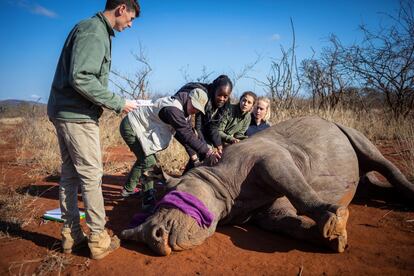
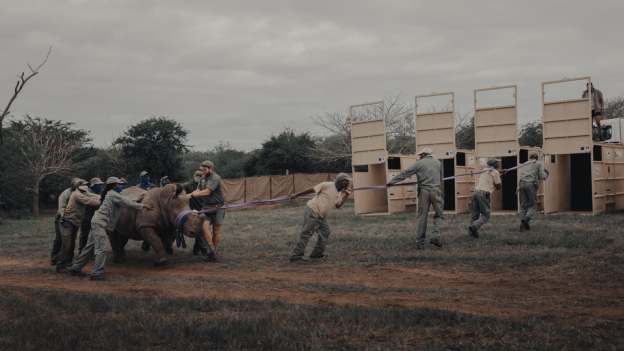
In a pioneering effort to combat wildlife trafficking of the threatened rhinoceros, a South African University began implementing a project supported by the International Atomic Energy Agency (IAEA). The project combines the safe insertion of radioactive isotopes into rhino horns… to deter and detect illegal poaching.

With over 10,000 rhinos lost to poaching in the past decade, South Africa – home to the world’s largest population of rhinos – remains a target for criminals driven by the illegal trade of rhino horn. In the first quarter of 2025 alone, the South African Ministry of Forestry, Fisheries and the Environment reported 103 rhinos poached. In response, this project run by the University of the Witwatersrand is using radiation to support conservation and enforcement efforts.

The Rhisotope Project was created in 2021 with the idea to tag rhino horns with radioactive material. This makes the horns detectable by radiation portal monitors (RPMs) already deployed at borders, ports and airports worldwide. These RPMs, commonly used to detect nuclear and other radioactive material, can now be harnessed against wildlife crime.

Excerpt from Nuclear Science and Nuclear Security Infrastructure to Protect Rare Rhinos: IAEA-Supported Project Marks a Milestone, IAEA News, July 2025

What is Mosquito Factory?

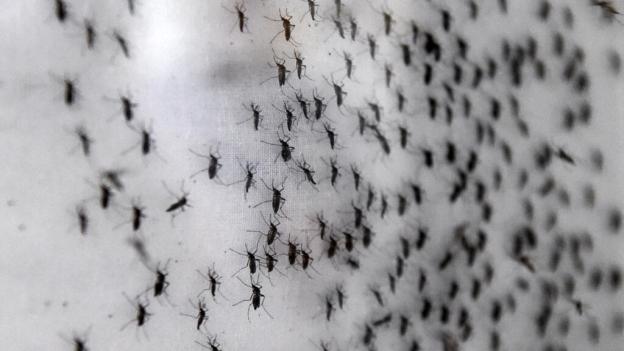
Launched in July 2025, a Brazilian mosquito factory is expected to produce 100 million eggs a week from the mosquito Aedes aegypti. However, unlike wild A. aegypti, the main transmitter of dengue virus, those churned out by the factory carry a harmless Wolbachia bacterium that curbs the insects’ ability to spread viruses including dengue and Zika. The idea is to release the modified mosquitoes, which researchers call wolbitos, into cities in Brazil, where they will mate with their wild counterparts and the females will pass the bacterium on to their offspring, gradually converting the local population.

The wolbito strategy, which is being spearheaded by the non-profit World Mosquito Program (WMP), has already shown success in Colombia, Indonesia and at home: in the Brazilian city of Niterói in the southeast, dengue cases dropped by 69% in areas where Wolbachia-carrying mosquitoes were released, compared with areas where they weren’t. Brazil’s federal government has adopted the approach to fight dengue infections — which surged to a record 6.5 million confirmed cases in the country in 2024 — alongside other preventive measures such as vaccines.

Excerpt from Mariana Lenharo, This is the world’s largest ‘mosquito factory’: its goal is to stop dengue, Nature, Sept. 3, 2025

Clouds! and Climate Change

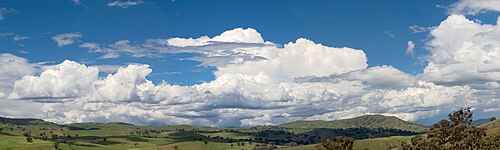
Clouds are not just poetic. They’re pivotal in helping to regulate Earth’s temperature. And their influence on the climate is evolving in ways we’re only beginning to understand.

How exactly cloud cover will shift in a warming world is anyone’s guess; it’s one of the largest sources of uncertainty in climate science. But it should also be everyone’s concern. What happens to our clouds as the planet warms is so important that we need a renaissance in the study of clouds.

Excerpt from Gavin Pretor-Pinney, We Take Clouds for Granted, NYT, Sept. 10, 2025

Read here his beautiful essay!

For more, see Cloud Appreciation Society

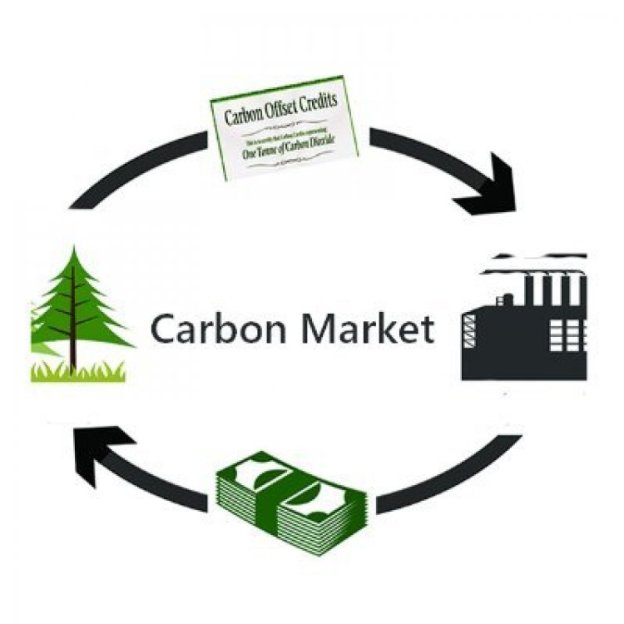
Another Laughingstock: Carbon Offsets

Carbon credits feature prominently in corporate climate strategies and have sparked public debate about their potential to delay companies’ internal decarbonisation. While industry reports claim that credit purchasers decarbonize faster, rigorous evidence is missing. This study (see below) provides an in-depth analysis of 89 multinational companies’ historical emission reductions and climate target ambitions. Based on self-reported environmental data and more than 400 sustainability reports, we find no significant difference between the climate strategies of companies that purchased credits and those that did not. Voluntary offsetting is not a central part of most companies’ climate strategies, and many pass credit costs directly onto their customers. While the companies within our sample retired one-fourth of all carbon credits in 2022, the top five offsetters’ expenditures on voluntary emission offsetting are, on average, only 1 percent relative to their capital expenditures.

Abstract from Niklas Stolz &  Benedict S. Probst, The negligible role of carbon offsetting in corporate climate strategies, Nature Communications,  Sept. 10, 2025

Individual Companies Can be Held Liable for Gross Contribution to Heatwaves

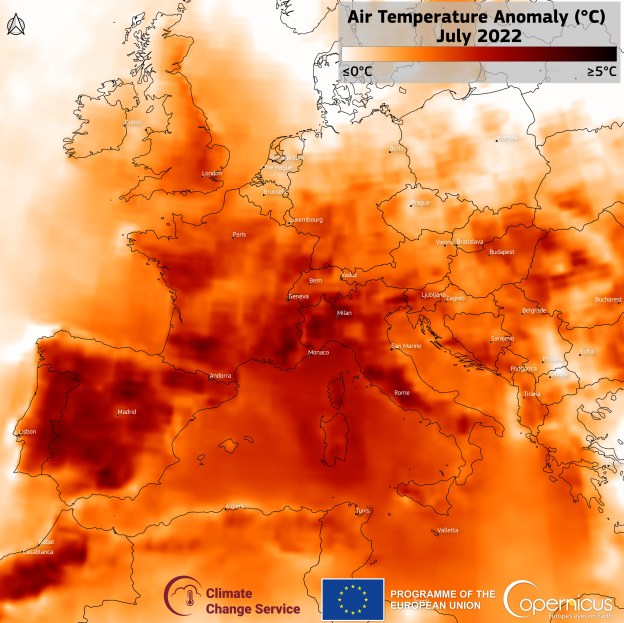
Climate scientists have been attributing storms, droughts and heatwaves to global warming for two decades. Now, they are tracing the chain of responsibility all the way back to the producers of fossil fuels. A study published in Nature in September 2025 shows that around one-quarter of the heatwaves recorded over 2000–23 can be directly linked to greenhouse-gas emissions from individual energy giants…some of whom include (the former Soviet Union, China (coal), Gazprom, Exxon Mobile, Chevron, National Iranian Oil Company, Saudi Aramco, BP, Shell, India (Coal)) The findings could provide fresh evidence to support lawsuits seeking to hold companies accountable for their impacts on the climate.

More than one-quarter of the 213 events recorded would have been “virtually impossible” without human-induced global warming, the study found. The emissions linked to energy companies and other major carbon emitters increased the likelihood of some 53 heatwaves by a factor of more than 10,000.

This is not the first time that climate impacts have been attributed to fossil-fuel producers, but this study go one step further than its predecessors and link individual companies directly to specific heatwaves. Legal experts say it’s a line of evidence that could feed into climate litigation that focuses on specific events, such as the 2021 heatwave that hammered the US Pacific Northwest in 2021. Already, a county government in Oregon has filed a US$52-billion civil lawsuit against fossil-fuel companies for contributing to that event.

Excerpts from Jeff Tollefson, Heatwaves linked to carbon emissions from specific companies, Nature, Sept. 10, 2025

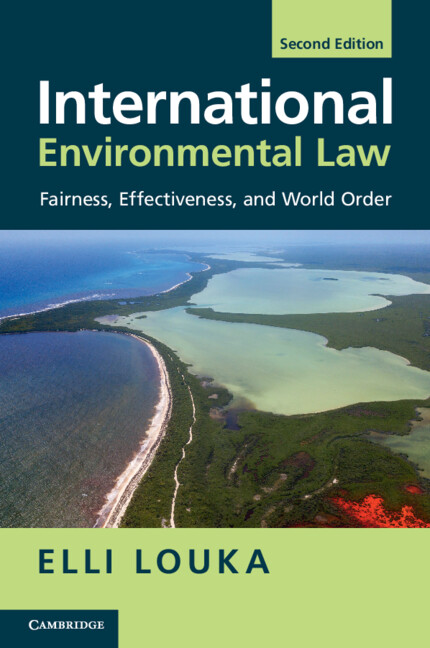
International Environmental Law: Fairness, Effectiveness and World Order

Second Edition (2025) will be out in October 2025

Check my blog on the Cambridge website

Fifty Years of International Environmental Law: Looking Back and Looking Ahead

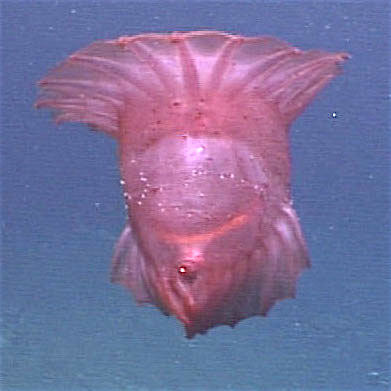
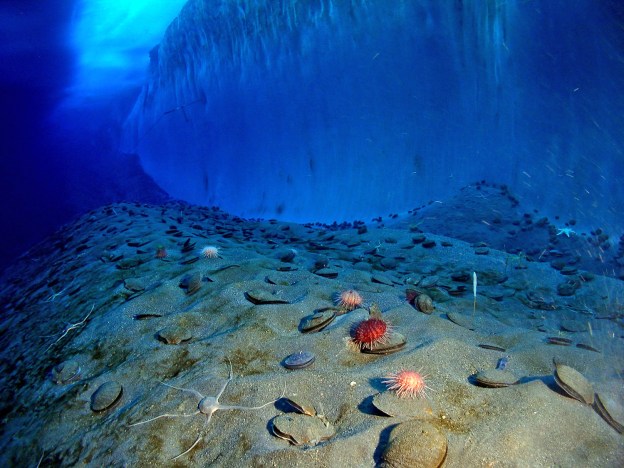
Unbelievable! The Astonishing Underworld of Seafloor

A scientific expedition into a region of the Pacific Ocean named for Hades, Greek god of the underworld, has uncovered an other-worldly ecosystem 30,000 feet deep. “It’s a totally new thing that has not been seen before,” said Dominic Papineau, an exobiologist at China’s State Key Laboratory of Deep-sea Science and Intelligence Technology in Sanya.

Papineau is co-author of a groundbreaking research paper published in the journal Nature, describing the astonishing array of creatures who live in this daunting and dark environment, sustained by chemicals that leach from the ocean floor. Researcher Mengran Du told The Washington Post she wasn’t sure what expect when she descended in a three-person submersible into one of the deepest trenches in the Pacific. What she and others from China’s Institute of Deep-sea Science and Engineering saw when they got there was, she said, “unbelievable.”

Like skyscrapers, thick clusters of tubeworms with red-tinged tentacles jutted from the ocean floor, phosphorescent snails scaling them like window washers, she said. In between, white bristly creatures wriggled and writhed…

Scientists have long studied organisms that thrive around hydrothermal vents. But those native to areas known as cold seeps — where gases like methane and hydrogen sulfite leach from the seafloor at near-freezing temperatures — have been little studied. 

“Flourishing chemosynthetic communities had long been postulated to exist in the trenches, but this is the first paper that documents their existence below 9 kilometers and at multiple locations,” she said.  The adaptability of organizations in those trenches is a shot in the arm for scientists searching for evidence of life in oceans on other celestial bodies, including Europa, a moon of Jupiter.

Excerpt from Scientists Find New Ecosystem in Deepest Trenches of Pacific Ocean, US News and World Report, Aug. 4, 2025
 

Green Frenzy Is Not Environmental Protection

Since 1960, Singapore has reclaimed around 150 square kilometres of land from the sea. In part, this is to meet demand for homes: around 80% of Singaporeans live in government-provided housing, nicknamed HDBs, after the Housing and Development Board, and many of those are in high-density skyscrapers. Singapore is the third most densely populated territory in the world, after Macau and the city-state of Monaco. Alongside this, the country’s economic success is buttressed by being the world’s busiest port outside China, hosting more than 3.11 billion tonnes in traffic in 2024.

This urban development and economic success has come at a cost for the natural environment: where once there was jungle, there is now city. Singapore has lost almost all of its primary rainforest, except for a small tract of land in the Central Catchment Nature Reserve, which sits in the middle of the island and is part of one of the two main water catchment areas. Although some of the country’s remaining non-primary rainforests, including in the Central Catchment, are protected from development, their long-term fate is a concern for environmentalists…

In a bid to achieve its sustainability goals, the government has pledged to plant one million trees by 2030 and transplant 100,000 corals into its marine waters, which NParks said in 2024 would take at least 10 years to complete. Neither project is without controversy. “Nobody is tracking how many trees we are cutting down while we are planting a million trees,”…“How about those century-old trees that are being cut down for development?”… Academics and civil-society groups say that they cannot access the same data that are available to government agencies…

Excerpts from Jack Leeming, Singapore’s fight to save its green spaces from development, Nature, May 28, 2025

Mines and the Meaning of Eternity

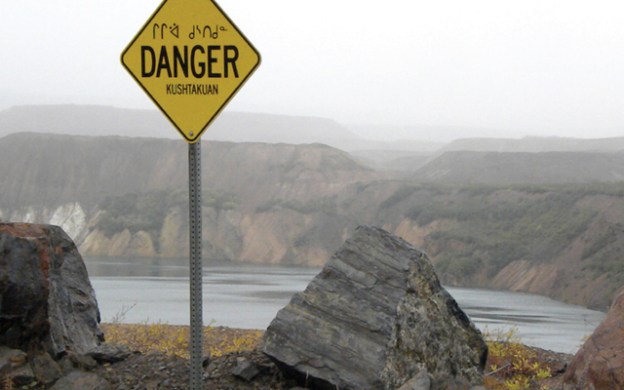
There are 237,000 metric tons of arsenic trioxide locked in the subterranean caverns of Giant Mine on the edge of Yellowknife, an unwanted byproduct from what was once one of the largest gold mines in Canada’s Northwest Territories. Consider that it only takes 140 milligrams of arsenic trioxide to kill a person; there’s enough of the poison here to kill 1.7 trillion people. The local indigenous people refer to the arsenic as a sleeping monster. Company and government officials hoped the arsenic would remain frozen underground forever. But mining operations and climate change caused the permafrost to melt, raising fears in the city of 20,000 people that toxic material could mix with the runoff and slither into the nearby waters of Great Slave Lake, the world’s 10th-largest freshwater body. From there, it could snake 1,000 miles along the Mackenzie River to the Beaufort Sea in the Arctic Ocean, poisoning the wildlife, the land and the water along its path.

The gold mine was one of the largest in Canada’s Northwest Territories, producing 7.6 million ounces of gold between 1948 and 2004—and leaving behind a toxic legacy.
But extracting minerals from the North carries high, and enduring, risks and costs. Current estimates put the cost of cleaning up Giant Mine at $3.2 billion, making it the most expensive mine remediation in Canadian history. The last owner, Royal Oak Mines, went bankrupt and left the bill to the government…

Canada’s government estimates there are roughly 24,000 contaminated sites across the country, which will cost 10 billion Canadian dollars—or $7.25 billion—to clean up. “Mining is a necessary evil. Fundamentally, it’s a license to pollute,” said David Livingstone, former chairman of the Giant Mine Oversight Board, an independent advisory body that monitors the Giant Mine cleanup. 

The arsenic at Giant Mine is the legacy of five decades of gold mining. Between 1948 and 2004, the mine produced 7.6 million ounces of gold, worth roughly $20 billion at today’s prices. There was so much gold that local indigenous people named Yellowknife “Somba K’e,” which means Money Place…But the precious metal was embedded in arsenopyrite, a mineral containing iron, sulfur and arsenic. To get to the gold, miners had to roast the rock, a process that also transformed the once-stable arsenic into toxic gas.

In the early years, miners ejected the arsenic out of a smokestack, believing the poison would be diluted in the air. Instead, the smoke condensed and fell to earth as a fine dust. It collected in the water and on the land. Cows and other livestock sickened and died. In 1951, an indigenous toddler died after eating arsenic-laden snow. After that, miners collected the dust and pumped it back underground, theorizing the arsenic would remain frozen in permafrost. For decades, the system worked. But the Canadian North is warming at a rate four times faster than the rest of the world, and the once-frozen ground is thawing.  Water is trickling into Giant Mine, a potentially catastrophic situation because the highly soluble arsenic trioxide could get carried into Baker Creek.
The creek runs through the mine site, and then into Yellowknife Bay in Great Slave Lake.
The headwaters for the Mackenzie River originate at Great Slave Lake. The river travels more than 1,000 miles to the Beaufort Sea in the Arctic Ocean…

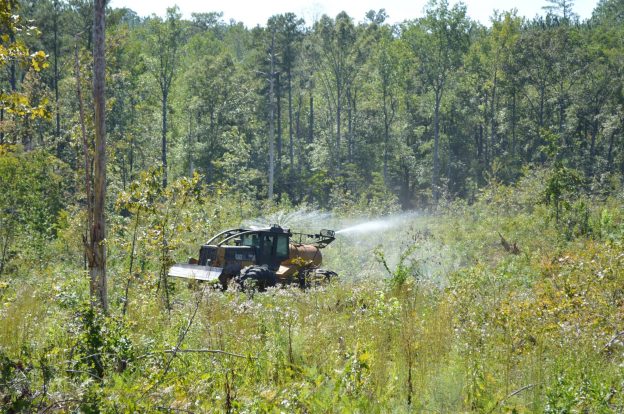
Today, maintenance of the mine is an ongoing task. Waste materials, called tailings, are kept in large reservoirs around the mine. To stop dust contaminated with arsenic and cyanide from flying downwind, workers spray the tailings with a chemical mix called Rhino Snot, a blue-green dust suppressant developed by the U.S. military. But there are still times when wind carries dust southeast toward Ndilǫ, an indigenous community located on the west side of Great Slave Lake’s Yellowknife Bay, less than 2 miles from the mine as the crow flies. When the clouds of dust descend, the Yellowknives Dene council calls residents to warn them to shut their windows and stay indoors, said Ndilǫ Chief Fred Sangris, one of two chiefs of the Yellowknives Dene. “We tell them the mine is coming,” he said.

Sangris is so angry about what Giant Mine has done to the Dene’s traditional hunting grounds that he can’t even look at it. “It’s a poison place,” he said. “It’s a place to avoid.”…“They say forever, and they mean 100 years,” he said. “They don’t know what forever is.” 

Excerpt from Vipal Monga et al., Deep in an Abandoned Gold Mine, a Toxic Legacy Lurks, WSJ, May 5, 2025


Indigenous Peoples against Netflix and Meta: Northern Kenya Rangelands Carbon Project

The Northern Kenya Rangelands Carbon Project managed by the Northern Rangelands Trust, a Kenyan nonprofit, is the world’s largest soil-carbon plan, its boosters say. Launched in 2012, it was designed to preserve some 4.7 million acres of grasslands to lock in carbon on land communally owned by the Maasai, Borana and other pastoralist groups, which is part of a network of protected areas hosting threatened species such as cheetahs, black rhinos and… giraffes.

On May 13, 2025, an international nonprofit , Verra, that certifies carbon credits suspended approval for the project, adding to the questions about the credibility of similar carbon-capture projects and whether they actually benefit the people who live off the land….A spokesperson for the group, Verra, said credits are now on hold as it reviews the program after a long-running dispute between the conservationists who created the rangelands project and local herders, who say the project disrupts grazing patterns built over the course of centuries…

The dispute reached a flashpoint in 2021, when 165 pastoralists from two conservation areas sued the Northern Rangelands Trust in Kenyan court for allegedly using their land without consent. The plaintiffs accused the trust of creating the conservancies—which acted as the herders’ representatives in the carbon deal—through pressure and intimidation rather than informed consent. The court ruled in their favor in January 2025.

Lawyers and rights groups representing pastoralists say the ruling, which applies to one of the biggest conservancies, invalidates around 20% of the entire project’s credits. They say credits in around half of the project’s 14 wildlife conservancies could be vulnerable to similar lawsuits. That could leave big corporations holding invalid offsets and open to charges from rights groups that they overstate their commitment to environmentally friendly practices.

The trust has sold over six million carbon credits, worth between $42 million and $90 million depending on market prices, to buyers including Netflix and Facebook parent Meta. Tech companies use credits to offset emissions from their energy-intensive operations, such as producing movies, running data centers to stream video, powering social media and training cutting-edge artificial-intelligence models, as well as from employee travel. Meta became carbon neutral—that is, it purchased enough credits to compensate for all of its emissions—in 2020, and Netflix followed suit two years later.

Excerpts from Caroline Kimeu, Netflix and Meta’s Carbon Credits Snared in Dispute With Maasai Herders, WSJ, May 13, 2025

See also Kenya: Landmark court ruling delivers devastating blow to flagship carbon offset project

How Microplastics Enter Plants

Plastic production is increasing sharply. This has raised concerns about the effects of microplastics (typically defined as plastic particles smaller than 5 millimetres in diameter) and nanoplastics (smaller plastic particles that are less than 1,000 nanometres in diameter) on human health. These concerns are partly influenced by alarming findings of the presence of microplastics in various human tissues, including the brain and placenta.

Most attention is focused on soil and water as common sources of plastics that enter the food chain. However, writing in Nature, Li et al. provide strong evidence supporting the air as being a major route for plastics to enter plants. Plants can absorb plastic particles directly from the air. Particles in the air can enter leaves through various pathways, such as through structures on the leaf surface called the stomata and through the cuticle. Stomata are small openings made of cells, and the cuticle is a membrane, covered in insoluble wax, that is well suited for absorbing microplastics…

Microplastics can also travel to and enter the plant’s water- and nutrient-transporting system (called the vascular bundle) and from there reach other tissues… Given that leaves are a key part of the food chain, microplastic particles that accumulate here can easily pass to herbivores and crop leaves, both of which can be directly consumed by humans.

Excerpt from Willie Peijnenburg, Plant Leaves Absorb Microplastics—And They End Up in Our Food, Scientific American, Apr. 18, 2025

Illegal Trafficking of Endangered Ants: Ants as Pets

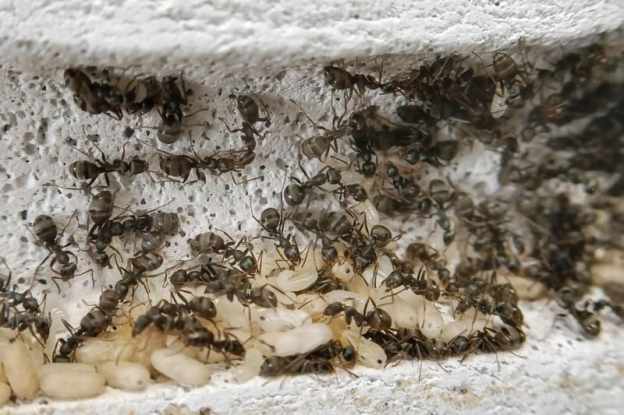
Four suspects – two Belgians, a Vietnamese and a Kenyan – were arrested in April 2025 in Kenya  with live ants suspected to have been destined for collectors in Europe and Asia…Delivering the sentence on May 7, 2025, the judge said the particular species of ants collected was valuable and they had thousands of them — not just a few.

“While collecting a few ants might be considered a hobby, being found with 5,000 queen ants is beyond a hobby,” said Magistrate Njeri Thuku….The ants were packed in more than 2,000 test tubes filled with cotton wool to help them survive for months, authorities said.

Nguyen, 23, was described by the court as a “mule or courier” as he was just sent to pick up the ants and the person who sent him paid for his ticket. The court said Ng’ang’a, 26, acted as a “broker” due to his knowledge of the ants that are found in his rural home. David, an ant enthusiast with 10 colonies of ants at home in Belgium, belongs to a Facebook group called “Ant Gang”, the court heard.

Excerpts Akisa Wandera & Wycliffe Muia, Gang who smuggled thousands of queen ants sentenced in Kenya, BBC, May 7, 2025

Saving the Smiling Salamander

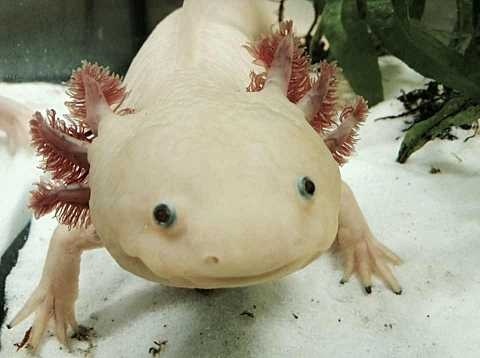
A homely aquatic salamander with a cartoonish smile and the ability to regenerate lost body parts has become a global phenomenon, appearing as characters in Minecraft, Fortnite and Pokémon and inspiring a McDonald’s Happy Meal toy. Where the axolotl can barely be found: in its natural habitat in Mexico. 

The axolotl (pronounced ah-SHO-lohtl) is hurtling toward extinction, just as it becomes globally familiar with a cottage industry using its image to sell beer, T-shirts and videogames. Scientists estimate that no more than 1,000—and perhaps as few as 50—are left in the wild in their last natural habitat, a Venice-like system of canals and islands built by the Aztecs that still exists in the Mexico City borough of Xochimilco.

Excerpt from The Race to Save a Salamander That Spawned a Global Cottage Industry, WSJ, Mar. 29, 2025

Mining the Seabed: By hook or by crook

The Trump administration is reportedly considering an executive order that would accelerate deep-sea mining in international waters by allowing companies to bypass a United Nations-backed review process. The order would affirm the United States’ right to extract critical minerals from the ocean floor, enabling companies to seek permits directly from the National Oceanic and Atmospheric Administration (NOAA).

The International Seabed Authority (ISA), established in 1982 under the UN Convention on the Law of the Sea (UNCLOS)—which the U.S. has not ratified—has spent years developing regulations for deep-sea mining.  In 2021, the island nation of Nauru sponsored Canada’s The Metals Company (TMC) to begin deep-sea mining, forcing the ISA to draft rules before any company could start extracting minerals in international waters. The 36-member ISA council has since met repeatedly to finalize regulations. In March 2025, officials gathered in Jamaica to review hundreds of proposed amendments to a 256-page draft mining code, but the session ended without a resolution.

Frustrated by the ISA’s slow progress, TMC in March 2025 formally urged the Trump administration to issue deep-sea mining permits, arguing that “commercial industry is not welcome at the ISA.” “The Authority is being influenced by a faction of States allied with environmental NGOs who see the deep-sea mining industry as their ‘last green trophy,’” TMC chairman and chief executive, Gerard Barron. “They have worked tirelessly to continuously delay the adoption of the Exploitation Regulations with the explicit intent of killing commercial industry.”

Governments interested in developing deep-sea mining within their territorial waters — typically 200 nautical miles from shore — include the Cook Islands, Norway and Japan.

Proponents of seabed mining contend that its environmental impact is lower than land-based extraction. Critics warn that the long-term consequences remain uncertain and advocate for further research before large-scale operations begin.

Excerpt from Cecilia Jamasmie, Trump eyes executive order to fast-track deep-sea mining, Mining.com, Apr. 1, 2025

Will Bacteria Save the Earth?

Microorganisms have shaped Earth for almost four billion years. At least a trillion microbial species sustain the biosphere — for instance, by producing oxygen or sequestering carbon. Microbes thrive in extreme environments and use diverse energy sources, from methane to metals. And they can catalyse complex reactions under ambient temperatures and pressures with remarkable efficiency.

And bacteria or fungi are already being used to produce materials, fuels and fertilizers in ways that reduce energy consumption and the use of fossil-fuel feedstocks, as well as to clean up waste water and contaminants…For instance, a start-up firm called Carbios, based in Clermont-Ferrand, France, has developed a modified bacterial enzyme that breaks down and recycles polyethylene terephthalate (PET), one of the most common single-use plastics. Another company — Oil Spill Eater International in Dallas, Texas — uses microbes to clean up oil spills, and large waste-management corporations in North America are using bacteria called methanotrophs to convert the methane produced from landfill (a more potent greenhouse gas than CO2) into ethanol, biofuels, polymers, biodegradable plastics and industrial chemicals….The company Floating Island International in Shepherd, Montana, is even building artificial floating islands on lakes and reservoirs that have been polluted by excessive nutrient run-off, so that methane-metabolizing microbes (which colonize the underside of the islands) can remove methane originating from lake sediments. The goal in this case is to transform inland lakes and reservoirs from net methane sources into carbon sinks…

Finally, microbes could be used to make food production less reliant on chemical fertilizers and so more sustainable. Many bacteria and archaea can be used to produce nitrogen fertilizer with much lower greenhouse-gas emissions than synthetic fertilizers…Several companies are now selling biofertilizers, which are formulations containing bacteria called rhizobia or other microbes that can increase the availability of nutrients to plants. A growing number of microbial biopesticides are also offering food producers a way to control crop pests without harming human or animal health or releasing greenhouse gases into the atmosphere8..

Many solutions, such as using bacteria to degrade crude oil or plastics, have been shown to be effective and safe in a laboratory setting. Yet scaling up their use to the levels needed to reduce global emissions or global biodiversity loss could lead to unforeseen complications. Certain safeguards — designing bacteria that can persist in an ecosystem for only a short time or that can exist under only specific environmental conditions — are already being developed and applied. 

Excerpts from Rino Rappuoli, et al., Microbes can capture carbon and degrade plastic — why aren’t we using them more?, Nature, Mar. 25, 2025

The Conquest of Greenland–Not for the Faint Heart

Teeming with underground riches, Greenland might set the scene for a modern gold rush. President Trump, for one, covets Greenland’s deposits of critical minerals, some of the largest in the Western Hemisphere. But as the visiting Australian company, Energy Transition Minerals, has discovered, securing them is a daunting task. 

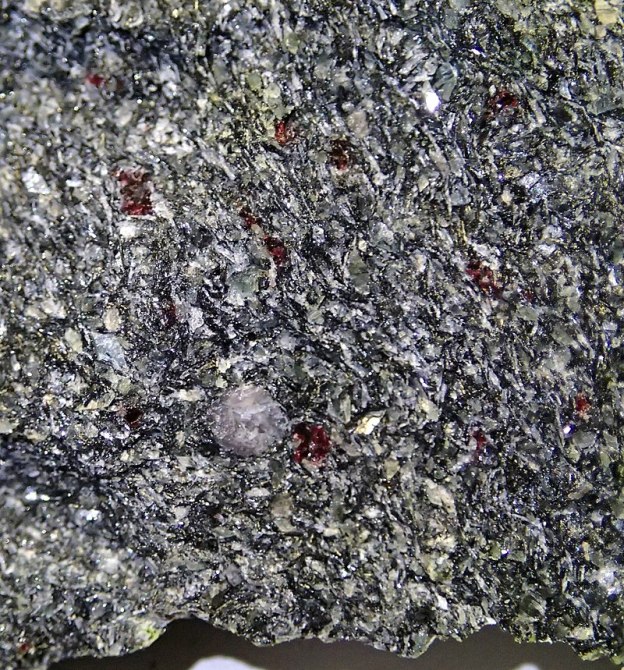
Kvanefjeld, the site of the billion-year-old solidified magma in the mountains above the town of Narsaq, contains an estimated 1 billion tons of minerals, enough to potentially transform the global market for rare-earth elements, used in such things as electric vehicles, jet fighters, wind turbines and headphones. 

Mining companies in Greenland operate in one of the most challenging environments in the world because of the Danish territory’s sparse infrastructure, hostile weather and a tricky political climate. Mining here is expensive, and few investors are willing to pay for it given the uncertainties.   Despite its extraordinary mineral wealth, Greenland has only two active mines: a gold mine in commissioning phase and a mine producing anorthosite, used in fiberglass, paints and other construction materials…“Investing in Greenland is not for the faint of heart,” said Brian Hanrahan, chief executive officer of Lumina Sustainable Materials, which operates the anorthosite mine on the west coast of Greenland. “The local logistics are incredibly complex.” Building a mine involves high startup costs, and has to be done from scratch in rugged terrain. Greenland is nearly one-fourth the size of the U.S., and about 80% of it is covered by ice, with deep fjords and ice sheets up to a mile thick. There are no roads between settlements, and shipping is treacherous because of floating ice off the coast.

Bureaucracy is a hindrance, too. The process of granting licenses to foreign companies to mine is lengthy and cumbersome. While applying for licenses, companies need to keep employees on payroll with benefits. With a population of 57,000, Greenland’s labor market is tight…Extracting Greenland’s minerals is about more than profit; it is about resource control. Western governments are eager to break China’s dominance of the global market for rare earths and other minerals, which it could wield as a weapon in a trade war…“Greenland is host to some of the largest rare-earth resources known to exist globally, which have potential to supply virtually all the foreseeable needs of North America and Europe for decades to come,” said Ryan Castilloux, managing director of Adamas Intelligence… ‘

But when directors from Energy Transition Minerals visited Narsaq in February 2025, they were met near the icy helipad by protesters in brightly colored vests emblazoned with a logo spelling “Uranium? No, Thank You” in Greenlandic…Many among the Inuit population of Narsaq are concerned about contamination of drinking water, plants and wildlife. “We live off nature as our forefathers have done for generations. We will be forced to move,” said Avaaraq Bendtsen, a 25-year-old archaeology student. “Think about the indigenous people as well. This is our land. It is our mountain.”

Excerpts from Sune Engel Rasmussen, Greenland Has the Makings of a Mining Boom. So Where Is Everyone?, WSJ, Mar. 4, 2025
The Real Green Energy Transition: Mining Minerals from Plants

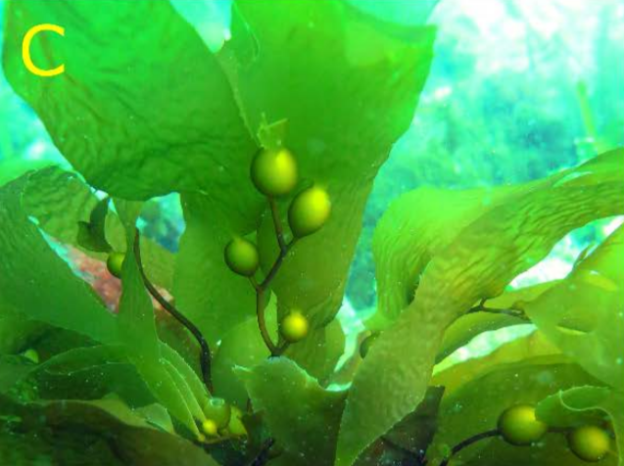
Worries about China’s domination of critical minerals are driving Western scientists and companies to embark on increasingly novel ways to develop alternative sources. One such effort seeks to exploit a quirk of nature: Certain plants, called hyperaccumulators, absorb large quantities of minerals, like nickel and zinc, from the soil. Cultivating these plants, and then incinerating them for their metal, could provide U.S. companies with a small stream of domestically sourced minerals—without the expense and environmental destructiveness of conventional mining….At a greenhouse in Amherst, MA, scientists undertake gene editing to build a new fast-growing, nickel-absorbing oilseed plant. If successful, the plant could be used to harvest the metal from mineral-rich soils in states such as Maryland and Oregon…

Some 10 million acres of barren, nickel-rich soil are scattered around the U.S. In such areas, concentrations of minerals are generally too low to justify large-scale mining, but could offer opportunity for inexpensive nickel farming. In the case of nickel phyto-mining, as such efforts are known, the plants are dried and incinerated, leaving an ashy nickel concentrate. This concentrate can then be further purified and turned into battery-grade material.

To be sure, phytomining is small in scale. Companies in the field are targeting harvests of around 300 pounds of nickel per acre per year, roughly enough for six EV batteries. But the funding for nickel-farming plants is one small piece of a broad effort by the U.S. government to develop secure supplies of the minerals that are needed for defense and cutting-edge industry, and are an area where China is dominant.

Excerpt from Jon Emont, The New Weapon Against China’s Mineral Dominance: Plants, WSJ,  Jan. 25, 2025

Bureaucracy Against Biodiversity

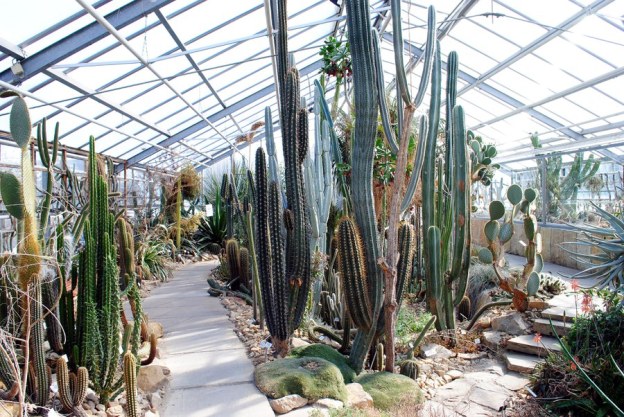
Botanic gardens around the world are struggling to find the space to conserve rare plants and save endangered species. “They can’t all fit,” said Brockington. Cambridge University Botanic Garden, for example, is home to more than 8,000 species. “That’s more than a tropical country like Vietnam, growing in a tiny little acreage of Cambridge.”…Threatened plants must compete for space in botanic gardens with beautiful, famous – but less endangered – flowers, trees and landscapes that will attract visitors and inspire people to learn about gardening and the natural world….The first botanic gardens were founded during the colonial era, and almost all are located in the west. In the past, botanists from these gardens would engage in “extractive, colonial-type practices”, visiting poorer nations to “pull out whatever plants they or their rich patrons were interested in, bring them back and cultivate them,” Brockington said.

In 1993, a United Nations Convention on Biological Diversity attempted to stop this by assigning sovereignty over biodiversity to national governments, enabling states to “own” the genetic material within their geopolitical boundaries…But this is hampering efforts of gardens to collect endangered plants in the wild, and exchange seeds and plant material to protect threatened species from extinction. To maintain diversity and preserve the world’s living collections, plants must be regularly replaced or propagated. But since the convention was introduced in 1993, the number of plants in botanic gardens collected from the wild has halved.

“Political boundaries do not help us share material and collectively steward the world’s most threatened biodiversity,” Brockington said. Brexit, for example, has been “catastrophic” for exchanges of plant material between European botanic gardens, he said. “The bureaucracy of seed exchange can be so costly now, it would be cheaper for our staff to personally fly to somewhere like Sweden, with a legal amount of seed, than send it by post.”…Brockington wants the world’s botanic gardens to collaborate to safeguard plant populations by creating one big “meta collection”, where individual specimens of an endangered wild species are extensively cultivated in multiple institutions.

Excepts from  Donna Ferguson, The risk of extinction is accelerating’: world’s botanic gardens raise alarm with space to protect endangered plants running out, Guardian, Jan. 25, 2025
Ousting Indigenous Peoples is a Brutal Way to Protect the Environment

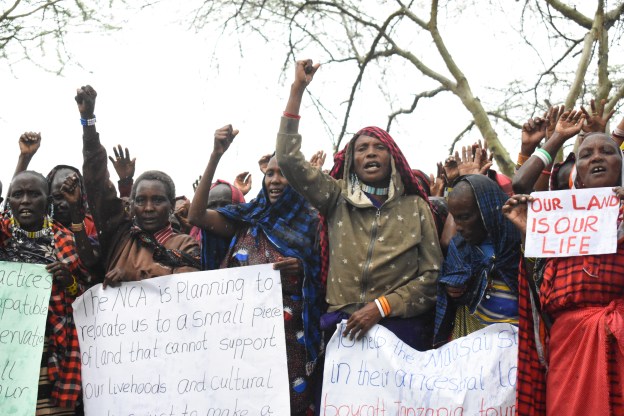
The government of Tanzania claims that the Maasai, the indigenous people of Tanzania,  present a threat to the ecosystem of the Serengeti National Park. The government says the seminomadic cattle farmers are a threat to the savannas and watering holes in an area that sustains the country’s money-spinning safari resorts and hunting reserves and, more recently, a swath of new carbon-credit projects.

To protect these areas, President Samia Suluhu Hassan’s government has outlawed human settlement there and begun evicting some of the more than 110,000 Maasai from the Ngorongoro Conservation Area—the vast zone of grass-, wood- and wetlands adjacent to the Serengeti that the Maasai have used for both herding and tourism for the past 65 years.

The area includes the famous Ngorongoro Crater, the world’s largest, fully-intact caldera and home of one of Africa’s densest populations of zebras, gazelles and other large mammals…The government argues that the number of Maasai living in Ngorongoro has expanded from just 8,000 in 1959, outpacing Tanzania’s overall population growth. The herders, along with their cattle, are overwhelming the area’s fragile ecosystem, it says. Similar warnings have been issued by the United Nations Educational, Scientific and Cultural Organization, or Unesco, which declared the Ngorongoro Conservation Area a World Heritage site in 1979.


But for the Maasai, the evictions are endangering a centuries-old way of life they say is much closer to nature than the rest of rapidly urbanizing Tanzania. They accuse the government of giving priority to revenue from foreign tourists, investors and conservation groups over the lives and livelihoods of some of its own citizens. ..Experts and activists focused on the rights of indigenous people say the Maasai are the latest group caught in the murky intersection of tourism, biodiversity protection and global climate goals. Similar conservation-related evictions have also targeted indigenous communities in the Brazilian Amazon and the Nouabalé-Ndoki rainforest in the Republic of Congo.

Revenue from tourism jumped 40% to $3.5 billion in 2023, about 17% of Tanzania’s gross domestic product, and according to government projections could reach $6 billion by 2025. The government has already set aside swaths of land around the Ngorongoro Crater previously reserved for the Maasai for the construction of a China-funded geological park, where tourists and researchers can explore fossils, rock paintings and other archaeological artifacts dating as far back as 4 million years ago. To the south of the Ngorongoro Conservation Area, a local company called Carbon Tanzania is selling carbon credits linked to about 273,000 acres of land that the Maasai have also used for grazing and limited cultivation. The project restricts the cutting down of trees but allows cultivation in some zones…

One of the most violent standoffs between the Maasai and Tanzanian authorities took place in mid-2022 in the grassy plains of Loliondo, about 100 miles west of Serengeti. Heavily armed police and rangers stormed Maasai villages, fired tear gas and live rounds, and bulldozed hundreds of houses as they sought to seize some 37,000 acres of land for a new game reserve. One police officer was killed by an arrow shot by the Maasai, authorities said. Many Maasai were wounded in the clashes, and thousands fled into neighboring Kenya to seek medical treatment. Dozens of others were arrested. After the mayhem in Loliondo, authorities appeared to have opted for a more tactical approach in neighboring Ngorongoro, closing down schools, water sources and hospitals to force residents out of homes, Maasai activists say.

Excerpts from Nicholas Bariyo, The Safaris and Carbon-Credit Projects Threatening the Serengeti’s Maasai, WSJ, Dec. 22, 2024

Environmental Victories of 2024

End of Fossil Fuels? The year 2024 r saw some extraordinary breakthroughs for climate and nature. The UK closed its last coal-fired power plant in 2024….As countries aim to rapidly decarbonise their economies, many former fossil fuel power plants are proving to be promising sites for industrial-scale batteries.…Renewable energy sources are growing rapidly around the world. In the US, wind energy generation hit a record in April 2024, exceeding coal-fired generation….By the end of this decade, renewable energy sources are set to meet almost half of all electricity.  The lion’s share of this growth comes from just one country:

The rivers, mountains, waves and whales given legal personhood
Back in 2021, the Ecuadorian government issued a landmark ruling stating that mining in its Los Cedros cloud forest violated the rights of nature. Another ruling in Ecuador stated that pollution had violated the rights of the Machángara River that runs through the capital, Quito. Beyond Ecuador, a growing number of natural features and spaces were granted legal personhood in 2024. In New Zealand, the peaks of Egmont National Park – renamed Te Papakura o Taranaki – were recognised as ancestral mountains and jointly became a legal person, known as Te Kāhui Tupua.] In Brazil, part of the ocean was given legal personhood – with the coastal city of Linhares recognising its waves as living beings, granting them the right to existence, regeneration and restoration. Meanwhile, a new treaty formed by Pacific Indigenous leaders saw whales and dolphins officially recognised as “legal persons”.

New ocean protections for the Azores
The North Atlantic saw a new marine protected area (MPA) announced by the Azores. When established, it will be the largest in the region, spanning 30% of the sea around the Portuguese archipelago. Half of the 111,000 sq miles (287,000 sq km) protected area will be “fully protected”, with no fishing or other natural resource extraction, according to the initiative behind the MPA. The other half will be “highly protected”.
The area contains nine hydrothermal vents, 28 species of marine mammals and 560 species of fish, among many others. 

Deforestation in the Brazilian Amazon
dropped to a nine-year low in 2024, falling by more than 30% in the 12 months to July, 2024 according to data released by Brazil’s national space research institute, INPE. nt

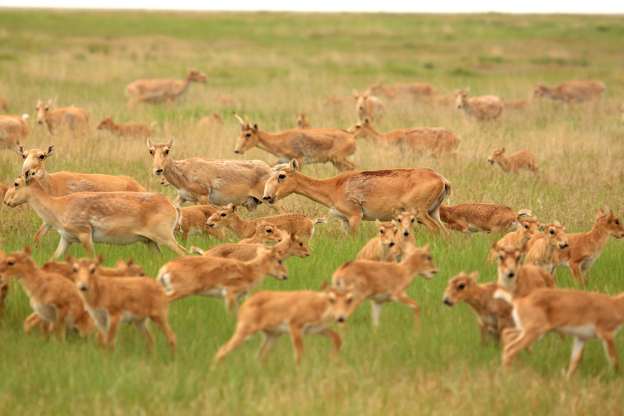
The Altyn Dala Conservation Initiative saved the critically endangered in the Golden Steppe grassland from extinction. The project used careful, science-based monitoring, tagging and habitat protection and restoration to ensure the best recovery for the Saiga Antelope, which numbered just 20,000 in 2003. Today, 2.86 million of the antelope roam the Golden Steppe, and it has been moved from “critically endangered” to “near threatened” status on the International Union for Conservation of Nature’s Red List.

After a 100-year hiatus, salmon were spotted in Oregon’s Klamath River basin, following an historic dam removal further downstream in the California stretch of the Klamath. In August 2024, the final of four dams were removed – in what was America’s biggest dam removal project – following pressure from environmentalists and tribes.

Excerpts from Isabelle Gerretsen et al., Seven quiet breakthroughs for climate and nature in 2024 you might have missed, BBC, Dec. 16, 2024

Satellites Reveal Depth of Destruction Vietnam War

During the Vietnam War, the United States dropped more than 8 million tons of bombs and sprayed 74 million liters of Agent Orange and other herbicides in Vietnam, Cambodia, and Laos. Nearly 50 years after the war’s end, the deadly impacts of these campaigns persist: Unexploded ordnance continues to maim and kill, while hot spots of dioxin, a potent toxin in the herbicides, might still be contributing to cancers and birth defects today. Now, using declassified military satellite photos, scientists have identified the likely locations of these hidden dangers, which could help direct remediation and cleanup efforts based on research, presented on December 11, 2024 at the annual conference of the American Geophysical Union (AGU)

Identifying these risky areas in the modern landscape is challenging. Tenacious vegetation growth has long since hidden the scars of war, and historical records of bombing and herbicide spraying are both incomplete and imprecise. That’s why Philipp Barthelme, a graduate student in geoscience at the University of Edinburgh, and his colleagues turned to declassified satellite photos from the KH-9 HEXAGON and KH-4a/b CORONA missions, which were sharp enough to reveal details as small as 0.6 meters.

Although the satellite data alone cannot identify unexploded bombs, the researchers surmised they are most likely to be found in regions that were heavily bombarded. The craters from the exploded bombs stand out in the satellite images as bright white splotches. The researchers used machine learning, a kind of artificial intelligence, to pinpoint more than 500,000 such craters in Vietnam’s Quang Tri province, which was the most heavily bombed during the war, as well as a region near the borders of Vietnam, Laos, and Cambodia.

In collaboration with the nonprofit Conflict and Environment Observatory, Barthelme also used satellite data to study herbicide spraying in southern Laos. The U.S. sprayed these compounds in secretive wartime campaigns to destroy crops and improve visibility by defoliating the lush jungles. However, the dioxin in the herbicides killed and debilitated hundreds of thousands of people…The zones of defoliation from the herbicides appear in satellite data as bright, sinuous lines….

Excerpts from Maya Wei-Haas, Declassified satellite photos reveal impacts of Vietnam War, Science, Dec. 14, 2024

Colossal Efforts to Bring Back Species on the Brink of Extinction

Colossal Biosciences, the world’s first de-extinction company, announced on October 1, 2024 the formation of The Colossal Foundation…The Foundation is launching with three core programmatic focuses.

Saving today’s at-risk species: Colossal Foundation plans to build a model for integrating cutting-edge biotechnology with conservation efforts to bring back species that have been driven to the brink of extinction. The long term goal is to create a toolkit approach to simplify genetic rescue for conservationists. Initial projects include efforts focused on the Vaquita, Northern White and Sumatran Rhinos, Red Wolf, Northern Quoll, Ivory Billed Woodpecker, and Pink Pigeon.

R&D for Conservation: Colossal will partner to fund and deploy technologies that leverage artificial intelligence…Current projects include the Colossal drone-based anomaly detection system used by Save the Elephants, a vaquita acoustic monitoring program, and an AI-enabled orphaned elephant monitoring system leveraged by Elephant Havens in Botswana.

Ensuring Tomorrow’s Biodiversity: Developing a distributed genetic repository of species (a biobank) which can act as an insurance policy against unforeseen threats to biodiversity and provide a safety net for species facing extinction. The focus will be on those species closest to extinction to ensure their genetic diversity is not lost and the potential to bring them back, should the worst happen, remains. 

Vaquitas, a porpoise endemic to the Sea of Cortez/Gulf of California in Baja California, Mexico and the smallest of all living cetaceans, is on the brink of extinction. As of May 2023, only between 10 and 13 vaquitas remain. The loss of the vaquita could be a harbinger of further declines in the Gulf’s marine ecosystems, and the extinction of the vaquita would represent a cultural and symbolic loss. Colossal, in partnership with the Vaquita Monitoring Group and in support of the Mexican government’s La Comisión Nacional de Áreas Naturales Protegidas (CONANP) believes that there are low-impact technical solutions that can be used to safely biobank the existing animals while also helping to grow the vaquita population. …

Fewer than 80 Sumatran rhinos survive in tiny fragmented populations across the Indonesian islands of Sumatra and Borneo…Colossal Foundation will  supporting the Indonesian government’s work to breed Sumatran rhinos under their national conservation breeding program…in collaboration with Global Experts on the advance Assisted Reproductive Technology (a-ART) and Biobank program for the species…

The Colossal BioVault is an initiative, in partnership with Re:wild and others, to collect the primary materials needed to prevent extinction. By collecting tissue samples of the world’s most imperiled species in the Colossal BioVault, the Foundation intends to preserve and store biodiversity. 

Excerpts from Colossal Launches The Colossal Foundation, Business Wire, Oct. 1, 2024

The Quick and Dirty AI Boom

Nowhere else on Earth has been physically reshaped by artificial intelligence as quickly as the Malaysian state of Johor. Three years ago, this region next to Singapore was a tech-industry backwater. Palm-oil plantations dotted the wetlands. Now rising next to those tropical trees 100 miles from the equator are cavernous rectangular buildings that, all together, make up one of the world’s biggest AI construction projects…

TikTok’s Chinese parent company, ByteDance, is spending $350 million on data centers in Johor. Microsoft just bought a 123-acre plot not far away for $95 million. Asset manager Blackstone recently paid $16 billion to buy AirTrunk, a data-center operator with Asia-wide locations including a Johor facility spanning an area the size of 19 football fields. Oracle last week announced a $6.5 billion investment in Malaysia’s data-center sector, though it didn’t specify where. In all, investments in data centers in Johor, which can be used for both AI and more conventional cloud computing, will reach $3.8 billion this year, estimates regional bank Maybank.

To understand how one of the first boomtowns of the AI era sprouted at the southern tip of the Malay Peninsula, consider the infrastructure behind AI. Tech giants want to train chatbots, driverless cars and other AI technology as quickly as possible. They do so in data centers with thousands of computer chips, which require a lot of power, as well as water for cooling…Northern Virginia became the world’s biggest data-center market because of available power, water and land. But supply is running low. Tech companies can’t build data centers fast enough in the U.S. alone. Enter Johor. It has plentiful land and power—largely from coal—and enough water. Malaysia enjoys generally friendly relations with the U.S. and China, reducing political risk for companies from the rival nations. The other important factor: location. Across the border is Singapore, which has one of the world’s densest intersections of undersea internet cables. Those are modern-age highways, enabling tech companies to sling mountains of data around the world.

Excerpt from Stu Woo, One of the Biggest AI Boomtowns Is Rising in a Tech-Industry Backwater, WSJ, Oct.  8, 2024

How to Become Biosecure

A bill approved by the House of Representatives in September 2024 would make it difficult for U.S. drug companies to contract with five major Chinese biotechnology companies. Academic researchers say they, too, would be hampered. The new rules could threaten projects that rely on sequencing in China or involve Chinese scientists who use services or machines from the companies. It would also cut off one source of genome sequencers used in U.S. labs. The Senate is considering a similar measure, raising the odds the rule could become law. “It could have a chilling effect on science,” says Gene Robinson, director of the Carl R. Woese Institute for Genomic Biology at the University of Illinois Urbana-Champaign.

Known as the Biosecure Act, the legislation would prevent federal funds from going to biotech companies linked to five “foreign adversaries”: China, Russia, Iran, North Korea, and Cuba. It bans purchases from five specific Chinese companies—BGI, MGI, WuXi Biologics, Wu Xi AppTec, and Complete Genomics—beginning in 2032. It would also prevent federal funds from going to other organizations that use services and equipment from the companies. The White House Office of Management and Budget would update the list of companies of concern at least once a year.

The act’s proponents argue that the named biotech companies are stealing intellectual property from U.S. biotech equipment makers or are directing health and genetic data to centers affiliated with the Chinese Communist Party (CCP) and other adversaries. “This bill is a necessary step towards protecting Americans’ sensitive health care data from the CCP before these companies become more embedded in the U.S. economy, university systems, and federal contracting base,” said Representative James Comer (R–KY) on the House floor before the bill passed 306 to 81 with broad bipartisan support.

The biggest impact, says Aaron Cummings, a lobbyist with Crowell & Moring, is likely to be felt by U.S. biotech and pharmaceutical companies. Beyond genome sequencing, Chinese firms such as WuXi AppTec provide services that support clinical research, such as manufacturing pharmaceutical ingredients and cell therapies, as well as providing research cell lines. According to a survey released in May by BIO, a biotech industry trade group, 79% of 124 biopharma companies surveyed have at least one Chinese biotech contractor. Academic scientists, for their part, worry they will be forced to sever valuable research collaborations with Chinese scientists at the companies of concern or with academic groups that use their equipment or services.

Excerpts Robert F. Service from Bill Targeting Chinese Firms Worries US Researchers, Science, Sept. 13, 2024


Who Knew? Weed Killer Roundup Found in GM Foods

A highly influential organization of pediatricians is facing blowback over advice it published earlier this year urging parents to avoid foods with ingredients from genetically modified organisms (GMOs). Guidelines from the American Academy of Pediatrics (AAP) are a go-to source for practicing pediatricians and for some parents. But critics say the advice ignores a wide body of evidence supporting GMOs’ safety. They add that AAP is raising unfounded fears that will drive parents to assume they must buy only organic products, which by definition are not genetically engineered—an option that’s financially out of reach for many families…

The guidelines, published in Pediatrics in January in 2024, were accompanied by a parent newsletter that included “tips for limiting GMOs on your family plate” and referred to “news stories [that] may shrug off the dangers of GMOs.” The Pediatrics paper, whose senior author is Boston College pediatrician and epidemiologist Philip Landrigan, cautioned about potential health harms, especially to infants and children, of residues in food from the weed killer glyphosate, which is widely used on genetically engineered crops.

The AAP guidelines had an impact almost immediately; by March 2024, Mexico was citing them in a trade dispute with the United States, which is challenging Mexico’s ban on imports of genetically modified corn grown in the U.S. But the Pediatrics paper did not mention that regulators in the U.S. and Europe have judged glyphosate at the levels currently found in food to be safe….

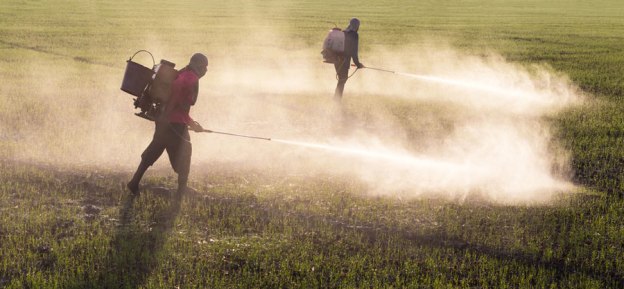
The AAP report authors focus on glyphosate, sold commercially by Bayer as Roundup, because its use has exploded in recent decades: Ninety percent of the corn and 96% of the soybeans planted in the U.S. this year were genetically modified, much of it to be resistant to destruction by glyphosate, which instead kills all the weeds around the crops. The herbicide is often sprayed on genetically modified canola and sugar beets as well. As a result, glyphosate residues are in foods made with ingredients such as high fructose corn syrup, sugar, and canola oil, among them children’s favorites from hot dogs and chicken nuggets to sweetened cereal and potato chips.

The AAP report notes a 2015 finding from an arm of the World Health Organization that glyphosate is “probably carcinogenic to humans.” It also cites one meta-analysis that found an elevated risk of non-Hodgkin lymphoma in people with high exposure to glyphosate from years of applying it to crops.

But the U.S. National Academies of Sciences, Engineering, and Medicine found no evidence of adverse health effects in humans from genetically engineered foods or from glyphosate residues in them. The U.S. Food and Drug Administration tests foods for glyphosate residues and has rarely found levels exceeding those determined safe for consumption by the U.S. Environmental Protection Agency (EPA). Numerous other agencies worldwide have similar positions.

Excerpts from Meredith Wadman, Pediatrics academy accused of ‘fearmongering’ over GMO ingredients in kids’ diets, Science, Sept. 17, 2024

The Chemical Fingerprints of Trees and the Fight against Deforestation

Scientists are embarking on an effort to keep sanctioned Russian timber out of Europe by mapping the unique chemical fingerprints of trees, a process that could be used to vet corporate supply chains for other banned commodities. The project aims to bring science to bear in a fight by companies and governments to stop illegal wood from seeping into timber supply chains—complex, difficult-to-police networks of logging companies, sawmills, wood manufacturers and traders.

To start, a team led by the Washington-based nonprofit World Forest ID set its sights on sanctions the European Union placed on Russian and Belarusian timber following the invasion of Ukraine. The team analyzed thousands of wood samples of trees, then layered in advanced statistical models and artificial intelligence.  The result was a database allowing customs officials and corporate auditors to verify the origin of timber with a simple, lab-based test. 

Although work on the database is ongoing, furniture giant IKEA has already used it to vet suppliers for sanctioned timber after the war forced it to revamp its supply chain. Belgian authorities have also employed it to seize more than 260 tons of illegally shipped Russian timber.  If scaled up, the project could have broad implications for how companies source a range of other agricultural commodities, such as cotton and cacao, which have been linked to environmental and human rights abuses…

World Forest ID currently uses two tests to identify the chemical composition of wood samples. One measures the ratios of stable isotopes, which vary based on factors such as rainfall or temperature. The other test measures trace elements such as magnesium and copper, which vary based on the soils in which trees grow…The group interpolates results spatially using advanced statistical methods and machine learning. Those innovations on traditional forensic testing methods allow World Forest ID to predict the chemical signatures of trees harvested in areas where the group didn’t take samples.

Excerpts from Dylan Tokar, Keeping Sanctioned Russian Timber Out of the EU Is Tricky. This Nonprofit Has a Solution, WSJ, June 10, 2024

How Fish Becomes Extinct

Five fish species, including the iconic Chinese sturgeon, have gone extinct, or will soon be extinct, because of dams on the Yangtze River in China, according to a paper released on 10 May 2024 in Science Advances. The Yangtze River is a mighty 6,300-kilometre-long waterway and a global biodiversity hotspot that runs through 11 Chinese provinces. But over the past 50 years, six major hydropower dams and more than 24,000 smaller hydropower stations have been built in the river’s main stream.

The paper focused on five iconic species: the Chinese sturgeon (Acipenser sinensis), the Yangtze sturgeon (Acipenser dabryanus), the Chinese paddlefish (Psephurus gladius), the Chinese sucker (Myxocyprinus asiaticus) and the largemouth bronze gudgeon (Coreius guichenoti). By the time of the analysis, the paddlefish was already extinct. The Yangtze sturgeons are being kept alive only through captive-breeding programs. The Chinese sturgeon is critically endangered. The International Union for Conservation of Nature lists the sucker as vulnerable, and the gudgeon as endangered. The researchers’ modelling found that all five species will be entirely extinct or extinct in the wild by 2030.

Excerpts from Xiaoying You, China’s Yangtze fish-rescue plan is a failure, study says, Nature, May 20, 2024

Who Craves Baby Eels: the Industry and its Black Market

The growing craving for eel over the decades, concurrent with the rise of China’s middle class, has triggered overfishing in Japan and Europe, leading to a decline in the species’ population. The European Union banned the import and export of eels in 2010, which led seafood wholesalers to look for alternative sources, bringing the trade—and thousands of poachers—to Canada… Fishermen say elver poachers outnumbered licensed harvesters 10-to-1 during the 2023 abbreviated season, closed after 18 days due to concerns about illegal fishing.

There is a lot of money at stake. Fishers use mesh nets to scoop up baby eels as they enter Canada’s east coast river systems, and sell them on to aquaculture operations in Asia to raise them until they are ready for market. Baby eell demand “has resulted in unsustainable eel fishing,” according to a Justice Department indictment filed in 2022 with the U.S. District Court of New Jersey, in relation to charges filed against a seafood distributor and eight of its employees—four of whom are based in China—on allegations of illegally trafficking large volumes of juveniles. “A multibillion-dollar international black market for freshwater eels flourishes.” At its peak, a pound of elvers fetched about $1,800, but fishers say the price has dropped due to black-market activity…

It is difficult to stamp out illegal harvesting entirely. Officials say it happens in the evening and often in isolated locations. The barrier to entry is low, because all poachers need is a pair of rubber boots, a headlight, and a good-quality dip net purchased from a sporting goods store. Illegally-caught baby eels can still be packaged and shipped to Hong Kong in mislabeled boxes, mixed either with legally-caught eels or other seafood, like lobster, officials say.

Excerpts from Paul Vieira, Guns and Death Threats Spur Canada to Reel in Baby-Eel Fishing, WSJ, Apr. 5, 2024

Can We Save the Giant Kelp?

At a salmon farm in Tasmania Australia is an experiment that researchers hope can save an entire ecosystem from warming oceans. Beneath the waves, scientists are growing several types of giant kelp—which in the wild can grow up to 175 feet tall—on rope to track which ones can thrive in hotter conditions. Rising water temperatures, more frequent marine heat waves and invasive sea urchins have already destroyed some 95% of the giant kelp forests in Tasmania, scientists say. The island south of Australia’s mainland is a global hot spot for ocean warming, with sea temperatures in the island’s east rising faster than the global average, a dynamic that has already wreaked havoc on some marine species in a place where fishing remains a key industry.

In Tasmania, scientists are conducting experiments to identify heat-tolerant giant kelp, plan to use artificial intelligence and genetic analysis to better understand why some types fare better than others, and will then have to figure out a way to plant them in the wild without it costing a fortune. Eventually, they could use the genetic information to breed kelp to be even more heat tolerant…But success is far from guaranteed. Running lab tests on kelp can be tricky, given the great size the plants can reach. Efforts to control the invasive long-spined sea urchins, including with government subsidies that encourage fishermen to catch them, could fail. Marine heat waves could increase beyond the ability of any kelp to cope. Scientists also still aren’t sure to what extent genetic factors allow giant kelp to survive in warmer water, or whether environmental factors—such as nutrient and light availability—are more important.

Excerpts from Mike Cherney, Inside the Quest for a Super Kelp That Can Survive Hotter, WSJ, Feb. 22, 2024

When Lakes Become a Soup of Minerals: the Fate of Great Salt Lake

In the summer 2024, a California startup plans to start construction on a project to suck up water from the Great Salt Lake, Utah, United States to extract one of its many valuable minerals: lithium, a critical ingredient in the rechargeable batteries used in electric vehicles. The water will then be reinjected back into the lake, which Lilac Solutions says addresses concerns about the damaging effects of mineral extraction. At its peak, Lilac says it will use a series of pipes to suck up 80,000 gallons of water a minute to harvest the mineral. The company plans to eventually produce up to 20,000 tons of battery-grade lithium a year.

The effort is one of dozens of projects across the U.S. racing to build up a domestic supply of lithium and other battery minerals as the Biden administration is dedicating billions of dollars to strengthening the U.S. battery supply chain and reducing reliance on China, which dominates the global production of battery minerals.

One common extraction method of lithium pumps briny underground water into vast man-made ponds, where evaporation separates lithium from other elements over 18 months or more. Mining companies in Chile and elsewhere have used the approach, which drains scarce water resources and can leave deposits of toxic residues.

Lilac says its technology is much faster, taking a matter of hours from the time of extraction, while preserving water levels. Its method deploys reusable ceramic “beads” that attach to lithium atoms to separate them from the brine.

At the Great Salt Lake, mineral extraction is nothing new. The lake has been shrinking for decades because of agricultural, industrial and other diversions of its feed waters. Extraction of minerals accounts for about 13% of its water diversion, according to a 2019 study. Meanwhile, the lake has become a concentrated soup of minerals, since it doesn’t have an outlet that lets it discharge the ones that flow into it.

Scott Patterson, The Great Salt Lake Is Full of Lithium. A Startup Wants to Harvest It, WSJ, Feb. 12, 2024

Food Security: The Silicon Valley of Seeds

The Communist Party’s top disciplinary body—after punishing graft in the military, domestic security organs and the financial sector—is now hunting officials, merchants and farmers it suspects of harvesting illicit profits from trade in grains and seeds. Tasked with being more forceful in safeguarding the nation’s “seed security,” authorities have investigated dozens of cases involving seed-related misconduct and, in several instances, imprisoned grain-sector officials on corruption charges…Officials say the goal is to stop the proliferation of fake and substandard seeds that could jeopardize food production and safety, while punishing officials, merchants and farmers who siphon agricultural subsidies and peddle low-grade seeds.

Xi has often highlighted food security as a national interest, calling on officials to ensure that China can fully nourish its 1.4 billion people. His demands have taken on greater urgency in recent years as he pushed to prepare his country for a potential confrontation with the U.S.—a major source of Chinese grain imports, including soybeans and corn—and forestall disruptions to food supplies for one of the world’s most populous nations…Today, Beijing sees the seed sector as one of several strategic industries where Western powers could flex their technological superiority to strangle a lagging China. Demonstrating his personal interest in this field, Xi has twice visited a seed-breeding base in the island province of Hainan that officials call the “Silicon Valley” of China’s seed industry.

China is the world’s largest grain producer, growing one-quarter of global supply on less than 10% of the world’s arable land. But its ability to feed its own people has slipped over recent decades by some estimates. ..Officials and state media have taken to comparing seeds to advanced semiconductor chips, a technology that China has pledged to master in its quest for a national renaissance…While China’s seed industry is strong enough to survive foreign strangulation, the country still falls behind in seed quality, according to the Farmers’ Daily, which recommended measures including “resolutely cracking down” on the trading of fake and mislabeled seeds, whereby officials and merchants defraud farmers with counterfeit or lower-grade goods marked as top-quality seeds….

Excerpts from China’s Corruption Hunters Target Produce Aisle in Push for Seed Security, WSJ, July 25, 2023

The Environmental Harm Caused by the Energy Transition

In the electric-vehicle business, the quandary is known as the nickel pickle. To make batteries for EVs, companies need to mine and refine large amounts of nickel. The process of getting the mineral out of the ground and turning it into battery-ready substances, though, is particularly environmentally unfriendly. Reaching the nickel means cutting down swaths of rainforest. Refining it is a carbon-intensive process that involves extreme heat and high pressure, producing waste slurry that’s hard to dispose of. The nickel issue reflects a larger contradiction within the EV industry: Though electric vehicles are designed to be less damaging to the environment in the long term than conventional cars, the process of building them carries substantial environmental harm.

The challenge is playing out across Indonesia’s mineral-rich islands, by far the world’s largest source of nickel. These deposits aren’t deep underground but lie close to the surface, under stretches of overlapping forests. Getting to the nickel is easy and inexpensive, but only after the forests are cleared.  One Indonesian mine, known as Hengjaya, obtained permits five years ago to expand its operations into a forested area nearly three times the size of New York City’s Central Park. The mine’s Australian owner, Nickel Industries, said that rainforest clearing in 2021 caused greenhouse gas emissions equivalent to 56,000 tons of carbon-dioxide. That’s roughly equal to driving 12,000 conventional cars for a year, according to calculations by The Wall Street Journal based on U.S. Environmental Protection Agency data. “Unfortunately, land clearing is required for all open-cast mining processes, including our operations,” said the firm’s sustainability manager…. The negative impact is offset, he said, by nickel’s use in environmentally friendly batteries…Auto executives worried about having enough nickel to meet rapidly growing demand for EVs. They had moved away from cobalt, another battery component, after human-rights groups and journalists reported on widespread child labor in cobalt operations and dangerous conditions faced by miners in the Democratic Republic of Congo. Automakers tweaked their batteries to reduce cobalt by adding more nickel…

The nickel rush has created pressing new environmental concerns. The HPAL process used to process nickel pioneered by Chinese companies involves dousing nickel ore in sulfuric acid and heating it to more than 400 degrees Fahrenheit at enormous pressures. Producing nickel this way is nearly twice as carbon-intensive as mining and processing sulfide nickel found in Canada and Russia. Another way of processing laterite ore that often uses coal-powered furnaces is six times as carbon-intensive, according to the International Energy Agency. Companies also face questions about how to get rid of the processing waste. It is difficult to safely sequester in tropical countries because frequent earthquakes and heavy rains destabilize soil, which can cause waste dams to collapse. A 2018 Indonesian law allowed companies to obtain permits to discard mineral processing waste into the ocean….

China’s domination of Indonesian nickel processing poses risks for Western electric-vehicle companies at a time of fraying relations between Washington and Beijing. Last year, the U.S. government declared nickel a critical mineral whose supply is vulnerable to disruption, with very limited nickel production operations in the U.S.

Excerpts from Jon Emont, EV Makers Confront the ‘Nickel Pickle’, WSJ, June 5, 2023

Bickering is Easier than Acting: Saving Biodiversity

At the COP15 biodiversity summit in Canada in December 2022, more than 190 countries agreed to the Kunming-Montreal Global Biodiversity Framework, a deal including targets such as nations protecting and restoring 30% of the world’s land and seas by 2030. To ensure that all countries — particularly low- and middle-income nations (LMICs) — can meet these targets, those that signed the deal agreed to establish a trust fund by the end of this year and that, by 2030, wealthy nations should collectively be contributing US$30 billion per year. Disputes have re-emerged, however, on whether the trust fund should be independent or should be established under the auspices of the Global Environment Facility. Because LMICs don’t have an adequate say in how the GEF funds are spent, LMICs want the trust fund to be established as an independent fund.

These tensions could delay the trust fund’s adoption, which was planned for a GEF assembly in August 2023, delaying biodiversity action even more … Meanwhile, the clock is ticking: researchers have estimated that one million species are under threat of habitat loss because of factors such as climate change and agriculture.

Excerpts from Battles over Funding Could Threaten Historic Effort to Save Species, Nature, June 20, 2023
 

Saving the Climate by Fouling the Oceans

The Norwegian government in June 2023 opened the door for deep-sea mining in its waters, despite opposition from environmental groups and a growing list of nation states arguing to ban the practice.  The government said it was proposing parts of the Norwegian continental shelf be opened for deep sea mining and other commercial seabed mineral activities…Companies and countries are scouring the planet to find and secure additional sources of metals and minerals critical for the energy transition, including cobalt, manganese and nickel.  To date deep-sea mining has focused on the extraction of seabed nodules—tennis-ball sized pieces of rock which contain manganese, cobalt and nickel, all of which are used in electric-vehicle batteries

So far much of the attention has centered on the Clarion Clipperton Zone in the Pacific Ocean: An area of water between Mexico and Hawaii that contains millions of tons of nodules.  In Norway however, the focus will be on seabed crusts on the country’s continental shelf. The target crusts contain copper, zinc and cobalt, as well as some rare-earth elements, according to the Norwegian Petroleum Directorate…

Countries including France and Germany have called for moratoriums on deep-sea mining, while in May 2023 a report found that when researching the pacific seabed, 90% of the more than 5,000 marine creatures found living in the Clarion Clipperton Zone were new species. Companies including Maersk and Lockheed Martin have also been divesting their deep-sea mining investments. 

Excerpts from Yusuf Khan, Norway Opens Door for Deep-Sea Mining of Copper and Other Critical Materials, WSJ, June 20, 2023

The Shameful Mismanagement of the Murray-Darling River: Australia

Millions of fish have died in the Darling River near his town, Menindee, in outback New South Wales, Australia in March 2023. After days under the sun, their bodies had started to “break up…transforming the river that locals rely on for drinking and showering into an ecological wasteland. Authorities have said the mass death was caused by a lack of oxygen in the water, called hypoxia, a result of recent floods and a heat wave. But furious locals say the true root of the problem is the overuse of Australia’s biggest and most vital river system.

The disaster is the latest episode in a long-running battle over the Murray Darling Basin, a vast network of lakes and rivers stretching across four states in eastern Australia, which sustains much of the country’s agriculture and dozens of communities along its banks. In an arid country where social, economic and environmental interests clash whenever water runs scarce, the issue has pitted states against each other, and riverside communities against farms upstream.

The 2019 fish deaths happened during a drought and the 2023 fish deaths happened after a flood, said Richard Kingsford, the director of the Center for Ecosystem Science at the University of New South Wales. But, he said, the long-term causes were the same both times: “There’s not enough water in the river, and the whole system is engineered so that escape routes are closed.” Over-extraction means parts of the river run dry more often, he said, and the small and medium-sized floods that used to periodically clear away organic debris have all but disappeared. That means when a big flood hits, that debris is all swept into the river, where it breaks down and deoxygenates the water. That, combined with the construction of weirs that have prevented the fish from swimming to better-oxygenated water, has made this disaster worse, he said….

The New South Wales fisheries and water management bodies, by contrast, both attribute the disaster to weather-related causes…

After many of the fish had already sunk to the bottom of the river, the cleanup started with workers in small boats removing floating carcasses with hand-held nets. Authorities said this will be followed by machinery that will drag nets through the river to scoop up sunken fish….

Excerpts from Yan Zhuang, A River Choking on Fish Corpses, and a Community Full of Anger, NYT, Mar. 24, 2023

Pledge and Renege: Drilling for Oil in the Alaska Arctic

The Biden administration approved the massive Willow oil-drilling project in the Alaskan Arctic in March 2023 over the objections of environmentalists and many Democrats who wanted the project scuttled. The green light means Houston-based ConocoPhillips can start construction on its roughly $7 billion project in Alaska’s National Petroleum Reserve, which the company expects will produce about 180,000 barrels of oil a day at its peak—equivalent to about 40% of Alaska’s current crude production…The Bureau of Land Management (BLM) has estimated that oil and gas extracted from its recommended version of the Willow project would generate more than 270 million metric tons of carbon dioxide over the project’s lifetime. 

The approval paves the way for ConocoPhillips to build an airstrip, more than 430 miles of ice roads and nearly 270 miles of individual pipelines, among other infrastructure, according to the BLM’s environmental review of the project… 

The company, which is the largest crude producer in Alaska, sits on abundant reserves in the state. As of the end of 2021, it owned about 1.6 million net undeveloped acres in the state, according to ConocoPhillips. Approval of the project means that ConocoPhillips now has a hub from which to further expand into Alaska… The initial build-out from Willow will allow ConocoPhillips to develop more wells and infrastructure in the coming years, he said. “It will be in many ways the gift that keeps on giving…”

Excerpts from Benoît Morenne, Biden Administration Approves Willow Oil-Drilling Project in Alaskan Arctic, WSJ, Mar. 13, 2023

Farm-bred Monkeys, Real Monkeys and Drug Testing

While many of us would prefer not to give it much thought, monkeys are often used in laboratory tests during the development of key medical products such as the Covid-19 vaccines. Sadly, the global trade in nonhuman primates can involve murky dealings, including smuggling of illegal animals. The resulting blowback is of great concern to America’s world-leading medical research. Due to rising biomedical-research needs—and the limited supply of long-tailed macaques from breeding farms in Southeast Asia—there has long been a black market for monkeys caught in the wild. Rampant smuggling was a key reason behind the International Union for Conservation of Nature’s decision in 2022 to change long-tailed macaques’ status from “vulnerable” to “endangered.”

The U.S., the world’s largest importer of the animals, finally is doing something about it, but coordination among various government agencies has been faulty. Federal prosecutors in November  2022  charged eight people with running an international operation to poach wild monkeys. Among those charged were two Cambodian wildlife officials, one of whom was arrested in the U.S.—while traveling to an endangered-species conference. The largest U.S. monkey importers have received subpoenas as part of the probe, leading them to temporarily halt shipments from Cambodia.

The crackdown is exacerbating a shortage of nonhuman primates for research in the U.S. About 60% of the 30,000 biomedical-research monkeys imported annually to the U.S. used to come from China, but Beijing banned those exports during the pandemic, forcing American companies to pivot to Cambodia. The Chinese move, many in the industry say, was designed to give that nation an edge in the biomedical field in the midst of a pandemic and a trade war between the two superpowers… The shortage has driven up the cost of a nonhuman primate to more than $30,000 in 2023, from about $2,500 prepandemic, according to Elizabeth Anderson, an analyst at Evercore ISI.

The shortage is leading to a scramble to find different sources for research primates. But raising monkeys for laboratory testing takes years, so there is no immediate fix, even though alternate sources are growing in places like Mauritius, Indonesia, Vietnam and the Philippines.

Excerpts from David Wainer, Monkey Business Threatens U.S. Drug Discovery, WSJ, Mar. 3, 2023

Pollution as an Entitlement of the Rich

The East African Crude Oil Pipeline, a 900-mile pipeline between Uganda and Tanzania at the Murchison Falls National Park, is about to be built. The $10 billion project has become a flashpoint in the global battle against climate change, as some African governments with unexplored natural resources seek to resist a global push to limit investment in new fossil-fuel projects.

Opponents such as the U.S.-based Climate Accountability Institute, France’s Friends of the Earth and the European Parliament say the pipeline, which needs to be heated to 50 degrees Celsius (122 degrees Fahrenheit) to keep Uganda’s waxy crude liquid, would produce 34.3 million tons in annual greenhouse-gas emissions… But the governments of Uganda and Tanzania are arguing that they can’t afford not to exploit their natural resources while the world still runs on fossil fuels. It is unfair, they say, to ask poor countries to safeguard global carbon sinks and nature reserves that rich Western countries, which are responsible for most historic emissions, destroyed long ago in pursuit of their own economic development.

Nothing will stop this project,” Uganda’s President Yoweri Museveni, said from the garden of his official residence in Kampala. “We shall not accept any pressure from anybody. We know what we are doing.” TotalEnergies SE and China’s Cnooc Ltd. are involved in the project. Fitch Solutions estimates that Uganda could earn as much as $2 billion a year in taxes and royalties from the 230,000 barrels-a-day fields and the pipeline, a significant bump to the $4.5 billion it currently collects in domestic taxes.

Uganda’s neighbor, the Democratic Republic of Congo, has faced criticism, including from the Biden administration, over its plans to auction off oil-and-gas drilling sites inside its famed Virunga National Park, home to some of the world’s last remaining mountain gorillas, and peatland and rainforest areas that absorb carbon. Further south, the government of Namibia is under pressure from the United Nations to put a stop to exploratory oil drilling in the Okavango Delta, a UNESCO World Heritage site. 

The moves aren’t confined to Africa. In Mexico, President Andrés Manuel López Obrador has bet big on fossil energy. He is building a large oil refinery, the first one in the country since 1979, which is expected to start production in July, and ramped up public investment in oil exploration and production. In response to criticism from the U.S. and environmental groups, Mr. López Obrador has said that climate change became a fashionable topic among rich countries and accused some them of being hypocritical for defending reducing gas emissions while at the same time boosting oil output.

In the case of the East African Crude Oil Pipeline, more than a dozen international banks and insurers—including HSBC, Barclays and major French lenders that have helped finance previous TotalEnergies projects—have publicly said they won’t support it. ..TotalEnergies says it is confident it can raise the financing necessary to build the pipeline, with South Africa’s Standard Bank, the Industrial and Commercial Bank of China and Japan’s Sumitomo Mitsui Bank acting as lead arrangers for the project loans. People familiar with the project say the participating banks are asking for higher interest rates, which has helped raise the cost of the pipeline to $5 billion from $3.5 billion.

Some officials in poorer countries say such restrictions on developing new oil infrastructure in poor countries exacerbate global inequities, by allowing countries that already have the necessary infrastructure to profit from their fossil-fuel reserves, while potential newcomers are locked out. Uganda, like other African countries, saw protests over record-high fuel prices last year, while Tanzania’s government introduced a costly fuel subsidy to cushion the hit on households and businesses.

Excerpts from Ncholas Bariyom Uganda, Other African Nations Push for Fossil-Fuel Projects, WSJ, Feb. 22, 2023

Ecological Impacts of Mining Rivers for Gold

Mining in river channels provides a living for millions of people across the globe, particularly in the tropics. However, because this mining involves deforestation, excavating, dredging, and other work directly in or next to river channels, ecosystems are intensively degraded. Soils and river sediments excavated during mining are processed to extract the precious mineral of interest, usually gold, then discarded. Often the excess sand, silt, and clay is washed downstream by rivers, muddying river water for as much as 1,000 km downstream of mining sites. 

During the past 20 years, mining in rivers has increased dramatically, particularly during the Global Financial Crisis in 2008–09 when the price of gold increased significantly. Despite the human and ecological importance of mining-related environmental degradation, no global documentation of its environmental footprint exists. For the first time these environmental impacts were quantified through the use of satellite imagery and on-the-ground measurements, documenting more than 400 mining areas in 49 countries, mostly in the tropics. We show that the effects of mining have altered 173 rivers, which collectively represent 5–7% of large river length globally. In the tropical countries with river mining, on average nearly one-quarter of large river length is altered by river mining. 

Abstract Available online The recent rise of mining in rivers is a global crisis (Evan Dethier et al, 2022)

Chronic Malnutrition–Manatees and Sewage

Wildlife officials in Florida are relaunching a program in December 2022 to feed manatees in a coastal area where many congregate in the winter, part of efforts to address the aquatic mammals’ chronic malnutrition caused by the disappearance of seagrasses they feed on…A key factor for the depletion of seagrasses is poor water quality in the Indian River Lagoon, an estuary spanning 156 miles of Florida’s eastern coast that draws many manatees.

The situation highlights a broader problem with polluted waterways in Florida. Algal blooms have broken out in numerous areas in recent years, fueled by nutrients such as nitrogen and phosphorus from improperly treated sewage, leaking septic tanks and fertilizer runoff, according to researchers. The outbreaks pose a threat to Florida’s economy, which relies heavily on tourism in coastal areas.

In  2021, mainly January to March, state and federal wildlife officials provided over 202,000 pounds of romaine lettuce, butter lettuce and cabbage to manatees gathering in warm water discharged by a power plant on the Indian River Lagoon. Many of the mammals, which typically are about 10 feet long and weigh more than 1,000 pounds, seek refuge there when waters cool in winter.

Excerpt from Arian Campo-Flores Florida Restarts Push to Feed Manatees, WSJ, Dec. 25, 2022

Miracles Performed by Wild Crops

Grains that grow year after year without having to be replanted could save money, help the environment, and reduce the need for back-breaking labor. Now, the largest real-world test of such a crop—a perennial rice grown in China—is showing promise. Perennial rice can yield harvests as plentiful as the conventional, annually planted crop while benefiting the soil and saving smallholder farmers considerable labor and expense, researchers have found…

All rice is perennial to some extent. Unlike wheat or corn, rice roots sprout new stems after harvest. The trouble is that this second growth doesn’t yield much grain, which is why farmers plow up the paddies and plant new seedlings. The improved perennial rice, in contrast, grows back vigorously for a second harvest. Researchers developed it by crossing an Asian variety of rice with a wild, perennial relative from Nigeria. Improving the offspring took decades, and in 2018 a variety called Perennial Rice 23 (PR23) became commercially available to Chinese farmers. This was a “scientific breakthrough,” says Koichi Futakuchi, a crop scientist at the Africa Rice Center…

Over 4 years PR23 averaged 6.8 tons of rice per hectare, slightly higher than the annual rice, they report today in Nature Sustainability. As hoped, the perennial crop tended to grow back again and again without sacrificing the size of the harvest. In the fifth year, however, the yields of PR23 declined for some reason, suggesting it needed to be replanted. The perennial rice also improved the soil.

Researchers note potential risks. Because PR23 enables farmers to till less, fungi and other pathogens can build up in the fields. Insects can persist in the stubble after harvest, because it’s not plowed under, then transmit viruses when they feed on the regenerating sprouts in the spring. And without tilling, weeds can flourish; the researchers found that fields with PR23 needed one to two more herbicide treatments than regular rice. They also note that it’s more work to resow the perennial rice when its yield falters, because its larger and deeper roots need to be killed.

Excerpts from ‘Perennial’ rice saves time and money, but comes with risks, Science, Nov. 7, 2022

Reversing Industrialization: the Future of Plants?

Is it possible that the microbiomes of ancestors of our crops can be used to “rewild” microbiomes of current crops reinstating their diverse microbiota that were lost through domestication and industrialization processes, including including the (over)use of antibiotics, pesticides, and fertilizers?

Similar to reversing industrialization-associated changes in human gut microbiota , plant microbiome rewilding builds on the premise that wild ancestors harbor microbial genera with specific traits that are not found (or are strongly depleted) in the microbiome of modern crops. To date, however, it is unknown for most plant species whether (and which) microbial genera and functions were lost during plant domestication, and to what extent rewilding can enhance the health and sustainability of modern crops. In animal systems, the effectiveness of rewilding approaches is intensely debated , and similar discussions are needed for crop rewilding approaches.

Plant domestication is one of the most important accomplishments in human history, helping drive the transition from a nomadic to a sedentary lifestyle. Through stepwise processes, crop plants acquired a suite of new traits, including larger seeds, determinate growth, photoperiod sensitivity, and reduced levels of bitter substances. Although this led to a more continuous food supply, domestication caused a reduction in plant genetic diversity because only desired alleles were spread, while genomic regions next to the target genes suffered selective sweeps (6). This so-called “domestication syndrome” decreased the ability of crops to withstand pests and diseases

Excerpts from JOS M. RAAIJMAKERS AND E. TOBY KIERM, Microbiota of crop ancestors may offer a way to enhance sustainable food production, Science, Nov. 11, 2022

The Battle for Biodiversity and Human Rights

From the lush Amazon rainforest to the frigid Arctic Ocean, the world’s landscapes — and all the wildlife they contain — are under threat, and the world needs to set aside a third of all land and sea territories to save them, U.N. experts say.

The call is central to the global agreement being hashed out in December 2022 at the U.N. biodiversity summit in Montreal. If approved, governments would be agreeing to set aside 30% of their land and sea territories for conservation by 2030 – the so-called 30-by-30 goal, doubling the amount of land area and more than tripling the ocean territory currently under conservation…

A June 2022 study in the journal Science found, however, that at least 44% of global land area would be needed to protect areas with a high diversity of species, prevent the loss of intact ecosystems, and optimize the representation of different landscapes and species. But more than 1.8 billion people live in these areas

One of the key tension points that has emerged in the 30-by-30 debate at COP15 is whether the target should be carried out globally or at a national level…It is an important distinction, scientists and negotiators said. Some countries are small, without much land to set aside for nature. Others are vast and still contain a high degree of biodiversity, such as tropical forest nations like Brazil and Indonesia. Were such countries to protect only 30% of their territories, that could actually result in a significant loss of nature…Currently, just under 50% of the Amazon is under some form of official protection or indigenous stewardship, so a national pledge to conserve 30% would represent a significant downgrade.

The other dispute plaguing 30-by-30 is over what should count as protection. Some countries might allow people to live within protected areas or promote indigenous stewardship of these lands. Some might even allow for extractive industries to operate under permits and regulation. In other cases, conservation areas are off limits to everyone. The European Union has proposed allowing activities like logging, mining and fishing to be carried out under conservation management for 20% of protected areas, while 10% would be held under stricter protections.

The idea caused environmental nonprofit Greenpeace to accused the EU last week of trying to water down language on 30-by-30, which the EU denied.

Excerpts from Gloria Dickie, Protecting 30% of the planet to save nature is not as simple as it sounds, Reuters Dec. 14, 2022

Sins of Environmentalism

During the opening ceremony of the (Conference of the Parties) COP15 of the Biodiversity Convention taking place in early December 2022,  Canadian Prime Minister Justin Trudeau called for a global agreement to protect 30% of the world’s land and water by 2030. This so-called ’30×30′ plan is opposed by a number of groups that promote the rights of indigenous peoples. According to Survival International, an organization campaigning for Indigenous rights, 30 x 30 will be the biggest land grab in history.

Already in many Protected Areas around the world local people, who have called the land home for generations, are no longer allowed to live on and use the natural environment to feed their families, gather medicinal plants or visit sacred sites.

Fortress Conservation’ is one example of a conservation model that excludes Indigenous communities. It began with the formation of Yosemite, the world’s first national park, in North America over 150 years ago.  To preserve the ‘pristine wilderness’ humans needed to be expelled so the native Americans, who had lived in and cared for the region for thousands of years, were evicted.

Only 3 per cent of the world’s land remains ecologically intact, and biodiversity loss continues at an alarming rate.  In 2010, member states of the Convention on Biological Diversity (CBD) committed to placing 17 per cent of the world’s land within protected areas by 2020. Yet during that decade global biodiversity actually declined significantly.

There have also been systemic human rights abuses. Rainforest Foundation UK protects the world’s rainforests by supporting and empowering the Indigenous people and local communities which live in them.  But its research into 34 Protected Areas in the Congo Basin showed that without the presence of Indigenous communities, animal populations dwindled, and extractive activities increased. This was despite large investments having been channeled into them.  It also uncovered widespread disregard for local communities’ rights and livelihoods and conflict between forest peoples and conservationists in this region.

According to Joe Eisen, Executive Director of Rainforest Foundation UK, human rights abuses are commonplace in the Congo Basin. “Our research has shown these human rights abuses are not just the isolated actions of rogue park rangers but are rather part of a system in which displacement, torture, gender-based violence and extrajudicial killings are used to control Indigenous peoples and other local communities who live in, and depend on, areas of high conservation value,” he says.

Protected Areas are often managed by major international conservation organizations, who employ armed guards to evict the local population and prevent their return. These actions have long-term consequences and destroy Indigenous livelihoods and cultures.

There are calls for the development of a community-based conservation model, which empowers Indigenous people, rather than removing them from their ancestral lands.

Excerpts from Plans to protect 30% of the planet by 2030 could be ‘devastating’ for Indigenous people, Euronews, Dec. 8, 2022

Exist, Evolve, Be Restored: the Rights of Nature

Only a few years ago, the clear, shallow waters of Mar Menor, a saltwater lagoon off eastern Spain that is Europe’s largest, hosted a robust population of the highly endangered fan mussel, a meter-long bivalve. But in 2016, a massive algal bloom, fueled by fertilizer washing off farm fields, sucked up the lagoon’s oxygen and killed 98% of the bivalves, along with seahorses, crabs, and other marine life.

The suffocating blooms struck again and again, and millions of dead fish washed onto shore. In 2021 local residents—some of whom benefit from tourism to the lagoon—had had enough. Led by a philosophy professor, activists launched a petition to adopt a new and radical legal strategy: granting the 135-square-kilometer lagoon the rights of personhood. Nearly 640,000 Spanish citizens signed it, and on 21 September, Spain’s Senate approved a bill enshrining the lagoon’s new rights. The new law doesn’t regard the lagoon and its watershed as fully human. But the ecosystem now has a legal right to exist, evolve naturally, and be restored. And like a person, it has legal guardians, including a scientific committee, which will give its defenders a new voice.

The lagoon is the first ecosystem in Europe to get such rights, but this approach to conservation has been gaining popularity around the world over the past decade…The clearest success story, scholars say, is the Whanganui River in New Zealand, which was given legal rights by an act of Parliament in 2017. Like a person, the river and its catchment can sue or be sued, enter contracts, and hold property. In that case, the aim was not to stop pollution but to incorporate the Māori connection between people and nature into Western law. “The river and the land and its people are inseparable,” Niko Tangaroa, a Māori elder of the Whanganui Iwi people and a prominent activist for the river, wrote in 1994.

Excerpts from Erik Stokstad, This Lagoon is Effectively a Person, New Spanish Law Says, Science, Oct. 7, 2022

Rich Environmental Criminals

“The brutality and profit margins in the area of environmental crime are almost unimaginable. Cartels have taken over entire sectors of illegal mining, the timber trade and waste disposal,” according to Sasa Braun, intelligence officer with Interpol’s environmental security program  Braun listed examples. Villages in Peru that had resisted deforestation efforts had been razed to the ground by criminal gangs in retribution, he said, while illegal fishing fleets had thrown crew overboard to avoid having to pay them.

Environmental crime has many faces and includes the illegal wildlife trade, illegal logging, illegal waste disposal and the illegal discharge of pollutants into the atmosphere, water or soil. It is a lucrative business for transnational crime networks. Illegal waste trafficking, for example, accounts for $10 to 12 billion (€10.28 to 12.34 billion) annually, according to 2016 figures from the United Nations Environment Program. Criminal networks save on the costs of proper disposal and obtaining permits. For some crime networks, the profits from waste management are so huge that it has become more interesting than drug trafficking…The profits from illegal logging have also grown…

According to the European Union Agency for Law Enforcement Cooperation (Europol), environmental crime — the third most lucrative area of crime worldwide after drug trafficking and counterfeit goods — generates profits of between $110 billion and $280 billion each year.

Excerpts from Environmental crime: Profit can be higher than drug trade, DW, Oct. 16, 2022

New Drugs: Animals Stuck to the Seabed

Biologists are working with engineers to develop new tools to accelerate the development of medicines derived from marine animals, focusing on ocean-going robots with onboard DNA-sequencing gear. They foresee fleets of autonomous submersible robots trolling the ocean like electronic bloodhounds to sniff out snippets of the animals’ DNA in seawater—and then gathering and analyzing this so-called environmental DNA, or eDNA.

“The ultimate goal is an underwater vehicle that collects environmental DNA samples, sequences them and then sends the data back to the lab,” says Kobun Truelove, senior research technician at the Monterey Bay Aquarium Research Institute in California. “We would like to set up a network where you would have these autonomous vehicles out there sampling and then basically be getting the data back in real time.”

More than 1,000 marine-organism-derived compounds have shown anticancer, antiviral, antifungal or anti-inflammatory activity in medical assays, according to a database compiled by the Midwestern University Department of Marine Pharmacology. The U.S. Food and Drug Administration has approved 15 drugs derived from marine organisms, including ones for chronic pain and high cholesterol. Another 29 marine animal-derived compounds are now in clinical trials, according to the database.

Marine invertebrates are a key target of biomedical research because the animals—mostly attached to the seabed and unable to move—have evolved sophisticated chemical defenses to fend off fish, turtles and other predators in their environment. Research has shown that the natural toxins that comprise these defenses can be toxic to cancer cells and human pathogens. These sea creatures “make a broad range of different chemistries, things that synthetic chemists never thought of making,” says Barry O’Keefe, who have also identified compounds produced by bacteria living symbiotically with marine invertebrates. Once scientists have a suitable sample of eDNA and it’s been sequenced, they say, they can identify compounds the organisms are capable of producing. Then researchers can synthesize the compounds and test them to see if they have medicinal properties…

Collection of eDNA promises to be faster and less costly than the complex method commonly used   collect marine specimens—one that Amy Wright, director of the natural products group at Florida Atlantic University’s Harbor Branch Oceanographic Institution, likens to a treasure hunt. Currently, research vessels on weekslong expeditions launch submersible vehicles equipped with clawlike grabbers and suction tubes for gathering specimens. Once the vehicles and their payload are back on the ships, researchers preserve them and deliver them to labs, where their genomes are sequenced. The entire process can take weeks and is expensive. Just paying the crew to operate a research vessel for a single day can cost $35,000, according to the National Science Foundation.

Excerpts from  Eric Niile, Finding New Drugs From the Deep Sea via ‘eDNA’, WSJ, Sept. 3, 2022

Military Uses of Dolphins

The U.S. NAVY MARINE MAMMAL PROGRAM: Since 1959, the U.S. Navy has trained dolphins and sea lions  to help guard against threats underwater….Dolphins naturally possess the most sophisticated sonar known to science. Mines and other potentially dangerous objects on the ocean floor that are difficult to detect with electronic sonar, especially in coastal shallows or cluttered harbors, are easily found by the dolphins. Both dolphins and sea lions have excellent low light vision and underwater directional hearing that allow them to detect and track undersea targets, even in dark or murky waters. They can also dive hundreds of feet below the surface, without risk of decompression sickness or “the bends” like human divers. Someday it may be possible to complete these missions with underwater drones, but for now technology is no match for the animals…Dolphins are trained to search for and mark the location of undersea mines that could threaten the safety of those on board military or civilian ships..
How do the animals travel to remote work sites? By airplanes and helicopters (yes!)

Excerpt from US Naval Information Warfare Center

Stopping the Bleeding of the Horseshoe Crab

Every April in South Carolina, fishermen catch hundreds of horseshoe crabs as they crawl onto shore to mate. The crabs are transported to labs owned by Charles River, an American pharmaceutical company, in Charleston. There they are strapped to steel countertops and, still alive, drained of about a third of their blue-colored blood. Then they are returned to the ocean. This liquid is vital for America’s biomedical industry. A liter of it goes for as much as $15,000. Bleeding is not without harm to the crabs. Conservationists estimate that between 5% and 30% of them die on release…In 2016 the International Union for Conservation of Nature listed them as “vulnerable” to extinction… 

Parts of modern medicine have been unusually reliant on the horseshoe crab. Its blood is the only known natural source of limulus amebocyte lysate (LAL), an extract that detects endotoxin, a nasty and sometimes fatal bacterium. Drug firms use it to ensure the safety of medicines and implanted devices, including antibiotics, anti-cancer drugs, heart stents, insulin and vaccines. The immune cells in the crab’s blood clot around toxic bacteria, giving a visual signal of unwanted contamination. As pharmaceutical companies ramped up production of the covid-19 jab, demand for the blue liquid soared. In 2020 nearly 650,000 crabs were bled in America, 36% more than in 2018.

As crab numbers fall and demand for LAL rises, America’s biomedical industry will face a crunch. Yet a synthetic alternative to LAL is already available and used in China and Europe.

Excerpt from In America, crab blood remains vital for drug- and vaccine-making, Economist, Sept. 3, 2022

What is your Extinction-Risk Footprint?

A new study quantifies how the consumption habits of people in 188 countries, through trade and supply networks, ultimately imperil more than 5,000 threatened and near-threatened terrestrial species of amphibians, mammals and birds on the International Union for the Conservation of Nature (IUCN) Red List of Threatened Species. For the study, recently published in Scientific Reports, researchers used a metric called the extinction-risk footprint. The team found that 76 countries are net “importers” of this footprint, meaning they drive demand for products that contribute to the decline of endangered species abroad. Top among them are the U.S., Japan, France, Germany and the U.K. Another 16 countries—with Madagascar, Tanzania and Sri Lanka leading the list—are designated as net “exporters,” meaning their extinction-risk footprint is driven more by consumption habits in other countries. In the remaining 96 countries, domestic consumption is the most significant driver of extinction risk within those nations.

African trees logged in gorilla habitat, for example, could end up as flooring in Asia.  Other species highlighted in the study include the Malagasy giant jumping rat, a mammal that can jump 40 inches high and is found only in Madagascar. Demand for food and drinks in Europe contributes to 11 percent of this animal’s extinction-risk footprint through habitat loss caused by expanding agriculture. Tobacco, coffee and tea consumption in the U.S. accounts for 3 percent of the extinction-risk footprint for Honduras’s Nombre de Dios streamside frog, an amphibian that suffers from logging and deforestation related to agriculture.

Excerpt from Susan Cosier, How Countries ‘Import’ and ‘Export’ Extinction Risk Around the World, Scientific American, May 31, 2022

The Lies Around Plastics

California’s attorney general is investigating Exxon Mobil C and other fossil-fuel and petrochemical companies, accusing them of misleading the public about the impact of plastic pollution. He said his office has issued a subpoena to Exxon seeking information about what he called an “an aggressive campaign to deceive the public, perpetuating a myth that recycling can solve the plastics crisis.” 

“The truth is: The vast majority of plastic cannot be recycled,” Mr. Bonta said. “This first-of-its-kind investigation will examine the fossil fuel industry’s role in creating and exacerbating the plastics pollution crisis—and what laws, if any, have been broken in the process.”

Plastics and other petrochemical products are ubiquitous features of modern life, used to fashion everything from car fenders and shampoo bottles to smartphones. The United Nations estimates that the world generates more than 400 million metric tons of plastic waste every year and that vast amounts of that end up in oceans and other waterways. Plastics take hundreds of years to decompose and first break down into tiny particles. Scientists have found these particles in drinking water and food, and some estimate many human beings will consume dozens of pounds of plastic in their lifetimes.

Driven by the shale drilling revolution, which unleashed massive volumes of oil and gas, the petrochemical industry has invested more than $200 billion in U.S. plastics-and-chemical-manufacturing plants over the past decade. Exxon has invested billions of dollars on such facilities and is one of the world’s largest producers of virgin plastic.

Petrochemical companies have recently promised to invest billions of dollars in recycling. Exxon said last year that it would build its first large recycling facility in Texas, which it said would initially have the capacity to recycle 30,000 metric tons of plastic waste a year. The Minderoo Foundation, an Australian philanthropic group, estimates that Exxon produced 5.9 million metric tons of single-use plastic in 2019. The Environmental Protection Agency estimates the U.S. typically recycles only about 9% of produced plastic.

Excerpts from Christopher M. Matthew, Exxon Subpoenaed in California’s Probe of Plastics Makers, Apr. 29, 2022

See also Inside the long war to protect plastic

Should We Boil Lobsters Alive?

If the UK joins a handful of other nations to recognize the sentience of invertebrates, such as cephalopod mollusks and decapod crustaceans, by, for example, prohibiting the boiling of live lobsters, this will be based on evidence that emotions and felt experiences (i.e., sentience) are not limited to animals close to humans, such as the mammals.

Over a decade ago, the same debate revolved around fish. Do fish feel pain? …This debate was settled when fish were found to learn from encounters with negative stimuli by avoiding dangerous locations. The best explanation is that fish remember these locations because they felt and neuronally processed aversive experiences. The same logic has been followed for arthropods, such as crabs, which in experiments learn to avoid locations where they have been shocked…

For example, the face—the proverbial window on human emotions—expresses emotions through similar muscular contractions…indistinguishable between humans and chimpanzees. Obviously, increasingly distant species have increasingly different expressions of the emotions, but research has found that, for example, physiological changes, lowered temperature of the extremities, and activation of the amygdala during fear are notably similar in fearful rats and fearful humans…. 

Bees subjected to vigorous physical agitation (shaking) to simulate a predatory attack proved less willing to explore new tastes, and hence were negatively biased by their experience. They also showed reduced amounts of hemolymph dopamine, octopamine, and serotonin. Changes in these neurotransmitters mark anxiety or depression in humans.

 It is not hard to see that the denial of animal emotions, and by extension animal feelings, has been morally convenient during human’s history of animal exploitation. Conversely, their recognition is bound to shake up our moral decision-making…If crabs experience emotional states, then they have an interest in these states being positively valenced. Current research indicates that a wide range of animals have interests in avoiding felt pain, and that they would not consent to painful procedures if given the opportunity….

When the medical community recognized infant pain in the 1980s, it was because the evidence was so overwhelming that physicians could no longer act as if infants are immune to pain.

Excerpts from Frans BM de Waal and Kristin Andrews, The question of Animal Emotions, Science, Mar. 25, 2022

Who Is Responsible for the Death of Birds?

Oil industry groups and wildlife conservation advocates are squaring off over Biden administration plans of 2022 to adopt new federal rules for the accidental killing of migratory birds…The measures being considered could include a permit process for new skyscrapers, power lines, wind turbines and other structures that birds fly into, often with fatal results. Businesses that secure a permit would limit exposure to steep fines for inadvertent bird killings under the Migratory Bird Treaty Act. Fish and Wildlife officials are also considering assessing a conservation fee as part of that permit process, with the money going to help mitigate habitat loss that has contributed to declining bird populations.

The agency said the rules are needed to protect declining populations of migratory birds, noting that nearly 10% of roughly 1,100 species protected by the Migratory Bird Treaty Act are threatened or endangered. While much of that is because of habitat loss from new development and agriculture, the agency says that “millions of birds are directly killed by human-caused sources such as collisions with man-made structures,” according to a Fish and Wildlife document.

Environmentalists are backing the effort, along with some businesses that say existing regulations are ambivalent and need clarification. But the permit system, even in its infancy, is being opposed by the American Exploration & Production Council and several other oil and gas production groups. They say no data exists to show that a permitting program will protect birds “over and above our industry’s operational practices and conservation measures.” Oil and gas drilling contributes to accidental deaths of birds in several ways, including when birds fly into the colorless flames as excess methane gas is being burned off from wells.

Pits used for disposal of mud, wastewater and other liquids in connection with oil drilling are estimated to kill hundreds of thousands of birds annually, according to a Fish and Wildlife report….The American Petroleum Institute, the industry’s top lobbying group, said the Biden administration should limit criminal punishments to intentional killings following court rulings that the law doesn’t apply to accidents. If regulators create a permit program, they said it should be general, not project specific, to minimize “undue administrative burdens or delay.”

The U.S. Chamber of Commerce and other business groups raised concerns that the permit process could obstruct projects funded by the bipartisan $1 trillion infrastructure plan—along with new wind and solar energy projects that the White House wants to reduce U.S. dependence on fossil fuels and help combat climate change…Wind turbines are estimated to kill between 140,000 and 500,000 birds a year, according to Fish and Wildlife, and a major expansion of those turbines could push bird deaths over 1 million annually, wildlife researchers have estimated.

Duke Energy Corp., whose subsidiary was fined $1 million in 2013 after dozens of birds died at a wind-turbine project in Wyoming, said it supports the new rule-making effort.

TOP THREATS TO BIRDS
Hazard type — Average annual deaths (est.)

Cats — 2,400,000,000
Building glass collisions — 599,000,000
Vehicle collisions — 214,500,000
Poison — 72,000,000
Power line collisions — 25,500,000
Communication tower collisions — 6,600,000
Electrocutions — 5,600,000
Oil Pits — 750,000
Wind-turbine collisions (land-based) — 234,012
Source: U.S. Fish and Wildlife Service, 2017

Excerpts from Katy Stech Ferek, Battle Looms Over Bird Protection, WSJ, Apr. 15, 2022

How Forests Create Clouds and Cool the Earth

Tropical forests have a crucial role in cooling Earth’s surface by extracting carbon dioxide from the air. But only two-thirds of their cooling power comes from their ability to suck in CO2 and store it. The other one-third comes from their ability to create clouds, humidify the air and release cooling chemicals. This is a larger contribution than expected for these ‘biophysical effects’ says Bronson Griscom, a forest climate scientist.

The analysis, published in Frontiers in Forests and Global Change in March 2022, could enable scientists to improve their climate models, while helping governments to devise better conservation and climate strategies. The findings underscore growing concerns about rampant deforestation across the tropics. Scientists warn that one-third of the world’s tropical forests have been mown down in the past few centuries, and another one-third has been degraded by logging and development. This, when combined with climate change, could transform vast swathes of forest into grasslands

Trees in the tropics provide shade, but they also act as giant humidifiers by pulling water from the ground and emitting it from their leaves, which helps to cool the surrounding area in a way similar to sweating, Griscom says. “If you go into a forest, it immediately is a considerably cooler environment,” he says.

This transpiration, in turn, creates the right conditions for clouds, which like snow and ice in the Arctic, can reflect sunlight higher into the atmosphere and further cool the surroundings. Trees also release organic compounds — for example, pine-scented terpenes — that react with other chemicals in the atmosphere to sometimes create a net cooling effect… When they considered only the biophysical effects, the researchers found that the world’s forests collectively cool the surface of the planet by around 0.5 °C.

Threats to tropical rainforests are dangerous not only for the global climate, but also for communities that neighbour the forests, Lawrence says. She and her colleagues found that the cooling caused by biophysical effects was especially significant locally. Having a rainforest nearby can help to protect an area’s agriculture and cities from heatwaves, Lawrence says. “Every tenth of a degree matters in limiting extreme weather. And where you have forests, the extremes are minimized.”

Excerpts from Freda Kreier, Tropical forests have big climate benefits beyond carbon storage, Nature, 

Unleashing Hydropower without Wasteful Disasters

After years of fighting, Native American tribes, environmentalists and the hydroelectric power industry say they have reached a deal on a proposed legislative package that could boost clean energy as well as river conservation. The compromise deal, which would require approval from Congress, is the result of four years of talks between groups that have long been courtroom and policy adversaries because of disagreements involving vanishing fish populations and changes to river ecosystems. Concerns over climate change have helped them find common ground to potentially expand hydroelectric power, a carbon-free energy source, they said.

The deal seeks to grant approvals to add hydroelectric power to some existing dams in as little as two years, while speeding the approval of off-river pumped-storage projects, which store surplus energy for later use, in as little as three years. Another key component would give tribes, instead of the Department of the Interior, authority on the conditions put on permits for things like the protection of tribal cultural resources or fish passage.

Groups supporting the package include the National Hydropower Association, American Rivers, the Skokomish Tribe, Upper Skagit Indian Tribe and the Union of Concerned Scientists. “Our respective constituencies have battled each other to a draw for generations,” said Malcolm Woolf, the National Hydropower Association’s chief executive.

Hydroelectric power makes up about 7% of the U.S. electricity mix. Around 281 hydro-generating facilities, making up roughly one-third of non-federally owned generation, are up for re-licensing by 2030. The re-licensing process usually takes more than seven years and new projects take almost as long, a regulatory environment that has been likened to nuclear power approvals. Republican Sen. John Barrasso of Wyoming, ranking member of the Senate Energy and Natural Resources Committee, called the current permitting process for hydropower “a wasteful disaster” because of its yearslong timelines. “I look forward to seeing the agreement various stakeholders have reached,” he said Friday.

The proposal would amend the Federal Power Act, first passed in 1920.

Excerpts from Jennifer Hille, Tribes, Industry Groups Reach Deal to Boost U.S. Hydroelectric Power, WSJ, Apr. 4, 2022

Toxic Waste: Down the Toilet and into the Seas

Dumping oily wastewater into the ocean has been outlawed globally for decades, but an investigation by DW, in collaboration with the European nonprofit newsroom Lighthouse Reports and eight other European press outlets, has found that the practice is still common today, with potentially devastating effects for the environment.

Satellite imagery and data provided by the environmental group SkyTruth helped identify hundreds of potential dumps across the globe in 2021 alone. But the number of spills is most likely significantly higher because the satellites used by SkyTruth cover less than one-fifth of the world’s oceans. According to the group’s estimate, the amount of oily water dumped into the oceans this way could amount to more than 200,000 cubic meters (52.8 million gallons) annually, or roughly five times the equivalent of the 1989 Exxon Valdez spill in Alaska — one of the worst maritime environmental disasters.

As merchant ships make their journeys, liquids from the engine room, oil, detergents, water and other substances collect in the bottom of the vessel, the bilge. This noxious mixture, called “bilgewater,” is then stored in tanks. In a day, a single merchant ship can produce several tons of it. International regulations require that large vessels treat the bilgewater with an “oily water separator” before it is discharged into the ocean. Each liter of bilgewater pumped into the sea after treatment is permitted a maximum residual-oil proportion of 15 parts per million, or 15 milligrams of oil per liter of water (0.0005 ounces per quart), according to a limit set by the International Maritime Organization (IMO) in 1973. The remaining toxic mixture is stored in tanks onboard and later discharged at harbor in port reception facilities.

All big vessels are required to have working separators. But many ships circumvent the system entirely…through a small, portable pump. “It’s very easy,” one man who had witnessed it in operation on several occasions told DW. “You can assemble this portable pump in five minutes and then detach (in) five minutes and hide (it) if someone is coming.”

The pump is used to transfer the oily water into a different tank — in most cases, the sewage tank. On the high seas, ships are allowed to dump their sewage untreated. Then, the toxic mix is quietly released into the ocean, often under the cover of night or during inclement weather, when there is a lower chance of getting caught, according to several seafarers DW talked to. At night it is harder for authorities to verify the crime, and bad weather can prevent the deployment of surveillance ships and planes… Because the illegal dumps happen at sea, it is difficult for authorities and researchers to track them. That is why satellite imagery is used to monitor the seas for pollution. When a vessel discharges oily wastewater illegally, it usually creates a spill kilometers long and with a very distinct shape.

A system set up in 2007 by the European Maritime Safety Agency, or EMSA, uses radar satellites to “see” through cloud cover and at night to identify possible spills. It alerts the respective member states when one is found…Illegal dumps “still regularly occur in European waters,” according to EMSA, and the number of spills detected and prosecuted remains low. Individual member states do not always follow up on the alerts, and, when they do, it is often not quickly enough. The longer it takes authorities to verify a spill in situ, the less likely they are to find oil, as spills begin to dissipate. In 2019, only 1.5% of spills were verified within a critical three-hour time frame. Polluters are only caught in a fraction of cases.

The satellites are also not able to monitor EU waters continuously, meaning that there is a window of several hours each day during which oil spills can go unnoticed. To get a sense of the total scope of this issue in EU waters, SkyTruth combined data and assumptions from EMSA with calculations of satellite coverage. Based on that fairly conservative estimate, the group expects that every year nearly 3,000 slicks are caused by vessels discharging mineral oil into EU waters. That averages out to more than eight per day — the majority of which go unseen by satellites.

Excerpts from Exclusive: How chronic oil pollution at sea goes unpunished, DW, Mar. 2022

Noise-Barriers and Noise-Victims: the Plants

Sounds are concussive pressure waves transmitted through gases, liquids and solids. Scientists have previously hypothesized that plants may be able to sense these waves as they are struck by them. A number of experiments have confirmed this in recent years—plants bombarded with ultrasound in the lab have shown a range of adverse responses including the expression of stress-related genes, stunted growth and reduced germination of seeds.

Yet blasting plants with ultrasound is not the same as growing them in the presence of actual traffic noise. To this end, Dr Ghotbi-Ravandi decided to set up an experiment to study precisely this question….Dr Ghotbi-Ravandi’s results were published in the journal Basic and Applied Ecology. His findings make it clear that, though plants lack ears, the vibrations generated by the noise of traffic still bothers them enough to trigger potent stress responses that are not much different to those that would be found in plants exposed to drought, high salinity or heavy metals in their soil… Whether some plant species have evolved coping mechanisms, which might one day be collected and transferred into urban-dwelling species, is a mystery worth exploring.

Excerpt from Botany: Deafened, Economist, Feb. 12, 2022

Ending the Plastic Paradise?

Heads of State, Ministers of environment and other representatives from 175 nations endorsed a historic resolution at the UN Environment Assembly (UNEA-5) on March 2, 2022: “End Plastic Pollution: Towards an internationally legally binding instrument.” The resolution addresses the full lifecycle of plastic, including its production, design and disposal. 

The resolution…establishes an Intergovernmental Negotiating Committee (INC), which will begin its work in 2022, with the ambition of completing a draft global legally binding agreement by the end of 2024…The UN Environment Programme (UNEP) will convene a forum by the end of 2022 that is open to all stakeholders in conjunction with the first session of the INC, to share knowledge and best practices in different parts of the world.

Plastic production soared from 2 million tonnes in 1950 to 348 million tonnes in 2017, becoming a global industry valued at US$522.6 billion, and it is expected to double in capacity by 2040. 

Exposure to plastics can harm human health, potentially affecting fertility, hormonal, metabolic and neurological activity, and open burning of plastics contributes to air pollution. By 2050 greenhouse gas emissions associated with plastic production, use and disposal would account for 15 per cent of allowed emissions, under the goal of limiting global warming to 1.5°C (34.7°F). More than 800 marine and coastal species are affected by this pollution through ingestion, entanglement, and other dangers.

Some 11 million tonnes of plastic waste flow annually into oceans. This may triple by 2040. A shift to a circular economy can reduce the volume of plastics entering oceans by over 80 per cent by 2040; reduce virgin plastic production by 55 per cent; save governments US$70 billion by 2040; reduce greenhouse gas emissions by 25 per cent; and create 700,000 additional jobs – mainly in the global south.
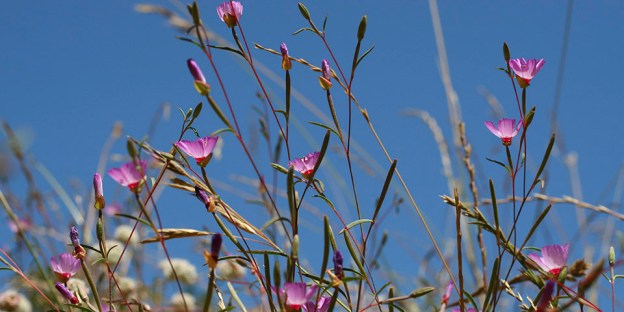
Excerpts from ,Historic day in the campaign to beat plastic pollution: Nations commit to develop a legally binding agreement, UNEP Press Release, Mar.  2, 202

How to Make Carbon-Negative Chemicals

Bacteria engineered to turn carbon dioxide into compounds used in paint remover and hand sanitiser could offer a carbon-negative way of manufacturing industrial chemicals.

Michael Köpke at LanzaTech in Illinois and his colleagues searched through strains of an ethanol-producing bacterium, Clostridium autoethanogenum, to identify enzymes that would allow the microbes to instead create acetone, which is used to make paint and nail polish remover. Then they combined the genes for these enzymes into one organism. They repeated the process for isopropanol, which is used as a disinfectant.

The engineered bacteria ferment carbon dioxide from the air to produce the chemicals. “You can imagine the process similar to brewing beer,” says Köpke. “But instead of using a yeast strain that eats sugar to make alcohol, we have a microbe that can eat carbon dioxide.” After scaling up the initial experiments by a factor of 60, the team found that the process locks in roughly 1.78 kilograms of carbon per kilogram of acetone produced, and 1.17 kg per kg of isopropanol. These chemicals are normally made using fossil fuels, emitting 2.55 kg and 1.85 kg of carbon dioxide per kg of acetone and isopropanol respectively.

This equates to up to a 160 per cent decrease in greenhouse gas emissions, if this method were to be broadly adopted, say the researchers. The technique could also be made more sustainable by using waste gas from other industrial processes, such as steel manufacturing.

Excerpt from Chen Ly, Engineered bacteria produce chemicals with negative carbon emissions, New Scientist, Feb. 21, 2022

Who Will Save the Red Sea from the Safer Oil Spill?

An oil tanker, the Safer,  tuffed with a load of more than 1 million barrels of crude oil has been left abandoned and rusting off the coast of Hodeidah, Yemen since 2015. Its decaying hulk encompasses the complexity of the civil war in Yemen. The Safer was permanently anchored off Hodeidah in 1987 and used for some four decades as a floating storage unit by Yemen’s state-run oil company to get oil from other tankers onto the mainland. However, the tanker fell into the hands of Houthi insurgents in March 2015 and has since then been – for all intents and purposes – left to rot. As a result, the structural integrity of the ship, which was built in 1976, is now at serious risk. Its firefighting system is out of order, and it has sprung several leaks over the past couple of years.

Experts estimate that the risks of an explosion on the tanker are huge and that the impact of this would be massive, as a full-blown leak in the closed basin of the Red Sea would be four times bigger than the historic Exxon Valdez disaster of 1989. Under the worst-case scenario, all of Yemen’s Red Sea ports would have to shut down, depriving millions of people of food and life-saving humanitarian aid. A spill would also affect the country’s water supply by shutting down its desalination plants…

The question is who will undertake the cost of around $75-100 million needed to defuse the Safer time bomb…On February 16, 2022 the UN under-secretary-general for humanitarian affairs, Martin Griffiths, informed the Security Council of an agreement, in principle, for a UN-coordinated proposal to shift the oil to another ship. Now all eyes are turned to the conference of donors that the UN is holding at the end of March 2022, where various states are expected to offer money to bankroll the operation.

Excerpt from Nikolas Katsimpras, An impending Red Sea disaster and Greece, Ekathimerini, Feb. 23, 2022

See also Greenpeace report

The Most Fantastic Thing in the World: Icefish

The most extensive and densely populated breeding colony of fish anywhere lurks deep underneath the ice of the Weddell Sea.. The 240 square kilometers of regularly spaced icefish nests, east of the Antarctic Peninsula, has astonished marine ecologists. “We had no idea that it would be just on this scale, and I think that’s the most fantastic thing,” says Mark Belchier, a fish biologist…

In February 2021, the RV Polarstern—a large German research ship–came upon thousands of 75-centimeter-wide nests, each occupied by a single adult icefish—and up to 2100 eggs…High-resolution video and cameras captured more than 12,000 adult icefish (Neopagetopsis ionah)….The  team on the RV Polarstern saw 16,160 closely packed fish nests, 76% of which were guarded by solitary males. Assuming a similar density of nests in the areas between the ship’s transects, the researchers estimate that about 60 million nests cover roughly 240 square kilometers.

The vast colony, the researchers say, is a new reason to create a marine protected area in the Weddell Sea…The Weddell Sea—a unique and largely undisturbed ecosystem—is already protected from a destructive fishing practice called bottom trawling…

Excerpt from Huge Icefish Colony Found, Science, Jan. 14, 2022

The Other Middle East Crisis: Rivers are Drying

Protests in the Iranian city of Isfahan erupted in November 2021 due to a severe shortage of water, as the region continues to suffer from a year of low rainfall and drought. Thousands of farmers and others who supported them took to the streets in Isfahan in central Iran, expressing their dissatisfaction at the water shortages and urging the government to solve the crisis. They shouted “let Isfahan breathe again, revive Zayandeh Rud,” referring to the dried river which supplies their crops with water.

The drying up of the Zayandeh Rud river has not only been caused by drought, however, but also by the government’s diversion of water from the river to supply other areas and with a pipeline supplying water to Yazd province also having been damaged. Those incidences have contributed to the farms being left dry and the famers’ livelihoods being threatened.

The water shortages and the drying of the river come at a time when the region is suffering from a similar shortage, as rainfall has been low and temperatures have increased to make it one of the hottest and driest years recorded. ..Neighboring Iraq and Syria have also been expressed concern over the shortage of water this year… In November 201, a major reservoir in Syria also dried up completely, and was similarly due to a combination of climatic and structural causes.

Excerpts from Protests over water shortages erupt in Iran, as river dries up, Middle East Monitor, Nov. 21, 2021

The Forced Migration of Endangered Species

Rhino translocations have become a critical tool in the arsenal for the protection of these endangered animals. Recently, 30 white rhinos were flown into Rwanda from South Africa and introduced into the Akagera National Park, in what is the single largest translocation. 

In the late 19th century, southern white rhinos were almost on the brink of extinction. This was due to poaching and hunting. But in 1895 a small population of fewer than 100 individuals was discovered in KwaZulu-Natal, South Africa. After more than a century of protection and good management, there are now around 17,600 white rhinos (as of 2018) living in protected areas and private game reserves…However, this success story is being threatened by the illegal trade in horn. Between 2006 and 2020, 10,600 rhinos across the continent have been lost. With the exception of a few areas, rhinos are surviving in well protected, smaller national parks and reserves.

Why were rhinos translocated to Rwanda? Having a population in a Rwanda could create a secure new breeding stronghold in East Africa and help ensure the long-term survival of the species in the wild…

Any international translocation requires political support from national governments and conservation authorities and should be in full compliance with international agreements, such as CITES…Sourcing the animals is also an important aspect… South Africa has a vibrant wildlife industry based upon the buying and selling of wildlife. 

Catching and Translocating the Animals: A lot of time is spent on planning for this and ensuring the animals are treated as well as possible. Moving animals over thousands of kilometers is a serious endeavor. With 30 animals, chartered jumbo jets are the best way. This requires considerable veterinary and logistical coordination to capture the animals, load into crates, transport to the aircraft, load as quickly as possible, unload similarly, transport to the site and release into well-sited and secure bomas. 

Upon arrival, animals are put into holding bomas to get them adjusted to the local different foods that they’ll encounter…Once they’re in the new habitat, the next concern is security and making sure people can take care of them and monitor them.

Excerpts from Mike Knight, Africa: Moving African Rhinos – What It Takes to Translocate an Endangered Species, AllAfrica.com, Dec. 14, 2021

Global Microbiome Living on Plastics

The number of microbial enzymes with the ability to degrade plastic is growing, in correlation with local levels of plastic pollution. That is the finding of a study from Chalmers University of Technology, Sweden, that measured samples of environmental DNA from around the globe. The results illustrate the impact plastic pollution is having on the environment, and hint at potential new solutions for managing the problem.

The study analyzed samples of environmental DNA from hundreds of locations around the world. The researchers used computer modelling to search for microbial enzymes with plastic-degrading potential, which was then cross-referenced with the official numbers for plastic waste pollution across countries and oceans. “Using our models, we found multiple lines of evidence supporting the fact that the global microbiome’s plastic-degrading potential correlates strongly with measurements of environmental plastic pollution – a significant demonstration of how the environment is responding to the pressures we are placing on it,” says Aleksej Zelezniak, Associate Professor in Systems Biology at Chalmers University of Technology. 

More enzymes in the most polluted areas: In other words, the quantity and diversity of plastic-degrading enzymes is increasing, in direct response to local levels of plastic pollution. In total, over 30,000 enzyme ‘homologues’ were found with the potential to degrade 10 different types of commonly used plastic. Homologues are members of protein sequences sharing similar properties. Some of the locations that contained the highest amounts were notoriously highly polluted areas, for example samples from the Mediterranean Sea and South Pacific Ocean…

The researchers believe that their results could potentially be used to discover and adapt enzymes for novel recycling processes…“The next step would be to test the most promising enzyme candidates in the lab to closely investigate their properties and the rate of plastic degradation they can achieve. From there you could engineer microbial communities with targeted degrading functions for specific polymer types,” explains Aleksej Zelezniak.

Plastic-degrading enzymes increasing in correlation with pollution, Chalmers University of Technology Press Release, Dec. 14, 2021

Detoxing the Fish of Our Lakes and Rivers

Fish populations appear to recover rapidly from mercury pollution once humans stop adding it to their environment. A 15-year study of a lake in Canada found that eight years after the metal’s supply ceased, concentrations of methylmercury – a highly toxic substance made from mercury by bacteria in aquatic ecosystems – fell by 76 per cent… 

“I can’t imagine a much faster recovery,” says Paul Blanchfield at government agency Fisheries and Oceans Canada, who led the research. The team are not suggesting the fish excrete the mercury quickly – the experiment in fact shows they hang on to it for a long time – but that quick turnover of generations sees concentrations fall fast when new pollution stops.

Mercury pollution is still a major global environmental problem, with small-scale gold mining and coal burning being the two biggest sources. Transported in the atmosphere and rained down on lakes and oceans, the metal’s accumulation in freshwater and marine species has raised concerns over the human health impact of eating fish.

Excerpts from Adam Vaughan, Freshwater fish can recover from mercury pollution in just a few years, New Scientist, Dec. 15, 2021

To Save the Congo Rainforest, We Must Save the People First

The Special Representative of the Secretary-General in the Democratic Republic of the Congo told the Security Council in December 2021  that “a lasting solution” to the violence” in Congo requires a broader political commitment to address the root causes of conflict.”  Bintou Keita argued that, for stability to return to eastern Congo, “the State must succeed in restoring and maintaining the confidence of the people in state’s ability to protect, administer, deliver justice and meet their basic needs.” 

Starting on November 30, 2021  the Congolese Armed Forces initiated joint military operations with the Ugandan army against the rebel Allied Democratic Forces (ADF) in the east.  In May 2021, the Congolese authorities declared a state of siege in the provinces of Ituri and North Kivu, whose duration has just been extended for the 13th time

But the challenges facing the Government in implementing the state of siege highlight “the limits of a strictly military approach to the protection of civilians and the neutralization of armed groups.”  In fact, the period of the state of siege saw a 10 per cent increase in the number of violations and abuses of human rights in the country.  


According to the Special Representative, the humanitarian situation continues to deteriorate in the restive east, due to insecurity, epidemics, and limited access to basic services.  The number of internally displaced people stands at nearly 6 million, of which 51 per cent are women. This is the highest number of internally displaced people in Africa.  

The Special Representative pointed out the illegal exploitation of natural resources as “a major driver of conflict”, saying it must be addressed, and commended President Tshisekedi’s intervention at the COP26 Summit, where he committed to combat deforestation in the Congo Basin rainforest and reduce greenhouse gas emissions by 21 per cent, by 2030….  

Excerpts from DR Congo: Limitations to ‘strictly military approach’ to stem violence, mission chief warns, UN News, Dec. 6, 2021

Re-Growing Our Lost Tropical Forests

Scientists have concluded that tropical forests demonstrate high resilience, even after they are cut down, due to agriculture or pasture use, if they are left alone for 20 years.  According to the study published in December 2021. 

“Tropical forests are converted at alarming rates to other land uses yet they also have the potential to regrow naturally on abandoned agricultural fields and pastures. Widespread land abandonment because of fertility loss, migration, or alternative livelihood options has led to a rapid increase in the extent of regrowing forests. Currently, regrowth covers as much as 28% (2.4 million km2) of the neotropics alone. Regrowing secondary forests form a large and important component of human-modified tropical landscapes and have the potential to play a key role in biodiversity conservation, climate change mitigation, and landscape restoration. 

See Multidimensional tropical forest recovery, SCIENCE VOL. 374, NO. 6573, Dec. 9, 2021

What’s in that Suitcase? Endangered Turtles

Live animals, python skins and slimming pills made from crocodile blood are just a few of the items seized at world borders recently. In the space of a month, 29 big cats, 531 turtles, 336 reptiles, 1.4 million plant-derived products and 75,320kg of timber were found in luggage. 300 arrests were made. Many of the items are part of the world’s fourth biggest illegal market – the illegal wildlife trade. Despite decades of lawmakers’ crackdowns, it is still worth an estimated €17 billion annually.

The smuggled items were found as part of Operation Thunder 2021, which spanned 118 countries and the work of customs, police and wildlife enforcement agencies. The operation, coordinated by the World Customs Organisation (WCO) and INTERPOL, involved searching cars, boats and lorries with sniffer dogs and X-ray scanners. Law enforcement found that online platforms are being used to arrange trafficking, and illegal money transfers are used to enable money laundering.

Excerpt from Nichola Daunton, These are all the endangered species criminals tried to smuggle in just one month, Euronews, Dec. 1, 2021

See also Press Release of UNODC World Wildlife Crime

Why Crabs and Mussels Love Plastic Pollution

The “Great Pacific Garbage Patch,” is considered the world’s largest accumulation of ocean plastic. It’s so massive, in fact, that researchers found it has been colonized by species — hundreds of miles away from their natural home. The research, published in the journal Nature, found that species usually confined to coastal areas — including crabs, mussels and barnacles — have latched onto, and unexpectedly survived on, massive patches of ocean plastic.  As suitable habitat made of plastics now exists in the open ocean, coastal organisms can both survive at sea for years and reproduce, leading to self-sustaining coastal communities on the high seas!

But the mingling of the neuston and coastal species is “likely recent,” researchers said, and was caused largely because of the accumulation of “long-lived plastic rafts” that have been growing since the middle of the 20th century. Just by itself, the Great Pacific Garbage Patch, located between California and Hawai’i, is estimated to have at least 79,000 tons of plastic within a 1.6 million-square-kilometer area. There are at least four other similar patches throughout the world’s oceans. Researchers expect that plastic waste is going to “exponentially increase,” and by 2050, there will be 25,000 million metric tons of plastic waste.  

For lead author Linsey Haram, the research shows that physical harm to larger marine species should not be the only concern when it comes to pollution and plastic waste. “The issues of plastic go beyond just ingestion and entanglement,” Haram said in a statement. “It’s creating opportunities for coastal species’ biogeography to greatly expand beyond what we previously thought was possible.” 

But that expansion could come at a cost. “Coastal species are directly competing with these oceanic rafters,” Haram said. “They’re competing for space. They’re competing for resources. And those interactions are very poorly understood.” There is also a possibility that expansions of these plastic communities could cause problems with invasive species. A lot of plastic found in the Great Pacific Garbage Patch, for example, is debris from the 2011 Tohoku tsunami in Japan, which carried organisms from Japan to North America. Over time, researchers believe, these communities could act as reservoirs that will provide opportunities for coastal species to invade new ecosystems. 

There are still many questions researchers say need to be answered about these new plastic-living communities — like how common they are and if they can exist outside the Great Pacific Garbage Patch — but the discovery could change ocean ecosystems on a global scale, especially as climate change exacerbates the situation. 

Excerpts from LI COHEN, There’s so much plastic floating on the ocean surface, it’s spawning new marine communities, CBS News, Dec. 2, 2021
BY LI COHEN

The Limits of Green Energy: Wind Blades of Wood and Plastic

What does the deforestation of balsa wood in Ecuador’s Amazon region have to do with wind power generation in Europe? There is a perverse link between the two: a drive for renewable energy has boosted global demand for a prized species of wood that grows in the world’s largest rainforest. As Europe and China increase the construction of blades for wind turbines, balsa trees are being felled to accelerate an energy transition driven by the need to decarbonize the global economy.

In the indigenous territories of the Ecuadorian Amazon, people began to notice an uptick in international demand for balsa wood from 2018 onwards. Balsa is very flexible but tough at the same time, and offers a light yet durable option for long-term wind power production. The typical blades of a wind turbine are currently around 80 meters long, and the new generation of blades can extend up to 100 meters. That means about 150 cubic meters of wood are required to build a single unit, according to calculations by the United States National Renewable Energy Laboratory.

Ecuador is the world’s main exporter of balsa wood, holding 75% of the global market. Major players include Plantabal S.A. in Guayaquil, which has around 10,000 hectares dedicated to the cultivation of balsa wood destined for export. With the boom in demand starting in 2018, this company and many others struggled to cope with the quantity of international orders. This increase has led directly to the deforestation of the Amazon. Irregular and illegal logging has proliferated by those who have reacted to the scarcity of wood grown for timber by chopping down the virgin balsa that grows on the islands and riverbanks of the Amazon

The impact on the indigenous people who live in the area has been as devastating as mining, oil and rubber were in their day…The Amazon’s defenders are calling for the wind turbine industry to implement strict measures to determine the origin of the wood used in turbine blades, and to prevent market pressure leading to deforestation. Ultimately, they say, balsa wood should be replaced by other materials…

In 2019, Ecuador’s balsa exports were worth almost €195 million, 30% more than the previous record from 2015. In the first 11 months of 2020, this jumped to €696 million.

Wind turbine blades are mainly made from polymethacrylamide (PMI) foam, balsa wood and polyethylene terephthalate (PET) foam…But The Spanish-German company Siemens-Gamesa..has  introduced blade designs using PET only, other competitors soon followed. Wood Mackenzie, a consultancy firm, forecasts that this “will increase from 20% in 2018 to more than 55% in 2023, while demand for balsa will remain stable…”

Today’s blades also present a problem for recycling. The first generation of wind turbines are reaching the end of their lives, and thousands will need to be dismantled… “But the blades represent a challenge due to their composite materials, as their recycling requires very specific processes…

Excerpts from How the wind power boom is driving deforestation in the Amazon, ElPais, Nov. 26, 2021

Exchanging Nature for Crushing Debt

In 2020 tourism in Belized dried up, growth contracted sharply and public debt jumped from just under 100% GDO in 2019 to over 125%. That forced Belize,  into a debt restructuring…As part of the deal, concluded on November 5th, 2021 Belize bought back its only international bond, a $553m, at 55 cents on the dollar. It funded that with $364m of fresh money, arranged by The Nature Conservancy, an NGO, which is insured by the International Development Finance Corp, an American agency. The transaction is backed by the proceeds of a “blue bond” arranged by Credit Suisse, a bank. The payback is due over 19 years. It is called a blue bond because Belize has pledged to invest a large chunk of the savings into looking after the ocean. That includes funding a $23m endowment to support future marine-conservation projects and promising to protect 30% of its waters by 2026…

Debt-for-nature swaps are nothing new. Lenders have been offering highly indebted countries concessions in return for environmental commitments for decades. But these transactions have historically involved debt owed to rich countries, not commercial bondholders. As Lee Buchheit, a lawyer who specialises in sovereign-debt restructurings, points out, they were “negligible in size”. In total, the value of debt-for-climate and nature-swap agreements between 1985 and 2015 came to just $2.6bn, according to the United Nations Development Programme. Of the 39 debtor nations that benefited from the swaps, only 12 negotiated debts of over $30m. “It was really an exercise in public relations,” Mr Buchheit says….

Other poor countries are trying to move in the same direction. At the COP26 climate summit in Glasgow Ecuador’s president Guillermo Lasso proposed enlarging the country’s Galapagos nature reserve through a debt-for-nature swap…Yet no amount of creative dealmaking can distract from the grim truth: many emerging markets still suffer from crushing debts.

Excerpts from Debt-for Nature Swaps: Reef relief, Economist, Nov. 13, 2021

Animal Rights March On

A dispute over the fate of hippos in Colombia has given rise to a federal court ruling in Ohio, United States that, for the first time in American law, recognizes animals as people. This should come as welcome news to the 100-plus hippos of Colombia’s Magdalena river. They are the offspring of four hippos smuggled into the country by Pablo Escobar, a drug lord. 

The surfeit of hippos has coated lakes with algae and could displace otters, manatees and endangered turtles. Hippos have begun wandering into villages, too—a potential peril for human persons. In 2020, Colombia’s government considered a cull, prompting a Colombian lawyer to take up the cause. The hippos, his lawsuit says, enjoy protection under Colombian law and must not be killed….

Judge Karen Litkovitz, the federal judge in Ohio (USA), does not get to decide the hippos’ fate. But on October 15, 2021 she agreed with the Animal Legal Defense Fund that the hippos are “interested persons” under a law permitting foreign litigants to gather evidence in America that may buttress their claims. Experts in non-surgical sterilization will be deposed for their insights on PZP, a contraceptive that could spare the hippos while dampening their growth.

America is not the first country to regard animals as legal persons. An Indian court cited the constitution in banning a bullfighting festival in 2014. A judge in Argentina ruled that Sandra, an orangutan, was a non-human person eligible for better environs than her concrete enclosure in a Buenos Aires zoo; she now luxuriates in a sanctuary in Florida. In 2020 a court in Islamabad, faced with cases involving stray dogs, an elephant and a bear, recognized the “right of each animal…to live in an environment that meets the latter’s behavioral, social and physiological needs”.

Judge Litkovitz’s decision is not couched in such sweeping terms. It remains to be seen whether other American courts take her cue in cases such as that of Happy, an elephant at the Bronx Zoo who has shown signs of self-awareness and misery. In 2022 New York’s highest court will consider whether the writ of habeas corpus—protection from unjust imprisonment—applies to Happy.

Excerpt from Animal rights: Pablo Escobar’s hippos lead a charge for animal rights, Economist, Oct. 30, 2021

A Breach Too Far: 413 PPM

The abundance of heat-trapping greenhouse gases in the atmosphere once again reached a new record in 2021, with the annual rate of increase above the 2011-2020 average. That trend has continued in 2021, according to the World Meteorological Organization (WMO) Greenhouse Gas Bulletin.

Concentration of carbon dioxide (CO2), the most important greenhouse gas, reached 413.2 parts per million in 2020 and is 149% of the pre-industrial level. Methane (CH4) is 262% and nitrous oxide (N2O)  is 123% of the levels in 1750 when human activities started disrupting Earth’s natural equilibrium.

Roughly half of the CO2 emitted by human activities today remains in the atmosphere. The other half is taken up by oceans and land ecosystems. The Bulletin flagged concern that the ability of land ecosystems and oceans to act as “sinks” may become less effective in future, thus reducing their ability to absorb carbon dioxide and act as a buffer against larger temperature increase…Such changes are already happening, for example, transition of the part of Amazonia from a carbon sink to a carbon source

The Bulletin shows that from 1990 to 2020, radiative forcing – the warming effect on our climate – by long-lived greenhouse gases increased by 47%, with CO2 accounting for about 80% of this increase…The amount of CO2 in the atmosphere breached the milestone of 400 parts per million in 2015. And just five years later, it exceeded 413 ppm. 

“Carbon dioxide remains in the atmosphere for centuries and in the ocean for even longer. The last time the Earth experienced a comparable concentration of CO2 was 3-5 million years ago, when the temperature was 2-3°C warmer and sea level was 10-20 meters higher than now. But there weren’t 7.8 billion people then,” said Prof. Taalas.

Excerpt from Greenhouse Gas Bulletin: Another Year Another Record, WMO, Oct. 25, 2021

Repairing Damaged Coral Reefs

Rather than blocking waves, as a sea wall does, a reef slows them, dissipating their energy before they reach land. One estimate, from the University of California, Santa Cruz and the Pacific Coastal and Marine Science Centre, suggests natural reefs prevent $1.8bn a year of flood damage in America alone.

While natural reefs take centuries to grow, hybrid versions can be conjured up in months. The idea began with Wolf Hilbertz, an architect with an interest in marine biology. In the 1970s Hilbertz developed a technique that uses submerged electrodes to run electrical currents through seawater. This precipitates calcium carbonate and magnesium hydroxide out of the seawater, forming limestone similar to that of natural reefs. The artificial reef can become the substrate upon which a natural coral ecosystem develops…Later work with Thomas Goreau, a marine biologist, produced both a catchy name—“Biorock”—and the idea of using the stuff as the basis of coral reefs, and, in particular, for repairing damaged reefs.

In 1996 the Global Coral Reef Alliance, a charity, began using Biorock for reef repairs by growing a six-metre structure in the Maldives. Other repairs have followed in Indonesia, Jamaica and Mexico. The Pemuteran Coral Reef Restoration Project, in Bali, is more than 300 metres long and includes dozens of “nurseries” in which Biorock acts as nuclei for the natural extension of the reef….DARPA a research agency run by America’s Department of Defense, also sees hybrid reefs as a means of coastal defence—in this case protecting the country’s seaside military installations. Lori Adornato, head of DARPA’s “Reefense” project, says the goal is a hybrid reef-type system which will be maintenance-free and self-repairing. Reefense therefore involves not only creating reefs and measuring their effectiveness, but also attracting and fostering appropriate organisms to sustain the reefs’ health, ensuring they can survive even when natural reefs are suffering.

Excerpts from Ocean Reefs: Hybrid Vigor, Economist, Sept. 11, 2021

The Northern Frontier: Who’s Taking Advantage of Climate Change?

Owing to climate change…the share of boreal land that can support farming could increase from 8% to 41% in Sweden. It could increase from 51% to 83% in Finland. Efforts to farm these areas will alarm people who value boreal forests for their own sake. And cutting down such forests and ploughing up the soils that lie beneath them will release carbon. But the climatic effects are not as simple as they might seem. Northern forests absorb more heat from the sun than open farmland does, because snow-covered farmland reflects light back into space…

The fact that felling boreal forests may not worsen climate change, though, says nothing about the degree to which it could affect biodiversity, ecosystem services or the lives of forest dwellers, particularly indigenous ones.

Some governments are already keen to capitalize on climate change. Russia’s has long talked of higher temperatures as a boon. President Vladimir Putin once boasted that they would enable Russians to spend less money on fur coats and grow more grain. In 2020 a “national action plan” on climate change outlined ways in which the country could “use the advantages” of it, including expanding farming. Since 2015 Russia has become the world’s largest producer of wheat, chiefly because of higher temperatures.

Russia’s government has started leasing thousands of square kilometers of land in the country’s far east to Chinese, South Korean and Japanese investors. Much of the land, which was once unproductive, is now used to grow soybeans. Most are imported by China, helping the country reduce its reliance on imports from America. Sergey Levin, Russia’s deputy minister of agriculture, has predicted that soya exports from its far-eastern farmlands may reach $600m by 2024. That would be nearly five times what they were in 2017. The government of Newfoundland and Labrador, a province on the north-eastern tip of Canada, is also trying to promote the expansion of agriculture into lands covered by forests…

All told, the northern expansion of farmland will only go some way towards mitigating the damage climate change may do to agriculture. The societies that will benefit from it are mostly already wealthy. Poor places, which rely much more heavily on income from exporting agricultural produce, will suffer.

Excerpts from Farming’s New Frontiers: Agriculture, Economist, August 28, 2021

Amazon Deforestation: Putting a Number on Climate Damage

In April 2021, the Brazilian Federal Public Prosecutor’s Office filed a public civil action against a rural landowner, seeking the landowner’s accountability for alleged illegal deforestation connected to breeding cattle in the Amazon….Aside from demanding compensation for environmental damages, collective damages, as well as compensation due to the profits illegally obtained in the logging process, the prosecutor required that the defendant pay compensation for climate damages resulting from the deforestation, something until now unwitnessed in cases of this sort in Brazil. N

By employing a carbon calculator software developed by IPAM, the Amazonian Research Institute, the Prosecutor’s Office calculated how much carbon was expected to have been released into the atmosphere per hectare of deforestation in that particular area. With that information, knowing the extension of the deforestation and using the carbon pricing practiced by the Amazon Fund, the Prosecutor’s Office came to the conclusion that the defendant was liable for a BRL 44.7 million compensation for climate damages.

Excerpts from Climate litigation in Brazil: new strategy from prosecutors on climate litigation against private entities, Mayer/Brown, June 21, 2021

Who Owns your Cells? the case of Henrietta Lacks

In 1951, a young mother of five named Henrietta Lacks visited The Johns Hopkins Hospital complaining of vaginal bleeding….As medical records show, Mrs. Lacks began undergoing radium treatments for her cervical cancer…. A sample of her cancer cells retrieved during a biopsy were sent, without her knowledge or consent, to Dr. George Gey’s nearby tissue lab. For years, Dr. Gey, a prominent cancer and virus researcher, had been collecting cells from all patients who came to The Johns Hopkins Hospital with cervical cancer, but each sample quickly died in Dr. Gey’s lab. What he would soon discover was that Mrs. Lacks’ cells were unlike any of the others he had ever seen: where other cells would die, Mrs. Lacks’ cells doubled every 20 to 24 hours.

Today, these incredible cells— nicknamed “HeLa” cells, from the first two letters of her first and last names — are used to study the effects of toxins, drugs, hormones and viruses on the growth of cancer cells without experimenting on humans. They have been used to test the effects of radiation and poisons, to study the human genome, to learn more about how viruses work, and played a crucial role in the development of the polio vaccine.

In July 2021, the family of Henrietta Lacks has hired a prominent civil rights attorney, who says he plans to seek compensation for them from big pharmaceutical companies across the country that made fortunes off medical research with her famous cancer cells…The legal team is investigating lawsuits against as many as 100 defendants, mostly pharmaceutical companies, but they haven’t ruled out a case against the Johns Hopkins Hospital.’

Excerpts from Family of Henrietta Lacks hires civil rights attorney to seek funds over famous cells, Washington Post, July 31, 2021, and https://www.hopkinsmedicine.org/henriettalacks/

From Natural Landmark to an Oil Spill Wasteland

Mohammad Abubakar, Minister of Environment  disclosed in July 2021 that Nigeria recorded 4,919 oil spills between 2015 to March 2021 and lost 4.5 trillion barrels of oil to theft in four years.

Mr Abubakar disclosed this at a Town Hall meeting in Abuja, organised by the Ministry of Information and Culture, on protecting oil and gas infrastructure. “The operational maintenance is 106, while sabotage is 3,628 and yet to be determined 70, giving the total number of oil spills on the environment to 235,206 barrels of oil. This is very colossal to the environment.

“Several statistics have emphasised Nigeria as the most notorious country in the world for oil spills, loosing roughly 400,000 barrels per day. “The second country is followed by Mexico that has reported only 5,000 to 10,000 barrel only per day, thus a difference of about 3, 900 per cent.

“Attack on oil facilities has become the innovation that replaced agitations in the Niger Delta region against perceived poor governance and neglect of the area.

Excerpts from Nigeria Records 4,919 Oil Spills in 6 Years, 4.5trn Barrels Stolen in 4 Years, AllAfrica.com, July 6, 2021

Save Time and Money but Destroy Soil and Oceans

The images of swaths of garbage floating on the oceans’ surface have become a rallying call to address plastic pollution, but there is more to this challenge than meets the eye. While plastics and microplastics – items smaller than 5 mm – accumulate and impact marine environments, much of the problem is rooted in land contamination. Land-based plastic pollution, which often feeds into the oceans, is estimated to be at least four times higher than what is in the oceans, according to a study published in Global Change Biology. 

“Soil is the main source of microplastics reaching oceans through soil erosion and surface runoff,”  Plastics settle in soil through disposal in landfills, as well as through the use of plastic-sheets in agriculture or application of microplastic contaminated compost. “Direct disposal of plastics to ocean is relatively less pronounced compared to the transfer of microplastics from land. Microplastics, lighter than soil particles, such as sand, silt and clay, are easily lost to waterways,”…

“We contribute to plastic pollution through indiscriminate disposal of plastics in landfills and use of microbeads in cosmetics and microfibers in textiles. There are efforts to produce biodegradable plastics, which may provide some solution to plastic pollution, but bioplastic may not be the silver bullet to manage plastic pollution.” Commonly used biodegradable bioplastics “retain their mechanical integrity under natural conditions, potentially causing physical harm if they are ingested by marine or terrestrial animals.” “The fate of biodegradable bioplastics in natural and engineered environments could be potentially problematic. Methane is a product of biodegradation in anaerobic environments in landfills.” These bioplastics, furthermore, require high temperatures, controlled aeration and humidity to degrade completely.

Due to their small size, microplastics, especially nanoplastics resulting from the degradation of microplastic, can enter organisms’ internal organs, where they could potentially transfer contaminants attached to them. These can include persistent organic pollutants, like polychlorinated biphenyls (PCBs), as well as trace metals like mercury and lead. The plastics and pollutants that accumulate on or in them enter the food chain and can eventually be transferred to humans, causing growing food safety concerns.

The Joint FAO/IAEA Centre’s laboratories are equipped to research the presence of microplastics in food. “Techniques such as energy dispersive X-ray spectroscopy and infrared and Raman spectroscopy can be applied to screen for plastics in foods, enabling risk assessment and management,” said Andrew Cannavan, Head of the Joint Centre’s Food and Environmental Protection Section. 

Excerpt from Joanne Liou Out of Sight but not out of Mind: IAEA and FAO Launch R&D to Identify Sources, Impacts of Microplastic Pollution in Soil, IAEA Press Release, July 2, 2021

How to Remove Carbon from 30 Million Cars Every Single Year

Gabon is the first country in Africa to receive results-based payments for reduced emissions from deforestation and forest degradation. The first payment is part of the breakthrough agreement between Gabon and the multi-donor UN-hosted Central African Forest Initiative’s (CAFI) in 2019 for a total of $150 million over ten years.

At a high-level event organised on Tuesday, Sveinung Rotevatn, Norway’s Minister of Climate and Environment said on behalf of CAFI: “This is the first time an African country has been rewarded for reducing forest-related emissions at the national level.  It is extremely important that Gabon has taken this first step. The country has demonstrated that with strong vision, dedication and drive, emissions reductions can be achieved in the Congo Basin forest.” Gabon is leading the way in maintaining its status of High Forest Cover Low Deforestation (HFLD) country. ..

Gabon has preserved much of its pristine rainforest since the early 2000s in creating 13 national parks, one of which is listed UNESCO World Heritage Site. Its forests absorb a total of 140 million tons of CO2 every year, the equivalent of removing 30 million cars from the road globally.

Gabon has also made significant advances in sustainable management of its timber resources outside the parks, with an ambition to ensure that all forest concessions are FSC-certified. Forest spans over 88% of its territory, and deforestation rates have been consistently low (less than 0.08%) since 1990. Gabon’s forests house pristine wildlife and megafauna including 60% of the remaining forest elephants, sometimes called the “architects” or “gardeners” of the forest for their roles in maintaining healthy ecosystems and recently listed as critically endangered.

Excerpt from Gabon receives first payment for reducing CO2 emissions under historic CAFI agreement, Central African Forest Initiative, June 22, 2021

Can We Change Path? Saving Forests and Cutting Carbon

No ecosystem is more important in mitigating the effects of climate change than tropical rainforest. And South-East Asia is home to the world’s third-biggest patch of it, behind the Amazon and Congo basins. Even though humans release carbon from these forests through logging, clear-felling for agriculture and other disruptions, some are so vast and fecund that the growth of the plants within them absorbs even more from the atmosphere. The Congo basin, for instance, locks up 600m tonnes of carbon a year more than it releases, according to the World Resources Institute (WRI), an international NGO that is equivalent to about a third of emissions from all American transport.

In contrast, such is the extent of clearing for plantations in South-East Asia’s rainforests, which run from Myanmar to Indonesia, that over the past 20 years they have turned from a growing carbon sink to a significant source of emissions—nearly 500m tonnes a year. Indonesia and Malaysia, home to the biggest expanses of pristine forest, have lost more than a third of it this century. Cambodia, Laos and Myanmar, relative newcomers to deforestation, are making up for lost time.

The Global Forest Watch, which uses satellite data to track tree cover, loss of virgin forest in Indonesia and Malaysia has slowed for the fourth year in row—a contrast with other parts of the world…The Leaf Coalition, backed by America, Britain and Norway, along with such corporate giants as Amazon, Airbnb, and Unilever, aims to create an international marketplace in which carbon credits can be sold for deforestation avoided. An initial $1bn has been pledged to reward countries for protecting forests. South-East Asia could be a big beneficiary,

Admittedly, curbing deforestation has been a cherished but elusive goal of climate campaigners for ages. A big un initiative to that end, called REDD+, was launched a decade ago, with Indonesia notably due for help. It never achieved its potential. Projects for conservation must jump through many hoops before approval. The risk is often that a patch of forest here may be preserved at the expense of another patch there. Projects are hard to monitor. The price set for carbon under the scheme, $5 a tonne, has been too low to overcome these hurdles.

The Leaf Initiative would double the price of carbon, making conservation more attractive. Whereas buyers of carbon credits under REDD+ pocketed profits from a rise in carbon prices, windfalls will now go to the country that sold the credits. Standards of monitoring are much improved. Crucially, the scheme will involve bigger units of land than previous efforts, the so-called jurisdictional approach. That reduces the risk of deforestation simply being displaced from a protected patch to an unprotected one.

Excerpts from Banyan: There is hope for South-East Asia’s beleaguered tropical forests, Economist, May 1, 2021

The Leaky Oil Pipelines on Our Seafloor

Federal officials aren’t adequately monitoring the integrity of 8,600 miles of active oil-and-gas pipelines on the Gulf of Mexico’s seafloor, and for decades have allowed the industry to abandon old pipelines with little oversight, a new report to Congress shows. The Government Accountability Office report faults the Interior Department’s offshore oil-safety regulator’s reliance on surface observations and pressure sensors, rather than  subsea inspection, to monitor for leaks.

The report urges the regulator, the Bureau of Safety and Environmental Enforcement (BSEE), to resume work on a long-stalled update to pipeline rules. BSEE currently requires monthly inspections of pipeline routes in the Gulf by helicopter or marine vessel, to look for oil sheens or gas bubbles on the surface to determine whether a pipeline is leaking. By comparison, the bureau’s Pacific office requires subsea pipeline inspections, in part because of seismic concerns, on its much smaller network of 200 miles of active pipelines.

The GAO also found that BSEE and its predecessors allowed the oil industry to leave thousands of miles of decommissioned pipelines on the seafloor rather than incur the cost of raising them back to the surface. Federal regulations allow BSEE to permit operators to decommission pipelines in place, cleaning and burying them in the seabed. The GAO found that the agency doesn’t ensure standards are followed, even as it allowed 97% of the miles of decommissioned pipelines taken out of active use in the Gulf since the 1960s—nearly 18,000 miles—to remain in place.

BSEE also has failed to fully consider whether decommissioned pipelines represent a hazard to navigation and commercial fishing, like trawlers that can be damaged by snagging equipment on undersea pipelines, the report said. Eighty-nine trawlers reported damage from snagging on oil-and-gas equipment between 2015 and 2019, the report found.

BSEE’s failure to inspect decommissioned pipelines also means officials don’t have a complete record of which equipment has been properly cleaned and buried, or whether hurricanes and underwater landslides have moved buried pipelines, potentially creating navigation hazards and environmental damage. A buried 9-mile pipeline segment was swept 4,000 feet out of place by Hurricane Katrina, the report said.

BSEE also allowed oil producers to leave in place some 250 decommissioned “umbilical lines” that carry electricity and hydraulic power to subsea equipment, the report said, over objections of some Interior officials who were concerned that these lines often contain hazardous chemicals that could leak over time as the equipment degrades.

Excerpt from Ted Mann, U.S. Needs to Better Monitor Oil, Gas Pipelines in Gulf of Mexico, Report Says, WSJ, Apr. 19, 2021

The Plastics Revolution: A Century Later

Businesses pay a fee to Tontoton,  a company established in 2019,  for every ton of plastic that they generate. Tontoton then uses the money to employ scavengers, who retrieve an equal weight of plastic garbage in Vietnam — the world’s No. 4 source of ocean debris…Tontoton said it has the only such program in Vietnam, while Plastic Bank runs a similar one in Indonesia and the Philippines, and the Plastic Collective covers Malaysia, Thailand, and Cambodia…Tontoton targets the worst ocean-bound rubbish, called orphan plastic because it cannot be recycled. Trash pickers find the single-use plastic along the cyan waters hugging Vietnam’s Phu Quoc and Hon Son islands. Their goal is to collect 5,000 tons a year and send it to INSEE, part of Siam City Cement, to be burned for energy….

These cleanup programs have sprung up globally as doubts emerge about recycling, which used to seem like a win-win idea because consumers could keep consuming and the environment could stay pristine. But instead, for decades, the public believed its plastic was being recycled, only to find that 91% of it was not, according to a study in the peer-reviewed journal Science Advances, assessing all plastic from 1950-2015.

Vietnam is a focus of cleanup campaigns because it’s among the top five countries sending litter to sea, along with China, Indonesia, the Philippines, and Thailand…These Asian countries earned this marker because they import so much waste for processing from the rest of the world.

Tontoton says clients sign a letter committing to multiple strategies beyond offsets, including plastic substitutes and reduction. The company helps them offset or “neutralize” plastic already used, but this isn’t a “getaway car” to escape broader responsibility. “Plastic neutralization cannot solve the problem by itself.”

Excerpt from LIEN HOANG, Vietnam tests waters for plastic credits to fight marine pollution, April 15, 2021

Nuking Tahiti: the Moruroa Files

From 1966 to 1974, France blew up 41 nuclear weapons in above-ground tests in French Polynesia, the collection of 118 islands and atolls that is part of France. The French government has long contended that the testing was done safely. But a new analysis of hundreds of documents declassified in 2013 suggests the tests exposed 90% of the 125,000 people living in French Polynesia to radioactive fallout—roughly 10

The findings come from a 2-year collaboration, dubbed the Moruroa Files, between Disclose, a French nonprofit that supports investigative journalism; Interprt, a collective of researchers, architects, and spatial designers affiliated with the Norwegian University of Science and Technology who focus on environmental issues; and the Science & Global Security program at Princeton. The findings were presented on 9 March on the project’s website, in a book, and in a technical paper posted to the arXiv preprint server.

The abandoned testing facility at the Moruroa Atoll. The atoll is at the risk of collapsing due to nuclear blasts

Declassified documents suggest actual exposures were between two and 20 times higher than France’s Atomic Energy Commission (CEA) estimates… Reasons for the discrepancies vary from test to test, he says. For example, CEA acknowledged that the first test, dubbed Aldébaran, exposed residents of the Gambier Islands to relatively high levels of fallout. But actual exposures were likely higher still… Although CEA noted that contaminated rainwater fell on the island, he says, it failed to consider that many residents likely drank the contaminated water, collected in household cisterns, for days.

Most important, the documents suggest a single test in 1974, called Centaure, exposed the entire population of Tahiti—87,500 people at the time—to fallout. French authorities set off a relatively tiny atom bomb with an explosive yield equal to 4 kilotons of TNT, and weather forecasts predicted that winds should carry fallout to the north. Instead, the wind blew to the west, carrying the plume directly over Tahiti. A new simulation based on data in the documents shows how the plume of radiation wafted over the island. CEA estimated that people on the island received a dose of about 0.6 mSv.  However, Phillipe and colleagues argue that CEA underestimated the total amount of radiation that accumulated on the ground over several days, didn’t account for radiation lingering in vegetables consumed later…

The new analysis moves the vast majority of French Polynesians past the exposure threshold to qualify for compensation. Philippe and Schoenberger would like to see France do away with the exposure standard and compensate anyone who lived through the tests and developed a qualifying cancer. “Our hope is to demonstrate that this kind of threshold can be prejudicial to claimants just because of the difficulties of proving exposure,” Schoenberger says.

Philippe estimates that, assuming a cancer rate of 0.2% per year, roughly 10,000 cancer patients or their families would qualify retroactively and that compensating them would cost about €700 million. Future cancers would cost about €24 million per year, he estimates. However, Hughes says it remains to be seen whether the French government will even acknowledge the analysis. “My fear is that they will simply ignore it,” Hughes says.

The declassified documents also show the French government routinely failed to warn Polynesians about the radiation risks, Philippe says. In the Centaure test, authorities could have warned Tahitians about the approaching fallout 2 days in advance, but did not. Ironically, Philippe notes, the United States, the Soviet Union, and other countries were monitoring the tests remotely. “Everybody knew what was going on,” he says, “except the Polynesians.”

Excerpt from Adrian Cho, France grossly underestimated radioactive fallout from atom bomb tests, study finds, Science, Mar. 11, 2021

Wild West: Mercury Pollution in the Amazon Rainforest

Munduruku Indigenous people in the Tapajós basin – an epicenter of illegal gold mining in the Amazon rainforest – in southwestern Pará state have reported increasing encroachments upon their lands by armed “wildcat” miners known as “garimpeiros” since March 14, 2021. The Federal Prosecutor’s Office has warned of a potential for violence between local residents and the miners and urged the deployment of the federal police and other authorities to remove the trespassers. But the government has yet to act. The tension has escalated in recent weeks after a group of miners brought equipment to the area.

Illegal mining causes significant deforestation in the Brazilian Amazon and has been linked to dangerous levels of mercury poisoning, from mercury widely used to process the gold, in several Munduruku communities along the Tapajós basin. Indigenous people also fear that miners could spread the Covid-19 virus in their communities.

In a public statement on March 16, 2021 the Federal Prosecutor’s Office reported that a helicopter appeared to have escorted the miners and their equipment, suggesting the invasion is “an orchestrated action” by an organized crime group. The office also reported that the miners may be coordinating the invasion with a “small group” of Indigenous people who support the mining. Members of Munduruku communities who oppose the mining and have reported the invasions to the authorities say they have faced threats and intimidation. On March 19, 2021 armed men reportedly prevented a group of Munduruku Indigenous people from disembarking from their boats in an area within their territory. On March 25, 2021 in the Jacareacanga municipality, miners and their supporters forced their way into a building that houses the Wakoborun Women’s Association and other community organizations that have opposed the mining. The attackers destroyed furniture and equipment and set fire to documents, Indigenous leaders reported…

President Bolsonaro has signaled his aversion to protecting Indigenous lands. As a candidate, he vowed not to designate “one more centimeter” of land as Indigenous territory. His administration has halted the demarcation of Indigenous territories – there are 237 pending requests – leaving Indigenous communities even more vulnerable to encroachments, deforestation, and violence. The Munduruku territory is already demarcated. In 2020, Bolsonaro introduced a draft bill in Congress to allow mining and other commercial activities in Indigenous territories. The bill is pending in Congress and is listed as one of Bolsonaro’s priorities.

Excerpt from Brazil: Remove Miners from Indigenous Amazon Territory, Human Rights Watch, Apr. 12, 2021

The Fake Green Labels Lulling Our Conscience

Certification is a verification process through which an owner of a farm, a fishery or a forest can indicate they comply with social or environmental standards, and earn the right to sell their products as certified. Certified products often include consumer-facing ecolabels. Companies producing or trading “forest and ecosystem-risk commodities” often rely on certification to reassure customers. They want to show that they or their suppliers have taken action to minimize the negative environmental and social impacts linked to production, so their products can be considered ‘sustainable’.

According to a Greenpeace report, while some certification schemes have strong standards, weak implementation combined with a lack of transparency and product traceability means even these schemes have major failings. Too many certified companies continue to be linked to forest and ecosystem destruction, land disputes and human rights abuses. Currently, certification enables destructive businesses to continue operating as usual. By improving the image of forest and ecosystem risk commodities and so stimulating demand, certification risks actually increasing the harm caused by the expansion of commodity production. Certification schemes thus end up greenwashing products linked to deforestation, ecosystem destruction and rights abuses.

Excerpt from Certification schemes such as FSC (Forest Stewardship Council) are greenwashing forest destruction, Greenpeace Press release, Mar. 10, 2021

A Lethal Combination: Rusty Tanks and Melting Ice in the Artic

A mining firm has paid a record $2bn fine over a huge oil spill that caused one of Russia’s worst environmental disasters. Norilsk Nickel, the world’s leading nickel and palladium producer, said it had paid the fine on March 10, 2021.The fuel spill in May 2021 saw 21,000 tonnes of diesel pour from one of the company’s storage tanks into rivers and lakes in Russia’s Arctic north…The penalty is the biggest ever issued for environmental damage in Russia, officials say.

How did the spill happen? The diesel oil began leaking on May 29, 2020. It is thought to have originated from a rusty storage tank at Norilsk Nickel’s power plant in Siberia.
Investigators believe the tank near Norilsk sank because of melting permafrost which weakened its supports. The Arctic had seen weeks of unusually warm weather – widely believed to be a symptom of global warming – prior to the disaster. The oil contaminated the Ambarnaya river and surrounding subsoil before drifting about 20km (12 miles) north of Norilsk. It then entered Lake Pyasino, which flows to the Kara Sea in the Arctic Ocean. In total, the oil contaminated a 350 sq km (135 sq mile) area…

The clean-up could cost $1.5bn and take between five and 10 years…Norilsk is already a well-known pollution hotspot, because of contamination from the industry that dominates the city.

Excerpt from Norilsk Nickel: Mining firm pays record $2bn fine over Arctic oil spill, BBC, Mar. 10, 2021

How the Global Trade in Plastics Spills Over the Oceans

Low-value or “residual” plastics – those left over after more valuable plastic is recovered for recycling – are most likely to end up as pollution. So how does this happen? In Southeast Asia, often only registered recyclers are allowed to import plastic waste. But due to high volumes, registered recyclers typically on-sell plastic bales to informal processors…When plastic types were considered low value, informal processors frequently dumped them at uncontrolled landfills or into waterways.

Plastics stockpiled outdoors can be blown into the environment, including the ocean. Burning the plastic releases toxic smoke, causing harm to human health and the environment. When informal processing facilities wash plastics, small pieces end up in wastewater, which is discharged directly into waterways, and ultimately, the ocean.

The price of many recycled plastics has crashed in recent years due to oversupply, import restrictions and falling oil prices, (amplified by the COVID-19 pandemic). However clean bales of (polyethylene terephthalate) PET and (high-density polyethylene) HDPE are still in demand. In Australia, material recovery facilities currently sort PET and HDPE into separate bales. But small contaminants of other materials (such as caps and plastic labels) remain, making it harder to recycle into high quality new products. Before the price of many recycled plastics dropped, Australia baled and traded all other resin types together as “mixed plastics”. But the price for mixed plastics has fallen to zero and they’re now largely stockpiled or landfilled in Australia.

Excerpts from Monique Retamal et al., Why Your Recycled Plastic May End up in the Ocean, the Maritime Executive, Mar. 8, 2021

Beyond Deforestation–Toxic Waste Pollution at the Amazon Rainforest

Maria do Socorro explains in graphic detail the spate of ailments affecting newborns in her remote community in the Amazon: her grandson died after being born with his intestines outside his body, while others were missing organs or had undeveloped bones.  For the 56-year-old community leader, there is little doubt about the cause of these illnesses. She said the rainforest town had for years suffered from toxic waste pollution from the local operations of Norwegian aluminum producer Norsk Hydro.

Long a simmering environmental scandal in Brazil, the allegations were brought on to the international stage in February 2021 when Socorro’s community sued the Norwegian giant in a Dutch court, seeking damages for claims that “the incorrect disposal of toxic waste” from operations in the area had caused a variety of health ailments, polluted the rainforest and destroyed economic opportunities.

“If business can be global, why can’t justice? These companies have businesses everywhere, but then when they do something wrong they want to smother the possibility of people getting compensation,” said Pedro Martins, partner at law firm PGMBM, which is representing 40,000 alleged victims bringing the suit against Norsk Hydro…

Through local entities, Norsk Hydro runs three facilities — a bauxite mine, a refinery and a smelter — in Pará, a vast Amazonian state that is a flashpoint for illegal deforestation, gold mining and land-grabbing.  The company…denied that in 2018 pollutants from its facilities spilled over during heavy rains and polluted nearby rivers and earth….

Locals say bauxite, lead and aluminium pollution have turned the region’s rivers red. A study from the Evandro Chagas Institute, a Brazilian public health body, found in 2018 that the region’s waters were so polluted with industrial waste from the Norsk Hydro facilities that they “cannot be used for recreation, fishing, or human consumption”.

“I invite these Norwegians to come and bathe in our waters. I challenge them. They have good water there in Norway. Our wealth just goes there,” said Socorro, who heads Cainquiama, a group representing mainly indigenous people and quilombolas — the descendants of runaway slaves. Nearly all of the claimants in the suit have complained about chronic pain, hair loss and skin conditions. The suit also contains claims in relation to birth defects, such as those that have affected Socorro’s grandson, who was born with gastroschisis — a hole in the abdominal wall.

The case is a sensitive one for Norwegian investors and the government, which owns a 34 per cent stake in Norsk Hydro. Oslo has long attempted to hold Brasília to account for the environmental destruction of the Amazon, even publishing its own data on deforestation in the world’s largest rainforest.

Excerpts from Bryan Harris, Norsk Hydro blamed for birth defects in Amazon forest pollution case, FT, Feb. 27, 2021

Planting Trees Can be Bad for the Planet

Some scientists argue that deforestation is not always harmful for the planet. Christopher A. Williams, a professor at Clark University’s Graduate School of Geography (Worcester, Massachusetts), says that instead of warming up the Earth, deforestation can actually cool it down. (See Climate impacts of U.S. forest loss span net warming to net cooling, Feb. 2021) But some experts are concerned that Williams’ work is likely to be misconstrued as permission to continue deforesting, which is not his intention.

It’s widely accepted that our existing forests are vital carbon sinks, and the best course of action is to stop deforestation, while rewilding and reforesting areas already lost. Deforestation contributes to climate change, can cause wildfires, desertification, soil erosion and most of all – releases huge amounts of carbon dioxide which causes global warming.

While the above may be true, Williams’ new research argues that there are two factors we are not acknowledging: the significance of location and something known as ‘the albedo effect’. Put simply, ‘the albedo effect’ is the process in which forests retain heat. Forests tend to be darker than other surfaces, which means they absorb more sunlight and hold onto heat, explains Williams. As a result, some scientists believe that deforestation gets rid of unwanted heat which is contributing to global warming.

“We found that in some parts of the country like the Intermountain West, more forest actually leads to a hotter planet when we consider the full climate impacts from both carbon and albedo effects,” says Professor Williams. He adds that it is important to consider the albedo effect of forests alongside their well-known carbon storage when aiming to cool the planet.

The team discovered that for approximately one quarter of the US, forest loss causes a persistent net cooling because the albedo effect outweighs the carbon effect.  “It is all about putting the right trees in the right place,” explains Williams, “and studies like ours can help identify where the potential for cooling is greatest.”

For instance, loss of forests east of the Mississippi River caused planetary warming, while forest loss in the Intermountain and Rocky Mountain West led to a net cooling. “If we fail to consider both the carbon and the albedo effects, large-scale tree-planting initiatives, such as Canada’s 2Billion Trees Initiative and The Nature Conservancy’s Plant a Billion Trees campaign, could end up placing trees in locations that are counterproductive for cooling the climate system,” he says.

Maeve Campbell, DEFORESTATION COULD BE COOLING THE PLANET DOWN, Euronews, SAY SCIENTISTS, Feb. 17,2021

Gorillas, Murders and Making $1.50 per day-Congo Rainforest

Protecting the forests of Virunga National Park in eastern Democratic Republic of Congo – home to endangered mountain gorillas – could be described as one of the toughest jobs on the planet. In the past 12 months, more than 20 of the park’s staff have been murdered – and last week rebels were accused of killing the Italian ambassador to DR Congo, his security guard and driver in an attack within the park. “The level of sacrifice that’s involved in keeping this work going will always be the hardest thing to deal with,” says Emmanuel de Merode, who is in charge of more than 800 rangers at Virunga, Africa’s oldest and largest national park.


The Virunga park spans 7,800 sq km (3,000 sq miles) and is home to an astonishingly diverse landscape – from active volcanoes and vast lakes to rainforest and mountains.
The park was set up nearly 100 years ago to protect mountain gorillas, of which there are only 1,000 left in the world. It’s a national park which is part of the Congolese state which has been affected by civil war for the most of its recent history.

In  April 2020, 13 rangers were murdered in what park officials described as a “ferociously violent and sustained” attack by an armed group In January 2021, six rangers, patrolling the park’s boundary on foot, were killed in an ambush by militias. All of those who died were aged between 25 and 30.  It’s a national park which is part of the Congolese state which has been affected by civil war…. 
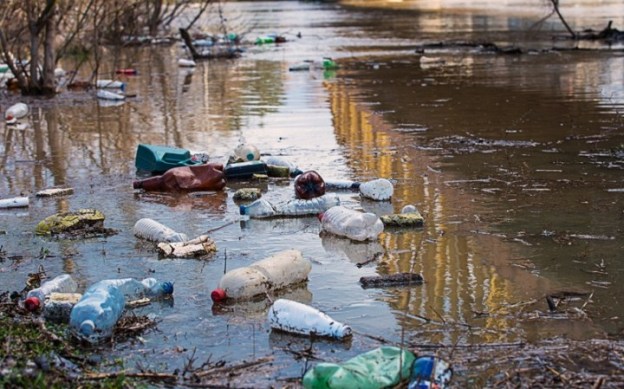
It’s estimated that a dozen or so armed militia groups survive off the park’s resources – poaching or chopping down wood to sell for fuel. DR Congo’s natural resources have been fought over for decades. The country – which is the size of mainland western Europe – has more mineral wealth, with diamonds, oil, cobalt and copper, than anywhere else on the planet. These are some of the elements essential to modern technology, making up key components in electric cars and smartphones.
Virunga is no different. It’s rich in resources underground as well as in nature and wildlife. But the two million people living in the region of the park mainly live on under $1.50 (£1.08) a day. This tussle for survival is not lost on Mr De Merode who sees protecting the park as essentially a social justice issue.

“It’s not a simple problem of protecting gorillas and elephants; it is overcoming an economic problem at the heart of one of the most horrific civil wars in history,” says Merode. 

Excerpt from Vivienne Nunis and Sarah Treanor, DR Congo’s Virunga National Park: The deadly job of protecting gorillas, BBC, Mar. 4, 2021

How Soil Can Fight Pollution

Soil biodiversity is essential for most of the ecosystem services and functions that soils
provide and perform. Soil microbes (i.e., bacteria, fungi) and microfauna (i.e., protozoa
and nematodes) transform organic and inorganic compounds into available forms. These transformations are critical for nutrient cycling and availability, for plants, and other species growth, for cycling of soil organic matter and carbon sequestration, and for the filtration, degradation, and immobilization of contaminants in water and soil.

An important part of the food web is represented by mesofauna, such as springtails and mites, which accelerate litter decomposition and enhance nutrient cycling and availability (especially nitrogen), and predators of smaller soil organisms.

Soil macro, and megafauna such as earthworms, ants, termites, and some mammals act as ecosystem engineers that modify soil porosity, water and gas transport, and bind soil particles together into stable aggregates that hold the soil in place and thus reduce erosion.

Soil biodiversity can mitigate threats to ecosystem services, for instance by acting as a powerful tool in bioremediation of contaminated soils. Biostimulation and bioaugmentation are environmentally sound strategies that contribute to the filtration, degradation, and immobilization of target contaminants. Furthermore, the integral use of organisms such as microbes (bioaugmentation), plants (phytoremediation) and earthworms (vermiremediation) as a bioremediation strategy in hydrocarbon-contaminated soils has proven to be a viable alternative for increasing hydrocarbon removal. On the other hand, soil macrofauna, such as earthworms, termites, and ants, play an important role in improving soil structure and aggregation, which can improve resistance to soil erosion caused by wind and water.

Excerpt from FAO, State of Knowledge of Soil Biodiversity, Report 2020

The Great Green Wall and its Past Mistakes

The Great Green Wall  aims to transform the lives of some 100 million people by planting a mosaic of trees, shrubs, and grasses along a corridor stretching some 8000 kilometers across Africa by 2030. Since the African Union first launched the Great Green Wall in 2007, the initiative has struggled to make headway. Made up of local efforts across 11 countries, it has reached just 16% of its overall goal to vegetate 150 million hectares.

But in January 2021, the project—which analysts estimate will cost at least $30 billion—got a major boost: a pledge of $14 billion in funding over the next 5 years from a coalition of international development banks and governments. The money is meant to accelerate the effort to sustain livelihoods, conserve biodiversity, and combat desertification and climate change, French President Emmanuel Macron said in announcing the pledges on January 11, 2021.
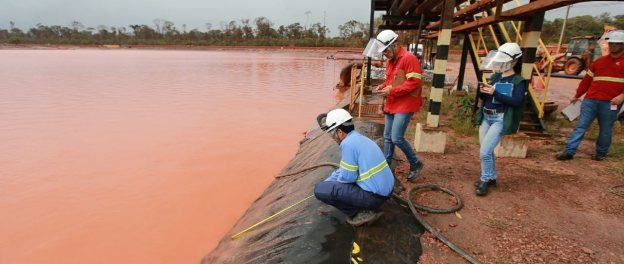
Environmental restoration and community development specialists welcomed the news. But many are also apprehensive. In recent years, research by ecologists, economists, and social scientists has shown that many forestry projects around the world have failed because they didn’t adequately address fundamental social and ecological issues…Many efforts, particularly those not led by local communities, stumble. Newly planted trees can die of neglect when planners don’t engage communities from the start in discussions about which species to plant, as well as whether residents are willing and able to provide the water, fertilizer, and protection from grazing animals that saplings need. Farmers are often busy and have their own priorities; they “will not … manage trees that they do not value.” …

Elvis Paul Tangem, who coordinates the Great Green Wall Initiative for the African Union Commission, agrees. He says promises to plant huge numbers of trees at low cost, for example at $1 per seedling, can distract from the real challenge. “You can plant a tree for $1,” he says, “but you cannot grow a tree for $1.”

Excerpt from Rachel CernanskyNew funds could help grow Africa’s Great Green Wall. But can the massive forestry effort learn from past mistakes?, Science, Feb. 11, 2021

Natural Capital and Human Well-Being

What is the contribution of nature to the economy?… The breathable air, drinkable water and tolerable temperatures that allow humans to do everything they do, and the complex ecosystems that maintain them, tend to be taken for granted. Professor Dasgupta’s review on the Economics of Biodiversity does not seek to play on the heartstrings with tales of starving polar bears. Rather, it makes the hard-headed case that services provided by nature are an indispensable input to economic activity. Some of these services are relatively easy to discern: fish stocks, say, in the open ocean. Others are far less visible: such as the complex ecosystems within soil that recycle nutrients, purify water and absorb atmospheric carbon. These are unfamiliar topics for economists, so the review seeks to provide a “grammar” through which they can be analysed.

The report features its own illustrative production function, which includes nature. The environment appears once as a source of flows of extractable resources (like fish or timber). But it also shows up more broadly as a stock of “natural” capital. The inclusion of natural capital enables an analysis of the sustainability of current rates of economic growth. As people produce GDP, they extract resources from nature and dump waste back into it. If this extraction and dumping exceeds nature’s capacity to repair itself, the stock of natural capital shrinks and with it the flow of valuable environmental services. Between 1992 and 2014, according to a report published by the UN, the value of produced capital (such as machines and buildings) roughly doubled and that of human capital (workers and their skills) rose by 13%, while the estimated value of natural capital declined by nearly 40%. The demands humans currently place on nature, in terms of resource extraction and the dumping of harmful waste, are roughly equivalent to the sustainable output of 1.6 Earths (of which, alas, there is only the one)…Indeed, Professor Dasgupta argues that economists should acknowledge that there are in fact limits to growth. As the efficiency with which we make use of Earth’s finite bounty is bounded (by the laws of physics), there is necessarily some maximum sustainable level of GDP…

Professor Dasgupta hints at this problem by appealing to the “sacredness” of nature, in addition to his mathematical models and analytical arguments.

Excerpts from How should economists think about biodiversity?, Economist, Feb. 6, 2021

When Life Colonizes Plastic: the Deep Sea Wonder

The ocean deep, where pressure is high, light absent and nutrients scarce, is often seen as a desert. But, as with other deserts, it has oases. Hydrothermal vents, methane-gas seeps and whale corpses are hot spots for marine wildlife.  These natural loci of biodiversity are now being joined by unnatural ones made of plastic. Researchers obtained 33 objects from the deep sea in the South China Sea. Most were bags, bottles and food wrappers, but they picked up some derelict fishing ropes and traps as well…

These objects were teeming with life. When the researchers examined their finds in a laboratory, they found nearly 1,200 individual organisms representing 49 species of crustaceans, corals, echinoderms, flatworms, molluscs, polychaete worms and fungi. They also discovered evidence that some of these species were breeding. There were egg capsules from four different types of snail, and a cocoon from a flatworm known for parasitising crustaceans. This result suggests that accumulations of plastic are, indeed, benthic oases… As to why organisms colonise the objects in these accumulations, the short answer is, “because they are there”.

Excerpts from Marine Ecology: Deep-ocean plastic is a haven for life, Economist, Feb. 6, 2021

Who Will Rule the Arctic?


Rosatom joined the Arctic Economic Council*in February 2021. Rosatom is a Russian state-owned corporation supplying about 20% of the country’s electricity. The corporation mainly holds assets in nuclear power and machine engineering and construction. In 2018, the Russian government appointed Rosatom to manage the Northern Sea Route (NSR). The NSR grants direct access to the Arctic, a region of increasing importance for Russia due to its abundance of fossil fuels. Moreover, due to climate changes, the extraction of natural resources, oil and gas are easier than ever before.

Since Russia’s handover of NSR’s management, Rosatom’s emphasis on the use of nuclear power for shipping, infrastructure development and fossil fuel extraction is likely to become more prevalent in the Arctic region. Rosatom already operate the world’s first floating nuclear power plant in the Siberian port of Pevek and is the only company in the world operating a fleet of civilian nuclear-powered icebreakers…The company has numerous plans up its sleeves, among them to expand the fleet of heavy-duty nuclear icebreakers to a minimum of nine by 2035.

*Other members of the Arctic Economic Council.

Excerpt from Polina Leganger Bronder, Rosatom joins Arctic Economic Council, BarentsObserver, Feb. 8, 2021

The Coral Reefs of the High Seas

While the terms “coral reef” and “high seas” are rarely combined in the same sentence, reef-building corals are found in Areas Beyond National Jurisdiction (ABNJ), the high seas. A study that has been published in the Frontiers in Marine Science identified 116 coral reefs in the Atlantic and Pacific Ocean, most of them located outside Marine Protected Areas (MPAs).

There is currently no comprehensive legal framework for the establishment of MPAs in ABNJ. Rather, initiatives to protect critical habitats on the high seas remain scattered throughout the legal mandates of organizations with different management purposes…. Yet, high seas MPAs are possible…. For example, the member countries of the Convention for the Protection of the Marine Environment of the North-East Atlantic (OSPAR) and the Convention on the Conservation of Antarctic Marine Life (CCAMLR) have established MPAs in ABNJ of the North Atlantic and Southern Ocean, respectively While these MPAs provide important advances in protecting biodiversity on the high seas, they still only cover a very small portion of the international ocean. 

David Wagner et al., Coral Reefs of the High Seas: Hidden Biodiversity Hotspots in Need of Protection, Frontiers in Marine Science, Sept. 14, 2020

See also Coral Reefs on the High Seas Coalition

Surveillance for Conservation: the Smart Wildlife Parks in Africa

In 2010, Rwanda’s government partnered with international conservation group African Parks to manage the Akagera Park…African Parks, based in South Africa, is known for reviving troubled national parks. The nonprofit worked to strengthen Akagera’s security, brought in anti-poaching dogs, purchased better field equipment, and hired and trained more rangers. The number of patrols increased from about 1,500 in 2011 to more than 5,400 last year.

Since 2013, poaching has dropped dramatically, which led to a wildlife revival that once seemed inconceivable. In 2017 Akagera reintroduced 18 black rhinos from South Africa. In a conservation milestone, the first rhino calves were born in the park a year later. As for lions, seven were reintroduced to the park in 2015. Today there are at least 35 of them prowling Akagera’s highlands, grassy plains, and forests…The Howard Buffett Foundation even donated a helicopter to the Rwandan government for rhino patrols.

Fences, more patrols, and reintroductions are all part of the park-rehabilitation playbook, but Akagera is also using a distinctive new technology to help even the odds against poachers. In 2017, Akagera became the world’s first “Smart Park” when it tested and installed a telecommunications network called LoRaWAN, or Long Range Wide-Area Network for securely tracking and monitoring just about anything in the park. Poachers can potentially intercept the conventional radio signals parks use to track animals but the low-bandwidth LoRa signals are relayed on a private, closed network on various frequencies, making them harder to crack. The network also runs on solar energy and is cheaper than satellite tracking technology.

Akagera partnered with Dutch conservation technology group Smart Parks to install LoRa receivers on towers throughout the park. (Smart Parks is the result of a merger between the Shadow View Foundation and the Internet of Life.) LoRa sensors, which vary in size and can be small enough to fit in one’s hand, can then communicate with towers to track the location of rangers, vehicles, equipment, and more. In 2017 they collected more than 140,000 location updates per day. Next year the park plans to install 100 sensors to monitor tourist vehicles as well, says Hall.

Excerpt from AMY YEE , In Rwanda, Learning Whether a ‘Smart Park’ Can Help Both Wildlife and Tourism, Atlas Obscura, Nov. 24, 2020

When Shepherds are Wolves: States Culpability in Illegal Fishing

Ecuador portrays itself as a victim of illegal, unregulated and unreported (IUU) fishing by Chinese trawlers near the Galapagos islands. In fact, its fishing industry is just as bad…Since 2018 at least 136 large Ecuadorean fishing vessels have entered the Galapagos islands’ reserve, which covers 133,000 square km (51,000 square miles), says the director of the archipelago’s national park…

Many boats illegally transfer their catch on the high seas to larger vessels, which carry them to other markets. Under Ecuadorean law fishermen can sell endangered species like sharks or turtles if they catch them unintentionally. Some boats report half their catch as by-catch….The European Union, the biggest buyer of Ecuadorean tuna, has told the country to step up action against IUU or risk losing access to its market. In 2018 a committee within CITES, an international convention on trading in endangered species, recommended that its 183 members suspend trade in fish with Ecuador.

Its government is incapable of reining in a powerful industry. Fishing companies employ 100,000 people, and contribute $1.6bn a year, 1.5% of GDP to the economy. Ecuador’s tuna fleet, the largest in the eastern Pacific, has around 115 large mechanised ships. The rest of the fishing industry consists of more than 400 semi-industrial vessels and nodrizas, small boats with no machinery that catch a greater variety of fish…

Purse seine vessels and gear in this Google Earth image show the path of FADs belonging to just three vessels (typically vessels have about 100 FADs each) fishing in Central and Western Pacific (image from Parties to Nauru Agreement).

More controversial than purse seining and longlining is the use of fish aggregating devices (FADs). Industrial ships release these into the current that passes through the Galapagos islands’ protected area to attract prey, say green groups. Sometimes they fix goats’ heads on the devices to lure sharks, say Galapagans. Crews track them with GPS and surround them with nets when they leave the protected zones, entrapping turtles, sea lions, manta rays and sharks. Ecuadorean ships deploy more FADs than those of any other country, according to a study in 2015 by the Pew Charitable Trusts.

Excerpt from Piscine Plunder: Ecuador, a Victim of Illegal Fishing, is Also a Culprit, Economist, Nov. 21, 2020

Climate Change Unlikely to Kill Amazon Rainforest

The current Earth system models used for climate predictions show that the Amazon rainforest is very sensitive to water stress. Since the air in the future is predicted to get warmer and drier with climate change, translating to increased water stress, this could have large implications not just for the forest’s survival, but also for its storage of CO2. If the forest is not able to survive in its current capacity, climate change could greatly accelerate.

Columbia Engineering researchers decided to investigate whether this was true, whether these forests are really as sensitive to water stress as what the models have been showing. In a study published in Science Advances, they report their discovery that these models have been largely over-estimating water stress in tropical forests.

The team found that, while models show that increases in air dryness greatly diminish photosynthesis rates in certain regions of the Amazon rainforest, the observational data results show the opposite: in certain very wet regions, the forests instead even increase photosynthesis rates in response to drier air…[In fact] As the trees become stressed, they generate more efficient leaves that can more than compensate for water stress.”…

“So much of the scientific research coming out these days is that with climate change, our current ecosystems might not be able to survive, potentially leading to the acceleration of global warming due to feedbacks,” Gentine added. “It was nice to see that maybe some of our estimates of approaching mortality in the Amazon rainforest may not be quite as dire as we previously thought.”

Excerpts from Some Amazon Rainforest Regions More Resistant to Climate Change than Previously Thought, Columbia Engineering, Nov. 20, 2020

To Steal To Survive: the Illegal Lumberjacks of the Amazon

The Amata logging company was supposed to represent an answer to the thorny problem of how countries like Brazil can take advantage of the Amazon rainforest without widespread deforestation.  But after spending tens of millions of dollars since 2010 to run a 178-square-mile concession in the rainforest to produce timber sustainably, Amata pulled out in April 2020. The reason: uncontrolled wildcat loggers who invaded Amata’s land, illegally toppling and stealing trees.

Amata’s executives in São Paulo said that instead of promoting and protecting legal businesses, Mr. Bolsonaro’s administration did next to nothing to control the illegal loggers who invaded the concession in the western state of Rondônia. “It’s a conflict area,” Amata Chief Executive Ana Bastos said of the land granted to the company. “Those lumberjacks steal our lumber to survive. If we try to stop them, they will fight back. It will be an eternal conflict.”

Since they pay no taxes and make no effort to protect certain species or invest in restoration, illegal loggers can charge $431 per square meter of lumber, compared with $1,511 per square meter of legally logged timber, concession operators said.  “It is like having a regular, taxpaying shop competing with lots of tax-free peddlers right in front of your door,” said Jonas Perutti, owner of Lumbering Industrial Madeflona Ltda., which also operates concessions in the Amazon…

“The organized crime that funds illegal activity in the Amazon—including deforestation, land grabbing, lumber theft and mining—remains strong and active,” said Carlos Nobre, a Brazilian climate scientist. “It seems [the criminals] aren’t frightened by the government’s zero-tolerance rhetoric or don’t believe it’s serious.”…

Wildcat loggers are among the Amazon’s poorest residents, and many feel they have an ally in Mr. Bolsonaro,[Brazil’s President]…“There’s much corruption in law enforcement, and consumers don’t care if the wood they are buying is legal or not,” said Oberdan Perondi, a co-owner of a concession that is five times as large as Amata’s and also competes with illegal loggers.

Excerpt from Paulo Trevisani and Juan Forer, Brazil Wanted to Harvest the Amazon Responsibly. Illicit Loggers Axed the Plan, WSJ, Oct. 28, 2020

Paper Parks, their Elephants and Marginal People

Since 2010 Chad has taken a step that other African countries are increasingly following. It handed management of its national park to an NGO. Since African Parks took over, the elephant population has begun to rise. In 2011 just one calf was born; in 2018, 127 were. The revival is emblematic of broader success that public-private partnerships (PPPs) are having in conserving some of the most precious parts of the planet.  Sixty years ago, when decolonization was sweeping the continent, the UN counted 3,773 “protected areas” in Africa and its surrounding waters. By 1990 the figure was 6,075; today it is 8,468. Some 14% of the continent’s land has been categorized as protected, according to the World Database on Protected Areas…

Most “protected areas” are “paper parks”, argues Peter Fearnhead, the chief executive of African Parks. In theory their demarcation denotes stewardship; in practice there is often very little care. Since its founding in 2000 the NGO has grown to manage 19 parks in 11 countries. It is the largest of an expanding number of ppp operators across the continent. The African Parks model relies on “three ms”, explains Mr Fearnhead: a clear mandate from a government (which keeps ownership of the area but hands over the running to the NGO); sound management; and money from donors such as the EU.

Zakouma is African Parks’ flagship operation. When it took over its management the priority was security. The national park was caught up in Chad’s civil conflicts in the 2000s, when rebel groups, some backed by Sudan, took on government forces. Janjaweed militias, notorious for mass murder and rape in Darfur, took advantage of the vacuum to slaughter Zakouma’s elephants and launch attacks on nearby villages.
The approach to security is a blend of low and high tech. It relies on residents of surrounding areas to alert it to poachers. Local intelligence is then combined with satellite tracking of the elephants. This helps anti-poaching rangers to know where to go.

Winning the support of people on the edge of the park has been crucial. Locals are happy to help report sightings of the Janjaweed, since they fear being robbed or murdered by them. African Parks also negotiates with nomads to ensure their caravans of camels do not go through the park.

Excerpts from Elephants’ graveyard no more: African governments are outsourcing their natural areas, Economist, Oct. 22, 2020

Modern Slavery and the Collapse of Fisheries

Illegal, unreported and unregulated fishing accounts for a staggering 20-50% of the global catch. It is one reason fish stocks are plummeting: just a fifth of commercial species are sustainably fished. Illegal operators rob mostly poor coastal states of over $20bn a year and threaten the livelihoods of millions of small fishermen. A huge amount of illicit fishing happens on licensed boats, too. They might catch more than their quota, or falsely declare their catch as abundant albacore tuna instead of the more valuable bigeye. In port fisheries inspectors are always overstretched. If an operator is caught, for instance, fishing with too fine a net, the fine and confiscation are seen as a cost of doing business. Many pay up and head straight back out to sea.

The damage from illicit fishing goes well beyond fish stocks. Operators committing one kind of crime are likely to be committing others, too—cutting the fins off sharks, or even running guns or drugs. Many are also abusing their crews… A lot of them are in debt bondage…. Unscrupulous captains buy and sell these men and boys like chattel

Too often, the ultimate beneficiaries of this trade are hard to hook because they hide behind brass-plate companies and murky joint ventures. Pursuing them requires the same kind of sleuthing involved in busting criminal syndicates. An initiative led by Norway to go after transnational-fisheries crime is gaining support. Much more cross-border co-operation is needed.

At sea, technology can help. Electronic monitoring promises a technological revolution on board—Australian and American fleets are leading the way. Cameras combined with machine learning can spot suspicious behavior and even identify illicit species being brought on board…. Equally, national regulators should set basic labor standards at sea. If countries fail to follow the rules, coastal states should bar their fishing fleets from their waters. Fish-eating nations should allow imports only from responsible fleets.

Above all, governments should agree at the World Trade Organization to scrap the subsidies that promote overfishing. Of the $35bn a year lavished on the industry, about $22bn helps destroy fish stocks, mainly by making fuel too cheap. Do away with subsidies and forced labor, and half of high-seas fishing would no longer be profitable. Nor would that of China’s environmentally devastating bottom-trawling off the west African coast. 

Excerpt from Monsters of the deep: Illicit fishing devastates the seas and abuses crews, Economist, Oct., 22, 2020

What really happens in the seas? GlobalFishing Watch, Sea Shepherd, Trygg Mat Tracking

Just Forbid It – Fishing: Fishing and Marine Protected Areas

Fish, whether wild caught or farmed, now make up nearly a fifth of the animal protein that human beings eat….In this context, running the world’s fisheries efficiently might seem a sensible idea. In practice, that rarely happens. Even well-governed coastal countries often pander to their fishing lobbies by setting quotas which give little respite to battered piscine populations. Those with weak or corrupt governments may not even bother with this. Deals abound that permit outsiders legal but often badly monitored access to such countries’ waters. And many rogue vessels simply enter other people’s fishing grounds and steal their contents.

There may be a way to improve the supply side: increase the area where fishing is forbidden altogether.  This paradoxical approach, which involves the creation of so-called marine protected areas (MPAs), has already been demonstrated on several occasions to work locally. A new study “A global network of marine protected areas for food “in the Proceedings of the National Academy of Sciences…explores the idea of extending MPAs elsewhere. If the right extensions are picked designating a mere 5% more of the world’s oceans as MPAs—which would triple the area protected—could increase the future global catch of the 811 species they looked at by more than 20%. That corresponds to an extra 10m tonnes of food a year.

The idea that restricting fishing would permit more fish to be caught may seem counterintuitive, but the logic is simple. Fish in MPAs can grow larger than those at constant risk of being pulled from the ocean. Larger fish produce more eggs. More eggs mean more fry. Many of these youngsters then grow up and move out of the safe zone, thus becoming available to catch in adjoining areas where fishing is permitted…

MPAs are especially beneficial for the worst-managed areas, most of which are tropical—and in particular for overfished species…They also have the virtue of simplicity. The setting of quotas is open to pressure to overestimate of how many fish can safely be caught…This is difficult enough for countries with well-developed fisheries-research establishments. For those without such it is little more than guesswork…Setting the rules for an MPA is, by contrast, easy. You stick up a metaphorical sign that says, “No fishing”. Knowing who is breaking the rules is easy, too. If your gear is in the water, you are fishing illegally.

Excerpt from Fishing: Stopping some fishing would increase overall catches. Economist, Oct. 31, 2020

The Industrial Chicken and the US-China Rivalry

Animal diseases, the US-China trade war and covid-19 have all disrupted, or threatened to disrupt, industrial chicken supplies and supply chains…The unsentimental logic of high-performance poultry-rearing is easy to grasp. “White-feather meat chickens”, as they are known in China, grow to 2.5kg in 40 days. Homegrown varieties of “yellow-feather chicken”, descended from backyard fowl, take twice as long to mature and will only ever weigh half as much…

Half a century ago meat in China was a rare luxury. Now, many see it as a daily necessity. In the meantime, the country’s supplies of farmland and clean water have not grown. Agriculture remains blighted by food-safety scandals, the rampant use of fake or illegal animal medicines, and disease outbreaks. Small surprise, then, that Chinese leaders give frequent speeches about food security. A puzzle lurks, though. Leaders also call for self-reliance in key technologies. And in the case of broiler chickens, those two ambitions—rearing meat efficiently and avoiding dependence on imports—are in tension.

The chicken imported into China are the fifth-generation descendants of pedigree birds whose bloodlines represent 80 years of selection for such traits as efficient food-to-meat conversion, rapid growth, strong leg bones and disease resistance. After waves of consolidation, the industry is dominated by two firms, Aviagen (based in Alabama and owned by the ew Group of Germany) and Cobb (owned by Tyson, an American poultry giant).

The most valuable pedigree birds never leave maximum-security farms in America and Britain: a single pedigree hen may generate 4m direct descendants. Their second-generation offspring are flown to breeding sites dispersed between such places as Brazil, Britain and New Zealand, in part to hedge against supply shocks when avian influenzas and other diseases close borders. Day-old third-generation chicks are air-freighted to Jinghai Poultry, a company in China, and other places, which spend six months growing them and breeding them in climate-controlled, artificially lit indoor facilities. In all, China imports 1.6m third-generation white-feather chicks a year.

Jinghai  Poultry hatches 8m fourth-generation, “parent stock” chickens annually. The company sells some to other agri-businesses. It breeds from the rest to produce fifth-generation chicks. These are “meat chickens”, consumed in fast-food outlets, schools and factory canteens, or as chicken parts sold in supermarkets. Yellow-feather chickens, deemed tastier by Chinese cooks, account for most whole birds sold in markets.

Chinese breeders have long tried to create local varieties with bloodlines available in-country… In September 2019, the State Council, China’s cabinet, issued a paper on livestock-rearing that set self-sufficiency in poultry as a goal, calling meat-chicken breeding a priority. Big foreign firms have resisted appeals from officials to send second-generation stock to China….Dependence on foreign bloodlines does carry risks. For several months recently New Zealand was one of the only countries able to send third-generation chicks to China, after other exporters suffered bird-flu outbreaks.

Li Jinghui, president of the China Broiler Alliance, an industry association, calls conditions ripe for China’s “brilliant” scientists to develop local birds… But to develop a domestic breed from scratch would take years, and if it does not meet market needs, a firm could spend a fortune “without much to show for it”…Without a stronger animal-health system and environmental controls, biotechnology alone cannot help China to develop world-class agriculture. Moreover, a long-standing Chinese strategy—bullying foreign firms to hand over intellectual property—is counter-productive now.

Excerpts from High-tech chickens are a case study of why self-reliance is so hard, Economist, Oct. 31, 2020

Turtle Eggs Can Fool Poachers

The InvestEGGator is used to reveal illegal trade networks and better understand what drives sea turtle egg poaching. The scientists deployed around a hundred of the fake eggs in sea turtle nests across four beaches in Costa Rica and waited. Each egg contained a GPS transmitter set to ping cell towers every hour, which would allow scientists to follow the InvestEGGator eggs on a smartphone app…Five of the deployed eggs were taken by unsuspecting poachers. The shortest route was roughly a mile, but one InvestEGGator traveled more than 80 miles, capturing what researchers were hoping for: the complete trade route, from the beach to the buyer. “Having that moment where the trade chain was complete….that was obviously a very big moment,” says Pheasey.

The InvestEGGator was the invention of Kim Williams-Guillén… The trick, says Williams-Guillén, was designing a device that looked and felt like a sea turtle egg while being precise enough to reveal trade routes. Sea turtle eggs are the size of ping pong balls, but unlike brittle chicken eggs, their shell is leathery and pliable. “Making [the trackers] look like eggs from far away was not going to be an issue, it was more making them feel like turtle eggs,” says Williams-Guillén. “One of the ways that [poachers] know that a turtle egg is good when they’re sorting their eggs is that it’s still soft and squishy.”…

Of the nests containing decoy eggs, a quarter were illegally harvested. Some of the eggs failed to connect to a GPS signal, while other eggs were spotted by poachers and tossed aside. Five of those poached eggs gave the team useful tracking data…This illegal trade network revealed that eggs are sold and consumed locally… The routes they discovered also suggest that most egg poachers in the area are individuals looking to make quick money, not an organized network.

Excerpt from Corryn Wetzel, 3-D Printed Sea Turtle Eggs Reveal Poaching Routes, SMITHSONIANMAG.COM, Oct. 7, 2020

De-Extinction: Horse Revival


A little baby horse named Kurt is a symbol of renewed hope for the survival of his kind. Born on 6 August 2020, he is the world’s first ever successfully cloned Przewalski’s horse, an endangered wild horse native to the steppes of central Asia. What makes Kurt even more exciting is that he was cloned from genetic material cryopreserved 40 years ago – reviving genetic diversity thought to have been lost decades ago…

Przewalski’s horses roaming the steppes declined dramatically after World War II, due to a combination of factors such as hunting, competition with livestock as humans moved into their territory, and severe winters. The last confirmed sighting of a Przewalski’s horse in the wild was in 1969. Luckily, some of the horses still remained in zoos. But not many. A total of 12 horses made up the ancestors of a captive breeding program – 11 Przewalski’s horses wild-caught between 1899 and 1902, and another caught in 1947. Thanks to this breeding program, there are around 2,000 individuals today. That’s incredibly impressive, but the growing population isn’t without problems.

Those 12 ancestor individuals represent what is known as a population bottleneck – when a species undergoes a severe reduction in numbers. From that point, a population can recover, but it can also be the beginning of the end. One of the reasons for that is lower genetic diversity. With less variation, a population is less able to adapt to potential stressors or changes to their environment…

Enter a Przewalski’s horse named Kuporovic, who lived from 1975 to 1998. An analysis of the captive breeding pedigree revealed that Kuporovic’s genome had unique ancestry from two wild founders. This meant he offered significantly more genetic variation than any of his living relatives, so in 1980, scientists took a sample and preserved it in San Diego Zoo’s Frozen Zoo.  San Diego Zoo partnered with wildlife conservation group Revive & Restore and pet cloning company ViaGen Equine to create an embryo using Kuporovic’s genetic material. This embryo was implanted in a domestic horse (Equus ferus caballus) surrogate, and was born healthy after a normal pregnancy.

Excerpt from Scientists Clone an Endangered Przewalski’s Horse For The First Time, Science Alert, Sept 7, 2020

When Restoration Is Eradication: Palmyra Atoll

On the Palmyra Atoll in the central Pacific Ocean, conservation biologists are in the midst of a massive, unprecedented experiment. They are trying to rid this remote island of all but a few coconut palms. The gangly tree is an icon of idyllic tropical islands, but also an aggressive invasive species that crowds out native plants and animals. By removing 99% of Palmyra’s millions of palms, biologists hope to create more room on the atoll’s three dozen islets for indigenous forests and seabirds, including the world’s second largest colony of red-footed boobies…

Red footed booby

Ripping out the palms has long been on the list of restoration projects on Palmyra. First, however, managers decided to attack another invader, black rats, which likely arrived on ships during World War II. With no predators, rats multiplied into the tens of thousands. They ate the seeds and gnawed the saplings of native trees and attacked seabird colonies, including those of sooty terns, which nest on the ground. Rats are the key suspects behind the absence on Palmyra of eight other species of ground or burrow-nesting birds, including shearwaters and petrels, all found on central Pacific islands that have remained rat-free. The first attempt to eradicate the rats in 2002 failed, partly because Palmyra’s abundant land crabs out-competed the rodents for the poisonous bait. The crabs’ physiology allowed them to eat the poison—the anticoagulant brodifacoum—without ill effect.

The second effort was successful only after [researchers] radio-collared rats and discovered that the rodents liked to hang out in the crowns of coconut palms. The crowns became a convenient platform for stashing cotton gauze sacks of poison bait, delivered by workers firing slingshots or dangling from helicopters. Crabs do not reach the palm tops.

Once rats were exterminated in 2011, researchers watched with delight as native tree saplings began to spring from the forest floor. There were also happy surprises. Scientists discovered two additional species of land crabs that had likely gone undetected because voracious rats suppressed their numbers. And researchers realized they were no longer being bitten by Asian tiger mosquitoes, a pest that attacks during the day and can carry dengue and yellow fever. It appears the mosquitoes depended on rats rather than humans or birds for blood meals…

Excerpts from Ridding Paradise of Palms, Science, Aug. 28, 2020, at 1047

Electrical Bacteria as Ecosystem Engineers

Electric bacteria join cells end to end to build electrical cables able to carry current up to 5 centimetres through mud. The adaptation, never seen before in a microbe, allows these so-called cable bacteria to overcome a major challenge facing many organisms that live in mud: a lack of oxygen. Its absence would normally keep bacteria from metabolizing compounds, such as hydrogen sulfide, as food. But the cables, by linking the microbes to sediments richer in oxygen, allow them to carry out the reaction long distance…

The more researchers have looked for “electrified” mud, the more they have found it, in both saltwater and fresh. They have also identified a second kind of mud-loving electric microbe: nanowire bacteria, individual cells that grow protein structures capable of moving electrons over shorter distances. These nanowire microbes live seemingly everywhere—including in the human mouth… Scientists are pursuing practical applications, exploring the potential of cable and nanowire bacteria to battle pollution and power electronic devices…

The Center for Electromicrobiology was established in 2017 by the Danish government. Among the challenges the center is tackling is mass producing the microbes in culture…Cultured bacteria would also make it easier to isolate the cable’s wires and test potential applications for bioremediation and biotechnology…

Electrical bacteria are everywhere. In 2014, for example, scientists found cable bacteria in three very different habitats in the North Sea: an intertidal salt marsh, a seafloor basin where oxygen levels drop to near zero at some times of the year, and a submerged mud plain just off the coast…Elsewhere, researchers have found DNA evidence of cable bacteria in deep, oxygen-poor ocean basins, hydrothermal vent areas, and cold seeps, as well as mangrove and tidal flats in both temperate and subtropical regions.

Nanowire bacteria are even more broadly distributed. Researchers have found them in soils, rice paddies, the deep subsurface, and even sewage treatment plants, as well as freshwater and marine sediments. They may exist wherever biofilms form, and the ubiquity of biofilms provides further evidence of the big role these bacteria may play in nature.

The microbes also alter the properties of mud, says Sairah Malkin, an ecologist at the University of Maryland Center for Environmental Science. “They are particularly efficient … ecosystem engineers.” Cable bacteria “grow like wildfire,” she says; on intertidal oyster reefs, she has found, a single cubic centimeter of mud can contain 2859 meters of cables, which cements particles in place, possibly making sediment more stable for marine organisms.

Excerpts from Elizabeth Pennisi, The Mud is Electric: Bacteria that Conduct Electricity are transforming the way we see sediments, Science, Aug. 21, 2020, at 902

Forest Infernos and Food Self-Sufficiency

The Mega-Rice Project (MRP) — the conversion of 10,000 square km of peat forest into rice paddies — that was adopted in Indonesia in 1997, was a mega-failure. It produced hardly any rice because the peaty soil lacks the requisite minerals. Instead of spurring farming, the draining of the waterlogged forest with a 6,000km network of canals fuelled fire…. It was the biggest environmental disaster in Indonesia’s history.  Burning peat in 1997 on Kalimantan and the nearby island of Sumatra generated the equivalent of 13-40% of the average annual global emissions from fossil fuels. The MRP was abandoned in 1999 but its legacy endures in the infernos that have ravaged Kalimantan almost every year since.

As work begins in 2020 on the new plantation, is history poised to repeat itself? The government says it has learned from the past. Nazir Foead of the Peatland Restoration Agency says that tractors will steer clear of what remains of Central Kalimantan’s pristine peatlands…but the rest is covered in “shallow peat”, no more than 50cm deep, and so can be cultivated without cataclysm, he says.  Environmentalists are not convinced… Smouldering swamps belch vast amounts of carbon. In 2019, the fires that swept Indonesia emitted 22% more carbon than the conflagration in the Amazon rainforest did. 

But the government argues it must go ahead with the plantation, and quickly, in case covid-19 brings about food shortages… For decades the political elites “have been chasing this ideal of food self-sufficiency”, says Jenny Goldstein of Cornell University. Prabowo Subianto, the defence minister, is one of its greatest champions.

Excerpts from For Peat’s Sake: Indonesia’s Environment, Economist, Aug. 15, 2020

How to Poison a Population: War and Persistent Oil Pollution

Oil pollution in Syria has been a growing concern since the 2011 onset of a civil war that has taken a toll on oil infrastructure and seen rival powers compete over control of key hydrocarbon fields. In the Kurdish-held northeast, a large storage facility in the Rmeilan oil field in Hasakeh province is of particular concern, according to the Dutch peace organisation PAX. [A River of Death, pdf] Oil leaks from the Gir Zero storage facility have been suspected since at least 2014, the latest in March 2020, it said in a June report. Thousands of barrels have leaked out into creeks in the area over the past five years, threatening the health and livelihoods of people in dozens of villages….

The major Rmeilan field controlled by the Kurdish administration, located near a US airbase, has been among the Syrian Kurds’ most prized assets since regime forces withdrew early on in the war. But oil wealth comes at a heavy cost for livestock farmers
whose sheep and cows have died because they drank oil contaminated water.

Residents too suffer heavily from the pollution because  of the foul odour of gas and crude oil wafting over the area… Compounding the situation, makeshift oil refineries have cropped up across the northeast in recent years, dumping oil waste in the waterways…These informal refineries receive oil from nearby fields and process it to provide benzine, gasoline and diesel to locals.

Excerpts from Delil SouleimanBlack waters: Oil spills pollute northeast Syria creeks
by Delil Souleiman, AFP, July 23, 2020

No Clean-Up, No Justice: Ogoniland, Nigeria

The UN Environment Programme in 2011 proposed the creation of a $1 billion fund to repair the damage done by decades of crude spills in the Ogoniland area in southeastern Nigeria. However, progress has been poor and the little work that has been done is sub-standard, advocacy groups including Amnesty International reported in June 2020.  “Research reveals that there is still no clean-up, no fulfillment of ‘emergency’ measures, no transparency and no accountability for the failed efforts, neither by the oil companies nor by the Nigerian government,” the groups said.

Shell’s Nigerian unit pumped oil in Ogoniland until 1993, when the company withdrew amid increasing protests against its presence. Even though the Hague-based company no longer produces crude in the area, a joint venture operated by Shell Petroleum Development Company, or SPDC, still owns pipelines that crisscross the region.

A government agency responsible for overseeing the clean-up, the Hydrocarbon Pollution Remediation Project, known as Hyprep, was finally set up in 2017 after several false starts, but it’s failing to deliver. …“Hyprep is not designed, nor structured, to implement a project as complex and sizable as the Ogoniland clean-up,” the report cites UNEP as saying in 2019

Excerpt from Clean Up Oil in Nigerial Lacks Progress, Bloomberg, June 18,, 2020

The $4 Trillion Blackmail: The Amazon is Ours not Brazil’s

More than two dozen financial institutions around the world are demanding the Brazilian government rein in surging deforestation, which they said has created “widespread uncertainty about the conditions for investing in or providing financial services to Brazil”. The call for action, delivered in a letter to the Brazilian government on June 23, 2020, comes as concerns grow that investors may begin to divest from Latin America’s largest economy if Jair Bolsonaro’s administration fails to curb environmental destruction. “As financial institutions, who have a fiduciary duty to act in the best long-term interests of our beneficiaries, we recognise the crucial role that tropical forests play in tackling climate change, protecting biodiversity and ensuring ecosystem services,” said the letter, signed by 29 financial institutions managing more than $3.7tn in total assets.

“Considering increasing deforestation rates in Brazil, we are concerned that companies exposed to potential deforestation in their Brazilian operations and supply chains will face increasing difficulty accessing international markets. Brazilian sovereign bonds are also likely to be deemed high risk if deforestation continues.” Deforestation in the Amazon rainforest has surged in Brazil since the election of Mr Bolsonaro, a rightwing former army captain, who supports opening the protected lands to commercial activity. In the first four months of 2020, an area twice the size of New York City was razed as illegal loggers and wildcat gold miners

Investors said they are particularly concerned about Brazil’s meatpacking industry, which risks being shut out of international markets over its alleged role in deforestation. Brazil’s JBS has been repeatedly accused by environmentalists of buying cows from deforested lands in the Amazon. In May 2020 more than 40 European companies, including Tesco and Marks and Spencer, warned they would boycott Brazilian products if the government did not act on deforestation. 

Excerpts from Investors warn Brazil to stop Amazon destruction, FT, June 23, 2020

Amazon Rainforest: Source of Food for Vegans, Meat-Lovers

In the first four months of 2020 an estimated 1,202 square km (464 square miles) were cleared in the Brazilian Amazon, 55% more than during the same period in 2019, which was the worst year in a decade…Less attention has been paid to the role of big firms like JBS and Cargill, global intermediaries for beef and soya, the commodities that drive deforestation.  The companies do not chop down trees themselves. Rather, they are middlemen in complex supply chains that deal in soya and beef produced on deforested land. The process begins when speculators, who tend to operate outside the law, buy or seize land, sell the timber, graze cattle on it for several years and then sell it to a soya farmer. Land in the Amazon is five to ten times more valuable once it is deforested, says Daniel Nepstad, an ecologist. Not chopping down trees would have a large opportunity cost. In 2009 Mr Nepstad estimated that cost (in terms of forgone beef and soy output) would be $275bn over 30 years, about 16% of that year’s GDP.

Under pressure from public opinion, the big firms have made attempts to control the problem. In 2009, a damning report from Greenpeace led JBS, Marfrig and Minerva, meat giants which together handle two-thirds of Brazil’s exports, to pledge to stop buying from suppliers that deforest illegally. (The forest code allows owners to clear 20% of their land.) JBS, which sources from an area in the Amazon larger than Germany, says it has blocked 9,000 suppliers, using satellites to detect clearing.

The problem is especially acute in ranching, which accounts for roughly 80% of deforestation in the Amazon, nearly all of it illegal. “Cows move around,” explains Paulo Pianez of Marfrig. Every fattening farm the big meatpackers buy from has, on average, 23 of its own suppliers. Current monitoring doesn’t cover ranchers who breed and graze cattle, so it misses 85-90% of deforestation. Rogue fattening farms can also “launder” cattle by moving them to lawful farms—perhaps their own—right before selling them. A new Greenpeace report alleges that through this mechanism JBS, Marfrig and Minerva ended up selling beef from farms that deforested a protected Amazon reserve on the border between Brazil and Bolivia. They said they had not known about any illegality.

One reason that soya giants seem more serious than meat producers about reducing deforestation a network of investors concerned about sustainability, is that most soya is exported. The EU is the second-top destination after China. But companies struggle to get people to pay more for a “hidden commodity”… But few people will pay extra for chicken made with sustainable soya, which explains why just 2-3% is certified deforestation-free. ….Four-fifths of Brazilian beef, by contrast, is eaten in Brazil. Exports go mostly to China, Russia and the Middle East, where feeding people is a higher priority than saving trees. Investors, for their part, see beef firms as unsexy businesses with thin margins

According to soya growers, multinational firms failed to raise $250m to launch a fund for compensating farmers who retain woodland. “They demand, demand, demand, but don’t offer anything in return,” complains Ricardo Arioli….

Reducing deforestation will require consensus on tricky issues like the fate of tens of thousands of poor settlers on public lands in the Amazon, where half of deforestation takes place….

Excerpts from The AmazonL Of Chainshaws and Supply Chains, Economist, JUne 13, 2020

Preserving Seeds that Feed the World: the Svalbard Global Seed Vault

Six hundred miles from the North Pole, on an island the size of West Virginia, at the end of a tunnel bored into a mountain, lies a vault filled with more than 1 million samples of seeds harvested from 6,374 species of plants grown in 249 locations around the globe.The collection, the largest of its kind, is intended to safeguard the genetic diversity of the crops that feed the world.  If disaster wipes out a plant, seeds from the vault could be used to restore the species. If pests, disease or climate change imperil a food source, a resistant trait found among the collection could thwart the threat.

While some countries have their own seed banks—Colorado State University houses one for the U.S.—the Svalbard Global Seed Vault serves as a backup. The vault, built in 2008 at a cost of about $9 million, is owned and maintained by Norway, but its contents belong to the countries and places that provide the samples.  “It works like a safe-deposit box at the bank,” said Cary Fowler, an American agriculturalist who helped found the vault. “Norway owns the facility, but not the boxes of the seeds.”

In 2015, after the International Center for Agricultural Research in the Dry Areas was destroyed in the Syrian civil war, scientists who had fled the country withdrew seeds to regenerate the plants in Lebanon and Morocco.  “It had one of the world’s biggest and best collections of wheat, barley, lentils, chickpeas, faba beans and grass pea,” Dr. Fowler said. “It was the chief supplier of a disease-resistant wheat variety for the Middle East.”  In 2017, the group returned copies of its seeds to the vault.

The 18,540-square-foot seed vault includes three rooms with the capacity to house 4.5 million samples of 500 seeds each—a maximum of 2.25 billion seeds. The environment’s natural temperature remains below freezing year round, but the seeds are stored at a chillier -18 degrees Celsius, or around -0.4 degrees Fahrenheit. They’re expected to last for decades, centuries or perhaps even millennia….

While dwindling diversity might not seem like an imminent threat, four chemical companies now control more than 60% of global proprietary seed sales…That concentration of power, some worry, could lead to less agricultural variety and more genetic uniformity…In the meantime, the seed vault (which doesn’t store genetically modified seeds) will continue to accept deposits in an effort to preserve all of the options it can.

Excerpts from Craven McGinty, Plan to Save World’s Crops Lives in Norwegian Bunker, WSJ,  May 29, 2020

Crude Oil in the Bile of Fish: BP Horizon Oil Spill

Since the 2010 BP oil spill, marine scientists at the University of South Florida (USF) have sampled more than 2,500 individual fish representing 91 species from 359 locations across the Gulf of Mexico and found evidence of oil exposure in all of them, including some of the most popular types of seafood. The highest levels were detected in yellowfin tuna, golden tilefish and red drum. The study represents the first comprehensive, Gulf-wide survey of oil pollution launched in response to the Deepwater Horizon spill.

Over the last decade have examined the levels of polycyclic aromatic hydrocarbons (PAHs), the most toxic chemical component of crude oil, in the bile of the fish. Bile is produced by the liver to aid in digestion, but it also acts as storage for waste products.

“We were quite surprised that among the most contaminated species was the fast-swimming yellowfin tuna as they are not found at the bottom of the ocean where most oil pollution in the Gulf occurs,” said lead author Erin Pulster…Pulster says it makes sense that tilefish have higher concentrations of PAH because they live their entire adult lives in and around burrows they excavate on the seafloor and PAHs are routinely found in Gulf sediment. However, their exposure has been increasing over time, as well as in other species, including groupers, some of Florida’s most economically important fish. …

Oil pollution hot spots were also found off major population centers, such as Tampa Bay, suggesting that runoff from urbanized coasts may play a role in the higher concentrations of PAHs. Other sources include chornic low-level releases from oil and gas platforms, fuel from boats and airplanes and even natural oil seeps — fractures on the seafloor that can ooze the equivalent of millions of barrels of oil per year.

Excerpts from Firste Gulf of Mexico-wide survey of oil pollution completed 10 years after Deepwater Horizon, Science Daily, Apr. 15, 2020

Our Biggest Weakness: Weak Biodefenses + Malicious Viruses

The coronavirus that has killed over 180,000 people worldwide was not created with malice. Analysis of its genome suggests that, like many new pathogens, it originated by natural selection rather than human design. But …“Covid-19 has demonstrated the vulnerability of the US and global economy to biological threats, which exponentially increases the potential impact of an attack,” says Richard Pilch of the Middlebury Institute of International Studies. In theory, bioweapons are banned. Most countries in the world are party to the Biological Weapons Convention (BWC) of 1975, which outlaws making or stockpiling biological agents for anything other than peaceful purposes. But some countries probably make them secretly, or keep the option close at hand. America accuses North Korea of maintaining an offensive biological-weapons programme, and alleges that China, Iran and Russia dabble in dual-use biolgical research (for peaceful and military usage) research. Toxins like ricin have also been bought and sold on shady recesses of the internet known as the dark web.

Germ warfare briefly rose to prominence in September 2001, when letters laced with anthrax spores were mailed to American news organisations and senators, killing five people. That was a wake-up call. Public health became part of national security. BioWatch, a network of aerosol sensors, was installed in more than 30 cities across America. But in recent years threats from chemical weapons, like the sarin dropped by Syria’s air force and the Novichok smeared on door handles by Russian assassins, took priority.

Though the Trump administration published a national biodefence strategy in 2018, it shut down the National Security Council’s relevant directorate and proposed cuts to the laboratories that would test for biological threats. Funding for civilian biosecurity fell 27% between fiscal years 2015 and 2019, down to $1.61bn—less than was spent on buying Black Hawk helicopters.

Yet many pathogens used as weapons tend to differ from respiratory viruses in important ways. Those like anthrax, caused by bacteria which form rugged and sprayable spores, but do not spread from human to human, have the advantage of minimising the risk of rebound to the attacker. With the notable exception of smallpox—a highly contagious and lethal virus that was eradicated in 1979 but preserved by the Soviet Union for use against America (but not Europe), and now exists only in two laboratories, in America and Russia—most biological weapons would therefore have more localised effects than the new coronavirus.

Even so, the slow and stuttering response to the pandemic has exposed great weaknesses in how governments would cope…demonstrating that every part of public-health infrastructure is either broken or stretched to the max. The centrepiece of America’s biosurveillance programme, a network of laboratories designed for rapid testing, failed, says Mr Koblentz, while the national stockpile of face masks had not been substantially replenished in over a decade. Would-be attackers will take note.

In 2016 American intelligence agencies singled out genome editing as a national-security threat for the first time. Two years later a major study by the National Academies of Sciences, Engineering, and Medicine warned that synthetic biology, a potent set of methods for tinkering with or creating organisms, could, in time, be used to re-create viruses like smallpox or make existing pathogens more dangerous, such as resistant to antibiotics. In 2011 Dutch and Japanese scientists said that they had created a version of bird flu that could be transmitted between mammals by the respiratory route—an announcement that prompted the Netherlands to treat the relevant academic papers as sensitive goods subject to export controls.

In January 2020 Canadian scientists funded by an American biotech company used synthetic DNA from Germany to synthesise a microbe closely related to smallpox, indicating the ease with which it could be done. “If a potential bad actor pursues a weapons capability using sars-cov-2, the virus is now attainable in laboratories all around the world, and blueprints for assembling it from scratch have been published in the scientific literature.”

 The trouble is that biodefence has evolved slowly, says Dan Kaszeta, a former biological weapons adviser to the White House. Compact devices that can detect chemical threats and warn soldiers to don a gas mask have long been available. “That doesn’t exist for anthrax or any of the other aerosol pathogens,” says Mr Kaszeta. “Telling the difference between an anthrax spore and a bit of tree pollen is not something you can do in a couple of seconds.”

Excertps from Biodefence: Spore Wars, Economist, Apr. 25, at 19

Naked Commercial Whaling and Toxic Whale Meat

Scientific “research” was also the reason Japan’s government gave for continuing to kill whales in the vast Southern Ocean after a global moratorium on commercial whaling came into force in 1985. But international criticism along with environmental groups’ attempts to sabotage the annual hunt proved too costly to Japan’s reputation and purse (the government bankrolled the hunt). In late 2018 Japan declared it was giving up killing in the Southern Ocean .

The Southern Ocean is now a sanctuary. But it comes at a cost. Japan walked out of the International Whaling Commission (IWC), accusing the anti-whaling members of failing to appreciate the cultural significance of whaling in Japan and of imposing their values on others. Freed from the IWC’s strictures, the government said commercial whaling would resume in Japan’s own extensive waters. But…whaling in home waters is troubling. Most whale populations in the Southern Ocean are healthy. In Japanese waters, stocks are less bountiful….

The whaling lobby is powerful in Japan. For now, the subsidies continue, supposedly to help ease the switch to nakedly commercial whaling but they coud be gone in two or three years. Other fleets complain that whaling gets far more than its fair share of subsidies for fisheries.

The challenges are immense. Whalemeat consumption has fallen from 230,000 tonnes a year in the early 1960s to 3,000 tonnes today, and whale is no longer cheap. Local whales have higher accumulations of toxins (such as a mercury) than those in the Southern Ocean. One packager of sashimi admits he sources his whale meat from Norway.

Excertps from Japan wants to catch whales. But who will eat them?, Economist, Apor. 25, 2020

Elephants and Cattle: Benefits of Co-existence

Wildlife and cattle can coexist.  In fact, elephants can help distribute nutrients into the soil, via their poop and their habit of knocking over trees…Common grass contained about 50% more nitrogen in the grazing areas with elephants than the areas without them, making that grass more nutritious. That should benefit both cows and smaller wildlife, such as gazelles….This is why ranchers must protect elephants.

Excerpts from Conservation Ecology: Elephants Restore Depleted Soil, Science Mag., Apr. 3, 2020, at 12

Can Traditional Medicine Cure COVID-19? China’s Take

Around the world officials are advising people to be wary of alternative treatments for covid-19. The opposite is true in China, where remedies known as traditional Chinese medicine (TCM) are being heavily promoted by the state. In January 2020, as the crisis escalated, the health ministry listed TCM treatments among those it recommended for the disease. It sent nearly 5,000 specialists to Hubei to administer them to patients (including sufferers at a sports centre in Wuhan that was turned into a TCM hospital for people with mild symptoms). Now China is keen to promote its remedies abroad.  TCM practitioners have joined Chinese medical teams sent to help manage outbreaks in Cambodia, Iraq and Italy. In mid-March, 2020 state media quoted a Tanzanian health official saying that China’s use of TCM for covid-19 may be “a model” for Africa to follow…

The use of animals in TCM sometimes involves appalling cruelty. One of the TCM remedies that the health ministry has recommended for use in the treatment of covid-19 patients includes powdered bear bile. In China this is often extracted from live bears kept in grim farms even though its active ingredient can be created synthetically. In February 2020 China banned the sale of wild animals as food—close contact in markets between live specimens and merchants may have helped the coronavirus to leap from animal to human. But the new rules do not prevent trappers and breeders from selling animal parts for use in TCM.

Officials do not say that traditional remedies can cure covid-19. But they do claim that TCM can reduce death rates by preventing patients with mild or moderate symptoms from developing more serious ones. They also say that TCM can speed up recovery. A website set up by China Daily, a state newspaper, called “Fighting covid-19 the Chinese way”, says that TCM can “remove the trash which causes illness”, leaving the virus “no room to survive”.

Excerpts from Fighting it the Chinese Way: Traditional Medicine, Economist, Apr. 11, 2020

Oceans Restored: the 2050 Deadline

A study published in Nature on April 2, 2020 claims that marine ecosystems could recover in just 30 years because of the growing success of conservation efforts and the ocean’s remarkable resilience. Some of these conservation efforts include the increase in Marine Protected Areas (MPAs) from less than 1 percent in 2000 to almost 8 percent today and the restoration of key habitats such as seagrass beds and mangroves

One great success is the restoration of humpback whales that migrate between Antarctica and eastern Australia. Their numbers have rebounded from a few hundred in 1968 to more than 40,000 today. Sea otters in Western Canada have also jumped from dozens in 1980 to thousands. Green turtles in Japan, grey seals and cormorants in the Baltic and elephant seals in the United States have all also made remarkable comebacks. However, “If we don’t tackle climate change and raise the ambition and immediacy of these efforts, we risk wasting our efforts,” Duarte, one of the authors of the study, told BBC News. The initial price tag on all this is hefty: $10 to $20 billion a year until the 2050 recovery date.

Excerpts from Oceans Can Recover by 2050, Study Shows, EcoWatch, Apr. 2, 2020

Better Alive than Dead: The Crocodile Trade

Around 6m tonnes of bush meat are thought to come out of the Congo Basin each year… The trade has emptied out parts of the forest; 39% of it is at severe risk of over-hunting, the study says. Everything from bonobos (an endangered species of ape) to cobras, antelopes and, occasionally, elephants, appear at market stalls in Mbandaka.

Over-hunting has made life more dangerous for crocodile hunters. The number of dwarf crocodiles, once common in the Congo river, is dwindling. So hunters have to chase the ferocious Nile crocodile instead. There are plenty of those. Their scaly bodies stretch to six metres and they often kill humans. Stalkers in canoes go after them at night, shining a torch while stirring the water. “The crocodile does not like that,” says Mr Nyalowala. “He begins to writhe and then comes to attack.” As the animal pounces so do its pursuers, spearing it.

A live crocodile fetches more than a dead one in the markets in Mbandaka, so hunters bind their jaws and transport them some 200km downstream in their canoes. They sell for around $150 each. A teacher at a state school, by comparison, earns around $170 a month, though many did not get paid at all last year.

Croc in the pot: The toils and spoils of Congo’s crocodile-killers, Economist, Mar. 19, 2020

How to Create a National Park? Beat Up and Intimidate Indigenous Peoples

Armed ecoguards partly funded by the conservation group WWF to protect wildlife in the Republic of the Congo beat up and intimidated hundreds of Baka pygmies living deep in the rainforests, according to a UNDP investigation. A team of investigators sent to northern Congo by the UN Development Programme (UNDP) to assess allegations of human rights abuses gathered “credible” evidence from different sources that hunter-gatherer Baka tribespeople living close to a proposed national park had been subjected to violence and physical abuse from the guards over years, according to a leaked draft of the report obtain by the Guardian in February 2020.

The allegations, reported to the UN in 2019, included Baka tribespeople being beaten by the ecoguards, the criminalisation and illegal imprisonment of Baka men, summary evictions from the forest, the burning and destruction of property, and the confiscation of food.  In addition, the UNDP’s social and environmental compliance unit heard how the ecoguards allegedly treated the Baka men as “sub-human” and humiliated some Baka women by forcing them to take off their clothes and “be like naked children”.

The report says: “These beatings occur when the Baka are in their camps along the road as well as when they are in the forest. They affect men, women and children. Other reports refer to ecoguards pointing a gun at one Baka to force him to beat another and guards taking away the machetes of the Baka, then beating them with those machetes.

“There are reports of Baka men having been taken to prison and of torture and rape inside prison. The widow of one Baka man spoke about her husband being so ill-treated in prison that he died shortly after his release. He had been transported to the prison in a WWF-marked vehicle.”

The draft report, dated 6 January 2020, adds: “The violence and threats are leading to trauma and suffering in the Baka communities. It is also preventing the Baka from pursuing their customary livelihoods, which in turn is contributing to their further marginalisation and impoverishment.”

The $21.4m (£16.6m) flagship Tridom 11 project in northern Congo set up in 2017 with money from the WWF, UNDP, the European commission, US and Congolese governments and the Global Environment Facility, as well as logging and palm oil conglomerates, includes as its centrepiece a 1,456 sq km area of forest known as Messok Dja.

This global biodiversity hotspot is rich in wildlife, including elephants, gorillas and chimpanzees, and has been lived in and used for the hunting of small game by the semi-nomadic Baka tribes for millennia. The WWF has pressed for it to be designated a protected area, or national park, for 10 years, on the grounds that it will reduce wildlife crime and act as an ecological corridor linking national parks in neighbouring Cameroon.

The WWF says the ecoguards were employed by the Congolese government, but admits contributing to their training and wages along with other funders through the Tridom interzone project (ETIC), a Congo government collaboration with WWF. It adds that there are no legal restrictions preventing Baka using the forests….The investigators also identified multiple failures of the UNDP to adhere to human rights policies and standards, and said little consideration had been given to the impact of the project on the Baka peoples….Investigators also said they found no evidence that the UNDP had taken into account the risk of co-financing the project with palm oil and logging companies whose work by its nature threatens large-scale biodiversity loss.

The report strongly criticises the way conservation is practised in central Africa. “The goal of establishing Messok Dja as a protected area was pursued by following the established patterns of conservation projects in the Congo Basin, which largely exclude indigenous peoples and treat them as threats rather than partners,” it says.

Excerpts from John Vidal, Armed ecoguards funded by WWF ‘beat up Congo tribespeople’, Guardian, Feb, 3, 2020

What Shrimp and Beef Have in Common? carbon footprint

Shrimp farms tend to occupy coastal land that used to be covered in mangroves. Draining mangrove swamps to make way for aquaculture is even more harmful to the atmosphere than felling rainforest to provide pasture for cattle. A study conducted in 2017 by cifor, a research institute, found that in both these instances, by far the biggest contribution to the carbon footprint of the resulting beef or shrimp came from the clearing of the land. As a result, CIFOR concluded, a kilo of farmed shrimp was responsible for almost four times the greenhouse-gas emissions of a kilo of beef

Eating wild shrimp is not much better: catches are declining around the world as a result of overfishing. Trawlers can pull as much as 20kg of by-catch from the sea for every kilo of shrimp. And reports abound of the appalling treatment of workers on shrimp-fishing vessels, including human-trafficking and child labour. When UN investigators interviewed a sample of Cambodians who had escaped virtual slavery on Thai fishing boats, 59% of them reported seeing fellow crew-members murdered by the captain.


Most of the world’s shrimp and prawns come from Asia. The continent accounts for 85% of the farmed sort and 74% of the wild catch. Global sales were around $45bn in 2018 and are thought to be growing by about 5% a year. But the industry is controversial, not just because of its part in global warming. Razing mangroves also leaves coastal regions vulnerable to flooding. Many shrimp farms are unsanitary; ponds often have to be abandoned after a few years because of problems with disease and pollution.

All this has given one Singaporean company a brain wave. “Farmed shrimps are often bred in overcrowded conditions and literally swimming in sewage water. We want to disrupt that—to empower farmers with technology that is cleaner and more efficient,” says Sandhya Sriram, one of the founders of Shiok Meats. The firm aims to grow artificial shrimp, much as some Western firms are seeking to create beef without cows. The process involves propagating shrimp cells in a nutrient-rich solution. Ms Sriram likens it to a brewery, disdaining the phrase “lab-grown”….The hitch is that producing shrimp in this way currently costs $5,000 a kilo.

Excerpts from How artificial shrimps could change the world, Economist, Feb. 28, 2020

Human and Environmental Costs of Low-Carbon Technologies

Substantial amounts of raw materials will be required to build new low-carbon energy devices and infrastructure.  Such materials include cobalt, copper, lithium, cadmium, and rare earth elements (REEs)—needed for technologies such as solar photovoltaics, batteries, electric vehicle (EV) motors, wind turbines, fuel cells, and nuclear reactors…  A majority of the world’s cobalt is mined in the Democratic Republic of Congo (DRC), a country struggling to recover from years of armed conflict…Owing to a lack of preventative strategies and measures such as drilling with water and proper exhaust ventilation, many cobalt miners have extremely high levels of toxic metals in their body and are at risk of developing respiratory illness, heart disease, or cancer.

In addition, mining frequently results in severe environmental impacts and community dislocation. Moreover, metal production itself is energy intensive and difficult to decarbonize. Mining for copper,and mining for lithium has been criticized in Chile for depleting local groundwater resources across the Atacama Desert, destroying fragile ecosystems, and converting meadows and lagoons into salt flats. The extraction, crushing, refining, and processing of cadmium can pose risks such as groundwater or food contamination or worker exposure to hazardous chemicals. REE extraction in China has resulted  threatens rural groundwater aquifers as well as rivers and streams.

Although large-scale mining is often economically efficient, it has limited employment potential, only set to worsen with the recent arrival of fully automated mines. Even where there is relative political stability and stricter regulatory regimes in place, there can still be serious environmental failures, as exemplified by the recent global rise in dam failures at settling ponds for mine tailings. The level of distrust of extractive industries has even led to countrywide moratoria on all new mining projects, such as in El Salvador and the Philippines.

Traditional labor-intensive mechanisms of mining that involve less mechanization are called artisanal and small-scale mining (ASM). Although ASM is not immune from poor governance or environmental harm, it provides livelihood potential for at least 40 million people worldwide…. It is also usually more strongly embedded in local and national economies than foreign-owned, large-scale mining, with a greater level of value retained and distributed within the country. Diversifying mineral supply chains to allow for greater coexistence of small- and large-scale operations is needed. Yet, efforts to incorporate artisanal miners into the formal economy have often resulted in a scarcity of permits awarded, exorbitant costs for miners to legalize their operations, and extremely lengthy and bureaucratic processes for registration….There needs to be a focus on policies that recognize ASM’s livelihood potential in areas of extreme poverty. The recent decision of the London Metals Exchange to have a policy of “nondiscrimination” toward ASM is a positive sign in this regard.

A great deal of attention has focused on fostering transparency and accountability of mineral mining by means of voluntary traceability or even “ethical minerals” schemes. International groups, including Amnesty International, the United Nations, and the Organisation for Economic Co-operation and Development, have all called on mining companies to ensure that supply chains are not sourced from mines that involve illegal labor and/or child labor.

Traceability schemes, however, may be impossible to fully enforce in practice and could, in the extreme, merely become an exercise in public relations rather than improved governance and outcomes for miners…. Paramount among these is an acknowledgment that traceability schemes offer a largely technical solution to profoundly political problems and that these political issues cannot be circumvented or ignored if meaningful solutions for workers are to be found. Traceability schemes ultimately will have value if the market and consumers trust their authenticity and there are few potential opportunities for leakage in the system…

Extended producer responsibility (EPR) is a framework that stipulates that producers are responsible for the entire lifespan of a product, including at the end of its usefulness. EPR would, in particular, shift responsibility for collecting the valuable resource streams and materials inside used electronics from users or waste managers to the companies that produce the devices. EPR holds producers responsible for their products at the end of their useful life and encourages durability, extended product lifetimes, and designs that are easy to reuse, repair, or recover materials from. A successful EPR program known as PV Cycle has been in place in Europe for photovoltaics for about a decade and has helped drive a new market in used photovoltaics that has seen 30,000 metric tons of material recycled.

Benjamin K. Sovacool et al., Sustainable minerals and metals for a low-carbon future, Science, Jan. 3, 2020

Beauty Secrets: Donkeys Exterminated for their Skin Collagen

Over the past 6 years, Chinese traders have been buying the hides of millions of butchered donkeys from developing countries and shipping them to China, where they’re used to manufacture ejiao, a traditional Chinese medicine… Ejiao, in use for thousands of years, purportedly treats or prevents many problems, including miscarriage, circulatory issues, and premature aging, although no rigorous clinical trials support those claims. The preparation combines mineral-rich water from China’s Shandong province and collagen extracted from donkey hides, traditionally produced by boiling the skins in a 99-step process. Once reserved for China’s elites, ejiao is now marketed to the country’s booming middle class, causing demand to surge

Despite government incentives for new donkey farmers, farms in China can’t keep up with the exploding demand, which the Donkey Sanctuary currently estimates at 4.8 million hides per year. Donkeys’ gestation period is one full year, and they only reach their adult size after 2 years. So the industry has embarked on a frenzied hunt for donkeys elsewhere. This has triggered steep population declines. In Brazil, the population dropped by 28% between 2007 and 2017, according to the new report.

African populations are crashing, too, says Philip Mshelia, an equine veterinarian and researcher at Ahmadu Bello University in Zaria, Nigeria. After buying donkeys at markets, traders often drive large herds to slaughter, sometimes covering hundreds of kilometers with no rest, food, or water. Those transported by truck fare worse: Handlers tie their legs together and sling them onto piles or strap them to the top of the truck, Mshelia says. Animals that survive the journey—many with broken or severed limbs—are unloaded by the ears and tails and tossed in front of a slaughterhouse. Some meet their end in an open field where humans await them with hammers, axes, and knives.

For donkey owners, selling their animal means quick cash—now more than $200 in parts of Africa…

Ironically, the booming ejiao trade, along with a developing donkey dairy industry in Eastern Europe, has stirred scientific interest in donkeys.  Zhen Shenming, a reproductive biologist at the China Agricultural University in Beijing, says Chinese efforts are focused on increasing yields, for instance through artificial insemination…Chinese breeders are also testing new nutrition programs that expedite growth, leading to an adult-size donkey in only 18 months…

“They are very observant and sentient animals, and they create very strong bonds with other donkeys.” That’s one reason the current slaughtering practice, in which the animals often await their turn while watching other donkeys being beaten unconscious, slaughtered, and skinned is abhorrent.  “They’re certainly quite well aware of what’s happening and what’s to come,” McLean says. 

Excerpts from Christa Lesté-Lasserre Donkeys face worldwide existential threat, Science,  Dec. 13, 2019

Left to their Own Bad Devices: the Future of Ogoni Land in Nigeria

The decades-overdue clean-up of Ogoniland, after years of oil spills from the pipelines that criss-cross the region, is finally under way. But the billion-dollar project — funded by Nigeria’s national oil company and Royal Dutch Shell — is mired in allegations of corruption and mismanagement.  “We are not pleased with what is going on,” said Mike Karikpo, an attorney with Friends of the Earth International and a member of the Ogoniland team that negotiated the creation of the Hydrocarbon Pollution Remediation Project (Hyprep), the government body running the clean-up… 

Nigeria is Africa’s biggest oil producer, pumping out about 1.8m barrels per day. It provides roughly 90 per cent of the country’s foreign exchange and more than half of government revenues.  The clean-up began only the summer 2019, about a year after the first of an expected five tranches of $180m in funding was released to Hyprep. Mr Karikpo complains of a lack of transparency, alleging that planning, budgeting and awarding of contracts took place behind closed doors. Work started at the height of the rainy season, washing away much of the progress as contaminated soil collected for treatment was swept back into the environment…

Ogoniland, like the broader Niger Delta, has become more polluted and development has stalled, with little to show for the billions of dollars in crude that has been extracted. Critics have now accused Hyprep of being, like much of Nigeria’s oil sector, a vehicle for political patronage and graft. This year 16 companies were awarded contracts for the first phase of the clean-up, which — to the consternation of critics — focuses on the least contaminated parts of Ogoniland.

An investigation by the news site Premium Times found that almost all the companies were set up for other purposes, including poultry farming, car sales and construction, and had no experience of tackling oil pollution.  Meanwhile, insiders have questioned Hyprep’s capacity to handle such a massive project…

Shell and Hyprep have rejected the criticism.  Shell, which closed its Ogoniland operations in 1993, said it accepted responsibility “for spills arising from its operations”, but that some of the blame for the pollution must go to thieves who illegally tapped into pipelines and makeshift refining operations in the Delta’s creeks

Excerpts from Craft and Mismanagement Taint Nigeria’s Oil CleanUp, Financial Times, Dec. 29, 2019

540 Katrina Oil Spills Equal an Exxon Valdez Disaster

The federal agency overseeing oil and gas operations in the Gulf of Mexico after hurricane Katrina reported that more than 400 pipelines and 100 drilling platforms were damaged. The U.S. Coast Guard, the first responder for oil spills, received 540 separate reports of spills into Louisiana waters. Officials estimated that, taken together, those leaks released the same amount of oil that the highly publicized 1989 Exxon Valdez disaster spilled into Alaska’s Prince William Sound — about 10.8 million gallons…

While hurricanes gain speed due to the effects of climate change, the push for oil leasing in the Gulf of Mexico shows no sign of slowing down. In 2014, the Obama administration opened up 40 million new acres in the Gulf for oil and gas development. Four years later, the Trump administration announced plans to open up most of the rest, in what would be the largest expansion of offshore oil and gas drilling in U.S. history. Many of these 76 million acres are to be offered at reduced royalty rates to encourage additional near-shore drilling in Louisiana waters…

“In the Gulf, storms are predicted to be less frequent but more intense when they do come,” said Sunshine Van Bael, an ecologist at Tulane University who evaluated damage to marsh ecosystems from the BP oil spill. “One thing that storms do is, if oil has been buried underneath the marsh because it wasn’t rehabilitated, a storm could come along and whip that back up to the surface. So, the aftereffects of the oil spills might be greater [with climate change] since the storms are predicted to be more intense.”…

In 2009, a class-action lawsuit against Murphy Oil Corp. ended in a settlement requiring the company to pay $330 million to 6,200 claimants, including owners of about 1,800 homes in St. Bernard Parish. The damage occurred when one of Murphy’s storage tanks floated off its foundation during Katrina and dumped over a million gallons of crude oil into a square-mile segment of Meraux and Chalmette….

To date, more than $19 million has been paid out from the federal Oil Spill Liability Trust Fund to reimburse at least two oil companies for costs they incurred cleaning up oil they spilled during Katrina…

“We don’t normally penalize [companies] for act of God events,” Greg Langley of the Department of Environmental Quality said. “We just get right to remediation.”

Excerpts from Joan Meiners, How Oil Companies Avoided Environmental Accountability After 10.8 Million Gallons Spill, ProPublica, Dec. 27, 2019

How Sand Extraction Damages Ecosystems

The world uses nearly 50bn tonnes of sand and gravel a year—almost twice as much as a decade ago. No other natural resource is extracted and traded on such an epic scale, bar water. Demand is greatest in Asia, where cities are growing fast (sand is the biggest ingredient in concrete, asphalt and glass). China got through more cement between 2011 and 2013 than America did in the entire 20th century (the use of cement is highly correlated with that of sand).

Since the 1960s Singapore—the world’s largest importer of sand—has expanded its territory by almost a quarter, mainly by dumping it into the sea. The OECD thinks the construction industry’s demand for sand and gravel will double over the next 40 years. Little wonder then that the price of sand is rocketing. In Vietnam in 2017 it quadrupled in just one year.

In the popular imagination, sand is synonymous with limitlessness. In reality it is a scarce commodity, for which builders are now scrabbling. Not just any old grains will do. The United Arab Emirates is carpeted in dunes, but imports sand nonetheless because the kind buffeted by desert winds is too fine to be made into cement. Sand shaped by water is coarser and so binds better. Extraction from coastlines and rivers is therefore surging. But according to the United Nations Environment Programme (UNEP), Asians are scooping up sand faster than it can naturally replenish itself. In Indonesia some two dozen small islands have vanished since 2005. Vietnam expects to run out of sand this year.

All this has an environmental cost. Removing sand from riverbeds deprives fish of places to live, feed and spawn. It is thought to have contributed to the extinction of the Yangzi river dolphin. Moreover, according to WWF, a conservation group, as much as 90% of the sediment that once flowed through the Mekong, Yangzi and Ganges rivers is trapped behind dams or purloined by miners, thereby robbing their deltas both of the nutrients that make them fecund and of the replenishment that counters coastal erosion. As sea levels rise with climate change, saltwater is surging up rivers in Australia, Cambodia, Sri Lanka and Vietnam, among other places, and crop yields are falling in the areas affected. Vietnam’s agriculture ministry has warned that seawater may travel as far as 110km up the Mekong this winter. The last time that happened, in 2016, 1,600 square kilometres of land were ruined, resulting in losses of $237m. Locals have already reported seeing dead fish floating on the water.

 
Curbing sand-mining is difficult because so much of it is unregulated. Only about two-fifths of the sand extracted worldwide every year is thought to be traded legally, according to the Global Initiative Against Transnational Organised Crime. In Shanghai miners on the Yangzi evade the authorities by hacking transponders, which broadcast the positions of ships, and cloning their co-ordinates. It is preferable, of course, to co-opt officials. Ministers in several state governments in India have been accused of abetting or protecting illegal sand-mining. “Everybody has their finger in the pie,” says Sumaira Abdulali of Awaaz Foundation, a charity in Mumbai. She says she has been attacked twice for her efforts to stop the diggers.

Excerpts from Bring me a nightmare: Sand-Mining, Economist, Jan. 18, 2019

Viva Over-Fishing! Addicted to Over-Consumption of Fish

In 2015 world leaders signed up to a long list of sustainable development goals, among them an agreement to limit government subsidies that contribute to overfishing. Negotiators at the World Trade Organisation (wto) were told to finish the job “by 2020”. They have missed their deadline. Overfishing is a tragedy of the commons, with individuals and countries motivated by short-term self-interest to over-consume a limited resource. By one measure, the share of fish stocks being fished unsustainably has risen from 10% in 1974 to 33% in 2015.

Governments make things worse with an estimated $22bn of annual subsidies that increase capacity, including for gear, ice, fuel and boat-building. One study estimated that half of fishing operations in the high seas (waters outside any national jurisdiction) would be unprofitable without government support.

 Trade ministers were supposed to sort it all out at WTO meeting in December in Kazakhstan. But the meeting was postponed till June 2020. Moreover, the murky nature of subsidies for unregulated and unreported fishing makes their work unusually difficult. Governments do not have lines in their budget that say “subsidies for illegal fishing”, points out Alice Tipping of the International Institute for Sustainable Development, a think-tank.

Negotiators are trying to devise a system that would alert governments to offending boats, which would become ineligible for future subsidies. That is tangling them up in arguments about what to do when a boat is found in disputed territory, how to deal with frivolous accusations and how to treat boats that are not associated with any country offering subsidies.

When it comes to legal fishing of overfished stocks, it is easier to spot the subsidies in government budget lines, but no easier to agree on what to do about them. America and the European Union, for example, have been arguing over whether to allow subsidies up to a cap, or whether to ban some subsidies and take a lenient approach to the rest. The EU favours the second option, arguing that where fisheries are well-managed, subsidies are not harmful. To others this looks like an attempt to ensure any eventual deal has loopholes.

Further complicating matters is a long-running row about how to treat developing countries. All WTO members agree that some need special consideration. But as an American representative pointed out at a recent WTO meeting, 17 of the world’s 26 most prolific fishing countries are developing ones. That means broad carve-outs for them would seriously weaken any deal.

China, both the world’s biggest fisher and biggest subsidiser of fishing, has proposed capping subsidies in proportion to the number of people in each country who work in the industry. But it is the world leader here, too, with 10m at the last count (in 2016). Other countries fear such a rule would constrain China too little.

Excerpts from The World Trade Organization: What’s the Catch, Economist, Jan 4, 2020

When the Fish are Gone: As Bad as it Could Get in the Yangtze River

China imposed a 10-year commercial fishing ban in January 2020  on the Yangtze – the first ever for Asia’s longest river – in a bid to protect its aquatic life.  Facing dwindling fish stocks and declining biodiversity in the 6,300km (3,915-mile) river, the Chinese government decided seasonal moratoriums were not enough. The ban will be applied at 332 conservation sites along the river. It will be extended to cover the main river course and key tributaries by January 1 2021, according to a State Council notice.   Dam-building, pollution, overfishing, river transport and dredging had worsened the situation for the waterway’s aquatic species.  Fishermen using nets with smaller holes and illegal practices such as the use of explosives or electrocution have also contributed to the river’s decline

 President Xi Jinping warned that the Yangtze River had become so depleted that its biodiversity index was as bad as it could get, saying it had reached what could be described as the “no fish” level… Back in 1954, the annual catch from the Yangtze was about 427,000 tonnes, but in recent years it had been less than 100,000 tonnes.
According to an official estimate, about 280,000 fishermen in 10 provinces along the Yangtze River will be affected by the ban. Their 113,000 registered fishing boats will be grounded or destroyed. The government has allocated funds to help those affected find alternative work and provide them with welfare and retraining. To counter illegal fishing, he said river authorities would be equipped with speedboats, drones and video surveillance systems. Fishermen would also be recruited to patrol the river.

Excerpts from China bans fishing in depleted Yangtze River for 10 years to protect aquatic life, South China Morning Post, Jan. 3, 2020

A Brand New World: Mapping the Ocean Floor

Mapping of the ocean floor may expand under an order signed by President Donald Trump on in  November, 2019 to create a federal plan to explore U.S. coastal waters. The announcement…comes amid growing international interest in charting the sea floor as unmanned aquatic drones and other new technologies promise to make the work cheaper and faster. The maps, also created by ship-towed sonar arrays, are crucial to understanding basic ocean dynamics, finding biological hot spots, and surveying mineral, oil, and gas deposits.

But much of the ocean floor remains unmapped; an international campaign called Seabed 2030 aims to map all of it in detail by 2030. Such maps cover just 40% of the 11.6 million square kilometers in the U.S. exclusive economic zone, which extends 320 kilometers from the coasts of all U.S. states and territories—an area larger than the total U.S. land mass. Today, those maps are a hodgepodge drawn from government, industry, and academic research, says Vicki Ferrini, a marine geophysicist at Columbia University’s Lamont-Doherty Earth Observatory in Palisades, New York. The federal plan, she says, could be a “game changer.”

Excerpts from  United States to Survey Nearby Sea Floor, Science, Nov. 29, 2019, at 6469

Genetically Modified Crops May Become the Norm: the case of Golden Rice

Golden Rice is a genetically modified (GM) crop that could help prevent childhood blindness and deaths in the developing world. Ever since Golden Rice first made headlines nearly 20 years ago, it has been a flashpoint in debates over GM crops. Advocates touted it as an example of their potential benefit to humanity, while opponents of transgenic crops criticized it as a risky and unnecessary approach to improve health in the developing world.

Now, Bangladesh appears about to become the first country to approve Golden Rice for planting..Golden Rice was developed in the late 1990s by German plant scientists Ingo Potrykus and Peter Beyer to combat vitamin A deficiency, the leading cause of childhood blindness. Low levels of vitamin A also contribute to deaths from infectious diseases such as measles. Spinach, sweet potato, and other vegetables supply ample amounts of the vitamin, but in some countries, particularly those where rice is a major part of the diet, vitamin A deficiency is still widespread; in Bangladesh it affects about 21% of children.

To create Golden Rice, Potrykus and Beyer collaborated with agrochemical giant Syngenta to equip the plant with beta-carotene genes from maize. They donated their transgenic plants to public-sector agricultural institutes, paving the way for other researchers to breed the Golden Rice genes into varieties that suit local tastes and growing conditions.

The Golden Rice under review in Bangladesh was created at the International Rice Research Institute (IRRI) in Los Baños, Philippines. Researchers bred the beta-carotene genes into a rice variety named dhan 29…Farmers in Bangladesh quickly adopted an eggplant variety engineered to kill certain insect pests after its 2014 introduction, but that crop offered an immediate benefit: Farmers need fewer insecticides. Golden Rice’s health benefits will emerge more slowly,

Excerpts from Erik Stokstad,  After 20 Years, Golden Rice Nears Approval, Science,  Nov. 22, 2019

How to Save the Rhino: Fake Rhino Horns Flood the Market

Rhinoceros horns are big business. Traditional Chinese medicine uses them to treat rheumatism and gout… And Yemeni craftsmen carve them into dagger handles. A kilogram can thus command as much as $60,000, so there is tremendous incentive for poachers to hunt the animals. Since almost all rhinoceros populations are endangered, several critically, this is a serious problem. Some conservationists therefore suggest that a way to reduce pressure on the animals might be to flood the market with fakes. This, they hope, would reduce the value of real horns and consequently the incentive to hunt rhinos.

That would require the fakes to be good. But Fritz Vollrath, a zoologist at Oxford University, reckons his skills as a forger are up to the challenge. As he writes in Scientific Reports, he and his colleagues from Fudan University, in Shanghai, have come up with a cheap and easy-to-make knock-off that is strikingly similar to the real thing.  The main ingredient of Dr Vollrath’s forged horns is horsehair. Despite their differing appearances, horses and rhinos are reasonably closely related. Horses do not have horns, of course. But, technically, neither do rhinos. Unlike the structures that adorn cattle and bison, which have cores made of bone, the “horns” of rhinoceros are composed of hairs bound tightly together by a mixture of dead cells.  Examination under a microscope showed that hairs collected from horses’ tails had similar dimensions and symmetry to those found in the horns of rhinos. 

The next task they tackled was making a suitable glue. This is made from a fibrous protein-rich glue of the sort produced naturally by spiders and silkworms. They bundled the treated horse hairs as tightly as they could in a matrix of this glue, and then left the bundles in an oven to dry.  The result was a material that, with some polishing, looked like rhino horn….DNA analysis would certainly reveal fakes, but such analysis is complicated and therefore hard to do in the sorts of back rooms in which rhino-horn sales tend to take place. The forgeries passed other tests with flying colors, though…

Excerpts from How to forge rhinoceros horn, Economist, Nov. 16, 2019

For more details see Creating artificial Rhino Horns from Horse Hair

How to Engineer Bacteria to Search for Underground Chemical Weapons: DARPA

U.S. military researchers asked in 2019 two companies to develop new kinds of biological sensors that can detect underground disturbances or the presence of buried chemicals or weapons.

Officials of the U.S. Defense Advanced Research Projects Agency (DARPA) in Arlington, Va., are looking to Raytheon BBN Technologies, and Signature Science, for the BioReporters for Subterranean Surveillance program.  This project seeks to use indigenous and engineered organisms to sense changes of interest to military commanders in natural and built environments. Raytheon BBN and Signature Science won separate $1.6 million contracts for the Subterranean Surveillance progam.

The two companies will perform laboratory research and proof-of-concept demonstrations of biological sensing systems in well- controlled field tests that take advantage of recent advances in microbial science and synthetic biology to develop biological sensors, signal transducers, and reporters that can reveal subterranean phenomena at a distance.  Bio Reporters should be able to sense a phenomenon at least one meter below the surface, propagate a signal to the surface within seven days, and be continuously detectable on the surface at a distance of 10 meters over the subsequent seven days.

DARPA researchers want Raytheon BBN and Signature Science experts to take advantage of the extensive biological networks that exist underground to monitor large areas to increase the military’s ability to detect subterranean events without the need for precise coordinates.

Excerpts from John Keller, Researchers eye new biological sensors to to detect underground objects like buried chemicals and weapons, https://www.militaryaerospace.com,  Nov. 6, 2019

In more detail  Signature Science and its partner, the Texas A&M University Center for Phage Technology, aim to leverage modern and synthetic phage biology and the straightforward molecular genetics of the harmless soil bacterium Bacillus subtilis to generate a new platform to recognize and report on specific chemical threats underground. The Spore-Phage Amplified Detection (SPADe) method, potentially extensible to explosives, radiation or physical disturbance sensing, seeks to substantially advance currently used techniques which rely heavily on manual soil testing. 

When Logging Works: “Every Part of the Tree”

The rapacious industrialisation of the Finnish forest, which covers three-quarters of the country’s landscape, looks the antithesis of tree-hugging environmentalism. The forest is home to wolves, bears, deer and many other species of wildlife, and its trees lock away carbon that would otherwise be in the air, warming the atmosphere. Yet Metsä Group, which operates the Äänekoski pulp mill, claims the very opposite.  Metsä is ultimately controlled by a co-operative belonging to more than 100,000 families who have each owned large chunks of the forest for generations. For every tree harvested, four saplings are planted. These are allowed to grow for a few years and are then thinned to encourage the best specimens to develop vigorously. The thinnings, however, are not wasted. They are sent to the mill. The mature trees, meanwhile, are harvested when they are between six and ten decades old. The consequence of this husbandry, according to Finland’s Natural Resources Institute, is that the annual growth of trees in Finland exceeds the volume of felling and natural loss by over 20m cubic metres, despite the increasing demand for wood.

As for the mill itself, Metsä’s stated aim is to make best use of every part of a tree, both to maximise the value of its wood and, where possible, to continue to lock up its carbon. To this end, besides the bread-and-butter business of turning out planks and plywood, the firm has come up with several new ideas. Three are of particular interest. One is a better way of converting wood pulp into fibre that can be turned into textiles. A second is to produce plastic-free cardboard cartons which can be used as food containers and then recycled. The third is to find employment for lignin, a by-product of the pulping process which is, at the moment, usually burned…

Metsä has also teamed up with Itochu, a Japanese trading company with a large clothing business, to make fabric that will compete with oil-based synthetic fibres and provide an alternative to cotton, the growing of which requires a lot of land, irrigation and pesticides. Some fabrics—rayon, for example—can be made from wood….

The complex processes involved in processing wood result in several “sidestreams”. These are wastes that become raw materials for other processes. They include sulphuric acid, which is re-used by the mill, and biogas, tall oil (a byproduct of papermaking) and lignin—carbon-rich materials burnt to produce electricity. This powers the mill, and yields a surplus which is exported to the national grid. As a consequence, unlike some wood mills, the Äänekoski plant uses no fossil fuels.

Excerpts from Sustainable Forestry: If you go down to the woods today, Economist, Oct. 19, at 75

Bio-Energy and Food Security

In the effort to keep the planet from reaching dangerous temperatures, a hybrid approach called BECCS (bioenergy with carbon capture and storage) has a seductive appeal. Crops suck carbon dioxide (CO2) from the atmosphere, power plants burn the biomass to generate electricity, and the emissions are captured in a smokestack and pumped underground for long-term storage. Energy is generated even as CO2 is removed: an irresistible win-win. But, the United Nations’s climate panel sounded a warning about creating vast bioenergy plantations, which could jeopardize food production, water supplies, and land rights for poor farmers.

In an earlier special report in October 2018, IPCC called for holding the rise in global average temperatures to no more than 1.5°C above preindustrial conditions to avoid the worst consequences of climate change. It emphasized that cutting emissions won’t be enough to reach that goal. Replacing coal with renewable energy, and significantly cutting oil and natural gas, would still leave gigatons of excess carbon in the atmosphere. BECCS could remove it, computer models suggested, if several million square kilometers—an area the size of India—were devoted to energy crops.

But the 2019 IPCC report examines the consequences of deploying BECCS on that vast scale and concludes it could “greatly increase” the demand for agricultural land. The pressure on conventional crops could compromise food security, as happened in 2007 when rising U.S. corn ethanol production contributed to a spike in food prices. (In Mexico, the price of tortillas, a staple for the poor, rose 69% between 2005 and 2011.) The bioenergy plantations could also take a toll on biodiversity—as is happening in Southeast Asia, where plantations producing palm oil for biodiesel as well as food are displacing diverse tropical forest. And they could suck up scarce water, especially in drylands, where irrigation of crops might deplete local supplies, the IPCC report says.

Industrial bioenergy crops can lead to the same kinds of problems as intensive food production, such as the contamination of water from excess fertilizer. Scaling up bioenergy in developing countries can also exacerbate social problems like the loss of land by small farmers.

Excerpts from Erik Stokstad, Bioenergy plantations could fight climate change—but threaten food crops, U.N. panel warns, Science, Aug. 8, 2019

The Disappearing Birds

North America’s birds are disappearing from the skies at a rate that’s shocking even to ornithologists. Since the 1970s, the continent has lost 3 billion birds, nearly 30% of the total, and even common birds such as sparrows and blackbirds are in decline, U.S. and Canadian researchers reported in the September 2019 Issue of Science Magazine…  Five  years ago, PM Rosenberg a conservation biologist decided to take a broader look at what is happening in North America’s skies.

“I frankly thought it was going to be kind of a wash,” Rosenberg says. He expected rarer species would be disappearing but common species would be on the rise, compensating for the losses, because they tend to be generalists, and more resilient. Indeed, waterfowl and raptors are thriving, thanks to habitat restoration and other conservation efforts. But the declines in many other species, particularly those living along shorelines and in grasslands, far exceeded those gains, Rosenberg and his colleagues report. Grassland birds have declined by 53% since 1970—a loss of 700 million adults in the 31 species studied, including meadowlarks and northern bobwhites. Shorebirds such as sanderlings and plovers are down by about one-third, the team says. Habitat loss may be to blame.

The familiar birds that flock by the thousands in suburbs were not exempt. “There’s an erosion of the numbers of common birds,” Rosenberg says. His team determined that 19 common species have each lost more than 50 million birds since 1970. Twelve groups, including sparrows, warblers, finches, and blackbirds, were particularly hard hit. Even introduced species that have thrived in North America, such as starlings and house sparrows, are losing ground.  “When you lose a common species, the impact will be much more massive on the ecosystem and ecosystem services,” says Gerardo Ceballos, an ecologist and conservation biologist at the National Autonomous University of Mexico in Mexico City. “It’s showing the magnitude of the problem.”

Some of the causes may be subtle. Last week, toxicologists described how low doses of neonicotinoids—a common pesticide—made migrating sparrows lose weight and delay their migration, which hurts their chances of surviving and reproducing. Climate change, habitat loss, shifts in food webs, and even cats may all be adding to the problem, and not just for birds. 

Weather radar data revealed similarly steep declines. Radar detects not just rain, but also insect swarms and flocks of birds, which stand out at night, when birds usually migrate. “We don’t see individual birds, it’s more like a big blob moving through airspace,” explains Cornell migration ecologist Adriaan Dokter. He converted “blobs” from 143 radar stations into biomass. Between 2007 and 2017, that biomass declined 13%, the Science paper reports. The greatest decline was in birds migrating up the eastern United States….

Excerpts from Elizabeth Pennisi, Billions of North American Birds Have Vanished,  Science, Sept. 20, 2019

A Cure Worse than the Disease? Biofuels in Planes

The 2019 report by the Rainforest Foundation Norway RFN is called ‘Destination Deforestation’ and reviewed the role of the aviation industry in contributing to the climate crisis, concluding that there’s a high risk that increased use of palm and soy-based biofuel in planes will lead to increased deforestation.

Finland, the world’s largest producers of renewable diesel and the only EU country that gives additional incentives for the use of palm oil products to manufacture biofuel, could spearhead the race towards deforestation, as areas of rainforest in countries like Indonesia or in South America are cleared to plant crops that will later be used to produce the fuel.  RFN says that meeting the aviation industry’s own climate-change targets to reduce emissions could result in 3.2 million hectares of tropical forest lost, an area larger than Belgium.

Researchers at Rainforest Foundation Norway believe the Finnish incentives for (Palm Fatty Acid Distillate) PFAD-based biofuels are likely to contribute to this deforestation, since Finland’s state-owned oil company Neste produces half of the world’s renewable diesel.  “Finland continues to treat the palm oil by-product PFAD as a waste, eligible for additional incentives. In addition, Finland is home to Neste, the world’s largest producer of hydrotreated biodiesel, and uses PFAD as a raw material. Therefore, Finland’s program could contribute to the massive deforestation discussed in our report” he explains.

With Finland left isolated as the only EU country to pay producers to use waste-classified PFAD in biofuel production, Rainforest Foundation Norway cautions that the country risks becoming a dumping ground for unsustainable raw material….“As long as PFAD is classified as ‘waste’, it enjoys huge incentives from the state. Biofuels made out of PFAD are completely exempt from carbon dioxide tax in Finland. Additionally, PFAD’s emissions can be discounted, and it is not subject to the same sustainability criteria as other raw materials.

With ‘flight shame’ gaining more momentum across the world, the aviation industry is desperate to find ways to make flying compatible with climate goals. While replacing fossil fuels with renewables sounds like a great idea, the sustainability of biofuels is highly dependent on the raw materials used to produce them…The most common aviation biofuels, Hydrogenated Esters and Fatty Acids (HEFA) fuels are produced from vegetable oils and animal fats. While the use of waste oils and other recycled materials is possible, the most viable raw materials for HEFA jet fuels are food crops.  “The cheapest and most readily available raw materials for HEFA jet fuel are palm oil and soy oil, which are closely linked to tropical deforestation” Ranum says.  The experts suggest that aiming to reduce emissions by increasing demand for palm and soy oil is a cure worse than the disease.

Elias Huuhtan, Report: Finland’s push to use biofuel could cause ‘massive deforestation, https://newsnowfinland.fi/ , Oct. 7, 2019

The Fight Against Toxic Algae

Signs posted around the Grand Lake, Ohio read: “Danger: Avoid all contact with the water.”  When dangerously high levels of toxins from blue-green algae in Grand Lake, Ohiio were publicized in 2009, many residents and tourists stopped using the 13,000-acre lake in northwest Ohio. Hotel revenue and home values sank for several years as algae bloomed in the state’s largest inland lake.

Greenish water still laps at Grand Lake’s shores, but recent water samples show that the amount of algae-feeding nutrients entering the lake is down significantly. State, federal and private donations covered more than $10 million in projects aimed at improving water quality. More people are boating on the lake again. Grand Lake could now serve as an example for communities with algae problems across the nation, experts say.

Algal blooms are on the rise, from Lake Erie to the Florida Everglades. In August 2019, the Environmental Protection Agency listed algae-related beach closures or health advisories in 23 states, and it said other blooms may not have been reported. In 2010, the EPA found that 20% of 50,000 lakes surveyed had been affected by phosphorous and nitrogen pollution, which feeds algae.e  Cleaning up bodies of water choked with toxic algae has proved difficult. The project to repair Grand Lake, once one of the most polluted by algae in the nation, is one of the clearest successes. It shows cleanup is possible, but also expensive and time-consuming.

“It’s not restored yet, but it’s on the road to recovery,” said Stephen Jacquemin, an associate professor of biology at Wright State University-Lake Campus in Celina.  Beginning in 2012, wetlands areas were built around the lake, which was hand dug in the 1830s. The thick stands of bulrushes and other plants have reduced phosphorous and nitrogen levels in water entering the wetlands before reaching the lake by as much as 90%, Dr. Jacquemin said.  Three wetland areas, which cost a total of about $6 million to build, are constructed as a series of interconnected pools that allow particulates to settle out and plants and microbes to remove nutrients.

Areal View of Artificial Wetlands, Great Lake Ohio

 The state’s Department of Natural Resources has also dredged the lake bottom to remove nutrient-loaded sediment, and tried to clean up one of Grand Lake’s beaches near St. Marys by building a rock jetty and installing aerators and a curtain to filter water. Recent water tests there showed levels below 6 parts per billion of the toxin microcystin, under Ohio’s threshold of 20 parts per billion for avoiding contact with water.

As Green Algae Forces Beaches to Close, Ohio Lake Offers Hope, WSJ, Sept. 18, 2019

The Truth About Forest Fires

BBC has used satellite data to assess the severity of fires in Brazil, Indonesia, Siberia and Central Africa.  It has concluded that although fires in 2019 have wrought significant damage to the environment, they have been worse in the past.   More than 35,000 fires have been detected so far in 2019 in East Asia  spreading smoky haze to Malaysia, Singapore, the south of Thailand and the Philippines, causing a significant deterioration in air quality.  But this is substantially fewer than many other years including those, such as 2015, exacerbated by the El Nino effect which brought unusually dry weather.

Haze Pollution

In Indonesia, peatland is set alight by corporations and small-scale farmers to clear land for palm oil, pulp and paper plantations, and can spread into protected forested areas.  The problem has accelerated in recent years as more land has been cleared for expanding plantations for the lucrative palm oil trade.  Old palm trees on plantations that no longer bear fruit are often set on fire to be replaced by younger ones.

The number of recorded fires in Brazil rose significantly in 2019, but there were more in most years in the period 2002 to 2010.  There is a similar pattern for other areas of Brazilian forestry that are not part of the Amazon basin.  For 2019, we have data up to the end of August, and the overall area burnt for those eight months is 45,000 sq km. This has already surpassed all the area burnt in 2018, but appears unlikely to reach the peaks seen in the previous decade… “Fire signals an end of the deforestation process,” says Dr Michelle Kalamandeen, a tropical ecologist on the Amazon rainforest.  “Those large giant rainforest trees that we often associate with the Amazon are chopped down, left to dry and then fire is used as a tool for clearing the land to prepare for pasture, crops or even illegal mining.”

The environmental campaign group Greenpeace has called the fires that have engulfed the Russian region of Siberia this year one of the worst outbreaks this century.  The cloud of smoke generated was reported to have been the size of all the European Union countries combined.  Forest fires in Siberia are common in the summer, but record-breaking temperatures and strong winds have made the situation particularly bad.  Russia’s Federal Forestry Agency says more than 10 million hectares (100,000 sq km) have been affected since the start of 2019, already exceeding the total of 8.6 million for the whole of 2018…. Drawing on data for the number of fires, it is clear that there have been other bad years, notably in 2003.

Nasa satellites have identified thousands of fires in Angola, Zambia and DR Congo.However, these have not reached record levels.  “I don’t think there’s any evidence that the fires we’re seeing in Africa are worse than we’ve seen in recent years,” Denis McClean, of the UN Disaster Risk Reduction agency, told the BBC.  According to data analysed by Global Forest Watch, fires in DR Congo and Zambia are just above average for the season but have been higher in past years.  In Angola, however, fires have been reported at close to record levels this year.

Some have drawn comparisons with the situation in the Amazon, but the fires in sub-Saharan Africa are different.  Take DR Congo – most fires are being recorded in settled parts of the country’s southern, drier forest and savannah areas, and so far not in tropical rainforest.  Experts say it is difficult to know what is causing these fires, which are seasonal. Many are likely to be on grassland, woodland or savannah in poor farming communities.  “Fires are very important landscape management tools and are used to clear land for planting crops,” says Lauren Williams, a specialist in Central and West African forests at the World Resources Institute.

Excerpts from Jack Goodman & Olga RobinsonIndonesia haze: Are forest fires as bad as they seem?, BBC, Sept. 19, 2019. For more details and data see BBC

What You Can Do with $1 Million: Saving the New Zealand Parrot

Scientists in New Zealand have genetically sequenced every adult kakapo.  The kakapo, a cuddly bird that lives in New Zealand, is not designed for survival. Weighing up to 4kg, it is the world’s fattest and least flighty parrot. It mates only when the rimu tree is in fruit, which happens every few years.  It evolved in the absence of land-based predators, so instead of soaring above the trees it waddles haplessly across the dry forest floor below. When it stumbles across something that might kill it, it has the lamentable habit of standing still….Such oddities turned the kakapo into fast food for human settlers—and for the cats, rats and possums they brought with them. It seemed extinct by the 1970s, until scientists stumbled on two undiscovered populations in the country’s south. These survivors were eventually moved to small predator-free islands, where the Department of Conservation has spent decades trying to get them to breed…Its patience may finally be rewarded. The rimu was in fruit this year, and more than 80 chicks hatched after a bumper crop, making this the best breeding season on record. Many have survived into adolescence, increasing the number of adult kakapos by a third, to 200 birds.

But another threat to the kakapo is a lack of genetic diversity, because of low numbers and inbreeding. This is one reason why fewer than half of kakapo eggs hatch. By sequencing the genome of every living bird, scientists can identify closely related individuals and prevent more inbreeding by putting them on different islands. Well-matched birds cannot be forced to mate, but artificial insemination is also proving effective. Every bird is fitted with a transmitter to track its slightest movement. If a female mates with an “unsuitable” male, the process can be “overridden” with another bird’s semen. Time is of the essence, so drones are being used to whizz kakapo sperm to the right place.

All these efforts cost almost nz$2m ($1.3m) this breeding season. Yet the kakapo’s future still looks precarious. Earlier this year a fungal disease tore through the population. And tiny as the number of kakapos is, space is running out on the two islands where most of them live. New predator-free havens must soon be found. 

Excerpts from How eugenics is saving a pudgy parrot, Economist, Aug. 31, 2019

How to Manage Water Like Money and Fail: Australia

Australia’s Darling River…provided fresh water to farmers seeking to tame Australia’s rugged interior.  No longer. The Darling River hasn’t flowed for eight months, with long stretches completely dried up. A million fish died there in January 2019.  Kangaroos, lizards and birds became sick or died after drinking from toxic pools of stagnant water.  Australia’s water-trading market is drawing blame. The problems with the system, created more than a decade ago, have arisen as similar programs are being considered in the U.S.

Water crises are unfolding across the world as surging populations, industrial-scale farming and hotter temperatures deplete supplies.  Australia thought it had the answer: a cap-and-trade system that would create incentives to use water efficiently and effectively in the world’s driest inhabited continent. But the architects of water trading didn’t anticipate that treating water as a commodity would encourage theft and hoarding.   A report produced for a state resources regulator found the current situation on the Darling was caused by too much water being extracted from the river by a handful of big farmers. Just four license holders control 75% of the water extracted from the Barwon-Darling river system.

The national government, concerned that its water-trading experiment hasn’t turned out as intended, in August 2019 requested an inquiry by the country’s antitrust regulator into water trading.  Anticorruption authorities are investigating instances of possible fraud, water theft and deal making for water licenses. In one case, known as Watergate, a former agriculture minister allegedly oversaw the purchase of a water license at a record price from a Cayman Islands company co-founded by the current energy minister. The former agriculture minister said he was following departmental advice and had no role in determining the price or the vendor. The energy minister said he is no longer involved with the company and received no financial benefit from the deal.

Since 2007, Australia has allowed not only farmers but also investors who want to profit from trading to buy and sell water shares. The water market is now valued at some $20 billion.    But making water valuable had unintended consequences in some places. “Once you create something of real value, you should expect people to attempt to steal it and search for ways to cheat,” says Mike Young, a University of Adelaide professor. “It’s not rocket science. Manage water like money, and you are there.”  Big water users have stolen billions of liters of water from rivers and lakes, according to local media investigations and Australian officials, often by pumping it secretly and at night from remote locations that aren’t metered. A new water regulator set up in New South Wales investigated more than 300 tips of alleged water thefts in its first six months of operation.  In 2018, authorities charged a group of cotton farmers with stealing water, including one that pleaded guilty to pumping enough illegally to fill dozens of Olympic-size swimming pools.  Another problem is that water trading gives farmers an incentive to capture more rain and floodwater, and then hoard it, typically by building storage tanks or lining dirt ditches with concrete. That enables them to collect rain before it seeps into the earth or rivers.

The subsequent water shortages, combined with trading by dedicated water funds and corporate farmers, have driven up prices. Water in Australia’s main agricultural region, the Murray-Darling river basin, now trades at about $420 per megaliter, or one million liters, compared with as low as $7 in previous years.  David Littleproud, Australia’s water-resources minister, says 14% of water licenses are now owned by investors. “Is that really the intent of what we want this market to be?” he asks. “Water is a precious commodity.”

Excerpts from Rachel Pannett , The U.S. Wants to Adopt a Cap-and-Trade Plan for Water That Isn’t Working, WSJ, Sept. 4, 2019

How to Change the World: Take Seeds to Space and Irradiate them with Cosmic Rays

With 19% of the world’s population but only 7% of its arable land, China is in a bind: how to feed its growing and increasingly affluent population while protecting its natural resources. The country’s agricultural scientists have made growing use of nuclear and isotopic techniques in crop production over the last decades. In cooperation with the IAEA and the Food and Agriculture Organization of the United Nations (FAO), they are now helping experts from Asia and beyond in the development of new crop varieties, using irradiation.

While in many countries, nuclear research in agriculture is carried out by nuclear agencies that work independently from the country’s agriculture research establishment, in China the use of nuclear techniques in agriculture is integrated into the work of the Chinese Academy of Agricultural Sciences (CAAS) and provincial academies of agricultural sciences. This ensures that the findings are put to use immediately.

And indeed, the second most widely used wheat mutant variety in China, Luyuan 502, was developed by CAAS’s Institute of Crop Sciences and the Institute of Shandong Academy of Agricultural Sciences, using space-induced mutation breeding. It has a yield that is 11% higher than the traditional variety and is also more tolerant to drought and main diseases.  It has been planted on over 3.6 million hectares – almost as large as Switzerland. It is one of 11 wheat varieties developed for improved salt and drought tolerance, grain quality and yield.

Through close cooperation with the IAEA and FAO, China has released over 1,000 mutant crop varieties in the past 60 years, and varieties developed in China account for a fourth of mutants listed currently in the IAEA/FAO’s database of mutant varieties produced worldwide.

The Institute uses heavy ion beam accelerators, cosmic rays and gamma rays along with chemicals to induce mutations in a wide variety of crops, including wheat, rice, maize, soybean and vegetables….Indonesia’s nuclear agency, BATAN, and CAAS are looking for ways to collaborate on plant mutation breeding

Space-induced mutation breeding
 
Irradiation causes mutation, which generates random genetic variations, resulting in mutant plants with new and useful traits. Mutation breeding does not involve gene transformation, but rather uses a plant’s own genetic components and mimics the natural process of spontaneous mutation, the motor of evolution. By using radiation, scientists can significantly shorten the time it takes to breed new and improved plant varieties.

Space-induced mutation breeding, also called space mutagenesis, involves taking the seeds to space, where cosmic rays are stronger, and these rays are used to induce mutation.  Satellites, space shuttles and high-altitude balloons are used to carry out the experiments. One advantage of this method is that the risk of damaging the plants are lower than when using gamma irradiation on earth.

Excerpts from How Nuclear Techniques Help Feed China, IAEA, Apr. 4, 2019

The Biopiracy Backlash

Indonesia‘s rich biodiversity and complex geology have lured scientists from abroad for centuries. But a law adopted on 16 July 2019 by Indonesia’s parliament may convince some to go elsewhere. The legislation includes strict requirements on foreign scientists doing research in Indonesia, including the need to recruit local collaborators and a near-ban on exporting specimens, along with stiff sanctions, including jail time, for violators.

Muhammad Dimyati, director-general of research development at Indonesia’s Ministry of Research, Technology, and Higher Education (commonly known as RISTEK) in Jakarta, says the law is needed to protect Indonesia’s natural resources and develop the country’s research enterprise. But some Indonesian scientists fear the consequences. “Our international collaborations will be stifled,” says Berry Juliandi, a biologist at Bogor Agricultural University and secretary of the Indonesian Young Academy of Science. Indeed, marine biologist Philippe Borsa of the French Research Institute for Development in Montpellier says the law—and an increasingly unfriendly climate for foreign researchers—is a reason for him not to return to Indonesia, where he has studied the phylogeography of stingrays.

The new law also establishes the National Research Agency, a giant new institution that may subsume most government research centers, including the Indonesian Institute of Sciences (LIPI) in Jakarta. Details still need to be fleshed out, but some scientists worry the new agency will concentrate too much power in a few hands. The law’s most contentious provisions, however, are those that apply to foreign researchers.

From now on, their research has to be “beneficial for Indonesia.” They need to get ethical clearance from an Indonesian review board for every study, submit primary data and published papers to the government, involve Indonesian scientists as equal partners, and share any benefits, such as the proceeds from new drugs, resulting from the study. Researchers can’t take samples or even digital information out of the country, except for tests that cannot be done in Indonesian labs, and to do so, they need a so-called material transfer agreement (MTA) using a template provided by the government.

In most cases, violators will lose their research permit, but some offenses carry steeper penalties. Scientists who fail to obtain a proper permit will be blacklisted for 5 years; repeat offenders risk a $290,000 fine. Failure to comply with the MTA requirements is punishable by 2 years in prison or a $145,000 fine. ..Indonesia has become increasingly concerned about biopiracy.  In 2018,, for instance, a dispute erupted over a genetic study of Sulawesi’s “sea nomads”—an indigenous fishing group that appears to have evolved bigger spleens to store oxygenated blood during long dives. Indonesian researchers called it an example of Western “helicopter science.”. 

Megalara garuda

A 2017 document introducing the new law, signed by RISTEK Minister Mohamad Nasir, singled out another alleged example: the discovery of Megalara garuda, a giant venomous wasp, on Sulawesi, published in 2012 by entomologist Lynn Kimsey of the University of California (UC), Davis, along with a German researcher who found the same insect in a Berlin collection. LIPI entomologist Rosichon Ubaidillah tells Science that he and a junior colleague collected the wasps and that he suggested the name garuda—a mythical bird and national symbol of Indonesia—during a visit to UC Davis. But neither of them was a co-author on the paper; Ubaidillah was mentioned in an acknowledgement, his colleague not at all. Kimsey violated a memorandum of understanding between LIPI and UC Davis, he adds. LIPI, enraged, asked Kimsey to return the wasps she took home.

Excerpts from Dyna Rochmyaningsih, Indonesia gets tough on foreign scientists, Science, July 26, 2019

Modernize or Die: Bio-Engineered Food

China is betting that CRISP technology*can transform the country’s food supply.  China also expanded its efforts beyond its borders in 2017, when the state-owned company ChemChina bought Switzerland-based Syngenta—one of the world’s four largest agribusinesses, which has a large R&D team working with CRISPR—for $43 billion. That was the most China has ever spent on acquiring a foreign company, and it created an intimate relationship between government, industry, and academia—a “sort of a ménage à trois” that ultimately could funnel intellectual property from university labs into the company, says plant geneticist Zachary Lippman of Cold Spring Harbor Laboratory in New York.

Chinese leaders “want to strategically invest in genome editing, and [by that] I mean, catch up,” says Zhang Bei, who heads a team of 50 scientists at the Syngenta Beijing Innovation Center…China may one day need CRISPR-modified plants to provide enough food for its massive population….    China needs to resolve how it will regulate CRISPR-engineered crops—a divisive issue in many countries. In a 2018 decision that rocked big agriculture, a European court ruled that such crops are genetically modified organisms (GMOs) that need strict regulation. In contrast, the U.S. Department of Agriculture (USDA) exempts genome-edited plants from regulations covering GMOs as long as they were produced not by transferring DNA from other species, but by inducing mutations that could have occurred naturally or through conventional breeding.  Chinese consumers are wary of GM food. The country strictly limits the import of GM crops, and the only GM food it grows are papayas for domestic consumption. But for CRISPR, many plant researchers around assume China will follow in the United States’s footsteps…

For Corteva, Syngenta, and the other two big ag companies—BASF and Bayer (which acquired Monsanto last year)—the long game is to use CRISPR to develop better versions of their serious moneymakers, the “elite” varieties of a wide range of crops that have big commercial markets. They sell dozens of kinds of elite corn seeds—for example, inbred strains that consistently have high yields or reliable resistance to herbicides. Creating the genetic purity needed for an elite variety typically takes traditional breeding of many generations of plants, and CRISPR is seen as the cleanest way to improve them quickly. The earlier methods of engineering a plant can lead to unwanted genomic changes that must be laboriously culled…

Syngenta sees CRISPR-modified corn as a big opportunity in China, which grows more hectares of corn than any other crop. Yields per hectare are only 60% of those in the United States because corn ear worms often weaken Chinese crops. A fungus thrives in the weakened plants, producing a toxin that makes the resultant ears unfit for animal feed. As a result, China must import a great deal of corn. (According to USDA, 82% of U.S.-grown corn has been engineered to have a bacterial gene that makes it resistant to ear worms.)…“Syngenta is putting a lot of emphasis to grow in China to become the leading seed company. The China market as a whole, if it modernizes as the U.S. has modernized, can be as big as the U.S. market.”

Jon Cohen, To feed its 1.4 billion, China bets big on genome editing of crops, Science Magazine, Aug. 2, 2019

* Genome editing (also called gene editing) is a group of technologies that give scientists the ability to change an organism’s DNA. These technologies allow genetic material to be added, removed, or altered at particular locations in the genome. Several approaches to genome editing have been developed. A recent one is known as CRISPR-Cas9.