Category Archives: geoeconomics

The New Opium War: How the World Got Addicted to China

 A fundamental axiom of economics is that when two individuals or countries trade, both are better off. In the decades after World War II, the U.S. was the world’s largest exporter and economy and as it grew, it imported more, helping its partners. As they grew, they bought more of what the U.S. made. Expanding trade helped everyone specialize, leading to more competition, innovation and choice, and lower costs.

China is now the world’s second-largest economy and its largest exporter, but its philosophy is quite different. It has never believed in balanced trade nor comparative advantage. Even as it imported critical technology from the West, its long-term goal was always self-sufficiency. In 2020, Chinese leader Xi Jinping codified this approach as “dual circulation.” This would, he said, “tighten the international industrial chain’s dependence” on China while ensuring China’s production was “independent” and “self-sustaining.”

And as China expands into high-end manufacturing such as aircraft and semiconductors, Xi has decreed it must not relinquish low-end production such as toys and clothes. Beijing has discouraged Chinese companies that invest abroad from transferring key know-how, such as in the production of iPhones and batteries. Xi has rejected fiscal reforms that would tilt its economy away from investment, exports and saving and toward household consumption and imports.

Excerpt from Greg Ip, World Pays a Price for China’s Growth, WSJ, Dec. 6, 2025

The Silent Spying Device in Your Pocket: Who is Afraid of Pegasus?

NSO Group, the Israeli company behind Pegasus spyware, says a group of investors led by Hollywood producer Robert Simonds has acquired a controlling stake in the firm, which has named a former Trump official to lead an effort to restore its battered reputation. The company, which has faced lawsuits and U.S. government sanctions since revelations that its technology was used to spy on political dissidents, human-rights advocates, journalists and American officials, declined to disclose the purchase price.

NSO’s new executive chairman, David Friedman, a former U.S. ambassador to Israel and onetime bankruptcy lawyer for President Trump, said he wants to use his ties to the Trump administration to help rebuild the company’s spyware business in the U.S…NSO’s flagship product, Pegasus, has used WhatsApp to infiltrate phones without the target having to do or tap on anything. The spyware has also been sent to phones via links in messages, according to security researchers. Pegasus can turn a smartphone into a silent spying device by gaining access to its files, messages, microphone and camera, they say.

In 2021, the Biden administration placed NSO on an export-prohibition list that restricted the firm from obtaining some types of technology from the U.S. In 2023, President Biden signed an executive order banning government agencies and departments from using commercial spyware that “poses risks to national security or has been misused by foreign actors to enable human rights abuses around the world.” Unless Biden’s executive order is rescinded, it is unlikely U.S. government agencies would do business with NSO.

Intelligence agencies such as the U.S. National Security Agency and the U.K.’s Government Communications Headquarters routinely use hacking tools. NSO often sells such cyber capabilities to countries that don’t have their own. Friedman said his pitch to the U.S. government is that NSO’s products will make America safer. NSO says its products can be used by government agencies to fight terrorism and crime by allowing them access to encrypted messaging systems such as WhatsApp….

In 2019, WhatsApp’s parent company, now called Meta, sued NSO over what it alleged was a breach of its servers to install NSO’s malware on target devices. In July 2025, the six-year trial came to an end, with a federal jury in California ordering NSO to pay Meta $168 million in damages. In October 2025, the U.S. District Court for the Northern District of California reduced the fine NSO was ordered to pay Meta down to $4 million. But in the same ruling, the judge ordered NSO to stop targeting WhatsApp, in a move that the company said during its defense could put it out of business. NSO is appealing the decision against targeting WhatsApp, and is filing for a stay.

Excerpt from Dov Lieber, Israeli Spyware Maker NSO Gets New Owners, Leadership and Seeks to Mend Reputation, WSJ, Nov. 9, 2025

How Does it Feel to Beg China? Netherlands Knows

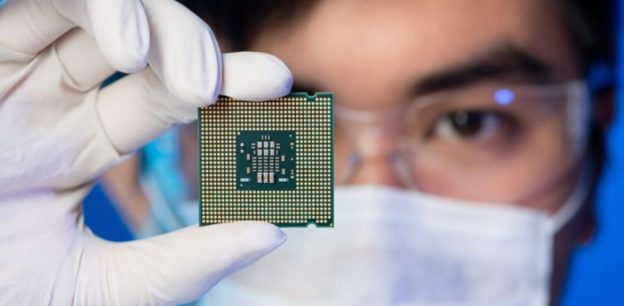
Dutch chipmaker Nexperia has publicly called on its China unit to help restore supply chain operations, warning in an open letter published on its website  on November 28, 2025 that customers across industries are reporting “imminent production outages.” Nexperia’s Dutch unit said that is open letter followed “repeated attempts to establish direct communication through conventional channels” but did not have “any meaningful response.” The letter marks the latest twist in a long-running saga that has threatened global automotive supply chains and stoked a bitter battle between Amsterdam and Beijing over technology transfer.

In a statement, Wingtech Technology, Nexperia’s Chinese parent stated that Nexperia’s true intent is to buy time ” to construct a ‘de-China-ized’ supply chain and permanently strip Wingtech of its shareholder rights.”

The situation began in September 2025, when the Dutch government invoked a Cold War-era law to effectively take control of Nexperia. The highly unusual move was reportedly made after the U.S. raised security concerns.

Beijing responded by moving to block its products from leaving China, which, in turn, raised the alarm among global automakers as they faced shortages of the chipmaker’s components.

In an apparent reprieve on November 19, 2025, however, the Dutch government said it had suspended its state intervention at Nexperia following talks with Chinese authorities…But while the measures to seize the Dutch Nexperia subsidiary have been lifted, the restoration of the corporate structure and relation with parent company Wingtech has yet to be accomplished.

Excerpt from Sam Meredith, What’s going on at Nexperia? China’s Wingtech escalates war of words with Dutch chipmaker, CNBC, Nov. 28, 2028

Shut Up and Give Up: How to Deal with Environmental Disasters

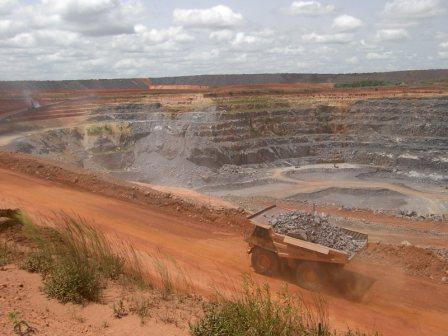
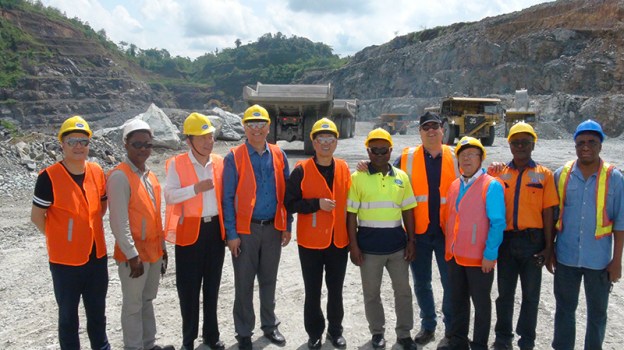
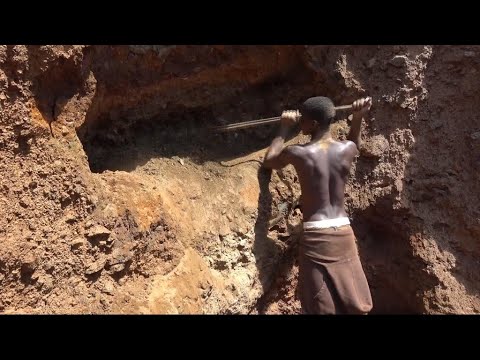
The worst day of Bathsheba Musole’s life was February 18, 2025. It started with a deafening crash when the 30-foot wall around a toxic-waste pool collapsed at the Chinese copper mine above her village. A poisonous river of a stinking yellow liquid rushed downhill, inundating homes and fields, including the one where she grew corn to feed her eight children. The floodwater, laden with cyanide and arsenic, rose chest-high. “I thought I would drown,” said Musole, 48 years old, in a recent interview.

In August 2025, months after the Feb. 18, 2025 disaster, officials from Sino Metals, a unit of the state-owned China Nonferrous Mining Corp., showed up at Musole’s half-acre farm, which the Zambian government says is too toxic to sustain crops for at least three years. They were there to make things right, she recalled them saying. Their offer was $150, but it came with a catch. To get the money, she would have to agree never to talk about the spill, take legal action against Sino Metals or even reveal the contents of the nondisclosure agreement itself…

Zambia’s government and economy.. have grown reliant on China. Zambia collects about $2 billion a year in mining taxes, mostly from Chinese mining companies. Half of the copper mined in Zambia, much of it by Chinese companies, is exported to China. In 2024, the Zambian government announced that Chinese miners would invest $5 billion in the country by 2031…

After months of investigation, Drizit Environmental, a South African firm contracted by Sino Metals, concluded that 1.5 million tons of toxic waste had overflowed into the Kafue valley, 30 times what the company had said. Sino Metals terminated the firm’s contract a day before the final report was due…

Excerpt from Nicholas Bariyo, China Pushes to Silence Victims of African Mining Disaster, WSJ, Oct. 27, 2025

Who is Afraid of China? the United States Army

China plans to ease the flow of rare earths and other restricted materials to the U.S. by designing a system that will exclude companies with ties to the U.S. military while fast-tracking export approvals for other firms…The “validated end-user” system, or VEU, would enable Chinese leader Xi Jinping to follow through on a pledge to President Trump to facilitate the export of such materials while ensuring that they don’t end up with U.S. military suppliers, a core concern for China…  The VEU mechanism that Beijing is considering is modeled on U.S. laws and procedures, as is much of Beijing’s export-control architecture.

Under the American version of the VEU system, which has been active since 2007, certain Chinese companies are cleared to buy sensitive goods under a general authorization—essentially a simplified export-approval mechanism—instead of needing individual licenses for each purchase. This makes it easier to import controlled goods such as chemicals or chip-making equipment, but requires companies to put up with U.S. government inspections of their facilities, among other steps, to verify compliance with the program…

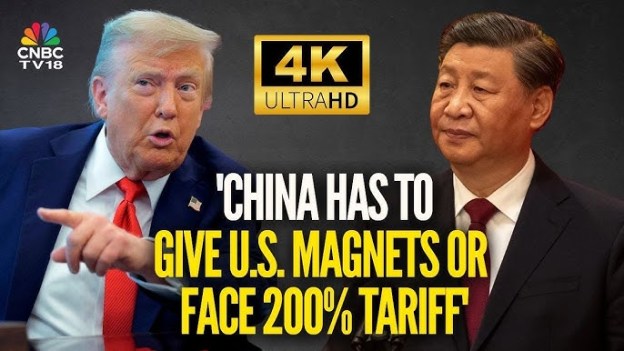
Companies in the U.S. and Europe have complained of reduced access to rare-earth magnets from China. Though China has periodically agreed to relax magnet restrictions, Chinese rare-earth magnet exports to the U.S. declined 29% in September 2025 from the month before

Excerpt from Jon Emont et al, China Hatches Plan to Keep U.S. Military From Getting Its Rare-Earth Magnets, WSJ, Nov. 10, 20215

Let them Eat Data! Decolonizing Artificial Intelligence

Tap water isn’t drinkable. Power outages are common. The national average annual wage is $2,200. Yet rising on Jakarta’s outskirts are giant, windowless buildings packed inside with Nvidia’s latest artificial-intelligence chips. They mark Indonesia’s surprising rise as an AI hot spot, a market estimated to grow 30% annually over the next five years to $2.4 billion.

The multitrillion-dollar spending spree on AI has spread to the developing world. It is driven in part by a philosophy known in some academic circles as AI decolonization. The idea is simple. Foreign powers once extracted resources such as oil from colonies, offering minimal benefits to the locals. Today, developing nations aim to ensure that the AI boom enriches more than just Silicon Valley.  Regulations effectively require tech companies such as Google and Meta to process local data domestically. That pushes companies to build or rent data facilities onshore instead of relying on global infrastructure. These investments add up to billions of dollars and create jobs that foster national talent, or so developing nations hope.

AI decolonization is a twist on data sovereignty, a concept that gained traction after Edward Snowden revealed that American tech companies cooperated with U.S. government surveillance of foreign leaders. The European Union in 2018 pioneered data-protection laws that other nations have since mimicked.

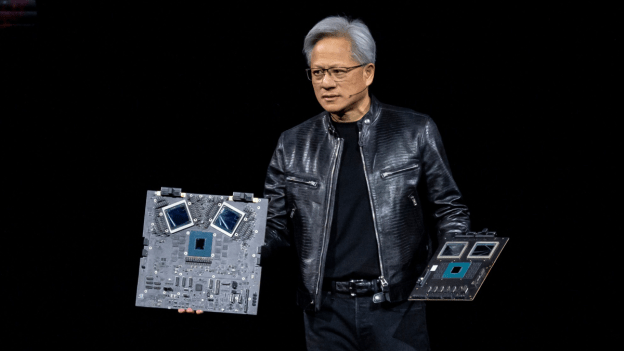
Regulations vary by country and industry, but the principle is this: If a developing-nation bank wants an American tech giant to store customer data and analyze it with AI, the bank must hire a company with domestically located servers… Nvidia Chief Executive Jensen Huang championed “sovereign AI” during a visit to Jakarta in 2024

“No country can afford to have its natural resource—the data of its people—be extracted, transformed into intelligence and then imported back into the country,” Huang said…

Excerpt from Stu Woo, It’s Not Just Rich Countries. Tech’s Trillion-Dollar Bet on AI Is Everywhere, WSJ, Oct. 26, 2025

The Right to Mental Privacy: How AI Can Read You Like a Book

A technique called ‘mind captioning’ described in a scientific paper published on November 5, 2025 generates descriptive sentences of what a person is seeing or picturing in their mind using scans of their brain activity. It is based 1) on artificial intelligence models trained on the text captions of thousands of videos,0 and 2) brain scans of people watching them. The technique could help those with language difficulties to communicate better… But it raises concerns of mental privacy…

Excerpt from Max Kozlov, Mind-captioning’ AI decodes brain activity to turn thoughts into text, Nature, Nov. 5, 2025

While United States Hibernated, China Salivated

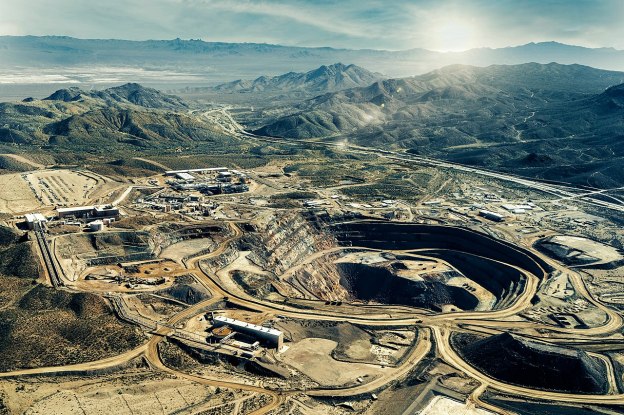
When China tightened restrictions on rare-earth exports in October 2025, stunning the United States, it was the latest reminder of Beijing’s control over an industry vital to the world economy. China’s dominance was decades in the making. Since the 1990s, China has used aggressive tactics to build up and maintain its lock over rare-earth minerals, which are essential to making magnets needed for cars, wind turbines, jet fighters and other products. Beijing provided financial support to the country’s leading companies, encouraged them to snap up rare-earth assets abroad, and passed laws preventing foreign companies from buying rare-earth mines in China. It eventually consolidated its domestic industry from hundreds of businesses into a few giant players, giving it further leverage over prices…

In 1995, Chinese state-linked companies received U.S. government approval to buy the rare-earth materials and magnet business started by General Motors, called Magnequench. In the following years, the Chinese ownership shut down all its rare-earth plants in the U.S. and shipped the equipment to China. Top American engineers were offered opportunities to go to China and set up new plants there.  “There were some colleagues that were dead set against it, saying they would never help China learn our technology,” said one magnet expert who ultimately agreed to go to China. “When I arrived, I could not believe what I was seeing. The number of new factories being built, and the rate at which they were being built, was mind-blowing,” he said….  By the mid-2000s, the U.S. rare-earth industry had been all but wiped out. Mountain Pass, America’s major rare-earth mine, had been shut down, as had virtually all American facilities that processed rare earths and turned them into magnets. China produced around 97% of the world’s rare earths, giving it what was effectively a global monopoly…

By 2021, the U.S. government was growing more worried about China’s ability to weaponize rare earths, causing prices to jump. Washington began offering large-scale funding for new rare-earth plants, including a refinery in Texas to be built by Lynas, an Australian rare-earth company. But in 2021, the Association of China Rare Earth Industry issued a warning: to China’s leadership If Beijing wanted to maintain “China’s absolute dominant position,” the country needed to relax state production quotas. Beijing responded in 2022 by pushing up output by 25%, the most in years, with another large increase the following year. Prices tanked, hitting the bottom lines of Western producers and leading some to unload assets…Beijing also introduced new measures preventing the transfer of its rare-earth processing technology abroad.

Excerpt from Jon Emont, How China Took Over the World’s Rare-Earths Industry, WSJ. Oct. 19, 2025

Why AI Industry is Like the Nuclear Industry

According to the Anthropic’s CEO  Jack Clark, governments ” should think of AI systems as kind of like countries that are arriving into the world, and misaligned AI systems as like rogue states.” He isn’t advocating for the end of AI but rather pushing for openness so these potential monsters aren’t created in the dark. He’s worried about a crisis—like what happened with the nuclear industry—that sparks drastic policy changes that derails development.

Excerpt from Tim Higgins, The Fight Over Whose AI Monster Is Scariest, WSJ, Oct. 18, 2025

Nationalizing a Crown Jewel: the case of Nexperia

U.S. officials’ warning to their Dutch counterparts was stark: If they wanted a Netherlands-based chip maker to avoid being put on a trade blacklist, it would almost certainly have to remove its Chinese owner as CEO. “The fact that the company’s CEO is still that same Chinese owner is problematic,” American officials said in a June 2025 meeting on the topic. The Americans soon got their wish. In September 25, 2025, the Dutch economy ministry seized control of Nexperia from China’s Wingtech Technology. The next day, a Dutch court granted an emergency petition to suspend Wingtech founder Zhang Xuezheng as Nexperia’s CEO and put all but one of the semiconductor company’s shares under external management.

China quickly fired back at the seizure, ordering Wingtech in early October to suspend exports of Nexperia of chips that the company has long sent for packaging and testing in China…The Dutch economy minister said in a letter to parliament that he moved to seize control of Nexperia based on evidence that the CEO was moving quickly to shift production capacity, financial resources and intellectual property to China, not because of pressure from any other country… The Dutch government and Dutch and German executives of the company had tried for months to ringfence the company’s business from Chinese control to accommodate domestic concerns—and avoid being hit by the U.S. blacklist… Dutch officials told Nexperia that the coming expansion of U.S. trade restrictions could lead to restrictions on the business, unless measures were taken to limit the transfer of knowledge and capabilities to China.

In the past, Nexperia relied on its European factories and contract manufacturers in Taiwan to make chips for China. In 2020, Zhang set up a wafer factory in Shanghai. The business, called Wingskysemi, started production in 2023 and has become one of Nexperia’s key suppliers….

Excerpt from Sam Schechner et al, , How U.S. Pressured Netherlands to Oust CEO of Chinese-Owned Chip Maker, WSJ, Oct. 14, 2025

Which Tech Companies Work for the Military? All

Companies including Nokia, Dell, and Oracle are eager to apply decades of experience in civilian technology to the rapidly evolving battlefield. Drones, bodycams and digital sensors now stream real-time intelligence in volumes no human can digest. Military headquarters are crunching through that using artificial intelligence and pumping back to troops situational updates, tactical guidance and battle plans, constantly updated on computer screens and hand-held devices.  “We understand that the future weapon is data,” said Giorgi Tskhakaia, an adviser to Ukraine’s minister of digital transformation 

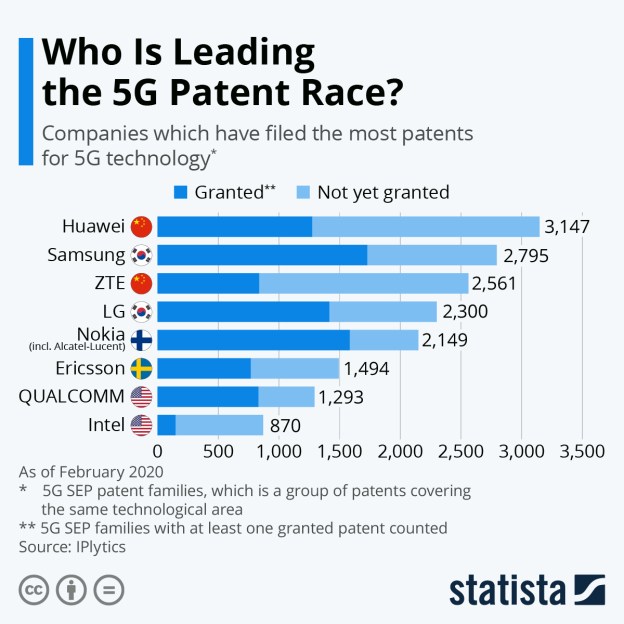
The first step is connectivity….Nokia is packaging 5G technology for ultra-secure use on battlefields and in national-security applications. It has developed backpacks with small 5G nodes and vehicle-based systems that can handle up to 1,000 users for a sort of tactical communications bubble. In 2025, it announced partnerships with military-equipment giants Lockheed Martin and Rheinmetall to integrate 5G communications into their systems.

Ericsson, the West’s only other maker of 5G networks and a producer of military radios going back to World War II, is also pushing into digital defense applications.

NATO is now working to adopt 5G as a military-communications standard across its 32 members. Alliance experts say the volume of military data is so great that 5G is best for transmission because the standard has at least 10 times the data capacity of earlier systems. It is also much more resilient against jamming

The second step is the extraction of data….Ukraine has spent three years developing AI systems to churn through all it collects… The Pentagon in 2017 launched a significant effort to adopt AI, Project Maven, tapping machine learning to digest mountains of data. Google’s role in the work sparked employee protests at the time…

Oracle, like many of its rivals, is no stranger to working with governments and militaries. The company began in 1977 out of a Central Intelligence Agency program—Project Oracle. But for decades it focused on corporate customers. Now, it and other cloud providers including Google, Amazon.com and IBM are applying to government and national-security work many lessons from their fierce commercial competition to move and process data fastest.

The final step in exploiting battlefield data is delivering it to fighters via gear that can handle combat conditions. Screens are proliferating on the battlefield, just as they did in offices and homes several decades ago, but warfare puts demands on equipment unlike any other environment…One Dell laptop is built to Pentagon standards for resistance to shocks, dust, sand, water and “explosive atmosphere,” meaning it won’t ignite flammable vapor. It can handle temperatures between minus 20 degrees and 145 degrees Fahrenheit.

Excerpt from Daniel Michaels, That 1990s Tech Brand? Its New Gig Is in Battlefield Data, WSJ, Sept. 9, 2025

The New Underworld Order: Invincible Cartels

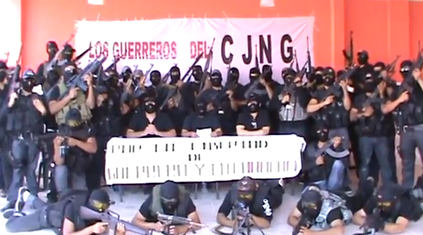
Nemesio “Mencho” Oseguera spent decades building his Jalisco New Generation Cartel into a transnational criminal organization fierce enough to forge a new underworld order in Mexico, displacing the Sinaloa cartel, torn by warring factions, as the world’s biggest drug pusher. The Sinaloans, Mexico’s top fentanyl traffickers, got caught in the crosshairs of the Trump administration, which promised to eradicate the synthetic opioid. The crackdown has left an open field for Jalisco and its lucrative cocaine trade, elevating Oseguera to No. 1.

The Jalisco cartel transports the cocaine by the ton from Colombia to Ecuador and then north to Mexico’s Pacific coast via speedboats and so-called narco subs…The U.S. has a $15 million bounty on Oseguera, but he rarely leaves his mountain compound, according to authorities. Few photos of him circulate. The cadre of men protecting Oseguera, known as the Special Force of the High Command, carry RPG 7 heat-seeking, shoulder-fired rocket launchers capable of piercing a tank, people familiar with cartel operations said. Visitors to the drug lord’s stronghold are hooded before they embark on the six-hour car trip through terrain sown with land mines, those people said. Locations of the pressure-activated explosives are known only by members of Oseguera’s inner circle.

The Jalisco cartel, which controls ports on Mexico’s Pacific coast, now uses routes and tunnels into the U.S. that are controlled by the sons of imprisoned drug kingpin Joaquín “El Chapo” Guzmán….
 
The cartel acts as a parallel government in the southwestern state of Jalisco and other parts of Mexico, taxing such goods as tortillas, chicken, cigarettes and beer, security experts said. It controls construction companies that build roads, schools and sewers for the municipal governments under cartel control.  A booming black market for fuel is another cash cow. Gasoline and diesel stolen from Mexican refineries and pipelines—or smuggled into Mexico from the U.S. without paying taxes—is sold at below market prices to small and large businesses.. The head of the Jalisco cartel’s fuel division is nicknamed “Tank” for his prowess at stealing and storing millions of gallons of fuel. 

Excerpst from Steve Fisher et al., America Loves Cocaine Again—Mexico’s New Drug King Cashes In, WSJ, Sept. 16, 2025

How China Plans to Destroy the U.S. AI Industry

China’s restrictions on rare-earth materials announced on October 9, 2025 would mark a nearly unprecedented export control*** that stands to disrupt the global economy, giving Beijing more leverage in trade negotiations and ratcheting up pressure on the Trump administration to respond.

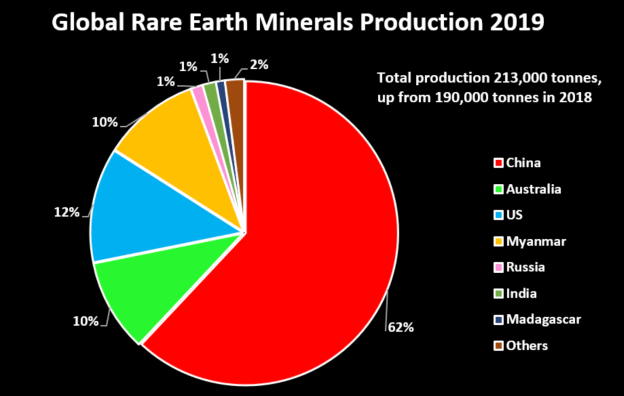
The rule, put out by China’s Commerce Ministry, is viewed as an escalation in the U.S.-China trade fight because it threatens the supply chain for semiconductors. Chips are the lifeblood of the economy, powering phones, computers and data centers needed to train artificial-intelligence models. The rule also would affect cars, solar panels and the equipment for making chips and other products, limiting the ability of other countries to support their own industries. China produces roughly 90% of the world’s rare-earth materials.

Global companies that sell goods with certain rare-earth materials sourced from China accounting for 0.1% or more of the product’s value would need permission from Beijing, under the new rule. Tech companies will probably find it extremely difficult to show that their chips, the equipment needed to make them and other components fall below the 0.1% threshold, industry experts said. The rules could cause a U.S. recession if implemented aggressively because of how important AI capital spending is to the economy… “It’s an economic equivalent of nuclear war—an intent to destroy the American AI industry,” said Dmitri Alperovitch, co-founder of the Silverado Policy Accelerator think tank.

Excerpt from Amrith Ramkumar,et al., China’s Rare-Earth Escalation Threatens Trade Talks—and the Global Economy, WSJ, Oct. 9, 2025

***The new export controls mark the first time China has applied the foreign direct product rule (FDPR)—a mechanism introduced in 1959 by the United States and long used United States to restrict semiconductor exports to China. The FDPR enables the United States to regulate the sale of foreign-made products if they incorporate U.S. technology, software, or equipment, even when produced by non-U.S. companies abroad. In effect, if U.S. technology appears anywhere in the supply chain, the United States can assert jurisdiction. See CSIS

While United States Sleeping, China Made Ships

A $16 billion merger of two state-controlled shipbuilders in China was set for completion the week of August 11, 2025 creating the world’s biggest shipbuilder while the U.S. searches for a path back into the business.  American shipbuilders are playing catch-up after decades of maritime-industry decline…but Trump’s threat to impose higher fees on ships made in China is giving South Korean and Japanese rivals an opening to win back market share.

The Chinese champion is called China State Shipbuilding, or CSSC. In August 2025, it is scheduled to absorb its merger partner, China Shipbuilding Industry, and take the sole listing on the Shanghai Stock Exchange… Beijing is currently looking to consolidate state-led companies in sensitive industries, particularly those connected with the military. CSSC’s main business is commercial, but it is also an important contractor for the Chinese navy. China Shipbuilding Industry designed and built China’s first homegrown aircraft carrier, the Shandong.

Beijing set its sights on dominating the shipbuilding industry decades ago, and now Chinese shipbuilders make up more than half of the global market. China-built ships accounted for about 55% of global tonnage in 2024, compared with less than 0.05% for the U.S. China possesses 232 times the shipbuilding capacity of the U.S., according to the U.S. Navy…


Meanwhile, smaller rivals in Japan are looking to reclaim market share after decades of being pushed into a corner by lower-cost Chinese and South Korean rivals. A proposal in June in 2025 from Japan’s ruling Liberal Democratic Party calls for extensive subsidies for local shipyards to protect national security, including a $6.7 billion public-private fund. “If we fail to act now, Japan risks losing its shipbuilding industry entirely, as Europe and the United States did,” the party said.

Excerpt from China Creates World’s No. 1 Shipbuilder, Driven by Rivalry With U.S., WSJ, Aug. 11, 2025

Secrecy in Space

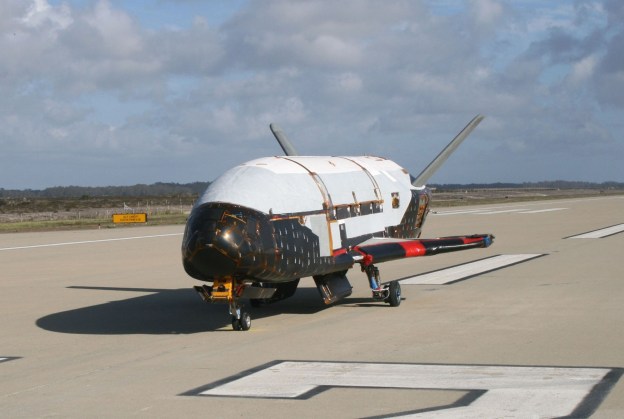
A Pentagon spaceplane called X-37B zoomed into orbit this week for its eighth mission. When it will come back is a secret. The uncrewed vehicle can spend months or years in space before it re-enters the atmosphere.. That combination of flexibility and endurance has made it a favorite tool for military officials looking to quickly deploy new technologies on the final frontier. A SpaceX rocket launched X-37B on August 21, 2025 from Florida’s Kennedy Space Center. Government and commercial engineers have spent years experimenting with lasers that allow satellites to share large amounts of data in space. The Pentagon is also testing tools like the inertial sensor, which could help improve navigation in situations where Global Positioning System signals aren’t available.

The spacecraft has spent the last five months on Earth after a 434-day mission that included tests of orbital maneuvers known as “aerobraking.” The move helps the vehicle use the drag from the planet’s atmosphere to change its orbit without using much fuel.  Military officials haven’t disclosed many details about the payloads that X-37B carries, but past missions included testing different materials in orbit and an experiment that transmitted solar energy to the ground. Its fifth flight released three small satellites that government officials didn’t acknowledge until they had fallen back to Earth. There’s a global strategic interest in saying what you’re putting in space,” said Jonathan McDowell, a researcher at the Harvard-Smithsonian Center for Astrophysics. If the U.S. hides its satellites, “then the Chinese are going to start doing it too, and that’s not in our interest.”

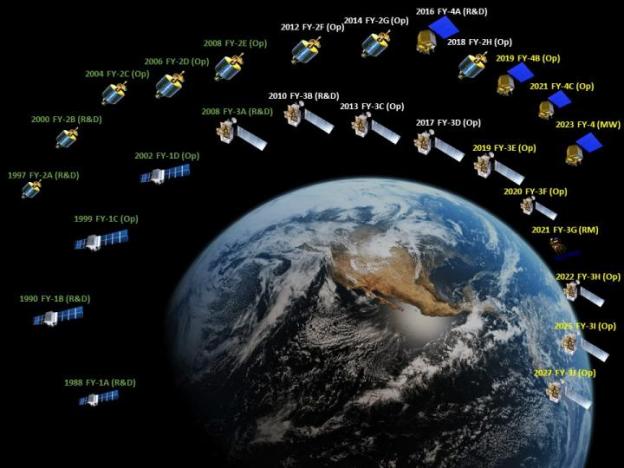
China now fields more than 1,000 satellites and has developed a range of radio jammers, antisatellite missiles and other weapons capable of targeting Pentagon assets, according to a U.S. Air Force document released in May 2025. It also operates a competing spaceplane, called Shenlong, that has flown several missions.]

Excerpt from Drew FitzGerald, The Pentagon’s Mysterious X-37B Space Plane Embarks on New Mission, WSJ, Aug. 22, 205

Out-of-Date: Academic Cooperation

Mr. Trump noted in the summer of 2025  that “the United States is in a race to achieve global dominance in artificial intelligence,” which Joe Biden called “a defining technology of our era.” Universities help drive that race. Meta’s chief AI officer, Alexandr Wang, has argued that the rate of AI progress may be such that “you need to prevent all of our secrets from going over to our adversaries and you need to lock down the labs.”

Thousands of Chinese citizens are working and studying in such labs….In AI specifically, nearly 40% of top-tier researchers at U.S. institutions are of Chinese origin. Beijing is aggressively cultivating American-educated and American-employed researchers via the Thousand Talents program.

Blindly embracing academic cooperation with a geopolitical rival is absurd. Nobody suggests we should train Iranian nuclear physicists or Russian ballistics engineers. The U.S. wouldn’t have been better off collaborating more with Nazi Germany in the 1930s or with the Soviet Union during the Cold War. Why make an exception for a nation dedicated to surpassing the U.S. in emerging technologies?

Excerpt from  Mike Gallagher, Send Harvard’s Chinese Students Home, WSJ, Aug. 19, 2025

The End of Taiwan? The End of U.S. and Europe Combined

Prosecutors in Taiwan indicted  in August 2025 three people in a case about sensitive chip technology, alleging they stole information from Taiwan Semiconductor Manufacturing (TSMC) to help one of TSMC’s top equipment suppliers, Tokyo Electron, win more orders…Taiwanese officials say the theft of trade secrets has grown over the past decade and point most of the blame at China. Over the past couple of years, Taiwan’s investigation bureau has probed more than 120 cases involving trade-secret theft. “If Taiwan’s technology hub falls or its technologies are lost, the impact will extend beyond Taiwan to the U.S., Europe and the rest of the world,” Sun Chen-yi, deputy director general of the investigation bureau at Taiwan’s Ministry of Justice, said in an interview before his retirement in July 2025.

Excerpt from Yang Jie et al., Three Accused of Stealing TSMC Chip Secrets to Aid Japanese Supplier, WSJ, Aug. 28, 2025

Laughingstock: The Net-Zero Banking Alliance

The Net-Zero Banking Alliance (NZBA) said in August 2025 that it was pausing operations and initiating a vote to decide on whether to continue working as a membership-based alliance or operate as a framework initiative…The move by the NZBA to suspend activities comes after numerous banks from the U.S. and Europe left the alliance. Those banks said that being part of such an organization was no longer necessary and that their business practices now incorporated the ESG principles learned over the past five years…Shortly after President Trump’s electoral win, major banks including JPMorgan, Citi and Morgan Stanley exited the alliance that they had proudly been a member of for years. The departure of the banks came as many faced strong pressure from the Trump administration and Republican attorneys generals to oppose climate groups and ESG investing more generally…

A sister organization, the Net Zero Asset Managers initiative was also set up, with a similar remit but instead focused on the activities of asset managers. It suspended activities in January 2025 after a wave of departures from the likes of BlackRock and Vanguard…. BlackRock, State Street and Vanguard were sued in November2024 by Texas Attorney General Ken Paxton, who alleged that the asset managers were violating antitrust law by being part of alliances like the NZAM initiative, which worked to move investments away from fossil fuels, especially coal. Paxton said this raised energy costs for consumers by not providing the full remit of energy sources.

In August 2025, a federal-district court judge denied the asset manager’s motion to dismiss the case, allowing litigation to continue under Texas and federal antitrust laws. “Today’s victory represents a major step in holding them accountable. I will continue fighting to protect Texas and defend America’s energy independence from this unlawful conspiracy,” Paxton said…

Excerpt from Yusuf Khan,, Net-Zero Banking Alliance Suspends Activities Amid Wave of Departures, WSJ, Aug. 27, 2025

Climate Change Can Wait: China’s Greed for Oil

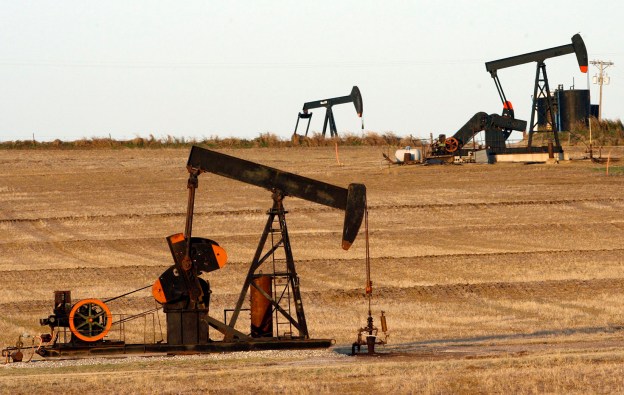
China’s thirst for oil drove global demand for decades…Chinese officials have long worried that the U.S. and its allies could hamstring the nation’s economy by choking off its supply of foreign oil. So China has poured hundreds of billions of dollars into weaning itself off the imported stuff by reviving domestic production and swiftly building the world’s leading electric-vehicle industry. “The energy rice bowl must be held in our own hands,” Chinese leader Xi Jinping has said.

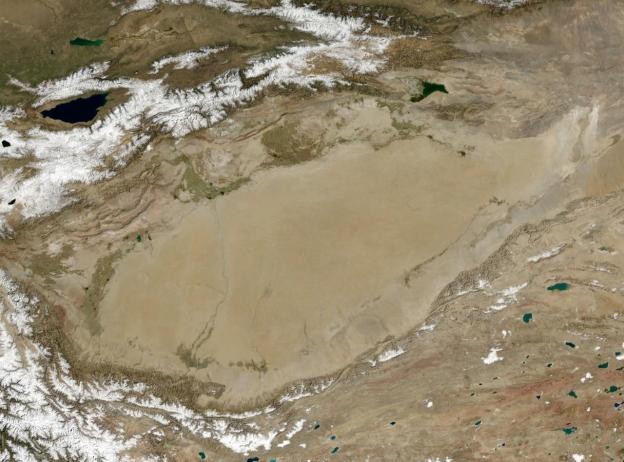
In a remote corner of China. the Tarim Basin, called the “sea of death” for its harsh conditions, oil workers are trying to coax more crude out of the ground by drilling holes as deep as Mt. Everest is high. State-owned PetroChina reported $38 billion of capital expenditures in 2024, nearly as much as Exxon Mobil’s and Chevron’s combined. China’s desire for energy independence dates all the way back to former leader Mao Zedong, who once dispatched tens of thousands of workers to search for oil in China’s northeast to ensure China wouldn’t be dependent on imports…

In July 2018, Xi personally ordered state-owned companies to revive domestic oil production to safeguard national security. Three state-owned oil majors invested an additional $10 billion the following year in exploration and production. They zeroed in on offshore areas such as the South China Sea and the Bohai Sea off the country’s northeast coast, as well as remote reserves near China’s western border with Kyrgyzstan, in a region called the Tarim Basin

In the deserts of the Tarim Basin crews are exploring some of the nation’s deepest reserves. Summer temperatures can top 120 degrees, and in the winter they can hit minus 20. Such ultradeep exploration is expensive, with some wells costing three times as much as shallower traditional wells, a Chinese oil executive told state media.  In 2023, Xi held a video call with Tarim Basin oil workers, praising their “indispensable contributions” to the nation. About 5% of China’s total oil and gas output in 2024 came from the basin’s deep reservoirs, a number Chinese oil executives intend to increase.

As of May 2024, PetroChina’s parent company, China National Petroleum, said it had drilled 193 wells in the Tarim Oilfield at least 5 miles deep. In the U.S., many wells are a mile or two deep.

Excerpt from Brian Spegele, How China Curbed Its Oil Addiction—and Blunted a U.S. Pressure Point, WSJ, July 21,2025

The Trump-China Hidden Romance: the companies behind USD1

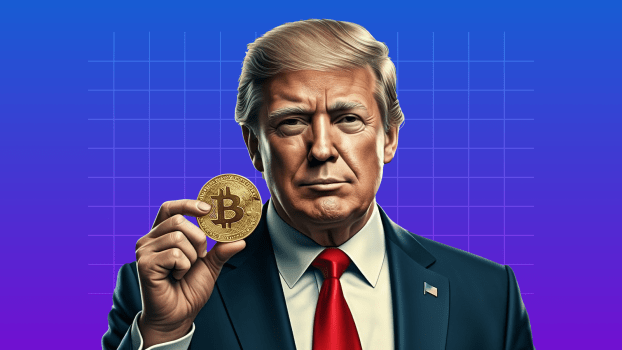
The Trump family’s crypto venture has generated more wealth since the election—some $4.5 billion—than any other part of the president’s business empire.

A major reason for the success is a partnership with an under-the-radar trading platform quietly administered by Binance, the world’s largest crypto exchange, whose founder is seeking a pardon from President Trump…The online trading platform, PancakeSwap, serves as an incubator of sorts, drumming up interest among traders to use coins issued by the Trump family’s main crypto company, World Liberty Financial.  The more World Liberty’s flagship coin, USD1, is used, the greater demand to increase its circulation, and the greater the profit for World Liberty and its owners, including the Trump family. 

Crypto trading platforms, like PancakeSwap, often offer rewards or prizes to drum up interest in new coins, similar to the way brokerages offer free trades or casinos give first-time customers free chips…

Binance’s majority owner and founder, Changpeng Zhao, spent four months in jail in the U.S. last year after Binance agreed to pay a $4.3 billion fine for becoming a global money-laundering hub for criminals, terrorists and sanctions evaders. His company has deepened its relationship with World Liberty at the same time Zhao has ramped up efforts to secure a pardon from Trump…Zhao—considered the richest person in the crypto industry and worth over $70 billion.

USD1 got its first big break when Binance accepted a $2 billion investment from an outside investor paid in the World Liberty coin. The deal caused the amount of the cryptocurrency in circulation to erupt 15-fold and overnight become one of the world’s largest.  USD1 is what is known as a stablecoin, a privately invented digital currency that is backed 1:1 with U.S. dollars. World Liberty invests the money backing the coin in government bonds and money-market funds, without paying interest to users of the coin. With more than $2 billion of USD1 in circulation, it can earn around $80 million a year based on current interest rates. Binance has been holding the $2 billion in USD1 on its platform…By not cashing in the stablecoin, this ensures that World Liberty continues to earn money from investing the dollars that back them.

World Liberty’s relationship with PancakeSwap, whose website was registered in Shanghai, and Binance is one of several in which entities and individuals with strong ties to China have supported the Trump family crypto business. One of World Liberty’s largest investors is Justin Sun, the Hong Kong-based billionaire…This comes even as the White House pushes a trade war against China and seeks to curtail U.S. corporations’ ties to the country over national-security fears…

China is Binance’s largest market by trading volume. It has been a main base for its software developers, with hundreds of coders…Binance has long maintained that it isn’t a Chinese company, saying it left Shanghai shortly after its 2017 launch. Zhao… has said he is no longer a Chinese citizen, and holds Canadian and United Arab Emirates citizenship. The company, which has employees around the world, doesn’t have an official headquarters…

PancakeSwap doesn’t disclose its ownership…According to former Binance employees, Binance staff created PancakeSwap in-house in 2020 because the exchange wanted to establish a foothold in crypto’s so-called decentralized finance craze. The platform has remained under Binance’s supervision…

Excerpt from Angus Berwick et al., The Recipe Behind the Trump Family’s Crypto Riches: PancakeSwap, WSJ, Aug. 12, 2025

Nvidia CEO Has a Magic Needle

Nvidia’s market share in China fell to 50% from 95% over the past four years under U.S. restrictions, Huang, Nvidia’s CEO,  said in May 2025.  He visited China at least three times in 2025 to reassure Chinese tech executives and government officials that Nvidia was committed to the market…. Huang has met with top executives of Chinese cloud-computing leader Alibaba, smartphone and automaker Xiaomi and OpenAI challenger MiniMax.People in China’s tech industry said they appreciated Huang’s efforts to modify his chips so they could be sold in China. Engineers there nicknamed him “Magic Tailor” for his skill in designing chips to thread the needle of U.S. regulations.

Knowing the importance of the Chinese market to Nvidia, Beijing increased pressure on the company: China’s cybersecurity regulator recently summoned Nvidia representatives to discuss alleged security risks of the H20 chips, citing comments by U.S. lawmakers about the need for a bill to require tracking capabilities for advanced chips sold abroad….

Excerpt from Lingling Wei et al, With Billions at Risk, Nvidia CEO Buys His Way Out of the Trade Battle, WSJ, Aug. 11, 2025


Can AI Do That? Knowledge Impossible to Copy

Zuckerberg hasn’t had much success in his efforts to hire the field’s biggest stars, including OpenAI’s co-founder Ilya Sutskever and its chief research officer, Mark Chen. Many candidates are happy to take a meeting at Zuckerberg’s homes in Palo Alto and Lake Tahoe. In private, they are comparing gossip and calculating Meta’s chances of winning the AI race.

The handful of researchers who are smartest about AI have built up what one described as “tribal knowledge” that is almost impossible to replicate. Rival researchers have lived in the same group houses in San Francisco, where they discuss papers that might provide clues for achieving the next great breakthrough. 

Excerpt from Ben Coen et al, It’s Known as ‘The List’—and It’s a Secret File of AI Geniuses, WSJ, June 27, 2025

De-Chinafication of Rare Earths: an Uphill Battle

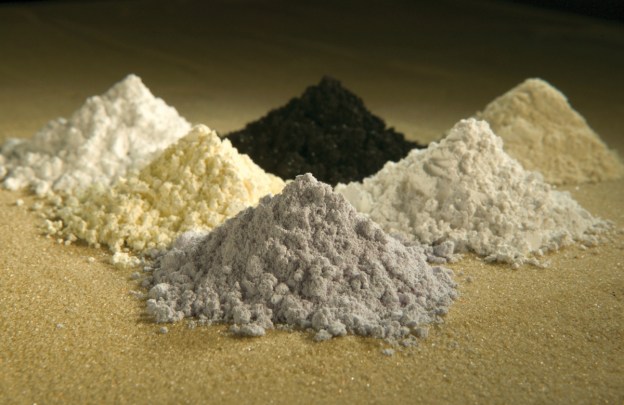
China mines some 70% of the world’s rare earths, the 17 metallic elements primarily used in magnets needed for civilian and military technologies. But its 90% share of processing for rare earths mined around the world is what really concerns officials from other countries working to secure their supply.

“China is a formidable competitor,” said Ramón Barúa, chief executive of Canada’s Aclara Resources, which is opening a rare-earths mine in Brazil to supply a processing plant it plans to build in the U.S. Aclara said it plans by August to decide where in the U.S. to build its plant for separating rare-earths deposits into individual elements. Aclara signed an agreement in 2024 to supply rare earths to VAC, a German company that is building a factory in South Carolina with $94 million in Pentagon funding to make magnets for clients including General Motors…

Brazil has the world’s second-largest rare-earth reserves after China, some 21 million tons, according to the U.S. Geological Survey. That represents more than a fifth of known global reserves—and more than 10 times those in the U.S…Despite its huge reserves, Brazil has been a small player in rare earths because of its complex mining regulations and the difficulty of attracting financing from companies willing to confront entrenched Chinese competitors. Costs to mine and process Brazilian rare earths are estimated to be around three times China’s, meaning Western buyers would likely pay a substantial premium for Brazilian minerals. Only a few companies outside China have mastered rare-earth processing, and the learning curve is steep

Brazil’s first big rare-earths mine opened in 2024 by a US private equity company some 90 miles west of the town of Nova Roma…but the mine is contracted to ship most of its production to China !…Aclara plans to invest some $600 million to complete work on a larger plant next to the mine in Nova Roma to start full production in 2028.

Excerpt from Samantha Pearson, Rare-Earths Plants Are Popping Up Outside China, WSJ, May 18, 2025

Nvidia Geopolitical Games

Nvidia plans (in 2025) to open a research and development center in Shanghai to maintain its presence in China. The facility will help Nvidia understand Chinese customer demands and design products that are compliant with US export controls and sanctions. Chief Executive Jensen Huang visited China in April 2025 and discussed the plan with Shanghai’s mayor, who welcomed it and offered to provide support…Since 2022, Washington has required licenses for exports of Nvidia’s most advanced AI chips to China. That has reduced China sales, which accounted for 13% of revenue in its last fiscal year, down from 26% before the export restrictions.

The company is seeking to lease an office space in Shanghai for the new facility to accommodate existing employees and potential new hires, the people said. Officials in the city, where Tesla’s China plant is located, have told the company that it would offer tax breaks and reduce red tape for its new project, the people said. 

The company has repeatedly created downgraded variants of chips after Washington tightened its rules so that it could keep selling to China. The practice has angered some U.S. officials, who were upset the company wasn’t being more helpful in curbing China’s AI advances. Nvidia has said it follows U.S. export rules and has advocated for selling to Chinese customers rather than ceding the market to domestic companies such as Huawei Technologies, which are filling in the gap left by Nvidia and its American peers.

Excerpt from Raffaele Huang, Nvidia to Set Up Research Center in Shanghai, Maintaining Foothold in China, WSJ, May 16, 2025

The New Trump Doctrine: Kiss the Hand you Cannot Bite

Four US major automakers are racing to find workarounds to China’s stranglehold on rare-earth magnets, which they fear could force them to shut down some car production within weeks. Several traditional and electric-vehicle makers—and their suppliers—are considering shifting some auto-parts manufacturing to China to avoid looming factory shutdowns, people familiar with the situation said.

Ideas under review include producing electric motors in Chinese factories or shipping made-in-America motors to China to have magnets installed. Moving production to China as a way to get around the export controls on rare-earth magnets could work because the restrictions only cover magnets, not finished parts, the people said.

If automakers end up shifting some production to China, it would amount to a remarkable outcome from a trade war initiated by President Trump with the intention of bringing manufacturing back to the U.S.  “If you want to export a magnet [from China] they won’t let you do that. If you can demonstrate that the magnet is in a motor in China, you can do that,” said a supply-chain manager at one of the carmakers.

China in April 2025 began requiring companies to apply for permission to export magnets made with rare-earth metals, including dysprosium and terbium. The country controls roughly 90% of the world’s supply of these elements, which help magnets to operate at high temperatures. Much of the world’s modern technology, from smartphones to F-35 jet fighters, rely on these magnets….In May 2025, industry groups representing most major automakers and parts suppliers told the Trump administration that vehicle production could be reduced or shut down imminently without more rare-earth components from China.

Excerpt from Sean McLain et al., Automakers Race to Find Workaround to China’s Stranglehold on Rare-Earth Magnets, WSJ, June 4, 2025

Two days after the publication of this WSJ article, Trump announced, on June 6, 2024, that Xi agreed to let rare earth minerals flow to US (in exchange of? not revoking Chinese student visas? what else?)

The Essence of Capitalism: Shelters

SKU Distribution in Mesa, Arizona., is experiencing rapid growth as companies seek to access foreign-trade zones and navigate rising U.S. tariffs. Companies can use foreign-trade zones to defer tariff payments until products are sold, which operators say helps them manage supply chains and avoid bottlenecks. The foreign-trade zone program dates back to the 1930s, with roughly 260 such facilities now in the U.S. In some, inquiries from companies have recently quadrupled.

SKU Distribution had just one customer in 2024 at its Mesa, Arizona, warehouse. In 2025, it is teeming with new business from companies storing items such as aluminum poles, ice picks, carabiners and firearm safes. That is because the warehouse is the ultimate U.S.-based tariff refuge

Arizona is the foreign-trade zone capital of America, its facilities employing more workers than those of any other state, Commerce Department data shows. Apple, Intel, Honeywell Aerospace, Sub-Zero and Ball Corp. all manufacture within the Arizona facilities, together processing more than $7.5 billion in merchandise in 2023. The program has helped turn this strip of the Phoenix-area desert into a chip-making hot spot. Now, Trump’s tariffs are drawing a clientele of smaller companies looking for refuge from the trade war.

Excerpt from Owen Tucker-Smith, Inside the Arizona Warehouse That Has Become Shelter in Tariff Storm, WSJ, May 12, 2025

See also United States as a Tax Haven

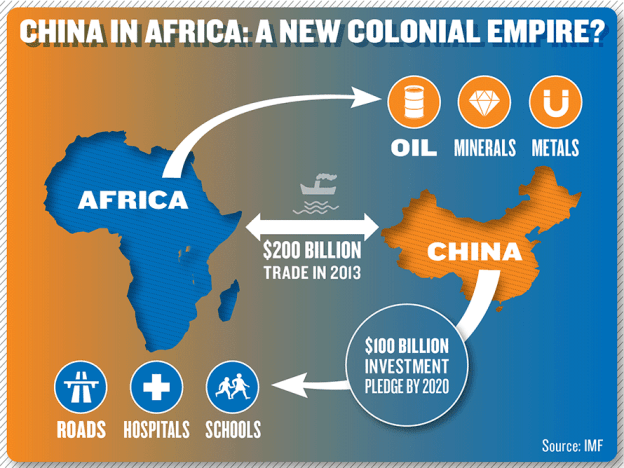
The Scramble for Congo 21st Century Style

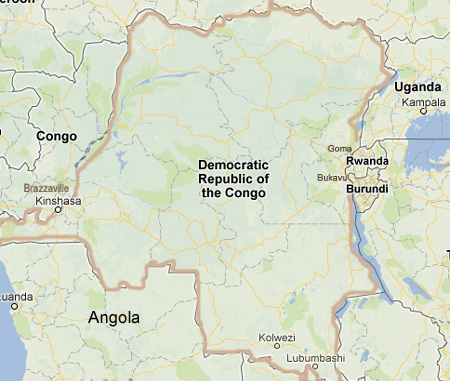
During the 19th century’s Scramble for Africa, European countries raced to secure territory and wealth across the continent. Now, African powers are grabbing resources from a neighbor crippled by infighting and ill-equipped to defend itself. Caught in the middle is the Democratic Republic of Congo, a country the size of Western Europe whose forests conceal a wealth of gold, diamonds and coltan, a key component in smartphones and computers. These mineral riches are turning what was already a region plagued by militia violence into a battleground, as Rwanda and its local allies seize coltan supplies while Uganda and its proxies move to take over gold mines to the northeast, according to United Nations and Ugandan officials…Ugandan President Yoweri Museveni and Rwandan President Paul Kagame are pouring troops and weapons into Congo, while their Congolese allies, who control strategic border crossings, secure smuggling routes to move more minerals to the global markets.

In 2024, Rwanda-backed M23 rebels seized the coltan-mining town of Rubaya, where fighters bring in around $800,000 each month by taxing traders. Rebel fighters have doubled diggers’ wages to encourage them to keep working, and they rely on forced labor to widen roads to accommodate trucks transporting coltan into Rwanda along with gold. According to the U.N., some 4,000 Rwandan soldiers are fighting inside Congo, a report that Rwandan authorities have denied.

Excerpt from While War Rages, Congo’s Neighbors Smuggle Out Its Gold and Mineral Wealth, WSJ, Apr. 7, 2025

Mining the Seabed: By hook or by crook

The Trump administration is reportedly considering an executive order that would accelerate deep-sea mining in international waters by allowing companies to bypass a United Nations-backed review process. The order would affirm the United States’ right to extract critical minerals from the ocean floor, enabling companies to seek permits directly from the National Oceanic and Atmospheric Administration (NOAA).

The International Seabed Authority (ISA), established in 1982 under the UN Convention on the Law of the Sea (UNCLOS)—which the U.S. has not ratified—has spent years developing regulations for deep-sea mining.  In 2021, the island nation of Nauru sponsored Canada’s The Metals Company (TMC) to begin deep-sea mining, forcing the ISA to draft rules before any company could start extracting minerals in international waters. The 36-member ISA council has since met repeatedly to finalize regulations. In March 2025, officials gathered in Jamaica to review hundreds of proposed amendments to a 256-page draft mining code, but the session ended without a resolution.

Frustrated by the ISA’s slow progress, TMC in March 2025 formally urged the Trump administration to issue deep-sea mining permits, arguing that “commercial industry is not welcome at the ISA.” “The Authority is being influenced by a faction of States allied with environmental NGOs who see the deep-sea mining industry as their ‘last green trophy,’” TMC chairman and chief executive, Gerard Barron. “They have worked tirelessly to continuously delay the adoption of the Exploitation Regulations with the explicit intent of killing commercial industry.”

Governments interested in developing deep-sea mining within their territorial waters — typically 200 nautical miles from shore — include the Cook Islands, Norway and Japan.

Proponents of seabed mining contend that its environmental impact is lower than land-based extraction. Critics warn that the long-term consequences remain uncertain and advocate for further research before large-scale operations begin.

Excerpt from Cecilia Jamasmie, Trump eyes executive order to fast-track deep-sea mining, Mining.com, Apr. 1, 2025

North Korea: Hacking Superpower — Crypto Billionaire

At 11:49 a.m. on July 18, 2024, North Korean hackers pounced on a major cryptocurrency exchange handling hundreds of millions of dollars. The hackers slipped into the exchange’s virtual vault, took control and then started pilfering cryptocurrency tokens. Within a little more than an hour, the hackers had disappeared—and with them, more than $200 million for the Kim Jong Un regime. 

The shocking theft at WazirX, India’s largest cryptocurrency exchange, along with several other major recent heists, has made it clear: North Korea is now the world’s most dangerous crypto thief. It has swiped more than $6 billion in cryptocurrency over the past decade—a sum so large that no one else compares. The country’s hackers are both patient and brazen, according to investigators. To get into companies’ computers, they comb through employees’ Facebook and Instagram pages and invent tailor-made stories to trick them into clicking on links with viruses. Some North Korean hackers have even become employees themselves, fooling U.S. companies into hiring them as remote IT workers and gaining access to their networks.

After grabbing their bounty, North Korean hackers are masters at escaping. At WazirX, investigators believe they used algorithms to spread funds through global crypto networks faster than any human could, making it almost impossible for authorities to catch up. Once the crypto is dispersed, North Koreans often lie low until investigators lose interest and move on, waiting months or years to convert their haul into traditional money that can be spent….Pyongyang’s crowning achievement came in February with a $1.5 billion raid of Bybit, one of the world’s biggest cryptocurrency exchanges, in the largest-ever such heist. That followed several hackings in 2024, when North Korea stole more than $6 out of every $10 lost by the cryptocurrency industry, according to Chainalysis, which tracks crypto theft.

North Korea’s success reflects the major resources dedicated to the task. The regime commands more than 8,000 hackers as though they were in a military unit, with the country’s brightest minds. State support means its hackers can wait months or years to exploit a single slip in a company’s digital security. Pyongyang’s desperation for cash, and its lack of concern for diplomatic blowback, have fueled its drive to be better than anyone else. 

Excerpts from How North Korea Cheated Its Way to Crypto Billions, WSJ, Apr. 3, 2025

The Cat-and-Mouse Game: US-China, Chip Giants

The U.S. on March 28 2025 added dozens of Chinese companies to a trade blacklist over national security concerns. American businesses seeking to sell technology to these companies will need approval from the government. Among those added were subsidiaries of Inspur Group, China’s largest server maker and a major customer for U.S. chip makers such as Nvidia, Intel and Advanced Micro Devices. Companies linked to China’s largest supercomputer maker, Sugon, were also added…

Nearly 80 companies were put on the Commerce Department’s blacklist, known as the entity list…including the U.S. server maker Aivres Systems that is wholly owned by Inspur Electronic. The latter is one-third owned by Inspur Group, according to corporate records. Aivres has been assembling high-end artificial-intelligence equipment for Nvidia. The AI-chip giant has said that Aivres will make servers using chips in the Blackwell family, Nvidia’s newest and most powerful processors.  Aivres advertises on its website that it sells servers and infrastructure powered by Blackwell chips, which are banned from sale into China…About two months after Inspur Group was added to the trade blacklist in March 2023, California-based Inspur Systems changed its name to Aivres Systems.

Excerpts from Liza Lin, Trump Takes Tough Approach to Choking Off China’s Access to U.S. Tech, WSJ, Mar. 26, 2025

World Reeling, Trump Mining

The two oldest sons of President Trump are investing in a bitcoin-mining company, adding to the Trump family’s expanding portfolio of cryptocurrency businesses.   Eric Trump and Donald Trump Jr.’s American Data Centers will merge with and take a 20% stake in American Bitcoin, a mining operation majority-owned by Hut. Together, they aim to create the world’s largest miner of the digital currency, with designs on building its own “bitcoin reserve.”

In a matter of months, the Trumps started a decentralized-finance, or DeFi, project called World Liberty Financial, said their social-media company would invest in bitcoin and other digital assets, launched meme coins to capitalize on the popularity of the president and his wife and announced plans to issue a World Liberty dollar-backed stablecoin. And in his return to the White House, President Trump has said he aims to make the U.S. the “crypto capital of the world.” …As part of the deal, Hut 8 will shift nearly 61,000 of its specialized bitcoin-mining machines to American Bitcoin in exchange for an 80% ownership in the new entity. The companies said no cash changed hands in the deal…

The business of mining new bitcoin has grown more challenging as new companies have sprung up to capitalize on rising prices and the number of unmined tokens has dwindled. Bitcoin’s pseudonymous creator, Satoshi Nakamoto, capped the digital currency’s supply at 21 million, and more than 90% of those tokens have already been released. Critics also raised concerns about the environmental impact of bitcoin mining, pointing to the massive amounts of energy required to run mining operations.

Excerpt from The Trump Family Advances Its All-Out Crypto Blitz, This Time With Bitcoin Mining, WSJ, Mar. 31, 2025

To Own Means Nothing-To Do Means More: Metals and Minerals of the World

Trump wants to secure the minerals the U.S. needs for everything from smartphones to jet fighters by striking deals in Ukraine, Greenland and even Russia. But even if the Trump administration secures more mines for American companies through agreements like the mineral-rights deal being discussed with Ukraine, it may have to send much of the minerals to China—its main geopolitical rival—to be processed…

In truth, the U.S. already has abundant supplies of rare earths, but it relies on China to refine them. That is because the U.S. has lost much of its capacity to process minerals, while China has become the world’s dominant refiner of rare earths, cobalt, copper and many other metals.

Until the 1990s, the U.S. was a major refiner of minerals and metals. But then China emerged as the dominant player, powered by its cheap labor force and looser environmental regulations of a sector that can be highly polluting. The voracious need of Chinese manufacturers for raw materials during the country’s years of explosive growth was also a boon for Chinese refiners. Today, the sheer scale of China’s refining industry makes it difficult for others to compete. According to industry estimates, the cost of building a refinery plant in China is a third of the cost in the U.S.

Excerpts from  Jon Emon, How China Beat Out the U.S. to Become the Top Player in Rare-Earths Refining, WSJ, Mar. 25, 2025

The Conquest of Greenland–Not for the Faint Heart

Teeming with underground riches, Greenland might set the scene for a modern gold rush. President Trump, for one, covets Greenland’s deposits of critical minerals, some of the largest in the Western Hemisphere. But as the visiting Australian company, Energy Transition Minerals, has discovered, securing them is a daunting task. 

Kvanefjeld, the site of the billion-year-old solidified magma in the mountains above the town of Narsaq, contains an estimated 1 billion tons of minerals, enough to potentially transform the global market for rare-earth elements, used in such things as electric vehicles, jet fighters, wind turbines and headphones. 

Mining companies in Greenland operate in one of the most challenging environments in the world because of the Danish territory’s sparse infrastructure, hostile weather and a tricky political climate. Mining here is expensive, and few investors are willing to pay for it given the uncertainties.   Despite its extraordinary mineral wealth, Greenland has only two active mines: a gold mine in commissioning phase and a mine producing anorthosite, used in fiberglass, paints and other construction materials…“Investing in Greenland is not for the faint of heart,” said Brian Hanrahan, chief executive officer of Lumina Sustainable Materials, which operates the anorthosite mine on the west coast of Greenland. “The local logistics are incredibly complex.” Building a mine involves high startup costs, and has to be done from scratch in rugged terrain. Greenland is nearly one-fourth the size of the U.S., and about 80% of it is covered by ice, with deep fjords and ice sheets up to a mile thick. There are no roads between settlements, and shipping is treacherous because of floating ice off the coast.

Bureaucracy is a hindrance, too. The process of granting licenses to foreign companies to mine is lengthy and cumbersome. While applying for licenses, companies need to keep employees on payroll with benefits. With a population of 57,000, Greenland’s labor market is tight…Extracting Greenland’s minerals is about more than profit; it is about resource control. Western governments are eager to break China’s dominance of the global market for rare earths and other minerals, which it could wield as a weapon in a trade war…“Greenland is host to some of the largest rare-earth resources known to exist globally, which have potential to supply virtually all the foreseeable needs of North America and Europe for decades to come,” said Ryan Castilloux, managing director of Adamas Intelligence… ‘

But when directors from Energy Transition Minerals visited Narsaq in February 2025, they were met near the icy helipad by protesters in brightly colored vests emblazoned with a logo spelling “Uranium? No, Thank You” in Greenlandic…Many among the Inuit population of Narsaq are concerned about contamination of drinking water, plants and wildlife. “We live off nature as our forefathers have done for generations. We will be forced to move,” said Avaaraq Bendtsen, a 25-year-old archaeology student. “Think about the indigenous people as well. This is our land. It is our mountain.”

Excerpts from Sune Engel Rasmussen, Greenland Has the Makings of a Mining Boom. So Where Is Everyone?, WSJ, Mar. 4, 2025

The Real Green Energy Transition: Mining Minerals from Plants

Worries about China’s domination of critical minerals are driving Western scientists and companies to embark on increasingly novel ways to develop alternative sources. One such effort seeks to exploit a quirk of nature: Certain plants, called hyperaccumulators, absorb large quantities of minerals, like nickel and zinc, from the soil. Cultivating these plants, and then incinerating them for their metal, could provide U.S. companies with a small stream of domestically sourced minerals—without the expense and environmental destructiveness of conventional mining….At a greenhouse in Amherst, MA, scientists undertake gene editing to build a new fast-growing, nickel-absorbing oilseed plant. If successful, the plant could be used to harvest the metal from mineral-rich soils in states such as Maryland and Oregon…

Some 10 million acres of barren, nickel-rich soil are scattered around the U.S. In such areas, concentrations of minerals are generally too low to justify large-scale mining, but could offer opportunity for inexpensive nickel farming. In the case of nickel phyto-mining, as such efforts are known, the plants are dried and incinerated, leaving an ashy nickel concentrate. This concentrate can then be further purified and turned into battery-grade material.

To be sure, phytomining is small in scale. Companies in the field are targeting harvests of around 300 pounds of nickel per acre per year, roughly enough for six EV batteries. But the funding for nickel-farming plants is one small piece of a broad effort by the U.S. government to develop secure supplies of the minerals that are needed for defense and cutting-edge industry, and are an area where China is dominant.

Excerpt from Jon Emont, The New Weapon Against China’s Mineral Dominance: Plants, WSJ,  Jan. 25, 2025

Like a Lamb to the Slaughter: DeepSeek Collects Personal Data–Nobody Cares

Amid ongoing fears over TikTok, Chinese generative AI platform DeepSeek says it’s sending heaps of US user data straight to its home country, potentially setting the stage for greater scrutiny. The United States’ recent regulatory action against the Chinese-owned social video platform TikTok prompted mass migration to another Chinese app, the social platform “Rednote.” Now, a generative artificial intelligence platform from the Chinese developer DeepSeek is exploding in popularity, posing a potential threat to US AI dominance and offering the latest evidence that moratoriums like the TikTok ban will not stop Americans from using Chinese-owned digital services…In many ways, DeepSeek is likely sending more data back to China than TikTok has in recent years, since the social media company moved to US cloud hosting to try to deflect US security concerns “It shouldn’t take a panic over Chinese AI to remind people that most companies set the terms for how they use your private data” says John Scott-Railton, a senior researcher at the University of Toronto’s Citizen Lab. “And that when you use their services, you’re doing work for them, not the other way around.”To be clear, DeepSeek is sending your data to China. The English-language DeepSeek privacy policy, which lays out how the company handles user data, is unequivocal: “We store the information we collect in secure servers located in the People’s Republic of China.”

In other words, all the conversations and questions you send to DeepSeek, along with the answers that it generates, are being sent to China or can be. DeepSeek’s privacy policies also outline the information it collects about you, which falls into three sweeping categories: information that you share with DeepSeek, information that it automatically collects, and information that it can get from other source…DeepSeek is largely free… “So what do we pay with? What… do we usually pay with: data, knowledge, content, information.” …

As with all digital platforms—from websites to apps—there can also be a large amount of data that is collected automatically and silently when you use the services. DeepSeek says it will collect information about what device you are using, your operating system, IP address, and information such as crash reports. It can also record your “keystroke patterns or rhythm.”…

Excerpts from John Scott-Railton, DeepSeek’s Popular AI App Is Explicitly Sending US Data to China, Wired, Jan. 27, 2025


How to Kill People 8 000 Feet Below Ground

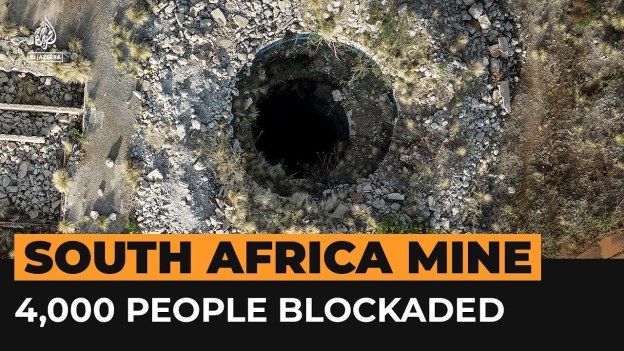
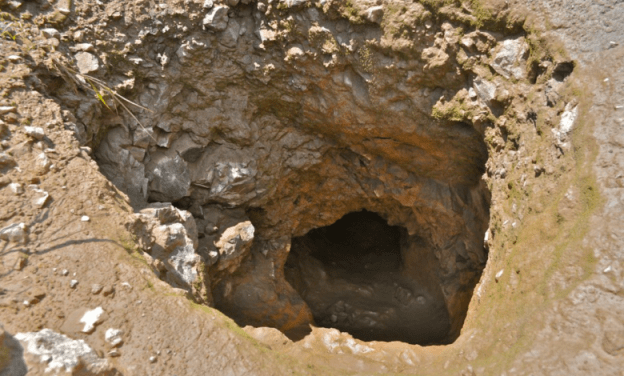
The South Africa’ government has been trying to starve out 1,000 informal prospectors so as to force them out of the Buffelsfontein mine, which extends some 8,000 feet below ground. For months in 2024, police have been sealing most entrances to the tunnels, blocking food and water deliveries and stationing guards at remaining exits to arrest any miners who make their way to the surface. In recent days, nearly 1,200 have surrendered. Police estimate that hundreds of men remain below, but it isn’t clear if they are unwilling or unable to reach the surface.

The operation is part of what police call their “Close the Hole” plan to combat illegal mining, an acute problem in what was once the gold-mining capital of the world. The South African government estimates that illegal gold mining costs the country the equivalent of over $3.8 billion a year in lost revenue, and is often associated with a jump in violent crime in nearby communities and an influx of migrants from neighboring countries… Facing a 42% unemployment rate, impoverished South Africans and migrants from nearby countries pry open sealed entrances and venture thousands of feet underground to try their luck. Locals call the men zama zamas, a Zulu phrase meaning “take a chance.”

Whole ecosystems exist below ground, with entrepreneurs selling miners everything from soda to toothpaste to sex.  The miners in Stilfontein, 100 miles southwest of Johannesburg, are suffering from hunger and dehydration, according to police. Industry experts say the zama zamas are often the lowest-level workers for larger criminal gangs that ultimately sell the gold abroad. Those who have migrated from elsewhere are sometimes victims of abuse, forced to work underground to pay off debts. Police said most miners who emerge will be charged with crimes and imprisoned or deported. 

Excerpt from Alexandra Wexler, The Standoff Deep Inside an Abandoned South African Gold Mine, WSJ, Nov. 15, 2024

Under the Radar: How the U.A.E. is Colonizing Africa

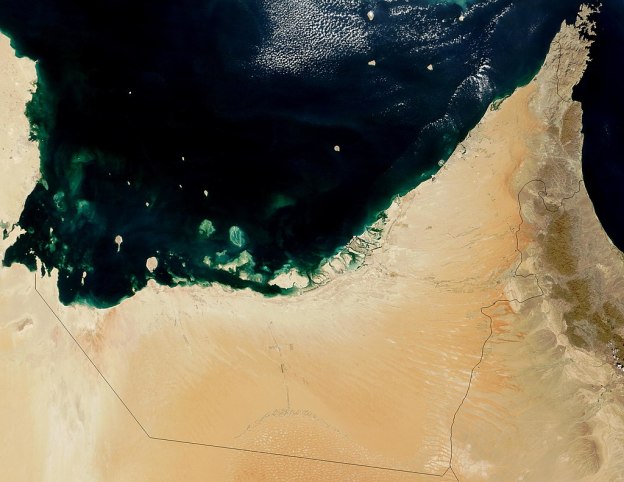
The petrostate, United Arab Emirates, has invested billions of dollars on the other side of the Arabian peninsula, in Africa, where it is now emerging as a significant player, at times muscling out China and annoying the U.S. and others. It has taken sides in local wars and spent heavily on buying farmland, ports and other projects that could help reduce its own dependence on oil in the decades to come.

The U.A.E. government says investments in Africa amounted to about $110 billion over the past decade….Its portfolio includes renewable-energy projects in Egypt, leased rice and wheat farmlands in the muddy plains of northern Angola and a majority stake in one of Zambia’s largest copper mines. U.A.E.-backed port projects are dotted around the coasts of the Atlantic, the Red Sea and the Indian Ocean. The Gulf state is also trying to become a key supplier of the minerals used in a new generation of batteries.  

The Wall Street Journal has reported that the U.A.E. shipped weapons including antiaircraft missiles and drones, to Sudan’s Rapid Support Forces, which is waging a civil war against the Iran-backed Sudanese military and has perpetrated a series of well-documented atrocities against civilian populations, especially in Darfur. It also sold armed drones to Ethiopia’s government, while the U.S. was pushing for a peace deal with Ethiopian rebel groups. Before that, U.N. investigators say it transferred arms to Libyan militia leader Khalifa Haftar in violation of a United Nations Security Council arms embargo…

There are signs of pushback in parts of Africa, too. In Chad, local Zaghawa communities have repeatedly staged protests against the U.A.E.’s use of Amdjarass airport in the east of the country to ship supplies to the RSF, according to activists and videos shared online. .

Excerpts from Nicholas Bariyo, The New Investment Superpower Outflanking China and the U.S. in Africa, WSJ, Nov. 6, 2024

Get Down and (Very) Dirty: How to Break Free from China’s Grip on Rare Earths and Minerals

The Biden administration held talks with three firms in the fall of 2024 about purchasing one of the world’s largest non-Chinese cobalt producers…The talks over Chemaf, a mining company based in the Democratic Republic of Congo, are part of a push by the administration to secure global supplies of a metal used in everything from jet fighters and drones to electric-vehicle batteries. For more than a decade, Chinese companies have spent billions of dollars buying out U.S. and European miners in Congo, which produces nearly 75% of the world’s cobalt supply. That has put China in a dominant position in both the production and processing of the mineral.

It has been difficult for the U.S. government to interest American investors in any sector in Congo because of the country’s poor infrastructure, limited skilled labor, resource nationalism and reputation for government corruption. U.S. government officials have spoken with mining and artificial-intelligence company KoBold Metals, copper miner First Quantum Minerals and investment firm Orion Resource Partners about participating in a deal to acquire Chemaf, either separately or jointly…

Chemaf, which says its mines could produce 20,000 tons of cobalt annually—making it one of the world’s largest cobalt producers—was put up for sale in 2023 by its founder, Shiraz Virji…When The Wall Street Journal visited Chemaf’s Mutoshi mine in 2018, freelance Congolese miners could be seen descending underground without helmets, shoes or safety equipment. Miners were using picks, shovels and bare hands to unearth rocks rich with the metal. Water sometimes rushed into holes and drowned people, and an earth mover buried one alive, said local workers and mine officials…

In June 2024, Chemaf agreed to sell itself to Chinese state-backed Norin Mining. Shortly after, U.S. pressure helped block the sale

Excerpts from  Alexandra Wexler and Julie Steinberg, How the U.S. Is Trying to Challenge China’s Cobalt Chokehold, WSJ, Oct. 15, 2024

The Quick and Dirty AI Boom

Nowhere else on Earth has been physically reshaped by artificial intelligence as quickly as the Malaysian state of Johor. Three years ago, this region next to Singapore was a tech-industry backwater. Palm-oil plantations dotted the wetlands. Now rising next to those tropical trees 100 miles from the equator are cavernous rectangular buildings that, all together, make up one of the world’s biggest AI construction projects…

TikTok’s Chinese parent company, ByteDance, is spending $350 million on data centers in Johor. Microsoft just bought a 123-acre plot not far away for $95 million. Asset manager Blackstone recently paid $16 billion to buy AirTrunk, a data-center operator with Asia-wide locations including a Johor facility spanning an area the size of 19 football fields. Oracle last week announced a $6.5 billion investment in Malaysia’s data-center sector, though it didn’t specify where. In all, investments in data centers in Johor, which can be used for both AI and more conventional cloud computing, will reach $3.8 billion this year, estimates regional bank Maybank.

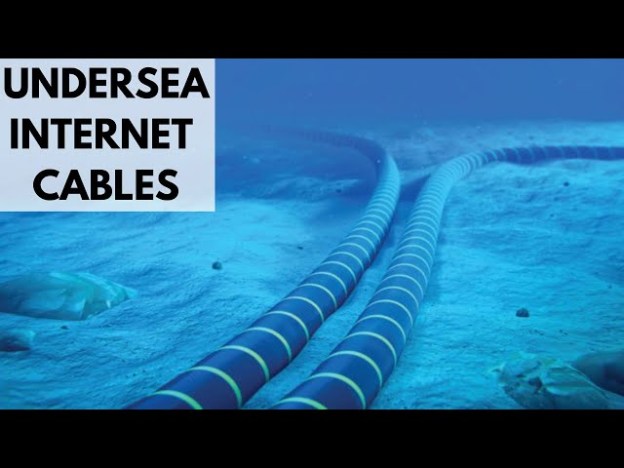
To understand how one of the first boomtowns of the AI era sprouted at the southern tip of the Malay Peninsula, consider the infrastructure behind AI. Tech giants want to train chatbots, driverless cars and other AI technology as quickly as possible. They do so in data centers with thousands of computer chips, which require a lot of power, as well as water for cooling…Northern Virginia became the world’s biggest data-center market because of available power, water and land. But supply is running low. Tech companies can’t build data centers fast enough in the U.S. alone. Enter Johor. It has plentiful land and power—largely from coal—and enough water. Malaysia enjoys generally friendly relations with the U.S. and China, reducing political risk for companies from the rival nations. The other important factor: location. Across the border is Singapore, which has one of the world’s densest intersections of undersea internet cables. Those are modern-age highways, enabling tech companies to sling mountains of data around the world.

Excerpt from Stu Woo, One of the Biggest AI Boomtowns Is Rising in a Tech-Industry Backwater, WSJ, Oct.  8, 2024

How Murder, Torture and Rape Fuel the Technological Revolution

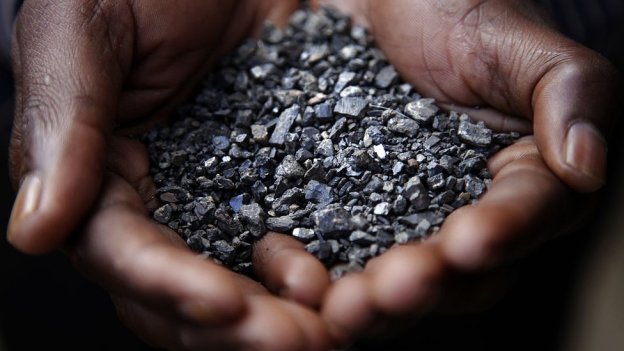
Congo is the world’s leading producer of coltan, from which tantalum is extracted. Tantalum is in hot demand because of its growing use in consumer products, from smartphones to laptops and it is critical for the defense industry (e.g., Apple iPhones, SpaceX rockets, IBM computers).

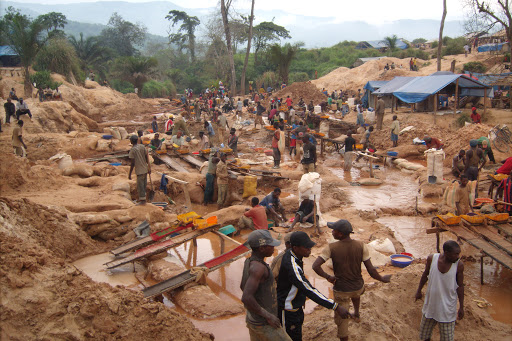
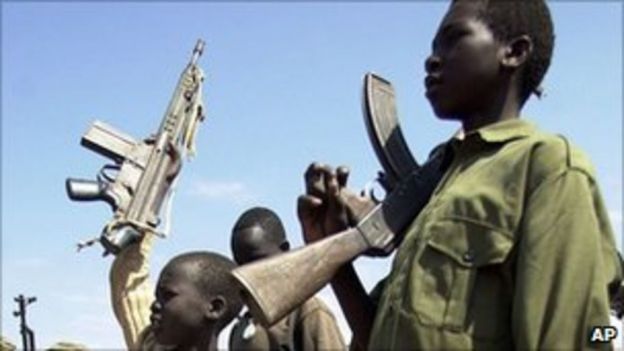
Coltan is mined in the country’s restive east, a region that has been engulfed in a decadeslong war between rebel groups and the Congolese army…A powerful militia backed by neighboring Rwanda has taken over swaths of eastern Congo, driving some two million people from their homes as fighters kill, torture and rape civilians. The militia, known as M23, has also seized control of Congo’s coltan production and transport, according to United Nations investigators, supply-chain experts, researchers and local traders. 

Now, a network of smuggling routes is increasingly being used to move ore illegally from militia-controlled mines in eastern Congo to neighboring Rwanda. From there, it is sold as Rwandan, and hence “conflict-free,” to smelters around the world, but primarily in China. 

M23 fighters levy taxes on informal coltan miners, who dig the ore from the ground, mostly by hand. The fighters also tax the movement of coltan, providing the militia with revenue to purchase weapons and other supplies. Overall, the trade generates around $300,000 a month for the fighters, according to Bintou Keita, the head of the U.N. mission in Congo….U.S. lawmakers have sought to prevent minerals commonly mined in eastern Congo—tin, tungsten, tantalum and gold—from financing conflict in the region. Legislation embedded in the 2010 Dodd-Frank Act requires U.S.-listed companies to disclose their use of the minerals, known as the 3TGs, as well as steps they are taking to prevent inadvertently financing armed groups. It doesn’t, however, oblige companies to remove potentially tainted materials from their supply chains…

Other armed groups are also profiting from the illegal coltan trade, including an alliance of militias that is helping the Congolese military fight M23, according to rights groups and U.N. researchers. The alliance, known as the Wazalendo, which U.N. investigators say is armed by Congo’s military, includes groups that are under international sanctions for war crimes. M23 and the Wazalendo are both recruiting child soldiers, raping women and girls, looting, murdering civilians and committing other atrocities, according to rights groups and U.N. investigators. Like M23, the Wazalendo are collecting illegal taxes on coltan at roadblocks along transportation routes, as well as from some mining sites. 

Excerpt from Alexandra Wexler, How This Conflict Mineral Gets Smuggled Into Everyday Tech,  WSJ, Oct. 6, 2024

How to Become Biosecure

A bill approved by the House of Representatives in September 2024 would make it difficult for U.S. drug companies to contract with five major Chinese biotechnology companies. Academic researchers say they, too, would be hampered. The new rules could threaten projects that rely on sequencing in China or involve Chinese scientists who use services or machines from the companies. It would also cut off one source of genome sequencers used in U.S. labs. The Senate is considering a similar measure, raising the odds the rule could become law. “It could have a chilling effect on science,” says Gene Robinson, director of the Carl R. Woese Institute for Genomic Biology at the University of Illinois Urbana-Champaign.

Known as the Biosecure Act, the legislation would prevent federal funds from going to biotech companies linked to five “foreign adversaries”: China, Russia, Iran, North Korea, and Cuba. It bans purchases from five specific Chinese companies—BGI, MGI, WuXi Biologics, Wu Xi AppTec, and Complete Genomics—beginning in 2032. It would also prevent federal funds from going to other organizations that use services and equipment from the companies. The White House Office of Management and Budget would update the list of companies of concern at least once a year.

The act’s proponents argue that the named biotech companies are stealing intellectual property from U.S. biotech equipment makers or are directing health and genetic data to centers affiliated with the Chinese Communist Party (CCP) and other adversaries. “This bill is a necessary step towards protecting Americans’ sensitive health care data from the CCP before these companies become more embedded in the U.S. economy, university systems, and federal contracting base,” said Representative James Comer (R–KY) on the House floor before the bill passed 306 to 81 with broad bipartisan support.

The biggest impact, says Aaron Cummings, a lobbyist with Crowell & Moring, is likely to be felt by U.S. biotech and pharmaceutical companies. Beyond genome sequencing, Chinese firms such as WuXi AppTec provide services that support clinical research, such as manufacturing pharmaceutical ingredients and cell therapies, as well as providing research cell lines. According to a survey released in May by BIO, a biotech industry trade group, 79% of 124 biopharma companies surveyed have at least one Chinese biotech contractor. Academic scientists, for their part, worry they will be forced to sever valuable research collaborations with Chinese scientists at the companies of concern or with academic groups that use their equipment or services.

Excerpts Robert F. Service from Bill Targeting Chinese Firms Worries US Researchers, Science, Sept. 13, 2024


Why OpenAI Flirts with UAE and What Happened to Women’s Rights

In February 2024, OpenAI CEO Sam Altman said the UAE could serve as the world’s “regulatory sandbox” to test artificial intelligence. Emirati President Sheikh Mohammed bin Zayed Al Nahyan’s first official trip to the United States in September 2024 aimed to push the United Arab Emirates-U.S. relationship to a new “geo-economic phase” centered on economic growth and innovation..,

Microsoft has invested  $1.5 billion investment in the UAE’s top artificial intelligence firm, G42, in April.   BlackRock, Global Infrastructure Partners, Microsoft and the Mubadala-backed MGX investment company also recently announced the Global AI Infrastructure Investment Partnership, underscoring the UAE’s strategic focus on U.S. technology and AI to drive future economic growth…The United States and the UAE have a trade and investment partnership that spans more than five decades. In 2023, bilateral trade between the UAE and the U.S. was worth around $31.4 billion, with U.S. exports to the UAE exceeding $24.8 billion, according to the UAE Embassy in Washington, D.C. The UAE, which produces nearly 4% of the world’s oil supply, also has investments in the United States that total $1 trillion. The UAE sovereign wealth funds including the Abu Dhabi Investment Authority and Mubadala are major investors in American real estate, infrastructure and technology sectors.

The UAE has remained a key strategic defense and security partner to Washington, playing host to the American air base in Al Dhafra, while working as a key partner alongside the U.S. in Afghanistan and Iraq….

On the systemic discrimination against women at the UAE, see letter of Human Rights Watch. Human Rights Watch has documented numerous incidents of enforced disappearances by the UAE in recent years, including the case of three Emirati sisters who were forcibly disappeared in 2015 after posting comments critical of the government on social media. Human Rights Watch has also documented cases of denial of adequate medical care to women who have since died or attempted suicide

Excerpt from Emma Graham and Dan Murphy, UAE hoping to expand $1 trillion partnership with U.S. through AI, Investment, CNBC, Sept. 20, 2024

What does Silicon Valley and the Israeli Army have In Common

Members of Unit 8200 of the Israeli Army, known for its advanced cybersecurity and cyberwarfare capabilities, have founded dozens of cybersecurity companies in the United States. Others have become influential venture capitalists in their own rights and are mentors to entrepreneurial graduates.  There are at least five tech companies started by Unit 8200 alumni publicly traded in the U.S., together worth around $160 billion. Private companies started by ex-8200 soldiers are worth billions more.  The largest, cloud-security company Wiz, in July 2024 came close to signing a $23 billion deal to be bought by Google. It would have been Google’s biggest acquisition ever. After the talks fell apart, Wiz Chief Executive and 8200 veteran Assaf Rappaport told employees he wants to hit $1 billion in revenue before planning a public-market listing. 

Wiz and the 8200 alumni are targeting a massive business problem—how to keep big companies secure—with skills and an intensity they learned from their time in the military. They and the companies they’ve built have become hot commodities as more industries move huge amounts of business documents to the cloud—which is constantly under attack from opportunistic hackers. While Unit 8200 alumni once talked about their service in hushed tones, they now tout it in press releases to attract clients and investment money for their startups.

Palo Alto Networks, the biggest publicly traded cybersecurity company, and itself a product of the 8200 pipeline, has purchased several companies led by alumni of the unit in recent years. Greylock Partners and Sequoia Capital, two of Silicon Valley’s most storied venture-capital firms, have recently hired Israel-based partners…

Elsewhere, alumni of other Israeli military units founded cybersecurity company NSO Group. It created software called Pegasus, which has been used by governments to access the devices of journalists and embassy workers, according to the U.S. Department of Commerce. The department put NSO Group on an export prohibition list three years ago, a decision its executives are working to reverse. This means exports from the U.S. to the company of both hardware and software will be blocked, unless the Commerce Department grants a license for a transaction.  

Excerpt from Miles Kruppa and Alex Perry, Silicon Valley in Love with Israeli Army, WSJ, Aug. 31, 2024

Cold War Tactics: Taunting America in its Backyard

In  June 2024, China renewed a multibillion-dollar portion of a currency swap, alleviating concerns that Argentina would need to pay back the funds from its depleted reserves. Argentine President Javier Milei, who often derided China during his presidential campaign, calling its leaders “assassins,” thanked Beijing, saying the extension provided financial relief. His office said mutual respect with China is vital to Argentina’s development and prosperity. Milei, an unshakable opponent of communism, has taken a more pragmatic approach to Beijing, saying Chinese investments and trade are essential to Argentina’s future, while maintaining closer relations with the U.S. China has deepened its ties with Argentina in key economic sectors, from the lithium mining companies in the arid north to the agricultural industry on the farm belt’s vast open plains… 

China is Argentina’s second biggest trade partner, after neighboring Brazil, racking up about $20 billion in commerce in 2023, compared with $14 billion for the U.S. Argentina’s exports to China have increased eightfold over the past two decades, as the Asian country invested in mining, oil and gas, finance and construction. China’s stock of foreign direct investments is up 500% since 2015, to more than $3 billion,

Argentina recently bought U.S.-made jet fighters, forgoing an offer to purchase Chinese ones. A Chinese company, Shaanxi Coal and Chemical Industry Group, reached a deal in 2022 with officials in the province of Tierra del Fuego to build a port in Argentina’s far south, giving Beijing a strategic location for accessing Antarctica and a crucial shipping route through the Strait of Magellan. That project has now been shelved, an adviser to the Milei government said….

Particularly worrisome to Washington has been a Chinese space station in the windswept plains of Neuquén that has little oversight from the Argentine government. U.S. military officials worry the remote base, which has a 35-meter-wide antenna, could be used for global surveillance by targeting U.S. satellites. 

Excerpt from Ryan Dubé, Argentina’s Milei Finds It Hard to Decouple From China, WSJ, Aug. 18, 2024

US-China Locked in Perpetual Cat and Mouse Game

Chinese artificial-intelligence developers have found a way to use the most advanced American chips without bringing them to China. They are working with brokers to access computing power overseas, sometimes masking their identity using techniques from the cryptocurrency world. The tactic comes in response to U.S. export controls that have prevented Chinese companies from directly importing sought after AI chips developed by U.S.-based Nvidia. While it is still possible for Chinese users to physically bring Nvidia’s chips to China by tapping a network of gray-market sellers, the process is cumbersome and can’t supply all the needs of big users.

One entrepreneur helping Chinese companies overcome the hurdles is Derek Aw, a former bitcoin miner. He persuaded investors in Dubai and the U.S. to fund the purchase of AI servers housing Nvidia’s powerful H100 chips. In June 2024, Aw’s company loaded more than 300 servers with the chips into a data center in Brisbane, Australia. Three weeks later, the servers began processing AI algorithms for a company in Beijing. “There is demand. There is profit. Naturally someone will provide the supply,” Aw said.

Renting far away computing power is nothing new, and many global companies shuffle data around the world using U.S. companies’ services such as Google Cloud, Microsoft Azure and Amazon Web Services. However, those companies, like banks, have “Know Your Customer” policies that may make it difficult for some Chinese customers to obtain the most advanced computing power.

The buyers and sellers of computing power and the middlemen connecting them aren’t breaking any laws, lawyers familiar with U.S. sanctions say. Washington has targeted exports of advanced chips, equipment and technology, but cloud companies say the export rules don’t restrict Chinese companies or their foreign affiliates from accessing U.S. cloud services using Nvidia chips. The Commerce Department in January 2014 proposed a rule that seeks to prevent malicious foreign entities from using U.S. cloud computing services for activities including training large AI models. U.S. cloud companies argue that the rule won’t prevent abuse and could instead undermine customer trust and weaken their competitiveness.

In platforms used by Aw and others, the billing and payment methods are designed to give the participants a high degree of anonymity. Buyers and sellers of computing power use a “smart contract” in which the terms are set in a publicly accessible digital record book. The parties to the contract are identified only by a series of letters and numbers and the buyer pays with cryptocurrency. The process extends the anonymity of cryptocurrency to the contract itself, with both using the digital record-keeping technology known as blockchain. Aw said even he might not know the real identity of the buyer. As a further mask, he and others said Chinese AI companies often make transactions through subsidiaries in Singapore or elsewhere.

The service of selling scattered computing power is called a decentralized GPU model.

Excerpts from Raffaele Huang, China’s AI Engineers Are Secretly Accessing Banned Nvidia Chips, WSJ, Aug. 26, 2024

Worldcoins for Your Eyes: How Sam Altman is Saving us from the Robots

Sam Altman wants to save us from the AI-dominated world he is building. The trouble is, governments aren’t buying his plan, which involves an attempt to scan the eyeballs of every person on Earth and pay them with his own cryptocurrency-the Worldcoin. But Worldcoin has come under assault by authorities over its mission. It has been raided in Hong Kong, blocked in Spain, fined in Argentina and criminally investigated in Kenya. A ruling looms on whether it can keep operating in the European Union….Among the concerns: How does the Cayman Islands-registered Worldcoin Foundation handle user data, train its algorithms and avoid scanning children? 

Worldcoin verifies “humanness” by scanning irises using a basketball-sized chrome device called the Orb. Worldcoin says irises, which are complex and relatively unchanging in adults, can better distinguish humans than fingerprints or faces. Users receive immutable codes held in an online “World ID” passport, to use on other platforms to prove they are human, plus payouts in Worldcoin’s WLD cryptocurrency. Worldcoin launched in 2023 and says it has verified more than six million people across almost 40 countries. Based on recent trading prices, the total pool of WLD is theoretically worth some $15 billion.

Altman says his technology is completely private: Orbs delete all images after verification, and iris codes contain no personal information—unless users permit Worldcoin to train its algorithms with their scans. Encrypted servers hold the anonymized codes and images. However, several authorities have accused Worldcoin of telling Orb operators, typically independent contractors, to encourage users to hand over iris images. Privacy advocates say these could be used to build a global biometric database with little oversight.

Excerpt from Angus Berwick, Sam Altman’s Worldcoin Is Battling With Governments Over Your Eyes, WSJ, Aug. 18, 2024

The Billionaires Who Conquer the World One Country at a Time

Elon Musk is so popular in this farming region of Brazil that his face is plastered in stores alongside herds of cows, and local magazines depict him as a superhero. The billionaire’s appeal is simple: His satellite company Starlink has connected Brazil’s vast rural and jungle expanses to the internet.  “We were all rooting for Starlink to come to Brazil…we knew what a big change it would make,” said Arthur Cursino, a ginger farmer here who once had to climb a tree to get a cellphone signal and now, thanks to Starlink, runs one of Brazil’s most popular YouTube channels on farming.

But Starlink’s rapid expansion has come as officials in the administration of leftist President Luiz Inácio Lula da Silva have raised concerns about Musk’s growing influence over the country. After getting regulatory approval two years ago, Starlink eclipsed competitors in May 2024 to become the country’s biggest satellite internet provider.  Musk, a billionaire whose companies include social-media platform X and electric-car maker Tesla, has courted right-wing leaders around the world, including da Silva’s predecessor and rival, Jair Bolsonaro. Musk threw his support behind the candidacy of former President Donald Trump.

The regions where Starlink has become popular—Brazil’s agricultural heartland and the Amazon rainforest—are Bolsonaro strongholds where da Silva faces deep political opposition. Now, Brazil’s federal audit court is investigating Starlink’s use by public authorities in the country, threatening to place restrictions on the service. Anatel, the telecoms regulator, has opened a separate inquiry into Starlink, saying that its rapid growth in subscribers of more than 20% a month could crowd out new players.

Excerpt from Samantha Pearson, Brazil Sees Elon Musk’s Starlink as a Political Threat, July 26, 2024

Why Americans Love Chinese Drones

China’s DJI drones  have been labeled a national-security risk by Republicans and Democrats, military officials and federal regulators. The U.S. government has placed tariffs on the drones and largely prohibited federal agencies from using DJIs. 

Yet DJI accounts for around 70% to 90% of the American commercial, local government and hobbyist drone market. Real-estate agents, movie producers, firefighters, roof inspectors, utilities and law enforcement have all come to depend on the brand. The Secret Service bought more than 20 of them in 2022 just before restrictions were put in place, according to federal purchasing records…Small drones have become essential tools in U.S. commerce and emerged as critical weapons in modern combat, handing the world’s largest supplier—DJI—enormous power. National-security experts say reliance on Chinese drones creates a dangerous dependency that China could exploit in a conflict.  Ukrainians have relied on DJI, while American models have often failed on the front lines—although soldiers have had to contend with security vulnerabilities…

American drones are in short supply with long wait times. Drone buyers say they sometimes have to wait close to five months for a U.S. drone, while DJIs are available immediately. “Are American drone companies ready to fill the void?” said Trevor Perrott, chief executive of Florida drone maker Censys Technologies. “No, we’re not ready. But DJI may very well be a Band-Aid we need to rip off for long-term gain.” 

Excerpts from Heather Somerville, Why First Responders Don’t Want the U.S. to Ban Chinese Drones, WSJ, Aug. 8, 2024

The US-China Supercomputer Rivalry

For decades, American and Chinese scientists collaborated on supercomputers, tennis-court-size machines essential to improving artificial intelligence, developing vaccines and predicting hurricanes. But Chinese scientists have become more secretive as the U.S. has tried to hinder China’s technological progress, and they have stopped participating altogether in a prominent international supercomputing forum.

The new secrecy also makes it harder for the U.S. government to answer a question it deems essential to national security: Does the U.S. or China have faster supercomputers? Some academics have taken it upon themselves to hunt for clues about China’s supercomputing progress, scrutinizing research papers and cornering Chinese peers at conferences.

Supercomputers have become central to the U.S.-China technological Cold War because the country with the faster supercomputers can also hold an advantage in developing nuclear weapons and other military technology. “If the other guy can use a supercomputer to simulate and develop a fighter jet or weapon 20% or even 1% better than yours in terms of range, speed and accuracy, it’s going to target you first, and then it’s checkmate,” said Jimmy Goodrich, a senior adviser for technology analysis to Rand Corp., a think tank.

The forum that China recently stopped participating in is called the Top500, which ranks the world’s 500 fastest supercomputers. While the latest ranking, released in June 2024, says the world’s three fastest computers are in the U.S., the reality is probably different. Officially, the fastest computer on the Top500 sits at the Energy Department-sponsored Oak Ridge National Laboratory, in Tennessee. Called Frontier, it is about the size of two tennis courts, cost $600 million to construct and has an electricity bill of about $20 million a year, said Dongarra, who also works at Oak Ridge. It uses tens of thousands of computer chips.

Dongarra doesn’t think Frontier is actually the world’s fastest supercomputer. Scientific papers suggest that certain Chinese machines are better. One has been referred to in state media as a prototype Tianhe-3, after a Chinese term for the Milky Way galaxy, while the other is a model in the Sunway series of supercomputers.

Excerpts from Stu Woo ,US China Rift Hits Supercomputer Ties, WSJ, July 24, 2024

How Europe Gave In to Musk Space X

A new European rocket is poised to blast into space with a mission that officials here say is vitally important: reducing the region’s reliance on Elon Musk and SpaceX. Europe’s satellites and military intelligence have come to depend on the U.S. company after delays and malfunctions left the continent unable to get to orbit with its own rockets. Officials fear that dependence could extend to the battlefield: SpaceX’s Starlink internet service has been crucial for Ukraine to fight off Russia, fanning worries in Europe that its armies might also need Musk for satellite communications in a war.  Governments say the Ariane 6 rocket, operated by the European consortium Arianespace, will begin to change that equation. It is set to lift off from French Guiana on in July 2024, Europe’s first rocket to launch in a year.

“Clearly, we must deliver. We must restore autonomous access to space” for Europe, Stéphane Israël, chief executive of Arianespace, said in an interview.  With European rockets stuck on the ground, SpaceX stepped in to fill the void. Its Falcon 9 rocket has launched all of Europe’s most important satellites over the past year, including two that were supposed to be handled by Arianespace. The most recent blow came last month when Europe’s weather-satellite agency canceled a contract to launch in 2025 with Ariane 6 and hired SpaceX instead. The decision left European space officials crestfallen, with the head of the French space agency saying: “How far will we, Europeans, go in our naivety?”…

The rise of SpaceX has upended Europe’s rocket industry and its champion, Arianespace, which used to lead the world in commercial launch services. SpaceX’s mastery of reusable rocket technology has left Arianespace struggling to compete on price and more than a decade behind with its own reusable rocket.  The French government is the biggest backer of Arianespace and is aiming to keep the consortium in business amid doubts in Germany that it is still worth subsidizing. French officials say they fear the continent would be happy to let SpaceX keep launching for Europe. ArianeGroup, Arianespace’s parent company, is vital to what France calls its strategic autonomy because it has a military arm that provides the rocket technology for France’s nuclear arsenal.

Excerpts from Matthew Dalton, The Mission for Europe’s New Rocket: Challenge SpaceX, WSJ, July 8, 2024

How Boeing Maimed Itself and Killed 346 People

Spirit AeroSystems is going full circle, from part of Boeing till 2005 to independent supplier in 2005 (when Boeing sold to a private equity firm) and back to part of Boeing in 2024. It is the perfect example of a realization dawning on corporate America: Outsourcing isn’t all it was once cracked up to be. The deal’s logic of vertical reintegration makes sense in light of recent history, with air-travel safety likely benefiting from centralized supervision and a simpler workflow between plants. Yet it is also an indictment of what executives in most industries have been doing for almost three decades….’

At the core of the outsourcing trend that lasted 30 years was the idea that an “asset-light” firm focused on intellectual property and its “core” expertise would be better run. With this mindset, jettisoning aerostructures operations seemed like a no-brainer….
It wasn’t just aerostructures: In the 2000s, Boeing outsourced more than 70% of the 787 Dreamliner program. But the problems with becoming an assembler of planes, as opposed to a true manufacturer, gradually became apparent. The company lost control of supply, resulting in years of delays and cost overruns…

Aerospace isn’t the only industry to revive vertical integration. Intel is beefing up chip manufacturing in the U.S., General Motors is building battery plants and Sweden’s IKEA is acquiring containerships. One general flaw of the asset-light model is that, over time, firms can lose their innovative edge because a lot of “learning by doing” happens when production processes interact. Another is that low-margin bits of the supply chain get worn down to just a few sources. These may not have the financial muscle to make big investments in times of turmoil, or they may be geopolitically sensitive. Such risks were underscored by post-Covid shortages, particularly in the largely “fabless” U.S. microchip industry, which has outsourced chip making to foundries in East Asia in a way that echoes what happened to aerostructures.

Excerpts from Jon Sindreu, Boeing Calls Time on the Great American Outsourcing, July 2, 2024

The Race for Fusion: US v. China

A high-tech race is under way between the U.S. and China as both countries chase an elusive energy source: nuclear fusion.  China is outspending the U.S., completing a massive fusion technology campus and launching a national fusion consortium that includes some of its largest industrial companies. Crews in China work in three shifts, essentially around the clock, to complete fusion projects.

The result is an increasing worry among American officials and scientists that an early U.S. lead is slipping away. JP Allain, who heads the Energy Department’s Office of Fusion Energy Sciences, said China is spending around $1.5 billion a year on fusion, nearly twice the U.S. government’s fusion budget. What’s more, China appears to be following a program similar to the road map that hundreds of U.S. fusion scientists and engineers first published in 2020 in hopes of making commercial fusion energy. “They’re building our long-range plan,” Allain said. “That’s very frustrating, as you can imagine.”

China already has a fast-growing nuclear-technology industry and is building more conventional nuclear power plants than any other country. The country’s nuclear-plant development will give it an advantage when commercial fusion is reached, according to a report released last month by the Information Technology and Innovation Foundation, a Washington, D.C.-based think tank with backers that include big tech companies…

The Chinese Academy of Sciences’ Institute of Plasma Physics in the eastern Chinese city of Hefei in 2018 broke ground on a nearly 100-acre magnetic fusion research and technology campus. The facility is expected to be completed in 2025 but is already largely operational and focused on industrializing the technology. In 2023 China said it would form a new national fusion company, and said the state-owned Chinese National Nuclear Corp. would lead a consortium of state-owned industrial firms and universities pursuing fusion energy. Among the largest efforts by a private Chinese company are those of ENN, an energy conglomerate, which created a fusion division from scratch in 2018. Since then, ENN has built two tokamaks, the machines where fusion can happen, using powerful magnets to hold plasma. ENN’s fusion work isn’t well-understood outside of China and its pace of development would be difficult to replicate in the U.S. or Europe.

Excerpts from Jennifer Hiller, China Outspends the U.S. on Fusion in the Race for Energy’s Holy Grail, WSJ, July 9 2024

Who Terrifies an American President?

Though tensions between Iran and the U.S. have ratcheted up since the Oct. 7, 2024 attacks on Israel by Tehran-backed Hamas, exports from Iran surpassed 1.5 million barrels a day in 2024 starting in February, substantially more than at the start of the Biden presidency. Most of that oil is bought by small Chinese refineries at discounted prices. The U.S. and its allies have been “very, very careful not to go too far and damage the ability of Western economies to function,” when it comes to sanctions, said John Smith, partner at Morrison Foerster and former head of the U.S. Treasury Department’s Office of Foreign Assets Control.

U.S. diplomats and energy officials have for decades worked around the globe to keep oil flowing, often involving uncomfortable alliances and accommodations. When the Treasury department hit Moscow with a wave of sanctions on June 12, 2024 over the Ukraine war, it targeted banks but left the country’s oil industry largely untouched. There is frustration among some staffers in the U.S. Treasury Department over the lack of action against oil-trading networks that ferry Russian and Iranian oil, including one that officials are currently investigating, according to U.S. diplomats and some of the energy-industry players briefed by current officials. The network is operated by a little-known trader from Azerbaijan who emerged as the premier middleman for Russia’s Rosneft Oil, The Wall Street Journal reported.

When the Treasury imposed sanctions on Russia’s state tanker owner, Sovcomflot, it also issued licenses exempting all but 14 of the company’s fleet, which data provider Kpler estimates totals 91 ships. Industry players said the exemption licenses were a green light to oil traders to do business with those ships, minimizing the risk that they would be targeted by future sanctions. The National Economic Council, led by Lael Brainard, and others within the administration worried that broader measures would lead to logistical problems in the oil market and boost inflation, said people familiar with the matter. Rising oil output from sanctioned countries is one reason crude prices have fallen from their highs earlier this year, analysts said…

In another example of the collision of foreign and energy policies, earlier this year, Washington asked Ukraine to stop attacking some Russian refineries with drones after the damage rattled global diesel and gasoline markets….

“Nothing terrifies an American president more than a gasoline-pump price spike,” said Bob McNally, president of consulting firm Rapidan Energy Group and former White House policy official under George W. Bush. “They will go to great lengths to prevent this, especially in an election year.”

Excerpts from Anna Hirtenstein et al., Biden Wants to Be Tough With Russia and Iran—but Wants Low Gas Prices Too, WSJ, June 26, 2024


What Ails the West: the Forgotten Art of Industrialization

For the past few years, the West has been trying to break China’s grip on minerals that are critical for defense and green technologies. Despite their efforts, Chinese companies are becoming more dominant, not less. They are expanding operations, supercharging supply and causing prices to drop. Their challengers can’t compete. Take nickel, which is needed for electric-vehicle batteries. Chinese processing plants that dot the Indonesian archipelago are pumping out vast quantities of the mineral from new and expanding facilities, jolting the market. Meanwhile, Switzerland-based mining giant Glencore is suspending operations at its nickel plant in New Caledonia, a French territory, concluding it can’t survive despite offers of financial help from Paris. The U.K.’s Horizonte Minerals, whose new Brazilian mine was expected to become a major Western source, said last month that investors had bailed, citing oversupply in the market. Lithium projects in the U.S. and Australia have been postponed or suspended after a surge in Chinese production at home and in sub-Saharan Africa. 

The only dedicated cobalt mine in the U.S. also suspended operations last year, five months after local dignitaries attended its opening ceremony. Its owners say they are struggling against a flood of Chinese-produced cobalt from Indonesia and the Democratic Republic of Congo.

Last year, non-Chinese production of refined cobalt declined to its lowest level in 15 years… The share of lithium mining done within China or by Chinese companies abroad has grown from 14% in 2018 to 35% this year… Over the same time, lithium processing done within China has risen from 63% in 2018 to 70%…China has many advantages in the race to lock up minerals. Its miners are deep-pocketed and aggressive, making bets in resource-rich countries that Western companies have long viewed as corrupt or unstable, such as Indonesia, Mali, Bolivia and Zimbabwe. State banks provide financing for power plants and industrial parks abroad, paving the way for further private Chinese investment.

China’s rapid industrial development also means its companies have spent decades fine-tuning the art of turning raw ore into metals. They can set up new facilities quickly and cheaply. A paper published in February by the Oxford Institute for Energy Studies pegs the costs of building a lithium refinery outside China as three to four times higher than building one within the country. In eastern Indonesia, Chinese companies have built a fleet of highly efficient nickel and cobalt plants over the past few years after mastering a technology Western miners long considered glitchy and expensive. The plants run on coal power, some of it new, at a time when the world is looking to phase out dirty energy. “It’s just a simple, straightforward engineering capability that the Chinese have that has been lost in the rest of the world,” said Jim Lennon, managing director for commodities strategy at Macquarie, an Australian bank. “The Chinese have this overwhelming competitive advantage now that can’t really be addressed.”….

Excerpts from Jon Emont, China Is Winning the Minerals War, WSJ, June 19, 2024

Chewing Gum and the Civil War in Sudan

Around 80% of the world’s gum arabic is harvested from Sudan’s acacia trees, which grow in the desert belt that stretches from Sudan’s western border with Chad to its eastern border with Ethiopia, covering an area of roughly 200,000 square miles. Gum arabic is a tasteless and odorless dried sap used as a stabilizer, thickening agent or emulsifier for many foods, drinks, cosmetics and medicines…The sap has become a key source of funding for both sides in the war, according to Sudanese traders. In addition to the RSF (Rapid Support Forces), a paramilitary group, collecting money through its control of most major agricultural routes, the Sudanese military—which runs the country’s de facto government—levies taxes and other tariffs on the gum arabic trade.

The U.S. has accused both sides in the conflict of committing war crimes. In September, 2023 the State Department slapped sanctions on two senior RSF commanders for their alleged involvement in ethnic killings, sexual violence and the looting and burning of communities, among other abuses. . Around 8.5 million Sudanese have been forced from their homes since the start of the war in April 2023. “Proceeds from the gum arabic exports are directly financing this fighting,” says Rabie Abdelaty, a Sudanese academic who has researched the gum arabic industry.

Despite these concerns, few companies have taken steps to make sure they are avoiding Sudanese gum arabic, based on interviews with manufacturers, suppliers and end-users. 

Excerpts from Alexandra Wexler, How Soda, Chocolate and Chewing Gum Are Funding War in Sudan, WSJ, May 23, 2024

A Spy in Plain Sight: Internet Cables

U.S. officials are privately delivering an unusual warning to telecommunications companies: Undersea cables that ferry internet traffic across the Pacific Ocean could be vulnerable to tampering by Chinese repair ships. State Department officials said a state-controlled Chinese company that helps repair international cables, S.B. Submarine Systems (SSB), appeared to be hiding its vessels’ locations from radio and satellite tracking services, which the officials and others said defied easy explanation.

The warnings highlight an overlooked security risk to undersea fiber-optic cables, according to these officials: Silicon Valley giants, such as Google and Meta Platforms, partially own many cables and are investing in more. But they rely on specialized construction and repair companies, including some with foreign ownership that U.S. officials fear could endanger the security of commercial and military data.

Hundreds of thousands of miles of underwater fiber-optic cables carry almost all the world’s international internet traffic. Dozens of lines lace the Pacific Ocean floor, shuttling data between the Americas, Asia and many island chains. SBSS is part of a regional consortium of companies that provides ships to fix undersea cables, including some belonging to major U.S. companies, by winching them to the surface, resplicing broken fibers that carry internet data and returning the lines to the sea floor… Underwater cables are vulnerable to tampering when they are brought to the surface for repairs, U.S. officials say. Tapping global data flows is still far easier on land, industry experts say. But at-sea repair could still offer an opportunity to install a device to remotely disable a cable or to study the technology in advanced signal repeaters installed by other companies.

SBSS was formed in 1995 as a Chinese-British joint venture. State-owned China Telecom has long held 51% of the business and is in the process of buying the remainder from U.K.-based Global Marine Systems, according to people familiar with the matter. A member of the Chinese Communist Party serves on the SBSS management team, according to the company’s website.

Safeguarding underwater cables has been a focus of U.S. national-security officials since the Cold War, when fears of Soviet espionage were paramount. In the 1970s, the U.S. secretly placed wiretaps on underwater Soviet lines in an intelligence coup known as Operation Ivy Bells….

SubCom, a U.S. cable ship company owned by private-equity giant Cerberus Capital Management, receives $10 million in annual U.S. government payments for participating in the Cable Security Fleet, a program partly overseen by the Pentagon…

Overall, cable owners have few choices with regard to repairing damaged undersea cables, as most repairing is done by an aging fleet of roughly 50 ships around the world…


Excerpts from U.S. Fears Undersea Cables Are Vulnerable to Espionage From Chinese Repair Ships, WSJ, May 19, 2024

The Dangers of Manic Oil Production

In a desolate stretch of desert spanning West Texas and New Mexico, drillers are pumping more crude than Kuwait. The oil production is so frenzied that huge swaths of land are literally sinking and heaving. The land has subsided by as much as 11 inches since 2015 in a prime portion of the Permian Basin, as drillers extract huge amounts of oil and water, according to a Wall Street Journal analysis of satellite data. In other areas where drillers dispose of wastewater in underground wells, the land has lifted by as much as 5 inches over the same period. Alongside crude, oil-and-gas companies are extracting gargantuan amounts of subterranean water—in the Delaware, between five and six barrels of water are produced, on average, for every barrel of oil. To dispose of it, they inject billions of barrels of putrid wastewater into underground disposal wells.

The constant extraction and injection of liquids has wrought complex geologic changes, which are raising concerns among local communities long supportive of oil and gas. Earthquakes linked to water disposal have rattled residents and prompted state regulators to step in. Some researchers worry that wastewater might end up contaminating scarce drinking-water supplies

Excerpts from Benoit Morenne and Andrew Mollica, Permian Oil Extraction Lifts and Sinks Land, WSJ, Apr. 29, 2024

Will the 4 Waves of Sanctions Stop Russia?

Supercooled gas has quickly become one of the world’s most important energy sources—and a flashpoint between Russia and the U.S. Nowhere is that contest more apparent than in Russia’s Arctic north. An enormous new coastal facility is being built there to produce liquefied natural gas, a key project for Russian President Vladimir Putin. The U.S. is using a barrage of sanctions to cripple the initiative, known as Arctic LNG 2. These have stopped Russia from taking delivery of specialized, colossal tankers that it needs to transport the gas, and made it hard to build alternative vessels domestically. “Our role is to ensure Arctic LNG 2 is dead in the water,” Geoffrey Pyatt, the U.S. assistant secretary of state for energy resources, told a conference in Switzerland in April 2024.

Globally, LNG is ascendant. Demand is buoyant as governments ditch dirtier coal and the uptake of power-hungry artificial intelligence accelerates. Supply is surging too, and players such as industry heavyweight Qatar have major expansion plans. For Russia’s part, Putin aims to more than triple LNG exports in the coming years. His goal: Bring in more money to fund the war in Ukraine and offset a decline in Russia’s traditional business of exporting gas via pipelines. ..

About 32 million metric tons a year of capacity are under construction, according to Rystad Energy, a consulting firm, on top of an existing 29 million tons. In December 2023, the first of three liquefaction plants, known in the industry as trains, was completed at Arctic LNG 2, and the facility began producing LNG. The milestone, despite U.S. sanctions, was lauded as a win for Moscow by analysts and Russian officials. A few months later, however, victory looks less certain.

Exports were supposed to begin in the first quarter of 2024, according to Russia’s energy minister. But the custom-built ships that Novatek, the Russian energy giant behind the project, needs to break through frozen parts of the Arctic Ocean haven’t been delivered.

Hanwha Ocean, a South Korean shipbuilder, said it has canceled plans to build three vessels for Arctic LNG 2 for sanctions-related reasons. Mitsui O.S.K. Lines, a Japanese shipping company, has said it also won’t provide vessels to Arctic LNG 2 despite having planned to charter three carriers. Without ships, Novatek can’t export any gas. As a result, LNG output has ground to a halt, and the facility is mostly recirculating already-produced gas, according to people familiar with the plant. Novatek didn’t respond to a request for comment.

France’s TotalEnergies, which holds 10% of Arctic LNG 2, declared a force majeure earlier this year, indicating it can’t supply customers due to circumstances beyond its control. Total said it was complying with sanctions and doesn’t plan to deliver gas from the project this year.

In total, the U.S. has hit Russia’s fledgling LNG industry with four waves of sanctions since September. It has targeted operating companies for the Arctic LNG 2 project, storage vessels, shipping companies it suspected were seeking to buy specialized carriers for the project, and companies working on a second facility near the Baltic Sea.

Excerpts from Anna Hirtenstein, The U.S. Is Trying to Cripple Russia’s Vast Arctic LNG Project, WSJ, Apr. 14, 2024

From Human Bones to Food: Another Soylent Green

A new book “Bones of Contention: The Industrial Exploitation of Human Bones in the Modern Age” argues that in the19th century human bones became a sought-after raw commodity. Scientists had just discovered its usefulness of human bones for agriculture as a source of phosphates for fertilizers and for the sugar industry, the use of bone char for beet sugar processing.

The high demand for these ingredients had one major unexpected consequence: the plundering of cemeteries and battlefields …in Britain, France, Belgium, Germany, Austria, Algeria and the United States. When countries out of bones in Europe, they turned to their colonies. The French plundered cemeteries in Algeria and shipped the bones to sugar factories in Marseilles. The British imported mummies and bones from Egypt on an industrial scale…

On Soylent Green, see Wikipedia

Excerpts from Science, Why Europe’s Battlefield Bones Are Missing?, Science, Apr.5, 2024

The Best Way to Ruin a Country is to Corrupt its Currency

The Reserve Bank of Zimbabwe, which gained global notoriety in 2008 for printing one-hundred-trillion-dollar notes, said in April 2024 that it was launching a new national currency, promising, once again, to end years of monetary turbulence. John Mushayavanhu, who took over as the central bank’s new governor in April 2024 said the new unit, Zimbabwe Gold, or ZiG, will replace the current Zimbabwe dollar, which has lost around three-fourths of its value this year.

The currency most recently traded at more than 30,674 Zimbabwean dollars to the U.S. dollar, according to the central bank. When the bank relaunched the local unit in 2019, $1 bought 2.50 Zimbabwean dollars. Mushayavanhu said the new currency would initially be valued at 13.56 ZiGs for $1 and later at a rate determined by the market.

To shore up confidence in the currency, Mushayavanhu said it would be fully backed by Zimbabwe’s reserves of U.S. dollars and precious metals, particularly gold. He also pledged to end a long-running practice of the bank issuing more money to finance government spending…

Zimbabwe abolished the Zimbabwe dollar in 2009, after a bout of hyperinflation that, by some estimates, saw prices rise by 500 billion percent. For nearly a decade, the country then operated on U.S. dollars and other foreign currencies. When the central bank was no longer able to pay out savings in cash dollars, it reintroduced the Zimbabwe dollar in 2019.

Excerpt from Gabriele Steinhauser, Zimbabwe Launches a New Currency…Again, WSJ, April 5, 2024

How Binance Hijacked the Central Bank of Nigeria

Tigran Gambaryan, Binance’s head of financial-crime compliance, flew to Nigeria’s capital to solve a problem: The government had blamed the world’s largest crypto exchange for crashing the currency… He hasn’t come back. Nigerian authorities detained Gambaryan and a colleague, Nadeem Anjarwalla, a U.K. and Kenyan national and Binance’s regional manager for Africa, according to the men’s families. The Binance employees, who are being held in a guarded house, haven’t been charged with any crimes. The government, which invited them to Nigeria for meetings, hasn’t publicly discussed the detentions. 

Nigeria, Africa’s largest economy with a population of more than 220 million, has faced many currency crises before. This is the first time that crypto has played a starring role.
Nigerians flocked to cryptocurrencies in recent years to shelter their savings from a soaring inflation rate, which hit nearly 30% in January, and a plunging currency, one of the worst-performing in the world this year. Two-thirds of the population lives in poverty.  The country has the second-highest adoption of crypto in the world, after India, according to an index compiled by Chainalysis, a data provider. Nigerians received about $60 billion worth of crypto transactions in the 12 months through June 2023, according to Chainalysis. 

Because the government rationed who could exchange the local currency for the dollar and at what exchange rate, many sought refuge in digital currencies pegged to the U.S. dollar, known as stablecoins.  The stablecoin trade in essence became a black market, displaying an unofficial exchange rate between the local currency, the naira, and the dollar that was much weaker than the government’s rates. Binance, the most popular exchange, became the go-to place to check that black-market rate, according to currency traders. Bayo Onanuga, a special adviser to the Nigerian president, accused Binance of setting the exchange rate for Nigeria and hijacking the role of the central bank…A persistent gap between what the government thought the currency was worth, and the rate on Binance’s website, proved intolerable.  Onanuga told The Wall Street Journal that Binance was cooperating with authorities and compensation to Nigeria was being discussed.

Binance said it would stop any services involving the naira, dealing a blow to its efforts to rebuild its business in fast-growing emerging markets. The Nigerian Communications Commission ordered telecommunications companies to restrict access to the websites of Binance and other crypto platforms.  Olayemi Cardoso, the head of Nigeria’s central bank, suggested that crypto platforms were being used to manipulate the market. In the case of Binance, he said, $26 billion had passed through its platform in Nigeria in 2023 from sources and users whom the central bank couldn’t adequately identify. He didn’t say where the figure came from…

Founded in 2017 in China, Binance has a history of drawing the ire of governments. It has long operated without a headquarters and under the radar of regulators, offering unlicensed trading through its global website. In November 2023, Binance founder Changpeng Zhao stepped down as chief executive and pleaded guilty to violating U.S. anti-money-laundering requirements. The company agreed to pay $4.3 billion in fines, the largest ever levied on a crypto firm. Zhao is currently awaiting sentencing in the U.S. 

The use of cryptocurrencies tied to the U.S. dollar has ballooned in countries across the developing world. In economies under financial stress where actual dollars are scarce, such as Turkey, Argentina and Russia, locals have turned to crypto exchanges and the dollar-like digital currencies they offer as an alternative.

Excerpts from Patricia Kowsmann et al., Crypto Gets Blamed for a Real-Life Currency Crisis, WSJ, Mar. 12, 2024

Chinese Gangs, Crypto Scams and the Deaths of 100,000 Americans

Chinese crime syndicates are using cryptocurrencies to launder billions of dollars, including money raised from helping supply drugs to the U.S. or scamming American victims…They are using crypto to launder the profits of drug dealing and illegal gambling, and have made huge amounts from investment scams that promise easy returns in the cryptocurrency markets. Crypto addresses linked to a group of suspected chemical traders based in China have received more than $37.8 million worth of assets since 2018 in exchange for shipping a key ingredient of fentanyl, the research firm Chainalysis said in a report in 2023. These shipments are often sent to Central America and Mexico, where drug cartels use them to manufacture the drug, which is then shipped to the U.S.

In October 2024, the U.S.’s Office of Foreign Assets Control sanctioned a network of individuals and companies based in China over the manufacturing and distribution of ingredients used in fentanyl and other drugs. Some of those individuals held cryptocurrency wallets to send and receive funds, the Treasury Department said. Fentanyl use by Americans has become a major public health issue, contributing to more than 100,000 deaths a year, according to the latest figures from the Centers for Disease Control and Prevention.

Scammers in China and Florida shared the same two crypto wallet addresses, implying they are likely parts of the same group, according to a joint investigation published in January 2024 by ChainArgos, a Singapore-based blockchain data platform, and Bitrace, a China-based blockchain research group…Chinese law-enforcement agencies across the country have investigated more than 800 cases, shut down five underground banks used to help process payments, and uncovered about $4 billion worth of funds based on blockchain data…Chinese prosecutors also have charged well-known crypto executives. Zhao Dong, founder of a major over-the-counter crypto platform in China called RenrenBit, was sentenced to seven years in prison in 2022 after providing crypto-exchange services to an illicit business involved in overseas gambling and so-called pig-butchering scams.

Tether, a stablecoin pegged to the U.S. dollar, has been used as a way for these groups to switch between different fiat currencies.

Excerpts from Weilun Soon, Chinese Gangs Use Cryptocurrencies to Launder Billions, WSJ, Mar. 2, 2024

Delete America: China’s Document 79

A 2022 Chinese government directive aims to get US technology out of China—an effort some refer to as “Delete A,” for Delete America.  Document 79 was so sensitive that high-ranking officials and executives were only shown the order and weren’t allowed to make copies… It requires state-owned companies in finance, energy and other sectors to replace foreign software in their IT systems by 2027. 

American tech giants had long thrived in China as they hot-wired the country’s meteoric industrial rise with computers, operating systems and software. Chinese leaders want to sever that relationship, driven by a push for self-sufficiency and concerns over the country’s long-term security…Document 79, named for the numbering on the paper, targets companies that provide software—enabling daily business operations from basic office tools to supply-chain management. The likes of  Microsoft  and Oracle are losing ground in China

Excerpts from Liza Lin, China Intensifies Push to ‘Delete America’ From Its Technology, Mar. 7, 2024

Darfur Forever: when a country is not a country

Iran unsuccessfully pressed Sudan to let it build a permanent naval base on the African country’s Red Sea coast, something that would have allowed Tehran to monitor maritime traffic to and from the Suez Canal and Israel, according to a senior Sudanese intelligence official. Iran has supplied Sudan’s military with explosive drones to use in its fight with a rebel warlord and offered to provide a helicopter-carrying warship if Sudan had granted permission for the base…

Sudan had close ties with Iran and its Palestinian ally Hamas under longtime strongman Omar al-Bashir. After Bashir’s ouster in a 2019 coup, the leader of the country’s military junta, Gen. Abdel Fattah al-Burhan, initiated a rapprochement with the U.S. in an effort to end international sanctions. He also moved to normalize relations with Israel. Iran’s request to build a base highlights how regional powers are seeking to take advantage of Sudan’s 10-month-old civil war to gain a foothold in the country, a strategic crossroads between the Middle East and sub-Saharan Africa with a 400-mile Red Sea coastline.  Sudan’s military has been fighting the paramilitary Rapid Support Forces (RSF), led by Burhan’s former second-in-command, Lt. Gen. Mohamed Hamdan Dagalo, since mid-April 2023. The conflict has killed tens of thousands of people, displaced millions and triggered one of the world’s worst humanitarian crises The Biden administration has accused both the Sudanese military and the RSF of committing war crimes. The U.S. alleges the RSF also has committed crimes against humanity, including murder, rape and ethnic cleansing in the Darfur region in western Sudan.  U.N. officials have criticized Sudan for aerial bombing of civilian neighborhoods and depriving Sudanese civilians of desperately needed humanitarian aid. U.N. agencies have also accused the RSF of atrocities, including ethnically motivated attacks in Darfur…

The Wall Street Journal reported in October 2023 that Egypt has supplied drones to the Sudanese military and trained Sudanese troops in how to use them. The United Arab Emirates, meanwhile, has been sending weapons to the RSF, the Journal reported in August 2023…Dubai is the biggest importer of Sudanese gold and in 2022 a U.A.E.-based consortium signed a $6 billion deal to build a new port facility on Sudan’s Red Sea coast.

Excerpts from Nicholas Bariyo, Iran Tried to Persuade Sudan to Allow Naval Base on Its Red Sea Coast, WSJ, Mar. 3, 2024

Cars as a National Security Risk: Tesla v. BYD

In February 2024, President Biden ordered the Commerce Department to open an investigation into foreign-made software in cars, citing Chinese technology as a potential national-security risk. Chinese efforts to dominate the global auto industry posed clear security risks to the U.S. “Connected vehicles from China could collect sensitive data about our citizens and our infrastructure and send this data back to the People’s Republic of China,” Biden said in a statement. “These vehicles could be remotely accessed or disabled.”

The Biden administration has been trying to reduce the U.S. auto industry’s reliance on China, including using tax credits to boost electric-vehicle sales and pushing automakers away from Chinese suppliers. China became the world’s biggest auto exporter, shipping an estimated 5.26 million domestically made vehicles overseas, according to the China Passenger Car Association. Part of that growth came in the electric-vehicle market, where the country sold more than one million China-made EVs overseas.

Tesla Chief Executive Elon Musk has said Chinese car companies have already had much success outside of China and that they are now the “most competitive” globally.  “If there are not trade barriers established, they will pretty much demolish most other car companies in the world,” Musk said during Tesla’s earnings call in January 2024.

The Chinese government has also raised national-security concerns about Western-designed cars sold to its own citizens, saying they could be used for gathering data and information. In 2021, China restricted the use of Tesla vehicles by military staff and employees of key state-owned companies, saying the car’s cameras record images constantly and obtain data, including when, how and where the vehicles are used.

Excerpts from Gareth Vipers, Chinese Automakers Pose U.S. National-Security Threat, Biden Says, WSJ, Feb. 29, 2024

Guess Who Benefits from the Russo-Ukrainian War?

In the two years since Russia invaded Ukraine, the U.S. defense industry has experienced a boom in orders for weapons and munitions. Business is coming from European allies trying to build out their military capabilities as well as from the Pentagon, which is both buying new equipment from defense manufacturers and replenishing military stocks depleted by deliveries to Ukraine. Industrial production in the U.S. defense and space sector has increased 17.5% since Russia launched its full-scale invasion of Ukraine two years ago, according to Federal Reserve data.  Biden administration officials say that of the $60.7 billion earmarked for Ukraine in a $95 billion supplemental defense bill, 64% will actually flow back to the U.S. defense industrial base.  Recent spending by European governments on U.S. jet fighters and other military hardware represents “a generational-type investment. The past few years are equal to the prior 20 years,” said Myles Walton, a military industry analyst at Wolfe Research….Poland has placed orders worth about $30 billion for Apache helicopters, High Mobility Artillery Rocket Systems, or Himars, M1A1 Abrams tanks and other hardware, the department said. Germany spent $8.5 billion on Chinook helicopters and related equipment, while the Czech Republic bought $5.6 billion of F-35 jets and munitions.

The boost to the U.S. defense industry is just one way the fragmentation of the world economy along geopolitical lines is tightening U.S.-European relations, often to the benefit of the U.S. The U.S. became the world’s largest LNG exporter in 2023, and its LNG exports are expected to almost double by 2030 on already-approved projects. Around two-thirds of those exports go to Europe….

 The Ukraine war served as a warning for American defense strategists, said Cynthia Cook, a defense industry expert at the Center for Strategic and International Studies, a Washington-based think tank. “What Russia’s war pointed out relatively quickly is the constraints in the U.S. defense industrial base especially in terms of surging production rapidly. The good news is that this lesson has been learned when the U.S. is not directly at war.”

Excerpts from Tom Fairless, How War in Europe Boosts the U.S. Economy, WSJ, Feb. 20, 2024

The Under-Our-Noses Nasty Wars

Christopher Wray warned in February 2023 that Beijing’s efforts to covertly plant offensive malware inside U.S. critical infrastructure networks is now at “a scale greater than we’d seen before,” an issue he has deemed a defining national security threat. Citing Volt Typhoon, the name given to the Chinese hacking network that was revealed in 2023 to be lying dormant inside U.S. critical infrastructure, Wray said Beijing-backed actors were pre-positioning malware that could be triggered at any moment to disrupt U.S. critical infrastructure. Officials have grown particularly alarmed at Beijing’s interest in infiltrating U.S. critical infrastructure networks, planting malware inside U.S. computer systems responsible for everything from safe drinking water to aviation traffic so it could detonate, at a moment’s notice, damaging cyberattacks during a conflict.

The Netherlands’ spy agencies said in February 2024 that Chinese hackers had used malware to gain access to a Dutch military network in 2023. The agency, considered to have one of Europe’s top cyber capabilities, said it made the rare disclosure to show the scale of the threat and reduce the stigma of being targeted so allied governments can better pool knowledge.

A report released in February 2024 by agencies including the FBI, the Cybersecurity and Infrastructure Agency and the National Security Agency said Volt Typhoon hackers had maintained access in some U.S. networks for five or more years, and while it targeted only U.S. infrastructure directly, the infiltration was likely to have affected “Five Eyes” allies…

Excerpts from  Joe Parkinson, BI Director Says China Cyberattacks on U.S. Infrastructure Now at Unprecedented Scale, WSJ, Feb. 19, 2024

The Secret Fight over the Atlantic

In August 2023, Ali Bongo, then-president of the Central African nation of Gabon, made a startling revelation to a top White House aide: During a meeting at his presidential palace, Bongo admitted he had secretly promised Chinese leader Xi Jinping that Beijing could station military forces on Gabon’s Atlantic Ocean coast. Alarmed, U.S. principal deputy national security adviser Jon Finer urged Bongo to retract the offer, according to an American national security official. The U.S. considers the Atlantic its strategic front yard and sees a permanent Chinese military presence there—particularly a naval base, where Beijing could rearm and repair warships—as a serious threat to American security. “Any time the Chinese start nosing around a coastal African country, we get anxious,” a senior U.S. official said…

 China is conducting a backroom campaign to secure a naval base on the continent’s western shores, American officials say. And, for more than two years, the U.S. has been running a parallel effort to persuade African leaders to deny the People’s Liberation Army Navy a port in Atlantic waters. It’s a battle American officials say they are winning. So far, no African country with an Atlantic coastline has signed a deal with China, U.S. officials say. Authorities in Equatorial Guinea, a repressive, family-run oil state, have “consistently assured us that they will not have the P.R.C. construct a base,” the official said…

Only one African port, however, serves as a permanent base for Chinese ships and troops: The P.L.A.’s seven-year-old facility in Djibouti, which overlooks the strategic Red Sea where the U.S. and its allies are currently defending shipping routes against attacks from Iran-backed Houthi rebels from Yemen. The Chinese base, capable of docking an aircraft carrier or nuclear submarines, sits a short drive from the largest American base in Africa, Camp Lemonnier, a hub for the U.S. campaign against al-Shabaab, the virulent al Qaeda affiliate operating in Somalia.

Excerpt from Michael M. Phillips, U.S.-China Tensions Have a New Front: A Naval Base in Africa, WSJ, Feb. 10, 2024

Great Fear and Uphill Struggle: US, Japan and China

In Japan’s glory days of the the late 1980s, the country accounted for about half of the global semiconductor industry, and the U.S. was left to beg, plead and threaten as it tried to get a small slice of the Japanese market. A bestselling book in Japan during the Cold War’s waning days called “The Japan That Can Say No” suggested that Tokyo could leverage its dominance in semiconductors to control the world’s military balance—and perhaps help the Soviet Union instead of the U.S.

Today, the great fear driving chip investments in both U.S. and Japan is China. The U.S. policy calls for helping allies such as Japan build a supply chain that is less exposed to risks posed by a hostile Beijing. While the U.S. is expanding its own chip production through the Chips and Science Act, which includes some $53 billion of spending, people involved in the Rapidus project (between U.S. and Japan) said the U.S. needed further global diversification. ..The Rapidus project aims to get Japan back into the heart of the business of chip making by building facilities on the northern island of Hokkaido, known for its ski resorts. Rapidus says it wants to begin pilot production in 2025 and full-scale production in 2027. Some 6,000 workers are being drafted to put up the factory.

Japan’s Ministry of Economy, Trade and Industry has said that it intends to help Rapidus achieve its goals, and that it wants the Japanese semiconductor industry to have revenue of some $100 billion in 2030, triple the 2020 figure. The ministry is pitching in billions of dollars for additional projects in Japan. TSMC is building an $8.6 billion factory on the southern island of Kyushu and is in talks about a second. Assuming it gets the money, Rapidus still has to master a level of manufacturing technology attained so far by only two companies, TSMC and South Korea’s Samsung Electronics. Both are projected to have the ability to mass-produce 2-nanometer chips by 2025.

Excerpts from Peter Landers and  Yang Jie, Japan’s Plan to Become a Chipmaking Champ Hinges on This Football-Loving Engineer, WSJ, July 6, 2023

Food Security: The Silicon Valley of Seeds

The Communist Party’s top disciplinary body—after punishing graft in the military, domestic security organs and the financial sector—is now hunting officials, merchants and farmers it suspects of harvesting illicit profits from trade in grains and seeds. Tasked with being more forceful in safeguarding the nation’s “seed security,” authorities have investigated dozens of cases involving seed-related misconduct and, in several instances, imprisoned grain-sector officials on corruption charges…Officials say the goal is to stop the proliferation of fake and substandard seeds that could jeopardize food production and safety, while punishing officials, merchants and farmers who siphon agricultural subsidies and peddle low-grade seeds.

Xi has often highlighted food security as a national interest, calling on officials to ensure that China can fully nourish its 1.4 billion people. His demands have taken on greater urgency in recent years as he pushed to prepare his country for a potential confrontation with the U.S.—a major source of Chinese grain imports, including soybeans and corn—and forestall disruptions to food supplies for one of the world’s most populous nations…Today, Beijing sees the seed sector as one of several strategic industries where Western powers could flex their technological superiority to strangle a lagging China. Demonstrating his personal interest in this field, Xi has twice visited a seed-breeding base in the island province of Hainan that officials call the “Silicon Valley” of China’s seed industry.

China is the world’s largest grain producer, growing one-quarter of global supply on less than 10% of the world’s arable land. But its ability to feed its own people has slipped over recent decades by some estimates. ..Officials and state media have taken to comparing seeds to advanced semiconductor chips, a technology that China has pledged to master in its quest for a national renaissance…While China’s seed industry is strong enough to survive foreign strangulation, the country still falls behind in seed quality, according to the Farmers’ Daily, which recommended measures including “resolutely cracking down” on the trading of fake and mislabeled seeds, whereby officials and merchants defraud farmers with counterfeit or lower-grade goods marked as top-quality seeds….

Excerpts from China’s Corruption Hunters Target Produce Aisle in Push for Seed Security, WSJ, July 25, 2023

China, the U.S. and the Fentanyl Deaths

Stopping the flow of fentanyl into the U.S. is a Biden administration priority, with the opioid scourge unleashing a wave of deaths across America. U.S. officials see China as having a critical role in that effort. Chinese companies produce chemicals, known as precursors, that are shipped to cartels in Mexico, which use them to produce fentanyl and smuggle it into the U.S…

Chinese officials have been firm with the U.S. for months that removing the police institute from the export blacklist is a precondition for restarting joint work to combat drugs, the people said. ..China maintains the U.S. is seeking to deflect blame for the crisis and that Washington hasn’t done enough to control prescription drugs, choke off domestic demand for illegal ones and raise public awareness of the issue. More than 100,000 people died of drug overdoses in the U.S. in 2022, according to a federal estimate released in May, roughly in line with 2021 levels but significantly above those just a few years earlier.

Excerpts from Brian Spegele and Charles Hutzler, U.S. Weighs Potential Deal With China on Fentanyl, WSJ, July 25, 2023

Squeezing the U.S.–China’s Foothold in Latin America

China has gone from from hardly trading with Latin America at the turn of the century to overtaking the United States to become the top trading partner for South America, and the second almost everywhere else in Latin America. Annual goods trade between China and Latin America rose to $445bn in 2021, up from $12bn in 2000…. Latin America is increasingly useful to China in geopolitical terms, too.

On June 8th, 2023 the Wall Street Journal reported that the Communist government of Cuba had secretly agreed to allow China to set up an electronic-spying facility in the country. At first American and Cuban officials denied the story. Two days later the White House admitted that a base has existed for some time…China has long been thought to have a small military presence in Cuba and access to listening stations. It has several satellite ground-stations in Latin America, which are believed to also have spying purposes. A space observatory in Argentina is run by the Chinese army and its activities are opaque.

Deepening geopolitical ties follow closer economic ones. China is a big source of cash for the region. Between 2005 and 2021 Chinese state-owned banks loaned $139bn to Latin American governments. It has invested billions of dollars in the region, mainly in energy and mining. Some 21 countries in Latin America and the Caribbean have signed up to China’s Belt and Road Initiative, a massive global infrastructure-building spree.

Latin American countries are also turning to the yuan for trade and to include in their central-bank reserves. On June 2nd, 2023 Argentina doubled its currency-swap line with China, meaning that around a third of its central-bank reserves, which stand at $32bn, will effectively be in yuan. Last year, the yuan surpassed the euro to become the second-most important foreign currency in Brazil’s central-bank vaults… In April 2023 a Chinese state-owned power company reached an agreement to purchase two power suppliers in Peru that would give China a near-monopoly over the country’s energy grid. Some fret over Chinese construction of ports in the region, such as the Chancay megaport near Lima in Peru, fearing that they could be repurposed to military ends….China…has trained police forces from countries including Argentina and Brazil, donated cars and investigative equipment to Nicaragua and Costa Rica, and sold surveillance equipment to Ecuador….

Excerpts from China and Latin America: Comrades Across Continents, Economist, June 15, 2023

Squeezing China: the Asian NATO

In defense terms, America’s “pivot to Asia” is not a single move, but a weaving of initiatives—with overlapping bi-, tri-, quadri- and multilateral deals—to create an ever-thickening lattice on China’s periphery. Some deals are modest; many are uncertain if tested in war. But they amount to the “fortification of America’s forward defense perimeter in the western Pacific.”…Despite its pacifism, Japan is greatly boosting defense spending. American marines in Okinawa are practicing how to scatter and defend the islands and sea passages. The next link, Taiwan, is under intense strain, given China’s aim to retake the self-governing island by force if necessary. America may soon announce the first “drawdown” of weapons from its own arsenal, pre-emptively strengthening Taiwan much as it has armed Ukraine. The Philippines, the next link, is weaker but has agreed to give America access to nine bases in the country; in return America is helping to beef up its forces….

America is devising ways to disperse its jets in wartime and hardening the defense of Guam. It wants to project more power from Australia, where it rotates air force and marine units. It is working with Britain to supply nuclear-powered submarines to Australia under the aukus deal; the three are also working on new weapons, including hypersonic missiles. Farther afield, the Quad—America, Australia and Japan working with India—is not a formal security grouping, but their navies exercise together. Across the region, American-led war-games are becoming bigger and more sophisticated. Sometimes America’s security arrangements are limited, for instance its new defense deal with Papua New Guinea; or its efforts to help littoral states improve “maritime domain awareness” to, say, curb illegal fishing by Chinese fleets. This, too, helps enmesh America in the region…

China accuses America of building an “Asian NATO”. But the reality is a looser system. America’s friends and allies in the “Indo-Pacific” have no mutual-defense commitments akin to NATO’s Article 5, under which an attack on one is an attack on all, nor integrated multinational commands.

Excerpts from America and China: The Chain, Economist, June 15, 2023

The Environmental Harm Caused by the Energy Transition

In the electric-vehicle business, the quandary is known as the nickel pickle. To make batteries for EVs, companies need to mine and refine large amounts of nickel. The process of getting the mineral out of the ground and turning it into battery-ready substances, though, is particularly environmentally unfriendly. Reaching the nickel means cutting down swaths of rainforest. Refining it is a carbon-intensive process that involves extreme heat and high pressure, producing waste slurry that’s hard to dispose of. The nickel issue reflects a larger contradiction within the EV industry: Though electric vehicles are designed to be less damaging to the environment in the long term than conventional cars, the process of building them carries substantial environmental harm.

The challenge is playing out across Indonesia’s mineral-rich islands, by far the world’s largest source of nickel. These deposits aren’t deep underground but lie close to the surface, under stretches of overlapping forests. Getting to the nickel is easy and inexpensive, but only after the forests are cleared.  One Indonesian mine, known as Hengjaya, obtained permits five years ago to expand its operations into a forested area nearly three times the size of New York City’s Central Park. The mine’s Australian owner, Nickel Industries, said that rainforest clearing in 2021 caused greenhouse gas emissions equivalent to 56,000 tons of carbon-dioxide. That’s roughly equal to driving 12,000 conventional cars for a year, according to calculations by The Wall Street Journal based on U.S. Environmental Protection Agency data. “Unfortunately, land clearing is required for all open-cast mining processes, including our operations,” said the firm’s sustainability manager…. The negative impact is offset, he said, by nickel’s use in environmentally friendly batteries…Auto executives worried about having enough nickel to meet rapidly growing demand for EVs. They had moved away from cobalt, another battery component, after human-rights groups and journalists reported on widespread child labor in cobalt operations and dangerous conditions faced by miners in the Democratic Republic of Congo. Automakers tweaked their batteries to reduce cobalt by adding more nickel…

The nickel rush has created pressing new environmental concerns. The HPAL process used to process nickel pioneered by Chinese companies involves dousing nickel ore in sulfuric acid and heating it to more than 400 degrees Fahrenheit at enormous pressures. Producing nickel this way is nearly twice as carbon-intensive as mining and processing sulfide nickel found in Canada and Russia. Another way of processing laterite ore that often uses coal-powered furnaces is six times as carbon-intensive, according to the International Energy Agency. Companies also face questions about how to get rid of the processing waste. It is difficult to safely sequester in tropical countries because frequent earthquakes and heavy rains destabilize soil, which can cause waste dams to collapse. A 2018 Indonesian law allowed companies to obtain permits to discard mineral processing waste into the ocean….

China’s domination of Indonesian nickel processing poses risks for Western electric-vehicle companies at a time of fraying relations between Washington and Beijing. Last year, the U.S. government declared nickel a critical mineral whose supply is vulnerable to disruption, with very limited nickel production operations in the U.S.

Excerpts from Jon Emont, EV Makers Confront the ‘Nickel Pickle’, WSJ, June 5, 2023

What Eats Alive the Global Banks of China

Eight years after Chinese leader Xi Jinping and his counterparts from Brazil, Russia, India and South Africa established the New Development Bank, with headquarters in Shanghai, it has all but stopped making new loans and is having trouble raising dollar funds to repay its debts…The New Development Bank is the lesser-known of two China-based multilateral lenders. Its larger cousin, the Asian Infrastructure Investment Bank (AIIB), in June 2023 landed in the middle of a public-relations crisis after a disgruntled executive accused it of being controlled by members of China’s Communist Party

Trouble at both banks, as well as at China’s giant Belt and Road infrastructure push, which has seen China spend $1 trillion to expand its influence across Asia, Africa and Latin America, spotlights growing difficulties for Beijing’s strategy to rearrange an international order it considers biased in favor of the West.  Both the AIIB and the New Development Bank were set up in large part to reduce developing countries’ dependence on dollar-based funding—alternatives to the International Monetary Fund that would help finance development in some of the world’s fastest-growing economies. 

The AIIB operates on a much larger scale than the New Development Bank, counting many Western countries such as the U.K. and Canada among its more than 100 members. The bank found itself in a political firestorm this week after its Canadian communications chief resigned and accused the bank’s management of being “dominated by the Communist Party,” allegations that the AIIB called baseless. Nonetheless, Canada’s government said it would halt all activity with the bank while it reviews the allegations, and the bank said it would conduct an internal review.

Meanwhile, the New Development Bank is fighting for its very survival, threatened by its own reliance on the U.S. currency. Two-thirds of the bank’s borrowings are dollar-denominated—hardly in line with the bank’s stated aim to break its members’ reliance on the dollar. 

Soon after Russian troops marched into Ukraine in February 2022, the bank froze all new lending to Russia to assure investors that it was complying with Western sanctions. However, Wall Street quickly became wary of lending to a bank nearly 20% owned by Russia. Xi’s deepening alignment with Russian President Vladimir Putin was another deterrent. Since then, the bank has had to take on increasingly expensive debt to service old borrowings and stay current with its own liquidity requirements. To bolster its resources, the bank is in talks with Saudi Arabia, Argentina and Honduras about becoming members…

Excerpts from Alexander Saeedy and Lingling Wei, A Bank China Built to Challenge the Dollar Now Needs the Dollar,  WSJ, June 17, 2023
 

Why China Lags Behind in Artificial Intelligence

China is two or three years behind America in building foundation models of AI. There are three reasons for this underperformance. The first concerns data. A centralized autocracy should be able to marshal lots of it—the government was, for instance, able to hand over troves of surveillance information on Chinese citizens to firms such as SenseTime or Megvii that, with the help of China’s leading computer-vision labs, then used it to develop top-notch facial-recognition systems.

That advantage has proved less formidable in the context of generative AIs, because foundation models are trained on the voluminous unstructured data of the web. American model-builders benefit from the fact that 56% of all websites are in English, whereas just 1.5% are written in Chinese, according to data from w3Techs, an internet-research site. As Yiqin Fu of Stanford University points out, the Chinese interact with the internet primarily through mobile super-apps like WeChat and Weibo. These are “walled gardens”, so much of their content is not indexed on search engines. This makes that content harder for ai models to suck up. Lack of data may explain why Wu Dao 2.0, a model unveiled in 2021 by the Beijing Academy of Artificial Intelligence, a state-backed outfit, failed to make a splash despite its possibly being computationally more complex than GPT-4.

The second reason for China’s lackluster generative achievements has to do with hardware. In 2022 America imposed export controls on technology that might give China a leg-up in AI. These cover the powerful microprocessors used in the cloud-computing data centrers where foundation models do their learning, and the chipmaking tools that could enable China to build such semiconductors on its own.

That hurt Chinese model-builders. An analysis of 26 big Chinese models by the Centre for the Governance of ai, a British think-tank, found that more than half depended on Nvidia, an American chip designer, for their processing power. Some reports suggest that SMIC, China’s biggest chipmaker, has produced prototypes just a generation or two behind TSMC, the Taiwanese industry leader that manufactures chips for Nvidia. But SMIC can probably mass-produce only chips which TSMC was churning out by the million three or four years ago.

Chinese AI firms are having trouble getting their hands on another American export: know-how. America remains a magnet for the world’s tech talent; two-thirds of ai experts in America who present papers at the main ai conference are foreign-born. Chinese engineers made up 27% of that select group in 2019. Many Chinese AI boffins studied or worked in America before bringing expertise back home. The covid-19 pandemic and rising Sino-American tensions are causing their numbers to dwindle. In the first half of 2022 America granted half as many visas to Chinese students as in the same period in 2019.

The triple shortage—of data, hardware and expertise—has been a hurdle for China. Whether it will hold Chinese ai ambitions back much longer is another matter.

Excerpts from Artificial Intelligence: Model Socialists, Economist,  May 13, 2023, at 49

Economic Consequences of Falling Asleep on Wheel: the Geopolitics of Energy Transition

American officials see Africa as helping to solve two problems. The first is a global shortfall in the minerals that will be needed if the world is to meet its climate goals.The second problem, at least for the West, is China’s outsized influence on supply chains. China refines 68% of the world’s nickel, 40% of copper, 59% of lithium and 73% of cobalt, according to a report in July by the Brookings Institution, an American think-tank. “China has had free rein for 15 years while the rest of the world was sleeping,” says Brian Menell, chief executive of TechMet, a minerals firm.

America views cobalt, which is used in batteries, as a cautionary tale. In Congo, the source of about 70% of global production, Chinese entities owned or had stakes in 15 of 19 cobalt-producing mines as of 2020. America’s decision to allow a US firm to sell one of Congo’s largest copper-cobalt mines to a Chinese one in 2020 is seen in Washington as an enormous act of stupidity. It is little comfort that battery-makers are trying to use less cobalt, in part because of concerns about operating in Congo. “We cannot allow China to become an OPEC of one in critical minerals,” says an American official, referring to the oil cartel.

It is possible to identify three strands in America’s approach. The first is a multilateral effort involving Western allies. In June, Jose Fernandez, America’s under-secretary of state for economic growth, energy, and the environment, launched the Minerals Security Partnership, whose 13 members include all the G-7 countries and the EU. Many of these countries are also looking to secure more scarce rocks. Britain launched a “critical minerals strategy” in July 2022 and later this month the European Commission will propose a Critical Raw Materials Act.

A second strand in America’s approach involves its development agencies “de-risking” projects as they have done in, say, agriculture or the power sector. As well as the us Export-Import Bank, which offers trade-financing, there is the International Development Finance Corporation (DFC)... Another potential success is a memorandum of understanding signed by America, Congo and Zambia in January. America says it will help Africa’s two largest copper exporters do more than just sell the metal in its elemental state. Under it, America agreed to help the two African countries build supply chains to process their raw minerals into battery precursors for electric vehicles.

Excerpts from How America plans to break China’s grip on African minerals, Economist,  Mar. 4, 2023

Late Paranoia Better than None: US v. Chinese Cranes

In recent years, U.S. national-security officials have pointed to a range of equipment manufactured in China that could facilitate either surveillance or disruptions in the U.S., including baggage-screening systems and electrical transformers, as well as broader concerns about China’s growing control of ports around the world through strategic investments. China makes almost all of the world’s new shipping containers and controls a shipping-data service. In that context, the giant ship-to-shore cranes have drawn new attention. The $850 billion defense policy bill lawmakers passed in December requires the Transportation Department’s maritime administrator, in consultation with the defense secretary and others, to produce an unclassified study by the end of this year on whether foreign-manufactured cranes pose cybersecurity or national-security threats at American ports.

ZPMC cranes entered the U.S. market around two decades ago, offering what industry executives described as good-quality cranes that were significantly cheaper than Western suppliers. In recent years, ZPMC has grown into a major player in the global automated-ports industry, working with Microsoft Corp. and others to connect equipment and analyze data in real time…Today, ZPMC says it controls around 70% of the global market for cranes and has sold its equipment in more than 100 countries. A U.S. official said the company makes nearly 80% of the ship-to-shore cranes in use at U.S. ports…

The huge cranes are generally delivered to U.S. ports fully assembled on ships and are operated through Chinese-made software. In some cases, U.S. officials said, they are supported by Chinese nationals working on two-year U.S. visas, factors they described as potential avenues through which intelligence could be collected…Early in the Trump administration, officials in the National Security Council’s strategic planning office came to consider cranes as a unique point of interest, said Sean Plankey, a former cybersecurity official who was involved in those discussions. “Where would someone attack first and how would they do it?” he asked, characterizing the discussion. He said the officials determined that if Beijing’s military could access the cranes, they could potentially shut down U.S. ports without drawing on their navy.

A National Maritime Cybersecurity Plan, released in December 2020, found that no single U.S. agency had responsibility for maritime network security, leaving port directors without enforceable standards on cybersecurity and generally free to buy equipment from any vendor.

Excerpts from Aruna Viswanatha, Pentagon Sees Giant Cargo Cranes as Possible Chinese Spying Tools, WSJ, Mar. 6, 2023.

Sanctions Busters for Russia

In the year since the war in Ukraine began, once-dominant Western firms have pulled back from trading, shipping and insuring Russian oil. In their place, mysterious newcomers have helped sell the country’s crude. They are based not in Geneva, but in Hong Kong or Dubai. Many have never dealt in the stuff before. The global energy system is becoming more dispersed, divided—and dangerous.

Russia’s need for this alternative supply chain, present since the war started, became more pressing after December 5th, 2022 when a package of Western sanctions came into effect. The measures ban European imports of seaborne crude, and allow Russian ships to make use of the West’s logistics and insurance firms only if their cargo is priced below $60 a barrel. More sanctions on diesel and other refined products will come into force on February 5th, 2023 making the new back channels more vital still.

The Economist has spoken to a range of intermediaries in the oil market, and studied evidence from across the supply chain, to assess the effect of the sanctions and get a sense of what will happen next. We find, to the West’s chagrin and Russia’s relief, that the new “shadow” shipping and financing infrastructure is robust and extensive. Rather than fade away, the grey market stands ready to expand when the next set of sanctions is enforced.

As expected, China and India are picking up most of Russian embargoed oil barrels. Yet there is a surprise: the volume of cargo with unknown destinations has jumped. Russian oil, once easy to track, is now being moved through more shadowy channels….Battered tankers as much as half a century old sail to clandestine customers with their transponders off. They are renamed and repainted, sometimes several times a journey. They often transit via busy terminals where their crude is blended with others, making it harder to detect. Recently, several huge tankers formerly anchored in the Gulf were spotted taking cargo from smaller Russian ships off Gibraltar. Oman and the United Arab Emirates (UAE), which imported more Russian oil in the first ten months of 2022 than in the previous three years combined, seem to have blended and re-sold some to Europe. Malaysia is exporting twice as much crude to China as it can produce. Much of it is probably Iranian, but ship-watchers suspect a few Russian barrels have snuck in, too.

Most of Russia’s crude runs through grey networks which do not recognize the price cap but are not illegal, because they use non-Western logistics and deliver to countries that are not part of the blockade. friendlier locations…More than 30 Russian trading outfits have set up shop in Dubai—some under new names—since the war started. As Western traders have withdrawn, newcomers have emerged to sell to India, Sri Lanka, Turkey and others. Most have no history of trading Russian oil, or indeed any oil; insiders suspect the majority to be fronts for Russian state firms….

For Russia, growth in the grey trade has advantages. It puts more of its export machine outside the control of Western intermediaries. And it makes pricing less transparent.  Meanwhile, Russia’s sanctions-dodging will have nasty side-effects for the rest of the world. A growing portion of the world’s petroleum is being ferried by firms with no reputation, on ageing ships that make longer and dicer journeys than they have ever done before. Were they to cause an accident, the insurers may be unwilling or unable to cover the damage. Ukraine’s allies have good reasons for wanting to wash their hands of Russian oil. But that will not prevent debris from nearby wreckages floating to their shores. 

Excerpts from the The Economic War: Ships in the Night, Economist, Feb. 4, 2023

After the Oil Shock, the Metals Shock: fueling the green economy

Indonesia banned exports of nickel ore in 2020 in a bid to capture more of the metal’s value. As a result, exports of Indonesian nickel products were worth $30bn in 2022, more than ten times what they were in 2013. Nickel smelters have sprouted around the country, and makers of batteries, in which the metal is a key component, are building factories. On January 17, 2023 a cabinet official said the government was close to sealing deals with the world’s two largest makers of electric vehicles (EVS), Tesla and BYD, to build cars in Indonesia. Flushed with progress, the government is now thinking beyond nickel.

“This success will be continued for other commodities,” said Joko Widodo, Indonesia’s president, in December 2022. He confirmed that an export ban on bauxite, the ore used to make aluminum, was coming in June 2023. The bauxite industry is scrambling to prepare itself for the shock….The government has suggested that a ban on copper exports could be implemented next, with bans on tin and gold exports to follow.

The country’s pulling power in the global nickel market will be hard to replicate, though. Indonesia produces 37% of the world’s nickel. But its bauxite, gold and copper production is less than 5% of the global total…Bauxite smelters are also expensive and harder to build than nickel smelters. Local firms are struggling to raise the capital needed for them, often around 18trn rupiah ($1.2bn)…All the eight bauxite smelters are under construction are Chinese investments. . 

Indonesia’s resource nationalism also risks falling foul of global trade rules but Jokowi, Indonesia’s president  remains  undeterred. “This is what we want to do: be independent, independent, independent,” he said.

Excerpts from Indonesia’s Industrial Policy: Full Metal Jacket, Economist,  Jan. 28, 2023

Sins of Environmentalism

During the opening ceremony of the (Conference of the Parties) COP15 of the Biodiversity Convention taking place in early December 2022,  Canadian Prime Minister Justin Trudeau called for a global agreement to protect 30% of the world’s land and water by 2030. This so-called ’30×30′ plan is opposed by a number of groups that promote the rights of indigenous peoples. According to Survival International, an organization campaigning for Indigenous rights, 30 x 30 will be the biggest land grab in history.

Already in many Protected Areas around the world local people, who have called the land home for generations, are no longer allowed to live on and use the natural environment to feed their families, gather medicinal plants or visit sacred sites.

Fortress Conservation’ is one example of a conservation model that excludes Indigenous communities. It began with the formation of Yosemite, the world’s first national park, in North America over 150 years ago.  To preserve the ‘pristine wilderness’ humans needed to be expelled so the native Americans, who had lived in and cared for the region for thousands of years, were evicted.

Only 3 per cent of the world’s land remains ecologically intact, and biodiversity loss continues at an alarming rate.  In 2010, member states of the Convention on Biological Diversity (CBD) committed to placing 17 per cent of the world’s land within protected areas by 2020. Yet during that decade global biodiversity actually declined significantly.

There have also been systemic human rights abuses. Rainforest Foundation UK protects the world’s rainforests by supporting and empowering the Indigenous people and local communities which live in them.  But its research into 34 Protected Areas in the Congo Basin showed that without the presence of Indigenous communities, animal populations dwindled, and extractive activities increased. This was despite large investments having been channeled into them.  It also uncovered widespread disregard for local communities’ rights and livelihoods and conflict between forest peoples and conservationists in this region.

According to Joe Eisen, Executive Director of Rainforest Foundation UK, human rights abuses are commonplace in the Congo Basin. “Our research has shown these human rights abuses are not just the isolated actions of rogue park rangers but are rather part of a system in which displacement, torture, gender-based violence and extrajudicial killings are used to control Indigenous peoples and other local communities who live in, and depend on, areas of high conservation value,” he says.

Protected Areas are often managed by major international conservation organizations, who employ armed guards to evict the local population and prevent their return. These actions have long-term consequences and destroy Indigenous livelihoods and cultures.

There are calls for the development of a community-based conservation model, which empowers Indigenous people, rather than removing them from their ancestral lands.

Excerpts from Plans to protect 30% of the planet by 2030 could be ‘devastating’ for Indigenous people, Euronews, Dec. 8, 2022

Unbeatable Fusion: Big Tech and US Armed Forces

Big tech equips the armed forces and United States law enforcement with cloud storage, databases, app support, admin tools and logistics. Now it is moving closer to the battlefield. Alphabet, Amazon, Microsoft and Oracle are expected to divvy up the $9bn five-year contract to operate the Pentagon’s Joint Warfighting Cloud Capability (JWCC). In 2021 Microsoft was awarded a $22bn contract to supply its HoloLens augmented-reality headset to simulate battles for army training for up to ten years. It is also helping develop the air force’s battle-management system, which aims to integrate data sources from across the battlefield. In June 2022 Alphabet launched a new unit, Google Public Sector, which will compete for the DOD’s battle-networks contracts. In a departure from Google’s earlier wariness of the Pentagon, its cloud chief, Thomas Kurian, has insisted: “We wouldn’t be working on a programme like JWCC purely to do back-office work.”

Except from  Defense Technology: Can Tech Reshape the Pentagon, Economist, Aug. 13, 2022

Why China Fears Elon Musk More than the U.S.

Chinese military observers have been increasingly concerned about the potential of SpaceX’s Starlink satellite network in helping the US military dominate space, especially so, in the wake of the Ukraine war, where Elon Musk activated Starlink satellites to restore communications that had stopped because of shelling by the Russian troops…. 

“SpaceX has decided to increase the number of Starlink satellites from 12,000 to 42,000 – the program’s unchecked expansion and the company’s ambition to use it for military purposes should put the international community on high alert,” said the article on China Military Online, the official news website affiliated with the Central Military Commission (CMC), China’s highest national defense organization headed by President Xi Jinping himself.

The article notes the SpaceX Starlink’s role during the Russia-Ukraine war, where Elon Musk provided Starlink terminals to restore communications…However, there have also been reports of Starlink aiding the Ukrainian armed forces in precision strikes against Russian tanks and positions, which has not been unnoticed by Chinese military observers.

“In addition to supporting communication, Starlink, as experts estimated, could also interact with UAVs [Unmanned Aerial Vehicles] and, using big data and facial recognition technology, might have already played a part in Ukraine’s military operations against Russia,” said the China Military Online article…..Another remarkable event was SpaceX’s swift response to a Russian jamming effort targeting its Starlink Satellite service which was appreciated by the Pentagon’s Director for Electromagnetic Warfare. Elon Musk had claimed that Russia had jammed Starlink terminals in Ukraine for hours at a time, following which he also said that after a software update, Starlink was operating normally….“And suddenly that [Russian jamming attack] was not effective anymore. From [the] EW technologist’s perspective, that is fantastic … and how they did that was eye-watering to me,” said Dave Tremper, the Director of electronic warfare  (EW)for the Office of the Secretary of Defense.

The China Military Online commentary listed the numerous instances since 2019 when Starlink has cooperated with the US military, which also included the successful data transmission test conducted by the US Air Force (USAF) on March 3, 2022…It also raised a possibility that Starlink could form a second and independent internet that threatened states’ cyberspace sovereignty.

Another concern for Chinese military analysts has been the scarcity of frequency bands and orbital slots for satellites to operate, which they believe are being quickly acquired by other countries. “Orbital position and frequency are rare strategic resources in space,” said the article, while noting, “The LEO can accommodate about 50,000 satellites, over 80% of which would be taken by Starlink if the program were to launch 42,000 satellites as it has planned.” “SpaceX is undertaking an enclosure movement in space to take a vantage position and monopolize strategic resources,” the article further added.

Excerpts from Tanmay Kadam, China ‘Deeply Alarmed’ By SpaceX’s Starlink Capabilities That Is Helping US Military Achieve Total Space Dominance, EurAsian Times, May 9, 2022

Loving Oil in Any Way, Shape or Form — Damn Climate Change!

Many oil assets are ending up in the hands of private-equity (PE) firms. In the past two years alone these bought $60bn-worth of oil, gas and coal assets, through 500 transactions… Some have been multibillion-dollar deals, with giants such as Blackstone, Carlyle and KKR carving out huge oilfields, coal-fired power plants or gas grids from energy groups, miners and utilities. Many other deals, sealed by smaller rivals, get little publicity. This sits uncomfortably with the credo of many pension funds, universities and other investors in private funds, 1,485 of which, representing $39trn in assets, have pledged to divest fossil fuels. But few seem ready to leave juicy returns on the table.

As demand for oil and gas persists while dwindling investment in production limits supply, prices are rising again, boosting producers’ profits….And discounts imposed on “brown” assets by the stock market, linked to sustainability factors rather than financial… create even more pockets of opportunity…The Economist has looked at 8 PE firms that have closed fossil-fuel deals in 2020-2021 The investors in some of their latest energy-flavored vehicles include 53 pension funds, 23 universities and 32 foundations. Many are from America, such as Teacher Retirement System of Texas, the University of San Francisco and the Pritzker Traubert Foundation, but that is partly because more institutions based there disclose pe commitments. The list also features Britain’s West Yorkshire Pension Fund and China Life. Over time, some investors may decide to opt out of funding their portion of fossil-fuel deals.

But a third, yet more opaque class stands ready to step in: state-owned firms and sovereign funds operating in the shadows. Last month Saudi Aramco, the Kingdom’s national oil company, acquired a 30% stake in a refinery in Poland, and Somoil, an Angolan group, bought offshore oil assets from France’s Total. In 2020 Singapore’s GIC was part of the group that paid $10bn for a stake in an Emirati pipeline.

Excerpts from Who buys the dirty energy assets public companies no longer want?, Economist, Feb. 12, 2022

Unparalleled Generosity: How China Won the Hearts and Minds of Africa

When  it comes to building big things in Africa, China is unrivalled. Beijing-backed firms have redrawn the continent’s transport map. Thanks to China’s engineers and bankers you can hop on a train in Lagos to beat the traffic to Ibadan, drive across parts of eastern Congo in hours rather than days or fly into any one of dozens of recently spruced-up airports from Zanzibar to Zambia. Throw in everything else from skyscrapers and bridges to dams and three dozen-odd ports and it all adds up to rather a lot of mortar.

It was not always so. In 1990 American and European companies scooped up more than 85% of construction contracts on the continent. Chinese firms did not even get a mention. Now Western firms are struggling to win business in a fast-growing market. (The World Bank predicts that demand for infrastructure spending alone will be more than $300bn a year by 2040.) Africa’s population is growing faster than that of any other continent, and Africans are moving to cities faster than people elsewhere. Both these trends will drive demand. The dragon’s share will be built by Chinese firms, which in 2020 were responsible for 31% of all infrastructure projects in Africa with a value of $50m or more, according to Deloitte, a consultancy. That was up from 12% in 2013. Western firms were directly responsible for just 12% or so (compared with 37% in 2013)…

Chinese lenders are pluckier than their Western rivals. Sometimes this borders on recklessness. When Uhuru Kenyatta, Kenya’s president, wanted $4.7bn to build a new railway which the World Bank warned would never turn a profit, Chinese lenders backed it. The railway has since lost more than $200m. Often, Chinese firms are tough negotiators. Several have struck resources-for-roads deals, such as those worth more than $1.1bn in Ghana and Guinea, where the loans are backed by bauxite… 

In 2021,  China said it would stump up its own cash to build smart new foreign ministries in Congo and Kenya. It has also picked up the tab for numerous other official buildings, from parliament complexes in Sierra Leone and Zimbabwe to presidential palaces in Burundi, Guinea-Bissau and Togo. Given such generosity, it is hardly surprising that some African governments are predisposed to favor Chinese firms…. 

Perhaps as important is that China is unwittingly crowding in Western money by stoking the geopolitical anxieties of Western leaders. Britain’s government recently said its development arm would invest $1bn in Kenyan infrastructure and that a British firm would build a new rail hub in central Nairobi. The G7 group of countries last year launched the Build Back Better World initiative, a shameless copy of China’s Belt and Road Initiative (BRI). All this should mean more opportunities for construction firms of all nationalities, whether Western, Chinese or, with a bit of luck, African, too.

Excerpts from Chasing the dragon: How Chinese firms have dominated African infrastructure, Economist,  Feb. 19, 2022

The Sacrificial Lambs of Green Energy

Lithium Americas, a Canadian company, has plans to build a mine and processing plant at Thacker Pass, near the southern tip of the caldera in Nevada. It would be America’s biggest lithium mine. Ranchers and farmers in nearby Orovada, a town of about 120 people, worry that the mine will threaten their water supply and air quality. Native American tribes in the region say they were not properly consulted before the Bureau of Land Management (BLM), a federal agency that manages America’s vast public lands, decided to permit the project. Tribes also allege that a massacre of their ancestors took place at Thacker Pass in 1865…

The fight over Thacker Pass is not surprising. President Joe Biden wants half of all cars sold in 2030 to be electric, and to reach net-zero emissions by 2050. These ambitious climate targets mean that battles over where and how to mine are coming to mineral-rich communities around the country. America is in need of cobalt, copper and lithium, among other things, which are used in batteries and other clean-energy technologies. As with past commodity booms, large deposits of many of these materials are found in America’s western states . America, of course, is not the only country racing to secure access to such materials. As countries pledge to go carbon-free, global demand for critical minerals is set to soar. The International Energy Agency, a forecaster, estimates that by 2040 demand for lithium could increase by more than 40 times relative to 2020. Demand for cobalt and nickel could grow by about 20 times in the same period.

Beyond its green goals, America is also intent on diversifying mineral supplies away from China and Russia (big producer of nickel), which—by virtue of its natural bounty and muscular industrial policy—has become a raw-materials juggernaut… The green transition has also turned the pursuit of critical minerals into a great-power competition not unlike the search for gold or oil in eras past. Mining for lithium, the Department of Energy (DOE) says, is not only a means of fighting climate change but also a matter of national security.

Westerners have seen all this before, and are wary of new mines…The economic history of the American West is a story of boom and bust. When a commodity bubble burst, boomtowns were abandoned. The legacy of those busts still plagues the region. In 2020 the Government Accountability Office estimated that there could be at least 530,000 abandoned hardrock-mine features, such as tunnels or waste piles, on federal lands. At least 89,000 of those could pose a safety or environmental hazard. Most of America’s abandoned hardrock mines are in 13 states west of the Mississippi River…

Is it possible to secure critical minerals while avoiding the mistakes of previous booms? America’s debates over how to use its public lands, and to whom those lands belong, are notoriously unruly. Conservationists, energy companies, ranchers and tribal nations all feel some sense of ownership. Total harmony is unlikely. But there are ways to lessen the animosity.

Start with environmental concerns. Mining is a dirty business, but development and conservation can coexist. In 2020 Stanford University helped broker a national agreement between the hydropower industry and conservation groups to increase safety and efficiency at existing dams while removing dams that are harming the environment….Many worry that permitting new development on land sacred to tribes will be yet another example of America’s exploitation of indigenous peoples in pursuit of land and natural resources. msci, a consultancy, reckons that 97% of America’s nickel reserves, 89% of copper, 79% of lithium and 68% of cobalt are found within 35 miles of Native American reservations.

TThe BLM is supposed to consult tribes about policies that may affect the tribes but the  consultation process is broken. Often it consists of sending tribes a letter notifying them of a mining or drilling proposal.

Lithium Americas has offered to build the town a new school, one that will be farther away from a road that the firm will use to transport sulphur. Sitting in her truck outside a petrol station that doubles as Orovada’s local watering hole, Ms Amato recalled one group member’s response to the offer: “If all I’m going to get is a kick in the ass, because we’re getting the mine regardless, then I may as well get a kick in the ass and a brand new school.”

Excerpt from America’s Next Mining Boom: Between a Rock and a Hard Place, Economist, Feb. 19, 2022

Living in the Russian Digital Bubble

Vladimir Putin, Russia’s president, has portrayed his aggression on the Ukrainian border as pushing back against Western advances. For some time he has been doing much the same online. He has long referred to the internet as a “CIA project”. His deep belief that the enemy within and the enemy without are in effect one and the same… Faced with such “aggression”, Mr Putin wants a Russian internet that is secure against external threat and internal opposition. He is trying to bring that about on a variety of fronts: through companies, the courts and technology itself.

In December 2021, VK, one of Russia’s online conglomerates, was taken over by two subsidiaries of Gazprom, the state-owned gas giant. In the same month a court in Moscow fined Alphabet, which owns Google, a record $98m for its repeated failure to delete content the state deems illegal. And Mr Putin’s regime began using hardware it has required internet service providers (ISPS) to install to block Tor, a tool widely used in Russia to mask online activity. All three actions were part of the country’s effort to assure itself of online independence by building what some scholars of geopolitics, borrowing from Silicon Valley, have begun calling a “stack”.

In technology, the stack is the sum of all the technologies and services on which a particular application relies, from silicon to operating system to network. In politics it means much the same, at the level of the state. The national stack is a sovereign digital space made up not only of software and hardware (increasingly in the form of computing clouds) but also infrastructure for payments, establishing online identities and controlling the flow of information

China built its sovereign digital space with censorship in mind. The Great Firewall, a deep-rooted collection of sophisticated digital checkpoints, allows traffic to be filtered with comparative ease. The size of the Chinese market means that indigenous companies, which are open to various forms of control, can successfully fulfil all of their users’ needs. And the state has the resources for a lot of both censorship and surveillance. Mr Putin and other autocrats covet such power. But they cannot get it. It is not just that they lack China’s combination of rigid state control, economic size, technological savoir-faire and stability of regime. They also failed to start 25 years ago. So they need ways to achieve what goals they can piecemeal, by retrofitting new controls, incentives and structures to an internet that has matured unsupervised and open to its Western begetters.

Russia’s efforts, which began as purely reactive attempts to lessen perceived harm, are becoming more systematic. Three stand out: (1) creating domestic technology, (2) controlling the information that flows across it and, perhaps most important, (3) building the foundational services that underpin the entire edifice.

Russian Technology

The government has made moves to restart a chipmaking plant in Zelenograd near Moscow, the site of a failed Soviet attempt to create a Silicon Valley. But it will not operate at the cutting edge. So although an increasing number of chips are being designed in Russia, they are almost all made by Samsung and TSMC, a South Korean and a Taiwanese contract manufacturer. This could make the designs vulnerable to sanctions….

For crucial applications such as mobile-phone networks Russia remains highly reliant on Western suppliers, such as Cisco, Ericsson and Nokia. Because this is seen as leaving Russia open to attacks from abroad, the industry ministry, supported by Rostec, a state-owned arms-and-technology giant, is pushing for next-generation 5g networks to be built with Russian-made equipment only. The country’s telecoms industry does not seem up to the task. And there are internecine impediments. Russia’s security elites, the siloviki, do not want to give up the wavelength bands best suited for 5g. But the only firm that could deliver cheap gear that works on alternative frequencies is Huawei, an allegedly state-linked Chinese electronics group which the siloviki distrust just as much as security hawks in the West do.

It is at the hardware level that Russia’s stack is most vulnerable. Sanctions imposed may treat the country, as a whole,  like Huawei is now treated by America’s government. Any chipmaker around the world that uses technology developed in America to design or make chips for Huawei needs an export license from the Commerce Department in Washington—which is usually not forthcoming. If the same rules are applied to Russian firms, anyone selling to them without a license could themselves risk becoming the target of sanctions. That would see the flow of chips into Russia slow to a trickle.

When it comes to software the Russian state is using its procurement power to amp up demand. Government institutions, from schools to ministries, have been encouraged to dump their American software, including Microsoft’s Office package and Oracle’s databases. It is also encouraging the creation of alternatives to foreign services for consumers, including TikTok, Wikipedia and YouTube. Here the push for indigenization has a sturdier base on which to build. Yandex, a Russian firm which splits the country’s search market with Alphabet’s Google, and VK, a social-media giant, together earned $1.8bn from advertising last year, more than half of the overall market. VK’s vKontakte and Odnoklassniki trade places with American apps (Facebook, Instagram) and Chinese ones (Likee, TikTok) on the top-ten downloads list.

This diverse system is obviously less vulnerable to sanctions—which are nothing like as appealing a source of leverage here as they are elsewhere in the stack. Making Alphabet and Meta stop offering YouTube and WhatsApp, respectively, in Russia would make it much harder for America to launch its own sorties into Russian cyberspace. So would disabling Russia’s internet at the deeper level of protocols and connectivity. All this may push Russians to use domestic offerings more, which would suit Mr Putin well.

As in China, Russia is seeing the rise of “super-apps”, bundles of digital services where being local makes sense. Yandex is not just a search engine. It offers ride-hailing, food delivery, music-streaming, a digital assistant, cloud computing and, someday, self-driving cars. Sber, Russia’s biggest lender, is eyeing a similar “ecosystem” of services, trying to turn the bank into a tech conglomerate. In the first half of 2021 alone it invested $1bn in the effort, on the order of what biggish European banks spend on information technology (IT). Structural changes in the IT industry are making some of this Russification easier. Take the cloud. Its data centres use cheap servers made of off-the-shelf parts and other easily procured commodity kit. Much of its software is open-source. Six of the ten biggest cloud-service providers in Russia are now Russian…The most successful ones are “moving away from proprietary technology” sold by Western firms (with the exception of chips)…

Information Flow

If technology is the first part of Russia’s stack, the “sovereign internet” is the second. It is code for how a state controls the flow of information online. In 2019 the government amended several laws to gain more control of the domestic data flow. In particular, these require ISPS to install “technical equipment for counteracting threats to stability, security and functional integrity”. This allows Roskomnadzor, Russia’s internet watchdog, to have “middle boxes” slipped into the gap between the public internet and an ISPS’ customers. Using “deep packet inspection” (DPI), a technology used at some Western ISPS to clamp down on pornography, these devices are able to throttle or block traffic from specific sources (and have been deployed in the campaign against Tor). DPI kit sits in rooms with restricted access within the ISPS’ facilities and is controlled directly from a command center at Roskomnadzor. This is a cheap but imperfect version of China’s Great Firewall.

Complementing the firewall are rules that make life tougher for firms. In the past five years Google has fielded 20,000-30,000 content-removal requests annually from the government in Russia, more than in any other country. From this year 13 leading firms—including Apple, TikTok and Twitter—must employ at least some content moderators inside Russia. This gives the authorities bodies to bully should firms prove recalcitrant. The ultimate goal may be to push foreign social media out of Russia altogether, creating a web of local content… But this Chinese level of control would be technically tricky. And it would make life more difficult for Russian influence operations, such as those of the Internet Research Agency, to use Western sites to spread propaganda, both domestically and abroad.

Infrastructure

Russia’s homegrown stack would still be incomplete without a third tier: the services that form the operating system of a digital state and thus provide its power. In its provision of both e-government and payment systems, Russia puts some Western countries to shame. Gosuslugi (“state services”) is one of the most-visited websites and most-downloaded apps in Russia. It hosts a shockingly comprehensive list of offerings, from passport application to weapons registration. Even critics of the Kremlin are impressed, not least because Russia’s offline bureaucracy is hopelessly inefficient and corrupt. The desire for control also motivated Russia’s leap in payment systems. In the wake of its annexation of Crimea, sanctions required MasterCard and Visa, which used to process most payments in Russia, to ban several banks close to the regime. In response, Mr Putin decreed the creation of a “National Payment Card System”, which was subsequently made mandatory for many transactions. Today it is considered one of the world’s most advanced such schemes. Russian banks use it to exchange funds. The “Mir” card which piggybacks on it has a market share of more than 25%, says GlobalData, an analytics firm.

Other moves are less visible. A national version of the internet’s domain name system, currently under construction, allows Russia’s network to function if cut off from the rest of the world (and gives the authorities a new way to render some sites inaccessible). Some are still at early stages. A biometric identity system, much like India’s Aadhaar, aims to make it easier for the state to keep track of citizens and collect data about them while offering new services. (Muscovites can now pay to take the city’s metro just by showing their face.) A national data platform would collect all sorts of information, from tax to health records—and could boost Russia’s efforts to catch up in artificial intelligence (AI).

Excerpt from Digital geopolitics: Russia is trying to build its own great firewall, Economist, Feb. 19, 2022

Q-Day: the Behind-The-Scenes Internet

In cybersecurity circles, they call it Q-day: the day when quantum computers will break the Internet. Almost everything we do online is made possible by the quiet, relentless hum of cryptographic algorithms. These are the systems that scramble data to protect our privacy, establish our identity and secure our payments. And they work well: even with the best supercomputers available today, breaking the codes that the online world currently runs on would be an almost hopeless task.

But machines that will exploit the quirks of quantum physics threaten that entire deal. If they reach their full scale, quantum computers would crack current encryption algorithms exponentially faster than even the best non-quantum machines can. “A real quantum computer would be extremely dangerous,” says Eric Rescorla, chief technology officer of the Firefox browser team at Mozilla in San Francisco, California.

As in a cheesy time-travel trope, the machines that don’t yet exist endanger not only our future communications, but also our current and past ones. Data thieves who eavesdrop on Internet traffic could already be accumulating encrypted data, which they could unlock once quantum computers become available, potentially viewing everything from our medical histories to our old banking records. “Let’s say that a quantum computer is deployed in 2024,” says Rescorla. “Everything you’ve done on the Internet before 2024 will be open for discussion.”

But the risk is real enough that the Internet is being readied for a makeover, to limit the damage if Q-day happens. That means switching to stronger cryptographic systems, or cryptosystems. Fortunately, decades of research in theoretical computer science has turned up plenty of candidates. These post-quantum algorithms seem impervious to attack: even using mathematical approaches that take quantum computing into account, programmers have not yet found ways to defeat them in a reasonable time.

Which of these algorithms will become standard could depend in large part on a decision soon to be announced by the US National Institute of Standards and Technology (NIST) in Gaithersburg, Maryland. In 2015, the US National Security Agency (NSA) announced that it considered current cryptosystems vulnerable, and advised US businesses and the government to replace them. The following year, NIST invited computer scientists globally to submit candidate post-quantum algorithms to a process in which the agency would test their quality, with the help of the entire crypto community. It has since winnowed down its list from 65 to 15. In the next couple of months, it will select a few winners, and then publish official versions of those algorithms. Similar organizations in other countries, from France to China, will make their own announcements…

Although NIST is a US government agency, the broader crypto community has been pitching in. “It is a worldwide effort,” says Philip Lafrance, a mathematician at computer-security firm ISARA Corporation in Waterloo, Canada. This means that, at the end of the process, the surviving algorithms will have gained wide acceptance. “The world is going to basically accept the NIST standards,” he says. He is part of a working group that is monitoring the NIST selection on behalf of the European Telecommunications Standards Institute, an umbrella organization for groups worldwide. “We do expect to see a lot of international adoption of the standard that we’ll create,” says Moody…

China is said to be planning its own selection process, to be managed by the Office of State Commercial Cryptography Administration... “The consensus among researchers in China seems to be that this competition will be an open international competition, so that the Chinese [post-quantum cryptography] standards will be of the highest international standards,” says Jintai Ding, a mathematician at Tsinghua University in Beijing. Meanwhile, an organization called the Chinese Association for Cryptologic Research has already run its own competition for post-quantum algorithms. Its results were announced in 2020, leading some researchers in other countries to mistakenly conclude that the Chinese government had already made an official choice…

Fully transitioning all technology to be quantum resistant will take a minimum of five years and whenever Q-day happens, there are likely to be gadgets hidden somewhere that will still be vulnerable, he says. “Even if we were to do the best we possibly can, a real quantum computer will be incredibly disruptive.”

Excerpts from Davide Castelvecchi, The race to save the Internet from quantum hackers, Nature, Feb. 8, 20202

Nuclear Power Invades Space

The Defense Advanced Research Projects Agency (DARPA) is testing a technology known as “nuclear thermal propulsion”… DARPA spacecraft will carry a small nuclear reactor. Inside, uranium atoms will be split to generate tremendous heat…to produce thrust. Such a spacecraft could climb to a geostationary orbit above the Earth, nearly 36,000km up, in mere hours. Satellites that burn normal rocket fuel need several days for the same trip. Nuclear-powered satellites with abundant power would also be hard to destroy—their trajectories could be changed often enough to become unpredictable. DARPA  wants to test its spacecraft, dubbed DRACO  (Demonstration Rocket for Agile Cislunar Operations), in orbit in 2025.

Other proposals are for radioisotope thermoelectric generators (RTGs). These kinds of “nuclear batteries” have long been used to power probes sent into deep space, where solar power is especially feeble. Instead of building a nuclear reactor, an RTG uses devices called thermocouples to produce a modest wattage from heat released by the decay of radioactive isotopes. Plutonium-238, which is a by-product of weapons development, has been used by NASA to power both the Voyager probes, launched in the 1970s and still functioning, as well as the Curiosity rover currently trundling around Mars. Plutonium-238, however, is heavily regulated and in short suppl..Cobalt-60, with a half-life of 5.3 years, is a promising alternative and available commercially.

DARPA Draco Image https://www.youtube.com/watch?v=h3ubR9F55nk

How safe is it, however, to send nuclear devices, especially reactors, into space?…A danger is accidental atmospheric re-entry. The Soviet Union flew at least 33 spy satellites with nuclear reactors for onboard power (but not propulsion). In one accident, the reactor in a satellite named Kosmos 954 failed to ascend into a high-enough “disposal orbit” at the end of its mission. In 1978 it ended up spraying radioactive debris over a swathe of Canada’s Northwest Territories…The fuel for the Soviet Kosmos 954…was 90% uranium-235, similar to the material used in the atom bomb detonated over Hiroshima in 1945…

America is not alone in its nuclear quest. China and Russia are also developing nuclear power for space. China’s wish list includes a fleet of nuclear-powered space shuttles. Russia is designing an electric-propulsion cargo spacecraft called Zeus, which will be powered by a nuclear reactor. Roscosmos, Russia’s space agency, hopes to launch it in 2030. The prospect of more capable satellites will, no doubt, raise suspicions among spacefaring nations. Nuclear spacecraft with abundant electrical energy could be used to jam satellite communications…..

And not all of the interest in nuclear power comes from the armed forces. NASA…wants a nuclear plant to power a base on the Moon

Excerpt from Faster, higher, stronger: Why space is about to enter its nuclear age, Economist, Feb. 5, 2022
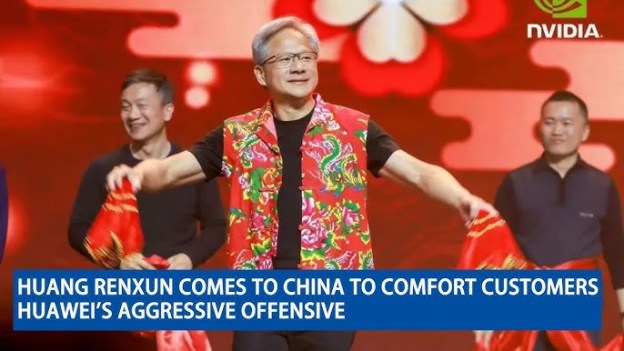
Another Wave of Colonization? Africa

Most of Africa’s data are currently stored elsewhere, zipping down undersea cables that often make landfall in the French city of Marseille….An upheaval is overdue. Africa has more internet users than America, but only as much data-center space as Switzerland.  The boom is partly driven by regulation. Two dozen African countries have passed data-protection laws, or are planning to do so. They often require certain data, such as personal information, to be kept in the country. Another boost comes from competition, says Jan Hnizdo of Teraco, a leading data center in South Africa, where liberalization of the telecoms industry created space for such firms to flourish.

Capital is pouring in. Teraco is building Africa’s largest stand-alone data center in Johannesburg, with backing from foreign funds. Actis, a private-equity firm, is putting $250m into the industry, starting with a majority stake in a Nigerian company, Rack Centre. American investors founded Raxio with an eye on less fashionable markets, from Uganda to Mozambique.

Data centers need power, and lots of it. Keeping their equipment cool consumes almost as much energy as running it, which is why centers are usually in chilly places such as Scandinavia or America’s Pacific north-west. Most of Africa is hot and has a lot of power cuts…To keep servers running, many centers use polluting and expensive diesel generators. Yet the potential gains from offering better connectivity and faster internet services in Africa outweigh the difficulties. Microsoft and Amazon are bringing their cloud services to the region, and have opened data centres of their own in South Africa. Huawei has helped build one for the government of Senegal. Google and Facebook are both involved in projects to lay new cables around Africa’s coasts

Excerpts from Seeding the cloud: Data centers are Taking root in Africa, Economist, Dec. 4, 2021

The Neck and Neck Race in Africa

Classified American intelligence reports suggest China intends to establish its first permanent military presence on the Atlantic Ocean in the tiny Central African country of Equatorial Guinea. The officials…said the reports raise the prospect that Chinese warships would be able to rearm and refit opposite the East Coast of the U.S.—a threat that is setting off alarm bells at the White House and Pentagon. Principal deputy U.S. national security adviser Jon Finer visited Equatorial Guinea in October 2021 on a mission to persuade President Teodoro Obiang Nguema Mbasogo and his son and heir apparent, Vice President Teodoro “Teodorin” Nguema Obiang Mangue, to reject China’s overtures…

In Equatorial Guinea, the Chinese likely have an eye on Bata, according to a U.S. official. Bata already has a Chinese-built deep-water commercial port on the Gulf of Guinea, and excellent highways link the city to Gabon and the interior of Central Africa….

Equatorial Guinea, a former Spanish colony with a population of 1.4 million, secured independence in 1968. The capital, Malabo, is on the island of Bioko, while Bata is the largest city on the mainland section of the country, which is wedged between Gabon and Cameroon. Mr. Obiang has ruled the country since 1979. The discovery of huge offshore gas and oil reserves in 1996 allegedly allowed members of his family to spend lavishly on exotic cars, mansions and other luxuries…The State Department has accused the Obiang regime of extrajudicial killings, forced disappearances, torture and other abuses. A U.S. Senate committee issued a report in 2004 criticizing Washington-based Riggs Bank for turning “a blind eye to evidence suggesting the bank was handling the proceeds of foreign corruption” in accepting hundreds of millions of dollars in deposits controlled by Mr. Obiang, his wife and other relatives……

Equatorial Guinea relies on American oil companies to extract offshore resources that have made the country the richest on the sub-Saharan mainland, as measured by per capita annual gross domestic product….Chinese state-owned companies have built 100 commercial ports around Africa in the past two decades, according to Chinese government data….

The State Department recently raised Equatorial Guinea’s ranking in the annual assessment of how diligently countries combat human trafficking. The upgrade could allow the Biden administration to offer maritime-security assistance to help win Equatorial Guinea’s cooperation.

Excerpts from MICHAEL M. PHILLIPS, China Seeks First Military Base on Africa’s Atlantic Coast, U.S. Intelligence Finds, WSJ, Dec. 5, 2021

Exchanging Nature for Crushing Debt

In 2020 tourism in Belized dried up, growth contracted sharply and public debt jumped from just under 100% GDO in 2019 to over 125%. That forced Belize,  into a debt restructuring…As part of the deal, concluded on November 5th, 2021 Belize bought back its only international bond, a $553m, at 55 cents on the dollar. It funded that with $364m of fresh money, arranged by The Nature Conservancy, an NGO, which is insured by the International Development Finance Corp, an American agency. The transaction is backed by the proceeds of a “blue bond” arranged by Credit Suisse, a bank. The payback is due over 19 years. It is called a blue bond because Belize has pledged to invest a large chunk of the savings into looking after the ocean. That includes funding a $23m endowment to support future marine-conservation projects and promising to protect 30% of its waters by 2026…

Debt-for-nature swaps are nothing new. Lenders have been offering highly indebted countries concessions in return for environmental commitments for decades. But these transactions have historically involved debt owed to rich countries, not commercial bondholders. As Lee Buchheit, a lawyer who specialises in sovereign-debt restructurings, points out, they were “negligible in size”. In total, the value of debt-for-climate and nature-swap agreements between 1985 and 2015 came to just $2.6bn, according to the United Nations Development Programme. Of the 39 debtor nations that benefited from the swaps, only 12 negotiated debts of over $30m. “It was really an exercise in public relations,” Mr Buchheit says….

Other poor countries are trying to move in the same direction. At the COP26 climate summit in Glasgow Ecuador’s president Guillermo Lasso proposed enlarging the country’s Galapagos nature reserve through a debt-for-nature swap…Yet no amount of creative dealmaking can distract from the grim truth: many emerging markets still suffer from crushing debts.

Excerpts from Debt-for Nature Swaps: Reef relief, Economist, Nov. 13, 2021

How to Buy the Global Yes-Men

China will finance the construction of an outpost for a special forces unit of Tajikistan’s police near the Tajik-Afghan border. The post will be located in Tajikistan’s eastern Gorno-Badakhshan Autonomous Province in the Pamir mountains, which border China’s Xinjiang province as well as the northeastern Afghan province of Badakhshan. No Chinese troops will be stationed at the facility.

The plan to build the post comes amid tension between the Dushanbe government and Afghanistan’s new Taliban rulers. Tajik President Emomali Rakhmon has refused to recognise the Taliban government, calling for a broader representation of Afghanistan’s ethnic groups – of which Tajiks are the second-biggest. Kabul, in turn, has warned Dushanbe against meddling in its domestic affairs. According to Russian media, the Taliban have struck an alliance with an ethnic Tajik militant group based in northern Afghanistan which seeks to overthrow Tajikistan’s current government.

China is a major investor in Tajikistan and Beijing has also acted as a donor on several occasions, handing over, for example, a new parliament building free of charge.

Excerpts from China to build outpost for Tajikistan special forces near Afghan border, Reuters, Oct. 28, 2021

The Northern Frontier: Who’s Taking Advantage of Climate Change?

Owing to climate change…the share of boreal land that can support farming could increase from 8% to 41% in Sweden. It could increase from 51% to 83% in Finland. Efforts to farm these areas will alarm people who value boreal forests for their own sake. And cutting down such forests and ploughing up the soils that lie beneath them will release carbon. But the climatic effects are not as simple as they might seem. Northern forests absorb more heat from the sun than open farmland does, because snow-covered farmland reflects light back into space…

The fact that felling boreal forests may not worsen climate change, though, says nothing about the degree to which it could affect biodiversity, ecosystem services or the lives of forest dwellers, particularly indigenous ones.

Some governments are already keen to capitalize on climate change. Russia’s has long talked of higher temperatures as a boon. President Vladimir Putin once boasted that they would enable Russians to spend less money on fur coats and grow more grain. In 2020 a “national action plan” on climate change outlined ways in which the country could “use the advantages” of it, including expanding farming. Since 2015 Russia has become the world’s largest producer of wheat, chiefly because of higher temperatures.

Russia’s government has started leasing thousands of square kilometers of land in the country’s far east to Chinese, South Korean and Japanese investors. Much of the land, which was once unproductive, is now used to grow soybeans. Most are imported by China, helping the country reduce its reliance on imports from America. Sergey Levin, Russia’s deputy minister of agriculture, has predicted that soya exports from its far-eastern farmlands may reach $600m by 2024. That would be nearly five times what they were in 2017. The government of Newfoundland and Labrador, a province on the north-eastern tip of Canada, is also trying to promote the expansion of agriculture into lands covered by forests…

All told, the northern expansion of farmland will only go some way towards mitigating the damage climate change may do to agriculture. The societies that will benefit from it are mostly already wealthy. Poor places, which rely much more heavily on income from exporting agricultural produce, will suffer.

Excerpts from Farming’s New Frontiers: Agriculture, Economist, August 28, 2021

How to Exclude China from the Global Technology Base: the Role of IMEC

The Interuniversity Microelectronics Centre (IMEC) located in Leuven, Belgium, does not design chips (like America’s Intel), manufacture them (like TSMC of Taiwan) or make any of the complicated gear (like ASML, a Dutch firm). Instead, it creates knowledge used by everyone in the $550bn chip business. Given chips’ centrality to the modern economy and increasingly to modern geopolitics, too, that makes it one of the most essential industrial research-and-development (R&D) center on the planet. Luc Van den hove, IMEC’s boss, calls it the “Switzerland of semiconductors”.

IMEC was founded in 1984 by a group of electronics engineers from the Catholic University of Leuven who wanted to focus on microprocessor research. In the early days it was bankrolled by the local Flemish government. Today IMEC maintains its neutrality thanks to a financial model in which no single firm or state controls a big share of its budget. The largest chunk comes from the Belgian government, which chips in some 16%. The top corporate contributors provide no more than 4% each. Keeping revenue sources diverse (partners span the length and breadth of the chip industry) and finite (its standard research contracts last three to five years) gives IMEC the incentive to focus on ideas that help advance chipmaking as a whole rather than any firm in particular.

A case in point is the development of extreme ultraviolet lithography (EUV)…It took 20 years of R&D to turn the idea into manufacturing reality. IMEC acted as a conduit in that process… Advanced toolmakers want a way to circulate their intellectual property (IP) without the large companies gaining sway over it. The large companies, meanwhile, do not want to place all their bets on any one experimental idea that is expensive (as chipmaking processes are) and could become obsolete.

IMEC’s neutrality allows both sides to get around this problem. It collects all the necessary gear in one place, allowing producers to develop their technology in tandem with others. And everyone gets rights to the IP the institute generates. Mr Van den hove says that progress in the chip industry has been driven by the free exchange of knowledge, with IMEC acting as a “funnel” for ideas from all over the world…IMEC’s revenues, which come from the research contracts and from prototyping and design services, doubled between 2010 and 2020, to €678m ($773m).

The deepening rift between America, home to some of the industry’s biggest firms, and China, which imported $378bn-worth of chips last year, threatens IMEC’s spirit of global comity. China’s chip industry is increasingly shielded by an overbearing Communist Party striving for self-sufficiency, and ever more ostracized by outsiders as a result of American and European export controls. All this limits the extent to which IMEC can work with Chinese semiconductor companies…IMEC would not comment on individual partnerships but says it has “a few engagements with Chinese companies, however not on the most sensitive technologies, and always fully compliant with current European and US export regulations and directives”.

Excerpts from Neutral but not idle: IMEC offers neutral ground amid chip rivalries, Economist, Sept. 25, 2021

Mobile Nuclear Energy for the Arctic: Dream to Reality

Four small modular reactors (SMRs) will power the huge Baimskaya copper and gold mining development in the Russian Arctic, according to an agreement signed by Rosatom subsidiary Atomflot…Baimskaya is one of the world’s largest mineral deposits and is very rich in copper and gold. However, development of the remote site in Russia’s eastern Chukotka region demands a complex multi-partner plan involving the Russian government, the regional government and developers…

Nuclear power already plays a role in Baimskaya’s development as early facilities there are powered by the Akademik Lomonosov floating nuclear power plant at Pevek. KAZ Minerals said the plant will supply up to 20 MWe of nuclear power to the mine during its construction phase….Based on the agreement, two additional floating power plants will provided, each with two RITM-200M reactors. The first two should be in operation at Cape Nagloynyn by the beginning of 2027, the third in 2028 and the final one at the start of 2031….

Excerpts from SMRs to power Arctic development, World Nuclear News, Sept. 3, 2021

Conquering Virgin Digital Lands a Cable at a Time

Facebook  said it would back two new underwater cable projects—one in Africa and another in Asia in collaboration with Alphabet — that aim to give the Silicon Valley giants greater control of the global internet infrastructure that their businesses rely on.

The 2Africa project, a partnership between Facebook and several international telecom operators, said that it would add four new branches: the Seychelles, Comoro Islands, Angola and Nigeria. The project’s overall plan calls for 35 landings in 26 countries, with the goal of building an underwater ring of fiber-optic cables around Africa. It aims to begin operating in 2023… Separately, Facebook that it would participate in a 7,500-mile-long underwater cable system in Asia, called Apricot, that would connect Japan, Taiwan, Guam, the Philippines, Indonesia and Singapore. Google said that it would also join the initiative, which is scheduled to go live in 2024.

Driving the investments are costs and control. More than 400 commercially operated underwater cables, also known as submarine cables, carry almost all international voice and data traffic, making them critical for the economies and national security of most countries…Telecom companies own and operate many of these cables, charging fees to businesses that use them to ferry data. Facebook and Google used so much bandwidth that they decided about a decade ago that it would make sense to cut out the middleman and own some infrastructure directly.

Excerpts from Stu Woo, Facebook Backs Underwater Cable Projects to Boost Internet Connectivity, WSJ, Aug. 17, 2021

The Dirty Secrets of Clean Energy

Solar panel installations are surging in the U.S. and Europe as Western countries seek to cut their reliance on fossil fuels. But the West faces a conundrum…: Most of them are produced with energy from carbon-dioxide-belching, coal-burning plants in China.

Concerns are mounting in the U.S. and Europe that the solar industry’s reliance on Chinese coal will create a big increase in emissions in the coming years as manufacturers rapidly scale up production of solar panels to meet demand. That would make the solar industry one of the world’s most prolific polluters, analysts say, undermining some of the emissions reductions achieved from widespread adoption. For years, China’s low-cost, coal-fired electricity has given the country’s solar-panel manufacturers a competitive advantage, allowing them to dominate global markets.

Chinese factories supply more than three-quarters of the world’s polysilicon, an essential component in most solar panels, according to industry analyst Johannes Bernreuter…Producing a solar panel in China creates around twice as much carbon dioxide as making it in Europe, said Fengqi You, professor of energy systems engineering at Cornell University.

Some Western governments and corporations are attempting to shift the solar industry away from coal…These policies would also help rebuild the West’s solar industry, which has withered under competition from higher-polluting Chinese producers, Western executives say…China has pushed down the price of panels so sharply that solar power is now less expensive than electricity generated from fossil fuels in many markets around the world. Imports of the solar cells that make up the panels are also flooding into the U.S. and Europe. Those shipments are either coming directly from China or contain key components made in China. “If China didn’t have access to coal, then solar power wouldn’t be cheap now,” said Robbie Andrew, a senior researcher at the Center for International Climate Research in Oslo. “Is it OK that we’ve had this huge bulge of carbon emissions from China because it allowed them to develop all these technologies really cheaply? We might not know that for another 30 to 40 years.”

Excerpts from Matthew Dalton, Behind the Rise of U.S. Solar Power, a Mountain of Chinese Coal, July 31, 2021

Sponsors of War: Captagon at $25 Better than Alcohol

In Saudi Arabial party-goers prefer Captagon pills (to alcohol), nowadays the Gulf’s favorite drug, at $25 a pop. Part of the amphetamine family, it can have a similar effect to Viagra—and conquers sleep. “With one pill,” says a raver, “we can dance all weekend.”

For Syria’s president, Bashar al-Assad, the drug has become a boon—at least in the short run. His country has become the world’s prime pusher of Captagon. As the formal economy collapses under the burden of war, sanctions and the predatory rule of the Assads, the drug has become Syria’s main export and source of hard currency. The Centre for Operational Analysis and Research (COAR), a Cyprus-based consultancy, reckons that last year authorities elsewhere seized Syrian drugs with a street value of no less than $3.4bn. That compares with Syria’s largest legal export, olive oil, which is worth some $122m a year. The drug is financing the central government, says Ian Larson, who wrote a recent report on the subject for COAR…

Chemical plants in the cities of Aleppo and Homs have been converted into pill factories. In the Gulf the mark-up for pills can be 50 times their cost in Syria. Smugglers hide them in shipments of paper rolls, parquet flooring and even pomegranates. Saudi princes use private jets to bring the stuff in

For the Syrians left behind, drugs may destroy what remains of society after a decade of civil war. “Young men who haven’t been killed, exiled or jailed are addicts,” says a social worker in Sweida, a city held by the Assads in the south. 

Excerpt from Pop a pill, save a dictator: Syria has become a narco-state, Economist, July 19, 2021

The Reckless Gambles that Changed the World: darpa

Using messenger RNA to make vaccines was an unproven idea. But if it worked, the technique would revolutionize medicine, not least by providing protection against infectious diseases and biological weapons. So in 2013 America’s Defense Advanced Research Projects Agency (DARPA) gambled. It awarded a small, new firm called Moderna $25m to develop the idea. Eight years, and more than 175m doses later, Moderna’s covid-19 vaccine sits alongside weather satellites, GPS, drones, stealth technology, voice interfaces, the personal computer and the internet on the list of innovations for which DARPA can claim at least partial credit.

It is the agency that shaped the modern world, and this success has spurred imitators. In America there are ARPAS for homeland security, intelligence and energy, as well as the original defense one…Germany has recently established two such agencies: one civilian (the Federal Agency for Disruptive Innovation, or SPRIN-d) and another military (the Cybersecurity Innovation Agency). Japan’s interpretation is called Moonshot R&D. 

As governments across the rich world begin, after a four-decade lull, to spend more on research and development, the idea of an agency to invent the future (and, in so doing, generate vast industries) is alluring and, the success of DARPA suggests, no mere fantasy. In many countries there is displeasure with the web of bureaucracy that entangles funding systems, and hope that the DARPA model can provide a way of getting around it. But as some have discovered, and others soon will, copying DARPA requires more than just copying the name. It also needs commitment to the principles which made the original agency so successful—principles that are often uncomfortable for politicians.

On paper, the approach is straightforward. Take enormous, reckless gambles on things so beneficial that only a handful need work to make the whole venture a success. As Arun Majumdar, founding director of ARPA-e, America’s energy agency, puts it: “If every project is succeeding, you’re not trying hard enough.” Current (unclassified) DAROA projects include mimicking insects’ nervous systems in order to reduce the computation required for artificial intelligence and working out how to protect soldiers from the enemy’s use of genome-editing technologies.

The result is a mirror image of normal R&D agencies. Whereas most focus on basic research, DARPA builds things. Whereas most use peer review and carefully selected measurements of progress, DARPA strips bureaucracy to the bones (the conversation in 1965 which led the agency to give out $1m for the first cross-country computer network, a forerunner to the internet, took just 15 minutes). All work is contracted out. DARPA has a boss, a small number of office directors and fewer than 100 program managers, hired on fixed short-term contracts, who act in a manner akin to venture capitalists, albeit with the aim of generating specific outcomes rather than private returns.

Excerpt from Inventing the future: A growing number of governments hope to clone America’s DARPA, Economist, June 5, 2021

Can the Switzerland of Chips Crush the Global Economy?

Taiwan Semiconductor Manufacturing Co (TSMC) has emerged over the past several years as the world’s most important semiconductor company, with enormous influence over the global economy. With a market cap of around $550 billion, it ranks as the world’s 11th most valuable company. Its dominance leaves the world in a vulnerable position, however. As more technologies require chips of mind-boggling complexity, more are coming from this one company, on an island that’s a focal point of tensions between the U.S. and China, which claims Taiwan as its own.

The situation is similar in some ways to the world’s past reliance on Middle Eastern oil, with any instability on the island threatening to echo across industries….Being dependent on Taiwanese chips “poses a threat to the global economy,” research firm Capital Economics recently wrote. Its technology is so advanced, Capital Economics said, that it now makes around 92% of the world’s most sophisticated chips, which have transistors that are less than one-thousandth the width of a human hair. Samsung Electronics Co. makes the rest. 

The U.S., Europe and China are scrambling to cut their reliance on Taiwanese chips. While the U.S. still leads the world in chip design and intellectual property with homegrown giants like Intel Corp. , Nvidia Corp. and Qualcomm, it now accounts for only 12% of the world’s chip manufacturing, down from 37% in 1990, according to Boston Consulting Group. President Biden’s infrastructure plan includes $50 billion to help boost domestic chip production. China has made semiconductor independence a major tenet of its national strategic plan. The European Union aims to produce at least 20% of the world’s next-generation chips in 2030 as part of a $150 billion digital industries scheme.

The Taiwanese maker has also faced calls from the U.S. and Germany to expand supply due to factory closures and lost revenues in the auto industry, which was the first to get hit by the current chip shortage.

Semiconductors have become so complex and capital-intensive that once a producer falls behind, it’s hard to catch up. Companies can spend billions of dollars and years trying, only to see the technological horizon recede further. A single semiconductor factory can cost as much as $20 billion. One key manufacturing tool for advanced chip-making that imprints intricate circuit patterns on silicon costs upward of $100 million, requiring multiple planes to deliver

Taiwanese leaders refer to the local chip industry as Taiwan’s “silicon shield,” helping protect it from such conflict. Taiwan’s government has showered subsidies on the local chip industry over the years, analysts say.

Excerpts from Yang Jie et al., The World Relies on One Chip Maker in Taiwan, Leaving Everyone Vulnerable, WSJ, June 19, 2021

When Others Do our Dirty Work: the Costs of Overdependence

China is tightening its grip on the global supply of processed manganese, rattling a range of companies world-wide that depend on the versatile metal—including the planet’s biggest electric-vehicle makers.

China produces more than 90% of the world’s manganese products, ranging from steel-strengthening additives to battery-grade compounds. Since October 2020, dozens of Chinese manganese processors accounting for most of global capacity have joined a state-backed campaign to establish a “manganese innovation alliance,” led by Ningxia Tianyuan Manganese Industry Group, setting out in planning documents goals and moves that others in the industry say are akin to a production cartel. They include centralizing control over supply of key products, coordinating prices, stockpiling and networks for mutual financial assistance.

The squeeze sent prices soaring in metal markets world-wide, snagging steelmakers and sharpening concern among car makers. China’s metal industries already dominate the global processing of most raw materials for rechargeable batteries, including cobalt and nickel. Three-quarters of the world’s lithium-ion batteries and half of its electric vehicles are made in China.  High-purity forms of manganese have increasingly become crucial for battery-powered automobiles, touted by Volkswagen AG and Tesla Inc. in recent months as a viable replacement for other, more-expensive battery ingredients….

While manganese ore is relatively abundant around the world, it is almost solely refined in China. Battery-grade manganese is traded mostly privately, and pricing can be opaque. Miners say a metric ton of the purified metal could cost up to $4,000—barely a 10th of the cost of cobalt, a widely used battery metal. By replacing cobalt, manganese could help auto makers produce 30% more cars with the same amount of nickel, analysts say.

Rival manganese projects outside China view the cartel-like activities as an opportunity to gain momentum for their own battery-grade developments…Still, analysts say such projects outside China might take years to start and heavy cost investments to develop. Viable bases of manganese ore are often located in remote regions, which require expensive infrastructure to ferry and process extracted ores.

Excerpt from Chuin-Wei Yap, China Hones Control Over Manganese, a Rising Star in Battery Metals, WSH, May 21, 2021

The Coin Curse: Bitcoin, Dogecoin and Carbon

Environmentalists…fret about how much energy bitcoin uses. In a paper in Nature Communications, a group of academics…examine bitcoin’s energy use in China. They conclude that, in the absence of legal curbs, bitcoin could by 2024 become a “non-negligible” barrier to China’s efforts to decarbonize its economy.

Bitcoin’s hunger for energy stems from its design. It forgoes centralised record-keeping in favour of a “blockchain”, a transaction database that is distributed among users. The blockchain is maintained by “miners”, who validate transactions by competing to crack mathematical puzzles with solutions that are hard to find but easy to check. Each successfully mined block of transactions generates a reward, currently 6.25 bitcoins ($357,000).

The system varies the difficulty of the puzzles to ensure that one new block is created, on average, every ten minutes. High bitcoin prices make it worthwhile to spend more computing power—and therefore electricity—chasing mining rewards…

Despite the currency’s democratic ambitions, mining is concentrated among a handful of professional operators. About 70% takes place in China. Scientists have concluded that, without regulation, Chinese bitcoin mining could consume around as much energy as Italy or Saudi Arabia by 2024. Annual carbon emissions, at 130m tonnes, would approach those of Nigeria. Such numbers should be taken with a good deal of salt. Bitcoin’s energy use depends crucially on its price, which swings wildly…

But the general picture—that bitcoin is a dirty business—fits with other research. One oft-cited model, which uses publicly available blockchain data, reckons its global energy consumption is already equal to that of Kazakhstan, and that its carbon footprint matches Hong Kong’s.

Excerpts from The dirty truth: Totting up bitcoin’s environmental costs, Economist, Apr. 10, 2021

Begging for a Vaccine: the other COVID crisis

On April 16, 2021  Adar Poonawalla, head of the world’s biggest vaccine-maker, the Serum Institute of India (SII), begged President Joe Biden, in a tweet, to ‘lift the embargo of raw material exports out of the us.’… because it would affect the manufacturing of vaccines: AstraZeneca’s, of which SII makes 100m doses a month, and Novavax’s, of which it expects to make 60m-70m doses a month.

That was shortly after the Biden administration announced, on February 5, 2021, plans to use the Defense Production Act (DPA)—a law dating from the 1950s that grants the president broad industrial-mobilization powers—to bolster US vaccine-making. This legislation…has helped American pharmaceutical companies to secure a variety of special materials and equipment, including plastic tubing, raw goods, filters and even paper, that are needed for vaccine production. But firms which export such products point out that the DPA  hinders their ability to sell them abroad. They must seek permission before exporting these goods. That requires time and paperwork. And if the government decides it needs the goods in question to remain in the country, the firms concerned may be barred from exporting them at all… 

To be used in vaccine manufacturing, products have to be approved by regulators. So finding substitutes quickly can be impossible. SII is not alone in its concern. On March 24, 2021  Micheal Martin, Ireland’s prime minister, warned that export bans (and not just from America) would harm global vaccine production. He noted that the Pfizer vaccine involves 280 components from 86 suppliers in 19 countries. Indeed, American export controls particularly harm European vaccine companies, which need special bags from America in which to make their products. At a vaccine supply-chain meeting in March, one such firm complained of 66-week delivery times for the supply of these bags.

Excerpts from A Vaxxing Problem: Covid 19 and the Defense Production Act, Economist, Apr. 24, 2021

The Gung-Ho Way to Seize Space Real Estate

Elon Musk’s internet satellite venture has spawned an unlikely alliance of competitors, regulators and experts who say the billionaire is building a near-monopoly that is threatening space safety and the environment. The Starlink project, owned by Mr. Musk’s Space Exploration Technologies Corp. or SpaceX, is authorized to send some 12,000 satellites into orbit to beam superfast internet to every corner of the Earth. It has sought permission for another 30,000.

Now, rival companies such as Viasat,  OneWeb, Hughes Network Systems and Boeing Co. are challenging Starlink’s space race in front of regulators in the U.S. and Europe. Some complain that Mr. Musk’s satellites are blocking their own devices’ signals and have physically endangered their fleets. Mr. Musk’s endeavor is still in beta testing but it has already disrupted the industry, and even spurred the European Union to develop a rival space-based internet project to be unveiled by the end of the year.

The critics’ main argument is that Mr. Musk’s launch-first, upgrade-later principle, which made his Tesla Inc. TSLA electric car company a pioneer, gives priority to speed over quality, filling Earth’s already crowded orbit with satellites that may need fixing after they launch.

“SpaceX has a gung-ho approach to space,” said Chris McLaughlin, government affairs chief for rival OneWeb. “Every one of our satellites is like a Ford Focus—it does the same thing, it gets tested, it works—while Starlink satellites are like Teslas: They launch them and then they have to upgrade and fix them, or even replace them altogether,” Mr. McLaughlin said. Around 5% of the first batch of Starlink satellites failed, SpaceX said in 2019…. 

Orbital space is finite, and the current lack of universal regulation means companies can place satellites on a first-come, first-served basis. And Mr. Musk is on track to stake a claim for most of the free orbital real estate, largely because, unlike competitors, he owns his own rockets.

Excerpts from Bojan Pancevski, Elon Musk’s Satellite Internet Project Is Too Risky, Rivals Say, April 19, 2021

The Moon Miners

The joint announcement by China and Russia in March 20211 on their collaboration to explore the moon has the potential to scramble the geopolitics of space exploration, once again setting up competing programs and goals for the scientific and, potentially, commercial exploitation of the moon. This time, though, the main players will be the United States and China, with Russia as a supporting player.

In recent years, China has made huge advances in space exploration, putting its own astronauts in orbit and sending probes to the moon and to Mars. It has effectively drafted Russia as a partner in missions that it has already planned, outpacing a Russian program that has stalled in recent years. In December 2020, China’s Chang’e-5 mission brought back samples from the moon’s surface, which have gone on display with great fanfare in Beijing. That made China only the third nation, after the United States and the Soviet Union, to accomplish the feat. In the coming months, it is expected to send a lander and rover to the Martian surface, hard on the heels of NASA’s Perseverance, which arrived there in February 2021..

 According to a statement by the China National Space Administration, they agreed to “use their accumulated experience in space science research and development and use of space equipment and space technology to jointly formulate a route map for the construction of an international lunar scientific research station.”

After the Soviet Union’s collapse, Russia became an important partner in the development of the International Space Station. With NASA having retired the space shuttle in 2011, Russia’s Soyuz rockets were the only way to get to the International Space Station until SpaceX, a private company founded by the billionaire Elon Musk, sent astronauts into orbit on its own rocket last year. China, by contrast, was never invited to the International Space Station, as American law prohibits NASA from cooperating with Beijing. 

China pledged to keep the joint project with Russia “open to all interested countries and international partners,” as the statement put it, but it seemed all but certain to exclude the United States and its allies in space exploration. The United States has its own plans to revisit the moon by 2024 through an international program called Artemis. With Russia by its side, China could now draw in other countries across Asia, Africa and Latin America, establishing parallel programs for lunar development….

Excerpts from China and Russia Agree to Explore the Moon Together, NYT, Mar. 10, 2021

Shallow Your Tongue: The Giddy Western Plutocracy of Hong Kong

You might think the death of liberalism in Asia’s financial center, Hong Kong, which hosts $10trn of cross-border investments, would trigger panic, capital flight and a business exodus. Instead Hong Kong is enjoying a financial boom. Share offerings have soared as China’s leading companies list there. Western firms are in the thick of it: the top underwriters are Morgan Stanley and Goldman Sachs. In 2020, the value of us dollar payments cleared in Hong Kong, a hub for the world’s reserve currency, hit a record $11trn.

The same pattern of political oppression and commercial effervescence is to be found on the mainland…Yet when they talk to shareholders about China, global firms gloss over this brutal reality: “Very happy,” says Siemens; “Phenomenal,” reckons Apple; and “Remarkable,” says Starbucks…Tougher policing does not affect Westerners, says a mainland financier. His foreign clients in Hong Kong laugh about the anxious memos they receive from bosses at home, asking about political developments. “It doesn’t really affect their life, right? They’re not going on the street to try to demonstrate against the government.”

Mainland China attracted $163bn of fresh multinational investment in 2020, more than any other country. It is opening the mainland capital markets to foreigners, who have invested $900bn, in a landmark shift for global finance.

Moreover, the pull China exerts is no longer just a matter of size—although, with 18% of world GDP, it has that too. The country is also where firms discover consumer trends and innovations. It is increasingly where commodity prices and the cost of capital are set, and is becoming a source of regulations. Business is betting that, in Hong Kong and the mainland, China’s… government is capable of self-restraint in the commercial sphere, providing contractual certainty, despite the lack of fully independent courts and free speech. Though China’s best-known tycoon, Jack Ma, has fallen from political favor, foreign investors’ stakes in his empire are still worth over $500bn.

Excerpts from Dealing with China, The Way its Going to Be, Economist, Mar 20, 2021 

The Techno-spheres: Westerners against the Chinese

Lithuania’s government on Feb. 17 prohibited Chinese security-scanner maker Nuctech Co. from supplying equipment to the country’s two airports, saying a proposed deal was “not in line with national-security interests.” State-controlled Nuctech, which the U.S. government in December 2020 listed among Chinese entities banned from certain transactions with U.S. parties, had won a tender launched a year ago by state-owned Lithuanian Airports.

Canada last year also abandoned a plan to buy Nuctech scanners for its embassies following controversy around the announced deal. Norway, Croatia and an EU directorate in recent months have also stopped scanner tenders involving Nuctech, although none publicly linked the cancellations to security, as Lithuania did. Lithuania banned China’s Nuctech from supplying security-scanning equipment to its two airports.

“We are choosing the Western technosphere. We are not choosing the Chinese technosphere,” said Laurynas Kasciunas, chairman of the Lithuanian parliament’s national-security and defense committee, which oversees a national-security review board that had recommended banning Nuctech. Such policy reversals remain a minority amid extensive Chinese business activity across the EU. 

Excerpt from Daniel Michaels and Valentina Pop, China Faces European Obstacles as Some Countries Heed U.S. Pressure, WSJ, Feb. 23, 2021

Designers Not Doers: Who’s Gonna Save the Chip Industry?

Although designing chips for electronic devices is now easier than ever, making them has never been harder requiring spending vast—and growing—sums on factories (called fabs) stuffed with ultra-advanced equipment.

At the turn of the millennium, a cutting-edge factory might have cost $1bn… More recently, a TSMC factory that produces 3 nm (nanometer) chips, completed in 2020, in southern Taiwan, cost $19.5bn. The firm is already pondering another for factory for 2nm chips, which will almost certainly be more. ..Asia’s nanoscale manufacturing duopoly remains fiercely competitive, as Samsung and TSMC keep each other on their toes… At some point, one company, in all likelihood TSMC, could be the last advanced fab standing. For years, says an industry veteran, tech bosses mostly ignored the problem in the hope it would go away. It has not…

The other big industry rupture is taking place in China. As America has lost ground in making chips, it has sought to ensure that China lags behind, too. The American tech embargo began as a narrow effort against Huawei over national security, but bans and restrictions now affect at least 60 firms, including many involved in chips. SMIC, China’s chip champion, has just been put on a blacklist, as has Xiaomi, a smartphone firm.

Excerpts from Betting All Chips, Economist, Jan. 23, 2021 and Semiconductors: A New Architecture, Economist, Jan. 23, 2021

Who Will Rule the Arctic?


Rosatom joined the Arctic Economic Council*in February 2021. Rosatom is a Russian state-owned corporation supplying about 20% of the country’s electricity. The corporation mainly holds assets in nuclear power and machine engineering and construction. In 2018, the Russian government appointed Rosatom to manage the Northern Sea Route (NSR). The NSR grants direct access to the Arctic, a region of increasing importance for Russia due to its abundance of fossil fuels. Moreover, due to climate changes, the extraction of natural resources, oil and gas are easier than ever before.

Since Russia’s handover of NSR’s management, Rosatom’s emphasis on the use of nuclear power for shipping, infrastructure development and fossil fuel extraction is likely to become more prevalent in the Arctic region. Rosatom already operate the world’s first floating nuclear power plant in the Siberian port of Pevek and is the only company in the world operating a fleet of civilian nuclear-powered icebreakers…The company has numerous plans up its sleeves, among them to expand the fleet of heavy-duty nuclear icebreakers to a minimum of nine by 2035.

*Other members of the Arctic Economic Council.

Excerpt from Polina Leganger Bronder, Rosatom joins Arctic Economic Council, BarentsObserver, Feb. 8, 2021

Living in the World of Tesla: Cobalt, Congo and China

 A 20% rise in the price of cobalt since the beginning of 2021 shows how the rush to build more electric vehicles is stressing global supply chains. 

A majority of the world’s cobalt is mined in the Democratic Republic of the Congo in central Africa. It typically is carried overland to South Africa, shipped out from the port of Durban, South Africa, and processed in China before the material goes to battery makers—meaning the supply chain has several choke points that make it vulnerable to disruption…

Car and battery makers have been looking for more control over their cobalt supply and ways to avoid the metal altogether. Honda Motor Co. last year formed an alliance with a leading Chinese car-battery maker, Contemporary Amperex Technology Ltd. , hoping that CATL’s supply-chain clout would help stabilize Honda’s battery supply..

Meanwhile, China plays a critical role even though it doesn’t have significant reserves of cobalt itself. Chinese companies control more than 40% of Congo’s cobalt-mining capacity, according to an estimate by Roskill, the London research firm…China’s ambassador to Congo was quoted in state media last year as saying more than 80 Chinese enterprises have invested in Congo and created nearly 50,000 local jobs…

To break China’s stronghold, auto makers and suppliers are trying to recycle more cobalt from old batteries and exploring other nations for alternative supplies of the material.  Another reason to look for alternatives is instability in Congo and continuing ethical concerns about miners working in sometimes-harsh conditions with rudimentary tools and no safety equipment.

Excerpt from Yang Jie, EV Surge Sends Cobalt Prices Soaring, WSJ, Jan. 23, 2021

How Germany and China Saved the World from Fossil Fuels

In 2020, 132bn watts of new solar generating capacity were installed around the world; in many places solar panels are now by far the cheapest way to produce electricity. This transformation… was the result of a decisive shift in German government policy happening to coincide with China becoming the dominant force in global manufacturing.

By 2012 Germany had paid out more than €200bn in subsidies for solar energy production. It had also changed the world. Between 2004 and 2010 the global market for solar panels grew 30-fold as investors in Germany and the other countries which followed its lead piled in… By 2012 the price of a panel was a sixth what it had been in 2004, and it has gone on falling ever since… In sunny places new solar-power installations are significantly cheaper than generating electricity from fossil fuels. Installed capacity is now 776gw, more than 100 times what it was in 2004.

That does not mean Germany got exactly what it wanted. Solar power is not the decentralised, communal source of self-sufficient energy the Greens dreamed of; its provision is dominated by large industrial installations. And the panels on those installations are not made by the German companies the Social Democrats wanted to support: Chinese manufacturers trounced them…But they do provide the world with a zero-carbon energy source cheaper than fossil fuels, and there is room for many more of them…

The industry boasts no giants comparable to those in aircraft manufacture or pharmaceuticals, let alone computing; no solar company has a market capitalization of more than $10bn, and no solar CEO is in danger of being recognized on the street. It is a commodity business in which the commodity’s price moves in only one direction and everyone works on very thin margins. Good for the planet—but hardly a gold mine. 

Excerpt from How governments spurred the rise of solar power, Economist Technology Quarterly, Jan 9, 2021 

The Geo-Economics of Rare Earth Minerals

Greenland is rich in rare-earth minerals, and the superpowers want them…These 17 elements are used in  all things electronic. The renewable-energy revolution will also rely on them for power storage and transmission. On the darker side, weapons—including nuclear ones—need them too.

A new open-pit mine at the top of Kuannersuit, a cloud-rimmed mountain near the settlement of Narsaq in the south of Greenland may be rich in rare earth. So believes Greenland Minerals, an Australia-based company, which has been angling for the excavation rights for the past decade.

Greenland’s environment ministry has given a tentative go-ahead. A majority of parliamentarians have already declared themselves in favor of digging. In early February 2020, the townsfolk of Narsaq will hear representations from the island’s government. In Greenland, Urani Naamik (“No to Uranium”), a community lobby, has strong support. Nobody wants (mildly) radioactive dust, an inevitable by-product of mining. Many worry about the waste—a sludge of chemicals and discarded rock fragments—that mining would leave on top of the mountain.

The bigger long-term issue is who gets the mine’s spoils. Shenghe, a Chinese conglomerate, is the largest shareholder in Greenland Minerals. The Danish government, in a frenzy of Atlanticism, earlier managed to stop Chinese companies from investing in the expansion of two airports on the island. Will it preserve Greenland’s rare earths for NATO?

Cloud mining: In search of Greenland’s rare earths, Economist, Jan. 16, 2021, at 41

The Perils of Inhaling Lead Dust: Zambia

Kabwe,  in Zambia,  sprung up around a mine founded in 1904 by the Rhodesian Broken Hill Development Company, a British colonial firm. For decades miners crushed and burnt ore to extract lead. That metal made Kabwe but it also devastated it. To this day lead particles blow across town, making their way into houses and bloodstreams.

Scientists generally consider soil hazardous if it has more than 400mg of lead per kilogram. In three townships near the old mine the soil contains six, eight and 15 times that amount, according to analysis in 2014 by Pure Earth, an environmental ngo. “Kabwe is the most toxic place I’ve ever been to,” says Richard Fuller, its president…

The pollution in Kabwe is a scandal. Yet responsibility for it has long been contested, and that is set to continue. In October 2020, Mbuyisa Moleele Attorneys, a South African law firm, with help from Leigh Day, a British one, announced a class-action lawsuit against a subsidiary of Anglo American on behalf of potentially more than 100,000 children and women of reproductive age in Kabwe. It is targeting Anglo because it was affiliated to the mine from the 1920s until shortly after Zambia’s mines were nationalised in 1970. The suit claims that most of the pollution stems from the period when the mine was under the de facto control of Anglo, which allegedly did not do enough to stop the harm. Anglo rejects the claims, arguing that its involvement ended five decades ago and that, before then, it was neither the operator nor a majority shareholder in the mine and thus not responsible.

The case may take years. The lawyers for the plaintiffs must first convince a South African court to take it on. Only then may it proceed to a trial. Meanwhile children in Kabwe will keep on playing in the dust.

The World Bank included Kabwe in a broader project it funded to clean up Zambian mines. The scheme, which ran from 2003-2011, had some successes. It dredged a toxic canal and buried some contaminated soil. But it did not treat the main source of the dust—the former mine and dumps—and it left roads unpaved and most houses untreated…Another clean-up funded by the bank was started in December 2016. But it, too, is struggling. Some children have been tested and have received therapy to reduce blood lead levels. But since little has been done about the lead in the environment there is a risk their levels will rise again. 

Excerpt from Mining’s Toxic Legacy: Lead Astray, Economist,  Dec. 12, 2020

Winning Strategy: How China Uses US Firms to Get What it Wants

Xi Jinping, China’s leader, has described the creation of fully domestic supply chains as a matter of national security. The question is how to build them. Chinese officials know that they cannot turn their backs on the world. Exports are still an important source of revenue for many firms. And China must attract technology and investment from abroad. Pushing too transparently for “indigenous innovation”, a term once bandied about by the government, only makes foreigners wary. Striking the right balance is tough.

Enter the newest of China’s big economic policies: the “dual-circulation” strategy. At its most basic it refers to keeping China open to the world (the “great international circulation”), while reinforcing its own market (the “great domestic circulation”). If that sounds rather vague, it is: the government has not spelled out the details.  In May 2020, at a meeting of the Politburo, Mr Xi described dual circulation as the framework for economic policy… More recent comments by Mr Xi on the economy have been less about promoting consumption and more about bolstering China’s defences. China needs “self-developed, controllable” supply chains, with at least one alternative source for vital products, he said in a speech published on October 3, 2020.

Even more striking was his inversion of the idea of international circulation. Instead of talking about it in terms of the economic benefits China reaps from globalisation, he emphasized only the strategic purpose of opening China’s doors to foreign firms, ie that making them more dependent on the Chinese market would deter foreign powers from putting pressure on the country.

Excerpts from Economic Policy: Circling Back, Economist, Nov. 7, 2020

See also China Has One Powerful Friend Left in the U.S.: Wall Street—Trade deal left many U.S. industries disappointed, but financial firms such as BlackRock see a potential windfall

The Plight of Electric Cars: Cobalt Batteries and Mining

About 60% of the world’s cobalt is found in Congo, scattered across the copperbelt that stretches east into Zambia. The people of Kawama, Gongo grumble that too much land has been sold to mining firms. “We used to dig freely,” says Gerard Kaumba, a miner. “But now the government has sold all the hills.” There are still some sites where miners can turn up and dig, but they have to sell to whoever owns the concession. A sweltering day’s work might earn you $7. Many people have found they can make more at night, pilfering cobalt from industrial mines.

Glencore, a commodities giant with two mines in Congo, reckons that some 2,000 people sneak into its pits every day. Other companies have even more robbers to contend with. In 2019 Congolese soldiers chased thieves out of a mine owned by China Molybdenum where, it was reckoned, 10,000-odd people were then illegally digging. Sneaking into Glencore’s mines is hardest, says a Kawaman, as its guards do not collude with thieves—and often chase them away with dogs.

Congo’s industrial miners are not all angels.  Gécamines, the state-owned company, has enriched crooked politicians for half a century. Global Witness, a watchdog based in London, says Congo’s treasury lost $750m of mining revenues to graft between 2013 and 2015. ENRC, which has mines in Congo, has faced allegations of corruption and an investigation by Britain’s Serious Fraud Office (it denies wrongdoing). So has Glencore, which has worked with Dan Gertler, an Israeli billionaire. Mr Gertler, a close friend of a former Congolese president, Joseph Kabila, is under American sanctions… 

While big firms rake in millions, many of the little guys languish in jail. The prison in Kolwezi, the largest city in the mining region, is crammed with men caught stealing copper and cobalt. More than a hundred inmates occupy one stinking room, sitting in rows on the ground, each wedged between another’s legs. Prissoners are allowed to use the toilet only once a day, so they often urinate in their clothes

Excerpt from Cobalt blues: In Congo the little guys are jailed for stealing minerals. Economist, Oct. 17, 2020

The Industrial Chicken and the US-China Rivalry

Animal diseases, the US-China trade war and covid-19 have all disrupted, or threatened to disrupt, industrial chicken supplies and supply chains…The unsentimental logic of high-performance poultry-rearing is easy to grasp. “White-feather meat chickens”, as they are known in China, grow to 2.5kg in 40 days. Homegrown varieties of “yellow-feather chicken”, descended from backyard fowl, take twice as long to mature and will only ever weigh half as much…

Half a century ago meat in China was a rare luxury. Now, many see it as a daily necessity. In the meantime, the country’s supplies of farmland and clean water have not grown. Agriculture remains blighted by food-safety scandals, the rampant use of fake or illegal animal medicines, and disease outbreaks. Small surprise, then, that Chinese leaders give frequent speeches about food security. A puzzle lurks, though. Leaders also call for self-reliance in key technologies. And in the case of broiler chickens, those two ambitions—rearing meat efficiently and avoiding dependence on imports—are in tension.

The chicken imported into China are the fifth-generation descendants of pedigree birds whose bloodlines represent 80 years of selection for such traits as efficient food-to-meat conversion, rapid growth, strong leg bones and disease resistance. After waves of consolidation, the industry is dominated by two firms, Aviagen (based in Alabama and owned by the ew Group of Germany) and Cobb (owned by Tyson, an American poultry giant).

The most valuable pedigree birds never leave maximum-security farms in America and Britain: a single pedigree hen may generate 4m direct descendants. Their second-generation offspring are flown to breeding sites dispersed between such places as Brazil, Britain and New Zealand, in part to hedge against supply shocks when avian influenzas and other diseases close borders. Day-old third-generation chicks are air-freighted to Jinghai Poultry, a company in China, and other places, which spend six months growing them and breeding them in climate-controlled, artificially lit indoor facilities. In all, China imports 1.6m third-generation white-feather chicks a year.

Jinghai  Poultry hatches 8m fourth-generation, “parent stock” chickens annually. The company sells some to other agri-businesses. It breeds from the rest to produce fifth-generation chicks. These are “meat chickens”, consumed in fast-food outlets, schools and factory canteens, or as chicken parts sold in supermarkets. Yellow-feather chickens, deemed tastier by Chinese cooks, account for most whole birds sold in markets.

Chinese breeders have long tried to create local varieties with bloodlines available in-country… In September 2019, the State Council, China’s cabinet, issued a paper on livestock-rearing that set self-sufficiency in poultry as a goal, calling meat-chicken breeding a priority. Big foreign firms have resisted appeals from officials to send second-generation stock to China….Dependence on foreign bloodlines does carry risks. For several months recently New Zealand was one of the only countries able to send third-generation chicks to China, after other exporters suffered bird-flu outbreaks.

Li Jinghui, president of the China Broiler Alliance, an industry association, calls conditions ripe for China’s “brilliant” scientists to develop local birds… But to develop a domestic breed from scratch would take years, and if it does not meet market needs, a firm could spend a fortune “without much to show for it”…Without a stronger animal-health system and environmental controls, biotechnology alone cannot help China to develop world-class agriculture. Moreover, a long-standing Chinese strategy—bullying foreign firms to hand over intellectual property—is counter-productive now.

Excerpts from High-tech chickens are a case study of why self-reliance is so hard, Economist, Oct. 31, 2020

A Perpetual State of Competition: US-China-Russia

The US Secretary of Defense stated in September 2020 that America’s air, space and cyber warriors “will be at the forefront of tomorrow’s high-end fight.” That means confronting near-peer competitors China and Russia. That means shifting the focus from defeating violent extremist groups to deterring great power competitors. It means fighting a high-intensity battle that combines all domains of warfare. “In this era of great power competition, we cannot take for granted the United States’ long-held advantages,” Esper said. 

The last time an enemy force dropped a bomb on American troops was in the Korean War. “China and Russia, seek to erode our longstanding dominance in air power through long-range fires, anti-access/area-denial systems and other asymmetric capabilities designed to counter our strengths,” he said. “Meanwhile, in space, Moscow and Beijing have turned a once peaceful arena into a warfighting domain.” China and Russia have placed weapons on satellites and are developing directed energy weapons to exploit U.S. systems “and chip away at our military advantage,” he said.

Russia, China, North Korea, Iran and some violent extremist groups also look to exploit cyberspace to undermine U.S. security without confronting American conventional overmatch. “They do this all in an increasingly ‘gray zone’ of engagement that keeps us in a perpetual state of competition,’ the secretary said…The fiscal 2020 Defense Department research and development budget is the largest in history, he said, and it concentrates on critical technologies such as hypersonic weapons, directed energy and autonomous systems. 

“In the Air Force, specifically, we are modernizing our force for the 21st century with aircraft such as the B-21, the X-37 and the Next Generation Air Dominance platform,” Esper said. “Equally important, we are transforming the way we fight through the implementation of novel concepts such as Dynamic Force Employment, which provides scalable options to employ the joint force while preserving our capabilities for major combat.”

To realize the full potential of new concepts the department must be able to exchange and synchronize information across systems, services and platforms, seamlessly across all domains, he said. “The Department of the Air Force is leading on this front with the advancement of Joint All-Domain Command and Control,” Esper said.  This concept is part of the development of a Joint Warfighting concept that will drive transition to all-domain operations, he said. “

For these breakthroughs to succeed in any future conflict … we must maintain superiority in the ultimate high ground — space,” Esper said…In collaboration with academia and industry, the Air Force’s AI Accelerator program is able to rapidly prototype cutting-edge innovation,” Esper said. One example of this was the AI technology used to speed-up the development of  F-15EX.


F-15EX

Excerpts from Esper: Air Force, Space Force Leading Charge to New Technologies, DOD News, Sept. 16, 2020

Under Zero Trust: the U.S. Chip Resurgence

The Defense Advanced Research Projects Agency launched its Electronic Resurgence Initiative (ERI)  to help reboot a domestic chip industry that has been moving steadily offshore for decades…. Program officials and chip industry executives foresee the emergence of a “5th generation of computing” based on current cloud infrastructure while combining AI, the Internet of Things (IoT) and 5G wireless networks to deliver big data.

“The U.S. microelectronics industry is at an inflection point,” Ellen Lord, undersecretary of defense for acquisition and sustainment, told the virtual ERI summit. After decades of offshoring of chip fabrication, packaging and testing capabilities, “How do we reverse this trend?”  The Defense Department is expanding its technology base efforts by implementing a “step-by-step process for reconstituting the microelectronics supply chain,” focusing on various segments of the semiconductor ecosystem, including memory devices, logic, ICs and advanced packaging along with testing and assembly.

“While DoD does not drive the electronics market,” constituting only about 1 percent of demand, “we can drive significant R&D,” ERI is advancing public-private partnerships that provide a framework for commercial innovation. The result would be “pathfinder projects” geared toward a renewal of U.S. chip manufacturing. As trade frictions with China grow, ERI is placing greater focus on ensuring the pedigree of U.S. electronics supply chain. “We need to find a path to domestic sources,” said Lord.

While nurturing government-industry partnerships as part of an emerging next-generation U.S. industrial policy, this year’s DARPA summit also emphasized chip standards and processes for securing fabs, foundry services, devices and foundational microelectronics. In that vein, U.S. officials stressed new chips metrics like “quantifiable assurance” to secure dual-use devices that could end up in weapons or an IoT device.

“Our interests to protect both the confidentiality and the integrity of our supply chain are aligned with commercial interests, and we will continue to work across government and industry to develop and implement our quantitative assurance strategy based on zero trust,” said Nicole Petta, principal director of DoD’s microelectronics office. The “zero trust” approach assumes no device is safe, and that all microelectronics components must be validated before deployment. The framework marks a philosophical departure from DoD’s “trusted foundry” approach instituted in the 1990s, largely because “perimeter defenses” failed to account for insider threats…

DARPA Chip Efforts Pivots to Securing US Supply Chain, https://www.hpcwire.com, Aug. 24, 2020

The End of the Mindless Self-Indulgence: the Gulf States

Algeria needs the price of Brent crude, an international benchmark for oil, to rise to $157 dollars a barrel. Oman needs it to hit $87. No Arab oil producer, save tiny Qatar, can balance its books at the current price, around $40 (summer 2020)….The world’s economies are moving away from fossil fuels. Oversupply and the increasing competitiveness of cleaner energy sources mean that oil may stay cheap for the foreseeable future. 

Arab leaders knew that sky-high oil prices would not last for ever. Four years ago Muhammad bin Salman, the de facto ruler of Saudi Arabia, produced a plan called “Vision 2030” that aimed to wean his economy off oil. Many of his neighbours have their own versions. But “2030 has become 2020…” 

Still, some see an upside to the upheaval in oil-producing states. The countries of the Gulf produce the world’s cheapest oil, so they stand to gain market share if prices remain low. As expats flee, locals could take their jobs…

Remittances from energy-rich states are a lifeline for the entire region. More than 2.5m Egyptians, equal to almost 3% of that country’s population, work in Arab countries that export a lot of oil. Numbers are larger still for other countries: 5% from Lebanon and Jordan, 9% from the Palestinian territories. The money they send back makes up a sizeable chunk of the economies of their homelands. As oil revenue falls, so too will remittances. There will be fewer jobs for foreigners and smaller pay packets for those who do find work. This will upend the social contract in states that have relied on emigration to soak up jobless citizens….With fewer opportunities in the oil-producing states, many graduates may no longer emigrate. But their home countries cannot provide a good life. Doctors in Egypt earn as little as 3,000 pounds ($185) a month, a fraction of what they make in Saudi Arabia or Kuwait. A glut of unemployed graduates is a recipe for social unrest…

For four decades America has followed the “Carter Doctrine”, which held that it would use military force to maintain the free flow of oil through the Persian Gulf. Under President Donald Trump, though, the doctrine has started to fray. When Iranian-made cruise missiles and drones slammed into Saudi oil facilities in September 2019, America barely blinked. The Patriot missile-defence batteries it deployed to the kingdom weeks later have already been withdrawn. Outside the Gulf Mr Trump has been even less engaged, all but ignoring the chaos in Libya, where Russia, Turkey and the UAE (to name but a few) are vying for control.

A Middle East less central to the world’s energy supplies will be a Middle East less important to America. ..As Arab states become poorer, the nature of their relationship with China may change. This is already happening in Iran, where American sanctions have choked off oil revenue. Officials are discussing a long-term investment deal that could see Chinese firms develop everything from ports to telecoms… Falling oil revenue could force this model on Arab states—and perhaps complicate what remains of their relations with America.

Excerpts from The Arab World: Twilight of the Petrostates, Economist, July  18, 2020

The Global Gold Rush and Plunder of Congo

Since March 2020, record amounts of gold dug from artisanal mines in the conflict zones of Eastern Congo have been smuggled across the porous border with Uganda, where it is being stamped with fake certifications before being shipped to international markets in Dubai, Mumbai and Antwerp, according to Ugandan security officials, smugglers and traders. Much of the gold is reaching these overseas markets using cargo planes returning from Uganda after delivering Covid-19 aid and other essential supplies, according to plane manifests seen by The Wall Street Journal.

The trade in conflict gold isn’t new, but it has perhaps never been more lucrative: Gold prices at illegal and unregulated Congolese mines, where supply chains have been disrupted by coronavirus shutdowns and renewed violence between militant groups, have dropped over 40% since April 2020, according to local traders, while on global markets, prices are up by almost a third…Activists and U.N. investigators have long accused Uganda and several of Congo’s neighbors of being complicit in the plunder of Congolese gold…The calls to end the illicit trade grew louder last year after Uganda’s gold exports overtook coffee to become the leading export commodity for the first time—despite the country producing very little bullion.

U.N. investigators estimate that each month between 2 tons and 3 tons of Congo’s conflict gold—with a market value of over $100 million—is crossing the Ugandan frontier, passing border crossings patrolled by heavily armed guards, with metal fencing and razor wire erected to reduce the flow of people due to coronavirus fears…

Smugglers and police say the gold is secreted in trucks that are allowed to bypass coronavirus restrictions to deliver “essential goods” from fuel to food supplies. The yellow bars, weighing between 5 to 20 kilograms, are stuffed underneath truck cabins, inside battery compartments and emptied gasoline tankers. Once inside Uganda, the truckers sell the bars to traders who purchase forged documents in Kampala that disguise the gold’s origin.

The scramble is fueling violence in the eastern Congolese province of Ituri…Fresh spasms of violence have left more than 1,300 civilians dead since March 2020, in what the U.N. says may amount to war crimes. Some six million people are displaced. Armed groups are carrying out predatory raids on mines in search of gold.

In the meantime on Wall Street, on July 24, 2020, gold futures were priced at $1,897.50 a troy ounce eclipsing their August 2011 peak of $1,891.90. The coronavirus has ignited a global gold rush, with physical traders around the world trying to get their hands on more metal and individuals around the world ordering bars and coins.

Excerpts from Nicholas Bariyo and Joe Parkinson, Under Cover of Coronavirus Lockdown, a Booming Trade in Conflict Gold, WSJ, July 9, 2020, Gold Climbs to a High, Topping Its 2011 Record, WSJ, July 24, 2020

How to Make Friends: Load Them Up with Debt

“It’s no secret…China is by far the largest bilateral creditor to African governments,” said Mike Pompeo, America’s secretary of state, in June 2020, blaming it for creating an unsustainable debt burden. The World Bank disclosed ib July 2020, how much governments owe to China (and other lenders). The World Bank report revealed that developing countries owed $104 billion to China at the end of 2018. The total includes soft loans from China’s government, semi-soft loans from “policy banks”, such as China Development Bank, and profit-seeking loans from state-owned commercial lenders. The same countries owed $106bn to the World Bank and $60bn to bondholders…

The new figures confirm Mr Pompeo’s observation that China is by far the biggest bilateral creditor to Africa, and in many poor countries elsewhere. It accounts for about 20% of the total foreign debt owed by the 73 governments eligible for the G-20 moratorium on debt payments due to the COVID-19 pandemic (the Debt Service Suspension Initiative (DSSI)). That is more than all of the Paris Club lenders, including America, Britain and Japan, combined.

Excerpts from Public Finance: The Debt Toll, Economist, July 4, 2020

The Worst Murderer: Jihadists or Governments?

Sahel: West Africa’s most populous countries, along the Atlantic coast, have become vulnerable to the predations of jihadists spilling out of failing states farther north in the Sahel on the borders of the Sahara desert. Jihadists seized control of chunks of Mali in 2012 and were stopped from overrunning Bamako, its capital, only after thousands of French troops were hurriedly flown in. The insurgents have since pushed across the border into Niger and Burkina Faso. In those three countries alone, 4,800 people lost their lives in the conflict last year. Fully 1.7m people have been forced to flee their homes. Now the war is beginning to jump borders again, putting at risk some of Africa’s fastest-growing economies, including Benin, Ghana and Ivory Coast.


This war in the Sahel has been growing rapidly. Ten times more people were killed last year than in 2014 (excluding deaths in north-eastern Nigeria, which faces its own jihadist insurgents). Two main jihadist groups are behind most of the fighting: the Islamic State in the Greater Sahara (ISGS) and Jama’at Nasr al-Islam wal Muslimin (JNIM), which is linked to al-Qaeda. These groups have extended their reach, even though thousands of international peacekeepers and local and Western soldiers have been deployed to stop them. France has sent some 5,100 troops to the Sahel, while the United States has provided another 1,200. In addition, the un has 15,000 blue helmets there, including about 350 Germans, plus 250 British soldiers who are soon to arrive. With American forces leaving Afghanistan, the Sahel will soon be the West’s biggest combat zone.

Worse, the jihadists are expanding in three directions at once. To the south they threaten Benin, Ghana, Ivory Coast and Togo. To the west there has been a spate of attacks in Mali close to its border with Senegal; and to the east with Nigeria’s insurgent groups. The jihadists already have a “de facto safe haven in northern Mali”, says General Dagvin Anderson, in charge of America’s commandos in Africa. He frets that as they expand they will have more scope to plan attacks on American soil.

The weakness of governments and the feebleness of their public services are helping the jihadists. In the neglected hinterlands of the Sahel the rebels offer themselves as an alternate state, serving up sharia and medical aid. Moreover, the jihadists have been adept at exploiting ethnic faultlines, for instance between largely Muslim and seminomadic Fulani herders and more settled farming communities, which have their own armed groups of traditional hunters known as Dozos. =

Trade and commerce also provide an incentive for the jihadists to expand their reach. The migration corridor between Burkina Faso and Ivory Coast is the busiest in Africa. Jihadists cash in by taxing traders and smuggling stolen livestock, drugs and guns. The gold mines in Burkina Faso have become a target. Much of the gold is smuggled out through Togo, which officially exported seven tonnes of the metal to the United Arab Emirates in 2018, despite mining very little itself. Gold is also pulling jihadists towards Senegal…

But in 2020, more civilians in the Sahel have been killed by government soldiers than by jihadists, says José Luengo-Cabrera of the International Crisis Group (icg), a Brussels-based ngo. “When soldiers kill the head of the family, they almost throw his sons and nephews into the arms of bearded men in shorts hiding in the bush,” one villager told Human Rights Watch, a global monitor. It says in the town of Djibo alone, in Burkina Faso, evidence suggests government forces have murdered 180 men—many of them were blindfolded and had their hands bound before they were shot. In Burkina Faso… citizens may feel safer living among terrorists than with their own country’s security forces.

Governments in the region and some Western forces have made matters worse by supporting militias. In 2018 the French army allied itself with Tuareg militias from Mali to fight against ISGS. They clobbered the jihadists but also killed scores of civilians, aggravating ethnic tensions and fuelling recruitment by the insurgents….Above all, governments need to regain legitimacy by providing services and holding themselves to account. “It is not possible to win the war if there is not trust from the population,” says Niagale Bagayoko of the African Security Sector Network…But good governance and decent services in the region are scarce. At a meeting of Sahelian leaders with Mr hard. In Burkina Faso alone, the jihadists have forced about 2,500 schools to close.

Excerpts from Jihad in the Sahel: Fighting a Spreading Insurgency, Economist, July 11, 2020

I Can’t Imagine Germany without China

Germany is struggling to pick sides in the escalating dispute between the U.S. and China over issues including trade and human rights, amid mounting American pressure and Beijing’s authoritarian drift. Of all advanced economies outside Asia, Germany has the deepest economic ties in both camps and would have the most to lose from a Cold War between Washington and Beijing.

Berlin’s snaking trade links with China and the U.S. have served Germany well in the past two decades, providing it with steady growth, near full employment and full public coffers that have allowed the deployment of more than €1 trillion ($1.13 trillion) in measures to support its economy during the pandemic.  Now, Germany’s reluctance to take sides is diluting Europe’s broader efforts to present a united front to China, undermining the bloc’s power to shape a new global architecture…

Germany’s export-oriented economic model means it can’t really choose at all. It needs both the US and China.  China is Germany’s largest trading partner; the U.S. its biggest export market. And they stand neck-and-neck: Last year, Germany exported €119 billion of goods to the U.S. and €96 billion to China….Around 28% of jobs in Germany are directly or indirectly linked to exports, and in manufacturing that figure is 56%, according to the German Ministry for Economic Affairs. Germany exports nearly as much as the U.S. despite having only one-quarter the population.

Germany’s world-beating engineering companies supplied the factory equipment and the infrastructure that powered China’s transformation into the world’s top manufacturer. Harnessed to the fast-growing giant, Germany rebounded strongly after the financial crisis and weathered the eurozone debt crisis…

“I can’t imagine Volkswagen without China,” said Ferdinand Dudenhoeffer, director of the Center Automotive Research at the University of Duisburg-Essen.  Volkswagen CEO Herbert Diess, who refers to China as his company’s “second home,” has recently praised China’s handling of the coronavirus pandemic. The company in May said it would pour $2 billion into China’s electric-car market….

Excerpts from Tom Fairless et al., U.S.-China Tensions Leave Germany Squirming in the Middle, WSJ, June 24, 2020

An Impossible Made Possible: the Green Energy Revolution

Since the cost of renewable energy can now be competitive with fossil fuels. Government, corporate and consumer interests finally seem to be aligning.  The stock market has noticed. After years of underperformance, indexes that track clean-energy stocks bottomed out in late 2018. The S&P Global Clean Energy index, which covers 30 big utilities and green-technology stocks, is now up 37% over two years, including dividends, compared with 18% for the S&P 500.

This year’s Covid crisis will delay some renewable projects, but could speed up the energy transition in other ways. Alternative-energy spending has held up much better than spending on oil and gas. Globally, clean-energy investment is now expected to account for half of total investment in the entire energy sector this year, according to UBS.  Moreover, the crisis has pushed governments to spend money, including on renewable technologies. The massive stimulus plan announced by the European Union last month is decidedly green. The German government increased electric-car subsidies as part of its pandemic-related stimulus package rather than rolling out a 2009-style “cash-for-clunkers” program. China’s plans include clean-energy incentives, too.

Solar and wind are now mature technologies that provide predictable long-term returns. Big lithium-ion batteries, such as those that power Teslas, are industrializing rapidly. More speculatively, hydrogen is a promising green fuel for hard-to-decarbonize sectors such as long-haul transport, aviation, steel and cement.  Many big companies—the likes of Royal Dutch Shell, Air Liquide and Toyota —have green initiatives worth many hundreds of millions of dollars. They are, however, a relatively small part of these large businesses, some of whose other assets may be rendered obsolete by the energy transition… Early-stage electric-truck maker Nikola jumped on its market debut this month to a valuation at one point exceeding that of Ford.

Investors might be better off looking at the established specialists in between. Vestas is the world’s leading manufacturer of wind turbines. Orsted, another Danish company, has made the transition from oil-and-gas producer to wind-energy supplier and aspires to be the first green-energy supermajor. More speculatively, Canadian company Ballard has three decades of experience making hydrogen fuel cells.

Rochelle Toplensky, Green Energy Is Finally Going Mainstream, WSJ, June 24, 2020

Everyone for Themselves: COVID-19 Drug Reserved for U.S.

On June 29, 2020 the US Department of Health and Human Services (HHS) announced an agreement to secure large supplies of the drug remdesivir for the United States from Gilead Sciences through September, allowing American hospitals to purchase the drug in amounts allocated by HHS and state health departments….HHS has secured more than 500,000 treatment courses of the drug for American hospitals through September. This represents 100% of Gilead’s projected production for July (94,200 treatment courses), 90% of production in August (174,900 treatment courses), and 90% of production in September (232,800 treatment courses), in addition to an allocation for clinical trials. A treatment course of remdesivir is, on average, 6.25 vials.

Hospitals will receive the product shipped by AmerisourceBergen and will pay no more than Gilead’s Wholesale Acquisition Price (WAC), which amounts to approximately $3,200 per treatment course.

Excerpts from Trump Administration Secures New Supplies of Remdesivir for the United States, June 29, 2020

The $4 Trillion Blackmail: The Amazon is Ours not Brazil’s

More than two dozen financial institutions around the world are demanding the Brazilian government rein in surging deforestation, which they said has created “widespread uncertainty about the conditions for investing in or providing financial services to Brazil”. The call for action, delivered in a letter to the Brazilian government on June 23, 2020, comes as concerns grow that investors may begin to divest from Latin America’s largest economy if Jair Bolsonaro’s administration fails to curb environmental destruction. “As financial institutions, who have a fiduciary duty to act in the best long-term interests of our beneficiaries, we recognise the crucial role that tropical forests play in tackling climate change, protecting biodiversity and ensuring ecosystem services,” said the letter, signed by 29 financial institutions managing more than $3.7tn in total assets.

“Considering increasing deforestation rates in Brazil, we are concerned that companies exposed to potential deforestation in their Brazilian operations and supply chains will face increasing difficulty accessing international markets. Brazilian sovereign bonds are also likely to be deemed high risk if deforestation continues.” Deforestation in the Amazon rainforest has surged in Brazil since the election of Mr Bolsonaro, a rightwing former army captain, who supports opening the protected lands to commercial activity. In the first four months of 2020, an area twice the size of New York City was razed as illegal loggers and wildcat gold miners

Investors said they are particularly concerned about Brazil’s meatpacking industry, which risks being shut out of international markets over its alleged role in deforestation. Brazil’s JBS has been repeatedly accused by environmentalists of buying cows from deforested lands in the Amazon. In May 2020 more than 40 European companies, including Tesco and Marks and Spencer, warned they would boycott Brazilian products if the government did not act on deforestation. 

Excerpts from Investors warn Brazil to stop Amazon destruction, FT, June 23, 2020

Oil Spills of Sudan, Humanity for Africa, and East African Court of Justice

The East African Court of Justice delivered in June 2020 a temporary injunction order to the country’s Minister for Justice, the Greater Pioneer Operating Company (GPOC), and the Dar Petroleum Operating Company. The Court approved the application by Hope for Humanity Africa (H4HA), a non-governmental organization (NGO), which sought to highlight the environmental damage caused by oil spills… The NGO contends that: “Over 47,249 of the local population in Upper Nile State and 60,000 in Unity State are at risk of being exposed to the oil pollution this is because the local population depends on the wild foods for survival, the contaminated swamps, streams and rivers waters for cooking, drinking, washing, bathing and fishing.”…

The H4HA is looking for an injunction to stop multiple companies from exporting oil from the region, including CNPC of China, Petronas of Malaysia, and Oil & Natural Gas Corp. of India (ONGC) 

Excerpts South Sudan Suspended by African Union, Barred From Exporting Oil by East African Court, https://www.youngbhartiya.com, June 24, 2020

Leave No Oil Under-Ground: OPEC against US Frackers

In 2014-16, the OPEC waged a failed price war to wipe out American frackers. Since then the cartel and its partners, led by Russia, have propped up oil prices enough to sustain shale, but not enough to support many members’ domestic budgets. In March 2020 Saudi Arabia urged Russia to slash output; Russia refused, loth to let Americans free-ride on OPEC-supported prices. The ensuing price war was spectacularly ill-timed, as it coincided with the biggest drop in oil demand on record.  The desire to chasten American frackers remains, though. OPEC controls about 70% of the world’s oil reserves, more than its 40% market share would suggest… If the world’s appetite for oil shrinks due to changing habits, cleaner technology or greener regulations, countries with vast reserves risk having to leave oil below ground. 

Excerpts from Crude Oil: After the Fall, Economist, June, 13, 2020

The Nuclear Option: Chopping off Hong Kong from the Dollar System

China and America have begun the fraught business of disentangling their financial systems. Chinese firms with shares listed in New York have rushed to float in Hong Kong, too, after the White House signalled they are not welcome on Wall Street….But now Hong Kong itself, the world’s third-biggest international financial centre, has become a geopolitical flashpoint. Its unique role as the conduit between global capital markets and China’s inward-looking financial system means that both sides must tread carefully.

On May 28, 2020 China said it would enact a new national-security law for Hong Kong, undermining the formulation of “one country, two systems” in place since 1997, under which the territory is supposed to be governed until 2047. In response, America has said it may downgrade the legal privileges it grants Hong Kong, which treat it as autonomous from China

Hong Kong’s place in the world depends on having the rule of law, a trusted reputation and seamless access to Western financial markets. Other Chinese cities have big stock exchanges: shares listed in Shanghai and Shenzhen are together worth a lot more than those in Hong Kong. But neither has fair courts, an independent central bank, free movement of capital or a mix of Western and Chinese firms. These foundations are the basis for $9.7trn of cross-border financial claims, such as loans, that are booked in the territory. Hong Kong is also where mainland Chinese firms and banks go to deal in the dollar, the world’s dominant currency. Some $10trn of dollar transactions flowed through Hong Kong’s bank-to-bank payments system last year.

Until recently, conventional wisdom held that Hong Kong’s position would be assured for 20-30 years, because it would take that long for China either to upgrade its markets to Western standards or to become so powerful that it could impose mainland practices, and the yuan, on the rest of the world. But the trade war, a year of street protests and China’s iron-fisted response to them raise new questions about Hong Kong’s durability. Bullying from Beijing erodes the sense that it is autonomous. And there is an outside chance that America could impose sanctions or other restrictions that would stop some Hong Kong officials, firms or banks from using dollars….. America’s might bring into question whether money parked in Hong Kong is still fully fungible with money in the global financial system. If these worries spread, they could destabilise Hong Kong and cause a financial shock in China and well beyond it.

The good news is that so far there is no sign of capital flight. Hong Kong’s vast deposit base has been stable in recent weeks, say its bankers. Investors are reassured by its $440bn or so mountain of foreign reserves and a long record of capable financial management. The rush of Chinese listings will bring in new cash and drum up business in the city….Nonetheless, for China the prudent policy is to try to speed up the development of the mainland’s financial capabilities so that it is less exposed to potential American punishment…Italso means another big push to boost the global role of the yuan and reduce China’s dependence on the dollar…

Excerpts from Hong Kong: Conduit’s End, Economist, June 6, 2020

Your Death, My Life: Ericsson versus Huawei

The Trump administration’s increasingly aggressive effort to cripple China’s Huawei has presented Ericsson the opportunity to lead the rollout of 5G technology around the world.  The Swedish company is emerging as the steadiest player in the $80-billion-a-year cellular-equipment industry, telecommunications executives and analysts say, because it makes a technically advanced product that one rival, Nokia,was late to develop and that Huawei may not be able to make in the future because of recent U.S. measures.

The Trump administration last month stepped up efforts to hamper Huawei by imposing export restrictions that make it harder for the company to buy computer chips that are produced using U.S.-designed equipment —a move that could prevent it from manufacturing advanced 5G hardware. The U.S. has also sought to boost Huawei’s rivals by providing loans to wireless carriers in developing countries so they can buy equipment from non-Chinese suppliers, among other moves.

U.S. Attorney General William Barr in February suggested that the U.S. government take a financial stake in Ericsson or Nokia, or both, to “make it a more formidable competitor and eliminate concerns over its staying power.”

The White House quickly backed away from the idea….Ericsson provides equipment for all three major U.S. carriers: AT&T Inc., Verizon Communications Inc. and T-Mobile US Inc….

Ericsson struggled in the cellular-equipment industry against China’s Huawei and ZTE Corp., which sold comparable products, often at lower prices. Among Ericsson’s key innovations are cellular antennas. Ericsson’s use a new technology, called massive multiple-input multiple-output, or massive MIMO, that sends wireless signals in strong jets to different devices. Typical cellular antennas, which sit on steel towers or rooftops, send wireless signals in a wide cone, similar to the way a garden hose sprays water.

Wireless carriers want Ericsson’s concentrated wireless technology because it enables fast connections and allows them to serve more customers using existing cellular towers. Building new towers is unattractive because it is a bureaucratic process that can cost tens of thousands of dollars….Ericsson notched a victory the spring of 2020 when it joined Huawei in winning 5G contracts to supply all three major wireless carriers in China, the world’s second-biggest telecom-equipment market

The big question for wireless carriers and equipment makers is whether Huawei can continue making massive MIMO 5G equipment with the quality that wireless carriers have come to expect. The technology requires supplies from the world’s top semiconductor companies, but the Trump administration’s recent actions may mean even foreign chip suppliers must seek Washington’s approval to sell to Huawei. For now, Ericsson is assuming China has advanced its own semiconductor industry enough to continue supplying Huawei.

Excerpts from Stu Woo, Ericsson Emerges as 5G Leader After U.S. Bruises Huawei, WSJ,  June 2, 2020

Strangling China with Hong Kong: the Politics of Fear

The U.S. determination  that Hong Kong is no longer autonomous from mainland China, under the Hong Kong Policy Act of 1992, will have significant implications for the city’s exporters and businesses.  Sensitive U.S. technologies could no longer be imported into Hong Kong, and the city’s exports might be hit with the same tariffs levied on Chinese trade.

But the act doesn’t cover the far more extensive role Hong Kong plays as China’s main point of access to global finance.  As of 2019, mainland Chinese banks held 8,816 trillion Hong Kong dollars ($1.137 trillion) in assets in the semiautonomous city, an amount that has risen 373% in the last decade…. China’s banks do much of their international business, mostly conducted in U.S. dollars, from Hong Kong. With Shanghai inside China’s walled garden of capital controls, there is no obvious replacement.

While the U.S. doesn’t directly control Hong Kong’s status as a financial center, Washington has demonstrated its extensive reach over the dollar system, with penalties against Korean, French and Lebanese financiers for dealing with sanctioned parties. The U.S. recently threatened Iraq’s access to the New York Federal Reserve, demonstrating a growing willingness to use financial infrastructure as a tool of foreign policy.  Even though the U.S. can’t legislate Hong Kong’s ability to support Chinese banks out of existence, the role of an international funding hub is greatly reduced if your counterparties are too fearful to do business with you.

Putting the ability of Chinese banks to conduct dollar-denominated activities at risk would be deleterious to China’s ability to operate financially overseas, posing a challenge for the largely dollar-denominated Belt and Road global infrastructure initiative. It would also put the more financially fragile parts of the country, like its debt-laden property developers, under strain.  China’s hope to develop yuan into an influential currency also centers on Hong Kong’s remaining a viable global financial center—more than 70% of international trade in the yuan is done in the city.

Excerpts from Mike Bird, How the US Could Really Hurt China, WSJ, May 290, 2020

Builiding a Nuclear War Chest: the US Uranium Reserve

The US electricity production from nuclear plants hit at an all-time high in 2019… generating more than 809 billion kilowatt-hours of electricity, which is enough to power more than 66 million homes.  Yet, despite operating the largest fleet of reactors in the world at the highest level in the industry, US ability to produce domestic nuclear fuel is on the verge of a collapse.  

Uranium miners are eager for work, the United States’s only uranium conversion plant is idle due to poor market conditions, and its inability to compete with foreign state-owned enterprises (most notably from China and Russia) is not only threatening US energy security but weakening the ability to influence the peaceful uses of nuclear around the world. Restoring America’s Competitive Nuclear Energy Advantage was recently released by the U.S. Department of Energy (DOE) to preserve and grow the entire U.S. nuclear enterprise…. The first immediate step in this plan calls for DOE to establish a uranium reserve.   Under the Uranium Reserve program, the DOE Office of Nuclear Energy (NE) would buy uranium directly from domestic mines and contract for uranium conversion services. The new stockpile is expected to support the operation of at least two US uranium mines, reestablish active conversion capabilities, and ensure a backup supply of uranium for nuclear power operators in the event of a market disruption [such as that caused the COVID-19 pandemic]. 

NE will initiate a competitive procurement process for establishing the Uranium Reserve program within 2021.  Uranium production in the United States has been on a steady decline since the early 1980s as U.S. nuclear power plant operators replaced domestic uranium production with less expensive imports. State-owned foreign competitors, operating in different economic and regulatory environments, have also undercut prices, making it virtually impossible for U.S. producers to compete on a level-playing field.  As a result, 90% of the uranium fuel used today in U.S. reactors is produced by foreign countries.

Establishing the Uranium Reserve program is exactly what United States needs at this crucial time to de-risk its nuclear fuel supply. It will create jobs that support the U.S. economy and strengthen domestic mining and conversion services….The next 5-7 years will be a whirlwind of nuclear innovation as new fuels and reactors will be deployed across the United States.

Excerpts  from USA plans revival of uranium sector, World Nuclear News, May 12, 2020.  See also Building a Uranium Reserve: The First Step in Preserving the U.S. Nuclear Fuel Cycle, US Office of Nuclear Energy, May 11, 2020.

Will Saudi Arabia Own the United States?

In the coronavirus pandemic’s financial fallout, Saudi Arabia’s $300 billion sovereign-wealth fund has emerged as one of the world’s biggest bargain hunters, taking minority stakes worth billions of dollars in American corporations.  Saudi Arabia’s Public Investment Fund  (PIF)  in the first quarter of 2020 bought shares valued at about half a billion dollars each in Facebook, Walt Disney,  Marriott International,  and Cisco Systems.  The fund bought financial stocks, investing $522 million in Citigroup, and $488 million in Bank of America while also spending $714 million on a stake in Boeing…Crown Prince Mohammed bin Salman, the kingdom’s day-to-day ruler, tasked the sovereign-wealth fund in 2015 with diversifying the country’s economy away from oil by investing in companies and industries untethered to hydrocarbons.

PIF’s recent buying spree highlights a bold strategy of piling into global stocks even as the novel coronavirus and a crash in oil prices mean that Saudi Arabia’s financial position is now the most precarious in a decade. The Saudi government in May 2020 tripled its value-added tax rate and cut subsidies to state employees as it contends with lower oil revenue and an economy weakening under coronavirus lockdown.

Many of the stocks that PIF has targeted are trading at historic lows, bruised by the fallout from the coronavirus and rock-bottom oil prices that have battered stocks of energy companies in 2020. Teh PIF bought in 2020 undisclosed stakes in a bevy of energy companies, including Equinor (Norway), Royal Dutch Shell, Total (France) and Eni (France). The PIF invested $484 million in Shell, $222 million in Total and previously unreported stakes of $828 million in BP $481 million in Suncor Energy and $408 million in Canadian Natural Resources.

It also purchased shares valued at roughly $80 million each in: Warren Buffett’s Berkshire Hathaway; chipmakers Broadcom and Qualcom ; IBM; drugmaker Pfizer;  Starbucks; railroad company Union Pacific; outsourcer Automatic Data Processing; and Booking.com….On top of the stakes in public companies, PIF is also awaiting regulatory approval for a roughly £300 million ($363 million) buyout of U.K. Premier League soccer team Newcastle United.

Excerpts from Rory Jones and Summer Said, Saudi Sovereign-Wealth Fund Buys Stakes in Facebook, Boeing, Cisco Systems, WSJ, May 18, 2020

Our Cold War Roots: Weaponizing China’s One Child Policy

The elite US special operations forces are ill-equipped for high-tech warfare with China and Russia, experts warn, as the Trump administration pivots from the “war on terror” to a struggle with geopolitical rivals. Special operations, known for kicking down doors and eliminating high-value targets, number 70,000 personnel, cost $13bn a year and have carried much of the burden of the war on terror. But it is unclear what role they will play as the Pentagon moves to redeploy troops from Afghanistan to the Indo-Pacific to counter China’s regional ambitions.

General Richard Clarke, commander of special operations command (Socom), told an industry conference this week that the US needed to develop new capabilities to “compete and win” with Russia and China. He added that Socom must develop cyber skills and focus on influence campaigns rather than “the kill-capture missions” that characterised his own time in Afghanistan after the September 11 2001 attacks. Socom’s fighters include US Navy Seals, Army Green Berets and Marine Corps Raiders. Defence officials say China has raised military spending and research with the aim of exploiting American vulnerabilities, while Russia has tested out new technology during combat in Syria. “Maybe we are further behind than we know,” Colonel Michael McGuire told the annual Special Operations Industry Conference

McGuire highlighted US vulnerabilities in cyber security, and soft-power tactics by America’s enemies that could “drive fissures through some of our alliances”. He proposed shifting focus to defence over attack.   “You could have hundreds and thousands of engagements every single day in a fight against China. We are just not fast enough, dynamic enough or scaleable enough to handle that challenge,” said Chris Brose, chief strategy officer at Anduril…. He added “Most of the US-China competition is not going to be fighting world war three,” he said. “It’s going to be kicking each other under the table.”….

US special operators have for years had the run of the battlefield. But they face very different conditions in any fight against China, which has developed an arsenal of missiles, fighter jets, spy planes and other eavesdropping and jamming techniques that would make it hard for America to conceal troops, transport and communications. Special operations forces are not ready for operations against a near-peer foe, such as China, in a direct engagement… He called for a return to their cold war roots. “Vintage special operations forces is about stealth, cunning and being able to blend in — they were triathletes rather than muscle-bound infantrymen with tattoos,” said the former officer. 

David Maxwell, a former Green Beret and military analyst, is among those who favour a shift towards political warfare.One such idea of his would involve a popular writer being commissioned to pen fictionalised war stories based in Taiwan intended to discourage Beijing from invading the self-governing island. He told a gathering of Pacific special forces operators in February 2020 that fictional losses could “tell the stories of the demise of Chinese soldiers who are the end of their parents’ bloodline”. He argued that Beijing’s former one-child policy could be weaponised to convince China that war would be too costly. But Mr Maxwell said such ideas have yet to catch on. He added that psyops officers lamented to him that it was “easier to get permission to put a hellfire missile on the forehead of a terrorist than it is to get permission to put an idea between his ears”.

Excerpts from Katrina Manson , US elite forces ill-equipped for cold war with China, FT, May 16, 2020

Made in China, Always? COVID-19, the Survival of Resilience

As they walk through the valley of the shadow of death brought by COVID-19 chief executives and corporate strategists are beginning to look to the post-covid world to come. What they think they see, for good or ill, is an acceleration. Three existing trends—the deglobalisation unpicking the business world that grew up in the 2000s; the infusion of data-enabled services into ever more aspects of life; a consolidation of economic power into the hands of giant corporations—look likely to proceed at a faster rate than before, and perhaps to go further, too…

China’s government may encourage its state-owned firms to go global by buying distressed car companies in Europe. The share price of Daimler is less than half what it was when Geely, a Chinese carmaker, bought a 10% stake in 2018. Car companies may also see offers from technology giants keen to improve co-operation between metal bashers and the engineers of autonomy—currently wary at best. The healthier airlines, such as Qantas and IAG, owner of British Airways, will snap up airport slots from their bankrupt rivals and may try to acquire others only just staying aloft. Private-equity firms, which have mountains of committed investor cash, may start buying up fundamentally sound but impecunious suppliers in various industries, aware that when demand returns such companies will see its first fruits…

In 2019 many global firms sought to reduce their dependency on China. One of their favoured strategies was to put more business into factories elsewhere in Asia.  But the acute stage of China’s covid-19 crisis made it clear how essential China remains as a provider of inputs to such factories elsewhere in Asia and around the world. “What people thought was a global supply chain was a Chinese supply chain,”…

Joerg Wuttke, president of the EU Chamber of Commerce in China, says that if there is one lesson people are drawing from the pandemic in this regard it is that “single source is out and diversification is in.” In other words, companies do not just need suppliers outside China. They need to build out their choice of suppliers, even if doing so raises costs and reduces efficiency

Excerpts from Sinking, Swimming and Surfing, Economist,  Apr. 11, 2020, at 13

A Nasty Divorce: US-China Internet Cables

United States officials granted Google permission to turn on a high-speed internet link to Taiwan but not to the Chinese territory of Hong Kong, citing national-security concerns in a ruling that underscores fraying ties between Washington and Beijing.“There is a significant risk that the grant of a direct cable connection between the United States and Hong Kong wouldpose an unacceptable risk to the national security and law enforcement interests of the United States,” the U.S. Department of Justice said in its decision, which was backed by the departments of Homeland Security and Defense. The agencies instead urged the Federal Communications Commission to grant Google owner Alphabet  permission to start using the portion of its 8,000-mile underwater Pacific Light cable that connects California to Taiwan. .

The decision threatens to end Hong Kong’s dominance as a top destination for U.S. internet cables and puts at risk several ongoing projects, including a Facebook backed fiber-optic line linking Los Angeles to Hong Kong and a Google-backed project linking Hong Kong to the U.S. territory of Guam.

Washington is turning to the self-ruling island of Taiwan, which the U.S. supports with arms sales and unofficial political ties despite Beijing’s claims that it is part of China. U.S. officials are also considering alternatives such as Indonesia, Philippines, Thailand, and Vietnam.

Google and Facebook originally teamed up to build Pacific Light to Hong Kong in 2016, continuing the Silicon Valley giants’ long-term strategy to take more control of the network pipes that connect their data centers. The web companies and their Chinese investment partners kept building the cable even as U.S. authorities withheld the regulatory approvals they needed to start using it.

Major international data projects are subject to review by Team Telecom, a coalition of federal agencies with national-security oversight. The panel has taken a hard line against China in recent years. Team Telecom in 2018 recommended for the first time the denial of a Chinese application—that of China Mobile —to provide telecom services through U.S. networks, citing national-security and law-enforcement concerns.

President Trump on April 4 2020 signed an executive order that puts the attorney general in charge of overseeing Team Telecom and gives the panel direct authority to review existing licenses to provide such services, including those issued earlier to Chinese state-owned operators China Telecom and China Unicom.

Excerpts from Drew FitzGerald and Kate O’Keeffe, U.S. Allows Google Internet Project to Advance Only if Hong Kong Is Cut Out, WSJ, Apr. 9, 2020

U.S. Desperation for Face Masks: Wild West or Piracy?

From Europe to South America, U.S. allies are complaining about the superpower’s “Wild West” tactics in outbidding or blocking shipments to buyers who have already signed deals for vital medical supplies. …”Money is irrelevant. They pay any price because they are desperate,” one high-level official in German Chancellor Angela Merkel’s ruling CDU/CSU group told Reuters….In April 5, 2020, US President Trump said he was signing a directive to stop the export of N95 respirator masks, which provide essential protection for health-care workers, and other U.S. medical equipment. Furthermore, 3M, a US company, said that the White House had ordered it to stop all shipments to Canada and Latin America of respirators that it manufactures in the U.S., despite what 3M called “significant humanitarian implications.”

In another case, an order of 200,000 masks bound for Germany was diverted to the U.S….Germany’s Secretary of Interior Andreas Geisel called it an “act of modern piracy.” He stated that: “even in times of global crisis, you shouldn’t use Wild West methods.”

U.S. allies complain of ‘Wild West’ tactics in race for medical supplies, Reuters, April 56, 2020

Over Your Dead Body: the Creation of Internet Companies

Jeff Kosseff’s “The Twenty-Six Words That Created the Internet” (2019) explains how the internet was created. The 26 words are these: “No provider or user of an interactive computer service shall be treated as the publisher or speaker of any information provided by another information content provider.” They form Section 230 of the Communications Decency Act, itself a part of the Telecommunications Act of 1996.   Section 230 shields online platforms from legal liability for content generated by third-party users. Put simply: If you’re harassed by a Facebook user, or if your business is defamed by a Yelp reviewer, you might be able to sue the harasser or the reviewer, assuming you know his or her identity, but don’t bother suing Facebook or Yelp. They’re probably immune. That immunity is what enabled American tech firms to become far more than producers of content (the online versions of newspapers, say, or company websites) and to harness the energy and creativity of hundreds of millions of individual users. The most popular sites on the web—YouTube, Twitter, Facebook, eBay, Reddit, Wikipedia, Amazon—depend in part or in whole on user-generated content…

Because of section 230, the U.S. was able to cultivate online companies in ways that other countries—even countries in the developed world—could not….American law’s “internet exceptionalism,” as it’s known, is the source of mind-blowing technological innovation, unprecedented economic opportunity and, a great deal of human pain. The book chronicles the plights of several people who found themselves targeted or terrorized by mostly anonymous users… Each of them sued the internet service providers or websites that facilitated these acts of malice and failed to do anything about them when alerted. And each lost—thanks to the immunity afforded to providers by Section 230.

Has the time come to delete the section?

Excerpt from Barton Swaim, ‘The Twenty-Six Words That Created the Internet’ Review: Protecting the Providers, WSJ, Aug. 19, 2019

Out-of-Fashion: Aggressive Tax Planning

In December 2019, Royal Dutch Shell voluntarily published its revenue, profit, taxes and other business details in each of 98 countries. The disclosure aligns with a drive by the energy company, which often attracts criticism from environmental activists, to present itself as forward-thinking, transparent and socially-minded.  That didn’t stop the information feeding a predictable host of headlines in the U.K., where the company is partly based, that it didn’t pay taxes in the country (because of losses carried forward and tax refunds). In the U.S., Shell accrued $137 million of tax—a rate of 8%.  This kind of detailed reporting is required by tax authorities in about 100 countries including the U.S. since 2017, based on rules agreed by the Organisation for Economic Cooperation and Development, but it is rarely made public.

Companies that don’t jump may soon be pushed. Economy ministers from European Union countries are considering a proposal that would require all large companies with total revenue of more than €750 million ($834 million) operating in the bloc to publish the information annually. The Global Reporting Initiative, an organization that establishes sustainability standards, recently agreed to include a similar requirement. Greater transparency could also spur reform efforts and reduce incentives for complex tax arrangements. Companies, investors and states all agree that it is best to find a global solution to the problem of aggressive tax planning.

Excerpts from Rochelle Toplensky, Beginning of the End of Tax Secrecy, WSJ, Dec. 20, 2019

How to Pull off an Economic Coup: China in Guinea

The Simandou mine is a large iron mine located in the Simandou mountain range of southern Guinea, Simandou represents one of the largest iron ore reserves in Guinea and in the world, having estimated reserves of 2.4 billion tonnes of ore grading 65% iron meta. Since November 2019, Simandou is owned by a Chinese consortium: SMB, a joint-venture which includes Winning Shipping, a Singaporean maritime firm, UMS, a Guinean-French logistics company, and Shandong Weiqiao, a big Chinese aluminium producer. The entity, in which Guinea’s government holds a 10% stake, will pay $15bn to develop the site, build a new deepwater port and a 650km railway to link the two.

The successful bid is a coup for SMB, which is barely known outside the west African nation. The private joint-venture keeps its finances close to its chest but Bob Adam, an expert on mining in Guinea, reckons that after taxes, royalties and operating costs smb is making about $800m profit a year. “They are now the most significant economic enterprise in Guinea,” he says—and the only one among the world’s biggest bauxite producers with a direct link to China.

A shift into iron ore presents challenges. Building a port and a railway through the country’s malaria-infested forest will take years and could cost much more than the estimated $10bn. Also, the Boké region has been plagued by riots. Many local residents are angered by lack of access to clean water or health care. But China is keen on Simandou’s high-grade iron ore, which emits less pollution when processed.It also wants to lock in supply

Galvanised:  SMB Winning pays $15bn for rights to Guinea’s iron mountain, Economist, Dec. 7, 2019

.

The Jihadist Mafia: Controlling the Gold of Sahel

Burkina Faso is struggling to contain a fast-growing jihadist insurgency. Along with Mali and Niger, it has become the main front line against terrorists in the Sahel, a dry strip of land that runs along the edge of the Sahara. This year alone the conflict has killed more than 1,600 people and forced half a million from their homes in Burkina Faso….A worrying new trend is a battle by jihadists and other armed groups to take control of the region’s gold rush.

Although gold has long been mined in the region…it has boomed in recent years with the discovery of shallow deposits that stretch from Sudan to Mauritania. International mining companies have invested as much as $5bn in west African production over the past decade, but the rush has also lured hundreds of thousands of unsophisticated “artisanal” miners. The International Crisis Group (ICG), an NGO, reckons that more than 2m people are involved in small-scale mining in Burkina Faso, Mali and Niger. In total they dig up 40-95 tonnes of gold a year, worth some $1.9bn-4.5bn.

Artisanal Mining’s Claustrophobic Conditions

This rush—in a region where states are already weak and unable to provide security—has sucked in a variety of armed groups and jihadists, including the likes of Ansar Dine and Islamic State in the Greater Sahara…The jihadists probably have direct control of fewer than ten mines…But they have influence over many more. In some areas artisanal miners are forced to pay “taxes” to the jihadists. In others, such as Burkina Faso’s Soum province, the miners hire jihadists to provide security… Other armed groups such as ethnic militias are also in on the bonanza and collect cash to guard mines. International mining firms may also be funding the jihadists by paying ransoms for abducted employees or “protection” money to keep mining, according to a study published by the OECD, a club of mostly rich countries.

For the moment much of Burkina Faso’s artisanal production is sneaked into Togo… Togo does not produce much gold domestically but it sent more than 12 tonnes of gold to Dubai in 2016. Gold is also taken out of the Sahel through major airports in hand luggage. 

The resource curse: How west Africa’s gold rush is funding jihadists, Economist, Nov. 16, 2019

Stopping GreenWashing

The EU wants to revolutionise the world of green finance. Brussels officials, MEPs and member states are currently trying to thrash out plans for a gold standard in green investment they hope will unleash tens of millions of euros of private money to fund the transition to a more sustainable world.   The project has a classically boring Brussels name — the “taxonomy” for sustainable activities — but the implications are potentially transformative. The EU wants to become the first supranational regulator to write rules that banks and funds will have to comply with when they claim to launch “green” products or investments.  As it stands, there is no global benchmark to judge just how green a financial product is. Funds and banks can sell and label sustainable finance products without an independent arbiter checking if reality meets the hype. The point of the EU’s work is to stamp out this so-called “greenwashing”…

Perhaps the most sensitive issue of all is how to handle nuclear energy. France — which has big nuclear business interests — doesn’t want the taxonomy to stigmatise nuclear as a “brown” technology. Other member states, led by Germany, want it excluded from being green, as do the MEPs. 

Excerpts from  Mehreen Khan, The Green Gold Standard, FT, Nov. 11, 2019

The Sand Industry: Opaque, Illegal, Unsustainable

Malaysia, Singapore’s biggest source for sea sand, has banned the export of the commodity, according to officials in Kuala Lumpur, a move that traders said could complicate the island-state’s ambitious expansion plans on reclaimed land.  Those plans include the development of the Tuas mega port, slated to be the world’s biggest container terminal. Singapore has increased its land area by a quarter since independence in 1965, mostly by using sand to reclaim coastal areas.

Malaysian Prime Minister Mohamad Mahathir, who came to power in a shock election last year, imposed a ban on all sea sand exports on October 3, 2018… Endie Shazlie Akbar, Mahathir’s press secretary, confirmed that the government had put a stop to sand exports last year. However, he denied that it was aimed at curbing Singapore’s expansion plans, saying it was a move to clamp down on illegal sand smuggling….Two traders importing sand to Singapore, who both asked not to be named, said the commodity is becoming scarcer and driving Singapore to source sand from as far as India, which would push up costs. Shipping is the biggest single cost in acquiring sand.The traders added Singapore has been stockpiling sand in recent years which could provide a buffer against any immediate bottleneck in supplies.

The sand industry is opaque with no international price index, making it difficult to gauge the financial impact of a ban by Malaysia.  Sea sand is mostly used for land reclamation, while river sand is a core component in constructions materials like cement.

Singapore imported 59 million tonnes of sand from Malaysia in 2018, at a cost of $347 million, according to United Nations Comtrade data, which is based on information provided by individual countries’ customs offices. That accounted for 97% of Singapore’s total sand imports in the year by volume, and 95% of Malaysia’s global sand sales.The data does not distinguish between types of sand.  When Indonesia banned exports to Singapore in 2007, citing environmental concerns, it caused a “sand crisis” in the city-state that saw building activity almost come to a halt. Singapore has since bolstered its stockpiles.

Unsustainable sand dredging disrupts sediment flows and fishing grounds, destroying livelihoods and polluting water sources in some of the poorest communities in Asia.  But Singapore criticized Indonesia for allegedly using the ban as leverage in negotiations over an extradition treaty and border delineation.

River Dredging for Extraction of Sand

Excerpts from Fathin Ungku, Rozanna Latiff , Exclusive: In blow to Singapore’s expansion, Malaysia bans sea sand exports, Reuters, July 2, 2019

Why a Dumb Internet is Best

Functional splintering [of the internet] is already happening. When tech companies build “walled gardens”, they decide the rules for what happens inside the walls, and users outside the network are excluded…

Governments are playing catch-up but they will eventually reclaim the regulatory power that has slipped from their grasp. Dictatorships such as China retained control from the start; others, including Russia, are following Beijing. With democracies, too, asserting their jurisdiction over the digital economy, a fragmentation of the internet along national lines is more likely. …The prospect of a “splinternet” has not been lost on governments. To avoid it, Japan’s G20 presidency has pushed for a shared approach to internet governance. In January 2019, prime minister Shinzo Abe called for “data free flow with trust”. The 2019 Osaka summit pledged international co-operation to “encourage the interoperability of different frameworks”.

But Europe is most in the crosshairs of those who warn against fragmentation…US tech giants have not appreciated EU authorities challenging their business model through privacy laws or competition rulings. But more objective commentators, too, fear the EU may cut itself off from the global digital economy. The critics fail to recognise that fragmentation can be the best outcome if values and tastes fundamentally differ…

If Europeans collectively do not want micro-targeted advertising, or artificial intelligence-powered behaviour manipulation, or excessive data collection, then the absence on a European internet of services using such techniques is a gain, not a loss. The price could be to miss out on some services available elsewhere… More probably, non-EU providers will eventually find a way to charge EU users in lieu of monetising their data…Some fear EU rules make it hard to collect the big data sets needed for AI training. But the same point applies. EU consumers may not want AI trained to do intrusive things. In any case, Europe is a big enough market to generate stripped, non-personal data needed for dumber but more tolerable AI, though this may require more harmonised within-EU digital governance. Indeed, even if stricter EU rules splinter the global internet, they also create incentives for more investment into EU-tailored digital products. In the absence of global regulatory agreements, that is a good second best for Europe to aim for.

Excerpts from Martin Sandbu,  Europe Should Not be Afraid of Splinternet,  FT, July 2, 2019

Who Owns the Riches of the Melting North Pole

A competition for the North Pole heated up in May 2019, as Canada became the third country to claim—based on extensive scientific data—that it should have sovereignty over a large swath of the Arctic Ocean, including the pole. Canada’s bid, submitted to the United Nations’s Commission on the Limits of the Continental Shelf (CLCS), joins competing claims from Russia and Denmark. Like theirs, it is motivated by the prospect of mineral riches: the large oil reserves believed to lie under the Arctic Ocean, which will become more accessible as the polar ice retreats. And all three claims, along with dozens of similar claims in other oceans, rest on extensive seafloor mapping, which has proved to be a boon to science…

Coastal nations have sovereign rights over an exclusive economic zone (EEZ), extending by definition 200 nautical miles (370 kilometers) out from their coastline. But the 1982 United Nations Convention on the Law of the Sea opened up the possibility of expanding that zone if a country can convince CLCS that its continental shelf extends beyond the EEZ’s limits…..Most of the 84 submissions so far were driven by the prospect of oil and gas, although advances in deep-sea mining technology have added new reasons to apply. Brazil, for example, filed an application in December 2018 that included the Rio Grande Rise, a deep-ocean mountain range 1500 kilometers southeast of Rio De Janeiro that’s covered in cobalt-rich ferromanganese crusts.

The Rio Grande Rise, Brazil

To make a claim, a country has to submit detailed data on the shape of the sea floor and on its sediment, which is thicker on the shelf than in the deep ocean. …CLCS, composed of 21 scientists in fields such as geology and hydrography who are elected by member states, has accepted 24 of the 28 claims it has finished evaluating, some partially or with caveats; in several cases, it has asked for follow-up submissions with more data. Australia was the first country to succeed, adding 2.5 million square kilometers to its territory in 2008. New Zealand gained undersea territory six times larger than its terrestrial area. But CLCS only judges the merit of each individual scientific claim; it has no authority to decide boundaries when claims overlap. To do that, countries have to turn to diplomatic channels once the science is settled.

The three claims on the North Pole revolve around the Lomonosov Ridge, an underwater mountain system that runs from Ellesmere Island in Canada’s Qikiqtaaluk region to the New Siberian Islands of Russia, passing the North Pole. Both countries claim the ridge is geologically connected to their continent, whereas Denmark says it is also tied to Greenland, a Danish territory. As the ridge is thought to be continental crust, the territorial extensions could be extensive)

Lomonosov Ridge, Amerasian Basin

Tensions flared when Russia planted a titanium flag on the sea floor beneath the North Pole in 2007, after CLCS rejected its first claim, saying more data were needed. The Canadian foreign minister at the time likened the move to the land grabs of early European colonizers. Not that the North Pole has any material value: “The oil potential there is zip,” says geologist Henry Dick of the Woods Hole Oceanographic Institution in Massachusetts. “The real fight is over the Amerasian Basin” where large amounts of oil are thought to be locked up…

There’s also a proposal to make the North Pole international, like Antarctica (South Pole), as a sign of peace, says Oran Young, a political scientist at the University of California, Santa Barbara. “It seems a very sensible idea.”

Richard Kemeny, Fight for the Arctic Ocean is a boon for science, June 21, 2019

How Un-American: Attacking Private Companies because they are Chinese

America is no fan of Huawei. Its officials have spent months warning that the Chinese giant’s smartphones and networking gear could be Trojan horses for Chinese spies (something Huawei has repeatedly denied). They have threatened to withhold intelligence from any ally that allows the firm in.

On May 15th, 2019  they raised the stakes. President Donald Trump barred American firms from using telecoms equipment made by firms posing a “risk to national security”. His order named no names. But its target was plain.  More significant was the announcement by the Commerce Department, on the same day, that it was adding Huawei to a list of firms with which American companies cannot do business without official permission. That amounts to a prohibition on exports of American technology to Huawei.  It is a seismic decision, for no technology firm is an island. Supply chains are highly specialised and globally connected. Cutting them off—“weaponising interdependence”, in the jargon—can cause serious disruption. When ZTE, another Chinese technology company, received the same treatment in 2018 for violating American sanctions on Iran, it was brought to the brink of ruin. It survived only because Mr Trump intervened, claiming it was a favour to Xi Jinping, China’s president.

By May 20th, 2019  the impact of the ban was becoming clear. Google said it had stopped supplying the proprietary components of its Android mobile operating system to Huawei. A string of American chipmakers, including Intel, Qualcomm and Micron, have also ceased sales. Later that day the Commerce Department softened its line slightly, saying that firms could continue to supply Huawei for 90 days, but for existing products—for instance, with software updates for Huawei phones already in use. New sales, on which Huawei’s future revenue depends, remain banned…

 Without Google’s co-operation, new Huawei phones will lack the latest versions of Android, and popular apps such as Gmail or Maps. That may not matter in China, where Google’s apps are forbidden. But it could be crippling in Europe, Huawei’s second-biggest market. Its telecoms business needs beefy server chips from Intel. The supply of software to manage those networks could dry up too. Huawei is developing replacements for all three, but they are far from ready….Accrording to Paul Triolo of Eurasia Group, the Huawei ban as “the logical end-game of the US campaign to take down Huawei”. A long-lasting ban would force the firm to look for alternative chips and software that Chinese suppliers would struggle to provide.

The second question concerns the reach of American power. The tangled nature of chip-industry supply chains means that many non-American companies make use of American parts or intellectual property. They may therefore consider themselves covered, wholly or partially, by the ban. Take Arm, a Britain-based firm whose technology powers chips in virtually every phone in the world, including those made by HiSilicon. Arm says that it will comply with the Commerce Department’s rules. That suggests that Arm will not grant Huawei new licences. It is unclear if Arm will offer support for existing licences, however. As Arm’s technology advances, Huawei risks being left behind.

Other non-American companies are as important. One industry insider with contacts in Taiwan says that American officials are pressing Taiwan Semiconductor Manufacturing Company (tsmc), a big and cutting-edge chipmaker, to drop Huawei, which is its third-biggest customer. That would be a crushing blow, for Chinese chip factories are not up to the task of manufacturing HiSilicon’s sophisticated designs. tsmc’s only peer is Samsung—and South Korea is another of America’s allies. tsmc said on May 23rd that it would continue supplying Huawei for now.

Even if the optimists are right, and the ban is lifted in exchange for trade concessions, a return to business as usual seems unlikely. America has twice demonstrated a willingness to throttle big Chinese companies. Trust in American technology firms has been eroded, says Mr Triolo. China has already committed billions of dollars to efforts to boost its domestic capabilities in chipmaking and technology. For its rulers, America’s bans highlight the urgency of that policy. Catching up will not be easy, believes Mr Ernst, for chips and software are the most complicated products that humans make. But, he says, if you talk to people in China’s tech industry they all say the same thing: “We no longer have any other option.”

Excerpts from Huawei has been cut off from American technology, Economist, May 25,  2019.

Who is Afraid of the United States?

In 2018 America imposed sanctions on about 1,500 people, firms, vessels and other entities, nearly triple the number in 2016. The past six months of 2019 have been particularly eventful. America began imposing sanctions on Iran in November, and in January on Venezuela, another big oil exporter. On May 9th 2019, for the first time, it seized a ship accused of transporting banned North Korean coal.

Second, blackballed countries and unscrupulous middlemen are getting better at evasion. In March 2019advisers to the un, relying in part on Windward data, and American Treasury officials published separate reports that described common ways of doing it. Boats turn off their transmissions systems to avoid detection. Oil is transferred from one ship to another in the middle of the ocean—ships trading on behalf of North Korea find each other in the East China Sea using WeChat, a popular Chinese messaging service. Captains disguise a ship’s identity by manipulating transponder data to transmit false locations and identity numbers of different vessels.

Such methods have helped Iran and Russia transport oil to Syria, American officials say. In 2018 North Korea managed to import refined petroleum far in excess of the level allowed by multilateral sanctions. The situation in Venezuela is different—technically, America’s sanctions still allow foreigners to do business with the country. But fear that sanctions will expand mean that traditional trading partners are scarce. Nicolás Maduro’s regime this month found a shipowner to transport crude to India, according to a shipbroker familiar with the deal, but Venezuela had to pay twice the going rate.

Businesses keen to understand such shenanigans can be roughly divided into two categories. The first includes those who can profit from grasping sanctions’ impact on energy markets, such as hedge funds, analysts and traders. A squadron of firms is ready to assist them, combing through ship transmission data, commercial satellite imagery and other public and semi-public information. They do not specialise in sanctions, but sanctions are boosting demand for their tracking and data-crunching expertise.

A main determinant of Venezuela’s output, for instance, is access to the diluent it needs to blend with its heavy crude. A firm called Clipper Data has noted Russian ships delivering diluent to vessels near Malta, which then transport it to Venezuela. Kpler, a French rival, uses satellite images of shadows on lids of storage tanks to help estimate the volume of oil inside. Using transmissions data, images, port records and more, Kpler produces estimates of Iran’s exports for customers such as the International Energy Agency and Bernstein, a research firm—including a recent uptick in Iranian exports without a specific destination (see chart).

The second category of companies are wary of violating sanctions themselves. They need assistance of a different sort. Latham & Watkins, a firm that advised the chairman of EN+, which controls a Russian aluminium giant, as he successfully removed the company from America’s sanctions list this year, has seen a surge in sanctions-related business. Refinitiv, a data company, offers software which permits clients to screen partners and customers against lists of embargoed entities. Windward uses machine learning to pore over data such as ships’ travel patterns, transmissions gaps (some of which may be legitimate) and name changes to help firms identify suspicious activity. Kharon, founded last year by former United States Treasury officials, offers detailed analysis of anyone or anything on sanctions lists.

HIde and Seek: Sanctions Inc, Economist, May 18, 2019

US v. China: The Slow and Sure Conquest of Internet Infrastructure


A new front has opened in the battle between the U.S. and China over control of global networks that deliver the internet. This one is beneath the ocean. While the U.S. wages a high-profile campaign to exclude China’s Huawei Technologies Co. from next-generation mobile networks over fears of espionage, the company is embedding itself into undersea cable networks that ferry nearly all of the world’s internet data.

About 380 active submarine cables—bundles of fiber-optic lines that travel oceans on the seabed—carry about 95% of intercontinental voice and data traffic, making them critical for the economies and national security of most countries. 

The Huawei Marine’s Undersea Cable Network majority owned by Huawei Technologies, has worked on some 90 projects to build or upgrade submarine cables around the world…US o fficials say the company’s knowledge of and access to undersea cables could allow China to attach devices that divert or monitor data traffic—or, in a conflict, to sever links to entire nations.  Such interference could be done remotely, via Huawei network management software and other equipment at coastal landing stations, where submarine cables join land-based networks, these officials say.

Huawei Marine said in an email that no customer, industry player or government has directly raised security concerns about its products and operations.Joe Kelly, a Huawei spokesman, said the company is privately owned and has never been asked by any government to do anything that would jeopardize its customers or business. “If asked to do so,” he said, “we would refuse.”

The U.S. has sought to block Huawei from its own telecom infrastructure, including undersea cables, since at least 2012. American concerns about subsea links have since deepened—and spread to allies—as China moves to erode U.S. dominance of the world’s internet infrastructure…..Undersea cables are owned mainly by telecom operators and, in recent years, by such content providers as Facebook and Google. Smaller players rent bandwidth.Most users can’t control which cable systems carry their data between continents. A handful of switches typically route traffic along the path considered best, based on available capacity and agreements between cable operators.

In June 2017, Nick Warner, then head of Australia’s Secret Intelligence Service, traveled to the Solomon Islands, a strategically located South Pacific archipelago. His mission, according to people familiar with the visit, was to block a 2016 deal with Huawei Marine to build a 2,500-mile cable connecting Sydney to the Solomons.  Mr. Warner told the Solomons’ prime minister the deal would give China a connection to Australia’s internet grid through a Sydney landing point, creating a cyber risk, these people said. Australia later announced it would finance the cable link and steered the contract to an Australian company.  In another recent clash, the U.S., Australia and Japan tried unsuccessfully in September 2018 to quash an undersea-cable deal between Huawei Marine and Papua New Guinea.

U.S. and allied officials point to China’s record of cyber intrusions, growing Communist Party influence inside Chinese firms and a recent Chinese law requiring companies to assist intelligence operations. Landing stations are more exposed in poorer countries where cyber defenses tend to be weakest, U.S. and allied officials said. And network management systems are generally operated using computer servers at risk of cyber intrusion. Undersea cables are vulnerable, officials said, because large segments lie in international waters, where physical tampering can go undetected. At least one U.S. submarine can hack into seabed cables, defense experts said. In 2013, former National Security Agency contractor Edward Snowden alleged that Britain and the U.S. monitored submarine cable data. The U.S. and its allies now fear such tactics could be used against them. American and British military commanders warned recently that Russian submarines were operating near undersea cables. In 2018, the U.S. sanctioned a Russian company for supplying Russian spies with diving equipment to help tap seabed cables.


The Ionian Sea Submarine Cable Project (Greece) 

China seeks to build a Digital Silk Road, including undersea cables, terrestrial and satellite links, as part of its Belt and Road plan to finance a new global infrastructure network. Chinese government strategy papers on the Digital Silk Road cite the importance of undersea cables, as well as Huawei’s role in them. A research institute attached to China’s Ministry of Industry and Information Technology, in a paper published in September, praised Huawei’s technical prowess in undersea cable transmission and said China was poised to become “one of the world’s most important international submarine cable communication centers within a decade or two.” China’s foreign and technology ministries didn’t respond to requests for comment…

Huawei Marine Networks

Bjarni Thorvardarson, then chief executive of the cable’s Ireland-based operator, said U.S. authorities raised no objections until 2012, when a congressional report declared Huawei Technologies a national security threat. Mr. Thorvardarson wasn’t convinced. “It was camouflaged as a security risk, but it was mostly about a preference for using U.S. technology,” he said. Under pressure, Mr. Thorvardarson dropped Huawei Marine from Project Express in 2013. The older cable network continued to use Huawei equipment.

The company is now the fourth-biggest player in an industry long dominated by U.S.-based SubCom and Finnish-owned Alcatel Submarine Networks. Japan’s NEC Corp is in third place.Huawei Marine is expected to complete 28 cables between 2015 and 2020—nearly a quarter of all those built globally—and it has upgraded many more, according to TeleGeography, a research company.

Excerpts from America’s Undersea Battle With China for Control of the Global Internet Grid , WSJ, Mar. 12, 2019

How Iranian Oil Escapes US Sanctions

 At least two tankers have ferried Iranian fuel oil to Asia in February 2019 despite U.S. sanctions against such shipments, according to a Reuters analysis of ship-tracking data and port information, as well as interviews with brokers and traders.  The shipments were loaded onto tankers with documents showing the fuel oil was Iraqi. But three Iraqi oil industry sources and Prakash Vakkayil, a manager at United Arab Emirates (UAE) shipping services firm Yacht International Co, said the papers were forged.  The people said they did not know who forged the documents, nor when.

“Some buyers…will want Iranian oil regardless of U.S. strategic objectives to deny Tehran oil revenue, and Iran will find a way to keep some volumes flowing,” said Peter Kiernan, lead energy analyst at the Economist Intelligence Unit.  While the United States has granted eight countries temporary waivers allowing limited purchases of Iranian crude oil, these exemptions do not cover products refined from crude, including fuel oil, mainly used to power the engines of large ships. Documents forwarded to Reuters by ship owners say a 300,000 tonne-supertanker, the Grace 1, took on fuel oil at Basra, Iraq, between Dec. 10 and 12, 2018. But Basra port loading schedules reviewed by Reuters do not list the Grace 1 as being in port during those dates.  One Iraqi industry source with knowledge of the port’s operations confirmed there were no records of the Grace 1 at Basra during this period. 

Grace 1 oil tanker

Reuters examined data from four ship-tracking information providers – Refinitiv, Kpler, IHS Markit and Vessel Finder – to locate the Grace 1 during that time. All four showed that the Grace 1 had its Automatic Identification System (AIS), or transponder, switched off between Nov. 30 and Dec. 14, 2018, meaning its location could not be tracked.  The Grace 1 then re-appeared in waters near Iran’s port of Bandar Assaluyeh, fully loaded, data showed. The cargo was transferred onto two smaller ships in UAE waters in January, from where one ship delivered fuel oil to Singapore in February 2019.  Shipping documents showed about 284,000 tonnes of fuel oil were transferred in the cargoes tracked by Reuters, worth about $120 million at current prices…

One of those vessels, the 130,000 tonne-capacity Kriti Island, offloaded fuel oil into a storage terminal in Singapore around Feb. 5 to 7. Reuters was unable to determine who purchased the fuel oil for storage in Singapore.  The Kriti Island is managed by Greece’s Avin International SA… Avin International’s Chief Executive Officer George Mylonas told Reuters. Mylonas confirmed the Kriti Island took on fuel oil from the Grace 1.There is no indication that Avin International knowingly shipped Iranian fuel oil. Mylonas said his firm had conducted all necessary due diligence to ensure the cargo’s legitimate origin….

Kriti Island oil tanker

Excerpts from Roslan Khasawneh et al, Exclusive: How Iran fuel oil exports beat U.S. sanctions in tanker odyssey to Asia, Reuters, Mar. 20, 2019