Category Archives: Environment

Back to 2030: Nuclear Race is Hot Again

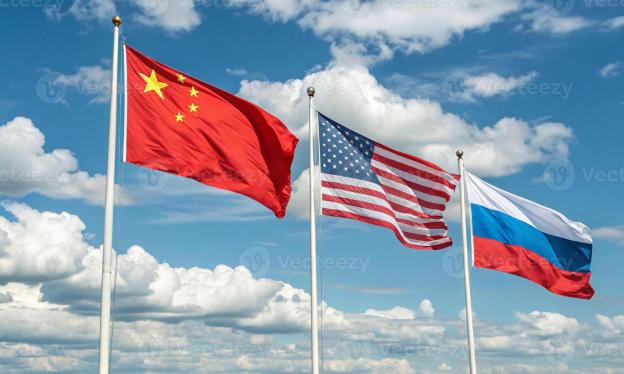
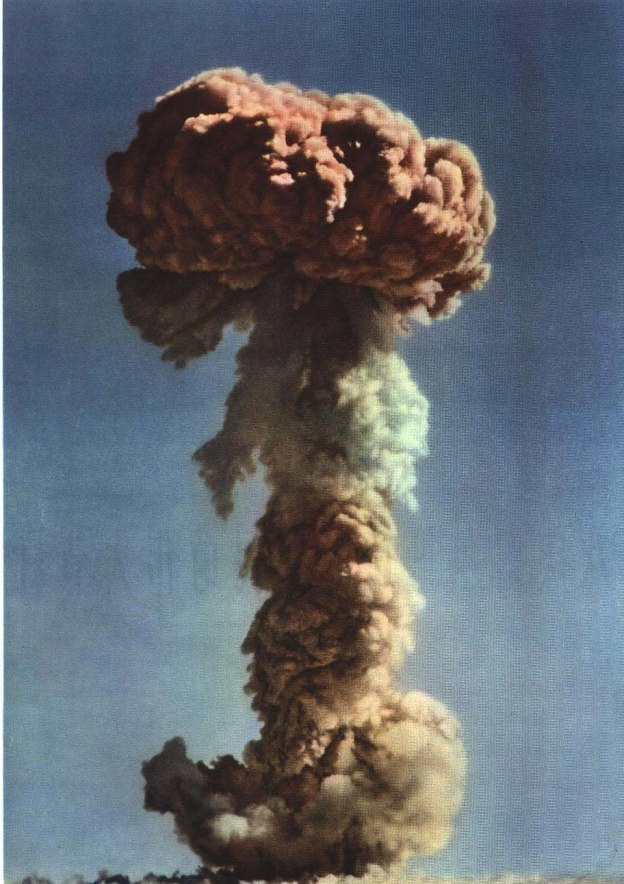
The new nuclear race has begun. But unlike during the Cold War, the U.S. must prepare for two peer rivals rather than one—at a time when it has lost its clear industrial and economic edge. China, which long possessed just a small nuclear force, is catching up fast, while Russia is developing a variety of new-generation systems aimed at American cities…Russian President Vladimir Putin has already used nuclear saber-rattling to throttle American support for Ukraine. He has deployed nuclear weapons to Belarus and, in 2025, tested a nuclear-powered missile and a nuclear-powered submarine drone that he claims are impervious to American defenses.

While Russia and the U.S. are still abiding by some arms-controls limit…China, unconstrained by any commitments, is quietly but rapidly leaping ahead. According to American estimates, Beijing will reach rough parity with the U.S. in deployed nuclear warheads by the mid-2030s.

Chinese leader Xi Jinping for the first time showcased China’s nuclear triad—its land, sea and air-launched ballistic nuclear missiles—at a Beijing parade honoring the 80th anniversary of victory over Japan in September 2025. Putin, sitting to his right atop the Gate of Heavenly Peace, took note. So did North Korea’s Kim Jong Un, sitting to his left.

Excerpt from Yaroslav Trofimov, The Nuclear-Arms Race Is Now a Three-Way Contest, WSJ, Nov. 16, 2025

Mining Giants and Little People: Mariana Dam Disaster

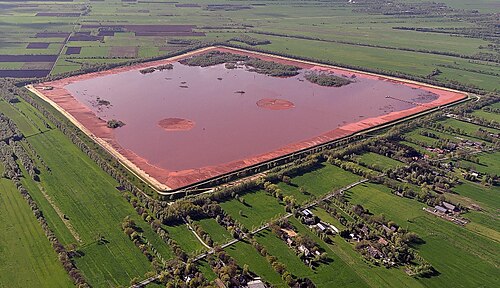
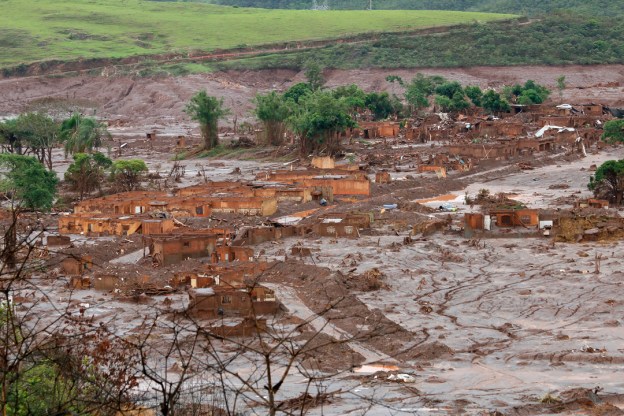
Mining company BHP has been found liable on November 13, 2025 for a 2015 dam collapse in Brazil,….[Note that this disaster was followed by yet another disaster in 2019 the Brumadinho dam disaster] The dam collapse killed 19 people, polluted the river and destroyed hundreds of homes. The civil lawsuit, representing more than 600,000 people including civilians, local governments and businesses, had been valued at up to £36bn ($48bn).

The dam in Mariana, southeastern Brazil, was owned by Samarco, a joint venture between the mining giants Vale and BHP. The claimants’ lawyers argued successfully that the trial should be held in London because BHP headquarters “were in the UK at the time of the dam collapse”. A separate claim against Samarco’s second parent company, Brazilian mining company Vale, was filed in the Netherlands, with more than 70,000 plaintiffs.

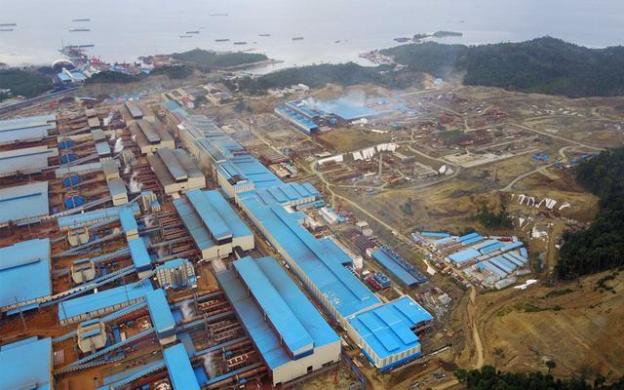
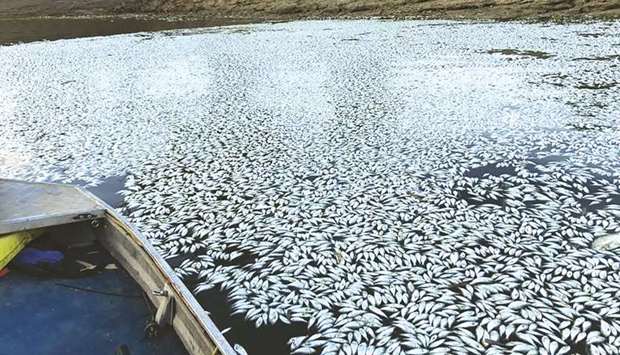
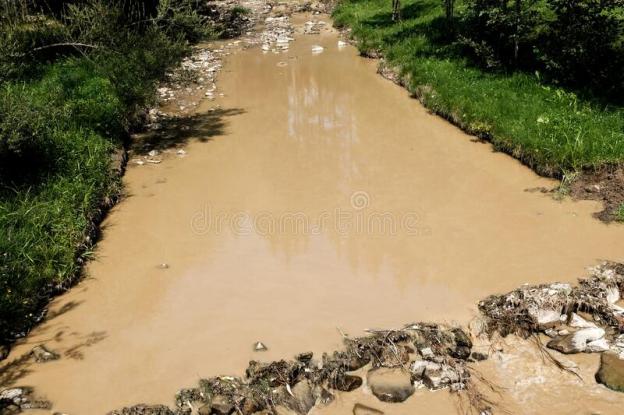
The dam was used to store waste from iron ore mining. When it burst, it unleashed tens of millions of cubic metres of toxic waste and mud. The sludge swept through communities, destroying hundreds of people’s homes and poisoning the river. Judge Finola O’Farrell said in her High Court ruling that continuing to raise the height of the dam when it was not safe to do so was the “direct and immediate cause” of the dam’s collapse, meaning BHP was liable under Brazilian law.

Excerpt from Ione Wells, UK court finds mining firm liable for Brazil’s worst environmental disaster, BBC, Nov. 14, 2025

———-

According to the UN Special Rapporteur who visited Brazil in 2019 and met BHP and Vale on numerous occasions, ” BHP and Vale rushed to create the Renova Foundation to provide the communities [affected by the collapse of the dam] an effective remedy. Unfortunately, the true purpose of the Renova Foundation appeared to be limit liability of BHP and Vale, rather than provide any semblance of an effective remedy

Furthermore, inadequate information was available about the toxicity of the waste after the Mariana disaster, the companies insisted that it was non-toxic, and rejected calls for precaution. Only three weeks after concerns were raised was information availed. When health impacts in Barra Longa emerged years later, Renova sought to exert ownership of epidemiological and toxicological studies by Ambios to suppress disclosure. Read the full report of the Special Rapporteur here.

Shut Up and Give Up: How to Deal with Environmental Disasters

The worst day of Bathsheba Musole’s life was February 18, 2025. It started with a deafening crash when the 30-foot wall around a toxic-waste pool collapsed at the Chinese copper mine above her village. A poisonous river of a stinking yellow liquid rushed downhill, inundating homes and fields, including the one where she grew corn to feed her eight children. The floodwater, laden with cyanide and arsenic, rose chest-high. “I thought I would drown,” said Musole, 48 years old, in a recent interview.

In August 2025, months after the Feb. 18, 2025 disaster, officials from Sino Metals, a unit of the state-owned China Nonferrous Mining Corp., showed up at Musole’s half-acre farm, which the Zambian government says is too toxic to sustain crops for at least three years. They were there to make things right, she recalled them saying. Their offer was $150, but it came with a catch. To get the money, she would have to agree never to talk about the spill, take legal action against Sino Metals or even reveal the contents of the nondisclosure agreement itself…

Zambia’s government and economy.. have grown reliant on China. Zambia collects about $2 billion a year in mining taxes, mostly from Chinese mining companies. Half of the copper mined in Zambia, much of it by Chinese companies, is exported to China. In 2024, the Zambian government announced that Chinese miners would invest $5 billion in the country by 2031…

After months of investigation, Drizit Environmental, a South African firm contracted by Sino Metals, concluded that 1.5 million tons of toxic waste had overflowed into the Kafue valley, 30 times what the company had said. Sino Metals terminated the firm’s contract a day before the final report was due…

Excerpt from Nicholas Bariyo, China Pushes to Silence Victims of African Mining Disaster, WSJ, Oct. 27, 2025

The Right to Mental Privacy: How AI Can Read You Like a Book

A technique called ‘mind captioning’ described in a scientific paper published on November 5, 2025 generates descriptive sentences of what a person is seeing or picturing in their mind using scans of their brain activity. It is based 1) on artificial intelligence models trained on the text captions of thousands of videos,0 and 2) brain scans of people watching them. The technique could help those with language difficulties to communicate better… But it raises concerns of mental privacy…

Excerpt from Max Kozlov, Mind-captioning’ AI decodes brain activity to turn thoughts into text, Nature, Nov. 5, 2025

First Pollute: Then, Fire the Clouds to Make Rain

Authorities in Indian capital Delhi unsuccessfully carried out in October 2025 a cloud seeding trial, which is the technique of altering clouds to make rain, to tackle the city’s worsening air pollution.

[What is Cloud Seeding?] Cloud seeding is done by firing small particles – usually silver iodide – into clouds to produce rain. The technique is used around the world, but experts doubt its efficacy as a long-term air pollution control measure. A team of the Indian Institute of Technology (IIT) Kanpur and the Delhi government carried out the trial over several neighbourhoods, as thick smog enveloped the city. But the attempt – the first in 53 years – was “not completely successful” due to the lack of moisture in the air. As a result, Delhi’s Air Quality Index (AQI) – which measures the level of PM 2.5 or fine particulate matter in the air that can clog lungs – is still hovering between 300 and 400, which is nearly 20 times the acceptable limit…
Delhi’s first cloud-seeding experiment was carried out in 1957, followed by another attempt in 1972, according to the Indian Institute of Tropical Meteorology. While those experiments were aimed at drought management, this was the first indigenous effort at cloud seeding to control pollution.

China has boasted about its success to manage rains before hosting the Olympics, with Beijing using rockets, cannons and drones to do cloud seeding. However, in the United Arab Emirates, questions over the technique were raised, following floods in Dubai in 2024.

Excerpt from Abhishek Dey, Why Delhi’s experiment to fix toxic smog with artificial rain failed, BBC, Oct. 29, 2025

First French Village to Relocate due to Climate Change

[T]he village of Miquelon sits only 2 meters above sea level on the archipelago of Saint-Pierre and Miquelon. Situated off the Canadian coast to the south of Newfoundland, it is an “overseas collectivity” of France, and the country’s last foothold in North America…’

But it was not until 2022 that the local government started thinking in earnest about relocating after the village narrowly missed being hit by Hurricane Fiona, one of the most expensive weather events ever in Canada. The move, when it is complete, will give Miquelon the unenviable title of the first French village to relocate because of the climate emergency. ..For now, relocation is voluntary, and nearly 50 people have signed up to move…At the same time, workers started to extend Miquelon’s water and electricity supplies to the new site. The goal is to keep the two sites connected as people move across the bridge between them.

Even though the signs of the climate crisis are obvious on the island – the ocean is slowly eating away at the isthmus that connects the parts of the island – many believe they have more time…

Excerpt from Sara Hashemi, How do you move a village? Residents of France’s last outpost in North America try to outrun the sea, Guardian, Oct. 28, 2025

Transparency against Free Speech? Exxon v. California, the Climate Risks

Exxon Mobil says rules requiring it to disclose climate risks infringe on the company’s right to free speech. The oil-and-gas giant made the argument in a suit filed October 24, 2025 (pdf) against the state of California, which is rolling out requirements for businesses to report ton their greenhouse gas emissions and climate-related financial risks. Exxon Mobil asked the court to halt the rules, arguing that they would violate free speech protections by forcing the business to use frameworks that put “disproportionate blame on large companies” such as the energy producer itself. The rules would require Exxon Mobil “to serve as a mouthpiece for ideas with which it disagrees,” the company said in the complaint, which was submitted to the U.S. District Court for the Eastern District of California.

The California regulations were set up by state laws SB 253 and SB 261: the Climate Corporate Data Accountability Act and the Climate-Related Financial Act. The first requires companies to disclose their greenhouse gas emissions, while the second mandates disclosures of climate-related financial risks.

The rules are specific to California but their oversight reaches businesses across the globe. Under SB 253, companies doing business in the state with an annual total revenue exceeding $1 billion, be they public or private, will have to disclose their greenhouse gas emissions—the ones from their immediate operations, such as electricity intake, and those from their… supply chain. Even if they are based elsewhere in the U.S. or overseas, the rules will apply.

The climate risk reporting rule, SB 261, will affect more companies. It requires public and private firms doing business in California with annual revenue of more than $500 million to disclose climate-related financial risks, along with the measures they are taking to mitigate and adapt to such risks, starting Jan. 1, 2026

Companies are also preparing for coming climate reporting rules in Europe known as the Corporate Sustainability Due Diligence Directive.

Excerpt from Clara Hudson, Exxon Mobil Sues California Over Looming Climate Disclosure Rules, WSJ, Oct. 27, 2025

Why Arab Men Rape Black Women in Darfur

Sudan’s civil war is taking a jarring turn in Darfur, where an Arab-led militia is now using state-of-the-art drones and execution squads to dominate the region’s Black population. Rights researchers already are warning that the killings have the potential to surpass the genocide that played out in Rwanda just over 30 years ago. The group behind the violence, the Rapid Support Forces (RSF), led by Lt. Gen. Mohamed Hamdan Dagalo, has previously been accused by the U.S. of pursuing a genocide of Darfur’s Black population. Two decades ago, its predecessor was involved in the killing of more than 200,000 people in Darfur.

This time, the killings are the work of a closely-drilled and well-armed rebel force that already has established a parallel government to run Darfur, an expanse of western Sudan roughly the size of Spain. RSF fighters are armed with bomb-carrying Wing Loong II and FeiHong-95 drones, made in China, and supplied by the United Arab Emirates to help expand its own interests in the region.

The RSF have been conducting door-to-door searches, picking out non-Arab men and boys before executing them… Witnesses and residents say militia members swept through the city, raping Black women, detaining aid workers and forcing the last remaining residents to leave… Black women with long hair are systematically separated and raped, according to interviews with multiple aid workers and victims.

According to Eric Reeves, a fellow with the Nairobi-based Rift Valley Institute: “The fierce ethnic animus of the RSF toward non-Arab civilians is equal to that of the Hutus toward the Tutsis in Rwanda. The obscene violence is clearly comparable.”

Excerpt from Nicholas Bariyo, Sudan Militia, Armed With Drones, Hunts Down Black Population of Darfur, WSJ, Oct. 31, 2025

Emit all the Carbon You Want; But Please! Don’t Greenwash

A French court, October 23, 2025 ruled oil and gas giant TotalEnergies had engaged in “misleading commercial practices” by overstating its climate pledges—the first such ruling worldwide against a major oil company for climate misinformation. The ruling is the first conviction in the world against an oil company, and a great win against greenwashing the act of claiming to be more environmentally responsible than in reality.

Find here a machine-translated pdf of ruling.

While United States Hibernated, China Salivated

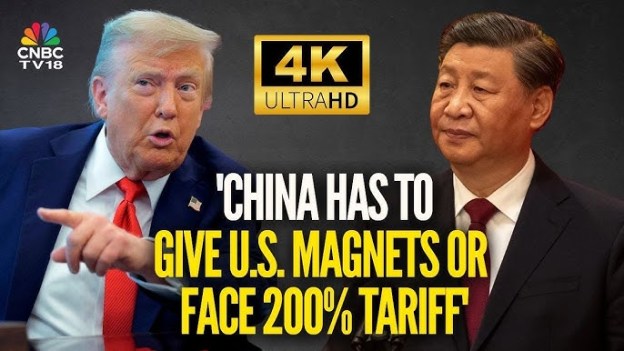
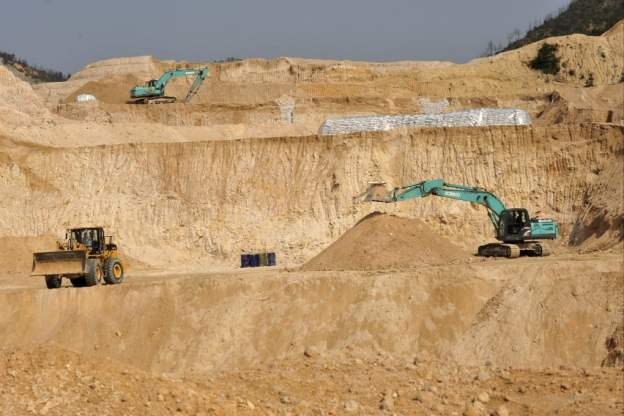
When China tightened restrictions on rare-earth exports in October 2025, stunning the United States, it was the latest reminder of Beijing’s control over an industry vital to the world economy. China’s dominance was decades in the making. Since the 1990s, China has used aggressive tactics to build up and maintain its lock over rare-earth minerals, which are essential to making magnets needed for cars, wind turbines, jet fighters and other products. Beijing provided financial support to the country’s leading companies, encouraged them to snap up rare-earth assets abroad, and passed laws preventing foreign companies from buying rare-earth mines in China. It eventually consolidated its domestic industry from hundreds of businesses into a few giant players, giving it further leverage over prices…

In 1995, Chinese state-linked companies received U.S. government approval to buy the rare-earth materials and magnet business started by General Motors, called Magnequench. In the following years, the Chinese ownership shut down all its rare-earth plants in the U.S. and shipped the equipment to China. Top American engineers were offered opportunities to go to China and set up new plants there.  “There were some colleagues that were dead set against it, saying they would never help China learn our technology,” said one magnet expert who ultimately agreed to go to China. “When I arrived, I could not believe what I was seeing. The number of new factories being built, and the rate at which they were being built, was mind-blowing,” he said….  By the mid-2000s, the U.S. rare-earth industry had been all but wiped out. Mountain Pass, America’s major rare-earth mine, had been shut down, as had virtually all American facilities that processed rare earths and turned them into magnets. China produced around 97% of the world’s rare earths, giving it what was effectively a global monopoly…

By 2021, the U.S. government was growing more worried about China’s ability to weaponize rare earths, causing prices to jump. Washington began offering large-scale funding for new rare-earth plants, including a refinery in Texas to be built by Lynas, an Australian rare-earth company. But in 2021, the Association of China Rare Earth Industry issued a warning: to China’s leadership If Beijing wanted to maintain “China’s absolute dominant position,” the country needed to relax state production quotas. Beijing responded in 2022 by pushing up output by 25%, the most in years, with another large increase the following year. Prices tanked, hitting the bottom lines of Western producers and leading some to unload assets…Beijing also introduced new measures preventing the transfer of its rare-earth processing technology abroad.

Excerpt from Jon Emont, How China Took Over the World’s Rare-Earths Industry, WSJ. Oct. 19, 2025

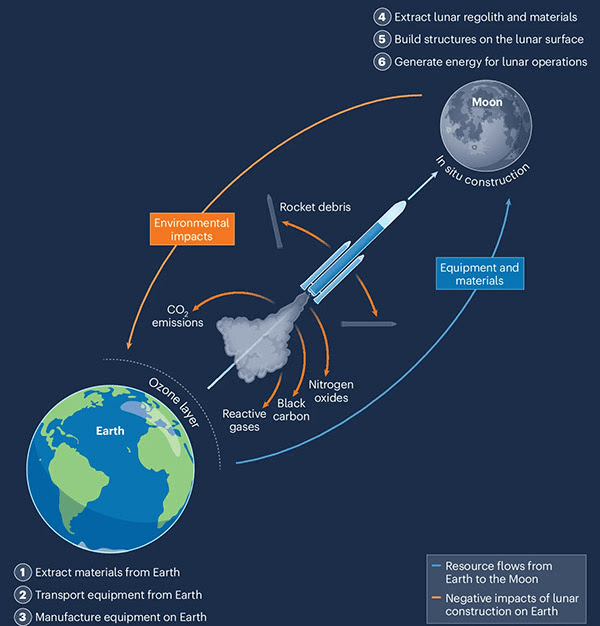
Building on the Moon: the Environmental Impact

The Environmental Burden of Building on the Moon

Is Violence Necessary for the Protection of Environment?

Six million antelope swarm across an area the size of Illinois,in Sough Sudan, a mass movement of mammals…African Parks, the Johannesburg-based conservation group that manages natural areas on behalf of South Sudan’s government, allowed The Wall Street Journal access to the 58,000-square-mile wilderness on the eastern bank of the White Nile….Although scientists and, of course, locals have known about the migration for years, only recently have researchers understood its staggering dimensions. In 2023, African Parks conducted an aerial survey revealing the movement included some 5.1 million white-eared kob, which generally move in a U shape in and around Boma National Park, sometimes crossing into Ethiopia’s Gambella National Park…

The interethnic violence that plagues South Sudan has, to a degree, helped protect the animal migration…South Sudanese rebels fought for decades to break away from Sudan. The South, mostly animist and Christian, finally won independence from the largely Muslim North in 2011, but quickly descended into civil war along ethnic lines. The war ended in 2020, but fighting in 2025 suggests stability remains a distant hope.

Among the region’s ethnic groups, the heavily armed Murle people in and around Boma National Park are known for stealing cattle and children from the Dinka and Anuak. Fighting is a way of life for Murle men, who divide themselves into age sets. Younger men gain status by taking on the men above them, with sticks and AK-47s, sometimes with lethal effect. Their torsos sometimes bear decorative scars resembling assault rifles…The Murle are so intimidating that other ethnic groups keep their distance to the extent possible. That has created a sort of no-man’s-land both in the parks and the places in between. “You’ve got this massive space that has allowed the migration to flourish,” says John Vogel, manager of Badingilo park.

With war, however, have come guns, and the temptation to poach is strong. Increasingly, hunters armed with military-grade weapons have been mowing down entire herds of antelope and just taking what they can carry to market on motorcycles. In a single month this year, African Parks counted 14,000 antelope carcasses passing through the town of Bor, where each animal sells for about $50, a vast amount to a poor rural family…

Excerpt from Michael M. Phillips, Researchers Track World’s Biggest Animal Migration, WSJ, Sept. 6, 2025

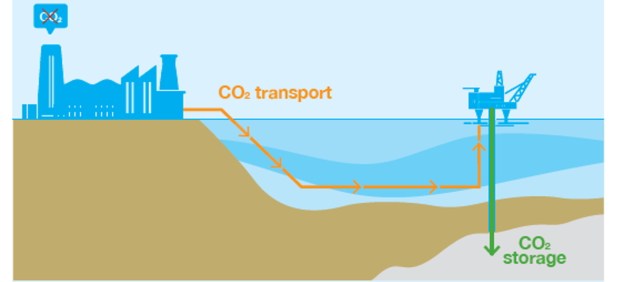
A Pipe Dream: Carbon Capture and Storage

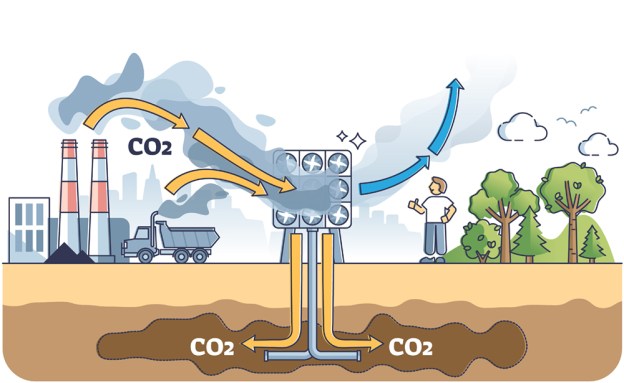
Drawing down carbon from the air and stashing it in underground rock formations has been framed as an essential way to slow and reverse global warming. But new research published in the journal Nature finds there are far fewer suitable places to do this than previously thought.

After screening out “risky” areas, like those that are vulnerable to earthquakes, a team of researchers from Europe and the U.S. found that the Earth can only safely store about 1,460 gigatons of injected carbon in its sedimentary basins. This is an order of magnitude less than previous estimates… 

Carbon storage “can no longer be considered an unlimited solution to bring our climate back to a safe level,” one of the study’s co-authors, Joeri Rogelj, said in a statement. “Geological storage space needs to be thought of as a scarce resource that should be managed responsibly to allow a safe climate future for humanity.” Rogelj is director of research at the Grantham Institute on climate change and the environment at Imperial College London.

Carbon storage refers to the injection of carbon dioxide into underground reservoirs where it theoretically can’t contribute to climate change.

According to the study’s authors, no previous global or regional estimate of the Earth’s technical carbon storage potential has taken into account key risk factors that would make some areas undesirable for storage. Starting from an estimate of all potentially available storage sites, their analysis cuts out areas that are too shallow, too deep, and too prone to earthquakes, as well as environmentally protected areas and areas near where people live. This reduces the total available capacity for carbon storage from 11,780 gigatons to just 1,460 gigatons of CO2, 70 percent of it on land and 30 percent on the seafloor.

They also noted some geographical disparities in the potential for carbon storage: While some historical climate polluters such as the U.S. and Canada have lots of space to safely stash carbon, others in Europe don’t. If those countries intend to make carbon storage a significant piece of their climate mitigation plans, they will likely have to look for locations in countries that have done little to contribute to climate change, potentially in Africa.

Except  from Joseph Winters, How much carbon can we safely store underground? Much less than previously thought, Yale Climate Connections, Sept. 10, 2025

How to Save Rhinos? Make them Radioactive

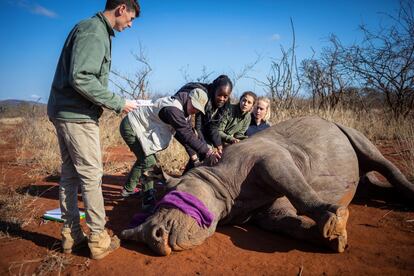
In a pioneering effort to combat wildlife trafficking of the threatened rhinoceros, a South African University began implementing a project supported by the International Atomic Energy Agency (IAEA). The project combines the safe insertion of radioactive isotopes into rhino horns… to deter and detect illegal poaching.

With over 10,000 rhinos lost to poaching in the past decade, South Africa – home to the world’s largest population of rhinos – remains a target for criminals driven by the illegal trade of rhino horn. In the first quarter of 2025 alone, the South African Ministry of Forestry, Fisheries and the Environment reported 103 rhinos poached. In response, this project run by the University of the Witwatersrand is using radiation to support conservation and enforcement efforts.

The Rhisotope Project was created in 2021 with the idea to tag rhino horns with radioactive material. This makes the horns detectable by radiation portal monitors (RPMs) already deployed at borders, ports and airports worldwide. These RPMs, commonly used to detect nuclear and other radioactive material, can now be harnessed against wildlife crime.

Excerpt from Nuclear Science and Nuclear Security Infrastructure to Protect Rare Rhinos: IAEA-Supported Project Marks a Milestone, IAEA News, July 2025

What is Mosquito Factory?

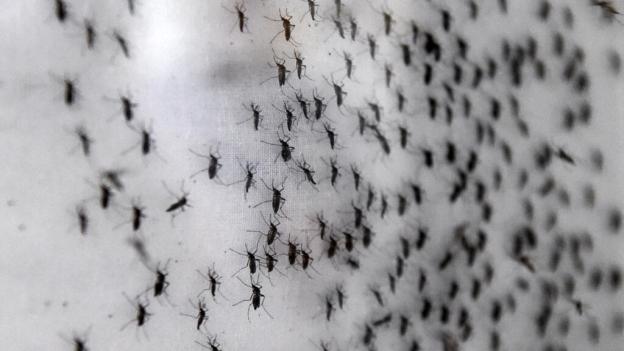
Launched in July 2025, a Brazilian mosquito factory is expected to produce 100 million eggs a week from the mosquito Aedes aegypti. However, unlike wild A. aegypti, the main transmitter of dengue virus, those churned out by the factory carry a harmless Wolbachia bacterium that curbs the insects’ ability to spread viruses including dengue and Zika. The idea is to release the modified mosquitoes, which researchers call wolbitos, into cities in Brazil, where they will mate with their wild counterparts and the females will pass the bacterium on to their offspring, gradually converting the local population.

The wolbito strategy, which is being spearheaded by the non-profit World Mosquito Program (WMP), has already shown success in Colombia, Indonesia and at home: in the Brazilian city of Niterói in the southeast, dengue cases dropped by 69% in areas where Wolbachia-carrying mosquitoes were released, compared with areas where they weren’t. Brazil’s federal government has adopted the approach to fight dengue infections — which surged to a record 6.5 million confirmed cases in the country in 2024 — alongside other preventive measures such as vaccines.

Excerpt from Mariana Lenharo, This is the world’s largest ‘mosquito factory’: its goal is to stop dengue, Nature, Sept. 3, 2025

Clouds! and Climate Change

Clouds are not just poetic. They’re pivotal in helping to regulate Earth’s temperature. And their influence on the climate is evolving in ways we’re only beginning to understand.

How exactly cloud cover will shift in a warming world is anyone’s guess; it’s one of the largest sources of uncertainty in climate science. But it should also be everyone’s concern. What happens to our clouds as the planet warms is so important that we need a renaissance in the study of clouds.

Excerpt from Gavin Pretor-Pinney, We Take Clouds for Granted, NYT, Sept. 10, 2025

Read here his beautiful essay!

For more, see Cloud Appreciation Society

Another Laughingstock: Carbon Offsets

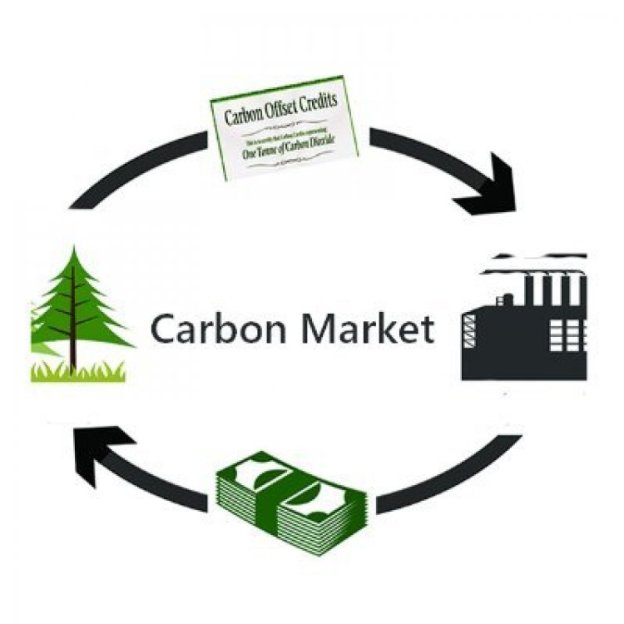
Carbon credits feature prominently in corporate climate strategies and have sparked public debate about their potential to delay companies’ internal decarbonisation. While industry reports claim that credit purchasers decarbonize faster, rigorous evidence is missing. This study (see below) provides an in-depth analysis of 89 multinational companies’ historical emission reductions and climate target ambitions. Based on self-reported environmental data and more than 400 sustainability reports, we find no significant difference between the climate strategies of companies that purchased credits and those that did not. Voluntary offsetting is not a central part of most companies’ climate strategies, and many pass credit costs directly onto their customers. While the companies within our sample retired one-fourth of all carbon credits in 2022, the top five offsetters’ expenditures on voluntary emission offsetting are, on average, only 1 percent relative to their capital expenditures.

Abstract from Niklas Stolz &  Benedict S. Probst, The negligible role of carbon offsetting in corporate climate strategies, Nature Communications,  Sept. 10, 2025

Individual Companies Can be Held Liable for Gross Contribution to Heatwaves

Climate scientists have been attributing storms, droughts and heatwaves to global warming for two decades. Now, they are tracing the chain of responsibility all the way back to the producers of fossil fuels. A study published in Nature in September 2025 shows that around one-quarter of the heatwaves recorded over 2000–23 can be directly linked to greenhouse-gas emissions from individual energy giants…some of whom include (the former Soviet Union, China (coal), Gazprom, Exxon Mobile, Chevron, National Iranian Oil Company, Saudi Aramco, BP, Shell, India (Coal)) The findings could provide fresh evidence to support lawsuits seeking to hold companies accountable for their impacts on the climate.

More than one-quarter of the 213 events recorded would have been “virtually impossible” without human-induced global warming, the study found. The emissions linked to energy companies and other major carbon emitters increased the likelihood of some 53 heatwaves by a factor of more than 10,000.

This is not the first time that climate impacts have been attributed to fossil-fuel producers, but this study go one step further than its predecessors and link individual companies directly to specific heatwaves. Legal experts say it’s a line of evidence that could feed into climate litigation that focuses on specific events, such as the 2021 heatwave that hammered the US Pacific Northwest in 2021. Already, a county government in Oregon has filed a US$52-billion civil lawsuit against fossil-fuel companies for contributing to that event.

Excerpts from Jeff Tollefson, Heatwaves linked to carbon emissions from specific companies, Nature, Sept. 10, 2025

AI Eats Up Crazy Amounts of Electricity

Global demand for AI is ramping up rapidly. Electricity demand from data centers worldwide is set to more than double by 2030 to about 945 terawatt-hours, which is more than Japan’s total electricity consumption, according to the International Energy Agency. “A single AI-focused data center can use as much electricity as a small city and as much water as a large neighborhood,” according to the Union of Concerned Scientists….A data center that fuels AI can consume as much electricity as 100,000 households, but the largest ones that haven’t been completed yet could consume 20 times as much. It’s a particular problem in the U.S., with data centers making up nearly half of its electricity demand growth over the next five years, according to the IEA.
There’s also been heightened concern recently about the amount of water that is required to cool electrical equipment in data centers. Just a few weeks ago, French company Mistral AI released a report detailing the environmental footprint of training its language model Mistral Large 2, including the amount of water it consumes. The water consumption from generating one page of text is 0.05 liter, enough to grow a small radish, the report says…

Excerpt from Clara Hudson, Google Wants You to Know the Environmental Cost of Quizzing Its AI. WSJ, Aug. 21, 2025

Secrecy in Space

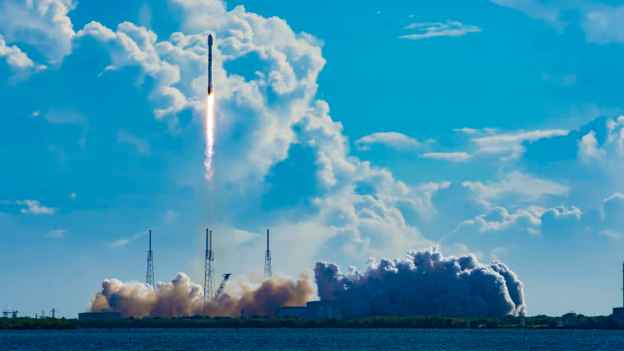
A Pentagon spaceplane called X-37B zoomed into orbit this week for its eighth mission. When it will come back is a secret. The uncrewed vehicle can spend months or years in space before it re-enters the atmosphere.. That combination of flexibility and endurance has made it a favorite tool for military officials looking to quickly deploy new technologies on the final frontier. A SpaceX rocket launched X-37B on August 21, 2025 from Florida’s Kennedy Space Center. Government and commercial engineers have spent years experimenting with lasers that allow satellites to share large amounts of data in space. The Pentagon is also testing tools like the inertial sensor, which could help improve navigation in situations where Global Positioning System signals aren’t available.

The spacecraft has spent the last five months on Earth after a 434-day mission that included tests of orbital maneuvers known as “aerobraking.” The move helps the vehicle use the drag from the planet’s atmosphere to change its orbit without using much fuel.  Military officials haven’t disclosed many details about the payloads that X-37B carries, but past missions included testing different materials in orbit and an experiment that transmitted solar energy to the ground. Its fifth flight released three small satellites that government officials didn’t acknowledge until they had fallen back to Earth. There’s a global strategic interest in saying what you’re putting in space,” said Jonathan McDowell, a researcher at the Harvard-Smithsonian Center for Astrophysics. If the U.S. hides its satellites, “then the Chinese are going to start doing it too, and that’s not in our interest.”

China now fields more than 1,000 satellites and has developed a range of radio jammers, antisatellite missiles and other weapons capable of targeting Pentagon assets, according to a U.S. Air Force document released in May 2025. It also operates a competing spaceplane, called Shenlong, that has flown several missions.]

Excerpt from Drew FitzGerald, The Pentagon’s Mysterious X-37B Space Plane Embarks on New Mission, WSJ, Aug. 22, 205

Laughingstock: The Net-Zero Banking Alliance

The Net-Zero Banking Alliance (NZBA) said in August 2025 that it was pausing operations and initiating a vote to decide on whether to continue working as a membership-based alliance or operate as a framework initiative…The move by the NZBA to suspend activities comes after numerous banks from the U.S. and Europe left the alliance. Those banks said that being part of such an organization was no longer necessary and that their business practices now incorporated the ESG principles learned over the past five years…Shortly after President Trump’s electoral win, major banks including JPMorgan, Citi and Morgan Stanley exited the alliance that they had proudly been a member of for years. The departure of the banks came as many faced strong pressure from the Trump administration and Republican attorneys generals to oppose climate groups and ESG investing more generally…

A sister organization, the Net Zero Asset Managers initiative was also set up, with a similar remit but instead focused on the activities of asset managers. It suspended activities in January 2025 after a wave of departures from the likes of BlackRock and Vanguard…. BlackRock, State Street and Vanguard were sued in November2024 by Texas Attorney General Ken Paxton, who alleged that the asset managers were violating antitrust law by being part of alliances like the NZAM initiative, which worked to move investments away from fossil fuels, especially coal. Paxton said this raised energy costs for consumers by not providing the full remit of energy sources.

In August 2025, a federal-district court judge denied the asset manager’s motion to dismiss the case, allowing litigation to continue under Texas and federal antitrust laws. “Today’s victory represents a major step in holding them accountable. I will continue fighting to protect Texas and defend America’s energy independence from this unlawful conspiracy,” Paxton said…

Excerpt from Yusuf Khan,, Net-Zero Banking Alliance Suspends Activities Amid Wave of Departures, WSJ, Aug. 27, 2025

International Environmental Law: Fairness, Effectiveness and World Order

Second Edition (2025) will be out in October 2025

Check my blog on the Cambridge website

Fifty Years of International Environmental Law: Looking Back and Looking Ahead

Climate Change Can Wait: China’s Greed for Oil

China’s thirst for oil drove global demand for decades…Chinese officials have long worried that the U.S. and its allies could hamstring the nation’s economy by choking off its supply of foreign oil. So China has poured hundreds of billions of dollars into weaning itself off the imported stuff by reviving domestic production and swiftly building the world’s leading electric-vehicle industry. “The energy rice bowl must be held in our own hands,” Chinese leader Xi Jinping has said.

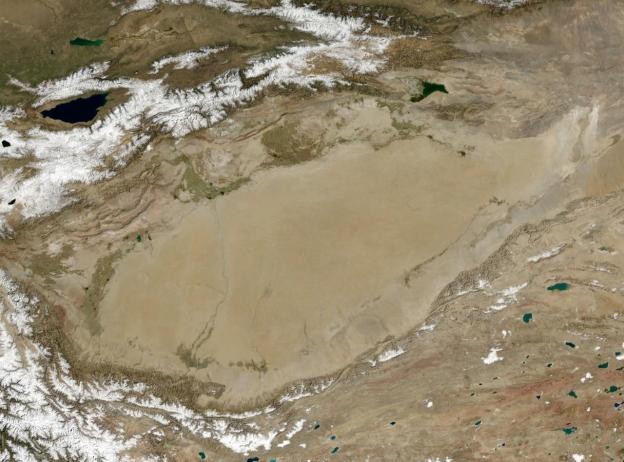
In a remote corner of China. the Tarim Basin, called the “sea of death” for its harsh conditions, oil workers are trying to coax more crude out of the ground by drilling holes as deep as Mt. Everest is high. State-owned PetroChina reported $38 billion of capital expenditures in 2024, nearly as much as Exxon Mobil’s and Chevron’s combined. China’s desire for energy independence dates all the way back to former leader Mao Zedong, who once dispatched tens of thousands of workers to search for oil in China’s northeast to ensure China wouldn’t be dependent on imports…

In July 2018, Xi personally ordered state-owned companies to revive domestic oil production to safeguard national security. Three state-owned oil majors invested an additional $10 billion the following year in exploration and production. They zeroed in on offshore areas such as the South China Sea and the Bohai Sea off the country’s northeast coast, as well as remote reserves near China’s western border with Kyrgyzstan, in a region called the Tarim Basin

In the deserts of the Tarim Basin crews are exploring some of the nation’s deepest reserves. Summer temperatures can top 120 degrees, and in the winter they can hit minus 20. Such ultradeep exploration is expensive, with some wells costing three times as much as shallower traditional wells, a Chinese oil executive told state media.  In 2023, Xi held a video call with Tarim Basin oil workers, praising their “indispensable contributions” to the nation. About 5% of China’s total oil and gas output in 2024 came from the basin’s deep reservoirs, a number Chinese oil executives intend to increase.

As of May 2024, PetroChina’s parent company, China National Petroleum, said it had drilled 193 wells in the Tarim Oilfield at least 5 miles deep. In the U.S., many wells are a mile or two deep.

Excerpt from Brian Spegele, How China Curbed Its Oil Addiction—and Blunted a U.S. Pressure Point, WSJ, July 21,2025

Unbelievable! The Astonishing Underworld of Seafloor

A scientific expedition into a region of the Pacific Ocean named for Hades, Greek god of the underworld, has uncovered an other-worldly ecosystem 30,000 feet deep. “It’s a totally new thing that has not been seen before,” said Dominic Papineau, an exobiologist at China’s State Key Laboratory of Deep-sea Science and Intelligence Technology in Sanya.

Papineau is co-author of a groundbreaking research paper published in the journal Nature, describing the astonishing array of creatures who live in this daunting and dark environment, sustained by chemicals that leach from the ocean floor. Researcher Mengran Du told The Washington Post she wasn’t sure what expect when she descended in a three-person submersible into one of the deepest trenches in the Pacific. What she and others from China’s Institute of Deep-sea Science and Engineering saw when they got there was, she said, “unbelievable.”

Like skyscrapers, thick clusters of tubeworms with red-tinged tentacles jutted from the ocean floor, phosphorescent snails scaling them like window washers, she said. In between, white bristly creatures wriggled and writhed…

Scientists have long studied organisms that thrive around hydrothermal vents. But those native to areas known as cold seeps — where gases like methane and hydrogen sulfite leach from the seafloor at near-freezing temperatures — have been little studied. 

“Flourishing chemosynthetic communities had long been postulated to exist in the trenches, but this is the first paper that documents their existence below 9 kilometers and at multiple locations,” she said.  The adaptability of organizations in those trenches is a shot in the arm for scientists searching for evidence of life in oceans on other celestial bodies, including Europa, a moon of Jupiter.

Excerpt from Scientists Find New Ecosystem in Deepest Trenches of Pacific Ocean, US News and World Report, Aug. 4, 2025
 

If There is Hell, it Must Be Like This

On 6 August 1945, the United States dropped an atomic bomb on the Japanese city of Hiroshima, killing 80,000 people in a single day, and tens of thousands more in the subsequent months. “If there is a hell,” survivor Ōiwa Kōhei recalled thinking of the aftermath, “it must be just like this.” Kōhei, 13-years-old at the time, was plagued for months by radiation poisoning, and forever by the psychological trauma. The hibakusha — the Japanese term for atomic-bomb survivors — “will not be with us for much longer, so it is essential that their irreplaceable living testimony should continue to be diligently and accurately recorded while it is still available”, writes historian Mordecai Sheftall. Their testimony must be preserved not for historical record, but so that current and future generations will take the lessons of their experiences to heart, says Sheftall.

Excerpt from Mordecai Sheftall, The Sun had fallen to Earth’ — a survivor’s recollection of the Hiroshima bombing, Nature, August 5, 2025

Malaysia Says No to Plastics from U.S.

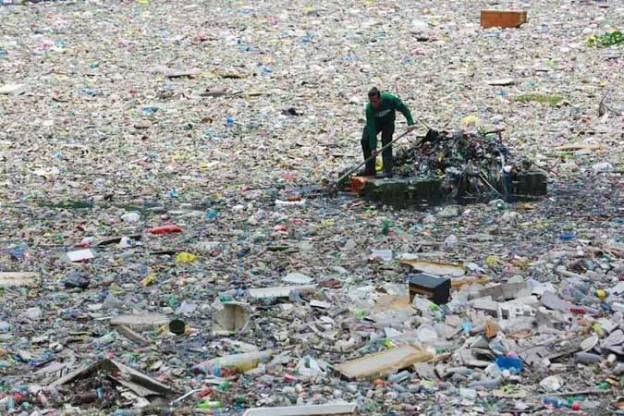
Malaysia emerged as a major destination for U.S. waste after China banned American waste imports in 2018. California shipped 864 shipping containers, or more than 10 million pounds of plastic waste, to Malaysia in 2024, according to the Basel Action Network, an advocacy group…

Under Malaysian waste guidelines announced recently, the country is no longer accepting plastic waste and hazardous waste from nations that didn’t ratify the Basel Convention, the international treaty designed to reduce the international movement of hazardous and other waste. The U.S. is one of just a handful of countries, including Fiji and Haiti, that hasn’t signed the pact….The coming ban has already disrupted trash export routes significantly, particularly for the plastics used in grocery bags, trash can liners and food wrap.

According to California’s waste agency, CalRecycle, the state exported 11.3 million tons of recyclable materials overseas to places such as Malaysia, Thailand, Vietnam, China, Taiwan, South Korea, Mexico and Canada — in 2022. That number includes 100 million pounds of scrap plastic…

Excerpt from Susanne Rust, Malaysia no longer takes U.S. plastic waste, creating a dilemma for California, Los Angeles Times, July 3, 2025

Green Frenzy Is Not Environmental Protection

Since 1960, Singapore has reclaimed around 150 square kilometres of land from the sea. In part, this is to meet demand for homes: around 80% of Singaporeans live in government-provided housing, nicknamed HDBs, after the Housing and Development Board, and many of those are in high-density skyscrapers. Singapore is the third most densely populated territory in the world, after Macau and the city-state of Monaco. Alongside this, the country’s economic success is buttressed by being the world’s busiest port outside China, hosting more than 3.11 billion tonnes in traffic in 2024.

This urban development and economic success has come at a cost for the natural environment: where once there was jungle, there is now city. Singapore has lost almost all of its primary rainforest, except for a small tract of land in the Central Catchment Nature Reserve, which sits in the middle of the island and is part of one of the two main water catchment areas. Although some of the country’s remaining non-primary rainforests, including in the Central Catchment, are protected from development, their long-term fate is a concern for environmentalists…

In a bid to achieve its sustainability goals, the government has pledged to plant one million trees by 2030 and transplant 100,000 corals into its marine waters, which NParks said in 2024 would take at least 10 years to complete. Neither project is without controversy. “Nobody is tracking how many trees we are cutting down while we are planting a million trees,”…“How about those century-old trees that are being cut down for development?”… Academics and civil-society groups say that they cannot access the same data that are available to government agencies…

Excerpts from Jack Leeming, Singapore’s fight to save its green spaces from development, Nature, May 28, 2025

De-Chinafication of Rare Earths: an Uphill Battle

China mines some 70% of the world’s rare earths, the 17 metallic elements primarily used in magnets needed for civilian and military technologies. But its 90% share of processing for rare earths mined around the world is what really concerns officials from other countries working to secure their supply.

“China is a formidable competitor,” said Ramón Barúa, chief executive of Canada’s Aclara Resources, which is opening a rare-earths mine in Brazil to supply a processing plant it plans to build in the U.S. Aclara said it plans by August to decide where in the U.S. to build its plant for separating rare-earths deposits into individual elements. Aclara signed an agreement in 2024 to supply rare earths to VAC, a German company that is building a factory in South Carolina with $94 million in Pentagon funding to make magnets for clients including General Motors…

Brazil has the world’s second-largest rare-earth reserves after China, some 21 million tons, according to the U.S. Geological Survey. That represents more than a fifth of known global reserves—and more than 10 times those in the U.S…Despite its huge reserves, Brazil has been a small player in rare earths because of its complex mining regulations and the difficulty of attracting financing from companies willing to confront entrenched Chinese competitors. Costs to mine and process Brazilian rare earths are estimated to be around three times China’s, meaning Western buyers would likely pay a substantial premium for Brazilian minerals. Only a few companies outside China have mastered rare-earth processing, and the learning curve is steep

Brazil’s first big rare-earths mine opened in 2024 by a US private equity company some 90 miles west of the town of Nova Roma…but the mine is contracted to ship most of its production to China !…Aclara plans to invest some $600 million to complete work on a larger plant next to the mine in Nova Roma to start full production in 2028.

Excerpt from Samantha Pearson, Rare-Earths Plants Are Popping Up Outside China, WSJ, May 18, 2025

The Essence of Capitalism: Shelters

SKU Distribution in Mesa, Arizona., is experiencing rapid growth as companies seek to access foreign-trade zones and navigate rising U.S. tariffs. Companies can use foreign-trade zones to defer tariff payments until products are sold, which operators say helps them manage supply chains and avoid bottlenecks. The foreign-trade zone program dates back to the 1930s, with roughly 260 such facilities now in the U.S. In some, inquiries from companies have recently quadrupled.

SKU Distribution had just one customer in 2024 at its Mesa, Arizona, warehouse. In 2025, it is teeming with new business from companies storing items such as aluminum poles, ice picks, carabiners and firearm safes. That is because the warehouse is the ultimate U.S.-based tariff refuge

Arizona is the foreign-trade zone capital of America, its facilities employing more workers than those of any other state, Commerce Department data shows. Apple, Intel, Honeywell Aerospace, Sub-Zero and Ball Corp. all manufacture within the Arizona facilities, together processing more than $7.5 billion in merchandise in 2023. The program has helped turn this strip of the Phoenix-area desert into a chip-making hot spot. Now, Trump’s tariffs are drawing a clientele of smaller companies looking for refuge from the trade war.

Excerpt from Owen Tucker-Smith, Inside the Arizona Warehouse That Has Become Shelter in Tariff Storm, WSJ, May 12, 2025

See also United States as a Tax Haven

Are Banks Responsible for Climate Change? the Lawsuit Against ING

Friends of the Earth Netherlands, together with 30,000 co-plaintiffs, have started a lawsuit against ING to bring the bank’s climate goals in line with the Paris Agreement…Milieudefensie is demanding that ING halves its emissions in 2030 and ceases financing companies that still develop new oil and gas projects…Milieudefensie has gathered almost 10,000 pages of evidence that substantiate the harmful effects of ING’s policy. ..Nicky van Dijk, research coordinator, adds: “ING’s own annual report states that ING is currently financing fossil fuel energy with 30 billion euro… 

Excerpt from Milieudefensie and more than 30,000 co-plaintiffs take ING to court, Milieudefensie Press Release, Mar. 28, 2025

To Pollute is to Own: U.S. and Greenland

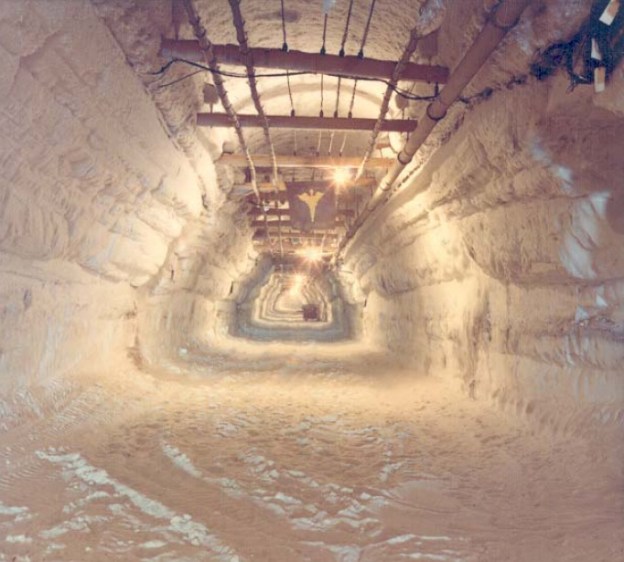
 NASA scientists discovered in 2024 remnants of Camp Century, a Cold War-era U.S. military base, under Greenland’s ice sheet. Project Iceworm, a clandestine Pentagon plan, aimed to build nuclear-missile launch sites beneath the Arctic ice. The underground site, which was designed to store 600 medium-range ballistic missiles, reveals the extent of U.S. involvement in Greenland going back over half a century. 

Camp Century, as the outpost was called, was partially constructed in 1959, and abandoned in 1967 after the ice sheet was deemed too unstable to support the proposed missile-launch network. Over the years, ice accumulated and the facility is now buried under at least 100 feet of ice…

The presence of U.S. nuclear weapons has historically been a source of friction with Denmark. The U.S. military at the time didn’t disclose Camp Century’s nuclear-related purpose to Copenhagen, a self-declared nuclear-free zone…In 1968, a nuclear-armed B-52 bomber crashed near the Thule Air Base, causing the payload to rupture and disperse, leading to radioactive contamination of the sea ice. The incident led to public controversy in Denmark, as did the revelation that the U.S. stored nuclear weapons at the Thule Air Base without informing Copenhagen or Greenland.

Excerpt from Sune Engel, The U.S. Nuclear Base Hidden Under Greenland’s Ice, WSJ, May 14, 2025

New Climate Lawsuit Against Shell, 2025

Shell is under intensifying legal scrutiny as environmental organization Milieudefensie, the Dutch branch of Friends of the Earth, announces fresh legal action. The NGO, based in Netherlands, claims that by investing in new oil and gas projects despite a previous court decision requiring emissions reductions, the oil and gas company violated its duty of care under Dutch law. This case could escalate tensions between fossil fuel corporations and climate activists pressing for stricter adherence to international climate goals.

The foundation of this new lawsuit lies in a historic 2021 court decision, upheld in part during a 2023 appeal, which found Shell partially liable for climate change. The appeal acknowledged Shell’s obligation to reduce CO2 emissions, citing its substantial role in contributing to the climate crisis. However, it stopped short of specifying a target percentage for reductions. Milieudefensie now argues that Shell’s ongoing fossil fuel investments clearly violate the legal duties affirmed by that judgment. “Companies like Shell have it within their power to combat the climate problem and therefore have a legal obligation to reduce emissions,” stated the Dutch Court of Appeal.

Shell has stated  that it plans to expand fossil fuel operations, particularly in the sectors of liquefied natural gas and oil production through 2040. This strategy directly conflicts with climate science, which indicates that new fossil fuel development must be halted to limit global warming to 1.5°C.  More than 700 new oil and gas fields are presently under development by Shell, per a thorough report by Milieudefensie and Global Witness. Since May 2021, Shell has finalized investment decisions for 32 new projects, potentially resulting in 972 million tons of CO2 emissions, an amount nearly equivalent to the annual emissions of the entire European Union.

Excerpt from Shell Faces Renewed Legal Pressure on Fossil Fuel Expansion, Zacks, May 14, 2025


Mines and the Meaning of Eternity

There are 237,000 metric tons of arsenic trioxide locked in the subterranean caverns of Giant Mine on the edge of Yellowknife, an unwanted byproduct from what was once one of the largest gold mines in Canada’s Northwest Territories. Consider that it only takes 140 milligrams of arsenic trioxide to kill a person; there’s enough of the poison here to kill 1.7 trillion people. The local indigenous people refer to the arsenic as a sleeping monster. Company and government officials hoped the arsenic would remain frozen underground forever. But mining operations and climate change caused the permafrost to melt, raising fears in the city of 20,000 people that toxic material could mix with the runoff and slither into the nearby waters of Great Slave Lake, the world’s 10th-largest freshwater body. From there, it could snake 1,000 miles along the Mackenzie River to the Beaufort Sea in the Arctic Ocean, poisoning the wildlife, the land and the water along its path.

The gold mine was one of the largest in Canada’s Northwest Territories, producing 7.6 million ounces of gold between 1948 and 2004—and leaving behind a toxic legacy.
But extracting minerals from the North carries high, and enduring, risks and costs. Current estimates put the cost of cleaning up Giant Mine at $3.2 billion, making it the most expensive mine remediation in Canadian history. The last owner, Royal Oak Mines, went bankrupt and left the bill to the government…

Canada’s government estimates there are roughly 24,000 contaminated sites across the country, which will cost 10 billion Canadian dollars—or $7.25 billion—to clean up. “Mining is a necessary evil. Fundamentally, it’s a license to pollute,” said David Livingstone, former chairman of the Giant Mine Oversight Board, an independent advisory body that monitors the Giant Mine cleanup. 

The arsenic at Giant Mine is the legacy of five decades of gold mining. Between 1948 and 2004, the mine produced 7.6 million ounces of gold, worth roughly $20 billion at today’s prices. There was so much gold that local indigenous people named Yellowknife “Somba K’e,” which means Money Place…But the precious metal was embedded in arsenopyrite, a mineral containing iron, sulfur and arsenic. To get to the gold, miners had to roast the rock, a process that also transformed the once-stable arsenic into toxic gas.

In the early years, miners ejected the arsenic out of a smokestack, believing the poison would be diluted in the air. Instead, the smoke condensed and fell to earth as a fine dust. It collected in the water and on the land. Cows and other livestock sickened and died. In 1951, an indigenous toddler died after eating arsenic-laden snow. After that, miners collected the dust and pumped it back underground, theorizing the arsenic would remain frozen in permafrost. For decades, the system worked. But the Canadian North is warming at a rate four times faster than the rest of the world, and the once-frozen ground is thawing.  Water is trickling into Giant Mine, a potentially catastrophic situation because the highly soluble arsenic trioxide could get carried into Baker Creek.
The creek runs through the mine site, and then into Yellowknife Bay in Great Slave Lake.
The headwaters for the Mackenzie River originate at Great Slave Lake. The river travels more than 1,000 miles to the Beaufort Sea in the Arctic Ocean…

Today, maintenance of the mine is an ongoing task. Waste materials, called tailings, are kept in large reservoirs around the mine. To stop dust contaminated with arsenic and cyanide from flying downwind, workers spray the tailings with a chemical mix called Rhino Snot, a blue-green dust suppressant developed by the U.S. military. But there are still times when wind carries dust southeast toward Ndilǫ, an indigenous community located on the west side of Great Slave Lake’s Yellowknife Bay, less than 2 miles from the mine as the crow flies. When the clouds of dust descend, the Yellowknives Dene council calls residents to warn them to shut their windows and stay indoors, said Ndilǫ Chief Fred Sangris, one of two chiefs of the Yellowknives Dene. “We tell them the mine is coming,” he said.

Sangris is so angry about what Giant Mine has done to the Dene’s traditional hunting grounds that he can’t even look at it. “It’s a poison place,” he said. “It’s a place to avoid.”…“They say forever, and they mean 100 years,” he said. “They don’t know what forever is.” 

Excerpt from Vipal Monga et al., Deep in an Abandoned Gold Mine, a Toxic Legacy Lurks, WSJ, May 5, 2025

Indigenous Peoples against Netflix and Meta: Northern Kenya Rangelands Carbon Project

The Northern Kenya Rangelands Carbon Project managed by the Northern Rangelands Trust, a Kenyan nonprofit, is the world’s largest soil-carbon plan, its boosters say. Launched in 2012, it was designed to preserve some 4.7 million acres of grasslands to lock in carbon on land communally owned by the Maasai, Borana and other pastoralist groups, which is part of a network of protected areas hosting threatened species such as cheetahs, black rhinos and… giraffes.

On May 13, 2025, an international nonprofit , Verra, that certifies carbon credits suspended approval for the project, adding to the questions about the credibility of similar carbon-capture projects and whether they actually benefit the people who live off the land….A spokesperson for the group, Verra, said credits are now on hold as it reviews the program after a long-running dispute between the conservationists who created the rangelands project and local herders, who say the project disrupts grazing patterns built over the course of centuries…

The dispute reached a flashpoint in 2021, when 165 pastoralists from two conservation areas sued the Northern Rangelands Trust in Kenyan court for allegedly using their land without consent. The plaintiffs accused the trust of creating the conservancies—which acted as the herders’ representatives in the carbon deal—through pressure and intimidation rather than informed consent. The court ruled in their favor in January 2025.

Lawyers and rights groups representing pastoralists say the ruling, which applies to one of the biggest conservancies, invalidates around 20% of the entire project’s credits. They say credits in around half of the project’s 14 wildlife conservancies could be vulnerable to similar lawsuits. That could leave big corporations holding invalid offsets and open to charges from rights groups that they overstate their commitment to environmentally friendly practices.

The trust has sold over six million carbon credits, worth between $42 million and $90 million depending on market prices, to buyers including Netflix and Facebook parent Meta. Tech companies use credits to offset emissions from their energy-intensive operations, such as producing movies, running data centers to stream video, powering social media and training cutting-edge artificial-intelligence models, as well as from employee travel. Meta became carbon neutral—that is, it purchased enough credits to compensate for all of its emissions—in 2020, and Netflix followed suit two years later.

Excerpts from Caroline Kimeu, Netflix and Meta’s Carbon Credits Snared in Dispute With Maasai Herders, WSJ, May 13, 2025

See also Kenya: Landmark court ruling delivers devastating blow to flagship carbon offset project

Musk’s Own Town–Starbase Texas

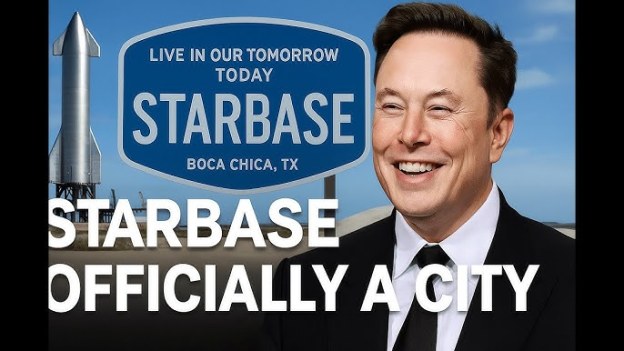
On May 3, 2025, Elon Musk’s SpaceX prevailed in an election over the weekend to turn Starbase, his launch site in Texas, into a city. Starbase was victorious in becoming a type C city, which in Texas applies to a previously unincorporated city, town or village of between 201 and 4,999 inhabitants. The city includes the SpaceX launch facility and company-owned land covering a 1.6 square-mile area.

What is a Company Town from Wikipedia

The mayor is 36-year-old Bobby Peden, who has spent more than 12 years working for SpaceX and is currently vice president for Texas test and launch operations. Starbase has two commissioners, both from the SpaceX employee ranks….Musk, who has assumed a central role in President Donald Trump’s administration responsible for slashing the size of the federal government, began acquiring land for SpaceX in Boca Chica, Texas, about a decade ago. The first integrated Starship vehicle launched from the site, known as Starbase, in April 2023, and exploded in mid-flight. The U.S. Fish and Wildlife Service soon disclosed details about the aftermath of the explosion, including that a “3.5-acre fire started south of the pad site on Boca Chica State Park land,” following the test flight.

State and federal regulators have fined SpaceX for violations of the Clean Water Act, and said the company had repeatedly polluted waters in the Boca Chica area. Environmental advocates and indigenous groups have also sued both the Federal Aviation Administration and SpaceX over the company’s flight tests and launch activity in the area.

Those groups said in legal filings that SpaceX caused harm to local habitat and endangered species due to vehicle traffic, noise, heat, explosions and fragmentation caused by the company’s construction, rocket testing and launch practices.

Excerpts from Lora Kolodny, Here are the SpaceX employees who were elected to run Musk’s new company town of Starbase, CNBC, May 5, 2025

How Microplastics Enter Plants

Plastic production is increasing sharply. This has raised concerns about the effects of microplastics (typically defined as plastic particles smaller than 5 millimetres in diameter) and nanoplastics (smaller plastic particles that are less than 1,000 nanometres in diameter) on human health. These concerns are partly influenced by alarming findings of the presence of microplastics in various human tissues, including the brain and placenta.

Most attention is focused on soil and water as common sources of plastics that enter the food chain. However, writing in Nature, Li et al. provide strong evidence supporting the air as being a major route for plastics to enter plants. Plants can absorb plastic particles directly from the air. Particles in the air can enter leaves through various pathways, such as through structures on the leaf surface called the stomata and through the cuticle. Stomata are small openings made of cells, and the cuticle is a membrane, covered in insoluble wax, that is well suited for absorbing microplastics…

Microplastics can also travel to and enter the plant’s water- and nutrient-transporting system (called the vascular bundle) and from there reach other tissues… Given that leaves are a key part of the food chain, microplastic particles that accumulate here can easily pass to herbivores and crop leaves, both of which can be directly consumed by humans.

Excerpt from Willie Peijnenburg, Plant Leaves Absorb Microplastics—And They End Up in Our Food, Scientific American, Apr. 18, 2025

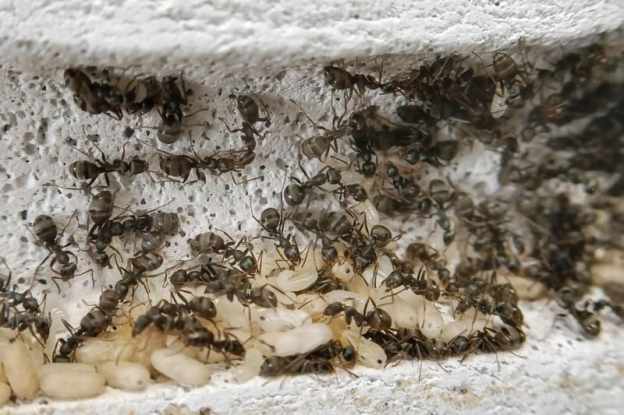
Illegal Trafficking of Endangered Ants: Ants as Pets

Four suspects – two Belgians, a Vietnamese and a Kenyan – were arrested in April 2025 in Kenya  with live ants suspected to have been destined for collectors in Europe and Asia…Delivering the sentence on May 7, 2025, the judge said the particular species of ants collected was valuable and they had thousands of them — not just a few.

“While collecting a few ants might be considered a hobby, being found with 5,000 queen ants is beyond a hobby,” said Magistrate Njeri Thuku….The ants were packed in more than 2,000 test tubes filled with cotton wool to help them survive for months, authorities said.

Nguyen, 23, was described by the court as a “mule or courier” as he was just sent to pick up the ants and the person who sent him paid for his ticket. The court said Ng’ang’a, 26, acted as a “broker” due to his knowledge of the ants that are found in his rural home. David, an ant enthusiast with 10 colonies of ants at home in Belgium, belongs to a Facebook group called “Ant Gang”, the court heard.

Excerpts Akisa Wandera & Wycliffe Muia, Gang who smuggled thousands of queen ants sentenced in Kenya, BBC, May 7, 2025

Saving the Smiling Salamander

A homely aquatic salamander with a cartoonish smile and the ability to regenerate lost body parts has become a global phenomenon, appearing as characters in Minecraft, Fortnite and Pokémon and inspiring a McDonald’s Happy Meal toy. Where the axolotl can barely be found: in its natural habitat in Mexico. 

The axolotl (pronounced ah-SHO-lohtl) is hurtling toward extinction, just as it becomes globally familiar with a cottage industry using its image to sell beer, T-shirts and videogames. Scientists estimate that no more than 1,000—and perhaps as few as 50—are left in the wild in their last natural habitat, a Venice-like system of canals and islands built by the Aztecs that still exists in the Mexico City borough of Xochimilco.

Excerpt from The Race to Save a Salamander That Spawned a Global Cottage Industry, WSJ, Mar. 29, 2025

The Scramble for Congo 21st Century Style

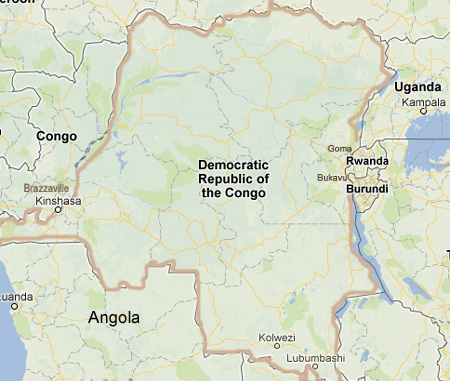
During the 19th century’s Scramble for Africa, European countries raced to secure territory and wealth across the continent. Now, African powers are grabbing resources from a neighbor crippled by infighting and ill-equipped to defend itself. Caught in the middle is the Democratic Republic of Congo, a country the size of Western Europe whose forests conceal a wealth of gold, diamonds and coltan, a key component in smartphones and computers. These mineral riches are turning what was already a region plagued by militia violence into a battleground, as Rwanda and its local allies seize coltan supplies while Uganda and its proxies move to take over gold mines to the northeast, according to United Nations and Ugandan officials…Ugandan President Yoweri Museveni and Rwandan President Paul Kagame are pouring troops and weapons into Congo, while their Congolese allies, who control strategic border crossings, secure smuggling routes to move more minerals to the global markets.

In 2024, Rwanda-backed M23 rebels seized the coltan-mining town of Rubaya, where fighters bring in around $800,000 each month by taxing traders. Rebel fighters have doubled diggers’ wages to encourage them to keep working, and they rely on forced labor to widen roads to accommodate trucks transporting coltan into Rwanda along with gold. According to the U.N., some 4,000 Rwandan soldiers are fighting inside Congo, a report that Rwandan authorities have denied.

Excerpt from While War Rages, Congo’s Neighbors Smuggle Out Its Gold and Mineral Wealth, WSJ, Apr. 7, 2025

Plastics Effects on Brain

The damage caused by plastic pollution goes far beyond the digestive system.

Beneath the skin of seemingly healthy seabirds, new research has revealed the widespread effect of plastics on crucial proteins made by the liver, kidneys and even the brain. Samples taken on Lord Howe Island, which lies between Australia and New Zealand, showed that young birds which appeared healthy were suffering from severe damage to multiple organs. Seabirds which had only eaten less than a gram of plastic were already suffering serious consequences. These impacts extended to the brain, where declines in a crucial protein known as brain-derived neurotrophic factor (BDNF) were similar to levels associated with conditions like Alzheimer’s disease, Parkinson’s disease and dementia in other animals…Sable shearwaters, a type of seabird, feed this plastic to their chicks, where it clogs their digestive system so there’s less space left for food. The team even named a specific disease, plasticosis, to describe the scarring that plastic causes inside the stomachs of these seabirds.

Beyond these more obvious impacts, plastic also sheds minute fragments that can travel even deeper into the body. These are known as microplastics if they’re less than five millimetres in size, or nanoplastics if they’re less than a micron….

These tiny plastics have been found in every environment, even inside our own bodies. Recent research suggests that our brains contain around a spoon’s worth of micro- and nanoplastics, but the health impacts of this are still not entirely understood.

Excerpt James Ashworth, Natural History Museum (UK) Plastic pollution causing dementia-like signs in seabird chicks, Mar. 12, 2025

Mining the Seabed: By hook or by crook

The Trump administration is reportedly considering an executive order that would accelerate deep-sea mining in international waters by allowing companies to bypass a United Nations-backed review process. The order would affirm the United States’ right to extract critical minerals from the ocean floor, enabling companies to seek permits directly from the National Oceanic and Atmospheric Administration (NOAA).

The International Seabed Authority (ISA), established in 1982 under the UN Convention on the Law of the Sea (UNCLOS)—which the U.S. has not ratified—has spent years developing regulations for deep-sea mining.  In 2021, the island nation of Nauru sponsored Canada’s The Metals Company (TMC) to begin deep-sea mining, forcing the ISA to draft rules before any company could start extracting minerals in international waters. The 36-member ISA council has since met repeatedly to finalize regulations. In March 2025, officials gathered in Jamaica to review hundreds of proposed amendments to a 256-page draft mining code, but the session ended without a resolution.

Frustrated by the ISA’s slow progress, TMC in March 2025 formally urged the Trump administration to issue deep-sea mining permits, arguing that “commercial industry is not welcome at the ISA.” “The Authority is being influenced by a faction of States allied with environmental NGOs who see the deep-sea mining industry as their ‘last green trophy,’” TMC chairman and chief executive, Gerard Barron. “They have worked tirelessly to continuously delay the adoption of the Exploitation Regulations with the explicit intent of killing commercial industry.”

Governments interested in developing deep-sea mining within their territorial waters — typically 200 nautical miles from shore — include the Cook Islands, Norway and Japan.

Proponents of seabed mining contend that its environmental impact is lower than land-based extraction. Critics warn that the long-term consequences remain uncertain and advocate for further research before large-scale operations begin.

Excerpt from Cecilia Jamasmie, Trump eyes executive order to fast-track deep-sea mining, Mining.com, Apr. 1, 2025

Mapping the Seafloor: Why Is It Important for War?

China’s fleet has triggered protests from Japan, India and others, but that hasn’t stopped Beijing from launching long missions to map the sea floor. The data they obtain has numerous applications, from science to the emerging industry of deep-sea mining, but it is the Chinese government’s commandeering of civilian research for military use that threatens American allies.

India’s navy drove a Chinese research ship away in 2019, but more have returned. In recent weeks, two of China’s most advanced research vessels, the Xiang Yang Hong 01 and the newer Dong Fang Hong 3 have conducted lawnmower-style sweeps across vast stretches of the eastern Indian Ocean.

Chinese civilian vessels are pursuing expeditions around the world—there are as many as a dozen or so active at any given time. The data they gather, including on currents, temperature and salinity, can have an array of applications. Detailed scanning of the seabed, for instance, can provide information about the visibility of naval mines and the accuracy of sonar.  The surveys can also help determine what minerals could be extracted…Recent missions have spurred complaints by at least half a dozen governments. China says its marine research activities fully comply with the United Nations Convention on the Law of the Sea, the international treaty that established the legal regime for the world’s oceans….

The U.S. Navy also carries out maritime surveys for military purposes…. Under the U.N. convention, coastal states have jurisdiction over research in their exclusive economic zones, which extend 200 miles from the coast. The U.S., which recognizes but hasn’t ratified the convention, argues that military surveys are exempt and U.S. Navy oceanographic ships regularly conduct studies near China. China appears to be moving closer to the American stance, “as they’re doing more oceanographic research without the permission of coastal states.”

Excerpts from Austin Ramzy, China Is Mapping the Seabed to Unlock New Edge in Warfare, WSJ, Mar. 12, 2025

Mourning the Loss of Dark and Quiet Sky

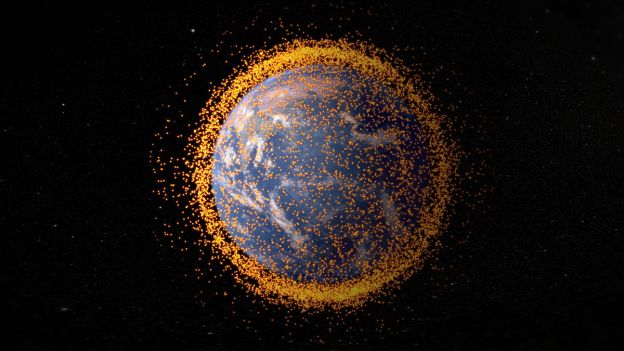
The number of working satellites has soared in the past five years to around 11,000, mostly because of constellations of orbiters that provide Internet connectivity around the globe. Just one company, SpaceX in Hawthorne, California, has more than 7,000 operational Starlink satellites, all launched since 2019; OneWeb, a space communications company in London, has more than 630 satellites in its constellation. On paper, tens to hundreds of thousands more are planned from a variety of companies and nations, although probably not all of these will be launched.

Satellites interfere with ground-based astronomical observations, by creating bright streaks on images and electromagnetic interference with radio telescopes. The satellite boom also poses other threats, including adding pollution to the atmosphere…

Before the launch of Starlinks, astronomers had no centralized reference for tracking satellites. Now, the International Astronomical Union (IAU) has a virtual Centre for the Protection of the Dark and Quiet Sky from Satellite Constellation Interference (CPS), which serves as an information hub…One of the centre’s tools, called SatChecker, draws on a public database of satellite orbits, fed by information from observers and companies that track objects in space. Astronomers can use SatChecker to confirm what satellite is passing overhead during their observations…Tools such as SatChecker help telescope operators avoid problems by allowing them to target a different part of the sky when a satellite passes overhead or by simply pausing observations as it flies by. It would aid astronomers if SatChecker had even more accurate information about satellite positions, but there are constraints on improving the system. SatChecker data come from the US Space Force, which draws on a global network of sensors that tracks objects in orbit and issues updates on satellite locations as often as several times a day. The frequency of these updates is limited by factors such as how often a sensor can observe an object and whether the sensor can distinguish what it’s looking at.

Excerpts from   Alexandra Witze, Swarms of satellites are harming astronomy. Here’s how researchers are fighting back, Nature, Mar. 18, 2025


World Reeling, Trump Mining

The two oldest sons of President Trump are investing in a bitcoin-mining company, adding to the Trump family’s expanding portfolio of cryptocurrency businesses.   Eric Trump and Donald Trump Jr.’s American Data Centers will merge with and take a 20% stake in American Bitcoin, a mining operation majority-owned by Hut. Together, they aim to create the world’s largest miner of the digital currency, with designs on building its own “bitcoin reserve.”

In a matter of months, the Trumps started a decentralized-finance, or DeFi, project called World Liberty Financial, said their social-media company would invest in bitcoin and other digital assets, launched meme coins to capitalize on the popularity of the president and his wife and announced plans to issue a World Liberty dollar-backed stablecoin. And in his return to the White House, President Trump has said he aims to make the U.S. the “crypto capital of the world.” …As part of the deal, Hut 8 will shift nearly 61,000 of its specialized bitcoin-mining machines to American Bitcoin in exchange for an 80% ownership in the new entity. The companies said no cash changed hands in the deal…

The business of mining new bitcoin has grown more challenging as new companies have sprung up to capitalize on rising prices and the number of unmined tokens has dwindled. Bitcoin’s pseudonymous creator, Satoshi Nakamoto, capped the digital currency’s supply at 21 million, and more than 90% of those tokens have already been released. Critics also raised concerns about the environmental impact of bitcoin mining, pointing to the massive amounts of energy required to run mining operations.

Excerpt from The Trump Family Advances Its All-Out Crypto Blitz, This Time With Bitcoin Mining, WSJ, Mar. 31, 2025

Will Bacteria Save the Earth?

Microorganisms have shaped Earth for almost four billion years. At least a trillion microbial species sustain the biosphere — for instance, by producing oxygen or sequestering carbon. Microbes thrive in extreme environments and use diverse energy sources, from methane to metals. And they can catalyse complex reactions under ambient temperatures and pressures with remarkable efficiency.

And bacteria or fungi are already being used to produce materials, fuels and fertilizers in ways that reduce energy consumption and the use of fossil-fuel feedstocks, as well as to clean up waste water and contaminants…For instance, a start-up firm called Carbios, based in Clermont-Ferrand, France, has developed a modified bacterial enzyme that breaks down and recycles polyethylene terephthalate (PET), one of the most common single-use plastics. Another company — Oil Spill Eater International in Dallas, Texas — uses microbes to clean up oil spills, and large waste-management corporations in North America are using bacteria called methanotrophs to convert the methane produced from landfill (a more potent greenhouse gas than CO2) into ethanol, biofuels, polymers, biodegradable plastics and industrial chemicals….The company Floating Island International in Shepherd, Montana, is even building artificial floating islands on lakes and reservoirs that have been polluted by excessive nutrient run-off, so that methane-metabolizing microbes (which colonize the underside of the islands) can remove methane originating from lake sediments. The goal in this case is to transform inland lakes and reservoirs from net methane sources into carbon sinks…

Finally, microbes could be used to make food production less reliant on chemical fertilizers and so more sustainable. Many bacteria and archaea can be used to produce nitrogen fertilizer with much lower greenhouse-gas emissions than synthetic fertilizers…Several companies are now selling biofertilizers, which are formulations containing bacteria called rhizobia or other microbes that can increase the availability of nutrients to plants. A growing number of microbial biopesticides are also offering food producers a way to control crop pests without harming human or animal health or releasing greenhouse gases into the atmosphere8..

Many solutions, such as using bacteria to degrade crude oil or plastics, have been shown to be effective and safe in a laboratory setting. Yet scaling up their use to the levels needed to reduce global emissions or global biodiversity loss could lead to unforeseen complications. Certain safeguards — designing bacteria that can persist in an ecosystem for only a short time or that can exist under only specific environmental conditions — are already being developed and applied. 

Excerpts from Rino Rappuoli, et al., Microbes can capture carbon and degrade plastic — why aren’t we using them more?, Nature, Mar. 25, 2025

To Own Means Nothing-To Do Means More: Metals and Minerals of the World

Trump wants to secure the minerals the U.S. needs for everything from smartphones to jet fighters by striking deals in Ukraine, Greenland and even Russia. But even if the Trump administration secures more mines for American companies through agreements like the mineral-rights deal being discussed with Ukraine, it may have to send much of the minerals to China—its main geopolitical rival—to be processed…

In truth, the U.S. already has abundant supplies of rare earths, but it relies on China to refine them. That is because the U.S. has lost much of its capacity to process minerals, while China has become the world’s dominant refiner of rare earths, cobalt, copper and many other metals.

Until the 1990s, the U.S. was a major refiner of minerals and metals. But then China emerged as the dominant player, powered by its cheap labor force and looser environmental regulations of a sector that can be highly polluting. The voracious need of Chinese manufacturers for raw materials during the country’s years of explosive growth was also a boon for Chinese refiners. Today, the sheer scale of China’s refining industry makes it difficult for others to compete. According to industry estimates, the cost of building a refinery plant in China is a third of the cost in the U.S.

Excerpts from  Jon Emon, How China Beat Out the U.S. to Become the Top Player in Rare-Earths Refining, WSJ, Mar. 25, 2025

The Malicious Misuse of Nuclear Materials

According to IAEA (International Atomic Energy Agency) report, in 2024, 147 incidents of illegal or unauthorized activities involving nuclear and other radioactive material were reported to the Incident and Trafficking Database (ITDB), a number aligned with the historical average…Out of 147, three incidents reported in 2024 were likely related to trafficking or malicious use, and there was insufficient information to determine the intent of 21 other incidents. Furthermore, 123 incidents were not connected to trafficking or malicious use but most likely resulted from unauthorized disposal, unauthorized shipment or the discovery of radioactive material. The ITDB receives information on incidents involving illegal possession, attempted sale and smuggling of nuclear and other radioactive material, as well as unauthorized disposal and the discovery of lost radioactive sources. A total of 4390 incidents have been reported since 1993. 

Excerpt More than 145 Reports Added to IAEA Incident and Trafficking Database in 2024, IAEA, Feb. 28, 2025

The Nuclear Waste Problem of Power-Hungry AI

A nuclear power renaissance—driven in part by power-hungry AI data centers—has revived a thorny problem: what to do with the radioactive waste left behind. Already, more than 90,000 metric tons of spent nuclear fuel is being stored at sites in 39 states. These include 73 commercial nuclear power plants and more than three dozen university and government facilities, according to a 2024 report by the Pacific Northwest National Laboratory…Meanwhile, nuclear reactors continue to provide almost 20% of U.S. electricity and produce about 2,000 metric tons of waste each year. As additional plants become available to meet the demands of data centers, industrial plants, homes and electric vehicles, the waste pile is poised to grow even more.  The US first new reactors in three decades were completed last year in Georgia. Plans are in the works to reopen closed reactors in Michigan, Iowa, Pennsylvania and South Carolina…

France generates 70% of its electricity from nuclear energy, recycles about 96% of its waste into new fuel and stores the remainder in a centralized cooling pool in Normandy. French officials expect to start construction in 2027 on a permanent underground repository in northeastern France to open by 2035.  In November 2025, Canadian officials selected a permanent site for nuclear waste to be dug out of bedrock in northwestern Ontario. But U.S. efforts stalled decades ago, when a $15 billion project to build a permanent, underground storage facility at Yucca Mountain, Nevada, was halted amid opposition by elected officials in the state. The Yucca Mountain failure cast a shadow over efforts to build a permanent disposal site, according to interviews with nuclear experts, policymakers and elected officials. 

Excerpts Eric Niiler, Nuclear Power’s Revival Is Here. What Do You Do With All the Radioactive Waste?, WSJ, Mar. 5, 2025

The Conquest of Greenland–Not for the Faint Heart

Teeming with underground riches, Greenland might set the scene for a modern gold rush. President Trump, for one, covets Greenland’s deposits of critical minerals, some of the largest in the Western Hemisphere. But as the visiting Australian company, Energy Transition Minerals, has discovered, securing them is a daunting task. 

Kvanefjeld, the site of the billion-year-old solidified magma in the mountains above the town of Narsaq, contains an estimated 1 billion tons of minerals, enough to potentially transform the global market for rare-earth elements, used in such things as electric vehicles, jet fighters, wind turbines and headphones. 

Mining companies in Greenland operate in one of the most challenging environments in the world because of the Danish territory’s sparse infrastructure, hostile weather and a tricky political climate. Mining here is expensive, and few investors are willing to pay for it given the uncertainties.   Despite its extraordinary mineral wealth, Greenland has only two active mines: a gold mine in commissioning phase and a mine producing anorthosite, used in fiberglass, paints and other construction materials…“Investing in Greenland is not for the faint of heart,” said Brian Hanrahan, chief executive officer of Lumina Sustainable Materials, which operates the anorthosite mine on the west coast of Greenland. “The local logistics are incredibly complex.” Building a mine involves high startup costs, and has to be done from scratch in rugged terrain. Greenland is nearly one-fourth the size of the U.S., and about 80% of it is covered by ice, with deep fjords and ice sheets up to a mile thick. There are no roads between settlements, and shipping is treacherous because of floating ice off the coast.

Bureaucracy is a hindrance, too. The process of granting licenses to foreign companies to mine is lengthy and cumbersome. While applying for licenses, companies need to keep employees on payroll with benefits. With a population of 57,000, Greenland’s labor market is tight…Extracting Greenland’s minerals is about more than profit; it is about resource control. Western governments are eager to break China’s dominance of the global market for rare earths and other minerals, which it could wield as a weapon in a trade war…“Greenland is host to some of the largest rare-earth resources known to exist globally, which have potential to supply virtually all the foreseeable needs of North America and Europe for decades to come,” said Ryan Castilloux, managing director of Adamas Intelligence… ‘

But when directors from Energy Transition Minerals visited Narsaq in February 2025, they were met near the icy helipad by protesters in brightly colored vests emblazoned with a logo spelling “Uranium? No, Thank You” in Greenlandic…Many among the Inuit population of Narsaq are concerned about contamination of drinking water, plants and wildlife. “We live off nature as our forefathers have done for generations. We will be forced to move,” said Avaaraq Bendtsen, a 25-year-old archaeology student. “Think about the indigenous people as well. This is our land. It is our mountain.”

Excerpts from Sune Engel Rasmussen, Greenland Has the Makings of a Mining Boom. So Where Is Everyone?, WSJ, Mar. 4, 2025

The Real Green Energy Transition: Mining Minerals from Plants

Worries about China’s domination of critical minerals are driving Western scientists and companies to embark on increasingly novel ways to develop alternative sources. One such effort seeks to exploit a quirk of nature: Certain plants, called hyperaccumulators, absorb large quantities of minerals, like nickel and zinc, from the soil. Cultivating these plants, and then incinerating them for their metal, could provide U.S. companies with a small stream of domestically sourced minerals—without the expense and environmental destructiveness of conventional mining….At a greenhouse in Amherst, MA, scientists undertake gene editing to build a new fast-growing, nickel-absorbing oilseed plant. If successful, the plant could be used to harvest the metal from mineral-rich soils in states such as Maryland and Oregon…

Some 10 million acres of barren, nickel-rich soil are scattered around the U.S. In such areas, concentrations of minerals are generally too low to justify large-scale mining, but could offer opportunity for inexpensive nickel farming. In the case of nickel phyto-mining, as such efforts are known, the plants are dried and incinerated, leaving an ashy nickel concentrate. This concentrate can then be further purified and turned into battery-grade material.

To be sure, phytomining is small in scale. Companies in the field are targeting harvests of around 300 pounds of nickel per acre per year, roughly enough for six EV batteries. But the funding for nickel-farming plants is one small piece of a broad effort by the U.S. government to develop secure supplies of the minerals that are needed for defense and cutting-edge industry, and are an area where China is dominant.

Excerpt from Jon Emont, The New Weapon Against China’s Mineral Dominance: Plants, WSJ,  Jan. 25, 2025

Bureaucracy Against Biodiversity

Botanic gardens around the world are struggling to find the space to conserve rare plants and save endangered species. “They can’t all fit,” said Brockington. Cambridge University Botanic Garden, for example, is home to more than 8,000 species. “That’s more than a tropical country like Vietnam, growing in a tiny little acreage of Cambridge.”…Threatened plants must compete for space in botanic gardens with beautiful, famous – but less endangered – flowers, trees and landscapes that will attract visitors and inspire people to learn about gardening and the natural world….The first botanic gardens were founded during the colonial era, and almost all are located in the west. In the past, botanists from these gardens would engage in “extractive, colonial-type practices”, visiting poorer nations to “pull out whatever plants they or their rich patrons were interested in, bring them back and cultivate them,” Brockington said.

In 1993, a United Nations Convention on Biological Diversity attempted to stop this by assigning sovereignty over biodiversity to national governments, enabling states to “own” the genetic material within their geopolitical boundaries…But this is hampering efforts of gardens to collect endangered plants in the wild, and exchange seeds and plant material to protect threatened species from extinction. To maintain diversity and preserve the world’s living collections, plants must be regularly replaced or propagated. But since the convention was introduced in 1993, the number of plants in botanic gardens collected from the wild has halved.

“Political boundaries do not help us share material and collectively steward the world’s most threatened biodiversity,” Brockington said. Brexit, for example, has been “catastrophic” for exchanges of plant material between European botanic gardens, he said. “The bureaucracy of seed exchange can be so costly now, it would be cheaper for our staff to personally fly to somewhere like Sweden, with a legal amount of seed, than send it by post.”…Brockington wants the world’s botanic gardens to collaborate to safeguard plant populations by creating one big “meta collection”, where individual specimens of an endangered wild species are extensively cultivated in multiple institutions.

Excepts from  Donna Ferguson, The risk of extinction is accelerating’: world’s botanic gardens raise alarm with space to protect endangered plants running out, Guardian, Jan. 25, 2025

Why Plastic is the Salvation of Oil Industry

As people switch to electric cars, or at least buy more fuel-efficient versions of traditional vehicles, energy companies will have too much oil on their hands. ..Energy companies hope consumers will soak up the glut through their clothing, food and electronic goods. Exxon Mobil expects demand for products that have fossil fuel-derived components and shells like “cellphones and medical supplies, as well as products necessary to preserve food and improve hygiene” to increase.

Crude oil and natural gas are turned into petrochemical feedstocks such as naphtha or natural gas liquids in a gas-processing plant or at an oil refinery. They are then “cracked” into the building blocks of common plastics. Ethylene is processed into polyethylene, which winds up in plastic bags, shampoo bottles and children’s toys. Polypropylene is used for everything from car bumpers to carpets. ..Today, 15.4% of global oil demand is driven by petrochemicals, according to data from Wood Mackenzie. The share is expected to rise to 19.1% by 2035 as emerging markets become wealthier and swelling middle classes spend more on synthetic clothing and do their grocery shopping at big supermarket chains, where food is more likely to be wrapped in plastic to prolong its shelf life.  Advanced economies like the U.S. use up to 20 times more plastic than developing nations on a per capita basis, according to the IEA. Big Oil’s bet is that shoppers in emerging markets will close at least part of that gap.

Energy companies are pouring billions of dollars into petrochemical facilities, notably in China where ethylene capacity has almost doubled since 2019. Capacity is also rising in the U.S. and Middle East. Saudi Arabia wants to invest $600 billion into petrochemicals by the end of the decade to secure nonfuel uses of its crude oil. 

But the global petrochemical industry is already saturated and capacity is expected to outstrip demand until at least 2030. This points to weak profit margins and less-than-ideal utilization rates at petrochemical facilities.  Plants in high-cost regions are shutting down. Exxon Mobil sold refineries in Italy last year and plans to close an ethylene cracker in Normandy, France…Pumping money into petrochemicals as governments are trying to solve the problem of plastic waste feels risky…. A worldwide ban on single-use plastic would wipe out a third of global plastic demand that comes from things like mini hotel toiletries, fast-food packaging and disposable cutlery, although there would probably be exemptions for categories like medical intravenous bags that are hard to substitute. 

Excerpts from Carol Ryan, Driving an EV? Big Oil Hopes You Don’t Cut Down on Plastic Too, WSJ, Dec. 24, 2024

Ousting Indigenous Peoples is a Brutal Way to Protect the Environment

The government of Tanzania claims that the Maasai, the indigenous people of Tanzania,  present a threat to the ecosystem of the Serengeti National Park. The government says the seminomadic cattle farmers are a threat to the savannas and watering holes in an area that sustains the country’s money-spinning safari resorts and hunting reserves and, more recently, a swath of new carbon-credit projects.

To protect these areas, President Samia Suluhu Hassan’s government has outlawed human settlement there and begun evicting some of the more than 110,000 Maasai from the Ngorongoro Conservation Area—the vast zone of grass-, wood- and wetlands adjacent to the Serengeti that the Maasai have used for both herding and tourism for the past 65 years.

The area includes the famous Ngorongoro Crater, the world’s largest, fully-intact caldera and home of one of Africa’s densest populations of zebras, gazelles and other large mammals…The government argues that the number of Maasai living in Ngorongoro has expanded from just 8,000 in 1959, outpacing Tanzania’s overall population growth. The herders, along with their cattle, are overwhelming the area’s fragile ecosystem, it says. Similar warnings have been issued by the United Nations Educational, Scientific and Cultural Organization, or Unesco, which declared the Ngorongoro Conservation Area a World Heritage site in 1979.


But for the Maasai, the evictions are endangering a centuries-old way of life they say is much closer to nature than the rest of rapidly urbanizing Tanzania. They accuse the government of giving priority to revenue from foreign tourists, investors and conservation groups over the lives and livelihoods of some of its own citizens. ..Experts and activists focused on the rights of indigenous people say the Maasai are the latest group caught in the murky intersection of tourism, biodiversity protection and global climate goals. Similar conservation-related evictions have also targeted indigenous communities in the Brazilian Amazon and the Nouabalé-Ndoki rainforest in the Republic of Congo.

Revenue from tourism jumped 40% to $3.5 billion in 2023, about 17% of Tanzania’s gross domestic product, and according to government projections could reach $6 billion by 2025. The government has already set aside swaths of land around the Ngorongoro Crater previously reserved for the Maasai for the construction of a China-funded geological park, where tourists and researchers can explore fossils, rock paintings and other archaeological artifacts dating as far back as 4 million years ago. To the south of the Ngorongoro Conservation Area, a local company called Carbon Tanzania is selling carbon credits linked to about 273,000 acres of land that the Maasai have also used for grazing and limited cultivation. The project restricts the cutting down of trees but allows cultivation in some zones…

One of the most violent standoffs between the Maasai and Tanzanian authorities took place in mid-2022 in the grassy plains of Loliondo, about 100 miles west of Serengeti. Heavily armed police and rangers stormed Maasai villages, fired tear gas and live rounds, and bulldozed hundreds of houses as they sought to seize some 37,000 acres of land for a new game reserve. One police officer was killed by an arrow shot by the Maasai, authorities said. Many Maasai were wounded in the clashes, and thousands fled into neighboring Kenya to seek medical treatment. Dozens of others were arrested. After the mayhem in Loliondo, authorities appeared to have opted for a more tactical approach in neighboring Ngorongoro, closing down schools, water sources and hospitals to force residents out of homes, Maasai activists say.

Excerpts from Nicholas Bariyo, The Safaris and Carbon-Credit Projects Threatening the Serengeti’s Maasai, WSJ, Dec. 22, 2024

Environmental Victories of 2024

End of Fossil Fuels? The year 2024 r saw some extraordinary breakthroughs for climate and nature. The UK closed its last coal-fired power plant in 2024….As countries aim to rapidly decarbonise their economies, many former fossil fuel power plants are proving to be promising sites for industrial-scale batteries.…Renewable energy sources are growing rapidly around the world. In the US, wind energy generation hit a record in April 2024, exceeding coal-fired generation….By the end of this decade, renewable energy sources are set to meet almost half of all electricity.  The lion’s share of this growth comes from just one country:

The rivers, mountains, waves and whales given legal personhood
Back in 2021, the Ecuadorian government issued a landmark ruling stating that mining in its Los Cedros cloud forest violated the rights of nature. Another ruling in Ecuador stated that pollution had violated the rights of the Machángara River that runs through the capital, Quito. Beyond Ecuador, a growing number of natural features and spaces were granted legal personhood in 2024. In New Zealand, the peaks of Egmont National Park – renamed Te Papakura o Taranaki – were recognised as ancestral mountains and jointly became a legal person, known as Te Kāhui Tupua.] In Brazil, part of the ocean was given legal personhood – with the coastal city of Linhares recognising its waves as living beings, granting them the right to existence, regeneration and restoration. Meanwhile, a new treaty formed by Pacific Indigenous leaders saw whales and dolphins officially recognised as “legal persons”.

New ocean protections for the Azores
The North Atlantic saw a new marine protected area (MPA) announced by the Azores. When established, it will be the largest in the region, spanning 30% of the sea around the Portuguese archipelago. Half of the 111,000 sq miles (287,000 sq km) protected area will be “fully protected”, with no fishing or other natural resource extraction, according to the initiative behind the MPA. The other half will be “highly protected”.
The area contains nine hydrothermal vents, 28 species of marine mammals and 560 species of fish, among many others. 

Deforestation in the Brazilian Amazon
dropped to a nine-year low in 2024, falling by more than 30% in the 12 months to July, 2024 according to data released by Brazil’s national space research institute, INPE. nt

The Altyn Dala Conservation Initiative saved the critically endangered in the Golden Steppe grassland from extinction. The project used careful, science-based monitoring, tagging and habitat protection and restoration to ensure the best recovery for the Saiga Antelope, which numbered just 20,000 in 2003. Today, 2.86 million of the antelope roam the Golden Steppe, and it has been moved from “critically endangered” to “near threatened” status on the International Union for Conservation of Nature’s Red List.

After a 100-year hiatus, salmon were spotted in Oregon’s Klamath River basin, following an historic dam removal further downstream in the California stretch of the Klamath. In August 2024, the final of four dams were removed – in what was America’s biggest dam removal project – following pressure from environmentalists and tribes.

Excerpts from Isabelle Gerretsen et al., Seven quiet breakthroughs for climate and nature in 2024 you might have missed, BBC, Dec. 16, 2024

Satellites Reveal Depth of Destruction Vietnam War

During the Vietnam War, the United States dropped more than 8 million tons of bombs and sprayed 74 million liters of Agent Orange and other herbicides in Vietnam, Cambodia, and Laos. Nearly 50 years after the war’s end, the deadly impacts of these campaigns persist: Unexploded ordnance continues to maim and kill, while hot spots of dioxin, a potent toxin in the herbicides, might still be contributing to cancers and birth defects today. Now, using declassified military satellite photos, scientists have identified the likely locations of these hidden dangers, which could help direct remediation and cleanup efforts based on research, presented on December 11, 2024 at the annual conference of the American Geophysical Union (AGU)

Identifying these risky areas in the modern landscape is challenging. Tenacious vegetation growth has long since hidden the scars of war, and historical records of bombing and herbicide spraying are both incomplete and imprecise. That’s why Philipp Barthelme, a graduate student in geoscience at the University of Edinburgh, and his colleagues turned to declassified satellite photos from the KH-9 HEXAGON and KH-4a/b CORONA missions, which were sharp enough to reveal details as small as 0.6 meters.

Although the satellite data alone cannot identify unexploded bombs, the researchers surmised they are most likely to be found in regions that were heavily bombarded. The craters from the exploded bombs stand out in the satellite images as bright white splotches. The researchers used machine learning, a kind of artificial intelligence, to pinpoint more than 500,000 such craters in Vietnam’s Quang Tri province, which was the most heavily bombed during the war, as well as a region near the borders of Vietnam, Laos, and Cambodia.

In collaboration with the nonprofit Conflict and Environment Observatory, Barthelme also used satellite data to study herbicide spraying in southern Laos. The U.S. sprayed these compounds in secretive wartime campaigns to destroy crops and improve visibility by defoliating the lush jungles. However, the dioxin in the herbicides killed and debilitated hundreds of thousands of people…The zones of defoliation from the herbicides appear in satellite data as bright, sinuous lines….

Excerpts from Maya Wei-Haas, Declassified satellite photos reveal impacts of Vietnam War, Science, Dec. 14, 2024

The Dirty Environmental Tricks of Elon Musk

Elon Musk made big promises to Wall Street about Tesla’s Model Y SUV in 2022, and the company was ramping up its production in Austin, Texas, when environmental problems threatened to derail his plans. The door to the plant’s giant casting furnace, which melts metal to be molded into the Model Y’s parts, wouldn’t shut, spewing toxins into the air and raising temperatures for workers on the floor to as high as 100 degrees. Hazardous wastewater from production—containing paint, oil and other chemicals—was also flowing untreated into the city’s sewer, in violation of state guidelines. Tesla left the costly problems largely unaddressed during the critical ramp-up. As a result, the company’s 10 million-plus square foot plant—among the largest car factories in the world—dumped toxic pollutants into the environment near Austin for months.

This account of the Austin plant’s environmental problems, which haven’t been reported previously, comes from emails between Texas regulators and the company obtained by The Wall Street Journal in response to public-records requests, as well as interviews with former employees and other documents, including a memo sent by a whistleblower to the Environmental Protection Agency….Former employees said they feared they might lose their job if they drew attention internally to potential environmental hazards, because senior managers didn’t consider such issues to be mission critical. As head of the company, Musk set the tone, these people said, pushing employees to move fast and complaining frequently in public statements that unnecessary regulations are strangling the U.S.

Musk is considered a champion of the environment for his role in pioneering the electric car industry. He has said the mission of Tesla, which is the largest maker of electric cars in the U.S., is to “protect life on Earth.” Yet across his business empire, Musk’s companies show a pattern of breaking environmental rules again and again, federal and state government filings and documents show.

Tesla’s Fremont, Calif., facility has accumulated more warnings for violations of air pollution rules over the past five years than almost any other company’s plant in California, according to a Journal analysis of informal enforcement actions in the EPA’s compliance database. It is second only to a refinery owned by oil-and-gas behemoth Chevron, which is in nearby Richmond.

In 2024, California regulators said Tesla violated air-pollution permits at its Fremont factory 112 times over the past five years and alleged it repeatedly failed to fix equipment designed to reduce emissions, releasing thousands of pounds of toxic chemicals in excess of permissible limits into the surrounding communities.

Musk’s rocket company, SpaceX, has also had run-ins with regulators in Texas and community pushback in Florida, including over the impact of its launches on local plants and animals. Federal regulators recently fined the company for dumping about 262,000 gallons of wastewater from launches into wetlands in Texas without a permit. SpaceX has denied the allegations. 

Excerpt from Susan Pulliam and Emily Glazer,  Musk Says He Wants to Save the Planet. Tesla’s Factories Are Making It Dirtier, WSJ, Nov. 25, 2024

What is the Purpose of Graveyards in Space

Launched in 1969, just a few months after humans first set foot on the Moon, Skynet-1A was put high above Africa’s east coast to relay communications for British forces. When the spacecraft ceased working a few years later, gravity might have been expected to pull it even further to the east, out over the Indian Ocean. But today, curiously, Skynet-1A is actually half a planet away, in a position 22,369 miles (36,000km) above the Americas. Orbital mechanics mean it’s unlikely the half-tonne military spacecraft simply drifted to its current location. Almost certainly, it was commanded to fire its thrusters in the mid-1970s to take it westwards. The question is who that was and with what authority and purpose?…

You might also reasonably ask why it still matters. After all, we’re talking about some discarded space junk from 50 years ago…No matter how Skynet-1A  got shifted to its present position, it was ultimately allowed to die in an awkward place when really it should have been put in an “orbital graveyard“. This refers to a region even higher in the sky where old space junk runs zero risk of running into active telecommunications satellites. Graveyarding is now standard practice, but back in the 1970s no-one gave much thought to space sustainability.

Attitudes have since changed because the space domain is getting congested and  collisions between defunct satellites  generate large amounts of space debris or space junk…”We need to avoid…super-spreader events. When these things explode or something collides with them, it generates thousands of pieces of debris that then become a hazard to something else that we care about.”

Excerpt from Jonathan Amos, Somebody moved UK’s oldest satellite, and no-one knows who or why, Science, Nov. 8, 2024

The Never-Ending Nuclear Arms Race

The United States Los Alamos National Laboratory (LANL) announced in October 2024 it had manufactured its first plutonium “pit”—used in the core of a thermonuclear warhead to initiate an nuclear explosion—since the United States largely halted such production in 1989. Under a nuclear arsenal modernization plan launched in 2008, the lab will scale up production to 30 pits per year, with an additional 50 to be produced annually starting in the mid-2030s at the Savannah River Site in South Carolina. But the work faces opposition from critics who say it could help fuel a new international nuclear arms race and also risks the health of workers and the environment. In September 30 2024, opponents won a ruling in federal district court in South Carolina when a judge ruled the U.S. Department of Energy failed to adequately consider other options for locating the production facilities. The judge is considering a request to pause production at LANL. The United States halted pit manufacturing in 1989 at the Rocky Flats Plant, near Denver, after an inspection revealed hazardous waste contamination.

Excerpt from U.S. resumes making nuke triggers, Science, Oct. 11, 2024

Colossal Efforts to Bring Back Species on the Brink of Extinction

Colossal Biosciences, the world’s first de-extinction company, announced on October 1, 2024 the formation of The Colossal Foundation…The Foundation is launching with three core programmatic focuses.

Saving today’s at-risk species: Colossal Foundation plans to build a model for integrating cutting-edge biotechnology with conservation efforts to bring back species that have been driven to the brink of extinction. The long term goal is to create a toolkit approach to simplify genetic rescue for conservationists. Initial projects include efforts focused on the Vaquita, Northern White and Sumatran Rhinos, Red Wolf, Northern Quoll, Ivory Billed Woodpecker, and Pink Pigeon.

R&D for Conservation: Colossal will partner to fund and deploy technologies that leverage artificial intelligence…Current projects include the Colossal drone-based anomaly detection system used by Save the Elephants, a vaquita acoustic monitoring program, and an AI-enabled orphaned elephant monitoring system leveraged by Elephant Havens in Botswana.

Ensuring Tomorrow’s Biodiversity: Developing a distributed genetic repository of species (a biobank) which can act as an insurance policy against unforeseen threats to biodiversity and provide a safety net for species facing extinction. The focus will be on those species closest to extinction to ensure their genetic diversity is not lost and the potential to bring them back, should the worst happen, remains. 

Vaquitas, a porpoise endemic to the Sea of Cortez/Gulf of California in Baja California, Mexico and the smallest of all living cetaceans, is on the brink of extinction. As of May 2023, only between 10 and 13 vaquitas remain. The loss of the vaquita could be a harbinger of further declines in the Gulf’s marine ecosystems, and the extinction of the vaquita would represent a cultural and symbolic loss. Colossal, in partnership with the Vaquita Monitoring Group and in support of the Mexican government’s La Comisión Nacional de Áreas Naturales Protegidas (CONANP) believes that there are low-impact technical solutions that can be used to safely biobank the existing animals while also helping to grow the vaquita population. …

Fewer than 80 Sumatran rhinos survive in tiny fragmented populations across the Indonesian islands of Sumatra and Borneo…Colossal Foundation will  supporting the Indonesian government’s work to breed Sumatran rhinos under their national conservation breeding program…in collaboration with Global Experts on the advance Assisted Reproductive Technology (a-ART) and Biobank program for the species…

The Colossal BioVault is an initiative, in partnership with Re:wild and others, to collect the primary materials needed to prevent extinction. By collecting tissue samples of the world’s most imperiled species in the Colossal BioVault, the Foundation intends to preserve and store biodiversity. 

Excerpts from Colossal Launches The Colossal Foundation, Business Wire, Oct. 1, 2024

Get Down and (Very) Dirty: How to Break Free from China’s Grip on Rare Earths and Minerals

The Biden administration held talks with three firms in the fall of 2024 about purchasing one of the world’s largest non-Chinese cobalt producers…The talks over Chemaf, a mining company based in the Democratic Republic of Congo, are part of a push by the administration to secure global supplies of a metal used in everything from jet fighters and drones to electric-vehicle batteries. For more than a decade, Chinese companies have spent billions of dollars buying out U.S. and European miners in Congo, which produces nearly 75% of the world’s cobalt supply. That has put China in a dominant position in both the production and processing of the mineral.

It has been difficult for the U.S. government to interest American investors in any sector in Congo because of the country’s poor infrastructure, limited skilled labor, resource nationalism and reputation for government corruption. U.S. government officials have spoken with mining and artificial-intelligence company KoBold Metals, copper miner First Quantum Minerals and investment firm Orion Resource Partners about participating in a deal to acquire Chemaf, either separately or jointly…

Chemaf, which says its mines could produce 20,000 tons of cobalt annually—making it one of the world’s largest cobalt producers—was put up for sale in 2023 by its founder, Shiraz Virji…When The Wall Street Journal visited Chemaf’s Mutoshi mine in 2018, freelance Congolese miners could be seen descending underground without helmets, shoes or safety equipment. Miners were using picks, shovels and bare hands to unearth rocks rich with the metal. Water sometimes rushed into holes and drowned people, and an earth mover buried one alive, said local workers and mine officials…

In June 2024, Chemaf agreed to sell itself to Chinese state-backed Norin Mining. Shortly after, U.S. pressure helped block the sale

Excerpts from  Alexandra Wexler and Julie Steinberg, How the U.S. Is Trying to Challenge China’s Cobalt Chokehold, WSJ, Oct. 15, 2024

Who Gets By and Who Throws and Thrives?

For years, a site called Agbogbloshie in Accra, Ghana was one of the largest e-waste processing sites in Africa, getting 15,000 tons of discarded phones, computers and other used electronics each year. Many Western media outlets depicted the site as a public health and environmental tragedy, rife with toxic chemicals that leach into the water and poison the air. While that’s undoubtedly true, it’s not the full story, according to a new collaborative photojournalism project. The project, called E-Waste in Ghana: Tracing Transboundary Flows, which won this year’s Fondation Carmignac photojournalism award, aims to capture both the positive and negative aspects of e-waste.

“The world cannot throw all its garbage here, it has truly negative consequences on the people,” says Anas Aremeyaw Anas, an investigative journalist in Ghana who co-led the project. “But there are positive aspects of sending us e-waste,” he says, as it’s sparked a dynamic, informal recycling economy in the country that, while often dangerous, can also help lift people out of poverty.

Globally, e-waste is an enormous problem. In 2022, humans discarded about 62 million tons of used electronics, enough to fill a line of trucks that spans the equator. But there’s opportunity too, as those trucks contain over $91 billion of valuable metals, the U.N. estimates….E-waste falls into two broad buckets: functional and non-functional. The line between them can be fuzzy, as what’s still usable or repairable to one person may not be to another, but the distinction is important. International laws prohibit trafficking of non-functional e-waste containing toxic substances, but the United Nations sees trading functional e-waste as beneficial, as it can lengthen the lifespan of a product…The project found that exporters often fail to separate functional from non-functional e-waste. “If you have a container full of TV screens, how on earth are you going to verify each and every one of them to make sure that they are functioning,” says photojournalist Bénédicte Kurzen, a co-author of the project. As a result, both kinds of e-waste get stuffed into container ships that make their way to low- and middle-income countries like Ghana.


Formally, Ghana prohibits the import of many forms of hazardous e-waste material. But the team found that a well-placed bribe can get port officials to look the other way. As a result, informal e-waste sites are growing across Ghana’s coast. There, both functional and non-functional e-waste get dumped into vast piles that are encroaching on residential areas. Thousands of “pickers” come to these sites, picking through the rubbish to separate items that might be repaired from waste that could contain valuable minerals.

It’s fraught, precarious work. To separate valuable minerals, like copper wire or iron, from useless plastic, pickers often burn the trash, producing noxious fumes. Burns, cuts and other injuries are common. E-waste workers — many of whom are children, the team found — are at risk of exposure to over 1,000 harmful chemicals, according to the World Health Organization, including lead, mercury and brominated flame retardants, which are linked to higher rates of diseases like cancer and diabetes.

A burgeoning recycling and repair industry has risen up alongside those harms. The team documented informal marketplaces, where vendors sell scores of busted cell phones to buyers looking to repair circuit boards or extract their precious metals. On Zongo Lane in Accra, the reporters say, hundreds of small, independent shops sell used or repaired equipment, ranging from televisions to computers….The most valuable minerals extracted from Ghana’s e-waste often don’t stay in Ghana. Many of the most valuable items get cherry picked and sent to more advanced smelters in Europe or Asia, the team found. “People are dismantling these items in toxic environments, and then the few piles that contain incredibly valuable minerals are going to be re-exported,” says Kurzen.

Excerpts from Jonathan Lambert, Stunning photos of a vast e-waste dumping ground — and those who make a living off it, NPR, Oct. 5, 2024

The Quick and Dirty AI Boom

Nowhere else on Earth has been physically reshaped by artificial intelligence as quickly as the Malaysian state of Johor. Three years ago, this region next to Singapore was a tech-industry backwater. Palm-oil plantations dotted the wetlands. Now rising next to those tropical trees 100 miles from the equator are cavernous rectangular buildings that, all together, make up one of the world’s biggest AI construction projects…

TikTok’s Chinese parent company, ByteDance, is spending $350 million on data centers in Johor. Microsoft just bought a 123-acre plot not far away for $95 million. Asset manager Blackstone recently paid $16 billion to buy AirTrunk, a data-center operator with Asia-wide locations including a Johor facility spanning an area the size of 19 football fields. Oracle last week announced a $6.5 billion investment in Malaysia’s data-center sector, though it didn’t specify where. In all, investments in data centers in Johor, which can be used for both AI and more conventional cloud computing, will reach $3.8 billion this year, estimates regional bank Maybank.

To understand how one of the first boomtowns of the AI era sprouted at the southern tip of the Malay Peninsula, consider the infrastructure behind AI. Tech giants want to train chatbots, driverless cars and other AI technology as quickly as possible. They do so in data centers with thousands of computer chips, which require a lot of power, as well as water for cooling…Northern Virginia became the world’s biggest data-center market because of available power, water and land. But supply is running low. Tech companies can’t build data centers fast enough in the U.S. alone. Enter Johor. It has plentiful land and power—largely from coal—and enough water. Malaysia enjoys generally friendly relations with the U.S. and China, reducing political risk for companies from the rival nations. The other important factor: location. Across the border is Singapore, which has one of the world’s densest intersections of undersea internet cables. Those are modern-age highways, enabling tech companies to sling mountains of data around the world.

Excerpt from Stu Woo, One of the Biggest AI Boomtowns Is Rising in a Tech-Industry Backwater, WSJ, Oct.  8, 2024

Who Knew? Weed Killer Roundup Found in GM Foods

A highly influential organization of pediatricians is facing blowback over advice it published earlier this year urging parents to avoid foods with ingredients from genetically modified organisms (GMOs). Guidelines from the American Academy of Pediatrics (AAP) are a go-to source for practicing pediatricians and for some parents. But critics say the advice ignores a wide body of evidence supporting GMOs’ safety. They add that AAP is raising unfounded fears that will drive parents to assume they must buy only organic products, which by definition are not genetically engineered—an option that’s financially out of reach for many families…

The guidelines, published in Pediatrics in January in 2024, were accompanied by a parent newsletter that included “tips for limiting GMOs on your family plate” and referred to “news stories [that] may shrug off the dangers of GMOs.” The Pediatrics paper, whose senior author is Boston College pediatrician and epidemiologist Philip Landrigan, cautioned about potential health harms, especially to infants and children, of residues in food from the weed killer glyphosate, which is widely used on genetically engineered crops.

The AAP guidelines had an impact almost immediately; by March 2024, Mexico was citing them in a trade dispute with the United States, which is challenging Mexico’s ban on imports of genetically modified corn grown in the U.S. But the Pediatrics paper did not mention that regulators in the U.S. and Europe have judged glyphosate at the levels currently found in food to be safe….

The AAP report authors focus on glyphosate, sold commercially by Bayer as Roundup, because its use has exploded in recent decades: Ninety percent of the corn and 96% of the soybeans planted in the U.S. this year were genetically modified, much of it to be resistant to destruction by glyphosate, which instead kills all the weeds around the crops. The herbicide is often sprayed on genetically modified canola and sugar beets as well. As a result, glyphosate residues are in foods made with ingredients such as high fructose corn syrup, sugar, and canola oil, among them children’s favorites from hot dogs and chicken nuggets to sweetened cereal and potato chips.

The AAP report notes a 2015 finding from an arm of the World Health Organization that glyphosate is “probably carcinogenic to humans.” It also cites one meta-analysis that found an elevated risk of non-Hodgkin lymphoma in people with high exposure to glyphosate from years of applying it to crops.

But the U.S. National Academies of Sciences, Engineering, and Medicine found no evidence of adverse health effects in humans from genetically engineered foods or from glyphosate residues in them. The U.S. Food and Drug Administration tests foods for glyphosate residues and has rarely found levels exceeding those determined safe for consumption by the U.S. Environmental Protection Agency (EPA). Numerous other agencies worldwide have similar positions.

Excerpts from Meredith Wadman, Pediatrics academy accused of ‘fearmongering’ over GMO ingredients in kids’ diets, Science, Sept. 17, 2024

The Communist Chinese Party and the Protection of the Ocean Seabed

A disagreement between deep-sea miner The Metals Company (TMC) and researchers over a new scientific study is threatening efforts to mine the ocean bed for metals critical to supporting the green-energy transition. A study in the journal Nature Geoscience suggested that deep-sea nodules, which contain metals such as nickel critical for electric-vehicle batteries, produce oxygen despite the absence of light at the bottom of the ocean. The researchers making the claim called for further studies into how oxygen is produced on the ocean floor while environmental groups called for a halt to disrupting the seafloor and mining of nodules. TMC and some scientists are questioning the claim and accusing the lead authors of the study of plagiarism… The study comes at a time of troubled waters for the deep-sea mining industry, with political uncertainty and TMC struggling for new sources of investment.

In the U.S., the outlook for the industry has improved recently. On the corporate side, both Tesla and General Motors shareholders have said they wouldn’t back a moratorium on deep-sea mining. Ocean-floor minerals are seen as key to making electric-vehicle batteries because of the presence of cobalt, nickel and manganese in nodules. In Washington in September 2024, a House hearing was held on the subject of deep-sea and critical minerals, as many see the metals found on the ocean floor as important for defense purposes. In a meeting co-chaired by Democrat Kathy Castor of Florida and Republican Robert Wittman of Virginia as part of the Select Committee on the Chinese Communist Party, Barron made the case for deep-sea nodules to become part of the U.S.’s critical mineral supply chain.

Meanwhile, industry leaders have gathered in the Cook Islands in September 2024 where a conference on deep-sea mining is taking place. The Pacific nation is home to thousands of tons of nodules, which are also rich in copper.

Excerpts from Yusuf Khan, Deep-Sea Mining Hits Crunch Point Amid Academic Battle Over Ocean-Floor Resources, WSJ, Sept 24, 2024

What to Do With 13 Million Cubic Meters of Nuclear Soil?

Japan’s approach for recycling and disposing of soil and radioactive waste from decontamination activities after the 2011 Fukushima Daiichi Nuclear Power Station (FDNPS) accident as currently planned is consistent with IAEA Safety Standards, an International Atomic Energy Agency (IAEA) report released on September 10, 2024.

About 13 million cubic meters of soil and about 300,000 cubic meters of ash from incineration of organic material was removed as part of decontamination activities in Fukushima Prefecture and stored at an Interim Storage Facility (ISF) covering an area of 16 square kilometres, spanning across the Okuma Town and Futaba Town…Japan plans to recycle roughly 75% of the removed soil – the soil which has low levels of radioactivity – by using it, if demonstrated safe, for civil engineering structures including embankments for roads, railways, seawalls, waste treatment sites, coastal protection, agricultural land, and land reclamation. The remaining soil which cannot be recycled will be disposed of permanently and Japan intends to confirm the site selection and disposal process in 2025.

Excerpt from Japan’s Fukushima Soil Recycling and Disposal Plan Meets Safety Standards, IAEA Says, Press Release, Sept. 10, 2024

The Role of Telegram in the Russia-Ukraine War

Russian authorities have reacted with unusual fury to the arrest of Telegram founder Pavel Durov by French authorities on August 2024. Telegram is more than a mere social-media app to Moscow. Russian soldiers and spies depend on it for battlefield communications, including the guidance of artillery, the coordination of movements and intelligence gathering. “Many are joking that the arrest of Pavel Durov is essentially the arrest of the chief signals officer of the Russian armed forces,” said Aleksey Rogozin, a Russian parliament adviser and former senior military industry executive.

“As wild as it sounds, the transmission of intelligence, the targeting of artillery, the broadcasting of drone feeds and many other things are currently very frequently done via Telegram,” Rogozin said on Telegram… 

Both the Russian and the Ukrainian militaries started relying on commercial platforms. While the Ukrainians prefer Western providers such as Signal or Discord, the Russians chose Telegram because it is based in the United Arab Emirates, which maintains good relations with Moscow. They think the app is more impervious to Western signals intelligence.

Russian volunteers who supply drones, night-vision scopes, vehicles and other aid to military units operate almost exclusively through Telegram. The service also has offered a lucrative social-media platform to Russian war propagandists, with millions of subscribers, who work in close cooperation with the Russian Ministry of Defense.

“The detention of Durov, by itself, wouldn’t have necessarily caused such a resonance in Russia, except for one circumstance. De facto, it is the main messenger of this war, an alternative to the classified military network,” Andrey Medvedev, a correspondent for Russian state TV and a deputy chair of the Moscow city council, wrote on Telegram…

The Russian government has reacted to Durov’s detention in France with far more outrage and fury than would be expected given the circumstances of the entrepreneur’s departure from Russia in 2014…The director of Russia’s SVR external intelligence service, Sergey Naryshkin, said recently that he expects Durov not to share with French and other Western governments any information that would harm the Russian state. “I very much count on him not to allow it,” the Russian spymaster said in an interview with TASS news agency.

Excerpt from Yaroslav Trofimov, Telegram Arrest Sows Russian War Worries, WSJ, Aug. 31, 2024

Rockets Create Holes in Earth’s Ionosphere

A rocket launch has ripped a hole in the Earth’s ionosphere as it accelerated into space. The rocket, belonging to Firefly Aerospace, was carrying the Space Force Victus Nox satellite into orbit as it launched on September 14, 2024 from Vandenberg Space Force Base in California…The ionosphere is a layer of the atmosphere around 50 to 400 miles above, filled with charged atoms (ions). These ions reflect and refract radio signals, making the ionosphere essential to radio communications, which is why radio blackouts occur during solar flares, as the ionosphere is disrupted.

Rockets release exhaust as they ascend, mostly containing water and carbon dioxide, which reacts with the ions in the ionosphere. If the chemistry of the upper atmosphere is disturbed, such as when a rocket flies through it, the carbon dioxide and water molecules from the rocket exhaust change the chemical balance in the atmosphere. This temporarily makes it much easier for the ionization to recombine into neutral atoms, weakening the ionosphere and causing the red glow to be seen…This can lead to a 70 percent drop in ionization in the area that the rocket passes through, particularly in the F-layer at the top of the ionosphere. The red glow in particular comes from oxygen ions, which also glow during the northern and southern lights.

Several recent rocket launches have resulted in a similar phenomenon, including two SpaceX rockets in July and August 2024. The consequences of these holes in the ionosphere are disruptions to radio communication and satellite navigation systems.

The ionosphere absorbs ultraviolet and X-rays from the sun, which is what ionizes the gas atoms in the layer. This prevents these harmful rays from reaching the ground. The holes made by rocket launches do not affect the ionosphere’s ability to filter out this radiation. “While the number of rocket launches is increasing dramatically in recent years, this still constitutes a small amount of gas in comparison with the volume of the upper atmosphere. But if the rate at which rocket exhausts transport water to the upper atmosphere exceeds the rate at which it is removed then the cumulative effect will be a weaker ionosphere.”

Excerpts from Jess Thomson, Rocket Carrying Space Force Satellite Punches Hole In Ionosphere, Newsweek, Sept. 22, 2024

The Devil’s Scenario: Drone Striking Nuclear Power Plant

The International Atomic Energy Agency (IAEA) was informed on August 22, 2024 by Russia that the remains of a drone had been found within the Kursk nuclear power plant. Russian President Vladimir Putin on Thursday accused Ukraine of trying to strike the Kursk nuclear power plant in an overnight attack. The nuclear plant is located in western Russia, where fighting is raging between Russian and Ukrainian forces, is especially vulnerable to a serious accident because it lacks a protective dome that could shield it from missiles, drones or artillery, the head of IAEA said on August 27, 2024.

The nuclear plant– the same model as the Chernobyl plant in Ukraine that witnessed the world’s worst civilian nuclear disaster in 1986 – lacks the containment dome and protective structure that is typical of modern nuclear power stations. According to Grossi, director-general of the IAEA: “This means that the core of the reactor containing nuclear material is protected just by a normal roof. This makes it extremely exposed and fragile, for example, to an artillery impact or a drone or a missile,” So this is why we believe that a nuclear power plant of this type, so close to a point of contact or a military front, is an extremely serious fact that we take very seriously.”

Excerpt from UN watchdog says Russian nuclear plant ‘extremely exposed’ if attacked, Reuters, Aug. 27, 2024

Worldcoins for Your Eyes: How Sam Altman is Saving us from the Robots

Sam Altman wants to save us from the AI-dominated world he is building. The trouble is, governments aren’t buying his plan, which involves an attempt to scan the eyeballs of every person on Earth and pay them with his own cryptocurrency-the Worldcoin. But Worldcoin has come under assault by authorities over its mission. It has been raided in Hong Kong, blocked in Spain, fined in Argentina and criminally investigated in Kenya. A ruling looms on whether it can keep operating in the European Union….Among the concerns: How does the Cayman Islands-registered Worldcoin Foundation handle user data, train its algorithms and avoid scanning children? 

Worldcoin verifies “humanness” by scanning irises using a basketball-sized chrome device called the Orb. Worldcoin says irises, which are complex and relatively unchanging in adults, can better distinguish humans than fingerprints or faces. Users receive immutable codes held in an online “World ID” passport, to use on other platforms to prove they are human, plus payouts in Worldcoin’s WLD cryptocurrency. Worldcoin launched in 2023 and says it has verified more than six million people across almost 40 countries. Based on recent trading prices, the total pool of WLD is theoretically worth some $15 billion.

Altman says his technology is completely private: Orbs delete all images after verification, and iris codes contain no personal information—unless users permit Worldcoin to train its algorithms with their scans. Encrypted servers hold the anonymized codes and images. However, several authorities have accused Worldcoin of telling Orb operators, typically independent contractors, to encourage users to hand over iris images. Privacy advocates say these could be used to build a global biometric database with little oversight.

Excerpt from Angus Berwick, Sam Altman’s Worldcoin Is Battling With Governments Over Your Eyes, WSJ, Aug. 18, 2024

Back from the Dead but Wobbling: Nuclear Deterrence

The Pentagon has revised the projected cost of refurbishing hundreds of nuclear missile silos to $141 billion, a $30 billion increase from an estimate provided in January. The U.S. Air Force project, known as Sentinel, includes replacing the Cold War-era intercontinental ballistic missiles inside the silos with newer models…Sentinel is part of a long-delayed nuclear-arms refresh that the Congressional Budget Office estimates will cost at least $1.5 trillion over the next 30 years…The missiles sitting inside some 450 silos are decades past their projected lifespan of 10 years. The underground silos require thousands of miles of new fiber-optic cabling. Underground command centers that control the missiles need to be rebuilt. Maintenance jobs that used to take two or three hours now take twice as long, and parts are more difficult to obtain, Air Force officials said.

“Its scale, scope and complexity are something we haven’t attempted as a nation for over 60 years,” Bill LaPlante, the Pentagon’s chief weapons buyer, told reporters in July 2024 as he cleared Sentinel to continue as a must-do program despite the surging costs. The Pentagon hired Northrop Grumman in 2020 to oversee the Sentinel program and do the initial engineering and design work. Northrop, aided by construction giant Bechtel, was the only bidder for the initial $13.3 billion contract after Boeing dropped out
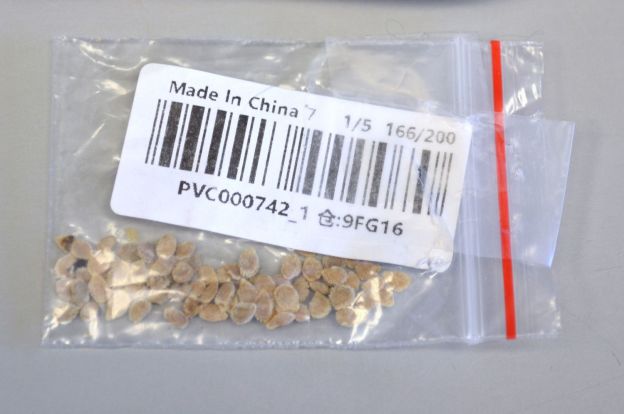
Most of the people who did it the last time aren’t even around anymore. So re-creating all of this has turned out to be a huge problem,” said Madelyn Creedon, a former senior Energy Department and Pentagon official who chaired a congressionally mandated panel on future U.S. nuclear and conventional forces…

Excerpt from Doug Cameron U.S. Nuclear Missile Silos Need Modernizing, but Fixes Aren’t Coming Soon, WSJ, Aug. 26, 2024

Can a Wind Turbine Accident Be Worse than a Oil Spill?

The operations of offshore wind farm, Vineyard Wind 1, were halted in July 2024 after part of a blade on one of the offshore turbines broke off and fell into the ocean. The offshore wind farm is about 15 miles south of Martha’s Vineyard, and debris from the blade has washed up on Nantucket’s southern-facing beaches, as well as Tuckernuck and Muskeget islands. The turbine the blade was attached to, designated AW 38, was in its commissioning phase and was still undergoing testing. No employees, contractors or fishing vessels were in the vicinity of the turbine at the time. The beaches on Nantucket were closed to swimming on Tuesday as large quantities of insulation foam and non-toxic pieces of fiberglass washed ashore.

Excerpt from, Heather McCarron, Wind turbine blade 15 miles off Martha’s Vineyard breaks, pieces fall into ocean, Cape Cod Times, July 18, 2024

The Unintentional Making of a Global Power: Iran

In 2024, Iran, under Supreme Leader Ali Khamenei’s leadership, thwarted decades of U.S. pressure and emerged from years of isolation largely by aligning itself with Russia and China…Iran’s economy remains battered by U.S. sanctions, but oil sales to China and weapons deals with Russia have offered financial and diplomatic lifelines…Today, Tehran poses a greater threat to American allies and interests in the Middle East than at any point since the Islamic Republic was founded in 1979. 

Iran’s military footprint reaches wider and deeper than ever. Iranian-backed armed groups have hit Saudi oil facilities with missiles and paralyzed global shipping in the Red Sea. They have dominated politics in Iraq, Lebanon, Yemen and Syria, and launched the most devastating strike on Israel in decades, when Hamas attacked in October. Iran launched its first direct military attack from its soil on Israel in April 2024. It has also orchestrated attacks on opponents in Europe and beyond, Western officials say. 

“In many respects, Iran is stronger, more influential, more dangerous, more threatening than it was 45 years ago,” said Suzanne Maloney, director of the foreign-policy program at the Brookings Institution, who advised Democratic and Republican administrations on Iran policy. 

U.S. policy has at times unintentionally contributed to Iran’s strength. The 2003 toppling of Saddam Hussein removed a sworn enemy from Iran’s borders. Washington’s failure to stabilize postwar Iraq bolstered Tehran’s influence…

Excerpts from Sune Engel Rasmussen and Laurence Norman, How Iran Defied the U.S. to Become an International Power, WSJ, July 2, 2024

What is the Difference between Recycling and Fake Recycling?

Chemical companies, oil-and-gas incumbents and startups around the world are touting plans for new recycling facilities, promising to turn old bottles and bags into usable material. But policymakers are questioning whether some of these methods, broadly termed chemical or advanced recycling, should be considered recycling at all.

In 2024, Eastman Chemical began processing plastic at a new plant in Kingsport, Tenn., that it calls the largest material-to-material molecular recycling facility in the world. The company uses a chemical procedure called methanolysis to break down hard-to-recycle plastics and turn them into “virgin quality” polyesters. When operating at capacity, the facility will process 110,000 tons of plastic waste a year, the equivalent of 11 billion water bottles a year, said Mark Costa, Eastman’s chief executive. 
In July 2024, Australian company Samsara Eco announced a $65 million funding round that attracted investment from Singapore’s state-investment company Temasek and apparel company Lululemon, among others. Using a process it calls enzymatic recycling, it aims to recycle 1.5 million tons of plastic a year by 2030. 

Yet in June 2024, during last-minute negotiations on a New York state packaging bill that would have forced companies to meet ambitious recycling standards and reduce their packaging waste by 30%, state legislators agreed that technologies like Eastman’s or Samsara Eco’s would not initially be considered “recycling.”   “We had a serious concern about the pseudo solution pushed by the industry called chemical recycling,” said Judith Enck, a former Environmental Protection Agency official and founder of Beyond Plastics, an advocacy group that supported the bill. In a report published last October, Beyond Plastics raised doubts about advanced recycling plants’ yield, emissions, byproducts and energy use. The group has argued that advanced recycling amounts to little more than a marketing tactic deployed to distract decision makers from proven waste-reduction methods, like using less packaging… 

A recent ProPublica investigation found that the dominant advanced recycling technique, pyrolysis, yields 15% to 20% usable plastic materials. The rest turns into fuel and other chemicals. Traditional mechanical recycling yields 55% to 85% new plastic…

Excerpts from Claire Brown, A Fight Over the Future of Recycling Brews as Plastics Legislation Gains Traction, WSJ, July 2, 2024

Corporate Greed and the Grid: How AI Fell For Nuclear Power

The owners of roughly a third of U.S. nuclear-power plants are in talks with tech companies to provide electricity to new data centers needed to meet the demands of an artificial-intelligence boom.  Among them, Amazon Web Services is nearing a deal for electricity supplied directly from a nuclear plant on the East Coast with Constellation Energy, the largest owner of U.S. nuclear-power plants, according to people familiar with the matter. In a separate deal in March, the Amazon.com subsidiary purchased a nuclear-powered data center in Pennsylvania for $650 million…

Instead of adding new green energy to meet their soaring power needs, tech companies would be effectively diverting existing electricity resources. That could raise prices for other customers and hold back emission-cutting goals…The nuclear-tech marriage is fueling tensions over economic development, grid reliability, cost and climate goals in states including Connecticut, Maryland, New Jersey and Pennsylvania. Amazon’s deal in Pennsylvania set off alarm bells for Patrick Cicero, the state’s consumer advocate. Cicero said he is concerned about cost and reliability if “massive consumers of energy kind of get first dibs.” It is unclear if the state currently has the regulatory authority to intervene in such deals, he said. “Never before could anyone say to a nuclear-power plant, we’ll take all the energy you can give us,” said Cicero.

Excerpts from Jennifer Hiller, Tech Industry Wants to Lock Up Nuclear Power for AI, WSJ, July 1, 2024

Dior Handbags Made in Chinese Sweatshops of Italy

A series of raids in Italy in 2024 has exposed the contrast between the glamorous world of Milan’s catwalks and some of the realities of luxury-goods production. An investigation by Milan prosecutors into working conditions at local factories found workshops making handbags and other leather goods for Dior and Armani used exploited foreign labor to produce the high-end products at a fraction of their retail price.

Dior paid a supplier €53 apiece, roughly $57, to assemble a handbag that it sells in stores for €2,600, or about $2,780, according to documents examined as part of the probe….Some of the raided workshops, all of which were in Italy, were also making products for other fashion brands, prosecutors said. The Italian investigation highlights a distinctly modern issue in the luxury industry. While other sectors have moved manufacturing to China and other low-wage countries, many luxury brands kept production closer to home, believing it was crucial to their appeal.

But despite being stamped with the “Made in Italy” label, prosecutors allege that some luxury goods are made by foreign workers, many of whom are Chinese, under conditions that fall far short of legal standards. As a result of the Italian investigation, judges in June 2024 placed Manufactures Dior SRL—a unit of Dior—under so-called court administration after ruling that its supply chain included Chinese-owned firms in Italy that mistreated migrant workers.

Excerpts from Nick Kostov, Raids Find Luxury Handbags Being Made by Exploited Workers in Italy, WSJ, July 2, 2024

The Race for Fusion: US v. China

A high-tech race is under way between the U.S. and China as both countries chase an elusive energy source: nuclear fusion.  China is outspending the U.S., completing a massive fusion technology campus and launching a national fusion consortium that includes some of its largest industrial companies. Crews in China work in three shifts, essentially around the clock, to complete fusion projects.

The result is an increasing worry among American officials and scientists that an early U.S. lead is slipping away. JP Allain, who heads the Energy Department’s Office of Fusion Energy Sciences, said China is spending around $1.5 billion a year on fusion, nearly twice the U.S. government’s fusion budget. What’s more, China appears to be following a program similar to the road map that hundreds of U.S. fusion scientists and engineers first published in 2020 in hopes of making commercial fusion energy. “They’re building our long-range plan,” Allain said. “That’s very frustrating, as you can imagine.”

China already has a fast-growing nuclear-technology industry and is building more conventional nuclear power plants than any other country. The country’s nuclear-plant development will give it an advantage when commercial fusion is reached, according to a report released last month by the Information Technology and Innovation Foundation, a Washington, D.C.-based think tank with backers that include big tech companies…

The Chinese Academy of Sciences’ Institute of Plasma Physics in the eastern Chinese city of Hefei in 2018 broke ground on a nearly 100-acre magnetic fusion research and technology campus. The facility is expected to be completed in 2025 but is already largely operational and focused on industrializing the technology. In 2023 China said it would form a new national fusion company, and said the state-owned Chinese National Nuclear Corp. would lead a consortium of state-owned industrial firms and universities pursuing fusion energy. Among the largest efforts by a private Chinese company are those of ENN, an energy conglomerate, which created a fusion division from scratch in 2018. Since then, ENN has built two tokamaks, the machines where fusion can happen, using powerful magnets to hold plasma. ENN’s fusion work isn’t well-understood outside of China and its pace of development would be difficult to replicate in the U.S. or Europe.

Excerpts from Jennifer Hiller, China Outspends the U.S. on Fusion in the Race for Energy’s Holy Grail, WSJ, July 9 2024

What Ails the West: the Forgotten Art of Industrialization

For the past few years, the West has been trying to break China’s grip on minerals that are critical for defense and green technologies. Despite their efforts, Chinese companies are becoming more dominant, not less. They are expanding operations, supercharging supply and causing prices to drop. Their challengers can’t compete. Take nickel, which is needed for electric-vehicle batteries. Chinese processing plants that dot the Indonesian archipelago are pumping out vast quantities of the mineral from new and expanding facilities, jolting the market. Meanwhile, Switzerland-based mining giant Glencore is suspending operations at its nickel plant in New Caledonia, a French territory, concluding it can’t survive despite offers of financial help from Paris. The U.K.’s Horizonte Minerals, whose new Brazilian mine was expected to become a major Western source, said last month that investors had bailed, citing oversupply in the market. Lithium projects in the U.S. and Australia have been postponed or suspended after a surge in Chinese production at home and in sub-Saharan Africa. 

The only dedicated cobalt mine in the U.S. also suspended operations last year, five months after local dignitaries attended its opening ceremony. Its owners say they are struggling against a flood of Chinese-produced cobalt from Indonesia and the Democratic Republic of Congo.

Last year, non-Chinese production of refined cobalt declined to its lowest level in 15 years… The share of lithium mining done within China or by Chinese companies abroad has grown from 14% in 2018 to 35% this year… Over the same time, lithium processing done within China has risen from 63% in 2018 to 70%…China has many advantages in the race to lock up minerals. Its miners are deep-pocketed and aggressive, making bets in resource-rich countries that Western companies have long viewed as corrupt or unstable, such as Indonesia, Mali, Bolivia and Zimbabwe. State banks provide financing for power plants and industrial parks abroad, paving the way for further private Chinese investment.

China’s rapid industrial development also means its companies have spent decades fine-tuning the art of turning raw ore into metals. They can set up new facilities quickly and cheaply. A paper published in February by the Oxford Institute for Energy Studies pegs the costs of building a lithium refinery outside China as three to four times higher than building one within the country. In eastern Indonesia, Chinese companies have built a fleet of highly efficient nickel and cobalt plants over the past few years after mastering a technology Western miners long considered glitchy and expensive. The plants run on coal power, some of it new, at a time when the world is looking to phase out dirty energy. “It’s just a simple, straightforward engineering capability that the Chinese have that has been lost in the rest of the world,” said Jim Lennon, managing director for commodities strategy at Macquarie, an Australian bank. “The Chinese have this overwhelming competitive advantage now that can’t really be addressed.”….

Excerpts from Jon Emont, China Is Winning the Minerals War, WSJ, June 19, 2024

The Chemical Fingerprints of Trees and the Fight against Deforestation

Scientists are embarking on an effort to keep sanctioned Russian timber out of Europe by mapping the unique chemical fingerprints of trees, a process that could be used to vet corporate supply chains for other banned commodities. The project aims to bring science to bear in a fight by companies and governments to stop illegal wood from seeping into timber supply chains—complex, difficult-to-police networks of logging companies, sawmills, wood manufacturers and traders.

To start, a team led by the Washington-based nonprofit World Forest ID set its sights on sanctions the European Union placed on Russian and Belarusian timber following the invasion of Ukraine. The team analyzed thousands of wood samples of trees, then layered in advanced statistical models and artificial intelligence.  The result was a database allowing customs officials and corporate auditors to verify the origin of timber with a simple, lab-based test. 

Although work on the database is ongoing, furniture giant IKEA has already used it to vet suppliers for sanctioned timber after the war forced it to revamp its supply chain. Belgian authorities have also employed it to seize more than 260 tons of illegally shipped Russian timber.  If scaled up, the project could have broad implications for how companies source a range of other agricultural commodities, such as cotton and cacao, which have been linked to environmental and human rights abuses…

World Forest ID currently uses two tests to identify the chemical composition of wood samples. One measures the ratios of stable isotopes, which vary based on factors such as rainfall or temperature. The other test measures trace elements such as magnesium and copper, which vary based on the soils in which trees grow…The group interpolates results spatially using advanced statistical methods and machine learning. Those innovations on traditional forensic testing methods allow World Forest ID to predict the chemical signatures of trees harvested in areas where the group didn’t take samples.

Excerpts from Dylan Tokar, Keeping Sanctioned Russian Timber Out of the EU Is Tricky. This Nonprofit Has a Solution, WSJ, June 10, 2024

How Fish Becomes Extinct

Five fish species, including the iconic Chinese sturgeon, have gone extinct, or will soon be extinct, because of dams on the Yangtze River in China, according to a paper released on 10 May 2024 in Science Advances. The Yangtze River is a mighty 6,300-kilometre-long waterway and a global biodiversity hotspot that runs through 11 Chinese provinces. But over the past 50 years, six major hydropower dams and more than 24,000 smaller hydropower stations have been built in the river’s main stream.

The paper focused on five iconic species: the Chinese sturgeon (Acipenser sinensis), the Yangtze sturgeon (Acipenser dabryanus), the Chinese paddlefish (Psephurus gladius), the Chinese sucker (Myxocyprinus asiaticus) and the largemouth bronze gudgeon (Coreius guichenoti). By the time of the analysis, the paddlefish was already extinct. The Yangtze sturgeons are being kept alive only through captive-breeding programs. The Chinese sturgeon is critically endangered. The International Union for Conservation of Nature lists the sucker as vulnerable, and the gudgeon as endangered. The researchers’ modelling found that all five species will be entirely extinct or extinct in the wild by 2030.

Excerpts from Xiaoying You, China’s Yangtze fish-rescue plan is a failure, study says, Nature, May 20, 2024

Making Nuclear Energy Sustainable Means Getting Rid of Nuclear Waste: Is this Possible?

“When using fast reactors in a closed fuel cycle, one kilogram of nuclear waste can be recycled multiple times until all the uranium is used and the actinides — which remain radioactive for thousands of years — are burned up. What then remains is about 30 grams of waste that will be radioactive for 200 to 300 years,” said Mikhail Chudakov, IAEA Deputy Director General and Head of the Department of Nuclear Energy.

Fast reactors were among the first technologies deployed during the early days of nuclear power, when uranium resources were perceived to be scarce. However, as technical and material challenges hampered development and new uranium deposits were identified, light water reactors became the industry standard. However, efforts are underway in several countries to advance fast reactor technology, including in the form of small modular reactors (SMRs) and microreactors (MRs). 

Five fast reactors are now in operation: two operating reactors (BN-600 and BN-800) and one test reactor (BOR-60) in the Russian Federation, the Fast Breeder Test Reactor in India and the China Experimental Fast Reactor. The European Union, Japan, the United States of America, the United Kingdom and others have fast reactor projects tailored to a variety of aims and functions underway, including SMRs and MRs. Russia’s Pilot Demonstration Energy Complex, which is under construction in Seversk, brings together a lead-cooled BREST-OD-300 fast reactor, a fuel fabrication and refabrication plant, and a plant for reprocessing mixed nitride uranium–plutonium spent fuel. A deep geological waste repository will also be built. The importance of this pilot project is not only to demonstrate the making of new fuel, irradiate it, and then recycle it, but to do so all on one site.

“Having the whole closed fuel cycle process on one site is good for nuclear safety, security and safeguards,” said Amparo Gonzalez Espartero, Technical Lead for the Nuclear Fuel Cycle at the IAEA. “It should also make more sense economically as the nuclear waste and materials do not need to be moved between locations — as they are currently in some countries — thereby minimizing transportation and logistical challenges.”

Projects are advancing in other countries. China is constructing two sodium cooled fast reactors (CFR-600) in Xiapu County, Fujian province. The first unit is under commissioning and is expected to be connected to the grid in 2024. In the USA, a fast reactor project backed by Microsoft co-founder Bill Gates is under development; it will not operate in a closed fuel cycle, although the country is renewing efforts to work on closed nuclear fuel cycles and use its existing nuclear waste to develop its own supply of fuel. In Europe, the MYRRHA project in Belgium is aimed towards building a lead-bismuth cooled accelerator driven system by 2036 to test its ability to break down minor actinides as part of a future fully closed fuel cycle.

Excerpts from Lucy Ashton, When Nuclear Waste is an Asset, not a Burden, IAEA, Sept., 2023

The Dangers of Manic Oil Production

In a desolate stretch of desert spanning West Texas and New Mexico, drillers are pumping more crude than Kuwait. The oil production is so frenzied that huge swaths of land are literally sinking and heaving. The land has subsided by as much as 11 inches since 2015 in a prime portion of the Permian Basin, as drillers extract huge amounts of oil and water, according to a Wall Street Journal analysis of satellite data. In other areas where drillers dispose of wastewater in underground wells, the land has lifted by as much as 5 inches over the same period. Alongside crude, oil-and-gas companies are extracting gargantuan amounts of subterranean water—in the Delaware, between five and six barrels of water are produced, on average, for every barrel of oil. To dispose of it, they inject billions of barrels of putrid wastewater into underground disposal wells.

The constant extraction and injection of liquids has wrought complex geologic changes, which are raising concerns among local communities long supportive of oil and gas. Earthquakes linked to water disposal have rattled residents and prompted state regulators to step in. Some researchers worry that wastewater might end up contaminating scarce drinking-water supplies

Excerpts from Benoit Morenne and Andrew Mollica, Permian Oil Extraction Lifts and Sinks Land, WSJ, Apr. 29, 2024

Plastics, Nanoplastics and Heart Attacks

A Landmark treaty on plastic pollution scheduled to be adopted by the end of 2024  must put scientific evidence front and center. In the run-up to the final negotiations, researchers have been publishing more reports, data sets and models about plastics than ever before….Researchers have also organized groups, such as the Scientists’ Coalition for an Effective Plastics Treaty


The treaty was originally conceived as a mechanism to end plastic pollution, which is sometimes taken to mean driving the amount of ‘mismanaged waste’ to zero by 2040. Mismanaged waste is plastic that isn’t recycled or disposed of in a well-managed landfill or incinerator, but rather ends up loose in the environment or burned in an open pit. Annual production of plastics has grown exponentially, from about 2 million tonnes in 1950 to 460 million tonnes in 2019 (current levels are on track to triple by 2060). Mismanaged waste is hard to measure–estimates put it at 74 million tonnes each year., expect to reach, by 2050, 122 million tonnes per year, under business-as-usual projections. Unless policies change, the peak of mismanaged plastic waste “is nowhere yet in sight”, he says.

A new report from environmental-policy researcher Nihan Karali and her colleagues at Lawrence Berkeley National Laboratory in California concludes that plastic production generated the equivalent of 2.24 gigatonnes of carbon dioxide in 2019, mainly from the energy-intensive process of extracting and refining the fossil fuels used to generate the petrochemicals that make up most virgin plastic.


An individual plastic typically contains hundreds of chemicals — many of which are toxic and can leach out — that make the material more flexible, water repellent, flame retardant or resistant to ultraviolet light. Last month, researchers released a report listing 16,000 chemicals associated with plastics, of which they found at least to be 4,200 hazardous… A study published in February 2024 of some 250 people undergoing surgery showed that nano- and microplastics in carotid-artery blockages were linked to increased risk of heart attacks, strokes and death.

Excerpt from Nicola Jones, Plastic pollution: three numbers that support a crackdown,  Nature, April 2024

Stealing Land from the Ocean: An Engineered Way to Address Climate Change

The Maldives is an 820-kilometre-long chain of nearly 1,200 islands dotting the Indian Ocean. The nation has become one of the most popular luxury tourism destinations in the world because of its Instagrammable beaches and its advertising slogan: “the sunny side of life”. But the Maldives is also one of the countries most vulnerable to sea-level rise. With 80% of its land less than one meter  above sea level, some scientists predict that the islands could be completely submerged by 2100. In an effort to keep the country above water and thriving, the government is adopting a strategy used by many nations around the globe: land reclamation...


Dutch planners are often considered the founders of land reclamation, with a history of water engineering going back some 800 years. Over the centuries, land-forming projects have shaped some of the world’s major cities, including Singapore, London, New York and Miami. In recent decades, most of the reclaimed land has been in East Asia. In China, Shanghai has reclaimed 350 square kilometres  — more than three times the size of Paris — over the past few decades. Colombo has added 100 km2 in just 4 years, and 65 km2 of Mumbai is reclaimed. A study on twenty-first-century coastal-land reclamation found that of 135 large coastal cities with populations of more than one million people, 75% had reclaimed land.

With projects stretching back to 1997, the Maldives is a veteran of large-scale land reclamation…Although the nation’s territory covers 90,000 km2, more than 99% of it is ocean. The Maldives’ 1,200 islands are all atolls — rings of coral reef that surround lagoons. When the government decides to reclaim land, it takes sand from the lagoons using boats outfitted with suction pipes, which collect sand and coral debris from the ocean floor like giant vacuum cleaners. The boat then deposits the material in a different spot, either inside or outside the atoll, to form new land. Sometimes reclamation projects fill in the entire lagoon…. [However, these projects] destroy coral reefs and seagrass meadows and harm the fishing and tourism industries…’

“Islands can’t occur anywhere,” says Virginie Duvat, a coastal geographer at La Rochelle University in France, who has studied the effects of land reclamation in the Maldives. “If you put an island where there was naturally no island, you create vulnerable land and you will necessarily have to build strong engineered structures, breakwaters and sea walls,” she says…In a 2019 study4, Duvat and Alexandre Magnan, a geographer at the Institute for Sustainable Development and International Relations — Sciences Po in Paris, assessed the scale of coastal changes that humans had made to 107 inhabited islands in the Maldives between 2004–06 and 2014–16. On almost half the islands, the researchers found significant degradation in the reefs’ abilities to weaken waves and provide natural sources of sediments. One-fifth of the islands had almost entirely or entirely “lost their natural capacity to respond and adjust to ocean climate-related pressures”, the researchers say. “It means that a decision you have taken one day to rely on reclaimed land will necessarily cause you to invest more money,” says Duvat. “You are locked into the engineered path for decades and decades and potentially the rest of the century.”=

Excerpts from Jesse Chase-Lubitz, The Maldives is racing to create new land. Why are so many people concerned?, Nature, Apr. 24, 2024

The Essence of a Nightmare: PFAS on Ocean Waves

PFAS, or forever chemicals, are ubiquitous in our environment. In the U.S. alone, there are more than 57,000 sites contaminated with these chemicals. They’re in our drinking water, our soil, our products—and our ocean. And according to new research, when waves crash onto shores around the world, they spray hundreds of thousands of PFAS particles into the air, creating a cycle in which these chemicals go from land to sea and back again. PFAS (per- and polyfluoroalkyl substances) are a class of synthetic chemicals largely used to make products stain-, grease-, and water-resistant. They’ve been dubbed “forever chemicals” because they don’t easily break down and so stay in our environments for thousands of years. They’re linked to harmful effects to health, including cancer, decreased fertility, developmental delays, and more.

Excerpts from Kristin Toussaint, Ocean waves contain more ‘forever chemicals’ than industrial pollution. That’s bad news if you live on the coast,  FastCompany, April 24, 2024

Who Craves Baby Eels: the Industry and its Black Market

The growing craving for eel over the decades, concurrent with the rise of China’s middle class, has triggered overfishing in Japan and Europe, leading to a decline in the species’ population. The European Union banned the import and export of eels in 2010, which led seafood wholesalers to look for alternative sources, bringing the trade—and thousands of poachers—to Canada… Fishermen say elver poachers outnumbered licensed harvesters 10-to-1 during the 2023 abbreviated season, closed after 18 days due to concerns about illegal fishing.

There is a lot of money at stake. Fishers use mesh nets to scoop up baby eels as they enter Canada’s east coast river systems, and sell them on to aquaculture operations in Asia to raise them until they are ready for market. Baby eell demand “has resulted in unsustainable eel fishing,” according to a Justice Department indictment filed in 2022 with the U.S. District Court of New Jersey, in relation to charges filed against a seafood distributor and eight of its employees—four of whom are based in China—on allegations of illegally trafficking large volumes of juveniles. “A multibillion-dollar international black market for freshwater eels flourishes.” At its peak, a pound of elvers fetched about $1,800, but fishers say the price has dropped due to black-market activity…

It is difficult to stamp out illegal harvesting entirely. Officials say it happens in the evening and often in isolated locations. The barrier to entry is low, because all poachers need is a pair of rubber boots, a headlight, and a good-quality dip net purchased from a sporting goods store. Illegally-caught baby eels can still be packaged and shipped to Hong Kong in mislabeled boxes, mixed either with legally-caught eels or other seafood, like lobster, officials say.

Excerpts from Paul Vieira, Guns and Death Threats Spur Canada to Reel in Baby-Eel Fishing, WSJ, Apr. 5, 2024

What Do We Know about the Plastic Chemicals that Leach into Food?

Countries are currently negotiating a global plastics treaty to end plastic pollution. It is essential that the treaty addresses plastic chemicals because all plastics, from food packaging to car tires, contain thousands of chemicals that can leach into foodstuffs, homes, and the environment. Since many of these chemicals are hazardous, they can damage human health and the environment.

Plastic chemicals comprise all chemicals in plastics, including additives, processing aids, and impurities. A previous report by the United Nations Environment Program (UNEP) and other international institutions identified 13,000 plastic chemicals. The new PlastChem Report shows that there are more plastic chemicals than previously known, with over 16,000 chemicals included in the new PlastChem database that accompanies the report.
Further key findings of the report include:
• At least 4,200 plastic chemicals (or 26%) are of concern because of their high hazards to human health and the environment,
• More than 400 chemicals of concern can be present in each major plastic type, including in food packaging, and all tested plastics leached hazardous chemicals,

The report recommends : Increased transparency on the chemical composition of plastics is essential for closing data gaps, promoting a comprehensive management of plastic chemicals, and creating accountability across plastic value chains. A unified reporting, disclosure of the chemical composition of plastic materials and products as well as a “no data, no market” approach are recommended to ensure that essential
information about plastic chemicals becomes publicly available.

Excerpts from New Report Identifies Plastic Chemicals of Concern and Highlights
Approaches Towards Safer Plastics, Press Release of PlastChem, Mar. 14, 2024

The Real Price for ‘Green’ Energy

Civilization would not exist were it not for miners. Every year the world’s oldest industry supplies hundreds of megatons of the primary metals and minerals that are essential to all subsequent industries—from medical devices to kitchen appliances, aircraft, toys, power plants, computers and cars. Hence it’s consequential when the governments of Europe and the U.S. implement policies requiring that global mining expand, and soon, by 400% to 7,000%. Those policies are meant to force a transition away from the oil, natural gas and coal that supply 80% of global energy. But it’s an unavoidable fact that building the favored transition machines—wind turbines, solar panels, electric cars—will require astonishing quantities of minerals to produce the same amount of energy.

The other challenge involves people. Mining has always been as much about people as it has about geology, technology and money. In “The War Below: Lithium, Copper, and the Global Battle to Power Our Lives,” Ernest Scheyder highlights the myriad difficulties faced by the people who build mines, as well as those hurt by or opposed to them. As Mr. Scheyder notes, mining is “dirty work.” That’s no invective; it’s just reality…He focuses on the social and political dynamics that accompany big mining projects because, as he writes, there’s “no way around the fact that mines are gargantuan creations that maim the Earth’s surface.” He makes clear that his goal isn’t to question the need for more mines but to understand “whether these lands should be dug up in an attempt to defuse climate change,” especially when some lands are considered sacred by their neighbors and inhabitants.

Excerpts, ‘Mark P. Mills, The War Below’ Review: Digging for Minerals, WSJ, Mar. 3, 2024

Oil Companies Never Die: the advantage of geothermal energy

Oil-and-gas companies are accelerating investments in geothermal energy, betting the technologies that fueled the shale revolution can turn the budding industry into a large producer of clean power… Many of these companies are using the same technology employed by frackers, but instead of searching for oil and gas, they are looking for underground heat. The new geothermal industry is the result of a surprising confluence of interests among the oil-and-gas, technology and green power industries. The heat that the drillers find underground can be used to generate a steady, round-the-clock supply of carbon-free electricity, which is coveted by tech companies for their power-hungry data centers. 

Finding pockets of underground heat is relatively easy in places with lots of geothermal activity, including parts of the U.S., Indonesia and New Zealand. When the heat is deeper in the earth, it is more difficult and more expensive to find. Those constraints have kept the sector’s share of U.S. electricity generation at less than 1%. …Oil companies understand subsurface geology, have experience building infrastructure projects and have cash available to deploy. That is why Chevron is joining with other companies and pursuing geothermal pilot projects in Japan, Indonesia and the U.S.

Excerpts from Amrith Ramkumar, Frackers Are Now Drilling for Clean Power, WSJ, Feb. 29, 2024

The Curse of Nano-Plastics: Plastics in the Placenta

A flurry of recent studies has found that microplastics are present in virtually everything we consume, from bottled water to meat and plant-based food. Now, University of New Mexico Health Sciences researchers have used a new analytical tool to measure the microplastics present in human placentas. In a study published February 17 in the journal Toxicological Sciences, a team led by Matthew Campen, reported finding microplastics in all 62 of the placenta samples tested, with concentrations ranging from 6.5 to 790 micrograms per gram of tissue.

Although those numbers may seem small (a microgram is a millionth of a gram), Campen is worried about the health effects of a steadily rising volume of microplastics in the environment. For toxicologists, “dose makes the poison,” he said. “If the dose keeps going up, we start to worry. If we’re seeing effects on placentas, then all mammalian life on this planet could be impacted. That’s not good.”…The researchers found the most prevalent polymer in placental tissue was polyethylene, which is used to make plastic bags and bottles. It accounted for 54% of the total plastics. Polyvinyl chloride (better known as PVC) and nylon each represented about 10% of the total, with the remainder consisting of nine other polymers…

Plastic use worldwide has grown exponentially since the early 1950s, producing a metric ton of plastic waste for every person on the planet. About a third of the plastic that has been produced is still in use, but most of the rest has been discarded or sent to landfills, where it starts to break down from exposure to ultraviolet radiation present in sunlight. “That ends up in groundwater, and sometimes it aerosolizes and ends up in our environment,” Garcia said. “We’re not only getting it from ingestion but also through inhalation as well. It not only affects us as humans, but all off our animals – chickens, livestock – and all of our plants. We’re seeing it in everything.”…The concentration of microplastics in placentas is particularly troubling, he said, because the tissue has only been growing for eight months (it starts to form about a month into a pregnancy). “Other organs of your body are accumulating over much longer periods of time.”

Excepts from Michael Haederle,  Microplastics in Every Human Placenta, Feb. 20, 2024

Can We Save the Giant Kelp?

At a salmon farm in Tasmania Australia is an experiment that researchers hope can save an entire ecosystem from warming oceans. Beneath the waves, scientists are growing several types of giant kelp—which in the wild can grow up to 175 feet tall—on rope to track which ones can thrive in hotter conditions. Rising water temperatures, more frequent marine heat waves and invasive sea urchins have already destroyed some 95% of the giant kelp forests in Tasmania, scientists say. The island south of Australia’s mainland is a global hot spot for ocean warming, with sea temperatures in the island’s east rising faster than the global average, a dynamic that has already wreaked havoc on some marine species in a place where fishing remains a key industry.

In Tasmania, scientists are conducting experiments to identify heat-tolerant giant kelp, plan to use artificial intelligence and genetic analysis to better understand why some types fare better than others, and will then have to figure out a way to plant them in the wild without it costing a fortune. Eventually, they could use the genetic information to breed kelp to be even more heat tolerant…But success is far from guaranteed. Running lab tests on kelp can be tricky, given the great size the plants can reach. Efforts to control the invasive long-spined sea urchins, including with government subsidies that encourage fishermen to catch them, could fail. Marine heat waves could increase beyond the ability of any kelp to cope. Scientists also still aren’t sure to what extent genetic factors allow giant kelp to survive in warmer water, or whether environmental factors—such as nutrient and light availability—are more important.

Excerpts from Mike Cherney, Inside the Quest for a Super Kelp That Can Survive Hotter, WSJ, Feb. 22, 2024

Fracking v. Nuclear Wastes: the Fate of New Mexico

Holtec International, a Florida-based company, aims to rail thousands of canisters of spent nuclear fuel to Lea County, New Mexico, United States, and store the containers below ground. The site has a 40-year license and could ultimately hold around 170,000 metric tons of used radioactive fuel—about twice as much as the U.S. currently holds. It would be the largest such facility in the world, and Holtec says it would further the development of U.S. nuclear energy. [This plan is opposed by Fasken Oil and Ranch] a company that claims that  a nuclear incident in the Permian basin, which cranks out more oil than Iraq and Libya combined, would have devastating consequences for U.S. energy and the local economy. “I’m not antinuclear,” Fasken Assistant General Manager Tommy Taylor, said. “We just don’t feel like siting all the nuclear waste in the middle of our biggest oil and gas resource is a good idea.” 

Fasken said the nuclear-waste storage sites threaten its operations in the Permian. According to the court filing of Fasken:

“The proposed site sits on top of and adjacent to oil and gas minerals to be developed
by means of fracture stimulation techniques. Currently, drilling techniques used to
extract minerals in the Permian Basin involve drilling horizontally into deep
underground formations up to two miles beneath the earth’s surface. High pressure
fluids are pumped into the wells, in some cases exceeding twelve thousand pounds
per square inch. This pressure is power enough to fracture the surrounding rock
thus releasing the oil and gas
. The pressure creates fissures and cracks
beneath the surface
. And, at this time, there are oil and gas operators testing a new
technique of simultaneously drilling and fracturing up to 49 horizontal wellbores in
a single section of land. Either the traditional or new and unproven drilling
technique, involving more than 20,000,000 bbls of water and sand, could
conceivably be utilized to inject into and withdraw from the rock formation beneath
and surrounding the Holtec site. Hydraulic fracturing beneath and around Holtec
should give the NRC pause and is sufficient reason not to proceed.” (HOLTEC INTERNATIONAL’S ANSWER OPPOSING FASKEN’S, pdf)

The yearslong fight has entangled large oil companies, the country’s top nuclear regulator, the states of Texas and New Mexico, as well as local communities that want to host the nuclear waste

Supporters of the nuclear-waste projects say they could help break a decades-old nuclear waste logjam that has led to radioactive refuse piling up at reactors. President Biden and billionaire investors are endorsing new nuclear projects to reduce greenhouse-gas emissions, but the U.S. has yet to figure out where to permanently unload some of the most hazardous material in the world.  The Permian is home to two sites that handle some types of nuclear waste and to the only commercial uranium-enrichment facility in the country.  Holtec’s storage would be temporary, and some nuclear experts say interim facilities can be a stopgap until the federal government builds a permanent, deep geologic repository. A plan to house nuclear waste at Nevada’s Yucca Mountain fizzled under former President Barack Obama, and the search for an alternative site has stalled.

As a result, the US federal government is paying utilities billions of dollars to keep used fuel rods in steel-lined concrete pools and dry casks at dozens of sites.  Consolidating used nuclear fuel at one or two facilities would lessen that financial

Fasken has notched court victories. Last year, the U.S. Fifth Circuit Court of Appeals in New Orleans found that federal law didn’t authorize the Nuclear Regulatory Commission to license a private, away-from-reactor storage facility for spent nuclear fuel. It vacated the federal license for another storage project proposed by Interim Storage Partners, a joint-venture between Orano USA and Waste Control Specialists. The Nuclear Regulatory Commission has asked the court to reconsider.

The Holtec project faces other hurdles. New Mexico last year passed legislation all but banning storage of high-level nuclear waste. Texas lawmakers have also opposed interim storage facilities. The Holtec spokesman said the company was evaluating the legislation’s impact on the project. Fasken expects the fight over interim storage will eventually reach the Supreme Court. 

Excerpts from Benoit Morenne, The War over Burying Nuclear Waste in America’s Busiest Oil Field, WSJ, Feb. 19, 2024

When Lakes Become a Soup of Minerals: the Fate of Great Salt Lake

In the summer 2024, a California startup plans to start construction on a project to suck up water from the Great Salt Lake, Utah, United States to extract one of its many valuable minerals: lithium, a critical ingredient in the rechargeable batteries used in electric vehicles. The water will then be reinjected back into the lake, which Lilac Solutions says addresses concerns about the damaging effects of mineral extraction. At its peak, Lilac says it will use a series of pipes to suck up 80,000 gallons of water a minute to harvest the mineral. The company plans to eventually produce up to 20,000 tons of battery-grade lithium a year.

The effort is one of dozens of projects across the U.S. racing to build up a domestic supply of lithium and other battery minerals as the Biden administration is dedicating billions of dollars to strengthening the U.S. battery supply chain and reducing reliance on China, which dominates the global production of battery minerals.

One common extraction method of lithium pumps briny underground water into vast man-made ponds, where evaporation separates lithium from other elements over 18 months or more. Mining companies in Chile and elsewhere have used the approach, which drains scarce water resources and can leave deposits of toxic residues.

Lilac says its technology is much faster, taking a matter of hours from the time of extraction, while preserving water levels. Its method deploys reusable ceramic “beads” that attach to lithium atoms to separate them from the brine.

At the Great Salt Lake, mineral extraction is nothing new. The lake has been shrinking for decades because of agricultural, industrial and other diversions of its feed waters. Extraction of minerals accounts for about 13% of its water diversion, according to a 2019 study. Meanwhile, the lake has become a concentrated soup of minerals, since it doesn’t have an outlet that lets it discharge the ones that flow into it.

Scott Patterson, The Great Salt Lake Is Full of Lithium. A Startup Wants to Harvest It, WSJ, Feb. 12, 2024

Food Security: The Silicon Valley of Seeds

The Communist Party’s top disciplinary body—after punishing graft in the military, domestic security organs and the financial sector—is now hunting officials, merchants and farmers it suspects of harvesting illicit profits from trade in grains and seeds. Tasked with being more forceful in safeguarding the nation’s “seed security,” authorities have investigated dozens of cases involving seed-related misconduct and, in several instances, imprisoned grain-sector officials on corruption charges…Officials say the goal is to stop the proliferation of fake and substandard seeds that could jeopardize food production and safety, while punishing officials, merchants and farmers who siphon agricultural subsidies and peddle low-grade seeds.

Xi has often highlighted food security as a national interest, calling on officials to ensure that China can fully nourish its 1.4 billion people. His demands have taken on greater urgency in recent years as he pushed to prepare his country for a potential confrontation with the U.S.—a major source of Chinese grain imports, including soybeans and corn—and forestall disruptions to food supplies for one of the world’s most populous nations…Today, Beijing sees the seed sector as one of several strategic industries where Western powers could flex their technological superiority to strangle a lagging China. Demonstrating his personal interest in this field, Xi has twice visited a seed-breeding base in the island province of Hainan that officials call the “Silicon Valley” of China’s seed industry.

China is the world’s largest grain producer, growing one-quarter of global supply on less than 10% of the world’s arable land. But its ability to feed its own people has slipped over recent decades by some estimates. ..Officials and state media have taken to comparing seeds to advanced semiconductor chips, a technology that China has pledged to master in its quest for a national renaissance…While China’s seed industry is strong enough to survive foreign strangulation, the country still falls behind in seed quality, according to the Farmers’ Daily, which recommended measures including “resolutely cracking down” on the trading of fake and mislabeled seeds, whereby officials and merchants defraud farmers with counterfeit or lower-grade goods marked as top-quality seeds….

Excerpts from China’s Corruption Hunters Target Produce Aisle in Push for Seed Security, WSJ, July 25, 2023

Mining and Child Prostitution

Years ago, education officials in the remote mining town, Mahdia Guyana, installed metal bars on the windows of the high school’s dormitory partly to keep girls and boys from being preyed upon in a town known for parties, nightclubs and brothels frequented by local gold miners.

But the grates and padlocked doors meant to protect students instead helped seal their fate as fire tore through the girls facility one night in late May 2023, killing 20, mostly indigenous girls from far-flung hamlets served by the school. Their bodies were so badly incinerated that authorities in this impoverished South American nation had to send DNA samples to New York to identify the victims. The tragedy rocked the small, South American country where poverty and child sexual exploitation remain entrenched in its lawless mining regions…

For decades, the gold deposits around Mahdia have drawn members of indigenous communities, young men from Guyana’s Atlantic coast, as well as Brazilian and Venezuelan wildcat miners who pay indigenous councils a 10% cut of their haul, according to Cornel Edwards, a 70-year-old toshao, or local chieftain. Some of those men have long flocked to Mahdia for booze and sex after toiling in mud pits hunting for gold, local government and residents say…

Children being lured into dangerous mining work and child prostitution in lawless mining regions are common in other countries in South America, including Ecuador and Colombia, according to a U.S. Labor Department report from 2021. In 2017, Unicef published a tool kit for industrial mining firms, offering guidelines on how to train workers at large-scale as well as smaller companies that buy gold from individual miners on the risks of children forced into sex work in mining areas.

Excerpts from Kejal Vya, Deadly School Fire Casts Light on Sexual Exploitation in Guyana Mining Town, WSJ, July 23, 2023

Whoever Controls Space Controls Everything

The U.S. military wants allies to train and plan together for space operations, in the same way that they already do in ground, air and naval combat, Gen. Chance Saltzman, chief of space operations, said in an interview in July 2023. The move comes amid concerns about China and Russia’s ability to disrupt the West’s satellites and new technology the two countries have developed, including satellites that can grab others

Russia, for instance, has conducted operations to disrupt Ukraine’s space-enabled communications. Saltzman said that Russia has been sending satellites “irresponsibly close” to those of other nations to shadow them. Moscow has “nesting doll” satellites, which can release an object that can be used to attack other objects in space, while China has tested robotic arms that can be used to grab other satellites. Both countries have demonstrated missiles that can destroy orbiting satellites…

“Quantity is a quality in itself,” he said, using an expression often employed in the military. For example, the satellites of a large coalition would be harder to target than those of one nation, he added.

Excerpt from Alistair MacDonald, U.S. Pushes Military Cooperation in Space, WSJ, July 18, 2023

Fraud and Manipulation in Voluntary Carbon Markets

The $2 billion voluntary carbon-offsets market has suffered allegations that many credits don’t deliver the emissions cuts they promise, but multiple efforts to rebuild credibility face an uphill battle. In 2023 the US Commodity Futures Trading Commission said it would make policing carbon offsets a priority. Nestlé decided to leave the market and standard setters published guidelines that few existing buyers would meet…“The offset industry’s inability to self-regulate has produced a slow-moving crisis,” said Danny Cullenward, research fellow at the Institute for Carbon Removal Law and Policy at American University. “Companies are asking whether the marketing benefits are worth the legal risks.”

Morgan Stanley estimated in February 2023 that that carbon offsets could be a $100 billion market by 2030. However, over the past year the market’s credibility has suffered after a series of allegations that credits aren’t delivering on their emissions-reduction promises. It has left many companies with cold feet.

Each carbon credit is supposed to equal one metric ton of carbon dioxide avoided or removed from the atmosphere. Removal credits usually fund restoration projects such as tree planting, while the most common offset or avoidance credits fund energy-efficiency projects, renewable energy or protect forests. These so-called voluntary credits are separate and usually cheaper than government-regulated carbon trading that polluters pay for in the European Union and elsewhere. There are also some voluntary credits for mechanically removing CO2 directly from the air, which are currently much more expensive.

0In June 2023, the CFTC— the US federal regulator of derivatives—created an environmental task force focused on rooting out fraud in carbon markets. Earlier that month, the agency called for whistleblowers to expose misconduct. “As carbon credit markets continue to grow, we will act to foster the integrity of these markets by fighting fraud and manipulation,” CFTC Enforcement Director Ian McGinley said.

Excerpts from Dieter Holger, Rebuilding Trust in Carbon Offsets Faces Uphill Battle, WSJ, July 12, 2023

Essence of Fear: Fukushima Radioactive Water Dump in Pacific Ocean

Nearly three-fourths of South Koreans say they will eat less seafood after Japan starts releasing Fukushima radioactive wastewater into the Pacific Ocean. The price of sea salt in the country skyrocketed and government reserves were released, as panic buying ahead of the nuclear-water dump emptied out the shelves…Japan’s plan to release the water into the sea after diluting the radioactive elements to what it says are safe levels has been affirmed by the International Atomic Energy Agency (IAEA), a United Nations body. The agency’s chief, Rafael Grossi, personally delivered the final IAEA report to Japanese Prime Minister Fumio Kishida this week. The report said radionuclides would be released at a lower level than those produced by natural processes and would have a negligible impact on the environment.

But….“The field of nuclear power is contaminated with fear,” said Michael Edwards, a clinical psychiatrist in Sydney who interviewed Fukushima residents following the nuclear accident. “Psychologically, people do not really understand and trust science, and know science can be an instrument of government.”…Beijing’s Foreign Ministry has slammed the Fukushima wastewater plan, accusing Japan of treating the surrounding ocean as the country’s own “private sewer.” China has expanded restrictions on food imports from Japan, which include a ban on food products from Fukushima and nine other prefectures.

Excerpts from Dasl Yoon and Miho Inada ‘How Could I Feel Safe?’ Japan’s Dumping of Radioactive Fukushima Water Stirs Fear, Anger, WSJ, July 7, 2023

Planning for the Invasion: Taiwan

If China were to invade Taiwan, it might start by severing the 14 undersea internet cables that keep the island connected to the world. Taiwan is adding cables and planning how to defend their landing points. But it is also testing antennae in 700 locations, including some outside Taiwan. These would be able to send and receive signals by means of satellites in low orbit, like the ones Starlink uses. The goal is to make the antennae “as mobile as possible” to survive an attack…China has the capability to shoot down satellites. But Starlink developed by SpaceX (Elon Musk) is made up of over 4,000 of them and aims eventually to have tens of thousands…Unsurprisingly, Taiwan is looking to reduce its dependence on others including Starlink. Its space agency is developing its own low-orbit communication satellites. The first is expected to be launched in 2025.

China’s low-orbit ambitions are much larger. In 2020 the government filed papers with the International Telecommunication Union, a UN body, for a 12,992-satellite constellation. A year later the government established China Satellite Networks Group Limited and tasked it with developing satellite internet. At least seven state-owned and private Chinese companies are building satellite factories, with the expectation that they will soon be able to produce several hundred small communications satellites per year.

Officials in Beijing have developed a space-race mentality. Specific orbits and radio frequencies are “rare strategic resources” that Starlink wants to “monopolize”, warned the Liberation Army Daily in 2022….The Liberation Army Daily complains that there is only room for 50,000 satellites in low-Earth orbit and that Starlink may eventually take up more than 80% of that space. But the calculation is not that straightforward, says Juliana Suess of the Royal United Services Institute, a think-tank in Britain. Imagine low orbit as a highway, she says. What needs to be calculated is how many moving cars that highway can safely accommodate. Much will depend on the size of satellites and their trajectories.” But at this moment, there is lack of norms surrounding traffic in low orbit.

Spacex has an important advantage. Satellites in low orbit don’t last very long, so the company replaces them on a regular basis. That entails a large number of rocket launches. Spacex has the world’s best system for that, the partially reusable Falcon 9 rocket. Now it is working on a much larger, fully reusable spacecraft called Starship which could launch hundreds of satellites at a time. Some Chinese companies appear to be trying to build knock-offs.

Excerpts from China in Space: A New Mandate in the Heavens, Economist, May 20, 2023


From Lunatic to Feasible? Getting Rid of Carbon by Storing it into the Earth

The boom in carbon removal, whether from the air , what is called direct air capture (DAC) or from industrial point sources , what is called carbon capture and storage (CCS), cannot come fast enough. The UN-backed Intergovernmental Panel on Climate Change (IPPC) assumes that if Earth is to have a chance of warming by less than 2°C above pre-industrial levels, renewables, electric vehicles and other emissions reductions are not enough. Carbon Capture and Storage (CCS)and sources of “negative emissions” such as DAC must play a part. The US Department of Energy calculates that America’s climate targets require capturing and storing between 400m and 1.8bn tonsof CO2 annually by 2050, up from 20m tons today. ..

For years DAC and CCS projects were regarded as technically plausible, perhaps, but uneconomical but carbon capture, utilization and storage (CCUS) may attract $150bn in investments globally this decade. A factor behind the recent flurry of carbon-removal activity is government action. One obvious way to promote the industry would be to make carbon polluters pay a high enough fee for every ton of carbon they emit that it would be in their interest to pay carbon removers to mop it all up, either at the source or from the atmosphere….The emerging view among technologists, investors and buyers is that carbon removal will develop like waste management did decades ago—as an initially costly endeavor that needs public support to get off the ground but can in time turn profitable…

Maybe the biggest sign that the carbon-removal business has legs is its embrace by the oil industry. Occidental is keen on DAC. ExxonMobil says it will spend $17bn from 2022 to 2027 on “lower-emissions investments”, with a slug going to CCA…Equinor and Wintershall, a German oil-and-gas firm, have already secured licenses to stash carbon captured from German industry in North Sea sites. Hugo Dijkgraaf, Wintershall’s technology chief, thinks his firm can abate up to 30m tons of CO2 per year by 2040. The idea, he says, is to turn “from an oil-and-gas company into a gas-and-carbon-management company”.

Excerpts from Can Carbon Removal Become a Trillion-Dollar Business?, Economist, May 27, 2023

The Environmental Harm Caused by the Energy Transition

In the electric-vehicle business, the quandary is known as the nickel pickle. To make batteries for EVs, companies need to mine and refine large amounts of nickel. The process of getting the mineral out of the ground and turning it into battery-ready substances, though, is particularly environmentally unfriendly. Reaching the nickel means cutting down swaths of rainforest. Refining it is a carbon-intensive process that involves extreme heat and high pressure, producing waste slurry that’s hard to dispose of. The nickel issue reflects a larger contradiction within the EV industry: Though electric vehicles are designed to be less damaging to the environment in the long term than conventional cars, the process of building them carries substantial environmental harm.

The challenge is playing out across Indonesia’s mineral-rich islands, by far the world’s largest source of nickel. These deposits aren’t deep underground but lie close to the surface, under stretches of overlapping forests. Getting to the nickel is easy and inexpensive, but only after the forests are cleared.  One Indonesian mine, known as Hengjaya, obtained permits five years ago to expand its operations into a forested area nearly three times the size of New York City’s Central Park. The mine’s Australian owner, Nickel Industries, said that rainforest clearing in 2021 caused greenhouse gas emissions equivalent to 56,000 tons of carbon-dioxide. That’s roughly equal to driving 12,000 conventional cars for a year, according to calculations by The Wall Street Journal based on U.S. Environmental Protection Agency data. “Unfortunately, land clearing is required for all open-cast mining processes, including our operations,” said the firm’s sustainability manager…. The negative impact is offset, he said, by nickel’s use in environmentally friendly batteries…Auto executives worried about having enough nickel to meet rapidly growing demand for EVs. They had moved away from cobalt, another battery component, after human-rights groups and journalists reported on widespread child labor in cobalt operations and dangerous conditions faced by miners in the Democratic Republic of Congo. Automakers tweaked their batteries to reduce cobalt by adding more nickel…

The nickel rush has created pressing new environmental concerns. The HPAL process used to process nickel pioneered by Chinese companies involves dousing nickel ore in sulfuric acid and heating it to more than 400 degrees Fahrenheit at enormous pressures. Producing nickel this way is nearly twice as carbon-intensive as mining and processing sulfide nickel found in Canada and Russia. Another way of processing laterite ore that often uses coal-powered furnaces is six times as carbon-intensive, according to the International Energy Agency. Companies also face questions about how to get rid of the processing waste. It is difficult to safely sequester in tropical countries because frequent earthquakes and heavy rains destabilize soil, which can cause waste dams to collapse. A 2018 Indonesian law allowed companies to obtain permits to discard mineral processing waste into the ocean….

China’s domination of Indonesian nickel processing poses risks for Western electric-vehicle companies at a time of fraying relations between Washington and Beijing. Last year, the U.S. government declared nickel a critical mineral whose supply is vulnerable to disruption, with very limited nickel production operations in the U.S.

Excerpts from Jon Emont, EV Makers Confront the ‘Nickel Pickle’, WSJ, June 5, 2023

Bickering is Easier than Acting: Saving Biodiversity

At the COP15 biodiversity summit in Canada in December 2022, more than 190 countries agreed to the Kunming-Montreal Global Biodiversity Framework, a deal including targets such as nations protecting and restoring 30% of the world’s land and seas by 2030. To ensure that all countries — particularly low- and middle-income nations (LMICs) — can meet these targets, those that signed the deal agreed to establish a trust fund by the end of this year and that, by 2030, wealthy nations should collectively be contributing US$30 billion per year. Disputes have re-emerged, however, on whether the trust fund should be independent or should be established under the auspices of the Global Environment Facility. Because LMICs don’t have an adequate say in how the GEF funds are spent, LMICs want the trust fund to be established as an independent fund.

These tensions could delay the trust fund’s adoption, which was planned for a GEF assembly in August 2023, delaying biodiversity action even more … Meanwhile, the clock is ticking: researchers have estimated that one million species are under threat of habitat loss because of factors such as climate change and agriculture.

Excerpts from Battles over Funding Could Threaten Historic Effort to Save Species, Nature, June 20, 2023
 

Saving the Climate by Fouling the Oceans

The Norwegian government in June 2023 opened the door for deep-sea mining in its waters, despite opposition from environmental groups and a growing list of nation states arguing to ban the practice.  The government said it was proposing parts of the Norwegian continental shelf be opened for deep sea mining and other commercial seabed mineral activities…Companies and countries are scouring the planet to find and secure additional sources of metals and minerals critical for the energy transition, including cobalt, manganese and nickel.  To date deep-sea mining has focused on the extraction of seabed nodules—tennis-ball sized pieces of rock which contain manganese, cobalt and nickel, all of which are used in electric-vehicle batteries

So far much of the attention has centered on the Clarion Clipperton Zone in the Pacific Ocean: An area of water between Mexico and Hawaii that contains millions of tons of nodules.  In Norway however, the focus will be on seabed crusts on the country’s continental shelf. The target crusts contain copper, zinc and cobalt, as well as some rare-earth elements, according to the Norwegian Petroleum Directorate…

Countries including France and Germany have called for moratoriums on deep-sea mining, while in May 2023 a report found that when researching the pacific seabed, 90% of the more than 5,000 marine creatures found living in the Clarion Clipperton Zone were new species. Companies including Maersk and Lockheed Martin have also been divesting their deep-sea mining investments. 

Excerpts from Yusuf Khan, Norway Opens Door for Deep-Sea Mining of Copper and Other Critical Materials, WSJ, June 20, 2023

Wielding the Weapon of Nuclear Expertise: Russia

Cutting the heart out of a nuclear power plant, the dismantling of a nuclear power plant, is a surgical procedure that only a few specialists are equipped to handle. The process begins by launching plasma-torch-wielding robots into an empty pool surrounded by thick concrete walls. From there, the remote-controlled machines make circular cuts, as if slicing pineapple rings, through a 600-ton steel vessel that contains radiation generated over decades of splitting atoms. These rings are then diced into meter-long pieces and transported via secure convoy to radioactive waste repositories, where they are left to cool down — indefinitely.

Behind the scenes, scores of nuclear engineers, radiation safety experts and state regulators monitor this operation, which can cost upwards of a billion dollars and take years to plan and execute. The expertise needed to pull this off without error is why “there are only a handful of players” in the high-radiation decommissioning (dismantling) business, said Uniper SE’s Michael Baechler, who is supervising the dismantling of Sweden’s Barsebaeck Nuclear Power Plant.

Among the oldest and most experienced is Germany’s Nukem Technologies Engineering Services GmbH, which for decades has offered its unique services in Asia and Africa and across Europe. Nukem engineers helped contain radiation from the destroyed reactors in Chernobyl and Fukushima. They helped lead the clean-up of an atomic-fuel factory in Belgium. In France, the company devised ways to treat waste from the International Thermonuclear Experimental Reactor. With researchers predicting that cleaning up after aging nuclear power plants will evolve into a $125 billion global business in the near future, Nukem should be ideally positioned to capitalize on the moment.

Except for one thing: the company is wholly owned by Rosatom Corp., the Kremlin-controlled nuclear giant, putting it in the center of an uncomfortable standoff…Unlike Germany’s seizure of Russian storage and refining assets after the war with Ukraine, Nukem does not have as much fixed infrastructure to go after. If sanctions were to be imposed, Rosatom might simply close shop or move Nukem’s headquarters to a friendlier jurisdiction… But this presents a problem because “Nukem presides over a large pool of know-how.” Its valuable asset being its 120 mostly German engineers who can work across the nuclear supply chain from the building to the decommissioning of nuclear power plants. The International Atomic Energy Agency has warned of an acute shortage of decommissioning workers.

Excerpt from The Russian nuclear company the West can’t live without, Bloomberg News, May 13, 2023

Genetic Surveillance based on Stray DNA

Everywhere they go, humans leave stray DNA. Police have used genetic sequences retrieved from cigarette butts and coffee cups to identify suspects; archaeologists have sifted DNA from cave dirt to identify ancient humans. But for scientists aiming to capture genetic information not about people, but about animals, plants, and microbes, the ubiquity of human DNA and the ability of even partial sequences to reveal information most people would want to keep private is a growing problem, researchers from two disparate fields warn this week. Both groups are calling for safeguards to prevent misuse of such human genomic “bycatch.”

Genetic sequences recovered from water, soil, and even air can reveal plant and animal diversity, identify pathogens, and trace past environments, sparking a boom in studies of this environmental DNA (eDNA). But the samples can also contain significant amounts of human genes, researchers report today in Nature Ecology & Evolution. In some cases, the DNA traces were enough to determine the sex and likely ancestry of the people who shed them, raising ethical alarms…Similarly, scientists have for decades analyzed the genetic information in fecal matter to reveal the microbes in people’s intestines—the gut microbiome, which plays dramatic roles in human health and development.

The power to extract personal data from eDNA and microbiome samples will continue to increase, both groups of authors warn. That raises concerns about misuse by police or other government agencies, collection by commercial companies, or even mass genetic surveillance, says Natalie Ram, a law and bioethics scholar at the University of Maryland Francis King Carey School of Law. In the United States, she says, researchers and funding agencies should make greater use of federal Certificates of Confidentiality. They prohibit the disclosure of “identifiable, sensitive research information” to anyone not connected with a study, such as law enforcement, without the subject’s consent….

“Which companies and governments are going to pay and license to have poop-based surveillance technology?” he asks. “Imputing people’s identity based on their poop is compelling and interesting, for a number of reasons, and most of them are all the wrong reasons.”

Excerpts from Gretchen Vogel, Privacy concerns sparked by human DNA accidentally collected in studies of other Species, Science, May 15, 2023

Dirty Air: the Lack of Cross-Border Cooperation

An airshed is a geographical area where local topography and meteorology limit the dispersion of pollutants away from the area. Research and practice has shown that regulating pollution by taking into account airsheds, rather the arbitrary boundaries of cities and towns, can be a cost-effective way of fighting pollution.

Managing air pollution by taking into account the airsheds has done successfully in Europe and China, whose capital was once as synonymous with smog as New Delhi, India, is today. Beijing’s air is now cleaner chiefly thanks to the creation in 2013 of a powerful airshed-wide authority responsible for the capital, the city of Tianjin and 26 adjacent prefectures. In 2017 pm2.5 levels in Beijing were half those of the previous year.

India is trying to follow this example in and around Delhi. In 2021 it launched a pollution-control agency, called the Commission for Air Quality Management, with responsibility for a 55,000-square-km area, encompassing the capital and parts of Haryana, Rajasthan and Uttar Pradesh… Yet a decisive way to deal with air pollution in India will require a major expansion of this approach, according to the World  Bank.

The World Bank has identified six regional airsheds of South Asia. They are vast areas, covering multiple urban, provincial and national jurisdictions. Significantly, four of the six cross national borders. One stretches from eastern Iran into western Afghanistan and southern Pakistan; another covers much of northern India and western Bangladesh. According to the World Bank’s modelling, the more coordinated the pollution controls adopted in these airsheds, the more cost-effective and beneficial they would be.

The ideal scenario, it suggests, would be for authorities within a given airshed to co-operate, across national borders, on data-sharing and policy formulation, while each working towards a locally determined target. This would allow them to prioritize relatively easy or low-cost forms of pollution control—such as regulating brick kilns—over more difficult or expensive sorts, such as closing coal-fired power stations. The World Bank reckons that in this scenario South Asian life expectancies would rise, infant mortality would drop and health-care expenditure would fall. For a cost of $5.7bn, it estimates the approach could bring economic benefits worth $52.5bn by 2030.

The idea of Bangladesh, India and Pakistan—let alone Afghanistan and Iran—working together to such an extent… might almost seem absurd. South Asia is one of the most unneighborly, least-integrated regions in the world. It is haunted by a history of war and mutual suspicion. Its cross-border linkages are meagre. Trade within the region is just 5% of its members’ total trade…

Excerpts from, South Asia’s Filthy Air: Choked and Gasping, Economist, Feb. 18, 2023.

The Shameful Mismanagement of the Murray-Darling River: Australia

Millions of fish have died in the Darling River near his town, Menindee, in outback New South Wales, Australia in March 2023. After days under the sun, their bodies had started to “break up…transforming the river that locals rely on for drinking and showering into an ecological wasteland. Authorities have said the mass death was caused by a lack of oxygen in the water, called hypoxia, a result of recent floods and a heat wave. But furious locals say the true root of the problem is the overuse of Australia’s biggest and most vital river system.

The disaster is the latest episode in a long-running battle over the Murray Darling Basin, a vast network of lakes and rivers stretching across four states in eastern Australia, which sustains much of the country’s agriculture and dozens of communities along its banks. In an arid country where social, economic and environmental interests clash whenever water runs scarce, the issue has pitted states against each other, and riverside communities against farms upstream.

The 2019 fish deaths happened during a drought and the 2023 fish deaths happened after a flood, said Richard Kingsford, the director of the Center for Ecosystem Science at the University of New South Wales. But, he said, the long-term causes were the same both times: “There’s not enough water in the river, and the whole system is engineered so that escape routes are closed.” Over-extraction means parts of the river run dry more often, he said, and the small and medium-sized floods that used to periodically clear away organic debris have all but disappeared. That means when a big flood hits, that debris is all swept into the river, where it breaks down and deoxygenates the water. That, combined with the construction of weirs that have prevented the fish from swimming to better-oxygenated water, has made this disaster worse, he said….

The New South Wales fisheries and water management bodies, by contrast, both attribute the disaster to weather-related causes…

After many of the fish had already sunk to the bottom of the river, the cleanup started with workers in small boats removing floating carcasses with hand-held nets. Authorities said this will be followed by machinery that will drag nets through the river to scoop up sunken fish….

Excerpts from Yan Zhuang, A River Choking on Fish Corpses, and a Community Full of Anger, NYT, Mar. 24, 2023

Economic Consequences of Falling Asleep on Wheel: the Geopolitics of Energy Transition

American officials see Africa as helping to solve two problems. The first is a global shortfall in the minerals that will be needed if the world is to meet its climate goals.The second problem, at least for the West, is China’s outsized influence on supply chains. China refines 68% of the world’s nickel, 40% of copper, 59% of lithium and 73% of cobalt, according to a report in July by the Brookings Institution, an American think-tank. “China has had free rein for 15 years while the rest of the world was sleeping,” says Brian Menell, chief executive of TechMet, a minerals firm.

America views cobalt, which is used in batteries, as a cautionary tale. In Congo, the source of about 70% of global production, Chinese entities owned or had stakes in 15 of 19 cobalt-producing mines as of 2020. America’s decision to allow a US firm to sell one of Congo’s largest copper-cobalt mines to a Chinese one in 2020 is seen in Washington as an enormous act of stupidity. It is little comfort that battery-makers are trying to use less cobalt, in part because of concerns about operating in Congo. “We cannot allow China to become an OPEC of one in critical minerals,” says an American official, referring to the oil cartel.

It is possible to identify three strands in America’s approach. The first is a multilateral effort involving Western allies. In June, Jose Fernandez, America’s under-secretary of state for economic growth, energy, and the environment, launched the Minerals Security Partnership, whose 13 members include all the G-7 countries and the EU. Many of these countries are also looking to secure more scarce rocks. Britain launched a “critical minerals strategy” in July 2022 and later this month the European Commission will propose a Critical Raw Materials Act.

A second strand in America’s approach involves its development agencies “de-risking” projects as they have done in, say, agriculture or the power sector. As well as the us Export-Import Bank, which offers trade-financing, there is the International Development Finance Corporation (DFC)... Another potential success is a memorandum of understanding signed by America, Congo and Zambia in January. America says it will help Africa’s two largest copper exporters do more than just sell the metal in its elemental state. Under it, America agreed to help the two African countries build supply chains to process their raw minerals into battery precursors for electric vehicles.

Excerpts from How America plans to break China’s grip on African minerals, Economist,  Mar. 4, 2023

From Miracles to Pariahs: Forever Chemicals

The US Environmental Protection Agency (EPA) in March 2023 proposed the first federal limits on so-called forever chemicals in public drinking water…The EPA is proposing maximum allowable levels for two compounds in a class of chemicals known as perfluoroalkyl and polyfluoroalkyl substances, or PFAS. Known as forever chemicals because they take a long time to break down, they were used for decades in carpeting, clothing, food packaging, firefighting foam and other consumer and industrial products…Once prized as innovative substances that could resist stains, water, grease and heat, PFAS are increasingly viewed as a threat because they persist in the environment and have been found in roughly 99% of the U.S. population…

The move represents a seismic shift in the regulation of the nation’s drinking water, and will require sweeping changes for thousands of water systems that will have to test for and treat a group of chemicals that have been the subject of growing concern among public health officials and people worried about the safety of water coming from their taps.  In its new proposed rule, EPA set a limit for two types of PFAS of 4 parts per trillion each in public drinking-water systems. The EPA also said it would regulate four other PFAS chemicals by requiring treatment if the combined level reaches a certain concentration….The rule, if enacted, is likely to fuel fights over who will bear most of the cost for treatment systems in hundreds of communities. Water companies, states and communities have already filed thousands of lawsuits against companies that manufactured or used PFAS, seeking to recover costs for cleanups and filtration.

The two individual chemicals that the EPA is proposing limiting are known as PFOA and PFOS. Companies phased out their production over the past two decades, but the long-term use of firefighting foam containing them at military facilities and airports is a frequent source of drinking-water contamination, according to the EPA. The chemicals and other PFAS have also tainted water after escaping from landfills, wastewater-treatment plants and textile and other manufacturers.

Scientific understanding about the health risks from PFAS is still evolving, but a number of studies have shown links to a variety of cancers, thyroid disease, high cholesterol and other issues. There are thousands of PFAS chemicals, including roughly 700 that have been used in commerce in the U.S. in recent years, according to the EPA…

Excerpt from Kris Maher, EPA Proposes Limits for ‘Forever Chemicals’ in Drinking Water, WSJ, Mar. 15, 2023

Pledge and Renege: Drilling for Oil in the Alaska Arctic

The Biden administration approved the massive Willow oil-drilling project in the Alaskan Arctic in March 2023 over the objections of environmentalists and many Democrats who wanted the project scuttled. The green light means Houston-based ConocoPhillips can start construction on its roughly $7 billion project in Alaska’s National Petroleum Reserve, which the company expects will produce about 180,000 barrels of oil a day at its peak—equivalent to about 40% of Alaska’s current crude production…The Bureau of Land Management (BLM) has estimated that oil and gas extracted from its recommended version of the Willow project would generate more than 270 million metric tons of carbon dioxide over the project’s lifetime. 

The approval paves the way for ConocoPhillips to build an airstrip, more than 430 miles of ice roads and nearly 270 miles of individual pipelines, among other infrastructure, according to the BLM’s environmental review of the project… 

The company, which is the largest crude producer in Alaska, sits on abundant reserves in the state. As of the end of 2021, it owned about 1.6 million net undeveloped acres in the state, according to ConocoPhillips. Approval of the project means that ConocoPhillips now has a hub from which to further expand into Alaska… The initial build-out from Willow will allow ConocoPhillips to develop more wells and infrastructure in the coming years, he said. “It will be in many ways the gift that keeps on giving…”

Excerpts from Benoît Morenne, Biden Administration Approves Willow Oil-Drilling Project in Alaskan Arctic, WSJ, Mar. 13, 2023

Farm-bred Monkeys, Real Monkeys and Drug Testing

While many of us would prefer not to give it much thought, monkeys are often used in laboratory tests during the development of key medical products such as the Covid-19 vaccines. Sadly, the global trade in nonhuman primates can involve murky dealings, including smuggling of illegal animals. The resulting blowback is of great concern to America’s world-leading medical research. Due to rising biomedical-research needs—and the limited supply of long-tailed macaques from breeding farms in Southeast Asia—there has long been a black market for monkeys caught in the wild. Rampant smuggling was a key reason behind the International Union for Conservation of Nature’s decision in 2022 to change long-tailed macaques’ status from “vulnerable” to “endangered.”

The U.S., the world’s largest importer of the animals, finally is doing something about it, but coordination among various government agencies has been faulty. Federal prosecutors in November  2022  charged eight people with running an international operation to poach wild monkeys. Among those charged were two Cambodian wildlife officials, one of whom was arrested in the U.S.—while traveling to an endangered-species conference. The largest U.S. monkey importers have received subpoenas as part of the probe, leading them to temporarily halt shipments from Cambodia.

The crackdown is exacerbating a shortage of nonhuman primates for research in the U.S. About 60% of the 30,000 biomedical-research monkeys imported annually to the U.S. used to come from China, but Beijing banned those exports during the pandemic, forcing American companies to pivot to Cambodia. The Chinese move, many in the industry say, was designed to give that nation an edge in the biomedical field in the midst of a pandemic and a trade war between the two superpowers… The shortage has driven up the cost of a nonhuman primate to more than $30,000 in 2023, from about $2,500 prepandemic, according to Elizabeth Anderson, an analyst at Evercore ISI.

The shortage is leading to a scramble to find different sources for research primates. But raising monkeys for laboratory testing takes years, so there is no immediate fix, even though alternate sources are growing in places like Mauritius, Indonesia, Vietnam and the Philippines.

Excerpts from David Wainer, Monkey Business Threatens U.S. Drug Discovery, WSJ, Mar. 3, 2023

Fear of the Enemy Within: Unrestricted Surveillance

The Supreme Court declined to hear a constitutional challenge to a secretive government surveillance program, dealing a setback to privacy groups including the American Civil Liberties Union ahead of a looming debate in Congress over whether to renew the law that authorizes the intelligence tool.

In a brief order issued on February 2023, the high court said it wouldn’t hear arguments challenging the legality of the National Security Agency program known as “Upstream,” in which the intelligence agency collects and monitors internet communications without obtaining search warrants. Classified details about the program were among those exposed a decade ago by former intelligence contractor Edward Snowden, who has been charged with theft of government property and violating espionage laws and lives in Russia.

The legal challenge was brought by Wikimedia, the nonprofit owner of the Wikipedia online encyclopedia. Wikimedia was represented by lawyers at the ACLU, Cooley LLP and the Knight First Amendment Institute at Columbia University. Wikimedia’s lawyers urged the high court to rein in the “state secrets privilege,” a legal doctrine that allows the government to shut down lawsuits that could jeopardize sensitive national-security information. 

“The Supreme Court’s refusal to grant our petition strikes a blow against an individual’s right to privacy and freedom of expression—two cornerstones of our society and the building blocks of Wikipedia,” said James Buatti, Wikimedia’s legal director, in a statement.

Excerpts from  Jan Wolfe  and Dustin Volz, Justices Won’t Hear Challenged to NSA Surveillance, Feb. 22, 2023

Pollution as an Entitlement of the Rich

The East African Crude Oil Pipeline, a 900-mile pipeline between Uganda and Tanzania at the Murchison Falls National Park, is about to be built. The $10 billion project has become a flashpoint in the global battle against climate change, as some African governments with unexplored natural resources seek to resist a global push to limit investment in new fossil-fuel projects.

Opponents such as the U.S.-based Climate Accountability Institute, France’s Friends of the Earth and the European Parliament say the pipeline, which needs to be heated to 50 degrees Celsius (122 degrees Fahrenheit) to keep Uganda’s waxy crude liquid, would produce 34.3 million tons in annual greenhouse-gas emissions… But the governments of Uganda and Tanzania are arguing that they can’t afford not to exploit their natural resources while the world still runs on fossil fuels. It is unfair, they say, to ask poor countries to safeguard global carbon sinks and nature reserves that rich Western countries, which are responsible for most historic emissions, destroyed long ago in pursuit of their own economic development.

Nothing will stop this project,” Uganda’s President Yoweri Museveni, said from the garden of his official residence in Kampala. “We shall not accept any pressure from anybody. We know what we are doing.” TotalEnergies SE and China’s Cnooc Ltd. are involved in the project. Fitch Solutions estimates that Uganda could earn as much as $2 billion a year in taxes and royalties from the 230,000 barrels-a-day fields and the pipeline, a significant bump to the $4.5 billion it currently collects in domestic taxes.

Uganda’s neighbor, the Democratic Republic of Congo, has faced criticism, including from the Biden administration, over its plans to auction off oil-and-gas drilling sites inside its famed Virunga National Park, home to some of the world’s last remaining mountain gorillas, and peatland and rainforest areas that absorb carbon. Further south, the government of Namibia is under pressure from the United Nations to put a stop to exploratory oil drilling in the Okavango Delta, a UNESCO World Heritage site. 

The moves aren’t confined to Africa. In Mexico, President Andrés Manuel López Obrador has bet big on fossil energy. He is building a large oil refinery, the first one in the country since 1979, which is expected to start production in July, and ramped up public investment in oil exploration and production. In response to criticism from the U.S. and environmental groups, Mr. López Obrador has said that climate change became a fashionable topic among rich countries and accused some them of being hypocritical for defending reducing gas emissions while at the same time boosting oil output.

In the case of the East African Crude Oil Pipeline, more than a dozen international banks and insurers—including HSBC, Barclays and major French lenders that have helped finance previous TotalEnergies projects—have publicly said they won’t support it. ..TotalEnergies says it is confident it can raise the financing necessary to build the pipeline, with South Africa’s Standard Bank, the Industrial and Commercial Bank of China and Japan’s Sumitomo Mitsui Bank acting as lead arrangers for the project loans. People familiar with the project say the participating banks are asking for higher interest rates, which has helped raise the cost of the pipeline to $5 billion from $3.5 billion.

Some officials in poorer countries say such restrictions on developing new oil infrastructure in poor countries exacerbate global inequities, by allowing countries that already have the necessary infrastructure to profit from their fossil-fuel reserves, while potential newcomers are locked out. Uganda, like other African countries, saw protests over record-high fuel prices last year, while Tanzania’s government introduced a costly fuel subsidy to cushion the hit on households and businesses.

Excerpts from Ncholas Bariyom Uganda, Other African Nations Push for Fossil-Fuel Projects, WSJ, Feb. 22, 2023

Mapping the Impossible: Extreme Weather Events

The heatwave that struck parts of North America’s Pacific coast in 2021 propelled temperatures in Lytton, a village in British Columbia, to 49.6°C—4.6° higher than the previous record. On the fourth day of this torment the place erupted in flames and was almost completely destroyed. These events were so out of the ordinary that, in a press conference held some weeks later by climate modelers, they struggled to explain how circumstances had conjured them.

Climatologists reckon the North American heatwave of 2021 was one of the most extreme deviations from meteorological norms ever recorded, anywhere. But others have come close. As the world gets hotter, phenomena once considered rare are becoming common and others, believed impossible, are happening.

This shift in weather patterns has inspired modelers to pay more attention to the tails of the frequency distributions of meteorological possibility which their models generate (see chart), in search of such unprecedented extremes. One recent exercise, led by Erich Fischer at eth Zurich, a technology university in Switzerland, shows how the heatwave that destroyed Lytton could have been foreseen with data available at the time….The approach Dr Fischer used is one of several developed recently. Another, from Britain’s Met Office, is UNSEEN  (Unprecedented Simulation of Extremes with Ensembles)…Researchers in the UK are looking at another sort of extreme event—the risk of “wind droughts” which would wipe out a lot of the country’s wind-turbine-base electricity supply. It would be ironic indeed if Britain’s huge effort to combat climate change in this way were, itself, to fall victim to a changing climate.

The Paris Olympics, to be held in 2024, will take place during that city’s hottest weeks. A group of meteorologists from various French research institutes therefore wondered just how bad a heatwave manifesting itself then might be. Using yet another approach, they found a chance of temperatures being more than 4°C higher than they were during a catastrophic heatwave in 2003, in which tens of thousands died. Since that happened, France has built a “heat plan” which includes an early-warning system and provisions for opening cool spaces if needed.

Excerpts from How to predict record-shattering weather events, Economist, Feb. 11, 2023

Mining the Earth to Save it

The rush to secure green-energy metals is bringing new life to one of the world’s oldest mining hubs. Like the United States, Europe is worried that it is too reliant on China for supplies of once-obscure natural resources, such as lithium and rare-earth metals, that are seen as climate-friendly successors to oil and gas…. 

On both sides of the Atlantic, one of the best answers to long-simmering worries about green-energy security is to look north…, for example, to the “Canadian Shield,” a vast band of rock encircling Hudson Bay. The “Baltic Shield” that stretches across Scandinavia to western Russia is similarly mineral-rich. It helps explain why Sweden in particular has such a long mining heritage. In the mid-17th century, the country’s “Great Copper Mountain” near Falun provided two-thirds of the world’s copper. Even today, 80% of iron ore mined in the EU comes from a site near the Arctic town of Kiruna that Swedish state operator LKAB has exploited for well over a century.

The energy transition is an opportunity for Sweden’s mining complex. LKAB said in January 2023 that it had identified Europe’s largest body of rare-earth metals close to its existing Kiruna operation…Digging up the planet to save it is an awkward pitch. The only way for miners to counter accusations that they are adding to the problem they want to solve is by decarbonizing operations. Here Sweden is again helped by the geology of the Baltic Shield, whose river valleys are favorable for green-energy production. Roughly 45% of the country’s electricity comes from hydroelectric power, with much of the remainder provided by nuclear and wind. It is also cheap, particularly in the Arctic, where many mines are located. Against a favorable geopolitical backdrop, the biggest risk for investors is political. Mines, which can bring a lot of noise and relatively few jobs to an area, don’t tend to be popular locally.

There is a reason the West relies on autocracies for a lot of its oil.

Excerpts from Stephen Wilmot, For Mining EV Metals, the Arctic Is Hot, WSJ, Feb. 14, 2023

Sanctions Busters for Russia

In the year since the war in Ukraine began, once-dominant Western firms have pulled back from trading, shipping and insuring Russian oil. In their place, mysterious newcomers have helped sell the country’s crude. They are based not in Geneva, but in Hong Kong or Dubai. Many have never dealt in the stuff before. The global energy system is becoming more dispersed, divided—and dangerous.

Russia’s need for this alternative supply chain, present since the war started, became more pressing after December 5th, 2022 when a package of Western sanctions came into effect. The measures ban European imports of seaborne crude, and allow Russian ships to make use of the West’s logistics and insurance firms only if their cargo is priced below $60 a barrel. More sanctions on diesel and other refined products will come into force on February 5th, 2023 making the new back channels more vital still.

The Economist has spoken to a range of intermediaries in the oil market, and studied evidence from across the supply chain, to assess the effect of the sanctions and get a sense of what will happen next. We find, to the West’s chagrin and Russia’s relief, that the new “shadow” shipping and financing infrastructure is robust and extensive. Rather than fade away, the grey market stands ready to expand when the next set of sanctions is enforced.

As expected, China and India are picking up most of Russian embargoed oil barrels. Yet there is a surprise: the volume of cargo with unknown destinations has jumped. Russian oil, once easy to track, is now being moved through more shadowy channels….Battered tankers as much as half a century old sail to clandestine customers with their transponders off. They are renamed and repainted, sometimes several times a journey. They often transit via busy terminals where their crude is blended with others, making it harder to detect. Recently, several huge tankers formerly anchored in the Gulf were spotted taking cargo from smaller Russian ships off Gibraltar. Oman and the United Arab Emirates (UAE), which imported more Russian oil in the first ten months of 2022 than in the previous three years combined, seem to have blended and re-sold some to Europe. Malaysia is exporting twice as much crude to China as it can produce. Much of it is probably Iranian, but ship-watchers suspect a few Russian barrels have snuck in, too.

Most of Russia’s crude runs through grey networks which do not recognize the price cap but are not illegal, because they use non-Western logistics and deliver to countries that are not part of the blockade. friendlier locations…More than 30 Russian trading outfits have set up shop in Dubai—some under new names—since the war started. As Western traders have withdrawn, newcomers have emerged to sell to India, Sri Lanka, Turkey and others. Most have no history of trading Russian oil, or indeed any oil; insiders suspect the majority to be fronts for Russian state firms….

For Russia, growth in the grey trade has advantages. It puts more of its export machine outside the control of Western intermediaries. And it makes pricing less transparent.  Meanwhile, Russia’s sanctions-dodging will have nasty side-effects for the rest of the world. A growing portion of the world’s petroleum is being ferried by firms with no reputation, on ageing ships that make longer and dicer journeys than they have ever done before. Were they to cause an accident, the insurers may be unwilling or unable to cover the damage. Ukraine’s allies have good reasons for wanting to wash their hands of Russian oil. But that will not prevent debris from nearby wreckages floating to their shores. 

Excerpts from the The Economic War: Ships in the Night, Economist, Feb. 4, 2023

The Chinese Balloon and the American Psyche

The U.S. blacklisted six Chinese companies on February 10, 2023  that it said were involved in Beijing’s surveillance-balloon program, in a move taken in retaliation for the suspected spy balloon that traversed the U.S. The companies blacklisted are Beijing Nanjiang Aerospace Technology; China Electronics Technology Group Corporation 48th Research Institute; Dongguan Lingkong Remote Sensing Technology; Eagles Men Aviation Science & Technology Group; Guangzhou Tian-Hai-Xiang Aviation Technology; and Shanxi Eagles Men Aviation Science & Technology Group.

The Commerce Department’s Bureau of Industry and Security said the Chinese entities were added over their support for the People’s Liberation Army’s aerospace programs, including airships and balloons and related materials and components.  “The PLA is utilizing High Altitude Balloons (HAB) for intelligence and reconnaissance activities,” it said….  While many national-security analysts have been sounding the alarm about China’s surveillance practices in recent years, the balloon offered the American public a visible picture of the Chinese threat as it crossed much of the nation.

The newly formed House Select Committee on the Strategic Competition Between the U.S. and the Chinese Communist Party is likely to press for tougher U.S. measures to slow China’s advance, said Emily Benson, a senior fellow at the Center for Strategic and International Studies. “This is a really concrete example of an issue that Washington has so far not succeeded in penetrating the American public’s mind,” Ms. Benson said. “This could be kind of a pivotal moment for the American psyche to really start to realize that China is important and that this is a policy area they should be tuning in to.”

Excerpts from Ian Talley and Vivian Salama, U.S. Blacklists Chinese Companies It Links to Balloon Program, WSJ, Feb. 11, 2023

The Pitfalls of Green Energy Revolution

Video footage from a deep-sea mining test, showing sediment discharging into the ocean, has raised fresh questions about the largely untested nature of the industry, and the possible harms it could do to ecosystems as companies push to begin full-scale exploration of the ocean floor as early as this year. The Metals Company (TMC), a Canadian mining firm that is one of the leading industry players, spent September to November of 2022 testing its underwater extraction vehicle in the Clarion Clipperton Fracture Zone, a section of the Pacific Ocean between Mexico and Hawaii.

But a group of scientists hired by the company to monitor its operations, concerned by what they saw, posted a video of what they said was a flawed process that accidentally released sediment into the ocean. The scientists also said the company fell short in its environmental monitoring strategy, according to documents viewed by the Guardian newspaper.

As the push for deep-sea mining intensifies, experts are increasingly concerned that companies will kick up clouds of sediment, which could be laden with toxic heavy metals that may harm marine life. At least 700 scientists – along with France, Germany and Chile – are calling for a moratorium on deep-sea mining.

In a post to its website, TMC acknowledged the incident, but framed the discharge from its cyclone separator as a “minor event” in which “a small amount” of sediment and nodule fragments spilled into the ocean. The company said it fixed the issue in its equipment to prevent further overflows and concluded that the incident “did not have the potential to cause serious harm”.

Experts and critics caution that the incident highlights the relative uncertainties surrounding deep-sea mining. Companies are scrambling to scavenge the ocean floor for valuable metals, used in electric vehicle batteries and a host of other technologies such as green energy production, amid a global fight for stable supply.

Excerpts from Leaked video footage of ocean pollution shines light on deep-sea mining, Guardian, Feb. 6, 2022

Ecological Impacts of Mining Rivers for Gold

Mining in river channels provides a living for millions of people across the globe, particularly in the tropics. However, because this mining involves deforestation, excavating, dredging, and other work directly in or next to river channels, ecosystems are intensively degraded. Soils and river sediments excavated during mining are processed to extract the precious mineral of interest, usually gold, then discarded. Often the excess sand, silt, and clay is washed downstream by rivers, muddying river water for as much as 1,000 km downstream of mining sites. 

During the past 20 years, mining in rivers has increased dramatically, particularly during the Global Financial Crisis in 2008–09 when the price of gold increased significantly. Despite the human and ecological importance of mining-related environmental degradation, no global documentation of its environmental footprint exists. For the first time these environmental impacts were quantified through the use of satellite imagery and on-the-ground measurements, documenting more than 400 mining areas in 49 countries, mostly in the tropics. We show that the effects of mining have altered 173 rivers, which collectively represent 5–7% of large river length globally. In the tropical countries with river mining, on average nearly one-quarter of large river length is altered by river mining. 

Abstract Available online The recent rise of mining in rivers is a global crisis (Evan Dethier et al, 2022)

Playing Fast and Loose with Nuclear Substances: a missing radioactive capsule

In the Australian Outback, authorities are engaged in an unusual search-and-recovery effort. Gone missing is a capsule less than an inch long of radioactive material that can burn or sicken anyone who touches it. Their problem is that it could be anywhere along a 900-mile stretch of highway connecting a Rio Tinto PLC mine to Perth, Western Australia’s state capital…The capsule, which is 8-millimeters (about 5/16s of an inch) long and contains a small quantity of radioactive Cesium-137, worked its way loose from a piece of equipment that Rio Tinto had sent to Perth by truck for repair.

The tiny capsule fell along a route that is almost the distance between New York and St. Louis. Complicating the search effort is a gap of nearly two weeks between when the equipment left Rio Tinto’s Gudai-Darri mine on Jan. 12, 2023 and when the capsule was discovered to be missing on Jan. 25… Authorities worry the capsule could have become lodged in a tire of any of the vehicles that use the highway, potentially exposing their occupants to radiation levels that they compare to receiving around 10 X-rays in an hour. Exposure could cause radiation burns or severe illness, said Andrew Robertson, Western Australia’s chief health officer. 

Excerpts from Rhiannon Hoyle, Missing Radioactive Capsule Prompts Search and Concern in Australia, WSJ, Jan. 30, 2023

Rebranding Saudi Arabia as a Nuclear Superpower

Saudi Arabia plans to use domestically-sourced uranium to build up its nuclear power industry, energy minister Prince Abdulaziz bin Salman said in January 2023. Saudi Arabia has a nascent nuclear programme that it wants to expand to eventually include uranium enrichment, a sensitive area given its role in nuclear weapons. Riyadh has said it wants to use nuclear power to diversify its energy mix. It is unclear where its ambitions end, since Crown Prince Mohammed bin Salman said in 2018 that the kingdom would develop nuclear weapons if regional rival Iran did.

“The kingdom intends to utilize its national uranium resources, including in joint ventures with willing partners in accordance with international commitments and transparency standards,” Abdulaziz bin Salman said. He told a mining industry conference in Riyadh that this would involve “the entire nuclear fuel cycle which involves the production of yellowcake, low enriched uranium and the manufacturing of nuclear fuel both for our national use and of course for export“.

Fellow Gulf state the United Arab Emirates (UAE) has the Arab world’s first multi-unit operating nuclear energy plant. The UAE has committed not to enrich uranium itself and not to reprocess spent fuel. Atomic reactors need uranium enriched to around 5% purity, but the same technology in this process can also be used to enrich the heavy metal to higher, weapons-grade levels. This issue has been at the heart of Western and regional concerns about Iran’s nuclear program, and led to the 2015 deal between Tehran and global powers that capped enrichment at 3.67%.

Excerpts from Ahmed Yosri, Saudi Arabia plans to use domestic uranium for nuclear fuel, Reuters, Jan. 11, 2023

Floating on Ice: the Nuclear Infrastructure of Russia

Not since Soviet days has more nuclear-powered icebreakers been operating at the same time in Arctic waters, the Barents Observer reported in the beginning of 2023. Russia has over the last few years put three brand new icebreakers of the Project 22220 class into operation. Two more are under construction in St. Petersburg and a sixth vessel got funding with a goal to put it into service by 2030 as a transport- and maintenance ship for spent nuclear fuel and radioactive waste removal from the country’s fleet of icebreakers.

This  new service ship (Project 22770) will be nearly 160 meters long and carry its own cranes to lift in and out containers with spent nuclear fuel or fresh uranium fuel from the icebreaker reactors, either at Rosatom’s service base in Murmansk or in open sea anywhere along the Northern Sea Route. Typically, the uranium fuel is used in icebreaker reactors for 3-4 years before being replaced. The spent fuel elements are then taken out of the reactors and loaded over to special casks to the service vessel where they are stored for a few years before being loaded on land at Atomflot in Murmansk and later transported by train to Mayak in the South Urals for reprocessing.

The vessel could also serve Russia’s floating nuclear power plants (FNPP), like the “Akademik Lomonosov” which today provides electricity to Pevek or to any of the new FNPPs planned for the Arctic.

Excerpts from Thomas Nilsen, Arctic nuclear waste ship gets funding, The Barents Observer, Jan 11, 2023

A Costly Affair: Japan’s Nuclear Waste Legacy

The Japan Atomic Energy Agency estimates that it will cost taxpayers 36.1 billion yen ($280 million) to rectify the shoddy storage of radioactive waste in a storage pool at the Tokai Reprocessing Plant, the nation’s first facility for reprocessing spent nuclear fuel, 

Around 800 containers of transuranic radioactive waste, or “TRU waste,” were dropped into the pool from 1977 to 1991 using a wire in the now-disused plant in Tokai, a village in Ibaraki Prefecture northeast of Tokyo. They emit high levels of radiation. The waste includes pieces of metal cladding tubes that contained spent nuclear fuel, generated during the reprocessing process. The containers are ultimately supposed to be buried more than 300 meters below surface.

The agency has estimated that 19.1 billion yen will be needed to build a new storage facility for the containers, and 17 billion yen for a building that will cover the storage pool and the crane equipment to grab containers. The 794 containers each are about 80 centimeters in diameter, 90 cm tall and weigh about 1 ton, with many lying on their sides or overturned in the pool. Some have had their shape altered by the impact of being dropped. The containers were found stored in the improper manner in the 1990s. While the agency said the storage is secure from earthquakes and tsunamis, it has nonetheless decided to improve the situation. The extractions have been delayed by about 10 years from the original plan and are expected to begin in the mid-2030s.

The Tokai Reprocessing Plant was the nation’s first plant that reprocessed spent fuel from nuclear reactors to recover uranium and plutonium. Between 1977 and 2007, about 1,140 tons of fuel were reprocessed. The plant’s dismantlement was decided in 2014 and is expected to take about 70 years at a cost of 1 trillion yen.

Excerpts from Righting shoddy nuclear waste storage site to cost Japan 36 bil. yen, Kyodo News, Jan 15, 2023

Chronic Malnutrition–Manatees and Sewage

Wildlife officials in Florida are relaunching a program in December 2022 to feed manatees in a coastal area where many congregate in the winter, part of efforts to address the aquatic mammals’ chronic malnutrition caused by the disappearance of seagrasses they feed on…A key factor for the depletion of seagrasses is poor water quality in the Indian River Lagoon, an estuary spanning 156 miles of Florida’s eastern coast that draws many manatees.

The situation highlights a broader problem with polluted waterways in Florida. Algal blooms have broken out in numerous areas in recent years, fueled by nutrients such as nitrogen and phosphorus from improperly treated sewage, leaking septic tanks and fertilizer runoff, according to researchers. The outbreaks pose a threat to Florida’s economy, which relies heavily on tourism in coastal areas.

In  2021, mainly January to March, state and federal wildlife officials provided over 202,000 pounds of romaine lettuce, butter lettuce and cabbage to manatees gathering in warm water discharged by a power plant on the Indian River Lagoon. Many of the mammals, which typically are about 10 feet long and weigh more than 1,000 pounds, seek refuge there when waters cool in winter.

Excerpt from Arian Campo-Flores Florida Restarts Push to Feed Manatees, WSJ, Dec. 25, 2022

Space-based Solar Power: Endless Sunshine to a Fried Earth

In recent years, space agencies from all over the world have launched studies looking at the feasibility of constructing orbiting solar power plants. Such projects would be challenging to pull off, but as the world’s attempts to curb climate change continue to fail, such moonshot endeavors may become necessary.

Solar power plants in space, exposed to constant sunshine with no clouds or air limiting the efficiency of their photovoltaic arrays, could have a place in this future emissions-free infrastructure. But these structures, beaming energy to Earth in the form of microwaves, would be quite difficult to build and maintain…

A space solar power plant would have to be much larger than anything flown in space before. The orbiting solar power plant will have to be enormous, and not just to collect enough sunlight to make itself worthwhile. The main driver for the enormous size is not the amount of power but the need to focus the microwaves that will carry the energy through Earth’s atmosphere into a reasonably sized beam that could be received on the ground by a reasonably sized rectenna. These focusing antenna would have to be 1 mile (1.6 kilometers) or more wide, simply because of the “physics you are dealing with. Compare this with the International Space Station, at 357 feet (108 meters) long the largest space structure constructed in orbit to date…

In every case, building a space-based solar power plant would require hundreds of rocket launches (which would pollute the atmosphere depending on what type of rocket would be used), and advanced robotics systems capable of putting all the constituent modules together in space. This robotic construction is probably the biggest stumbling block to making this science fiction vision a reality.

Converting electricity into microwaves and back is currently awfully inefficient
Airbus, which recently conducted a small-scale demonstration converting electricity generated by photovoltaic panels into microwaves and beaming it wirelessly to a receiving station across a 118-foot (36 m) distance, says that one of the biggest obstacles for feasible space-based solar power is the efficiency of the conversion process… Some worry that microwave beams in space could be turned into weapons of mass destruction and used by evil actors to fry humans on the ground with invisible radiation.

A spaced-space solar plant transmits energy collected from the sun to a rectenna on earth by using a laser microwave beam. Image from wikipediia

The vast orbiting structure of flat interweaving photovoltaic panels would be constantly battered by micrometeorites, running a risk of not only sustaining substantial damage during operations, but also of generating huge amounts of space debris in the process. For the lifecycle of the station, you have to design it in a way that it can be maintained and repaired continuously…

And what about the whole thing once it reaches the end of its life, perhaps after a few decades of power generation?  It is assumed that, by the time we may have space-based solar power plants, we are most likely going to see quite a bit of permanent infrastructure on the moon. Space tugs that don’t exist yet could then move the aged plant to the moon, where its materials could be recycled and repurposed for another use…We could also have some kind of recycling center on the moon to process some of the material..

Excerpts from Tereza Pultarovanal, Can space-based solar power really work? Here are the pros and cons, Space.com, Dec. 23, 2022

Miracles Performed by Wild Crops

Grains that grow year after year without having to be replanted could save money, help the environment, and reduce the need for back-breaking labor. Now, the largest real-world test of such a crop—a perennial rice grown in China—is showing promise. Perennial rice can yield harvests as plentiful as the conventional, annually planted crop while benefiting the soil and saving smallholder farmers considerable labor and expense, researchers have found…

All rice is perennial to some extent. Unlike wheat or corn, rice roots sprout new stems after harvest. The trouble is that this second growth doesn’t yield much grain, which is why farmers plow up the paddies and plant new seedlings. The improved perennial rice, in contrast, grows back vigorously for a second harvest. Researchers developed it by crossing an Asian variety of rice with a wild, perennial relative from Nigeria. Improving the offspring took decades, and in 2018 a variety called Perennial Rice 23 (PR23) became commercially available to Chinese farmers. This was a “scientific breakthrough,” says Koichi Futakuchi, a crop scientist at the Africa Rice Center…

Over 4 years PR23 averaged 6.8 tons of rice per hectare, slightly higher than the annual rice, they report today in Nature Sustainability. As hoped, the perennial crop tended to grow back again and again without sacrificing the size of the harvest. In the fifth year, however, the yields of PR23 declined for some reason, suggesting it needed to be replanted. The perennial rice also improved the soil.

Researchers note potential risks. Because PR23 enables farmers to till less, fungi and other pathogens can build up in the fields. Insects can persist in the stubble after harvest, because it’s not plowed under, then transmit viruses when they feed on the regenerating sprouts in the spring. And without tilling, weeds can flourish; the researchers found that fields with PR23 needed one to two more herbicide treatments than regular rice. They also note that it’s more work to resow the perennial rice when its yield falters, because its larger and deeper roots need to be killed.

Excerpts from ‘Perennial’ rice saves time and money, but comes with risks, Science, Nov. 7, 2022

Reversing Industrialization: the Future of Plants?

Is it possible that the microbiomes of ancestors of our crops can be used to “rewild” microbiomes of current crops reinstating their diverse microbiota that were lost through domestication and industrialization processes, including including the (over)use of antibiotics, pesticides, and fertilizers?

Similar to reversing industrialization-associated changes in human gut microbiota , plant microbiome rewilding builds on the premise that wild ancestors harbor microbial genera with specific traits that are not found (or are strongly depleted) in the microbiome of modern crops. To date, however, it is unknown for most plant species whether (and which) microbial genera and functions were lost during plant domestication, and to what extent rewilding can enhance the health and sustainability of modern crops. In animal systems, the effectiveness of rewilding approaches is intensely debated , and similar discussions are needed for crop rewilding approaches.

Plant domestication is one of the most important accomplishments in human history, helping drive the transition from a nomadic to a sedentary lifestyle. Through stepwise processes, crop plants acquired a suite of new traits, including larger seeds, determinate growth, photoperiod sensitivity, and reduced levels of bitter substances. Although this led to a more continuous food supply, domestication caused a reduction in plant genetic diversity because only desired alleles were spread, while genomic regions next to the target genes suffered selective sweeps (6). This so-called “domestication syndrome” decreased the ability of crops to withstand pests and diseases

Excerpts from JOS M. RAAIJMAKERS AND E. TOBY KIERM, Microbiota of crop ancestors may offer a way to enhance sustainable food production, Science, Nov. 11, 2022

The Battle for Biodiversity and Human Rights

From the lush Amazon rainforest to the frigid Arctic Ocean, the world’s landscapes — and all the wildlife they contain — are under threat, and the world needs to set aside a third of all land and sea territories to save them, U.N. experts say.

The call is central to the global agreement being hashed out in December 2022 at the U.N. biodiversity summit in Montreal. If approved, governments would be agreeing to set aside 30% of their land and sea territories for conservation by 2030 – the so-called 30-by-30 goal, doubling the amount of land area and more than tripling the ocean territory currently under conservation…

A June 2022 study in the journal Science found, however, that at least 44% of global land area would be needed to protect areas with a high diversity of species, prevent the loss of intact ecosystems, and optimize the representation of different landscapes and species. But more than 1.8 billion people live in these areas

One of the key tension points that has emerged in the 30-by-30 debate at COP15 is whether the target should be carried out globally or at a national level…It is an important distinction, scientists and negotiators said. Some countries are small, without much land to set aside for nature. Others are vast and still contain a high degree of biodiversity, such as tropical forest nations like Brazil and Indonesia. Were such countries to protect only 30% of their territories, that could actually result in a significant loss of nature…Currently, just under 50% of the Amazon is under some form of official protection or indigenous stewardship, so a national pledge to conserve 30% would represent a significant downgrade.

The other dispute plaguing 30-by-30 is over what should count as protection. Some countries might allow people to live within protected areas or promote indigenous stewardship of these lands. Some might even allow for extractive industries to operate under permits and regulation. In other cases, conservation areas are off limits to everyone. The European Union has proposed allowing activities like logging, mining and fishing to be carried out under conservation management for 20% of protected areas, while 10% would be held under stricter protections.

The idea caused environmental nonprofit Greenpeace to accused the EU last week of trying to water down language on 30-by-30, which the EU denied.

Excerpts from Gloria Dickie, Protecting 30% of the planet to save nature is not as simple as it sounds, Reuters Dec. 14, 2022

Sins of Environmentalism

During the opening ceremony of the (Conference of the Parties) COP15 of the Biodiversity Convention taking place in early December 2022,  Canadian Prime Minister Justin Trudeau called for a global agreement to protect 30% of the world’s land and water by 2030. This so-called ’30×30′ plan is opposed by a number of groups that promote the rights of indigenous peoples. According to Survival International, an organization campaigning for Indigenous rights, 30 x 30 will be the biggest land grab in history.

Already in many Protected Areas around the world local people, who have called the land home for generations, are no longer allowed to live on and use the natural environment to feed their families, gather medicinal plants or visit sacred sites.

Fortress Conservation’ is one example of a conservation model that excludes Indigenous communities. It began with the formation of Yosemite, the world’s first national park, in North America over 150 years ago.  To preserve the ‘pristine wilderness’ humans needed to be expelled so the native Americans, who had lived in and cared for the region for thousands of years, were evicted.

Only 3 per cent of the world’s land remains ecologically intact, and biodiversity loss continues at an alarming rate.  In 2010, member states of the Convention on Biological Diversity (CBD) committed to placing 17 per cent of the world’s land within protected areas by 2020. Yet during that decade global biodiversity actually declined significantly.

There have also been systemic human rights abuses. Rainforest Foundation UK protects the world’s rainforests by supporting and empowering the Indigenous people and local communities which live in them.  But its research into 34 Protected Areas in the Congo Basin showed that without the presence of Indigenous communities, animal populations dwindled, and extractive activities increased. This was despite large investments having been channeled into them.  It also uncovered widespread disregard for local communities’ rights and livelihoods and conflict between forest peoples and conservationists in this region.

According to Joe Eisen, Executive Director of Rainforest Foundation UK, human rights abuses are commonplace in the Congo Basin. “Our research has shown these human rights abuses are not just the isolated actions of rogue park rangers but are rather part of a system in which displacement, torture, gender-based violence and extrajudicial killings are used to control Indigenous peoples and other local communities who live in, and depend on, areas of high conservation value,” he says.

Protected Areas are often managed by major international conservation organizations, who employ armed guards to evict the local population and prevent their return. These actions have long-term consequences and destroy Indigenous livelihoods and cultures.

There are calls for the development of a community-based conservation model, which empowers Indigenous people, rather than removing them from their ancestral lands.

Excerpts from Plans to protect 30% of the planet by 2030 could be ‘devastating’ for Indigenous people, Euronews, Dec. 8, 2022

Bacteria Can Rescue World One Building at a Time

Concrete is one of the world’s most important materials. But making the cement that binds it generates about 8% of anthropogenic carbon-dioxide emissions. This is not just because of the heat involved. That could, in principle, be supplied in environmentally friendly ways. It is, rather, embedded in the very chemistry of the process. The heat is applied to limestone, to break up its principal constituent, calcium carbonate, into calcium oxide (cement’s crucial ingredient) and CO2…

Intriguingly, this may be an area where microbes can come to the rescue….One proposal is to recruit the services of chlorophyll-laden, photosynthezing organisms called cyanobacteria. That has allowed Prometheus Materials, a firm in Colorado, to develop a cement-making process in which the energy comes not from heat but light—something easily generated from electricity that has, in turn, been provided by renewable sources. Moreover, and perhaps more importantly, photosynthesis subtracts CO2 from the atmosphere rather than adding it.

Applications for biocement extend beyond conventional construction, too. America’s Department of Defense, for one, has shown interest. Its aim is to be able to build things in remote areas without having to hump in cement and other materials. That would be doubly valuable if the territory through which the humping would otherwise be happening were hostile. Indeed, it was the Defense Department that catalyzed the formation of Prometheus, by awarding the team at the University of Colorado which later founded the firm a grant of $1.8m back in 2017.

The department is also, in the guise of the Defense Advanced Research Projects Agency (DARPA) and the Air Force Research Laboratory, collaborating with Biomason to develop biocement sprays that can turn sand or loose soil into runways. Michael Dosier, Biomason’s chief technologist (and the boss’s husband), says the hardening involved could require less than 72 hours.

Kathleen Hicks, America’s deputy secretary of defense, during a talk at the DARPA Forward conference, outlined a goal that is literally out of this world: an ability to spray a bacterial liquid on lunar or Martian regolith, in order to “grow a landing pad”.

Excerpts Green Construction: Building with Bacteria, Economist,  Nov. 26, 2022

Nuclear Waste Helps Reach Dark Places of Universe

European scientists are developing a breed of battery for space missions that is powered by nuclear waste. The European Space Agency (ESA) hopes that the technology will, by the end of the decade…Ministers at ESA’s ministerial council meeting in Paris on 22 and 23 November, 2022 agreed to fund a €29-million (US$30-million) program called European Devices Using Radioisotope Energy (ENDURE). This aims to develop long-lasting heat and electricity units powered by the radioactive element americium-241, in time for a series of ESA Moon missions in the early 2030s.

Americium, a by-product of plutonium decay, has never been used as a fuel. For missions in which solar power would not suffice — either because of shade or because of distance from the Sun — ESA has relied on US or Russian partners, which have used plutonium-238 batteries to power missions since the space race. 

The lack of a power source has long restricted the solo missions that European scientists propose, and limited others. The agency felt its lack of radioisotope power keenly in 2014, when its comet-landing Philae probe was operational for less than three days because it ended up in a shaded spot where its solar panels were useless. “For years, European scientists have been saying that if you want to go far, or to dark and cold places, there is no other way,” says Coustenis.

Americium’s big advantage over plutonium is that it is cheaper and more abundant, repurposing waste that would otherwise be useless…Americium has a longer half-life than plutonium-238, which means it lasts longer but packs less power per gram. But because americium is more readily available, producing one watt of power costs about one-fifth as much as it does using plutonium…

Excerpts from Elizabeth Gibney, How Nuclear Waste Will Help Spacecraft Explore the Moon and Beyond, Nature, Dec. 6, 2022

Stargazing as a Right and Colonization of Skies

Do people have a right to an unobstructed view of the heavens? For most of human history, such a question would have been considered nonsensical—but with the recent rise of satellite mega constellations, it’s now being asked again and again. Mega constellations are vast groups of spacecraft, numbering in the thousands, that could spark a multitrillion-dollar orbital industry and transform global connectivity and commerce. But the rise of mega constellations also threatens to clutter the night sky, disrupt the work of some astronomers and create space debris that harms people on Earth and in space alike. The mega constellation era began in May 2019, when Elon Musk’s firm SpaceX launched the first 60 satellites in its Starlink constellation… Today the constellation’s numbers have swelled to more than 3,000 and account for fully half of all active satellites in space.

Ramon Ryan has argued in the in the Vanderbilt Journal of Entertainment and Technology Law that the regulatory approval of these satellites by the U.S. Federal Communications Commission (FCC) may breach environmental law as part of the U.S. National Environmental Policy Act (NEPA) enacted in 1970. Specifically, he argued that the natural aesthetic of the night sky and the profession of astronomy may be protected under NEPA—but that the FCC has so far sidestepped NEPA’s oversight , thanks to a “categorical exclusion” the agency was granted in 1986 (when it simply wasn’t licensing that many satellites)….  

In November 2022, the US General Accounting Office (GAO) published a report that suggest that the FCC should revisit its categorical exclusion from NEPA and consider whether it should update its procedures in light of the rise of mega constellations. “We think they need to revisit [the categorical exclusion] because the situation is so different than it was in 1986,” says Andrew Von Ah, a director at the GAO…The White House Council on Environmental Quality (CEQ) recommends that agencies “revisit things like categorical exclusions once every seven years,” Von Ah says. But the FCC “hasn’t really done that since 1986.”

According to the report’s recommendations, the FCC should review whether mega constellations affect the environment…The findings showed there were concerns in a number of areas, not just the brightness of the satellites but also the collision risk they pose in space and the possible creation of space junk, the interference to radio astronomy caused by satellite radio transmissions and even the potential for satellites reentering the atmosphere to affect Earth’s climate or harm humans on the ground. ..

The day after the GAO report’s release, the FCC  announced the creation of a new bureau for its space activities, which will help the agency handle the applications for 64,000 new satellites it is presently considering…

Excerpts from  Jonathan O’Callaghan Satellite Constellations Could Harm the Environment, New Watchdog Report Says, Scientific American, November 24, 2022

How Come Space is Full of Human Junk?

Getting rid of the deadly debris orbiting the Earth should become a priority for firms trying to do business there. If only they knew exactly where it is. The space race comes with a growing litter problem: U.S. officials expect the number of satellites to increase almost tenfold to 58,000 by 2030, many of them with lifespans not much longer than five years.

Space trash could potentially trigger devastating chain reactions, posing a significant threat to a space economy that is forecast by Morgan Stanley to generate $1 trillion in revenues by 2040. Only three big collisions have happened to date, but close calls are increasingly common. In November 2021, denizens of the International Space Station (ISS) had to take refuge in their capsules after a Russian antisatellite missile test created a cloud of wreckage.

In September 2022, the U.S. Federal Communications Commission ruled that operators of satellites in the “low Earth orbit,” or LEO—below 1,200 miles of altitude—will, in two years’ time, be required to remove them “as soon as practicable, and no more than five years following the end of their mission.” The National Aeronautics and Space Administration, or NASA, did ask for space junk to be disposed of within 25 years, but these were voluntary guidelines. NASA said in a 2021 report that compliance has averaged under 30% over the past decade. Yet 90% compliance would be required just to slow the pace at which dead satellites, rocket bodies and loose fragments are accumulating. There may be little choice but to mount a cleanup operation. The main questions are who will do it and how the junk will be found.

With only limited interest from big aerospace companies, startups have stepped up. Months after its inception in 2018, Switzerland’s ClearSpace signed a €86.2 million ($86.3 million) contract with the European Space Agency, or ESA, to eliminate remains of a Vega rocket by 2025. ClearSpace will use a robot to get hold of the debris and burn it in the atmosphere. Then there is Tokyo-based Astroscale, which has raised $300 million in venture capital since its inception nine years ago. This September, the U.K. Space Agency awarded £4 million, equivalent to $4.6 million, to both companies to remove defunct British satellites by 2026.

The LEO revolution unleashed by Elon Musk’s SpaceX, which has launched over 3,000 of its miniaturized Starlink satellites, may suddenly turn this into a viable commercial market. Officials are getting spooked by all the extra clutter. In orbits lower than 375 miles, re-entry into the Earth naturally happens after a few years, but these will be crowded by Starlink alone. Many players will need to go higher, and set up “deorbit” plans that regulators—and sustainability-minded investors—find solid.

That still leaves satellite operators and trash-removal firms with a fundamental problem: Their information on an object, including position, shape and mass, involves a lot of guesswork. Most observations come from ground radars, which firms access through government agencies like the U.S. Space Command. But this data is often several hours old and can miss the mark by miles, so satellites and stations can’t swerve out of the way of approaching debris with full confidence. For removal missions, this will mean accommodating extra fuel and allowing for the possibility that an object is spinning faster than estimated, making it impossible to grab.

And this is for pieces larger than 10 centimeters, which according to the ESA number above 30,000 and are the only ones visible from Earth. Mathematical models suggest there are a million additional fragments measuring between one and 10 centimeters, and 100 million even smaller than that, often traveling many times faster than a bullet. Yet the ISS’s “Whipple shield” can be pierced by anything larger than one centimeter…

[A]ny company aspiring to profit from the final frontier will need to better understand the risks of the terrain. The alternative is a true tragedy of the commons that ends a promising new space age before it has really begun.

Excerpts from Jon Sindreu, The Difficult Search for Dangerous Space Junk, WSJ, Nov. 14, 2022

Geo-engineering Wars and Termination Shock

What if a country experiencing the bad effects of climate change—crop failures, perhaps, or serious flooding—were to begin, unilaterally and perhaps quietly, to try to modify the climate? Such a project, reckons DARPA, a research arm of America’s defence department, is possible. But it could trigger chaos, and not just of the meteorological sort. The agency, the overall objectives of which include preventing “strategic surprise”, has therefore recently begun to pay for research into how such an event might happen, and how to react to it.

DARPA’s assumption is that any attempt at unilateral geoengineering would use a technique called stratospheric aerosol injection (SAI). This would employ aircraft to disperse sulfuric acid, or its precursor sulfur dioxide, into the upper atmosphere, to form tiny sulfate particles that would reflect sunlight back into space. This would probably work (big volcanic eruptions, which do something similar, have a measurable effect on global temperatures). The costs, though, could be considerable—and not just directly in dollars.

A poorly designed SAI program might break down ozone, a form of oxygen that shields organisms, people included, from harmful ultraviolet radiation. Patterns of precipitation would also change, for cooler air absorbs less moisture, and these effects would undoubtedly vary from region to region. Another problem is the acid rain that would result.

Perhaps most pertinent, though, is that SAI would serve only to mask the effects of greenhouse gases rather than ending them. That brings the risk of “termination shock”, for the injected sulfate is constantly washed out of the atmosphere in rain and snow. The closure of and SAI program, particularly a long-lasting one, might thus cause a sudden heat jolt more difficult to deal with than the existing, gradual, warming.

That is one reason why Joshua Elliott, head of DARPA’s AI-assisted Climate Tipping-point Modelling (ACTM) program, says “we do not want to be caught flat-footed”. Modelling how Earth’s various climactic subsystems might react to SAI is no easy matter. Dr Elliott, however, reckons that better computer simulations would help. They might even, he says, eventually highlight “signatures” in climate data that would suggest that such geoengineering is afoot.

Nor is the risk of someone doing something stupid a fantasy. In 2019 Massimo Tavoni, a game theorist at Milan Polytechnic who is unaffiliated with DARPA organized six games played by 144 students. Participants were given a variety of ideal climate outcomes and allowed to spend toy money they were given on geoengineering projects to achieve them…Some players tried to counter efforts at cooling which they deemed excessive with attempts to warm the planet, resulting in a chaotic outcome that Dr Tavoni calls “geoengineering wars”. In the end, he says, “everybody loses.”…

DARPA is also developing “early warning” code to detect people undertaking geoengineering mischief on the sly, and testing it by running pairs of parallel simulations, one of which has been tweaked to reflect an SAI program being under way…SAI could even, conceivably, be undertaken by “self-authorizing” billionaires.

Areas which suffer most from rising temperatures would have greater incentives to take the plunge…including Algeria, Australia, Bangladesh, Egypt, India, Indonesia, Libya, Pakistan, Saudi Arabia and Thailand.

Excerpts from America’s defense department is looking for rogue geoengineers, Economist, Nov. 5, 2022

The Act of Successful Sabotage: cables and pipelines

On October 12, 2022 Vladimir Putin, Russia’s president, gave an ominous warning. Energy infrastructure around the world was now “at risk”, he said. Mr Putin’s warning came a month after explosions tore through Nord Stream 1 and 2, a pair of gas pipelines running from Russia to Europe under the Baltic Sea. The pipes were not in use at the time. But the ruptures left plumes of methane bubbling to the surface for days…

Subsea pipelines and cables have proliferated since the first one was laid, in 1850…There are more than 530 active or planned submarine telecoms cables around the world. Spanning over 1.3m kilometers they carry 95% of the world’s internet traffic. In November 2021, cables serving underwater acoustic sensors off the coast of northern Norway—an area frequented by Russian submarines—were cut.

Western officials say that a particular source of concern is Russia’s Main Directorate of Deep-Sea Research, known by its Russian acronym GUGI. It has a variety of spy ships and specialist submarines—most notably the Belgorod, the world’s biggest submarine, commissioned in July 2022—which can work in unusually deep water. They can deploy divers, mini-submarines or underwater drones, which could be used to cut cables. 

Cable chicanery, though, is not a Russian invention. One of Britain’s first acts during the first world war was to tear up German telecoms cables laid across the Atlantic. Germany responded with attacks on Allied cables in the Pacific and Indian Oceans.

More recently, espionage has been the order of the day..I.n 2013 Edward Snowden, a contractor for the National Security Agency (NSA), America’s signals intelligence agency, revealed an Anglo-American project had tapped at least 200 fiber-optic cables around the world. Yet the seabed is not amenable to control. A paper published in 2021 noted that Estonia and other Baltic states had only a limited grasp of what was going on under the Baltic because of quirks of hydrology, scarce surveillance platforms and limited information-sharing between countries. It concluded, perhaps presciently: “It would be difficult to prevent Russian [drones] deployed in international waters from damaging critical undersea infrastructure.”…

The first step in a sabotage mission is finding the target. With big, heavy pipelines, which are typically made from concrete-lined metal sections, that is relatively easy. Older communication cables, being smaller and lighter, can shift with the currents. Newer ones are often buried, It is also increasingly possible for operators to detect tampering, through  “distributed fiber-optic sensing”, which can detect vibrations in the cable or changes in its temperature. But that will not reveal whether the problem is a geological event or an inquisitive drone—or which country might have sent it. Underwater attribution is slow and difficult.

Determined attackers, in other words, are likely to get through. The effects of a successful attack will differ. Pipelines and subsea electricity cables are few in number. If one is blown up, gas, oil or electricity cannot easily be rerouted through another. Communication cables are different. The internet was designed to allow data to flow through alternative paths if one is blocked. And at least when it comes to connections between big countries, plenty of alternatives exist. At least 18 communication cables link America and Europe…There is significant redundancy on these routes. But  “There’s no collective institution that records all the incidents that are going on, and what is behind them—we don’t have any statistics behind it.” according to  Elisabeth Braw of the American Enterprise Institute.

Excerpts from Sabotage at Sea: Underwater Infrastructure, Economist, Oct. 22, 2022

Taming the Apocalypse Horsemen: Steel Cement Chemicals

Heavy industry has long seemed irredeemably carbon-intensive. Reducing iron ore to make steel, heating limestone to produce cement and using steam to crack hydrocarbons into their component molecules all require a lot of energy. On top of that, the chemical processes involved give off lots of additional carbon dioxide. Cutting all those emissions, experts believed, was either technically unfeasible or prohibitively expensive.

Both the economics and the technology are at last looking more favorable. Europe is introducing tougher emissions targets, carbon prices are rising and consumers are showing a greater willingness to pay more for greener products. Several European countries have crafted strategies for hydrogen, the most promising replacement for fossil fuels in many industrial processes. Germany is launching the Hydrogen Intermediary Network Company, a global trading hub for hydrogen and hydrogen-derived products. Most important, low-carbon technologies are finally coming of age. The need for many companies to replenish their ageing assets offers a “fast-forward mechanism”, says Per-Anders Enkvist of Material Economics…Decarbonising industry has turned from mission impossible to “mission possible”, says Adair Turner of the Energy Transitions Commission, a think-tank.

In July 2022 the board of Salzgitter, a German steel company, gave the nod to a €723m project called SALCOS that will swap its conventional blast furnaces for direct-reduction plants by 2033 (it will use some natural gas until it can secure enough hydrogen). Other big European steel producers, including ArcelorMittal and Thyssenkrupp, have similar plans.

HeidelbergCement, the world’s fourth-largest manufacturer of the cement has launched half a dozen low-carbon projects in Europe. They include a carbon capture storage (CCS) facility in the Norwegian city of Brevik and the world’s first carbon-neutral cement plant on the Swedish island of Gotland…The chemicals industry faces the biggest challenge. Although powering steam crackers with electricity instead of natural gas is straightforward in principle, it is no cakewalk in practice, given the limited supply of low-carbon electricity. Moreover, the chemicals business breathes hydrocarbons, from which many of its 30,000 or so products are derived. Even so, it is not giving up. BASF, a chemicals colossus, is working with two rivals, SABIC and Linde, to develop an electrically heated steam cracker for its town-sized factory in Ludwigshafen. It wants to make its site in Antwerp net-zero by 2030. 

A few dozen pilot projects—even large ones—do not amount to a green transition. The hard part is scaling them up.  However, the first movers will be able to  set the standards and grabbing a slice of potentially lucrative businesses such as software to control hydrogen- and steelmaking equipment. 

Excerpts from Green-dustrialization, Economist, Sept. 24, 2022

Exist, Evolve, Be Restored: the Rights of Nature

Only a few years ago, the clear, shallow waters of Mar Menor, a saltwater lagoon off eastern Spain that is Europe’s largest, hosted a robust population of the highly endangered fan mussel, a meter-long bivalve. But in 2016, a massive algal bloom, fueled by fertilizer washing off farm fields, sucked up the lagoon’s oxygen and killed 98% of the bivalves, along with seahorses, crabs, and other marine life.

The suffocating blooms struck again and again, and millions of dead fish washed onto shore. In 2021 local residents—some of whom benefit from tourism to the lagoon—had had enough. Led by a philosophy professor, activists launched a petition to adopt a new and radical legal strategy: granting the 135-square-kilometer lagoon the rights of personhood. Nearly 640,000 Spanish citizens signed it, and on 21 September, Spain’s Senate approved a bill enshrining the lagoon’s new rights. The new law doesn’t regard the lagoon and its watershed as fully human. But the ecosystem now has a legal right to exist, evolve naturally, and be restored. And like a person, it has legal guardians, including a scientific committee, which will give its defenders a new voice.

The lagoon is the first ecosystem in Europe to get such rights, but this approach to conservation has been gaining popularity around the world over the past decade…The clearest success story, scholars say, is the Whanganui River in New Zealand, which was given legal rights by an act of Parliament in 2017. Like a person, the river and its catchment can sue or be sued, enter contracts, and hold property. In that case, the aim was not to stop pollution but to incorporate the Māori connection between people and nature into Western law. “The river and the land and its people are inseparable,” Niko Tangaroa, a Māori elder of the Whanganui Iwi people and a prominent activist for the river, wrote in 1994.

Excerpts from Erik Stokstad, This Lagoon is Effectively a Person, New Spanish Law Says, Science, Oct. 7, 2022

Rich Environmental Criminals

“The brutality and profit margins in the area of environmental crime are almost unimaginable. Cartels have taken over entire sectors of illegal mining, the timber trade and waste disposal,” according to Sasa Braun, intelligence officer with Interpol’s environmental security program  Braun listed examples. Villages in Peru that had resisted deforestation efforts had been razed to the ground by criminal gangs in retribution, he said, while illegal fishing fleets had thrown crew overboard to avoid having to pay them.

Environmental crime has many faces and includes the illegal wildlife trade, illegal logging, illegal waste disposal and the illegal discharge of pollutants into the atmosphere, water or soil. It is a lucrative business for transnational crime networks. Illegal waste trafficking, for example, accounts for $10 to 12 billion (€10.28 to 12.34 billion) annually, according to 2016 figures from the United Nations Environment Program. Criminal networks save on the costs of proper disposal and obtaining permits. For some crime networks, the profits from waste management are so huge that it has become more interesting than drug trafficking…The profits from illegal logging have also grown…

According to the European Union Agency for Law Enforcement Cooperation (Europol), environmental crime — the third most lucrative area of crime worldwide after drug trafficking and counterfeit goods — generates profits of between $110 billion and $280 billion each year.

Excerpts from Environmental crime: Profit can be higher than drug trade, DW, Oct. 16, 2022

Patriotic Traitors: Covering Up Oil Theft in Nigeria

Nigeria, Africa’s most populous country desperately needs the money an oil boom could bring. Some 40% of its people live on less than the equivalent of $1.90 a day. The woeful economy has contributed to the violence that afflicts much of the country. In the first half of this year, nearly 6,000 people were killed by jihadists, kidnappers, bandits or the army.

One of the reasons Nigeria’s public finances benefit so little from high oil prices is that production itself has slumped to 1.1m barrels per day, the lowest in decades. Output has been dipping since 2005.  Output is falling partly because the Nigerian National Petroleum Corporation (NNPC) is so short of cash…And a lot of the oil it pumps never makes it into official exports because it is stolen. Watchdogs reckon that 5-20% of Nigeria’s oil is stolen…The spate of vandalism at one point prompted the NNPC to shut down its entire network of pipelines, he said.

One way to steal is to understate how much oil has been loaded in legitimate shipments. Another is to break into pipelines and siphon oil off, then cook it up in bush refineries before selling it. Five years ago the Stakeholder Democracy Network, a watchdog in the Niger Delta, carried out a survey that found more than a hundred such refineries in just two of Nigeria’s nine oil-producing states. Lacking other ways to make a good living, hundreds of thousands of young people are involved in illegal refining, says Ledum Mitee, a local leader from Ogoniland, a region in the Delta.
 
Plenty of stolen crude goes straight into the international market. Small boats glide along the Delta’s canals, filling up from illegally tapped pipelines. They deliver it to offshore tankers or floating oil platforms. Sometimes the stolen crude is mixed with the legal variety, then sold to unknowing buyers. Much of it, however, is bought by traders who pretend not to know it is stolen, or simply do not care if it is or not. “

Tapping into the pipes for large volumes, heated to keep the crude flowing, requires real expertise. It also requires complicity from some of the officials running the pipelines and from the security forces supposedly guarding them…The NNPC itself is “the north star in Nigeria’s kleptocratic constellation”, says Matthew Page of Chatham House, a think-tank in London.

Excepts from How oil-rich Nigeria failed to profit from an oil boom, Economist, Sept. 17, 2022

Irradiating Plastics to Death: the IAEA Solution

Plastic pollution has become one of the major global environmental challenges of the century; projections show that by 2050 the oceans may have more plastic than fish. Nuclear technology has emerged as one innovative solution to this growing problem. The International Atomic Energy Agency (IAEA) has been working on an initiative called  Nuclear Technology for Controlling Plastic Pollution – NUTEC Plastics.

Nuclear technology can be used to innovate plastic waste recycling and support development of biodegradable, green alternatives to single use petroleum-based plastic products – an approach aimed at reducing the volume of plastic waste world-wide and prevent the plastics from reaching earth’s marine environments.  Nuclear techniques can also be used to quantify and characterize marine microplastic pollution and to assess their impact on coastal and marine ecosystems.  A global plastics monitoring network of marine laboratories can also help tackle marine pollution. Presently, there are 55 laboratories in the global NUTEC Plastics Monitoring Network. ..

The Philippines has a significant plastic pollution problem and a great interest in recycling. The Department of Science and Technology (DOST) in the Philippines has undertaken a pre-feasibility study for a pilot plant employing electron beam radiation to combine two waste streams – plastics and palm tree fibers – into a new consumer product, construction material…

The IAEA is unique within the United Nations system in having laboratories in Austria and Monaco that apply nuclear science to help states address some of the world’s biggest issues, including plastic pollution… The Monaco laboratories serve as the central hub to the global NUTEC Plastics Monitoring Network.

Excerpts from Sinead Harvey, More Plastic Than Fish by 2050 – IAEA Event Gathers Experts Working Together to Save Marine Environments from Plastic Pollution, IAEA Newsletter, Sept. 28, 2022
 

The Power of Listening: when Indigenous People Win

 Indigenous traditional owners on Sept. 21, 2022 won a court challenge that prevents an energy company from drilling for gas off Australia’s north coast. The Federal Court decision against Australian oil and gas company Santos Ltd. was a major win for Indigenous rights in the nation. Dennis Murphy Tipakalippa, who was described in court documents as an elder, senior lawman and traditional owner of the Munupi clan on the Tiwi Islands, had challenged the regulator’s approval of Santos’ $3.6 billion plan to drill the Barossa Field beneath the Timor Sea. Justice Mordy Bromberg quashed the February decision by the regulator, the National Offshore Petroleum Safety and Environmental Management Authority, to allow the drilling.

Tipakalippa had argued that the regulator could not be “reasonably satisfied,” as required by law, that Santos had carried out necessary consultations with indigenous peoples about its drilling plans. Santos had not consulted with his clan, Tipakalippa said, and he feared the project would harm the ocean environment.

See Tipakalippa v National Offshore Petroleum Safety and Environmental Management Authority (No 2) [2022] FCA 1121    

Judge Bromberg went to the Tiwi Islands in August and took evidence about the Munupi people’s connection to the environment. According to indigenous peoples, the court’s willingness  to travel and listen to communities are signs that Australian institutions are increasingly taking  the concerns and heritage of indigenous peoples into account.

ROD McGUIRK, Australian Indigenous traditional owners halt gas drilling, AP, Sept. 21, 2022; Mike Cherney, In Australian Gas-Project Dispute, Sacred Dances Part of Court Hearing, WSJ, Sept. 8, 2022

New Drugs: Animals Stuck to the Seabed

Biologists are working with engineers to develop new tools to accelerate the development of medicines derived from marine animals, focusing on ocean-going robots with onboard DNA-sequencing gear. They foresee fleets of autonomous submersible robots trolling the ocean like electronic bloodhounds to sniff out snippets of the animals’ DNA in seawater—and then gathering and analyzing this so-called environmental DNA, or eDNA.

“The ultimate goal is an underwater vehicle that collects environmental DNA samples, sequences them and then sends the data back to the lab,” says Kobun Truelove, senior research technician at the Monterey Bay Aquarium Research Institute in California. “We would like to set up a network where you would have these autonomous vehicles out there sampling and then basically be getting the data back in real time.”

More than 1,000 marine-organism-derived compounds have shown anticancer, antiviral, antifungal or anti-inflammatory activity in medical assays, according to a database compiled by the Midwestern University Department of Marine Pharmacology. The U.S. Food and Drug Administration has approved 15 drugs derived from marine organisms, including ones for chronic pain and high cholesterol. Another 29 marine animal-derived compounds are now in clinical trials, according to the database.

Marine invertebrates are a key target of biomedical research because the animals—mostly attached to the seabed and unable to move—have evolved sophisticated chemical defenses to fend off fish, turtles and other predators in their environment. Research has shown that the natural toxins that comprise these defenses can be toxic to cancer cells and human pathogens. These sea creatures “make a broad range of different chemistries, things that synthetic chemists never thought of making,” says Barry O’Keefe, who have also identified compounds produced by bacteria living symbiotically with marine invertebrates. Once scientists have a suitable sample of eDNA and it’s been sequenced, they say, they can identify compounds the organisms are capable of producing. Then researchers can synthesize the compounds and test them to see if they have medicinal properties…

Collection of eDNA promises to be faster and less costly than the complex method commonly used   collect marine specimens—one that Amy Wright, director of the natural products group at Florida Atlantic University’s Harbor Branch Oceanographic Institution, likens to a treasure hunt. Currently, research vessels on weekslong expeditions launch submersible vehicles equipped with clawlike grabbers and suction tubes for gathering specimens. Once the vehicles and their payload are back on the ships, researchers preserve them and deliver them to labs, where their genomes are sequenced. The entire process can take weeks and is expensive. Just paying the crew to operate a research vessel for a single day can cost $35,000, according to the National Science Foundation.

Excerpts from  Eric Niile, Finding New Drugs From the Deep Sea via ‘eDNA’, WSJ, Sept. 3, 2022

Bury It and Forget It: Nuclear Waste

The first nuclear burial site has been built in Finland, the Onkalo spent nuclear fuel repository]. Deep geological disposal of this sort is widely held to be the safest way to deal with the more than 260,000 tons of spent nuclear fuel which has accumulated in 33 countries since the first nuclear plants began churning out electricity in the mid-1950s, and the still large…. Spent fuel is a high-level nuclear waste. That means it is both physically hot (because of the energy released by radioactive decay) and metaphorically so—producing radiation of such intensity that it will kill a human being in short order. Yet unlike the most radioactive substances of all, which necessarily have short half-lives, spent fuel will remain hot for hundreds of thousands of years—as long, in fact, as Homo sapiens has walked Earth—before its radioactivity returns to roughly the same level as that of the ore it came from.

Once full, the waste repository will be backfilled with bentonite before their entrances are sealed with a reinforced-concrete cap. In 100 years’ time, Finland will fill the whole site in, remove all traces of buildings from the surface and hand responsibility over to the Finnish government. The thinking is that leaving no trace or indication of what lies below is preferable to signposting the repository for the curious to investigate.

[Unless someone decides to drill?]

Excerpt from Nuclear Waste: Oubliette, Economist, June 25, 2022

Military Uses of Dolphins

The U.S. NAVY MARINE MAMMAL PROGRAM: Since 1959, the U.S. Navy has trained dolphins and sea lions  to help guard against threats underwater….Dolphins naturally possess the most sophisticated sonar known to science. Mines and other potentially dangerous objects on the ocean floor that are difficult to detect with electronic sonar, especially in coastal shallows or cluttered harbors, are easily found by the dolphins. Both dolphins and sea lions have excellent low light vision and underwater directional hearing that allow them to detect and track undersea targets, even in dark or murky waters. They can also dive hundreds of feet below the surface, without risk of decompression sickness or “the bends” like human divers. Someday it may be possible to complete these missions with underwater drones, but for now technology is no match for the animals…Dolphins are trained to search for and mark the location of undersea mines that could threaten the safety of those on board military or civilian ships..
How do the animals travel to remote work sites? By airplanes and helicopters (yes!)

Excerpt from US Naval Information Warfare Center

Stopping the Bleeding of the Horseshoe Crab

Every April in South Carolina, fishermen catch hundreds of horseshoe crabs as they crawl onto shore to mate. The crabs are transported to labs owned by Charles River, an American pharmaceutical company, in Charleston. There they are strapped to steel countertops and, still alive, drained of about a third of their blue-colored blood. Then they are returned to the ocean. This liquid is vital for America’s biomedical industry. A liter of it goes for as much as $15,000. Bleeding is not without harm to the crabs. Conservationists estimate that between 5% and 30% of them die on release…In 2016 the International Union for Conservation of Nature listed them as “vulnerable” to extinction… 

Parts of modern medicine have been unusually reliant on the horseshoe crab. Its blood is the only known natural source of limulus amebocyte lysate (LAL), an extract that detects endotoxin, a nasty and sometimes fatal bacterium. Drug firms use it to ensure the safety of medicines and implanted devices, including antibiotics, anti-cancer drugs, heart stents, insulin and vaccines. The immune cells in the crab’s blood clot around toxic bacteria, giving a visual signal of unwanted contamination. As pharmaceutical companies ramped up production of the covid-19 jab, demand for the blue liquid soared. In 2020 nearly 650,000 crabs were bled in America, 36% more than in 2018.

As crab numbers fall and demand for LAL rises, America’s biomedical industry will face a crunch. Yet a synthetic alternative to LAL is already available and used in China and Europe.

Excerpt from In America, crab blood remains vital for drug- and vaccine-making, Economist, Sept. 3, 2022

Spoiling the Nuclear-Industry Party: Nuclear Waste

According to a new study, the world’s push for Small Modular Nuclear Reactors to address climate change will generate more radioactive waste than the larger, existing reactors, and its chemical complexity will make it more difficult to manage.

Published in the peer-reviewed journal of the National Academy of Sciences, the study compared designs for three small modular reactors (SMRs) with a standard pressurized-water reactor… It concluded that most SMR designs will “entail a significant net disadvantage for nuclear waste disposal” and will produce wastes that aren’t compatible with existing disposal practices and facilities…

Traditional reactors have been capable of generating up to 1,000 or more megawatts of electricity, and are water-cooled; their spent fuel is highly radioactive and must be isolated from the environment for hundreds of thousands of years. SMRs by definition produce less than 300 megawatts, and would be cooled by novel substances such as molten salt or helium, producing different wastes…The smaller a reactor is, the more neutrons tend to escape the core and affect other components. That will create more radioactivity in the materials used in the reactor vessel which will have to be accounted for as a waste product. The researchers also determined that fuels from some SMRs would likely need processing to make them suitable for underground disposal.

The researchers found the SMRs would produce between double and 30-fold the volumes of waste arising from a typical reactor. They estimated spent fuel would contain higher concentrations of fissile materials than that from traditional reactors. That means the fuel could be at risk of renewed fission chain reactions if stored in high concentrations, meaning it would need to occupy more space underground. Such assertions contradict marketing claims from many SMR vendors…

In 2021, the Union of Concerned Scientists published a report that concluded many proposed SMRs would require new facilities to manage their wastes. It called claims that SMRs could burn existing waste “a misleading oversimplification.” The report found that reactors can consume only a fraction of spent fuel as new fuel – and that requires reprocessing to extract plutonium and other materials that could be used in weapons, thus raising what the organization described as an “unacceptable” risk.

Excerpt from MATTHEW MCCLEARN,The world’s push for small nuclear reactors will exacerbate radioactive waste issues, researchers say, Globe and Mail, June 3, 2022

What is your Extinction-Risk Footprint?

A new study quantifies how the consumption habits of people in 188 countries, through trade and supply networks, ultimately imperil more than 5,000 threatened and near-threatened terrestrial species of amphibians, mammals and birds on the International Union for the Conservation of Nature (IUCN) Red List of Threatened Species. For the study, recently published in Scientific Reports, researchers used a metric called the extinction-risk footprint. The team found that 76 countries are net “importers” of this footprint, meaning they drive demand for products that contribute to the decline of endangered species abroad. Top among them are the U.S., Japan, France, Germany and the U.K. Another 16 countries—with Madagascar, Tanzania and Sri Lanka leading the list—are designated as net “exporters,” meaning their extinction-risk footprint is driven more by consumption habits in other countries. In the remaining 96 countries, domestic consumption is the most significant driver of extinction risk within those nations.

African trees logged in gorilla habitat, for example, could end up as flooring in Asia.  Other species highlighted in the study include the Malagasy giant jumping rat, a mammal that can jump 40 inches high and is found only in Madagascar. Demand for food and drinks in Europe contributes to 11 percent of this animal’s extinction-risk footprint through habitat loss caused by expanding agriculture. Tobacco, coffee and tea consumption in the U.S. accounts for 3 percent of the extinction-risk footprint for Honduras’s Nombre de Dios streamside frog, an amphibian that suffers from logging and deforestation related to agriculture.

Excerpt from Susan Cosier, How Countries ‘Import’ and ‘Export’ Extinction Risk Around the World, Scientific American, May 31, 2022

God’s Channels: How to Hear Whales and Bomb Explosions

About 1 kilometer under the sea lies a sound tunnel that carries the cries of whales and the clamor of submarines across great distances. Ever since scientists discovered this Sound Fixing and Ranging (SOFAR) channel in the 1940s, they’ve suspected a similar conduit exists in the atmosphere. But few have bothered to look for it, aside from one top-secret Cold War operation.

Today by listening to distant rocket launches with solar-powered balloons, researchers say they have finally detected hints of an aerial sound channel, although it does not seem to function as simply or reliably as the ocean SOFAR. If confirmed, the atmospheric SOFAR may pave the way for a network of aerial receivers that could help researchers detect remote explosions from volcanoes, bombs, and other sources that emit infrasound—acoustic waves below the frequency of human hearing.

After geophysicist Maurice Ewing discovered the SOFAR channel in 1944, he set out to find an analogous layer in the sky. At an altitude of between 10 and 20 kilometers is the tropopause, the boundary between the troposphere, the lowest layer of the atmosphere (where weather occurs), and the stratosphere. Like the marine SOFAR, the tropopause represents a cold region, where sound waves should travel slower and farther. An acoustic waveguide in the atmosphere, Ewing reasoned, would allow the U.S. Air Force to listen for nuclear weapon tests detonated by the Soviet Union. He instigated a top-secret experiment, code-named Project Mogul, that sent up hot air balloons equipped with infrasound microphones. The instruments often malfunctioned in the high winds, and in 1947, debris from one balloon crashed just outside of Roswell, New Mexico; that crash sparked one of the most famous UFO conspiracy theories in history. Soon after, the military disbanded the project. But the mission wasn’t declassified for nearly 50 years…

[Today] researchers plan to listen to launches of rockets with multiple solar-powered balloons staggered at different altitudes to figure out where the channel’s effects are strongest. They also plan to test the range of the signals and investigate the mysterious background noise. Understanding how the channel functions could help lay the groundwork for a future aerial infrasound network, which would monitor Earth constantly for major explosions and eruptions.

Excerpts from Zack Savisky, Balloon Detects First Signs of a ‘Sound Tunnel’ in the Sky, Science, Apr. 27, 2022

The Best Opportunity for Nuclear Industry

[After the war on climate change….]Russia’s war in Ukraine has created the “best opportunity” for Japan’s nuclear industry to stage a comeback since the 2011 Fukushima disaster, according to the country’s largest reactor maker. Akihiko Kato, nuclear division head at Mitsubishi Heavy Industries, said in an interview with the Financial Times…” Japan’s heavy reliance on Russian gas imports has rekindled a debate over nuclear power in the country more than a decade after regulators took most plants offline following one of the worst nuclear disasters in history. The world’s third-largest economy has been plunged into a power crisis exacerbated by the soaring cost of liquefied natural gas and oil. Japan imports about 9 per cent of its LNG from Russia, putting it in a difficult diplomatic position as its western allies impose sanctions on Moscow.

But in contrast with the US, which sources close to a quarter of its processed uranium from Russia, Japan imports about 55 per cent of its processed uranium from western European countries, according to Ryan Kronk, a power markets analyst at Rystad Energy. Kato’s remarks underscored a shift in the country’s nuclear narrative, with an industry that had been in retreat now emboldened to speak out. His remarks come after Prime Minister Fumio Kishida told investors this month in London that Japan would use nuclear power to “help the world achieve de-Russification of energy”. “

Mitsubishi Heavy expects an increase in orders for components from Europe in the coming years, as countries including the UK and France commit to building new nuclear plants.  

Excerpts from Ukraine war is ‘best opportunity’ for nuclear comeback since Fukushima, industry says, FT, May 15, 2022

The Lies Around Plastics

California’s attorney general is investigating Exxon Mobil C and other fossil-fuel and petrochemical companies, accusing them of misleading the public about the impact of plastic pollution. He said his office has issued a subpoena to Exxon seeking information about what he called an “an aggressive campaign to deceive the public, perpetuating a myth that recycling can solve the plastics crisis.” 

“The truth is: The vast majority of plastic cannot be recycled,” Mr. Bonta said. “This first-of-its-kind investigation will examine the fossil fuel industry’s role in creating and exacerbating the plastics pollution crisis—and what laws, if any, have been broken in the process.”

Plastics and other petrochemical products are ubiquitous features of modern life, used to fashion everything from car fenders and shampoo bottles to smartphones. The United Nations estimates that the world generates more than 400 million metric tons of plastic waste every year and that vast amounts of that end up in oceans and other waterways. Plastics take hundreds of years to decompose and first break down into tiny particles. Scientists have found these particles in drinking water and food, and some estimate many human beings will consume dozens of pounds of plastic in their lifetimes.

Driven by the shale drilling revolution, which unleashed massive volumes of oil and gas, the petrochemical industry has invested more than $200 billion in U.S. plastics-and-chemical-manufacturing plants over the past decade. Exxon has invested billions of dollars on such facilities and is one of the world’s largest producers of virgin plastic.

Petrochemical companies have recently promised to invest billions of dollars in recycling. Exxon said last year that it would build its first large recycling facility in Texas, which it said would initially have the capacity to recycle 30,000 metric tons of plastic waste a year. The Minderoo Foundation, an Australian philanthropic group, estimates that Exxon produced 5.9 million metric tons of single-use plastic in 2019. The Environmental Protection Agency estimates the U.S. typically recycles only about 9% of produced plastic.

Excerpts from Christopher M. Matthew, Exxon Subpoenaed in California’s Probe of Plastics Makers, Apr. 29, 2022

See also Inside the long war to protect plastic